A New FINANCIAL PLANNING TEXTBOOK for DRs and Physician Focused Financial Advisors

Join Our Mailing List

 THRIVE IN 2019

Our New Text – “Take a Peek Inside 

Now Available –

***

Comprehensive Financial Planning Strategies for Doctors and Advisors: Best Practices from Leading Consultants and Certified Medical Planners(TM)

Front Matter with Foreword by Jason Dyken MD MBA

logos

“BY DOCTORS – FOR DOCTORS – PEER REVIEWED – FIDUCIARY FOCUSED”

***

Book Reviews

Written by doctors and healthcare professionals, this textbook should be mandatory reading for all medical school students—highly recommended for both young and veteran physicians—and an eliminating factor for any financial advisor who has not read it. The book uses jargon like ‘innovative,’ ‘transformational,’ and ‘disruptive’—all rightly so! It is the type of definitive financial lifestyle planning book we often seek, but seldom find.
LeRoy Howard MA CMPTM, Candidate and Financial Advisor, Fayetteville, North Carolina

I taught diagnostic radiology for over a decade. The physician-focused niche information, balanced perspectives, and insider industry transparency in this book may help save your financial life.
Dr. William P. Scherer MS, Barry University, Ft. Lauderdale, Florida

This book was crafted in response to the frustration felt by doctors who dealt with top financial, brokerage, and accounting firms. These non-fiduciary behemoths often prescribed costly wholesale solutions that were applicable to all, but customized for few, despite ever-changing needs. It is a must-read to learn why brokerage sales pitches or Internet resources will never replace the knowledge and deep advice of a physician-focused financial advisor, medical consultant, or collegial Certified Medical Planner™ financial professional.
—Parin Khotari MBA, Whitman School of Management, Syracuse University, New York

In today’s healthcare environment, in order for providers to survive, they need to understand their current and future market trends, finances, operations, and impact of federal and state regulations. As a healthcare consulting professional for over 30 years supporting both the private and public sector, I recommend that providers understand and utilize the wealth of knowledge that is being conveyed in these chapters. Without this guidance providers will have a hard time navigating the supporting system which may impact their future revenue stream. I strongly endorse the contents of this book.
—Carol S. Miller BSN MBA PMP, President, Miller Consulting Group, ACT IAC Executive Committee Vice-Chair at-Large, HIMSS NCA Board Member

This is an excellent book on financial planning for physicians and health professionals. It is all inclusive yet very easy to read with much valuable information. And, I have been expanding my business knowledge with all of Dr. Marcinko’s prior books. I highly recommend this one, too. It is a fine educational tool for all doctors.
—Dr. David B. Lumsden MD MS MA, Orthopedic Surgeon, Baltimore, Maryland

There is no other comprehensive book like it to help doctors, nurses, and other medical providers accumulate and preserve the wealth that their years of education and hard work have earned them.
—Dr. Jason Dyken MD MBA, Dyken Wealth Strategies, Gulf Shores, Alabama

I plan to give a copy of this book written
by doctors and for doctors’ to all my prospects, physician, and nurse clients. It may be the definitive text on this important topic.
—Alexander Naruska CPA, Orlando, Florida

Health professionals are small business owners who need to apply their self-discipline tactics in establishing and operating successful practices. Talented trainees are leaving the medical profession because they fail to balance the cost of attendance against a realistic business and financial plan. Principles like budgeting, saving, and living below one’s means, in order to make future investments for future growth, asset protection, and retirement possible are often lacking. This textbook guides the medical professional in his/her financial planning life journey from start to finish. It ranks a place in all medical school libraries and on each of our bookshelves.
—Dr. Thomas M. DeLauro DPM, Professor and Chairman – Division of Medical Sciences, New York College of Podiatric Medicine

Physicians are notoriously excellent at diagnosing and treating medical conditions. However, they are also notoriously deficient in managing the business aspects of their medical practices. Most will earn $20-30 million in their medical lifetime, but few know how to create wealth for themselves and their families. This book will help fill the void in physicians’ financial education. I have two recommendations: 1) every physician, young and old, should read this book; and 2) read it a second time!
—Dr. Neil Baum MD, Clinical Associate Professor of Urology, Tulane Medical School, New Orleans, Louisiana

I worked with a Certified Medical Planner™ on several occasions in the past, and will do so again in the future. This book codified the vast body of knowledge that helped in all facets of my financial life and professional medical practice.
Dr. James E. Williams DABPS, Foot and Ankle Surgeon, Conyers, Georgia

This is a constantly changing field for rules, regulations, taxes, insurance, compliance, and investments. This book assists readers, and their financial advisors, in keeping up with what’s going on in the healthcare field that all doctors need to know.
Patricia Raskob CFP® EA ATA, Raskob Kambourian Financial Advisors, Tucson, Arizona

I particularly enjoyed reading the specific examples in this book which pointed out the perils of risk … something with which I am too familiar and have learned (the hard way) to avoid like the Black Death. It is a pleasure to come across this kind of wisdom, in print, that other colleagues may learn before it’s too late— many, many years down the road.
Dr. Robert S. Park MD, Robert Park and Associates Insurance, Seattle, Washington

Although this book targets physicians, I was pleased to see that it also addressed the financial planning and employment benefit needs of nurses; physical, respiratory, and occupational therapists; CRNAs, hospitalists, and other members of the health care team….highly readable, practical, and understandable.
Nurse Cecelia T. Perez RN, Hospital Operating Room Manager, Ellicott City, Maryland

Personal financial success in the PP-ACA era will be more difficult to achieve than ever before. It requires the next generation of doctors to rethink frugality, delay gratification, and redefine the very definition of success and work–life balance. And, they will surely need the subject matter medical specificity and new-wave professional guidance offered in this book. This book is a ‘must-read’ for all health care professionals, and their financial advisors, who wish to take an active role in creating a new subset of informed and pioneering professionals known as Certified Medical Planners™.
—Dr. Mark D. Dollard FACFAS, Private Practice, Tyson Corner, Virginia

As healthcare professionals, it is our Hippocratic duty to avoid preventable harm by paying attention. On the other hand, some of us are guilty of being reckless with our own financial health—delaying serious consideration of investments, taxation, retirement income, estate planning, and inheritances until the worry keeps one awake at night. So, if you have avoided planning for the future for far too long, perhaps it is time to take that first step toward preparedness. This in-depth textbook is an excellent starting point—not only because of its readability, but because of his team’s expertise and thoroughness in addressing the intricacies of modern investments—and from the point of view of not only gifted financial experts, but as healthcare providers, as well … a rare combination.
Dr. Darrell K. Pruitt DDS, Private Practice Dentist, Fort Worth, Texas

This text should be on the bookshelf of all contemporary physicians. The book is physician-focused with unique topics applicable to all medical professionals. But, it also offers helpful insights into the new tax and estate laws, fiduciary accountability for advisors and insurance agents, with investing, asset protection and risk management, and retirement planning strategies with updates for the brave new world of global payments of the Patient Protection and Affordable Care Act. Starting out by encouraging readers to examine their personal ‘money blueprint’ beliefs and habits, the book is divided into four sections offering holistic life cycle financial information and economic education directed to new, mid-career, and mature physicians.

This structure permits one to dip into the book based on personal need to find relief, rather than to overwhelm. Given the complexity of modern domestic healthcare, and the daunting challenges faced by physicians who try to stay abreast of clinical medicine and the ever-evolving laws of personal finance, this textbook could not have come at a better time.
—Dr. Philippa Kennealy MD MPH, The Entrepreneurial MD, Los Angeles, California

Physicians have economic concerns unmatched by any other profession, arriving ten years late to the start of their earning years. This textbook goes to the core of how to level the playing field quickly, and efficaciously, by a new breed of dedicated Certified Medical Planners™. With physician-focused financial advice, each chapter is a building block to your financial fortress.
Thomas McKeon, MBA, Pharmaceutical Representative, Philadelphia, Pennsylvania

An excellent resource … this textbook is written in a manner that provides physician practice owners with a comprehensive guide to financial planning and related topics for their professional practice in a way that is easily comprehended. The style in which it breaks down the intricacies of the current physician practice landscape makes it a ‘must-read’ for those physicians (and their advisors) practicing in the volatile era of healthcare reform.
—Robert James Cimasi, MHA ASA FRICS MCBA CVA CM&AA CMP™, CEO-Health Capital Consultants, LLC, St. Louis, Missouri

Rarely can one find a full compendium of information within a single source or text, but this book communicates the new financial realities we are forced to confront; it is full of opportunities for minimizing tax liability and maximizing income potential. We’re recommending it to all our medical practice management clients across the entire healthcare spectrum.
Alan Guinn, The Guinn Consultancy Group, Inc., Cookeville, Tennessee

Dr. David Edward Marcinko MBA CMP™ and his team take a seemingly endless stream of disparate concepts and integrate them into a simple, straightforward, and understandable path to success. And, he codifies them all into a step-by-step algorithm to more efficient investing, risk management, taxation, and enhanced retirement planning for doctors and nurses. His text is a vital read—and must execute—book for all healthcare professionals and physician-focused financial advisors.
Dr. O. Kent Mercado, JD, Private Practitioner and Attorney, Naperville, Illinois

Kudos. The editors and contributing authors have compiled the most comprehensive reference book for the medical community that has ever been attempted. As you review the chapters of interest and hone in on the most important concerns you may have, realize that the best minds have been harvested for you to plan well… Live well.
Martha J. Schilling; AAMS® CRPC® ETSC CSA, Shilling Group Advisors, LLC, Philadelphia, Pennsylvania

I recommend this book to any physician or medical professional that desires an honest no-sales approach to understanding the financial planning and investing world. It is worthwhile to any financial advisor interested in this space, as well.
David K. Luke, MIM MS-PFP CMP™, Net Worth Advisory Group, Sandy, Utah

Although not a substitute for a formal business education, this book will help physicians navigate effectively through the hurdles of day-to-day financial decisions with the help of an accountant, financial and legal advisor. I highly recommend it and commend Dr. Marcinko and the Institute of Medical Business Advisors, Inc. on a job well done.
Ken Yeung MBA CMP™, Tseung Kwan O Hospital, Hong Kong

I’ve seen many ghost-written handbooks, paperbacks, and vanity-published manuals on this topic throughout my career in mental healthcare. Most were poorly written, opinionated, and cheaply produced self-aggrandizing marketing drivel for those agents selling commission-based financial products and expensive advisory services. So, I was pleasantly surprised with this comprehensive peer-reviewed academic textbook, complete with citations, case examples, and real-life integrated strategies by and for medical professionals. Although a bit late for my career, I recommend it highly to all my younger colleagues … It’s credibility and specificity stand alone.
Dr. Clarice Montgomery PhD MA, Retired Clinical Psychologist

In an industry known for one-size-fits-all templates and massively customized books, products, advice, and services, the extreme healthcare specificity of this text is both refreshing and comprehensive.
Dr. James Joseph Bartley, Columbus, Georgia

My brother was my office administrator and accountant. We both feel this is the most comprehensive textbook available on financial planning for healthcare providers.
Dr. Anthony Robert Naruska DC, Winter Park, Florida

***

business-valuation

***

What is a Galton Board?

On the Bean Machine

By Dr. David Edward Marcinko MBA

http://www.CertifiedMedicalPlanner.org

I’ve taught health economics and finance classes at the under-graduate, MBA and graduate school levels. All students were aware of basic statistics and the ‘”normal distribution curve.” A few were even aware of the term “bean machine”; but I have never known a student who was familiar with the term “Galton Board.”

DEFINTION:

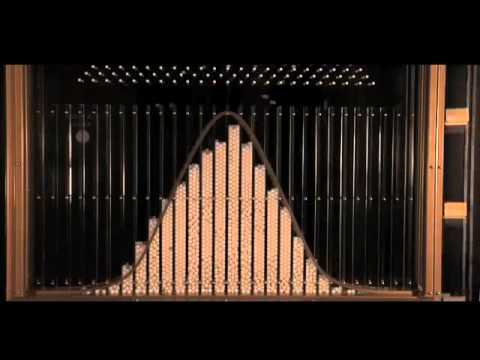
The bean machine, also known as the Galton Board or quincunx, is a device invented by Sir Francis Galtonto demonstrate the central limit theorem, in particular that the normal distribution is approximate to the binomial distribution. Among its applications, it afforded insight into regression to the mean or “regression to mediocrity”.

MORE:

Assessment

So, a picture or video is worth a thousand words; as they say.

Link: https://www.youtube.com/watch?v=6YDHBFVIvIs

Conclusion

Your thoughts and comments on this ME-P are appreciated. Feel free to review our top-left column, and top-right sidebar materials, links, URLs and related websites, too. Then, subscribe to the ME-P. It is fast, free and secure. 

Speaker: If you need a moderator or speaker for an upcoming event, Dr. David E. Marcinko; MBA – Publisher-in-Chief of the Medical Executive-Post – is available for seminar or speaking engagements. https://medicalexecutivepost.com/dr-david-marcinkos-bookings/ 

Contact: MarcinkoAdvisors@msn.com

https://www.crcpress.com/Risk-Management-Liability-Insurance-and-Asset-Protection-Strategies-for/Marcinko-Hetico/p/book/9781498725989

***

Celebrating National Doctors’ Day 2018

History of National Doctors’ Day

By Dr. David E. Marcinko MBA CMP™

http://www.CertifiedMedicalPlanner.org

National Doctors’ Day is held every year on March 30th – April 1st –  in the United States. It is a day to celebrate the contribution of physicians who serve our country by caring for its’ citizens.

The first Doctor’s Day observance was March 30, 1933 in Winder, Georgia.  Eudora Brown Almond, wife of Dr. Charles B. Almond, decided to set aside a day to honor physicians. This first observance included the mailing greeting cards and placing flowers on graves of deceased doctors.

  • On March 30, 1958, a Resolution Commemorating Doctors’ Day was adopted by the United States House of Representatives.
  • In 1990, legislation was introduced in the House and Senate to establish a national Doctor’s Day.

Following overwhelming approval by the United States Senate and the House of Representatives, on October 30, 1990, President George Bush signed S.J. RES. #366 (which became Public Law 101-473) designating March 30th as “National Doctor’s Day.”

Book Marcinko

Ambulance DEM

ME-P Publisher Emeritus Out in the Field – Marquette, MI

***

Leave FACEBOOK and Join the MEDICAL EXECUTIVE POST.com

AN “OPEN LETTER” FROM THE PUBLISHER-IN-CHIEF

Join Our Mailing List

Niche Specificity is the Key to Future Social Media Action

By Dr. David Edward Marcinko MBA [Publisher-in-Chief]

My solution to Facebook dilution.

It was a no good, very bad week for Facebook.

WHY: It came to light that up to 50 million users had their data improperly accessed by data firm Cambridge Analytica. Ever since, the company has been under incredible scrutiny as its’ stock price is in free fall. In fact, CEO Mark Z. lost about ten billion dollars; at least on paper…Ouch! But, he is still worth about 65 billion dollars, so don’t worry —  be happy for him!

The Critics

  • Did you know that Elon Musk is joining a growing group of people in the tech industry who have taken aim at social media companies and Facebook in particular?
  • Aaron Levie, CEO of cloud computing company Box, recently tweeted: “The days of arguing that (and acting like) tech companies are merely platforms and pipes are behind us.”
  • Marc Benioff, CEO of business software company Salesforce, recently started equating social media to smoking cigarettes.

And now, this Medical Executive-Post is jumping on the alternate social media site bandwagon. Leave Facebook now!

***

0

***

Here’s How to manipulate Facebook instead of it Manipulating You

Social media platforms know a lot about us—but that doesn’t mean we can’t have our own ways of fighting back.

So, try these six tricks to take back control of your digital life. https://tinyurl.com/y888s8m5

Intellectual Riches … thru Niches

As Facebook became ever-more generalized, it also became less powerful, less informed, less important and therefore less credible; writ large. All opinions are not informed opinions

“When you try to be all things to every one – you became nothing to no one”

But smaller, niche alternatives like this Medical Executive-Post can provide new ways for us to interact with other smart, like-minded and informed people online.

Re-Enter the Medical Executive-Post of iMBA, Inc. 

imba inc

This Medical Executive-Post is sponsored by the Institute of Medical Business Advisors Inc., of Atlanta, Georgia; which was founded in 2006 as a leading national scope provider of healthcare administration education and medical practice management reports, books, dictionaries, journals, white-papers, fair-market valuations [FMV] and economic advisory opinions using multi-platform and traditional seminars and channels of knowledge distribution.

iMBA helps the nation’s medical, healthcare and education professionals make decisive improvements in their direction and performance by empowering them through unbiased information, consultants and proprietary tools, books, templates and B-school styled case models. 

We serve universities, medical, business, graduate and nursing schools; physicians, dentists and legal societies; accountants, financial service providers, wealth and hedge fund managers; emerging entities, hospitals, clinics, outpatient centers, CXOs and their BODs – the press, media and related organizations.

My Idea

Join Our Mailing List

For the solution to Facebook dilution, my idea is not new or radical; but it is simple. Join the Medical Executive Post. It is time.

To achieve a better and more niche focused professional social site, we need to be much more concentrated and serious about all vital topics in the healthcare industrial complex – which is an ecosystem projected to become 20% of domestic GDP; very soon.

Thus, this academic niche is not so small; but we are indeed highly educated, powerful and can become very influential and very actionable; more so than the general Facebook populace hoi polloi.

Remember, Pareto’s 80/20 Law and the trivial many versus vital few. Show us your vitality.

More Reasons to Join Us – Today!

Conclusion

Your thoughts and comments on this ME-P are appreciated. Feel free to review our top-left column, and top-right sidebar materials, links, URLs and related websites, too. Then, subscribe to the ME-P. It is fast, free and secure. 

Join Our Mailing List

Contact: MarcinkoAdvisors@msn.com

***

Join Our Mailing List


IS HEALTHCARE [REALLY] DIFFERENT -OR- NOT?

A Particle Physics Analogy

By Dr. David Edward Marcinko MBA

http://www.CertifiedMedicalPlanner.org

Some folks, here and elsewhere, often opine that banking is more progressive than healthcare. And, by inference many, if not most, other industries may be included as well.

Unfortunately, this is a ridiculous reality.

WHY: Sorry – Like Heisenberg – You can’t have it both ways.

Health insurance is becoming less like real, pro-active insurance and more like a taxpayer “pay-as-you-go” system. Hence, the two current societal opinions:

HI AS A RIGHT: On the one hand, we opine that you can’t buy car or home owners insurance after the accident or fire. But, you can buy Obamacare after the cancer diagnosis. Not insurance at all; but a right.

HI AS A PRIVILEGE: On the other hand, others opine that HI is for the privileged few.

Now, here is my third option:

HI AS A RESPONSIBILITY: Well, I suggest HI is a responsibility. We do need catastrophic insurance but not for routine health maintenance. The better we are at pro-active responsibility – the less expensive HI should be, with patient skin-in-the-game. And, I have written about Health Savings Accounts [HSAs] before, here and elsewhere.

***

***

Assessment

So, decide which and proceed accordingly. But, just like the Werner Heisenberg Uncertainty Principle; it can’t be both.

NOTE: In quantum mechanics, the Heisenberg uncertainty principle is any of a variety of mathematical inequalities asserting a fundamental limit to the precision with which certain pairs of physical properties of a particle, known as complementary variables, such as position x and momentum p, can be known simultaneously.

IOW: I can tell you where you are -OR- how fast you are going; but not both.

Conclusion

Your thoughts are appreciated. http://www.BusinessofMedicalPractice.com

***

Is this the NEXT OPIOID CRISIS?

A Gabapentin Prescriptions Surge May be Brewing Out-There!

By Dr. David Edward Marcinko MBA

Prescriptions for nerve pain medicines like gabapentin (Neurontin) and pregabalin (Lyrica) have more than tripled in recent years, driven by increased use among chronically ill older adults and patients already taking opioids, a U.S. study suggests. The proportion of US adults prescribed gabapentin and other drugs in the same family of medicines climbed from 1.2% in 2002 to 3.9% by 2015, a period that also saw a surge in opioid overdoses and deaths.

The drug class, known as gabapentinoids, includes gabapentin (Neurontin, Gralise, Horizant) and pregabalin. “Nearly 1 in 25 adults takes a gabapentinoid during a year, which matters because we have little data to support much use of this drug class and minimal data to support the long-term safety of the medications,” said study author Dr. Michael Johansen of the Heritage College of Osteopathic Medicine at Ohio University in Athens.

Source: Reuters Health News via MDLinx [1/8/18]

***

Assessment

I hate to admit that these drugs did not even exist when I was in medical school. So, can we assume that most doctors today learned about them thru drug reps, TV, radio, internet, blog and vlog advertising, etc? 

More: https://www.painmedicinenews.com/Clinical-Pain-Medicine/Article/03-18/Gabapentin-and-Opioids-a-Potentially-Deadly-Combination/47053?sub=C143BC655DA759D99E56383AE3C0C55ECB64ABF25DFEFEA185C6CA3F4F86B4&enl=true&lipi=urn:li:page:d_flagship3_feed;y0AoiQmuRTy3ozEhwaJ0iQ%3D%3D

Is this the next opioid or drug crisis in the USA? Doctor colleagues, please think about the antibiotic resistance problem. Economic colleagues, please think about the “law of substitutions.” All, think about recreational marijuana? http://www.HealthDictionarySeries.org

Conclusion

Your thoughts and comments on this ME-P are appreciated. Feel free to review our top-left column, and top-right sidebar materials, links, URLs and related websites, too. Then, subscribe to the ME-P. It is fast, free and secure.

Speaker: If you need a moderator or speaker for an upcoming event, Dr. David E. Marcinko; MBA – Publisher-in-Chief of the Medical Executive-Post – is available for seminar or speaking engagements.

Book Marcinko: https://medicalexecutivepost.com/dr-david-marcinkos-bookings/

Subscribe: MEDICAL EXECUTIVE POST for curated news, essays, opinions and analysis from the public health, economics, finance, marketing, IT, business and policy management ecosystem.

***

Product DetailsProduct DetailsProduct Details

***

The Home Office Tax Deduction Explained

What it is – How it works?

By Dr. David Edward Marcinko MBA CMP™
http://www.CertifiedMedicalPlanner.org

A taxpayer’s business use of his or her home may give rise to a deduction for the business portion of expenses related to operating the home.

The basic requirement:

1. There must be a specific room or area that is set aside for and used exclusively on a regular basis as:
a. The principal place of any business, or
b. A place where the taxpayer meets with patients, clients or customers in the normal course of their trade or business, or
c. A separate structure that is used in the taxpayer’s trade or business and is not attached to their house or residence.

2. An employee can take a home office deduction if he or she meets the regular and exclusive use test and the use is for the convenience of the employer.

Deductions

Deductible expenses include business portions of mortgage interest, property taxes, depreciation, repairs and maintenance to the overall home that help the business use area, janitorial services or maid, utilities, insurance as well as other expenses directly related to the operating the remainder of the home.

***

https://www.amazon.com/Comprehensive-Financial-Planning-Strategies-Advisors/dp/1482240289/ref=sr_1_1?ie=UTF8&qid=1418580820&sr=8-1&keywords=david+marcinko

Conclusion

Your thoughts and comments on this ME-P are appreciated. Feel free to review our top-left column, and top-right sidebar materials, links, URLs and related websites, too. Then, subscribe to the ME-P. It is fast, free and secure.

Speaker: If you need a moderator or speaker for an upcoming event, Dr. David E. Marcinko; MBA – Publisher-in-Chief of the Medical Executive-Post – is available for seminar or speaking engagements.

Book Marcinko: https://medicalexecutivepost.com/dr-david-marcinkos-bookings/

Subscribe: MEDICAL EXECUTIVE POST for curated news, essays, opinions and analysis from the public health, economics, finance, marketing, IT, business and policy management ecosystem.

***

WEGO Health Nominates the ME-P as “Best- in-Show” Blog

Join Our Mailing List 

WEGO Nomination 2017

By the WEGO Health Team

Dear Dr. David Edward Marcinko MBA,

Congratulations on your nominations for a WEGO health activist award.

We wanted to let you know that you’ve been nominated for the WEGO health activist award –

This nomination will appear on your nominee profile – feel free to update your personal bio if needed and share this new achievement with your family, friends, patients, students and clients community.

******

Assessment

And, your ME-P readers, visitors and subscribers can view your entire profile; here.

Congratulations!

Conclusion

Your thoughts and comments on this ME-P are appreciated. Feel free to review our top-left column, and top-right sidebar materials, links, URLs and related websites, too. Then, subscribe to the ME-P. It is fast, free and secure.

Speaker: If you need a moderator or speaker for an upcoming event, Dr. David E. Marcinko; MBA – Publisher-in-Chief of the Medical Executive-Post – is available for seminar or speaking engagements. Contact: MarcinkoAdvisors@msn.com

OUR OTHER PRINT BOOKS AND RELATED INFORMATION SOURCES:

Some Book Reviews on Value Investing

Articles and Papers, too:

By Michael at: https://valuestockgeek.com

If you like want to learn more about value investing, below are some great resources.

***

***

 Resources

Conclusion

Your thoughts and comments on this ME-P are appreciated. Feel free to review our top-left column, and top-right sidebar materials, links, URLs and related websites, too. Then, subscribe to the ME-P. It is fast, free and secure.

Speaker: If you need a moderator or speaker for an upcoming event, Dr. David E. Marcinko; MBA – Publisher-in-Chief of the Medical Executive-Post – is available for seminar or speaking engagements. Contact: MarcinkoAdvisors@msn.com

OUR OTHER PRINT BOOKS AND RELATED INFORMATION SOURCES:

8Comprehensive Financial Planning Strategies for Doctors and Advisors: Best Practices from Leading Consultants and Certified Medical Planners™

***

Medical Practice as a New Asset Class?

Join Our Mailing List 

ORIGINAL RESEACH PUBLICATION SUBMISSION

[Medical Practice as a New Asset Class?]

By Ann Miller RN MHA

Academics and the financial services industry uses Modern Portfolio Theory [MPT] and the Capital Asset Pricing-Model [CAP-M] to make optimal investment allocations of different ‘asset’ classes to achieve a well balanced portfolio; according to some defined risk tolerance level or efficient frontier.

Assets

Equities, fixed income, real-estate, emerging markets, etc., are all asset classes into which investors, mutual, hedge fund or portfolio managers allocate capital. It is quite proper for them to do this as they seek to balance risk and potential returns.

And so, by creating a “new” asset class [medical practice], this concept opens the door to significant capital flows, advisory and management fees; if securitized-OR- at least help dampen portfolio risk for the individual physician executive investor.

Example:

As an example of this emerging new thought leadership, some  consider Social Security income an alternate asset class; while others like Paul Merriman [from a [Seattle-based investment advisory firm and Western Washington University’s School of Business and Economics] suggest that it is not an asset class at all. The idea is fundamentally flawed and should not be a part of anyone’s portfolio. 

Why? As classically defined, a financial asset is something that can be sold. Since Social Security cannot be sold, it has a market value of zero.

Assessment

However, in as much as a medical practice can be sold, the definition of “asset class” appears corroborated. Thus, the proper valuation and income stream determination for this ‘new” asset class becomes paramount for investment portfolio inclusion.

PROGRESS: Un-gated white paper work-in-progress.

FREE WHITE PAPER [Is Medical Practice a New Asset Class?] from iMBA, Inc.

SUBMISSION: To the Journal of Health Care Finance: Editorial team: J. Cawley, M. Chalkley, M.E. Chernew, D. Cutler, M. Lindeboom and E. Meara, N. Elsevier, NY

Conclusion

Your thoughts and comments on this ME-P are appreciated. Feel free to review our top-left column, and top-right sidebar materials, links, URLs and related websites, too. Then, subscribe to the ME-P. It is fast, free and secure.

Speaker: If you need a moderator or speaker for an upcoming event, Dr. David E. Marcinko; MBA – Publisher-in-Chief of the Medical Executive-Post – is available for seminar or speaking engagements. Contact: MarcinkoAdvisors@msn.com

OUR OTHER PRINT BOOKS AND RELATED INFORMATION SOURCES:

Full Disclosure: I was interim editor of the Journal of Health Care Finance during the sabbatical of Founding Editor-in-Chief, James Unland PhD, about a decade ago.

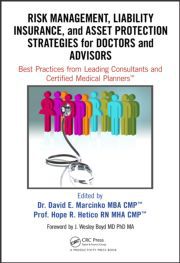
Risk Management, Liability Insurance, and Asset Protection Strategies for Doctors and Advisors: Best Practices from Leading Consultants and Certified Medical Planners™   Risk Management, Liability Insurance, and Asset Protection Strategies for Doctors and Advisors: Best Practices from Leading Consultants and Certified Medical Planners™

***

DR. MARCINKO SEEKING UNIVERSITY FACULTY APPOINTMENT

Join Our Mailing List

Crowd Sourcing My Job Search – An Academic Social Media Experiment?

Dr. David Edward Marcinko MBBS DPM MBA MEd BSc CMP®

Any New Year typically brings to mind the passage of Father Time.

And, as a former endowed chairman and distinguished Business School professor of capitalism, health economics, policy and management; it’s hard to believe that I’ll be finishing up my current visiting scholar-on-sabbatical tenure after this Spring semester.

So, I am crowd-sourcing my next university job search as an emerging trend. It’s the career development equivalent of my just launched WIKI health dictionary project.

HDS

HEALTH INSURANCE, MANAGED CARE, ECONOMICS, FINANCE AND HEALTH INFORMATION TECHNOLOGY COMPANION DICTIONARY SET

      Product DetailsProduct DetailsProduct Details

Regardless of the job search, check it out and tell me what you think!

Comprehensive Curriculum Vitae

http://www.DavidEdwardMarcinko.com

***

WEBINAR on Medical Office Sexual Harassment Issues

Join Our Mailing List

About MentorHealth

MentorHealth, the sponsor of this webinar, is a comprehensive training source for healthcare professionals that is high on value, but not on cost. MentorHealth is the right training solution for physicians and healthcare professionals. With MentorHealth webinars, doctors can make the best use of time, talent and treasure to benefit their continuing professional education needs.

mentorhealth-gif-logo

***

Romantic Patient Advances

DEM white shirt

 ***
Presented By
Professor David Edward Marcinko 
March 13, 2017
***

Overview: Within the medical practice, clinic, hospital or university setting, faculty and supervisors exercise significant power and authority over others. Therefore, primary responsibility for maintaining high standards of conduct resides especially with those in faculty and supervisor positions. Members of the medical faculty and staff, including graduate assistants, are prohibited from having “Amorous Relationships” with students over whom they have “Supervisory Responsibilities.” “Supervisory Responsibilities” are defined as teaching, evaluating, tutoring, advocating, counseling and/or advising duties performed currently and directly, whether within or outside the office, clinic or hospital setting by a faculty, staff member or graduate assistant, with respect to a medical, nursing or healthcare professional student. Such responsibilities include the administration, provision or supervision of all academic, co-curricular or extra- curricular services and activities, opportunities, awards or benefits offered by or through the health entity or its personnel in their official capacity.

Employees are prohibited from having “Amorous Relationships” with employees whom they supervise, evaluate or in any other way directly affect the terms and conditions of the others’ employment, even in cases where there is, or appears to be, mutual consent.

Date : Monday, March 13, 2017 10:00 AM PST | 01:00 PM EST

Duration : 60 Minutes

Price : $139.00

Romantic Patient Advances

Areas Covered in the Session:

  • Consensual Amorous Relationships Defined
  • Handling Patient Advances
  • Signs of Flirtatious Behavior and Discouragement
  • Sexual Harassment Defined
  • Preferential Treatment
  • Un Reasonable Interference with Performance
  • Two-Pronged Test Approach
  • Offensive Behavior
  • Gender Based Animosity
  • Same Sex Harassment
  • Employer Liability
  • Disciplinary Actions
  • Tangible Employment Actions
  • Punitive Damages
  • Financial and Economic Costs

Who Will Benefit:

  • Physicians
  • Dentists
  • Podiatrists
  • Osteopaths
  • Pharmacists
  • Nurse Practitioners
  • Physician Assistants
  • All Clinical and Allied Healthcare Providers
  • Attorneys
  • Risk and Medical Compliance Managers
  • Health Insurance Agents

SIGN-UP HERE

Romantic Patient Advances

REGISTRATION

***

rm-photo

***

WEBINAR NOTE: These are online interactive training courses using which, professionals from any part of the world have the opportunity to listen to and converse with some of the best-known experts in the HR Industry. These are offered in live & recorded format for single & multiple users (corporate plans ). Under recorded format each user gets unlimited access for six months. Corporate plans give you the best return on your investment as we do not have upper limit on the number of participants who can take part in webinar.

***

WEBINAR on Medical Workplace Violence Issues

Join Our Mailing List

About MentorHealth

MentorHealth, the sponsor of this webinar, is a comprehensive training source for healthcare professionals that is high on value, but not on cost. MentorHealth is the right training solution for physicians and healthcare professionals. With MentorHealth webinars, doctors can make the best use of time, talent and treasure to benefit their continuing professional education needs.

mentorhealth-gif-logo

Medical Workplace Violence Issues

[Its Growing Recognition and Impact]

*** DEM white shirt

 ***
Presented By
Professor David Edward Marcinko 
 February 22, 2017
***
Overview: Violence in hospitals usually results from patients, and occasionally family members, who feel frustrated, vulnerable, and out of control. Transporting patients, long waits for service, inadequate security, poor environmental design, and unrestricted movement of the public are associated with increased risk of assault in hospitals and may be significant factors in social services workplaces as well. A lack of staff training and the absence of violence prevention programming are also associated with the elevated risk of assault in hospitals. Although anyone working in a hospital may become a victim of violence, nurses and aides who have the most direct contact with patients are at higher risk.

Date : Wednesday, February 22, 2017 10:00 AM PST | 01:00 PM EST

Duration : 60 Minutes

Price : $139.00

Areas Covered in the Session:

  • Definition and Types of WPV
  • Contributing Factors and Risk Analysis
  • Effects and Outcomes
  • Financial and Economic Costs
  • Dealing with WPV
  • Prevention Plan Creation
  • The Haddon Matrix
  • Establishing WPV Prevention Guidelines

Who Will Benefit:

  • Physicians
  • Dentists
  • Podiatrists
  • Osteopaths
  • Pharmacists
  • Nurses
  • Nurses Aids
  • Nurse Practitioners
  • Physician Assistants
  • All Clinical Mental and Allied Healthcare Providers
  • Attorneys
  • Risk and Medical Compliance Managers
  • Health Insurance Agents

SIGN-UP HERE

Medical Workplace Violence Issues

REGISTRATION

***

rm-photo

***

WEBINAR NOTE: These are online interactive training courses using which, professionals from any part of the world have the opportunity to listen to and converse with some of the best-known experts in the HR Industry. These are offered in live & recorded format for single & multiple users (corporate plans ). Under recorded format each user gets unlimited access for six months. Corporate plans give you the best return on your investment as we do not have upper limit on the number of participants who can take part in webinar.

***

MARCINKO’s Upcoming WEBINARS from MentorHealth

Join Our Mailing List

Sponsored Advertisement

MentorHealth

MentorHealth, the sponsor of these ME-P webinars, is a comprehensive training source for healthcare professionals that is high on value, but not on cost. MentorHealth is the right training solution for physicians and healthcare professionals. With MentorHealth webinars, doctors can make the best use of time, talent and treasure to benefit their continuing professional education needs.

So, it is no wonder why they partnered up with the ME-P to produce these three exciting and timely Webinars, delivered by our own Publisher-in-Chief and Distinguished Professor David Edward Marcinko.

***

A Medical Malpractice Trial From The Doctor’s POV

Even among the sciences, medicine occupies a special position. Its practitioners come into direct and intimate contact with people in their daily lives they are present at the critical transitional moments of existence.

For many people, they are the only contact with a world that otherwise stands at a forbidding distance. Often in pain, fearful of death, the sick have a special thirst for reassurance and vulnerability to belief. When this trust is violated, whether rooted in factual substance or merely a conclusion lacking in reality, American jurisprudence offers several remedies with the core being civil litigation.

We have personally witnessed a spectrum of reasons that prompts a patient to seek the counsel of an attorney.

Monday, February 6, 2017

10:00 AM PST | 01:00 PM EST

60 Minutes

$139.00

Medical Workplace Violence Issues

Violence in hospitals usually results from patients, and occasionally family members, who feel frustrated, vulnerable, and out of control.

Transporting patients,long waits for service,inadequate security, poor environmental design, and unrestricted movement of the public are associated with increased risk of assault in hospitals and may be significant factors in social services workplaces as well. A lack of staff training and the absence of violence prevention programming are also associated with the elevated risk of assault in hospitals.

Although anyone working in a hospital may become a victim of violence, nurses and aides who have the most direct contact with patients are at higher risk.

 Wednesday, February 22, 2017

10:00 AM PST | 01:00 PM EST

60 Minutes

$139.00

Romantic Patient Advances

Within the medical practice, clinic, hospital or university setting, faculty and supervisors exercise significant power and authority over others. Therefore, primary responsibility for maintaining high standards of conduct resides especially with those in faculty and supervisor positions. Members of the medical faculty and staff, including graduate assistants, are prohibited from having “Amorous Relationships”with students over whom they have “Supervisory Responsibilities.”

“Supervisory Responsibilities”are defined as teaching, evaluating, tutoring, advocating, counseling and/or advising duties performed currently and directly, whether within or outside the office, clinic or hospital setting by a faculty, staff member or graduate assistant, with respect to a medical, nursing or healthcare professional student.

Such responsibilities include the administration, provision or supervision of all academic, co-curricular or extra- curricular services and activities, opportunities, awards or benefits offered by or through the health entity or its personnel in their official capacity.

Monday, March 13, 2017

10:00 AM PST | 01:00 PM EST

60 Minutes

$139.00

rm-photo

***

WEBINAR NOTE: These are online interactive training courses using which, professionals from any part of the world have the opportunity to listen to and converse with some of the best-known experts in the HR Industry. These are offered in live & recorded format for single & multiple users (corporate plans). Under recorded format each user gets unlimited access for six months. Corporate plans give you the best return on your investment as we do not have upper limit on the number of participants who can take part in webinar.

***

What is Population Health?

Join Our Mailing List

DEM white shirtBy David Edward Marcinko MBBS DPM MBA MEd

http://www.DavidEdwardMarcinko.com

What is population health?

In its most fundamental sense, population health seeks to improve or manage the health of a specific population. It is a systematic, holistic approach that aims to prevent disease by keeping people healthy and improving the quality of care.

HDS

http://www.HealthDictionarySeries.org

In fact, according to my colleague David B. Nash MD MBA, Founding Dean and Endowed Chair at the Jefferson College of Population Health, population health programs and interventions work to:

  • Connect prevention, wellness and behavioral health with traditional health care delivery
  • Focus on improving the quality and safety of care, improving access to healthcare services and helping to prevent/manage chronic diseases in the service of a specific population
  • Advance policies and solutions to address socio-economic and cultural factors (social determinants of health) that have an impact on health outcomes
  • Leverage technology and information systems to design social and community interventions and new models of health care delivery that facilitate care coordination and access

WHITE-PAPER: Population and Public Health

Conclusion

Your thoughts and comments on this ME-P are appreciated. Feel free to review our top-left column, and top-right sidebar materials, links, URLs and related websites, too. Then, subscribe to the ME-P. It is fast, free and secure.

Speaker: If you need a moderator or speaker for an upcoming event, Dr. David E. Marcinko; MBA – Publisher-in-Chief of the Medical Executive-Post – is available for seminar or speaking engagements. Contact: MarcinkoAdvisors@msn.com

OUR OTHER PRINT BOOKS AND RELATED INFORMATION SOURCES:

Product DetailsProduct DetailsProduct Details

***

I’m an APHA Abstract Reviewer for the 2016 Annual Meeting & Expo

Join Our Mailing List

My Invitation Letter with Acceptance

By the APHA Annual Meeting Team

DEM white shirt

Dear Dr. David Marcinko,

Thank you for volunteering to review abstracts for the APHA 2016 Annual Meeting & Expo (Oct. 29 – Nov. 2, 2016). Your efforts and expertise are critical to ensuring the meeting is a successful contribution to our goal of making the U.S. the healthiest nation in one generation.

Selection

You have been selected to review abstracts for the Health Administration program. All abstract reviews must be completed no later than Thursday, March 31, 2016.

COIDs

If you have not completed a conflict of interest disclosure form you will be prompted to do so – on the electronic portal – before accessing your assigned abstracts. Once you have completed the disclosure form you will see a list of your abstracts to review. Simply click on the abstract number and hit “go” to begin your reviews.

Criterion

The criterion and rating scale will be provided at the bottom of each abstract. Abstracts without abstracted text are considered incomplete and should not be reviewed.

NOTE: PLEASE DO NOT REVIEW ANY ABSTRACTS THAT YOU YOURSELF HAVE SUBMITTED.

If you have specific questions regarding your assignment or if you are no longer able to review please contact the program planner for your Section, SPIG, Caucus or Forum or Student Assessment

Assessment

Thank you for your contribution in this very important process. We hope that the online abstract review system makes your work easy however, if you see ways in which we can improve this process please let us know.

Acceptance

Yes, I accepted and completed this professional invitation with thanks and all due humility and gravitas.

***

APHA2016emailbanner

***

Emerging PATIENT Collaborative Medical Marketing Trends

Join Our Mailing List 

Seeking End-to-End Solutions?

DEM blue

[By Dr. David Edward Marcinko CMP® MBA]

http://www.BusinessofMedicalPractice.com

Given today’s economic and political environment, with its’ increasing competitive pressures, medical practices are focused more-than-ever on patient acquisition and patient retention. Modern medical practices are teaming together to offer comprehensive end-to-end solutions.

If you are partnering with other healthcare organizations to pool in your expertise, offer joint solutions and take up joint medical marketing and patient communications programs, be careful how you execute and about what you agree with your partners on sharing patient databases.

Policy

It is advisable to formulate a simple and clear privacy policy and adhere to that in the partnership agreements. Comply with the policy at all patient touch points. Communicate this very clearly with your partners and patients prominently in all your channels of communication. Inventory your data collection processes and gateways. Select appropriate projects to add security to your data across extended networks and partners.

Note there is no silver bullet to protect the privacy. Privacy compliance is as much a business issue as it is a technical issue, sometimes more so.

***

value

***

Implications for Patient Strategies

While you are formulating and implementing privacy policies; you need to address the following questions:

  • Do your patients respond to your practice’s privacy strategy? It is not enough to have a privacy policy that is so confidential no one is aware of that. It is imperative for practices, once they implement their privacy strategies, to understand how patients are responding and loop the feedback to fine-tune policies accordingly.
  •  How do you consider the impact on the patient from every privacy decision you make? Every privacy decision made will impact the patient and your practice; but to what extent? How do you determine this impact? Some of them will be patient-facing and some will be in the back–end. This step is essential so that you can make appropriate decisions and make optimum usage of resources.
  • Will your medical practice operations support the privacy initiative? Privacy enablement requires resources and training with perhaps no immediate, apparent short-term value-add to the top-line or bottom-line. Medical practices that take a proactive view of privacy enablement as cost of doing business in the 21st century will benefit. Practices still need to adopt critical processes and technology that agree with their resources and gradually privacy enable in an incremental way.

Role of Technology

There is no technology silver bullet. Privacy enabling a practice is composed of elements of company loyalty towards patients, commitment to build long lasting and profitable patient management by building trust, and engaging cross-functional teams that can pick and deploy suitable data security across the network.

***

cyber

***

Steps

Here are some salient steps for secure data management that affect technology choices of any medical practice:

  • Privacy-compliant database development – healthcare organizations have to “listen” and record what patients are saying, and if and how they prefer to be contacted, or not at all. All these details will have to be stored in a secure database, which is regularly refreshed with the outcome of practice communications with patient. This will be the central repository that the office draws upon to design and execute consistent and privacy enabled patient communications.
  • Protect the data across the practice, from group to group, area to area, or from network to network. It is not enough for a medical practice to protect data from external intruders, but also from internal data abusers. It is not enough that patient data is secure during transmission at the patient touch point. It also needs to be safe where it is stored. It is not unusual to have patient data stored or lying around where it is accessible by internal intruders. Therefore it is imperative for medical practices to go beyond traditional firewalls to have multi-layered security at the data level.

Conclusion

Your thoughts and comments on this ME-P are appreciated. Feel free to review our top-left column, and top-right sidebar materials, links, URLs and related websites, too. Then, subscribe to the ME-P. It is fast, free and secure. 

Speaker: If you need a moderator or speaker for an upcoming event, Dr. David E. Marcinko; MBA – Publisher-in-Chief of the Medical Executive-Post – is available for seminar or speaking engagements. Contact: MarcinkoAdvisors@msn.com

OUR OTHER PRINT BOOKS AND RELATED INFORMATION SOURCES:

***

Product DetailsProduct Details

***

http://www.CertifiedMedicalPlanner.org

Newer Thoughts on Long Term Care Insurance

Join Our Mailing List

Most LTCI policies are SOLD… not Bought!

DEM white shirt

By Dr. David Edward Marcinko MBA CMP

To be sure, physicians and Financial Advisors are aware that there is a sometime need to recommend a LTCI policy to clients. Of course, in such cases, it is a good idea to work with a low load provider (or the physician or client’s agent).

The Need?

Yet, most LTCI policies are sold by insurance agents for big commissions; not bought, and that most statistics used to sell LTCI policies are fear-based and half-truths. I know, as I was a licensed insurance agent for more than a decade.

Even the Department of Health and Human Services [DHHS] gets into the fear mongering on their website quoting that “about 70 percent of people over age 65 require some type of long-term care services during their lifetime”

Source: http://www.longtermcare.gov/LTC/Main_Site/Planning/Index.aspx

Department of Health and Human Services

This may be a deceptive statistic as it omits the length of long-term care needed in these 70% of cases. And, it is not 3+ years in all these cases [our estimate is closer to 2.5]. With the stamp of approval by the Supreme Court of the United States SCOTUS on the PP-ACA, we may be looking at social LTCI in the US like other social medicine countries and give up on private LTCI insurance altogether.

Other Countries

Germany introduced mandatory long-term care insurance in 1995. Japan and France also have a LTCI tax funded insurance plan. And, the poor utilization and growing risks associated with long-term care insurance, are leading a growing number of insurance agents, financial advisors and Certified Medical Planners™ to recommend alternatives to their clients.

***

elderly

***

Assessment

To be a thought-leader ahead of the curve, the newest aging trend is away from LTCI and toward sheltering at home – living at home and dying at home. Perhaps, this is the way it should be.

Dying should not be a for-profit industry.

http://www.CertifiedMedicalPlanner.org

More:

Conclusion

Your thoughts and comments on this ME-P are appreciated. Feel free to review our top-left column, and top-right sidebar materials, links, URLs and related websites, too. Then, subscribe to the ME-P. It is fast, free and secure.

Speaker: If you need a moderator or speaker for an upcoming event, Dr. David E. Marcinko; MBA – Publisher-in-Chief of the Medical Executive-Post – is available for seminar or speaking engagements. Contact: MarcinkoAdvisors@msn.com

OUR OTHER PRINT BOOKS AND RELATED INFORMATION SOURCES:

***

[PHYSICIAN FOCUSED FINANCIAL PLANNING AND RISK MANAGEMENT COMPANION TEXTBOOK SET]

  Risk Management, Liability Insurance, and Asset Protection Strategies for Doctors and Advisors: Best Practices from Leading Consultants and Certified Medical Planners™    Comprehensive Financial Planning Strategies for Doctors and Advisors: Best Practices from Leading Consultants and Certified Medical Planners™

[Dr. Cappiello PhD MBA] *** [Foreword Dr. Krieger MD MBA]

***

FREE WHITE PAPER [Is Medical Practice a New Asset Class?] from iMBA, Inc.

Is Medical Practice a New Asset Class Under MPT?

Get your FREE White Paper

SPONSOR:

http://www.CertifiedMedicalPlanner.org

Valuing the Private Practice Physician’s Quintessential Alternative Financial Investment

Dr. DEM

By Dr. David Edward Marcinko MBA CMP

As we know, the investment industry and Modern Portfolio Theory [MPT] strives to make optimal ‘allocations’ into different ‘asset classes’; according to some defined risk tolerance level or efficient frontier.

Equities, fixed income, property, private equity, emerging markets and so, are all ‘asset classes’, into which physician investors and mutual fund or portfolio managers will make an allocation of their total funds under management. It is quite proper for them to do this as they seek to balance the risk and potential returns for their own; ME, Inc., or other clients’ money.

And, by creating a “new” asset class, this concept opens the door to significant capital flows; advisory and management fees. Hence; the unrelenting innovation of Wall Street, and its’ commission driven and fee-seeking mavens, is unending.

The Social Security Example:

This concept may be illustrated using Social Security as an example.

Wall Street opines, if you’re not counting on Social Security benefits as a part of an overall asset allocation strategy, you may be missing out on bigger gains in a retirement portfolio. Those of this ilk say that retirement investors should consider the value of their Social Security as a portion of their fixed-income investments …. Others believe it may be too risky.

***

Empty Retired Doctor's Lounge

***

The Portfolio Shift

Generally, adopting this strategy would mean shifting a big portion of investible assets out of bonds and into stocks and into the hands of money managers, stock brokers and wealth managers for a fee; of course. This is akin to those financial advisors who rightly or wrongly goaded clients to not pay off a home mortgage and instead reposition the free cash flow into a rising; and then falling; market. Of course, there are detractors, as well as proponents of this emerging financial planning philosophy.

For example, Jack Bogle, founder of the Vanguard Group, often cites his penchant for basing one’s asset allocation on age. (If you’re 40 years old, you have 40% of your investments in fixed income and 60% in equities. By the time you’re 60, you’ve got 60% in fixed income, 40% in equities).

Now, let’s again consider Social Security, citing a physician with $300,000 in an investment portfolio, and capitalizing the stream of future payments. If the $300,000 is all in equity funds, even equity-index funds, and $300,000 in Social Security, you are already at 50/50″ fixed income versus equities.

The next step is a conversation as this the nexus of where Social Security meets risk management. So, how will the doctor feel when market goes up and down? Some may believe the concept, but not enjoy the inevitable more fluctuating self-directed 401-k, or 403-b plan. One must be comfortable with taking on a larger stock position.

Sources:

  • Andrea Coombes; MarketWatch, September, 2013.

Others experts, like Paul Merriman, opine that Social Security is not an asset class and the idea is fundamentally flawed and should not be a part of anyone’s portfolio.

***

Physician SGR Critics and the Doctor Fix

***

Why?

As classically defined, a portfolio is composed of financial assets. A financial asset is something that can be sold. Social Security cannot be bought and sold. Because of that, it has a market value of zero.

Therefore, since a medical practice can be bought or sold, the definitional decision is left up to the informed reader, modern physician or financially enlightened financial advisor; or Certified Medical Planner.

Source:

Order NOW!

To help you decide if medical practice is indeed an asset class – and how much a practice may be worth – and how to valuate a practice – request your free white paper using the order form below.

 Comprehensive Financial Planning Strategies for Doctors and Advisors: Best Practices from Leading Consultants and Certified Medical Planners(TM)

Courtesy

http://www.CertifiedMedicalPlanner.org

Request your FREE White Paper Here!

← Back

Thank you for your response. ✨

The True Cost of Car Ownership

Join Our Mailing List

HINT … It’s More Than You Think!

[By insurancequotes.org]

[By Dr. David Edward Marcinko MBA]

Dr David E Marcinko MBA

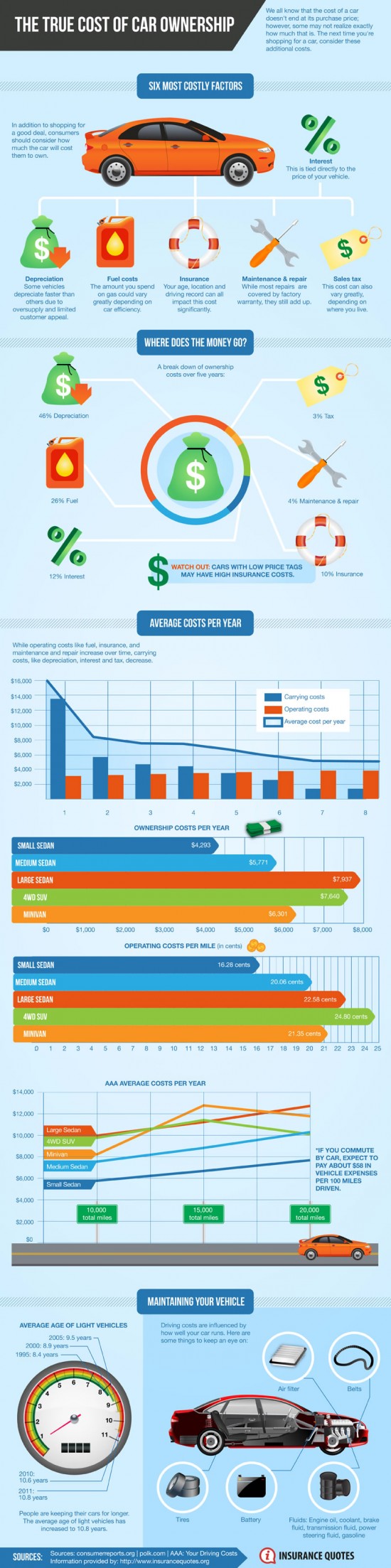
Anyone looking to buy a car should be well aware that the cost of a car doesn’t end at the purchase price.

You must consider additional concerns such as: depreciation, fuel costs, insurance, maintenance and repair, and sales tax.

This is especially important for doctors and new medical practitioners who may have many other financial responsibilities.

***

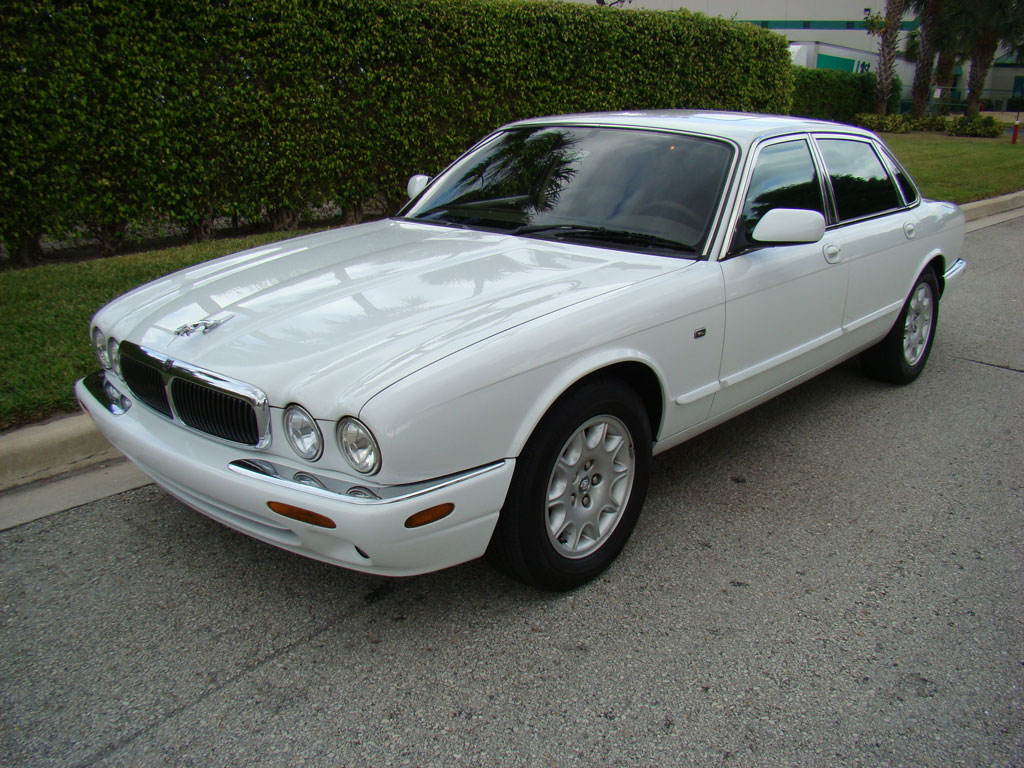
Dave's Jaguar Sedan

Jaguar Sedan

Classic Jaguar

***

True Costs

To help potential buyers with their purchases, we’ve put together an infographic that outlines the real cost of ownership for various types of cars. So, buyers beware!

***

Cost-Car-Ownership-800-550x2206

***

More:

Conclusion

Your thoughts and comments on this ME-P are appreciated. Feel free to review our top-left column, and top-right sidebar materials, links, URLs and related websites, too. Then, subscribe to the ME-P. It is fast, free and secure.

Speaker: If you need a moderator or speaker for an upcoming event, Dr. David E. Marcinko; MBA – Publisher-in-Chief of the Medical Executive-Post – is available for seminar or speaking engagements. Contact: MarcinkoAdvisors@msn.com

OUR OTHER PRINT BOOKS AND RELATED INFORMATION SOURCES:

Comprehensive Financial Planning Strategies for Doctors and Advisors: Best Practices from Leading Consultants and Certified Medical Planners(TM) 

3 Technologies That Are Revolutionizing the Driving Experience

Join Our Mailing List 

Update for Doctors and Medical Professionals

[By Dr. David Edward Marcinko MBA]

[By Nalley Lexus Roswell, GA]

Dr. David E. Marcinko MBA

Auto manufacturers have always been at the forefront when it comes to new technology. In a very competitive market, being able to develop new gadgets and capabilities is critical when it comes to selling new cars.

While new car models feature the latest developments, engineers are already working on the ‘next big thing.’ So what will be the next big developments in technology to revolutionize the driving experience?

The Ideas

Here are three ideas for doctors and medical colleagues. All from a guy who used to change his own oil.

  1. Cars that can communicate with each other

One of the biggest challenges in road safety comes from the independence that one vehicle has over another. Car drivers are almost entirely insulated from each other and the outside world until disaster strikes. One technology that is trying to address this problem is called Vehicle-to-Vehicle communication – or V2V. V2V technology is now being used by manufacturers as potential technology for future cars.

V2V sends wireless signals about a car’s location, speed, and direction. These signals are, in turn, received by other cars, which interpret this information and make appropriate conclusions. That may be simply to warn the driver, or it could mean applying the brakes. A logical progression from V2V is V2I – Vehicle-to-Infrastructure. This would allow cars to talk to traffic signals and other technology to help further control traffic and speeds.

  1. Airbags that prevent collisions

The airbag is almost certainly one of the greatest car safety gadgets and has saved countless lives since the technology was first developed. Airbags are a great example of a passive safety feature, which means that they reduce the risk of death or injury in the event of an accident. The technology could be used, however, as an active safety feature, which could actually help prevent accidents.

Manufacturers are now experimenting with air bags, which would deploy beneath a vehicle in the event that a potential collision was about to occur. A special coating would help slow the car down, helping the driver to stop much more quickly. By lifting the car up, these bags would also reduce the risk of injury from passengers slipping under seat belts and would lessen any potential damage or injury from bumper-to-bumper impact.

  1. Cars that can drive themselves

The ultimate new technology must surely be one that removes the need for a car to have a driver. Any kind of independent driving technology would, of course, ensure that rules were always adhered to and would remove the margin for human error that almost certainly costs many lives every year. The technology giant Google has invested heavily in the self-driving car to date, although the big manufacturers are also likely to adopt this technology. Who knows whether it will be possible to purchase a self-driving production car within ten years?

DEM's 2000 Jag XJ-V8-LJaguar front seat

Jag interior

JaguarBoot

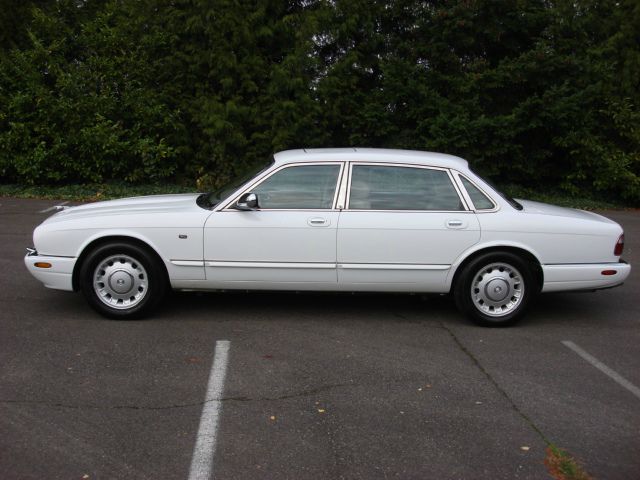
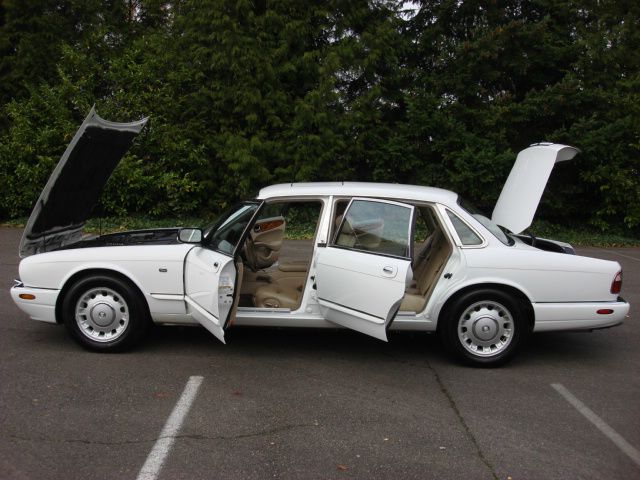
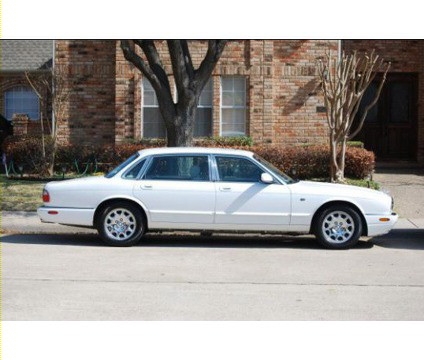
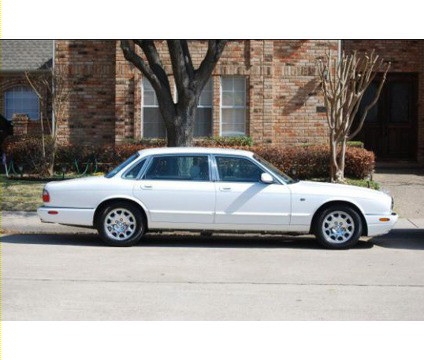
[My 2000 Jaguar XJ-V8 Luxury Touring Sedan] 

Assessment

I covered the ER for more than a decade. If any one of these innovations can save a life; then I am all for it.

***

OilChange

***

More:

Conclusion

Your thoughts and comments on this ME-P are appreciated. Feel free to review our top-left column, and top-right sidebar materials, links, URLs and related websites, too. Then, subscribe to the ME-P. It is fast, free and secure.

Speaker: If you need a moderator or speaker for an upcoming event, Dr. David E. Marcinko; MBA – Publisher-in-Chief of the Medical Executive-Post – is available for seminar or speaking engagements. Contact: MarcinkoAdvisors@msn.com

OUR OTHER PRINT BOOKS AND RELATED INFORMATION SOURCES:

Product DetailsProduct Details

On Physicians and Automobile Leases

Join Our Mailing List

Advantages, Disadvantages and Types

[By Dr. David Edward Marcinko MBA CMP™]

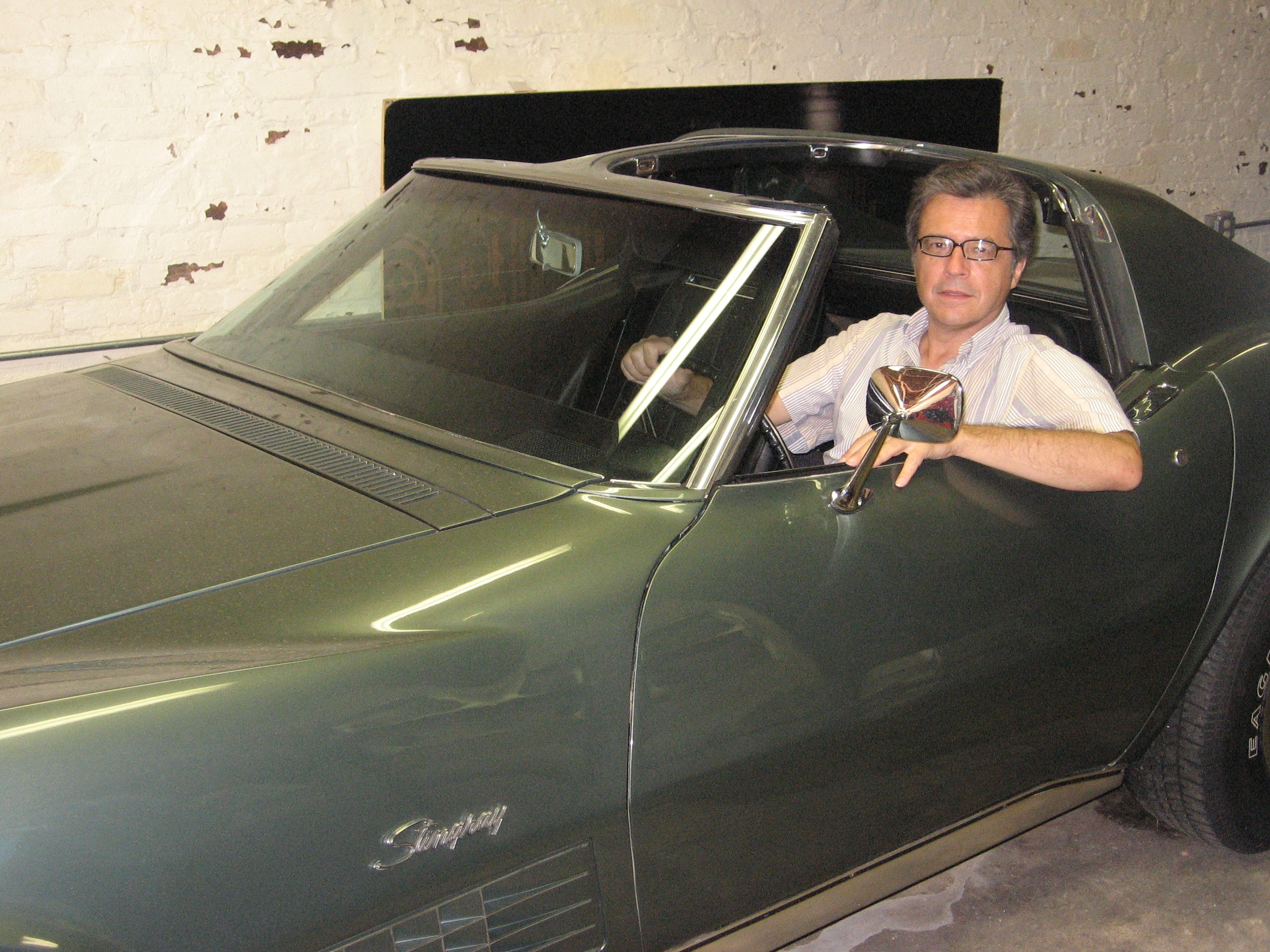
Dr. Marcinko 1972 VetteThe Rites of Spring!

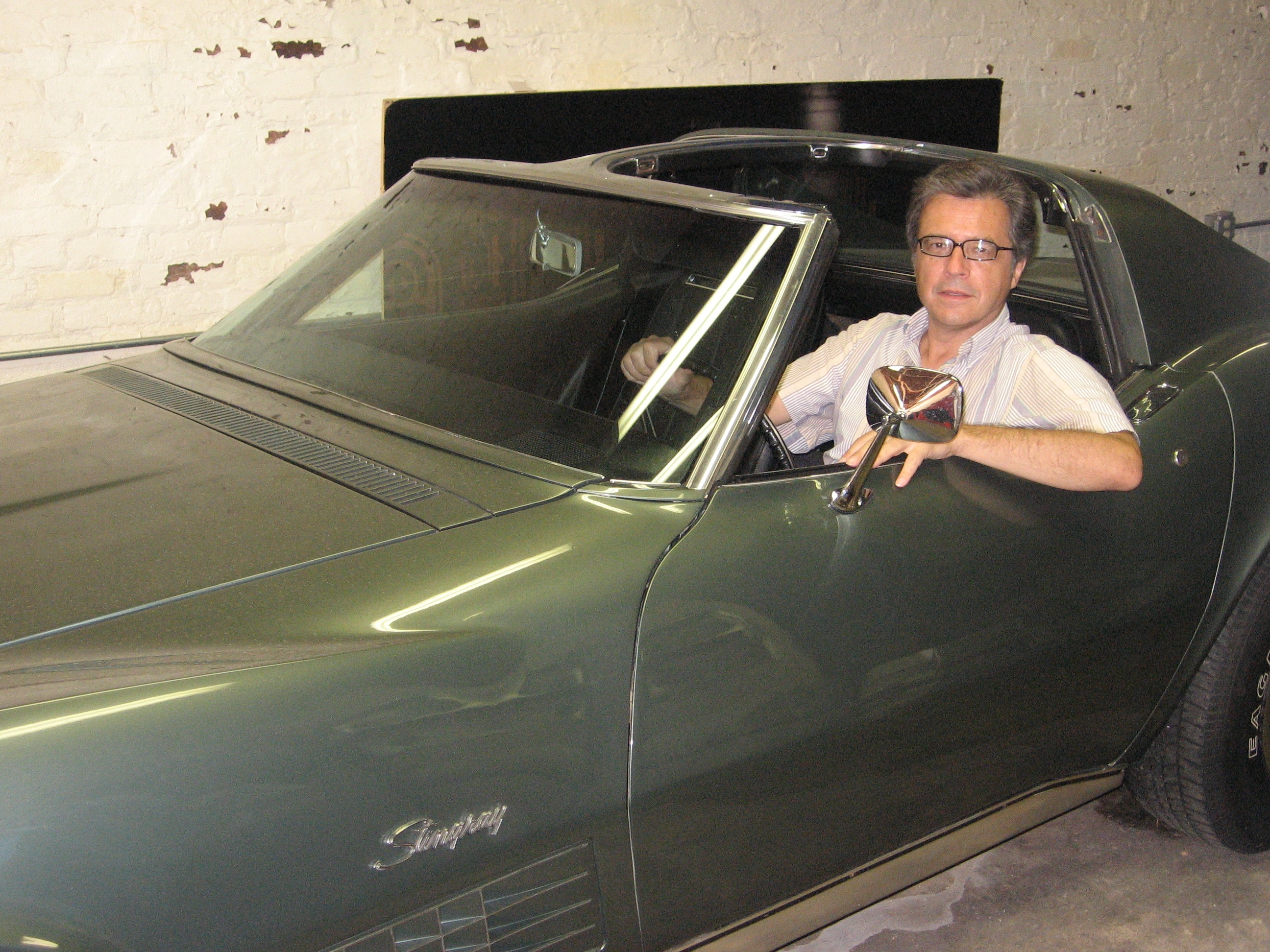
As a former licensed state insurance agent, and financial advisor, I know that leasing a car may have advantages to a physician – and others – such as convenient maintenance, low down and monthly payments, no resale responsibility, and tax savings since you pay sales tax on the lease portion rather than the purchase price of the car.

It might also be worthwhile if the after tax borrowing cost of a home equity loan is less than the lease financing rate.

***

Spring 2011 - NIH

[First Days of Spring 2017]

May Day Weekend 2011 [Dr. David E. Marcinko MBA]

***

Types of Leases

There are two major types of leases: open and closed ended. In the former type, if the car is worth more than the set price upon expiration of the lease, you are responsible for the underage or coverage. In the more advantages later type, the responsibility of the value of the car is shifted to the leasing company. Other tips on care leasing include:

  • Inform the lessor how you want the auto equipped; do not accept unwanted options.
  • Obtain all delivery, and other, charges in advance, including down payment, security.
  • Deposit, registration fees, interest rates, residual value, rebates and all taxes (sales, personal property, use and gross receipt).
  • Know the capitalized cost (selling price) of the car
  • Know annual mileage limits, usually 15-18,000 miles, and all excess use charges.
  • Avoid maintenance and service contracts, and arrange for your own insurance.
  • Understand that terms, such as money factor, or interest factor, may be used instead of the term interest rate. In this case, simply multiple the rate by 24 for an estimate of the true interest rate involved.
  • Read the contract and understand all penalties, especially for premature or late termination, purchase or return terms, and consequences of theft.
  • Check the lease terms through an independent company, such as First National Lease Systems.

Rough Rules of Thumb

A rough rule of thumb to determine whether to buy or lease involves multiplying all the payments required by the number of months you will have to pay, and add the down payment to yield the total amount of the purchase. Then, multiply the lease payment by the number of months, and add required up-front costs, as well as residual value (end of lease buyout cost), to determine the total amount to lease. Compare the two figures to determine the most economical deal.

Typically, a cash deal is less expensive in the long run, providing a higher after tax rate of return is not available, as an alternate investment, for the funds.

***

Jaguar Touring sedan XJ-V8-LWB***

Dis-Advantages

But, there are dis-advantages to auto leasing, too!

Perhaps the worse reason to lease a car is to drive one that you could not otherwise afford to drive. This is because most low monthly payments are only composed of two portions: interest on the note and the prorated cost of auto depreciation. No money is applied to ownership of the vehicle.

Assessment

Finally, beware Spring-Fever and do not likely buy “gap” insurance to cover the difference between what your auto insurer would pay if your car was totaled, and what you would owe the leasing firm. It’s usually too expensive and the risk is minimal.

More:

Channel Surfing the ME-P

Have you visited our other topic channels? Established to facilitate idea exchange and link our community together, the value of these topics is dependent upon your input. Please take a minute to visit. And, to prevent that annoying spam, we ask that you register. It is fast, free and secure.

Conclusion

Your thoughts and comments on this ME-P are appreciated. Feel free to review our top-left column, and top-right sidebar materials, links, URLs and related websites, too. Then, subscribe to the ME-P. It is fast, free and secure.

Speaker: If you need a moderator or speaker for an upcoming event, Dr. David E. Marcinko; MBA – Publisher-in-Chief of the Medical Executive-Post – is available for seminar or speaking engagements. Contact: MarcinkoAdvisors@msn.com

OUR OTHER PRINT BOOKS AND RELATED INFORMATION SOURCES:

Comprehensive Financial Planning Strategies for Doctors and Advisors: Best Practices from Leading Consultants and Certified Medical Planners(TM)

***

Driven Analytics Coming Soon?

Join Our Mailing List

Leveraging connected car technology to provide piece of mind for car owners and effective marketing for Dealers

[By Dr. David Edward Marcinko MBA]

DEM blueWhat it is

Driven Analytics uses connected car technology to better target car owners on behalf of dealerships, all the while reducing the anxiety associated with routine car maintenance for drivers.

How it works

Using advanced algorithms and a data transmission device installed on new cars by the dealership, Driven Analytics provides a marketing platform that allows dealers to advertise maintenance services to their customers exactly when they need them.

***

Jag A (1)***

Jag 3 (2)

***Jag 3 (1)***

Jaguar Sedan***

Sale Disposition

Once a vehicle is sold, Driven Analytics monitors the vehicle’s systems and provides the car owner with actionable maintenance information via a smartphone app, text or email.

Customer Retention

Information includes details about the needed service, as well as discounts and coupons based on their needs. Coupons are designed to bring customers back to the car dealership that sold them their car, increasing customer retention for the dealership and ultimately leading to future sales.

Channel Surfing the ME-P

Have you visited our other topic channels? Established to facilitate idea exchange and link our community together, the value of these topics is dependent upon your input. Please take a minute to visit. And, to prevent that annoying spam, we ask that you register. It is fast, free and secure.

More Soon: http://www.DrivenInfo.com

Conclusion

Your thoughts and comments on this ME-P are appreciated. Feel free to review our top-left column, and top-right sidebar materials, links, URLs and related websites, too. Then, subscribe to the ME-P. It is fast, free and secure.

Speaker: If you need a moderator or speaker for an upcoming event, Dr. David E. Marcinko; MBA – Publisher-in-Chief of the Medical Executive-Post – is available for seminar or speaking engagements. Contact: MarcinkoAdvisors@msn.com

OUR OTHER PRINT BOOKS AND RELATED INFORMATION SOURCES:

 Product Details


About Crowd-Med [Case Review Service]

***
CMP logo
***
DR. DAVID EDWARD MARCINKO MBA
[By ME-P Staff Reporters]

CrowdMed Company Background

CrowdMed purports to harnesses the wisdom of crowds to collaboratively solve even the world’s most difficult medical cases quickly and accurately online.

The company offers individuals, insurance providers, and self-insured corporate customers the ability to more quickly diagnose medical conditions and reduce healthcare costs without compromising care.

***

152_1

***

The results speak for themselves?

Since launching publicly in April 2013, CrowdMed has helped solve hundreds of medical cases for patients around the world, and this number is quickly growing as word spreads of the new service. On average, these patients had been sick for 8 years, seen 8 doctors, and incurred more than $50,000 in medical expenses. Despite the difficulty of their cases, more than half of these patients tell us that the crowd successfully brought them closer to a correct diagnosis or cure.

Anyone can submit a case on the CrowdMed website for free (with a $50 refundable deposit), or along with a cash compensation offer to draw more attention to their case. They use incentives to increase participation, and the overall quality and confidence levels of suggested diagnoses. Thousands of people with diverse backgrounds in medicine, health care, education and research have already joined the crowd, and they are continually recruiting new medical and disease experts to help solve cases.

During early testing of the CrowdMed platform, the founder [Jared] submitted his own sister’s [Carly] anonymous case information to the crowd to test the system. More than 300 people participated, evaluating the same symptoms that had been provided to Carly’s original doctors. In just three days, the crowd gave Jared their answer: Fragile X-associated primary ovarian insufficiency

Founded by veteran technology entrepreneur Jared Heyman and based in San Francisco, CA, CrowdMed has received more than $2.4 million in funding from some of Silicon Valley’s top venture capital firms including NEA, Andreessen Horowitz, Greylock Partners, SV Angel, Khosla Ventures and Y Combinator. The company’s advisors have founded and run some the world’s most successful online healthcare companies including WebMD. CrowdMed graduated from Y Combinator’s Winter 2013 class, and was officially launched during the TEDMED 2013 conference in Washington DC.

You can read more about CrowdMed’s leadership team click here.

More:

  1. Will Future Doctors Need a Medical License?
  2. Is Medical Licensing Really Necessary?
  3. On Replacing Doctors with Computers and Smart Phones 

Assessment

Check em’ out today: http://blog.crowdmed.com

Channel Surfing the ME-P

Have you visited our other topic channels? Established to facilitate idea exchange and link our community together, the value of these topics is dependent upon your input. Please take a minute to visit. And, to prevent that annoying spam, we ask that you register. It is fast, free and secure.

Conclusion

Your thoughts and comments on this ME-P are appreciated. Feel free to review our top-left column, and top-right sidebar materials, links, URLs and related websites, too. Then, subscribe to the ME-P. It is fast, free and secure.

Speaker: If you need a moderator or speaker for an upcoming event, Dr. David E. Marcinko; MBA – Publisher-in-Chief of the Medical Executive-Post – is available for seminar or speaking engagements. Contact: MarcinkoAdvisors@msn.com

OUR OTHER PRINT BOOKS AND RELATED INFORMATION SOURCES:

Product DetailsProduct DetailsProduct Details

Product DetailsProduct Details

10 Atomobile Facebook Pages to Follow

Join Our Mailing List

For the Physician Aficionado

david balt 09 005[By Dr. David Edward Marcinko MBA]

[By Nalley Lexus Roswell, GA]

Remember back in the day when the only way to get information on automobiles was to buy magazines with girls in bikinis washing motorcycles on the cover? With the advent of the Internet, the two subjects were separated. With the advent of social media, the automotive information comes to you.

Top Ten

Here are 10 automotive Facebook pages that we think you might be interested in.

  1. http://www.AutoBlog.com. Interested in Andre Agassi’s customized, Hemi-powered Jeep Wrangler? If you followed Autoblog.com’s Facebook page, you’d have known it was on eBay. Not just any auto blog, Autoblog.com “obsessively” follows the automotive industry, featuring car reviews, auto shows, eBay’s find of the day, and more.
  2. WorldCarFans. WorldCarFans.com is an online magazine that features “daily editorial coverage of emerging products and industry news, spy photos, motor shows, high resolution photos, videos, and more.” Follow their Facebook page to see photos of cars you’ll probably never drive. It doesn’t hurt to dream.
  3. Car and Driver Magazine. Even those with little interest in cars other than it getting them to and from work five mornings a week know that a car that lands on the Car and Driver top automobile lists is a car worth owning. That’s just one reason the Car and Driver Facebook page is a page worth following.
  4. Motor Trend Magazine. Auto manufacturers covet the Motor Trend Car of the Year award, which is why those who want the latest automotive news covet Motor Trend’s Facebook page. Unlike winning the Motor Trend Car of the Year award, however, anyone can gain access to Motor Trend’s Facebook page.
  5. com. Conceptcarz specializes in following vehicles from concept to production. Its in-depth look at automobiles features high-interest automobiles such as the Popemobile, a 1955 Scuderia Lancia, and a 1971 Porsche Spyder as well as automobiles coming out in the next few months.
  6. comEdmunds claimsyou can “enhance your research and shopping experience by connecting with Facebook to get advice from your friends and local car experts.” In addition to researching your next car, Edmunds invites you to review your current or past vehicles.
  7. Motor Authority. Whether you own a high-performance or luxury car or just like to dream, Motor Authority is the authority to consult. Unlike similar blogs, Motor Authority focuses on the products as opposed to industry news. And unlike most Facebook friends who make things up to impress you, the cars on Motor Authority actually exist.
  8. Jalopnik. With thousands of websites and magazines on cars, it’s difficult to carve out a niche. That’s why Jalopnik has been so successful. Jalopnik is “obsessed with the cult of cars” and their Facebook page allows others with like obsession to share their opinion on topics like the coolest cars of all time that never happened, a rapper destroying his Lamborghini, and the best and worst cars you’ve driven.
  9. Autoweek. Autoweek has been online since 1995. It’s obvious their vision includes the use of newer technology to share car news, photos, reviews, and more.
  10. Road and Track. Road and Track provides car news, photos, reviews, and a car lovers community. Get behind-the-scenes peeks at luxury and cutting-edge automobiles years before they’re unveiled. Follow their Facebook page to find this information first.

*** Millionaire's Jaguar

 DEM's Jaguar

My Jaguar's engine after a steam

[Jaguar 2000 XJ V8-L Autumn Touring Sedan]

***

Conclusion

Your thoughts and comments on this ME-P are appreciated. Feel free to review our top-left column, and top-right sidebar materials, links, URLs and related websites, too. Then, subscribe to the ME-P. It is fast, free and secure.

Speaker: If you need a moderator or speaker for an upcoming event, Dr. David E. Marcinko; MBA – Publisher-in-Chief of the Medical Executive-Post – is available for seminar or speaking engagements. Contact: MarcinkoAdvisors@msn.com

OUR OTHER PRINT BOOKS AND RELATED INFORMATION SOURCES:

Product DetailsProduct Details

Why You Should Schedule an Autumn Road Trip Tune-Up

Join Our Mailing List

Getting Ready for Fall Leisure Travels

[By Dr. David Edward Marcinko MBA CMP™]

[By Nalley Lexus – Roswell, GA]

DEM in his 1990 MiataMany doctor and other drivers believe that there is no need to send their car to a technician unless there is a noticeable problem. I used to be of this mind set. But, I soon learned this philosophy often ends up costing money and peace of mind in the long run.

So, as a surgeon with NO mechanical automobile aptitude, I believe in preparing a vehicle for the road ahead – so that you can concentrate on what’s really important – having a great autumn ride to see the mountains and leaves this season.

Why?

Here are the main reasons why you should schedule a tune-up prior to a summer road trip.

Sometimes, you have to spend money to save money–and while a tune-up isn’t free, it will diagnose minor problems before they become major problems. This could range from parts approaching the end of their expected life to car part damage. Regardless of the issue, if there is something wrong with your car, then it is going to need to be fixed in due course.

For instance, even if only one part is faulty, then it can eventually cause problems with other parts of your car if you do not resolve the issue immediately.

You cannot put a price on peace of mind, and if you are about to set out with your family on an exciting road trip, the last thing you want to do is worry about whether or not your car is going to endure the long distance. A tune-up, ahead of your getaway, will allow you to drive long distances, devoid of stress.

***

cloudy-mtn-auto-bahn

***

Nikon D800, AF-S Nikkor 16-35mm F/4 VR

***

Overall, the most important consideration in scheduling a road trip tune-up is your safety, the safety of your passengers and the safety of other drivers.

If you are driving for an extended period of time, it is important to ensure that your car is not only reliable, but that it is also safe to drive.

If you need to use your anti-lock braking system while on the road, for example, you need to be certain that it is working efficiently. Similarly, you want to be sure that your comfort features, such as air conditioning, are running properly as well.

More:

Conclusion

Your thoughts and comments on this ME-P are appreciated. Feel free to review our top-left column, and top-right sidebar materials, links, URLs and related websites, too. Then, subscribe to the ME-P. It is fast, free and secure.

Speaker: If you need a moderator or speaker for an upcoming event, Dr. David E. Marcinko; MBA – Publisher-in-Chief of the Medical Executive-Post – is available for seminar or speaking engagements. Contact: MarcinkoAdvisors@msn.com

OUR OTHER PRINT BOOKS AND RELATED INFORMATION SOURCES:

Product DetailsProduct Details

Today is “Name Your Car” Day

Join Our Mailing List 

Anthropomorphizing Your Vehicle?

[By Dr. David Edward Marcinko MBA CMP™]

DEM blue tieUnfortunately, many people do not think about naming their cars. Name Your Car Day has been set aside especially for those of you who may have forgotten this little ritual.

It’s very common for people to name their boats so why is it that some people forget to name their car?

Let’s face it, our cars do a lot for us and many of us would be lost without them so why not take the time to think of a good name for your daily companion. If it weren’t for him/her how would you get to work? How would you go shopping? How would you take the kids to soccer practice? How would you get to the office, clinic or hospital?

Back in the Day

When I was a kid, we were poor and had seven vehicles, or “beaters”, parked on the public inner-city side streets.  Our hope was that on any given day – two would start-up and be drivable.  There were six of us in the family, although only two had valid driver licenses for our little car pool

Obviously, we never named any of em’.

Today, my wife, daughter and I have four very serviceable cars; three are daily drivers, and one, our Jaguar 2000  sedan [XJ-V8-L], is special – used occasionally or only on the weekends. All have names; a tradition started by my daughter when she was a kid. There is Snow Rachel,  Mr. Ed, Blackie and Ellie [short for elegant]

***

Waxed Jaguar

***

Ellie

[My “ELLIE” –  Just waxed for NYCD]

***

At the Ready

Yes, we are blessed today. All four automobiles are always there for us whenever we need them; unlike when I was a kid. Who could ask for more dependability than that?

So, on “Name Your Car Day”, take the time to choose a name that your car, and you, will be proud to call your own.

Link: http://www.holidayinsights.com/moreholidays/October/nameyourcarday.htm

More:

Conclusion

Your thoughts and comments on this ME-P are appreciated. Feel free to review our top-left column, and top-right sidebar materials, links, URLs and related websites, too. Then, subscribe to the ME-P. It is fast, free and secure.

Speaker: If you need a moderator or speaker for an upcoming event, Dr. David E. Marcinko; MBA – Publisher-in-Chief of the Medical Executive-Post – is available for seminar or speaking engagements. Contact: MarcinkoAdvisors@msn.com

OUR OTHER PRINT BOOKS AND RELATED INFORMATION SOURCES:

Product DetailsProduct Details

Why Medical Professionals Need a Financial Plan?

Join Our Mailing List

We don’t plan to fail – We fail to plan

[By Dr. David Edward Marcinko MBA CMP™]

http://www.CertifiedMedicalPlanner.org

Dr. DEM

Our newest textbook COMPREHENSIVE FINANCIAL PLANNING STRATEGIES FOR DOCTORS AND ADVISORS [Best Practices from Leading Consultants and Certified Medical Planners™] will shape the physician-focused financial planning landscape for the next-generation of Health 2.0 medical professionals and their financial advisors.

Why Now?

We created this innovative textbook because the healthcare industry is rapidly changing and the financial planning ecosystem has not kept pace. Traditional insurance-commission and sales-driven generic advice is yielding to a new breed of deeply informed fiduciary advisor, and educated consultant, or Certified Medical Planner (CMP™). Internet and social media of the last decade demonstrates that medical providers are becoming accustomed to the need for knowledgeable advice. And so, financial planning is set to be transformed by “market disruptors” that will soon make an impact on the $2.8 trillion healthcare marketplace for those financial advisers serving this sector.

We are at the leading edge of this positive disruption — also known as niche based Financial Planning 2.0 — that over time will see today’s command-controlled financial services industry becomes a wide open academic marketplace. And, a growing cadre of specialty entrants is poised to shake up the industry drawing billions of dollars in revenue from traditional broker-dealer organizations while building lucrative new markets.

For example, an iMBA Inc survey points to the growing need for financial advisors to serve current and future medical professionals thanks to their eagerness to seek premium financial planning solutions from non-traditional sources and providers; like the online Certified Medical Planner™ charter designation program. The industry is ripe for a shakeup and physician focused financial planning will soon have its own new brands. We aim to be among the first-movers and top tier names in the industry.

Doctors and Computers

How We Are Different?

COMPREHENSIVE FINANCIAL PLANNING STRATEGIES FOR DOCTORS AND ADVISORS [Best Practices from Leading Consultants and Certified Medical Planners™] will change this niche industry sector by following eight important principles.

1. First, we have assembled a world-class editorial advisory board and independent team of contributors and reviewers and asked them to draw on their experiences in contemporaneous healthcare focused financial planning. Like many of their physician and nurse clients, each struggles mightily with the decreasing revenues, increasing costs, automation, SEC scrutiny and higher physician-client expectations in today’s competitive financial advisory and technological landscape. Yet, their practical experience and physician focused education, knowledge and vision is a source of objective information, informed opinion and crucial information to all consultants working with doctors and medical professionals in the financial services field.

2. Second, our writing style allows us to condense a great deal of information into one volume. We integrate bullet points and tables; pithy language, prose and specialty perspectives with real world examples and case models. The result is an oeuvre of integrated financial planning principles vital to all modern physicians and allied healthcare professionals.

3. Third, to the best of our knowledge, this is the first peer-reviewed book of its type, as we seek to follow traditional medical research and journal publishing guidelines for best practices. We present differing viewpoints, divergent and opposing stake-holder perspectives, and informed personal and professional opinions. Each chapter has been reviewed by one to three outside independent reviewers and critical thinkers. We include references and citations, and although we cannot rule out all biases, we do strive to make them transparent to the extent possible.

4. Fourth, our perspective is decidedly from the physician-client side of the equation. More specifically, as consultants to medical professionals, we champion the physician-investor over the financial advisor. And, to the extent that both sides ethically succeed; we hope all concerned “do well – by doing good”. This is unique in the fee and commission driven financial services industry. Much like the emerging patient-centered care initiative in medicine, we call it client-centered advice.

5. Fifth, it is important to note that deep specificity and niche knowledge is needed when advising physicians and healthcare providers. And so, we present information directly from that space, and not by indirect example from other industries, as is the unfortunate norm. Medical case models, healthcare industry examples, and anecdotal insights from the Over Heard in the Doctor’s Lounge, and Over Heard in the Advisor’s Lounge features, are also included. Finally, personalized financial planning for all medical professionals is our core, and only focus.

6. Sixth, this textbook represents an academic template for about 25 percent [125/500 credit hours] of the Certified Medical Planner™ chartered professional online certification program curriculum. It is useful for those studying, auditing, or considering matriculation for this prestigious designation mark.

7. Seventh, we include a glossary-of-terms specific to the text, a list of comprehensive advice sources, and three illustrative physician-specific financial plan examples additionally available by separate order.

8. Finally, as editor, we prefer engaged readers who demand compelling content.  According to conventional wisdom, printed texts like this one should be a relic of the past; from an era before instant messaging and high-speed connectivity.  Our experience shows just the opposite. Applied physician focused personal financial planning literature, from informed fiduciary sources, is woefully sparse; just as a plethora of generalized internet information makes that material less valuable to doctor clients.

***

plan

***

A Seminal Work

And so, rest assured that COMPREHENSIVE FINANCIAL PLANNING STRATEGIES FOR DOCTORS AND ADVISORS [Best Practices from Leading Consultants and Certified Medical Planners™] will become a seminal book for the advancement of personal financial planning and related personal micro-economic principles in this niche ecosystem.

In the years ahead, we trust these principles will enhance utility and add value to your book. Most importantly, we hope to increase your return on investment by some small increment.

If you have any comments or would like to contribute material or suggest topics for future editions please contact me.

More:

Conclusion

Your thoughts and comments on this ME-P are appreciated. Feel free to review our top-left column, and top-right sidebar materials, links, URLs and related websites, too. Then, subscribe to the ME-P. It is fast, free and secure.

Speaker: If you need a moderator or speaker for an upcoming event, Dr. David E. Marcinko; MBA – Publisher-in-Chief of the Medical Executive-Post – is available for seminar or speaking engagements. Contact: MarcinkoAdvisors@msn.com

OUR OTHER PRINT BOOKS AND RELATED INFORMATION SOURCES:

Financial Planning MDs 2015

Comprehensive Financial Planning Strategies for Doctors and Advisors: Best Practices from Leading Consultants

Five [5] Essential Tips for Doctors to Remember During an Auto Accident

Join Our Mailing List 

In My Dual Experience

[By Dr. David Edward Marcinko MBA CMP™]

[By Nalley Lexus, Roswell GA]

Dr. Marcinko 1972 VetteYou can’t be sure how you will react in a car accident until you have experienced one.

I should know – I’ve been in accidents, am a doctor who covered the ER, and was a licensed property-casualty insurance agent for a decade.

The Event

Even if you aren’t physically hurt, the trauma during any accident can cause shock or fuzzy thinking at a time when you need to keep your wits. If you ever find yourself in an accident, insurance protection is vital, but it’s also important to remember these five tips:

The Five Tips:

  1. Assess for accident injuries

If possible, assess yourself and any passengers for injuries and immediately call for medical assistance if necessary. Should anyone be seriously injured or unable to move, try not to move them unless there is threat of a fire or they are on the road where they could be hit by another car.  Act as a physician, if needed. OR, recall good Samaritan laws in your state?

  1. Safety first

For minor accidents, move both vehicles off the road for protection against moving traffic. If the damage to your vehicle is severe, keep it where it is until the police arrive. Turn on your emergency flashers to alert oncoming traffic.

  1. Stay calm and ask questions

This should not be difficult for physicians. No matter who is at fault during an accident, this is not the time to freak out or become overly emotional. Remain calm and with a clear head assess what happened and be ready to ask questions. Know exactly where your insurance information is located and other identification you’ll need to meet your legal requirements. Write down the names and contact information for all witnesses. If you are not at fault, and the accident wasn’t serious enough to involve a police report, do not let the other driver talk you into letting them mail you a check for the damage to your car. If they claim they don’t have insurance, ask questions about their car registration, name, and contact information, and give them your insurance information. Tell them you will be contacting your own agent to report the accident. If possible, take a photo of both cars showing the damage and license plates.

  1. Admit no fault

Answer no questions about fault with anyone except a police officer or your insurance company. Give no statements to the other driver’s insurance company or your words might be twisted and used against you. You also shouldn’t sign any legal documents from the other insurance company, especially if you feel they are pressuring you for an early settlement that you feel isn’t sufficient to cover your damage.

  1. Immediately report the accident to your insurance company

This is the moment when you’ll finally understand why you pay monthly premiums for insurance protection. Carry your agent’s name and phone number in our car and make the call as soon as possible. The sooner you contact them, the sooner they can help you with your claim. Keep a folder in your car with all your insurance contact information and this tip list. This way you’ll have all the information you need to help you think more clearly if you’re stressed during an accident.

***

2000

***

2000 Jag

***

More:

Assessment

The summer of 2014 is almost over – be careful out there.

Conclusion

Your thoughts and comments on this ME-P are appreciated. Feel free to review our top-left column, and top-right sidebar materials, links, URLs and related websites, too. Then, subscribe to the ME-P. It is fast, free and secure.

Speaker: If you need a moderator or speaker for an upcoming event, Dr. David E. Marcinko; MBA – Publisher-in-Chief of the Medical Executive-Post – is available for seminar or speaking engagements. Contact: MarcinkoAdvisors@msn.com

OUR OTHER PRINT BOOKS AND RELATED INFORMATION SOURCES:

Product DetailsProduct Details

What is a ‘Healthy’ Automobile Battery?

Join Our Mailing List

Ask a Battery Technician

By Dr. David Edward Marcinko MBA CMP™

By Nalley Lexus, Roswell, GA

Dr. Marcinko 1972 Vette

You know that sinking feeling when you turn your key in the ignition, and instead of the roar of the engine, all you hear is a sad, defeated gurgle?

That’s a dead car battery, and it’s enough to ruin anyone’s day.

I should know. I own a vintage 2000 XJL-V8 luxury Jaguar vintage touring sedan; electrical gremlins are the norm. So, routine battery maintenance and regular battery checks will significantly lower your risk for the battery blues.

How it works

As you probably already know, the car battery is the essential component that starts your vehicle’s engine. Within the battery, a chemical reaction creates an electrical charge, which subsequently starts the car’s motor. Battery power is also required for your car’s electrical components like cabin and headlights.

Healthy Battery

Your battery is in the clear if it is consistently working, and clean. Your battery and its cables should be cleaned on a monthly basis with a small, stiff brush like a toothbrush to clear out dirt and debris from the road. Never use any sort of cleanser when cleaning. Healthy batteries should also be clear of corrosion. Brush away the corrosion from battery terminals by dipping a toothbrush into flat dark soda, or a mixture of water and baking soda, before scrubbing. Apply petroleum jelly on the surface after cleaning to prevent future build-up.

Unhealthy Battery

If your battery is displaying any of these symptoms, it’s time for a check-up. So, I asked my dealer and received these tips:

  • Low water in the battery cell could be affecting battery performance. Check the indicator on the side of the battery for the water level. If it needs filling, stop by our service department for a special tool to fill it up.
  • Age is a huge factor in battery health. Batteries are designed to last about five years, but this lifespan could shorten based on use and maintenance habits. If your battery is five or older, consider getting it checked out.
  • Cracks in the battery’s plastic casing or other wear on the battery connections could mean damage and are worth a second look.
  • Loose tie straps need adjusting. Make sure your battery is tightly secured, because engine vibration could knock the battery around and cause damage.

Assessment

Of course, the biggest sign of an unhealthy battery is a dead one, but it’s much better to routinely maintain your battery than to be left in a lurch without power. Get peace of mind with a power-up at your service department; or DIY.

***

My Jaguar's engine after a steam

***

More:

Assessment

The summer of 2014 is almost over – drive safely.

Conclusion

Your thoughts and comments on this ME-P are appreciated. Feel free to review our top-left column, and top-right sidebar materials, links, URLs and related websites, too. Then, subscribe to the ME-P. It is fast, free and secure.

Speaker: If you need a moderator or speaker for an upcoming event, Dr. David E. Marcinko; MBA – Publisher-in-Chief of the Medical Executive-Post – is available for seminar or speaking engagements. Contact: MarcinkoAdvisors@msn.com

OUR OTHER PRINT BOOKS AND RELATED INFORMATION SOURCES:

Product DetailsProduct Details

What Vehicle Parts Are At Risk in the Summer Heat?

Join Our Mailing List 

Still susceptible to heat and summer sun

[By Dr. David Edward Marcinko MBA]

dem21America’s roads are always busy, but the summer months are particularly hectic; especially here in Atlanta, GA.

As millions of Americans head off for their annual summer vacation, you can expect long traffic jams and frustrated drivers.

Modern luxury cars – that many physicians love – may be mechanically advanced, but they are still susceptible to heat, and the summer sun can be particularly hazardous for certain parts of your car.

So, please allow me to equip you with some information pertinent to your warm weather journeys. Trust me – I’m a doctor!

Hoses and Belts

Though it may seem rather obvious, it is very important to keep the engine cool when driving in the summer heat. Hoses help pump coolant to and from the engine while belts enable the fan to run effectively and continually cool your car’s engine.

In extreme heat, however, hoses can crack and belts can snap. You can check the hoses and belts yourself by looking for visual signs of wear or damage. If you are unsure, schedule an appointment with our service department before you set out on a summer road trip.

Dave's Jaguar Sedan

Cooling system

Modern cars have very effective cooling systems, which can counter relatively high extremes of temperature, but they have their limits. Aside from problems with hoses and belts, low levels of coolant, a leak in the radiator or a missing radiator cap can spell disaster if you are driving in hot weather.

Tires

Your car’s tires are vulnerable throughout the year, however, under-inflated, over-inflated or worn tires can be particularly dangerous during the summer. Tire pressure changes as the temperature increases. If the tire is under-inflated, it can bulge outward and put pressure on the sidewalls of the tire. If this continues, the tire can eventually burst. If the tire is overinflated, you are also at greater risk of hydroplaning in the event of a rain shower.

Oil filter

The car you drive relies heavily on oil, as this substance allows car parts to run efficiently. Heavy driving during the summer puts additional pressure on the oil, and on the oil filters in your car. Aim to change your oil [natural or synthetic] filters as often as the owner’s manual recommends, and certainly get them checked before you head off on a summer expedition.

Jaguar Sedan

Assessment

Whether you are staying local this summer or driving hundreds of miles, I encourage your attention to the above to protect your car from the rigor of summer heat.

More:

Summer Tips for Physicians to Maintain their Vehicle

Conclusion

Your thoughts and comments on this ME-P are appreciated. Feel free to review our top-left column, and top-right sidebar materials, links, URLs and related websites, too. Then, subscribe to the ME-P. It is fast, free and secure.

Speaker: If you need a moderator or speaker for an upcoming event, Dr. David E. Marcinko; MBA – Publisher-in-Chief of the Medical Executive-Post – is available for seminar or speaking engagements. Contact: MarcinkoAdvisors@msn.com

OUR OTHER PRINT BOOKS AND RELATED INFORMATION SOURCES:

Product DetailsProduct Details

Summer Tips for Physicians to Maintain their Vehicle

Join Our Mailing List

Keeping your luxury vehicle running smoothly with these Hot-Weather “tips and pearls”

[By Dr. David Edward Marcinko MBA CMP™]

[By Nalley Collision Center]

Dr. Marcinko

You and your car survived the harsh winter. Thanks to your preparation and careful driving, you stayed on the road and emerged from the thaw without incident. But, before breathing that sigh of relief and going on your way, make sure you know how to maintain your vehicle in the warmer temperatures with these tips and pearls.

Why? Warm weather can stress cars as much as the cold, so take steps now to prepare you and your car for the spring and summer by following these important tips.

Check the Climate Control System

Many doctors forget about their air conditioner while relying on the heater during the winter months. During that time, air conditioners can leak refrigerant and experience other mechanical failures without notice. Before getting caught without relief in the heat, take your car to your dealer for an AC checkup.

Inspect Windshield Wipers

During the winter, windshield wipers can stick to the windshield and tear before breaking free. Don’t let damaged wipers catch you off guard when the spring rains hit. Inspect your wipers and replace them if they look damaged or worn. If you need help with this, stop by your dealer for assessment, parts, and installation.

***

Jag

***

Inspect Tires

Your tires were fine before winter. Several months and possibly thousands of miles later, your tires may not be in such good shape now. Cold temperatures make the air inside tires shrink; that’s why you inflated your tires for winter driving. As the air warms, however, the air expands, often causing overinflated tires that can wear unevenly and prematurely. Check the tires on your car for proper air pressure and adjust them if necessary.

According to the National Highway Traffic Safety Administration, more than 3,000 deaths and 116,000 injuries between 2005 and 2009 resulted from tire-related problems. Don’t become part of those statistics.

Replace Air Filter

During the winter weather, salt and sand that are used to keep roads safe affect your car’s air filter. So, check it yourself or ask your dealer to check your air filter for signs of problems. By restoring free airflow into your engine, you can boost the fuel efficiency of your car by one-tenth or more. You will also improve acceleration, so take it easy on the gas.

Time for a Carwash

The melting snow, salt, and sand on winter roads covers your car and its undercarriage with a corrosive mixture, setting the stage for rust and marred paint. With winter weather past, take your car to the car wash for a thorough cleaning to prevent lasting damage from the winter. Better yet; wash it yourself. With some intentional care, you can keep your car looking great for a long time to come.

***

Jag console

***

General Inspection

The break between winter and summer is a great time to give your car a good once-over. Verify your registration and inspection stickers are up-to-date and that your insurance cards and all your paperwork are in order.

Also, check fluid levels for the oil, transmission, brakes, power steering, and windshield wash. If your car is due for scheduled maintenance, take it to your dealer now to have it done. Routine maintenance and prompt repairs will help your car beat the challenges of the heat.

More:

Conclusion

Your thoughts and comments on this ME-P are appreciated. Feel free to review our top-left column, and top-right sidebar materials, links, URLs and related websites, too. Then, subscribe to the ME-P. It is fast, free and secure.

Speaker: If you need a moderator or speaker for an upcoming event, Dr. David E. Marcinko; MBA – Publisher-in-Chief of the Medical Executive-Post – is available for seminar or speaking engagements. Contact: MarcinkoAdvisors@msn.com

OUR OTHER PRINT BOOKS AND RELATED INFORMATION SOURCES:

Product DetailsProduct DetailsProduct Details

Product Details  Product Details

Product Details

Does the Summer Sun Damage your Luxury Vehicle’s Paint Job?

Join Our Mailing List 

Protecting your vehicle from the effects of sunlight

[By Dr. David Edward Marcinko MBA CMP™]

[By Nalley Lexus Roswell, GA]

Dr. DEMSunlight is dynamic. It keeps us warm, allows plants to grow, and can even be converted into electricity.

Unfortunately, sunlight has an equally harmful side on human skin. As a result, the ultraviolet rays in sunlight, also known as UV rays, can burn unprotected skin and blister it. This is well known by doctors, especially plastic surgeons, dermatologists, you and me.

UV Damage

But, did you know that UV rays can seriously damage the paint on your luxury car or truck, too? Yes – it’s true.

During the warm weather seasons, exposure to UV rays actually breaks down the molecules that give your vehicle’s paint its color and shine. Though modern automobile paint includes additives to resist these effects, the paint’s effectiveness only lasts for a limited time period. So, when a car spends much of its life entrenched in sunlight, its paint will gradually fade and become dull.

Temperature too!

While sunlight is harmful, temperature can be a problem, as well. When a car sits out in the fierce midday sun, it gets hot and its body panels expand. Such expansion causes the paint to contract at a microscopic level, which may ultimately crack your car’s paint or dry out and crack leather seats. Over time, the gradual effects of the sun’s heat diminish your car’s gleaming showroom finish. As the sun is ubiquitous, it may seem as though sun damage is inescapable.

However, it is possible to extend the life of your car’s paint job by following these tips.

***

My Jaguar

***

Tips and Pearls

Seek shade

Whenever possible, keep your ride out of sunlight. Park in a covered garage or use a car cover for an immediate solution. You may also park your car under the shade of a tree for a short period of time, but it is important to remember that tree sap and bird droppings can also damage your paint finish.

Wax

Modern vehicles are finished with a layer of “clear coat” over the actual paint color. This gives the paint its deep gloss and helps protect the pigment from UV rays, however it doesn’t last forever. Regular waxing provides additional protection for your car, filling in cracks that form as a result of sunlight exposure.

A simple way to see if your car needs waxing is by performing the water beading test. To perform this test, drip water onto your paint. If the water forms beads on the paint surface, your car is perfectly waxed. However, if the water spreads on the paint surface, your car is in need of a new wax job.

***

My Jaguar XJ-V8

***

Assessment

As a classic British Jaguar XJ-V8-L sedan aficionado; can you think of any more ways to protect my car, and your car, from the sun?

More:

Conclusion

Your thoughts and comments on this ME-P are appreciated. Feel free to review our top-left column, and top-right sidebar materials, links, URLs and related websites, too. Then, subscribe to the ME-P. It is fast, free and secure.

Speaker: If you need a moderator or speaker for an upcoming event, Dr. David E. Marcinko; MBA – Publisher-in-Chief of the Medical Executive-Post – is available for seminar or speaking engagements. Contact: MarcinkoAdvisors@msn.com

OUR OTHER PRINT BOOKS AND RELATED INFORMATION SOURCES:

Product DetailsProduct DetailsProduct Details

Product Details  Product Details

Product Details

A Word on Automobile Cabin Air Filter Maintenance

Join Our Mailing List

Not Just for Physician-Allergists

[By Dr. David Edward Marcinko MBA CMP™]

DEM 2013Cabin air filtration is easily the most forgotten automobile maintenance item in passenger or luxury cars.

Since their introduction in roughly the early 1990s, more and more cars are equipped with cabin air filters – from a sub-compact to a full-sized luxury car, nearly all cars available in North America now come equipped with them and thus there’s a pretty good chance your car is equipped with one, and a fair to middling chance that it needs replacement.

Now is the time to Inspect

So now, following pollen, grass and hay-fever, season, is a great time to learn more about your cabin air filter. Cabin air filters tend to be buried deep within the dashboard of your vehicle, where the heating, air conditioning and ventilation system are located. They are usually about the size of a standard sized sheet of computer paper, and can vary in terms of material, most common being a cellulose mesh.

The cabin air filter is responsible for removing particulate from the air, which can include a whole litany of things you don’t want to be breathing; diesel exhaust, rubber particles, pollen, dust and general air pollution among other things.

***

00t0t_3LK6BwGPBcB_600x450

***

Since the air entering the car through the heating and air conditioning system has to pass through the cabin air filter, the filter can get clogged quite quickly depending on environmental conditions, and a clogged cabin air filter drastically reduces the overall effectiveness of your HVAC system as it struggles to get air flow that a clean cabin air filter would provide.

Other excellent reasons to change your cabin air filter, besides better circulation, include fresher smelling air and fewer allergens entering the cabin. Many cabin air filters accumulate leaves and other debris that your car winds up ingesting which can lead to musty or stale odors. Ultimately, switching out your cabin air filter is a small expense that keeps you from inadvertently sneezing months later.

***

DEM's Jaguar

***

As your cabin air filter is “out of sight, out of mind”, it’s definitely a good idea to get in the habit of having it inspected and replaced regularly. What are the right intervals for you? It all depends where (and how much) you drive. It’s a small and affordable maintenance item that will ensure you have many miles of driving comfort ahead.

More:

Assessment

I replace the cabin filter in my classic 2000 Jaguar XJ-V8-L touring sedan each Spring. What about you?

***

filter

[Cabin Filter]

***

Conclusion

Your thoughts and comments on this ME-P are appreciated. Feel free to review our top-left column, and top-right sidebar materials, links, URLs and related websites, too. Then, subscribe to the ME-P. It is fast, free and secure.

Speaker: If you need a moderator or speaker for an upcoming event, Dr. David E. Marcinko; MBA – Publisher-in-Chief of the Medical Executive-Post – is available for seminar or speaking engagements. Contact: MarcinkoAdvisors@msn.com

OUR OTHER PRINT BOOKS AND RELATED INFORMATION SOURCES:

Product DetailsProduct DetailsProduct Details

Product Details  Product Details

Product Details

Making Medical [Financial] Advice Memorable?

Join Our Mailing List 

Can Physician [Advisor] Body Language Assist Patient [Client] Adherence

[By Dr. David Edward Marcinko MBA CMP™]

DEM at Drexel

Recently, I was at Drexel University which is a private research university in Philadelphia. It was founded in 1891 by Anthony J. Drexel, a noted financier and philanthropist. Drexel offers over 70 full-time undergraduate programs and accelerated degrees. At the graduate level, the university offers over 100 masters, doctoral, and professional programs, many available part-time.

Now, I know DU well because as a student from Temple University back in the day, I visited frequently. It was there that I first learned of the work of H. Ebbinghaus on the nature of emotions and the human memory.

Two [2] Examples

As doctors, we usually want to make a memorable impression on our patients and encourage them to remember our medical advice or instructions.

OR, as financial advisors, we want our clients to follow our informed advice. But how?

One suggestion is to take advantage of the Serial Position Effect.

Definition

The Serial Position Effect is a term coined by German psychologist Hermann Ebbinghaus PhD.

Hermann Ebbinghaus (January 24, 1850 — February 26, 1909)

According to Wikipedia, Dr. Ebbinghaus was a German psychologist who pioneered the experimental study of memory, and is known for his discovery of the forgetting curve and the spacing effect. He was also the first person to describe the learning curve. He was the father of the eminent neo-Kantian philosopher Julius Ebbinghaus.

Through his studies, he found that people have a tendency to remember the first (primacy) and last (recency) things to occur, and scarcely the middle.

The graph below demonstrates the Serial Position Effect in recalling a list of words. However, this psychological effect can be applied to many things – from job interviews to television commercials to physician advice.

***Graph

 ***

So, during your next patient interaction or client-advisor relationship, instruct your target either at the beginning or end of the event; or patient encounter. They are much more likely to remember you, and recall the topic, conversation, medical advice or instructions.

Assessment

If you want to be remembered, don’t be in the middle! And, this will make your next patient interaction; or client meeting, much easier.

Conclusion

Your thoughts and comments on this ME-P are appreciated. Feel free to review our top-left column, and top-right sidebar materials, links, URLs and related websites, too. Then, subscribe to the ME-P. It is fast, free and secure.

Link: http://feeds.feedburner.com/HealthcareFinancialsthePostForcxos

Speaker: If you need a moderator or speaker for an upcoming event, Dr. David E. Marcinko; MBA – Publisher-in-Chief of the Medical Executive-Post – is available for seminar or speaking engagements. Contact: MarcinkoAdvisors@msn.com

OUR OTHER PRINT BOOKS AND RELATED INFORMATION SOURCES:

Product DetailsProduct Details

Product Details

How to Safely Clean an Auto Engine Bay

Join Our Mailing List

Thoughtfully … with Some Care!

[By Dr. David Edward Marcinko MBA]

Dr David E Marcinko MBA

I’ve been washing the engine bay of my Jaguar XJ-V8-L for the past several years. How did I get started? Isn’t this really bad for my car? Why did / do I bother?

History

I worked with a neighbor who was seriously obsessed with keeping his 1986 Thunderbird clean – way more so than I ever was; or currently am. He popped the hood one day and I marveled at the near showroom appearance of the ~ 28 year old engine bay. I asked the same questions many of you have about getting the various components and systems wet.

The owner of the car was quite talented with most things automotive, especially the electrical systems as he was a professional car audio install technician with a high end audio shop. The sound system in that car was phenomenal even by today’s standards. He was quite confident that the water would not cause problems. That engine bay got a rinse with nearly every car wash and a regular washing. I was still skeptical. I carefully tried it myself starting out away from wiring and the alternator gradually becoming more confident until the entire engine bay was squeaky clean. It looked great then and still does.

I’ve never had a problem with getting any electrical items wet – even a distributor. A modern engine bay is engineered to get somewhat wet during normal use. Assuming your engine bay is in reasonably good shape, with no defects in the electrical, crankcase ventilation and intake systems you will most likely have no problems as well. This works best and is easiest when a car is new as dirt and oxidation never have a chance to start. Even an older engine – dare I say a Jaguar – bay can be transformed with a little extra work.

***

Jag DEM (2)

***

Jag DEM (1)

***

This ME-P is being provided as a guide only – I cannot guarantee you will not experience difficulties. Wash your engine bay at your own risk.

This is what works very well for me …

Start with a cold engine. A warm or hot engine will cause any detergent you spray on to quickly evaporate. Letting it sit and soak is what gets things clean. I cover electrical components, and have put a plastic bag over open exposed conical air filters.

Obviously, do not spray liquid directly into the air intake. Use a garden hose with a variable nozzle to go from a fine spray to a concentrated stream depending on what you are hosing down. A pistol grip style of nozzle is the easiest and fastest to use. A high pressure car wash hose is asking for trouble. Common sense is called for here.

I wash the underside of the hood first. I removed the fiber insulation the day I got my Jaguar home as I have with all of my previous cars. I personally believe the insulation is largely for sound suppression. It becomes a dirt magnet if left on and seems logical to assume it also promotes heat soak. I have not observed any engine heat related effects on the exterior hood paint with/out it.

But, the Jag is not my daily-driver. Hose down the hood, fenders, windshield and engine hosing off loose debris. Spray liberal amounts of full strength Simple Green all over, especially in the inaccessible areas. You would probably see good results with diluted Simple Green as well. Hose off any overspray from the fenders as Simple Green is too harsh for polished waxed surfaces. Let soak for ~5 minutes or so.

***

bay

***

While I wait – I have a few odd brushes I use to scrub around where I can. Thoroughly hose off all areas (with common sense) until all traces of the detergent are gone. Some areas can take higher pressure, like the intercooler and around the firewall. Once the car / engine wash has been completed I take the car on a drive to heat and dry the engine bay out. I repeat this maybe twice a year – that’s all it takes to keep everything looking showroom clean. The Jaguar under engine cover does a great job in keeping dirt out of the engine bay. 

More:

Conclusion

Your thoughts and comments on this ME-P are appreciated. Feel free to review our top-left column, and top-right sidebar materials, links, URLs and related websites, too. Then, subscribe to the ME-P. It is fast, free and secure.

Link: http://feeds.feedburner.com/HealthcareFinancialsthePostForcxos

Speaker: If you need a moderator or speaker for an upcoming event, Dr. David E. Marcinko; MBA – Publisher-in-Chief of the Medical Executive-Post – is available for seminar or speaking engagements. Contact: MarcinkoAdvisors@msn.com

OUR OTHER PRINT BOOKS AND RELATED INFORMATION SOURCES:

Product DetailsProduct DetailsProduct Details

Product DetailsProduct Details

Product Details

Possible Food Poisoning Sickens 100 at Food Safety Summit?

Join Our Mailing List

Food Safety Summit in Baltimore, Maryland

[By Dr. David Edward Marcinko MBA]

According to reporter Joel Aleccia, more than 100 people have now reported they got sick with suspected food poisoning at a national Food Safety Summit held earlier this month in my home town of Baltimore, Maryland.

***

DEM at Aquarium

[Dr. David Edward Marcinko visiting the Maryland Convention Center and National Aquarium at Harbor Place]

***

Definition of “Irony”

“Irony is an incongruity between what actually happens and what might be expected to happen, especially when this disparity seems absurd or laughable”.

Link: http://www.nbcnews.com/health/health-news/possible-food-poisoning-sickens-100-safety-summit-n91631

Conclusion

Although this case of irony is not at all laughable, it is still frankly absurd and illustrative of a teaching moment.

And so, your thoughts and comments on this ME-P are appreciated. Feel free to review our top-left column, and top-right sidebar materials, links, URLs and related websites, too. Then, subscribe to the ME-P. It is fast, free and secure.

Link: http://feeds.feedburner.com/HealthcareFinancialsthePostForcxos

Speaker: If you need a moderator or speaker for an upcoming event, Dr. David E. Marcinko; MBA – Publisher-in-Chief of the Medical Executive-Post – is available for seminar or speaking engagements. Contact: MarcinkoAdvisors@msn.com

OUR OTHER PRINT BOOKS AND RELATED INFORMATION SOURCES:

Product DetailsProduct Details

Product Details


“Claying” Your Own Luxury Vehicle

Join Our Mailing List 

How to Remove Bonded Surface Contaminants

[By Dr. David Edward Marcinko MBA]

Dr. DEMClaying is the process of removing bonded surface contaminants from your car that cannot be removed by washing alone and that need to be eliminated before the polishing process, using synthetic poly clay.

It works by gently pulling and lifting the bonded contaminants off the surface which then become encapsulated in the clay.

A detailing spray, or designated clay lube is used to lubricate the surface to prevent the clay bar from inflicting damage as it is drawn across the surface.

The Process

One panel at a time is worked and once the clay has picked up contaminants it can be folded and remolded to reveal a fresh, clean surface and prevent any contaminants being drawn over the surface.

Claying is primarily used to remove bonded contaminants from the paintwork of your car but can also be used on glass, metal and other parts of your car depending on the grade of the clay being used.

***

clay-bars

***

You should clay your car if you are looking to achieve the best possible results. The depth of shine and reflection of a polished and waxed vehicle may be compromised if bonded surface contaminants have not been removed. It is important to clay your car before polishing because if the contaminants are picked up during the polishing process they may be drawn over the surface inflicting light scratches and swirl marks.

It is also important to ensure bonded contaminants are removed because they will act to attract and accumulate other dirt and debris and if left bonded to the surface for a long enough period of time may even weaken the paintwork underneath.

***

DEM Jag

***

More:

Conclusion

Your thoughts and comments on this ME-P are appreciated. Feel free to review our top-left column, and top-right sidebar materials, links, URLs and related websites, too. Then, subscribe to the ME-P. It is fast, free and secure.

Link: http://feeds.feedburner.com/HealthcareFinancialsthePostForcxos

Speaker: If you need a moderator or speaker for an upcoming event, Dr. David E. Marcinko; MBA – Publisher-in-Chief of the Medical Executive-Post – is available for seminar or speaking engagements. Contact: MarcinkoAdvisors@msn.com

OUR OTHER PRINT BOOKS AND RELATED INFORMATION SOURCES:

Product DetailsProduct DetailsProduct Details

Preparing Your Car’s AC for Hot Weather

Join Our Mailing List 

Summer is Near

[By Dr. David Edward Marcinko MBA CMP™]

[By Nalley Lexus Roswell, GA]

Dr. DEMAir conditioning systems are specifically designed to be largely maintenance free, but small issues can grow into big problems without regular checks. In short, it pays to be prepared for the unexpected in hot weather conditions. If you want to keep your cool during your daily commute or on an upcoming road trip, here is a handy checklist to help you prepare your car’s air conditioning system for spring and summertime driving.

Timing is everything

Don’t wait until the hot weather has arrived to start using and testing your air conditioning. Use the system regularly throughout the year, and particularly in the spring, when you have a few weeks before the hot weather kicks in to get any remedial work carried out. Test the air flow in the system. Turn the air conditioning on high and manually inspect each of the vents. Is air coming out of every vent? Is the air pressure the same around the car, or are some vents weaker than others? Change the temperature of the system. Is the air cooling down as you would expect?

Listen for strange noises

This isn’t about things that go bump in the night, but more about ticks, rattles, or knocking sounds that might indicate there’s a problem with the system. Listen at each vent and also at the dashboard when the car is idle, and when you put your foot on the gas. It’s quite possible that there is a small obstruction (such as a leaf or twig) somewhere in the system, or there could be a more serious problem.

***

Jaguar 2000 V8-L

***

Check out unusual smells

Excessive oily, mechanical smells could indicate that the system is damaged or underperforming in some way and may need mechanical attention. Stale or unpleasant odors may indicate that the air filter needs replacing or that something is caught somewhere in the system. Your owner’s manual will be able to tell you how to change the filter, or get your mechanic on the case if you’d rather not do it yourself.

Check the coolant level

If the air is powerful but doesn’t appear to cool properly, you may have a problem with the coolant level in your air conditioning system. This will naturally deplete over time, but low levels may also indicate a leak in or damage to the system. The owner’s manual for your car can probably give you instructions on how to check, but if you’re unsure, consult a trusted mechanic for a second opinion.

***

JAG Bay

***

Assessment

Though your vehicle’s air conditioning system may not require frequent attention, scheduled maintenance checks are the key to keeping the cabin comfortable and your bank account safe from costly repair bills

Boys and their Toys

Doctors and their Cars

Conclusion

Your thoughts and comments on this ME-P are appreciated. Feel free to review our top-left column, and top-right sidebar materials, links, URLs and related websites, too. Then, subscribe to the ME-P. It is fast, free and secure. Link: http://feeds.feedburner.com/HealthcareFinancialsthePostForcxos Speaker: If you need a moderator or speaker for an upcoming event, Dr. David E. Marcinko; MBA – Publisher-in-Chief of the Medical Executive-Post – is available for seminar or speaking engagements. Contact: MarcinkoAdvisors@msn.com OUR OTHER PRINT BOOKS AND RELATED INFORMATION SOURCES:

Product DetailsProduct Details

Product Details

Tips on Purchasing a Vehicle

Join Our Mailing List

An Economic and Ethical Decision?

[By Dr. David Edward Marcinko MBA CMP™]

Dr. DEMWith the possible exception of the handgun, the automobile represents the greatest single item of ownership that is capable of inflicting death, injury and damage. America’s fascination with the automobile has resulted in a marked increase in the power and potential speed of our vehicles.

The latest trend in Sports Utility Vehicles (SUVs) has also witnessed a substantial increase in damage due to their higher ground clearance and heavier frames. The owners and operators of any vehicle must be financially able to respond to any resulting claims, or they need to transfer the risk through insurance. All states require some minimal coverage for personal vehicles.

Purchasing the Vehicle

Typically, car buyers who wait until the end of the year can score a deal. Buying at the end of the month can also increase negotiating power as dealerships look to move volume, and shoppers in the late summer and early fall may be able to get a deal when the new-model-year vehicles enter inventories.

JAG 2 (1)

Also, cold or rainy weather can work to a doctor’s advantage, since bad weather can discourage people from walking around a lot to look at vehicles, potentially giving those who do show up a bit more negotiating power. Even a serious buyer who goes to a dealership near the end of the day may receive a better price as the dealer makes concessions to speed things up so everyone can go home.

JAG 2 (2)

Assessment

So, if you time your car purchase right, and you aren’t buying one of the more popular models or colors, you might save $500 to $2,000 just by waiting until the end of the month or day to make your purchase.

Beware my [premium] gas guzzler above; not an EPA favorite, but she passes annual emissions inspection like a champ!

Conclusion

Your thoughts and comments on this ME-P are appreciated. Feel free to review our top-left column, and top-right sidebar materials, links, URLs and related websites, too. Then, subscribe to the ME-P. It is fast, free and secure.

Link: http://feeds.feedburner.com/HealthcareFinancialsthePostForcxos

Speaker: If you need a moderator or speaker for an upcoming event, Dr. David E. Marcinko; MBA – Publisher-in-Chief of the Medical Executive-Post – is available for seminar or speaking engagements. Contact: MarcinkoAdvisors@msn.com

OUR OTHER PRINT BOOKS AND RELATED INFORMATION SOURCES:

Product Details  Product Details

Our ME-P Recommended Books Review

Join Our Mailing List

Purchase today and Profit in 2014

By Ann Miller RN MHA

[Executive-Director]

Product DetailsProduct DetailsProduct Details

Product Details  Product Details

Product DetailsProduct Details

Product Details

Conclusion

Your thoughts and comments on this ME-P are appreciated. Feel free to write a book review or check out our top-left column, and top-right sidebar materials, links, URLs and related websites, too. Then, subscribe to the ME-P. It is fast, free and secure.

Link: http://feeds.feedburner.com/HealthcareFinancialsthePostForcxos

Speaker: If you need a moderator or speaker for an upcoming event, Dr. David E. Marcinko; MBA – Publisher-in-Chief of the Medical Executive-Post – is available for seminar or speaking engagements. Contact: MarcinkoAdvisors@msn.com

###

How to Stop Winter Road Salt Vehicle Damage

Join Our Mailing List 

Act quickly to prevent rust and undercarriage damage

[By Dr. David Edward Marcinko MBA and Nalley Lexus, Roswell GA]

DEM blue tieEach year, physicians and all drivers face the same challenge in the aftermath of wintry weather: potential rusting and other vehicle damage due to the buildup of road salt, ice, and grime. And, this winter was particularly severe; even here in Georgia.

Salt Rage

Road salt serves an important function by actively melting snow and ice that may have formed on the surface of the highway in addition to preventing snow and ice from settling in the first place, improving traction for road users and helping to keep the traffic flowing more safely. The main disadvantage of road salt is that, if left unchecked, it can potentially cause damage to your car.

When road salt builds up on your vehicle, don’t wait to get your vehicle thoroughly cleaned as soon as possible, or use a professional cleaning and detailing service.

Prevention is key to avoid long-term damage

Many experts recommend applying a coat of protective wax, followed by a coat of wax sealant, before road salt buildup, since it is far more difficult to prevent damage to the car after the fact. These products help protect the paintwork from the corrosive effects of road salt.

But it’s not just the paintwork that requires protection. Your brake and fuel lines are very susceptible to damage from corrosion. Therefore, road salt cannot only have damaging aesthetic implications—it can have a significant impact on your vehicle’s safety as well.

Get salty deposits removed quickly

When you have been driving on salted roads, it is important to remove salt deposits as soon as possible. A simple car wash may not always be the most effective option. With professional detailing services though, you can count on getting a thorough cleaning which will help protect your vehicle against possible damage. Additional services like steam cleaning and undercarriage cleaning offer even more peace of mind.

Professional detailing services may be more affordable than you think, especially when you consider the long-term damage that can result if road salt is left unchecked. After the cleaning, we recommend getting your vehicle re-waxed and sealed to protect your vehicle against any future wintry conditions during the season.

###

Jag

###

Jag interior

###

JaguarBoot

###

Assessment

Take a look at my 2000 Jaguar XJ-V8-L touring sedan above; pristine!

Conclusion

Your thoughts and comments on this ME-P are appreciated. Feel free to review our top-left column, and top-right sidebar materials, links, URLs and related websites, too. Then, subscribe to the ME-P. It is fast, free and secure.

Link: http://feeds.feedburner.com/HealthcareFinancialsthePostForcxos

Speaker: If you need a moderator or speaker for an upcoming event, Dr. David E. Marcinko; MBA – Publisher-in-Chief of the Medical Executive-Post – is available for seminar or speaking engagements. Contact: MarcinkoAdvisors@msn.com

OUR OTHER PRINT BOOKS AND RELATED INFORMATION SOURCES:

DICTIONARIES: http://www.springerpub.com/Search/marcinko
PHYSICIANS: www.MedicalBusinessAdvisors.com
PRACTICES: www.BusinessofMedicalPractice.com
HOSPITALS: http://www.crcpress.com/product/isbn/9781466558731
CLINICS: http://www.crcpress.com/product/isbn/9781439879900
BLOG: www.MedicalExecutivePost.com
FINANCE: Financial Planning for Physicians and Advisors
INSURANCE: Risk Management and Insurance Strategies for Physicians and Advisors

Product DetailsProduct DetailsProduct Details

Product Details  Product Details

Product DetailsProduct Details

Product Details

The 2000 Jaguar Touring Sedan [One of the finest luxury cars ever built – yesterday]

Join Our Mailing List 

About the JAGUAR XJ-V8-L [circa 2000]

By Dr. David Ewdard Marcinko MBA CMP™

Dr. David E. Marcinko MBAProof is in the long haul, of course [more than a decade for me], but it appears as if Jaguar finally threw off the curse of unreliability. Credit typically goes to many sources, but leading the pack has to be Jaguar’s prior owner, Ford, which has brought its mighty engineering and quality suppliers into the Jaguar picture. Tata Motors, today.

Based on my experience, the XJ8L represents the highest point in Jaguar’s history. Many think it’s one of the finest luxury sedans ever built. The Vanden Plas, named for a famous British maker of custom automobile bodies, is the most luxurious XJ8L, swathed in chrome, walnut and lambs wool.

As the XJ8 designation suggests, this is a V8-powered Jag. The V12 and inline 6-cylinder engines were discontinued with the 1999 models. The 4.0-liter V8 called a sweetheart was refined in 2000 to reduce emissions. Performance was not affected.

Jaguar’s XJ8 was available in four versions in 2000: Originally priced at $55,780 XJ8, the $60,830 long wheelbase XJ8L, the even more luxurious $64,880 Vanden Plas and the $69,030 supercharged and fully loaded XJR. Those prices compared favorably to those of the $66,970 BMW 740iL and the $74,495 Mercedes-Benz S420; back in the day.

2

Walkaround

Regardless of trim line, Jaguar’s XJ is a beautiful car. It is stately without being stuffy, and the soft lines are uniquely Jaguar. The 2000 XJ8 continued the design theme set in 1986; Jaguar tried horizontal, contemporary-looking headlights in the 1980s, but they were so universally assailed that the company came back with round lights and they are critical to the overall look.

The Vanden Plas shares the longer wheelbase with the XJ8L, which is 117.9 inches. The standard XJ8 and the XJR ride on a 113-in. wheelbase. Visually, that wheelbase extension is reflected in the length of the rear windows.

The powertrain, suspension and electrical system were new to the sedan. Tata now owns Jaguar and has brought financial support and technology to the company, which greatly benefited the XJ8. Electrical systems, electronics and other traditional Jaguar problem areas have been eliminated since Ford got involved.

The 4.0-liter V8 has double overhead-cams and four valves per cylinder. It produces 290 horsepower at 6100 rpm and 290 pound-feet of torque at 4250 rpm.

That impressive power is delivered to the rear wheels through a five-speed automatic transmission. This electronically controlled automatic adapts to varying driving conditions; it senses whether the driver is cruising along the highway, hot-footing down a back road or climbing a long grade and it varies shift points accordingly for optimum power and efficiency.

The transmission also had a self-regulating adaptive capability; it compensates automatically for the effects of aging by adjusting shift quality based on any slippage it detects. Sport and standard modes can be selected by the driver: The standard PRNDL pattern can be used, or shifts can be made manually by moving the stick to the left.

Automatic Stability Control comes standard on all Jaguars. ASC operates at all speeds, using engine intervention to reduce wheel spin on slippery roads. If a rear wheel starts to spin, the anti-lock brake (ABS) controller signals a computer, which controls the spinning by reducing throttle, retarding ignition timing or cutting fuel to the cylinders. This feature has been a bit problematic for me; and others.

An optional traction control system includes all ASC functions plus brake intervention. This system comes as part of the All-Weather package, which also includes heated front and rear seats. Both types of traction control can be switched off.

The front suspension is fully independent with unequal-length upper and lower wishbones, coil springs, shocks and an anti-roll bar. Double wishbones are also used at the rear with the drive shafts acting as upper links.

They are arranged for anti-lift under braking and anti-squat under acceleration. Variable-ratio rack-and-pinion power steering is speed-sensitive.

1

Interior

Jaguar’s uniqueness is especially evident inside my vehicle. Getting in is like sliding into an English gentleman’s club, with yards of supple leather, luxurious deep-pile carpeting, and polished wood on the doors, instrument panel and steering wheel. The instruments are simple and understated in keeping with the elegant mood.

Memory functions automatically adjust the driver’s seat, steering wheel and outside mirror. The driver’s seat moves back when Park is engaged for easy exit. It moves back to the last position it was set when the ignition is turned on. A [fragile] cup-holder pops out from the console, but any drinks in it tend to get in the way of shifting.

Thanks to the long wheelbase of the Vanden Plas, or L model, the rear compartment is huge and legroom is expansive. The bench seat has two depressed seating areas, but a third person would be comfortable in the middle. Airplane-like tray tables fold down from the front seatbacks. A small pod with two rocker switches on the left side of the passenger seat allows rear-seat passengers to move the seat fore and aft and adjust the angle of the seat back. Headroom is just as generous as legroom.

4

Driving Impression

The unique looks of the XJ8 and L are complemented by a driving experience all its own. Mercedes and BMW share a ride that is more on the firm side and generally feel tight and buttoned up. Lexus and Infiniti offer a softer ride and a more relaxed atmosphere. The XJ8L is wonderfully comfortable with an elegant feel.

Acceleration performance is startling with instant throttle response. On dry pavement, the Jag will light the rear tires up if the traction control is turned off. In a handful of seconds it’s hurtling past the speed limit. Jaguar says the XJ8 can accelerate from 0 to 60 mph in 6.9 seconds, an impressive feat given its size and weight at 290-horse-power. (The 370-horsepower XJR can do it in a mere 5.4 seconds.)

Shifting is silky smooth, even at full throttle. You can almost feel the transmission signaling the engine to reduce power slightly because a shift is coming. It’s an almost imperceptible pause as the shift is made.

I had some fun with the manual shifting mode, but it seemed superfluous with a transmission that does such a great job on its own. The manual operation is electronically controlled to prevent downshifting at an inappropriate speed. The gear can be selected, but the shift won’t be made until speed has dropped sufficiently.

Differences between Normal and Sport suspension modes are perceptible on rough surfaces and in hard cornering. The Sport setting lets a little more road roughness come through the steering, but gives the car a slightly flatter stance in cornering.

Driving on narrow roads, I discovered that the fenders loom large from the driver’s seat. The left front fender obscures the center line and the right front fender masks the verge to give the driver a feeling the car is taking up all the lane and more. But it isn’t; and we never posed a threat to mail boxes or other vehicles.

The steering lets the driver feel connected to the road, providing a strong sense of control. The wheels do not straighten by themselves after a tight maneuver; they must be brought back in line by turning the steering wheel, just like a race car.

Quiet is an expected part of the luxury quotient, but we didn’t expect this much quiet. It is so quiet inside it’s almost eerie. No wind noise, no road noise, no harmonics from various systems. You can hear the transmission as it reaches a shift point, and there is a sound you realize must be the engine, but it is more like an electric motor humming than a V8 combusting.

Visibility is good in all directions; but I find the headrests make it a bit cumbersome. The C-pillars are quite thin, so rear visibility is above average for cars this size.

Overall, my 2000 XJ-8L provides a very pleasurable driving experience.

3

Assessment

This is certainly one of the finest cars built – yesterday. Ford’s involvement has undoubtedly had a lot to do with that achievement. The old quality bugaboo seems to be just a memory.

BMW and Mercedes and the rest really can’t be compared with the XJ8, other than in price, because the Jaguar offers something altogether different. In price, however, the XJ8 or L was very competitive. For luxury with a difference, drive a Jaguar XJ8 or L series.

Conclusion

Your thoughts and comments on this ME-P are appreciated. Feel free to review our top-left column, and top-right sidebar materials, links, URLs and related websites, too. Then, subscribe to the ME-P. It is fast, free and secure.

Link: http://feeds.feedburner.com/HealthcareFinancialsthePostForcxos

Speaker: If you need a moderator or speaker for an upcoming event, Dr. David E. Marcinko; MBA – Publisher-in-Chief of the Medical Executive-Post – is available for seminar or speaking engagements. Contact: MarcinkoAdvisors@msn.com

OUR OTHER PRINT BOOKS AND RELATED INFORMATION SOURCES:

DICTIONARIES: http://www.springerpub.com/Search/marcinko
PHYSICIANS: www.MedicalBusinessAdvisors.com
PRACTICES: www.BusinessofMedicalPractice.com
HOSPITALS: http://www.crcpress.com/product/isbn/9781466558731
CLINICS: http://www.crcpress.com/product/isbn/9781439879900
BLOG: www.MedicalExecutivePost.com
FINANCE: Financial Planning for Physicians and Advisors
INSURANCE: Risk Management and Insurance Strategies for Physicians and Advisors

Product DetailsProduct DetailsProduct Details

Product Details  Product Details

Product DetailsProduct Details

Product Details

An ME-P Thanksgiving Day 2013 Tribute

Join Our Mailing List

A Letter from the Publisher-in-Chief

By Dr. David E. Marcinko; MBA, CMP™

Washington, DC: “I do therefore invite my fellow citizens … to set apart … a day of thanksgiving and praise to our beneficent father who dwelleth in the heavens.”

— Abraham Lincoln

Dear ME-P Readers & Subscribers

These words were spoken in the middle of Lincoln’s Thanksgiving Proclamation on Oct. 3, 1863 while the country waged a horrific civil war. In light of the political and macro-economic challenges we’ve been confronting in our country today, and the accompanying rancor in the healthcare industrial complex, this is the perfect time to revisit those wise and carefully chosen words.

Thanksgiving Proclamation

And so, I’ve included Lincoln’s Thanksgiving Proclamation in its entirety below. From my way of thinking, it should be required reading by every American every Thanksgiving. In particular, our target market of medical professionals and financial advisors should reflect on the lifestyle opportunities afforded to those who work hard, work smart, and who work to serve their patients and clients in a fiduciary capacity.

October 3, 1863

The year that is drawing towards its close, has been filled with the blessings of fruitful fields and healthful skies. To these bounties, which are so constantly enjoyed that we are prone to forget the source from which they come, others have been added, which are of so extraordinary a nature, that they cannot fail to penetrate and soften even the heart which is habitually insensible to the ever watchful providence of Almighty God. In the midst of a civil war of unequaled magnitude and severity, which has sometimes seemed to foreign States to invite and to provoke their aggression, peace has been preserved with all nations, order has been maintained, the laws have been respected and obeyed, and harmony has prevailed everywhere except in the theatre of military conflict; while that theatre has been greatly contracted by the advancing armies and navies of the Union. Needful diversions of wealth and of strength from the fields of peaceful industry to the national defense, have not arrested the plough, the shuttle or the ship; the axe has enlarged the borders of our settlements, and the mines, as well of iron and coal as of the precious metals, have yielded even more abundantly than heretofore. Population has steadily increased, notwithstanding the waste that has been made in the camp, the siege and the battle-field; and the country, rejoicing in the consciousness of augmented strength and vigor, is permitted to expect continuance of years with large increase of freedom. No human counsel hath devised nor hath any mortal hand worked out these great things. They are the gracious gifts of the Most High God, who, while dealing with us in anger for our sins, hath nevertheless remembered mercy. It has seemed to me fit and proper that they should be solemnly, reverently and gratefully acknowledged as with one heart and one voice by the whole American People. I do therefore invite my fellow citizens in every part of the United States, and also those who are at sea and those who are sojourning in foreign lands, to set apart and observe the last Thursday of November next, as a day of Thanksgiving and Praise to our beneficent Father who dwelleth in the Heavens. And I recommend to them that while offering up the ascriptions justly due to Him for such singular deliverances and blessings, they do also, with humble penitence for our national perverseness and disobedience, commend to His tender care all those who have become widows, orphans, mourners or sufferers in the lamentable civil strife in which we are unavoidably engaged, and fervently implore the interposition of the Almighty Hand to heal the wounds of the nation and to restore it as soon as may be consistent with the Divine purposes to the full enjoyment of peace, harmony, tranquility and Union. In testimony whereof; I have hereunto and caused the seal of the United States to be affixed.

Blessed to be Americans

We are blessed and thankful to be Americans. And yes, we are blessed to be living in a country that has afforded so many wonderful opportunities; like publishing this ME-P.

That said, I think it is important to revisit the birthing of our beloved Thanksgiving holiday. If only we had Lincoln’s leadership and greatness to help us through our challenges of today.

But, if Father Abe was alive and editing this ME-P, he’d likely tell you a story, send in a post or comment, share a humorous but poignant anecdote, interject his kindness, and/or tell you to take advantage of the opportunities of today, both in healthcare and personal financial planning for medical professionals.

IOW: Engage, contribute and opine on our ME-P platform to the fullest extent possible. Promote it and hold us accountable.

Our Thanks to You

Join Our Mailing List 

On behalf of our ME-P staff, we want to thank all of you who have e-mailed and subscribed to us. We will continue to do our best to answer each letter and strive to make your subscription more worthwhile than ever before.

Assessment

If you have any topic suggestions or special requests, please contact us at: MarcinkoAdvisors@msn.com

Conclusion

Your thoughts and comments on this ME-P are appreciated. Feel free to review our top-left column, and top-right sidebar materials, links, URLs and related websites, too. Then, subscribe to the ME-P. It is fast, free and secure.

Link: http://feeds.feedburner.com/HealthcareFinancialsthePostForcxos

Speaker: If you need a moderator or speaker for an upcoming event, Dr. David E. Marcinko; MBA – Publisher-in-Chief of the Medical Executive-Post – is available for seminar or speaking engagements. Contact: MarcinkoAdvisors@msn.com

OUR OTHER PRINT BOOKS AND RELATED INFORMATION SOURCES:

LEXICONS: http://www.springerpub.com/Search/marcinko
PHYSICIANS: www.MedicalBusinessAdvisors.com
PRACTICES: www.BusinessofMedicalPractice.com
HOSPITALS: http://www.crcpress.com/product/isbn/9781466558731
CLINICS: http://www.crcpress.com/product/isbn/9781439879900
ADVISORS: www.CertifiedMedicalPlanner.org
BLOG: www.MedicalExecutivePost.com

Product DetailsProduct DetailsProduct Details

Product Details  Product Details

   Product Details 

Understanding NYSE / NASD Minimum Credit Requirements

Join Our Mailing List

A Primer for Physician Investors and Medical Professionals

By: Dr. David Edward Marcinko; MBA, CMP™

[Editor-in-Chief]

[PART 8 OF 8]

NOTE: This is an eight part ME-P series based on a weekend lecture I gave more than a decade ago to an interested group of graduate, business and medical school students. The material is a bit dated and some facts and specifics may have changed since then. But, the overall thought-leadership information of the essay remains interesting and informative. We trust you will enjoy it.

Introduction

We have seen that there are rules which stipulate that no brokerage firm may arrange for any credit to any client whose margin account does not have an equity of at least $2,000. The principal application of this rule is to initial transactions in newly opened margin accounts, however, it does apply at all times. 

Example: A doctor buys 100 shares, at $15, in a new margin account. His margin call is $1,500.

Rationale: $2,000 would be too much to require as it exceeds the total purchase price. However, a loan to the doctor isn’t allowed to be extended until, and unless, the account has equity of $2,000. The trade is simply paid in full -100% of the purchase price is the margin call. 

Example: A doctor buys 200 shares, at $15, in a new margin account (assume Regulation T = 60%).

His margin call is $2,000 

Rational: Regulation T 60% would be $1,800 (60% x $3,000). Since this would be $200 shy of the minimum equity level of $2,000, the call is the $2,000 minimum equity. 

Example: A doctor buys 300 shares, at $15, in a new margin account. (assume Regulation T = 60%) His margin call is $2, 700. 

Rationale: The account will have equity of $2, 700 (60% x $4,500), which is more than the $2,000 minimum. Therefore, the Regulation T initial requirement prevails.

The important points to remember about minimum credit requirements are:

1. You are not called upon to pay more than the purchase price.

2. You cannot be granted a loan until the account has an equity of at least $2,000.

3. If a decline in the market value of an existing account puts the equity below $2,000, there is no requirement to bring the equity back up to $2,000.

4. You may not withdraw money or securities from the account, if in doing so, you either:

  1. bring the equity below $ 2,000, or
  2. bring the equity below the maintenance level

These are the only times SMA may not be withdrawn from an account

The Short Sale

Selling short is engaged in by medical professionals who anticipate a market decline. By selling borrowed property (shares of stock) at the current market value, the doctor expects to return the borrowed property (shares of the same issuer bought in the marketplace) to the lender, normally the investor’s brokerage firm, when the market price is lower, thus profiting from the drop in price.

Essentially this is the buy low, and sell high philosophy. However, when executing a short sale one is selling high initially, then buying low later to “cover”, or close out the deal by buying low and selling high in the reverse order .

Bear in mind that the short seller is borrowing property, not money. However, due to the high degree of risk inherent in short selling, it is permitted only in a margin account. A Regulation T call is required as a show of good faith, a way the client demonstrates the financial wherewithal to buy back the property. Let’s look at a short sale transaction and the subsequent effects of market fluctuations on equity, as we did previously with buying on margin (long margin).

Credit Balance and Equity

A doctor shorts (sells short) 100 shares at $100 per share with Regulation T at 60%. The margin account would be credited with the proceeds of the sale, though the doctor has no access to these monies at this point in the deal. The account should also be credited with the doctor’s required Regulation T margin call. Therefore, the credit balance in a doctor’s margin account is the sum of the  proceeds of the short sale, plus the Regulation T margin call. This number will not change, regardless of future market fluctuations. The credit balance in a short margin account is a constant.

What does change with market fluctuations?

  1. the cost of buying back the borrowed property to cover the short sale.
  2. the equity in the account.

Equity in a short margin account is computed as follows:

Credit of  $ 16,000 – CMV  $10,000 equals $ 6,000 equity.

Now, let’s evaluate the effect of appreciation in the market price

If the stock rises to $120 per share, then the credit of $16,000 – CMV $ 2, 000, equals $ 4,000 equity.

Remember, the credit balance does not change when CMV fluctuates. The equity in this account is no longer Regulation T.

Let’s determine the amount by which the account is restricted (remember, any margin account with equity below Regulation T is restricted). Or, 60% X $12,000 = $ 7,200 – $ 4,000 = $ 3,200

Also, it should be clear, the equity percentage of this account is less than 60%, by the formula:

Equity / CMV = $ 4,000/$ 12,000 = 33.33%

This is the basic principle of the short sale; as the market price of the shorted stock increases, the equity decreases. The reverse is also true; as the price declines, the equity rises. Remember, short sellers are anticipating a market decline. Also, when buying long, or selling short, any change in market value causes a dollar for dollar change in equity.

Minimum Maintenance Requirements (Short) 

If the market continues to appreciate to $160 per share, the equity drops to zero.

Suppose that the market price rose to its theoretical maximum, or infinity? The doctor’s loss would be infinite. Remember, the maximum potential loss on a short sale is unlimited!

To protect against such an occurrence, industry Self Regulatory Organizations (SROs) developed regarding the minimum equity that must be maintained in a margin account. The minimum maintenance in a short account is equity of 30% of CMV. Note that this is higher than the 25 % figure for long margin accounts due to the nature of extreme risk of loss in the short sale.

Given that the CMV has risen to $160 per share ($16,000 total CMV), the minimum equity required to be maintained under SRO rules is 30% x CMV or  $4,800 equity. The doctor would receive a $4,800 maintenance call to bring his equity from -0- to the $4,800 minimum.

Remember, as in (cash) long accounts, there is no requirement to bring a margin account up to Regulation T equity. The maintenance equity is the percentage up to which the account must be brought when and if equity drops below the 25% or 30% levels.

Excess Equity (SMA) and Buying Power

We have seen what market appreciation does to a short seller. Let’s evaluate the effects of market depreciation in value. If the declines to $85, per share, then $ 16,000 credit – CMV $ 8,500 = $ 7,500 equity. Again, market fluctuations don’t affect credit balance. The equity in the account is now higher than Regulation T, and SMA (excess equity) has just been created.

And, as before, excess equity (SMA) can be used to buy more securities. Couldn’t it also be used as the Regulation T down payment on another sale? Yes, this is another use of SMA that is called shorting power or “selling power”. The formula for buying power as well as shorting power is exactly the same: Remember, it’s SMA / RT to use buying power.

In this case, $2,400 / 60% = $4,000 of buying (shorting) power after the decline to $85, the doctor could buy long or sell short another $4,000 worth of stock and use his SMA to meet his 60% ($2,400) Regulation T Margin call. Recall, the margin call for a short sale is the same as for a long purchase.

Cheap Stock Rule

The SROs created a set of special maintenance rules in short margin accounts to protect against unreasonable risk in low-priced issues. These rules are appropriately labeled the “cheap stock” rules.

At all times, a doctor must maintain equity in a short margin account of the greater of the following:

  1. 30% of the CMV (SRO Minimum Maintenance Requirement)
  2. $2,000 (SRO Minimum Credit Requirement)

3.   Equity as required under the rules  below

The cheap stock rules are as follows:

Stock Price                                     Minimum Maintained Equity

0 – $2.50 per share             $ 2.50 per share

$2.50 – $5.00 per share      100% of per share price

$5.00 per share and up       $ 5.00 per share

Example: A doctor shorts 1,000 shares of a $1.50 per share stock. How much must he deposit initially and how much must be maintained in the account?

First, since Regulation T won’t come into play until equity hits $2,000, the SRO minimum credit requirement of $2,000 should come into play. However, since this is a cheap stock, we determine if the requirements of those special rules require more than $2,000. They do, and require a minimum be maintained in this short margin account of at least $2.50 per share sold short (1,000 shares at $2.50 each = $2,500 minimum that needs to be in this account at all times to comply with SRO rules).

Furthermore, if the market begins to rise, the cheap stock rules would require that at all times the amount of money in the account be at least 100% of the price per share until the stock hits $5. For example, if the stock rose to $4 per share, the doctor would have to have $4,000 in the account to carry the position (1,000 shares times 100% of CMV, $4 per share in this case).

Day Trading and the Internet

Internet day trading has become something of an, investment bubble of late, suggesting that something lighter than air can pop and disappear in an instant. This has occurred despite the fact that most lay and healthcare professionals who engage in such activities, do not appreciated even the basic rules of margin and debt, as reviewed review. History is filled with examples: from the tulip mania of 1630 Holland and the British South Sea Bubble of the 1700’s; to the Florida land boom of the roaring twenties and the Great Crash of 1929; and to $ 875 an ounce gold in the eighties and to the collapse of Japans stock and real estate market in  early 1990’s. To this list, one might now add day Internet trading

The cost of compulsive gambling, arising from internet day trading activities, may be high for the physician, his family and society at large. Compulsive gamblers, in the desperation phase of their gambling, exhibit high suicide ideation, as in the case of Mark O Barton’s the murderous day-trader in Atlanta. His idea actually became a final act of desperation. Less dramatically is a marked increase in subtle illegal activity. These acts include fraud, embezzlement, CPT up-coding, medical over utilization, excessive full risk HMO contracting, and other “alleged white collar crimes.”  Higher healthcare and social costs in police, judiciary (civil and criminal) and corrections result because of compulsive gambling. The impact on family members is devastating. Compulsive gamblers cause havoc and pain to all family members. The spouses and other family members also go through progressive deterioration in their lives. In this desperation phase, dysfunctional families are left with a legacy of anger, resentment, isolation and in many instances, outright hate.

Recent Updates

Since most people, including medical professions,  initially loose at day trading, they give up and decide not to do it anymore. As there is a minimum amount of money, about $ 25,000-50,000 of trading capital needed to start, this loss is a powerful de-motivator. Still, scared by the Barton incident, the NASD and NYSE have recently proposed new rules for those who engage in questionable day trading activities.  One proposal would provide that a minimum equity of $ 25,000 be maintained at all times, versus the current $ 2,000 for other margin accounts. If the amount of a pattern day trader fell below the new threshold, no further trading would be permitted until the threshold was maintained.

Options Trading

Stock options are contracts that obligate medical investors to either buy or sell a stock at a specific price, by a specific date. For example, a put option is a bet on falling prices. Let’s suppose Dr. Jane Smith holds a put option on XYZ stock, with a $ 50 exercise price, and the stock falls to $ 45. The value of the put rises in the options market because it lets her sell a $ 50 share, which is above the market price. A call option, on the other hand, is a bet on rising prices. Again, Dr. Smith holds a call option on XYZ stock, with an exercise price of $ 50. If the share rises to $ 55, the value of the option increase since she may buy for $ 50, a stock now worth $ 55.

In 1999, Charles Schwab, the biggest on-line brokerage executed more than 30 million option trades. Due to this demand, Schwab launched other complex services, such as the on-line simultaneous buying and selling of options. Also crowding the options field, are new upstart on-line brokerages, such as: Interactive Brokers, Preferred Capital Markets Technology and CyberCorp. They provide powerful software which will allow options in the future to trade as effortlessly and efficiently as stocks.

In  mid-2000 the Reuters Group PLC Instinet Corporation, the electronic network most widely used by institutional investors, opened an Internet brokerage aimed at consumers, including healthcare practitioners. Instinet will let retail clients place orders alongside institutions, and will offer access to charts, news and research. Thus, artificially empowering the individual investor, as well as again tempting the compulsive prone addict.

Acknowledgements

The assistance Mr. James Nash, of the Investment Training Institute, in Tucker, GA is acknowledged in the preparation of this ME-P.

Conclusion

Your thoughts and comments on this ME-P are appreciated. Feel free to review our top-left column, and top-right sidebar materials, links, URLs and related websites, too. Then, subscribe to the ME-P. It is fast, free and secure.

Link: http://feeds.feedburner.com/HealthcareFinancialsthePostForcxos

Speaker: If you need a moderator or speaker for an upcoming event, Dr. David E. Marcinko; MBA – Publisher-in-Chief of the Medical Executive-Post – is available for seminar or speaking engagements. Contact: MarcinkoAdvisors@msn.com

OUR OTHER PRINT BOOKS AND RELATED INFORMATION SOURCES:

LEXICONS: http://www.springerpub.com/Search/marcinko
PHYSICIANS: www.MedicalBusinessAdvisors.com
PRACTICES: www.BusinessofMedicalPractice.com
HOSPITALS: http://www.crcpress.com/product/isbn/9781466558731
CLINICS: http://www.crcpress.com/product/isbn/9781439879900
ADVISORS: www.CertifiedMedicalPlanner.org
PODIATRISTS: www.PodiatryPrep.com
BLOG: www.MedicalExecutivePost.com

Web Sites of Interest

http://www.tradehard.com

The ultimate super site for investment bankers and traders. Started by a group of well known stockbrokers, day traders, and money managers. This site offers advice about how to work the market to your advantage.

http://www.internetinvesting.com

This is an investor’s guide to on-line brokers, discount brokers, day trading and after hours investing. The site offers stock quotes, financial news, investment banking strategies, a book list and daily commentary about the market. This is a serious text heavy resource.

References and Readings

  • Atkinson,  W., and Crawford, AJ.:  On-line investing raises questions about suitability. Wall Street Journal, November, 28, 1999.
  • Farrell, C.: Day Trade On-line. John Wiley & Sons, New York, 1999.
  • Friedfertig, M.: Electronic Day Trader’s Secretes. McGraw-Hill, New York, 1999.
  • Gibowicz, Peter: Registered Representative (Study Program ,Volume II). Edward Fleur Financial Education Corporation, New York, 1998.
  • Gibowicz, Peter: Quick Seven. Edward Fleur Financial Education Corporation, New York, 1998.
  • Gibowicz, Peter: Registered Representative (Study Program, Volume I). Edward Fleur Financial Education Corporation, New York, 1998.
  • Kadlec, CW.: Dow 100,000: Fact or Fiction. New York Institute of Finance, New York, 1999
  • Nash, J: Securities Markets. In, Nash, J: (International Training Institute Manual). Atlanta, 1999.
  • Nassar, DS: How to Get Started in Electronic Day Trading. McGraw-Hill, New York,
  • 1999.
  • Schmuckler, E:  The Addictive Personality. In, Marcinko, DE (2001 Financial Planning for Medical Professionals. Harcourt Professional Publishing, New York, 2000. 

Product DetailsProduct DetailsProduct Details

Product Details  Product Details

Product DetailsProduct Details

Product Details


Underwriting US Government Securities Issues

Join Our Mailing List

A Primer for Physician Investors and Medical Professionals

By: Dr. David Edward Marcinko; MBA, CMP™

[Editor-in-Chief] http://www.CertifiedMedicalPlanner.org

[PART 4 OF 8]

Dr. Marcinko at Emory University

NOTE: This is an eight part ME-P series based on a weekend lecture I gave more than a decade ago to an interested group of graduate, business and medical school students. The material is a bit dated and some facts and specifics may have changed since then. But, the overall thought-leadership information of the essay remains interesting and informative. We trust you will enjoy it.

Introduction

The underwriting of US Government securities is the largest underwriting market in the world, but are issued a bit differently than we have seen to date, in this series..

For example, there is no such thing as a negotiated underwriting on a US Government security. All offerings of the Treasury are sold by auction. The auction is conducted by the Federal Reserve Bank of New York in accordance with a published schedule. Unfortunately, they are not open to the public, just primary dealers. A bank or investment dealer is appointed by the president of the Federal Reserve Bank of New York and are the only entities authorized to buy and sell government securities in direct dealings with the FED. One becomes a primary dealer through qualifications of reputation, underwriting capacity, and adequacy of staff and facilities.

Currently, 13 and 26-week treasury bills are offered every week on Mondays, while 52- week bills are auctioned once a month. Treasury notes and bonds are auctioned much less frequently on a schedule that will not be asked on your exam. Those dealers wishing to acquire a particular Treasury security enter bids on a yield basis rather than at a specific  price. This method is sometimes called a Dutch auction. As a practical matter, about a week or so before the proposed auction, the Treasury announces the following four items: amount, maturity date, nominal or coupon rate anticipated, and  the minimum denominations available (except for T bills which don’t have interest coupons and always carry a minimum denomination of $10,000).

Can the individual medical professional purchase newly issued Treasuries? Yes! Rather than turning in a competitive bid, as the primary dealer does, the individual will turn in a non-competitive bid. Competitive bidding with governments is similar to the other competitive bidding discussed above. The underwriter turning in the lowest bid, wins. Due to the enormous size of Treasury offerings, it is extremely rare that the lowest bidder is able to take the entire issue. That being the case, the Treasury moves to the next best and the next best bidders, until most of the issue is taken. There is always a small portion left over for the non-competitive bidders.  Non-competitive bids may only be made in amounts of $1 million or less.  All non-competitive bids are automatically filled at the average yield of the competitive bids which have been accepted.

Underwriting  State Issues (Blue Sky Registration)

Unlike Federal issues, there are three types of State registration that are important for the medical professional to know:

Notification: This is the simplest form of registration and is used by a an issuer who has been in continuous operation for at least the previous three years.  Most, but not all, states permit registration by notification. 

Coordination: This occurs when an issuer wishes to coordinate a Federal registration under the Securities Act of 1933 with Blue Sky registration in one or more states. Under most circumstances, the Blue Sky registration automatically becomes effective when the Federal registration statement becomes effective.

Qualification: Any security may be registered in a state by qualification, but it’ s most commonly used by those issuers who are unable to use notification or coordination. Registration by Qualification becomes effective when so ordered by the State Administrator.

Exempt Securities

There are many securities which are exempt from the Act of ’33 registration and prospectus requirements. They include:

  • US Government and  Federal Agency issues.
  • Municipal, State issues and commercial paper with a maturity not in excess of 270 days.
  • Intra-state offerings (Rule 147)  because they are blue-sky chartered within the state.
  • Small Public offerings (Regulation A) if the value of the securities issued does not exceed $5,000,000 in any  12 month period. An issuer using the Regulation A exemption does not make the normal filings with the SEC in Washington. Instead, they file a simplified disclosure document with their SEC Regional Office, known as an Offering Statement. It must be file at least 10 business days prior to the initial offering of the securities. No securities may be sold unless issuer has furnished an offering circular (full disclosure document) to the purchaser at least 48 hours prior to the mailing of confirmation of the sale, and, if not completed within 9 months from the date of the offering circular, a revised circular must be filed. Every 6 months, issuers must file a report with the SEC of sales made under the Regulation A exemption until offering is completed.
  • Traditional insurance policies are considered to be securities and are exempt, as are fixed annuities. However, some of the newer forms of life insurance, like variable life, as well as variable annuities, have investment characteristics and, therefore are not exempt from registration.
  • Commercial paper and banker’s acceptances (9 month or shorter maturity), since they are money market instruments.

US capitol

The Private Placement (Regulation D) Securities Exemption

Since the Securities Act of 1933 requires disclosure of all public offerings (other than the exemptions just described), it should make sense that any securities offering not offered to the public would also be exempt. The Act provides a registration exemption for private placements, know as Regulation D.

Since one of the stated purposes of the Act of 1933 is to prevent fraud on the sale of new public issues, an issue which has only a limited possibility of injuring the public may be granted an exemption from registration. The SEC just doesn’t have the time to look at everything so they exempt offerings which do not constitute a “public offering”. Strict adherence to the provisions of the law, however, is expected and is scrutinized by the SEC. This exemption provision of the Act of ’33 lies within Regulation D.

Regulation D describes the type and number of investors who may purchase the issue, the dollar limitations on the issue, the manner of sale, and the limited disclosure requirements. Bear in mind at all times that from the issuer’s viewpoint, the principal justification for doing a private, rather than public offering, is to save time and money, not to evade the law. Remember, it is just as illegal to use fraud to sell a Regulation D issue as it is in a public issue. However, if done correctly, a Regulation D can save time and money, and six separate rules (501-506).

Rule 501: Accredited investors are defined as: corporations and partnerships with net worth of $5,000,000 not formed for the purpose of making the investment; corporate or partnership “insiders”; individuals and medical professionals with a net worth (individual or joint) in excess of $1,000,000; individuals with income in excess of $200,000 (or joint income of $300,000) in each of the last two years, with a reasonable expectation of having income in excess of $200,000 (joint income of $300,000) in the year of purchase; and any entity 100% owned by accredited investors.

Rule 502:  The violations of aggregation and integration are defined:

Aggregation: Sales of securities in violation of the dollar limitations imposed under Rules 504 and 505 (506 has no dollar limitations).

Integration: Sales of securities to too large a number of non-accredited investors, in violation of the “purchaser limitations” set forth in Rules 505 and 506 (504 has no “purchaser limitations”).

Rule 503: Sets forth notification requirements. An issuer will be considered in violation of Regulation D, and therefore subject to Federal penalties, if a Form D is not filed within 15 days after the Regulation D offering commences.

Rule 504: Enables a non-reporting company to raise up to $1,000,000 in a 12-month period without undergoing the time land expense of an SEC registration. Any number of accredited and non-accredited investors may purchase a 504 issue.

Rule 505: Enables corporations to raise up to $5,000,000 in a 12-month period without a registration. The “purchaser limitation” rule does apply here. It states that the number of non-accredited investors cannot exceed 35.

Rule 506: Differs from 505 in two significant ways. The dollar limit is waived and the issuer must take steps to assure itself that, if sales are to be made to non-accredited investors, those investors meet tests of investment “sophistication”. Generally speaking, this means that either the individual non-accredited investor has investment savvy and experience with this kind of offering, or he is represented by someone who has the requisite sophistication. This representative, normally a financial professional, such as an investment advisor, accountant, or attorney, is referred to in the securities business as a Purchaser Representative.

Obviously, we would have few problems if only medical investors in private placements were accredited investors, but that is not always the case. Since we are limited to a maximum of 35 non-accredited investors, how we count the purchasers becomes an important consideration. The SEC states that if a husband and wife each purchase securities in a private placement for their own accounts, they count as one non- accredited investor, not two. It would also be true that if these securities were purchased in UGMA accounts for their dependent children, we would still be counting only one non- accredited investor.

In the case of a partnership, it depends upon the purpose of the partnership. If the partnership was formed solely to make this investment, then each of the partners counts as an individual accredited or non-accredited investor based upon their own personal status, but if the partnership served some other purpose, such as a law firm, then it would only count as one purchaser .

Regulation D further states that no public advertising or solicitation of any kind is permitted. A tombstone ad may be used to advertise the completion of a private placement, not to announce the availability of the issue.

As a practical matter, however, whether required by the SEC or not, a Private Offering Memorandum for a limited partnership, for example, is normally prepared and furnished so that all investors receive disclosure upon which to base an investment judgment.

If any of the provisions of the Securities Act of 1933 are violated by an issuer, underwriter, or investor, this is known as “statutory underwriting”, underwriting securities in violation of statute. One who violates the ’33 Act is known as a statutory underwriter. One all too common example of this occurs when a purchaser of a Regulation D offering offers his unregistered securities for re-sale in violation of SEC Rule 144, an explanation of which is given below:

In simple English, SEC Rule 144 was created so that certain re-sales of already-existing securities could be made without having to file a complete registration statement with the SEC. The time and money involved in having to file such a registration is usually so prohibitive as to make it uneconomical for the individual seller. What kinds of re-sales are covered by Rule 144 and are important to the medical investor? Let’s first define a few terms.

Restricted Securities: Unregistered Securities purchased by a medical or other investor in a private placement. Also called Letter Securities, Legend Securities, referring to the fact that purchasers must sign an “Investment Letter” attesting to their understanding of the restrictions upon re-sale and to the “Legend” placed upon the certificates indicating restriction upon resale.

Control Person: A corporate director, officer, greater than 10% voting Stockholder, or the spouse of any of the preceding, are loosely referred to as Insiders or Affiliates due to their unique status within the issuer .

Control Stock: Stock held by a control person. What makes it control stock is who owns it, not so much how they acquired it.

Non-Affiliate:  An investor who is not a control person and has no other affiliation with the issuer other than as an owner of securities.

Rule 144 says that restricted securities cannot be offered for re-sale by any owner without first filing a registration statement with the SEC:

  1. unless the securities have been held in a fully paid-for status for at least two years;
  2. unless a notice of Sale is filed with the SEC at the time of sale and demonstrating compliance with Rule 144
  3. unless small certain quantity apply.

Your thoughts and comments on this ME-P are appreciated. Feel free to review our top-left column, and top-right sidebar materials, links, URLs and related websites, too. Then, subscribe to the ME-P. It is fast, free and secure.

Link: http://feeds.feedburner.com/HealthcareFinancialsthePostForcxos

Speaker: If you need a moderator or speaker for an upcoming event, Dr. David E. Marcinko; MBA – Publisher-in-Chief of the Medical Executive-Post – is available for seminar or speaking engagements. Contact: MarcinkoAdvisors@msn.com

OUR OTHER PRINT BOOKS AND RELATED INFORMATION SOURCES:

Product DetailsProduct DetailsProduct Details

Product DetailsProduct Details

Product Details

Risk Management, Liability Insurance, and Asset Protection Strategies for Doctors and Advisors: Best Practices from Leading Consultants and Certified Medical Planners™8Comprehensive Financial Planning Strategies for Doctors and Advisors: Best Practices from Leading Consultants and Certified Medical Planners™

Modern Office Management Skills for Savvy Physicians

Join Our Mailing List

“Learning” about The Business of Medical Practice in Modernity

By Ann Miller RN MHA

www.BusinessofMedicalPractice.com

###

Medical Business Advisors

###

Product DetailsProduct DetailsProduct Details

###

LEXICONS: http://www.springerpub.com/Search/marcinko
PHYSICIANS: www.MedicalBusinessAdvisors.com
PRACTICES: www.BusinessofMedicalPractice.com
HOSPITALS: http://www.crcpress.com/product/isbn/9781466558731
CLINICS: http://www.crcpress.com/product/isbn/9781439879900
ADVISORS: www.CertifiedMedicalPlanner.org
BLOG: www.MedicalExecutivePost.com

###

How the Medical Executive-Post Survived to our 8th Anniversary?

Join Our Mailing List

And … Why the American Medical News was Shuttered after 50 Years!

[Some Musing on our Eighth Anniversary]

Ann Miller RN MHA

[Executive-Director]

Happy BirthdayAccording to well known healthcare industry journalist Kevin B. O’Reilly, a dramatic drop in medical-publishing revenues caused the recent closure of the American Medical News, effective with a final edition of the newspaper published just last month.

Published for more than five decades, AMNews was hit hard by industrywide trends. The newspaper’s revenue fell by two-thirds during the last decade, as reported by Thomas J. Easley, senior vice-president and publisher of periodic publications for the American Medical Association [AMA].

Unsustainable financial losses forced the move despite the newspaper’s editorial quality, the AMA’s senior management reportedly said. But, the Association’s other news operations will be enhanced.

###

amn

###

What the Death of American Medical News Says About the Future of American Medicine

###

How we survive!

We’ve been online for eight years now. We have a skeleton staff, a scalable business model, an almost free distribution model, no print analog, and a tiny electronic advertising revenue stream.

Oh, let’s not forget some brilliant essayists, contrarian contributors, insightful commentators and controversial opinions that are often the elephant in the virtual room. 

Our gratitude to you all is without limits.

So, how else do we do it?

Interestingly – Our print books are good, better and best sellers. We’ve been releasing one major, semi-peer reviewed text each year …. and sales are brisk. And, we are now negotiating to begin our next and ninth volume for 2014-15. We maintain our own copy-rights, perform in-house editing, seek out the best contributing authors, and reduce the cost of numerous channels of distribution. How do we do it, year after year? In a word, professional crowdsourcing.

Our consulting business is increasingly robust, too. Cudos to healthcare reform, managed care, and the PP-ACA!

And … another thing

I ask again. How do we do it? How do we stay in business?

Here are some more ways to help-us, do just that:

  1. Subscribe to the ME-P site
  2. Tell a friend or colleague about us
  3. Visit our Blogroll list
  4. Use our classified ads or advertise with us
  5. Purchase a printed handbook, dictionary, software product or textbook
  6. Use our career and educational resources
  7. “Ask a Consultant” for free advice
  8. Request a strategic competitive consultation
  9. Hire us for a medical practice valuation or revenue enhancement review
  10. Request a medical business planning RFP
  11. Purchase a practice management checklist
  12. Seek out our financial planning advice
  13. Ask for second opinion; hire our thought-leaders
  14. Request a healthcare econometrics review
  15. Seek out our practice management or business advice
  16. Become a Certified Medical Planner™ www.CertifiedMedicalPlanner.org
  17. Request a speaker for a pharmaceutical seminar or health convention
  18. Attend a seminar, sponsor or take a learning-teaching cruise with us
  19. Donate to us …  and repeat
  20. Buy a link … and repeat again
  21. Send a thank you note to our Publisher-in-Chief and Managing Editor
  22. Visit us often to review, read, rant and rave.

Bottom Line Eight Years Out

The ME-P is an austere … Labor of Love.

Please support us: Support the “Medical Executive-Post”

Printable Donation Form: Printable Donation Form

Electronic Donations: www.e-junkie.com/ecom/gb.php?c=cart&i=641232&cl=109140&ejc=2

Multi-Year Pledge Form: Multi-Year Pledge

###

QuestionEverythingWallpaper

###

Assessment

So, does the demise of the American Medical News really say anything at all about the ME-P; in addition to the future of domestic medicine? How do we avoid the same fate? Please tell us. Question Everything … Trust No One … Paddle your Own Canoe … Keep the Faith!

Conclusion

Your thoughts and comments on this ME-P are appreciated. Did the AMNews forget the aphorism; No margin – No Mission?

Feel free to review our top-left column, and top-right sidebar materials, links, URLs and related websites, too. Then, subscribe to the ME-P. It is fast, free and secure.

Link: http://feeds.feedburner.com/HealthcareFinancialsthePostForcxos

Speaker: If you need a moderator or speaker for an upcoming event, Dr. David E. Marcinko; MBA – Publisher-in-Chief of the Medical Executive-Post – is available for seminar or speaking engagements. Contact: MarcinkoAdvisors@msn.com

OUR OTHER PRINT BOOKS AND RELATED INFORMATION SOURCES:

LEXICONS: http://www.springerpub.com/Search/marcinko
PHYSICIANS: www.MedicalBusinessAdvisors.com
PRACTICES: www.BusinessofMedicalPractice.com
HOSPITALS: http://www.crcpress.com/product/isbn/9781466558731
CLINICS: http://www.crcpress.com/product/isbn/9781439879900
ADVISORS: www.CertifiedMedicalPlanner.org
BLOG: www.MedicalExecutivePost.com

Product DetailsProduct DetailsProduct Details

Product Details  Product Details

Product DetailsProduct Details

Product Details

The Doctor’s Path to Wealth?

And … for us all

By Rick Kahler CFP® http://www.KahlerFinancial.com

Rick Kahler CFPAfter three decades as a financial planner, working with successful wealth-builders, you’d think I would have a clear idea of the right path for creating wealth.

Instead, what I’ve learned is that there is no such thing. Here are just a few of the paths that aren’t the sure routes to wealth they might seem to be:

Several Paths

1. Education and career choices. Going into a field like law or medicine might seem to guarantee financial success. Not necessarily. I’ve seen many physicians, for example, who have accumulated significant wealth. I’ve seen just as many who live paycheck to paycheck.

2. High earnings. Again, this isn’t the reliable predictor of wealth it would seem to be. True, someone who spends decades in low-wage jobs is unlikely to be able to accumulate much financial security. But a person earning $1 million a year will not necessarily have a larger net worth than someone earning $75,000. I’ve seen people who worked as janitors, nurses, and mechanics become millionaires. I’ve worked with others, earning a hundred times more in careers like sales or entertainment, who reach retirement age with absolutely nothing.

3. Owning your own business. Many hard-working, creative entrepreneurs build successful businesses that provide wealth, not just for themselves, but for their children and grandchildren. Others might see a business or even a series of businesses fail. Still others might work hard all their lives but never achieve more than the equivalent of an average salary in their field.

4. Investment choices. Some people have had great success investing in various types of real estate, businesses, and commodities. Others have lost everything they ever owned investing in those same vehicles.

Some Commonalities

So, sorry, I can’t give you a simple list of the top ways to build wealth. There’s little commonality in how my successful clients have made their money. What I can suggest are a few ways to help you find your own path to accumulating wealth.

1. Define “wealth” in your own way. Maybe you’re willing to live frugally in order to accumulate enough money to feel secure that your needs will be met even if you live to be 100. Maybe wealth to you is living a lavish lifestyle and being willing to work hard to pay for it. You might see wealth as the satisfaction and responsibility of having your own business. Maybe it means being able to give generously. Or perhaps you define wealth as the freedom of owning little and traveling around the world on a bicycle.

2. Know what you are willing to sacrifice—and what you are not—in order to accumulate wealth. There’s nothing wrong with earning a high salary doing work you hate for a time, as part of an overall strategy to get you to doing something you love. But doing so for a lifetime is hardly the road to either happiness or wealth.

3. Think long term. The most reliable way to build lifetime wealth, with the lowest risk, is through a long-term commitment to diversified investing. Yet even those who are successful on riskier paths to wealth take the long view. Business owners may fail more than once before they succeed. And those who have made fortunes in high-risk investments have also lost fortunes. They understand that success is about taking calculated risks.

4. Learn to make conscious financial decisions. I’ve seen many intelligent, capable people stuck in financial chaos and poverty because of emotional pain and dysfunction. Emotional health may not be essential for building financial wealth. It is, however, essential if you want to use that wealth to support a rich and satisfying life.

###

Stock Market

More:

Conclusion

Your thoughts and comments on this ME-P are appreciated. Feel free to review our top-left column, and top-right sidebar materials, links, URLs and related websites, too. Then, subscribe to the ME-P. It is fast, free and secure.

Speaker: If you need a moderator or speaker for an upcoming event, Dr. David E. Marcinko; MBA – Publisher-in-Chief of the Medical Executive-Post – is available for seminar or speaking engagements. Contact: MarcinkoAdvisors@msn.com

OUR OTHER PRINT BOOKS AND RELATED INFORMATION SOURCES:

***

  Risk Management, Liability Insurance, and Asset Protection Strategies for Doctors and Advisors: Best Practices from Leading Consultants and Certified Medical Planners™8Comprehensive Financial Planning Strategies for Doctors and Advisors: Best Practices from Leading Consultants and Certified Medical Planners™

***

Invite Dr. Marcinko

***

Remembering the Boston Tragedy

Join Our Mailing List

My Thoughts on the Unthinkable

By Dr. David Edward Marcinko MBA

[Publisher-in-Chief]

A POEM

In memory of those who died

[Copyright by Nicholas Gordon]

In memory of those who died.

We weep and walk away.

Tears run into swollen streams.

No trace of us remains.

Even those who grieve are gone, and those that grieve who grieve, and those whose lives are ravaged by afrantic urge to be.

And those who wander silently among the empty rooms – immortality is theirs, though they must vanish, too.

We bear astonished witness to the passage of the soul.

No bridge exists that can connect our passion to the whole.

###

###

Fenway Park Dr. Marcinko

###

###

Assessment

Tragedy is defined as a form of drama based on human suffering that invokes in its audience an accompanying catharsis or pleasure in the viewing.

But, we shall not succumb to it; we shall not give up; we will revisit Boston and run a marathon again. And, as free Americans, we will live, love and … thrive!

Conclusion

Your thoughts and comments on this ME-P are appreciated. Feel free to review our top-left column, and top-right sidebar materials, links, URLs and related websites, too. Then, subscribe to the ME-P. It is fast, free and secure.

Link: http://feeds.feedburner.com/HealthcareFinancialsthePostForcxos