Doctors as Private Financiers?

Join Our Mailing List

Doctors Acting as Lenders, White-Knights and Venture Capitalists

By Rick Kahler CFP® http://www.KahlerFinancial.com

Rick Kahler CFP

Every now and then I get a call from a doctor client wanting my opinion about starting a business with a friend, investing money in a business owned by a family member, or co-signing a loan to help a family member buy a business. Being in business with family is something I know a little bit about, having been in partnership with my father and brother for 40 years. Going into business with family members or close friends can carry a high degree of risk, both financially and emotionally.

In part this is because it is uncomfortable or difficult to ask the necessary dollars-and-cents questions. We don’t want to seem uncaring, unsupportive, or untrusting. We are concerned about damaging the relationship. Yet the relationship is far more likely to suffer if we don’t ask those questions and the venture fails.

My Rules

The following are some things to consider before you invest or go into business with someone close to you:

1. Don’t even consider putting money into a business without seeing a detailed business plan. Ask the same questions about risks, costs, and potential profits that you would ask if this person were not a family member.

2. Insist that the person at least talk to other possible investors who aren’t emotionally involved. This will give both of you some feedback from neutral third parties about the validity of the opportunity. A banker or a potential investor who isn’t a family member will ask questions you may not even think of asking.

3. Do your own research and seek out some independent advice. A financial advisor or someone with a lot of business experience can be a valuable source of questions, information, and alternatives.

4. Ask yourself whether you want to be involved in this business. Does it support your own goals? Do you know anything about this field or have any interest in it? Sometimes people invest on behalf of family members because they feel they “should.” Yet, had those same proposals come from acquaintances or business colleagues, they would almost certainly have said no without a second thought.

5. Try to think of other ways you might be supportive without putting money into the venture. Maybe you can think of lower-risk alternatives or other possible sources of funding. Remember, too, that if your wish is to support and encourage family members, helping them jump into an unacceptably risky investment isn’t exactly doing them any favors.

6. Pay close attention to any difficult feeling you are experiencing when considering investing in this enterprise. Explore any feelings like fear, anxiety, or sadness to determine if there is further wisdom to be gleaned. Perhaps you may be unconsciously ignoring some crucial warning signs.

7. Communicate clearly. Emphasize from the beginning that protecting the relationship is your most important consideration. If you decide not to get involved, be direct about it. Saying no right away is more respectful than is stringing the person along because you don’t want to hurt someone’s feelings. Yes, choosing not to invest in a family member’s project may cause some tension in the relationship. That’s minor compared to the damage the relationship could incur if you invest and the business fails.

###

Achievement

Assessment

Sometimes, the best way for a successful doctor to support a family member’s financial well-being is to turn down an investment request. If outside parties are not willing to commit funds to a project, maybe there’s a message there that both of you need to hear. If you wouldn’t make an investment on its own merits, you almost certainly shouldn’t make it just because it involves a friend or family member.

Conclusion

Your thoughts and comments on this ME-P are appreciated. Feel free to review our top-left column, and top-right sidebar materials, links, URLs and related websites, too. Then, subscribe to the ME-P. It is fast, free and secure.

Link: http://feeds.feedburner.com/HealthcareFinancialsthePostForcxos

Speaker: If you need a moderator or speaker for an upcoming event, Dr. David E. Marcinko; MBA – Publisher-in-Chief of the Medical Executive-Post – is available for seminar or speaking engagements. Contact: MarcinkoAdvisors@msn.com

OUR OTHER PRINT BOOKS AND RELATED INFORMATION SOURCES:

Health Dictionary Series: http://www.springerpub.com/Search/marcinko

Practice Management: http://www.springerpub.com/product/9780826105752

Physician Financial Planning: http://www.jbpub.com/catalog/0763745790

Medical Risk Management: http://www.jbpub.com/catalog/9780763733421

Hospitals: http://www.crcpress.com/product/isbn/9781439879900

Physician Advisors: www.CertifiedMedicalPlanner.org

Product Details  Product Details

Recommended Readings for Financial Advisors from the No. 1 NBER Bulletin on Aging and Health for 2013

Join Our Mailing List

By Staff Reporters

The 2013 No. 1 Bulletin includes the articles below:

1)  Do Retirement Savings Policies Increase Total Retirement Saving?
by Raj Chetty, John Friedman, Soren Leth-Petersen, Torben Nielsen, and Tore Olsen

http://www.nber.org/bah/2013no1/w18565.html

2)  Behavioral Hazard in Health Insurance
by Katherine Baicker, Sendhil Mullainathan, and Joshua Schwartzstein

http://www.nber.org/bah/2013no1/w18468.html

3)  The Revenue Demands of Public Employee Pension Promises
by Robert Novy-Marx and Joshua Rauh

http://www.nber.org/bah/2013no1/w18489.html

4)  What Makes Annuitization More Appealing?
by John Beshears, James Choi, David Laibson, Brigitte Madrian, and Stephen Zeldes

http://www.nber.org/bah/2013no1/w18869.html

5)  The Prevalence and Economic Consequences of Disability
by Bruce Meyer and Wallace Mok

http://www.nber.org/bah/2013no1/w18575.html

Source: View a printable PDF copy of the at: http://www.nber.org/aginghealth/2013no1/2013no1.pdf

Conclusion

Your thoughts and comments on this ME-P are appreciated. Feel free to review our top-left column, and top-right sidebar materials, links, URLs and related websites, too. Then, subscribe to the ME-P. It is fast, free and secure.

Link: http://feeds.feedburner.com/HealthcareFinancialsthePostForcxos

Speaker: If you need a moderator or speaker for an upcoming event, Dr. David E. Marcinko; MBA – Publisher-in-Chief of the Medical Executive-Post – is available for seminar or speaking engagements. Contact: MarcinkoAdvisors@msn.com

OUR OTHER PRINT BOOKS AND RELATED INFORMATION SOURCES:

Health Dictionary Series: http://www.springerpub.com/Search/marcinko

Practice Management: http://www.springerpub.com/product/9780826105752

Physician Financial Planning: http://www.jbpub.com/catalog/0763745790

Medical Risk Management: http://www.jbpub.com/catalog/9780763733421

Hospitals: http://www.crcpress.com/product/isbn/9781439879900

Physician Advisors: www.CertifiedMedicalPlanner.org

Product DetailsProduct DetailsProduct Details

Product Details  Product Details

The Most Common Sites of Automobile Accidents

Join Our Mailing List 

Doctors Be Aware

[By Dr. David Edward Marcinko MBA]

By Nalley Collision Center

Dr. David E. Marcinko jpeg

Even with the latest safety features, the risk of an automobile crash or collision is never far away from the minds of most drivers. This is especially the case for some doctors who may have a proclivity to drive expensive automobiles.

But, where are the most common sites for automobile accidents? With the summer upon us – and the long Independence Day weekend – we may have the answers.

The Sites

One popular old statistic suggested that most accidents occur near the home, and numerous road safety campaigns have encouraged drivers not to be complacent as they drive along the streets in their local neighborhood. But, there are also several more specific places where automobile accidents are most common.

Car Parks

Car parks and lots are confined spaces full of motorists engaging in difficult maneuvers around other vehicles, while pedestrians walk around them. In general, the accidents are minor scrapes and dents, but they are very common indeed.

Junctions

It’s not surprising that intersections between roads are likely to produce more than their fair share of accidents. Whether it’s a rear end crunch for the driver suddenly forced to stop while turning, or a side-impact caused by a momentary loss of concentration, junctions are common crash locations.

The good news is that traffic should normally be moving relatively slowly at intersections, so damage is often limited to little more than scratched paintwork and injured pride.

Stoplights

Although unregulated intersections can pose safety problems for drivers, stoplights themselves bring their own challenges. They regulate traffic flow, and can lead to rear end collisions when drivers have to stop suddenly. Sometimes one rear end impact can result in a pile-up as the cars behind also fail to stop in time in a chain reaction. As many stoplights are associated with pedestrian crossings, these accidents have the potential to be serious.

Country Roads

Driving along an empty country road, a driver could be forgiven for thinking that the risk of auto accidents would be low. Unfortunately this appears not to be the case. Country roads are common accident sites for two reasons.

The fact that they are so quiet, and often straight with little variety in the landscape, means that motorists can find themselves losing concentration (often even falling asleep) for just a couple of moments, which is all it takes for a car to end up in a ditch by the side of the road.

Also, of course, rural highways tend not to be as well maintained as busy urban routes, and potholes and other debris also contribute to accidents.

Busy Roads

But, if quiet country roads are common accident sites, so are busy two (or more) lane roads. The reason why busy roads are dangerous is that with several lanes of traffic in each direction, sometimes with no barrier, drivers have no way of avoiding a head-on collision if, for example, a vehicle drifts towards the road’s center, or if a car pulls out into oncoming traffic to overtake the vehicle in front without checking the road ahead.

###

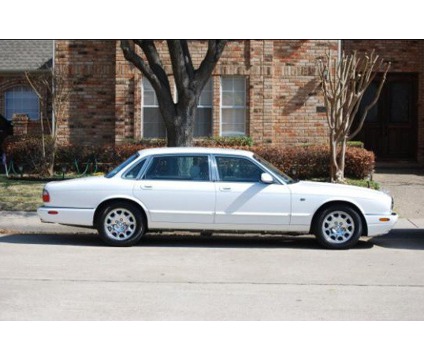
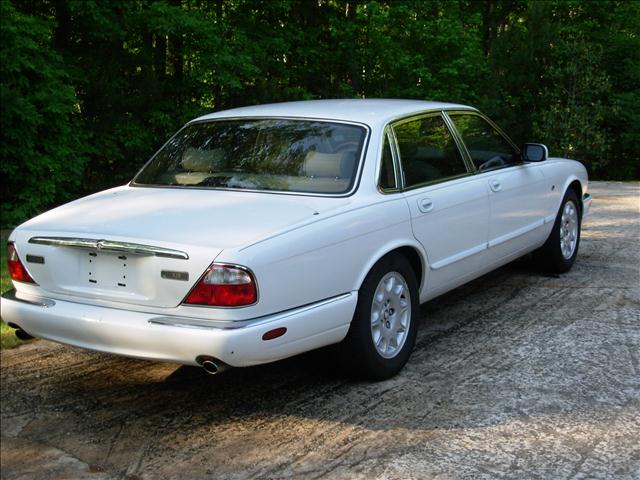
jaguar

###

DEM's Jaguar

More:

Assessment

Doctors, medical professionals and all motorists, have their work cut out, with quiet roads, busy roads, unregulated junctions, stoplights and car parks all providing rich scope for accidents. What this really illustrates, however, is the extent to which drivers cannot afford to let their attention slip for an instant when behind the wheel.

Conclusion

Your thoughts and comments on this ME-P are appreciated. Feel free to review our top-left column, and top-right sidebar materials, links, URLs and related websites, too. Then, subscribe to the ME-P. It is fast, free and secure.

Link: http://feeds.feedburner.com/HealthcareFinancialsthePostForcxos

Speaker: If you need a moderator or speaker for an upcoming event, Dr. David E. Marcinko; MBA – Publisher-in-Chief of the Medical Executive-Post – is available for seminar or speaking engagements. Contact: MarcinkoAdvisors@msn.com

OUR OTHER PRINT BOOKS AND RELATED INFORMATION SOURCES:

Product Details  Product Details


Some Vital Survival Tools for Physicians and their Consulting Advisors

OUR BOOKS, TEXTS AND DICTIONARIES ARE VITAL SURVIVAL TOOLS FOR ALL PHYSICIANS … AND THEIR CONSULTING ADVISORS 

###

Product DetailsProduct DetailsProduct Details

Product Details  Product Details

Product DetailsProduct Details

Speaker: If you need a moderator or speaker for an upcoming event, Dr. David E. Marcinko; MBA – Publisher-in-Chief of the Medical Executive-Post – is available for seminar or speaking engagements. Contact: MarcinkoAdvisors@msn.com

      Join Our Mailing List

Safe Driving Tips all Doctor’s May Learn from Bus Drivers

Join Our Mailing List 

On Physicians Driving Safely

By Dr. David Edward Marcinko MBA

By Nalley Collision Center

Dr. MarcinkoBus drivers take their lives into their hands every day on city streets and interstate highways. Despite challenging traffic conditions and the responsibility of a large vehicle and numerous passengers, bus drivers find ways to stay safe while keeping up with demanding routes and schedules. These unsung heroes of the road universally command respect, but they also offer important lessons to ordinary drivers who share busy roads with buses every day.

So – as summer is upon us – and in the spirit of safe driving – allow our ME-P team at to share a few bus-driver inspired driving tips with you.

Distracted Driving

Modern technology has caused an addiction for many bus drivers as they struggle to communicate while safely driving a bus.

An Italian bus driver was caught on video simultaneously using two cell phones while steering his bus with his elbows. This talent showed the world that cell phone use behind the wheel might not present the extreme danger most people expect.

Seriously, bus drivers can provide some good examples of how not to drive. Although many states have laws in place restricting the use of electronic devices while driving, many states do not. All drivers, and every doctor, should avoid risking their lives and the lives of passengers by reserving cell phone use to emergencies while driving.

Road Rage

A New York City school bus driver named Juan DelValle side-swiped a car on a crowded city street and was subsequently attacked by the offended driver. DelValle was within days of his long-awaited retirement and died from severe injuries to his brain.

This one example shows how a minor traffic incident can quickly escalate into a life-changing event for unprepared drivers. Drivers should exercise extreme caution every time they have an incident with another driver. After an accident, drivers who feel threatened can call police and wait in their cars until help arrives.

Rest                                             

Bus drivers illustrate why no one should sit behind the wheel of a vehicle when fatigued.

Investigators determined that a tour bus crash in New York that killed 15 passengers was caused by a sleepy driver. The bus driver, Ophadell Williams, was charged with criminally negligent homicide. His life might never return to its previous state.

Drivers who spend time getting the sleep they need might arrive late at their destination, but they also arrive with a clear conscience, an alert mind, and living passengers.

Defensive Driving

A Transit bus in Los Osos, California rolled down an embankment after colliding with a car on a dark and wet stretch of road. Bus drivers know they cannot count on the driving skills of other motorists for safety, so they drive defensively. In the Los Osos case, the bus driver managed to stay alive after the Mercedes crossed the center line.

Although the driver of the automobile died in the wreck, all the bus passengers lived.

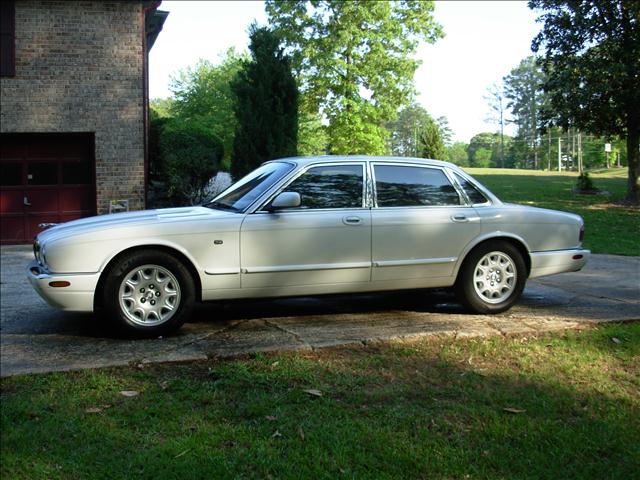
DEM's Jag XJ-V8-LMore

Assessment

Every driver should periodically take time to review defensive-driving tactics or to attend a defensive driving class to improve their ability to respond to unexpected circumstances on the highway.  

Conclusion

Your thoughts and comments on this ME-P are appreciated. Feel free to review our top-left column, and top-right sidebar materials, links, URLs and related websites, too. Then, subscribe to the ME-P. It is fast, free and secure.

Link: http://feeds.feedburner.com/HealthcareFinancialsthePostForcxos

Speaker: If you need a moderator or speaker for an upcoming event, Dr. David E. Marcinko; MBA – Publisher-in-Chief of the Medical Executive-Post – is available for seminar or speaking engagements. Contact: MarcinkoAdvisors@msn.com

OUR OTHER PRINT BOOKS AND RELATED INFORMATION SOURCES:

Health Dictionary Series: http://www.springerpub.com/Search/marcinko

Practice Management: http://www.springerpub.com/product/9780826105752

Physician Financial Planning: http://www.jbpub.com/catalog/0763745790

Medical Risk Management: http://www.jbpub.com/catalog/9780763733421

Hospitals: http://www.crcpress.com/product/isbn/9781439879900

Physician Advisors: www.CertifiedMedicalPlanner.org

Product Details  Product Details


On the Future of Dentistry?

Join Our Mailing List 

Not good for the profession … as we know it!

By D. Kellus Pruitt DDS

1-darrellpruittIf you have not yet noticed, the future doesn’t look good for the dental profession as we know it.

Like far too many neighborhood primary care physicians who can no longer make a profit on their own, managed care is having its way with dentists as well.

Unfortunately, our patients remain clueless about downsides to discounted care sold by huge, insensitive corporations manned by executives who cannot be held accountable for their favorite providers’ level of care.

Since as a dentist I am somewhat transparent anyway, I would like to share some feelings with friends about an awkward subject that is on the minds of more dentists than one might expect, yet (almost) none feel comfortable revealing it: Regardless of the public’s perception of dentists’ wealth for the last few decades, it does not look like the anticipated economic recovery is likely to include the small dental practice down the street.

Schadenfreud

Not unlike Schadenfreude, I am certain at least some of dentistry’s disappointed customers may find this news addictingly pleasing to savor – up until one needs a dentist for a problem that cannot be handled safely by their designated dental therapist preferred by insurance MBAs.

I watch the dental news closer than most dentists, and sadly, my studied predictions have always proven to be very accurate, even if unpopular. Today I confidently predict that the profitability most dentists enjoyed for decades will not return for years – perhaps a decade or more.

On the other hand, as it becomes increasingly difficult to find dentists who allow time for gentle injections, patients should expect to pay them better than most. When an imbalance in the free market becomes unsustainable by artificial means such as managed care’s pay-for-performance algorithms, this is the way competition regulates quality in a natural way.

Personally, I’ve dealt with the downturn by working part time as an associate of another practice to make ends meet, and I feel fortunate to have found such a wonderful opportunity with a wonderful, patient-centered team. Marci, my wife, seems to be happier as well.

Assessment

Sorry if today’s news was a bummer, Doc. Maybe it is time others spoke up as well. Our leaders’ obvious lack of interaction on the internet exposes a tremendous vacuum, and they are incapable of rescuing the profession with silence… and neither will rushed therapists in huge dental clinics.

It’s up to you and me, Doctor. Come on out. The air is fine.

Conclusion

Your thoughts and comments on this ME-P are appreciated. Feel free to review our top-left column, and top-right sidebar materials, links, URLs and related websites, too. Then, subscribe to the ME-P. It is fast, free and secure.

Link: http://feeds.feedburner.com/HealthcareFinancialsthePostForcxos

Speaker: If you need a moderator or speaker for an upcoming event, Dr. David E. Marcinko; MBA – Publisher-in-Chief of the Medical Executive-Post – is available for seminar or speaking engagements. Contact: MarcinkoAdvisors@msn.com

OUR OTHER PRINT BOOKS AND RELATED INFORMATION SOURCES:

DICTIONARIES: http://www.springerpub.com/Search/marcinko
PHYSICIANS: www.MedicalBusinessAdvisors.com
PRACTICES: www.BusinessofMedicalPractice.com
HOSPITALS: http://www.crcpress.com/product/isbn/9781466558731
CLINICS: http://www.crcpress.com/product/isbn/9781439879900
BLOG: www.MedicalExecutivePost.com
FINANCE: Financial Planning for Physicians and Advisors
INSURANCE: Risk Management and Insurance Strategies for Physicians and Advisors

Product DetailsProduct Details

Possible Causes of The Military Suicide Epidemic

Join Our Mailing List

Erosion of Protective Factors

By Roy Miller roydotmiller@gmail.com

Hey Dr. Marcinko,

I’m one of the guys that reads you day by day. I come from a family with a military tradition, but unfortunately I couldn’t follow this path due to an eye problem. Instead, I became very passionate about army related stuff and I tend to bookmark and save as much material I can find.

I just came across this worrying material about suicide in the army and I’d like to share it with you, maybe you’ll find it interesting:

It’s quite a huge problem that unfortunately hasn’t made it on the public agenda and it’s continuously ignored, so I’m trying to create some buzz around it.

There are 3 protective factors to prevent suicide:

1. Belongingness:

The cohesion and camaraderie of a military unit can induce intense feelings of belonging for many service members. Time away from the unit, however, may result in a reduced or thwarted sense of belonging, as individuals no longer have the daily support of their units and feel separate and different from civilians. This is especially true for Guardsmen and Reservists.

2. Usefulness:

The responsibility inherent in military service, the importance of tasks assigned to relatively junior personnel and the high level of interaction among unit members establish the importance and usefulness of each unit member, particularly in an operational environment. In contrast, the experience of living in a garrison environment (for active component personnel) or returning to a civilian job (for Guardsmen, Reservists and veterans) or, worse, unemployment, can introduce feelings of uselessness.

3. Aversion to pain or death

Repeated exposure to military training as well as to violence, aggression and death dulls one’s fear of death and increases tolerance for pain. Thus, the very experience of being in the military erodes this protective factor, even for service members who have not deployed or experienced combat, in part because service members experience pain and discomfort from the beginning of their training.

military-suicide

Erosion of moral certainty

Moral injury: “damage to your deeply held beliefs about right and wrong. It might be caused by something that you do or fail to do, or by something that is done to you – but either way it breaks that sense of moral certainty.”

• Failing to protect their ‘brothers’
• Friendly fire
• Deaths of civilians, particularly women and children
• Discharged from the military

Assessment

It is not the fear and the terror that service members endure in the battlefield that inflicts most psychological damage, but feelings of shame and guilt related to the moral injuries they suffer.

Sources:

Conclusion

Your thoughts and comments on this ME-P are appreciated. Feel free to review our top-left column, and top-right sidebar materials, links, URLs and related websites, too. Then, subscribe to the ME-P. It is fast, free and secure.

Link: http://feeds.feedburner.com/HealthcareFinancialsthePostForcxos

Speaker: If you need a moderator or speaker for an upcoming event, Dr. David E. Marcinko; MBA – Publisher-in-Chief of the Medical Executive-Post – is available for seminar or speaking engagements. Contact: MarcinkoAdvisors@msn.com

OUR OTHER PRINT BOOKS AND RELATED INFORMATION SOURCES:

DICTIONARIES: http://www.springerpub.com/Search/marcinko
PHYSICIANS: www.MedicalBusinessAdvisors.com
PRACTICES: www.BusinessofMedicalPractice.com
HOSPITALS: http://www.crcpress.com/product/isbn/9781466558731
CLINICS: http://www.crcpress.com/product/isbn/9781439879900
BLOG: www.MedicalExecutivePost.com
FINANCE: Financial Planning for Physicians and Advisors
INSURANCE: Risk Management and Insurance Strategies for Physicians and Advisors

Product DetailsProduct DetailsProduct Details

Understanding the Spoils of Healthcare Fraud and Abuse

Self Explanatory – Need we say more?

By ME-P Staff Writers

###

Picture1

[Click on image to enlarge]

###

Assessment

Conclusion

Your thoughts and comments on this ME-P are appreciated. Feel free to review our top-left column, and top-right sidebar materials, links, URLs and related websites, too. Then, subscribe to the ME-P. It is fast, free and secure.

Speaker: If you need a moderator or speaker for an upcoming event, Dr. David E. Marcinko; MBA – Publisher-in-Chief of the Medical Executive-Post – is available for seminar or speaking engagements. Contact: MarcinkoAdvisors@msn.com

OUR OTHER PRINT BOOKS AND RELATED INFORMATION SOURCES:

Product Details

Product DetailsProduct Details

How Volatile Is the Stock Market Today?

Join Our Mailing List

And … Is it Dangerous?

By Lon Jefferies CFP® MBA www.NetWorthAdvice.com

Lon JefferiesBased on conversations with physician and clients, I’d suggest that most investors view the market of the new millennium as more volatile and fragile than it’s been in the past.

JUNE 4, 2013

DOW 15,253.7 +138.1
NASDAQ 3,465.49 +9.58
S&P 1,640.61 +9.87

New concerns that could affect a portfolio are seemingly always coming to light – think of the near-financial collapse of the U.S. economy during the last recession, the U.S. debt downgrade, the potential bailout crises in Europe and the possible devaluation of the euro, domestic unemployment concerns, and the perennial concern about the inflation/deflation of the dollar.

Add to this the idea that the world has become a more unstable place and the reality that supercomputers make thousands of trades every second.

How Valid Are the Concerns?

To determine the validity of these perceptions, Allan Roth analyzed the performance of the Wilshire 5000 (an index of the market value of all stocks actively traded in the United States) since 1980 in the May edition of Financial Planning Magazine. Surprisingly, Mr. Roth found that market swings of more than 30% weren’t much more common during the past 10 years than they were from 1980-2002. In fact, on a monthly basis, market swings of more than 10% actually occur less these days than in the past.

On a daily basis, the mean standard deviation of returns (a measure of volatility) over the entire 32-year period was 1.01%. In other words, during 68% of trading days, the index increased or decreased by less than 1.01%. Further, on 95% of trading days the index went up or down by no more than 2.02% (or two standard deviations). While daily standard deviation hit a record in 2008 of more than 2.5%, last year actually had lower volatility than the overall average. Consequently, while volatility hit a high in 2008, it has been at a very normal level since.

###

Stock_Market

###

Why the Perceptions?

So why do investors perceive more uncertainty in today’s environment? Mr. Roth mentions a few hypotheses:

  • Magnitude Effect – To suffer a 2.5% decrease in 1972, the S&P 500 would have needed to decrease by 2.54 points. To endure a 2.5% decrease today, the index would need to decrease by 41.25 points. Although both represent the same investment loss, we perceive the double digit point swing as larger and more dramatic.
  • Availability Bias – Humans overestimate the probability of events associated with memorable or vivid occurrences. Memorable events are further magnified by excessive coverage in the media.  Because the market crash of 2008 was so remarkable, investors tend to overestimate the probability of a similar crash and underestimate the probability of market appreciation, which historical data says is significantly more likely.
  • Access to Information – Jason Zweig, a columnist for the Wall Street Journal, says “today between websites, Facebook, Twitter, the TV and smart phones, an investor couldn’t escape knowing about a big move in the stock market if he or she tried. Whatever you pay attention to, while you are attending to it, will always seem more significant than it really is.”
  • Simple Fear and Pessimism – Meir Statman, a finance professor at Santa Clara University, suggests “people who think the U.S. is in decline view investing as riskier now than in the past, when they believe the country was better off, and no amount of data showing actual volatility would change their minds.” Similarly, Daniel Kahneman, a Nobel laureate and Princeton professor suggests “people always think the present is more volatile than the past. Because we know that historic crises have resolved themselves, we may simply remember the past as being less volatile than we viewed it at the time.”

More:

Assessment

It’s likely beneficial for physicians and all investors to evaluate their behavior and determine if they exhibit any of these biases. History tells us that the most dominate factor leading to investment success is to keep your asset allocation steady. Being aware of tendencies that might encourage us to make rash investment decisions could save us a lot of stress during critical market movements.

Conclusion

Your thoughts and comments on this ME-P are appreciated. Feel free to review our top-left column, and top-right sidebar materials, links, URLs and related websites, too. Then, subscribe to the ME-P. It is fast, free and secure.

Link: http://feeds.feedburner.com/HealthcareFinancialsthePostForcxos

Speaker: If you need a moderator or speaker for an upcoming event, Dr. David E. Marcinko; MBA – Publisher-in-Chief of the Medical Executive-Post – is available for seminar or speaking engagements. Contact: MarcinkoAdvisors@msn.com

OUR OTHER PRINT BOOKS AND RELATED INFORMATION SOURCES:

Product Details  Product Details

Product DetailsProduct Details

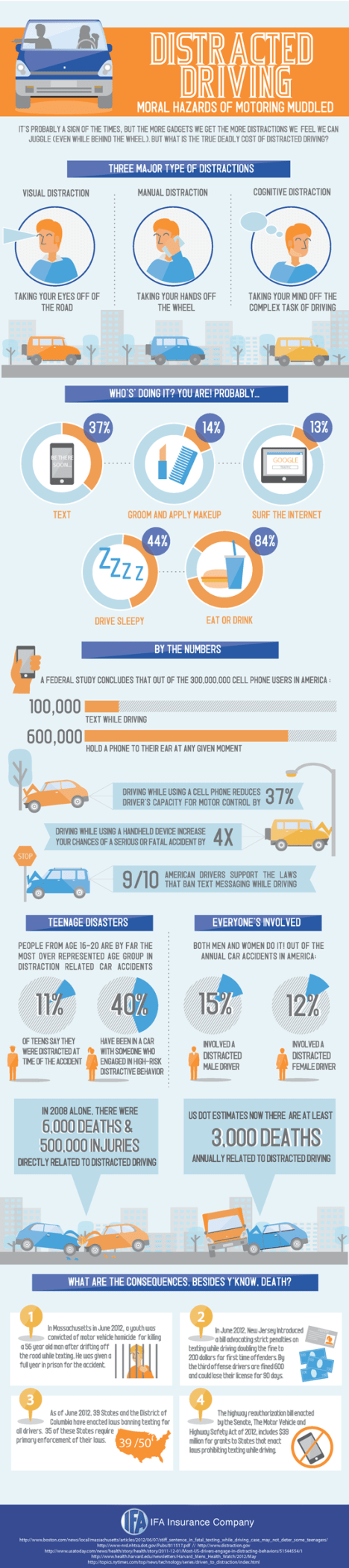
Cell Phone Usage In Car Crashes Massively Underreported

Join Our Mailing List

Are You Guilty – Doctor?

[An NSC Infographic]

COM-Cell-Phone-Crash-Underreporting

Conclusion

Your thoughts and comments on this ME-P are appreciated. Feel free to review our top-left column, and top-right sidebar materials, links, URLs and related websites, too. Then, subscribe to the ME-P. It is fast, free and secure.

Link: http://feeds.feedburner.com/HealthcareFinancialsthePostForcxos

Speaker: If you need a moderator or speaker for an upcoming event, Dr. David E. Marcinko; MBA – Publisher-in-Chief of the Medical Executive-Post – is available for seminar or speaking engagements. Contact: MarcinkoAdvisors@msn.com

OUR OTHER PRINT BOOKS AND RELATED INFORMATION SOURCES:

Health Dictionary Series: http://www.springerpub.com/Search/marcinko

Practice Management: http://www.springerpub.com/product/9780826105752

Physician Financial Planning: http://www.jbpub.com/catalog/0763745790

Medical Risk Management: http://www.jbpub.com/catalog/9780763733421

Hospitals: http://www.crcpress.com/product/isbn/9781439879900

Physician Advisors: www.CertifiedMedicalPlanner.org

Product Details  Product Details

Purchase ME-P Textbooks, Handbooks and Dictionaries to Thrive

 Our Library is Growing … thanks to you

Join Our Mailing List

By Ann Miller RN MHA

[ME-P Executive-Director]

We have been publishing the Medical Executive-Post for more than eight years now. And, with almost 3,000 formal posts, by the nation’s brightest experts, we have a treasure trove of information available to you.

So now, for the first time, all this information – and more – has been codified, updated, copy-righted and copy-protected in print form for your purchase and use. All have been edited by our Publisher – Dr. David Edward Marcinko and Professor Hope Rachel Hetico.

Just click on an image below to order.

Product DetailsProduct DetailsProduct Details

Product Details  Product Details

Product DetailsProduct Details

Assessment

Purchase our white papers, too: https://medicalexecutivepost.com/white-papers/

Conclusion

Your thoughts and comments on this ME-P are appreciated. Feel free to review our top-left column, and top-right sidebar materials, links, URLs and related websites, too. Then, subscribe to the ME-P. It is fast, free and secure.

Link: http://feeds.feedburner.com/HealthcareFinancialsthePostForcxos

Speaker: If you need a moderator or speaker for an upcoming event, Dr. David E. Marcinko; MBA – Publisher-in-Chief of the Medical Executive-Post – is available for seminar or speaking engagements. Contact: MarcinkoAdvisors@msn.com

OUR OTHER PRINT BOOKS AND RELATED INFORMATION SOURCES:

Health Dictionary Series: http://www.springerpub.com/Search/marcinko

Practice Management: http://www.springerpub.com/product/9780826105752

Physician Financial Planning: http://www.jbpub.com/catalog/0763745790

Medical Risk Management: http://www.jbpub.com/catalog/9780763733421

Hospitals: http://www.crcpress.com/product/isbn/9781439879900

Physician Advisors: www.CertifiedMedicalPlanner.org

Business%20Optimization

When did you last Review your Insurance Coverage – Doctor?

Join Our Mailing List 

Why shopping around periodically is a smart move

By Lon Jefferies, MBA CFP™  http://www.NetWorthAdvice.com

Lon JeffriesWhen is the last time you compared rates on your home and auto insurance policies – doctors and all ME-P readers? Unfortunately, a stellar safety record doesn’t always translate into lower insurance rates. Even if you think you have a good rate, shopping around periodically is smart.

A Reader’s Query

After attempting to follow my advice of maintaining an umbrella insurance policy, one of our ME-P readers contacted his insurer to add coverage. This reader was shocked when his insurer informed him that he didn’t qualify for an umbrella policy because he didn’t carry sufficient liability insurance on his auto policy. (Minimum auto liability insurance – frequently $500,000 – is required in order to purchase umbrella coverage.) Although this individual had owned his policy for eight years, he was unaware that the policy only provided $50,000 of liability coverage. This amount was clearly insufficient for an individual approaching retirement.

In addition to realizing that he was severely under-insured, this individual discovered he was also paying excessive premiums. For only $50,000 of auto liability coverage, this person was paying $914 per year. Moreover, the individual realized he was paying $351 per year for the $350,000 of liability coverage the individual had on his condo. Consequently, in total, this person was paying $1,265 per year for $50,000 of auto liability and $350,000 of home liability coverage.

Case Model

This individual then spoke with an independent insurance agent to increase auto liability coverage to an amount that enabled him to obtain an umbrella policy. This was critical, as it dramatically decreased the individual’s liability exposure, a risk an individual with accumulated assets clearly shouldn’t have. Even better, the individual was able to obtain dramatically improved rates on his policies. For a total of $1,207 (less than he was previously paying!), the individual was able to secure $1,000,000 of auto liability coverage, $350,000 of home liability, and an additional $1,000,000 umbrella policy.

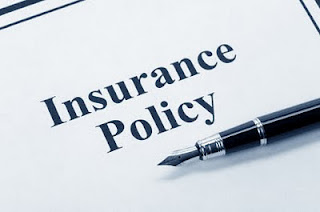
policy insurance

Assessment

Clearly, it can be beneficial to occasionally review and compare rates on your insurance policies. People tend to believe that policies that have been owned for extended periods of time are efficiently priced, but it may be the opposite. If you haven’t verified that you are adequately insured and conducted a cost comparison recently, speak to an independent insurance agent and minimize your exposure with cost-effective policies.

More

Conclusion

Your thoughts and comments on this ME-P are appreciated. Feel free to review our top-left column, and top-right sidebar materials, links, URLs and related websites, too. Then, subscribe to the ME-P. It is fast, free and secure.

Speaker: If you need a moderator or speaker for an upcoming event, Dr. David E. Marcinko; MBA – Publisher-in-Chief of the Medical Executive-Post – is available for seminar or speaking engagements. Contact: MarcinkoAdvisors@msn.com

OUR OTHER PRINT BOOKS AND RELATED INFORMATION SOURCES:

Product Details  Product Details

Workers Memorial Day 2013

Join Our Mailing List 

Workers Celebrate on May First This Year

By Matthew Pelletier

[Director of Public Relations]

Compliance and Safety LLC

marry-harris

“Pray for the dead and fight like hell for the living”

Marry Harris “Mother” Jones

[1837 – 1930]

Dear ME-P,

We’ve just published a page for workers memorial day 2013 (falls on Sunday April 28th, 2013) that I thought you might be interested in posting on the ME-P.

Link: http://complianceandsafety.com/blog/workers-memorial-day-2013/

Assessment

You’re also more than welcome to use any of the content from our memorial page on your website.

Workers Also Celebrate on May First This Year: International Workers’ Day

Conclusion

Your thoughts and comments on this ME-P are appreciated. Feel free to review our top-left column, and top-right sidebar materials, links, URLs and related websites, too. Then, subscribe to the ME-P. It is fast, free and secure.

Link: http://feeds.feedburner.com/HealthcareFinancialsthePostForcxos

Speaker: If you need a moderator or speaker for an upcoming event, Dr. David E. Marcinko; MBA – Publisher-in-Chief of the Medical Executive-Post – is available for seminar or speaking engagements. Contact: MarcinkoAdvisors@msn.com

OUR OTHER PRINT BOOKS AND RELATED INFORMATION SOURCES:

Health Dictionary Series: http://www.springerpub.com/Search/marcinko

Practice Management: http://www.springerpub.com/product/9780826105752

Physician Financial Planning: http://www.jbpub.com/catalog/0763745790

Medical Risk Management: http://www.jbpub.com/catalog/9780763733421

Hospitals: http://www.crcpress.com/product/isbn/9781439879900

Physician Advisors: www.CertifiedMedicalPlanner.org

Product DetailsProduct Details

Be Your Own Banker?

Join Our Mailing List 

BYOB—or not

By Rick Kahler MS CFP® ChFC CCIM www.KahlerFinancial.com

Rick Kahler CFPDoctors – I’m not inviting you to a “bring your own beverage” party. I’m warning you away from a get-rich scheme called “Be Your Own Banker.”

This idea has floated around the Internet and late-night television for a while now. One of the latest versions is touted on a website that I’m not going to name because I don’t want anyone getting sucked into what is essentially one step from being a scam.

Once you drill down past the initial layers of ambiguity, the basic concept seems simple enough. You buy a large whole-life insurance policy. After you pay into it for several years, it will accumulate a cash value. Then, any time you make a major purchase like a new car, you can borrow against your insurance policy instead of going to a bank.

Paying Your Self

According to the people selling this concept, you are the big winner here because you’re paying interest to yourself, not the bank.

The BYOB salespeople are incredible marketers. This must be where political campaign managers ply their trade in between elections. They blast our financial system, banks and bankers, mutual fund managers, and financial advisors. They profess to care about the customers they call “clients.”

The half-truths and misstatements from these sellers are enough to elevate the blood pressure of any fee-only financial planner. They use terms like “depositing cash into a life insurance policy” and “having control of your own banking system.”

Amid all this unbelievable double-talk, they forget to mention one little detail. All that money that you “invest” in your whole life insurance policy is paid in the form of premiums. You aren’t paying it to yourself. You’re paying it to large life insurance companies—which, by the way, are an integral part of the financial system they blast.

###

good news

A Closer Look

Let’s look at some actual numbers. You pay $12,500 a year in premiums for a $125,000 whole life insurance policy. In four years, after paying in a total of $50,000, you would have $46,110 dollars in your account. Yes, this is less than you put in, as the fees and premiums add up to be more than the growth rate. You can borrow up to 90% of the net value, or $41,500.

You will pay the company 5% for borrowing your own money. Supposedly, the interest is paid to yourself and adds to the cash value of the policy. But a deeper look shows that the interest you pay yourself must be over and above the interest paid to the company, which is just another name for “premium.” The insurance company charges you interest regardless of the “interest” you pay yourself.

What happens if you don’t pay back the loan? The interest keeps compounding, adding to the amount of the loan and eating up the cash value of the policy. This could eventually leave you facing some nasty tax consequences, potentially including having to pay income taxes on phantom income.

Instead of paying that $12,500 a year in premiums, you could put it into a deductible 401(k) plan and invest the funds in a diversified portfolio. You’d even be better off to put it into a taxable account. Then if you needed a new car or water heater, you’d have cash and wouldn’t have to borrow from yourself or anyone else.

Assessment

After spending hours researching “being your own banker,” my staff and I understand what BYOB really means. It stands for “Bring Your Own Bottle”—of pain reliever. You’ll need it for the headache of trying to understand this slick advertising scheme. It makes no sense for anyone except those selling the life insurance policy.

Conclusion

Your thoughts and comments on this ME-P are appreciated. Feel free to review our top-left column, and top-right sidebar materials, links, URLs and related websites, too. Then, subscribe to the ME-P. It is fast, free and secure.

Link: http://feeds.feedburner.com/HealthcareFinancialsthePostForcxos

Speaker: If you need a moderator or speaker for an upcoming event, Dr. David E. Marcinko; MBA – Publisher-in-Chief of the Medical Executive-Post – is available for seminar or speaking engagements. Contact: MarcinkoAdvisors@msn.com

OUR OTHER PRINT BOOKS AND RELATED INFORMATION SOURCES:

DICTIONARIES: http://www.springerpub.com/Search/marcinko
PHYSICIANS: www.MedicalBusinessAdvisors.com
PRACTICES: www.BusinessofMedicalPractice.com
HOSPITALS: http://www.crcpress.com/product/isbn/9781466558731
CLINICS: http://www.crcpress.com/product/isbn/9781439879900
BLOG: www.MedicalExecutivePost.com
FINANCE: Financial Planning for Physicians and Advisors
INSURANCE: Risk Management and Insurance Strategies for Physicians and Advisors

Product Details  Product Details

Should You Own an Umbrella Insurance Policy?

Risk Reduction for Medical Professionals?

Join Our Mailing List

By Lon Jefferies, MBA CFP™  www.NetWorthAdvice.com

Lon JeffriesAs a financial planner, a good portion of my job consists of identifying and dealing with potential risks and liabilities for which my clients are exposed. One of the most comprehensive, cost-effective tools for reducing risk exposure is an umbrella insurance policy. Quite simply, if you are reading this ME-P, the purchase of an umbrella policy would be a wise decision.

What is an Umbrella Policy?

An umbrella policy protects both your current and future assets against the cost of losing a lawsuit involving your car or real estate property. Such a policy is in addition to your auto and homeowners insurance.

For example, suppose your auto insurance pays $300k of medical expenses per accident, and you have a $1 million umbrella policy. If you are sued for $800k because of an auto accident, your auto insurance will pay the first $300k of damage. This also serves as the deductible on the umbrella policy, so the umbrella coverage would pay the remaining $500k of damages.

Additionally, umbrella policies cover legal expenses involved with a lawsuit. Even better, since it is the insurance company that will be paying any damages, they are likely to assign a strong (expensive) legal team to your case. Consequently, purchasing an umbrella policy is an indirect way of strengthening your legal defense team.

What Does an Umbrella Policy Cover?

An umbrella policy protects you in car accidents for which you are found to be at fault, as well as accidents that occur on your real estate property. Additionally, these policies protect you from personal injury lawsuits arising from slander, defamation, libel, malicious prosecution, mental anguish and more.  Even better, this coverage will protect you from accidents caused by your dependent children.

As you might imagine, certain factors increase your need for an umbrella policy. For instance, if you spend a lot of time in your car, or you own a swimming pool or a dog, the need for an umbrella policy rises.

Some people think they don’t need an umbrella policy simply because their low net worth doesn’t justify it. This is inaccurate because losing a lawsuit can result in the loss of both your current assets, and your future earnings. For this reason, I believe nearly everyone, especially medical professionals, should have an umbrella policy.

###

policy insurance

###

How Do I Purchase Coverage?

In most instances, an umbrella policy can be purchased through your current insurance providers. A $1 million policy usually costs approximately $200 per year, with additional coverage purchased in $1 million dollar increments and costing approximately $100 per year. At such a low cost while providing critical catastrophic coverage, there is no reason for you to not own such a policy.

Conclusion

Your thoughts and comments on this ME-P are appreciated. Feel free to review our top-left column, and top-right sidebar materials, links, URLs and related websites, too. Then, subscribe to the ME-P. It is fast, free and secure.

Speaker: If you need a moderator or speaker for an upcoming event, Dr. David E. Marcinko; MBA – Publisher-in-Chief of the Medical Executive-Post – is available for seminar or speaking engagements. Contact: MarcinkoAdvisors@msn.com

OUR OTHER PRINT BOOKS AND RELATED INFORMATION SOURCES:

Product Details  Product Details

Health 2.0 Financial Planning for Medical Executive-Post Members

A By-Product of Health 2.0?

By Dr. David Edward Marcinko FACFAS MBA CMP*

[Founder and CEO]

www.MedicalBusinessAdvisors.com

Dr David E Marcinko MBAA decade ago, Editor Gregory J. Kelley of Physician’s MONEY DIGEST and I reported that a 47 year old-doctor with $184,000 annual income would need about $5.5 million dollars for retirement at age 65. Then came the “flash-crash’ of 2007-08, the home mortgage fiasco and the Patient Protection and Accountable Care Act [PP-ACA] of 2010; etc.

No wonder that medical provider career panic is palpable. Much like the new medical home concept, the idea of holistic life planning was born.

Life Planning

Life planning has many detractors and defenders. Formally, life planning has been defined in the following way. 

Financial Life Planning is an approach to financial planning that places the history, transitions, goals, and principles of the client at the center of the planning process.  For the client, their life becomes the axis around which financial planning develops and evolves.

But, for physicians, life planning’s quasi-professional and informal approach to the largely isolated disciplines of medically focused financial planning, was still largely inadequate.

Why? 

Today’s personal financial and practice environment is incredibly more complex than it was in 2007-08, as economic stress from HMOs, Wall Street, liability fears, criminal scrutiny from government agencies, IT mischief from hackers, economic benchmarking from hospitals and the lost confidence of patients all converged to inspire a robust new financial planning 2.0 approach for medical professionals.

Example of a financial planning mistake 

Recall the tale of Dr. Debasis Kanjilal, a pediatrician from New York who put more than $500,000 into the dot.com company, InfoSpace, upon the advice of Merrill Lynch’s star but non fiduciary analyst Henry Bloget.

Is it any wonder that when the company crashed, the analyst was sued, and Merrill settled out of court? Other analysts, such as Mary Meeker of Morgan Stanley, Dean Witter and Jack Grubman from Salomon Smith Barney, were involved in similar fiascos.

Although sad, this story is a matter of public record. Hopefully, doctors now understand that the big brokerage houses that underwrite and recommend stocks may have credibility problems, and that physicians got burned with the adrenalin rush of “self-directed” investment portfolios.

Example of a medical practice management mistake 

Just reflect a moment on colleagues willing to securitize their medical practices a few years ago, and cash out to Wall Street for perceived riches that were not rightly deserved

Where are firms such as MedPartners, Phycor, FPA and Coastal now? A recent survey of the Cain Brothers Physician Practice Management Corporation Index of publicly traded PPMCs revealed a market capital loss of more than 95%, since inception. 

Another Approach?

This disruptive narrative shift was formally noted by the Institute of Medical Business Advisors Inc [iMBA, Inc] and introduced to the medical and financial services industry. This research and corpus of work resulted in hundreds of publications in the Library of Medicine, National Institute of Health (NIH) and the Library of Congress, along with related publications, a dozen textbooks and white papers

http://www.ncbi.nlm.nih.gov/nlmcatalog?term=marcinko

The iMBA approach to financial planning, as championed by the www.CertifiedMedicalPlanner.org professional charter designation, integrates the traditional concepts of fiduciary focused financial planning, with the increasing complex business concepts of medical practice management.

The former ideas are presented in our textbook on financial planning for doctors: Financial Planning for Physicians and Advisors

The later in our companion book: Business of Medical Practice [Edition 3.0]

A textbook for hospital CXOs and physician-executives: Hospitals & Healthcare Organizations

While most issues of risk management, liability and insurance are found in Risk Management and Insurance Strategies for Physicians and Advisors

And, for the perplexed, all definitions are codified in the dictionary glossary Health Dictionary Series

Health 2.0 Paradigm Shift

And so, the ME-P community now realizes that a more integrated approach is needed.  The traditional vision of medical practice management, personal physician financial planning and how they may look in the future are rapidly changing as the retail mentality of medicine is replaced with a wholesale philosophy.

Or, how views on maximizing current practice income might be more profitably sacrificed for the potential of greater wealth upon eventual practice sale and disposition.

Or, how Yale University economist Robert J Shiller warns in “The New Financial Order” [Risk in the 21st Century] that the risk for choosing the wrong healthcare profession or specialty might render physicians obsolete by technological changes, managed care systems or fiscally unsound demographics. 

Physician-Executive

My Assessment

Yet, the opportunity to re-vise the future at any age through personal re-engineering, exists for all of us, and allows a joint exploration of the medicine, business and the meaning and purpose of life.

To allow this deeper and more realistic approach, the advisor and the doctor must build relationships based on fiduciary trust, greater self-knowledge and true medical business and financial enhancement acumen.

Are you up to the task?

Conclusion

Your thoughts and comments on this ME-P are appreciated. Feel free to review our top-left column, and top-right sidebar materials, links, URLs and related websites, too. Then, subscribe to the ME-P. It is fast, free and secure.

Link: http://feeds.feedburner.com/HealthcareFinancialsthePostForcxos

Speaker: If you need a moderator or speaker for an upcoming event, Dr. David E. Marcinko; MBA – Publisher-in-Chief of the Medical Executive-Post – is available for seminar or speaking engagements. Contact: MarcinkoAdvisors@msn.com

OUR OTHER PRINT BOOKS AND RELATED INFORMATION SOURCES:

Product DetailsProduct DetailsProduct Details

Product Details  Product Details

Product DetailsProduct Details

About Domestic Asset Protection Trusts

Join Our Mailing List

Is There Stronger Protection in DAPTs?

By Rick Kahler MS CFP® ChFC CCIM http://www.KahlerFinancial.com

Rick Kahler CFPMost financial advisors and attorneys who specialize in asset protection trusts have probably never visited South Dakota. Yet it’s one of their favorite places. A change made by the legislature this year has made them like it even more.

The reason asset protection experts are so fond of our state is that South Dakota is one of a few states (Nevada, Delaware, and Alaska are the others) to offer some of the strongest protections available for Domestic Asset Protection Trusts (About Domestic Asset Protection Trusts).

House Bill 1056

House Bill 1056, passed by the legislature and signed into law by Governor Dennis Daugaard, includes a small change in wording that makes DAPTs even stronger. The relevant section amends South Dakota Codified Law 55-16-15 by adding the five words shown here in all caps:

“Notwithstanding the provisions of §§ 55-16-9 to 55-16-14, inclusive, this chapter does not apply in any respect to any person to whom AT THE TIME OF TRANSFER the transferor is indebted on account of an agreement or order of court for the payment of support or alimony in favor of the transferor’s spouse, former spouse, or children, or for a division or distribution of property in favor of the transferor’s spouse or former spouse, to the extent of the debt.”

This change is not intended to allow divorcing spouses to hide assets from one another, cheat ex-spouses out of alimony, or avoid paying child support. Someone who owes alimony or child support to a former spouse cannot get out of that obligation by contributing assets to a DAPT. Any amounts owed at the time the trust is established must be paid. Attempting to avoid legitimate obligations through a DAPT would be fraud.

On Definitions and Meanings

What the new wording means is that, once a divorce settlement has been agreed upon, former spouses cannot come back later and make new claims against an ex-wife or ex-husband’s protected assets.

For many people, this change is irrelevant. Many divorcing couples, probably the majority, don’t have many financial assets and have never heard of a DAPT. They work out a financial settlement, go their separate ways, and that’s that.

Yet there are cases where this new law could make a huge difference.

Retirement vault

Here are just two examples: 

Suppose that at the time a couple divorce, the husband had just started a construction company. It had more debt than assets and wasn’t making any money yet. Several years later, business is booming and he is well on his way to becoming wealthy. Even though his ex-wife was not involved in building the company, she might try to benefit from his post-divorce success by suing for a share of his assets. He could protect those assets by contributing them to a DAPT.

Or suppose a divorce settlement required the wife to pay her husband a one-time cash amount in exchange for his share of their house and acreage. Several years after the divorce, he isn’t doing so well financially. She’s still living in the house, however, and the value of the property has increased significantly. He might sue to amend the original agreement in an effort to claim part of the real estate. His attempt to change the agreement after the fact couldn’t touch that property if she had contributed it to a DAPT.

Assessment

Until now, Nevada was the only state whose DAPT laws did not make an exception for former spouses. This change in the South Dakota law makes the two states very comparable in their DAPT provisions. It’s one more reason for asset protection professionals to find South Dakota a great place to do business. 

Conclusion

Your thoughts and comments on this ME-P are appreciated. Feel free to review our top-left column, and top-right sidebar materials, links, URLs and related websites, too. Then, subscribe to the ME-P. It is fast, free and secure.

Link: http://feeds.feedburner.com/HealthcareFinancialsthePostForcxos

Speaker: If you need a moderator or speaker for an upcoming event, Dr. David E. Marcinko; MBA – Publisher-in-Chief of the Medical Executive-Post – is available for seminar or speaking engagements. Contact: MarcinkoAdvisors@msn.com

OUR OTHER PRINT BOOKS AND RELATED INFORMATION SOURCES:

DICTIONARIES: http://www.springerpub.com/Search/marcinko
PHYSICIANS: www.MedicalBusinessAdvisors.com
PRACTICES: www.BusinessofMedicalPractice.com
HOSPITALS: http://www.crcpress.com/product/isbn/9781466558731
CLINICS: http://www.crcpress.com/product/isbn/9781439879900
BLOG: www.MedicalExecutivePost.com
FINANCE: Financial Planning for Physicians and Advisors
INSURANCE: Risk Management and Insurance Strategies for Physicians and Advisors

Product Details  Product Details

Are Doctors Protecting their Credit Standing?

Join Our Mailing List

Avoiding Credit Errors

By Lon Jefferies, MBA CFP™  http://www.NetWorthAdvice.comLon Jefferies

A clean, accurate credit history is a critical piece of the personal finance puzzle for doctors and us all. Staying on top of your credit standing over time can mean big savings since credit scores often determine your access to loans, interest rates, and monthly payments. An error on the report of any of the three major credit agencies – Experian, Equifax, or TransUnion – could be catastrophic next time you apply for a loan.

The Services

There are multiple credit-monitoring services you can utilize that charge approximately $15 per month, but these fees likely aren’t necessary. You can order a free credit report from each of the three major credit agencies every year by visiting AnnualCreditReport.com.

Additionally, several services will send you updates from the credit bureaus at no cost. Credit Sesame will track data on your Experian report daily and instantly email you if anything suspicious pops up. There are over 35 triggers for alerts, including new accounts opened, late payments, credit inquires, and address changes. The website also provides a running credit score daily.

Credit Karma has a similar tool that provides free daily monitoring of your TransUnion report. This tool also provides valuable data such as how many lines of credit are evaluated on your credit report and your auto insurance score (used to determine your insurance premiums).

Again, both monitoring tools are free, don’t require a credit card, and take no longer than a couple minutes to sign up for.

stand-out

Assessment

Getting an instant heads-up that there’s been a change in your report could help you fix errors quickly, catch an identity theft at work, or get on top of a delinquent account. As a doctor, you’ve worked hard to establish your credit, so make sure you protect it.

Conclusion

Your thoughts and comments on this ME-P are appreciated. Feel free to review our top-left column, and top-right sidebar materials, links, URLs and related websites, too. Then, subscribe to the ME-P. It is fast, free and secure.

Link: http://feeds.feedburner.com/HealthcareFinancialsthePostForcxos

Speaker: If you need a moderator or speaker for an upcoming event, Dr. David E. Marcinko; MBA – Publisher-in-Chief of the Medical Executive-Post – is available for seminar or speaking engagements. Contact: MarcinkoAdvisors@msn.com

OUR OTHER PRINT BOOKS AND RELATED INFORMATION SOURCES:

Health Dictionary Series: http://www.springerpub.com/Search/marcinko

Practice Management: http://www.springerpub.com/product/9780826105752

Physician Financial Planning: http://www.jbpub.com/catalog/0763745790

Medical Risk Management: http://www.jbpub.com/catalog/9780763733421

Hospitals: http://www.crcpress.com/product/isbn/9781439879900

Physician Advisors: www.CertifiedMedicalPlanner.org

Product Details  Product Details

Beware Automobile Identity Theft and Physician Focused Scams

Join Our Mailing List

Check Your Driver’s License

By Dr. David Edward Marcinko MBA

[Editor-in-Chief]

DEM 2013

WARNING: Did you know that identity theft and physician targeted automobile scams are all the rage.

According to recent FBI reports, and the National Motor Vehicle License Organization [NMVLO], now you can see anyone’s driver’s license on the Internet, including your own! And, medical professionals are the targeted group of choice.

The FIA Culprit

The United States amendment to the Freedom of Information Act, enacted on September 3rd 2008, provides public access to motor vehicle driver’s information in an e-format. Under the Motor Vehicle Operator License Identification  Act (MOLIA), all US states are required  to adhere to the Driver’s statute and store an electronic copy of all valid drivers licenses in their state. And, they do their best to make all license photo’s searchable.

Want Proof?

I just searched for my driver’s license and there it was … picture and all. Thanks Homeland Security!

Go to the web site, and check it out. It’s unbelievable. Just enter your name, city and state to see if your license is on file. After your license comes on the screen, click the box marked “Please Remove.” This will remove it from public viewing, but not from law enforcement.

###

Classic XJ-V8-WB Jaguar

My vintage British 2000 Jaguar XJ-V8-LWB touring sedan 

Jaguar Touring sedan XJ-V8-LWB###

Assessment

As an auto [Jaguar] enthusiast, I am appalled at this situation. Please notify all your friends and ME-P colleagues so they can protect themselves, too.  Believe me – they will thank you for it. Here is the link.

Linkhttp://www.license.shorturl.com/>http://www.license.shorturl.com/

Conclusion

Your thoughts and comments on this ME-P are appreciated. Feel free to review our top-left column, and top-right sidebar materials, links, URLs and related websites, too. Then, subscribe to the ME-P. It is fast, free and secure.

Speaker: If you need a moderator or speaker for an upcoming event, Dr. David E. Marcinko; MBA – Publisher-in-Chief of the Medical Executive-Post – is available for seminar or speaking engagements. Contact: MarcinkoAdvisors@msn.com

OUR OTHER PRINT BOOKS AND RELATED INFORMATION SOURCES:

Product Details  Product Details

Physician Financial Planning IS Medical Risk Management [video]

Join Our Mailing List

By Ann Miller RN MHA

Financial Planning Handbook for Physicians and Advisors

Product Details

Insurance and Risk Management Strategies for Physicians and Advisors

Product Details

[Click on icons for larger image]

###

Business protection strategies for small medical practices

A study recently released by insurance specialist firm The Hartford reveals that small businesses continue to succeed despite challenging economic conditions.

In this video, Ray Sprague, senior vice president for The Hartford’s small commercial insurance segment, shares key takeaways from the study and discusses strategies that small medical practices can implement to protect their business.

VIDEO

http://www.healthcarefinancenews.com/video/business-protection-strategies-small-medical-practices

Gun control dialog

###

Controlling the Power of a “Power of Attorney”

Join Our Mailing List

A Primer and Review for Doctors

By Rick Kahler MS CFP® ChFC CCIM www.KahlerFinancial.com

Rick Kahler CFPIs it a good idea to give control of your finances to someone else through a power of attorney?

Maybe. Or maybe not. It’s foolish to sign away complete authority to someone who may or may not be trustworthy. It’s equally foolish to refuse to consider a power of attorney in circumstances where it could serve you well.

The Patricia Cornwell Case

In a recent case where a power of attorney might have been given too easily, best-selling author Patricia Cornwell charged a financial management firm with negligence, alleging that it cost her millions of dollars. She had hired the firm to take care of her financial affairs, authorizing its manager through a power of attorney to make decisions on her behalf.

A More Typical Case Example

At the other extreme, one of my clients was taking care of financial matters for her elderly father, who had Alzheimer’s. Yet when she mentioned a power of attorney, her father refused to sign one. Even with his memory failing, he had retained the idea that giving control of his money to someone else was a really bad idea.

Options are Wide Ranging

Doctors don’t necessarily realize that a power of attorney can offer a whole range of options between “go ahead and do everything” and “absolutely not.” There are many situations where a limited power of attorney might be useful. Such a document authorizes someone to act on your behalf only for a one narrow purpose. It spells out the boundaries of that person’s authority and often expires after a given period of time.

For example:

One common use for a limited power of attorney is to facilitate the sale of a piece of real estate or other property from a distance. If you have to move to Ohio but your house back in Nebraska hasn’t sold yet, you could authorize a trusted friend, relative, or financial professional to handle the transaction for you.

Another way a limited power of attorney is often used is to have someone take care of your affairs while you are temporarily unavailable or incapable. Suppose you’re undergoing treatment for a serious illness or injury, or you’re taking a three-month trip around the world. You might want to authorize a family member to pay your bills and make other necessary decisions. The authority you give them could be as broad or narrow as you deem appropriate.

Many physician-couples execute durable powers of attorney granting their spouses or children broad authority to act for them if they become disabled. This has become a common and helpful component of retirement/old age planning.

IBNRs

###

Limiting the Limited Power

Yet, I see far fewer folks, and even medical professionals, using limited powers of attorney. One reason for this may be the expense and hassle. You don’t necessarily want to hire an attorney to draw up a complex document every time you go on vacation.

If you think limited powers of attorney might be useful for you, one possibility could be to look online. Several sites offer legal forms at reasonable rates. Just keep in mind these are “one size fits all.” Be sure the forms are valid in your state and that you understand what you’re signing.

Another option might be to see if your attorney would draft one document as a template, including language to cover various situations. Then you could adapt it as needed for specific purposes.

Assessment

Whatever the circumstances; remember that a power of attorney is a useful but potentially dangerous tool. It’s a bit like a chainsaw—an expert can make beautiful sculpture with it, but an amateur can cut someone’s leg off. Before you put that much power into anyone’s hands, make sure you can trust the person to use it well.

Conclusion

Your thoughts and comments on this ME-P are appreciated. Feel free to review our top-left column, and top-right sidebar materials, links, URLs and related websites, too. Then, subscribe to the ME-P. It is fast, free and secure.

Link: http://feeds.feedburner.com/HealthcareFinancialsthePostForcxos

Speaker: If you need a moderator or speaker for an upcoming event, Dr. David E. Marcinko; MBA – Publisher-in-Chief of the Medical Executive-Post – is available for seminar or speaking engagements. Contact: MarcinkoAdvisors@msn.com

Our Other Print Books and Related Information Sources:

Health Dictionary Series: http://www.springerpub.com/Search/marcinko

Practice Management: http://www.springerpub.com/product/9780826105752

Physician Financial Planning: http://www.jbpub.com/catalog/0763745790

Medical Risk Management: http://www.jbpub.com/catalog/9780763733421

Hospitals: http://www.crcpress.com/product/isbn/9781439879900

Physician Advisors: www.CertifiedMedicalPlanner.org

Product Details  Product Details


Books for Savvy Doctors and their Financial Advisors and Management Consultants

Join Our Mailing List

Learn and Prosper from the ME-P

By Ann Miller RN MHA

Product DetailsProduct DetailsProduct Details

Product Details  Product Details

Product DetailsProduct Details

Assessment

Click on each image for more information.

Feel free to write a review and tell us what you think?

Conclusion

Your thoughts and comments on this ME-P are appreciated. Feel free to review our top-left column, and top-right sidebar materials, links, URLs and related websites, too. Then, subscribe to the ME-P. It is fast, free and secure.

Speaker: If you need a moderator or speaker for an upcoming event, Dr. David E. Marcinko; MBA – Publisher-in-Chief of the Medical Executive-Post – is available for seminar or speaking engagements. Contact: MarcinkoAdvisors@msn.com

OUR OTHER PRINT BOOKS AND RELATED INFORMATION SOURCES:

Product Details

What to do if You Rear End the Car in Front of You?


Join Our Mailing List

By Dr David Edward Marcinko MBA via Nalley Collision Center

[Editor-in-Chief]

dr-david-marcinko21As a doctor, driver and former insurance agent, I know that any car accident, no matter the point of impact, is frightening and inconvenient. But, rear-end accidents (frequently referred to as “fender benders”) are a common occurrence on the road and form a significant proportion of all road collisions.

According to a report on the Science Daily website, there were nearly two   million rear-end collisions in 2006, comprising nearly 30% of all crashes on   U.S. roads. Here’s how to deal if you rear-end another vehicle on the road.

First Things First

In the event that you rear-end the car in front of you, you will likely be very dazed or shocked, especially initially. Unless there are life-threatening reasons why you must exit the vehicle immediately, try to pause for a moment in an effort to gather your breath and calm down. You will   need to be able to make a number of decisions related to the situation, and the clearer your head, the more likely you are to act appropriately.

Your first consideration must always be to the welfare and safety of yourself and your passengers, as well as the passengers in any other vehicle involved in the accident.

According to the severity of the accident, the range of personal injuries caused by rear-end collisions can be significant, ranging from bruises and grazes to whiplash, broken bones, and even death. When you rear-end a car, the impact from your vehicle is transferred to the car in front, lifting passengers and drivers sharply forwards and upwards at the same time. Whiplash injuries are common, difficult to treat, and may not be immediately obvious. If you are in any doubt as to the severity of any injury incurred during the collision, call the emergency services and request an ambulance. Some injuries can be worsened if the injured party is moved awkwardly, for example.

When exiting the vehicle, ensure that you and your passengers can move to a safe place, away from any remaining traffic. Move completely off the road or highway, and as far away from the vehicles as you can. If the impact is minor, you may be able to drive the vehicle to the side of the road, or onto a side road, but remember that, in some states, it is illegal to move your car from the scene of a collision until the police have attended, so don’t do anything hasty. Regardless of where your car is, ensure that when leaving the vehicle you do not exit into moving traffic. Pay particular attention to children or animals who may be frightened by the collision, and will require additional supervision.

If you have an emergency kit, use this to alert other drivers to your vehicle. Ensure that the engine is turned off, that your hazard lights are on and that you have placed emergency cones or warning triangles at an appropriate distance from the car.

Road traffic safety regulations stipulate that, regardless of the driving conditions, you must be able to stop safely if the car in front of you comes to a halt, even if that car brakes very sharply. It is only in the event that a vehicle rear-ends your vehicle, causing you to shunt into the car in front, that your insurance company may not conclude that the accident was your fault. Like any other type of   collision, you will need to surrender your insurance and driver details to the other driver. Even if you are assuming that the accident was your fault, you will need to collect the other driver’s details, too. You will need their license number, their name, address, phone number, insurance company, insurance policy number, and license plate number. You should also establish whether the other driver owns the vehicle.

If possible, and if it is safe to do so, take photographs of the accident scene with your cell phone, showing the road conditions, the position of the cars, and any specific damage noted.

Remember that most modern mobile phones include a camera. Insurance companies suggest that you do not admit liability (and that could mean not even apologizing). They also often request detailed descriptions of what happened and the scene of the incident so try and write down some notes.

Once you have established that nobody needs medical attention, taken all the relevant details, and the police have attended the scene (if necessary), you will need to think about taking your car away. A breakdown recovery service may be needed if the damage is extensive, but you should also contact your insurance company as soon as possible, as they may have specific instructions on where to take your vehicle, outlining which dealers can and cannot carry out any necessary repair work.

###

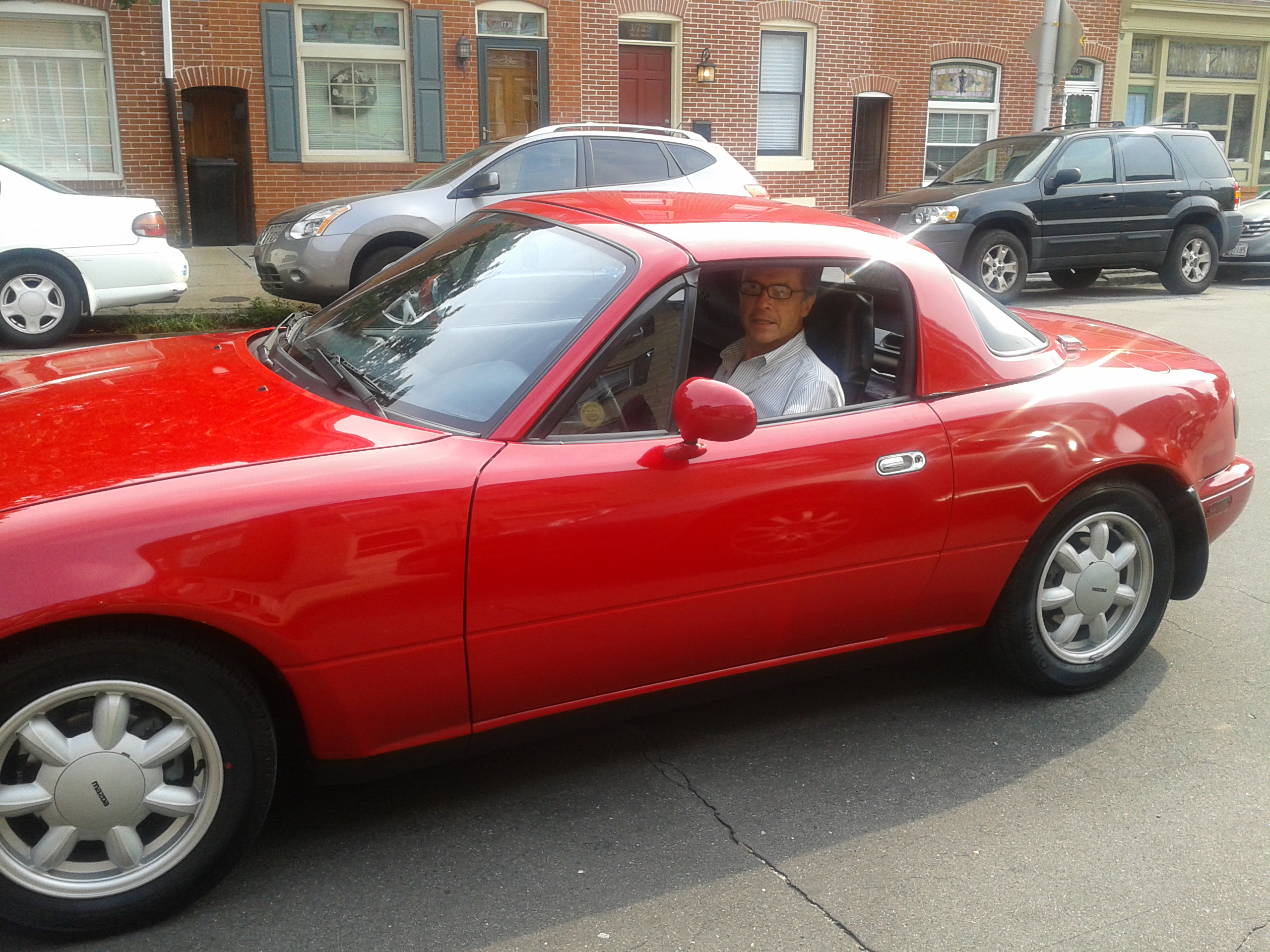
DEM in his 1990 Miata

Assessment

A rear-end collision may be inconvenient and embarrassing, and it could even be traumatic and dangerous. Keep a cool head, complete all the steps necessary to ensure the safety of your passengers, and ensure that you comply with both the law and the requirements of your insurance company to insure that it doesn’t escalate into a bigger problem.

More: Automobile Safety, Financial and Related Topics of Import for Physicians

Conclusion

Your thoughts and comments on this ME-P are appreciated. Feel free to review our top-left column, and top-right sidebar materials, links, URLs and related websites, too. Then, subscribe to the ME-P. It is fast, free and secure.

Link: http://feeds.feedburner.com/HealthcareFinancialsthePostForcxos

Speaker: If you need a moderator or speaker for an upcoming event, Dr. David E. Marcinko; MBA – Publisher-in-Chief of the Medical Executive-Post – is available for seminar or speaking engagements. Contact: MarcinkoAdvisors@msn.com

Our Other Print Books and Related Information Sources:

Health Dictionary Series: http://www.springerpub.com/Search/marcinko

Practice Management: http://www.springerpub.com/product/9780826105752

Physician Financial Planning: http://www.jbpub.com/catalog/0763745790

Medical Risk Management: http://www.jbpub.com/catalog/9780763733421

Hospitals: http://www.crcpress.com/product/isbn/9781439879900

Physician Advisors: www.CertifiedMedicalPlanner.org

Product Details  Product Details

The Evolution of Automobile Safety

Join Our Mailing List

Technology Rolls On

By Dr. David Edward Marcinko MBA

By Matthew Pelletier [safety consultant]

DEM in his 1990 MiataMost ME-P readers are aware that I am a vintage Jaguar and automobile [sober] fanatic. And, after years of covering the local Emergency Room, I am glad to be retired from that job … Much better suited for the next-gen ED physician.

Perhaps, that’s why we occasionally post such leisure and lifestyle info-graphics for our audience and members.

History

Fortunately, much progress has been substantial since the automobile first made its mark on the transportation of people. The technology in auto safety has accelerated, especially over the last ten years, and with better engineering and consumer demand for safer vehicles there has been a reduction in the number of deaths and injuries from automobiles.

The Olden Days – Not so Golden

It seems absurd to hear people say cars aren’t made the way they used to be. Enhanced safety features show how inferior vehicles from the past are. Seat belts, overall structure, airbags and crash tests have saved lives and made car transportation safer for all drivers. Many find driving safety videos also help make everyone safer.

###

Evolution-Of-Auto-Safety

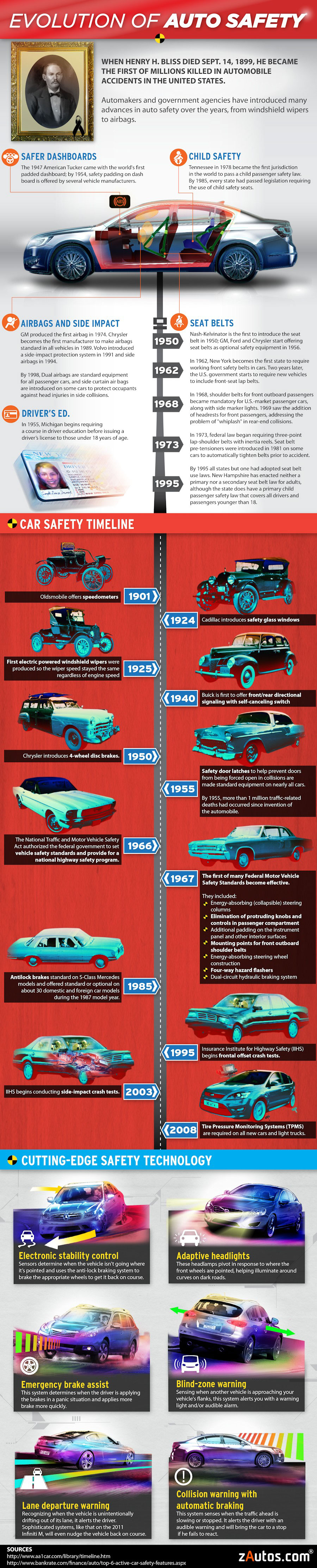
Review

The above infographic provides information on the changes in safety to automobiles throughout history.

• Government legislation and automakers have continually worked on improving automobile safety features over the last 100 years.
• States like Michigan implement drivers education programs before licenses are issued helping to educate in safe driving practices.
• New technology and engineering meet consumer demand and show automakers are listening to their customers by designing safer cars with the newest and best safety systems available.

Continuing Development of Safety Features

The continuing development of safety features and engineering are driving car makers to give consumers the safety features and peace of mind they want for themselves and their families when they travel on the road. Automakers and engineers understand crashes and vehicle motion which then applies to a better and more advanced understanding during the design and constructing of new vehicle models.

Assessment

Be safe GOMER … and Get Out of My Emergency Room … with these helpful links:

Conclusion

Your thoughts and comments on this ME-P are appreciated. Feel free to review our top-left column, and top-right sidebar materials, links, URLs and related websites, too. Then, subscribe to the ME-P. It is fast, free and secure.

Speaker: If you need a moderator or speaker for an upcoming event, Dr. David E. Marcinko; MBA – Publisher-in-Chief of the Medical Executive-Post – is available for seminar or speaking engagements. Contact: MarcinkoAdvisors@msn.com

OUR OTHER PRINT BOOKS AND RELATED INFORMATION SOURCES:

Product Details  Product Details

Automobile Windshield Maintenance Tips for Physicians

 Join Our Mailing ListCan you see clearly – now?

By Dr. David E. Marcinko MBA CMPvia Nalley Lexus Roswell, GA

Dr David E Marcinko MBA

Doctor – How often do you think about your windshield?

If you’re in the vast majority of doctors and drivers of all sort, chances are you only notice it when a large bug happens to meet an untimely end and creates a goopy mess on your glass.

But, as an insurance agent and Certified Medical Planner, I know there’s a long list of reasons why you should note the condition of your windshield, not the least of which is for clear vision. In fact, a quick visual check with each gas fill-up, and a more thorough inspection each month, is suggested

Think about it: Windshield. It’s a shield against the wind. But, it’s also a shield against many of the dangers that are commonplace out on the highways, such as those pesky bugs, wayward stones, or other roadway hazards. That’s not to mention how unpleasant a drive in the rain or cold would be without a barrier between you and the elements.

DEM's Jaguar

Importance

That’s why it’s incredibly important to take note of your windshield’s condition. Clear vision is of the utmost importance for safety and convenience, but there’s much more to it than that. If you were to be in an accident, your windshield can play a huge role in keeping you safe from the debris that might be flying due to the impact.

Shattered

Needless to say, if your windshield is shattered, there is no option: your windshield needs to be replaced as soon as possible. It’s tough to see out of, not that great for protection from the elements, and if something were to hit the glass, it’ll soon be sitting in the cabin with you. Not only that, but your local authorities might be paying you a visit, as vehicles with shattered windshields are often considered unroadworthy by law.

Cracked

If your windshield is cracked or has unrepaired rock chips, you’re not in much better of a situation. Though a small crack or chip may look harmless, the environment can cause big problems for you and your windshield. Small chips and cracks that go unrepaired can quickly consume the entire glass surface due to a shocking event, such as cold water on a hot day, or even hitting a pothole. Then you’re left with a much more expensive repair.

Road Rash

Road rash, in medicine, is a colloquial term for skin and bone injury caused by abrasion with road surfaces, usually as a consequence of cycling, automobile and motorcycling accidents. In this case, the pepper shotgun-like marks on a windshield.

Assessment

There is good news, however. If your windshield is foggy, discolored, cracked, shattered, chipped – you name it – many car dealers and local independent shops can help. Repairing your chipped windshield doesn’t cost much money and it can prevent an entire glass replacement further down the road. This service usually only takes a few minutes, but you must act fast, as repair isn’t always possible if the damage has spread. And, in many cases, insurance will help foot some, or all of the bill.

Conclusion

Your thoughts and comments on this ME-P are appreciated. Feel free to review our top-left column, and top-right sidebar materials, links, URLs and related websites, too. Then, subscribe to the ME-P. It is fast, free and secure.

Speaker: If you need a moderator or speaker for an upcoming event, Dr. David E. Marcinko; MBA – Publisher-in-Chief of the Medical Executive-Post – is available for seminar or speaking engagements. Contact: MarcinkoAdvisors@msn.com

OUR OTHER PRINT BOOKS AND RELATED INFORMATION SOURCES:

  Product Details  Product Details

Doctors and Speeding Tickets [Myth versus Reality]

Join Our Mailing List
Maximum Speed by State

By Matthew Pelletier [safety consultant]

By Dr. David Edward Marcinko MBA

Dr. Marcinko 1972 VetteThe need for speed across the United States means 100,000 drivers will have a police officer write them a ticket for speeding every day. That works out to 36,500,000 speeding tickets to Americans yearly.

Now, with the average cost per ticket at $150.00, it’s easy to understand the revenue that can come from catching those who disobey the maximum speed limits on the road. 95% of drivers never even contest their speeding tickets, they just pay it and continue on down the road.

Many drivers ignore the fact that speeding tickets raise car insurance rates and drop fuel economy.

The Big Ticket Pay-Off

Because there are so many drivers who break the speed laws, states are required to employee officers who are paid higher salaries than school teachers because each officer writes an average of $200,000 dollars worth of tickets annually. It is safe to say the tickets pay for their salaries.

The Graphic

The infographic below backs up the above information and shows us how the maximum speed limits in states across America differ.

###

 max-speed-limit-by-us-state

Review

  • 1 state, Utah, has a maximum speed limit of 80 mph.
  • 1 state, Texas, has a limit of 85mph which is 25mph faster speed allowed than Hawaii.
  • 19 states have a limit of 70mph, this is the highest majority for a speed limit.
  • 14 states have a 75mph speed limit.

Safety Training

Many states have dot safety training and by requiring driving safety training the importance of obeying speed limit laws and hopefully reducing the number of speeding tickets written can begin to take place. Gradually over time Americans have seen speed limits increase, this is due also to safer cars being manufactured.

Assessment

Doctors and medical colleagues; How do you feel about being the number one target of the traffic cops?

Conclusion

Your thoughts and comments on this ME-P are appreciated. Feel free to review our top-left column, and top-right sidebar materials, links, URLs and related websites, too. Then, subscribe to the ME-P. It is fast, free and secure.

Link: http://feeds.feedburner.com/HealthcareFinancialsthePostForcxos

Speaker: If you need a moderator or speaker for an upcoming event, Dr. David E. Marcinko; MBA – Publisher-in-Chief of the Medical Executive-Post – is available for seminar or speaking engagements. Contact: MarcinkoAdvisors@msn.com

Our Other Print Books and Related Information Sources:

Health Dictionary Series: http://www.springerpub.com/Search/marcinko

Practice Management: http://www.springerpub.com/product/9780826105752

Physician Financial Planning: http://www.jbpub.com/catalog/0763745790

Medical Risk Management: http://www.jbpub.com/catalog/9780763733421

Hospitals: http://www.crcpress.com/product/isbn/9781439879900

Physician Advisors: www.CertifiedMedicalPlanner.org

Product Details  Product Details

On Googling Myself [Oh My]

Join Our Mailing List

A Solitary Pursuit?

By Dr. David Edward Marcinko MBA CMP™ www.CertifiedMedicalPlanner.org

Dr. MarcinkoI am a doctor, financial advisor, editor, publisher, health economist, teacher, runner and a few other things, as well. A real diletant!

But, there is something else I must admit to you. It is sinister. Something I often do at night, in the dark, when no one else is around. Not even my wife.

What is It? …. Why Googling my self, of course! Also known as “ego surfing.”

Ego Surfing

Have you ever Googled yourself or your financial advisory, management or medical practice? Did you know that you have an ever growing online reputation? Whether you know it or not, Financial Advisors and Doctors have an online presence. When you type your name in a search engine you may be surprised by what you find.

Digital Footprints

Everything you do professionally, or socially, creates a digital footprint. If you are involved in social media then you are contributing to your online reputation. If not, your online reputation is being written for you. There is a conversation taking place about you online, but unfortunately you may not be included in it.

google-chrome-logo

So Much Information

A simple Google search of your name will likely show your practice website. Your name will also appear in numerous third party review sites. Take the time to read a few. You may be surprised. You will find your name and your practice appearing on people’s Facebook and Twitter pages too.

And, you may see comments from clients and patients [both satisfied, and not so much], too. So, keep abreast of your digital bona fides. Google yourself regularily …. Just, dont go blind.

Assessment

While at first this may be disturbing, I view it as an opportunity to get the [positive] word out. How about you? Sinister, or no?

Conclusion

Your thoughts and comments on this ME-P are appreciated. Feel free to review our top-left column, and top-right sidebar materials, links, URLs and related websites, too. Then, subscribe to the ME-P. It is fast, free and secure.

Link: http://feeds.feedburner.com/HealthcareFinancialsthePostForcxos

Speaker: If you need a moderator or speaker for an upcoming event, Dr. David E. Marcinko; MBA – Publisher-in-Chief of the Medical Executive-Post – is available for seminar or speaking engagements. Contact: MarcinkoAdvisors@msn.com

Our Other Print Books and Related Information Sources:

Health Dictionary Series: http://www.springerpub.com/Search/marcinko

Practice Management: http://www.springerpub.com/product/9780826105752

Physician Financial Planning: http://www.jbpub.com/catalog/0763745790

Medical Risk Management: http://www.jbpub.com/catalog/9780763733421

Hospitals: http://www.crcpress.com/product/isbn/9781439879900

Physician Advisors: www.CertifiedMedicalPlanner.org

Product DetailsProduct DetailsProduct Details

Product Details  Product Details

Product DetailsProduct Details

Protecting Patient Privacy

Join Our Mailing List

How Important Is It – Really?

By Dr. David Edward Marcinko MBA

DEM blue

By Matthew Pelletier [safety consultant]

The U.S. Health Insurance Portability and Accountability Act (HIPAA) is the federal law protecting the privacy and security of patients’ health information and was enacted in 1996.

HIPAA laws also protect electronically communicated information. Understanding the significance and importance of HIPAA laws is vital to all medical and health organizations. Companies are required to follow HIPAA laws and protect patient privacy.

Share and Share Alike – NOT!

The privacy rule is an important aspect of HIPAA and makes it illegal for patient’s private health information to be shared by health professionals unless the patient consents. This encompasses patient information which is written, verbal or electronically communicated. Many health care and medical organizations use healthcare training videos in order to educate their workforce on the importance of patient privacy laws.

###

privacy

Review

As the infographic above illustrates, patient privacy is very important and the cost in breach of privacy can be costly:

• With 60% of hospitals having a minimum of 2 breaches in privacy the cost per hospital is estimated at $2 billion dollars.
• The average number of records which are lost or stolen in each violation of privacy is 1,769.
• The main causes of electronic patient information breaches is due to employees, portable electronic devices and third-party errors.
• 7 out of 10 hospitals don’t view patient privacy as a priority though it costs them money if breached.

With 38% of hospitals choosing not to inform anyone of patient privacy breaches while over 40% of breaches are only reported by the patients themselves, HIPAA violations can result in being very costly to medical and healthcare organizations, not just hospitals. HIPAA training videos are a solution to help the workforce understand the importance of patient privacy laws.

Assessment

Conclusion

Your thoughts and comments on this ME-P are appreciated. And, are these issues a moral equivalency? Does privacy even exist anymore in an era of social media, the Internet, Google Earth and Google Maps, etc.

Feel free to review our top-left column, and top-right sidebar materials, links, URLs and related websites, too. Then, subscribe to the ME-P. It is fast, free and secure.

Link: http://feeds.feedburner.com/HealthcareFinancialsthePostForcxos

Speaker: If you need a moderator or speaker for an upcoming event, Dr. David E. Marcinko; MBA – Publisher-in-Chief of the Medical Executive-Post – is available for seminar or speaking engagements. Contact: MarcinkoAdvisors@msn.com

OUR OTHER PRINT BOOKS AND RELATED INFORMATION SOURCES:

Product Details  Product Details

The Doctors and Guns Controversy

Join Our Mailing List

Let the Editorialists Opine

Dr. David Edward Marcinko FACFAS MBA CMP

[Publisher and Editor]: http://www.jbpub.com/catalog/9780763733421

Dr David E Marcinko MBAIn late December, three of the nation’s most respected medical journals  published accounts of the gun lobby’s efforts to squelch federally  funded research on gun-related injuries, and to silence physicians who  would talk to their patients about gun ownership or use.

Writing in the  Journal of the American Medical Assn., the Archives of Internal Medicine and the Archives of Pediatric and Adolescent Medicine,  editorialists suggested it is time for researchers and physicians to  link arms and in the interest of the nation and their patients, let  knowledge about guns lead the way.

Assessment

Conclusion

Your thoughts and comments on this ME-P are appreciated. Here are my own: Letter from the Editor on Sandy Hook Elementary School Feel free to review our top-left column, and top-right sidebar materials, links, URLs and related websites, too. Then, subscribe to the ME-P. It is fast, free and secure.

Link: http://feeds.feedburner.com/HealthcareFinancialsthePostForcxos

Speaker: If you need a moderator or speaker for an upcoming event, Dr. David E. Marcinko; MBA – Publisher-in-Chief of the Medical Executive-Post – is available for seminar or speaking engagements. Contact: MarcinkoAdvisors@msn.com

Our Other Print Books and Related Information Sources:

Health Dictionary Series: http://www.springerpub.com/Search/marcinko

Practice Management: http://www.springerpub.com/product/9780826105752

Physician Financial Planning: http://www.jbpub.com/catalog/0763745790

Medical Risk Management: http://www.jbpub.com/catalog/9780763733421

Hospitals: http://www.crcpress.com/product/isbn/9781439879900

Physician Advisors: www.CertifiedMedicalPlanner.org

Product Details

Product Details 

The Perils of Distracted Driving

Join Our Mailing List

Risks Varied and Increasing this Holiday Season

By Dr. David Edward Marcinko MBA

[ME-P Editor-in-Chief]

Editor-in-ChiefOur daily lives have become easier over the years. Just take a look at the gadgets we own and the amount of corners we cut.

One of the major problems of this new daily ease is high distractions. These distractions can be deadly when it comes to driving, in which case, there should not be any corners to cut.

So, here is a visual guide to the true cost of driving while distracted. It may be especially important during this holiday season.

###

Distracted-Driving

Assessment

Are doctors especially culpable with their tablet computers, smart phones, eHRs, PCs and CPOESs, etc?

Conclusion

Your thoughts and comments on this ME-P are appreciated. Feel free to review our top-left column, and top-right sidebar materials, links, URLs and related websites, too. Then, subscribe to the ME-P. It is fast, free and secure.

Link: http://feeds.feedburner.com/HealthcareFinancialsthePostForcxos

Speaker: If you need a moderator or speaker for an upcoming event, Dr. David E. Marcinko; MBA – Publisher-in-Chief of the Medical Executive-Post – is available for seminar or speaking engagements. Contact: MarcinkoAdvisors@msn.com

Our Other Print Books and Related Information Sources:

Health Dictionary Series: http://www.springerpub.com/Search/marcinko

Practice Management: http://www.springerpub.com/product/9780826105752

Physician Financial Planning: http://www.jbpub.com/catalog/0763745790

Medical Risk Management: http://www.jbpub.com/catalog/9780763733421

Hospitals: http://www.crcpress.com/product/isbn/9781439879900

Physician Advisors: www.CertifiedMedicalPlanner.org

Product Details

Letter from the Editor on Sandy Hook Elementary School

Join Our Mailing List

A Painful Op-Ed Piece

By Dr. David Edward Marcinko FACFAS, MBA, CMP™

[Publisher and Editor-in-Chief]

Dr David E Marcinko MBAThe tragedy which struck the Sandy Hook Elementary School in Newtown, Connecticut last Friday left this Medical Executive-Post, and the entire nation, stunned. So many deaths of far too young victims! It is difficult to comprehend, explain or manage. It is not so difficult to feel some of the enormous loss of the parents, families and friends of the victims.

And, I’m sure it is unnecessary for me to encourage you to keep them in your thoughts and prayers. You, like me, have probably thought of little else since Friday.

At the ME-P, we will remember the people and families in Newtown, CT. Like the rest of the nation, our home-page flag will be at half-staff through this week.

If you have children of elementary school age, you may need some opportunities to process their reactions to this tragedy. Perhaps all they need is someone to listen, or to reassure them that these tragedies are rare events. We trust your local clergy, pediatricians and counselors are available to assist you or your child if that would be helpful.

More: www.CertifiedMedicalPlanner.org

In closing, I would like to share with you a Judeo-Christian reading which might bring some comfort during these difficult days:

A Prayer

The Spirit of the Lord God is upon me, because the Lord has anointed me to bring good news to the poor …  to comfort all who mourn; to grant to those who mourn in Zion— to give them a beautiful headdress instead of ashes, the oil of gladness instead of mourning, the garment of praise instead of a faint spirit; that they may be called oaks of righteousness, the planting of the Lord, that he may be glorified.

Assessment

ME-P Textbook: Chapter 07: Workplace Violence

We trust the deep knowledge and expertise on this topic by ME-P thought-leader Gene Schmuckler is available to you, as needed.

Fraternally,

David Edward Marcinko

Conclusion

Your thoughts and comments on this ME-P are appreciated. Feel free to review our top-left column, and top-right sidebar materials, links, URLs and related websites, too. Then, subscribe to the ME-P. It is fast, free and secure.

Product Details

Product Details

The Newtown, Conn School Massacre [Lessons to Learn?]

Join Our Mailing List

REPRINT: This re-publication is provided as a service to our readers, as we mourn the children and victims of the Newtown, Conn massacre. The workplace – healthcare setting analogy is self-evident.

Hospital Workplace Violence Risk Factors

[An NIOSH Summary and Review]

By Dr. Eugene Schmuckler MBA CTS

By Dr. David Edward Marcinko MBA CMP™

www.CertifiedMedicalPlanner.org

Domestically, the impact of workplace violence in the US became widely exposed on November 6, 2009 when 39 year old Army psychiatrist Maj. Nidal M. Hasan MD, a 1997 graduate of Virginia Tech University who received a medical doctorate in psychiatry from the Uniformed Services University of the Health Sciences in Bethesda, Maryland, and served as an intern, resident and fellow at the Walter Reed Army Medical Center in the District of Columbia, went on a savage 100 round shooting spree and rampage that killed 13 people and injured 32 others.

In April 2010 he was transferred to Bell County Jail in Belton, Texas. An Article 32 hearing, which determined whether Hasan would be fit to stand trial at court martial, began on 12 October 2010. Hasan subsequently deemed fit, was arraigned on July 20 2011 and trial was scheduled for March 2012. It was rescheduled again, but is now ongoing and in the news; almost daily.

The NIOSH

The National Institute for Occupational Safety and Health (NIOSH) summarizes the risk factors for occupational violence to hospital workers. These include:

  • working directly with volatile people, especially if they are under the influence of drugs or alcohol or have a history of violence or certain psychotic diagnoses;
  • working when understaffed — especially during meal times or visiting hours;
  • transporting patients and long waits for service;
  • overcrowded, uncomfortable waiting rooms;
  • working alone;
  • poor environmental design;
  • inadequate and/or ineffective security;
  • lack of staff training and policies for preventing or managing crises with potentially volatile patients;
  • drug and alcohol abuse;
  • access to firearms;
  • unrestricted movement of the public; and
  • poorly lit corridors, rooms, parking lots, and other areas.

Occupational Violence 

Violence occurring in other occupational groups is most often related to robbery. In healthcare settings, however, acts of violence are most often perpetrated by patients or clients. Family members who feel frustrated, vulnerable, and out of control; and colleagues of patients (especially when the patient is a gang member) are also identified as perpetrators of abuse! However, the presence of co-workers has been identified as a potential deterrent to assault in healthcare.

Healthcare and social service workers face an increased risk of work-related assaults stemming from several factors, including:

  • the prevalence of handguns and other weapons — as high as 25% among patients, their families, and friends. Handguns are increasingly used by police and the criminal justice system for criminal holds and the care of acutely disturbed, violent individuals;
  • the increasing number of acute and chronically mentally ill patients now being released from hospitals without follow-up care, who now have the right to refuse medicine and who can no longer be hospitalized involuntarily unless they pose an immediate threat to themselves or others;
  • the availability of drugs or money at hospitals, clinics, and pharmacies, making staff and patients likely robbery targets;
  • situational and circumstantial factors such as:
    • unrestricted movement of the public in clinics and hospitals;
    • the increasing presence of gang members, drug or alcohol abusers, trauma patients, or distraught family members;
    • long waits in emergency or clinic areas, leading to client frustration over an inability to obtain needed services promptly;
  • low staffing levels during times of specific increased activity such as meal times, visiting times, and when staff is transporting patients. This also includes isolated work with clients during examinations or treatment;
  • solo work, often in remote locations, particularly in high crime settings, with no back up or means of obtaining assistance such as communication devices or alarm systems;
  • lack of training of staff in recognizing and managing escalating hostile and assaultive behavior; and
  • poorly lighted parking areas.

OSHA

The Guidelines established by the Occupational Safety and Health Administration (OSHA) seek to set forth procedures leading to the elimination or reduction of worker exposure to conditions causing death or injury from violence by implementing effective security devices and administrative work practices, among other control measures. Healthcare professionals need to be aware that violence can occur anywhere and in any practice settings.

In hospitals and clinics, which are more likely to report incidents of violence than private offices, the most frequent sites are:

  • psychiatric wards;
  • acute care settings;
  • critical care units;
  • community health agencies;
  • homes for special care;
  • emergency rooms; and
  • waiting rooms and geriatric units.

Impact

The impact of workplace violence is far-reaching and affects individual staff members, co-workers, patients/clients, and their families. Those who have been affected, directly or indirectly, by a workplace violence incident report a broad spectrum of responses — anger is the most common. There are also reports of:

  • difficulty returning to work;
  • decreased job performance;
  • changes in relationships with co-workers;
  • sleep pattern disturbance;
  • helplessness and symptoms for post-traumatic stress disorders;
  • fear of other patients; and
  • fear of returning to the scene of the assault.

Assessment

Link: Chapter 07: Workplace Violence

More: Medical Workplace Violence

BREAKING NEWS: 3 shot in Alabama hospital *** Two die in Nev. hotel shooting

Conclusion

Your thoughts and comments on this ME-P are appreciated. Feel free to review our top-left column, and top-right sidebar materials, links, URLs and related websites, too. Then, subscribe to the ME-P. It is fast, free and secure.

Link: http://feeds.feedburner.com/HealthcareFinancialsthePostForcxos

Speaker: If you need a moderator or speaker for an upcoming event, Dr. David E. Marcinko; MBA – Publisher-in-Chief of the Medical Executive-Post – is available for seminar or speaking engagements. Contact: MarcinkoAdvisors@msn.com

Our Other Print Books and Related Information Sources:

Health Dictionary Series: http://www.springerpub.com/Search/marcinko

Practice Management: http://www.springerpub.com/product/9780826105752

Physician Financial Planning: http://www.jbpub.com/catalog/0763745790

Medical Risk Management: http://www.jbpub.com/catalog/9780763733421

Hospitals: http://www.crcpress.com/product/isbn/9781439879900

Physician Advisors: www.CertifiedMedicalPlanner.org

From Our Newest Textbook Release

Buy from Amazon

Learn How to Profit and Thrive in the PP-ACA Era

BOOK FOREWORD / TESTIMONIAL

Short Sale versus Mortgage Foreclosure

Join Our Mailing List

A Third Option?

By Lon Jefferies, CFP® MBA and Dr. David E. Marcinko MBA CMP®

An increasing number of homeowners – even some doctors – owe more on their mortgage than their property is worth. If the borrower doesn’t want to continue making payments, he could explore executing a short sale of the property, or foreclosing on their loan.

So, I’ve summarized some thoughts below.

Short Sale

A short sale enables a property owner to sell their home at market value, and the bank forgives whatever part of the loan isn’t covered by the proceeds of the sale. Some experts believe a bank will not begin discussing a short sale on a property until the owner stops making payments. However, there are reports of individuals obtaining an offer for their home and then negotiating with their lender, and the bank approving the short sale in an attempt to minimize its loss and property management responsibilities. There are even stories of people who were able to buy a new home before finalizing the short sale of their previous home. Of course, purchasing a new home wouldn’t likely be possible immediately after completing a short sale after suffering such a hit to one’s credit.

Before executing a short sale it is critical for the owner to determine whether the property is located in a recourse or nonrecourse state. In a recourse state, a bank may sue a borrower for the difference between a home’s selling price and the amount the seller still owes on a mortgage. As a result of this policy, in a recourse state a property owner may end up filing for bankruptcy even after the short sale. Consequently, a property owner might be better off keeping the home and paying off the mortgage. By contrast, in a nonrecourse state a bank that agrees to a short sale cannot recoup its full loss by suing the property owner. Find out whether your state is a recourse or nonrecourse state here (Utah is a nonrecourse state).

As you might expect, there are potential tax implications to a short sale. Usually, debt forgiven by a lender counts as taxable income. However, for the tax years 2007 through 2012, the Mortgage Forgiveness Debt Relief Act exempts homeowners from up to $2 million in forgiven debt on their primary residence. Note that the law doesn’t apply to business property, rental property or second homes, or to debt that was refinanced to pay off credit cards or other consumer debt. Additionally, beware that this law is set to expire at the end of this year.

Foreclosure

As an alternative to a short sale, foreclosure is another way to dispense with a property. With a foreclosure, the homeowner stops making the mortgage payments and the bank reclaims the house and then resells it in hopes of covering or offsetting the defaulted loan. Foreclosure requires very little from the defaulting borrower. Be aware, however, that in a recourse state a bank can sue the former homeowner for the difference between the amount owed and the resale price. The deficit could even be more than that in a short sale because the home’s post-foreclosure selling price may be hurt by vandalism, theft, or deterioration that can occur when a home stands empty.

Foreclosure also wrecks a defaulting borrower’s credit, making it very difficult for that person to get another loan at a reasonable rate. Experts say that outside of bankruptcy, foreclosure is the worst thing you can have on your credit report. For this reason, for most people a foreclosure should truly be a last resort.

As you might imagine, with both short sale and foreclosure situations an attorney and a real estate agent who specializes in such situations can be helpful, particularly if they have strong connections with the banking community.

A Third (Superior) Option

Lastly, before exploring a short sale or a foreclosure, a borrower should always attempt to work with their lender to modify their mortgage. Negotiating a reduction in the interest rate or principal can help some homeowners hang on to their property. There is no penalty for requesting a loan modification, so it is likely an appealing route to try before considering a short sale or foreclosure. Pursuing a loan modification is simply a matter of talking to your bank and informing them that you can’t meet your payment obligations as they stand.

Conclusion

Your thoughts and comments on this ME-P are appreciated. Feel free to review our top-left column, and top-right sidebar materials, links, URLs and related websites, too. Then, subscribe to the ME-P. It is fast, free and secure.

Link: http://feeds.feedburner.com/HealthcareFinancialsthePostForcxos

Speaker: If you need a moderator or speaker for an upcoming event, Dr. David E. Marcinko; MBA – Publisher-in-Chief of the Medical Executive-Post – is available for seminar or speaking engagements. Contact: MarcinkoAdvisors@msn.com

Our Other Print Books and Related Information Sources:

https://www.crcpress.com/Comprehensive-Financial-Planning-Strategies-for-Doctors-and-Advisors-Best/Marcinko-Hetico/p/book/9781482240283

Product Details  Product Details

Medical Practice and Health 2.0 Risk Management is Now a Part of Financial Planning for Doctors

Join Our Mailing List

Ann Miller RN MHA [Executive-Director]

http://www.CertifiedMedicalPlanner.org

About Us

Our ME-P Editor, Dr. David Edward Marcinko MBA CMP™, is a nationally recognized healthcare financial and business advisor to physicians, clinics, hospitals and medical practices. Based in Atlanta Georgia, as a Certified Medical Planner™, Dr. Marcinko leads the industry delivering expert financial and managerial advice to all healthcare entities and stakeholders regarding managed care contracting, operations, strategic planning, revenue growth, health 2.0 business modeling and physician litigation support.

Dr. Marcinko is a sought-after author and speaker with three-decades of expert healthcare consulting experience. He has authored hundreds of healthcare business, finance, economics and management articles and dozens of text books. He is a chosen speaker among prominent national healthcare groups and financial services associations.

Committed to addressing the needs of each client, Dr. Marcinko and the iMBA Inc team takes great pride in personally leading every consulting team that produces effective response time and measurable results for satisfied colleagues and corporate clients www.MedicalBusinessAdvisors.com 

Product Details  Product Details

Educational Inititatives

That’s why the R&D efforts of our governing board of physician-directors, accountants, financial advisors, academics and health economists identified the need for integrated personal financial planning and medical practice management as an effective first step in the survival and wealth building life-cycle for physicians, nurses, healthcare executives, administrators and all medical professionals.

Now – more than ever – desperate doctors of all ages are turning to knowledge able financial advisors and medical management consultants for help. Symbiotically too, generalist advisors are finding that the mutual need for extreme niche synergy is obvious.

But, there was no established curriculum or educational program; no corpus of knowledge or codifying terms-of-art; no academic gravitas or fiduciary accountability; and certainly no identifying professional designation that demonstrated integrated subject matter expertise for the increasingly unique healthcare focused financial advisory niche … Until Now!

Enter the Certified Medical Planner™ charter professional designation www.CertifiedMedicalPlanner.org

Assessment

And so, for all financial services professionals interested in the fast-moving healthcare advisory space: Medical Practice and Risk Management is Now a Part of Financial Planning for Doctors

Certified Medical Planner

Conclusion

Your thoughts and comments on this ME-P are appreciated. Feel free to review our top-left column, and top-right sidebar materials, links, URLs and related websites, too. Then, subscribe to the ME-P. It is fast, free and secure.

Link: http://feeds.feedburner.com/HealthcareFinancialsthePostForcxos

Speaker: If you need a moderator or speaker for an upcoming event, Dr. David E. Marcinko; MBA – Publisher-in-Chief of the Medical Executive-Post – is available for seminar or speaking engagements. Contact: MarcinkoAdvisors@msn.com

OUR OTHER PRINT BOOKS AND RELATED INFORMATION SOURCES:

DICTIONARIES: http://www.springerpub.com/Search/marcinko
PHYSICIANS: www.MedicalBusinessAdvisors.com
PRACTICES: www.BusinessofMedicalPractice.com
HOSPITALS: http://www.crcpress.com/product/isbn/9781466558731
CLINICS: http://www.crcpress.com/product/isbn/9781439879900
BLOG: www.MedicalExecutivePost.com
FINANCE: Financial Planning for Physicians and Advisors
INSURANCE: Risk Management and Insurance Strategies for Physicians and Advisors

Product Details

IRS Cracking Down on Tax Identity Fraud

Join Our Mailing List

About Stolen Identity Refund Fraud [SIRF]

[By Children’s Home Society of Florida Foundation]

The IRS, the Justice Department and Congress all recognize that stolen identity refund fraud (SIRF) is a major and growing problem. With the increase in electronic filing, individuals are obtaining the Social Security numbers and names of other persons and filing to claim their tax refunds. The Justice Department estimates that there could be up to $26 billion in fraudulent refunds over the next five years.

Assistant Attorney General Kathryn Keneally of the Tax Division of the Justice Department conducted a briefing on September 27 in Washington. She acknowledged, “The stolen identity refund fraud cases present a different kind of crime than we usually see.” Keneally continued and explained the depth of the problem. Treasury officials understand that greater efforts are needed by the IRS, Department of Justice and U.S. Attorney’s Office to confront the problem.

How Identity Thieves Work

How do most identity thieves operate? The essential information for an identity thief is a name and a Social Security number. There are at least three ways that identity thieves are collecting this information and receiving tax refunds.

  1. First, some have persuaded a postal employee to intercept multiple refunds to an address.
  2. A second strategy might involve the use of a doorman to direct refund checks to the identity thief.
  3. Third, bank tellers have been bribed to collect the personal information necessary for the identity thief to file and obtain a fraudulent refund.

Geographic Dispersion

Two areas of the country are particularly affected. Southern District of Florida U.S. Attorney Wilfredo Ferrer acknowledged the problem there. He stated, “This is the fastest growing and most insidious fraud in this district right now. It’s sort of like the crime du jour.” He is regularly finding victims “from all walks of life” who had their identities stolen so the thief could collect a “bogus tax refund.” Ferrer disclosed that there are even victims who work in the office of the U.S. Attorney.

Another area with a significant problem is the Southern District of New York. Deputy U.S. Attorney Richard Zabel pointed out that many New York thieves are involved in tax fraud. He stated, “It’s like Willy Sutton – Why do you rob banks? Because … that’s where the money is!

Well, if you’re doing identity theft, the big money is in the Federal Government’s bank account.”

e-Filing Challenges

The IRS recognizes the challenge with eFiling. On the one hand, the IRS has greatly improved the speed of refunds for lawful taxpayers who eFile. In addition, the eFiling of tens of millions of tax returns saves a huge amount of time and cost for the government in processing tax returns.

However, the challenge with eFiling is that the thieves are able to obtain information and file before the legitimate taxpayer. By the time the actual taxpayer files, the thief has received the refund. In some cases, thieves have promptly transferred the funds outside of the United States.

Large Scale Networks

Some thieves are operating on a fairly large scale. Attorney Zabel referred to one case in New York in 2009. Two individuals filed 7,000 false returns and requested a total of $72 million in refunds. Because the refunds were sent to the same address, the fraud was discovered.

Congressional Legislation

Congress has several bills under consideration that would address the problem. Keneally noted that there are also several regional tax task forces that are moving forward to find and prosecute identity thieves. The Department of Treasury, Department of Justice and the U.S. Attorney’s offices are all cooperating.

Assessment

In addition, the IRS is updating its computer software. If there are multiple refunds to one address or indications that the refund may not be appropriate, the software will “flag” the return for greater review.

Conclusion

Your thoughts and comments on this ME-P are appreciated. Feel free to review our top-left column, and top-right sidebar materials, links, URLs and related websites, too. Then, subscribe to the ME-P. It is fast, free and secure.

Link: http://feeds.feedburner.com/HealthcareFinancialsthePostForcxos

Speaker: If you need a moderator or speaker for an upcoming event, Dr. David E. Marcinko; MBA – Publisher-in-Chief of the Medical Executive-Post – is available for seminar or speaking engagements. Contact: MarcinkoAdvisors@msn.com

OUR OTHER PRINT BOOKS AND RELATED INFORMATION SOURCES:

DICTIONARIES: http://www.springerpub.com/Search/marcinko
PHYSICIANS: www.MedicalBusinessAdvisors.com
PRACTICES: www.BusinessofMedicalPractice.com
HOSPITALS: http://www.crcpress.com/product/isbn/9781466558731
CLINICS: http://www.crcpress.com/product/isbn/9781439879900
BLOG: www.MedicalExecutivePost.com
FINANCE: Financial Planning for Physicians and Advisors
INSURANCE: Risk Management and Insurance Strategies for Physicians and Advisors

 Our Newest Textbook Release

Buy from Amazon

Learn How to Profit and Thrive in the PP-ACA Era

BOOK FOREWORD / TESTIMONIAL

How Much Will a Ticket Raise Your Car Insurance Rates?

Join Our Mailing List

GMAC Survey Results

Be careful out there! A GMAC survey revealed that 1 in 5 drivers would not pass the written driver’s test if they took it today.

And, getting a ticket will raise your car insurance rate, but by how much?

Reckless Driving

We found that reckless driving triggers the highest hike — an average increase of 22 percent — yet many drivers aren’t even sure what constitutes reckless driving? Depending on state laws, reckless driving can be defined as: driving over 80 mph, driving too fast for weather conditions, knowingly driving in a way that endangers others.

Assessment

Above, we present 14 common traffic violations, along with the average percent increase to car insurance premiums.

Brought to you by: www.insurance.com

Conclusion

Your thoughts and comments on this ME-P are appreciated. Feel free to review our top-left column, and top-right sidebar materials, links, URLs and related websites, too. Then, subscribe to the ME-P. It is fast, free and secure.

Speaker: If you need a moderator or speaker for an upcoming event, Dr. David E. Marcinko; MBA – Publisher-in-Chief of the Medical Executive-Post – is available for seminar or speaking engagements. Contact: MarcinkoAdvisors@msn.com

OUR OTHER PRINT BOOKS AND RELATED INFORMATION SOURCES:

Comprehensive Financial Planning Strategies for Doctors and Advisors: Best Practices from Leading Consultants and Certified Medical Planners(TM) 

Is Walking Away from A Mortgage Ever OK?

Join Our Mailing List

One Doctor Asks the ME-P

The scourge of foreclosures has brought a lot of moral issues to light. So, Dr. Jones from Las Vegas asks, is it OK to simply stop paying your mortgage?

The answer you get depends on who you ask and what the circumstances are. If you’ve never thought much about this question, you may soon. There are so many mortgages going into foreclosure that it may soon happen to you or someone you know. And even those who don’t go through foreclosure may still be vulnerable to terrible mortgage conditions.

How Bad Is the Foreclosure Rate?

The epidemic of foreclosures is worse than you would believe. Since 2005, there have been 2.5 million foreclosures. In July of 2010, the foreclosure rate went up 6 percent over the same month a year earlier.

Are You Underwater?

If you owe more on your house than your house is actually worth, you may feel like you’re underwater. With excess borrowing against equity and falling home prices, this situation has reached epidemic proportions. It isn’t just a few people in this situation or even a few million people. One quarter of all families are underwater, with negative equity in their own homes.

The states with the worst numbers of people underwater are Florida, Wisconsin, Nevada, California and Arizona. By far, the worst state for this situation is Nevada. In Nevada, 65 percent of borrowers owe more on their mortgage than their house is worth.

  • What should homeowners do in this situation?
  • Should they continue to pay?
  • Or, do you think they should they simply chuck it all and stop all payments?
  • Would you?

What Do People Think About Walking Away From a Mortgage?

If you have already formed an opinion about whether it’s OK to ditch a mortgage or not, you’re not alone in being opinionated. Everyone has an opinion on this, from renters to homeowners and from the young to the old.

In total, 25 percent of renters think it’s okay to walk away from a mortgage. Homeowners aren’t as hip to ditching, though. Among those who own homes, only 17 percent think it’s OK to stop paying.

Is It a Moral Issue?

Some homeowners believe that whether or not to pay is a moral issue. Their own ethics come into play, telling them that someone who signed a contract should see it through, regardless of how home prices have fallen. The mortgage industry loves that—they are really playing up the idea that paying is a moral obligation.

Assessment

What people believe about this issue often comes down to their age and gender.

To see what age groups and genders believe it’s OK to walk away, review the above graphic. And, men and women aren’t as far apart on this issue as you may think. Many people of both genders believe that if your financial circumstances are dire, it may be OK to ditch that mortgage. What about medical professionals? Do you agree with your peers? Click on the graphic to see.

Conclusion

Your thoughts and comments on this ME-P are appreciated. Feel free to review our top-left column, and top-right sidebar materials, links, URLs and related websites, too. Then, subscribe to the ME-P. It is fast, free and secure.

Link: http://feeds.feedburner.com/HealthcareFinancialsthePostForcxos

Speaker: If you need a moderator or speaker for an upcoming event, Dr. David E. Marcinko; MBA – Publisher-in-Chief of the Medical Executive-Post – is available for seminar or speaking engagements. Contact: MarcinkoAdvisors@msn.com

Our Other Print Books and Related Information Sources:

Product DetailsProduct DetailsProduct Details

Product Details Product Details

Product Details

Of Human and Digital Viruses

Join Our Mailing List

The Greatest Miscreants of All Time

“If you think you are too small to make a difference, try sleeping with a mosquito.”Dalai Lama XIV

Viruses are inevitably small in nature, yet engineered to unleash intense and often terrifying devastation. They leave a costly aftermath whether it’s the irreparable loss of human life, or millions (sometimes billions) of dollars in lost revenue and property.

We have gone through history to find the worst viruses of them all; little creatures and scripts that have taken advantage of social and economic situations to propagate and amplify their prowess in mayhem and destruction.

Assessment

The above graphic is a brief journey through time, spanning back as early as 1348 where we met the darkest and most wicked viruses to ever afflict mankind.

Conclusion

Your thoughts and comments on this ME-P are appreciated. Feel free to review our top-left column, and top-right sidebar materials, links, URLs and related websites, too. Then, subscribe to the ME-P. It is fast, free and secure.

Link: http://feeds.feedburner.com/HealthcareFinancialsthePostForcxos

Speaker: If you need a moderator or speaker for an upcoming event, Dr. David E. Marcinko; MBA – Publisher-in-Chief of the Medical Executive-Post – is available for seminar or speaking engagements. Contact: MarcinkoAdvisors@msn.com

OUR OTHER PRINT BOOKS AND RELATED INFORMATION SOURCES:

DICTIONARIES: http://www.springerpub.com/Search/marcinko
PHYSICIANS: www.MedicalBusinessAdvisors.com
PRACTICES: www.BusinessofMedicalPractice.com
HOSPITALS: http://www.crcpress.com/product/isbn/9781466558731
CLINICS: http://www.crcpress.com/product/isbn/9781439879900
BLOG: www.MedicalExecutivePost.com
FINANCE: Financial Planning for Physicians and Advisors
INSURANCE: Risk Management and Insurance Strategies for Physicians and Advisors

Product DetailsProduct DetailsProduct Details

Product Details  Product Details

Product Details

Is a Captive Insurance Company (CIC) Right for Your Medical Practice?

 Join Our Mailing List

A Medical Practice Risk Management Strategy

By Guy P. Jones CFP®

Successful practices face multiple risks in their daily operations including loss of a medical license or professional certification, legal defense reimbursement, medical/Medicare collections risk, HIPAA violations, and reputational risk. Small- to medium-sized practices can benefit from risk-management tools that can help them handle such risks more effectively and reduce their overall insurance costs. To that end, the practice may want to consider the establishment of a Captive Insurance Company (CIC) to protect themselves from risks not typically covered by traditional insurance companies.

Captive Insurance Planning

Captive insurance planning is a strategy for physicians to manage risk through the purchase of a property-casualty insurance policy. Premiums paid by the practice to a properly structured CIC should be tax-deductible to the practice under section 162(a) of the IRS code just like their workers’ compensation or malpractice coverage.

When the practice forms a CIC, it receives premium income tax-free up to $1,200,000 per year, per captive. Profits that come out of the CIC come out as a distribution from a C-corp. as qualifying dividends or long-term capital gains, which are currently 15%. Furthermore, the CIC may retain surplus from underwriting profits within reserve accounts, free from income tax. Profits that accumulate within the CIC can be used as a tax-deductible sinking fund in order to save money on malpractice premiums by shifting to a high deductible policy and/or insuring that deductible through the CIC.

No Rules – Just Right

There are no hard-and-fast rules regarding the minimum amount of gross revenue from a practice or the minimum amount of insurance premiums paid by a practice before considering the establishment of a CIC.

Planning Opportunities

The establishment of a CIC creates immense planning opportunities for physicians because of the flexible ownership of the CIC. The CIC is set up as a C-Corp and someone or some entity owns the shares of the C-Corp While it’s important to keep in mind the primary business purpose of the CIC is for risk management, some potential planning opportunities include the following:

  • Wealth Accumulation/Surplus Retirement Income: Physicians own the CIC outside the practice for surplus dollars in retirement.
  • Asset Protection Planning: Most physicians have the CIC owned inside an asset protection trust to potentially shield pre-tax dollars and assets from judgment creditors or litigation.
  • Estate Planning/Wealth Transfer: Physicians who don’t need access to this money may be interested in having the CIC owned outside of their estate to also bypass gift and estate taxes with each premium payment.
  • Practice-Owner Benefits: By the CIC not being an employee benefit plan, it is not subject to the non-discrimination rules of ERISA, and therefore only benefits the owners of the practice.
  • Non-Mandatory Participation for Practice Doctors: Doctors at smaller levels can join together to create a CIC for economies of scale.

Enter the Experts

Physicians would be encouraged to discuss the various CIC planning strategies with their tax, estate planning, and other legal professionals to ensure that the most appropriate structure is utilized to fit their unique planning objectives. As part of our services to the practice, we would be happy to meet with the practice management and advisors to answer any questions and start the process of the feasibility of a CIC for the practice. As reassurance, this is already IRS-tested, and we strictly adhere to each IRS Safe Harbor Revenue Ruling for a conservative model offering very predictable risk management and tax planning results.

Assessment

While this is not intended to be a thorough discussion of CICs, it is meant to initiate a conversation with practices or conduct due diligence with their key advisors as to the many potential benefits of establishing a Captive Insurance Company.

About the Author

Mr. Guy P. Jones is a Certified Financial Planner in Houston, TX who has specialized in serving the financial planning needs of medical professionals and their families since 1990.  He can be reached at 832.677.1692, email: guypjones@guypjones.com, or by visiting his website: www.guypjones.com

Conclusion

Your thoughts and comments on this ME-P are appreciated. Feel free to review our top-left column, and top-right sidebar materials, links, URLs and related websites, too. Then, subscribe to the ME-P. It is fast, free and secure.

Link: http://feeds.feedburner.com/HealthcareFinancialsthePostForcxos

Speaker: If you need a moderator or speaker for an upcoming event, Dr. David E. Marcinko; MBA – Publisher-in-Chief of the Medical Executive-Post – is available for seminar or speaking engagements. Contact: MarcinkoAdvisors@msn.com

OUR OTHER PRINT BOOKS AND RELATED INFORMATION SOURCES:

LEXICONS: http://www.springerpub.com/Search/marcinko
PHYSICIANS: www.MedicalBusinessAdvisors.com
PRACTICES: www.BusinessofMedicalPractice.com
HOSPITALS: http://www.crcpress.com/product/isbn/9781466558731
CLINICS: http://www.crcpress.com/product/isbn/9781439879900
ADVISORS: www.CertifiedMedicalPlanner.org
BLOG: www.MedicalExecutivePost.com

Product DetailsProduct DetailsProduct Details

Product Details  Product Details

Product Details

The Science and Some Medicine Behind Seat Belt Use

Join Our Mailing List

It’s All About Saving Lives and Ankle Bones

By Muhammad Saleem, and

By Dr. David Edward Marcinko FACFAS MBA CMP™

[Editor-in-Chief]

Vintage 2000 Jaguar XJ-V8-LWB Touring Sedan

The Ankle Bone is Connected to the Foot [er –ah] Leg Bone

The talus is one of the important bones that makes up the ankle joint. Over one half of the talus is covered with cartilage–it serves as an important link between the leg and the foot. The talus moves not only at the ankle joint, but also below the ankle and in the midfoot. Therefore, injuries to the talus can affect motion of the ankle and foot joints.

‘Aviators Astragalus’

Talus [astragalus ankle bone] fractures were almost unheard of a hundred years ago. The first series of talus fractures was described, by Dr. WD Coltart, in men who were injured in the British Royal Air Force in the early 1900s. The term ‘aviators astragalus’ was used to describe these fractures that happened as old war planes made crash landings.

Original Historic Reference Link: AA

Today, talus fractures are seen in high speed car accidents when you don’t-buckle up that seat belt or shoulder harness. I’ve seen far too many during my days covering the local Emergency Room.

So, here is an infograhic on the science behind seat belts. It contains some interesting and some encouraging facts that we wanted to share with our ME-P readers and subscribers.

Mechanism of Injury: Hawkins classification Talar fractures (C) iMBA Inc

The Facts

  • National seat belt use has increased from 69% in 1998 to 84% in 2010.
  • Automotive fatalities rank third in terms of lives lost per year, behind cancer and heart disease.
  • Seat belts are responsible for saving between12,000 to 16,000 lives each year.
  • Most crash deaths occur within 25 miles of home and at speeds below 40 miles per hour.

Conclusion

Your thoughts and comments on this ME-P are appreciated. Feel free to review our top-left column, and top-right sidebar materials, links, URLs and related websites, too. Then, subscribe to the ME-P. It is fast, free and secure.

Speaker: If you need a moderator or speaker for an upcoming event, Dr. David E. Marcinko; MBA – Publisher-in-Chief of the Medical Executive-Post – is available for seminar or speaking engagements. Contact: MarcinkoAdvisors@msn.com

OUR OTHER PRINT BOOKS AND RELATED INFORMATION SOURCES:

Product Details  Product Details


###

The Financial Impact of Reducing Avoidable Hospital Admissions

Join Our Mailing List

Population Health Models

By Staff Reporters

Most readers are aware that colleague David B. Nash MD, MBA is the population health guru for the ME-P. In fact, he is an ME-P “thought-leader.” And, to use a modern colloquialism, he was into population health before PH was cool.

Link: http://nashhealthpolicy.blogspot.com

Preventing Avoidable Hospitalizations

And so, as hospitals and health systems accelerate towards population health models, there is an increasing focus for physicians and health systems to work together to prevent avoidable hospitalizations.

The Infographic

This infographic shows that an average 300-bed hospital is at risk of losing $9.5 million in annual contribution when inpatient admissions for 11 potentially avoidable conditions are completely reduced. These 11 conditions, identified by AHRQ, represent diagnoses for which coordinated outpatient care and early intervention can potentially prevent the need for hospitalization.

Source: Objective Health [McKinsey & Company]

Assessment

A colloquialism is a word or phrase that is employed in conversational or informal language but not in formal speech or formal writing.

Conclusion

Your thoughts and comments on this ME-P are appreciated. Feel free to review our top-left column, and top-right sidebar materials, links, URLs and related websites, too. Then, subscribe to the ME-P. It is fast, free and secure.

Link: http://feeds.feedburner.com/HealthcareFinancialsthePostForcxos

Speaker: If you need a moderator or speaker for an upcoming event, Dr. David E. Marcinko; MBA – Publisher-in-Chief of the Medical Executive-Post – is available for seminar or speaking engagements. Contact: MarcinkoAdvisors@msn.com

Our Other Print Books and Related Information Sources:

Health Dictionary Series: http://www.springerpub.com/Search/marcinko

Practice Management: http://www.springerpub.com/product/9780826105752

Physician Financial Planning: http://www.jbpub.com/catalog/0763745790

Medical Risk Management: http://www.jbpub.com/catalog/9780763733421

Hospitals: http://www.crcpress.com/product/isbn/9781439879900

Physician Advisors: www.CertifiedMedicalPlanner.org

Buy from Amazon

Learn How to Profit and Thrive in the PP-ACA Era

BOOK FOREWORD / TESTIMONIAL

A Barclay Bank Ad Campaign Photo

Join Our Mailing List

“For the best fixed rates”

Source: Paul Higgins and Sandy Teagle – Futurists from Melbourne and Brisbane in Australia.

Assessment

Truth in advertising.

Barclay campaign says pic.twitter.com/0XOmyQjg

Conclusion

Your thoughts and comments on this ME-P are appreciated. Feel free to review our top-left column, and top-right sidebar materials, links, URLs and related websites, too. Then, subscribe to the ME-P. It is fast, free and secure.

Link: http://feeds.feedburner.com/HealthcareFinancialsthePostForcxos

Speaker: If you need a moderator or speaker for an upcoming event, Dr. David E. Marcinko; MBA – Publisher-in-Chief of the Medical Executive-Post – is available for seminar or speaking engagements. Contact: MarcinkoAdvisors@msn.com

OUR OTHER PRINT BOOKS AND RELATED INFORMATION SOURCES:

DICTIONARIES: http://www.springerpub.com/Search/marcinko
PHYSICIANS: www.MedicalBusinessAdvisors.com
PRACTICES: www.BusinessofMedicalPractice.com
HOSPITALS: http://www.crcpress.com/product/isbn/9781466558731
CLINICS: http://www.crcpress.com/product/isbn/9781439879900
BLOG: www.MedicalExecutivePost.com
FINANCE: Financial Planning for Physicians and Advisors
INSURANCE: Risk Management and Insurance Strategies for Physicians and Advisors

Product Details  Product Details

On Smart Phones, Texting and Doctors Driving‏

Join Our Mailing List

Doctors Beware – A Bad Idea

By Muhammad Saleem

Did you know that almost 60% of drivers use their phones on the road? What about doctors?

The numbers from our piece today could not be clearer on the consequences of using your smartphone while driving. For example:

  • You are 23 times more likely to get into an accident while texting.
  • 18% of distraction-related crashes are from cell phone usage.
  • Distracted driving is the number one killer of American teens.

Assessment

Doctors – Have you ever texted medical orders, or patient instructions etc., while driving? Be honest!

In addition to the above, our infographic discusses statistics on smarthpones and driving, illustrate the dangers, discuss the law, and provide tips to make you and your passengers safer.

Conclusion

Your thoughts and comments on this ME-P are appreciated. Feel free to review our top-left column, and top-right sidebar materials, links, URLs and related websites, too. Then, subscribe to the ME-P. It is fast, free and secure.

Speaker: If you need a moderator or speaker for an upcoming event, Dr. David E. Marcinko; MBA – Publisher-in-Chief of the Medical Executive-Post – is available for seminar or speaking engagements. Contact: MarcinkoAdvisors@msn.com

OUR OTHER PRINT BOOKS AND RELATED INFORMATION SOURCES:

Product Details  Product Details

About the Institute of Medical Business Advisors, Inc

Join Our Mailing List

iMBA, Inc

[www.MedicalBusinessAdvisors.com]

Championing the Financial Success of

Doctors and their Consulting Advisors

[Career Development Products and Services]

Comprehensive Financial Planning Strategies for Doctors and Advisors: Best Practices from Leading Consultants and Certified Medical Planners(TM)

Your Personal DR. Invitation: Letterhead.iMBA_Inc.

Alternative Solutions to Medical Malpractice Insurance

Join Our Mailing List

About Captive Insurance Companies

By William Clay Tucker CAP CMFC CRPS

The Woodville Group, LLC wctucker@thewoodvillegroupllc.com

Most states don’t recognize small captive insurance companies (CIC’s) as beneficial holders for required medical malpractice coverage.

Couple this with the fact that most medical practitioners aren’t insurance experts, and the end result is that doctors have only a few (very similar, quite expensive) malpractice insurance options.

So, when it comes time to purchase or renew your medical malpractice insurance, you have three options:

  1. Retail Med-Mal: While this may seem like the simplest solution, it is also the most expensive. With zero returns on premiums paid, you are funneling your money into a “black hole”. Regardless of your claims history, you never see a return on reserves. In the event of a claim, you may have little – or no – say in your defense or the claims negotiation and settlement process.
  2. Normal Risk Retention Groups (RRGs): Although an RRG is a step in the right direction, your medical group will be sharing overall medical malpractice risks with other medical groups insured by the RRG. While you may get back some of what you put in (as a return on equity or a stock repurchase), the amount depends on the claims experience of the RRG’s insureds as a whole and the financial condition of the RRG at the time of your departure from the RRG. Under this approach, the medical group’s financial investment remains 100% in the RRG during the entire insurance coverage period.
  3.  A Single Practice Risk Retention Group: A medical practice can now form its own small Risk retention Group (RRG).  The RRG retains a small percentage of overall insurance risk (an average of ten percent) and therefore your group’s participation in shared risk with all of other insured medical groups remains small.  The primary reinsurance structure is the reinsuring Captive Insurance Company (CIC) which is owned 100% by your  medical group’s owners and only reinsures the physicians in your medical group practice. In the Single Practice RRG model, the majority of your medical group’s financial investment remains in its CIC, which will remain owned and controlled by the owners of your medical group.

Enter the Single Practice Risk Retention Group

Year after year, as rates go up, doctors are funding their med-mal insurance and never seeing a return on the premiums they pay. With this structure you can insure your medical group’s practice and see a significant return on paid premiums by practicing good medicine and good risk management.

Advantages

Here are just a few advantages that a Single Practice Risk Retention Group can offer:

  • The insurance company is owned by the same medical groups it insures
  • Regulated financial and insurance reporting methodologies, no questionable loopholes or practices
  • Return of stock at book value when medical group is no longer an insured or medical practice changes its insured personnel.
  • Recapture lost wealth through practicing good medicine and risk management!
  • After five years, your medical group could get back more than 50% of what it has paid in total premiums
  • After ten years, your medical group could get back more than 100% of what it has paid in total premiums

Assessment

Those with the highest insurance rates, such as surgeons or OB/GYN doctors have the most to gain from self-insurance structures. In order to get started in forming your own Captive Insurance Company (CIC), you must first understand that this is not meant for a short-term solution. Because of the fees due when getting started, a minimum of three years commitment is required. The longer you hold this insurance with fewer claims, the more assets will be available at its completion. Recapture lost wealth—you owe it to yourself to investigate.

Conclusion

Your thoughts and comments on this ME-P are appreciated. Feel free to review our top-left column, and top-right sidebar materials, links, URLs and related websites, too. Then, subscribe to the ME-P. It is fast, free and secure.

Link: http://feeds.feedburner.com/HealthcareFinancialsthePostForcxos

Speaker: If you need a moderator or speaker for an upcoming event, Dr. David E. Marcinko; MBA – Publisher-in-Chief of the Medical Executive-Post – is available for seminar or speaking engagements. Contact: MarcinkoAdvisors@msn.com

OUR OTHER PRINT BOOKS AND RELATED INFORMATION SOURCES:

LEXICONS: http://www.springerpub.com/Search/marcinko
PHYSICIANS: www.MedicalBusinessAdvisors.com
PRACTICES: www.BusinessofMedicalPractice.com
HOSPITALS: http://www.crcpress.com/product/isbn/9781466558731
CLINICS: http://www.crcpress.com/product/isbn/9781439879900
ADVISORS: www.CertifiedMedicalPlanner.org
BLOG: www.MedicalExecutivePost.com

Product Details  Product Details


A Review of LP / LLC Transfer Hazards for Physicians

Join Our Mailing List

Can standard boilerplate and default corporate law provisions inadvertently disinherit your family from controlling the business or cost millions in additional estate/gift tax?

By Ed Morrow, JD, LL.M. (tax), MBA, CFP®

[Manager, Wealth Strategies Communications, Key Private Bank]

Many physicians use limited liability companies, limited liability partnerships or limited partnerships (“LLCs”, “LLPs” and “LPs”) to operate a trade or business, to hold real estate, or even to hold investment assets.  When only immediate family are owners, these are often referred to as family limited partnerships or limited liability companies (“FLPs” and “FLLCs”).  There are numerous business, asset protection and estate planning reasons for using these entities (hereinafter lumped together for simplicity as “LLCs”).  In many cases, these are preferable to old-fashioned corporations (see separate companion article on LP/LLC Advantages).

As a doctor – you must be very careful, however, when transferring LLC shares during lifetime or at death, to your spouse, children, trusts or others.  Especially when there are co-owners outside the immediate family.  This is due to a stark difference between LLC/partnership law and corporate law and the concept known as “assignee interests”.  Understanding this is even more crucial in 2012 because of the overwhelming demand and interest in transferring LLC interests to irrevocable trusts to exploit the $5.12million gift tax exclusion, which is slated to reduce to only $1 million in 2013.

An LLC owner (called a “member”, not a “stockholder”) has two bundles of rights:

  1. Economic rights – which are the rights to receive property from the LLC both during existence and upon liquidation, along with tax attributes and profit/losses; and
  2. Management rights – the right to vote, participate in management and receive reports and accountings.

It is the latter category that can cause problems when transferring LLC interests by gift or at death.

Members of an LLC usually establish an Operating Agreement to set the rules for transfer of interests.  State statutes (such as the Uniform Limited Liability Company Act) usually provide default rules where the document is silent.

The problem occurs when an LLC member transfers a portion of his or her ownership interest in the LLC to another person, either during lifetime or at death.  At that point, the transferee may become a “mere assignee” of the LLC interest, and not a full “substitute member.”  Under the laws of most states, unless the Operating Agreement provides or parties otherwise agree, an assignee only receives the transferor’s economic rights in the LLC, but not the management rights.

In fact, some court cases require member consent even if the operating agreement seems to otherwise permit such transfers (Ott v. Monroe, 719 S.E.2d 309, 282 Va. 403 (2011).  These state laws were enacted to protect business owners from unwillingly becoming partners with someone they never intended or contracted to be partners with.

This treatment is completely different from transferring C or S corporation stock – when you buy P&G stock, you get the same rights as the previous owner.  S Corporation stock is not even allowed to have differing classes of ownership interests (although voting/non-voting is permitted).  Usually, this quirk in the law has numerous asset protection benefits to LLC owners (discussed in the companion article), but it can cause havoc to one’s business planning in unforeseen circumstances.

Examples of Inadvertent Loss of Control

#1- Doctors Able and Baker, unrelated parties, form and operate an LLC.  Able owns 49% and Baker owns 51%.  Baker has a controlling interest in the LLC.  Baker dies and his 51% interest in the LLC is transferred to his revocable living trust.  Now, the trust is a “mere assignee” and while the trust receives 100% of Baker’s economic rights in the LLC (51% of the total LLC economic rights), it has none of the management rights.  After Baker’s death, Able will have 100% of the LLC’s management rights.  The trustee may have serious difficulty even getting books and records of the LLC, much less have any say on reviewing Able’s business decisions (including new hire and new salary expectations).

#2 – Same ownership structure as above, but Baker leaves assets via Transfer on Death designation or via Will to his spouse, children or others directly.  Same result.

#3 – Same ownership scenario as above, but Baker gifts his membership interests during life to his spouse, children, UTMA account or an irrevocable grantor trust.  Same result.

#3a – Same scenario as above, but Baker simply transfers his shares to his revocable living trust (called “funding”) via Schedule A attached to trust or other assignment.  Same result.

#4 – Same scenario, but Dr. Baker got express permission of Able to transfer his LLC interest to his revocable living trust and have it remain a full substitute member.  No issue – until Baker dies and the LLC interests pass to a new subtrust, such as a bypass, marital, QTIP, or other irrevocable trust, or to beneficiaries outright.  Able must have agreed to this subsequent transfer as well, otherwise the transfer to the new subtrust will be a mere assignee interest and the Baker family loses control.

Creditor Issues

Again, Able and Baker own 49%/51%.  Baker has some creditor issues from a tort claim and co-signed loans unrelated to the LLC.  He files bankruptcy to reorganize or get a clean start (or perhaps the creditor forces a bankruptcy).  This is probably another trigger that causes Baker to lose all of his management rights in the LLC.

Incapacity Issues

Again, Able and Baker own 49% and 51% economic and management rights respectively.  This time, Baker has a stroke or an accident and his wife or one of his family takes over as guardian or conservator.  Similar result.  Able now has 100% controlling management rights, even though Baker still keeps the same economic rights.  He can fire Baker and raise his own salary.

Estate/Gift Tax Issues 

Able and Baker’s company is worth $10Million.  Baker’s 51% interest gets marketability discount, but a controlling premium, so valuation experts and the IRS agree it is worth $4Million.  Able’s 49% interest gets a marketability and lack of control discount, so his interest is only worth $3 million.  Yet when Baker dies, he leaves this 51% interest to his spouse (or marital trust) as a mere assignee, and because the interest has no voting control or management rights, it may be worth only about $3 million in the hands of the spouse/trust (because there is no “control” or management rights, the 51% is worth considerably less).  Thus, Baker’s 51% interest is taxed at $4 million, but only gets a $3 million marital deduction (this same discrepancy is true for charitable gifts, which is why physicians should also be careful gifting LLC interests to charities or charitable trusts).  Did $1 million in value inadvertently pass to Able?  At best, this wastes Baker’s estate tax exemption.  At worst, it may lead to an additional 55% tax (and probably penalties, since it would unlikely be reported and caught on audit) on $1million, or $550,000 additional tax that could easily be avoided.

This same issue arises in gifting shares to a spouse or to a trust for a spouse that is intended to qualify for the marital deduction (or to charities or charitable trusts).

In addition, gifting a mere “assignee” interest risks disqualifying any LLC/LP gifts for the “present interest” annual exclusion under IRC 2503(e) ($13,000 per donor per donee) pursuant to the recent IRS wins in the Hackl, Fisher and Price cases.

Furthermore, it adds grist to a favorite line of attack that the IRS uses to add to taxpayers’ estate tax bill.  If a taxpayer has a “retained interest” in a gift, the IRS has been successful in pulling such gifts back into a taxpayer’s estate (therefore causing additional 35-55% estate tax).

What Can Physicians Who Own LP/LLCs Do?

If you want to transfer both economic rights and management rights in your LLCs, similar to shares of stock of a corporation, then the LLC’s written Operating Agreement should be reviewed and/or revised to admit certain transferees or assignees (like a guardian/conservator, spouse, children, trust, subtrusts, etc) as full “substitute members”, while other transferees (like creditors, ex-spouses) can remain “mere assignees”, with no management rights.

LLC owners may decide on other variations on the above solution if desired.  For instance, some owners might prefer to exclude a surviving spouse or children from management rights, but be perfectly comfortable with having an independent or agreed upon trustee of a marital trust accede to those rights.  The key to good planning is to know the consequences of gifts/bequests beforehand to adequately plan.

Make sure your entire wealth management team is on the same page when orchestrating your wealth planning.  Ask whether they use a checklist of any sorts in their planning, or even if they do, whether they communicate the checklist with other advisors on your team – many do not.

Assessment

As noted in Atul Gawande’s The Checklist Manifesto, simple checklists can often prevent mistakes and miscommunications among even the most educated of professionals – this is certainly true for asset protection and tax planning for LLC interests, and at no time more than in 2012 with all of the anticipated tax changes and proposals threatening to snare any missteps in planning.

ABOUT THE AUTHOR

© 2012 Edwin P. Morrow III and KeyBank, NA.  The author holds the following designations:  J.D., LL.M. (masters in tax law), MBA, CFP® and RFC®.  He is a Board Certified Specialist in Estate Planning, Probate and Trust Law through the Ohio State Bar Association.  He is an approved arbitrator for the Financial Industry Regulatory Association (FINRA).  He currently provides educational and consultative services nationwide for the financial advisors and clients of Key Private Bank.  Contact:  (937) 285-5343 or:  Edwin_P_Morrow@KeyBank.com Ed is also a friend of the ME-P and designated “thought-leader”. 

Conclusion

Your thoughts and comments on this ME-P are appreciated. Feel free to review our top-left column, and top-right sidebar materials, links, URLs and related websites, too. Then, subscribe to the ME-P. It is fast, free and secure.

Link: http://feeds.feedburner.com/HealthcareFinancialsthePostForcxos

Speaker: If you need a moderator or speaker for an upcoming event, Dr. David E. Marcinko; MBA – Publisher-in-Chief of the Medical Executive-Post – is available for seminar or speaking engagements. Contact: MarcinkoAdvisors@msn.com

OUR OTHER PRINT BOOKS AND RELATED INFORMATION SOURCES:

DICTIONARIES: http://www.springerpub.com/Search/marcinko
PHYSICIANS: www.MedicalBusinessAdvisors.com
PRACTICES: www.BusinessofMedicalPractice.com
HOSPITALS: http://www.crcpress.com/product/isbn/9781466558731
CLINICS: http://www.crcpress.com/product/isbn/9781439879900
BLOG: www.MedicalExecutivePost.com
FINANCE: Financial Planning for Physicians and Advisors
INSURANCE: Risk Management and Insurance Strategies for Physicians and Advisors

Product Details  Product Details

Do Clients Trust Financial Advisors More than Doctors or CPAs?

Join Our Mailing List

I Think … Not in My Universe

By Dr. David Edward Marcinko MBA CMP™

[Editor-in-Chief]

www.CertifiedMedicalPlanner.org

Survey after survey has shown that the public does not trust the financial services industry; it was – in fact, the least trusted industry in a recent Rick Edelman survey.

John Hancock?

But, perhaps they were looking at the wrong industries, or maybe investors just don’t trust your firm. A new survey by John Hancock shows that investors with assets of $200,000 or more, trust their financial advisor [FA] more than their primary doctor, accountant, contractor/handyman, boss and real estate agent. It was penned by one young staff writer named Diana Britton.

Link: http://wealthmanagement.com/blog/clients-trust-you-more-doctors-cpas?NL=WM-04&Issue=WM-04_20120611_WM-04_597&YM_RID=marcinkoadvisors%40msn.com&YM_MID=1318408

My View Point is Pretty Unique

Now, I am a doctor and board certified surgeon who held Series #7, #63 and #65 securities licenses, and was a Certified Financial Planner® for more than a decade. I was registered with a BD, SEC and NASD/FINRA, and held life, health and PC insurance licenses. This is the so-called “dual registration” to earn commissions and fees.

And, I’ve got a current partner who is a doctor-CPA who has a Master’s Degree in Accounting.  So, I know from whence I speak.

An Insurance Company!

Now, I resigned all of the above financial services monikers because of their lack of education and fiduciary accountability. These are sales licenses, certifications to hold a certification, and related gimmicks, all. Insurance agents have a duty to the company, not the client. Always ask them to put your best interests ahead of their own – in writing before hire – and watch them run.

Assessment

I suspect this study from an insurance company is less than accurate. How do I know? My gut heuristics tell me. Agency law tells me. No surveys needed or damn statistics for me. How about you? OR, are the marketing and PR gurus winning the public opinion battle with their insurance company advertising chicanery? ie., Hancock’s the future is yours!

If really so, here is my razzy for them.

 
Note: It is for the above reasons, and more, that we started the www.CertifiedMedicalPlanner.org online education program for financial advisors and management consultants that truly want to be trusted.

Conclusion

Your thoughts and comments on this ME-P are appreciated. Diana – call me.  Feel free to review our top-left column, and top-right sidebar materials, links, URLs and related websites, too. Then, subscribe to the ME-P. It is fast, free and secure.

Link: http://feeds.feedburner.com/HealthcareFinancialsthePostForcxos

Speaker: If you need a moderator or speaker for an upcoming event, Dr. David E. Marcinko; MBA – Publisher-in-Chief of the Medical Executive-Post – is available for seminar or speaking engagements. Contact: MarcinkoAdvisors@msn.com

OUR OTHER PRINT BOOKS AND RELATED INFORMATION SOURCES:

DICTIONARIES: http://www.springerpub.com/Search/marcinko
PHYSICIANS: www.MedicalBusinessAdvisors.com
PRACTICES: www.BusinessofMedicalPractice.com
HOSPITALS: http://www.crcpress.com/product/isbn/9781466558731
CLINICS: http://www.crcpress.com/product/isbn/9781439879900
BLOG: www.MedicalExecutivePost.com
FINANCE: Financial Planning for Physicians and Advisors
INSURANCE: Risk Management and Insurance Strategies for Physicians and Advisors

Product DetailsProduct DetailsProduct Details

Product Details  Product Details

Product Details

How Doctors and Advisors are Defending Themselves Online

Join Our Mailing List

About www.Reputation.com

Medical professionals, financial advisors and management consultants can now get instant results and find out about their reputation on the Internet.

Why?

Patients, people and clients are posting new content on the Internet every day. Keeping tabs on a personal or professional reputation, with this Internet monitoring service, may be vital to your reputation and practice success.

Why you may need Internet Monitoring

  • Finds existing posts about YOU online
  • Sends alerts whenever new posts appear
  • Finds exposed personal info in databases
  • Identifies and alerts you to damaging posts

Assessment

No one asks for job references, patient or client referrals, or background information anymore; they ask Google. And so, if your name turns up negatively in news or CRD reports, patient complaints, messy divorces, bankruptcies, legal filings, embarrassing photos or other questionable material, you’re likely to get passed over.

Check out www.Reputation.com and tell us what you think?

Conclusion

Your thoughts and comments on this ME-P are appreciated. Feel free to review our top-left column, and top-right sidebar materials, links, URLs and related websites, too. Then, subscribe to the ME-P. It is fast, free and secure.

Speaker: If you need a moderator or speaker for an upcoming event, Dr. David E. Marcinko; MBA – Publisher-in-Chief of the Medical Executive-Post – is available for seminar or speaking engagements. Contact: MarcinkoAdvisors@msn.com

OUR OTHER PRINT BOOKS AND RELATED INFORMATION SOURCES:

Product Details

Reasons Why Doctors Should Get New Automobile Tires

Join Our Mailing List

My Diatribe on Saving Lives

By Dr. David Edward Marcinko MBA

[Editor-in-Chief]

Even though the price of crude oil, and hence gasoline is down of late, we’ve had an excellent response from doctor readers regarding our recent ME-Ps on automobiles, car insurance, driving costs, and fuel efficiency, etc. So, while not a forum for auto enthusiasts –  it is Memorial Day weekend after all – I’ll try to give our readers what they want with this personal essay.

Tires

Regardless of how well you care for your tires, the time will come when you must replace them. Safety as well as convenience is at stake. You don’t want a flat tire, but driving with worn tires also makes your car more difficult to control, especially in bad weather. Although many doctors get so busy they forget to check their tires, others do not know how to tell when they need to replace their tires. The following pointers will help you learn how:

Tread Depth

As tires roll over highways, the friction between them and the road wear down their treads. When tires have inadequate tread depth, they will not grip the road well and can lead to unsafe driving conditions, especially in the rain. The National Highway Transportation Safety Administration says the minimum safe depth of a tread is 1/32 of an inch. You may not have a ruler handy to measure your tread, but a simple technique makes checking your treads easy.

Take a penny and insert it into the tread groove with Lincoln’s head pointed downward toward the center of the wheel, facing outward. If you can see Lincoln’s forehead, the tire still has useful life. If you can see Lincoln’s hair on top of his head, you will soon need a replacement. Finally, if you can see the top of Lincoln’s head or the empty space above it, you should replace the tire as soon as possible.

Tire Inflation

tires

Wear Indicators

In the United States, tires have wear bars that provide a visual signal when they need replacement. Wear bars are shorter than healthy treads, so they are not noticeable to most drivers. When treads wear, the wear bars become visible and look like bridges across the tread grooves. When this happens, you need to buy new tires. Some doctors have trouble identifying wear bars at first, so if you can’t see them on your tires, ask a service technician or your local mechanic to show you.

***

tires

***

Age

Tires lose their integrity with age. Heat, sunlight, chemicals from the road, and gases from the air cause tires to corrode and oxidize, making them unsafe for use. This problem can especially affect spare tires which often sit in trunks unnoticed and unused for prolonged periods. Develop a replacement plan for any cars you own that get little use and for your spare tires. Tires wear at different rates depending on how often the car is driven and how many miles are put on it each year, so there is no exact time frame for tire replacement.

Other Signs of Wear

Not all tires wear evenly, so all medical professionals should periodically inspect every part of their tires. Look for uneven wear and flat spots on the edge of the tread. Replace tires that bulge on the sides. Visible wires signal that a tire has gone too far. The wires you see come from the metal belts that strengthen tires; manufacturers do not intend for this part of a tire to contact the road.
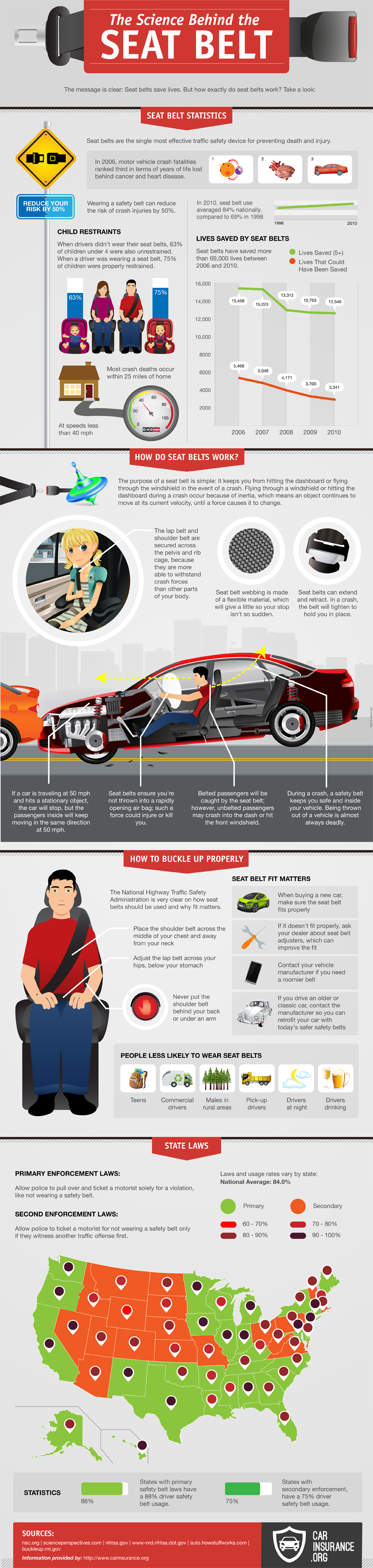
To avoid problems with your tires, inspect them regularly or have your mechanic or dealership inspect them anytime you go in for service or an appointment. Try adding a reminder to your task list, calendar, or schedule to make sure your tires never leave you stranded or put you or your car in danger.

My Tires

My own luxury weekend “fun” vehicle is a vintage European, pearl white, touring Jaguar XJ -V8- LWB. I love the control, precision and feel of my high-performance Pirelli P6 tires. It’s how I roll.

GOMER [Get Out of My Emergency Room]

I covered the emergency room for more than a decade; auto accidents due to poor tire tread are endemic especially at night and in the rain. So, please check your tires, and replace them if needed; today. We want our ME-P readership to grow. The life you save may be your own.

Assessment

This ME-P is a follow-up, by reader request, of a prior popular essay of mine. How Smart Doctors Can Save Big at the Pump I appreciate your interest.

More photos: https://medicalexecutivepost.com/wp-content/uploads/2012/04/dems-jaguar.pdf

Conclusion

Your thoughts and comments on this ME-P are appreciated. Feel free to review our top-left column, and top-right sidebar materials, links, URLs and related websites, too. Then, subscribe to the ME-P. It is fast, free and secure.

Link: http://feeds.feedburner.com/HealthcareFinancialsthePostForcxos

Speaker: If you need a moderator or speaker for an upcoming event, Dr. David E. Marcinko; MBA – Publisher-in-Chief of the Medical Executive-Post – is available for seminar or speaking engagements. Contact: MarcinkoAdvisors@msn.com

OUR OTHER PRINT BOOKS AND RELATED INFORMATION SOURCES:

DICTIONARIES: http://www.springerpub.com/Search/marcinko
PHYSICIANS: www.MedicalBusinessAdvisors.com
PRACTICES: www.BusinessofMedicalPractice.com
HOSPITALS: http://www.crcpress.com/product/isbn/9781466558731
CLINICS: http://www.crcpress.com/product/isbn/9781439879900
BLOG: www.MedicalExecutivePost.com
FINANCE: Financial Planning for Physicians and Advisors
INSURANCE: Risk Management and Insurance Strategies for Physicians and Advisors

Product Details  Product Details