Senior Public Health Official [Dr. Howard Frumkin] is Reassigned

Join Our Mailing List

In Wake of Congressional Inquiries

By Joaquin Sapien, ProPublica – January 22, 2010 5:56 pm EDT

Dr. Howard Frumkin, the embattled director of a little-known but important division of the Centers for Disease Control and Prevention, has been reassigned to a position with less authority, a smaller staff and a lower budget.

Agency for Toxic Substances and Disease Registry

Frumkin had led the CDC’s Agency for Toxic Substances and Disease Registry (ATSDR) and the National Center for Environmental Health since 2005. For the past two years he had endured scathing criticism from Congress and the media for ATSDR’s poor handling of public health problems created by the formaldehyde-contaminated trailers that the government provided to Hurricane Katrina victims. The agency, which assesses public health risks posed by environmental hazards, also was criticized for understating the health risks of several other, less-publicized cases.

Internal CDC e-Mail

An internal CDC e-mail sent by Frumkin on Jan. 15 and obtained by ProPublica said he was leaving his position that day and would become a special assistant to the CDC’s director of Climate Change and Public Health. His old job will be temporarily filled by Henry Falk, who led ATSDR from 2003 to 2005. In the e-mail, Frumkin praised his staff and described more than 20 ATSDR accomplishments during his tenure. They include strengthening the agency’s tobacco laboratory and creating the Climate Change and Public Health program.

A Change of Function

A CDC spokesman said Frumkin’s transfer shouldn’t be considered a demotion but rather a change of function and responsibilities that the CDC’s director, Dr. Thomas Frieden, said would benefit both the agency and Dr. Frumkin, who is a recognized expert on climate change. But Frumkin’s authority has been sharply reduced, even though his salary won’t change. Previously, he oversaw two departments with a combined budget of about $264 million and 746 full-time employees. Now he will be an assistant to the director of a new program that has a budget of about $7.5 million, five full-time employees and five contractors, two of whom are part time. Through a CDC spokesman, Frumkin declined a request to be interviewed for this story.

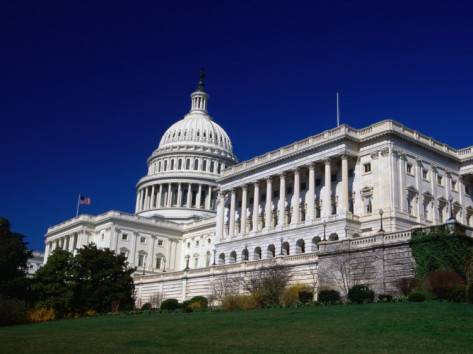
US capitol

A 2008 ProPublica Report

In 2008, ProPublica reported [1] that Frumkin and others failed to take action after learning that ATSDR botched a study [2] on the trailers provided to Katrina victims. The Federal Emergency Management Agency used the study to assure trailer occupants that the formaldehyde levels weren’t high enough to harm them. ATSDR never corrected FEMA, even though Christopher De Rosa, who led ATSDR’s toxicology and environmental medicine division, repeatedly warned Frumkin that the report didn’t take into account the long-term health consequences of exposure to formaldehyde, like cancer risks. Frumkin eventually reassigned De Rosa to the newly created position of assistant director for toxicology and risk analysis. De Rosa went from leading a staff of about 70 employees to having none. He has since left the agency and is starting a nonprofit that will consult with communities close to environmental hazards.

The involvement of Frumkin and ATSDR in the formaldehyde debacle was the focus of an April 2008 Congressional hearing held by a subcommittee of the House Science and Technology Committee. A report [3] by the subcommittee’s Democratic majority, released that October, concluded that the failure of ATSDR’s leadership “kept Hurricane Katrina and Rita families living in trailers with elevated levels of formaldehyde … for at least one year longer than necessary.”

About six months after the report came out, the same panel, the Subcommittee on Investigations and Oversight, held another hearing [4] that touched on other problems at ATSDR.

Flawed Data

Before that hearing, the Democrats on the subcommittee released a report [5] that revealed other cases in which the agency relied on scientifically flawed data, causing other federal agencies to mislead communities about the dangers of their exposure to hazardous substances.

For example, an ATSDR report about water contamination at Camp Lejeune, a Marine Corps base in North Carolina, said the chemically tainted drinking water didn’t pose an increased cancer risk to residents there. The report was used to deny at least one veteran’s medical benefits for ailments that the veteran believed were related to the contamination. A month after the subcommittee hearing, ATSDR rescinded [6] some of its findings, saying it didn’t adequately consider the presence of benzene, a carcinogen that it found in the water. Eight months later, the agency said it would modify another report that was criticized at the hearing, about a bomb testing site in Vieques, Puerto Rico. For decades, the U.S. military used the site to test ammunition that contained depleted uranium and other toxins. In a 2003 report, ATSDR said that heavy metals and explosive compounds found on Vieques weren’t harmful to people living there. But Frumkin decided to take a fresh look at those findings because ATSDR hadn’t thoroughly investigated the site.

Assessment

Subcommittee investigators acknowledged that Frumkin inherited many of the problems in the report from previous ATSDR directors — the original Vieques and Camp Lejeune reports were both done before Frumkin was named director in 2005. But the investigators said he was aware of the agency’s problems and did little to fix them unless he was under political pressure. A CDC spokesman said that Frumkin’s reassignment had nothing to do with the congressional inquiries.

“Americans should know when their government tells them that they have nothing to worry about from environmental exposure that they really have nothing to worry about,” Rep. Brad MillerHouse Science and Technology Committee, D-N.C., the subcommittee’s chairman, said in a statement to ProPublica regarding Frumkin’s reassignment. “The nation needs ATSDR to do honest, scientifically rigorous work. There are many capable professionals at ATSDR who are committed to doing just that.”

Conclusion

Your thoughts and comments on this ME-P are appreciated. Feel free to review our top-left column, and top-right sidebar materials, links, URLs and related websites, too. Then, subscribe to the ME-P. It is fast, free and secure.

Speaker: If you need a moderator or speaker for an upcoming event, Dr. David E. Marcinko; MBA – Publisher-in-Chief of the Medical Executive-Post – is available for seminar or speaking engagements. Contact: MarcinkoAdvisors@msn.com

OUR OTHER PRINT BOOKS AND RELATED INFORMATION SOURCES:

Product DetailsProduct DetailsProduct Details

Ease Up – Managing Editor Bob Mitchell

By Darrell K. Pruitt; DDS

[picapp align=”none” wrap=”false” link=”term=doctors+computers&iid=131173″ src=”0127/4caf5e52-a89a-4ddb-a0b2-bf4b6789c92b.jpg?adImageId=11344576&imageId=131173″ width=”414″ height=”413″ /]

Two days ago, ADVANCE for Health Information Executives’ managing editor Bob Mitchell publicly criticized the author of last week’s Parade Magazine article, “Electronic Health Records Face Critics.” Personally, I thought it was cowardly for the editor to accuse Drew Jubera of journalistic recklessness without mentioning his name.

http://community.advanceweb.com/blogs/hx_1/archive/2010/03/16/critics-ehrs-don-t-save-money.aspx

According to Jubera

Jubera wrote:

“A new Harvard Medical School study suggests that electronic health records do not save hospitals money—and in fact often end up increasing costs. The Obama Administration has allocated $19 billion in federal stimulus funds to facilitate the shift from paper to electronic records – a move the Rand Corporation has projected could save up to $80 billion a year. Yet the Harvard study found no evidence of savings so far and little evidence that electronic records improve care.”

http://www.parade.com/news/intelligence-report/archive/100314-electronic-health-records-face-critics.html

Dis-Respects Harvard

Incredibly, Bob Mitchell discounts the Harvard Medical School study as being dated research – even though it is less than 5 months old. “I did some research and found that this study was released back in November 2009, even before meaningful use of an eHR had been defined by [ONCHIT] – or the Office of National Coordinator of Health IT.” As if defining meaningful use was meaningful! That’s humor.

Dis-Respects Parade

Furthermore, editor Mitchell has taken on the responsibility to shield his readers from harm caused by Parade Magazine authors whose ethics fall short of acceptable.

He writes:

“I’m concerned that the public is not being served and they will get the wrong impression of computers in health care, especially if it’s being reported by Parade, which reports celebrity, entertainment and health news.”

Of Healthcare Providers

Not so fast with those tricky pronoun phrases, Bob. Rather than being merely a healthcare stakeholder like you, I’m actually the healthcare provider whom you would have fund your enthusiasm. I think your broad statement that “all of us in healthcare know that digital is much better than paper” is journalistically foolish. In addition, your creativity threatens society much more than alleged exaggerations in Parade Magazine. You not only write about HIT as a career, but people generously call you a managing editor.

eMRs in Dentistry 

The next time you feel important enough to quietly insult writers on behalf of providers like me, remember that eMRs in dentistry will not save money over paper records and will unnecessarily increase the risk of identity theft for my patients … unless you disagree.

It would thrill me if you want to publicly debate the value of electronic dental records (How much do you know about dentistry?)

Assessment

For example, do you realize that if a computer containing thousands of patients’ identifying data is stolen in a burglary, and the dentist, or physician, does the right thing and reports the data breach, he or she will likely be bankrupt even before the HIPAA inspections and lawsuits?

The Ponemon Institute estimates that it will cost about $50 per record just to notify affected patients. A few weeks ago, the HHS was obligated to release information that a burglar stole a computer containing more than 9,000 records from a Missouri dental practice. Just to notify the affected patients will cost the practice almost half a million dollars. But wait. That’s not all. Since the loss involves over 500 individuals, news of the breach must be provided as a press release to the local media. As goes the dentist’s reputation, so goes the dentist’s career – all because of a simple burglary.

Conclusion

So what were you saying about dangerous, biased articles in Parade Magazine? The author whose ethics you criticize has a name. It is Drew Jubera. He’s an award-winning staff member of the Atlanta Journal-Constitution, in Atlanta GA – home of this ME-P.  I’ll make sure he also gets this message.

And so, your thoughts and comments on this ME-P are appreciated. Feel free to review our top-left column, and top-right sidebar materials, links, URLs and related websites, too. Then, be sure to subscribe to the ME-P. It is fast, free and secure.

Link: http://feeds.feedburner.com/HealthcareFinancialsthePostForcxos

Donate: www.e-junkie.com/ecom/gb.php?c=cart&i=641232&cl=109140&ejc=2

Get our Widget: Get this widget!

Our Other Print Books and Related Information Sources:

Practice Management: http://www.springerpub.com/prod.aspx?prod_id=23759

Physician Financial Planning: http://www.jbpub.com/catalog/0763745790

Medical Risk Management: http://www.jbpub.com/catalog/9780763733421

Healthcare Organizations: www.HealthcareFinancials.com

Health Administration Terms: www.HealthDictionarySeries.com

Physician Advisors: www.CertifiedMedicalPlanner.com

Subscribe Now: Did you like this Medical Executive-Post, or find it helpful, interesting and informative? Want to get the latest ME-Ps delivered to your email box each morning? Just subscribe using the link below. You can unsubscribe at any time. Security is assured.

Link: http://feeds.feedburner.com/HealthcareFinancialsthePostForcxos

Sponsors Welcomed

And, credible sponsors and like-minded advertisers are always welcomed.

Link: https://healthcarefinancials.wordpress.com/2007/11/11/advertise

On New York’s Medicaid “Rip-Off” Artists

Or … Just  Accidentally Billing Dead Patients?

By Staff Reporters

Sixty-six New York state healthcare providers billed Medicaid for services provided to 287 patients they later admitted were “deceased at the time of service,” says the office of state Medicaid Inspector General James Sheehan.

Assessment

The inappropriate billings, which the providers attributed to clerical mistakes, totaled less than $1 million.

Now, read the entire New York Post article, complete with identifiers; and then page Dr. Frankenstein.

Link: http://www.nypost.com/p/news/local/rai_ing_the_dead_in_medicaid_rip_Ocmt6BxwUyL8WO3OwwmCVI

Conclusion

Industry Indignation Index: 24

And so, your thoughts and comments on this ME-P are appreciated. Could this only happen in the bi-polar State of New York? How about at Manhattan’s famed Bellevue Hospital?

Review our top-left column, and top-right sidebar materials, links, URLs and related websites, too. Then, be sure to subscribe to the ME-P. It is fast, free and secure.

Link: http://feeds.feedburner.com/HealthcareFinancialsthePostForcxos

Speaker: If you need a moderator or speaker for an upcoming event, Dr. David E. Marcinko; MBA – Publisher-in-Chief of the Medical Executive-Post – is available for seminar or speaking engagements. Contact: MarcinkoAdvisors@msn.com 

Get our Widget: Get this widget!

Our Other Print Books and Related Information Sources:

Practice Management: http://www.springerpub.com/prod.aspx?prod_id=23759

Physician Financial Planning: http://www.jbpub.com/catalog/0763745790

Medical Risk Management: http://www.jbpub.com/catalog/9780763733421

Healthcare Organizations: www.HealthcareFinancials.com

Health Administration Terms: www.HealthDictionarySeries.com

Physician Advisors: www.CertifiedMedicalPlanner.com

Subscribe Now: Did you like this Medical Executive-Post, or find it helpful, interesting and informative? Want to get the latest ME-Ps delivered to your email box each morning? Just subscribe using the link below. You can unsubscribe at any time. Security is assured.

Link: http://feeds.feedburner.com/HealthcareFinancialsthePostForcxos

Sponsors Welcomed

And, credible sponsors and like-minded advertisers are always welcomed.

Link: https://healthcarefinancials.wordpress.com/2007/11/11/advertise

I’m Not Economically Bashing JHU … But!

Join Our Mailing List

In My Opinion … Hospital Charges Not 4 Me

Dr. David Edward Marcinko; MBA

[Editor-in-Chief]

On February 09, 2010, journalist Maggie Mahar posted an excellent op-ed piece on The Health Care Blog. In fact; I am now compelled to address one aspect of it. The essay was titled: “Massachusetts’ Problem and Maryland’s Solution”.

Assuredly, I’ve no beef with Maggie, her economic machinations or reporting. In fact, I am a fan and encourage all ME-P readers and subscribers to “read it and reap.’

Link: http://www.thehealthcareblog.com/the_health_care_blog/2010/02/massachusetts-problem-and-marylands-solution-we-dont-have-to-wait-for-washington-part-2.html#comments

Maggie Speaks

In her essay, Maggie says the following to which I agree. It is well known to me as a Balti-moron. For, I lived in the bowels of inner-city Baltimore when this legislation went down, back-in-the-day:

“While health care reformers argue about what it would take to “break the curve” of health care inflation, the state of Maryland has done it, at least when it comes to hospital spending. In 1977, Maryland decided that, rather than leaving prices to the vagaries of a marketplace where insurers and hospitals negotiate behind closed doors, it would delegate the task of setting reimbursement rates for acute-care hospitals to an independent agency, the Maryland Health Services Cost Review Commission. When setting rates, the Commission takes into account differences in labor markets and how much a hospital pays in wages; the amount of charity care the hospital does; and whether it treats a large number of severely ill patients.

For example, the Commission sets the price of an overnight stay at St. Joseph Medical Center in suburban Towson at $984, while letting Johns Hopkins, in Baltimore Maryland, charges $1,555. For a basic chest X-ray, St. Joseph’s asks $81 and Hopkins’ is allowed to charge $155. The differences reflect Hopkins’s higher costs as a teaching hospital and the fact that it cares for generally sicker patients.”  

Of Invoices, Charges and Cost Shifting – Oh My!

I do have a beef with the above charges, which are not necessarily costs, which are not necessarily what is ultimately paid by a third-party insurer, or patient. This cost shifting is not unique to JHU, of course, but mention of the “Johns” just caught my eye as I admit that I’ve been away from my hometown of Baltimore, Maryland for 35 years.

Oh my; don’t get me wrong. I loved the place and played stick-ball in JHU’s parking lot on Broadway in Upper Fells Point when I was a kid. I was seen in the ER, at a young age, for a forehead laceration. I even met two of the greatest physicians in the world there.

J. Alex Haller Jr. MD – the world famous Children’s-Surgeon-in-Charge of Johns Hopkins Hospital, and pectus excavatum surgical pioneer, from 1964 until 1997.  As well as pediatric heart surgeon Helen Brooke Taussig MD (1898 – 1986), developer of a famous operation to alleviate “blue baby” syndrome, and who first warned the public on the dangers of thalidomide.

Link: https://healthcarefinancials.wordpress.com/2009/09/01/off-road-touring-with-dr-marcinko-part-vii/

However, as a health insurance agent and advocate of HD-HCPs for more than a decade, who has direct economic “skin-in-the-insurance game”, I would rather go to suburban St. Joe’s medical center for non-traumatic, non-emergent care – if I had my druthers. The neighborhood is safer and the quality can’t be much different. After all, a basic chest x-ray … is a basic chest x-ray, and an uncomplicated overnight stay … is an overnight stay etc, ceteris paribus.

RememberParetto’s 80/20 economic principle of the “vital few and trivial many”? Most of us [trivial many] will not need JHU care [vital few]. And, that’s a good thing! 

The fact that JHU is a teaching hospital that generally cares for sicker patients has tremendous societal implications with positive “trickle-down” innovative benefits for the masses. But, not for me as one doctor-purchaser of healthcare services who knows better. I refuse to pay freight charges for the “full JHU monty”.

I just can’t afford it under my definition of medical / business school derived quality health care.

The correct diagnosis, necessary care and proper treatment with f/u and ancillaries; at the most convenient venue; by the appropriate level medical provider; in an appropriate time-frame, and at the right price.

Assessment

JHU is an outstanding healthcare entity in Baltimore, but perhaps even more so for the poor and/or rich; not us “tweeners”.

For the middle class, it is expensive care whose reputation for quality may actually be declining.

In fact, some JHU employee’s still living “back in the hood” tell me that it is “getting larger, but not better.” 

Link: https://healthcarefinancials.wordpress.com/2010/01/10/a-story-all-doctors-and-patients-should-re-read/

Quality guru, Bob Wachter MD, where are you?

http://community.the-hospitalist.org/blogs/wachters_world/about.aspx

PS: I am a former CPHQ myself [Certified Physician in Healthcare Quality].

Conclusion

Your thoughts and comments on this ME-P are appreciated. Feel free to review our top-left column, and top-right sidebar materials, links, URLs and related websites, too. Then, subscribe to the ME-P. It is fast, free and secure.

Speaker: If you need a moderator or speaker for an upcoming event, Dr. David E. Marcinko; MBA – Publisher-in-Chief of the Medical Executive-Post – is available for seminar or speaking engagements. Contact: MarcinkoAdvisors@msn.com

OUR OTHER PRINT BOOKS AND RELATED INFORMATION SOURCES:

Product DetailsProduct Details

The ME-P as Provocateur

On Publishing Information and Entertainment

By Dr. David Edward Marcinko; MBA

[Publisher-in-Chief]

As avid blogger Darrell K. Pruitt DDS recently noted, this past quarter brought in a large number of monthly hits, readers and subscribers to the ME-P; and we are grateful. The traffic boost was mainly due to interest in eMRs and the financial essays of Somnath Basu PhD, especially during current political turmoil in Washington, DC involving both sectors simultaneously. The common element was the provocation of diverse opinions.

Audience Centric Philosophy

Through a focused attention on our target audience, we’ve come to understand that information and entertainment are inseparable in all but a theoretical sense.

For example, you’re reading this sentence because it entertains or interests you. That it is also informative may be a reason why it interests you, but entertainment and information are nevertheless inexorably linked.

A sure way to entertain is to be provocative.  Apparently some people really like to debate the value of eMRs, healthcare reform and the financial services industry. And, we appreciate multiple links from prominent bloggers, essays and journalists, too. Don’t misunderstand. We do not publish for the sake of provocation and we do lightly self-censor. But, we publish to advance our own thinking and understanding. That we also entertain and invite debate is an additional benefit.

Self Motivation Mission to Inform

Our posts and comments are motivated to correct the record and to infuse an unbiased debate over both healthcare and financial reform with the best evidence available. In the process, we learn much. Hence, though we may entertain, we are motivated by a desire to inform and “bridge the gap between medical mission and profit margin” in the Health 2.0 era.  

Join Our Mailing List 

Assessment

We’d even go so far as to say that anyone who does not agree is attempting to fool you with clever theory that belies the practical truth. According to Austin Frakt PhD, of the Incidental Economist, if you fall for it … that only proves our point!

Conclusion

And so, your thoughts and comments on this ME-P are appreciated. Review our top-left column, and top-right sidebar materials, links, URLs and related websites, too. Then, be sure to subscribe to the ME-P. It is fast, free and secure.

Link: http://feeds.feedburner.com/HealthcareFinancialsthePostForcxos

Speaker: If you need a moderator or speaker for an upcoming event, Dr. David E. Marcinko; MBA – Publisher-in-Chief of the Medical Executive-Post – is available for seminar or speaking engagements. Contact: MarcinkoAdvisors@msn.com 

Get our Widget: Get this widget!

Our Other Print Books and Related Information Sources:

Practice Management: http://www.springerpub.com/prod.aspx?prod_id=23759

Physician Financial Planning: http://www.jbpub.com/catalog/0763745790

Medical Risk Management: http://www.jbpub.com/catalog/9780763733421

Healthcare Organizations: www.HealthcareFinancials.com

Health Administration Terms: www.HealthDictionarySeries.com

Physician Advisors: www.CertifiedMedicalPlanner.com

Subscribe Now: Did you like this Medical Executive-Post, or find it helpful, interesting and informative? Want to get the latest ME-Ps delivered to your email box each morning? Just subscribe using the link below. You can unsubscribe at any time. Security is assured.

Link: http://feeds.feedburner.com/HealthcareFinancialsthePostForcxos

Sponsors Welcomed

And, credible sponsors and like-minded advertisers are always welcomed.

Link: https://healthcarefinancials.wordpress.com/2007/11/11/advertise

Should Drugs be Discontinued If DNA Predicts Risks?

On Pharmacogenetic Testing and Genomics – An Invitation

[By Karen D. Matthias RN MBA]

Dr. Marcinko and ME-P Readers

Wouldn’t it be wonderful to test someone’s DNA and know the right drug to prescribe at the right dose the first time without the worry of adverse side effects?  Pharmacogenetics—the manner in which a person’s genes affect their response to drugs, has the potential to do just that.  Genetic and genomic tests hold enormous promise for revolutionizing our medical understanding of a disease.

However, it is irresponsible to suggest that a simple genetic test, at this point in time, can appropriately dictate prescribing practices for certain drugs.

Pharmacogenetic Testing

The use of pharmacogenetic testing in the diagnosis and treatment of cancer has recently created a lot of questions for patients.  A high profile example is whether or not genetic tests can predict the risk of recurrence of breast cancer in women taking tamoxifen.

Our knowledge of how genetics and environment interact to dictate an individual’s response to a given drug is in its infancy. Therefore it is critically important that there is sufficient evidence to support the use of a given test before it is introduced into mainstream medical practice. In most cases, there is not a simple single genetic test that will give us the necessary information.

For example, Hayes has reviewed the evidence behind the pharmacogenetics of response to tamoxifen, and the reality is that there is currently insufficient evidence to conclude that performing a genetic test prior to prescribing this drug has any impact at all on patient outcomes.

Link: http://www.hayesinc.com/hayes/?s=Tamoxifen+

Assessment 

Furthermore, well-designed studies are needed to both confirm the relationship between genetic variants and response to tamoxifen. The critical component is to show that positive changes in patient care can be made in response to the results of genetic testing and to establish what the potential negative repercussions of NOT prescribing these drugs to patients may be.  It is possible that the benefits outweigh the risks, even for patients shown by genetic testing to be less likely to respond to treatment.

Join Our Mailing List 

ME-P Invitation from Hayes, Inc 

Dr. Diane J. Allingham-Hawkins would be available to give you, and your ME-P readers, a perspective on this ongoing genetics testing dialogue. Dr. Allingham-Hawkins is Director of the Genetics Test Evaluation Program at Hayes, Inc., an unbiased, healthcare research and consulting firm that is helping hospitals and insurers cope with the cost and ethical issues related to genetic testing.  She is an outspoken interviewee with deep knowledge of the subject matter and very pointed opinions regarding genetic testing.  A great interview for your consideration.

Contact Info:

Karen D. Matthias – Vice President

Hayes, Inc – 157 S. Broad Street

Lansdale, PA 19446

P: 215-855-0615 x7918

E-mail: kmatthias@hayesinc.com

Channel Surfing the ME-P

Have you visited our other topic channels? Established to facilitate idea exchange and link our community together, the value of these topics is dependent upon your input. Please take a minute to visit. And, to prevent that annoying spam, we ask that you register. It is fast, free and secure.

Conclusion

Your thoughts and comments on this ME-P are appreciated. Feel free to review our top-left column, and top-right sidebar materials, links, URLs and related websites, too. Then, subscribe to the ME-P. It is fast, free and secure.

Speaker: If you need a moderator or speaker for an upcoming event, Dr. David E. Marcinko; MBA – Publisher-in-Chief of the Medical Executive-Post – is available for seminar or speaking engagements. Contact: MarcinkoAdvisors@msn.com

OUR OTHER PRINT BOOKS AND RELATED INFORMATION SOURCES:

Product DetailsProduct Details


Does Life Insurance Cover Intra-Operative Death?

ASK-AN-ADVISOR

Courts at Odds over Wether Hospital Mishaps are Accidents?

By Staff Reporters

A spouse dies while in surgery. Was he or she covered under your family life insurance plan? Are you entitled to collect?

Assessment

Explore this issue thru an original article by Asher Hawkins [02.08.10] 06:18 PM EST, from Forbes.

Link: http://www.forbes.com/2010/02/08/life-insurance-medical-malpractice-personal-finance-mistake.html?partner=msn

Conclusion

Your thoughts and comments on this ME-P are appreciated. Feel free to review our top-left column, and top-right sidebar materials, links, URLs and related websites, too. Then, subscribe to the ME-P. It is fast, free and secure.

Link: http://feeds.feedburner.com/HealthcareFinancialsthePostForcxos

Speaker: If you need a moderator or speaker for an upcoming event, Dr. David E. Marcinko; MBA – Publisher-in-Chief of the Medical Executive-Post – is available for seminar or speaking engagements. Contact: MarcinkoAdvisors@msn.com

***

Risk Management, Liability Insurance, and Asset Protection Strategies for Doctors and Advisors: Best Practices from Leading Consultants and Certified Medical Planners™8Comprehensive Financial Planning Strategies for Doctors and Advisors: Best Practices from Leading Consultants and Certified Medical Planners™

[Dr. Cappiello PhD MBA] *** [Foreword Dr. Krieger MD MBA]

Front Matter with Foreword by Jason Dyken MD MBA

Book of Month


Dr. William’s Video on Hip-Hop Health

It’s Not All about Health 2.0 and Technology

By Ann Miller; RN, MHA

Nearly 144,000 people die each year from stroke in the United States, making it the third leading cause of death in the country, according to the U.S. Centers for Disease Control and Prevention [CDC].

The Founder

Olajide Williams MD is the founder and director of the Hip Hop Public Health Education Center at Harlem Hospital, a series of health awareness programs that use music to teach pre-adolescents about strokes.

To combat these statistics, Williams and his staff host two-day sessions at Harlem elementary schools, coaching students through music about the warning signs and proper response to a stroke. Each student is then tasked to share what he or she learned with a parent or guardian at home.

Unique Business Model

Through a unique blend of community involvement and advocacy, Williams has proved that Health 2.0 technology isn’t the only solution to the pressing problems of health and wellness. The fact is, sometimes rap music and creativity are the best prescriptions.

Assessment

The center’s sponsors include GE, the New York City Council, and the National Stroke Association. Similar programs are being developed for obesity and cardiovascular health.

Link: http://www.healthymagination.com/stories/hip-hop-health/

Conclusion

And so, your thoughts and comments on this ME-P are appreciated. The purpose of this post is to demonstrate that we are NOT technophiles to the exclusion of common sense. Feel free to review our top-left column, and top-right sidebar materials, links, URLs and related websites, too. Then, be sure to subscribe to the ME-P. It is fast, free and secure.

Link: http://feeds.feedburner.com/HealthcareFinancialsthePostForcxos

Speaker: If you need a moderator or speaker for an upcoming event, Dr. David E. Marcinko; MBA – Publisher-in-Chief of the Medical Executive-Post – is available for seminar or speaking engagements. Contact: MarcinkoAdvisors@msn.com 

Get our Widget: Get this widget!

Our Other Print Books and Related Information Sources:

Practice Management: http://www.springerpub.com/prod.aspx?prod_id=23759

Physician Financial Planning: http://www.jbpub.com/catalog/0763745790

Medical Risk Management: http://www.jbpub.com/catalog/9780763733421

Healthcare Organizations: www.HealthcareFinancials.com

Health Administration Terms: www.HealthDictionarySeries.com

Physician Advisors: www.CertifiedMedicalPlanner.com

Subscribe Now: Did you like this Medical Executive-Post, or find it helpful, interesting and informative? Want to get the latest ME-Ps delivered to your email box each morning? Just subscribe using the link below. You can unsubscribe at any time. Security is assured.

Link: http://feeds.feedburner.com/HealthcareFinancialsthePostForcxos

Sponsors Welcomed

And, credible sponsors and like-minded advertisers are always welcomed.

Link: https://healthcarefinancials.wordpress.com/2007/11/11/advertise

Protected Health Information Data Breaches

Affecting 500 or More Individuals

[By Staff Reporters]

As required by section 13402(e)(4) of the HITECH Act, the Secretary must post a list of breaches of unsecured protected health information affecting 500 or more individuals.

The following breaches have been reported to the Secretary of the US Department of Health and Human Services [DHHS].

Full Report

This link was sent in by our own investigative reporter Darrell K. Pruitt, DDS.

Link: http://www.hhs.gov/ocr/privacy/hipaa/administrative/breachnotificationrule/postedbreaches.html

Assessment

Shall we await a response from Kathleen Sebelius, who was sworn in as the 21st Secretary of the Department of Health and Human Services (HHS) on April 28, 2009?

Currently, she leads the principal agency charged with keeping Americans healthy, ensuring they get the health care they need, and providing children, families, and seniors with the essential human services they depend on. She also oversees one of the largest civilian departments in the federal government, with nearly 80,000 employees.

Conclusion

Your thoughts and comments on this ME-P are appreciated. Feel free to review our top-left column, and top-right sidebar materials, links, URLs and related websites, too. Then, subscribe to the ME-P. It is fast, free and secure.

Link: http://feeds.feedburner.com/HealthcareFinancialsthePostForcxos

Speaker: If you need a moderator or speaker for an upcoming event, Dr. David E. Marcinko; MBA – Publisher-in-Chief of the Medical Executive-Post – is available for seminar or speaking engagements. Contact: MarcinkoAdvisors@msn.com

OUR OTHER PRINT BOOKS AND RELATED INFORMATION SOURCES:

DICTIONARIES: http://www.springerpub.com/Search/marcinko
PHYSICIANS: www.MedicalBusinessAdvisors.com
PRACTICES: www.BusinessofMedicalPractice.com
HOSPITALS: http://www.crcpress.com/product/isbn/9781466558731
CLINICS: http://www.crcpress.com/product/isbn/9781439879900
BLOG: www.MedicalExecutivePost.com
FINANCE: Financial Planning for Physicians and Advisors
INSURANCE: Risk Management and Insurance Strategies for Physicians and Advisors

Product DetailsProduct Details

Product Details

About the County Health Rankings Project

Mobilizing Action Toward Community Health

By Staff Reporters

The County Health Rankings projects aims to demonstrate that where we live matters to our health.

For example, the health of a community depends on many different factors – ranging from individual health behaviors, education and jobs, to quality of health care, to the environment. This first-of-its-kind collection of 50 reports – one per state – is reported to help community leaders see that where we live, learn, work, and play influences how healthy we are and how long we live.

And – perhaps ever more importantly, the type and quality of the medical care we receive.

A Collaborative

The Robert Wood Johnson Foundation is collaborating with the University of Wisconsin Population Health Institute to develop rankings for each state’s counties. This model has been used to rank the health of counties in Wisconsin for the past six years.

Mobilizing Action Toward Community Health 

The County Health Rankings are a key component of the Mobilizing Action Toward Community Health (MATCH) project. MATCH is a collaboration between the Robert Wood Johnson Foundation and the University of Wisconsin Population Health Institute.

The Website

The project’s web site provides access to the 50 state reports, ranking each county within the 50 states according to its health outcomes and the multiple health factors that determine a county’s health. Each county receives a summary rank for its health outcomes and health factors and also for the four different types of health factors: health behaviors, clinical care, social and economic factors, and the physical environment. Each county can also drill down to see specific county-level data (as well as state benchmarks) for the measures upon which the rankings are based.

The Ratings and Rankings

It is hoped that the Rankings will serve as a real “call to action” for state and local health departments to develop broad-based solutions in their community so all residents can be healthy. The Rankings team works with health departments to help take advantage of the discussions and opportunities that will arise from the release of the Rankings.

But, efforts must also be made to mobilize community leaders outside the public health sector to take action and invest in programs and policy changes that address barriers to good health and help residents lead healthier lives. This includes education officials; elected and appointed officials, including mayors, governors, health commissioners, city/county councils, legislators, and staff; businesses and employers; the health care sector, and others.

Assessment

Join Our Mailing List 

The founders believe that the County Health Rankings web site will serve as a corner stone of the project, a place where people from all these sectors can find Rankings data, as well as action steps and the latest news about the multiple factors that determine our health.

Conclusion

And so, your thoughts and comments on this ME-P are appreciated. Give em’ a click and tell us what you think: http://www.countyhealthrankings.org How similar, or dissimilar, is the 20 year old Dartmouth Atlas Project that has documented glaring variations in how medical resources are distributed and used in the United States. The DAP uses Medicare data to provide comprehensive information and analysis about national, regional, and local markets, as well as individual hospitals and their affiliated physicians? http://www.dartmouthatlas.org

Feel free to review our top-left column, and top-right sidebar materials, links, URLs and related websites, too. Then, be sure to subscribe to the ME-P. It is fast, free and secure.

Link: http://feeds.feedburner.com/HealthcareFinancialsthePostForcxos

Speaker: If you need a moderator or speaker for an upcoming event, Dr. David E. Marcinko; MBA – Publisher-in-Chief of the Medical Executive-Post – is available for seminar or speaking engagements. Contact: MarcinkoAdvisors@msn.com 

Get our Widget: Get this widget!

Our Other Print Books and Related Information Sources:

Practice Management: http://www.springerpub.com/prod.aspx?prod_id=23759

Physician Financial Planning: http://www.jbpub.com/catalog/0763745790

Medical Risk Management: http://www.jbpub.com/catalog/9780763733421

Healthcare Organizations: www.HealthcareFinancials.com

Health Administration Terms: www.HealthDictionarySeries.com

Physician Advisors: www.CertifiedMedicalPlanner.com

Subscribe Now: Did you like this Medical Executive-Post, or find it helpful, interesting and informative? Want to get the latest ME-Ps delivered to your email box each morning? Just subscribe using the link below. You can unsubscribe at any time. Security is assured.

Link: http://feeds.feedburner.com/HealthcareFinancialsthePostForcxos

Sponsors Welcomed

And, credible sponsors and like-minded advertisers are always welcomed.

Link: https://healthcarefinancials.wordpress.com/2007/11/11/advertise

Safe Patients, Smart Hospitals [Book Review]

Join Our Mailing List

How One Doctor’s Checklist Can Help Us Change Health Care from the Inside Out

[By Staff Reporters]

Improving health care is a priority for all Americans, but it’s a daunting subject.

New Book

In this new book, Dr. Peter Pronovost makes reform relatable, easy to understand, and inspiring. With opinions and anecdotal evidence from patients, health care professionals, and Dr. Pronovost’s own experience, as well as comprehensive research on medical procedures and policies, Safe Patients, Smart Hospitals shows how simple steps can fix our hospitals and improve patient care.

About the Authors

Peter Pronovost PhD, MD is a professor at Johns Hopkins University School of Medicine and serves as medical director for the Johns Hopkins Center for Innovation in Quality Patient Care.

Eric Vohr was formerly the assistant director of media relations at Johns Hopkins University School of Medicine and he teaches technical writing at Johns Hopkins.

Assessment

http://www.amazon.com/Safe-Patients-Smart-Hospitals-Checklist/dp/159463064X/ref=sr_1_3?ie=UTF8&s=books&qid=1266790932&sr=1-3

Conclusion

Your thoughts and comments on this ME-P are appreciated. Feel free to review our top-left column, and top-right sidebar materials, links, URLs and related websites, too. Then, subscribe to the ME-P. It is fast, free and secure.

Speaker: If you need a moderator or speaker for an upcoming event, Dr. David E. Marcinko; MBA – Publisher-in-Chief of the Medical Executive-Post – is available for seminar or speaking engagements. Contact: MarcinkoAdvisors@msn.com

OUR OTHER PRINT BOOKS AND RELATED INFORMATION SOURCES:

Product DetailsProduct DetailsProduct Details

About the Comparative and International Education Society

A Cross-Cultural Collaborative

[By Staff Reporters]

The Comparative and International Education Society (CIES) was founded in 1956 to foster cross-cultural understanding, scholarship, academic achievement and societal development through the international study of educational ideas, systems, and practices. The Society’s members include more than 2,000 academics, practitioners, and students from around the world.

Protean Interests

CIES work is built on cross-disciplinary interests and expertise as historians, sociologists, economists, psychologists, anthropologists, and educators. The Society includes 1,000 institutional members, primarily academic libraries and international organizations.

Comparative Studies and Policy

Over the last four decades, the Society’s members have strengthened the theoretical basis of comparative studies and increasingly applied those understandings to policy and implementation issues in developing countries and cross-cultural settings. The membership has increased global understanding and public awareness of education issues, and has informed both domestic and international education policy debate. The Society works in collaboration with other international and comparative education organizations to advance the field and its objectives.

Assessment

As a registered non-profit [501(c)3] organization in the United States, the Comparative and International Education Society supports the activities of its members to:

  • promote understanding of the many roles that education plays in the shaping and perpetuation of cultures, the development of nations, and in influencing the lives of individuals
  • improve opportunities for the citizens of the world by fostering an understanding of how education policies and programs enhance social and economic development
  • increase cross-cultural and cross-national understanding through educational processes and by the study and critique of educational theories, policies and practices that affect individual and social well being

Newsletter: http://www.cies.us/newsletter/jan10/index_jan10.html

Conclusion

Your thoughts and comments on this ME-P are appreciated. Feel free to review our top-left column, and top-right sidebar materials, links, URLs and related websites, too. Then, subscribe to the ME-P. It is fast, free and secure.

Link: http://feeds.feedburner.com/HealthcareFinancialsthePostForcxos

Speaker: If you need a moderator or speaker for an upcoming event, Dr. David E. Marcinko; MBA – Publisher-in-Chief of the Medical Executive-Post – is available for seminar or speaking engagements. Contact: MarcinkoAdvisors@msn.com

OUR OTHER PRINT BOOKS AND RELATED INFORMATION SOURCES:

LEXICONS: http://www.springerpub.com/Search/marcinko
PHYSICIANS: www.MedicalBusinessAdvisors.com
PRACTICES: www.BusinessofMedicalPractice.com
HOSPITALS: http://www.crcpress.com/product/isbn/9781466558731
CLINICS: http://www.crcpress.com/product/isbn/9781439879900
ADVISORS: www.CertifiedMedicalPlanner.org
BLOG: www.MedicalExecutivePost.com

Product Details

Invite Dr. Marcinko

GE and Muzzled Radiologist End Libel Case

MRI Drug Omniscan Implicated in UK

By Staff Reporters

General Electric Healthcare has settled its libel lawsuit against Dr. Henrik Thomsen, the Danish radiologist who raised questions about the safety of one of the company’s drugs used for magnetic resonance imaging [MRI] scans.

Press Release: statement

According to Jeff Gerth of ProPublica, the two-year-old suit in London involved a 2007 presentation Thomsen made in Oxford and statements in an article published in his name by a European scientific journal in February 2008. Both contained descriptions of his experiences at a Copenhagen hospital in 2006, when 20 kidney patients, all of whom had been injected with the GE Healthcare drug, Omniscan, developed a crippling and sometimes deadly disease. The rare condition is called nephrogenic systemic fibrosis, or NSF.

Assessment

Link: http://www.propublica.org/feature/ge-muzzled-radiologist-end-uk-libel-case

Conclusion

And so, your thoughts and comments on this ME-P are appreciated. Feel free to review our top-left column, and top-right sidebar materials, links, URLs and related websites, too. Then, be sure to subscribe to the ME-P. It is fast, free and secure.

Link: http://feeds.feedburner.com/HealthcareFinancialsthePostForcxos

Get our Widget: Get this widget!

Our Other Print Books and Related Information Sources:

Practice Management: http://www.springerpub.com/prod.aspx?prod_id=23759

Physician Financial Planning: http://www.jbpub.com/catalog/0763745790

Medical Risk Management: http://www.jbpub.com/catalog/9780763733421

Healthcare Organizations: www.HealthcareFinancials.com

Health Administration Terms: www.HealthDictionarySeries.com

Physician Advisors: www.CertifiedMedicalPlanner.com

Subscribe Now: Did you like this Medical Executive-Post, or find it helpful, interesting and informative? Want to get the latest ME-Ps delivered to your email box each morning? Just subscribe using the link below. You can unsubscribe at any time. Security is assured.

Link: http://feeds.feedburner.com/HealthcareFinancialsthePostForcxos

Sponsors Welcomed

And, credible sponsors and like-minded advertisers are always welcomed.

Link: https://healthcarefinancials.wordpress.com/2007/11/11/advertise

Dangerous Healthcare Givers

Names Reported Missing from Federal Database

By Staff Reporters

Writing in ProPublica, and the Los Angeles Times, Tracy Weber and Charles Ornstein report that more than two decades ago, Congress set out to stop dangerous or incompetent caregivers from crossing state lines and landing in trouble again.

So, it ordered up a national database allowing hospitals to check for disciplinary actions taken anywhere in the country against licensed health professionals.

But, this database invoked no fear and dread, like the NPDB for physicians.

Ready for Hospital Use

Now On March 1, 2010– 22 years later – the federal government finally plans to let hospitals use it.  

Defective Database?

But, the database is missing serious disciplinary actions against what are probably thousands of health providers.

Link: http://www.propublica.org/feature/federal-health-professional-disciplinary-database-remarkably-incomplete

Division of Practitioner Data Banks (DPDB)

For physicians, the Division of Practitioner Data Banks (DPDB) is responsible for the implementation of the National Practitioner Data Bank (NPDB) and Healthcare Integrity and Protection Data Bank (HIPDB).  The NPDB and HIPDB are alert or flagging systems intended to facilitate a comprehensive review of the professional credentials of health care practitioners, providers, and suppliers.

One Doctor’s Opinion

“For doctors, the NPDB was always the “elephant in the room” regarding professional liability reporting, according to ME-P Publisher-in-Chief Dr. David Edward Marcinko, MBA. And so, I find this whole care-giver affair most disturbing. To think, this is the same government that wants to socialize medicine, or force implement eMRs. They should “clean their own house”,  first.” 

Conclusion

And so, your thoughts and comments on this ME-P are appreciated. Then, be sure to subscribe to the ME-P. It is fast, free and secure.

Link: http://feeds.feedburner.com/HealthcareFinancialsthePostForcxos

Get our Widget: Get this widget!

Our Other Print Books and Related Information Sources:

Practice Management: http://www.springerpub.com/prod.aspx?prod_id=23759

Physician Financial Planning: http://www.jbpub.com/catalog/0763745790

Medical Risk Management: http://www.jbpub.com/catalog/9780763733421

Healthcare Organizations: www.HealthcareFinancials.com

Health Administration Terms: www.HealthDictionarySeries.com

Physician Advisors: www.CertifiedMedicalPlanner.com

Subscribe Now: Did you like this Medical Executive-Post, or find it helpful, interesting and informative? Want to get the latest ME-Ps delivered to your email box each morning? Just subscribe using the link below. You can unsubscribe at any time. Security is assured.

Link: http://feeds.feedburner.com/HealthcareFinancialsthePostForcxos

Understanding Hazard Communication Labeling

An OSHA Requirement

By Staff Reporters

www.HealthcareFinancials.com


The Hazard Communication Standard

The OSHA Hazard Communication Standard requires proper labeling of all chemicals present in the workplace. Labels are usually provided on chemicals that are found in a healthcare practice, but when a substance is transferred from its original container to a different container, a label must be affixed to the secondary container to inform any employee who uses it of the contents and their potential risks.

Assessment

The Standard also requires education for employees regarding any chemical present in the workplace to which they may be exposed under normal conditions of use or in a foreseeable emergency.

Conclusion

And so, your thoughts and comments on this ME-P are appreciated. Feel free to review our top-left column, and top-right sidebar materials, links, URLs and related websites, too. Then, be sure to subscribe to the ME-P. It is fast, free and secure.

Link: http://feeds.feedburner.com/HealthcareFinancialsthePostForcxos

 If you need a moderator or speaker for an upcoming event, Dr. David E. Marcinko; MBA – Publisher-in-Chief of the Executive-Post – is available for seminar or speaking engagements. Contact: MarcinkoAdvisors@msn.com 

Get our Widget: Get this widget!

Our Other Print Books and Related Information Sources:

Practice Management: http://www.springerpub.com/prod.aspx?prod_id=23759

Physician Financial Planning: http://www.jbpub.com/catalog/0763745790

Medical Risk Management: http://www.jbpub.com/catalog/9780763733421

Healthcare Organizations: www.HealthcareFinancials.com

Health Administration Terms: www.HealthDictionarySeries.com

Physician Advisors: www.CertifiedMedicalPlanner.com

Subscribe Now: Did you like this Medical Executive-Post, or find it helpful, interesting and informative? Want to get the latest ME-Ps delivered to your email box each morning? Just subscribe using the link below. You can unsubscribe at any time. Security is assured.

Link: http://feeds.feedburner.com/HealthcareFinancialsthePostForcxos

Sponsors Welcomed

And, credible sponsors and like-minded advertisers are always welcomed.

Link: https://healthcarefinancials.wordpress.com/2007/11/11/advertise

Practicing Medicine in the Web 2.0 Era

A Slide-Show Visual Presentation

By Ann Miller; RN, MHA

[Executive-Director]

Here at the ME-P, we are always searching the relevant universe for interesting people, innovative ideas and novel approaches for unique and competitive healthcare delivery models. And so, we think we’ve found a winner in this presentation by Dr. Bertalan Mesko.  

About the Author

The author of Practicing Medicine in the Web 2.0 Era is Bertalan Mesko of Debrecen, Hungary.

He was a medical student at University of Debrecen, is a medical blogger, and the founder of www.Webicina.com

In Dr. Bert’s Opinion  

Link: http://www.slideshare.net/NCurse/practicing-medicine-in-the-web-20-era-1207689

Assessment

If you’ve enjoyed the show, you will also appreciate these related slideshow presentations by various other authors:

1. Medicine 2.0 – A Brief Description

http://www.slideshare.net/maxedmond/medicine-20-brief-description

2. How Web 2.0 is Changing Medicine

http://www.slideshare.net/kuchmuch/how-web-20-is-changing-medicine-42583

3. Assessment on the Quality of Medical Wikis

http://www.slideshare.net/Pudliszek/assessment-of-the-quality-of-medical-wikis

Join Our Mailing List 

Concluding HIT Definitions: http://www.springerpub.com/results.aspx?srch=marcinko

Please take a minute to opine. And, to prevent that annoying spam, we ask that you register for the ME-P.  

Get our Widget: Get this widget!

ADVETISEMENT

Our Other Print Books and Related Information Sources:

Practice Management: http://www.springerpub.com/prod.aspx?prod_id=23759

Physician Financial Planning: http://www.jbpub.com/catalog/0763745790

Medical Risk Management: http://www.jbpub.com/catalog/9780763733421

Healthcare Organizations: www.HealthcareFinancials.com

Health Administration Terms: www.HealthDictionarySeries.com

Physician Advisors: www.CertifiedMedicalPlanner.com

Sponsors Welcomed

Credible sponsors and like-minded advertisers are always welcomed.

Predicting the Economic Recovery

Join Our Mailing List

How Would Life Change – Even if Prescience Possible?

By Somnath Basu PhD, MBA [www.clunet.edu/cif]

All medical professionals and ME-P readers should know that there’s about a 50% chance that someone will predict correctly when and how the domestic economy will recover. The chances of that person failing are the same, at 50%. There is very little chance (probability approaching zero) that nothing will change. Under these circumstances, it’s quite easy for the pundits to take a shot at being right. It is easy to be wrong because it’ll never be held against them, given the circumstances around the global financial crisis. There’s always a way out of being wrong.

Of Rumors, Guesses, Optimism and Pessimism

Of course being right has its rewards of reaping benefits without any downside. In the meantime, a whole nation is being held hostage as to what happens next. Rumors, guesses, optimism, pessimism abound as stock markets rise and fall, employment goes down by less or more than expected, price of oil suddenly becomes a leading economic indicator, China starts showing the way out, interest rates remain low, home (new, used, new construction, commercial vs. residential) sales increase and decrease in tandem, inflation is a problem but not deflation or vice versa and the economy grows as expected or not. The bewilderment at this state of things is taking a toll but the pundits keep going on. Politicians scream and bureaucrats moan. Obviously, this too is a crisis of sorts.

The Two Questions

There are two questions that fall out of this scenario. First, how does one predict the economy and how sound are the methodologies. Second, and more importantly, do we really need a prediction? I will explore these questions in the order presented above but the first one in more detail.

Let’s Begin the Evaluation

To begin with, it’s useful to evaluate the techniques used by our economic gurus who preach lofty sermons from their altars. These folks have a battalion of charts and graphs depicting why something is happening, ably backed up by rigorous mathematical models that have passed the test of their enlightened peers. These people consider economic indicators using complex models of GDP growth, change in unemployment, trade imbalances, flow of goods and services etc. etc. At the end of the day, they still have a 50% chance of being right. Of course they have a theory already explain this possibility (efficient market hypothesis, or EMH) which they use to explain why the market cannot be predicted with any certainty and the odds of predicting correctly are as good as repeatedly calling a coin toss right. However, it seems that this does not dampen their need in any way to keep on predicting.


 The Comparisons

Compared to previous recessions, there is a marked difference with the one we just experienced. This difference is that the great recession of 2008-09 can be considered as the first true global recession where even remote countries in Africa experienced mild recessionary conditions.

Hence, one of the first requirements for the predicting community is to truly incorporate global economic conditions in predicting the future. The current emphasis on domestic economic conditions precludes to an extent our ability to comprehend the changes underlying this “one world” which is necessary to get closer to a more realistic prediction. Further, we should include not only the developed economies along with some of the major emerging markets, but literally all economies, in extending our analysis. As we will ponder later, our model for prediction should be much more inclusive of all countries, no matter how small or economically less developed the countries are.  The understanding here is that given the fragile nature of the global economy at present, even a small non-economic ripple in a distant land can turn into something that encompasses the globe in some kind of economic turmoil.

Thus, hopefully, a globally inclusive model of understanding should definitely help us in the business of prediction.

Departure from the Traditional View

At this point I am going to depart from the traditional view that predicting the future of any economy should necessarily be an exclusive economic model. I shall argue that in this world we live in, such a model is inadequate if we realistically expect to beat the odds of a coin toss game. The point I seek to make is that in a world where we are so dependent of each other, how can we exclude factors like political or social conditions, geographic dispositions and historical interrelations, religion, world health, poverty or global climate change. I am going to elaborate upon some of these above contentions with some simple examples to support my view of an all inclusive understanding model before we go about the business of predicting the economy.

War- What is it Good For?

Consider the politics of wars in the world. Does it have an impact on our economy? It sure does. If we are directly involved, it has a huge cost in human suffering besides the direct dollar cost of war. The countries we are engaged in are similarly impacted by their casualties in human lives (and the subsequent economic effect of that) and the real time dollar costs of the real and financial economy being in shambles. If our country is not directly involved in some war overseas, then the whole defense and allied industries stands to gain – we are by far the largest suppliers of weapons in the world. Hence any war has economic consequences from tangible dollar costs to the associated costs of low morale, drops in consumer confidence, etc. An even simpler example would be to look at the wars we are engaged in (in Iraq and Afghanistan) and ask ourselves whether the economic consequences are not sufficient enough to be included in a predictive model.

Global Climate Change

What about global climate change? It is far too late to say it is not real. The main question is whether the economic consequences of global climate change are large enough to be included in any predictive model. What is the impact of climate change on our economy from the increased ravages of floods,   and famines? Costs in crop loss, insurance claims, higher food prices etc. etc. are surely not trivial. Are we willing to say that in the future these extremes of weather will dissipate and not increase so that we do not need to consider their economic impacts? If the climate changes problem is real then we do need to do something about carbon emissions and fossil fuels even as we find larger and larger oil deposits.

However, it is not enough for us to move strongly in this direction. China and India are already crying foul as the world tries to persuade these two countries to slow down carbon emissions. It is a difficult pitch to sell since the retort is that the economic development in the western world is what caused this condition and it is unfair to ask these two countries to slow down their growth ambitions especially since they have waited so long to wait their turn.

Moreover, less consumption of commodities (e.g. of oil, steel, building material) by China and India will trigger economic events of their own since lower production levels in these countries would mean higher costs to us since we are the main consumers of their economic production. The irony of this argument is that if these countries are not halted from their frenetic economic activity and stepped up consumption of commodities, then there is a good chance of inflation creeping through the commodity sector.

However, the point to make is that the effects of global climate change certainly do have serious economic consequences and excluding it would surely denigrate the prediction.

Other Issues

There are other associate issues. What is the impact of global poverty on future economic activities? Should this be an issue at all? What we don’t observe is the staggering scope of this problem. Let me clarify with a simple example. There are roughly 1.2 billion people in India. Another rough estimate would be to state that about 5% of this population are millionaires (in dollar terms), especially when you factor in that for each Indian Rupee that is accounted for (in the economic system) there is at least two Indian Rupees that are unaccounted (money on which tax has not been paid and has not been laundered either (black money) for but that which circulates in the economy.

Another way of expressing the 5% is to say that there are more millionaires (60 million) in India than there are people in France!! Another 400 million can be considered the middle class. No wonder India is an attractive market to developed nations whose internal markets have become tepid.  However, this also means that the rest of the Indians (about 750 million) live in abject poverty, on a dollar a day. Given that this is an average consumption value, there ought to be about 350 million Indians who live on a lot less than $1 a day. And, this entire population is growing.  In China as in Indonesia; in Bangladesh and in Nigeria. In Brazil and Russia. A growing number of people who are hungry and clamoring for food. People who are adding to the others in claiming land to live on, away from agricultural production. Is there a limit of how many people the world can support before it breaks apart. Does this have any significant (other than the usual Malthusian one) economic impact? It does for sure; much more surely than climate change and swine flu. Yet our models and predictions are oblivious to these possibilities.

SAARS

Physicians and ME-P readers may recalls that about 5-6 years ago, we saw the advent of SAARS, a lethal infection in China and Taiwan, beginning to spread in other parts of the world. There was an immediate and sharp economic impact on many of the industrialized nations. Fortunately for us, the spread of the infection was arrested and the global economy quickly got back in track. Surely, we were lucky. A few years ago, the world witnessed bird flu, an even more lethal viral infection. This too was quickly contained. At some point during the financial meltdown of 2008-09 we witnessed the advent of swine flu, a close relative of the bird flu. This time too we were lucky.

Of course, it is important to note that these infections are one step away from being an epidemic of immense proportions where 100s of millions may perish. If the swine flu was not contained when it appeared in late 2008 – early 2009, the financial meltdown we experienced would seem like a tame event. What happens if the next time and next viral mutation around) we are not that lucky? Should we consider the economic consequence of such an event, albeit within a probability framework?

Non-Economic Issues

As we can see, there are many other noteworthy non-economic issues that can have serious economic impacts.  As a matter of fact, we can all conjure up other examples of non-economic issues at will and make a case for their inclusion because we can so easily rationalize their economic impact. But I have made the point to wrap up the answer to my first question – how good are the economic models? Not much, really.

Join Our Mailing List

Educated ME-P Readers

Since my readers possess financial knowledge and acumen, it is worthwhile for me to allude to the various predictions that are flying about in the economy without having to explain them in great detail. This time around, predictions of economic recovery are in the form of shapes. So now the big question is whether the recovery will look like the shape of a V (a sharp recovery) as compared to a U (a prolonged recession followed by a fairly sharp recovery) or a W (a second round of recession followed by another sharp recovery or like a pair of conjoint Vs (V V). The latest one I had the misfortune to hear about was a square root (√, a V-shaped recovery till a point after which the economy changes very little for a considerable period of time). What is also quite obvious that we can make up many other shapes like the above, using economic (and non-economic) arguments as mentioned earlier but at the end of the day, any one of them has a 50% chance of being right. Because our theories say (yes, the very ones we constructed) that markets are efficient and predictions are futile.

Which brings us to the second question: knowing all this, how important are predictions in the way we live. How much better would our lives be, knowing that one or two of these predictions are right and all others are not? Can we identify the ones that are right?  Most likely not, and definitely much harder than finding good or bad stocks.

Assessment

How would our lives change if we could find that handful of people who predicted correctly and consistently more often than not, if there were such people? Surely, armed with this knowledge, we would be able to exploit the predictions for gain. But, given the odds, it is also quite plain and obvious that finding such people is as difficult as winning the lottery. We know the odds. We continue to admonish our clients who stray in these extreme speculative peripheries. Yet, when it comes to reading about predictions, we continue to play the lottery, in hopes of a windfall. The windfall wills make us richer, but will it make us better or happier?

Note: Dr. Somnath Basu is a professor of Finance at California Lutheran University and the President of Financial Health Technology (www.financialhealthtechnology.com), a personal financial software company.

Channel Surfing the ME-P

Have you visited our other topic channels? Established to facilitate idea exchange and link our community together, the value of these topics is dependent upon your input. Please take a minute to visit. And, to prevent that annoying spam, we ask that you register. It is fast, free and secure.

Conclusion

Your thoughts and comments on this ME-P are appreciated. Feel free to review our top-left column, and top-right sidebar materials, links, URLs and related websites, too. Then, subscribe to the ME-P. It is fast, free and secure.

Speaker: If you need a moderator or speaker for an upcoming event, Dr. David E. Marcinko; MBA – Publisher-in-Chief of the Medical Executive-Post – is available for seminar or speaking engagements. Contact: MarcinkoAdvisors@msn.com

OUR OTHER PRINT BOOKS AND RELATED INFORMATION SOURCES:

Product Details  Product Details

OSHA Financial Cost Analysis Software

About the “Safety Pays” Program

By Staff Reporters

A financial cost analysis can be performed by anyone using the OSHA software program, Safety Pays. This software can be found and downloaded at no cost by accessing the website: http://www.osha.gov/pls/oshaweb/searchresults.category?p_text=safety%20pays&p_title=&p_status=CURRENT

A Free Software Program  

The program was developed to assist employers in assessing the impact of occupational illness and injuries on their profitability. Utilizing this software program and profit/loss data from the www.bizstats.com website on physician practices – reveals a number of startling statistics that illustrate how cost effective implementing an OSHA safety program can be for a medical practice, clinic, hospital or emerging healthcare organization (EHO).

Assessment

Conclusion

And so, your thoughts and comments on this ME-P are appreciated. Feel free to review our top-left column, and top-right sidebar materials, links, URLs and related websites, too. Then, be sure to subscribe to the ME-P. It is fast, free and secure.

Link: http://feeds.feedburner.com/HealthcareFinancialsthePostForcxos

Speaker: If you need a moderator or speaker for an upcoming event, Dr. David E. Marcinko; MBA – Publisher-in-Chief of the Executive-Post – is available for seminar or speaking engagements. Contact: MarcinkoAdvisors@msn.com 

Get our Widget: Get this widget!

Our Other Print Books and Related Information Sources:

Practice Management: http://www.springerpub.com/prod.aspx?prod_id=23759

Physician Financial Planning: http://www.jbpub.com/catalog/0763745790

Medical Risk Management: http://www.jbpub.com/catalog/9780763733421

Healthcare Organizations: www.HealthcareFinancials.com

Health Administration Terms: www.HealthDictionarySeries.com

Physician Advisors: www.CertifiedMedicalPlanner.com

Subscribe Now: Did you like this Medical Executive-Post, or find it helpful, interesting and informative? Want to get the latest ME-Ps delivered to your email box each morning? Just subscribe using the link below. You can unsubscribe at any time. Security is assured.

Link: http://feeds.feedburner.com/HealthcareFinancialsthePostForcxos

Sponsors Welcomed

And, credible sponsors and like-minded advertisers are always welcomed.

Link: https://healthcarefinancials.wordpress.com/2007/11/11/advertise

Asking Uncle Sam – Why Health IT?

Let ONC and CMS Explain

By Staff Reporters

On December 30, 2009, CMS and ONC issued proposed regulations on the definition of meaningful use and the initial set of standards, implementation specifications, and certification criteria for EHR technology.

According to the DDHS

Health information technology (health IT) allows comprehensive management of medical information and its secure exchange between health care consumers and providers. Broad use of HIT has the potential to improve health care quality, prevent medical errors, increase the efficiency of care provision and reduce unnecessary health care costs, increase administrative efficiencies, decrease paperwork, expand access to affordable care, and improve population health.

Improving Patient Care

Furthermore, according to the DHHS, interoperable health IT can improve individual patient care in numerous ways, including:

  • Complete, accurate, and searchable health information, available at the point of diagnosis and care, allowing for more informed decision making to enhance the quality and reliability of health care delivery.
  • More efficient and convenient delivery of care, without having to wait for the exchange of records or paperwork and without requiring unnecessary or repetitive tests or procedures.
  • Earlier diagnosis and characterization of disease, with the potential to thereby improve outcomes and reduce costs.
  • Reductions in adverse events through an improved understanding of each patient’s particular medical history, potential for drug-drug interactions, or (eventually) enhanced understanding of a patient’s metabolism or even genetic profile and likelihood of a positive or potentially harmful response to a course of treatment.
  • Increased efficiencies related to administrative tasks, allowing for more interaction with and transfer of information to patients, caregivers, and clinical care coordinators, and monitoring of patient care.

Assessment

Is the above really true in light of these two recently released reports on meaningful use?

More information is available at http://healthit.hhs.gov

Conclusion

And so, your thoughts and comments on this ME-P are appreciated. Feel free to review our top-left column, and top-right sidebar materials, links, URLs and related websites, too. Then, be sure to subscribe to the ME-P. It is fast, free and secure.

Link: http://feeds.feedburner.com/HealthcareFinancialsthePostForcxos

Speaker: If you need a moderator or speaker for an upcoming event, Dr. David E. Marcinko; MBA – Publisher-in-Chief of the Executive-Post – is available for seminar or speaking engagements. Contact: MarcinkoAdvisors@msn.com

Get our Widget: Get this widget!

Our Other Print Books and Related Information Sources:

Practice Management: http://www.springerpub.com/prod.aspx?prod_id=23759

Physician Financial Planning: http://www.jbpub.com/catalog/0763745790

Medical Risk Management: http://www.jbpub.com/catalog/9780763733421

Healthcare Organizations: www.HealthcareFinancials.com

Health Administration Terms: www.HealthDictionarySeries.com

Physician Advisors: www.CertifiedMedicalPlanner.com

Subscribe Now: Did you like this Medical Executive-Post, or find it helpful, interesting and informative? Want to get the latest ME-Ps delivered to your email box each morning? Just subscribe using the link below. You can unsubscribe at any time. Security is assured.

Link: http://feeds.feedburner.com/HealthcareFinancialsthePostForcxos

Sponsors Welcomed

And, credible sponsors and like-minded advertisers are always welcomed.

Link: https://healthcarefinancials.wordpress.com/2007/11/11/advertise

A Quality Story all Doctors and Patients Should Re-Read

[Mis] Adventures in Cardiology

Reposted by Ann Miller RN MHA

[Executive Director]

According to the author of this re-posted e-journal, Johns Hopkins Medicine has a long tradition of prioritizing patients, and striving for the bottom rung that are the anonymous poor.

And, many agree this is true. In fact, our Publisher-in-Chief grew up in Baltimore Maryland and has written about this venerable institution on the ME-P before.

Outliers

If, for example, you catch a bullet on a Baltimore street corner, or your mother presents you at the ER as a feverish welfare child, then it us open season for the medical students, well meaning as they may be. They can practice on you because if  their actions result in an adverse outcome—which is to say that if you are mangled or killed—nobody will question said outcome, precisely because … you are a nobody.

At the other end of the spectrum are wealthy and prominent patients, who get treated by doctors who have already learned what not to do from the mistakes inflicted upon the lower classes.

Of … Quality Medical Care

However, sometimes mistakes happen, and medical errors do occur as we all are human. But, what is reported to have happened to one journalists’ wife – Pam – at Johns Hopkins Hospital in March of 2002 is beyond the pale.

As a middle class citizen, she landed somewhere in the middle of the bell shaped curve. Maybe she got snookered by all the hype from US News into thinking that she was going to be treated by the best doctor at “The Best Hospital in America” … You decide.

Assessment

This is the story of what happened to Pam; as reported by her journalist husband Don.

Link: http://adventuresincardiology.com/

Conclusion

Indignation Index: 96

We trust medical quality guru Bob Wachter MD will opine. And so, your additional thoughts and comments on this ME-Pare also appreciated. Feel free to review our top-left column, and top-right sidebar materials, links, URLs and related websites, too. Then, be sure to subscribe to the ME-P. It is fast, free and secure.

Subscribe Now: Did you like this Medical Executive-Post, or find it helpful, interesting and informative? Want to get the latest ME-Ps delivered to your email box each morning? Just subscribe using the link below. You can unsubscribe at any time. Security is assured.

Link: http://feeds.feedburner.com/HealthcareFinancialsthePostForcxos

Speaker: If you need a moderator or speaker for an upcoming event, Dr. David E. Marcinko; MBA – Publisher-in-Chief of the Medical Executive-Post – is available for seminar or speaking engagements. Contact: MarcinkoAdvisors@msn.com

OUR OTHER PRINT BOOKS AND RELATED INFORMATION SOURCES:


Product DetailsProduct Details

Product Details

Introducing our New Name

Or … What’s in a Formal Name?

By Ann Miller; RN, MHA

[Executive-Director]

Join Our Mailing List

Some ME-P readers have already noted our new moniker so it seems appropriate to formally announce our new name … domain name that is.

The Complete Migration

We’ve migrated from the rather unwieldy www.HealthcareFinancials.wordpress.com extension to the more facile and relevant www.MedicalExecutivePost.com

The first domain name refers to our companion institutional journal: Healthcare Organizations [Financial Management Strategies], located at www.HealthcareFinancials.com. Of course, the synergy there is perfect.

But, we were searching for something more expansive for the entire healthcare 2.0 universe for this rapidly growing blog, and had the epiphany to simply rename the site using our existing MEP tagline; and voila www.MedicalExecutivePost.com was born.

Confusing?

Not at all, since either name will get you to the same place via “domain sub-name pointing” technology.

What’s a Reader to Do?

So, what’s a reader to do about this name change; nothing! Just be aware and join us by reading and subscribing as you have always done … and we’ll do the rest. Fast, free and secure. Oh, and be sure to comment, too. Your opinion counts!

Conclusion

So, tell us what you think about our new name. Then, be sure to subscribe to the MEP. A rose by any other name … smells as sweet.

Get our Widget: Get this widget!

Our Other Print Books and Related Information Sources:

Practice Management: http://www.springerpub.com/prod.aspx?prod_id=23759

Physician Financial Planning: http://www.jbpub.com/catalog/0763745790

Medical Risk Management: http://www.jbpub.com/catalog/9780763733421

Healthcare Organizations: www.HealthcareFinancials.com

Health Administration Terms: www.HealthDictionarySeries.com

Physician Advisors: www.CertifiedMedicalPlanner.com

Understanding the Healthcare Integrity and Protection Data Bank

Healthcare Fraud and Abuse Data Collection Program

By Patricia Trites; MPA, CHBC, CPC

The Healthcare Integrity and Protection Data Bank (HIPDB) were created to coordinate information with the National Practitioner Data Bank (NPDB). Currently, health plans, health maintenance organizations, and federal and state agencies are required to report final adverse actions taken against healthcare providers on a monthly basis.

The NP Database

The database operates under the auspices of DHHS, the Health Resources and Services Administration, and the Bureau of Health Professions. The Secretary of DHHS is responsible for operating this data bank in the same fashion as the NPDB.

Adverse Actions

Five types of final adverse actions against a healthcare provider, supplier, or practitioner are reported into this data bank:

1. civil judgments in federal or state court related to the delivery of a healthcare item or service;

2. federal or state criminal convictions related to the delivery of a healthcare item or service;

3. actions by federal or state agencies responsible for licensing and certification;

4. exclusions from participation in a federal or state healthcare program; and

5. any other adjudicated actions or decisions that the secretary of DHHS establishes by regulations.

Assessment

These actions must be reported, regardless of whether the subject of the report is appealing the action. Federal and state agencies, hospitals, and health plans are permitted to query the HIPDB. This will also lead to increased activities by other federal agencies, including the Internal Revenue Service and the Federal Trade Commission, which can lead to civil and criminal penalties.

Join Our Mailing List

Conclusion

Your thoughts and comments on this ME-P are appreciated. Feel free to review our top-left column, and top-right sidebar materials, links, URLs and related websites, too. Then, subscribe to the ME-P. It is fast, free and secure.

Link: http://feeds.feedburner.com/HealthcareFinancialsthePostForcxos

Speaker: If you need a moderator or speaker for an upcoming event, Dr. David E. Marcinko; MBA – Publisher-in-Chief of the Medical Executive-Post – is available for seminar or speaking engagements. Contact: MarcinkoAdvisors@msn.com

OUR OTHER PRINT BOOKS AND RELATED INFORMATION SOURCES:

DICTIONARIES: http://www.springerpub.com/Search/marcinko
PHYSICIANS: www.MedicalBusinessAdvisors.com
PRACTICES: www.BusinessofMedicalPractice.com
HOSPITALS: http://www.crcpress.com/product/isbn/9781466558731
CLINICS: http://www.crcpress.com/product/isbn/9781439879900
BLOG: www.MedicalExecutivePost.com
FINANCE: Financial Planning for Physicians and Advisors
INSURANCE: Risk Management and Insurance Strategies for Physicians and Advisors

Product DetailsProduct DetailsProduct Details

Healthcare Quality Improvement Leader Survey

The Top 20 “Movers and Shakers” of 2009

By Staff Reporters

Join Our Mailing List

The very essence of healthcare is to make a difference for good. At its core, this is an industry focused on making life better for people. That simplicity of mission establishes a shared grounding for the millions who work daily to deliver the best healthcare they can.

Assessment

So, here is the annual Media HealthLeaders survey which offers profiles of some of those who are doing just that. Who did they miss, please advise us?

Link: http://www.healthleadersmedia.com/20people/

Conclusion

Feel free to review our top-left column, and top-right sidebar materials, links, URLs and related websites, too. Then, be sure to subscribe to the ME-P. It is fast, free and secure.

Get our Widget: Get this widget!

Our Other Print Books and Related Information Sources:

Practice Management: http://www.springerpub.com/prod.aspx?prod_id=23759

Physician Financial Planning: http://www.jbpub.com/catalog/0763745790

Medical Risk Management: http://www.jbpub.com/catalog/9780763733421

Healthcare Organizations: www.HealthcareFinancials.com

Health Administration Terms: www.HealthDictionarySeries.com

Physician Advisors: www.CertifiedMedicalPlanner.com

Subscribe Now: Did you like this Medical Executive-Post, or find it helpful, interesting and informative? Want to get the latest ME-Ps delivered to your email box each morning? Just subscribe using the link below. You can unsubscribe at any time. Security is assured.

Link: http://feeds.feedburner.com/HealthcareFinancialsthePostForcxos

Sponsors Welcomed

And, credible sponsors and like-minded advertisers are always welcomed.

Link: https://healthcarefinancials.wordpress.com/2007/11/11/advertise

Techno-philic versus Patient-phobic Medical Care

Medicine Needs to get Back to Hands-on Basics, Rather than Focusing on Technology

By Staff Reporters

According to Rahul Parikh MD, there is plenty to criticize in our bungling trek toward health reform. Leaders on the right, left and at 1600 Pennsylvania Avenue have sidestepped the crucial conversation of controlling the cost of care, in favor of partisan rhetoric about “death panels” and “rationing care.”

Technophilic Doctors, Legislators and Patients

Worse, our entire focus seems to be toward technology and away from hands-on basic patient-philic care; starting with a detailed history and careful physical examination [remember Barbara Bates MD?]. And, all stakeholders are partly at fault.

Assessment

Here are a few related posts from Kevin Pho, MD.

Channel Surfing

Join Our Mailing List

Have you visited our other topic channels? Established to facilitate idea exchange and link our community together, the value of these topics is dependent upon your input. Please take a minute to visit. And, to prevent that annoying spam, we ask that you register. 

Link: http://feeds.feedburner.com/HealthcareFinancialsthePostForcxos

Speaker: If you need a moderator or speaker for an upcoming event, Dr. David E. Marcinko; MBA – Publisher-in-Chief of the Executive-Post – is available for seminar or speaking engagements. Contact: MarcinkoAdvisors@msn.com 

Get our Widget: Get this widget!

Our Other Print Books and Related Information Sources:

Practice Management: http://www.springerpub.com/prod.aspx?prod_id=23759

Physician Financial Planning: http://www.jbpub.com/catalog/0763745790

Medical Risk Management: http://www.jbpub.com/catalog/9780763733421

Healthcare Organizations: www.HealthcareFinancials.com

Health Administration Terms: www.HealthDictionarySeries.com

Physician Advisors: www.CertifiedMedicalPlanner.com

Subscribe Now: Did you like this Medical Executive-Post, or find it helpful, interesting and informative? Want to get the latest ME-Ps delivered to your email box each morning? Just subscribe using the link below. You can unsubscribe at any time. Security is assured.

Link: http://feeds.feedburner.com/HealthcareFinancialsthePostForcxos

Sponsors Welcomed

And, credible sponsors and like-minded advertisers are always welcomed.

Link: https://healthcarefinancials.wordpress.com/2007/11/11/advertise

Recovery Asset Contractor Survey Poll

RAC RESULTS TO-DATE [Beta]

By Staff Reporters

Join Our Mailing List

According to the Centers for Medicare and Medicaid Services [CMS], RACs collected about $1-B in improper payments during their recent beta testing period. Of these payments; 96% were over-payments, 4% were under-payments; and 77% of providers failed to appeal, 7% appealed successfully and 15% appealed unsuccessfully.

Going forward there will be a three year “look-back period”, and a 10% contingency payment level for the four regional RACs currently in the program:

  1. Connolly Consulting
  2. PRG-Schultz
  3. HealthDataInsights
  4. Diversified Collections Services

By 2010, the RAC program is scheduled to launch in all 50 states. And so, please cast your vote in our exlcusive ME-P RAC program survey poll.

Conclusion

Your thoughts and comments on this ME-P are appreciated. Feel free to review our top-left column, and top-right sidebar materials, links, URLs and related websites, too. Then, subscribe to the ME-P. It is fast, free and secure.

Speaker: If you need a moderator or speaker for an upcoming event, Dr. David E. Marcinko; MBA – Publisher-in-Chief of the Medical Executive-Post – is available for seminar or speaking engagements. Contact: MarcinkoAdvisors@msn.com


Product DetailsProduct DetailsProduct Details

Remembering the IOM Medical Quality Report

Join Our Mailing List

Despite the IOM Warning, Medical Errors May Have Killed 1 Million Plus In Past Decade

[By Fard Johnmar: First posted May 20, 2009]

IOM Report

Much like remembering the fallen Berlin Wall, it is fitting during this time of political healthcare reform debate, to again consider the IOM report – now more than a decade old.

In a scathing report, Consumers Union estimates that more than 1 million people have died over the last decade due to preventable medical harm.  The newly released report, “To Err is Human — To Delay is Deadly,” suggests that since the Institute of Medicine’s influential 1999 report on medical errors, “98,000 people die each year needlessly because of preventable medical harm, including healthcare-acquired infections. Ten years after To Err is Human, we have no national entity comprehensively tracking patient safety events or progress.”

While some hospitals have made great strides in the effort to reduce medical errors and the U.S. government has taken steps to limit reimbursement for preventable medical events, the nation still has a long way to go.  Consumers Union is recommending that we develop a national system for tracking medical errors.  The organization suggests that concerns about malpractice lawsuits due to reports of medical harm may be overstated.

Assessment

To learn more about the Consumer Union report, please click here.

Channel Surfing

Have you visited our other topic channels? Established to facilitate idea exchange and link our community together, the value of these topics is dependent upon your input. Please take a minute to visit. And, to prevent that annoying spam, we ask that you . You can unsubscribe at any time. Security is assured.

Conclusion

Your thoughts and comments on this ME-P are appreciated. Feel free to review our top-left column, and top-right sidebar materials, links, URLs and related websites, too. Then, subscribe to the ME-P. It is fast, free and secure.

Speaker: If you need a moderator or speaker for an upcoming event, Dr. David E. Marcinko; MBA – Publisher-in-Chief of the Medical Executive-Post – is available for seminar or speaking engagements. Contact: MarcinkoAdvisors@msn.com

OUR OTHER PRINT BOOKS AND RELATED INFORMATION SOURCES:


Grading the Public Options That Already Exist

Understanding Existing Healthcare Plans

By Sabrina Shankman, www.ProPublica.org

October 28, 2009 12:27 pm EDT

2007 Healthcare Costs

What might a public health option look like in practice? One way to find out is to look at what’s already out there.

Link: http://www.propublica.org/ion/health-care-reform/item/grading-the-public-options-that-already-exist-1028

Assessment

Join Our Mailing List

Conclusion

And so, your thoughts and comments on this Medical Executive-Post are appreciated. Feel free to review our top-left column, and top-right sidebar materials, links, URLs and related websites, too. Then, be sure to subscribe to the ME-P. It is fast, free and secure.

Get our Widget: Get this widget!

Our Other Print Books and Related Information Sources:

Practice Management: http://www.springerpub.com/prod.aspx?prod_id=23759

Physician Financial Planning: http://www.jbpub.com/catalog/0763745790

Medical Risk Management: http://www.jbpub.com/catalog/9780763733421

Healthcare Organizations: www.HealthcareFinancials.com

Health Administration Terms: www.HealthDictionarySeries.com

Physician Advisors: www.CertifiedMedicalPlanner.com

Sponsors Welcomed

And, credible sponsors and like-minded advertisers are always welcomed.

Link: https://healthcarefinancials.wordpress.com/2007/11/11/advertise

On Physician Bonuses

Money and Incentive Pools 

By Brent A. Metfessel; MD, MSbiz-book

Some Managed Care Organizations [MCOs] use medical provider profiles to allocate funds to the top-performing physicians. The MCO may give additional bonuses or preferential allocation of incentive pool funds to providers that perform well on particular cost-effectiveness and quality indices. 

Incentive Pools

Incentive pools are often built based on a certain percentage or “withhold” of dollars that are taken from the providers’ usual reimbursement and placed in a pool.  Top performers would be allocated the greatest percentage.

Example:

One mid-sized health plan in the Southeast paid a 20% bonus to providers with a case-mix adjusted performance ratio (actual/expected cost) of less than 1.3. Although such allocation schemes might incent providers to practice efficiently and with high quality, the MCO should attempt provider education as to the most appropriate practice patterns for the first one to two years after new profiles are introduced. This education should occur prior to introducing monetary incentives, since otherwise the relationship between providers and MCOs may ultimately become strained. 

Assessment

Join Our Mailing List

Unfortunately, money can become a major point of contention between providers and between providers and the health plan.

Conclusion

And so, your thoughts and comments on this Medical Executive-Post are appreciated. How do your bonus pools work; or should work? Feel free to review our top-left column, and top-right sidebar materials, links, URLs and related websites, too. Then, be sure to subscribe to the ME-P. It is fast, free and secure.

Link: http://feeds.feedburner.com/HealthcareFinancialsthePostForcxos

Speaker: If you need a moderator or speaker for an upcoming event, Dr. David E. Marcinko; MBA – Publisher-in-Chief of the Executive-Post – is available for seminar or speaking engagements. Contact: MarcinkoAdvisors@msn.com 

Get our Widget: Get this widget!

Our Other Print Books and Related Information Sources:

Practice Management: http://www.springerpub.com/prod.aspx?prod_id=23759

Physician Financial Planning: http://www.jbpub.com/catalog/0763745790

Medical Risk Management: http://www.jbpub.com/catalog/9780763733421

Healthcare Organizations: www.HealthcareFinancials.com

Health Administration Terms: www.HealthDictionarySeries.com

Physician Advisors: www.CertifiedMedicalPlanner.com

Subscribe Now: Did you like this Medical Executive-Post, or find it helpful, interesting and informative? Want to get the latest ME-Ps delivered to your email box each morning? Just subscribe using the link below. You can unsubscribe at any time. Security is assured.

Link: http://feeds.feedburner.com/HealthcareFinancialsthePostForcxos

Sponsors Welcomed

And, credible sponsors and like-minded advertisers are always welcomed.

Link: https://healthcarefinancials.wordpress.com/2007/11/11/advertise

Goals of Medical Performance Improvement

Understanding Best Clinical Practices

By Brent A. Metfessel; MD, MSbiz-book

The major goals of medical performance improvement are twofold: First, for a particular practice pattern measure, the desire is to narrow the practice variation around the present health care mean. For instance, the spread of the distribution of a cost variance measure should decrease with process improvement.  Second, clinical guideline-based “best practices” can be utilized to move the entire provider population mean toward better cost-efficiency and quality.

Best-Practices

Although best-practices may be guideline-based, they should be adapted to local considerations and evaluated periodically through actual outcomes analysis. Such outcomes measures may include:

  • Cost-efficiency improvement, showing a decrease in resource utilization.
  • An increase in the performance of preventive measures, such as childhood immunizations and various screening tests such as breast and cervical cancer screening.  This may increase costs initially but will more than pay for itself through a decreased illness burden and cost in the future.
  • A decrease in episode length, usually implying a quicker resolution of symptoms.
  • A decrease in emergency room visits and unplanned hospital admissions.
  • A decrease in the rate of “sentinel events” such as status asthmaticus, hemorrhage during pregnancy, diabetic ketoacidosis, and ruptured appendix.

Many of these measures can be obtained using commonly available claims and administrative databases, although supplementation with clinical and functional status data will only increase the reliability and scope of outcomes analysis.

Assessment

Join Our Mailing List

In order to see significant performance improvement in response to quality improvement initiatives, one must be patient.  Two to three years may be needed to see this improvement.  Trending of measures helps analysts to determine whether such improvement is occurring.  Trending of data, however, can be quite resource-intensive since there must be an adequate data set – usually requiring storage of data for several years of experience. 

Conclusion

And so, your thoughts and comments on this Medical Executive-Post are appreciated. Feel free to review our top-left column, and top-right sidebar materials, links, URLs and related websites, too. Then, be sure to subscribe to the ME-P. It is fast, free and secure.

Link: http://feeds.feedburner.com/HealthcareFinancialsthePostForcxos

Speaker: If you need a moderator or speaker for an upcoming event, Dr. David E. Marcinko; MBA – Publisher-in-Chief of the Executive-Post – is available for seminar or speaking engagements. Contact: MarcinkoAdvisors@msn.com

Subscribe Now: Did you like this Medical Executive-Post, or find it helpful, interesting and informative? Want to get the latest ME-Ps delivered to your email box each morning? Just subscribe using the link below. You can unsubscribe at any time. Security is assured.

Link: http://feeds.feedburner.com/HealthcareFinancialsthePostForcxos

Sponsors Welcomed

And, credible sponsors and like-minded advertisers are always welcomed.

Link: https://healthcarefinancials.wordpress.com/2007/11/11/advertise

The Medical “Do Not Use” Acronym List

Joint Commission Abbreviations Not Used

By Staff ReportersHDS

In May 2005, The Joint Commission first affirmed its “do not use” list of abbreviations. The list was originally created in 2004 by The Joint Commission as part of the requirements for meeting National Patient Safety Goal Requirement 2B [Standardize a list of abbreviations, acronyms and symbols that are not to be used throughout the organization].

Link: http://www.jointcommission.org/PatientSafety/DoNotUseList/

Official List [Updated 3/5/09] 

Link: http://www.jointcommission.org/NR/rdonlyres/2329F8F5-6EC5-4E21-B932-54B2B7D53F00/0/dnu_list.pdf

Assessment

In the era of twitter and other text messaging abbreviations, the list is similar to “never-events” and related conditions frequently discussed on this ME-P.

More info:  https://healthcarefinancials.wordpress.com/2008/01/16/never-event-payment-trend-continues/

Conclusion

Join Our Mailing List

And so, your thoughts and comments on this Medical Executive-Post are appreciated. Feel free to review our top-left column, and top-right sidebar materials, links, URLs and related websites, too. Then, be sure to subscribe to the ME-P. It is fast, free and secure.

Link: http://feeds.feedburner.com/HealthcareFinancialsthePostForcxos

Speaker: If you need a moderator or speaker for an upcoming event, Dr. David E. Marcinko; MBA – Publisher-in-Chief of the Executive-Post – is available for seminar or speaking engagements. Contact: MarcinkoAdvisors@msn.com 

Get our Widget: Get this widget!

Our Other Print Books and Related Information Sources:

Practice Management: http://www.springerpub.com/prod.aspx?prod_id=23759

Physician Financial Planning: http://www.jbpub.com/catalog/0763745790

Medical Risk Management: http://www.jbpub.com/catalog/9780763733421

Healthcare Organizations: www.HealthcareFinancials.com

Health Administration Terms: www.HealthDictionarySeries.com

Physician Advisors: www.CertifiedMedicalPlanner.com

Subscribe Now: Did you like this Medical Executive-Post, or find it helpful, interesting and informative? Want to get the latest ME-Ps delivered to your email box each morning? Just subscribe using the link below. You can unsubscribe at any time. Security is assured.

Link: http://feeds.feedburner.com/HealthcareFinancialsthePostForcxos

Sponsors Welcomed: And, credible sponsors and like-minded advertisers are always welcomed.

Link: https://healthcarefinancials.wordpress.com/2007/11/11/advertise

Product DetailsProduct DetailsProduct Details       

OSHA Medical Record Keeping Standards

On the Recording – Reporting of Occupational Injuries and Illness [29 CFR 1904]

By Pati Trites; MPA, CHBC and CPC

tritesIn this era of eHRs, and eMRs, it is vital to understand how OSHAs Recording and Reporting of Occupational Injuries and Illnesses Standard [29 C.F.R. 1904 – also known as the Recordkeeping Standard] requires employers to record & report work-related fatalities, injuries and illnesses www.HealthcareFinancials.com

Exemptions

For example, in January 2001, OSHA provided for a partial exemption from this Standard for many industries including: Offices & Clinics of Medical Doctors, Offices and Clinics of Dentists, Offices of Osteopathic, Offices of Other Health Practitioners, Medical and Dental Laboratories, and Health and Allied Services, Not Elsewhere Classified [1].

The exemption applies as long as the above-stated employers do not have at least one of the following events occur:

  • any workplace incident that results in a fatality; or
  • the hospitalization of three or more employees (example: a malfunctioning heat exchanger on a furnace causes carbon monoxide poisoning to the employees. If three or more must be hospitalized, then the exemption is lost for the calendar year).

If either of these two events occurs then the practice must comply with the reporting requirements of this Standard. Again, each employer who is physically located in one of the 26 states that has its own OSHA must follow state requirements if they are stricter.

Fatality or Hospitalization

In the event of a workplace fatality or an incident that causes the hospitalization of three or more employees, the employer must notify OSHA’s Area Office nearest to the site of the incident either in person or by phone. Notification can also be made by calling the OSHA toll-free central telephone number, 1-800-321-OSHA (1-800-321-6742). This notification must be accomplished within eight hours of the occurrence [2].

OSHA Form 330

Although the likelihood of either of these occurrences taking place is slight, it may be prudent to maintain records that comply with the OSHA Recordkeeping Standard in the event the practice’s partial exemption is lost during a calendar year. Keeping adequate records includes maintaining an OSHA Form 300, which is a log of the following events: days away from work, restricted work or transfer to another job, medical treatment beyond first aid, loss of consciousness, and a significant injury or illness diagnosed by a physician or other licensed healthcare professional.

OSHA Form 330-A

If the practice maintains its partial exemption throughout the calendar year, nothing further needs to be done. But if the practice loses its partial exemption this form must be used to complete a second OSHA form, Form 300A, the annual summary. The employer must post a copy of Form 300A in each practice location (if there are multiple locations) in a conspicuous place or places where notices to employees are customarily posted. The employer must also ensure that the posted annual summary is not altered, defaced, or covered by other material. The Form 300A remains posted from February 1 through April 30 of the calendar year following the year of data collection [3]. In other words, for all records kept in 2005, Form 300A would be posted from February 1, 2006, through April 30, 2006, and so on.

AssessmentMedical Chart

An additional recordkeeping requirement for healthcare entities is established in the Bloodborne Pathogen Standard, wherein the Sharps Injury Log must be maintained by any employer who must comply with the Recordkeeping Standard. If the employer loses his or her partial exemption during the year, then there is an obligation to complete and maintain the Sharps Injury Log. Again, this is a form that probably should be maintained by all healthcare organizations just in case the partial exemption is lost in any particular year.

Conclusion

Your thoughts and comments on this ME-P are appreciated. Feel free to review our top-left column, and top-right sidebar materials, links, URLs and related websites, too. Then, subscribe to the ME-P. It is fast, free and secure.

Link: http://feeds.feedburner.com/HealthcareFinancialsthePostForcxos

Speaker: If you need a moderator or speaker for an upcoming event, Dr. David E. Marcinko; MBA – Publisher-in-Chief of the Medical Executive-Post – is available for seminar or speaking engagements. Contact: MarcinkoAdvisors@msn.com

OUR OTHER PRINT BOOKS AND RELATED INFORMATION SOURCES:

1.  29 C.F.R. 1904 Subpart B Appendix A.

2.  29 C.F.R. 1904.39.

3.  29 C.F.R. 1904.32.

Product DetailsProduct Details

Product Details

First Annual iMBA, Inc Educational Cruise

Meet, Greet, Lunch and Learn from the Experts

By Ann Miller; RN, MHA

[Executive-Director]

CruiseSome time ago, a CPA, CFP® and fellow Certified Medical Planner™ suggested that we hold annual meetings, or education seminars, for all our colleagues. As a nascent organization at the time, this was considered a “pipe dream.” But, it may now become a reality depending on your response. All interested stakeholders are invited. 


The Cruise

Currently, we are soliciting interest in a – Princess – Caribbean cruise [Southern] for 2010. This would afford us the opportunity to meet  you on both a formal or informal basis. Educational and other activities would then be scheduled,  as-needed or requested. Departure from Ft. Lauderdale, Florida. All info subject to change without notice, at this time.

www.CertifiedMedicalPlanner.comcmp-logo

For example, activities could be arranged for CMP™ program credits in health economics and medical management; or simply on an ad-hoc [audit] informational basis. We will also attempt to individualize and accommodate personal situations and professional needs. 

Seeking Interest and Input

And so, your thoughts, ideas and comments on this Medical Executive-Post cruise idea and opportunity are appreciated. Please email me your ideas; or contact us for more information with details. Serious inquiries only:

MarcinkoAdvisors@msn.com

And, feel free to review our top-left column, and top-right sidebar materials, links, URLs and related websites, too. Then, be sure to subscribe to the ME-P. It is fast, free and secure.

Link: http://feeds.feedburner.com/HealthcareFinancialsthePostForcxos

Seeking Sponsors

Ship Solstice

We are also seeking sponsors for this cruise, and other iMBA corporate engagements.

https://healthcarefinancials.wordpress.com/2007/12/11/support-the-executive-post

Speaker: If you need a moderator or speaker for an upcoming event, Dr. David E. Marcinko; MBA – Publisher-in-Chief of the Executive-Post – is available for seminar or speaking engagements. Contact: MarcinkoAdvisors@msn.com  or Bio: www.stpub.com/pubs/authors/MARCINKO.htm

Get our Widget: Get this widget!

Our Other Print Books and Related Information Sources:

Practice Management: http://www.springerpub.com/prod.aspx?prod_id=23759

Physician Financial Planning: http://www.jbpub.com/catalog/0763745790

Medical Risk Management: http://www.jbpub.com/catalog/9780763733421

Healthcare Organizations: www.HealthcareFinancials.com

Health Administration Terms: www.HealthDictionarySeries.com

Physician Advisors: www.CertifiedMedicalPlanner.com

Subscribe Now: Did you like this Medical Executive-Post, or find it helpful, interesting and informative? Want to get the latest ME-Ps delivered to your email box each morning? Just subscribe using the link below. You can unsubscribe at any time. Security is assured.

Link: http://feeds.feedburner.com/HealthcareFinancialsthePostForcxos

Become a Published Print Author with Us

Join Our Mailing List

The Business of Medical Practice [3rd Edition]

By Hope Rachel Hetico RN, MHA, CMP™

[Managing Editor]biz-book5

Dear Colleagues and ME-P Champions

As you may know, we are commencing work on the third edition of our best selling book: The Business of Medical Practice

TOC 1st: http://www.amazon.com/Business-Medical-Practice-Maximizing-Doctors/dp/0826113117/ref=sr_1_8?ie=UTF8&s=books&qid=1231111232&sr=1-8

TOC 2nd: http://www.springerpub.com/prod.aspx?prod_id=23759

Invitation to Contribute

Accordingly, we would be honored for you to consider contributing a new or revised chapter, in your area of expertise, for a low-effort but high-yield contribution. Our goal is to help physician colleagues and management executives benefit from nationally known experts, as an essential platform for their success in the healthcare industry. Many topics are still available: [health accounting; law, policy and administration; Medicare fraud and abuse; cloud computing; and finance and economics, etc].

Support Always Available

Editorial support is available, and you would enjoy increasing subject-matter notoriety, exposure and public relations in an erudite and credible fashion. As a reader, or preferably a subscriber to the ME-P, your synergy in this space may be ideal. Time line for submission of a 5,000-7,500 word chapter is ample, and in a prose writing style that is “wide, not deep.” 

A Health 2.0 Initiative

And, be sure to address health 2.0 modernity. Update chapters from the second edition are also available. 

Definition: https://healthcarefinancials.wordpress.com/2008/09/12/emerging-healthcare-20-initiatives

Assessment

Please contact me for more details [MarcinkoAdvisors@msn.com], if interested [770.448.0769]. A best selling-book is rare; while a third-edition volume even more so. Join us in this project. Regardless, we trust you will remain apostles of our core ME-P vision, “uniting medical mission and financial profit margin”, and promoting it whenever possible.

Front Matter Link: frontmatter1advancedbusinessmedicine

Channel Surfing the ME-P

Have you visited our other topic channels? Established to facilitate idea exchange and link our community together, the value of these topics is dependent upon your input. Please take a minute to visit. And, to prevent that annoying spam, we ask that you register. It is fast, free and secure.

Conclusion

Your thoughts and comments on this ME-P are appreciated. Feel free to review our top-left column, and top-right sidebar materials, links, URLs and related websites, too. Then, subscribe to the ME-P. It is fast, free and secure.

Speaker: If you need a moderator or speaker for an upcoming event, Dr. David E. Marcinko; MBA – Publisher-in-Chief of the Medical Executive-Post – is available for seminar or speaking engagements. Contact: MarcinkoAdvisors@msn.com

OUR OTHER PRINT BOOKS AND RELATED INFORMATION SOURCES:

Product Details

ME-P Complaints & Corrections

Setting the Record Straight

By Ann Miller RN MHA

[Executive Director]

The Medical Executive-Post is growing, and with your help we will penetrate our market even deeper. And so, in order to maintain the quality publication we envisioned at inception, please contact us with any post concerns and/or commentary corrections you may have.

Assessment

We may not be perfect; but we will strive to set the record straight for our readers and valued ME-P subscribers. All valid e-mails may be published unless you tell us otherwise.

MarcinkoAvisors@msn.com

Conclusion

And so, your thoughts and comments on this Medical Executive-Post are appreciated. Feel free to review our top-left column, and top-right sidebar materials, links, URLs and related websites, too. Then, be sure to subscribe to the ME-P. It is fast, free and secure.

Link: http://feeds.feedburner.com/HealthcareFinancialsthePostForcxos

Get our Widget: Get this widget!

Our Other Print Books and Related Information Sources:

Practice Management: http://www.springerpub.com/prod.aspx?prod_id=23759

Physician Financial Planning: http://www.jbpub.com/catalog/0763745790

Medical Risk Management: http://www.jbpub.com/catalog/9780763733421

Healthcare Organizations: www.HealthcareFinancials.com

Health Administration Terms: www.HealthDictionarySeries.com

Physician Advisors: www.CertifiedMedicalPlanner.com

Our New ME-P Rating System

Drilling Down on our Rating System –  Eyeing your Rankings 

By Ann Miller; RN, MHA

[Executive Director]ME-P Eye

The direct rating of posts is now available on the ME-P. This enables you to rate each post individually using the traditional five star system [one star = very poor post – five stars = excellent post]. To get started, just look for the five red-star ratings system at the bottom of each post. Then, Read * Submit * Share * Rank * Publish * Prosper.

Assessment

Until now, ME-P readers were only able to indirectly rate each post. These ratings appear on the left home page side-bar, under the heading Engagement Rankings, and are updated hourly. It was a pretty decent system.

But, with room for only 15 rankings, those posts thereafter were never prioritized or appreciated. So now, these worthy posts – and contributing authors – can still be appreciated by their fans. You can even rate this new 5-star rating system feature; below!

Conclusion

And so, your thoughts and comments on this Medical Executive-Post are appreciated. Feel free to review our top-left column, and top-right sidebar materials, links, URLs and related websites, too. Then, be sure to subscribe to the ME-P. It is fast, free and secure.

Link: http://feeds.feedburner.com/HealthcareFinancialsthePostForcxos

Speaker: If you need a moderator or speaker for an upcoming event, Dr. David E. Marcinko; MBA – Publisher-in-Chief of the Executive-Post – is available for seminar or speaking engagements. Contact: MarcinkoAdvisors@msn.com 

Get our Widget: Get this widget!

Our Other Print Books and Related Information Sources:

Practice Management: http://www.springerpub.com/prod.aspx?prod_id=23759

Physician Financial Planning: http://www.jbpub.com/catalog/0763745790

Medical Risk Management: http://www.jbpub.com/catalog/9780763733421

Healthcare Organizations: www.HealthcareFinancials.com

Health Administration Terms: www.HealthDictionarySeries.com

Physician Advisors: www.CertifiedMedicalPlanner.com

Ask an Advisor about Financial Seminars

Questions of Secrecy

By a Registered NurseLight Bulb

I attended a retirement planning seminar about a year ago; after the big stock market drop. It focused on annuities along with the “free” dinner. The strange thing was that the host asked that no recording devices be used during the presentation for copyright purposes. I know a bit about annuities and don’t think he said anything wrong, other than using a few common scare tactics. He had virtually no academic credentials and so I enjoyed the dinner and went on with my life.

Personal Invitation

A few days ago I was “personally” invited by mail to a financial planning seminar hosted by a group of attorneys, accountants and estate planners to an extremely prestigious, and no doubt expensive, restaurant. This time, the following warning appeared in writing on the invitation.

“Due to the copyright nature of this material, attorneys, accountants, insurance agents or financial planning practitioners are not admitted without express permission. And, no audio or video recording devices will be allowed.”

Assessment

As a nurse I am not in the dis-invited group, and realize that the “personal” nature of the invitation was bogus. But, I was wondering if this copyright warning was “kosher”, or am I just being paranoid?

Conclusion

And so, your thoughts and comments on this Medical Executive-Post are appreciated. Is this secrecy standard industry practice? Feel free to review our top-left column, and top-right sidebar materials, links, URLs and related websites, too. Then, be sure to subscribe to the ME-P. It is fast, free and secure.

Link: http://feeds.feedburner.com/HealthcareFinancialsthePostForcxos

Speaker: If you need a moderator or speaker for an upcoming event, Dr. David E. Marcinko; MBA – Publisher-in-Chief of the Executive-Post – is available for seminar or speaking engagements. Contact: MarcinkoAdvisors@msn.com 

Get our Widget: Get this widget!

Our Other Print Books and Related Information Sources:

Practice Management: http://www.springerpub.com/prod.aspx?prod_id=23759

Physician Financial Planning: http://www.jbpub.com/catalog/0763745790

Medical Risk Management: http://www.jbpub.com/catalog/9780763733421

Healthcare Organizations: www.HealthcareFinancials.com

Health Administration Terms: www.HealthDictionarySeries.com

Physician Advisors: www.CertifiedMedicalPlanner.com

In Severe Pandemic, Officials Ponder Disconnecting Ventilators

Understanding the So-Called New York Protocol

By Sheri Fink

ProPublica NewsEmergency Sign

With scant public input, state and federal officials are pushing ahead with plans that — during a severe flu outbreak — would deny use of scarce ventilators by some patients to assure they would be available for patients judged to benefit the most from them. 

The plans have been drawn up to give doctors specific guidelines for extreme circumstances, and they include procedures under which patients who weren’t improving would be removed from life support with or without permission of the families. 

The plans are designed to go into effect if the U.S. were struck by a severe flu pandemic comparable to the 1918 outbreak that killed an estimated 50 million people worldwide. State and federal health officials have concluded that such a pandemic would sicken far more people needing ventilators than could be treated by the available supplies. 

VA Guidelines

Many of the draft guidelines, including those drawn up by the Veterans Health Administration, are based in part on a draft plan New York officials posted on a state web site two years ago and subsequently published in an academic journal. The New York protocol, which is still being finalized, also calls for hospitals to withhold ventilators from patients with serious chronic conditions such as kidney failure, cancers that have spread and have a poor prognosis, or “severe, irreversible neurological” conditions that are likely to be deadly. 

New York officials are studying possible legal grounds under which the governor could suspend a state law that bars doctors from removing patients from life support without the express consent of the patient or his or her authorized health agent. 

Medicare Payment

State and federal officials involved with drafting the plans say they have been disquieted by this summer’s uproar over whether Medicare should pay for end-of-life consultations with families. They acknowledged that the measures under discussion go far beyond anything the public understands about how hospitals might handle a severe pandemic. 

By every indication, state and federal officials expect to weather this year’s flu season without having to ration ventilators. That assumes that the H1N1 virus will not mutate into a more serious killer, the vaccines against it and the other seasonal flus will continue to prove effective, and any dramatic surges in the number of patients in need of ventilators will occur in different parts of the U.S. at different times. 

In recent months, New York officials have met three times with physicians, respiratory therapists and administrators to rehearse how their plan might play out in hospitals in a severe epidemic. In one of those “tabletop exercises,” participants suggested that the names of triage officers charged with making life and death choices among patients at each hospital should be kept secret. The secrecy would be needed, participants said in interviews, to avoid pressure and blame from colleagues caring for patients who were selected to be taken off life support. 

When they posted their plan on the web in coordination with a video conference in 2007, New York officials promised to solicit public input. Since then, they have consulted with medical and legal professionals and other experts, but few members of the general public, and the plan has remained unchanged. They declined to make the comments they have gathered immediately available for review, and those comments are not published on the Health Department’s Web site

In the initial proposal, officials called public review “an important component in fulfilling the ethical obligation to promote transparency and just guidelines.” 

The academic publication of the plan envisaged the use of focus groups to solicit comment from “a range of community members, including parents, older adults, people with disabilities, and communities of color.” Those have not been held. 

Beth Roxland, the current executive director of the New York State Task Force on Life and the Law, said the ethicists included in the state’s planning process focused largely on vulnerable populations. “Even if we didn’t have direct input from vulnerable populations,” she said, “their interests have been well accounted for.” Roxland said that public comment solicited when the ventilator plan was posted on the Health Department Web site was “sparse.” 

Dr. Guthrie Birkhead, Deputy Commissioner of the Office of Public Health for New York State said he wondered whether it was possible to get the public to accept the plans. “In the absence of an extreme emergency, I don’t know. How do you even engage them to explain it to them?” 

Even so, other states, hospital systems and the Veterans Health Administration—which has 153 medical centers across all states — have drafted protocols that are based in part on New York’s plan. The inclusion and exclusion criteria for access to ventilators, however, are different. For example, under the current drafts, a patient on dialysis would be considered for a ventilator in a VA hospital in New York during a severe pandemic, but not in another New York hospital that followed the State’s plan, which excludes dialysis patients. The VA’s exclusion criteria are looser because the patient population it is charged with serving is typically older and sicker than in other acute care hospitals. Different states, reflecting different values, have also established different criteria for who gets access to lifesaving resources. 

IOM Input

The Institute of Medicine, an independent national advisory body, is expected to release a report on Thursday morning, at the request of the U.S. Department of Health and Human Services, that will recommend broad guidelines to help guide planners crafting altered standards of care in emergencies. At an open meeting held to inform the report on Sept. 1, participants described successful public exercises related to allocating scarce resources in Utah and in a Centers for Disease Control and Prevention study conducted in Seattle. 

Questions about how hospitals would handle massive demand for life support equipment arose when New York state health department officials ran exercises based on a scenarios involving H5N1 avian influenza.

“They kept running out of ventilators,” said Dr. Tia Powell, director of the Montefiore-Einstein Center for Bioethics and former executive director of the New York State Task Force on Life and the Law, which was asked to address the problem. “They immediately recognized this is the worst thing we’ve ever imagined. What on earth are we going to do?” 

Officials calculated that 18,000 additional New Yorkers would require ventilators in the peak week of a flu outbreak as deadly as the 1918 pandemic. Only a thousand machines would be available, the officials estimated. The state’s acute care hospitals in 2005 had about 6000 ventilators, 85% of which were normally in use. A moderately severe pandemic would have resulted in a shortfall of 1256 ventilators, health officials found. 

In 2006, New York planners convened a group of experts in disaster medicine, bioethics and public policy to come up with a response. After months of discussion, the group produced the system for allocating ventilators. They first recommended a number of ways that hospitals could stretch supply, for example by canceling all elective surgeries during a severe pandemic. The state has also since purchased and stockpiled 1700 Pulmonetic Systems LTV 1200 ventilators (Cardinal Health Inc., NYSE) — enough to deal with a moderate pandemic but not one of 1918 scale. 

Officials realized those two measures alone would not be enough to meet demand in a worst-case scenario. Ventilators were costly, required highly trained operators, and used oxygen, which could be limited in a disaster. 

Ventilator Rationing

The group then drew up plans for rationing of ventilators. The goal, participants said, was to save as many lives as possible while adhering to an ethical framework. This represented a departure from the usual medical standard of care, which focuses on doing everything possible to save each individual life. Setting out guidelines in advance of a crisis was a way to avoid putting exhausted, stressed front line health professionals in the position of having to come up with criteria for making excruciating life and death decisions in the midst of a crisis, as many New Orleans health professionals had to do after Hurricane Katrina.

The group based its plans, in part, on a 2006 protocol developed by health officials in Ontario, Canada which relied on quantitative assessments of organ function to decide which patients would have preference for an intensive care unit bed. The tool, known as the Sequential Organ Failure Assessment (SOFA) score, is not designed to predict survival, and not validated for use in children, but the experts adopted it in light of the lack of an appropriate alternative triage system. 

This summer, New York officials brought the state’s plan to groups from several New York hospitals for the tabletop exercises. They met behind closed doors to assess how hospitals might implement the proposed measures if the H1N1 pandemic turned unexpectedly severe this fall. In the fictional scenario, paramedics were ordered not to place breathing tubes into patients until physicians “can assess whether they meet the criteria to be placed on a ventilator.’’ 

Problems were immediately apparent. Dr. Kenneth Prager, a professor of medicine and director of clinical ethics at Columbia University Medical Center, was concerned about the lack of awareness of the plan among the larger public and the majority of the medical community. Societal input “is totally absent,” he said and called for more outreach to the public. “Maybe society will say, ‘We don’t agree with your plan. You may think it’s ethically OK; we don’t.'” 

The Protocol

The protocol, he said, would also place a great burden on clinicians charged with selecting which patients would be removed from life support. Physicians were concerned doctors involved in the legitimate and painful selection processes might be inappropriately construed as “death squads.” “We facetiously dubbed them the ‘death squad’ or the ‘guys in the back room’,” Prager said. He envisioned family members breaking down and screaming when they found out their loved ones would be disconnected from ventilators. “It really is a nightmare.” 

Even so, he felt that the plan – and its effort to save the greatest number of patients – was ethically appropriate. “If we don’t use triage, people will die who would have otherwise been saved,” he said, because a number of ventilators are “being used to prolong the dying process of patients with virtually no chance of surviving.” 

Doctors at the exercises feared that they would be sued by angry patients if they followed the draft guidelines. “There’s absolutely no legal backing for physicians,” said Lauren Ferrante, a medical resident at Columbia University Medical Center. “Who’s to say we’re not going to get sued for malpractice?” 

New York State law forbids doctors from removing living patients from ventilators or other life support except in cases where the patient has clearly stated such wishes, for example in a living will, or through his or her legal health care agent. Other sources of liability could come from federal and state anti-discrimination laws or claims of denial of due process. 

New York officials said they were currently working out legal options for implementing the plans, such as gubernatorial emergency declarations or emergency legislation. 

“You can take something today that’s not necessarily active and overnight flip the switch and make it into something that has those teeth in it,” said Dr. Powell, who served on the committee that drafted the plan.

Dr. Powell cautioned that it is critically important to maintain flexibility in the guidelines. Any rationing measures taken in a disaster must be calibrated to need and severity. 

Guidelines can also promote investment in new technology, such as cheaper, easier to use ventilators that would make rationing less likely. Already at least one company, St. Louis-based Allied Healthcare Products, is marketing a line of ventilators specifically for use in disasters. 

Some states, including Louisiana and Indiana, have adopted laws that immunize health professionals against civil lawsuits for their work in disasters. Other states, including Colorado, have drawn up a series of relevant executive orders that could be applied to address these issues.

Assessment 

Dr. Carl Schultz, a professor of emergency medicine at the University of California at Irvine and co-editor of the forthcoming textbook, Koenig and Schultz’s Disaster Medicine (Cambridge University Press), is one of the few open critics of the establishment of altered standards of care for disasters. He says the idea “has both monetary and regulatory attractiveness” to governments and companies because it relieves them of having to strive to provide better care. “The problem with lowering the standard of care is where do you stop? How low do you go? If you don’t want to put any more resources in disaster response, you keep lowering the standard.” 

Federal officials disagree. “Our goal is always to provide the highest standard of care under the circumstances,” said RADM Ann Knebel, deputy director of preparedness and planning at the Office of the Assistant Secretary for Preparedness and Response, Department of Health and Human Services. “If you don’t plan, then you are less likely to be able to reuse, reallocate and maximize the resources at your disposal, because you have people who’ve never thought about how they’d respond to those circumstances.”

Note: Sheri Fink is a reporter for the ProPublica news service, which first published this article.

Join Our Mailing List

Conclusion

And so, your thoughts and comments on this Medical Executive-Post are appreciated. Feel free to review our top-left column, and top-right sidebar materials, links, URLs and related websites, too. Then, be sure to subscribe to the ME-P. It is fast, free and secure.

Link: http://feeds.feedburner.com/HealthcareFinancialsthePostForcxos

Get our Widget: Get this widget!

Our Other Print Books and Related Information Sources:

Practice Management: http://www.springerpub.com/prod.aspx?prod_id=23759

Physician Financial Planning: http://www.jbpub.com/catalog/0763745790

Medical Risk Management: http://www.jbpub.com/catalog/9780763733421

Healthcare Organizations: www.HealthcareFinancials.com

Health Administration Terms: www.HealthDictionarySeries.com

Physician Advisors: www.CertifiedMedicalPlanner.com

Whither Health Information Technology – Seriously?

Is it Really About Quality Improvement?

By Staff ReportersSurgeons

Health information technology (HIT) allows comprehensive management of medical information and its secure exchange between health care consumers and providers. Broad use of HIT has the potential to improve health care quality, prevent medical errors, increase the efficiency of care provision and reduce unnecessary health care costs, increase administrative efficiencies, decrease paperwork, expand access to affordable care, and improve population health.

Improving Patient Care

  • Interoperable HIT can improve individual patient care in numerous ways, including:
  • Complete, accurate, and searchable health information, available at the point of diagnosis and care, allowing for more informed decision-making to enhance the quality and reliability of health care delivery.
  • More efficient and convenient delivery of care, without having to wait for the exchange of records or paperwork, and without requiring unnecessary or repetitive tests or procedures.
  • Earlier diagnosis and characterization of disease, with the potential to thereby improve outcomes and reduce costs.
  • Reductions in adverse events through an improved understanding of each patient’s particular medical history, potential for drug-drug interactions, or (eventually) enhanced understanding of a patient’s metabolism or even genetic profile and likelihood of a positive or potentially harmful response to a course of treatment.
  • Increased efficiencies related to administrative tasks, allowing for more interaction with and transfer of information to patients, caregivers, and clinical care coordinators and monitoring of patient care.

Assessment

Link: http://healthit.hhs.gov/portal/server.pt?open=512&objID=1327&parentname=CommunityPage&parentid=112&mode=2&in_hi_userid=11113&cached=true A Letter from David Blumenthal, MD.

Conclusion

And so, your thoughts and comments on this Medical Executive-Post are appreciated. Is HIT really about medical quality improvement? Is Dr. Dave Blumenthal correct? Feel free to review our top-left column, and top-right sidebar materials, links, URLs and related websites, too. Then, be sure to subscribe to the ME-P. It is fast, free and secure.

Link: http://feeds.feedburner.com/HealthcareFinancialsthePostForcxos

Speaker: If you need a moderator or speaker for an upcoming event, Dr. David E. Marcinko; MBA – Publisher-in-Chief of the Executive-Post – is available for seminar or speaking engagements. Contact: MarcinkoAdvisors@msn.com 

Get our Widget: Get this widget!

Our Other Print Books and Related Information Sources:

Practice Management: http://www.springerpub.com/prod.aspx?prod_id=23759

Physician Financial Planning: http://www.jbpub.com/catalog/0763745790

Medical Risk Management: http://www.jbpub.com/catalog/9780763733421

Healthcare Organizations: www.HealthcareFinancials.com

Health Administration Terms: www.HealthDictionarySeries.com

Physician Advisors: www.CertifiedMedicalPlanner.com

About Docs4PatientCare

Politically Involved Physicians

By Staff ReportersUS Senate

Docs4PatientCare is a grassroots organization of concerned physicians committed to the establishment of a health care system that preserves the sanctity of the doctor-patient relationship, promotes quality of care, supports affordable access to all Americans, and protects patients’ freedom of choice.

Mission

According to their website, Docs4PatientCare urges patients and physicians to get involved in the current healthcare debates in order to preserve the good qualities of our healthcare system, address the problems, while preventing their bureaucratic destruction.

Board Members

President: Hal Scherz, MD
Vice President: Fred Shessel, MD
Secretary: Tod Rubin, MD
Treasurer: Joanne Thurston CPA

Board of Directors

Scott Barbour, MD
Carl Capelouto, MD
Ron Anglade, MD
Terry Murphy, MD
Mike Koriwchak, MD
Barry Zisholtz, MD

Assessment

D4PC is a group of practicing physicians uniting to represent the interests and concerns of both patients and doctors in the healthcare reform debate.  D4PC endorses the concept of needed healthcare reform, but recognizes it can only be accomplished by proceeding in a cautious and responsible manner. Their recommendations seek to enable them to reach this goal without requiring the nationalization of the entire American healthcare system.

But, should medical professionals be involved in such political organizations?

Link: http://docs4patientcare.org

Conclusion

And so, your thoughts and comments on this Medical Executive-Post are appreciated. Are these sorts of organizations a form of self-aggrandizement; or not? Can you cite any others? Feel free to review our top-left column, and top-right sidebar materials, links, URLs and related websites, too. Then, be sure to subscribe to the ME-P. It is fast, free and secure.

Link: http://feeds.feedburner.com/HealthcareFinancialsthePostForcxos

Speaker: If you need a moderator or speaker for an upcoming event, Dr. David E. Marcinko; MBA – Publisher-in-Chief of the Executive-Post – is available for seminar or speaking engagements. Contact: MarcinkoAdvisors@msn.com 

Get our Widget: Get this widget!

Our Other Print Books and Related Information Sources:

Practice Management: http://www.springerpub.com/prod.aspx?prod_id=23759

Physician Financial Planning: http://www.jbpub.com/catalog/0763745790

Medical Risk Management: http://www.jbpub.com/catalog/9780763733421

Healthcare Organizations: www.HealthcareFinancials.com

Health Administration Terms: www.HealthDictionarySeries.com

Physician Advisors: www.CertifiedMedicalPlanner.com

Dr. Pruitt Invites Dr. Cohen to Discuss eDRs

Where is the ADA’s Representative?

By Darrell K. Pruittpruitt; DDS

He or she should have been talking with me long ago. I have the audience and I’m giving you that opportunity I promised you, Dr. Donald Cohen.

Rest Easy

I’m aware that I possibly make you uncomfortable, considering how “unprofessionally” I’ve publicly treated lesser devoted HIPAA consultants. Rest easy! As soon as I read your article, I could tell that you’re different from your colleagues I’ve met. First of all, like me, you’re a dentist. That’s very important. Secondly, your credentials are impressive and reveal that compliancy is not a hobby for you like it is for others. Nobody can accumulate a history as impressive as yours without professional dedication. The last point, and the most important of the three, you seem honest about HIPAA compliance.

A Professional

It wasn’t lost on me that in your article you were professionally non-judgmental of the Rule. Instead of trying to justify a defenseless law, your job is to help dentists comply with the mandate as it is written or risk significant fines. Like tax-collecting, someone’s got to do the job of delivering bad news. You have a legitimate purpose to be involved in the dental industry, even if what you teach makes little difference at all if a dentist’s records are breached. I argue that following the inevitable bankruptcy from a breach, HHS fines are hardly a deterrent. And that is the issue: eDRs containing patient identifiers are too risky for the marketplace.

Electronic Dental Records

I think you would have to agree that eDRs are going nowhere until records are safe, and encryption is not going to be sufficient to protect dentists against dishonest employees. Ambitious bureaucrats in waiting, such as HIPAA consultants Travis Criswell, Sharalyn Fichtl, Kelly Mclendon and Olivia Wann – not a dentist among them – hooked their careers to the HIPAA mandate to avoid the tough sales jobs competition otherwise demands in the free market. All four share an authoritarian misconception that since it is the law, dentists will be forced to purchase their products – even if they are utterly senseless. I think we both know that they are oh so wrong. I promised earlier to give you an opportunity to publicly support truth in eDRs if you so choose. Perhaps we could rationally discuss in front of everyone how dentists can wriggle free of the approaching mess. There is no pressure here, other than this is public invitation. Since you haven’t made unrealistic claims about eDRs like others have, I am not interested in hounding you further. I simply ask you to consider responding to the article I posted in your name on PennWell titled “Dr. Donald Cohen’s opportunity.”

http://community.pennwelldentalgroup.com/forum/topics/dr-donald-cohens-opportunity

Assessment

I sincerely appreciate the respect you have shown me, and I pledge to afford you the same. Of all the consultants I have approached with my concerns about HIPAA and eDRs, you are the first to even acknowledge a problem simply by posting my concerns. I think you have the courage to face the realities of the marketplace, while others foolishly think dentists are a captive market.

Note: I submitted this to be posted following an August 28th press release posted by HIPAA consultant Dr. Donald Cohen titled, “Dentists Should Know about New HIPAA Rules.”

http://www.dentalblogs.com/archives/administrator/dentists-should-know-about-new-hipaa-rules/comment-page-1/#comment-35672

If you are interested in discussing the topics of interoperability with fax machines, de-identified eDRs and security that surpasses paper records, in front of you is the opportunity to address your largest audience yet, Dr. Cohen. I’m self-syndicated.

Note: Do you realize that if Dr. Cohen takes me up on the offer, this will be the first time two dentists have openly discussed eDRs on the Internet? Do you think it’s about time?

Conclusion

Your thoughts and comments on this ME-P are appreciated. Feel free to review our top-left column, and top-right sidebar materials, links, URLs and related websites, too. Then, subscribe to the ME-P. It is fast, free and secure.

Link: http://feeds.feedburner.com/HealthcareFinancialsthePostForcxos

Speaker: If you need a moderator or speaker for an upcoming event, Dr. David E. Marcinko; MBA – Publisher-in-Chief of the Medical Executive-Post – is available for seminar or speaking engagements. Contact: MarcinkoAdvisors@msn.com

OUR OTHER PRINT BOOKS AND RELATED INFORMATION SOURCES:

DICTIONARIES: http://www.springerpub.com/Search/marcinko
PHYSICIANS: www.MedicalBusinessAdvisors.com
PRACTICES: www.BusinessofMedicalPractice.com
HOSPITALS: http://www.crcpress.com/product/isbn/9781466558731
CLINICS: http://www.crcpress.com/product/isbn/9781439879900
BLOG: www.MedicalExecutivePost.com
FINANCE: Financial Planning for Physicians and Advisors
INSURANCE: Risk Management and Insurance Strategies for Physicians and Advisors

Product DetailsProduct DetailsProduct Details

ME-P Healthcare Reform Survey?

Off-Road Touring with Dr. Marcinko [Part V]

By Dr. David Edward Marcinko; MBA, CMP™

[Publisher-in-Chief]

About Marquette, Michigan

As our ME-P readers are aware, Marquette Michigan has a population of 20,714, and is the UP’s largest community. In addition to being a population center, it serves as the regional center for education, health care, and outdoor recreation. This regional draw is particularly evident due to Northern Michigan University and Marquette General Hospital [MGH]. Naturally, during my recent tour there, I was able to visit both small and large medical practices, clinics and hospitals. Everywhere, the topic of conversation was the Obama Administration’s vision of domestic healthcare reform. And so, after unofficially asking local residents on their feelings in the matter, we are pleased to offer this survey to all readers and subscribers to our Medical-Executive Post.

Bell Medical


About Off Road with Dr. Marcinko

These sporadic off-road segments will continue through-out my 2009 summer promotional tour. On the one hand, formal attendance at several engagements was a bit sparse because of the death of several recent celebrities and entertainer types. On the other hand, local book stores and sponsors noted a spike in our CD and book sales, as well as interest in our online www.CertifiedMedicalPlanner.com program and premier quarterly guide: Healthcare Organizations [Journal of Financial Management Strategies] www.HealthcareFinancials.com

Part IV: https://healthcarefinancials.wordpress.com/2009/08/13/off-road-touring-with-dr-marcinko-part-iv/ 

Speaker: If you need a moderator or speaker for an upcoming event, Dr. David E. Marcinko; MBA – Publisher-in-Chief of the Executive-Post – is available for seminar or speaking engagements. Contact: MarcinkoAdvisors@msn.com


Get our Widget: Get this widget!

Our Other Print Books and Related Information Sources:

Practice Management: http://www.springerpub.com/prod.aspx?prod_id=23759

Physician Financial Planning: http://www.jbpub.com/catalog/0763745790

Medical Risk Management: http://www.jbpub.com/catalog/9780763733421

Healthcare Organizations: www.HealthcareFinancials.com

Health Administration Terms: www.HealthDictionarySeries.com

Physician Advisors: www.CertifiedMedicalPlanner.com

Subscribe Now: Did you like this Medical Executive-Post, or find it helpful, interesting and informative? Want to get the latest ME-Ps delivered to your email box each morning? Just subscribe using the link below. You can unsubscribe at any time. Security is assured.

Link: http://feeds.feedburner.com/HealthcareFinancialsthePostForcxos

Sponsors Welcomed

And, credible sponsors and like-minded advertisers are always welcomed.

Link: https://healthcarefinancials.wordpress.com/2007/11/11/advertise

ME-P Invitational Challenge

Now Open to all Mixed Media Types

By Ann Miller; RN, MHA

[Executive-Director]

people_top

The Medical Executive-Post is now open to all submissions of articles, reviews, artwork, videos, surveys and polls, MP3s and photographs for publication. All unsolicited materials becomes the property of ME-P; and the ME-P will not be responsible for them; for publication, or to return them.

Otherwise; all media submissions and formats are invited.

Channel Surfing

Have you visited our other topic channels? Established to facilitate idea exchange and link our community together, the value of these topics is dependent upon your input. Please take a minute to visit. And, to prevent that annoying spam, we ask that you register. 

Link: http://feeds.feedburner.com/HealthcareFinancialsthePostForcxos

Speaker: If you need a moderator or speaker for an upcoming event, Dr. David E. Marcinko; MBA – Publisher-in-Chief of the Executive-Post – is available for seminar or speaking engagements. Contact: MarcinkoAdvisors@msn.com 

Get our Widget: Get this widget!

Our Other Print Books and Related Information Sources:

Practice Management: http://www.springerpub.com/prod.aspx?prod_id=23759

Physician Financial Planning: http://www.jbpub.com/catalog/0763745790

Medical Risk Management: http://www.jbpub.com/catalog/9780763733421

Healthcare Organizations: www.HealthcareFinancials.com

Health Administration Terms: www.HealthDictionarySeries.com

Physician Advisors: www.CertifiedMedicalPlanner.com

Subscribe Now: Did you like this Medical Executive-Post, or find it helpful, interesting and informative? Want to get the latest ME-Ps delivered to your email box each morning? Just subscribe using the link below. You can unsubscribe at any time. Security is assured.

Link: http://feeds.feedburner.com/HealthcareFinancialsthePostForcxos

Sponsors Welcomed

And, credible sponsors and like-minded advertisers are always welcomed.

Link: https://healthcarefinancials.wordpress.com/2007/11/11/advertise

Hand Washing for Healthcare Facilities

Join Our Mailing List

Understanding OSHA Standards

[By Dr. David E. Marcinko; FACFAS, MBA, CPHQ, CMP™]

[By Patricia A. Trites; MPA, CHBC, CHCC, CMP™ (Hon)]

The OSHA Standards for healthcare require that hand washing facilities be readily available to employees.

Definition

Hand washing facilities are defined as a facility providing an adequate supply of:

  • running potable water;
  • antiseptic soap; and
  • single-use disposable towels or hot air drying machines.

Location

The hand washing facilities must be located where the employee will have easy access. This will ensure that the employee will be likely to use the hand washing facility and will minimize the time that the contamination will remain in contact with the employee. In those instances where the provision of hand washing facilities is not feasible, either an appropriate antiseptic hand cleaner (e.g., alcohol-based rinse, antiseptic foam, or antiseptic-impregnated paper wipes) in conjunction with clean cloth or paper towels, or antiseptic towelettes, must be provided.

Soap and Running Water

When using antiseptic hand cleansers or towelettes, the hands must be washed with soap and running water as soon as feasible. Not only must the employer provide the hand washing facilities, he or she must also ensure that employees in fact do wash their hands immediately or as soon as feasible following contact with blood or other potentially infectious material [OPIM].

The employee must also wash his or her hands immediately after removal of gloves or other personal protective equipment [PPE]. It is the employer’s responsibility to ensure that hand washing occurs. OSHA states that hand washing must be strictly enforced by the employer.

***

handwashing-550x2190

***

Assessment

How has OSHA affected your hospital, medical practice or healthcare facility?

Channel Surfing the ME-P

Have you visited our other topic channels? Established to facilitate idea exchange and link our community together, the value of these topics is dependent upon your input. Please take a minute to visit. And, to prevent that annoying spam, we ask that you register. It is fast, free and secure.

Conclusion

Your thoughts and comments on this ME-P are appreciated. Feel free to review our top-left column, and top-right sidebar materials, links, URLs and related websites, too. Then, subscribe to the ME-P. It is fast, free and secure.

Speaker: If you need a moderator or speaker for an upcoming event, Dr. David E. Marcinko; MBA – Publisher-in-Chief of the Medical Executive-Post – is available for seminar or speaking engagements. Contact: MarcinkoAdvisors@msn.com

OUR OTHER PRINT BOOKS AND RELATED INFORMATION SOURCES:

Product DetailsProduct DetailsProduct Details

Understanding Universal Healthcare Precautions

The OSHA Definition for Medicine

By Patricia A. Trites; MPA, CHBC, CHCC, CMP™ (Hon)
Dr. Charles F. Fenton, III; JD, FACFAS
Hope Rachel Hetico; RN, MHA, CMP™

www.HealthcareFinancials.comHO-JFMS-CD-ROM

OSHA defines universal precautions (sometimes referred to as “normal precautions”) as an approach to infection control whereby all human blood and certain human body fluids are treated as if known to be infected by HIV, HBV [hepatitis], or other blood borne pathogens.


Assessment

Universal precautions must be observed to prevent contact with blood; or; Other Potentially Infectious Materials [OPIM]. Under circumstances in which differentiation between body fluid types is difficult or impossible, all body fluids should be considered potentially infectious.

ConclusionGloves

And so, your thoughts and comments on this Medical Executive-Post are appreciated. Tell us what you think. Feel free to review our top-left column, and top-right sidebar materials, links, URLs and related websites, too. Then, be sure to subscribe to the ME-P. It is fast, free and secure.

Link: http://feeds.feedburner.com/HealthcareFinancialsthePostForcxos

Speaker: If you need a moderator or speaker for an upcoming event, Dr. David E. Marcinko; MBA – Publisher-in-Chief of the Executive-Post – is available for seminar or speaking engagements. Contact: MarcinkoAdvisors@msn.com 

Get our Widget: Get this widget!

Our Other Print Books and Related Information Sources:

Practice Management: http://www.springerpub.com/prod.aspx?prod_id=23759

Physician Financial Planning: http://www.jbpub.com/catalog/0763745790

Medical Risk Management: http://www.jbpub.com/catalog/9780763733421

Healthcare Organizations: www.HealthcareFinancials.com

Health Administration Terms: www.HealthDictionarySeries.com

Physician Advisors: www.CertifiedMedicalPlanner.com

Subscribe Now: Did you like this Medical Executive-Post, or find it helpful, interesting and informative? Want to get the latest ME-Ps delivered to your email box each morning? Just subscribe using the link below. You can unsubscribe at any time. Security is assured.

Link: http://feeds.feedburner.com/HealthcareFinancialsthePostForcxos

Sponsors Welcomed

And, credible sponsors and like-minded advertisers are always welcomed.

Link: https://healthcarefinancials.wordpress.com/2007/11/11/advertise

OSHA and Workplace Pathogen Control

Join Our Mailing List

Engineering and Medical Work Practice Controls

By Patricia A. Trites; MPA, CHBC, CHCC, CMP™ (Hon)
Dr. Charles F. Fenton, III; JD, FACFAS
Hope Rachel Hetico; RN, MHA, CMP™

Engineering and medical practice controls are methods used to isolate or remove bloodborne pathogen hazards from the workplace. These practices should be used to eliminate or minimize employee exposure by removing the hazard or isolating the employee from the exposure. However, where occupational exposure remains after institution of these controls, personal protective equipment [PPE] must be employed, as described below.

Engineering Controls

Engineering controls can be described as those an employer purchases and makes available to protect his or her employees. Examples are sharps containers, eye-wash stations, spill-kits, and safer needle systems. It is the employer’s responsibility to implement and maintain a system for ensuring engineering that controls are used. The engineering controls must be examined and maintained or replaced on a regular schedule to ensure their effectiveness. Conducting only an annual review of the engineering controls is inappropriate under the OSHA Standard.

Healthcare Work Practice Controls

Unlike engineering controls, healthcare work practice controls depend upon the behavior of the employee to reduce exposure. Examples are hand washing, utilizing universal precautions, and wearing appropriate PPE. Even with properly implemented work practice controls, exposure can still occur. Some of the engineering and work practice controls that must be addressed (if applicable to the specific healthcare organization) within the employee control plan [ECP] include:

  • hand washing facilities and practices,
  • treatment of sharp instruments,
  • separation of food from contamination,
  • certain procedures in the treatment of contamination,
  • sterilization, and
  • care of equipment.

Assessment

These engineering controls must be examined and maintained or replaced on a regular schedule to ensure their effectiveness. Conducting only an annual review of the engineering controls is inappropriate under the OSHA Standard.

Surgical prep

Conclusion

How has OSHA affected your practice? Or, is it so 1999?

Your thoughts and comments on this ME-P are appreciated. Feel free to review our top-left column, and top-right sidebar materials, links, URLs and related websites, too. Then, subscribe to the ME-P. It is fast, free and secure.

Speaker: If you need a moderator or speaker for an upcoming event, Dr. David E. Marcinko; MBA – Publisher-in-Chief of the Medical Executive-Post – is available for seminar or speaking engagements. Contact: MarcinkoAdvisors@msn.com

OUR OTHER PRINT BOOKS AND RELATED INFORMATION SOURCES:

Product DetailsProduct Details