About Fi360.com

Education for Financial Fiduciaries

Staff Reportersnyse1

According to the firm and website, www.Fi360.com offers a full circle approach to investment fiduciary education, practice management and support that has established it as the go-to source for investment fiduciary insights.


The Term “Fiduciary” Defined?

And, Fi360 defines an investment “Fiduciary” as:

“Someone who is managing the assets of another person and stands in a special relationship of trust, confidence, and/or legal responsibility”

Related definitional info: www.HealthDictionarySeries.com

Practitioner Based

With substantiated best-practices as a foundation, the firm offers training, tools and resources that are essential for fiduciaries and those who provide services to fiduciaries to effectively and successfully manage their roles and responsibilities. Fi360 say it is committed to assisting those who rely on their education programs, Web-based analytical software and resources to achieve success.

Training

Fi360 offers both AIF® and AIFA® training curriculums. The AIF® curriculum instructs investment fiduciaries on how to fulfill their duties to a defined standard of care. The AIFA® curriculum instructs participants on how to assess the conformance of investment fiduciaries to a Global Fiduciary Standard of Excellence [GFSE] using an ISO-like assessment process. These training curriculums are available in both classroom and Web-based settings; customized program are also available. Participants who successfully complete the programs, submit dues, agree to a code of ethics and meet other prerequisites may earn the AIF® or AIFA® designations, respectively.

Goals and Objectives

The goal of Fi360 is to help investment fiduciaries manage their responsibilities. But, according to Bennet Aiken AIF®, Fi360 Communications Coordinator, it is important to realize that AIF® / AIFA® designees are not required to be fiduciaries. While these designations are symbolic of training, knowledge and ongoing fiduciary development, they do not mean certification holders will always be acting as a fiduciary.

Assessment

Publications, blogs, articles, national conferences, assessments and more material for the collective and ongoing support of the fiduciary community are available; many for free and/or for the general public.

Conclusion

And so, your thoughts and comments on this Medical Executive-Post are appreciated. But, why would a healthcare institution, medical practice, clinic or individual physician-investor hire anyone who will not act as a fiduciary and put their interests first; especially an AIF®/AIFA certification holder?

Note: Beginning today, and for the entire month of March 2009, we will be posting an exclusive interview with Bennett Aikin AIF®, the Communications Coordinator for fi360.com. Our topic will be on the rules, regulations and very definition of the modern financial fiduciary. Perhaps he can explain it all? Don’t miss it!

Speaker: If you need a moderator or speaker for an upcoming event, Dr. David E. Marcinko; MBA – Publisher-in-Chief of the Executive-Post – is available for seminar or speaking engagements. Contact: MarcinkoAdvisors@msn.com  or Bio: www.stpub.com/pubs/authors/MARCINKO.htm

Our Other Print Books and Related Information Sources:

Practice Management: http://www.springerpub.com/prod.aspx?prod_id=23759

Physician Financial Planning: http://www.jbpub.com/catalog/0763745790

Medical Risk Management: http://www.jbpub.com/catalog/9780763733421

Healthcare Organizations: www.HealthcareFinancials.com

Health Administration Terms: www.HealthDictionarySeries.com

Physician Advisors: www.CertifiedMedicalPlanner.com

Subscribe Now: Did you like this Medical Executive-Post, or find it helpful, interesting and informative? Want to get the latest E-Ps delivered to your email box each morning? Just subscribe using the link below. You can unsubscribe at any time. Security is assured.

Link: http://feeds.feedburner.com/HealthcareFinancialsthePostForcxos


Defining Hospital Competitive Markets

Join Our Mailing List

Clarifying Often Nebulous and Contentious Terminology

[By Staff Reporters]

According to Robert James Cimasi; MHA, CMP™ of Health Capital Consultants LLC in St. Louis, MO; the definition of a hospital’s “market” is often nebulous.

Ambiguous Terms

Some entities are defined by terms as ambiguous as “acute care inpatient hospitals,” “specialty hospitals,” or “anchor hospitals.” This ambiguity occurs because healthcare is increasingly provided on an outpatient basis, and general acute care inpatient hospitals face competition from a range of allied healthcare providers for the medical services they deliver.

Link: www.HealthcareFinancials.com

US Supreme Court Explains

For example, none other than the US Supreme Court has explained that the determination of relevant hospital product and geographic markets is “a necessary predicate” to deciding whether a hospital merger contravenes the Clayton Act (antitrust).

Assessment

For additional information, please see United States v. Marine Ban Corporation Inc., 418 U.S. 602, 618 (1974) (citing United States v. E.I. Du Pont De Nemours & Co., 353 U.S. 586, 593 (1957); Brown Shoe Co. v. United States, 370 U.S. 294, 324 (1962).

Conclusion

Your thoughts and comments on this ME-P are appreciated. Feel free to review our top-left column, and top-right sidebar materials, links, URLs and related websites, too. Then, subscribe to the ME-P. It is fast, free and secure.

Speaker: If you need a moderator or speaker for an upcoming event, Dr. David E. Marcinko; MBA – Publisher-in-Chief of the Medical Executive-Post – is available for seminar or speaking engagements. Contact: MarcinkoAdvisors@msn.com

OUR OTHER PRINT BOOKS AND RELATED INFORMATION SOURCES:

***

[HEALTH INSURANCE, MANAGED CARE, ECONOMICS, FINANCE AND HEALTH INFORMATION TECHNOLOGY COMPANION DICTIONARY SET]

      Product DetailsProduct DetailsProduct Details

[Mike Stahl PhD MBA] *** [Foreword Dr.Mata MD CIS] *** [Dr. Getzen PhD]

***

About Healthcare Financials.com

Healthcare Organizations [Financial Management Strategies]

By Hope Rachel Hetico; RN, MHA
Managing Editor
hetico3

This 2-volume, quarterly subscription print publication will reshape the hospital management landscape by following three important principles www.HealthcareFinancials.com

1. World Class Advisory Board

First, we have assembled a world-class editorial advisory board and independent team of contributors and asked them to draw on their experience in economic thought leadership and managerial decision making in the healthcare industrial complex. Like many readers, each struggles mightily with the decreasing revenues, increasing costs, and high consumer expectations in today’s competitive healthcare marketplace.  Yet, their practical experience and applied operating vision is a source of objective information, informed opinion, and crucial information for this manual and its quarterly updates.

2. Writing Style

Second, our writing style allows us to condense a great deal of information into each quarterly issue.  We integrate prose, applications and regulatory perspectives with real-world case models, as well as charts, tables, diagrams, sample contracts, and checklists.  The result is a comprehensive oeuvre of financial management and operation strategies, vital to all healthcare facility administrators, comptrollers, physician-executives, and consulting business advisors.

3. Compelling Content

Third, as editors, we prefer engaged readers who demand compelling content. According to conventional wisdom, printed manuals like this one should be a relic of the past, from an era before instant messaging and high-speed connectivity. Our experience shows just the opposite. Applied healthcare economics and management literature has grown exponentially in the past decade and the plethora of Internet information makes updates that sort through the clutter and provide strategic analysis all the more valuable. Oh, it should provide some personality and wit, too! Don’t forget, beneath the spreadsheets, profit and loss statements, and financial models are patients, colleagues and investors who depend on you.

Assessment

ho-journal1

Rest assured, Healthcare Organizations [Financial Management Strategies] will become an important peer-reviewed vehicle for the advancement of working knowledge and the dissemination of research information and best practices in our field. In the years ahead, we trust these principles will enhance utility and add value to both your print and this e-companion subscription.

Conclusion

Most importantly, we hope to increase your return on investment. If you have any comments or would like to contribute material or suggest topics for a future update, please contact us.

Speaker: If you need a moderator or speaker for an upcoming event, Dr. David E. Marcinko; MBA – Publisher-in-Chief of the Executive-Post – is available for seminar or speaking engagements. Contact: MarcinkoAdvisors@msn.com  or Bio: www.stpub.com/pubs/authors/MARCINKO.htm

Subscribe Now: Did you like this Medical Executive-Post, or find it helpful, interesting and informative? Want to get the latest E-Ps delivered to your email box each morning? Just subscribe using the link below. You can unsubscribe at any time. Security is assured.

Link: http://feeds.feedburner.com/HealthcareFinancialsthePostForcxos

RIA Merger Mania and the Medical PPMC Fiasco

What is Old is New Again -or- Lessons Learned

By Dr. David Edward Marcinko; MBA, CMP™

 dr-david-marcinko9According to the article Great Expectations-Disappointing Realities that recently appeared in Registered Representative, a trade magazine for the financial services industry, by John Churchill, the booming stock market of the last five years saw many Registered Investment Advisory [RIA] firms sell a portion of their future cash flows in return for cash and stock in an acquiring consolidating firm. This is known as a roll-up, or consolidator, business model. I am quite familiar with it, as both a doctor and financial advisor. I believe my dual perspective of both camps is somewhat unique, as well.

The NYSE Collapse

As the stock market collapsed in 2008-09, many RIAs who previously sold stakes to these “roll-up” consolidator firms began scrambling to pay quarterly preferred disbursements.  What gives, many implored? As a reformed Certified Financial Planner™, RIA representative, financial advisor and insurance agent, I can draw many parallels from these present day RIA consolidators to the similar Physician Practice Management Corporation roll-up fiasco of 1999-2000? Indeed, I can, and will [www.HealthcareFinancials.com]

My Experience with Medical Practice Consolidators

As a clinician and surgeon, I was the past president of a privately held regional Physician Practice Management Corporation [PPMC] in the Midwest. I assumed this route about a decade ago, by happenstance and background, when I helped consolidate 95 solo medical practices with about $50 million in revenues. But, our small company’s IPO roll-up attempt was aborted due to adverse market conditions, in 1999. Fortunately, a conservative business model based on debt, not the equity which was all the rage at the time, saved us right before the crash of 2000. So, we harvested fiscally conservative physicians who lost only a few operational start-up bucks; but no significant dollars.

On the other hand, those PPMCs roll-ups based on equity lost much more. In fact, according to the Cain Brothers index of public PPMCs, more than 95% of all equity value was lost by doctor-investors hoping to cash in on Wall Street’s riches they did not rightly deserve; not by practicing medicine but by betting on rising stock prices. So, projecting a repeat disaster from medicine, to the contemporary RIA consolidator business model, was not a great leap for me. And unfortunately, this was one of the few times I was all too correct in my prognostications.

PPMC’s Today

The type of medical consolidator or roll-up, formally called the Physician Practice Management Corporation [PPMC], was left for dead by the year 1999. Even survivors like Pediatrix Medical Group saw its stock drop precipitously. And, more than a few private medical practices had to be bought back by the same physicians that sold out to the PPMCs originally.

RIA Example

I sure hope this does not occur with FAs, as well. But, if an entity is being bought back and accounts receivables are being purchased, FAs should be careful not to pick this item up as income twice. The costs can be immense to the RIA practice, as later clients of mine learned the hard way.

Buy-Backs

For example, let’s say a family practice [or RIA?] purchased itself back from a PPMC, or RIA consolidator. Part of the mandatory purchase price, approximately $200,000 (the approximate net realizable value of the accounts receivable), was paid to the PPMC to buy back accounts receivable [ARs] generated by the physicians buying back their practice. Now, if an office administrator unknowingly begins recording the cash receipts specifically attributable to the purchased accounts receivable as patient fee income; trouble begins to brew. If left uncorrected, this error can incorrectly added $200,000 in income to this practice and cost it (a C Corporation) approximately $70,000 in additional income tax ($200,000 in fees x 35% tax rate). The error in the above example is that the PPMC [or RIA consolidator] must record the portion of the purchase price it received for the accounts receivable as patient [advisory] fee income. The buyer practice has merely traded one asset – cash – for another asset, the accounts receivable [ARs].  When the practice collects these particular receivables, the credit is applied against the purchased accounts receivable (an asset), rather than to patient [RIA] fees.  

RIA Revolution Follows PPMC Evolution

Today, surviving medical PPMCs are evolving from first generation multi-specialty national concerns, to second generation regional single specialty groups [my type], to third generation regional concerns, and finally to fourth generation Internet enabled service companies providing both business to business [B2B] solutions to affiliated medical practices, as well as business like consumer health solutions to plan members [healthcare 2.0]. I trust this sort of positive morphing will occur, over time, with the RIA consolidators. Perhaps yes, or no [www.HealthDictionarySeries.com]

RIA Consolidators

Among the most distressed RIA roll-up entities today may be the publically traded National Financial Partners and its more than 180 acquired firms, with more than 320 members in 41 states and Puerto Rico. NFP specializes in life insurance and wealth transfers, corporate and executive benefits, and financial planning and investment advisory services. Jessica M. Bibliowicz has been NFP’s President and CEO since inception in 1999. She is the daughter of Sandy Weill, and a member of the Board of Overseers for the Weill Medical College and Graduate School of Medical Sciences of Cornell University. NFP’s stock has declined from a high of $56 more than a year ago, to a current trading range of $3-4.           

And the Question Is?

And so, the question that MDs and RIAs should have asked when contemplating this business model was simply this: would I but the stock of an acquiring roll-up company if I were not part of the deal?

Valuable Consideration

Why? When MDs and RIAs sell to a consolidator, part of their “valuable consideration” is stock equity, so confidence and a conscientious work ethic is important. But, these “‘sell-out” entities are not retirement vehicles according to former financial advisor Hope Rachel Hetico; RN, MHA, CMP™ – a nurse executive and managing partner for www.MedicalBusinessAdvisors.com. Hope is also managing editor of this blog forum.

Assessment

More pointedly, according to one seller mentioned in the Churchill article,

“the whole [consolidator] pyramid is built on cash flows based on incremental growth and hugely optimistic projections of that growth”.  

Conclusion

Rest assured, the consolidator business model can be very successful; just think H. Wayne Huizenga’s Blockbuster Video and Waste Management, Inc. And so, your thoughts and comments on this Medical Executive-Post are appreciated? Why didn’t consolidation work in medicine, or with the RIAs? Or, reframed, why did consolidation work in the garbage collections industry and video store space? Can the fiercely independent RIA space learn something from the fiercely independent medical space?

Speaker: If you need a moderator or speaker for an upcoming event, Dr. David E. Marcinko; MBA – Publisher-in-Chief of the Executive-Post – is available for seminar or speaking engagements. Contact: MarcinkoAdvisors@msn.com  or Bio: www.stpub.com/pubs/authors/MARCINKO.htm

Our Other Print Books and Related Information Sources:

Practice Management: http://www.springerpub.com/prod.aspx?prod_id=23759

Physician Financial Planning: http://www.jbpub.com/catalog/0763745790

Medical Risk Management: http://www.jbpub.com/catalog/9780763733421

Healthcare Organizations: www.HealthcareFinancials.com

Health Administration Terms: www.HealthDictionarySeries.com

Physician Advisors: www.CertifiedMedicalPlanner.com

Subscribe Now: Did you like this Medical Executive-Post, or find it helpful, interesting and informative? Want to get the latest E-Ps delivered to your email box each morning? Just subscribe using the link below. You can unsubscribe at any time. Security is assured.

Link: http://feeds.feedburner.com/HealthcareFinancialsthePostForcxos


The Health Dictionary Series

What it is – How it works

By Dr. David Edward Marcinko; MBA, CMP™

By Hope Rachel Hetico; RN, MHA, CMP™

dhimc-book11

Each useful and up-to-date printed reference dictionary in the 3 volume comprehensive “Health Dictionary Series” Wiki project lists and defines more than ten thousand plus words, abbreviations, acronyms, slang-terms, initialisms and specialized non-clinical health terms; alphabetically.

First conceived as an ambitious and much needed project by the Institute of Medical Business Advisors Inc, in 2007, www.MedicalBusinessAdvisors.com, the “Health Dictionary Series” will contain more than 50,000 items upon completion in 2010; to be updated periodically thereafter. Three dictionaries have been released, to date 

For All Medical Specialties

Physicians, dentists, medical practitioners and allied healthcare professionals; clinic, practice and hospital administrators, managers and executives; nurses, business, graduate and medical school students; benefits managers, TPAs, HMOs and payers; financial planners, accountants, insurance agents and IT consultants; government officials, policy and decision makers, and all savvy patient consumers will find a wealth of information in these 4 volumes.

An iMBA Wiki Project

Your contributions are invited as a modern health 2.0 initiative.

Assessment

The series has even been electronically coupled as an interactive Wiki-like Collaborative Lexicon Submission Service; or social network to maintain continuous subject-matter expertise and peer-reviewed user input. And so, you too are invited to submit terms and join us.

Speaker: If you need a moderator or speaker for an upcoming event, Dr. David E. Marcinko; MBA – Publisher-in-Chief of the Executive-Post – is available for seminar or speaking engagements. Contact: MarcinkoAdvisors@msn.com  or Bio: www.stpub.com/pubs/authors/MARCINKO.htm

Subscribe Now: Did you like this Medical Executive-Post, or find it helpful, interesting and informative? Want to get the latest E-Ps delivered to your email box each morning? Just subscribe using the link below. You can unsubscribe at any time. Security is assured.

Link: http://feeds.feedburner.com/HealthcareFinancialsthePostForcxos

Product DetailsProduct DetailsProduct Details       

Hospice Care Flourishing

Join Our Mailing List

Varying Program Types

[By Dr. David Edward Marcinko; MBA, CPHQ™, CMP™]

[By Thomas A. Muldowney; MSFS, CLU, ChFC, CFP®, CMP™]

[By Hope Rachel Hetico; RN, MHA, CPHQ™, CMP™]dhimc-book3

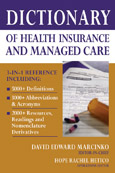
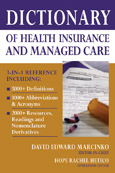
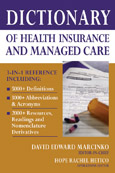
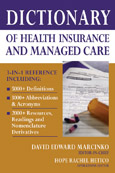
According to the “Dictionary of Health Insurance and Managed Care”, hospices offer custodial and health care for terminally ill people with six months or so, to live. 

In and Out-patient Programs Available

While most hospice care can be provided at the patient’s home, there are inpatient care programs at some nursing homes depending on the circumstances of the patient. Hospice services are palliative and supportive.

Payment

Hospices are usually paid by Medicare or Medicaid.

Assessment

35.5% of Patients Receiving Hospice Care in The U.S. Stayed Less Than 7 Days.‏

Conclusion

Your thoughts and comments on this ME-P are appreciated. Feel free to review our top-left column, and top-right sidebar materials, links, URLs and related websites, too. Then, subscribe to the ME-P. It is fast, free and secure.

Link: http://feeds.feedburner.com/HealthcareFinancialsthePostForcxos

Speaker: If you need a moderator or speaker for an upcoming event, Dr. David E. Marcinko; MBA – Publisher-in-Chief of the Medical Executive-Post – is available for seminar or speaking engagements. Contact: MarcinkoAdvisors@msn.com

OUR OTHER PRINT BOOKS AND RELATED INFORMATION SOURCES:

Product DetailsProduct DetailsProduct Details   

Introducing Medpedia

A Not-So New Idea!

By Dr. David Edward Marcinko; MBA, CMP™

[Publisher-in-Chief]

By Hope Rachel Hetico; RN, MHA, CMP™

[Managing Editor]

Medpedia, an online medical encyclopedia launching later this year, aims to have the open-source, evolving, and comprehensive nature of Wikipedia.

According to its Website

The Medpedia Project is an extraordinary global effort to collect, organize and make understandable, the world’s best information about health, medicine and the body and make it freely available on the website www.Medpedia.com

Physicians, health organizations, medical schools, hospitals, health professionals, and dedicated individuals are coming together to build the most comprehensive medical resource in the world that will benefit millions of people every year.”

The Wikipedia Difference

In a key departure from Wikipedia’s all-comers sensibility, however, the new encyclopedia will be edited only by those with advanced degrees in medicine and biomedical science, and the site is taking online applications from would-be volunteer editors – MDs, biomedical research PhDs, and clinicians who will be screened in a rigorous internal review process, according to a July 23rd press release.

Incubator Backing

The site is backed by an incubator, called Ooga Labs, and it will run text ads, while Harvard Medical School is giving the site some seed content.

Medpedia’s advisers include current and former deans from the medical schools at Harvard, Stanford and Michigan and the school of public health at UC Berkeley, while the site will pull in public domain content from the likes of the Center for Disease Control and Prevention [CDC], the National Institute of Health [NIH] and the Food and Drug Administration [FDA].

Other health and medical organizations that are supporting Medpedia include the American College of Physicians [ACP], the [Oxford Health Alliance (OxHA.org)], the Federation of Clinical Immunology Societies, [FOCIS], and the European Federation of Neurological Associations [EFNA]. These groups are contributing content and promoting participation in Medpedia to their members.

Assessment

A wiki is an electronic collection of web pages designed to enable anyone who accesses it to contribute or modify content, using a simplified internet markup language. It is named after the Hawaiian term for “quick.”

But, the concept and execution in late 2008 of www.Medpedia.com is not new or exactly as innovative as its originator’s seem to suggest; in the healthcare or any other space.

An Earlier Healthcare Success Story

For example, the Comprehensive Health Dictionary Series was started by email collaboration in 2005.  Its genesis sprang from those who suggested that changes in health and managed care appeared malignant, as many industry segments, professionals and patients suffered because of it. This tumult was so great, that many Americans and the HDS founders realized that they could no longer assume definitional stability of non-clinical health administrative terms. The resulting managerial and business chaos was legion.

And so, since knowledge is power in times of great flux, codified information protects us all from physical, economic, financial and emotional harm!

By its very nature, the Comprehensive Health Dictionary Series was ripe for electronic aggregation and modified wiki-styled creation; with periodic updates by engaged-readers working in the fluctuating health care industrial complex. Internet connectivity was the best way for the Health Dictionary Series to be edited and revised to reflect the changing lexicon of terms, as older words were retired, and newer ones continually created. 

Moreover, we did not simply listen to our colleagues, visitors, submitters and clients; we believed that true innovation means putting development tools in their hands, stepping back, and allowing them to lead the way!  And, it was so.

Coupled with our Collaborative Lexicon Query Service and a modified and moderated interactive social network, we maintained continuous subject-matter expertise, professional and user input, with peer-reviewed editors and experts; just like the Medpedia’s of today.

In fact, after our internet and email collaboration, three successful printed dictionaries were ultimately released in 2006 and 2007 as a result of the initial successful initiative; and more are to come:

The Dictionary of Health Insurance and Managed Care

http://www.amazon.com/Dictionary-Health-Insurance-Managed-Care/dp/0826149944/ref=sr_1_5?ie=UTF8&s=books&qid=1217414309&sr=1-5

The Dictionary of Health Economics and Finance

http://www.amazon.com/Dictionary-Health-Economics-Finance-Marcinko/dp/0826102549/ref=sr_1_3?ie=UTF8&s=books&qid=1217414309&sr=1-3

The Dictionary of Health Information Technology and Security

http://www.amazon.com/Dictionary-Health-Information-Technology-Security/dp/0826149952/ref=sr_1_2?ie=UTF8&s=books&qid=1217414309&sr=1-2

Detailed information, including Tables of Contents, Celebrity Forewords, unique features, reviews and ordering access may be obtained from: www.HealthDictionarySeries.com

Conclusion

And so, we certainly congratulate the righteous old-school founders of Medpedia on its upcoming launch. Yet, a singular query remains, considering the social networking cultural phenomena that are Facebook, MySpace, Twitter etc. “What took you so long – seriously?”

Moreover, we believe the marketing driven advertising nature of the beast will make its integrity, highly suspect [vis-a-vie big pharma].

In other words, if eyeballs can be reached and/or monetized … they can be slanted.

Please opine on this method of edited medical; knowledge aggregation; pro or con. Your comments are appreciated.

Related Information Sources:

Practice Management: http://www.springerpub.com/prod.aspx?prod_id=23759

Physician Financial Planning: http://www.jbpub.com/catalog/0763745790

Medical Risk Management: http://www.jbpub.com/catalog/9780763733421

Healthcare Organizations: www.HealthcareFinancials.com

Health Administration Terms: www.HealthDictionarySeries.com

Physician Advisors: www.CertifiedMedicalPlanner.com

Speaker: If you need a moderator or speaker for an upcoming event, Dr. David E. Marcinko; MBA – Publisher-in-Chief of the Executive-Post – is available for seminar or speaking engagements. Contact: MarcinkoAdvisors@msn.com  or Bio: www.stpub.com/pubs/authors/MARCINKO.htm

Subscribe Now: Did you like this Executive-Post, or find it helpful, interesting and informative? Want to get the latest E-Ps delivered to your email box each morning? Just subscribe using the link below. You can unsubscribe at any time. Security is assured.

Link: http://feeds.feedburner.com/HealthcareFinancialsthePostForcxos

Copyright 2008 iMBA Inc: All rights reserved, USA, unless otherwise noted. Use is restricted to Executive-Post subscribers only. No redistribution is allowed. To avoid violation of iMBA Inc copyright restrictions and redistribution policy, please register for your own free Executive-Post membership. Detailed information and registration links are available at:

Link: http://feeds.feedburner.com/HealthcareFinancialsthePostForcxos

Referrals: Thank you in advance for your electronic referrals to the Executive-Post.

Estate Planning Glossary for Doctors

Join Our Mailing List

Understanding Terms and Definitions

[Staff Writers]

Text BooksAbsolute assignment: A policy assignment under which the assignee receives full control over the policy and full rights to its benefits. 

Administration: The process of handling the affairs of a deceased person’s estate or a trust.

Administrator: The person or financial institution that is appointed to take care of the estate of a deceased person who died without a will; may be known as a “personal representative

Alternate valuation: With certain exceptions, the value of all property includable in the decedent’s gross estate six months after the decedent’s date of death. If an asset is sold or distributed, its sale price or value on the date of distribution is the alternate value. In either case, the sale or distribution must occur within six months of death.

Alternate valuation date: Six months from the date of death.

Ancillary administration: Probate proceedings in another state.

Attorney in fact: The person holding power to act for another under a Power of Attorney document.

Basis: The value subtracted from the net sales price to calculate gain or loss for capital gains tax purposes.

Beneficial interest: A financial or other valuable interest arising from an insurance policy between owners and key employees.

Beneficiary: Usually refers to a person or entity that is entitled to receive something, for example, a beneficiary of an estate or trust, or a beneficiary of life insurance or retirement benefits.

Bypass trust: An estate planning device (also called a credit shelter trust, family trust, or B trust in “AB” plans where the A trust funds for the marital deduction) used to minimize the combined estate taxes payable by spouses whereby, at the death of the first spouse, the estate is divided into two parts and one part is placed in trust usually to benefit the surviving spouse without being taxed at the surviving spouse’s death, while the other part passes outright to the surviving spouse or is placed in a marital deduction trust. A by-pass trust permits a maximum of from $1.5 million in 2005 to $3.5 million in 2009, to transfer to heirs of the spouses on an estate tax free basis under the unified gift and estate tax. The estate tax disappears completely in 2010

Charitable gift annuity: An arrangement whereby the donor makes a gift to charity and receives back a guaranteed lifetime (or joint lifetime) income based on the age(s) of the annuitant(s).

Charitable lead trust: An arrangement whereby the charity receives an income from a trust for a period of years, then the remainder is paid to non-charitable beneficiaries (generally either the donor or his or her heirs).

Charitable remainder annuity trust: A charitable trust arrangement whereby the donor or other beneficiary is paid annually an income of a fixed amount of at least 5% but not more than 50% of the initial fair market value of property placed in the trust, for life or for a period of up to 20 years; one or more qualified charitable organizations must be named to receive the remainder interest upon the death of the donor or other income beneficiaries, and the value of the charitable remainder interest must be at least 10% of the net fair market value of all property transferred to the trust, as determined at the time of the transfer.

Charitable remainder trust: An arrangement wherein the remainder interest goes to a legal charity upon the termination or failure of a prior interest.

Charitable remainder unitrust: A charitable trust arrangement whereby the donor or other beneficiary is paid annually an income of a fixed percentage of at least 5% but not more than 50% of the annually revalued trust assets, for life or for a period of up to 20 years; one or more qualified charitable organizations must be named to receive the remainder interest upon the death of the donor or other income beneficiaries, and the value of the charitable remainder interest must be at least 10% of the net fair market value of all property transferred to the trust, as determined at the time of the transfer.

Claim: Usually refers to funeral expenses, the debts of a deceased person, and expenses of administration.

Codicil: A legal document, which supplements and changes an existing will; generally used to make minor changes to the original will.

Collateral assignment: When a life insurance contract is transferred to an individual or other party as security for a debt. 

Community property: Ten states (Alaska, Arizona, California, Idaho, Louisiana, Nevada, New Mexico, Texas, Washington, and Wisconsin) use some form of the community property system to determine the interest of a husband and wife in property acquired during marriage.

Conservator:  An adult person or financial institution appointed by a court, who is responsible for a minor child’s or legally incapacitated person’s property until that minor child becomes an adult or the legally incapacitated person becomes competent to be responsible for his or her own property; may be know as “guardian of the estate.”

Crummy trust: A trust established granting a beneficiary a limited power to withdraw income or principal or both. This power is exercisable during a limited period of time each year and is non-cumulative. The power of withdrawal is generally limited to the amount excludable from gift tax liability under the annual gift tax exclusion or to the greater of $5,000 or 5 percent of the trust property.

Declarations: Statements in an insurance contract that provide information about the property or life to be insured and used for underwriting and rating purposes and identification of the property or life to be insured.

Devise:  Refers to an inheritance of real or personal property under a will, or may mean to dispose of real or personal property by will.

Devisee:  A person or entity designated in a will to receive a devise.

Disclaimant: One who makes a disclaimer.

Domicile: One’s home or permanent residence where the laws of the state of a person’s domicile determine what happens to property at death.

Donee: The recipient of a gift.

Donor: A person who makes a gift; may refer to a person who establishes a living trust.

Dower: The life estate of a widow in the property of her husband.

Durable power of attorney: A legal document appointing another person (the Attorney in Fact) to act on behalf of another, even if that person becomes disabled or incapacitated.

Durable power of attorney for healthcare: A legal document that gives another person the power to make certain decisions regarding healthcare.

ERISA: The acronym for the Employee Retirement Income Security Act of 1974, a federal law that established minimum standards for certain employee benefit plans, especially qualified employer retirement plans.

Escheat: Assigning property to the state when a one dies with no known beneficiaries or heirs.

Estate:  All of one’s assets included in an estate for tax purposes; also used to refer to those items of property that are subject to administration in the probate court.

Estate planning: The process of arranging one’s personal and financial affairs.

Executor: The person or financial institution that is appointed to administer the estate of a deceased person who died with a will; also known as a “personal representative.”

Family Limited Partnership: A form of holding property combining some of the advantages of holding property as a corporation with some of the advantages of owning property in a partnership.

Fiduciary:  From the Latin word meaning trust and confidence and used to refer to a person (or entity) that serves in a representative capacity; personal representatives, trustees, guardians, conservators, and agents under powers of attorney are all fiduciaries; to stand in a position of confidence and trust with respect to each heir, devisee, and/or beneficiary.

Formal Probate: A proceeding before a probate judge to determine whether a decedent left a valid will.

Future interest: An ownership interest in property in which unlimited possession or enjoyment of property is delayed until some future time

Generation skipping transfer: A transfer of property, usually in trust, that is designed to provide benefits for beneficiaries who are two or more generations younger than the generation of the grantor.

Generation skipping transfer tax: A transfer tax generally assessed on transfers to grandchildren, great grandchildren and others who are at least two generations younger than the donor.

Generation skipping transfer tax exemption: An exemption from generation-skipping tax for transfers by an individual either during life or at death.

Generation skipping trust: Any trust having beneficiaries who belong to two or more generations younger than the grantor.

Grantor: A person that established a living trust. It is also used to refer to one who is transferring real estate in a deed.

Gross estate: The total property or assets held by a person as defined for federal estate tax purposes.

Guardian: An adult person appointed by a surviving parent in his or her will or by a court, who is responsible for a minor child or legally incapacitated person’s personal care and nurturing.

Heir: Person, who inherits property from the estate of a deceased person who died without a will.

Holographic will: A will entirely in the handwriting of the signer. Although valid in some states in some circumstances, most lawyers advise strongly against such wills

Incapacitated person: A person who is impaired by reason of mental illness, mental deficiency, physical illness or disability, advanced age, chronic use of drugs, chronic intoxication, or other cause (except minority) to the extent of lacking sufficient understanding or capacity to make or communicate responsible decisions.

Inter vivos trust: A living trust.

Intestate:  Refers to dying without a will.

Irrevocable trust: A trust that can no longer be amended or revoked by anyone; most revocable trusts become irrevocable at some time, for example, when the person who established the trust dies.

Joint and survivor insurance: A policy underwritten on the life of two persons, usually husband and wife or business partners.

Joint tenancy with right of survivorship: A form for holding undivided title to property among more than one person. When one of the co-owners dies, the other becomes the sole owner of the property.

Legally incapacitated person: One determined by a court as not capable of handling personal and/or financial affairs

Living trust: A trust that one establishes during one’s lifetime which is not part of one’s will, but is usually established by a separate written trust agreement; an “inter vivos trust” also sometimes referred to as a revocable living trust.

Living will: A legal document stating that the signer does want to be kept alive by artificial or extraordinary means, when there is no expectation of recovery from a physical or mental disability. The enforceability of such documents is unclear in absence of applicable legislation.

Marital deduction: A deduction allowing for the unlimited transfer of any or all property from one spouse to the other generally free from estate or gift tax.

Per stirpes: A way of distributing an estate so that the surviving descendants will receive only what their immediate ancestor would have received if he or she had been alive at the time of death; state laws vary.

Personal representative: The person or financial institution appointed by the probate register or the court to administer a deceased person’s estate

Pour over will: This is a will used to transfer (pour over) into a trust any property that is left in a person’s estate after death.

Power of appointment: A right given to another in a written instrument, such as a will or trust that allows the other to decide how to distribute your property. The power of appointment is “general” if it places no restrictions on who the distributees may be. A power is “limited” or “special” if it limits the eventual distributee.

Power of attorney: A written legal document that gives an individual the authority to act for another. If the authority is to act for the principal in all matters, it is a general power of attorney. If the authority granted is limited to certain specified things, it is a special power of attorney. If the authority granted survives the disability of the principal it is a durable power of attorney.

Primary beneficiary: Beneficiary of a life insurance policy who is first entitled to receive the policy proceeds on the insured’s death.

Probate:  The process of determining if the deceased person left a valid will and admitting that will to probate. When a will is “admitted to probate” it means that the probate register or the probate judge has signed a paper that says the will is admitted to probate. The paper the probate register signs is called a “register’s statement” and the paper that the judge signs is called an “order.”

Probate register: An employee of the probate court authorized to perform certain acts such as the admission of a will to probate in an informal proceeding.

Proceeding:  Involves the court in some type of activity such as the admission of a will to probate in an informal proceeding conducted by the probate register (this may be done by mail and does not involve a court hearing) or in a formal proceeding conducted by the judge in a hearing in the courtroom after proper notice to interested persons.

Qualified disclaimer: A written refusal to accept property from a decedent (by will, by the laws of descent and distribution, by contractual provision, or by beneficiary designation), made within nine months of the decedent’s date of death and delivered to the holder of legal title in such property. This is a common way to transfer property without paying a gift tax.

Qualified domestic trust: A trust arrangement which allows property transferred to a surviving spouse who is not a U.S. citizen to qualify for a special exclusion in lieu of the regular marital deduction; and which ensures that, at the death of the surviving spouse who is not a United States citizen, the assets placed in such a trust will incur federal estate taxation since the tax was avoided at the first spouse’s death

Qualified plan: Plans that qualify for favorable tax treatment under the Internal Revenue Code, and are subject to restrictive rules and extensive regulations. Qualified plans are secured by a trust, as opposed to a nonqualified plan.

Qualified terminable interest property: Property that, were it not “qualified,” would not qualify for the marital deduction in the decedent’s estate.  Because the qualified interest left to the surviving spouse terminates at his or her death (and there are no other rights that would result in inclusion of that property in the surviving spouse’s gross estate). QTIP does qualify for the marital deduction in the decedent’s estate and will be included in the surviving spouse’s gross estate, provided the proper election is made by the decedent’s personal representative.

Rabbi Trust: A trust, owned by the company that holds assets to help meet non-qualified benefit payments. Rabbi trusts are taxable trusts, and trust assets must be available to corporate creditors in the event of a bankruptcy.

Revocable living trust:  A living trust or inter vivos trust that can be amended and revoked, usually by the person who established the trust; the trust may become irrevocable when the one who can amend or revoke the trust dies or becomes incompetent.

Settlor: A person who established a living trust.

Special-use valuation: Pursuant to Code Section 2032A, special-use valuation provides that the “highest and best use” value may be reduced to an appraised “special use” in the gross estate up to $900,000.  This applies to real property used in a farming operation or a trade or business that meets certain requirements, and where certain pre-death qualifications are met and post-death commitments are made.

Sound mind: The testator possesses sound mind for the purposes of making a will if he or she: (1) understands the nature of the act of making a will or codicil thereto, (2) knows the extent and character of the property subject to the will, (3) knows and understands the proposed disposition of that property, and (4) knows the natural objects of his or her bounty (i.e. his or her heirs). Whether the testator was of sound mind is tested (determined) by the state of the testator’s mind at the time the will or codicil is executed (written and signed) and varies by state.

Supervised probate:  A proceeding for the administration of a deceased estate in which there is considerable court involvement; papers that have to be filed with the court and various types of hearings before the probate judge

Tenants in common: A form of asset ownership in which two or more persons have an undivided interest in the asset and the ownership shares are not required to be equal

Testamentary trust: A trust that is part of a person’s will.

Testate:  Refers to dying with a will.

Testator: A person who makes a will.

Trust:  An arrangement, usually established by a written document, to provide for the management and disposition of assets. It normally involves three parties: the person who establishes the trust (sometimes called a donor, grantor, settlor, or trustor), a trustee, and one or more beneficiaries.

Trust declaration [trust instrument]: A document defining the nature and duration of the trust.

Trustee:  An adult individual or financial institution that is designated to be responsible for the administration of a trust. There may be more than one trustee (co-trustees), and an individual and a financial institution may serve as co-trustees.

Trustor: A settlor.

Uniform gifts [Transfers] to minors act [UGMA or UTMA]: A method to hold property for the benefit of a minor, which is similar to a trust but the rules are governed by state law.

Will: A written document which disposes of one’s property at death. The will also is used to nominate personal representatives. It may also be used to express burial and funeral instructions, make anatomical gifts, and designate a guardian and conservator for a minor child or a legally incapacitated adult. 

Conclusion

Your thoughts and comments on this ME-P are appreciated. Feel free to review our top-left column, and top-right sidebar materials, links, URLs and related websites, too. Then, subscribe to the ME-P. It is fast, free and secure.

Speaker: If you need a moderator or speaker for an upcoming event, Dr. David E. Marcinko; MBA – Publisher-in-Chief of the Medical Executive-Post – is available for seminar or speaking engagements. Contact: MarcinkoAdvisors@msn.com

OUR OTHER PRINT BOOKS AND RELATED INFORMATION SOURCES:

Product DetailsProduct DetailsProduct Details

Thomas E. Getzen; PhD

ABOUT

Dictionary of Healthcare Economics and Finance   

Product Details

Why the Dictionary of Healthcare Economics and Finance?  

Every business and healthcare administration student I’ve ever taught over the last three decades has struggled to decipher the alphabet soup of medical economics (i.e., OPHCOO, ALOS, DRG, RBRVS, behavioral health, acuity, etc), while those coming from clinical medicine struggled to internalize the lingo of finance (i.e., call premium, cost benefit ratios, IGARCH, aacpd, IBNR ABCM, internal rate of return, accounts receivable days outstanding, etc.).  

Until we have a common language however, medical and business professionals cannot possess a shared vision, nor can we communicate successfully to create healthcare entities that provide quality care to patients and reasonable profits to medical practitioners.  

Of course, no single tool can meet all needs and there are many fine books on healthcare economics and finance, along with a legion of consulting firms, management associations and university programs.

Yet, to effectively use these resources, one needs to have the right words, and to use seemingly everyday terms in a way that economists and healthcare financial experts speak. 

Unfortunately, healthcare service costs continued to rise more rapidly than wages during the last decade, and consumed an ever-larger share of Gross Domestic Product (GDP), creating hardships for both employers and employees.  

For example, health spending accounted for 15.3 percent of the nation’s economy or $2.05 trillion in 2006, averaging $6,175 for every American. Health insurance premiums rose 8.8% to more than $14,500 for family coverage, and by 2013, the US government forecasts health spending will reach 18.4 percent of gross domestic product.

It is no wonder that controlling costs is the top concern of fringe benefit specialists, according to Deloitte Consulting and the International Society of Certified Employee Benefit Specialists.

More than one-third of the rise was due to a 13.6% increase in outpatient spending. Higher utilization rates accounted for 43% of the increase, fueled by increased demand, more intense medical treatment and defensive medicine, according to PricewaterhouseCooper.

And, let us not forget that one in seven Americans lack health insurance; that’s 46 million people or 15.7 percent.

At the same time, medical professionals struggled to maintain adequate income levels. While some specialties flourished, others like primary care barely moved forward, not even incrementally keeping up with inflation.  

In the words of Atul Gawande, MD, a surgical resident at Brigham and Women’s Hospital in Boston, and one of the best young medical writers in America, “Doctors quickly learn that how much they make has little to do with how good they are. It largely depends on how they handle the business side of their practice”. 

Increasing, some physicians have become more aggressive in seeking out business opportunities. For example, Neurosurgeon Larry Teuber MD, built a specialty hospital in Rapid City SD, and earned $9 million dollars in a single year.  Investors also became wealthy, and the hospital where he previously practiced and some former colleagues were not so fortunate or happy; even suggesting that he stepped “over the line.” 

While it is difficult to fully understand a complex situation from a brief overview, it is vital for medical professionals to have definitions that clarify “the line,” and for businesses to define the forces and implicit understandings that underlie medical ethics. 

Alas, the Dictionary of Healthcare Economics and Finance cannot solve these problems, just as the rule-of-law cannot answer the question of whether or not Dr. Teuber did “the right thing.”

What the Dictionary can do however, is set the context, and clarify the terms of debate. Consumers also need to know what these terms and conditions mean.  If this was not evident until now, passage of Medicare Part D has made it painfully obvious that clarity is needed, and that continuing education in the economic and financial terminology of healthcare is a lifetime task. 

Once drug co-payments, corridor deductibles and exclusions are mastered, one can begin to sort out the limits on long-term care insurance, homecare and hospice benefits, and the ever-changing levels of hospital and physician reimbursement dictated by SGA (sustainable growth adjustments) … and there is still much more to study and learn. It takes knowledge to practice medicine and to earn capital, assume risk and invest in emerging healthcare entities.

And, none of us can escape the responsibility of knowing what the terms of engagement are.  In times of great flux, such as the revolution in reimbursement and payment systems occurring today, codified information protects us all.

The Dictionary of Healthcare Economics and Finance provides that protection by bringing stability to the nomenclature of healthcare fiscal and economic concerns.

With 10,000 definitions, acronyms, illustrations, cliometric equations and industry notables, the Dictionary is an authoritative and comprehensive guide to better healthcare administration transactions. 

Dr. David Edward Marcinko, Academic Provost for the Institute of Medical Business Advisors, Inc, and a Certified Medical Planner© should be complimented for conceiving and completing this ambitious project.  

The Dictionary of Healthcare Economics and Finance spells out the terms of reference and the principle players in the contemporaneous healthcare industrial complex.  Having such a compendium readily at hand and sharing it with others, is a way for patients, accountants, financial planners and insurance agents, medical practitioners, nurse managers and healthcare executives to improve economic efficiency and clinical quality. 

Of course, it may even help restore fiscal enterprise-wide sanity, as well.  

Simply put, my suggestion is to refer to the Dictionary of Healthcare Economics and Finance frequently, and “reap”.  

  1. The New Yorker, April 4, p.47, 2005.
  2. Wall St. Journal, Aug 2, 2005.
  3. Reuters, Jan 31, 2006.
  4. Modern Healthcare Jan 31, 2006.

Thomas E. Getzen, PhD

Executive Director, International Health Economics Association

Professor of Risk, Insurance and Healthcare Management

The Fox School of Business – Temple University

Philadelphia, Pennsylvania, USA 19122 

More Terms – Health Dictionary Series:

Speaker: If you need a moderator or a speaker for an upcoming event, Dr. David Edward Marcinko; MBA – Editor and Publisher-in-Chief – is available for speaking engagements. Contact him at: MarcinkoAdvisors@msn.com  

Product DetailsProduct DetailsProduct Details

***

Job_Index_Inforgraphic

***

The Federal False Claims Act

Join Our Mailing List

Understanding Qui Tam

[By Dr. Charles F. Fenton III; Esqfenton]  

A civil war era law, titled the False Claims Act (qui tam [in the name of the king]), is increasingly popular with prosecutors who pursue inappropriate billing mishaps by physicians.  

Why the False Claims Act? 

The FCA rose to prominence because in 1990, the healthcare industry accounted for about 10% of all false claims penalties recovered the federal government. By 1998, the healthcare share was almost 40%. Today, it may be even more. 

The “Act”  

The False Claims Act allows a private citizen such as your patient, your employee, or a competing doctor to bring a health care fraud claim against you, on behalf of and in the name of the United States of America. The “relator” who initiates the claim is rewarded by sharing in a percentage of the recovery from the health care provider. 

Essentially, the “Act” allows an informant to receive up to 30% of any judgment recovered against government contractors (Medicare, Medicaid, CHAMPUS, prison systems, American Indian reservations or the VA systems, etc).   

With a low burden of proof, triple damages, and penalties up to $10,000 for each wrongful claims submission, these suits are the enforcement tools of choice for zealous prosecutors pursuing health fraud.   

Assessment  

All that must be proven is that improper claims were submitted with a reckless disregard of the truth. Intentional fraud is irrelevant to these cases, even if submitted by a third party, such as a billing company. 

It is imperative that the attending physicians review all bills before they are submitted to any state of federal agency. The Federal False Claims Act is a federal law that has been on the books since the days of the civil war and which recently has become a tool to battle health care fraud.  

So, what do you think about the Federal FCA?

Conclusion

Your thoughts and comments on this ME-P are appreciated. Feel free to review our top-left column, and top-right sidebar materials, links, URLs and related websites, too. Then, subscribe to the ME-P. It is fast, free and secure.

Speaker: If you need a moderator or speaker for an upcoming event, Dr. David E. Marcinko; MBA – Publisher-in-Chief of the Medical Executive-Post – is available for seminar or speaking engagements. Contact: MarcinkoAdvisors@msn.com

OUR OTHER PRINT BOOKS AND RELATED INFORMATION SOURCES:


Product DetailsProduct DetailsProduct Details      

Charitable Giving Terms and Definitions for Physicians

A “Need to Know” Glossary for all Medical Professionals

Staff Writer’sdhimc-book

For most medial professional’s, charitable giving can either be a financial planning goal or an economic tool to achieve other goals more effectively.   

When charitable giving is viewed as a financial goal it becomes a very personal matter to the physician, much like an individual’s other lifestyle choices. 

For some doctors, charitable giving is a way of showing gratitude for their well-being. For others, it is a matter of social status. Still some physicians approach charitable giving as a discipline of their religious or philosophical view of life.  

Nevertheless, various charitable giving techniques are available to meet a physician’s unique financial planning requirements. These techniques generally fall into two broad categories: current gifts and planned or deferred gifts.  

Current gifts are rather simple techniques that can be completed at or near the current moment.

Planned or deferred gifts are generally complicated transactions that are to be completed in the future. 

Use of a particular charitable giving technique will depend largely on the doctor’s capacity to understand and evaluate complex alternatives – strength of donative intent – as well as his/her current and future cash flow needs, types of assets owned, strength of charitable intent, and income and estate tax considerations.

Glossary of Terms

5% probability rule: In general, charitable income tax deductions are disallowed when there is greater than a 5% chance that a noncharitable beneficiary will live long enough to exhaust the charity’s remainder interest. Charitable remainder unitrusts are exempt from this rule [Rev. Rul. 77-374]. 

Bargain sale: A sale of property to a charity for less than the property’s fair market value [Regs. §1.1011.2].

Charitable gift annuity: An arrangement under which a donor makes a gift to a charity in exchange for systematic payments of income for a period of time [Regs. §1.170A-1(d)]. 

Charitable income trust: A trust created by a donor doctor that provides for income payments to a charity for a period of time, after which the remainder is paid to a non-charitable beneficiary. Payments to the charity are limited to the amount of income earned by the trust [Rev. Rul. 79-223]. 

Charitable lead trust: A trust created by a donor that provides for payments to a charity for a period of time, after which the remainder is paid to a non-charitable beneficiary. Payments to the charity are either a fixed amount annually or a fixed percentage of the value of assets in the trust at the beginning of each year. Payments are not limited to the amount of income earned by the trust [IRC §664(a)]. 

Charitable remainder trust: A trust created by a physician-donor that provides for payments to a non-charitable beneficiary for a period of time, after which the remainder is paid to a charity. Payments to the non-charitable beneficiary are a fixed amount annually. Payments are not limited to the amount of income earned by the trust [IRC §664(a)].

Charitable remainder annuity trust (CRAT): A trust created by a physician-donor that provides for payments to a non-charitable beneficiary for a period of time, after which the remainder is paid to a charity. Payments to the non-charitable beneficiary are a fixed amount annually. Payments are not limited to the amount of income earned by the trust [IRC §664(d)(1)].

Charitable remainder unitrust (CRUT): A trust created by a physician-donor that provides for payments to a non-charitable beneficiary for a period of time, after which the remainder is paid to a charity. Payments to the non-charitable beneficiary are a fixed percentage of the value of assets in the trust at either the beginning or the end of each year, depending on the trust agreement. Payments are not limited to the amount of income earned by the trust [IRC §664(d)(2)].

Donative intent: The inclination of a physician-donor to make a gratuitous gift to charity.

Income in respect of a decedent: Amount due and payable to a decedent at his or her death because of some right to income. Examples of income in respect of a decedent include salaries, retirement benefits, annuity payments, interest, dividends, rents, and deferred gain on an installment contract, earned but not received by the decedent before his or her death [IRC §691(c)(2)].

Insubstantial rights: Rights to the use of donated property that is retained by a physician-donor when the retained rights do not interfere with the donee-charity’s unrestricted use or full ownership of the donated property [George v. U.S. 11/30/61, DC-MI]. 

Pooled income fund: A fund that commingles property gifted by several donors, where each donor designates a non-charitable person to receive income for life and a charity to receive the remainder interest [Regs. §1.642(c)-5].

Private foundation: A tax-exempt organization under IRC §501(c)(3) that does not enjoy a broad base of public support [IRC §§508, 509].

Public Charity: A tax-exempt organization under IRC §501(c)(3) that enjoys a broad base of public support [IRC §509(a)(2)].

Qualified appreciated stock: Stock for which a market price quotation is readily available and that would generate a capital gain if sold [IRC §170(e)(5)].

Qualified charity: An organization described in IRC §170(c). Gifts to these organizations can be deducted by donors for income, gift, or estate tax purposes. 

Qualified conservation contributions: A restriction on the use of real property, a remainder interest in real property, or a physician-donor’s entire interest in real property that is given to a qualified charity for conservation purposes [IRC §170(f)(3)(A)].

Quid pro quo: The expectation by a physician-donor that he or she will receive a bargained-for benefit in exchange for a gift to a charity [Rev. Rul. 76-185].

Reduction rules: Exceptions to the general rule that gifts to charity are deductible to the extent of the fair market value of the donated property [IRC §170(e)(1)(A)].

Supporting Organizations: A tax-exempt entity that is established by an individual or small group of donors for the purpose of supporting a public charity.

Remainder interests: Property rights that can be enjoyed only after prior rights have terminated. 

Undivided interests: Rights that joint owners share in the entirety of a property as opposed to rights they enjoy to segregated pieces of a property. 

For related information: www.HealthDictionarySeries.com 

Additional info: http://www.jbpub.com/catalog/0763745790/

Note: Feel free to send in your own related terms and definitions so that this section may be updated continually in modern Wiki-like fashion.

Product DetailsProduct DetailsProduct Details

Cash Flow Terms and Budgeting Definitions

A “Need to Know” Glossary for all Medical Professionals

Staff Writers 

Join Our Mailing List

Regardless of how much current income a physician may earn, financial resources and assets are only useful when they are converted to cash. Doctors who are in the accumulation phase of their careers can only amass new assets from free cash flow.

Free cash flow is the result of budgeting for excess cash flow and the prudent use of debt. And, debt can be either a friend or foe!  

If used properly, debt can increase a medical professional’s standard of living by allowing him or her to enjoy an asset or goal earlier than if he or she had to pay cash.  Or, it may be a catastrophe as seen in the recent housing market value-decline and security backed mortgage-bubble bust.   

Yet, debt management has become a serious issue in American society, especially for non-secured debt because of easy access to credit via credit cards. And, it is not unusual to hear the story of a medical professional with $100,000 of credit card debt; or more.  Although perhaps an extreme example, it is not unusual for doctor’s to have $15,000 to $25,000 of revolving credit card debt.  

Glossary of Terms 

Adjustable rate mortgage: A mortgage loan that has an interest rate that changes in response to market interest rates during the loan’s term. 

Cash reserve: The amount of assets that are quickly convertible into cash for the purpose of meeting un-foreseen expenditures or reductions in income. 

Closing costs: Expenses that accompany the buying, selling, or financing of real estate. 

Consumer Price Index: A statistic published by the Bureau of Labor Statistics for the purpose of reporting the average consumer inflation rate. 

Debt consolidation: A debt management strategy that involves borrowing money in a single loan to repay other debts. 

Deferred expenses: Expenditures that are planned to occur several years in the future, usually requiring large outlays of cash. Examples include paying for college expenses, buying a vacation home, and paying for a child’s wedding. 

Discount points: Payments made to a lender at the inception of a loan for the purpose of reducing the interest rate of a loan.

Federal Deposit Insurance Corporation: An agency of the United States government that insures deposits in federally and state-chartered banks. 

Federal Depository Insurance: A program of the Federal Deposit Insurance Corporation that insures depositors in federally and state-chartered banks. 

Fixed rate mortgage: A mortgage loan that has a constant interest rate for its whole term.

Home equity loan: A mortgage loan, usually in addition to the primary mortgage loan, which allows the borrower to convert a portion of real estate equity into cash. 

Loan origination fee: Payments made to a lender at the inception of a loan to pay for the lender’s underwriting services.

Money market deposit account: An account offered at a banking institution that has features similar to a money market mutual fund. Accounts under $100,000 are insured by the Federal Deposit Insurance Corporation. 

Money market mutual fund: A registered investment company that invests in securities that have short-term maturities (usually from several days to several weeks). 

Mortgage broker: An intermediary who charges a fee to facilitate acquisition of a loan to purchase real estate. 

Mortgage insurance: A coverage that is often required by lenders, and paid for by borrowers, for the purpose of insuring the lender against potential default by the borrower. 

National Credit Union Administration: An agency of the United States government that insures deposits in credit unions. 

National Credit Union Share Insurance Fund: A program of the National Credit Union Administration that insures shareholders of credit unions. 

Non-recurring expenses: Irregular household operating expenditures, the timing of which during a year may not be determined precisely, or expenditures that occur less frequently than monthly. Examples include car repairs, home repairs, and insurance premiums. 

Personal Inflation Index: A statistic that adjusts the Consumer Price Index to specific spending patterns of a household. 

Recurring expenses: Regular household operating expenditures that occur every month. 

Reverse mortgage: A loan secured by real estate that allows the borrower to convert equity into cash without having to make monthly payments during the term of the loan. The loan plus accrued interest is paid from the proceeds of the sale of the property.

Savings Association Insurance Fund: A program of the Federal Deposit Insurance Corporation that insures depositors in federally chartered savings institutions.

Securities Investor Protection Corporation: A membership corporation of securities firms that was authorized by the Securities Investor Protection Act of 1970. 

Total Annual Loan Cost: The total annual financing costs associated with a reverse mortgage.

For more information: www.HealthDictionarySeries.com 

Note: Feel free to send in your own related terms and definitions so that this section may be updated continually in modern Wiki-like fashion.

Product Details

Conclusion

Your thoughts and comments on this ME-P are appreciated. Feel free to review our top-left column, and top-right sidebar materials, links, URLs and related websites, too. Then, subscribe to the ME-P. It is fast, free and secure.

Speaker: If you need a moderator or speaker for an upcoming event, Dr. David E. Marcinko; MBA – Publisher-in-Chief of the Medical Executive-Post – is available for seminar or speaking engagements. Contact: MarcinkoAdvisors@msn.com

OUR OTHER PRINT BOOKS AND RELATED INFORMATION SOURCES:

Post-Mortem and Estate Planning Definitions for Doctors

A “Need-to-Know” Glossary for all Medical Professionals

Staff Writers

Activities of daily living (ADLs): Those functions or activities normally associated with bodily hygiene, nutrition, elimination, rest, and ambulation. These are the minimal requirements of mobility, toileting, and dressing, eating, and maintaining continence. Performance of ADLs indicates a person’s degree of physical independence as part of a functional assessment. The most common long-term care insurance (LTCI)-defined ADLs, which require physical assistance to perform, are defined below in the usual order of their occurrence:

• Bathing—Included only in a few LTCI contracts; the least impaired ADL.

• Mobility (transferring)—The ability to move from bed to chair.

• Toileting—The ability to get to and from a toilet.

• Dressing—The ability to put on and take off clothes and/or to fasten shoes.

• Eating—The ability to feed yourself. (Food preparation is not an ADL.)

• Maintaining continence—The ability to maintain control of urine/bowel movements. 

ADL impairment:  A physical impairment that prevents an elder from performing certain physical activities.

Adult day-care centers: Such centers provide social, recreational, and rehabilitation for full-day or half-day programs for people who cannot care for themselves during the day but can live at home at night.

Adult congregate living: A group living environment that promotes independent living by supplying supportive medical and social services either directly or through referral to seniors who are in relatively good health, despite financial limitations or social impairments. 

Alternate valuation: With certain exceptions, the value six months after the decedent’s date of death of all property includable in the decedent’s gross estate. If an asset is sold or distributed, then the sale price or the value on the date of distribution is the alternate value. In either case, however, the sale or distribution must occur within six months of death.

Alzheimer’s disease: A disease characterized by progressive dementia and diffuse cerebral cortical atrophy (an organic brain disease and is covered by most LTCI policies).

Alternate Valuation Date: Six months from date of death. 

Assisted living facility: A residential facility for independent seniors with multiple needs, including slight to moderate physical disabilities and cognitive impairment. Residents receive 24-hour supervision and assistance in daily living, meals, housekeeping, transportation, and recreational programming. Minimum health or nursing assistance is provided on an as-needed intermittent basis. Residents have their own private spaces and they share public spaces with others. This type of facility is also referred to or related to adult congregate living facility, adult’s home, personal-care home, or residential-care facility, depending on local nomenclature and state regulations. 

Attorney-in-fact, agent, or power-holder: The person who or institution that has been given the authority to act on behalf of a person under a power of attorney. 

Balance billing: A charge of up to 15% in excess of approved Medicare fees by a physician.   

Benefit eligibility: A prerequisite for receiving LTCI benefits, usually an inability to perform two ADL’s or serious cognitive impairment. 

Benefit period: The maximum number of years that benefits will be paid for nursing-home and/or home care. This can range from one year to a lifetime of benefits. 

Caregiver: A person who provides care to a resident or patient. Most long-term care (LTC) is less expensive custodial care, not expensive skilled medical or psychological care. 

Charitable remainder annuity trust (CRAT): An irrevocable trust that pays not less than 5% of initial fair market value to a donor or designated person annually or more frequently, if desired. The remainder interest of the split interest passes to charity at the end of a designated time or the annuitant’s life.  See the Personal Financial Planning Portfolio, titled “Charitable Giving.” 

Cognitive impairment: The deterioration or loss of short- or long-term memory, orientation, or deductive or abstract reasoning.  

Coinsurance (Co-payment): The portion of the medical-service bill that must be paid by the patient. (Coinsurance refers to a percentage; co-payments are stated as a fixed amount.) 

Compound annual growth rate (CAGR): The rate of interest earned on principal plus interest that was earned earlier multiplied annually. With LTCI, the customary inflation rate is 5% for a CAGR inflation rider. For estimate purposes, premium costs may increase at a 3% CAGR.

Conservator ship: Similar to guardianship and committee ship except that a court showing of mental or legal incompetency is not required. What needs to be demonstrated in this instance is the inability to manage one’s personal financial affairs.

Consumer price index (CPI): One of the broadest measures of prices using a market basket of goods. Changes in the CPI are used to measure the annual rate of inflation.  

Contestability period: The time period from a policy issue date during which a policy is contestable. 

Continuing care retirement community (CCRC): A residential, life care community for elders. The community includes a nursing-home facility. In a CCRC, a senior makes a substantial payment for lifetime housing in a home, condominium, or cooperative. In addition, the senior often pays a monthly maintenance charge. The senior holds title to his living unit and shares ownership of the common areas with other owners in the development. 

Cost shifting: The practice that forces a healthcare provider, such as a hospital, to charge private-pay customers more. This also applies to sellers who provide services to those who cannot pay, such as the uninsured poor. 

Custodial care (personal care): General assistance with activities of daily living, as well as household chores, provided by those who are not medical professionals. 

Daily benefit: The maximum reimbursement for daily, long-term care expenses per a LTCI policy. This may range from $75 to $500 daily. 

Deductible: The amount a patient must pay directly (usually each year) to a provider before the insurance plan begins paying the benefits. An example is the annual deductible for a doctor’s services under Medicare. 

Diagnostic related groups (DRG): A payment system for hospital care based on patient diagnosis, which limits reimbursement of most medical treatments. 

Disclaimant: The person who makes a disclaimer. 

Durable medical equipment: Medical equipment designed and intended for the regular use of a LTC recipient for medical treatment or possibly safety.  

Durable power of attorney: Enables one to appoint someone to act as his or her surrogate decision maker. The appointed person can make health decisions and/or administer financial or other personal affairs. If the authority granted in the power of attorney commences only upon the occurrence of a specific event or contingency, the power of attorney is known as a “springing power of attorney.” 

Exclusions: LTCI policies exclude coverage for mental illness (other than Alzheimer’s and related dementia), alcohol or drug abuse, confinement in a hospital, care outside the United States, and services paid for by the government. 

Family limited partnership: A partnership among members of a family that owns properties. It is used for estate-planning purposes to reduce the value of an asset or business. Such an estate plan may include an arrangement to purchase a business in the event of the principal owner’s incapacity.  

Family and Medical Leave of Absence Act: This act permits an employee (after a year of employment) to take up to 12 weeks of unpaid leave to take care of his own health problem or the health problem of the employee’s family, including his children, spouse, or parents. 

Full recovery: This occurs when an insured is no longer disabled and no longer requires substantial human assistance or supervision with two or more ADLs or a cognitive impairment.  

Geriatric care manager (GCM) or case manager (CM): A person who coordinates, oversees, or arranges the care of an elderly or disabled person. 

Grantor retained annuity trust (GRAT): A trust in which the grantor retains the right to a fixed dollar amount (the annuity) for a fixed term. If the grantor survives until the end of the annuity term, all of the trust principal will pass to others and escape the grantor’s estate for death tax purposes.

Grantor retained income trust (GRIT): A trust in which the grantor retains the right to receive the income. To satisfy all gift and estate tax law requirements; a GRIT must be either a GRAT or a GRUT (grantor retained uni-trust). 

Grantor retained uni-trust (GRUT): A GRUT is similar to a GRAT, except that with a GRUT the grantor retains the right to receive a fixed percentage of the value of the trust annually. Thus, the total annual payments will fluctuate in direct proportion to the value of the trust.  

Guardianships and conservatorships: Depending on the state of jurisdiction, a court-created vehicle in which a guardian or conservator is appointed the legal representative of a person who is an adjudicated mental incompetent. This guardian or conservator then acts on behalf of the incompetent. 

Guarantee renewable: An LTCI contract provision precluding cancellation of a policy, or a change of any of its terms, as long as the premiums are paid on time. Insurers can increase premiums after receiving approval from a state insurance department.  

Guardian: A person named by a court to represent the interest of minors or incapacitated elders. The appointed person is lawfully invested by a court with the power of, and charged with the duty of, taking care of a person who is considered incapable of administering his or her affairs. The guardian also is responsible for managing the property and rights of the person. 

Healthcare Finance Administration (HCFA): The federal agency [part of the Department of Health and Human Services (HHS)] responsible for Medicare and Medicaid rulemaking and administration.  

Healthcare proxy: A document that a person uses to appoint someone to make all his healthcare decisions in the event that he becomes unable to make his own.  

Home health aide: A person who performs custodial LTC services under professional supervision. 

Home health agency: A licensed public or private organization that provides home health aid custodial services, skilled nursing services, or other therapeutic services. 

Home healthcare plan: A home-care program prepared by a physician, a registered nurse, or a care manager without which the patient’s physical condition could be adversely affected. 

Home healthcare services: These may include the following services performed either daily or at least weekly: 

• Full or part-time, home health aide services helping with ADLs or Alzheimer’s disease.

• Physical, respiratory, occupational, or speech therapy provided by a licensed therapist.

• Nutrition counseling under the supervision of a registered dietitian.

• The development of a home-care plan by a registered nurse, a licensed practical nurse, a physician’s assistant, or medical social worker and approved by the attending physician. 

Hospice care: A program for terminally ill people who are expected to die within six months. It is primarily concerned with pain and symptom control. Hospice provides medical, nursing, and other health services through home or inpatient care. Medicare usually pays for hospice care. 

Inflation benefit rider: A provision for a periodic increase of benefit coverage to reflect the increasing costs of care based on the CPI or other economic indicators. Most LTC policies offer either a simple 5% annual increase or a more expensive 5% growth, which is compounded annually. Some policies offer an option to increase benefits for an additional premium without any additional medical examinations. 

Informal caregivers: Family members, friends, or caregivers who are not employed by established home-care agencies,  who provide care without pay and are not under the supervision of a licensed agency and, thus, not reimbursable according to most LTCI contracts. 

Instrumental activities of daily living (IADL): Actions performed by a person that are above and beyond the most basic ADLs. IADLs include shopping, driving, cooking, cleaning, and taking care of personal finances.

Insured event: Events determined by the LTCI policy to be covered by the insurance and that entitle a policyholder to benefits.  

Interrupted care requirements: A period of time after which benefits will be resumed without a new, start-up, waiting period. 

Irrevocable living trust: A trust established during a grantor’s lifetime whose terms cannot be changed. 

Joint tenancy with rights of survivorship: The holding of title to property by two or more people so that upon the death of one joint owner, the survivor or survivors take title to the property; to be distinguished from tenancy in common. 

Level premium: The premium (paid annually or more frequently) that is fixed unless, on a class basis, an insurance company obtains approval from the state to increase premiums. An increase is more likely to occur over a long time as claims’ experience increases and more likely will apply to younger policyholders. 

Life insurance living benefit rider: A rider that is available on some permanent life insurance policies. In the event of a terminal illness and a life expectancy of less than one year, the policyholder may receive an advance discounted payment on the face value of his policy after deducting any policy loans. The rider is usually available without any extra premium as a free upgrade feature to a policy. The amount of the payout will vary by policy. 

Limited partnerships: Unincorporated associations with one or more general partners who are personally liable and one or more limited partners who contribute capital and share in profits but incur no liability with respect to partnership obligations beyond their capital investment. These partnership interests may be gifted for estate-planning purposes.  

Living trust: A trust established by a grantor, donor, or settlor who is living at the time he creates the trust; also known as an “inter vivos trust.” 

Living will: A person’s written directive to his family, physician, and medical facility to be followed if he becomes unable to participate in decisions regarding his medical care. The person’s instructions usually reflect his wish to decline medical treatment in prescribed circumstances and his wish that his living not be artificially prolonged. 

Long-term care (LTC): Assistance provided over a period of time to those unable to care for themselves. LTC includes a wide variety of services from skilled nursing to custodial care, including personal, medical, social, and financial care. Such services are generally required by older people as a result of diminishing health, disabling illness, disability, or Alzheimer’s disease. 

Long-term care insurance (LTCI): Private insurance that helps pay primarily for custodial care over an extended period of time in a nursing home or at home. There are many different types of LTCI policies. 

Managed care: General term for any system of healthcare delivery, such as an HMO, organized to enhance cost-effectiveness. Managed care networks are different types of healthcare providers that agree to provide services to those covered under the plan. They are usually organized by insurance carriers, but also can be organized by employers, hospitals, or hospital chains. Payment is made on a fixed basis, which provides incentives to control costs. 

Medicaid: The joint federal and state program that provides a wide spectrum of medical services (including LTC) to the indigent as authorized in Title XIX of the Social Security Act. At the Federal government level, Medicaid is administered by the HCFA.  

Medicaid “community spouse”: The “healthy” spouse who is not on Medicaid while an ill spouse who is in a nursing home is on Medicaid. The income and assets of both spouses are pooled. The community spouse may receive a limited, possibly negotiable resource allowance (as determined by each state), but otherwise Medicaid has the first claim to income and assets to pay expenses for an ill spouse.  

Medicaid trust: A trust established by a Medicaid applicant whose purpose is to protect the trust assets from nursing home claims or from claims of the supervising state agency. 

Medicare: The federal government medical insurance program that pays for those over 65 years old and some medical and hospital expenses for disabled people as authorized in Title XVIII. Medicare Part A benefits cover inpatient hospital care, skilled nursing facility care, home healthcare, and hospice care. Medicare Part B benefits provide coverage for physician services, outpatient hospital services, diagnostic tests, various therapies, durable medical equipment, medical supplies, and prosthetic devices. Normally, Medicare pays for skilled care. Limited custodial care may be approved and may accompany skilled care.  

Medicare supplementary insurance (Medigap): Private insurance used to supplement Medicare. Medigap can be used to cover co-payments and deductibles, but it usually does not cover LTC services. 

National Association of Insurance Commissioners (NAIC): A non-profit association of state insurance commissioners who are the chief regulatory officials in all 50 states, the District of Columbia, and U.S. territories. These officials, often with the concurrence of private insurance companies, issue overall U.S. insurance guidelines. States may or may not adopt these guidelines; however, there is pressure on the states to adopt them as there is almost no other federal regulation or coordination among different states.  

Nonforfeiture of benefits: A provision, relatively expensive and usually optional, that may guarantee access to partial benefits after participating in a plan for a specified period of time. 

Nursing homes: Licensed facilities with licensed personnel that provide typically 95% custodial care; the remainder is intermediate and skilled care. Nursing home charges include custodial or skilled care, room, and board. Nursing homes may be used for respite care or post-hospital treatment.  

Omnibus Budget Reconciliation Act (OBRA) 1990: Federal legislation that approved standardization of Medigap policies.  

OBRA ’93:  Federal legislation that extended the lookback period for Medicaid qualifying purposes from 30 to 36 months and 60 months for certain trusts in order to require a longer wait time before receiving benefits.  

Policy limit: The maximum total benefit, which equals the daily benefit multiplied by the number of days of benefit selected. For example, if the daily benefit is $100 and three years are selected, then the policy limit is the $100 daily benefit × 3 years × 365 days, or $109,500. 

Pre-existing conditions: A bodily injury or sickness that a physician has treated or has advised treatment or that would have caused a prudent person to seek medical treatment within a specified period of time before the date that the insurance policy was issued. A condition that was fully disclosed on the application, and not excluded from coverage, will not cause denial of benefits.  

Qualified disclaimer: A written refusal to accept property from a decedent (by will, by the laws of descent and distribution, by contractual provision, or by beneficiary designation), made within nine months of the decedent’s date of death and delivered to the holder of legal title in such property. This is a common way to transfer property without paying a gift tax. 

Qualified terminable interest property (QTIP): Property that, were it not “qualified,” would not qualify for the marital deduction in the decedent’s estate because the interest left to the surviving spouse terminates at his or her death (and there are no other rights that would result in inclusion of that property in the surviving spouse’s gross estate). QTIP does qualify for the marital deduction in the decedent’s estate and will be included in the surviving spouse’s gross estate, provided the proper election is made by the decedent’s personal representative. 

Recoupment: The seizure of assets that are considered to be illegally transferred by the client and are subject to being recouped by Medicaid.  

Respite care: A temporary arrangement or facility for a LTC patient or other chronically dependent person so that family or other caregivers can have a respite from their duties.  

Retirement community: Privately built, usually self-contained housing facilities for those who are over a stated age, usually 55. Housing options include the lease or purchase of a single or multi-family house or townhouse, or an apartment, sometimes even in a high-rise building. Residents are usually of middle- to upper-class economic backgrounds. Costs can cover building maintenance and/or a variety of other services, including healthcare. 

Return of premium option: An expensive, optional LTCI feature in which the total premium paid may be returned if an insured dies before a certain age, such as 70. This option generally is not available.  

Reverse mortgage: A home-mortgage arrangement whereby a purchaser or mortgagor agrees to purchase a home, but does not take possession until the death of the seller or whenever the seller decides to move. The seller receives a mortgage as security for the sales proceeds. The purchaser or mortgagor makes monthly payments to the seller and allows the seller to reside in the home for a lifetime or period certain. The seller loses ownership but obtains a stream of cash flow and taxable income. This income may permit the seller to remain at home, which otherwise might not be affordable. The purchaser’s debt is usually guaranteed by a Federal Housing Administration insurance policy. The market for these mortgages appears to be limited until larger uninsured mortgages become more available in the private sector.  

Revocable living trust: A trust created by a donor, grantor, or settlor during his or her lifetime in a separate document in which the grantor reserves the power to revoke (or amend) the trust. This type of trust is often for the grantor’s benefit and is used as an estate planning and management vehicle.

Robert Wood Johnson Long Term Care Private Insurance State Partnership Programs: Programs in Connecticut, New York, California, Indiana, and Iowa that established plans to protect assets from Medicaid “spend down” requirements if LTCI is purchased that conforms to the state plan. 

“Sandwich generation”: The generation of adults caring for children and elder parents simultaneously and therefore “sandwiched” between two generations.  

Skilled nursing and intermediate care: Physician-ordered care provided by a registered nurse or therapist usually on a visit basis unless 24-hour intensive care is required. Skilled care may include such tasks as: tubal or intravenous feedings, intravenous injections, oxygen therapy, bowel or bladder retraining, catheterization, application of dressings involving prescription, and dialysis. 

Skilled nursing facility: A facility that provides room, board, and 24-hour skilled nursing care. 

Special-use valuation: Pursuant to Section 2032A, special-use valuation provides that the “highest and best use” value may be reduced in the gross estate by up to an amount based on special-use valuation for real property used in a farming operation or a trade or business that meets certain requirements, and where certain pre-death qualifications are met and post-death commitments are made. 

Spending down: Depleting income and assets to meet eligibility requirements for Medicaid; also called impoverishment 

Springing power of attorney: The authority of the holder of the power is not effective at the execution of the power, but instead goes into effect at some later time, usually when the client becomes incapacitated or incompetent.  

Standby trust: A revocable trust that is to receive assets upon the incapacity of the grantor. Typically these trusts appoint a bank, family member, or other trustee to manage these assets and to pay bills that a prudent, reasonable, responsible person would. The assets usually are transferred to the trust by the holder of a power of attorney, often a family member. 

Supplemental needs trust: A trust established by a third party that is specifically intended to supplement rather than supplant government benefits and that restricts the trustee from spending income or assets in a manner that can reduce government benefits. Also may be self-settled in unusual circumstances. 

Supplementary security income: A federal program of cash assistance for the aged, blind, and disabled. It is a Social Security program. 

Tenancy by the entirety: The commonly used equivalent of joint tenancy with rights of survivorship but restricted in use to husband and wife. However, due to the marital relationship, there are some minor differences. 

Tenancy in common: The holding of property by two or more people so that each has an undivided interest that, upon death, passes to heirs or devisees and not to the survivor(s); to be distinguished from joint tenancy with rights of survivorship. 

Trustee: The holder of a legal title to property held for the use and benefit of another.  

Twisting: The inducement of a policy owner to drop or replace an existing policy due to misrepresentation or incomplete information on the part of the salesperson or insurance agent  

Viatication: A loan made to a terminally ill insured in which the lender secures the loan with the discounted net death benefit from the insured’s life insurance policy.  

Waiting period: The number of days a person with LTCI must receive nursing-home or home healthcare before LTCI benefits are paid. This is also referred to as a deductible or elimination period.  

Waiver of premiums: A provision forgiving payment of future premiums once benefits have been paid for a specific period of time. 

Will: A document in which a person makes a disposition of his property, to take effect after his death, after the will has been “proved” in court. It is revocable during one’s lifetime. 

Related info: www.HealthDictionarySeries.com 

Note: Feel free to send in your own related terms and definitions so that this section may be updated continually in modern Wiki-like fashion. 

Equity-Based Securities Terms and Definitions for Physicians

A “Need-to-Know” Glossary for all Medical Professionals

[By Staff Writers]HDS

ADRs (American Depository Receipts): Securities that allow trading of shares of foreign stocks on U.S. exchanges. ADRs are issued by U.S. banks in place of foreign shares that the banks hold in trust. 

Advance/decline ratio (A/D ratio): The number of stocks that have advanced divided by the number that has declined over a certain time period. Ratios plotted one after another show the direction of the market, and the steepness of the line shows the strength of that direction.

Alpha: The measure of the amount of a stock’s expected return that is not related to the stock’s sensitivity to market volatility.

Arbitrage: Profiting from differences in price by simultaneously buying and selling the same security on different exchanges or using different types of contracts on the same security (buying rights and selling the stock, for instance). 

Asset allocation: Apportioning investments among different categories of assets (cash, stocks, and bonds, for example, or different subcategories like cyclical stocks, small capitalization stocks, blue chips, and defensive stocks). An important financial planning tool used to control both risk and return.

Beta: The measure of a stock’s volatility relative to the market. A beta lower than 1 means the stock is less sensitive than the market as a whole; higher than 1 indicates the stock is more volatile than the market. 

Book value: Determined from a company’s balance sheet by adding all current and long-term assets and subtracting all liabilities, including outstanding bonds and preferred stock. This total net-asset figure is divided by the number of common shares outstanding to arrive at book value per share. 

Callable: Preferred stock or bonds that may be redeemed by the issuing corporation before their stated maturity at a pre-stated “call price” that is higher than the original issue price. 

Capitalization ratios: Analysis of the components of a company’s capital structure, including debt (bonds), stock, and surplus, which show the relative importance of the sources of financing. 

Common stock: Units of ownership of a public corporation that usually carry voting rights; common stock is sometimes called “capital stock” when the company has no preferred stock. Common stock is the last to be paid off at liquidation but generally has the most potential for appreciation. 

Convertible securities: Preferred stock or bonds that are exchangeable for a stated number of shares of common stock at a pre-set price (“conversion price”). The “conversion ratio” is determined by dividing the par value of the convertible security by the conversion price. The amount by which the conversion price exceeds the current market price is the “conversion premium.” 

Coverage ratios: The number of times income will meet the fixed charges of bond interest and preferred dividends.

Cyclical stock: Stocks that tend to rise or fall quickly, corresponding to the same movements in the economic cycle. Automobiles and housing, for instance, are more in demand when consumers can afford high-ticket durables. Lumber, steel, and paper are more in demand when manufacturing production is high.

Defensive stock: Stocks from companies that make necessities, such as food, drugs, and utilities that are in demand regardless of the economic cycle. These stocks tend to respond less negatively to down market cycles. 

Dilutive effect: The lowering of the book or market value of the shares of a company’s stock as a result of more shares outstanding. A company’s initial registration may include more shares than are initially issued when the company goes public for the first time. Later, an issue of more stock by a company (called a “primary offering,” distinguished from the “initial public offering”) dilutes the existing shares outstanding.  Also, earnings-per-share calculations are said to be “fully diluted” when all common stock equivalents (convertible securities, rights, and warrants) are included. “Fully diluted” numbers are used in analysis when there is a likelihood of conversion or exercise of rights and warrants.

Earnings per share (EPS): The amount of a company’s profit available to each share of common stock. EPS = Net income (after taxes and preferred dividends) divided by Number of outstanding shares.

Efficient market theory: Belief that all market prices and movements reflect all that can be known about an investment. If all the information available is already reflected in stock prices, research aimed at finding undervalued assets or special situations is useless. 

Emerging growth stocks: Shares of companies participating in new markets or niches with greater future expectations than those in established industries or services. Companies are usually smaller and do not yet have steady earnings streams or pay dividends. They may be more highly priced relative to the rest of the market.

Ex-dividend:  When dividends are declared by a company’s board of directors, they are payable on a certain date (“payable date”) to shareholders recorded on the company’s books as of a stated earlier date (“record date”). Purchasers of the stock on or after the record date are not entitled to receive the recently declared dividend, so the ex-dividend date is the number of days it takes to settle a trade before the record date (currently three business days). A stock’s price on its ex-dividend date appears in the newspaper with an X beside it. 

Form 10-K and Form 10-Q: Annual and quarterly reports, respectively, required by the Securities and Exchange Commission (SEC) of every issuer of a registered security, including all companies listed on the exchanges and those with 500 or more shareholders or more than $1 million in gross assets. Audited financial statements for the fiscal year must include revenues, sales, and pretax operating income, a 5-year history of sales by product line and a sources and uses of funds statement comparative to the prior year. The quarterly report is not required to be as extensive, nor must it be audited, but it should contain a comparison to the same quarter in the prior year. As a matter of public information, these reports are available to the general public and are required to be filed on a timely basis. 

Free cash flow: Cash flow after operating expenses; a good indicator of profit levels. 

Fundamental analysis: Equity research aimed at predicting future stock prices based on financial statements. FA considers past records of sales, earnings, markets, and management to attempt to determine future performance. Technical analysis relies on charting patterns of price and volume movements; it does not take financial fundamentals into account.

Growth stock: A stock that has a record of relatively fast earnings growth—usually 1½ to 2 times the average for the market as a whole. If the growth is expected to continue, the stock carries a higher price/earnings multiple (see price/earnings ratio) than the average for the market. 

Hedging: Offsetting investment risk by using a security that is expected to move in the opposite direction. Options and short selling are commonly used to hedge stock positions.

Index: Stock indexes measure changes in groups of stocks. They range from broad to narrow, measuring the overall “market” or small industry sectors. Some indexes are averages; others are weighted based on market capitalization. The most often quoted major stock indexes are the Dow Jones Industrial Average (DJIA) and the Standard & Poor’s 500 (S&P 500). 

Initial public offering (IPO): A corporation’s first offering of stock to the public (sometimes called “going public”). 

Insider: Technically, an officer or director of a company or anyone owning 10% of a company’s stock. The broader definition includes anyone with non-public information about a company.

Leverage: Financial leverage is the amount of long-term debt in a company’s capital structure relative to shareholders’ equity. Operating leverage measures the sensitivity of a company’s profits to sales levels. 

Limit order: An order to buy or sell a security at a set price or better. 

Liquidity ratios: Financial measurements of the ability of a company to meet short-term obligations quickly. Helps analysts determine a company’s credit quality.

Listed stock: Stock that trades on one of the registered securities exchanges. “Listed” usually implies listing on the two major exchanges—the New York Stock Exchange (NYSE) and the American Stock Exchange (AMEX). “Unlisted” company’s trade “over the counter,” usually through the National Association of Securities Dealers Automated Quotation System (NASDAQ). Listed stock symbols are three letters; unlisted symbols are four or more letters. 

Maintenance call: Sometimes called a “margin call”; a demand on a customer with a margin account to deposit cash or securities to cover account minimums required by regulatory agencies and the brokerage firm. Because these minimums are based on the current value of the securities in the account, maintenance calls can occur as a result of movements in the market price of securities.

Margin account: Brokerage account established to extend credit to the customer. Market capitalization: Current stock price multiplied by number of common shares outstanding. The higher the market capitalization is relative to book value, the more highly the investment community values the company’s future.

Market timing: Buy and sell strategy based on general outlook, such as economic factors or interest rates, or on technical analysis. 

Multiple: See price/earnings ratio. The “relative multiple” is the company’s P/E ratio relative to the multiple of the market, usually the S&P 500, but sometimes the price/earnings ratio of an index that more closely mirrors the company’s sector. 

Naked option: An uncovered option position. When the writer (seller) of a call option owns the underlying stock (said to be “long” the stock), the option position is a “covered call.” If the writer (seller) of a put option is short the stock, then the position is a “covered put.” Writing a covered call is the most conservative options strategy, but writing a covered put is the most dangerous because there is no limit to how high the stock can go and thus to how great the loss can be on the short sale.

Odd-lot theory: Supposition that small investors, who tend to buy in smaller units than the standard round lot of 100 shares, are always wrong. The idea is to buy when odd-lot investors are selling and sell when they are buying. The theory has not proved to be correct in modern times and is no longer very popular. 

Options: Contracts to buy (call option) or sell (put option) a security at a stated price within a stated time period. Puts and calls are “types” of options. All the same type options of the same security are said to be of the same “class.” Options of the same class may have different exercise prices (the stated buy or sell price, called the “strike price”) and different dates. All options of the same class with the same strike price and expiration date are called a “series.” The price of an option is called a “premium.” The price of a premium is made up of “intrinsic value” (the difference between the current price and the strike price) and “time value” (the difference between the premium and the intrinsic value). An option is said to be “covered” when the investor has another position that will meet the obligation of the option contract. When option rights are used they are “exercised”; unexercised options are said to “expire” after their set time period is up. A buyer of an option is called a “holder” and a seller is called a “writer.”

(NOTE: Companies often offer employees “incentive options” as part of their compensation. These operate more like rights or warrants and allow the employee to purchase stock in the company at a specified price for a certain number of years). 

Par value: For common stocks, the value on the books of the corporation. It has little to do with market value or even the original price of shares at first issuance. The difference between par and the price at first issuance is carried on the books of a corporation as “paid-in capital” or “capital surplus.” Par value for preferred stocks is also liquidating value and the value on which dividends (expressed as a percentage) are paid—generally $100 per share. 

Penny stocks: Stocks selling for under $1; usually highly speculative.

Pink sheets: Daily publication of wholesale prices of over-the-counter (OTC) stocks that are generally too small to be listed in newspapers. 

Preferred stock: A class of stock with a higher claim on the company’s earnings than common stock. Preferred stock usually is entitled to dividends and does not carry voting rights. Also, dividends on preferred stock must be paid before any dividend can be paid on common stock. “Cumulative” preferred stock accumulates dividends, and all past dividends owed must be paid before common stock can receive dividends. “Convertible” preferred stock is exchangeable for a set number of shares of common stock, and “participating” preferred stock allows shareholders to collect dividends above the set level, sharing in the profits allocated to common stock. 

Price/earnings ratio (P/E ratio): Often called a stock’s “multiple.” PE is the current price per share divided by earnings per share. Earnings can be “forward” (predicted) or “trailing” (actual last four quarters).

Quantitative analysis: Financial analysis, based on measurable mathematical actualities, that ignores considerations of quality of management. Advanced quantitative analysis has produced historical measures of stocks’ volatility relative to their own past history and the market’s. 

Quote: Current buy and sell prices of a security. The lowest price any seller will accept at a given time is “asked,” and the highest price any buyer has offered for a stock at a given time is the “bid.” The difference between bid and asked is the “spread.” 

Random-walk theory: A direct refutation of technical analysis, this theory posits that markets cannot be predicted because they move in a random manner like the walking pattern of a drunken person.

Retained earnings: That part of a company’s profits that is not paid out in dividends but used by the company to reinvest in the business. 

Rights: Granted to existing shareholders when a company issues more shares in a new issue. Usually the rights last for only a short time and the shares are offered at a lower price than they will be offered to the public. “Preemptive rights” are sometimes mandated by state laws to allow existing shareholders to maintain a proportionate share of ownership, thus preventing “dilution” of their existing shares.

Risk tolerance: The ability of an investor to tolerate the chance of loss on an investment. Risk measurement attempts to quantify these chances, which can result from inflation, interest rates, market fluctuations, political factors, foreign exchange, etc. 

Round lot: Standard unit of trading. For stocks, a round lot is usually 100 shares, although 10 shares may make a round lot for inactive or highly priced stocks. 

Secondary offering: A sale of a large block of securities already issued by a corporation and held by a third party. Because the block is so large, the sale is usually handled by “investment bankers” who may form a “syndicate” and peg the price of the shares close to current market value.

Sector: A group of stocks in one industry. 

Sell discipline: An investor’s criteria for selling a stock. A value investor, for instance, may sell when the price/earnings ratio of the security is a certain percentage higher than its historical level.

Shareholders’ equity: Total assets minus total liabilities of a company divided by the number of common shares outstanding. Theoretically, this is the value of the company to the shareholder at liquidation.

Short interest theory: When short interest positions in a stock are high (see short sale), although it is an indication that many investors feel the stock price will drop, the theory is that the phenomenon is bullish for the stock because the short sellers will all have to purchase the stock in the near future to cover their short positions. 

Short sale: An investor anticipates that the price of a stock will fall, so he sells securities borrowed from the brokerage firm. The securities must be delivered to the firm at a certain date (the “delivery date”), at which time the investor expects to be able to buy the shares at a lower price to “cover his position.” 

Small capitalization stocks: Publicly traded company with a market capitalization (see market capitalization) of $500 million or less.

Stock buyback: A corporation may repurchase shares outstanding on the open market and retire them as “treasury shares.” This anti-dilutive action increases earnings per share, which consequently raises the price of the outstanding shares. Companies often announce a “share repurchase plan” when insiders feel the company is undervalued; the action strengthens the company and helps preclude a takeover.

Stock dividend: Payment of a dividend in stock rather than cash, usually as a percentage of existing shares held. A dividend may be stock in the original company or that of a subsidiary. A stock dividend is a way for a corporation to maintain its cash position without being subject to the accumulated earnings tax, since it reduces retained earnings and increases capital stock on a company’s books. A stock dividend also carries a tax advantage for the shareholder, since a dividend would be subject to ordinary income tax but the tax on capital gains is not payable until the shares are sold. 

Stock split: The division of the outstanding shares of a company into a larger number of shares, while the overall equity in the company remains the same. Shareholders have more shares but the same proportionate interest in the company. Unlike a stock dividend, a stock split does not affect the books of the company. After a split, the shares will immediately fall to a proportionate market value (that is, in a 2-for-1 split, $30 shares will fall to $15 each). A split makes the stock cheaper and helps to broaden ownership in the company. A “reverse split” (1-for-10) allows a company with low share value to be noticed by institutional investors who may be restricted from considering low-priced stocks. 

Stop order: An order to buy or sell at the market price once a security has traded at a set price, called the “stop price.” A stop order to buy is placed above the market price and is used to protect a profit or limit a loss on a short sale. A stop order to sell is placed below the market price and is used to protect a profit or limit a loss on a stock that is already owned. Although stop orders are designed to be used to protect investors from market movements, there is no guarantee that the order, when it is executed, will be at the stop price. The buy or sell order could be triggered by a temporary market movement that was no longer in effect when it was executed. For this reason, stop orders are sometimes combined with limit orders (see limit orders). 

Style: Investment style is attributed to sophisticated institutional investors. Major styles include “value,” “growth,” and “contrarian” (going the opposite way of most investors at the time). “Bottom-up” and “top-down,” respectively, refer to picking stocks based exclusively on their individual characteristics or as a part of a broader economic view that predicts certain sectors will do better than others. 

Subscription price: The price at which a right or warrant is offered. 

Technical analysis: Research based on price and volume movement “patterns” in an attempt to predict stock movements based on supply and demand. When a stock shows a “breakout” above a “resistance level,” it is said to be “oversold”; this is considered a good time to buy. When a stock shows a “breakout” below a “support level,” it is said to be “overbought”; this is considered a good time to sell. An “accumulation area” is a place on a technical analyst’s chart where the stock does not drop below a certain price range, indicating that buying is occurring. A “distribution area” shows that the stock is weak—selling is occurring. Technical analysis usually focuses on short-term stock movements and does not consider the financial situation of a company. It may be applied to the overall market as well as to individual stocks. 

Tick: Move up or down in price as a security trades, which may also apply to the overall market when index movements are measured in ticks. Zero-minus and zero-plus ticks are ticks at the same price as the preceding trade when the last preceding trade took place at a lower or higher price, respectively.

Total return: Measure of performance that includes capital appreciation (or depreciation) and reinvestment of dividends. 

Turnaround: Positive reversal in the performance of a company. 

Undervalued: Company that has an asset or a business niche that is not recognized for its true worth or value by the rest of the investment community.

Value stock: Stock trading below its own historical value for market, economic, or other reasons. If the stock is a large capitalization stock in a viable industry that has a relatively stable history, it usually can be expected to revert back to its prior value.

Warrants: Certificates that allow the holder to buy a security at a set price, either within a certain time period or in perpetuity. Warrants are usually issued for common stock, at a higher price than current market price, in conjunction with bonds or preferred stock as an added inducement to buy. 

Note: Feel free to send in your own related terms and definitions so that this section may be updated continually in modern Wiki-like fashion.

Product DetailsProduct DetailsProduct Details      

Debt-Based Securities Terms and Definitions for Physicians

A “Need-to-Know” Glossary for all Medical Professionals

Staff Writers


Accrued interest: Interest that has been earned but not received; when a physician purchases a bond from a bondholder, the physician owes the bondholder interest for the period of time the bondholder held the bond. Because interest is paid semi-annually, the period of time that has elapsed is the accrual period. 

Basis point: One one-hundredth of a percent; a measure for interest rates and bond yields. Bearer bond: A bond with coupons attached, evidencing ownership. 

Call feature: The provision in the indenture allowing the issuer to redeem the bond prior to its maturity date.

Convertible bond: A bond that promises that the holder can convert it into stock within a specified period of time at a specified price and specified ratio (a bond equals a given number of shares of stock). 

Coupon rate: The specified interest rate paid by a bond issuer.

Credit rating systems: The classification systems used to indicate the risk associated with a particular bond issue.

Debenture: A debt security that is not secured by a mortgage on a specific asset. It is backed only by the earnings of the issuer, known as full faith and credit.

Default: The failure to pay interest or principal on debt securities when those payments are due. 

Discount: The sale of a bond below its par value. 

Duration: The measure of volatility, expressed in years, taking into consideration all of the cash flows produced over the life of a bond. For example, if the duration of a bond is four years, then the price of the bond changes 4% for every 1% change in interest rates.

Indenture: A formal agreement between the issuer of a bond and the bondholders that specifies the maturity date, interest rate, and other terms.

Interest: The payment the issuer makes to the physician bondholder for the use of the bondholder’s money. 

Maturity: The time at which a debt issue becomes due and the principal must be repaid. 

Principal: The face value of the bond, also known as par value. 

Refunding: The act of issuing new debt and using the proceeds to retire existing debt.

Registered bond: A bond that has its ownership registered with the commercial bank that distributes interest payments and principal repayments. 

Sinking fund: A fund in which money to pay off the debt accumulates; bond issues that have a sinking fund are considered less risky than those without one.

Trustee: The entity, usually a commercial bank that is appointed to ensure that the terms of a bond’s indenture are met. 

Yield: The potential return offered to the bondholder. 

Yield curve: The relationship between yields and dates of maturities of debt securities as plotted on a graph. 

Yield to maturity: The yield earned on a bond from the time it is purchased until it is redeemed. 

Zero coupon bond: A bond that pays both principal and interest at maturity. 

  • Related info: www.HealthDictionarySeries.com 
  • Note: Feel free to send in your own related terms and definitions so that this section may be updated continually in modern Wiki-like fashion.  

Insurance Terms and Definitions for Physicians

Join Our Mailing List

A “Need-to-Know” Glossary for all Medical Professionals

Product DetailsProduct DetailsProduct Details

[By Staff Writers]

Attained age: The premium rate charged to an insured at his or her current age on a policy conversion that would be the same as that offered by a company to new insureds who could qualify for standard rates.

Beneficiary: A person or entity named by the policyholder to receive death benefits under a life insurance policy. 

Cash value: The amount available in cash that accumulates in a whole life, universal life, variable life, or universal variable life policy upon voluntary termination of a policy before it becomes payable by death or maturity. 

Death benefit: Gross proceeds payable to a beneficiary from a life insurance policy. This includes the policy face amount and any additional insurance amounts paid by reason of the insured’s death, such as accidental death benefits and the face amount of any paid-up additional insurance or any term rider.

Deficit Reduction Act of 1984 (DEFRA): Act that changed the way life insurance companies are taxed, including a tax law definition of life insurance for purposes of determining whether a policy qualifies for favorable tax treatment. DEFRA made endowment policies obsolete. 

Grace period: A period of 31 days past the payment due date, during which the premium may be paid without penalty. 

Investment yield: Yield calculated after investment-related expenses and before taxes.

Lapse ratio: Percentage of policies that are terminated by the insured or lapse, prior to death.

Life insurance: The transfer to an insurance company of part or all of the risk of financial loss due to the death of an insured person. Upon such death, the insurance company agrees to pay a stated sum or future income to the beneficiaries.

Mortality charges: Charges a company makes against the policy to cover the policy’s share of the cost of death claims, which is the cost of providing the insurance protection.

Nonforfeiture option: Choices available to a policyholder who surrenders a cash value policy before the maturity date based on his or her interest in the contract. 

Period of contestability: A stipulated period of time in which a life insurance company is prevented from voiding a life insurance contract and challenging the coverage because of alleged statements by the insured. When fraud is involved, the period of contestability does not expire. 

Tax and Miscellaneous Revenue Act of 1988 (TAMRA): Act that created a new class of life insurance contracts (modified endowment contracts), which are subject to less favorable taxation rules than those applying to life insurance that failed the TRA 1986 test. 

Conclusion

Your thoughts and comments on this ME-P are appreciated. Feel free to review our top-left column, and top-right sidebar materials, links, URLs and related websites, too. Then, subscribe to the ME-P. It is fast, free and secure.

Speaker: If you need a moderator or speaker for an upcoming event, Dr. David E. Marcinko; MBA – Publisher-in-Chief of the Medical Executive-Post – is available for seminar or speaking engagements. Contact: MarcinkoAdvisors@msn.com

OUR OTHER PRINT BOOKS AND RELATED INFORMATION SOURCES:

Product DetailsProduct DetailsProduct Details


Retirement Planning Terms and Definitions for Physicians

A “Need-to-Know” Glossary for all Medical Professionals

HDS


 http://www.springerpub.com/Search/marcinko

  • 5- and 10- year averaging: A special tax treatment for qualified plan lump sums. 
  • Annuity: A distribution of a retirement plan in equal amounts over a physician’s lifetime.
  • Deferred compensation plan: A nonqualified compensation plan, often tied to a physician-executive bonus plan, allowing for payments in the future, such as retirement.
  • Defined benefit plan: The traditional [older] legacy pension plan. The benefit is defined in a formula that is often based on the final years of physician employment. The benefit is paid as a single life annuity for single doctors without dependents. Married physicians must take a 50% or greater survivor annuity unless waived in writing by the spouse.
  • Defined contribution plan: A popular [newer] retirement benefit in recent times. The most popular version of this type of plan is the 401(k) or 403 (b), plan. The amount of contribution is defined, not the final benefit. The final benefit depends on how well a doctor employee’s investments perform. Another important feature is that the physician employee must choose the investments to which to allocate his or her contributions (and often the employer’s contributions). Plans typically offer three or more selections, and the doctor-employee decides on the percentage of money to be invested in each.
  • Employee stock ownership plan (ESOP): A benefit plan that offers company stock to the doctor as the investment. Available plans are leveraged ESOPs, which are highly complex financial arrangements, usually in the form of profit-sharing.
  • Hybrid pension plan: A plan that has features of both a defined contribution plan and a defined benefit plan:

1. Money purchase plan: A plan in which an employer agrees to contribute a specified amount to the plan on behalf of each physician employee. The amount available at any time is determined by the contributions and how well the investments perform.

2. Target benefit plan: A plan in which an employer agrees to contribute a specified amount to the plan. This plan features a formula that sets up a target benefit for each physician employee. The target benefit plan is meant to be similar to a defined benefit plan, but without the actual guarantee of the final benefit. The final benefit ultimately is determined by how well the investments perform.

  • Individual retirement account (IRA): A personal retirement savings plan for individual physicians. Several types are listed below:

1. Regular deductible/nondeductible IRA: Amounts of IRA contributions that is either deductible or non-deductible for individual income tax purposes. Earnings on these IRAs are tax deferred, meaning that taxes on earnings are paid at the time of withdrawal.

2. Roth IRA: Amounts of contributions to Roth IRAs are nondeductible. Earnings on Roth IRAs are never taxable.

3. Educational IRA: Amounts contributed to Educational IRAs are nondeductible; however, earnings are not taxable if withdrawn to pay qualified educational expenses. Anyone can contribute an indexed amount per year to an Educational IRA for a child under age 18, provided the total contributions for a child do not exceed per year limits. The account must be designated as an Educational IRA from its inception.

4. Conduit IRA: A rollover IRA consisting only of a single qualified plan that may be rolled into another qualified pension plan.

5. Inherited IRA: An IRA of a deceased physician.

6. Rollover IRA: An IRA consisting of a qualified plan(s) that has been “rolled over” into it.

  • Keogh plan: A plan for self-employed physicians and partnerships. A Keogh plan can be a defined benefit, a defined contribution, or a hybrid plan. 
  • Lump sum distribution: A distribution of all of the money in a doctor participant’s qualified benefit plan account. This generally occurs at one time or at least in one calendar year. 
  • Pension: An employer retirement plan providing payments at retirement. It is usually based on an employee’s compensation and doctor length of service. 
  • Qualified benefit plan: A specific plan that is qualified by the IRS to receive special tax advantages. Typical plans are defined benefit, defined contribution, ESOP, profit-sharing, and thrift plans.
  • Recalculation / Non-recalculation: Methods of determining the use of life expectancy tables for mandatory withdrawals at age 70½. 
  • Simplified employee plan (SEP): An IRA plan that is simplified and easy to administer for self-employed physicians. These plans are sometimes referred to as SEP-IRAs.
  • Supplemental executive retirement plan (SERP): A nonqualified plan, primarily but not exclusively for executives, that provides for lost qualified pensions due to IRS restrictions.
  • Tax-deferred annuity (TDA) or 403(b) plan: This typically is a defined contribution plan available to teachers, hospitals, nurses, doctors and not-for-profit organizations. An organization must sponsor the plan. Once sponsored, insurance companies offer annuities through the company. Employees then select which insurance company will receive their contributions. The contributions are almost always on a pre-tax basis.

 More related info: http://www.springerpub.com/Search/marcinko

Annuity Insurance Products

Join Our Mailing List

A Brief Overview of Annuities for Physicians

[By Gary A. Cook, MSFS, CFP®, CLU, ChFC, RHU, LUTCF, CMP™ (Hon)]

[By Kathy D. Belteau, CFP®, CLU, ChFC, FLMI]

[By Philip E. Taylor, CLU, ChFC, FLMI]fp-book1

 Introduction

Annuities were reportedly first used by Babylonian landowners to set aside income from a specific piece of farmland to reward soldiers or loyal assistants for the rest of their lives.

Today’s annuities substitute cash for farmland; however the concept is the same. In 1770, the first annuities were sold in the United States and were issued by church corporations for the benefit of ministers and their families. Annuities have grown on a tax-deferred basis since enactment of the Federal Income Tax Code in 1913.  They began to gain widespread acceptance in the early 1980s when interest rates credited exceeded 10%.  During the last two decades, annuities have been the fastest growing sector of premiums for life insurance companies.

Nevertheless, are they actually “needed” by contemporary physicians – – or merely “sold” to them? 

An annuity is a legal contract between an insurance company and the owner of the contract. The insurance company makes specific guarantees in consideration of money being deposited with the company.

Annuities are generally classified as fixed or variable – deferred or immediate.  As their names indicate, deferred annuities are designed as saving funds to accumulate for future use.They are growth-oriented products where the tax on the interest earned is deferred until the money is withdrawn.  An immediate annuity is used for systematically withdrawing money without concern for the money lasting until the end.  The insurance company assumes this risk.

Deferred Annuities

The deferred annuity contract, like a permanent life insurance policy, has been found by some to be a convenient method of accumulating wealth.  Funds can be placed in deferred annuities in a lump sum, called Single Premium Deferred Annuities, or periodically over time, called Flexible Premium Deferred Annuities.  Either way, the funds placed in a deferred annuity grow without current taxation (tax-deferred).  .

Fixed Deferred Annuity

Fixed deferred annuities provide a guaranteed minimum return of return (usually around 3 percent per year) and typically credit a higher, competitive rate based on the current economic conditions.

Fixed annuities are usually considered conservative investments as the principal (premium) is guaranteed not to vary in value. Insurance companies are required by state insurance laws to maintain a reserve fund equal to the total value of fixed annuities.  Fixed annuities are also protected by State Guaranty Fund Laws. 

Example: 

Dr. Park, a retired physician, desires a safe financial vehicle for $100,000 of her excess savings.  She doesn’t need the earnings of this investment for current income and also wants to reduce her income tax liability.  She decides to purchase a fixed deferred annuity with her $100,000.  The annuity guarantees a 3 percent annual return and the current rate is 6 percent. 

After the first year, $6,000 of interest is credited to the annuity and Dr. Park has no current income taxes as a result.  If the 6 percent interest rate does not change, after 3 years, the annuity will have $119,102 of value.

Variable Deferred Annuity

Recently, variable deferred annuities have become very popular.  Like fixed annuities, variable deferred annuities offer tax-deferred growth, but this is where the similarities end.  Variable annuities are not guaranteed.  The appreciation or depreciation in value is totally dependent on market conditions.

Variable deferred annuities assets are maintained in separate accounts (similar to mutual funds) that provide different investment opportunities.  Most of the separate accounts have stock market exposure, and therefore, variable annuities do not offer a guaranteed rate of return.

But, the upside potential is typically much greater than that of a fixed annuity. The value of a variable deferred annuity will fluctuate with the values of the investments within the chosen separate accounts.  Although similar to mutual funds, there are some key differences.  These include:

·  A variable annuity provides tax deferral whereas a regular mutual fund does not

·  If a variable annuity loses money because of poor separate account performance, and the owner dies, most annuities guarantee at least a return of principal to the heirs.  This guarantee of principal only applies if the annuity owner dies.  If the annuity value decreases below the amount paid in, and the annuity is surrendered while the owner is alive, the actual cash value is all that is available.

·  When money is eventually withdrawn from a deferred annuity, it is taxable at ordinary income tax rates.  With taxable mutual funds, they can be liquidated and taxed at lower, capital gains rates.

·  There is also a 10 percent penalty if the annuity owner is under 59½ when money is withdrawn.  There is no such charge for withdrawals from a mutual fund.

· The fees charged inside of a variable annuity (called mortality and expense charges) are typically more than the fees charged by a regular mutual fund. 

Assessment

Variable deferred annuities are sensible for physicians who want stock market exposure while minimizing taxes.  Most financial advisors and Certified Medical Planners™ [CMP™] recommend regular mutual funds when the investment time horizon is under 10 years.  But if the time horizon is more than 10 years, variable annuities may occasionally become more attractive because of the additional earnings from tax-deferral. 

Both types of deferred annuities are subject to surrender charges.  Surrender charges are applied if the annuity owner surrenders the policy during the surrender period, which typically run for 5 to 10 years from the purchase date.  The charge usually decreases each year until it reaches zero.  The purpose of the charge is to discourage early surrender of the annuity. 

Equity Index Annuity 

The equity index annuity combines the basic elements of both the variable and the fixed annuity. The credited interest earnings are generally linked to a percent of increase in an index, such as the Standard & Poor’s 500 Composite Stock Price Index (S&P 500). This percentage is called the Participation Rate and may be guaranteed for a specified period of up to 10 years or adjusted annually. Thus, the physician annuity owner is able to participate in a portion of market gains while limiting the risk of loss. 

Typically, the indexed annuity has a fixed principal, with the insurance company and contract owner sharing the investment risk.  If the S&P 500 Index goes up, so do interest earnings.  If it declines, the insurance company guarantees the principal.   

So, the physician contract owner accepts the risk of an unknown interest yield based on the growth or decline of the S&P 500.  Medical professionals and healthcare practitioners should pay particular attention to surrender penalties, asset management fees and any monthly caps on appreciation. 

Immediate Annuities

Immediate annuities provide a guaranteed income stream.  An immediate annuity can be purchased with a single deposit of funds, possibly from savings or a pension distribution, or it can be the end result of the deferred annuity, commonly referred to as annuitization.  Just like deferred annuities, immediate annuities can also be fixed or variable.  

Immediate annuities can be set up to provide periodic payments to the policy owner annually, semiannually, quarterly or monthly.  The annuity payments can be paid over life or for a finite number of years.  They can also be paid over the life of a single individual or over two lives. 

Insurance Agent Commissions

Immediate Fixed Annuity

Immediate fixed annuities typically pay a specified amount of money for as long as the annuitant lives.They may also be arranged to only pay for a specified period of time, i.e., 20 years.  They often contain a guaranteed payout period, such that, if the annuitant lives less than the guaranteed number of years, the heirs will receive the remainder of the guaranteed payments. 

A note of caution here, as the selection of an immediate annuity is an irrevocable decision! 

Example: 

Dr. Jones is 70 years old and retired.  He is only of average wealth, but is concerned that if he lives too long, he could deplete his savings.  He decides to use $100,000 and purchase a lifetime immediate annuity with 20 years certain.  The insurance company promises to pay him $7,000 per year as long as he lives. If Dr. Jones dies four years after purchase, he would only have received $28,000 out of a $100,000 investment.  However, his heirs will receive $7,000 for the next 16 years.  If Dr. Jones survives to the age of 98, he would have received $196,000 (or 28 years of $7,000).

Immediate Variable Annuity

Immediate variable annuities provide income payments to the annuitant that fluctuates with the returns of the separate accounts chosen.  The theory is that since the stock market has historically risen over time, the annuity payments will rise over time and keep pace with inflation.   If this is indeed what happens, it is a good purchase, but it cannot be guaranteed. 

Some companies will, at a minimum, provide a guarantee of a low minimum monthly payment no matter how poorly the separate accounts perform.

Split annuities

A popular method of adding income and yet still accumulating savings is through the use of two separate annuity policies.  Part of the funds is placed in an immediate annuity to provide monthly income.  The balance is placed in a deferred annuity grows to the total value of the premium paid for both annuities.  

The income that is received from the Immediate Annuity includes a portion of the initial premium, as well as the taxable interest earned.   Only the portion of income that is interest is taxable. The ratio between the annuity principal and interest being paid out is called an Exclusion Ratio. 

Example:

Dr. Jeanne Jones has put $100,000 into a 5-year non-tax deferred vehicle at 5%. The earnings to supplement Jeanne’s retirement is $25,000.  With a combined federal and state tax of 33%, the net after tax income would be $16,750. Jeanne takes the same $100,000 using the split annuity concept she would receive $24,444 over the 5 years.  Based on an exclusion ration of 89%, her total taxable amount is $2,797.  This would yield $923 in taxes at the same 33% tax rate.  Jeanne would have $23,521 of spendable income with the split annuity compared to the $16,750.

Qualified Annuities

The term qualified refers to those annuities which permit tax-deductible contributions under one of the Internal Revenue Code (IRC) sections, i.e., § 408 Individual Retirement Accounts (IRA), § 403(b) Tax Sheltered Annuities, § 401(k) Voluntary Profit Savings Plans.  Qualified annuities can also result from a rollover from such a plan.  

Assessment

Currently, there is much lively debate in the industry as to whether an annuity, which is tax-deferred by nature, should be used as a funding vehicle within a tax-qualified plan, i.e., a tax-shelter within a tax-shelter.  Since the investment options within the annuity are also generally available to the plan participant without the additional management expenses of the annuity policy, it is felt this could be a breach of fiduciary responsibility. And, most insurance agents are not fiduciaries. 

Both the National Association of Securities Dealers (NASD) and the Securities and Exchange Commission (SEC) have gone on record as criticizing these sales.  

However, there are numerous examples of deferred annuities that have outperformed similar investment-category mutual funds, even after taking the annuity expenses into account. 

Conclusion

Your thoughts and comments on this ME-P are appreciated. Feel free to review our top-left column, and top-right sidebar materials, links, URLs and related websites, too. Then, subscribe to the ME-P. It is fast, free and secure.

Speaker: If you need a moderator or speaker for an upcoming event, Dr. David E. Marcinko; MBA – Publisher-in-Chief of the Medical Executive-Post – is available for seminar or speaking engagements. Contact: MarcinkoAdvisors@msn.com

OUR OTHER PRINT BOOKS AND RELATED INFORMATION SOURCES: