BOARD CERTIFICATION EXAM STUDY GUIDES Lower Extremity Trauma
[Click on Image to Enlarge]
ME-P Free Advertising Consultation
The “Medical Executive-Post” is about connecting doctors, health care executives and modern consulting advisors. It’s about free-enterprise, business, practice, policy, personal financial planning and wealth building capitalism. We have an attitude that’s independent, outspoken, intelligent and so Next-Gen; often edgy, usually controversial. And, our consultants “got fly”, just like U. Read it! Write it! Post it! “Medical Executive-Post”. Call or email us for your FREE advertising and sales consultation TODAY [678.779.8597] E-mail: MarcinkoAdvisors1738@outlook.com
Medical & Surgical e-Consent Forms
ePodiatryConsentForms.com
iMBA Inc., OFFICES
Suite #5901 Wilbanks Drive, Norcross, Georgia, 30092 USA [1.678.779.8597]. Our location is real and we are now virtually enabled to assist new long distance clients and out-of-town colleagues.
ME-P Publishing
SEEKING INDUSTRY INFO PARTNERS?
If you want the opportunity to work with leading health care industry insiders, innovators and watchers, the “ME-P” may be right for you? We are unbiased and operate at the nexus of theoretical and applied R&D. Collaborate with us and you’ll put your brand in front of a smart & tightly focused demographic; one at the forefront of our emerging healthcare free marketplace of informed and professional “movers and shakers.” Our Ad Rate Card is available upon request [678-779-8597].
Posted on December 2, 2022 by Dr. David Edward Marcinko MBA MEd CMP™
The RLH – From Concept to Action
[By Staff Reporters]
According to Greene, Reid and Larson, clinicians and health systems are facing widespread challenges, including changes in care delivery, escalating health care costs, and the need to keep up with rapid scientific discovery.
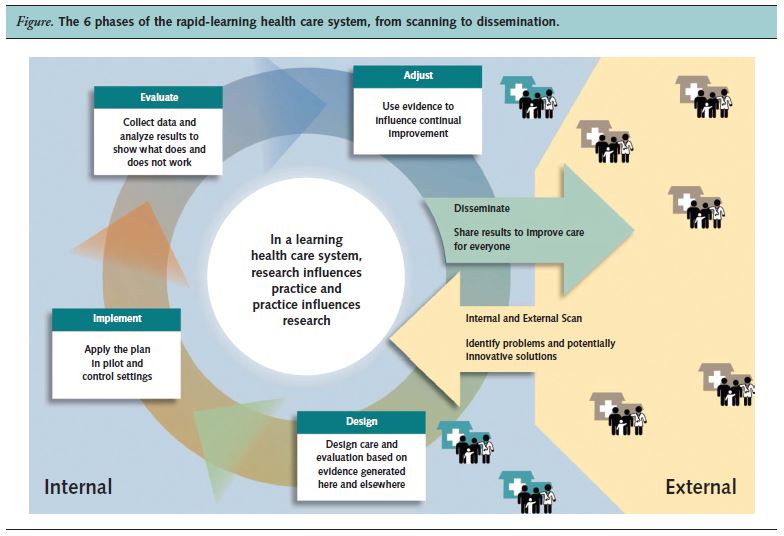
Re-organizing U.S. health care and changing its practices to render better, more affordable care requires transformation in how health systems generate and apply knowledge. The “rapid-learning health system” is posited as a conceptual strategy to spur such transformation – leverages and recent developments in health information technology and a growing health data infrastructure to access and apply evidence in real time, while simultaneously drawing knowledge from real-world care-delivery processes to promote innovation and health system change on the basis of rigorous research.
***
[A Rapid Learning Health System]
***
The Essay
This article describes an evolving learning health system at Group Health Cooperative, the 6 phases characterizing its approach, and examples of organization-wide applications.
It is a practical model that promotes bidirectional discovery and an open mind at the system level, resulting in willingness to make changes on the basis of evidence that is both scientifically sound and practice-based.
Assessment
Rapid learning must be valued as a health system property to realize its full potential for knowledge generation and application.
Citation
Implementing the learning health system: from concept to action.Greene SM1, Reid RJ, Larson EB. Author information: Group Health Cooperative, 320 Westlake Avenue North, GHQ E2N, Seattle, WA 98109, USA. greene.sm@ghc.org
Channel Surfing the ME-P
Have you visited our other topic channels? Established to facilitate idea exchange and link our community together, the value of these topics is dependent upon your input. Please take a minute to visit. And, to prevent that annoying spam, we ask that you register. It is fast, free and secure.
Your thoughts and comments on this ME-P are appreciated. Feel free to review our top-left column, and top-right sidebar materials, links, URLs and related websites, too. Then, subscribe to the ME-P. It is fast, free and secure.
Speaker: If you need a moderator or speaker for an upcoming event, Dr. David E. Marcinko; MBA – Publisher-in-Chief of the Medical Executive-Post – is available for seminar or speaking engagements. Contact: MarcinkoAdvisors@msn.com
OUR OTHER PRINT BOOKS AND RELATED INFORMATION SOURCES:
Posted on December 1, 2022 by Dr. David Edward Marcinko MBA MEd CMP™
By Heath Capital Consultants, LLC
***
***
The launch of Amazon Clinic comes less than two months after the announcement that Amazon Care would be shut down. Amazon Clinic, the retail giant’s virtual and in-person medical care service, was rolled out in 2019 as a pilot employee benefit for their own employees and quickly expanded to servicing non-Amazon employers across the U.S. (including large companies such as Hilton, TrueBlue, and Silicon Labs) by 2021.
Posted on November 29, 2022 by Dr. David Edward Marcinko MBA MEd CMP™
(ARE YOU PISSED, YET?)
By Darrell K. Pruitt DDS
***
***
Still think going paperless was the right decision, Doc? (Are you pissed yet?) If you haven’t adopted digital records, now is NOT the time to do so.
“Just last quarter, U.S. cyber insurance prices increased 79% from a year earlier, according to Marsh’s Global Insurance Market Index…. IBM determined the average ransomware attack cost $4.54 million last year, not including the cost of the ransom, and that 83% of the organizations have had more than one data breach.” (There goes your retirement stash). From “Amid Surge in Ransomware Attacks, More Organizations Are Being Rejected for Cyber Insurance — What Can Leaders Do?”
By Raj Dodhiawala for CPO Magazine, November 28, 2022
QUESTION: So, now that the American Dental Association no longer sells its for-profit digital records system to intentionally uninformed dues-paying members, is the not-for-profit organization still encouraging dentists to go paperless?
I enjoy writing about taxes as much as I enjoy going to the dentist. But I feel what I am about to say is important. We – including yours truly – have been mindlessly conditioned to do tax selling at the end of every year to reduce our tax bills. On the surface it makes sense. There are realized gains – why don’t we create some tax losses to offset them?
Here is the problem. With a few exceptions, which I’ll address at the end, tax-loss selling makes no logical sense. Let me give you an example.
Let’s say there is a stock, XYZ. We bought it for $50; we think it is worth $100. Fourteen months later we got lucky and it declined to $25. Assuming our estimate of its fair value hasn’t changed, we get to buy $1 of XYZ now for 25 cents instead of 50 cents.
But as of this moment we also have a $25 paper loss. The tax-loss selling thinking goes like this: Sell it today, realize the $25 loss, and then buy it in 31 days. (This is tax law; if we buy it back sooner the tax loss will be disqualified.) This $25 loss offsets the gains we took for the year. Everybody but Uncle Sam is happy.
Since I am writing about this and I’ve mentioned above I’d rather be having a root canal, you already suspect that my retort to the above thinking is a great big NO!
In the first place, we are taking the risk that XYZ’s price may go up during our 31-day wait. We really have no idea and rarely have insights as to what stocks will do in the short term. Maybe we’ll get lucky again and the price will fall further. But we’re selling something that is down, so risk in the long run is tilted against us. Also, other investors are doing tax selling at the same time we are, which puts additional pressure on the stock.
Secondly – and this is the most important point – all we are doing is pushing our taxes from this year to future years. Let’s say that six months from now the stock goes up to $100. We sell it, and… now we originate a $75, not a $50, gain. Our cost basis was reduced by the sale and consequent purchase to $25 from $50. This is what tax loss selling is – shifting the tax burden from this year to next year. Unless you have an insight into what capital gains taxes are going to be in the future, all you are doing is shifting your current tax burden into the future.
Thirdly, in our first example we owned the stock for 14 months and thus took a long-term capital loss. We sold it, waited 31 days, and bought it back. Let’s say the market comes back to its senses and the price goes up to $100 three months after we buy it back. If we sell it now, that $75 gain is a short-term gain. Short-term gains are taxed at your ordinary income tax bracket, which for most clients is higher than their capital gain tax rate. You may argue that we should wait nine months till this gain goes from short-term to long-term. We can do that, but there are costs: First, we don’t know where the stock price will be in nine months. And second, there is an opportunity cost – we cannot sell a fully priced $1 to buy another $1 that is on fire sale.
Final point. Suppose we bought a stock, the price of which has declined in concert with a decrease of its fair value; in other words, the loss is not temporary but permanent. In this case, yes, we should sell the stock and realize the loss.
We are focused on the long-term compounding of your wealth. Thus our strategy has a relatively low portfolio turnover. However, we always keep tax considerations in mind when making investment decisions, and try to generate long-term gains (which are more tax efficient) than short term gains.
We understand that each client has their unique tax circumstances. For instance, your income may decline in future years and thus your tax rate, too. Or higher capital gains may put you in a different income bracket and thus disqualify you from some government healthcare program.
We are here to serve you, and we’ll do as much or as little tax-loss selling as you instruct us to do. We just want you to be aware that with few exceptions tax-loss selling does more harm than good.
Posted on November 24, 2022 by Dr. David Edward Marcinko MBA MEd CMP™
By Dr. David Edward Marcinko MBA
[Editor-in-Chief]
***
***
I first met my esteemed colleague Tony Fauci MD more than 30 years ago as a young surgical resident in Atlanta. My esteem for him has grown immensely since then. After all, he is an American physician-scientist and immunologist serving as the director of the National Institute of Allergy and Infectious Diseases and the Chief Medical Advisor to the President
And so, upon his retirement, Dr. Anthony Fauci urged Americans to get their reformulated Covid boosters in his final White House press briefing yesterday. Fauci, the nation’s top infectious disease official and the leader of the NIAID since 1984, announced recently that he’d be stepping down to “pursue the next chapter” of his career in December, 2022.
Dr. Fauci’s final plea comes as public health officials warn that a “viral jumbalaya” of respiratory infections threatens to push hospitals to the brink this coming winter.
Quote: “My final message—maybe the final message I give you from this podium—is that, please, for your own safety, for that of your family, get your updated Covid-19 shot as soon as you’re eligible, to protect yourself, your family, and your community.”
Posted on November 22, 2022 by Dr. David Edward Marcinko MBA MEd CMP™
By Staff Reporters
***
***
Rina Shah has been working at Walgreens her entire career—close to 25 years—but this year she got a shiny new title: vice president of pharmacy of the future. The role was created as part of what CEO Rosalind Brewer said in Walgreens’ latest earnings call is the company’s top priority: creating a consumer-centric healthcare company. The retail pharmacy giant essentially wants to free up its pharmacists’ time so they can go from filling prescriptions all day to engaging more directly with patients.
Shah is heading up these efforts, and she sat down with Neal Feyman to talk about what Walgreens sees when it pictures the pharmacy of the future.
What does “the pharmacy of the future” mean? When we talk about the future of pharmacy, it’s to leverage our pharmacists in a much more data-driven, effective way to lower costs in the system.
For example, in certain states where there’s higher pollen counts and pollution, we’re seeing higher emergency room visits because of asthma. We can educate people on the difference between a rescue inhaler and a maintenance inhaler—and how they can understand triggers—and ultimately impact lower emergency room visits because of that.
What problems are you trying to solve in this role? Prior to the pandemic hitting, we had been asked by providers and payers and other organizations for our pharmacists to do more. We were being asked to provide testing services and in-depth consultations with patients.
However, our operating model didn’t really account for that. Our pharmacists were busy doing many more administrative tasks. We made the decision that we needed to transform the model, which meant really freeing up the capacity of our pharmacists so they could spend time with patients delivering care, as it’s always intended to be. Keep reading here.—NF
Posted on November 17, 2022 by Dr. David Edward Marcinko MBA MEd CMP™
By Staff Reporters
***
***
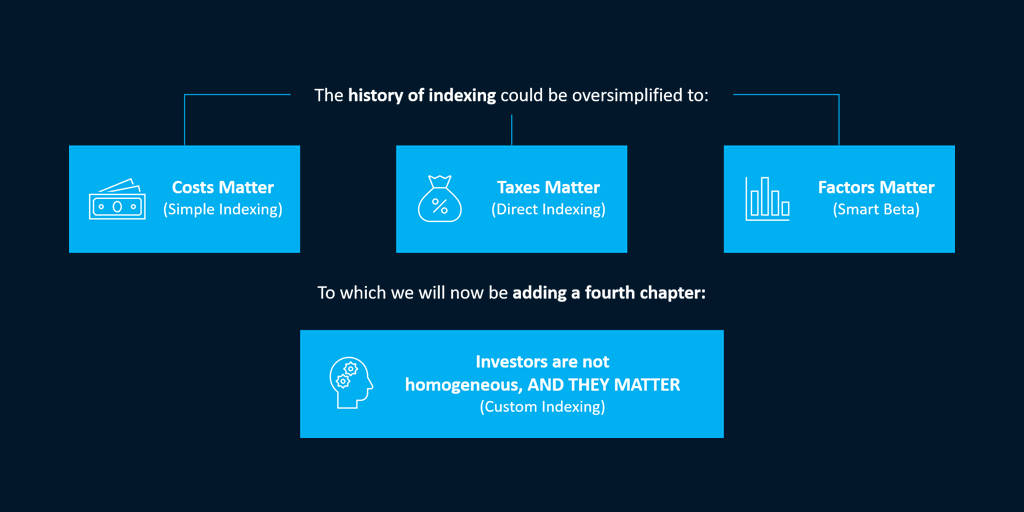
‘Customized portfolio and tax management for a broader spectrum of investors’
The Charles Schwab Corporation (SCHW) announced, on March 31, 2022, the upcoming launch of a new service, Schwab Personalized Indexing. Schwab touts this as a new solution that brings the power of customized portfolio and tax management to a broader spectrum of investors.
Rick Wurster, president of The Charles Schwab Corporation, stated in a press release: “Direct indexing has long been available to ultra-high net worth investors and institutions able to meet very high investment minimums. But now, thanks to technology innovations and industry developments like Schwab’s introduction of online commission-free trading, we’re able to lower the barriers to direct indexing for more investors and the advisors who serve them.” Schwab expects the new service, which is trademarked, to be available by the end of April 2022.
Key Takeaways
Charles Schwab (SCHW) is introducing Schwab Personalized Indexing, a direct indexing service for accounts as small as $100,000.
Direct indexing involves holding the individual securities in an index, allowing for greater tax management.
The service is expected to be available by the end of April 2022, and Schwab expects to add options and features over the next 12-18 months.
Key Features
Unlike an index fund, direct indexing involves direct ownership of the underlying securities in an index. Thus, it may offer a greater level of tax management for the investor. Within separately managed accounts, Schwab Personalized Indexing is based on a proprietary optimization process that includes daily monitoring of client portfolios and tax-loss harvesting technology. Each client account is to be optimized based on its current holdings and the potential capital gains taxes due on unrealized gains.
Available Strategies
Investors initially can choose among three index-based strategies that can be customized. These are a U.S. large cap strategy based on the Schwab 1000 Index, a U.S. small cap strategy based on the S&P SmallCap 600 Index, and an environmental, social, and governance (ESG) strategy based on the MSCI KLD 400 Social Index. Each strategy seeks index-like returns with enhanced after-tax benefits. Schwab expects to add more strategies and features during the next 12-18 months.
Account Minimums and Fees
Schwab Personalized Indexing initially will require an account minimum of $100,000. Schwab notes that most direct indexing offerings currently on the market start at $250,000 or higher.1
Fees start at 0.40% of assets. Schwab indicates that this is less expensive than many direct indexing programs currently available to advisors and investors.
EDITOR’S NOTE: I first Met Richard Helppie when I was in business school. He was the CEO of Superior Consultant at the time and very gracious to me with with his advice. Today he is a respected philanthropist and publisher of The Common Bridge. -David E. Marcinko
Posted on November 5, 2022 by Dr. David Edward Marcinko MBA MEd CMP™
The MIT Westgate Studies
By Prasad Nilanth
The “P” theory was first crafted by psychologists Leon Festinger, Stanley Schachter, and Kurt Back in what came to be called the Westgate Studies conducted at MIT.
The study investigated how friendships developed among students at the new Westgate Complex at MIT. The results clearly showed the role of proximity in the formation of friendships. The strongest friendships developed between students who lived next to each other on the same floor. Where friendships developed between students who lived on different floors, one of those students tended to live near the stairways.
In social psychology, propinquity (/prəˈpɪŋkwɪtiː/; from Latin propinquitas, “nearness”) is one of the main factors leading to interpersonal attraction. It refers to the physical or psychological proximity between people. Propinquity can mean physical proximity, a kinship between people, or a similarity in nature between things (“like-attracts-like”).
Two people living on the same floor of a building, for example, have a higher propinquity than those living on different floors, just as two people with similar political beliefs possess a higher propinquity than those whose beliefs strongly differ.
Propinquity is also one of the factors, set out by Jeremy Bentham, used to measure the amount of (utilitarian) pleasure in a method known as felicific calculus.
Your thoughts and comments on this ME-P are appreciated. Feel free to review our top-left column, and top-right sidebar materials, links, URLs and related websites, too. Then, subscribe to the ME-P. It is fast, free and secure.
Speaker: If you need a moderator or speaker for an upcoming event, Dr. David E. Marcinko; MBA – Publisher-in-Chief of the Medical Executive-Post – is available for seminar or speaking engagements. Contact: MarcinkoAdvisors@msn.com
Posted on November 4, 2022 by Dr. David Edward Marcinko MBA MEd CMP™
By Staff Reporters
***
***
DEFINITION: Stablecoins are cryptocurrencies where the price is designed to be pegged to a reference asset. The reference asset may be fiat money, exchange-traded commodities, or a cryptocurrency.
In fact, Stablecoins could have such a profound effect on the established banking system that U.S. regulators need to require that the digital tokens fit in without disrupting it, said Martin Gruenberg, the acting chairman of the Federal Deposit Insurance Corp. (FDIC). His remarks were delivered at a Brookings Institution event recently.
Gruenberg’s agency is among the U.S. banking watchdogs that will have significant influence over how stablecoins are regulated, and the FDIC has also had to weigh in with recent sanctions against firms – such as FTX US – that have made claims misrepresenting how FDIC deposit insurance backstops their operations. As U.S. banks have increasingly sought to offer crypto services, including maintaining custody of customer’s digital assets, Gruenberg said that his agency has been cautious about allowing regulated lenders to engage.
Posted on November 4, 2022 by Dr. David Edward Marcinko MBA MEd CMP™
By Health Capital Consultants, LLC
***
***
According to the White House, “Americans pay two to three times as much as people in other countries for prescription drugs, and one in four Americans who take prescription drugs struggle to afford their medications. Nearly 3 in 10 American adults who take prescription drugs say that they have skipped doses, cut pills in half, or not filled prescriptions due to cost.” In an effort to combat this growing crisis, both the federal government and private companies have taken a number of steps over the past year aiming to lower drug prices. This Health Capital Topics article will review those actions and the potential unintended consequences of these actions.
In the past two months, two retail giants – Walmart and Apple – have announced plans to enter the health insurance space. This direct entry into the health insurance market by non-traditional players has been encouraged in part by health insurer-retailer partnerships, which gained traction due to rising demand for Medicare Advantage (MA) in particular and the expansion of the types of benefits that MA plans may offer.
This Health Capital Topics article will discuss reasons behind the insurer-retailer partnerships and how Walmart and Apple plan to disrupt the health insurance market.(Read more…)
Posted on November 1, 2022 by Dr. David Edward Marcinko MBA MEd CMP™
THIS IS NOT A POST-HALLOWEEN TRICK!
By Staff Reporters
***
***
Most hospitals seem to have enough blood in their inventory to meet the immediate needs of patients. That’s no small feat given that just this past January, the American Red Cross declared the “first-ever blood crisis,” indicating the country was experiencing “its worst blood shortage in over a decade” amid the omicron surge.
While blood centers and hospitals aim to have at least a five-day supply of blood—enough to treat trauma patients, surgical cases, blood disorders, and other issues—facilities nearly reached blood insolvency during the crisis. The Red Cross said it saw donor turnout dip after the delta variant became dominant in summer 2021, which continued as omicron took over, until blood supplies reached crisis levels in January.
“We went down to many blood centers having only a one-day supply on their shelf,” said Claudia Cohn, chief medical officer at the Association for the Advancement of Blood and Biotherapies (AABB), a nonprofit that develops standards for the industry and accredits blood centers. “Which means one significant event—like a big car crash or a natural disaster or a human-made disaster—could have wiped out the blood supply for that particular metropolitan area.”
Closing up shop: Covid lockdowns shuttered traditional venues for blood drives, including businesses and schools. Even after workers returned to the office and students to classrooms, many organizations were hesitant to allow in-person events to occur in their facilities, including blood drives.
Paying the price: Another dagger undermining the stability of the nation’s blood supply has been a drop in the price paid for blood. Changes in medical practice, like the introduction of minimally invasive procedures, have decreased demand for blood, and hospitals have been able to pay less for it.
Posted on October 28, 2022 by Dr. David Edward Marcinko MBA MEd CMP™
By Staff Reporters
***
***
NEWS FLASH!
Elon Musk, the richest person on the planet, is the CEO of the world’s most valuable automaker TESLA, heads up a $125 billion aerospace giant, and as of yesterday, is the owner of a social media company Twitter.
According to multiple reports, Musk closed the $44 billion deal last night, less than 24 hours before today’s 5pm ET deadline. He began his reign as “Chief Twit” by firing at least four executives, including CEO Parag Agrawal (who was reportedly escorted out of Twitter’s SF headquarters). Later today, Musk is expected to address anxious employees, who might be worried they’ll face the same fate as their former leader. Historically:
Musk acquired a large stake in Twitter and later signed a deal to buy all of it.
Then he tried to back out, citing bot issues, but Twitter sued him to enforce the agreement.
Musk blinked weeks ahead of a trial, and said he would buy Twitter.
Now What?
So begins Musk’s attempt to, in his words, “help humanity” by trying to turn Twitter into a “common digital town square.”
We know that Musk has ultra-ambitious goals for the company: 5x Twitter’s revenue by 2028, supercharge the subscriptions business, and turn Twitter into a super app called “X.” But murkier is the path he intends to take to get there, and he’s already sending mixed signals about his intentions. And what about doctors and the healthcare industrial complex? Will it remain the same or change?
History
Back in early 2014 the first list of the “Top 100 Twitter Accounts For Healthcare Professionals To Follow” was born. Then, the biggest social media-related question to hurdle wasn’t, “Who should I be following on social media?” but rather, “Should I even be on social media at all?”
Many years later, it’s safe to say that social media has firmly established itself in the healthcare industry. By finding healthcare Twitter accounts that are related to your specialty, you can have access to the best information and always remain within the loop.
But, with the Elon Musk takeover of Twitter, the medicine and healthcare accounts available may change, remain static or grow, and finding the most valuable medical accounts to follow has become more challenging than ever.
Today
Today, the question truly is, “Who should I be following?” Thankfully, you have been covered since 2020.
Posted on October 28, 2022 by Dr. David Edward Marcinko MBA MEd CMP™
“Behavioral Economic Strategies”
By Eric Bricker MD
***
As Published in the Annals of Internal Medicine by an All-Star Cast of Researchers:
1) Limitations of Information 2) Inertia/Status Quo Bias 3) Choice Overload 4) Immediacy 5) Loss Aversion 6) Relative Social Ranking 7) Threshold Effect 8) Limits of Willpower 9) Mental Accounting
Fear of money: An abnormal and persistent fear of money. Sufferers experience undue anxiety even though they realize their fear is irrational. They worry that they might mismanage money or that money might live up to its reputation as “the root of all evil.” Perhaps they remember well the ill fortune that befell the mythical King Midas. His wish that everything he touched be turned to gold was fulfilled, and even his food was transformed into gold.
The fear of money is termed chrometophobia or chrematophobia, from the Greek “chrimata” (money) and “phobos” (fear). The “chrome” in “chrometophobia” may also be related to the Greek word “chroma” (color) because of the brilliant colors of ancient coins — for example, gold, silver, bronze and copper.
Posted on October 26, 2022 by Dr. David Edward Marcinko MBA MEd CMP™
By Staff Reporters
25% of Clinicians Want Out of Healthcare: Survey
***
***
One quarter of U.S. physicians, advanced practice providers, and nurses are considering switching careers and one third are considering switching employers, according to newly released results from a survey conducted by Bain & Company. Below are some key takeaways from the survey and brief, which was released October 11th and can be found in full here.
1. Of the 25 percent of clinicians who are thinking about exiting healthcare entirely, 89 percent cite burnout as the main driver.
2. The top three things clinicians care about most in their profession are compensation, quality of patient care, and workload, according to the survey. Of those three, they are least satisfied with compensation (59 percent expressed satisfaction) and workload (60 percent). Eighty percent said they are satisfied with the quality of patient care.
3. Burnout shows up throughout clinicians’ days, with 63 percent saying they feel worn out at the end of the workday, 51 percent saying they feel they don’t have time and energy for family and friends during leisure time, and 38 percent feeling exhausted in the morning at the thought of another workday.
Posted on October 26, 2022 by Dr. David Edward Marcinko MBA MEd CMP™
By Bertalan Meskó, MD PhD
***
***
Ben Wood, chief analyst at European CCS Insights predicts that Apple will enter the US health insurance market in partnership with a major insurer in 2024 – Forbes reported.
The company already collects heaps of health data, such as blood pressure, blood oxygen levels, ECG readings and body temperature from the Watch, and through phone apps that help people regulate their medication or manage chronic conditions like diabetes.
I hope you find the report useful!
Best regards, Bertalan Meskó, MD The Medical Futurist
Posted on October 25, 2022 by Dr. David Edward Marcinko MBA MEd CMP™
By Staff Reporters
***
***
Quote: “Meta needs to get its mojo back.”
With Meta’s share price down more than 60% this year, investors are losing patience with Mark Zuckerberg’s big bet on the metaverse.
Altimeter Capital CEO Brad Gerstner, whose firm has more than 2 million shares in the company, wrote an open letter yesterday urging Meta to cut headcount expenses by 20% and keep metaverse spending under $5 billion per year to become a “more productive, and more focused company.”
We’ll see how Meta feels about its own mojo when it reports earnings tomorrow.
Posted on October 23, 2022 by Dr. David Edward Marcinko MBA MEd CMP™
By Staff Reporters
***
***
For months, traders, academics, and other analysts have fretted that the $23.7 trillion Treasury market might be the source of the next financial crisis. Then last week, U.S. Treasury Secretary Janet Yellen acknowledged concerns about a potential breakdown in the trading of government debt and expressed worry about “a loss of adequate liquidity in the market.” Now, strategists at BofA Securities have identified a list of reasons why U.S. government bonds are exposed to the risk of “large scale forced selling or an external surprise” at a time when the bond market is in need of a reliable group of big buyers.
“We believe the UST market is fragile and potentially one shock away from functioning challenges” arising from either “large scale forced selling or an external surprise,” said BofA strategists Mark Cabana, Ralph Axel and Adarsh Sinha. “A UST breakdown is not our base case, but it is a building tail risk.”
Posted on October 23, 2022 by Dr. David Edward Marcinko MBA MEd CMP™
CHANGE MANAGEMENT
By NextGen Healthcare
With any organizational change, getting support from physicians, practice administrators, and clinical and office staff isn’t easy. The transition to a population health-based strategy is no different.
Find out how to educate and coach your staff to implement your population health program successfully — based on the real-world experience of Verlin Janzen MD, medical director at Hutchinson Clinic. Dr. Janzen has dedicated his career to implementing a population-health based strategy. To achieve his goals at Hutchinson Clinic, he had to overcome a major challenge—lack of buy-in from his colleagues.
Posted on October 23, 2022 by Dr. David Edward Marcinko MBA MEd CMP™
Forecasts Cognitive [Mental] Dissonance?
By Staff Reporters
***
***
A Bloomberg economic model forecast a 100% chance of a US recession within 12 months
Jeff Bezos warned companies to “batten down the hatches” in response to Goldman Sachs’s CEO saying there’s a good chance we’ll have a recession.
Elon Musk guesstimated that we’re going to be in a recession “probably until spring of ’24.”
Gwyneth Paltrow said, “The economy sucks.”
BUT, Bank of America CEO Brian Moynihan (the one with the epic vocabulary) said that while analysts are warning of recession and slower spending, “We just don’t see [that] here at Bank of America.” Transaction volumes for its customers jumped 10% in September and the first half of October over a year earlier.
And, American Express’s CEO said, “We’re not seeing any changes in consumer spending” and predicted a strong holiday quarter for retail and travel.
United Airlines’s CEO is “so optimistic about 2023.”
Many business leaders are forecasting an economic downturn. But the execs who run travel and credit card companies say that shoppers aren’t pulling back spending at all.
It’s like Americans are watching the forecast call for thunderstorms but, seeing that it’s still sunny outside, are heading out to the waves to surf anyway.
Big picture: Recession fears are rising as the Fed raises interest rates to tame inflation that’s soaring at 40-year highs. While the definition of a recession is pretty broad, a slowdown in consumer spending would certainly be an indicator of one: It accounts for about 70% of the US economy.
Posted on October 23, 2022 by Dr. David Edward Marcinko MBA MEd CMP™
By Staff Reporters
***
***
The IRS just said that the maximum contribution that an individual can make in 2023 to a 401(k), 403(b) and most 457 plans will be $22,500. That’s up from $20,500 this year.
People aged 50 and over, which have the option to make additional “catch-up” contributions to 401(k) and similar plans, will be able to contribute up to $7,500 next year, up from $6,500 this year. That’s means a 401(k) saver who is 50 or older can contribute a maximum of $30,000 to their retirement plan in 2023.
The IRS also raised the 2023 annual contribution limits on individual retirement arrangements, or IRAs, to $6,500, up from $6,000 this year. The IRA “catch-up” contribution limit remains at $1,000, as it’s not subject to an annual cost of living adjustment, the IRS said.
Posted on October 22, 2022 by Dr. David Edward Marcinko MBA MEd CMP™
Turning Data into Information
By Dr. David Edward Marcinko MBA
***
As reported on this ME-P and elsewhere, I was recently in Philadelphia for a number of reasons and had the opportunity to stop by Drexel University to get some information on their nursing program. There, I learned that it is one of the nation’s top nursing schools.
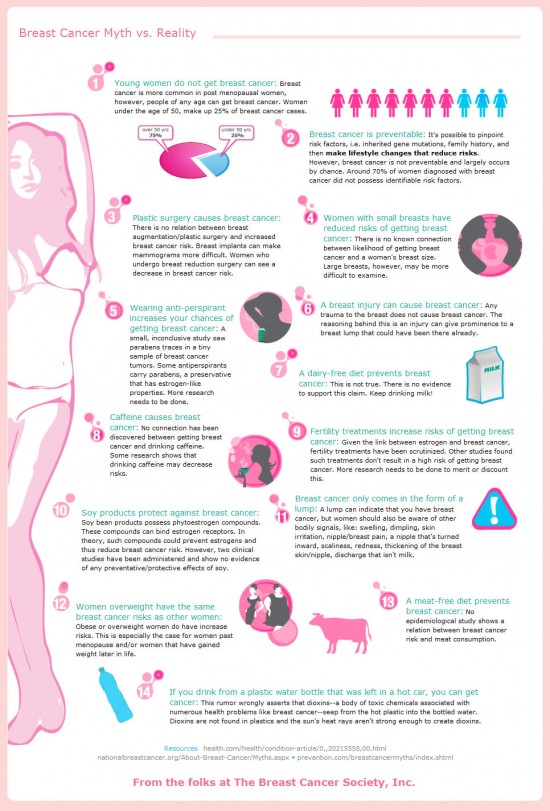
In fact, Drexel University is ranked one of “America’s BEST Colleges 2011” by U.S.News & World Report. I also learned the following about breast cancer:
***
Assessment
Understanding the facts about breast cancer is of vital importance, because it may save your life or the life of someone you love.
Conclusion
Your thoughts and comments on this ME-P are appreciated. Feel free to review our top-left column, and top-right sidebar materials, links, URLs and related websites, too. Then, subscribe to the ME-P. It is fast, free and secure.
Speaker: If you need a moderator or speaker for an upcoming event, Dr. David E. Marcinko; MBA – Publisher-in-Chief of the Medical Executive-Post – is available for seminar or speaking engagements. Contact: MarcinkoAdvisors@msn.com
OUR OTHER PRINT BOOKS AND RELATED INFORMATION SOURCES:
Posted on October 22, 2022 by Dr. David Edward Marcinko MBA MEd CMP™
Office Based Laboratories
By Health Capital Consultants, LLC
***
DEFINITION: OBLs, also known as office-based endovascular centers, access centers, or office interventional suites, are physician offices wherein a number of services are offered.
Similar to ASCs, OBLs can be single specialty or multi-specialty and can have a number of ownership structures. However, unlike ASCs, OBL procedures (because they are located in a physician office) are reimbursed under the Medicare Physician Fee Schedule.
***
***
OBLs are typically operated and utilized by vascular surgeons, interventional radiologists, cardiologists, or other specialists, and services provided include: cardiovascular, endovascular, venous, and non-vascular services; cardiac procedures, such as diagnostic coronary angiograms, coronary stenting, electro physiology services; device implants, including pacemakers, defibrillators, loop recorders, and biventricular pacers; lower extremity endovascular revascularizations, such as chronic total occlusion and complex limb salvage procedures; renal and mesenteric revascularizations; and, subclavian stenting.23 Of these procedures, peripheral vascular intervention, cardiac services, and interventional radiology made up the majority of the OBL market share in 2019.
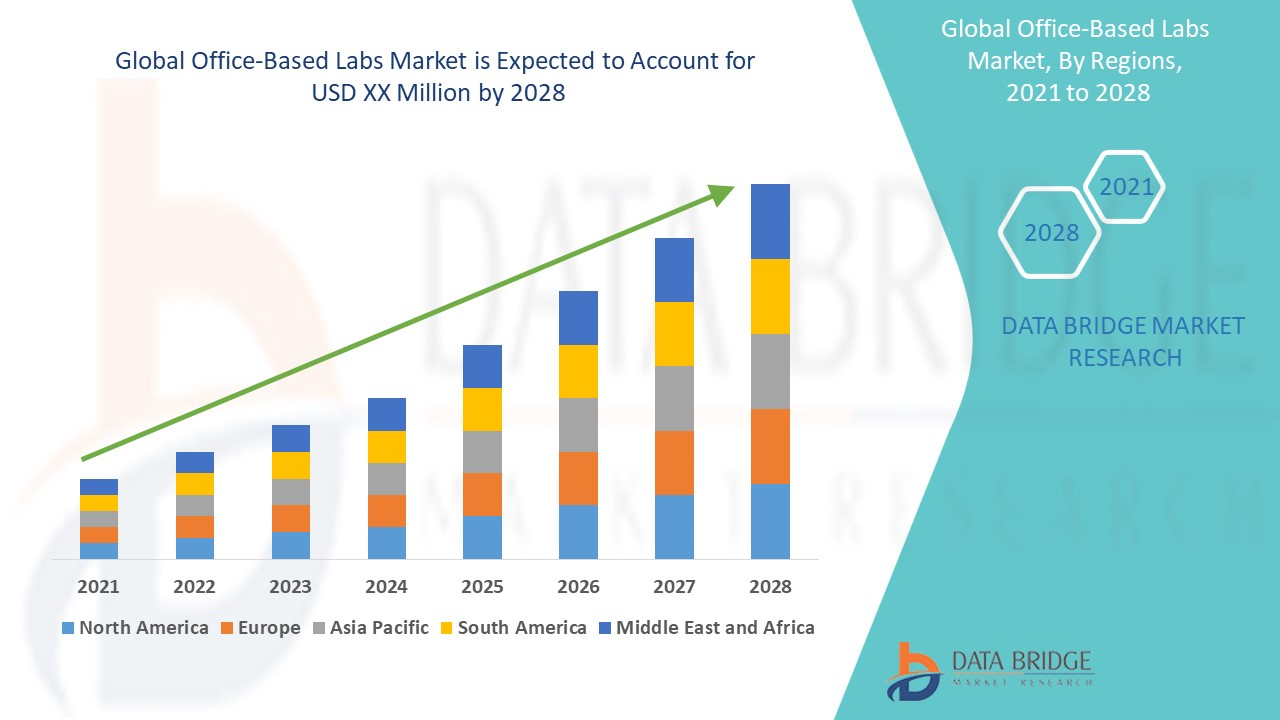
While slower to materialize than ASCs, OBLs have increased rapidly over the past few years, for reasons similar to ASCs, e.g., opportunities for physician ownership, the “expedient patient experience” and “favorable outpatient procedural reimbursement.”
In 2020, the global OBL market was valued at $9 billion. Similar to ASCs, an increasing focus on outpatient procedures (due to their cost-saving potential)
Posted on October 21, 2022 by Dr. David Edward Marcinko MBA MEd CMP™
By Staff Reporters
***
***
According to the Washington Post, Elon Musk told potential investors for his Twitter purchase that he would thin the company’s 7,500-person workforce by 75%, leaving less than 2,000 employees to protect against security threats and solve the bot problem.
But even if the deal didn’t go through, Twitter was probably headed for layoffs. Current management said they needed to cut payroll by nearly $800 million by the end of 2023. Musk’s acquisition of Twitter is expected to close by next week.
Posted on October 20, 2022 by Dr. David Edward Marcinko MBA MEd CMP™
By Staff Reporters
***
***
Elon Musk gets good news and bad news
Tesla just reported its highest ever quarterly revenue of $21.5 billion. But that still fell short of analyst expectations, so shares fell about 5% after the announcement.
And, although Tesla stock has declined around 37% since the beginning of the year, Musk remained optimistic, saying he can see a future where the company ends up “worth more than Apple and Saudi Aramco combined.”
Healthcare Machine Learning Company ClosedLoop.ai is One of the Best at Applying Machine Learning to Population Health Data.
ClosedLoop.ai is So Good, They Won the CMS AI Challenge … Beating Out 300 Other Organizations Including IBM, the Mayo Clinic and Deloitte.
The Promise of Machine Learning in Population Health is to Better Predict Which People Will Benefit From an Intervention Because They Are at Greater Risk of a Complication of a Disease or an ER Visit or a Hospitalization.
ClosedLoop.ai Beautifully Applied Their Machine Learning Abilities to Create a Pandemic Risk Model That Helped a New York City Health Insurance Plan Identify Which Members Would Be Most Likely to Have Severe Complications of COVID-19.
As a Result, the Insurance Company Helped These Individuals Have Groceries and Prescription Medication Delivered to Them So They Could Stay at Home and Avoid Exposure to COVID.
There You Have It! A Practical, Real-World Example of Machine Learning in Population Health That Literally Saved Some People’s Lives.
Disclaimer: Dr. Bricker is the Chief Medical Officer of Virtual Care Company First Stop Health.
Posted on October 17, 2022 by Dr. David Edward Marcinko MBA MEd CMP™
***
Emerging Digital Health Trends
BY Bertalan Meskó, MDPhD
****
Digital technologies have completely transformed our lives in the last couple of years and started to entirely reshape the landscape of healthcare. Yet, this is only the beginning. Huge waves of changes are on their way. The future of healthcare is shaping up in front of our eyes with advances in digital healthcare technologies.
And so, here is the latest research, from the Medical Futurist’sHype Cycle Of The Top 50 Emerging Digital Health Trends.
The Medical Futurist’s Hype Cycle Of The Top 50 Emerging Digital Health Trends
Quantum Computing 3D Bioprinting Facial recognition in hospitals Vocal biomarkers 3D printing prosthetics Robots in hospitals Augmented reality in patient education A.I. in drug design Augmented reality in medical education Medical transportation platforms Private 5G in healthcare At-home lab tests 3D printing drugs Medical drones A.I. in diagnostics Voice-to-text apps A.I. in medical decision-making Nutrigenomics 3D printing equipment Virtual reality in patient education Chatbots Portable diagnostic devices Augmented reality in surgery Portable ultrasound devices Virtual reality in staff training Robots in rehabilitation A.I.-based prosthetics Longevity research Nutrition devices Employee wellness programs Exoskelotons Clinical trial recruiting Clinical trial management Remote care apps Cloud computing Nutrition apps Robot companions Medication management solutions Personal genomics services Microbiome testing Remote care platforms Digital health insurance Smartwatches Wearable health devices Personal Health Records Electronic Medical Records Smartphone health apps Mental health apps Fitness trackers Virtual reality in pain management
Posted on October 17, 2022 by Dr. David Edward Marcinko MBA MEd CMP™
Try (or learn about) Entrepreneurship
BY DR. DAVID EDWARD MARCINKO MBAMEdCMP®
One of the greatest things about the virtual economy is the expanded opportunity for people to branch out on their own and create something using their own expertise. Related to this is the growing societal desire to have more free time and a more balanced, efficient life overall.
In fact, years ago when I was in business school, I learned that during a recession when jobs were sparse – folks would either go back to school to re-engineer and re-educate OR start their own business.
Today – If the pandemic taught us anything, it’s that we need to be able to pivot when circumstances call for it. In the years ahead, there will be a premium on flexibility, portability, and improvisation; knowing how to earn income outside the traditional employer-employee relationship will continue to be an especially valuable skill.
ASSESSMENT: So, if you are a physician, nurse, medical professional or financial advisor in the healthcare space, think about what you’re naturally good at (or at least interested in), and determine if there’s an opportunity to monetize it in some way on your own. Your career might thank you for it!
Posted on October 16, 2022 by Dr. David Edward Marcinko MBA MEd CMP™
By Staff Reporters
***
***
The metaverse could be a huge technological change for health care, just like telemedicine and mobile device integration were in the past.
This technology has huge potential because it uses both virtual reality (VR) and augmented reality (AR) technology to work in virtual spaces: All signs point to the metaverse being widely used as a disruptive change in healthcare, from better surgical precision to therapeutic uses to social-distance accommodations and more.
But along with these improvements come new problems that will change what we know about modern healthcare. The metaverse is a paradigm shift in healthcare that everyone involved needs to be aware of. This is because it changes how medical infrastructure is built, how startup costs are covered, and how data security and privacy are handled.
To help you understand how the metaverse development services will change healthcare as a whole, let’s take a look at the pros and cons of this technology that are already making a difference in healthcare.
Posted on October 14, 2022 by Dr. David Edward Marcinko MBA MEd CMP™
By Kanishka Singh
***
***
WASHINGTON (Reuters) – The United States on Thursday extended the COVID-19 pandemic’s status as a public health emergency for another 90 days, thereby preserving measures like high payments to hospitals and expanded Medicaid.
The extension was announced by U.S. Health Secretary Xavier Becerra on Thursday. Last month, President Joe Biden said in an interview that “the pandemic is over,” which prompted criticism from health experts.







 Support our online development, and advance our onground research initiatives in free market economics, as we seek to showcase the brightest Next-Gen minds.
THE ME-P DISCLAIMER: Posts, comments and opinions do not necessarily represent iMBA, Inc., but become our property after submission. Copyright © 2006 to-date. iMBA, Inc allows colleges, universities, medical and financial professionals and related clinics, hospitals and non-profit healthcare organizations to distribute our proprietary essays, photos, videos, audios and other documents; etc. However, please review copyright and usage information for each individual asset before submission to us, and/or placement on your publication or web site. Attestation references, citations and/or back-links are required. All other assets are property of the individual copyright holder.
Support our online development, and advance our onground research initiatives in free market economics, as we seek to showcase the brightest Next-Gen minds.
THE ME-P DISCLAIMER: Posts, comments and opinions do not necessarily represent iMBA, Inc., but become our property after submission. Copyright © 2006 to-date. iMBA, Inc allows colleges, universities, medical and financial professionals and related clinics, hospitals and non-profit healthcare organizations to distribute our proprietary essays, photos, videos, audios and other documents; etc. However, please review copyright and usage information for each individual asset before submission to us, and/or placement on your publication or web site. Attestation references, citations and/or back-links are required. All other assets are property of the individual copyright holder.