Collaborative Dental Health 2.0 [Part One of a Three Part Series]

Consumerism is the Hippocratic Way

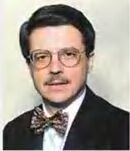
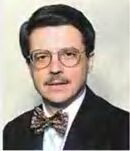
By Darrell K. Pruitt; DDSpruitt1

The Appearance of DR. Oogle

By September of 2005, when I finally worked up enough courage to ask a patient to post a review for me on DR. Oogle (doctoroogle.com) – a web-based patient referral site – my dental practice had been invisible and struggling for a few years and was still disappearing.  It was the most discouraging period in my career. 

Following the Golden Rule 

In spite of my efforts to always treat my patients like I would want to be treated myself, I was headed for either managed care, which I consider to be an unethical model for dentistry, or bankruptcy. The progressive betrayal of my profession and my patients by leaders in dentistry spawned bitterness and high blood pressure that I still suffer today – even though my practice has fully recovered. My hygienist and I are currently booked almost solid for the next two weeks. I know also that in the next three, misfortune could arise. I have no idea what is in store for dentistry in tomorrow’s economy. If I was in the business of selling advice, or DR. Oogle, I would probably be tempted to radiate much more confidence than I truly feel.

Back in the Day 

When I graduated from dental school in 1982, I was reassured by dentists I respected that one’s practice location is not important if one works hard to consistently provide patients with one’s best efforts.  Dr. Earl Estep, a practice development guru from Athens, Texas, taught me decades ago that word-of-mouth is much more effective for attracting patients who are ready to spend money than advertisements provide, and that one should never forget to ask for referrals, even if it feels “unprofessional.”  This is still solid advice.  For example, two days ago, in a special marketing feature on Jim Du Molin’s The Wealthy Dentist Blog, Chris Barnard suggested,

“Enlist your existing patients in your practice success. Actively seek those all-important word of mouth referrals from your patients.”

Link: http://www.thewealthydentist.com/blog/727/practice-marketing-in-down-times

Even though Barnard doesn’t mention patient referral sites such as DR. Oogle, his other ideas which may or may not fit one’s practice image include quarterly letters, $10 gas cards and iPod raffles in order to

“… Let them know who you are beyond that white lab coat …!”

Just Do it … and Ask

I personally think it is much less complicated, as well as much cheaper, to simply select a recently satisfied patient, look the person in the eye and ask,

“Would you mind putting in a good word for me on this website?” 

Handing a patient a business card with the website handwritten on it becomes easier to do after the first dozen or so, but don’t expect immediate results. My success rate was around 45% when I was actively pursuing favors. When I reached 90 reviews after around nine months, I quit pestering my patients with requests for reviews. Active participation in a patient referral site also provides the incentive to improve one’s practice by motivating both dentists and staff to become wrapped up in treating each patient with extra-special care in the hopes of a nice review. Before anyone knows it, personalized, attentive care becomes a habit, I have found. Other than those who sell ads and party favors, everyone wins.

Enter Dr. Oogle 

I came across DR. Oogle in March 2005. The open-source patient satisfaction measurement application was born in San Francisco at the very end of the .com bust, and had been actively gathering word-of-mouth data about dentists for over two years when I began observing its progress.  By then, DR. Oogle had already accumulated an impressive amount of information concerning patient satisfaction with many of nation’s dentists. I suspect that today, Dr. Oogle’s volume of data is insurmountable by potential competitors. 

Akin to Wikipedia 

I found DR Oogle’s revolutionary marketing concept fascinating simply because like Wikipedia, it is not supported by advertising – thus avoiding a tremendous built-in and transparent bias. The company’s profits are derived solely from dentists like me who agree to pay reasonable monthly fees for the opportunity to participate in the application by displaying their customers’ opinions for public scrutiny. It is what I call playing to win rather than playing not to lose. Five months before I purchased the service, I published an article about DR. Oogle in The Twelfth Night, the monthly newsletter of my local dental society. I believe mine was the first mention of such web-based patient referral sites in any dental publication. Here is the article:

Patient Driven Referral Services

[From: “The Twelfth Night” April, 2005]

In a small community people as a general rule know a lot more about their neighbors than do people in a city.  They also know a lot more about the doctors and dentists in town since there are only a few.  It is fairly common to talk to neighbors and friends to get opinions on who is the best dentist, who to avoid, who is the cheapest, who has the most up to date equipment. 

In a small community, as well as in a city, even a neighbor’s recommendation carries more weight than a dentist’s paid advertisement.  I would imagine that sales of 1 800 Dentist subscriptions are significantly lower in rural Texas than in the metropolitan areas on a per capita basis.  The dentists in small communities know that they are far too easy to find to need to spend money for a referral service or for much advertisement at all. 

Well, Fort Worth and cities across the nation are becoming smaller dental communities because of the internet.  If any of you have googled your name, you may have picked up a hit by one or more patient driven referral services (PDRS). And, if you have not done this lately, you should.  There is a good possibility that the information about your practice location may contain errors.  But more importantly, you may read something pleasingly flattering or terribly humbling about your practice written by a patient you saw last week.

Dr. Oogle is presently the most popular PDRS. A patient’s comments about his or her dentist is posted only after the patient accepts the terms of the agreement; which are that the patient is neither a relative nor an employee of the dentist and that the patient is not otherwise being compensated for the review. The website also requires an authentic e-mail address and other personal information for verification purposes.

There is a filtering system in place in which employees of Dr. Oogle reject (at their discretion) comments which are too good or too bad to be credible.  And there are other ways in which dentists can handle bad reviews and are described on their website. There is, I suppose, always room for an attorney or two if the other attempts at removing a bad review fail.

But, if the PDRS’s survive the lawsuits, and if the first review which comes up under your name happens to be a real stinker written by an easily disgruntled and fervently vindictive patient (I think his name is Fred. You probably know him as he changes dentists often), and if you cannot get it otherwise removed, perhaps you should bury it under as many good reviews as you can encourage your patients to submit. This reaction, not surprisingly, is the reaction recommended by Dr. Oogle.  In fact, they also recommend that we routinely ask our patients to submit reviews to them.  I imagine that there are already dentists who have had cards printed for this purpose. 

Like it or not, our patients are being given more power in the marketing of our practices and their influence is growing. Dr. Oogle’s first reviews of dentists in the greater Ft. Worth area occurred in September of ’04. By the first of February, 5½ months later, there were only 18 dentists who had been reviewed by at least one patient.  As of today, one month later (March 7), there are 16 more. By the time this is published the number could be close to 50. Who knows how many reviews will be posted a year from now if the public perceives value in this kind of information. Many more of us will be listed as either good or bad dentists; legitimately or not. 

Regardless of the outcome of Dr. Oogle’s venture into dentistry, the fact that the public has a thirst for “unbiased” sources of information concerning our practices tells us that more than ever before we have to treat each patient as our most important source of new business or a disappointed patient could soon become a significant obstacle for growth.

Another good thing is that a patient who has to choose a dentist from a list at least soon may have some guidance; other than the fact that his insurance company thinks they are all equally swell.

Darrell K. Pruitt; DDS

[April 2005]

Investigative Reporting 

Since writing the unprecedented article, I have performed numerous simple investigations comparing DR. Oogle’s ratings to dentists’ names on preferred provider lists for various cities.  Invariably, the vast majority of the dentists who sign managed care contracts are found in the bottom 50% of the ratings. Sorry if I hurt some colleagues’ feelings, but that is cold fact. Anyone with a preferred provider list can confirm it. I suspect it has been done thousands of times by many anxious people holding new annual lists of strangers’ names in just the last year. Alert dentists should note that humans are choosy when it comes to trusting someone to use sharp, rotating instruments in their mouths. Dentistry is not like buying a can of beans as discount brokers would have their naïve and trusting clients believe, and most importantly, ethics are not for free.

Apart from the common sense rule that a purchaser of intricate handwork to exacting tolerances generally gets what the dental patient pays for, what else causes fee-for-service dentists to be generally favored over preferred providers?  I think it has to do with hunger.  If one’s meals arrive daily without effort, one forgets how to fish.

Managed care and preferred provider lists protect contract dentists from the naturally cleansing free-market principles taught by economist Adam Smith centuries ago. The beauty of competition in the marketplace occurs every time a dis-satisfied patient shops for a new dentist. When reliable information about patient satisfaction is available, quality is rewarded and encouraged in the neighborhood. Free-market capitalism works as reliably as classical operant conditioning in the best of possible worlds.

Assessment 

It is my opinion that there has always been something dishonest and un-American about discount dentistry with no quality control. I think we need to expose the unfair and unethical managed care business model to free-market forces even if it involves the calculated promotion of a simple, foolproof scheme for dentists interested in graduating from preferred provider lists. Those who feel trapped can begin their escape immediately by preparing some business cards for their managed care dental patients who by now are easily impressed by compassion. I’ll share more in Part 2.

Conclusion

And so, your thoughts and comments on this Medical Executive-Post are appreciated. If US dental patients are lucky, Web 2.0 transparency arrived just in time. Consumerism rules naturally.

Speaker: If you need a moderator or speaker for an upcoming event, Dr. David E. Marcinko; MBA – Publisher-in-Chief of the Executive-Post – is available for seminar or speaking engagements. Contact: MarcinkoAdvisors@msn.com  or Bio: www.stpub.com/pubs/authors/MARCINKO.htm

Our Other Print Books and Related Information Sources:

Practice Management: http://www.springerpub.com/prod.aspx?prod_id=23759

Physician Financial Planning: http://www.jbpub.com/catalog/0763745790

Medical Risk Management: http://www.jbpub.com/catalog/9780763733421

Healthcare Organizations: www.HealthcareFinancials.com

Health Administration Terms: www.HealthDictionarySeries.com

Physician Advisors: www.CertifiedMedicalPlanner.com

Subscribe Now: Did you like this Medical Executive-Post, or find it helpful, interesting and informative? Want to get the latest E-Ps delivered to your email box each morning? Just subscribe using the link below. You can unsubscribe at any time. Security is assured.

Link: http://feeds.feedburner.com/HealthcareFinancialsthePostForcxos

Medical Employment, Jobs and New Positions

Advanced Medical Recruitment, Inc.

ADVERTISEMENT

By Otis J. Archie

stk178242rke

Many ME-P readers and subscribers have asked for us to start sending you our newsletter, with job openings. Now, we have implemented this change as an attachment.

Link: advanced-medical-recruiting-newsletter

Referral Bonus

Also note that we pay up to $1,000 dollars for referrals that are placed on a job. This agreement is good for 6 months from the date of the referral. If you know of someone who would appreciate our services, please call us with their name and number and, if possible, we will be happy to assist them. 

Otis J. Archie

President

AMR, Inc.

949/340-2136

Email:  advancedmr@cox.net

www.advancedmr.net     

Conclusion

And so, your thoughts and comments on this Medical Executive-Post are appreciated.

Subscribe Now: Did you like this Medical Executive-Post, or find it helpful, interesting and informative? Want to get the latest E-Ps delivered to your email box each morning? Just subscribe using the link below. You can unsubscribe at any time. Security is assured.

Link: http://feeds.feedburner.com/HealthcareFinancialsthePostForcxos

About In-Situ Medical Practitioners

Searching for Definitional Clarity

Staff Reporters

solo-consultant2Apparently, there is a growing trend toward so called “in-situ medical practitioners”. In this model, specialists like internists or diabetologists, add a certain medical expertise to address a large number of patients with specific needs in a general or primary care practice. 

Link: www.HealthDictionarySeries.com

Business Savvy

This clearly indicates that physicians are becoming more business savvy, are becoming more sophisticated in driving the growth of their practice, and better understand the structure and needs of their local health care market. 

Assessment

Regardless, the basic principles of relationship building and relationship management apply – treating each party with mutual respect and engaging in open and honest dialogue. Of course, we seek input form readers and subscribers to further define this emerging trend; if not merely a group of isolated incidents made known to us.

Conclusion

And so, your thoughts and comments on this Medical Executive-Post are appreciated.

Speaker: If you need a moderator or speaker for an upcoming event, Dr. David E. Marcinko; MBA – Publisher-in-Chief of the Executive-Post – is available for seminar or speaking engagements. Contact: MarcinkoAdvisors@msn.com  or Bio: www.stpub.com/pubs/authors/MARCINKO.htm

Subscribe Now: Did you like this Medical Executive-Post, or find it helpful, interesting and informative? Want to get the latest E-Ps delivered to your email box each morning? Just subscribe using the link below. You can unsubscribe at any time. Security is assured.

Link: http://feeds.feedburner.com/HealthcareFinancialsthePostForcxos

Big Blue and UHG’s New Health Plan Model

Innovative Model -or- Just another Paradigm Shift

By Staff Reporters56372274

According to Reed Abelson, and David Kadlubowski of the electronic New York Times [NYT].com edition, on February 6, 2009, a new medical practice business plan and health care insurance reimbursement model could allow family physicians to practice medicine the way they used to practice. How so?

Exit UHG

The giant insurer UnitedHealth Group is testing a new model of health care that some policy experts say holds great promise, but has yet to prove itself. An earlier trial of the model by UnitedHealth, in Florida, never got off the ground because doctors refused to participate.

Enter IBM

This time however, the insurer is teaming up with seven doctors’ groups to make another attempt, in Arizona, at the prodding of one of the state’s big employers, and IBM. UnitedHealth will try giving doctors more authority and money than usual in return for closely monitoring their patients’ progress, even when patients go to specialists or require hospitalization.

Link: http://www.nytimes.com/2009/02/07/business/07medhome.html?_r=3&ref=health

Moving toward Value-Added Models and Episodes of Care

The insurer will also move away from paying doctors solely on the basis of how many services they provide via CPT® codes and will start rewarding them more for overall quality of patient care [value added and/or episodes of care model].

Link: https://healthcarefinancials.wordpress.com/2009/01/28/a-medical-payment-paradigm-shift

Assessment

One comment heard through the grapevine was “caveat and vendor emptor”; while another sarcastic observer wondered if this was the same “Useless Healthcare Group that we all despise?” And, who is to define the term “medical quality -or- value added care”?

Conclusion

And so, your thoughts and comments on this Medical Executive-Post are appreciated. Early-adopter insight and reports from Arizona participating practitioners is appreciated.

Speaker: If you need a moderator or speaker for an upcoming event, Dr. David E. Marcinko; MBA – Publisher-in-Chief of the Executive-Post – is available for seminar or speaking engagements. Contact: MarcinkoAdvisors@msn.com  or Bio: www.stpub.com/pubs/authors/MARCINKO.htm

Our Other Print Books and Related Information Sources:

Practice Management: http://www.springerpub.com/prod.aspx?prod_id=23759

Physician Financial Planning: http://www.jbpub.com/catalog/0763745790

Medical Risk Management: http://www.jbpub.com/catalog/9780763733421

Healthcare Organizations: www.HealthcareFinancials.com

Health Administration Terms: www.HealthDictionarySeries.com

Physician Advisors: www.CertifiedMedicalPlanner.com

Subscribe Now: Did you like this Medical Executive-Post, or find it helpful, interesting and informative? Want to get the latest E-Ps delivered to your email box each morning? Just subscribe using the link below. You can unsubscribe at any time. Security is assured.

Link: http://feeds.feedburner.com/HealthcareFinancialsthePostForcxos

Understanding Healthcare Competition

Funneling Porter’s Five Forces of Business

Staff Reporters

ho-journal12Michael Porter PhD, of Harvard Business School, is considered by many to be one of the world’s leading authorities on competitive strategy and international competitiveness.

In 1980, he published Competitive Strategy: Techniques for Analyzing Industries and Competitors, in which he argued that all businesses must respond to five competitive forces. And now, these thoughts have been condensed for the healthcare industrial complex by Robert James Cimasi; MHA, CMP™ of Health Capital Consultants, LLC, in St. Louis, MO. They are cited below from the print journal-guide www.HealthcareFinancials.com

1. The Threat of New Market Entrants

This force may be defined as the risk of a similar company entering your local marketplace and winning business. There are many barriers to entry of new market entrants in healthcare including: the high cost of equipment, licensure, requirement for physicians and other highly trained technicians, development of physician referral networks and provider contracts, and other significant regulatory requirements.

Certificate of Need (CON) laws, which require governmental approval for new healthcare facilities, equipment, and services that have been in place since they were federally mandated in 1974. State CON laws create a regulatory barrier to entry. New medical provider entrants commonly faced substantial political opposition by established interests, which is manifested in the CON review process.

2. The Bargaining Power of Suppliers

A supplier can be defined as any business relationship or vendor you rely on to deliver your product, service or outcome. Healthcare equipment is a highly technical product produced by a limited number of manufacturers. This reduces the range of choices for providers and can increase costs.

3. Threats from Substitute Products or Services

Substitute products or services are those that are sufficiently equivalent in function or utility to offer consumers an alternate choice of product or service.  An illustration of this in healthcare would be diagnostic imaging, or PET scans, as a substitute for surgery, which is often a more costly and risky option for patients. The threat of less invasive or less expensive diagnostic tests other than diagnostic imaging is relatively small for the near term future.

4. The Bargaining Power of Buyers

This force is the degree of negotiating leverage of an industry’s buyers or customers. The buyers of healthcare services are ultimately the patients. However, the competitive force of buyers is manifested through healthcare insurers including the US and state governments through the Medicare, Medicaid, TRICARE, and other programs; managed care payers (e.g., Blue Cross/Blue Shield affiliates); workers’ compensation insurers; and others. 

In addition to the government, many of these healthcare insurers are large, national companies, often publicly traded, commanding significant bargaining power over healthcare provider reimbursement.

5. Rivalry among Existing Firms

This is ongoing competition between existing firms without consideration of the other competitive forces which define industries. Healthcare providers face pressure from other existing providers to obtain favorable provider contracts; maintain the latest technology; increase efficiencies; and lower prices.

Link:

http://www.thehealthcareblog.com/the_health_care_blog/2009/02/making-price-competition-work-.html#comments

Assessment

And so, these forces should be considers by all new, mid-career, and mature independent medical practitioners. They should also be combined with an internal organizational SWOT analysis as well.

Conclusion

And so, your thoughts and comments on this Medical Executive-Post are appreciated.

Speaker: If you need a moderator or speaker for an upcoming event, Dr. David E. Marcinko; MBA – Publisher-in-Chief of the Executive-Post – is available for seminar or speaking engagements. Contact: MarcinkoAdvisors@msn.com  or Bio: www.stpub.com/pubs/authors/MARCINKO.htm

Subscribe Now: Did you like this Medical Executive-Post, or find it helpful, interesting and informative? Want to get the latest E-Ps delivered to your email box each morning? Just subscribe using the link below. You can unsubscribe at any time. Security is assured.

Link: http://feeds.feedburner.com/HealthcareFinancialsthePostForcxos

Dismal World Video-View of American Healthcare

BBC Documentary Takes on Obama’s Plan

Staff ReportersUS Capitol 

Did you know that a new British Broadcasting Corporation [BBC] documentary takes on newly elected President Barack S. Obama’s plans for American health care system?

Emotional Pleas Tug at Citizenry Heart Strings

According to Nick Cargo – of the BBC on January 25 – a January 19th episode of BBC’s One’s Panorama, the world’s longest running television documentary show, tackles the dismal state of health care in the United States. Of course, it emotionally parses on the lengths to which our estimated [high-side] 45 million uninsured citizens [only 8 million remain uninsured for 2 years, or more] go in pursuit of care, the pharmaceutical industry’s rigged pricing against the American patient, and the insurance industry’s efforts to deny care whenever possible.

About Health Care for America Now

According to documentary comments regarding freedom-of-choice in our medical care; “It’s really a system of legalized bribery,” said Richard Kirsch of Healthcare for America Now. “As one congressman says, we’re the only people in the world who are expected to take money from strangers and provide nothing in return.”

Health Care for America Now is a national grassroots campaign organizing millions of Americans to win a guarantee of quality, affordable health care for all. Their goal is to create organizations that can mobilize people at work, at home, in their neighborhoods, and online www.healthcareforamericanow.org

Assessment

Due to licensing restrictions, the Panorama episode, “What Now, Mr. President?” is not for domestic consumption and is only officially available to view online from connections within the United Kingdom. However, it has also been uploaded to YouTube, where it appears in three parts below.

Video: http://rawstory.com/news/2008/BBC_documentary_takes_on_Obamas_plans_0125.html

Conclusion

And so, your thoughts and comments on this Medical Executive-Post are appreciated. Watch the video and decide for yourself; then opine here. Is the BBC view equal to the world view of US healthcare modernity?

Speaker: If you need a moderator or speaker for an upcoming event, Dr. David E. Marcinko; MBA – Publisher-in-Chief of the Executive-Post – is available for seminar or speaking engagements. Contact: MarcinkoAdvisors@msn.com  or Bio: www.stpub.com/pubs/authors/MARCINKO.htm

Our Other Print Books and Related Information Sources:

Practice Management: http://www.springerpub.com/prod.aspx?prod_id=23759

Physician Financial Planning: http://www.jbpub.com/catalog/0763745790

Medical Risk Management: http://www.jbpub.com/catalog/9780763733421

Healthcare Organizations: www.HealthcareFinancials.com

Health Administration Terms: www.HealthDictionarySeries.com

Physician Advisors: www.CertifiedMedicalPlanner.com

Subscribe Now: Did you like this Medical Executive-Post, or find it helpful, interesting and informative? Want to get the latest E-Ps delivered to your email box each morning? Just subscribe using the link below. You can unsubscribe at any time. Security is assured.

Link: http://feeds.feedburner.com/HealthcareFinancialsthePostForcxos

Collaborative Dental Health 2.0 [Upcoming Three Part Series]

Hippocratic Dental Consumerism

By Darrell K. Pruitt; DDSpruitt

Even before the downturn in the economy sent dentists scrambling for new sources of patients, these were already times of revolutionary changes in the marketing of dental care. To those who are alert, the Internet-enabled chaos signals a rare opportunity if one sides with consumers rather than tradition. It takes confidence to welcome transparency, and it looks increasingly bad when dentists resist accountability in traditional ways – like suing. Yelp; because of a bad review that was posted on the patient referral site. That is the second stupidest thing one can do. Being perhaps a geeky student of the Internet, and sort of nosey, I have been tracking the popularity of dentists’ comments on a few Internet venues for quite a while, because of my own curiosity.  I also get ornery enjoyment from reporting to my friends my opinion of what is really happening in my profession that nobody else talks about. My hobby could be called fuzzy data mining based on a platform of precise subjectivity. 

For more intricate and dependable real-time information, I choose the surveys reported on The Wealthy Dentist Blog, hosted by Jim Du Molin. They are the best around.

Link: http://www.thewealthydentist.com/blog/

American Dental Association

The ADA also provides nice, formal presentations of even more accurate information, but it is often dated and not ground-level relevant like Du Molin’s studies. Until the Internet came along, gathering useful information about dentists’ prevailing attitudes outside one’s professional circle was virtually impossible, and dentists are well aware that even within these circles, colleagues’ opinions at dental meetings are sometimes intentionally misleading – perhaps mine are less reliable as well at social gatherings. I never talk this frankly in real life. 

Dental Information Silos 

Talk about information silos!  No less that 85% of dentists in the nation are owners of solo private practices (ADA News), and only 2% have bubbly personalities (my guess). Dentists’ quiet isolation, which is arguably favored by what I would guess would be around 85% of dentists in the nation, is a unique characteristic in modern healthcare that is part of a unique labor-intensive art – performed to exacting tolerances in an unpredictable environment – intricate work that most consumers know little about. Yet the ultra-personal accountability welcomed by almost all solo dentists is the way even neighborhood physicians once practiced their trade for thousands of years before modern stakeholders became involved. 

Hippocratic Oath

Is working alone with one’s chosen staff the most efficient way to provide dental care?  No way.  But for me personally, maintaining complete control of the care I provide from start-to-finish for those who depend on me is safer for them and a better business model for me than any alternative I have seen yet.  In my opinion, there is no room in the Hippocratic Oath for less than 100% devotion to the patients’ interests. More than two thousand years later, it is called consumerism, and it is 180 degrees counter to stakeholders’ interests, preferred provider lists and universal healthcare. And, it probably comes as no surprise that last October I observed that the most popular comments that were posted shifted from news about the benefits of high-tech inventions in dentistry to advice for how to survive in a tough economy. The whole nation is concerned about finances, and getting one’s teeth cleaned is commonly sacrificed when things get tough. Don’t even mention implants and crowns.

2009 Recession 

At the risk of sounding ostentatious as well as pedantic, I will offer that (for the time being) my practice is not suffering from a downturn that many of my local colleagues are enduring. In fact, I am actually busier than I was this time last year – and I made more profit in 2008 than ever before in 26 years of practice. I am also discovering that patients I lost long ago are returning now that they no longer have provider lists. They are also finding that my prices are not so high after all (in fairness, I should add that it has been longer than usual since I have raised fees – except for full gold restorations, of course). Since I am not in the business of selling advice, I am not afraid to also admit that my practice still experienced a couple of slow periods in the late fall – directly attributable to the initial shock of the downturn.  But I cannot say that the slowdown was any worse than other times in the last few years, and it certainly hasn’t been as bad as what dentists in Michigan must endure. My sympathy and best wishes go out to my colleagues up north. Things could all turn for the worse for me tomorrow, but for right now, I’m somewhere between surviving and thriving, for what that is worth; nothing spectacular, but solid.

Three Part Series 

This posting, which I hope some readers find useful, will be a multi-part series. I haven’t worked everything out yet, and my outline is subject to change, but here is what I have in mind.

In Part One, I’ll describe how my active participation in DR. Oogle (doctoroogle.com) has not only kept my name off of preferred provider lists, but it has also improved the quality of care my staff and I provide, as well as improved the working atmosphere in the office. Transparency will do that.

Then, in Part Two, I will offer my suggestion how one can use DR. Oogle or similar patient referral site to “graduate” from managed care into fee-for-service dentistry without losing patients or profit. As a naughty teaser, let me hint that over three years ago, I offered the idea as an article for the monthly newsletter of my local dental society, only to be refused publication for the first time in over two decades of submissions. I was told that an official nixed it as a transparent “scheme” to harm managed care dental companies, and was therefore below the standards of ADA publications.

“Image is everything”

-ADA/Intelligent Dental Marketing

Finally, in Part Three, I’ll describe how a good offense is also a handy defense – perhaps even in defense against malpractice litigation. Hopefully, a few sincere readers will consider playing to win rather than playing not to lose. And, for those who still don’t see my point, I will reveal how to play not to lose. Fair is fair.  It costs from $625 to $1995 per year, and in my opinion, is the stupidest thing one can do. Hope you enjoy this three part series. 

Assessment

Editor’s Note: This post was first published on PennWell. Dr. Pruitt blogs here and at others sites. His insights are applicable to most all medical specialties.

Conclusion

And so, your thoughts and comments on this Medical Executive-Post are appreciated.

Speaker: If you need a moderator or speaker for an upcoming event, Dr. David E. Marcinko; MBA – Publisher-in-Chief of the Executive-Post – is available for seminar or speaking engagements. Contact: MarcinkoAdvisors@msn.com  or Bio: www.stpub.com/pubs/authors/MARCINKO.htm

Our Other Print Books and Related Information Sources:

Practice Management: http://www.springerpub.com/prod.aspx?prod_id=23759

Physician Financial Planning: http://www.jbpub.com/catalog/0763745790

Medical Risk Management: http://www.jbpub.com/catalog/9780763733421

Healthcare Organizations: www.HealthcareFinancials.com

Health Administration Terms: www.HealthDictionarySeries.com

Physician Advisors: www.CertifiedMedicalPlanner.com

Subscribe Now: Did you like this Medical Executive-Post, or find it helpful, interesting and informative? Want to get the latest E-Ps delivered to your email box each morning? Just subscribe using the link below. You can unsubscribe at any time. Security is assured.

Link: http://feeds.feedburner.com/HealthcareFinancialsthePostForcxos

About ChainOnLine.org

A New AHRQ Web Site

By Staff Reportersradar1

A new educational Web site offering expert perspectives, advice and guidance on drugs, biological products and medical devices is now operational. The destination site, from the Agency for Healthcare Research and Quality’s [AHRQ] Centers for Education and Research on Therapeutics [CERTs], a federally sponsored network of more than a dozen leading research centers nationwide, was officially launched on January 8, 2009.

CHAIN

The Clinician-Consumer Health Advisory Information Network [CHAIN] http://www.chainonline.org connects clinicians and consumers with therapeutics information to assist in clinical practice and health care decision making in areas where evidence is undergoing significant and rapid changes.

CERTS

The site also provides access to educational and informational resources developed from research conducted by CERTs and intended for use in improving health care quality, safety and effectiveness. Clinical topics included on the CHAIN Web site address the management of blood clot prevention with drug-eluting stents and expert opinions about topics where evidence is uncertain, such as restarting anti-platelet therapy if it has been interrupted. The site’s educational section includes materials to assist consumers with clinician-patient conversations and decision-making as well as an online medication record. Resources for clinicians include a slide library that can be adapted to educate clinical audiences and used for continuing medical education credit.

Goal

The overarching goal is to serve as a trusted national resource for people seeking to improve health through the best use of medical therapies. The CERTs program includes partnerships of public and private organizations, a national steering committee involving multiple sectors and CERTs investigators, a coordinating center and 14 research centers. The CHAIN Web site was designed and developed collaboratively with input from all centers, working under the leadership of the Center for Collaborative and Interactive Technologies at Baylor College of Medicine, Houston.

Assessment

For more information, contact AHRQ Public Affairs: (301) 427-1246 or (301) 427-1998.

Internet Citation: Agency for Healthcare Research and Quality, Rockville, MD. Link: http://www.ahrq.gov/news/press/pr2009/chainpr.htm

From the Press Release: AHRQ Announces New Web Site on Emerging Issues in Medical Therapeutics.

Conclusion

And so, your thoughts and comments on this Medical Executive-Post are appreciated.

Speaker: If you need a moderator or speaker for an upcoming event, Dr. David E. Marcinko; MBA – Publisher-in-Chief of the Executive-Post – is available for seminar or speaking engagements. Contact: MarcinkoAdvisors@msn.com  or Bio: www.stpub.com/pubs/authors/MARCINKO.htm

Our Other Print Books and Related Information Sources:

Practice Management: http://www.springerpub.com/prod.aspx?prod_id=23759

Physician Financial Planning: http://www.jbpub.com/catalog/0763745790

Medical Risk Management: http://www.jbpub.com/catalog/9780763733421

Healthcare Organizations: www.HealthcareFinancials.com

Health Administration Terms: www.HealthDictionarySeries.com

Physician Advisors: www.CertifiedMedicalPlanner.com

Subscribe Now: Did you like this Medical Executive-Post, or find it helpful, interesting and informative? Want to get the latest E-Ps delivered to your email box each morning? Just subscribe using the link below. You can unsubscribe at any time. Security is assured.

Link: http://feeds.feedburner.com/HealthcareFinancialsthePostForcxos

Hospital Cafeteria Plan Elections

Join Our Mailing List

On Health and Dependent Care

By Dr. David Edward Marcinko; MBA, CMP™

[Publisher-in-Chief]

DEM 2013

I wrote a bit about hospital cafeteria plans in an earlier blog post.

Link: https://healthcarefinancials.wordpress.com/2008/04/02/hospital-cafeteria-plans/

Now, any hospital, or other employee given the opportunity to participate in a cafeteria plan should consider the following important two elections; health and dependent care.

Healthcare [Working Spouse]

If the employee is married and has a spouse who also works, and the employer-provided health benefits are better under the spouse’s plan, then the employee should elect to be covered by the spouse’s plan and choose another nontaxable benefit or a cash benefit that would be taxable under his or her own cafeteria plan, such as dependent-care coverage or group term insurance coverage. Switching health insurance requires planning to eliminate potential gaps in coverage created by insurance enrollment criteria. If the employee does not need the salary or cafeteria-plan benefits to meet current expenses, he or she should consider contributing the cash to a 401(k) plan and defer the tax liability.

Healthcare [Non-Working Souse]

If the employee has no working spouse and the employee’s plan is the only source for certain health benefits, the employee should consider what type of benefits he or she really needs for his or her family. In other words, can the employee get the necessary benefits under the company plan cheaper than he or she could individually, after taking into account that individual coverage will be paid with after-tax dollars, whereas under a cafeteria plan such benefits can be paid with before-tax dollars?

For example, if an employee who is in the 30% tax bracket is provided a $6,000 plan by her employer. He or she would have to be able to get a comparable plan independently for only  $3,741 to be in the same position on an after-tax basis. ($6,000 minus income taxes of $1,800 = $4,200, $4,200  minus $459 of avoided FICA

Dependent-Care

An employee who has a choice of including dependent-care costs may be entitled to an income-tax credit for such expenses if, the employer does not reimburse them. Thus, if a credit is worth the same or more than the payment under the cafeteria plan, the employee may choose to contribute those dollars toward additional health or life insurance.

Assessment

There is no doubt why healthcare and dependent care are the two most important cafeteria plan election determinants that clients seek in our advisory practice. The issues are that vital to all employees.

Conclusion

Your thoughts and comments on this ME-P are appreciated. Feel free to review our top-left column, and top-right sidebar materials, links, URLs and related websites, too. Then, subscribe to the ME-P. It is fast, free and secure.

Speaker: If you need a moderator or speaker for an upcoming event, Dr. David E. Marcinko; MBA – Publisher-in-Chief of the Medical Executive-Post – is available for seminar or speaking engagements. Contact: MarcinkoAdvisors@msn.com

OUR OTHER PRINT BOOKS AND RELATED INFORMATION SOURCES:

Product Details  Product Details

Product Details

Maintenance of Medical Board Certification

Status Growing in Importance – or Sham

Dr. David Edward Marcinko; MBA, CMP™

And Staff Reporters

dr-david-marcinko11Increasingly, efforts to boost quality and gain better value from the world’s most costly healthcare system are including attention to Maintenance of Board Certification [BOBC], a little-understood but rigorous process by which physicians maintain board certification status and then keep it.  

Hillary-Care Redeux

Back in the day, circa late 1970s – early 1980s, medical board certification was indeed a rigorous process; and still is to a very large extent. For example, Democratic presidential candidate Hillary Rodham Clinton, in laying out the quality portion of her three-part healthcare reform plan last year, specifically touted these programs as a key step in enhancing quality. From the presidential campaign trail to hospital and health plan board rooms, Board Certification and the Maintenance of Board Certification is a growing force in the industry.

But, is maintaining recertification status another matter of true quality import?

Major Health Plans On-Board

Several of the nation’s biggest health plans—including Aetna, Cigna, Humana, UnitedHealth Group and national and regional Blue Cross and Blue Shield organizations—are embracing Maintenance of Certification as part of their recognition and reward programs. Physicians who do not participate are not highlighted in plan directories and miss out on higher plan reimbursements.

Yet, why do we have “red flag” issues, “never-events” policies and/or the rise of “checklist-medicine” for risk reduction if these continuing education programs are so effective?

Allow me to cite the raging over-treatment epidemic, especially in specialties like arthroscopic orthopedics, radiology imaging [CT and MRI scans] and invasive cardiology, etc. Not to mention recent, and not so recent, Institute of Medicine [IOM] quality chasm reports for in-hospital patient deaths, complications and infections, etc.   

Assessment

Of course, savvy hospital administrators and physician executives, of all stripes, are examining ways to use elements of board certification maintenance to respond to the Joint Commission’s new requirements for physician credentialing and privileging. Furthermore, the National Quality Forum [NQF] and the AQA quality alliance will be considering Maintenance of Certification for quality measurement endorsement.

Source: Cary Sennett and Christine Cassel, Modern Healthcare

Joint Commission Relevance in Modernity

But, is the Joint Commission itself even as relevant today, as in the past? Or – is its [political, quality and economic] status, might and swagger being reduced in favor of modern new-wave insights from health 2.0 collaboration activities and emerging formal organizations like DNV Healthcare Inc., a division of the Norwegian company.

As subscribers and Medical Executive-Post readers are aware, Det Norske Veritas [DNV] has recently been charged with immediately determining if hospitals are in compliance with the Medicare Conditions of Participation [COP]. The company’s authority to accredit hospitals runs through September 26, 2012. DNV joins the American Osteopathic Association [AOA] as the only other national hospital accrediting agency approved by the Centers for Medicare and Medicaid Servicers [CMS].

Conclusion

And so, your thoughts and comments on this Medical Executive-Post are appreciated. Is medical board certification and maintenance status of real value – or just fluff – much like the continuing education and licensure requirements of insurance agents, stock-brokers and financial advisors, etc? Is it less for medical education – and more for liability risk reduction – or PR – you decide? 

Disclosure: I am a reformed insurance agent, stock-broker, board certified quality review physician and Certified Financial Planner®.

Speaker:If you need a moderator or speaker for an upcoming event, Dr. David E. Marcinko; MBA – Publisher-in-Chief of the Medical Executive-Post – is available for seminar or speaking engagements. Contact: MarcinkoAdvisors@msn.com 

Our Other Print Books and Related Information Sources:

Practice Management: http://www.springerpub.com/prod.aspx?prod_id=23759

Physician Financial Planning: http://www.jbpub.com/catalog/0763745790

Medical Risk Management: http://www.jbpub.com/catalog/9780763733421

Physician Advisors: www.CertifiedMedicalPlanner.org

Subscribe Now:Did you like this Medical Executive-Post, or find it helpful, interesting and informative? Want to get the latest ME-Ps delivered to your email box each morning? Just subscribe using the link below. You can unsubscribe at any time. Security is assured.

Link: http://feeds.feedburner.com/HealthcareFinancialsthePostForcxos

Product DetailsProduct DetailsProduct Details

Free Job Post Sign-Up

ME-P Resume Posting Service

New Beta Feature

Staff Writers

56386942With President Obama’s $790 billion stimulus package being voted on recently, now is the perfect time to post your resume and sign up for job alerts, as Obama says this package could result in the creation of 3.5 million jobs.

Postings – Named or Remain Anonymous

Anonymous or named resume posting and job alerts are just two of the ways we help you find the healthcare administration, economics, HIT or finance position you’re looking for.

Link: https://healthcarefinancials.wordpress.com/category/classified-ads

Special Features

Our job board will enable you to:

  • Search specifically the healthcare industry.
  • Access other positions at providers, payers and vendors.
  • Post an anonymous or named resume.
  • Subscribe and check back with us for all daily content. 

Conclusion

And so, your thoughts and comments on this Medical Executive-Post are appreciated. Now in beta, we are at your service and will grow going forward.  

Speaker: If you need a moderator or speaker for an upcoming event, Dr. David E. Marcinko; MBA – Publisher-in-Chief of the Executive-Post – is available for seminar or speaking engagements. Contact: MarcinkoAdvisors@msn.com  or Bio: www.stpub.com/pubs/authors/MARCINKO.htm

Subscribe Now: Did you like this Medical Executive-Post, or find it helpful, interesting and informative? Want to get the latest E-Ps delivered to your email box each morning? Just subscribe using the link below. You can unsubscribe at any time. Security is assured.

Link: http://feeds.feedburner.com/HealthcareFinancialsthePostForcxos

Welcome Valued Vendors

Dear Colleaguesaward-cup2

Many thanks for reaching out to us.

Advertise with Us

If you want the opportunity to reach a personalized daily/weekly audience of health care industry insiders, innovators and watchers, the Medical Executive-Post may be right for you?

Movers-Shakers

We are discussed, read and viewed by medical students, physicians, dentists, podiatrists, optometrists and industry analysts; as well as healthcare administrators, financial advisors and planners, accountants, lawyers, office managers, CXOs, investors, Wall Street insiders and nurse-executives from health systems around the country.

Advertise with us and you’ll put your brand name in front of a smart & tightly focused Health 2.0 demographic; one at the forefront of our emerging healthcare marketplace of collaboratively informed, thought-leaders and professional “movers and shakers.”


Contact Us

And so, please feel free to contact us for additional sponsorship and/or advertising information.

www.HealthcareFinancials.wordpress.com

Thank you

Ann Miller

Executive Director

AMA Sues to Keeps Medicare Claims Data Private

Join Our Mailing List

AMA Wins Appeal to Blind Consumers’ Checkbook

[By Dr. David Edward Marcinko; MBA]human-drones

The Centers for Medicare and Medicaid Services [CMS] does not have to turn over physician-specific Medicare claims data requested by not-for-profit Consumers’ Checkbook under the Freedom of Information Act, the U.S. Circuit Court of Appeals for the District of Columbia ruled in an opinion delivered January 30th.

AMA and DHHS

According to Gregg Blesch of Modern Healthcare, on 2/2/09, the American Medical Association [AMA] joined the Department of Health and Human Services [DHHS] in appealing a 2007 decision that the data should be subject to disclosure, but the appeals court concluded the physicians’ privacy interest outweighs the consumer group’s assertions that the data would be used in the public interest.

Three Decade DHHS Legal Conundrum

DHHS, meanwhile, was not concerned so much with privacy as with its own legal conundrum involving a 1979 federal injunction barring the release of Medicare data that identifies individual physicians. A 2008 statement explaining the decision to appeal said the department “recognizes and shares the goals of Consumers’ Checkbook” and was seeking a legal way for the government to share Medicare claims data as part of its own quality initiatives.

Link: http://www.ama-assn.org

About Consumer’s Checkbook

Consumers’ Checkbook/The Center for the Study of Services is an independent, nonprofit consumer organization founded in 1974 with the help of funding from the U.S. Office of Consumer Affairs. Its’ purpose is to provide consumers information to help them get high quality services and products at the best possible prices. The organization is supported entirely by subscription payments and donations from individual consumers who subscribe to its magazines, and by fees for surveys, and information services and books. They do not accept donations from businesses and their publications carry no advertising.

Link: http://www.checkbook.org

About the AMA

The home page of the AMA website states the organization is “helping doctors help patients.”  Is this really the case; or mere rhetoric? Is it true that less than 20% of the nations MDs are members?

Assessment

Consumers’ Checkbook said it would use the data to show the frequency with which physicians performed certain procedures; expose how much Medicare pays physicians who have disciplinary histories or poor evaluations; and determine whether they were fulfilling standards of recommended care. The court found each argument wanting.

Industry Indignation Index Rating: 85

Conclusion

Your thoughts and comments on this ME-P are appreciated. Feel free to review our top-left column, and top-right sidebar materials, links, URLs and related websites, too. Then, subscribe to the ME-P. It is fast, free and secure.

Link: http://feeds.feedburner.com/HealthcareFinancialsthePostForcxos

Speaker: If you need a moderator or speaker for an upcoming event, Dr. David E. Marcinko; MBA – Publisher-in-Chief of the Medical Executive-Post – is available for seminar or speaking engagements. Contact: MarcinkoAdvisors@msn.com

OUR OTHER PRINT BOOKS AND RELATED INFORMATION SOURCES:

DICTIONARIES: http://www.springerpub.com/Search/marcinko
PHYSICIANS: www.MedicalBusinessAdvisors.com
PRACTICES: www.BusinessofMedicalPractice.com
HOSPITALS: http://www.crcpress.com/product/isbn/9781466558731
CLINICS: http://www.crcpress.com/product/isbn/9781439879900
BLOG: www.MedicalExecutivePost.com
FINANCE: Financial Planning for Physicians and Advisors
INSURANCE: Risk Management and Insurance Strategies for Physicians and Advisors

Product DetailsProduct DetailsProduct Details

Wi-Max 2 the Medical-Max

An HIT Report from the Inner City Trenches

By Dr. David Edward Marcinko; MBA, CMP™

[Publisher-in-Chief]dr-david-marcinko4

While not an IT guru by any means, I am a prudent fan of health IT where appropriate, and have always been a bit on the curious side.

A Bit about Me

OK; I am a member of the American Health Information Management Association (AHIMA) and the Healthcare Information and Management Systems Society (HIMSS). I am also a beta-tester for the Microsoft Corporation, a member of the Microsoft Health User’s Group (MS-HUG) and the Sun Executive Boardroom program sponsored by CEO Jonathan Schwartz; as well as SUNSHINE [Solutions for Healthcare Information, Networking and Education [NASD/FINRA-JAVA]. I also was fortunate to just finish editing the Dictionary of Health Information Technology and Security, with Foreword by Chief Medical Information Officer Richard J. Mata; MD MS MS-CIS of Johns Hopkins University.

And, I was incredibly lucky to have  my colleague Ahmad Hashem; MD PhD, who was the Global Productivity Manager for the Microsoft Healthcare Solutions Group at the time, to pen the Foreword to the second edition of my book, the Business of Medical Practice

And so, it was with the pleasure of potential intellectual satiety that goaded me into testing the airwaves, so to speak, on my recent visit to my home town of Bal’more. Thus, this exclusive ME-P report follows.

Location … Location … Location

If you lived in San Francisco a few years ago, during the ill-fated and costly WiFi experiment, you have my sincere condolences. If you live in Baltimore however, and want to have fast, wireless Internet speeds, then congratulations because you’ve chosen your place of residence wisely. Me, I’m an ex-patriot who was ecstatic when Sprint announced in October 2008, that Baltimore would be the first US city to have access to its new Wi-Max mobile data network; known as Xohm. I visit my home town 3-4 times, annually.

About the Wireless Xohm Data Network

Xohm is a wireless data service which, thanks to its WiMax capability, reportedly provides broadband-like speeds on a wireless PC. With this, as long as you have a WiMAX adapter and can pay for the service, the Internet should be available anywhere within the city. For home use, service for WiMAX costs $25 per month for six months, and $35 per month after that. Laptop access was to be $30 per month for the first six months. If you’re just visiting the city, single day access will cost $10, which is a bit steep, but not bad compared to the price of Wi-Fi access in some airports. Or, their unsecure networks were purported free; anywhere in the city. This was the object of my informal beta-testing activities.

computer-hardware2

City of Baltimore

My neighborhood, in Baltimore, is known as the historic Fell’s Point District. It was founded in 1670 by William Cole who bought 550 acres on the Inner Harbor, downtown. English Quaker, William Fell then bought land he named “Fell’s Prospect”. The land was also known as “Long Island Point” and “Copus Harbor”.

This area was the ideal hostile site for the Wi-Max experiment. The surrounding neighborhoods are composed of many dense, old-brick and stone-masonry buildings, with abundant large expanses of Chesapeake Bay with its related estuaries and inlets. Local gossip about the experiment suggested that if it was successful in this hostile Baltimore environment, it would like be successful in more modern American cities.

Link: http://www.fellspoint.us/history.html

Test-Laptop Specifications

I used my daughter’s [age 12, eighth-grade] Dell Latitude D600 laptop PC, running a Windows XP professional downgrade, with an Intel® P4 micro-processor [1.4 GHZ, 512 MB, 30 GIG CD with 24X CD-RW/DVD] for data only. It was originally purchased used – not new – for a few hundred bucks and badly in need of some upgrades. For the test, we added 512 MB LT DDR PC-3200, and a wireless LINKSYS PCMCIA card [WPC54GX].

Network Results

First, set up was a snap. While the network is expansive, it was not exactly blazingly fast, at least not for unsecure roaming access. The network can provide “download speeds of 2 to 4 megabits per second“. While, it is faster than most cellular networks, the service is nothing compared to some home internet connections. Although, the option to use it on a laptop is useful, the 4 Mbps is good enough for checking email or other smaller, lower bandwidth internet surfing usages. It’s hard to say if these estimates actually hold up with a lot of people using the network at once, especially if you are far from a broadcast tower – or in a funky part of the city – which is everywhere. But, they seemed to work quite well. My daughter, wife and I were suitably impressed.

Of Medical PACS

Of course, we also talked to local town folk about their free unsecured use. All were pleased with the Baltimore experience. We found business, law, nursing and graduate school students who were ferocious users. We even found medical students using open network wireless PCAS. To the uninitiated, picture archiving and communication systems (PACS) are computers or networks dedicated to the storage, retrieval, distribution and presentation of digital radiology images. The medical images are stored in an independent format. The most common format for image storage is Digital Imaging and Communications in Medicine [DICOM].

Roll-Put in Other Cities

Apparently, Sprint plans on releasing Xohm WiMAX networks in Chicago and Washington DC, this year.  While they are both major cities, it is hard to speak for just how well the WiMAX works when you’re sitting in Atlanta, GA. Should these networks actually get some decent use, perhaps the service will be released in more markets. I just don’t know.

About NETGEAR

Local Baltimore provider NETGEAR has been a worldwide leader of technologically advanced, branded networking products since 1996. Their mission is to be the preferred customer-driven provider of innovative networking solutions for small businesses and homes.

Link: federal@netgear.com

Assessment

As an old city, Baltimore has a rich medical heritage. There is the University of Maryland School of Medicine, Dentistry, Nursing and Pharmacy. Up the street from the Inner Harbor are the famed Johns Hospital School of Medicine and the Kennedy School of Public Health. It is here where I played stickball, as a child, in the parking lot. Nevertheless, given the high demands of business networking security and emerging network management in the local, State and Federal space today, NETGEAR is reported to have an end-to-end solution to meet most agency needs. This did seem to be the case in my ad-hoc experiment. We always found an open channel, and dropped links were few and far between; usually while mobile or riding in an automobile, bus, train or high-rail transportation system.

Link: http://www.freewimaxservice.net

Conclusion

Your thoughts and comments on this ME-P are appreciated. Feel free to review our top-left column, and top-right sidebar materials, links, URLs and related websites, too. Then, subscribe to the ME-P. It is fast, free and secure.

Link: http://feeds.feedburner.com/HealthcareFinancialsthePostForcxos

Speaker: If you need a moderator or speaker for an upcoming event, Dr. David E. Marcinko; MBA – Publisher-in-Chief of the Medical Executive-Post – is available for seminar or speaking engagements. Contact: MarcinkoAdvisors@msn.com

OUR OTHER PRINT BOOKS AND RELATED INFORMATION SOURCES:

DICTIONARIES: http://www.springerpub.com/Search/marcinko
PHYSICIANS: www.MedicalBusinessAdvisors.com
PRACTICES: www.BusinessofMedicalPractice.com
HOSPITALS: http://www.crcpress.com/product/isbn/9781466558731
CLINICS: http://www.crcpress.com/product/isbn/9781439879900
BLOG: www.MedicalExecutivePost.com
FINANCE: Financial Planning for Physicians and Advisors
INSURANCE: Risk Management and Insurance Strategies for Physicians and Advisors

Product DetailsProduct Details

About Free-Labor Contributing Authors

The Most Important Medical Executive-Post Asset

By Hope Rachel Hetico; RN, MHA

Managing Editorhetico4

The Medical Executive-Post is a knowledge aggregator of user-generated content. It is a network where users share, recommend, rank and comment on professional submissions by experts and thought-leaders. We believe that better submissions, lead to better actionable knowledge and professional lives.

Great information can also help us do, become and experience the professional goals and accomplishments that make us happy and more successful. Our mission is to help people discover and use this deeply gratifying electronic and/or print content.

Content Broadcasting

Every Medical Executive-Post is submitted by members of our community. You send-in content and comments, and we rate the clicks as recommendations on this blog. We call this ranking process “content-broadcasting.” It increases your exposure and helps to establish and disseminate your uniquely professional brand-image. Your submit content, and we do the rest.

A Niche Industry

When you make a submission, click-on a post or make a comment, you are in-effect saying that you think the content is worth reading and spending time to review. You are answering the question, “What do I need to know and where can I find the answer“, for people who share your interests and passion in the healthcare industrial complex and related health economics and nice practice management space.

Built by Free-Labor Entrepreneurs

The Medical Executive-Post is a privately-funded Web 2.0 company. We are committed to improving the overall quality of deeply specific Internet content search experiences by offering this utility platform for professional user-generated content and recommendations. The Medical Executive-Post was initially built by a team of seasoned Internet entrepreneurs, editors, and bloggers. But you, our free-labor entrepreneurs and contributing authors are now our most important long-term survival asset. Thank you.submission-frenzy

Assessment

To see what else we are up to; please visit our related websites, links, books and products on each side-bar. Learn how your bottom-up efforts – become valuable real-world print content.

Conclusion

And so, your thoughts and comments on this Medical Executive-Post are appreciated.

Speaker: If you need a moderator or speaker for an upcoming event, Dr. David E. Marcinko; MBA – Publisher-in-Chief of the Executive-Post – is available for seminar or speaking engagements. Contact: MarcinkoAdvisors@msn.com  or Bio: www.stpub.com/pubs/authors/MARCINKO.htm

Our Other Print Books and Related Information Sources:

Practice Management: http://www.springerpub.com/prod.aspx?prod_id=23759

Physician Financial Planning: http://www.jbpub.com/catalog/0763745790

Medical Risk Management: http://www.jbpub.com/catalog/9780763733421

Healthcare Organizations: www.HealthcareFinancials.com

Health Administration Terms: www.HealthDictionarySeries.com

Physician Advisors: www.CertifiedMedicalPlanner.com

Subscribe Now: Did you like this Medical Executive-Post, or find it helpful, interesting and informative? Want to get the latest E-Ps delivered to your email box each morning? Just subscribe using the link below. You can unsubscribe at any time. Security is assured.

Link: http://feeds.feedburner.com/HealthcareFinancialsthePostForcxos

2009 HCG Medical Staff Salary Survey

ADVERTISEMENT

The Health Care Group

[By Cheryl Sprows]salary-survey

Personnel costs continue to be the highest expense item for most medical, dental and other practices.

The Health Care Group’s® 2009 Staff Salary Survey is designed to help you structure an effective staff compensation package that will benefit your medical practice or clinic.

Published annually, the 2009 Staff Salary Survey provides salary and fringe benefit information for 38 different job positions:

  • Compare the salaries your practice is paying its staff members.
  • Establish salary classes.
  • Learn the market rate of pay for new hires. 
  • Evaluate your practice’s benefit package.

To make the search for location-specific information easier, the summary reports for each position are organized by Geographic Region and Metropolitan Statistical Area. They are also presented by Practice Specialty and by Practice Gross Revenue.

Link: www.healthcaregroup.com

Multi Use Potential

The information in the Staff Salary Survey can be put to a wide range of uses, such as comparing your practice’s salary amounts and benefits to the national and regional averages in the Survey. These data are also vital to benchmarking salary and pay-related expenses in a medical, dental or other practice.

Economic Trend Analysis

Data can also be used for trend analysis. Despite tightening reimbursements and continuing overall economic stagnation in health care, practices still need to reward good workers by giving raises to employees who warrant them. A productive and motivated staff is a practice’s best investment. Some practices recognize the need to raise salaries higher than the “average” increase. Because it is a “seller’s market” with respect to qualified and experienced employees in many regions of the country, both initial salaries and annual increases may need to be higher to attract and retain staff.

Fringe Benefits

Medical, dental and other practices continue to provide good fringe benefits for full-time and regular part-time employees. With so many practices needing a mix of full-time and part-time employees, providing benefits to regularly scheduled part-time staff is essential.

Assessment

Personnel costs continue to be a significant expense item for most practices. The Health Care Group’s 2009 Staff Salary Survey is designed to help you structure an effective and fair staff compensation package that will benefit your practice and employees. Click below to view the Table of Contents for the 2009 Staff Salary Survey:

Link: http://thehealthcaregroup.com/TOC/2009SSSTOC.pdf

To Order

Choose one of the following methods to order the 2009 Staff Salary Survey:

1. Online: direct link

https://www.thehealthcaregroup.com/pc-18-4-staff-salary-survey.aspx

2. Telephone: (800) 473-0032, extension 3350 (have your credit card information available)

3. Mail: Send completed Publication Order Form to:

THE HEALTH CARE GROUP
140 W. Germantown Pike, Suite 200
Plymouth Meeting, PA 19462-1421

4. Fax: Fax completed Publication Order Form to: (610) 828-3658

Click below link to view and print Publication Order Form for mail and fax orders.

https://www.thehealthcaregroup.com/temp/2009PubOrderformFeb2009.pdf

Conclusion

Your thoughts and comments on this ME-P are appreciated. Feel free to review our top-left column, and top-right sidebar materials, links, URLs and related websites, too. Then, subscribe to the ME-P. It is fast, free and secure.

Speaker: If you need a moderator or speaker for an upcoming event, Dr. David E. Marcinko; MBA – Publisher-in-Chief of the Medical Executive-Post – is available for seminar or speaking engagements. Contact: MarcinkoAdvisors@msn.com

OUR OTHER PRINT BOOKS AND RELATED INFORMATION SOURCES:

Product DetailsProduct Details

About ENURGI

Transforming Home Health Care Services

Staff Reporters56382989

According to its website, ENURGI is a revolutionary web-based healthcare services company that connects families and patients in need, with local clinical caregivers across the country.

Online Empowerment

ENURGI allows patients, family members and caregivers to independently manage the care process through on-line scheduling, messaging, referral and direct payment transactions.

A Caregiver Database

ENURGI’s goal is to transform the delivery of home health care services across the country. It is the first web-based company to aggregate and create a clinical caregiver database for families and patients in need of home health care to access and connect with.

Assessment

By harnessing the power of technology, ENURGI has accumulated over 1,000,000 clinicians within its caregiver database for families/patients in need to access when seeking a licensed clinician, certified nurses aide or home health aide.

Link: http://www.enurgi.com

Conclusion

And so, your thoughts and comments on this Medical Executive-Post are appreciated. Is this not the perfect post to conclude our four part series on: At Home or Nursing Home Care for Long Term Care? Opinions from physicians, medical case and geriatric care managers, and LTC insurance agents are especially valued.

Speaker: If you need a moderator or speaker for an upcoming event, Dr. David E. Marcinko; MBA – Publisher-in-Chief of the Executive-Post – is available for seminar or speaking engagements. Contact: MarcinkoAdvisors@msn.com  or Bio: www.stpub.com/pubs/authors/MARCINKO.htm

Our Other Print Books and Related Information Sources:

Practice Management: http://www.springerpub.com/prod.aspx?prod_id=23759

Physician Financial Planning: http://www.jbpub.com/catalog/0763745790

Medical Risk Management: http://www.jbpub.com/catalog/9780763733421

Healthcare Organizations: www.HealthcareFinancials.com

Health Administration Terms: www.HealthDictionarySeries.com

Physician Advisors: www.CertifiedMedicalPlanner.com

Subscribe Now: Did you like this Medical Executive-Post, or find it helpful, interesting and informative? Want to get the latest E-Ps delivered to your email box each morning? Just subscribe using the link below. You can unsubscribe at any time. Security is assured.

Link: http://feeds.feedburner.com/HealthcareFinancialsthePostForcxos

About Doctor Evidence.com

Join Our Mailing List

Providing Evidence Based and Medical Data Driven Solutions

[Staff Reporters]solo-consultant

Doctor Evidence.com is devoted to delivering revolutionary solutions to address the current deficiency in the evidence-based clinical market. Unlike most “evidence-based” companies that summarize and reference evidence found in clinical studies, Doctor Evidence actually delivers answers derived directly from the clinical data. It is this Data-Driven approach that makes Doctor Evidence a unique company, offering the highest level of transparency in the marketplace today.

Mission

According to their website, The Doctor Evidence mission is:

to improve clinical outcomes by finding and delivering medical evidence to healthcare professionals, medical associations, policy makers and manufacturers through revolutionary solutions that enable anyone to make informed decisions and policies using medical data that is more accessible, relevant and readable.

Goals

Doctor Evidence aims to succeed in achieving their mission by providing state-of-the-art tools and technologies that find, categorize, store and convert complex medical information from clinical studies into distributive databases to be delivered in a user-friendly format. A team of clinicians, librarians, and IT specialists work in tandem with medical or lay clients to increase the value of their most important asset: clinical evidence.

Assessment

You are invited to investigate the technologies and services of Doctor Evidence and report back to us with your findings.

Link: www.DoctorEvidence.com

Channel Surfing the ME-P

Have you visited our other topic channels? Established to facilitate idea exchange and link our community together, the value of these topics is dependent upon your input. Please take a minute to visit. And, to prevent that annoying spam, we ask that you register. It is fast, free and secure.

Conclusion

Your thoughts and comments on this ME-P are appreciated. Feel free to review our top-left column, and top-right sidebar materials, links, URLs and related websites, too. Then, subscribe to the ME-P. It is fast, free and secure.

Speaker: If you need a moderator or speaker for an upcoming event, Dr. David E. Marcinko; MBA – Publisher-in-Chief of the Medical Executive-Post – is available for seminar or speaking engagements. Contact: MarcinkoAdvisors@msn.com

OUR OTHER PRINT BOOKS AND RELATED INFORMATION SOURCES:

Product Details  Product Details

WorldFocus Interviews Uwe Reinhardt PhD

How We Compare to Canada’s Healthcare System

Staff Reporters56359795

WorldFocus interviewed Uwe Reinhardt PhD on January 28, 2009.

In this extended interview, Dr. Reinhardt, a leading adviser on health care economics and professor of political economy at Princeton University, compares the Canadian and American health care systems.

Reinhardt criticizes the US health care culture and expresses his optimism about the new Obama administration.

Video: http://worldfocus.org/blog/2009/01/28/how-the-us-measures-up-to-canadas-health-care-system/3783/#comments

Conclusion

And so, your thoughts and comments on this Medical Executive-Post are appreciated. Decide for yourself; is Uwe correct; or not? Why, or why not? Despite Democratic control, is healthcare reform even likely?

Speaker: If you need a moderator or speaker for an upcoming event, Dr. David E. Marcinko; MBA – Publisher-in-Chief of the Executive-Post – is available for seminar or speaking engagements. Contact: MarcinkoAdvisors@msn.com  or Bio: www.stpub.com/pubs/authors/MARCINKO.htm

Our Other Print Books and Related Information Sources:

Practice Management: http://www.springerpub.com/prod.aspx?prod_id=23759

Physician Financial Planning: http://www.jbpub.com/catalog/0763745790

Medical Risk Management: http://www.jbpub.com/catalog/9780763733421

Healthcare Organizations: www.HealthcareFinancials.com

Health Administration Terms: www.HealthDictionarySeries.com

Physician Advisors: www.CertifiedMedicalPlanner.com

Subscribe Now: Did you like this Medical Executive-Post, or find it helpful, interesting and informative? Want to get the latest E-Ps delivered to your email box each morning? Just subscribe using the link below. You can unsubscribe at any time. Security is assured.

Link: http://feeds.feedburner.com/HealthcareFinancialsthePostForcxos

On Physician Leadership Today

Past versus Present in the Health 2.0 Era

By Susan Bock; MAOM, SPHRmedfrd1210

If you don’t know where you’re going, any road can take you there.

Hundreds, if not thousands, of books, articles and training materials have been published on leadership skills; far fewer for physicians of course; but the basics remain the same.

Self Help Proliferation

Why is there such a proliferation of paper devoted to this subject? Perhaps, it is due to the fact that business leadership today is ever so different from leadership of yesterday. Every aspect of leadership has been under intense scrutiny, by employees, industry experts, physician-executives and business gurus. Much like healthcare today, the very form of leadership is in a state of evolution – changing, modifying and redefining its core values. A multitude of leadership theories or models have been developed, revised, reviewed and assessed by the experts. What is needed, therefore, is an integration of several models specifically appropriate for today’s healthcare business environment and modern healthcare executive.  

Yesterday’s Death Knoll for Medicine

Replication of the leadership skills of yesterday is the death knoll for business today; especially for the business of healthcare. Leadership is no longer based on managing, directing, or supervising [top-down or command and control model].  As stated by James S. Doyle in his book The Business Coach [A Game Plan for the New Work Environment],

 “Today’s employees … do not respond well to bosses. Quite simply, they have plenty of other options where they will be treated as full members of a team.” 

Societal norms, generational beliefs and expanding diversity in healthcare are, in part, contributing to the new business environment. Likewise, medical leaders are required to respond, react and re-direct in the moment.

What Makes a Leader?

In a recent Harvard Business Review publication, What Makes a Leader”, author Daniel Goleman says that the desired traits most often sited were intelligence, toughness, determination, and vision.  A sufficient level of technical and analytical ability is even more essential now that we have moved into the new millennium. 

However, the leadership skills of this era are placing much more emphasis on the so-called ‘soft skills’ or ‘emotional intelligence’ and this may very well be the key attribute that distinguishes outstanding healthcare leaders from those who are merely adequate.

Multi Generations

It is common to have three generations represented in any organization. We have the Baby-boomers, Gen X and now, Gen Y. The Baby Boomer generation is saying with some sadness, “It sure isn’t want it used to be!”, while Generation Xers are saying “It’s about time things changed!” and the latest generation to enter the medical workforce, Gen Y’s, are saying “Ready or not, we’re here”. 

Each generation is extraordinarily complex, bringing various skills, expertise and expectations to the work environment. Determining the best methods to unite such diverse thinking is one of the many challenges faced by business leaders.

Assessment

Is it any wonder that many leaders in the Baby Boomer generation find themselves at a loss? The days of functional leadership are gone and suddenly, no one cares about the expertise of the Baby Boomers or how they climbed the corporate ladder, in medicine or elsewhere. The concept of ‘paying your dues’ is as foreign to the younger generations as is life without email, wikis or social networks. Still not convinced? Just think about the election of Barack Obama as 44th president of these United States. Leadership in the era of Health 2.0 is no longer about controlling or dictating with intense focus on the bottom line; it is about collaboration, empowerment and communication. 

Conclusion

And so, your thoughts and comments on this Medical Executive-Post are appreciated. How does the digital generation change the leadership equation in healthcare today?

Speaker: If you need a moderator or speaker for an upcoming event, Dr. David E. Marcinko; MBA – Publisher-in-Chief of the Executive-Post – is available for seminar or speaking engagements. Contact: MarcinkoAdvisors@msn.com  or Bio: www.stpub.com/pubs/authors/MARCINKO.htm

Our Other Print Books and Related Information Sources:

Practice Management: http://www.springerpub.com/prod.aspx?prod_id=23759

Physician Financial Planning: http://www.jbpub.com/catalog/0763745790

Medical Risk Management: http://www.jbpub.com/catalog/9780763733421

Healthcare Organizations: www.HealthcareFinancials.com

Health Administration Terms: www.HealthDictionarySeries.com

Physician Advisors: www.CertifiedMedicalPlanner.com

Subscribe Now: Did you like this Medical Executive-Post, or find it helpful, interesting and informative? Want to get the latest E-Ps delivered to your email box each morning? Just subscribe using the link below. You can unsubscribe at any time. Security is assured.

Link: http://feeds.feedburner.com/HealthcareFinancialsthePostForcxos

Myths and Solutions for Healthcare Reform

Enter the Primary Care Docs, NPs, PAs and DNPs

Staff Reportersidea

Conclusion

And so, your thoughts and comments on this Medical Executive-Post are appreciated. Would more family practitioners, and professional medical care extenders, help or hinder true healthcare reform?  

Speaker: If you need a moderator or speaker for an upcoming event, Dr. David E. Marcinko; MBA – Publisher-in-Chief of the Executive-Post – is available for seminar or speaking engagements. Contact: MarcinkoAdvisors@msn.com  or Bio: www.stpub.com/pubs/authors/MARCINKO.htm

Our Other Print Books and Related Information Sources:

Practice Management: http://www.springerpub.com/prod.aspx?prod_id=23759

Physician Financial Planning: http://www.jbpub.com/catalog/0763745790

Medical Risk Management: http://www.jbpub.com/catalog/9780763733421

Healthcare Organizations: www.HealthcareFinancials.com

Health Administration Terms: www.HealthDictionarySeries.com

Physician Advisors: www.CertifiedMedicalPlanner.com

Subscribe Now: Did you like this Medical Executive-Post, or find it helpful, interesting and informative? Want to get the latest E-Ps delivered to your email box each morning? Just subscribe using the link below. You can unsubscribe at any time. Security is assured.

Link: http://feeds.feedburner.com/HealthcareFinancialsthePostForcxos

On Ingenix and Delta Dental

Or, Birds of a Feather; etc. etc

By Darrell K. Pruitt; DDS

pruitt10

Introduction

Just a quick note while I’m working on other material. As anyone can see from reading Rabia Mughal’s DrBicuspid article, “Dentists or patients: Who should get the insurance check?” Delta Dental is simply a sleazy company that dentists should shun to protect their patients’ welfare.

http://www.drbicuspid.com/index.aspx?sec=sup&sub=pmt&pag=dis&ItemID=301436&wf=34

It is unethical to sign a contract with Delta Dental, and I will help Delta show you why. Here is a sample of Delta sleaze I intend to present:

Arlene Furlong on Delta Dental

On September 17, 2008, Arlene Furlong posted an article about Delta Dental on ADA News Online titled “Delta caps rates nationally for two networks.”

http://www.ada.org/prof/resources/pubs/adanews/adanewsarticle.asp?articleid=3218

Furlong writes:

“A contract provision that holds dentists to Delta’s maximum allowed fee for non-covered services will affect all of Delta’s Premier and Preferred Provider Organization participating dentists throughout the country by January 2011.″.

The Upshot 

This means that if a Delta preferred provider wishes to make up for the profit lost from providing Delta customers 25% discounts on dentistry, which works out to over half the dentist’s pay after expenses are deducted, doing more cosmetic dentistry will no longer help keep the doors open.  Delta, like a sleazy dentistry broker, is telling its providers that it will demand discounts on everything for its customers. Think about it. It is beyond unfair business practice. It is tyranny.

Invading the Dental Homes 

And now, Mughal tells us that Delta Dental intends to break up dental homes – where patients enjoy the benefits of continuity of care from dentists they prefer.  Why does Delta harm their clients like that? 

Ari Adler, the communications administrator at Delta Dental of Indiana says it is a matter of dentists stealing something from the network:

“Direct reimbursement to out-of-network dentists is a problem because it allows them to enjoy the benefits provided by the network without following cost guidelines and quality control measures of the network”, [Adler] added.

Quality control; you mean like UnitedHealthcare’s Ingenix? 

When one thinks about it, since dentists will only be paid half of what they are paid today, no matter what they do for dental patients, quality control could indeed become a new issue, just like the appearance of black-market dentistry. 

My Beat 

I will be covering quality control by dental consultants soon. Did you know that they have their own national organization? It is called the American Association of Dental Consultants (AADC). I bet you didn’t know this: Less than a year ago, Dr. Gordon Christiansen as well as Dr. John Luther, Senior Vice-President of the ADA, spoke at their annual convention in Scottsdale, Arizona. Delta Dental was Dr. John Luther’s employer before he came to work for the ADA. Hmm, I wonder?

Wait, there’s more:  the AADC’s largest sustaining sponsor is UnitedHealthcare Dental. http://aadc.org/site/sponsors.php

The Ingenix Scandal

Have you heard of UnitedHealthcare’s company called Ingenix?  New York Attorney General Andrew Cuomo caught Ingenix being creative with physicians’ FOIA-disclosable data for cost-control purposes (profit), and calling it quality control.  Ingenix was marketing its professional number-cooking scheme to insurers across the nation before Cuomo saw through their deceit and recently demanded Ingenix to be dissolved. 

Transparent Feudal Mechanisms 

One can see that incest probably worked well for royalty in Europe until literacy and the free-market brought transparency to their self-perpetuating feudal machinations. I will be watching for a name and email address of an appropriate Delta Dental official to contact about Delta’s sleazy business practices.  At some point in this thread (which I can keep active for years), I intend to make someone from Delta Internet-famous among dentists, just like Trajan King, CEO of Intelligent Dental Marketing. Suggestions from readers and subscribers are always appreciated.  Please, no in-laws.

Assessment 

It is time to come out and defend yourself in front of a hostile audience, you good ol’ boys from Delta Dental … or not.  Your old command-and-control tricks don’t stand a chance in a transparent marketplace, and I will show you that silence is lame defense as well. Someone on your team is trapped. Please, let’s talk sooner than later.

Conclusion

Your thoughts and comments on this ME-P are appreciated. Feel free to review our top-left column, and top-right sidebar materials, links, URLs and related websites, too. Then, subscribe to the ME-P. It is fast, free and secure.

Link: http://feeds.feedburner.com/HealthcareFinancialsthePostForcxos

Speaker: If you need a moderator or speaker for an upcoming event, Dr. David E. Marcinko; MBA – Publisher-in-Chief of the Medical Executive-Post – is available for seminar or speaking engagements. Contact: MarcinkoAdvisors@msn.com

OUR OTHER PRINT BOOKS AND RELATED INFORMATION SOURCES:

DICTIONARIES: http://www.springerpub.com/Search/marcinko
PHYSICIANS: www.MedicalBusinessAdvisors.com
PRACTICES: www.BusinessofMedicalPractice.com
HOSPITALS: http://www.crcpress.com/product/isbn/9781466558731
CLINICS: http://www.crcpress.com/product/isbn/9781439879900
BLOG: www.MedicalExecutivePost.com
FINANCE: Financial Planning for Physicians and Advisors
INSURANCE: Risk Management and Insurance Strategies for Physicians and Advisors

Product DetailsProduct DetailsProduct Details

About the AHCJ

Advancing Public Understanding of Healthcare Issues

Staff Reportersmedfrd1210

According to its website, the Association of Health Care Journalists [AHCJ] is an independent, nonprofit organization dedicated to advancing public understanding of health care issues. 

Currently, there are more than 1,000 members in the AHCJ www.HealthJournalism.org

History

The idea for an Association of Health Care Journalists was born at a conference of health care reporters in Bloomington, Ind., in March of 1997. As it happened, several journalists, who had felt the need for such a group, crossed paths at that conference, which was sponsored by the Henry J. Kaiser Family Foundation. J. Duncan Moore, a reporter for Modern Healthcare magazine, and Melinda Voss, then a health reporter for the Des Moines Register, organized the initial meeting.

Mission

The mission of the Association of Health Care Journalists is to improve the quality, accuracy and visibility of health care reporting, writing and editing. AHCJ is classified as a 501(c) (6), a nonprofit professional trade association.

Goals

  1. To support the highest standards of reporting, writing, editing, and broadcasting in health care journalism for the general public and trade publications.
  2. To develop a strong and vibrant community of journalists concerned with all forms of health care journalism.
  3. To raise the stature of health care journalism in newsrooms, the industry, and the public, as a whole.
  4. To promote understanding between journalists and sources of news about how each can best serve the public.
  5. To advocate for the free flow of information to the public.
  6. To advocate for the improvement of professional development opportunities for journalists who cover any aspect of health and health care.

Assessment

For membership and contact information:

Association of Health Care Journalists
Missouri School of Journalism
10 Neff Hall –
Columbia, MO 65211 USA

Conclusion

And so, your thoughts and comments on this Medical Executive-Post are appreciated. Do we need more journalists reporting on the status of the healthcare industrial complex; or do we need real subject matter experts? Nevertheless, we are supporters of healthcare journalistic transparency.

Speaker: If you need a moderator or speaker for an upcoming event, Dr. David E. Marcinko; MBA – Publisher-in-Chief of the Executive-Post – is available for seminar or speaking engagements. Contact: MarcinkoAdvisors@msn.com  or Bio: www.stpub.com/pubs/authors/MARCINKO.htm

Subscribe Now: Did you like this Medical Executive-Post, or find it helpful, interesting and informative? Want to get the latest E-Ps delivered to your email box each morning? Just subscribe using the link below. You can unsubscribe at any time. Security is assured. 

Link: http://feeds.feedburner.com/HealthcareFinancialsthePostForcxos

On Episodes of Medical Care

Join Our Mailing List

Another Medical Payment Paradigm Shift

einstein

[By Ann Miller; RN, MHA]

 “Any intelligent fool can make things bigger, more complex, and more violent. It takes a touch of genius — and a lot of courage — to move in the opposite direction.”

Currently, the Centers for Medicare and Medicaid Services [CMS] pay hospitals a single prospectively determined amount under the inpatient prospective payment system [IPPS] for all care given to an inpatient. Physicians who provide other care to patients are paid separately – accordingly to a Medicare physician fee schedule – for each service they perform http://www.HealthDictionarySeries.org

The ACE Project

A newer project, called the Acute Care Episode demonstration, will soon test whether a global payment will better align the incentives for both types of providers leading to better quality and greater efficiency; beginning in January 2009 www.HealthcareFinancials.com.

Bundled Payment Advocates

Like Einstein’s statement on simplicity, we are believers in bundling payments for medical providers. If done correctly, episodic medical care bundling may be an acceptable compromise for all. The current Medicare payment system treats physicians like virtual offending criminals. Every potential health claim is fraud; although this situation probably wouldn’t change. Any formula that buries E&M coding is a system worth evaluating. Many docs easily double the number of patients seen if paperwork and documentation was not so onerous. Not sure this is always a good thing; however. Bundling forces physicians to reevaluate, what is necessary and what isn’t. There is a much unnecessary productivity in medical care. “Too much friction – not enough movement” 

Assessment

Fee-for-service medicine has a way of creating business that need not be created. Will less be done under bundled care – will diagnostic care be upgraded for increased reimbursements?  Will episodic coding consultants come out of the wood-work? Maybe! And, can we can look at the DRG and MS-DRG experience as a potential harbinger of the future?

Conclusion

Your thoughts and comments on this ME-P are appreciated. Feel free to review our top-left column, and top-right sidebar materials, links, URLs and related websites, too. Then, subscribe to the ME-P. It is fast, free and secure.

Speaker: If you need a moderator or speaker for an upcoming event, Dr. David E. Marcinko; MBA – Publisher-in-Chief of the Medical Executive-Post – is available for seminar or speaking engagements. Contact: MarcinkoAdvisors@msn.com

OUR OTHER PRINT BOOKS AND RELATED INFORMATION SOURCES:

Product DetailsProduct DetailsProduct Details

What’s Up with Plaid Management?

Join Our Mailing List

A “Cold-Call” Cowboy for Financial Advisors

[By An Anonymous Subscriber]gears

We have been getting annoying cold robo-calls, monthly for about a year now, from one Tim Smith. It seems as though Mr. Smith is a financial services matchmaker from Plaid Management, who brokers deals between clients and those in the financial services [sales] industry desperate for them. His firm may also do this with patients and medical professionals too; but, at what cost?

Our Internet Search

So, as a financial advisory firm, we did a web search for his company in Houston. Of course, you can too. According to the site, Smith founded The Plaid Group as a resource to help companies improve financial performance by simplifying and stabilizing their business operations. So, he is not working for the client prospect or patient-consumer; at all. But, he does seem to have a marketing history that includes a Fortune 500 Diversified Financial Services Corporation; and in a gamut of industries that include CPAs, IT, law, training, employee assessment folks, and marketing firms. Yet we know nothing else about him, good or bad, sans his cheesy and automated cold-call techniques.

Why Plaid?

Plaid is a fabric with a consistent, repeatable, and predictable pattern. Like Tim, we’ve taken that idea and applied it to his constant gear-like marketing activities.

Assessment

In other words, we have placed his firm on our Do Not Call list; with email message block. If inclined, you can too; or not! The decision is your own; but caveat emptor. Here is the contact info:

The Plaid Group
PO Box 25247
Houston, TX 77265-5247
713-627-3569 info@plaidgroup.com

Channel Surfing the ME-P

Have you visited our other topic channels? Established to facilitate idea exchange and link our community together, the value of these topics is dependent upon your input. Please take a minute to visit. And, to prevent that annoying spam, we ask that you register. It is fast, free and secure.

Conclusion

Your thoughts and comments on this ME-P are appreciated. Feel free to review our top-left column, and top-right sidebar materials, links, URLs and related websites, too. Then, subscribe to the ME-P. It is fast, free and secure.

Speaker: If you need a moderator or speaker for an upcoming event, Dr. David E. Marcinko; MBA – Publisher-in-Chief of the Medical Executive-Post – is available for seminar or speaking engagements. Contact: MarcinkoAdvisors@msn.com

OUR OTHER PRINT BOOKS AND RELATED INFORMATION SOURCES:

Quality Improvement Origins in Healthcare

Join Our Mailing List

Lessons Learned from the Business Space

[By Henry H. Goldman PhD CPCM]

“We arrived in different ships, but we’re all in the same boat now.”

The real beginnings of the “Quality Initiative” in the United States came after W. Edwards Deming, Joseph Juran, and others returned from Japan in the late 1950s. These men and their colleagues had answered a call from the United States Government to assist in the reconstruction of Japanese industry following World War II. Their techniques and methodologies had raised the industrial output of Japan to heights not previously envisioned. Along with this huge increase in industrial output was the understanding that Japanese made products were better than similar products produced in the United States. That, somehow, the Japanese culture had contributed to a level of quality heretofore not seen.

INTRODUCTION

American industries had begun to feel the impact of Japanese manufacturing by the mid 1980s. Pre-war imports from Japan had, noticeably, lacked quality. The goods were shoddily produced, had not warranties, were unreliable, and “cheap” in every sense of the word.

The quality of Japanese goods arriving in the United States and Western Europe during the late 1970s and into the 1980s was higher than anyone had expected. The rules set down by Deming and Juran had permitted the manufacturing of goods of superior quality. The Japanese began to be recognized, world-wide, for their output of electronic goods, of automobiles, and other sectors of the economy that required very detailed hands-on work. In most cases, robots rapidly replaced the hands-on applications and computer directed production became the norm. Most American industrial output was mechanized, but not as yet computerized nor was the manufacturing output heavily robotic.

PRECURSORS TO THE QUALITY INITIATIVE

Practicing managers, management theorists, and teachers of management at the nation’s colleges and universities began to recognize that changes would be necessary in management as a discipline if the United States, in particular, was to keep up with the quality production seen first in a rebuilt Western Europe and then in Japan. A number of ideas were put forth that were, ultimately, to become the under pinning of what was to be the American quality initiative.

The first well known “new management” technique, developed in the late 1960s by Peter Drucker, James Odione, J.D. Batten, and others was “Management by Objectives” (MBO). The purpose and objective of MBO was to motivate managers to really accomplish something. “Managing by Objectives” permitted managers to set down for themselves a strategic plan. Implementation of this plan was the identification of what the manager, in concert with senior management, could realistically accomplish in a given time period. David N. Chalk carried this idea forward in his, “Management by Commitment.” Chalk suggested that MBO did not go far enough. Much of what should have been achieved had not been accomplished. He strongly advocated MBC. The “commitment” was in the form of a written contract. There were penalties if the contract was not met. Managers working in a MBC environment were encouraged to keep senior management well aware of any problems that might hinder the meeting of the specified goals and objectives. There was a “no surprise” management style in MBC oriented companies.

Peter Pyhrr wrote his groundbreaking book, Zero-Base Budgeting: A Practical Management Tool for Evaluating Expenses, in 1973. ZBB quickly became a management buzzword and Pyhrr’s book rapidly became the most purchased business book in history, to that time. The underlying advantage of Zero-Based Budgeting was that the managers had to be given the authority and the responsibility to manage their own budgets. Line item budgets were no longer necessary. Managers, working under ZBB, requested a “least-cost” budget. This was a budget that permitted the manager’s functional area to meet its mission, but at a minimum level required to discharge that mandate. The technique effectively raised the intuitive thinking of managers. It had the effect of reducing operating expenses, overall. An additional benefit came from the mental exercises that determined which programs would go and which would not. It permitted excess funds to be redirected to the improvement of product quality and the improvement of the firm’s business processes.

While American managers and American industry was still trying to digest ZBB and the changes that it wrought another management idea came forth. Professor William Ouchi, then teaching at the University of California, Los Angeles, published his, Theory Z: How American Business can meet the Japanese Challenge, in 1981. This was the first widely read recognition that the Japanese were doing something right. It was the first recognition that American industry had not understood the thrust of the Japanese effort to produce quality products at an affordable price. These ideas, then, became the floor for what would become the American Quality Initiative in the late 1980s and has held forth strongly into the new millennium.

***

model

***

THE EVOLUTION OF BUSINESS QUALITY PROGRAMS IN THE UNITED STATES

If ZBB was the management buzzword of the 1970s and early 1980s, “Total Quality Management” (TQM) was the first quality buzzword. TQM became a new way of life in American industry. Companies all over the United States began to learn how to apply the Deming-Juran ideas of quality in their own product areas. Book publishers were inundated with TQM oriented manuscripts. Dozens of books were published on quality. Like ZBB before it, TQM was offered in all sorts of industries, service and manufacturing. One began to hear of TQM in colleges and universities, TQM in health care, TQM in service industries. TQM was everywhere. The idea of quality that TQM advocated was not often understood. Quality was now to become everyone’s job. Ford Motor Company went on television to advertise that “Quality was Job One.” The new Quality Initiative required, ideally, that quality began at the lowest level in the corporation and rose to the top, while, at the same time, quality was pushed downward in the organization.

Each employee on an assembly line, for example, had to become “his brother’s keeper.” Since everyone’s job was “quality”, it was necessary to repair the damage done by another that may not have completed the job. Maybe someone else had to tighten the screw to avoid the quality control office from sending the product back to salvage and rework. Teamwork became the rule, rather than the exemption. Other “managerial” words began to creep into the vernacular of corporations: “empowerment,” “customer service,” “quality circles,” etc. Ford Motor Company at one time had nearly 5,000 suppliers. Each product delivered to Ford had to be inspected at the inbound point. Inbound Inspection was a department unto itself. It employed hundreds of inspectors spread across tens of sites, all of which were geographically dispersed. Under TQM – Job One, suppliers had to agree that their products would meet certain specific quality requirements agreed to by both the supplier and by Ford. If the supplier agreed to provide Ford with only the highest quality of goods, then Ford would not perform inbound inspection. Only about ten percent of Ford’s vendors would or could commit to that level of excellence. The resulting savings in reducing the number of inbound inspections and the reassignment of quality inspectors saved Ford millions of dollars over the past two decades.

The Total Quality Management ideal was evidenced in a number of ways. Those companies that implemented a TQM, or, as some called it, TQMS, for Total Quality Management System(s) program, quickly discovered that “quality” was only one part of the overall Initiative. There were, in fact, ten clearly identifiable aspects of TQM, each of which was a stand-alone attribute of Total Quality Management, and/or, all subsequent quality programs like the Malcolm Baldridge Award Program, ISO 9000, Six Sigma, and the host of programs and theories accompanying any quality installation. The include, but are not limited to “Benchmarking,” Business Process Re-engineering “BPR,” Continuous Quality Improvement (CQI), and “Continuous Process Improvement” (CPI). Each of these represented a change in management style or, in some case, a change in corporate culture. These are discussed below.

Customer Involvement:

The “Q” in TQM includes the full product/service life cycle. This demands that the customers’ needs, desires, and requirements be fully integrated into the design and development of the products or services. This argues that the customer is an equal partner in the cycle. It follows then; that customer requirements can be directly converted into specific design and definite production and delivery schedules. These issues can be addressed in a team dedicated to this end. The Japanese utilize “Quality Function Deployment Teams” (QFDT). This fully integrated approach results in better designs, fewer design changes, faster production, earlier delivery, and with an overall higher quality.

Management Responsibilities:

Under TQM, quality is accepted as everyone’s job, but it goes beyond that. There must be a perception that everyone has a commitment to quality. This is really a link-back to the “Management by Commitment” (MBC) doctrine of the late 1970s and early 80s. It remains, however, management’s firm responsibility for the highest perceived as well as actual quality.

Management has as its primary task under TQM to acquire participation and commitment from both the organization’s internal and external customers. Participation, involvement, and commitment are tied together as management responsibilities for producibility.

Company Cultural Change:

The toughest part of implementing any quality program in any company or institution is changing the organization’s culture. The chief executive officer must be committed to change, not just give lip service to it. The core to TQM or, for that matter, any of the several quality programs, is the buy-in of senior management to change the culture of the organization to support the individual’s pursuit of quality.

The cultural change requires a complete reorientation of job descriptions and duties. It requires a collaborative rather than an adversarial work force. The phrase, “it’s not my job,” cannot work in a quality environment. Quality programs cannot work where employees refuse to be “their brothers’ keepers.” This collaborative working system is difficult to implement, but not impossible to achieve. It involves certain basic changes to the traditional American work ethic of “rugged individualism.” It suggests that the individual employee must become a partner in the enterprise and be just as concerned about quality as the CEO. Quality really does become everybody’s business.

Quality requires new thinking about the relationships that have traditionally existed between labor and management. It requires a new direction for American industry; a new partnership must be forged between management and the shop floor, between management and staff, and between line and staff management.

Statistical Orientation:

Statistical thinking is a basic element in all of the quality programs, but especially in Total Quality Management. Statistics has become the communication tool of TQM. Several different statistical concepts are invoked for the purpose of eliminating surprises. Statistical Process Control (SPC) and Statistical Quality Control (SQC) are evaluatory techniques used to measure the increase in quality output.

The statistical controls guide both management and production processes. “Statistical thinking strives to separate the common causes of variation from the special causes so that both can be controlled and improved.”

Statistical controls are necessary in order to measure the differences in improvement. They are required to accurately measure the changes brought on by installing any quality program, but especially, TQM.

Continuous Measurable Improvement (CMI):

Each process, regardless of whether it’s a management, engineering, marketing, production, or support function is subject to continuous improvement that can be measured based on the statistical controls discussed above. The idea of cmi (always expressed in lower case to indicate that it is a process rather than a program) is to increase the satisfaction of both the internal and external customer bases. The long-term goal of cmi is to increase satisfaction, while lowering employee time and material cost. This process has to become a way-of-life for each member of the organization, top to bottom, and bottom to top.

Employee Empowerment:

TQM describes individual participation and commitment as “empowerment.” Each employee becomes, at the same time, both a producer and a consumer. All individuals must be granted the authority to make quality decisions at their own levels of responsibility. The employees must demand and deliver products or services at the highest possible quality. This empowerment for high quality flows down through the organization and out the door until the product reaches the end user. Perfection is the goal, anything less is or should be unacceptable.

Individual commitment to and participation in the quality concept allows an employee to reject a product that he or she perceives as having fallen below that goal of perfection. It stops products from being delivered in order to make schedules when it is understood that the customer will return the item for repair, or in some cases, for completion. The empowered, committed, participative employee will make every effort to satisfy the customer, regardless of what that may entail.

Employee empowerment, individual participation, and committed management represents a whole new direction for American industry. This becomes an entirely new way to manage the quality function. It changes the mentality of the worker. It places quality ahead of other objectives such as cost or speed of delivery. Quality becomes the primary objective.

Vendor Quality; Supplier Integration:

Quality must begin outside the company, flow through it, and exit to the end user. Vendor quality, therefore, must be assured. When the supplier is involved and brought into the quality process, the supplier becomes and integral component of TQM or whatever quality process is being used. If the actual quality of the materials is “perfect” than the need for receiving inspection is eliminated. The materials arrive when needed, need not be inspected, and are immediately inserted into the manufacturing process. The Quality Initiative calls this process “Just-In-Time” (JIT).

This approach calls for a commitment on the part of the supplier that results in lengthy, exclusive (single source) agreements. It demands that suppliers adopt their own Quality Initiative. It becomes an upstream – downstream partnership.

Teamwork:

Teamwork is the essence and strength of all quality programs, but especially of TQM, not in the sense of the 1980s idea of “Quality Circles”, but as a whole new approach to teamwork. Teams can be created along functional lines or the teams can be cross functional. Teams can be problem solving or they can be innovative. They can even be both. These teams can become quality deployment teams. In every sense, they are teams with multi-departments represented. Production can learn to work with marketing, engineering with sales. Outside departments become partners with production. Vendor representatives can serve on “satisfaction teams.”

The entire operation is based on teamwork; working together to achieve mutually agreed upon goals. Teamwork permits the creation of a fully integrated management system with quality as its overriding goal.

***

Entrepreneur

***

Competitive Benchmarking:

This feature of all quality programs is defined as the continuous process of measuring products, services, and techniques against the perceived leaders in the field.

The basic idea is to gain a competitive advantage through a strict and detailed comparison of your company to your competition. If you can’t be better, can you at least be different? These differences can be seen in companies like FedEx and UPS. Both are carriers of small packages. FedEx relies on its reputation for being the “best.” The story is told that management expert Tom Peters was so used to having FedEx answer the phone on the first ring that when he called and the phone was not answered immediately, he concluded that he had misdialed. UPS, on the other hand, does not want to be a FedEx. They are different. UPS is a certified ISO 9003 service supplier. The company adheres to the ISO standard as set forth in the ISO Quality Manual. Unfortunately, the customer service staff at UPS has not been brought under the “quality umbrella.” Most of them are unaware of what the ISO Certification means. Hence, quality falls down. It is not enough just to write the numbers on your trucks, it has to be written in the hearts and minds of the employees.

Benchmarking suggests that we should learn as much as we can about our competitors, including trying to understand their strategies. If we emulate the best in our industry, if we discover their secrets, we just might become better than they are.

Cycle Time Reduction:

Under all of the quality programs, cycle time is defined as the length of time it takes to deliver a product or service, from inception to customer acceptance and satisfaction. All of the current quality programs, as a by-product, reduce cycle time. Close cooperation among the various components of quality programs will reduce cycle time. There can only be quicker response, faster production, and higher customer satisfaction. Shorter cycle time (sometimes called “fast cycle time”) will decrease costs, increase management effectiveness, and ensure overall satisfaction with the product or the service.

Quality, in all of its manifestations, is truly the wave of the future. Quality has applicability in every type of organization. When manufacturing and service companies, government and education, realize that customer satisfaction must become the highest goal of all organizations, then will the quality of American goods and services match or exceed the perceived quality of products and services made or offered offshore.

To accomplish this, we must begin to think along new lines, we must come to believe that, “quality involves living the message of the possibility of perfection and infinite improvement, living it day in and day out, decade by decade.”

ISO 9000: AN OVERVIEW

ISO 9000 is a universal, quality assurance (not quality “control”) management system endorsed by European Union and many other countries, particularly those in Southeast Asia. It is a checklist of functions, policies and rules considered necessary to assure the quality of a company’s products and services. The ISO 9000 family of standards was designed to be a generic process that can be used by manufacturing and service companies, worldwide.

The ISO 9000 family of standards sees quality as a process. Thus, the standard examines quality from beginning to end-user and considers service to be a part of the overall standard. ISO 9000 was developed by the International Standards Organization, and details about the scope and implementation of the standard were established in 1987. The standards have been revised several times since then, most recently in 2001.

The ISO standards have been broadened over the last few years to include issues dealing with non-quality. As an example, there is a set of environmental standards now used worldwide under the general heading of ISO 14000. A brand new ISO standard has just been announced that will deal with “Knowledge Management” as a distinct discipline. This standard was codified and published in late, 2002.

SIX SIGMA

The most recent innovation in quality assurance is known as “Six Sigma.” Six Sigma takes the statistical elements present in Total Quality Management and in ISO 9000 and raises them to the most important piece of quality. The overall goal of Six Sigma is bottom-line improvement. As such, it differs little from the other techniques. The proponents of this methodology claim that a full-scale implementation of Six Sigma will do at least the following:

  • Increase productivity
  • Reduce cycle time
  • Highlight reduced defects
  • Have high levels of outgoing quality
  • Standardize improvement efforts within the organization
  • Simplify improvement efforts, i.e., Business Process Engineering (BPR)
  • Improve customer satisfaction
  • Make a “dramatic” increase in the bottom-line

All of the ISO families of standards make use of trained auditors who assist companies wanting to achieve ISO certification. It can take up to a full year for an organization to become ISO 9000 certified. Companies and other kinds of organizations accomplishing the certification are well recognized in countries around the world. In Singapore or Malaysia is common to see full-page advertisements in the local newspapers heralding the accomplishment. A senior government official will usually preside at the ceremony where the certification document is present by ISO executives. Generally, companies must be recertified every three years, sooner if necessary.

Six Sigma auditors are referred to by their level of accomplishment under Six Sigma guidelines. There are four levels of inspectors’ training:

Black Belt:

The Black Belt level is held by individuals who have been trained in the Six Sigma methodology and have experience in leading Functional Process Improvement Action Teams.

Green Belt:

Holders of the Six Sigma Green Belt are team members in the Six Sigma Process Improvement Action Teams.

Master Black Belt:

The holder of this level of achievement acts as the organization-wide Six Sigma Program Manager. He or she, oversees Black Belts and improvement projects, while providing guidance to Black Belts as necessary. A Master Black Belt teaches other Six Sigma students and helps them to achieve higher level status.

Six Sigma Champion:

Usually a top executive or senior manager who “talks-the-talk”, and “walks-the-walk”, of Six Sigma. He/she is the catalyst behind the organization’s Six Sigma implementation. He/she has the ear of executive management.

SUMMARY

Each one of the techniques that have been developed to assist companies grow their quality have merit. Some are much easier to implement than are others. Some require a great deal of structure, while others are more informal. The Baldridge Criteria, for example, permits organizations to perform their own self-study. They can measure themselves against the criteria. Help is available, if required.

The ISO and Six Sigma methodologies are, understandably, quite complex in of themselves. Consulting firms, worldwide, have devoted their efforts to qualify their clients to the appropriate program. Implementation and certification can become very expensive, not including recertification after three years, as in the case of the ISO 9000 family of standards.

Each of these programs has helped to raise the idea of perceived and real quality, both to the internal customer, the employees, and to the external customer. These criteria have spun off even more complex standards that have become industry-specific. There are now standards that have been pattered after the ISO 9000 standard applicable to the automotive industry. Another set of standards has been applied to the aerospace industry. Boeing and Airbus build their aircraft with a set of ISO 9000-like standards, unique to the individual company.

Overall, these varying techniques have prioritized quality to become a focus point on product and service. Those companies that ignore quality will not be successful in the new era of global business.


REFERENCES ON GENERAL QUALITY ISSUES

·         Byham, William C. ZAPP! The Lightening of Empowerment. New York: Harmony Books, 1988. ISBN 0-517-58283-X.

·         Dobyns, Lloyd and Clare Crawford-Mason. Quality or Else: The Revolution in World Business. Boston: Houghton-Mifflin, 1991. ISBN 0-395-57439-0.

·         Harrington, H. James. The Improvement Process: How America’s Leading Companies Improve Quality. New York: McGraw-Hill, 1987. ISBN 0-07-026754-5.

·         Wellins, Richard. S., William C. Byham and Jeanne M. Wilson. Empowered Teams: Creating Self-Directed Work Groups that Improve Quality, Productivity, and Participation. San Francisco: Jossey-Bass, 1991. ISBN 1-55542-353-1.

·         Zeithaml, Valarie A., A. Parasuraman and Leonard L. Berry. Delivery Quality Service: Balancing Customer Perceptions and Expectations. New York: Free Press, 1990. ISBN 0-02-935701-2.

REFERENCES ON BENCHMARKING

·         Bogan, Christopher E. and Michael J. English. Benchmarking for Best Practices: Winning Through Innovative Adaptation. New York: McGraw-Hill, 1994. ISBN 0-07-006375-3.

·         Leibfried, Kathleen H. J. and C. J. McNair. Benchmarking: A Tool for Continuous Improvement. New York: Harper Business, 1992. ISBN 0-88730-548-2.

REFERENCES ON ISO 9000

·         Rabbitt, John T. and Peter A. Bergh. The ISO 9000 Book: A Global Competitor’s Guide to Compliance and Certification. White Plains, NY: Quality Resources, 1993. ISBN 0-8144-5175-6; 0-527-91721-4.

REFERENCES ON TOTAL QUALITY MANAGEMENT

·         Berry, Thomas H. Managing the Total Quality Transformation. New York: McGraw-Hill, 1991. ISBN 0-07-005071-6.

·         Biech, Elaine. TQM for Training. New York: McGraw-Hill, 1994. ISBN 0-07-005210-7.

·         Caronelli, Marlene. Total Quality Transformations. Amherst, MA: HRD Press, 1991. ISBN 0-87425-161-3.

·         Crosby, Philip B. Quality is Free: The Art of Making Quality Certain. New York: New American Library, 1979.

·         Garvin, David A. Managing Quality: The Strategic and Competitive Edge. New York: The Free Press, 1988. ISBN 0-02-911380-6.

·         Guaspari, John. I Know it When I See It: A Modern Fable About Quality. New York: AMACOM, 1985. ISBN 0-8144-5787-8.

·         Harrington, HJ. Total Improvement Management: The Next Generation Performance Improvement. New York: McGraw-Hill, 1995. ISBN 007-026770-7.

·         Hunt, V. Daniel. Quality in America: How to Implement A Competitive Quality Program. Homewood, IL: Business One Irwin, 1992. ISBN 1-55623-536-4.

·         Saylor, James H. TQM Field Manual. New York: McGraw-Hill, 1992. ISBN 0-07-157791-2.

BOOKS BY JOSEPH M. JURAN

·         Juran on Leadership for Quality: An Executive Handbook. New York: The Free Press, 1989. ISBN 0-02-916682-9.

·         Juran on Planning for Quality. New York: The Free Press, 1988. ISBN 0-02-916681-0.

·         Juran’s Quality Control Handbook. New York: McGraw- Hill, 1988. ISBN 0-07-033176-6.

Channel Surfing the ME-P

Have you visited our other topic channels? Established to facilitate idea exchange and link our community together, the value of these topics is dependent upon your input. Please take a minute to visit. And, to prevent that annoying spam, we ask that you register. It is fast, free and secure.

Conclusion

Your thoughts and comments on this ME-P are appreciated. Feel free to review our top-left column, and top-right sidebar materials, links, URLs and related websites, too. Then, subscribe to the ME-P. It is fast, free and secure.

Speaker: If you need a moderator or speaker for an upcoming event, Dr. David E. Marcinko; MBA – Publisher-in-Chief of the Medical Executive-Post – is available for seminar or speaking engagements. Contact: MarcinkoAdvisors@msn.com

OUR OTHER PRINT BOOKS AND RELATED INFORMATION SOURCES:

Product DetailsProduct Details

RIA Merger Mania and the Medical PPMC Fiasco

What is Old is New Again -or- Lessons Learned

By Dr. David Edward Marcinko; MBA, CMP™

 dr-david-marcinko9According to the article Great Expectations-Disappointing Realities that recently appeared in Registered Representative, a trade magazine for the financial services industry, by John Churchill, the booming stock market of the last five years saw many Registered Investment Advisory [RIA] firms sell a portion of their future cash flows in return for cash and stock in an acquiring consolidating firm. This is known as a roll-up, or consolidator, business model. I am quite familiar with it, as both a doctor and financial advisor. I believe my dual perspective of both camps is somewhat unique, as well.

The NYSE Collapse

As the stock market collapsed in 2008-09, many RIAs who previously sold stakes to these “roll-up” consolidator firms began scrambling to pay quarterly preferred disbursements.  What gives, many implored? As a reformed Certified Financial Planner™, RIA representative, financial advisor and insurance agent, I can draw many parallels from these present day RIA consolidators to the similar Physician Practice Management Corporation roll-up fiasco of 1999-2000? Indeed, I can, and will [www.HealthcareFinancials.com]

My Experience with Medical Practice Consolidators

As a clinician and surgeon, I was the past president of a privately held regional Physician Practice Management Corporation [PPMC] in the Midwest. I assumed this route about a decade ago, by happenstance and background, when I helped consolidate 95 solo medical practices with about $50 million in revenues. But, our small company’s IPO roll-up attempt was aborted due to adverse market conditions, in 1999. Fortunately, a conservative business model based on debt, not the equity which was all the rage at the time, saved us right before the crash of 2000. So, we harvested fiscally conservative physicians who lost only a few operational start-up bucks; but no significant dollars.

On the other hand, those PPMCs roll-ups based on equity lost much more. In fact, according to the Cain Brothers index of public PPMCs, more than 95% of all equity value was lost by doctor-investors hoping to cash in on Wall Street’s riches they did not rightly deserve; not by practicing medicine but by betting on rising stock prices. So, projecting a repeat disaster from medicine, to the contemporary RIA consolidator business model, was not a great leap for me. And unfortunately, this was one of the few times I was all too correct in my prognostications.

PPMC’s Today

The type of medical consolidator or roll-up, formally called the Physician Practice Management Corporation [PPMC], was left for dead by the year 1999. Even survivors like Pediatrix Medical Group saw its stock drop precipitously. And, more than a few private medical practices had to be bought back by the same physicians that sold out to the PPMCs originally.

RIA Example

I sure hope this does not occur with FAs, as well. But, if an entity is being bought back and accounts receivables are being purchased, FAs should be careful not to pick this item up as income twice. The costs can be immense to the RIA practice, as later clients of mine learned the hard way.

Buy-Backs

For example, let’s say a family practice [or RIA?] purchased itself back from a PPMC, or RIA consolidator. Part of the mandatory purchase price, approximately $200,000 (the approximate net realizable value of the accounts receivable), was paid to the PPMC to buy back accounts receivable [ARs] generated by the physicians buying back their practice. Now, if an office administrator unknowingly begins recording the cash receipts specifically attributable to the purchased accounts receivable as patient fee income; trouble begins to brew. If left uncorrected, this error can incorrectly added $200,000 in income to this practice and cost it (a C Corporation) approximately $70,000 in additional income tax ($200,000 in fees x 35% tax rate). The error in the above example is that the PPMC [or RIA consolidator] must record the portion of the purchase price it received for the accounts receivable as patient [advisory] fee income. The buyer practice has merely traded one asset – cash – for another asset, the accounts receivable [ARs].  When the practice collects these particular receivables, the credit is applied against the purchased accounts receivable (an asset), rather than to patient [RIA] fees.  

RIA Revolution Follows PPMC Evolution

Today, surviving medical PPMCs are evolving from first generation multi-specialty national concerns, to second generation regional single specialty groups [my type], to third generation regional concerns, and finally to fourth generation Internet enabled service companies providing both business to business [B2B] solutions to affiliated medical practices, as well as business like consumer health solutions to plan members [healthcare 2.0]. I trust this sort of positive morphing will occur, over time, with the RIA consolidators. Perhaps yes, or no [www.HealthDictionarySeries.com]

RIA Consolidators

Among the most distressed RIA roll-up entities today may be the publically traded National Financial Partners and its more than 180 acquired firms, with more than 320 members in 41 states and Puerto Rico. NFP specializes in life insurance and wealth transfers, corporate and executive benefits, and financial planning and investment advisory services. Jessica M. Bibliowicz has been NFP’s President and CEO since inception in 1999. She is the daughter of Sandy Weill, and a member of the Board of Overseers for the Weill Medical College and Graduate School of Medical Sciences of Cornell University. NFP’s stock has declined from a high of $56 more than a year ago, to a current trading range of $3-4.           

And the Question Is?

And so, the question that MDs and RIAs should have asked when contemplating this business model was simply this: would I but the stock of an acquiring roll-up company if I were not part of the deal?

Valuable Consideration

Why? When MDs and RIAs sell to a consolidator, part of their “valuable consideration” is stock equity, so confidence and a conscientious work ethic is important. But, these “‘sell-out” entities are not retirement vehicles according to former financial advisor Hope Rachel Hetico; RN, MHA, CMP™ – a nurse executive and managing partner for www.MedicalBusinessAdvisors.com. Hope is also managing editor of this blog forum.

Assessment

More pointedly, according to one seller mentioned in the Churchill article,

“the whole [consolidator] pyramid is built on cash flows based on incremental growth and hugely optimistic projections of that growth”.  

Conclusion

Rest assured, the consolidator business model can be very successful; just think H. Wayne Huizenga’s Blockbuster Video and Waste Management, Inc. And so, your thoughts and comments on this Medical Executive-Post are appreciated? Why didn’t consolidation work in medicine, or with the RIAs? Or, reframed, why did consolidation work in the garbage collections industry and video store space? Can the fiercely independent RIA space learn something from the fiercely independent medical space?

Speaker: If you need a moderator or speaker for an upcoming event, Dr. David E. Marcinko; MBA – Publisher-in-Chief of the Executive-Post – is available for seminar or speaking engagements. Contact: MarcinkoAdvisors@msn.com  or Bio: www.stpub.com/pubs/authors/MARCINKO.htm

Our Other Print Books and Related Information Sources:

Practice Management: http://www.springerpub.com/prod.aspx?prod_id=23759

Physician Financial Planning: http://www.jbpub.com/catalog/0763745790

Medical Risk Management: http://www.jbpub.com/catalog/9780763733421

Healthcare Organizations: www.HealthcareFinancials.com

Health Administration Terms: www.HealthDictionarySeries.com

Physician Advisors: www.CertifiedMedicalPlanner.com

Subscribe Now: Did you like this Medical Executive-Post, or find it helpful, interesting and informative? Want to get the latest E-Ps delivered to your email box each morning? Just subscribe using the link below. You can unsubscribe at any time. Security is assured.

Link: http://feeds.feedburner.com/HealthcareFinancialsthePostForcxos


About National Compliance Services, Inc.

Want, Need or Risk Reduction Mechanism?
Staff Reporters

cmp-logo6

As readers and subscribers to the Medical Executive Post, and our related print periodicals, dictionaries and books are aware, choosing the right financial consulting firm, or consultant, is always a challenging task www.HealthCareFinancials.com Today, this is true more than ever, given the financial meltdown and the all too obvious shenanigans of Wall Street www.HealthDictionarySeries.com Lay and physician investors alike are affected; along with related financial advisors of all stripes, degrees and designations [spurious or more credible] www.MedicalBusinessAdvisors.com

National Compliance Services

According to the National Compliance Services, Inc. [NCS] website, an experienced team of customer-oriented professionals is in place that strives to meet personal and corporate compliance needs so that clients can focus on areas of expertise www.NCSonline.com

A Protean Focus

NCS operates in the financial compliance and regulatory services industry. Its strength may be in providing efficient, and reasonably priced products and services for many different sub-arenas, such as: investment and financial advisors, hedge and mutual funds, stock-brokers and broker-dealers. Their customized services are designed to structure a compliance program that is appropriate for any individual, or firm’s unique regulatory needs. NCS works to ensure compliance with applicable federal and/or state rules and regulations.

Range of Products and Services

NCS has offered its personalized services to more than 6,000 clients, both domestically and internationally. Their consultants include former regulatory examiners, accountants, attorneys, and other individuals with extensive hands-on industry experience.

Verification Services

NCS also offers a standard or customized line of verification services to Mutual Funds, Hedge Funds, Custodians, Broker-Dealers, Investment Advisers, and Third-Party Vendors. Verification services can be customized to include any or all of the following:

  • Firm Registration/Notice Filing with the Proper Jurisdiction(s)
  • Adviser Representative Registration(s)
  • Adviser Representative Degree(s) or Professional Designation(s)
  • Firm Reported Disciplinary History
  • Adviser Representative Reported Disciplinary History
  • Proper Registration of Solicitors
  • Proper Registration of Wholesalers and Third-Party Vendors
  • Bank Background and Activity Reports, and
  • OFAC Checks, etc.

Assessment

Moreover, claims of verification for over 15,000 Registered Investment Advisers, and Investment Adviser Representatives, seem plausible. For example, NCS recently contacted www.CertifiMedicalPlanner.com to verify the good-standing of a member and charter-holder.

Contact Info:

For further information, please contact:

Alex Aghyarian
National Compliance Services, Inc
Verification Technician
Phone: 561.330.7645 ext 302 and Fax: 561.330.7044
aaghyarian@ncsonline.com

Conclusion

And so, your thoughts and comments on this Medical Executive-Post are appreciated. Verification in most any space is worthwhile of course; but is membership in a vague or nebulous organization helpful or harmful to the uninitiated?

Speaker: If you need a moderator or speaker for an upcoming event, Dr. David E. Marcinko; MBA – Publisher-in-Chief of the Executive-Post – is available for seminar or speaking engagements. Contact: MarcinkoAdvisors@msn.com  or Bio: www.stpub.com/pubs/authors/MARCINKO.htm

Our Other Print Books and Related Information Sources:

Practice Management: http://www.springerpub.com/prod.aspx?prod_id=23759

Physician Financial Planning: http://www.jbpub.com/catalog/0763745790

Medical Risk Management: http://www.jbpub.com/catalog/9780763733421

Healthcare Organizations: www.HealthcareFinancials.com

Health Administration Terms: www.HealthDictionarySeries.com

Physician Advisors: www.CertifiedMedicalPlanner.com

Subscribe Now: Did you like this Medical Executive-Post, or find it helpful, interesting and informative? Want to get the latest E-Ps delivered to your email box each morning? Just subscribe using the link below. You can unsubscribe at any time. Security is assured.

Link: http://feeds.feedburner.com/HealthcareFinancialsthePostForcxos

An Open Letter on eMRs from Hayward Zwerling MD

On eMRs Dangers and Expenses

Submitted by Darrell K. Prutt; DDS55909808

Like communicable diseases that nobody wants to discuss; eMRs are dangerous, incredibly expensive and not worth having for free.  

A Fresh Look at eMRs

A couple of weeks ago, Hayward Zwerling, M.D. uncovered a fresh look at what makes current eMRs so lame, and clinically described the underlying problem in a blunt way that only a doctor with clinical experience can do. Dr. Zwerling’s informative comment on Boston.com is in response to Lisa Wangsness’ Jan. 1 article, “Letter highlights hurdles in digitizing health records.”  

We should have known that CCHIT would draw parasites for natural reasons.   

http://people.boston.com/articles/nation/?p=articlecomments&activityId=6778798549471809193

Dr. Hayward Zweling Speaks

Under the Federal Government’s direction, CCHIT has been given the task of promoting IT (information technology) within the health care industry. Approximately half of CCHIT’s Board of Directors work for medical insurance companies, commercial medical informatic companies, physicians employed by very large group practices or eMR companies. As a result, CCHIT’s priorities have been tailored to reflect the interests of it’s Board of Directors, rather than the needs of the physicians and the health interests of our society at large.

CCHIT Force

CCHIT is now attempting to coerce physicians to purchase specific, expensive and “CCHIT certified” electronic medical record programs, which are designed to collect medical information. This information is “quantified; ” thereby creating a huge repository of all US healthcare interactions. As 16% of the US GDP is spent on healthcare, the amount of information that will be stored in these databases is massive and will eventually be available (for sale) to third parties. One can logically conclude that those organizations that have access to this information will be able to exert a hugh influence on the future of US healthcare.

Enter the Non-CCHIT Vendors

There are now several hundred non-CCHIT certified eMRs on the market which provide low cost and innovative solutions that are not otherwise available to physicians. If CCHIT’s influence remains unchecked, many small eMR companies will be forced out of business. The end result will be extremely disruptive to small medical practices, while forcing them to adopt expensive and bloated software while creating a frighteningly comprehensive healthcare database.

Unique Position

As a practicing physician who also has more than 15 years experience incorporating IT into small medical practice, I am in a unique position to understand the needs of the healthcare community and the potential of health IT. I am a firm believer that the appropriate use of health IT can improve the quality of healthcare. However, it is my opinion that the Federal Government needs to force the Certification Commission for Health Information Technology to alter their priorities so that they mirror the needs of the the majority of the medical community, rather than the interests of CCHIT’s Board of Directors and their representative companies. This can only be accomplished by replacing CCHIT’s Board of Directors, who has a financial interest in the health information technology industry, with people who have no financial connection to the medical-health IT-pharmaceutical industrial complex.

Eisenhower’s Farewell Address

In President Eisenhower’s Farewell Address, he said ” … we must guard against the acquisition of unwarranted influence … by the military-industrial complex … Only an alert and knowledgeable citizenry can compel the proper meshing of the huge industrial and military machinery … so that … liberty may prosper …”

The size of US’s medical-health IT-pharmaceutical industrial complex now rivals the size of its’ military-industrial complex and the parallel between the two industries is too obvious to be discounted. If we choose to ignore this historical precedent, then the future of healthcare in the USA will be controlled by several powerful industries, whose priorities do not necessarily parallel the health interests of our society. And once these industries take control of the health industry, their political influence will ensure that they will remain in control for many decades into the future.

Hayward Zwerling; MD, FACP, FACE

President, ComChart Medical Software

The Lowell Diabetes & Endocrine Center

Information Resources, LLC, Denver, Colorado

Speaker: If you need a moderator or speaker for an upcoming event, Dr. David E. Marcinko; MBA – Publisher-in-Chief of the Executive-Post – is available for seminar or speaking engagements. Contact: MarcinkoAdvisors@msn.com  or Bio: www.stpub.com/pubs/authors/MARCINKO.htm

Subscribe Now: Did you like this Medical Executive-Post, or find it helpful, interesting and informative? Want to get the latest ME-Ps delivered to your email box each morning? Just subscribe using the link below. You can unsubscribe at any time. Security is assured.

Link: http://feeds.feedburner.com/HealthcareFinancialsthePostForcxos

Product DetailsProduct DetailsProduct Details       

Emergence of Online Doctors

Health 2.0 e-Consultations

Staff Reporters

insurance-book3

Did you ever wish that you could talk to a doctor without schlepping all the way to a crowded medical office where you’ll probably pick up even more germs? Well, if you live in Hawaii, you may be in luck. 


Computerworld Speaks to the Healthcare Industry

According to Computerworld, January 15, 2009, the Hawaii Medical Service Association (HMSA) just launched a new program where patients can connect with doctors over a standard Internet connection or telephone. The service is available 24 hours a day to anyone in the state.

Several Medical Specialties Available

Customers of the insurer pay $10 and non-HMSA members pay $45 per session. About 140 local doctors, including family physicians, cardiologists, ophthalmologists, pediatricians, psychiatrists and surgeons, have signed up to be available for questions.

Is Hawaii the Vanguard?

“HMSA’s Online Care is making Hawaii’s health care system more accessible to patients by overcoming the constraints of time, distance, mobility or lack of insurance,” so says Michael Gold, HMSA’s executive vice president and chief operating officer.

Assessment

HMSA, an independent licensee of the Blue Cross and Blue Shield Association, also notes that this is the first health plan in the US to provide state residents with online service. Now, we ask, is it coincidental that Hawaii is President-elect Barack Obama’s home state?

Conclusion

And so, your thoughts and comments on this Medical Executive-Post are appreciated. For example, what are the liability issues of this new health 2.0 dialog?

Speaker: If you need a moderator or speaker for an upcoming event, Dr. David E. Marcinko; MBA – Publisher-in-Chief of the Executive-Post – is available for seminar or speaking engagements. Contact: MarcinkoAdvisors@msn.com  or Bio: www.stpub.com/pubs/authors/MARCINKO.htm

Our Other Print Books and Related Information Sources:

Practice Management: http://www.springerpub.com/prod.aspx?prod_id=23759

Physician Financial Planning: http://www.jbpub.com/catalog/0763745790

Medical Risk Management: http://www.jbpub.com/catalog/9780763733421

Healthcare Organizations: www.HealthcareFinancials.com

Health Administration Terms: www.HealthDictionarySeries.com

Physician Advisors: www.CertifiedMedicalPlanner.com

Subscribe Now: Did you like this Medical Executive-Post, or find it helpful, interesting and informative? Want to get the latest E-Ps delivered to your email box each morning? Just subscribe using the link below. You can unsubscribe at any time. Security is assured.

Link: http://feeds.feedburner.com/HealthcareFinancialsthePostForcxos

Troubles Brewing for Physician Owned Hospitals

Financial Problems Predicted

Staff Reporterscrazy-house

According to the Wall Street Journal, January 22, 2009, a bill making its way through Congress to provide more low-income children with health-insurance coverage might mean financial trouble for scores of physician owned hospitals.  


Emergence and Growth

The very existence of doctor-owned hospitals is controversial. But, their numbers have tripled to about 200 since 1990.

The Supporters

Supporters say these hospitals, which usually focus on several lucrative services, such as cardiac care or orthopedics, are highly efficient, saving expenses for both patients and insurance programs, including Medicare.

More: www.HealthcareFinancials.com

The Critics

Critics say physicians who refer patients to hospitals with an ownership stake drive up costs, because they order more tests or perform unnecessary surgery. They argue that such hospitals also cherry pick healthy patients hurting surrounding non-profits hospitals.

Assessment

According to Pete Stark, chairman of the House Ways and Means health subcommittee, the proposed legislation would prohibit “the unethical kickbacks that physicians receive from ownership hospitals, most of which are of questionable safety and quality.”

Conclusion

And so, your thoughts and comments on this Medical Executive-Post are appreciated. Do you agree, or disagree with the thesis; why or why not? Does this mean that not-for-profit hospitals, for-profit entities, or those hospitals with training programs don’t order un-needed tests? Are these hospitals and physician-investors, “crazy” or colorful and sane? 

Speaker: If you need a moderator or speaker for an upcoming event, Dr. David E. Marcinko; MBA – Publisher-in-Chief of the Executive-Post – is available for seminar or speaking engagements. Contact: MarcinkoAdvisors@msn.com  or Bio: www.stpub.com/pubs/authors/MARCINKO.htm

Our Other Print Books and Related Information Sources:

Practice Management: http://www.springerpub.com/prod.aspx?prod_id=23759

Physician Financial Planning: http://www.jbpub.com/catalog/0763745790

Medical Risk Management: http://www.jbpub.com/catalog/9780763733421

Healthcare Organizations: www.HealthcareFinancials.com

Health Administration Terms: www.HealthDictionarySeries.com

Physician Advisors: www.CertifiedMedicalPlanner.com

Subscribe Now: Did you like this Medical Executive-Post, or find it helpful, interesting and informative? Want to get the latest E-Ps delivered to your email box each morning? Just subscribe using the link below. You can unsubscribe at any time. Security is assured.

Link: http://feeds.feedburner.com/HealthcareFinancialsthePostForcxos

Discount Dentistry Brokers

Join Our Mailing List

More … on Sleazy Defenseless Companies

By Darrell K. Pruitt; DDS

I just came across a deceptive advertisement for a discount dentistry broker.

Yea, I know! What’s new? 

Why do we as healthcare providers silently allow naïve consumers to be so brazenly misled by sleazy businesses like Universal Benefit Plans and Universal Dental Plan, when we know they cheat their clients out of healthcare dollars?

Massachusetts Non-Profits

In a press release that announces their joint outreach initiative to aid Massachusetts nonprofits, it says Universal Dental Plan provides “… guaranteed rate discounts of 20-50% on all procedures.”

http://news.prnewswire.com/DisplayReleaseContent.aspx?ACCT=104&STORY=/www/story/01-06-2009/0004949991&EDATE=

Off the Top 

Just think – 20-50% off what – a super-inflated “retail” price? Dentists’ overhead easily tops 60%. If a dentist is losing 10% of his or her retirement just to do an intricate procedure for a gullible and trusting consumer who has no idea what is happening, how well do you think that work of art will chew? 

A Madoff Investment

Universal Dental Plan sounds almost as good as a Bernard L Madoff Investment, except that Ponzi tycoon Madoff accidentally promised quality before the wheels fell off. Universal Benefit Plans and Universal Dental Plan are sleazy companies who will never attempt to defend themselves on the Internet. They know better.

Assessment

This has been fun. Let’s do it again. And, if sleazy attorneys don’t like what I have to say about these two sleazy clients, come and get me.  But you better bring a ladder and a sack lunch. I’m not worried. I’ve said the same thing about Delta Dental, and they haven’t the guts to face me either [“Such a ‘Sleazy’ Company” on this Medical Executive-Post].

https://healthcarefinancials.wordpress.com/2008/09/19/%E2%80%9Csuch-a-sleazy-company%E2%80%9D/

Note: Dr. Pruitt blogs at PenWell and other dental sites, where this post first appeared.

Channel Surfing the ME-P

Have you visited our other topic channels? Established to facilitate idea exchange and link our community together, the value of these topics is dependent upon your input. Please take a minute to visit. And, to prevent that annoying spam, we ask that you register. It is fast, free and secure.

Conclusion

Your thoughts and comments on this ME-P are appreciated. Feel free to review our top-left column, and top-right sidebar materials, links, URLs and related websites, too. Then, subscribe to the ME-P. It is fast, free and secure.

Speaker: If you need a moderator or speaker for an upcoming event, Dr. David E. Marcinko; MBA – Publisher-in-Chief of the Medical Executive-Post – is available for seminar or speaking engagements. Contact: MarcinkoAdvisors@msn.com

OUR OTHER PRINT BOOKS AND RELATED INFORMATION SOURCES:

Product DetailsProduct DetailsProduct Details

HIT and Privacy Issues

Join Our Mailing List

Complications Retard Links to Medical Data

[By Staff Reporters]56371998

According to the New York Times, January 18, 2009, President-elect Barack Obama’s plan to link up doctors and hospitals with new information technology, as part of an ambitious job-creation program, is imperiled by a bitter and seemingly intractable dispute over how to protect the privacy of electronic medical records [eMRs and eHRs].

Health Law Policy and Administration

Lawmakers, caught in a cross-fire of lobbying by the health care industry and consumer groups, have thus far been unable to agree on privacy safeguards that would allow patients to control the use of their medical records.

Congress Steps-In

Congressional leaders plan to provide $20 billion for such technology in an economic stimulus bill whose cost could top $825 billion. The Times reported in a speech outlining his economic recovery plan, that Mr. Obama said, “We will make the immediate investments necessary to ensure that within five years all of America’s medical records are computerized.”

Assessment

Digital medical records could prevent medical errors, save lives and create hundreds of thousands of jobs, as Mr. Obama has said in the past. But, can they really? Many posts and comments on this blog suggest otherwise. 

Channel Surfing the ME-P

Have you visited our other topic channels? Established to facilitate idea exchange and link our community together, the value of these topics is dependent upon your input. Please take a minute to visit. And, to prevent that annoying spam, we ask that you register. It is fast, free and secure.

Conclusion

Your thoughts and comments on this ME-P are appreciated. Feel free to review our top-left column, and top-right sidebar materials, links, URLs and related websites, too. Then, subscribe to the ME-P. It is fast, free and secure.

Speaker: If you need a moderator or speaker for an upcoming event, Dr. David E. Marcinko; MBA – Publisher-in-Chief of the Medical Executive-Post – is available for seminar or speaking engagements. Contact: MarcinkoAdvisors@msn.com

OUR OTHER PRINT BOOKS AND RELATED INFORMATION SOURCES:

Product DetailsProduct DetailsProduct Details

ICD-10 Deadline Delay Achieved

Join Our Mailing List

Two-Year Postponement Announced

[By Staff Reporters]

The Department of Health and Human Services [DHHS] just released the final rule for implementing the ICD-10 [International Classification of Diseases] CM [Clinical Modification] and ICD10-PCS [Procedure Coding System] insurance coding initiatives.

The Delay

The compliance deadline was shifted from October 1, 2011; as proposed in the original rule; to October 1, 2013.

What it is?

The ICD provides codes to classify diseases and a wide variety of signs, symptoms, abnormal findings, complaints, social circumstances and external causes of injury or disease. Every health condition can be assigned to a unique category and given a code, up to six characters long. Such categories can include a set of similar diseases.

Assessment

The proposed rule was issued last August and presented for public comments.

Conclusion

Your thoughts and comments on this ME-P are appreciated. Feel free to review our top-left column, and top-right sidebar materials, links, URLs and related websites, too. Then, subscribe to the ME-P. It is fast, free and secure.

Speaker: If you need a moderator or speaker for an upcoming event, Dr. David E. Marcinko; MBA – Publisher-in-Chief of the Medical Executive-Post – is available for seminar or speaking engagements. Contact: MarcinkoAdvisors@msn.com

OUR OTHER PRINT BOOKS AND RELATED INFORMATION SOURCES:

Product Details

The Health Dictionary Series

What it is – How it works

By Dr. David Edward Marcinko; MBA, CMP™

By Hope Rachel Hetico; RN, MHA, CMP™

dhimc-book11

Each useful and up-to-date printed reference dictionary in the 3 volume comprehensive “Health Dictionary Series” Wiki project lists and defines more than ten thousand plus words, abbreviations, acronyms, slang-terms, initialisms and specialized non-clinical health terms; alphabetically.

First conceived as an ambitious and much needed project by the Institute of Medical Business Advisors Inc, in 2007, www.MedicalBusinessAdvisors.com, the “Health Dictionary Series” will contain more than 50,000 items upon completion in 2010; to be updated periodically thereafter. Three dictionaries have been released, to date 

For All Medical Specialties

Physicians, dentists, medical practitioners and allied healthcare professionals; clinic, practice and hospital administrators, managers and executives; nurses, business, graduate and medical school students; benefits managers, TPAs, HMOs and payers; financial planners, accountants, insurance agents and IT consultants; government officials, policy and decision makers, and all savvy patient consumers will find a wealth of information in these 4 volumes.

An iMBA Wiki Project

Your contributions are invited as a modern health 2.0 initiative.

Assessment

The series has even been electronically coupled as an interactive Wiki-like Collaborative Lexicon Submission Service; or social network to maintain continuous subject-matter expertise and peer-reviewed user input. And so, you too are invited to submit terms and join us.

Speaker: If you need a moderator or speaker for an upcoming event, Dr. David E. Marcinko; MBA – Publisher-in-Chief of the Executive-Post – is available for seminar or speaking engagements. Contact: MarcinkoAdvisors@msn.com  or Bio: www.stpub.com/pubs/authors/MARCINKO.htm

Subscribe Now: Did you like this Medical Executive-Post, or find it helpful, interesting and informative? Want to get the latest E-Ps delivered to your email box each morning? Just subscribe using the link below. You can unsubscribe at any time. Security is assured.

Link: http://feeds.feedburner.com/HealthcareFinancialsthePostForcxos

Product DetailsProduct DetailsProduct Details       

Checklists: Homer Simpson’s Moment of Clarity on Medical Quality

Accountants do it – Attorneys do it – Why Not Docs?

By Dr. David Edward Marcinko; MBA, CPHQ, CMP™insurance-book2

Like the Nike slogan, hospitals should just do-it! Make checklists, that is! A new report by the Associated Press, on January 15, 2009, suggests simple checklists might improve medical quality and save hospitals $15 billion a year.  

NEJM Study

The study was led by Atul Gawande MD, now a Harvard surgeon and medical journalist, and just published in the New England Journal of Medicine [NEJM]. The 19-item checklist, used in the study, was far more detailed than what is required for most institutions. In summary, doctors who followed a checklist of steps cut death rates from surgery, almost in half, and complications by more than a third in a large study on how to avoid blatant operating room mistakes.

The Checklist

The 19 point surgical checklist was developed by the World Health Organization [WHO] and includes common sense, and inexpensive, measures like these two:

  • Prior to the patient being given anesthesia, make sure relevant anatomy is marked, and everyone knows if the patient has an allergy.
  • After surgery, check that all the needles, sponges and instruments are accounted for.
  • Before the checklist was introduced, 1.5 percent of patients in a comparison group died within 30 days of surgery at eight hospitals. Afterward, the rate dropped to 0.8 percent — a 47 percent decrease. Duh; as Homer Simpson might say! Not exactly rocket science; is it?

Skeptics Exist

However, Dr. Peter Pronovost – a Johns Hopkins University researcher in my hometown of Baltimore – led a highly influential checklist study a few years back on cutting infection rates from various intravenous tubes. He was a skeptic of this study because the researchers collected their own data and acknowledged the possibility that results were partly skewed because folks perform better when observed.

A Next-Gen Quality Proponent

I have been a fan of Atul since his medical school and surgical training days as a resident at Brigham and Women’s Hospital in Boston. I even cited him as a precocious young up-start in the preface of my book, Insurance and Risk Management Strategies for Physicians and Advisors. His own works, of course, are best-sellers: Complications: A Surgeon’s Notes on an Imperfect Science, and Better: A Surgeon’s Notes on Performance. In fact, I often posit that he is a leading example of next-gen quality gurus, following in the foot-steps of Robert Wachter MD before him, and John E. Wennberg MD, MPH of the Dartmouth Atlas, before Bob.

My Experiences

Yet, far too many medical quality issues are being blindly addressed with powerful information technology systems. But, do we really need RFID tags to ensure proper side surgery, or bar codes bracelets for newborns? For example, while a medical student from Temple University back in the late seventies, I was observing surgery during an orthopedic rotation and noted the wrong extremity had been prepped and draped, awaiting the surgeons’ incision. Luckily, my big mouth was an advantage at the time. Decades later, at birth, I helped deliver my own daughter and immediately splashed a (far-too-large) swatch of gentian-violet on her left heel as an identifier; cheap … effective … simple. It did horrify the youngish nursing staff, but not so the more mature PICU staff. These, and related issues, might be alleviated with some managerial common sense; along with a dose of mindset change.

Assessment

With the Obama administration about to spend massive amounts of money on eHRs and other sophisticated – but largely unproven and non inter-operable HIT systems – medical quality improvement measures; perhaps it’s time to take a breath, think and KISS! 

Most medical practices, clinics and hospitals ought not [should not] operate at full capacity, and maybe the best patient care is driven by demand (needs) – and not the supply driven (wants) of administrators, doctors, stockholders and private [physician owned] hospitals and/or other stakeholders. Still, financial advisors do-it, automobile mechanics do-it; so why don’t docs and hospitals do it… the checklist-thing?

Conclusion

Your thoughts and comments on this ME-P are appreciated. Feel free to review our top-left column, and top-right sidebar materials, links, URLs and related websites, too. Then, subscribe to the ME-P. It is fast, free and secure.

Speaker: If you need a moderator or speaker for an upcoming event, Dr. David E. Marcinko; MBA – Publisher-in-Chief of the Medical Executive-Post – is available for seminar or speaking engagements. Contact: MarcinkoAdvisors@msn.com

OUR OTHER PRINT BOOKS AND RELATED INFORMATION SOURCES:

Product Details  Product Details

Product DetailsProduct Details

Financial Advisory “F” Bomb

Placing Client Interest before Self-Interest

Staff Writers

cmp-logo5

We are taking an informal poll, and are asking two key questions of financial intermediary modernity.


#1. As a financial advisor, regardless of designation, do you require a brokerage arbitration agreement; or not? Why or why not?

#2. Does this document place client interest first – as in a true fiduciary relationship – at all times? Please explain your rationale.

#3. Regardless of your philosophy – pro or con – regarding the use of arbitration agreements, do you give clients the option of selecting a fiduciary relationship; or not? Is it in writing?  

Conclusion

And so, your thoughts and comments on this Medical Executive-Post are appreciated. Please respond; clients, doctors, laymen and FAs; etc. Is this query the ultimate “F” bomb?

Speaker: If you need a moderator or speaker for an upcoming event, Dr. David E. Marcinko; MBA – Publisher-in-Chief of the Executive-Post – is available for seminar or speaking engagements. Contact: MarcinkoAdvisors@msn.com  or Bio: www.stpub.com/pubs/authors/MARCINKO.htm

Our Other Print Books and Related Information Sources:

Practice Management: http://www.springerpub.com/prod.aspx?prod_id=23759

Physician Financial Planning: http://www.jbpub.com/catalog/0763745790

Medical Risk Management: http://www.jbpub.com/catalog/9780763733421

Healthcare Organizations: www.HealthcareFinancials.com

Health Administration Terms: www.HealthDictionarySeries.com

Physician Advisors: www.CertifiedMedicalPlanner.com

Subscribe Now: Did you like this Medical Executive-Post, or find it helpful, interesting and informative? Want to get the latest E-Ps delivered to your email box each morning? Just subscribe using the link below. You can unsubscribe at any time. Security is assured.

Link: http://feeds.feedburner.com/HealthcareFinancialsthePostForcxos

Market Driven Healthcare

Keep Practicing Medicine

By Dr. David Edward Marcinko; MBA, CMP™

By Hope Rachel Hetico; RN, MHA, CMP™biz-book2

In the second edition our book, the Business of Medical Practice, we cite Regina E. Herzlinger, PhD, the Nancy R. McPherson professor of business administration and chair at Harvard Business School, and mother of a physician-daughter. Regina was a guest lecturer at Piedmont Hospital, here in Atlanta, GA last year, as we were fortunate to heed her advice decades ago.

Herzlinger Speaks

In her musings, Regina opines that there is little wonder that some physicians become depressed and want to give up their careers entirely when pondering the future of medicine, managed care and related compensation issues?

Healthcare Update

In fact, the newest Medicare Trustees Report projects a 4.7% reduction in physician reimbursements in 2009 and 37% in cumulative cuts over the next nine years. It notes that each year for the next decade will feature a roughly 5% cut in doctors’ pay – unless Congress steps in – while the costs to physicians of providing care increase by more than 2%. Trustees also noted that spending on Medicare Part B continues to rise at alarming levels and puts growing strain on beneficiary and government pocketbooks.

In response, the Bush administration repeated its call for nearly $36 billion in Medicare reductions over five years to hospitals and non-physicians, and pushed again for a physician quality reporting program that would lead to reimbursements based on individual performance against predetermined standards. What path the new Obama Administration will pursue is still not known?

Market Driven Healthcare

Nevertheless, Herzlinger implores in her book, Market Driven Healthcare, “don’t give up practice, yet.” Pragmatically, the future is bright and offers great opportunity to early adaptors who have the foresight to change medicine for the better and be handsomely compensated, too! But, physicians’ inability to deal with competitive market forces is well known and many are loath to deal with them.

Assessmentcmp-logo4

And so, one way is to seek a strategic competitive advantage is with additional education through a traditional Master’s Degree in Business Administration (MBA); or a new-wave online distance-education resource like the Certified Medical Planner program in health economics and medical management for financial advisors and healthcare consultants (CMP™). Tuition, textbooks and fees may be tax deductible. In this way, doctors may maintain their place as salary and compensation leaders in the U.S. labor force www.CertifiedMedicalPlanner.com

Conclusion

And so, your thoughts and comments on this Medical Executive-Post are appreciated.

Speaker: If you need a moderator or speaker for an upcoming event, Dr. David E. Marcinko; MBA – Publisher-in-Chief of the Executive-Post – is available for seminar or speaking engagements. Contact: MarcinkoAdvisors@msn.com  or Bio: www.stpub.com/pubs/authors/MARCINKO.htm

Our Other Print Books and Related Information Sources:

Practice Management: http://www.springerpub.com/prod.aspx?prod_id=23759

Physician Financial Planning: http://www.jbpub.com/catalog/0763745790

Medical Risk Management: http://www.jbpub.com/catalog/9780763733421

Healthcare Organizations: www.HealthcareFinancials.com

Health Administration Terms: www.HealthDictionarySeries.com

Physician Advisors: www.CertifiedMedicalPlanner.com

Subscribe Now: Did you like this Medical Executive-Post, or find it helpful, interesting and informative? Want to get the latest E-Ps delivered to your email box each morning? Just subscribe using the link below. You can unsubscribe at any time. Security is assured.

Link: http://feeds.feedburner.com/HealthcareFinancialsthePostForcxos

Medical Tourism and Values Based Health Insurance

Join Our Mailing List

Two Emerging Medical Business Models

[By Dr. David Edward Marcinko; MBA, CMP™]dr-david-marcinko10

Last year, nurse-executive Hope Hetico; RN, MHA from www.MedicalBusinessAdvisors.com and I wrote a chapter on physician compensation for the book Practicing Medicine in the 21st Century. The book was edited by David B. Nash; MD, MBA of Jefferson Medical College, in Philadelphia. One of us [DEM] attended medical school at Temple University, so David clearly does not hold a grudge against us. Nevertheless, in the publication, we identified these two emerging trends that have grown even stronger with the passage of time:

Values Based Health Insurance Model

According to Mark Fendrick, MD and Michael E. Chernew, PhD, instead of the one size fits all approach of traditional health insurance, a “clinically-sensitive” cost-sharing system that supports co-payments related to evidence-based value for targeted patients seems plausible.

In this model, out-of-pocket costs are based on price and a cost/quality tradeoff in clinical circumstances: low co-payments for interventions of highest value, and higher co-payments for interventions with little proven health benefit. Smarter benefit packages are designed to combine disease management with cost sharing to address spending growth.

Medical Tourism and the Global Healthcare Model

American businesses are extending their cost-cutting initiatives to include offshore employee medical benefits, and facilities like the Bumrungrad Hospital in Bangkok Thailand (cosmetic surgery), and the Apollo Hospital in New Delhi India (cardiac and orthopedic surgery) which are premier examples for surgical care. Both are internationally recognized institutions that resemble five-star hotels equipped with the latest medical technology. Countries such as Finland, England and Canada are also catering to the English-speaking crowd, while dentistry is especially popular in Mexico and Costa Rica.

Although this is still considered “medical tourism,” Mercer Health and Benefits was recently retained by three Fortune 500 companies interested in contracting with offshore hospitals and JCAHO has accredited 88 foreign hospitals through a joint international commission. To be sure, when India can discount costs up to 80%, the effects on domestic hospital reimbursement and physician compensation may be assumed to increase downward compensation pressures.

Assessment

Another commentator on this topic is hospitalist Robert Wachter, MD; a blogger at Wachter’s World.

Channel Surfing the ME-P

Have you visited our other topic channels? Established to facilitate idea exchange and link our community together, the value of these topics is dependent upon your input. Please take a minute to visit. And, to prevent that annoying spam, we ask that you register. It is fast, free and secure.

Conclusion

Your thoughts and comments on this ME-P are appreciated. Feel free to review our top-left column, and top-right sidebar materials, links, URLs and related websites, too. Then, subscribe to the ME-P. It is fast, free and secure.

Speaker: If you need a moderator or speaker for an upcoming event, Dr. David E. Marcinko; MBA – Publisher-in-Chief of the Medical Executive-Post – is available for seminar or speaking engagements. Contact: MarcinkoAdvisors@msn.com

OUR OTHER PRINT BOOKS AND RELATED INFORMATION SOURCES:

Product DetailsProduct Details

About PhoneFactor.com

New Corporate or Website Login Authentication Technology

By Alison Hill

By Darrell Pruitt; DDS

Staff Reporters56371998

Medical records are one of the most important documents to protect from identity thieves. If a hacker gets a patient’s medical records, they get the key to that person’s personal kingdom—insurance information, financial information, and access to very private matters that can affect job status, eligibility for mortgages—the implications are enormous.

What it Is

PhoneFactor is a simple two-factor authentication service that provides far greater security than usernames and passwords. The service can use any phone (mobile or landline) as a second form of authentication. It can be setup in minutes and eliminates the need for tokens, smart cards or certificates. The basic service is free with advanced modules available for enterprise-wide deployments. PhoneFactor solves the identity theft problem, protects patient privacy in real-time, and is so easy to use that doctors take to it instantly.

How it Works

Suppose a physician needs to remotely access a patient’s hospital files from his/her private practice office. The doctor keys his user ID and password into the hospital network. His/her cell phone rings instantly, prompting him/her to confirm the login. If the doctor keys in a PIN on his phone, s/he is given access. But, if not, the IT department back at the hospital is alerted immediately, access to the network is denied, and the attack is thwarted. The patient file is not compromised.

Assessment

PhoneFactor’s popularity is emerging in the medical industry as regulatory agencies push for additional security measures to ensure that only authorized individuals have access to hospital systems and patient data. The Health Insurance Portability and Accountability Act [HIPAA] and many state pharmacy boards are calling for strong authentication when accessing patient records or prescribing medicine through online systems. To comply, health care organizations must require more than a user name and password before allowing access to their systems. Often, these additional forms of authentication are not user-friendly. Many require users to carry a security token or other device, or restrict them to logging in from a particular computer.

Conclusion

www.PhoneFactor.com is purported to solve the security problems noted above. It does so by adding a second factor of authentication to any existing corporate or website login. We ask users and early-adopters to please comment and opine on this new service, and Medical Executive-Post. Your experiences are appreciated.  

Speaker: If you need a moderator or speaker for an upcoming event, Dr. David E. Marcinko; MBA – Publisher-in-Chief of the Executive-Post – is available for seminar or speaking engagements. Contact: MarcinkoAdvisors@msn.com  or Bio: www.stpub.com/pubs/authors/MARCINKO.htm

Subscribe Now: Did you like this Medical Executive-Post, or find it helpful, interesting and informative? Want to get the latest E-Ps delivered to your email box each morning? Just subscribe using the link below. It’s free. You can unsubscribe at any time. Security is assured.

Link: http://feeds.feedburner.com/HealthcareFinancialsthePostForcxos

Locum Tenens Medical Practitioners

Join Our Mailing List

Employment Considerations of a Nomadic Lifestyle

By Dr. David Edward Marcinko; MBA, CMP™

autos1

Locum Tenens [LT] is an alternative to full-time employment for most medical specialties. And, although having never personally used this business model myself [my past work history does include moonlighting, acting as an assistant surgeon, litigation support duties, and/or weekend / after-hours employment], this business model is increasingly attractive to many doctors.

Addressing the Physician Shortage

It is well known that the physician shortage is especially acute in rural America where LT recruiting firms do at least 60% of their business. For example, the National Rural Health Association [NRHA] and the federal Office of Rural Health Policy [ORHP] reports that roughly 25 percent of the U.S. population lives in rural America, but only 10 percent of US physicians practice in these areas. There are 2,157 Health Professional Shortage Areas [HPSA’s] in frontier areas of all states and US territories; compared to 910 in urban areas.

Benefits and Disadvantages

Younger physicians seem to enjoy the travel and excitement of the LT model, while mature physicians like to practice at their leisure. Of course, the lack of a permanent office presence, with its potential equity build-up and little community involvement, may be considered drawbacks of the LT business model

Employment Factors

LT employment factors to consider include third-party employment firm reputation, malpractice insurance, credentialing, travel and relocation expenses [which are negotiable].  

Salary Considerations

A recent survey by LocumTenens.com revealed the following salary considerations:

www.CertifiedMedicalPlanner.org

Assessment

Moreover, a LT firm typically will not cover taxes. 

Conclusion

Your thoughts and comments on this ME-P are appreciated. Feel free to review our top-left column, and top-right sidebar materials, links, URLs and related websites, too. Then, subscribe to the ME-P. It is fast, free and secure.

Speaker: If you need a moderator or speaker for an upcoming event, Dr. David E. Marcinko; MBA – Publisher-in-Chief of the Medical Executive-Post – is available for seminar or speaking engagements. Contact: MarcinkoAdvisors@msn.com

OUR OTHER PRINT BOOKS AND RELATED INFORMATION SOURCES:


Product DetailsProduct DetailsProduct Details

Product Details  Product Details

Product Details

Hospital Industry Summary

Statistical Results for 2007
Staff Writers

red-cross4


In 2006, 52.4% of the 4,956 short-term, acute-care, nonfederal hospitals in the U.S. were affiliated with medical healthcare systems [MHSs], up from 51.8% of the 4,911 in 2005. Some other statistics are:

  • The average number of hospital days per 1,000 members of HMOs not owned by MHSs grew 6.6% in 2006, to 302.2 from 283.6 in 2005, the fifth consecutive annual increase.
  • In 2006, total hospital outpatient revenue was $103.6 million, up 9.9% from $94.3 million in 2005. As a consequence, the outpatient revenue percentage of total hospital revenue increased to 38.1% from 37.4% the prior year.
  • The average number of prescriptions dispensed to non-Medicare members of MHS-owned HMOs decreased slightly in 2006, to 8.5 from 8.7 the previous year.
  • Between 2005 (11,485.8) and 2006 (11,292.9), the average number of admissions fell at hospitals in MHSs that owned HMOs, the first such decline in this measure since 2001 (9,799.7).
  • Between 2005 and 2006, the ratio of FTE registered nurses (RNs) to occupied beds rose both at hospitals in MHSs that owned HMOs (to 2.08 from 2.05) and at hospitals in MHSs that did not own HMOs (to 2.02 from 2.00).
  • In 2006, total costs per occupied bed were just over $1.0 million at hospitals that were part of MHSs that owned HMOs, up 4.7% from $987,827 in 2005. Since 2001 ($821,194), these costs have risen by more than one-quarter (26.0%).
  • Non-MHS hospitals averaged 164.7 outpatient visits per day, up 5.2% from 156.6 in 2005, the fourth consecutive annual rise.
  • After rising notably between 2004 (60.2%) and 2005 (66.4%), the average intensive care unit (ICU) occupancy rate forMHS hospitals fell slightly in 2006, to 65.3%.
  • Pharmaceutical expenses per discharge at hospitals tied to government-run MHSs fell 27.9% in 2006, to $1,380 from $1,915 in 2005, reversing two straight years of double-digit growth.

*Acknowledgements

The editors and author acknowledges Verispan LLC, Yardley, Pa., as the research and reporting source for this data, reprinted with permission and based on information gathered by mail and telephone surveys gathered and effective as of December 31, 2008, unless otherwise noted.  It was commissioned, sponsored and underwritten in an arm’s length fashion by the Managed Care Digest Series of sanofi-aventis, Bridgewater, NJ, and developed and produced by Forte Information Resources, LLC, Denver, Colorado.

Speaker: If you need a moderator or speaker for an upcoming event, Dr. David E. Marcinko; MBA – Publisher-in-Chief of the Executive-Post – is available for seminar or speaking engagements. Contact: MarcinkoAdvisors@msn.com  or Bio: www.stpub.com/pubs/authors/MARCINKO.htm

Subscribe Now: Did you like this Medical Executive-Post, or find it helpful, interesting and informative? Want to get the latest E-Ps delivered to your email box each morning? Just subscribe using the link below. You can unsubscribe at any time. Security is assured.

Link: http://feeds.feedburner.com/HealthcareFinancialsthePostForcxos

Independent Contractors versus Doctor Employees

Join Our Mailing List

Some Tax Basics for Medical Professionals

[By Edwin P. Morrow; III, JD, LLM]

Staff Writersfp-book

Medical professional should be careful overusing this technique, in the office or other business.

IRS Attacks

Why? The IRS has successfully attacked many companies that tried to classify their workers as independent contractors rather than employees. The back taxes and penalties can be fierce. 

Delegation not Employment

However, many tasks may be successfully delegated to independent contractors or consultants without fear of such characterization. For example, a company does not have to withhold payroll taxes for an independent contractor, but must file a 1099-MISC whenever payments exceed $600 a year. To distinguish between the two, there are several factors to consider.  In general, the more you have control over a worker, the more the worker looks like an employee. Two brief tables below note a few of the differences:

Employee:                                                        

  • Works at site of employer                                              
  • Uses company tools or equipment                                  
  • Cannot delegate or hire others for job                              
  • Method/timing of job specified/controlled             
  • Expenses reimbursed                                                    
  • Little invested by worker                                    
  • Payment weekly, bi-weekly or monthly               
  • Only works for one employer                                          
  • No risk of non-payment if poor job                                   
  • Profit/bonus limited                                                       
  • No advertising                                                               
  • Contract states employee relationship                
  • Position seems permanent                                            
  • Work done is essential to business                                

Independent Contractor:

  • Works off-site
  • Uses own tools and equipment
  • Can hire others or delegate
  • Method/timing of job uncontrolled
  • Expenses borne by worker
  • More invested by worker
  • Payment by the job or flat fee
  • Works for several clients
  • Opportunity for profit
  • Advertising to general public
  • Contract says independent contractor
  • Position temporary
  • Work done is non-core function

Multi-Factorial Analysis Needed

No single one of these factors determines status. The IRS has a 20-factor test outlined in Revenue Ruling 87-41 and discussed in Publication 1976, “Independent Contractor or Employee”.  When you have a relationship that is unclear, you should consult with the IRS guidelines and publications. If your intent is to hire an independent contractor, try to make sure the relationship has more of the factors indicative of that status, checking the latest IRS publication for all relevant factors. Because of the large amounts at stake, you should err on the side of employee status if uncertain. You may wish consult a tax attorney or accountant as well, especially if you have multiple workers in a gray area. In addition, you can request that the IRS make a determination of worker classification by submitting Form SS-8, “Determination of Employee Work Status for Purposes of Federal Employment Taxes and Income Tax Withholding.

***

***

Assessment

The IRS guidelines on this topic are rather lengthy. And, $600 is still the threshold amount this year unless it is royalties ($10).  Non-employee compensation, rent, royalties, prizes or awards, and services are only a few of the situations giving rise to a 1099-MISC. Doctors may also find this link of additional benefit:

http://www.ehow.com/how_13664_know-issue-1099.html

Conclusion

Your thoughts and comments on this ME-P are appreciated. Feel free to review our top-left column, and top-right sidebar materials, links, URLs and related websites, too. Then, subscribe to the ME-P. It is fast, free and secure.

Link: http://feeds.feedburner.com/HealthcareFinancialsthePostForcxos

Speaker: If you need a moderator or speaker for an upcoming event, Dr. David E. Marcinko; MBA – Publisher-in-Chief of the Medical Executive-Post – is available for seminar or speaking engagements. Contact: MarcinkoAdvisors@msn.com

OUR OTHER PRINT BOOKS AND RELATED INFORMATION SOURCES:


Product DetailsProduct DetailsProduct Details

Comprehensive Financial Planning Strategies for Doctors and Advisors: Best Practices from Leading Consultants and Certified Medical Planners(TM)

***

Job and Career Postings

ADVERTISEMENT

Anonymous Resume Postingstk127239rke

Ditch the job files! No one has to know … Except you and your new employer.

Our anonymous resume posting service is now being launched. It is just one way the Medical Executive-Post helps you find the healthcare finance or management position you’re looking for in 2009. Post your anonymous resume today and search open positions [reasonable rates]!

Contact Ann: MarcinkoAdvisors@msn.com

Employers/Recruiters 

Browse our resume database; absolutely free!

Subscribe Now: Did you like this Medical Executive-Post, or find it helpful, interesting and informative? Want to get the latest E-Ps delivered to your email box each morning? Just subscribe using the link below. It’s free. You can unsubscribe at any time. Security is assured.

Link: http://feeds.feedburner.com/HealthcareFinancialsthePostForcxos

Medical School Debt Burdens

Join Our Mailing List

Tuition and Student Cost-of-Living Expenses

dr-david-marcinko1

[By Dr. David Edward Marcinko; MBA, CMP™]

According to the New York Times, December 19, 2008, almost one-quarter of U.S. medical students now graduate from medical school with $200,000 or more in debt. And, according to New England Journal of Medicine [NEJM], this is an expense that limits entry to the profession.

Median Costs

The median cost of attending a year of medical school, including all fees, is now $62,243 at private schools and $44,390 for state residents at public schools. Most of the $2.5 billion in financial assistance available to medical students comes in the form of non-subsidized loans, while few top schools have the resources to discount tuition for students from lower-income families. The steep costs may discourage low-income students from going to medical school, and sway graduates toward higher-earning specialties like radiology, surgery, invasive cardiology and gastroenterology; and away from lower-paying ones like primary care; well-know for sparse compensation and long hours [thinker versus doer].

Assessment

By way of comparison at Temple University in the late 1980’s, my annual tuition and lodging was in the $5,500 – $8,500 range. I was a bachelor without a vehicle, who shared a single room above an antique store on Pine Street, and worked part-time at Pennsylvania Hospital. I graduated debt-free. This frugality enabled me to take prime, but low paying internship, residency and fellowship programs which proved an excellent long-term decision.

Conclusion

Your thoughts and comments on this ME-P are appreciated. Feel free to review our top-left column, and top-right sidebar materials, links, URLs and related websites, too. Then, subscribe to the ME-P. It is fast, free and secure.

Link: http://feeds.feedburner.com/HealthcareFinancialsthePostForcxos

Speaker: If you need a moderator or speaker for an upcoming event, Dr. David E. Marcinko; MBA – Publisher-in-Chief of the Medical Executive-Post – is available for seminar or speaking engagements. Contact: MarcinkoAdvisors@msn.com
OUR OTHER PRINT BOOKS AND RELATED INFORMATION SOURCES:

DICTIONARIES: http://www.springerpub.com/Search/marcinko
PHYSICIANS: www.MedicalBusinessAdvisors.com
PRACTICES: www.BusinessofMedicalPractice.com
HOSPITALS: http://www.crcpress.com/product/isbn/9781466558731
CLINICS: http://www.crcpress.com/product/isbn/9781439879900
BLOG: www.MedicalExecutivePost.com
FINANCE: Financial Planning for Physicians and Advisors
INSURANCE: Risk Management and Insurance Strategies for Physicians and Advisors

Product Details  Product Details


Risk Management, Liability Insurance, and Asset Protection Strategies for Doctors and Advisors: Best Practices from Leading Consultants and Certified Medical Planners™8Comprehensive Financial Planning Strategies for Doctors and Advisors: Best Practices from Leading Consultants and Certified Medical Planners™

***

Desperately Seeking CMO

ADVERTISEMENT

Rapidly Growing New Medical Group

By Susan Scott 

Spectrum Health Medical Group (SHMG) is currently seeking a full-time Chief Medical Officer (CMO) to complete its leadership team. The CMO role will include: development and implementation of long-range strategic plans; directing medical staff policies; quality and safety oversight; implementing physician performance management systems; and leading recruitment decisions and processes, including on-boarding of new members.

Qualifications

Qualifications include board certification, 10 years of clinical experience and a Masters is preferred. Leadership experience in a large, complex health system required.

Spectrum Health is a not-for-profit health system in Grand Rapids, Michigan that offers a full continuum of care through its seven hospitals, with more than 140 service sites and Priority Health, a health plan with nearly 500,000 members. Spectrum Health’s 14,000 employees and 1,500 medical staff members are committed to delivering the highest quality of care to those in medical need.

View More Details About This Position

Family-friendly Grand Rapids

Grand Rapids, Michigan is the second largest city in the state located just 35 minutes from the shores of Lake Michigan. The metropolitan area population is 750,000 with a 3 million population referral base. Grand Rapids boasts top-rated public and private schools and seven colleges. The downtown area is vibrant and growing with multiple cultural, professional sporting events, concerts, river activities, parks and excellent restaurants. This is a family-friendly city – not too small, not too large.

More Info:

Cejka Search, Inc.

4 CityPlace Drive

Ste. 300

Saint Louis, MO 63141

sscott@cejkasearch.com

Subscribe Now: Did you like this Medical Executive-Post, or find it helpful, interesting and informative? Want to get the latest E-Ps delivered to your email box each morning? Just subscribe using the link below. You can unsubscribe at any time. Security is assured.

Link: http://feeds.feedburner.com/HealthcareFinancialsthePostForcxos