What is “Shelf Registration” for Securities?

What is “Shelf Registration” for Securities?

Dr. David E. Marcinko MBA CMP

http://www.MARCINKOASSOCIATES.com

SPONSOR: http://www.CertifiedMedicalPlanner.org

A relatively new method of registration under the Act of ’33 is known as shelf registration.

Under this rule, an issuer may register any amount of securities that, at the time the registration statement becomes effective, is reasonably expected to be offered and sold within two years of the initial effective date of the registration.

Once registered, the securities may be sold continuously or periodically within 2 years without any waiting period for a registration to clear issuers generally like shelf registration because of the flexibility it gives them to take advantage of changing market conditions.

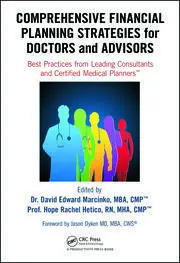
LINK: https://www.crcpress.com/Comprehensive-Financial-Planning-Strategies-for-Doctors-and-Advisors-Best/Marcinko-Hetico/p/book/9781482240283

In addition, the legal, accounting, and printing costs involved in issuance are reduced, since a single registration statement suffices for multiple offerings within the 2 year period. In effect, what the issuer does is register securities that will meet its financing needs for the next 2 years.

It issues what it needs at the current time, and puts the balance on the “shelf” to be taken off the shelf as needed.

Conclusion:

Your thoughts and comments on this ME-P are appreciated. Feel free to review our top-left column, and top-right sidebar materials, links, urls and related websites, too. Then, subscribe to the ME-P. It is fast, free and secure.

Speaker: If you need a moderator or speaker for an upcoming event, Dr. David E. Marcinko; MBA – Publisher-in-Chief of the Medical Executive-Post – is available for seminar or speaking engagements.

Contact: MarcinkoAdvisors@msn.com

Subscribe: MEDICAL EXECUTIVE POST for curated news, essays, opinions and analysis from the public health, economics, finance, marketing, I.T, business and policy management ecosystem.

**

Risk Management, Liability Insurance, and Asset Protection Strategies for Doctors and Advisors: Best Practices from Leading Consultants and Certified Medical Planners™8Comprehensive Financial Planning Strategies for Doctors and Advisors: Best Practices from Leading Consultants and Certified Medical Planners™

Invite Dr. Marcinko

***

DAILY UPDATE: Tele-Health, Fortune 500, Companies and the Stocks Markets

MEDICAL EXECUTIVE-POST TODAY’S NEWSLETTER BRIEFING

***

Essays, Opinions and Curated News in Health Economics, Investing, Business, Management and Financial Planning for Physician Entrepreneurs and their Savvy Advisors and Consultants

Serving Almost One Million Doctors, Financial Advisors and Medical Management Consultants Daily

A Partner of the Institute of Medical Business Advisors , Inc.

http://www.MedicalBusinessAdvisors.com

SPONSORED BY: Marcinko & Associates, Inc.

***

http://www.MarcinkoAssociates.com

Daily Update Provided By Staff Reporters Since 2007.
How May We Serve You?
© Copyright Institute of Medical Business Advisors, Inc. All rights reserved. 2024

REFER A COLLEAGUE: MarcinkoAdvisors@msn.com

SPONSORSHIPS AVAILABLE: https://medicalexecutivepost.com/sponsors/

ADVERTISE ON THE ME-P: https://tinyurl.com/ytb5955z

***

The end has come for the Covid-19-era federal Affordable Connectivity Program, which some critics say will make telehealth access challenging for millions in rural and tribal areas. (NPR/KFF Health News)

CITE: https://www.r2library.com/Resource

Here’s where the major benchmarks ended yesterday:

  • The S&P 500 index rose 13.80 points (0.3%) to 5,360.79; the Dow Jones Industrial Average® ($DJI) gained 69.05 points (0.2%) to 38,868.04; the NASDAQ Composite added 59.40 points (0.4%) to 17,192.53.
  • The 10-year Treasury note yield (TNX) rose almost 4 basis points to 4.467%.
  • The CBOE Volatility Index® (VIX) rose 0.52 to 12.74.

What’s up

  • Diamond Offshore Drilling rose 10.91% after fellow offshore drilling company Noble Corp. announced it would acquire Diamond in a cash and stock deal worth $1.6 billion total. Noble shares rose 6.08% on the news as well.
  • Crowdstrike, GoDaddy, and KKR will be added to the S&P 500 when the index rebalances at the end of the quarter. Crowdstrike rose 7.29%, GoDaddy rose 1.94%, and KKR was up 11.22% on the news.
  • Texas Pacific Land Corporation shares also rose 24.57% on the news that the company will be inducted into the S&P MidCap 400.

What’s down

CITE: https://tinyurl.com/2h47urt5

Stat: 42. That’s how many healthcare industry companies were named on the latest Fortune 500, which lists the largest corporations in the US based on revenue for fiscal year 2023. (Advisory Board)

CITE: https://tinyurl.com/tj8smmes

COMMENTS APPRECIATED

PLEASE SUBSCRIBE: MarcinkoAdvisors@msns.com

Thank You

***

***

***

***

EDUCATIONAL TEXTBOOKS: https://tinyurl.com/4zdxuuwf

***

The Private Placement (Regulation D) Securities Exemption

What it is – How it works?

dem-2

By Dr. David Edward Marcinko MBA MEd CMP

http://www.CertifiedMedicalPlanner.org

Since the Securities Act of 1933 requires disclosure of all public offerings (other than the exemptions just described), it should make sense that any securities offering not offered to the public would also be exempt. The Act provides a registration exemption for private placements, know as Regulation D.

Since one of the stated purposes of the Act of 1933 is to prevent fraud on the sale of new public issues, an issue which has only a limited possibility of injuring the public may be granted an exemption from registration. The SEC just doesn’t have the time to look at everything so they exempt offerings which do not constitute a “public offering”. Strict adherence to the provisions of the law, however, is expected and is scrutinized by the SEC. This exemption provision of the Act of ’33 lies within Regulation D.

Regulation D describes the type and number of investors who may purchase the issue, the dollar limitations on the issue, the manner of sale, and the limited disclosure requirements. Bear in mind at all times that from the issuer’s viewpoint, the principal justification for doing a private, rather than public offering, is to save time and money, not to evade the law.

NOTE: Remember, it is just as illegal to use fraud to sell a Regulation D issue as it is in a public issue. However, if done correctly, a Regulation D can save time and money, and six separate rules (501-506).

***

334_1

***

The Rules

Rule 501: Accredited investors are defined as: corporations and partnerships with net worth of $5,000,000 not formed for the purpose of making the investment; corporate or partnership “insiders”; individuals and medical professionals with a net worth (individual or joint) in excess of $1,000,000; individuals with income in excess of $200,000 (or joint income of $300,000) in each of the last two years, with a reasonable expectation of having income in excess of $200,000 (joint income of $300,000) in the year of purchase; and any entity 100% owned by accredited investors. 

Rule 502: The violations of aggregation and integration are defined:

Aggregation: Sales of securities in violation of the dollar limitations imposed under Rules 504 and 505 (506 has no dollar limitations).

Integration: Sales of securities to a large number of non-accredited investors, in violation of the “purchaser limitations” set forth in Rules 505 and 506 (504 has no “purchaser limitations”). 

Rule 503: Sets forth notification requirements. An issuer will be considered in violation of Regulation D, and therefore subject to Federal penalties, if a Form D is not filed within 15 days after the Regulation D offering commences. 

Rule 504: Enables a non-reporting company to raise up to $1,000,000 in a 12-month period without undergoing the time land expense of an SEC registration. Any number of accredited and non-accredited investors may purchase a 504 issue. 

Rule 505: Enables corporations to raise up to $5,000,000 in a 12-month period without a registration. The “purchaser limitation” rule does apply here. It states that the number of non-accredited investors cannot exceed 35. Obviously, we would have few problems if only medical investors in private placements were accredited investors, but that is not always the case. Since we are limited to a maximum of 35 non-accredited investors, how we count the purchasers becomes an important consideration. The SEC states that if a husband and wife each purchase securities in a private placement for their own accounts, they count as one non- accredited investor, not two. It would also be true that if these securities were purchased in UGMA accounts for their dependent children, we would still be counting only one non- accredited investor. In the case of a partnership, it depends upon the purpose of the partnership. If the partnership was formed solely to make this investment, then each of the partners counts as an individual accredited or non-accredited investor based upon their own personal status, but if the partnership served some other purpose, such as a law firm, then it would only count as one purchaser.

Rule 506: Differs from 505 in two significant ways. The dollar limit is waived and the issuer must take steps to assure itself that, if sales are to be made to non-accredited investors, those investors meet tests of investment “sophistication”.

Generally speaking, this means that either the individual non-accredited investor has investment savvy and experience with this kind of offering, or he is represented by someone who has the requisite sophistication. This representative, normally a financial professional, such as an investment advisor, accountant, or attorney, is referred to in the securities business as a Purchaser Representative.

Regulation D further states that no public advertising or solicitation of any kind is permitted. A tombstone ad may be used to advertise the completion of a private placement, not to announce the availability of the issue. As a practical matter, however, whether required by the SEC or not, a Private Offering Memorandum for a limited partnership, for example, is normally prepared and furnished so that all investors receive disclosure upon which to base an investment judgment.

If any of the provisions of the Securities Act of 1933 are violated by an issuer, underwriter, or investor, this is known as “statutory underwriting” of underwriting securities in violation of statute. One who violates the ’33 Act is known as a statutory underwriter. One all too common example of this occurs when a purchaser of a Regulation D offering offers his unregistered securities for re-sale in violation of SEC Rule 144, an explanation of which is given below.

In simple English, SEC Rule 144 was created so that certain re-sales of already-existing securities could be made without having to file a complete registration statement with the SEC. The time and money involved in having to file such a registration is usually so prohibitive as to make it uneconomical for the individual seller. What kinds of re-sales are covered by Rule 144 and are important to the medical investor? Let’s first define a few terms. 

Restricted Securities: Are unregistered Securities purchased by an investor in a private placement. It is also called Letter Securities or Legend Securities referring to the fact that purchasers must sign an “Investment Letter” attesting to their understanding of the restrictions upon re-sale and to the “Legend” placed upon the certificates indicating restriction upon resale. 

Control Person: A corporate director, officer, greater than 10% voting Stockholder, or the spouse of any of the preceding, are loosely referred to as Insiders or Affiliates due to their unique status within the issuer. 

Control Stock: Stock held by a control person. What makes it control stock is who owns it, not so much how they acquired it. 

Non-Affiliate: An investor who is not a control person and has no other affiliation with the issuer other than as an owner of securities.

Rule 144 says that restricted securities cannot be offered for re-sale by any owner without first filing a registration statement with the SEC:

  1. unless the securities have been held in a fully paid-for status for at least two years;
  2. unless a notice of Sale is filed with the SEC at the time of sale and demonstrating compliance with Rule 144
  3. unless small certain quantity apply: 

***

fsu_campus_1

***

Assessment

  • Rule 500 – Use of Regulation D
  • Rule 501 – Definitions and terms used in Regulation D
  • Rule 502 – General conditions to be met
  • Rule 503 – Filing of notice of sales
  • Rule 504 – Exemption for offerings not exceeding $5,000,000
  • Rule 505 – No longer availible effective May 22, 2017
  • Rule 506 – Exemption for unlimited offering
  • Rule 507 – Disqualifying provision relating to exemptions 504, 505 and 506
  • Rule 508– Insignificant deviations from a term, condition or requirement of Regulation D

Conclusion

Your thoughts and comments on this ME-P are appreciated. Feel free to review our top-left column, and top-right sidebar materials, links, URLs and related websites, too. Then, subscribe to the ME-P. It is fast, free and secure.

Speaker: If you need a moderator or speaker for an upcoming event, Dr. David E. Marcinko; MBA – Publisher-in-Chief of the Medical Executive-Post – is available for seminar or speaking engagements. Contact: MarcinkoAdvisors@msn.com

OUR OTHER PRINT BOOKS AND RELATED INFORMATION SOURCES:

Comprehensive Financial Planning Strategies for Doctors and Advisors: Best Practices from Leading Consultants and Certified Medical Planners™

***

What is an Unregistered Security?

By Staff Reporters

***

***

A security, most simply, is a financial instrument traded for profit. They form the basis of investment contracts for thinks like equities, debt, and derivatives.

CITE: https://www.r2library.com/Resource/Title/0826102549

The SEC points to the Howey Test to determine if an asset can be classed as a security. This test has four prongs, all of which need to be passed to be determined a security: [1] An investment of money [2] in a common enterprise [3] with expectations of a profit [4] to be derived from the efforts of others.

In the US, if an asset is deemed to be a security it needs to be registered with the SEC. For example, an initial public offering (IPO) of a stock newly listed on the stock exchange represents the first offering of its freshly registered securities. Securities need to be registered as it gives the issuing company the relevant shareholder information to pay dividends and provide relevant stock-related information. It also helps reduce fraud by keeping on record the legitimate owner of the security.

According to the SEC, an unregistered security is simply one that hasn’t been rubber-stamped by the regulator. 

Unregistered securities have been the subject of several scams, with the SEC saying their hallmarks include the promise of high yields with no risk, aggressive sales tactics, and are backed by unqualified investment professionals. As such, their use is limited.

Only accredited investors, defined as those with a net worth higher than $1 million or an annual income exceeding $200,000, can trade unregistered securities, essentially locking out most retail investors. The threshold is seen as a gauge of financial sophistication and suggests a buffer for eligible investors against potential losses.

RELATED: https://medicalexecutivepost.com/2022/01/14/the-private-placement-regulation-d-securities-exemption/

***

COMMENTS APPRECIATED

Thank You

***

ORDER: https://www.routledge.com/Comprehensive-Financial-Planning-Strategies-for-Doctors-and-Advisors-Best/Marcinko-Hetico/p/book/9781482240283

***

MUTUAL FUNDS: Terms and Definitions for Physicians

A “Need-to-Know” Glossary for all Medical Professionals

http://www.HealthDictionarySeries.org

HDS

[ME-P Staff Writers] 

ADV: A two-part form filed by investment advisors who register with the Securities and Exchange Commission (SEC), as required under the Investment Advisers Act. ADV Part II information must be provided to potential investors and made available to current investors.

Alpha: A measure of the amount of a portfolio’s expected return that is not related to the portfolio’s sensitivity to market volatility. A benchmark that uses beta as a measure of risk, a benchmark and a risk free rate of return (usually T-bills) to compare actual performance with expected performance.

For example, a fund with a beta of .80 in a market that rises 10% is expected to rise 8%.

If the risk-free return is 3%, the alpha would be –.6%, calculated as follows: (Fund return – Risk-free return) – (Beta x Excess return) = Alpha   (8% – 3%) – [.8 × (10% – 3%)] = (–) .6%   

Note: A positive alpha indicates out-performance while a negative alpha means underperformance. 

Asset allocation: Strategic asset allocation refers to the long-term targets for allocation of a percentage of a portfolio among different asset classes. In contrast, tactical asset allocation refers to short-term targets.

Average maturity: The average weighted maturity of the bonds in a portfolio providing an indication of interest rate risk.

Benchmark: An index, managed portfolio, or fund used to compare performance characteristics with the targeted portfolio or fund.

Beta: A statistically computed measure of the portfolio’s relationship to changes in market value. If, compared to the S&P 500, a fund has a beta of .80; it is expected to under perform a rising market by 20% and outperform a falling market by 20%. 

Bond: Publicly traded debt instruments that are issued by governments and corporations. The issuer agrees to pay a fixed amount of interest over a specified time period and to repay the principal at maturity.

Closed-end mutual fund: An investment company that registers shares in accordance with SEC regulations and is traded in securities markets at prices determined by investments. 

Diversification: Buying a number of different investment vehicles to protect against default of a single vehicle, thereby reducing the risk of the portfolio.

Duration: A more technical calculation of interest rate risk exposure that uses the present value of expected cash flows to be returned to the bond holder over the term of the bond. 

Fundamental analysis: An analysis of a company’s stock that focuses on the economic environment, the industry the company is in, and the company’s financial situation and operating results.

Mutual fund: A regulated investment company that manages a portfolio of securities for its shareholders.

Net asset value (NAV): The value of fund assets fewer liabilities divided by outstanding shares. 

Open-end mutual fund: An investment company that invests money in accordance with specific objectives on behalf of investors. Fund assets expand or contract based on investment performance, new investments and redemptions.

Portfolio manager: The person(s) who is/are responsible for managing the portfolio in accordance with the objectives dictated by an investor or a fund’s prospectus.

Prospectus: A disclosure document filed with the SEC and made available to prospective and current investors. The prospectus covers sales charges, expenses, investment objectives and restrictions, management fees, financial highlights, and other information. 

R-squared (R2): Relationship of a fund or portfolio’s performance to a benchmark index.

For example, a fund R-squared of .5 means only 50% of its return is explained by the index. Other factors are responsible for the balance of performance. 

SEC yield: A standardized calculation of yield over a 30-day period, sometimes quoted as the “30-day yield.” It takes into account yield-to-maturity rather than current dividends. 

Standard deviation: A statistic that looks at a series of returns and expresses the average deviation from the mean return.

Statement of additional information: A disclosure document filed with the SEC that supplements the prospectus. It is made available to investors upon request. 

Technical analysis: An analysis that focuses on trends in financial markets generally.

For example, a technical analyst may view an entire industry’s group of stocks to be declining. Although the analyst may be correct about the group of stocks as a whole, there may be exceptions represented by specific, individual companies.

Total return: The combination of investment return from income, such as dividends and interest, and appreciation or depreciation in the value of the investment (Income returns plus capital return.) 

Turnover: Under SEC rules, a figure computed that indicates how often securities in the portfolio are bought and sold. For example, if turnover is 100% over a one-year period, the securities (on average) were replaced once. 

12b-1 fee: The maximum annual fee payable from fund assets for distribution and sales costs as allowed by the SEC. 

CITE: https://www.r2library.com/Resource

MORE: Glossary Terms Ap 3

Library

***

***

DAILY UPDATE: Markets, Cue Health Down, Blue Kansas Part C and the FOMC

MEDICAL EXECUTIVE-POST TODAY’S NEWSLETTER BRIEFING

***

Essays, Opinions and Curated News in Health Economics, Investing, Business, Management and Financial Planning for Physician Entrepreneurs and their Savvy Advisors and Consultants

Serving Almost One Million Doctors, Financial Advisors and Medical Management Consultants Daily

A Partner of the Institute of Medical Business Advisors , Inc.

http://www.MedicalBusinessAdvisors.com

SPONSORED BY: Marcinko & Associates, Inc.

***

http://www.MarcinkoAssociates.com

Daily Update Provided By Staff Reporters Since 2007.
How May We Serve You?
© Copyright Institute of Medical Business Advisors, Inc. All rights reserved. 2024

REFER A COLLEAGUE: MarcinkoAdvisors@msn.com

SPONSORSHIPS AVAILABLE: https://medicalexecutivepost.com/sponsors/

ADVERTISE ON THE ME-P: https://tinyurl.com/ytb5955z

***

CITE: https://www.r2library.com/Resource

Markets: Stocks dropped ever so slightly to end last week as investors tried to make sense of the big jobs report. Lots of jobs = good, but lots of jobs also = interest rates likely staying the same for awhile longer (more below). AMC had a rough day, tumbling 15% as the latest meme stock craze started to fizzle.

CITE: https://tinyurl.com/2h47urt5

Blue Kansas City Exiting MA Market by 2025 Due to ‘Regulatory Demands’

Blue Cross and Blue Shield of Kansas City (Blue KC) is leaving the Medicare Advantage (MA) market at the end of 2024, the insurer announced recently. The company blamed “heightened regulatory demands and rising market and financial pressures” for the decision but said it is still focused on employer-sponsored health plans, and Medicare supplement and Affordable Care Act plans in the state.

“We explored every alternative path for our MA members and are disappointed we must exit this line of business,” said Erin Stucky, Blue KC President and CEO, in a statement. “We value our MA members and are committed to providing uninterrupted, quality service to our current MA membership through the end of 2024.”

Source: Noah Tong, Fierce Healthcare [6/3/24]

CITE: https://tinyurl.com/tj8smmes

Cue Health, founded in 2010, started with great hopes as it promised a way to accurately test for Covid-19 without needing a lab. “We designed and developed a new molecular testing platform bringing lab complexity to an easy-to-use, portable device. Now you can get the best of lab molecular testing — speed, accuracy, and versatility – at home, the office, or on the go,” the company shared on its website. The company went public (with the ticker  (HLTH) ) in 2021 at $16 and rose to $20.55 and carried that massive $2.3 billion valuation. Through 2023 and into this year, Cue unsuccessfully tried to shore up operations, get new products to market, and find new capital.

In May, however, the FDA advised customers not to use two of its products at all because they did not deliver accurate results. Finally, its board and executives threw in the towel. On May 28th, the company announced it was ceasing operations and filed for bankruptcy in Delaware’s U.S. Bankruptcy Court. The company’s assets will be sold off at an undetermined date, and the proceeds will be distributed to creditors.       

***

Inflation data from the Fed meeting on Wednesday: Inflation data for May arrives in the morning, and it’s expected to show price growth held steady at 3.4% annually. In the afternoon, the FOMC will wrap up its meeting with a Jerome Powell press conference. The Fed is pretty much a lock to hold interest rates at their current level.

COMMENTS APPRECIATED

PLEASE SUBSCRIBE: MarcinkoAdvisors@msn.com

Thank You

***

***

***

***

EDUCATIONAL TEXTBOOKS: https://tinyurl.com/4zdxuuwf

***

Treating Children “Equally” in Estate Planning

 “Equal” isn’t necessarily “Fair”

By Rick Kahler MS CFP® http://www.KahlerFinancial.com

Rick Kahler CFPIn estate planning, “equal” isn’t necessarily the same as “fair”. I rarely see an estate plan that does not treat children equally. When I do see inequality, it’s usually because a parent is estranged from one child and leaves him or her nothing. So, “equal” isn’t necessarily “fair”.

Some call this the “placebo of estate planning equality”.

Psychologists

Many experts on the psychology of estate planning recommend that parents divide their estates equally among children. The main reason is to help enhance sibling relationships after the parents’ deaths. The goal is to eliminate the potential for hurt feelings and perceived injustice if parents favor one sibling over another financially.

Estate Division

Dividing an estate into equal shares for each child might seem to be the obvious way to treat children fairly. However, that usually only works if you’ve treated them equally during your lifetime. If you have given more to one child during life, it’s usually smart to level the playing field at death.

The Financial Samurai

I was reminded of this principle late last year in a post by a blogger who goes by the name Financial Samurai, who tells this story:

He perceived that his parents couldn’t afford to send him to a private college. To help them financially, he chose to go to a public university. His younger sister chose a private university costing eight times as much. After graduating, he worked hard to save enough to repay his parents. When he offered them the money, ten years after graduation, he was shocked when they declined it. Only then did he learn they had saved equal amounts for his and his sister’s educations. When he chose the less expensive school, they transferred what they saved on his tuition to help pay for his sister’s more expensive private education.

While he tries his best in the balance of the article to take the high road, assuring readers this injustice really doesn’t bother him, it’s clear that it does, a lot.

“No-Talk” Rules

The amazing thing about this story is that this family never discussed the financial aspects of college. The parents never told their son they were saving for his college education or communicated their intent to pay for it. He never asked, assuming that paying for college was his responsibility. The unspoken “no-talk” rule around money that so many families follow was rigidly in place.

College funding is far from the only way parents treat children differently. Another common one is bailing out one child who has financial struggles, either self-inflicted or caused by outside circumstances. Parents may also lend or give one child some money to start a business. Or they may feel they owe more to a child who has been the one to take care of them in old age.

Many of these inequalities can be compensated for in estate planning. One strategy is to subtract any excess paid to one child from his or her portion of the inheritance. It’s important here to provide for inflation, such as adjusting the amount paid to the child upward by the cumulative increase in the Consumer Price Index (CPI) from the date of the payment to the date of death.

placebo-pill

[The “Placebo” of Equality]

Assessment

If parents feel it’s fair to leave more to a child who has cared for them, it’s best to establish that amount carefully, based both on tangible factors like the market value of the care and on intangibles like the relationships among the siblings.

So, no matter what adjustments you make in your estate plan to equalize what children may have received during your lifetime, it’s crucial to talk about those adjustments. Clear communication about what is “fair” goes a long way to maintain strong sibling relationships long beyond the parents’ lives.

Conclusion

Your thoughts and comments on this ME-P are appreciated. Feel free to review our top-left column, and top-right sidebar materials, links, URLs and related websites, too. Then, subscribe to the ME-P. It is fast, free and secure.

Speaker: If you need a moderator or speaker for an upcoming event, Dr. David E. Marcinko; MBA – Publisher-in-Chief of the Medical Executive-Post – is available for seminar or speaking engagements. Contact: MarcinkoAdvisors@msn.com

OUR OTHER PRINT BOOKS AND RELATED INFORMATION SOURCES:

Product Details  Product Details

Safeguard Your Digital Estate

On Digital Assets

[By staff reporters]

If you died, what would happen to your email archives, social profiles and online accounts?

***

Have you made a plan to protect your digital assets after you die?

MORE: https://medicalexecutivepost.com/2015/10/29/157123/

MORE: https://medicalexecutivepost.com/2015/04/23/death-in-the-digital-age/

Assessment: Without your passwords, your loved ones may be unable to shut down your Facebook page, access your accounts, and protect your personal correspondence.

And so, your thoughts are appreciated.

***

Risk Management, Liability Insurance, and Asset Protection Strategies for Doctors and Advisors: Best Practices from Leading Consultants and Certified Medical Planners™8Comprehensive Financial Planning Strategies for Doctors and Advisors: Best Practices from Leading Consultants and Certified Medical Planners™

***


DAILY UPDATE: Payroll Jobs and Longevity Up

MEDICAL EXECUTIVE-POST TODAY’S NEWSLETTER BRIEFING

***

Essays, Opinions and Curated News in Health Economics, Investing, Business, Management and Financial Planning for Physician Entrepreneurs and their Savvy Advisors and Consultants

Serving Almost One Million Doctors, Financial Advisors and Medical Management Consultants Daily

A Partner of the Institute of Medical Business Advisors , Inc.

http://www.MedicalBusinessAdvisors.com

SPONSORED BY: Marcinko & Associates, Inc.

***

http://www.MarcinkoAssociates.com

Daily Update Provided By Staff Reporters Since 2007.
How May We Serve You?
© Copyright Institute of Medical Business Advisors, Inc. All rights reserved. 2024

REFER A COLLEAGUE: MarcinkoAdvisors@msn.com

SPONSORSHIPS AVAILABLE: https://medicalexecutivepost.com/sponsors/

ADVERTISE ON THE ME-P: https://tinyurl.com/ytb5955z

***

CITE: https://www.r2library.com/Resource

People whose job it is to watch the economy are shocked at how many jobs the economy added last month: Payrolls added 272,000 more jobs in May, according to employer stats the government dropped yesterday, vastly exceeding the 190,000 increase that analysts predicted.

  • The biggest job gains were in healthcare (68k jobs), government (43k), and hospitality (42k).
  • The average hourly pay increased by 0.4% from the previous month and 4.1% over the year, also exceeding analysts’ predictions.

The surprisingly strong employment gains are prompting some head-scratching since they come amid slowing economic growth as consumers pull back on spending. The job market’s resilience has dashed hopes among investors and anyone planning to take out a loan that the Fed will lower interest rates soon. For example:

  • The unemployment rate ticked up to 4% from 3.9% in April, breaking its historic streak of 27 months under 4%.
  • A survey of households revealed that the number of Americans working dropped by 408,000 from April to May.

Some economists claim the household survey fails to properly account for immigrant workers, who have been the main driver of working population growth in recent years. But others say it checks out given the general cool-down vibes in the labor market: Job openings were at a three-year low in April, and many recent college grads have struggled to find work.

CITE: https://tinyurl.com/2h47urt5

While some companies would be thrilled if everyone started living to 120, it could spell trouble for the rest of us. Experts believe that centenarians becoming anything more than an anomaly would put the world in an economic pickle and require a societal overhaul to adapt. Even without futuristic tech that enables ultra-longevity, many developed countries are already in an economic bind due to aging populations and declining birth rates. The US Census Bureau projects that people older than 64 will reach 23% of the population by 2060 (compared to 17% in 2020), which means higher retirement and healthcare costs with fewer workers to offset them.

CITE: https://tinyurl.com/tj8smmes

COMMENTS APPRECIATED

PLEASE SUBSCRIBE: MarcinkoAdvisors@msn.com

Thank You

***

***

***

***

EDUCATIONAL TEXTBOOKS: https://tinyurl.com/4zdxuuwf

***

The Active v. Passive Investing Dichotomy

The Controversy Continues

LINK: http://www.CertifiedMedicalPlanner.org

[By Amaury S. Cifuentes CFP® CMP®]

Physician and all investors are often overloaded with information regarding this debate, and many advisors differ in the conclusion of which strategy is best.

Stock Picking

Stock picking is typically a waist of time and few investors or advisors demonstrate the constant ability in picking winning stocks. Timing the market also becomes difficult and typically has negative effects in a portfolio. Investors will also find that they will usually have very little luck finding money mangers that can consistently out perform the market. Investors over a long period of investing time horizon would benefit from passive investing vs. active trading, with some exceptions.

Active Investors

Active investors spend time analyzing stocks or mutual funds based on a mismatch of the price relative to its value. In an efficient market, there is little or no mismatch between the current price and the true value of the investment. Also, real cost and expenses of active management are rarely calculated;  some consider the stock market a zero sum game, if the total market returns eleven percent then the investors must deduct the cost of the transaction, which would lower their return relative to the market.

Mutual Fund Performance

For example, Mark Carhart’s comprehensive study of 1,892 mutual funds title “On Persistence in Mutual Fund Performance” showed that on average mutual fund manager under performs by 1.8% to their relative index.  In addition, William Sharpe Nobel laureate article “The Arithmetic of Active Management” stated that after cost, the return of active management dollars would be less than passive dollars.

Market Timing

Timing of markets is also very difficult. Timing the market can be defined by moving your asset from risky to non risky assets before negative events happen. The Random Walk Theory basically states that there are no patterns in the stock market prices. Basically, information moves the markets and information is random, so logic would suggest that timing the markets effectively is futile. Many reports demonstrate this effect, for example, a report form Javier Estrada, a finance professor at IESE Business School in Barcelona, Spain. He studied the DJIA form 1900-2008 and concluded that if you subtracted the ten best days from the market two thirds of the cumulative gains would disappear (10/29694 or .03%), almost impossible to predict even by the most astute investors. Much more extensive research showing that market timing does not work, Wei Jiang paper “A Nonparametric Test of Market Timing” concluded that timing ability on average is negative. There are countless of studies showing that there is no evidence that timing the markets can produce superior returns.

***

Investing Difficulties Continue

To make thing even more difficult, investors that seek profession help cannot guarantee that the active managers they hire can consistently over long period of time outperform their benchmarks.  Obviously, it is evident that past performance is no indication of future results as advertised by all financial institution, and most active managers who outperform their bench market do not do consistently over long periods of time. John Boggle’s comprehensive study in 1992 of the Forbes Honor Roll title “Selecting Equity Mutual Funds” concluded that after commissions loads were taken into account the honor roll under performed the market between 1974 and 1990 by a difference of 193.75% cumulative.

Of Professor Burton Malkiel

Furthermore, investors over long periods of time will find that stock picking, timing the market and selecting active managers do not produce superior returns. John Stossel of ABC’s 20/20 interview Professor Burton Malkiel of Princeton University and stated in the interview that “All the information an analyst can learn about a company, from balance sheets to marketing material, is already built into the stock price, because all of the other thousands of analysts have the same information. What they don’t have is the knowledge that will move the stock, knowledge such as a news event, which is unpredictable and impossible to forecast.”

Assessment

Physicians and all investors may be better off concentrating on asset allocation, picking low cost investment, deciding on tactical or strategic rebalancing and implementing models like the three factor model as pioneered by Professor Eugene Fama and Professor Kenneth French in lieu active management.

Conclusion

Your thoughts and comments on this ME-P are appreciated. Feel free to review our top-left column, and top-right sidebar materials, links, URLs and related websites, too. Then, subscribe to the ME-P. It is fast, free and secure.

Speaker: If you need a moderator or speaker for an upcoming event, Dr. David E. Marcinko; MBA – Publisher-in-Chief of the Medical Executive-Post – is available for seminar or speaking engagements. Contact: MarcinkoAdvisors@msn.com

Comprehensive Financial Planning Strategies for Doctors and Advisors: Best Practices from Leading Consultants and Certified Medical Planners™

***

What is IMPLIED Stock Volatility?

By Staff Reporters

***

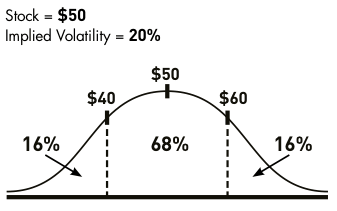
Implied open attempts to predict the prices at which various stock indexes will open at 9:30 am EST. It is frequently shown on various cable television channels and websites prior to the start of the next business day.  This is a powerful tool that gives traders an indication on whether they should be bullish or bearish during the market for SPX, NDX, and RUT.

***

What is Implied Volatility?

Implied volatility shows how much movement the market is expecting in the future.

Options with high levels of implied volatility suggest that investors in the underlying stocks are expecting a big move in one direction or the other. It could also mean there is an event coming up soon that may cause a big rally or a huge sell-off.

MORE: https://medicalexecutivepost.com/2022/03/18/options-and-derivatives-glossary/

However, implied volatility is only one piece of the puzzle when putting together an options trading strategy.

***

RELATED: https://www.amazon.com/Comprehensive-Financial-Planning-Strategies-Advisors/dp/1482240289/ref=sr_1_1?ie=UTF8&qid=1418580820&sr=8-1&keywords=david+marcinko

VIX: https://medicalexecutivepost.com/2022/09/01/what-up-vix/

***

COMMENTS APPRECIATED

Thank You

***

DAILY UPDATE: Companies and Stocks Dip as Job Growth Rises

MEDICAL EXECUTIVE-POST TODAY’S NEWSLETTER BRIEFING

***

Essays, Opinions and Curated News in Health Economics, Investing, Business, Management and Financial Planning for Physician Entrepreneurs and their Savvy Advisors and Consultants

Serving Almost One Million Doctors, Financial Advisors and Medical Management Consultants Daily

A Partner of the Institute of Medical Business Advisors , Inc.

http://www.MedicalBusinessAdvisors.com

SPONSORED BY: Marcinko & Associates, Inc.

***

http://www.MarcinkoAssociates.com

Daily Update Provided By Staff Reporters Since 2007.
How May We Serve You?
© Copyright Institute of Medical Business Advisors, Inc. All rights reserved. 2024

REFER A COLLEAGUE: MarcinkoAdvisors@msn.com

SPONSORSHIPS AVAILABLE: https://medicalexecutivepost.com/sponsors/

ADVERTISE ON THE ME-P: https://tinyurl.com/ytb5955z

***

Bank of America analysts recently looked back at the last 100 years of stock market data, searching for asset bubbles and what indicated their approach. The nine historical bubbles they found all had one thing in common ahead of their bursting: rising volatility. But, right now the Volatility Index, or VIX, is nowhere near the highs seen before the dot-com bubble burst, which should soothe investor concerns.

CITE: https://www.r2library.com/Resource

What’s up

  • Jazz Pharmaceuticals rose 5.39% today thanks to RBC Capital reiterating its outperform rating of the stock, highlighting the potential of the company’s forthcoming essential tremor treatment.
  • CarGurus popped 4.05% after receiving a shiny new outperform rating from JMP Securities, which likes the company’s online marketplace business model.
  • Las Vegas Sands rose 3.11% today on no particular news, as did Cedar Fair, which rose 3.27%. Both are beneficiaries of the vacation season, and likely enjoyed a boost today due to nothing more than the fact that it was a sunny summer Friday.

What’s down

CITE: https://tinyurl.com/2h47urt5

Here’s where the major benchmarks ended:

  • The S&P 500 index declined 5.97 points (0.1%) to 5,346.99, up 1.3% for the week; the Dow Jones Industrial Average® ($DJI) lost 87.18 points (0.2%) to 38,798.99, up 0.3% for the week; the NASDAQ Composite® ($COMP) shed 39.99 points (0.2%) to 17,133.13, up 2.4% for the week.
  • The 10-year Treasury note yield (TNX) jumped about 15 basis points to 4.432%.
  • The CBOE Volatility Index® (VIX) fell 0.36 to 12.22.

Interest-rate-sensitive sectors including banking, real estate, and utilities were among this week’s poorest performers amid expectations the Fed is unlikely to lower rates from historically high levels. The Dow Jones Utility Average ($DJU) dropped 2.8% this week. Retailers also posted a down week. Semiconductors still clocked a firm week despite declines the past two days. The PHLX Semiconductor Index (SOX) advanced 3.2% for the week. 

CITE: https://tinyurl.com/tj8smmes

COMMENTS APPRECIATED

PLEASE SUBSCRIBE: MarcinkoAdvisors@msn.com

Thank You

***

***

***

***

EDUCATIONAL TEXTBOOKS: https://tinyurl.com/4zdxuuwf

***

STOCK SPLITS: A Vital Equity Investing Concept for Physicians and all Investors

By Dr. David Edward Marcinko MBA MEd CMP™

SPONSOR: http://www.CertifiedMedicalPlanner.org

***

***
One important equity concept that medical professionals should be aware of is the idea of stock splits.

In a stock split, a corporation issues a set number of shares in exchange for each share held by share holders. Typically, a stock split increases the number of shares owned by a shareholder.

CITE: https://www.r2library.com/Resource

For example, XYZ Corp. may declare a 2-for-1 split, which means that share holders will receive two shares for each share that they own. However, corporations can also declare a reverse stock split, such as a 1-for-2 split where shareholders would receive 1 share for every two shares that they own.


While stock splits can either increase or decrease the number of shares that a share holder owns, the most important thing to understand about stock splits is that they have no impact on the aggregate value of the shareholder’s position in the company.

Using the XYZ Corp. example above, if the stock is trading at $10 per share, an investor owning 100 shares has a 24 total position of $1,000. After the 2-for-1 split occurs the investor will now own 200 shares, but the value of the stock will adjust downward from $10 per share to $5 per share.

Thus, the investor still owns $1,000 of XYZ stock. While stock splits are often interpreted as signals from management that conditions in the company are strong, there is no intrinsic reason that a stock split will result in subsequent stock appreciation.

NVIDIA Splits: https://tinyurl.com/238yze4k

***

COMMENTS APPRECIATED

Thank You

***

***

TEXAS: Stock Exchange?

TXSE versus NYSE?

By Staff Reporters

***

***

A group leading the charge for an “anti-woke” TXSE exchange sees an opportunity to capitalize on 1) the Southeast’s skyrocketing economy and 2) growing disillusionment with perceived burdensome regulation at the New York-based exchanges.

The TXSE pledged to be more “CEO-friendly,” drawing a clear distinction from the NASDAQ, which requires companies on the exchange to meet a diversity requirement or explain why they can’t.

The Texas Stock Exchange will focus on enabling U.S. and global companies to access U.S. equity capital markets and will provide a venue to trade and list public companies and the growing universe of exchange-traded products. TXSE will be a fully electronic, national securities exchange that will seek registration with the U.S. Securities and Exchange Commission.

MORE: http://www.TXSEGroup.com

COMMENTS APPRECIATED

Thank You

***

***

Walking Doctors Through a Stock Exchange Trade

Understanding the Traditional Process

By Dr. David Edward Marcinko MBA MEd CMP

SPONSOR: http://www.CertifiedMedicalPlanner.org

To see how the transactions are actually handled on the floor of an exchange, let us assume that an order to buy 100 shares of General Electric has been given by a doctor customer to the registered representative (stock broker), of a member firm in Atlanta. The order is a market order (an order to buy at the lowest possible price at the time the order reaches the floor of the exchange). This order is telephoned by direct wire, or computer, to the New York office of the member firm, which in turn telephones its order to its clerk on the floor of the exchange.

Each member firm has at least one member of the exchange representing them making trades on the floor. Each one of these members is assigned a number for identification. When the floor clerk receives the order to purchase the General Electric, he causes his member’s call number to appear on 3 large boards situated so that one is always in view. These boards are constantly watched brokers so that they will know when wanted at the phone, since there’s too much noise on the floor to use a paging system. Seeing his number on the board, the broker hurries to his telephone station or cell phone and receives the order to buy 100 shares of G.E. “at the market”. Acting as a commission broker, he immediately goes to the post where G.E. is traded and asks “how’s G.E”, of the specialist?

Order and Position Types

At this point, it is important to understand the different types of orders and positions that can be used to buy and sell securities from the specialist.

Market Order:

A market order is an order to be executed at the best possible price at the time the order reaches the floor. Market orders are the most common of all orders. The greatest advantage of the market order is speed. The doctor specifies no price in this type of order, he merely orders his broker to sell or buy at the best possible price, regardless of what it may be. The best possible price on a buy is the lowest possible price. The best possible price on a sell is the highest possible price. In other words, if a medical professional customer is buying, he logically wants to pay as little as possible, but he is not going to quibble over price. He wants the stock now, whatever it takes to get it. If he’s a seller, the doctor client wants to receive as much as possible, but will not quibble, he wants out, and will take what he can get, right now. No other type of order can be executed so rapidly. Some market orders are executed in less than one minute from the time the broker phones in the order. Because the investor has specified no price, a market order will always be executed. The doctor is literally saying, “I will pay whatever it takes, or accept whatever is offered”.

Limit Order:

The chief characteristic of a limit order is that the doctor decides in advance on a price at which he decides to trade. He believes that his price is one that will be reached in the market in reasonable time. He is willing to wait to do business until he has obtained his price even at the risk his order may not be executed either in the near future or at all. In the execution of a limit order, the broker is to execute it at the limit price or better. Better, means that a limit order to buy is executed at the customer’s price limit or lower, in a limit order to sell, at price limit or higher. If the broker can obtain a more favorable price for his doctor customer than the one specified, he is required to do so.

Order Length:

Now, even though the doctor has given his price limit, we need to know the length of effectiveness of the order. Is the order good for today only? If so, it is a day order, it automatically expires at the end of the day.  Alternatively, the doctor may enter an open or, “good until canceled” order. This type of order is used when the doctor believes that the fluctuations in the market price of the stock in which he’s interested will be large enough in the future that they will cause the market price to either fall to, or rise to, his desired price, i.e. his limit price. He is reasonably sure of his judgment and is in no hurry to have/his order executed. He knows what he wants to pay or receive and is willing to wait for an indefinite period.

Years ago, such orders were carried for long periods of time without being reconfirmed. This was very unsatisfactory for all parties concerned.  A doctor would frequently forget his order existed and, if the price ever reached his limit and the order was executed, the resulting trade might not be one he wished to make. To avoid the problem, open (GTC) orders must be reconfirmed by the doctor customer each six months. Does that mean six months after the order is entered? … No! The exchange has appointed the last business day of April and the last business day of October as the two dates per year when all open orders must be reconfirmed.

Example: Dr. Smith wants to buy 100 shares of XYZ. The price has been fluctuating between 50 and 55. He places a limit order to buy at 51, although the current market price is 54. Limit orders to buy (buy limit orders) are always placed below the current market. To do otherwise makes no sense. It is possible that, within a reasonable time, the price will drop to 51 and his broker can purchase the stock for him at that price. If the broker can purchase the stock at less that 51, that would certainly be fine with the doctor customer since he wants to pay no more than 51. A sell limit order works in reverse and is always placed above the current market price.

Example: Dr. Smith wants to sell 100 shares of XYZ stock. The order is 54. A sell limit order is place at 56. Sell limit orders are always placed above the market price. As soon as the pride rises to 56, if it ever does, the broker will execute it at 56 or higher. In no case will it be executed at less than 56.

The advantage of the limit order is that the doctor has a chance to buy at less or to sell at more than the current market price prevailing when he placed the order. He assumes that the market price will become more favorable in the future than it is at the time the order is placed. The word” chance ” is important. There is also the “chance” that the order will not be executed at all. The doctor just mentioned, who wanted to buy at 51, may never get his order filled since the price may not fall that low.  If he wanted to sell at 56, the order may also not ever be executed since it might not rise that high during the time period the order is in effect.

Stop Orders:

A very important type of order is the stop order, frequently called a stop-loss order. There are two distinct types of stop orders. One is the stop order to sell, called a sell stop, and the other is a stop order to buy, called a buy stop. Either type might be thought of as a suspended market order; it goes into effect only if the stock reaches or passes through a certain price.

The fact that the market price reaches or goes through the specified stop price does not mean the broker will obtain execution at the exact stop price. It merely means that the order becomes a market order and will be executed at the best possible price thereafter. The price specified on a stop order bears a relationship to the current market price exactly opposite to that on a limit order. Whereas a sell limit is placed at a price above the current market, a sell stop is placed at a price below the current market. Similarly, while a buy limit is placed at a price below the current market, a buy stop is placed at a price above the current market. Why would a doctor investor use a stop order?

There are two established uses for stop orders. One of them might be called protective; the other might be called preventive.

Protective: This order protects a doctors’ existing profit on a stock currently owned.

For example, a doctor purchases a stock at 60. It rises to 70. He has made a paper profit of $10 per share. He realizes that the market may reverse itself. He therefore gives his broker a stop order to sell at 67. If the reversal does occur and the price drops to 67 or less, the order immediately becomes a market order. The stock is disposed of at the best possible price. This may be exactly 67, or it may be slightly above or below that figure. Why? …Because what happened at 67 was that his order became a market order; the price he actually received was dependent upon the next activity in the market. Let us suppose that the sale was made at 66 1/2. The doctor customer made a gross profit of 6 1/2 points per share on his original purchase. Without the stop order, the stock may have dropped considerably below that before the customer could have placed a market order and his profit might have been less or, in fact, he might have even sold at a loss.

Preventive:

A doctor purchases 100 shares of a stock at 30. He obviously anticipates that the price of the stock will rise in the near future (why else would he buy?). However, he realizes that his judgment may be faulty. He therefore, at the time of purchase, places a sell stop order at a price somewhat below his purchase price, for example, at 28. As yet, he has made neither profit nor loss; he’s merely acting to prevent a loss that might follow if he made the wrong bet and the stock does fall in price. If the stock does drop, the doctor knows that once it gets as low as 28, a market order will be turned in for him and, therefore, he will lose only 2 points or thereabout. It might have been much more had he not used the sell stop.

Miscellaneous Orders and Positions

Beside market, limit and stop orders, there are some other miscellaneous orders to know.

A stop limit order is a stop order that, once triggered or activated, becomes a limit order. Realize that it is possible for a stop limit to be triggered and not executed, as the limit price specified by the doctor may not be available.

In addition, there are all or none and fill or kill orders, and even though both require the entire order to be filled, there are distinct differences. An all or none (AON) is an order in which the broker is directed to fill the entire order or none of it. A fill or kill (FOK) is an order either to buy or to sell a security in which the broker is directed to attempt to fill the entire”‘ amount of the order immediately and in full, or that it be canceled.

The difference between an all or none and a fill or kill order is that with an all or none order, immediate execution is not required, while immediate execution is a critical component of the fill or kill. Be cause of the immediacy requirement, FOK orders are never found on the specialist’s book. Another difference is that AON orders are only permitted for bonds, not stocks, while FOK orders may be used for either.

Also, there exists an immediate or cancel order (IOC), which is an order to buy or sell a security in which the broker is directed to attempt to fill immediately as much of the order as possible and cancel any part remaining. This type of order differs from a fill or kill order which requires the entire order to be filled. An IOC order will permit a partial fill. Because of the immediacy requirement, IOC and FOK orders are never found on the specialist’s book.

Long and Short Positions

A long buy position means that shares are for sale from a market makers inventory, or owned by the medical investor, outright. Market makers take long positions when customers and other firms wish to sell, and they take short positions when customers and other firms want to buy in quantities larger than the market maker’s inventory. By always being ready, willing, and able to handle orders in this way, market makers assure the investing public of a ready market in the securities in which they are interested. When a security can be bought and sold at firm prices very quickly and easily, the security is said to have a high degree of liquidity, also known as marketability.

A short position investor seeks to make a profit by participating in the decline in the market price of a security.

Now, let’s see how these terms, long and short, apply to transactions by medical investors, rather than market makers, in the securities markets.

When a doctor buys any security, he is said to be taking a long position in that security. This means the investor is an owner of the security. Why does a doctor take a long position in a security? Besides – receiving dividend income, to make a profit from an increase in the market price. Once the security has risen sufficiently in price to satisfy the investor’s profit needs, the investor will liquidate his long position, or sell his stock. This would officially be known as a long sale of stock, though few people in the securities business use the label “long sale”. This is the manner in which the above investor had made a profit is the traditional method used; buy low, sell high.

Let’s look at an actual investment in General Motors to investigate this principle further. A medical investor has taken a long position in 100 shares of General Motors stock at a price of $70 per share. This means that the manner in which he can do that is by placing a market order which will be executed at the best “available market price at the time, or by the / placing of a buy limit order with a limit price of $70 per share. The investor firmly believes, on the basis of reports that he has read about the automobile industry and General Motors specifically, that at $70 a share, General Motors is a real bargain. He believes that based on its current level of performance, it should be selling for a price of between $80 and $85 per share. But, the doctor investor has a dilemma. He feels certain that the price is going to rise but he cannot watch his computer, or call his broker, every hour of every day. The reason he can’t watch is because patients have to be seen in the office. The only people who watch a computer screen all day are those in the offices of brokerage firms (stock broker registered representatives), and doctor day traders, among others.

In the above example, with a sell limit order, if the doctor investor was willing to settle for a profit of $12 per share, what order would he place at this time? If you said, “sell at $82 good ’til canceled”, you are correct. Why GTC rather than a day order? Because our doctor investor knows that General Motors is probably not going to rise from $70 to $82 in one day. If he had placed an order to sell at $82 without the GTC qualification, his order would have been canceled at the end of this trading day. He would have had to re-enter the order each morning until he got an execution at 82. Marking the order GTC (or open) relieves him of any need to replace the order every morning. Several weeks later, when General Motors has reached $82 per share in the market, his order to sell at 82 is executed. The medical investor has bought at 70 and sold at 82 and realized a $12 per share profit for his efforts.

Let’s suppose that the medical investor, who has just established a $12 per share profit, has evaluated the performance of General Motors common stock by looking at the market performance over a period of many years. Let’s further assume that the investor has found by evaluating the market price statistics of General Motors is that the pattern of movement of General Motors is cyclical. By cyclical, we mean that it moves up and down according to a regular pattern of behavior. Let’s say the investor has observed that in the past, General Motors had repeated a pattern of moving from prices in the $60 per share range as a low, to a high of approximately $90 per share. Further, our investor has observed that this pattern of performance takes approximately 10 to l2 months to do a full cycle; that is, it moves from about 60 to about 90 and back to about 60 within a period of roughly l2 months. If this pattern repeats itself continually, the investor would be well advised to buy the stock at prices in the low to mid 60’s hold onto it until it moves well into the 80’s, and then sell his long position at a profit. However, what this means is that our investor is going to be invested in General Motors only 6 months of each year. That is, he will invest when the price is low and, usually within half a year, it will reach its high before turning around and going back to its low again. How can the doctor investor make a profit not only on the rise in price of General Motors in the first 6 months of the cycle, but on the fall in price of General Motors in the second half of the cycle? One technique that is available is the use of the short sale.

The Short Sale

If a doctor investor feels that GM is at its peak of $ 90 per share, he may borrow 100 shares from his brokerage firm and sell the 100 shares of borrowed GM at $ 90. This is selling stock that is not owned and is known as a short sale. The transaction ends when the doctor returns the borrowed securities at a lower price and pockets the difference as a profit. In this case, the doctor investor has sold high, and bought low.

Odd Lots

Most of the thousands of buy and sell orders executed on a typical day on the NYSE are in 100 share or multi-100 share lots. These are called round lots. Some of the inactive stocks traded at post 30, the non-horseshoe shaped post in the northwest corner of the exchange, are traded in 70 share round lots due to their inactivity. So, while a round lot is normally 700 shares, there are cases where it could be 10 shares. Any trade for less than a round lot is known as an odd lot. The execution of odd lot orders is somewhat different than round lots and needs explanation.

When a stock broker receives an odd lot order from one of his doctor customers, the order is processed in the same manner as any other order. However, when it gets to the floor, the commission broker knows that this is an order that will not be part of the regular auction market. He takes the order to the specialist in that stock and leaves the order with the specialist. One of the clerks assisting the specialist records the order and waits for the next auction to occur in that particular stock. As soon as a round lot trade occurs in that particular stock as a result of an auction at the post, which may occur seconds later, minutes later, or maybe not until the next day, the clerk makes a record of the trade price.

Every odd lot order that has been received since the last round lot trade, whether an order to buy or sell, is then executed at the just noted round lot price, the price at which the next round lot traded after receipt of the customer’s odd lot order, plus or minus the specialist’s “cut “.  Just like everything else he does, the specialist doesn’t work for nothing. Generally, he will add 1/8 of a point to the price per share of every odd lot buy order and reduce the proceeds of each odd lot sale order by 1/8 per share. This is the compensation he earns for the effort of breaking round lots into odd lots. Remember, odd lots are never auctioned but, there can be no odd lot trade unless a round lot trades after receipt of the odd lot order.

Conclusion

And so, your thoughts and comments on this ME-P are appreciated. Feel free to review our top-left column, and top-right sidebar materials, links, URLs and related websites, too. Then, subscribe to the ME-P. It is fast, free and secure.

Speaker: If you need a moderator or speaker for an upcoming event, Dr. David E. Marcinko; MBA – Publisher-in-Chief of the Medical Executive-Post – is available for seminar or speaking engagements. Contact: MarcinkoAdvisors@msn.com

Our Other Print Books and Related Information Sources

Subscribe Now: Did you like this Medical Executive-Post, or find it helpful, interesting and informative? Want to get the latest ME-Ps delivered to your email box each day? Just subscribe and you can unsubscribe at any time. Security is assured.

Sponsors WelcomedAnd, credible sponsors and like-minded advertisers are always welcomed.

Link: https://healthcarefinancials.wordpress.com/2007/11/11/advertise

***

Hurdle Rates V. Highwater Marks V. Claw Back Provisions

More on Hedge Funds and Fees

dem-2By Dr. David Edward Marcinko MBA MEd CMP®

SPONSOR: http://www.CertifiedMedicalPlanner.org

Many physicians and other investors — even those that meet net worth guidelines — are surprised to learn that there exists a $500 – 999 billion, or more, alternative investment industry that is not generally marketed to the public. Such alternative investments have also been known as hedge funds or private investment funds.

Unlike mutual funds, these alternative investments can be structured in a wide variety of ways. Because of the very same regulations discussed above, these funds cannot be advertised, but they are far from illegal or illicit.

http://www.CertifiedMedicalPlanner.org

cmp

History

In fact, physicians were among the most significant early investors in one of the last century’s most successful hedge funds. Mr. Warren Buffett, Chairman of Berkshire Hathaway, Inc. and a legendary investor got his start in 1957 running the Buffett Partnership, an alternative investment fund not open to the general public. Mr. Buffett’s first public appearance as a money manager was before a group of physicians in Omaha, Nebraska. Eleven decided to put some money with him. A few of these original investors followed him into Berkshire Hathaway, now among the most highly valued companies in the world.

The alternative investment, or hedge, funds of today are similar to the original Buffett Partnership in many ways. So, we will discuss several unique terms which potential investors should be aware.

http://www.HealthDictionarySeries.org

hds

Hurdle Rate

Hedge funds may feature a hurdle rate as part of the calculation of the fund manager’s performance incentive compensation. Also known as a “benchmark,” the hurdle rate is the amount, expressed in percentage points, an investor’s capital account must appreciate before the account becomes subject to a performance incentive fee. Potential medical investors should view the hurdle rate as a form of protection in context with other features of the fee arrangement.

The hurdle rate, which benchmarks a single year’s performance, may be considered mutually exclusive of any other year, or the hurdle rate may compound each year. The former case is more common. In the latter case, a portfolio manager failing to attain a hurdle rate in the first year will find the effective hurdle rate considerably higher during the second year.

Once a fund manager attains the hurdle rate for an investor, the medical investor’s capital account may be charged a performance incentive fee only on the performance above and beyond the hurdle rate. Alternatively, the account may be charged a performance fee for the entire level of performance, including the performance required to attain the hurdle rate. Other variations on the use of the hurdle rate exist, and are limited only by the contract signed between the fund manager and the investor. The hurdle rate is not generally a negotiating point, however.

Example:

A fund charges a performance fee with a 6 percent hurdle rate, calculated in mutually exclusive manner. Dr. Lanouettea, a radiologist investor places $100,000 with the fund. The first year’s performance is 5 percent. The investor therefore owes no performance fee during the first year because the portfolio manager did not attain the hurdle rate. During year two, the portfolio manager guides the fund to a 7 percent return. Because the hurdle rate is mutually exclusive of any other year, the portfolio manager has attained the 6 percent hurdle rate and is entitled to a performance fee.

Highwater Mark

Some funds feature a highwater mark provision, also known as a ”loss-carryforward” provision. As with the hurdle rate, potential investors should consider the highwater mark a form of protection. A high water mark is an amount equal to the greatest value of an investor’s capital account, adjusted for contributions and withdrawals. The high water mark ensures that the hedge fund manager charges a performance incentive fee only on the amount of appreciation over and above the highwater mark set at the time the performance fee was last charged. The current trend is for newer funds to feature this highwater mark, while older, larger funds may not feature it.

Example:

A fund charges a 20 percent performance fee with a highwater mark but no hurdle rate. Dr. Butalak, a dentist investor contributes $100,000 to the fund. During the first year, the hedge fund manager grows that capital account to $110,000 and charges a 20 percent performance fee, or $2,000. The ending capital account balance and highwater mark is therefore $108,000. During year two, the account falls back to $100,000, but the highwater mark remains $108,000. During year three, in order for the manager to charge a performance fee, the manager must grow the capital account to a level above $108,000.

Clawback Provision

Rarely, a fund may provide investors with a clawback provision. This term, borrowed from the venture capital fund world, such provisions result in a refund to the investor of all or part of a previously charged performance fee if a certain level of performance is not attained in subsequent years. Such refunds in the face of poor or inadequate performance may not be legal in some states or under certain authorities.

Conclusion

Your thoughts and comments on this ME-P are appreciated. Feel free to review our top-left column, and top-right sidebar materials, links, URLs and related websites, too. Then, subscribe to the ME-P. It is fast, free and secure.

Speaker: If you need a moderator or speaker for an upcoming event, Dr. David E. Marcinko; MBA – Publisher-in-Chief of the Medical Executive-Post – is available for seminar or speaking engagements. Contact: MarcinkoAdvisors@msn.com

OUR OTHER PRINT BOOKS AND RELATED INFORMATION SOURCES:

 Risk Management, Liability Insurance, and Asset Protection Strategies for Doctors and Advisors: Best Practices from Leading Consultants and Certified Medical Planners™  Comprehensive Financial Planning Strategies for Doctors and Advisors: Best Practices from Leading Consultants and Certified Medical Planners™

***

DAILY UPDATE: +/- Stocks and Dull Market Reviews

MEDICAL EXECUTIVE-POST TODAY’S NEWSLETTER BRIEFING

***

Essays, Opinions and Curated News in Health Economics, Investing, Business, Management and Financial Planning for Physician Entrepreneurs and their Savvy Advisors and Consultants

Serving Almost One Million Doctors, Financial Advisors and Medical Management Consultants Daily

A Partner of the Institute of Medical Business Advisors , Inc.

http://www.MedicalBusinessAdvisors.com

SPONSORED BY: Marcinko & Associates, Inc.

***

http://www.MarcinkoAssociates.com

Daily Update Provided By Staff Reporters Since 2007.
How May We Serve You?
© Copyright Institute of Medical Business Advisors, Inc. All rights reserved. 2024

REFER A COLLEAGUE: MarcinkoAdvisors@msn.com

SPONSORSHIPS AVAILABLE: https://medicalexecutivepost.com/sponsors/

ADVERTISE ON THE ME-P: https://tinyurl.com/ytb5955z

***

CITE: https://www.r2library.com/Resource

What’s up

What’s down

  • Victoria’s Secret shares dropped 6.37% even though the company met both earnings and revenue estimates this quarter. It’s still mid-turnaround, however, and high debt remains a concern for investors.
  • Big Lots shares tanked 18.32% after the company announced abysmal earnings thanks to core customers cutting back their spending.
  • Canopy Growth shares dropped 8.45% after the marijuana producer announced plans to sell more shares in order to keep the company afloat.
  • Five Below shares fell 10.60% after announcing unimpressive earnings as low-income customers get squeezed by inflation.
  • Nio shares dropped 6.92% after the EV maker announced slower earnings than anticipated thanks to the ongoing decline in EV sales.

CITE: https://tinyurl.com/2h47urt5

Here’s where the major benchmarks ended:

  • The S&P 500 index fell 1.07 points (0.02%) to 5,352.96; the Dow Jones Industrial Average® ($DJI) gained 78.84 points (0.2%) to 38,886.17; the NASDAQ Composite eased 14.78 points (0.1%) to 17,173.12.
  • The 10-year Treasury note yield (TNX) fell slightly to 4.285%.
  • The CBOE Volatility Index® (VIX) declined 0.05 to  12.58.

CITE: https://tinyurl.com/tj8smmes

COMMENTS APPRECIATED

PLEASE SUBSCRIBE: MarcinkoAdvisors@msn.com

Thank You

***

***

***

***

EDUCATIONAL TEXTBOOKS: https://tinyurl.com/4zdxuuwf

***

VENTURE CAPITAL: In the Digital Health Care Space

Dr. David Edward Marcinko MBA CMP

SPONSOR: http://www.MarcinkoAssociates.com

***

***

At Marcinko & Associates, we appreciate that Venture Capital funding for entrepreneurs in the digital health space cooled a bit in 2020-22 following a red-hot 2018-20. And, overall, digital health companies raised $15.3 billion last year, down from the $29.1 billion raised in 2021—but still above the $14.1 billion raised in 2020, according to Rock Health a seed fund that supports digital health startups.

CITE: https://www.r2library.com/Resource

Nevertheless, other analysts predict VC investors and Investment Bankers will still put a good amount of money into digital health in 2024 thru 2027, especially in alternative care, drug development, health information technology, artificial intelligence, EMRs and software that reduces physician workload.

An essential first part of attracting VC interest and IB money is the crafting and presentation of your formal business plan [“elevator pitch”]; as well as the needed technical and managerial experience. This too is crucial for success and exactly where we can assist.

Of course, companies focused on scaling and growing will have different needs across the business lifecycle.

And so, no matter where you are in your journey—from seeking early funding to making final preparations for your IPO—we have equity and insightful administration solutions for you and can assist at any stage of your growth spectrum.

MORE: https://marcinkoassociates.com/fmv-appraisals/

CONTACT US TODAY – RETAIN US TOMORROW

How May We Serve You?

E-mail: MarcinkoAdvisors@msn.com

Thank You

***

***

A DENTAL INDUSTRY SECRET: No One Wants to Share!

By Darrell Pruitt DDS

***

***

Ransomware is getting worse, not better.

One doesn’t see this in dental literature, but ransomware is not going away. It is getting worse. “Ransomware Victim Count Increased by 75% in 2023” By Steve Alder for The HIPAA Journal, Jun 4, 2024. https://www.hipaajournal.com/ransomware-victim-count-increased-by-75-in-2023/

A new report from the Google-owned cybersecurity firm Mandiant suggests several reasons for the increase in attacks. “First, there has been a resetting of the cybe rcriminal ecosystem after a tumultuous year in 2022, an influx of new actors conducting attacks, new partnerships between existing groups, and members of disrupted, prolific ransomware groups such as Conti starting up their own RaaS operations. While the attacks in 2023 largely followed the same patterns as the previous year, there were some notable changes with several groups trialing new tactics, techniques, and procedures.

For example, to increase the pressure on victims to pay, attacks on healthcare providers saw extortion demands issued to patients whose data were stolen, threatening to publish their medical data if they did not personally pay a ransom. The ALPHV group created a searchable database to make stolen data more accessible, and threats were issued to report attacks on publicly traded companies to the Securities and Exchange Commission (SEC).”

Imagine how ransomware would affect your practice if the extortion scheme bypassed you to directly threaten your patients – and blamed you for not paying the “reasonable” ransom demand.

COMMENTS APPRECIATED

Thank You

***

***
PODCAST: What is an “Entrepreneur” According to Austrian Eonomists

The Methodology of Thinking on Your Own

Courtesy: http://www.CertifiedMedicalPlanner.org

cropped-dem

By Dr. David E. Marcinko MBA MEd CMP

The Austrian school of Economics uses the logic of a priori thinking—something a person can think on their own without relying on the outside world—to discover economic laws of universal application.

The other mainstream schools of economics, like the neoclassical school, the new Keynesians and others, make use of data and mathematical models to prove their point objectively.

In this respect, the Austrian school can be more specifically contrasted with the German historical school that rejects the universal application of any economic theorem.

PODCAST: https://www.youtube.com/watch?v=MxK8FKU3BPs

And so, colleague Peter Quinones Free Man Beyond The Wall – welcomes Per in this podcast presentation. Per talks about the role of the entrepreneur, not only in society, but according to the Austrian School of Economics!

***Hayek_FeatuedImage

***

PODCAST: http://freemanbeyondthewall.libsyn.com/episode-312

Assessment: Your thoughts and comments are appreciated.

THANK YOU

Product DetailsProduct DetailsProduct Details

***

SPEAKING: MARCINKO Associates, Inc.

CAREER DEVELOPMENT

By: http://www.MarcinkoAssociates.com

***

***

As CEO and favorite on the lecture circuit, medical and entrepreneurial futurist Dr. David Edward Marcinko MBA MEd CMP™ enjoys public speaking and gives many talks each year to a variety of conferences around the country, Asia and Europe. He is often quoted in the media, with speaking engagements to more than 135 financial, educational and state medical societies and business groups in an entertaining and witty fashion.

These include seminar speaking engagements and interviews for TV, radio, news and trade magazines, podcasts, blogs and vlogs, and Key-note speeches for colleges, universities, hospitals, business schools or commencement exercises; End-note lectures at city, state, regional or national coalitions on capitalism and free-markets; and annual Break-out sessions for a variety of public and population healthcare policy, management and administration colloquia and meetings.

Past sponsors include Medical Pharmaceutical Companies [Pfizer, Glaxo, Smith-Klein-Fujisawa, Novartis, Shering, Terumo, Sunoviom, Schering-Plough, Sepracor and Aventis, etc]; and Financial Services Corporations [First Global Financial Advisors, Merrill Lynch, Sun-Trust, The Principal, and Pacific Life Insurance Company, etc].

SEMINARS: https://marcinkoassociates.com/speaking-seminars/

CONTACT: Ann Miller RN MHA for public speaking and interview information, professional fees and related engagement details: MarcinkoAdvisors@msn.com

THANK YOU

***

DAILY UPDATE: D-Day, Digital Health, Stock Companies as Markets Zoom Up!

MEDICAL EXECUTIVE-POST TODAY’S NEWSLETTER BRIEFING

***

Essays, Opinions and Curated News in Health Economics, Investing, Business, Management and Financial Planning for Physician Entrepreneurs and their Savvy Advisors and Consultants

Serving Almost One Million Doctors, Financial Advisors and Medical Management Consultants Daily

A Partner of the Institute of Medical Business Advisors , Inc.

http://www.MedicalBusinessAdvisors.com

SPONSORED BY: Marcinko & Associates, Inc.

***

http://www.MarcinkoAssociates.com

Daily Update Provided By Staff Reporters Since 2007.
How May We Serve You?
© Copyright Institute of Medical Business Advisors, Inc. All rights reserved. 20224

REFER A COLLEAGUE: MarcinkoAdvisors@msn.com

SPONSORSHIPS AVAILABLE: https://medicalexecutivepost.com/sponsors/

ADVERTISE ON THE ME-P: https://tinyurl.com/ytb5955z

***

Today is the 80th anniversary of D-Day: More than 60 World War II veterans flew to Paris over the weekend to take part in what organizers believe could be the final major WWII commemoration involving living veterans. American veterans will be joined by President Joe Biden and other heads of state in Normandy.

CITE: https://www.r2library.com/Resource

The digital health market has had a tough year, with no IPOs in all of 2023. Comparatively, the industry saw roughly 20 public exits in 2021. The recent slowdown in the broader IPO market is linked to several trends, including high interest rates and some high-profile bankruptcies, according to Adriana Krasniansky, head of research at digital health strategy group and venture fund Rock Health’s advisory arm.

Here’s where the major benchmarks ended:

  • The S&P 500 index rose 62.69 points (1.2%) to 5,354.03; the Dow Jones Industrial Average® ($DJI) gained 96.04 points (0.3%) to 38,807.33; the NASDAQ Composite rallied 330.86 points (2.0%) to 17,187.90.
  • The 10-year Treasury note yield (TNX) fell more than 5 basis points to 4.283%, its lowest level since April 1.
  • The CBOE Volatility Index® (VIX) declined 0.53 to 12.63.

What’s up

  • Nvidia only rose 5.16% today, but it was enough to surpass Apple’s market cap, making the high-flying semiconductor stock the second most valuable public company in the US.
  • Crowdstrike rose 11.98% today after reporting better than expected fiscal first quarter earnings yesterday afternoon.
  • Guidewire Software rose 17.63% today after its beat & raise quarterly report late yesterday.
  • Stitch Fix rose 29.40% after a red-hot earnings report, completely turning around the stock’s slow slide downward this year.
  • SweetGreen popped 12.76% this afternoon after revealing that its new automated kitchens can actually save on costs and cut time for orders in the long run.

What’s down

CITE: https://tinyurl.com/2h47urt5

In case you needed more proof that we’re living in the strangest timeline: Morgan Stanley, which owns E*Trade, is contemplating kicking stock influencer Roaring Kitty off the platform. It’s concerned he manipulated GameStop stocks by…posting a meme on X. (the Wall Street Journal)

CITE: https://tinyurl.com/tj8smmes

COMMENTS APPRECIATED

PLEASE SUBSCRIBE: MarcinkoAdvisors@msn.com

Thank You

***

***

***

***

EDUCATIONAL TEXTBOOKS: https://tinyurl.com/4zdxuuwf

***

PREDICTIONS: Health Information Technology [HIT]?

Seven [plus one] predictions for healthcare technology trends?

In the wake of a pandemic, shifting care delivery models, and a surge of clinical content, Wolters Kluwer healthcare experts have identified seven healthcare technology trends going forward.

 1. Building trust in an age of digital information overload
 2. Telemedicine becomes a fixture of the healthcare landscape
 3. Resilience is key to retaining the nursing workforce
 4. Unstructured health data helps researchers build health equity
 5. AI reduces healthcare-associated infections (HAIs)
 6. Quality improvement accelerates evidence to implementation
 7. Virtual simulation and technology transforms nursing education

8. Artificial Intelligence [AI].

Source: Wolters Kluwer

CITE: https://www.amazon.com/Dictionary-Health-Information-Technology-Security/dp/0826149952/ref=sr_1_5?ie=UTF8&s=books&qid=1254413315&sr=1-5

YOUR COMMENTS APPRECIATED

THANK YOU

***

PODCAST: Number #1 Rule for Healthcare Investing

SUPPLY-DEMAND CONSIDERATIONS

By Eric Bricker MD

***

CITE: https://www.r2library.com/Resource

***

COMMENTS APPRECIATED

Thank You

***

***

***

What Kind of [Physician] Entrepreneur Are You?

More Doctors are Joining the Ranks

http://www.MarcinkoAssociates.com

Marcnko & Associates

[Medical] entrepreneurs, doctors and nurses, clinics and small-to-medium size healthcare business are on the forefront of  job creation in the United States because of the Affordable Care Act [ACA] of 2010.

And so, we now preview this infographic to celebrate the entrepreneur, their styles, and to investigate the data behind startup growth. Hopefully, it will encourage the next generation of physician-entrepreneurs.

Who knows, there just may be the next Steve Jobs MD out there!

Source: BizSugar

Conclusion

And so, your thoughts and comments on this ME-P are appreciated. Feel free to review our top-left column, and top-right sidebar materials, links, URLs and related websites, too. Then, subscribe to the ME-P. It is fast, free and secure.

Speaker: If you need a moderator or speaker for an upcoming event, Dr. David E. Marcinko; MBA – Publisher-in-Chief of the Medical Executive-Post – is available for seminar or speaking engagements. Contact: MarcinkoAdvisors@msn.com

Physician Advisors: http://www.CertifiedMedicalPlanner.org

Subscribe Now: Did you like this Medical Executive-Post, or find it helpful, interesting and informative? Want to get the latest ME-Ps delivered to your email box each morning? Just subscribe using the link below. You can unsubscribe at any time.

Sponsors Welcomed: And, credible sponsors and like-minded advertisers are always welcomed. Link: https://healthcarefinancials.wordpress.com/2007/11/11/advertise

Product Details

DAILY UPDATE: The Peso, Health Company News with Firmer Stock Markets

MEDICAL EXECUTIVE-POST TODAY’S NEWSLETTER BRIEFING

***

Essays, Opinions and Curated News in Health Economics, Investing, Business, Management and Financial Planning for Physician Entrepreneurs and their Savvy Advisors and Consultants

Serving Almost One Million Doctors, Financial Advisors and Medical Management Consultants Daily

A Partner of the Institute of Medical Business Advisors , Inc.

http://www.MedicalBusinessAdvisors.com

SPONSORED BY: Marcinko & Associates, Inc.

***

http://www.MarcinkoAssociates.com

Daily Update Provided By Staff Reporters Since 2007.
How May We Serve You?
© Copyright Institute of Medical Business Advisors, Inc. All rights reserved. 2024

REFER A COLLEAGUE: MarcinkoAdvisors@msn.com

SPONSORSHIPS AVAILABLE: https://medicalexecutivepost.com/sponsors/

ADVERTISE ON THE ME-P: https://tinyurl.com/ytb5955z

***

Sword Health, a virtual provider of musculoskeletal care, banked a financing round of $130 million after nearly tripling its revenue in the past year.


Blue Cross and Blue Shield of Kansas City is leaving the Medicare Advantage market, citing increased regulatory demands and a relatively small MA membership.


And … Cigna laid off 261 employees from its Evernorth Care Group division in Arizona. Keep up to date with all workforce updates with Fierce Healthcare’s ongoing layoff tracker.

CITE: https://www.r2library.com/Resource

On Monday, the largest U.S.-traded, Mexico-focused fund — the iShares MSCI Mexico ETF which has more than $2 billion under management — slid 10.7% to book its largest daily percentage decrease since March 16th, 2020. Meanwhile, the Franklin FTSE Mexico ETF was off 10%, also logging its worst day in over four years, according to Dow Jones Market Data. The two funds, which traded at $57.93 and $28.78, respectively, on Monday afternoon, closed at their lowest levels since early November, according to Dow Jones Market Data. 

CITE: https://tinyurl.com/2h47urt5

June got off to a rough start on Monday when a glitch at the NYSE incorrectly made it appear that some stocks suffered steep plunges—including a 99% dip in Berkshire Hathaway. Trading in the affected stocks was quickly halted and the errors were fixed.

CITE: https://tinyurl.com/tj8smmes

What’s up

What’s down

  • Stanley Black & Decker fell 3.69% after it was downgraded at Barclays. A slowdown in consumer spending plus a slow housing market means not many people are buying fancy drills at the moment.
  • Bath & Body Works fell 12.60% after beating analyst expectations this quarter but announcing that next quarter will bring lower lower earnings.
  • Designer Brands fell 20.27% after it beat revenue expectations but missed on earnings as its turnaround continues.

Here’s where the major benchmarks ended:

  • The S&P 500 index gained 7.94 points (0.2%) to 5,291.34; the Dow Jones Industrial Average® ($DJI) added 140.26 points (0.4%) to 38,711.29; the NASDAQ Composite® ($COMP) rose 28.38 points (0.2%) to 16,857.05.
  • The 10-year Treasury note yield (TNX) fell more than 7 basis points to 4.328%.
  • The CBOE Volatility Index® (VIX) rose 0.05 to 13.16.

COMMENTS APPRECIATED

PLEASE SUBSCRIBE: MarcinkoAdvisors@msn.com

Thank You

***

***

***

***

EDUCATIONAL TEXTBOOKS: https://tinyurl.com/4zdxuuwf

***

PHYSICIANS: Is $2.5 Million “Really” Enough to Retire at Age 65?

By Staff Reporters

SPONSOR: http://www.MarcinkoAssociates.com

DOCTORS ARE DIFFERENT: https://marcinkoassociates.com/doctors-unique/

***

***

Is $2.5 Million Really Enough to Retire?

A retirement nest egg of $2.5 million can likely produce an annual income of $100,000 for as long as you are likely to live. This is using the 4% withdrawal rate many financial advisors consider standard. After starting with the first withdrawal of 4% of the total, the annual withdrawal will adjust for inflation. For example, if inflation runs at the target 2% rate of federal policymakers, during retirement the retiree will withdraw:

$100,000

in the first year

$102,000

in the second year

$104,040

in the third year and so on …

According to this model and conventional wisdom, a 4% withdrawal rate will allow a portfolio to last for at least 30 years. This would permit a 65-year-old retiree to maintain consistent purchasing power until age 95 and beyond.

For most retirees, this will likely be adequate to maintain a satisfying standard of living. Only about 3% of 2,000 retirees surveyed by the Employee Benefit Research Institute in 2022 spent $7,000 or more per month, equivalent to $84,000 in annual spending.

This model does not include a number of other factors. For instance, nearly all retirees are eligible for Social Security. For 2023, the maximum monthly Social Security benefit for people who claim benefits at full retirement age is $3,627. That’s equal to more than half the spending of the top 3% of retirees surveyed by EBRI. And, like the standard withdrawal rate, Social Security benefits are indexed to inflation.

5 Variables for Retiring With $2.5 Million at Age 65

While $2.5 million could seem like enough to retire at 65, many factors could change the outlook.

1. Unexpected Healthcare Costs

The Fidelity Retiree Health Care Cost Estimate suggests an average 65-year-old couple could need (approximate, after taxes):Unexpected Healthcare Costs

This assumes both spouses are enrolled in traditional Medicare, which between Medicare Part A and Part B covers expenses such as hospital stays, doctor visits and services, physical therapy, lab tests and more, and in Medicare Part D, which covers prescription drugs.

This figure does not include long-term care (“custodial care”), most dental care, eye exams and more, so your estimated healthcare costs in retirement could be considerably more.

2. Inflation

Inflation can powerfully influence retirees’ financial well-being. When inflation occurs, it reduces the purchasing power of money withdrawn from your retirement account. You can increase withdrawals to maintain purchasing power, but this risks more quickly depleting your savings.

3. Market Downturns

Inflation isn’t the only cause of market downturns. Business cycles and financial crises can exaggerate normal fluctuations in stock market valuations. If you’re selling investments to generate income for living expenses, you may want to sell more if valuations are down.

4. Longevity

While living a long life is positive, you could outlive the money you’ve saved for retirement. Many financial planners use life expectancy to age 95 or 100 when developing plans for funding retirement.

The Social Security Administration says an average 65-year-old male can live to age 83, while the average woman can live to age 86. However, people in their 80s and 90s also generally reduce their spending, with the exception of healthcare costs.

5. Estate Planning

Retiring at 65 with $2.5 million likely involved generating high income and savings, so there’s a chance you could have assets to pass on. With estate planning, adding members of your family as beneficiaries for homes you paid off with a mortgage may have long-term positives.

You may also want to think about any additional income streams. For example, if you own a medical practice or business, you may want to add your family as a beneficiary so they can decide to keep the business running or sell it.

CITE: https://www.r2library.com/Resource

COMMENTS APPRECIATED

Thank You

***

***

***

Correlation is NOT Causation!

“CORRELATION DOES NOT IMPLY CAUSATION”
Repeat After Me!

DEFINITION: The phrase “correlation does not imply causation” refers to the inability to legitimately deduce a cause-and-effect relationship between two events or variables solely on the basis of an observed association between them.
CITE: https://www.r2library.com/Resource/Title/082610254

***

***

LOGIC FALLACY: The idea that “correlation implies causation” is an example of a questionable-cause logical fallacy, in which two events occurring together are taken to have established a cause-and-effect relationship.

This fallacy is also known by the Latin phrase cum hoc ergo propter hoc (‘with this, therefore because of this‘). This differs from the fallacy known as post hoc ergo propter hoc (“after this, therefore because of this”), in which an event following another is seen as a necessary consequence of the former event, and from conflation, the errant merging of two events, ideas, databases, etc., into one.

Comments Appreciated

THANK YOU
***

***

SUNK COSTS: The Fallacy

By Staff Reporters

***

***

A common term in business, the sunk cost fallacy applies to our choices and activities made daily.

CITE: https://www.r2library.com/Resource/Title/082610254

A sunk cost fallacy is a simple logical fallacy that means sticking with a losing or failed venture or activity because you have already invested considerable time, energy, money, or other things you can’t get back. It’s the idea that because you already have incurred costs, you stick with it to  “get your money’s worth.”

The sunk cost fallacy differs from other logical fallacies because it’s not a rhetorical fallacy. You may also experience a discussion with a “red herring” or “straw man” fallacy with someone. But the sunk cost fallacy is an illogical choice as a way to justify to yourself why you keep doing something.

***
COMMENTS APPRECIATED

Thank You

***

***

DAILY UPDATE: Cyber Health Hacks, DocGo, Public Companies and Mixed Stock Markets

MEDICAL EXECUTIVE-POST TODAY’S NEWSLETTER BRIEFING

***

Essays, Opinions and Curated News in Health Economics, Investing, Business, Management and Financial Planning for Physician Entrepreneurs and their Savvy Advisors and Consultants

Serving Almost One Million Doctors, Financial Advisors and Medical Management Consultants Daily

A Partner of the Institute of Medical Business Advisors , Inc.

http://www.MedicalBusinessAdvisors.com

SPONSORED BY: Marcinko & Associates, Inc.

***

http://www.MarcinkoAssociates.com

Daily Update Provided By Staff Reporters Since 2007.
How May We Serve You?
© Copyright Institute of Medical Business Advisors, Inc. All rights reserved. 2024

REFER A COLLEAGUE: MarcinkoAdvisors@msn.com

SPONSORSHIPS AVAILABLE: https://medicalexecutivepost.com/sponsors/

ADVERTISE ON THE ME-P: https://tinyurl.com/ytb5955z

***

Dollar General has ended a pilot program with mobile care provider DocGo, becoming the latest retailer to wind down primary care operations, spokespeople from both companies confirmed to Healthcare Brew on May 31st. The retail giant—the largest in the US by number of stores—began the healthcare partnership in 2023 after announcing ambitions to establish itself as a “health destination” two years prior. DocGo and Dollar General offered mobile health clinics with basic, preventive, and urgent care services at three stores in Tennessee. Dollar General executives previously said in a June 2023 press release that they would expand the DocGo pilot program to more stores.

CITE: https://www.r2library.com/Resource

Here’s where the major benchmarks ended:

  • The S&P 500® index (SPX) rose 5.89 points (0.1%) to 5,283.40; the Dow Jones Industrial Average® ($DJI) lost 115.29 points (0.3%) to 38,571.03; the NASDAQ Composite® ($COMP) advanced 93.65 points (0.6%) to 16,828.67.
  • The 10-year Treasury note yield (TNX) declined more than 11 basis points to 4.40%, near a two-week low.
  • The CBOE Volatility Index® (VIX) rose 0.19 to 13.11.

🟢 What’s up?

What’s down?

  • GSK dropped 8.65% on the news that a Delaware court will allow scientific evidence to be heard in a series of lawsuits regarding the discontinued heartburn drug Zantac.
  • Boston Beer fell 3.25% after shareholders decided to take their winnings and run following Friday’s big pop after news of its apparent acquisition by Suntory.
  • Tractor Supply shares toppled 6.21%, likely on poor manufacturing news from the ISM Index, while Halliburton shares fell 5.34%, likely on poor oil news from OPEC+.
  • Dozens of Mexican stocks and ETFs tumbled today on the election of a new president. The steepest decline was seen by Grupo Financiero Banorte, SAB, which fell 11.38%.

CITE: https://tinyurl.com/2h47urt5

Cyberattacks around the country are wreaking havoc on the ground at targeted hospitals, but a new study shows that security breaches hurt surrounding providers, too. The research published in JAMA on May 29 found that cyberattacks led to a decrease in emergency department (ED) visits at attacked hospitals and an increase in ED patients at nearby hospitals.

CITE: https://tinyurl.com/tj8smmes

COMMENTS APPRECIATED

PLEASE SUBSCRIBE: MarcinkoAdvisors@msn.com

Thank You

***

***
***

***

EDUCATIONAL TEXTBOOKS: https://tinyurl.com/4zdxuuwf

***

PODCAST: Simpson’s Paradox in Medicine

 EXPLAINED

Courtesy: www.CertifiedMedicalPlanner.org

Simpson’s paradox (or Simpson’s reversal, Yule–Simpson effect, amalgamation paradox, or reversal paradox) is a phenomenon in probability and statistics, in which a trend appears in several different groups of data but disappears or reverses when these groups are combined.

This result is often encountered in social-science and medical-science statistics and is particularly problematic when frequency data is unduly given causal interpretations. The paradox can be resolved when causal relations are appropriately addressed in the statistical modeling.

Simpson’s paradox has been used as an exemplar to illustrate to the non-specialist or public audience the kind of misleading results misapplied statistics can generate. Martin Gardner wrote a popular account of Simpson’s paradox in his March 1976 Mathematical Games column in Scientific American.

Edward H. Simpson first described this phenomenon in a technical paper in 1951, but the statisticians Karl Pearson et al., in 1899, and Udny Yule, in 1903, had mentioned similar effects earlier. The name Simpson’s paradox was introduced by Colin R. Blyth in 1972.

PODCAST: https://tinyurl.com/5hycyjv6

Your thoughts are appreciated.

***

THANK YOU

PODCAST: What is a Quality-Adjusted Life Year?

NOT A Generic Obscure Measure

By Dr. David E. Marcinko MBA MEd CMP

http://www.CertifiedMedicalPlanner.org

The quality-adjusted life year or quality-adjusted life-year (QALY) is a generic measure of disease burden, including both the quality and the quantity of life lived.

It is used in economic evaluation to assess the value for money of medical interventions. One QALY equates to one year in perfect health. If an individual’s health is below this maximum, QALYs are accrued at a rate of less than 1 per year.

LINK: https://www.amazon.com/Dictionary-Health-Insurance-Managed-Care/dp/0826149944/ref=sr_1_4?ie=UTF8&s=books&qid=1275315485&sr=1-4

***
***

ASSESSMENT: To be dead is associated with 0 QALYs. QALYs can be used to inform personal decisions, to evaluate programs, and to set priorities for future programs

VIDEO: https://www.youtube.com/watch?v=OTmXnv2RAHw

Conclusion

Your thoughts and comments on this ME-P are appreciated. Feel free to review our top-left column, and top-right sidebar materials, links, URLs and related websites, too. Then, subscribe to the ME-P. It is fast, free and secure.

Speaker: If you need a moderator or speaker for an upcoming event, Dr. David E. Marcinko; MBA – Publisher-in-Chief of the Medical Executive-Post – is available for seminar or speaking engagements. Contact: MarcinkoAdvisors@msn.com

***

Product DetailsProduct Details

PODCAST: Lifespan Risk Factors

By Eric Bricker MD

***

***

COMMENTS APPRECIATED

Thank You

***

***

GAP: Life Span Expectancy Widening

By Staff Reporters

MEN versus WOMEN

***

***

The gap in life expectancy between men and women is widening, and Covid was primarily to blame.

CITE: https://www.r2library.com/Resource

In 2021, women’s life expectancy was 79.3, while men’s was 73.5—the largest gap since 1996, according to a new study in JAMA Internal Medicine. Covid contributed to 40% of the difference, as men are more likely to work in industries with high rates of exposure, like transportation (and women are more likely to be vaccinated).

COVID: https://medicalexecutivepost.com/2022/05/17/update-the-grim-covid-reality/

But the opioid epidemic was also a major factor: Drug overdoses, which are more common in men than women, accounted for about 30% of the life expectancy gap.

VIDEO: https://medicalexecutivepost.com/2022/08/31/what-is-the-baltimore-nod/

COMMENTS APPRECIATED

Thank You

***

***

CONNECT: With Us

http://www.MedicalExecutivePost.com

***

It’s been a while since you’ve connected with us. Are you still interested in emerging financial planning, investing, medical practice management and health information technology insights from the Institute of Medical Business, Advisors, Inc?

If so, please email us if you want to continue receiving daily updates about cutting-edge news and trends or if you’d like to be removed from our e-mailing list.

Your own related posts, comments and personal referrals are appreciated as well.

Thank You
Dr. David Edward Marcinko MBA MEd CMP
Editor-in-Chief
MarcinkoAdvisors@msn.com

***

***

DAILY UPDATE: Jobs, Chips, Banks and Tax Refunds

MEDICAL EXECUTIVE-POST TODAY’S NEWSLETTER BRIEFING

***

Essays, Opinions and Curated News in Health Economics, Investing, Business, Management and Financial Planning for Physician Entrepreneurs and their Savvy Advisors and Consultants

Serving Almost One Million Doctors, Financial Advisors and Medical Management Consultants Daily

A Partner of the Institute of Medical Business Advisors , Inc.

http://www.MedicalBusinessAdvisors.com

SPONSORED BY: Marcinko & Associates, Inc.

***

http://www.MarcinkoAssociates.com

Daily Update Provided By Staff Reporters Since 2007.
How May We Serve You?
© Copyright Institute of Medical Business Advisors, Inc. All rights reserved. 2024

REFER A COLLEAGUE: MarcinkoAdvisors@msn.com

SPONSORSHIPS AVAILABLE: https://medicalexecutivepost.com/sponsors/

ADVERTISE ON THE ME-P: https://tinyurl.com/ytb5955z

***

Stat: 4.6%. That’s how much the average income tax refund increased YoY, from $2,878 in April 2023 to $3,011 as of April 5th. (Axios)

Quote: “Wall Street has never been known for high character and high values. Is there a willingness to support Trump if it looks like he’s on the right track? Yes. I’m not proud of that, and I’m not part of that either.”—Dan Lufkin, co-founder of investment bank Donaldson, Lufkin & Jenrette (Bloomberg)

Read: Bank of America’s CEO sees an overall cautiousness on display in the current spending choices of consumers and businesses. (CNBC)

CITE: https://www.r2library.com/Resource

The May jobs report will drop on Friday: Little change is expected from April, when the unemployment rate ticked up to 3.9% and fewer jobs were added than expected (175,000). This jobs report will be one of the final pieces of economic data to drop before the Fed meets on June 11th and 12th. The central bank is unlikely to announce an interest rate cut.

CITE: https://tinyurl.com/2h47urt5

Software is no longer eating the world. For the first time, chip stocks now account for the heaviest weighting in the S&P 500, taking the top spot away from software companies last week. Salesforce and other enterprise software giants are getting crushed as companies prioritize generative AI investments (chips and servers) over SaaS products.

CITE: https://tinyurl.com/tj8smmes

COMMENTS APPRECIATED

PLEASE SUBSCRIBE: MarcinkoAdvisors@msn.com

Thank You

***

***

***

***

EDUCATIONAL TEXTBOOKS: https://tinyurl.com/4zdxuuwf

***

DIGITAL HEALTH: Technology Start-Ups

By Staff Reporters

***

***

The “new normal” is characterized by fewer deals, smaller deal sizes, and fewer investors, Rock Health found in a recent study. And if funding in the second half of the year continues at its current pace, 2023 will be the lowest digital health funding year since 2019, according to the report, authored primarily by research associates Mihir Somaiya and Madelyn Knowles. For example, in the first half of 2023:

  • Digital health startups raised $6.1 billion in 244 deals. The average deal size was $24.8 million.
  • In Q1, startups raised $3.5 billion in 131 deals, and $2.5 billion over 113 deals in Q2.
  • 555 investors were involved in fund raises, compared to 775 in the first half of 2022 and 832 in the first half of 2021. Of those investors, 71% had previously invested in digital health.
  • There were roughly 12 digital health startup acquisitions per month, compared to 15 monthly in 2022 and 14 each month for the past five years.

The lack of dollars flowing to companies is already reverberating: Some startups are closing down. Pear Therapeutics filed for bankruptcy in April and sold its assets to four buyers in May. Other digital health startups—SimpleHealth, The Pill Club, Hurdle, and Quil Health—also closed in the first half of 2023.

RELATED: https://medicalexecutivepost.com/2023/08/04/venture-capital-rising-for-womens-health-start-ups/

Assessment: There may be fewer investors overall, but those still investing in digital health are putting a lot of money down, according to Rock Health.

***

***
COMMENTS APPRECIATED

Thank You

***

***

PODCAST: Healthcare Business Start-Ups and Incubators

By Eric Bricker MD

***

***

COMMENTS APPRECIATED

Thank You

***

***

***

Financial “Planning” versus Financial “Preparing”

Understanding the Difference

By Rick Kahler CFP®

Retirement planning is one of the issues that commonly lead clients to consult financial advisers.

One of its essential aspects is creating a plan to save and invest in order to provide a comfortable retirement income. Ideally, this starts many years ahead of retirement, even as early as your first paycheck.

As retirement comes closer, planning for it expands to take in a host of other considerations, such as deciding when to retire, where to live, and what kind of lifestyle you hope to have. When retirement becomes a reality, the focus shifts to carrying out the plan.

Preparing

All of this planning is crucial. Yet, for both financial advisers and clients, it’s good to keep in mind that planning has its limits. In the post-retirement years, it may be helpful to think in terms of preparing for old age rather than planning for it.

The older we get, the more important this distinction between planning and preparing becomes. Too many life-changing things can happen without regard to our best-laid plans. Often they occur unexpectedly, resulting in emergency situations where urgent decisions have to be made. A stroke or a fall, a diagnosis of terminal illness, a broken hip that leaves someone unable to go back to independent living—and suddenly, right now, the family needs to find an assisted living facility, arrange for live-in help, or sell a home.

What are some of the ways to prepare for these contingencies?

  1. Explore housing options well ahead of time. Find out what assisted living, home care, and nursing home services and facilities are available where you live and whether they have waiting lists. Have family conversations about possibilities like relocating or sharing households:
  2. Research the financial side of these options. Investigate the cost of hiring help at home, assisted living facilities, and nursing care centers. Find out what is and is not covered by Medicare and long-term care insurance. For example, people are sometimes surprised to learn that Medicare does not pay for nursing home care other than short-term medical stays.
  3. Designate someone to take over decision-making, and do the paperwork. Execute documents like a living will, medical power of attorney, and contingent power of attorney. Update them as necessary, and give copies to your doctors, your financial planner, and appropriate family members.
  4. Start relatively early to downsize. Well before you’re ready to let go of possessions or move into smaller housing, start considering what to do with your “stuff.” Focus on the decisions rather than the distribution. There’s no need to get rid of possessions prematurely, but decide what you want to do with them—and put in writing. Do this while it’s still your choice, rather than something your family members do while you’re in the hospital or nursing home
  5. Do your best to practice flexibility and acceptance. No matter how strongly you want to live in your own home until the end of your life, for example, it may not be possible. The physical limitations of aging can limit our choices, and even the best options available may not be what we would like them to be. It is a profound gift to yourself and your family members to accept these realities with as much grace as you can muster.

***

***

Assessment

Finally, please don’t underestimate the importance of planning financially for retirement. Because the bottom line is that you can’t plan for all the things that might happen as you age, but you can prepare to deal with them. One of the most useful tools to cope with those contingencies is having enough money.

Conclusion

Your thoughts and comments on this ME-P are appreciated. Feel free to review our top-left column, and top-right sidebar materials, links, URLs and related websites, too. Then, subscribe to the ME-P. It is fast, free and secure.

Speaker: If you need a moderator or speaker for an upcoming event, Dr. David E. Marcinko; MBA – Publisher-in-Chief of the Medical Executive-Post – is available for seminar or speaking engagements. Contact: MarcinkoAdvisors@msn.com

OUR OTHER PRINT BOOKS AND RELATED INFORMATION SOURCES:

Comprehensive Financial Planning Strategies for Doctors and Advisors: Best Practices from Leading Consultants and Certified Medical Planners™

***

OFTEN NEEDED: A Business, Medical Management or Financial SECOND Opinion?

SPONSOR: http://www.MARCINKOASSOCIATES.com

***

***

When You May Need a Business, Management or Financial Second Opinion?

The Marcinko & Associates second opinion service is a physician-to-advisor telephone or e-mail portal that connects independent financial and business management professionals and consultants, with doctors or healthcare executives desiring affordable and unbiased financial or business advice on an as-needed, pay-per-use basis.

Medical professionals and healthcare executives can now receive direct access to us in the areas of Practice Enhancement, Investing, Financial Planning, Asset Allocation, Portfolio Management, Insurance, Mortgage and Lending, Practice Management, Information Technology, Human Resources and Employee Benefits.

This Marcinko & Associates service is designed to fill a growing need for medically focused financial or managerial advice that traditional consultants have not been able to serve. For example, situations in which you could benefit from a personal financial planning second opinion include: 

READ HERE: https://marcinkoassociates.com/opinions-second/

COMMENTS APPRECIATED

Thank You

***

***

Physician Owned Hospitals Myths DeBunked

BY HEALTH CAPITAL CONSULTANTS, LLC

Literature Review Debunks Claims Against Physician-Owned Hospitals


Approximately 250 hospitals across the U.S. are completely or partially physician owned. These physician-owned hospitals (POHs) can offer a variety of services, from general care to specialty services, such as cardiovascular or orthopedic care, known as “focused factories.”

Over the past several decades, healthcare providers and policymakers have claimed that POHs have a negative impact on the healthcare industry, suggesting that: (1) POHs “cherry-pick” the most profitable patients; (2) the quality of care provided at POHs is substandard; and, (3) conflicts of interest exist due to the financial incentive for physician owners to refer patients to their POHs. (Read more…) 

YOUR COMMENTS ARE APPRECIATED.

Thank You

MORE: https://www.amazon.com/Financial-Management-Strategies-Healthcare-Organizations/dp/1466558733/ref=sr_1_3?ie=UTF8&qid=1380743521&sr=8-3&keywords=david+marcinko

***

RELATED: https://www.amazon.com/Hospitals-Healthcare-Organizations-Management-Operational/dp/1439879907/ref=sr_1_4?s=books&ie=UTF8&qid=1334193619&sr=1-4

***

PODCAST: What is Epistemic Ambivalence?

Epistemic Ambivalence!

CITE: https://www.r2library.com/Resource/Title/0826102549

[By staff reporters]

Epistemic Ambivalence is almost the opposite idea of what ambivalence means because to be epistemic means you know, you are sure.

Epistemic ambivalence is when you may know the truth of a situation but cannot say which truth it is, because there is more than one option.

***
***
***
MORE: Schrödinger’s cat is a thought experiment, sometimes described as a paradox, devised by Austrian physicist Erwin Schrödinger in 1935. It illustrates what he saw as the problem of the Copenhagen interpretation of quantum mechanics applied to everyday objects. The scenario presents a hypothetical cat that may be simultaneously both alive and dead, a state known as a quantum superposition, as a result of being linked to a random subatomic event that may or may not occur. The thought experiment is also often featured in theoretical discussions of the interpretations of quantum mechanics. Schrödinger coined the term Verschränkung (entanglement) in the course of developing the thought experiment.
***
Assessment: Your thoughts are appreciated.
***
Comprehensive Financial Planning Strategies for Doctors and Advisors: Best Practices from Leading Consultants and Certified Medical Planners(TM)
***

Invite Dr. Marcinko

***

What is “COMPASSION FADE?”

A Cognitive Bias of the Post Corona Virus Pandemic Era

Courtesy: www.CertifiedMedicalPlanner.org

By Dr. David E. Marcinko MBA MEd CMP

Compassion Fade is a cognitive bias that predisposes people to behave more compassionately towards a small number of identifiable victims than to a large number of anonymous ones.

LINK: https://www.amazon.com/Dictionary-Health-Insurance-Managed-Care/dp/0826149944/ref=sr_1_4?ie=UTF8&s=books&qid=1275315485&sr=1-4

It is the psychological explanation to the known phenomenon alluded to by Joseph Stalin in his famous quote “The death of one man is a tragedy; the death of millions is a statistic”.

***

2

***

LINK: https://www.publichealthpost.org/research/compassion-fade/

Assessment: Your thoughts and comments are appreciated.

***

BUSINESS, FINANCE, INVESTING AND INSURANCE TEXTS FOR DOCTORS:

THANK YOU

Product DetailsProduct DetailsProduct Details

***

DAILY UPDATE: Mixed Stock Markets with DJIA Up

MEDICAL EXECUTIVE-POST TODAY’S NEWSLETTER BRIEFING

***

Essays, Opinions and Curated News in Health Economics, Investing, Business, Management and Financial Planning for Physician Entrepreneurs and their Savvy Advisors and Consultants

Serving Almost One Million Doctors, Financial Advisors and Medical Management Consultants Daily

A Partner of the Institute of Medical Business Advisors , Inc.

http://www.MedicalBusinessAdvisors.com

SPONSORED BY: Marcinko & Associates, Inc.

***

http://www.MarcinkoAssociates.com

Daily Update Provided By Staff Reporters Since 2007.
How May We Serve You?
© Copyright Institute of Medical Business Advisors, Inc. All rights reserved. 2024

REFER A COLLEAGUE: MarcinkoAdvisors@msn.com

SPONSORSHIPS AVAILABLE: https://medicalexecutivepost.com/sponsors/

ADVERTISE ON THE ME-P: https://tinyurl.com/ytb5955z

***

Here’s where the major benchmarks ended:

  • The S&P 500 index added 42.03 points (0.8%) to 5,277.51, down 0.5% for the week; the Dow Jones Industrial Average® ($DJI) gained 574.84 points (1.5%) to 38,686.32, down 1.0% for the week; the NASDAQ Composite® ($COMP) declined 2.06 points (0.01%) to 16,735.02, down 1.1% for the week. 
  • The 10-year Treasury note yield (TNX) fell more than 6 basis points to 4.491%.
  • The CBOE Volatility Index® (VIX) declined 1.55 to 12.92.

CITE: https://www.r2library.com/Resource

🟢 What’s up

  • Gap popped 27% after the retail conglomerate raised its guidance for the year and sales for all four of its brands beat earnings expectations.
  • Caesars jumped 12% because of the Carl Icahn effect: The investor reportedly acquired a “sizeable stake” in the casino company, per Bloomberg.
  • The Boston Beer Company shares gained 21% on reports that the company may sell itself to Suntory.
  • Ambarella leapt 20% after better-than-expected earnings for the semiconductor company.
  • PENN Entertainment jumped 20% today after an activist investor called for a sale of the company.

What’s down

CITE: https://tinyurl.com/2h47urt5

Private equity and consolidation are leading to a rise in hospital costs for patients. (the Wall Street Journal)

CITE: https://tinyurl.com/tj8smmes

COMMENTS APPRECIATED

PLEASE SUBSCRIBE: MarcinkoAdvisors@msn.com

Thank You

***

***

***

***

EDUCATIONAL TEXTBOOKS: https://tinyurl.com/4zdxuuwf

***

Understanding Risk Adjusted Portfolio Performance

A Vital Feedback Loop for any Medical Professional’s Investment Program

By Dr. David Edward Marcinko MBA, MEd, CMP™

[Publisher-in-Chief]

While recently visiting the beautiful Johns Hopkins University and Medical School in Baltimore Maryland, I realized that investment portfolio performance measurement — much like an annual physical exam in the Spring — is an important feedback loop to monitor progress towards the goals of the medical professional’s investment program.

Performance comparisons to market indices and/or peer groups are a useful part of this feedback loop, as long as they are considered in the context of the market environment and with the limitations of market index and manager database construction.  Inherent to performance comparisons is the reality that portfolios taking greater risk will tend to out-perform less risky investments during bullish phases of a market cycle, but are also more likely to under-perform during the bearish phase.  The reason for focusing on performance comparisons over a full market cycle is that the phases biasing results in favor of higher risk approaches can be balanced with less favorable environments for aggressive approaches to lessen/eliminate those biases.

THINK: The “flash crash” of March 2009, and the DJIA now hovering near a record of  late.

The Biases

Can we eliminate the biases of the market environment by adjusting performance for the risk assumed by the portfolio?  While several interesting calculations have been developed to measure risk-adjusted performance, the unfortunate answer is that the biases of the market environment still tend to have an impact even after adjusting returns for various measures of risk.

Assessment

However, medical professionals and their advisors will have many different risk-adjusted return statistics presented to them, so understanding the Sharpe ratio, Treynor ratio, Jensen’s measure or alpha, Morningstar star ratings, etc. and their limitations should help to improve the decisions made from the performance measurement feedback loop.

And, these are discussed elsewhere on this ME-P.

MORE:  https://medicalexecutivepost.com/2022/10/19/what-is-risk-adjusted-stock-market-performance/

Conclusion

Your thoughts and comments on this ME-P are appreciated. Feel free to review our top-left column, and top-right sidebar materials, links, URLs and related websites, too. Then, subscribe to the ME-P. It is fast, free and secure.

Speaker: If you need a moderator or speaker for an upcoming event, Dr. David E. Marcinko; MBA – Publisher-in-Chief of the Medical Executive-Post – is available for seminar or speaking engagements. Contact: MarcinkoAdvisors@msn.com

OUR OTHER PRINT BOOKS AND RELATED INFORMATION SOURCES:

Product DetailsProduct DetailsProduct Details

Product Details  Product Details

***

CMS; Proposes Increasing Inpatient & Long Term Care Payments

By Health Capital Consultants, LLC

***

***

On April 10th, 2024, the Centers for Medicare & Medicaid Services (CMS) released its proposed rules for the payment and policy updates for the Medicare inpatient prospective payment system (IPPS) and long-term care hospital prospective payment system (LTCH PPS) for fiscal year (FY) 2025. 

CITE: https://www.r2library.com/Resource

This Health Capital Topics article will discuss the proposed rule and the implications for stakeholders. (Read more…)

COMMENTS APPRECIATED

Thank You

***

***

Our iMBA e-Book Sales and Service

The Institute of Medical Business Advisors is a leading national scope provider of healthcare economics, finance, investing, managerial accounting, policy, management and business administration education and medical practice management textbooks, reports, hand-books, dictionaries, journals, white-papers, fair-market valuations [FMV] and legal advisory opinions using multi-platform and traditional seminars and channels of knowledge distribution. iMBA helps the nation’s financial, healthcare and education professionals make decisive improvements in their direction and performance by empowering them through unbiased information, consultants and proprietary tools, books, templates and B-school styled case models.A virtuous “win-win” situation for all concerned.

Link: https://medicalexecutivepost.com/me-pr-a-new-feature/

The firm serves universities, medical, business, graduate and nursing schools; physicians, dentists, attorneys and legal societies – accountants, financial service providers, stock brokers, RIAs, wealth and hedge fund managers – emerging entities, hospitals, clinics, outpatient centers, CXOs and their BODs – the press, media and related academic entities.

Link: http://www.MarcinkoAssociates.com

***

AT YOUR SERVICE

***

The Hemline Stock Market Index

What’s Up?

[By staff reporters]

According to Wikipedia, the hemline index is a theory presented by economist George Taylor in 1926. The theory suggests that hemlines on women’s dresses rise along with stock prices.

In good economies, we get such results as miniskirts (as seen in the 1920s and the 1960s), or in poor economic times, as shown by the 1929 Wall Street Crash, hems can drop almost overnight.

Non-peer-reviewed research in 2010 supported the correlation, suggesting that “the economic cycle leads the hemline with about three years”.

***

***

Conclusion

Your thoughts and comments on this ME-P are appreciated. Feel free to review our top-left column, and top-right sidebar materials, links, URLs and related websites, too. Then, subscribe to the ME-P. It is fast, free and secure.

Speaker: If you need a moderator or speaker for an upcoming event, Dr. David E. Marcinko; MBA – Publisher-in-Chief of the Medical Executive-Post – is available for seminar or speaking engagements. Contact: MarcinkoAdvisors@msn.com

***

Risk Management, Liability Insurance, and Asset Protection Strategies for Doctors and Advisors: Best Practices from Leading Consultants and Certified Medical Planners™8Comprehensive Financial Planning Strategies for Doctors and Advisors: Best Practices from Leading Consultants and Certified Medical Planners™

***