BOARD CERTIFICATION EXAM STUDY GUIDES Lower Extremity Trauma
[Click on Image to Enlarge]
ME-P Free Advertising Consultation
The “Medical Executive-Post” is about connecting doctors, health care executives and modern consulting advisors. It’s about free-enterprise, business, practice, policy, personal financial planning and wealth building capitalism. We have an attitude that’s independent, outspoken, intelligent and so Next-Gen; often edgy, usually controversial. And, our consultants “got fly”, just like U. Read it! Write it! Post it! “Medical Executive-Post”. Call or email us for your FREE advertising and sales consultation TODAY [678.779.8597] E-mail: MarcinkoAdvisors1738@outlook.com
Medical & Surgical e-Consent Forms
ePodiatryConsentForms.com
iMBA Inc., OFFICES
Suite #5901 Wilbanks Drive, Norcross, Georgia, 30092 USA [1.678.779.8597]. Our location is real and we are now virtually enabled to assist new long distance clients and out-of-town colleagues.
ME-P Publishing
SEEKING INDUSTRY INFO PARTNERS?
If you want the opportunity to work with leading health care industry insiders, innovators and watchers, the “ME-P” may be right for you? We are unbiased and operate at the nexus of theoretical and applied R&D. Collaborate with us and you’ll put your brand in front of a smart & tightly focused demographic; one at the forefront of our emerging healthcare free marketplace of informed and professional “movers and shakers.” Our Ad Rate Card is available upon request [678-779-8597].
While IAs and FAs may seem the same, they are not the same. The Financial Industry Regulatory Authority (FINRA) and the Securities Exchange Commission (SEC) have clearly defined investment advisors as distinct from financial advisors.
The term financial advisor is a generic one that can encompass many different financial professionals, although it most commonly refers to stock brokers (individuals or companies that buy and sell securities).
Investment advisor, on the other hand, is a legal term and thus has a more clear-cut definition – or at least as clear as legalese is apt to be.
KEY DIFFERENCES:
Financial advisors help with all aspects of your finances, including saving, budgeting, insurance, retirement planning, and taxes.
Investment advisors focus specifically on choosing and managing investment portfolios.
Financial advisors offer broader financial guidance, while investment advisors concentrate solely on investments.
Investment advisors are held to the fiduciary standard, while financial advisors who work as brokers may operate under different rules.
Extended equity strategies attempt to provide better returns than possible with long-only investments.
An example of an extended equity strategy is a 130/30 portfolio, which gets its designation from taking a 130% long position and a 30% short position. In practice, this would mean $100mm invested in stocks that are viewed as attractive. Next, the manager would borrow and sell short $30mm of unattractive stocks. Then the manager uses the proceeds from the short sale to buy an additional $30mm of attractive stocks. This results in a portfolio that has 130% long and 30% short exposure to stocks, or “extended” exposure to equities relative to a long-only, 100% stock portfolio.
Nevertheless, it’s important to point out that here is the risk of theoretical unlimited amount of loss with short selling, (i.e. the price of the short-sold stocks increases; the long position can only go down to $0).
Posted on December 31, 2024 by Dr. David Edward Marcinko MBA MEd CMP™
By Staff Reporters
***
***
Is the Stock Market Open or Closed on New Year’s Eve?
Bond markets will close early at 2 p.m. Eastern on Tuesday, while the New York Stock Exchange and the NASDAQ Stock Market will hold regular hours from 9:30 a.m. to 4 p.m. Eastern. Over-the-counter markets, where securities trade over a broker-dealer network rather than a major exchange, will keep normal hours.
Is the Stock Market Open or Closed on New Year’s Day?
Both the U.S. bond and stock markets will be closed in observance of New Year’s Day. Over-the-counter markets will be shut, too.
What About International Markets?
Foreign exchanges, such as the London Stock Exchange, the Euronext Paris, the Stock Exchange of Hong Kong, the Shanghai Stock Exchange, and the Tokyo Stock Exchange, will be closed on Wednesday, January 1st.
Will Banks and Post Offices Be Open?
Federal Reserve banks and United States Post Service locations will be closed in observance of New Year’s Day.
Posted on December 30, 2024 by Dr. David Edward Marcinko MBA MEd CMP™
By Staff Reporters
***
***
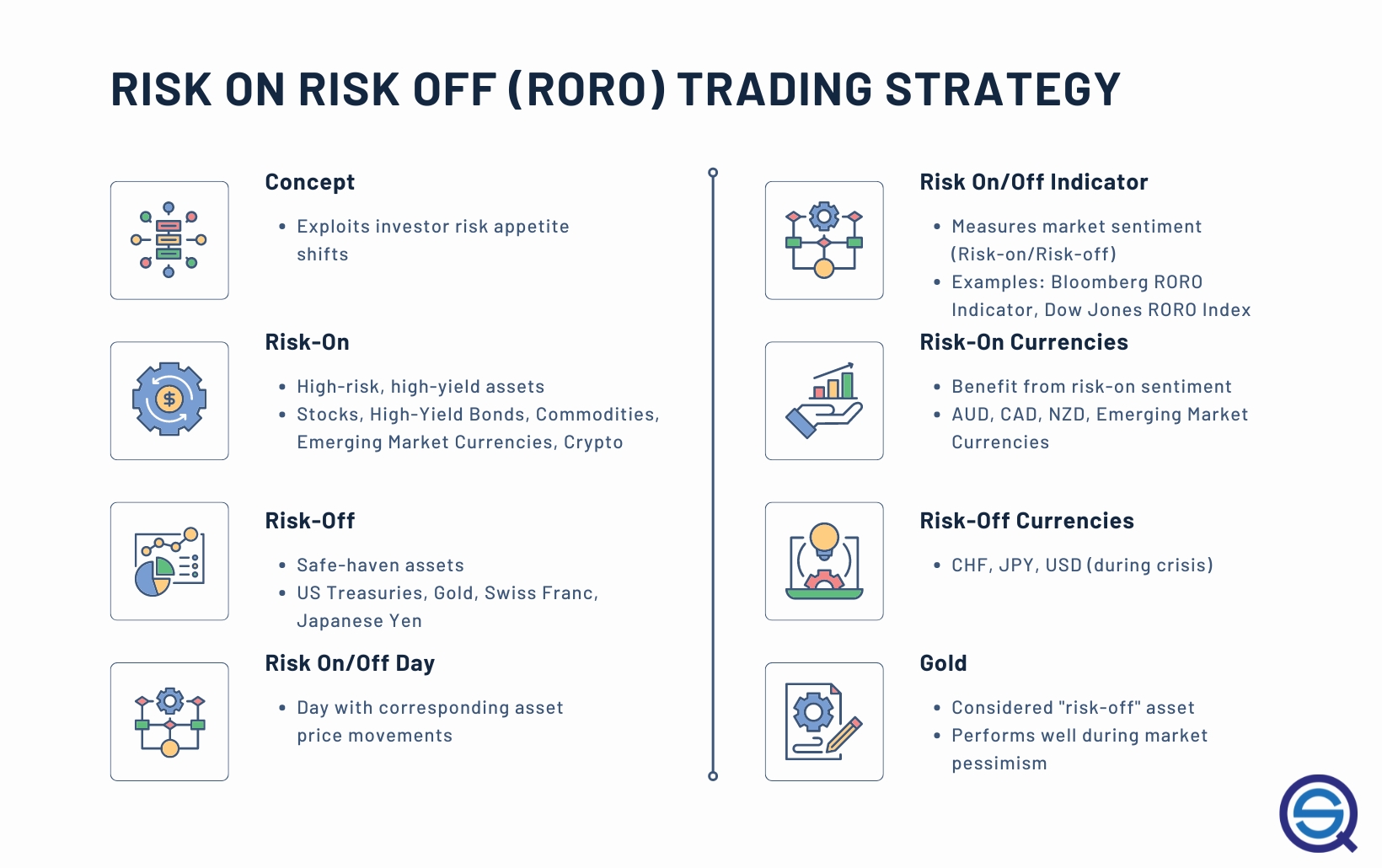
Risk-On
RO = Asset prices commonly follow the risk sentiment of the market. Investors look for changing sentiment through corporate earnings, macro-economic data, and global central bank action. An increase in the stock market or where stocks outperform bonds is said to be a risk-on environment.
Risk-on environments can be carried by expanding corporate earnings, optimistic economic outlook, accommodative central bank policies, and speculation. As the market displays strong influential fundamentals, investors perceive less risk about the market and its outlook.
Risk-Off
ROff = When stocks are selling off, and investors run for shelter to bonds or gold, the environment is said to be risk-off. Risk-off environments can be caused by widespread corporate earnings downgrades, contracting or slowing economic data, and uncertain central bank policy.
Just like the stock market rises in a risk-on environment, a drop in the stock market equals a risk-off environment. Investors jump from risky assets and pile into high grade bonds, U.S. Treasury bonds, gold, cash, and other safe havens
Risk-On Risk-Off?
Risk-on-risk-off investing relies on and is driven by changes in investor risk tolerance. Risk-on-risk-off (RORO) can also sway changes in investment activity in response to economic patterns. When risk is low, investors tend to engage in higher-risk investments. Investors tend to gravitate toward lower-risk investments when risk is perceived to be high.
“Phantom Tax” or “Phantom Income” for direct owners of Treasury inflation-protected securities (TIPS) TIPS adjust their principal values and interest payments for inflation. As with other directly owned Treasury securities, TIPS principal, including the inflation adjustments, is not paid back to investors until the securities mature.
However, the principal adjustments are taxed by the IRS as income in the year in which they occur, even though no actual payments are made in those years to investors who own TIPS directly. This is why this income is called “phantom income” and the tax on it is known as the “phantom tax.”
Investors can avoid the phantom income/tax issue for TIPS by holding TIPS in tax-deferred retirement accounts. Mutual funds and Exchange Traded Funds (ETFs) typically take the “phantom” factor out of TIPS ownership by distributing the principal adjustments as taxable dividends.
As with direct ownership of TIPS, the tax consequences of these distributions by mutual funds and ETFs can be reduced by holding TIPS-owning instruments in tax-deferred retirement accounts
HFRI Fund of Funds Composite Index invests with multiple managers through funds or managed accounts. The strategy designs a diversified portfolio of managers with the objective of significantly lowering the risk (volatility) of investing with an individual manager. The Fund of Funds manager may allocate funds to numerous managers within a single strategy, or with numerous managers in multiple strategies. The investor has the advantage of diversification among managers and styles with significantly less capital than investing with separate managers. The HFRI Fund of Funds Index is not included in the HFRI Fund Weighted Composite Index.
HFRI Fund Weighted Composite Index is a global, equal-weighted index of over 2,000 single-manager funds that report to HFR Database. Constituent funds report monthly net of all fees performance in U.S. Dollar and have a minimum of $50 Million under management or a twelve (12) month track record of active performance. The HFRI Fund Weighted Composite Index does not include Funds of Hedge Funds.
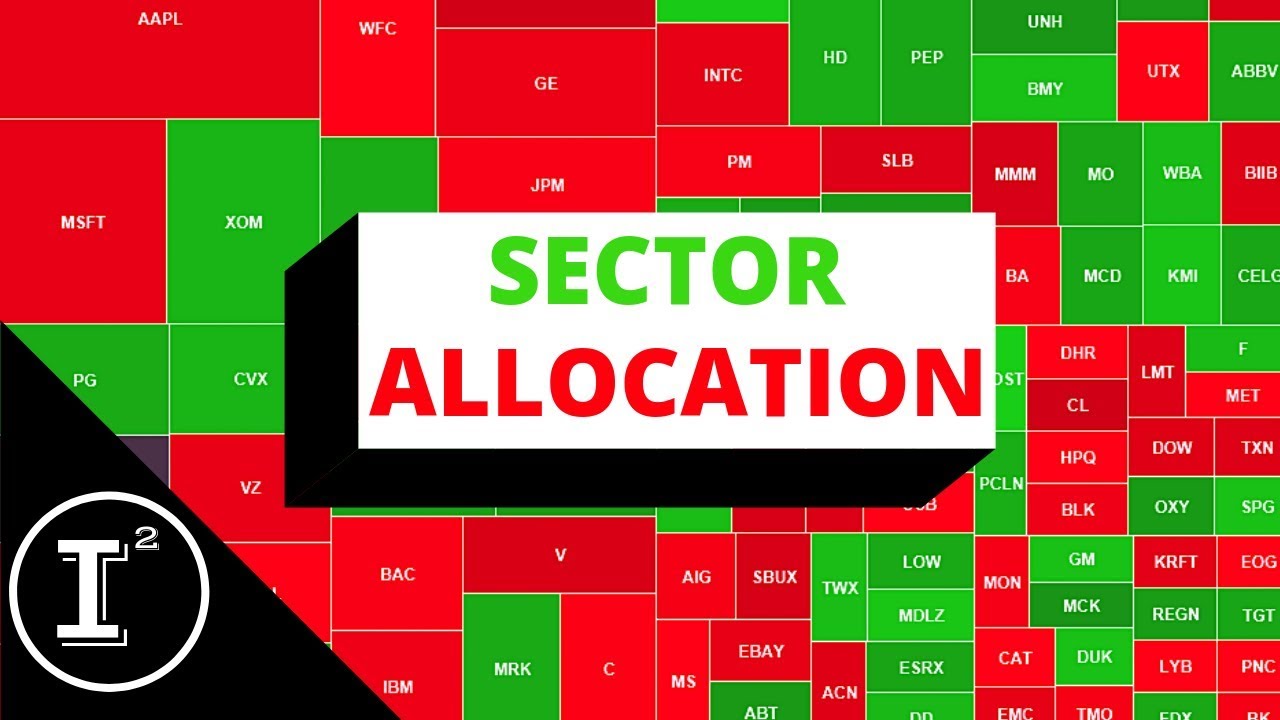
Sector allocation in an equity or fixed-income context refers to a portfolio managers’ decision to invest in a particular broad market sector or industry.
A sector allocation or breakdown can help an investor observe the investment allocations of a mutual or other fund. Fund companies regularly provide sector reporting in their marketing materials. Sector investing can influence investments in the fund. A fund may target a specific sector such as technology, or seek to diversify among many sectors.
Some funds may have restraints on sector investments. This may occur with environmental, social, and governance (ESG) focused funds. These funds seek to exclude industries or companies that their investors consider undesirable for various reasons such as tobacco producers or oil exploration companies.
The ultimate sector allocation decision is likely to combine macroeconomic views with judgments about inter-sector and intra-sector relative values, among other reasons.
Posted on December 24, 2024 by Dr. David Edward Marcinko MBA MEd CMP™
MEDICAL EXECUTIVE-POST–TODAY’SNEWSLETTERBRIEFING
***
Essays, Opinions and Curated News in Health Economics, Investing, Business, Management and Financial Planning for Physician Entrepreneurs and their Savvy Advisors and Consultants
“Serving Almost One Million Doctors, Financial Advisors and Medical Management Consultants Daily“
A Partner of the Institute of Medical Business Advisors , Inc.
The stock market will be open on Christmas Eve 2024 but will close early at 1 p.m. ET in anticipation of Christmas Day. This early closure allows market participants to wind down ahead of the holiday.
The Federal Deposit Insurance Corporation has suspended pay bonuses for roughly two dozen executives under investigation for misconduct, a year after a Wall Street Journal investigation revealed a toxic and sexualized workplace culture at the bank regulator.
Stocks climbed on Monday as tech rallied and investors considered the path of interest rates next year after the Fed hinted they would stay higher for longer.
The S&P 500 (^GSPC) gained 0.7%, while the tech-heavy NASDAQ (^IXIC) rose almost 1%. The Dow Jones Industrial Average (^DJI) erased earlier losses to edge almost 0.2% higher.
Semiconductor stocks gained, as shares of chipmakers Nvidia (NVDA) and Broadcom (AVGO) rose more than 3% and 5%, respectively. And, robust gains from social media platform Meta (META) and EV giant Tesla (TSLA) also helped lead the broader market higher.
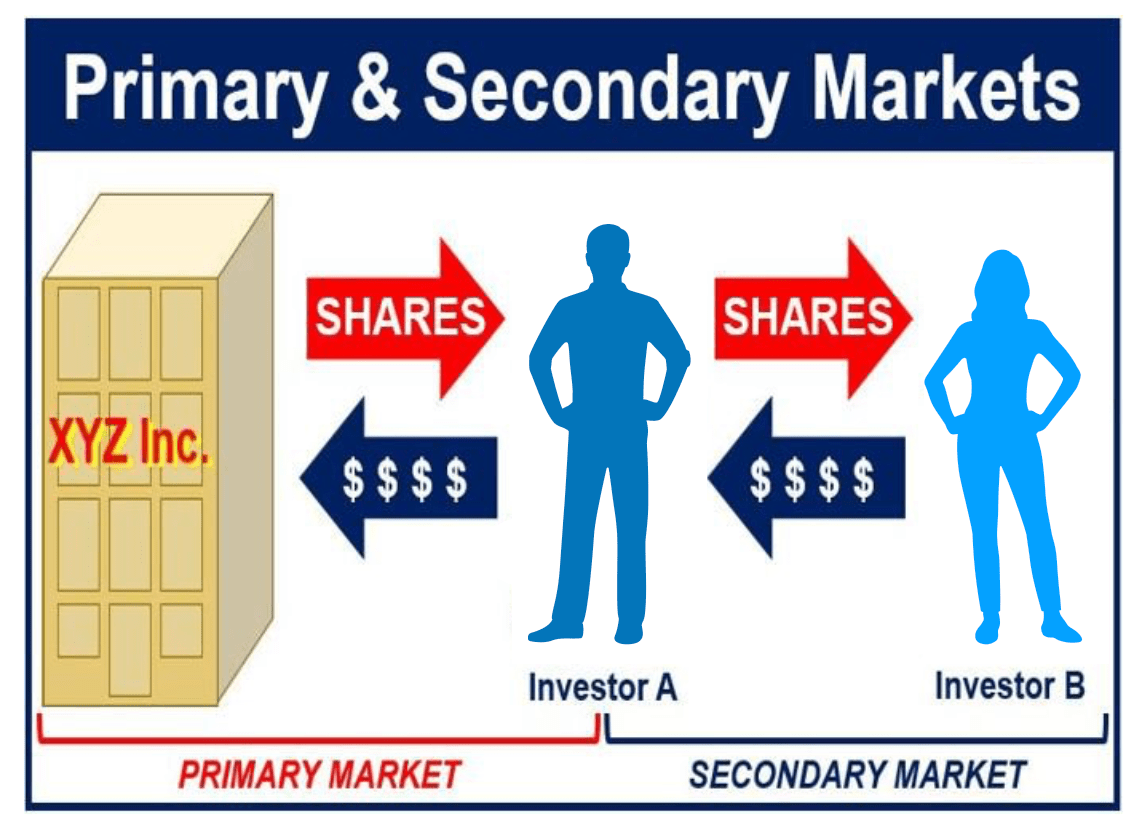
Primary Market: The primary market is also part of the stock market but differs from the secondary market because it only sells newly issued stocks.
Primary Market for Exchange Traded Funds: The primary market is where ETF shares are created and redeemed amongst ETF issuers and authorized participants. This is where the underlying basket of securities that make up an ETF is created. Shares of ETFs are made in large batches called Creation Units—usually 25,000 to 600,000 ETF shares are created at a time through this process.
Posted on December 20, 2024 by Dr. David Edward Marcinko MBA MEd CMP™
By Staff Reporters
***
***
Freddie Mac (FHLMC-Federal Home Loan Mortgage Corporation)
Freddie Mac is a GSE [government-sponsored enterprise] established by Congress. It’s similar to Fannie Mae with a publicly owned corporate structure. (Freddie Mac’s stock (FRE) trades on the New York Stock Exchange.) These two giant GSEs increase liquidity in the U.S. mortgage market by purchasing mortgages from lenders, then typically repackaging (securitizing) the debt and reselling it to investors, helping to create a “secondary” market for mortgages.
The GSEs’ main purpose is to assure that mortgage money is available for borrowers. But they don’t lend money directly. Instead, they purchase mortgages from “primary” lenders like mortgage companies, banks, and credit unions. That allows the primary lenders to replenish their funds and lend more money to home buyers. The GSEs finance their mortgage purchases by issuing mortgage-backed securities (MBS) and other debt instruments (often referred to as agency debt, even though, technically, the GSEs aren’t government agencies). GSE debt is considered to have relatively high credit quality based on its implicit government backing, reinforced by what happened during the Financial Crisis in 2008.
Since Fannie Mae and Freddie Mac were placed into government conservatorship in September 2008, the government has pledged to support any shortfall in the balance sheets of the two GSEs. The U.S. Treasury has said it will ensure that both GSEs can maintain a positive net worth and fulfill all of their financial obligations. This statement of support lends credence to the very high credit ratings of MBS and other debt issued by Fannie and Freddie.
Posted on December 12, 2024 by Dr. David Edward Marcinko MBA MEd CMP™
ALMOST ALL ABOUT CREDIT
By Staff Reporters
***
***
Credit Rating and Scoring
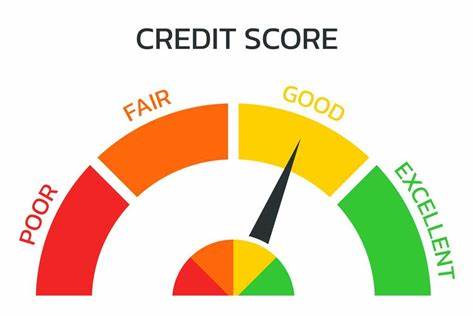
The category in which a credit agency classifies you is based upon payment history. Recently, credit reporting agencies have shifted away from ratings to a system known as credit scoring. Your score is determined by proprietary formulas that are based on your credit history, the higher the better. The practical benefits of this scoring system are numerous.
First, medical professionals do not need to be experts at deciphering credit reports since the same scoring system is used by many different companies.
Correcting Credit Report Errors
A credit bureau is not the place to get an item to be fixed on your credit report. Rather, you must take it up directly with the credit issuer. In any case, a late payment noted on a credit report by a durable medical equipment vendor, for example, has to be addressed directly with that merchant. The DME merchant then has 30 days to acknowledge your complaint and respond to you. In the meantime, you do not have to pay for the disputed items. Most credit errors cannot be reported or kept on your credit report for more than seven years.
For legitimate late payments you should contact the credit grantor and negotiate to take one of the following steps. Be tenacious, and either remove the late payment or write a letter explaining that the problem has been resolved and you now are a good credit risk again. This letter is a powerful tool and should be saved with other permanent financial records. The industry term for it is a letter of correction.
Credit Repair Services
Credit repair services are oversold and their claims tend to be exaggerated. They do not have an inside track to the consumer reporting agencies. Good credit repair services are experienced in communicating with creditors and can help with legitimate repairs. They cannot restore your credit rating or your good name.
However, realize that with some time and effort you can accomplish the same results yourself.
Achieving your financial, wealth and medical practice management goals is important, but handling everything on your own can be overwhelming. That’s where we come in. At D. E. Marcinko & Associates, our team of dual degree experienced physician advisors and medical consultants is here to guide you every step of the way. We believe in providing unbiased, high-quality financial and business advice.
For example, we offer a one-time written financial plan with oral evaluation for a flat fee with no ongoing sales or assets under management fees or commissions. Together, we can create a personalized financial plan tailored to your unique goals, empowering you to make confident, informed decisions as you navigate your financial future.
Other Services Include:
Estate Planning We have a network of qualified legal professionals that we can refer you to for state specific estate planning needs.
Tax Strategy We can work alongside your CPA for tax planning purposes. If needed, we can refer you to a qualified tax professional.
Investment Analysis If you have investments, we review your accounts to make sure they are aligned with your long-term goals.
401-k Allocations We evaluate your 401(k) allocations and provide recommendations that align with your goals.
Education Savings We help you explore the various ways to plan and save for education expenses.
Insurance & Risk Management We assess your insurance coverage to ensure it adequately protects you against potential risks; as well as evaluate and provide expert litigation witnesses, as needed.
Medical Practice Management We evaluate your current or potential medical practice to determine value and/or private equity offers or physician practice management formats [PPMC] for new, mid-career or retiring physicians, nurses and dentists.
D. E. Marcinko & Associates is unique and fully committed to all phases of a medical professionals personal and business life cycle. We are at your service 24/7: Email MarcinkoAdvisors@outlook.com
Municipal Securities (munis): Debt securities typically issued by or on behalf of U.S. state and local governments, their agencies or authorities to raise money for a variety of public purposes, including financing for state and local governments as well as financing for specific projects and public facilities. In addition to their specific set of issuers, the defining characteristic of munis is their tax status. The interest income earned on most munis is exempt from federal income taxes. Interest payments are also generally exempt from state taxes if the bond owner resides within the state that issued the security. The same rule applies to local taxes.
Another interesting characteristic of munis: Individuals, rather than institutions, make up the largest investor base. In part because of these characteristics, munis tend to have certain performance attributes, including higher after-tax returns than other fixed income securities of comparable maturity and credit quality and low volatility relative to other fixed-income sectors.
The two main types of munis are general obligation bonds (GOs) and revenue bonds. GOs are munis secured by the full faith and credit of the issuer and usually supported by the issuer’s taxing power. Revenue bonds are secured by the charges tied to the use of the facilities financed by the bonds.
Municipal Yield Curve: The yield curve that illustrates the yields of a certain type of municipal security at its various maturities.
Municipal Yield Ratio: A yield ratio most often used to determine the relative value of municipal securities compared with U.S. Treasury securities. The ratio consists of the yield of a municipal security of a certain maturity divided by the yield of a U.S. Treasury security of the same maturity.
Posted on December 5, 2024 by Dr. David Edward Marcinko MBA MEd CMP™
LTC
By Anonymous Insurance Agent
***
***
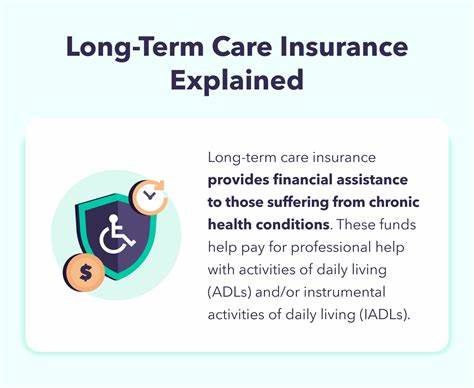
Some retired people live on a fixed income and many of them live right on the edge of their financial capability. At some time in their life, they may have to make a choice regarding many purchases. In this case, we will illustrate “choice” using a couple’s purchase of Long-Term-Care Insurance [LTCI].
Of course, economics is the study of choice; wants, needs and scarcity, etc. In our case, if they decide to make the purchase they commit to a lifetime of premium payments. The financial tradeoff is this; if they make the commitment to purchase LTCI, they must give up something else.
Example: In order to maintain a monthly premium of $100 ($1,200per year), an elderly patient, retired layman or couple must essentially relegate about $30,000 of financial assets to generate the $100 necessary to make an average premium payment (assumes a 7% rate of return with 4% withdrawal rate) or [4% X $30,000 = $1,200 year]. Thus, if the monthly premium cost is $500 per month, the elder must give up the use of $150,000 of retirement asset just to generate enough cash flow to pay for the LTC insurance.
The married elder couple has to make the decision among lifestyle (dinners, vacations, gifts to children, prescription drugs, medical care or food and shelter) versus paying an insurance premium to provide for nursing home coverage for a need, which may be very real, but will not occur until sometime in the ambiguous future.
And so, when faced with such a tough economics, neither of which delivers peace of mind or a respectable solution; many will simply decide that, in either case, they may already end up impoverished.
Thus, many will often opt for the better lifestyle now … while they can enjoy it … together.
Real Bond Yield: For most bonds and other fixed-income securities, real yield is simply the yield you see listed online or in newspapers minus the premium added to help counteract the effects of inflation. Most “nominal” fixed-income yields include an “inflation premium” that is typically priced into the yields to help offset the effects of inflation.
Real yields, such as those for TIPS, don’t have the inflation premium. As a result, TIPS yields and other real yields are typically lower than most nominal yields
Negative Bond Yield: In a normal bond market environment, bond yields are positive, and bond issuers (including governments) make interest payments to investors who lend them money.
In an abnormal, or negative-yield environment, investors essentially pay the bond issuer to hold their money.
Spread duration is a risk measure, expressed in years, that estimates the price sensitivity of a fixed income investment to a 100 basis point change in credit spreads relative to similar-maturity Treasuries.
Spread sectors (aka “spread products,” “spread securities”) in fixed income parlance, are typically non-Treasury securities that usually trade in the fixed income markets at higher yields than same-maturity U.S. Treasury securities. The yield difference between Treasuries and non-Treasuries is called the “spread”), hence the name “spread sectors” for non-Treasuries.
These sectors–such as corporate-issued securities and mortgage-backed securities (MBS–typically trade at higher yields (spreads) than Treasuries because they usually have relatively lower credit quality and more credit / default risk and / or they have more prepayment risk.
Spread widening, tightening are changes in spreads that reflect changes in relative value, with “spread widening” usually indicating relative price depreciation and “spread tightening” indicating relative price appreciation.
In fixed income parlance, spreads are simply measured differences or gaps that exists between two interest rates or yields that are being compared with each other. Spreads typically exist and are measured between fixed income securities of the same credit quality, but different maturities, or of the same maturity, but different credit quality.
Changes in spreads typically reflect changes in relative value, with “spread widening” usually indicating relative price depreciation of the securities whose yields are increasing most, and “spread tightening” indicating relative price appreciation of the securities whose yields are declining most (or remaining relatively fixed while other yields are rising to meet them). Value-oriented investors typically seek to buy when spreads are relatively wide and sell after spreads tighten.
Posted on November 21, 2024 by Dr. David Edward Marcinko MBA MEd CMP™
By Staff Reporters
***
***
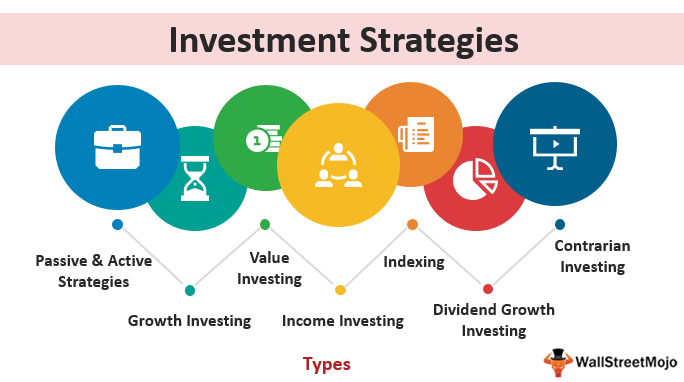
Active investment management strategies are the opposite of passive investment strategies. Active portfolio managers regularly take investment positions that clearly differ from those of the portfolio’s performance benchmark, with the objective of outperforming the benchmark over time.
In addition to the upside potential of outperforming the benchmark, there’s also the downside possibility of under performing the benchmark. In an efficient market, there should be roughly the same magnitude of out performers and under performers for any given benchmark. But, markets are not always efficient.
Active non-transparent investment management strategies are Exchange Traded Funds that are actively managed by a portfolio manager or team of managers without daily disclosure of portfolio holdings. Active transparent strategies are daily disclosures of portfolio holdings as an attribute of traditional index-based Exchange Traded Funds (ETFs). Active transparent exchange traded funds are actively managed by a portfolio manager or team of managers. As with index-based ETFs, their portfolio holdings are disclosed daily.
NOTE: Absolute return as an investment vehicle seeks to make positive returns by employing investment management techniques that differ from traditional mutual funds. Absolute return investment techniques include using short selling, futures, options, derivatives, arbitrage, leverage and unconventional assets.
Posted on November 21, 2024 by Dr. David Edward Marcinko MBA MEd CMP™
MEDICAL EXECUTIVE-POST–TODAY’SNEWSLETTERBRIEFING
***
Essays, Opinions and Curated News in Health Economics, Investing, Business, Management and Financial Planning for Physician Entrepreneurs and their Savvy Advisors and Consultants
“Serving Almost One Million Doctors, Financial Advisors and Medical Management Consultants Daily“
A Partner of the Institute of Medical Business Advisors , Inc.
Williams-Sonoma soared 27.50% to a record high after the home goods store beat top and bottom line earnings expectations. Its operating profit margin jumped to 17.8% from 17% last year, and the company said its board greenlit a $1 billion stock buyback plan.
Wix jumped 14.31% on a solid beat for its third quarter. Profit for the software firm reached $0.46 per share, compared to the $0.12 per share it reported last year.
Lemonade rose 16.04% after Morgan Stanley upgraded the insurance company from “underweight” to “equal-weight.” At its investor day, Lemonade unveiled a plan to juice its premiums from $1 billion to $10 billion over the next several years.
STOCKS DOWN
Ford said it was cutting 4,000 jobs in Europe, about 14% of its workforce on the continent, citing weak demand for EVs and competition from Chinese cars. Shares fell 2.90%.
Qualcomm dropped 6.34% after its first Investor Day in three years disappointed. On Tuesday, the chipmaker revealed its big plans to expand from its bread-and-butter smartphone business into making chips for cars and PCs.
Elf sank 2.23% after short seller Carson Block, the founder of Muddy Waters Research, accused the beauty company of inflating revenue.
The S&P 500® index (SPX) stayed mostly flat, up 0.13 points (0.0%) to 5,917.11; the Dow Jones Industrial Average® ($DJI) rose 139.53 points (0.32%) to 43,408.47; and the NASDAQ Composite®($COMP) fell 21.32 points (0.11%) to 18,966.14.
The 10-year Treasury note yield added four basis points to 4.41%.
The CBOE Volatility Index® (VIX) climbed to 17.26, near recent highs.
Social Proof is a subtle but powerful reality that having others agree with a decision one makes, gives that person more conviction in the decision, and having others disagree decreases one’s confidence in that decision.
This bias is even more exaggerated when the other parties providing the validating/questioning opinions are perceived to be experts in a relevant field, or are authority figures, like doctors, attorneys, financial advisors, teachers and/or people on television. In many ways, the short term moves in the stock market are the ultimate expression of social proof – the price of a stock one owns going up is proof that a lot of other people agree with the decision to buy, and a dropping stock price means a stock should be sold.
According to colleague Dan Ariely PhD, when these stressors become extreme, it is of paramount importance that all participants in the financial planning and investing process have a clear understanding of what the long-term goals are, and what processes are in place to monitor the progress towards these goals.
Without these mechanisms it is very hard to resist the enormous pressure to follow the crowd; think social media and related influences.
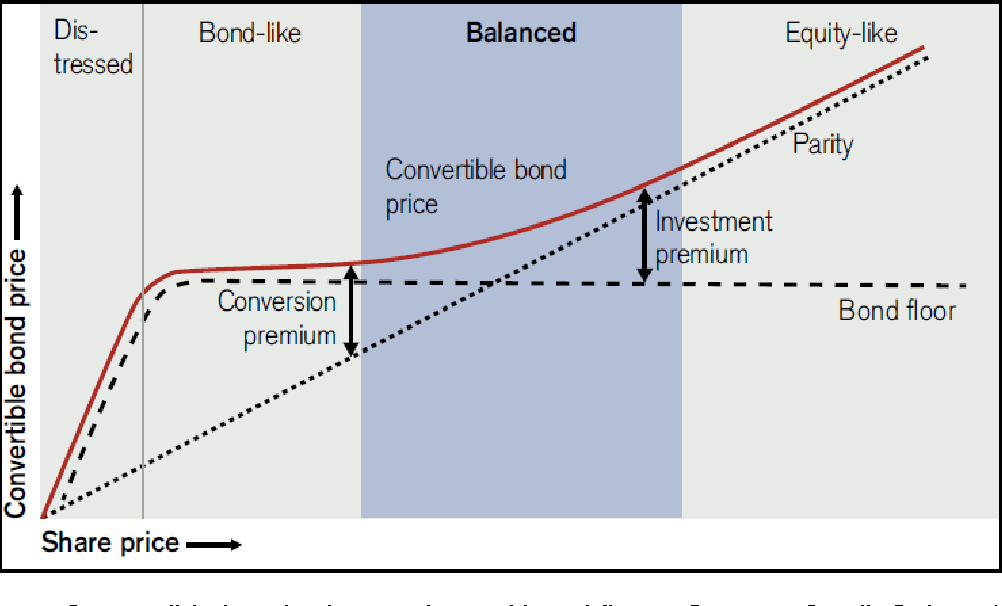
Convertible securities are those that can be converted at the investor’s choice into other investments, normally into shares of the issuer’s underlying common stock. Convertibles are typically issued as bonds or preferred stock.
Convertible bonds, which provide an ongoing stream of income, can be converted into a preset number of shares of the company’s common stock and have a maturity date. Unlike common stock, which pays a variable dividend depending on a corporation’s earnings, convertible preferred stock pays a fixed quarterly dividend. It can be converted into common stock at any time, but often are perpetual.
Corporate securities (corporate bonds and notes) are debt instruments issued by corporations, as distinct from those issued by governments, government agencies, or municipalities.
Corporate securities typically have the following features: 1) they are taxable, 2) they tend to have more credit (default) risk than government or municipal securities, so they tend to have higher yields than comparable-maturity securities in those sectors; and 3) they are traded on major exchanges, with prices published in newspapers.
Yield: For bonds and other fixed-income securities, yield is a rate of return on those securities. There are several types of yields and yield calculations. “Yield to maturity” is a common calculation for fixed-income securities, which takes into account total annual interest payments, the purchase price, the redemption value, and the amount of time remaining until maturity.
Yield curve: A line graph showing the yields of fixed income securities from a single sector (such as Treasuries or municipals), but from a range of different maturities (typically three months to 30 years), at a single point in time (often at month-, quarter- or year-end). Maturities are plotted on the x-axis of the graph, and yields are plotted on the y-axis. The resulting line is a key bond market benchmark and a leading economic indicator.
Yield to maturity [real yield to maturity]: Yield to maturity is a common performance calculation for fixed-income securities, which takes into account total annual interest payments, the purchase price, the redemption value, and the amount of time remaining until maturity. Real yield to maturity is simply yield to maturity minus any “inflation premium” that had been added/priced in. (See Real yield.)
Yield ratio: A ratio of one yield divided by another. Most often used as a relative value measurement.
Yield spread: A “spread,” in fixed income parlance, is simply a difference. Yield spreads measure yield differences, typically between debt securities with high credit ratings (which typically have lower yields) and those with lower ratings (which typically have higher yields). Yield spreads can also be measured between debt securities with different maturities (shorter-maturity securities typically have lower yields and longer-maturity securities typically have higher yields).
Yield trap: An investment that can lure investors with an attractive yield that may not be fundamentally sustainable, or that may lead to undesired price volatility. Yield traps can lurk in both the equity and fixed income markets. They have a tendency to prey on those who can least afford them, including retirement investors looking for increased relative income and stability, who may have been too focused on their income goals and not enough on stability.
A paradox is a logic and self-contradictory statement or a statement that runs contrary to one’s expectation. It is a statement that, despite apparently valid reasoning from true or apparently true premises, leads to a seemingly self-contradictory or a logically unacceptable conclusion. A paradox usually involves contradictory-yet-interrelated elements that exist simultaneously and persist over time. They result in “persistent contradiction between interdependent elements” leading to a lasting “unity of opposites”.
***
And so, as we plan for our financial future thru a New Year Resolution for 2025, it’s helpful to be cognizant of these paradoxes. While there’s nothing we can do to control or change them, there is great value in being aware of them, so we can approach them with the right tools and the right mindset.
According to Adam Grossman, here are seven [7] of the paradoxes that can bedevil financial decision-making, clients and financial advisors, alike:
There’s the paradox that all of the greatest fortunes—Carnegie, Rockefeller, Buffett, Gates—have been made by owning just one stock. And yet the best advice for individual investors is to do the opposite: to own broadly diversified index funds. More:https://tinyurl.com/285vftx4
There’s the paradox that the stock market may appear over valued and yet it could become even more overvalued before it eventually declines. And when it does decline, it may be to a level that is even higher than where it is today.
There’s the paradox that we make plans based on our understanding of the rules—and yet Congress can change the rules on us at any time, as the recent 2024 election results attest.
There’s the paradox that we base our plans on historical averages—average stock market returns, average interest rates, average inflation rates and so on—and yet we only lead one life, so none of us will experience the average.
There’s the paradox that we continue to be attracted to the prestige of high-cost colleges, even though rational analysis that looks at return on investment tells us that lower-cost state schools are usually the better bet.
There’s the paradox that early retirement seems so appealing—and has even turned into a movement—and yet the reality of early retirement suggests that we might be better off staying at our desks.
There’s the paradox that retirees’ worst fear is outliving their money and yet few choose the financial product that is purpose-built to solve that problem: the single-premium immediate annuity.
HFRI: Fund of Funds invests with multiple managers through funds or managed accounts. The strategy designs a diversified portfolio of managers with the objective of significantly lowering the risk (volatility) of investing with an individual manager.
The Fund of Funds manager may allocate funds to numerous managers within a single strategy, or with numerous managers in multiple strategies. The investor has the advantage of diversification among managers and styles with significantly less capital than investing with separate managers.
What Is CREDIT? Credit is a contractual agreement in which a borrower receives a sum of money or something else of value and commits to repaying the lender later, typically with interest. Credit is also the creditworthiness or credit history of an individual or a company. Good credit tells lenders you have a history of reliably repaying what you owe on loans. Establishing good credit is essential to getting a loan.
***
Credit Analysis is a form of financial analysis used primarily to determine the financial strength of the issuer of a security, and the ability of that issuer to provide timely payment of interest and principal to investors in the issuer’s debt securities. Credit analysis is typically an important component of security analysis and selection in credit-sensitive bond sectors such as the corporate bond market and the municipal bond market.
Credit Default Swap Index (CDX) is a credit derivative, based on a basket of CDS, which can be used to hedge credit risk or speculate on changes in credit quality.
Credit Default Swaps (CDS) are credit derivative contracts between two counter parties that can be used to hedge credit risk or speculate on changes in the credit quality of a corporation or government entity.
Credit Quality reflects the financial strength of the issuer of a security, and the ability of that issuer to provide timely payment of interest and principal to investors in the issuer’s securities. Common measurements of credit quality include the credit ratings provided by credit rating agencies such as Standard & Poor’s and Moody’s. Credit quality and credit quality perceptions are a key component of the daily market pricing of fixed-income securities, along with maturity, inflation expectations and interest rate levels.
Credit Rating Agency (CRA) is a company that assigns credit ratings for issuers of certain types of debt obligations as well as the debt instruments themselves. In the United States, the Securities and Exchange Commission (SEC) permits investment banks and broker-dealers to use credit ratings from “Nationally Recognized Statistical Rating Organizations” (NRSRO) for similar purposes. As of January 2012, nine organizations were designated as NRSROs, including the “Big Three” which are Standard and Poor’s, Moody’s Investor Services and Fitch Ratings.
A Credit Rating Downgrade by a credit rating agency (such as Standard & Poor’s, Moody’s or Fitch), of reducing its credit rating for a debt issuer and/or security. This is based on the agency’s evaluation, indicating, to the agency, a decline in the issuer’s financial stability, increasing the possibility of default (defined below). A downgrade should not to be confused with a default; a debt security can be downgraded without defaulting. (And, conversely, a debt issuer can suddenly default without being downgraded first–credit ratings and credit rating agencies are not infallible.)
Credit Ratings are measurements of credit quality provided by credit rating agencies). Those provided by Standard & Poor’s typically are the most widely quoted and distributed, and range from AAA (highest quality; perceived as least likely to default) down to D (in default). Securities and issuers rated AAA to BBB are considered/perceived to be “investment-grade”; those below BBB are considered/perceived to be non-investment-grade or more speculative.
Credit Risk is the risk that the inability or perceived inability of the issuers of debt securities to make interest and principal payments will cause the value of those securities to decrease. Changes in the credit ratings of debt securities could have a similar effect.
Credit Risk Transfer Securities (CRTS) are the unsecured obligations of the GSEs (Government Sponsored Enterprises). Although cash flows are linked to prepays and defaults of the reference mortgage loans, the securities are unsecured loans, backed by general credit rather than by specified assets.
Posted on October 23, 2024 by Dr. David Edward Marcinko MBA MEd CMP™
MEDICAL EXECUTIVE-POST–TODAY’SNEWSLETTERBRIEFING
***
Essays, Opinions and Curated News in Health Economics, Investing, Business, Management and Financial Planning for Physician Entrepreneurs and their Savvy Advisors and Consultants
“Serving Almost One Million Doctors, Financial Advisors and Medical Management Consultants Daily“
A Partner of the Institute of Medical Business Advisors , Inc.
The IRS has announced the annual inflation adjustments for the year 2025, including tax rate schedules, tax tables and cost-of-living adjustments. These are the official numbers for the tax year 2025—that tax year begins January 1, 2025. These are not the numbers that you’ll use to prepare your 2024 tax returns in 2025 (you’ll find those official 2024 tax numbers here). These are the numbers that you’ll use to prepare your 2025 tax returns in 2026.
Trump Media & Technology Group rose 9.87% to its highest level since July as the “Trump trade” wagering on the former president to regain the White House picks up steam.
Quest Diagnostics isn’t just a sad, windowless building where you get your blood drawn—it’s also been a pretty profitable investment. Shares rose 6.88% on strong earnings and revenue growth.
STOCKS DOWN
Stop us if you’ve heard this one before: Target is cutting the price of 2,000 products ahead of the holiday season. Shares sank 1.13% as shareholders digest what appears to be a desperate move to boost sales.
Verizon Communications dropped 5.03% after missing on both revenue and earnings estimates. But the real problem was slowing customer growth and phone sales.
Defense contractors were in the earnings spotlight today, and none of them did well. GE Aerospace tumbled 9.07% despite beating analyst forecasts and Lockheed Martin fell 6.12% after sales missed estimates.
Genuine Parts, better known as NAPA Auto Parts, plummeted 20.96% after earnings missed estimates and the company announced lower fiscal year forecasts.
The SPX fell 2.78 points (–0.05%) to 5,851.20; the Dow Jones Industrial Average® ($DJI) lost 6.71 points (–0.02%) to 42,924.89; and the $COMP gained 33.12 points (0.18%) to 18,573.13.
The 10-year Treasury note yield (TNX) added two basis points to 4.2%.
The CBOE Volatility Index® (VIX) fell to 18.15, down from above 20 a week ago.
According to colleague Dan Ariely PhD, a Zero Sum Bias [ZSB] is the mistaken belief that one person’s gain is another’s loss. It’s like thinking the world is a giant pie with only so many slices. This mindset fuels competition and jealousy, making us forget that collaboration can create more pie. It’s why we sometimes root against others instead of working together.
Question: Is the stock market a zero-sum game? You frequently hear media refer to games and markets as zero-sum games.
Answer: Well, yes, we define the stock market as a zero-sum game, both in the short and in the long term, although it technically is incorrect. A zero-sum game is where one person’s gain is another person’s loss – thus there is no wealth created and the overall benefit is zero. This doesn’t apply to stocks, but it’s a zero-sum game in relation to a stock market benchmark.
For example, short-term trading in stocks is theoretically not a zero-sum game, and neither is long-term investing. But short-term trading is close to a zero-sum game, and long-term investing is a zero-sum game if we use a broad index as a benchmark.
Essentially, in other words, the stock market functions as an expansive network of zero-sum transactions; each trade engages a buyer and a seller–their perspectives on a security’s future value contrasting. These opposing views propel market prices: they mirror not only risk transfer but also potential reward—a dynamic process indeed! Traders and investors must grasp the crucial zero-sum aspect; it underscores trading’s inherent competitiveness. Effectively anticipating market trends and actions from other participants: therein lies success in this environment.







 Support our online development, and advance our onground research initiatives in free market economics, as we seek to showcase the brightest Next-Gen minds.
THE ME-P DISCLAIMER: Posts, comments and opinions do not necessarily represent iMBA, Inc., but become our property after submission. Copyright © 2006 to-date. iMBA, Inc allows colleges, universities, medical and financial professionals and related clinics, hospitals and non-profit healthcare organizations to distribute our proprietary essays, photos, videos, audios and other documents; etc. However, please review copyright and usage information for each individual asset before submission to us, and/or placement on your publication or web site. Attestation references, citations and/or back-links are required. All other assets are property of the individual copyright holder.
Support our online development, and advance our onground research initiatives in free market economics, as we seek to showcase the brightest Next-Gen minds.
THE ME-P DISCLAIMER: Posts, comments and opinions do not necessarily represent iMBA, Inc., but become our property after submission. Copyright © 2006 to-date. iMBA, Inc allows colleges, universities, medical and financial professionals and related clinics, hospitals and non-profit healthcare organizations to distribute our proprietary essays, photos, videos, audios and other documents; etc. However, please review copyright and usage information for each individual asset before submission to us, and/or placement on your publication or web site. Attestation references, citations and/or back-links are required. All other assets are property of the individual copyright holder.





































 The Leading Business Education Network for Doctors, Financial Advisors and Health Industry Consultants