BOARD CERTIFICATION EXAM STUDY GUIDES Lower Extremity Trauma
[Click on Image to Enlarge]
ME-P Free Advertising Consultation
The “Medical Executive-Post” is about connecting doctors, health care executives and modern consulting advisors. It’s about free-enterprise, business, practice, policy, personal financial planning and wealth building capitalism. We have an attitude that’s independent, outspoken, intelligent and so Next-Gen; often edgy, usually controversial. And, our consultants “got fly”, just like U. Read it! Write it! Post it! “Medical Executive-Post”. Call or email us for your FREE advertising and sales consultation TODAY [678.779.8597] Email: MarcinkoAdvisors@outlook.com
Medical & Surgical e-Consent Forms
ePodiatryConsentForms.com
iMBA Inc., OFFICES
Suite #5901 Wilbanks Drive, Norcross, Georgia, 30092 USA [1.678.779.8597]. Our location is real and we are now virtually enabled to assist new long distance clients and out-of-town colleagues.
ME-P Publishing
SEEKING INDUSTRY INFO PARTNERS?
If you want the opportunity to work with leading health care industry insiders, innovators and watchers, the “ME-P” may be right for you? We are unbiased and operate at the nexus of theoretical and applied R&D. Collaborate with us and you’ll put your brand in front of a smart & tightly focused demographic; one at the forefront of our emerging healthcare free marketplace of informed and professional “movers and shakers.” Our Ad Rate Card is available upon request [678-779-8597].
Bettors are currently able to deduct 100% of their gambling losses, so they only pay taxes on their winnings. But starting next year, only 90% of gambling losses will be deductible.
So, if a professional gambler wins $100,000, then loses $100,000 that same year, according to the New York Times:
In 2025, that gambler would owe taxes on $0.
In 2026, that gambler would owe taxes on $10,000.
Bettors could even end up paying taxes if they finished the year with a net loss.
Posted on May 20, 2025 by Dr. David Edward Marcinko MBA MEd CMP™
By Staff Reporters
***
***
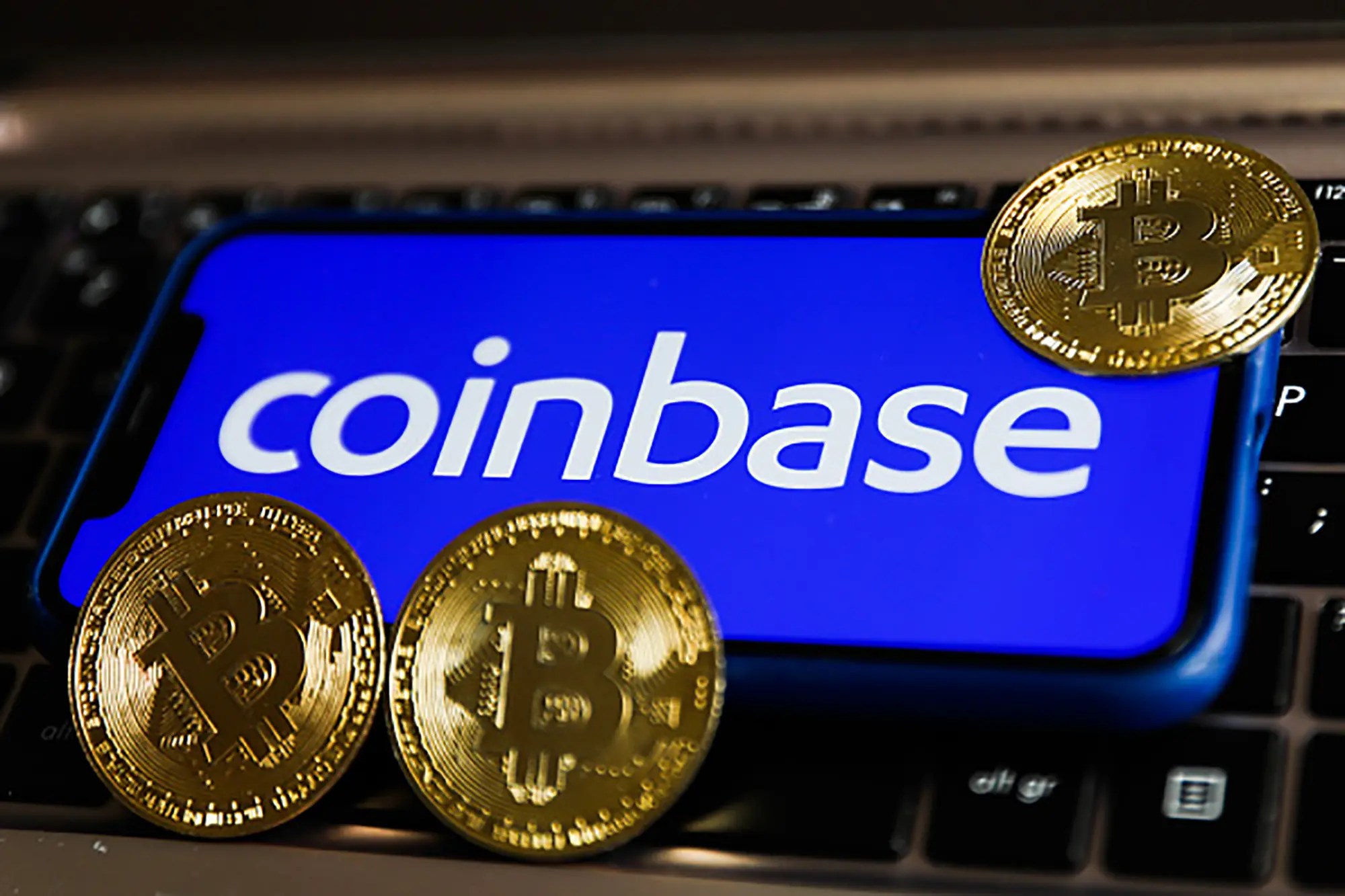
Coinbase under investigation – Hit with ransom attack
Coinbase’s wild week got much wilder when the New York Times reported that the SEC has been looking into whether the crypto exchange misstated the size of its user base in securities filings. Per the New York Times, the investigation started under President Biden and has continued under President Trump.
The subject of the investigation appears to be Coinbase’s claim in past disclosures and marketing materials that it has 100 million “verified users.” A company spokesperson said it no longer reports that metric and the investigation should not continue.
The report came days after Coinbase joined the S&P 500, and just hours after it said it could lose $400 million following a recent hack by “rogue overseas” agents looking to steal customer data.
Posted on March 16, 2025 by Dr. David Edward Marcinko MBA MEd CMP™
By Staff Reporters
DEFINITION
***
***
According to Wikipedia, a tontine (/ˈtɒntaɪn, -iːn, ˌtɒnˈtiːn/) is an investment linked to a living person which provides an income for as long as that person is alive. Such schemes originated as plans for governments to raise capital in the 17th century and became relatively widespread in the 18th and 19th centuries.
Tontines enable subscribers to share the risk of living a long life by combining features of a group annuity with a kind of mortality lottery. Each subscriber pays a sum into a trust and thereafter receives a periodical payout. As members die, their payout entitlements devolve to the other participants, and so the value of each continuing payout increases. On the death of the final member, the trust scheme is usually wound up.
Tontines are still common in France. They can be issued by European insurers under the Directive 2002/83/EC of the European Parliament. The Pan-European Pension Regulation passed by the European Commission in 2019 also contains provisions that specifically permit next-generation pension products that abide by the “tontine principle” to be offered in the 27 EU member states.
Questionable practices by U.S. life insurers in 1906 led to the Armstrong Investigation in the United States restricting some forms of tontines. Nevertheless, in March 2017, The New York Times reported that tontines were getting fresh consideration as a way for people to get steady retirement income.
Posted on February 5, 2025 by Dr. David Edward Marcinko MBA MEd CMP™
MEDICAL EXECUTIVE-POST–TODAY’SNEWSLETTERBRIEFING
***
Essays, Opinions and Curated News in Health Economics, Investing, Business, Management and Financial Planning for Physician Entrepreneurs and their Savvy Advisors and Consultants
“Serving Almost One Million Doctors, Financial Advisors and Medical Management Consultants Daily“
A Partner of the Institute of Medical Business Advisors , Inc.
‘There are people with high I.Q.s who have fooled themselves on that one,’ Bill Gates the billionaire Microsoft co-founder told The New York Times. Gates’ comments come as Bitcoin has hit record highs in recent weeks, and the cryptocurrency industry as a whole has hailed the arrival of Donald Trump in the White House as a positive moment.
The President has said he will introduce policies supportive of digital currencies, and both him and his wife Melania launched their own meme coins last month. Cryptocurrency prices took a hit on Monday from the prospect of a trade war between the US and its trading partners, with some well-known digital assets seeing values fall more than 10 percent, AP News reported. However the notoriously volatile investment recovered later on Monday, with Bitcoin rebounding back above $100,000. Gates, who has a net worth of around $165 billion, has previously shared his skepticism around Bitcoin, and its volatility in particular.
US stocks closed higher on Tuesday, led by Big Tech, as investors assessed China’s instant retaliation to US President Donald Trump’s additional tariffs and the potential risks of a trade war.
Traders also took in fresh jobs data, with job openings declining more than expected in December. Investors are continuing to watch any signs of cooling in the labor market as the Federal Reserve debates future interest rate cuts in the face of sticky inflation.
The Dow Jones Industrial Average (^DJI) gained around 0.3%, while the benchmark S&P 500 (^GSPC) rose roughly 0.7%. The tech-heavy NASDAQ Composite (^IXIC) jumped nearly 1.4% to recoup some of Monday’s losses.
Beijing reacted swiftly on Tuesday to Trump’s additional 10% levies on Chinese imports going into effect at midnight. China slapped tariffs of 15% on US coal and liquified natural gas, starting Feb. 10, alongside 10% duties on imports of crude oil, farm equipment, and some autos.
Posted on September 28, 2024 by Dr. David Edward Marcinko MBA MEd CMP™
MEDICAL EXECUTIVE-POST–TODAY’SNEWSLETTERBRIEFING
***
Essays, Opinions and Curated News in Health Economics, Investing, Business, Management and Financial Planning for Physician Entrepreneurs and their Savvy Advisors and Consultants
“Serving Almost One Million Doctors, Financial Advisors and Medical Management Consultants Daily“
A Partner of the Institute of Medical Business Advisors , Inc.
Stat: 150. That’s how many health systems use AI to help draft replies on MyChart, sometimes without disclosing this to patients. (the New York Times)
Contained in a roughly 200-page quarterly filing from JPMorgan Chase last month were eight words that underscore how contentious the bank’s relationship with the government has become. The lender disclosed that the Consumer Financial Protection Bureau could punish JPMorgan for its role in Zelle, the giant peer-to-peer digital payments network. The bank is accused of failing to kick criminal accounts off its platform and failing to compensate some scam victims.
Bristol-Myers Squibb rose 1.56% after the FDA approved its new drug for schizophrenia, the first new treatment of its kind in decades. Some analysts expect the drug, Cobenfy, to bring in $6 billion in peak annual revenue.
Trump Media gained 5.58% despite a co-founder of its Truth Social platform cashing out nearly all of his shares—worth about $100 million at current prices.
Chinese EV maker Nio added another 12.80% to bring its weekly gains to nearly 25%. It’s benefiting from the overall euphoria around Chinese stocks and anticipation over its quarterly delivery numbers due next week.
Speaking of the Chinese government’s stimulus measures, investors are wagering that the Macau locations of Las Vegas Sands Corp. (up 5.59%) and Wynn Resorts (up 7.24%) will see more visitors.
IonQ, a quantum computing company based in College Park, MD (go Terps), shot up 20.47% after inking a contract with the US Air Force Research Lab.
Stocks down
Nvidia dropped 2.17%. Bloomberg reported that the Chinese government is ramping up the pressure on local tech companies to move away from using Nvidia AI chips and lean more on domestic suppliers.
WeightWatchers, whose shares are down more than 90% this year, booted its CEO Sima Sistani, who pivoted the company to weight-loss drugs. Investors aren’t betting a change at the top will lead to a turnaround, sending shares 2.11% lower on the day.
Globe Life sank 4.74% after the US Equal Employment Opportunity Commission found that the life insurance company tolerated a “pervasive pattern of harassing conduct” at one of its top sales agencies, per Business Insider.
The S&P 500® index (SPX) lost 7.20 points (–0.13%) to 5,738.17 to end the week up 0.62%; the Dow Jones Industrial Average® ($DJI) added 137.89 points (0.33%) to 42,313.00 to end the week up 0.59%; the NASDAQ Composite® ($COMP) fell 70.70 points (–0.39%) to 18,119.59 to end the week up 0.95%.
The 10-year Treasury note yield (TNX) fell four basis points to 3.75%, up two basis points for the week.
Meta is facing a fine of $102 million for storing some users’ passwords in “plaintext”. The social media giant has admitted to poor password management.
Acadia and the Department of Justice just reached a ~$20M agreement to settle accusations that the company billed Medicare, Medicaid, and TRICARE for medically unnecessary inpatient mental health services. Acadia found itself under pressure after a New York Times investigation published earlier in September allegedly found that the company kept patients in facilities against their will to maximize insurance payments.
Posted on May 9, 2024 by Dr. David Edward Marcinko MBA MEd CMP™
MEDICAL EXECUTIVE-POST–TODAY’SNEWSLETTERBRIEFING
***
Essays, Opinions and Curated News in Health Economics, Investing, Business, Management and Financial Planning for Physician Entrepreneurs and their Savvy Advisors and Consultants
“Serving Almost One Million Doctors, Financial Advisors and Medical Management Consultants Daily“
A Partner of the Institute of Medical Business Advisors , Inc.
It’s the first anniversary of the Medicaid unwinding for many states, a process that kicked off when federal rules that had kept people on Medicaid and the Children’s Health Insurance Program (CHIP) through the pandemic expired. And while states could redetermine eligibility again, things have “unwound” more than some experts predicted. Children were kicked off the rolls at higher rates than adults, according to a new study the Urban Institute released May 2. Twelve states—Montana, Iowa, South Dakota, Alabama, Idaho, Georgia, Texas, Arkansas, Oklahoma, Florida, Mississippi, Colorado—exceeded 100% of their total projections for disenrolling children.
The S&P 500® index (SPX) was little changed at 5,187.67; the Dow Jones Industrial Average gained 172.13 points (0.4%) to 39,056.39; the NASDAQ Composite® ($COMP) declined 29.80 points (0.2%) to 16,302.76.
The 10-year Treasury note yield (TNX) rose more than 3 basis points to 4.496%.
The CBOE Volatility Index® (VIX) fell 0.23 to 13.00.
Retail and real estate shares were among the weakest areas Wednesday, while banks and utilities were firm. Utility shares extended a nearly month-long rally, which may in part reflect greater expectations for Fed rate cuts. Lower interest rates can make utility shares with high dividend yields relative to Treasuries more appealing. The Dow Jones Utility Average ($DJU) rose 0.5% to end at its highest level since late July and is up 12% from a mid-April low.
And, Shopify’s value plunged by nearly $20 billion after the online payments company released a gloomy forecast for this quarter. It’s the latest pandemic darling to stumble: According to the Financial Times, the firms that skyrocketed during lockdowns have lost a collective $1.5 trillion in value since the end of 2020.
Steward Health Care System, the largest U.S. physician-owned hospital operator, is expected to file for chapter 11 bankruptcy as soon as Sunday, according to a WSJ report, which cited people familiar with the matter. Steward Health Care is the largest tenant of Medical Properties Trust (NYSE: MPW). Steward Health Care hired restructuring advisers to improve its liquidity and restore its balance sheet in January 2024.
Posted on April 7, 2024 by Dr. David Edward Marcinko MBA MEd CMP™
By Staff Reporters
***
***
It’s not often a guy on a computer is the hero of the story. Andres Freund, a Microsoft developer, found a malicious backdoor in popular open-source software last week. Programmers scrambled to fix the problem but warned that if they hadn’t, it could have led to hundreds of millions of compromised devices and a catastrophic cybersecurity breach.
Freund told the New York Times that he first noticed an unusual error message while doing routine maintenance on the Linux operating system—a vital software used by banks, governments, and corporations around the globe. At first, he wrote it off, but a few weeks later, he noticed an application used to log into computers remotely was using a lot more power in the system than it was supposed to.
Posted on February 17, 2024 by Dr. David Edward Marcinko MBA MEd CMP™
By Staff Reporters
***
***
The CDC may update Covid-19 isolation guidelines from five days to 24 hours if an individual is fever-free without medication—standardizing the protocol for the disease with the same rule for the flu and RSV. (the New York Times)
Here’s where the major benchmarks ended:
Stocks slumped into the long weekend yesterday, snapping a five-week weekly winning streak when they fell in the wake of wholesale price data that shows inflation is probably not as tamed as the Fed would like it to be. But Coinbase gave the latest indication that the crypto winter has thawed. The crypto exchange’s stock rose after it reported its first quarterly profit in two years.
The S&P 500 index fell 24.16 points (0.5%) to 5,005.57, down 0.4% for the week; the Dow Jones Industrial Average® (DJI) lost 145.13 points (0.4%) to 38,627.99, down 0.1% for the week; the NASDAQ Composite® (COMP) declined 130.52 points (0.8%) to 15,775.65, down 1.3% for the week.
The 10-year Treasury note yield (TNX) rose over 4 basis points to 4.285%.
The CBOE Volatility Index® (VIX) rose 0.23 to 14.24.
Communications services and transportation shares were among the market’s weakest performers Friday, while energy companies firmed behind strength in crude oil futures. The small-cap Russell 2000® Index (RUT) fell 1.4% Friday but still ended the week with a gain of 1.1%, its second straight weekly advance.
DEFINITION: Venture capital (VC) is a form of private equity and a type of financing that investors provide to start-up companies and small businesses that are believed to have long term growth potential. Venture capital generally comes from well-off investors, investment banks, and any other financial institutions. Venture capital doesn’t always have to be money. In fact, it often comes as technical or managerial expertise. VC is typically allocated to small companies with exceptional growth potential or to those that grow quickly and appear poised to continue to expand.
DEFINITION:Disruptive innovation is a business that creates a new market or value network, or enters at the bottom of an existing market and eventually displaces established market-leading firms, products, and alliances. The term, “disruptive innovation” was popularized by the American academic Clayton Christensen and his collaborators beginning in 1995, but the concept had been previously described in Richard N. Foster‘s book “Innovation: The Attacker’s Advantage” and in the paper Strategic Responses to Technological Threats.
Start-Ups and industry disruptors: Here are just a few of the recent collapses, as per the New York Times:
WeWork, which raised over $11 billion as a private startup, went bankrupt earlier this fall.
Hopin, the virtual events startup that rode a Covid Virus wave to a $7.6 billion valuation, sold its primary business units for $15 million.
The e-scooter company Bird, which became the fastest startup ever to land a $1 billion valuation, was de-listed from the NYSE and is now worth $7 million.
Overall, more than 3,200 private venture-capital backed US startups that have collectively raised $27.2 billion have gone out of business this year, according to the New York Times and PitchBook. So, why are the disruptors doing down?
Well, the Federal Reserve raised interest rates to a 22-year high. The cost of capital has become far more expensive, and investments that are less risky have gotten more attractive. This year has been particularly bad.
It’s a sad and instantaneous end to the golden Venture Capital years fueled by low interest rates and the growth of the mobile interne. Investment in US startups jumped by 8x between 2012 and 2022 to $344 billion dollars.
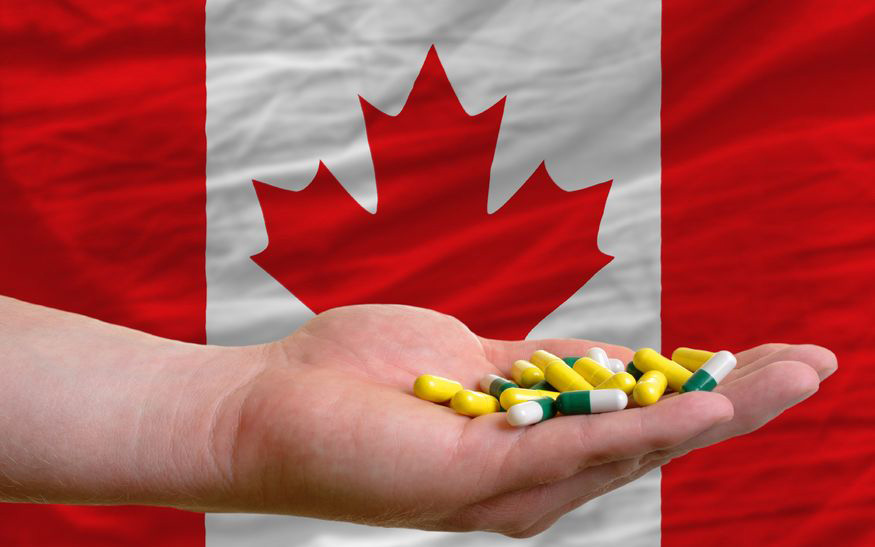
States that have long pushed the FDA to allow drug importation from Canada touted the move as a major step forward in their efforts to lower prescription drug spending and rein in healthcare costs. But while the idea of importing drugs from Canada is new for states, some businesses have been using existing drug import pathways to help consumers save money on certain high-cost medications.
***
More than 20 million US residents—a record number, according to the Biden administration—have signed up for health insurance through the Affordable Care Act’s marketplaces. (the New York Times)
***
Here’s where the major benchmarks ended:
Stocks were a mixed bag yesterday as investors pored over the first big earnings reports and new data showing that wholesale prices surprisingly went down in December. Airlines took a hit after Delta beat earning expectations but lowered its profit forecast.
The S&P 500 index rose 3.59 points (0.1%) to 4,783.83, up 1.8% for the week; the Dow Jones Industrial Average® (DJI) fell 118.04 points (0.3%) to 37,592.98, up 0.3% for the week; the NASDAQ Composite rose 2.57 points to 14,972.76, up 3.1% for the week.
The 10-year Treasury note yield (TNX) fell about 3 basis points to 3.943%.
The CBOE® Volatility Index (VIX) rose 0.26 to 12.70.
Retailers and consumer discretionary shares were among the market’s weakest performers Friday, and regional banks were also under pressure. The KBW Regional Banking Index (KRX) fell 2% for the week and ended at a one-month low. Energy shares led gainers behind strength in crude oil futures. The small-cap-focused Russell 2000® Index (RUT) ended little-changed for the week but is still down 3.8% so far this year.
Posted on August 18, 2023 by Dr. David Edward Marcinko MBA MEd CMP™
By Staff Reporters
***
***
Stat: 0.7%. That’s how much retail sales grew last month, a sign that inflation isn’t dampening consumer spending or demand. (CNBC)
Quote:“This is pure market economics. We do not magically have thousands of additional AI developers, product managers, and everything else.”—Paul J. Groce, partner and head of the Americas at recruitment firm Leathwaite, on how a talent shortage is driving up wages for AI positions. (the Wall Street Journal)
Read: The teetering company threatening China’s economy. (the New York Times)
Posted on September 15, 2021 by Dr. David Edward Marcinko MBA MEd CMP™
CONFLICTS OF INTEREST?
The New York Times Had an Excellent Article on the FDA on September 2, 2021.
The Article Described How the FDA Began Receiving Funding from the Pharmaceutical Industry Itself to Pay for FDA Employee Salaries in 1992–a Potential Conflict-of-Interest. Subsequently, a Study Found that 1/3 of Drugs Approved by the FDA Were Found to Have Safety Problems from 2000 -2010. Another Potential Conflict-of-Interest is Number of FDA Regulators Who Leave Their Positions to Take High-Paying Jobs at Pharmaceutical Companies.







 Support our online development, and advance our onground research initiatives in free market economics, as we seek to showcase the brightest Next-Gen minds.
THE ME-P DISCLAIMER: Posts, comments and opinions do not necessarily represent iMBA, Inc., but become our property after submission. Copyright © 2006 to-date. iMBA, Inc allows colleges, universities, medical and financial professionals and related clinics, hospitals and non-profit healthcare organizations to distribute our proprietary essays, photos, videos, audios and other documents; etc. However, please review copyright and usage information for each individual asset before submission to us, and/or placement on your publication or web site. Attestation references, citations and/or back-links are required. All other assets are property of the individual copyright holder.
Support our online development, and advance our onground research initiatives in free market economics, as we seek to showcase the brightest Next-Gen minds.
THE ME-P DISCLAIMER: Posts, comments and opinions do not necessarily represent iMBA, Inc., but become our property after submission. Copyright © 2006 to-date. iMBA, Inc allows colleges, universities, medical and financial professionals and related clinics, hospitals and non-profit healthcare organizations to distribute our proprietary essays, photos, videos, audios and other documents; etc. However, please review copyright and usage information for each individual asset before submission to us, and/or placement on your publication or web site. Attestation references, citations and/or back-links are required. All other assets are property of the individual copyright holder.















 The Leading Business Education Network for Doctors, Financial Advisors and Health Industry Consultants