UPDATE: IRS Interest Rates Rising, Currency Inflation and Upcoming Earning Reports, etc.

By Staff Reporters

****

IRS: The IRS sent out a notice on February 23rd, warning taxpayers about a price hike coming in the next few months. The tax agency said that interest rates will increase for the calendar quarter starting April 1st, 2022. You can accrue interest on two types of payments: over-payment or underpayment. So starting in April, over-payments will have an interest rate of 4 percent, except for corporations which will earn a 3 percent rate and a 1.5 percent rate for the portion of a corporate over-payment that exceeds $10,000. In terms of underpayments, the interest rate will increase to 4 percent overall and 6 percent for large corporate underpayments.

“Under the Internal Revenue Code, the rate of interest is determined on a quarterly basis,” the IRS website explained. The tax agency did not change interest rates in this last quarter, which began Jan. 1, 2022. Before they get changed in April, the rates are currently 3 percent for general over-payments and 2 percent for corporation over-payments, with a 0.5 percent rate for the portion of a corporate over-payment exceeding $10,000. The underpayment interest is 3 percent right now, expect for large corporations which have a 5 percent rate.

***

***

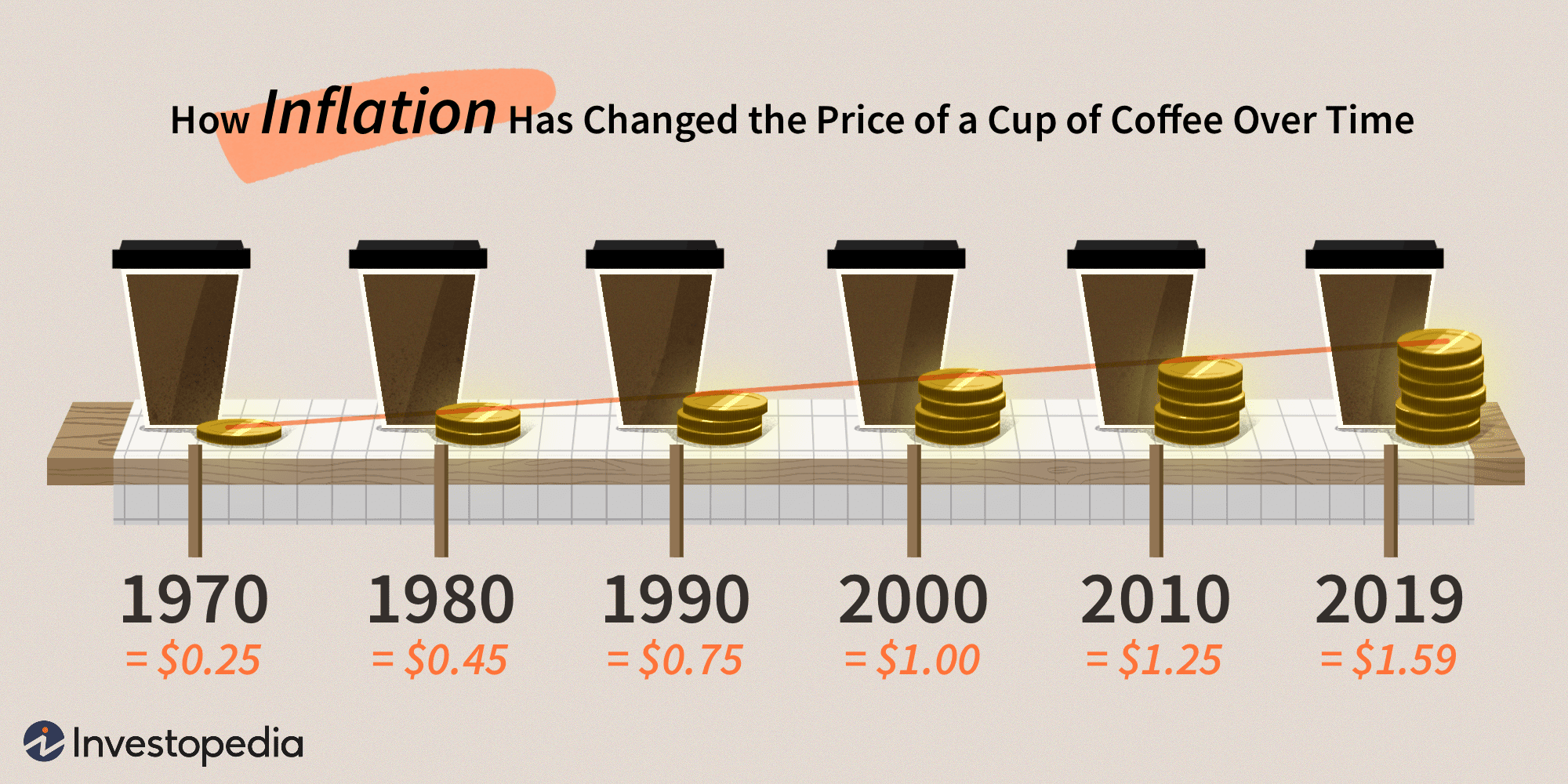
CURRENCY INFLATION: Inflation may occur when the Federal Reserve, or another central bank, adds fiat currency into circulation at a rate that exceeds that of the economy’s growth rate. That creates a situation in which there are more dollars bidding on fewer goods and services. The result is that goods and services cost more. One reason that inflation has been a constant in the US since 1933 is that the FOMC has continually increased the money supply. In response to the 2008 financial crisis, the Fed dropped its lending rate close to zero as a way to inject more liquidity into the economy, which led to increased inflation but not hyperinflation. While those increases have usually moved in step with growth, that hasn’t always been the case.

CITE: https://www.r2library.com/Resource/Title/0826102549

And so, in response to the COVID-19 pandemic and subsequent lock-downs, the Federal Reserve released the equivalent of $3.8 trillion in new liquidity in 2020. That amount was equal to roughly 20% of the dollars previously in circulation. And it is one reason why many investors were watching the CPI closely in 2021.

EARNING REPORTS:

Monday: India GDP data; Earnings from Lordstown Motors, Groupon, HP, SmileDirectClub and Zoom Video

Tuesday: US and China manufacturing data; Earnings from AutoZone, Baidu, Domino’s Pizza, Hostess Brands, J.M. Smucker, Kohl’s, Target, AMC Entertainment and Salesforce

Wednesday: European inflation data; Earnings from Abercrombie & Fitch, Dine Brands, Dollar Tree, Snowflake and Victoria’s Secret

Thursday: ISM Non-Manufacturing Index; Earnings from Best Buy, Weibo, Costco and Gap

Friday: US jobs report

10-Year: Treasuries rallied to 1.902%.

Oil: The rise in oil prices is spilling over at the gas pump: The average gas price in the US has jumped 10 cents, to $3.64/gallon, in the past two weeks.

Partial SWIFT ban: Western governments put aside their hesitations and proposed banning some Russian lenders from SWIFT, the global messaging service that facilitates cross-border transactions. It’s a move that could cause turmoil across global financial markets.

***

COMMENTS APPRECIATED

Thank You

Subscribe to the Medical Executive-Post

***

***

UPDATE: The Markets, Federal Reserve and Omicron

By Staff Reporters

***

Markets: Stocks were in the green yesterday until Fed Chair Jerome Powell explained that the Federal Reserve Open Market Committee was planning to start hiking interest rates in March to combat soaring inflation. Then, they tanked and Treasury yields rose sharply higher. Microsoft still had a solid day after its superb earnings report offered bullish signs for the entire software industry. But, stock markets in Asia tumbled to their lowest in nearly 15 months after America’s central bank chief confirmed widely expected plans to tackle higher inflation with an increase in interest rates this year, beginning in March. And finally, Cryptos got crushed, again!

FOMC: “With inflation well above 2 percent and a strong labor market, the Committee expects it will soon be appropriate to raise the target range for the federal funds rate,” said Chairman Powell.

Omicron: The Food and Drug Administration pulled its authorization of two of the most-used monoclonal antibodies to treat COVID-19 this week, leaving doctors with fewer options to help their patients avoid the hospital. Related: https://www.cdc.gov/coronavirus/2019-ncov/vaccines/different-vaccines.html?s_cid=11305:%2BModerna%20%2B%20%2Bcovid%20%2Bvaccine:sem.b:p:RG:GM:gen:PTN:FY21

***

COMMENTS APPRECIATED.

Thank You

Subscribe to the Medical Executive-Post

***

What is QUANTITATIVE EASING?

Q.E.

By Dr. David E. Marcinko MBA CMP®

CMP logo

SPONSOR: http://www.CertifiedMedicalPlanner.org

QE (Quantitative Easing = compound noun)

Although standard definitions will tell you that it is a ‘monetary policy’ used by central banks to stimulate the national economy, in reality it is more as follows:

– A cleverly disguised word that simply means ‘money printing’.

CITE: https://www.r2library.com/Resource/Title/0826102549

Central banks use QE as a disguise for increasing the money supply, as to monetize its increasing debt.

For a more technical analysis of the actual mechanics of QE, I invite you to read the article entitled QE for Dummies.

Examples:

1. The Central Bank embarked on another round of QE in hopes that it can kick-start the economy.

2. Ben Bernanke is set to begin the Fed’s taper of QE as soon as next month.

***
YOUR COMMENTS ARE APPRECIATED.

***

THANK YOU

***

On Interest Rates and Economic Growth

Economic Growth and Index Value

***

***

How the FOMC Really Works?

How the Federal Reserve Works

By Jason Dyken MD MBA

Tip: Checks. Due to the onslaught of electronic check collection, the Federal Reserve now processes paper checks at just one location nationwide, down from 45 locations in 2003.

Source: Board of Governors of the Federal Reserve System, 2016

QUESTION

Have you ever taken a close look at paper money? Each U.S. bill has the words “Federal Reserve Note” imprinted across the top.

But many individuals may not know why the bill is issued by the Federal Reserve and what role the Federal Reserve plays in the economy.

How the FOMC Really works?

Here’s an inside look

The Federal Reserve, often referred to as the Fed, is the country’s central bank. It was founded by Congress in 1913 to provide the nation with a safer, more flexible, and more stable monetary and financial system. Prior to its creation, the U.S. economy was plagued by frequent episodes of panic, bank failures, and limited credit.

The Fed has four main roles in the U.S. economy.

Economy Watch

In addition to its other duties, the Fed has been given three mandates with the economy: maintain maximum employment, maintain stable price levels, and maintain moderate long-term interest rates.

Fast Fact: Unwieldy Patchwork. In the early 1800s, the U.S. had no central bank and no common currency. The monetary system ran through a patchwork of state-chartered banks with no federal regulation. By 1860, there were nearly 8,000 of these banks, each issuing its own banknotes.

Source: Federal Reserve Bank of San Francisco, 2018

It’s important to remember that “the Fed” cannot directly control employment, inflation, or long-term interest rates. Rather, it uses a number of tools at its disposal to influence the availability and cost of money and credit. This, in turn, influences the willingness of consumers and businesses to spend money on goods and services.

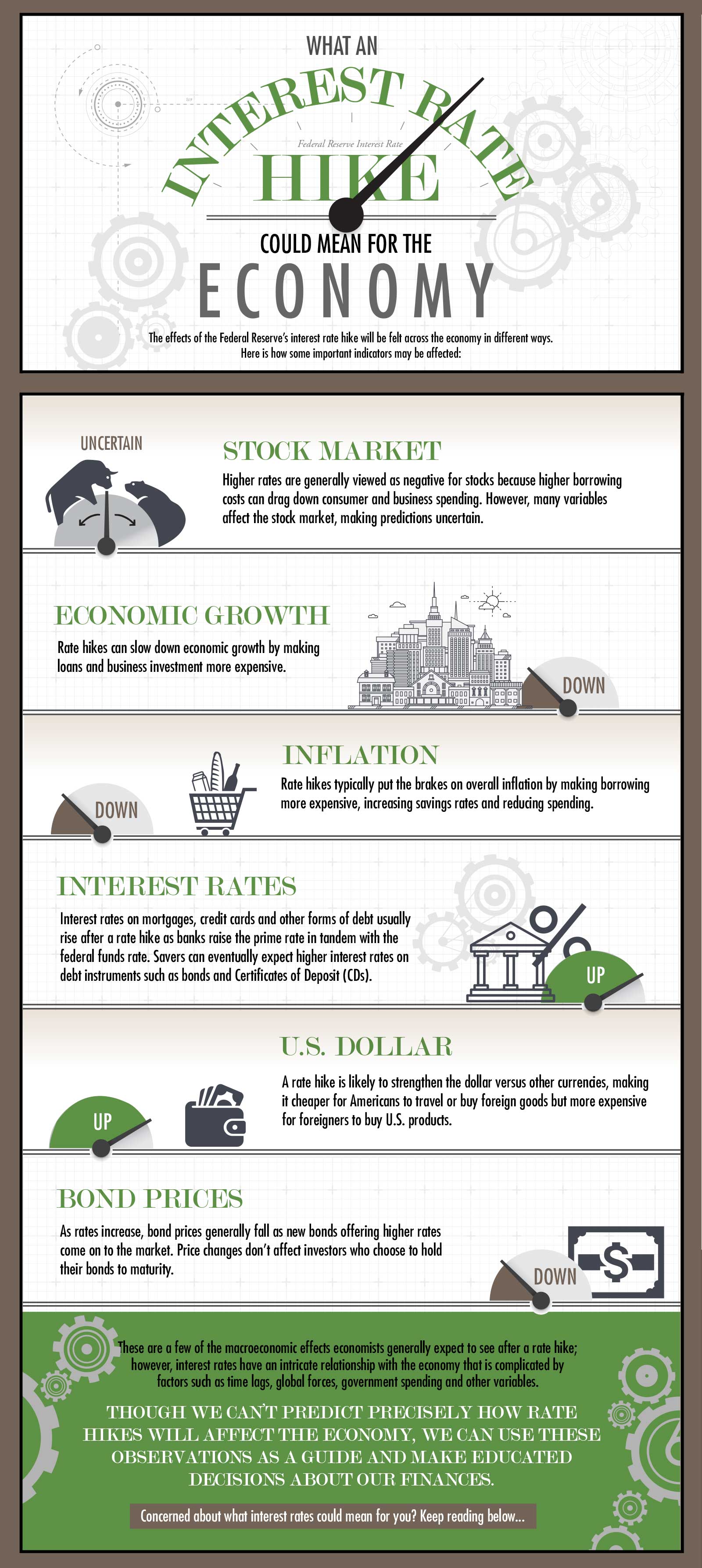
For example, if the Fed maneuvers short-term interest rates lower, borrowing money becomes less expensive and people may be motivated to spend. Consumer spending may stimulate economic growth, which may cause companies to produce more product and potentially increase employment. When short-term rates are low, the Fed closely monitors economic activity to watch for signs of rising prices.

On the other hand, if the Fed pushes short-term rates higher, borrowing money becomes more expensive and people may be less motivated to spend. This may, in turn, slow economic growth and cause companies to decrease employment. When short-term rates are high, the Fed must watch for signs of a decline in overall price levels.

Supervise and Regulate

The Fed establishes and enforces the regulations banks, savings and loans, and credit unions must follow. It works with other federal and state agencies to ensure these financial institutions are financially sound and consumers are receiving fair and equitable treatment. When an organization is found to have problems, the Fed uses its authority to have the organization correct the problems.

Financial System

The Fed maintains the stability of the financial system by providing payment services. In times of financial strain, the Fed is authorized to step in as a lender of last resort, providing liquidity to an individual bank or the entire banking system.

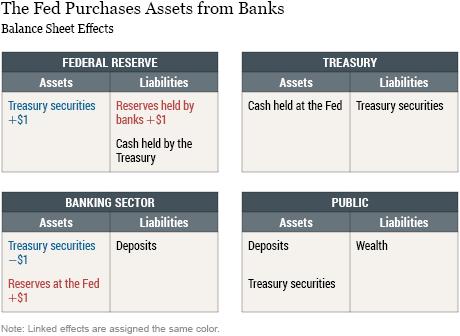
For example, the Fed may step in and offer to buy the government bonds owned by a particular bank. By so doing, the Fed provides the bank with money that it can use for its own purposes.

Banker for Banks, U.S. Government

The Fed provides financial services to banks and other depository institutions and to the U.S. government. For banks, savings and loans, and credit unions, it maintains accounts and provides various payment services, including collecting checks, electronically transferring funds, distributing new money, and receiving and destroying old, worn-out money. For the federal government, the Fed pays Treasury checks; processes electronic payments; and issues, transfers, and redeems U.S. government securities.

Each day, the Fed is behind the scenes supporting the economy and providing services to the U.S. financial system. And while the Fed’s duties are many and varied, its focus is to maintain confidence in banking institutions.

***

A De-Centralized Central Bank System

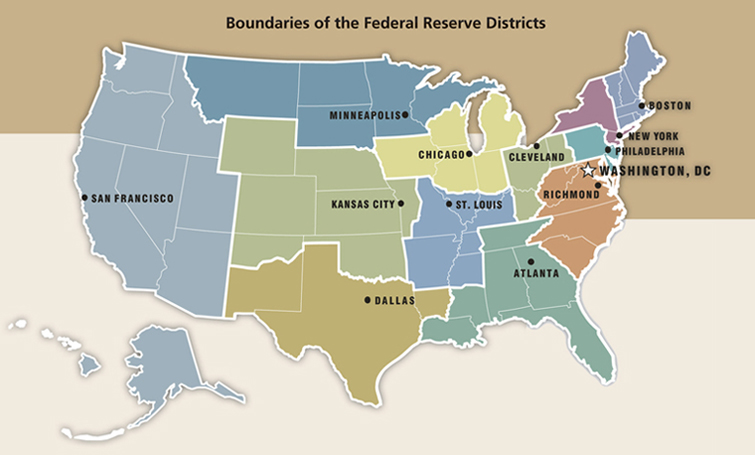
The Federal Reserve System consists of 12 independent banks that operate under the supervision of a federally appointed Board of Governors in Washington, D.C. Each of these banks works within a specific district, as shown.

Source: Federal Reserve Board of Governors, 2018

  • U.S. Bureau of Engraving and Printing, 2018
  • Federal Reserve Bank of San Francisco, 2018
  • Board of Governors of the Federal Reserve System, 2016

Conclusion

Your thoughts and comments on this ME-P are appreciated. Feel free to review our top-left column, and top-right sidebar materials, links, URLs and related websites, too. Then, subscribe to the ME-P. It is fast, free and secure.

Speaker: If you need a moderator or speaker for an upcoming event, Dr. David E. Marcinko; MBA – Publisher-in-Chief of the Medical Executive-Post – is available for seminar or speaking engagements.

Book Marcinko: https://medicalexecutivepost.com/dr-david-marcinkos-bookings/

Subscribe: MEDICAL EXECUTIVE POST for curated news, essays, opinions and analysis from the public health, economics, finance, marketing, IT, business and policy management ecosystem.

DOCTORS:

“Insurance & Risk Management Strategies for Doctors” https://tinyurl.com/ydx9kd93

“Fiduciary Financial Planning for Physicians” https://tinyurl.com/y7f5pnox

“Business of Medical Practice 2.0” https://tinyurl.com/yb3x6wr8

HOSPITALS:

“Financial Management Strategies for Hospitals” https://tinyurl.com/yagu567d

“Operational Strategies for Clinics and Hospitals” https://tinyurl.com/y9avbrq5

***

Risk Management, Liability Insurance, and Asset Protection Strategies for Doctors and Advisors: Best Practices from Leading Consultants and Certified Medical Planners™8Comprehensive Financial Planning Strategies for Doctors and Advisors: Best Practices from Leading Consultants and Certified Medical Planners™

More on Recent Interest Rate Hikes

Impending IRs and … the Economy

By http://www.MCOL.com

***

***

Conclusion

Your thoughts and comments on this ME-P are appreciated. Feel free to review our top-left column, and top-right sidebar materials, links, URLs and related websites, too. Then, subscribe to the ME-P. It is fast, free and secure.

Speaker: If you need a moderator or speaker for an upcoming event, Dr. David E. Marcinko; MBA – Publisher-in-Chief of the Medical Executive-Post – is available for seminar or speaking engagements. Contact: MarcinkoAdvisors@msn.com

OUR OTHER PRINT BOOKS AND RELATED INFORMATION SOURCES:

Risk Management, Liability Insurance, and Asset Protection Strategies for Doctors and Advisors: Best Practices from Leading Consultants and Certified Medical Planners™8Comprehensive Financial Planning Strategies for Doctors and Advisors: Best Practices from Leading Consultants and Certified Medical Planners™

***

The Final Financial Round-Up for 2016

Join Our Mailing List

Rick Kahler MS CFP

By Rick Kahler CFP® http://www.KahlerFinancial.com

You know we are in a long-running bull market when you see people at the gym keeping one eye on their smart phones to see if the Dow Jones Industrial Average has finally breached the 20,000 mark.

With so much uncertainty at this time last year, nobody could have predicted double-digit returns on U.S. stocks at year-end. After all, the US stock market ended 2015 in negative territory and began 2016 with the worst start since 1930, falling 10% in two weeks.

The Markets

The markets eventually bottomed in mid-February and began a long, slow recovery, turning positive by the end of March. However, the going wasn’t easy. Global stock markets suffered a setback with the Brexit vote in the U.K. and endured another hard bump right after the elections.

In the end, the Dow finished 2016 at 19,762.60, a return of 13.4% for the year. International stocks of developed countries did not follow suit, finishing the year down 1.88%.

Related categories

In other categories, real estate investments, as measured by the Wilshire U.S. REIT index, finished up 7.24% for calendar 2016, and commodities, as measured by the S&P GSCI index, gained 27.77%.

The decades-long bond bull market is probably over, as interest rates have begun to rise. Even with the Federal Reserve rate increases, interest rate moves have not exactly been dramatic. Over the past year, rates on 10-year Treasury bonds have risen from 2.25% to 2.44%, while 30-year government bond yields have risen from 3.00% to 3.07%.

***

stock market

***

Unpredictable events in the investment world

As always, there were many unpredictable events in the investment world. Anyone lucky enough to have speculated on the Brazilian Bovespa index—comparable to the U.S. S&P 500—would have reaped a gain of 68.9% this year, despite all the headline drama around the Zika virus and political uncertainties reported on during the Olympic games. Russian stocks were up 51% for the year, despite the recent sanctions from the U.S. government and the lingering international sanctions related to the invasion of the Crimean peninsula.

What’s going to happen in 2017?

It’s clear that Donald Trump wants to accelerate America’s economic growth, but his policy prescription has not always been clear. Some traders expect the economy to respond positively with lower taxes and deregulatory policies.

However, it is helpful to remember that we are entering the ninth year of economic expansion, the fourth longest over the last 125 years. The first two years of a presidential term are not kind to the US stock markets. Since 1941 we have had 30 bear markets with 17 bear market lows occurring in the first year of the presidential term, 12 in the second year, one in the third year, and none in year four (the election year). Every year of this longstanding bull market, we have to look over our shoulders and wonder when and how it will end.

There are many unknowns around the globe

Growth in the U.S. since the financial crisis of 2008 has not exactly been robust; the U.S. GDP has averaged just 2.1% yearly increases. Still, the unemployment rate has slowly dropped from a post-recession peak of 10% to less than 5% currently. China’s economic growth has stalled for the second consecutive year, and a looming banking crisis in Italy could force the country to leave the Eurozone.

Markets always have a way of surprising us

Trying to time the market and get out in anticipation of a downturn is a loser’s game. The history of the markets has been a general upward trend that benefits long-term investors.

Assessment

As always, my advice is to broadly diversify your portfolio, periodically rebalance, and hang on for the long term.

Conclusion

Your thoughts and comments on this ME-P are appreciated. Feel free to review our top-left column, and top-right sidebar materials, links, URLs and related websites, too. Then, subscribe to the ME-P. It is fast, free and secure.

Speaker: If you need a moderator or speaker for an upcoming event, Dr. David E. Marcinko; MBA – Publisher-in-Chief of the Medical Executive-Post – is available for seminar or speaking engagements. Contact: MarcinkoAdvisors@msn.com

OUR OTHER PRINT BOOKS AND RELATED INFORMATION SOURCES:

Risk Management, Liability Insurance, and Asset Protection Strategies for Doctors and Advisors: Best Practices from Leading Consultants and Certified Medical Planners™8Comprehensive Financial Planning Strategies for Doctors and Advisors: Best Practices from Leading Consultants and Certified Medical Planners™

***

On Rising Interest Rates

Join Our Mailing List

By Charles Schwab

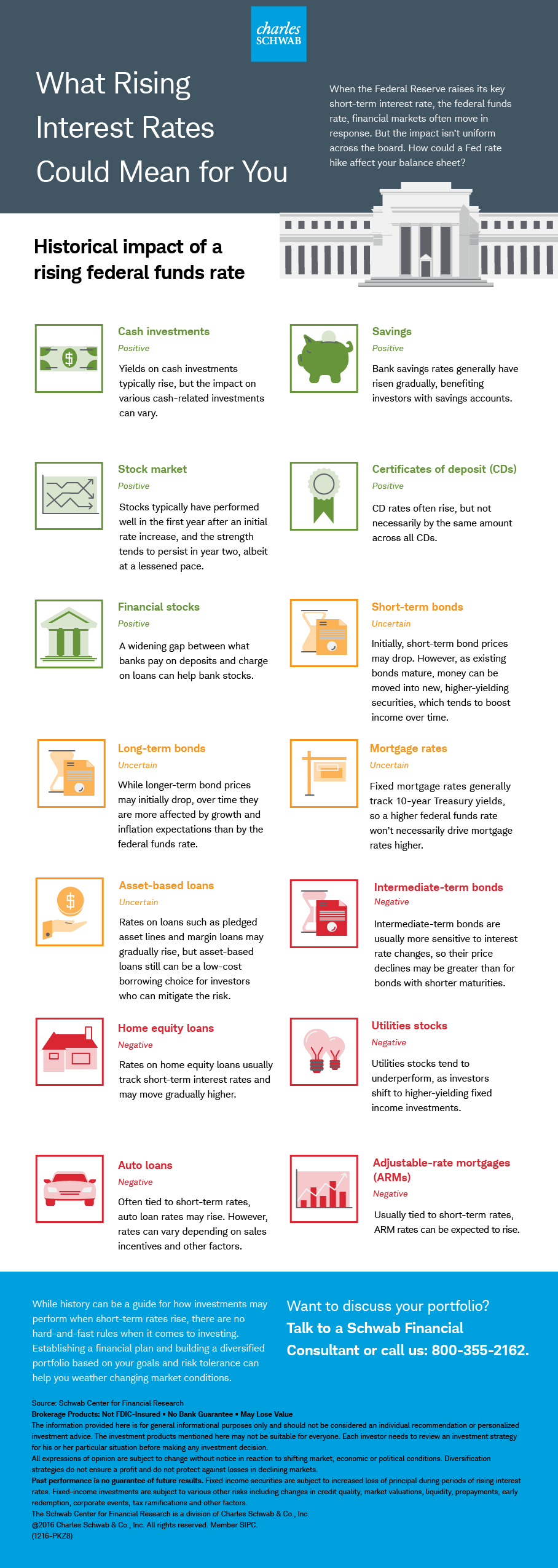
What They Could Mean for You

The FMOC rose interest rates today.

So, what does this mean for all of us?

***

infographic_120916_rising_interest_rates_mean_you_final

***

More:

Videos:

Assessment

Be aware that although the FED does indeed control overnight and short-term IRs; it is the market-place that controls longer-term rates. So, don’t fret.

-Dr. David Edward Marcinko MBA

No alt text provided for this image

Conclusion

Your thoughts and comments on this ME-P are appreciated. Feel free to review our top-left column, and top-right sidebar materials, links, URLs and related websites, too. Then, subscribe to the ME-P. It is fast, free and secure.

Speaker: If you need a moderator or speaker for an upcoming event, Dr. David E. Marcinko; MBA – Publisher-in-Chief of the Medical Executive-Post – is available for seminar or speaking engagements. Contact: MarcinkoAdvisors@msn.com

OUR OTHER PRINT BOOKS AND RELATED INFORMATION SOURCES:

Risk Management, Liability Insurance, and Asset Protection Strategies for Doctors and Advisors: Best Practices from Leading Consultants and Certified Medical Planners™8Comprehensive Financial Planning Strategies for Doctors and Advisors: Best Practices from Leading Consultants and Certified Medical Planners™

***

Does the FED REALLY Matter?

Join Our Mailing List 

Does the Fed REALLY matter?

eric

By Erik Kobayashi-Solomon

[intelligent option investor]

Does the Fed REALLY matter?

This is an update to research done in the fall of 2015.

Common wisdom holds that Federal Reserve interest rate policy changes have a large effect on equity returns. The Fed represents, many believe, the ultimate market traffic light.

****

NY Fed Reserve Bank

[FEDERAL RESERVE BANK OF NEW YORK]

***

And, everyone takes this mental model for granted, but is it really true?

Read more

Was the 2008 Financial Crisis Caused by the Big Banks?

Assessment

The conclusions should be compelling to all ME-P readers, physician-executives and intelligent investors!

Conclusion

Your thoughts and comments on this ME-P are appreciated. Feel free to review our top-left column, and top-right sidebar materials, links, URLs and related websites, too. Then, subscribe to the ME-P. It is fast, free and secure.

Speaker: If you need a moderator or speaker for an upcoming event, Dr. David E. Marcinko; MBA – Publisher-in-Chief of the Medical Executive-Post – is available for seminar or speaking engagements. Contact: MarcinkoAdvisors@msn.com

OUR OTHER PRINT BOOKS AND RELATED INFORMATION SOURCES:

Risk Management, Liability Insurance, and Asset Protection Strategies for Doctors and Advisors: Best Practices from Leading Consultants and Certified Medical Planners™8Comprehensive Financial Planning Strategies for Doctors and Advisors: Best Practices from Leading Consultants and Certified Medical Planners™

***

Second Guessing the FED

Join Our Mailing List

A HISTORICAL CHAIR REVIEW

Art

By Arthur Chalekian GEPC

[Elite Financial Partners]

***

AN AGE OLD AMERICAN PASTIME

Americans have been speculating about the Federal Reserve’s monetary policy choices – rate hikes, rate declines, quantitative easing, etc. – for a long time. It’s clear when you take a look at a few modern Fed Chairs and the Fed’s activities under their leadership.

Paul Volcker (1979-1987) took over an economic quagmire known as The Great Inflation. In the early 1980s, U.S. inflation was 14 percent and unemployment reached 9.7 percent. Volcker unexpectedly raised the Fed funds rate by 4 percent in a single month, following a secret and unscheduled Federal Open Market Committee meeting. His policies initially sent the country into recession. The St. Louis Fed reported “Wanted” posters targeted Volcker for “killing” so many small businesses. By the mid-1980s, employment and inflation reached targeted levels.

Alan Greenspan (1987-2006) was in charge through two U.S. recessions, the Asian financial crisis, and the September 11 terrorist attacks. Regardless, he oversaw the country’s longest peacetime expansion. In the late 1990s, when financial markets were bubbly, critics suggested, “…Mr. Greenspan’s monetary policies spawned an era of booms and busts, culminating in the 2008 financial crisis.”

Ben Bernanke (2006-2014) took the helm of the Fed just before the financial crisis and Great Recession. When economic growth collapsed in 2007, the Fed lowered rates and adopted unconventional monetary policy (quantitative easing) in an effort to stimulate economic growth. In 2012, economist Paul Krugman called Bernanke out in The New York Times, “…the fact is that the Fed isn’t doing the job many economists expected it to do, and a result is mass suffering for American workers.”

Janet Yellen (2014-present) is the current Chairwoman of the Fed. Under Yellen’s leadership, after providing abundant guidance, the Fed raised rates for the first time in seven years. The International Business Times reported several prominent economists think the increase was premature, in part, because there are few signs of inflation in the U.S. economy.

Assessment 

In many cases, it’s difficult to gauge the achievements and/or failures of a leader – Fed Chairperson, President, Congressman, or Congresswoman – until the economic or political dust settles. Sometimes, that’s long after they’ve left office.  

Conclusion

Your thoughts and comments on this ME-P are appreciated. Feel free to review our top-left column, and top-right sidebar materials, links, URLs and related websites, too. Then, subscribe to the ME-P. It is fast, free and secure.

Speaker: If you need a moderator or speaker for an upcoming event, Dr. David E. Marcinko; MBA – Publisher-in-Chief of the Medical Executive-Post – is available for seminar or speaking engagements. Contact: MarcinkoAdvisors@msn.com

OUR OTHER PRINT BOOKS AND RELATED INFORMATION SOURCES:

Comprehensive Financial Planning Strategies for Doctors and Advisors: Best Practices from Leading Consultants and Certified Medical Planners™

***

Update on the FOMC and Interest Rates

Join Our Mailing List

What if the Fed DOESN’T Raise Rates?

Michael-Gayed-sepia


 By Michael A. Gayed CFA

***

With odds high for the Federal Reserve’s first rate hike in nearly a decade, and seemingly everyone predicting that rising rates are coming in the next few weeks, why in the world is the yield curve not steepening aggressively?

Something curious is happening

There is a mistaken notion out there that if the Fed raises rates, the cost of capital on everything is going to rise.  This is far too simplistic a way of viewing the bond market.  If the Fed raises rates and the market perceives it as being too early, then longer duration bond yields likely would actually fall and credit spreads likely would widen.  In other words, some rates could fall because the Fed is raising short rates.

***

gv

***

In a healthy environment, Fed hiking would coincide with a steepening yield curve, as growth and inflation expectations become more aggressively priced in. As of late, it seems as though the bond market vastly disagree with the Fed’s December timing.

Of course all this could change, as probabilities continuously change

So, if the Fed decides not to raise rates, and the yield curve continues to flatten, then something very serious may be underway in terms of 2016 economic expectations.  It does seem plausible that from a cycle perspective, the era for passive buy and hold investing in large-cap stocks is nearing its end, allowing for more active alpha opportunities to present themselves.

This would likely translate into more volatility in equities, which we believe our alternative Morningstar 4 Star overall rated ATAC Inflation Rotation Fund (Ticker: ATACX, rating as of 9/30/15 among 234 Tactical Allocation Funds derived from a weighted average of the fund’s 3-year risk-adjusted return measures) is distinctly qualified to handle given our focus on being defensive in Treasuries at the right time.

Having said that, despite my own personal believe the Fed will raise rates, it is concerning to see how longer duration bonds are behaving.

The key needs to be a comeback in commodities and emerging market stocks

For the yield curve in the United States to steepen, and for the Federal Reserve to “get it right,” likely a surprise recovery is needed in cyclical growth sentiment.  Commodities and emerging markets are among the most sensitive areas of the investable landscape to that, so it stands to reason that their movement would show the whites of the eyes of that happening.  The issue however is that every time is looks like budding momentum is about to become more entrenched, that momentum quickly reverses and creates a false positive on rising growth expectations.

***

gears

***

Recent manufacturing data confirms that not much has changed on the growth side of the equation.  So far, broader equities seem to not care given historically favorable December seasonality.  That doesn’t mean one should not be considering this in an overall asset allocation policy.

Complicating-The European Central Bank

In many ways, crushing the Euro through more stimulus has the same effect as Federal Reserve tightening precisely because a rising Dollar is a contractionary force to exports.  European stimulus is Fed tightening IF it results in a Dollar super-spike.  Should that occur, the Fed would be more likely that not to not raise rates and actually do another round of stimulus.

Assessment

Insane sounding?  Maybe.  But; so is an environment where no amount of money printing seems to be accelerating the economy.

ABOUT

The ATAC Rotation Mutual Funds are managed by Pension Partners, LLC, an independent registered investment advisor.  The strategies were developed by Co-Portfolio Managers Edward M. Dempsey, CFP® and Michael A. Gayed, CFA. The Funds rotate offensively or defensively based on historically proven leading indicators of volatility, with the goal of taking less risk at the right time.

Conclusion

Your thoughts and comments on this ME-P are appreciated. Feel free to review our top-left column, and top-right sidebar materials, links, URLs and related websites, too. Then, subscribe to the ME-P. It is fast, free and secure.

Speaker: If you need a moderator or speaker for an upcoming event, Dr. David E. Marcinko; MBA – Publisher-in-Chief of the Medical Executive-Post – is available for seminar or speaking engagements. Contact: MarcinkoAdvisors@msn.com

OUR OTHER PRINT BOOKS AND RELATED INFORMATION SOURCES:

Risk Management, Liability Insurance, and Asset Protection Strategies for Doctors and Advisors: Best Practices from Leading Consultants and Certified Medical Planners™8Comprehensive Financial Planning Strategies for Doctors and Advisors: Best Practices from Leading Consultants and Certified Medical Planners™

****

Are Interest Rates expected to increase in December?

Join Our Mailing List

And, the Bureau of Labor Statistics (BLS) said …

Art

By Arthur Chalekian GEPC
[Financial Consultant]

U.S. job growth surpassed expectations in October. About 271,000 jobs were created across diverse industries: professional and business services, health care, retail, construction, and others. That was a significantly higher number than predicted by economists who participated in a survey conducted by The Wall Street Journal. They expected to see 183,000 new jobs for October.

BLS revised

The BLS revised August and September jobs numbers higher overall and reported improvement on the wage front, too. Average hourly earnings increased by nine cents during October. For the year, hourly earnings are up 2.5 percent. Rising wages and a 5 percent unemployment rate “appear to indicate the labor market has reached full employment,” reported Barron’s.

Strong employment data supports the idea the Fed will begin to lift the Fed funds rate this year. On Friday, former Chairman of the Federal Reserve Ben Bernanke wrote in his blog:

“Wednesday was something of a trifecta for Fed watchers: Chair Yellen, Board Vice-Chair Stanley Fischer, and Federal Reserve Bank of New York president Bill Dudley (who is also the vice chair of the Federal Open Market Committee) all made public appearances. Moreover, the comments by all three members of the Fed’s leadership explicitly or implicitly supported the idea that a December rate increase by the FOMC is a distinct possibility. (The possibility of a rate increase is even more distinct with this morning’s strong job market report.)”

Markets responded swiftly, according to The Wall Street Journal, as investors repositioned their portfolios in anticipation of a rate hike. While stock market indices remained relatively steady, there was considerable volatility within certain sectors. An expert cited by the publication commented:

“…one of the big rotation trades on Friday was investors taking money out of companies such as utilities and real-estate-investment trusts, and putting it into those that are expected to benefit from higher rates, such as financial companies.”

Conclusion

Your thoughts and comments on this ME-P are appreciated. Feel free to review our top-left column, and top-right sidebar materials, links, URLs and related websites, too. Then, subscribe to the ME-P. It is fast, free and secure.

Speaker: If you need a moderator or speaker for an upcoming event, Dr. David E. Marcinko; MBA – Publisher-in-Chief of the Medical Executive-Post – is available for seminar or speaking engagements. Contact: MarcinkoAdvisors@msn.com

OUR OTHER PRINT BOOKS AND RELATED INFORMATION SOURCES:

***

Comprehensive Financial Planning Strategies for Doctors and Advisors: Best Practices from Leading Consultants and Certified Medical Planners(TM)

***

The third quarter for 2015 was a REAL humdinger!

 Join Our Mailing List
The Markets – Update
Art

By Arthur Chalekian GEPC

[Financial Consultant]

Well, the third quarter for 2015 was a REAL humdinger!
                                            ***
It began with the first International Monetary Fund (IMF) default by a developed country (Greece) and finished with Hurricane Joaquin possibly headed toward the east coast. In between, China’s stock market tumbled, the Federal Reserve tried to interpret conflicting signals, and trade growth slowed globally. After such a stressful quarter, we may see an uptick in the quantity of alcoholic beverages consumed per person around the world. That number had declined (along with economic growth in China) between 2012 and 2014, according to The Economist.
***
No Grexit – for now
Despite defaulting on its IMF loan, rejecting a multi-billion-euro bailout plan, and closing its banks for more than two weeks, Greece was not forced out of the Eurozone. Instead, Europe cooked up a deal that left the IMF unhappy and analysts shaking their heads. The Economist reported the new deal for Greece was an exercise in wishful thinking. The problem is the deal relies on “the same old recipe of austerity and implausible assumptions. The IMF is supposed to be financing part of the bailout. Even it thinks the deal makes no sense.” It’s a recipe we’re familiar with in the United States: When in doubt, defer the problem to the future.
***
A downturn in China
Despite reports from the Chinese government that it hit its economic growth target (7 percent) on the nose during the first two quarters of the year, The Economist was skeptical about the veracity of those claims. During the first quarter.
***
“Growth in industrial production was the weakest since the depths of the financial crisis; the property market, a pillar of the economy, crumbled. China reported real growth (i.e., after accounting for inflation) of 7 percent year-on-year in the first quarter, but nominal growth of just 5.8 percent.”
***
That statistical sleight of hand implies China experienced deflation early in the year. It did not.
On a related note, from mid-June through the end of the third quarter, the Shenzhen Stock Exchange Composite Index fell from 3,140 to about 1,716, according to BloombergBusiness. That’s about a 45 percent decline in value.
***
Red light, green light at the Federal Reserve
Green light: employment numbers. Red light: consumer prices, inflation expectations, wages, and global growth. Late in the quarter, the Federal Reserve decided not to begin tightening monetary policy.
According to Reuters, voting members of the Federal Open Market Committee (FOMC) decided uncertainty in global markets had the potential to negatively affect domestic economic strength. They may have been right. The Wall Street Journal reported, although unemployment remained at 5.1 percent, just 142,000 jobs were added in September. That was significantly below economists’ expectations that 200,000 jobs would be created. The Journal suggested the labor market has downshifted after 18 months of solid jobs creation.
***
Global trade in the doldrums
The global economy isn’t as robust as many expected it to be. According to the Business Standard, the World Trade Organization (WTO) lowered its forecast for global trade growth during 2015 from 3.3 percent to 2.8 percent. Falling demand for imports in developing nations and low commodity prices are translating into less global trade. Expectations are trade growth will be 3.9 percent in 2016, which could help support global economic growth.
***
Coming Change
America’s share of the global economy is potent. Our country accounts for 16 percent (after being adjusted for currency differences) of the world’s gross domestic product (GDP) and 12 percent of merchandise trade.
Again, according to The Economist, we dominate “the brainiest and most complex parts of the global economy.” Our presence is strong in social media, cloud computing, venture capital, and finance. In addition, the dollar is the world’s dominant currency. While the view from the top is pleasing, we may not be there forever. The Economist explained:
***
“In the first change in the world economic order since 1920-45, when America overtook Britain, [America’s] dominance is now being eroded. As a share of world GDP, America and China (including Hong Kong) are neck and neck at 16 percent and 17 percent respectively, measured at purchasing-power parity. At market exchange rates, a fair gap remains with America at 23 percent and China at 14 percent … But any reordering of the world economy’s architecture will not be as fast or decisive as it was last time…the Middle Kingdom is a middle-income country with immature financial markets and without the rule of law. The absence of democracy, too, may be a serious drawback.”
***
It may be hard to believe, in light of recent economic and market events in China, but change is on its way. Regardless, the influence of the United States should continue to be powerful well into the future.

Conclusion

Your thoughts and comments on this ME-P are appreciated. Feel free to review our top-left column, and top-right sidebar materials, links, URLs and related websites, too. Then, subscribe to the ME-P. It is fast, free and secure.

Speaker: If you need a moderator or speaker for an upcoming event, Dr. David E. Marcinko; MBA – Publisher-in-Chief of the Medical Executive-Post – is available for seminar or speaking engagements. Contact: MarcinkoAdvisors@msn.com

OUR OTHER PRINT BOOKS AND RELATED INFORMATION SOURCES:

***

Comprehensive Financial Planning Strategies for Doctors and Advisors: Best Practices from Leading Consultants and Certified Medical Planners(TM)

Front Matter with Foreword by Jason Dyken MD MBA

logos

“BY DOCTORS – FOR DOCTORS – PEER REVIEWED – FIDUCIARY FOCUSED”

***

Ben Bernanke: Buy One Suit, Get Three Free

Join Our Mailing List

Linear thinking is dangerous

vitaly[By Vitaliy Katsenelson, CFA]

Linear thinking is dangerous. It is the easiest form of reasoning, lying on the path of least resistance. The simpler the path, the more readily people will march along it. Linear arguments are easy to make, as they require the least amount of evidence — past data points with a straight line drawn through them.However, the larger the crowd that follows the wrong line of reasoning, the more people pile in, and the greater the consequences if they are proved wrong.

A lot of things in nature, and thus in investing, are not linear. A past trend may or may not persist into the future. Events don’t happen in a vacuum; they are observed, studied and capitalized on — which in the case of investing may preclude a company’s future from resembling its past. As I write this, I think of successful companies whose achievements attracted competition, which then marginalized them.

Some things are inherently nonlinear, their behavior reminiscent of a pendulum’s: The further they swing in one direction, the harder they’ll go in the opposite direction. It is very dangerous to default to linearity with such nonlinear phenomena, as the more confident we become in the swing (the more linearity we observe), the closer we are to the pendulum’s reversing course.

Price-earnings ratios often follow a pendulum behavior. If you look at high-quality dividend-paying stocks — the Coca-Colas and Procter & Gambles of the world — they are now changing hands at more than 20 times earnings. Their recent performance has driven linear thinkers to pile into them, expecting more of the same in the future. Don’t! These stocks were beneficiaries of a swing in the P/E pendulum as it went from low to average and then to above-average levels.

Pattern recognition is an important contributor to success in investing. Mark Twain once said that history doesn’t repeat itself, but it rhymes. If you can identify a rhyme (that is, see a pattern) relating to the current situation, then you can develop a framework to analyze and forecast it. But what if the current situation is very different — if it doesn’t rhyme with anything in the past? This is where the ability to draw parallels becomes helpful. It allows you to overlay rhymes (patterns) from other companies, industries or even fields. Building analogous frameworks is a cure for linear thinking; it helps us see nonlinearity and facilitates the creation of nonlinear mental models.

Then there is pseudolinearity: things that seem to be linear but are forced into linearity by extrinsic factors. This was a subtopic of my presentation at the Valuex Vail investing conference in June. I drew a parallel between two entities that suddenly looked analogous: Jos. A. Bank Clothiers, a Hampstead, Maryland–based retailer of men’s apparel, and the Federal Reserve.

***

rote

***

Jos. A. Bank

Jos. A. Bank has always been a very promotional retailer. It would jack up prices, then run sales for consumers happy to be deceived — a typical American retail tale. But sometime in 2008, Jos. A. Bank went promotional on steroids. You could not watch CNBC for an hour without seeing one of its ads. The company started out by encouraging you to buy one suit and get one free. Then you got two free suits. Finally, it started giving away Android phones with suit purchases. For a while this past March, Jos. A. Bank offered consumers the opportunity to buy one suit and get three free.

There are several problems with the strategy: It does not emphasize the quality of the suits or the company’s great service, and the ads aren’t helping to build a brand but are intended just to pimp sales at Jos. A. Bank, as if it were a grocery store with USDA choice beef on sale.

This brings us to the latest quarter. Jos. A. Bank’s same-store sales dropped 8 percent, but what really piqued my interest was this explanation by its CEO, R. Neal Black, during its earnings call in June: “Since 2008, at the beginning of the financial crisis and the recession, the overall sales picture has been one of volatility, and strong promotional activity has been consistently and effectively driving our sales increases. This strategy was designed with 18 to 24 months of effectiveness in mind, and we stuck with it for more than 60 months since — as the economy remained weak. Now the strategy has become less effective.”

What Jos. A. Bank has really been doing since the financial crisis is running its own version of quantitative easing. The company had a temporary strategy that was supposed to get people into its stores during the recession — much like the Fed’s original QE, which was designed to provide liquidity in a time of crisis — but the recovery that ensued was not to Jos. A. Bank’s liking. So just as the Fed implemented QE2, and then QE3 when the economy did not improve to its satisfaction, the retailer followed with more QE.

It is understandable why Jos. A. Bank’s management did what it did. The company was being responsible to its employees — it didn’t want to close stores or have layoffs — and it had to report quarterly to shareholders. The focus shifted from building a long-term sustainable franchise to using short-term measures to grow earnings the next quarter and the quarter after that.

There are many lessons that one can draw from the parallels between Jos. A. Bank’s behavior and the Fed’s handling of our economy. First, it is very hard to challenge someone who has a linear argument. Let’s say that a year ago you talked to Jos. A. Bank’s management and raised the question of the sustainability of their advertising strategy. They’d have pointed to four years of success, and they’d have been right, at least up to that moment. They would have had four years of data points and a bulletproof linear argument, and you would have had your common sense and little else.

***

suit-869380__180

***

Ben Bernanke

Right now Ben Bernanke looks like a genius. He can show you all the data points in the recovery, but so could Jos. A. Bank, and this leads us to a second lesson: Pain is postponable, but it is cumulative. During Jos. A. Bank’s quarterly call, its CEO also said: “The decline in traffic is because existing customers are returning slightly less frequently. . . . It makes sense when you consider the saturating effect of our intense promotional activity over the past several years.”

With every sale Jos. A. Bank stole its future purchases, because when you buy one suit and get three for free, you may not need to buy another one for a while.But there is also a snowball effect that you cannot ignore: Every ad chipped away at the company’s brand. Now when you show someone that you wear a Jos. A. Bank suit, they don’t think about its quality, just that you have two or three more suits in your closet.

There is a cost to our recovery — a bloated Federal Reserve balance sheet and our addiction to low interest rates. Of course, we spread that addiction globally.

According to Hugh Hendry, founding partner and CIO of London-based hedge fund firm Eclectica Asset Management, rising U.S. bond yields have driven global yields higher. “In Brazil for instance, the biggest emerging debt market, no company has been able to raise debt abroad since mid-May as borrowing costs soared to a four-year high in June, at 7.1 percent,” he wrote in a recent investment letter.

The Fed is betting on George Soros’ theory of reflexivity, in which people’s biases and actions can change the economy: Instead of the wagon being towed by the horse, the wagon, in expectation that it will be towed by the horse, starts moving on its own, thereby motivating the horse to start towing the wagon.Lower interest rates drive people to riskier assets, and as asset values go up, people feel confident and spend money, and the economy grows. But this policy puts us on very shaky ground, because reflexivity cuts both ways: If asset prices start to decline, confidence declines — and so will the economy. Now there are a lot more savers owning riskier assets than they otherwise would have, and their wealth is at risk of getting wiped out.

The third lesson from the parallels between the Fed and Jos. A. Bank: We are in the midst of a game of musical chairs, and when the music stops, no one wants to be left standing around holding risky assets. Everyone is focused on the Fed’s tapering, and they are right to do so. Just as we saw with Jos. A. Bank, economic promotions cannot go on forever. With every sale the company had to increase the ante, giving away more and more to get people to come into its stores. The Fed may continue to buy Treasuries and mortgage securities, but the purchases will be less and less effective. And the music may stop on its own, without the Fed doing anything about it.

Last, pseudolinearity eventually leads to high uncertainty and thus lower valuations. Put yourself in the shoes of an investor analyzing Jos. A. Bank today. Before buying the stock, you’d have to answer the following questions: What is the company’s earnings power? How much did its promotional strategy damage the brand? And how much in future sales did that strategy steal?

Assessment

In the wake of Jos. A. Bank’s own five-year, nonstop version of QE, it is difficult to answer these questions with confidence. The company’s earnings power is uncertain, and investors will be willing to pay less for a dollar of uncertain earnings, thus resulting in a lower P/E. At some point, when U.S. economic activity weakens, investors will have to answer similar questions about the U.S. and global economies. And as they look for answers, they’ll be putting a lower P/E on U.S. stocks.

ABOUT

Vitaliy N. Katsenelson CFA is Chief Investment Officer at Investment Management Associates in Denver, Colo. He is the author of Active Value Investing (Wiley 2007) and The Little Book of Sideways Markets (Wiley, 2010).  His books were translated into eight languages.  Forbes Magazine called him “The new Benjamin Graham”.  

Conclusion

Your thoughts and comments on this ME-P are appreciated. Feel free to review our top-left column, and top-right sidebar materials, links, URLs and related websites, too. Then, subscribe to the ME-P. It is fast, free and secure.

Speaker: If you need a moderator or speaker for an upcoming event, Dr. David E. Marcinko; MBA – Publisher-in-Chief of the Medical Executive-Post – is available for seminar or speaking engagements. Contact: MarcinkoAdvisors@msn.com

OUR OTHER PRINT BOOKS AND RELATED INFORMATION SOURCES:

***

[WHERE LEARNING IS A plus+]

Career Development, Products and Services

“The informed voice of a new generation of fiduciary advisors for healthcare”

CMP logo

http://www.CertifiedMedicalPlanner.org 

 Our New Text – “Take a Peek Inside – Now Available

Comprehensive Financial Planning Strategies for Doctors and Advisors: Best Practices from Leading Consultants and Certified Medical Planners(TM)

                              logos

“BY DOCTORS – FOR DOCTORS – PEER REVIEWED – FIDUCIARY FOCUSED”

***

A 3-D View of a Chart That Predicts The Economic Future

Join Our Mailing List

Yield Curve 101

[By GREGOR AISCH and AMANDA COX]

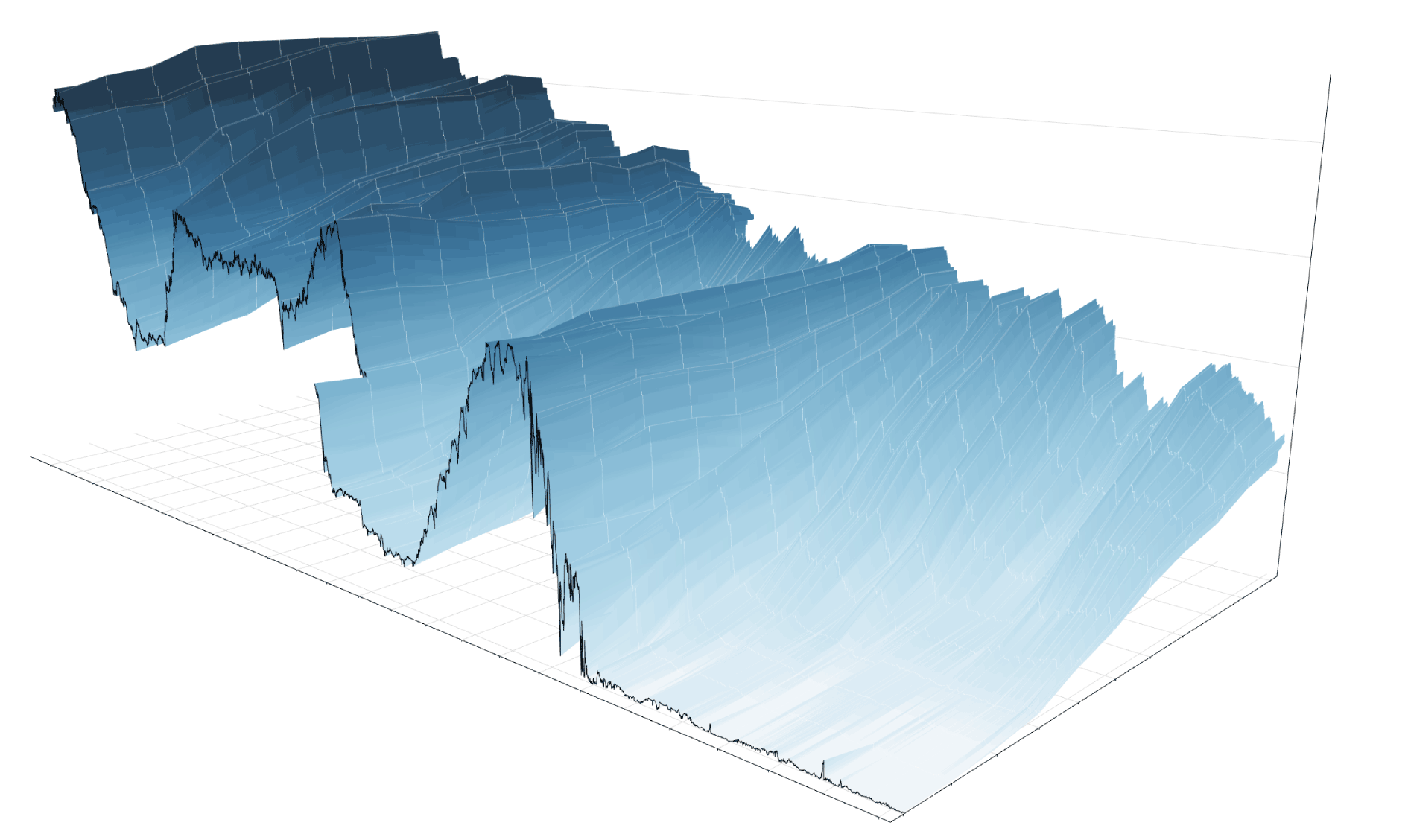
The yield curve shows how much it costs the federal government to borrow money for a given amount of time, revealing the relationship between long- and short-term interest rates.

It is, inherently, a forecast for what the economy holds in the future — how much inflation there will be, for example, and how healthy growth will be over the years ahead — all embodied in the price of money today, tomorrow and many years from now.

***

3-d

A 3-D View of a Chart That Predicts The Economic Future

***

More:

Conclusion

Your thoughts and comments on this ME-P are appreciated. Feel free to review our top-left column, and top-right sidebar materials, links, URLs and related websites, too. Then, subscribe to the ME-P. It is fast, free and secure.

Speaker: If you need a moderator or speaker for an upcoming event, Dr. David E. Marcinko; MBA – Publisher-in-Chief of the Medical Executive-Post – is available for seminar or speaking engagements. Contact: MarcinkoAdvisors@msn.com

OUR OTHER PRINT BOOKS AND RELATED INFORMATION SOURCES:

Comprehensive Financial Planning Strategies for Doctors and Advisors: Best Practices from Leading Consultants and Certified Medical Planners(TM)

Front Matter with Foreword by Jason Dyken MD MBA

logos

“BY DOCTORS – FOR DOCTORS – PEER REVIEWED – FIDUCIARY FOCUSED”

***

Understanding The Federal Reserve Act

Join Our Mailing List

[By Staff Reporters]

Uncovering The FED

In the early 20th century, a financial crisis led panicked citizens to withdraw all their money at once, damaging banks. By 1913, Congress responded with the Federal Reserve Act, creating 12 regional banks acting as a federal bank to deal in local and global affairs with both private banks and the federal government.

Balancing v. Manipulation

Some say the Fed was meant to create a balanced economy, while others argue its purpose was to inorganically manipulate free enterprise, rescuing banks that we’d be better off without.

Assessment

Is the Fed still doing its job today? What secrets are being kept from us and how are the Fed’s actions impacting our economy?

Channel Surfing the ME-P

Have you visited our other topic channels? Established to facilitate idea exchange and link our community together, the value of these topics is dependent upon your input. Please take a minute to visit. And, to prevent that annoying spam, we ask that you register. It is fast, free and secure.

Conclusion

Your thoughts and comments on this ME-P are appreciated. Feel free to review our top-left column, and top-right sidebar materials, links, URLs and related websites, too. Then, subscribe to the ME-P. It is fast, free and secure.

Speaker: If you need a moderator or speaker for an upcoming event, Dr. David E. Marcinko; MBA – Publisher-in-Chief of the Medical Executive-Post – is available for seminar or speaking engagements. Contact: MarcinkoAdvisors@msn.com

OUR OTHER PRINT BOOKS AND RELATED INFORMATION SOURCES:

Product Details  Product Details