More Ideas to Help [Medical] Entrepreneurs

David Cummings on Startups

After giving a tour of the Atlanta Tech Village last week to a C-level executive of a local Fortune 500 company, he asked, enthusiastically, how he could help out. I cited the normal ways like mentoring, hearing curated pitches from startups (see One Way Government Can Help Startups), and spreading the word about the innovation taking place in their own backyard. Then, he asked something else that stuck with me: what are some other ideas you’re considering to help entrepreneurs?

Here are a few more ideas to help entrepreneurs and startups:

  • Host a weekly/monthly AMA (ask me anything) in-person where a successful entrepreneur answers questions (straight Q&A)
  • Lead a regular webinar that’s open to anyone with a different entrepreneurship topic each week (e.g. product management, engineering, sales, marketing, fundraising, etc.)
  • Facilitate an entrepreneur bootcamp program
  • Run more programs to help founders meetup, internship fairs, and domain expert roundtables

Ultimately, increasing the…

View original post 20 more words

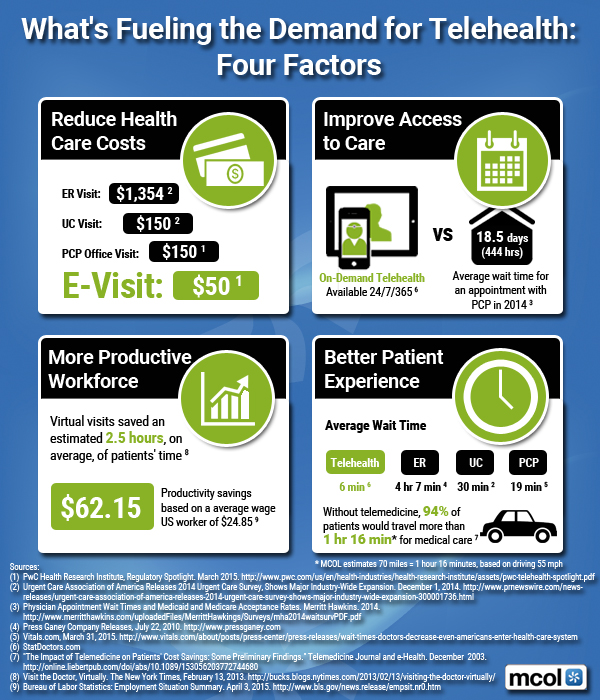
What’s Fueling the Demand for Tele-Health Today?

Join Our Mailing List

The Four Key Factors

By http://www.MCOL.com

tele health

Conclusion

Your thoughts and comments on this ME-P are appreciated. Feel free to review our top-left column, and top-right sidebar materials, links, URLs and related websites, too. Then, subscribe to the ME-P. It is fast, free and secure.

Speaker: If you need a moderator or speaker for an upcoming event, Dr. David E. Marcinko; MBA – Publisher-in-Chief of the Medical Executive-Post – is available for seminar or speaking engagements. Contact: MarcinkoAdvisors@msn.com

OUR OTHER PRINT BOOKS AND RELATED INFORMATION SOURCES:

Product DetailsProduct Details

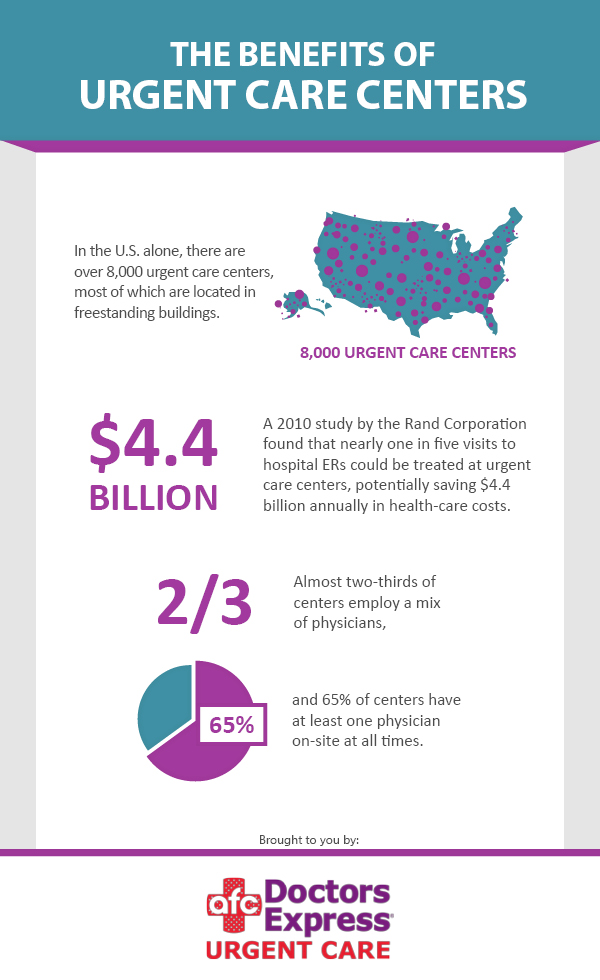
On Urgent Care Centers and Retail Medical Clinics

Join Our Mailing List 

And the Convenient Care Association

[By Dr. David Edward Marcinko MBA]

DEM blueThe Convenient Care Association [CCA] is comprised of companies, medical providers and healthcare systems that provide patients and consumers with accessible, [urgent], affordable and quality healthcare in retail-based locations.

The CCA works primarily to enhance and sustain the growth of the convenient care industry through sharing of best practices and common standards of operation.

urgent urgent

The CCA was founded in October 2006 and the first Convenient Care Clinics [CCCs] opened in 2000. The industry grew quickly since then.

Today there are approximately 1,060 clinics in operation, and CCA member clinics represent more than 95% of the industry.

To date, CCCs have served more than 3.5 million patients with its nurse practitioners [NPs] and physician assistants [PAs]. With this rapid expansion, and projected continued growth, it quickly became clear that the shared concerns and needs of both providers and patients could best be served through an association that allowed for:

  • Sharing best practices, common standards of operation, experiences and ideas.
  • Developing common standards of operation to ensure the highest quality of care.
  • A united voice to advance the needs of CCCs and their customers
  • A unified effort to promote the concept of CCCs, and to respond to questions about this evolving industry.
  • Reaching out to the existing medical community and creating new partnerships.
  • Building synergies with traditional medical service providers.

Assessment

The Public Health Management Corporation [PHMC], a nonprofit public health institute, provides executive management and administrative support for the Convenient Care Association.

urg 2

Conclusion

Your thoughts and comments on this ME-P are appreciated. Feel free to review our top-left column, and top-right sidebar materials, links, URLs and related websites, too. Then, subscribe to the ME-P. It is fast, free and secure.

Speaker: If you need a moderator or speaker for an upcoming event, Dr. David E. Marcinko; MBA – Publisher-in-Chief of the Medical Executive-Post – is available for seminar or speaking engagements. Contact: MarcinkoAdvisors@msn.com

OUR OTHER PRINT BOOKS AND RELATED INFORMATION SOURCES:

Product Details

Product DetailsProduct Details

Emotional Intelligence [EQ] in Medicine

Join Our Mailing List 

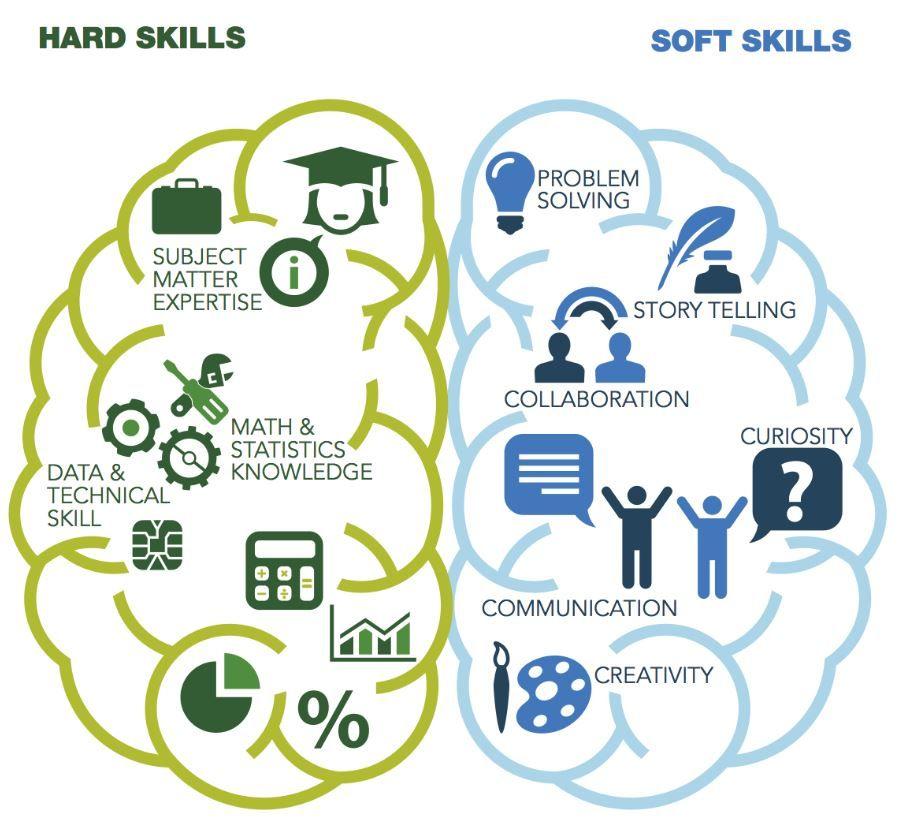
The Five Basic Non-Cognitive Competencies

[By Render S. Davis MHA CHE]

[By Dr. David Edward Marcinko MBA]

DEM white shirt

Many of us have encountered a person who may intellectually be at upper levels, but whose ability to interact with others appears to that of one who is highly immature.

This is the individual who is prone to becoming angry easily, verbally attacks co-workers, is perceived as lacking in compassion and empathy, and cannot understand why it is difficult to get others to cooperate with them and their agendas

[THINK: Sheldon Cooper PhD D.Sc MA BA of the The Big Bank Theory TV show].

Enter Daniel Goleman

The concept of Emotional Intelligence [EQ] was brought into the public domain when Daniel Goleman authored a book entitled, Emotional Intelligence.”

According to Goleman, emotional intelligence consists of four basic non-cognitive competencies: self awareness, social awareness, self management and social skills. These are skills which influence the manner in which people handle themselves and their relationships with others.  Goleman’s position was that these competencies play a bigger role than cognitive intelligence in determining success in life and in the workplace.

***

robo

***

Five Domains

He and others contend that emotional intelligence involves abilities that may be categorized into five domains:

  • Self awareness: Observing and recognizing a feeling as it happens.
  • Managing emotions: Handling feelings so that they are appropriate; realizing what is behind a feeling; finding ways to handle fears and anxieties, anger and sadness.
  • Motivating oneself; Channeling emotions in the service of a goal; emotional self control; delaying gratification and stifling impulses.
  • Empathy: Sensitivity to others’ feelings and concerns and taking their perspective appreciating the differences in how people feel about things.
  • Handling relationships: Managing emotions in others; social competence and social skills.

Source: Emotional Intelligence: what is and why it matters” – Cary Cherniss, PhD, presented at the annual conference of the Society of Industrial and Organizational Psychology, April 2000.

The Importance of Emotional Intelligence in the Workplace

Mike Poskey, in “The Importance of Emotional Intelligence in the Workplace.” continued his definition by stating that emotional intelligence is considered to involve emotional empathy; attention to, and discrimination of one’s emotions; accurate recognition of one’s own and others’ moods; mood management or control over emotions; response with appropriate emotions and behaviors in various life situations (especially to stress and difficult situations); and balancing of honest expression of emotions against courtesy, consideration, and respect.

***

head

***

A Set of Competencies

In 1995, Goleman then expanded on the works of Howard Gardner, Peter Salovey and John Mayer. He further defined Emotional Intelligence as a set of competencies demonstrating the ability one has to recognize his or her behaviors, moods and impulses and to manage them best, according to the situation.

Channel Surfing the ME-P

Have you visited our other topic channels? Established to facilitate idea exchange and link our community together, the value of these topics is dependent upon your input. Please take a minute to visit. And, to prevent that annoying spam, we ask that you register. It is fast, free and secure.

More:

***

Assessment

So, how does all this relate to medical practice today? Please … do tell us!

Conclusion

Your thoughts and comments on this ME-P are appreciated. Feel free to review our top-left column, and top-right sidebar materials, links, URLs and related websites, too. Then, subscribe to the ME-P. It is fast, free and secure.

About the Co-Author

Render Davis was a Certified Healthcare Executive, now retired from Crawford Long Hospital at Emory University, in Atlanta, GA He served as Assistant Administrator for General Services, Policy Development, and Regulatory Affairs from 1977-95.  He is a founding board member of the Health Care Ethics Consortium of Georgia and served on the consortium’s Executive Committee, Advisory Board, Futility Task Force, Strategic Planning Committee, and chaired the Annual Conference Planning Committee, for many years.  

Speaker: If you need a moderator or speaker for an upcoming event, Dr. David E. Marcinko; MBA – Publisher-in-Chief of the Medical Executive-Post – is available for seminar or speaking engagements. Contact: MarcinkoAdvisors@msn.com

OUR OTHER PRINT BOOKS AND RELATED INFORMATION SOURCES:

Comprehensive Financial Planning Strategies for Doctors and Advisors: Best Practices from Leading Consultants and Certified Medical Planners(TM)* 8

Product Details

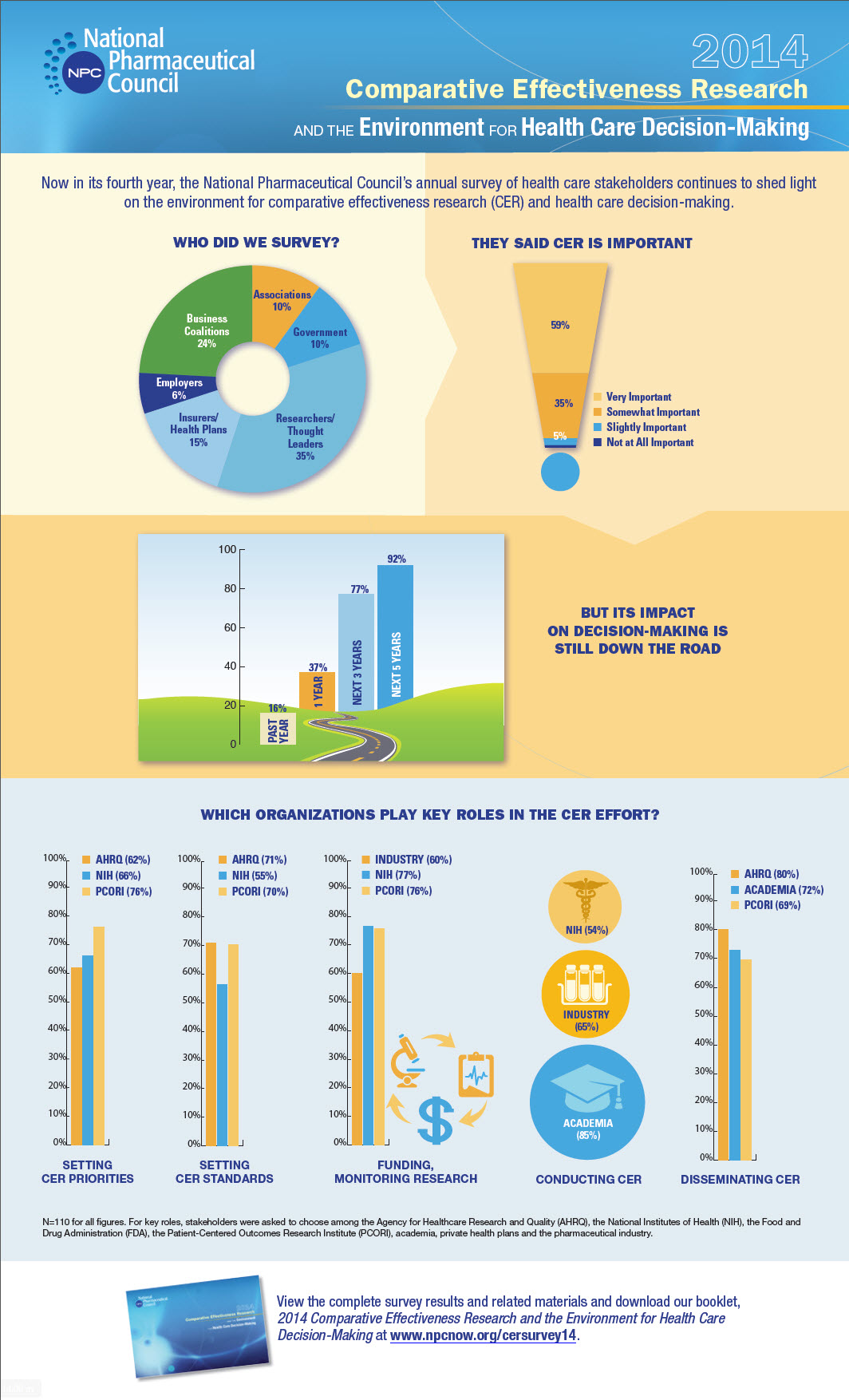
NPCs Info-Graphic on Comparative Effectiveness Research

Join Our Mailing List

National Pharmaceutical Council

[By Staff Reporters]

The National Pharmaceutical Council’s fourth annual survey of health care stakeholders sheds some light on the environment for comparative effectiveness research (CER) and health care decision-making.

***

CER-Survey

***

Questions

  • How important is CER?
  • Which organizations play key roles in the CER effort?
  • How long will it take to see the impact of CER on decision making?

Assessment

Find the answers to these questions and more in this info graphic. (Source: National Pharmaceutical Council, 2014)

Channel Surfing the ME-P

Have you visited our other topic channels? Established to facilitate idea exchange and link our community together, the value of these topics is dependent upon your input. Please take a minute to visit. And, to prevent that annoying spam, we ask that you register. It is fast, free and secure.

More:

Conclusion

Your thoughts and comments on this ME-P are appreciated. Feel free to review our top-left column, and top-right sidebar materials, links, URLs and related websites, too. Then, subscribe to the ME-P. It is fast, free and secure.

Speaker: If you need a moderator or speaker for an upcoming event, Dr. David E. Marcinko; MBA – Publisher-in-Chief of the Medical Executive-Post – is available for seminar or speaking engagements. Contact: MarcinkoAdvisors@msn.com

OUR OTHER PRINT BOOKS AND RELATED INFORMATION SOURCES:

Product DetailsProduct Details

Why Healthcare is F@#Ked !

Join Our Mailing List

And … What I Learned at The Wharton School of Business

Edward Bukstel

By Edward Bukstel

ME-P SPECIAL REPORT

***

What I Learned at The Wharton School of Business and Why Healthcare is F@#Ked !

***

Business%20Optimization

***

Channel Surfing the ME-P

Have you visited our other topic channels? Established to facilitate idea exchange and link our community together, the value of these topics is dependent upon your input. Please take a minute to visit. And, to prevent that annoying spam, we ask that you register. It is fast, free and secure.

More:

Conclusion

Your thoughts and comments on this ME-P are appreciated. Feel free to review our top-left column, and top-right sidebar materials, links, URLs and related websites, too. Then, subscribe to the ME-P. It is fast, free and secure.

Speaker: If you need a moderator or speaker for an upcoming event, Dr. David E. Marcinko; MBA – Publisher-in-Chief of the Medical Executive-Post – is available for seminar or speaking engagements. Contact: MarcinkoAdvisors@msn.com

OUR OTHER PRINT BOOKS AND RELATED INFORMATION SOURCES:

Product DetailsProduct Details

“Crowd-Sourced” Health Predictions for 2015

Join Our Mailing List

The “Gift of Wonder” Flip Book

A SPECIAL ME-P REPORT

[Download and share your free copy]

GG_HiRes1

 By Gautam Gulati MD

Gosh. What a year it’s been!

2014 was a wild ride filled with the unexpected, unimaginable, and unusual. And you know what? I wouldn’t have had it any other way.

So what’s in store for 2015?

All the healthcare futurists and pundits are taking stabs at predictions with the odds of a poorly played roulette table.  In reality your guess is as good as mine. So I decided to have some fun with it this year and opened up predictions to the community-at-large.

The results are finally in

So, to all those who have inspired me over the years to do the unimaginable, the impossible, and the unusual, I say thank you and offer you a small token of appreciation to stir your sense of wonder and curiosity into the New Year.

Please accept this “Gift of Wonder”a crowdsourced flip book of the community’s wildest predictions for health in 2015.

I hope you enjoy it and I wish you all an unusual new year full of hope, wonder, and curiosity! Please pass-it-on and pay-it-forward!

With sincere admiration for all my readers and supporters who inspire me everyday.

***

Giving a Gift of Wonder

Crowdsourced Health Predictions for 2015 (download and share your free copy)

***

About the Curator

Channel Surfing the ME-P

Have you visited our other topic channels? Established to facilitate idea exchange and link our community together, the value of these topics is dependent upon your input. Please take a minute to visit. And, to prevent that annoying spam, we ask that you register. It is fast, free and secure.

More:

Conclusion

Your thoughts and comments on this ME-P are appreciated. Feel free to review our top-left column, and top-right sidebar materials, links, URLs and related websites, too. Then, subscribe to the ME-P. It is fast, free and secure.

Speaker: If you need a moderator or speaker for an upcoming event, Dr. David E. Marcinko; MBA – Publisher-in-Chief of the Medical Executive-Post – is available for seminar or speaking engagements. Contact: MarcinkoAdvisors@msn.com

OUR OTHER PRINT BOOKS AND RELATED INFORMATION SOURCES:

 Product DetailsProduct Details

Product Details

About Crowd-Med [Case Review Service]

***
CMP logo
***
DR. DAVID EDWARD MARCINKO MBA
[By ME-P Staff Reporters]

CrowdMed Company Background

CrowdMed purports to harnesses the wisdom of crowds to collaboratively solve even the world’s most difficult medical cases quickly and accurately online.

The company offers individuals, insurance providers, and self-insured corporate customers the ability to more quickly diagnose medical conditions and reduce healthcare costs without compromising care.

***

152_1

***

The results speak for themselves?

Since launching publicly in April 2013, CrowdMed has helped solve hundreds of medical cases for patients around the world, and this number is quickly growing as word spreads of the new service. On average, these patients had been sick for 8 years, seen 8 doctors, and incurred more than $50,000 in medical expenses. Despite the difficulty of their cases, more than half of these patients tell us that the crowd successfully brought them closer to a correct diagnosis or cure.

Anyone can submit a case on the CrowdMed website for free (with a $50 refundable deposit), or along with a cash compensation offer to draw more attention to their case. They use incentives to increase participation, and the overall quality and confidence levels of suggested diagnoses. Thousands of people with diverse backgrounds in medicine, health care, education and research have already joined the crowd, and they are continually recruiting new medical and disease experts to help solve cases.

During early testing of the CrowdMed platform, the founder [Jared] submitted his own sister’s [Carly] anonymous case information to the crowd to test the system. More than 300 people participated, evaluating the same symptoms that had been provided to Carly’s original doctors. In just three days, the crowd gave Jared their answer: Fragile X-associated primary ovarian insufficiency

Founded by veteran technology entrepreneur Jared Heyman and based in San Francisco, CA, CrowdMed has received more than $2.4 million in funding from some of Silicon Valley’s top venture capital firms including NEA, Andreessen Horowitz, Greylock Partners, SV Angel, Khosla Ventures and Y Combinator. The company’s advisors have founded and run some the world’s most successful online healthcare companies including WebMD. CrowdMed graduated from Y Combinator’s Winter 2013 class, and was officially launched during the TEDMED 2013 conference in Washington DC.

You can read more about CrowdMed’s leadership team click here.

More:

  1. Will Future Doctors Need a Medical License?
  2. Is Medical Licensing Really Necessary?
  3. On Replacing Doctors with Computers and Smart Phones 

Assessment

Check em’ out today: http://blog.crowdmed.com

Channel Surfing the ME-P

Have you visited our other topic channels? Established to facilitate idea exchange and link our community together, the value of these topics is dependent upon your input. Please take a minute to visit. And, to prevent that annoying spam, we ask that you register. It is fast, free and secure.

Conclusion

Your thoughts and comments on this ME-P are appreciated. Feel free to review our top-left column, and top-right sidebar materials, links, URLs and related websites, too. Then, subscribe to the ME-P. It is fast, free and secure.

Speaker: If you need a moderator or speaker for an upcoming event, Dr. David E. Marcinko; MBA – Publisher-in-Chief of the Medical Executive-Post – is available for seminar or speaking engagements. Contact: MarcinkoAdvisors@msn.com

OUR OTHER PRINT BOOKS AND RELATED INFORMATION SOURCES:

Product DetailsProduct DetailsProduct Details

Product DetailsProduct Details

About Theranos

What is Is – How it Works

[By Staff Reporters]

The next time your doctor recommends a blood test, you may be able to swing by your local Walgreens. You can have your finger pricked and receive results within four hours. The process of blood testing has remained the same since the 1960s. Doctors and nurses drawing vials of blood, from you, that are sent to labs leaving patients waiting for results for days or weeks.

***

theranos

***

Enter Theranos

Theranos is a privately held health technology and medical laboratory services company based in Palo Alto, California that provides blood tests. The company’s blood testing platform uses a few drops of blood obtained via a fingerstick rather than vials of blood obtained via traditional venipuncture, using microfluidics technology.

Link: http://en.wikipedia.org/wiki/Theranos

Founder Elizabeth Holmes

At 30, Elizabeth Holmes makes her debut on the Forbes 400 as the youngest self-made woman billionaire. She dropped out her sophomore year of Stanford University to found Palo Alto, Calif.-based blood testing company Theranos in 2003 with money she saved for college. With a painless prick, her labs can quickly test a drop of blood at a fraction of the price of commercial labs which need more than one vial. Theranos has raised $400 million from venture capitalists, valuing the company at $9 billion, and Holmes’ 50% stake at $4.5 billion. She has assembled a stellar board that includes elder statesmen George Shultz and Henry Kissinger. Last year, Walgreens, the largest U.S. retail pharmacy chain, with more than 8,100 stores, announced plans to roll out Theranos Wellness Centers inside its pharmacies.

Link: http://news.therawfoodworld.com/walgreens-implements-new-technology-uses-just-one-drop-blood-run-dozens-tests/

***

blood test

***

Conclusion

Your thoughts and comments on this ME-P are appreciated. Feel free to review our top-left column, and top-right sidebar materials, links, URLs and related websites, too. Then, subscribe to the ME-P. It is fast, free and secure.

Speaker: If you need a moderator or speaker for an upcoming event, Dr. David E. Marcinko; MBA – Publisher-in-Chief of the Medical Executive-Post – is available for seminar or speaking engagements. Contact: MarcinkoAdvisors@msn.com

OUR OTHER PRINT BOOKS AND RELATED INFORMATION SOURCES:

Product DetailsProduct Details

Today is World Mental Health Day 2014

Join Our Mailing List 

World Federation for Mental Health

[By Dr. David Edward Marcinko MBA CMP™]

dem2World Mental Health Day was established in 1992 by the World Federation for Mental Health.

In some countries around the world, it forms just one part of the larger Mental Illness Awareness Week.

A Range of Issues

Mental health problems, ranging from issues like depression and anxiety disorders to conditions like schizophrenia, affect millions of people around the world.

In fact, according to current statistics, 1 in 4 people will experience some kind of mental health problem during their lifetime and many more will see friends of family members affected.

The Cause

The purpose of World Mental Health Day is to raise awareness of mental health issues, increase education on the topic and attempt to eliminate the stigma attached. It is hoped that this, in turn, will encourage sufferers to seek help and support.

***

world-mental-health-day

***

Assessment

A number of fundraising events take place globally, so why not check if there is an event happening near you and show your support for this serious issue?

More:

Conclusion

Your thoughts and comments on this ME-P are appreciated. Feel free to review our top-left column, and top-right sidebar materials, links, URLs and related websites, too. Then, subscribe to the ME-P. It is fast, free and secure.

Speaker: If you need a moderator or speaker for an upcoming event, Dr. David E. Marcinko; MBA – Publisher-in-Chief of the Medical Executive-Post – is available for seminar or speaking engagements. Contact: MarcinkoAdvisors@msn.com

OUR OTHER PRINT BOOKS AND RELATED INFORMATION SOURCES:

Product DetailsProduct Details

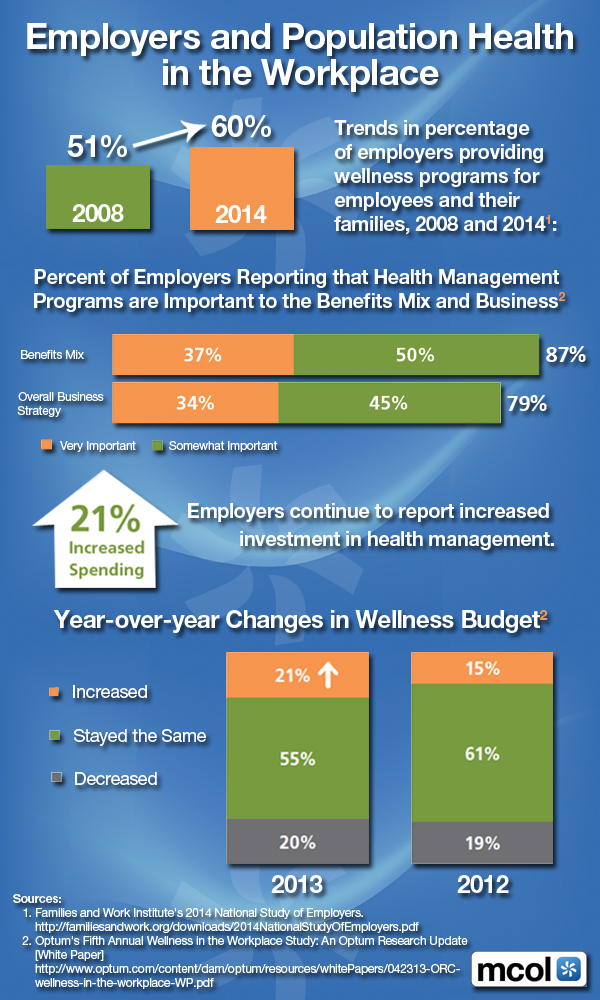
Employers and Population Health

Join Our Mailing List

In the Domestic Workplace

By http://www.MCOL.com

Population Health

 Conclusion

Your thoughts and comments on this ME-P are appreciated. Feel free to review our top-left column, and top-right sidebar materials, links, URLs and related websites, too. Then, subscribe to the ME-P. It is fast, free and secure.

Speaker: If you need a moderator or speaker for an upcoming event, Dr. David E. Marcinko; MBA – Publisher-in-Chief of the Medical Executive-Post – is available for seminar or speaking engagements. Contact: MarcinkoAdvisors@msn.com

OUR OTHER PRINT BOOKS AND RELATED INFORMATION SOURCES:

Product DetailsProduct Details

Retail Spending Therapy – Even for Doctors!

Join Our Mailing List 

More Than Just Shopping?

[By Rick Kahler CFP® http://www.KahlerFinancial.com]

Rick Kahler CFP“It’s not just shopping, it’s retail therapy.”

As a bumper sticker or a joke between friends, this may be amusing. For those who shop to relieve stress, it’s not nearly so funny.

Medicating or soothing painful feelings with money is no healthier a behavior than medicating with alcohol or food. When stressed or in difficult circumstances, some people drink, some people eat, and some people shop.

My Experience

I have worked with several people with extreme forms of this behavior, who described their spending clearly as an addiction. It gave them a physical “high” similar to that experienced by an alcoholic or drug addict. Like other addictions, it had destructive consequences, such as creating overwhelming debt, draining life savings, destroying relationships, and even stealing from family members or employers.

Using spending as a medicator does not always show up in such dramatic ways, however. Even people who seem to live moderately and manage money responsibly can be “therapy shoppers” who spend in order to make themselves feel better.

Case Example:

When I first met Dr. Alexandra, for example, she was single, in her 40s, with a well-paying job as a local hospitalist and substantial net worth. She was investing part of her income, was current on all her financial obligations, and had only a modest amount of debt. She was certainly not spending beyond her means or jeopardizing her future security. She didn’t appear to be in any financial difficulty.

When we looked at her budget, however, the doctor was clearly uncomfortable with some of her spending habits. Instead of simply reassuring her that she was managing her money well and not overspending, I explored this issue with her. Eventually I brought up the possibility that she might be medicating her difficult job emotions with spending. It was an “aha” moment for her. She told me, “I’ve been doing that for years.”

Alexandra’s problem wasn’t the amount she spent. It was the reasons behind her spending. If she had a stressful day at work, she would go to the mall, in much the same way another person might stop at a bar for a couple of drinks on the way home. Shopping, finding bargains, and buying herself gifts were unthinking actions she used to soothe herself when she was upset.

***

Frenzy

***

She never stopped to ask herself whether she needed, had a use for, or even wanted the things she bought. She didn’t spend more than she could afford, but she was spending time as well as money unproductively. She was also cluttering her house and her life with clothes she didn’t wear, knickknacks she didn’t care about, and gadgets she didn’t use.

Once she realized the emotional reason for her shopping, Alexandra was able to find more constructive ways to deal with stress. She learned that a conversation with a friend, writing in her journal, meditating, or taking a walk could serve the same purpose as a trip to the mall and were healthier responses to difficult days.

Modifying Behavior

For Alexandra, recognizing that she was using shopping to soothe her emotions was enough to help her change. Others, whose behavior is more deeply ingrained, might find change more difficult. In some cases, they might benefit greatly from working with a psychologist, financial therapist or other counselor with the expertise to help them look at the emotions underlying their spending patterns.

Assessment

If you think you may be using spending to deal with stress, it’s important to look beyond the numbers. The main issue isn’t whether your “retail therapy” is affordable or whether it is causing serious financial difficulties. If a pattern of spending is creating discomfort for you, it may be a good idea to explore what’s behind that spending. 

Conclusion

Your thoughts and comments on this ME-P are appreciated. Feel free to review our top-left column, and top-right sidebar materials, links, URLs and related websites, too. Then, subscribe to the ME-P. It is fast, free and secure.

Speaker: If you need a moderator or speaker for an upcoming event, Dr. David E. Marcinko; MBA – Publisher-in-Chief of the Medical Executive-Post – is available for seminar or speaking engagements. Contact: MarcinkoAdvisors@msn.com

OUR OTHER PRINT BOOKS AND RELATED INFORMATION SOURCES:

Product DetailsProduct DetailsProduct Details

Product Details  Product Details

Product Details

On Money Anxiety?

Join Our Mailing List

Even … While the Housing and Market Indicators are Recovering!

By Rick Kahler MS CFP® http://www.KahlerFinancial.com

Rick Kahler CFPTwo economic indicators suggest that the US economy is recovering from the recession.

The housing market is almost back to 2006 levels in most areas of the country. We’ve also seen record highs for the Dow Jones stock index.

The Money Magazine Survey

Yet, according to a recent survey by Money magazine, many people still feel anxious about their finances. They may be more optimistic about their own current circumstances, but still worry about their future or about the economy in general.

This continued anxiety despite a rosier economic outlook may not seem logical. When you take a closer look, however, it makes perfect sense.

Why the Anxiety?

For one thing, people who suffered job losses, foreclosures, or other financial setbacks during the recession haven’t necessarily recovered emotionally even if they have recovered economically. Like other traumatic life experiences, painful financial experiences can leave lasting emotional damage.

In addition, even those not directly affected financially by the recession were affected emotionally by the alarming economic headlines. Our brains have evolved to react to threats with immediate action, so these news reports triggered a fearful urge to “Do something now!” Unfortunately, some investors panicked and “did something” by selling out of the stock market at the bottom. This may have reduced their anxiety in the short term, but it increased anxiety in the long term as they wrestled with when to get back into the market. Even some who did nothing still experience a lingering sense of anxiety and stress.

Still Filled with Angst

Now that the news is better, though, why aren’t we over all that angst?

For one thing, our brains don’t respond to good economic news in the same immediate way they do to fear-inducing news. A headline like “Dow hits record high” doesn’t give our brains a jolt of happy hormones equal to the shot of fear we get from “Dow hits new low.”

What we do relate to personally are changes that affect us directly, like cash in our pockets, a pay raise, or an observable increase in our purchasing power. Many people aren’t necessarily seeing those affects right now.

Example:

To illustrate this, two of the most significant economic indicators—the housing market and the stock market—don’t affect the vast majority of us on a daily basis. Unless you are buying or selling a home, you don’t really notice or care about real estate values. Gas, food, and consumer goods prices affect the average household the most.

The same is true for the stock market. Some 53% of Americans don’t have any money invested in stocks at all. Even if you do, an increase in the overall value of your retirement account isn’t likely to change your immediate cash flow. And if you haven’t received a raise in several years or can’t find a good job, your reaction to news of a record stock market high is likely to be, “So what? Things still aren’t that good for me.”

To reduce anxiety, then, what we really need is an improvement in our personal circumstances. That change may be a tangible financial one like finding a better job or getting a raise.

***

Money Anxiety

***

Assessment

It also can be a change in focus. You might choose to pay less attention to things you can’t control, like news reports about the economy. This gives your brain less exposure to information that feeds its fear. Another option might be to focus on what you can do: building up an emergency fund, paying down debt, or cutting spending in order to contribute more to a retirement account. In that way, you can turn anxiety in your favor, using it as a motivator to improve your financial situation.

Related:

Conclusion

Your thoughts and comments on this ME-P are appreciated. Feel free to review our top-left column, and top-right sidebar materials, links, URLs and related websites, too. Then, subscribe to the ME-P. It is fast, free and secure.

Link: http://feeds.feedburner.com/HealthcareFinancialsthePostForcxos

Speaker: If you need a moderator or speaker for an upcoming event, Dr. David E. Marcinko; MBA – Publisher-in-Chief of the Medical Executive-Post – is available for seminar or speaking engagements. Contact: MarcinkoAdvisors@msn.com

OUR OTHER PRINT BOOKS AND RELATED INFORMATION SOURCES:

Product Details  Product Details

Modern Office Management Skills for Savvy Physicians

Join Our Mailing List

“Learning” about The Business of Medical Practice in Modernity

By Ann Miller RN MHA

www.BusinessofMedicalPractice.com

###

Medical Business Advisors

###

Product DetailsProduct DetailsProduct Details

###

LEXICONS: http://www.springerpub.com/Search/marcinko
PHYSICIANS: www.MedicalBusinessAdvisors.com
PRACTICES: www.BusinessofMedicalPractice.com
HOSPITALS: http://www.crcpress.com/product/isbn/9781466558731
CLINICS: http://www.crcpress.com/product/isbn/9781439879900
ADVISORS: www.CertifiedMedicalPlanner.org
BLOG: www.MedicalExecutivePost.com

###

Some Modern Issues Impacting Hospital Revenue Cycles

Join Our Mailing List

By Carol S. Miller RN CPM MHA

By Dr. David Edward Marcinko MBA CMP™

Carol S. Miller “Collectively the healthcare industry spends over $350 Billion to submit and process claims while still working with cumbersome workflows, inefficient processes, and a changing landscape marked by increasing out-of-pocket cost for patients as well as increasing operating costs.”

The Norm Continues Downhill

For many years hospitals and healthcare organizations have struggled to maintain and improve their operating margins.  They continue to face a widening gap between their operating costs and the revenues required to cover not only current costs, but also to finance strategic growth initiatives and investments.

Faced with increased operational costs and associated declines in rates of reimbursement, many healthcare hospital executives and leaders are concerned that they will not achieve margin targets.  To stabilize the internal financial issue, some hospital have focused on lowering expenses in order to save costs – an area they control and an area that will show an immediate impact; however, that is not the best solution.

Beware Cost Reductions

Hospital executives are concerned with the effect that these reductions may have on patient quality and service.  Finding ways to maximize workflow to lower operating costs is vital.  Every dollar not collected negatively impacts short- and long term capital projects, lowers patient satisfaction scores and possibly affects quality of patient care.

Status Today

Hospitals, healthcare organizations and all medical providers are under great pressure to collect revenue in order to remain solvent. And so, here are some of the issues impacting the modern hospital revenue cycle as Obama-Care, or the PP-ACA of 2010, is launched next month?

Issues Impacting the Revenue Cycle

Several of the major leading issues facing the revenue cycle are:

  • Impact of Consumer-driven Health – This process has emerged as a new approach to the traditional managed care system, shifting payment flows and introducing new “non-traditional” parties into the claims processing workflow.  As market adoption enters the mainstream, consumer-driven health stands to alter the healthcare landscape more dramatically than anything we have seen since the advent of managed care.  This process places more financial responsibility on the consumer to encourage value-drive healthcare spending decisions.
  • Competing high-priority projects –Hospitals are feeling pressured to maximize collections primarily because they know changes are coming down the pike due to healthcare reform and they know they will need to juggle these major initiatives along with the day-to-day revenue cycle operations.
  • Lack of skilled resources in several areas – Hospital have struggled to find the right personnel with sufficient knowledge of project management, clinical documentation improvement, coding and other revenue cycle functions, resulting in inefficient operations.
  • Narrowing margins – Declines in reimbursement are forcing hospitals to look at their organization to determine if they can increase efficiencies and automate to save money.  Hospitals are faced with the potential of increased cost to upgrade and adapt clinical software while not meeting budget projections.  There are a number of factors contributing to the financial pressure including inefficient administrative processes such as redundant data collection, manual processes, and repetitive rework of claims submissions.  Also included are organizations using outdated processes and legacy technologies.
  • Significant market changes – Regardless of what happens with the Patient Protection and Affordable Care Act, hospitals will have to deal with fluctuating amounts of insured and uninsured patients and variable payments.
  • Limited access to capital – With the trend towards more complex and expensive systems, industry may not have the internal resources and funding to build and manage these systems that keep pace with the trends.
  • Need to optimize revenue – There are five core areas hospitals have to examine carefully and they are:
    • ICD-10 – This is an entirely new coding and health information technology issue but is also a revenue issues
    • System integration – Hospitals need to look at integrating software and hardware systems that can combine patient account billing, collections and electronic health records.
    • Clinical documentation – Meaningful use will require detailed documentation in order for payment to be made and this is another revenue issue.
    • Billing and claims management – Reducing denials and reject claims, training staff, improving point-of-service collections and decreasing delays in patient billing can improve the revenue cycle productivity,
    • Contract analysis – Hospitals need to focus more on negotiating rates with insurers in order to increase revenue.

Hospital

Conclusion

Your thoughts and comments on this ME-P are appreciated. Feel free to review our top-left column, and top-right sidebar materials, links, URLs and related websites, too. Then, subscribe to the ME-P. It is fast, free and secure.

Speaker: If you need a moderator or speaker for an upcoming event, Dr. David E. Marcinko; MBA – Publisher-in-Chief of the Medical Executive-Post – is available for seminar or speaking engagements. Contact: MarcinkoAdvisors@msn.com

OUR OTHER PRINT BOOKS AND RELATED INFORMATION SOURCES:

Product Details

Product DetailsProduct Details

***

More ME-P Industry Leading “WORKING WHITE-PAPERS”

Join Our Mailing List

OUR INDUSTRY “WORKING WHITE-PAPER” KNOWLEDGE SERIES … for only $99 each!

By Ann Miller RN MHA

[ME-P Executive Director]

At the ME-P working white-paper and iMBA Knowledge Center, we bring to life health administration best practices for BDs, RIAs, consulting firms, private equity and mutual fund companies, institutional wealth managers, physician-executives, administratrors, CXOs, hospitals and clinics, and large financial planning and business management firms.

Books

Certified Medical Planner

###

Therefore, as part of the combined ME-P and iMBA Research Library®, we highly recommend these Working White-Papers [WW-Ps] on various business management principles of the healthcare industry.

Topics: https://medicalexecutivepost.com/wp-content/uploads/2009/02/imba-inc-firm-services.pdf

Sample: http://certifiedmedicalplannerdotorg1.files.wordpress.com/2012/03/summary-white-paper-topics2.pdf

Checklists: https://medicalexecutivepost.com/office-checklists-on-cd-rom/

PayPal: Only $99 each.

ORDER HERE: MarcinkoAdvisors@msn.com

More Info

https://medicalexecutivepost.com/white-papers/

Business%20Optimization

Upcoming Webinars and Health Administration Essays around the Net

Join Our Mailing List

By Staff Reporters

Some Topics of Interest for ME-P Readers

###

US capitol

###

Assessment

Enjoy these informative private sector and government publications.

Conclusion

Your thoughts and comments on this ME-P are appreciated. Feel free to review our top-left column, and top-right sidebar materials, links, URLs and related websites, too. Then, subscribe to the ME-P. It is fast, free and secure.

Link: http://feeds.feedburner.com/HealthcareFinancialsthePostForcxos

Speaker: If you need a moderator or speaker for an upcoming event, Dr. David E. Marcinko; MBA – Publisher-in-Chief of the Medical Executive-Post – is available for seminar or speaking engagements. Contact: MarcinkoAdvisors@msn.com

OUR OTHER PRINT BOOKS AND RELATED INFORMATION SOURCES:

Health Dictionary Series: http://www.springerpub.com/Search/marcinko

Practice Management: http://www.springerpub.com/product/9780826105752

Physician Financial Planning: http://www.jbpub.com/catalog/0763745790

Medical Risk Management: http://www.jbpub.com/catalog/9780763733421

Hospitals: http://www.crcpress.com/product/isbn/9781439879900

Physician Advisors: www.CertifiedMedicalPlanner.org

Product DetailsProduct DetailsProduct Details

Product Details  Product Details

Product DetailsProduct Details

Why Hospitals Should Use Financial Management Checklists

Join Our Mailing List

Financial Management Strategies for Hospital and Healthcare Organizations [Tools, Techniques, Checklists and Case Studies]

By Neil H. Baum MD

Dr. BaumIt is fitting that ME-P Editor Dr. David Edward Marcinko MBA CMP™ and his fellow experts, have laid out a plan of action in Financial Management Strategies for Hospital and Healthcare Organizations: Tools, Techniques, Checklists and Case Studies that physicians, nurse-executives, administrators and institutional Chief Executive Officers, Chief Financial Officers, MBAs, lawyers and healthcare accountants can follow to help move healthcare financial fitness forward during these unchartered waters.

In medicine – It all began with Dr. Atul Gawande, a surgeon at Massachusetts General Hospital, who reviewed the airline industry and their use of checklists prior to take off of an airplane.

The history of aviation checklists began in 1934 when Boeing was in the final process of testing a U.S. Army fighter plane with a potential contract of nearly 200 planes riding on the final test of the plane. The test aircraft made a normal taxi and takeoff. It began a smooth climb, but then suddenly stalled. The aircraft turned on one wing and fell, bursting into flames upon impact killing two of the test pilots. The investigation found pilot error as the cause. One of the pilots who was unfamiliar with the aircraft had neglected to release the elevator lock prior to take off. The contract with Boeing was in jeopardy.

Thus, the pilots sat down and put their heads together. What was needed was some way of making sure that everything to prevent crashes was being done; that nothing was overlooked. What resulted was a pilot’s checklist developed before takeoff, during flight, before landing, and after landing. These checklists for the pilot and co-pilot made sure that nothing was forgotten and safety of the planes was insured.

Medical Care and Hospitals

So, what does airline safety have to with medical care and hospitals?

There are so many activities that take place in medicine such as the operating room, that are far too complicated to be left to memory of doctors, nurses, anesthesiologists, and others involved in the surgical care of patients.  Dr. Gawande identified the key components of a surgical procedure which include the name of the patient, the procedure to be performed, the estimated length of the procedure, whether the right or left side is the surgical target, how much blood loss is anticipated, whether antibiotics have been given prior to making the incision, and the anesthetic risk of the patient.  This use of a checklist which takes approximately 30 seconds has not only prevented wrong side surgery but also instills a discipline of higher performance.

###

Financial Management Strategies for Hospitals and Healthcare Organizations

Financial Management Strategies for Hospitals and Healthcare Organizations: Tools, Techniques, Checklists and Case Studies

###

From the Clinic to the Boardroom

And so, should [can] we port the clinical checklist example of Atul Gawande for use with non-clinical topics like hospital financial management and administration?

Assessment

Yes – We have a challenge and the Financial Management Strategies for Hospital and Healthcare Organizations: Tools, Techniques, Checklists and Case Studies is a step in the direction to make all of the stakeholders in the healthcare arena become sensitive to reducing and controlling costs and at the same time preserve quality of care.

This can be done.  I suggest you start by reading, using and referring to this excellent book.

And so, what is my final advice? Read the Book!

Some of you who will read this book are CXOs COOs, Chief Medical Officers and maybe even COS. (Chiefs of Staff). But, all of you should become CLOs (Chief Life Officers)!  Read this book and the initials CLO will appear after your name!

Note:

Neil H. Baum MD is a Clinical Associate Professor of Urology at the Tulane Medical School, New Orleans, LA. He is also a thought-leader for this ME-P. 

Conclusion

Your thoughts and comments on this ME-P are appreciated. Feel free to review our top-left column, and top-right sidebar materials, links, URLs and related websites, too. Then, subscribe to the ME-P. It is fast, free and secure.

Speaker: If you need a moderator or speaker for an upcoming event, Dr. David E. Marcinko; MBA – Publisher-in-Chief of the Medical Executive-Post – is available for seminar or speaking engagements. Contact: MarcinkoAdvisors@msn.com

OUR OTHER PRINT BOOKS AND RELATED INFORMATION SOURCES:

Product DetailsProduct DetailsProduct Details

Product DetailsProduct Details

Are Doctors NOW Members of the Middle Class?

In OR Out?

By Dr. David Edward Marcinko MBA CMP®

By Rick Kahler MS CFP® ChFC CCIM

Rick Kahler CFPThe middle class Marketers target it. Politicians champion it. Economists talk about it. Most of us consider ourselves part of it. FAs want to serve it.

Yet, when I’ve asked for a clear definition, I have not found anybody yet that really can tell me what “middle class” is.

Definition

I recently posted on Twitter that $90,000 was a middle-class household income and that it would take a nest egg of $3 million to generate that income in retirement.

A couple of my colleagues responded that my figures were way too high and accused me of being out of touch. As a lifelong South Dakotan, I’m used to being seen as “out of touch,” but the idea that $90,000 was beyond a middle-class income intrigued me.

I figured a few minutes with Google would point me to a definition of “middle class.” It wasn’t that simple. I soon discovered that neither politicians, nor economists, sociologists, nor financial advisors can agree on what makes someone middle class. It is a little easier to define a middle class income.

USA Today

I did find an excellent article in USA Today by Dan Horn of the Cincinnati Inquirer. He cited three surveys that attempted to define the middle class by income. The Pew Charitable Trust describes it as the middle 20%, an income range from $32,900 to $64,000. The U.S. Census Bureau disagrees.

They say a middle class income is the middle 60%, an income range of $20,600 to $102,000. The U.S. Department of Commerce begs to differ with both and says an income between $50,800 and $122,000 puts you in the middle class. Combining the income range of the three studies ($20,600 to $122,000) puts two-thirds of all income earners in the middle class.

My Personal POV

For me, defining middle class with such a broad income range just raises more questions than it answers.

First of all, the same income that will provide a comfortable middle-class lifestyle in a place like the Black Hills of South Dakota won’t necessarily do the same in San Francisco or Boston.

Second, if you want to assure yourself of a middle-class income throughout your lifetime, you apparently have to get rich.

Concept of expensive education - dollars and diploma

Case Model

Let’s assume a young couple, both allied healthcare professionals, earn $45,000 each for a household income of $90,000. Let’s assume they want to save enough to provide a similar income in retirement without counting on Social Security. To generate that income, with a 99% certainty they will never run out of money, how much will they need to save?

While financial advisors’ responses will vary, most will agree this couple would need between $2 million and $4 million in today’s dollars. Let’s settle on $3 million. If they each saved $1,000 monthly to 401k’s (about 25% of their salaries), our young couple could save $6,600,000 million ($3 million in today’s dollars adjusted for inflation) by the time they reached age 65.

However, while a couple needs $3 million to produce a middle-class income, someone with a net worth of $3 million is in the financial top 2% of Americans. That’s hardly middle class.

And to complicate things further, Gallup polls have shown that most Americans think anyone with a net worth of $1 million is rich. Yet having $1 million when you retire will generate a secure lifetime income of $30,000. So the net worth that we define as wealthy provides an income that we define as barely middle class.

More:

Assessment

Confused yet? I certainly am. There’s just one thing I’m still sure of. If you want a middle-class lifestyle after you retire, what you’d better do now is live a modest middle-class lifestyle so you can save enough to qualify as rich.

Conclusion

And so, are doctors members of the middle class – in potential retirement income under this model? Your thoughts and comments on this ME-P are appreciated. Feel free to review our top-left column, and top-right sidebar materials, links, URLs and related websites, too. Then, subscribe to the ME-P. It is fast, free and secure.

Link: http://feeds.feedburner.com/HealthcareFinancialsthePostForcxos

Speaker: If you need a moderator or speaker for an upcoming event, Dr. David E. Marcinko; MBA – Publisher-in-Chief of the Medical Executive-Post – is available for seminar or speaking engagements. Contact: MarcinkoAdvisors@msn.com

OUR OTHER PRINT BOOKS AND RELATED INFORMATION SOURCES:

DICTIONARIES: http://www.springerpub.com/Search/marcinko
PHYSICIANS: www.MedicalBusinessAdvisors.com
PRACTICES: www.BusinessofMedicalPractice.com
HOSPITALS: http://www.crcpress.com/product/isbn/9781466558731
CLINICS: http://www.crcpress.com/product/isbn/9781439879900
BLOG: www.MedicalExecutivePost.com
FINANCE: Financial Planning for Physicians and Advisors
INSURANCE: Risk Management and Insurance Strategies for Physicians and Advisors

Product Details  Product Details

Product DetailsProduct Details

Doubting the Accountable Care Organization B-Model

New Healthcare Business Model or Edsel Model?

Join Our Mailing List 

By David Edward Marcinko MBA http://www.CertifiedMedicalPlanner.org

[Publisher-in-Chief]

Dr. Marcinko with ME-P FansDefined by Professor Michael Porter at Harvard Business School, value is defined as a function of outcomes and costs. Therefore to achieve high value we must deliver the best possible outcomes in the most efficient way, outcomes which matter from the perspective of the individual receiving healthcare and not provider process measures or targets.

Sir Muir Gray expanded on the idea of technical value (outcomes/costs) to specifically describe ‘personal value’ and ‘allocative value’, encouraging us to focus also on shared decision making, individual preferences for care and ensuring that resources are allocated for maximum value.

Healthcare Value and ACOs

According to our Medical Executive-Post Health Dictionary Series of administrative terms http://www.HealthDictionarySeries.org  and health economist and colleague Robert James Cimasi MHA, ASA, AVA CMP™ of www.HealthCapital.com; an ACO is a healthcare organization in which a set of providers, usually large physician groups and hospitals, are held accountable for the cost and quality of care delivered to a specific local population.

ACOs aim to affect provider’s patient expenditures and outcomes by integrating clinical and administrative departments to coordinate care and share financial risk.

ACO Launch

Since their four-page introduction in the PP-ACA of 2010, ACOs have been implemented in both the Federal and commercial healthcare markets, with 32 Pioneer ACOs selected (on December 19, 2011), 116 Federal applications accepted (on April 10, 2012 and July 9, 2012), and at least 160 or more Commercial ACOs in existence today.

Federal Contracts

Federal ACO contracts are established between an ACO and CMS, and are regulated under the CMS Medicare Shared Savings Program (MSSP) Final Rule, published November 2, 2011.  ACOs participating in the MSSP are accountable for the health outcomes, represented by 33 quality metrics, and Medicare beneficiary expenditures of a prospectively assigned population of Medicare beneficiaries.

If a Federal ACO achieves Medicare beneficiary expenditures below a CMS established benchmark (and meets quality targets), they are eligible to receive a portion of the achieved Medicare beneficiary expenditure savings, in the form of a shared savings payment.

Commercial Contracts

Commercial ACO contracts are not limited by any specific legislation, only by the contract between the ACO and a commercial payor.

In addition to shared savings models, Commercial ACOs may incentivize lower costs and improved patient outcomes through reimbursement models that share risk between the payor and the providers, i.e., pay for performance compensation arrangements and/or partial to full capitation.

Although commercial ACOs experience a greater degree of flexibility in their structure and reimbursement, the principals for success for both Federal ACOs and Commercial ACOs are similar.

###

Eidsel

Dr. David E. Marcinko with 1960 Ford Edsel

[© iMBA, Inc. All rights reserved, USA.]

[The Edsel was an automobile marque that was planned, developed, and manufactured by the Ford Motor Company during the 1958, 1959, and 1960 model years. With the Edsel, Ford had expected to make significant inroads into the market share of both General Motors and Chrysler and close the gap between itself and GM in the domestic American automotive market. But, contrary to Ford’s internal plans and projections, the Edsel never gained popularity with contemporary American car buyers and sold poorly. The Ford Motor Company lost millions of dollars on the Edsel’s development, manufacturing and marketing].

More:


Update

Junking the Merit-Based Incentive Payment System (MIPS) would undoubtedly let the proverbial air out of the MACRA balloon, dealing a significant blow to the value-based reimbursement shift; right?

Assessment

Although nearly any healthcare enterprise can integrate and become an ACO, larger enterprises, may be best suited for ACO status.

Larger organizations are more able to accommodate the significant capital requirements of ACO development, implementation, and operation (e.g., healthcare information technology), and sustain the sufficient number of beneficiaries to have a significant impact on quality and cost metrics.

Conclusion

But, will this new B-Model work? Isn’t leading doctors in a shared collaborative effort a bit like herding cats? And, what about patients, HIEs, outcomes management, data analytics and … Population Health via our colleague David B. Nash MD MBA of Thomas Jefferson University, often considered the “father” of Pop Health?

OR, what about the developing IRS scandal and full PP-ACA launch in 2014? Will it affect federal funding, full roll-out, or even repeal of the entire Act?

Your thoughts and comments on this ME-P are appreciated. Feel free to review our top-left column, and top-right sidebar materials, links, URLs and related websites, too. Then, subscribe to the ME-P. It is fast, free and secure.

Link: http://feeds.feedburner.com/HealthcareFinancialsthePostForcxos

Speaker: If you need a moderator or speaker for an upcoming event, Dr. David E. Marcinko; MBA – Publisher-in-Chief of the Medical Executive-Post – is available for seminar or speaking engagements. Contact: MarcinkoAdvisors@msn.com

OUR OTHER PRINT BOOKS AND RELATED INFORMATION SOURCES:

DICTIONARIES: http://www.springerpub.com/Search/marcinko
PHYSICIANS: www.MedicalBusinessAdvisors.com
PRACTICES: www.BusinessofMedicalPractice.com
HOSPITALS: http://www.crcpress.com/product/isbn/9781466558731
CLINICS: http://www.crcpress.com/product/isbn/9781439879900
BLOG: www.MedicalExecutivePost.com
FINANCE: Financial Planning for Physicians and Advisors
INSURANCE: Risk Management and Insurance Strategies for Physicians and Advisors

Product DetailsProduct Details

Health 2.0 Financial Planning for Medical Executive-Post Members

A By-Product of Health 2.0?

By Dr. David Edward Marcinko FACFAS MBA CMP*

[Founder and CEO]

www.MedicalBusinessAdvisors.com

Dr David E Marcinko MBAA decade ago, Editor Gregory J. Kelley of Physician’s MONEY DIGEST and I reported that a 47 year old-doctor with $184,000 annual income would need about $5.5 million dollars for retirement at age 65. Then came the “flash-crash’ of 2007-08, the home mortgage fiasco and the Patient Protection and Accountable Care Act [PP-ACA] of 2010; etc.

No wonder that medical provider career panic is palpable. Much like the new medical home concept, the idea of holistic life planning was born.

Life Planning

Life planning has many detractors and defenders. Formally, life planning has been defined in the following way. 

Financial Life Planning is an approach to financial planning that places the history, transitions, goals, and principles of the client at the center of the planning process.  For the client, their life becomes the axis around which financial planning develops and evolves.

But, for physicians, life planning’s quasi-professional and informal approach to the largely isolated disciplines of medically focused financial planning, was still largely inadequate.

Why? 

Today’s personal financial and practice environment is incredibly more complex than it was in 2007-08, as economic stress from HMOs, Wall Street, liability fears, criminal scrutiny from government agencies, IT mischief from hackers, economic benchmarking from hospitals and the lost confidence of patients all converged to inspire a robust new financial planning 2.0 approach for medical professionals.

Example of a financial planning mistake 

Recall the tale of Dr. Debasis Kanjilal, a pediatrician from New York who put more than $500,000 into the dot.com company, InfoSpace, upon the advice of Merrill Lynch’s star but non fiduciary analyst Henry Bloget.

Is it any wonder that when the company crashed, the analyst was sued, and Merrill settled out of court? Other analysts, such as Mary Meeker of Morgan Stanley, Dean Witter and Jack Grubman from Salomon Smith Barney, were involved in similar fiascos.

Although sad, this story is a matter of public record. Hopefully, doctors now understand that the big brokerage houses that underwrite and recommend stocks may have credibility problems, and that physicians got burned with the adrenalin rush of “self-directed” investment portfolios.

Example of a medical practice management mistake 

Just reflect a moment on colleagues willing to securitize their medical practices a few years ago, and cash out to Wall Street for perceived riches that were not rightly deserved

Where are firms such as MedPartners, Phycor, FPA and Coastal now? A recent survey of the Cain Brothers Physician Practice Management Corporation Index of publicly traded PPMCs revealed a market capital loss of more than 95%, since inception. 

Another Approach?

This disruptive narrative shift was formally noted by the Institute of Medical Business Advisors Inc [iMBA, Inc] and introduced to the medical and financial services industry. This research and corpus of work resulted in hundreds of publications in the Library of Medicine, National Institute of Health (NIH) and the Library of Congress, along with related publications, a dozen textbooks and white papers

http://www.ncbi.nlm.nih.gov/nlmcatalog?term=marcinko

The iMBA approach to financial planning, as championed by the www.CertifiedMedicalPlanner.org professional charter designation, integrates the traditional concepts of fiduciary focused financial planning, with the increasing complex business concepts of medical practice management.

The former ideas are presented in our textbook on financial planning for doctors: Financial Planning for Physicians and Advisors

The later in our companion book: Business of Medical Practice [Edition 3.0]

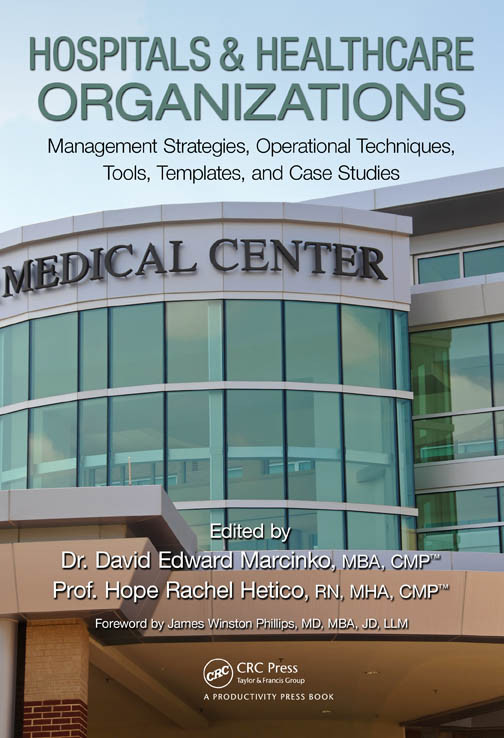
A textbook for hospital CXOs and physician-executives: Hospitals & Healthcare Organizations

While most issues of risk management, liability and insurance are found in Risk Management and Insurance Strategies for Physicians and Advisors

And, for the perplexed, all definitions are codified in the dictionary glossary Health Dictionary Series

Health 2.0 Paradigm Shift

And so, the ME-P community now realizes that a more integrated approach is needed.  The traditional vision of medical practice management, personal physician financial planning and how they may look in the future are rapidly changing as the retail mentality of medicine is replaced with a wholesale philosophy.

Or, how views on maximizing current practice income might be more profitably sacrificed for the potential of greater wealth upon eventual practice sale and disposition.

Or, how Yale University economist Robert J Shiller warns in “The New Financial Order” [Risk in the 21st Century] that the risk for choosing the wrong healthcare profession or specialty might render physicians obsolete by technological changes, managed care systems or fiscally unsound demographics. 

Physician-Executive

My Assessment

Yet, the opportunity to re-vise the future at any age through personal re-engineering, exists for all of us, and allows a joint exploration of the medicine, business and the meaning and purpose of life.

To allow this deeper and more realistic approach, the advisor and the doctor must build relationships based on fiduciary trust, greater self-knowledge and true medical business and financial enhancement acumen.

Are you up to the task?

Conclusion

Your thoughts and comments on this ME-P are appreciated. Feel free to review our top-left column, and top-right sidebar materials, links, URLs and related websites, too. Then, subscribe to the ME-P. It is fast, free and secure.

Link: http://feeds.feedburner.com/HealthcareFinancialsthePostForcxos

Speaker: If you need a moderator or speaker for an upcoming event, Dr. David E. Marcinko; MBA – Publisher-in-Chief of the Medical Executive-Post – is available for seminar or speaking engagements. Contact: MarcinkoAdvisors@msn.com

OUR OTHER PRINT BOOKS AND RELATED INFORMATION SOURCES:

Product DetailsProduct DetailsProduct Details

Product Details  Product Details

Product DetailsProduct Details

Appreciating Early Results of the Health 2.0 Initiative

Join Our Mailing List

In Population Health and Patient Self Management

Jennifer TomasikBy Jennifer Tomasik MS

By Carey Huntington

By Fabian Poliak

www.CFAR.com

Despite the growth in Health 2.0 interaction over the past few years, we still see Health 2.0 in its infancy relative to the potential it holds for activating patients in managing and being more accountable for their own health. There is further hard evidence that its strategies are already improving patients’ quality of life, expanding providers’ expertise, and helping health systems and payors financially.

On Patient Self Management

And, if Health 2.0 can, as discussed elsewhere on this ME-P, enable people to reduce smoking, become physically fit, and more actively participate with their providers in the management of chronic disease, we posit that these things combine to result in a better sense of health and wellbeing for those involved.

One would logically conclude that these kinds of interventions result in fewer interactions with the healthcare system, an issue that Harrison et al tackled in a study earlier this year that was published in Population Health Management. It looked at the relationship between self-reported individual wellbeing and future healthcare utilization and cost. They found that higher self-reported wellbeing was associated with fewer hospitalizations, visits to the emergency room, and use of medications.

Overall, the authors concluded that improving wellbeing (or what we would refer to as a perceived sense of health) holds tremendous promise in reducing future use of healthcare services and the costs associated with that care[i]. We see Health 2.0 as an effective way to enable people to improve their wellbeing and suggest that its impact will continue to mount over time in terms of better outcomes and reduced cost.

Health 2.0 Offerings

Health 2.0 offerings are looking at a variety of ways to measure their impact beyond cost and quality. The Collaborative Chronic Care Network, for example, is reporting on number of participants, response rates via text, and pilot projects undertaken, but not yet on clinical or financial impact of its patient partnerships. Even well-known companies, like Patients LikeMe, are not currently reporting their specific impact on influencing organizations and institutions in healthcare to drive toward standards of care and other cost-reduction solutions—rather, they are reporting their impact on individual lives, through testimonials on the power of connection. Their vision of results rings true for many components and actors in Health 2.0:

We envision a world where information exchange between patients, doctors, pharmaceutical companies, researchers, and the healthcare industry can be free and open; where, in doing so, people do not have to fear discrimination, stigmatization, or regulation; and where the free flow of information helps everyone. We envision a future where every patient benefits from the collective experience of all, and where the risk and reward of each possible choice is transparent and known.[ii]

This description does not mention economics, but it also does not mention illness. And we know that clients of companies like ShapeUp are working in the background compiling their own estimates of the savings that these programs and other interventions are likely to have on their healthcare costs. This is the kind of data that will “triangulate” out to other organizations and help build momentum for Health 2.0.

###

Achievement

From Sickness to Health

As we shift from a system that addresses sickness to one that promotes health, we may experience that the more interesting promise of Health 2.0 is less about economics and more about accelerating a sweeping cultural shift that focuses our collective and individual energy on wellness. We know that tools alone—the supports that can help catalyze behavior change—will not be totally responsible for the change in outlook.

But, the tools and other supports in Health 2.0 will serve as some of the key catalysts, ushering in a new era that foregrounds prevention, wellness, and better management of chronic disease, and works to reduce the economic burden on health systems, governments, and individuals themselves. 

Assessment 

Conclusion

Your thoughts and comments on this ME-P are appreciated. Feel free to review our top-left column, and top-right sidebar materials, links, URLs and related websites, too. Then, subscribe to the ME-P. It is fast, free and secure.

Link: http://feeds.feedburner.com/HealthcareFinancialsthePostForcxos

About the Authors

Jennifer Tomasik is a Principal at CFAR, a boutique management consulting firm specializing in strategy, change and collaboration. Jennifer has worked in the health care sector for nearly 20 years, with expertise in strategic planning, large-scale organizational and cultural change, public health, and clinical quality measurement. She leads CFAR’s Health Care practice. Jennifer has a Master’s in Health Policy and Management from the Harvard School of Public Health. Her clients include some of the most prestigious hospitals, health systems and academic medical centers in the country.

Carey Huntington and Fabian Poliak both work in CFAR’s Health Care practice.

Speaker: If you need a moderator or speaker for an upcoming event, Dr. David E. Marcinko; MBA – Publisher-in-Chief of the Medical Executive-Post – is available for seminar or speaking engagements. Contact: MarcinkoAdvisors@msn.com

OUR OTHER PRINT BOOKS AND RELATED INFORMATION SOURCES:


[i] Harrison PL, Pope JE, Coberley CF, Rula EY. “Evaluation of the Relationship Between Individual Well-Being and Future Health Care Utilization and Cost.” Population Health Management 2012;15(00).

[ii] “Corporate FAQ – What is the future of healthcare in a PatientsLikeMe world?” PatientsLikeMe. Online. Accessed 12 Oct 2012. <http://www.patientslikeme.com/help/faq/Corporate&gt;

Product Details

Contribute to the ME-P

Join Our Mailing List

By Ann Miller RN MHA

[Executive-Director]

Contributors

The Medical Executive-Post is written by contributors that represent a range of professional expertise.  From PhDs, MDs, DDSs, FAs, CPAs, MBAs, CFPs and CMPs, RNs etc; becasue managing a medical practice, clinic or healthcare business, and tracking one’s personal financial career is a complex and difficult task.

So, we have asked physicians, practice managers, CXOs and financial services industry participants and leaders to provide advice, experience and insight.

Link: ME-P MAST HEAD

Want to Join Us?

Have something important to add – join us.

Link: Why Post Your e-Content or Print Publish with Us?

We welcome your comments and if you would like to become a featured author just complete the reply form below and we will contact you.

Crowd-Sourced Print Examples of Our Text Books

Product DetailsProduct DetailsProduct Details

Product Details Product Details

Product Details

Our Newest Textbook Release

Buy from Amazon

Learn How to Profit and Thrive in the PP-ACA Era

BOOK FOREWORD / TESTIMONIAL

Do You Value Your Time, Doctor?

Join Our Mailing List

Just Think Like an Entrepreneur

By Rick Kahler MS CFP® ChFC CCIM

This Monday [9/24] morning I got up at 6:30 am. I took a hot shower, turned on the sprinkler to water the lawn, cooked an omelet for breakfast, put the dishes in the dishwasher, read The Wall Street Journal on my iPad while I enjoyed a cup of espresso, and answered five questions from my staff and clients via email. Then I got into my car and drove five miles to arrive at work at 7:45 am.

Technology

The point here isn’t that there’s anything exciting about my morning routine. It’s to emphasize how much our current technology allows one person to do in 75 ordinary minutes. Some of what I do every day, like getting to work in ten minutes or reading an East Coast newspaper the same day it’s published, would have taken hours or days to accomplish 100 years ago.

Time

One of the greatest benefits we all receive from new inventions, discoveries, technology, and tools is time. The most valuable commodity a dollar can buy is time. Time to do what we want, when we want to do it … Time that allows us to easily provide for our day-to-day needs and frees us to develop and use our own particular skills.

Thanks

Who do we have to thank for that gift of time? The entrepreneurs [medical, healthcare and others]. Through their inventions and services, successful entrepreneurs don’t just make it possible for us to live more comfortably and have easy access to more goods and services. They create more time for all of us.

Politicians

According to many politicians, the real problem with America is its entrepreneurs. If all those business people just paid more taxes, focused less on profitability, hired more people, and spent more money, all our problems would be solved.

I would suggest the opposite is true. Entrepreneurs are actually what is right with America. Instead of demonizing them, our politicians should support them in every manner possible. Entrepreneurs are the reason for our nation’s relatively high standard of living.

Disdain of entrepreneurs shows an ignorance of how a successful economy works. Production drives an economy. Show me a nation where the government produces most of the goods and services, and I will show you a nation in poverty. Cuba comes to mind.

Government

Certainly, governments do have an important role to play. They provide services and infrastructure that support and encourage entrepreneurship. To do so, governments must take a portion of the production of their citizens by requiring them to pay taxes. Therefore, citizens must sell their labor, goods, and services to acquire the country’s currency with which to pay their tax obligations.

A government must strike a fine balance in the amount of productivity it takes from its citizens and what it leaves them. Taking too much risk killing the golden goose of productivity. If entrepreneurs decide that what is left after paying taxes is not worth their capital, time, and risk, they will expend less effort and become less productive. Some will even move to countries that encourage productivity.

Assessment

According to Adam Smith, “The real price of everything, what everything really costs to the man who wants to acquire it, is the toil and trouble of acquiring it.”

The work of entrepreneurs like Alexander Graham Bell, Thomas Edison, and Bill Gates continually reduces the toil and trouble it takes us to acquire goods and services. The enormous improvements in our standard of living over the past 100 years have come from the creativity and risk-taking of entrepreneurs. It is they who provide us with the most important form of wealth—more time to do what matters to us in our own pursuit of happiness.

Link: On Disruptive Healthcare Innovators and Financial Industry Change Agents

Conclusion

But … Who and where are the medical and healthcare entrepreneurs?

Link: About HealthSpottr.com

Your thoughts and comments on this ME-P are appreciated. Feel free to review our top-left column, and top-right sidebar materials, links, URLs and related websites, too. Then, subscribe to the ME-P. It is fast, free and secure.

Link: http://feeds.feedburner.com/HealthcareFinancialsthePostForcxos

Speaker: If you need a moderator or speaker for an upcoming event, Dr. David E. Marcinko; MBA – Publisher-in-Chief of the Medical Executive-Post – is available for seminar or speaking engagements. Contact: MarcinkoAdvisors@msn.com

Our Other Print Books and Related Information Sources:

Health Dictionary Series: http://www.springerpub.com/Search/marcinko

Practice Management: http://www.springerpub.com/product/9780826105752

Physician Financial Planning: http://www.jbpub.com/catalog/0763745790

Medical Risk Management: http://www.jbpub.com/catalog/9780763733421

Hospitals: http://www.crcpress.com/product/isbn/9781439879900

Physician Advisors: www.CertifiedMedicalPlanner.org

Product DetailsProduct DetailsProduct Details

Product Details Product Details

Product Details

About the RetireMark Planning System

Join Our Mailing List

From HealthView Services (HVS)

By Staff Reporters

According to their website, HealthView Services (HVS) is one of the only firms in the country that builds solutions for the financial services industry to address out-of-pocket health care costs that individuals will face during retirement.

Founding

HVS was founded in 2008 by a team of experienced executives who identified a serious deficiency in financial planning in relation to retirement planning. In order to fill this void, HVS founders employed a group of expert physicians, experienced actuaries, and healthcare industry programmers to develop the HVS RetireMark Planning System.

Financial Planning and Health-Risk Assessment Tools

At its core, RetireMark is a combination of financial planning and health-risk assessment tools that provide financial institutions, independent advisors, and healthcare related firms with web-based reports. These customized reports project personalized out-of-pocket healthcare costs, life expectancy, and the Income Floor—a sophisticated and revolutionary approach to income distribution for retirement protection.

Customization

HVS’s product offerings can be customized to meet each institution`s exclusive needs and be seamlessly integrated into existing marketing and branding platforms. In addition to the software, HVS provides clients with training programs, seminars, and customized presentations in order to expand sales and grow revenues.

Assessmernt

In collaboration with industry leaders such as the Retirement Income Industry Association (RIIA), HVS has developed innovative solutions to address the growing needs of investors in transition. HVS is also a regular contributor to the HealthWatch segment of Retirement Weekly, a www.MarketWatch.com publication. By partnering with such prominent organizations, the firm hopes to become a pioneer in this emerging field.

Conclusion

So, give em’ a click and tell us what you think www.hvsfinancial.com

Your thoughts and comments on this ME-P are appreciated. Feel free to review our top-left column, and top-right sidebar materials, links, URLs and related websites, too. Then, subscribe to the ME-P. It is fast, free and secure.

Link: http://feeds.feedburner.com/HealthcareFinancialsthePostForcxos

Speaker: If you need a moderator or speaker for an upcoming event, Dr. David E. Marcinko; MBA – Publisher-in-Chief of the Medical Executive-Post – is available for seminar or speaking engagements. Contact: MarcinkoAdvisors@msn.com

Our Other Print Books and Related Information Sources:

Health Dictionary Series: http://www.springerpub.com/Search/marcinko

Practice Management: http://www.springerpub.com/product/9780826105752

Physician Financial Planning: http://www.jbpub.com/catalog/0763745790

Medical Risk Management: http://www.jbpub.com/catalog/9780763733421

Hospitals: http://www.crcpress.com/product/isbn/9781439879900

Physician Advisors: www.CertifiedMedicalPlanner.org

Product DetailsProduct DetailsProduct Details

Product Details  Product Details

Product Details

How Do We Improve Collaboration between Physicians and Hospital Administrators?

Join Our Mailing List

An Opinion Poll for Doctors, FAs and Patients

By Jennifer Tomasik MS [Principal: www.CFAR.com]

“It is the long history of humankind (and animal kind, too) those who learned to collaborate and improvise most effectively have prevailed.”

– Charles Darwin

Beyond institutional mergers and joint ventures, collaboration in healthcare is being driven by other factors; there is a need to move from a healthcare system driven by volume and characterized by fragmentation, waste, high cost, and inconsistent quality to a system where care is coordinated, costs are lower, and quality is higher.

Merger Mania

Merger mania in the 1990’s was driven by similar concerns, including the fear of for-profit competition and the rise of managed care. The results of this earlier round of mergers were unexpected. The 1990s ‘consolidation fever’ raised hospital prices by at least 5%, and did not measurably improve quality.[i] Hospitals purchased physician practices without a great deal of thought about expectations and mutual accountability, and many of those relationships failed—usually with significant financial implications.

Of Savvy Healthcare Leaders

Fearful of history repeating itself, savvy healthcare leaders are thinking differently about how to develop the collaborative relationships they need to succeed today. They see Accountable Care Organizations [ACOs] and Global Payments—where institutions will take on greater risk for the cost and quality of the services a patient requires—as an opportunity to get clear about how they can best position themselves across the full continuum of care. They believe potentials gains are not likely to show up simply as a result of mergers and acquisitions or consolidation per se. Rather than just integrating the bottom lines of their institutions, they are focused on ensuring that those individuals and teams who actually care for patients can productively collaborate with each other, and that they understand the clear and compelling rationale for why that collaboration is necessary.

Nowhere is this relationship more important than between hospital administrators and the medical staff.

What is “Collaboration” Anyway?

Merriam-Webster defines collaboration as “to work jointly with others or together especially in an intellectual endeavor.” While true, we find this definition insufficient for our purposes. Our colleagues at The Rhythm of Business, a consulting firm focused exclusively on collaboration, provide a more productive way to think about collaboration:

“Collaboration is a purposeful, strategic way of working that leverages the resources of each party for the benefit of all by coordinating activities and communicating information within an environment of trust and transparency.”

We add to this definition one additional, yet critical dimension. Collaboration also means working with, and through, differences. Any highly functioning team will, by its very nature, have differences – team members are ideally bringing innovative ideas that compete for “idea space” at the table.

Effective collaboration requires that teams not only value differences, but in fact encourage them to be surfaced. Viewed in this way, collaboration is not an event or an idea. It’s not “agreeing to get along.” Effective collaboration is an ongoing, systematic, strategic process. It is also, we believe, a business imperative – and nowhere more so than in healthcare.

Assessment

Given the often difficult nature of relationships between hospital administrators and medical staff, how do you improve collaboration to increase productivity and performance?


NOTE: [i] Vogt, William B and Robert Town. “How has hospital consolidation affected the price and quality of hospital care?” Robert Wood Johnson Foundation: Policy Brief No. 9. 2006.

Conclusion

And so, how do we improve collaboration between Physicians and Hospital Administrators?

Your thoughts and comments on this ME-P are appreciated. Feel free to review our top-left column, and top-right sidebar materials, links, URLs and related websites, too. Then, subscribe to the ME-P. It is fast, free and secure.

Link: http://feeds.feedburner.com/HealthcareFinancialsthePostForcxos

About the Author

Jennifer Tomasik, Principal,  leads CFAR’s Health and Hospital Systems practice. She works with her clients to solve complex strategic and organizational challenges. Her approach to consulting emphasizes communication and collaboration, supported by a blend of quantitative and qualitative analytics. Jennifer has worked in the health care sector for nearly 15 years, with expertise in public health, clinical quality measurement, strategic management, and organizational change. Her clients include some of the most prestigious hospitals, health systems and academic medical centers in the country. She has a Master’s in Health Policy and Management from the Harvard School of Public Health.

Speaker: If you need a moderator or speaker for an upcoming event, Dr. David E. Marcinko; MBA – Publisher-in-Chief of the Medical Executive-Post – is available for seminar or speaking engagements. Contact: MarcinkoAdvisors@msn.com

Our Other Print Books and Related Information Sources:

Health Dictionary Series: http://www.springerpub.com/Search/marcinko

Practice Management: http://www.springerpub.com/product/9780826105752

Physician Financial Planning: http://www.jbpub.com/catalog/0763745790

Medical Risk Management: http://www.jbpub.com/catalog/9780763733421

Hospitals: http://www.crcpress.com/product/isbn/9781439879900

Physician Advisors: www.CertifiedMedicalPlanner.org

Buy from Amazon

The Increased Competition of Ambulatory Surgery Centers (ASCs) to US Hospitals

Join Our Mailing List

The Competition Heats Up!

By Dr. David Edward Marcinko MBA CMP™

www.CertifiedMedicalPlanner.org

[Editor-in-Chief]

Over the last 10 years, Ambulatory Surgery Centers’ (ASCs) footprints have increased dramatically.

As hospitals and health systems accelerate towards population health/ global payment models, such as Accountable Care Organizations (ACOs), lower priced ASCs will become more critical competitors to hospitals.

Assessment

I acquired the Certificate-of-Need [CON], co-founded and operated an ASC for 15 years before sale in 2000 to a public company. My local hospital fought me tooth and nail. I likely would not do so, again, today!

Conclusion

Your thoughts and comments on this ME-P are appreciated. Feel free to review our top-left column, and top-right sidebar materials, links, URLs and related websites, too. Then, subscribe to the ME-P. It is fast, free and secure.

Speaker: If you need a moderator or speaker for an upcoming event, Dr. David E. Marcinko; MBA – Publisher-in-Chief of the Medical Executive-Post – is available for seminar or speaking engagements. Contact: MarcinkoAdvisors@msn.com

OUR OTHER PRINT BOOKS AND RELATED INFORMATION SOURCES:

Product Details

Increasing Operating Room Efficiency and Flow-Thru Logistics

Achieving Better Prep, Execution, and Discharge in the OR

By Denice Soyring Higman

By Adam Higman

By Dragana Gough

http://www.soyringconsulting.com

Join Our Mailing List 

Pre-Operative Phase

The OR should run like a well-oiled machine with patients moving through each stage seamlessly as the slightest factor can have lasting negative effects.  As with most things, the process of improvement must start at the beginning with Pre-admission Preparation.  Ensuring that patient files have an up-to-date History and Physical (H&P) and Laboratory and Radiology reports, as well as financial clearance will aid in the improvement process.

Some Vital Queries

One of the keys to improving preoperative performance is involving physicians. Assess where things stand by asking these questions:

  • Is Anesthesia involved in team decision making?
  • Are Medical Staff taking an active role in throughput?
  • Is your Anesthesia staff reviewing patient charts for the next day?
  • Anesthesia staff should assess a scheduled patient when the health history suggests potential problems

Holding Area or Not?

It depends.  Most hospitals do not use holding areas for all patients, even though the areas may exist.  Typical uses for holding areas include inpatient surgery patients and anesthesia services for line insertions, etc.  For smoother transitions in the OR, you should consider elimination of multiple stops for outpatients.

Operative Phase

Operative throughput should start with an assessment of your instrument and supplies. This begins with a review of your case cart readiness, including the number of trays and instruments, used and unused.  The goal of this review is to eliminate any additional unneeded instrument counting/processing.  To avoid case delays, ensure that all materials and supplies pulled for the case are correct and your preference cards are updated.  As with any procedure, make sure that the equipment is functioning correctly and that all personnel are fully trained for the job.  Perform proper maintenance checks ahead of time and review storage and organization procedures to ensure that the equipment is readily available for the next case start time.  Unreliable items that frequently break/malfunction can have a huge effect on turnover.

Team Approach to Operating Room Turnover

It is imperative that the OR staff be ready to start on time and every person in surgery should have a part of the turnover process.  Surgeons can set the stage for expectations, especially if they are present during turnover/set-up.  Do not let them perform a disappearing act.  Work with surgeon’s office staff on scheduling issues if there continues to be a problem.  For Anesthesia, Scrub, and Circulator staff, create buy-in for quick turnover time, utilize specialty teams, if possible, publicize turnover results (monthly), and celebrate improvements.  Anesthesia can help transport patients from Holding/Day Surgery to OR and housekeeping needs to be readily available to assist with cleanup.  Nursing staff can assist with cleanup of rooms and patient transport.  The bottom line, everyone needs to pitch in whether it is in their “job description” or not.

Post-Operative Phase

To continue the momentum, make strides in post-op procedures starting with discharging from the post-anesthesia care unit (PACU).  Acute care facilities should consider discharging select, low acuity patients directly from PACU.

Pre-Order Now

We are now preparing the next edition of our book: “Healthcare Organizations” [Management Strategies, Tools, Techniques and Case Studies]. In-Process from: (c) Productivity Press 2012
http://www.crcpress.com/product/isbn/9781439879900

Conclusion

And so, your thoughts and comments on this ME-P are appreciated. Feel free to review our top-left column, and top-right sidebar materials, links, URLs and related websites, too. Then, subscribe to the ME-P. It is fast, free and secure.

Link: http://feeds.feedburner.com/HealthcareFinancialsthePostForcxos

Our Other Print Books and Related Information Sources:

Health Dictionary Series: http://www.springerpub.com/Search/marcinko

Practice Management: http://www.springerpub.com/product/9780826105752

Physician Financial Planning: http://www.jbpub.com/catalog/0763745790

Medical Risk Management: http://www.jbpub.com/catalog/9780763733421

Healthcare Organizations: www.HealthcareFinancials.com

Physician Advisors: www.CertifiedMedicalPlanner.com

Subscribe Now: Did you like this Medical Executive-Post, or find it helpful, interesting and informative? Want to get the latest ME-Ps delivered to your email box each morning? Just subscribe using the link below. You can unsubscribe at any time. Security is assured.

Link: http://feeds.feedburner.com/HealthcareFinancialsthePostForcxos

Sponsors Welcomed: And, credible sponsors and like-minded advertisers are always welcomed.

Link: https://healthcarefinancials.wordpress.com/2007/11/11/advertise

On the Genetic Information Non-Discrimination Act

Join Our Mailing List

A Review of GINA – 2008

[By Carol Miller RN MBA]

This Act prohibits the use of genetic information to make health insurance coverage determinations and in employment-related decisions.

GINA supports a patient’s privacy. Forty states have enacted legislation related to genetic discrimination in health insurance and thirty-one states have adopted laws regarding genetic discrimination in the workplace according to the National Human Genome Research Institute.

Assessment

For more info: www.genome.gov

***

UPDATE 2020

Channel Surfing the ME-P

Have you visited our other topic channels? Established to facilitate idea exchange and link our community together, the value of these topics is dependent upon your input. Please take a minute to visit. And, to prevent that annoying spam, we ask that you register. It is fast, free and secure.

Conclusion

Your thoughts and comments on this ME-P are appreciated. Feel free to review our top-left column, and top-right sidebar materials, links, URLs and related websites, too. Then, subscribe to the ME-P. It is fast, free and secure.

Speaker: If you need a moderator or speaker for an upcoming event, Dr. David E. Marcinko; MBA – Publisher-in-Chief of the Medical Executive-Post – is available for seminar or speaking engagements. Contact: MarcinkoAdvisors@msn.com

OUR OTHER PRINT BOOKS AND RELATED INFORMATION SOURCES:

Product DetailsProduct DetailsProduct Details

Variations in Medical Practice Patterns for Financial Advisors

Join Our Mailing List

Lessons Learned for both Physicians and Financial Advisors

By David K Luke MIM, Certified Medical Planner® candidate

[Physician Financial Advisor – Fee-Only]

http://www.NetWorthAdvice.com

http://www.DocFP.com

www.CertifiedMedicalPlanner.org

Physicians are constantly being trained in new techniques and methodologies, learning about new treatments and new drugs as they become available. For example, Elaine Zablocki (Zalocki, Elaine, Changing Physician Practice Patterns: Strategies for Success in a Capitated Health Care System, New York: Aspen Publishers, 1995 Print) gives examples from a physician profiling study done by Blue Cross Blue Shield of Nebraska (p 13-14).

BCBSN circa 1993

In 1993 BCBSN began to analyze data on Nebraska patients and discovered striking variations in practice patterns in different parts of the state.  One observation was that in two small rural areas there was a particularly high hospital surgical admission rates for nonmalignant gynecological conditions. Another observation was of wide variations in physician practice patterns for ENT surgical procedures such as tympanostomy tubes and surgery for nose and sinus problems. Some ENT physicians were performing three times as many procedures per patient as the average. According to medical director David Bouda, MD “our overall approach has been to take this information to the local physician group or area that seems to be different compared to others, present the data, and then have some kind of dialogue with the physicians. We say, ‘Here’s a group of physicians who seem to be exceptional in these ways – – what do you think about this?’”. The effort seems to pay off.  In the case of the high admission rates for hysterectomy cases, BDBSN saw a steady decline over 3 years. In the ENT example, questionable claims dropped markedly. The general approach to changing physician practices patterns was to take an educational approach getting physicians to pay attention to established parameters modified or created by his or her peers which would have a greater impact on health care costs than harassing the physicians over the phone regarding hospital length of stay or procedure questioning.

Defensive Doctors?

Not surprisingly, physicians often became defensive the first time they see this type of data. There is no point challenging an individual at this point. What I found interesting about the study, in spite of it being dated, was the comment that “…after all, educating physicians about practice patterns to promote better health care is a long-term process”. Are you a better doctor today then you were X years ago? Of course! Change is good even though it can be painful. Are you disingenuous because you practice medicine in a better fashion than you did years ago? Of course not! The concern would be if a practitioner doesn’t change (or worse refuses to change) in spite of being enlightened by a different method or approach.

Of the Financial Advisory Business

Enlightenment occurs in the financial advisory business as well. I started in the financial world in May of 1986  as a new recruit with my new graduate business degree working for GM of Canada in the Treasury Department. I spent time managing the foreign currency exposure, assisting the chief investment officer in the daily cash management (taking over for him while he was on vacation) and supervising the Borrowings Department at GMAC of Canada. All of these responsibilities involved making daily multiple transactions with brokers in the million dollars plus territory. In 1989 we moved our small family to Arizona so I could ply my trade as a stockbroker and help people retire successfully. Over the years the business has evolved greatly. When I got started in the trade, pretty much everything was sales commission driven. While “fee-only” existed, it was still very much in the pioneering phase with very fee practitioners. Over the years, especially beginning around 5 years ago, like the physician that observes the data in the above examples, I began to perceive that perhaps there was a better way to give advice to my clients. In the beginning I was defensive and even suspicious that these “fee-only” folks were just a little too bit self-righteous. Changing a few words from the observation of physicians above we could say:

“after all, educating financial advisors about practice patterns to promote better financial advice is a long-term process”

My Own Journey as a Financial Advisor

In 2010 I joined Net Worth Advisory Group as a fee-only advisor and have not looked back.  Am I a hypocrite because now I espouse a view and business model that is in some respects totally different then the views and business model I used 5, 10 or 20 years ago? I don’t think so.  In fact, to NOT have changed would have been the easier thing to do. I believe that following my conscience (yes, I used that self-righteous word “conscience” in this discussion) and changing to a much more client centric model, dropping thousands of dollars in retainer fees, dropping licenses that I had worked so hard to obtain, and really learning how to be a better financial planner was certainly initially a big sacrifice.

The point is … I knew I had to do it … and that was that. I believe the business model I have now is absolutely in the best interest of our clients. I wish I had this model available 23 years ago.

And today, in the medical industry, a better model is patient centered care. What an exciting opportunity, for all physicians, to reduce practice variation and pursue the grail of evidence based medicine [EBM].

NOTES: It should be noted that the “father” of medical variations may be Jack Wennberg MD, who studied prostatectomy, hysterectomy and appendectomy rates in the 1970’s and continues his work today at http://www.dartmouthatlas.org/

Conclusion

Your thoughts and comments on this ME-P are appreciated. Feel free to review our top-left column, and top-right sidebar materials, links, URLs and related websites, too. Then, subscribe to the ME-P. It is fast, free and secure.

Link: http://feeds.feedburner.com/HealthcareFinancialsthePostForcxos

Speaker: If you need a moderator or speaker for an upcoming event, Dr. David E. Marcinko; MBA – Publisher-in-Chief of the Medical Executive-Post – is available for seminar or speaking engagements. Contact: MarcinkoAdvisors@msn.com

Our Other Print Books and Related Information Sources:

Health Dictionary Series: http://www.springerpub.com/Search/marcinko

Practice Management: http://www.springerpub.com/product/9780826105752

Physician Financial Planning: http://www.jbpub.com/catalog/0763745790

Medical Risk Management: http://www.jbpub.com/catalog/9780763733421

Hospitals: http://www.crcpress.com/product/isbn/9781439879900

Physician Advisors: www.CertifiedMedicalPlanner.org

Product DetailsProduct DetailsProduct Details

Product Details  Product Details

Product Details


Too Big to Fail?

Join Our Mailing List

The 2008 Financial Crisis –OR– Ponzi Scheme?

Conclusion

And so, your thoughts and comments on this ME-P are appreciated. Please review our top-left column, and top-right sidebar materials, links, URLs and related websites, too. Then, subscribe to the ME-P. It is fast, free and secure.

Link: http://feeds.feedburner.com/HealthcareFinancialsthePostForcxos

Speaker: If you need a moderator or speaker for an upcoming event, Dr. David E. Marcinko; MBA – Publisher-in-Chief of the Medical Executive-Post – is available for seminar or speaking engagements. Contact: MarcinkoAdvisors@msn.com

Our Other Print Books and Related Information Sources:

Health Dictionary Series: http://www.springerpub.com/Search/marcinko

Practice Management: http://www.springerpub.com/product/9780826105752

Physician Financial Planning: http://www.jbpub.com/catalog/0763745790

Medical Risk Management: http://www.jbpub.com/catalog/9780763733421

Healthcare Organizations: www.HealthcareFinancials.com

Physician Advisors: www.CertifiedMedicalPlanner.com

Subscribe Now: Did you like this Medical Executive-Post, or find it helpful, interesting and informative? Want to get the latest ME-Ps delivered to your email box each morning? Just subscribe using the link below. You can unsubscribe at any time. Security is assured.

Link: http://feeds.feedburner.com/HealthcareFinancialsthePostForcxos

Sponsors Welcomed: And, credible sponsors and like-minded advertisers are always welcomed.

Link: https://healthcarefinancials.wordpress.com/2007/11/11/advertise

Product DetailsProduct DetailsProduct Details

Microsoft Corporation from Research to Development

Collaboration is the secret sauce of delivering new technologies

By Staff Reporters

Join Our Mailing List

U.K. Researcher Garners TR35 Accolade

Pioneering research into programming biology has earned a Microsoft Research scientist a prestigious TR35 award, presented by Technology Review.

BC at MSFT RC

Andrew Phillips, a 34-year-old scientist who leads the Biological Computation group at Microsoft Research Cambridge, received the award, given each year by Technology Review to recognize the world’s top innovators under the age of 35. The awards span energy, medicine, computing, communications, nanotechnology, and other fields.

Link: http://research.microsoft.com/en-us/news/features/phillipstr35-082311.aspx

How they do it?

Here is a glimpse at the transfer of ideas and research that happens every day at Microsoft.

Source: blogs.technet.com

Assessment

Now, here is a thought from a former physician Microsoftie on our own ME-P and iMBA Inc, achievements.

Link: https://medicalexecutivepost.com/2008/02/29/ahmad-hashem-md-phd

Conclusion

Your thoughts and comments on this ME-P are appreciated. Feel free to review our top-left column, and top-right sidebar materials, links, URLs and related websites, too. Then, subscribe to the ME-P. It is fast, free and secure.

Speaker: If you need a moderator or speaker for an upcoming event, Dr. David E. Marcinko; MBA – Publisher-in-Chief of the Medical Executive-Post – is available for seminar or speaking engagements. Contact: MarcinkoAdvisors@msn.com

OUR OTHER PRINT BOOKS AND RELATED INFORMATION SOURCES:

Product Details

Revisiting Mobile Phone Health Concerns

Mobile Tumor Link Drops-Out

Join Our Mailing List

[By Staff Reporters]

These days nearly everything gives you cancer, except mobile phones, apparently.

Suspicions of a link between brain tumors and mobile phone use have existed for some time. And, if for no other reason, it just seems ill-advised to hold a device that functions with the grace of electromagnetic radiation right next to your brain.

Specious Suspicions?

The reason why these suspicions haven’t graduated into a verifiable link is that mobile phones use non-ionizing radiation, a form of radiation that does not have enough energy to ionize and directly corrupt human DNA to bring about cancer …  in the way that, say planking on the Fukushimapower plant would.

However, at the same time, prolonged exposure to this non-ionizing radiation does pose a risk to the areas of tissue that absorb the energy.

###

###

This infographic neatly explains why the debate is so difficult to win.

Assessment

Skeptics of the link between mobile phones and brain tumors almost have to argue there isn’t any evidence, let alone proof, which is always terribly difficult; while advocates must prove a relationship between two phenomena that develops over a long period of time for only a percentage of a population.

So doctors, what do you think?

Source: anarchius.org

Conclusion     

And so, your thoughts and comments on this ME-P are appreciated. Feel free to review our top-left column, and top-right sidebar materials, links, URLs and related websites, too. Then, subscribe to the ME-P. It is fast, free and secure.

Link: http://feeds.feedburner.com/HealthcareFinancialsthePostForcxos

Our Other Print Books and Related Information Sources:

Health Dictionary Series: http://www.springerpub.com/Search/marcinko

Practice Management: http://www.springerpub.com/product/9780826105752

Physician Financial Planning: http://www.jbpub.com/catalog/0763745790

Medical Risk Management: http://www.jbpub.com/catalog/9780763733421

Subscribe Now: Did you like this Medical Executive-Post, or find it helpful, interesting and informative? Want to get the latest ME-Ps delivered to your email box each morning? Just subscribe using the link below. You can unsubscribe at any time. Security is assured.

Link: http://feeds.feedburner.com/HealthcareFinancialsthePostForcxos

Sponsors Welcomed: And, credible sponsors and like-minded advertisers are always welcomed.

Link: https://healthcarefinancials.wordpress.com/2007/11/11/advertise

Product DetailsProduct DetailsProduct Details

Product Details  Product Details

   Product Details

How to Prevent Hospital Re-Admissions?

Join Our Mailing List

ME-P Reader Survey

[By Dr. David Edward Marcinko MBA CMP™]

As our physician readers are aware, beginning in 2013, CMS will penalize hospitals for excess readmission rates.

Initial focus will be on readmissions for heart failure, acute myocardial infarction and pneumonia — data that is already reported on the CMS Hospital Compare web site, as previously noted on this ME-P forum.

How to Reduce Hospital Re-Admissions

As private payers follow CMS’s reimbursement and reporting leads, healthcare organizations must take bold steps to reduce avoidable readmissions.

A Call to Action

And so, we invite our medical professional readers to report on their initiatives and tips in this area, and deliver actionable data in order to help hospitals and healthcare organizations reduce avoidable readmissions.

Assessment

Please tell us and your colleagues, what you are doing and plan to do, in the changing future of healthcare.

Re

Conclusion

Your thoughts and comments on this ME-P are appreciated. Feel free to review our top-left column, and top-right sidebar materials, links, URLs and related websites, too. Then, subscribe to the ME-P. It is fast, free and secure.

Link: http://feeds.feedburner.com/HealthcareFinancialsthePostForcxos

Speaker: If you need a moderator or speaker for an upcoming event, Dr. David E. Marcinko; MBA – Publisher-in-Chief of the Medical Executive-Post – is available for seminar or speaking engagements. Contact: MarcinkoAdvisors@msn.com

OUR OTHER PRINT BOOKS AND RELATED INFORMATION SOURCES:

   Product Details

What is the Young Epidemic?

The Rise of Obesity and Type 2 Diabetes in Children

Join Our Mailing List

Over the past two decades, scientists have noticed a rising incidence of type 2 diabetes—which once affected almost exclusively middle-aged and elderly people—in obese children.

Source: GOOD

Assessment

What is this chronic disease, and how does it relate to America’s obesity crisis?

Conclusion

Your thoughts and comments on this ME-P are appreciated. Feel free to review our top-left column, and top-right sidebar materials, links, URLs and related websites, too. Then, subscribe to the ME-P. It is fast, free and secure.

Speaker: If you need a moderator or speaker for an upcoming event, Dr. David E. Marcinko; MBA – Publisher-in-Chief of the Medical Executive-Post – is available for seminar or speaking engagements. Contact: MarcinkoAdvisors@msn.com

OUR OTHER PRINT BOOKS AND RELATED INFORMATION SOURCES:

Product DetailsProduct DetailsProduct Details

[Ancient] Thoughts on Japanese Bloodletting

Therapeutically Withdrawing Blood

Join Our Mailing List

According to Wikipedia, Bloodletting (or blood-letting) is the withdrawal of often little quantities of blood from a patient to cure or prevent illness and disease. Bloodletting was based on an ancient system of medicine in which blood and other bodily fluid were considered to be “humors” the proper balance of which maintained health. It was the most common medical practice performed by doctors from antiquity up to the late 19th century, a time span of almost 2,000 years.

The practice has now been abandoned for all except a few very specific conditions. It is conceivable that historically, in the absence of other treatments for hypertension, bloodletting could sometimes have had a beneficial effect in temporarily reducing blood pressure by a reduction in blood volume. However, since hypertension is very often asymptomatic and thus undiagnosable without modern methods, this effect was unintentional. In the overwhelming majority of cases, the historical use of bloodletting was harmful to patients.

Today, the term phlebotomy refers to the drawing of blood for laboratory analysis or transfusion. Therapeutic phlebotomy refers to the drawing of a unit of blood in specific cases like hemochromatosis or porphyria cutanea tarda, etc., to reduce the amount of red blood cells.


Source: http://www.nursingschoolsinchicago.org  [Nursing Schools in Chicago for More Info]

Assessment

In the medical condition known as polycythemia vera or other primary polycythemia syndromes, a major treatment options is phlebotomy.

A recommended hematocrit of less than 45 in men, and less than 42 in women, is the goal of phlebotomy therapy.

Conclusion                

And so, your thoughts and comments on this ME-P are appreciated. Feel free to review our top-left column, and top-right sidebar materials, links, URLs and related websites, too. Then, subscribe to the ME-P. It is fast, free and secure.

Link: http://feeds.feedburner.com/HealthcareFinancialsthePostForcxos

Speaker: If you need a moderator or speaker for an upcoming event, Dr. David E. Marcinko; MBA – Publisher-in-Chief of the Medical Executive-Post – is available for seminar or speaking engagements. Contact: MarcinkoAdvisors@msn.com

Our Other Print Books and Related Information Sources:

Health Dictionary Series: http://www.springerpub.com/Search/marcinko

Practice Management: http://www.springerpub.com/product/9780826105752

Physician Financial Planning: http://www.jbpub.com/catalog/0763745790

Medical Risk Management: http://www.jbpub.com/catalog/9780763733421

Healthcare Organizations: www.HealthcareFinancials.com

Physician Advisors: www.CertifiedMedicalPlanner.com

Subscribe Now: Did you like this Medical Executive-Post, or find it helpful, interesting and informative? Want to get the latest ME-Ps delivered to your email box each morning? Just subscribe using the link below. You can unsubscribe at any time. Security is assured.

Link: http://feeds.feedburner.com/HealthcareFinancialsthePostForcxos

Sponsors Welcomed: And, credible sponsors and like-minded advertisers are always welcomed.

Link: https://healthcarefinancials.wordpress.com/2007/11/11/advertise

Product DetailsProduct DetailsProduct Details       


What is a Forensic Investigator?

Think – CSI on TV

Join Our Mailing List 

According to WiseGeek.com, a forensic [medical] investigator works with police and [health] departments to solve crimes. Becoming a forensic investigator usually requires a bachelor’s degree in biology, chemistry, or a related field.

Expert Witness Work

When a forensic investigator is not investigating crime scenes, s/he may be found filling out paperwork or testifying in court. The work of a forensic investigator is often done as part of a team, especially in larger police departments. Smaller departments might share one or two forensic investigators among themselves.

Source: www.forensicsciencecolleges.org/organization_files/277/employmentwagesgraphs-investigator.png

Conclusion

And so, your thoughts and comments on this ME-P are appreciated. Feel free to review our top-left column, and top-right sidebar materials, links, URLs and related websites, too. Then, subscribe to the ME-P. It is fast, free and secure.

Link: http://feeds.feedburner.com/HealthcareFinancialsthePostForcxos

Speaker: If you need a moderator or speaker for an upcoming event, Dr. David E. Marcinko; MBA – Publisher-in-Chief of the Medical Executive-Post – is available for seminar or speaking engagements. Contact: MarcinkoAdvisors@msn.com

Our Other Print Books and Related Information Sources:

Health Dictionary Series: http://www.springerpub.com/Search/marcinko

Practice Management: http://www.springerpub.com/product/9780826105752

Physician Financial Planning: http://www.jbpub.com/catalog/0763745790

Medical Risk Management: http://www.jbpub.com/catalog/9780763733421

Healthcare Organizations: www.HealthcareFinancials.com

Physician Advisors: www.CertifiedMedicalPlanner.com

Subscribe Now: Did you like this Medical Executive-Post, or find it helpful, interesting and informative? Want to get the latest ME-Ps delivered to your email box each morning? Just subscribe using the link below. You can unsubscribe at any time. Security is assured.

Link: http://feeds.feedburner.com/HealthcareFinancialsthePostForcxos

Sponsors Welcomed: And, credible sponsors and like-minded advertisers are always welcomed.

Link: https://healthcarefinancials.wordpress.com/2007/11/11/advertise

Product Details

Introducing Child Stats.Gov

Including a Forum

Join Our Mailing List

The website, Child Stats, offers easy access to statistics and reports on children and families, including: family and social environment, economic circumstances, health care, physical environment and safety, behavior, education and health.

The Forum

Their “Forum” fosters coordination, collaboration, and integration of Federal efforts to collect and report data on conditions and trends for children and families.

Assessment

And so, give em’ a click and tell us what you think?

http://www.childstats.gov/index.asp

Conclusion

Your thoughts and comments on this ME-P are appreciated. Feel free to review our top-left column, and top-right sidebar materials, links, URLs and related websites, too. Then, subscribe to the ME-P. It is fast, free and secure.

Speaker: If you need a moderator or speaker for an upcoming event, Dr. David E. Marcinko; MBA – Publisher-in-Chief of the Medical Executive-Post – is available for seminar or speaking engagements. Contact: MarcinkoAdvisors@msn.com

OUR OTHER PRINT BOOKS AND RELATED INFORMATION SOURCES:

Product Details 

On the Deadliest Disease Outbreaks in History

Black Death to Measles

 Join Our Mailing List 

From the From the Black Death to the measles, rapidly spreading diseases have taken a toll on humanity for centuries. Here’s a look at the biggest and deadliest pandemics ever.  

A collaboration between GOOD and Column Five Media.

Conclusion

And so, your thoughts and comments on this ME-P are appreciated. Feel free to review our top-left column, and top-right sidebar materials, links, URLs and related websites, too. Then, subscribe to the ME-P. It is fast, free and secure.

Link: http://feeds.feedburner.com/HealthcareFinancialsthePostForcxos

Our Other Print Books and Related Information Sources:

Health Dictionary Series: http://www.springerpub.com/Search/marcinko

Practice Management: http://www.springerpub.com/product/9780826105752

Physician Financial Planning: http://www.jbpub.com/catalog/0763745790

Medical Risk Management: http://www.jbpub.com/catalog/9780763733421

Healthcare Organizations: www.HealthcareFinancials.com

Physician Advisors: www.CertifiedMedicalPlanner.com

Subscribe Now: Did you like this Medical Executive-Post, or find it helpful, interesting and informative? Want to get the latest ME-Ps delivered to your email box each morning? Just subscribe using the link below. You can unsubscribe at any time. Security is assured.

Link: http://feeds.feedburner.com/HealthcareFinancialsthePostForcxos

Sponsors Welcomed: And, credible sponsors and like-minded advertisers are always welcomed.

Link: https://healthcarefinancials.wordpress.com/2007/11/11/advertise

Product DetailsProduct DetailsProduct Details       

Product Details  Product Details

   Product Details 

Healthcare Associated Infections [HAIs]

The Unknown Killer

Join Our Mailing List 

Each year, Healthcare Associated Infections (HAIs) affect millions of patients and add billions of dollars to healthcare costs in the U.S. GE’s Healthcare division is aggressively working to find ways to address this issue and prevent the widespread occurrence of HAIs in the future.

GE and JESS3 partnered to create an infographic which visualizes several statistics related to the spread of HAIs such as the number of people who die of HAIS in the US annually, the staggering number of people who are affected by HAIs annually and the incredible cost it creates per patient and to the healthcare system. By laying out the complex numbers in this sharp and colorful graphic, GE hopes to raise awareness about the widespread problem which scientific evidence suggests could often be preventable.

Conclusion

Your thoughts and comments on this ME-P are appreciated. Feel free to review our top-left column, and top-right sidebar materials, links, URLs and related websites, too. Then, subscribe to the ME-P. It is fast, free and secure.

Link: http://feeds.feedburner.com/HealthcareFinancialsthePostForcxos

Speaker: If you need a moderator or speaker for an upcoming event, Dr. David E. Marcinko; MBA – Publisher-in-Chief of the Medical Executive-Post – is available for seminar or speaking engagements. Contact: MarcinkoAdvisors@msn.com

OUR OTHER PRINT BOOKS AND RELATED INFORMATION SOURCES:

DICTIONARIES: http://www.springerpub.com/Search/marcinko
PHYSICIANS: www.MedicalBusinessAdvisors.com
PRACTICES: www.BusinessofMedicalPractice.com
HOSPITALS: http://www.crcpress.com/product/isbn/9781466558731
CLINICS: http://www.crcpress.com/product/isbn/9781439879900
BLOG: www.MedicalExecutivePost.com
FINANCE: Financial Planning for Physicians and Advisors
INSURANCE: Risk Management and Insurance Strategies for Physicians and Advisors

Product DetailsProduct DetailsProduct Details

About Google’s Product Graveyard

Join Our Mailing List

Launching Google +

google3

We all know about the demise of Google Health, as well as the new Google+ initiative. So, this post is by no means a prediction about Google+.

In fact, if the initial reviews (which are mixed but with some heavy hitters buying in pretty big) then maybe, just maybe, this list won’t include the latest social effort from the search giant.

For now though, it is interesting to see just how much experimentation the Goog has done and they haven’t been afraid to fail – even entering the healthcare arena!

And, to show the continued pace of product flameouts, just this past weekend Realtime Search was shelved (it is supposed to be back we just don’t know when) and now Wonder Wheel meeting a more permanent fate.

Brought to you by Wordstream.com via  Marketingpilgrim.com

Assessment

More info: http://thehealthcareblog.com/blog/category/tech/

Conclusion

Your thoughts and comments on this ME-P are appreciated. Feel free to review our top-left column, and top-right sidebar materials, links, URLs and related websites, too. Then, subscribe to the ME-P. It is fast, free and secure.

Speaker: If you need a moderator or speaker for an upcoming event, Dr. David E. Marcinko; MBA – Publisher-in-Chief of the Medical Executive-Post – is available for seminar or speaking engagements. Contact: MarcinkoAdvisors@msn.com

OUR OTHER PRINT BOOKS AND RELATED INFORMATION SOURCES:

Product Details 

Some Data on Cosmetic Surgery

Infographics

Courtesy Medical Billing and Coding

Here are some fun facts about the many people undergo some sort of cosmetic surgery in the world

Conclusion

And so, your thoughts and comments on this ME-P are appreciated. Feel free to review our top-left column, and top-right sidebar materials, links, URLs and related websites, too. Then, subscribe to the ME-P. It is fast, free and secure.

Link: http://feeds.feedburner.com/HealthcareFinancialsthePostForcxos

Speaker: If you need a moderator or speaker for an upcoming event, Dr. David E. Marcinko; MBA – Publisher-in-Chief of the Medical Executive-Post – is available for seminar or speaking engagements. Contact: MarcinkoAdvisors@msn.com

Our Other Print Books and Related Information Sources:

Health Dictionary Series: http://www.springerpub.com/Search/marcinko

Practice Management: http://www.springerpub.com/product/9780826105752

Physician Financial Planning: http://www.jbpub.com/catalog/0763745790

Medical Risk Management: http://www.jbpub.com/catalog/9780763733421

Healthcare Organizations: www.HealthcareFinancials.com

Physician Advisors: www.CertifiedMedicalPlanner.com

Subscribe Now: Did you like this Medical Executive-Post, or find it helpful, interesting and informative? Want to get the latest ME-Ps delivered to your email box each morning? Just subscribe using the link below. You can unsubscribe at any time. Security is assured.

Link: http://feeds.feedburner.com/HealthcareFinancialsthePostForcxos

Sponsors Welcomed: And, credible sponsors and like-minded advertisers are always welcomed.

Link: https://healthcarefinancials.wordpress.com/2007/11/11/advertise

Product DetailsProduct DetailsProduct Details       

Scientists Cast Doubt on TSA Tests of Full Body Scanners

Safe or Not – A Controversy

By Michael Grabell

ProPublica, May 16, 2011, 2:11 p.m.

Join Our Mailing List 

The Transportation Security Administration says its full-body X-ray scanners are safe and that radiation from a scan is equivalent to what’s received in about two minutes of flying. The company that makes them says it’s safer than eating a banana [1].

But some scientists with expertise in imaging and cancer say the evidence made public to support those claims is unreliable. And in a new letter [2] sent to White House science adviser John Holdren, they question why the TSA won’t make the scanners available for independent testing by outside scientists.

The machines, which are designed to reveal objects hidden under clothing, have the potential to close a significant security gap for the TSA because metal detectors can’t find explosives or ceramic knives, which can be just as sharp as the box cutters that hijackers used on 9/11.

Enhanced Pat-Downs

They are also important for TSA’s public relations battle over the alternative, the “enhanced pat-down,” which has bred an epidemic of viral videos: A 6-year-old girl [3] is touched from head to toe. A former Miss USA [4] says she was violated. A software programmer warns a screener, “If you touch my junk [5], I’m going to have you arrested.”

After the underwear bomber tried to blow up a Northwest Airlines plane on Christmas Day 2009, the TSA ramped up deployment of full-body scanners and plans to have them at nearly every security line by 2014.

Scanner Types

There are two types of body scanners [6]. Millimeter wave machines emit a radio frequency similar to cellphones. Backscatters work like a fast-moving X-ray. In the latter, the rays bounce off the skin and create a fuzzy white image [7] of the passenger’s body. Because the beam doesn’t go through the body, most of its radiation is received by the skin

The FDA

The TSA says the backscatter technology has been evaluated by the Food and Drug Administration [8], the National Institute for Standards and Technology [9] and the Johns Hopkins University Applied Physics Laboratory [10]. Survey teams are using radiation-detecting dosimeters to check the machines at airports. The TSA says the results have all confirmed that the scanners don’t pose a significant risk to public health.

According to the agency and many radiation experts, the dose is so low, even for children or cancer patients; that someone would have to pass through the machines more than a thousand times before approaching the annual limit set by radiation safety organizations.

Test Flaws

But the letter to the White House science adviser, signed by five professors at University of California, San Francisco, and one at Arizona State University, points out several flaws in the tests. Studies published in scientific journals in the last few months have also cast doubt on the radiation dose and the machines’ ability to find explosives.

A number of scientists, including some who believe the radiation is trivial, say more testing should be done given the government’s plans to put millions of passengers through the machines. And they have been disturbed by the TSA’s reluctance to do so.

“There’s no real data on these machines, and in fact, the best guess of the dose is much, much higher than certainly what the public thinks,” said John Sedat, a professor emeritus in biochemistry and biophysics at UCSF and the primary author of the letter.

The same group stirred controversy last year when it sent a letter to Holdren [11] arguing that while the overall dose to the body may be low, the TSA hadn’t quantified the dose to the skin. Last fall, FDA and TSA officials released a study [12] that estimated the dose to the skin to be twice the dose to the body, though still extremely low.

In the most recent letter sent to Holdren on April 28th, the professors note that the Johns Hopkins lab didn’t test an actual airport machine. Instead, the tests were done on a model built by the manufacturer, Rapiscan [13], and configured to resemble a system previously tested by the TSA.

The researchers’ names have been kept secret, and the report on the tests is so “heavily redacted” that “there is no way to repeat any of these measurements,” they wrote.

The physics and medical professors also took issue with the device used to measure the radiation. Although the device, known as an ion chamber, is commonly used to test medical equipment, they argue that the detector gets overwhelmed by the amount of radiation the backscatter deposits in a short time and might not provide accurate readings.
Helen Worth, a spokeswoman for the Johns Hopkins lab, referred questions to the TSA.

Part of the trouble is that there is no ideal device for measuring the radiation dose given by backscatter X-rays, said David Brenner, director of theColumbia University Centerf or Radiological Research. The machines emit a pencil beam that rapidly moves across and up and down the body, he said.

“We are one of the oldest and biggest radiological research centers in the country, and we find this to be a very hard technical problem,” said Brenner, who was not involved with the letter.

Another issue is that there is a lot of uncertainty with the model used to estimate cancer risk from radiation exposure to the skin, said Rebecca Smith-Bindman, a UCSF radiologist who also was not involved in the letter.

Smith-Bindman, who has testified before Congress about excessive radiation from medical scans, studied the TSA reports and said she wasn’t concerned about the airport X-rays.

The risks are “truly trivial,” she wrote in an article [14] for the Archives of Internal Medicine. A passenger would have to undergo 50 airport scans to reach the level of a dental X-ray, 1,000 for a chest X-ray, and 4,000 for a mammogram.

Though imperfect, the available models predict that the backscatters would lead to only six cancers over the course of a lifetime among the approximately 100 million people who fly every year, Smith-Bindman concluded.

“There’s really unnecessary fear related to these scans,” she said. “What I’m not as comfortable with is that there has not been access to these machines. They are not being tested on the same regulatory basis that we see on medical equipment.”

After her article was published, Smith-Bindman was contacted by a TSA public affairs officer. During the conversation, she suggested that she or other outside scientists be allowed to test the machine. The official was shocked by the suggestion and said such access could tip off people who want to avoid detection, Smith-Bindman said.

“It was not appreciating that there’s legitimate scientific questions that have to be balanced against the security questions,” she said.

ProPublica

The TSA did not respond to ProPublica’s questions about why it wouldn’t allow outside testing. But at a congressional hearing [15] in March, Robin Kane, assistant administrator for security technology, said doing so would expose a lot of sensitive information the agency wouldn’t normally share publicly. The machines had already been tested several times, he said, and if set up securely, the agency would allow more testing.

The available information leaves scientists with little to work with. Peter Rez, theArizonaStatephysics professor who signed the letter to Holdren, has tried to calculate the radiation by examining the handful of backscatter images that have been released publicly.

The Electronic Privacy Information Center [16], a civil liberties group, sued the Department of Homeland Security, TSA’s parent agency, in federal court seeking release of 2,000 backscatter images used in testing. But, it has not been successful.

The few images that have been made public do not reveal faces or detailed private features. The TSA says the images Rez used are out of date, but Rez says the current image on TSA’s website is unusable.

Using the earlier images, Rez concluded [17] in the Radiation Protection Dosimetry journal that it was highly unlikely the machines could have produced such high-quality images with doses of radiation as low as those described by TSA. He estimated the dose, while still very small, is 45 times higher than the results measured by Johns Hopkins.

Applying Rez’s numbers, Brenner wrote a paper [18] for the journal Radiology, estimating that 100 additional cancers would develop for every 1 billion scans.

For Rez, the real danger occurs if the machine stops in the middle of a scan, allowing the beam to focus on a tiny area for several seconds. Given that the backscatter works with a wheel rotating at a high speed, and that the agency plans to use the scanners continuously 365 days a year, mechanical failures are likely, he said.

Assessment

The TSA says that the scanners have safety systems, such as automatic shutoffs and emergency stop buttons, that will kill the beam in the event of any problem that could result in abnormal radiation. How those fail-safe systems work isn’t entirely clear.

When Johns Hopkins researchers visited the Rapiscan facility, the automatic termination appeared to work. But, the full results of the shutoff tests are redacted.

What’s more, the test system didn’t have an emergency stop button.

Link: http://www.propublica.org/article/scientists-cast-doubt-on-tsa-tests-of-full-body-scanners

Conclusion

Your thoughts and comments on this ME-P are appreciated. Feel free to review our top-left column, and top-right sidebar materials, links, URLs and related websites, too. Then, subscribe to the ME-P. It is fast, free and secure.

Speaker: If you need a moderator or speaker for an upcoming event, Dr. David E. Marcinko; MBA – Publisher-in-Chief of the Medical Executive-Post – is available for seminar or speaking engagements. Contact: MarcinkoAdvisors@msn.com

OUR OTHER PRINT BOOKS AND RELATED INFORMATION SOURCES:

Product DetailsProduct DetailsProduct Details

Product Details  Product Details

   Product Details 

Interesting Facts About Sex

Join Our Mailing List

Infographics

Courtesy Medical Billing and Coding

Sex: it is everywhere, from the news to TV shows and Internet ads.  Here are some interesting facts about sex

Conclusion

Your thoughts and comments on this ME-P are appreciated. Feel free to review our top-left column, and top-right sidebar materials, links, URLs and related websites, too. Then, subscribe to the ME-P. It is fast, free and secure.

Link: http://feeds.feedburner.com/HealthcareFinancialsthePostForcxos

Speaker: If you need a moderator or speaker for an upcoming event, Dr. David E. Marcinko; MBA – Publisher-in-Chief of the Medical Executive-Post – is available for seminar or speaking engagements. Contact: MarcinkoAdvisors@msn.com

OUR OTHER PRINT BOOKS AND RELATED INFORMATION SOURCES:

Product DetailsProduct DetailsProduct Details

Pod-Casts from the Institute of Health Economics [IHE]

Seeking an International Flavour for the ME-P

By Staff Reporters

Join Our Mailing List

About The Institute

The Institute of Health Economics (IHE) is a Canadian non-profit organization committed to producing, gathering, and disseminating health research findings from health economics, health policy, health technology assessment and comparative effectiveness to improve the delivery of health care and support a sustainable future.

Vision 

The IHE vision is to be an international center for excellence for health economics, health outcomes, and health policy research, and be recognized nationally and internationally for our contributions towards the efficient and effective use of health care resources.

Mission

The IHE mission is to deliver outstanding health economics, health outcomes, health policy research, and related services to governments, health care providers, the health industry, and universities, for the betterment of society. 

Objectives 

  • Facilitate partnerships among government, academia, industry and health care providers  to address important issues in health care
  • Assess the clinical, economic, social, and ethical implications of both established and new health technologies and practices
  • Support health service delivery with evidence from research in health economics and health technology assessment.
  • Provide relevant economic research to guide policy makers in ensuring high quality care and cost-effective care.

Values
IHE’s values are: Partnership, Creativity, Independence, Quality, Relevance, Accountability, Transparency and Trust

Assessment

Visit Website: www.IHE.ca

Three podcasts released within the last 48 hours:

View PodCasts: http://vimeo.com/ihe

Conclusion

And so, your thoughts and comments on this ME-P are appreciated. Feel free to review our top-left column, and top-right sidebar materials, links, URLs and related websites, too. Then, subscribe to the ME-P. It is fast, free and secure.

Link: http://feeds.feedburner.com/HealthcareFinancialsthePostForcxos

Speaker: If you need a moderator or speaker for an upcoming event, Dr. David E. Marcinko; MBA – Publisher-in-Chief of the Medical Executive-Post – is available for seminar or speaking engagements. Contact: MarcinkoAdvisors@msn.com

Our Other Print Books and Related Information Sources:

Health Dictionary Series: http://www.springerpub.com/Search/marcinko

Practice Management: http://www.springerpub.com/product/9780826105752

Physician Financial Planning: http://www.jbpub.com/catalog/0763745790

Medical Risk Management: http://www.jbpub.com/catalog/9780763733421

Healthcare Organizations: www.HealthcareFinancials.com

Physician Advisors: www.CertifiedMedicalPlanner.com

Subscribe Now: Did you like this Medical Executive-Post, or find it helpful, interesting and informative? Want to get the latest ME-Ps delivered to your email box each morning? Just subscribe using the link below. You can unsubscribe at any time. Security is assured.

Nominate the “100 Most Influential People in Health Care”

Consider our ME-P Thought-Leaders in Your Deliberations

[By Staff Reporters]

Join Our Mailing List

Between now and this Friday, May 6th 2011, you can nominate the individuals you believe have been the most influential in changing the face of health care for Modern Healthcare magazine’s annual list of “100 Most Influential People in Healthcare.

The ME-P Blog’s “Thought-Leaders”

Why not nominate the experts who regularly post to our ME-P blog? These include the “thought-leaders” listed on our right side bar.

VOTE HERE:

http://www.modernhealthcare.com/section/100-Most-Influential

Assessment

Please help us recognize our friends’ hard work and commitment to improving health care.

Conclusion

Your thoughts and comments on this ME-P are appreciated. Feel free to review our top-left column, and top-right sidebar materials, links, URLs and related websites, too. Then, subscribe to the ME-P. It is fast, free and secure.

Speaker: If you need a moderator or speaker for an upcoming event, Dr. David E. Marcinko; MBA – Publisher-in-Chief of the Medical Executive-Post – is available for seminar or speaking engagements. Contact: MarcinkoAdvisors@msn.com

OUR OTHER PRINT BOOKS AND RELATED INFORMATION SOURCES:

Product DetailsProduct DetailsProduct Details

Product Details  Product Details

   Product Details

A Look at Suicide Statistics

The Eleventh Leading Cause of Domestic Death

Courtesy Medical Billing and Coding [Infographics]

Join Our Mailing List

One million people commit suicide every year. Suicide is the 11th leading cause of death in the US.

Japan

Japan also has one of the highest suicide rates in the industrialized world and these suicides are mostly attributed to unemployment and depression. It is the leading cause of death for Japanese people under 30; many choose to jump in front of trains as a suicide method. When suicide hotlines were set up in Japan, 1300 calls a week were received.

Assessment

This is a staggering number in Japan, and it signifies the importance of obtaining a job for people, since unemployment and depression are popular reasons for suicide.

Link: http://www.medicalbillingandcoding.org/a-look-at-suicide-statistics/

Conclusion

Your thoughts and comments on this ME-P are appreciated. Feel free to review our top-left column, and top-right sidebar materials, links, URLs and related websites, too. Then, subscribe to the ME-P. It is fast, free and secure.

Link: http://feeds.feedburner.com/HealthcareFinancialsthePostForcxos

Speaker: If you need a moderator or speaker for an upcoming event, Dr. David E. Marcinko; MBA – Publisher-in-Chief of the Medical Executive-Post – is available for seminar or speaking engagements. Contact: MarcinkoAdvisors@msn.com

OUR OTHER PRINT BOOKS AND RELATED INFORMATION SOURCES:

DICTIONARIES: http://www.springerpub.com/Search/marcinko
PHYSICIANS: www.MedicalBusinessAdvisors.com
PRACTICES: www.BusinessofMedicalPractice.com
HOSPITALS: http://www.crcpress.com/product/isbn/9781466558731
CLINICS: http://www.crcpress.com/product/isbn/9781439879900
BLOG: www.MedicalExecutivePost.com
FINANCE: Financial Planning for Physicians and Advisors
INSURANCE: Risk Management and Insurance Strategies for Physicians and Advisors

Product DetailsProduct DetailsProduct Details

Product Details  Product Details

   Product Details