A Path to Faster Growth for Healthcare Companies

A Path to Faster Growth for Healthcare Companies

[A Bain Brief]

Many healthcare manufacturers view growth as a top priority, but the complexity that comes with growth creates a serious drag on performance.

Reducing all five types of complexity helps build a healthier, more resilient business.

***

http://www.bain.com/publications/articles/a-path-to-faster-growth-for-healthcare-companies.aspx

***

***

Helping Hospitals THRIVE

SPONSORED

Join Our Mailing List

HOSPITAL AND HEALTH CARE OPERATIONS, ORGANIZATIONAL BEHAVIOR AND FINANCIAL MANAGEMENT COMPANION TEXT BOOK  SET

***

 Product DetailsProduct Details

[Foreword Dr. Phillips MD JD MBA LLM] 

[Foreword Dr. Nash MD MBA FACP]

***

PURCHASE TODAY – FLOURISH TOMORROW!

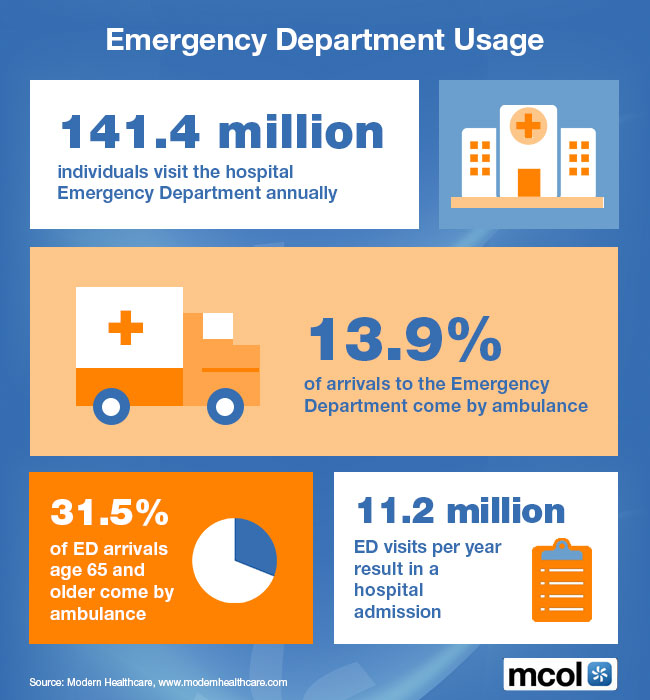
On Emergency Department Usage

Annual Visits

By http://www.MCOL.com

***

***

Conclusion

Your thoughts and comments on this ME-P are appreciated. Feel free to review our top-left column, and top-right sidebar materials, links, URLs and related websites, too. Then, subscribe to the ME-P. It is fast, free and secure.

Speaker: If you need a moderator or speaker for an upcoming event, Dr. David E. Marcinko; MBA – Publisher-in-Chief of the Medical Executive-Post – is available for seminar or speaking engagements.

Book Marcinko: https://medicalexecutivepost.com/dr-david-marcinkos-bookings/

Subscribe: MEDICAL EXECUTIVE POST for curated news, essays, opinions and analysis from the public health, economics, finance, marketing, IT, business and policy management ecosystem.

***

Is this the NEXT OPIOID CRISIS?

A Gabapentin Prescriptions Surge May be Brewing Out-There!

By Dr. David Edward Marcinko MBA

Prescriptions for nerve pain medicines like gabapentin (Neurontin) and pregabalin (Lyrica) have more than tripled in recent years, driven by increased use among chronically ill older adults and patients already taking opioids, a U.S. study suggests. The proportion of US adults prescribed gabapentin and other drugs in the same family of medicines climbed from 1.2% in 2002 to 3.9% by 2015, a period that also saw a surge in opioid overdoses and deaths.

The drug class, known as gabapentinoids, includes gabapentin (Neurontin, Gralise, Horizant) and pregabalin. “Nearly 1 in 25 adults takes a gabapentinoid during a year, which matters because we have little data to support much use of this drug class and minimal data to support the long-term safety of the medications,” said study author Dr. Michael Johansen of the Heritage College of Osteopathic Medicine at Ohio University in Athens.

Source: Reuters Health News via MDLinx [1/8/18]

***

Assessment

I hate to admit that these drugs did not even exist when I was in medical school. So, can we assume that most doctors today learned about them thru drug reps, TV, radio, internet, blog and vlog advertising, etc? 

More: https://www.painmedicinenews.com/Clinical-Pain-Medicine/Article/03-18/Gabapentin-and-Opioids-a-Potentially-Deadly-Combination/47053?sub=C143BC655DA759D99E56383AE3C0C55ECB64ABF25DFEFEA185C6CA3F4F86B4&enl=true&lipi=urn:li:page:d_flagship3_feed;y0AoiQmuRTy3ozEhwaJ0iQ%3D%3D

Is this the next opioid or drug crisis in the USA? Doctor colleagues, please think about the antibiotic resistance problem. Economic colleagues, please think about the “law of substitutions.” All, think about recreational marijuana? http://www.HealthDictionarySeries.org

Conclusion

Your thoughts and comments on this ME-P are appreciated. Feel free to review our top-left column, and top-right sidebar materials, links, URLs and related websites, too. Then, subscribe to the ME-P. It is fast, free and secure.

Speaker: If you need a moderator or speaker for an upcoming event, Dr. David E. Marcinko; MBA – Publisher-in-Chief of the Medical Executive-Post – is available for seminar or speaking engagements.

Book Marcinko: https://medicalexecutivepost.com/dr-david-marcinkos-bookings/

Subscribe: MEDICAL EXECUTIVE POST for curated news, essays, opinions and analysis from the public health, economics, finance, marketing, IT, business and policy management ecosystem.

***

Product DetailsProduct DetailsProduct Details

***

The Home Office Tax Deduction Explained

What it is – How it works?

By Dr. David Edward Marcinko MBA CMP™
http://www.CertifiedMedicalPlanner.org

A taxpayer’s business use of his or her home may give rise to a deduction for the business portion of expenses related to operating the home.

The basic requirement:

1. There must be a specific room or area that is set aside for and used exclusively on a regular basis as:
a. The principal place of any business, or
b. A place where the taxpayer meets with patients, clients or customers in the normal course of their trade or business, or
c. A separate structure that is used in the taxpayer’s trade or business and is not attached to their house or residence.

2. An employee can take a home office deduction if he or she meets the regular and exclusive use test and the use is for the convenience of the employer.

Deductions

Deductible expenses include business portions of mortgage interest, property taxes, depreciation, repairs and maintenance to the overall home that help the business use area, janitorial services or maid, utilities, insurance as well as other expenses directly related to the operating the remainder of the home.

***

https://www.amazon.com/Comprehensive-Financial-Planning-Strategies-Advisors/dp/1482240289/ref=sr_1_1?ie=UTF8&qid=1418580820&sr=8-1&keywords=david+marcinko

Conclusion

Your thoughts and comments on this ME-P are appreciated. Feel free to review our top-left column, and top-right sidebar materials, links, URLs and related websites, too. Then, subscribe to the ME-P. It is fast, free and secure.

Speaker: If you need a moderator or speaker for an upcoming event, Dr. David E. Marcinko; MBA – Publisher-in-Chief of the Medical Executive-Post – is available for seminar or speaking engagements.

Book Marcinko: https://medicalexecutivepost.com/dr-david-marcinkos-bookings/

Subscribe: MEDICAL EXECUTIVE POST for curated news, essays, opinions and analysis from the public health, economics, finance, marketing, IT, business and policy management ecosystem.

***

Doctor Shortage Under Obamacare?

 Join Our Mailing List

 Fears Put to Rest

By AUSTIN FRAKT PhD

The demand for primary care doctors has gone up as more people have gotten health care coverage …. But so has appointment availability.

Doctor Shortage Under Obamacare? Fears Are Put to Rest

 Conclusion

Your thoughts and comments on this ME-P are appreciated. Feel free to review our top-left column, and top-right sidebar materials, links, urls and related websites, too. Then, subscribe to the ME-P. It is fast, free and secure.

Speaker: If you need a moderator or speaker for an upcoming event, Dr. David E. Marcinko; MBA – Publisher-in-Chief of the Medical Executive-Post – is available for seminar or speaking engagements. Contact: MarcinkoAdvisors@msn.com

OUR OTHER PRINT BOOKS AND RELATED INFORMATION SOURCES:

 Product DetailsProduct Details

***

Meet Don Rucker MD – The New NCHIT for the US-HHS

Join Our Mailing List 

National Coordinator for Health Information Technology

[By staff reporters]

We are pleased to announce that Don Rucker has been named the new National Coordinator for Health Information Technology at the U.S. Department of Health and Human Services (HHS).

Dr. Rucker, a physician leader with national clinical informatics success, has a strong scientific, computational and practical background in medical computing and decision sciences, he was a co-developer of the first Microsoft Windows based electronic medical record in the world.

Additionally, Dr. Rucker was a designer of the computerized physician order entry [CPOE] module that won the 2003 HIMSS Nicholas Davies Award as the best hospital computer system in the US.

Conclusion

Your thoughts and comments on this ME-P are appreciated. Feel free to review our top-left column, and top-right sidebar materials, links, URLs and related websites, too. Then, subscribe to the ME-P. It is fast, free and secure.

Speaker: If you need a moderator or speaker for an upcoming event, Dr. David E. Marcinko; MBA – Publisher-in-Chief of the Medical Executive-Post – is available for seminar or speaking engagements. Contact: MarcinkoAdvisors@msn.com

OUR OTHER PRINT BOOKS AND RELATED INFORMATION SOURCES:

Product DetailsProduct Details

***

First Global “Holacracy” Forum

What is Holacracy?

By Rick Kahler MS CFP®

“Holacracy is not something to go beyond, it is beyond.” This statement from David Allen, author of the iconic book, Getting Things Done, illustrates the challenge of describing the Holacratic approach to operating an organization.

Allen was a speaker at the first Global Holacracy Forum, held in Amsterdam, which I recently attended. It was a chance for Holacracy thought leaders from around the world to network and learn more from each other.

What is Holacracy? One of its founders, Tom Thompson of Encode.org, calls it “a complete wholesale replacement for management hierarchy” and says,

“It’s exploring work in pursuit of purpose.”

Many of those attending the forum referred to Holacracy as a new operating system for organizations. Decision-making is taken from the “top” and distributed among clearly defined roles. The Holacratic structure is a highly disciplined way of working that invites everyone to become an entrepreneur in carrying out their role to achieve the purpose of the organization. Holacracy is not egalitarian or a democracy. Its goal is to serve the purpose of the organization by inviting people into conscious relationships with themselves and each other.

***

***

Behavior Change

As good as that may sound, not every company or every person is a good fit for Holacracy, as forum participants pointed out. “There is a lot of deep individual behavioral change that needs to happen to successfully transition to a Holacracy,” said co-founder Brian Robertson. Frank Klinkhammer, of NetCentric in Zurich, added,

“The personal development of every partner (employee) is now important to the whole group.  Do not over-estimate a person’s ability to change, or even your own.”

Robertson said a significant number of companies claimed to have adopted Holacracy but soon dropped the system. “Most of those thought they were doing Holacracy but instead still maintained their management hierarchy and just ran the Holacratic meeting structure.” He noted that, in his experience, companies that make the leap and fully adopt Holacracy say they will never go back.

*** 

***

Case Model

One of those is David Allen, who discovered Holacracy six years ago when he was about to fold his company of 45 people. He found it the perfect organizational overlay to his system of Getting Things Done. “Holacracy is about optimizing an organization, Getting Things Done is about maximizing the productivity of an individual.” Allen also emphasized the importance of individual behavioral change, saying,

“People must know how to manage themselves first to exist in Holacracy.”

What is it worth to people to work in a Holacratic company? According to market research done by Michael DeAngelo, who works for the state of Washington, employees in the Seattle area must be offered 30% to 40% more a year to leave a Holacratic organization to work at a traditional company. He says a company using Holacracy “offers everything the workforce values: flexibility, a sense of purpose, autonomy, and personal and professional growth.”

When is a good time to adopt Holacracy?

“There is never a good time to start,” said Allen. I would agree. When I adopted it four years ago, we had just lost a key employee who did a little bit of everything. I wanted a system that required less management, had clear job descriptions, and would give my staff more personal responsibility and freedom. I found all that and more in Holacracy. I also under estimated people’s ability to change their behavior and flourish rather than flounder with the increased freedom and responsibility.

Assessment

Despite the challenges of implementing it, I do believe Holacracy is, as Robertson described it in his closing remarks, “a radical new way to organize power.” He believes Holacratic principles can fundamentally change the power structures of society. 

Conclusion

Your thoughts and comments on this ME-P are appreciated. Feel free to review our top-left column, and top-right sidebar materials, links, URLs and related websites, too. Then, subscribe to the ME-P. It is fast, free and secure.

Speaker: If you need a moderator or speaker for an upcoming event, Dr. David E. Marcinko; MBA – Publisher-in-Chief of the Medical Executive-Post – is available for seminar or speaking engagements. Contact: MarcinkoAdvisors@msn.com

OUR OTHER PRINT BOOKS AND RELATED INFORMATION SOURCES:

Product DetailsProduct Details

***

Why patients will soon prefer paper dental records?

Read for yourself why dental patients will soon prefer paper-based over paperless

[By Kellus Pruitt DDS]

Recently, Marianne Kolbasuk McGee (HealthInfoSec) posted, “Analysis: Are HHS Cybersecurity Recommendations Achievable? Experts Sort Through New Task Force Report.”

http://www.healthcareinfosecurity.com/analysis-are-hhs-cybersecurity-recommendations-achievable-a-9971

McGee: 

“A new Department of Health and Human Services report to Congress containing more than 100 recommendations for how healthcare can better address cybersecurity threats is stirring debate over whether smaller organizations will be able to take the recommended actions.”

Cha-ching!

Privacy attorney David Holtzman, vice president of compliance at the consultancy CynergisTek, tells Healthinfosec:

“The majority of information systems that create or maintain personally identifiable health information are owned and managed by small organizations whose capability or access to the people or technology to secure information systems is limited by financial constraints or ability to attract well-trained human resources,” he says. “At first glance, it is difficult to see how these small organizations can translate the recommendations in the report into tangible progress.”

As large, juicy healthcare organizations successfully harden their cyber-defenses, small healthcare entities – like dental offices – will attract identity thieves with smaller, juicy low-hanging fruit.

Or, as suggested in the article, taxpayers can subsidize cyber-protection for dentists and other small healthcare organizations. In my opinion, that simply won’t happen.

***

***

Wary dental patients – many of whom have received breach notifications or have learned about identity theft the hard way – will find it increasingly easy to find a new dentist who does not put their identities on computers. After all, electronic dental records offer dental patients no tangible benefits anyway.

Assessment

If dental patients’ identities are unavailable, they cannot be stolen …. Still too early for de-identification, Doc? Give it time. I’ve got patience. 

***

***

Conclusion

Your thoughts and comments on this ME-P are appreciated. Feel free to review our top-left column, and top-right sidebar materials, links, URLs and related websites, too. Then, subscribe to the ME-P. It is fast, free and secure.

Speaker: If you need a moderator or speaker for an upcoming event, Dr. David E. Marcinko; MBA – Publisher-in-Chief of the Medical Executive-Post – is available for seminar or speaking engagements. Contact: MarcinkoAdvisors@msn.com

OUR OTHER PRINT BOOKS AND RELATED INFORMATION SOURCES:

Product DetailsProduct Details

***

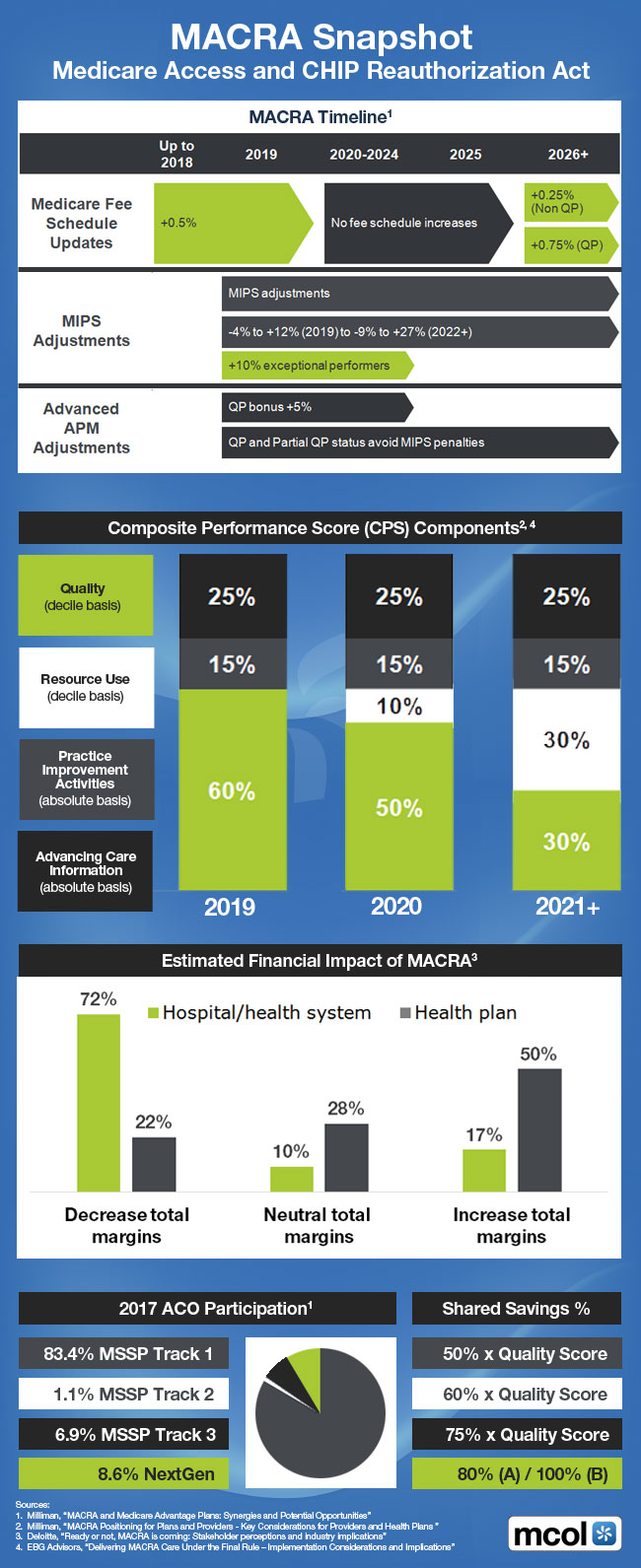
A MACRA Time-Line Snapshot to 2016?

Medicare Access and CHIP Re-Authorization  Act

By http://www.MCOL.com

***

***

Conclusion

Your thoughts and comments on this ME-P are appreciated. Feel free to review our top-left column, and top-right sidebar materials, links, URLs and related websites, too. Then, subscribe to the ME-P. It is fast, free and secure.

Speaker: If you need a moderator or speaker for an upcoming event, Dr. David E. Marcinko; MBA – Publisher-in-Chief of the Medical Executive-Post – is available for seminar or speaking engagements. Contact: MarcinkoAdvisors@msn.com

OUR OTHER PRINT BOOKS AND RELATED INFORMATION SOURCES:

Product DetailsProduct Details

***

Are you a leader or a manager?

How to tell the difference?

By TrainHR

Are you a leader or a manager?

Conclusion

Your thoughts and comments on this ME-P are appreciated. Feel free to review our top-left column, and top-right sidebar materials, links, URLs and related websites, too. Then, subscribe to the ME-P. It is fast, free and secure.

Speaker: If you need a moderator or speaker for an upcoming event, Dr. David E. Marcinko; MBA – Publisher-in-Chief of the Medical Executive-Post – is available for seminar or speaking engagements. Contact: MarcinkoAdvisors@msn.com

OUR OTHER PRINT BOOKS AND RELATED INFORMATION SOURCES:

Product DetailsProduct Details

***

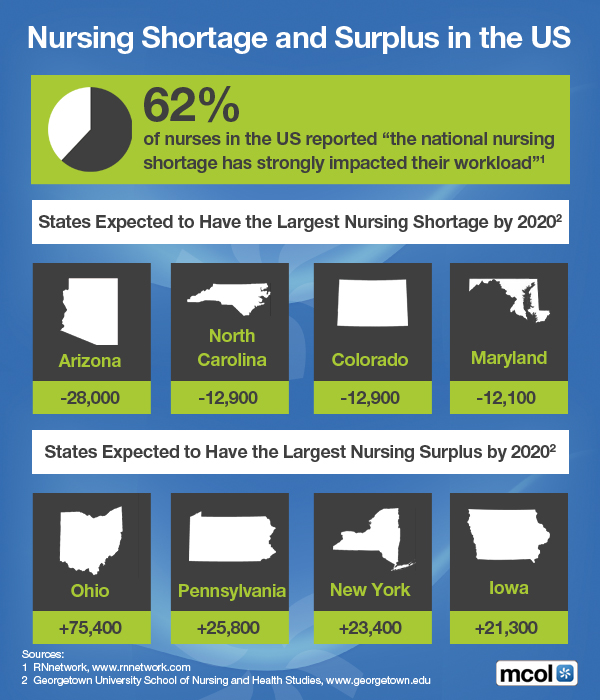
Nursing Shortage in the USA

And … Surplus in the USA

By http://www.MCOL.com

***

***

Conclusion

Your thoughts and comments on this ME-P are appreciated. Feel free to review our top-left column, and top-right sidebar materials, links, URLs and related websites, too. Then, subscribe to the ME-P. It is fast, free and secure.

Speaker: If you need a moderator or speaker for an upcoming event, Dr. David E. Marcinko; MBA – Publisher-in-Chief of the Medical Executive-Post – is available for seminar or speaking engagements. Contact: MarcinkoAdvisors@msn.com

OUR OTHER PRINT BOOKS AND RELATED INFORMATION SOURCES:

Product DetailsProduct Details

***

Tell us About the Issues Affecting your Physician Focused Financial Advisory Practice

Join Our Mailing List

By staff reporters

Tell us about the issues affecting your physician-focused financial advisory or financial planning practice in 2020.

We are conducting a brief survey to learn more about the key issues affecting your practice, and how they impact your outlook for the coming year.


← Back

Thank you for your response. ✨

Conclusion

Your thoughts and comments on this ME-P are appreciated. Feel free to review our top-left column, and top-right sidebar materials, links, URLs and related websites, too. Then, subscribe to the ME-P. It is fast, free and secure.

Speaker: If you need a moderator or speaker for an upcoming event, Dr. David E. Marcinko; MBA – Publisher-in-Chief of the Medical Executive-Post – is available for seminar or speaking engagements. Contact: MarcinkoAdvisors@msn.com

OUR OTHER PRINT BOOKS AND RELATED INFORMATION SOURCES:

Risk Management, Liability Insurance, and Asset Protection Strategies for Doctors and Advisors: Best Practices from Leading Consultants and Certified Medical Planners™8Comprehensive Financial Planning Strategies for Doctors and Advisors: Best Practices from Leading Consultants and Certified Medical Planners™

***

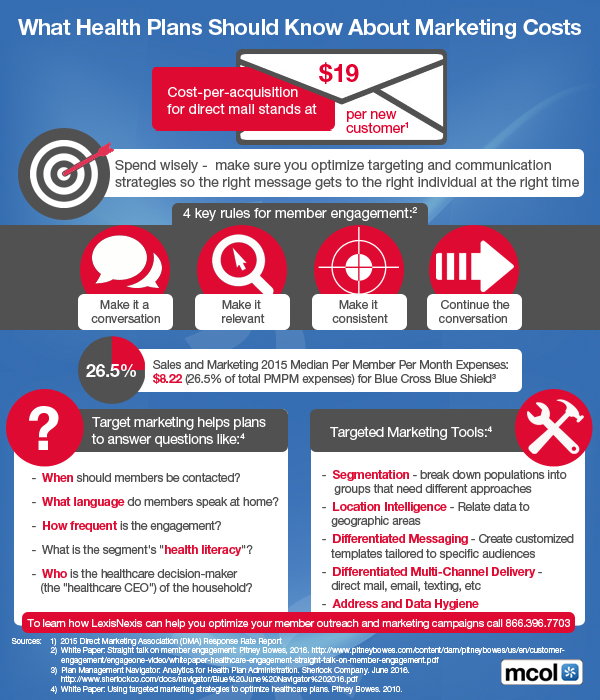
What Health Plans Should Know About Marketing Costs

Join Our Mailing List 

By http://www.MCOL.com

***

graphoid092116

***

More

How Much Money Should a Medical Practice Spend on a Marketing Campaign?

Conclusion

Your thoughts and comments on this ME-P are appreciated. Feel free to review our top-left column, and top-right sidebar materials, links, URLs and related websites, too. Then, subscribe to the ME-P. It is fast, free and secure.

Speaker: If you need a moderator or speaker for an upcoming event, Dr. David E. Marcinko; MBA – Publisher-in-Chief of the Medical Executive-Post – is available for seminar or speaking engagements. Contact: MarcinkoAdvisors@msn.com

OUR OTHER PRINT BOOKS AND RELATED INFORMATION SOURCES:

 Product DetailsProduct DetailsProduct Details

***

Why Medical Claims are Denied?

Join Our Mailing List

By Eric Duchinsky

[Advertisement: BHM Healthcare Solutions, Inc.]

One Doctor’s POV

Hi Ann,

Dr. Nicholas Fogelson wrote a perspective article for KevinMD.com. He wrote about his experience as a peer reviewer for an independent review organization network. The observations hit to the heart of why third-party peer review (for payers) and physician advisor services (for providers) are vital for building efficiencies.

The categories

Here are the main categories Dr. Fogelson saw while reviewing:

  • Full-spectrum medicine
  • Poor documentation
  • Industry acceptance of something that cannot be supported in the literature or not evidence-based.

Assessment

The takeaway lessons, from Dr. Fogelson’s observations, point to two very fixable inefficiencies: better documentation and following evidence-based research for care.

***

1_zc_v2_198052000006295004

Click HERE for the follow-up blog on more reasons claims are denied. 

***

Conclusion

Your thoughts and comments on this ME-P are appreciated. Feel free to review our top-left column, and top-right sidebar materials, links, URLs and related websites, too. Then, subscribe to the ME-P. It is fast, free and secure.

Speaker: If you need a moderator or speaker for an upcoming event, Dr. David E. Marcinko; MBA – Publisher-in-Chief of the Medical Executive-Post – is available for seminar or speaking engagements. Contact: MarcinkoAdvisors@msn.com

OUR OTHER PRINT BOOKS AND RELATED INFORMATION SOURCES:

Product DetailsProduct Details

***


MARCINKO’s Upcoming WEBINARS from MentorHealth

Join Our Mailing List

Sponsored Advertisement

MentorHealth

MentorHealth, the sponsor of these ME-P webinars, is a comprehensive training source for healthcare professionals that is high on value, but not on cost. MentorHealth is the right training solution for physicians and healthcare professionals. With MentorHealth webinars, doctors can make the best use of time, talent and treasure to benefit their continuing professional education needs.

So, it is no wonder why they partnered up with the ME-P to produce these three exciting and timely Webinars, delivered by our own Publisher-in-Chief and Distinguished Professor David Edward Marcinko.

***

A Medical Malpractice Trial From The Doctor’s POV

Even among the sciences, medicine occupies a special position. Its practitioners come into direct and intimate contact with people in their daily lives they are present at the critical transitional moments of existence.

For many people, they are the only contact with a world that otherwise stands at a forbidding distance. Often in pain, fearful of death, the sick have a special thirst for reassurance and vulnerability to belief.

When this trust is violated, whether rooted in factual substance or merely a conclusion lacking in reality, American jurisprudence offers several remedies with the core being civil litigation. We have personally witnessed a spectrum of reasons that prompts a patient to seek the counsel of an attorney.

Monday, February 6, 2017

10:00 AM PST | 01:00 PM EST

60 Minutes

$139.00

Medical Workplace Violence Issues

Violence in hospitals usually results from patients, and occasionally family members, who feel frustrated, vulnerable, and out of control. Transporting patients,long waits for service,inadequate security, poor environmental design, and unrestricted movement of the public are associated with increased risk of assault in hospitals and may be significant factors in social services workplaces as well.

A lack of staff training and the absence of violence prevention programming are also associated with the elevated risk of assault in hospitals.

Although anyone working in a hospital may become a victim of violence, nurses and aides who have the most direct contact with patients are at higher risk.

Wednesday, February 22, 2017

10:00 AM PST | 01:00 PM EST

60 Minutes

$139.00

Romantic Patient Advances

Within the medical practice, clinic, hospital or university setting, faculty and supervisors exercise significant power and authority over others. Therefore, primary responsibility for maintaining high standards of conduct resides especially with those in faculty and supervisor positions.

Members of the medical faculty and staff, including graduate assistants, are prohibited from having “Amorous Relationships”with students over whom they have “Supervisory Responsibilities.” “Supervisory Responsibilities”are defined as teaching, evaluating, tutoring, advocating, counseling and/or advising duties performed currently and directly, whether within or outside the office, clinic or hospital setting by a faculty, staff member or graduate assistant, with respect to a medical, nursing or healthcare professional student.

Such responsibilities include the administration, provision or supervision of all academic, co-curricular or extra- curricular services and activities, opportunities, awards or benefits offered by or through the health entity or its personnel in their official capacity.

Monday, March 13, 2017

10:00 AM PST | 01:00 PM EST

60 Minutes

$139.00

***

MORE:

http://www.mentorhealth.com/control/webinarsearch?speaker_id=41224

***

WEBINAR NOTE: These are online interactive training courses using which, professionals from any part of the world have the opportunity to listen to and converse with some of the best-known experts in the HR Industry. These are offered in live & recorded format for single & multiple users (corporate plans ). Under recorded format each user gets unlimited access for six months. Corporate plans give you the best return on your investment as we do not have upper limit on the number of participants who can take part in webinar.

***

Vital Financial Texts for Doctors

SPONSORED

http://www.CertifiedMedicalPlanner.org

Join Our Mailing List

PHYSICIAN FOCUSED FINANCIAL PLANNING AND RISK MANAGEMENT COMPANION TEXTBOOK SET

***

 Risk Management, Liability Insurance, and Asset Protection Strategies for Doctors and Advisors: Best Practices from Leading Consultants and Certified Medical Planners™           Comprehensive Financial Planning Strategies for Doctors and Advisors: Best Practices from Leading Consultants and Certified Medical Planners™

[Dr. Cappiello PhD MBA] *** [Foreword Dr. Krieger MD MBA]

Front Matter with Foreword by Jason Dyken MD MBA

Enter the CMPs

***

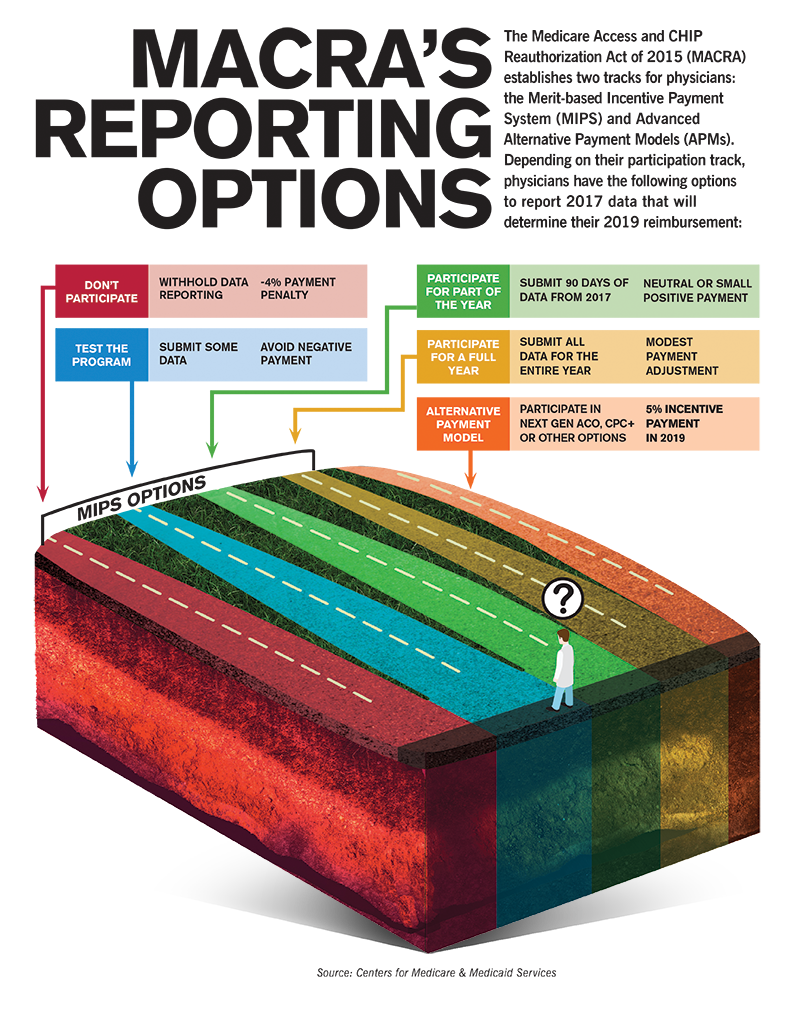
A MACRA Info-Graphic by CMS

Join Our Mailing List

By CMS

***

macra

***

6 Key Takeaways from MACRA Final Rule

  1. Flexibilities provided in the first transition year may continue in 2018.
  2. During the first year of MIPS, providers will not be evaluated on cost or resource use.
  3. Despite flexibilities allowed under the final rule, it is in providers’ best interest to participate as much as possible during the transition year — and not just for the practice.
  4. Quality measure benchmarks will be published this year.
  5. Vendors need to prepare, too.
  6. Small group providers and solo physicians could get squeezed out.

Source: Becker’s Hospital Review

Conclusion

Your thoughts and comments on this ME-P are appreciated. Feel free to review our top-left column, and top-right sidebar materials, links, URLs and related websites, too. Then, subscribe to the ME-P. It is fast, free and secure.

Speaker: If you need a moderator or speaker for an upcoming event, Dr. David E. Marcinko; MBA – Publisher-in-Chief of the Medical Executive-Post – is available for seminar or speaking engagements. Contact: MarcinkoAdvisors@msn.com

OUR OTHER PRINT BOOKS AND RELATED INFORMATION SOURCES:

Product DetailsProduct Details

***

On the Future of Healthcare [video]

Join Our Mailing List

By NIHCM Foundation

This briefing brought together leading health care experts with diverse backgrounds to discuss the future of health care, including potential policy reforms and new ways of thinking about long-term care, the consumer experience and the concept of value in health care.

***

cenergistic

Watch Now

Conclusion

Your thoughts and comments on this ME-P are appreciated. Feel free to review our top-left column, and top-right sidebar materials, links, URLs and related websites, too. Then, subscribe to the ME-P. It is fast, free and secure.

Speaker: If you need a moderator or speaker for an upcoming event, Dr. David E. Marcinko; MBA – Publisher-in-Chief of the Medical Executive-Post – is available for seminar or speaking engagements. Contact: MarcinkoAdvisors@msn.com

OUR OTHER PRINT BOOKS AND RELATED INFORMATION SOURCES:

Product DetailsProduct Details

***

Understanding Capital Investment Risks for Hospitals

Join Our Mailing List

Capital Investment Risks for Hospitals

By Calvin Weise CPA and Dr. David E. Marcinko MBA CMP®

www.CertifiedMedicalPlanner.org

Capital investments create risk. Risk is the uncertainty of future events. When hospitals make capital investments, they commit to costs that affect future periods. Those costs are known and relatively fixed. What is unknown are the benefits to be realized by those capital investments.

Capital Investments

For capital investments, risk is the certainty of future costs coupled with the uncertainty of future benefits. In some cases, while the future benefits are uncertain, there is a high degree of certainty that the benefits will exceed the costs. In these cases, risk can be very low. Risk may be better defined as the degree to which the uncertainty of unknown benefits will exceed the known and committed costs.

Capital Assets

When capital assets are purchased, both the burdens and the benefits of ownership are transferred to the owner. The burdens are primarily the costs associated with acquisition and installation. The benefits are primarily the revenues generated by operating the capital assets. Risk of ownership is created to the degree that the benefits are uncertain.

Manager Tasks

Hospital managers need to be skilled at putting hospital assets at risk. Without clear knowledge and understanding of the benefits and the burdens, hospitals can quickly find themselves at unacceptably high levels of risk. Risk must be continually assessed and evaluated in order to successfully put hospital assets at risk. Hospitals require many varied capital investments; their capital investments represent a risk portfolio. An effective combination of risky assets can often create risk that is less than the sum of the risk of each asset.

***

Hospital with paper MRs

***

Modern Portfolio Theory

Of course, financial managers have know this for years as a basic principle of Modern Portfolio Theory (MPT), first introduced by Harry Markowitz, PhD, with the paper “Portfolio Selection,” which appeared in the 1952 Journal of Finance. Thirty-eight years later, he shared a Nobel Prize with Merton Miller, PhD, and William Sharpe, PhD, for what has become a broad theory for securities asset selection; and hospital assets may be viewed as little different.

Prior to Markowitz’s work, investors focused on assessing the rewards and risks of individual securities in constructing a portfolio.

Risk Measure

Standard advice was to identify those that offered the best opportunities for gain with the least risk and then construct a portfolio from them. Following this advice, a hospital administrator might conclude that a positron emission tomography (PET) scanning machine offered good risk-reward characteristics, and pursue a strategy to compile a network of them in a given geographic area. Intuitively, this would be foolish. Markowitz formalized this intuition. Detailing the mathematics of diversity, he proposed that investors focus on selecting portfolios based on their overall risk-reward characteristics instead of merely compiling portfolios of securities, or capital assets that each individually has attractive risk-reward characteristics.

In a nutshell, just as investors should select portfolios not individual securities, so hospital administrators should select a wide spectrum of radiology services, not merely machines.

Assessment

Savvy hospital managers will mitigate ownership risk by constructing their portfolio of risky assets in a manner that lowers overall risk.

Conclusion

Your thoughts and comments on this ME-P are appreciated. Feel free to review our top-left column, and top-right sidebar materials, links, URLs and related websites, too. Then, subscribe to the ME-P. It is fast, free and secure.

Speaker: If you need a moderator or speaker for an upcoming event, Dr. David E. Marcinko; MBA – Publisher-in-Chief of the Medical Executive-Post – is available for seminar or speaking engagements. Contact: MarcinkoAdvisors@msn.com

OUR OTHER PRINT BOOKS AND RELATED INFORMATION SOURCES:

Product DetailsProduct Details

***

Health Plan Marketing Costs

Join Our Mailing List

By http://www.MCOL.com

***

graphoid092116

***

More

How Much Money Should a Medical Practice Spend on a Marketing Campaign?

Conclusion

Your thoughts and comments on this ME-P are appreciated. Feel free to review our top-left column, and top-right sidebar materials, links, URLs and related websites, too. Then, subscribe to the ME-P. It is fast, free and secure.

Speaker: If you need a moderator or speaker for an upcoming event, Dr. David E. Marcinko; MBA – Publisher-in-Chief of the Medical Executive-Post – is available for seminar or speaking engagements. Contact: MarcinkoAdvisors@msn.com

OUR OTHER PRINT BOOKS AND RELATED INFORMATION SOURCES:

Product DetailsProduct Details

***

Mental Health Coding and Billing

 Join Our Mailing List 

Dr. David E. Marcinko MBA

By Dr. David Marcinko MBA

http://www.CertifiedMedicalPlanner.org

Coding Classification

The classification and coding systems used by mental health insurers, both diagnosis-related groups (DRGs) through revenue codes for facility and program services and current procedural terminology (CPT) for in and out patient professional services and consultations, are still being defined through historical methodologies and are vague compared to the medical classification coding structure.

Example:

As an example, mental health insurers classify Tourette Syndrome (TS) as a “mental disorder.” In fact, TS is an inherited, neurobiological disorder, and both neurologists and psychiatrists treat TS with the same medications. If TS were reclassified under the medical coding structure, TS would not only receive potentially a better reimbursement but public perception of TS as a “mental disorder” would be changed.

DSM-IV-TR

The Diagnostic and Statistical Manual of Mental Disorders (4th edition, text revision), also known as the DSM-IV-TR, is a manual published by the American Psychiatric Association (APA) that includes all currently recognized mental health disorders. The coding system utilized by the DSM-IV is designed to correspond with codes from the International Classification of Diseases, commonly referred to as the ICD. Since early versions of the DSM did not correspond with ICD codes and updates of the publications for the ICD and the DSM are not simultaneous, some distinctions in the coding systems may still be present.

For this reason, it is recommended that users of these manuals consult the appropriate reference when accessing diagnostic codes. In addition, DSM5 was last updated in May 2013.  For more information, contact the APA at (800) 368-5777.

Assessment

Besides the above coding manual, the International Statistical Classification of Diseases and Related Health Problems” produced by the World Health Organization (WHO) is another commonly used manual which includes criteria for mental health disorders.

Conclusion

Your thoughts and comments on this ME-P are appreciated. Feel free to review our top-left column, and top-right sidebar materials, links, URLs and related websites, too. Then, subscribe to the ME-P. It is fast, free and secure.

Speaker: If you need a moderator or speaker for an upcoming event, Dr. David E. Marcinko; MBA – Publisher-in-Chief of the Medical Executive-Post – is available for seminar or speaking engagements. Contact: MarcinkoAdvisors@msn.com

OUR OTHER PRINT BOOKS AND RELATED INFORMATION SOURCES:

Product DetailsProduct Details

***

On a NEW economic hybrid medical reimbursement system

Join Our Mailing List

Enter Hybrid Reimbursement!

dem-2By Dr. David Edward Marcinko MBA CMP®

http://www.CertifiedMedicalPlanner.org

As we know – not withstanding ACOs or bundled care reimbursement models – current medical reimbursement structures involve the submission and payment of medical CPT® coded claims.

Still, some doctors feel they need to “up-code” to maximize revenue or even “down-code” for fear of having a claim denied.

The Outcome

The upshot is that contradictory business goals bastardize the system into a payer versus provider tug-of-war, with patient care as a potential bargaining chip. Instituting quality metrics should be included in this equation and, a hybrid reimbursement model may be a viable option while integrating quality care metrics and reducing costs for all stakeholders.

Enter Hybrid Reimbursement Models

This hybrid reimbursement system might use a two-payment structure.

  1. For the first payment, claims would be paid at hypothetical rate of 60% within one week of submission.
  2. The second payment, consisting of the remaining zero to 40% of some total maximum allowable fee, be paid quarterly. It would be based on scores like patient satisfaction and stewardship of healthcare resources by analyzing a statistically valid sample of patient encounters taken from the electronic health record.

***

Flag MOney

***

Assessment

Such a hybrid system would remove unnecessary steps, like re-submitting claims, and would lower the operational and administrative costs of claims processing. These changes would decrease operational cost and drive quality stewardship of the healthcare dollar. 

Conclusion

Your thoughts and comments on this ME-P are appreciated. Feel free to review our top-left column, and top-right sidebar materials, links, URLs and related websites, too. Then, subscribe to the ME-P. It is fast, free and secure.

Speaker: If you need a moderator or speaker for an upcoming event, Dr. David E. Marcinko; MBA – Publisher-in-Chief of the Medical Executive-Post – is available for seminar or speaking engagements. Contact: MarcinkoAdvisors@msn.com

OUR OTHER PRINT BOOKS AND RELATED INFORMATION SOURCES:

Product DetailsProduct Details

***

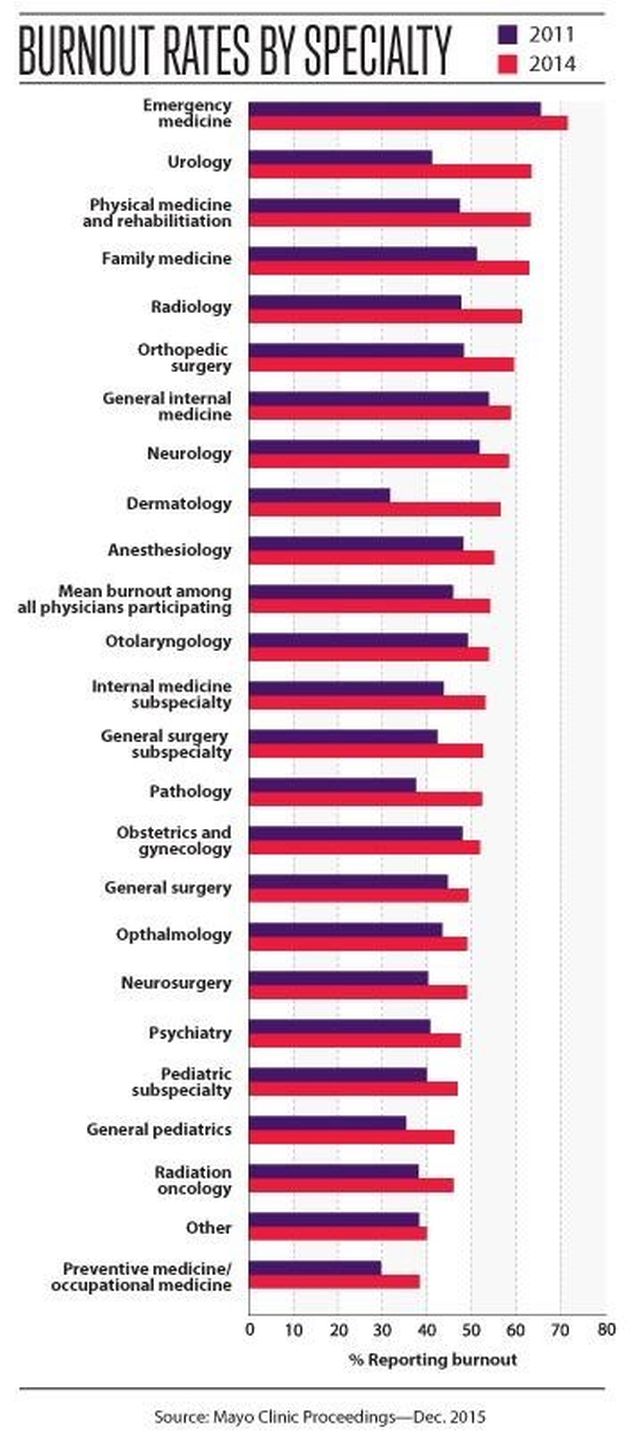
Physician “Burnout” Rates

Join Our Mailing List

By Medical Specialty

***

Your-Physician-Can’t-See-You-Yet-–-She’s-Busy-Filling-Out-Paperwork-21

***

MORE:

Conclusion

Your thoughts and comments on this ME-P are appreciated. Feel free to review our top-left column, and top-right sidebar materials, links, URLs and related websites, too. Then, subscribe to the ME-P. It is fast, free and secure.

Speaker: If you need a moderator or speaker for an upcoming event, Dr. David E. Marcinko; MBA – Publisher-in-Chief of the Medical Executive-Post – is available for seminar or speaking engagements. Contact: MarcinkoAdvisors@msn.com

OUR OTHER PRINT BOOKS AND RELATED INFORMATION SOURCES:

Risk Management, Liability Insurance, and Asset Protection Strategies for Doctors and Advisors: Best Practices from Leading Consultants and Certified Medical Planners™8Comprehensive Financial Planning Strategies for Doctors and Advisors: Best Practices from Leading Consultants and Certified Medical Planners™

***

Gay Doctor Coerced by Physician Health Program (PHP) into mandated 12-step treatment and monitoring for sex addiction: The slippery slope begins

Join Our Mailing List

Langan MD[By Michael Lawrence Langan MD]

State Physician Health Programs – coercion, control and abuse. This anecdote concerning  a gay doctor’s revelation he liked his non monogamous lifestyle leading  to a forced acceptance of a &#… …

 Gay Doctor coerced by Physician Health Program (PHP) into mandated 12-step treatment and monitoring for sex addiction: The slippery slope begins

Conclusion

Your thoughts and comments on this ME-P are appreciated. Feel free to review our top-left column, and top-right sidebar materials, links, URLs and related websites, too. Then, subscribe to the ME-P. It is fast, free and secure.

Speaker: If you need a moderator or speaker for an upcoming event, Dr. David E. Marcinko; MBA – Publisher-in-Chief of the Medical Executive-Post – is available for seminar or speaking engagements. Contact: MarcinkoAdvisors@msn.com

OUR OTHER PRINT BOOKS AND RELATED INFORMATION SOURCES:

Risk Management, Liability Insurance, and Asset Protection Strategies for Doctors and Advisors: Best Practices from Leading Consultants and Certified Medical Planners™

***

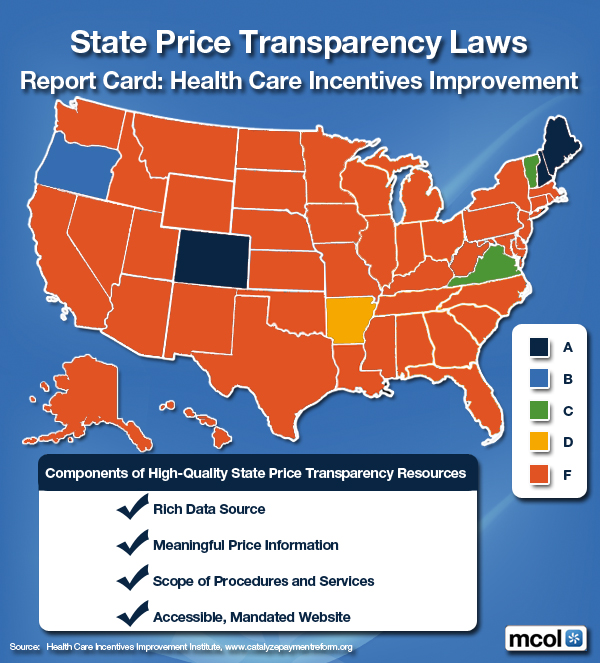
US State Healthcare Price Transparency Laws

Join Our Mailing List

REPORT CARD: Healthcare Incentives Improvement 

http://www.MCOL.com

***

***

Conclusion

Your thoughts and comments on this ME-P are appreciated. Feel free to review our top-left column, and top-right sidebar materials, links, URLs and related websites, too. Then, subscribe to the ME-P. It is fast, free and secure.

Speaker: If you need a moderator or speaker for an upcoming event, Dr. David E. Marcinko; MBA – Publisher-in-Chief of the Medical Executive-Post – is available for seminar or speaking engagements. Contact: MarcinkoAdvisors@msn.com

OUR OTHER PRINT BOOKS AND RELATED INFORMATION SOURCES:

Product DetailsProduct Details

***

Salary Negotiation Skills for Doctors & Hospitalists

Join Our Mailing List 

As well as Nurses, Allied Healthcare Providers … and the Rest of Us

  • By Dr. David E. Marcinko MBA
  • By Dollars Direct

***

negotiate-higher-salary-V2-1

***

Much More:

Physician 2.0 Recruitment

***

***

Conclusion

Your thoughts and comments on this ME-P are appreciated. Feel free to review our top-left column, and top-right sidebar materials, links, URLs and related websites, too. Then, subscribe to the ME-P. It is fast, free and secure.

Speaker: If you need a moderator or speaker for an upcoming event, Dr. David E. Marcinko; MBA – Publisher-in-Chief of the Medical Executive-Post – is available for seminar or speaking engagements. Contact: MarcinkoAdvisors@msn.com

OUR OTHER PRINT BOOKS AND RELATED INFORMATION SOURCES:

Product Details

http://www.BusinessofMedicalPractice.com

CMS Reveals MACRA Rules

Join Our Mailing List

A CMS … Proposal

[By Andy Salmen]

The Centers for Medicaid and Medicare Services (CMS) have finally released the much anticipated unveiling of the Medicare Access and CHIP Reauthorization Act of 2015 (MACRA) rule proposal.

The goal of this rule is to establish key parameters for the new Quality Payment Program, a framework that includes the Merit-based Incentive Payment System (MIPS) and Alternative Payment Models (APMs). These two paths for compliance allow doctors more flexibility in achieving compliance.

MIPS

MIPS scores clinicians based measures and activities chosen by physicians and is based on their specialty. MIPS would basically streamline and combine three of the different programs that currently exist under Medicare. These programs are Physician Quality Reporting System, the Value-Based Modifier Program, and the ‘Meaningful Use’ of electronic health records.

There will be four performance categories for clinicians (clinicians include physicians, physician assistants, nurse practitioners, clinical nurse specialists, certified registered nurse anesthetists, etc.) to be scored on. These performance categories are:

  • Quality
  • Advanced Care Information
  • Clinical Practice Improvement Activities
  • Cost

APMs

CMS proposed implementing an Advanced Payment Models (APM) pathway, allowing eligible clinicians to become “qualified participants”. This means that eligible clinicians will be able to earn statutorily specified incentives for participation.

CMS predicts most providers to initially opt for MIPS. It is expected that participation in APMs, both number of physicians and number of payment models, will grow over time, as this program will qualify clinicians for financial bonuses in exchange for taking the risks associated with providing “coordinated, high-quality care”, according to CMS. 

***

3726de1f-2375-4301-84e0-78447fb496f3-original

***

Conclusion

Your thoughts and comments on this ME-P are appreciated. Feel free to review our top-left column, and top-right sidebar materials, links, URLs and related websites, too. Then, subscribe to the ME-P. It is fast, free and secure.

Speaker: If you need a moderator or speaker for an upcoming event, Dr. David E. Marcinko; MBA – Publisher-in-Chief of the Medical Executive-Post – is available for seminar or speaking engagements. Contact: MarcinkoAdvisors@msn.com

OUR OTHER PRINT BOOKS AND RELATED INFORMATION SOURCES:

Product Details

***

Part B Reimbursement for Drugs to Change in Physician Offices

Join Our Mailing List

Part B Reimbursement for Drugs to Change in Physician Offices

OLYMPUS DIGITAL CAMERA

By Susan Theuns, PA-C, CPC, CHC

CMS has proposed a new Part B drug payment model that may adversely affect your bottom line.

How?

Beginning in August, 2016, CMS may be applying a new methodology geared toward reducing profits on expensive drugs.  The current model is average sales price (ASP) plus 4% — it is advertised as ASP plus 6% but then a 2% sequestration is applied so it is net 4%. On drugs that cost more than $480, the percentage will be reduced more since the percentage may be the same but the actual dollar amount increases above their comfort threshold. So, the reimbursement proposal will be for less than the ASP + 6%.

Bad news

Part of the study will be at the current methodology and the second arm will be at ASP plus 2.5% plus a daily fee of $16.80. Of course, these will be subject to the 2% sequestration as well. This is a cost saving study for CMS that narrows the margin of profitability for the providers. Unlike relative value unit methodologies, there is no overhead built into pass-through drug reimbursement so it becomes critical that providing Part B reimburseable drugs  is not a loss leader for providers.  This makes where you purchase your drugs one of the most important parts of the process. Be sure to get pricing from distributors or manufacturers direct at or below ASP, also figuring into the equation the shipping costs when ordering.

***

vaccine+blue

***

Good news

The good news is that exclusions for the new methodology are flu, pneumonia, and hepatitis B vaccines as well as drugs in short supply, those used for end stage renal disease, and drug infused durable medical items. Bundled drugs are also excluded but are currently included in the visit/procedure so no real change there.  It will be interesting to see what the outcome of this trial methodology reaps.

For more information, visit:

ABOUT:

Susan Theuns, PA-C, CPC, CHC, is the administrative director of physician practices at MedStar Union Memorial Hospital in Baltimore, Maryland. In addition to her certifications, she holds degrees in Allied Health, Business Management and Leadership & Education. Theuns serves as a national advisor and is a contributing author for The Business of Medical Practice, 3rd edition. She is a member of the Baltimore, Maryland, local chapter.

Conclusion

Your thoughts and comments on this ME-P are appreciated. Feel free to review our top-left column, and top-right sidebar materials, links, URLs and related websites, too. Then, subscribe to the ME-P. It is fast, free and secure.

Speaker: If you need a moderator or speaker for an upcoming event, Dr. David E. Marcinko; MBA – Publisher-in-Chief of the Medical Executive-Post – is available for seminar or speaking engagements. Contact: MarcinkoAdvisors@msn.com

OUR OTHER PRINT BOOKS AND RELATED INFORMATION SOURCES:

 Product Details

http://www.BusinessofMedicalPractice.com

***

NPI: More Than Just a Number

Join Our Mailing List

Billing and Reimbursement are dependent on the taxonomy code designation and detail

OLYMPUS DIGITAL CAMERA

By Susan Theuns, PA-C, CPC, CHC

“Taxonomy codes and other elements of NPI registration directly affect a provider’s ability to submit claims, order services, and receive reimbursement.”

Back when the National Provider Identifier (NPI) was implemented in 2005 as part of the Health Insurance Portability and Accountability Act (HIPAA), a new identifier accompanied it: the taxonomy code. With that, the Centers for Medicare & Medicaid Services (CMS) developed the National Plan and Provider Enumeration System (NPPES) to officially assign these unique identifiers of the provider. These codes were created to improve the efficiencies and effectiveness of electronic medical claims submission and electronic health information.

What’s in a Name?

When registering for an NPI, one of the elements that also needs to be completed is the selection of a taxonomy code. Taxonomy codes are nationally standardized 10-character codes that are alphanumeric. The definitions range from prosthesis case managers to transplant surgeons. When healthcare providers initially applied for an NPI number, little importance was associated with selection of the taxonomy codes. However, now payers, including Medicare and Medicaid, are rejecting claims based on inconsistency of services provided and taxonomy codes. Now it matters.

The Healthcare Provider Taxonomy Code Set is available from the Washington Publishing Company (WPC) at wpc-edi.com. Taxonomy codes are maintained by the National Uniform Claim Committee, nucc.org, and update twice yearly with effective dates for changes April first and October first. Information included with the hierarchical classifications include descriptions and definitions as well as the codes themselves. The codes can be a primary (level I classification) or subclassifications (level II and III). The more detailed a classification, the more specialized the description. These are the codes that determine a provider’s area of concentration within their discipline, so being generic is not as effectual as drilling down to the most specific code. Think of this as an unspecified versus a specified code.

Depending on the underlying area of expertise, there may be more than one taxonomy code to choose from. For example, a “hand surgeon” may be subclassified under orthopaedics or plastic surgery – depending on the physician’s training. Sports Medicine is another example: there are 8 different taxonomy codes for this specialty under Emergency Medicine, Family Medicine, Internal Medicine, Orthopaedics, Pediatrics, Physical Medicine & Rehabilitation, Psychiatry & Neurology and even Chiropractic. By definition, selection of the code does not require board certification per se; but it does require special education, training, experience and knowledge in the selected area. Therefore, it is important to carefully select any subclassification from the correct and most accurate level I classification.

***

doctors

***

Case Studies: Taxonomy Errors that Affect Reimbursement and Functionality

As healthcare becomes more technologically integrated, accuracy in electronic claims submission data becomes critical to reimbursement. In today’s world, a slight variation can make the difference between full payment and denial. Because a provider’s taxonomy code resides in the NPI registry, it has a direct relationship to payer credentialing. The taxonomy code identifies any specialty or sub-specialty that a provider has. Examples of taxonomy errors and necessary updates are (1) when a resident or fellow graduates and becomes a board-certified or state licensed physician, (2) a provider obtains specialty credentials i.e. orthopaedist becomes a trauma, hand or spine specialist, primary care provider becomes a geriatrics or palliative care specialist or hospitalist, and so forth. There are numerous sub-specialties available nowadays that impact when a physician can act in a consultant role from a billing perspective.

Here are some case scenarios that can result in non-payment or lack of services:

  1. A registered nurse (RN) completed advanced training and is now a licensed Certified Registered Nurse Practitioner (CRNP). She worked in this role for several years before being told by a patient that the prescription she had given her for diabetes supplies was denied by the pharmacy. Upon researching the root cause of the denial, it was discovered that the CRNP had never updated her taxonomy code from RN to CRNP in the NPPES database. Only a healthcare provider can order Durable Medical Equipment (DME) and supplies for a patient.
  2. A general orthopaedist saw a patient in the office and asked a colleague with more specialized training to see the patient with him when faced with a complex orthopaedic problem. Both physicians (they had the same employer and billed under the same group NPI), tried to bill an evaluation and management code for the services they rendered. One claim was paid and one claim was denied as a duplicate service. Research revealed that although one physician specialized in trauma and the other in foot and ankle, both used the generic taxonomy code of 207X00000X. Had they each selected a more detailed code, they both would have been eligible to receive reimbursement for the services they rendered on the same patient, same day.

See Figure: 1

A geriatrics specialist consulted on numerous hospital patients at the request of the admitting hospitalist, an internist. All of the Medicare Part B claims and some commercial claims were denied for these hospitalized patients and the geriatrician could not understand why. Investigation of the claims showed duplicate claims for internal medicine subsequent hospital care, no designation of attending of record, and care denied as non-participating under specialty contracts. All of these situations resulted from the provider never updating his taxonomy code from Internal Medicine to Geriatric Medicine when he passed his boards 7 years prior. Even the specialty contract recognized him as primary care and disallowed his consults. In addition, the hospitalist had never updated his taxonomy code from “internist” to “hospitalist”, which added another aspect of billing inaccuracy to his claims.

  • A new graduate took a job as a hospitalist and was fully credentialed upon hire, several months after completing her residency program. As a “student” in a residency program, she had applied for her NPI and correctly selected taxonomy code 390200000X.

See Figure: 2

However, she neglected to update her taxonomy code to “hospitalist” as the primary designation and “internal medicine” as the secondary when she graduated and took the new job. This resulted in rejections and denials deeming her as ineligible to provide billable services.

  • A physician received an inquiry from state Medicaid questioning whether or not he was a sole proprietor or not. They were holding claims awaiting his response. A quick check of his NPI profile showed that it had not been updated since 2007, at which time he had indicated that he was a sole proprietor. Since his initial NPI application, he had become employed by a medical group and was billing under his individual NPI and group NPI. Once he accessed the portal and changed the response to sole proprietor to “no”, the credentialing issue with Medicaid was resolved.
  • Working the rejection and denial billing reports, a director noted a pattern in the rejections from various payors for one physician stating that the provider was not eligible to provide that type of service. Careful inspection revealed an outdated and incorrect taxonomy code on the provider NPI profile that was inconsistent with the services being provided.

See Figure: 3

With all of these issues, the providers technically have 30 days to notify NPPES of any changes. Not adhering to this guideline is a self-imposed penalty that exceeds any potential fines from NPPES since reimbursement can be negatively affected. Most likely because of the reimbursement consequences, NPPES rarely imposes fines for delayed updates to a provider NPI, although they maintain the right under federal guidelines.

Figures: Figures 1 2 3

Assessment

This critical information should be carefully reviewed upon hire and annually to ensure accuracy in reporting and billing. New taxonomy codes are added bi-annually so new sub-specialties may become available that would allow a healthcare provider to be more specific than previously. In addition, providers of all levels should be encouraged to be part of the process.

An NPI is a provider’s for life and is not dependent upon employer so they need to be engaged and part of the process. Most of the information on the NPPES website is accessible by the public. This means that if a provider puts a home address or home phone/cell phone number for contact, their patients now have access to this information. It is a best practice to use only business contact addresses and phone numbers for your NPI for this reason.

***

9.13 NPI Logo and Business Card Gelling Ideas 24

***

Summary

Taxonomy codes and other elements of NPI registration directly affect a provider’s ability to submit claims, order services, and receive reimbursement. This often overlooked and neglected piece of a provider’s NPI warrants regular review and updating when any changes occur, such as name change, office move, board certification, change in role, or shift in the specialty-focus of a practice, despite official certification. Last, but not least, the provider user name and password for NPPES and the NPI database are the same for the Provider Enrollment, Chain and Ownership System (PECOS), CMS Analysis & Information (A&I), and the EHR Incentives Program portal to report Meaningful Use and PQRS. As with all user names and passwords, they need to be maintained but carefully protected. It will save a lot of headaches for those who rely on these on-line service portals for their livelihood.

References

CMS Center for Program Integrity, Medicare Provider/Supplier to Healthcare Provider Taxonomy Crosswalk, November 2015.

National Plan and Provider Enumeration System, https://nppes.cms.hhs.gov/NPPES/Welcome.do

Washington Publishing Company, Health Care Provider Taxonomy Code Set, http://www.wpc-edi.com/reference/

ABOUT:

Susan Theuns, PA-C, CPC, CHC, is the administrative director of physician practices at MedStar Union Memorial Hospital in Baltimore, Maryland. In addition to her certifications, she holds degrees in Allied Health, Business Management and Leadership & Education. Theuns serves as a national advisor and is a contributing author for The Business of Medical Practice, 3rd edition. She is a member of the Baltimore, Maryland, local chapter.

Conclusion

Your thoughts and comments on this ME-P are appreciated. Feel free to review our top-left column, and top-right sidebar materials, links, URLs and related websites, too. Then, subscribe to the ME-P. It is fast, free and secure.

Speaker: If you need a moderator or speaker for an upcoming event, Dr. David E. Marcinko; MBA – Publisher-in-Chief of the Medical Executive-Post – is available for seminar or speaking engagements. Contact: MarcinkoAdvisors@msn.com

OUR OTHER PRINT BOOKS AND RELATED INFORMATION SOURCES:

***

BoMP-3rd

http://www.BusinessofMedicalPractice.com

***

Government Medicine is Killing Us!

Join Our Mailing List

By Bob Murphy

***

skeleton

Bob Murphy: Government Medicine is Killing Us

***

About

Bob Murphy is our re-posting guest today as he wraps up a three-part series on the anti-market healthcare system in the US.

Conclusion

Your thoughts and comments on this ME-P are appreciated. Feel free to review our top-left column, and top-right sidebar materials, links, URLs and related websites, too. Then, subscribe to the ME-P. It is fast, free and secure.

Speaker: If you need a moderator or speaker for an upcoming event, Dr. David E. Marcinko; MBA – Publisher-in-Chief of the Medical Executive-Post – is available for seminar or speaking engagements. Contact: MarcinkoAdvisors@msn.com

OUR OTHER PRINT BOOKS AND RELATED INFORMATION SOURCES:

[PRIVATE MEDICAL PRACTICE BUSINESS MANAGEMENT TEXTBOOK – 3rd.  Edition]

Product DetailsProduct Details

  [Foreword Dr. Hashem MD PhD] *** [Foreword Dr. Silva MD MBA]

***

A Free Market Repudiation of Evidence-Based Medicine

Michel AccadIn a recent article entitled “A Hayekian Defense of Evidence-Based Medicine” Andrew Foy makes a thoughtful attempt to rebut my article on “The Devolution of Evidence-Based Medicine.”  I am grateful for his interest in my work and for the the kind compliment that he extended in his article.  Having also become familiar with his fine writing, I return it with all sincerity.  I am also grateful to the THCB staff for allowing me to respond to Andrew’s article.

Andrew views EBM as a positive development away from the era of anecdotal, and often misleading medical practices:  “Arguing for a return to small data and physician judgment based on personal experience is, in my opinion, the worst thing we could be promoting.”  Andrew’s main concern is that my views may amount to “throwing the baby with the bath water.”

On those counts, I must plead guilty as charged.  I have been trying to sink that baby for a number of years now, attacking it from a variety of angles.  I have made a special plea in favor of small data and I have even questioned the intellectual sanity of EBM.  On the question of the coexistence between EBM and clinical judgment, I have been decidedly intolerant, relegating EBM to second class citizen status.  In other words, I’m an unapologetic EBM-denialist which, as I found out yesterday on Twitter, puts me in the same category as climate change skeptics.

My main concern today, however, is to address the relationship between EBM and the free-market, and to reject Andrew’s point that EBM is somehow compatible with it.  First, though, let me say that in no way do I deny the notion that American medicine has, for decades, harbored practices of highly doubtful benefit to benefit to patients, and that many such practices may, in fact, have been dangerous or harmful.  I am fully on board with any effort to eradicate “eminence-based medicine.”

But before we reach out for an EBM solution to that problem, perhaps we should first wonder about causes.  What keeps the errors of eminence-based medicine persisting for so long?  Why do patients and doctors remain so wedded to a course of therapy as to blithely engage in unbeneficial or even harmful care?

If I read Andrew correctly, he seems to believe that these errors persist because outcome uncertainties are inherent to clinical care, hence the need for EBM. But that cannot be the fundamental reason.  Why would patients continue to pursue a treatment for which they have neither objective nor subjective tangible benefit?  Why wouldn’t they refuse to go along?  After all, many of them do exercise their ability to be non-compliant in the case of treatments deemed beneficial to them according to the truths of EBM!

Outcome uncertainty, then cannot be the reason why futile or harmful treatments persist, and if outcome uncertainty is not the reason, reducing it by way of EBM may not be the answer either.

What eludes Andrews is that eminence-based medicine is not simply the result of individual doctors exercising judgment with limited knowledge. Rather, eminence-based medicine happens when doctors apply their own pet theories and disregard the needs and wants of the patient at hand.

By missing that point, Andrew misses that eminence-based medicine is precisely minimized by the free-market and, on the contrary, encouraged by government intervention.  The history of American medicine provides ample examples to make that point.

In the late nineteenth century, healthcare in the United States was uniquely unregulated.  Yet, contrary to common belief or fabricated myths, care was improving by leaps and bounds, getting at once better, cheaper—and more scientific.  It is during that time that some of the finest medical institutions emerged, including the Mayo Clinic and the Johns Hopkins Hospital.  Sure, there were snake oil salesmen, but these were by-and-large being driven out of business by a growing community of serious, well-trained, and effective physicians.  And competition among these practitioners kept them humble and at the service of patients.

All of this changed in the 1910’s when, following the Flexner reforms, state licensing laws were enacted.  It is in the heels of these laws that medical paternalism emerged.

As an illustration, consider this passage excerpted from an official report published soon after the enactment of licensing laws:

The physician is the outstanding practitioner of medicine.  The need and the value of his service sets him above all others.  He alone, of all types of medical practitioners in the United States, is permitted by law to diagnose and treat all diseases and conditions and to use (with certain minor exceptions) any form of diagnostic or therapeutic technique which he considers necessary, desirable, and within his professional skill.  (Report of the Committee on the Cost of Medical Care, 1928, p. 195)

From that point onward, medical abuses of privilege became much more widespread than they had been.

Furthermore, as Kenneth Ludmerer has pointed out, this elevation of the physician to the status of demi-God by government fiat went hand-in-hand with the rise of the academic ivory tower, since academic medical schools were producing the “cream of the crop” among doctors.  Academic ivory towers, naturally, become common sources of practices founded on eminence.

Of course, licensing laws and the emergence of the ivory towers are not the only factors to consider.  Other government interventions soon followed to bring about systems of third-party payment for medical care—health insurance.  Without these government interventions, and without the existence of licensing laws, it is unlikely that health insurance would have emerged from the free market.  By unmooring medical decisions from any financial constraints, health insurance contributes immensely to the perpetuation of eminence-based practice.

It is this regulatory context, then, that is at the root of eminence-based medicine, and not the uncertainties of clinical care which, in a profound way, are inherent to the medical encounter.

Andrew believes that EBM discovery is akin to price setting on the free market.  I strongly disagree with that analogy.  As Andrew himself has noted, prices set in the free market convey consumer values and are the end results of myriad decisions made on the basis of dispersed knowledge.

***

The-Psychology-of-Analytics-When-Working-is-Not-Working

***

EBM results, on the other hand, are statistical relationships between interventions and outcomes which are carefully selected by investigators in highly contrived experimental settings.  In these settings, the choices and preferences of doctors and patients are ignored or neutered by design in order to isolate the relationship of interest.  Any value obtained as a result of an EBM experiment is primarily imputable to the investigators or sponsors, and only secondarily (and statistically) of benefit to patients.

EBM is no free market phenomenon.  EBM is an academic invention incubated in Canada, a country with a single-payer healthcare system!  As I described in my article, this invention has spun out of control and has turned EBM into a weapon wielded with equal vigor by the pharmaceutical industry, by regulators, and by those who aim to equalize the historical excesses of eminence-based medicine through the dubious doctrine of “Less-Is-More.”  None of these movements, it seems, are motivated by a desire to advance a genuine human science that is meaningful to individual patients.  In fact, to the extent that is a pet theory which standardizes care for entire populations, EBM is eminence-based medicine on steroids.

But if EBM is by no means a product of the free market, can the free market address our need to improve therapeutic predictions or will it set us back to a clinical stone age?

So long as narrowing clinical outcome expectations is truly desired by doctors and patients—and there is no reason to doubt that it is—then the free market is demonstrably the optimal environment that can allow human ingenuity to devise clever ways and methods to achieve that goal.  But what shape or form would those methods take and how closely would they resemble what we now take to be evidence-based science, I have no idea.  If I believed I held that knowledge, I would be repudiating Hayek.

Assessment

EBM Systems Engineering Vision MARCINKO

An FA Hayekian Defense of Evidence Based Medicine

About

Michel Accad is a cardiologist who practices in San Francisco.  He blogs at Alert and Oriented and can be followed on Twitter @michelaccad

Conclusion

Your thoughts and comments on this ME-P are appreciated. Feel free to review our top-left column, and top-right sidebar materials, links, URLs and related websites, too. Then, subscribe to the ME-P. It is fast, free and secure.

Speaker: If you need a moderator or speaker for an upcoming event, Dr. David E. Marcinko; MBA – Publisher-in-Chief of the Medical Executive-Post – is available for seminar or speaking engagements. Contact: MarcinkoAdvisors@msn.com

OUR OTHER PRINT BOOKS AND RELATED INFORMATION SOURCES:

Risk Management, Liability Insurance, and Asset Protection Strategies for Doctors and Advisors: Best Practices from Leading Consultants and Certified Medical Planners™8Comprehensive Financial Planning Strategies for Doctors and Advisors: Best Practices from Leading Consultants and Certified Medical Planners™

***

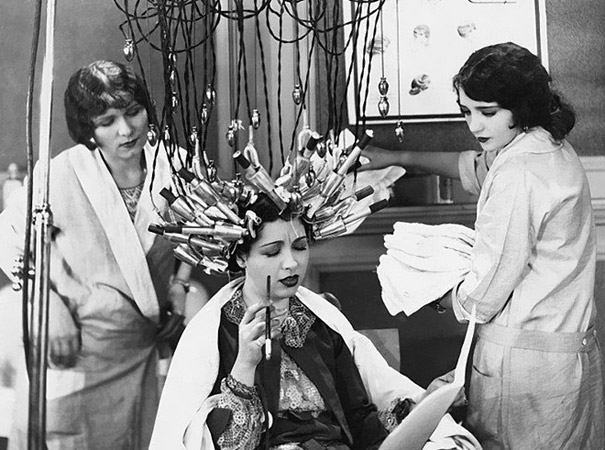
It’s Still Harder to Become a Hairdresser than a Financial Adviser?

Join Our Mailing List

How Come and Why?

[By Jason Zweig]

****

The great journalist H.L. Mencken wrote decades ago
,

“The essence of a genuine professional man is that he cannot be bought.”

And that, in turn, can spring only from a culture of exhaustive training and the highest standards of conduct.

Professions like accounting, law and medicine took decades, often centuries, to advance to the point of requiring rigorous education and licensing for all their members.

***

vintage-beauty-salon-equipment-9

***

Assessment

The field of investment advice remains a long way from being able to call itself a profession.

More: http://blogs.wsj.com/moneybeat/2016/04/08/how-come-its-still-harder-to-become-a-hairdresser-than-a-financial-adviser/

On Wall Street’s Suitability, Prudence and Fiduciary Accountability

Conclusion

Your thoughts and comments on this ME-P are appreciated. Feel free to review our top-left column, and top-right sidebar materials, links, URLs and related websites, too. Then, subscribe to the ME-P. It is fast, free and secure.

Speaker: If you need a moderator or speaker for an upcoming event, Dr. David E. Marcinko; MBA – Publisher-in-Chief of the Medical Executive-Post – is available for seminar or speaking engagements. Contact: MarcinkoAdvisors@msn.com

OUR OTHER PRINT BOOKS AND RELATED INFORMATION SOURCES:

Risk Management, Liability Insurance, and Asset Protection Strategies for Doctors and Advisors: Best Practices from Leading Consultants and Certified Medical Planners™8Comprehensive Financial Planning Strategies for Doctors and Advisors: Best Practices from Leading Consultants and Certified Medical Planners™

***

Inviting Patients to Read Their Doctors’ Notes

Join Our Mailing List 

OVER HEARD IN THE DOCTOR’S LOUNGE

DEM white shirt

By Dr. David E. Marcinko MBA CMP™

In an OpenNotes study, researchers examined the impact on patients and doctors when patients were allowed access to their doctors’ notes via a secure Internet portal.

Through the use of surveys, patients’ benefits, concerns, and behaviors, as well as physicians workload, were measured.

The Study

Beth Israel Deaconess Medical Center (BIDMC) in Boston, Geisinger Health System (GHS) in Pennsylvania, and Harborview Medical Center (HMC) in Seattle were selected for this quasi-experimental year-long study.

The study included 105 physicians and 13,564 of their patients. Patients were notified when their notes were available, but whether or not to open the note was at their own discretion. The authors analyzed both pre- and post-intervention surveys from the physicians who completed the study; 99 physicians submitted both pre- and post-intervention surveys. Of the patients who viewed at least one note, 41 percent completed post-intervention surveys.

***

Physician Executive

***

Almost 99 percent of patients at BIDMC, GHS, and HMC wanted to have continued access to their visit notes at the completion of the study; no physician elected to end this practice.

Assessment

Although a limited geographic area was represented, the positive feedback and clinically relevant benefits demonstrate the potential for a widespread adoption of OpenNotes.

Moreover, it may be a powerful tool in helping improve the lives of patients.

Citation: Inviting Patients to Read Their Doctors’ Notes: Author(s): Delbanco, T; Walker, J; Bell, SK and Darrer, JD et al: American College of Physicians, Annals of Internal Medicine, October 2012

Open Notes, a grantee of the Robert Wood Johnson Foundation, was developed to demonstrate and evaluate the impact on both patients and clinicians of fully sharing (through an electronic patient portal) all encounter notes between patients and their primary care providers.

Conclusion

Your thoughts and comments on this ME-P are appreciated. Feel free to review our top-left column, and top-right sidebar materials, links, URLs and related websites, too. Then, subscribe to the ME-P. It is fast, free and secure.

Speaker: If you need a moderator or speaker for an upcoming event, Dr. David E. Marcinko; MBA – Publisher-in-Chief of the Medical Executive-Post – is available for seminar or speaking engagements. Contact: MarcinkoAdvisors@msn.com

OUR OTHER PRINT BOOKS AND RELATED INFORMATION SOURCES:

bmp

http://www.BusinessofMedicalPractice.com

***

Altered Medical Records – OLD SCHOOL!

Join Our Mailing List

ON ALTERED RECORDS

By Dr. David Edward Marcinko MBA CMP®

http://www.CertifiedMedicalPlanner.org

DEM white shirtThe health care provider should not alter the medical record under any circumstances.

The office, clinic or hospital must zealously guard its medical records from alterations by physicians or members of the nursing staff.

Even an inconsequential alteration will throw the validity of the entire record into question. If an entry must be changed, a single line should be drawn through the entry, taking particular care to make sure that the original entry is clearly legible. The new entry should be written above or next to the old entry, and the date of the new entry, as well as the name of the person making the entry, should be recorded. The entry must also be signed by that person.

Juries are very intolerant of altered medical records; and even innocent mistakes, such as the loss of a few pages of a record, will be construed as an intentional cover-up. Under no circumstances should materials such as liquid paper or other opaque liquids be applied to the record in order to correct any entry.

Assessment

The health care provider should not alter the medical record under any circumstances.

Conclusion

Is there an emerging migration back to paper medical records?

Your thoughts and comments on this ME-P are appreciated. Feel free to review our top-left column, and top-right sidebar materials, links, URLs and related websites, too. Then, subscribe to the ME-P. It is fast, free and secure.

Speaker: If you need a moderator or speaker for an upcoming event, Dr. David E. Marcinko; MBA – Publisher-in-Chief of the Medical Executive-Post – is available for seminar or speaking engagements. Contact: MarcinkoAdvisors@msn.com

OUR OTHER PRINT BOOKS AND RELATED INFORMATION SOURCES:

Risk Management, Liability Insurance, and Asset Protection Strategies for Doctors and Advisors: Best Practices from Leading Consultants and Certified Medical Planners™

 Harvard Medical School

Boston Children’s Hospital – Psychiatrist

Yale University

Medical Records as Malpractice Defense

Join Our Mailing List 

The BEST Defense

J. Christopher Miller, EsqBy Christopher Miller JD

[Alpharetta, Georgia]

www.NorthFultonWills.com

The best defense against any medical malpractice liability claim is a complete and accurate written or electronic record of the facts. In particular, medical malpractice claims will frequently be stalled or thwarted by a consistent written description of the symptoms you observe and the treatments you prescribe.

Extensive record keeping will not only help formulate a defense against a claim, but it will also (and perhaps more importantly) create the appearance that you are careful and highly competent in all of your affairs. Members of a jury may not be able to discern whether the medical judgments you made in a particular case were good or bad, as they do not have the years of education and training that you do.

***

56400743

***

Jurors can, however, sense whether your practice is organized and professional. If your records are thorough and consistent, jurors will assume that you dedicate as much attention to the substantive aspects of your work as you do to the tedium of recordkeeping. If you are active in the management of your office, you should keep track of its operations and establish logs for your employees to complete as they perform their daily tasks.

Assessment

Not all information, however, ought to be written down. Keep your written records to the facts you have observed and leave your speculations for department meetings. 

And, is there an emerging movement back to paper medical records?

Conclusion

Your thoughts and comments on this ME-P are appreciated. Feel free to review our top-left column, and top-right sidebar materials, links, URLs and related websites, too. Then, subscribe to the ME-P. It is fast, free and secure.

Speaker: If you need a moderator or speaker for an upcoming event, Dr. David E. Marcinko; MBA – Publisher-in-Chief of the Medical Executive-Post – is available for seminar or speaking engagements. Contact: MarcinkoAdvisors@msn.com

OUR OTHER PRINT BOOKS AND RELATED INFORMATION SOURCES:

 Risk Management, Liability Insurance, and Asset Protection Strategies for Doctors and Advisors: Best Practices from Leading Consultants and Certified Medical Planners™

 Harvard Medical School

Boston Children’s Hospital – Psychiatrist

Yale University

***

Announcing the Philosophic Medical Records Revolution

Join Our Mailing List 

Enter the Revolution

DEM blue

By David Edward Marcinko MBBS MBA CMP®

http://www.CertifiedMedicalPlanner.org

Enter the CMPs

To understand the MR revolution that has occurred the past decade , place yourself for a moment in the position of third-party payer.

You want to know if Dr. Brown actually gave the care for which he is submitting a bill.  You want to know if that care was needed.  You want to know that the care was given to benefit the patient, rather than to provide financial benefit to the provider beyond the value of the services rendered.

Can you send one of your employees to follow Dr. Brown around on his or her office hours and hospital visits?

Of course not!  You cannot see what actually happened in Dr. Brown’s office that day or why Dr. Black ordered a CAT scan on the patient at the imaging center.  What you can do is review the medical record that underlies the bill for services rendered from Dr. Blue.

Most of all, you can require the doctor to certify that the care was actually rendered and was indicated.  You can punish Dr. White severely if an element of a referral of a patient to another health care provider was to obtain a benefit in cash or in kind from the health care provider to whom the referral had been made [Stark Laws].  You can destroy Dr. Rose financially and put him in jail if his medical records do not document the bases for the bills he submitted for payment.

This nearly complete change in function of the medical record has precious little to do with the quality of patient care. To illustrate that point, consider only an office visit in which the care was exactly correct, properly indicated and flawlessly delivered, but not recorded in the office chart.  As far as the patient was concerned, everything was correct and beneficial to the patient.  As far as the third-party payer is concerned, the bill for those services is completely unsupported by required documentation and could be the basis for a False Claims Act [FCA] charge, a Medicare audit, or a criminal indictment.  We have left the realm of quality of patient care far behind.  Shall we change it back to the way it was?  That is not going to happen.

***

273_1

***

Instead, practitioners must adjust their attitudes to the present function of patient records. They must document as required under pain of punishment for failure to do so.  That reality is infuriating to many since they still cling to the ideal of providing good quality care to their patients and disdain such requirements as hindrances to reaching that goal.  They are also aware of the fact that full documentation can be provided without a reality underlying it.

“Fine, you want documentation?  I’ll give you documentation!”

Some have given in to the temptation of “cookbook” entries in their charts, or canned computer software programs, EHR [electronic medical record] templates, listing all the examinations they should have done, all the findings which should be there to justify further treatment; embedded “billing engines” not with-standing. We have personally seen records of physical examinations which record a patient’s ankle pulses as “equal and bounding bilaterally” when the patient had only one leg; hospital chart notes which describe extensive discussion with the patient of risks, alternatives and benefits in obtaining informed consent when the remainder of the record demonstrates the patient’s complaint that the surgeon has never told her what he planned to do; operative reports of procedures done and findings made in detail which, unfortunately, bear no correlation with the surgery which was actually performed.

***

EMRs

***

Whether electronic medical records (EMR) will really be helpful, in the future, is still not known.

In fact, according to Ed Pullen MD, a board certified family physician practicing in Puyallup WA, electronic health records are defined primarily as repositories of patient data [much like paper records].

But, in the era of meaningful use [MU], patient-centered medical homes, and Accountable Care Organizations [ACOs], mere patient data repositories are not sufficient to meet the complex care support needs of clinical professionals. These complaints arise because EHR systems are being used as clinical care support systems, which means they should enhance the productivity of clinical professionals and support their information needs, not hinder them [personal communication, and DrPullen.com]. 

Conclusion

Your thoughts and comments on this ME-P are appreciated. Feel free to review our top-left column, and top-right sidebar materials, links, URLs and related websites, too. Then, subscribe to the ME-P. It is fast, free and secure.

Speaker: If you need a moderator or speaker for an upcoming event, Dr. David E. Marcinko; MBA – Publisher-in-Chief of the Medical Executive-Post – is available for seminar or speaking engagements. Contact: MarcinkoAdvisors@msn.com

OUR OTHER PRINT BOOKS AND RELATED INFORMATION SOURCES:

Risk Management, Liability Insurance, and Asset Protection Strategies for Doctors and Advisors: Best Practices from Leading Consultants and Certified Medical Planners™

 Harvard Medical School

Boston Children’s Hospital – Psychiatrist

Yale University

Value Based Care [VBC] and Physician Performance?

Join Our Mailing List

Prevalence and Metrics within Physician Compensation Plans 

By http://www.MCOL.com

***

ImageProxy

***

http://www.BusinessofMedicalPractice.com

Conclusion

Your thoughts and comments on this ME-P are appreciated. Feel free to review our top-left column, and top-right sidebar materials, links, URLs and related websites, too. Then, subscribe to the ME-P. It is fast, free and secure.

Speaker: If you need a moderator or speaker for an upcoming event, Dr. David E. Marcinko; MBA – Publisher-in-Chief of the Medical Executive-Post – is available for seminar or speaking engagements. Contact: MarcinkoAdvisors@msn.com

OUR OTHER PRINT BOOKS AND RELATED INFORMATION SOURCES:

Product DetailsProduct DetailsProduct Details

***

GROUP “Drop-In” DOCTOR VISITS ARE EVOLVING?

Join Our Mailing List

ST. LOUIS STADIUM VACATED BY RAMS TO BE USED FOR GROUP DOCTOR VISITS

By Winona Woodward [Health TurnUp News]

AFTER THE NFL APPROVED relocation of the Rams football team from St. Louis to Los Angeles, Edward Jones Dome stadium administrators knew they faced a big task in front of them, trying to find a new major tenant for the facility. Stadium officials have just announced the Greater Saint Louis Purchaser and Provider Coalition has entered into an exclusive lease for the stadium to be used for group doctor visits.

Group doctor visits, a relatively new innovation garnering increased interest in the past few years, typically involve up to a dozen patients or so and offer various efficiencies as well as benefits of shared discussion and experiences. Warn Kurter, Executive Director of the Greater Saint Louis Purchaser and Provider Coalition says

“we have decided to take group doctor visits to a whole new level, in partnership with area health plans, employers and providers, to create the world’s largest group doctor visit venue. Now tens of thousands of patients can undergo a visit with a team of doctors stationed at midfield and televised over the JumboTron. How cool is that?”

***

ImageProxy

***

The Coalition’s Kurter points out that the savings in terms of dollars, time and resources from combining patient visits on a group scale in the tens of thousands will be, in Kurter’s words, “Ginormous.” Not only that, but the Coalition has negotiated financial participation in the stadium food and beverage concessions during the group visits, according to Kurter.

“We’re also going to ensure the group visits are produced as an event that patients won’t want to miss. We will start each session with a rousing Star Spangled Banner performed by a major recording artist, and we’ll provide engaging halftime entertainment in the middle of the session while the doctors and their staff take their break,”

Kurter added.

Conclusion

Your thoughts and comments on this ME-P are appreciated. Feel free to review our top-left column, and top-right sidebar materials, links, URLs and related websites, too. Then, subscribe to the ME-P. It is fast, free and secure.

Speaker: If you need a moderator or speaker for an upcoming event, Dr. David E. Marcinko; MBA – Publisher-in-Chief of the Medical Executive-Post – is available for seminar or speaking engagements. Contact: MarcinkoAdvisors@msn.com

OUR OTHER PRINT BOOKS AND RELATED INFORMATION SOURCES:

Product DetailsProduct Details

***

Top Healthcare Trends of 2015

Join Our Mailing List

By eVisit

A Guide to the Changes

***

Top-Healthcare-Trends-of-2015-Infographic

 ***

Conclusion

Your thoughts and comments on this ME-P are appreciated. Feel free to review our top-left column, and top-right sidebar materials, links, URLs and related websites, too. Then, subscribe to the ME-P. It is fast, free and secure.

Speaker: If you need a moderator or speaker for an upcoming event, Dr. David E. Marcinko; MBA – Publisher-in-Chief of the Medical Executive-Post – is available for seminar or speaking engagements. Contact: MarcinkoAdvisors@msn.com

OUR OTHER PRINT BOOKS AND RELATED INFORMATION SOURCES:

Product DetailsProduct DetailsProduct Details

***

PHYSICIAN-EXECUTIVE LEADERSHIP AND RISK MANAGEMENT

Join Our Mailing List 

Human Nature, Medical Ethics and Modern Principles

  • By David Edward Marcinko FACFAS CMP® MBA MBBS
  • By Render S. Davis MHA CAE
  • By Hope Rachel Hetico RN MHA CPHQ CMP®
  • By Gary A. Cook EJD CFP® CLU RHU MSFS CMP®

In any textbook of gravitas on medical risk management, asset protection and insurance planning, a chapter on human nature is usually placed at the end of the book, or as an appendix, or an afterthought if included at all.

However, we elected to prominently place this material as the premier chapter of our textbook.

***

 Risk Management, Liability Insurance, and Asset Protection Strategies for Doctors and Advisors: Best Practices from Leading Consultants and Certified Medical Planners™

***

Why?

In the end, the success of any risk management endeavor ultimately comes down to changing human behavior – helping a doctor/nurse/technician alter whatever s/he was doing toward something that will better allow them to avoid errors and pursue quality care and practice management goals.

Yet, there is still remarkably little education or training for medical professionals focused directly on motivation or change theory, in any related area except psychiatry/psychology or perhaps professional liability.

Instead, doctors are increasingly turning to professional consultants to learn best practices on how to help them actually make the behavioral changes necessary to achieve their quality improvement and risk reduction goals; as we attempt to answer these questions.

The Queries:

  • Are you and your medical practice, or clinical, ready for change?
  • How to transition from [traditional] solo practitioner B-models to modern forms?
  • What are leadership, management and governance?
  • In group practices, how is leadership shared?
  • What issues need be considered when hiring a practice administrator or clinic CEO?
  • What is medical ethics and munificence? Why is it needed? How does it work?
  • What are the types of risk?
  • How are risks managed in the medical practice space?

***

confirmation-bias

***

Leadership Shortcomings

In addition, medical practitioners need to strive to avoid what Zenger and Folkman describe as the 10 most common leadership shortcomings based on a survey of 11,000 leaders. They include:

  • Lacks energy and enthusiasm
  • Accepts mediocre self performance
  • Lacks clear vision and direction
  • Poor judgment
  • Not collaboration
  • Not following standards
  • Resistant to new ideas
  • Doesn’t learn from mistakes
  • Lacks interpersonal skills
  • Fails to develop others.

Source: Zenger and Folkman: The Daily Stat: The 10 Most Common Failures of Business Leaders, Harvard Business Publishing, June 4, 2009. 

More:

Assessment

Want to lean even more about hundreds of medical risk management topics? Order our newest text book, today!

Conclusion

Your thoughts and comments on this ME-P are appreciated. Feel free to review our top-left column, and top-right sidebar materials, links, URLs and related websites, too. Then, subscribe to the ME-P. It is fast, free and secure.

Speaker: If you need a moderator or speaker for an upcoming event, Dr. David E. Marcinko; MBA – Publisher-in-Chief of the Medical Executive-Post – is available for seminar or speaking engagements. Contact: MarcinkoAdvisors@msn.com

OUR OTHER PRINT BOOKS AND RELATED INFORMATION SOURCES:

Risk Management, Liability Insurance, and Asset Protection Strategies for Doctors and Advisors: Best Practices from Leading Consultants and Certified Medical Planners™

***

The FIXATION on Financial Planning “Teams”

Join Our Mailing List 

“I Still HATE Teams”

DEMM high-def White

[By Dr. David Edward Marcinko CMP® MBA MBBS]

http://www.CertifiedMedicalPlanner.org

cmp-logo16

The Real Notion of Teams

I HATE teams. There I said it. Now; I repeat. I hate team sports, teams in medicine and especially teams in financial planning. I am NOT a team player; most doctors are independent minded and not team players.

On the other hand, my wife says that I am most assuredly a team player. But, that I just select my teams very carefully. She is much smarter than I; so perhaps she is correct!

Why I Rue the Hospital “Team-Based Medicine” Approach to In-Patient Care

Financial Planning

In financial planning, there seems to be a fixation … that a team is a financial planner [certified; or not] and an attorney; nice-but a couple and not really a team in the true sense of group development as first proposed by Bruce Tuckman PhD, in 1965.

In his model, Tucker maintained that four phases are all necessary and inevitable in order for the team to grow, to face challenges, to tackle problems, to find solutions, to plan work, and to deliver results [Forming – Storming – Norming – Performing].

Later, he added Adjourning to successfully complete the task and break up the team. Timothy Biggs PhD further added the Re-Norming stage to reflect a period where the team re-assembles, as needed. This put the emphasis back on the ME Inc or physician team leader – as too many ‘diplomats’ in a leadership role may prevent the team from reaching full potential.

Source: http://infed.org/mobi/bruce-w-tuckman-forming-storming-norming-and-performing-in-groups/

A Metaphor

This is why “team” must be more than a metaphor. It deserves more than lip service. Delivering client-centered, coordinated financial planning services and products demands true collaboration–a fully integrated team engaged in practices that involve each member at the top, highest and best use of their licensure and education; optimizing their contributions and maximizing their impact on the well being of the client [Boyer Model of Education].

In this context, board Certified Medical Planners™ may play a lead role going forward; along with other like-minded and educated professionals.

Unfortunately, the ranks of CMPs™ while growing; are still painfully small. But, in addition to true expertise, they link physician clients with appropriate providers and resources throughout the holistic professional life/practice planning continuum. They focus on the doctor-client’s totality — emotional, financial, risk and business management and psyche. As fiduciaries at all times; They advocate for the doctor client to connect him/her to the necessary resources, professional advisors and consultants who need to have their voices heard. Such successful, high-functioning financial planning teams give each member a voice.

The medical professional must be an active participant; not a passive bystander. This is not the norm in financial planning today where doctors are urged to hire a team quarterback. But, the NFL-QB is not a generalist at all; his arm is special and unlike all other teams players. He/she is unique, skilled and exceptional. A franchise player!

Past not Prologue

Fortunately, past is not prologue in the era of transparency, information at your fingertips, tablet PCs, Skype® and smart phones. To succeed in the hyper competitive new era of health reform requires education, involvement and active participation.

In short, a new model of physician focused advisor. No longer is there a free lunch of passivity for medical professionals; either as doctors or advisory clients themselves.

For financial planning in the new era of healthcare reform, and robo-advisors, successful doctors will assume the mantle of self-quarterback themselves.

***

a9985330904385_56389b1f75cd9

[Go Team Go]

***

ME Inc., or Going it Alone – but with a Team

The physician, nurse, or other medical professional should easily recognize that there are a vast array of opportunities, obstacles, and pitfalls when it comes to managing one’s finances.

Still, with some modicum of effort, the basic aspects of insurance, investments, taxes, accounting, portfolio management, retirement and estate planning, debt reduction, asset protection and practice management can be largely self-taught. After all, it is NOT rocker science.

After all, anyone can purchase the exact same financial planning software that legions of FAs use, and there are many iterations on the market, as well.  This concept is not unlike patients, using Dr. Google. No license required.

And TAMPs, relegate FAs to the role of “asset gather”; or should I say salesman/woman.

Why Physician-Investors Must Understand TAMPs

Informed Patient [Client]

So, an informed patient or client is ideal; is it not?

Yet, it is realized that nuances and subtleties can make a well-intentioned plan fall short.  The devil truly is in the details.  Moreover, none of these areas can be addressed in isolation. It is common for a solution in one area to cause a new set of problems in another.

Hourly Model 

Accordingly, most health care practitioners would be well served to hire [independent, hourly compensated and prn] financial help.

Unlike some medical problems, financial issues may not cause any “pain” or other obvious symptoms.  Medical professionals tend to have far more complex financial situations than most lay people. Despite the complexities of the new world of health reform, far too many either do nothing; or give up all control totally, to an external advisor. This either/or mistake can be costly in many ways, and should be avoided.

In reality, and at various time in their careers, the medical professional needs a team comprised of at least a financial analyst [CFA], lawyer, management consultant, risk manager [PhD actuary or insurance counselor] and accountant. At various points in time, each member of the team, or significant others, will properly assume a role of more or less importance, but the doctor must usually remain the “quarterback” or leader; in the absence of a truly informed other, or Certified Medical Planner™.

This is necessary because only the doctor [client] has the personal self-mandate with skin in the game, to take a big picture view. And, rightly or wrongly, investments dominate the information available regarding personal finance and the attention of most physicians.  One is much more likely to need or want to discuss the financial markets with their financial advisor than private letter rulings by the IRS, or with their estate planning attorney or tax accountant.

So, while hiring for expertise is a good idea, there is sinister way advisors goad doctors into using all their retail services; all of the time. That artifice is – the value of time. Don’t fall for this out sourcing gambit!

How Doctors Pay for Wealth Management Services

***

crowds

[Not Going it Alone]

***

Assessment

True integrated physician focused and financial planning is at its core a service business, not a product or sales endeavor. And, increasingly money is more likely to be at the top of the list for providers as the healthcare environment is contracting.

So, eschewing the quarterback model of advice, and choosing to self-educate thru these new book and elsewhere, may be one of the best efforts a smart physician can make.

Enter the CMPs

Conclusion

Your thoughts and comments on this ME-P are appreciated. Feel free to review our top-left column, and top-right sidebar materials, links, URLs and related websites, too. Then, subscribe to the ME-P. It is fast, free and secure.

Speaker: If you need a moderator or speaker for an upcoming event, Dr. David E. Marcinko; MBA – Publisher-in-Chief of the Medical Executive-Post – is available for seminar or speaking engagements. Contact: MarcinkoAdvisors@msn.com

OUR OTHER PRINT BOOKS AND RELATED INFORMATION SOURCES:

[PHYSICIAN FOCUSED FINANCIAL PLANNING AND RISK MANAGEMENT COMPANION TEXTBOOK SET]

  Risk Management, Liability Insurance, and Asset Protection Strategies for Doctors and Advisors: Best Practices from Leading Consultants and Certified Medical Planners™ Comprehensive Financial Planning Strategies for Doctors and Advisors: Best Practices from Leading Consultants and Certified Medical Planners™

[Dr. Cappiello PhD MBA] *** [Foreword Dr. Krieger MD MBA]

***

Emerging PATIENT Collaborative Medical Marketing Trends

Join Our Mailing List 

Seeking End-to-End Solutions?

DEM blue

[By Dr. David Edward Marcinko CMP® MBA]

http://www.BusinessofMedicalPractice.com

Given today’s economic and political environment, with its’ increasing competitive pressures, medical practices are focused more-than-ever on patient acquisition and patient retention. Modern medical practices are teaming together to offer comprehensive end-to-end solutions.

If you are partnering with other healthcare organizations to pool in your expertise, offer joint solutions and take up joint medical marketing and patient communications programs, be careful how you execute and about what you agree with your partners on sharing patient databases.

Policy

It is advisable to formulate a simple and clear privacy policy and adhere to that in the partnership agreements. Comply with the policy at all patient touch points. Communicate this very clearly with your partners and patients prominently in all your channels of communication. Inventory your data collection processes and gateways. Select appropriate projects to add security to your data across extended networks and partners.

Note there is no silver bullet to protect the privacy. Privacy compliance is as much a business issue as it is a technical issue, sometimes more so.

***

value

***

Implications for Patient Strategies

While you are formulating and implementing privacy policies; you need to address the following questions:

  • Do your patients respond to your practice’s privacy strategy? It is not enough to have a privacy policy that is so confidential no one is aware of that. It is imperative for practices, once they implement their privacy strategies, to understand how patients are responding and loop the feedback to fine-tune policies accordingly.
  •  How do you consider the impact on the patient from every privacy decision you make? Every privacy decision made will impact the patient and your practice; but to what extent? How do you determine this impact? Some of them will be patient-facing and some will be in the back–end. This step is essential so that you can make appropriate decisions and make optimum usage of resources.
  • Will your medical practice operations support the privacy initiative? Privacy enablement requires resources and training with perhaps no immediate, apparent short-term value-add to the top-line or bottom-line. Medical practices that take a proactive view of privacy enablement as cost of doing business in the 21st century will benefit. Practices still need to adopt critical processes and technology that agree with their resources and gradually privacy enable in an incremental way.

Role of Technology

There is no technology silver bullet. Privacy enabling a practice is composed of elements of company loyalty towards patients, commitment to build long lasting and profitable patient management by building trust, and engaging cross-functional teams that can pick and deploy suitable data security across the network.

***

cyber

***

Steps

Here are some salient steps for secure data management that affect technology choices of any medical practice:

  • Privacy-compliant database development – healthcare organizations have to “listen” and record what patients are saying, and if and how they prefer to be contacted, or not at all. All these details will have to be stored in a secure database, which is regularly refreshed with the outcome of practice communications with patient. This will be the central repository that the office draws upon to design and execute consistent and privacy enabled patient communications.
  • Protect the data across the practice, from group to group, area to area, or from network to network. It is not enough for a medical practice to protect data from external intruders, but also from internal data abusers. It is not enough that patient data is secure during transmission at the patient touch point. It also needs to be safe where it is stored. It is not unusual to have patient data stored or lying around where it is accessible by internal intruders. Therefore it is imperative for medical practices to go beyond traditional firewalls to have multi-layered security at the data level.

Conclusion

Your thoughts and comments on this ME-P are appreciated. Feel free to review our top-left column, and top-right sidebar materials, links, URLs and related websites, too. Then, subscribe to the ME-P. It is fast, free and secure. 

Speaker: If you need a moderator or speaker for an upcoming event, Dr. David E. Marcinko; MBA – Publisher-in-Chief of the Medical Executive-Post – is available for seminar or speaking engagements. Contact: MarcinkoAdvisors@msn.com

OUR OTHER PRINT BOOKS AND RELATED INFORMATION SOURCES:

***

Product DetailsProduct Details

***

http://www.CertifiedMedicalPlanner.org

On Medical Provider Directory Accuracy?

Join Our Mailing List

By http://www.MCOL.com

***

ImageProxy1CUR6RZ6

***

Conclusion

Your thoughts and comments on this ME-P are appreciated. Feel free to review our top-left column, and top-right sidebar materials, links, URLs and related websites, too. Then, subscribe to the ME-P. It is fast, free and secure.

Speaker: If you need a moderator or speaker for an upcoming event, Dr. David E. Marcinko; MBA – Publisher-in-Chief of the Medical Executive-Post – is available for seminar or speaking engagements. Contact: MarcinkoAdvisors@msn.com

OUR OTHER PRINT BOOKS AND RELATED INFORMATION SOURCES:

***

[PRIVATE MEDICAL PRACTICE BUSINESS MANAGEMENT TEXTBOOK – 3rd.  Edition]

Product DetailsProduct Details

  [Foreword Dr. Hashem MD PhD] *** [Foreword Dr. Silva MD MBA]

***

Doctor-Patient RELATIONSHIPS in the MODERN Health 2.0 ERA

Join Our Mailing List 

[Can We Talk? – A Collaborative Shift in Bedside Manner]

By Mario Moussa PhD MS

By David E. Marcinko MBBS MBA CMP

By Jennifer Tomasik PhD MS

Jennifer Tomasik

“The single biggest problem in communication is the illusion that it has taken place.”

George Bernard Shaw 

Star Trek fans have seen the future of medicine.

Leonard McCoy, also known as “Bones,” describes himself as a “simple country doctor,” although he plies his trade using 23rd. century medical technology. A deeply caring humanist, Bones often spars with the hyper-logical Spock—half human, half Vulcan. But as the Star Trek saga unfolds through The Next Generation, Deep Space Nine, and finally Voyager, Star Fleet physicians become increasingly rational and less recognizably human. The Voyager’s “Doctor” is no person at all. “He” is an infallible computer program designed to mimic compassion, self-assurance, and other soulful qualities.[i]

Health/Web 2.0

Today, when patients communicate through instant messaging, Twitter, Facebook, and other Health/Web 2.0 electronic mediums, they might feel that health providers are already more like the virtual “Doctor” than the all-too-human “Bones.” Before long, according to one technology expert, 20% – 50% of all doctor-patient communication will be virtual.[ii] But we suggest you pause before rocketing ahead into this brave new future that advocates call Health 2.0—the application of social media tools to the health care environment.

Electronic technology

Electronic technology in all of its forms has obviously had a profound impact on medicine. We focus here on just one of its most notable effects: the changing doctor-patient relationship. We believe Health 2.0 has the potential to deepen this relationship—or not. It depends on how you use it.

There are an almost overwhelming number of social media tools for managing the doctor-patient relationship. How do you choose the right ones? We offer some guidance in this essay by focusing on three issues:

The issues

  1. What matters most in the doctor-patient relationship?
  2. What counts as a good relationship?
  3. How should you use social media tools to build a relationship?

We have found that there is no one best way to use Health 2.0 technology. But there is just one rule. As the novelist E.M. Forster said, “Only connect.”

***

masks

***

Conclusion

Your thoughts and comments on this ME-P are appreciated. Feel free to review our top-left column, and top-right sidebar materials, links, URLs and related websites, too. Then, subscribe to the ME-P. It is fast, free and secure.

Speaker: If you need a moderator or speaker for an upcoming event, Dr. David E. Marcinko; MBA – Publisher-in-Chief of the Medical Executive-Post – is available for seminar or speaking engagements. Contact: MarcinkoAdvisors@msn.com

  • Petrany, Stephen M. “Star Trek and the Future of Family Medicine.” Family Medicine 40.2 (2008): 132 – 133.
  • Silverman, Jennifer. “Impact of Virtual Visits on Doctor-Patient Relationship Unclear: an end to ‘true medicine’?” Ob.Gyn. News 38.21 (2003): 29.

***

[PRIVATE MEDICAL PRACTICE BUSINESS MANAGEMENT TEXTBOOK – 3rd.  Edition]

Product DetailsProduct Details

  [Foreword Dr. Hashem MD PhD] *** [Foreword Dr. Silva MD MBA]

***

The “Perfect” Holiday Gift for your Favorite Doctor – YES REALLY!

http://www.CertifiedMedicalPlanner.org

Now, is the perfect time of year to consider one, or all, of these texts as the perfect holiday gift for your favorite doctor, or allied health care professional.

Also, may be used as a client-prospecting tool for Financial Advisors, Wealth and Practice Managers, and CPAs, etc.

Smile, learn and prosper with iMBA in 2016.

***holiday_gift***

Last Generation Holiday Gift for MDs

***

RECENT BOOKS FROM iMBA, Inc.

Comprehensive Financial Planning Strategies for Doctors and Advisors: Best Practices from Leading Consultants and Certified Medical Planners(TM)      

Product DetailsProduct Details

Product DetailsProduct DetailsProduct Details

    Product Details

  Next Generation Holiday Gifts for MDs

***

Healthcare Costs for 7 Primary Care Consumer Markets

Join Our Mailing List

Total Annual Spending / Per Capita

By http://www.MCOL.com

***

ImageProxy

***

More:

Conclusion

Your thoughts and comments on this ME-P are appreciated. Feel free to review our top-left column, and top-right sidebar materials, links, URLs and related websites, too. Then, subscribe to the ME-P. It is fast, free and secure.

Speaker: If you need a moderator or speaker for an upcoming event, Dr. David E. Marcinko; MBA – Publisher-in-Chief of the Medical Executive-Post – is available for seminar or speaking engagements. Contact: MarcinkoAdvisors@msn.com

OUR OTHER PRINT BOOKS AND RELATED INFORMATION SOURCES:

***

[PRIVATE MEDICAL PRACTICE BUSINESS MANAGEMENT TEXTBOOK – 3rd.  Edition]

Product DetailsProduct Details

  [Foreword Dr. Hashem MD PhD] *** [Foreword Dr. Silva MD MBA]

***

Update on the FOMC and Interest Rates

Join Our Mailing List

What if the Fed DOESN’T Raise Rates?

Michael-Gayed-sepia


 By Michael A. Gayed CFA

***

With odds high for the Federal Reserve’s first rate hike in nearly a decade, and seemingly everyone predicting that rising rates are coming in the next few weeks, why in the world is the yield curve not steepening aggressively?

Something curious is happening

There is a mistaken notion out there that if the Fed raises rates, the cost of capital on everything is going to rise.  This is far too simplistic a way of viewing the bond market.  If the Fed raises rates and the market perceives it as being too early, then longer duration bond yields likely would actually fall and credit spreads likely would widen.  In other words, some rates could fall because the Fed is raising short rates.

***

gv

***

In a healthy environment, Fed hiking would coincide with a steepening yield curve, as growth and inflation expectations become more aggressively priced in. As of late, it seems as though the bond market vastly disagree with the Fed’s December timing.

Of course all this could change, as probabilities continuously change

So, if the Fed decides not to raise rates, and the yield curve continues to flatten, then something very serious may be underway in terms of 2016 economic expectations.  It does seem plausible that from a cycle perspective, the era for passive buy and hold investing in large-cap stocks is nearing its end, allowing for more active alpha opportunities to present themselves.

This would likely translate into more volatility in equities, which we believe our alternative Morningstar 4 Star overall rated ATAC Inflation Rotation Fund (Ticker: ATACX, rating as of 9/30/15 among 234 Tactical Allocation Funds derived from a weighted average of the fund’s 3-year risk-adjusted return measures) is distinctly qualified to handle given our focus on being defensive in Treasuries at the right time.

Having said that, despite my own personal believe the Fed will raise rates, it is concerning to see how longer duration bonds are behaving.

The key needs to be a comeback in commodities and emerging market stocks

For the yield curve in the United States to steepen, and for the Federal Reserve to “get it right,” likely a surprise recovery is needed in cyclical growth sentiment.  Commodities and emerging markets are among the most sensitive areas of the investable landscape to that, so it stands to reason that their movement would show the whites of the eyes of that happening.  The issue however is that every time is looks like budding momentum is about to become more entrenched, that momentum quickly reverses and creates a false positive on rising growth expectations.

***

gears

***

Recent manufacturing data confirms that not much has changed on the growth side of the equation.  So far, broader equities seem to not care given historically favorable December seasonality.  That doesn’t mean one should not be considering this in an overall asset allocation policy.

Complicating-The European Central Bank

In many ways, crushing the Euro through more stimulus has the same effect as Federal Reserve tightening precisely because a rising Dollar is a contractionary force to exports.  European stimulus is Fed tightening IF it results in a Dollar super-spike.  Should that occur, the Fed would be more likely that not to not raise rates and actually do another round of stimulus.

Assessment

Insane sounding?  Maybe.  But; so is an environment where no amount of money printing seems to be accelerating the economy.

ABOUT

The ATAC Rotation Mutual Funds are managed by Pension Partners, LLC, an independent registered investment advisor.  The strategies were developed by Co-Portfolio Managers Edward M. Dempsey, CFP® and Michael A. Gayed, CFA. The Funds rotate offensively or defensively based on historically proven leading indicators of volatility, with the goal of taking less risk at the right time.

Conclusion

Your thoughts and comments on this ME-P are appreciated. Feel free to review our top-left column, and top-right sidebar materials, links, URLs and related websites, too. Then, subscribe to the ME-P. It is fast, free and secure.

Speaker: If you need a moderator or speaker for an upcoming event, Dr. David E. Marcinko; MBA – Publisher-in-Chief of the Medical Executive-Post – is available for seminar or speaking engagements. Contact: MarcinkoAdvisors@msn.com

OUR OTHER PRINT BOOKS AND RELATED INFORMATION SOURCES:

Risk Management, Liability Insurance, and Asset Protection Strategies for Doctors and Advisors: Best Practices from Leading Consultants and Certified Medical Planners™8Comprehensive Financial Planning Strategies for Doctors and Advisors: Best Practices from Leading Consultants and Certified Medical Planners™

****

Proposing a Possible [San Bernardino CA] Medical Work Place Violence Prevention Initiative?

Join Our Mailing List

The Haddon Matrix for Health Place Injury Prevention and Workplace Violence

By

[Eugene Schmukler; PhD MBA MEd – Certified Trauma Specialist]

***

An invaluable tool for healthcare violence prevention program establishment is the Haddon Matrix. In 1968, William Haddon, Jr., a public health physician with the New York State Health Department, developed a matrix of categories to assist researchers trying to address injury prevention systematically. The idea was to look at injuries in terms of causal factors and contributing factors, rather than just using a descriptive approach. It is only recently that this model has been put to use in the area of workplace violence.

The Matrix Framework

The matrix is a framework designed to apply the traditional public health domains of host, agent, and disease to primary, secondary, and tertiary injury factors. When applied to workplace violence, the “host” is the victim of workplace violence, such as a nurse. The “agent” is a combination of the perpetrator and his or her weapon(s) and the force with which an assault occurs. The “environment” is divided into two sub domains: the physical and the social environments. The location of an assault such as the ER, the street, an examining room, or hospital ward is as important as the social setting in patient interaction, presence of co-workers, and supervisor support.

Modifications

Subsequent versions of the matrix divide the environment into Physical environment and Social, Socio-economic, or Sociocultural environment. Each factor is then considered a pre-event phase, an event phase, and a post-event phase.

***

sad

***

Medical / Healthcare Setting

The Haddon Matrix lends itself to a medical setting in that it uses a classical epidemiological framework to categorize “pre-event,” “event,” and “post-event” activities according to the infectious disease vernacular, host (victim), vector (assailant or weapon), and environment. The strength of the Haddon Matrix is that it includes the ability to assess “pre-events” or precursors in order to develop primary preventive measures.


Phases

Host

Agent

Physical Environment

Social Environment

Pre-event (prior to assault)

Knowledge

Self-efficacy

Training

History of prior violence communicated

Assess objects that could become weapons, actual weapons, egress (means of escape)

Visit in pairs or with escort

Event (assault)

De-escalation

Escape techniques

Alarms/2-way phones

Reduce lethality of patient via increasing your distance

Egress, alarm, cell phone

Code and security procedures

Post-event (post-assault)

Medical care/counseling

Post-event debriefing

Referral

Law enforcement

Evaluate role of physical environment

All staff debrief and learn

Modify plan if appropriate


Policy?

From the perspective of administration, the Haddon Matrix does not implicate policy. This means that the matrix does not necessarily guide policy. When implemented, the Haddon Matrix can be a “politically” neutral, trans-or multi-disciplinary, objective tool that identifies opportunities for intervention. Furthermore, it outlines sensible “targets of change” for the physical and social environment.


Phase

Affected individual and population

Agent used

Environment

Pre-event

Psychological first aid

Communicate efforts to limit action

Have plans in place detailing agency roles in prevention and detection

Event

Population uses skills

Mobilize trauma workers

Communicate that response systems are in place

Post-event

Assessment, triage, and psychological treatment

Communicate, establish outreach centers

Adjust risk communication

End results

Limit distress responses, negative behavior changes and psychological illness

Minimize loss of life and impact of attack

Minimize disruption in daily routines


More: Was the San Bernardino CA Massacre Work Place Violence?

***

Risk Management, Liability Insurance, and Asset Protection Strategies for Doctors and Advisors: Best Practices from Leading Consultants and Certified Medical Planners™    8Risk Management, Liability Insurance, and Asset Protection Strategies for Doctors and Advisors: Best Practices from Leading Consultants and Certified Medical Planners™

***

Assessment

And so, was San Bernardino workplace violence – or not; please opine?

Conclusion

Your thoughts and comments on this ME-P are appreciated. Feel free to review our top-left column, and top-right sidebar materials, links, URLs and related websites, too. Then, subscribe to the ME-P. It is fast, free and secure.

Link: http://feeds.feedburner.com/HealthcareFinancialsthePostForcxos

Speaker: If you need a moderator or speaker for an upcoming event, Dr. David E. Marcinko; MBA – Publisher-in-Chief of the Medical Executive-Post – is available for seminar or speaking engagements. Contact: MarcinkoAdvisors@msn.com

OUR OTHER PRINT BOOKS AND RELATED INFORMATION SOURCES:

***

Product DetailsProduct Details

   8

***

ME-P Health Economics, Financial Planning & Investing, Medical Practice, Risk Management and Insurance Textbooksfor Doctors and Advisors

ME-P At Your Service!

***

[PHYSICIAN FOCUSED FINANCIAL PLANNING AND RISK MANAGEMENT COMPANION TEXTBOOK SET]

  Risk Management, Liability Insurance, and Asset Protection Strategies for Doctors and Advisors: Best Practices from Leading Consultants and Certified Medical Planners™Comprehensive Financial Planning Strategies for Doctors and Advisors: Best Practices from Leading Consultants and Certified Medical Planners™

[HOSPITAL OPERATIONS, ORGANIZATIONAL BEHAVIOR AND FINANCIAL MANAGEMENT COMPANION TEXTBOOK SET]

Product DetailsProduct Details

[Foreword Dr. Phillips MD JD MBA LLM] *** [Foreword Dr. Nash MD MBA FACP]

[HEALTH INSURANCE, MANAGED CARE, ECONOMICS, FINANCE AND HEALTH INFORMATION TECHNOLOGY COMPANION DICTIONARY SET]

      Product DetailsProduct DetailsProduct Details

[Mike Stahl PhD MBA] *** [Foreword Dr.Mata MD CIS] *** [Dr. Getzen PhD]

***

Product Details

http://www.BusinessofMedicalPractice.com

***

Dr. David Edward Marcinko, editor-in-chief, is a next-generation apostle of Nobel Laureate Kenneth Joseph Arrow, PhD, as a health-care economist, insurance advisor, financial advisor, risk manager, and board-certified surgeon from Temple University in Philadelphia. In the past, he edited eight practice-management books, three medical textbooks and manuals in four languages, five financial planning yearbooks, dozens of interactive CD-ROMs, and three comprehensive health-care administration dictionaries. Internationally recognized for his clinical work, he is a distinguished visiting professor of surgery and a recipient of an honorary Bachelor of Medicine–Bachelor of Surgery (MBBS) degree from Marien Hospital in Aachen, Germany. He provides litigation support and expert witness testimony in state and federal court, with medical publications archived in the Library of Congress and the Library of Medicine at the National Institutes of Health.

***