About the Managed Care Digest Series

Creating Custom Data Reports for Chronic Diseases

By Staff Reporters

Join Our Mailing List 

The sanofi-aventis Managed Care Digest Series online resource for Chronic Disease Information is part of their continuing commitment to provide the latest most essential information on the evolution of health care. The Series, available online or in print, provides key benchmarking data that can help assess value, control costs, and develop business strategies.

Updates

Updated information is available. Just keep looking for Digest Bytes from the team at the Managed Care Digest Series

Assessment

For step-by-step instructions please review their Articulate Presenter.

Conclusion

And so, your thoughts and comments on this ME-P are appreciated. Give em’ a click and tell us what you think? Feel free to review our top-left column, and top-right sidebar materials, links, URLs and related websites, too. Then, subscribe to the ME-P. It is fast, free and secure.

Speaker: If you need a moderator or speaker for an upcoming event, Dr. David E. Marcinko; MBA – Publisher-in-Chief of the Medical Executive-Post – is available for seminar or speaking engagements. Contact: MarcinkoAdvisors@msn.com

Get our Widget: Get this widget!

Our Other Print Books and Related Information Sources:

Practice Management: http://www.springerpub.com/prod.aspx?prod_id=23759

Physician Financial Planning: http://www.jbpub.com/catalog/0763745790

Medical Risk Management: http://www.jbpub.com/catalog/9780763733421

Healthcare Organizations: www.HealthcareFinancials.com

Health Administration Terms: www.HealthDictionarySeries.com

Physician Advisors: www.CertifiedMedicalPlanner.com

Subscribe Now: Did you like this Medical Executive-Post, or find it helpful, interesting and informative? Want to get the latest ME-Ps delivered to your email box each morning? Just subscribe using the link below. You can unsubscribe at any time. Security is assured.

Link: http://feeds.feedburner.com/HealthcareFinancialsthePostForcxos

Sponsors Welcomed: And, credible sponsors and like-minded advertisers are always welcomed.

Link: https://healthcarefinancials.wordpress.com/2007/11/11/advertise

Current Outlook for the Hospital Industry

Join Our Mailing List

Adaptation is Key in 2010 and Going Forward

By Robert James Cimasi; MHA, ASA, AVA, CBA, CMP™

cimasi

www.HealthCapital.com

Hospitals today must continually adjust to deal with pressures to contain reimbursement and utilization levels.  The continuing cost containment pressures manifest themselves in many patients being shifted not only to lower acuity treatments but also to other providers.

Reimbursement mechanisms are increasingly designed to control costs and access. Managed care insurance plans continue to be a strong influence as payers for acute care hospital services. Medicare’s HOPPS [hospital outpatient prospective payment system] has reduced many of the financial benefits of shifting more care to outpatient settings.

Personnel Shortages

Personnel shortages have plagued the industry, and with the pending retirement of baby-boomers, relief from these shortages seems remote. This population also heavily influences the consumer side of the industry, since healthcare plans are based heavily upon demographics.  Aging baby-boomers are the fastest-growing segment of the population; the portion of the population over 65 years old is expected to increase from 20 million in 1970 to 69.4 million in 2030. Following closely behind is the increase in other minority populations.  Both groups will influence how healthcare services are dispensed.

Additionally, despite pressure to limit ALOS [average length of stay] and the shift to outpatient and freestanding, off-campus care, there will continue to be demand for acute care hospitals and the demographic trends will support this demand for many years.

Technology

Technological advances always play a central role in changing the medical industry.  The issue will be how healthcare providers will adopt new technologies under their current capital constraints.

Currently, health care insurance coverage is a major unfolding issue in the US, and there remains uncertainty about the future level of both public and private insurance coverage.  Now, facing the recent economic instability, employers are looking at restraining healthcare benefits for their employees even more as a way to stay profitable.

Assessment

The decline in the healthcare workforce coinciding with the increase in labor costs and resource consumption poses an ongoing challenge.  And yet, in the midst of the economic turmoil, hospitals must continue to provide services while remaining aware of the economic threats that may still lie ahead.

More:

Conclusion

Your thoughts and comments on this ME-P are appreciated. Feel free to review our top-left column, and top-right sidebar materials, links, URLs and related websites, too. Then, subscribe to the ME-P. It is fast, free and secure.

Speaker: If you need a moderator or speaker for an upcoming event, Dr. David E. Marcinko; MBA – Publisher-in-Chief of the Medical Executive-Post – is available for seminar or speaking engagements. Contact: MarcinkoAdvisors@msn.com

OUR OTHER PRINT BOOKS AND RELATED INFORMATION SOURCES:

Product DetailsProduct Details

Implementation of the Healthcare Deficit Reduction Act

Signed by President Bush in 2006

By Gregory O. Ginn; PhD, MBA, CPA, MEd

By Hope Rachel Hetico; RN, MHA, CMP™

The Deficit Reduction Act (DRA), S. 1932, was signed by President Bush on February 8, 2006, and became Public Law No. 109-171.  Implementation of the act includes these provisions:

www.CertifiedMedicalPlanner.com

Subtitle A – Provisions Relating to Medicare Part A

  • hospital quality improvement (section 5001);
  • improvements to Medicare-dependent hospital (MDH) programs (section 5003);
  • reduction in payments to skilled nursing facilities (SNFs; section 5004);
  • phase-in of inpatient rehabilitation facility classification criteria (section 5005);
  • development of a strategic plan regarding investment in specialty hospitals (section 5006);
  • demonstration projects to permit gain-sharing arrangements (section 5007); and
  • post-acute care payment reform demonstration programs (section 5008).

Subtitle B  Provisions Relating to Medicare Part B

  • title transfer of certain durable medical equipment (DME) to patients after 13-month rental (section 5101);
  • adjustments in payment for imaging services (section 5102);
  • limitations on payments for procedures in ambulatory surgical centers (ASCs; section 5103);
  • minimum updates for physician services (section 5104);
  • three-year extension of hold-harmless provisions for small rural hospitals and sole community hospitals (section 5105);
  • updates on composite rate components of basic care-mix adjusted prospective payment systems (PPS) for dialysis services (section 5106);
  • accelerated implementation of income-related reductions in Part B premium subsidy (section 5111);
  • Medicare coverage of ultrasound screening for abdominal aortic aneurysms; National Educational And Information Campaign (section 5112);
  • improvements to patient access and utilization of colorectal cancer screening under Medicare (section 5113);
  • delivery of services at federally qualified health centers (FQHC) (section 5114); and
  • waiver of Part B Late Enrollment Penalty for certain international volunteers (section 5115).

Subtitle C – Provisions Relating To Parts A and B

  • home health payments (section 5201);
  • revision of period for providing payment for claims that are not submitted electronically (section 5202);
  • timeframe for Part A and B payments (section 5203); and
  • Medicare Integrity Program (MIP) funding (section 5204).

Subtitle D – Provisions Relating To Part C

  • phase-out of risk adjustment budget neutrality in determining payments to Medicare Advantage organizations (section 5301); and
  • Rural PACE Provider Grant Programs (section 5302).[1]

Join Our Mailing List

The goal of the act is to save nearly $40 billion over five years from mandatory spending programs through slowing the growth in spending for Medicare and Medicaid. Has it been successful to-date?

Assessment

We know from personal experience that the DRA can be implemented by all healthcare stakeholders to the benefits of the industry sector in the aggregate. But, has it been?

Conclusion

And so, your thoughts and comments on this ME-P are appreciated. Feel free to review our top-left column, and top-right sidebar materials, links, URLs and related websites, too. Then, be sure to subscribe to the ME-P. It is fast, free and secure.

Editors Note: Gregory Ginn has been a professor in the Department of Health Care Administration at the University of Nevada, Las Vegas, since 2000. He received his doctorate, MBA, M.Ed., and undergraduate degree from the University of Texas at Austin, and is an inactive Certified Public Accountant registrant in the States of Nebraska and Texas. Before his current position at UNLV, he spent time teaching at Clarkson College, College of Saint Mary, University of Findlay, University of Central Texas, Stephen F. Austin State University, State University of New York at Buffalo, University of Houston at Victoria, University of Texas at Austin, and the Southwest Texas State University. Prior to his academic roles, he was an accountant for Touche Ross & Co., and an Internal Revenue Service Tax Auditor. Dr. Ginn has also been a reviewer for organizations such as: Health Care Management Review and the Health Care Administration Division of the Academy of Management. He is Treasurer for the Nevada Executive Health Care Forum and was a member of the Southern Nevada Wellness Council. His graduate teaching experience in healthcare administration is abundant, having taught courses in: Management of Health Services Organizations, Quantitative Methods, The U.S. Health Care System, Health Care Systems and Policy, Health Care Finance, Group Practice Management, Long-term Care, and Health Care Law.  He has been published in numerous journals, including Journal of Healthcare Management, Hospital Topics, Nursing Homes, Journal of Nursing Administration, International Electronic Journal of Health Education, and Hospital and Health Services Administration. His current and former professional memberships include: American College of Healthcare Executives, Nevada Executive Healthcare Forum, Academy of Management, Association of University Programs in Health Administration, Certified Medial Planner (Hon.) and Heartland Health Care Executives.

Speaker: If you need a moderator or speaker for an upcoming event, Dr. David E. Marcinko; MBA – Publisher-in-Chief of the Medical Executive-Post – is available for seminar or speaking engagements. Contact: MarcinkoAdvisors@msn.com

OUR OTHER PRINT BOOKS AND RELATED INFORMATION SOURCES:


Source: www.ncsl.org/statefed/health/ReconDocs0206.htm

Product DetailsProduct Details

Product Details


Coordination, Switching Costs and the Division of Labor in General Medicine

An Economic Explanation for the Emergence of Hospitalists in the United States

Submitted by Hope Rachel Hetico RN, MHA

[Managing Editor]

Join Our Mailing List

From a white paper by David O. Meltzer, Jeanette W. Chung

NBER Working Paper No. 16040
Issued in May 2010

General medical care in the United States has historically been provided by physicians who care for their patients in both ambulatory and hospital settings.  Care is now increasingly divided between physicians specializing in hospital care (hospitalists) and ambulatory-based care primary care physicians.  We develop and find strong empirical support for a theoretical model of the division of labor in general medicine that views the use of hospitalists as balancing the costs of coordinating care across physicians in the hospitalist model against physicians costs switching between ambulatory and hospital settings in the traditional model.

Assessment

These findings suggest opportunities to improve care.

Link: http://papers.nber.org/papers/w16040

Conclusion

All ME-P readers are invited to opine.

Get our Widget: Get this widget!

Our Other Print Books and Related Information Sources:

Practice Management: http://www.springerpub.com/prod.aspx?prod_id=23759

Physician Financial Planning: http://www.jbpub.com/catalog/0763745790

Medical Risk Management: http://www.jbpub.com/catalog/9780763733421

Healthcare Organizations: www.HealthcareFinancials.com

Health Administration Terms: www.HealthDictionarySeries.com

Physician Advisors: www.CertifiedMedicalPlanner.com

Subscribe Now: Did you like this Medical Executive-Post, or find it helpful, interesting and informative? Want to get the latest ME-Ps delivered to your email box each morning? Just subscribe using the link below. You can unsubscribe at any time. Security is assured.

Link: http://feeds.feedburner.com/HealthcareFinancialsthePostForcxos

Sponsors Welcomed: And, credible sponsors and like-minded advertisers are always welcomed.

Link: https://healthcarefinancials.wordpress.com/2007/11/11/advertise

Celebrating our 1,500th Medical Executive-Post

Even More to Come in the Years Ahead

By Ann Miller; RN, MHA

[Executive-Director]

This ME-P is an information sharing portal for the integrated healthcare industrial complex, medical practice management and financial planning and advisory communities.

We have a search engine to help find essays and follow the breaking news that interests you for this space. Our articles, gossip, videos, books, journals, dictionaries, alerts and related information are continuously updated and ranked by users. 

[picapp align=”none” wrap=”false” link=”term=newspapers&iid=7280686″ src=”a/0/b/d/Portrait_of_a_fbd9.jpg?adImageId=12663513&imageId=7280686″ width=”380″ height=”572″ /]

Publish on the ME-P

And, just recently we’ve celebrated our 1,500th post. Of course, as a participative service, you can publish an article directly on the site or comment on an existing item. You can also vote for an article or a group that captures your interest in order to increase its visibility on the site.

Join Us

But, you must be a member to post; so join us today. We’ve come a long way in less than 3 years, with a lot farther to go!

Link: http://feeds.feedburner.com/HealthcareFinancialsthePostForcxos

Speaker: If you need a moderator or speaker for an upcoming event, Dr. David E. Marcinko; MBA – Publisher-in-Chief of the Medical Executive-Post – is available for seminar or speaking engagements. Contact: MarcinkoAdvisors@msn.com

Get our Widget: Get this widget!

Our Other Print Books and Related Information Sources:

Practice Management: http://www.springerpub.com/prod.aspx?prod_id=23759

Physician Financial Planning: http://www.jbpub.com/catalog/0763745790

Medical Risk Management: http://www.jbpub.com/catalog/9780763733421

Healthcare Organizations: www.HealthcareFinancials.com

Health Administration Terms: www.HealthDictionarySeries.com

Physician Advisors: www.CertifiedMedicalPlanner.com

Subscribe Now: Did you like this Medical Executive-Post, or find it helpful, interesting and informative? Want to get the latest ME-Ps delivered to your email box each morning? Just subscribe using the link below. You can unsubscribe at any time. Security is assured.

Link: http://feeds.feedburner.com/HealthcareFinancialsthePostForcxos

Sponsors Always Welcomed

And, credible sponsors and like-minded advertisers are always welcomed.

Link: https://healthcarefinancials.wordpress.com/2007/11/11/advertise

How to Evaluate a Managed Care Contract Proposal?

ASK AN ADVISOR

To Join -or- Not to Join is the Question

By Staff Reporters

www.HealthcareFinancials.com

A new-wave West-Coast managed care organization (MCO) wanted a multi-specialty medical group to contract with them to provide medical services to all subscribers. Compensation would be in the form of a fixed-rate capitated payment system, a.k.a. per member / per month (PM/PM).

Ask an Advisor

The medical group practice administrator reviewed their request for proposal (RFP) very carefully, but is still not sure what to do. So, allow us to “crowd-source” as we ask ME-P readers, advisors and management consultants for a solution.

Key Issues

Facts to know for an informed PM/PM capitated reimbursement decision:

  • annual frequency or service-rate per 1,000 patients
  • unit cost of medical services per unit-patient
  • co-payment dollar amount per patient
  • co-payment frequency rate per 1,000 patients
  • variable cost per patient
  • under-capacity medical group office utilization rates, and
  • fixed overhead office-cost coverage [+/-].

Assessment

Visit: www.CertifiedMedicalPlanner.com

More case models: https://medicalexecutivepost.com/2010/03/12/healthcare-case-models-cd-rom/

Conclusion

And so, your thoughts and comments on this ME-P are appreciated. What is your solution; accept or reject the contract proposal? Feel free to review our top-left column, and top-right sidebar materials, links, URLs and related websites, too. Then, be sure to subscribe. It is fast, free and secure.

Link: http://feeds.feedburner.com/HealthcareFinancialsthePostForcxos

Get our Widget: Get this widget!

Our Other Print Books and Related Information Sources:

Practice Management: http://www.springerpub.com/prod.aspx?prod_id=23759

Physician Financial Planning: http://www.jbpub.com/catalog/0763745790

Medical Risk Management: http://www.jbpub.com/catalog/9780763733421

Healthcare Organizations: www.HealthcareFinancials.com

Health Administration Terms: www.HealthDictionarySeries.com

Physician Advisors: www.CertifiedMedicalPlanner.com

Subscribe Now: Did you like this Medical Executive-Post, or find it helpful, interesting and informative? Want to get the latest ME-Ps delivered to your email box each morning? Just subscribe using the link below. You can unsubscribe at any time. Security is assured.

Link: http://feeds.feedburner.com/HealthcareFinancialsthePostForcxos

Sponsors Welcomed: And, credible sponsors and like-minded advertisers are always welcomed.

Link: https://healthcarefinancials.wordpress.com/2007/11/11/advertise

Product Details 

Understanding Efforts to Promote Lower-Cost Physicians

May Be Based on Misleading Profiles – According to Rand Study

By Staff Reporters

It is increasingly common for insurance plans to encourage patients to receive care from physicians who keep medical costs lower. However, this ethos may be based on unreliable estimates of doctor performance and may not achieve the intended savings, according to a new RAND Corporation press release and study.

PR Link: http://www.rand.org/news/press/2010/03/17/?ref=homepage&key=t_doctor_cash

About the Study

Funding for the study was provided by the U.S. Department of Labor. Other authors of the study are Elizabeth A. McGlynn PhD of RAND, Dr. Ateev Mehrotra of RAND and the University of Pittsburgh School of Medicine, and J. William Thomas of the University of Southern Maine.

About Rand Health

RAND Health, a division of the RAND Corporation, is the nation’s largest independent health policy research program, with a broad research portfolio that focuses on quality, costs and health services delivery, among other topics. RAND Health is the developer of COMPARE (Comprehensive Assessment of Reform Efforts), a one-of-a-kind online resource that provides objective analysis about national health care reform proposals. Visit www.randcompare.org to learn more.

Conclusion

And so, your thoughts and comments on this ME-P are appreciated. Feel free to review our top-left column, and top-right sidebar materials, links, URLs and related websites, too. Then, be sure to subscribe to the ME-P. It is fast, free and secure.

Link: http://feeds.feedburner.com/HealthcareFinancialsthePostForcxos

Get our Widget: Get this widget!

Our Other Print Books and Related Information Sources:

Practice Management: http://www.springerpub.com/prod.aspx?prod_id=23759

Physician Financial Planning: http://www.jbpub.com/catalog/0763745790

Medical Risk Management: http://www.jbpub.com/catalog/9780763733421

Healthcare Organizations: www.HealthcareFinancials.com

Health Administration Terms: www.HealthDictionarySeries.com

Physician Advisors: www.CertifiedMedicalPlanner.com

Subscribe Now: Did you like this Medical Executive-Post, or find it helpful, interesting and informative? Want to get the latest ME-Ps delivered to your email box each morning? Just subscribe using the link below. You can unsubscribe at any time. Security is assured.

Link: http://feeds.feedburner.com/HealthcareFinancialsthePostForcxos

Sponsors Welcomed

And, credible sponsors and like-minded advertisers are always welcomed.

Link: https://healthcarefinancials.wordpress.com/2007/11/11/advertise

About the Managed Care Digest Series

Where Information Becomes Intelligence™

By Staff Reporters

The sanofi-aventis Managed Care Digest Series® is part of their continuing commitment to provide the healthcare industrial complex with the latest and most essential information on the evolution of medical care.

The Series, available online or in print, provides key benchmarking data that can help assess value, control costs, and develop business strategies.

Assessment

According to ME-P Publisher-in-Chief, Dr. David Edward Marcinko:

I have been a user of the Managed Care Digest series for more than a decade. The depth and breadth of information is astounding. I especially appreciate the data driven and graphical interface nature of the publication; as well as its’ cost—free!

I suggest all medical professionals, healthcare economists, business experts and financial advisors – read it and reap!

And so, give em’ a click www.ManagedCareDigest.com and tell us what you think?

Conclusion

Feel free to review our top-left column, and top-right sidebar materials, links, URLs and related websites, too. Then, be sure to subscribe to the ME-P. It is fast, free and secure.

Link: http://feeds.feedburner.com/HealthcareFinancialsthePostForcxos

Get our Widget: Get this widget!

Our Other Print Books and Related Information Sources:

Practice Management: http://www.springerpub.com/prod.aspx?prod_id=23759

Physician Financial Planning: http://www.jbpub.com/catalog/0763745790

Medical Risk Management: http://www.jbpub.com/catalog/9780763733421

Healthcare Organizations: www.HealthcareFinancials.com

Health Administration Terms: www.HealthDictionarySeries.com

Physician Advisors: www.CertifiedMedicalPlanner.com

Subscribe Now: Did you like this Medical Executive-Post, or find it helpful, interesting and informative? Want to get the latest ME-Ps delivered to your email box each morning? Just subscribe using the link below. You can unsubscribe at any time. Security is assured.

Link: http://feeds.feedburner.com/HealthcareFinancialsthePostForcxos

The MediBid Marketplace for Physician Services

The Competition Heats Up for Medical Dollars

By Staff Reporters

www.MediBid.com opened to patients around the world on January 1, 2010 after several years of research and development. The firm was developed to provide access to greater choice and privacy, regardless of insurability, in a completely open market environment, without anyone or anything getting in the way of the decision making process between doctors and patients.

An Interactive Marketplace

MediBid is an interactive marketplace that allows cash-paying patients to seek medical care from doctors, hospitals, and facilities both locally and around the world. More than a physician directory, it is a resource where medical consumers can find a doctor, then actively seek bids for the care they need. It gives physicians a direct connection to their patients.

Founded by Change Agents

MediBid’s founders are change agents who share an unrelenting drive to change the status quo in the field of healthcare financing. Focused on building strong patient-physician relationships, while supporting patients’ privacy rights and choice in the medical market place, MediBid’s goal is to provide the best opportunity for consumers to self-direct their medical care.

Assessment

Patients who use MediBid are promised uncompromisingly unique, highly secure, needs-matching technology to acquire the best cost-to-value services anywhere. And, MediBid protects the identities of all Seekers and Bidders using state-of-the-art internet protocols. MediBid plays no part in the financial transaction or delivery of care.

Conclusion

And so, your comments on this ME-P are appreciated. Give www.MediBid.com a click, and tell us whet you think?

Your thoughts and comments on this ME-P are appreciated. Feel free to review our top-left column, and top-right sidebar materials, links, URLs and related websites, too. Then, subscribe to the ME-P. It is fast, free and secure.

Link: http://feeds.feedburner.com/HealthcareFinancialsthePostForcxos

Speaker: If you need a moderator or speaker for an upcoming event, Dr. David E. Marcinko; MBA – Publisher-in-Chief of the Medical Executive-Post – is available for seminar or speaking engagements. Contact: MarcinkoAdvisors@msn.com

OUR OTHER PRINT BOOKS AND RELATED INFORMATION SOURCES:

DICTIONARIES: http://www.springerpub.com/Search/marcinko
PHYSICIANS: www.MedicalBusinessAdvisors.com
PRACTICES: www.BusinessofMedicalPractice.com
HOSPITALS: http://www.crcpress.com/product/isbn/9781466558731
CLINICS: http://www.crcpress.com/product/isbn/9781439879900
BLOG: www.MedicalExecutivePost.com
FINANCE: Financial Planning for Physicians and Advisors
INSURANCE: Risk Management and Insurance Strategies for Physicians and Advisors

Product DetailsProduct DetailsProduct Details

Product Details  Product Details

Top Hospital Administration and Healthcare Business Blogs

Join Our Mailing List

The Top 50 List for 2009

[By Staff Reporters]

According to some experts, one of the best things you can do for your career in health care is to read a variety of blogs to help you get some insight into how things work from an administrative standpoint. This can be very helpful as you learn about different aspects of hospital administration and the business of health care.

Assessment

From IT, economics and finance, to healthcare policy and law, to management leadership and being a hospital CEO or private medical practice physician, there is a great deal of information out there.

So, here are some of the top 50 hospital administration and health business blogs available:

List: http://mastersinhealthcareonline.com/2009/top-50-hospital-administration-business-blogs/

Conclusion

Your thoughts and comments on this ME-P are appreciated. Feel free to review our top-left column, and top-right sidebar materials, links, URLs and related websites, too. Then, subscribe to the ME-P. It is fast, free and secure.

Speaker: If you need a moderator or speaker for an upcoming event, Dr. David E. Marcinko; MBA – Publisher-in-Chief of the Medical Executive-Post – is available for seminar or speaking engagements. Contact: MarcinkoAdvisors@msn.com

OUR OTHER PRINT BOOKS AND RELATED INFORMATION SOURCES:

Product DetailsProduct DetailsProduct Details

Off Road Touring in Boston with Dr. Marcinko

How Doctors Get Paid

By Dr. David Edward Marcinko; MBA, CMP™

[Publisher-in-Chief]

Just before the Christmas Holidays, I flew up to Boston at the invitation of a pharmaceutical company to lead a managerial workshop entitled: “How Doctors Get Paid” [Treatment is only the beginning in the Changing Billing and Medical Reimbursement Climate].

Our goal was to inform drug representatives, and their regional managers, what value added information physician offices might expect from the pharmaceutical industry of the future.  

Topics of Discussion

The two hour interactive workshop included team projects, flip chart exercises, a mock role-playing session and the customary [hopefully energetic] ppt presentation. Other topics of discussion included:  

  • Health insurance payment evolution
  • Collapse of Medicare
  • Rise of managed care
  • Medical records documentation
  • ICD-9 and 10, HCPCS, DRGs and CPT® coding
  • ABNs, super-bills and HCFA 150 forms
  • Billing methodologies
  • Healthcare fraud, abuse and related policies
  • Capitation, HSAs, concierge medicine and RACs
  • Futuristic health 2.0 payment mechanisms, and more.

Assessment

Rest assured; these folks were a very knowledgeable and aggressive group; not like your father’s “detail men” of yore! They seek to … talk the talk, and walk the walk, of the Health 2.0 era.

Many thanks again to Helen, and Jon D, for the invite.

Channel Surfing

Have you visited our other topic channels? Established to facilitate idea exchange and link our community together, the value of these topics is dependent upon your input. Please take a minute to visit. And, to prevent that annoying spam, we ask that you register. 

Link: http://feeds.feedburner.com/HealthcareFinancialsthePostForcxos

Speaker: If you need a moderator or speaker for an upcoming event, Dr. David E. Marcinko; MBA – Publisher-in-Chief of the Executive-Post – is available for seminar or speaking engagements. Contact: MarcinkoAdvisors@msn.com 

Get our Widget: Get this widget!

Our Other Print Books and Related Information Sources:

Practice Management: http://www.springerpub.com/prod.aspx?prod_id=23759

Physician Financial Planning: http://www.jbpub.com/catalog/0763745790

Medical Risk Management: http://www.jbpub.com/catalog/9780763733421

Healthcare Organizations: www.HealthcareFinancials.com

Health Administration Terms: www.HealthDictionarySeries.com

Physician Advisors: www.CertifiedMedicalPlanner.com

Subscribe Now: Did you like this Medical Executive-Post, or find it helpful, interesting and informative? Want to get the latest ME-Ps delivered to your email box each morning? Just subscribe using the link below. You can unsubscribe at any time. Security is assured.

Link: http://feeds.feedburner.com/HealthcareFinancialsthePostForcxos

Sponsors Welcomed

And, credible sponsors and like-minded advertisers are always welcomed.

Link: https://healthcarefinancials.wordpress.com/2007/11/11/advertise

Product DetailsProduct DetailsProduct Details       

Product Details  Product Details

   Product Details 

Should Specialists Staff Medical Homes, etc?

Join Our Mailing List

Are they Even Needed?

[By Staff Reporters]

In an op-ed piece originally published in HCPLive.com, by Alan Berkenwald MD, the approaching fire storm over the “patient-centered medical home” model reminds us of the destructive powers seen with some early restrictive HMO models.

Enter – Exit – ReEnter the Gatekeepers

Once seemingly destined to revolutionize organized medicine, and empower patients and primary care physicians, the HMO model of “gatekeepers” nearly destroyed it.

Assessment

And so, can we learn from past failures with this new medical home model? Or, are they even needed?

Related posts from Kevin Pho MD:

Join Our Mailing List

Conclusion

Your thoughts and comments on this ME-P are appreciated. Feel free to review our top-left column, and top-right sidebar materials, links, URLs and related websites, too. Then, subscribe to the ME-P. It is fast, free and secure.

Link: http://feeds.feedburner.com/HealthcareFinancialsthePostForcxos

Speaker: If you need a moderator or speaker for an upcoming event, Dr. David E. Marcinko; MBA – Publisher-in-Chief of the Medical Executive-Post – is available for seminar or speaking engagements. Contact: MarcinkoAdvisors@msn.com

OUR OTHER PRINT BOOKS AND RELATED INFORMATION SOURCES:

LEXICONS: http://www.springerpub.com/Search/marcinko
PHYSICIANS: www.MedicalBusinessAdvisors.com
PRACTICES: www.BusinessofMedicalPractice.com
HOSPITALS: http://www.crcpress.com/product/isbn/9781466558731
CLINICS: http://www.crcpress.com/product/isbn/9781439879900
ADVISORS: www.CertifiedMedicalPlanner.org
BLOG: www.MedicalExecutivePost.com


Product Details

Barriers to Free Market Competition in Healthcare Delivery

Why Supply and Demand Doesn’t Work in Medicine

By Dr. David Edward Marcinko; MBA

[Publisher-in-Chief]

Much has been written here, and elsewhere, about free market competition in healthcare; especially in light of the current national political debates. Yet, these markets are not free.

Like Evolution – Healthcare Competition is Only a Theory

Perfectly competitive healthcare markets are not free; they exist only in economic theory as a useful comparative artifice. In reality, industries and markets have varying constraints on competition. The healthcare industry has often been characterized as unique with its many significant barriers to free market competition, such as market controls on price and quality.

According to colleague Robert James Cimasi, of Health Capital Consultants LLC, in St. Louis MO; there are three main reasons for these barriers in healthcare:

Competitive Healthcare Barriers 

  1. The nature of healthcare creates an unpredictable, urgent, and “infinite” level of demand.
  2. The ubiquitous involvement of insurance companies, private and governmental, as intermediary organizations in the purchase of healthcare interferes with consumer motivations and consequently their choice of providers and services.
  3. The difficulties in measuring healthcare quality and beneficial outcomes (both of quantifying and qualifying them) and the lack of information on the relative costs of healthcare providers and services also inhibit consumer selection, further removing incentives to providers to increase quality and lower costs. 


Barriers to Healthcare Competition               

Included among the many other barriers to competition in healthcare delivery are the following:

  • Patients don’t purchase services directly from providers;
  • Patients don’t compare prices between providers;
  • The government is the largest purchaser of healthcare;
  • Private purchasers often lack market power;
  • Patients, purchasers and providers lack information;
  • Occupational licensing;
  • Many providers have monopoly or near-monopoly power (yet antitrust laws prevent some potentially beneficial integration);
  • Providers are rewarded for increasing costs;
  • Capital investments are overly subsidized (It should be noted that Stigler argues that an industry will not use its power to collect money from the government unless the list of beneficiaries can be limited, due to the fact the amount of subsidies will be divided among a growing number of rivals.*
  • Certificate of Need (CON), regulation, and licensing laws are an entry barrier to competing and substitute providers and services; and
  • Exit barriers protect low-quality providers.

Assessment

Of course, the supply side is also flagrantly encouraged by excessive medical testing, procedural interventions and surgery; mostly excused by malpractice phobia as a well as the personal financial interests of involved stakeholders.

References

Stigler, George J. “The Theory of Economic Regulation.” The Bell Journal of Economics and Management Science. Vol. 2, No. 1 (Spring 1971): 5.

Conclusion

Your thoughts and comments on this ME-P are appreciated. Feel free to review our top-left column, and top-right sidebar materials, links, URLs and related websites, too. Then, subscribe to the ME-P. It is fast, free and secure.

Speaker: If you need a moderator or speaker for an upcoming event, Dr. David E. Marcinko; MBA – Publisher-in-Chief of the Medical Executive-Post – is available for seminar or speaking engagements. Contact: MarcinkoAdvisors@msn.com

OUR OTHER PRINT BOOKS AND RELATED INFORMATION SOURCES:

Product DetailsProduct DetailsProduct Details

Product Details  Product Details

   Product Details 

Joe Flowers New Healthcare Reform Strategy

Selling Patients like Baseball Players – Seriously

By Staff ReportersFuture Physicians

Here is a health care reform strategy that we have not heard of before. It was formulated by healthcare futurist Joe Flowers, and is reposted below for your review.

It first posits this question, and then gives a plausible answer, with unique new operational strategy.

Question

Why aren’t health plans more aggressive in promoting the long-term health of their members, like getting them to eat better, stop smoking, get a little exercise, and all that?

Answer

Because of health insurance industry “churn”

Strategy

Give Joe’s idea a read and tell us what you think?

http://www.thehealthcareblog.com/the_health_care_blog/2009/11/sell-patients-like-baseball-players-seriously-.html

More: www.imaginewhatif.com

Join Our Mailing List

Channel Surfing

Have you visited our other topic channels? Established to facilitate idea exchange and link our community together, the value of these topics is dependent upon your input. Please take a minute to visit. And, to prevent that annoying spam, we ask that you register. 

Link: http://feeds.feedburner.com/HealthcareFinancialsthePostForcxos

Get our Widget: Get this widget!

Our Other Print Books and Related Information Sources:

Practice Management: http://www.springerpub.com/prod.aspx?prod_id=23759

Physician Financial Planning: http://www.jbpub.com/catalog/0763745790

Medical Risk Management: http://www.jbpub.com/catalog/9780763733421

Healthcare Organizations: www.HealthcareFinancials.com

Health Administration Terms: www.HealthDictionarySeries.com

Physician Advisors: www.CertifiedMedicalPlanner.com

Subscribe Now: Did you like this Medical Executive-Post, or find it helpful, interesting and informative? Want to get the latest ME-Ps delivered to your email box each morning? Just subscribe using the link below. You can unsubscribe at any time. Security is assured.

Link: http://feeds.feedburner.com/HealthcareFinancialsthePostForcxos

Sponsors Welcomed

And, credible sponsors and like-minded advertisers are always welcomed.

Link: https://healthcarefinancials.wordpress.com/2007/11/11/advertise

Part D Payer Shares of Prescriptions Dispensed Rise

Join Our Mailing List

Increase for Eight Major Drug Classes

[By Staff Reporters]

The shares of all prescriptions dispensed covered by Medicare Part D rose by at least three percentage points, between midyear 2007 and midyear 2009, in each of eight major drug classes profiled.

Assessment

The largest percentage increases over this period were in the osteoporosis (to 26.9% in 2009 from 20.5% in 2007) and anti-platelet (to 28.4% from 22.5%) markets as of September 9, 2009.

Source: Data source: SDI © 2009.

Conclusion

Your thoughts and comments on this ME-P are appreciated. Feel free to review our top-left column, and top-right sidebar materials, links, URLs and related websites, too. Then, subscribe to the ME-P. It is fast, free and secure.

Link: http://feeds.feedburner.com/HealthcareFinancialsthePostForcxos

Speaker: If you need a moderator or speaker for an upcoming event, Dr. David E. Marcinko; MBA – Publisher-in-Chief of the Medical Executive-Post – is available for seminar or speaking engagements. Contact: MarcinkoAdvisors@msn.com

OUR OTHER PRINT BOOKS AND RELATED INFORMATION SOURCES:

DICTIONARIES: http://www.springerpub.com/Search/marcinko
PHYSICIANS: www.MedicalBusinessAdvisors.com
PRACTICES: www.BusinessofMedicalPractice.com
HOSPITALS: http://www.crcpress.com/product/isbn/9781466558731
CLINICS: http://www.crcpress.com/product/isbn/9781439879900
BLOG: www.MedicalExecutivePost.com
FINANCE: Financial Planning for Physicians and Advisors
INSURANCE: Risk Management and Insurance Strategies for Physicians and Advisors

Product DetailsProduct DetailsProduct Details

Don’t Tread on Me – Obama

Join Our Mailing List

Bite Me – CMS

[By D. Kellus Pruitt; DDS]pruitt

Shy but proud Texas Dental Association leaders still direct employees to encourage members to volunteer for permanent, mandated National Provider Identifier numbers. Why? “Just ‘cause.”

As part of an agreement the TDA made with the state to help politicians out of a lawsuit they brought upon themselves for not providing adequate dental care for the poor in the state, TDA leaders followed someone’s bad advice to encourage Texas dentists to accept CHIP (Medicaid) – which requires dentists to have arbitrary 10 digit NPI numbers to participate.

Don’t get me wrong. I have the highest respect for dentists who treat the poor for pay that doesn’t even cover overhead. That is compassion to a fault – even before CMS investigators arrive with subpoenas based on vague, nuisance complaints from disappointed patients, disgruntled employees and hungry competitors. Getting even with rich, greedy, or otherwise mouthy dentists has never been easier because I’ve heard that CMS intends to investigate all complaints.

Yes, low pay is only part of the nasty package that TDA officials are officially discouraged from discussing with membership – even as they beg for us to sign up for CHIP and “do our part to return our debt to society by helping those who cannot care for themselves.” So who would dare question the reason for the faux sentiment expressed by a long string of TDA Presidents? That would be me.

There are simply so many other charitable ways of publicly and privately returning help to the community that don’t add to the risk of donating one’s skill. Even if one does not help local free clinics, how hard can it be to quietly give away care, Doc, in these hard times? It’s just between you and God anyway, isn’t it? One simply enters N/C in the fee column. Confidentially I sometimes get hugs that so far can be neither controlled nor taxed.

It appears to me that CMS is arguably more influential with TDA leaders than common TDA members like me. If I am correct, this means that dentistry is at risk of being overrun by authoritarian bureaucrats hired by ambitious politicians who often promise more than they can deliver before ducking accountability for earthly bad decisions. The business model even reminds me of the TDA’s.

So now that the TDA played its hand with regard to its fondness for BCBSTX and the NPI number, what does it mean for Texas dentists if Obama’s imminent “Public Plan Option” turns into “Medicaid for All” – as some naively hope and others justifiably fear? This week, the AMA gave its support to the Public Option. Will the ADA be next? 

Dentistry unhurried is value-added service. One cannot get rich at it, but it’s an honorable living.

Regardless of whether you approve of my tactless vitriol or not, I have to say that when it comes down to feeding my family, even this special bastard could be silenced if there is no longer a market on the east side of Fort Worth for dentistry unhurried. Especially if it meant a monthly visit by CMS inspectors like Dr. Annie Bukacek is going through right now. Like me, she also gives her patients the time they deserve. But unlike me, she doesn’t have time to pick fights with shy bullies who hide behind employees.

I’ll get to the physician’s story in a moment. But first, just how important are secrets to the leaders of the nation’s preeminent non-profit dental organization? It’s important enough that many in the ADA House of Delegates want the power to mete out punishment to fellow officers who cannot keep their mouths shut. Some of those we elected even want to make the sanctions retroactive to deal with colleagues who have already broken the traditional unwritten good ol’ boy code of stoic conduct. At the same time, the TDA is begging dentists in the state to run for ADA office – starting on the local level. Why do you think dentists in Texas don’t want to get involved? Nobody accepts delivery from the cluetrain in Austin. It probably stops there at least a couple of times each week day.

I copied below three of the ADA Delegates’ referred resolutions from Judy Jakush’s November 2 ADANews article, “Delegates vote on Association business matters,”

http://www.ada.org/prof/resources/pubs/adanews/adanewsarticle.asp?articleid=3821

1] Res. 70 states that if any member of the ADA, including delegation member, council, committee or task force member, or Board of Trustees member has been acknowledged as breaking the attorney-client privilege or executive session, that member is, at a minimum, barred from ever again participating in an attorney-client or executive session within the ADA. This shall include such acts which have been acknowledged as occurring prior to the enactment of this resolution.

2] Res. 67 would specify that candidates for elective or appointive officers may not have had any sanctions bestowed upon them by the Association. Also referred was Res. 67RC, which would direct that anyone found by the Committee on Credentials, Rules and Order to have violated his or her duties to the Association would be disqualified from holding elective or appointive office.

3] Res. 68 was referred to the Council on Ethics, Bylaws and Judicial Affairs for report to the 2010 House with recommendations for Bylaws changes. The proposal calls for CEBJA to review the Bylaws and craft language that would define the mechanism for sanctions up to and including removal from office of a delegation member or Board of Trustee member if there is found to be cause for removal as shall be defined. That cause, at a minimum, should include those causes as delineated currently for council members. Res. 68 also calls for a method for fair and impartial hearings to be recommended and the establishment of an authorized House committee that can be held on an ad interim basis between annual sessions of the House of Delegates with authority to determine and impose any such sanctions deemed appropriate. 

Remember, the ADA is a non-profit, professional organization whose only purpose for existence is to serve dental patients through dentist members who support it with dues. When one reads these and other resolutions in Jakush’s article, it looks like ADA President Dr. Ron Tankersley is running the Pentagon. We’re only dentists for crying out loud!

Dr. Annie Bukacek’s 6-month battle with CMS

This morning I read what has turned out to be a popular article titled “Investigators descend on doctor,” written by Candace Chase, writing for the Daily Inter Lake which serves northwest Montana.

http://www.dailyinterlake.com/news/local_montana/article_d8cde54e-cc2d-11de-9ddd-001cc4c03286.html

“Dr. Annie Bukacek of Hosanna Health Care in Kalispell was surprised when a 30- to 40-foot-long command-post vehicle pulled up unannounced last week, along with a posse of state and federal health-care fraud investigators.”

“Bukacek points out that anyone – a disgruntled ex-employee or patient or someone who doesn’t like a physician’s looks or politics – could trigger an investigation and cost a physician as well as the government thousands of dollars.” 

I wonder what would happen if a dentist openly taunts CMS leaders? As I previously mentioned, it is Dr. Bukacek who claims, “They said they have to followup every allegation made.” 

When all American dentists are required to volunteer for NPI numbers and can no longer be legally paid in cash at the time of service, we’ll all be hung by an ADA-approved mistake of historic proportions. I suggest that ADA members take time right now to jot down names so that when judgment day inevitably arrives, one will be prepared to hold accountable the ADA employees who recommended the numbers. After reading how ADA leaders are hunkering down, it looks like going through employees will probably be the only way to touch the bosses they bravely try to shield.

Oh yeah. I posted the 5th of almost 30 comments that so far follow Candace Chase’s provocative article:

“Dr. Annie Bukacek’s experience is why as a US citizen in the land of the free, I simply refuse to do business with the US government. Bite me, CMS. Did you hear me? I said bite me!”

Assessment

It’s not likely that I’ll regret those words because I am powerless to stop myself from typing them anyway.

Conclusion

Your thoughts and comments on this ME-P are appreciated. Feel free to review our top-left column, and top-right sidebar materials, links, URLs and related websites, too. Then, subscribe to the ME-P. It is fast, free and secure.

Speaker: If you need a moderator or speaker for an upcoming event, Dr. David E. Marcinko; MBA – Publisher-in-Chief of the Medical Executive-Post – is available for seminar or speaking engagements. Contact: MarcinkoAdvisors@msn.com

OUR OTHER PRINT BOOKS AND RELATED INFORMATION SOURCES:

Product DetailsProduct Details

About Carena In-Home Medical Care

In-Home Medical Care Services for the Modern Era

By Dr. David Edward Marcinko; MBA, CMP™

[Publisher-in-Chief]Dr. David E. Marcinko MBA

We have written about the high cost, questionable quality and scheduling burden of emergency room visits on the Medical Executive-Post before. And, for some non-emergency or after-hours needs, the ER may possibly be one of the worst places to deliver medical care.   

Enter Carena, Inc

Seattle-based Carena Inc. was founded in 2000 on the principle that expanding access to medical care improves outcomes and reduces costs. By providing around-the-clock medical care and education at a patient-identified time of need, Carena patients, clients and health plans are reported to experience lower costs while patients receive the right care – at the right time [www.CarenaMD.com].

A New [Old] Business Model

Carena is not an emergency room, not an urgent care center and not someplace patients go. This medical group delivers 24/7 house-calls both to render care and provide education for urgent medical needs.

House calls last as long as needed—often an hour—to make sure patients have the care and education needed to take control of their health.

The Carena model also offers medical care at the workplace enabling corporate clients to offer on-site care without the cost and space requirements of a typical employer-sponsored health clinic.

Home Visits in the Modern Era

Carena medical group physicians treat a wide range of urgent concerns. They carry an updated version of the traditional “doctor bag” filled with state-of-the art and portable instruments. For example, physicians have the equipment to suture minor cuts, deliver nebulizer treatments for asthma, or obtain lab samples. They run in-home rapid diagnostic tests for influenza, strep throat, and other medical issues. If X-rays or tests are needed, physicians coordinate scheduling and share results with patient PCPs. Electronic medical records are used throughout.

Always Open 24/7

Carena is always open. No waiting in the ER while doctors treat true emergencies. No wondering if other waiting patients are contagious.  

Reduced Financial Shock.

Carena house calls are reported to costs about 30-35 percent less than a typical emergency room visit of about $1,500.

Another New Term

With apologies to my esteemed colleague Robert M. Wachter MD, the hospitalist guru at UCFS, Carena doctors are often called “housepitlists.”  

Assessment

Carena is a medical company that provides a new model of health care delivery for innovative, self-insured companies. Internist Frances Gough MD is the Vice President of Product Development at Carena, Ted Conklin MD is the founder and Ralph C. Derrickson is President and CEO. Corporate clients for both Carena business models are Costco and the Microsoft Corporation of Redmond, WA.

Disclaimer

I own shares of MSFT common stock and am a professional member of MS-HUG.

Join Our Mailing List

Conclusion

And so, your thoughts and comments on this Medical Executive-Post are appreciated. Feel free to review our top-left column, and top-right sidebar materials, links, URLs and related websites, too. Then, be sure to subscribe to the ME-P. It is fast, free and secure.

Link: http://feeds.feedburner.com/HealthcareFinancialsthePostForcxos

Speaker: If you need a moderator or speaker for an upcoming event, Dr. David E. Marcinko; MBA – Publisher-in-Chief of the Executive-Post – is available for seminar or speaking engagements. Contact: MarcinkoAdvisors@msn.com 

Get our Widget: Get this widget!

Our Other Print Books and Related Information Sources:

Practice Management: http://www.springerpub.com/prod.aspx?prod_id=23759

Physician Financial Planning: http://www.jbpub.com/catalog/0763745790

Medical Risk Management: http://www.jbpub.com/catalog/9780763733421

Healthcare Organizations: www.HealthcareFinancials.com

Health Administration Terms: www.HealthDictionarySeries.com

Physician Advisors: www.CertifiedMedicalPlanner.com

About the HelloHealth.com Primary Care Business Platform

Connecting Doctors and Patients

By Staff Reportersbody

Hello Health is a platform for improving the way primary care practices do business. The platform includes a significant level of support such as online access to the Hello Health practitioner community, offline and online training and continuing education.

What it is – How it works

With Hello Health, doctors can set up their own Hello Health “storefront,” and use their online web-based platform to see local patients in the office and online, communicate, document, and receive payments from them [www.HelloHealth.com].

According to its’ website, Hello Health helps primary care doctors to:

  • Sell professional services. Simply apply for a practice.
  • Be Web-Based and Mobile. Like the rest of the world— anytime, anywhere.
  • Keep track of a medical practice. Manage visits and appointments.
  • Communicate in the 21st Century. Email, IM, and video chat with patients.
  • Document quickly and easily. Record in-person and online interactions.
  • Connect with medical colleagues. Communicate, share wisdom, and collaborate.
  • Get paid hassle-free. Patients pay doctors with their credit card on file.

Founder by noted physician blogger Jay Parkinson MD, MPH, the Hello Health platform was built from the ground up to help doctors do what they do best— form relationships and practice real medicine [http://blog.jayparkinsonmd.com]. Jay says,

“It’s practicing medicine using today’s technology and today’s communication – and getting paid for communicating with your patients whether it’s in your office or using email, IM, or video chats within hellohealth.com.”

A companion educational service is run by L. Gordon Moore, MD of Hello Health University.

Join Our Mailing List

Here is a slideshow from the Feast Conference and EfficientMD.com

http://efficientmd.blogspot.com/2009/10/dr-jay-parkinsons-slides-from-feast.html

Assessment

There is also a platform for patients to help them connect with Hello Health physicians online or on-ground.

Conclusion

And so, thoughts and comments from Hello Health doctors and patients are appreciated. Give em’ a click and tell us what you think [www.HelloHealth.com]?

Channel Surfing

Have you visited our other topic channels? Established to facilitate idea exchange and link our community together, the value of these topics is dependent upon your input. Please take a minute to visit. And, to prevent that annoying spam, we ask that you register. 

Link: http://feeds.feedburner.com/HealthcareFinancialsthePostForcxos

Speaker: If you need a moderator or speaker for an upcoming event, Dr. David E. Marcinko; MBA – Publisher-in-Chief of the Executive-Post – is available for seminar or speaking engagements. Contact: MarcinkoAdvisors@msn.com 

Get our Widget: Get this widget!

Our Other Print Books and Related Information Sources:

Practice Management: http://www.springerpub.com/prod.aspx?prod_id=23759

Physician Financial Planning: http://www.jbpub.com/catalog/0763745790

Medical Risk Management: http://www.jbpub.com/catalog/9780763733421

Healthcare Organizations: www.HealthcareFinancials.com

Health Administration Terms: www.HealthDictionarySeries.com

Physician Advisors: www.CertifiedMedicalPlanner.com

Subscribe Now: Did you like this Medical Executive-Post, or find it helpful, interesting and informative? Want to get the latest ME-Ps delivered to your email box each morning? Just subscribe using the link below. You can unsubscribe at any time. Security is assured.

Link: http://feeds.feedburner.com/HealthcareFinancialsthePostForcxos

Sponsors Welcomed

And, credible sponsors and like-minded advertisers are always welcomed.

Link: https://healthcarefinancials.wordpress.com/2007/11/11/advertise

Goals of Medical Performance Improvement

Understanding Best Clinical Practices

By Brent A. Metfessel; MD, MSbiz-book

The major goals of medical performance improvement are twofold: First, for a particular practice pattern measure, the desire is to narrow the practice variation around the present health care mean. For instance, the spread of the distribution of a cost variance measure should decrease with process improvement.  Second, clinical guideline-based “best practices” can be utilized to move the entire provider population mean toward better cost-efficiency and quality.

Best-Practices

Although best-practices may be guideline-based, they should be adapted to local considerations and evaluated periodically through actual outcomes analysis. Such outcomes measures may include:

  • Cost-efficiency improvement, showing a decrease in resource utilization.
  • An increase in the performance of preventive measures, such as childhood immunizations and various screening tests such as breast and cervical cancer screening.  This may increase costs initially but will more than pay for itself through a decreased illness burden and cost in the future.
  • A decrease in episode length, usually implying a quicker resolution of symptoms.
  • A decrease in emergency room visits and unplanned hospital admissions.
  • A decrease in the rate of “sentinel events” such as status asthmaticus, hemorrhage during pregnancy, diabetic ketoacidosis, and ruptured appendix.

Many of these measures can be obtained using commonly available claims and administrative databases, although supplementation with clinical and functional status data will only increase the reliability and scope of outcomes analysis.

Assessment

Join Our Mailing List

In order to see significant performance improvement in response to quality improvement initiatives, one must be patient.  Two to three years may be needed to see this improvement.  Trending of measures helps analysts to determine whether such improvement is occurring.  Trending of data, however, can be quite resource-intensive since there must be an adequate data set – usually requiring storage of data for several years of experience. 

Conclusion

And so, your thoughts and comments on this Medical Executive-Post are appreciated. Feel free to review our top-left column, and top-right sidebar materials, links, URLs and related websites, too. Then, be sure to subscribe to the ME-P. It is fast, free and secure.

Link: http://feeds.feedburner.com/HealthcareFinancialsthePostForcxos

Speaker: If you need a moderator or speaker for an upcoming event, Dr. David E. Marcinko; MBA – Publisher-in-Chief of the Executive-Post – is available for seminar or speaking engagements. Contact: MarcinkoAdvisors@msn.com

Subscribe Now: Did you like this Medical Executive-Post, or find it helpful, interesting and informative? Want to get the latest ME-Ps delivered to your email box each morning? Just subscribe using the link below. You can unsubscribe at any time. Security is assured.

Link: http://feeds.feedburner.com/HealthcareFinancialsthePostForcxos

Sponsors Welcomed

And, credible sponsors and like-minded advertisers are always welcomed.

Link: https://healthcarefinancials.wordpress.com/2007/11/11/advertise

Become a Published Print Author with Us

Join Our Mailing List

The Business of Medical Practice [3rd Edition]

By Hope Rachel Hetico RN, MHA, CMP™

[Managing Editor]biz-book5

Dear Colleagues and ME-P Champions

As you may know, we are commencing work on the third edition of our best selling book: The Business of Medical Practice

TOC 1st: http://www.amazon.com/Business-Medical-Practice-Maximizing-Doctors/dp/0826113117/ref=sr_1_8?ie=UTF8&s=books&qid=1231111232&sr=1-8

TOC 2nd: http://www.springerpub.com/prod.aspx?prod_id=23759

Invitation to Contribute

Accordingly, we would be honored for you to consider contributing a new or revised chapter, in your area of expertise, for a low-effort but high-yield contribution. Our goal is to help physician colleagues and management executives benefit from nationally known experts, as an essential platform for their success in the healthcare industry. Many topics are still available: [health accounting; law, policy and administration; Medicare fraud and abuse; cloud computing; and finance and economics, etc].

Support Always Available

Editorial support is available, and you would enjoy increasing subject-matter notoriety, exposure and public relations in an erudite and credible fashion. As a reader, or preferably a subscriber to the ME-P, your synergy in this space may be ideal. Time line for submission of a 5,000-7,500 word chapter is ample, and in a prose writing style that is “wide, not deep.” 

A Health 2.0 Initiative

And, be sure to address health 2.0 modernity. Update chapters from the second edition are also available. 

Definition: https://healthcarefinancials.wordpress.com/2008/09/12/emerging-healthcare-20-initiatives

Assessment

Please contact me for more details [MarcinkoAdvisors@msn.com], if interested [770.448.0769]. A best selling-book is rare; while a third-edition volume even more so. Join us in this project. Regardless, we trust you will remain apostles of our core ME-P vision, “uniting medical mission and financial profit margin”, and promoting it whenever possible.

Front Matter Link: frontmatter1advancedbusinessmedicine

Channel Surfing the ME-P

Have you visited our other topic channels? Established to facilitate idea exchange and link our community together, the value of these topics is dependent upon your input. Please take a minute to visit. And, to prevent that annoying spam, we ask that you register. It is fast, free and secure.

Conclusion

Your thoughts and comments on this ME-P are appreciated. Feel free to review our top-left column, and top-right sidebar materials, links, URLs and related websites, too. Then, subscribe to the ME-P. It is fast, free and secure.

Speaker: If you need a moderator or speaker for an upcoming event, Dr. David E. Marcinko; MBA – Publisher-in-Chief of the Medical Executive-Post – is available for seminar or speaking engagements. Contact: MarcinkoAdvisors@msn.com

OUR OTHER PRINT BOOKS AND RELATED INFORMATION SOURCES:

Product Details

Why ADA / Intelligent Dental Marketing Failed?

Join Our Mailing List

The ADA is an Incredible Dinosaur

By Darrell K. Pruitt; DDSpruitt

As a member of the ADA, I am also a part owner in any business venture the leaders of the organization enter into. I’ve observed the loss of my investment in a business deal because my employees made mistakes. As a business owner, it would be simply irresponsible for me to ignore something like this.

The Embarrassing Story  

Do you know what part is missing from this embarrassing story? The ADA has not uttered a word about the ADA/IDM failure… Or, as the ADA Business Enterprise Inc. leaders call it – the ”ADA/idm” failure.

The fact that the two business entities never came to an agreement on what to even call their doomed joint venture reveals a lot about the egos that gummed up the machinery. It’s possible that pride undermined our non-profit/for-profit partnership from the very start. We just don’t know what happened because there are so many possible reasons for this business model to fail. Will loss of ADA members’ investment happen again if the cause is not recognized and eliminated? I think the chances are pretty good that even more embarrassment is on the way. Given the soft environment, it’s only natural.

Over my 27 year career as a dentist, I have met many ADA officials, both employed and elected, on all three levels of the tripartite system of governance – local, state and national. From the topmost quality of character I have witnessed in all but a few politically-empowered and proudly insensitive exceptions, I can assure you that like all major projects of the ADA, the failed ADA/IDM adventure into dental marketing was assembled with nothing but noble intentions and benevolent wishes for ADA members and dental patients – at least from the ADA side. Whether the leaders of the ADA’s new business partner, Intelligent Dental Marketing out of Utah, were dedicated to serving ADA members in a captive market is unlikely. The ADA/IDM business model is sort of like managed care dentistry. When dentists sign contracts that provide them with clients regardless of how they are treated, there is a natural tendency for dentists to become unappreciative of those who pay their bills.

Little Consumer Competition  

The ADA allows Americans to experience what socialism is like in markets where there is no competition for consumers: Professionals such as dentists stop trying to please their patients, and IDM stops trying to please dentists. If IDM was a decent company before the business venture with ADA membership, the ADA ruined them with a sweetheart deal that included protecting them from competition, as well as shielding them from complaints by angry ADA members. And like dental patients with preferred provider lists, ADA members noticed the bad treatment. However, complaints were never made transparent even as more ADA members where signing contracts with ADA/IDM. That is unfair and unethical.

Just Google for Complaints  

Want to see what an embarrassment in situ looks like? Just Google “CareCredit complaints.” ADA-approved CareCredit/GE has a long history of sweetheart deals like the one they made with ADA leaders. Their trail is always marked by complaints. The ADABEI is selling ADA members’ reputations. I just read ADA reporter James Berry’s article highlighting outgoing ADA President Dr. John S. Findley’s address to the House of Delegates that he gave on Friday. The article is titled, “We built our home on a foundation of science and values: Dr. Findley”

http://www.ada.org/prof/resources/pubs/adanews/adanewsarticle.asp?articleid=3771

One free-standing paragraph in the article caught my attention that perhaps exposes a symptom of the pride and secrecy that surrounds the ADA/IDM disaster. In the middle of the article, James Berry offers this cryptic message that was obviously not meant for all members to understand:

“On the Association itself, the president noted that the ADA has undergone significant change in the past year and a half. As problems were discovered and defined, he said, the leadership acted to resolve them.” 

Was the ADA/IDM fiasco one of the problems that was resolved? Did they resolve the problem with CareCredit/GE causing ADA members to be covered by the Red Flags Rule – and not letting members know about it? Did they resolve the problem of data breaches and how they can mean certain bankruptcy for ADA members, even if the members do the right thing?

Possibly  

We just don’t know which problems were resolved, but somehow we should feel much better, now that President Findley got the message out to mid-level ADA leaders who probably know exactly what he is referring to. And, by protecting lower caste members from knowing things they don’t need to know, problems are quietly resolved and the profession’s image is preserved. “Image is everything” – ADA/IDM business slogan.

“Findley for the future”- Dr. John S. Findley’s campaign slogan.

Bingo! We have a match.

We should not forget that before IDM leaders got in way over their heads and started doing foolish things like marketing Search Engine Optimization (SEO) talents they lacked, there has not been a dues increase for a couple of years – in part because of the profits that were churned from ADA/IDM purchases ADA members made. I am certain that the ADA Business Enterprise Inc’s failure breaks the hearts of sincere and devoted leaders in the ADA who would have never recommended going outside the ADA’s Mission Statement had ADA employees been transparent with them. The officials of IDM couldn’t care less. Their part of the venture is much easier to dissolve for the Utah businessmen. They just picked up and walked away. However, the ADA officials have a fiduciary responsibility to members who trusted them. Once again, virtually all of the ADA leaders are just like you and me. Some just got in too deep on our behalf and couldn’t shut the mistake down before members got needlessly hurt.

Officials in other businesses the size of the ADA are held accountable for their mistakes and are not afforded the opportunity to filter communications with the owners because of image concerns. This kind of sweetheart deal for business executives, most of who come from Delta Dental, UnitedHealthcare or both, as in the case of the new executive director, Dr. Kathleen T. O’Loughlan, occurs only in the ADA and to a lesser extent in the US government and dental insurance industry.

Assessment

The state of the ADA is not nearly as rosy as Dr. Findley would have us believe. I think we have all seen authoritarian leaders re-write history. The ADA is an incredible dinosaur.Business can be ugly in the highly competitive land of the free. If businesses don’t take risks, we cannot move forward. For that reason, mistakes are expected. But never forget. Owners expect to be told about them.

Channel Surfing the ME-P

Have you visited our other topic channels? Established to facilitate idea exchange and link our community together, the value of these topics is dependent upon your input. Please take a minute to visit. And, to prevent that annoying spam, we ask that you register. It is fast, free and secure.

Conclusion

Your thoughts and comments on this ME-P are appreciated. Feel free to review our top-left column, and top-right sidebar materials, links, URLs and related websites, too. Then, subscribe to the ME-P. It is fast, free and secure.

Speaker: If you need a moderator or speaker for an upcoming event, Dr. David E. Marcinko; MBA – Publisher-in-Chief of the Medical Executive-Post – is available for seminar or speaking engagements. Contact: MarcinkoAdvisors@msn.com

OUR OTHER PRINT BOOKS AND RELATED INFORMATION SOURCES:

Product DetailsProduct DetailsProduct Details

ReThinking Medical Professional Autonomy in the Era of Obama Care

Eying Contemporary Medical Ethics in Healthcare Reform

By Render S. Davis; MSA, CHE

And, Staff Reportersbiz-book

Not so long ago, a physician’s clinical judgment was virtually unquestioned. Now with the advent of clinical pathways and case management protocols, many aspects of treatment are outlined in algorithm-based plans that allied health professionals may follow with only minimal direct input from a physician. Much about this change has been good. Physicians have been freed from much tedious routine and are better able to watch more closely for unexpected responses to treatments or unusual outcomes and then utilize their knowledge to chart an appropriate response.  

Restrictive Protocols

What is of special concern, though, is the restrictive nature of protocols in some managed care plans that may unduly limit a physician’s clinical prerogatives to address a patient’s specific needs. Such managed care plans may prove to be the ultimate bad examples of “cook book” medicine. While some may find health care and the practice of medicine an increasingly stressful and unrewarding field, others are continuing to search for ways to assure that caring, compassionate, and ethically rewarding medicine remain at the heart of our health care system.

Assessment

Link: For another opinion: http://healthcareorganizationalethics.blogspot.com/2009/09/obamas-speech-good-ethics-and-good.html

Conclusion

And so, your thoughts and comments on this Medical Executive-Post are appreciated. How does the specter of HR 3200-3400 in the healthcare reform debate impact the concept of medical autonomy and professional ethics? Feel free to review our top-left column, and top-right sidebar materials, links, URLs and related websites, too. Then, be sure to subscribe to the ME-P. It is fast, free and secure.

Link: http://feeds.feedburner.com/HealthcareFinancialsthePostForcxos

Speaker: If you need a moderator or speaker for an upcoming event, Dr. David E. Marcinko; MBA – Publisher-in-Chief of the Executive-Post – is available for seminar or speaking engagements. Contact: MarcinkoAdvisors@msn.com 

Get our Widget: Get this widget!

Our Other Print Books and Related Information Sources:

Practice Management: http://www.springerpub.com/prod.aspx?prod_id=23759

Physician Financial Planning: http://www.jbpub.com/catalog/0763745790

Medical Risk Management: http://www.jbpub.com/catalog/9780763733421

Healthcare Organizations: www.HealthcareFinancials.com

Health Administration Terms: www.HealthDictionarySeries.com

Physician Advisors: www.CertifiedMedicalPlanner.com

On Increasing Price Transparency in Medicine

About NewChoiceHealth.com

By Staff ReportersCalculator-Scope

NewChoiceHealth, Inc. is an online comparison shopping marketplace built to provide healthcare consumers a way to save money. With NewChoiceHealth.com, consumers can easily locate medical facilities and compare medical procedure costs for services like MRIs, CT scans, mammograms, and more. Patients may shop nationwide, or right in their own local market from over 20,000 medical facilities for over 400 of the most commonly performed medical procedures.

Employer Portal

The site also features an employer portal to combat the rapidly escalating costs of healthcare. A Medical Cost Action Plan (mCAP) is reported to deliver an independent, unbiased, measurable plan which segments employer’s medical cost consumption categories into measurable Consumer Healthcare Efficiency Indices (CHEI) to deliver an actionable plan that reduces healthcare costs.

The Founder

CEO and Founder Brad Myers is a medical cost expert with 24 years of broad experience and extensive knowledge in medical cost informatics, healthcare insurance, managed care, clinical laboratory, and health and life insurance. His website message to ME-P readers, and others, is “shop & save!”

Assessment

Employee passion drives price transparency to healthcare consumers through the web site www.NewChoiceHealth.com Give it a click, for more information, and tell us what you think!

Conclusion

And so, your thoughts and comments on this Medical Executive-Post are appreciated. Feel free to review our top-left column, and top-right sidebar materials, links, URLs and related websites, too. Then, be sure to subscribe to the ME-P. It is fast, free and secure.

Link: http://feeds.feedburner.com/HealthcareFinancialsthePostForcxos

Our Other Print Books and Related Information Sources:

Practice Management: http://www.springerpub.com/prod.aspx?prod_id=23759

Physician Financial Planning: http://www.jbpub.com/catalog/0763745790

Medical Risk Management: http://www.jbpub.com/catalog/9780763733421

Product DetailsProduct Details

Take the Lost Managed Care Contract Challenge!

Illustrative Case Model – Are You CMP™ Worthy?

By Staff Reporterscmp-logo

The Hope Outreach Medical Clinic (HOMC) is a private, for-profit, single specialty medical clinic in a south-eastern state. It submitted its bi-annual Request for Proposal (RFP) to continue its current managed care fixed-rate contract. Upon review of the RFP, however, Sunshine Indemnity Insurance Company, the managed care organization (MCO), denied the contract request for the upcoming year.

Seeing Economic Estimates

In shock, the clinic’s CEO asked the clinic’s administrator to work with its legal team to develop a defensible estimate of economic damages that would occur as a result of the lost contract. The clinic intended to bring suit against the MCO for breach-of-contract. However, the administrator is not an attorney and is loathe to-enter the fray. After consideration however, he decided to assist in filing the Statement of Claim (SOC) because he realized that changes in patient services (unit) volume would be a valid economic surrogate. He then requested the following information from his controller, in order to develop a change in economic profit [damages] estimate.

Change in patient visits (unit) volume

  1. Fees (price) per patient (unit)
  2. Marginal (incremental) cost per patient (unit)
  3. Change in current fees (prices)
  4. Patient volume (units) affected

Key Issues:

  1. Fee (price) per patient (units) may be obtained from the fee schedule used by the MCO to pay HOMC.
  2. Marginal (incremental) costs per patient (unit) are approximated using variable costs.
  3. Higher cost payors exist because lower patient volumes raise the average cost per patient (unit) due to existing fixed costs.

Assessment

Medical management consultants, are you up to answering this challenge? We dare you to respond!

Visit: www.CertifiedMedicalPlanner.com

Conclusion

And so, your thoughts and comments on this Medical Executive-Post are appreciated. Feel free to review our top-left column, and top-right sidebar materials, links, URLs and related websites, too. Then, be sure to subscribe to the ME-P. It is fast, free and secure.

Link: http://feeds.feedburner.com/HealthcareFinancialsthePostForcxos

Speaker: If you need a moderator or speaker for an upcoming event, Dr. David E. Marcinko; MBA – Publisher-in-Chief of the Executive-Post – is available for seminar or speaking engagements. Contact: MarcinkoAdvisors@msn.com 

Get our Widget: Get this widget!

Our Other Print Books and Related Information Sources:

Practice Management: http://www.springerpub.com/prod.aspx?prod_id=23759

Physician Financial Planning: http://www.jbpub.com/catalog/0763745790

Medical Risk Management: http://www.jbpub.com/catalog/9780763733421

Healthcare Organizations: www.HealthcareFinancials.com

Health Administration Terms: www.HealthDictionarySeries.com

Physician Advisors: www.CertifiedMedicalPlanner.com

The Largest Purchaser of Domestic Healthcare?

Join Our Mailing List

It’s the Government – Silly

By Ann Miller; RN, MHA

[Executive Director]ERT Prison Healthcare

By far, our federal government is the largest purchaser of healthcare services, according to Robert James Cimasi MHA, AVA, CMP™ of Health Capital Consultants, in St. Louis, MO; and many others.

Obama Care

Although the government faces immense pressure to control healthcare costs, especially during the current HR 3200-3400 debates, it also faces pressure to expend additional funds in order to achieve its ostensible primary mission in its involvement in healthcare, i.e., to expand and improve public health.

Federal Payment Schemes

In many ways the government has led the way for cost control through its development of resource-based reimbursement, prospective payment systems, budget limitations and other payment schemes. However, its conflicting goals have led it to approach these controls in a hesitant and piecemeal manner rather than effecting bold, comprehensive reforms.

Consider, for example, the lack of government intervention in the face of mounting pressure to remove some of the barriers preventing a reduction in US pharmaceutical costs.

Assessment

Today, most experts agree that Uncle Sam pays for at least 51% of domestic healthcare when Medicare, Medicaid, SHIPS, the VA, Indian and Prison Healthcare Systems are considered. In fact, according to our Publisher-in-Chief, Dr. David Edward Marcinko; MBA:

‘We already have a single payer health system in this country, but most folks just don’t realize it.”

Conclusion

Your thoughts and comments on this ME-P are appreciated. Feel free to review our top-left column, and top-right sidebar materials, links, URLs and related websites, too. Then, subscribe to the ME-P. It is fast, free and secure.

Link: http://feeds.feedburner.com/HealthcareFinancialsthePostForcxos

Speaker: If you need a moderator or speaker for an upcoming event, Dr. David E. Marcinko; MBA – Publisher-in-Chief of the Medical Executive-Post – is available for seminar or speaking engagements. Contact: MarcinkoAdvisors@msn.com

OUR OTHER PRINT BOOKS AND RELATED INFORMATION SOURCES:

DICTIONARIES: http://www.springerpub.com/Search/marcinko
PHYSICIANS: www.MedicalBusinessAdvisors.com
PRACTICES: www.BusinessofMedicalPractice.com
HOSPITALS: http://www.crcpress.com/product/isbn/9781466558731
CLINICS: http://www.crcpress.com/product/isbn/9781439879900
BLOG: www.MedicalExecutivePost.com
FINANCE: Financial Planning for Physicians and Advisors
INSURANCE: Risk Management and Insurance Strategies for Physicians and Advisors

Product DetailsProduct DetailsProduct Details

BCBS-TX Reverses NPI Policy

Victory at Last

[By Darrell K. Pruitt; DDS]pruitt

Every now and then, I enjoy little victories. My war with BCBS-TX started when they began declining to pay their clients’ claims if they originated in my office. Since I’m not a HIPAA-covered entity, I didn’t volunteer for an arbitrary National Provider Identification number.

The behemoth insurance company not only successfully drove away some of my long term patients, but their clever policy blocked my access to their pool of clients who were led to believe their dental insurance was good everywhere – until my office manager had to tell them otherwise. BCBSTX is a sleazy company simply because it lies to its clients as policy. 

Successful Claims

In the last two weeks, my office manager has successfully filed a couple of claims and it appears that unless payment is blocked in the next day or so, BCBSTX no longer requires Texas dentists to have NPI numbers.

Asessment

That’s nice, but I want more. I want the state CHIP program to drop its NPI requirement as well. Why limit access to dental care to the poor because of a number that only helps insurers. I’m just getting started, Texas.

Conclusion

Your thoughts and comments on this ME-P are appreciated. Feel free to review our top-left column, and top-right sidebar materials, links, URLs and related websites, too. Then, subscribe to the ME-P. It is fast, free and secure.

Speaker: If you need a moderator or speaker for an upcoming event, Dr. David E. Marcinko; MBA – Publisher-in-Chief of the Medical Executive-Post – is available for seminar or speaking engagements. Contact: MarcinkoAdvisors@msn.com

OUR OTHER PRINT BOOKS AND RELATED INFORMATION SOURCES:

Product DetailsProduct Details


Understanding Deviations in Medical Billing

Join Our Mailing List

Appreciating Normative Comparisons

[By Patricia A. Trites; MPA, CHBC, CPC, CHCC, CHCO ]

tritesDeviation in medical billing can be detected through utilization data that insurance companies produce on all providers that submit a claim for payment of services.

Insurance companies track utilization through a variety of parameters, including CPT codes, ICD-9-CM, or number of referrals. Different programs utilize certain benchmarks to trigger a review.

Example

For example, a physician who sees patients in the office from 8:00 a.m. until 8:00 p.m., seven days a week and has the highest billing amounts in the region can be subjected to a review. This doctor’s activities would be scrutinized. The utilization review department would probably flag this doctor’s provider number and request more information on a sampling of his or her claims, based on the volume.

Utilization Review

Some utilization review activities may occur due to the type of services that a doctor may offer. For example, if a cardiologist should suddenly start billing for a large number of incision and drainages of abscesses, this might trigger a review, since that might not be a typical scope of service for this doctor in this locality. The same could be said for a pathologist, triggering a review due to the high volume of wound care or ulcer debridement.

Audit Trigger Thresholds Vary

Thresholds vary from locale to locale regarding what triggers an audit. There are consultants who have suggested querying the local carrier for provider specific information regarding utilization activity to compare against community performance. Some Carrier Advisory Committee (CAC) representatives have indicated that this may bring undesirable attention from the Medicare program and trigger an audit. Consult professional associations. and, if possible; local CAC representatives to obtain most current information in your area.

Conclusion

Your thoughts and comments on this ME-P are appreciated. Feel free to review our top-left column, and top-right sidebar materials, links, URLs and related websites, too. Then, subscribe to the ME-P. It is fast, free and secure.

Speaker: If you need a moderator or speaker for an upcoming event, Dr. David E. Marcinko; MBA – Publisher-in-Chief of the Medical Executive-Post – is available for seminar or speaking engagements. Contact: MarcinkoAdvisors@msn.com

OUR OTHER PRINT BOOKS AND RELATED INFORMATION SOURCES:

Product DetailsProduct Details

ME-P Healthcare Reform Survey?

Off-Road Touring with Dr. Marcinko [Part V]

By Dr. David Edward Marcinko; MBA, CMP™

[Publisher-in-Chief]

About Marquette, Michigan

As our ME-P readers are aware, Marquette Michigan has a population of 20,714, and is the UP’s largest community. In addition to being a population center, it serves as the regional center for education, health care, and outdoor recreation. This regional draw is particularly evident due to Northern Michigan University and Marquette General Hospital [MGH]. Naturally, during my recent tour there, I was able to visit both small and large medical practices, clinics and hospitals. Everywhere, the topic of conversation was the Obama Administration’s vision of domestic healthcare reform. And so, after unofficially asking local residents on their feelings in the matter, we are pleased to offer this survey to all readers and subscribers to our Medical-Executive Post.

Bell Medical


About Off Road with Dr. Marcinko

These sporadic off-road segments will continue through-out my 2009 summer promotional tour. On the one hand, formal attendance at several engagements was a bit sparse because of the death of several recent celebrities and entertainer types. On the other hand, local book stores and sponsors noted a spike in our CD and book sales, as well as interest in our online www.CertifiedMedicalPlanner.com program and premier quarterly guide: Healthcare Organizations [Journal of Financial Management Strategies] www.HealthcareFinancials.com

Part IV: https://healthcarefinancials.wordpress.com/2009/08/13/off-road-touring-with-dr-marcinko-part-iv/ 

Speaker: If you need a moderator or speaker for an upcoming event, Dr. David E. Marcinko; MBA – Publisher-in-Chief of the Executive-Post – is available for seminar or speaking engagements. Contact: MarcinkoAdvisors@msn.com


Get our Widget: Get this widget!

Our Other Print Books and Related Information Sources:

Practice Management: http://www.springerpub.com/prod.aspx?prod_id=23759

Physician Financial Planning: http://www.jbpub.com/catalog/0763745790

Medical Risk Management: http://www.jbpub.com/catalog/9780763733421

Healthcare Organizations: www.HealthcareFinancials.com

Health Administration Terms: www.HealthDictionarySeries.com

Physician Advisors: www.CertifiedMedicalPlanner.com

Subscribe Now: Did you like this Medical Executive-Post, or find it helpful, interesting and informative? Want to get the latest ME-Ps delivered to your email box each morning? Just subscribe using the link below. You can unsubscribe at any time. Security is assured.

Link: http://feeds.feedburner.com/HealthcareFinancialsthePostForcxos

Sponsors Welcomed

And, credible sponsors and like-minded advertisers are always welcomed.

Link: https://healthcarefinancials.wordpress.com/2007/11/11/advertise

Kelly Mclendon RHIA censors D. Kellus Pruitt DDS

By Darrell K. Pruitt; DDS

Dateline: 8.15.09

pruitt

Dear Kelly Mclendon, Registered Health Information Administrator

You are beginning to make me feel insulted, and I will not have that. I just noticed that the last two comments I submitted to your Website, www.spacecoastmedicine.com, on August 9 and 10, are still “awaiting moderation.”

http://www.spacecoastmedicine.com/2009/08/electronic-records-for-all-patients-mandated-by-2014.html#comment-89 

(For clarity, the comments which scared Mr. Mclendon are copied below) 

Over five days have passed, and I want you, your readers and my readers to know that I spent a lot of time preparing those two pieces exclusively for you at your invitation for comments. You are as sincere as I am, aren’t you? 

When I’ve caught others in the squeeze you might be experiencing, several have pleaded that the censorship was an innocent oversight, and did the right thing immediately by posting everything I send them (include this comment, please). And then again, there are a few slow-learning, command-and-control types who think they cam still somehow control the content of their Websites. Like you, Kelly, an anonymous dentalblogs.com editor whom I call “Nancy” by default, also informed me that my comments were awaiting indefinite moderation. What a foolish, rookie mistake that proved to be. For example, if you google “dentalblogs.com,” my article “Dentalblogs.com hates D. Kellus Pruitt DDS” is their 4th hit. It seems to be very popular. 

How’s this for the title of a comment that should make it to your first page by Monday: “Kelly Mclendon RHIA censors D. Kellus Pruitt DDS”? Please, no phone calls. 

D. Kellus Pruitt; DDS 

Dateline 8.9.09 

I’m sure physicians’ businesses are no different than dentists’ when it comes to the liability of data breaches – especially considering the giddy, mindless momentum of HITECH-empowered HIPAA. If a computer is stolen in a burglary, compromised by a dishonest employee who sells IDs on the side, or otherwise hacked, and the dentist reports the tragedy according to the letter of the law, it inevitably means bankruptcy even before the feel-good fines are levied by HHS (HIPAA) and the FTC (Red Flags Rule) for not having required irrelevant documentation of administrative trivia in order. What were our lawmakers thinking? 

I guess the HIPAA blunder proves that when politicians, insurers and healthcare IT entrepreneurs get together in vendor clubs like CCHIT, the only government-approved eHR certification authority, they can mandate damn well any law that suits their needs. 

Allscripts CEO Glen Tullman, who is an influential friend of Barack Obama as well as a Trustee of CCHIT told Bloomberg.com reporter Alex Nussbaum in an interview almost a year ago that providers should make the financial commitment “to ensure that doctors have some skin in the game.” 

Glen Tullman is only one reason our nation’s healthcare IT industry stinks from the top down. 

D. Kellus Pruitt; DDS

Dateline: 8.10.09 

Thank you, Kelly Mclendon, for providing a rare venue to possibly clear up a few items of uncertainty about eHRs in dentistry. First of all, if a technological advancement such as eDRs does not pay for itself, even with government subsidies, who pays for it? That seems like a quick way to increase the costs of dental care – and for what? How do dental patients benefit from expensive HIT solutions when the telephone, fax machine and US Mail serve us fine? 

Digitalization of records offers no benefits to dental patients. Only stakeholders who would grab our patients’ money benefit from HIT. Everyone else loses. Trusting, naive dental patients lose the most. 

Electronic dental records are expensive hazards. If you can think of a lame reason for them, please let me hear it. You can bet I’ve crushed it before. I’ve been down this road with others many, many times. 

Within a week, the government will price computerization smooth out of dentistry. Over 90% of dentists have patient identities on their computers today. If HIPAA is enforced, with or without the Red Flags Rule, I predict that less than half of the nation’s dentists will be computerized a year from now. 

As for your argument that eHRs somehow provide up-to-date and otherwise superior medical histories for dental patients, think about this: If someone changes a paper medical history, it leaves a paper trail. If an insurance thief alters allergies on a digital record to suit his or her own needs, nobody in the emergency room can tell. Whoever said “Paper kills,” lied. It is a catchy PR pitch, though.

Conclusion

Your thoughts and comments on this ME-P are appreciated. Feel free to review our top-left column, and top-right sidebar materials, links, URLs and related websites, too. Then, subscribe to the ME-P. It is fast, free and secure.

Speaker: If you need a moderator or speaker for an upcoming event, Dr. David E. Marcinko; MBA – Publisher-in-Chief of the Medical Executive-Post – is available for seminar or speaking engagements. Contact: MarcinkoAdvisors@msn.com

OUR OTHER PRINT BOOKS AND RELATED INFORMATION SOURCES:

Product DetailsProduct DetailsProduct Details

Health Plan Management Navigator

August 2009 Edition

By Douglas B. Sherlock; CFA, MBALibrary

Linked below is the August 2009 edition of Plan Management Navigator. In this month’s edition, we update readers on the results for the Blue Cross Blue Shield universe, and provide product breakouts, summary functional area breakouts as well as expense trends. Cost increases are lower this year than last, though higher if product mix is considered. Twenty-two Blue Cross Blue Shield Plans serving 31.3 million members participated in this year’s benchmarking study.  Growth in Information Systems and Medical Management costs explained more than 40% of the total increase.

Link: Navigator August 09

Sherlock Expense Evaluation Report

This analysis is based on materials from our Sherlock Expense Evaluation Report (SEER) for Blue Cross Blue Shield Plans. Additional information about SEER is available at http://www.sherlockco.com/seer.shtml or by contacting us.

Assessment

In coming weeks, Plan Management Navigator will summarize other results of this year’s performance benchmarking studies. We expect to publish Medicare and Medicaid editions in late August or early September. Independent / Provider-Sponsored plan results were published two weeks ago in Plan Management Navigator and the associated presentation and transcript are found at  http://www.sherlockco.com/

Conclusion

And so, your thoughts and comments on this Medical Executive-Post are appreciated. Tell us what you think. Feel free to review our top-left column, and top-right sidebar materials, links, URLs and related websites, too. Then, be sure to subscribe to the ME-P. It is fast, free and secure.

Link: http://feeds.feedburner.com/HealthcareFinancialsthePostForcxos

Speaker: If you need a moderator or speaker for an upcoming event, Dr. David E. Marcinko; MBA – Publisher-in-Chief of the Executive-Post – is available for seminar or speaking engagements. Contact: MarcinkoAdvisors@msn.com 

Get our Widget: Get this widget!

Our Other Print Books and Related Information Sources:

Practice Management: http://www.springerpub.com/prod.aspx?prod_id=23759

Physician Financial Planning: http://www.jbpub.com/catalog/0763745790

Medical Risk Management: http://www.jbpub.com/catalog/9780763733421

Healthcare Organizations: www.HealthcareFinancials.com

Health Administration Terms: www.HealthDictionarySeries.com

Physician Advisors: www.CertifiedMedicalPlanner.com

Subscribe Now: Did you like this Medical Executive-Post, or find it helpful, interesting and informative? Want to get the latest ME-Ps delivered to your email box each morning? Just subscribe using the link below. You can unsubscribe at any time. Security is assured.

Link: http://feeds.feedburner.com/HealthcareFinancialsthePostForcxos

Sponsors Welcomed

And, credible sponsors and like-minded advertisers are always welcomed.

Link: https://healthcarefinancials.wordpress.com/2007/11/11/advertise

BCBS-TX Must Talk to D. Kellus Pruitt DDS

Join Our Mailing List

Do My Manners Bother Anyone?

[By Darrell K. Pruitt; DDS ]

I posted this on the Dallas Morning News Website in response to an article about BCBSTX downsizing due to the economy.

http://economywatchblog.dallasnews.com/archives/2009/08/health-care-losing-jobs.html

1-darrellpruittDear Jason Roberson – Reporter – The Dallas Morning News 

As a dentist on the east side of Fort Worth whose patients have been harmed by BCBSTX, I say the fewer clients BCBSTX has, the safer Texans are. Changing dentists causes fillings.

Of HIPAA and the NPI Number

It wouldn’t surprise me that until about now, you and most of your readers have never heard of the HIPAA-mandated National Provider Identifier (NPI) number. And it probably doesn’t make much sense to you when I say that it is BCBSTX policy not to process their clients’ dental claims if they come from a dentist who doesn’t have an NPI number, like me. BCBSTX’s horrible policy has not only decreased my number of new patients, but the arbitrary rule also caused a couple of dozen of my long-term patients – who were perfectly satisfied in the comfortable dental home I provided them – to leave me for dentists with NPI numbers. Please note that the 10 digit identification number does nothing improve the quality of care. It only benefits BCBSTX. And did I mention that changing dentists causes fillings?

Not Accepting Assignment 

Even in these tough economic times, I choose to no longer accept BCBSTX. My ethics-based decision hurts me financially, but that is how much I sincerely despise BCBSTX for its NPI policy. Unless Texas Health CEO Doug Hawthorne or a spokeswoman for BCBSTX like Margaret Jarvis or Ross Blackstone mans up to their deception really soon, I hope to help the wheels fall off of BCBSTX as an example to other insensitive CEOs who harm my patients by selling their clueless bosses discount dental plans with no quality control. Special bastards like me proudly volunteer to clean up the neighborhood, just for grins. As a matter of fact, a few sports fans and I are hoping one of the recently laid off BCBSTX employees is named Wilma, who on May 1, 2008 was known as an “overall supervisor” for BCBSTX in the dental claims department. I’m certain that CEO Hawthorne knows her. Then again, it wouldn’t surprise me to learn that he is unconcerned about dentistry.

A Pubic Invitation 

I am publicly inviting Wilma to come forward – even as whistleblower if she still has her job – and share with us the motivation behind the alleged lies she told me during our conversation. Even now, as I listen to our recording, I consider it an entertaining and educational conversation between two people who both know a BCBSTX overall supervisor who brought talking points to an argument. Nevertheless, even while trapped between honesty and her job, Wilma proved to be a devoted employee – willing to risk her own reputation for her boss. The way she sticks with defending a defenseless policy, at times it sounds like the NPI number actually makes sense to her. Then you think, “Surely she is smarter than that.”

Assessment 

I know that coming at the end of one of the strangest comments you have ever attracted, it is appropriately ballsy that I say that there’s a new sheriff in town, Jason. And disrespect around my niche is no longer tolerated if I have anything to do with it. I’ll shoot holes in BCBSTX to help it crash sooner if it will cause fewer Texans experience unnecessary dentistry. How important to one’s oral and systemic health is continuity of care when virtually all oral problems are caused by neglect? Is BCBSTX dental insurance worth the hidden price? Thank you for the opportunity to air out my opinion.

Conclusion

Your thoughts and comments on this ME-P are appreciated. Feel free to review our top-left column, and top-right sidebar materials, links, URLs and related websites, too. Then, subscribe to the ME-P. It is fast, free and secure.

Speaker: If you need a moderator or speaker for an upcoming event, Dr. David E. Marcinko; MBA – Publisher-in-Chief of the Medical Executive-Post – is available for seminar or speaking engagements. Contact: MarcinkoAdvisors@msn.com

OUR OTHER PRINT BOOKS AND RELATED INFORMATION SOURCES:

Product DetailsProduct Details

ADA President and Broken Promises

The Future President

By Darrell K. Puritt; DDS

pruitt8

The election for a future ADA president occurs the first week in October in Hawaii at the 2009 annual meeting. A couple of days ago, the ADA News Online posted the ADA President-elect candidates’ statements.

http://www.ada.org/prof/resources/pubs/adanews/adanewsarticle.asp?articleid=3133

All three sound like they support meaningful dialogue with membership: Candidate Dr. Raymond Gist says one of his goals is: “To protect and preserve ownership of the intellectual property of the ADA while demonstrating transparency and fostering an understanding of how our system works.” Candidate Dr. William Glecos says “My first goal will be to coordinate and improve our communication efforts within the ADA. To make sure we are engaging all our members and imparting a sense of connection and transparency.” Candidate Dr. Marie Schweinebraten says “… communication, internal and external, must be improved to respond in today’s world … barriers must be eliminated to allow member input and volunteer involvement when solving specific issues.” I’ve seen candidates use these same buzzwords before, but not mean them. Dentistry is being severely threatened right now, and I’m too young to retire. So I want to see a future leader confident enough to walk through fire with me on behalf of my patients.

Promises from ADA President-elect candidates have been very disappointing so far. Past President Dr. Mark Feldman, President Dr. John Findley and President-elect Dr. Ron Tankersley each promised “transparency.” Feldman and Findley broke their promises very early, and so far, Tankersley has done no better. Nine months ago I invited Dr. Tankersley to a conversation about the future of electronic dental records and he chose to insult me with silence rather than respond. I took it personally, Ron, and I’ll never forget it. Because all three of these presidents are simply rude people, it wouldn’t bother me to never ask any of them for friendship. 

So do you think our fresh leaders are any more sincere about transparency with membership? Or are they also hoping to be safely elected. This could be an opportunity for one or more of the three to break loose and be counted as a brave leader… or not. Let me show you what Feldman, Findley and Tankersley have gotten us into. Below is a list of duties expected of dentists with NPI numbers that came out today on ANCO Online. If any of you three candidates have the courage to respond to my challenging comments about what I consider to be a perfect example of a renegade department, jump right in. Concerned members need to be warned about the courage we can count on. If you cannot defend the Department of Dental Informatics, just say so. We’ll all be better off. And on truth, we can build. What an opportunity for you! I bet one could easily gain the delegates’ attention by doing the right thing, even if it is unpopular at first to those who may have helped you to power.

Responding to this article in a respectful, professional way could be just what it takes to get a person elected to the highest position in the American Dental Association. That’s what you intensely want, isn’t it? You just have to recognize what I am spelling out for you, Raymond, William and Marie. Just look at the growing discontent with the ADA on the Internet. Whoever is the first to show sincerity and courage, will become a hero to those of us who feel betrayed by those we once trusted. Victory will never be easier. I’ve had a look around. Believe me when I tell you that things are soo bad that even I could be a contender. Don’t make me run for the job.

Here is the first issue for discussion if you are interested: For dentists who were persuaded by the ADA Department of Dental Informatics to quickly volunteer for the 10 digit identifying number, let me ask you this: If you had been told what ADA employees are paid to tell you, which you can read below, would you have applied for an NPI number? And if you were forced to apply for a number by a managed care contract with BCBSTX, Delta Dental or other discount dentistry broker, would that be considered an unfair business practice?

Let’s look at fairness: Who does the NPI number help? Dental patients or BCBSTX? Or perhaps the ADA? We were told again and again in ADA News Online articles written by Arlene Furlong that the best reason for the NPI number was convenience. She said office managers would love it because it would replace numerous identification numbers. When one reads the list of NPI obligations a dentist volunteers their office manager for, all those other numbers don’t seem so bad after all. Why was HIPAA so important that the ADA Department of Dental Informatics forced employees under its supervision to intentionally mislead membership? Does the ADA work for dentists and their patients or for CMS? There you go, Dr. Raymond Gist, Dr. William Glecos and Dr. Marie Schweinebraten. It’s your turn now. If you have the guts to step up to a challenge, it could pay off big. Besides, even if you get elected without first responding to my concerns doesn’t mean you’ll get rid of me. Oh heaven’s no.

D. Kellus Pruitt; DDS

http://anco- .blogspot.com/2009/08/asco-coa-cms-palmettoj1mac-news.html

**** CMS NEWS ****

This message is for health care providers, particularly physicians and other practitioners, who have obtained National Provider Identifiers (NPIs) and have records in the National Plan and Provider Enumeration System (NPPES). The Centers for Medicare & Medicaid Services (CMS) recommends that each health care provider, including individual physicians and non-physician practitioners: · Secure and maintain their own NPPES account information (i.e., User ID, Password, and Secret Question/Answer) for safety and accessibility purposes. Health care providers should maintain the confidentiality of their User ID, password, and Secret Question/Answer in order to protect their NPPES information from unauthorized access. Reset their NPPES passwords at least once a year.

See the NPPES Application Help page at https://nppes.cms.hhs.gov/NPPES/Help.do and select the ‘Reset Password Page’ for applicable rules. Those rules indicate the length, format, content and requirements of NPPES passwords. Review their NPPES records in order to ensure that the information reflects current and correct information. Covered health care providers are required to update their NPPES information within 30 days of the effective date of the change.

Viewing NPPES Information Health care providers, including physicians and non-physician practitioners, can view their NPPES information in one of two ways: (1) By accessing the NPPES record at https://nppes.cms.hhs.gov/NPPES/Welcome.do and following the NPI hyperlink and selecting Login. The user will be prompted to enter the User ID and password that he/she previously created. If the health care provider has forgotten the password, enter the User ID and click the “Reset Forgotten Password” button to navigate to the Reset Password Page. If the health care provider enters an incorrect User ID and Password combination three times, the User ID will be disabled. Please contact the NPI Enumerator at 1-800-465-3203 if the account is disabled or if the health care provider has forgotten the User ID. OR (2) By accessing the NPI Registry at https://nppes.cms.hhs.gov/NPPES/NPIRegistryHome.do.

The NPI Registry gives the health care provider an online view of Freedom of Information Act (FOIA)-disclosable NPPES data. The health care provider can search for its information using the name or NPI as the criterion. Information regarding NPPES data that are FOIA-disclosable can be found at http://www.cms.hhs.gov/NationalProvIdentStand/ by selecting ‘Data Dissemination’. Please note: Business Mailing Address and Business Practice location information (full address and corresponding telephone numbers) are key data elements that are FOIA-disclosable.

Health care providers should not report their residential address unless it is their Business Mailing Address or Business Practice location. The NPPES data appearing on the NPI Registry cannot be deleted; however, it can be updated or changed. Updating NPPES Information Health care providers, including physicians and non-physician practitioners, can correct, add, or delete information in their NPPES records by accessing their NPPES records at https://nppes.cms.hhs.gov/NPPES/Welcome.do and following the NPI hyperlink and selecting Login. The user will be prompted to enter the User ID and password that he/she previously created.

Please note: Required information cannot be deleted from an NPPES record; however, required information can be changed/updated to ensure that NPPES captures the correct information. Certain information is inaccessible via the web, thus requiring the change/update to be made via paper application. The paper NPI Application/Update Form (CMS-10114) can be downloaded and printed at http://www.cms.hhs.gov/cmsforms/downloads/CMS10114.pdf.

Deactivating the NPI Health care providers, including physicians and non-physician practitioners, can deactivate their NPIs if the NPIs are no longer required or needed. Reasons for deactivation include retirement, business dissolved, or death of the health care provider. A request for deactivation must be submitted via paper application. The paper NPI Application/Update Form (CMS-10114) can be downloaded and printed at http://www.cms.hhs.gov/cmsforms/downloads/CMS10114.pdf.

Health care providers should review the instructions located on the application regarding deactivations in order to properly complete the deactivation request. The Power of Attorney or Executor of the Will may complete the application for deactivation due to death of the health care provider.

Need More Information?

Providers can apply for an NPI online at https://nppes.cms.hhs.gov or can call the NPI enumerator to request a paper application at 1-800-465-3203. Visit CMS’ dedicated NPI web page at www.cms.hhs.gov/NationalProvIdentStand for additional NPI information.

Channel Surfing

Have you visited our other topic channels? Established to facilitate idea exchange and link our community together, the value of these topics is dependent upon your input. Please take a minute to visit. And, to prevent that annoying spam, we ask that you register.  

Link: http://feeds.feedburner.com/HealthcareFinancialsthePostForcxos

Speaker: If you need a moderator or speaker for an upcoming event, Dr. David E. Marcinko; MBA – Publisher-in-Chief of the Executive-Post – is available for seminar or speaking engagements. Contact: MarcinkoAdvisors@msn.com 

Get our Widget: Get this widget!

Dictionary of Health Insurance and Managed Care

ADVERTISEMENT

Whither the Dictionary of Health Insurance and Managed Care?

HDS

A simple query that demands a cogent answer!

Why do we need the Dictionary of Health Insurance and Managed Care, and, why do payers, providers, benefits managers, consultants, and consumers need a credible and unbiased source of explanations for their health insurance needs and managed care products?

The Answer is Clear!

Health care is the most rapidly changing domestic industry. The revolution occurring in health insurance and managed care delivery is particularly fast. Some might even suggest these machinations were malignant, as many industry segments, professionals, and patients suffer because of them. And so, because knowledge is power in times of great flux, codified information protects all people from physical, as well as economic harm.

We appreciate the support of our sponsors. So, click-on on the links and review all dictionary products.

Link: http://healthdictionaryseries.com/TechnologySecurity.aspx

Link: http://www.findbookprices.com/author/Hope_Hetico

Subscribe Now: Did you like this Medical Executive-Post, or find it helpful, interesting and informative? Want to get the latest ME-Ps delivered to your email box each morning? Just subscribe using the link below. You can unsubscribe at any time. Security is assured.

Link: http://feeds.feedburner.com/HealthcareFinancialsthePostForcxos

Sponsors Welcomed

And, credible sponsors and like-minded advertisers are always welcomed.

Link: https://healthcarefinancials.wordpress.com/2007/11/11/advertise

Product DetailsProduct DetailsProduct Details

Journal of the American Dental Association [Letter to the Editor]

ADA Image Tarnished?

[By Darrell K. Pruitt; DDSpruitt]

Dear Editor,  

This is a sincere letter which I am sure you will agree should be published in the October 2009 edition of the JADA. Today is July 19, 2009. I am allowing for the six weeks minimum time it requires for letters to appear in print following their selection for publication. It will be posted on the Internet immediately. In spite of this, I trust you will eventually agree to publish it in spite of your archaic rules. Otherwise, by November, history could show that the editor of the JADA arguably denied representation of dental patients’ interests at a most critical time in the history of the profession. That would be regrettable for your own professional reputation as well as for the JADA’s. As an ADA member, if my concerns are ignored, I will hold you publicly accountable for an explanation for a long time.

Public Laundry

From now on, we will agree to wash our laundry in public because otherwise it doesn’t always come clean. You can call the pressure I bring unprofessional if you want, but following the ADA News’ public exhibition of their shoddy ethics this week, it would be foolish to use my methods as an excuse to deny my access to membership. As I am certain you are aware, there were three revisions of “ADA/idm to phase out service” on ADA News Online (7/10, 7/13 and 7/16). I not only welcome a wide-open public discussion about ethics in journalism with representatives of the JADA, but I encourage it. We both know that the ADA needs clean laundry now more than ever before in its history.

ADA Business Enterprises, Inc.

For members who haven’t heard, the 2 ½ year old joint venture of our ADA Business Enterprises, Inc. (ADABEI) with Intelligent Dental Marketing – a Utah-based private business – fell apart in late spring of this year. Months later, our ADA leaders are still less than transparent with membership about what went wrong. I’ve been in business long enough to know that if mistakes by employees are not revealed and discussed, they are bound to happen again and again. And, it’s not like the leaders of the ADA were not warned. They just didn’t take heed. By late 2007, many knowledgeable people involved in the dental industry easily recognized the faults in the partnership between our non-profit professional organization and a for-profit Utah advertising company. In hindsight, anyone can see that ADA/IDM’s slogan, “Image is everything,” clearly betrays an attitude inconsistent with both the mission of the ADA and the Hippocratic Oath. Nevertheless, even the spirit of the slogan was regretfully adopted by the leaders of the ADA’s Business Enterprises, Inc. Now it is the image of the entire ADA that is suffering the damage.

ADABEI

I personally began questioning the accountability of the tricky ADA/IDM business model over two years ago when the profits from ADABEI had officials excited about avoiding the need to raise membership dues last year. Not unexpectedly, in the atmosphere of euphoria, nobody in Chicago wanted to acknowledge the concerns of a handful of alert members. We were cast aside as troublemakers. So how critical is the risk? With massive, unprecedented health care legislation imminent, this is the worst time imaginable for our stoic, image-conscious officers to lead us to nation-wide embarrassment.

Following the Money

The surrender to such temptations for leaders of non-profit organizations is not unprecedented. Do you know why the dues for the American Association of Retired People (AARP) have been kept so low? Not unlike the ADA, the non-profit AARP reaps profits from insurance policies and other products that its leaders sell to membership – even using misleading ads in AARP dues-supported publications. However, unlike dues money, vendor “kickbacks” don’t depend on accountability to members. A few years ago, the profits derived from agreements with vendors predictably became the lifeblood for AARP’s self-perpetuating bureaucracy – eventually influencing their lobbying efforts. Since non-profits like the AARP and the ADA are traditionally respected by lawmakers who like huge campaign donations, a non-profit entity’s lobbyists can be tempted to quietly represent vendors’ interests at members’ expense. Sometimes they get caught.

Lost Confidence

Almost a year ago, the AARP lost valuable member confidence when the organization was forced to suspend sales of “limited benefit” health plans backed by UnitedHealth Group (of Ingenix fame). Sen. Chuck Grassley said the plans which leave policyholders vulnerable to tens of thousands of dollars in costs were sold by the AARP to naïve and trusting members using misleading marketing tricks – not unlike those used in the ADA’s promotion of ADA/IDM. Sen. Grassley sent a detailed letter to CEO Bill Novelli demanding answers to questions about health insurance plans promoted to over a million dues-paying AARP members. Grassley told USA Today reporter Julie Appleby that “Insurance is supposed to limit your exposure to the potentially high cost of a serious illness and these plans do the opposite.” (Nov 7 2008).

http://www.usatoday.com/news/health/2008-11-07-aarp-insurance_N.htm

Is AARP-level accountability as good as it gets?

I say no. Attention ADA members – It is my opinion that our leaders are losing the control of our professional organization. The recent failure of ADA/IDM isn’t the first glaring sign of trouble in Headquarters. Over a year ago, the executive director, Dr. James Bramson, was suddenly fired with no explanation. In fact, then President Dr. Mark Feldman commanded that the reasons for the firing will not be disclosed. Obediently, ADA leaders have so far maintained firm control of the top secret information which if released could somehow endanger dental patients (?). Because Bramson’s severance pay came from my dues and not out of Dr. Feldman’s pocket, I think I deserve to know more details. Otherwise, this mistake could happen again and again.

The ADA/IDM disaster is also not the only ADABEI embarrassment I see on the horizon. It is my opinion that CareCredit is also showing signs of silent desperation. On July 9, the officials of the wholly-owned ADA subsidiary purchased an ad on dentalblogs.com titled “Press Release: CareCredit Adds 24-Month, No-Interest [sic] Payment Plan” (no byline).

http://www.dentalblogs.com/archives/administrator/press-release-carecredit-adds-24-month-no-interst-payment-plan/

Even though I approve of the benevolence in the idea of extending credit to those with worsening dental problems – especially during these hard financial times for patients – the anonymous CareCredit (ADA) representative who posted the ad failed to respond to my timely and important question: “If the Red Flags Rule is not delayed for the third time in three weeks, how will it affect those who offer Care Credit?”

Assessment

Nor did he or she respond to my follow up response on July 13. “On July 9 at 4:54 pm, I submitted a sincere question concerning how the Red Flags Rules will affect ADA members who sign up for CareCredit. Instead of posting it with the promise of an answer, you regretfully chose to censor an ADA member. Today, July 13, I have a second and third question: Why did you ignore my first one and who is your boss?”

Conclusion

So far, I’m still waiting for responses to all three questions. I trust you will treat my concerns with more respect, Editor.

Conclusion

And so, your thoughts and comments on this Medical Executive-Post are appreciated. Tell us what you think. Feel free to review our top-left column, and top-right sidebar materials, links, URLs and related websites, too. Then, be sure to subscribe to the ME-P. It is fast, free and secure.

Link: http://feeds.feedburner.com/HealthcareFinancialsthePostForcxos

Channel Surfing
Have you visited our other topic channels? Established to facilitate idea exchange and link our community together, the value of these topics is dependent upon your input. Please take a minute to visit. And, to prevent that annoying spam, we ask that you register. 

Link: http://feeds.feedburner.com/HealthcareFinancialsthePostForcxos

Speaker: If you need a moderator or speaker for an upcoming event, Dr. David E. Marcinko; MBA – Publisher-in-Chief of the Executive-Post – is available for seminar or speaking engagements. Contact: MarcinkoAdvisors@msn.com 

Get our Widget: Get this widget!

Our Other Print Books and Related Information Sources:

Practice Management: http://www.springerpub.com/prod.aspx?prod_id=23759

Physician Financial Planning: http://www.jbpub.com/catalog/0763745790

Medical Risk Management: http://www.jbpub.com/catalog/9780763733421

Healthcare Organizations: www.HealthcareFinancials.com

Health Administration Terms: www.HealthDictionarySeries.com

Physician Advisors: www.CertifiedMedicalPlanner.com

Subscribe Now: Did you like this Medical Executive-Post, or find it helpful, interesting and informative? Want to get the latest ME-Ps delivered to your email box each morning? Just subscribe using the link below. You can unsubscribe at any time. Security is assured.

Link: http://feeds.feedburner.com/HealthcareFinancialsthePostForcxos

Sponsors Welcomed

And, credible sponsors and like-minded advertisers are always welcomed.

Link: https://healthcarefinancials.wordpress.com/2007/11/11/advertise

Janis Oshensky Lobbies Congress – Not Dentists

Show Me the Math

By Darrell K. Pruitt; DDSpruitt 

I have noted here far too many times how it disappoints me that Delta Dental Plans Association vice president Janis Oshensky repeatedly chooses to turn to politicians rather than discuss Delta Dental’s arguably egregious and harmful policies with me, a dentist. I intend to put a stop to such disrespect one PR expert at a time if necessary.

Long ago I warned Oshensky that if she didn’t talk to me, she should probably just shut up in order to preserve what’s left of her Internet reputation. Since by posting her Letter to the Editor on POLITICO.com today, she obviously ignored my advice, this highly critical comment will reliably join three others of mine on her first page soon enough. Her employer is sacrificing her like a pawn.

The following comment is the one I posted on POLITICO.com in response to Oshensky’s letter. It might just help the vice president to finally come to a decision on this issue one way or the other. Either way, marketplace conversation like this cannot help but lead to safer air for the community … My pleasure.

http://www.politico.com/news/stories/0709/24873.html

Dear POLITICO.com Editor:

This comment and subsequent invitation to Janis Oshensky is in response to the Delta Dental Plans Association vice president’s July 14, 2009 letter to you. Her letter is the most recent message she successfully sent Congress using a political news Website. Even though Ms. Oshensky holds the position of VP of dental relations as well as public policy, she has avoided answering this dentist’s questions about Delta Dental’s policies for months. If Ms. Oshensky is willing to do so, I would love for her to join me in discussion of Delta Dental’s taxation subsidy right here on POLITICO.com so that our lawmakers can witness a more balanced view of the issues.

Hello – It’s Me

Hello. My name is D. Kellus; Pruitt DDS, and I’m a practicing dentist in Fort Worth, Texas. It is my professional opinion that my patients are harmed by the policies of managed care dental plans like that sold by DDPA because there is no accountability to their clients or dentists. There is barely any accountability to those who select and pay for Delta’s products – dental patients’ naive bosses.

Like virtually every US citizen, your readers probably couldn’t care less about the dental industry. It is precisely because dentistry has been uninteresting for decades that make the microcosm of health care incredibly interesting to me. Let me uncover for your appreciation the event horizon in dental history. You could learn about more than just dentistry.

If left to natural forces of human nature, what happens to value when there is no accountability? For example, what do the 1975 East German Trabant and the 1979 Ford Pinto have in common? By popular vote, those products not only represent the two worst automobiles ever made, but the state shielded both manufacturers from accountability to consumers. Poor quality happens.

Oshensky argues against the taxation of managed care dental benefits like those sold to employers by Delta Dental. Let me offer that if Delta’s product were taxed like income, its value would quickly dive below the market threshold that attracts purchasers’ consideration.

Allow Me to Show-You the Math

Recently, Delta Dental of Michigan lost the accounts of thousands of GM retirees when their group dental benefits were cut in bankruptcy negotiations with UAW. Suddenly, Delta found itself forced to market their product to individuals who for once have the choice to keep their money. Faced with true competition for healthcare dollars, Delta leaders desperately cobbled together individual policies for the retirees who want to continue with their coverage. Even though Delta did everything possible to lower the cost of their coverage, the cheapest of the plans they offered still runs about $30 per person per month, and covers only 50% of everything, including preventive. So for premiums of $360 per year plus half the preferred providers’ 20% to 30% discounted fees, is this a bargain for Michigan retirees?

Free Markets 

In my free-market, fee-for-service practice, if a patient comes in for two cleanings and routine x-rays during a year, 100% of my bill is $208. This is the market price in my neighborhood that is continually challenged by lively competition with other dentists for new patients who may not even have dental benefits. Those customers pay in full at the time of visit, just like most people whose bosses purchased Delta Dental Plans.

Value Comparisons

So let’s compare value of Delta Dental’s product with cash. If I were a Delta Dental preferred provider, my fee of $208, less Delta’s 25% discount would be $156. Never mind that my wife has problems with my 70% cut in pay, let’s move on. 

The patient’s half of the $156 I earned is $78. $360 + $78 = $438. So for one uneventful year of discounted dental services with a dentist chosen from a list of names, a patient can expect to spend more than twice as much than if they paid the free-market price at the point of service.

Assessment

Not only is that hardly a bargain, but it is my opinion that managed care dentistry is dentistry by the lowest bidder with no quality control. That should be enough meat to get this conversation rolling. Now it’s your turn Ms. Oshensky. I think you have to admit that you’ve got holes to mend in the dental relations part of your job.

Conclusion

And so, your thoughts and comments on this Medical Executive-Post are appreciated. Tell us what you think. Feel free to review our top-left column, and top-right sidebar materials, links, URLs and related websites, too. Then, be sure to subscribe to the ME-P. It is fast, free and secure.

Link: http://feeds.feedburner.com/HealthcareFinancialsthePostForcxos

Speaker: If you need a moderator or speaker for an upcoming event, Dr. David E. Marcinko; MBA – Publisher-in-Chief of the Executive-Post – is available for seminar or speaking engagements. Contact: MarcinkoAdvisors@msn.com 

Get our Widget: Get this widget!

Our Other Print Books and Related Information Sources:

Practice Management: http://www.springerpub.com/prod.aspx?prod_id=23759

Physician Financial Planning: http://www.jbpub.com/catalog/0763745790

Medical Risk Management: http://www.jbpub.com/catalog/9780763733421

Healthcare Organizations: www.HealthcareFinancials.com

Health Administration Terms: www.HealthDictionarySeries.com

Physician Advisors: www.CertifiedMedicalPlanner.com

Subscribe Now: Did you like this Medical Executive-Post, or find it helpful, interesting and informative? Want to get the latest ME-Ps delivered to your email box each morning? Just subscribe using the link below. You can unsubscribe at any time. Security is assured.

Link: http://feeds.feedburner.com/HealthcareFinancialsthePostForcxos

Sponsors Welcomed

And, credible sponsors and like-minded advertisers are always welcomed.

Link: https://healthcarefinancials.wordpress.com/2007/11/11/advertise

Health Plan Management Navigator

July 2009 Edition

By Douglas B. Sherlock; CFA, MBALibrary


Attached below, find the July 2009 Edition of Plan Management Navigator.  In this month’s edition, we summarize the results of Independent / Provider-Sponsored Healthcare Plans. The 16 plans collectively serve 5.7 million members and are leaders in their communities.

 Link: Navigator_07-09


Conclusion

And so, your thoughts and comments on this Medical Executive-Post are appreciated. Tell us what you think. Feel free to review our top-left column, and top-right sidebar materials, links, URLs and related websites, too. Then, be sure to subscribe to the ME-P. It is fast, free and secure.

Link: http://feeds.feedburner.com/HealthcareFinancialsthePostForcxos

Speaker: If you need a moderator or speaker for an upcoming event, Dr. David E. Marcinko; MBA – Publisher-in-Chief of the Executive-Post – is available for seminar or speaking engagements. Contact: MarcinkoAdvisors@msn.com 

Get our Widget: Get this widget!

Our Other Print Books and Related Information Sources:

Practice Management: http://www.springerpub.com/prod.aspx?prod_id=23759

Physician Financial Planning: http://www.jbpub.com/catalog/0763745790

Medical Risk Management: http://www.jbpub.com/catalog/9780763733421

Healthcare Organizations: www.HealthcareFinancials.com

Health Administration Terms: www.HealthDictionarySeries.com

Physician Advisors: www.CertifiedMedicalPlanner.com

Subscribe Now: Did you like this Medical Executive-Post, or find it helpful, interesting and informative? Want to get the latest ME-Ps delivered to your email box each morning? Just subscribe using the link below. You can unsubscribe at any time. Security is assured.

Link: http://feeds.feedburner.com/HealthcareFinancialsthePostForcxos

Sponsors Welcomed

And, credible sponsors and like-minded advertisers are always welcomed.

Link: https://healthcarefinancials.wordpress.com/2007/11/11/advertise

Understanding the Need for Onsite Practice Management Visits

Interview Information also Important

By Dr. David E. Marcinko and Staff Reporters

SPONSOR: http://www.CertifiedMedicalPlanner.org

According to Robert James Cimasi MHA, ASA, AVA, CMP™ of Health Capital Consultants, LLC, in St. Louis, MO, the following types of information specific to medical practices should be gathered by the financial executive, financial advisor or healthcare consultant when performing a practice enhancement engagement, or especially, an economic valuation and appraisal. This information may be obtained through an interview, questionnaire, or preferably a site visit:

  • Background Information: Include such information as the number of years the entity has operated at its current location and in the community, as well as the office hours.
  • Building Description: Include the location (urban/suburban), proximity to hospitals and other medical facilities, and its size, construction, electrical and computer wiring, age, access to parking, and so on.
  • Office Description: Approximate acquisition details and price, as well as ownership or lease details should be included.  The square footage and number of rooms, and a description of different office areas should be outlined, including, where applicable: medical equipment, including all diagnostic imaging and major medical equipment; pharmacy, laboratory, examination rooms, waiting rooms, and other areas.
  • Management Information Systems: Document types of hardware and software and the cost, age, and suitability of all components, including their management functions, reporting capabilities, and integration between programs.
  • History of the Entity: Give the date founded and by whom, the number of full-time equivalent (FTE) physicians in practice by year, the physicians who have joined and left the entity, the dates they practiced at the entity, and their relationship and practice arrangement with the entity.
  • Staff Description: Include the number and types of non-physician positions as well as the tenure and salary of all current employees.
  • Competitive Analysis: Include details of hospital programs impacting practice, growth or decline in the volume of business and the reasons, association with other physicians, competitive strengths and threats, the number and volume of procedures performed, any change in the number and volume, and the corresponding fees.
  • Patient Base Information: Encompass income distribution and percentages from different payors, the number of new patients and total patients seen per week, the age mix of patients, the number of hours spent in patient care per week, and the number of surgeries performed.
  • Managed Care Environment: Details the terms and conditions of all managed care contracts including discounts and withholds, the impact on referral patterns and revenues, willingness to participate in risk sharing contracts and capitation, and the entity’s managed care reporting capabilities.
  • Hospital Privileges and Facilities: List all hospital privileges held by physician members of the medical practice and the requirements for acquiring privileges at the different local hospitals.
  • Credit Policy and Collections: Include practice policies for billing and payment, use of collection agencies, acceptance of assignments, other sources of revenues, and an aged breakdown of accounts receivable.
  • Financial Management: Include cash management procedures and protections, credit lines and interest, controls to improve payment of accounts payable, late payment frequency, formal or informal financial planning methods, and budgeting processes.
  • Operational Assessment: Include governance structure for the entity, detailing responsibilities and procedures for performance, conflicts, recruitment, outcomes measures, case management, reimbursement; income, continuing medical education (CME), credentialing, and utilization review.

Assessment

http://www.CertifiedMedicalPlanner.org

The financial advisor must also allow for discussion of overall relationships with physicians in the community, practice concerns, and needs.

Conclusion

And so, your thoughts and comments on this Medical Executive-Post are appreciated. Have you ever had such an onsite visit? Was it by a fiduciary financial advisor or medical management consultant; or other? What was the outcome? Feel free to review our top-left column, and top-right sidebar materials, links, URLs and related websites, too. Then, be sure to subscribe to the ME-P. It is fast, free and secure.

Speaker: If you need a moderator or speaker for an upcoming event, Dr. David E. Marcinko; MBA – Publisher-in-Chief of the Executive-Post – is available for seminar or speaking engagements. Contact: MarcinkoAdvisors@msn.com

Subscribe Now: Did you like this Medical Executive-Post, or find it helpful, interesting and informative? Want to get the latest ME-Ps delivered to your email box each morning? Just subscribe using the link below. You can unsubscribe at any time. Security is assured.

Link: http://feeds.feedburner.com/HealthcareFinancialsthePostForcxos

Sponsors Welcomed

And, credible sponsors and like-minded advertisers are always welcomed.

Link: https://healthcarefinancials.wordpress.com/2007/11/11/advertise

Meet Richard A. Berning MD

Our Newest “Thought-Leader”

By Ann Miller; RN, MHA

The Medical Executive-Post is proud to introduce Richard Berning MD as our newest thought-leader for medical practice management modernity.

Richard Berning MD

About Dr. Berning

Dr. Richard A. Berning attended the University of Cincinnati – College of Medicine. He is a pediatric cardiologist and Assistant Clinical Professor of Pediatrics who practices in Hartford, CT. His patients call him “DrRichB.”

PrivatePractice.MD [An Emerging Network]

PrivatePractice.MD (pronounced “Private Practice dot MD”) is an emerging Health 2.0 community of experienced physicians in private practice, and the supporting experts and advisors who help them start and manage private medical practices. It is the brain-child of Dr. Berning who believes that a well-run medical practice results in better patient care, physician income and quality of life. Health care is rapidly changing and is destined to change at an even faster pace in the future.

The Website

According to the website, experienced doctors can discuss business decisions with other experienced experts in each of the listed aspects of managing the business side of medical practice. Questions about practice structure, partnership issues, medical billing, electronic medical records, quality control, staff and other medical office management issues are addressed; and others are in development. Physician-specific issues such as credentialing, medical malpractice, and insurance, investing, pensions and retirement planning are also discussed. A job board will soon list opportunities, and a classified ad section will list new and used equipment and real estate for sale, trade or barter. The goal for PrivatePractice.MD is to be a deep resource for all medical providers in private practice today.

Assessment

We are in luck, too! Rich has promised to publish his most exciting ideas and innovative works on our blog. He is also available through PrivatePractice.MD. So, let’s give a warm ME-P “shout-out” to Dr. Richard A. Berning, our newest “thought-leader.” Stethoscope

Conclusion

And so, your thoughts and comments on this Medical Executive-Post are appreciated. Feel free to send in your comments whenever Rich posts. Visit his site, sign-up for his newsletter, and let the discussions begin.

Feel free to review our top-left column, and top-right sidebar materials, links, URLs and related websites, too. Then, be sure to subscribe to the ME-P. It is fast, free and secure.

Link: http://feeds.feedburner.com/HealthcareFinancialsthePostForcxos

Speaker: If you need a moderator or speaker for an upcoming event, Dr. David E. Marcinko; MBA – Publisher-in-Chief of the Executive-Post – is available for seminar or speaking engagements. Contact: MarcinkoAdvisors@msn.com 

Get our Widget: Get this widget!

Our Other Print Books and Related Information Sources:

Practice Management: http://www.springerpub.com/prod.aspx?prod_id=23759

Physician Financial Planning: http://www.jbpub.com/catalog/0763745790

Medical Risk Management: http://www.jbpub.com/catalog/9780763733421

Healthcare Organizations: www.HealthcareFinancials.com

Health Administration Terms: www.HealthDictionarySeries.com

Physician Advisors: www.CertifiedMedicalPlanner.com

Subscribe Now: Did you like this Medical Executive-Post, or find it helpful, interesting and informative? Want to get the latest ME-Ps delivered to your email box each morning? Just subscribe using the link below. You can unsubscribe at any time. Security is assured.

Link: http://feeds.feedburner.com/HealthcareFinancialsthePostForcxos

Sponsors Welcomed

And, credible sponsors and like-minded advertisers are always welcomed.

Link: https://healthcarefinancials.wordpress.com/2007/11/11/advertise

Product DetailsProduct DetailsProduct Details   

The Power of “ME Inc” for Physicians

Embracing a New Competitive Practice Culture

By Dr. David Edward Marcinko; MBA, CMP™

[Publisher-in-Chief]dem21

There are more than 900,000 physicians in the United States. Yet, the brutal supply/demand/demographic calculus of the matter is that there are just too many aging patients chasing too few doctors. Compensation and reimbursement is plummeting as Uncle Sam becomes the payer-of-choice for more than 52% of us. And, the government as payer will likely increase with the Obama Administration. So, going forward, it is not difficult to imagine the following four rules for a new-wave competitive medical care culture for all physicians.

[A] Rule No. 1

Forget about large office suites, surgery centers, fancy equipment and the bricks and mortar that comprised traditional medical practices. One doctor with a great idea, good bedside manner or competitive advantage, can outfox a slew of CPAs, while still serving the public and making money. It’s a unit-of-one healthcare economy where “ME Inc.”, is the standard and physicians must maneuver for advantages that boost their standing and credibility among patients and payers. Examples include patient satisfaction surveys, the rise of evidence-based medicine; outcomes research analysis, concierge medicine, direct reimbursement payment plans, and economic credentialing; etc.

 [B] Rule No. 2

Challenge conventional wisdom, think outside the traditional payer box, recapture your dreams and ambitions, disregard conventional gurus and work harder – and smarter – than you have ever worked before. Remember the old saying, “if everyone is thinking alike, then nobody is thinking”. Do insurance panel members think rationally or react irrationally?

However, you should realize the power of networking, vertical integration and the establishment of virtual medical practices, which come together to treat a patient, and then disband when a successful outcome achieved. Job security in this structure is achieved with successful outcomes, and perhaps not necessarily a degree in the near future. Medical futurists even presume the establishment of virtual medical schools and hospitals, where students and doctors learn and practice their art on cyber-entities that look and feel like real patients, but are generated electronically through the wonders of virtual reality units.

www.HealthcareFinancials.com

HOFMS

[C] Rule No 3

Differentiate yourself among your medical peers. Do or learn something new and unknown by your competitors. Market your accomplishments and let the world know. Be a non-conformist. The conformity of health insurance plans are an operational standard and a straitjacket on creativity. Doctors should create and innovate, not blindly follow entrenched medical society leaders into oblivion. Seek, and practice, health 2.0 collaboration with all stakeholders.

[D] Rule No 4

Realize that the present situation is not necessarily the future. Attempt to see the future and discern your place in it. Master the art of the quick change and fast but informed decision making. Do what you love, disregard what you don’t, and let the fates have their way with you. Then, decide for yourself if health plans adhere to any of the above rules?

AssessmentKung Fu

Regardless of the future de facto business model of the learned profession of medicine, current practice models are no longer the structure of choice. Rather, a more laissez-faire and highly competitive business model should be pursuedPhysicians have been slow to accept this philosophy.  Remember, as a physician, if you merely want a static job with promised security, pledged retirement benefits, limited goals and structured regulations; join a health plan panel and become their laborer.

However, if you desire more, such as the possibility of a dynamic career, the unlimited security of your brainpower, non-defined retirement contributions, infinite potential with rules you can create along the way; incorporate the power of ME, Inc., in everything you do. Remain a competitive professional and be a physician ... Get fly! 

Conclusion

And so, your thoughts and comments on this Medical Executive-Post are appreciated. Feel free to review our top-left column, and top-right sidebar materials, links, URLs and related websites, too. Then, be sure to subscribe to the ME-P. It is fast, free and secure.

Link: http://feeds.feedburner.com/HealthcareFinancialsthePostForcxos

Speaker: If you need a moderator or speaker for an upcoming event, Dr. David E. Marcinko; MBA – Publisher-in-Chief of the Executive-Post – is available for seminar or speaking engagements. Contact: MarcinkoAdvisors@msn.com  or Bio: www.stpub.com/pubs/authors/MARCINKO.htm

Get our Widget: Get this widget!

Our Other Print Books and Related Information Sources:

Practice Management: http://www.springerpub.com/prod.aspx?prod_id=23759

Physician Financial Planning: http://www.jbpub.com/catalog/0763745790

Medical Risk Management: http://www.jbpub.com/catalog/9780763733421

Healthcare Organizations: www.HealthcareFinancials.com

Health Administration Terms: www.HealthDictionarySeries.com

Physician Advisors: www.CertifiedMedicalPlanner.com

Subscribe Now: Did you like this Medical Executive-Post, or find it helpful, interesting and informative? Want to get the latest ME-Ps delivered to your email box each morning? Just subscribe using the link below. You can unsubscribe at any time. Security is assured.

Link: http://feeds.feedburner.com/HealthcareFinancialsthePostForcxos

Sponsors Welcomed

And, credible sponsors and like-minded advertisers are always welcomed.

Link: https://healthcarefinancials.wordpress.com/2007/11/11/advertise

Product DetailsProduct DetailsProduct Details       

Product Details  Product Details

   Product Details 

Economic Facts your Dentist Doesn’t Want You to Know

Some Office Visit Schedules Linked to Insurance Payment

By D. Kellus Pruitt; DDS

 http://thebulletin.us/articles/2009/05/21/herb_denenberg/doc4a15404e56e5f308210565.txt

pruitt

Here is the link to an article written by Herb Denenberg titled: “Some Facts Your Dentist Doesn’t Want You to Know”.  In it, he shared with his readers some information about dentistry that is hard to find. I submitted the following comment.

Dear Herb Denenberg,

Yours was a great article, and as a dentist with 27 years in a comfortable practice and 32 years in an expensive marriage, I find your cost-saving points oh so painfully accurate. Nevertheless, I must honestly agree that not only can some patients safely go a year or more between check-ups (ouch!), but many don’t need bitewing x-rays every year either (Good thing neither my patients nor my wife read the stuff I write).

Of BiteWing X-Rays

Readers who are hopefully from places other than the east side of Fort Worth can easily understand that the more treatment and x-rays I recommend, the more money I make. I must honestly add that my devoted and trusting dental patients, like most Fort Worth dentists’ patients, are reliably willing to accept my recommendations for these kinds of procedures without questioning the need. Let me put it this way: Annual bitewings are an easy $56 sale, mostly because fee-for-service insurance pays for them at 100% anyway. (If an angry dentist should ask who told you that, it wasn’t me). That is why it should not be taken lightly my approval of the advice about dentistry published in the book “1,001 Things They Won’t Tell You.” And; they won’t, sometimes.

Ethics and EBD

True to ethics I learned at the University of Texas dental school, in San Antonio (UTHSC), in the last six months, my hygienists and I have been determining which patients are safe to go a year and a half without routine bitewing x-rays. They are commonly taken every year simply because it has always been that way, and that interval was adopted as the minimum time most insurers allow. As readers can see, not a hint of Evidence-Based Dentistry [EBD] was involved in that determination. It was just a 1950’s guess.

Extended Prophylactic Schedules 

This week we found four candidates in our practice for extended schedules. Our honesty will save these patients (their insurance companies) money by eliminating unnecessary care. And I really, really hate saving insurance companies money, on principle alone.

In My DefenseGnome

In my defense of continuing to maintain a large number of my patients on 6 month prophys and 12 month x-rays – and with the hope of restraining local dentists from throwing rocks through my windows – let me say up front that most people still need the old-school schedule in order to prevent disease. And, a few of the more fragile cases need x-rays and cleanings even more often than insurance allows.

Assessment 

My patients and I are fortunate that I can freely charge the prices I deem necessary in order to put my patients’ interests above my wife’s. Let’s face it. Ethics are invisible to dental patients and they are not free. Ethics are a precious courtesy that dentists who accept managed care insurance find themselves forced to eliminate because contracts prevent them from raising fees as the market demands. Managed care dentistry is dentistry by the lowest bidder with no quality control. I only wish that someone would have pointed out that chunk of information in the book. Now, I’d better have my wife go ahead and start my car in the morning when she grabs the paper.

Conclusion

And so, your thoughts and comments on this Medical Executive-Post are appreciated. Feel free to review our top-left column, and top-right sidebar materials, links, URLs and related websites, too. Then, be sure to subscribe to the ME-P. It is fast, free and secure.

Link: http://feeds.feedburner.com/HealthcareFinancialsthePostForcxos

Speaker: If you need a moderator or speaker for an upcoming event, Dr. David E. Marcinko; MBA – Publisher-in-Chief of the Executive-Post – is available for seminar or speaking engagements. Contact: MarcinkoAdvisors@msn.com  or Bio: www.stpub.com/pubs/authors/MARCINKO.htm

Get our Widget: Get this widget!

Our Other Print Books and Related Information Sources:

Practice Management: http://www.springerpub.com/prod.aspx?prod_id=23759

Physician Financial Planning: http://www.jbpub.com/catalog/0763745790

Medical Risk Management: http://www.jbpub.com/catalog/9780763733421

Healthcare Organizations: www.HealthcareFinancials.com

Health Administration Terms: www.HealthDictionarySeries.com

Physician Advisors: www.CertifiedMedicalPlanner.com

Subscribe Now: Did you like this Medical Executive-Post, or find it helpful, interesting and informative? Want to get the latest ME-Ps delivered to your email box each morning? Just subscribe using the link below. You can unsubscribe at any time. Security is assured.

Link: http://feeds.feedburner.com/HealthcareFinancialsthePostForcxos

Understanding Periodic or New Employee Practice Compliance Audits

Perform and Improve as Needed

By Patricia Trites MPA, CHBC; with Staff Reporters 

www.HealthcareFinancials.comho-journal12

There are several types of compliance audits that a medical practice, clinic or healthcare organization might need to perform. The starting point, discussed elsewhere on this ME-P, is to obtain a baseline audit. The next step is periodic audits or reviews that are performed after information is obtained from the baseline audit.

Periodic Audits

Periodic audits are performed on an on-going basis. Depending on the volume of billing, these may occur weekly for a large multi-specialty ambulatory clinic to quarterly for a small medical practice. These periodic audits can be random or scheduled. Sometimes in the process of seeing how things run, a surprise review can be informative to staff and practitioners.

New Employee Audits

New employees require regular training and reviews until there is confidence in their capabilities. Background checks are often helpful to find out whether there are any potential conflicts. In hospitals, health plan offices, surgery centers, and other regulated facilities, background checks are a normal part of the credentialing process. This process typically includes Medicare violations, which would show up on the National Practitioner Data Bank report. However, independent medical practices do not have access to this type of information and may have to rely on other organizations to obtain the information. The OIG and the General Services Administration both maintain a database of excluded persons and entities that can be accessed through the Internet. As part of the organization’s initial and periodic audits, queries of these two databases should be performed for all employees and independent contractors (like locum tenens physicians). Failure to do so can put the practice at risk of large civil money penalties ($10,000 for each occurrence) and liability for refunds of all claims the excluded individual had part in providing or billing.

Assessment

Additional audits can be performed whenever new employees are added, or if there are complaints or issues that arise in the course of business; prn.

Conclusion

And so, your thoughts and comments on this Medical Executive-Post are appreciated? What interesting, informative or strange tidbits have you uncovered in your auditing processes?

Subscribe: Link: http://feeds.feedburner.com/HealthcareFinancialsthePostForcxos

Speaker: If you need a moderator or speaker for an upcoming event, Dr. David E. Marcinko; MBA – Publisher-in-Chief of the Executive-Post – is available for seminar or speaking engagements. Contact: MarcinkoAdvisors@msn.com  or Bio: www.stpub.com/pubs/authors/MARCINKO.htm

Get our Widget: Get this widget!

Our Other Print Books and Related Information Sources:

Practice Management: http://www.springerpub.com/prod.aspx?prod_id=23759

Physician Financial Planning: http://www.jbpub.com/catalog/0763745790

Medical Risk Management: http://www.jbpub.com/catalog/9780763733421

Healthcare Organizations: www.HealthcareFinancials.com

Health Administration Terms: www.HealthDictionarySeries.com

Physician Advisors: www.CertifiedMedicalPlanner.com

Subscribe Now: Did you like this Medical Executive-Post, or find it helpful, interesting and informative? Want to get the latest ME-Ps delivered to your email box each morning? Just subscribe using the link below. You can unsubscribe at any time. Security is assured.

Link: http://feeds.feedburner.com/HealthcareFinancialsthePostForcxos

Physician [Fee] Schedule Augmentation

Organizing and Analyzing Financial Data

[By Christy Clodwick; MHA]

biz-book1After all medical practice management data has been gathered, organize it onto a spreadsheet or chart.  This analysis report will help to determine the codes and/or health plans that should be targeted for process improvement.

Focus … Focus … Focus

The focus should be on the highest volume and dollar value codes. Does this mean patients with unusual conditions or low dollar value codes are not treated? Hopefully it will not; but it will push this process forward and the practice will see the greatest benefit from these categories. When you review the report and find that a fee is being paid at a much lower rate, this would be indicative of a necessary negotiation with the payer for an increase for that procedure. Most health plans are committed to preventing disease. Maybe, but they are still actually aimed at treating diseases; not preventing them. If this is true of many payers then they should be willing to provide the incentives for those services to be carried out. You will find that some payers’ fee schedules are very much out of line with a percentage of Medicare payments, therefore the practice administrator should focus on those payers and bring evidence of the inadequacies to their attention.

The Specialists

Specialists are, for the most part, paid at a higher rate than primary care physicians not usually for the same service! And, with GPs as gatekeepers, the specialty doc incomes may have actually decreased in some instances, while the GPs may have increased. There was a time when Medicare had two conversion factors, and this was the result. This inequity could also be used as a tool for better reimbursement rates.

Finalizing the Fee and Revenue Analysis

When the final preparations of the fee analysis have been completed, it is time to react to the results of the findings. There are several options to choose from when it has been determined that a health plans fee schedule is not in tune with the practice’s financial growth. The practice should act on these results as soon as they are discovered, to avoid the loss of any more revenue.

No longer Accepting Health Plans

During the analysis phase, you may determine that a health plan’s payment levels are extremely low. You will have to determine whether the plan is worth negotiating or the practice administrator should consider dropping out of the plan altogether at the end of the contract period. It will have to be carefully determined by the local market. If the practice is in a highly competitive market, this process should not be considered as first choice. However, if the market is very slim, the health care purchaser will be responsible for complaining to the health insurance plan provider that there is simply not enough physician coverage for their employees for the area. This could be a very effective way to force a negotiation with the health care company. If this were the case, the area would have less managed care and more MC/MD.

Not Accepting New Patients from Low Paying Health Plans

One option would be to not accept any more patients from the health plan that is reimbursing the practice with low rates. Although this may initially lower your patient count, over time the practice will benefit from new patients with health plans that have a better reimbursement policy. Include snapshot of what the final analysis or report should look like and the details of what it should include. This can be used in any specialty to assist in putting together the individual practice analysis to achieve the same results. But is it noble or ethical? What about any willing provider laws?

dhimc-book1The Future for Health Care Reimbursement

The health care purchasers who pay most of the bills, such as employers and the government, will soon be challenging the annual increase and the overall cost of health care. The cost increases of the hospital and pharmacy sectors of healthcare are far higher than that of the physician. However, the pressure for cost containment is being felt across the board. This will eventually depress future reimbursement for all healthcare providers.  In the future it will be hard for practices to keep up with the demands of labor, malpractice and supply cost increase. All medical providers need to plan for this future paradigm. To offset this trend, physicians will need to get the most out of the work that they are doing today as well as look to new revenue generating procedures for their practice that will be cheaper and more convenient to the patient.

Process Improvement

The biggest benefits will come from continually improving the process of the daily operations of the practice, as well as ensuring accurate diagnostic coding. This will enable a practice to keep up with charge capturing through the explanation of benefits (EOB) when the charge has been processed and paid by the health insurance provider. When this process identifies that there is room for negotiation, the provider should proceed for a better reimbursement rate. If the provider is in a dominant market, the payers will be more likely to issue sweeping fee increases and so can you give me an example of this ever happening? By completing a Practice Fee Analysis, any practice should be able to use this tool to demonstrate the inequities and negotiate a better reimbursement rate for the practice.

Assessment

The first step in the negotiation process would be to contact a representative of the health insurance company that is in question. If you can produce compelling evidence to the representative, the negotiation process should be the next meeting. These folks may be fired if they do what you suggest, too frequently. Continually updating the practice fee schedule will help the practice stay on top of the contracts that it practices under. Practices that present a well-documented argument may (almost never) be rewarded with positive payer response. Again, proper planning will make for great future performance in any health care practice.

Conclusion

Your thoughts and comments on this ME-P are appreciated. Feel free to review our top-left column, and top-right sidebar materials, links, URLs and related websites, too. Then, subscribe to the ME-P. It is fast, free and secure.

Link: http://feeds.feedburner.com/HealthcareFinancialsthePostForcxos

Speaker: If you need a moderator or speaker for an upcoming event, Dr. David E. Marcinko; MBA – Publisher-in-Chief of the Medical Executive-Post – is available for seminar or speaking engagements. Contact: MarcinkoAdvisors@msn.com
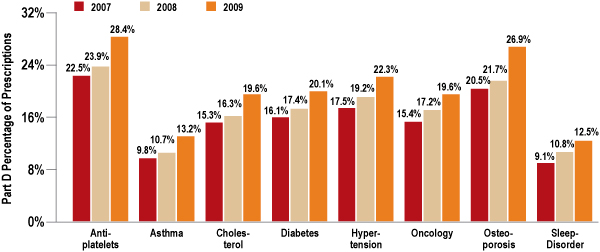
OUR OTHER PRINT BOOKS AND RELATED INFORMATION SOURCES:

Product Details