Form ADV Part II [The Essential Document]

Join Our Mailing List

Lifting the “Veil of Secrecy” on Selecting Financial Advisors

[By Dr. David Edward Marcinko MBA CMP™]

DEM white  shirtBy law, financial advisors must provide you with a form ADV Part II or a brochure that covers the same information. Even if a brochure is provided, ask for the ADV. Today, it may even be online.

While it is acceptable, even desirable, for the brochure to be easier to read than the ADV, the ADV is what is filed with the appropriate state or SEC. If the brochure reads more like a slick sales brochure or the information in the brochure glosses over the items on the ADV to a high degree, one should consider eliminating the advisor from consideration.

Types of Advisors

Registering with a state or SEC gives an advisor a fiduciary duty to the client. This is a high standard under the law. There are several types of advisors who are exempt from registering and filing an ADV.

First, there are registered representatives (brokers).  Brokers have a fiduciary responsibility to their firms regardless of whether they are statutory employees or independent contractors.

Second are attorneys and accountants whose advice is “incidental” to their legal or accounting practices. But, why would one hire someone whose advice is “incidental” to his primary profession?

A top-notch advisor is a full-time professional and should be registered.  One should insist that their advisor be registered.

****

Lifting veil of secrecy

[The Author in Chicago Seeking Fiduciary Transparency]

***

The ADV will describe the advisor’s background and employment history, including any prior disciplinary issues. It will describe the ownership of the firm and outline how the firm and advisor are compensated. Any referral arrangements will be described. If an advisor has an interest in any of the investments to be recommended, it must be listed as well as the fee schedule. There is also a description of the types of investments recommended and the types of research information that is used.

Assessment

A review of the ADV should result in an alignment of what the advisor said during the interview and what is filed with the regulators. If there is a clear discrepancy, choose another advisor. If it is unclear, discuss the issue with the advisor.

  • SEC Headquarters
  • 100 F Street, NE Washington, DC 20549
  • (202) 942-8088

Channel Surfing the ME-P

Have you visited our other topic channels? Established to facilitate idea exchange and link our community together, the value of these topics is dependent upon your input. Please take a minute to visit. And, to prevent that annoying spam, we ask that you register. It is fast, free and secure.

Conclusion

Your thoughts and comments on this ME-P are appreciated. Feel free to review our top-left column, and top-right sidebar materials, links, URLs and related websites, too. Then, subscribe to the ME-P. It is fast, free and secure.

Speaker: If you need a moderator or speaker for an upcoming event, Dr. David E. Marcinko; MBA – Publisher-in-Chief of the Medical Executive-Post – is available for seminar or speaking engagements. Contact: MarcinkoAdvisors@msn.com

OUR OTHER PRINT BOOKS AND RELATED INFORMATION SOURCES:

Comprehensive Financial Planning Strategies for Doctors and Advisors: Best Practices from Leading Consultants and Certified Medical Planners(TM)

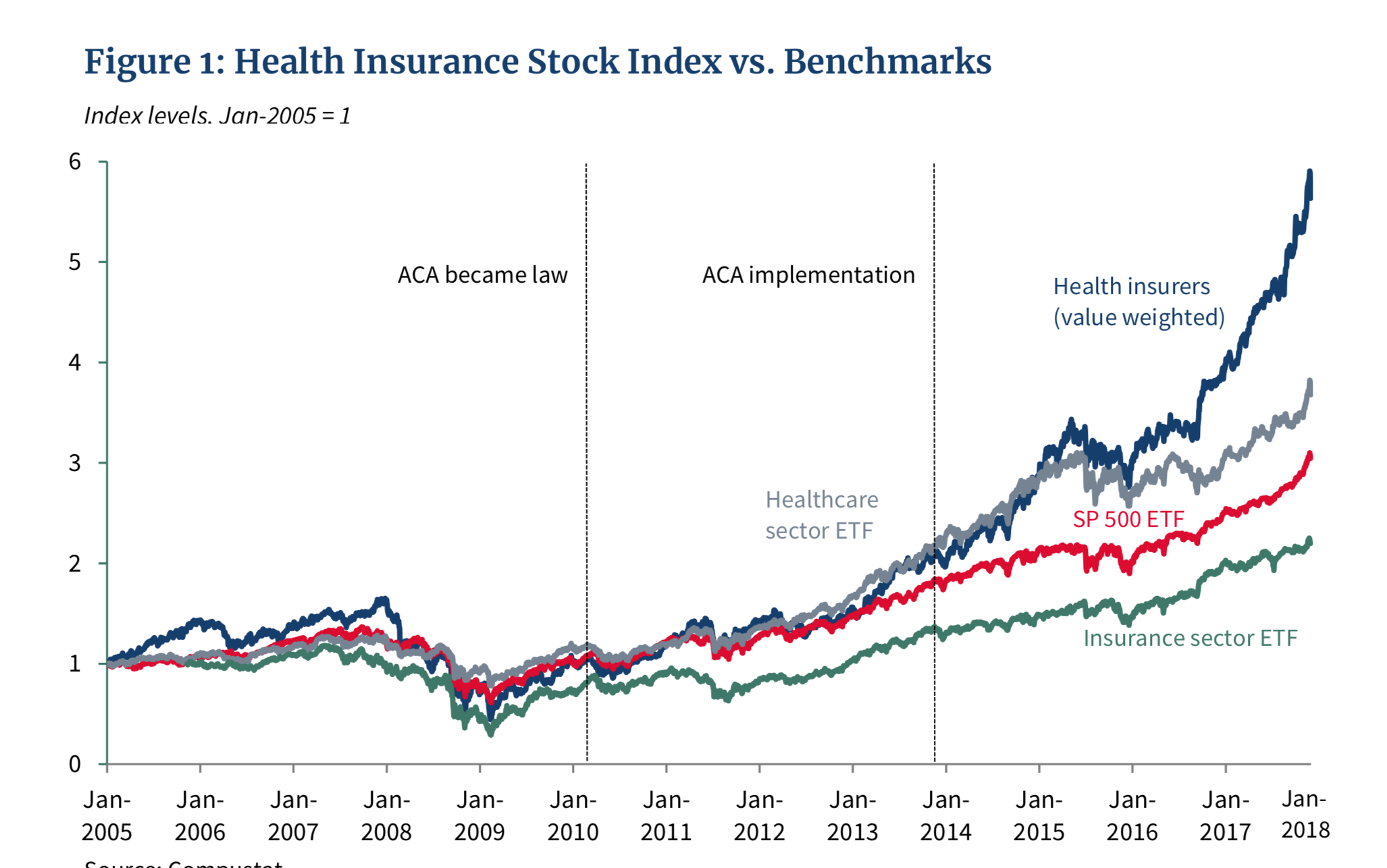
The Health Insurance Stock Index

Versus Industry Benchmarks

[By staff reporters]

***

***

Assessment

Your thoughts are appreciated.

RESOURCES:

“Insurance & Risk Management Strategies for Doctors” https://tinyurl.com/ydx9kd93

“Fiduciary Financial Planning for Physicians” https://tinyurl.com/y7f5pnox

“Business of Medical Practice 2.0” https://tinyurl.com/yb3x6wr8

THANK YOU

***

Comprehensive Financial Planning Strategies for Doctors and Advisors: Best Practices from Leading Consultants and Certified Medical Planners™

Risk Management, Liability Insurance, and Asset Protection Strategies for Doctors and Advisors: Best Practices from Leading Consultants and Certified Medical Planners™

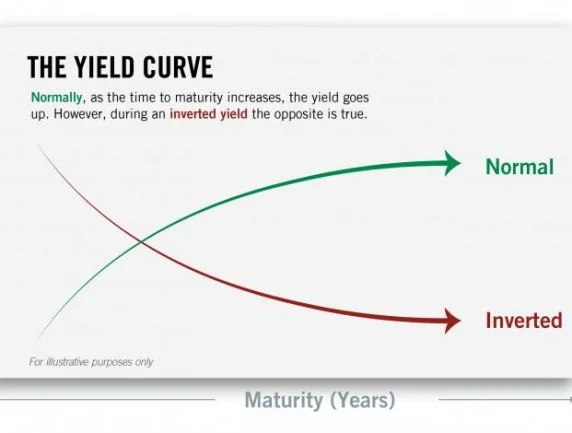
The “INVERTED” Yield Curve?

By Staff Reporters

***

In finance, the yield curve according to Wikipedia is a graph which depicts how the yields on debt instruments – such as bonds – vary as a function of their years remaining to maturity. Typically, the graph’s horizontal or x-axis is a time line of months or years remaining to maturity, with the shortest maturity on the left and progressively longer time periods on the right. The vertical or y-axis depicts the annualized yield to maturity.

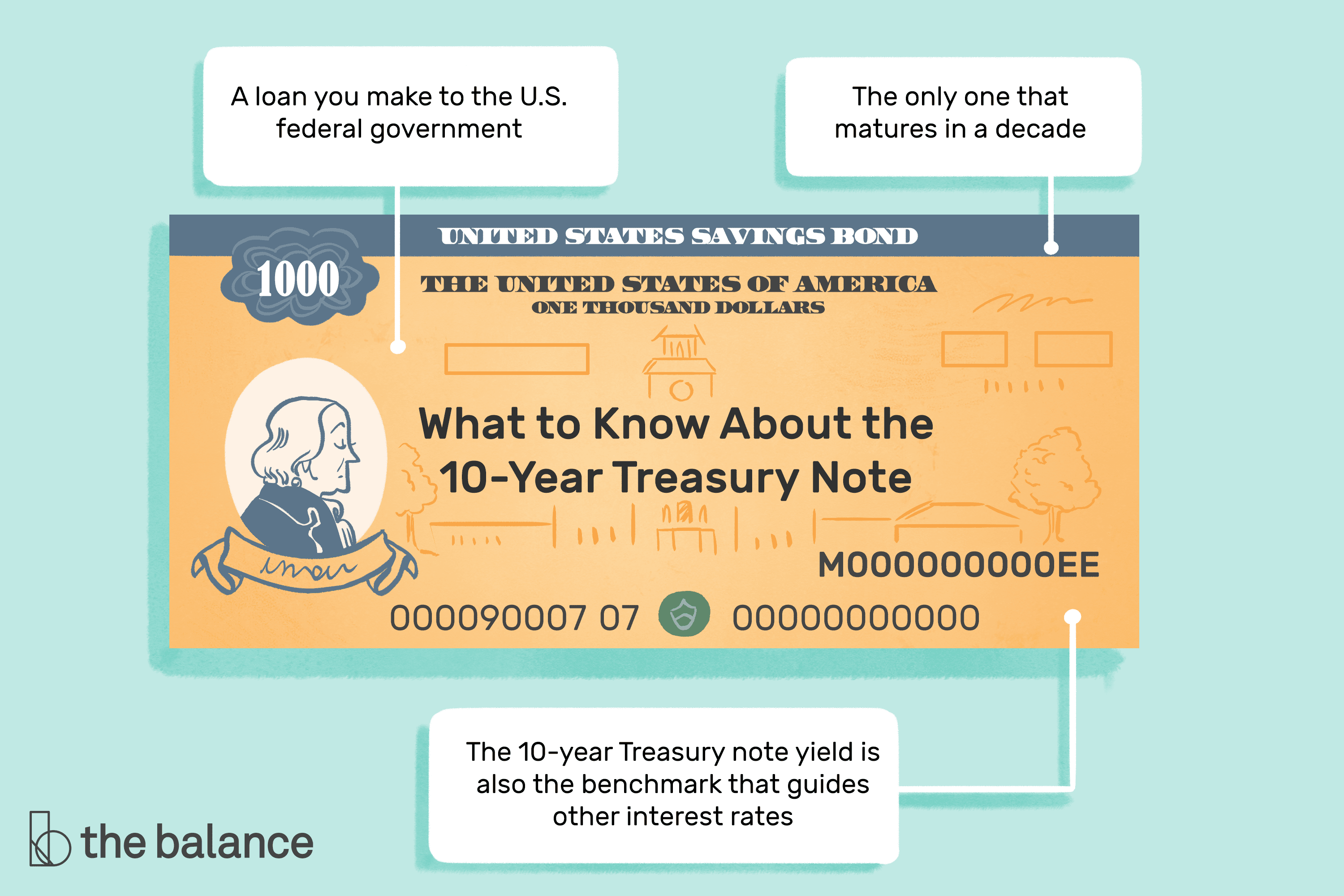
Currrently 10 year T-bonds are about 2.7%

***

***

According to finance scholar Dr. Frank J. Fabozzi, investors use yield curves to price debt securities traded in public markets and to set interest rates on many other types of debt, including bank loans and mortgages. Shifts in the shape and slope of the yield curve are thought to be related to investor expectations for the economy and interest rates.

And, Ronald Melicher and Merle Welshans have identified several characteristics of a properly constructed yield curve. It should be based on a set of securities which have differing lengths of time to maturity, and all yields should be calculated as of the same point in time. All securities measured in the yield curve should have similar credit ratings, to screen out the effect of yield differentials caused by credit risk.

For this reason, many physician investors and traders closely watch the yield curve for U.S. Treasury debt securities, which are considered to be risk-free. Informally called “the Treasury yield curve”, it is commonly plotted on a graph such as the one on the right. More formal mathematical descriptions of this relationship are often called the term structure of interest rates.

CITE: https://www.r2library.com/Resource/Title/082610254

MORE: https://www.msn.com/en-us/money/topstocks/is-a-yield-curve-inversion-a-foreboding-sign-for-mortgage-rates-does-it-really-signal-a-recession-economists-weigh-in/ar-AAVLg5j?li=BBnb7Kz

***

COMMENTS APPRECIATED

Thank You

Subscribe to the Medical Executive-Post

***

***

Why 75+ Years of American Finance Should Matter to Physician Investors

A Graphic Presentation [1861-1935] with Commentary from the Publisher

By Dr. David Edward Marcinko FACFAS MBA CPHQ CMP™

http://www.CertifiedMedicalPlanner.org

As our private iMBA Inc clients, ME-P subscribers, textbook and dictionary purchasers, seminar attendees and most ME-P readers know, Ken Arrow is my favorite economist. Why?

About Kenneth J. Arrow, PhD

Well, in 1972, Nobel Laureate Kenneth J. Arrow, PhD shocked Academe’ by identifying health economics as a separate and distinct field. Yet, the seemingly disparate insurance, asset allocation, econometric, statistical and portfolio management principles that he studied have been transparent to most financial professionals and wealth management advisors for years; at least until now.

Nevertheless, to informed cognoscenti, they served as predecessors to the modern healthcare advisory era. In 2004, Arrow was selected as one of eight recipients of the National Medal of Science for his innovative views. And, we envisioned the ME-P at that time to present these increasingly integrated topics to our audience.

Healthcare Economics Today

Today – as 2022 passes – savvy medical professionals, management consultants and financial advisors are realizing that the healthcare industrial complex is in flux; along with the Russian war, domestic inflation and this dynamic may be reflected in the overall flagging economy.

Like many laymen seeking employment, for example, physicians are frantically searching for new ways to improve office revenues and grow personal assets, because of the economic dislocation that is Managed Care, Medi Care and Obama Care [ACA], the depressed business cycle, etc.

Moreover, the largest transfer of wealth in US history is – or was – taking place as our lay elders and mature doctors sell their practices or inherit parents’ estates. Increasingly, the artificial academic boundary between the traditional domestic economy, financial planning and contemporaneous medical practice management is blurring.

I’m Not a Cassandra

Yet, I am no gloom and doom Cassandra like I have been accused, of late. I am not cut from the same cloth as a Jason Zweig, Jeremy Grantham or Nouriel Roubini PhD, for example.

However, I do subscribe to the philosophy of Hope for the Best – Plan for the Worst.

And so dear colleagues, I ask you, “Are the latest swings in the economic, healthcare and financial headlines making you wonder when it will ever stop?”

The short answer is: “It will never stop” because what’s been happening isn’t any “new normal”; it’s just the old normal playing out before a new audience; sans the war.

What audience?

The next-generation of investors, FAs, management consultants and the medical professionals of Health 2.0.

How do I know all this?

History tells me so! Just read this work, and opine otherwise, or reach a different conclusion.

Evidence from the American Financial Scene, circa 1861-1935

The work was created by L. Merle Hostetler in 1936, while he was at Cleveland College of Western Reserve University (now known as Case Western Reserve University). I learned of him while in B-School, back in the day.

At some point after it was printed, he added the years 1936-1938. Mr. Hostetler became a Financial Economist at the Federal Reserve Bank of Cleveland in 1943. In 1953 he was made Director of Research. He resigned from the Bank in 1962 to work for Union Commerce Bank in Cleveland. He died in 1990.

The volume appears to be self published and consists of a chart, approximately 85′ long, fan-folded into 40 pages with additional years attached to the last page. It also includes a “topical index” to the chart and some questions of technical interest which can be answered by the chart.

Link: http://fraser.stlouisfed.org/75years

Assessment

And so, as with Sir John Templeton’s [whose son is an MD] four most dangerous words in investing (It’s different this time), Hostetler effectively illustrates that it wasn’t so different in his era, and maybe—just maybe—it isn’t so different today for all these conjoined fields.

Conclusion      

Your thoughts and comments on this ME-P are appreciated. While not exactly a “sacred cow,” there is a current theory that investors will experience higher volatility and lower global returns for the foreseeable future.

In fact, it has gained widespread acceptance, from the above noted Cassandra’s and others, as problems in Europe persist and threats of a double-dip recession loom. But, how true is this notion; really?

Is Hostetler correct, or not; and why?

Feel free to review our top-left column, and top-right sidebar materials, links, URLs and related websites, too. Then, subscribe to the ME-P. It is fast, free and secure.

Speaker: If you need a moderator or speaker for an upcoming event, Dr. David E. Marcinko; MBA – Publisher-in-Chief of the Medical Executive-Post – is available for seminar or speaking engagements. Contact: MarcinkoAdvisors@msn.com

Our Other Print Books and Related Information Sources:

DOCTORS:

“Insurance & Risk Management Strategies for Doctors” https://tinyurl.com/ydx9kd93

“Fiduciary Financial Planning for Physicians” https://tinyurl.com/y7f5pnox

“Business of Medical Practice 2.0” https://tinyurl.com/yb3x6wr8

HOSPITALS:

“Financial Management Strategies for Hospitals” https://tinyurl.com/yagu567d

“Operational Strategies for Clinics and Hospitals” https://tinyurl.com/y9avbrq5

Subscribe Now: Did you like this Medical Executive-Post, or find it helpful, interesting and informative? Want to get the latest ME-Ps delivered to your email box each morning? Just subscribe using the link below. You can unsubscribe at any time. Security is assured.

Link: http://feeds.feedburner.com/HealthcareFinancialsthePostForcxos

Sponsors Welcomed: And, credible sponsors and like-minded advertisers are always welcomed. Link: https://healthcarefinancials.wordpress.com/2007/11/11/advertise

Product DetailsProduct DetailsProduct Details

  Risk Management, Liability Insurance, and Asset Protection Strategies for Doctors and Advisors: Best Practices from Leading Consultants and Certified Medical Planners™8Comprehensive Financial Planning Strategies for Doctors and Advisors: Best Practices from Leading Consultants and Certified Medical Planners™

   Product Details

UPDATE: Domestic Stocks Fall Amid FOMC Comments

By Staff Reporters

***

***

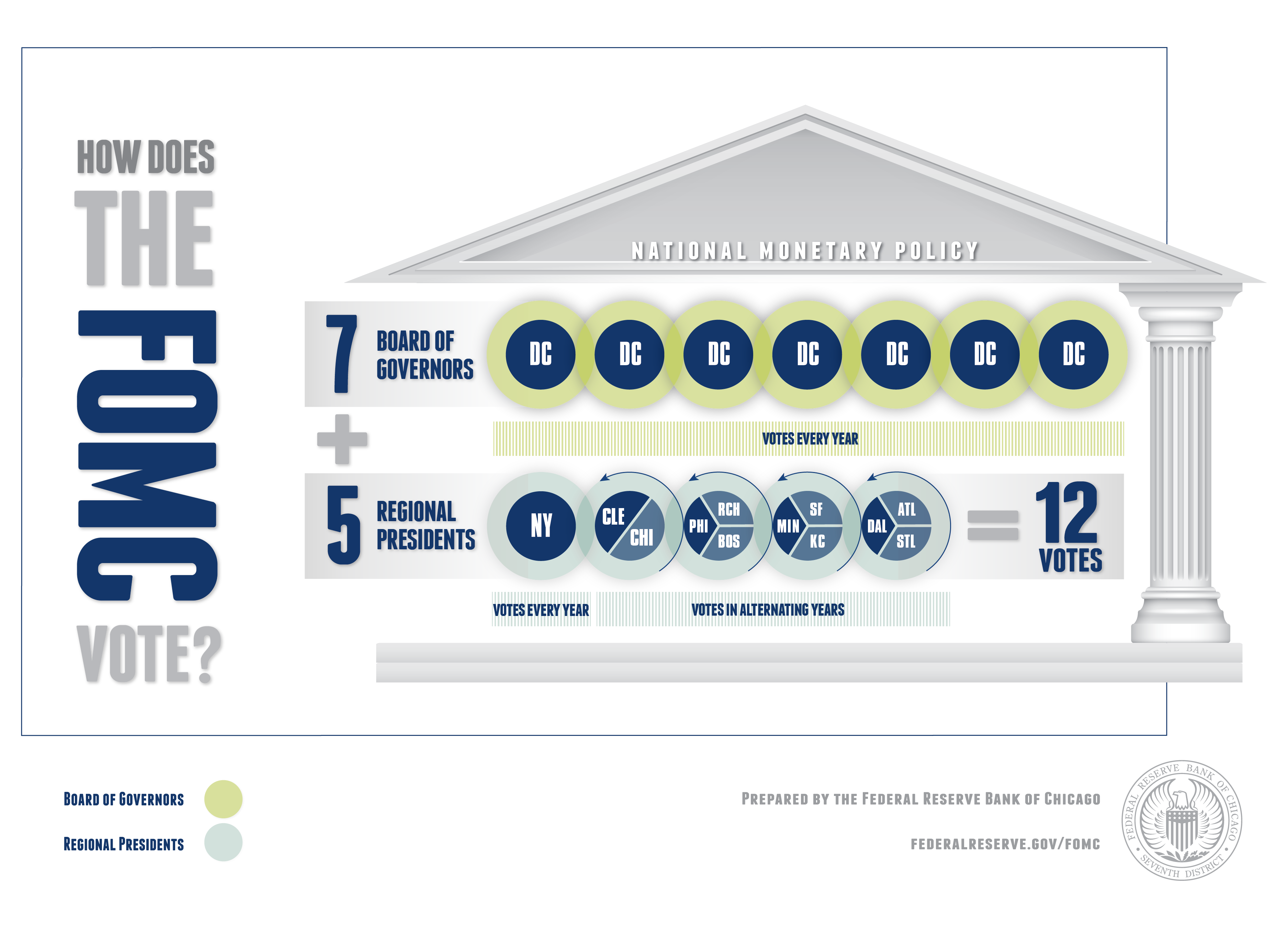
US. stocks faltered and were dragged down by losses in tech, as investors weighed remarks by Federal Reserve [FOMC] Governor Lael Brainard that indicated policymakers were ready to act more aggressively to rein in inflation. Investors also monitored reports indicating the U.S. and European Union are expected to unveil more sanctions against Russia on Wednesday.

The S&P 500 tumbled 1.3%, and the Dow Jones Industrial Average shed 280 points after climbing for two straight trading sessions. The NASDAQ Composite plunged 2.3% to log its biggest drop in three weeks and erase gains from a tech rally that helped the index pop on Monday. Meanwhile, the 10-year U.S. Treasury yield jumped to 2.56%, its highest level since May 2019.

CITE: https://www.r2library.com/Resource/Title/082610254

Brainard, who is awaiting a confirmation vote to serve in the central bank’s number two role, said at a conference on Tuesday that the Fed can raise interest rates more aggressively to dampen the high rate of inflation felt by Americans, also noting that officials will likely start shrinking asset holdings in a about a month (a move that could have the effect of further raising long-term interest rates).

“Currently, inflation is much too high and is subject to upside risks,” Brainard said. “The Committee is prepared to take stronger action if indicators of inflation and inflation expectations indicate that such action is warranted.”

***

COMMENTS APPRECIATED

Thank You

Subscribe to the Medical Executive-Post

***

***

UPDATE: The NASDAQ, Elon Musk and Twitter

By Staff Reporters

***

***

The NASDAQ composite booked its best day in more than a week after investors snapped up technology and communications shares on Elon Musk’s disclosure of a large stake in social media platform Twitter Inc. The NASDAQ, Dow industrials and S&P 500 all rose for a second straight trading day.

CITE: https://www.r2library.com/Resource/Title/082610254

What happened:

  • The NASDAQ Composite COMP, +1.90% finished up 271.05 points, or 1.9%, at 14,532.55. That’s the largest daily percentage gain since March 24, 2022, according to Dow Jones Market Data.
  • The Dow Jones Industrial Average DJIA, +0.30% added 103.61 points or 0.3%, closing at 34,921.88.
  • The S&P 500 SPX, +0.81% closed up 36.78 points, or 0.8%, at 4,582.64.

***

COMMENTS APPRECIATED

Thank You

Subscribe to the Medical Executive-Post

***

***

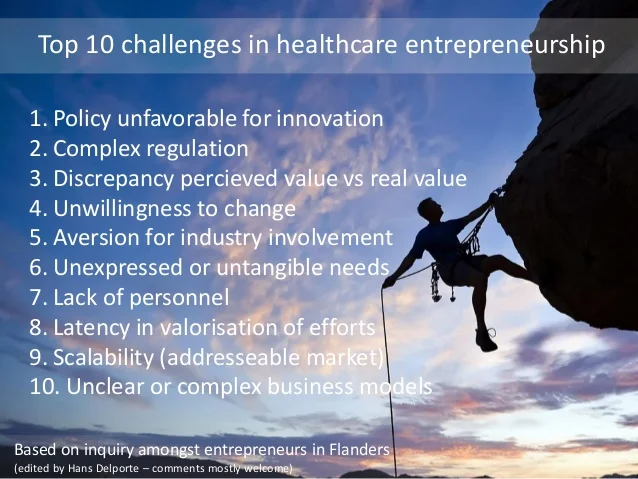
HEALTHCARE ENTREPRENEURS: “Top 10” Challenges

By Staff Reporters

***

***

COMMENTS APPRECIATED

Thank You

Subscribe to the Medical Executive-Post

***

***

***

The Subjective Theory of Bitcoin

By Michael Accad MD

***

***

In a recent article on the Mises Institute’s Power and Market blog, Kyle Ward appealed to the subjective theory of value to castigate Peter Schiff for his notorious skepticism of Bitcoin:

***

Schiff is quick to point out that gold has uses outside of being money. It is used in electronics, dentistry, and jewelry, to name a few…This leads Schiff to claim that bitcoin is unlike gold in that it has no fundamental (or objective) value. His mistake is obvious: there is no such thing as objective value, whether we’re talking about gold or bitcoin. Value is subjective and determined internally by individuals…Yes, gold can be used to build electronics, but that only has value because consumers subjectively value electronics. (emphasis in the original)

I believe Ward errs in how he relates the subjective theory of value to Bitcoin, but his error stems both from an ambiguity in phrases like “objective value” and from an ambivalence in how the founding fathers of Austrian economics themselves considered the relationship between the human agent and the good being valued.

In this article I will argue that the “orthodox” Austrian school position regarding the emergence of sound money from commodities—first proposed by Carl Menger, subsequently developed by Ludwig von Mises, and presumably adopted by Peter Schiff—is the correct one. But I will appeal to a Scholastic notion of the good to defend that view. That notion of the good is also critical to secure the foundation of a sound economic science.

***

READ: http://alertandoriented.com/the-subjective-theory-of-bitcoin/

***

EDITOR’S NOTE: Florida Podiatry Practice Now Accepts Bitcoin 

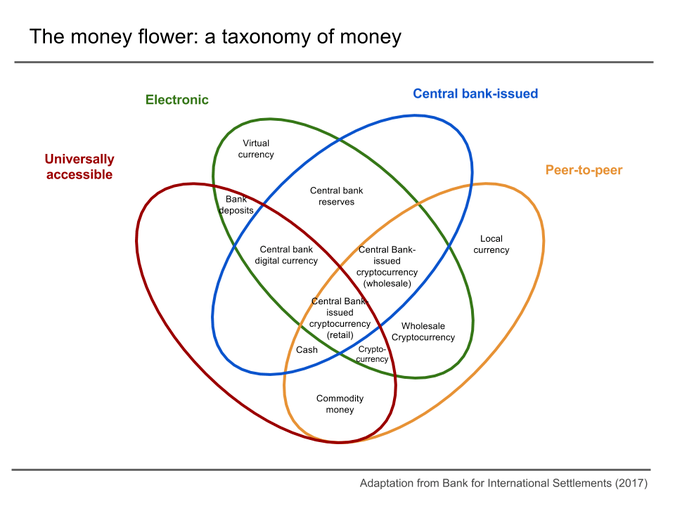
JAWSPodiatry is now one of the first medical practices in South Florida to accept Bitcoin! Bitcoin, as you know is a virtual currency that has generated a lot of headlines and has been growing in use and acceptance across the country and around the world. It is a distributed, peer-to-peer digital currency that functions without the intermediation of any central authority. 

***

COMMENTS APPRECIATED

Thank You

Subscribe to the Medical Executive-Post

***

****

UPDATE: First Quarter Stock Index Review & T-Bond Yields

By Staff Reporters

U.S. stocks fell Thursday afternoon to cap a quarter in which Federal Reserve monetary tightening and the Russian invasion of Ukraine have weighed on sentiment and has put the S&P 500 on track for its first quarterly loss in two years.

***

***

How stock indexes performed?

  • The Dow Jones Industrial Average fell 336 points, or 1%, to about 34,893.
  • The S&P 500 was down 38 points, or 0.8%, at 4,564.
  • The NASDAQ Composite shed 107 points, or 0.7%, to trade near 14,335.

BONDS: The yield on the 10-year Treasury fell to 2.331%, while the yield on the 2-year Treasury was at 2.337% at one point in late trading Thursday. After a brief inversion, both yields were basically trading at the 2.34% level in the latest trading.

CITE: https://www.r2library.com/Resource/Title/082610254

***

***

HAPPY APRIL 1st 2022

COMMENTS APPRECIATED

Thank You

Subscribe to the Medical Executive-Post

***

***

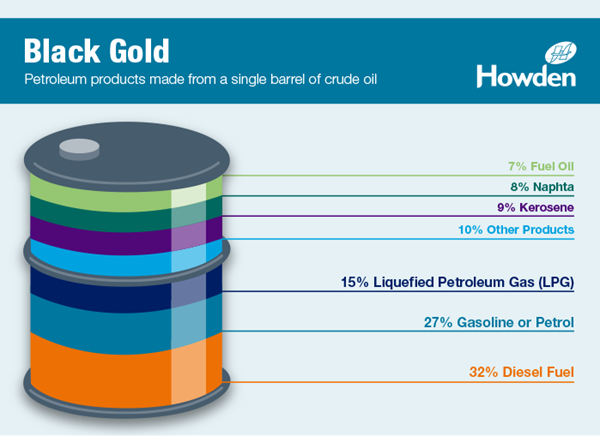
UPDATE: Oil & Energy Prices

By Staff Reporters

***

  • West Texas Intermediate crude for May delivery rose $3.58, or 3.4%, to settle at $107.82 a barrel on the New York Mercantile Exchange after posting a loss of 1.6%.
  • May Brent crude the global benchmark, rose $3.22, or 2.9%, to $113.45 a barrel on ICE Futures Europe, following a 2% loss.
  • May natural gas rose 5.2% to $5.605 per million British thermal units.
  • April gasoline  rose 3.8% to $3.325 a gallon and April heating oil climbed 2.5% to $3.809 a gallon.

***

CITE: https://www.r2library.com/Resource/Title/082610254

***

COMMENTS APPRECIATED

Thank You

Subscribe to the Medical executive-Post

***

***

The IRS, Taxation and Virtual Currency!

New Reporting Warning Issued

By Staff Reporters

***

Virtual currency transactions are taxable by law just like transactions in any other property. Taxpayers transacting in virtual currency may have to report those transactions on their tax returns.

CITE: https://www.r2library.com/Resource/Title/0826102549

***

***

All taxpayers must answer a question about virtual currency on their return.

On March 18th, the IRS issued a new alert warning all taxpayers that they must answer a section about virtual currency on their 2021 tax refund this year, even if they did not deal with any digital transactions. According to the agency, there is a question on the top of all versions of Form 1040 that asks, “At any time during 2021, did you receive, sell, exchange, or otherwise dispose of any financial interest in any virtual currency?”

“All taxpayers filing Form 1040, Form 1040-SR or Form 1040-NR must check one box answering either ‘Yes’ or ‘No’ to the virtual currency question,” the IRS explained. “The question must be answered by all taxpayers, not just taxpayers who engaged in a transaction involving virtual currency in 2021.”

IRS: https://www.irs.gov/businesses/small-businesses-self-employed/virtual-currencies

***

COMMENTS APPRECIATED

Thank You

Subscribe to the Medical Executive-Post

***

****

UPDATE: The Markets, Treasury Yields, Ukraine & the Week Ahead

By Staff Reporters

***

***

  • Markets: US stocks rose for two straight weeks. Investors appear to be putting more emphasis on strong corporate earnings than all the uncertainty around the war in Ukraine and inflation.
  • Treasury: Yields climbed (in anticipation of higher interest rates), giving a lift to financial stocks.
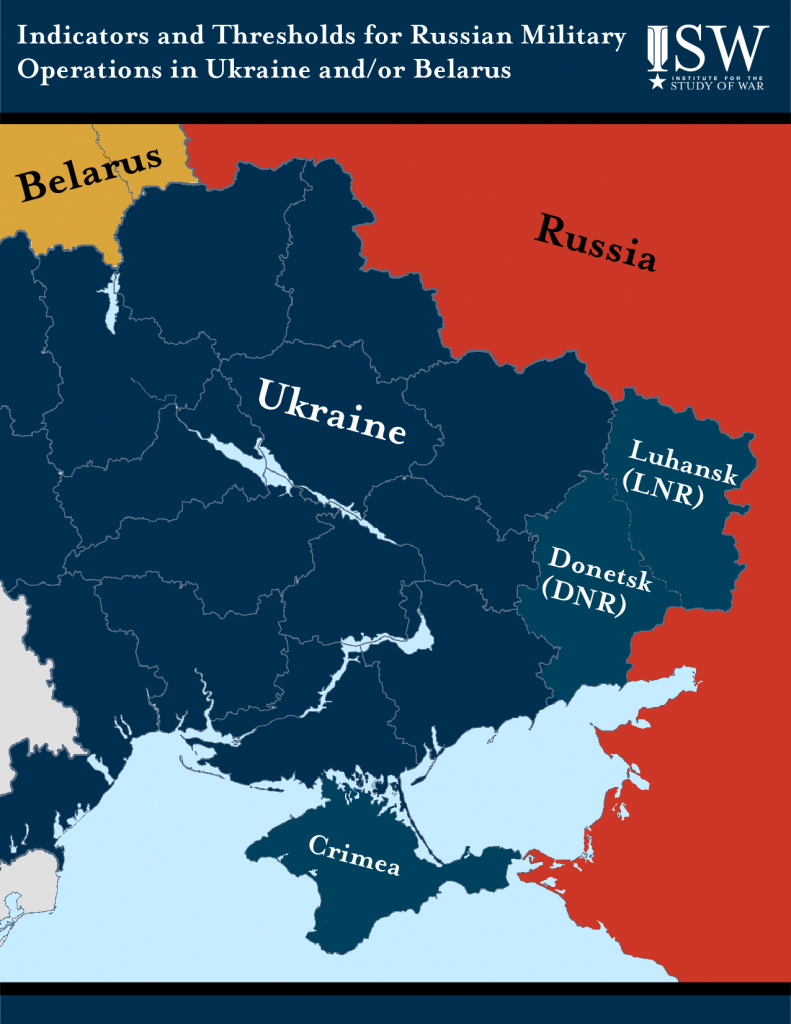
  • Ukraine: Top Russian military officials signaled a change in approach to the war. They spoke about the “complete liberation” of the Donbas region in eastern Ukraine, which means Russia could potentially be pivoting from its initial goal of taking Ukraine’s biggest cities and toppling its government.
  • EARNING REPORTS THIS WEEK:
  • Monday: Earnings from Dave & Buster’s.
  • Tuesday: US consumer confidence; US Job Openings and Labor Turnover (JOLTS); earnings from Micron, Chewy, Lululemon and RH.
  • Wednesday: US ADP jobs report; US GDP for Q4 (third estimate); weekly crude oil inventories; earnings from BioNTech and Paychex.
  • Thursday: End of first quarter; US personal income and spending; US weekly jobless claims: earnings from Walgreens and Blackberry.
  • Friday: US jobs report; US ISM manufacturing.

***

COMMENTS APPRECIATED

Thank You

Subscribe to the Medical Executive-Post

***

***

What are OTC “PINK” Sheets?

LOW PRICED “PENNY STOCKS?

By Dr. David E. Marcinko MBA CMP®

SPONSOR: http://www.CertifiedMedicalPlanner.org

CMP logo

Pink sheets are an over-the-counter (OTC) market that connects broker-dealers electronically. There is no trading floor and the quotations are also all done electronically. Since there is no central trading floor or stock exchange like the New York Stock Exchange (NYSE), the pink sheet-listed companies do not have the same criteria to fulfill as the companies listed on national stock exchanges. Many stocks listed on the pink sheets are low-priced penny stocks that trade for under $5 a share.

CITE: https://www.r2library.com/Resource/Title/0826102549

Pink sheets got their name because the original pink sheets listing the stocks were actually printed and distributed on pink pieces of paper. Trading over-the-counter (OTC) refers to the process of how securities listed on the pink sheets are traded through a broker-dealer network.
MORE: https://en.wikipedia.org/wiki/OTC_Markets_Group

Pink Sheets | Explanation | Examples with Advantages and Disadvantages

YOUR COMMENTS ARE APPRECIATED.

Thank You

****

UPDATE: Bitcoin, Retail Sales, ONS and Consumer Confidence

By Staff Reporters

***

***

Bitcoin: Rallied 2% after Russia said it would begin accepting it as payment for oil and natural gas.

Retail Sales: Fell and consumer confidence is at its lowest level in 16 months amid the recent surge in living costs.

Office for National Statistics: Reported an unexpected 0.3% decline in retail sales volumes for February, although some of this weakness reflected a drop in food sales as more people went out to pubs and restaurants.

Consumer Confidence: Continues to deteriorate after GfK reported the worst reading since November 2020 as households face up to 30-year-high levels of inflation, record fuel and food prices and a recent interest rate hike.

***

COMMENTS APPRECIATED

Thank You

Subscribe to the Medical Executive-Post

***

***

What is an “Inverse” ETF?

WHAT IT IS – HOW IT WORKS

Traditional ETFs: https://medicalexecutivepost.com/2008/01/07/exchange-traded-funds-etfs/

Tax and ETFs: https://medicalexecutivepost.com/2008/01/11/etfs-and-tax-efficiency/

INVERSE DEFINITION:

An inverse exchange-traded fund is an exchange-traded fund, traded on a public stock market, which is designed to perform as the inverse of whatever index or benchmark it is designed to track. These funds work by using short selling, trading derivatives such as futures contracts, and other leveraged investment techniques.

Citation: https://www.r2library.com/Resource/Title/0826102549

***

How Inverse ETFs Can Help And Hurt You

READ: https://smartasset.com/investing/inverse-etf

RELATED: https://smartasset.com/investing/what-is-a-leveraged-etf

ASSESSMENT: Your comments and thoughts are appreciated.

THANK YOU

****


General Obligation and Revenue Bonds

Understanding GOs and RBs

[By Staff Writers]fp-book2

General obligation bonds are secured by the taxing authority and are therefore considered safer than other municipals. The full faith and credit of the municipality ensures prompt payment of principal and interest.

Further more, most municipal bonds, including city, county, and school district issues, are secured by a pledge of unlimited property taxes (known as ad-valorem taxes), which further secures the bonds. If taxes are not paid, the property may be sold at a tax sale, at which the bondholder has a superior position.

Revenue bonds

Revenue bonds are payable from the earnings of a revenue-generating facility, such as water, sewers, or utility systems, toll bridges, or airports. The risk, however, is that the facility will not generate income sufficient to pay the interest, and therefore the yield is somewhat higher than for a general-obligation bond.

Revenue bonds are supported only by the revenue earned, so if the project does not produce revenues sufficient to pay the interest on the bonds, then the bonds go into default. Therefore, it is important to properly evaluate the municipality’s ability to tax and/or the assumptions used to project the facility’s revenue.

Conclusion

Your thoughts and comments on this ME-P are appreciated. Feel free to review our top-left column, and top-right sidebar materials, links, URLs and related websites, too. Then, subscribe to the ME-P. It is fast, free and secure.

Link: http://feeds.feedburner.com/HealthcareFinancialsthePostForcxos

Speaker: If you need a moderator or speaker for an upcoming event, Dr. David E. Marcinko; MBA – Publisher-in-Chief of the Medical Executive-Post – is available for seminar or speaking engagements. Contact: MarcinkoAdvisors@msn.com

OUR OTHER PRINT BOOKS AND RELATED INFORMATION SOURCES:

LEXICONS: http://www.springerpub.com/Search/marcinko
PHYSICIANS: www.MedicalBusinessAdvisors.com
PRACTICES: www.BusinessofMedicalPractice.com
HOSPITALS: http://www.crcpress.com/product/isbn/9781466558731
CLINICS: http://www.crcpress.com/product/isbn/9781439879900
ADVISORS: www.CertifiedMedicalPlanner.org
BLOG: www.MedicalExecutivePost.com

Product DetailsProduct DetailsProduct Details     

Product Details  Product Details

Understanding Municipal Bond Underwriting

A Primer for Physician Investors

By Dr. David Edward Marcinko MBA CMP™

[Publisher-in-Chief]

While the underwriting procedures for corporate bonds are almost identical to corporate stock, there are significant differences in the underwriting of municipal securities. Municipal securities – hospitals for example – are exempt from the registration filing requirements or the Securities Act of 1933. A state or local government, in the issuance of municipal securities, is not required to register the offering with the SEC, so there is no filing of a registration statement and there is no prospectus which would otherwise have to be given to investors.

Municipal Underwriting

There are two main methods of financing when it comes to municipal securities. One method is known as negotiated. In the case of a negotiated sale, the municipality looking to borrow money would approach an investment bank and negotiate the terms of the offering directly with the firm. This is really not very different from the equity process.

Competitive Bidding

The other type of municipal underwriting is known as competitive bidding. Under the terms of competitive bidding, an issuer announces that it wishes to borrow money and is looking for syndicates to submit competitive bids. The issue will then be sold to the syndicate which submits the best bid, resulting in the municipality having the lowest net interest cost (lowest expense to the issuer).

If the issue is to be done by a competitive bid, the municipality will use a Notice of Sale to announce that fact. The notice of sale will generally include most or all of the following information.

  • Date, time, and place. This does not mean when the bonds will be sold to the public, but when the issue will be awarded (sold) to the syndicate issuing the bid.
  • Description of the issue and the manner in which the bid is to be made (sealed bid or oral).
  • Type of bond (general obligation, revenue, etc.)
  • Semi-annual interest payment dates and the denominations in which the bonds will be printed.
  • Amount of good faith deposit required, if any.
  • Name of the law firm providing the legal opinion and where to acquire a bid form.
  • The basis upon which the bid will be awarded, generally the lowest net interest cost.

The Bond Attorney

Since municipal securities are not registered with the SEC, the municipality must hire a law firm in order to make sure that they are issuing the securities in compliance with all state, local and federal laws. This is known as the bond attorney, or independent bond counsel. Some functions are included below:

  1. Establishes the exemption from federal income tax by verifying requirements for the exemption.
  2. Determines proper authority for the bond issuance.
  3. Identifies and monitors proper issuance procedures.
  4. Examines the physical bond certificates to make sure that they are proper
  5. Issues the debt and a legal opinion, since municipal bonds are the only securities that require an opinion.
  6. Does not prepare the official statement.

When medical or other investors purchase new issue municipal securities from syndicate or selling group members, there is no prospectus to be delivered to investors, but there is a document which is provided to purchasers very similar in nature to a prospectus. It is known as an Official Statement. The Official Statement contains all of the information an investor needs to make a prudent decision regarding a proposed municipal bond purchase.

Underwriting Syndicate

The formation of a municipal underwriting syndicate is very similar to that for a corporate issue. When there is a negotiated underwriting, an Agreement Among Underwriters (AAU) is used. When the issue is competitive bid, the agreement is known as a Syndicate Letter. In the syndicate letter, the managing underwriter details all of the underwriting agreements among members of the syndicate. Eastern (undivided) and Western (divided) accounts are also used, but there are several different types of orders in a municipal underwriting.

Order Types

The traditional types of orders, in priority order, are:

  • Pre-Sale Order: Made before the syndicate actually offers the bonds. They have first priority over any other order turned in.
  • Syndicate (group net) Order: Made once the offering is under way at the public offering price. The purchase is credited to each syndicate member in proportion to its allotment. An institutional buyer will frequently purchase” group net”, since many of the firms in the syndicate may consider this buyer to be their client and he wishes to please all of them.
  • Designated Order: Sales to medical investors (usually healthcare institutions) at the public offering price where the investor designates which member or members of the syndicate are to be given credit.
  • Member Orders: Purchased by members of the syndicate at the take-down price (spread). The syndicate member keeps the full take-down if the bonds are sold to investors, or earns the take-down less the concession if the sale is made to a member of the selling group. Should the offering be over-subscribed, and the demand for the new bonds exceeds the supply, the first orders to be filled are the pre-sale orders. Those are followed by the syndicate (sometimes called group net) orders, the designated orders, and the last orders filled are the member’s.

Assessment

Finally, be aware that the term bond scale is a listing of coupon rates, maturity dates, and yield or price at which the syndicate is re-offering the bonds to the public. The scale is usually found in the center of a tombstone ad and on the front cover of the official statement. One of the reasons why the word “scale” is used – is that like the scale on a piano – it normally goes up. A regular or positive scale is one in which the yield to maturity is lowest on the near term maturities and highest on the long term maturities. This is also known as a positive yield curve, since the longer the maturity, the higher the yield. In times of very tight money, such as in 1980-81, one might find a bond offering with a negative scale. A negative (sometimes called inverted) scale is just the opposite of a positive one, with, yields on the short term maturities are higher than those on the long term maturities.

http://www.amazon.com/Financial-Planning-Handbook-Physicians-Advisors/dp/0763745790/ref=sr_1_1?ie=UTF8&s=books&qid=1276795609&sr=1-1 

Conclusion

Your thoughts and comments on this ME-P are appreciated. Feel free to review our top-left column, and top-right sidebar materials, links, URLs and related websites, too. Then, subscribe to the ME-P. It is fast, free and secure.

Speaker: If you need a moderator or speaker for an upcoming event, Dr. David E. Marcinko; MBA – Publisher-in-Chief of the Medical Executive-Post – is available for seminar or speaking engagements. Contact: MarcinkoAdvisors@msn.com
OUR OTHER PRINT BOOKS AND RELATED INFORMATION SOURCES:

Risk Management, Liability Insurance, and Asset Protection Strategies for Doctors and Advisors: Best Practices from Leading Consultants and Certified Medical Planners™8Comprehensive Financial Planning Strategies for Doctors and Advisors: Best Practices from Leading Consultants and Certified Medical Planners™

***


An Interest Rate Review for Physician-Executives

Managerial Accounting

By Dr. David E. Marcinko MBA

Recently, several major banking institutions have addressed the problem of escalating debt upon graduating physicians, mid-life practitioners and even seasoned healthcare providers; despite historically low rates for prime customers.

Unfortunately, one may still wonder how many clinicians truly appreciate the risks associated with usurious interest rates for homes, cars, medical equipment and other consumer items; as we offer the following review to reduce this peril.

WHITE-PAPER: IRs

Assessment: Your thoughts are appreciated.

***

Risk Management, Liability Insurance, and Asset Protection Strategies for Doctors and Advisors: Best Practices from Leading Consultants and Certified Medical Planners™8Comprehensive Financial Planning Strategies for Doctors and Advisors: Best Practices from Leading Consultants and Certified Medical Planners™

***

INVESTING: “Direct Indexing” Definition

WHAT IT IS – HOW IT WORKS?

Citation: https://www.r2library.com/Resource/Title/0826102549

Direct Indexing at Vanguard - FiPhysician

READ: https://smartasset.com/investing/direct-indexing#:~:text=Advantages%20of%20Direct%20Indexing%201%20Tax%20Efficiency.%20Direct,Social%20Criteria%20Customization.%20…%204%20Lower%20Costs.%20

YOUR COMMENTS ARE APPRECIATED.

SECOND OPINIONS: https://medicalexecutivepost.com/schedule-a-consultation/

INVITE DR. MARCINKO: https://medicalexecutivepost.com/dr-david-marcinkos-bookings/

****

****

THANK YOU

***

UPDATE: The Housing and Single Family Rental Markets

By Staff Reporters

***

***

HOMES: Last year was a really good time to own a home—like, historically good. For the first time on record, homeowners earned more from the increase in home values than income from their jobs, according to Zillow. The numbers: The typical US home increased $52,667 in value, while the median full-time worker earned about $50,000 before taxes.

Rentals: Single-family rental prices jumped 12.6% from a year earlier, according to the latest CoreLogic Single-Family Rent Index. All major metropolitan areas saw increases, but the Sun Belt experienced by far the biggest gains, with Miami’s asking rents up almost 39%.

***

***

COMMENTS APPRECIATED

Thank You

Subscribe to the Medical Executive-Post

***

***

My Investing “Sell” Principle

The Renaissance of Pipelines

Vitaliy N. Katsenelson, CFA - YouTube

By Vitaliy N. Katsenelson, CFA

A client recently asked me whether there is a difference in our sell discipline between high and low growth companies.

Selling is one of the hardest parts of investing. I wrote a lot on the subject in the past, but let’s zoom in on how our selling practice differs between high-growth companies with long runways for compounding and slow-growth companies.

LINK: https://contrarianedge.com/our-sell-discipline/

AUDIO: https://investor.fm/the-renaissance-of-pipelines-and-our-sell-discipline-ep-113

Your thoughts are appreciated.

EDITOR’S NOTE: It has been a few years since I spoke with my colleague Vitaliy. But, I read his newsletters and blog regularly and suggest all ME-P readers do the same.

Dr. David E. Marcinko; MBA

[Editor-in-Chief]

Comprehensive Financial Planning Strategies for Doctors and Advisors: Best Practices from Leading Consultants and Certified Medical Planners(TM)

BOOK: https://www.amazon.com/Comprehensive-Financial-Planning-Strategies-Advisors/dp/1482240289/ref=sr_1_1?ie=UTF8&qid=1418580820&sr=8-1&keywords=david+marcinko

THANK YOU

***

SELLING: Financial Advice!

Join Our Mailing List

It is All About Sales

Rick Kahler MS CFP

By Rick Kahler MS CFP®

Steve Forbes, editor of the well-respected financial publication Forbes Magazine, once said,

“You make more selling advice than following it. It’s one of the things we count on in the magazine business, along with the short memory of our readers.”

Scores of publications sell advice on their proprietary investing secrets. In addition, hundreds of thousands of active money managers claim they can “beat the market” and give you above average returns. Usually, “the market” this advice refers to is the Standard & Poor’s 500 Index.

Investing in the S&P 500 Index simply means owning a fraction of every one of the largest 500 companies in the US. No skill is involved at all; a third grader can do this.

Accepting average market returns through an index fund is termed “passive” investing, while trying to beat the market is called “active” investing. Enticing as the latter may seem, very few active investors manage to do it.

Dimensional Fund Advisors

A recent study cited by Dimensional Fund Advisors found that only 17% of money managers beat the S&P 500 Index over 15 years. A similar study done by Dalbar, Inc. found that over 20 years, just 3% of money managers beat the S&P 500 Index. In other words, 97% of all money managers didn’t do as well as a third grader who invested in the S&P 500 Index.

In addition, active investors generally pay around 1.35% a year in fees, compared to around 0.20% a year for passive investors. According to the Dalbar study, the average active investor earns 3% to 4% less annually than the average passive investor. That’s a really big deal.

With all the research to the contrary, why does active investing flourish?

There are three reasons:

First, people are confused. Few investors understand that Wall Street has every financial incentive to keep you confused. So does much of the financial press, because passive investing doesn’t sell papers or magazines. We don’t see headlines reading, “What You Need To Do With Your Portfolio Now: NOTHING!”

Second, people tend to be extremely overconfident. Most of what people mistake for outperformance in a money manager is actually just dumb luck. According to Ken French, professor of finance at Dartmouth, it takes 64 years of data to sort through all the random probabilities to assess whether a manager’s short-term beating the market is due to skill rather than chance.

To emphasize this, try an experiment that can make you a stock-picking genius. Select 64 people, preferably not friends. Tell 32 of them the price of a share of Apple will be higher at the end of the month; tell the other 32 it will be lower. Of course, your “prediction” will be true for one group or the other. At the end of the month take the “true” group, divide it into two groups of 16, and repeat the exercise. At the end of the second month, divide the “true” group in half and repeat. Continue the pattern with the remaining 8, then 4, and the last 2. After six months you will have correctly predicted the movement of Apple stock to one person—who will think you are a financial genius.

The third reason active investing flourishes is the superior skill of the top 3%—the Bill Millers and Jim Simons. Such investment gurus provide encouragement that you, too, can beat the market. Yet actually, the fact they exist is exactly the reason why you shouldn’t try. Why?

Assessment

In order for them to do better than the market, they need lots of others to do worse. As Ken French reminds us, trying to beat the market is a zero sum game. 

***

investing

***

Conclusion

Your thoughts and comments on this ME-P are appreciated. Feel free to review our top-left column, and top-right sidebar materials, links, URLs and related websites, too. Then, subscribe to the ME-P. It is fast, free and secure.

Speaker: If you need a moderator or speaker for an upcoming event, Dr. David E. Marcinko; MBA – Publisher-in-Chief of the Medical Executive-Post – is available for seminar or speaking engagements. Contact: MarcinkoAdvisors@msn.com

OUR OTHER PRINT BOOKS AND RELATED INFORMATION SOURCES:

 Risk Management, Liability Insurance, and Asset Protection Strategies for Doctors and Advisors: Best Practices from Leading Consultants and Certified Medical Planners™   Comprehensive Financial Planning Strategies for Doctors and Advisors: Best Practices from Leading Consultants and Certified Medical Planners™

***

UPDATE: Medical Debt, Credit Reports & Spring

By Staff Reporters

***

***

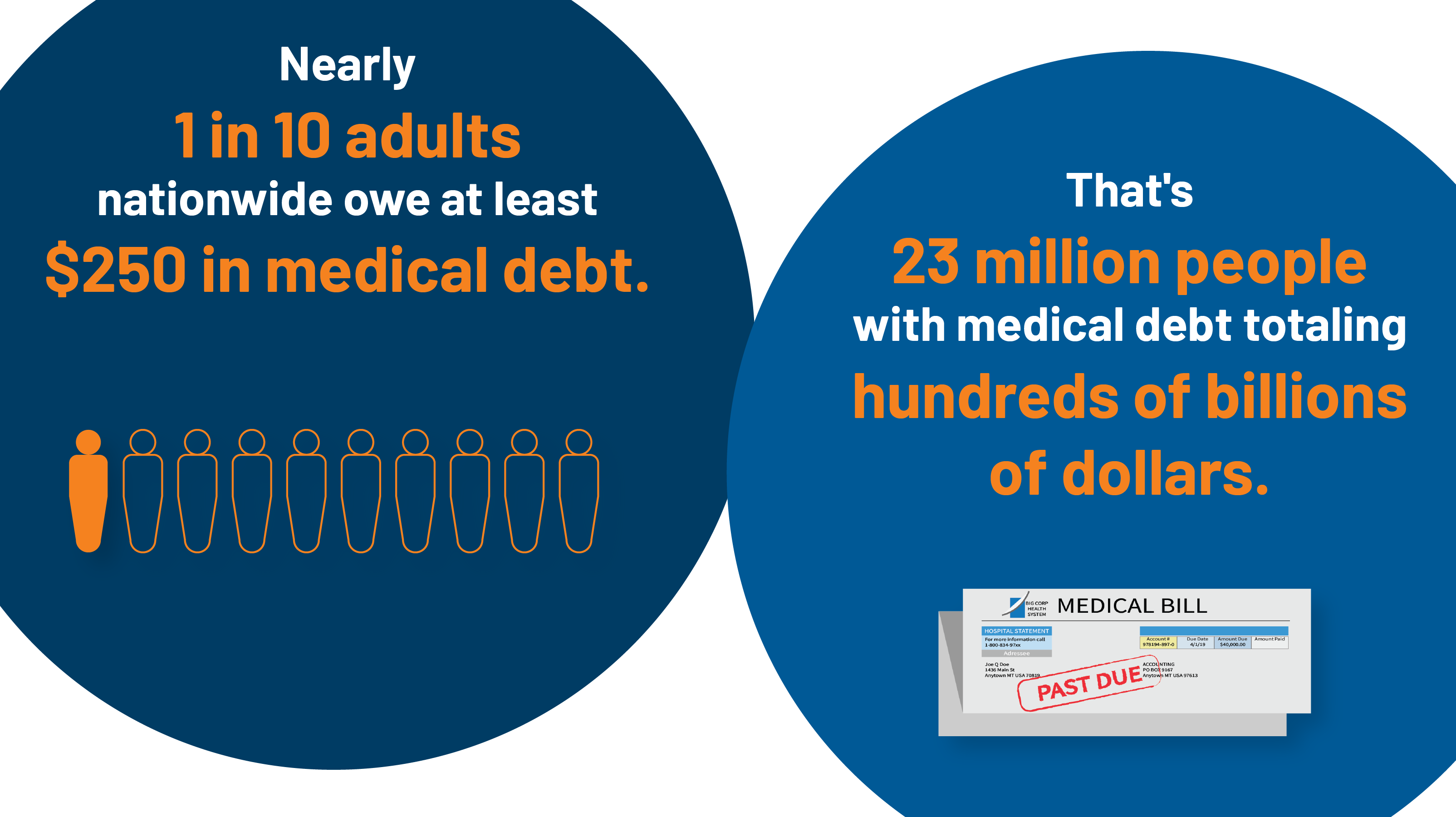
Medical Debt. The top three credit reporting agencies—Equifax, Experian, and TransUnion—said recently that they’ll remove most medical debt from consumers’ credit reports beginning this summer. This move will wipe out almost 70% of medical debts that can sometimes stick around for up to seven years on Americans’ credit reports and make it harder for them to buy a house, car, or take out other loans.

Spring: Today is the first day of Spring [aka the vernal equinox or one of two moments of the year when the Sun is exactly above the Equator].

***

HAPPY SPRING 2022

Editor-in-Chef: Dr. David Edward Marcinko MBA CMP™

COMMENTS APPRECIATED

Thank You

Subscribe to the Medical Executive-Post

***

***

****

The [HISTORICAL] Trouble with Banks?

Join Our Mailing List

“I don’t trust banks and neither should you”

eric

   By Erik Kobayashi-Solomon

 [intelligent option investor]

More On Banks

I don’t trust banks and neither should you if you care at all about understanding the company in which you are investing.  While financial statements for all companies contain estimates, virtually every line item on a bank’s financial statement are estimates – to the extent that, taken as a whole, the statements become little more than complex, arcane works of fiction.

https://intelligentoptioninvestor.com/the-trouble-with-banks/?mc_cid=0744dc1505&mc_eid=aec9f6fde5

Conclusion

Your thoughts and comments on this ME-P are appreciated. Feel free to review our top-left column, and top-right sidebar materials, links, URLs and related websites, too. Then, subscribe to the ME-P. It is fast, free and secure.

Speaker: If you need a moderator or speaker for an upcoming event, Dr. David E. Marcinko; MBA – Publisher-in-Chief of the Medical Executive-Post – is available for seminar or speaking engagements. Contact: MarcinkoAdvisors@msn.com

OUR OTHER PRINT BOOKS AND RELATED INFORMATION SOURCES:

Risk Management, Liability Insurance, and Asset Protection Strategies for Doctors and Advisors: Best Practices from Leading Consultants and Certified Medical Planners™  Risk Management, Liability Insurance, and Asset Protection Strategies for Doctors and Advisors: Best Practices from Leading Consultants and Certified Medical Planners™

***

UPDATE: The Markets, Oil and T-Notes

By Staff Reporters

***

***

MARKETS: Stocks rose for a fourth day in a row Friday, closing out their biggest weekly gain since November 2020. The S&P 500 added 1.2%, bringing its weekly gain to 6.2%. The NASDAQ climbed 2.1% and the Dow Jones Industrial Average rose 0.8%. Investors have welcomed the long-expected pivot from the Federal Reserve from stimulating the economy to fighting inflation, which began this week with its first interest rate increase since 2018.

OIL: The price of oil remains above $100 a barrel as investors monitor the ongoing Russian invasion of Ukraine.

10 Year Treasury Note: The yield on the 10-year Treasury Note fell to 2.15%.

CITE: https://www.r2library.com/Resource/Title/082610254

WINTER: Today is the last day of winter.

***

COMMENTS APPRECIATED

Thank You

Subscribe to the Medical Executive-Post

***

****

WEALTH ACCUMULATION: Temptation and Incentives

A WORKING WHITE PAPER

Orazio Attanasio

Agnes Kovacs

Patrick Moran

We propose a rich model of household behavior to study the effect of two important policies: mortgage interest tax deduction and mandatory mortgage amortization. These policies have attracted some controversy, first because they are conceived to increase overall saving, an objective that the literature does not agree they can achieve, and second because they incentivize illiquid savings and may thus increase the share of ‘wealthy hand-to-mouth’ households.

We build a life-cycle model where housing may act as a commitment device to counteract present biases arising from temptation. We show that the model matches several empirical facts, including the large share of wealthy hand-to-mouth households. We evaluate the effect of the two policies and find that they increase wealth accumulation by 7 and 10% respectively.

Our results demonstrate that these policies not only induce portfolio re-balancing, as emphasized by the previous literature, but also increase savings by making commitment more accessible.

WHITE PAPER: https://www.nber.org/system/files/working_papers/w28938/w28938.pdf

ASSESSMENT: Your thoughts and comments are appreciated.

THANK YOU

***

***

UPDATE: Markets, Berkshire Hathaway and the Ukraine

By Staff Reporters

***

  • Markets: Stocks boomed on a day when, to no one’s surprise, the Federal Reserve [FOMC} said it would hike interest rates.
  • Berkshire Hathaway: Class A shares closed above a half-million dollars for the first time ever—a testament to Warren Buffett’s recent hot streak.
  • Ukraine: After Ukrainian President Volodymyr Zelensky gave an impassioned address to Congress asking for more help, the White House acted. President Biden pledged $800 million worth of military aid, including 100 drones, 800 Stinger anti-aircraft systems, and 2,000 anti-armor missiles, and also called Russian President Vladimir Putin a “war criminal.”
  • HAPPY SAINT PATRICK’S DAY

***

COMMENTS APPRECIATED

Thank You

Subscribe to the Medical Executive-Post

***

***

“IDES OF MARCH” and U.S. Debt Limits 2022

BEWARE THE “IDES OF MARCH”

CMP logo

Courtesy:www.CertifiedMedicalPlanner.org

Debts and Settlement is Due

The Ides of March was a day in the Roman calendar that corresponds to 15 March. It was marked by several religious observances and was notable for the Romans as a deadline for settling debts.

In 44 BC, it became notorious as the date of the assassination of Julius Caesar which made the Ides of March a turning point in Roman history.

***

***

MORE: https://en.wikipedia.org/wiki/Ides_of_March

***

***

Assessment: Your thoughts and comments are appreciated.

2022 UPDATE: https://home.treasury.gov/policy-issues/financial-markets-financial-institutions-and-fiscal-service/debt-limit

***

Subscribe to the Medical Executive-Post

THANK YOU

***

***

CONCLUSION: The Six Commandments of Value Investing

***

Investing and Chess

By Vitaliy Katsenelson, CFA

***

Conclusion: Investing and Chess 

I read somewhere that chess is a game of small advantages. When the game starts, the players are equal – both hold the same number of pieces in the same positions. But then every move either adds to your position (competitive advantage) or subtracts from it. These little decisions (resulting in a better pawn structure, a more secure king, a centrally positioned knight, and so on) that you make with every move accumulate into victory. 

Investing is not that much different, especially in today’s world where access to information has flattened. A mutual fund that manages $100 billion may spend $100 million on research, but that $100 million doesn’t buy any more than what a patient value investor can glean by reading financial statements. 

I am not talking about Warren Buffett either, who doesn’t even have a PC in his office. Ted Weschler and Todd Combs (Warren Buffett’s right-hand men) achieved phenomenal investment success without a fancy research department by simply reading carefully and following our Six Commandments. 

The key to succeeding in this irrational world is to actively ingrain each one of these principles into your investment operating system, improving your process just a little on a daily basis, and then success will follow. 

Finally, this would not be a worthy chapter if I did not contradict myself, just a little. Investing is also unlike chess. Investing affords us a luxury that few people appreciate: You can choose your own opponent. In chess tournaments, you don’t get to choose your opponent. Tournament organizers match you to someone with an equal rating; then as you win, you are progressively matched against better opponents. 

In investing, you are the “tournament organizer.” You get to walk into the room and, instead of choosing the geekiest opponent – the dude with thick glasses who hasn’t been on a date in years and has only thought and dreamt about chess – you can go for the muscular guy who spends five hours a day in the gym, and only joined the tournament because he lost a bet. 

Money doesn’t know how you made it. A hundred dollars made by solving easy problems (buying stocks where both your IQ and EQ were at their highest) buys as much as a hundred dollars that caused you to lose your hair. In investing, you don’t have to solve the problems that everyone else is solving. There are thousands of stocks out there, and your portfolio needs only a few dozen.

***

COMMENTS APPRECIATED

Thank You

Subscribe to the Medical Executive-Post

***

***

#6: The Six Commandments of Value Investing

***

6. In the long run, stocks revert to their fair value

***

***

EDITOR’S NOTE: Although it has been some time since speaking live with busy colleague Vitaliy Katsenelson CFA, I review his internet material frequently and appreciate this ME-P series contribution. I encourage all ME-P readers to do the same and consider his value investing insights carefully.

By Vitaliy Katsenelson, CFA

***

6. In the long run, stocks revert to their fair value

Reversion to fair value is not a pie-in-the-sky concept. If a stock is significantly undervalued for a long time, then this undervaluation gets cured, eventually. That can happen through share buybacks – the company can basically buy all of its shares and take itself private.

Or it can happen by the company’s paying out its earnings in dividends, thus creating yields that the market will not be able to ignore. Or the company’s competitors will realize that it is cheaper for them to buy the company than to replicate its assets on their own. Either way, undervaluation gets cured.

This faith that undervaluation will not last forever is paramount to value investing. But this is not your regular faith, which requires belief without proof. This is evidence-supported faith with hundreds of years of data to back it. Just look at the US stock market: it has gone through cycles when it was incredibly cheap and others when it was incredibly expensive. At some points in its journey from one extreme to the other, it touched its fair value, even if it was transitory.

Historically, value investing (owning undervalued companies) has done significantly better than other strategies. Paradoxically, the reason it has done well in the long run is because it did not work consistently in the short run. If something works consistently (keyword), everybody piles into it and it stops working.

These aforementioned cycles of temporary brilliance and dumbness are not just common to us mere mortals. Even Warren Buffett’s Berkshire Hathaway goes through them. As just one example, in 1999, when the stock market went up 21%, Berkshire Hathaway stock declined 19%. In 1999, the financial press was writing obituaries for Buffett’s investment prowess.

Suddenly, in 1999, Buffett’s IQ was lagging the market by 40%. At the time, investors were infatuated with internet stocks that were not making money but that were supposed to have a bright future. Investors were selling unsexy “old economy” stocks that Buffett owned in order to buy the “new economy” ones.

If at the end of 1999, you were to sell Berkshire Hathaway and buy the S&P 500 instead, you would have done the easy thing, but it would have been a large (though very common) mistake. Over the next three years Berkshire Hathaway gained over 30% while the S&P declined over 40%. During the year 1999, Buffett’s IQ did not change much; in fact, the (book) value of businesses Berkshire Hathaway owned went up by 0.5% that year. But in 1999, the market’s attention was somewhere else and it chose to price Berkshire Hathaway 19% lower. 

As a value investor, if you do a reasonable job estimating what the business is worth, then at some point the stock market will price it accordingly. You need to have faith. I am acutely aware how wishful this statement sounds. But this faith, the belief in mean reversion, has to be deeply ingrained in our psyche. It will allow us to remain rational when people around us are not. 

***

CITE: https://www.r2library.com/Resource/Title/0826102549

COMMENTS APPRECIATED

Editor’s Final Note; Many thanks to VK for this timely series on value investing. Our ME-P readers appreciate you.

Thank You

Subscribe to the Medical Executive-Post

***

***

PODCAST: On the Corporate Practice of Medicine Laws

IS PRIVATE EQUITY BUYING DOCTORS ILLEGAL?

By Eric Bricker MD

***

***
YOUR COMMENTS APPRECIATED

Thank You

***

***

#5: The Six Commandments of Value Investing

***

***

EDITOR’S NOTE: Although it has been some time since speaking live with busy colleague Vitaliy Katsenelson CFA, I review his internet material frequently and appreciate this ME-P series contribution. I encourage all ME-P readers to do the same and consider his value investing insights carefully.

By Vitaliy Katsenelson, CFA

***

5. Risk is a permanent loss of capital (not volatility)

Conventional wisdom views volatility as risk. Not value investors. We befriend volatility, embrace it, and try to take advantage of it. For someone who has not researched a company, it is not readily apparent whether a decline in shares is temporary or permanent. After all, if you don’t know what the company is worth, the quoted price becomes the quotient of intrinsic value. If you do know what the company is worth, then the change in intrinsic value is all that is going to matter. The price quoted on the exchange will be your friend, allowing you to take advantage of the difference between intrinsic value and quoted stock price. If the quoted stock price is significantly cheaper than your estimated intrinsic value, you buy it (or buy more of it if you already own it). If the opposite is true, you sell it.

What is a company worth?

Determining the intrinsic value requires a combination of art and science, in that order – it is not quoted on the exchanges. We go about this the same way a businessman would figure how much he’d want to pay for a gas station or a McDonald’s franchise. Analysis of each company will be different, but at the core we estimate the cash flows the business will produce for shareholders in the long run (at least ten years) and what the business will be worth then (based on our estimate of its earnings power at the time). The combination of the two provides us an approximation of what the business is worth now. To further embed “the right” type of risk analysis into our investment operating system, we build financial models. Models help us to understand businesses better and provide insights as to which metrics matter and which don’t. They allow us to stress test the business: We don’t just look at the upside but spend a lot of times looking at the downside – we try to “kill” the business. We look at known risks and try to imagine unknown ones; we try to quantify their impact on cash flows. This “killing” helps to us understand how much of a discount (margin of safety) we should demand to what the business is worth. By applying this discount to fair value, we arrive at a buy price. For every stock we buy we probably look at a few dozen (at least).

For instance, if we are looking at a company that is selling products or services to consumers, we’ll be focusing on customer-acquisition costs. We try to drill down to the essential operating metrics of each company. If it’s a convenience store retailer, we’ll look into gallons of gas sold and profit per gallon. If it’s an oil driller, we’ll look at utilization rates, rigs in service, average revenue per rig per day. If it’s a pharmaceuticals company, we’ll have revenue lines for each major drug it sells and model the company for the eventuality that patents will run out. (Revenues usually decline 80-90% when a patent expires).

These models help us to understand the economics of the business. We usually build two type of models. We start with what we call the “tablecloth” model. This is a very detailed, in-depth model that zeros in on different aspects of the business. But the risk we run with a tablecloth model is that we get lost in the trees and forget about the forest.

This brings us to our “napkin” model. It’s a much simpler and smaller model that focuses only on the essentials of the business. It is easier to build the tablecloth model than the “napkin.” If we can build a napkin model, that means we understand the drivers of the business – we understand what matters. Models are important because they help us remain rational. It is only the matter of time before a stock we own will “blow up” (or, in layman’s terms, decline).

In this type of analysis, what happens this month, this quarter, or even this year is only important in the context of the long run – unless the company’s good or bad earnings report in any quarter changes our assumptions on the company’s long-term cash flows. If you methodically focus on what the company is worth and if your Total IQ is maximized, then price fluctuations are just noise. Volatility becomes your friend because you can rationally take advantage of it. It’s an under-appreciated gift from Mr. Market.

Side Note: As an advisor, I feel it is one of my great responsibilities to be an honest and clear communicator. There is an asymmetry of information between us and our clients. We have invested weeks and months of research into the analysis of each stock; therefore, we have a good idea what each company is worth. Our clients have not done this research, and they should not have to – that is what they hired us to do.This is why we pour our heart and soul into our quarterly letters – we want to close this informational gap and so we try as hard as we can to explain what we think the companies in our portfolio are worth. Our letters are often 15-20 pages long. 

***
COMMENTS APPRECIATED

Thank You

Subscribe to the Medical Executive-Post

***

****