My Interview Request from The American College of Financial Services

Join Our Mailing List 

By Gary Arnesto

RE: Interview Request from The American College of Financial Services

Dr. Marcinko,

I work for the content marketing company Media Shower, and I’m writing on behalf of The American College of Financial Services, a school that offers education in the financial planning field, specifically to help students achieve professional designations such as: Certified Financial Planner (CFP), Chartered Financial Consultant (ChFC), Chartered Life Underwriter (CLU), RICP (Retirement Income Certified Professional), and Financial Services Certified Professional (FSCP).

We’re starting a new Expert Interview series with important people in the financial professional industry, and we’d love to do an email interview with you to run on The American College blog!

We’ll send you a few interview questions, and we’ll turn your responses into a great article for our audience with a link back to The American College. All we ask for in return is a link posted on your site that promotes the interview to your audience.

You can see our website here: http://www.theamericancollege.edu/

If you’d like to discuss the program with someone at the company directly, feel free to contact Xand Griffin at: xgriffin@stratusinteractive.com.

Please let me know if you’d be interested in doing the email interview with us, and we’ll get moving on it right away!

Thank you,

Gary Arnesto

Assessment and RSVP

Many thanks for the invitation Gary, and yes I accept. My opinions may not always be correct; but I am never equivocal.

***

DEM tie

David Edward Marcinko MBBS DPM MBA CMP®

http://www.CertifiedMedicalPlanner.org

cmp-logo16

***

Conclusion

Your thoughts and comments on this ME-P are appreciated. Feel free to review our top-left column, and top-right sidebar materials, links, URLs and related websites, too. Then, subscribe to the ME-P. It is fast, free and secure.

Speaker: If you need a moderator or speaker for an upcoming event, Dr. David E. Marcinko; MBA – Publisher-in-Chief of the Medical Executive-Post – is available for seminar or speaking engagements. Contact: MarcinkoAdvisors@msn.com

OUR OTHER PRINT BOOKS AND RELATED INFORMATION SOURCES:

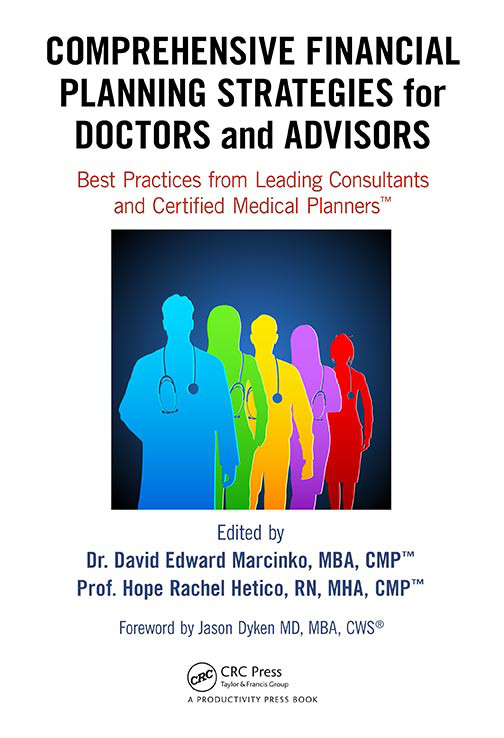
Risk Management, Liability Insurance, and Asset Protection Strategies for Doctors and Advisors: Best Practices from Leading Consultants and Certified Medical Planners™8Comprehensive Financial Planning Strategies for Doctors and Advisors: Best Practices from Leading Consultants and Certified Medical Planners™

***

Video on The Current State Of The Stock Market

Join Our Mailing List

Earnings Crisis!

By Chapwood Investments, LLC   

          ***             

MARKETS CLOSED TODAY!   

A Message From Ed Butowsky On The Current State Of The Stock Market

[2/11/2016]

ImageProxy

Click on this link to view video message

***

Conclusion

Your thoughts and comments on this ME-P are appreciated. Feel free to review our top-left column, and top-right sidebar materials, links, URLs and related websites, too. Then, subscribe to the ME-P. It is fast, free and secure.

Speaker: If you need a moderator or speaker for an upcoming event, Dr. David E. Marcinko; MBA – Publisher-in-Chief of the Medical Executive-Post – is available for seminar or speaking engagements. Contact: MarcinkoAdvisors@msn.com

OUR OTHER PRINT BOOKS AND RELATED INFORMATION SOURCES:

Comprehensive Financial Planning Strategies for Doctors and Advisors: Best Practices from Leading Consultants and Certified Medical Planners™

***

More on 401(k) Choices

Join Our Mailing List 

Studies, Research, Experiments and Experience

By Rick Kahler MS CFP® http://www.KahlerFinancial.com

Rick Kahler MS CFPHere is a conversation I’ve had too many times: An acquaintance says proudly that he invests the maximum into his 401(k). I ask what allocation he’s made between equities and bonds.

He says he just divides his contributions equally among the four investment choices the plan offers. I cringe.

The Book

While it’s wise to put the maximum into your 401(k), it’s also important to choose the right investment options. This is difficult for most people, as shown in the 2004 book, Pension Design and Structure, by Olivia Mitchell and Stephen Utkus.

The Study

In one study, participants were asked to allocate their 401(k) contributions between two investment funds. The first group was given a choice of a bond fund and a stock fund. A second group was given the choice of a bond fund and a balanced fund (50% in stocks and 50% in bonds). A third group was given the choice of a stock fund and a balanced fund.

In all three cases, a common strategy was for participants to split their contributions equally between the two funds offered. Yet because of the difference in the funds, the asset allocations of each group differed radically. The average allocation to stocks was 54% for the first group, 35% for the second, and 73% for the third.

The Experiment

In another experiment, participants were asked to select investments from three different menus offering options with varying degrees of risk. Most made their choices simply by avoiding both the high-risk and the low-risk extremes. They didn’t select a portfolio from the available options based on the appropriateness of the risk each presented.

Investing your retirement funds in such a haphazard manner is almost the same as playing the roulette wheel. A portfolio with 35% in stocks will perform very differently than one with 73%. Especially if you’re young, holding the portfolio with the 35% stock allocation or the 73% may mean a significant difference in your retirement lifestyle.

Another Study

In another study, when employees were given a choice between holding their own portfolio or that of the average participant in the plan, about 80% chose the average portfolio. That’s like going into a clothing store and telling the sales clerk, “Just give me a suit in whatever size you sell the most.

Implications

These studies suggest ways employers can help employees make better investment decisions. One strategy is to reduce their investment choices to a small number of funds that offer portfolios with an asset allocation based on various target retirement dates. Another is to offer employees a variety of investment choices, along with guidance and education so they could make intelligent choices.

My Experiences

In my 30 years of investment experience, the strategy I’ve seen work the best is having a wide variety of asset classes (global stocks, global bonds, treasury inflation protected securities, real estate investment trusts, and commodities) that do well in a variety of economic scenarios. A study reported on by Peng Chen in Financial Planning in 2010 found that from 1970 to 2009, a portfolio with a minimum of 10% to a maximum of 30% in each of these asset classes out-performed portfolios that did not have commodity exposure. Splitting 401(k) contributions equally among these asset classes would provide a greater chance of having an appropriately well-balanced portfolio.

***

Spreadsheet

***

Assessment

Once you’ve chosen a variety of asset classes, then keep your hands off except for periodic rebalancing. True, this strategy means that in any given year your portfolio will always have winners and losers. Yet with a broad range of assets, the losers and winners tend to balance out. Over the long run the odds are good that you will do fine.

Note: Ditto for 403(b) plans.

More:

Conclusion

Your thoughts and comments on this ME-P are appreciated. Feel free to review our top-left column, and top-right sidebar materials, links, URLs and related websites, too. Then, subscribe to the ME-P. It is fast, free and secure.

Speaker: If you need a moderator or speaker for an upcoming event, Dr. David E. Marcinko; MBA – Publisher-in-Chief of the Medical Executive-Post – is available for seminar or speaking engagements. Contact: MarcinkoAdvisors@msn.com

OUR OTHER PRINT BOOKS AND RELATED INFORMATION SOURCES:

Comprehensive Financial Planning Strategies for Doctors and Advisors: Best Practices from Leading Consultants

Stock Market at New Highs!

Join Our Mailing List 

Is this a Bubble?

[A SPECIAL R&D REPORT FOR THE ME-P]

By David K. Luke MIM, MS-PFP, CMP™ [Certified Medical Planner™] http://www.networthadvice.com

David K. LukeThe market news has been replete with the phrase “new market high“ in the business news every couple of weeks as of late. The corresponding message is often that the stock market is likewise in a bubble. The S&P 500 index and the Dow Jones Industrial Average index are at all-time highs. The indexes have surpassed the 2007 peak.

The reality is however that the S&P 500 is up less than 6% from the beginning of the year, and the Dow is up about 2%. Most investors, of course, do not invest just in these two indexes, as these two indexes represent very large capitalized companies.

I am reminded of the customer in 1995 when I worked at a national brokerage firm that called me to liquidate his entire stock portfolio. “The stock market was too high,” he said. He was 5 years too early.

Risk Mitigation

Most investors will have a diversified portfolio that includes mid-cap stocks, small-cap stocks, and international stocks as well as large cap stocks such as found in the S&P 500.

Of course, these equity investments are also typically subdivided into the broader categories of “Growth” and “Value.” Which means most investors that believe in diversification will own four different “types” of stock, each divided into two different categories for eight different baskets of stock if you will. The typical daily news will focus only perhaps on the S&P 500, which is a portfolio of large capitalized growth stocks. This is only one of the eight different types of stock that an investor would typically own.

  Product Details

In strong bull markets, typically all eight categories of stock go up together with some degree of correlation. This is also true in strong bear markets with all eight categories of stock going down in some degree of correlation. Portfolio managers typically try to offset high correlation of investments by owning investments in asset classes that typically do not all correlate together. This is a major technique used to reduce the volatility in an account.

However as you can see so far this year, most all of the eight stock indexes with the exception of small-cap growth are up slightly in line with the S&P index.

***

[As of June 13, 2014] 

Name Ticker % Total Return YTD % Total Return 12 Month
Large Cap iShares S&P 500 Growth IVW 5.59 22.55
iShares S&P 500 Value IVE 5.76 18.39
Mid Cap iShares S&P MidCap 400 Growth IJK 2.69 18.24
iShares S&P Mid-Cap 400 Value IJJ 7.66 23.19
Small Cap iShares S&P Small-Cap 600 Growth IJT -0.52 20.8
iShares S&P Small-Cap 600 Value IJS 2.3 21.37
Foreign Large Blend iShares Core MSCI EAFE IEFA 3.75 19.25
Barclays Aggregate Bond Index iShares Core US Aggregate Bond AGG 3.26 2.39

Source: Morningstar

***

Inflation

The buying power of the US Dollar has changed over the years. The Consumer Price Index (CPI), a common measure of inflation, has averaged around a 3% annual increase from 1913 – 2014 according to the U.S. Department of Labor Bureau of Labor Statistics.

In fact, an item purchased for $5.00 in 1913 would have a cost of $119.73 today, or a cumulative rate of inflation for the past 100 years of 2,294.7%. The cost of living rising each year is a safe bet. Inflation has increased every year in the past 50 years with one exception: 2009 when inflation fell -0.4%.

Product Details

Update: 06/17/2014 04:10 ET

[Market Update]
Symbol Last Change
DOW 16,808.49 +27.48
NASDAQ 4,337.23 +16.13
S&P 1,941.99 +4.21

Conclusions:

  1. The Market Indexes at new highs does not indicate a bubble. In fact, the market should, relatively speaking, regularly be hitting new highs because of the consistency of positive inflation. Prices of goods and services today are at all-time highs. Does that mean we are in an “inflation” bubble? No. This is normal.
  2. The S&P 500 is not an accurate measure of the US economy. While the S&P 500 is the common “market” indicator in the US, only about 55% of the earnings of the index come from the US. (Source: RBC Capital Markets Research, Capital IQ 2012). This is because mainly large multinational companies such as Google, IBM, and Apple that have a significant amount of overseas revenues weight the index.
  3. The S&P 500 or the Dow Jones Industrial Average (DJIA – 30 stocks) is most likely not an exact reflection of your personal stock portfolio, which would expectantly be more diversified. A typical well-diversified long-term investment portfolio would include not just large cap stocks (such as found in the S&P 500 or DJIA), but mid, small, and international stocks from the growth and value camp, as well as a diversified bond holding.
  4. Overpriced stocks, just like overpriced real estate, are more prudently ascertained by value measures, not simply by raw index numbers. A stock hitting new highs could still be quite undervalued. Meaningful variables such as earnings growth, price to earnings ratio, dividend yield, price-to-book, price-to-sales, and other metrics should be considered.

Conclusion

Your thoughts and comments on this ME-P are appreciated. Feel free to review our top-left column, and top-right sidebar materials, links, URLs and related websites, too. Then, subscribe to the ME-P. It is fast, free and secure.

Speaker: If you need a moderator or speaker for an upcoming event, Dr. David E. Marcinko; MBA – Publisher-in-Chief of the Medical Executive-Post – is available for seminar or speaking engagements. Contact: MarcinkoAdvisors@msn.com

OUR OTHER PRINT BOOKS AND RELATED INFORMATION SOURCES:

Product DetailsProduct Details

How Much is a Financial Advisor Really Worth?

Join Our Mailing List

And … Can it be Quantified?

Doctors and FAs

[By Staff Reporters]

How much of a boost in net returns can financial advisors add to client portfolios? According to Vanguard Brokerage Services®; maybe as much as 3%?

The Study

In a recent paper from the Valley Forge, PA based mutual fund and ETF giant, Vanguard said financial advisors can generate returns through a framework focused on five wealth management principles:

Being an effective behavioral coach: Helping clients maintain a long-term perspective and a disciplined approach is arguably one of the most important elements of financial advice. (Potential value added: up to 1.50%).

Applying an asset location strategy: The allocation of assets between taxable and tax-advantaged accounts is one tool an advisor can employ that can add value each year. (Potential value added: from 0% to 0.75%).

Employing cost-effective investments: This component of every advisor’s tool kit is based on simple math: Gross return less costs equals net return. (Potential value added: up to 0.45%).

Maintaining the proper allocation through rebalancing: Over time, as investments produce various returns, a portfolio will likely drift from its target allocation. An advisor can add value by ensuring the portfolio’s risk/return characteristics stay consistent with a client’s preferences. (Potential value added: up to 0.35%).

Implementing a spending strategy: As the retiree population grows, an advisor can help clients make important decisions about how to spend from their portfolios. (Potential value added: up to 0.70%).

Source: Financial Advisor Magazine, page 20, April 2014.

networking advisors

The Fine-Print

But, Vanguard notes that while it’s possible all of these principles could add up to 3% in net returns for clients, it’s more likely to be an intermittent number than an annual one because some of the best opportunities to add value happen during extreme market lows and highs when angst or giddiness [fear and greed] can cause investors to bail on their well-thought-out investment plans.

More: http://www.CertifiedMedicalPlanner.org

Assessment

Most retail financial services products are designed to enhance the well-being of the Financial Advisor and/or vendor at the expense of clients. The clients get only the leftovers. Of course, no one tells them that secret. They have to figure it out for themselves. As the old line goes, “Where are the customers’ boats?”

Source: Rowland, M: Planning Periscope [Where Advisors are the Clients]. Financial Advisors Magazine; page 36, April 2014

Conclusion

Are doctors different than the average investors noted in this essay?

Your thoughts and comments on this ME-P are appreciated. Feel free to review our top-left column, and top-right sidebar materials, links, URLs and related websites, too. Then, subscribe to the ME-P. It is fast, free and secure.

Link: http://feeds.feedburner.com/HealthcareFinancialsthePostForcxos

Speaker: If you need a moderator or speaker for an upcoming event, Dr. David E. Marcinko; MBA – Publisher-in-Chief of the Medical Executive-Post – is available for seminar or speaking engagements. Contact: MarcinkoAdvisors@msn.com

OUR OTHER PRINT BOOKS AND RELATED INFORMATION SOURCES:

Product Details  Product Details

Risk Management, Liability Insurance, and Asset Protection Strategies for Doctors and Advisors: Best Practices from Leading Consultants and Certified Medical Planners™8Comprehensive Financial Planning Strategies for Doctors and Advisors: Best Practices from Leading Consultants and Certified Medical Planners™

***

Passive Investing with a “Steroid Twist”

Join Our Mailing List 

A Core and Satellite Philosophy

By Rick Kahler CFP® http://www.KahlerFinancial.com

Rick Kahler CFP“Keep your hands away from your investments and back away from the market reports.”

That pretty much sums up passive investing, the approach I have practiced for years. I’ve preached it for years, too, and did so in a recent column. The wisest way to build wealth is by investing in a variety of asset classes, setting target allocations in each asset class, and then taking your hands off except to periodically rebalance to the original target allocations.

For most of us, including doctors, the best way to invest in an asset class is to give our funds to a mutual fund manager who will purchase the appropriate investments. Mutual fund managers have a choice of actively or passively managing the money you give them to invest.

Passivity 

Passive managers try to match market indexes, which are groups of companies representing a cross-section of a certain type of investment. The most popular index in the world is probably the S&P 500 index, which consists of the largest 500 companies in the United States. Another popular index is the Dow Jones Industrial Index which is made up of 30 companies. When we consider the US has almost 10,000 companies, we can quickly see that many indexes represent just a segment of the entire market.

Research indicates it is very hard to beat an index, especially with stocks, bonds, real estate investment trusts, and commodities. I prefer to keep about 80% of my investment portfolio in a broad variety of passively managed investments in these asset classes.

Timing or Strategy?

Where do I put the other 20%? In mutual funds with active managers who try to earn returns similar to stocks and bonds and that are not correlated to either.

This may seem to make me a hypocrite. I’ve been saying for years not to be a market timer, and now here I am suggesting you do just the opposite with a portion of your portfolio. Not hypocrisy at all. What I’ve preached for many years is that neither you nor I have any business timing investments. That doesn’t mean no one should ever do it.

So, is it timing or strategy?

Core and Satellite Philosophy

It can be wise to put a small portion [satellite] of our portfolios [core] into various investment strategies with active managers. The key is to find managers who have a disciplined approach that eliminates emotion and who have long-term track records of success. These strategies include managers who attempt to time markets by shorting stocks they think will decline in value and buying stocks they think will rise.

It also includes one investment strategy, managed futures, that I call “timing on steroids.”

###

Bull markets

###

Rationale

My reason for including some actively managed funds is to have part of my investment portfolio that is not correlated to stocks. I want these investments to have a positive return over a long period, but also to move in opposition to other major asset classes, especially stocks. So when stocks are up, I am not fazed if my managed futures are down. And, when stocks are down, I am thankful when my managed futures are up. If both asset classes earn 6 to 9% over a long period of time, I’m happy.

So, call it … passive investing with a steroid twist.

Assessment

So I stand by my commitment to passive investing. It’s based on research suggesting that timing the markets is a loser’s game.

Yet part of passive investing is having a fully diversified portfolio. This includes having a small portion—20% or less—in mutual funds with disciplined, successful active managers. My job is to research and find those managers. Then it’s okay to let them time their hearts out. I just make sure I don’t try to time the timers.

More:

Conclusion

Your thoughts and comments on this ME-P are appreciated. Feel free to review our top-left column, and top-right sidebar materials, links, URLs and related websites, too. Then, subscribe to the ME-P. It is fast, free and secure.

Link: http://feeds.feedburner.com/HealthcareFinancialsthePostForcxos

Speaker: If you need a moderator or speaker for an upcoming event, Dr. David E. Marcinko; MBA – Publisher-in-Chief of the Medical Executive-Post – is available for seminar or speaking engagements. Contact: MarcinkoAdvisors@msn.com

OUR OTHER PRINT BOOKS AND RELATED INFORMATION SOURCES:

DICTIONARIES: http://www.springerpub.com/Search/marcinko
PHYSICIANS: www.MedicalBusinessAdvisors.com
PRACTICES: www.BusinessofMedicalPractice.com
HOSPITALS: http://www.crcpress.com/product/isbn/9781466558731
CLINICS: http://www.crcpress.com/product/isbn/9781439879900
BLOG: www.MedicalExecutivePost.com
FINANCE: Financial Planning for Physicians and Advisors
INSURANCE: Risk Management and Insurance Strategies for Physicians and Advisors

***

  Risk Management, Liability Insurance, and Asset Protection Strategies for Doctors and Advisors: Best Practices from Leading Consultants and Certified Medical Planners™8Comprehensive Financial Planning Strategies for Doctors and Advisors: Best Practices from Leading Consultants and Certified Medical Planners™

But …. enough about me!

Join Our Mailing List

Did you read my interviews?

Dr. David Edward Marcinko MBA

www.MedicalBusinessAdvisors.com

[CEO and Editor-in-Chief]

DEM 2013

AMA News:

Goodwill hunting – what’s your medical practice worth?

AMA News.Valuation.Marcinko

Best practices can help hospitals in recession

Arkansas Medical News:

Arkansas Medical News Interviews Dr. Marcinko

Conclusion

Your thoughts and comments on this ME-P are appreciated. Feel free to review our top-left column, and top-right sidebar materials, links, URLs and related websites, too. Then, subscribe to the ME-P. It is fast, free and secure.

Link: http://feeds.feedburner.com/HealthcareFinancialsthePostForcxos

Speaker: If you need a moderator or speaker for an upcoming event, Dr. David E. Marcinko; MBA – Publisher-in-Chief of the Medical Executive-Post – is available for seminar or speaking engagements. Contact: MarcinkoAdvisors@msn.com

Our Other Print Books and Related Information Sources:

Health Dictionary Series: http://www.springerpub.com/Search/marcinko

Practice Management: http://www.springerpub.com/product/9780826105752

Physician Financial Planning: http://www.jbpub.com/catalog/0763745790

Medical Risk Management: http://www.jbpub.com/catalog/9780763733421

Hospitals: http://www.crcpress.com/product/isbn/9781439879900

Physician Advisors: www.CertifiedMedicalPlanner.org

Product DetailsProduct Details

Morgan Stanley Peddled Security Its Own Employee Called ‘Nuclear Holocaust’

Join Our Mailing List
An Explosive Charge
By Jesse Eisinger Pro Publica
###
A new lawsuit suggests employees at Morgan Stanley understood the housing market was in trouble and exploited that knowledge to bet against securities and unload garbage investments on the unsuspecting.

The bank denies wrongdoing.

Bank

Link: Explosive Charge: Morgan Stanley Peddled Security Its Own Employee Called ‘Nuclear Holocaust’

Conclusion

Your thoughts and comments on this ME-P are appreciated. Feel free to review our top-left column, and top-right sidebar materials, links, URLs and related websites, too. Then, subscribe to the ME-P. It is fast, free and secure.

Speaker: If you need a moderator or speaker for an upcoming event, Dr. David E. Marcinko; MBA – Publisher-in-Chief of the Medical Executive-Post – is available for seminar or speaking engagements. Contact: MarcinkoAdvisors@msn.com

OUR OTHER PRINT BOOKS AND RELATED INFORMATION SOURCES:

Product Details  Product Details

***

How Investment Professionals Evaluate Time Periods for Portfolio Comparison

On Capturing a Full Range of Market Environments

By Dr. David Edward Marcinko MBA, CMP™

[Publisher-in-Chief]

What is the appropriate time period for portfolio growth comparison? 

Performance measurements over trailing calendar periods, such as the last one, three, five or 10 years, are often used in the mutual fund and investment industry.  While three-to-five-to-ten years may seem like a long enough time for an investment strategy to show its value added, these time periods will often be dominated by either a bull or bear market environment, and/or a large cap or small cap dominated environment, etc. 

Market Cycles

One way to lessen the possibility of the market environment biasing a performance comparison is to focus on a time period that captures full range of market environments; a market cycle. 

The market cycle is defined as a market peak, with high investor confidence and speculation, through a market trough, in which investor bullishness and speculation subsides, to the next market peak. 

A bull market is a market environment of generally rising prices and investor optimism.  While there have been several definitions of a bear market based upon market returns (e.g., a decline of –15 percent or more, two consecutive negative quarters, etc.), the idea implied by its name is a period of high pessimism and sustained losses. 

Thus, one returns-based rule-of-thumb that can be used to identify a bear market is a negative return in the market that takes at least four quarters to overcome. 

http://www.amazon.com/Financial-Planning-Handbook-Physicians-Advisors/dp/0763745790/ref=sr_1_1?ie=UTF8&s=books&qid=1276795609&sr=1-1

Assessment

The stock market has been booming lately. Up almost 100% since March 2009, after being down almost 50%. And so, perhaps this is a good time to re-evaluate the performance of your investment portfolio[s].

And so, by examining performance over a full market cycle, there is a greater likelihood that short-term market dislocations like the “flash crash” of 2009 will not bias the performance comparison.

Conclusion

Your thoughts and comments on this ME-P are appreciated. What is your time period for portfolio evaluation? Feel free to review our top-left column, and top-right sidebar materials, links, URLs and related websites, too. Then, subscribe to the ME-P. It is fast, free and secure.

Speaker: If you need a moderator or speaker for an upcoming event, Dr. David E. Marcinko; MBA – Publisher-in-Chief of the Medical Executive-Post – is available for seminar or speaking engagements. Contact: MarcinkoAdvisors@msn.com and http://www.springerpub.com/Search/marcinko

Our Other Print Books and Related Information Sources:

Health Dictionary Series: http://www.springerpub.com/Search/marcinko

Practice Management: http://www.springerpub.com/product/9780826105752

Physician Financial Planning: http://www.jbpub.com/catalog/0763745790

Medical Risk Management: http://www.jbpub.com/catalog/9780763733421

Healthcare Organizations: www.HealthcareFinancials.com

Physician Advisors: www.CertifiedMedicalPlanner.com

Subscribe Now: Did you like this Medical Executive-Post, or find it helpful, interesting and informative? Want to get the latest ME-Ps delivered to your email box each morning? Just subscribe using the link below. You can unsubscribe at any time. Security is assured.

Link: http://feeds.feedburner.com/HealthcareFinancialsthePostForcxos

Sponsors WelcomedAnd, credible sponsors and like-minded advertisers are always welcomed.

Link: https://healthcarefinancials.wordpress.com/2007/11/11/advertise

Product DetailsProduct DetailsProduct Details       

Product Details  Product Details

Introducing Dr. Joshua Goldman MBA

Meet Our Newest ME-P “Thought-Leader”

By Ann Miller RN, MHA

Joshua Goldman, MD, MBA is a resident physician at the University of California, Los Angeles pursuing post-graduate training in family medicine with subsequently plans to complete a Sports Medicine fellowship. He attended graduate school at the University of Southern California, completing his Medical Degree at the Keck School of Medicine concurrent with his Master of Business Administration at the Marshall School of Business. He is functioning as the Director of Strategy for Insight Oncology, an oncology consulting and management firm.

USC Days

While at USC, Josh served as the student body President of the Keck School of Medicine, a teaching assistant in the department of Anatomy and Physiology and held board positions at the USC Stevens Institute for Innovation, the Biomedical Association at the Marshall School of Business, and the Curriculum Committee at the Keck School of Medicine. He was selected as the Keck School of Medicine Student Teacher of the Year for 2009-2010. He has also served as the Vice President of the American Cancer Society at the University of California, Los Angeles. He completed an internship with the Cedars-Sinai Orthopedic Center Trauma Team and with the University of Southern California Athletic Department’s Team Physicians, working with the USC Trojan Football team during their summer training camp.

Undergraduate Days

Joshua received his Bachelor of Science degree from the University of California, Los Angeles in 2005 graduating Magna cum Laude and Phi Beta Kappa with a major in Psychobiology and a minor in English Literature. While at UCLA, Josh was a member of the men’s crew team.

A PE Devotee’

Joshua is very physically active, weight training or running daily. He is also an aspiring tri-athlete, training both on a bike and in the water recently. He also enjoys playing football, tennis, beach volleyball and sailing in his free time in between his many home improvement projects.

Website

Josh is also the Founder and CEO of: www.MyHouseCallMD.com

Conclusion

Your thoughts and comments on this ME-P are appreciated. Feel free to review our top-left column, and top-right sidebar materials, links, URLs and related websites, too. Then, subscribe to the ME-P. It is fast, free and secure.

Link: http://feeds.feedburner.com/HealthcareFinancialsthePostForcxos

Speaker: If you need a moderator or speaker for an upcoming event, Dr. David E. Marcinko; MBA – Publisher-in-Chief of the Medical Executive-Post – is available for seminar or speaking engagements. Contact: MarcinkoAdvisors@msn.com

OUR OTHER PRINT BOOKS AND RELATED INFORMATION SOURCES:

Product DetailsProduct DetailsProduct Details

Product Details  Product Details

   Product Details 

Disorganization at Banks

Causing Mistaken Foreclosures

Join Our Mailing List

By Paul Kiel, ProPublica – May 4, 2010 9:20 pm EDT

Millions of people face losing their homes in the continuing foreclosure crisis, but homeowners often have more than the struggling economy and slumping house prices to worry about: Disorganization within the big banks that service mortgages has made a bad problem worse.

ProPublica is matching local journalists with homeowners having trouble getting loan mods.

Are you a homeowner with a story to tell?
Are you a reporter and want to cover it?

Sometimes the communication breakdown within the banks is so complete that it leads to premature or mistaken foreclosures. Some homeowners, with the help of an attorney or housing counselor, have eventually been able to reverse a foreclosure. Others have lost their homes.

“We believe in many cases people are losing their homes when they should not have,” said Kevin Stein, associate director of the California Reinvestment Coalition, which counts dozens of nonprofits that work with homeowners among its members.

In the worst breakdowns, banks — and other companies that service loans — actually work at cross-purposes, with one arm of the company foreclosing on the home while the other offers help. Servicers say such mistakes are rare and result from the high volume of defaults and foreclosures.

The problems happen even among servicers participating in the administration’s $75 billion foreclosure-prevention program [1]. Servicers operating under the year-old program are forbidden from auctioning someone’s home while a modification decision is pending. It happens anyway.

Consumer advocates say the lapses continue because they go unpunished. “We’ve had too much of the carrot, and we need a stick,” Stein says. The Treasury Department has yet to penalize a servicer for breaking the program’s rules. The program provides federal subsidies to encourage modifications.

Treasury officials overseeing the program say they’re aware of the problems and have moved to fix them. But some states are going further to protect homeowners, with recent rules that stop the foreclosure process if the homeowner requests a modification.

Many homeowners, seeing no other option, have gone to court to reclaim their homes. At least 50 homeowners have recently filed lawsuits alleging the servicer foreclosed with a loan mod request pending or even while they were on a payment plan.

Homeowners have long waits for help

In good times, banks and other servicers — Bank of America is the biggest, followed by Chase and Wells Fargo — were known mainly to homeowners simply as where they sent their monthly mortgage payments. But the companies have been deluged over the past couple of years by requests for help from millions of struggling homeowners.

Homeowners commonly wait six months for an answer on a loan mod application. The federal program for encouraging loan mods includes a three-month trial period, after which servicers are supposed to decide whether to make the modifications permanent. But some homeowners have waited as long as 10 months [2] for a final answer.

Communication breakdowns occur because of the way the servicers are structured. One division typically deals with modifications and another with foreclosures. Servicers also hire a local trustee or attorney to actually pursue foreclosure.

“Often they just simply don’t communicate with each other,” said Laurie Maggiano, the Treasury official in charge of setting policy for the modification program. Such problems were particularly bad last summer, in the first few months of the program, she said. “Basically, you have the right hand at the mortgage company not knowing what the left hand is doing,” said Mark Pearce, North Carolina’s deputy commissioner of banks. Communication glitches and mistakes are “systemic, more than anecdotal” among mortgage servicers, he said.

“We’ve had cases where we’ve informed the mortgage company that they’re about to foreclose on someone.” The experience for the homeowner, he said, can be “Kafkaesque.”

“We’re all human, and the servicers are overworked and trying their best,” said Vicki Vidal, of the Mortgage Bankers Association. She said foreclosure errors are rare, particularly if struggling homeowners are prompt in contacting their servicer.

The Human Face

Frances Gomez, of Tempe, Ariz., lived in her house for over 30 years. Three years ago, she refinanced it with Countrywide, now part of Bank of America, for nearly $300,000. The home’s value has declined dramatically, said Gomez, who put some of the money from the refinancing into her hair salon.

Last year, the recession forced her to close her shop. Gomez fell behind on her mortgage, and after striking out with a company that promised to work with Bank of America to get her a loan mod, she learned in December that her home was scheduled for foreclosure.

So Gomez applied herself. She twice succeeded in getting Bank of America to postpone the sale date and said she was assured it would not happen until her application was reviewed. Gomez had opened a smaller salon and understood there was a good chance she would qualify.

She was still waiting in March when a Realtor, representing the new owner of her home, showed up. Her house had sold at auction — for less than half of what Gomez owed. “They don’t give you an opportunity,” she said. “They just go and do it with no warning.”

It’s not supposed to work that way.

Federal Programs

Under the federal program, which requires servicers to follow a set of guidelines for modifications, servicers must give borrowers a written denial before foreclosing. When Gomez called Bank of America about the sale, she said she was told there was a mistake but nothing could be done. She did get a denial notice [3] — some three weeks after the house was sold and just days before she was evicted.

“I just want people to know what they’re doing,” Gomez, now living with family members, said.

After being contacted by ProPublica, Bank of America reviewed Gomez’s case. Bank spokesman Rick Simon acknowledged that Gomez might not have been told her house would be sold and that the bank made a mistake in denying Gomez, because it did not take into account the income from her new salon business. Simon said a Bank of America representative would seek to negotiate with the new owner of Gomez’s house to see if the sale could be unwound.

Simon said the bank regrets when such mistakes happen due to the “very high volume” of cases and that any errors in Gomez’s case were “inadvertent.”

Timeline: How Michael Hill Almost Lost His Home [4]

Even avoiding a mistaken sale can also be a stressful process.

One day in February, a man approached Ron Bermudez of Emeryville, Calif., in front of his house and told him his home would be sold in a few hours. This came as a shock to Bermudez; Bank of America had told him weeks prior that he’d been approved for a trial modification and the papers would soon arrive. He made a panicked phone call to an attorney, who was able to make sure there was no auction.

Last November, Michael Hill of Lexington, S.C., finally got the call he’d been waiting for. Congratulations, a rep from JPMorgan Chase told him, your trial mortgage modification is approved. Hill’s monthly payment, around $900, would be nearly halved.

Except there was a problem. Chase had foreclosed on Hill’s home a month earlier, and his family was just days away from eviction.

“I listened to her and then I just said, ‘Well, that sounds good,’” recalled Hill, who is married and has two children. “‘Tell me how we’re going to do this, seeing as how you sold the house.’” That, he found out, was news to Chase.

Hill was able to avoid eviction — for now. Chase reversed the sale by paying the man who’d bought the home an extra $19,500 on top of the $86,000 [5] he’d paid at the auction.

After the mistaken foreclosure, he began the trial modification last December. He made those payments, but two months after his trial period was supposed to end, Hill is still waiting for a final answer from Chase.

The miscommunications have continued. He received a letter in January saying that he’d been approved for a permanent modification, but he was then told he’d received it in error.

His family remains partially packed, ready to move should the modification not go through. “I’m on pins and needles every time someone’s knocking on the door or calling,” he said.

Christine Holevas, a Chase spokeswoman, said that Chase had “agreed with Hill’s request to rescind the foreclosure” and was “now reviewing his loan for permanent modification.” She said Chase services “more than 10 million mortgages — the vast majority without a hitch.”

HOPE Hotline

To contest a foreclosure under the federal program, Maggiano, the Treasury official, said a homeowner should call the HOPE Hotline, 888-995-HOPE, a Treasury Department-endorsed hotline staffed by housing counselors. Those counselors can escalate the case if the servicer still won’t correct the problem, she said.

That escalation process has saved “a number” of homeowners from being wrongfully booted out of their homes, Maggiano said. Hill, the South Carolina homeowner, is an example of someone helped by the HOPE Hotline.

Of course, the homeowner must know about the hotline to call it. Gomez, the Arizona homeowner who lost her home to foreclosure, said she’d never heard of it.

Many homeowner advocates say the government’s effort has been largely ineffective at resolving problems with servicers.

“I uniformly hear from attorneys and counseling advocates on the ground that the HOPE Hotline simply parrots back what the servicers have said,” said Alys Cohen, an attorney with the National Consumer Law Center. Cohen said she’d voiced her concerns with Treasury officials, who indicated they’d make improvements.

Bank

New rules to offer more protection

Under the current rules for the federal program, servicers have been barred from conducting a foreclosure sale if the homeowner requested a modification, but are allowed to push along the process, even set a sale date. That allows them to foreclose more quickly if they determine the homeowner doesn’t qualify for a modification.

As a result, a homeowner might get a modification offer one day and a foreclosure notice the next. As of March, servicers were pursuing foreclosure on 1.8 million residences, according to LPS Applied Analytics.

Maggiano, the Treasury official, said that’s been confusing for homeowners. Some “just got discouraged and gave up.”

New rules issued by the Treasury in March say the servicer must first give the homeowner a shot at a modification before beginning the process that leads to foreclosure.

They also require the servicer to adopt new policies to prevent mishaps. For instance, the servicer will be required to provide a written certification to its attorney or trustee that the homeowner does not qualify for the federal program before the house can be sold.

Maggiano said the changes resulted from visits to the servicers’ offices last December that allowed Treasury officials to “much better understand (their) inner workings.”

The rules, however, don’t take effect until June. Nor do they apply to hundreds of thousands of homeowners seeking a modification for whom the process leading to foreclosure has already begun. And Treasury has yet to set any penalties for servicers who don’t follow the rules.

Maggiano said Treasury’s new rule struck a balance to help homeowners who were responsive to servicer communications to stay out of foreclosure while not introducing unnecessary delays for servicers. Some borrowers don’t respond at all to offers of help from the servicers until they’re faced with foreclosure, she said.

Join Our Mailing List

States Differ

Some states, such as North Carolina, have recently gone further to delay moving toward foreclosure if a homeowner requests a modification. State regulators there passed a law that requires a servicer to halt the process if a homeowner requests a modification.

Pearce, the North Carolina official, said the rule was prompted by the delays homeowners have been facing and puts the burden on the servicers to expeditiously review the request. “They’re in total control.”

Stopping the process not only removes the possibility of a sudden foreclosure, he said, but also stops the accumulation of fees, which build up and can add thousands to the homeowner’s debt as the servicer moves toward foreclosure.

In California, state Sen. Mark Leno, a Democrat from San Francisco, is pushing a bill that would do something similar. The servicers “should be working a lot harder to keep homeowners in their home,” he said.

Assessment

Original article: http://www.propublica.org/feature/disorganization-at-banks-causing-mistaken-foreclosures-050410

Conclusion

Your thoughts and comments on this ME-P are appreciated. Feel free to review our top-left column, and top-right sidebar materials, links, URLs and related websites, too. Then, subscribe to the ME-P. It is fast, free and secure.

Link: http://feeds.feedburner.com/HealthcareFinancialsthePostForcxos

Speaker: If you need a moderator or speaker for an upcoming event, Dr. David E. Marcinko; MBA – Publisher-in-Chief of the Medical Executive-Post – is available for seminar or speaking engagements. Contact: MarcinkoAdvisors@msn.com

OUR OTHER PRINT BOOKS AND RELATED INFORMATION SOURCES:

DICTIONARIES: http://www.springerpub.com/Search/marcinko
PHYSICIANS: www.MedicalBusinessAdvisors.com
PRACTICES: www.BusinessofMedicalPractice.com
HOSPITALS: http://www.crcpress.com/product/isbn/9781466558731
CLINICS: http://www.crcpress.com/product/isbn/9781439879900
BLOG: www.MedicalExecutivePost.com
FINANCE: Financial Planning for Physicians and Advisors
INSURANCE: Risk Management and Insurance Strategies for Physicians and Advisors

Product Details  Product Details

Borges versus Kvedar Video eHR Debate

Join Our Mailing List

The Great HIT Debate

[By Staff Reporters]Boxing Gloves

All ME-P subscribers and readers are invited to watch a debate between Dr. Alberto Borges and Dr. Joseph Kvedar. In the original broadcast, by HCPLive, both participants were asked some very interesting questions about health information technology [HIT] when posed to them. And so, if you were unable to attend the live event, it is now re-broadcasted in podcast form for your review.

About Alberto A. Borges; MD

Al Borges is Founder and CEO of the MS Office eMR Project http://www.msofficeemrproject.com He is the project author, visionary and main content developer for the independent website. As a board certified physician, he practices oncology, hematology, and internal medicine in Arlington, Virginia. He is also a clinical professor at the George Washington University Medical School. Dr. Borges is a colleague and thought-leader for the ME-P

About Joseph C. Kvedar; MD

Joe Kvedar is the Founder and Director of the Center for Connected Health http://www.connected-health.org The Center is known for applying communications technology and online resources to increase access and improve the delivery of quality medical services and patient care outside of the traditional medical setting.  A division of Partners HealthCare; the Center for Connected Health works with Harvard Medical School-affiliated teaching hospitals, including Massachusetts General and Brigham and Women’s Hospitals. Dr. Kvedar is also a board-certified dermatologist and Associate Professor of Dermatology at Harvard Medical School

Podcast Link: http://www.hcplive.com/hcplive/great_debate

Assessment

Feel free to email questions, or to post follow-up comments, for all our viewers to consider and respond. The principals are asked to weigh-in, as well.

And the Winner is … ?

Conclusion

Your thoughts and comments on this ME-P are appreciated. Feel free to review our top-left column, and top-right sidebar materials, links, URLs and related websites, too. Then, subscribe to the ME-P. It is fast, free and secure.

Speaker: If you need a moderator or speaker for an upcoming event, Dr. David E. Marcinko; MBA – Publisher-in-Chief of the Medical Executive-Post – is available for seminar or speaking engagements. Contact: MarcinkoAdvisors@msn.com

OUR OTHER PRINT BOOKS AND RELATED INFORMATION SOURCES:


Product DetailsProduct DetailsProduct Details

Product Details  Product Details

   Product Details 

About the MS Office® eMR Project

Programming a Powerful eMR – or – Jumping the Shark?

By Ann Miller; RN, MHA

Recently we communicated with Al Borges MD, founder of the Office eMR Project. He is quite an innovative guy. His passion – eMRs for the physician masses – through an infra-structure already largely in place?DrBHP2

The Problem: You want to use a great eMR but you can’t afford to pay for it.

You have a growing medical office that is completely paper based, and wish to capture the efficiencies of an electronic medical record (eMR) system. But, many eMR systems on the market are complicated, expensive and have been known to actually slow down the typical office workflow. You have used the MS Office® suite of software products in the past and appreciate its power, but you don’t know how to use it to set up a great eMR that perfectly suits your needs.

An Alternative

Alternatively, you can purchase an inexpensive MS Office® based proprietary eMR, but you might wish to write an add-in to incorporate add certain features to this basic, but excellent eMR platform. So, what do [can] you do?

CCHIT Takes a Hit

http://www.emrupdate.com/blogs/emrinterviews/archive/2006/10/09/CCHIT-takes-a-hit-from-Washington_2C00_-D.C.-area-doctor-who-claims-new-certification-group-restrains-free-trade-in-EMR-_2800_Electronic-Medical-Record_2900_-software.aspx

https://healthcarefinancials.wordpress.com/2009/03/02/cchit-is-prejudiced-and-lacks-diversity-%e2%80%93-an-indictment/

A Solution: Open Source Programs

According to Dr. Borges, one may use his web site to get the answers to program your eMR. His site discusses these very issues. It is continuously growing, with a host of free programs, position papers and forum discussions that touch on a wide variety of topics. These include general information on the use of MS Office® in the medical office, programming the various components of MS Office®, and those political topics that affect how we use health information technology [HIT].

Two Program Versions

There are 2 major eMR programs available – the MS Word® eMR Project (MSWP) and the MS Access® eMR Project (MSAP). But, is the Office eMR Project of Alberto truly an interoperable solution – a digital solution – or something else?

Website: http://www.msofficeemrproject.comThe Shark

Jumping the Shark

Jumping the Shark is a phrase coined by Jon Hein and used by TV critics to denote the point in a show where the plot veers off into absurd story lines in a desperate attempt to attract viewers. Shows that have “jumped the shark” are typically deemed to have passed their peak. On the other hand, is Dr. Borges a Cassandra at his peak … who just happens to be correct? 

MSFT Discussion Groups for Al Borges, MD

http://www.microsoft.com/office/community/en-us/default.mspx?query=alborg&dg=&cat=en-us-office&lang=en&cr=US&pt=3a4e9862-cdce-4bdc-8664-91038e3eb1e9&catlist=&dglist=&ptlist=&exp=&sloc=en-us

Making eHRs Illegal?

For example, did you know that the democrats want to make use of non certified eHRs illegal in NJ? The bill allegedly provides specifically as follows:

“On or after January 1, 2011, no person or entity is permitted to sell, offer for sale, give, furnish, or otherwise distribute to any person or entity in this State a health information technology product that has not been certified by CCHIT.  A person or entity that violates this provision is liable to a civil penalty of not less than $1,000 for the first violation, not less than $2,500 for the second violation, and $5,000 for the third and each subsequent violation, to be collected pursuant to the “Penalty Enforcement Law of 1999,” P.L.1999, c.274 (C.2A:58-10 et seq.).”

Link: http://www.njleg.state.nj.us/2008/Bills/A4000/3934_I1.HTM

Conclusion

And so, your thoughts and comments on this Medical Executive-Post are appreciated. Is the Office eMR Project a panacea to the eMR conundrum, or a hybrid? What about CCHIT; is it certified – does it have to be? Users and early-adopters, we need your opinions! Has the “shark been jumped” here; or not? Tell us what you think. Feel free to review our top-left column, and top-right sidebar materials, links, URLs and related websites, too. Then, be sure to subscribe to the ME-P. It is fast, free and secure.

Link: http://feeds.feedburner.com/HealthcareFinancialsthePostForcxos

Speaker: If you need a moderator or speaker for an upcoming event, Dr. David E. Marcinko; MBA – Publisher-in-Chief of the Executive-Post – is available for seminar or speaking engagements. Contact: MarcinkoAdvisors@msn.com  or Bio: www.stpub.com/pubs/authors/MARCINKO.htm

Get our Widget: Get this widget!

Our Other Print Books and Related Information Sources:

Practice Management: http://www.springerpub.com/prod.aspx?prod_id=23759

Physician Financial Planning: http://www.jbpub.com/catalog/0763745790

Medical Risk Management: http://www.jbpub.com/catalog/9780763733421

Healthcare Organizations: www.HealthcareFinancials.com

Health Administration Terms: www.HealthDictionarySeries.com

Physician Advisors: www.CertifiedMedicalPlanner.com

Subscribe Now: Did you like this Medical Executive-Post, or find it helpful, interesting and informative? Want to get the latest ME-Ps delivered to your email box each morning? Just subscribe using the link below. You can unsubscribe at any time. Security is assured.

Link: http://feeds.feedburner.com/HealthcareFinancialsthePostForcxos

Sponsors Welcomed

And, credible sponsors and like-minded advertisers are always welcomed.

Link: https://healthcarefinancials.wordpress.com/2007/11/11/advertise

Essential Insights on Successful Physician Budgeting

fp-book5Special Report for all Medical Professionals

By Dr. David Edward Marcinko; MBA

By Hope Rachel Hetico; RN, MHA

What: A Special Report Prepared upon the Request of “Podiatry Today”

Who: Dr. David E Marcinko and Hope Rachel Hetico; MHA


Topic: Essential Insights on Successful Budgeting

Reporter: Jeffrey Hall [Editor “Podiatry Today” Magazine]

Where: Internet Ether

Although some doctors might view a budget as unnecessarily restrictive, sticking to a spending plan can be a useful tool in enhancing the wealth of a medical practice. These authors emphasize keys to smart budgeting and how to track spending and savings in these tough economic times. The universal applicability to all doctors is obvious.

Read the Report Here

Link: http://www.podiatrytoday.com/essential-insights-on-successful-budgeting

Conclusion

And so, your thoughts and comments on this Medical Executive-Post are appreciated?

Subscribe: Link: http://feeds.feedburner.com/HealthcareFinancialsthePostForcxos

Speaker: If you need a moderator or speaker for an upcoming event, Dr. David E. Marcinko; MBA – Publisher-in-Chief of the Executive-Post – is available for seminar or speaking engagements. Contact: MarcinkoAdvisors@msn.com  or Bio: www.stpub.com/pubs/authors/MARCINKO.htm

Get our Widget: Get this widget!

Our Other Print Books and Related Information Sources:

Practice Management: http://www.springerpub.com/prod.aspx?prod_id=23759

Physician Financial Planning: http://www.jbpub.com/catalog/0763745790

Medical Risk Management: http://www.jbpub.com/catalog/9780763733421

Healthcare Organizations: www.HealthcareFinancials.com

Health Administration Terms: www.HealthDictionarySeries.com

Physician Advisors: www.CertifiedMedicalPlanner.com

Subscribe Now: Did you like this Medical Executive-Post, or find it helpful, interesting and informative? Want to get the latest ME-Ps delivered to your email box each morning? Just subscribe using the link below. You can unsubscribe at any time. Security is assured.

Link: http://feeds.feedburner.com/HealthcareFinancialsthePostForcxos

Interview with Jack Levy of Securebill, Inc

President – Securebill, IncMeeting

What: An Interview and Special Report Exclusively Prepared for the ME-P
Who: Mr. Jack Levy, CISSP [President – Securebill, Inc]
Topic: Physician Selection of eHRs
Reporter: Amaury Cifuentes; CFP®
Where: Internet Ether

Although skeptics of eHRs abound, President Barack H. Obama’s signing of the American Recovery and Reinvestment Act [ARRA] of 2009 has created a massive push for their implementation. The Act provides $19.2 billion, including $17.2 billion for financial incentives to be administered by Medicare and Medicaid. This assistance of up to $40 to $65 thousand per eligible physician, and up to $11 million per hospital, begins in 2011.

Link: https://medicalexecutivepost.com/wp-content/uploads/2009/05/jack-levy-interview.pdf

Conclusion

And so, your thoughts and comments on this Medical Executive-Post are appreciated. Feel free to review our top-left column, and top-right sidebar materials, links, URLs and related websites, too. Then, be sure to subscribe to the ME-P. It is fast, free and secure.

Link: http://feeds.feedburner.com/HealthcareFinancialsthePostForcxos

Speaker: If you need a moderator or speaker for an upcoming event, Dr. David E. Marcinko; MBA – Publisher-in-Chief of the Executive-Post – is available for seminar or speaking engagements. Contact: MarcinkoAdvisors@msn.com  or Bio: www.stpub.com/pubs/authors/MARCINKO.htm

Get our Widget: Get this widget!

Our Other Print Books and Related Information Sources:

Practice Management: http://www.springerpub.com/prod.aspx?prod_id=23759

Physician Financial Planning: http://www.jbpub.com/catalog/0763745790

Medical Risk Management: http://www.jbpub.com/catalog/9780763733421

Healthcare Organizations: www.HealthcareFinancials.com

Health Administration Terms: www.HealthDictionarySeries.com

Physician Advisors: www.CertifiedMedicalPlanner.com

Subscribe Now: Did you like this Medical Executive-Post, or find it helpful, interesting and informative? Want to get the latest ME-Ps delivered to your email box each morning? Just subscribe using the link below. You can unsubscribe at any time. Security is assured.

Link: http://feeds.feedburner.com/HealthcareFinancialsthePostForcxos

Sponsors Welcomed

And, credible sponsors and like-minded advertisers are always welcomed.

Link: https://healthcarefinancials.wordpress.com/2007/11/11/advertise

Allscript’s Glenn Tullman is Video Interviewed

Join Our Mailing List

Video Clip from the HIMSS Meeting

By Ann Miller; RN, MHA

[Executive-Director]

stk323168rknThere is a major controversy in the modern healthcare community over eMRs and how to pay for them; or even if they are effective in improving medical outcomes. Of course, by eMRs we mean interoperable medical records that span the pan-healthcare ecosystem; and not just the stand-alone digital records that many, if not most, physicians use in their daily practices to some degree or another.

Link: https://healthcarefinancials.wordpress.com/2009/03/10/on-the-hitech-act-of-2009/

Proponents

As readers of the ME-P are aware, one vocal camp supports certification and eMR industry mandates, standards, and governmental initiatives, etc. The recent $20 billion taxpayer input from the Obama Administration, courtesy of HITECH, further emboldens CCHIT and related wonks.

Opponents

One the other hand, one vocal ME-P opponent is dentist Darrell Pruitt. He and many others believe that current eMRs may be too expensive, unwieldy, and counter-productive. This camp advocates a mix of other data sources, technology processes and doctor/patient education to get us where we need to be in terms of improving medial outcomes; quicker and less expensively.

Assessment

Rather than read, research and write more on this controversy, which was apparently a red-hot topic at the recent HIMSS meeting, we have embedded a video link of Glen Tullman [CEO of Allscripts] and Mark Leavitt, [Chair of CCHIT], below.

Link: https://healthcarefinancials.wordpress.com/2009/03/02/cchit-is-prejudiced-and-lacks-diversity-%e2%80%93-an-indictment/

It even includes a clip of Jonathan Bush, CEO of AthenaHealth. And, although they don’t all agree; some common ground may be developing in this controversial issue.

Source: This link originally appeared on The Health Care Blog [THCB], by Matthew Holt.

Link: http://www.thehealthcareblog.com/the_health_care_blog/2009/04/cats-and-dogs-on-film–tullman-leavitt-bush.html#comments

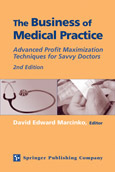
Disclaimer:We are members of AHIMA, HIMSS, MS-HUG and SUNSHINE. We just released the Dictionary of Health Information Technology and Security, with Foreword by Chief Medical Information Officer Richard J. Mata; MD MS MS-CIS, of Johns Hopkins University; and the second edition of the Business of Medical Practice with Foreword by Ahmad Hashem; MD PhD, who was the Global Productivity Manager for the Microsoft Healthcare Solutions Group at the time.

Conclusion

Your thoughts and comments on this ME-P are appreciated. Feel free to review our top-left column, and top-right sidebar materials, links, URLs and related websites, too. Then, subscribe to the ME-P. It is fast, free and secure.

Speaker: If you need a moderator or speaker for an upcoming event, Dr. David E. Marcinko; MBA – Publisher-in-Chief of the Medical Executive-Post – is available for seminar or speaking engagements. Contact: MarcinkoAdvisors@msn.com

OUR OTHER PRINT BOOKS AND RELATED INFORMATION SOURCES:


Product Details 

Medical News of Arkansas Interviews Dr. Marcinko

Join Our Mailing List

Current Status of Hospitals and the Economy [Op-Ed]

[By Steve Brawner]

atlanta-skylineWhat: An exclusive telephonic and email interview.

Who: Dr. David Edward Marcinko; FACFAS, MBA [Editor, administrator and health economist]

Topic: The recession and economy, hospital operations, and the Obama administration.

Where: The telephone and internet virtual ME-P ether.

Why: To forecast informed opinions and pontifications on the healthcare industrial complex.

Among the dilemmas in healthcare, we seek answers to queries like:

• When will the recession end, and how will it affect hospitals and physicians?
• What operations and organizational policies can hospitals pursue to survive?
• How will the Obama stimulus affect hospitals and healthcare organizations?

Now, in as much as this controversy affects patients, administrators, politicians, Wall Street, nurse-executives and physicians alike, we went right to the source for up-to-date information regarding this current topic.

Assessment

Get ready for this controversial [unedited] interview and Q-A session, with Dr. David Edward Marcinko; Publisher-in-Chief, of this ME-P.

Arkansas Medical News Interviews Dr. Marcinko

Read it Here: interview-dr-marcinko1

Sponsored Link: www.MedicalBusinessAdvisors.com

Conclusion

Your thoughts and comments on this ME-P are appreciated. Feel free to review our top-left column, and top-right sidebar materials, links, URLs and related websites, too. Then, subscribe to the ME-P. It is fast, free and secure.

Speaker: If you need a moderator or speaker for an upcoming event, Dr. David E. Marcinko; MBA – Publisher-in-Chief of the Medical Executive-Post – is available for seminar or speaking engagements. Contact: MarcinkoAdvisors@msn.com

OUR OTHER PRINT BOOKS AND RELATED INFORMATION SOURCES:

[HOSPITAL OPERATIONS, ORGANIZATIONAL BEHAVIOR AND FINANCIAL MANAGEMENT COMPANION TEXTBOOK SET]

Product DetailsProduct Details

***

Battered Health Journalists

9 of 10 Would Repeat Career Choice

By Staff Reportersred-appple

According to the Association of Health Care Journalists on March 12, 2009 pia@healthjournalism.ccsend.com, and on behalf of the Association of Health Care Journalists news@healthjournalism.org; a new survey cited newsroom cutbacks, lack of time for research and travel, and fewer opportunities for training at their news organization as factors making their jobs more challenging than ever; so says the recently released survey in conjunction with the Kaiser Family Foundation.

Fewer Drawbacks in Health Reporting

Moreover, while about 3 in 4 respondents said that US journalism was headed in the wrong direction, just more than half felt that way about health journalism. And two-thirds of respondents said health care journalism was headed in the right direction at their media outlet.

A Hardy Career

Fortunately, health journalists are a hardy bunch. Nearly three-quarters of health journalists surveyed said the amount of coverage given to health care topics has stayed the same or increased at their news organization and two-thirds said the quality of coverage has been stable or gotten better over the past few years.

Link: http://www.healthjournalism.org/resources-articles-details.php?id=94

Assessment

Despite the challenges and the uncertain times, 88 percent of respondents said if they had to make their career choice over again they would still go into health journalism. Interestingly, that was the same percentage of respondents who said they had health insurance.

Conclusion

And so, your thoughts and comments on this Medical Executive-Post are appreciated. Does this positive career choice percentage for health journalists match that of physicians today? Was this career choice query even asked of doctors two decades ago?

Speaker: If you need a moderator or speaker for an upcoming event, Dr. David E. Marcinko; MBA – Publisher-in-Chief of the Executive-Post – is available for seminar or speaking engagements. Contact: MarcinkoAdvisors@msn.com  or Bio: www.stpub.com/pubs/authors/MARCINKO.htm

Get our Widget: Get this widget!

Our Other Print Books and Related Information Sources:

Practice Management: http://www.springerpub.com/prod.aspx?prod_id=23759

Physician Financial Planning: http://www.jbpub.com/catalog/0763745790

Medical Risk Management: http://www.jbpub.com/catalog/9780763733421

Healthcare Organizations: www.HealthcareFinancials.com

Health Administration Terms: www.HealthDictionarySeries.com

Physician Advisors: www.CertifiedMedicalPlanner.com

Subscribe Now: Did you like this Medical Executive-Post, or find it helpful, interesting and informative? Want to get the latest E-Ps delivered to your email box each morning? Just subscribe using the link below. You can unsubscribe at any time. Security is assured.

Link: http://feeds.feedburner.com/HealthcareFinancialsthePostForcxos

Upcoming Health Economics Interview with Dr. David Marcinko

Coming Soon from Medical Business News, Inc

By Ann Miller; RN, MHA

ME-P Executive-Directordr-david-marcinko22

Medical Business News, Inc., the publisher of Medical News of Arkansas, is a leading source for healthcare industry news that is truly useful. With a professional readership comprised of physicians and key industry decision makers, Medical News publications are devoted entirely to healthcare issues that impact both clinical and administrative best practices. Written and edited specifically for healthcare professionals, MBN writers work with experts at the local, regional and national level to keep stakeholders informed about the ever-evolving healthcare system.

Out Reach

It is no wonder then, why local market MNA editor Jennifer Boulden recently contacted us to arrange an interview with Dr. David Edward Marcinko, our Publisher-in-Chief, who is also a former insurance agent, registered investment advisor, health economist and Certified Financial Planner™

Link: www.MedicalBusinessAdvisors.com  

Interview Topics

The wide open topic in this environment of medically specific lethargy and macro economic insecurity – personal and business planning for physicians. Of course, since this is a broad field, we will use the rating and ranking system of this blog to help Jennifer and her staff, winnow down categories to top-of-mind concerns of our ME-P subscribers and her MNA readers.

Link: www.HealthcareFinancials.com

Assessment

But, we also ask you to send in any particular issues that you may have in order to make the interview helpful and exciting for all concerned.

Link: www.HealthDictionarySeries.com

Conclusion

And so, your thoughts and comments on this Medical Executive-Post are appreciated.

Link: www.CertifiedMedicalPlanner.com

Speaker: If you need a moderator or speaker for an upcoming event, Dr. David E. Marcinko; MBA – Publisher-in-Chief of the Executive-Post – is available for seminar or speaking engagements. Contact: MarcinkoAdvisors@msn.com  or Bio: www.stpub.com/pubs/authors/MARCINKO.htm

Get our Widget: Get this widget!

Subscribe Now: Did you like this Medical Executive-Post, or find it helpful, interesting and informative? Want to get the latest E-Ps delivered to your email box each morning? Just subscribe using the link below. You can unsubscribe at any time. Security is assured.

Link: http://feeds.feedburner.com/HealthcareFinancialsthePostForcxos

Health HR Webinar Invitation Credibility?

Reaching-Out for ME-P Subscriber Advice?

secova1

Dear Dr. David E. Marcinko,

One of my political friends mentioned that you would be a perfect candidate for an informational Webinar we will be hosting. With you being a thought-leader on healthcare, we would be honored if you could be a co-presenter for a complimentary webinar we will be hosting on the stimulus package relating to healthcare, and what it means to companies today. As you know the stimulus package is making its way through congress. Currently the House and the Senate passed their version and currently the conference committee is making one version.

Your Input Requested

Where do you fit in? Many health issues, including health insurance assistance for the unemployed are heavily being discussed. We and other HR professionals would like to hear your thoughts on this tentative new health care policy, before it is too late. What does this mean for businesses today?

Our Mission 

The mission of our company is to support, educate and inform companies on how to control and drive down the cost of delivering Human Resources and Employee Benefit Services. Shortly after you speak we will provide administrative tips and ideas for those who are going to have to deal with the administrative burden of covering all those uninsureds dating back a year ago.

The Oportunity 

We hope your interest in the problems of, and opportunities for educating, company HR executives will be helpful. We would be happy to provide feedback from our attendees for you if you would like. With your busy schedule we will make this as seamless as possible. We will schedule a short interview with you, ask you questions, write the power point, have you approve it, and provide your transportation to our office; or we will go to yours.

Assessment 

I look forward to a favorable reply, and as soon as I receive it, I will reply accordingly. 

Yours Sincerely,

Sarah Soss

Marketing & Business Development

5000 Birch Street, East Tower Suite 300

Newport Beach, CA 92660

office – direct: 714-384-0590

internal ext. 4590

secure fax: 714-384-0600

email: sarah.soss@secova.com

Conclusion

And so, your thoughts and comments on this Medical Executive-Post are appreciated. Is this organization credible? How about the invitation; real or sham? Have any ME-P readers or subscribers ever heard-of, or dealt-with, this company? Should the invitation be accepted? Please advise prudently.

Speaker: If you need a moderator or speaker for an upcoming event, Dr. David E. Marcinko; MBA – Publisher-in-Chief of the Executive-Post – is available for seminar or speaking engagements. Contact: MarcinkoAdvisors@msn.com  or Bio: www.stpub.com/pubs/authors/MARCINKO.htm

Get our Widget: Get this widget!

Our Other Print Books and Related Information Sources:

Practice Management: http://www.springerpub.com/prod.aspx?prod_id=23759

Physician Financial Planning: http://www.jbpub.com/catalog/0763745790

Medical Risk Management: http://www.jbpub.com/catalog/9780763733421

Healthcare Organizations: www.HealthcareFinancials.com

Health Administration Terms: www.HealthDictionarySeries.com

Physician Advisors: www.CertifiedMedicalPlanner.com

Get our Widget: Get this widget!

Subscribe Now: Did you like this Medical Executive-Post, or find it helpful, interesting and informative? Want to get the latest E-Ps delivered to your email box each morning? Just subscribe using the link below. You can unsubscribe at any time. Security is assured.

Link: http://feeds.feedburner.com/HealthcareFinancialsthePostForcxos

WorldFocus Interviews Uwe Reinhardt PhD

How We Compare to Canada’s Healthcare System

Staff Reporters56359795

WorldFocus interviewed Uwe Reinhardt PhD on January 28, 2009.

In this extended interview, Dr. Reinhardt, a leading adviser on health care economics and professor of political economy at Princeton University, compares the Canadian and American health care systems.

Reinhardt criticizes the US health care culture and expresses his optimism about the new Obama administration.

Video: http://worldfocus.org/blog/2009/01/28/how-the-us-measures-up-to-canadas-health-care-system/3783/#comments

Conclusion

And so, your thoughts and comments on this Medical Executive-Post are appreciated. Decide for yourself; is Uwe correct; or not? Why, or why not? Despite Democratic control, is healthcare reform even likely?

Speaker: If you need a moderator or speaker for an upcoming event, Dr. David E. Marcinko; MBA – Publisher-in-Chief of the Executive-Post – is available for seminar or speaking engagements. Contact: MarcinkoAdvisors@msn.com  or Bio: www.stpub.com/pubs/authors/MARCINKO.htm

Our Other Print Books and Related Information Sources:

Practice Management: http://www.springerpub.com/prod.aspx?prod_id=23759

Physician Financial Planning: http://www.jbpub.com/catalog/0763745790

Medical Risk Management: http://www.jbpub.com/catalog/9780763733421

Healthcare Organizations: www.HealthcareFinancials.com

Health Administration Terms: www.HealthDictionarySeries.com

Physician Advisors: www.CertifiedMedicalPlanner.com

Subscribe Now: Did you like this Medical Executive-Post, or find it helpful, interesting and informative? Want to get the latest E-Ps delivered to your email box each morning? Just subscribe using the link below. You can unsubscribe at any time. Security is assured.

Link: http://feeds.feedburner.com/HealthcareFinancialsthePostForcxos

Q & A Interview on Medical Practice Valuations

Join Our Mailing List

An Interview with Dr. David Edward Marcinko; MBA, CMP™
[By
Karen Caffarini: Reporter: American Medical News]

Hot Topic

Dr David E Marcinko MBAMedical Practice Appraisals and Valuations

[Unedited Question-Answer Interview]

Excerpt

The allocated purchase price must be reported to the IRS. Goodwill is considered a capital asset. Therefore, the seller will want to allocate as much of the selling price to goodwill as possible. The buyer will want to allocate more of the selling price to non-goodwill assets because goodwill amortization is not tax deductible while depreciation and amortization of other assets is tax deductible. This “negotiated” goodwill will stand as the IRS value.“

Assessment

Thus, the IRS has effectively forced the controversial goodwill determination on practice buyers and sellers. This makes it even more imperative for buyers to specifically identify any hidden practice assets they are acquiring at the time of purchase; or for purchasers to discover them.

Humor

Q: What asset might have less value than a toxic credit-debt-obligation [CDO]?

A: A private medical practice

Conclusion

Your comments are appreciated; especially if you have bought, sold or merged a medical practice recently.

Read it here: ama-news-reply

Speaker: If you need a moderator or speaker for an upcoming event, Dr. David E. Marcinko; MBA – Publisher-in-Chief of the Medical Executive-Post – is available for seminar or speaking engagements. Contact: MarcinkoAdvisors@msn.com

OUR OTHER PRINT BOOKS AND RELATED INFORMATION SOURCES:

LEXICONS: http://www.springerpub.com/Search/marcinko
PHYSICIANS: www.MedicalBusinessAdvisors.com
PRACTICES: www.BusinessofMedicalPractice.com
HOSPITALS: http://www.crcpress.com/product/isbn/9781466558731
CLINICS: http://www.crcpress.com/product/isbn/9781439879900
ADVISORS: www.CertifiedMedicalPlanner.org
BLOG: www.MedicalExecutivePost.com

Product DetailsProduct Details

Adam Smith on Health Economics

A Fictional Interview

By Darrell Pruitt; DDSpruitt

Adam Smith, former 18th century Scottish economist, is with me in the cyber-world today.  He wrote his theories on economics around the time of the birth of our nation. His book, “An Inquiry into the Nature and Causes of the Wealth of Nations,” predates the word “capitalism” as well as “economist,” by several decades. 

Yet his common sense wisdom, like that of many post-Renaissance thinkers of his day, still stands tall and true against time. 

Welcome Mr. Smith:

Q: I have just a few questions that I was hoping you could help me with. The first question is one that is so basic, yet it causes more acute embarrassment than most doctors can tolerate.  I happen to have lifelong immunity to such silly feelings. 

Mr. Smith, why are professionals paid so much in comparison to other trades?  Please use the English you are comfortable with.

A: “We trust our health to the physician; our fortune and sometimes our life and reputation to the lawyer and attorney. Such confidence could not safely be reposed in people of a very mean or low condition. Their reward must be such, therefore, as may give them that rank in the society which so important a trust requires. The long time and the great expense which must be laid out in their education, when combined with this circumstance, necessarily enhance still further the price of their labour.”  [Smith (1776) Book I, Chapter 10]

http://www.econlib.org/library/Smith/smWN4.html#B.I,%20Ch.10,%20Of%20Wages%20and%20Profit%20in%20the%20Different%20Employments%20of%20Labour%20and%20Stock

Q: I’m glad you said that instead of me (someone in the room chuckles.)  For whatever reason, doctors in modern society have remained silent while stakeholders, who are not accountable to patients, crowded them away from the bargaining table.  To tell the truth, what you might call stakeholders’ unenlightened self-interest seems a lot like tyranny.  What can doctors do about it?  I know that in your day, organizing labour (oops, you got me doing it now) could get one quickly killed.  Since then labour movements have come and gone in American society.  What are your thoughts about unionized healthcare professionals?

A: “People of the same trade seldom meet together, even for merriment and diversion, but the conversation ends in a conspiracy against the public, or in some contrivance to raise prices. It is impossible indeed to prevent such meetings, by any law which either could be executed, or would be consistent with liberty and justice. But though the law cannot hinder people of the same trade from sometimes assembling together, it ought to do nothing to facilitate such assemblies; much less to render them necessary.”[ibid]

Comment: If I understand you correctly, Mr. Smith, you are saying that even though law should not deprive citizens of the freedom to assemble, which, by the way is now a civil right over here in the new world, the government would be wise to not render it necessary for professionals to do so because it would be impossible to prevent conspiracy against the public.  Let’s hope it doesn’t come to that. 

Now, let me show you evidence that our nation’s leaders, in an honorable effort to hold down the cost of healthcare for the common good, actually forgot that part of your lesson sometime over the last couple of centuries. It is thru a contrivance known as pay-for-performance [P4P}.

P4P

Pay for Performance (P4P), not known in your time, is one of the four cornerstone goals for healthcare reform that our President Bush described in his Executive Order.  He officially calls it “Aligning incentives so that payers, providers, and patients benefit when care delivery is focused on achieving the best value of health care at the lowest cost.”  I know you probably have never experienced the magic quality of “buzzwords” before, and the whole sentence is probably leaving with a dry mouth, wondering what “Aligning incentives” is really about.  Don’t feel bad.  This dialect of modern English is difficult for modern doctors to understand as well. 

To put it simply, Bush and his buddies put together an intricate artificial market system where the quality, price and demand will all be controlled by people other than doctors and their customers. 

Wait.  Please, don’t hang up on me.  I can completely understand why you don’t like it, Mr. Smith.  Get this:  I hear Stalin is pissed that Bush stole his idea of vertical collectivism.  I also think it smells a lot like borscht with turnips.  So, let’s move on.

Q: Finally, Mr. Smith, considering there is already unwanted and expensive interference in our nation’s healthcare system that eliminates natural competition between healthcare providers even before our nation turns to universal care, do you think it is unrealistic to imagine that a year from now consumers could demand black market dentistry rather than wait in lines for regulated dentistry?

A: “Particular acts of parliament, however, still attempt sometimes to regulate wages in particular trades and in particular places. Thus the 8th of George III prohibits under heavy penalties all master tailors in London, and five miles round it, from giving, and their workmen from accepting, more than two shillings and sevenpence halfpenny a day, except in the case of a general mourning.

Whenever the legislature attempts to regulate the differences between masters and their workmen, its counselors are always the masters. When the regulation, therefore, is in favor of the workmen, it is always just and equitable; but it is sometimes otherwise when in favor of the masters.”  [ibid]

Assessment

Damned counselors! 

Thank you; Adam Smith! 

Conclusion 

Your thoughts and comments on this artifice are appreciated.

Practice Management: http://www.springerpub.com/prod.aspx?prod_id=23759

Physician Financial Planning: http://www.jbpub.com/catalog/0763745790

Medical Risk Management: http://www.jbpub.com/catalog/9780763733421

Healthcare Organizations: www.HealthcareFinancials.com

Health Administration Terms: www.HealthDictionarySeries.com

Physician Advisors: www.CertifiedMedicalPlanner.com

Speaker: If you need a moderator or speaker for an upcoming event, Dr. David E. Marcinko; MBA – Publisher-in-Chief of the Executive-Post – is available for seminar or speaking engagements. Contact: MarcinkoAdvisors@msn.com  or Bio: www.stpub.com/pubs/authors/MARCINKO.htm

Subscribe Now: Did you like this Executive-Post, or find it helpful, interesting and informative? Want to get the latest E-Ps delivered to your email box each morning? Just subscribe using the link below. You can unsubscribe at any time. Security is assured.

Link: http://feeds.feedburner.com/HealthcareFinancialsthePostForcxos

Copyright 2008 iMBA Inc: All rights reserved, USA, unless otherwise noted. Use is restricted to Medical Executive-Post subscribers only. No redistribution is allowed. To avoid violation of iMBA Inc copyright restrictions and redistribution policy, please register for your own free Medical Executive-Post membership. Detailed information and registration links are available at:

Link: http://feeds.feedburner.com/HealthcareFinancialsthePostForcxos

Referrals: Thank you in advance for your electronic referrals to the Medical Executive-Post

Product DetailsProduct DetailsProduct Details      

Evolutionary Shifts in the Primacy of Medical Ethical Principles

Philosophic Ruminations and Personal Interviews

[By Render S. Davis; MHA, CHE]

Crawford Long Hospital at Emory University

Atlanta Georgia USA

For more than 2000 years, the principle of beneficence, the profession’s obligation to be of service to others, was the foundation of the practice of medicine.

In taking the Hippocratic Oath, physicians swore that they would “perform their art solely for the cure of patients,” and patients viewed their doctors as wise, caring, and paternalistic healers unwaveringly committed to their welfare.

Until the era of modern medicine dawned in the early Twentieth Century, sincere caring and compassionate service probably were the most effective instruments in the physician’s meager armamentarium.

Post WWII Period

World War II and the decades that followed saw an unprecedented explosion in medical knowledge and technology. As a direct consequence, physicians were called upon to become increasingly sophisticated technicians and specialists, demands that pulled them farther from the bedside and diminished the close, personal relationship with patients they once enjoyed.

This increasingly impersonal relationship, combined with the starkness and technically intimidating nature of hospitals, led to a dramatic shift in the traditional patient-physician relationship. No longer did the patient see the family doctor as the caring paternalistic figure that held his or her interests foremost.  Instead, an overwhelming array of specialists appeared before the patient to explore illness etiology or examine a particular body part – too often appearing more interested in the malady than in the person afflicted with it.

The Lost Covenant

The covenant of trust that once bonded the physician and patient was rapidly eroding and, amid the social turmoil of the 1960s, patients began to demand that physicians treat them as equal partners, both informing them of the nature of their disease and seeking their permission to initiate treatment. After all patients reasoned, they should have the final say regarding what was done to their own bodies. 

Consequently, the principle of respect for autonomy, an acknowledgment of an individual’s right to self determination, slowly took precedence over, but did not eclipse, beneficence. Physicians still cared for their patients, only now they were obligated to take extra steps to bring patients directly into the decision-making process by explaining treatment options and requesting “informed consent” on the plan of care from the patient

Impending Economic Disaster

Both principles were supported in the prevailing system of fee-for-service, private-practice medicine.  There were few constraints on physicians’ clinical autonomy and their professional judgment remained, for the most part, unquestioned. In this climate, physicians reasoned that patients would likely benefit from more tests and procedures; patients, especially the well insured, demanded almost unregulated autonomy over their health care choices. For those with the means to pay, access to nearly all that medicine had to offer was considered an unquestioned right.

This proved to be a formula for potential economic disaster. There was an explosion in new and expanded facilities and unwavering demand for the latest technological innovations, much of it supported by the government as vital to a healthy economy. Nonetheless, a fundamental problem existed because health care was being delivered in a financial vacuum, where both physicians and patients had only a vague understanding of, or interest in, the economic consequences of the services they felt either obligated to provide or entitled to receive.

Beneficence and Autonomy

Both beneficence and respect for autonomy could be invoked to support this nearly unbridled use of health care resources in the care and treatment of individual patients. 

Insurers, both private and governmental, paid “reasonable, usual and customary” charges, almost without argument; while as patients’ advocates, physicians could garner six-figure incomes from fees generated in providing virtually unlimited care.  

Inevitable Financial Fallout

Yet, the inevitable financial fallout from medicine guided by these laissez-faire rules eventually led to an unsustainable inflationary spiral in medical costs.

In the forty plus years following the passage of the Medicare Act in 1965, the health care sector of the American economy soared from 4% of Gross Domestic Product (GDP) to over 15-16% in 2008, and there is no clear end in sight to the upward rise.

Nevertheless, a growing number of Americans actually saw their access to medical care diminish due to rising costs of employer-paid insurance (when it was offered at all) and tightening restrictions in eligibility requirements for Medicaid and other government safety-net programs.  Even as the nation increased overall spending for medical care, many Americans were losing access to the system. 

This trend has continued, and even accelerated, during the recessionary period that has just begun. An especially troubling characteristic of the increasing number of Americans now without health insurance is that, for the first time, it includes expanding segments of the middle class – white collar executives, middle managers, and skilled workers who had, historically, been immune from such cutbacks. 

Today, lack of access to affordable medical care is no longer just the domain of the working poor. It is the purview of the middle class.

Sounding the Alarm

Alarm over rising health care costs began to spread in the 1970s, as both private and government payers sought any means possible to stem the hemorrhaging outflow of dollars.  President Richard Nixon tried unsuccessfully to implement wage and price controls to slow it; a few years later, President Jimmy Carter attempted to cap Medicare expenditures. Both efforts failed for two primary reasons.

First was a fundamental misunderstanding of the nature of healthcare competition. Health care providers did not compete directly for patients, but rather for physicians who held the legal authority to admit patients. As independent contractors, physicians could, for the most part choose to join the staff of institutions that provided the latest technology, the most-up-do-date facilities, and even the most luxurious amenities. Consequently, hospitals competed fiercely for doctors, a process that actually caused prices to rise, not fall.

Second, the dominant, indemnity-based, fee-for-service approach to medical care remained fundamentally intact, continuing to insulate both physicians (the consumer’s agent) and patients (consumers of care) from the true costs of the services provided. But economic concerns arising from double-digit inflation and business downturns in the late 1970s assured that fundamental and inevitable changes in the financing and practice of medicine were on the horizon. 

Cost Constraint Initiatives

The first major initiative to have a significant cost constraining effect occurred in the early 1980s with the implementation of the Medicare Prospective Payment System (PPS) and its healthcare provider payments pegged to Diagnosis Related Groups (DRGs); now Medical Severity-DRGs. This system ushered in a new era of controlled, predetermined prices for health care services. The inflationary spiral of government payments for health care slowed and soon private payers also were considering adopting alternatives to traditional insurance.  Slowly, the concept of prepaid, fixed or capitated managed health care provided by health maintenance organizations (HMOs), a concept developed by the Kaiser Foundation and other organizations on the West Coast in the 1940s (and first strongly opposed by organized medicine) began to spread nationwide as a possible answer to the country’s healthcare ills.

Enter the HMOs

By the 1990s, HMOs and other types of managed care organizations that provided integrated healthcare services and financing through insurance or other means, had gained a serious foothold and were in positions of dominance in American medical care.  The growth in the popularity of managed care signaled the next evolutionary change in the predominance of the key ethical principles.

Severing the Link 

Just as respect for autonomy super-ceded beneficence, the principle of justice, representing a new approach of balancing the health needs of an individual with the availability of finite resources for the larger population, rose to take its place as the primary principle, becoming the vanguard force driving the movement toward managed care. 

Physician-ethicist, John LaPuma M.D., in his book Managed Care Ethics, writes that managed care has gone so far as to “sever the link between autonomy and justice that once existed to support the care of individuals.”

Fairer Distribution       

Embedded within this drive toward a fairer distribution of healthcare resources was the urgent, but highly controversial desire to rein in costs. Despite years of active suppression and condemnation by health professionals and providers, the hard economic realities of American society’s love-hate (love to have it, hate to pay for it) relationship with health care had finally reached the bedside. The result has been an irrevocable sea-change in the landscape of American medicine.

***

Residents

***

Developing Healthcare Delivery Skills for Modernity

As we have seen, medical practice today is vastly different from a generation ago, and physicians need new skills to be successful.  In order to balance their obligations to both individual patients and to larger groups of plan enrollees, physicians now must become more than competent clinicians.

Traditionally, the physician was viewed as the “captain of the ship,” in charge of nearly all the medical decisions, but this changed with the new dynamics of managed care.  Now, as noted previously, the physician’s role may be more akin to the ship’s navigator – or health economist allocator – utilizing his or her clinical skills and knowledge of the health care environment to chart the patient’s course through a confusing morass of insurance requirements, care choices, and regulations to achieve the best attainable outcome.  Some of these new skills include:  

  • Negotiation – working to optimize the patient’s access to services and facilities beneficial to their treatment;
  • Team Play – working in concert with other care givers, from generalist and specialist physicians to nurses and therapists, to coordinate the delivery of care within a clinically appropriate and cost-effective framework;
  • Working within the limits of professional competence – avoiding the pitfalls of payer arrangements that may restrict access to specialty physicians and facilities, by clearly acknowledging when the symptoms or manifestations of a patient’s illness require this higher degree of service, then working on behalf of the patient to seek access to them.
  • Respecting different cultures and values – inherent in the support of the Principle of Autonomy is acceptance of values that may differ from one’s own.  As the United States becomes a more culturally heterogeneous nation, health care providers are called upon to work within and respect the socio-cultural framework of patients and their families;
  • Seeking clarity on what constitutes marginal care – within a system of finite resources, physicians will be called upon to carefully and openly communicate with patients regarding access to marginal and/or futile treatments.  Addressing the many needs of patients and families at the end of life will be an increasingly important challenge in both communications and delivery of appropriate, yet compassionate care. 
  • Exercising decision-making flexibility – treatment algorithms and clinical pathways are extremely useful tools when used within their scope, but physicians must follow the case managed patient closely and have the authority to adjust the plan if clinical circumstances warrant. 

Re-Fostering Social Responsibility

The erosion of trust expressed by the public for the health care industry may only be reversed if those charged with working within or managing the system place community and patient interests before their own.

We must foster an ethical corporate culture within health care that rewards leaders with integrity and vision; leaders who encourage and expect ethical excellence from themselves and others; and who recognize that ethics establishes the moral framework for all organizational decision making.

Healthcare Ethics

In a presentation to the Health Care Ethics Consortium of Georgia, Dr. Paul Hoffman, vice president of Provenance Health Partners, spoke of the importance of nurturing and sustaining an “ethical organizational culture” where high standards of ethics and morality govern the behavior of all participants, from senior management and physicians, to nurses and technical staff. 

In such cultures, the ethical dimensions of decisions are weighed as heavily as the financial or operational factors and actions are not taken if the outcome would conflict with the organization’s stated values and mission.

To assess the climate of an organization, Hoffman recommends conducting an “ethics audit” that would reveal real and perceived problems within the system; provide insights into ethical deficits that may exist; identify opportunities for education; and provide feedback from staff on their support for the organization’s ethical culture.

Enterprise Wide Integration

Most importantly, Hoffman stressed that ethics must be integrated into every aspect of organizational work, calling for “a systems-oriented, proactive approach to improving an institution’s health care practices, including both administrative and clinical practices.” 

He went on to say that this “integrated ethics approach anticipates and responds to recurring ethical situations and applies a continuous quality improvement philosophy. This approach unites ethics activities throughout the organization.”  

Whether your workplace is a 500-bed academic medical center or a small internal medicine practice, the purpose is the same – to foster and maintain an organization that is grounded in ethical behavior and dedicated to providing the highest quality of patient care.  

Assessment

In an article published in the Journal of the American Medical Association [JAMA], authors Ezekiel Emanual, M.D. and Nancy Dubler, L.L.B. cited what they call the “Six C’s” of the ideal physician-patient relationship: Choice, Competence, Communications, Compassion, Continuity, and [no] Conflict of interest.  Physicians who accept a seventh and eighth “C” – the Challenge and Collaboration, and are imbued with the moral sensitivity embodied in their solemn oath, have an obligation to serve as the conscience of this new system dedicated toward caring for all Americans.

Writer and ethicist Emily Friedman said it best when she wrote,  

“There are many communities in health care. 

But three to which I hope we all belong are the communities devoted to improving the health of all around us, to achieving access to care for all, and to providing our services at a price that society can afford. 

These interests are, of course, expressions of the deeper community of values that states that healing, justice, and equality must guide what we believe and do”. 

Conclusion

While the above may not solve the current philosophical and economic crisis, or provided needed answers to the domestic health insurance quagmire, we believed the problem has been reframed for further discussion and frank discourse.

And so, please add to the needed debate with your informed thoughts, opinions and comments. All are greatly appreciated?

Acknowledgements

Partial excerpt, updated from the best selling book, with permission.

The Business of Medical Practice [Profit Maximizing Skills for Savvy Physicians]

© Springer Publishing, New York, NY 2005

http://www.springerpub.com/prod.aspx?prod_id=23759

Citations:

Back to Reform: Values, Markets, and the Healthcare System.  Dougherty, Charles J., Ph.D.  Oxford University Press, New York, 1989.

“Beyond Ethics Committees,” Hoffman, Paul, Dr. P.H. Presentation at the Annual Conference of the Health Care Ethics Consortium of Georgia, April 2, 2003.

“The Doctor as Double Agent”: Angell, Marcia, M.D.  Kennedy Institute of Ethics Journal, Vol. 3, No. 3, September 1993.

“Ethical Issues in Managed Care”:  Report from the American Medical Association’s Council on Ethical and Judicial Affairs.  JAMA, Vol. 273, No. 4, January 25, 1995.

“Ethical Issues in Managed Care”: Wicclair, Mark R., Ph.D.  Remarks at Fifth Annual Retreat of the Consortium Ethics Program, October 1995.

“Ethics of Managed Care”: Philip, Donald J., FACMPE.  Medical Group Management Journal, November – December 1997.

Ethics, Trust, and the Professions: Philosophical and Cultural Aspects.  Pelligrino, Edmund D., M.D., Veatch, Robert M., Ph.D., Langan, John P., S.J.  Georgetown University Press, Washington, D.C., 1991

“The End of Health Insurance – Part II” Brody, William R., M.D., Ph.D. Crossroads: Essays on Health Care in America, Johns Hopkins University School of Medicine, June 5, 2002.

“ER’s Cut Back as Patient Loads Rise,” Kellerman, Arthur, M.D. The Atlanta Journal-Constitution, June 5, 2003.

Managed Care Ethics: Essays on the Impact of Managed Care on Traditional Medical Ethics, LaPuma, John, M.D.  Hatherleigh Press, New York, 1998.

“Managed Health Care: A Brief Glossary,” Integrated Healthcare Association, Pleasonton, CA, 1997.  Website: www.iha.org.

Medical Management Signature Series, Managed Care Resources, Inc. 1997.  Website: www.mcres.com).  Carefoote, Roberta L., R.N.:http://www.mcres.com.

Medicine At The Crossroads.  Konnor, Melvin, M.D., Vintage Books, New York, 1994.

“Poll: Health Advice Ignored,” Duffy, James A.  The Atlanta Journal-Constitution, November 20, 1998.

“Outside the Box”: Zwolak, Judith.  Tulane Medicine, September 1995.

“Preserving the Physician-Patient Relationship in the Era of Managed Care,” Emanual, Ezekiel J. M.D., Dubler, Nancy N., LL.B.  JAMA, Vol. 273, No. 4, January 25, 1995.

Principles of Biomedical Ethics:  Beauchamp, Thomas L., Ph.D., Childress, James F., Ph.D.  Oxford University Press, New York, 1989.

“Principles of Managed Healthcare”: Integrated Healthcare Association, 1997.  www.iha.org.

The Right Thing: Ten Years of Ethics Columns from The Healthcare Forum Journal.  Friedman, Emily.  Jossey-Bass Publishers, San Francisco, 1996

“Understand Guiding Principles When Mixing Business, Medicine,” LaPuma, John, M.D.  Managed Care Magazine, July 1998

“What Could Have Saved John Worthy?” The Hastings Center Report, Special Supplement, Vol. 28, No. 4, July-August 1998.

Personal Interviews:

Frank Brescia, M.D: Professor, Medical University of South Carolina, Charleston, SC.

Joseph DeGross, M.D: Professor, Mercer University School of Medicine, Macon, GA.

David DeRuyter, M.D: Pulmonologist, Atlanta, GA.

Daniel Russler, M.D: Vice President, HBOC, Inc., Atlanta, GA.

Channel Surfing the ME-P

Have you visited our other topic channels? Established to facilitate idea exchange and link our community together, the value of these topics is dependent upon your input. Please take a minute to visit. And, to prevent that annoying spam, we ask that you register. It is fast, free and secure.

Speaker: If you need a moderator or speaker for an upcoming event, Dr. David E. Marcinko; MBA – Publisher-in-Chief of the Medical Executive-Post – is available for seminar or speaking engagements. Contact: MarcinkoAdvisors@msn.com

OUR OTHER PRINT BOOKS AND RELATED INFORMATION SOURCES:

Product DetailsProduct Details

Role of Retail Medical Clinics

Join Our Mailing List

Transformation [Symposium on Innovative Healthcare Delivery: Mayo Clinic]

Reprinted: October 15, 2007

http://transformationsymposium.wordpress.com

With a million visits a year and a satisfaction rate of 97% to 100%, those patients who experience MinuteClinic (www.minuteclinic.com) seem to love it. But in the world of retail clinics, does more convenient care mean better care?

The CEO Opinion

Michael Howe, the CEO of MinuteClinic, believes it does. Nicholas F. LaRusso, Chair, Mayo Clinic Department of Medicine, talked with Howe, a speaker at last year’s Transformation Symposium, about his organization’s effort to transform the delivery of health care.

Howe explained, “The broadest perspective to start with is redefining the word ‘integration’ in health care. Typically when we think about integration in health care we think about it from the standpoint of bringing all the solutions to a single point, and as long as the patient comes to that location, providers can solve most, if not all, of their issues. MinuteClinic really looked at it the other way and asked how would you integrate high-quality, simple health care solutions into a consumer’s lifestyle. Our goal is to put access to health care professionals into the pathway of the consumer.”

Growing Concept

With 200 clinics around the country and plans to double that, Howe is well on his way. Found in CVS stores, MinuteClinic’s team of board-certified practitioners are trained to diagnose, treat and write prescriptions for a variety of common family illnesses for patients 18 months and older.

Accredited

But, it is not all about convenience for Howe. He points out that MinuteClinic spent a year and a half working with The Joint Commission to become fully accredited. And, though they are the only retail provider at this point to be accredited, he thinks retail clinics should seek accreditation to really define themselves at the highest level of care.

Best-of-Breed and EMRs

By building a health care service based on best-practice protocols for focused conditions and through leveraging their electronic medical record (EMR) to measure their providers’ adherence to these guidelines, Howe believes that the retail clinic model delivers higher-quality care at a lower price that is more accessible and more convenient for patients than traditional primary care practices.

Assessment

During the last symposium, Howe shared his vision of a truly integrated health care system and the retail clinic’s role within it.

Transformation: A Symposium on Innovative Healthcare Delivery Mayo Clinic. Nicholas F. LaRusso; Chair, Mayo Clinic Department of Medicine.

Link: http://transformationsymposium.wordpress.com/2007/10/15/the-role-of-the-retail-clinic-michael-howe/

Conclusion

Your thoughts and comments on this ME-P are appreciated. Feel free to review our top-left column, and top-right sidebar materials, links, URLs and related websites, too. Then, subscribe to the ME-P. It is fast, free and secure.

Link: http://feeds.feedburner.com/HealthcareFinancialsthePostForcxos

Speaker: If you need a moderator or speaker for an upcoming event, Dr. David E. Marcinko; MBA – Publisher-in-Chief of the Medical Executive-Post – is available for seminar or speaking engagements. Contact: MarcinkoAdvisors@msn.com

OUR OTHER PRINT BOOKS AND RELATED INFORMATION SOURCES:

LEXICONS: http://www.springerpub.com/Search/marcinko
PHYSICIANS: www.MedicalBusinessAdvisors.com
PRACTICES: www.BusinessofMedicalPractice.com
HOSPITALS: http://www.crcpress.com/product/isbn/9781466558731
CLINICS: http://www.crcpress.com/product/isbn/9781439879900
ADVISORS: www.CertifiedMedicalPlanner.org
BLOG: www.MedicalExecutivePost.com

Product DetailsProduct Details

Richard D. Helppie; CEO

FORWORD

Financial Planning for Physicians and Advisors

fp-book

Medical management is already one of the most complex businesses, with advances in science, technology, and consumer awareness often eclipsed by regulation, rights, and financial restrictions.

Navigating a course where sound practice management is intertwined with personal financial security requires a blue print designed by subject matter experts. Financial Planning for Physicians and Healthcare Executives [third edition] provides that blueprint.

The timeliness of this book is underscored by the current state of the health care industry in the United States. Healthcare in the United States is, by design, a system of independent and interrelated organizations. Demand for health care services is escalating due to the demographics of an aging population, advances in medical technology and new courses of treatment. Concurrently, financial resources allocated to health care services are not rising as rapidly as the demand for services.

As a consequence of the unusual economics of today’s health care industry, physicians and health care professionals must plan financially successful professional practices and construct financial security in a manner that is markedly different from that of other businesspersons and professionals.

Financial planning for physicians and health care professionals is not intuitive, nor is it a logical extension of professional pursuits. Physicians are usually motivated by a need to serve humankind and by scientific and intellectual curiosity. Economics and finance are secondary to the pursuits of clinical excellence, service and scientific expansion.

Consider some of the financial aspects unique to health care providers: unlike most other businesses or professions, doing more does not necessarily translate into earning more; providing superior quality service does not necessarily translate into better prices for those services; and abandoning service lines or “markets” with inferior financial yield is anathema to the health care professional’s commitment to patients.

Peak earning years may also be shorter for health care providers than other professionals. Consider that physicians typically enter careers at later ages, often with larger debts from training. Some specialties may not lead a case until 10 years of practice, and many specialties have limited longevity. Financial survival skills are paramount for converting the limited earnings time period to personal financial security.

Financial Planning for Physicians and Healthcare Executives confronts the reality that business management in health care is decidedly more complex than most other businesses or professions. To illustrate, in what other industry can participants debate the simple question, “who is the customer?”

The same business management intricacy gives rise to an information model that is exclusive in its complexity. The fragmented-by-design health care delivery system, rising consumer expectations, and rampaging information technology advances all serve to compound the degree of difficulty in effective use of information technology.

The industry’s track record regarding information systems in terms of increased efficiency, ease-of-use and improved margins has been short of expectations. Information systems aimed at improving workflows, connecting to trading partners and taking advantage of new technologies are still in development. The opportunity remains attractive to information technology providers, as evidenced by a near-continual flow of business venture announcements from technology companies and various industry participants. While the information systems puzzle remains unsolved, the need for skillful management of information systems is an immediate imperative.

This book provides a description of communication systems, data storage and retrieval systems, and health care-specific data sets. Chapters declare that patient safety and quality of care depend on accurate, complete information. Moreover, information systems must reflect that the real-world events that are digitally stored are longitudinal in nature and that privacy and security requirements are paramount.

Government and payer-led initiatives to control health care costs and manage care have resulted in a multifarious regulatory environment. New legislation under consideration covering such areas as patient rights could create new liabilities for physicians and other health care providers. This book describes a medical office compliance program to help avoid the perils of non-compliance.

Of particular note is the new section on HIPAA. When fully implemented, HIPAA will require standard transaction sets, as well as privacy and security mandates. HIPAA legislation is rife with penalties for non-compliance. This book enlightens and instructs by providing a framework for operating in the expected HIPAA world.

Selecting a personal financial strategy requires contracting with other professionals. Just as patients are becoming more informed about a growing range of diagnosis and treatment options, physician providers are learning of a growing range of financial vehicles available to them.

In medicine, the “right” course of diagnosis and treatment is one that balances the risk, cost, time horizon, outcome and personal preferences of the patient. In the world of personal finance, the physician plays the role of patient to the professional advisor who may be from one of many sub-disciplines in the financial world – advisor, broker, insurance agent, attorney or accountant.

The physician must be more informed about the growing range of analysis and investment options in order to choose the “right” course that balances risk, cost, time horizon, outcome and his or her own personal style.

Richard D. Helppie
Former: CEO and Founder
Superior Consultant Company, Inc.
[SUPC-NASD]

Speaker: If you need a moderator or a speaker for an upcoming event, Dr. David Edward Marcinko; MBA – Editor and Publisher-in-Chief – is available for speaking engagements. Contact him at: MarcinkoAdvisors@msn.com

Product DetailsProduct DetailsProduct Details

Product Details  Product Details

Product DetailsProduct Details

Product Details

Interview with Dr. David E. Marcinko of iMBA Inc [Part 2]

THANKSGIVING DAY INTERVIEW [continued from December, 2007]

INTERVIEW: Dr. David Edward Marcinko; iMBA Founder and CEO: www.MedicalBusinessAdvisors.com, a private health economics and consulting firm with no debt, no investors and no plans to go public.

 TOPIC: Medical Unions, Collectivism and Related Competitive Thoughts Part II

 REPORTER: Hope Hetico; RN, MHA Consulting Professor for: www.CertifiedMedicalPlanner.com and Managing Editor of our companion print guide HealthCare Organizations [Financial Management Strategies].

LOCATION:  A local restaurant in Atlanta, Georgia, serving deep fried turkey, a Southern delicacy and tradition.

TRANSCRIPTION: Ann Miler, RN

 EPILOGUE: Last month, in Part I, we initiated a riveting discussion on the impact of medical unions, collectivism and related competitive thoughts on the healthcare industrial complex, with Dr. David Edward Marcinko, Founder and CEO of iMBA, Inc. The topic inquiry was suggested by a reader. We now conclude that controversial interview.

Ms. Hetico: As we press on; what about public sympathy for medical unions? 

Dr. Marcinko: Almost a decade ago in 1998, Fortune magazine carried the headline “When Six Figured Incomes Aren’t Enough. Now Doctors Want a Union.”  Rightly or wrongly, the public has no sympathy for affluent doctors. Public support, as seen in a UPS strike about the same time, is not in favor of organizing physicians. To the man in the street, it’s just a matter of the rich getting richer. After all – MDs were not crying under the traditional fee-for-service system; it was just when managed care adversely impacted incomes that the imbroglio began. The doctors, on the other hand, want to unionize to get MCOs to return to them the power to practice medicine as they see fit, not money.  

Ms. Hetico: But, isn’t perception – often reality? 

Dr. Marcinko: Indeed, perception is often the reality in many cases. Moreover, the AMA discouraged unions and past president Tom Reardon, MD opined that unions can’t do any more for physicians than their county or state medical associations can. 

Ms. Hetico: OK. Medicine is different as a “leaned profession”; but what about the medical unions that did organize? 

Dr. Marcinko: As of a few years ago, these unions were still in existence although not flourishing and my statistics may be a bit old: 

·  National Doctors Alliance [affiliated with the Salaried Employees International Union (SEIU)] an umbrella group for: 

·  Committee of Interns and Residents

Membership: > 11,000 Growth: 1,000 Dues: 1.375% – 1.5000% of salary  

·  Doctors Council

Membership: > 3,500 Growth: 1,000 Dues: $ 720 / year 

·  United Salaried Physicians and Dentists

Membership: 1,200 Growth: 300 Dues: .85% salary with $ 650 annual ceiling 

·  Federation of Physicians and Dentists

Membership: 8,500 Growth: 250 Dues: $ 672 / year 

·  Physicians for Responsible Negotiations (MD/DO only)

Membership: N/A Growth: N/A Dues: $ 300-$720 / year

·  Union of American Physicians and Dentists

Membership: 6,000  Growth: 15-17% annually  Dues: $ 465 initial fee, plus $ 400/year, plus $ 100 annual IPA surcharge.

Ms. Hetico: What were some of the psychological barriers to the formation of medical unions for doctors and medical professionals?

Dr. Marcinko: I recall William F. Shea, President of the Shea Companies, who wrote in Managed Healthcare News that there are numerous psychological barriers against the formation of physicians union.

These include (1) the public perception of medical professionals as a “cut above” ordinary workers, (2) doctor’s attempts to wrap collective bargaining within the mantle patients rights will lack credibility, and (3) the highly educated physician’s ability to re-engineer and seek alternate employment opportunities rather than accept the salary scale or lack of autonomy present in restricted HMOs.

In other words, MD resignation through individual re-deployment might be the most effective “strike,” if called by one practitioner at a time.

Ms. Hetico: So, what can be done for physicians – if anything – about their medical union education and re-education? 

Dr. Marcinko: “We are living in a world where what you earn is a function of what you learn”, former President Bill Clinton was fond of saying. This statement has become one of the truisms of the information age and by extension, hopefully the medical establishment. Correspondingly, it might be added that “it’s not so much what you learned in medical school yesterday, but what you will continued to learn today and tomorrow, that really counts.” 

For example, in the golden age of medicine (about 1965-1985), the wage premium enjoyed by physicians, over college graduates and other laborers (union and non-union), increased by about 35-55 percent. But a new type of medical professional, the paraprofessional [LPN, nurse practitioner, CNA, PA, nurse-midwife, healthcare technician or electronic expert (i.e., Google search engine, etc.] arrived on the healthcare scene.

Using powerful computer software, massive medical databases and sophisticated treatment algorithms, these networks possessed the potential to reduce the huge economic edge of traditional educated and professionally degreed physicians, over less educated caregivers. These decision support systems (DSS) and evidence based medicine [EBM) parameters are already dramatically decreasing the amount of formal education and mental skills needed to perform many medical tasks. Combined with other medical educational software, makers of online and interactive computer based internet testing (CBIT) material could significantly increase the pool of nonprofessionals qualified to compete for healthcare jobs (www.HealthDictionarySeries.com)

In the process, wage premiums would shrink not only for practitioners, but for tenured teaching physicians with years of accumulated experience, as well.

Ms. Hetico: Do say! What a diatribe? 

Dr. Marcinko: Here is the bottom line: the days of wanting “experienced grey hair” in medicine may soon be over. Patients may chant instead, give me the young “spike-haired” technologist doctor. Of course, no decision support system can replace judgment, experience and wisdom, but they can reduce the considerable monetary premium many doctors earn by knowing medical facts and processes that – while simple – might often be difficult or time consuming for students, residents or interns to find out about and learn.

It all goes back to the 80/20 rule, again. Because we are a nation that champions the weak – with a collective ennui that favors the underdog – the healthcare systems tends to deal much better with the vital 20% few, than the trivial 80% many. We love John Wayne, Rocky Balboa, organ transplants, and other medical heroics, etc. 

Ms. Hetico: But, you seem to be saying that doctors aren’t special, anymore? 

Dr. Marcinko: No, docs are very special. But, “among professional people, such as accountants, attorneys and especially physicians, there is a misconception that whatever they do is so uniquely creative and important that it can’t possibly be reproduced or put into a computer, where it can be easily and cheaply accessed by mere mortals.” When, in fact, it increasingly can.  

Obviously, this is bad news for doctors and medical students who spent a lot of money, time and energy to acquire medical degrees with the expectation of high salaries.  

Ms. Hetico: Is there a parallel somewhere in another industry that we can learn form?

Dr. Marcinko: Of course; just look at the off-shore hiring experience and visa problem of the IT pros [information technology]. Like us, they just can’t get used to the idea that they aren’t replaceable in the workplace anymore? 

Ms. Hetico: Please elaborate? 

Dr. Marcinko: We doctors got used to being overpaid when Medicare began because we had the government and private payers over a knowledge-based barrel. Now, rather than face the reality that our economic glory days are behind us – it is a new era – and be satisfied with a reasonable wage base; we tend to delude ourselves into thinking that we are getting ripped off. 

Ms. Hetico: So, doctors aren’t used to mere mortal status after so many years of being pampered? 

Dr. Marcinko: Yes! And, as Frank Levy, PhD of the Massachusetts Institute of Technology noted, the educational premium has not only remained flat in recent years, it has actually shrunk among medical professionals. In 1995-96, for the first time in a generation, blue collared technical, not labor, employment and real wages have begun to rise without a reason to believe that the gap between labor and technical skills won’t expand indefinitely. DITTO with medicine, I think. 

Ms. Hetico: In other words, wages like trees, don’t grow into the sky forever? 

Dr. Marcinko: Exactly, throughout most of the 19th century, quasi (blue collared) professionals, such as engineers, teachers, carpenters, and mechanics enjoyed a pay advantage over laborers, even as the relative wages of many other traditional (white collared) professionals began to substantially decline … so     

Ms. Hetico: How does the retail 2 wholesale payment shift impact unions?

Dr. Marcinko: Although the term paradigm shift was seldom used buzzword in contemporary medicine, it is a popular term in corporate America, which is entirely comfortable with the profound changes which constantly occur in its competitive climate.  The term merely denotes a fundamental change in the way business was done from a previous methodology.  Such core changes prompt hiring and firings, deployments and re-employments, education and re-education, on an almost daily basis. It’s just that to U.S. physicians – toppling from intellectual and economic grace is particularly hard to swallow after so many decades – and from such a seemingly arrogant and self important breed of worker.  

Nevertheless, according to Harvard economist Claudia Goldin PhD – “the lesson of the past is that we have to remain sanguine about income inequality.”  The current competitive crisis is not intrinsic to medicine and will surely pass, ingratiating those courageous and risk tolerant enough to change, while steam rolling over those who are too weak or risk adverse accommodate to new ideas. 

Of course, just how sanguine and optimistic you should be depends on how you practiced medicine today, or how you hope to practice in 2010 and beyond. History does seem to suggest however, that it is clearly possible for the wage premiums enjoyed by today’s cognitive “physician elite” to shrink, and that labor unions to the contrary, will have no impact one way or the other, on physician economic survival in the future. 

Ms. Hetico:  What then is the vision of medicine, if collectivism and unionization is not in the future of the profession?  

Dr. Marcinko: Many business experts believe the answer lies in consolidation into larger groups, Independent Practice Associations (IPAs) or major provider networks. Others believe in the new corporate medical business models known as 6th generation professional practice management corporations (PPMCs), despite the economic debacles on Wall Street, circa 2000 – or – perhaps even electronically connected medical and patient networks; with each serving as a collaborative compilation of all stakeholders through an open technology platform.  

Ms. Hetico: Any concrete examples or just theoretical at this point? 

Dr. Marcinko: One www.Sermo.com represented by founder and CEO Daniel Palestrant is for licensed physicians. The other, www.OrganizedWisdom.com represented by Co-Founder and President Unity Stoakes, is for patients. Both are getting at something that was never really made accessible before; information. Its goal is collecting, rating, codifying, ranking and making available the informal but very important experiences, wisdoms and discoveries of doctors and patients; again really interesting stuff. 

Ms. Hetico: You led a small regional PPMC in the late 90’s correct?  

Dr. Marcinko: Yes I did, and it was very hard, but we consolidated about a 95 single specialty practices before the implosion on Wall Street. But, our business model was based on debt, not equity. So, no one ever cashed out rich, or lost their money or livelihood, either. 

Ms. Hetico: How were you e-connected way back then? 

Dr. Marcinko: ISDNs; ugh! 

Ms. Hetico: Wasn’t it a private union of sorts? How did it work? 

Dr. Marcinko: Not really. Our PPMC was a corporate entity that provided administrative and management services to medical practices such as financial, marketing, human resources, contract negotiations, and information technology solutions. The goal was to achieve the economies of scale and profits not otherwise attainable by solo or the independent small group practice. 

The concept itself involved a vertically integrated network of practices, physical therapy centers, ambulatory surgery centers, prosthetic centers, wound care centers, clinical trials and outcomes centers, nursing and medical specialists; joint ventured together as a single corporate entity to provide comprehensive patient needs. Information from each location was to be electronically shared, integrated and compiled into a repository, allowing each diagnosis and treatment service to be tracked within the entire continuum of care. The practitioner was thus freed from the management, financial, purchasing, business and administrative burdens of daily medical practice. He or she was freed to practice the art of medicine and surgery. 

Ms. Hetico: That didn’t work out so well, then. What can be done today?

Dr. Marcinko: In our case, we were a little late to the Wall Street party, and a little early for the technology explosion. The roll-up model IPO attempt was aborted due to adverse market conditions, in 1999, and most folks only lost start-up organizational money.

Ms. Hetico: Did you survive the debacle?

Dr. Marcinko: My ego tanked; however I‘ve recovered. I am now a writer, speaker, financial and medical management consultant and journalist; among other things. I also like to think of myself as a health-economics thought-leader. Although, I do keep my license as a back-up.

Ms. Hetico: What is a health-economics thought-leader?

Dr. Marcinko: It’s someone who opines to the point where others are interested in listening to, or laughing at him; a visionary.

Ms. Hetico: You mean a know-it-all. Be careful, I remember you back in your clinical practice days.

Dr. Marcinko: Believe me, I am being very careful.

Ms. Hetico: So, what are physicians – and nurses – to do today? I was originally a nurse by training, and you originally a doctor. This discussion relates to me, too! We have both re-engineered and re-trained.

Dr. Marcinko: Today, if you are not a managerially astute practitioner, at least consider re-joining national medical organizations such as the ADA, AOA or AMA, which has been seriously under represented the last few years.  The AMA now has about 190,000 members and represents about 22 percent of America’s doctors (the closet thing we have to a medical union).

Ms. Hetico: What a boring idea from such an innovative guy like yourself?

Dr. Marcinko: You are right; boring. On the other hand, is joining such organizations another form of “thinking inside the box?”  You decide, but consider what have they done for you, lately? Even the AMA admitted that it has not be market responsive to its members for more than a decade, but finally made membership a top priority in 2002 going forward.  Still, it hasn’t done very well, and most folks think it won’t with all the infighting, ageism, etc. It does seem to do a nice job of political lobbying and cozying-up to the past generation of politicians, however. 

Ms. Hetico: Are you a member of the AMA? 

Dr. Marcinko: No. 

Ms. Hetico: Regardless of the future, in the ever-changing business model of medicine, unionization is not the structure of choice – is it?

Dr. Marcinko: No, I don’t think so. A more laissez-faire and highly competitive business model should be accepted.

Ms. Hetico: Yet, physicians have been slow to accept this philosophy. Much like a fad diet, new wonder drug or pop psychology guru, American doctors are trolling for a quick fix to the corporate crisis of managed care rather than adding innovation to their services through sweat equity.

Dr. Marcinko: Yep! More than most with a healthcare interest at stake, MDs/DOs have too often engaged in bashing others, railing about falling incomes, whining and assuming a posture of resistance in order to wear down perceived opponents.  Joining a labor union is just too easy, and, like most worthwhile things in life, true value is only realized only through hard work, re-engineering and risk taking, not signing a union membership application with no strategic competitive advantage or operational synergy. 

Ms. Hetico: What do you think about the new P4P initiatives; not very collective are they?

Dr. Marcinko: First off, I do like the idea of individuality. But yes, they are not very socialistic. And, my great fear is that they will become an excuse for doctors to abandon the sickest or most challenging patients; despite risk-adjustments, etc. Thus, the altruistic basis for the entire profession may be jeopardized. IOW: I fear a direct relationship between P4P and increased medical commercialization. I call it the medical merchant syndrome because that’s what some docs will become; “Merchants of Medicine.” 

Ms. Hetico: So, it sounds as though you favor social medicine or national healthcare.
Dr. Marcinko: No, what I am saying is that there must be a balance between medical collectivism for caregivers and the common good – and – capitalism with rewards for the innovative and competitive risk takers who are the deserved … or lucky few. 

Ms. Hetico: What is your answer to our domestic healthcare insurance conundrum and the uninsured crisis?

Dr. Marcinko: That’s way-off topic point, but we do have a healthcare safety-net in this country. The system is not always like Michael Moore portrayed in Sicko; but it’s just not always economically optimized either.

Ms. Hetico: Such an obtuse reply; just what does that mean? 

Dr. Marcinko:  Well, as an economist, just let me say that healthcare is not always delivered to the right patient, for the correct reason, at the most appropriate venue, by the right provider, or in the most efficacious route or cost effective manner.  Nevertheless, the demographics are against us making our task Sisyphus-like unless there is a paradigm-shift in medicine; rather than incremental adjustments.  

Ms. Hetico: So, just like the gods who had condemned Sisyphus to ceaselessly rolling a rock to the top of a mountain, where it would fall back again repeatedly of its own weight – we are doomed in healthcare?  

Dr. Marcinko: Not at all – prologue is not epilogue – but the analogy seems a good temporary one.  

Ms. Hetico: Who is your favorite philosopher?

Dr. Marcinko: Well, I am partial to several related healthcare ideas of Ann Rynd who postulated the existence of managed care and restrictive HMO-like entities more than half-century ago. Not only were many of her thoughts about it negative, some have come to fruition in one-way or another. 

Ms. Hetico: Her broad philosophy was one of objectivism, wasn’t it? 

Dr. Marcinko: That’s right; and objectivism encompasses positions on metaphysics epistemology, ethics, politics and aesthetics.  As a health economist, I interpret it aggregate the morality of rational self-interest and how society – or even an industry like healthcare – can stagnate when independent productive achievers (think doctors) begin to be socialized and even punished for accomplishments, even though society is more healthy and prosperous by allowing, encouraging and rewarding such self-reliance and individual achievement. 

Ms. Hetico: So, now you are an ethicist, too? 

Dr. Marcinko: Hardly, but independence and personal happiness flourish to the extent that we are free; and achievement rewarded to the extent that individual ownership of ideas and innovation is respected.

Ms. Hetico: Shall I add the moniker of “philosopher-ethicist” to your credentials?  

Dr. Marcinko: Not at all. Sorry, my Jesuit background from Loyola College, and the Woodstock Theological Seminary in DC, bleeds-through sometimes. Actually, my favorite medical ethicist is John LaPuma MD, in Chicago.

Ms. Hetico: Good pun – with the “bleeds-through.” 

Dr. Marcinko: It wasn’t intentional. 

Ms. Hetico: Any last thoughts on medical unionization? 

Dr. Marcinko: Remember, if you merely want a static job with promised security, pledged retirement benefits, limited goals and structured regulations; join a medical union [HMO, or privately accept any and all healthcare and/or governmental plans] and be mental laborer. 

However, if you desire more, such as the possibility of a dynamic medical career, the unlimited security of your brainpower, defined retirement contributions, infinite potential with risks and rules you can create along the way; don’t join the union, remain a real professional and be a physician. 

Ms. Hetico: Thank you Dr. Marcinko. It was the most unusual interview I have ever done. 

Dr. Marcinko: And, thank you too! It’s an important topic that has not been addressed much on the blogs!  

Ms. Hetico: I’m sure this discussion will change all that. I can see the avalanche of email opinions, text messages and blog reactions now; both for and against. 

Dr. Marcinko: I hope so, too!  BTW: Who do you interview next? 

Ms. Hetico: That information is confidential. 

Dr. Marcinko: OK then: What’s for dessert? Peach-cobbler, I hope. 

THE END

Interview with Dr. David E. Marcinko of iMBA Inc [Part 1]

A THANKSGIVING DAY INTERVIEW 

PROLOGUE:

 There are a million stories out-there in the healthcare administration space and blog-o-sphere. They encompass all stakeholders from medical students, to physicians and patients, and to payers, governments and related sponsoring companies. 

My name is Dave Marcinko and I’ve held several professional hats in my career. I’m a physician-executive, health economist, financial evangelist, publisher, editor and above all continually strive to be an innovator. As Founder of our companion premium print-subscription guide Healthcare Organizations [Financial Management Strategies], I am always on the lookout for the next innovative, state-of-the-art vision or new-wave idea to stoke my passion for healthcare financial management on both the micro [medical practices and clinics] and macro [hospitals and healthcare organizations) economic scales [www.HealthcareFinancials.com] 

So, there I was – ending my day at the office in the typical fashion – looking for new trends, topics and thought-leaders in the world of domestic medical economics and finance, when this woman sat down at my desk.

As usual, it was a journalist, but an educated one. She was not your typical journalist either; she knew her stuff. Her name was Hope. She is a nurse and professor of healthcare administration – an author like me – and former national quality improvement medical director for a public company. Sure, she had a lovely face and a quick smile. But, she was hardcore to the bone; and not in a good way. We scheduled our interview – a week later on Thanksgiving Day 2007 – to get my personal take of the medical union situation specifically, and industry dynamics in general. It was a Thanksgiving Day I still remember. The topic was suggested to her from a reader. It was an excellent one. 

THE INTERVIEW

Ms. Hetico: Good afternoon Dr. Marcinko.

Dr. Marcinko: Pleased to see you, Ms. Hetico. 

Ms. Hetico: First off, in the interest of full disclosure, we have met before, correct? 

Dr. Marcinko: Yes. I was just trying to remember how long ago it was when we first met; way back in a different life. If I recall correctly, you were a nurse-executive at a small specialty hospital where I held privileges in the early eighties, right? 

Ms. Hetico: And, I recall you as a surgical department and residency program chairman, and later as the general medical staff VP. Tell me, are you still a runner? 

Dr. Marcinko: Sure thing; middle-distance for almost than 30 years now. I loved running in Philadelphia as a student, especially along Boathouse Row. It was not unusual for me to run daily from the Ben Franklin Bridge, to City Line Avenue. But, I don’t run in the rain or snow anymore, and I’ve slowed down somewhat.

Ms. Hetico: And, according to your self-written epilogue, it seems as though we’ve both had diverse career experiences since then; protean almost. 

Dr. Marcinko: My motto is: movement is life – life is movement.  

Ms. Hetico: Now, you have written and lectured on medical unions and related concepts for almost a decade, and yet the situation has waxed and waned over time with no real follow-through. How did you first get started studying medical unions, and why? Is the concept even still viable today?   

Dr. Marcinko: Well, there are 1.1 million or more physicians in the United States; including the allopaths, osteopaths, podiatrists, etc. Let’s be sure to include the optometrists and dentists as medical providers too, for larger numbers.  The brutal supply-demand calculus of the matter was that there were too many doctors, of all stripes, in the short term. 

In fact, it has been projected that if the physician supply pipeline ceased today, it would take until the Year 2010 for demand to reach market parity. Semantics aside, this slight oversupply is more than just bad distribution since physicians do have a choice of practice venue. It’s just that many do not care to live in rural or remote cities, with inhospitable climates or a dearth of cultural activities. Hence, many doctors congregate in large cities or near hospitals, surgery centers or medical schools, for collegial, professional or other social reasons.  

Ms. Hetico: Well, your thoughts seem to fly against conventional wisdom that there are not enough doctors. I mean haven’t the nation‘s medical schools just accepted the largest class in history to make up for a perceived dearth of supply? More than half are female and minorities. So, if you are correct – and I am not sure you are – one might reasonably wonder how this oversupply happened.   

Dr. Marcinko: Simple. The mothers and fathers of a bygone generation told their sons to become doctors in order to make a good living and have a personally satisfying life. In the seventies, with the advent of feminism, our daughters did not have to marry doctors to achieve these same results. They became empowered to become physicians themselves.  So, for a time, there were too many doctors chasing too few patients. Ergo, the start of a supply side disequilibrium driving medical fees – with assistance from managed care entities that recognized the trend early on – down, down, down; much to the fiscal detriment of medical providers.

But, perhaps to the benefit of the patients they served. Incidentally, President Nixon tried to flood the nation’s medical schools in the seventies, in a like manner to stoke the supply side and drive down fees; but failed. Managed care, and the woman’s liberation movement, succeeded.  

Ms. Hetico. How so, and what a sexist and/or biased idea? 

Dr. Marcinko: Not at all! If you don’t believe me, just ask any patient who has never had prior access to any type of medical care or insurance about what he or she thinks about the initial supply-side driven HMO’s – and be humbled by their positive reply – approximately 45 million uninsured strong.  

Now, if you never had healthcare before, managed care was great. It was a boon to the primary care guys, FPs and internists who became gatekeepers, etc. Not so great if you were a specialty provider however, or remembered the fee-for-service days.  But, it offered affordable care to those most in need …. Something pretty hard to criticize in theory! 

I tell interns, residents and graduate students today that if you want to be a saint – value altruism and have a passion for health and caring for humanity – then by all means go into medicine; especially global healthcare.

But, if you want to be a capitalist, go elsewhere. Just don’t let you decision to opt for medical school to be a knee jerk one, based on past and very much dated perceptions by your parents. 

Ms. Hetico: Or, enter the career by default?.

Dr. Marcinko: Exactly. 

Ms. Hetico: Go where, since all my research indicates that healthcare has, and continues to be, one of the great growth engines of the economy as well as driver of jobs?

 Dr. Marcinko: I don’t know; but young folks should take a look at telecommunications, business, engineering, computer sciences and molecular biology. And, sure the healthcare space grows jobs, but not necessarily the kind of low-paid or entry level positions that the best and brightest of our young people crave. The growth is bottom-up. 

Ms. Hetico: Don’t you have any examples at all, or just vague generalizations and pabulum?

Dr. Marcinko:  Gosh, you are harsh! 

Ms. Hetico: That’s my job and what our readers expect. 

Dr. Marcinko: OK, just take a look at emerging health firms and even new industries in the channel, like 23andMe [the Google financed company founded by biotechnologist Linda Avey and healthcare business executive Anne Wojcicki who is married to Sergey Brin].  They hope to soon launch a service that can access a patient’s genome [genotype] for disease risk analysis, physical traits [phenotype] and ancestral origin; in short the entire personalized human genome. 

So, we do have an amalgam of opportunities in medicine here [as just one example] for bright youngsters; from finance, to accounting, to medicine, genetics, marketing, the Internet 2.0 and business administration, etc. A mash-up of them all – if you will.

Ms. Hetico: Please do continue as you seem to be on a roll; albeit perhaps a misguided one. 

Dr. Marcinko: I don’t think so. Look, today you either have to be an esoteric clinical specialist to command high fees – or accept no insurance or third party reimbursements with a private-pay retainer practice opting out of Medicare for at least 2 years – or possess something other than a warm body and medically degreed pulse to flourish in the current Darwinian cost constrained environment. 

Ms. Hetico: Any other clinical examples? 

Dr. Marcinko: Sure, concierge medicine, consumer directed healthcare plans, retail medical shops, physician and nurse-executives 2.0; etc.  And, for those really inclined to be physicians, I think a medical degree is just the entry point with further education and mandatory deep-knowledge differentiation. I mean, why work to impact one clinical life at a time, when you might conceivable be able to positively affect entire groups of patients, en masse. 

Ms. Hetico: Except if that one life is your own.

Dr. Marcinko: Agreed … But for this, you’ll need deep expertise and another synergistic graduate degree; maybe even an MBA, PhD, JD or CPA, etc. Just as graduate school is the new college; a dual-degree practitioner is the new physician-executive / leader, etc. 

Ms. Hetico: Very Interesting, but I meant are there any similar union examples from the secular world? 

Dr. Marcinko: Unfortunately, most of them. Just look at the automobile industry. My immigrant dad was in the UAW for more than 50 years. He worked other jobs and was able to pay for my private medical school education along with private college and graduate school for my brother and sister, who is a trauma nurse stationed in Iraq. She retried as an operating room administrator and joined the army at age 45, after a fit of post 9/11/01 patriotism. The point is that medical unions, like the UAW, will not change the supply/demand equation. People don’t buy American cars just because they are union made-in-the-USA, or numerically abundant.

But, a dearth of medical school admission seats, or lack of interest in medicine as a profession by the best and brightest may induce a “brain drain”, which I think will ultimately lead to inferior RD first, but not necessarily worse care for patients, at least in the interim or short-term. I mean, do I have to reiterate the Institute of Medicine’s recent dismal quality proclamations, or the VA debacle at this so-called federalized union? All this is well known in healthcare. None is surprising. 

 Ms. Hetico: So, if your posited supply-side brain-drain won’t hurt patients, then the problem in healthcare today is on the demand-side? So, let blame the doctors, right? 

Dr. Marcinko: Well, consider Paretto’s Principle or the 80/20 law. In the short and medium terms, patient care won’t be materially impacted since most physicians do a good job,  and most patients don’t need heroic care. Yet, when they do, we spend 80% of our healthcare expenditure in the last year of life.  This was the promise of managed care, but we have bastardized the concept of managing the expensive 20% of care to that of restricting the remaining 80% of care. A few of us may need genetically engineered medicine to be sure, but the vast majority needs basic medical care to keep from becoming the vital few who require more intensive costly care.  

In the much longer term, RD will be affected although I am not sure how negatively. I mean, perhaps researchers will begin to use sparse resources more selectively and the rush to bring new drugs to market by big-pharma will slow down to true advancements; rather than incremental money-driven molecular moieties. 

IOW: Fewer but better drugs, evidence-based-medicine, coordinated care, etc; the basics. Ultimately however, it will affect care as the demand side takes over … as it will or already has. There are just too many patients in the baby-boomer funnel to pay for every heroic treatment under the sun; for them all. The demographics are just too insurmountable … Sans, a real generational delivery, or supply-chain break-thru – which could happen!

Ms. Hetico: So, what happens to provider fees? 

 Dr. Marcinko:  In the current scenario physician fees will go down from payers; as patient demand increases; absolutely.  And, the feverish doctor induced-demand we are experiencing to compensate for those fee reductions will pale by comparison. The fee decreases will be geometric compared with the provider-induced arithmetic demand increases, which won’t support the existing economic infrastructure.  Although this is not so controversial today, you have to realize that when I first began pontificating about it all more than a decade ago; I became quite the pariah, I might add.  

Ms. Hetico: Perhaps you were not so PC then, as you are now?

Dr. Marcinko: Age has mellowed me. And, there is a saying to the effect that: “One is never a prophet in his own tribe.” So, I really don’t take criticism personally, anymore. 

Ms. Hetico: But, what about the patients – what will happen to them and to us as future patients?

Dr. Marcinko: It’s very likely that there will be cutbacks in Medicare and the affluent will have to pay more. Alan Greenspan recently said that we will have a dramatic increase in Medicare co-payments, approaching more than one-hundred percent at the higher levels.

Ms. Hetico: So, what is the problem today with medical unions? 

Dr. Marcinko: Let’s historically back up a bit first. Please put away your pitchfork. I am only the messenger.

Ms. Hetico; OK; sorry to push so hard – but you do seem to ask for it?   

Dr. Marcinko: You’re right; I am a bit of a thespian. My daughter even uses the term “actor”; others have called me a “ham.” Nevertheless, I remember how Bill Gates of the Microsoft Corporation in Redmond Washington, annihilated IBM two decades ago with little more than 2,000 non-unionized “Microsofties”, versus over 400,000 lifetime “IBMers”.  In another example, recall how more ATT employees – unionized through the Communication Workers of America (CWA) – imploded the industry. Clearly, Mr. Gate’s concept of “masses of asses” was correct. You need more than a medical degree; you need innovation and a sustainable competitive edge – from synergy within or without the existing infrastructure.  Or, create a new framework. Doesn’t Bill wonder why a medical degree is even needed to treat some folks – at all?

Ms. Hetico: Do you know Bill Gates well? 

Dr. Marcinko: No, not at all. But, when I contacted him to write the Celebrity Foreword to a book I was writing at the time (circa 2000), he referred me to his then Chief of Global Healthcare Management, Ahmad Hashem MD, Ph, who did a great job for us.  Now, we are in the third edition of The Business of Medical Practice [Profit Maximizing Skills for Savvy Doctors] (available at Amazon.com, our corporate website or the Springer Publishing Company, etc). So, I was, and remain a great fan of Gates and MSFT.

Ms. Hetico: Do you own any MSFT stock? 

Dr. Marcinko: Not nearly enough I’m afrid.  And my point is the he didn’t disdain me like the bureaucrats (read “unions”) at some of the other Fortune 500 companies I contacted for help. I was an individual, not a group …. Individuals lead, groups follow.

Ms. Hetico: What does all this have to do with medical unions?

Dr. Marcinko: The U.S. economy has shifted over the last two centuries from one grounded in agricultural, to industry, then manufacturing, and now to an information-based technological macroeconomic infrastructure. Americans no longer labor with their backs, and pure union physical muscle is a concept best resigned to the historic past, rather than the proactive future. If not, medical unions will become like the UAW or CWA. So, ask yourself if you really want to be treated by a unionized doctor?   Moreover, the noted economist David Birch, PhD champions the idea that that the economy hasn’t “added one industrial job in the United States in fifty years and we’ve created 70 million jobs over the past five decades, and not one in manufacturing. Furthermore, labor unions in the past thirty years have exerted a disproportionate influence on the civil rights movement, even has they have declined in number, often protecting the incompetent worker from dismissal even for just cause. Labor unions just seemed determined to get crushed in the next century’s economy. And, that’s a shame since that could have provided an important voice in the debate about health benefits, job safety, child care and technology training, etc.Just look at this 2008 presidential political season. Where are the unions? Even when marginally successful, unions provide a passionless, adventure-less and wholly demoralizing life, which adds little to the human condition and lacks the self esteem and self actualization potential promulgated by Abraham Maslow and others.

Ms. Hetico: Are you going off tangent, here?
 
Dr. Marcinko: I hope not; but I’ve done it before. Just ask my students.  In 1886, Samuel Gomphers, John L. Lewis and the founders of the American Federation of Labor issued the following statement: “The various trades have been affected . . . so that the skilled trades were sinking to the level of pauper labor.  To protect the skilled labor of America from being reduced to beggary . . . the trade unions of America have been established.”  More modern day icons such as George Meany and Walter Reuther all championed the sovereignty of the working man and strove to eliminate human rights abuses in the work force. The current leadership is lost.

Ms. Hetico: You are quite the historian? 

Dr. Marcinko: Thanks. No doubt some of these greats, if alive today, would be in disbelief about how highly educated physicians are clamoring to join labor unions. After all, there are few civil rights abuses occurring in medicine and few believe that physicians, dentists and podiatrists are the exploited [healthcare] workers they had in mind.

No doctor treating tuberculosis is in danger of developing black lung disease, no overworked dentist is practicing in an oral sweatshop, and no podiatrist is working as an indentured servant against his economic will. As for the potential to contract AIDs, hepatitis, MDR-TB or other blood or air-borne communicable diseases; OSHA is alive and well. 

Therefore, the human rights issues often exposed by physician unions only serves to trivialize the real abuses which still take place in the industrial and manufacturing sector at the turn of the last century. Just ask Nike of the last decade, The Gap or other retialers about worker-abuse? 

Ms. Hetico: Atlanta is not really a union town, is it? 

Dr. Marcinko: No, it’s not. But I’m from Baltimore – a decidedly democratic and blue collared one – but I am not being parochial at all. 

Ms. Hetico: So, what about health information technology and the new medical collectivism? 

Dr. Marcinko: Analysts of the digital age claim that technology will profoundly change our culture; and the healthcare industrial complex is no exception.

Some thought-leaders and pundits like Ester Dyson, opine that technology democratizes [medical] society, so that as physicians, we are all perfect substitutes for one another – with few physicians having an edge over the other. This paradox is both a cause for depressed fees, as well as a compliment to the high quality and standardized American medical education process. Other medical ethicists fear technology may further divide medical social classes into technology, business and financial information participants. 

Ms. Hetico: Any other relevant examples? 

Dr. Marcinko: Certainty, concepts such as telemedicine, robotic surgeons, bionics and molecular biology have transitioned from the laboratory down to practical and economical production levels. Biowares, in order to blend living cells with synthetic substances to form replacement materials and organs, can be algorithmically developed.  Animal and human cloning is also within the realm of probability, rather than possibility, as recent public cloning episodes demonstrate. From monkey stem cells – to bio-tech firm Medistem Corp’s endometrial regenerative cells and Dr. Shinya Yamanaka’s skin-to-stem cell work at Kyoto University with pluri-potent human cells – all may ultimately be performed by non-physicians.

Of course, there are those medical theologians that predict technology will hasten the demise of medicine as an intensely personal process. The truth probably rests in an amalgamation of these major points of views, but almost certainly not with the reformation of labor unions. The fact remains however, that technology pushes down the skill and educational requirement of many professions, including medicine. So, if there is such a thing as an elite new-collectivism in medicine – and technically there should be – it’s more like power to the people; not the medical establishment. Today’s healthcare is about personal brains, bites and bytes, and not necessarily widespread collective union brawn.

Ms. Hetico: Yet, many docs are still technophobes, today; right? 

Dr. Marcinko: Yes, it’s a shame, and that’s why I edited the just released Dictionary of Health Information Technology and Security (Amazon.com, our corporate website, or directly at: www.HealthDictionarySeries.com)

Ms. Hetico: Was that another shameless plug for your firm, its books, or your new dictionary series on health economics, finance, managed care and health insurance? 

Dr. Marcinko: Yes it was a plug; but it wasn’t’ shameless. We were able to make dictionary lexicology exciting for the health administration space by using a digital wiki-styled contribution platform, coupled with a quasi peer-review process. Pretty unique, I am told!  

Ms. Hetico: Actually, it does seem pretty cool. 

Dr. Marcinko: Yeah, I like working with folks much smarter than I. 

Ms. Hetico: Speaking about brilliance, I understand you are a fan of Michael Porter, PhD of Harvard University. So, what about medical competitiveness, and the union experience, in 2008? 

Dr. Marcinko: I am indeed a Porter fan, and wish he would write something for this blog or our subscription premium-quarterly guide [www.HealthCareFinancials.com]; as we do have an excellent section on healthcare competition by financial futurist Bob Cimasi of Health Capital Consultants LLC, out of St. Louis, MO, from which to draw.

Mike, if you read this please contact me privately (MarcinkoAdvisors.@msn.com). Let’s talk!

Seriously, though. I used to go up to Harvard Business School from Philadelphia when I was a medical student to hear him lecture. That was several decades ago, long before he was famous. Nevertheless, old monopolies are crumbling because of tougher new competitors. For example, our newspapers have to compete with the new internet 2.0; our electric utility companies battle low-cost local start-ups, and telephone companies must begin installing fiber optic and wireless lines to fend off cable companies. The rush to more intense competition cannot be stopped. You either keep pace or get crushed. So too, are quasi-monopolistic organizations such as the medical industrial complex. 

Ms. Hetico: How so? 

Dr. Marcinko: In organizations such as PPOs, CDHCPs and concierge medicine, patients exercise greater control over physician selection, have quicker access to specialists, and encounter fewer restrictions on their care. As these market forces grow and compete against highly structured – staff model – managed care companies; some industry analysts believe that membership in such HMOs will decline and negatively impact the medical union experience that was primarily an emotional reaction to these restrictive HMOs (and their corresponding fee depressions) more than a decade ago. Although inefficiencies in any business often opens up in the short term – and can be greatly exploited by creative and visionary entrepreneurs – sane market forces usually prevail in the long run. Furthermore, unions deter rather than augment competitiveness, according to most business and economic authorities.

Ms. Hetico: Can you explain any further, with an illustration? 

Dr. Marcinko: Competitive businesses and corporations are becoming more flexible in their healthcare care requirements, while unions keep trying to regulate the workplace with union contracts to control entire industries. Yet, in the new healthcare economy of MCOs and HMOs, doctors are headed toward more internal competition and less external control over patients.  It will be interesting to see how the new UAW control of its own VEBA healthcare plan works out.  

Meanwhile, some medical union advocates want to retreat to a more regulated age. Unions function best when they soften the harshest edge of capitalism, not try to change its nature. Healthcare providers of all sorts must choose between staying flexible to ride out tough times, or adopt a hard, brittle line that might crack under the pressure of competition. 

Ms. Hetico: What about flexibility and virtual reality in the current healthcare industry? 

Dr. Marcinko: We must remain fluid and market-responsive. In most large corporations and many top-down business models, unions are not market responsive entities and the ability for rapid change is not inherent in their structure. These traditional organizations represent a rigid or “used-to-be” mentality, not a flexible or “want-to-be” mindset.   The AMA learned this lesson the hard way. Virtual medical corporations often possess a market nimbleness that cannot be recreated in a union environment.

Going forward, it is not difficult to imagine the following new rules for the new virtual medical economic climate. 

Ms. Hetico: What are your new rules of healthcare market competition?

Dr. Marcinko: Well, they are not all mine of course, but here goes:

[A] Rule No. 1 Forget about large office suites, surgery centers, fancy equipment and the bricks and mortar that comprised traditional medical practices. One doctor with a great idea, good bedside manner or competitive advantage, can outfox a slew of non-physician MBAs, while still serving the public and making money. It’s a unit-of-one healthcare economy where “Me Inc.”, is the standard and physicians must maneuver for advantages that boost their standing and credibility among patients and payers. Examples include patient satisfaction surveys, outcomes research analysis and economic credentialing. However, you should realize the power of networking, vertical integration and the establishment of virtual medical practices – which come together to treat a patient – and then disband when a successful outcome achieved. Job security in this structure is achieved with continuing successful end results, not only a degree or union card. Medical futurists even presume the establishment of virtual medical schools and hospitals, where students and doctors learn and practice their art on cyber-entities that look and feel like real patients, but are generated electronically through the wonders of virtual reality units. 

[B] Rule No. 2 Challenge conventional wisdom, think outside the traditional box, recapture your dreams and ambitions, disregard conventional gurus and work harder than you have ever worked before. Remember the old saying, “if everyone is thinking alike, then nobody is thinking”. Do union members think rationally or react irrationally?  

[C] Rule No 3 Differentiate yourself among your peers. Do or learn something new and unknown by your competitors. Market your accomplishments and let the world know. Be a non-conformist. The conformity of labor unions is an operational standard and a straitjacket on creativity. Doctors should create and innovate, not blindly follow union leaders into oblivion. 

[D] Rule No 4 Realize that the present situation is not necessarily the future. Attempt to see the future and discern your place in it. Master the art of the quick change and fast but informed decision making. Do what you love, disregard what you don’t, and let the fates have their way with you. Then, decide for yourself if unions adhere to any of the above rules? 

Ms. Hetico: I see … but what about medical union or workplace strikes, walk-outs, protests, etc? Do they have a place in the scheme of things, and are they effective? 

Dr. Marcinko: Dismiss the potential of using a walkout or strike against patients as a weapon against MCOs, insurance companies or the Federal Government. Used at the onset of an organized union effort, we saw a few years back how they rendered the nescient unions impotent and ineffectual. And, to say it was a PR disaster is an understatement.

Ms. Hetico: Why was that? 

Dr. Marcinko: For more than 175 years the strike-weapon represented the ultimate power of the unions. But, for doctors there is un-willingness with medical labor unions to withhold care (strike). While self-noble in intent, it is just plain silly in business jargon – and affords little leverage in the negotiation process.  The inability to perform collective bargaining, because of federal and/or state anti-trusts issues, is similarly disadvantageous for unions. Just, look at the recent writer’s strike in Hollywood. If the likes of Dave Letterman and Jay Leno can’t write their own jokes; maybe they don’t deserve the monikers “comedian.” See what I mean? The same with our fellow docs! 

Ms. Hetico: Off-mark, again? 

Dr. Marcinko: Maybe, maybe not. Look at the Federation of Physicians and Dentists (FPD), an 8,000 member Tallahassee, Florida-based affiliate of the AFL-CIO, as few years ago. It represented fee-for-service physicians as a third party negotiator, but laws prohibited independent contractors from collective bargaining on their behalf.  In a similar example of federal strength, the National Labor Relations Board, in Philadelphia several years ago, rejected a labor union’s (Local # 56-United Food and Commercial Workers, Pennsauken, NJ) request to represent a group of 400 plus New Jersey physicians in negotiation with a Ameri-Health, a Mt. Laurel, New Jersey based HMO. Those physicians would have been the first private-practice independent practitioners to gain that right, which is limited to salaried doctors at large HMOs and public hospitals.

Yet, without such power, many experts felt that medical unions had virtually no negotiating leverage at all; and that demise was certain. 

THE END (to be continued in January, 2008)