Prioritizing Mental Health Care In America

By NIHCM Infographics

***

Data Insights

***

***

By the end of 2021, Americans found themselves in one of the worst nationwide mental health crises in years. Nearly 1 in 5 U.S. adults experience a mental illness each year, or more than 50 million people. Unfortunately, less than half of the people in need ever receive the mental health care they require. Due to physician burnout, a workforce shortage, and poor funding, this country has long struggled with handling the growing mental health crisis and providing equitable access to behavioral health care.

The mental health system in America may be largely broken, but conditions are ideal for transforming the system with scientific advances, improved coverage, and political consensus on the importance of mental health. Goals once thought to be long out of reach may soon be possible.

CITE: https://www.r2library.com/Resource/Title/082610254

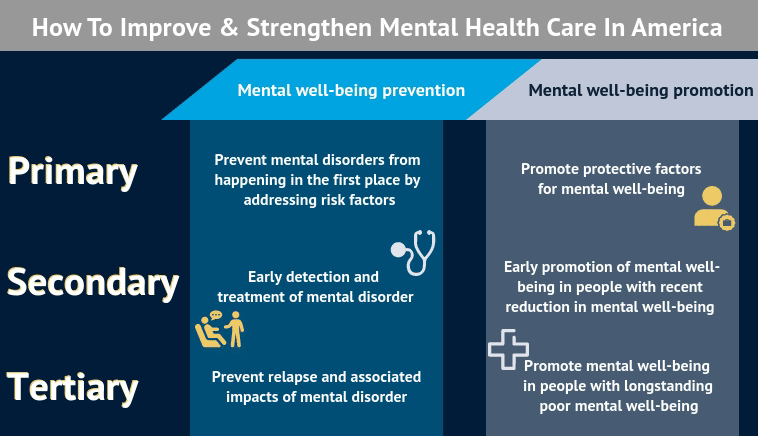
This NIHCM infographic highlights the many challenges contributing to America’s mental health crisis as well as steps to improve and strengthen mental health care and the behavioral health industry and promote individual resiliency.

NIHCM: https://tinyurl.com/3whz69vk

ME-P: https://medicalexecutivepost.com/2022/06/02/medical-workplace-violence-prevention-guidelines/

***

***

****

About Medical Workplace Violence

Join Our Mailing List

UPDATE

At least three people are dead and multiple people are injured following a shooting at the Natalie Building at St. Francis Hospital in Tulsa, Oklahoma.

Link: https://www.msn.com/en-us/news/crime/at-least-3-dead-multiple-people-injured-in-shooting-at-oklahoma-medical-office/ar-AAXYITO?li=BBnb7Kz

More than Physical Assault

[By Staff Reporters and Dr. David E. Marcinko MBA]

Business Med PracticeWorkplace violence is more than physical assault.

According to trauma specialist Eugene Schmuckler; PhD, MBA, CTS opining and writing in www.BusinessofMedicalPractice.com; workplace violence is any act in which a person is abused, threatened, intimidated, harassed, or assaulted in his or her employment. Swearing, verbal abuse, playing “pranks,” spreading rumors, arguments, property damage, vandalism, sabotage, pushing, theft, physical assaults, psychological trauma, anger-related incidents, rape, arson, and murder are all examples of workplace violence.

The RNANS

The Registered Nurses Association of Nova Scotia [RNANS], a leading study group, defines violence as “any behavior that results in injury whether real or perceived by an individual, including, but not limited to, verbal abuse, threats of physical harm, and sexual harassment.” As such, medical workplace violence includes:

· threatening behavior — such as shaking fists, destroying property, or throwing objects;

· verbal or written threats — any expression of intent to inflict harm;

· harassment — any behavior that demeans, embarrasses, humiliates, annoys, alarms, or verbally abuses a person and that is known or would be expected to be unwelcome. This includes words, gestures, intimidation, bullying, or other inappropriate activities;

· verbal abuse — swearing, insults, or condescending language;

· muggings — aggravated assaults, usually conducted by surprise and with intent to rob; or

· physical attacks — hitting, shoving, pushing, or kicking.

Cause and Affect

Workplace violence can be brought about by a number of different actions in the workplace. It may also be the result of non-work related situations such as domestic violence or “road rage.” Workplace violence can be inflicted by an abusive employee, a manager, supervisor, co-worker, customer, family member, patient, physician, nurse, or even a stranger.

The UI-IPRC 

The University of Iowa – Injury Prevention Research Center [UI-IPRC] classifies most workplace violence into one of four categories.

· Type I Criminal Intent — Results while a criminal activity (e.g., robbery) is being committed and the perpetrator had no legitimate relationship to the workplace.

· Type II Customer/Client — The perpetrator is a customer or client at the workplace (e.g., healthcare patient) and becomes violent while being assisted by the worker.

· Type III Worker on Worker — Employees or past employees of the workplace are the perpetrators.

· Type IV Personal Relationship — The perpetrator usually has a personal relationship with an employee (e.g., domestic violence in the workplace).

Conclusion

Your thoughts and comments on this ME-P are appreciated. Feel free to review our top-left column, and top-right sidebar materials, links, URLs and related websites, too. Then, subscribe to the ME-P. It is fast, free and secure.

Link: http://feeds.feedburner.com/HealthcareFinancialsthePostForcxos

Speaker: If you need a moderator or speaker for an upcoming event, Dr. David E. Marcinko; MBA – Publisher-in-Chief of the Medical Executive-Post – is available for seminar or speaking engagements. Contact: MarcinkoAdvisors@msn.com

OUR OTHER PRINT BOOKS AND RELATED INFORMATION SOURCES:

DICTIONARIES: http://www.springerpub.com/Search/marcinko
PHYSICIANS: www.MedicalBusinessAdvisors.com
PRACTICES: www.BusinessofMedicalPractice.com
HOSPITALS: http://www.crcpress.com/product/isbn/9781466558731
CLINICS: http://www.crcpress.com/product/isbn/9781439879900
ADVISORS: www.CertifiedMedicalPlanner.org
PODIATRISTS: www.PodiatryPrep.com
BLOG: www.MedicalExecutivePost.com
FINANCE: Financial Planning for Physicians and Advisors
INSURANCE: Risk Management and Insurance Strategies for Physicians and Advisors

Product Details 

SURVEY: Affordable ACA Family Coverage

By MCOL

***

Families USA: Uninsured Rate by Quarter •  Q4 2020: 10.3%
 •  Q1 2021: 9.5%
 •  Q2 2021: 9.7%
 •  Q3 2021: 8.9%

Source: Families USA, “ACA’s Promise of Affordable Health Coverage for Families Across America Is at Risk as Pandemic-Era Policies Expire,” March 2022

***

COMMENTS APPRECIATED

Thank You

***

***

PODCAST: Physician Entrepreneurial Tips on Opening Your Own Medical Practice

***

By MEDICAL ECONOMICS

James Underberg, MD, discusses how he left a large health system to open his own practice, and provides tips for physicians considering the same move.

***

***

Private Healthcare Equity: https://www.youtube.com/watch?v=tBwHu1uigoA

ME-P Business Plan: https://medicalexecutivepost.com/2022/04/05/get-your-free-medical-office-start-up-business-plan-from-imba-inc/

***

COMMENTS APPRECIATED

Thank You

***

***

***

****

Clinic ‘Charged Patient $40 for Crying’

By Staff Reporters

***

***

***

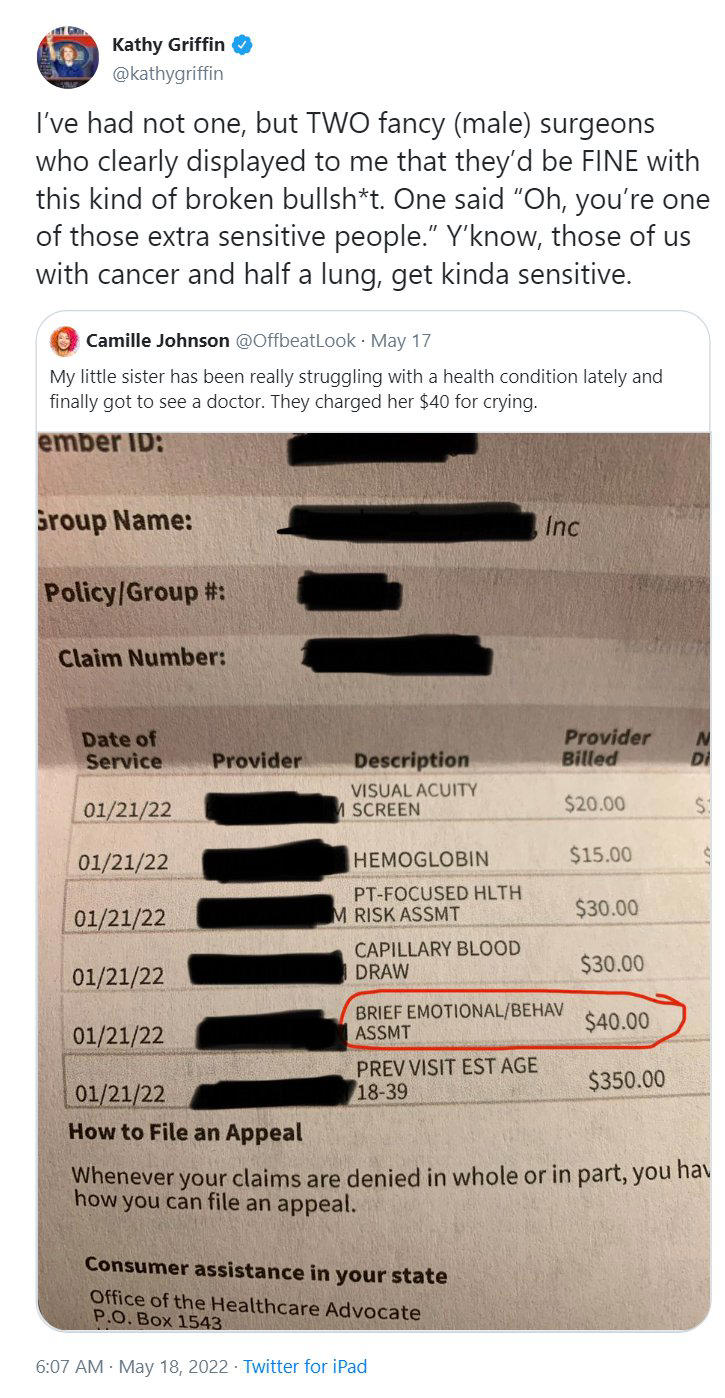
FULL REPRINT: A woman who visited doctors in the US was charged for an ’emotional and behavioral assessment’ simply for shedding a tear.

LINK: https://7news.com.au/news/world/us-patient-charged-extra-for-crying-during-doctors-appointment-c-6867615

***

COMMENTS APPRECIATED

Thank You

***

***

***

SDOH = Social Determinants of Oral Health

By Staff Reporters

***

***

Social determinants of oral health and tooth loss

A study led by investigators at the Harvard School of Dental Medicine suggested that “machine-learning algorithm models incorporating socioeconomic characteristics were better at predicting tooth loss than those relying on routine clinical dental indicators alone.”

CITE: https://www.r2library.com/Resource/Title/082610254

Furthermore, new research reported that

  • adults living in urban areas visited the dentist more than those in rural areas
  • women were more likely than men to visit the dentist in both rural and urban areas
  • the number of adult dental visits increased as family income increased
  • non-Hispanic white adults were more likely than Hispanic and non-Hispanic black adults to have a dental visit in urban areas.

Therefore, it is important to consider how disparities in access to and use of dental care impact not only tooth loss but also oral and overall health.

***

COMMENTS APPRECIATED

Thank You

***

****

RECAST: An Interview with Fiduciary Bennett Aikin AIF®

On Financial Fiduciary Accountability

[By Dr. David E. Marcinko MBA CMP™]

[By Ann Miller; RN, MHA]

Currently, there is a growing dilemma in the financial sales and services industry. It goes something like this:

  • What is a financial fiduciary?
  • Who is a financial fiduciary?
  • How can I tell if my financial advisor is a fiduciary?

Now, in as much as this controversy affects laymen and physician-investors alike, we went right to the source for up-to-date information regarding this often contentious topic, for an email interview and Q-A session, with Ben Aikin.ben-aikin

About Bennett Aikin AIF® and fi360.com

Bennett [Ben] Aikin is the Communications Coordinator for fi360.com. He oversees all communications for fi360. His responsibilities include messaging, brand management, copyrights and trademarks, and publications. Mr. Aikin received his BA in English from Virginia Tech in 2003 and is currently an MS candidate in Journalism from Ohio University.

Q. Medical Executive Post 

You have been very helpful and gracious to us. So, let’s get right to it, Ben. In the view of many; attorneys, doctors, CPAs and the clergy are fiduciaries; most all others who retain this title seem poseurs; sans documentation otherwise.

A. Mr. Aikin

You are correct. Attorneys, doctors and clergy are the prototype fiduciaries. They have a clear duty to put the best interests of their clients, patients, congregation, etc., above their own. [The duty of a CPA isn’t as clear to me, although I believe you are correct]. Furthermore, this is one of the first topics we address in our AIF training programs, and what we call the difference between a profession and an industry.  The three professions you name have three common characteristics that elevate them from an industry to a profession:

  1. Recognized body of knowledge
  2. Society depends upon practitioners to provide trustworthy advice
  3. Code of conduct that places the clients’ best interests first

Q. Medical Executive Post 

It seems that Certified Financial Planner®, Chartered Financial Analysts, Registered Investment Advisors and their representatives, Registered Representative [stock-brokers] and AIF® holders, etc, are not really financial fiduciaries, either by legal statute or organizational charter. Are we correct, or not? Of course, we are not talking ethics or morality here. That’s for the theologians to discuss.

A. Mr. Aikin

One of the reasons for the “alphabet soup”, as you put it in one of your white papers [books, dictionaries and posts] on financial designations, is that while there is a large body of knowledge, there is no one recognized body of knowledge that one must acquire to enter the financial services industry.  The different designations serve to provide a distinguisher for how much and what parts of that body of knowledge you do possess.  However, being a fiduciary is exclusively a matter of function. 

In other words, regardless of what designations are held, there are five things that will make one a fiduciary in a given relationship:

  1. You are “named” in plan or trust documents; the appointment can be by “name” or by “title,” such as CFO or Head of Human Resources
  2. You are serving as a trustee; often times this applies to directed trustees as well
  3. Your function or role equates to a professional providing comprehensive and continuous investment advice
  4. You have discretion to buy or sell investable assets
  5. You are a corporate officer or director who has authority to appoint other fiduciaries

So, if you are a fiduciary according to one of these definitions, you can be held accountable for a breach in fiduciary duty, regardless of any expertise you do, or do not have. This underscores the critical nature of understanding the fiduciary standard and delegating certain duties to qualified “professionals” who can fulfill the parts of the process that a non-qualified fiduciary cannot.

Q. Medical Executive Post 

How about some of the specific designations mentioned on our site, and elsewhere. I believe that you may be familiar with the well-known financial planner, Ed Morrow, who often opines that there are more than 98 of these “designations”? In fact, he is the founder of the Registered Financial Consultants [RFC] designation. And, he wrote a Foreword for one of our e-books; back-in-the-day. His son, an attorney, also wrote as a tax expert for us, as well. So, what gives?

A. Mr. Aikin

As for the specific designations you list above, and elsewhere, they each signify something different that may, or may not, lend itself to being a fiduciary: For example:

• CFP®: The act of financial planning does very much imply fiduciary responsibility.  And, the recently updated CFP® rules of conduct does now include a fiduciary mandate:

• 1.4 A certificant shall at all times place the interest of the client ahead of his or her own. When the certificant provides financial planning or material elements of the financial planning process, the certificant owes to the client the duty of care of a fiduciary as defined by CFP Board. [from http://www.cfp.net/Downloads/2008Standards.pdf]

•  CFA: Very dependent on what work the individual is doing.  Their code of ethics does have a provision to place the interests of clients above their own and their Standards of Practice handbook makes clear that when they are working in a fiduciary capacity that they understand and abide by the legally mandated fiduciary standard.

• FA [Financial Advisor]: This is a generic term that you may find being used by a non-fiduciary, such as a broker, or a fiduciary, such as an RIA.

• RIA: Are fiduciaries.  Registered Investment Advisors are registered with the SEC and have obligations under the Investment Advisers Act of 1940 to provide services that meet a fiduciary standard of care.

• RR: Registered Reps, or stock-brokers, are not fiduciaries if they are doing what they are supposed to be doing.  If they give investment advice that crosses the line into “comprehensive and continuous investment advice” (see above), their function would make them a fiduciary and they would be subject to meeting a fiduciary standard in that advice (even though they may not be properly registered to give advice as an RIA).

• AIF designees: Have received training on a process that meets, and in some places exceeds, the fiduciary standard of care.  We do not require an AIF® to always function as a fiduciary. For example, we allow registered reps to gain and use the AIF® designation. In many cases, AIF designees are acting as fiduciaries, and the designation is an indicator that they have the full understanding of what that really means in terms of the level of service they provide.  We do expect our designees to clearly disclose whether they accept fiduciary responsibility for their services or not and advocate such disclosure for all financial service representatives.

Q. Medical Executive Post 

Your website, http://www.fi360.com, seems to suggest, for example, that banks/bankers are fiduciaries. We have found this not to be the case, of course, as they work for the best interests of the bank and stockholders. What definitional understanding are we missing?

A. Mr. Aikin

Banks cannot generally be considered fiduciaries.  Again, it is a matter of function. A bank may be a named trustee, in which case a fiduciary standard would generally apply.  Banks that sell products are doing so according to their governing regulations and are “prudent experts” under ERISA, but not necessarily held to a fiduciary standard in any broader sense.

Q. Medical Executive Post 

And so, how do we rectify the [seemingly intentional] industry obfuscation on this topic. We mean, our readers, subscribers, book and dictionary purchasers, clients and colleagues are all confused on this topic. The recent financial meltdown only stresses the importance of understanding same.

For example, everyone in the industry seems to say they are the “f” word. But, our outreach efforts to contact traditional “financial services” industry pundits, CFP® practitioners and other certification organizations are continually met with resounding silence; or worse yet; they offer an abundance of parsed words and obfuscation but no confirming paperwork, or deep subject-matter knowledge as you have kindly done. We get the impression that some FAs honesty do-not have a clue; while others are intentionally vague.

A. Mr. Aikin

All of the evidence you cite is correct.  But that does not mean it is impossible to find an investment advisor who will manage to a fiduciary standard of care and acknowledge the same. The best way to rectify confusion as it pertains to choosing appropriate investment professionals is to get fiduciary status acknowledged in writing and go over with them all of the necessary steps in a fiduciary process to ensure they are being fulfilled. There also are great resources out there for understanding the fiduciary process and for choosing professionals, such as the Department of Labor, the SEC, FINRA, the AICPA’s Personal Financial Planning division, the Financial Planning Association, and, of course, Fiduciary360.

We realize the confusion this must cause to those coming from the health care arena, where MD/DO clearly defines the individual in question; as do other degrees [optometrist, clinical psychologist, podiatrist, etc] and medical designations [fellow, board certification, etc.]. But, unfortunately, it is the state of the financial services industry as it stands now.

Q. Medical Executive Post 

It is as confusing for the medical community, as it is for the lay community. And, after some research, we believe retail financial services industry participants are also confused. So, what is the bottom line?

A. Mr. Aikin

The bottom line is that lay, physician and all clients have a right to expect and demand a fiduciary standard of care in the managing of investments. And, there are qualified professionals out there who are providing those services.  Again, the best way to ensure you are getting it is to have fiduciary status acknowledged in writing, and go over the necessary steps in a fiduciary process with them to ensure it is being fulfilled.

Q. Medical Executive Post 

The “parole-evidence” rule, of contract law, applies, right? In dealing with medical liability situations, the medics and malpractice attorneys have a rule: “if it wasn’t written down, it didn’t happen.”  

A. Mr. Aikin

An engagement contract accepting fiduciary status should trump a subsequent attempt to claim the fiduciary standard didn’t apply. But, to reiterate an earlier point, if someone acts in one of the five functional fiduciary roles, they are a fiduciary whether they choose to acknowledge it or not.  I have attached a sample acknowledgement of fiduciary status letter with copies of our handbook, which details the fiduciary process we instruct in our programs, and our SAFE, which is basically a checklist that a fiduciary should be able to answer “Yes” to every question to ensure the entire fiduciary process is being covered.

Q. Medical Executive Post 

It is curious that you mention checklists. We have a post arguing that very theme for doctors and hospitals as they pursue their medial error reduction, and quality improvement, endeavors. And, we applaud your integrity, and wish only for clarification on this simple fiduciary query?

A. Mr. Aikin

Simple definition: A fiduciary is someone who is managing the assets of another person and stands in a special relationship of trust, confidence, and/or legal responsibility.

Q. Medical Executive Post 

Who is a financial fiduciary and what, if any, financial designation indicates same?

A. Mr. Aikin

Functional definition: See above for the five items that make you a fiduciary.

Financial designations that unequivocally indicate fiduciary duty: Short answer is none, only function can determine who is a fiduciary. 

Q. Medical Executive Post 

Please repeat that?

A. Mr. Aikin

Financial designations that indicate fiduciary duty: none. It is the function that determines who is a fiduciary.  Now, having said that, the CFP® certification comes close by demanding their certificants who are engaged in financial planning do so to a fiduciary standard. Similarly, other designations may certify the holder’s ability to perform a role that would be held to a fiduciary standard of care.  The point is that you are owed a fiduciary standard of care when you engage a professional to fill that role or they functionally become one.  And, if you engage a professional to fill a non-fiduciary role, they will not be held to a fiduciary standard simply because they have a particular designation.  One of the purposes the designations serve is to inform you what roles the designation holder is capable of fulfilling.

It is also worth keeping in mind that just being a fiduciary doesn’t equate to a full knowledge of the fiduciary standard. The AIF® designation indicates having been fully trained on the standard.

Q. Medical Executive Post 

Yes, your website mentions something about fiduciaries that are not aware of same! How can this be? Since our business model mimics a medical model, isn’t that like saying “the doctor doesn’t know he is doctor?” Very specious, with all due respect!

A. Mr. Aikin

I think it is first important to note that this statement is referring not just to investment professionals.  Part of the audience fi360 serves is investment stewards, the non-professionals who, due to facts and circumstances, still owe a fiduciary duty to another.  Examples of this include investment committee members, trustees to a foundation, small business owners who start 401k plans, etc.  This is a group of non-sophisticated investors who may not be aware of the full array of responsibilities they have. 

However, even on the professional side I believe the statement isn’t as absurd as it sounds.  This is basically a protection from both ignorant and unscrupulous professionals.  Imagine a registered representative who, either through ignorance or design, begins offering comprehensive and continuous investment advice.  Though they may deny or be unaware of the fact, they have opened themselves up to fiduciary liability. 

Q. Medical Executive Post 

Please clarify the use of arbitration clauses in brokerage account contracts for us. Do these disclaim fiduciary responsibility? If so, does the client even know same?

A. Mr. Aikin

By definition, an engagement with a broker is a non-fiduciary relationship.  So, unless other services beyond the scope of a typical brokerage account contract are specified, fiduciary responsibility is inherently not applicable.  Unfortunately, I do imagine there are clients who don’t understand this. Furthermore, AIF® designees are not prohibited from signing such an agreement and there are some important points to understand the reasoning.

First, by definition, if you are entering into such an agreement, you are entering into a non-fiduciary relationship. So, any fiduciary requirement wouldn’t apply in this scenario.

Second, if this same question were applied into a scenario of a fiduciary relationship, such as with an RIA, this would be a method of dispute resolution, not a practice method. So, in the event of dispute, the advisor and investor would be free to agree to the method of resolution of their choosing. In this scenario, however, typically the method would not be discussed until the dispute itself arose.

Finally, it is important to know that AIF/AIFA designees are not required to be a fiduciary. It is symbolic of the individuals training, knowledge and ongoing development in fiduciary processes, but does not mean they will always be acting as a fiduciary.

Q. Medical Executive Post 

Don’t the vast majority of arbitration hearings find in favor of the FA; as the arbitrators are insiders, often paid by the very same industry itself?

A. Mr. Aikin

Actual percentages are reported here: http://www.finra.org/ArbitrationMediation/AboutFINRADR/Statistics/index.htm However, brokerage arbitration agreements are a dispute resolution method for disputes that arise within the context of the securities brokerage industry and are not the only means of resolving differences for all types of financial advisors.  Investment advisers, for example, are subject to respond to disputes in a variety of forums including state and federal courts.  Clients should look at their brokerage or advisory agreement to see what they have agreed to. If you wanted to go into further depth on this question, we would recommend contacting Brian Hamburger, who is a lawyer with experience in this area and an AIFA designee. Bio page: http://www.hamburgerlaw.com/attorneys/BSH.htm.

Q. Medical Executive Post 

What about our related Certified Medical Planner® designation, and online educational program for financial advisors and medical management consultants? Is it a good idea – reasonable – for the sponsor to demand fiduciary accountability of these charter-holders? Cleary, this would not only be a strategic competitive advantage, but advance the CMP™ mission to put medical colleagues first and champion their cause www.CertifiedMedicalPlanner.org above all else. 

A. Mr. Aikin

I think it is a good idea for any plan sponsor to demand fiduciary status be acknowledged from anyone engaged to provide comprehensive and continuous investment advice.  I also think it is a good idea to be proactive in verifying that the fiduciary process is being followed.

Q. Medical Executive Post 

Is there anything else that we should know about this topic?

A. Mr. Aikin

Yes, a further note about fi360’s standards. I wrote generically about the fiduciary standard, because there is one that is defined by multiple sources of regulation, legislation and case law.  The process defined in our handbooks, we call a Fiduciary Standard of Excellence, because it covers that minimum standard and also best practice standards that go above and beyond.  All of our Practices, which comprise that standard, are legally substantiated in our Legal Memoranda handbook, which was written by Fred Reish’s law firm, who is considered a leading ERISA attorney.

Additional resources:

Q. Medical Executive Post 

Thank you so much for your knowledge and willingness to frankly share it with the Medical-Executive-Post.

Assessment

All are invited to continue the conversation with Mr. Aikin, asynchronously online, or thru this contact information:

fi360.com
438 Division Street
Sewickley, PA 15143
412-741-8140 Phone
866-390-5080 Toll-free phone
412-741-8142 Fax

Conclusion

Your thoughts and comments on this ME-P are appreciated. Feel free to review our top-left column, and top-right sidebar materials, links, URLs and related websites, too. Then, subscribe to the ME-P. It is fast, free and secure.

Link: http://feeds.feedburner.com/HealthcareFinancialsthePostForcxos

Speaker: If you need a moderator or speaker for an upcoming event, Dr. David E. Marcinko; MBA – Publisher-in-Chief of the Medical Executive-Post – is available for seminar or speaking engagements. Contact: MarcinkoAdvisors@msn.com

OUR OTHER PRINT BOOKS AND RELATED INFORMATION SOURCES:

LEXICONS: http://www.springerpub.com/Search/marcinko
PRACTICES: www.BusinessofMedicalPractice.com
HOSPITALS: http://www.crcpress.com/product/isbn/9781466558731
CLINICS: http://www.crcpress.com/product/isbn/9781439879900
ADVISORS: www.CertifiedMedicalPlanner.org
BLOG: www.MedicalExecutivePost.com

Product DetailsProduct DetailsProduct Details

Product Details  Product Details

Product DetailsProduct Details

Product Details

Risk Management, Liability Insurance, and Asset Protection Strategies for Doctors and Advisors: Best Practices from Leading Consultants and Certified Medical Planners™8Comprehensive Financial Planning Strategies for Doctors and Advisors: Best Practices from Leading Consultants and Certified Medical Planners™

MEDICARE Fraud and Abuse Scams

REPORTING SCAMS

By Staff Reporters

***

***

LINK: https://www.medicare.gov/basics/reporting-medicare-fraud-and-abuse

BLOG: https://www.medicare.gov/blog/how-to-protect-medicare-card

SPOOFS: https://www.bing.com/videos/search?q=medicare+phone+scams&&view=detail&mid=147902000F772B221DC9147902000F772B221DC9&&FORM=VRDGAR&ru=%2Fvideos%2Fsearch%3Fq%3Dmedicare%2Bphone%2Bscams%26FORM%3DHDRSC3

***

COMMENTS APPRECIATED

Thank You

***

RISK MANAGEMENT: https://www.amazon.com/Management-Liability-Insurance-Protection-Strategies-ebook/dp/B01A8TCDES/ref=sr_1_1?keywords=david+marcinko&qid=1652959760&sr=8-1

***

***

***

SDOH Challenges = Physician Stress?

SOCIAL DETERMINANTS OF HEALTH

By Staff Reporters

***

***

SDOH Challenges Cause Physicians Stress

A recent Physicians Foundation survey that asked questions relating to whether Social Determinants of Health [SDOH] challenges cause them to experience stress or frustration.

CITE: https://www.r2library.com/Resource/Title/082610254

The survey found:

 •  71% Identified limited time during patient visit to discuss SDOH
 •  64% Identified insufficient workforce to navigate patients to community resources to address SDOH
 •  63% Identified existing payer reporting requirements taking time away from being able to address patients’ SDOH
 •  57% Identified lack of reimbursement for screening for or addressing SDOH
 •  57% Identified community resources unavailable, inadequate or difficult to access.

Source: The Physicians Foundation 2022 Physician Survey: Part 1, March 22, 2022

Physician Suicide: https://medicalexecutivepost.com/2016/04/23/more-on-physician-suicide-video/

COACHING: https://medicalexecutivepost.com/coach/

***

COMMENTS APPRECIATED

Thank You

***

ORDER: https://www.routledge.com/Risk-Management-Liability-Insurance-and-Asset-Protection-Strategies-for/Marcinko-Hetico/p/book/9781498725989

***

MENTAL HEALTH Action Day 2022

By Staff Reporters

***

As part of its Mental Health initiative, MTV’s second-annual Mental Health Action Day – an open-source movement of brands, organizations, government agencies, and cultural leaders to drive culture of mental health from awareness to action – will bring together more than 1,600 organizations in cities across the country to encourage and empower people to take action for mental health on Thursday, May 19, 2022.

***

***

LINK: https://www.mentalhealthactionday.art/

COACHING: From Chaos to Calm: https://medicalexecutivepost.com/coach/
***

COMMENTS APPRECIATED

Thank You

***

***

Did Public Health Fail America During the Pandemic?

***

By Dr. David E. Marcinko MBA

***

LINK: https://www.msn.com/en-us/news/us/how-public-health-failed-america/ar-AAXid2L?li=BBnb7Kz

***

CDC: https://www.cdc.gov/publichealthgateway/publichealthservices/essentialhealthservices.html

***

***

***

***

COMMENTS APPRECIATED

Thank You

***

OUTCOMES: In-Person and Tele-Health Encounters During COVID-19

By Staff Reporters and MCOL

***

***

Outcomes of In-Person and Tele-Health Encounters During COVID-19

 •  Ambulatory encounters decreased by 1.0% and the number of in-person encounters per enrollee decreased by 17.0% from 2019 to 2020.
 •  For members with an initial telehealth encounter for a new acute condition, the adjusted odds ratio was 1.44 for all follow-ups combined and 1.11 for an emergency department encounter.
 •  For members with an initial telehealth encounter for a new chronic condition, the adjusted odds ratios were 0.94 for all follow-ups combined and 0.94 for in-patient admissions.

Source: JAMA Network, April 26, 2022

***

***

****

GO FUND ME: Medical Campaigns Reveal a Big Problem with Health Care

***

By Jules Lipoff, MD: Senior fellow at the Leonard Davis Institute of Health Economics and an assistant professor of clinical dermatology at Perelman School of Medicine, both of the University of Pennsylvania. Erica Mark, medical student at the University of Virginia, contributed to this article. The opinions expressed in this article do not necessarily represent those of the University of Pennsylvania Health System or the Perelman School of Medicine.

***

If you follow the news or your social media feed, you know that crowdsourcing medical expenses is increasingly popular for financing health care costs. In fact, you might have contributed to one; 22 percent of American adults report donating to GoFundMe medical campaigns.

CITE: https://www.r2library.com/Resource/Title/082610254

As of 2021, approximately $650 million, or about one-third of all funds raised by GoFundMe, went to medical campaigns. That staggering amount of money highlights how dysfunctional our health care system is, forcing people to resort to crowdsourcing to afford their medical care — but it’s not surprising. In the United States, 62 percent of bankruptcies are related to medical costs. This should be a wake-up call to address and reform the system further.

Related: https://medicalexecutivepost.com/2021/12/30/does-crowd-sourcing-democratize-the-health-care-insurance-system/

***

***

ESSAY: https://www.msn.com/en-us/news/politics/gofundme-medical-campaigns-reveal-a-big-problem-with-health-care/ar-AAXabGB?li=BBnbfcL

***

COMMENTS APPRECIATED

Thank You

***

***

***

The BUSINESS of Medical Practice

“NO MARGIN – NO MISSION”

Within Reason

***

BY DR. DAVID E. MARCINKO MBA CMP®

SPONSOR: http://www.CertifiedMedicalPlanner.org

CMP logo

INVITE DR. MARCINKO: https://medicalexecutivepost.com/dr-david-marcinkos-

Your thoughts are appreciated.

THANK YOU

***

CELEBRATE: National Women’s Health Week 2022

MAY 8 – 14th, 2022

By Staff Reporters

***

***

Prioritizing your health – both physical and mental – has never been more important. Over the past few years, many women have put off taking care of their general health and wellness needs. They have adjusted their daily routines, including the way they connect with family and friends. The combination has led to serious health problems for some women.

LINK: https://www.womenshealth.gov/nwhw/about

DAY: https://medicalexecutivepost.com/2022/03/08/today-is-international-womens-day/

***

COMMENTS APPRECIATED

Thank You

***

***

***

SURVEY on COVID-19’s Impact On Physician Practices and Employment

***

By Staff Reporters

***

***

• 108,700 additional physicians became employees of hospitals or other corporate entities – 83,000 of that shift occurred after the onset of COVID-19.
• Hospital and other corporate entities acquired 36,200 additional physician practices over the three-year period, resulting in a 38% increase in the percentage of corporate owned practices.
• 58,200 additional physicians become hospital employees – 51,000 of that shift occurred after the onset of COVID-19.
• 50,500 additional physicians became employees of corporate entities – 32,000 of that shift occurred after the onset of COVID-19.

Source: Physicians Advocacy Institute, April 2022

***

Great Resignation: https://medicalexecutivepost.com/2022/03/08/healthcare-industry-hit-with-the-great-resignation-retirement/

***

***

****

RIP: Marthe Gautier MD [Down’s Syndrome Dispute]

By Staff Reporters

Forgotten Women Scientists: https://www.msn.com/en-us/news/world/the-women-scientists-forgotten-by-history/ar-AAWURnt?li=BBnb7Kz

***

***

Marthe Gautier (10 September 1925 – 30 April 2022) was a French medical doctor and researcher, best known for her role in discovering the link of diseases to Down’s Syndrome and chromosome abnormalities

Wikipedia: https://en.wikipedia.org/wiki/Marthe_Gautier

MORE: https://www.science.org/content/article/after-more-50-years-dispute-over-down-syndrome-discovery

RELATED: https://www.parcast.com/blog/2018/1/4/17-female-scientists-who-made-remarkable-discoveries-and-advancements

***

COMMENTS APPRECIATED

Thank You

***

***

***

PODCAST: Mental Health Interview with Milton L. Mack Jr.

RIP NAOMI JUDD

[Original Rebroadcast]

The Common Bridge by Rick Helppie

Mental Health, Jury Bias, and Judicial Reform, with the Honorable Milton L. Mack Jr.
Rich brings back the Honorable Milton L. Mack, Jr. for a discussion on Mental Health, Jury Bias, and Judicial Reform. Judge Mack has been a leading voice on how mental health issues affect over half of the court cases in the US and how this needs to be addressed in judicial reform. He has also been on the forefront of bringing cutting edge technology into the courtroom.

***

PODCAST: https://richardhelppie.com/podcasts/

***
COMMENTS APPRECIATED.

***

BUSINESS MEDICINE: https://www.amazon.com/Business-Medical-Practice-Transformational-Doctors/dp/0826105750/ref=sr_1_9?ie=UTF8&qid=1448163039&sr=8-9&keywords=david+marcinko

***

RISK MANAGEMENT: https://www.routledge.com/Risk-Management-Liability-Insurance-and-Asset-Protection-Strategies-for/Marcinko-Hetico/p/book/9781498725989

Thank You

***

PODCASTS: The GREAT ECONOMIC MODERATION / RESIGNATION in Medicine?

A HISTORICAL REVIEW WITH UPDATE

Dr. David Edward Marcinko | The Leading Business Education Network for  Doctors, Financial Advisors and Health Industry Consultants

By Dr. David E. Marcinko MBA CMP®

CMP logo

SPONSOR: http://www.CertifiedMedicalPlanner.org

What was the Great Economic Moderation?

The Great Moderation is the name given to the period of decreased macroeconomic volatility experienced in the United States starting in the 1980s.

CITE: https://www.r2library.com/Resource/Title/0826102549

During this period, the standard deviation of quarterly real gross domestic product (GDP) declined by half and the standard deviation of inflation declined by two-thirds, according to figures reported by former U.S. Federal Reserve Chair Ben Bernanke. The Great Moderation can be summed up as a multi-decade period of low inflation and positive economic growth.

But, what about health economics, writ large? And, the actual practice of medicine by physicians in the trenches. Consider this historical review.

GOLDEN AGE OF MEDICINE

The ‘golden age of medicine’ – the first half of the 20th century, reaching its zenith with Jonas Salk’s 1955 polio vaccine – was a time of profound advances in surgical techniques, immunization, drug discovery, and the control of infectious disease; however, when the burden of disease shifted to lifestyle-driven, chronic, non-communicable diseases, the golden era slipped away. Although modifiable lifestyle practices now account for some 80% of premature mortality, medicine remains loathe to embrace lifestyle interventions as medicine Here, we argue that a 21st century golden age of medicine can be realized; the path to this era requires a transformation of medical school recruitment and training in ways that prioritize a broad view of lifestyle medicine. Moving beyond the basic principles of modifiable lifestyle practices as therapeutic interventions, each person/community should be viewed as a biological manifestation of accumulated experiences (and choices) made within the dynamic social, political, economic and cultural ecosystems that comprise their total life history. This requires an understanding that powerful forces operate within these ecosystems; marketing and neoliberal forces push an exclusive ‘personal responsibility’ view of health – blaming the individual, and deflecting from the large-scale influences that maintain health inequalities and threaten planetary health. The latter term denotes the interconnections between the sustainable vitality of person and place at all scales. We emphasize that barriers to planetary health and the clinical application of lifestyle medicine – including authoritarianism and social dominance orientation – are maintaining an unhealthy status quo.

NOTE: https://pubmed.ncbi.nlm.nih.gov/31828026/

GOLDEN AGE OF MEDICAL PRACTICE

To listen to all those desperate to reform health care, you get the impression that physicians are pretty horrible people. We are all sexist, greedy, money grubbing tyrants who will perform unnecessary tests and procedures just to make money. We don’t care about quality or cost. We are killing off 250,000 patients every year with our ignored “errors.”

We purposely keep our patients in pain, or we addict them to narcotics just to shut them up. We are constantly told by lawyers that lawsuits are necessary to protect patients from doctors. We provide unsafe drugs just because the drug reps give us free pens and coffee cups. The government must step in to clean up the mess.

PODCAST: https://www.kevinmd.com/blog/2017/08/9-reasons-golden-age-medicine-golden.html

GOLDEN AGE OF PATIENT TRUST

****

***

THE GREAT PHYSICIAN RETIREMENT AND RESIGNATION: https://medicalexecutivepost.com/2021/11/09/healthcare-industry-hit-with-the-great-resignation-retirement/

YOUR COMMENTS ARE APPRECIATED.

Thank You

***

Risk Management, Liability Insurance, and Asset Protection Strategies for Doctors and Advisors: Best Practices from Leading Consultants and Certified Medical Planners™

RETIREMENT PLANNING: https://www.routledge.com/Risk-Management-Liability-Insurance-and-Asset-Protection-Strategies-for/Marcinko-Hetico/p/book/9781498725989

***

Comprehensive Financial Planning Strategies for Doctors and Advisors: Best Practices from Leading Consultants and Certified Medical Planners™

***

Valuation of Home Health Agencies [The Reimbursement Environment]

***

By Health Capital Consultants, LLC

***

***

Valuation of Home Health Agencies: Reimbursement Environment

The U.S. government is the largest payor of medical costs, through Medicare and Medicaid, and has a strong influence on reimbursement for home healthcare services. In 2020, Medicare and Medicaid accounted for an estimated $829.5 billion and $671.2 billion in healthcare spending, respectively. The outsized prevalence of these public payors in the healthcare marketplace often results in their acting as a price setter, and being used as a benchmark for private reimbursement rates. This effect may be even stronger in the home health industry.

The third installment of this home health valuation series will discuss the reimbursement environment in which these organizations operate. (Read more…) 

***

CITE: https://www.r2library.com/Resource/Title/0826102549

COMMENTS APPRECIATED

Thank You

***

***

***

MEDICINE: Death of a Profession?

How the government’s accelerating takeover of private medicine destroys doctors and threatens the health and well-being of every American.

By Leonard Peikoff

This lecture was delivered at Boston’s Ford Hall Forum in April 1985, published in the April – June 1985 issues of The Objectivist Forum and anthologized in The Voice of Reason.

Medicine Death - Encyclopaedia Metallum: The Metal Archives

LINK: https://courses.aynrand.org/works/medicine-the-death-of-a-profession/

EDITOR’S NOTE: This essay today is more salient than ever before.

Assessment: Your thoughts are appreciated.

***

***

THANK YOU

***

The COMPOUNDING PHARMACY?

By Staff Reporters

***

DEFINITION:

What is compounding in a pharmacy?

Drug compounding is often regarded as the process of combining, mixing, or altering ingredients to create a medication tailored to the needs of an individual patient. Compounding includes the combining of two or more drugs. Compounded drugs are not FDA-approved.

CITE: https://www.r2library.com/Resource/Title/082610254

What is the difference between a regular pharmacy and a compounding pharmacy?

Both types of pharmacies prepare medications prescribed for a patient by a doctor. The main difference is that a regular pharmacy provides commercial medications in standardized dosages, while a compounding pharmacy can customize medication based on a patient’s specific needs.

Are compounded drugs FDA approved?

Compounded drugs are not FDA approved. And what this means is FDA does not verify the safety effectiveness or quality of compounded drugs before they’re marketed.

FDA: https://www.fda.gov/drugs/human-drug-compounding/compounding-and-fda-questions-and-answers

***

COMMENTS APPRECIATED

Thank You

***

https://www.amazon.com/Dictionary-Health-Insurance-Managed-Care/dp/0826149944/ref=sr_1_4?ie=UTF8&s=books&qid=1275315485&sr=1-4

****

Survey on Healthcare Financial Affordability

By Staff Reporters

***

Gallup: Healthcare Affordability Survey – 3 Takeaways

 •  56% of the U.S. adult population report no recent occurrences of being unable to afford care or prescribed medicine.
 •  36% of the U.S. adult population report recent occurrences of being unable to pay for care or medicine or lack easy access.
 •  8% of the U.S. adult population report recent occurrences of being unable to pay for household care, being unable to pay for prescribed medicine and feeling that they would not have access to affordable quality care if needed today.

Source: Gallup, “Benchmarking Healthcare Affordability and Perceived Value,” March 31, 2022.

CITE: https://www.r2library.com/Resource/Title/082610254

***

COMMENTS APPRECIATED

Thank You

***

***

****

PROBE: Medicare Advantage [Part C] Plans Deny Needed Care to Tens of Thousands of Patients

By Staff Reporters

***

Medicare Advantage Organizations (MAOs) delayed or denied payments and services to patients, even when these requests met Medicare coverage rules, according to a report released by federal investigators on Thursday.

***

***

A verbatim link: https://thehill.com/policy/healthcare/3470005-probe-finds-medicare-advantage-plans-deny-needed-care-to-tens-of-thousands/

Confirmation link: https://www.msn.com/en-us/news/politics/watchdog-private-medicare-plans-denied-nearly-1-in-5-claims-that-should-have-been-paid/ar-AAWHZuT?li=BBnb7Kz

***

CITE: https://www.r2library.com/Resource/Title/082610254

***
COMMENTS APPRECIATED

Thank You

***https://www.amazon.com/Dictionary-Health-Insurance-Managed-Care/dp/0826149944/ref=sr_1_4?ie=UTF8&s=books&qid=1275315485&sr=1-4

***

PODCAST: Health Insurance Plans Confusing and Largely Misunderstood

***

By Eric Bricker MD

***

According to One Survey, only 4% of People Understand the Basic Insurance Terms of Deductible, Co-Insurance, Copay and Out-of-Pocket Maximum.

In Another Survey by United Healthcare Itself, Only 9% Understood the Terms Premium, Deductible, Co-Insurance and Out-of-Pocket Max.

This Lack of Understanding is Not the Fault of the Employee Benefits Professionals or the Employees… Rather, the Health Insurance Plan Designs Are Just Too Complicated.

CITE: https://www.r2library.com/Resource/Title/082610254

***

PODCAST: https://www.youtube.com/watch?v=Yp6TI7iu-m0

***

Comments Appreciated

THANK YOU

***

***

****

INDEX: Fear & Greed

By Staff Reporters

****

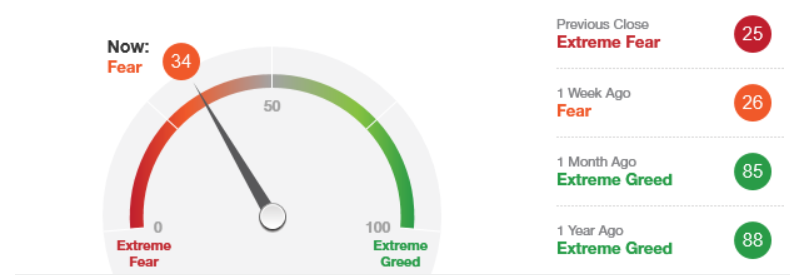
What a week in the world’s financial markets? It is perfect timing for this ME-P.

***

***

It is useful to look at stock market levels compared to where they’ve been over the past few months. When the S&P 500 is above its moving or rolling average of the prior 125 trading days, that’s a sign of positive momentum. But if the index is below this average, it shows investors are getting skittish.

The Fear & Greed Index uses slowing momentum as a signal for Fear and a growing momentum for Greed.

But, a few big stocks can skew returns for the market. So, it’s important to also know how many stocks are doing well versus those that are struggling.

***

***

COMMENTS APPRECIATED

Thank You

***

***

PODCAST: The Decline of Employer Sponsored Family Healthcare Insurance Coverage

By Eric Bricker MD

***

***

CITE: https://www.r2library.com/Resource/Title/082610254

***

COMMENTS APPRECIATED

Thank You

***

***

Our GREEN ME-P Initiatives on “Earth Day” 2022

April 22nd, 2022

***

By Dr. David Edward Marcinko MBA

Founding Editor-in-Chief

Go Green!

At this Medical Executive-Post, we are trying to go GREEN! Our green mindset permeates brightly whenever we conduct business. However, green is more than just a color, it’s a way of working and living that honors our environment and helps preserve it for future generations. And so, below is a list of our environment-friendly green initiatives.

***

Initiatives

  • We have the ability to remotely monitor our phone and internet systems. Not only is this a cost savings for our colleagues, members, visitors, customers and us, it reduces fuel usage by keeping third-party vendor delivery service fleets off the road.
  • Inbound technicians have an 85% first-call resolution rate. Our folks ask the right questions and take the time to solve issues without scheduling an in-person or vendor service call.
  • We telephone re-use jacks and cables, when possible.
  • We recycle all paper, plastic and glass in our office.
  • We use an eFax service, cutting down on paper usage.
  • We have a paperless billing system.
  • We have a virtual library of “how to” resources for all of our ME-P products and services.
  • We sent our old phone systems to a re-cycler who uses the parts for plastic.
  • So, please send us your other ideas!

***

COMMENTS APPRECIATED

Thank You

SUBSCRIBE TO THE MEDICAL EXECUTIVE-POST

***

***

PODCAST: Elective Surgery is Seasonal!

By Eric Bricker MD

1) Patients Have Met their Deductible and OOP Max.

2) They Do Not Have To Take Time Off of Work for Recovery.

CITE: https://www.r2library.com/Resource/Title/082610254

However, Is This the Best Time of Year to Have Surgery for Patients?

***

***

COMMENTS APPRECIATED

Thank You

***

***

****

What is the plan for a future with COVID?

***

***

Q: What is the plan for a future with COVID?
A:
A new 136-page report written by dozens of experts provides a comprehensive roadmap to the next normal both to address the pandemic and protect against future biosecurity threats. The group identified 12 key areas of focus, including long COVID, equity, and vaccines. The report also addressed concerns about how the end of the pandemic will disrupt the U.S. health care system when policies introduced during the public health emergency come to an end. 

***
COMMENTS APPRECIATED

Thank You

***

***

Just “Say No” to Drugs

Join Our Mailing List

A Flash-Back in History

[By Staff Reporters]

This photo was sent in by one of our ME-P readers for your enjoyment.

Nancy

[First Lady Nancy Reagan at a “Just Say No” to Drugs Rally at the White House in the 1980’s]

More:

Conclusion

Your thoughts and comments on this ME-P are appreciated. Feel free to review our top-left column, and top-right sidebar materials, links, URLs and related websites, too. Then, subscribe to the ME-P. It is fast, free and secure.

Link: http://feeds.feedburner.com/HealthcareFinancialsthePostForcxos

Speaker: If you need a moderator or speaker for an upcoming event, Dr. David E. Marcinko; MBA – Publisher-in-Chief of the Medical Executive-Post – is available for seminar or speaking engagements. Contact: MarcinkoAdvisors@msn.com

OUR OTHER PRINT BOOKS AND RELATED INFORMATION SOURCES:

DICTIONARIES: http://www.springerpub.com/Search/marcinko
PHYSICIANS: www.MedicalBusinessAdvisors.com
PRACTICES: www.BusinessofMedicalPractice.com
HOSPITALS: http://www.crcpress.com/product/isbn/9781466558731
CLINICS: http://www.crcpress.com/product/isbn/9781439879900
BLOG: www.MedicalExecutivePost.com
FINANCE: Financial Planning for Physicians and Advisors
INSURANCE: Risk Management and Insurance Strategies for Physicians and Advisors

Product DetailsProduct DetailsProduct Details

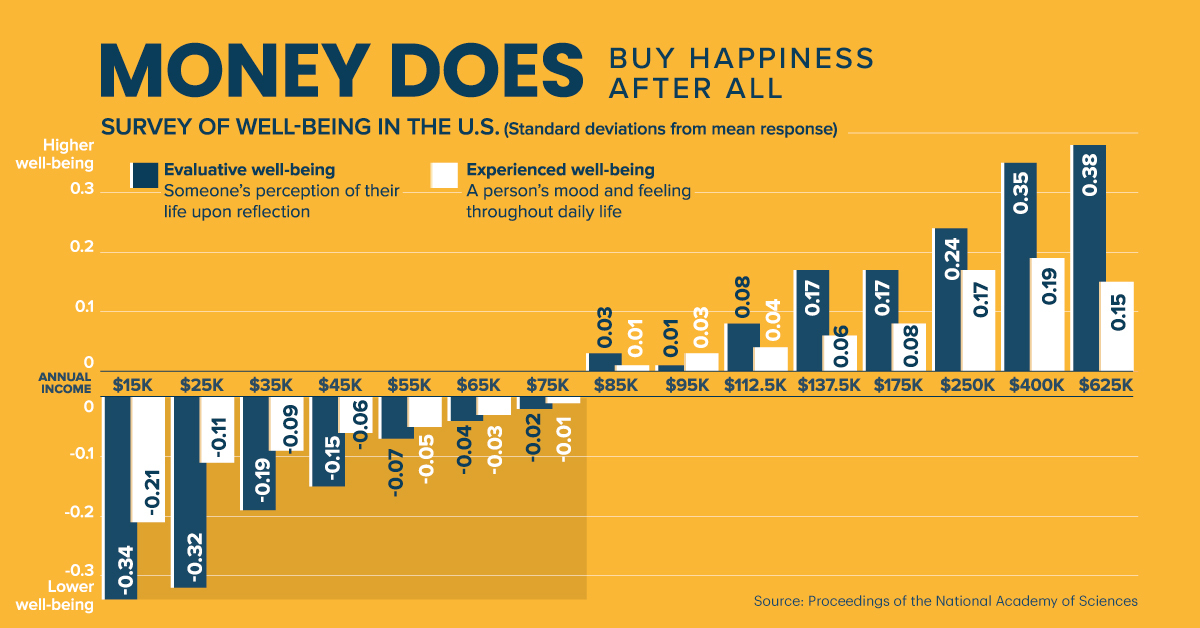
Does Money REALLY Buy Happiness?

Maybe IT CAN

Psychological Considerations

***

Money Can Buy Happiness After All, According to New Study

***

R&D 2010: https://www.pnas.org/content/107/38/16489

R&D 2021: https://www.pnas.org/content/118/4/e2016976118

DEM: https://medicalexecutivepost.com/2020/12/11/the-science-of-happiness/

YOUR THOUGHTS AND COMMENTS ARE APPRECIATED.

Thank You

***

PODCAST: How To Understand U.S. Healthcare?

Follow The Money!

***

***

By Jonathan Burroughs MD MBA

For those seeking to better understand the US healthcare system, national healthcare consultant Dr. Jonathan Burroughs suggests playing a game of “follow the money.” He asserts that whenever healthcare appears illogical, following the money will make it all rational and clear. The U.S. spends 2x as much money as the rest of the industrialized world, yet its citizens do not live as long as they do in 36 other nations. Dr. Burroughs gives an overview on how to fix the system.

Dr. Burroughs has worked with over 1,100 hospitals across the country to help healthcare leaders navigate the 21st century. He is a popular national speaker, who speaks to the impact of healthcare reform on hospitals, physicians and patients. Jonathan is a healthcare legal expert, who has participated in over 65 cases across the country. He is the winner of the James A Hamilton Award in 2016 awarded by the American College of Healthcare Executives titled “Redesign the Medical Staff Model”. This talk was given at a TEDx event using the TED conference format but independently organized by a local community. Learn more at https://www.ted.com/tedx

***

***

COMMENTS APPRECIATED

Thank You

Subscribe to the Medical Executive_Post

***

***

***

***

STO LOT Spring Greetings = Life to 100 Hundred Years?

About Centenarians

***

By Dr. David Edward Marcinko MBA CMP™

SPONSOR: http://www.CertifiedMedicalPlanner.org

***

***

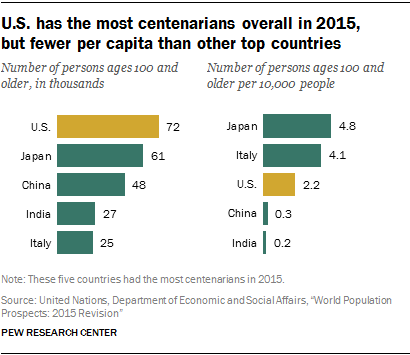
DEFINITION: A centenarian is a person who has reached the age of 100 years. Because life expectancy worldwide are below 100 years, the term is invariably associated with longevity. In 2012, the United Nations estimated that there were 316,600 living centenarians worldwide.

CITE: https://www.r2library.com/Resource/Title/082610254

Sto Lat (One Hundred Years) is a traditional Polish song that is sung to express good wishes, good health and long life to a person. It is also a common way of wishing someone a happy birthday in Polish. Sto lat is used in the Spring, many birthdays and on international days of language.

***

***

What Percentage of the Population Lives to 100?

According to the Social Security Administration, the overall chances of living to 100 aren’t actually that great. And, according to the World Economic Forum, there are over 500,000 centenarians among the 7.9 billion people worldwide. That means that only a 0.006% of the population is 100 or more.

Here are a few additional facts from the most recently available information from the Society of Actuaries and the Social Security Administration:

  • One out of three males and one out of two females who are in their mid-50s today will live to be 90.
  • For a couple who is 65 today, there is a 50% chance that one person will be alive at 92.
  • If you have lived to be 65, you will likely live another 20 years, on average.
  • If you live to be 75, the average life expectancy is 88.
  • If you live to be 85, the average life expectancy is 92.
  • And, if you live to be 95, the average life expectancy is 98.

***

COMMENTS APPRECIATED

Thank You

Subscribe to the Medical Executive-Post

***

***

***

PODCAST: The Dartmouth Atlas of Healthcare

Geographic Variation in Spine Surgery

By Dr. Eric Bricker MD

****

***

MORE: https://www.dartmouthatlas.org/

John Wennberg MD: https://tdi.dartmouth.edu/about/our-people/directory/john-e-wennberg-md-mph

CHECKLISTS: https://medicalexecutivepost.com/2009/01/20/a-homer-simpson-moment-of-clarity-on-medical-quality/

YOUR COMMENTS ARE APPRECIATED.

Thank You

****

***

PODCAST: Matrix of Healthcare Regulation VS Entrepreneurship

By Free Market Medical Association

***

***

CITE: https://www.r2library.com/Resource/Title/082610254

COMMENTS APPRECIATED

Thank You

***

***

***

Form ADV Part II [The Essential Document]

Join Our Mailing List

Lifting the “Veil of Secrecy” on Selecting Financial Advisors

[By Dr. David Edward Marcinko MBA CMP™]

DEM white  shirtBy law, financial advisors must provide you with a form ADV Part II or a brochure that covers the same information. Even if a brochure is provided, ask for the ADV. Today, it may even be online.

While it is acceptable, even desirable, for the brochure to be easier to read than the ADV, the ADV is what is filed with the appropriate state or SEC. If the brochure reads more like a slick sales brochure or the information in the brochure glosses over the items on the ADV to a high degree, one should consider eliminating the advisor from consideration.

Types of Advisors

Registering with a state or SEC gives an advisor a fiduciary duty to the client. This is a high standard under the law. There are several types of advisors who are exempt from registering and filing an ADV.

First, there are registered representatives (brokers).  Brokers have a fiduciary responsibility to their firms regardless of whether they are statutory employees or independent contractors.

Second are attorneys and accountants whose advice is “incidental” to their legal or accounting practices. But, why would one hire someone whose advice is “incidental” to his primary profession?

A top-notch advisor is a full-time professional and should be registered.  One should insist that their advisor be registered.

****

Lifting veil of secrecy

[The Author in Chicago Seeking Fiduciary Transparency]

***

The ADV will describe the advisor’s background and employment history, including any prior disciplinary issues. It will describe the ownership of the firm and outline how the firm and advisor are compensated. Any referral arrangements will be described. If an advisor has an interest in any of the investments to be recommended, it must be listed as well as the fee schedule. There is also a description of the types of investments recommended and the types of research information that is used.

Assessment

A review of the ADV should result in an alignment of what the advisor said during the interview and what is filed with the regulators. If there is a clear discrepancy, choose another advisor. If it is unclear, discuss the issue with the advisor.

  • SEC Headquarters
  • 100 F Street, NE Washington, DC 20549
  • (202) 942-8088

Channel Surfing the ME-P

Have you visited our other topic channels? Established to facilitate idea exchange and link our community together, the value of these topics is dependent upon your input. Please take a minute to visit. And, to prevent that annoying spam, we ask that you register. It is fast, free and secure.

Conclusion

Your thoughts and comments on this ME-P are appreciated. Feel free to review our top-left column, and top-right sidebar materials, links, URLs and related websites, too. Then, subscribe to the ME-P. It is fast, free and secure.

Speaker: If you need a moderator or speaker for an upcoming event, Dr. David E. Marcinko; MBA – Publisher-in-Chief of the Medical Executive-Post – is available for seminar or speaking engagements. Contact: MarcinkoAdvisors@msn.com

OUR OTHER PRINT BOOKS AND RELATED INFORMATION SOURCES:

Comprehensive Financial Planning Strategies for Doctors and Advisors: Best Practices from Leading Consultants and Certified Medical Planners(TM)

PODCAST: Training the Next Generation of Public Health Professionals

By American Journal of Public Health

***

***

DEFINITION: Public health is “the science and art of preventing disease, prolonging life and promoting health through the organized efforts and informed choices of society, organizations, public and private, communities and individuals”.

CITE: https://www.r2library.com/Resource/Title/082610254

CDC: https://www.cdcfoundation.org/what-public-health

PODCASTS: https://www.apha.org/what-is-public-health

***

READ HERE: https://ajph.aphapublications.org/doi/10.2105/AJPH.2022.306756

***

COMMENTS APPRECIATED

Thank You

***

***

***

CELEBRATE: National Public Health Week 2022

By Dr. David Edward Marcinko MBA

***

***

National Public Health Week is observed during the first week of April every year. That’s seven days to champion the health of all Americans. It’s a week to recognize that everyone should lead healthier lives, irrespective of where they live, work, or come from. Since its founding in 1955, the initiative has become an important movement to highlight issues that can improve the health and happiness of a nation. You could choose to crush a workout or any workout challenge today. It’s a great week to start eating healthy and stick to it. Whatever you do, remember to involve your friends, family, and the larger community. It’s also a week when we campaign for health policies that are fair, inclusive, and accessible to all communities in the United States.

CITE: https://www.r2library.com/Resource/Title/082610254

HISTORY

The first National Public Health Week took place in April 1955 and was organized by the American Public Health Association (A.P.H.A.). Since then, the initiative has received tremendous support from civil societies and administrations across the United States. The day recognizes the long history and achievements in public health. It also serves to highlight critical issues to help people lead healthier and happier lives.

In attempting to reach these goals, National Public Health Week seeks to address the root causes of poor health, disease, and lifestyles. It starts with recognizing that healthcare is still a privilege many cannot afford. Where people are born, their neighborhoods, places of work, different lives, and backgrounds determine the quality of healthcare access.

For example, a child who goes to school hungry will not be an engaged student. People working for minimum wages sacrifice health for the sake of an income. It’s thousands of families who have no access to nutritious food in their communities. Or those without the means to travel to access quality healthcare, often located far away.

National Public Health Week is committed to making health inclusive and equitable. It hopes to foster decision-making that considers the health of all communities — irrespective of income, race, or gender. Each year, the first full week in April celebrates the power of the community in realizing this vision. The A.P.H.A. usually announces different themes for each day of the week. From fitness challenges and discussions to sharing healthy recipes — it’s seven days of committing to health as a country.

So, no matter where you are, APHA invites you to join us as we celebrate National Public Health Week! This year’s theme, Public Health Is Where You Are, celebrates what we know is true: The places where we are, physically, mentally and societally, affect our health and our lives.

Celebrate and promote health in your community by hosting your own NPHW event!

***


Here are a few ideas:

  1. Host virtual health panels and discussions. …
  2. Team up to reach new audiences and build community. …
  3. Take advantage of Student Day. …
  4. Organize around the daily themes. …
  5. Make advocacy easy. …
  6. Find movement opportunities.

***

COMMENTS APPRECIATED

Thank You

Subscribe to the Medical Executive-Post

***

****

Do New Socialists Really Want Socialism?

Do New Socialists Really Want Socialism?

By Rick Kahler CFP®

Increasingly in the US, it’s becoming more socially acceptable—perhaps even fashionable—to be anti-wealth and anti-capitalism.

Even identifying as a socialist is no longer the dominion of the far left but is gaining popularity. A number of mainstream politicians, including Presidential candidates, are self-identifying as “socialist.” According to a February 19 article by Mike Allen in Google’s Axios, polling shows younger Americans are souring on capitalism and don’t find the label “socialist” scary or demeaning.

Interestingly, the meanings I see thrown about for socialism and capitalism rarely agree with the traditional definitions.

For example, some self-proclaimed socialists call for higher taxes on the rich, more funding for massive infrastructure improvements, and expanding social welfare programs with proposals like “Medicare for all.” These are not necessarily socialism, but rather an expansion of social programs. There is a difference.

Socialism is an economic system in which the means of production and distribution of goods are owned and controlled collectively or by the government. It is characterized by production for use rather than profit, equality of individual wealth and incomes, the absence of competitive economic activity, and government determination of investment, prices, and production levels.

A truly socialistic economy has no privately owned business. Since all business are government-owned, there is no competitive force serving to improve services or drive down prices. Prices are not set competitively but by government policy. Everyone is economically equal, with no rich or poor. At least in theory.

Embracing increased taxes on fossil fuels and more government spending for health care or green initiatives is not inherently a call for a socialistic economy. It is a call for bigger government and placing more restrictions on free enterprise, which is only a step toward socialism.

For example, the Scandinavian countries have massive social programs. Yet they are not socialistic economies. Their systems allow for free markets and the private ownership of business, meaning their social programs are funded by capitalism and free enterprise.

We have yet to see a society that has successfully tried real socialism. Countries that have attempted it, according to Forbes, are China, Cambodia, Cuba, East Germany, Ethiopia, North Korea, Poland, Romania, the USSR, and Venezuela. Even though many of them have abandoned socialism, the effects are long lasting. Of these countries, according to the Economist, in 2016 Poland had the highest standard of living, ranking at 68 worldwide.

Israeli David Rubin, author of the Trump and the Jews, says in a February Yonkers Tribune article, “I must warn my many American friends to learn some critical lessons from Israel’s socialist past.” He points out that Israel’s founders created a socialist-based economy intended to provide financial security for its new citizens, including millions of refugees. The country struggled with economic stagnation, soaring inflation, low wages, and high prices. In the 1980’s Israel began a shift to free market capitalism, and today its economy is thriving.

***

***

An idea strongly identified with today’s self-identified socialists in the US is the “Green New Deal” resolution which failed to pass in the Senate. In addition to proposals to aggressively reduce greenhouse gas emissions and require the use of renewable energy, it also calls for “guaranteeing a job with a family-sustaining wage, adequate family and medical leave, paid vacations, and retirement security to all people of the United States.”

Assessment

Imposing stringent regulations on property owners and businesses isn’t inherently socialistic, although it would raise prices for everyone, especially the low-income Americans the proposal intends to protect.

However, guaranteeing a lifelong sustainable income for every person in the US, and placing health care under the dominion of the government, does take a giant step toward socialism.

Your thoughts are appreciated

***

Risk Management, Liability Insurance, and Asset Protection Strategies for Doctors and Advisors: Best Practices from Leading Consultants and Certified Medical Planners™8Comprehensive Financial Planning Strategies for Doctors and Advisors: Best Practices from Leading Consultants and Certified Medical Planners™

***

Primary Care in High-Income Countries [How the United States Compares?]

By Staff Reporters

***

***

Commonwealth Fund: % of Adults Who Have Regular Doctors

 •  Norway: 100%
 •  Netherlands: 99%
 •  U.K.: 97%
 •  New Zealand: 96%
 •  Germany: 96%
 •  France: 95%
 •  Australia: 93%
 •  Switzerland: 93%
 •  Canada: 90%
 •  U.S.: 89%
 •  Sweden: 87%

Source: The Commonwealth Fund, “Primary Care in High-Income Countries: How the United States Compares,” March 15, 2022

Citation: https://www.r2library.com/Resource/Title/0826102549

***

COMMENTS APPRECIATED

Thank You

Subscribe to the Medical Executive-Post

***

***

***

***

The ME-P is Seeking Healthcare “Metaverse” Input

By Ann Miller RN MHA

***

***

Facebook’s latest release, Meta, is said to be the next evolution of social connection. A virtual, 3D network that allows connection and collaboration in ways many of us have never even considered! And while many are buzzing over how Meta will shape everything from education to healthcare – we are eager to get your opinion on our own ME-P ecosystem.

Can patients trust Facebook and others again?

Are you interested in exploring a new platform for connection?

Have you subscribed to the ME-P?

We want to hear all about it! We’re actively collaborating to bring your perspectives to the discussion around the Metaverse and the patient, economics, finance and healthcare community.

If you have insights or experiences to share – just comment and/or let us know.

***

THANK YOU

***

***

DOJ Recoveries for False Claims Act Cases Doubled in 2021

BY HEALTH CAPITAL CONSULTANTS, LLC.

DEFINITION: The False Claims Act, also called the “Lincoln Law”, is an American federal law that imposes liability on persons and companies who defraud governmental programs. It is the federal Government’s primary litigation tool in combating fraud against the Government. The law includes a provision that allows people who are not affiliated with the government, called “relators” under the law, to file actions on behalf of the government. Persons filing under the Act stand to receive a portion of any recovered damages.

CITE: https://www.r2library.com/Resource/Title/0826102549

***

DOJ Recoveries for False Claims Act Cases Doubled in 2021

On February 1, 2022, the U.S. Department of Justice (DOJ) announced their recovery of $5.6 billion in settlements and judgments from civil cases involving fraud and false claims for fiscal year (FY) 2021. Over $5 billion was recouped from the healthcare industry for federal losses alone, and included recoveries from drug and medical device manufacturers, managed care providers, hospitals, pharmacies, hospice organizations, laboratories, and physicians.

***

This figure is more than double the amount of healthcare-related recoveries secured in FY 2020, which totaled $1.8 billion. (Read more…)

***

***

***

COMMENTS APPRECIATED

Thank You

Subscribe to the Medical Executive-Post

***

UPDATE: The SAFE Banking Act

By Staff Reporters

***

***

The SAFE Banking Act: Would allow marijuana [pot] shops to convert from cash transactions to digital exchanges potentially reducing the amount of armed robberies.

LINK: https://www.congress.gov/bill/117th-congress/house-bill/1996

***

COMMENTS APPRECIATED

Thank You

Subscribe to the Medical Executive-Post

***

***

PODCAST: The Healthcare Price versus Quality Disconnect

By Dr. Eric Bricker MD

***

***

COMMENTS APPRECIATED

Thank You

Subscribe to the Medical Executive-Post

***

CITATION: https://www.r2library.com/Resource/Title/0826102549

***

***

***