COMPUTING: Intel, Amazon and Microsoft

By Staff Reporters

***

***

Intel revealed that its semiconductor-making unit lost $7 billion last year. The news sent the company’s stock down.

And, Amazon is laying off hundreds of employees from its cloud computing division, including the team overseeing its cashierless tech (and not just the Just Walk Out feature it’s pulling from stores), as well as people sales and marketing roles.

Finally, Microsoft and Quantinuum said they’ve had a major quantum computing breakthrough.

COMMENTS APPRECIATED

Subscribe Today

***

***

DAILY UPDATE: The “Lipstick Index” and Stock Market Crash

By Staff Reporters

***

***

Ulta and other major beauty companies that thrived during the past few years of economic instability provided good fodder for the “lipstick index”—a duct-tape economic measure that assumes people still buy small indulgences (like lipstick) during tough times, keeping the beauty industry recession-proof.

However…it’s not. Ulta’s full-year sales growth target is just 4% to 5%, which falls below Wall Street’s estimates, and Estée Lauder announced in February it was laying off 3% to 5% of its workforce after some difficult months.

And, other consumer goods powerhouses are bracing for a slowdown, too. The parent company of Calvin Klein and Tommy Hilfiger said this week that it’s preparing for a 6% to 7% revenue drop this year.

***

MORE: https://medicalexecutivepost.com/2023/09/23/economic-indicators-lipstick-index-and-cosmetic-others/

***

Here’s where the major benchmarks ended:

  • The S&P 500 index dropped 64.28 points (1.2%) to 5,147.21; the Dow Jones Industrial Average® ($DJI) tumbled 530.16 points (1.4%) to 38,596.98; the NASDAQ Composite® ($COMP) sank 228.38 points (1.4%) to 16,049.08.
  • The 10-year Treasury note yield (TNX) fell more than 5 basis points to 4.303.%.
  • The CBOE Volatility Index® (VIX) surged 2.07 to 16.39.

Semiconductors were among Thursday’s weakest performers as a drop of more than 8% in Advanced Micro Devices (AMD) helped send the Philadelphia Semiconductor Index (SOX) down 3% to a two-week low. Retail shares were also soft. WTI Crude Oil futures rose for the sixth consecutive day and topped $87 per barrel, marking a gain of 4.3% so far this week. Volatility based on the VIX ended at its highest level since early November. Brent Crude Oil (/BZ) futures, the global benchmark, topped $90 for the first time since October.

CITE: https://www.r2library.com/Resource

COMMENTS APPRECIATED

Thank You

***

***

DAILY UPDATE: Iger Survives as Ulta Beauty and Stock Markets Stall

By Staff Reporters

***

***

Ulta Beauty plunged after its CEO revealed that, despite the resilience of the beauty category, sales have slowed.

And, Walt Disney’s current rulers will continue to oversee the kingdom. The company’s board, helmed by CEO Bob Iger, defeated activist investors and Nelson Peltz who had hoped to replace current board members and steer the company in a new direction.

Here’s where the major benchmarks ended:

  • The S&P 500 index rose 5.68 points (0.1%) to 5,211.49; the Dow Jones Industrial Average lost 43.10 points (0.1%) to 39,127.14; the NASDAQ Composite® ($COMP) added 37.01 points (0.2%) to 16,277.46.
  • The 10-year Treasury note yield fell more than 1 basis point to 4.351%.
  • The CBOE Volatility Index® (VIX) declined 0.28 to 14.33.

Energy shares remained one of the market’s strongest performers behind strength in WTI Crude Oil (/CL) futures, which rose a fifth consecutive day and ended above $85 per barrel, the highest since October. The Philadelphia Oil Service Index (OSX) jumped1.6%, extending its year-to-date gain to almost 14%. 

CITE: https://www.r2library.com/Resource

COMMENTS APPRECIATED

Thank You

***

***

DAILY UPDATE: Medicare Advantage Plans Down as Stocks Crash

By Staff Reporters

***

Medicare Part C papers, glasses and stethoscope.

***

Humana and other managed-care stocks were down sharply in trading Tuesday after the Centers for Medicare and Medicaid Services announced an average 3.7% increase in revenue for Medicare Advantage plans in 2025. That amount is the same as the proposed increase the government had announced in January, but it came as a shock to investors who were hoping for a slight bump.

Humana  (HUM)  shares fell sharply in early Tuesday trading, while rivals UnitedHealth UNH and CVS Health  (CVS)  traded firmly in the red, as the health insurance industry received yet another blow to its 2024 profit forecasts. All three major health insurance groups have trailed the broader market this year, with Humana down nearly 25%, amid concern that profit margins will be hit by a surge in medical costs tied to a rise in elective procedures. Those procedures had been delayed by the Covid pandemic. 

CITE: https://www.r2library.com/Resource

Here’s where the major benchmarks ended:

  • The S&P 500 index fell 37.96 points (0.7%) to 5,205.81; the Dow Jones Industrial Average lost 396.61 points (1.0%) to 39,170.24; the NASDAQ Composite slipped 156.38 points (1.0%) to 16,240.45.
  • The 10-year Treasury note yield was up almost 3 basis points to 4.357%.
  • The CBOE Volatility Index® (VIX) rose 0.96 to 14.61.

Retailer, biotechnology, and regional bank shares were among the weakest performers Tuesday, leading a broad market slump in which declining stocks outnumber advancers by a greater than three-to-one ratio. The small-cap Russell 2000® Index (RUT) lost 1.8% and settled at a two-week low. 

Energy companies, by contrast, extended recent strength behind an ongoing climb in WTI Crude Oil (/CL) futures, which surpassed $85 per barrel for the first time since late October. The Philadelphia Oil Service Index (OSX) advanced 2.1% and ended at a 5-½-month high. Oil prices have surged this year due to OPEC production cuts and concern over supply disruptions stemming from the Middle East conflict.

COMMENTS APPRECIATED

Thank You

***

***

DAILY UPDATE: Truth Social and Weak Stock Markets

By Staff Reporters

***

***

Quote: “This is a very unusual situation. The stock is pretty much divorced from fundamentals.”Jay Ritter, finance professor and IPO expert at the University of Florida, on the surging value of the newly public Trump Media. Truth Social, its only active product, has been shedding both users and cash. (CNN)

Shares of Truth Social owner Trump Media & Technology Group plunged Monday after the company disclosed that it lost more than $58 million and generated very little revenue in 2023. Former President Donald Trump is the company’s majority shareholder, and his net worth tumbled by more than $1 billion Monday as a result.

CITE: https://www.r2library.com/Resource

Here’s where the major benchmarks ended:

Stocks started Q2 off soft yesterday, as investors continued to fret about inflation. Stock spotlight: Trump Media, the newly public company that owns Truth Social, plunged yesterday after revealing that it lost $58 million last year, generated just $4.1 million in revenue, and had 10 times fewer users than Threads.

  • The S&P 500 index fell 10.58 points (0.2%) to 5,243.77; the Dow Jones Industrial Average® ($DJI) shed 240.52 points (0.6%) to 39,566.85; the NASDAQ Composite® ($COMP) added 17.37 points (0.1%) to 16,396.83.
  • The 10-year Treasury note yield jumped 13 basis points to 4.323%.
  • The CBOE Volatility Index® (VIX) rose 0.64 to 13.65.

Banks were among the market’s weakest performers Monday, likely reflecting concern that elevated interest rates could pinch margins. The KBW Regional Bank Index (KRX) sank 2% after ending at a two-month high last week. The small-cap Russell 2000® Index (RUT) was also soft, dropping 1% after closing at a two-year high last week. 

Communication services and semiconductor shares turned in strong performances, as did energy, lifted by WTI Crude Oil (/CL) futures’ extending a rally to its highest level since late October. WTI Crude Oil is up almost 18% so far this year amid concern over supply disruptions stemming from the Russia-Ukraine war and Middle East conflict.

In other markets, the U.S. dollar index ($DXY) strengthened for the fourth straight day and reached its highest point since mid-November behind expectations the Fed will keep interest rates high.

COMMENTS APPRECIATED

Thank You

***

***

DAILY UPDATE: March Round-Up as Stocks End their Best First Quarter in Five Years

By Staff Reporters

APRIL FOOL’S DAY

April Fools’ Day customs date back to at least Renaissance Europe, but it’s likely the tradition originated long before then. Some historians have linked April Fools’ Day to the ancient Roman festival of “Hilaria,” where at the end of March, people would come together to commemorate the resurrection of the god Attis. It was a celebration of renewal in which revelers would dress up in disguises and imitate others.

It’s also possible that the medieval celebration of the Feast of Fools, where a mock bishop or pope was elected and church customs were parodied, could have inspired the day.

***

***

Stocks had their best Q1 in five years. The S&P 500 ended Thursday—the last trading day of the quarter—up by more than 10%, marking its best start to a year since 2019.

The AI craze, record corporate profits, and optimism around cooling inflation are all contributing to the stock boom. The economy got more good news yesterday when the Stocks had their best Q1 in five years reported that several key gauges, including GDP and consumer spending, grew in Q4 of last year.

And, that’s not all: Home sales bounced back after a January slump, jobless claims fell, and advertisers raised their full-year forecast. Consumer sentiment is now at its highest level since 2021.

CITE: https://www.r2library.com/Resource

COMMENTS APPRECIATED

Thank You

***

***

2024: Easter Sunday Gasoline Pump!

HAPPY EASTER SUNDAY 2024

This ME-P was originally posted in 2014 and updated annually since then.

The median U.S. gas price is $3.49 per gallon, unchanged from last week and about 29 cents lower than the national average. The top 10% of stations in the country average $6.09 per gallon, while the bottom 10% average $2.92 per gallon. The states with the lowest average prices: Mississippi ($3.02), Louisiana ($3.06) and Texas ($3.06).

***

Conclusion

And so, your thoughts and comments on this ME-P are appreciated. Please review our top-left column, and top-right sidebar materials, links, URLs and related websites, too. Then, subscribe to the ME-P. It is fast, free and secure.

Speaker: If you need a moderator or speaker for an upcoming event, Dr. David E. Marcinko; MBA – Publisher-in-Chief of the Medical Executive-Post – is available for seminar or speaking engagements. Contact: MarcinkoAdvisors@msn.com

OUR OTHER PRINT BOOKS AND RELATED INFORMATION SOURCES:

Sponsors Welcomed: Credible sponsors and like-minded advertisers are always welcomed.

Link: https://healthcarefinancials.wordpress.com/2007/11/11/advertise

Product Details  Product Details

***

DAILY UPDATE: Good Friday’s Impressive First Quarter Stock Market Returns

By Staff Reporters

***

***

The stock market will be closed Friday, March 29th, for Good Friday. While Good Friday is a stock market holiday, it is not a federal holiday. As a result, the February Personal Consumption and Expenditures (PCE) Price Index will be released this Friday morning.

Yesterday, on the final trading session of March and the first quarter, the returns for major stock indexes are impressive, with the Dow Jones Industrial Average up 5% this quarter or 2,000 points and the S&P 500 and the tech-heavy NASDAQ up 11% apiece. Stock superlatives for 2024’s opening stretch are numerous, including each of the three indexes setting respective all-time highs and the benchmark S&P heading toward its best first-quarter return since 2019 and its second consecutive quarter of double-digit percentage gains since 2011-12.

CITE: https://www.r2library.com/Resource

Here’s where the major benchmarks ended Thursday:

  • The S&P 500 index added 5.86 points (0.1%) to 5,254.35, up 0.4% for the week; the Dow Jones Industrial Average climbed 47.29 points (0.1%) to 39,807.37, up 0.8% for the week; the NASDAQ Composite lost 20.06 points (0.1%) to 16,379.46, down 0.3% for the week. 
  • The 10-year Treasury note yield rose one basis point to just under 4.21%.
  • The CBOE Volatility Index® (VIX) rose 0.22 to 13.00.

For the month, the S&P 500 index gained 3.1%, the Dow Jones Industrial Average rose 2.1%, and the NASDAQ Composite added 1.8%. For the quarter, the three indexes rose 10.3%, 5.6%, and 9.2%, respectively.

COMMENTS APPRECIATED

Thank You

***

***

RIP: Daniel Kahneman PHD

NOBEL PRIZE WINNER AND FATHER OF BEHAVIORAL ECONOMICS

By Staff Reporters

DEFINITION: According to Wikipedia, behavioral economics is the study of the psychological, cognitive, emotional, cultural and social factors involved in the decisions of individuals or institutions, and how these decisions deviate from those implied by classical economic theory.

Behavioral economics is primarily concerned with the bounds of rationality of economic agents. Behavioral models typically integrate insights from psychology, neuroscience and microeconomic theory. The study of behavioral economics includes how market decisions are made and the mechanisms that drive public opinion.

Behavioral economics began as a distinct field of study in the 1970s and ’80s, but can be traced back to 18th-century economists, such as Adam Smith, who deliberated how the economic behavior of individuals could be influenced by their desires.

The status of behavioral economics as a subfield of economics is a fairly recent development; the breakthroughs that laid the foundation for it were published through the last three decades of the 20th century. Behavioral economics is still growing as a field, being used increasingly in research and in teaching.

***

***

Daniel Kahneman PhD, the father of behavioral economics, died yesterday at age 90 years old. He’s best known for applying psychology to economics and uncovering biases and mental shortcuts that make people act irrationally, as he chronicled in his best-selling book Thinking, Fast and Slow.

Kahneman, along with his long-time collaborator and friend Amos Tversky PhD, developed “prospect theory,” or loss-aversion theory, which earned him the Nobel Prize in Economics in 2002 (which he shared with fellow economist Vernon Smith). The idea is that people value losses and gains differently, so we feel more bad about losing $100 than we feel good about making the same amount. He applied this theory to investors, who had previously been considered rational decision-makers. It shows up elsewhere, too—for example, golfers putt better when they’re facing the loss of a stroke than when they might gain one.

Two other biases he identified include:

  • The “peak-end rule” that people remember an experience primarily based on how they felt at its most intense moment and the final part of it. It’s why you consider a whole vacation good if the last day was good—or the opposite.
  • The conjunction fallacy where people erroneously think the probability of two things being true is more likely than just one thing, which the famous “Linda the Bank Teller” problem illustrates.

COMMENTS APPRECIATED

Thank You

***

***

***

DAILY UPDATE: Independent Pharmacies Struggle as Stocks Hit New Highs

By Staff Reporters

***

***

Independent pharmacies have struggled in recent years to stay open—and new financial constraints may mean a record number of pharmacy closures in 2024. And, nearly a third of independent pharmacies are at risk of going out of business due in part to a new rule from the Centers for Medicare and Medicaid Services (CMS) that results in lower prescription reimbursements, according to the National Community Pharmacists Association (NCPA), a trade group that represents more than 19,400 US pharmacies.

“This is an emergency,” NCPA CEO B. Douglas Hoey said in a statement. “If Congress fails to act again, thousands of local pharmacies could be closed within months and millions of patients could be stranded without a pharmacy.” The CMS rule, which went into effect on January 1st, requires payers and pharmacy benefit managers (PBMs) to apply what’s called direct and indirect remuneration (DIR) fees at the time a patient picks up a prescription.

CITE: https://www.r2library.com/Resource

Here’s where the major benchmarks ended:

  • The S&P 500 index added 44.91 points (0.9%) to 5,248.49; the Dow Jones Industrial Average climbed 477.75 points (1.2%) to 39,760.08; the NASDAQ Composite added 83.82 points (0.5%) to 16,399.52. 
  • The 10-year Treasury note yield fell four basis points to just under 4.2%.
  • The CBOE Volatility Index® (VIX) dropped 0.48 to 12.76.

In addition to utility stocks, real estate, industrials, and materials were the strongest sectors. Information technology and communications were the weakest but found late-day strength to finish higher.

COMMENTS APPRECIATED

Thank You

***

***

DAILY UPDATE: “Digital Markets Act” Violations as Stocks Slide

By Staff Reporters

***

***

The European Union is investigating Meta, Apple, and Alphabet for potential violations of its Digital Markets Act. And its regulators have started looking into Amazon as well.

The Digital Markets Act is the EU’s law to make the markets in the digital sector fairer and more contestable. In order to do so, the Digital Markets Act (“DMA”) establishes a set of clearly defined objective criteria to identify “gatekeepers”.

And, stocks were headed for a great Tuesday before investors sent stock indexes back down and leaving the Dow largely unchanged. Meanwhile, Donald Trump’s social media company, Truth Social, surged 16% in its first day of trading, just as the former president must pay $175 million as part of his civil fraud trial.

Here’s where the major benchmarks ended:

  • The S&P 500 index lost 14.61 points (0.3%) to 5,203.58; the Dow Jones Industrial Average dropped 31.31 points (0.1%) to 39,282.33; the NASDAQ Composite tumbled 68.76 points (0.4%) to 16,315.70. 
  • The 10-year Treasury note yield (TNX) fell two basis points to 4.23%.
  • The CBOE Volatility Index edged up 0.05 to 13.24.

In terms of sector performance, utilities, information technology, and energy were the weakest. Health care and financials saw relative strength.

CITE: https://www.r2library.com/Resource

COMMENTS APPRECIATED

Thank You

***

***

A-POLITICAL: Investing SPAC Initial Public Offering of DJT Stock

By Staff Reporters

***

***

Markets: The stock market kicked off its short trading week down as some investors questioned the enthusiasm around the Fed’s recent assurances that it’s still planning three rate cuts this year.

But Digital World Acquisition Corporation roared as the shell company that’s merging with Donald Trump’s Truth Social and will begin trading under its new ticker, DJT, today.

Digital World Acquisition Corp. (Nasdaq: DWAC) is a special purpose acquisition company formed for the purpose of effecting a merger, capital stock exchange, asset acquisition, stock purchase, reorganization or similar business combination with one or more businesses.

SPACS: https://medicalexecutivepost.com/2022/06/13/spac-v-direct-listing-v-ipo/

And, it popped after Trump got good news from a New York appeals court.

CITE: https://www.r2library.com/Resource/Title/082610254

COMMENTS APPRECIATED

***

***

DAILY UPDATE: Nurses Strike as Stocks Decline

By Staff Reporters

***

***

About 1,300 nurses at Staten Island University Hospital (SIUH) will strike on April 2nd if contract negotiations fail, the New York State Nurses Association (NYSNA) announced Thursday. The union, which represents about 42,000 nurses across the state, is looking for higher wages and improved nurse-to-patient ratios for their members—sticking points for Northwell Health, according to NYSNA.

AI RN Replacements: https://gizmodo.com/nvidia-wants-replace-nurses-with-ai-1851347917?utm_campaign=hcb&utm_medium=newsletter&utm_source=morning_brew

CITE: https://www.r2library.com/Resource

Here’s where the major benchmarks ended:

  • The S&P 500 index sank 15.99 points (0.3%) to 5,218.19; the Dow Jones Industrial Average dropped 162.26 points (0.4%) to 39,313.64; the NASDAQ Composite lost 44.35 points (0.3%) to 16,384.47. 
  • The 10-year Treasury note yield (TNX) rose three basis points to 4.25% after a four-day retreat.
  • The CBOE Volatility Index® (VIX) edged up 0.14 to 13.20.

The energy sector followed crude oil prices and was the strongest sector Monday. Utilities and materials also saw strength. Weakest sectors included industrials, information technology, and real estate.

COMMENTS APPRECIATED

Thank You

***

***

DAILY UPDATE: Wingstop and the Markets

By Staff Reporters

***

***

Investors hope this week on Wall Street will be as enjoyable as the last, when stocks raced higher after Fed Chair Jerome Powell previewed a series of rate cuts. Wingstop stock has surged more than 380% in the last five years.

CITE: https://www.r2library.com/Resource

Here’s where the major benchmarks ended last week:

  • The S&P 500 index sank 7.35 points (0.1%) to 5,234.18, up 2.3% for the week; the Dow Jones Industrial Average dropped 305.47 points (0.8%) to 39,475.90, up 2% for the week; the NASDAQ Composite rose 26.98 points (0.2%) to 16,428.82, up 2.9% for the week. 
  • The 10-year Treasury note yield dipped five basis points to 4.22%, down nearly nine basis points for the week.
  • The CBOE Volatility Index edged up 0.14 to 13.06, falling 1.34 points for the week.

COMMENTS APPRECIATED

Thank You

***

***

DAILY UPDATE: Weak Sock Markets Following a Good Week

By Staff Reporters

***

***

Investors slowed their roll yesterday but the Dow still pulled off its best week of the year. Lululemon reported a disappointing forecast and slowing US sales growth. The athleisure company suffered its worst day since March 2020.

Here’s where the major benchmarks ended:

  • The S&P 500 index sank 7.35 points (0.1%) to 5,234.18, up 2.3% for the week; the Dow Jones Industrial Average dropped 305.47 points (0.8%) to 39,475.90, up 2% for the week; the NASDAQ Composite rose 26.98 points (0.2%) to 16,428.82, up 2.9% for the week. 
  • The 10-year Treasury note yield dipped five basis points to 4.22%, down nearly nine basis points for the week.
  • The CBOE Volatility Index edged up 0.14 to 13.06, falling 1.34 points for the week.

Utilities, information technology, and communication services were among the strongest sectors. Real estate and financials saw relative weakness Friday.

CITE: https://www.r2library.com/Resource

COMMENTS APPRECIATED

Thank You

***

***

DAILY UPDATE: Apple Down but Stocks Gain

By Staff Reporters

***

***

Stocks soared again on Thursday, pushing the major indexes to new records as tech companies over performed and investors hung onto the good vibes from this week’s Fed meeting. It was a scintillating debut for Reddit, which rocketed nearly 50% in its first day as a public company.

Here’s where the major benchmarks ended:

  • The S&P 500 index added 16.91 points (0.3%) to 5,241.53; the Dow Jones Industrial Average surged 269.24 points (0.7%) to 39,781.37; the NASDAQ Composite rose 32.43 points (0.2%) to 16,401.84. 
  • The 10-year Treasury note yield (TNX) was flat at 4.27%.
  • The CBOE Volatility Index® (VIX) dropped 0.11 to 12.93.

Industrials, financials, and energy stocks were among the strongest sectors. Utilities and communication services finished modestly lower.

Apple (AAPL) was the biggest loser in the Dow Jones Industrial Average, falling 4.1% on reports the Justice Department filed an antitrust lawsuit against the company. Other widely held stocks were mostly higher: Microsoft (MSFT) added 1%, Meta Platforms (META) gained 0.4%, and Amazon (AMZN) was unchanged on the day.

CITE: https://www.r2library.com/Resource

COMMENTS APPRECIATED

Thank You

***

***

DAILY UPDATE: Kroger Selling Pharma Business as Nvidia and Stock Markets Rise

By Staff Reporters

CHERRY BLOSSOM FESTIVAL, DC.

***

***

KROGER, the supermarket chain said it expects to close the sale of its specialty pharmacy business during the second half of 2024. Kroger said it is planning to sell its speciality pharmacy business to pharmacy benefit manager CarelonRx, a subsidiary of Elevance Health, the company just reported.

CITE: https://www.r2library.com/Resource

***

Nvidia continues its bid for world domination with the announcement of its new B200 “Blackwell” chip. The Blackwell is 2.5 times more powerful than the “Hopper” chip which helped it become a $2 trillion company. (Bloomberg)

Here’s where the major benchmarks ended:

  • The S&P 500 index added 46.11 points (0.9%) to 5,224.62; the Dow Jones Industrial Average gained 401.37 points (1%) to 39,512.13; the NASDAQ Composite rose 202.62 points (1.3%) to 16,369.41. 
  • The 10-year Treasury note yield slid two basis points to 4.27%.
  • The CBOE Volatility Index®(VIX) fell 0.77 to 13.06.
     

Health care was the biggest loser among the S&P 500 sectors. Energy was also lower after crude oil prices sank on the heels of weekly inventory data. Brent Crude Oil (/BZ) futures, the global benchmark, dropped 1.6% on the heels of five days of gains.

COMMENTS APPRECIATED

Thank You

***

***

DAILY UPDATE: Medicare Payment Policy and Inflation as the Stock Markets Gain

By Staff Reporters

***

***

MEDICARE: https://www.medpac.gov/wp-content/uploads/2024/03/Mar24_MedPAC_Report_To_Congress_SEC.pdf

The producer price index (PPI) rose 0.6% for the month, according to the Bureau of Labor Statisticsdouble the Dow Jones estimate, CNBC reported. February’s larger-than-expected PPI uptick follows a more modest 0.3% increase in January and a 0.1% decline in December. On an annual basis, the PPI increased 1.6%, “the largest rise since moving up 1.8% for the 12 months ended September 2023,” according to the BLS.

CITE: https://www.r2library.com/Resource

Here’s where the major benchmarks ended:

The market had a good Tuesday, with stocks climbing as investors await word from the Fed meeting today on any changes to interest rates. The bank is expected to keep rates the same for now, but could signal when (or how often) it’ll lower them later in the year. Meanwhile, Nordstrom shares surged following a report that the retailer’s founding family wants to take it private.
 

  • The S&P 500 index added 29.09 points (0.6%) to 5,178.51; the Dow Jones Industrial Average® ($DJI) gained 320.33 points (0.8%) to 39,110.76; the NASDAQ Composite® ($COMP) rose 63.34 points (0.40%) to 16,166.79.
  • The 10-year Treasury note yield (TNX) eased four basis points to just under 4.3%.
  • The CBOE Volatility Index® (VIX) lost 0.50 to 13.83. 

The energy sector was the top performer after crude oil prices notched multi-month highs ahead of weekly inventory data from the American Petroleum Institute. After a 2% rally to start the trading week, Brent Crude Oil (/BZ) futures, the global benchmark, added another 0.6% Tuesday.

Industrials, consumer discretionary, and utilities were among the other strong sectors. Communications, real estate, and materials finished modestly lower.

COMMENTS APPRECIATED

Thank You

***

***

DAILY UPDATE: Stock Markets Up Before FOMC Meeting

By Staff Reporters

***

***

Stocks started the week off strong yesterday as tech companies rose. Chipotle, Progressive, and more hit all-time highs. Tesla got a boost after announcing higher prices for its Model Y in the US and parts of Europe.

Here’s where major benchmarks ended yesterday:

  • The S&P 500 index rose 32 points (0.6%) to 5,149.42; the Dow Jones Industrial Average ($DJI) gained 75.66 points (0.2%) to 38,790.43; the NASDAQ Composite jumped 130.27 points (0.8%) to 16,103.45. 
  • The 10-year Treasury note yield rose nearly four basis points to 4.34%. 
  • The CBOE Volatility Index® (VIX) dipped 0.08 to 14.33.

All but two S&P 500 sectors finished in the green, with communications, information technology, consumer discretionary, and consumer staples leading the advance. Health care and real estate finished modestly lower.

Crude oil prices rose to multi-month highs on the heels of stronger-than-expected industrial production data from China and concerns over potential supply disruptions.

According to Reuters, a Ukrainian strike sparked a fire at the Slavyansk refinery in Krasnodar on Saturday and ongoing attacks have now idled around 7% of Russia’s refining capacity so far this year. Brent Crude Oil (/BZ) futures, the global benchmark, gained 2% Monday.

CITE: https://www.r2library.com/Resource

COMMENTS APPRECIATED

Thank You

***

***

DAILY UPDATE: Salesforce Health Care AI and the National Association of Realtors Rebuke

By Staff Reporters

***

Salesforce just announced new AI solutions for health-care workers that could help automate some of the manual administrative tasks that are driving physician burnout. READ MORE

***

***

***

On Friday, National Association of Realtors (NAR) agreed to pay $418 million over the next four years to settle several lawsuits alleging it artificially inflated realtor commissions. Included in the deal is a policy change that will likely obliterate agents’ 5%–6% commissions.

CITE: https://www.r2library.com/Resource

***

***

COMMENTS APPRECIATED

Thank You

***

***

DAILY UPDATE: Reddit IPO

By Staff Reporters

***

***

Stat: $748 million. That’s how much Reddit plans to raise ahead of its upcoming IPO, where the company is seeking an approximate $6.5 billion valuation. After a couple of rocky IPO years, investors have been hotly anticipating Reddit’s IPO, which would mark the first social media IPO since Pinterest’s in 2019.(CNBC)

But, The FTC is investigating Reddit’s policies of licensing data for training AI, the company said Friday as it gears up for an IPO.

CITE: https://www.r2library.com/Resource

COMMENTS APPRECIATED

Thank You

HAPPY ST. URHO’S DAY

***

***

DAILY UPDATE: Stocks Slide

By Staff Reporters

***

***

Stocks fell yesterday after this week’s inflation data made investors worried about high prices. Tech companies took a hosing, especially Adobe, which dropped after releasing a weak sales forecast.

Here’s where the major benchmarks ended:

  • The S&P 500 index fell 33.39 points (0.7%) to 5,117.09, down 0.1% for the week; the Dow Jones Industrial Average lost 190.89 points (0.5%) to 38,714.77, down 0.02% for the week; the NASDAQ Composite fell 155.36 points (1.0%) to 15,973.17, down 0.7% for the week.
  • The 10-year Treasury note yield (TNX) rose about 1 basis point to 4.308%.
  • The CBOE Volatility Index® (VIX) rose 0.01 to 14.41.

Tech weakness sent the NASDAQ-100® (NDX), which includes the NASDAQ’s biggest non-financial companies, down 1.2% to its lowest level in over three weeks. The small-cap-focused Russell 2000® Index (RUT) bounced Friday but still ended the week with a 2.1% loss, breaking a two-week winning streak. Energy companies extended a recent rally behind climbing crude oil prices, pushing the Philadelphia Oil Services Index (OSX) up almost 5% for the week to its highest level since early November. 

In other markets, the U.S. dollar strengthened behind expectations the Fed will keep interest rates high. The U.S. dollar index ($DXY) posted a gain of 0.7% for the week.

CITE: https://www.r2library.com/Resource

COMMENTS APPRECIATED

Thank You

***

***

DAILY UPDATE: The Ides of March as Stock Markets Slide

By Staff Reporters

***

***

Stocks fell yesterday after another round of hotter-than-expected inflation data chilled investors. But it was a tremendous Thursday for sporting goods store Dick’s, as it soared 15% after posting its largest sales quarter in history in Q4, thanks in part to consumers buying more expensive items.

Here’s where the major stock benchmarks ended:

  • The S&P 500 index fell 14.83 points (0.3%) to 5,150.48; the Dow Jones Industrial Average® ($DJI) declined 137.66 points (0.4%) to 38,905.66; the NASDAQ Composite shed 49.24 points (0.3%) to 16,128.53.
  • The 10-year Treasury note yield (TNX) rose about 10 basis points to 4.292%.
  • The CBOE Volatility Index® (VIX) rose 0.65 to 14.40.

Technology shares remained under pressure, as a pullback in Nvidia (NVDA) and other chip makers sent the Philadelphia Semiconductor Index (SOX) down almost 2% to its lowest close of the month. Nvidia fell 3.2% Thursday and has dropped nearly 10% from a record intraday high of $974 last Friday. Banks and small-cap stocks were also among the market’s weakest performers.

“Tech shares appear to be going through a corrective phase following last Friday’s key reversal day in Nvidia. The question remains whether a potential correction in tech will spill over into the broader market or whether money will rotate into other areas of the market.”

In other markets, WTI crude oil futures (/CL) extended this week’s rally with a gain of 1.7% and ended slightly above $81 per barrel, its highest level since early November. Oil’s strength has been driven by an unexpected drop in U.S. inventories and concerns over supply disruptions after Ukrainian strikes on oil refineries in Russia.

CITE: https://www.r2library.com/Resource

COMMENTS APPRECIATED

Thank You

***

***

DAILY UPDATE: Warm Inflation Mixes Stocks

By Staff Reporters

***

***

DEFINITION: Creeping, or mild, inflation occurs when prices rise slowly. According to the Federal Reserve, when prices increase by 2% or less, it benefits economic growth. This kind of mild inflation makes consumers expect that prices will keep going up, which boosts demand.

And so, inflation was a bit warmer last month as consumer prices rose 3.2% in February, the Labor Department just reported, up from the 3.1% that economists expected. That marks the second straight month that inflation came in higher than forecast. The data reinforces the Fed’s position to wait until inflation is tamed before cutting interest rates. Still, the central bank is widely expected to cut rates sometime later this year despite yesterday’s less-than-ideal report. It will meet next week to continue deliberations on a potential rate reduction.

CITE: https://www.r2library.com/Resource

Here’s where the major benchmarks ended:

  • The S&P 500® index (SPX) fell 9.96 points (0.2%) to 5,165.31; the Dow Jones Industrial Average gained 37.83 points (0.1%) to 39,043.32; the NASDAQ Composite® (COMP) declined 87.87 points (0.5%) to 16,177.77.
  • The 10-year Treasury note yield (TNX) rose almost 4 basis points to 4.192%.
  • The CBOE Volatility Index® (VIX) fell slightly to 13.75. 

Energy shares were among the market’s strongest performers Wednesday behind gains in crude oil prices. Brent crude futures (/BZ), the global benchmark, rose above $84 to end at their highest level since early November after Ukrainian strikes on oil refineries in Russia stirred concern over supply disruptions. The S&P Energy Index ($SP500#10) jumped 1.5% and reached its highest level since late October, while the S&P 500 Materials Index ($SP500#15) rose almost 1% and ended at a record high.

COMMENTS APPRECIATED

Thank You

***

***

DAILY UPDATE: Boeing Down as Stocks End Mixed

By Staff Reporters

***

***

Stocks were mixed yesterday as investors looked ahead to what today’s government inflation data will bring. Boeing took a dive and the stock is down 24% this year.

Here’s where the major benchmarks ended:

  • The S&P 500® index (SPX) fell 5.75 points (0.1%) to 5,117.94; the Dow Jones Industrial Average® ($DJI) gained 46.97 points (0.1%) to 38,769.66; the NASDAQ Composite® (COMP) declined 65.84 points (0.4%) to 16,019.27.
  • The 10-year Treasury note yield (TNX) was up almost 1 basis point to 4.096%.
  • The CBOE Volatility Index® (VIX) rose 0.45 to 15.19. 

Chip maker weakness sent the Philadelphia Semiconductor Index (SOX) down 1.36% Monday following a 3.5% drop Friday, when the benchmark initially set a record intra-day high above 5,217. The index is still up 17% this year.

Other sectors outside of tech extended recent strength, including the Dow Jones Utility Index ($DJU), which gained for the fourth straight day and ended at its highest level since February 1. The S&P Energy Index ($SP500#10) reached its highest level since late October, while the S&P 500 Materials Index ($SP500#15) advanced over 1% to its highest post in nearly two years.

CITE: https://www.r2library.com/Resource

COMMENTS APPRECIATED

Thank You

***

***

DAILY UPDATE: Inflation Data Pending

By Staff Reporters

***

***

Key inflation data incoming: February’s consumer price index report on Tuesday will provide fresh data to help the Fed decide when to lower interest rates. Last week, Chair Jerome Powell said he needed “just a bit more evidence” that inflation was coming back down to normal levels before reducing rates, though “we’re not far from it,” he acknowledged.

CITE: https://www.r2library.com/Resource

COMMENTS APPRECIATED

Thank You

***

***

HEALTHCARE: Cyber Security and Amazon’s Iora Healthcare Quality Down?

By Staff Reporters

***

***

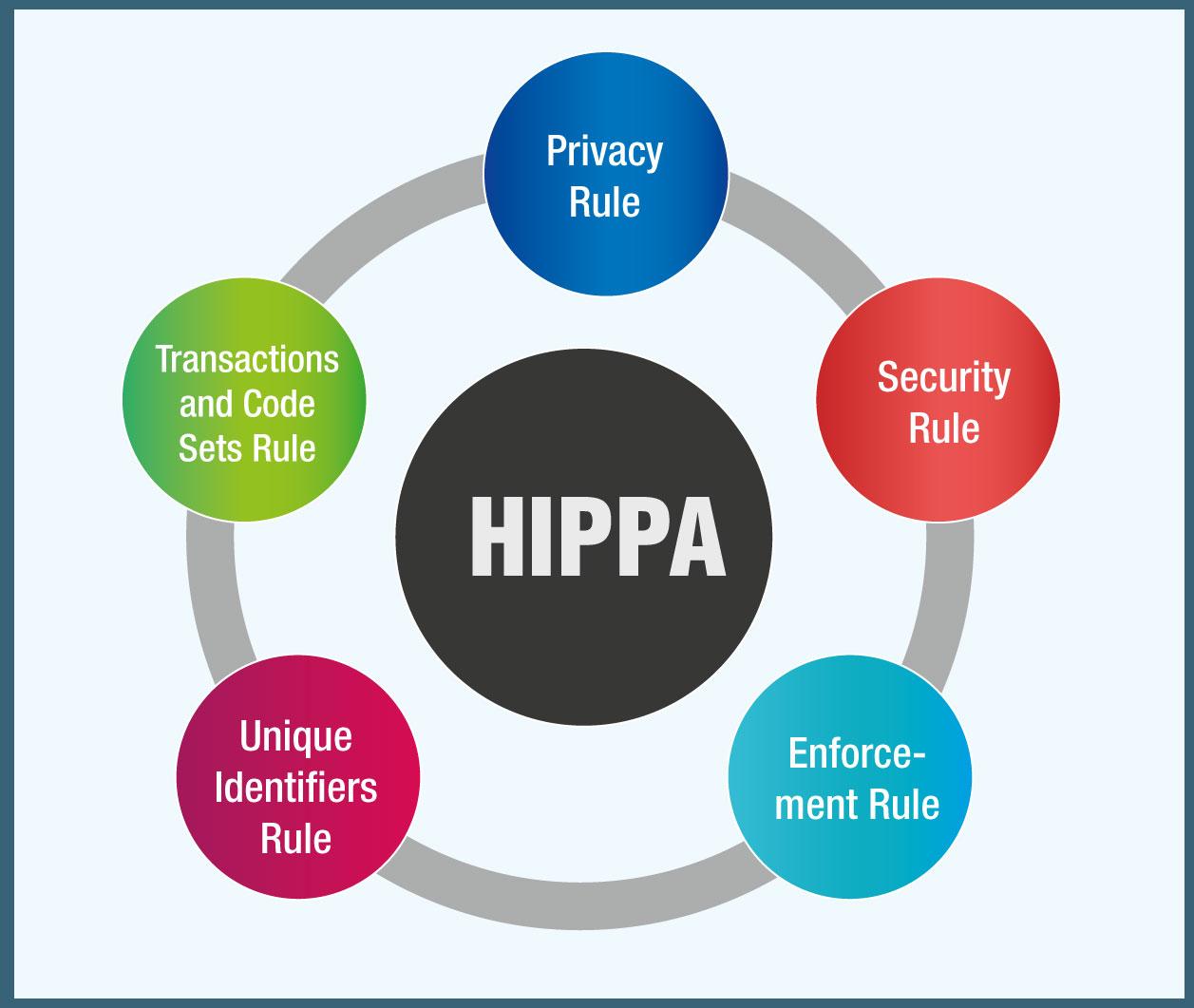
Stat: According to HIPPA, and the cyberattack on Change Healthcare, there were 725 “large” reported healthcare security breaches in the US last year. Experts say health organizations suffer from a lack of basic security measures, and are being targeted by “increasingly sophisticated cyberattacks.” (The HIPAA Journal)

CITE: https://www.r2library.com/Resource

Quote: “Having a [doctor] who can coordinate your healthcare and is willing to do so on a personal basis was very important to me. And I really feel like that is completely gone, and I feel like it happened overnight.”—Deborah Wood, an older adult patient at primary care provider Iora Health, where some patients say care quality has worsened after Amazon acquired its parent company One Medical in 2022 (the Washington Post)

COMMENTS APPRECIATED

Thank you

***

***

DAILY UPDATE: UnitedHealth Group Still Down as Stock Markets Dips with Chip Makers

By Staff Reporters

Tomorrow is the start of daylight saving time. Enjoy the extra hour of evening light.

***

***

UnitedHealth Group is laying out a timeline to restore its systems as a cyberattack on its Change Healthcare subsidiary continues to disrupt the health care industry for nearly a third week. The company said Thursday it’s still working “aggressively” to restore its services after the attack Feb. 21st caused it to shut down its insurance claims and payment platforms, leaving health care providers and pharmacies across the nation unable to process prescriptions or pay employees, but as of now, its electronic prescribing is back to being “fully functional.”

***

Stocks tumbled yesterday, giving the Dow its worst week since October as Nvidia’s seemingly unstoppable rally…stopped. Meanwhile, bitcoin notched another record, hitting $70,000 for the first time before the volatile cryptocurrency retreated.

Government: The Senate passed vital funding bills just barely ahead of a shutdown deadline, ensuring the government can stay open—at least for now. But they still need to pass more before March 22nd.

Here’s where the major benchmarks ended:

  • The S&P 500 index (SPX) fell 33.67 points (0.7%) to 5,123.69, down 0.3% for the week; the Dow Jones Industrial Average® ($DJI) lost 68.66 points (0.2%) to 38,722.69, down 0.9% for the week; the NASDAQ Composite (COMP) dropped 188.26 points (1.2%) to 16,085.11, down 1.2% for the week.
  • The 10-year Treasury note yield (TNX) fell more than 1 basis point to 4.079%.
  • The CBOE Volatility Index® (VIX) rose 0.30 to 14.74.

The Philadelphia Semiconductor Index (SOX) sank 3.5% Friday but still gained 0.6% for the week, its third straight weekly advance. Bank and utility shares were among the market’s few areas of strength, and small-cap stocks held up relatively well. The Russell 2000® Index (RUT) fell 0.1% after earlier climbing to a two-year high but still added 0.3% for the week, its fourth weekly gain in the past five.

CITE: https://www.r2library.com/Resource

COMMENTS APPRECIATED

Thank You

***

***

DAILY UPDATE: International Women’s Day as Rivian and Stocks Zoom Higher!

By Staff Reporters

***

***

Stocks surged yesterday, once again pushing the S&P 500 and NASDAQ to record highs, after Fed Chair Jerome Powell said he expects interest rates to come down this year. It was also a big day for Rivian which zoomed 13% after it revealed three new vehicles.

Here’s where the major benchmarks ended:

  • The S&P 500 index rallied 52.60 points (1.0%) to 5,157.36; the Dow Jones Industrial Average gained 130.30 points (0.3%) to 38,791.35; the NASDAQ Composite climbed 241.83 points (1.5%) to 16,273.38.
  • The 10-year Treasury note yield (TNX) lost almost 2 basis points to 4.085%.
  • The CBOE Volatility Index® (VIX) fell 0.06 to 14.44.

Chip-maker strength boosted the Philadelphia Semiconductor Index (SOX) 3.4% to its fourth record close in the past five trading days. The index has gained 9.3% so far this month and 24% for the year. Oilfield services and communication services companies were also among the market’s strongest sectors. Small-cap shares joined the rally, boosting the Russell 2000® Index (RUT) 0.8% to a two-year high.

In other markets, the U.S. dollar index (DXY) slipped 0.5%, its fifth consecutive daily decline, and touched a five-week low. The dollar has been under pressure from expectations for lower U.S. interest rates.

CITE: https://www.r2library.com/Resource

COMMENTS APPRECIATED

Thank You

***

***

DAILY UPDATE: American Express Breached as Stock Markets Come Back

By Staff Reporters

***

***

American Express Co. has told an undisclosed number of cardholders that their account information may have been breached in a recent hacking of a merchant processor. Current and previously issued American Express Card account numbers, expiration dates and customer names may have been compromised, AmEx stated in a notice filed last week with Massachusetts regulators. 

CITE: https://www.r2library.com/Resource

Here’s where the major benchmarks ended:

  • The S&P 500® index (SPX) rose 26.11 points (0.5%) to 5,104.76; the Dow Jones Industrial Average® (DJI) gained 75.86 points (0.2%) to 38,661.05; the NASDAQ Composite® (COMP) added 91.95 points (0.6%) to 16,031.54.
  • The 10-year Treasury note yield (TNX) dropped about 3 basis points to 4.108%, near a four-week low.
  • The CBOE Volatility Index® (VIX) rose 0.04 to 14.50

Semiconductor shares were among the market’s strongest performers Wednesday, and utilities and consumer staples were also firm. Banks shares took pressure despite further declines in Treasury yields. In other markets, the U.S. dollar index (DXY) fell near a five-week low and Gold (/GC) futures extended a rally to a record above $2,160 per ounce, reflecting expectations for lower U.S. interest rates. 

COMMENTS APPRECIATED

Thank You

***

***

DAILY UPDATE: UnitedHealth Group and Fidelity Investments Suffer Ransomware Attacks as Stock Markets Crash

By Staff Reporters

***

***

According to Fidelity, in documents filed with the Maine attorney general’s office, miscreants “likely acquired” information about 28,268 people’s life insurance policies after infiltrating Infosys.

***

***

Criminals have probably stolen nearly 30,000 Fidelity Investments Life Insurance customers’ personal and financial information — including bank account and routing numbers, credit card numbers and security or access codes — after breaking into Infosys’ IT systems.

***

***

Healthcare providers across the United States are struggling to get paid following the week-long ransomware outage at a key tech unit of UnitedHealth Group, with some smaller medical providers saying they are already running low on cash.

And, the nation’s health-care system continues to reel from a cyberattack that has crippled payments for tens of thousands of organizations as Daniel Gilbert writes in The Post.

CITE: https://www.r2library.com/Resource

Here’s where the major benchmarks ended:

  • The S&P 500® index (SPX) dropped 52.30 points (1.0%) to 5,078.65; the Dow Jones Industrial Average decreased 404.64 points (1.0%) to 38,585.19; the NASDAQ Composite fell 267.92 points (1.7%) to 15,939.59.
  • The 10-year Treasury note yield (TNX) fell about 8 basis points to 4.137%.
  • The CBOE Volatility Index® (VIX) rose 0.97 to 14.46.

With chip makers under pressure, the Philadelphia Semiconductor Index (SOX) fell 2.1%, reversing part of a recent surge to a record high. Consumer discretionary and real estate shares also ranked among the weakest performers Tuesday. Banks were one of the few industries to buck the broader weakness, perhaps supported by further declines in Treasury yields. The 10-year Treasury note yield (TNX) almost fell to a four-week low near 4.11%. The KBW Regional Banking Index (KRX) jumped 4.3%. 

In other markets, bitcoin plunged almost 10% after climbing earlier Tuesday to a record above $69,000. The cryptocurrency had rallied as much as 36% over the last week of February. 

COMMENTS APPRECIATED

Thank You

***

***

DOWN: Facebook, Threads, Instagram and Messenger

PARENT META OUTAGE

By Staff Reporters

***

***

Facebook, Instagram and Messenger have gone down in what appears to be a huge outage at parent company Meta.

Users found themselves unable to load the apps or websites as normal. On Facebook, affected users found they had been logged out and were unable to get on, while Instagram refused to work at all.

COMMENTS
***

***

DAILY UPDATE: Target of IRS Audits Up While Stock Markets are Down

By Staff Reporters

***

***

Stat: 125,000+. That’s how many high-income people the IRS is targeting for not filing their taxes. The IRS started sending letters last week to folks with over $400,000 in income who haven’t filed between 2017 and 2022 (Journal of Accountancy)

CITE: https://www.r2library.com/Resource

Here’s where the major benchmarks ended:

  • The S&P 500 index fell 6.13 points (0.1%) to 5,130.95; the Dow Jones Industrial Average lost 97.55 points (0.3%) to 38,989.83; the NASDAQ Composite declined 67.43 points (0.4%) to 16,207.51.
  • The 10-year Treasury note yield (TNX) rose about 4 basis points to 4.219%.
  • The CBOE Volatility Index® (VIX) increased 0.38 to 13.49.

Ongoing strength in chip makers propelled a 1.1% advance in the Philadelphia Semiconductor Index (SOX), which posted a record high for the third-straight trading day. Banks were also among the strongest performers. Small-cap shares eased, with the Russell 2000® Index (RUT) ending with a marginal loss after rising earlier to a two-year high. 

COMMENTS APPRECIATED

Thank You

***

***

DAILY UPDATE: Super Micro Joins S&P 500 as Markets Still Rise

By Staff Reporters

***

***

Another record-high to start Monday.

The S&P 500 closed Friday at its highest level ever, having posted gains in 16 out of the last 18 weeks for the first time since 1971. And the index is getting a flashy new stock today: the server-maker Super Micro. Super Micro is the AI all-star you’ve never heard of, jumping over 20x in the past two years and more than 200% in 2024 alone.

CITE: https://www.r2library.com/Resource

COMMENTS APPRECIATED

Thank You

***

***

DAILY UPDATE: CDC, IRS, the Roaring Stock Markets and Elon Musk

By Staff Reporters

***

***

Stocks were ripping last week, with the NASDAQ notching an all-time high and the S&P 500 closing above 5,100 for the first time. Tech stocks led the way, especially Nvidia, which closed with a market cap over $2 trillion. But trouble may be brewing at regional banks: New York Community Bancorp plummeted after swapping out its CEO and revealing it had found weaknesses in its risk controls.

CITE: https://www.r2library.com/Resource

The IRS is going after people who earned between $400,000 and $1 million but failed to file tax returns as far back as 2017.

***

Elon Musk sued OpenAI and its co-founders, CEO Sam Altman and President Greg Brockman, Friday, alleging that they breached the organization’s founding agreement by letting it become too profit-motivated.

***

The CDC says you no longer need to isolate for five days if you have COVID-19 as long as you’re fever-free and your symptoms are improving.

COMMENTS APPRECIATED

Thank You

***

***

DAILY UPDATE: Rare Disease Day Visibility, Rite Aid Down as Markets Rise Up

By Staff Reporters

***

***

Welcome back to the Gregorian calendar. Along with being a leap day, yesterday was Rare Disease Day—bringing visibility to the 7,000 conditions that each affect fewer than 200,000 people in the US. Combined, around 10% of US residents have one, per the National Institute of Health.

***

  • Rite Aid is planning to close 77 stores in 2024 as part of its Chapter 11 bankruptcy.
  • That makes 431 stores that the drugstore chain has decided to close since October.
  • Rite Aid has been shrinking its store count for years, losing ground to rivals Walgreens and CVS.

CITE: https://www.r2library.com/Resource

Here’s where the major benchmarks ended:

  • The S&P 500 index added 40.81 points (0.8%) to 5,137.08, up 0.95% for the week and its seventh weekly gain in the past eight; the Dow Jones Industrial Average® (DJI) gained 90.99 points (0.2%) to 39,087.38, down 0.1% for the week; the NASDAQ Composite rose 183.02 points (1.1%) to 16,274.94, up 1.7% for the week.
  • The 10-year Treasury note yield fell about 7 basis points to 4.182%.
  • The CBOE Volatility Index® (VIX) dropped 0.29 to 13.11.

Chipmaker strength drove a 4.3% advance in the Philadelphia Semiconductor Index (SOX), which ended at a record high. The NASDAQ-100®(NDX), which includes the NASDAQ’s largest non-financial companies, also ended at a record high. Small-cap shares finished the week strong. The Russell 2000® Index (RUT) rose 1.1% to settle at a 23-month high and notched a 3% gain for the week. 

Banks were among the weakest performers as concerns over regional lenders flared up, underscored by another nosedive in shares of troubled New York Community Bancorp (NYCB).

COMMENTS APPRECIATED

Thank You

***

***

DAILY UPDATE: Inflation and “Bumble” Down as Stock Markets Rise and UHC Hackers ID’d

By Staff Reporters

***

***

The Bumble dating app said this week that it plans to lay off 30% of its staff (about 350 employees) after a Q4 earnings report highlighted that profits are ghosting the company and Gen Z considers dating apps a turnoff. Bumble CEO Lidiane Jones, who took over in November when founder Whitney Wolfe Herd stepped down, said the cuts would save the company around $55 million. The company plans to invest in relaunching the app next quarter with new safety and AI features to entice all those looking for love.

CITE: https://www.r2library.com/Resource

Here’s where the major benchmarks ended:

  • The S&P 500 index rose 26.51 points (0.5%) to 5,096.27, up 5.2% for the month; the Dow Jones Industrial Average® (DJI) added 47.37 points (0.1%) to 38,996.39, up 2.2% for the month; the NASDAQ Composite gained 144.18 points (0.9%) to 16,091.92, up 6.1% for the month.
  • The 10-year Treasury note yield (TNX) fell about 3 basis points to 4.244%.
  • The CBOE Volatility Index® (VIX) dropped 0.44 to 13.40.

Chipmaker shares were among the strongest performers Thursday, helping lift the Philadelphia Semiconductor Index (SOX) 2.7% to a record high close. Banks and food and beverage industries were also firm. Small-cap stocks also extended a recent upswing. The Russell 2000® Index (RUT) erased much of an initial surge to a 22-month high but still finished with a 0.7% advance, gaining 5.5% for the month.

***

***

Hackers that allegedly caused the UnitedHealth Group cyberattack reportedly posted on the dark web that they stole personal data and the records of “millions” of patients.

In a now-deleted post, the Blackcat ransomware group – also known as ALPHV or Noberus – said it stole several terabytes of data from UnitedHealth, which includes medical insurance and health data, Reuters reported, citing screenshots of the post.

COMMENTS APPRECIATED

Thank You

***

***

DAILY UPDATE: Down Down Third Day

By Staff Reporters

HAPPY LEAP YEAR DAY

***

***

Stocks fell yesterday, while bitcoin almost touched an all-time high after surging 20% in five days as its halving approaches. UnitedHealth dipped on reports that antitrust regulators are investigating the massive insurer.

***

***

Here’s where the major benchmarks ended:

  • The S&P 500® index (SPX) fell 8.42 points (0.2%) to 5,069.76; the Dow Jones Industrial Average lost 23.39 points (0.1%) to 38,949.02; the NASDAQ Composite® (COMP) declined 87.56 points (0.6%) to 15,947.74.
  • The 10-year Treasury note yield (TNX) fell about 5 basis points to 4.264%.
  • The CBOE Volatility Index® (VIX) rose 0.39 to 13.82.

Regional banks and semiconductors were among the weakest performers Wednesday, and communications services and health care shares were also soft. Real estate shares bucked the weakness in many sectors to post firm gains. Food and beverage and consumer discretionary sectors also firmed. In other markets, WTI crude oil (/CL) futures rose to a three-month high at $79.62 per barrel before ending lower after the Energy Information Administration reported a rise in U.S. inventories.

CITE: https://www.r2library.com/Resource

COMMENTS APPRECIATED

Thank You

***

***

DAILY UPDATE: S&P Index Pulls Back

By Staff Reporters

***

***

Stocks fell as the Dow got a special delivery from Amazon, which joined the index yesterday, replacing Walgreens. That didn’t give the Dow a boost for the day, but it should help the index—whose performance is trailing the S&P 500—going forward by giving it more tech power.

Here’s where the major benchmarks ended:

  • The S&P 500 index fell 19.27 points (0.4%) to 5,069.53; the Dow Jones Industrial Average® (DJI) lost 62.30 points (0.2%) to 39,069.23; the NASDAQ Composite® (COMP) dropped 20.57 points (0.1%) to 15,976.25.
  • The 10-year Treasury note yield (TNX) rose about 2 basis points to 4.28%.
  • The CBOE Volatility Index® (VIX) fell 0.01 to 13.74.

Utility shares were among the weakest performers Monday, which may reflect pressure from Treasury yields that remain at their highest levels in over two months. High Treasury yields may compel some investors to forgo utility shares, which typically offer relatively high dividend yields. Communication services companies were also weak. Among stronger areas, the Russell 2000® (RUT) gained 0.6% for its third-straight daily advance.

CITE: https://www.r2library.com/Resource

COMMENTS APPRECIATED

Thank You

***

***

DAILY UPDATE: Bye-Bye Walgreens & Hello Amazon and Reddit

By Staff Reporters

***

***

On Tuesday, February 20th, the S&P Dow Jones Indices, which oversees additions and subtractions to the highly followed Dow Jones Industrial Average, announced that, as of the start of trading on Monday, February, 26th pharmacy chain Walgreens Boots Alliance (NASDAQ: WBA) would be getting the literal boot.

Meanwhile, e-commerce kingpin Amazon (NASDAQ: AMZN) will be taking its place.

And, Reddit filed to go public last week in an IPO that will resemble the platform itself—unusual, chaotic, and reliant on its opinionated users. Planned for next month, Reddit’s public listing will be the first social media IPO since Pinterest in 2019 and the first major tech IPO of the year.

CITE: https://www.r2library.com/Resource

COMMENTS APPRECIATED

Thank You

***

***

DAILY UPDATE: Stock Markets Extend Record Climb Ending Strong Week

By Staff Reporters

***

An astonishing week in the stock market wrapped up with the S&P 500 hitting a record high. While Nvidia’s blowout earnings were the stars. For example, kudos to Carvana, which recorded its first-ever annual profit on its comeback tour from the COVID-19 pandemic.

***

***

Here’s where the major benchmarks ended:

  • The S&P 500 index rose 1.77 points (0.03%) to 5,088.80, up 1.7% for the week; the Dow Jones Industrial Average gained 62.42 points (0.2%) to 39,131.53, up 1.3% for the week; the NASDAQ Composite tumbled 44.80 points (0.3%) to 15,996.82.
  • The 10-year Treasury note yield (TNX) shed more than 7 basis points to 4.252%.
  • The CBOE Volatility Index® (VIX) fell 0.79 to 13.75.

Retailers were among the market’s upside leaders Friday, with the S&P Retail Select Industry Index (SPSIRE) gaining 1.8% and ending at a 22-month high. The retail sector got a boost this week from Walmart’s (WMT) stronger-than-expected results reported Tuesday. The biggest U.S. retailer gained 3.1% this week and closed Friday near a record high above $175. Utility shares were also strong Friday.

CITE: https://www.r2library.com/Resource

COMMENTS APPRECIATED

Thank You

***

***

DAILY UPDATE: Nvidia, and Pharmacy Cyber Security Attack as Stock Markets Roar Back!

By Staff Reporters

***

Stock Market - Homecare24

***

Big tech companies are continuing to pour cash into artificial intelligence at a breakneck pace. And based Bion the earnings update Wednesday from Nvidia, much of it is going to that chip maker. “This last year, we’ve seen generative AI really becoming a whole new application space, a whole new way of doing computing,” Jensen Huang, Nvidia’s co-founder and chief executive, said Wednesday. “A whole new industry is being formed, and that’s driving our growth.”

CITE: https://www.r2library.com/Resource

Pharmacies across the country are reporting delays to prescription orders due to a cyberattack against one of the nation’s largest health-care technology companies. Change Healthcare, a company handling orders and patient payments throughout the U.S., first noticed the “cyber security issue” affecting its networks Wednesday morning on the East Coast. 

Here’s where the major benchmarks ended:

  • The S&P 500 index rose 105.23 points (2.1%) to 5,087.03; the Dow Jones Industrial Average gained 456.87 points (1.2%) to 39,069.11; the NASDAQ Composite rallied 460.75 points (3%) to 16,041.62.
  • The 10-year Treasury note yield (TNX) was little changed at 4.323%.
  • The CBOE Volatility Index® (VIX) fell 0.84 to 14.50.

Nvidia sparked a 5% rally in the Philadelphia Semiconductor Index (SOX) and a 3% gain in the NASDQ-100® (NDX), both of which ended at all-time highs. Consumer discretionary shares were also among the strongest sectors Thursday. The small-cap Russell 2000® Index (RUT) rose 1% and halted a three-day slide.

According to Joe Mazzola, director of trading and education at Schwab, Nvidia had a “profound effect” at both the sector and index level, partly reflecting its market value, which is nearing $2 trillion. Nvidia is now the third largest company behind Microsoft (MSFT) and Apple (AAPL).

***

***

COMMENTS APPRECIATED

Thank You

***

***

DAILY UPDATE: Markets Mixed as Technology Stocks Remains Under Pressure

By Staff Reporters

***

***

Here’s where the major benchmarks ended:

  • The S&P 500® index (SPX) rose 6.29 points (0.1%) to 4,981.80; the Dow Jones Industrial Average® (DJI) added 48.44 points (0.1%) to 38,612.24; the NASDAQ Composite dropped 49.91 points (0.3%) to 15,580.87.
  • The 10-year Treasury note yield (TNX) rose more than 4 basis points to 4.319%.
  • The CBOE Volatility Index® (VIX) fell 0.05 to 15.37.

Chipmakers continue to be among the softest performers this week, which sent the Philadelphia Semiconductor Index (SOX) lower for the fourth-straight day. Small caps also remained under pressure as the Russell 2000® Index (RUT) declined 0.5%, its third-straight daily decline. Energy shares were among upside leaders with an assist from a jump of more than 1.3% in WTI crude oil (/CL)futures.

CITE: https://www.r2library.com/Resource

COMMENTS APPRECIATED

Thank You

***

***

DAILY UPDATE: Nvidia Stock Down as Markets Extend Losses

By Staff Reporters

***

***

Stocks fell to start the week as investors awaited Nvidia’s big earnings report today. Recent earnings for tech companies in the so-called Magnificent Seven have been a mixed bag, but as a group, they have never been stronger. Meanwhile, Intuitive Machines’s stock zoomed as its pilot less spacecraft remained on track to touch down on the lunar surface Thursday.

Here’s where the major benchmarks ended:

  • The S&P 500® index (SPX) fell 30.06 points (0.6%) to 4,975.51; the Dow Jones Industrial Average lost 64.19 points (0.2%) to 38,563.80; the NASDAQ Composite declined 144.87 points (0.9%) to 15,630.78.
  • The 10-year Treasury note yield (TNX) fell about 2 basis points to 4.275%.
  • The CBOE Volatility Index® (VIX) rose 0.71 to 15.42.

Nvidia shares fell 4.4%, weakness that helped drag down shares of other chip makers and contributed to a drop of 1.6% in the Philadelphia Semiconductor Index (SOX), which ended near a two-week low. Energy shares also took pressure as WTI crude oil futures (/CL) sank 1.6%. Small caps were also soft, as the Russell 2000® Index (RUT) dropped 1.4%.

CITE: https://www.r2library.com/Resource

COMMENTS APPRECIATED

Thank You

***

***

DAILY UPDATE: BoA Personal Data Breach

By Staff Reporters

HAPPY PRESIDENT’S DAY 2024

The Stock and Bond Markets are Closed!

***

***

READ BANK TYPES: https://marcinkoassociates.com/bank-types/

***

***

Bank of America just acknowledged that the personal information of 57,028 of its customers has been compromised. This breach, attributed to a failure at Infosys McCamish Systems (IMS), a provider of insurance business process solutions engaged by the bank, poses a substantial risk of identity theft to the affected individuals.

The data breach notification, filed in Maine, reveals that sensitive information related to Bank of America’s deferred compensation plans was inadvertently accessed. IMS, in a notification letter to customers, disclosed that the compromised data encompasses a range of critical personal details. The accessed information includes customers’ names, addresses, business email addresses, dates of birth, Social Security numbers, and other account specifics. Such data is typically all required for an identity thief to execute fraudulent activities under another person’s name.

IMS’s admission that it might never be able to precisely identify what information was accessed underscores the severity and potential long-term consequences of the breach. This uncertainty adds an additional layer of anxiety for customers, highlighting the challenges in mitigating the aftermath of such security failures.

CITE: https://www.r2library.com/Resource

Finally, Walmart and Home Depot will be the star of the show this week they report their earnings for the holiday quarter. Nvidia will also try to keep its historic hot streak going when it reports on Wednesday—expectations are through the roof.

COMMENTS APPRECIATED

Thank You

***

***

Assessment of Workplace Violence in Healthcare

ON MEDICAL WORKPLACE VIOLENCE

By Eugene Schmuckler PhD, MBA CTA

By Dr. David E. Marcinko MBA

1. What Is Workplace Violence?

Workplace violence is more than physical assault — it is any act in which a person is abused, threatened, intimidated, harassed, or assaulted in his or her employment. Swearing, verbal abuse, playing “pranks,” spreading rumors, arguments, property damage, vandalism, sabotage, pushing, theft, physical assaults, psychological trauma, anger-related incidents, rape, arson, and murder are all examples of workplace violence. The Registered Nurses Association of Nova Scotia defines violence as “any behavior that results in injury whether real or perceived by an individual, including, but not limited to, verbal abuse, threats of physical harm, and sexual harassment.” As such, workplace violence includes:

  • threatening behavior — such as shaking fists, destroying property, or throwing objects;
  • verbal or written threats — any expression of intent to inflict harm;
  • harassment — any behavior that demeans, embarrasses, humiliates, annoys, alarms, or verbally abuses a person and that is known or would be expected to be unwelcome. This includes words, gestures, intimidation, bullying, or other inappropriate activities;
  • verbal abuse — swearing, insults, or condescending language;
  • muggings — aggravated assaults, usually conducted by surprise with intent to rob; or
  • physical attacks — hitting, shoving, pushing, or kicking.

Workplace violence can be brought about by a number of different actions in the workplace. It may also be the result of non-work related situations such as domestic violence or “road rage.” Workplace violence can be inflicted by an abusive employee, a manager, supervisor, co-worker, customer, family member, or even a stranger.  The University of Iowa Injury Prevention Research Center classifies most workplace violence into one of four categories.

  • Type I Criminal Intent — Results while a criminal activity (e.g., robbery) is being committed and the perpetrator had no legitimate relationship to the workplace.
  • Type II Customer/Client — The perpetrator is a customer or client at the workplace (e.g., healthcare patient) and becomes violent while being assisted by the worker.
  • Type III Worker on Worker — Employees or past employees of the workplace are the perpetrators.
  • Type IV Personal Relationship — The perpetrator usually has a personal relationship with an employee (e.g., domestic violence in the workplace).

2. Effects of Workplace Violence

The healthcare sector continues to lead all other industry sectors in incidents of non-fatal workplace assaults. In 2000, 48% of all non-fatal injuries from violent acts against workers occurred in the healthcare sector. Nurses, nurses’ aides, and orderlies suffer the highest proportion of these injuries. Non-fatal assaults on healthcare workers include assaults, bruises, lacerations, broken bones, and concussions. These reported incidents include only injuries severe enough to result in lost time from work. Of significance is that the median time away from work as a result of an assault or other violent act is 5 days. Almost 25% of these injuries result in longer than 20 days away from work. Obviously, this is quite costly to the facility as well as to the victim.

A study undertaken in Canada found that 46% of 8,780 staff nurses experienced one or more types of violence in the last five shifts worked. Physical assault was defined as being spit on, bitten, hit, or pushed.

Both Canadian and U.S. researchers have described the prevalence of verbal threats and physical assaults in intensive care, emergency departments, and general wards. A study in Florida reported that 100% of emergency department nurses experience verbal threats and 82% reported being physically assaulted. Similar results were found in a study undertaken in a Canadian hospital. Possible reasons for the high incidence of violence in emergency departments include presence of weapons, frustration with long waits for medical care, dissatisfaction with hospital policies, and the levels of violence in the community served by the emergency department.

Similar findings have been reported in studies of mental health professionals, nursing home and long-term care employees, as well as providers of service in home and community health.

Violence in hospitals usually results from patients, and occasionally family members, who feel frustrated, vulnerable, and out of control. Transporting patients, long waits for service, inadequate security, poor environmental design, and unrestricted movement of the public are associated with increased risk of assault in hospitals and may be significant factors in social services workplaces as well. Finally, lack of staff training and the absence of violence prevention programming are associated with elevated risk of assault in hospitals. Although anyone working in a hospital may become a victim of violence, nurses and aides who have the most direct contact with patients are at higher risk. Other hospital personnel at increased risk of violence include emergency response personnel, hospital safety officers, and all healthcare providers. Personnel working in large medical practices fall into this category as well. Although no area is totally immune from acts of violence it most frequently occurs in psychiatric wards, emergency rooms, waiting rooms, and geriatric settings.

Many medical facilities mistakenly focus on systems, operations, infrastructure, and public relations when planning for crisis management and emergency response: they tend to overlook the people. Obviously, no medical facility can operate without employees who are healthy enough to return to work and to be productive. Individuals who have been exposed to a violent incident need to be assured of their safety.

The costs associated with workplace violence crises are not limited to healthcare dollars, absenteeism rates, legal battles, or increased insurance rates. If mishandled, traumatic events can severely impair trust between patients, employees, their peers, and their managers. Without proper planning, an act of violence can disrupt normal group processes, interfere with the delivery of crucial information, and temporarily impair management effectiveness. It may also lead to other negative outcomes such as low employee morale, increased job stress, increased work turnover, reduced trust of management and co-workers, and a hostile working environment.

Data collected by the U.S. Department of Justice shows workplace violence to be the fastest growing category of murder in the country. Homicide, including domestic homicides, is the leading cause of on-the-job death for women, and is the second leading cause for men. The National Institute of Occupational Safety and Health (NIOSH) found that an average of 20 workers is murdered each week in the U.S. In addition, an estimated 1 million workers — 28,000 per week — are victims of non-fatal workplace assaults each year. Workplace attacks, threats, or harassment can include the following monetary costs:

  • $13.5 billion in medical costs per year;
  • 500,000 employees missing 1,750,000 days of work per year; with a 41% increase in stress levels with the concomitant related costs!

workplace-violence

More links: 

Racism in Medicine:

MORE: Work Violence

racist

About the Author

Dr. Eugene Schmuckler was Coordinator of Behavioral Sciences at a Public Training Center before accepting his current position as Academic Dean for iMBA, Inc. He is an international expert on personal re-engineering and coaching whose publications have been translated into Dutch and Russian. He now focuses on career development, change management, coaching and stress reduction for physicians and financial professionals. Behavioral finance, life planning and economic risk tolerance assessments are additional areas of focus. Formerly, Dr. Schmuckler was a senior adjunct faculty member at the Keller Graduate School of Management, Atlanta. He taught courses in Organizational Behavior and Leadership, Strategic Staffing, Training and Development, and the capstone course in human resources management. He is a member of a number of professional organizations including the American Psychological Association, the Academy of Management, and the Society for Human Resource Management. A native of Brooklyn New York, he received his BS degree in Psychology from Brooklyn College. He earned his MBA and PhD degrees in Industrial and Organizational Psychology from Louisiana State University. Currently, he serves on the executive BOD for:  www.MedicalBusinessAdvisors.com  and is the Dean of Admissions for www.CertifiedMedicalPlanner.org

Conclusion

Your thoughts and comments on this ME-P are appreciated. Feel free to review our top-left column, and top-right sidebar materials, links, URLs and related websites, too. Then, subscribe to the ME-P. It is fast, free and secure.

Speaker: If you need a moderator or speaker for an upcoming event, Dr. David E. Marcinko; MBA – Publisher-in-Chief of the Medical Executive-Post – is available for seminar or speaking engagements. Contact: MarcinkoAdvisors@msn.com

OUR OTHER PRINT BOOKS AND RELATED INFORMATION SOURCES:

Product Details

Product Details

DAILY UPDATE: New CDC Covid-19 Guidelines as the Stock Markets Go Lower

By Staff Reporters

***

***

The CDC may update Covid-19 isolation guidelines from five days to 24 hours if an individual is fever-free without medication—standardizing the protocol for the disease with the same rule for the flu and RSV. (the New York Times)

Here’s where the major benchmarks ended:

Stocks slumped into the long weekend yesterday, snapping a five-week weekly winning streak when they fell in the wake of wholesale price data that shows inflation is probably not as tamed as the Fed would like it to be. But Coinbase gave the latest indication that the crypto winter has thawed. The crypto exchange’s stock rose after it reported its first quarterly profit in two years.

  • The S&P 500 index fell 24.16 points (0.5%) to 5,005.57, down 0.4% for the week; the Dow Jones Industrial Average® (DJI) lost 145.13 points (0.4%) to 38,627.99, down 0.1% for the week; the NASDAQ Composite® (COMP) declined 130.52 points (0.8%) to 15,775.65, down 1.3% for the week.
  • The 10-year Treasury note yield (TNX) rose over 4 basis points to 4.285%.
  • The CBOE Volatility Index® (VIX) rose 0.23 to 14.24.

Communications services and transportation shares were among the market’s weakest performers Friday, while energy companies firmed behind strength in crude oil futures. The small-cap Russell 2000® Index (RUT) fell 1.4% Friday but still ended the week with a gain of 1.1%, its second straight weekly advance.

CITE: https://www.r2library.com/Resource

COMMENTS APPRECIATED

Thank You

***

***

DAILY UPDATE: Trump’s SPAC as the S&P 500 Records a New High

By Staff Reporters

***

***

The U.S. Securities and Exchange Commission allowed Donald Trump’s media and technology company to merge with a blank-check acquisition [SPAC] vehicle in a deal that currently values the parent of his social media app Truth Social at as much as $10 billion.

SPAC: https://medicalexecutivepost.com/2022/06/13/spac-v-direct-listing-v-ipo/

***

Here’s where the major benchmarks ended:

  • The S&P 500 index rose 29.11 points (0.6%) to 5,029.73; the Dow Jones Industrial Average® (DJI) gained 348.85 points (0.9%) to 38,773.12; the NASDAQ Composite® (COMP) added 47.03 points (0.3%) to 15,906.17.
  • The 10-year Treasury note yield (TNX) fell more than 2 basis points to 4.242%.
  • The CBOE Volatility Index® (VIX) lost 0.37 to 14.01.

Bank shares were among the market’s strongest performers with an assist from Wells Fargo (WFC), whose shares jumped more than 7% following reports a bank industry regulator had ended a penalty it imposed after a fake accounts scandal.

Energy companies also posted outsized gains behind a rebound in crude oil prices. Also, small-cap shares extended a sharp upswing as the Russell 2000® Index (RUT) gained 2.5% and ended at its highest level since late December.

CITE: https://www.r2library.com/Resource

COMMENTS APPRECIATED

Thank You

***

***

DAILY UPDATE: Uber and the Stock Markets Rebound

By Staff Reporters

***

***

Stocks rose yesterday after they plunged following Tuesday’s unexpectedly hot inflation report. And, investors hit the gas pedal on Uber when the company revealed it would buy back $7 billion worth of shares in its first-ever repurchase plan.

Here’s where the major benchmarks ended:

  • The S&P 500 index rose 47.45 points (1.0%) to 5,000.62; the Dow Jones Industrial Average® (DJI) gained 151.52 points (0.4%) to 38,424.27; the NASDAQ Composite® (COMP) added 203.55 points (1.3%) to 15,859.15.
  • The 10-year Treasury note yield (TNX) fell almost 5 basis points to 4.269%.
  • The CBOE Volatility Index® (VIX) fell 1.47 to 14.38.

Small-cap shares were among the upside leaders Wednesday as the Russell 2000® Index (RUT) surged 2.4% to erase over half of its 4% nosedive on Tuesday. Banks and semiconductors were also among the strongest sectors. Energy companies were under pressure after WTI crude oil (/CL) futures dropped 1.6% in the wake of a larger-than-expected increase in U.S. inventories.

CITE: https://www.r2library.com/Resource

COMMENTS APPRECIATED

Thank You

***

***

DAILY UPDATE: Stocks Markets Collapse!

By Staff Reporters

***

***

Off-the-charts inflation may be a distant 2022 phenomenon, but we’re not entirely over it. Price growth is still not back to levels that would satisfy Jerome Powell, and shoppers continue to deal with the fallout. Prices grew faster than economists expected last month, according to the consumer price index data the government released yesterday.

They climbed 0.3% in January (slightly more than in December) and 3.1% from a year prior. Excluding food and energy prices, January’s inflation was 0.4%, a bit over December’s reading, and 3.9% more than the prior January. And we point out that things aren’t so bad, since inflation isn’t too far from the Fed’s 2% annual target. But shoppers might argue that just because prices are growing more slowly doesn’t mean things are costing them less.

Here’s where the major benchmarks ended:

  • The S&P 500® index (SPX) fell 68.67 points (1.4%) to 4,953.17, its lowest close since February 5; the Dow Jones Industrial Average lost 524.63 points (1.4%) to 38,272.75; the NASDAQ Composite® (COMP) dropped 286.94 points (1.8%) to 15,655.60.
  • The 10-year Treasury note yield gained nearly 15 basis points to 4.316%.
  • The CBOE Volatility Index® (VIX) rose 1.89 to 15.82.

Bank shares were among the worst performers Tuesday amid concerns the CPI numbers suggested the Fed will maintain a higher-for-longer interest rate tack that could crimp lenders’ margins. The KBW Regional Banking Index (KRX) plunged 4.5%. Small-cap stocks, another group sensitive to interest rates, also fell sharply, with the Russell 2000® Index (RUT) sinking 4%.

In other markets, the U.S. Dollar Index (DXY) rallied about 0.7% to its strongest level in nearly three months, reflecting expectations interest rates will remain elevated.

CITE: https://www.r2library.com/Resource

COMMENTS APPRECIATED

Thank You

***

***