Paradigm Shift to “Defined Health Contributions” from “Defined Health Benefits” Plans

What it is – How it Works

By Staff Reporters

Join Our Mailing List 

In the past, according to Robert James Cimasi MHA AVA CMP™ of Health Capital Consultants LLC in St. Louis MO, many employers had defined retirement benefits for employees. Today, most retirement benefits are in the form of 401K plans where companies make defined contributions, effectively shifting the financial risk of paying for retirement to employees.

Defined Health Contributions

Defined health contributions are similar to employer-funded defined retirement contributions like 401K plans. Currently, employers pay for some portion of about half of Americans’ health insurance. Traditional employer-funded plans are those for which the employee simply fills out a form; that is, an employer will offer one or possibly two health insurance plans, and the employee fills out application paperwork. The employer administers the plan and may charge the employee a portion of the monthly premium or pay the entire premium themselves. A defined contribution plan allows companies to shift the financial risk of paying for rising health insurance costs.

Defined Health Benefits

Although part of the “benefit” of a health benefit plan is that the employer also takes care of all the administrative paperwork related to the insurance, companies are increasingly uninvolved in the administration process, opting instead to let the employee decide which plan out of many choices suits them best. For example, if an employer typically spends about $5,000 per employee per year on health benefits, the employer would use that money as a “defined contribution.” The employee then has $5,000 to spend per year on benefits, but instead of using the employer-defined health plan, the employee may choose from a variety of HMOs, preferred provider organizations PPOs, or other health plans. If the insurance premiums rise above this amount, the employee must make up the difference.

dhimc-book24Defined Contribution Package

Many employers are currently offering a defined contribution package to their employees. The definition of “defined contributions,” however, can range from one in which employers are completely uninvolved in the administration of benefits and simply give their employees cash or vouchers for the amount contributed that they can use to buy coverage, to a more “defined choice model” where employers offer a variety of health options at differing price levels along with a premium dollar contribution, and a variety of other options in between.

Risk Shifting

Thus, defined contributions shift the financial risk from the employer to the employee. Defined care is not a replacement for managed care, but will probably cause managed care to adapt under these new systems. That is, HMOs, PPOs and other managed care plans still appear to be the main choices in a defined care environment, so they are in fact a part of the system.

Assessment

Another challenge with a defined health benefit program is that the concept of risk-pooling becomes more difficult. In traditional employer-sponsored plans, rates are usually based on the pool of employees; a chronically ill employee who tries to find insurance independently may face rates drastically higher than if they had participated in an employer-sponsored plan.

MORE: www.CertifiedMedicalPlanner.org

Conclusion

Your thoughts and comments on this ME-P are appreciated. Feel free to review our top-left column, and top-right sidebar materials, links, URLs and related websites, too. Then, subscribe to the ME-P. It is fast, free and secure.

Link: http://feeds.feedburner.com/HealthcareFinancialsthePostForcxos

Speaker: If you need a moderator or speaker for an upcoming event, Dr. David E. Marcinko; MBA – Publisher-in-Chief of the Medical Executive-Post – is available for seminar or speaking engagements. Contact: MarcinkoAdvisors@msn.com

OUR OTHER PRINT BOOKS AND RELATED INFORMATION SOURCES:

DICTIONARIES: http://www.springerpub.com/Search/marcinko
PHYSICIANS: www.MedicalBusinessAdvisors.com
PRACTICES: www.BusinessofMedicalPractice.com
HOSPITALS: http://www.crcpress.com/product/isbn/9781466558731
CLINICS: http://www.crcpress.com/product/isbn/9781439879900
BLOG: www.MedicalExecutivePost.com
FINANCE: Financial Planning for Physicians and Advisors
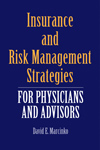
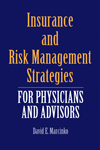
INSURANCE: Risk Management and Insurance Strategies for Physicians and Advisors

Product DetailsProduct Details

Product Details


Understanding Modern Health Plan Delivery Models

By Defining Terms and Concepts

Staff Writers

www.HealthcareFinancials.comho-journal10

Here are four important health care delivery models that should be understood by all financial advisors, their clients, patients and the public:

1. PHYSICIAN ORGANIZATION (PO)

A PO is a group of physicians banding together, usually for the purpose of contracting with managed care entities, or to represent the physician component in a Physician Hospital Organization. The PO is a managed care contracting entity owned by and composed exclusively of physicians. The PO tends to be more tightly controlled in terms of members and adherence to treatment protocols than an Independent Physician Association. POs typically share information systems, claims-processing procedures, financial data, medical records, and other technical support functions.

2. PHYSICIAN PRACTICE MANAGEMENT CORPORATION (PPMC)

A firm that purchases physicians’ practices in exchange for a percentage of the gross receivables. The PPMC leases the office back to the doctor or employs the doctor on a salaried basis. The PPMC then contracts with the areas MCOs.

3. POINT OF SERVICE PLAN (POSP)

A type of managed care plan that allows members to choose whether to seek medical care within the plan’s network or seek medical care out of network at the point of service (i.e., at the time services are rendered). It allows members to pay little or nothing, if they stay within the established HMO delivery system. But, it also permits members to choose and receive services from an outside doctor, any time, if they are willing to pay higher co-payments, deductibles and possibly monthly premiums. It is also called an “open-ended” plan.

4. PREFERRED PROVIDER ORGANIZATION (PPO)

A PPO is a select, approved panel of physicians, hospitals, and other providers who agree to accept a discounted fee schedule for patients and to follow utilization review and pre-authorization protocols for certain treatments. It is a system in which a payer negotiates lower prices with certain doctors and hospitals. Patients who go to a preferred provider get a higher benefit — for example, 90% or 100% coverage of their costs — than patients who go outside the network.

Assessmentdhimc-book20

Link: www.HealthDictionarySeries.com

Conclusion

And so, your thoughts and comments on this Medical Executive-Post are appreciated?

Link: https://healthcarefinancials.wordpress.com/2009/03/13/rip-retail-financial-services-industry/

Feel free to review our top-left column, and top-right sidebar materials, links, URLs and related websites, too. Then, be sure to subscribe to the ME-P. It is fast, free and secure.

Link: http://feeds.feedburner.com/HealthcareFinancialsthePostForcxos

Speaker: If you need a moderator or speaker for an upcoming event, Dr. David E. Marcinko; MBA – Publisher-in-Chief of the Executive-Post – is available for seminar or speaking engagements. Contact: MarcinkoAdvisors@msn.com  or Bio: www.stpub.com/pubs/authors/MARCINKO.htm

Get our Widget: Get this widget!

Our Other Print Books and Related Information Sources:

Practice Management: http://www.springerpub.com/prod.aspx?prod_id=23759

Physician Financial Planning: http://www.jbpub.com/catalog/0763745790

Medical Risk Management: http://www.jbpub.com/catalog/9780763733421

Healthcare Organizations: www.HealthcareFinancials.com

Health Administration Terms: www.HealthDictionarySeries.com

Physician Advisors: www.CertifiedMedicalPlanner.com

Subscribe Now: Did you like this Medical Executive-Post, or find it helpful, interesting and informative? Want to get the latest ME-Ps delivered to your email box each morning? Just subscribe using the link below. You can unsubscribe at any time. Security is assured.

Link: http://feeds.feedburner.com/HealthcareFinancialsthePostForcxos

Understanding the Health Maintenance Organization Delivery Model

ho-journal8Defining Terms and Concepts

By Staff Writers

www.HealthcareFinancials.com

An HMO is a legal corporation that offers health insurance and medical care. It is a health care delivery system that provides comprehensive services for subscribing members in a particular geographic area. Most HMO care is provided through a managed network made up of MD/DOs, hospitals, and other allopathic/osteopathic professionals selected by the HMO. HMO enrollees are required to obtain care from this network of providers in order for their care to be covered, except in cases of emergency. All the care the members may need is paid for by the single monthly fee, plus nominal co-payments. HMOs typically offer a range of health care services at a fixed price (capitation).

Different Types

The types of HMOs are:

1. STAFF MODEL: Organization owns its clinics and employs its doctors.

2. GROUP MODEL: Contract with medical groups for services.

3. INDEPENDENT PHYSICIAN ASSOCIATION (IPA) MODEL: IPA contract that in turn contracts with individual physicians.

4. DIRECT CONTRACT or NETWORK MODEL: Contracts directly with individual physicians.

5. MIXED MODEL: Members get options ranging from staff to IPA models.

6. OPEN-PANEL MODEL: A managed care plan or HMO where members can see any provider for an extra premium cost.

Assessmentdhimc-book18

Link: www.HealthDictionarySeries.com

Conclusion

And so, your thoughts and comments on this Medical Executive-Post are appreciated?

Link: http://feeds.feedburner.com/HealthcareFinancialsthePostForcxos

Speaker: If you need a moderator or speaker for an upcoming event, Dr. David E. Marcinko; MBA – Publisher-in-Chief of the Executive-Post – is available for seminar or speaking engagements. Contact: MarcinkoAdvisors@msn.com  or Bio: www.stpub.com/pubs/authors/MARCINKO.htm

Get our Widget: Get this widget!

Our Other Print Books and Related Information Sources:

Practice Management: http://www.springerpub.com/prod.aspx?prod_id=23759

Physician Financial Planning: http://www.jbpub.com/catalog/0763745790

Medical Risk Management: http://www.jbpub.com/catalog/9780763733421

Healthcare Organizations: www.HealthcareFinancials.com

Health Administration Terms: www.HealthDictionarySeries.com

Physician Advisors: www.CertifiedMedicalPlanner.com

Subscribe Now: Did you like this Medical Executive-Post, or find it helpful, interesting and informative? Want to get the latest ME-Ps delivered to your email box each morning? Just subscribe using the link below. You can unsubscribe at any time. Security is assured.

Link: http://feeds.feedburner.com/HealthcareFinancialsthePostForcxos

Understanding Collateralized Mortgage Obligations

Defining Terms and Concepts for Medical Professionals

By Staff Reporters

www.HealthcareFinancials.comho-journal9

A CMO is a debt security backed by mortgages. These mortgage pools are usually separated into different maturity classes called tranches (from the French word for “slice”). The securities were issued by private issuers, as well as the Federal Home Loan Mortgage Corporation (Freddie Mac). As the mortgages were usually government-guaranteed, CMOs usually carried AAA ratings until their current financial meltdown. The early versions of CMOs were known as “plain vanilla,” but recent developments gave us PACs (planned amortization certificates) and TACs (targeted amortization certificates); among too many others. They were all variations on how principal repayments in advance of maturity date were treated.

Assessmentdhimc-book19

Link: www.HealthDictionarySeries.com

Conclusion

And so, your thoughts and comments on this Medical Executive-Post are appreciated?

Link: http://feeds.feedburner.com/HealthcareFinancialsthePostForcxos

Speaker: If you need a moderator or speaker for an upcoming event, Dr. David E. Marcinko; MBA – Publisher-in-Chief of the Executive-Post – is available for seminar or speaking engagements. Contact: MarcinkoAdvisors@msn.com  or Bio: www.stpub.com/pubs/authors/MARCINKO.htm

Our Other Print Books and Related Information Sources:

Practice Management: http://www.springerpub.com/prod.aspx?prod_id=23759

Physician Financial Planning: http://www.jbpub.com/catalog/0763745790

Medical Risk Management: http://www.jbpub.com/catalog/9780763733421

Healthcare Organizations: www.HealthcareFinancials.com

Health Administration Terms: www.HealthDictionarySeries.com

Physician Advisors: www.CertifiedMedicalPlanner.com

Subscribe Now:Did you like this Medical Executive-Post, or find it helpful, interesting and informative? Want to get the latest ME-Ps delivered to your email box each morning? Just subscribe using the link below. You can unsubscribe at any time. Security is assured.

Link: http://feeds.feedburner.com/HealthcareFinancialsthePostForcxos

Product DetailsProduct DetailsProduct Details

Become a Published Print Author with Us

The Business of Medical Practice [3rd Edition]

By Hope Rachel Hetico RN, MHA, CMP™

[Managing Editor]biz-book7

Dear Colleagues,

As you may know, we are commencing work on the third edition of our best selling book: The Business of Medical Practice

TOC 1st: http://www.amazon.com/Business-Medical-Practice-Maximizing-Doctors/dp/0826113117/ref=sr_1_8?ie=UTF8&s=books&qid=1231111232&sr=1-8

TOC 2nd: http://www.springerpub.com/prod.aspx?prod_id=23759

Invitation to Contribute

Accordingly, we would be honored for you to consider contributing a new or revised chapter, in your area of expertise, for a low-effort but high-yield contribution. Our goal is to help physician colleagues and management executives benefit from nationally known experts, as an essential platform for their success in the healthcare 2.0 business industry. Many topics are still available: [health accounting and costing; law, policy and administration; Medicare fraud and abuse; coding and insurance; HIT, grid and cloud computing; finance and economics, competitive models, collaboration and leadership, etc].

Support Always Available

Editorial support is available, and you would enjoy increasing subject-matter notoriety, exposure and public relations in an erudite and credible fashion. As a reader, or preferably a subscriber to the ME-P, your synergy in this space may be ideal. Time line for submission of a 5,000-7,500 word chapter is ample, and in a prose writing style that is “wide, not deep.” 

A Health 2.0 Initiative

And, be sure to address health 2.0 modernity. Update chapters from the second edition are also available. 

Definition: https://healthcarefinancials.wordpress.com/2008/09/12/emerging-healthcare-20-initiatives

Assessment

Please contact me for more details, if interested. A best selling-book is rare; while a third-edition volume even more so. Join us in this project. Regardless, we trust you will remain apostles of our core ME-P vision, “uniting medical mission and financial profit margin”, promoting it whenever possible.

Front Matter Link: frontmatter1advancedbusinessmedicine4 

Contact Info:

MarcinkoAdvisors@msn.com

770.448.0769

Conclusion

Your thoughts and comments on this ME-P are appreciated. Feel free to review our top-left column, and top-right sidebar materials, links, URLs and related websites, too. Then, subscribe to the ME-P. It is fast, free and secure.

Link: http://feeds.feedburner.com/HealthcareFinancialsthePostForcxos

Speaker: If you need a moderator or speaker for an upcoming event, Dr. David E. Marcinko; MBA – Publisher-in-Chief of the Medical Executive-Post – is available for seminar or speaking engagements. Contact: MarcinkoAdvisors@msn.com

OUR OTHER PRINT BOOKS AND RELATED INFORMATION SOURCES:

More about Healthcare Organizations [Financial Management Strategies]

Our Print-Journal Preface

By Hope Rachel Hetico; RN, MHA, CMP™hetico1

As Managing Editor of a two volume – 1,200 pages – premium quarterly print journal, I am often asked about our Preface.

A Two-Volume Guide

As so, our hope is that Healthcare Organizations: [Financial Management Strategies] will shape the hospital management landscape by following three important principles.

What it is – How it works

1. First, we have assembled a world-class editorial advisory board and independent team of contributors and asked them to draw on their experience in economic thought leadership and managerial decision making in the healthcare industrial complex. Like many readers, each struggles mightily with the decreasing revenues, increasing costs, and high consumer expectations in today’s competitive healthcare marketplace. Yet, their practical experience and applied operating vision is a source of objective information, informed opinion, and crucial information for this manual and its quarterly updates.

2. Second, our writing style allows us to condense a great deal of information into each quarterly issue.  We integrate prose, applications and regulatory perspectives with real-world case models, as well as charts, tables, diagrams, sample contracts, and checklists.  The result is a comprehensive oeuvre of financial management and operation strategies, vital to all healthcare facility administrators, comptrollers, physician-executives, and consulting business advisors.

3. Third, as editors, we prefer engaged readers who demand compelling content. According to conventional wisdom, printed manuals like this one should be a relic of the past, from an era before instant messaging and high-speed connectivity. Our experience shows just the opposite.  Applied healthcare economics and management literature has grown exponentially in the past decade and the plethora of Internet information makes updates that sort through the clutter and provide strategic analysis all the more valuable. Oh, it should provide some personality and wit, too! Don’t forget, beneath the spreadsheets, profit and loss statements, and financial models are patients, colleagues and investors who depend on you.ho-journal9

www.HealthcareFinancials.com

Assessment

Rest assured, Healthcare Organizations: [Financial Management Strategies] will become an important peer-reviewed vehicle for the advancement of working knowledge and the dissemination of research information and best practices in our field. In the years ahead, we trust these principles will enhance utility and add value to your subscription. Most importantly, we hope to increase your return on investment [ROI] in some small increment.

Visit and Order Now

Specialty Technical Publishers

8 – 14th Street

Blaine, WA 98230

1-800-251-0381

orders@stpub.com

http://www.stpub.com/pubs/ho.htm

TOC: http://www.stpub.com/pdfs/toc_ho.pdf

Conclusion

And so, your thoughts and comments on this Medical Executive-Post, complimentary e-companion are appreciated. If you would like to contribute material or suggest topics for a future update, please contact me. Subscribers, have we attained our goals and objectives, as a work-in-progress in this preface statement?

Link: http://feeds.feedburner.com/HealthcareFinancialsthePostForcxos

Speaker: If you need a moderator or speaker for an upcoming event, Dr. David E. Marcinko; MBA – Publisher-in-Chief of the Executive-Post – is available for seminar or speaking engagements. Contact: MarcinkoAdvisors@msn.com  or Bio: www.stpub.com/pubs/authors/MARCINKO.htm

Get our Widget: Get this widget!

Our Other Print Books and Related Information Sources:

Practice Management: http://www.springerpub.com/prod.aspx?prod_id=23759

Physician Financial Planning: http://www.jbpub.com/catalog/0763745790

Medical Risk Management: http://www.jbpub.com/catalog/9780763733421

Healthcare Organizations: www.HealthcareFinancials.com

Health Administration Terms: www.HealthDictionarySeries.com

Physician Advisors: www.CertifiedMedicalPlanner.com

Subscribe Now: Did you like this Medical Executive-Post, or find it helpful, interesting and informative? Want to get the latest E-Ps delivered to your email box each morning? Just subscribe using the link below. You can unsubscribe at any time. Security is assured.

Link: http://feeds.feedburner.com/HealthcareFinancialsthePostForcxos

What HMO’s Seek in Private Managed Care Contracts

Join Our Mailing List

Whole Sale – Not Retail – Medicine is Growing

By Dr. David Edward Marcinko; MBA, CPHQ, CMP™

[Publisher-in-Chief]dem22

The conversion to managed healthcare, and capitation financing, is a significant marketing force and not merely a temporary business trend. More than 60% of all physicians (MD/DO) in the country are now employees of a MCO, HMO, PHO, etc. Those that embrace these forces will thrive, while those opposed will not.

Achieve Geographic Desirability

After you have evaluated the HMOs in your geographic area, you must then make your practice more attractive to them, since there are far too many physicians in most regions today. The following issues are considered by most MCO financial managers and business experts, as they decide whether or not to include you in their network.

General Standards:

1. Is there a local or community need for your practice, with a sound patient base that is not too small or large? Remember,  practices that already have a significant number of patients have some form of leverage since MCOs know  that patients do not like swithcing their primary care doctors or pediatrician, and women do not want to be forced to change their Ob/Gyn specialist. If the group leaves the plan, members may complain to their employers and  give a negative impression of the plan.   

2. A positive Return on Investment (ROI) from your economically sound practice is important to MCO’s because they wish to continue their relationship with you. Often, this means it is difficult for younger practitioners to enter a plan, since plan actuaries realize that there is a high attrition rate among new practitioners. On the other hand, they also realize that more established practices have high overhead costs and may tend to enter into less lucrative contract offerings just to pay the bills.

3. A merger or acquisition is a strategy for the MCO internal business plan that affords a seamless union should a practice decide to sell out or consolidate at a later date. Therefore, such as strategy should include things as: strong managerial and cost accounting principals, a group identity rather than individual mindset, profitability, transferable systems and processes, corporatized form of business, and a vertically integrated organization if a multi-specialty group.

4. Human resources, capital and IT service to synergism with existing MIS framework? This is often difficult for the solo or small group practice and may portend the need to consolidate with similar groups to achieve needed economies of scale and capital, especially in areas of high MCO penetration.

5. Consolidated financial statements conforming to GAAP (Generally Accepted Accounting Principals), IRC (Internal Revenue Code), OIJ (Office of the Inspector General), and other appraisal standards.

6. Strong and respected MD leadership in the medical and business community? MCO’s prefer to deal with physician executives with advanced degrees. You may not need a MBA or CPA, but you should be familiar with basic business, managerial and financial principals. This includes a conceptual understanding of horizontal and vertical integration, cost principals, cost volume analysis, financial ratio analysis and cost behavior? 

7. Be willing to treat all conditions and types of patients. The adage,”more risk equates to more reward” is still applicable and most groups should take all the full risk contracting they can handle, providing they are not pooled contracts.

8. Are you a team player or solo act? The former personality type might do better in a group or MCO driven practice, while a fee for service market is still possible and may be better suited to the latter personality type.

9. Valid license, DEA narcotics license, CME, adequate malpractice insurance, board qualification/certification, hospital privileges, agree with the managed care philosophy, and have partners in a group practice that meet all the same participation criteria.  Be available for periodic MCO review by a company representative.

Specific Medical Office Standards MCOs Desire

·         Clean, presentable with a professional appearance.

·         Readily accessible with barrier free design (OSHA).

·         Appropriate medical emergency and resuscitation equipment.

·         Waiting room to accommodate 5-7 patients with private changing areas.

·         Adequate capacity (i.e., 5,000-10,000 member minimum), BP and office assistants for the plan.

·         Office hour minimum (i.e., 20 hours/week)

·         24/7 on-call coverage with electronic tracking.

·         MCO approved sub-contractors.

Assessment

Always remember, in the game of negotiations, today’s enemy – may be tomorrow’s ally.

Conclusion

Your thoughts and comments on this ME-P are appreciated. Feel free to review our top-left column, and top-right sidebar materials, links, URLs and related websites, too. Then, subscribe to the ME-P. It is fast, free and secure.

Speaker: If you need a moderator or speaker for an upcoming event, Dr. David E. Marcinko; MBA – Publisher-in-Chief of the Medical Executive-Post – is available for seminar or speaking engagements. Contact: MarcinkoAdvisors@msn.com

OUR OTHER PRINT BOOKS AND RELATED INFORMATION SOURCES:

Product Details

About: Healthcare Organizations [Financial Management Strategies]

Our Print Mission Statement

[By Dr. David Edward Marcinko; MBA, CMP™]

Publisher-in-Chief

dem25As Editor-in-Chief of a two volume – 1,200 pages – premium quarterly print journal, I am often asked about our mission statement; or the journal’s raison d’etra.

A Two-Volume Guide

As so, Healthcare Organizations: [Financial Management Strategies], with its quarterly updates, will promote and integrate academic and applied research, and serve as a multi-disciplined communications forum for the dissemination of financial, managerial, business and related economic information to decision makers in hospitals, outpatient centers, clinics, medical practices and all mature and emerging healthcare organizations. 

Target Market and Ideal Reader

Healthcare Organizations [Financial Management Strategies] and its quarterly updates should be in the hands of all:

* CFOs, CEOs, COOs, CTOs, VPs and CIOs from every type of hospital and healthcare organization including: public, federal, state, Veteran’s Administration and Indian Health Services hospitals; district, rural, long-term care and community hospitals; specialty, children’s and rehabilitation hospitals; diagnostic imaging centers and laboratories; private, religious-sponsored, and psychiatric institutions.

*  Physician Hospital Organizations, Management Services Organizations (MSOs), Independent Practice Associations (IPAs), Group Practices Without Walls (GPWWs), Integrated Delivery Systems (IDSs) and their administrators, comptrollers, cost accountants, budget directors, cash managers, auditors, healthcare attorneys and consultants,  and actuaries, and all endowment fund directors, executives, consultants and strategic financial managers.

*  Ambulatory care centers, hospices, and outpatient clinics; skilled nursing facilities, integrated networks and group practices; academic medical centers, nurses and physician executives; business school and health administration students, and all economic decision-makers and directors of allopathic, dental, podiatric and osteopathic healthcare organizations.

Assessment

After publication, my suggestion is to read, study and act upon the guide in this way:

1. First, browse through the entire text.

2. Next, slowly read those chapters and sections that are of specific interest to your professional efforts.

3. Then, extrapolate portions that can be implemented in specific strategies helpful to your healthcare setting.

4. Finally, use its’ ME-P updates as a reference manual to return to time and time again; and enjoy!

Conclusion

Your thoughts and comments on this ME-P are appreciated. Feel free to review our top-left column, and top-right sidebar materials, links, URLs and related websites, too. Then, subscribe to the ME-P. It is fast, free and secure.

Speaker: If you need a moderator or speaker for an upcoming event, Dr. David E. Marcinko; MBA – Publisher-in-Chief of the Medical Executive-Post – is available for seminar or speaking engagements. Contact: MarcinkoAdvisors@msn.com

OUR OTHER PRINT BOOKS AND RELATED INFORMATION SOURCES:

Product DetailsProduct Details

Defining Current Dental Terminology [CDT®] Codes

What they Are – How they Work

By Staff Reportersdhimc-book1

OMAP Unique Procedure Codes*

The HHS [Health and Human Services] Office of Medical Assistance Program’s [OMAP] unique procedure codes were originally listed in the appropriate service guides. The maintenance of these codes was the responsibility of OMAP. These procedure codes were reviewed as needed and deleted either when a program no longer exists or when other Healthcare Common Procedure Coding System [HCPCS] codes are created which fully describe the service. Most of the unique codes were created to meet the needs of specialized services or programs. OMAP’s unique procedure codes were all five character configurations with the following alpha/numeric combinations: four numeric/one alpha (e.g., 7300Y); three numeric, two alpha (e.g., 206EP); two alpha/three numeric (e.g., BA311); or three alpha/two numeric (e.g., VIS01).

Current Dental Terminology (CDT procedure codes)

The American Dental Association’s (ADA) Code on Dental Procedures and Nomenclature is contained in the CDT-3 user guide. The maintenance of these codes is the responsibility of the Council on Dental Benefit Programs with consultation from: Blue Cross and Blue Shield Association, the Health Insurance Association of America, the Health Care Financing Association, National Electronic Information Corporation, and the American Dental Association recognized dental specialty organizations. The ADA updates the user guide approximately every five years. CDT codes are five-character, alpha-numeric configurations (e.g., D2110). Contact the American Dental Association to obtain a current copy of the CDT-3 Users Manual.

* Note: Due to HIPAA (Health Insurance Portability and Accountability Act) requirements, Medicare Local codes and OMAP Unique codes were replaced with national standard procedure codes. 

www.HealthcareFinancials.com

ho-journal8

Assessment

For more terminology information, please refer to the Dictionary of Health Economics and Finance.

www.HealthDictionarySeries.com

Conclusion

And so, your thoughts and comments on this Medical Executive-Post are appreciated?

Link: http://feeds.feedburner.com/HealthcareFinancialsthePostForcxos

Speaker: If you need a moderator or speaker for an upcoming event, Dr. David E. Marcinko; MBA – Publisher-in-Chief of the Executive-Post – is available for seminar or speaking engagements. Contact: MarcinkoAdvisors@msn.com  or Bio: www.stpub.com/pubs/authors/MARCINKO.htm

Get our Widget: Get this widget!

Our Other Print Books and Related Information Sources:

Practice Management: http://www.springerpub.com/prod.aspx?prod_id=23759

Physician Financial Planning: http://www.jbpub.com/catalog/0763745790

Medical Risk Management: http://www.jbpub.com/catalog/9780763733421

Healthcare Organizations: www.HealthcareFinancials.com

Health Administration Terms: www.HealthDictionarySeries.com

Physician Advisors: www.CertifiedMedicalPlanner.com

Subscribe Now: Did you like this Medical Executive-Post, or find it helpful, interesting and informative? Want to get the latest ME-Ps delivered to your email box each morning? Just subscribe using the link below. You can unsubscribe at any time. Security is assured.

Link: http://feeds.feedburner.com/HealthcareFinancialsthePostForcxos

Product DetailsProduct DetailsProduct Details

Inspect our 2-Volume Hospital Print Guide [for Free]

ADVETISEMENT

Evaluate “Healthcare Organizations” [Financial Management Strategies] AND Order Now!

By Dr. David Edward Marcinko; MBA

By Professor Hope Rachel Hetico; RN, MHA

[Editor and Managing Editor]ho-journal10

As healthcare continues to evolve, leaders and executives have the formidable and immediate challenge of creating both short-term and long-term financial strategies. Given that today’s knowledge-base is different from that of even six-months ago, and the need is for solutions to tomorrow’s economic problems, success seems always just beyond your grasp!

Why Subscribe?

But fortunately, you can be ready; Healthcare Organizations: [Financial Management Strategies] is your blueprint for success. To ensure your organization’s competitive edge and perhaps even its survival, you must quickly gain the financial management tools and techniques necessary to lead in the 21st century. What you learn and implement using this Guide enables you to respond proactively to the rapidly changing healthcare environment. Your subscription to Healthcare Organizations: [Financial Management Strategies] not only helps you lead, it brings together healthcare executives and visionary thought leaders to help you develop essential models and successful financial management strategies, going forward.

www.HealthcareFinancials.com

Subscription Support

Specialty Technical Publishers is pleased to provide customer information and support services for Healthcare Organizations: [Financial Management Strategies] by phone, fax, or e-mail. Customer information services hours are between 7 am and 5 pm Pacific Standard Time; or http://www.stpub.com/pubs/custinfo.htm
Testimonials

“This well-organized financial management guide is easy to use and perfect for the healthcare organization, hospital or clinic manager; CFO, CEO, administrator or comptroller; CNO, CMO or physician-executive  who is tasked with developing, implementing and extending a comprehensive (and integrated) financial, accounting, health economics and enterprise-wide business management program.”

Operating Room Supervisor

Hospital Administrator

Baltimore, Maryland

Assessment 

For today … for tomorrow … for all healthcare organizations … for you! Remember, the Guide is available on a 30-day, risk-free trial. You may contact http://www.STPub.com at (604) 983-3434, fax (604) 983-3445, or e-mail at custinfo@stpub.com to place an order, or ask questions regarding pricing and/or availability. All shipments arrive within 5 to 10 days. Prepayment is required for all international shipments and a courier charge will be added to the subscription price. After hours, we suggest you review the STP website FAQs section for answer to your inquiry: www.stpub.com/pubs/custinfo.htm

Specialty Technical Publishers

8 – 14th Street

Blaine, WA 98230

1-800-251-0381 

orders@stpub.com

http://www.stpub.com/pubs/ho.htm

TOC: http://www.stpub.com/pdfs/toc_ho.pdf

Speaker: If you need a moderator or speaker for an upcoming event, Dr. David E. Marcinko; MBA – Publisher-in-Chief of the Executive-Post – is available for seminar or speaking engagements. Contact: MarcinkoAdvisors@msn.com  or Bio: www.stpub.com/pubs/authors/MARCINKO.htm

Get our Widget: Get this widget!

Subscribe Now: Did you like this Medical Executive-Post, or find it helpful, interesting and informative? Want to get the latest E-Ps delivered to your email box each morning? Just subscribe using the link below. You can unsubscribe at any time. Security is assured.

Link: http://feeds.feedburner.com/HealthcareFinancialsthePostForcxos

Evaluate our 2-Volume Institutional Print Guide

Healthcare Organizations [Financial Management Strategies]

ADVERTISEMENTho-journal2

www.HealthcareFinancials.com

Our 1,200 pages, 2-volume, quarterly institutional print guide Healthcare Organizations [Financial Management Strategies] is available on a 30-day, risk-free trial.

You may contact http://www.STPub.com at (604) 983-3434, fax (604) 983-3445, or e-mail at custinfo@stpub.com to place an order, or ask questions regarding pricing and/or availability.

All shipments arrive within 5 to 10 days. Prepayment is required for all international shipments and a small courier charge will be added to the subscription price.

After hours, we suggest you review the STP website FAQs section for answer to your inquiry: www.stpub.com/pubs/custinfo.htm

Assessment

Rest assured, Healthcare Organizations: [Financial Management Strategies] will become an important peer-reviewed vehicle for the advancement of working knowledge and the dissemination of research information and best practices in our field. In the years ahead, we trust these principles will enhance utility and add value to your subscription. Most importantly, we hope to increase your return on investment [ROI] by some small increment.

Review and Ordering Information:

Specialty Technical Publishers

8 – 14th Street

Blaine, WA 98230

1-800-251-0381

orders@stpub.com

http://www.stpub.com/pubs/ho.htm

TOC: http://www.stpub.com/pdfs/toc_ho.pdfcmp-logo

Note: The guide is sponsored by www.MedicalBusinessAdvisors.com with contributions from www.CertifiedMedicalPlanner.com and is edited by ME-P’s Dr. David E. Marcinko and Professor Hope R. Hetico; RN, MHA. Definitions and terms supplied by www.HealthDictionarySeries.com

Conclusion

And so, your thoughts and comments on this Medical Executive-Post are appreciated? Reviews from current journal-guide subscribers are encouraged and appreciated.

Speaker: If you need a moderator or speaker for an upcoming event, Dr. David E. Marcinko; MBA – Publisher-in-Chief of the Executive-Post – is available for seminar or speaking engagements. Contact: MarcinkoAdvisors@msn.com  or Bio: www.stpub.com/pubs/authors/MARCINKO.htm

Get our Widget: Get this widget!

Subscribe Now: Did you like this Medical Executive-Post, or find it helpful, interesting and informative? Want to get the latest E-Ps delivered to your email box each morning? Just subscribe using the link below. You can unsubscribe at any time. Security is assured.

Link: http://feeds.feedburner.com/HealthcareFinancialsthePostForcxos

About Bond Uni-Trusts

What they Are –  How they Work

By Staff Reportersdhimc-book12

Bond uni-trusts are a type of closed-end investment company. Their funds issue a fixed number of shares, and the value of the shares is determined by the market for them.

Obtaining unit trust bonds

A physician-investor wishing to buy into a closed-end fund must buy shares from an owner of the shares of that fund. The same holds true for selling shares. The market price may or may not be related to the net asset value of the fund. If the market for the shares is higher than the net asset value, then the shares are said to be trading at a premium. If the market for the shares is lower, they are said to be trading at a discount.

Appropriate uses

Unit trusts are generally sold in units of $1,000. As funds are received into the trust, reflecting payment of principal and interest, they are distributed to the shareholders. Because the portfolio is fixed and therefore does not incur the higher expenses normally associated with research and trading, the unit trust’s expenses are relatively low. For these reasons, unit trusts are appropriate for physician-investors who need a steady and periodic income. The doctor-investor who needs to withdraw capital may do so by selling shares back to the unit trust at their current net asset value. Again, depending on where interest rates are, the medical professional may or may not suffer a capital loss.

Assessment

For more terminology information, please refer to the Dictionary of Health Economics and Finance.

www.HealthDictionarySeries.com

Conclusion

And so, your thoughts and comments on this Medical Executive-Post are appreciated?

Link: http://feeds.feedburner.com/HealthcareFinancialsthePostForcxos

Speaker: If you need a moderator or speaker for an upcoming event, Dr. David E. Marcinko; MBA – Publisher-in-Chief of the Executive-Post – is available for seminar or speaking engagements. Contact: MarcinkoAdvisors@msn.com  or Bio: www.stpub.com/pubs/authors/MARCINKO.htm

Get our Widget: Get this widget!

Our Other Print Books and Related Information Sources:

Practice Management: http://www.springerpub.com/prod.aspx?prod_id=23759

Physician Financial Planning: http://www.jbpub.com/catalog/0763745790

Medical Risk Management: http://www.jbpub.com/catalog/9780763733421

Healthcare Organizations: www.HealthcareFinancials.com

Health Administration Terms: www.HealthDictionarySeries.com

Physician Advisors: www.CertifiedMedicalPlanner.com

Subscribe Now: Did you like this Medical Executive-Post, or find it helpful, interesting and informative? Want to get the latest E-Ps delivered to your email box each morning? Just subscribe using the link below. You can unsubscribe at any time. Security is assured.

Link: http://feeds.feedburner.com/HealthcareFinancialsthePostForcxos

Future of Health Publishing and Business Journalism

Good Content and “Fly” Beats the Competition

By Dr. David Edward Marcinko; MBA, CMP™

[Publisher-in-Chief]dr-david-marcinko7

Last month, Steve Brawner [Steve Brawner Communications, a free-lance journalist for the Medical Business News, Inc., and the publisher of Medical News of Arkansas] contacted me to talk about hospitals, healthcare economics and the current financial dilemma in medical care. The interview will appear, as a special report, in April

But, after discussing answers to his top ten questions, we at the Institute of Medical Business Advisors, Inc www.MedicalBusinessAdvisors.com posited another interesting query. It was not on any particular subject area of our expertise, but aimed at us as electronic-publishers, reporters and health journalists.biz-book3 

The Future of Journalism

In other words, the question was:

“What do we think is the future business model for health journalism?”

Now, we’ve been mulling this thought over some time now, and our opinion goes something like this:

“We don’t – the old media is collapsing.”

And, while I don’t pity the likes of Chicago billionaire Sam Zell [the so-called “grave-dancer” for his penchant to buy distressed companies on the cheap and revitalize them for profit] – poor Sam – he was a very successful real-estate entrepreneur and the Chairman of Equity Group Investments. He thought this knowledge or luck was transferrable to the publishing industry, it wasn’t.

But, I do feel for distressed print newspapers like the Seattle Post Intelligencer, Chicago Tribune and especially the Baltimore Sun; as a native Balti-moron. I have both a favorite uncle, and older cousin, whose entire careers were spent in the print and ink business, there.

Link: https://healthcarefinancials.wordpress.com/2009/03/09/healthcare-experts-versus-health-journalists/

New Media “Fly”

How has this happened? Well, Google destroyed the advertising model for most media, and blogs and social networks have democratized the commentary / opinion playing field to some greater / lesser extent. Think: Mark Zuckerberg [Facebook] of Harvard, whose parents are both physicians – incidentally Mark’s got “fly” – Zell does not. We got the electrons at the ME-P, but little cash.

The Problem

The problem is that not many “new” media outlets, like the Medical Executive-Post, can afford to take on the interesting part of publishing; which is paying real investigative journalists. Think: The Huffington Post. Something I would love to be able to do; as there’s lots of muck to be raked in health economics, finance, administration, health IT; as well as medically focused financial planning, Wall Street and related personal investing activities for doctors – an integrated oeuvre of topics to say the least.

www.HealthDictionarySeries.comdhimc-book1

Our Own Investigative Reporter

About the closest we have to a true investigative reporter is Darrel K. Pruitt; DDS. And, although he is no Bob Woodward or Carl Bernstein; he does occasionally do a good job. Think: William Mark Felt as FBI agent “deep-throat”.

Of course, as regular readers of the ME-P are aware, Darrell broke the dental profession’s [allegedly dufus] conspiracy with CCHIT [allegedly faux], and regularly reports on the folly of eHRs, eDRs, NPIs and eMRs. Think: citizen doctor journalist.  

Link: https://healthcarefinancials.wordpress.com/2009/03/02/cchit-is-prejudiced-and-lacks-diversity-%e2%80%93-an-indictment/

Link: https://healthcarefinancials.wordpress.com/2009/03/02/avi-baumstein-and-hipaa-compliancy/

Link: https://healthcarefinancials.wordpress.com/2009/03/04/don%e2%80%99t-rush-ehrs/

Assessment

But, when the ME-P gets financially solid enough to hire others, and put them into the mix of expertise, commentary and free-labor entrepreneur punditry we now have on the site; then there’ll be no need for the current newspapers [at least insofar as our covered topic channels are concerned]. Until then; we don’t know what the answer is, but it, like the economy, doesn’t look good for the print media space.

Link: http://www.shirky.com/weblog/2009/03/newspapers-and-thinking-the-unthinkable

Disclaimer about HealthcareFinancials.com ho-journal1

As Editor-in-Chief of the premium subscription, two volume, 1,200 pages, institutional print-guide Healthcare Organizations [Financial Management Strategies], we prefer engaged readers who demand compelling content; old or new media.

www.HealthcareFinancials.com

According to the conventional wisdom expressed above, this printed guide should be a relic of the past, from an era before instant messaging and high-speed connectivity. But, our experience shows just the opposite. Applied healthcare economics and financial management literature has grown exponentially in the past decade and the plethora of internet information makes updates that sort through the clutter and provide strategic analysis all the more valuable.

Info: http://www.stpub.com/pubs/ho.htm

TOC: http://www.stpub.com/pdfs/toc_ho.pdf

Purchase: Call 1-800-251-0381 or email orders@stpub.com

Conclusion

And so, your thoughts and comments on this Medical Executive-Post are appreciated. What is our best-of-breed business model for print and the internet? Should we charge for our electronic content – and if so – how much? OR, shall it remain an informal and complimentary companion to the $535 annual print guide? Please opine. 

And, please subscribe to the ME-P here; it’s fast, free and secure:

Link: http://feeds.feedburner.com/HealthcareFinancialsthePostForcxos

Speaker: If you need a moderator or speaker for an upcoming event, Dr. David E. Marcinko; MBA – Publisher-in-Chief of the Executive-Post – is available for seminar or speaking engagements. Contact: MarcinkoAdvisors@msn.com  or Bio: www.stpub.com/pubs/authors/MARCINKO.htm

Get our Widget: Get this widget!

Our Other Print Books and Related Information Sources:

Practice Management: http://www.springerpub.com/prod.aspx?prod_id=23759

Physician Financial Planning: http://www.jbpub.com/catalog/0763745790

Medical Risk Management: http://www.jbpub.com/catalog/9780763733421

Healthcare Organizations: www.HealthcareFinancials.com

Health Administration Terms: www.HealthDictionarySeries.com

Physician Advisors: www.CertifiedMedicalPlanner.com

Subscribe Now: Did you like this Medical Executive-Post, or find it helpful, interesting and informative? Want to get the latest E-Ps delivered to your email box each morning? Just subscribe using the link below. You can unsubscribe at any time. Security is assured.

Link: http://feeds.feedburner.com/HealthcareFinancialsthePostForcxos

On Emergency Funds for Physicians

dr-david-marcinko3Cash Reserves Now More Important Than Ever!

By Dr. David Edward Marcinko; MBA, CMP™

[Publisher-in-Chief]

CEO: www.MedicalBusinessAdvisors.com

This is a basic question in financial planning circles that has generated much activity in the medical community, of late. Previously considered so mundane – as to be dismissed by some haughty physicians – it has acquired increased urgency with the current financial meltdown.

What Security Level Desired?

Yet, the answer to this question is dependent upon the security level desired by the medical provider and his/her family. Traditionally, financial planners suggested most people with solid employment, and transferrable skills, have at least three months of living expenses (not including taxes) in a reserve fund that is easily accessible (i.e., liquid). The amount needed for a one-month reserve is equal to the amount of expenses for the month, rather than the amount of monthly income. This is because during no-income months – there is no income tax.

The Usual Checklist

We suggest the following questions as helpful in determining the amount of reserve needed by medical professionals:

1. How many incomes do you have in your household?

2. How secure is your current practice, or medical job?

3. Do you have other unrelated sources of income; medically or non-medically related?

4. How long would it take you to find another position in your specialty, if suddenly unemployed? [Hint: Assume one month per ten grand of income; at $150-k annually, this means searching for 15 months].

5. How much money do you spend, and save, each month?

6. Would you be willing [able] to lower your monthly [fixed or variable] expenses, if you were unemployed?

Many Factors to Considerinsurance-book1

But, many other factors come into play when determining how much money a particular physician and his/her family should have on hand. Does the family have one income or two? How stable is this income source? Does the doctor work for himself [managing partner], or is she employed [minority partner, associate, etc]? What kind of firm, company or hospital employs him; private, HMO, MCO, Federal or State entity? Does the family use all of the income each month? What about, life, health, disability or LTC insurance as fringe benefits? Does the family anticipate the possibility of large liability exposures and expenses occurring in the future (i.e., medical school or practice start-up debt, private tuition for the kids, medical expenses, liability suits etc.)? Are you willing to relocate for a new job?

Family Situation Appraisal

If the doctor is in a dual-income family – with stable incomes – and/or lives on a single income – the need for a liquid reserve is minimal; but still much more than for the average layman. On the other hand, if the doctor is a single individual, with an unstable income and she spends everything each month, the need for a liquid cash reserve is higher.

In the previous example, and in the stable past, the doctor may have opted for a six-to-nine month reserve if the need for security was high; and a three-to-six month reserve if the need for security was low. For the last five to seven years however, we have suggested to our medical clients that they expand this reserve cash corpus to 12-24 months; and as a blanket rule of thumb for all medical professionals. Of course, I was roundly criticized for it; until now.

Today, we are suggesting 3-5 years; with considerably less criticism. Cash is power, choice, swagger, potency, freedom and represents options. Acquire it!

Stashing the Cash

Once the amount of reserve is determined, the doctor should consider the appropriate investment vehicles for the reserve fund. At minimum, the reserve should be invested in a money market mutual fund with NAV @ 1.00 USD. Larger income earners may opt for tax-exempt money market mutual funds, as needed.  For larger reserves, an ultra-short term, no-low bond fund, might be appropriate for amounts over three months – in periods of deflation; not so during inflationary periods.

Assessment

Today, we recommend doctors keep 3-5 years of cash-on-hand. Yes, I am aware of the “paradox-of-thrift” conundrum. But, do you want to help the domestic GDP, or your family; you decide? Personally, my own concern is not the macro-economic milieu.

Full disclosure: I am a former insurance agent, registered investment advisor; board certified surgeon and Certified Financial Planner™

Conclusion

And so, your thoughts and comments on this Medical Executive-Post are appreciated. How stressed out are you, right now? You are sleepless if previously considered cash, as trash.

But, if sitting on a little pile; you should be sleeping like a baby.    

Link: http://feeds.feedburner.com/HealthcareFinancialsthePostForcxos

Speaker: If you need a moderator or speaker for an upcoming event, Dr. David E. Marcinko; MBA – Publisher-in-Chief of the Medical Executive-Post – is available for seminar or speaking engagements. Contact: MarcinkoAdvisors@msn.com

OUR OTHER PRINT BOOKS AND RELATED INFORMATION SOURCES:

LEXICONS: http://www.springerpub.com/Search/marcinko
PHYSICIANS: www.MedicalBusinessAdvisors.com
PRACTICES: www.BusinessofMedicalPractice.com
HOSPITALS: http://www.crcpress.com/product/isbn/9781466558731
CLINICS: http://www.crcpress.com/product/isbn/9781439879900
ADVISORS: www.CertifiedMedicalPlanner.org
BLOG: www.MedicalExecutivePost.com

***

Comprehensive Financial Planning Strategies for Doctors and Advisors: Best Practices from Leading Consultants and Certified Medical Planners(TM) 

Front Matter with Foreword by Jason Dyken MD MBA

logos

“BY DOCTORS – FOR DOCTORS – PEER REVIEWED – FIDUCIARY FOCUSED”

***

Physician Retirement Threats and Opportunities

Investing Vehicle Updates for Modernity

By Steven Podnos; MD, MBA, CFP®

coins

Most physicians count on their retirement plans for the bulk of their financial security. Yet, few of us understand the intricate workings of these plans, and are therefore misled or at the least miss out on a number of cost savings and benefits. Here are some examples to consider, especially during this time of financial upheaval:

1. Jim L, an endocrinologist in private practice, works with his wife as office manager and has four other employees.  Jim had a “free” prototype profit sharing plan with a well known brokerage and has been putting 15% of his total employee compensation away every year in order to fund about $35,000 dollars a year into his own plan.  He pays his wife $60,000 dollars a year in order to get a $9,000 dollar annual contribution for her, but at a social security cost of the same $9,000 dollars.  His plan is invested in a variety of “loaded” mutual funds and stocks at the brokerage, and he was not really sure how it was doing in terms of performance.

Change:

The plan was changed to a customized 401k/profit sharing plan using a Third Party Administrator at a cost of 2500 dollars.  Jim’s wife lowered her salary to $20,000 dollars, which saved over $5,000 dollars a year in social security taxes.  Yet Jim and his wife were now able to contribute over $65,000 dollars in pretax money (rather than $44,000 dollars in prior years.  His employee cost for the plan dropped from 15% of a $100,000dollar payroll to 6%, another annual savings of $9,000 dollars. 

2. Statewide Healthcare medical group had an insurance based “retirement” plan.  All of the investments allowed were wrapped in variable annuity/insurance wrappers with an annual expense ratio of between 2 and 4% annually. The plan was “free” to the group but did not allow any differentiation in benefits or contributions between the physicians and their employees

Change:

An unbundled 401k/profit sharing plan was designed that allowed physicians to contribute the maximum in salary deferral and profit sharing contributions. Using an age-weighted contribution formula, the physicians were able to put away 14% of their salary in the profit sharing plan as compared with a 5% contribution for employees.  The new investment portfolios carried an annual cost well below 1% annually and were actively monitored by a fee only fiduciary advisor, mostly relieving the group from the fiduciary responsibility for the fund investments.

3. Kirk L, an orthopedic surgeon employed his wife and 5 employees in a busy practice.  He is 55 years of age and looking towards retirement in ten years.  He had a reasonably well designed 401k/profit sharing plan advisor which let him and his wife put away about 70-75 thousand dollars a year with an employee cost of about 15 thousand dollars. He was beginning to worry about not having enough savings to make his retirement goal.

Change:

Kirk and two of his younger employees were switched to a new Defined Benefit plan, but also continued in the 401k salary deferral plan. Kirk’s wife and the remaining employees stayed in the old plan and his wife’s salary was reduced to lower Social Security costs.  With the new plan, Kirk and his wife are now putting away about $200,000 dollars in pretax contributions annually at a marginally higher cost for the employees.

Poorly Designed Retirement Plans

None of these stories are unusual, in fact they are typical.  Most physician retirement plans are poorly designed, expensive and misunderstood.  Few existing plans are updated to capture the many positive changes made in tax law over the last decade.  Many plans are shoddily designed to catch the “quick” dollar, with financially terrible consequences to the physicians.

Qualified Plans

And so, I’ll review the most common types of retirement plans available to medical practices and discuss the pros, cons and specific opportunities each type for most practices. Note that most of these plans are considered “qualified” plans by the US Government.  Being qualified means that contributions to the plans are allowed to be deducted as business expenses and that the plan assets are generally protected from creditors.  In exchange, the government requires extensive paperwork and mandatory contributions for employees on the lower end of the salary scale. 

1. SEP-IRA

The SEP-IRA allows a fixed percentage of salary (up to 25% of W2 income) to be contributed to individual IRAs of most employees (including the physicians). There can be no discrimination in what percentage of compensation is used between owner/managers and lower paid employees, making this a relatively expensive plan in terms of employee funding. There is no component of salary deferral by employees, and all plan funding is immediately “vested” (belongs to the employee immediately if they leave employment).

The advantages of the SEP plan include a minimum of paperwork and ease of setup. Generally, SEP-IRA plans are used by small family owned businesses with few to no outside employees. It does work well for physicians that act as Independent Contractors (no employees) such as many Emergency Room physicians.  However, an individual contractor with an income of less than around $170,000 dollars can actually put more pre-tax money away in a Self-Employed 401k plan.

2. SIMPLE-IRA

This plan is another relatively easy one to set up and administer. It allows companies that have less than 100 employees to open individual IRA accounts for employees. The employees may defer salary in amounts of $10,500-$13,000 (depending on age), and the employer supplies a “match.” All money in the plan is immediately vested. The match is generally (but not always) a dollar for dollar matching contribution of up to 3% of the employee’s compensation.

For example, a company owner with a compensation of 100,000 dollars would be able to defer salary in an amount of up to $13,000 (if age 50 or older), and then have the company “match” 3% or $3,000 more. A SIMPLE IRA plan is a good choice for small businesses in which the owners are highly compensated, and few employees wish to defer salary. The disadvantages of the SIMPLE-IRA are immediate vesting for the matched funds, and relatively low total amounts of contributions compared to other qualified plans. 

NOTE:

I have seen these plans work well in small practices that wish to avoid paperwork, have few to no employees that wish to defer salary, and who don’t mind the limited ability to make contributions.  Note one unusual feature of this plan, in that the 3% match has no limits. I have seen one physician with a small group of employees and an income of $600,000 dollars per year put away 13,000 in salary deferrals and another ($600K X 3%) 18K in the match at no employee cost!

3. 401k/PROFIT SHARING PLAN

This is by far the most common type of qualified plan in existence.  These plans actually have three components:


a)       401k salary deferral-In 2008, employees may defer between 15,500 and 20,500 dollars. This money and earnings on it are not subject to Federal income tax until withdrawn in retirement, and are immediately vested.

b)       A “match”-this is an optional part of the plan in which an employer may offer to contribute a matching amount of dollars to give employees an incentive to participate.  Matching funds are usually subject to vesting on a time schedule.

c)       Profit sharing-like the match, this is a discretionary contribution by the employer of up to 25% of payroll and usually subject to vesting.


It is crucial to have a skilled plan designer customize a 401K plan for your individual practice.  The most common abuse of these plans is the use of “cookie cutter” prototype plans used by brokerages and insurance companies. These prototype plans are for the convenience and profit of the person “selling” the plan, and are a solid negative for the practice. Customization allows the physicians to have maximal participation at the lowest employee cost.

There is also a self employed 401k option for small practices that have no full time employees other than the physician and spouse. They operate in much the same way, but with little expense and much less paperwork.

4. DEFINED BENEFIT PLAN

Once common, these plans are now rarely used by most companies. They are based completely on company contributions to a fund (no salary deferral) that are actuarially designed to produce a set benefit amount at retirement. All the risk for providing the promised benefit is the responsibility of the employer, which is an advantage when the major beneficiary is the physician. Defined Benefit plans work best for practices in which the physician/employee ratio is low and the physician(s) is approaching age 50 or older. The advantage of this plan is allowing much higher contributions on a pretax basis, with the disadvantage of higher administrative costs. These plans work extremely well for high income businesses employing one individual (plus or minus a spouse) who is nearing age 50 or over. However, physician practices that employ a spouse or physicians of different ages can often use a Defined Benefit Plan in conjunction with a 401k/profit sharing plan to great benefit as in example three.

Assessment

Doctors have a tremendous opportunity to review and enhance the retirement plan options. Although the article focuses on these medical professionals and related occupations, much of the material applies to other professional and business clients.  A relationship with a good Third Party Administrator [TPA] and some independent study are invaluable to your ability to perform this function well.

Conclusion

Dr. Podnos is a fee-only financial planner and the author of “Building and Preserving Your Wealth, A Practical Guide to Financial Planning for Affluent Investors” (available at Amazon.com and bookstores). He can be reached at Steven@wealthcarellc.com And so, your thoughts and comments on this Medical Executive-Post are appreciated.

Speaker: If you need a moderator or speaker for an upcoming event, Dr. David E. Marcinko; MBA – Publisher-in-Chief of the Executive-Post – is available for seminar or speaking engagements. Contact: MarcinkoAdvisors@msn.com  or Bio: www.stpub.com/pubs/authors/MARCINKO.htm

Our Other Print Books and Related Information Sources:

Practice Management: http://www.springerpub.com/prod.aspx?prod_id=23759

Physician Financial Planning: http://www.jbpub.com/catalog/0763745790

Medical Risk Management: http://www.jbpub.com/catalog/9780763733421

Healthcare Organizations: www.HealthcareFinancials.com

Health Administration Terms: www.HealthDictionarySeries.com

Physician Advisors: www.CertifiedMedicalPlanner.com

Subscribe Now: Did you like this Medical Executive-Post, or find it helpful, interesting and informative? Want to get the latest E-Ps delivered to your email box each morning? Just subscribe using the link below. You can unsubscribe at any time. Security is assured.

Link: http://feeds.feedburner.com/HealthcareFinancialsthePostForcxos

Protecting Your Pension

A Book Report for “Dummies”

Staff Reportersnyse

According to one review, this aptly-titled book Protecting Your Pension for Dummies [Wiley-July 2007, 978-0-470-10213] has proven to be prophetic in its early warnings against money-hungry financial advisors [FAs].

Watch the “Advisors”

The text, written by pension litigators Robert D. Gary and Jori Bloom Naegele, cautioned about hidden fees for financial advisors, lack of benchmarks for financial performance, inappropriate and risky investments, and heavily weighted distribution of plan investments in shaky company stock; etc. In other words, the traditional industry “bar of suitability”, is both ethically and legally low.

Assessment

For example, did you know that the financial services [read “sales”] industry has no definition for the term “financial advisor?”  According to one source, it can be a “butcher, baker or candle-stick maker.” Of course, there are many fine financial services salesmen and consultants “out-there”. But, finding one may be difficult. And, does it not seem that an increasingly number of pundits, like the authors of this book, and others, suggest their numbers are fewer and farther between than the industry itself suggests?

Terms: www.HealthDictionarySeries.com

Conclusion

And so, your thoughts and comments on this Medical Executive-Post are appreciated. Are medical professionals, and the lay public, finally realizing that far too many of these FAs [read stock-brokers] are not fiduciaries working on your behalf; do not have to disclose conflicts of interest, and do not put client interests first?

Speaker: If you need a moderator or speaker for an upcoming event, Dr. David E. Marcinko; MBA – Publisher-in-Chief of the Executive-Post – is available for seminar or speaking engagements. Contact: MarcinkoAdvisors@msn.com  or Bio: www.stpub.com/pubs/authors/MARCINKO.htm

Our Other Print Books and Related Information Sources:

Practice Management: http://www.springerpub.com/prod.aspx?prod_id=23759

Physician Financial Planning: http://www.jbpub.com/catalog/0763745790

Medical Risk Management: http://www.jbpub.com/catalog/9780763733421

Healthcare Organizations: www.HealthcareFinancials.com

Health Administration Terms: www.HealthDictionarySeries.com

Physician Advisors: www.CertifiedMedicalPlanner.com

Subscribe Now: Did you like this Medical Executive-Post, or find it helpful, interesting and informative? Want to get the latest E-Ps delivered to your email box each morning? Just subscribe using the link below. You can unsubscribe at any time. Security is assured.

Link: http://feeds.feedburner.com/HealthcareFinancialsthePostForcxos

The Health Dictionary Series

What it is – How it works

By Dr. David Edward Marcinko; MBA, CMP™

By Hope Rachel Hetico; RN, MHA, CMP™

dhimc-book11

Each useful and up-to-date printed reference dictionary in the 3 volume comprehensive “Health Dictionary Series” Wiki project lists and defines more than ten thousand plus words, abbreviations, acronyms, slang-terms, initialisms and specialized non-clinical health terms; alphabetically.

First conceived as an ambitious and much needed project by the Institute of Medical Business Advisors Inc, in 2007, www.MedicalBusinessAdvisors.com, the “Health Dictionary Series” will contain more than 50,000 items upon completion in 2010; to be updated periodically thereafter. Three dictionaries have been released, to date 

For All Medical Specialties

Physicians, dentists, medical practitioners and allied healthcare professionals; clinic, practice and hospital administrators, managers and executives; nurses, business, graduate and medical school students; benefits managers, TPAs, HMOs and payers; financial planners, accountants, insurance agents and IT consultants; government officials, policy and decision makers, and all savvy patient consumers will find a wealth of information in these 4 volumes.

An iMBA Wiki Project

Your contributions are invited as a modern health 2.0 initiative.

Assessment

The series has even been electronically coupled as an interactive Wiki-like Collaborative Lexicon Submission Service; or social network to maintain continuous subject-matter expertise and peer-reviewed user input. And so, you too are invited to submit terms and join us.

Speaker: If you need a moderator or speaker for an upcoming event, Dr. David E. Marcinko; MBA – Publisher-in-Chief of the Executive-Post – is available for seminar or speaking engagements. Contact: MarcinkoAdvisors@msn.com  or Bio: www.stpub.com/pubs/authors/MARCINKO.htm

Subscribe Now: Did you like this Medical Executive-Post, or find it helpful, interesting and informative? Want to get the latest E-Ps delivered to your email box each morning? Just subscribe using the link below. You can unsubscribe at any time. Security is assured.

Link: http://feeds.feedburner.com/HealthcareFinancialsthePostForcxos

Product DetailsProduct DetailsProduct Details       

Checklists: Homer Simpson’s Moment of Clarity on Medical Quality

Accountants do it – Attorneys do it – Why Not Docs?

By Dr. David Edward Marcinko; MBA, CPHQ, CMP™insurance-book2

Like the Nike slogan, hospitals should just do-it! Make checklists, that is! A new report by the Associated Press, on January 15, 2009, suggests simple checklists might improve medical quality and save hospitals $15 billion a year.  

NEJM Study

The study was led by Atul Gawande MD, now a Harvard surgeon and medical journalist, and just published in the New England Journal of Medicine [NEJM]. The 19-item checklist, used in the study, was far more detailed than what is required for most institutions. In summary, doctors who followed a checklist of steps cut death rates from surgery, almost in half, and complications by more than a third in a large study on how to avoid blatant operating room mistakes.

The Checklist

The 19 point surgical checklist was developed by the World Health Organization [WHO] and includes common sense, and inexpensive, measures like these two:

  • Prior to the patient being given anesthesia, make sure relevant anatomy is marked, and everyone knows if the patient has an allergy.
  • After surgery, check that all the needles, sponges and instruments are accounted for.
  • Before the checklist was introduced, 1.5 percent of patients in a comparison group died within 30 days of surgery at eight hospitals. Afterward, the rate dropped to 0.8 percent — a 47 percent decrease. Duh; as Homer Simpson might say! Not exactly rocket science; is it?

Skeptics Exist

However, Dr. Peter Pronovost – a Johns Hopkins University researcher in my hometown of Baltimore – led a highly influential checklist study a few years back on cutting infection rates from various intravenous tubes. He was a skeptic of this study because the researchers collected their own data and acknowledged the possibility that results were partly skewed because folks perform better when observed.

A Next-Gen Quality Proponent

I have been a fan of Atul since his medical school and surgical training days as a resident at Brigham and Women’s Hospital in Boston. I even cited him as a precocious young up-start in the preface of my book, Insurance and Risk Management Strategies for Physicians and Advisors. His own works, of course, are best-sellers: Complications: A Surgeon’s Notes on an Imperfect Science, and Better: A Surgeon’s Notes on Performance. In fact, I often posit that he is a leading example of next-gen quality gurus, following in the foot-steps of Robert Wachter MD before him, and John E. Wennberg MD, MPH of the Dartmouth Atlas, before Bob.

My Experiences

Yet, far too many medical quality issues are being blindly addressed with powerful information technology systems. But, do we really need RFID tags to ensure proper side surgery, or bar codes bracelets for newborns? For example, while a medical student from Temple University back in the late seventies, I was observing surgery during an orthopedic rotation and noted the wrong extremity had been prepped and draped, awaiting the surgeons’ incision. Luckily, my big mouth was an advantage at the time. Decades later, at birth, I helped deliver my own daughter and immediately splashed a (far-too-large) swatch of gentian-violet on her left heel as an identifier; cheap … effective … simple. It did horrify the youngish nursing staff, but not so the more mature PICU staff. These, and related issues, might be alleviated with some managerial common sense; along with a dose of mindset change.

Assessment

With the Obama administration about to spend massive amounts of money on eHRs and other sophisticated – but largely unproven and non inter-operable HIT systems – medical quality improvement measures; perhaps it’s time to take a breath, think and KISS! 

Most medical practices, clinics and hospitals ought not [should not] operate at full capacity, and maybe the best patient care is driven by demand (needs) – and not the supply driven (wants) of administrators, doctors, stockholders and private [physician owned] hospitals and/or other stakeholders. Still, financial advisors do-it, automobile mechanics do-it; so why don’t docs and hospitals do it… the checklist-thing?

Conclusion

Your thoughts and comments on this ME-P are appreciated. Feel free to review our top-left column, and top-right sidebar materials, links, URLs and related websites, too. Then, subscribe to the ME-P. It is fast, free and secure.

Speaker: If you need a moderator or speaker for an upcoming event, Dr. David E. Marcinko; MBA – Publisher-in-Chief of the Medical Executive-Post – is available for seminar or speaking engagements. Contact: MarcinkoAdvisors@msn.com

OUR OTHER PRINT BOOKS AND RELATED INFORMATION SOURCES:

Product Details  Product Details

Product DetailsProduct Details

Market Driven Healthcare

Keep Practicing Medicine

By Dr. David Edward Marcinko; MBA, CMP™

By Hope Rachel Hetico; RN, MHA, CMP™biz-book2

In the second edition our book, the Business of Medical Practice, we cite Regina E. Herzlinger, PhD, the Nancy R. McPherson professor of business administration and chair at Harvard Business School, and mother of a physician-daughter. Regina was a guest lecturer at Piedmont Hospital, here in Atlanta, GA last year, as we were fortunate to heed her advice decades ago.

Herzlinger Speaks

In her musings, Regina opines that there is little wonder that some physicians become depressed and want to give up their careers entirely when pondering the future of medicine, managed care and related compensation issues?

Healthcare Update

In fact, the newest Medicare Trustees Report projects a 4.7% reduction in physician reimbursements in 2009 and 37% in cumulative cuts over the next nine years. It notes that each year for the next decade will feature a roughly 5% cut in doctors’ pay – unless Congress steps in – while the costs to physicians of providing care increase by more than 2%. Trustees also noted that spending on Medicare Part B continues to rise at alarming levels and puts growing strain on beneficiary and government pocketbooks.

In response, the Bush administration repeated its call for nearly $36 billion in Medicare reductions over five years to hospitals and non-physicians, and pushed again for a physician quality reporting program that would lead to reimbursements based on individual performance against predetermined standards. What path the new Obama Administration will pursue is still not known?

Market Driven Healthcare

Nevertheless, Herzlinger implores in her book, Market Driven Healthcare, “don’t give up practice, yet.” Pragmatically, the future is bright and offers great opportunity to early adaptors who have the foresight to change medicine for the better and be handsomely compensated, too! But, physicians’ inability to deal with competitive market forces is well known and many are loath to deal with them.

Assessmentcmp-logo4

And so, one way is to seek a strategic competitive advantage is with additional education through a traditional Master’s Degree in Business Administration (MBA); or a new-wave online distance-education resource like the Certified Medical Planner program in health economics and medical management for financial advisors and healthcare consultants (CMP™). Tuition, textbooks and fees may be tax deductible. In this way, doctors may maintain their place as salary and compensation leaders in the U.S. labor force www.CertifiedMedicalPlanner.com

Conclusion

And so, your thoughts and comments on this Medical Executive-Post are appreciated.

Speaker: If you need a moderator or speaker for an upcoming event, Dr. David E. Marcinko; MBA – Publisher-in-Chief of the Executive-Post – is available for seminar or speaking engagements. Contact: MarcinkoAdvisors@msn.com  or Bio: www.stpub.com/pubs/authors/MARCINKO.htm

Our Other Print Books and Related Information Sources:

Practice Management: http://www.springerpub.com/prod.aspx?prod_id=23759

Physician Financial Planning: http://www.jbpub.com/catalog/0763745790

Medical Risk Management: http://www.jbpub.com/catalog/9780763733421

Healthcare Organizations: www.HealthcareFinancials.com

Health Administration Terms: www.HealthDictionarySeries.com

Physician Advisors: www.CertifiedMedicalPlanner.com

Subscribe Now: Did you like this Medical Executive-Post, or find it helpful, interesting and informative? Want to get the latest E-Ps delivered to your email box each morning? Just subscribe using the link below. You can unsubscribe at any time. Security is assured.

Link: http://feeds.feedburner.com/HealthcareFinancialsthePostForcxos

Medical Tourism and Values Based Health Insurance

Join Our Mailing List

Two Emerging Medical Business Models

[By Dr. David Edward Marcinko; MBA, CMP™]dr-david-marcinko10

Last year, nurse-executive Hope Hetico; RN, MHA from www.MedicalBusinessAdvisors.com and I wrote a chapter on physician compensation for the book Practicing Medicine in the 21st Century. The book was edited by David B. Nash; MD, MBA of Jefferson Medical College, in Philadelphia. One of us [DEM] attended medical school at Temple University, so David clearly does not hold a grudge against us. Nevertheless, in the publication, we identified these two emerging trends that have grown even stronger with the passage of time:

Values Based Health Insurance Model

According to Mark Fendrick, MD and Michael E. Chernew, PhD, instead of the one size fits all approach of traditional health insurance, a “clinically-sensitive” cost-sharing system that supports co-payments related to evidence-based value for targeted patients seems plausible.

In this model, out-of-pocket costs are based on price and a cost/quality tradeoff in clinical circumstances: low co-payments for interventions of highest value, and higher co-payments for interventions with little proven health benefit. Smarter benefit packages are designed to combine disease management with cost sharing to address spending growth.

Medical Tourism and the Global Healthcare Model

American businesses are extending their cost-cutting initiatives to include offshore employee medical benefits, and facilities like the Bumrungrad Hospital in Bangkok Thailand (cosmetic surgery), and the Apollo Hospital in New Delhi India (cardiac and orthopedic surgery) which are premier examples for surgical care. Both are internationally recognized institutions that resemble five-star hotels equipped with the latest medical technology. Countries such as Finland, England and Canada are also catering to the English-speaking crowd, while dentistry is especially popular in Mexico and Costa Rica.

Although this is still considered “medical tourism,” Mercer Health and Benefits was recently retained by three Fortune 500 companies interested in contracting with offshore hospitals and JCAHO has accredited 88 foreign hospitals through a joint international commission. To be sure, when India can discount costs up to 80%, the effects on domestic hospital reimbursement and physician compensation may be assumed to increase downward compensation pressures.

Assessment

Another commentator on this topic is hospitalist Robert Wachter, MD; a blogger at Wachter’s World.

Channel Surfing the ME-P

Have you visited our other topic channels? Established to facilitate idea exchange and link our community together, the value of these topics is dependent upon your input. Please take a minute to visit. And, to prevent that annoying spam, we ask that you register. It is fast, free and secure.

Conclusion

Your thoughts and comments on this ME-P are appreciated. Feel free to review our top-left column, and top-right sidebar materials, links, URLs and related websites, too. Then, subscribe to the ME-P. It is fast, free and secure.

Speaker: If you need a moderator or speaker for an upcoming event, Dr. David E. Marcinko; MBA – Publisher-in-Chief of the Medical Executive-Post – is available for seminar or speaking engagements. Contact: MarcinkoAdvisors@msn.com

OUR OTHER PRINT BOOKS AND RELATED INFORMATION SOURCES:

Product DetailsProduct Details

Weighted Role of Commercial Health Insurance

Understanding Disproportional Influence

By Dr. David Edward Marcinko; MBA,

ho-journal4Most domestic health care is paid for by some type of insurance, whether private or governmental. Most private health insurance is purchased through employers who, to a great degree, make most of the buying decisions. Employer coalitions have emerged but, in general, most command leverage on price rather than quality or value. This often leaves healthcare providers as the only advocates for the quality, choice and access concerns of consumers.

Business Impact

According to Robert James Cimasi, writing and opining in the print journal: Healthcare Organizations [Financial Management Strateges] www.HealthCareFinancials.com, despite the fact that businesses bear less of the total U.S. healthcare premium dollar (approximately 25%) than government or individuals; corporate buyers and their coalitions and associations have asserted substantial, if disproportionate, influence over healthcare companies.

Best Community Interest Debate

Whether or not this is necessarily always in the best interests of consumers or the community at large is a matter of heated debate. What is generally acknowledged is that the relative bargaining position of buyers and providers in a given market has a dramatic impact on healthcare provider financial performance.

Healthcare is Different

Much like F. Scott Fitzgerald’s different-rich; keep in mind that healthcare differs in several respects from other industry sectors, in that:

  • There is more than one class of buyers: there are patients, families (proxies), insurance companies, and employers, each with different objectives.
  • The single largest payer, the government, both dictates a large portion of the healthcare pricing structure and strongly influences the rest.
  • There is a crucial divide or (“disconnect”) between consumer and payer.
  • A lack of information regarding consumer needs and quality of providers impedes the purchasers of health insurance from selecting the optimal plan.

Assessment

Of course, the impact of the Obama administration on this topic has yet to be seen. 

Conclusion

And so, your thoughts and comments on this Medical Executive-Post are appreciated. Is this commercial influence on health insurance good or bad; please share your experiences with us.

Speaker: If you need a moderator or speaker for an upcoming event, Dr. David E. Marcinko; MBA – Publisher-in-Chief of the Executive-Post – is available for seminar or speaking engagements. Contact: MarcinkoAdvisors@msn.com  or Bio: www.stpub.com/pubs/authors/MARCINKO.htm

Our Other Print Books and Related Information Sources:

Practice Management: http://www.springerpub.com/prod.aspx?prod_id=23759

Physician Financial Planning: http://www.jbpub.com/catalog/0763745790

Medical Risk Management: http://www.jbpub.com/catalog/9780763733421

Healthcare Organizations: www.HealthcareFinancials.com

Health Administration Terms: www.HealthDictionarySeries.com

Physician Advisors: www.CertifiedMedicalPlanner.com

Subscribe Now: Did you like this Medical Executive-Post, or find it helpful, interesting and informative? Want to get the latest E-Ps delivered to your email box each morning? Just subscribe using the link below. You can unsubscribe at any time. Security is assured.

Link: http://feeds.feedburner.com/HealthcareFinancialsthePostForcxos


On Financial Sector Failings

Understanding the Debacle

[By Staff Reporters]56371606

Did you know that Michael Lewis and David Einhorn recently gave a nice review of the financial system catastrophe, and its devastating flaws, causes and effects, in the January 3rd 2009 New York Times?

Exposing the Flaws

In review of How to Repair a Broken Financial World, they said:

1. Wall Street CEOs won’t self-incriminate or blow the whistle on their own companies [Think: thin-blue line]. And, they receive bonuses and are on peer-compensation committees. Perhaps they might even be fired if they self-accuse of irresponsibility.

2. The credit-rating agencies, which are supposed to carefully measure the amount of risk that companies take, dropped the ball.

For example Fannie, Freddie, GE and AIG all had triple-A ratings; remember Enron? But, they disguised the risk, rather than expose it. Why? Because they would have to re-rate tens of thousands of credits tied to them, as well as increase their own cost-of-capital; integrity and reputations be damned! And, did the big financial firms contribute to those very same credit-rating agencies [pay-2-play]?

3. Was Chris Cox and the Securities and Exchange Commission [SEC] competent enough, or motivated enough, to do its job and investigate the Madoff scheme even after being warned about it?

Assessment

Can you cite some other, even more pernicious, flaws? For example; how did the mortgage industry’s engorgement of commission-driven sales, and the consumer sentiment to “own a home – at all costs” factor into the fault-line?   

Link: http://www.nytimes.com/2009/01/04/opinion/04lewiseinhornb.html?_r=1

Conclusion

Your thoughts and comments on this ME-P are appreciated. Feel free to review our top-left column, and top-right sidebar materials, links, URLs and related websites, too. Then, subscribe to the ME-P. It is fast, free and secure.

Link: http://feeds.feedburner.com/HealthcareFinancialsthePostForcxos

Speaker: If you need a moderator or speaker for an upcoming event, Dr. David E. Marcinko; MBA – Publisher-in-Chief of the Medical Executive-Post – is available for seminar or speaking engagements. Contact: MarcinkoAdvisors@msn.com

OUR OTHER PRINT BOOKS AND RELATED INFORMATION SOURCES:

Product Details  Product Details

Developing a Sound Investment Portfolio

Asset Class Investing for Today, and Beyond

Staff Reporters

In 1997, The Prudent Investor’s Guide to Beating the Market was released by John Bowen Jr., and published by Irwin Professional Publishing.  Since then, it has become somewhat of a classic. And so, the time may be right to review the basic concepts it exposes during the current climate of marketplace turmoil, volatility and the impending recessionary financial ecosystem.  

Basic Concepts

In the book, Bowen describes the concepts necessary to develop a sound portfolio of asset class investing. These include:

• Utilize diversification effectively to reduce risk—While diversification is generally good; realize that bad diversification also exists. If your investments move together (or in tandem), this is ineffective diversification.

• Dissimilar price-movement diversification enhances returns—The most important component of investing is understanding correlation coefficients (dissimilar price movements). By combining assets with low correlations, the physician investor can lower the overall portfolio risk while enhancing risk-adjusted rates of return. If two portfolios have the same average return, the one with the lower volatility will have the greater compound rate of return over time.

• Utilize institutional asset class mutual funds—This belief stems from markets being efficient. Therefore, the best way to add value to mutual funds is to diversify into asset class mutual funds so you can achieve dissimilar price movements that will allow you to diversify effectively.

• Diversify globally—If you have all your money in a single country, you will not achieve diversification because those investments, on average, tend to move together.

• Design portfolios that are efficient—Your portfolio should be designed to provide you with the highest rate of return for the level of risk with which you are comfortable.

Stay the Course

Bowen believes the secret to asset class investing is having the discipline to stay-on-track. He further states that the investor must stay the course and avoid market timing, because it simply does not work. He tells his readers that only through a patient, long-term perspective will they realize their financial goals. He states that more than 90% of the market gain recorded each year has been concentrated in a single 30-day period.

Risk Management

To determine how much risk any physician-investor is willing to take, Bowen suggests looking at the 1973–1974 domestic stock market performance. These two years experienced the worst financial recession since World War II. In selecting the risk tolerance that’s appropriate, physicians and other investors should consider their optimal portfolio at its average risk level. Bowen believes that just because Wall Street doesn’t acknowledge the existence of those years, doesn’t mean you shouldn’t.

Assessment

He also states that you should only be in the equity market if your time horizon exceeds five years. This way, you’ll be able to weather the business cycles with peace of mind.

For any portfolio less than five years, Bowen states that it should be predominantly made up of fixed income securities. He also states that most portfolios should consist of a money market account, a one-year corporate bond, a five-year government fund, a US large company fund, a U.S. small company fund, an international large company fund, and an international small company asset class mutual fund.

Conclusion

The original book is written in a clear and concise format. It gives a history of the market and shows the reader what works, what doesn’t, and explains why. The book should again be a prerequisite reading for physician-investors and financial advisors; especially today.

Any thoughts, opinions and comments are appreciated.

Related Information Sources:

Practice Management: http://www.springerpub.com/prod.aspx?prod_id=23759

Physician Financial Planning: http://www.jbpub.com/catalog/0763745790

Medical Risk Management: http://www.jbpub.com/catalog/9780763733421

Healthcare Organizations: www.HealthcareFinancials.com

Health Administration Terms: www.HealthDictionarySeries.com

Physician Advisors: www.CertifiedMedicalPlanner.com

Speaker: If you need a moderator or speaker for an upcoming event, Dr. David E. Marcinko; MBA – Publisher-in-Chief of the Executive-Post – is available for seminar or speaking engagements. Contact: MarcinkoAdvisors@msn.com  or Bio: www.stpub.com/pubs/authors/MARCINKO.htm

Subscribe Now: Did you like this Executive-Post, or find it helpful, interesting and informative? Want to get the latest E-Ps delivered to your email box each morning? Just subscribe using the link below. You can unsubscribe at any time. Security is assured.

Link: http://feeds.feedburner.com/HealthcareFinancialsthePostForcxos


Risk Management and Insurance Strategies for Physicians and Advisors

Foreword and Book Review

Join Our Mailing List

By Lloyd M. Krieger; MD, MBA

Insurance is an important part of all our lives. 

This is especially true for physicians. I currently have no fewer than 10 separate insurance policies associated with my plastic surgery practice. I understand very little about the policies other than that somebody at some point told me I needed each and every one of them, and each made sense when I bought it.

For example, am I over-insured and thus wasting money?  Am I under-insured and thus at risk for a liability disaster?  I never really had the means of answering these questions, until now www.jbpub.com/catalog/9780763733421

The Book

Risk Management and Insurance Strategies for Physicians and Advisors is an essential textbook because it explains to physicians and insurance professionals the background, theory, and practicalities of medical risk management and insurance planning.  The insurance haze is lifted by-dual degreed editor, and Certified Medical Planner™ Dr. David Edward Marcinko MBA, and his team of contributing authors www.jbpub.com/catalog/9780763733421

Goaded Physicians

Doctors, like most people, tend to experience losses more intensely than gains, and evaluate risks in isolation. So it’s no surprise that goaded physicians might prefer vehicles like the guaranteed minimum death benefit of variable annuities, or the assurance that comes with disability or long term care insurance, or traditional cash value life insurance policies, despite their decidedly higher costs and commissions.

Denial Mode

Similarly, physicians may enter denial mode and eschew the potential business impact of HIPAA and Balanced Budget Act risks; self referral risks; OSHA, DEA, EPA, OCR, P&C or managed care risks; managed care contract capitulation risks; employee, expert witness, peer review and on-call risks; and even educational debt load risks, among so many others.

Insurance Professionals

For real insurance professionals on the other hand, this is an exciting time to be practicing medical risk management, because there is much research and creative enlightenment occurring in academic and practitioner communities.

But, one must be willing to abandon ancient thoughts and remain open to new ideas that identify and provide solutions to the contemporaneous problems of physicians.

As an example of this epiphany, the economist Christian Gollier revisits the raison detra’ of insurance, by asking: should one even buy insurance since the industry itself is so skilled at exploiting human foibles?

Although this emerging work is descriptive, it is not yet time tested since some of it aspires to be normative, as developing modern models of savings and consumption hint that insurance may deserve a smaller role in personal risk management than previously believed.

Assessment

Risk Management and Insurance Strategies for Physicians and Advisors fulfill its promise as a peerless tool for physicians wanting to make good decisions about the risks they face. It is also ideal for financial planners, insurance agents and healthcare business advisors wishing to re-educate and help doctors by adding lasting value to their client relationships. With time at a premium for all, and so much information packed into one well-organized resource, this book should be on the desk of every physician, or financial advisor serving the healthcare space. Simply stated, if you read this compelling text with a mind focused on the future, the time you spend will be amply rewarded www.jbpub.com/catalog/9780763733421

Conclusion

Your thoughts and comments on this best seller are appreciated.

Lloyd M. Krieger; MD, MBA

Rodeo Drive Plastic Surgery

The Rodeo Collection

421 North Rodeo Drive

Beverly Hills, CA  90210

Related Information Sources:

Practice Management: http://www.springerpub.com/prod.aspx?prod_id=23759

Physician Financial Planning: http://www.jbpub.com/catalog/0763745790

Medical Risk Management: http://www.jbpub.com/catalog/9780763733421

Physician Advisors: www.CertifiedMedicalPlanner.org

Speaker:If you need a moderator or speaker for an upcoming event, Dr. David E. Marcinko; MBA – Publisher-in-Chief of the Medical Executive-Post – is available for seminar or speaking engagements. Contact: MarcinkoAdvisors@msn.com 

Subscribe Now:Did you like this Medical Executive-Post, or find it helpful, interesting and informative? Want to get the latest ME-Ps delivered to your email box each morning? Just subscribe using the link below. You can unsubscribe at any time. Security is assured.

Link: http://feeds.feedburner.com/HealthcareFinancialsthePostForcxos

Product Details  Product Details

Financial Planning for Physicians and Advisors Textbook

Join Our Mailing List

Foreword and Book Review

[By Frank A. Cappiello; MBA]fp-book

Financial Planning for Physicians and Advisors is essentially a “how-to book” on finance, financial planning and related topics for healthcare providers.

Fortunately for patients, medicine requires a high degree of professional training, both in terms of science and technology. Unfortunately for providers, it affords little time for acquiring medical practice management skills, or learning about the financial aspects of business or investment planning. 

An Unusual Book

More to the point, this is an unusual textbook on financial planning for two reasons.

First, it is a detailed guide for physician’s seeking the complex road to success and profit in the confusing healthcare industrial complex.  Rarely does one see such clarity of presentation, without the usual jargon that often discourages those trying to learn such a foreign and forbidding subject, as finance. 

Second, the subject matter is focused for medical providers who work in one of the fastest growing industries in the United States. The contributors hope that by integrating both disciplines of finance and medical management, they will help foster affordable and profitable healthcare for our nation, which is so entrepreneurial, yet aging.

A Wall Street Career

In my thirty-five years on Wall Street, I have observed that physicians are particularly disadvantaged when it comes to anything regarding finance.  Most medical professionals have enough on their mind practicing their specialty and keeping up with healthcare technology and practice trends, that planning for their financial future is often forgotten.

Financial planning and good investment practices require a solid background of how companies work in the “real world”, and an awareness of how they function within the economy. These economic essentials are vital to understanding business, as principles like budgeting, risk management, cash flow analysis, fiscal benchmarking and rudimentary accounting are presented in this book.

Furthermore, the necessity of keeping up with state and federal insurance legislation, the Health Insurance Portability and Accountability Act and other complex managed care contracting issues, places a continual burden on the individual practitioner, group or medical network seeking to stay abreast of current developments.

A Personal Knowledge Endeavor

But, the text focuses on financial planning and how the healthcare professional can increase personal knowledge and skills in this area. 

The coverage is both broad and yet detailed, ranging from basic macroeconomic factors that affect our national economy, such as the Gross Domestic Product (a single figure that summarize the business activity of the US), to the more mundane activities of maintaining cash flow, tax reduction strategies, home mortgages and even correcting credit card reporting errors.

Sophisticated Topics

More sophisticated topics include: debt and equity investment vehicles, derivatives, mutual fund and hedge fund investing, portfolio management and risk analysis, and the new laws on tax, retirement and estate planning. The book rightly concludes with practice succession planning for doctors, and begins with a chapter on the psychological meaning of money itself.

Assessment

It seems to me that all those in healthcare are well-served by reading this book with its format and step-by-step setup process for financial success, in terms of starting and ultimately surviving in a complicated business full of pitfalls and misinformation.  Most useful will be the extremely detailed table of contents that allows the user to quickly pinpoint an area of interest, and get started answering a problem.

Simply put, my recommendation is to read: Financial Planning for Physicians and Advisors, and “reap”.

Note:

Frank A. Cappiello; MBA
President, McCullough, Andrews & Cappiello, Inc
10751 Falls Road Suite 250
Lutherville, MD  21093
Distinguished Visiting Professor of
Finance
Loyola College, Maryland

Former Guest Panelist; Wall $treet Week with Louis Rukeyser TV

Conclusion

Your thoughts and comments on this ME-P are appreciated. Feel free to review our top-left column, and top-right sidebar materials, links, URLs and related websites, too. Then, subscribe to the ME-P. It is fast, free and secure.

Speaker: If you need a moderator or speaker for an upcoming event, Dr. David E. Marcinko; MBA – Publisher-in-Chief of the Medical Executive-Post – is available for seminar or speaking engagements. Contact: MarcinkoAdvisors@msn.com

OUR OTHER PRINT BOOKS AND RELATED INFORMATION SOURCES:

Product DetailsProduct Details


Seeking Writers and Contributors

Business of Medical Practice [3rd edition]

Ann Miller; RN, MHA

Project Manager

MarcinkoAdvisors@msn.com

As readers of the Executive-Post may know, our textbook the Business of Medical Practice is a best seller http://www.springerpub.com/prod.aspx?prod_id=23759

Invitation

Accordingly, we wish to personally invite all subscribers to contribute to our third edition now in progress. New and prior chapter are still available for updating; for a low-effort but high-yield contribution. We have others ideas for this peer-reviewed publication, as well. 

Goal

Our goal is to help physician colleagues and medical executives benefit from nationally known experts as an essential platform for their success in the healthcare industry.  

Assessment

And so, please advise and thanks again for your consideration and possible contributions.

Conclusion

Feel free to email me 24/7 for more information about this peer-reviewed publishing opportunity.

Practice Management: http://www.springerpub.com/prod.aspx?prod_id=23759

Physician Financial Planning: http://www.jbpub.com/catalog/0763745790

Medical Risk Management: http://www.jbpub.com/catalog/9780763733421

Healthcare Organizations: www.HealthcareFinancials.com

Health Administration Terms: www.HealthDictionarySeries.com

Physician Advisors: www.CertifiedMedicalPlanner.com

Speaker: If you need a moderator or speaker for an upcoming event, Dr. David E. Marcinko; MBA – Publisher-in-Chief of the Executive-Post – is available for seminar or speaking engagements. Contact: MarcinkoAdvisors@msn.com  or Bio: www.stpub.com/pubs/authors/MARCINKO.htm

Subscribe Now: Did you like this Executive-Post, or find it helpful, interesting and informative? Want to get the latest E-Ps delivered to your email box each morning? Just subscribe using the link below. You can unsubscribe at any time. Security is assured.

Link: http://feeds.feedburner.com/HealthcareFinancialsthePostForcxos

Copyright 2008 iMBA Inc: All rights reserved, USA, unless otherwise noted. Use is restricted to Executive-Post subscribers only. No redistribution is allowed. To avoid violation of iMBA Inc copyright restrictions and redistribution policy, please register for your own free Executive-Post membership. Detailed information and registration links are available at:

Link: http://feeds.feedburner.com/HealthcareFinancialsthePostForcxos

Referrals: Thank you in advance for your electronic referrals to the Executive-Post

Seeking Writers and Contributors

Business of Medical Practice [third edition]

Ann Miller; RN, MHA

Project Manager

As readers of the Executive-Post may know, our textbook the Business of Medical Practice is a best seller.

http://www.springerpub.com/prod.aspx?prod_id=23759

Accordingly, we wish to personally invite all subscribers to contribute to our third edition now in progress. New and prior chapters are still available for updating; for a low-effort but high-yield contribution. We have others ideas for this peer-reviewed publication, as well. 

Our goal is to help physician colleagues and medical executives benefit from nationally known experts as an essential platform for their success in the healthcare industry.  And so, please advise and thanks again for your consideration and possible contributions. Feel free to email me 24/7 for more information MarcinkoAdvisors@msn.com

Practice Management: http://www.springerpub.com/prod.aspx?prod_id=23759

Physician Financial Planning: http://www.jbpub.com/catalog/0763745790

Medical Risk Management: http://www.jbpub.com/catalog/9780763733421

Healthcare Organizations: www.HealthcareFinancials.com

Health Administration Terms: www.HealthDictionarySeries.com

Physician Advisors: www.CertifiedMedicalPlanner.com

Speaker: If you need a moderator or speaker for an upcoming event, Dr. David E. Marcinko; MBA – Publisher-in-Chief of the Executive-Post – is available for seminar or speaking engagements. Contact: MarcinkoAdvisors@msn.com  or Bio: www.stpub.com/pubs/authors/MARCINKO.htm

Subscribe Now: Did you like this Executive-Post, or find it helpful, interesting and informative? Want to get the latest E-Ps delivered to your email box each morning? Just subscribe using the link below. You can unsubscribe at any time. Security is assured.

Link: http://feeds.feedburner.com/HealthcareFinancialsthePostForcxos

Copyright 2008 iMBA Inc: All rights reserved, USA, unless otherwise noted. Use is restricted to Executive-Post subscribers only. No redistribution is allowed. To avoid violation of iMBA Inc copyright restrictions and redistribution policy, please register for your own free Executive-Post membership. Detailed information and registration links are available at:

Link: http://feeds.feedburner.com/HealthcareFinancialsthePostForcxos

Referrals: Thank you in advance for your electronic referrals to the Executive-Post

Next-Gen Health Accountants and Tax Advisors

Avoiding the “Managed Care Ripple Effect”

By Dr. David Edward Marcinko; MBA, CMP™

The healthcare industrial complex represents a large and diverse industry, and the livelihood of other synergistic professionals who advise doctors depend on it as well. These include CPAs, tax specialists and Enrolled Agents [EAs] who themselves wish to avoid the collateral ripple effects of the current healthcare debacle.

Unappreciated CPAs Working Diligently

The nation’s 330,000 or so CPAs know little about the new healthcare dynamics and managerial accounting mechanics. Many often feel as though they are laboring away in obscurity and that their doctor clients do not appreciate what they do or how hard they work.

If you are a CPA, your workweek is ridiculously long, especially January through April; and you often deliver bad news to your clients. You do not earn a generous salary, but you do receive their ire for your efforts.

The Epiphany

So, you begin to scratch your head and ponder, quietly at first, and then out loud. Perhaps managing the medical practice(s) of a physician, or providing consulting services to other medical professional is a business and financial planning opportunity that won’t require a new client base? You can keep your accounting practice during the first four months of the year, and supplement your income with something that may actually earn more than you are making now. 

A light then goes off in your head, epiphany!  Enter the CPA/PFS designation, exhorting doctor clients to “never underestimate the value”, through an additional 750 hours of financial planning experience and a six-hour comprehensive examination.

New Wave Terms and Definitions

However, new-wave terms such as capitated medicine; per member-per month fixed fees; payment withholds; activity based costing with CPT codes; utilization and acuity rates; and other investment, business and economic nomenclature is likely quite unfamiliar to you.

Furthermore, you may not have the temperament to be a fiduciary, responsible for the financial affairs of others. Then you realize that MBAs and actuaries may actually be the new denizens of the healthcare bean counting and practice management scene. Rather than present numerics of the historic past, they make logical and mathematical inferences about the future. Slowly, you realize that this has occurred because these professionals are proactive, not reactive, as the accounting profession is loosing its premier advisory position within the medical profession.

And, since some doctors are paid a fixed fee amount, regardless of the number of services performed, these futuristic projections are the most important accounting numbers in healthcare today.

Assessment

In fact, your research suggests that as a result, there are now several accountant managers and broker-dealers on the investment scene, as well as an increasing number of accounting-financial planning firms, such as Miller Ray & Houser Business Advisors and CPAs, in Atlanta, who set up a separate investment advisory firm to which they refer clients. 

Moreover, the AICPA is providing encouragement to CPAs who wish to provide more professional client services by building a financial planning practice for the new millennium.

Disclaimer: Dr. Marcinko, a member of the Microsoft accounting network, is Founder of the Certified Medial Planner™ program for all fiduciary advisors in health economics, finance and medical practice management www.CertifiedMedicalPlanner.com

Conclusion

Your thoughts are appreciated; please opine?

Practice Management: http://www.springerpub.com/prod.aspx?prod_id=23759

Physician Financial Planning: http://www.jbpub.com/catalog/0763745790

Medical Risk Management: http://www.jbpub.com/catalog/9780763733421

Healthcare Organizations: www.HealthcareFinancials.com

Health Administration Terms: www.HealthDictionarySeries.com

Physician Advisors: www.CertifiedMedicalPlanner.com

Speaker: If you need a moderator or speaker for an upcoming event, Dr. David E. Marcinko; MBA – Publisher-in-Chief of the Executive-Post – is available for seminar or speaking engagements. Contact: MarcinkoAdvisors@msn.com  or Bio: www.stpub.com/pubs/authors/MARCINKO.htm

Subscribe Now: Did you like this Executive-Post, or find it helpful, interesting and informative? Want to get the latest E-Ps delivered to your email box each morning? Just subscribe using the link below. You can unsubscribe at any time. Security is assured.

Link: http://feeds.feedburner.com/HealthcareFinancialsthePostForcxos

Copyright 2008 iMBA Inc: All rights reserved, USA, unless otherwise noted. Use is restricted to Executive-Post subscribers only. No redistribution is allowed. To avoid violation of iMBA Inc copyright restrictions and redistribution policy, please register for your own free Executive-Post membership. Detailed information and registration links are available at:

Link: http://feeds.feedburner.com/HealthcareFinancialsthePostForcxos

Referrals: Thank you in advance for your electronic referrals to the Executive-Post

Introducing Medpedia

A Not-So New Idea!

By Dr. David Edward Marcinko; MBA, CMP™

[Publisher-in-Chief]

By Hope Rachel Hetico; RN, MHA, CMP™

[Managing Editor]

Medpedia, an online medical encyclopedia launching later this year, aims to have the open-source, evolving, and comprehensive nature of Wikipedia.

According to its Website

The Medpedia Project is an extraordinary global effort to collect, organize and make understandable, the world’s best information about health, medicine and the body and make it freely available on the website www.Medpedia.com

Physicians, health organizations, medical schools, hospitals, health professionals, and dedicated individuals are coming together to build the most comprehensive medical resource in the world that will benefit millions of people every year.”

The Wikipedia Difference

In a key departure from Wikipedia’s all-comers sensibility, however, the new encyclopedia will be edited only by those with advanced degrees in medicine and biomedical science, and the site is taking online applications from would-be volunteer editors – MDs, biomedical research PhDs, and clinicians who will be screened in a rigorous internal review process, according to a July 23rd press release.

Incubator Backing

The site is backed by an incubator, called Ooga Labs, and it will run text ads, while Harvard Medical School is giving the site some seed content.

Medpedia’s advisers include current and former deans from the medical schools at Harvard, Stanford and Michigan and the school of public health at UC Berkeley, while the site will pull in public domain content from the likes of the Center for Disease Control and Prevention [CDC], the National Institute of Health [NIH] and the Food and Drug Administration [FDA].

Other health and medical organizations that are supporting Medpedia include the American College of Physicians [ACP], the [Oxford Health Alliance (OxHA.org)], the Federation of Clinical Immunology Societies, [FOCIS], and the European Federation of Neurological Associations [EFNA]. These groups are contributing content and promoting participation in Medpedia to their members.

Assessment

A wiki is an electronic collection of web pages designed to enable anyone who accesses it to contribute or modify content, using a simplified internet markup language. It is named after the Hawaiian term for “quick.”

But, the concept and execution in late 2008 of www.Medpedia.com is not new or exactly as innovative as its originator’s seem to suggest; in the healthcare or any other space.

An Earlier Healthcare Success Story

For example, the Comprehensive Health Dictionary Series was started by email collaboration in 2005.  Its genesis sprang from those who suggested that changes in health and managed care appeared malignant, as many industry segments, professionals and patients suffered because of it. This tumult was so great, that many Americans and the HDS founders realized that they could no longer assume definitional stability of non-clinical health administrative terms. The resulting managerial and business chaos was legion.

And so, since knowledge is power in times of great flux, codified information protects us all from physical, economic, financial and emotional harm!

By its very nature, the Comprehensive Health Dictionary Series was ripe for electronic aggregation and modified wiki-styled creation; with periodic updates by engaged-readers working in the fluctuating health care industrial complex. Internet connectivity was the best way for the Health Dictionary Series to be edited and revised to reflect the changing lexicon of terms, as older words were retired, and newer ones continually created. 

Moreover, we did not simply listen to our colleagues, visitors, submitters and clients; we believed that true innovation means putting development tools in their hands, stepping back, and allowing them to lead the way!  And, it was so.

Coupled with our Collaborative Lexicon Query Service and a modified and moderated interactive social network, we maintained continuous subject-matter expertise, professional and user input, with peer-reviewed editors and experts; just like the Medpedia’s of today.

In fact, after our internet and email collaboration, three successful printed dictionaries were ultimately released in 2006 and 2007 as a result of the initial successful initiative; and more are to come:

The Dictionary of Health Insurance and Managed Care

http://www.amazon.com/Dictionary-Health-Insurance-Managed-Care/dp/0826149944/ref=sr_1_5?ie=UTF8&s=books&qid=1217414309&sr=1-5

The Dictionary of Health Economics and Finance

http://www.amazon.com/Dictionary-Health-Economics-Finance-Marcinko/dp/0826102549/ref=sr_1_3?ie=UTF8&s=books&qid=1217414309&sr=1-3

The Dictionary of Health Information Technology and Security

http://www.amazon.com/Dictionary-Health-Information-Technology-Security/dp/0826149952/ref=sr_1_2?ie=UTF8&s=books&qid=1217414309&sr=1-2

Detailed information, including Tables of Contents, Celebrity Forewords, unique features, reviews and ordering access may be obtained from: www.HealthDictionarySeries.com

Conclusion

And so, we certainly congratulate the righteous old-school founders of Medpedia on its upcoming launch. Yet, a singular query remains, considering the social networking cultural phenomena that are Facebook, MySpace, Twitter etc. “What took you so long – seriously?”

Moreover, we believe the marketing driven advertising nature of the beast will make its integrity, highly suspect [vis-a-vie big pharma].

In other words, if eyeballs can be reached and/or monetized … they can be slanted.

Please opine on this method of edited medical; knowledge aggregation; pro or con. Your comments are appreciated.

Related Information Sources:

Practice Management: http://www.springerpub.com/prod.aspx?prod_id=23759

Physician Financial Planning: http://www.jbpub.com/catalog/0763745790

Medical Risk Management: http://www.jbpub.com/catalog/9780763733421

Healthcare Organizations: www.HealthcareFinancials.com

Health Administration Terms: www.HealthDictionarySeries.com

Physician Advisors: www.CertifiedMedicalPlanner.com

Speaker: If you need a moderator or speaker for an upcoming event, Dr. David E. Marcinko; MBA – Publisher-in-Chief of the Executive-Post – is available for seminar or speaking engagements. Contact: MarcinkoAdvisors@msn.com  or Bio: www.stpub.com/pubs/authors/MARCINKO.htm

Subscribe Now: Did you like this Executive-Post, or find it helpful, interesting and informative? Want to get the latest E-Ps delivered to your email box each morning? Just subscribe using the link below. You can unsubscribe at any time. Security is assured.

Link: http://feeds.feedburner.com/HealthcareFinancialsthePostForcxos

Copyright 2008 iMBA Inc: All rights reserved, USA, unless otherwise noted. Use is restricted to Executive-Post subscribers only. No redistribution is allowed. To avoid violation of iMBA Inc copyright restrictions and redistribution policy, please register for your own free Executive-Post membership. Detailed information and registration links are available at:

Link: http://feeds.feedburner.com/HealthcareFinancialsthePostForcxos

Referrals: Thank you in advance for your electronic referrals to the Executive-Post.

Risk Management: It’s Not All About Medical Malpractice Anymore

Book Review

By Murray J. Goodman; MD

In the narrow world of our day-to-day practice, orthopaedic surgeons often think of risk management strictly in terms of avoiding exposure to medical liability lawsuits. But, in the book Insurance and Risk Management Strategies for Physicians and Advisors, author, physician, and healthcare economist David E. Marcinko has assembled a cadre of experts who address the broader issue of risk management.

Link: http://www.amazon.com/Insurance-Management-Strategies-Physicians-Advisors/dp/0763733423/ref=sr_1_3?ie=UTF8&s=books&qid=1217606361&sr=1-3

15 Chapter Overview

This book examines the many important risks that we, as physicians, face daily in the practice of medicine. You may not think of life insurance, sexual harassment, Medicare fraud, marital divorce, and privacy issues as part of a risk management plan, but they are. Dr. Marcinko has written a book that provides an initial reference point for these diverse issues.

Each of the 15 chapters covers a single area, providing a broad overview as well as specific information and recommendations. This book addresses the personal, professional and business risks physicians face on a daily basis.

Personal Insurance Matters

The personal side of insurance is first, beginning with a discussion on insuring the doctor’s life. The chapter explains the various types of policies available, as well as various permutations and combinations of policy provisions. It briefly discusses both health insurance and long-term care insurance. It includes the critical features to look for in selecting a long-term care policy for yourself and the necessary criteria for successfully filing a claim under such a policy.

Practice Insurance Matters

Many orthopaedic practices are also small businesses, so property insurance and the business uses of life insurance, such as in buy-out and succession planning, are covered. The author reviews the use of restrictive covenants and employment contracts, providing examples of what works and what does not. One of the questions this chapter addresses is the difference in applicability between a restrictive covenant with regard to a departing employed physician and a restrictive covenant included in the sale of a medical practice.

Compliance Topics and Medical Workplace Regulations

Recent actions by the Department of Justice [DOJ] and activities of the Office of the Inspector General [OIG] regarding Medicare have focused attention on compliance issues. The text provides a good overview on medical documentation and healthcare compliance, including a summary of record-keeping obligations.

In addition, the author includes pointers on how a medical practice can avoid running afoul of the federal False Claims Act, fraud and abuse statutes, Stark and safe harbor laws, and the “alphabet soup” of HIPAA, OSHA, and ERISA regulations. Risks involved with serving as an expert witness, doing peer review and taking call are also covered. The discussions are as timely as those sponsored by the AAOS. The chapter on medical malpractice even includes a discussion of physician self-regulation and expert witness discipline.

Sexual Harassment Issues

The section on sexual harassment explains what constitutes a hostile work environment and what the physician’s role should be in risk avoidance. Complimenting an employee’s dress or telling a slightly off-color joke may seem innocent enough, but not if they meet the two criteria that determine offensive behavior and can lead to a lawsuit. Violence in the workplace is discussed as it relates to patients and employees, both as perpetrators and as victims. The author recommends that every orthopaedic practice have a policy and a plan in place to deal with these issues should they arise.

Malpractice Liability and Going to Court

One-quarter of the book is devoted to medical liability risks. Although the discussion of the medical liability crisis might be a bit dated and only too familiar to many readers, the section on the anatomy and procedures of a medical liability trial and the physician defendant’s role in that process is excellent. From subpoena to verdict, the process is laid out. Written by a malpractice attorney who is also a physician, the chapter provides solid advice on how to respond to the subpoena, secure the medical record [make an exact copy and seal it], and find personal counsel.

Pre-Nuptial Agreements, Divorce and Asset Protection

The financial risks of divorce are rarely covered in books geared to medical professionals, but this text examines them in detail. It also discusses prenuptial agreements and the special circumstances surrounding older divorcing medical professionals. Final chapters cover asset protection principles and how to select insurance and financial advisers who specialize in serving medical professionals.

Recommended Reading

Each chapter is authored by an expert in that particular field, but the text has a uniform consistency and approach, listing basic principles and citing specific examples to illustrate the issues involved. Ample references are provided, including written texts and articles, case law, and Internet Web sites. The table of contents is functional, and the index is well-organized for quick reference.

Insurance and Risk Management Strategies for Physicians and Advisors[Jones and Bartlett Publishers, Sudbury, Mass] is a comprehensive examination of risk management strategies. It does not provide specific legal or financial advice, but it does provide a background in many areas germane to the practical aspects of maintaining a medical practice in this millennium. Although not a stand-alone text, it gives the reader the vocabulary and information necessary to take many of these issues to the next level.

Assessment

“This book is recommended reading for those about to enter the practice of medicine; those already in practice will find it a helpful reference when seeking resources on a particular issue”.

Personal

My wife tells me that because it also addresses the personal and emotional issues affecting physicians’ lives, it is suitable for spouses as well.

Note: Murray J. Goodman, MD, is a member of the Medical Liability Committee. He can be reached at mj-goodman@comcast.net June 2008 AAOS Now http://www.aaos.org/news/aaosnow/jun08/managing2.asp

From the article of the same title AAOS Now (06/08) Goodman, Murray J.

http://www.asoa.org/resources/practice-mgmt-news/practice-management-news.cfm

Conclusion

Your thoughts and comments on this ME-P are appreciated. Feel free to review our top-left column, and top-right sidebar materials, links, URLs and related websites, too. Then, subscribe to the ME-P. It is fast, free and secure.

Link: http://feeds.feedburner.com/HealthcareFinancialsthePostForcxos

Speaker: If you need a moderator or speaker for an upcoming event, Dr. David E. Marcinko; MBA – Publisher-in-Chief of the Medical Executive-Post – is available for seminar or speaking engagements. Contact: MarcinkoAdvisors@msn.com

OUR OTHER PRINT BOOKS AND RELATED INFORMATION SOURCES:

LEXICONS: http://www.springerpub.com/Search/marcinko
PHYSICIANS: www.MedicalBusinessAdvisors.com
PRACTICES: www.BusinessofMedicalPractice.com
HOSPITALS: http://www.crcpress.com/product/isbn/9781466558731
CLINICS: http://www.crcpress.com/product/isbn/9781439879900
ADVISORS: www.CertifiedMedicalPlanner.org
PODIATRISTS: www.PodiatryPrep.com
BLOG: www.MedicalExecutivePost.com

Product Details  Product Details

Sacred Trust-Review

Book Review

By Gavin S. Sun

Sacred Trust [The Ten Rules of Life, Death, and Medicine] does an excellent job of describing Dr. Phyllis Hollenbeck’s experiences and lessons, and more importantly their importance in medicine.

The 128 page paperback, © 2005 by Book Publishers Network, blends humor and serious topics fluidly. Once I got started on it I could not put it down!

Thereafter, I had a better understanding of what to expect from the medical profession, and it gave me the confidence to demand it. I wish all my doctors (past, present, and future) would read this.

I intend on purchasing this book for all my friends in medical school.

Gavin S. Sun

San Francisco

Related Information Sources:

Practice Management: http://www.springerpub.com/prod.aspx?prod_id=23759

Physician Financial Planning: http://www.jbpub.com/catalog/0763745790

Medical Risk Management: http://www.jbpub.com/catalog/9780763733421

Healthcare Organizations: www.HealthcareFinancials.com

Health Administration Terms: www.HealthDictionarySeries.com

Physician Advisors: www.CertifiedMedicalPlanner.com

Subscribe Now: Did you like this Executive-Post, or find it helpful, interesting and informative? Want to get the latest E-Ps delivered to your email box each morning? Just subscribe using the link below. You can unsubscribe at any time. Security is assured.

Link: http://feeds.feedburner.com/HealthcareFinancialsthePostForcxos

Referrals: Thank you in advance for your electronic referrals to the Executive-Post.

Legacy of Values

Book Review

By Laurence J Stybel; Ed.D.

Stybel, Peabody & Associates, Inc.

It could be argued that, in family businesses and medical practices, net worth is the sum of three things: cash and securities, material objectives and values.

Passing wealth through the generations without effectively passing along values condemns many families to the stereotypical cycle summarized in the phrase, “from poverty to poverty in three generations.”

The book: Legacy [The Giving of Life’s Greatest Treasures], by Barrie Sanford Greiff MD (HarperCollins, 1999), particularly focuses on defining values as part of the family legacy.

Greiff, a psychiatrist who works with corporations and executives, ties together lessons learned in both his professional and personal lives to create a guide for developing strong, values-based family relationships to preserve the family business’s health and the family’s wealth and well-being.

Amazon Link:

http://www.amazon.com/Legacy-Giving-Lifes-Greatest-Treasures/dp/0060392835/ref=sr_1_1?ie=UTF8&s=books&qid=1212869346&sr=1-1

Assessment

Feel free to comment on this book review, or the book itself. Or, write a book review on another tome that has affected you positively, or negatively, in some way. It does not have to be a newly released work. Just something that you believe Executive Post readers will find informative, enjoyable and/or helpful. 

Conclusion

Please avoid currently popular books and general self-help best sellers. We seek to expose lesser known authors to our growing niche audience and oeuvre’ of specialty reviews.  

Subscribe Now: Did you like this Executive-Post, or find it helpful, interesting and informative? Want to get the latest E-Ps delivered to your email box each morning? Just subscribe using the link below. You can unsubscribe at any time. Security is assured.

Link: http://feeds.feedburner.com/HealthcareFinancialsthePostForcxos

Referrals: Thank you in advance for your electronic referrals to the Executive-Post.

Richard J. Mata; MD, MS, MS-CIS, CMP™ (Hon)

Join Our Mailing List

Dr. Mata

About: Dictionary of Health Information Technology and Security?

Whither the Dictionary of Health Information Technology and Security?  A simple query that demands a cogent answer! 

There is a myth that all stakeholders in the healthcare space understand the meaning of basic information technology jargon.

In truth, the vernacular of contemporary medical information systems is unique, and often misused or misunderstood. It is sometimes altogether confounding.

Terms such as, “RSS”, “DRAM”, “ROM”, “USB”, “PDA”, and “DNS” are common acronyms, but is their functionality truly understood? 

Computer technology and online security is also changing, and with its rapid growth comes an internal “lingo” that demands still more attention from the healthcare sector.

Legislation, such as the Health Insurance Portability and Accountability Act (HIPAA) of 1996, the Wired for Health Care Quality Act (WHCQA) of the Senate in 2005, the Health Information Technology Promotion Act (HITPA) of the House in 2006, and the National ePrescribing Patient Safety Initiative (NEPSI) of 2007 has brought a plethora of new phrases like “electronic data interchange,” “EDI translator,” “ANSI X-12” and “X12 277 Claim Status Notification Transactions” etc., to the profession.  

Hence, healthcare informatics is now being taught in medical, dental, graduate and business schools as its importance is finally recognized. 

Moreover, an emerging national Heath Information Technology (HIT) architecture; in the guise of terms, definitions, acronyms, abbreviations and standards; often puts the non-expert medical, nursing, public policy administrator or paraprofessional in a position of maximum uncertainty and minimum productivity.

Unfortunately, this opinion stems from the under appreciation of HIT as a prima-fascia resource that needs to be managed by others.

The Dictionary of Health Information Technology and Security will therefore help define, clarify and explain. 

So too, embryonic corporate positions like Chief Medical Information Officer (CMIO) or Chief Medical Technology Officer (CMTO) continue to grow as hospitals, clinics and health systems become more committed to IT projects that demand technology savvy physician-executives.

Many medical errors can be prevented, and guesswork eliminated when the Dictionary of Health Information Technology and Security is used by informed cognoscenti as well as the masses.

The work contains more than 10,000 entries and code-names, with extensive bibliographic references that increase its utility as a useful tool and illustrated compendium. 

Of course, authoritative linguistic sources like the Dictionary serve a vast niche. Electronic Health Records (EHRs) and e-prescribing has languished, and more than nine in ten hospitals have not yet implemented Computerized Physician Order Entry systems (CPOEs)*. And, HIT lags far behind other sectors in ease-of-use.

As an educator, my task is to help students, late-adopters and adult-learners understand key medical information concepts.

This daunting task is aided by the Dictionary as my charges use it, become more conscientious in their studies, and recognize its value as a tool for virtually every healthcare worker. 

My suggestion is to use the Dictionary of Health Information Technology and Security frequently. You will refer to it daily.  

I also recommend the entire Health Dictionary Series© by Dr. David Edward Marcinko and his colleagues from the Institute of Medical Business Advisors, Inc. 

*Healthcare Informatics and The Leapfrog Group, Top Hospital List, January 2007, Volume 24, No 1, page 64, Skokie, Ill.  

Richard J. Mata; MD, MS, MS-CIS

Certified Medical Planner™ (Hon) 

Chief Medical Information Officer [CMIO]

Ricktelmed Information Systems

Assistant Professor Texas State University-San Marcos, Texas USA

Speaker: If you need a moderator or a speaker for an upcoming event, Dr. David Edward Marcinko; MBA – Editor and Publisher-in-Chief – is available for speaking engagements. Contact him at: MarcinkoAdvisors@msn.com

***

Dictionary of Health Information Technology and Security [Paperback]

Dictionary of Health Information Technology and Security

 ***

Job_Index_Inforgraphic

***


On Physician Hospital Organizations [PHOs]

Join Our Mailing List

Understanding PHOs

[By Dr. David Edward Marcinko; MBA CMP™]

[Publisher-in-Chief] 

A Physician Hospital Organization, or PHO, is a blend of private doctors and hospitals, maintaining its concentration and control of surgical, rather than medical care.

Ownership may be divided by a governing board, according to a pro-rata basis with the larger partner having most organizational strength and bargaining power in the corporate structure. Typically, this favors the hospital. 

From a strategic standpoint, most MD’s are still not currently aligned with many PHO’s, since surgical care is increasing being delivered in private offices, Surgical Specialty Hospitals (SSHs) or Ambulatory Care Centers (ACCs).  

Additionally, PHOs may become potential MD competitors, and may often lack managed care contracting experience, have inflexible provider networks and may require MD exclusivity in their organization. 

PHO Functions 

Nevertheless, the function of a PHO is to:

  • Negotiate managed care contracts
  • Negotiate on all health insurance contracts
  • Establish insurance product(s)
  • Employ doctors and support staff
  • Consolidate and acquire physician practices
  • Acquire alternative medical practices. 

Assessment 

Many believe the “p” in PHO should be lower-case; while an upper-case “H” is a sign of relative strength [i.e., pHO].  And so, what do you think? 

Conclusion

Your thoughts and comments on this ME-P are appreciated. Feel free to review our top-left column, and top-right sidebar materials, links, URLs and related websites, too. Then, subscribe to the ME-P. It is fast, free and secure.

Speaker: If you need a moderator or speaker for an upcoming event, Dr. David E. Marcinko; MBA – Publisher-in-Chief of the Medical Executive-Post – is available for seminar or speaking engagements. Contact: MarcinkoAdvisors@msn.com

OUR OTHER PRINT BOOKS AND RELATED INFORMATION SOURCES:

Product DetailsProduct DetailsProduct Details

Product DetailsProduct Details

Trends Suggest Specialty Liability Insurers Growing

Join Our Mailing List

Physician Owned Malpractice Risk Retention Groups [RRGs]

By Dr. David Edward Marcinko; FACFAS, MBA, CMP™

[Editor-in-Chief]

dr-david-marcinko1 One new(er) method used to keep medical malpractice liability premiums low(er) may be specialty specific carriers, using Risk Retention Groups [RRGs].

In this business model, member physicians perform underwriting tasks, rate setting, and strategic operations. They also provide additional services, such as providing attorneys, medical risk and practice management experts; and are less likely to settle lawsuits, too.

History of RRGs

First prominent in the 1970’s, controlling more than 60% of medical malpractice market share and $ 6.1 billion in net premiums, RRG muscle dwindled in the 1990’s. RRGs however, seem to be making a comeback in 2008; according to proprietary iMBA Inc research studies www.MedicalBusinessAdvisors.com 

But there is a downside to physician owned liability insurers like RRGs. These include limited experience, reserve requirements, financial backing and a sparse but improving track record.

Current State of the Industry

Nevertheless, there are more than 51 specific sub-markets, and 40 so-called “bed-pan” mutuals, now serve orthopedic surgeons in Pennsylvania (Positive Mutual Risk Retention Group, Inc.), ophthalmologists in San Francisco (Ophthalmic Mutual Insurance Company), podiatrists in Tennessee (Podiatry Insurance Company of America), general practitioners in Illinois (Illinois State Medical Inter-Insurance Exchange), internists in New Jersey (MIIX Advantage Insurance Corporation), optometrists (Optometric Insurance of America) and chiropractors (Nationwide Chiropractors) across the country.

The Physician Insurers Association America, in Rockville MD, represents many of these RRGs and reports a membership combined-ratio which is a measurement of company viability of 141 – compared to an industry average of 154.

Actuaries suggest the figure should be closer to 125.*

The top five physician-owned medical malpractice mutual companies include: MLMIC Group, Doctors Company Insurance Group, Pro Assurance Group, Healthcare Indemnity, Inc., and the NORCAL Group. Laggards included neurosurgeons and OB/GYNs.

Assessment

A related new innovation for RRGs may be in the form of a tracking company, or system of medical providers to monitor and follow unhappy patients who are considered the most likely to sue.

Remember, liability underwriters and actuaries are risk-adverse by education and training. They react slowly, cautiously and incrementally to shifting risk factors; especially toward positive trends that might suggest reduced underwriter income and liability premiums.

Conclusion

Physicians, healthcare executives and medical group administrators must therefore develop their own strategies for evaluating liability risk factors, and lead the trend to reduced operational expenses through managed liability costs.

Perhaps this may be accomplished by RRGs in some cases?

And so, what experience do you have with this hybrid medical liability insurance machination?

Speaker: If you need a moderator or a speaker for an upcoming event, Dr. David Edward Marcinko; MBA is available for speaking engagements. Contact him at: MarcinkoAdvisors@msn.com

*Source: AM Best  

Product Details

Health Administration and Financial Management Print Book

Join Our Mailing List

AN UPDATE TO 2016

Product DetailsProduct Details


 Product DetailsProduct DetailsProduct Details

Comprehensive Financial Planning Strategies for Doctors and Advisors: Best Practices from Leading Consultants and Certified Medical Planners(TM)* 8

 Product Details

[ENJOY and SUCCEED] 

Fraternally,

Dave and Hope and Ann

  • Dr. David Edward Marcinko; MBA CMP [Editor and Chief]
  • Hope Rachel Hetico; RN MHA CPHQ CMP[Managing Editor]
  • Ann Miller RM MHA [Executive-Director]
  • [Writers, Contributors, Editors and Staff]

← Back

Thank you for your response. ✨

Warning
Warning
Warning
Warning

Warning.


MARCINKO’s New Risk Management and Asset Protection Textbook for MDs and Financial Advisors

Join Our Mailing List

Risk Management, Liability Insurance, and Asset Protection Strategies for Doctors and Advisors [Best Practices from Leading Consultants and Certified Medical Planners]

***

 Our New Text – “Take a Peek Inside 

Available – ORDER NOW!

***

Risk Management, Liability Insurance, and Asset Protection Strategies for Doctors and Advisors: Best Practices from Leading Consultants and Certified Medical Planners™8Risk Management, Liability Insurance, and Asset Protection Strategies for Doctors and Advisors: Best Practices from Leading Consultants and Certified Medical Planners™

***

Foreword by J. WESLEY BOYD MD PhD MA

logos

“BY DOCTORS – FOR DOCTORS – PEER REVIEWED – FIDUCIARY FOCUSED”

***

Book Reviews

“Physicians who don’t understand modern risk management, insurance, business and asset protection principles are sitting ducks waiting to be taken advantage of by unscrupulous insurance agents and financial advisors; and even their own prospective employers or partners. This comprehensive volume from Dr. David Marcinko, and his co-authors, will go a long way toward educating physicians on these critical subjects that were never taught in medical school or residency training.”
—Dr. James M. Dahle, MD, FACEP, Editor of The White Coat Investor, Salt Lake City, Utah, USA

“With time at a premium, and so much vital information packed into one well organized resource, this comprehensive textbook should be on the desk of everyone serving in the healthcare ecosystem. The time you spend reading this frank and compelling book will be richly rewarded.”
—Dr. J. Wesley Boyd, MD, PhD, MA, Harvard Medical School, Boston, Massachusetts, USA

“Physicians have more complex liability challenges to overcome in their lifetime, and less time to do it, than other professionals. Combined with a focus on practicing their discipline, many sadly fail to plan for their own future. They need trustworthy advice on how to effectively protect themselves, families and practice, from the many overt and covert risks that could potentially disrupt years of hard work.
Fortunately, this advice is contained within ‘Risk Management, Liability Insurance, And Asset Protection Strategies For Doctors And Advisors: Best Practices From Leading Consultants And Certified Medical Planners™’. Written by Dr. David Edward Marcinko, Nurse Hope Rachel Hetico and their team of risk managers, accountants, insurance agents, attorneys and physicians, it is uniquely positioned as an integration of applied, academic and peer-reviewed strategies and research, with case studies, from top consultants and Certified Medical Planners™. It contains the latest principles of risk management and asset protection strategies for the specific challenges of modern physicians. My belief is that any doctor who reads and applies even just a portion of this collective wisdom will be fiscally rewarded. The Institute of Medical Business Advisors has produced another outstanding reference for physicians that provide peace of mind in this unique marketplace! In my opinion, it is a mandatory read for all medical professionals.”
—David K. Luke, MS-PFP, MIM, CMP™, Net Worth Advisory Group, Inc., Sandy, Utah, USA

“This book is a well-constructed, comprehensive and experiential view of risk management throughout the entire medical practice life-cycle. It is organized in an accessible, high-yield style that is familiar to doctors. Each chapter has case models, examples and insider tips and useful pearls. I was pleased to see multi-degreed physicians sharing their professional experiences in a textbook on something other than clinical medicine. I can’t decide if this book is right on – over the top – or just plain prescient. Now, after a re-read, I conclude it is all of the above; and much more.”
—Dr. Peter P. Sidoriak, Pottsville, Pennsylvania, USA

“When a practicing physician thinks about their risk exposure resulting from providing patient care, medical malpractice risk immediately comes to mind. But; malpractice and liability risk is barely the tip of the iceberg, and likely not even the biggest risk in the daily practice of medicine. There are risks from having medical records to keep private, risks related to proper billing and collections, risks from patients tripping on your office steps, risks from medical board actions, risk arising from divorce, and the list goes on and on. These liabilities put a doctor’s hard earned assets and career in a very vulnerable position. This new book from Dr. David Marcinko and Prof. Hope Hetico shows doctors the multiple types of risk they face and provides examples of steps to take to minimize them. It is written clearly and to the point, and is a valuable reference for any well-managed practice. Every doctor who wants to take preventive action against the risks coming at them from all sides needs to read this book.”
—Richard Berning, MD, FACC, New Haven, Connecticut, USA

“This is an excellent companion book to Dr. Marcinko’s Comprehensive Financial Planning Strategies For Doctors And Advisors: Best Practices from Leading Consultants and Certified Medical Planners™. It is all inclusive yet easy to read with current citations, references and much frightening information. I highly recommend this text. It is a fine educational and risk management tool for all doctors and medical professionals.”
—Dr. David B. Lumsden, MD, MS, MA, Orthopedic Surgeon, Baltimore, Maryland, USA

“This comprehensive text book provides an in-depth presentation of the cyber security and real risk management, asset protection and insurance issues facing all medical profession today. It is far beyond the mere medical malpractice concerns I faced when originally entering practice decades ago.”
—Dr. Barbara s. Schlefman, DPM, MS, Family Foot Care, PA, Tucker, Georgia, USA

“Am I over-insured and thus wasting money? Am I under-insured and thus at risk for a liability or other disaster? I never really had the means of answering these questions; until now.”
—Dr. Lloyd M. Krieger, MD, MBA, Rodeo Drive Plastic Surgery, Beverly Hills, California, USA

“I read and use this book, and several others, from Dr. David Edward Marcinko and his team of advisors.”
—Dr. John Kelley, DO, Orthopedic Surgeon, Tucker, Georgia, USA

“An important step in the risk management, insurance planning and asset protection process is the assessment of needs. One can create a strong foundation for success only after all needs have been analyzed so that a plan can be constructed and then implemented. This book does an excellent job of recognizing those needs and addressing strategies to reduce them.
—Shikha Mittra, MBA, CFP®, CRPS®, CMFC®, AIF®, President – Retire Smart Consulting LLC, Princeton, New Jersey, USA

“The Certified Medical Planner™ professional designation and education program was created by the Institute of Medical Business Advisors Inc., and Dr. David Edward Marcinko and his team (who wrote this book). It is intended for financial advisors who aim specifically to serve physicians and the medical community. Content focuses not only on the insurance and professional liability issues relevant to physicians, but also provides an understanding of the risky business of medical practice so advisors can help work more successfully with their doctor-clients.”
—Michael E. Kitces, MSFS, MTAX, CFP®, CLU, ChFC, RHU, REBC, CASL, http://www.Kitecs.com, Reston, Virginia, USA

“I have read this text and used consulting services from the Institute of Medical Business of Advisors, Inc. on several occasions.”
—Dr. Marsha Lee, DO, Radiologists, Norcross, Georgia, USA

“The medical education system is grueling and designed to produce excellence in medical knowledge and patient care. What it doesn’t prepare us for is the slings and arrows that come our way once we actually start practicing medicine. Successfully avoiding these land mines can make all the difference in the world when it comes to having a fulfilling practice. Given the importance of risk management and mitigation, you would think these subjects would be front and center in both medical school and residency – ‘they aren’t.’ Thankfully, the brain trust over at iMBA Inc., has compiled this comprehensive guide designed to help you navigate these mine fields so that you can focus on what really matters – patient care.”
—Dennis Bethel, MD, Emergency Medicine Physician

MORE: FRONT MATTER Risk Management

***

business-valuation1

***

Invite Dr. Marcinko

***