On Evidence-Based Clinical Medical Guidelines

About the Institute for Clinical Systems Integration [ICSI] 

By Brent A. Metfessel MD, CMP™


The Institute for Clinical Systems Integration (ICSI) is a strong proponent of the value of evidence-based clinical guidelines, and cites the following objections that make their implementation and acceptance more difficult.


The Issues

These issues generally apply to technology assessments as well:

  • Guidelines are a legal hazard:  There is a fear that following a guideline that turns out to be wrong increases the risk of litigation.  Good guidelines, however, are evidence-based and not opinion-based drivers of care.  Furthermore, once a review of the literature takes place and is synthesized into a preliminary guideline, multi-specialty physician focus groups review the guidelines prior to finalization.  The strength of evidence supporting each conclusion is usually stated, highlighting areas of remaining scientific uncertainty.  “Evidence hierarchies” are often used as aids to grading recommendations, with meta-analysis, systematic reviews, and randomized controlled trials being at or near the top of the hierarchy in strength, with narrative reviews, case reports, and medical opinion pieces being considered the weakest forms of evidence.  This provides additional checks and balances to guideline development.
  • Guidelines are cookbook medicine:  Guidelines are just that – guidelines.  Each patient should be provided treatment according to his/her individual needs.  Evidence-based clinical guidelines are based on extensive reviews of the literature and are applicable to the vast majority of cases for a particular clinical condition but not necessarily all cases.  In the case of practice pattern evaluation or profiling, comparisons of such patterns to medical guidelines can help identify overall systematic variations from the norm rather than variations due to particular patients with special needs.
  • Guidelines do not work:  When used as the sole basis for practice improvement, this statement contains some truth. However, when incorporated into a systematic continuous quality improvement approach, they have been shown to improve practice patterns and reduce variation.
  • Physicians will not use guidelines:  Once physicians know that the guidelines are based on a sound review of the medical literature, practitioner buy-in greatly increases.  In addition, clinicians need to realize that clinical guidelines are only one part of the total treatment picture since a team approach to patient care is becoming the norm.
  • Guidelines need validation through actual outcomes data:  This is correct when based on a continuous quality improvement approach, but is incorrect if outcomes are based on individual events.  Local implementation of guidelines can be compared to outcomes data one or two years after implementation.  Depending on the actual level of practice pattern improvement, minor alterations can be made to the guidelines to reflect local needs.

Guideline Adaptation

National guidelines in some cases may need adaptation to local patient needs and concerns.  For example, a practice in a major metropolitan area where specialty care is readily available differs in major ways from a rural practice which is based more on primary care.  Practices where many patients are poor or on public assistance also differs from practices in affluent areas.  When used as basic guides to appropriate practice, however, clinical guidelines can significantly decrease practice variation.

Evidence Based Medicine

With the recent emphasis on evidence-based medicine and on decreasing the time lag between evidence publication and its effect on actual patient care, a number of agencies have added clinical guideline and technology assessment development to their task lists.  Such agencies include specialty societies such as the American College of Cardiology (ACC), private companies and non-profit organizations, governmental bodies such as the Agency for Health Care Research and Quality (AHRQ), and MCOs that review the scientific evidence for the purpose of determining coverage policy.

Assessment

MCOs may post medical coverage policies on the Web for physicians to access, and these generally contain narrative justifications (often with evidence grading) in terms of why a particular procedure or diagnostic test may or may not be covered based on level of efficacy shown in scientific studies.  It is important to note that for many high-tech or new procedures, different MCOs may have somewhat different coverage policies based on variation in terms of interpreting the evidence, especially in areas where the science is less certain.

Conclusion

Your thoughts and comments on this ME-P are appreciated. Feel free to review our top-left column, and top-right sidebar materials, links, URLs and related websites, too. Then, subscribe to the ME-P. It is fast, free and secure.

Speaker: If you need a moderator or speaker for an upcoming event, Dr. David E. Marcinko; MBA – Publisher-in-Chief of the Medical Executive-Post – is available for seminar or speaking engagements. Contact: MarcinkoAdvisors@msn.com

Product DetailsProduct DetailsProduct Details

  Product Details

***

Invite Dr. Marcinko

***

Essay on Healthcare Leadership

Join Our Mailing List

Versus Healthcare Management

[By Eugene Schmuckler PhD, MBA and Dr. David Edward Marcinko MBA]

Many times, individuals or physicians will use the terms management and leadership synonymously. In actuality the terms have significantly different meanings.

For example, Warren Bennis describes the difference between managers and leaders as “Managers do thing right, Leaders the right thing.”

***

leadership

***

The Managers

Managers are those individuals who have as their primary function managing a team of people and their activities. In effect, managers are those who have been given their authority by the nature of their role and ensure that the work gets done by focusing on day to day tasks and their activities.

On other hand, a leader’s approach is generally innate in its approach. Good leadership skills are difficult to learn because they are far more behavioral in nature than those skills needed for management. Leaders are also very focused on change recognizing that continual improvement can be achieved in their people and their activities can be a great step towards continued success.

Leadership Development

Perhaps some of the best training grounds for the development of leaders are the military. The Marine Corps slogan is “A Few Good Men” and the military academies at Annapolis (Navy), New London, Connecticut (Coast Guard), Colorado Springs (Air Force), and West Point (Army) all have as their main mission, the development of leaders. This is done by a number of different techniques. At graduation, the new officers, regardless of the branch of service, have been taught, and more importantly, have internalized the following: communicate the missions, sensitivity matters, real respect is earned, trust and challenge your soldiers. It is due to these lessons that many graduates of the military academies go on to positions of leadership in the private sector as well as in government.  Communicating the mission refers to conveying to those who work with us what are practice is hoping to accomplish and the role of each employee in achieving that goal. Given an understanding and awareness of the mission, when confronted with a barrier, employees are able to face hard problems when there is no well-defined approach by which to deal with them.

Sensitivity does matter – A leader treats each employee with respect and dignity, regardless of race, gender, cultural background or particular role they actually perform in the practice. Consider how many legal suits are filed against any type of organization, whether it is a medical practice or a large manufacturing facility due to perceived disparate treatment towards the employee based on race, religion, gender sexual preference or other non-work related issues.

Real respect is earned – Having initials after one’s name and the wearing of a lab coat does not automatically entitle an individual to respect. Formal authority has been found to be one of the least effective forms of influence. Only by earning the respect of your staff as well as your patients can you be sure that your intent will be carried out when you are not present. Setting the example in performance and conduct, rather than ‘do as I say, not as I do,” level of activity enables one to exert influence far greater than titles.

Trust and challenge your employees – How many times have practices sought to hire the best and brightest only to second guess the employee. Eric Schmidt, the CEO of Google, describes his management philosophy as having “… an employee base in which everybody is doing exactly what they want every day.” Obviously there are certain policies and procedures, but at the same time, the leader enables decision making to the lowest possible level. This also enables employees to question why certain policies and procedures are still being followed when more effective and efficient methods are available.  (How the Army Prepared Me to Work at Google, Doug Raymond, Harvard Business)

Internal Faults

The phrase “Physician, heal thyself” (Luke 4:23, King James Version) means that we have to attend to our own faults, in preference to pointing out the faults of others. The phrase alludes to the readiness of physicians to heal sickness in others while sometimes not being able or will to heal themselves.  By the same token, it now is necessary for us to learn how to manage ourselves. It suggests that physicians, while often being able to help the sick, cannot always do so, and when sick themselves are no better placed than anyone else (Gary Martin, phrases.org.uk/meanings/281850.html, 2010).

Self Development

“We will have to learn how to develop ourselves. We will have to place ourselves outside the boundaries where we can make the greatest contribution. And we will have to stay mentally alert and engaged during a 50-year working life, which means knowing how and when to change the work we do” (Managing Oneself, Harvard Business Review – Jan. 2005 – pp 100-109, by Peter Drucker).  Although one’s IQ and certain personality characteristics are more or less innate and appear to remain stable over time there are individual capabilities that enable leadership and can be developed. Enhancement of these capabilities can lead to the individual being able to carry out the leadership tasks of setting direction, gaining commitment, and creating alignment. These capabilities include self-management capabilities, social capabilities and work facilitation capabilities.

***

Product Details

***

Assessment

Without question, while it is possible to cram for at test and graduate at the top of one’s class, that does not assure   leadership ability. We all know at least one person who scores at the highest levels on cognitive measures but would be incapable of pouring liquid out of a boot if the instructions were written on the heel.

Conclusion

Your thoughts and comments on this ME-P are appreciated. Feel free to review our top-left column, and top-right sidebar materials, links, URLs and related websites, too. Then, subscribe to the ME-P. It is fast, free and secure.

Speaker: If you need a moderator or speaker for an upcoming event, Dr. David E. Marcinko; MBA – Publisher-in-Chief of the Medical Executive-Post – is available for seminar or speaking engagements. Contact: MarcinkoAdvisors@msn.com

OUR OTHER PRINT BOOKS AND RELATED INFORMATION SOURCES:

Product DetailsProduct DetailsProduct Details

Product DetailsProduct Details

Dealing With Uncertainty in Practice Measurement

Understanding Variations in Medical Care Quality

By Brent A. Metfessel MD, CMP™

www.BusinessofMedicalPractice.com

Due to high-profile concerns in terms of the variation in quality of care as well as its affordability, practice pattern measurement is here to stay.  And, until further advances in this area are created, physicians with unexpectedly poor performance ratios, especially in the area of cost-efficiency, should review their data to determine if there are opportunities to improve as well as potential outlier cases contributing to an aberrant value, as well as looking at the health plan methodology for statistical analysis and outlier exclusions. 

Communication is Key

It is important for the physician or other provider being measured to communicate any issues to health plan personnel where possible. Physicians need to remember that practice pattern analysis is a continually evolving field. 

Assessment

Given the state of the art, physicians, specialty societies, and other advocacy groups have a responsibility to work with health plans or other practice measurement agencies to make sure quality improvement is at the forefront, that they are active in giving feedback on health plan practice measurement methods, and that as much as possible a collaborative approach is used in working with health plans and other measurement organizations.

Conclusion

And so, your thoughts and comments on this ME-P are appreciated. Feel free to review our top-left column, and top-right sidebar materials, links, URLs and related websites, too. Then, subscribe to the ME-P. It is fast, free and secure.

Get our Widget: Get this widget!

Our Other Print Books and Related Information Sources:

Practice Management: http://www.springerpub.com/prod.aspx?prod_id=23759

Physician Financial Planning: http://www.jbpub.com/catalog/0763745790

Medical Risk Management: http://www.jbpub.com/catalog/9780763733421

Healthcare Organizations: www.HealthcareFinancials.com

Physician Advisors: www.CertifiedMedicalPlanner.com

Subscribe Now: Did you like this Medical Executive-Post, or find it helpful, interesting and informative? Want to get the latest ME-Ps delivered to your email box each morning? Just subscribe using the link below. You can unsubscribe at any time. Security is assured.

Link: http://feeds.feedburner.com/HealthcareFinancialsthePostForcxos

Sponsors Welcomed: And, credible sponsors and like-minded advertisers are always welcomed.

Link: https://healthcarefinancials.wordpress.com/2007/11/11/advertise

Understanding Disease Management

Join Our Mailing List

How Technology Affects Patient Care

By Brent A. Metfessel MD, CMP™ [Hon]

www.BusinessofMedicalPractice.com

One area where technology assessments, clinical guidelines, and EMR data can make a true difference in patient care is in disease management.

DMAA Definition

The Disease Management Association of America (DMAA) defines disease management as “a system of coordinated health care interventions and communications for populations with conditions in which patient self-care efforts are significant”.  Disease management supports the physician-patient relationship and places particular significance on the prevention of exacerbations and complications of chronic diseases using evidence-based clinical guidelines and integrating those recommendations into initiatives to empower patients to be active partners with their physicians in managing their conditions.

Usual Conditions

Typically, targets for disease management efforts include chronic conditions such as asthma, diabetes, chronic obstructive pulmonary disease, coronary artery disease, and heart failure, where patients can be active in self-care and where appropriate lifestyle changes can have a significant favorable impact on illness progression.

Outcomes Measurement

The DMAA also emphasizes the importance of process and outcomes measurement and evaluation, along with using the data to influence management of the medical condition.

Assessment

Although claims and administrative data can be used to measure and evaluate selected processes and outcomes, EMRs will be needed to capture the full spectrum of data for analyzing illness response to disease management programs and to support necessary changes in care plans to improve both intermediate outcomes (such as lab values), and long-range goals (such as the prevention of illness exacerbations, managing co-morbidities, and halting the progression of complications).

Channel Surfing the ME-P

Have you visited our other topic channels? Established to facilitate idea exchange and link our community together, the value of these topics is dependent upon your input. Please take a minute to visit. And, to prevent that annoying spam, we ask that you register. It is fast, free and secure.

Conclusion

Your thoughts and comments on this ME-P are appreciated. Feel free to review our top-left column, and top-right sidebar materials, links, URLs and related websites, too. Then, subscribe to the ME-P. It is fast, free and secure.

Speaker: If you need a moderator or speaker for an upcoming event, Dr. David E. Marcinko; MBA – Publisher-in-Chief of the Medical Executive-Post – is available for seminar or speaking engagements. Contact: MarcinkoAdvisors@msn.com

OUR OTHER PRINT BOOKS AND RELATED INFORMATION SOURCES:

Product Details

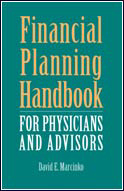
Financial Planning for Physicians and Advisors

Our Handbook

By Ann Miller RN, MHA

Managed care and government-led initiatives to control health care costs have decreased physician compensation. Physicians must now carefully plan their practices and seek financial security in a manner that is markedly different from other professionals. To do so, physicians and their advisors must be well informed about the growing range of financial planning options to choose the course that balances risk, cost, time horizon, outcome and their own personal economic style. This innovative guide confronts the reality that personal financial planning for physicians is decidedly more complex than it is in other professions.

Financial Planning for Physicians and Advisors

This handbook describes a personal financial planning program to help doctors avoid the perils of harsh economic sacrifice. It outlines how to select a knowledgeable financial advisor and develop a comprehensive personal financial plan, and includes important sections on: insurance and risk management, asset diversification and modern portfolio construction, income tax and retirement planning, and succession and estate planning. When fully implemented with a professional’s assistance, this book will help physicians and their financial advisors develop an effective long-term financial plan.

Assessment

http://www.jblearning.com/catalog/0763745790/

Conclusion

And so, your thoughts and comments on this ME-P are appreciated. Be the first to review this text. Feel free to review our top-left column, and top-right sidebar materials, links, URLs and related websites, too. Then, subscribe to the ME-P. It is fast, free and secure.

Speaker: If you need a moderator or speaker for an upcoming event, Dr. David E. Marcinko; MBA – Publisher-in-Chief of the Medical Executive-Post – is available for seminar or speaking engagements. Contact: MarcinkoAdvisors@msn.com

Get our Widget: Get this widget!

Our Other Print Books and Related Information Sources:

Practice Management: http://www.springerpub.com/prod.aspx?prod_id=23759

Physician Financial Planning: http://www.jbpub.com/catalog/0763745790

Medical Risk Management: http://www.jbpub.com/catalog/9780763733421

Healthcare Organizations: www.HealthcareFinancials.com

Physician Advisors: www.CertifiedMedicalPlanner.com

Subscribe Now: Did you like this Medical Executive-Post, or find it helpful, interesting and informative? Want to get the latest ME-Ps delivered to your email box each morning? Just subscribe using the link below. You can unsubscribe at any time. Security is assured.

Link: http://feeds.feedburner.com/HealthcareFinancialsthePostForcxos

Sponsors Welcomed: And, credible sponsors and like-minded advertisers are always welcomed.

Link: https://healthcarefinancials.wordpress.com/2007/11/11/advertise

Product Details  Product Details

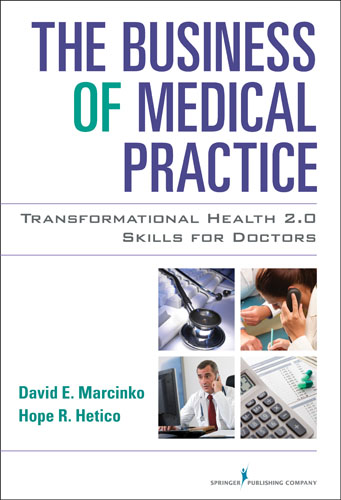
The Business of Medical Practice [3rd edition]

ADVERTISEMENT

Transformational Health 2.0 Skills for Doctors

By Ann Miller; RN MHA

[Executive Director]

Revised and updated to include the most current information on healthcare administration, the Third Edition of The Business of Medical Practice is an essential business tool for doctors, nurses, and healthcare administrators; management and business consultants; accountants; and medical, dental, podiatry, business, and healthcare administration graduates, managers, and doctoral students.

Journalistic Style

Written in plain language using non-technical jargon, the text presents a comprehensive and progressive discussion of management and operation strategies. It integrates various medical practice business disciplines-from finance to marketing to the strategic management sciences-to improve patient outcomes and achieve best practices in the healthcare administration field.

Returning Contributors

  • Dr. Gary L. Bode; MSA, CPA, CMP™ [Hon]
  • Render S. Davis; MHA, CHE
  • Dr. Charles F. Fenton III; FACFAS, Esquire
  • Eric Galtress
  • Hope R. Hetico; RN, MHA, CMP™
  • Carolyn Merriman; FRSA
  • Dr. Brent A. Metfessel; MS
  • Rachel Pentin-Maki, RN, MHA, CMP[Hon]
  • Eugene Schmuckler; PhD, MBA, CTS
  • Patricia A. Trites; MPA, CHBC, CMP[Hon]

Exciting New Thought-Leaders

And, we seek to breathe additional diversity into this work with these new contributing authors:

  • Suzanne R. Dewey; MBA
  • Dr. Brian J. Knabe; CMP™
  • Parin Kothari; MBA
  • Mario Moussa; PhD, MBA
  • Shahid N. Shah; MS
  • Susan Theuns; PA-C
  • Jennifer Tomasik; MS

Topic Content and Chapters

With 37 chapters, 512 pages, and contributions by a world-class team of expert authors, this new edition – under the direction of Chief Editor Dr. David Edward Marcinko MBA – covers brand new information such as this partial list demonstrates:

  • Web 2.0 Technologies Impact on the Healthcare Industry
  • Office Location, Logistics, Layout and Execution
  • Internal Office Controls for Preventing Waste, Fraud and Abuse
  • Direct-Concierge Medicine and Niche Providers
  • Medical Workplace Violence and Sexual Harassment
  • Office Financial Statements and Analysis
  • Human Resources, Hiring, Firing and Office Staffing
  • Healthcare Marketing, Advertising, and Public Relations
  • Health Economics, Cost and Practice Managerial Accounting
  • Mico-Medical Practice Business Models
  • Incurred but Not Reported [IBNR] Healthcare Claims
  • Revenue Management, Coding and the Cash Conversion Cycle
  • Medical Professional Social Media and Collaborative patient care
  • Healthcare Compliance and Health Law Policies
  • The USA PATRIOT and SAR-BOX Acts
  • Physician Leadership, Communication, and Career Development
  • Patient Service Management and CRM + [plus]
  • Physician Compensation, Micro-Capitation with P-4-P Trend Analysis
  • Office Financial Statements and Analysis
  • Human Resources, Hiring, Firing and Office Staffing
  • Healthcare Marketing, Advertising, and Public Relations
  • EHRs, Mobile IT systems, Medical Devices, SaaS and Cloud Computing
  • Medical Ethics, Participatory Care and Moral Philosophy
  • Health Macro and Micro Economics and Finance
  • Medical Practice Sales and Succession Planning
  • Next-generation Physician Leadership
  • Obama Care American Recovery and Reinvestment Act [ARRA and HITECH]
  • And so much more!

“Live” Website Companion

The “live” online companion for this print textbook is: www.BusinessofMedicalPractice.com

Assessment

So, give em’ a click and tell us what you think.  Be the first to review this book.

Pre-Release Orders Here: www.springerpub.com/shoppingcart

Conclusion

Your thoughts and comments on this ME-P are appreciated. Feel free to review our top-left column, and top-right sidebar materials, links, URLs and related websites, too. Then, subscribe to the ME-P. It is fast, free and secure.

Link: http://feeds.feedburner.com/HealthcareFinancialsthePostForcxos

Speaker: If you need a moderator or speaker for an upcoming event, Dr. David E. Marcinko; MBA – Publisher-in-Chief of the Medical Executive-Post – is available for seminar or speaking engagements. Contact: MarcinkoAdvisors@msn.com

OUR OTHER PRINT BOOKS AND RELATED INFORMATION SOURCES:

Product DetailsProduct DetailsProduct Details

More on the Meaningful Use of eMRs

Join Our Mailing List

Final Meaningful Use Rules Released by HHS on July 13, 2010.

[By Shahid N. Shah MS]

Link: http://shahid.shah.org

For ambulatory care practices and physicians there are about 25 objectives and measures that must be met to become a “meaningful user”. Keep in mind that meaningful use is not tied to a certified EHR alone; in fact, unless you use the EHR properly and in all the ways the government wants you to, you will not be a “meaningful user”. Don’t be fooled by EHR vendors guaranteeing that they will make you a “meaningful user” – no vendor’s software, no matter how nice, can get your staff to use the software in the way the government wants. You, as the CIO of your practice, are the only one that can guarantee that. In fact, you don’t even need an EHR from a vendor to meet the requirements – you can even roll your own, use open source, or find any other means. But, in general, as long as you can attest and send data to the government that they require you can do it in any way that you want. Be aware that some unscrupulous vendors are scaring practices and making promises that they cannot keep.

Final MU Rules

The final Meaningful Use (MU) Rule was published by HHS on July 13, 2010. It defines 24 objectives for and measures eligible hospitals that could be met to become a meaningful user and qualify for incentive funding. There is a “core set” that must be met by all institutions and a “menu set” of from which organizations must implement at least 5 objectives.

Core Set Objectives

These are the “core set” of 14 objectives that must be met by all institutions and a “menu set” of 10 from which organizations must implement at least 5 objectives (at least 1 public health objective must be chosen from that set).

  1. Use Computer Provider Order Entry (CPOE).
  2. Implement drug-drug, drug-allergy, and drug-formulary checks.
  3. Record demographics.
  4. Implement one clinical decision support rule.
  5. Maintain a problem list of current and active Dxs based on ICD-9-CM or SNOMED CT.
  6. Maintain active medication list.
  7. Maintain active medication allergy list.
  8. Record and chart changes in vital signs.
  9. Record smoking status for patients 13 years or older.
  10. Report hospital clinical quality measures to CMS or States.
  11. Provide patients with an electronic copy of their health information, upon request.
  12. Provide patients an e-copy of discharge instructions at time of discharge, upon request.
  13. Exchange key clinical e-information among providers and patient-authorized entities.
  14. Protect electronic health information.

Menu Set Objectives

These are the “menu set” of 10 objectives from which organizations must implement at least 5. At least one public health objective must be chosen from this set as well (numbers 8, 9, or 10).

  1. Drug-formulary checks.
  2. Record advanced directives for patients 65 years or older.
  3. Incorporate clinical lab test results as structured data.
  4. Generate lists of patients by specific conditions.
  5. Use certified eHR technology to identify patient-specific education resources and provide to patient, if appropriate.
  6. Medication reconciliation.
  7. Summary of care record for each transition of care/referrals.
  8. Capability to submit electronic data to immunization registries/systems.
  9. Capability to provide electronic submission of reportable lab results to public health agencies.
  10. Capability to provide electronic syndromic surveillance data to public health agencies.

Assessment

As can be seen in the link below, the Office of the National Coordinator for Healthcare IT (ONCHIT) is a component of the Department of Health and Human Services (HHS). ONCHIT, usually abbreviated just ONC, is the principal policy group of the Federal Government that defines and manages NHIN.

  • ONC is responsible for coordinating with the Department of Commerce’s National Institute of Standards and Technology (NIST) on the specifications for the NHIN standards.
  • The HIT Policy and HIT Standards Committees are the working groups that advise ONC on what to put in the standards.
  • NIST is responsible for coming up with the test materials (assertions, procedures, methods, tools, data, and so on) that will be used to certify working systems.

Conclusion

Your thoughts and comments on this ME-P are appreciated. Feel free to review our top-left column, and top-right sidebar materials, links, URLs and related websites, too. Then, subscribe to the ME-P. It is fast, free and secure.

Speaker: If you need a moderator or speaker for an upcoming event, Dr. David E. Marcinko; MBA – Publisher-in-Chief of the Medical Executive-Post – is available for seminar or speaking engagements. Contact: MarcinkoAdvisors@msn.com

OUR OTHER PRINT BOOKS AND RELATED INFORMATION SOURCES:

Product Details 

Thomas Jefferson and ADA Sentiment

A Book Review …  and More!

By Darrell K. Pruitt; DDS

I’m currently reading “American Sphinx – The Character of Thomas Jefferson” by Joseph J. Ellis (1998). According to Ellis, Jefferson was often accused of plagiarism – sometimes even for lifting quotes from his own work. I think if the gifted writer were technically guilty of such a crime, he arguably had forgotten the origin of the “stolen” ideas – much like a composer who unwittingly copies a catchy riff from an obscure song that emerges years after being devoured.

Answering Critics 

Ellis offers this as Jefferson’s standard answer to his critics:

“’Neither aiming at originality of principle or sentiment, nor yet copied from any particular and previous writing,’ he explained, he drew his ideas from ‘the harmonizing sentiments of the day, whether expressed in letters, printed essays or in the elementary books of pubic right, as Aristotle, Cicero, Locke, Sidney, etc.’”

We are what we eat.

Not Anonymous

On my good days, I like to compare myself with great people who successfully represented others’ interests in the same spirit as Hippocrates. Like Jefferson, I concentrate sentiment, but in looser wrapped packages. Even though I also cannot always claim authorship of my ideas, like Jefferson, I’m not anonymous.

———————

Wake up, @ADANews. Did you think I was going to somehow disappear? It is probably discouraging to know that I can keep this up for years.

But I don’t think that is necessary. You will surrender soon, ADA, because you are defenseless. You’re policy of silence has you trapped.

Your bureaucracy is caving in on you. The only way out is to renew the ADA’s pledge to be transparent with members. This just has to be.

You can blame one unprofessional ADA member for your PR crisis, and I enthusiastically invite and cherish all blame as a badge of honor.

Yesterday I pointed out that my letter to the editor of the JADA that was never acknowledged suddenly became ME-P’s 8th most popular piece.

ME-P has 221,223 readers … and the JADA? My article had been dormant for months. Know what happened? I posted its link, like this:

Link: https://medicalexecutivepost.com/2009/07/28/journal-of-the-american-dental-association-letter-to-the-editor/ 

I just looked at the article’s rank it popularity. It has climbed to #3. It’s not just me. You are being voted out right now, ADA leaders.

Proots   

Join Our Mailing List

Did you know that Thomas Jefferson, the author of the Declaration of Independence, ostensibly risks being discounted in today’s history books because scientists discovered he marked out “subjects” and replaced it with “citizens” in the Declaration? That’s petty. You should see some of the nouns, adjectives and verbs I reject in early drafts – sometimes all three derivatives of the same word.

Assessment

It’s my opinion that it is Thomas Jefferson’s religious beliefs that’s keeping vocal conservative activists employed in a bad economy – not his alleged desire to be king. A few, loud, slow-thinkers also shop the lame argument that Obama isn’t a US citizen. Let’s move on, already. Regardless how one feels about the man, citizenship is simply a disingenuous dead-end argument. That’s what I think. But that’s an entirely different rant that will one day get a whole new class of disagreeable people pissed at me. Can’t wait.

Conclusion

Feel free to comment and review our top-left column, and top-right sidebar materials, links, URLs and related websites, too. Then, be sure to subscribe to the ME-P. It is fast, free and secure.

Get our Widget: Get this widget!

Our Other Print Books and Related Information Sources:

Practice Management: http://www.springerpub.com/prod.aspx?prod_id=23759

Physician Financial Planning: http://www.jbpub.com/catalog/0763745790

Medical Risk Management: http://www.jbpub.com/catalog/9780763733421

Healthcare Organizations: www.HealthcareFinancials.com

Physician Advisors: www.CertifiedMedicalPlanner.com

Subscribe Now: Did you like this Medical Executive-Post, or find it helpful, interesting and informative? Want to get the latest ME-Ps delivered to your email box each morning? Just subscribe using the link below. You can unsubscribe at any time. Security is assured.

Link: http://feeds.feedburner.com/HealthcareFinancialsthePostForcxos

Sponsors Welcomed: And, credible sponsors and like-minded advertisers are always welcomed.

Link: https://healthcarefinancials.wordpress.com/2007/11/11/advertise 

Book Review of “Cyber War”

Join Our Mailing List

A Book Review 

[By Darrell K. Pruitt; DDS]

I’m reading “Cyber War” by Richard A. Clark. He served the Pentagon, the State Department, and the National Security Council under Presidents Reagan, Bush, Clinton and Bush. It’s sobering to learn that North Korea has already successfully pulled cyber-war tricks against a vulnerable US. But; to learn that North Korea doesn’t have any Internet vulnerabilities is frightening.

China

And what about China – want to see sophistication? Clark says that within the last year, Canadians discovered a highly sophisticated program they named “GhostNet.” It had infected over an estimated 1300 computers at several countries’ embassies around the world. Get this: The program had the capability to remotely turn on a computer’s camera and microphone without alerting the user and to send the information back to China. So how could such capabilities affect you and me?

GhostNet 

GhostNet had been working for almost 2 years before it was discovered. About the same time, US Intelligence leaked news that Chinese hackers had penetrated the US Power grid and left behind programs that can shut the grid down. Clark suggests that the Chinese intended us to find their program as a deterrent to our national will to intervene if China should find it necessary to annex Taiwan or even the Spratly Islands in the South China Sea – where the reefs shelter some of the largest remaining stocks of fish in the world, in addition to undeveloped oil and gas reserves that rival Kuwait’s.

Gates Speaks

Clark says that according to Defense Secretary Robert Gates, cyber attacks “could threaten the United States’ primary means to project its power and help its allies in the Pacific.”  Clark adds, “The problem is, however, that deterrence only works if the other side is listening. U.S. leaders may not have heard, or fully understood, what Beijing was trying to say. The U.S. has done little or nothing to fix the vulnerabilities in its power grid or in other civilian networks.”

Assessment

If they shut down our power grids, it will be chaos. Are we as a nation flying far too fast into the cloud?

What does this say about eMRs and eHRs, regional health information exchanges, cloud computing, and related health 2.0 initiatives and/or information technology? Sobering thoughts for the weekend.

Conclusion

Your thoughts and comments on this ME-P are appreciated. Feel free to review our top-left column, and top-right sidebar materials, links, URLs and related websites, too. Then, subscribe to the ME-P. It is fast, free and secure.

Speaker: If you need a moderator or speaker for an upcoming event, Dr. David E. Marcinko; MBA – Publisher-in-Chief of the Medical Executive-Post – is available for seminar or speaking engagements. Contact: MarcinkoAdvisors@msn.com

OUR OTHER PRINT BOOKS AND RELATED INFORMATION SOURCES:

 Product DetailsProduct Details


“The Vanishing Oath”

A Documentary Film

By Ryan Flesher, MD

Join Our Mailing List

Reaching for a patient chart in the ER one night, a young physician is suddenly overwhelmed by a strange mixture of panic, anger and fear. But, such emotions are unacceptable for a doctor.

A Self-Loathing Doctor -OR- Modern Realist? 

Tearing down a hallway, he slips into a room and as the door clicks shut, he slumps to the floor. The truth is wrenching: he hates being a doctor. In the burial ground of his emotions he unearths the regret, guilt, confusion that he feels. Like a sudden rainstorm, years of anguish and disillusionment come pelting downward. Emotions are a dangerous mix of chemicals when buried. Forcing himself to a standing position he returns to his patients, his priority. There is no going back from a defining moment; one cannot un-ring a bell.

“Is there something wrong with me?” he wonders. It is a burning, compelling question that takes him across the globe and back to answer. 

[picapp align=”none” wrap=”false” link=”term=emergency+room&iid=6302230″ src=”4/9/7/b/Paramedics_taking_patient_e10b.jpg?adImageId=12808257&imageId=6302230″ width=”380″ height=”251″ /]

An Insider’s View

This first-ever glimpse takes us into the raw emotions that doctors hold beneath the white coats. Ultimately, he realizes that the untrained hands of corporate executives are health care’s decision makers and a doctor’s suffering is considered intangible. With no heart or vision, the mission is to profit off the backs of doctors and patients.

Physicians are quietly leaving clinical medicine and the momentum is growing. If the attack upon those who heal us does not end … the foundation will collapse. But, from which floor does one fall?

Assessment

This unique film, from an inside view rarely seen, examines the reality of modern medical practice and the obstacles to care that complicate the path to great care.

http://drwes.blogspot.com/2010/05/vanishing-oath-review.html

Conclusion

And so, your thoughts and comments on this ME-P are appreciated. If you view the video, please tell us what you think?

Link: http://www.amazon.com/Vanishing-Oath-Feature-Film-DVD/dp/B003KVMULI/ref=sr_1_1?ie=UTF8&s=dvd&qid=1273494090&sr=8-1

Feel free to review our top-left column, and top-right sidebar materials, links, URLs and related websites, too. Then, be sure to subscribe. It is fast, free and secure.

Link: https://healthcarefinancials.wordpress.com/2007/11/11/advertise

Speaker: If you need a moderator or speaker for an upcoming event, Dr. David E. Marcinko; MBA – Publisher-in-Chief of the Medical Executive-Post – is available for seminar or speaking engagements. Contact: MarcinkoAdvisors@msn.com

Get our Widget: Get this widget!

Our Other Print Books and Related Information Sources:

Practice Management: http://www.springerpub.com/prod.aspx?prod_id=23759

Physician Financial Planning: http://www.jbpub.com/catalog/0763745790

Medical Risk Management: http://www.jbpub.com/catalog/9780763733421

Healthcare Organizations: www.HealthcareFinancials.com

Health Administration Terms: www.HealthDictionarySeries.com

Physician Advisors: www.CertifiedMedicalPlanner.com

Subscribe Now: Did you like this Medical Executive-Post, or find it helpful, interesting and informative? Want to get the latest ME-Ps delivered to your email box each morning? Just subscribe using the link below. You can unsubscribe at any time. Security is assured.

Link: http://feeds.feedburner.com/HealthcareFinancialsthePostForcxos

Sponsors Welcomed

And, credible sponsors and like-minded advertisers are always welcomed.

Link: https://healthcarefinancials.wordpress.com/2007/11/11/advertise

About the Managed Care Digest Series

Where Information Becomes Intelligence™

By Staff Reporters

The sanofi-aventis Managed Care Digest Series® is part of their continuing commitment to provide the healthcare industrial complex with the latest and most essential information on the evolution of medical care.

The Series, available online or in print, provides key benchmarking data that can help assess value, control costs, and develop business strategies.

Assessment

According to ME-P Publisher-in-Chief, Dr. David Edward Marcinko:

I have been a user of the Managed Care Digest series for more than a decade. The depth and breadth of information is astounding. I especially appreciate the data driven and graphical interface nature of the publication; as well as its’ cost—free!

I suggest all medical professionals, healthcare economists, business experts and financial advisors – read it and reap!

And so, give em’ a click www.ManagedCareDigest.com and tell us what you think?

Conclusion

Feel free to review our top-left column, and top-right sidebar materials, links, URLs and related websites, too. Then, be sure to subscribe to the ME-P. It is fast, free and secure.

Link: http://feeds.feedburner.com/HealthcareFinancialsthePostForcxos

Get our Widget: Get this widget!

Our Other Print Books and Related Information Sources:

Practice Management: http://www.springerpub.com/prod.aspx?prod_id=23759

Physician Financial Planning: http://www.jbpub.com/catalog/0763745790

Medical Risk Management: http://www.jbpub.com/catalog/9780763733421

Healthcare Organizations: www.HealthcareFinancials.com

Health Administration Terms: www.HealthDictionarySeries.com

Physician Advisors: www.CertifiedMedicalPlanner.com

Subscribe Now: Did you like this Medical Executive-Post, or find it helpful, interesting and informative? Want to get the latest ME-Ps delivered to your email box each morning? Just subscribe using the link below. You can unsubscribe at any time. Security is assured.

Link: http://feeds.feedburner.com/HealthcareFinancialsthePostForcxos

Healthcare Case Models CD-ROM

ADVERTISEMENT

Office Case Models in Healthcare Business 

[A Practice Improvement Compendium]

In Medical Practice? – Buy this CD-ROM

Regardless of specialty, most doctors quickly realize there are few case model guidelines available to steer them through the day-to-day management maze. One solution is to discuss best-of-breed practices with leading practitioners in order to discern what successful doctors are doing [mentoring concept].

The Problem

Of course, this is a costly and time consuming process with no criteria for success. Today, mentors are even loath to assist as competitive advantage can be lost.

A Solution

A better solution may be to use our Case Models in Healthcare [A Practice Improvement Compendium] to appreciate real-world practice situations and develop personalized approaches for an appropriate course of action. These techniques are so powerful that many business schools center their teaching on them. Case studies have been used for one hundred years because of their practical descriptions of actual situations.

Typically, information is presented about a practice’s patients, markets, competition, financial structure, service volumes, management, employees and other factors affecting success. The length of a case study may range from a few pages to 30, or more. And, our Case Models in Healthcare [A Practice Improvement Compendium] is suitable for medical practices, clinics, hospitals and other emerging healthcare entities.

We use three different methods to enhance your knowledge and launch your practice’s success: 

  • Prepared case-specific questions, with detailed answers, to illustrate underlying practice management concepts.
  • Problem-solving analysis, styled after Harvard Business School, to learn intuitive skills for resolving various practice issues.
  • A “no-answer” strategic planning approach to develop your ability to analyze a complex situation, generate a variety of possible strategies, and select the “best” from multiple self-generated solutions. 

 Case Model Topics

We give you more than 25 healthcare administration cases, covering the enterprise wide practice management ecosystem, to champion your financial success: 

  1. Market Competition
  2. Operations Management
  3. Capital Formation
  4. Cash Flow Management
  5. Revenue Analysis
  6. Hybrid Costing
  7. OSHA Model
  8. Economic Order Quantity Costing
  9. USA Patriot Act
  10. Mixed Costing
  11. Managerial Accounting
  12. Cost Volume Profit Analysis
  13. Insurance Contract Analysis
  14. Incurred but Not Reported Claims
  15. Accounts Receivable
  16. Cost Accounting
  17. Medical Contract Negotiations
  18. Workplace Violence
  19. HIPAA
  20. Sarbanes-Oxley Act
  21. Medicare Compliance
  22. Health Information Technology
  23. IRS Form 990
  24. Hospital Valuations
  25. HIT Security
  26. Medical Endowment Funds; and others.

 Bonus Features

 We also include at no additional charge: 

1. Glossary of Insurance and Managed Care

2. Glossary of Health Economics and Finance

3. Glossary of Health IT and Security

To help avoid administrative worries, you need Case Models in Healthcare [A Practice Improvement Compendium].

Sample Case Model: WV 1 

Promo Letter: Letterhead Case Models Compendium

Testimonial:

“I thought about going back to business school to enhance my practice management knowledge – but now I have these case models that help solve many office problems and assist in difficult administrative situations.”  [Dr. Michael Lampkin, MD] 

Product Specifications: Adobe Acrobat Reader® required – both Mac and PC compatible. And, the handsome, sturdy package makes the CD-ROM an ideal gift for the recent graduate, mid-career doctor or mature medical practitioner; office manager, CXO or healthcare administrator.

TO ORDER: Please send your check or money order [for the CD] to: iMBA Inc, Suite #5901 Wilbanks Drive, Norcross, GA 30092-1141 [770.448.0769] or MarcinkoAdvisors@msn.com

OR – you may order electronically right here: www.e-junkie.com/ecom/gb.php?c=cart&i=641934&cl=109140&ejc=2

Only: $ 99.00 USD [includes SPH & tax]. 

Safe Patients, Smart Hospitals [Book Review]

Join Our Mailing List

How One Doctor’s Checklist Can Help Us Change Health Care from the Inside Out

[By Staff Reporters]

Improving health care is a priority for all Americans, but it’s a daunting subject.

New Book

In this new book, Dr. Peter Pronovost makes reform relatable, easy to understand, and inspiring. With opinions and anecdotal evidence from patients, health care professionals, and Dr. Pronovost’s own experience, as well as comprehensive research on medical procedures and policies, Safe Patients, Smart Hospitals shows how simple steps can fix our hospitals and improve patient care.

About the Authors

Peter Pronovost PhD, MD is a professor at Johns Hopkins University School of Medicine and serves as medical director for the Johns Hopkins Center for Innovation in Quality Patient Care.

Eric Vohr was formerly the assistant director of media relations at Johns Hopkins University School of Medicine and he teaches technical writing at Johns Hopkins.

Assessment

http://www.amazon.com/Safe-Patients-Smart-Hospitals-Checklist/dp/159463064X/ref=sr_1_3?ie=UTF8&s=books&qid=1266790932&sr=1-3

Conclusion

Your thoughts and comments on this ME-P are appreciated. Feel free to review our top-left column, and top-right sidebar materials, links, URLs and related websites, too. Then, subscribe to the ME-P. It is fast, free and secure.

Speaker: If you need a moderator or speaker for an upcoming event, Dr. David E. Marcinko; MBA – Publisher-in-Chief of the Medical Executive-Post – is available for seminar or speaking engagements. Contact: MarcinkoAdvisors@msn.com

OUR OTHER PRINT BOOKS AND RELATED INFORMATION SOURCES:

Product DetailsProduct DetailsProduct Details

Hank Paulson’s Book – Reviewed

Behind the Scenes, GE’s Top Executive Confided Credit Woes

By Staff Reporters

As the “ticking” financial crisis worsened toward the end of 2008, CEO Jeffrey Immelt and other leaders at General Electric repeatedly assured the public that there was no need to worry about the company’s ability to access credit markets and refinance its massive debts as they came due.

Time line: http://www.propublica.org/special/paulson-ge-timeline

Assessment – The Ticking Clock

But, in private conversations that alarmed Treasury Secretary Henry Paulson, Immelt laid out a different picture of GE’s credit situation, according to Paulson’s new book about the crisis.

Link: http://www.propublica.org/feature/paulson-general-electric-immelt-financial-crisis-022010

Source: First co-published with The Washington Post and ProPublica [February 5, 2010 9:50 pm EST].

Conclusion

And so, your thoughts and comments are appreciated. Give this book a read and tell us what you think? Then, be sure to subscribe to the ME-P. It is fast, free and secure.

Link: http://feeds.feedburner.com/HealthcareFinancialsthePostForcxos

Get our Widget: Get this widget!

Our Other Print Books and Related Information Sources:

Practice Management: http://www.springerpub.com/prod.aspx?prod_id=23759

Physician Financial Planning: http://www.jbpub.com/catalog/0763745790

Medical Risk Management: http://www.jbpub.com/catalog/9780763733421

Healthcare Organizations: www.HealthcareFinancials.com

Health Administration Terms: www.HealthDictionarySeries.com

Physician Advisors: www.CertifiedMedicalPlanner.com

Healthcare Organizations [A Journal on CD-ROM]

Journal of Financial Management Strategies

By Ann Miller; RN, MHA

[Executive-Director]

ADVERTISEMENT

www.HealthcareFinancials.com

All hospitals, healthcare systems and organizations use a variety of teaching, educational and didactic techniques to bring value to patients, payers, providers, governments and third-party intermediaries. This Intellectual Capital is the sum total of all knowledge and expertise used to serve society and stakeholders. Leaders, CXOs and employees provide almost all of this Intellectual Capital.

Our Beliefs 

We believe that Healthcare Organizations: [Journal of Financial Management Strategies] adds to this Intellectual Capital by guiding you, empowering your organization, and creating value for your patients, employees, investors and clients by bridging the intersection of medical mission and profit margin.

Our Vision

To be the pre-eminent interpretive guide for financial management strategies, and the enduring business analytics guide for all healthcare organizations; and to promote related enterprise-wide health economics initiatives.

Our Mission

Healthcare Organizations: [Journal of Financial Management Strategies] promotes and integrates academic and applied research, and serves as a multi-disciplined forum for the dissemination of economic, financial, business, management, IT and administration information to all healthcare organizations; both emerging and mature.

Join Our Mailing List

Assessment

Our goal is: “Bridging the Intersection of Medical Mission and Profit Margin”

Conclusion                                               

So, feel free to give em’ a click and be sure to review our top-left column, and top-right sidebar materials, links, URLs and related websites, too. Then, subscribe to the ME-P. It is fast, free and secure.

Link: http://feeds.feedburner.com/HealthcareFinancialsthePostForcxos

Speaker: If you need a moderator or speaker for an upcoming event, Dr. David E. Marcinko; MBA – Publisher-in-Chief of the Executive-Post – is available for seminar or speaking engagements. Contact: MarcinkoAdvisors@msn.com 

Get our Widget: Get this widget!

Our Other Print Books and Related Information Sources:

Practice Management: http://www.springerpub.com/prod.aspx?prod_id=23759

Physician Financial Planning: http://www.jbpub.com/catalog/0763745790

Medical Risk Management: http://www.jbpub.com/catalog/9780763733421

Healthcare Organizations: www.HealthcareFinancials.com

Health Administration Terms: www.HealthDictionarySeries.com

Physician Advisors: www.CertifiedMedicalPlanner.com

Subscribe Now: Did you like this Medical Executive-Post, or find it helpful, interesting and informative? Want to get the latest ME-Ps delivered to your email box each morning? Just subscribe using the link below. You can unsubscribe at any time. Security is assured.

Link: http://feeds.feedburner.com/HealthcareFinancialsthePostForcxos

Sponsors Welcomed

And, credible sponsors and like-minded advertisers are always welcomed.

Link: https://healthcarefinancials.wordpress.com/2007/11/11/advertise

A Quality Story all Doctors and Patients Should Re-Read

[Mis] Adventures in Cardiology

Reposted by Ann Miller RN MHA

[Executive Director]

According to the author of this re-posted e-journal, Johns Hopkins Medicine has a long tradition of prioritizing patients, and striving for the bottom rung that are the anonymous poor.

And, many agree this is true. In fact, our Publisher-in-Chief grew up in Baltimore Maryland and has written about this venerable institution on the ME-P before.

Outliers

If, for example, you catch a bullet on a Baltimore street corner, or your mother presents you at the ER as a feverish welfare child, then it us open season for the medical students, well meaning as they may be. They can practice on you because if  their actions result in an adverse outcome—which is to say that if you are mangled or killed—nobody will question said outcome, precisely because … you are a nobody.

At the other end of the spectrum are wealthy and prominent patients, who get treated by doctors who have already learned what not to do from the mistakes inflicted upon the lower classes.

Of … Quality Medical Care

However, sometimes mistakes happen, and medical errors do occur as we all are human. But, what is reported to have happened to one journalists’ wife – Pam – at Johns Hopkins Hospital in March of 2002 is beyond the pale.

As a middle class citizen, she landed somewhere in the middle of the bell shaped curve. Maybe she got snookered by all the hype from US News into thinking that she was going to be treated by the best doctor at “The Best Hospital in America” … You decide.

Assessment

This is the story of what happened to Pam; as reported by her journalist husband Don.

Link: http://adventuresincardiology.com/

Conclusion

Indignation Index: 96

We trust medical quality guru Bob Wachter MD will opine. And so, your additional thoughts and comments on this ME-Pare also appreciated. Feel free to review our top-left column, and top-right sidebar materials, links, URLs and related websites, too. Then, be sure to subscribe to the ME-P. It is fast, free and secure.

Subscribe Now: Did you like this Medical Executive-Post, or find it helpful, interesting and informative? Want to get the latest ME-Ps delivered to your email box each morning? Just subscribe using the link below. You can unsubscribe at any time. Security is assured.

Link: http://feeds.feedburner.com/HealthcareFinancialsthePostForcxos

Speaker: If you need a moderator or speaker for an upcoming event, Dr. David E. Marcinko; MBA – Publisher-in-Chief of the Medical Executive-Post – is available for seminar or speaking engagements. Contact: MarcinkoAdvisors@msn.com

OUR OTHER PRINT BOOKS AND RELATED INFORMATION SOURCES:


Product DetailsProduct Details

Product Details

Meet Shahid N. Shah MS [Our Newest IT Thought-Leader]

Join Our Mailing List

And Textbook Contributor, Too!

By Ann Miller; RN, MHA

[Executive Director]

Shahid N. Shah is an internationally recognized healthcare thought-leader across the Internet. He is a consultant to various federal agencies on technology matters and winner of Federal Computer Week’s coveted “Fed 100” Award, in 2009.

Professional Career

Over a twenty year career, Shahid built multiple clinical solutions and helped design-deploy an electronic health record solution for the American Red Cross and two web-based eMRs used by hundreds of physicians with many large groupware and collaboration sites. As ex-CTO for a billion dollar division of CardinalHealth, he helped design advanced clinical interfaces for medical devices and hospitals. Mr. Shah is senior technology strategy advisor to NIH’s SBIR/STTR program helping small businesses commercialize healthcare applications.

He runs four successful blogs: At http://shahid.shah.org he writes about architecture issues; at http://www.healthcareguy.com he provides valuable insights on applying technology in health care; at http://www.federalarchitect.com he advises senior federal technologists; and at http://www.hitsphere.com he gives a glimpse of HIT as an aggregator.

Industry Awards

Mr. Shah is a Microsoft MVP (Solutions Architect) Award Winner for 2007, and a Microsoft MVP (Solutions Architect) Award Winner for 2006. He also served as a HIMSS Enterprise IT Committee Member. Mr. Shah received a BS in computer science from the Pennsylvania State University and MS in Technology Management from the University of Maryland.

Assessment

Shahid is also contributing the chapter on HIT in the third edition of our book “Business of Medical Practice” [Transformational Health 2.0 Profit Maximization for Savvy Doctors], now in-progress www.BusinessofMedicalPractice.com

Channel Surfing

Have you visited our other topic channels? Established to facilitate idea exchange and link our community together, the value of these topics is dependent upon your input. Please take a minute to visit. And, to prevent that annoying spam, we ask that you register.

Link: http://feeds.feedburner.com/HealthcareFinancialsthePostForcxos

Conclusion

Your thoughts and comments on this ME-P are appreciated. Feel free to review our top-left column, and top-right sidebar materials, links, URLs and related websites, too. Then, subscribe to the ME-P. It is fast, free and secure.

Speaker: If you need a moderator or speaker for an upcoming event, Dr. David E. Marcinko; MBA – Publisher-in-Chief of the Medical Executive-Post – is available for seminar or speaking engagements. Contact: MarcinkoAdvisors@msn.com

OUR OTHER PRINT BOOKS AND RELATED INFORMATION SOURCES:

Product Details

New ME-P Features in Review

Quick Links to Innovation and Integration

By Ann Miller; RN, MHA

[Executive Director]

IntegrationRecently we have added several new features to the Medical Executive-Post. And so, below is an aggregated and integrated list, with hot links, for your easy access and review.

We trust you will use, and enjoy them, frequently.


ME-P Features:

1. Our photo sharing feature called ME-Pr:

Link: https://healthcarefinancials.wordpress.com/2009/10/01/me-pr-photo-sharing-examples-2009/

2. ME-P widget for blogs, wikis and websites.

Link: https://healthcarefinancials.wordpress.com/2009/10/10/get-the-new-me-p-widget/

3. Media advisory service for the ME-P.

Link: https://healthcarefinancials.wordpress.com/2009/10/11/me-p-media-advisory-services/

4. Consultations and referal service.

Link: https://healthcarefinancials.wordpress.com/schedule-a-consultation/

5. Speaker’s bureau.

Link: https://healthcarefinancials.wordpress.com/dr-david-marcinko%e2%80%99s-bookings/

6. Annual doctor’s survey.

Link: https://healthcarefinancials.wordpress.com/media-kit/participate-in-annual-survey/

7. Textbooks, dictionaries and printed handbooks.

Link: https://healthcarefinancials.wordpress.com/2009/10/02/imba-inc-books-texts-and-dictionaries/

8. ME-P blog rating and ranking system.

Link: https://healthcarefinancials.wordpress.com/2009/10/06/our-new-me-p-rating-system/

9. Editorial complaints and publishing corrections.

Link: https://healthcarefinancials.wordpress.com/2009/10/07/me-p-complaints-corrections/

10. Videos and graphic slideshows.

Link: https://healthcarefinancials.wordpress.com/category/videos/

Assessment

Give em’ a click, and tell us what you think?

Join Our Mailing List

Channel Surfing: Have you visited our other topic channels? Established to facilitate idea exchange and link our community together, the value of these topics is dependent upon your input. Please take a minute to visit. And, to prevent that annoying spam, we ask that you register.  

Conclusion

Your thoughts and comments on this ME-P are appreciated. Feel free to review our top-left column, and top-right sidebar materials, links, URLs and related websites, too. Then, subscribe to the ME-P. It is fast, free and secure.

Link: http://feeds.feedburner.com/HealthcareFinancialsthePostForcxos

Speaker: If you need a moderator or speaker for an upcoming event, Dr. David E. Marcinko; MBA – Publisher-in-Chief of the Medical Executive-Post – is available for seminar or speaking engagements. Contact: MarcinkoAdvisors@msn.com

OUR OTHER PRINT BOOKS AND RELATED INFORMATION SOURCES:

DICTIONARIES: http://www.springerpub.com/Search/marcinko
PHYSICIANS: www.MedicalBusinessAdvisors.com
PRACTICES: www.BusinessofMedicalPractice.com
HOSPITALS: http://www.crcpress.com/product/isbn/9781466558731
CLINICS: http://www.crcpress.com/product/isbn/9781439879900
BLOG: www.MedicalExecutivePost.com
FINANCE: Financial Planning for Physicians and Advisors
INSURANCE: Risk Management and Insurance Strategies for Physicians and Advisors

Become a Published Print Author with Us

Join Our Mailing List

The Business of Medical Practice [3rd Edition]

By Hope Rachel Hetico RN, MHA, CMP™

[Managing Editor]biz-book5

Dear Colleagues and ME-P Champions

As you may know, we are commencing work on the third edition of our best selling book: The Business of Medical Practice

TOC 1st: http://www.amazon.com/Business-Medical-Practice-Maximizing-Doctors/dp/0826113117/ref=sr_1_8?ie=UTF8&s=books&qid=1231111232&sr=1-8

TOC 2nd: http://www.springerpub.com/prod.aspx?prod_id=23759

Invitation to Contribute

Accordingly, we would be honored for you to consider contributing a new or revised chapter, in your area of expertise, for a low-effort but high-yield contribution. Our goal is to help physician colleagues and management executives benefit from nationally known experts, as an essential platform for their success in the healthcare industry. Many topics are still available: [health accounting; law, policy and administration; Medicare fraud and abuse; cloud computing; and finance and economics, etc].

Support Always Available

Editorial support is available, and you would enjoy increasing subject-matter notoriety, exposure and public relations in an erudite and credible fashion. As a reader, or preferably a subscriber to the ME-P, your synergy in this space may be ideal. Time line for submission of a 5,000-7,500 word chapter is ample, and in a prose writing style that is “wide, not deep.” 

A Health 2.0 Initiative

And, be sure to address health 2.0 modernity. Update chapters from the second edition are also available. 

Definition: https://healthcarefinancials.wordpress.com/2008/09/12/emerging-healthcare-20-initiatives

Assessment

Please contact me for more details [MarcinkoAdvisors@msn.com], if interested [770.448.0769]. A best selling-book is rare; while a third-edition volume even more so. Join us in this project. Regardless, we trust you will remain apostles of our core ME-P vision, “uniting medical mission and financial profit margin”, and promoting it whenever possible.

Front Matter Link: frontmatter1advancedbusinessmedicine

Channel Surfing the ME-P

Have you visited our other topic channels? Established to facilitate idea exchange and link our community together, the value of these topics is dependent upon your input. Please take a minute to visit. And, to prevent that annoying spam, we ask that you register. It is fast, free and secure.

Conclusion

Your thoughts and comments on this ME-P are appreciated. Feel free to review our top-left column, and top-right sidebar materials, links, URLs and related websites, too. Then, subscribe to the ME-P. It is fast, free and secure.

Speaker: If you need a moderator or speaker for an upcoming event, Dr. David E. Marcinko; MBA – Publisher-in-Chief of the Medical Executive-Post – is available for seminar or speaking engagements. Contact: MarcinkoAdvisors@msn.com

OUR OTHER PRINT BOOKS AND RELATED INFORMATION SOURCES:

Product Details

ME-P Media Advisory Services

Assisting our Media Colleagues and Target Professional Markets

By Ann Miller; RN, MHA

[Executive Director]Doctor's Bag

Welcome to the Medical Executive-Post. Below is a list of the services we provide to the media: 

1. Certified Medical Planners™ available for interviews or online program matriculation information and consideration www.CertifiedMedicalPlanner.com. Our CMPs™ may be available for interviews or short comments on medical management issues or health economic trends. We do our best to arrange for quick interviews to accommodate your deadlines. Current program matriculants may also available in some cases.

2. Reseach and Trends on Medical Economics and Modern Practice Management Issues: www.MedicalBusinessAdvisors.com.  We conduct ongoing research studies on healthcare financial issues, and also publish regular medical management research reports. Some research reports are available free of charge upon request; others for a modest surcharge. 

3. Pre-packaged information and content, visit: www.HealthcareFinancials.com.

4. Seminars and Speaking Engagements: www.HealthDictionarySeries.com.

5. Free ME-P blog widget: https://healthcarefinancials.wordpress.com/2009/10/10/get-the-new-me-p-widget/

Assessment

Join Our Mailing List

Dr. David Edward Marcinko, our Publisher-in-Chief, is also usually available to the traditional, electronic or new-wave media, as needed. We have a library of over 5,000 premium content pieces that you can integrate into your stories in sidebars, charts, graphs or pieces that can be published as standalone articles within your publication. To contact us about using any of the above services, please e-mail us at: MarcinkoAdvisors@msn.com

Channel Surfing

Have you visited our other topic channels? Established to facilitate idea exchange and link our community together, the value of these topics is dependent upon your input. Please take a minute to visit. And, to prevent that annoying spam, we ask that you register. 

Link: http://feeds.feedburner.com/HealthcareFinancialsthePostForcxos

Our Other Print Books and Related Information Sources:

Practice Management: http://www.springerpub.com/prod.aspx?prod_id=23759

Physician Financial Planning: http://www.jbpub.com/catalog/0763745790

Medical Risk Management: http://www.jbpub.com/catalog/9780763733421

Healthcare Organizations: www.HealthcareFinancials.com

Health Administration Terms: www.HealthDictionarySeries.com

Physician Advisors: www.CertifiedMedicalPlanner.com

Subscribe Now: Did you like this Medical Executive-Post, or find it helpful, interesting and informative? Want to get the latest ME-Ps delivered to your email box each morning? Just subscribe using the link below. You can unsubscribe at any time. Security is assured.

Link: http://feeds.feedburner.com/HealthcareFinancialsthePostForcxos

Sponsors Welcomed

And, credible sponsors and like-minded advertisers are always welcomed.

Link: https://healthcarefinancials.wordpress.com/2007/11/11/advertise

iMBA Inc Books, Texts and Dictionaries

We Feature our Own Research and Development at the ME-P

By Ann Miller; RN, MHA

[Executive Director]

Physicians Beware … the Medical Management Consultants

Product Details

Are you a doctor desperate for practice enhancement solutions, but don’t know where to turn for help?

Full article: http://oig.hhs.gov/fraud/docs/alertsandbulletins/consultants.pdf

Financial Planning … Wither On-line and Self-Advice for Physicians

Product DetailsProduct Details

Our sponsor, iMBA Inc, was created and launched in response to the frustration felt by doctors in small and mid-sized practices that dealt with top financial, brokerage and accounting firms. These non-fiduciary behemoths often prescribed costly wholesale solutions that were applicable to all, but customized to few – despite ever changing needs.

Full Article: http://www.medicalbusinessadvisors.com/quality%20of%20financial%20advice%20report.pdf

About the Comprehensive Health Dictionary Series  

Product DetailsProduct DetailsProduct Details

Each useful and up-to-date quick reference in the 3 volume comprehensive collection lists and defines more than ten thousand words, abbreviations, acronyms, slang-terms, initialisms and specialized non-clinical health terms; alphabetically.

Full Article: www.HealthDictionarySeries.com

Assessment

Join Our Mailing List 

Channel Surfing

Sponsor Link: www.MedicalBusinessAdvisors.com

Have you visited our other topic channels? Established to facilitate idea exchange and link our community together, the value of these topics is dependent upon your input. Please take a minute to visit. And, to prevent that annoying spam, we ask that you register.  

Link: http://feeds.feedburner.com/HealthcareFinancialsthePostForcxos

Get our Widget: Get this widget!

Our Other Print Books and Related Information Sources:

Practice Management: http://www.springerpub.com/prod.aspx?prod_id=23759

Physician Financial Planning: http://www.jbpub.com/catalog/0763745790

Medical Risk Management: http://www.jbpub.com/catalog/9780763733421

Healthcare Organizations: www.HealthcareFinancials.com

Health Administration Terms: www.HealthDictionarySeries.com

Physician Advisors: www.CertifiedMedicalPlanner.com

Subscribe Now: Did you like this Medical Executive-Post, or find it helpful, interesting and informative? Want to get the latest ME-Ps delivered to your email box each morning? Just subscribe using the link below. You can unsubscribe at any time. Security is assured.

Link: http://feeds.feedburner.com/HealthcareFinancialsthePostForcxos

Sponsors Welcomed

And, credible sponsors and like-minded advertisers are always welcomed.

Link: https://healthcarefinancials.wordpress.com/2007/11/11/advertise

ReThinking Medical Professional Autonomy in the Era of Obama Care

Eying Contemporary Medical Ethics in Healthcare Reform

By Render S. Davis; MSA, CHE

And, Staff Reportersbiz-book

Not so long ago, a physician’s clinical judgment was virtually unquestioned. Now with the advent of clinical pathways and case management protocols, many aspects of treatment are outlined in algorithm-based plans that allied health professionals may follow with only minimal direct input from a physician. Much about this change has been good. Physicians have been freed from much tedious routine and are better able to watch more closely for unexpected responses to treatments or unusual outcomes and then utilize their knowledge to chart an appropriate response.  

Restrictive Protocols

What is of special concern, though, is the restrictive nature of protocols in some managed care plans that may unduly limit a physician’s clinical prerogatives to address a patient’s specific needs. Such managed care plans may prove to be the ultimate bad examples of “cook book” medicine. While some may find health care and the practice of medicine an increasingly stressful and unrewarding field, others are continuing to search for ways to assure that caring, compassionate, and ethically rewarding medicine remain at the heart of our health care system.

Assessment

Link: For another opinion: http://healthcareorganizationalethics.blogspot.com/2009/09/obamas-speech-good-ethics-and-good.html

Conclusion

And so, your thoughts and comments on this Medical Executive-Post are appreciated. How does the specter of HR 3200-3400 in the healthcare reform debate impact the concept of medical autonomy and professional ethics? Feel free to review our top-left column, and top-right sidebar materials, links, URLs and related websites, too. Then, be sure to subscribe to the ME-P. It is fast, free and secure.

Link: http://feeds.feedburner.com/HealthcareFinancialsthePostForcxos

Speaker: If you need a moderator or speaker for an upcoming event, Dr. David E. Marcinko; MBA – Publisher-in-Chief of the Executive-Post – is available for seminar or speaking engagements. Contact: MarcinkoAdvisors@msn.com 

Get our Widget: Get this widget!

Our Other Print Books and Related Information Sources:

Practice Management: http://www.springerpub.com/prod.aspx?prod_id=23759

Physician Financial Planning: http://www.jbpub.com/catalog/0763745790

Medical Risk Management: http://www.jbpub.com/catalog/9780763733421

Healthcare Organizations: www.HealthcareFinancials.com

Health Administration Terms: www.HealthDictionarySeries.com

Physician Advisors: www.CertifiedMedicalPlanner.com

Soliciting Textbook Peer-Reviewers and Experts

Business of Medical Practice

Ann Miller; RN, MHA

[Executive Director]biz-book

Please contact me if you would like to serve as a peer-reviewer for the third edition of our popular textbook, “Business of Medical Practice”.

Link: http://www.springerpub.com/prod.aspx?prod_id=23759

If interested, please email me and send in a bio. A non-disclosure agreement is required.

Email: MarcinkoAdvisors@msn.com

In return for conscientious industry and expertise, if accepted, we may offer you a possible mention, blog promotion and/or book acknowledgement … such a deal! 

Conclusion

Then, be sure to subscribe to this ME-P. It is fast, free and secure.

Link: http://feeds.feedburner.com/HealthcareFinancialsthePostForcxos

Speaker: If you need a moderator or speaker for an upcoming event, Dr. David E. Marcinko; MBA – Publisher-in-Chief of the Executive-Post – is available for seminar or speaking engagements. Contact: MarcinkoAdvisors@msn.com 

Get our Widget: Get this widget!

Our Other Print Books and Related Information Sources:

Practice Management: http://www.springerpub.com/prod.aspx?prod_id=23759

Physician Financial Planning: http://www.jbpub.com/catalog/0763745790

Medical Risk Management: http://www.jbpub.com/catalog/9780763733421

Healthcare Organizations: www.HealthcareFinancials.com

Health Administration Terms: www.HealthDictionarySeries.com

Physician Advisors: www.CertifiedMedicalPlanner.com

Subscribe Now: Did you like this Medical Executive-Post, or find it helpful, interesting and informative? Want to get the latest ME-Ps delivered to your email box each morning? Just subscribe using the link below. You can unsubscribe at any time. Security is assured.

Link: http://feeds.feedburner.com/HealthcareFinancialsthePostForcxos

Sponsors Welcomed

And, credible sponsors and like-minded advertisers are always welcomed.

Link: https://healthcarefinancials.wordpress.com/2007/11/11/advertise

My Favorite Health 2.0 Experience from McDonalds

Meet the Schwieterman’s

By Dr. David Edward Marcinko; MBA, CMP™biz-book

Back in 2005, we published the second edition of our popular textbook: the Business of Medical Practice. And, we are now working on the third edition. At the time however, I was fortunate to have a colleague from the Microsoft Corporation pen our Foreword, now reprinted below for your review.

Link: http://www.springerpub.com/prod.aspx?prod_id=23759


What a Family Tradition!

My favorite story came from Dr. Thomas Schwieterman, a fourth-generation physician working in the same medical office his great grandfather established in 1896 in the town of Mariastein, Ohio. From those same historic environs, Schwieterman has used Microsoft Access to create his own physician assistant application.

The Schwieterman Family Physicians practice kept him so busy that he was wondering how he could keep up with his patient caseload. Schwieterman wanted a faster way to handle prescriptions, provide medical information, and record data for his patient records. He walked into a McDonald’s restaurant one day and had an idea.

The Epiphany

“I ordered a cheeseburger and fries and watched the person at the counter touch the screen of the cash register a few times, and realized the order was getting transferred back to the food preparation area, and that by the time I paid, my order was ready,” he said. “I thought to myself: ‘That’s what I need!’” He searched for commercially available solutions, but when he couldn’t find an exact match for his needs, and when he found prices steep for a small private practice, he decided to create his own – using Access. He also called upon a friend with a Master’s Degree in electrical engineering to help on the coding. His creation boosted his income by 20 percent – “Which was important because we pay more than $60,000 a year for malpractice insurance even though our clinic has never been sued since it was founded 107 years ago.”

Assessment

What my friends at Microsoft especially like about this story is that when Dr. Schwieterman’s colleagues tried his program, liked it, and suggested he try to sell it, he put together a PowerPoint presentation – and landed a partnership agreement with a major healthcare supply and services corporation to market his ChartScribe solution.

Conclusion

So, the pressures facing physicians are great, but so are their resources. Information technology is one resource, this book is another, but the greatest of all is the innate curiosity and drive to discover and create that seems to be so much a part of those who are drawn to this noble profession.

Ahmad Hashem; MD, PhD

Global Healthcare Productivity Manager

Microsoft’s Healthcare Industry Solutions Group

Microsoft Corporation

Redmond, Washington 

Conclusion

And so, your thoughts and comments on this Medical Executive-Post are appreciated. Tell us what you think. Feel free to review our top-left column, and top-right sidebar materials, links, URLs and related websites, too. Then, be sure to subscribe to the ME-P. It is fast, free and secure.

Link: http://feeds.feedburner.com/HealthcareFinancialsthePostForcxos

Speaker: If you need a moderator or speaker for an upcoming event, Dr. David E. Marcinko; MBA – Publisher-in-Chief of the Executive-Post – is available for seminar or speaking engagements. Contact: MarcinkoAdvisors@msn.com 

Get our Widget: Get this widget!

Our Other Print Books and Related Information Sources:

Practice Management: http://www.springerpub.com/prod.aspx?prod_id=23759

Physician Financial Planning: http://www.jbpub.com/catalog/0763745790

Medical Risk Management: http://www.jbpub.com/catalog/9780763733421

Healthcare Organizations: www.HealthcareFinancials.com

Health Administration Terms: www.HealthDictionarySeries.com

Physician Advisors: www.CertifiedMedicalPlanner.com

Subscribe Now: Did you like this Medical Executive-Post, or find it helpful, interesting and informative? Want to get the latest ME-Ps delivered to your email box each morning? Just subscribe using the link below. You can unsubscribe at any time. Security is assured.

Link: http://feeds.feedburner.com/HealthcareFinancialsthePostForcxos

Sponsors Welcomed

And, credible sponsors and like-minded advertisers are always welcomed.

Link: https://healthcarefinancials.wordpress.com/2007/11/11/advertise

Dictionary of Health Insurance and Managed Care

ADVERTISEMENT

Whither the Dictionary of Health Insurance and Managed Care?

HDS

A simple query that demands a cogent answer!

Why do we need the Dictionary of Health Insurance and Managed Care, and, why do payers, providers, benefits managers, consultants, and consumers need a credible and unbiased source of explanations for their health insurance needs and managed care products?

The Answer is Clear!

Health care is the most rapidly changing domestic industry. The revolution occurring in health insurance and managed care delivery is particularly fast. Some might even suggest these machinations were malignant, as many industry segments, professionals, and patients suffer because of them. And so, because knowledge is power in times of great flux, codified information protects all people from physical, as well as economic harm.

We appreciate the support of our sponsors. So, click-on on the links and review all dictionary products.

Link: http://healthdictionaryseries.com/TechnologySecurity.aspx

Link: http://www.findbookprices.com/author/Hope_Hetico

Subscribe Now: Did you like this Medical Executive-Post, or find it helpful, interesting and informative? Want to get the latest ME-Ps delivered to your email box each morning? Just subscribe using the link below. You can unsubscribe at any time. Security is assured.

Link: http://feeds.feedburner.com/HealthcareFinancialsthePostForcxos

Sponsors Welcomed

And, credible sponsors and like-minded advertisers are always welcomed.

Link: https://healthcarefinancials.wordpress.com/2007/11/11/advertise

Product DetailsProduct DetailsProduct Details

Off-Road Touring with Dr. Marcinko [Part III]

Join Our Mailing List

I Dislocate a Finger

By Dr. David Edward Marcinko; MBA, CMP™

[Publisher-in-Chief]

Dateline: Sunday June 28, 2009DEM-MQT MTN

Fresh off my “runner’s” high from meeting Olympians Shani Davis and Apolo Ohno, the other day, I easily ran an extra couple of miles during my daily training run to stay in shape during my arduous speaking and book signing tour. Thus, invigorated in mind and body, and flushed with surging natural endomorphins, I decided to spend the afternoon at Marquette Mountain watching the downhill mountain bike races.

After introducing myself to Bruce Gustafson, the ambulance driver there on professional standby from the local Marquette General Hospital EMT service, I spent an hour or so marveling at how the racers survived the rocky and treacherous down-hill course. Unfortunately, I was not so lucky, and came very close to requiring Bruce’s expert services.

Taking a TumbleDismay

While climbing down the mounting, running actually, I tripped head-over-heels and commenced wildly flailing and rolling down the rocky terrain, stopping just short of smashing into a large birch tree after 50 feet or so. Bouncing straight back up in an instant, I doubt if nearby spectators even noticed what had happened.  Nevertheless, I was most pleased at my adroit body and still youthful ability to assume a dolphin like roll into the fall, dissipating kinetic energy and avoiding injury. Or, so I thought.

Dislocating a Finger

Unfortunately, my fourth right finger began to throb a few seconds later; and then scream at me. Not much medical acumen was needed to note that something was wrong, as the proximal-inter-phalangeal-joint [PIPJ] appeared laterally deviated forty-five degrees, just as the digital apex was turning blue and the joint began swelling before my eyes. Appreciating the impending neurovascular compromise potential, I grabbed the finger, distracted it, reversed the mechanism of injury, let go, and felt it snap back into place.  I promptly sat down as a diaphoretic wave of cold sweat broke out on my forehead, chest, shoulders and arms. Fortunately, the hypo-tensive episode lasted only a few minutes, and I did not go into shock. A visiting nurse came to the rescue, elevating my feet, monitoring vital signs and offering fluids as I recovered quickly. She was indeed my Florence Nightingale and, as I later learned, a Master’s prepared nurse-executive. I was gratefully taken back to my hotel after refusing further medical assistance or X-rays. The finger was grotesquely swollen the next few days but did not hurt much. Simple contrast baths, passive and active ROM exercises, along with the “tincture of time” which I estimate to be 6-8 weeks based on clinical experience, will hopefully be all that is required for complete recovery. Although, it may be some time before full typing flexibility is returned; assuming a “button-hole” extensor tendon rupture incarcerating, strangling or imbricating the phalangeal head, did not occur.Ambulance DEM

Assessment

In my former clinical medical career, I diagnosed, treated and operated on hundreds of injured fingers and toes; for various acute and chronic conditions, fractures, dislocations and related digital anomalies. I even published several peer reviewed papers on same. Still, my course of action may be considered reckless, by some, and should not be repeated. Always seek medical advice.

References:

1. Digital Fractures and Dislocations [Diagnosis and Treatment]. Author: DH Elleby, and DE Marcinko [Clinics in Podiatry. 05/1985; 2(2):233-45].

2. Marcinko DE, and Elleby DH. Digital Fractures and Dislocations; In: Scurran BL, ed. Foot and Ankle Trauma, 2nd ed; Church-Hill-Livingston, Boston, MA.

About Off Road with Dr. Marcinko

These sporadic off-road segments will continue through-out my 2009 summer promotional tour. On the one hand, formal attendance at several engagements was a bit sparse because of the death of several recent celebrities and entertainer types. On the other hand, local book stores and sponsors noted a spike in our CD and book sales, as well as interest in our online www.CertifiedMedicalPlanner.com program as well as our quarterly institutional premium guide; Healthcare Organizations [Journal of Financial Management Strategies] www.HealthcareFinancials.com

Part I: https://healthcarefinancials.wordpress.com/2009/07/20/off-road-touring-with-dr-marcinko-part-i/

Part II: https://healthcarefinancials.wordpress.com/2009/07/22/off-road-touring-with-dr-marcinko-part-ii/

Conclusion

Your thoughts and comments on this ME-P are appreciated. Feel free to review our top-left column, and top-right sidebar materials, links, URLs and related websites, too. Then, subscribe to the ME-P. It is fast, free and secure.

Speaker: If you need a moderator or speaker for an upcoming event, Dr. David E. Marcinko; MBA – Publisher-in-Chief of the Medical Executive-Post – is available for seminar or speaking engagements. Contact: MarcinkoAdvisors@msn.com

OUR OTHER PRINT BOOKS AND RELATED INFORMATION SOURCES:

Product DetailsProduct DetailsProduct Details

Medical Negligence and the “Burden of Proof”

Understanding the Malpractice Trial Process

By Dr. Jay S. Grife; Esq, MAinsurance-book

In all civil trials, the plaintiff, as the accuser, has the burden of proving his case.  Much like a criminal defendant, a civil defendant has no burden and is presumed “innocent” of any claim by the plaintiff.  As a result, if the plaintiff presents no evidence, or insufficient evidence to support his claim, the defendant wins without having to present his case.  The burden the plaintiff carries is that he must prove his case by what is called a preponderance of the evidence.  In other words, the plaintiff must prove it is more likely than not that he should win.  The best way to visualize this burden is to imagine a set of scales.  If the scales are even, or tipped in favor of the defendant, then the plaintiff has not carried his burden, and loses.  In order to prevail, the plaintiff must tip the scales in his favor.

Proving Medical Malpractice

To prove a case of medical malpractice, a plaintiff-patient must present evidence that the defendant-doctor was negligent, and the plaintiff does this by proving the treatment provided was below the applicable standard of care.  The “standard of care” is the care and skill that a reasonably prudent practitioner would provide in treating a patient.  It is established by the medical community at large, and is constantly evolving.  Care that violates the standard of care today may not necessarily violate the standard of care several years ago.  This distinction is an important one, since most cases take several years to get to trial.  The standard of care is never based on the outcome of the case; a bad result does not necessarily mean a violation of the standard of care.

The Medical Expert Witnesses

Expert medical testimony is required to establish a violation of the standard of care in virtually all medical malpractice cases.  A plaintiff who fails to present the required expert medical testimony in a medical malpractice case will lose.  The plaintiff must also produce expert medical testimony that the alleged negligence caused the injury.

For example, suppose that a patient’s widow brings a medical malpractice case against a surgeon who admitted the patient for removal of an AO plate embedded in bone.  The plaintiff-widow alleges that the surgeon should have done something to prevent a pulmonary embolism, which occurred three days after the patient was dismissed from the hospital, killing him.  The patient might have an expert who would testify that she would not have removed the AO plate, but left it in place.  Such testimony does not carry the burden of proving care below the standard required of the surgeon.  Indeed, in most cases, the standard of care allows a practitioner to choose from a variety of treatment options within an acceptable range.  Mere testimony by an expert witness that “I would have treated this patient differently” is insufficient to establish a breach of the standard of care.  The bad result also is not itself proof of any negligence.  Nor is there any evidence that the doctor caused the patient’s death (i.e., that the embolism would not have occurred without the alleged negligence of the surgeon). Therefore, doctor wins on all elements.

Assessment

Have you ever been involved in a medical malpractice trial; or other healthcare litigation process? The Medical Executive-Post readers are interested in hearing your story.

Conclusion

And so, your thoughts and comments on this Medical Executive-Post are appreciated. Feel free to review our top-left column, and top-right sidebar materials, links, URLs and related websites, too. Then, be sure to subscribe to the ME-P. It is fast, free and secure.

Link: http://feeds.feedburner.com/HealthcareFinancialsthePostForcxos

Speaker: If you need a moderator or speaker for an upcoming event, Dr. David E. Marcinko; MBA – Publisher-in-Chief of the Executive-Post – is available for seminar or speaking engagements. Contact: MarcinkoAdvisors@msn.com  or Bio: www.stpub.com/pubs/authors/MARCINKO.htm

Get our Widget: Get this widget!

Our Other Print Books and Related Information Sources:

Practice Management: http://www.springerpub.com/prod.aspx?prod_id=23759

Physician Financial Planning: http://www.jbpub.com/catalog/0763745790

Medical Risk Management: http://www.jbpub.com/catalog/9780763733421

Healthcare Organizations: www.HealthcareFinancials.com

Health Administration Terms: www.HealthDictionarySeries.com

Physician Advisors: www.CertifiedMedicalPlanner.com

Subscribe Now: Did you like this Medical Executive-Post, or find it helpful, interesting and informative? Want to get the latest ME-Ps delivered to your email box each morning? Just subscribe using the link below. You can unsubscribe at any time. Security is assured.

Link: http://feeds.feedburner.com/HealthcareFinancialsthePostForcxos

Sponsors Welcomed

And, credible sponsors and like-minded advertisers are always welcomed.

Link: https://healthcarefinancials.wordpress.com/2007/11/11/advertise

Product Details  Product Details

Medical Accounts Receivable and Related Formulae

Join Our Mailing List

Understanding Rationale and Formulae

[By Dr. David Edward Marcinko; MBA, CMP™]

[By Dr. Gary L. Bode; CPA, MSA, CMP™]

HO-JFMS-CD-ROMMedical practices, clinics and hospitals generate a patient account or an account receivable (AR) at the same time as they send the patient a bill or the insurance company a claim. ARs are treated as current assets (cash equivalents) on the healthcare entity balance sheet, and usually with a percentage mark-down to reflect historic collection rates.

The Balance Sheet

The balance sheet is a snapshot of a medical practice or healthcare entity at a specific point in time. This contrasts with the income statement (profit and loss), which shows accounting data across a period of time. The balance sheet uses the accounting formula:

Assets (what the entity owns) = Liabilities (what the entity owes) + Entity Equity (left over).

AR Aging Schedules

HDSAccording to the Dictionary of Health Economics and Finance, an AR aging schedule is a periodic report (30, 60, 90, 180, or 360 days) showing all outstanding ARs identified by patient or payor, and month due. The average duration of an AR is equal to total claims, divided by accounts receivable. Faster is better, of course, but it is not unusual for a hospital to wait six, nine, twelve months, or more for payment. Each of these measures seeks to answer two questions:

1) How many days of revenue are tied up in ARs?

2) How long does it take to collect ARs?

More Formulae

An important measure in the analysis of accounts receivable is the AR Ratio, AR Turnover Rate, and Average Days Receivables, expressed by these formulae:

1. AR Ratio = Current AR Balance / Average Monthly Gross Production
(suggested between 1 and 3 for hospitals)

2. AR Turnover Rate = AR Balance / Average Monthly Receipts

3. Average Days Receivable = AR Balance / Daily Average Charges
(suggested < 90 days for medical practices)

And Even More Measures

Other significant measures include:

1. Collection Period = ARs / Net Patient Revenue / 365 days

2. Gross Collection Percentage = Clinic Collections / Clinic Production
(suggested > 40-80% for hospitals)

3. Net Collection Percentage = Clinic Collections / Clinic Production – (minus) Contractual Adjustments (suggested > 80-90% for medical practices)

4. Contractual Percentage = Contractual adjustments / Gross production
(suggested < 40-50% for hospitals).

Assessment

Often, older ARs are often written off, or charged back as bad debt expenses and never collected at all.

Conclusion

Your thoughts and comments on this ME-P are appreciated. Feel free to review our top-left column, and top-right sidebar materials, links, URLs and related websites, too. Then, subscribe to the ME-P. It is fast, free and secure.

Speaker: If you need a moderator or speaker for an upcoming event, Dr. David E. Marcinko; MBA – Publisher-in-Chief of the Medical Executive-Post – is available for seminar or speaking engagements. Contact: MarcinkoAdvisors@msn.com

OUR OTHER PRINT BOOKS AND RELATED INFORMATION SOURCES:

Product Details

[HEALTH INSURANCE, MANAGED CARE, ECONOMICS, FINANCE AND HEALTH INFORMATION TECHNOLOGY COMPANION DICTIONARY SET]

      Product DetailsProduct DetailsProduct Details

***

Discount Brokerages versus On-Line Brokerages

Physicians Must Appreciate the Differences

By Daniel B. Moisand; CFP® and the ME-P StaffME-P Blogger

Here are a few questions for all physician-investors to consider in 2009:

1. True or False? 

The key to investment success is to pay as little for a trade as possible.

2. True or False? 

The higher the number of trades in an investment account, the better the investment results.

3. True or False? 

The majority of revenue of a discount or on-line brokerage comes from trades. 

A: The answers should be crystal clear! False, False and True. It is almost entirely that simple.

Cost Control

Much like a medical practice, keeping costs down is an important objective of personal finance but, it is certainly not the key to success.  There are many studies that show that active trading garners inferior results compared to a longer term buy and hold type of strategy. One of the most publicized recently was conducted by a UC-Davis team led by Dr. Terrance Odean. The study examined the actual tracing activity of thousands of self-directed accounts at a major discount brokerage over a six-year period. The results were clear. Regardless of trading level, most of the accounts underperformed the market and showed that the higher the number of trades, the worse the result.

Of Bulls and Bears

While the U.S. markets were on a dramatic upswing a decade ago, the general interest level in them increased as well.  More households owned financial assets than ever before. Demographics drive much of this surge. The older edge of the baby boom generation is finding that as the children leave home, they have more income than ever before and saving for retirement becomes a higher priority. The proliferation of defined contribution [401-k, 403-b] retirement plans has also forced more people to take responsibility for their long-term security. When, the US stock market was on a tear; one would have be wise to remember an old Wall Street saying – “Don’t confuse brains with a bull market.” Unfortunately today, far too many self-directed investors did not heed the warnings. The media is full of stories about investors whose portfolios were decimated by the recent bear market. While this loss of wealth is somewhat tragic, in almost all cases the losses were made possible by poor planning and/or poor execution that a mediocre advisor would have avoided.

The Business of Advice

One also cannot conclude that everyone is acting as his or her own investment advisor. The advice business continues to thrive. Sales of load mutual funds have continued to grow, as has commission revenue at full-service firms. No-load funds have continued to grow as well and gain market share from the load funds. However, it would be inaccurate to tie that growth to do-it-yourselfers. Much of the growth of no-load funds can be attributed to the advice of various types of advisors who are recommending the funds. In addition, several traditionally no-load fund families have begun to offer funds through brokers for a load.

The Discounters

For physicians and all clients, the primary attraction to a discounter is cost. Everyone loves a bargain. Once it is determined that it is a good idea to buy say 100 shares of IBM, the trade needs to get executed. When the trade settles one owns 100 shares of IBM, regardless of what was paid for the trade. There is no harm in saving a few bucks. However, the decision to buy the IBM shares and when to sell those shares will have a far greater impact on the investment results than the cost of the trade as long as the level of trading is kept at a prudent level. The fact is that most good advisors use discount firms for custodial and transaction services. The leading providers to advisors are Schwab, Fidelity, and Waterhouse.fp-book1

Ego Driven

In addition to cost savings, discounters appeal to one’s ego for business. Everyone wants to feel like a smart investor; especially doctors. Often, marketing materials will cite the IBM example and portray the cost difference as an example of how the investor is either stupid or being ripped off. There is also a strong appeal to one’s sense of control. An investor is made to feel like they are the masters of their own destiny.  All of this is a worthy goal. One should feel confident, in control, and smart about financial issues. Hiring a professional should not result in losing any of these feelings, rather solidify them. Getting one’s affairs in order is smart. The advisor works for the client so a client should maintain control by only delegating tasks to the extent one is comfortable. Knowing that the particular circumstances are being addressed effectively should yield enhanced confidence.

Sales Pressure Release

The final reason people turn to discount and on-line brokerages is to avoid sales pressure. Unlike the stereotypical stockbroker, no one calls to push a particular stock. Instead, sales pressure is created within the mind of the investor. By maintaining a steady flow of information about stocks and the markets to the account holders, brokerages keep these issues in the forefront of the investor’s minds. This increases the probability that the investor will act on the information and execute a trade. Add some impressive graphics and interfaces and the brokerage can keep an investor glued to the screen. The Internet has made this flow easier and cheaper for the brokerages, lowering costs and increasing the focus on trade volume to achieve profitability.

Assessment

The pressurized information flow however, does little to protect investors during a bear market. Ironically, this focus on trading is one of the very conflicts investors are trying to avoid by fleeing a traditional full service broker.

Conclusion

And so, your thoughts and comments on this Medical Executive-Post are appreciated. What are your feelings on discount and internet brokers? Tell us what you think. Feel free to review our top-left column, and top-right sidebar materials, links, URLs and related websites, too. Then, be sure to subscribe to the ME-P. It is fast, free and secure.

Link: http://feeds.feedburner.com/HealthcareFinancialsthePostForcxos

Speaker: If you need a moderator or speaker for an upcoming event, Dr. David E. Marcinko; MBA – Publisher-in-Chief of the Executive-Post – is available for seminar or speaking engagements. Contact: MarcinkoAdvisors@msn.com 

Get our Widget: Get this widget!

Our Other Print Books and Related Information Sources:

Practice Management: http://www.springerpub.com/prod.aspx?prod_id=23759

Physician Financial Planning: http://www.jbpub.com/catalog/0763745790

Medical Risk Management: http://www.jbpub.com/catalog/9780763733421

Healthcare Organizations: www.HealthcareFinancials.com

Health Administration Terms: www.HealthDictionarySeries.com

Physician Advisors: www.CertifiedMedicalPlanner.com

Subscribe Now: Did you like this Medical Executive-Post, or find it helpful, interesting and informative? Want to get the latest ME-Ps delivered to your email box each morning? Just subscribe using the link below. You can unsubscribe at any time. Security is assured.

Link: http://feeds.feedburner.com/HealthcareFinancialsthePostForcxos

Sponsors Welcomed

And, credible sponsors and like-minded advertisers are always welcomed.

Link: https://healthcarefinancials.wordpress.com/2007/11/11/advertise

Sample Medical Practice Sales Non-Disclosure Agreement

Join Our Mailing List

Customizable Medical Practice Valuation Example

[By Staff Reporters]insurance-book

The undersigned acknowledges that Hamilton Family Clinic (HFC) has furnished to the undersigned potential Investor (“Investor”) certain proprietary data (“Confidential Information”) relating to the business affairs and operations of Hamilton Family Clinic (HFC) for study and evaluation by Investor for possibly investing in Hamilton Family Clinic (HFC).

It is acknowledged by Investor that the information provided by Hamilton Family Clinic (HFC) is confidential; therefore, Investor agrees not to disclose it and not to disclose that any discussions or contracts with Hamilton Family Clinic (HFC) have occurred or are intended, other than as provided for in the following paragraph.

It is acknowledged by Investor that information to be furnished is in all respects confidential in nature, other than information which is in the public domain through other means and that any disclosure or use of same by Investor, except as provided in this agreement, may cause serious harm or damage to Hamilton Family Clinic (HFC), and its owners and officers.

Therefore, Investor agrees that Investor will not use the information furnished for any purpose other than as stated above, and agrees that Investor will not either directly or indirectly by agent, employee, or representative, disclose this information, either in whole or in part, to any third party; provided, however that (a) information furnished may be disclosed only to those directors, officers and employees of Investor and to Investor’s advisors or their representatives who need such information for the purpose of evaluating any possible transaction (it being understood that those directors, officers, employees, advisors and representatives shall be informed by Investor of the confidential nature of such information and shall be directed by Investor to treat such information confidentially), and (b) any disclosure of information may be made to which Hamilton Family Clinic (HFC) consents in writing. At the close of negotiations, Investor will return to Hamilton Family Clinic (HFC) all records, reports, documents, and memoranda furnished and will not make or retain any copy thereof.

__________________

Signature – and – Date

LINK: Sample

Assessment

No intent to practice law; sample customizable template only. Always consult an attorney or competent consultant familiar with your individual circumstances before use.

Conclusion

Your thoughts and comments on this ME-P are appreciated. Feel free to review our top-left column, and top-right sidebar materials, links, URLs and related websites, too. Then, subscribe to the ME-P. It is fast, free and secure.

Link: http://feeds.feedburner.com/HealthcareFinancialsthePostForcxos

Speaker: If you need a moderator or speaker for an upcoming event, Dr. David E. Marcinko; MBA – Publisher-in-Chief of the Medical Executive-Post – is available for seminar or speaking engagements. Contact: MarcinkoAdvisors@msn.com

OUR OTHER PRINT BOOKS AND RELATED INFORMATION SOURCES:

DICTIONARIES: http://www.springerpub.com/Search/marcinko
PHYSICIANS: www.MedicalBusinessAdvisors.com
PRACTICES: www.BusinessofMedicalPractice.com
HOSPITALS: http://www.crcpress.com/product/isbn/9781466558731
CLINICS: http://www.crcpress.com/product/isbn/9781439879900
BLOG: www.MedicalExecutivePost.com
FINANCE: Financial Planning for Physicians and Advisors
INSURANCE: Risk Management and Insurance Strategies for Physicians and Advisors

Product DetailsProduct DetailsProduct Details

Product Details  Product Details

Doctor – Are You on Your Way to $5.5 Million?

Update 2015

[By Staff Reporters]

[Initially Published on September 16, 2008]

As a physician, how much do you need in your retirement kitty to finance your golden years?

It was a vexing question when this article was first written by Physician’s Money Digest’s Editor-in-Chief, Gregory J. Kelly, and is an even more vexing dilemma in 2009. It is also one that most physicians tend to ignore; hence the reprint.

Assessment

And so, for those doctors curious about whether they’ll be living on Easy Street, or Skid Row, when they hang up their stethoscope, it helps to do some basic math and to review this link:

Read: http://www.hcplive.com/print.php?url=http://www.hcplive.com/publications/pmd/2005/95/4030

Channel Surfing the ME-P

Have you visited our other topic channels? Established to facilitate idea exchange and link our community together, the value of these topics is dependent upon your input. Please take a minute to visit. And, to prevent that annoying spam, we ask that you register. It is fast, free and secure.

More:

  1. More on the Doctor Salary Conundrum
  2. Doctor Salary v. Others [Present Value of Career Wealth]
  3. Are Doctors Members of the Middle Class?
  4. Taxing the [not so] Rich [doctors]
  5. Doctor – Are You on Your Way to $5.5 Million?

Conclusion

Your thoughts and comments on this ME-P are appreciated. Feel free to review our top-left column, and top-right sidebar materials, links, URLs and related websites, too. Then, subscribe to the ME-P. It is fast, free and secure.

Speaker: If you need a moderator or speaker for an upcoming event, Dr. David E. Marcinko; MBA – Publisher-in-Chief of the Medical Executive-Post – is available for seminar or speaking engagements. Contact: MarcinkoAdvisors@msn.com

OUR OTHER PRINT BOOKS AND RELATED INFORMATION SOURCES:

Financial Planning MDs 2015

Comprehensive Financial Planning Strategies for Doctors and Advisors: Best Practices from Leading Consultants and Certified Medical Planners(TM)

Dictionary of Health Economics and Finance

ADVERTISEMENT

Whither the Dictionary of Health Economics and Finance?

DHEF

A simple query that demands a cogent answer!

Medical professionals are struggling to maintain adequate income levels. While some specialties are flourishing, others like primary care barely moved forward, not even incrementally keeping up with inflation. In the words of Atul Gawande, MD, a former surgical resident at Brigham and Women’s Hospital in Boston, and one of the best young medical writers in America,

“Doctors quickly learn that how much they make has little to do with how good they are. It largely depends on how they handle the business side of their practice”.

Therefore, the ability to decipher the alphabet soup of medical economics (i.e., OPHCOO, ALOS, DRG, RBRVS, behavioral health, acuity, etc), and understand those financial terms coming from clinical medicine (i.e., call premium, cost benefit ratios, IGARCH, AACPD, IBNR ABCM, internal rate of return, accounts receivable days outstanding, etc.) is vital for survival. Until we have a common language however, medical professionals cannot possess a shared vision, nor can we communicate successfully to create healthcare entities that provide quality care to patients and reasonable profits to medical practitioners.

We appreciate the support of our sponsors. So, click-on on the links below to review all dictionary products.

 HDS


Subscribe Now: Did you like this Medical Executive-Post, or find it helpful, interesting and informative? Want to get the latest ME-Ps delivered to your email box each morning? Just subscribe using the link below. You can unsubscribe at any time. Security is assured.

Link: http://feeds.feedburner.com/HealthcareFinancialsthePostForcxos

Sponsors Welcomed

And, credible sponsors and like-minded advertisers are always welcomed.

Link: https://healthcarefinancials.wordpress.com/2007/11/11/advertise

Product DetailsProduct DetailsProduct Details

Essential Insights on Successful Physician Budgeting

fp-book5Special Report for all Medical Professionals

By Dr. David Edward Marcinko; MBA

By Hope Rachel Hetico; RN, MHA

What: A Special Report Prepared upon the Request of “Podiatry Today”

Who: Dr. David E Marcinko and Hope Rachel Hetico; MHA


Topic: Essential Insights on Successful Budgeting

Reporter: Jeffrey Hall [Editor “Podiatry Today” Magazine]

Where: Internet Ether

Although some doctors might view a budget as unnecessarily restrictive, sticking to a spending plan can be a useful tool in enhancing the wealth of a medical practice. These authors emphasize keys to smart budgeting and how to track spending and savings in these tough economic times. The universal applicability to all doctors is obvious.

Read the Report Here

Link: http://www.podiatrytoday.com/essential-insights-on-successful-budgeting

Conclusion

And so, your thoughts and comments on this Medical Executive-Post are appreciated?

Subscribe: Link: http://feeds.feedburner.com/HealthcareFinancialsthePostForcxos

Speaker: If you need a moderator or speaker for an upcoming event, Dr. David E. Marcinko; MBA – Publisher-in-Chief of the Executive-Post – is available for seminar or speaking engagements. Contact: MarcinkoAdvisors@msn.com  or Bio: www.stpub.com/pubs/authors/MARCINKO.htm

Get our Widget: Get this widget!

Our Other Print Books and Related Information Sources:

Practice Management: http://www.springerpub.com/prod.aspx?prod_id=23759

Physician Financial Planning: http://www.jbpub.com/catalog/0763745790

Medical Risk Management: http://www.jbpub.com/catalog/9780763733421

Healthcare Organizations: www.HealthcareFinancials.com

Health Administration Terms: www.HealthDictionarySeries.com

Physician Advisors: www.CertifiedMedicalPlanner.com

Subscribe Now: Did you like this Medical Executive-Post, or find it helpful, interesting and informative? Want to get the latest ME-Ps delivered to your email box each morning? Just subscribe using the link below. You can unsubscribe at any time. Security is assured.

Link: http://feeds.feedburner.com/HealthcareFinancialsthePostForcxos

Doctor’s and Tax Deductions

Physicians Can Take More Tax Deductions

By Staff Reportersfp-book2

Now that tax season is over, it’s time for physician practices to start saving receipts and filing tax records again.

The Report

According to the May 04, 2009 report of Chelsey Ledue, Associate Editor of Healthcare Finance News; there are more than 400 possible deductions that medical practices can take, although most physicians only know of a few common ones.

Link: www.CertifiedMedicalPlanner.org

Assessment

In reality, “most docs are taking somewhere in the neighborhood of 40 deductions”, according to one industry expert.

Link: http://www.healthcarefinancenews.com/news/physicians-can-take-more-tax-deductions

Conclusion

Your thoughts and comments on this ME-P are appreciated. Feel free to review our top-left column, and top-right sidebar materials, links, URLs and related websites, too. Then, subscribe to the ME-P. It is fast, free and secure.

Link: http://feeds.feedburner.com/HealthcareFinancialsthePostForcxos

Speaker: If you need a moderator or speaker for an upcoming event, Dr. David E. Marcinko; MBA – Publisher-in-Chief of the Medical Executive-Post – is available for seminar or speaking engagements. Contact: MarcinkoAdvisors@msn.com

OUR OTHER PRINT BOOKS AND RELATED INFORMATION SOURCES:

DICTIONARIES: http://www.springerpub.com/Search/marcinko
PHYSICIANS: www.MedicalBusinessAdvisors.com
PRACTICES: www.BusinessofMedicalPractice.com
HOSPITALS: http://www.crcpress.com/product/isbn/9781466558731
CLINICS: http://www.crcpress.com/product/isbn/9781439879900
BLOG: www.MedicalExecutivePost.com
FINANCE: Financial Planning for Physicians and Advisors
INSURANCE: Risk Management and Insurance Strategies for Physicians and Advisors

Product Details  Product Details

Health Information Technology Security and Encryption

Join Our Mailing List

Understanding the Risks of eMRs and Internet Connectivity

[By Carol S. Miller; RN, MBA]Sun Micro

E-mails, PDA data, and Internet connectivity, unless encrypted, can be read by anyone.  Therefore, if these items are not encrypted, physicians should be careful of what they say and how they say it, especially when discussing any patient information with other providers, vendors, or managed care organizations. In addition, just because you deleted e-mail from the system does not mean that you have deleted it from the server or from the computers that maintain copies of your server’s data.  HIPAA regulations set forth the criteria in electronically transferring patient related data via the Internet.

Secure and Encrypt Messages and Health Information

If you want secure messages, an encryption program should be used. If the message is intercepted the text will be scrambled to anyone other than your intended recipient.  Most physicians feel encryption is too time consuming; however, programs such as Pretty Good Privacy at www.pgp.com provides an easy and nearly seamless integration into e-mail and operating systems, encrypting the sensitive files but still allowing ease of communication.  PCP software developed by MIT and endorsed by HIPAA, uses privacy and strong authentication.  Only the intended recipient can read the data.  If files were intercepted, they would be completely unreadable.  Other software programs are available in the marketplace that will work using a private key – similar to a password.  Tell the program the name of the file you want to encrypt and the private key, and the program uses a mathematical algorithm to encrypt the file.  For reference material on various encryption and security software programs, search the web under “encryption” or go to one of the following sites:  www.zixit.com, www.cisco.com, www.aspencrypt.com, or www.verisgn.com.  

Assessment

In addition to encryption, the office needs a good anti-virus program that is designed to detect and prevent viruses, such as Norton Anti Virus at www.symantec.com and McAfee VirusScan at www.mcafee.com 

Conclusion

Your thoughts and comments on this ME-P are appreciated. Feel free to review our top-left column, and top-right sidebar materials, links, URLs and related websites, too. Then, subscribe to the ME-P. It is fast, free and secure.

Speaker: If you need a moderator or speaker for an upcoming event, Dr. David E. Marcinko; MBA – Publisher-in-Chief of the Medical Executive-Post – is available for seminar or speaking engagements. Contact: MarcinkoAdvisors@msn.com

OUR OTHER PRINT BOOKS AND RELATED INFORMATION SOURCES:

The Business of Medical Practice: Transformational Health 2.0 Skills for Doctors, Third Edition

Physician [Fee] Schedule Augmentation

Organizing and Analyzing Financial Data

[By Christy Clodwick; MHA]

biz-book1After all medical practice management data has been gathered, organize it onto a spreadsheet or chart.  This analysis report will help to determine the codes and/or health plans that should be targeted for process improvement.

Focus … Focus … Focus

The focus should be on the highest volume and dollar value codes. Does this mean patients with unusual conditions or low dollar value codes are not treated? Hopefully it will not; but it will push this process forward and the practice will see the greatest benefit from these categories. When you review the report and find that a fee is being paid at a much lower rate, this would be indicative of a necessary negotiation with the payer for an increase for that procedure. Most health plans are committed to preventing disease. Maybe, but they are still actually aimed at treating diseases; not preventing them. If this is true of many payers then they should be willing to provide the incentives for those services to be carried out. You will find that some payers’ fee schedules are very much out of line with a percentage of Medicare payments, therefore the practice administrator should focus on those payers and bring evidence of the inadequacies to their attention.

The Specialists

Specialists are, for the most part, paid at a higher rate than primary care physicians not usually for the same service! And, with GPs as gatekeepers, the specialty doc incomes may have actually decreased in some instances, while the GPs may have increased. There was a time when Medicare had two conversion factors, and this was the result. This inequity could also be used as a tool for better reimbursement rates.

Finalizing the Fee and Revenue Analysis

When the final preparations of the fee analysis have been completed, it is time to react to the results of the findings. There are several options to choose from when it has been determined that a health plans fee schedule is not in tune with the practice’s financial growth. The practice should act on these results as soon as they are discovered, to avoid the loss of any more revenue.

No longer Accepting Health Plans

During the analysis phase, you may determine that a health plan’s payment levels are extremely low. You will have to determine whether the plan is worth negotiating or the practice administrator should consider dropping out of the plan altogether at the end of the contract period. It will have to be carefully determined by the local market. If the practice is in a highly competitive market, this process should not be considered as first choice. However, if the market is very slim, the health care purchaser will be responsible for complaining to the health insurance plan provider that there is simply not enough physician coverage for their employees for the area. This could be a very effective way to force a negotiation with the health care company. If this were the case, the area would have less managed care and more MC/MD.

Not Accepting New Patients from Low Paying Health Plans

One option would be to not accept any more patients from the health plan that is reimbursing the practice with low rates. Although this may initially lower your patient count, over time the practice will benefit from new patients with health plans that have a better reimbursement policy. Include snapshot of what the final analysis or report should look like and the details of what it should include. This can be used in any specialty to assist in putting together the individual practice analysis to achieve the same results. But is it noble or ethical? What about any willing provider laws?

dhimc-book1The Future for Health Care Reimbursement

The health care purchasers who pay most of the bills, such as employers and the government, will soon be challenging the annual increase and the overall cost of health care. The cost increases of the hospital and pharmacy sectors of healthcare are far higher than that of the physician. However, the pressure for cost containment is being felt across the board. This will eventually depress future reimbursement for all healthcare providers.  In the future it will be hard for practices to keep up with the demands of labor, malpractice and supply cost increase. All medical providers need to plan for this future paradigm. To offset this trend, physicians will need to get the most out of the work that they are doing today as well as look to new revenue generating procedures for their practice that will be cheaper and more convenient to the patient.

Process Improvement

The biggest benefits will come from continually improving the process of the daily operations of the practice, as well as ensuring accurate diagnostic coding. This will enable a practice to keep up with charge capturing through the explanation of benefits (EOB) when the charge has been processed and paid by the health insurance provider. When this process identifies that there is room for negotiation, the provider should proceed for a better reimbursement rate. If the provider is in a dominant market, the payers will be more likely to issue sweeping fee increases and so can you give me an example of this ever happening? By completing a Practice Fee Analysis, any practice should be able to use this tool to demonstrate the inequities and negotiate a better reimbursement rate for the practice.

Assessment

The first step in the negotiation process would be to contact a representative of the health insurance company that is in question. If you can produce compelling evidence to the representative, the negotiation process should be the next meeting. These folks may be fired if they do what you suggest, too frequently. Continually updating the practice fee schedule will help the practice stay on top of the contracts that it practices under. Practices that present a well-documented argument may (almost never) be rewarded with positive payer response. Again, proper planning will make for great future performance in any health care practice.

Conclusion

Your thoughts and comments on this ME-P are appreciated. Feel free to review our top-left column, and top-right sidebar materials, links, URLs and related websites, too. Then, subscribe to the ME-P. It is fast, free and secure.

Link: http://feeds.feedburner.com/HealthcareFinancialsthePostForcxos

Speaker: If you need a moderator or speaker for an upcoming event, Dr. David E. Marcinko; MBA – Publisher-in-Chief of the Medical Executive-Post – is available for seminar or speaking engagements. Contact: MarcinkoAdvisors@msn.com

OUR OTHER PRINT BOOKS AND RELATED INFORMATION SOURCES:

Product Details

Business Property and Liability Insurance Coverage for MDs

General Commercial Property Insurance for Physicians

By Gary A Cook; MSFS, CLU, ChFC, RHU, CFP® CMP™ (Hon)

insurance-book8

One category of property and casualty coverage is commercial or business coverage.  Commercial Insurance protects against those perils and losses that a medical practitioner routinely faces in their practice of healthcare. These exposures are both wide and varied and include aspects that may never affect most practitioners, such as the explosion of boilers, or aviation mishaps, or ship’s hulls failing. However, many risk exposures should be considered.  This post will outline the covered property, covered perils, and a little known area titled Loss Settlement.

Covered Property

  • Buildings
  • Business personal property of the policyowner (which, remember, may be the practice)
  • Property and equipment used in the business
  • Personal property of others in the care and custody of the policyowner.

Covered Perils

This topic defies clear summarization because it usually defines the exposures unique to the healthcare practice. The risks of loss for a radiology practice are different from those of an obstetrician / gynecology office. Within numerous policy forms, “named perils” are identified in addition to the “all-risks” form that generally cover common perils such as crime or fire. In addition, just like with the individual Homeowners policies, endorsements can be obtained to cover unique and specific risks, such as earthquakes in California and hurricanes in Florida.

Loss Settlement

This special provision of commercial policies provides for the settle of losses on a cash value basis.  Most policies are subject to a deductible amount, although “Full loss replacement value” coverage is usually available. Typically, the deductible is 20 percent of the covered value, with the insurance company only covering the balance. As with personal lines of coverage, the amount of the deductible effects the premium charged.

www.HealthDictionarySeries.com

fp-book3

Commercial General Liability Insurance

Commercial general liability (CGL) provides coverage for a wide variety of risks that a medical/healthcare facility may face.  In brief, these exposures will include (there are others in a general liability policy that may be “endorsed out” for the particular practice):


  • Premises liability – injuries on the property owned or occupied by the policy-owner
  • Business operations liability – losses caused by business activities of employees
  • Contractual liability – litigation arising from oral or written contracts assumed by the organization.

Unfortunately, for the medical practitioner, as with many property and liability contracts, liabilities that occur “from the rendering or failure to render professional services” are standard exclusions from this section of liability coverage.

BOP

Often, insurance companies offer “packaged” programs or, Businessowners Policy (BOP) especially for small to medium medical practices.  These policies include “all–risks” coverages for the property and limited liability. Most BOP programs include such coverages as:

  • Debris removal  
  • Fire department service charges
  • Pollutant cleanup and removal                
  • Water damage.

Most importantly, BOP contracts will cover:

  • Loss of Business Income (it is difficult to run the practice if half of it was destroyed by water damage from the fire in the office upstairs);
  • Extra Expense Coverage (the cost of renting substitute property while the covered property is being repaired); and
  • Payroll Expense (the need to retain specialists or key employees while the property is being rehabilitated).

Although the latter is limited in amounts and period of coverage, it is valuable coverage, especially for professional practices.

biz-book3

Assessment

Finally, the Businessowners Policy will cover losses due to crime (such as, forgery and alteration). As with Commercial Liability coverage, professional liability is excluded from Businessowner policies. 

Conclusion

And so, your thoughts and comments on this Medical Executive-Post are appreciated.

Speaker: If you need a moderator or speaker for an upcoming event, Dr. David E. Marcinko; MBA – Publisher-in-Chief of the Executive-Post – is available for seminar or speaking engagements. Contact: MarcinkoAdvisors@msn.com  or Bio: www.stpub.com/pubs/authors/MARCINKO.htm

Get our Widget: Get this widget!

Our Other Print Books and Related Information Sources:

Practice Management: http://www.springerpub.com/prod.aspx?prod_id=23759

Physician Financial Planning: http://www.jbpub.com/catalog/0763745790

Medical Risk Management: http://www.jbpub.com/catalog/9780763733421

Healthcare Organizations: www.HealthcareFinancials.com

Health Administration Terms: www.HealthDictionarySeries.com

Physician Advisors: www.CertifiedMedicalPlanner.com

Subscribe Now: Did you like this Medical Executive-Post, or find it helpful, interesting and informative? Want to get the latest E-Ps delivered to your email box each morning? Just subscribe using the link below. You can unsubscribe at any time. Security is assured.

Link: http://feeds.feedburner.com/HealthcareFinancialsthePostForcxos

Setting Up a Medical Practice Web Site

Join Our Mailing List

Establishing Healthcare Presence on the Internet

[By Carol S. Miller; RN, MBA]

Carol S. MillerMany physician practices are interested in creating their own Web sites to provide information about their practice to patients, the community, peers and other individuals; market their practice specialty; provide ease of access to medical inquiries or scheduling appointments; and provide links to other health-related sites. 

There are “easy-step” programs available in the marketplace, such as the IBM home page.  Web sites, like www.webdeveloper.com can assist your practice with a tutorial and step-by-step process in creating and developing an initial site. 

Templates

Many programs include already established page templates. As part of the process, the Web site can be connected to an online service provider; however, many practices have considered using a Web-hosting company, such as www.hostdepot.com.   With this process, the practice will create its own domain name, the name given to a host computer on the Internet.  With this name in place, it will be easier for your patients to remember, easier to provide linkages to other sites, and you won’t have to change your Web site’s URL (Uniform Resource Locator or Web address) each time you move your Web site.

Starting Point

A good place to start is www.budgetweb.com or www.e-businessexpress.com.   Other reference sites are www.microsoft.com/frontpage, www.register.com to register and renew domain names, and www.verizon.net.  As an example of cost for Verizon, there is a set up fee of $50-$100 for setting up the web site, a monthly service fee from $30-$100 depends on the options selected and web design fees vary by page or hours and from several hundred dollars to over $1000.

Assessment

If the medical practice is interested in developing a more sophisticated end product, it is recommended that a Web-page designer work with the practice to design a Web site conducive to your expectations.

Conclusion

Your thoughts and comments on this ME-P are appreciated. Feel free to review our top-left column, and top-right sidebar materials, links, URLs and related websites, too. Then, subscribe to the ME-P. It is fast, free and secure.

Speaker: If you need a moderator or speaker for an upcoming event, Dr. David E. Marcinko; MBA – Publisher-in-Chief of the Medical Executive-Post – is available for seminar or speaking engagements. Contact: MarcinkoAdvisors@msn.com

OUR OTHER PRINT BOOKS AND RELATED INFORMATION SOURCES:

Product Details

Physician Use of the Internet

The Slow Evolution of a Healthcare Tool

[By Carol S. Miller; RN, MBA]biz-book15

The Internet is a constantly evolving service that continues to grow at an exponential rate, especially in physician practices. Primarily, the Internet is used as a means to electronically and expeditiously transfer data via e-mail as well as obtain information from a variety of sites.  Initially, in the physician’s office, the primary use was e-mail communications with peers, hospitals and others. Next providers linked to hospitals and managed care organizations to obtain more direct connectivity for clinical information and benefit coverage. Today physicians are finding other beneficial avenues to expand their utilization of the Internet. Several examples include:


  • Direct e-mail inquiries from the patient to the physician.
  • Patient educational newsletters and links to other healthcare educational web sites.
  • Continuing medical education (CME).
  • Chat room consultations, conferences or presentations with other providers.
  • Nurse to patient e-mail connectivity.
  • Immediate data on lab results with alerts for abnormal high or low values.
  • CPOEs (Computerized Purchase Order Entry Systems).
  • Radiology images.
  • EMR (Electronic Medical Records).
  • Monitoring of patients blood sugars or EKGs via the Internet.
  • Appointment scheduling on-line by patients.
  • Patient appointment reminders via the Internet.
  • Secure physician portals such as Medicity, located at www.medicity.com, which allows access to pertinent and prioritized data from a wide range of sources and vendors to include, labs, imaging centers, hospitals, payers and others.
  • HIPAA compliant Application Service Providers (ASP) for dictation, recording, routing and speech recognition and transcription services, such as Speech Machines at http://www.speechmachines.com.

Access Management

Besides the value to the patient and the physician, the physician can utilize his or her Internet connection with software firms such as NextGen to automate the registration, scheduling, eligibility verification, billing and “clean” claims processing via innovative Web-base solutions in real-time scenarios. All the physician’s office needs is a PC, a standard Internet browser, and a connection to the Internet to take advantage of this service.

Assessment

snow-highway1These resources and more, via the Internet super highway, enable physicians to have quicker and easier access to clinical information and improve productivity. Furthermore, these tools will quickly assist providers with accurate and timely medical decision making, thus improving patient care and outcomes.

Conclusion

Your thoughts and comments on this ME-P are appreciated. Feel free to review our top-left column, and top-right sidebar materials, links, URLs and related websites, too. Then, subscribe to the ME-P. It is fast, free and secure.

Speaker: If you need a moderator or speaker for an upcoming event, Dr. David E. Marcinko; MBA – Publisher-in-Chief of the Medical Executive-Post – is available for seminar or speaking engagements. Contact: MarcinkoAdvisors@msn.com

OUR OTHER PRINT BOOKS AND RELATED INFORMATION SOURCES:


Product Details

http://www.BusinessofMedicalPractice.com

***

Non-Traditional Property and Liability Insurance Coverage for Doctors

Review of Other Insurance Forms for Medical Providers

By Dr. David Edward Marcinko; MBA, CMP™

Publisher-in-Chief

dem23Obviously, not all forms of P and L insurance coverage can be described in detail on this post. However, the healthcare professional or medical practitioner should consider these other forms of commercial property and liability coverage.

Directors and Officers Liability Insurance

The officers and directors of large practices, or healthcare facilities can be held personally accountable, and thus liable, for breaches of their duties by a number of parties.

Commercial Automobile / Vehicle Insurance

As the name suggests, this coverage provides protection for any commercial vehicles owned and operated by the healthcare corporation. If the practice or facility owns automobiles or other vehicles that are used in the “usual and customary” business activities, this coverage is required.  The policy-owner should be aware of the nine classifications of automobiles insured to ensure that coverage is appropriate.

Commercial Umbrella Liability Insurance

This coverage is very similar to the umbrella coverage that falls under the personal coverage area. Again, risks above the limits established by the underlying commercial liability coverage trigger the umbrella policy. The word of caution for this coverage is “Read the Provisions Carefully” as there is little standardization among insurance companies. Make sure the umbrella policy covers what you want it to cover, with the right limits of benefits and “trigger” points, with proper exclusions, and proper endorsements (if being used specifically for a medical practice.)

Employee Benefits Liability Insurance

Virtually each medical practice or healthcare facility has employee non-cash benefits in addition to their payroll. These benefits usually include group insurance and some form of retirement plan (a 401(k), for example). Nevertheless, each of these benefit packages expose the employer to liabilities under state and federal statutes. Employee Benefits Liability Insurance covers an employer, or if so stipulated by some policies, the employees who act on behalf of the employer, against liability claims involving alleged errors or omissions, or improper advice or administration of the employee fringe benefit plans.  For example, an employer may be liable for not enrolling an employee on a timely manner resulting in no medical coverage. Frequent litigation also arises out of violations of the Employee Retirement Income Security Act (ERISA) of 1974.  Since 1974, the provisions and reach of this Act has become massive and errors can occur.insurance-book3

Disclaimer: The author is a former licensed insurance agent and certified financial planner and advisor.

Conclusion

And so, your thoughts and comments on this Medical Executive-Post are appreciated. What have we missed, and who might wish to update this post?

Speaker: If you need a moderator or speaker for an upcoming event, Dr. David E. Marcinko; MBA – Publisher-in-Chief of the Executive-Post – is available for seminar or speaking engagements. Contact: MarcinkoAdvisors@msn.com  or Bio:

Our Other Print Books and Related Information Sources:

Practice Management: http://www.springerpub.com/prod.aspx?prod_id=23759

Physician Financial Planning: http://www.jbpub.com/catalog/0763745790

Medical Risk Management: http://www.jbpub.com/catalog/9780763733421

Physician Advisors: www.CertifiedMedicalPlanner.org

Subscribe Now: Did you like this Medical Executive-Post, or find it helpful, interesting and informative? Want to get the latest E-Ps delivered to your email box each morning? Just subscribe using the link below. You can unsubscribe at any time. Security is assured.

Link: http://feeds.feedburner.com/HealthcareFinancialsthePostForcxos

Product Details  Product Details

ADSL – DSL Primer for Physicians

Asynchronous Data Subscriber Line versus Digital Subscriber Loop

By Carol S. Miller; RN, MBAbiz-book20

Asynchronous Data Subscriber Lines

ADSL is a very fast digital line provided by the telephone company. If available in your area, the ADSL provides fast connections, but generally not as fast as cable. There are various choices, beginning around 256 kbps (about five to six times the speed of a fast modem) going up to 7 Mbps.  Prices begin around $60 per month (including Internet service). There is also a set-up charge and a card needs to be inserted in your computer.

Digital Subscriber Lines

DSL is a high-speed direct line that can be 20-100 times faster in communication over the modem, depending on the type selected. Prices for the DSL begin at approximately $30-$40 per month and that includes Internet access. In addition, there is a set-up charge and a network card will need to be installed into the computer. Office workstations can usually share DSL circuits over their existing local area network (LAN).

Internet Connection

To connect with the Internet, as a rule of thumb, the faster the better; therefore, the office should have at least 56 kbps.  DSL normally runs over the same line as a basic telephone voice circuit and provides Internet access from speeds of 384 kbps all the way up to 1.54 mbps (megabits per second). The advantage of this configuration is you not only have high-speed access to the Internet, your telephone is still free to make and receive calls at the same time.

Integrated Services Digital Network   

A digital telephone line that allows voice and data to be transmitted on the same line in a digital format – instead of analog – and at a relatively high speed, usually around 64 to 128 kbps.  When reviewing this service, make sure the ISP has an ISDN connection. If not, you will be charge more by both the telephone company and the ISP. Prices for the ISDN average around $300 plus, with an extra fee to install the telephone line and a monthly service charge of $25 to $100 plus to maintain.

Wireless Network (WiFi – 802.11b)

The biggest change to happen to computers in the last ten years has undoubtedly been the Internet. Close on its heels in importance may just be the adoption of the wireless network access.  Wireless Fidelity, or Wi-Fi, is now cost effective and available at the computer store.  It is no longer necessary to re-wire buildings with Category 5 wire to provide LAN connectivity and resource sharing to multiple computers. Wi-Fi, or IEE standard 802.11b, enables small offices to connect up to four computers to a single network for less than the cost of a single computer.  This means the days of multiple analog lines to offer Internet access to every computer, or a printer on every desktop, are going away. Now a single cable modem or DSL line and a centralized printer can service four users. This can save a small business hundreds of dollars a year.

www.HealthDictionarySeries.comdhimc-book28

Limited Connectivity

For limited connectivity, computer stores are stocked with wireless vendor products that are cost effective, easy to install, and very robust that will push even the most cautious computer user to take the leap to wireless computing.  Not only does it make the initial cost to install a network cheaper than it has ever been before, it eliminates the cost to remodel or move computers within a building since instead of requiring data wiring at each proposed desktop all you need now is an electrical outlet to power the PC itself. 

Satellite

This is a more modern device. In the past, satellite connections were at 400K bps or fourteen times faster than the average modem.  As an example, a 2MB file would be downloaded in 30-40 seconds.  Benefits of the satellite connection are:  The connection is always on; it is reliable; there is a secure connection; office can have multiple e-mail addresses; the web space is free; and there is tech support coverage nationwide.  Costs include around $300 for the equipment, $150 plus to install the equipment, and around $30 to $50 per month for service.  Web site reference is satcast.com (DirecWay Satellite Dish).

Conclusion

And so, your thoughts and comments on this Medical Executive-Post are appreciated? Who can update the above post for modernity?

Link: https://healthcarefinancials.wordpress.com/2009/03/13/rip-retail-financial-services-industry/

Feel free to review our top-left column, and top-right sidebar materials, links, URLs and related websites, too. Then, be sure to subscribe to the ME-P. It is fast, free and secure.

Link: http://feeds.feedburner.com/HealthcareFinancialsthePostForcxos

Speaker: If you need a moderator or speaker for an upcoming event, Dr. David E. Marcinko; MBA – Publisher-in-Chief of the Executive-Post – is available for seminar or speaking engagements. Contact: MarcinkoAdvisors@msn.com  or Bio: www.stpub.com/pubs/authors/MARCINKO.htm

Get our Widget: Get this widget!

Our Other Print Books and Related Information Sources:

Practice Management: http://www.springerpub.com/prod.aspx?prod_id=23759

Physician Financial Planning: http://www.jbpub.com/catalog/0763745790

Medical Risk Management: http://www.jbpub.com/catalog/9780763733421

Healthcare Organizations: www.HealthcareFinancials.com

Health Administration Terms: www.HealthDictionarySeries.com

Physician Advisors: www.CertifiedMedicalPlanner.com

Subscribe Now: Did you like this Medical Executive-Post, or find it helpful, interesting and informative? Want to get the latest ME-Ps delivered to your email box each morning? Just subscribe using the link below. You can unsubscribe at any time. Security is assured.

Link: http://feeds.feedburner.com/HealthcareFinancialsthePostForcxos

Understanding Automobile Insurance

A Review for Physicians

By Gary A Cook; MSFS, CLU, ChFC, RHU, CFP® CMP™ (Hon)

insurance-book7

Like the Home Owners policy, automobile insurance comes in a package (commonly called a Personal Auto Policy, or PAP) containing declarations, forms and endorsements.

These are: Liability Coverage, Medical Payments coverage, Uninsured Motorist coverage, and Coverage for Damage to your auto.

Important Elements

The important elements of automobile coverage are:

  • The vehicle or vehicles is covered, whether owned or leased
  • The insured – the covered driver
  • What is covered?
  • What are the limits of coverage – for both property and liability?

Exclusions

What are the exclusions – for example, the business use of a vehicle may not be covered under the personal policy? Other coverage for example includes a friend driving your car, or, coverage driving a rental vehicle. The medical payments coverage outlines the limits of liability for medical services needed as the result of an accident.

PULP

The final area of common personal coverages is the Personal Umbrella Liability Policy. To say that our society has become very litigious may be a gross understatement. The umbrella liability policy transfers the risk of losing substantial assets or future personal income to pay legal obligations resulting from an adverse judgment. The umbrella policy originated to provide risk protection against catastrophic legal claims or judgments. Typically, coverage limits begin at $1 million with upper limits of $10 million, and some unique situations, more. The term “umbrella” arises from the contract language that reflects that the individual carries the appropriate underlying basic coverages (homeowners or automobile) and that this coverage is triggered after the limits of the base contracts are exhausted.

Provided Coverage

An important element of this policy is that coverage provides for protection for the named insured, spouse, and family members living in the household.  This coverage should be very important to those households with teenage drivers.  Organizations may also obtain the protection of an umbrella policy, with certain limitations and exclusions. Unfortunately, “failure to render proper professional services” is very frequently a common exclusion, though some insurance companies will cover this loss exposure with an increased premium.

biz-book2

Other Policies

Other common policies available include: Watercraft and Airplane coverage, Title Insurance, Flood Insurance (offered by very few private insurance companies), Renters Insurance (which covers the contents), and Condominium protection (like homeowners, but has language for common wall risks).

Personal Legal Expense Protection

Finally, there is the issue of the taxation of premiums and claim payments. Premiums for personal property and casualty coverage are not deductible. Therefore, only under unusual circumstances will any benefits received from the coverage be considered taxable income.

fp-book2

Assessment

However, the benefit payments may be considered capital gain if they happen to exceed the insured’s basis in the property. Uninsured losses are generally deductible under the current Internal Revenue Code.

As usual, specific questions concerning the taxation of premiums or benefits should be directed to your professional advisors.

Conclusion

Your thoughts and comments on this ME-P are appreciated. Feel free to review our top-left column, and top-right sidebar materials, links, URLs and related websites, too. Then, subscribe to the ME-P. It is fast, free and secure.

Link: http://feeds.feedburner.com/HealthcareFinancialsthePostForcxos

Speaker: If you need a moderator or speaker for an upcoming event, Dr. David E. Marcinko; MBA – Publisher-in-Chief of the Medical Executive-Post – is available for seminar or speaking engagements. Contact: MarcinkoAdvisors@msn.com

OUR OTHER PRINT BOOKS AND RELATED INFORMATION SOURCES:

Product Details  Product Details

Application Service Provider Primer for Physicians

Understanding ASPs

By Carol S. Miller; RN, MBAbiz-book19

An Application Service Provider (ASP) enables healthcare organizations to run complex software programs or applications on remote servers that can be accessed from numerous sites and by numerous devices. By installing and maintaining central, instead of on-site services, ASPs reduce the complexity, time, resources, hardware requirements, technical support, cost of installing and distributing upgraded software (done by ASP at its host site), and cost involved in application management.  In addition, ASPs provide the physician a means of low cost entry to new applications in a very short timeframe. Upgrades are quickly deployed and healthcare organizations or medical offices can experience affordable and secure business critical applications.  Most ASP services are billed on a per use basis or monthly annual fee. An example of an ASP is NextGen, an Internet based enterprise and a real-time practice management system that includes an electronic medical record, appointment scheduling, connectivity with hand-held solutions and patient indexes.

Reverse ASPs in Healthcare

Healthblocks (www.healthblocks.com) coined the term “reverse ASP” to signify that as an ASP, it provides unique solutions through the Healthblocks eSite, tailored to the situations and circumstances that face healthcare organizations and care givers on a daily basis.  More formally, a reverse ASP deploys through portals, hosts and manages access to medical applications that offices, in a single, seamless manner, can view a patient’s clinical information.  The applications are delivered over networks on a subscription basis and the reverse ASP remotely manages the packaged application over a network. The following benefits are achieved in this model:


  • Hardware/software located on recipient’s facility can connect disparate facilities
  • User names/passwords are located on-site with extensive integration with legacy systems
  • Existing clinical data remains on-site without danger of lost data
  • Connectivity to ASP solutions is not dependent upon an ISP

Assessment

A reverse ASP model provides physicians, nurses, allied healthcare providers and related personnel with rapid access to confidential clinical patient information. It can also benefit and help extend the reach and usefulness of third-party e-health solutions in a cost-effective manner.

www.HealthDictionarySeries.comdhimc-book27

Conclusion

And so, your thoughts and comments on this Medical Executive-Post are appreciated? Who can update the above for modernity?

Link: https://healthcarefinancials.wordpress.com/2009/03/13/rip-retail-financial-services-industry/

Feel free to review our top-left column, and top-right sidebar materials, links, URLs and related websites, too. Then, be sure to subscribe to the ME-P. It is fast, free and secure.

Link: http://feeds.feedburner.com/HealthcareFinancialsthePostForcxos

Speaker: If you need a moderator or speaker for an upcoming event, Dr. David E. Marcinko; MBA – Publisher-in-Chief of the Executive-Post – is available for seminar or speaking engagements. Contact: MarcinkoAdvisors@msn.com  or Bio: www.stpub.com/pubs/authors/MARCINKO.htm

Get our Widget: Get this widget!

Our Other Print Books and Related Information Sources:

Practice Management: http://www.springerpub.com/prod.aspx?prod_id=23759

Physician Financial Planning: http://www.jbpub.com/catalog/0763745790

Medical Risk Management: http://www.jbpub.com/catalog/9780763733421

Healthcare Organizations: www.HealthcareFinancials.com

Health Administration Terms: www.HealthDictionarySeries.com

Physician Advisors: www.CertifiedMedicalPlanner.com

Subscribe Now: Did you like this Medical Executive-Post, or find it helpful, interesting and informative? Want to get the latest ME-Ps delivered to your email box each morning? Just subscribe using the link below. You can unsubscribe at any time. Security is assured.

Link: http://feeds.feedburner.com/HealthcareFinancialsthePostForcxos

Long-Term Care Insurance

A Review for Doctors and Advisors

By Gary A. Cook; MSFS, CLU, ChFC, LUTC, RHU, CFP®, CMP™ (Hon)

insurance-book6

Long-term care (LTC) insurance is considered one of the newest forms of personal coverage insurance.  LTC insurance is designed to transfer the financial risk associated with the inability to care for oneself because of a prolonged illness, disability, or the effects of old age.  In particular, it is designed to insure against the financial cost of an extended stay in a nursing home, assisted living facility, Adult Day Care Center, hospice or home health care.  It has been estimated that two out of every five Americans now over the age of 65 will spend time in a nursing home.  As life expectancy increases, so does the potential need for LTC. One unfortunate consequence of being the “new kid on the block” is the lack of actuarial data specifically collected for this style of policy.  This results in policy premiums being underpriced to sustain the claims currently being experienced.  During the first half of 2003, at least three insurance companies stopped writing these policies because of their losses.  Those insurers remaining in this market are expected to increase premiums quickly.  Unless these policies can be profitable for the company, their future will be an uncertain one.

Medicare

Any discussion of LTC must begin with an understanding of what Medicare is designed to cover.  Currently, the only nursing home care that Medicare covers is skilled nursing care and it must be provided in a Medicare-certified skilled nursing facility.  Custodial care is not covered. Most LTC policies have been designed with these types of coverage, or the lack thereof, in mind. To qualify for Medicare Skilled Nursing Care, an individual must meet the following conditions: 

  • Be hospitalized for at least three days within the 30 days preceding the nursing home admission;
  • Be admitted for the same medical condition which required the hospitalization; and
  • The skilled nursing home care must be deemed rehabilitative.

Once these requirements are met, Medicare will pay 100 percent of the costs for the first 20 days.  Medicare covers days 21 to 100 along with a daily co-payment, which is indexed annually.  After the initial 100 days, there is no additional Medicare coverage. Medicare Home Health Services cover part-time or intermittent skilled nursing care, physical therapy, medical supplies and some rehabilitative equipment.  These are generally paid for in full and do not require a hospital stay prior to home health service coverage.

biz-book

Critical LTC Policy Features

According to the U.S. Department of Health and Human Services and the Health Insurance Association of America, there are seven features that should always be included in a good long LTC policy: 

  • Guaranteed renewable (as long as premiums are paid, the policy cannot be canceled).
  • Covers all levels of nursing care (skilled, intermediate and custodial care).
  • Premiums remain level (individual premiums cannot be raised due to health or age, but can be raised only if all other LTC policies as a group are increased).
  • Benefits never reduced.
  • Offers inflation protection.
  • Full coverage for Alzheimer’s Disease (earlier contracts tried to eliminate this coverage).
  • Waiver of premium (during a claim period, further premium payments will not be required).

In addition, there are another seven features considered to be worthwhile and are included in the better LTC policies: 

  • Home health care benefits
  • Adult day care and hospice care
  • Assisted living facility care
  • No prior hospital stay required
  • Optional elimination periods
  • Premium discounts when both spouses are covered
  • Medicare approval not a prerequisite for coverage.

ADLs

Most LTC policies provide benefits for covered insured’s with a cognitive impairment or the inability to perform a specified number of Activities of Daily Living (ADLs). These ADLs generally include those listed below and the inability to perform two of six is generally sufficient to file a claim:

1. Bathing:  Washing oneself in either a tub or shower, or by sponge bath, and includes the task the getting into and out of the tub or shower without hands-on assistance of another person.

2. Dressing:  Putting on or taking off all necessary and appropriate items of clothing and/or any necessary braces or artificial limbs without hands-on assistance of another person.

3. Toileting:  Getting to and from the toilet, getting on and off the toilet, and performing associated personal hygiene without hands-on assistance of another person.

4. Transferring:  Moving in and out of a bed, chair or wheelchair without hands-on assistance of another person.

5. Eating:  The ability to get nourishment into the body without hands-on assistance of another person once it has been prepared and made available.       

6. Continence:  The ability to voluntarily maintain control of bowel and/or bladder function, or in the event of incontinence, the ability to maintain a reasonable level of personal hygiene without hands-on assistance of another person.

Other Issues

Another issue concerning ADLs is whether the covered insured requires “hands-on” assistance or merely needs someone to “stand-by” in the event of difficulty.  Obviously, LTC policies that read the latter are considered more liberal.

fp-book1

Long-Term Care Taxation

Some LTC policies have been designed to meet the required provisions of the Kassenbaum-Kennedy health reform bill, passed in 1996, and subsequently are “Tax Qualified Policies”.  Insured’s who own policies meeting the requirements are permitted to tax deduct some of the policy’s premium, based on age, income and the amount of total itemized medical expenses.  The major benefit of the tax-qualified LTC policy is that the benefit, when received, is not considered taxable income.  There are several initiatives in Congress, however, which would expand and simplify these deductibility rules. 

Assessment

Regardless, the medical professional or financial advisor [FA] should investigate the opportunity afforded them through their current form of business, or client use, for any purchase of a LTC policy. And, small businesses may be permitted to deduct LTC premiums on a discriminatory basis.

Conclusion

And so, your thoughts and comments on this Medical Executive-Post are appreciated. What have we missed, and who might wish to update this post?

Speaker: If you need a moderator or speaker for an upcoming event, Dr. David E. Marcinko; MBA – Publisher-in-Chief of the Executive-Post – is available for seminar or speaking engagements. Contact: MarcinkoAdvisors@msn.com  or Bio: www.stpub.com/pubs/authors/MARCINKO.htm

Get our Widget: Get this widget!

Our Other Print Books and Related Information Sources:

Practice Management: http://www.springerpub.com/prod.aspx?prod_id=23759

Physician Financial Planning: http://www.jbpub.com/catalog/0763745790

Medical Risk Management: http://www.jbpub.com/catalog/9780763733421

Healthcare Organizations: www.HealthcareFinancials.com

Health Administration Terms: www.HealthDictionarySeries.com

Physician Advisors: www.CertifiedMedicalPlanner.com

Subscribe Now: Did you like this Medical Executive-Post, or find it helpful, interesting and informative? Want to get the latest E-Ps delivered to your email box each morning? Just subscribe using the link below. You can unsubscribe at any time. Security is assured.

Link: http://feeds.feedburner.com/HealthcareFinancialsthePostForcxos

Product Details  Product Details

ISP Primer for Physicians

Understanding Basic Access and Connectivity

By Carol S. Miller; RN, MBAbiz-book18

To connect with an Internet service, the medical office will need a computer, modem, telephone line and software.  The modem, either external via a connection or internal via a built-in or slot card, takes the digital signals from your computer and converts them to analog signals that your phone line uses.  As a rule of thumb, the faster the better; therefore, the office should have at least a 56 bps or use a DSL line.

Accessing the Internet

To access the Internet, the office must obtain an Internet Service Provider (ISP) such as America Online (AOL), Earthlink, ATT Worldnet, Microsoft Network Premiere (MSN), Hot Link, or others.  The cost varies on the plan selected but usually averages in the range of $10 to $25 per month.  In selecting an ISP, several guidelines need to be considered:


  • The major online services often make it very easy to connect to the Internet, but may be more expensive;
  • Many low-priced ISPs may have customer service that matches their prices;
  • In selecting the ISP, make sure the provider has a toll-free or local support telephone line;
  • For a nationwide directory list of ISP providers, go to the Internet site of www.isp.com.

Besides the POTS (plain old telephone service), the physician may wish to have a faster connection to the Internet.  Several options are available.

Cable Modems

Cable connection is very fast, providing a lot of bandwidth (the amount of information that can be sent through a particular communication channel).  As an example, in the time it takes to transfer a half page across a 56K connection, the cable connection can transfer over 25 pages.  As is suggested by the name, the local cable TV provider or community antennae TV (CATV) deliver this service.

www.HealthDictionarySeries.com

dhimc-book26

Conclusion

And so, your thoughts and comments on this Medical Executive-Post are appreciated? Who can update the above for modernity?

Link: https://healthcarefinancials.wordpress.com/2009/03/13/rip-retail-financial-services-industry/

Feel free to review our top-left column, and top-right sidebar materials, links, URLs and related websites, too. Then, be sure to subscribe to the ME-P. It is fast, free and secure.

Link: http://feeds.feedburner.com/HealthcareFinancialsthePostForcxos

Speaker: If you need a moderator or speaker for an upcoming event, Dr. David E. Marcinko; MBA – Publisher-in-Chief of the Executive-Post – is available for seminar or speaking engagements. Contact: MarcinkoAdvisors@msn.com  or Bio: www.stpub.com/pubs/authors/MARCINKO.htm

Get our Widget: Get this widget!

Our Other Print Books and Related Information Sources:

Practice Management: http://www.springerpub.com/prod.aspx?prod_id=23759

Physician Financial Planning: http://www.jbpub.com/catalog/0763745790

Medical Risk Management: http://www.jbpub.com/catalog/9780763733421

Healthcare Organizations: www.HealthcareFinancials.com

Health Administration Terms: www.HealthDictionarySeries.com

Physician Advisors: www.CertifiedMedicalPlanner.com

Subscribe Now: Did you like this Medical Executive-Post, or find it helpful, interesting and informative? Want to get the latest ME-Ps delivered to your email box each morning? Just subscribe using the link below. You can unsubscribe at any time. Security is assured.

Link: http://feeds.feedburner.com/HealthcareFinancialsthePostForcxos

Selecting an Assisted-Living Facility

Join Our Mailing List

Checklist for Financial Planners

[By Staff Reporters]

Thousands of boarding homes cater to the elderly. Their operators promise to provide at least a place to sleep and food to eat. Beyond that, the services and assistance offered will vary from facility to facility. This checklist will help the financial planner or his or her client find a facility that is appropriate in all respects to the client’s resources and needs. Unlike nursing homes, assisted-living facilities often operate without any scrutiny from public agencies. Furthermore, Medicaid often will not be a source of funds.

The Checklist

The items the financial planner and client should consider when selecting a facility are listed below.

      1.   Determine the client’s willingness to live in a group environment.

      2.   Avoid unlicensed facilities, particularly if Medicaid-provided services may be needed in the future.

      3.   Review the facility’s inspection report.

      4.   Review the facility’s service contract and house rules. Look for answers to the following questions:

            a.         Where will the resident live?

                        Are there any types of ownership rights?

                        What flexibility is there with respect to furnishings?

                        Will the same unit be available after a hospital stay?

            b.         What meals are included?

                        Will the facility provide appropriate meals and a special diet?

            c.         What form of transportation does the resident currently use?

                        What transportation is provided by the facility?

                        Can residents shop, dine, attend services or visit doctors?

            d.         What help does the facility provide during a medical emergency?

                        What type of staff training is provided or required? Is there 24-                        hour-a-day staffing?

            e.         What provisions are there for privacy? When are rooms cleaned and when can staff access the rooms?

            f.          What is the basic cost and what are the costs for extras?

                        What is included in each?

                        What provisions for fee increases are there?

            g.         Can a resident see his or her own doctor?

                        Does the facility offer transportation for appointments?

            h.         Who’s in charge of administering and scheduling medication?

                        Can medication and other supplies be purchased at the facility?

            i.          What happens if the resident’s health begins to fail?

                        Does the facility provide additional services to help with ADLs?

            j.          What is the procedure for transfers from one unit to another?

                        Does the resident have any opportunity to express an opinion?

            k.         What’s required if a contract is terminated by facility or resident?

                        What is the provision with respect to refunded fees?

                        Is there a required minimum stay?

Assessment

What have we missed?

Conclusion

Your thoughts and comments on this ME-P are appreciated. Feel free to review our top-left column, and top-right sidebar materials, links, URLs and related websites, too. Then, subscribe to the ME-P. It is fast, free and secure.

Link: http://feeds.feedburner.com/HealthcareFinancialsthePostForcxos

Speaker: If you need a moderator or speaker for an upcoming event, Dr. David E. Marcinko; MBA – Publisher-in-Chief of the Medical Executive-Post – is available for seminar or speaking engagements. Contact: MarcinkoAdvisors@msn.com

OUR OTHER PRINT BOOKS AND RELATED INFORMATION SOURCES:

DICTIONARIES: http://www.springerpub.com/Search/marcinko
PHYSICIANS: www.MedicalBusinessAdvisors.com
PRACTICES: www.BusinessofMedicalPractice.com
HOSPITALS: http://www.crcpress.com/product/isbn/9781466558731
CLINICS: http://www.crcpress.com/product/isbn/9781439879900
BLOG: www.MedicalExecutivePost.com
FINANCE: Financial Planning for Physicians and Advisors
INSURANCE: Risk Management and Insurance Strategies for Physicians and Advisors

Product DetailsProduct DetailsProduct Details

Product Details  Product Details

Reviewing Medical PDAs

Physician Use Growing Slowly

By Carol S. Miller; RN, MBAbiz-book10

Handheld personal digital assistants (PDAs), such as Palm Pilot M130, 500 or 515, Sony Clie, Visor Prism or Pro, Psion, RIM Blackberry, Zaurus, iPhone, Zune and other comparable PDA OS platforms, have revolutionized the communication world this past decade. PDAs and their future counterparts are becoming the catalyst for physicians to use information technology, are becoming the intro for physicians into the world of the electronic medical record software, and becoming the virtual office tool, enabling providers to communicate away from the desktop as well as away from his office practice. The reasons for increased utilization with physicians are portability, pocket-size, provides easy access to information at point of care and regardless of location, improves practice efficiency and workflow, improves drug related decisions and decreases adverse drug events.  

PDA Components

The common uses of PDAs by physician practices are:


  • Personal applications such as scheduling, telephone directories, dictionary, “to-do lists” and others
  • Drug databases
  • Clinic suite that ties into the hospital information system
  • Charge and procedure capture
  • Communications, from provider to provider, provider to hospital, provider to office, and vice versa

Palm Operating System

Palm OS still represents the standard in handheld computing, assisting individuals to manage and access information at any time, at any location.  Handhelds are easy to use.  Physicians are using the Palm OS and/or compatible PDAs to access their office schedules, receive downloads of clinical information on their patients, and enter clinical services and charges when performing services at remote locations.

PDA Selection

In selecting not only the PDA but also the software, the physician needs to answer the following questions:


  • What would you like to use the PDA for – clinical reference data, patient information, non-clinical applications, personal data, etc.?
  • What information do you need to know about the patient that the PDA can simplify?
  • What is the connection route between the hospital, managed care, or lab and your practice? In other words, how do you get access to the data?
  • What are your price considerations?
  • Do you need a color or black and white screen?
  • What is the system support and warranty?
  • How do you plan to connect to the office or hospital? 
  • Do you want to go wireless or obtain information via a telephone connection?
  • Do you plan to render care outside of your office practice, such as in the home, a clinic, hospital setting, etc?  If so, what would you like included on the PDA that would improve communication with the office and save time at point-of-service in documentation?

HIPAA

HIPAA regulations do not specifically address the specific term PDA, but the regulations do include guidelines for protecting patient information and transmission of this data that can impact the use of PDAs.  Physicians are utilizing handheld digital assistants whether they contain clinical information; or just resource data, may be or not are password protected, and may or may not be officially supported by hospitals or clinics.  Providers as they prepare for future applications and usage of PDAs involving patient information must understand the scope of the new HIPAA regulations as it impacts on patient data collected, stored or transmitted.  Any application involving patient identifiable data must be HIPAA compliant.  The key issues are how to protect the patient information stored on the device, i.e., if lost or stolen, and second how to protect patient information transmitted during a synchronization or wireless transaction.  Probably the most vulnerable aspect is the loss rate with recent studies indicating at least 30%.

Security

Most providers using PDAs for patient data utilize a user ID or password level of security. To maintain security, the provider should be required to re-enter their user ID or password every time they enter the application. Likewise, each PDA should have a “time out” feature, requiring a provider to re-enter his ID or password again. This feature will not prevent individuals with technical skills from accessing this information – the only mechanism is encryption.

Synchronization versus Wireless Applications

1. Synchronization transfers information from the enterprise database to the PDA, i.e., hospital lab or x-ray results, patient demographics, consultative notes, and others.  It is important that the hospital or hospital system authorize and approve the physician for using and transmitting this information and in turn, the provider authenticates and validates his agreement with the hospital before data is transmitted.  In addition for protection, an audit trail of who synchronized and what data was transmitted should be maintained by the hospital system.

2. Wireless providers have immediate real time access to patient data; however this process of transmission is more vulnerable than synchronization.  Wireless solutions can utilize a public or private network. HIPAA require encryption for the transmission of data over the public networks – Encryption is optional for others. Sharing data from a wireless over the Internet represents potential security issues; however, more and more technical firms and providers are using a wireless VPN that allows PDA users to connect securely from remote locations just as laptop users do today.

Other Issues

The other issues are who owns the PDA. If the provider does, he or she should be responsible for the security; however if the hospital does, the hospital should be responsible.  More current applications of Palm OS will include built-in modems for easier wireless communication, improved secure transactions, and ability of greater resolution for graphics, and other Web-based services. In addition, current and future applications will include refined voice dictation.  As an example, MDEverywhere’s package called Everynote allows the provider to digitally record notes and in turn links with MDEverywhere’s coded patient encounter.

The Blackberry

A very versatile product is the Blackberry.  It has web browsing capabilities, embedded wireless modem and can (1) write, send receive and respond to messages right from the unit, (2) access web information, (3) has nationwide coverage with no roaming fees, (4) has voice mail message capabilities, and (5) can be the size of a pager or PDA. The next feature with Blackberry will be its text messages to cell telephones.  New units start around $150-$300 with monthly service charges of $20-$50 depending on the plan.  The wireless Internet connection can be accomplished through Go.Web. 

Assessment

The typical cost for a PDA averages between $300 and $600 – depending on color or black and white – plus the cost of additional software and accessories.  For wireless connectivity, the physician will need to connect with a communication partner. Reference sites for PDAs are: www.handheldmed.com (for clinical, reviews, and news), www.pdamd.com (PDA resources), www.freewarepalm.com (free software programs), www.palmpilot.com, www.handspring.com.  The active shopper can refer to www.zdnet.com or www.palmblvd.com

Conclusion

And so, your thoughts and comments on this Medical Executive-Post are appreciated? Who can update the above for modernity?

Subscribe: Link: http://feeds.feedburner.com/HealthcareFinancialsthePostForcxos

Speaker: If you need a moderator or speaker for an upcoming event, Dr. David E. Marcinko; MBA – Publisher-in-Chief of the Executive-Post – is available for seminar or speaking engagements. Contact: MarcinkoAdvisors@msn.com  or Bio: www.stpub.com/pubs/authors/MARCINKO.htm

Get our Widget: Get this widget!

Our Other Print Books and Related Information Sources:

Practice Management: http://www.springerpub.com/prod.aspx?prod_id=23759

Physician Financial Planning: http://www.jbpub.com/catalog/0763745790

Medical Risk Management: http://www.jbpub.com/catalog/9780763733421

Healthcare Organizations: www.HealthcareFinancials.com

Health Administration Terms: www.HealthDictionarySeries.com

Physician Advisors: www.CertifiedMedicalPlanner.com

Subscribe Now: Did you like this Medical Executive-Post, or find it helpful, interesting and informative? Want to get the latest ME-Ps delivered to your email box each morning? Just subscribe using the link below. You can unsubscribe at any time. Security is assured.

Link: http://feeds.feedburner.com/HealthcareFinancialsthePostForcxos

Networks Basics for Medical Professionals

Defining WANs and LANs

By Carol S. Miller; RN, MBAbiz-book13

Depending on whether the practice is housed in one or multiple-office locations and there is a need to connect multiple computers, either a local area network (LAN) or wide are network (WAN) should be part of the package consideration.

The LAN

The LAN is a computer network that covers only a small area (often a single office or building).  The advantage of a LAN (besides connecting several computers to a network system) is the ability to configure one printer for multiple stations.  The same may be said for sharing administrative, clinical, financial and operational data in real-time manner to support smooth office function.

The WAN

The WAN provides the ability to link data on one network for multiple office site locations.

www.HealthDictionarySeries.comdhimc-book25

Conclusion

And so, your thoughts and comments on this Medical Executive-Post are appreciated? Who can update this post for modernity?

Link: https://healthcarefinancials.wordpress.com/2009/03/13/rip-retail-financial-services-industry/

Feel free to review our top-left column, and top-right sidebar materials, links, URLs and related websites, too. Then, be sure to subscribe to the ME-P. It is fast, free and secure.

Link: http://feeds.feedburner.com/HealthcareFinancialsthePostForcxos

Speaker: If you need a moderator or speaker for an upcoming event, Dr. David E. Marcinko; MBA – Publisher-in-Chief of the Executive-Post – is available for seminar or speaking engagements. Contact: MarcinkoAdvisors@msn.com  or Bio: www.stpub.com/pubs/authors/MARCINKO.htm

Get our Widget: Get this widget!

Our Other Print Books and Related Information Sources:

Practice Management: http://www.springerpub.com/prod.aspx?prod_id=23759

Physician Financial Planning: http://www.jbpub.com/catalog/0763745790

Medical Risk Management: http://www.jbpub.com/catalog/9780763733421

Healthcare Organizations: www.HealthcareFinancials.com

Health Administration Terms: www.HealthDictionarySeries.com

Physician Advisors: www.CertifiedMedicalPlanner.com

Subscribe Now: Did you like this Medical Executive-Post, or find it helpful, interesting and informative? Want to get the latest ME-Ps delivered to your email box each morning? Just subscribe using the link below. You can unsubscribe at any time. Security is assured.

Link: http://feeds.feedburner.com/HealthcareFinancialsthePostForcxos