SPRING: Automobile Detailing Tips for Neurotic Docs

Use a Pro -or- DIY? By Dr. David E. Marcinko MBADr. David E. Marcinko MBA

It’s never a source of pride stepping out of a dirty car or truck, especially for image conscious doctors. But, keeping your vehicle looking like new, for the doctor’s parking lot, is tough work. Sure, you may take it through the drive-thru car wash every now and then, but that isn’t the deep cleaning that your car deserves.

All in the Details

Detailing, on the other hand, is promised to give your beloved vehicle that ‘new-car’ feeling all over again. It isn’t easy work, but the results are amazing. While you could detail your car at home, is it really worth it? Let’s take a look at why letting the pros detail your vehicle is the way to go – or – not!

Working at the Car Wash

When you wash your vehicle at a drive-thru car wash, you may be doing more harm than good. If the car wash has brushes or pieces of cloth that scrub your vehicle as it goes through, these components can easily scratch your car’s finish. All of the bits of dirt from cars before can be trapped in the cloth   and brushes, and as they scrub your vehicle, they act as sandpaper, permanently marring your paint.

One step better is hand washing your car at home, but even then, you must be careful to not just become a humanized version of the car wash. Using two buckets is a good start, with one bucket being a rinse bucket to remove the dirt from your sponge, and the other containing the soap.

car

SOAP Suds – Not SOAP Notes

Also, be careful of the type of soaps and car care products being used. The interior and exterior cleaners found at the local parts store are often of decent quality, but they aren’t always the best, and they must be used properly. Even then, for a normal car owner, detailing a car can become an all-day task, sometimes with less than perfect results.

Don’t forget to use a clay bar or brick followed by your favorite Carnuba wax, too.

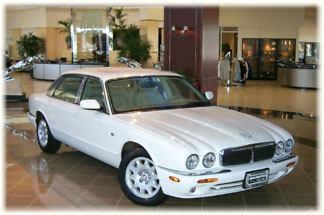
XJ-V8-LWB

Jaguar front seat

My Jaguar's engine after a steam

The Pros

So, why should you let the pros handle your detailing needs? They should know exactly what specialty products are right for your vehicle to get the perfect results every time. And, they know the techniques that will yield showroom-finish results while you don’t have to even touch your car.

And, while you won’t want to clean out all the dried soda, coffee stains, or leftover cheeseburger wrappers from under your seat, they will gladly do it for you – for a price.

Imagine

Just picture getting into a blindingly shiny, clean vehicle with an interior that looks equally as pristine. No more purchasing all kinds of car care products that don’t deliver results. No more spending hours in the driveway getting soaked and frustrated. No more wasted time. Pros know what it takes to detail your vehicle to concourse standards.

But then, it is just a job for them. It is a labor of love for me. Am I neurotic or compulsive?

More:

Assessment

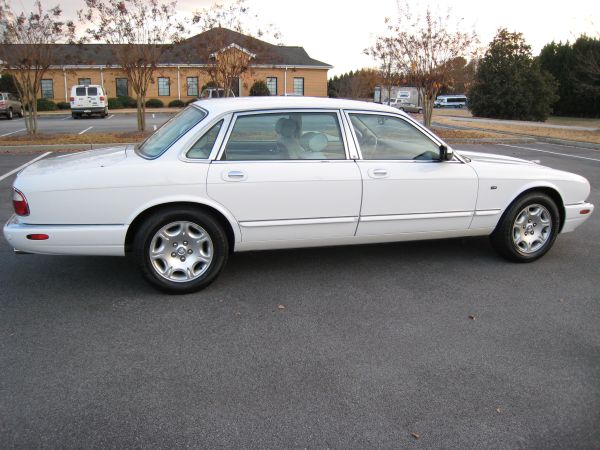
My near showroom and mint conditioned 2000 Jaguar XJ-V8-L is a full-size luxury sedan, offers sporting drive characteristics, mixed with a classic style and interior comfort. It was available in multiple trims which all came very well equipped with upscale amenities.

And, this extended wheelbase version offers much more rear seat leg room for long and winding Georgia road trips. The standard steel engine [not nikasil] in this XJ is a 4.0L V8 which produces 290 hp. The upper and lower timing chain tensioners are original, second generation metal, not plastic.

There is also a supercharged version of this vehicle which bumps output to an impressive 370 hp. Even with all of its power and weight, my XJ-8-L is still rated at over 20 mpg on the highway. Ammenities and upgrades include a mobile phone, Magellan GPS, LoJack theft recovery system, CD and MP-3 players, with internal and external cable antenna for satellite radio.

What a Cat? She is my third favorite female after my intelligent and beautiful wife, and smart and lovely daughter.

Conclusion

Are you a DIYer, like me? Nothing says you care more than doing it yourself.

Your thoughts and comments on this ME-P are appreciated. Feel free to review our top-left column, and top-right sidebar materials, links, URLs and related websites, too. Then, subscribe to the ME-P. It is fast, free and secure.

Speaker: If you need a moderator or speaker for an upcoming event, Dr. David E. Marcinko; MBA – Publisher-in-Chief of the Medical Executive-Post – is available for seminar or speaking engagements. Contact: MarcinkoAdvisors@msn.com

OUR OTHER PRINT BOOKS AND RELATED INFORMATION SOURCES:

HOSPITALS: http://www.crcpress.com/product/isbn/9781466558731
CLINICS: http://www.crcpress.com/product/isbn/9781439879900
BLOG: www.MedicalExecutivePost.com
FINANCE: Financial Planning for Physicians and Advisors
INSURANCE: Risk Management and Insurance Strategies for Physicians and Advisors

Product DetailsProduct DetailsProduct Details

Product Details  Product Details

Product DetailsProduct Details

2024: Easter Sunday Gasoline Pump!

HAPPY EASTER SUNDAY 2024

This ME-P was originally posted in 2014 and updated annually since then.

The median U.S. gas price is $3.49 per gallon, unchanged from last week and about 29 cents lower than the national average. The top 10% of stations in the country average $6.09 per gallon, while the bottom 10% average $2.92 per gallon. The states with the lowest average prices: Mississippi ($3.02), Louisiana ($3.06) and Texas ($3.06).

***

Conclusion

And so, your thoughts and comments on this ME-P are appreciated. Please review our top-left column, and top-right sidebar materials, links, URLs and related websites, too. Then, subscribe to the ME-P. It is fast, free and secure.

Speaker: If you need a moderator or speaker for an upcoming event, Dr. David E. Marcinko; MBA – Publisher-in-Chief of the Medical Executive-Post – is available for seminar or speaking engagements. Contact: MarcinkoAdvisors@msn.com

OUR OTHER PRINT BOOKS AND RELATED INFORMATION SOURCES:

Sponsors Welcomed: Credible sponsors and like-minded advertisers are always welcomed.

Link: https://healthcarefinancials.wordpress.com/2007/11/11/advertise

Product Details  Product Details

***

DAILY UPDATE: Tesla and DJT Stock Down

By Staff Reporters

HAPPY EASTER

***

***

Tesla had a rough quarter

The company’s stock was the worst performing in the S&P 500 in Q1, dropping 29%, amid fierce competition from Chinese electric carmakers, slowdowns from Red Sea shipping routes, arson at its German factory, Nordic labor battles, and controversies surrounding CEO Elon Musk.

Now, investors are warily watching to see what delivery numbers Tesla reports. But one group did make lots of money off the company as it lost over $230 billion in value last quarter: short sellers.

CITE: https://www.r2library.com/Resource

Donald Trump’s namesake social media company burst out of the gate on its first day of trading Tuesday, opening at $70.90 and soaring as high as $79.38 as Trump fans and opportunistic traders bought up shares. But the price faded late in the session and has bounced along at lower levels ever since, ending Thursday down $4.26 at $61.96 on the NASDAQ. The stock exchange was closed Friday in observance of Good Friday.   

COMMENTS APPRECIATED

Thank You

***

***

HAPPY DOCTORS DAY: 2024

SPONSOR: http://www.MarcinkoAssociates.com

***

***

DOCTORS ARE FINANCIALLY DIFFERENT: https://tinyurl.com/ycyrmsdh

EDUCATIONAL TEXTBOOKS: https://tinyurl.com/mrjcrsve

***

DRIPS: Disadvantages, Problems and Cons

DIVIDEND REINVESTMENT PLANS

By Staff Reporters

***

DEFINITION

DRIPs are merely an automated strategy in which a company’s dividends are reinvested into additional shares of that company. Instead of being paid dividends in cash, you get additional shares of ownership in the company.

There are three ways to get involved in DRIPs: directly through the company, through your broker, or through a transfer agent.

Company-run DRIPs are generally only available through large, blue-chip dividend stocks.That’s because smaller companies don’t want to take on the overhead costs of tracking all their shareholders and going through the paperwork headache of calculating how much each one gets in dividends and additional fractional shares. The company benefits from gaining an additional source of capital, but most of all in creating a more stable base of shareholders, ones who are less likely to panic and sell during a market decline. This can help decrease the volatility of a company’s shares.

As a result, more and more companies are deciding to use transfer agents, which are third-party DRIP administrators such as American Stock Transfer and Trust or Computershare.

Finally, most large discount brokers, such as Scottrade, TD Ameritrade, and E*Trade, also offer DRIPs, though with different requirements and limitations.

CITE: https://www.r2library.com/Resource/Title/082610254

The Case Against DRIP Plans

While dividend reinvestment is powerful, there are a couple reasons why you might not want to reinvest your dividends.

DRIPs Drawback 1: You may need the dividend income
The most obvious reason is that you need the income. If you’re in the “distribution” phase of your investing life, dividends are a perfect source of passive income. Income from qualified dividends is taxed at the long-term capital gains rate (currently 15% for investors who are in the 25% to 35% tax bracket for ordinary income, 0% for taxpayers in a lower bracket and 20% for those in the highest bracket). So if you’re going to be looking to your portfolio for income every month anyway, it makes sense to have that cash deposited in your account.

DRIPs Drawback 2: You may need to reallocate your positions
You might also choose to stop reinvesting your dividends for allocation reasons. Reinvesting your dividends, through DRIP plans or otherwise, will cause your stock positions to grow over time, and if you’ve owned a particular issue for a long time, it may already be a large enough percentage of your portfolio. Higher-yielding positions will grow faster, which can throw your allocations out of whack pretty quickly. So once a stock position is as big as you want it to get (for now) feel free to turn off dividend reinvestment for that position, and either enjoy the extra income or save up the cash to invest in other stocks.

DRIPs Drawback 3: You may not want to buy that stock at that time
Finally, you may also have stock-specific reasons not to reinvest dividends—if a stock is temporarily overvalued, or you simply don’t want to buy any more of it at current prices.

But bottom line, reinvesting dividends through a broker or by signing up for DRIP plans directly through the dividend-paying companies, is a surprisingly powerful tool to passively improve your investment returns.

***

NOTE: Former Microsoft CEO Steve Ballmer is on pace to earn $1 billion in dividends annually from his massive 4% stake in the software company. 

  • Steve Ballmer is on pace to collect annual dividend payments of $1 billion from Microsoft.
  • He is the former CEO of Microsoft and is the largest individual shareholder of the software giant.
  • Ballmer’s Microsoft stake has surged to a value of $128 billion this year following Microsoft’s 55% stock rally.

Other dividend billionaires include: https://www.dividend.com/dividend-education/14-executives-getting-rich-off-dividends/

So yes, DRIP plans are still worth it, as long as they fit with your investing goals.

***

https://images.routledge.com/common/jackets/amazon/978148224/9781482240283.jpg

***

ORDER: https://www.routledge.com/Comprehensive-Financial-Planning-Strategies-for-Doctors-and-Advisors-Best/Marcinko-Hetico/p/book/9781482240283

COMMENTS APPRECIATED

Thank You

***

DAILY UPDATE: Good Friday’s Impressive First Quarter Stock Market Returns

By Staff Reporters

***

***

The stock market will be closed Friday, March 29th, for Good Friday. While Good Friday is a stock market holiday, it is not a federal holiday. As a result, the February Personal Consumption and Expenditures (PCE) Price Index will be released this Friday morning.

Yesterday, on the final trading session of March and the first quarter, the returns for major stock indexes are impressive, with the Dow Jones Industrial Average up 5% this quarter or 2,000 points and the S&P 500 and the tech-heavy NASDAQ up 11% apiece. Stock superlatives for 2024’s opening stretch are numerous, including each of the three indexes setting respective all-time highs and the benchmark S&P heading toward its best first-quarter return since 2019 and its second consecutive quarter of double-digit percentage gains since 2011-12.

CITE: https://www.r2library.com/Resource

Here’s where the major benchmarks ended Thursday:

  • The S&P 500 index added 5.86 points (0.1%) to 5,254.35, up 0.4% for the week; the Dow Jones Industrial Average climbed 47.29 points (0.1%) to 39,807.37, up 0.8% for the week; the NASDAQ Composite lost 20.06 points (0.1%) to 16,379.46, down 0.3% for the week. 
  • The 10-year Treasury note yield rose one basis point to just under 4.21%.
  • The CBOE Volatility Index® (VIX) rose 0.22 to 13.00.

For the month, the S&P 500 index gained 3.1%, the Dow Jones Industrial Average rose 2.1%, and the NASDAQ Composite added 1.8%. For the quarter, the three indexes rose 10.3%, 5.6%, and 9.2%, respectively.

COMMENTS APPRECIATED

Thank You

***

***

FINANCE: “Prudence” in Investment Management?

SPONSOR: http://www.MARCINKOASSOCIATES.com

ON “PRUDENCE” IN FINANCE AND INVESTMENT MANAGEMENT
Courtesy: http://www.CertifiedMedicalPlanner.org

CMP logo

TERMS & DEFINITIONS FOR PHYSICIANS AND ALL INVESTORS:

PRUDENT BUYER: The efficient purchaser of market balance between value and cost.

PRUDENT MAN RULE: An 1830 court case stating that a person in a fiduciary capacity (a trustee, executor, custodian, etc) must conduct him/herself faithfully and exercise sound judgment when investing monies under care. “He is to observe how men of prudence, discretion and intelligence manage their own affairs, not in regard to speculation, but in regard to the permanent distribution of their funds, considering the probable income as well as the probable safety of the capital to be invested.” Allows for mutual funds and variable annuities.

PRUDENT INVESTOR RULE: A fiduciary is required to conduct him/herself faithfully and exercise sound judgment when investing monies and take measured and reasonable investment risks in return for potential future rewards. Allows for mutual funds, stocks, bonds, variable annuities asset allocation & Modern Portfolio Theory.

CITATION: https://www.r2library.com/Resource/Title/0826102549

Product Details

UNIFORM PRUDENT INVESTOR ACT: https://medicalexecutivepost.com/2011/02/18/the-uniform-prudent-investor-act-versus-fiduciary-accountability/

EDITOR’S NOTE: We interviewed noted authority Ben Aikin AIF® on this topic more than a decade ago. He was ahead of his time regarding fiduciary accountability and we appreciate his insights.

Dr. David Edward Marcinko MBA CMP®

[Editor-in-Chief]

INTERVIEW: https://medicalexecutivepost.com/2009/03/01/an-interview-with-bennett-aikin-aif/

FIDUCIARY OATH: http://www.thefiduciarystandard.org/wp-content/uploads/2015/02/fiduciaryoath_individual.pdf

Comprehensive Financial Planning Strategies for Doctors and Advisors: Best Practices from Leading Consultants and Certified Medical Planners™

ORDER Textbook: https://www.amazon.com/Comprehensive-Financial-Planning-Strategies-Advisors/dp/1482240289/ref=sr_1_1?ie=UTF8&qid=1418580820&sr=8-1&keywords=david+marcinko

SECOND OPINIONS: https://medicalexecutivepost.com/schedule-a-consultation/

INVITE DR. MARCINKO: https://medicalexecutivepost.com/dr-david-marcinkos-bookings/

THANK YOU

***

A Brief Historical Review of Behavioral Finance and Economics

By Related Influential Thought-Leaders

  • Dr. Brad Klontz CSAC CFP®
  • Dr. Ted Klontz PsyD
  • Dr. Eugene Schmuckler MBA MEd CTS
  • Dr. Kenneth Shubin-Stein FACP CFA
  • Dr. David Edward Marcinko MEd MBA CMP™

***

doctor

***

James O. Prochaska PhD, Professor of Psychology and Director of the Cancer Prevention Research Center at the University of Rhode Island, developed the Trans-Theoretic Model of Behavior Change [TTM] which has been evolving since in 1977. Nominated as one of the five most influential authors in Psychology, by the Institute for Scientific Information and the American Psychological Society, Dr. Prochaska is author of more than 300 papers on behavior change for health promotion and disease prevention.

TTM Stages of Change

In his Trans-Theoretical Model, behavior change is a “process involving progress through a series of these stages:

  • Pre-Contemplation (Not Ready) – “People are not intending to take action in the foreseeable future, and can be unaware that their behavior is problematic”
  • Contemplation (Getting Ready) – “People are beginning to recognize that their behavior is problematic, and start to look at the pros and cons of their continued actions”
  • Preparation (Ready) – “People are intending to take action in the immediate future, and may begin taking small steps toward behavior change”
  • Action – “People have made specific overt modifications in changing their problem behavior or in acquiring new healthy behaviors”
  • Maintenance – “People have been able to sustain action for a while and are working to prevent relapse”
  • Termination – “Individuals have zero temptation and they are sure they will not return to their old unhealthy habit as a way of coping”

Relapse

In addition, researchers conceptualized “relapse” (recycling) which is not a stage in itself but rather the “return from Action or Maintenance to an earlier stage.” In medical care, these stages of behavior change have applicability to anti-hypertension and lipid lowering medication use, as well as depression prevention, weight control and smoking cessation.

***

Psychology

***

Uniting Psychology and Financial Behavior

More recently, validating the emerging alliance between psychology (human behavior) and finance (economics) are two Americans who won the Royal Swedish Academy of Science’s 2002 Nobel Memorial Prize in Economic Science. Their research was nothing short of an explanation for the idiosyncrasies incumbent in human financial decision-making outcomes.

Enter Kahneman and Smith

Daniel Kahneman, PhD, professor of psychology at Princeton University, and Vernon L. Smith, PhD, professor of economics at George Mason University in Fairfax, Va., shared the prize for work that provided insight on everything from stock market bubbles, to regulating utilities, and countless other economic activities. In several cases, the winners tried to explain apparent financial paradoxes.

For example, Professor Kahneman made the economically puzzling discovery that most of his subjects would make a 20-minute trip to buy a calculator for $10 instead of $15, but would not make the same trip to buy a jacket for $120 instead of $125, saving the same $5.

1608708312704

in vitro and in-vivo Economics

Initially, in the 1960’s, Smith set out to demonstrate how economic theory worked in the laboratory (in vitro), while Kahneman was more interested in the ways economic theory mis-predicted people in real-life (in-vivo). He tested the limits of standard economic choice theory in predicting the actions of real people, and his work formalized laboratory techniques for studying economic decision making, with a focus on trading and bargaining.

Later, Smith and Kahneman together were among the first economists to make experimental data a cornerstone of academic output. Their studies included people playing games of cooperation and trust, and simulating different types of markets in a laboratory setting. Their theories assumed that individuals make decisions systematically, based on preferences and available information, in a way that changes little over time, or in different contexts.

University of Chicago

By the late 1970’s, Richard H. Thaler, PhD, an economist at the University of Chicago also began to perform behavioral experiments further suggesting irrational wrinkles in standard financial theory and behavior, enhancing the still embryonic but increasingly popular theories of Kahneman and Smith.

Laboratory

Other economists’ laboratory experiments used ideas about competitive interactions pioneered by game theorists like John Forbes Nash Jr., PhD, who shared the Nobel in 1994, as points of reference.

Assessment

But, Kahneman and Smith often concentrated on cases where people’s actions departed from the systematic, rational strategies that Nash envisioned. Psychologically, this was all a precursor to the informal concept of life or holistic financial planning. Kahneman was awarded the Medal of Freedom, by President Barack Obama, on November 20, 2013.

READ: Behavioral Economics and Psychology DEM

e513455b-e924-451f-9132-d4bbbeb8e033-original

Channel Surfing the ME-P

Have you visited our other topic channels? Established to facilitate idea exchange and link our community together, the value of these topics is dependent upon your input. Please take a minute to visit. And, to prevent that annoying spam, we ask that you register. It is fast, free and secure.

Go back

Your message has been sent

Warning
Warning
Warning
Warning

Warning.

More:

Conclusion

Your thoughts and comments on this ME-P are appreciated. Feel free to review our top-left column, and top-right sidebar materials, links, URLs and related websites, too. Then, subscribe to the ME-P. It is fast, free and secure.

Speaker: If you need a moderator or speaker for an upcoming event, Dr. David E. Marcinko; MBA – Publisher-in-Chief of the Medical Executive-Post – is available for seminar or speaking engagements. Contact: MarcinkoAdvisors@msn.com

OUR OTHER PRINT BOOKS AND RELATED INFORMATION SOURCES:

Comprehensive Financial Planning Strategies for Doctors and Advisors: Best Practices from Leading Consultants and Certified Medical Planners(TM)

***

Invite Dr. Marcinko

***

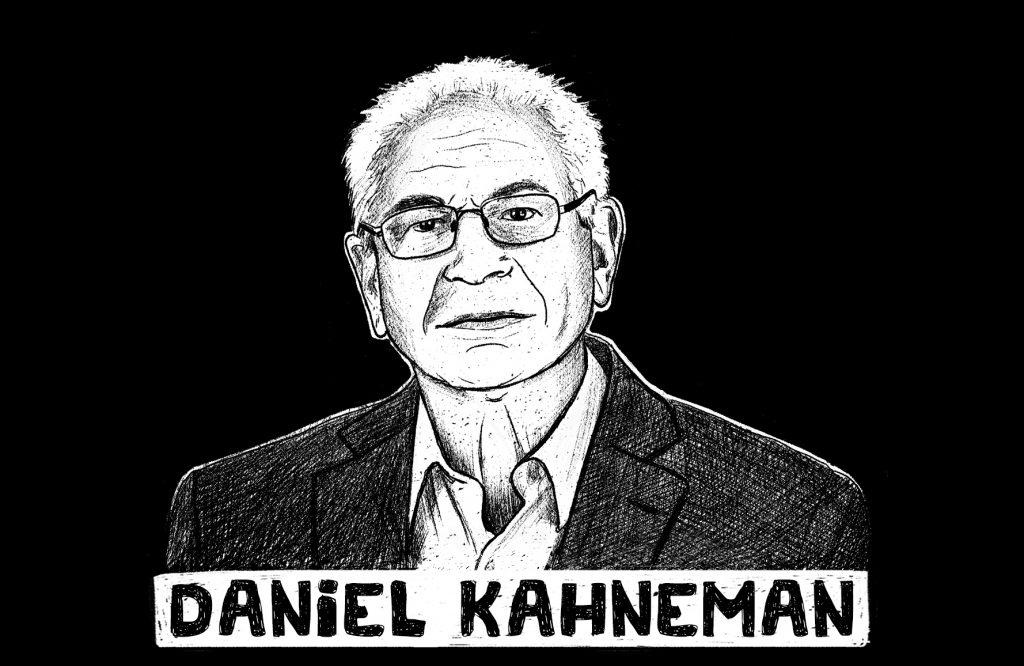
RIP: Daniel Kahneman PHD

NOBEL PRIZE WINNER AND FATHER OF BEHAVIORAL ECONOMICS

By Staff Reporters

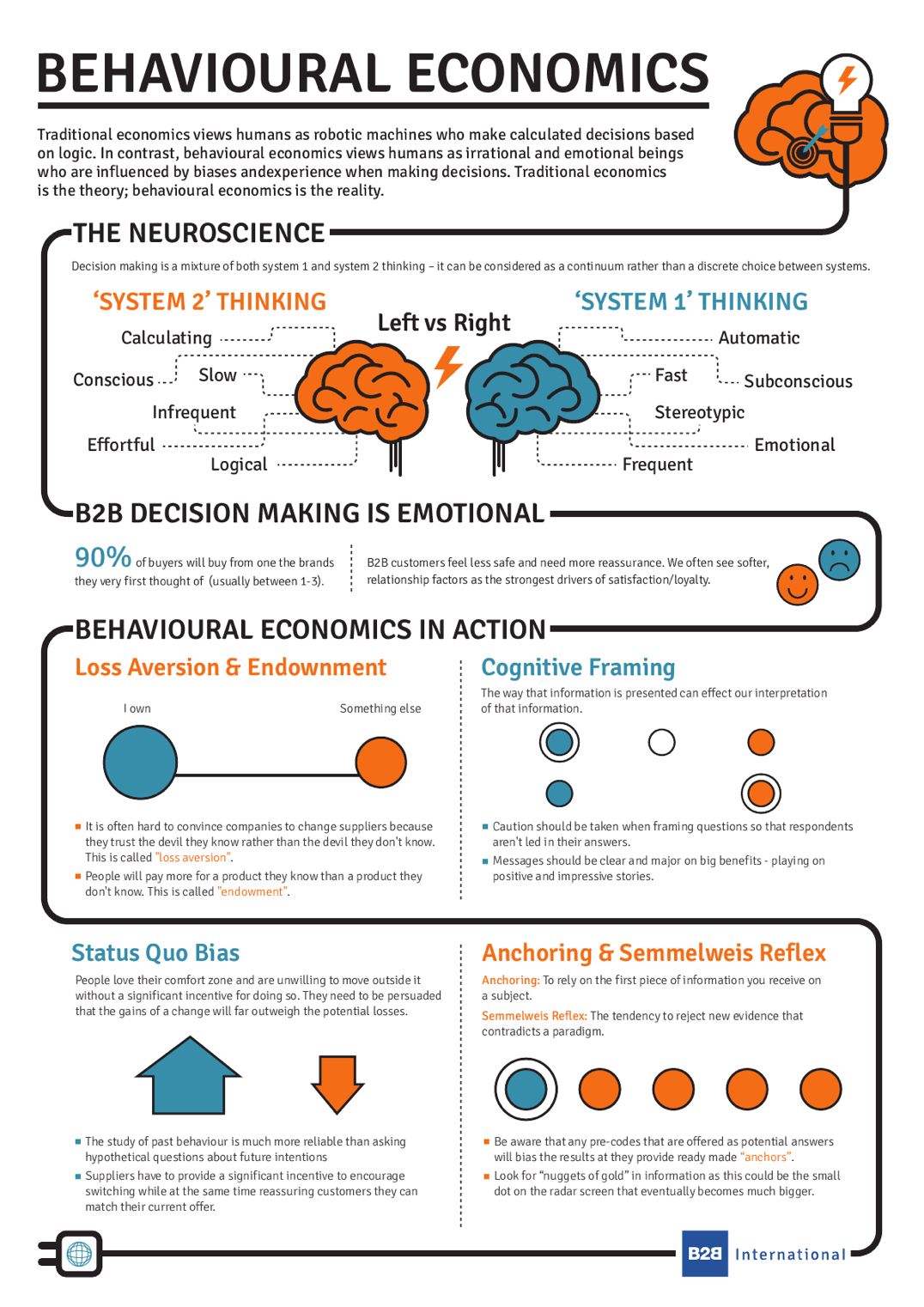
DEFINITION: According to Wikipedia, behavioral economics is the study of the psychological, cognitive, emotional, cultural and social factors involved in the decisions of individuals or institutions, and how these decisions deviate from those implied by classical economic theory.

Behavioral economics is primarily concerned with the bounds of rationality of economic agents. Behavioral models typically integrate insights from psychology, neuroscience and microeconomic theory. The study of behavioral economics includes how market decisions are made and the mechanisms that drive public opinion.

Behavioral economics began as a distinct field of study in the 1970s and ’80s, but can be traced back to 18th-century economists, such as Adam Smith, who deliberated how the economic behavior of individuals could be influenced by their desires.

The status of behavioral economics as a subfield of economics is a fairly recent development; the breakthroughs that laid the foundation for it were published through the last three decades of the 20th century. Behavioral economics is still growing as a field, being used increasingly in research and in teaching.

***

***

Daniel Kahneman PhD, the father of behavioral economics, died yesterday at age 90 years old. He’s best known for applying psychology to economics and uncovering biases and mental shortcuts that make people act irrationally, as he chronicled in his best-selling book Thinking, Fast and Slow.

Kahneman, along with his long-time collaborator and friend Amos Tversky PhD, developed “prospect theory,” or loss-aversion theory, which earned him the Nobel Prize in Economics in 2002 (which he shared with fellow economist Vernon Smith). The idea is that people value losses and gains differently, so we feel more bad about losing $100 than we feel good about making the same amount. He applied this theory to investors, who had previously been considered rational decision-makers. It shows up elsewhere, too—for example, golfers putt better when they’re facing the loss of a stroke than when they might gain one.

Two other biases he identified include:

  • The “peak-end rule” that people remember an experience primarily based on how they felt at its most intense moment and the final part of it. It’s why you consider a whole vacation good if the last day was good—or the opposite.
  • The conjunction fallacy where people erroneously think the probability of two things being true is more likely than just one thing, which the famous “Linda the Bank Teller” problem illustrates.

COMMENTS APPRECIATED

Thank You

***

***

***

DAILY UPDATE: Independent Pharmacies Struggle as Stocks Hit New Highs

By Staff Reporters

***

***

Independent pharmacies have struggled in recent years to stay open—and new financial constraints may mean a record number of pharmacy closures in 2024. And, nearly a third of independent pharmacies are at risk of going out of business due in part to a new rule from the Centers for Medicare and Medicaid Services (CMS) that results in lower prescription reimbursements, according to the National Community Pharmacists Association (NCPA), a trade group that represents more than 19,400 US pharmacies.

“This is an emergency,” NCPA CEO B. Douglas Hoey said in a statement. “If Congress fails to act again, thousands of local pharmacies could be closed within months and millions of patients could be stranded without a pharmacy.” The CMS rule, which went into effect on January 1st, requires payers and pharmacy benefit managers (PBMs) to apply what’s called direct and indirect remuneration (DIR) fees at the time a patient picks up a prescription.

CITE: https://www.r2library.com/Resource

Here’s where the major benchmarks ended:

  • The S&P 500 index added 44.91 points (0.9%) to 5,248.49; the Dow Jones Industrial Average climbed 477.75 points (1.2%) to 39,760.08; the NASDAQ Composite added 83.82 points (0.5%) to 16,399.52. 
  • The 10-year Treasury note yield fell four basis points to just under 4.2%.
  • The CBOE Volatility Index® (VIX) dropped 0.48 to 12.76.

In addition to utility stocks, real estate, industrials, and materials were the strongest sectors. Information technology and communications were the weakest but found late-day strength to finish higher.

COMMENTS APPRECIATED

Thank You

***

***

Understanding Medical Cost Accounting

A Subset of Managerial Accounting

By Dr. David E. Marcinko MBA CMP®

http://www.MARCINKOASSOCIATES.com

CMP logo

SPONSOR: http://www.CertifiedMedicalPlanner.org

Managerial and medical cost accounting is not governed by generally accepted accounting principles (GAAP) as promoted by the Financial Accounting Standards Board (FASB) for CPAs. Rather, a healthcare organization costing expert may be a Certified Cost Accountant (CCA) or Certified Managerial Accountant (CMA) designated by the Cost Accounting Standards Board (CASB), an independent board within the Office of Management and Budget’s (OMB) Office of Federal Procurement Policy (OFPP).

The Cost Accounting Standards Board

CASB consists of five members, including the OFPP Administrator who serves as chairman and four members with experience in government contract cost accounting (two from the federal government, one from industry, and one from the accounting profession). The Board has the exclusive authority to make, promulgate, and amend cost accounting standards and interpretations designed to achieve uniformity and consistency in the cost accounting practices governing the measurement, assignment, and allocation of costs to contracts with the United States.

Codified at 48 CFR

CASB’s regulations are codified at 48 CFR, Chapter 99.  The standards are mandatory for use by all executive agencies and by contractors and subcontractors in estimating, accumulating, and reporting costs in connection with pricing and administration of, and settlement of disputes concerning, all negotiated prime contract and subcontract procurement with the United States in excess of $500,000. The rules and regulations of the CASB appear in the federal acquisition regulations.

North American Industry Classification System (NAICS) codes are used to categorize data for the federal government.  In acquisition they are particularly critical for size standards.  The NAICS codes are revised every five years by the Census Bureau.  As of October 1, 2007, the federal acquisition community began using the 2007 version of the NAICS codes at www.census.gov/epcd/www/naics.html

Cost Accounting Standards

Healthcare organizations and consultants are obligated to comply with the following cost accounting standards (CAS) promulgated by federal agencies:

  • CAS 501 requires consistency in estimating, accumulating, and reporting costs.
  • CAS 502 requires consistency in allocating costs incurred for the same purpose.
  • CAS 505 requires proper treatment of unallowable costs.
  • CAS 506 requires consistency in the periods used for cost accounting.

The requirements of these standards are different from those of traditional financial accounting, which are concerned with providing static historical information to creditors, shareholders, and those outside the public or private healthcare organization.

AssessmentTwo Doctors

Functionally, most healthcare organizations also contain cost centers, which have no revenue budgets or mission to earn revenues for the organization.  Examples include human resources, administration, housekeeping, nursing, and the like.  These are known as responsibility centers with budgeting constraints but no earnings.  Furthermore, shadow cost centers include certain non-cash or cash expenses, such as amortization, depreciation and utilities, and rent. These non-centralized shadow centers are cost allocated for budgeting purposes and must be treated as costs http://www.CertifiedMedicalPlanner.org

MORE:  CASE MODEL EOQ 1

Conclusion

Your thoughts and comments on this ME-P are appreciated. Feel free to review our top-left column, and top-right sidebar materials, links, URLs and related websites, too. Then, subscribe to the ME-P. It is fast, free and secure.

Speaker: If you need a moderator or speaker for an upcoming event, Dr. David E. Marcinko; MBA – Publisher-in-Chief of the Medical Executive-Post – is available for seminar or speaking engagements. Contact: MarcinkoAdvisors@msn.com

OUR OTHER PRINT BOOKS AND RELATED INFORMATION SOURCES:

Product DetailsProduct Details

Product Details

PODCAST: Healthcare Costs are Crazy!

By Eric Bricker MD

***

***

COMMENTS APPRECIATED

Subscribe Today!

***

***

“STALKING HORSE” STOCK BID: Definition with 2024 Example

By Staff Reporters

***

A stalking horse bid is an initial bid on the assets of a bankrupt company. The bankrupt company will choose an entity from a pool of bidders who will make the first bid on the firm’s remaining assets. The stalking horse sets the low-end bidding bar so that other bidders can’t underbid the purchase price.

CITE: https://www.r2library.com/Resource

The term “stalking horse” originates from a hunter trying to be concealed behind either a real or fake horse.

  • A stalking horse bid is an initial bid on the assets of a bankrupt company, setting the low-end bidding bar so that other bidders can’t underbid the purchase price. 
  • Other buyers can submit competing offers following the stalking horse bid. 
  • A stalking horse bidder is afforded various incentives, such as expense reimbursements and breakup fees.

***

On December 17th, 2023, after defaulting on a $617 million loan, Ebix, Inc of Atlanta Georgia, declared Chapter 11 bankruptcy. Then, Ebix Reaches “Stalking Horse” Sale Agreement for Life Insurance and Annuity Business with Zinnia to Ensure Successful Recapitalization Efforts in 2024.

LINK: https://www.ebix.com/press-release/ebix-reaches-sale-agreement-for-life-insurance-and-annuity-business-with-zinnia-to-ensure-successful-recapitalization-efforts

COMMENTS APPRECIATED

Thank You

***

***

DAILY UPDATE: “Digital Markets Act” Violations as Stocks Slide

By Staff Reporters

***

***

The European Union is investigating Meta, Apple, and Alphabet for potential violations of its Digital Markets Act. And its regulators have started looking into Amazon as well.

The Digital Markets Act is the EU’s law to make the markets in the digital sector fairer and more contestable. In order to do so, the Digital Markets Act (“DMA”) establishes a set of clearly defined objective criteria to identify “gatekeepers”.

And, stocks were headed for a great Tuesday before investors sent stock indexes back down and leaving the Dow largely unchanged. Meanwhile, Donald Trump’s social media company, Truth Social, surged 16% in its first day of trading, just as the former president must pay $175 million as part of his civil fraud trial.

Here’s where the major benchmarks ended:

  • The S&P 500 index lost 14.61 points (0.3%) to 5,203.58; the Dow Jones Industrial Average dropped 31.31 points (0.1%) to 39,282.33; the NASDAQ Composite tumbled 68.76 points (0.4%) to 16,315.70. 
  • The 10-year Treasury note yield (TNX) fell two basis points to 4.23%.
  • The CBOE Volatility Index edged up 0.05 to 13.24.

In terms of sector performance, utilities, information technology, and energy were the weakest. Health care and financials saw relative strength.

CITE: https://www.r2library.com/Resource

COMMENTS APPRECIATED

Thank You

***

***

CRM: Patient Relations Management and Concierge Medicine

Characteristics of a Retainer or Cash-Based Practice

By DeeVee Devarakonda; MBA [Former CMO of Quaero, Inc]

By Dr. David Edward Marcinko; MBA http://www.CertifiedMedicalPlanner.org

Calendar Calculator

A young concierge medical practice is a business with challenges in these Customer [Patient] Relationship Management’s [CRM] areas that are critical for success.

Areas of Most Challenge

Maturity of Processes:

Processes are often associated with bureaucracy or stuffy hierarchical healthcare systems that are anathema to emerging concierge medical practices. At small practices, doctors are often owners who fiercely pride themselves on flat structures, autonomy and flexibility. However, processes are imperative to conduct a streamlined practice that can be woven around a CM culture that still ensures practice business is conducted in a systematic manner.

Organization Structure:

Young concierge medical practices have challenges managing growth while grappling to incorporate an organization structure that promotes the elite private practice culture.

Multi-tasking, rapidly growing work places:

Young CM practices are often characterized by employees who multi-task and assume several roles to make their resources stretch farther. Especially in the current healthcare reform climate, young practice employees take up a broader set of responsibilities. In addition, as young private CM practices grow, they may become anguished with a growing office workplace that may not be equipped with an evolving infrastructure to cope. They have a fierce need to carefully control growth with tightly managed resources.

Changing business needs and strategy:

In an era after the golden age of traditional medicine, profitability is critical for emerging concierge practices. It is imperative to be nimble and change marketing strategies as socio-political and competitive climates dictate. A good C[P] RM system is tightly integrated, but loosely coupled, to allow CM practices to communicate appropriately with patients.

Little room for Slack:

Small concierge medical practices do not have as much established name-brand equity as larger, established practices of any model type, and patients are less willing to tolerate mistakes. Concierge practices have to run a much tighter ship and build impeccable patient experiences.

Fierce Competition:

The cash or retainer medicine landscape today looks very different from just five years ago. Competition is becoming fierce and practices are fighting for mindshare and patients. Young practices are competing with older concierge practices – large traditional practices, micro-practices, behemoth healthcare systems, enterprise-wide medical corporations and every other practice model in-between – to attract and retain patients with private resources.

Assessment

The above characteristics form the basis of a compelling strategy to embrace C[P]RM and streamline patient relationships and cash revenue opportunities. Concierge practices still need to build scalable marketing programs that can easily ramp up and down effortlessly as needs and economic environments demand. But, they do need to establish marketing metrics and processes that can demonstrate the Return on Investment (ROI) on their CRM, and marketing programs, and for getting critical cash-paying patient buy-in.

Related link: https://healthcarefinancials.wordpress.com/2009/04/28/defining-and-understanding-%e2%80%9cboutique-medicine%e2%80%9d/

MORE: https://medicalexecutivepost.com/2009/10/30/return-on-investment-calculations-for-concierge-medical-practice-marketing-initiatives/

Conclusion

Your thoughts and comments on this ME-P are appreciated. Feel free to review our top-left column, and top-right sidebar materials, links, URLs and related websites, too. Then, subscribe to the ME-P. It is fast, free and secure.

Speaker: If you need a moderator or speaker for an upcoming event, Dr. David E. Marcinko; MBA – Publisher-in-Chief of the Medical Executive-Post – is available for seminar or speaking engagements. Contact: MarcinkoAdvisors@msn.com

OUR OTHER PRINT BOOKS AND RELATED INFORMATION SOURCES:

PHYSICIANS: www.MedicalBusinessAdvisors.com
PRACTICES: www.BusinessofMedicalPractice.com
HOSPITALS: http://www.crcpress.com/product/isbn/9781466558731
CLINICS: http://www.crcpress.com/product/isbn/9781439879900
ADVISORS: www.CertifiedMedicalPlanner.org
BLOG: www.MedicalExecutivePost.com

Product Details

Invite Dr. Marcinko

CHECKS: Cashier V. Certified V. Money Order V. Bank Draft

By Staff Reporters

***

Types of Checks

A cashier’s check is a check drawn from the bank’s own funds, not yours, and signed by a cashier or teller. Unlike a regular check, the bank, not the check writer, guarantees payment of a cashier’s check. A cashier’s check can also be called an official check.

A certified check is a personal check that the payer’s bank has certified to be legitimate and has earmarked the funds for the check. It’s a type of “official” payment. People often confuse certified checks with cashier’s checks. … Then, the bank prints a check against the funds they are holding.

MORE: https://www.gobankingrates.com/banking/checking-account/certified-check-vs-cashiers-check/#:~:text=What%20Is%20the%20Difference%20Between%20a%20Cashier%E2%80%99s%20Check,4%20Availability%20of%20Funds.%20…%205%20Safety.%20

A money order is a method of paying for something with cash using a check from a third party. You pay for the money order, and the third party issues you a check that you can give or send to someone. This person deposits the money order in their bank account or exchanges it for cash at a business or post office.

A bank draft is a negotiable instrument where payment is guaranteed by the issuing bank. Banks verify and withdraw funds from the requester’s account and deposit them into an internal account to cover the amount of the draft. A seller may require a bank draft when they have no relationship with the buyer.

CITE: https://www.r2library.com/Resource/Title/0826102549

YOUR COMMENTS ARE APPRECIATED.

***

FIN PLANNING: https://www.amazon.com/Comprehensive-Financial-Planning-Strategies-Advisors/dp/1482240289/ref=sr_1_1?ie=UTF8&qid=1418580820&sr=8-1&keywords=david+marcinko

Thank You

***

PODCAST: Dr. Michel Accad: Why Can’t We Pay Cash for Doctors?

By Michel Accad MD

MISES INSTITUTE

***

Money

***

Dr. Michel Accad: Why Can’t We Pay Cash for Doctors?

About

Dr. Michel Accad is a practicing cardiologist who blogs for a medical audience at alertandoriented.com

Conclusion

Your thoughts and comments on this ME-P are appreciated. Feel free to review our top-left column, and top-right sidebar materials, links, URLs and related websites, too. Then, subscribe to the ME-P. It is fast, free and secure.

Speaker: If you need a moderator or speaker for an upcoming event, Dr. David E. Marcinko; MBA – Publisher-in-Chief of the Medical Executive-Post – is available for seminar or speaking engagements. Contact: MarcinkoAdvisors@msn.com

OUR OTHER PRINT BOOKS AND RELATED INFORMATION SOURCES:

[PRIVATE MEDICAL PRACTICE BUSINESS MANAGEMENT TEXTBOOK – 3rd.  Edition]

Product DetailsProduct Details

  [Foreword Dr. Hashem MD PhD] *** [Foreword Dr. Silva MD MBA]

***

MEDICAL SCHOOLS: Why They Don’t Teach Business and How it’s Costing Doctors?

SPONSOR: http://www.MarcinkoAssociates.com

[THE MILLION DOLLAR MISTAKE]

By Curtis G. Graham MD

***

The fact that every physician in private medical practice, without a business education, leaves approximately a million dollars on the table and is unaware of it is well known to business experts who work with medical doctors experiencing financial difficulties.

Business experts such as Dan S. Kennedy, Peter Drucker, Michael Gerber, Maxwell Maltz, Neil Baum, William Hanson, Huss and Coleman, Steven Hacker, Thomas Stanley, Chris Hurn, Napoleon Hill, and Dave Ramsey, among others, understand the financial problems faced by medical practices and how to solve them.

READ HERE: https://www.kevinmd.com/2023/01/the-million-dollar-mistake-why-medical-schools-dont-teach-business-and-how-its-costing-physicians.html

***

COMMENTS APPRECIATED

Thank You

***

***

ORDER: https://www.amazon.com/Business-Medical-Practice-Transformational-Doctors/dp/0826105750/ref=sr_1_9?ie=UTF8&qid=1448163039&sr=8-9&keywords=david+marcinko

***

ORDER: https://www.routledge.com/Comprehensive-Financial-Planning-Strategies-for-Doctors-and-Advisors-Best/Marcinko-Hetico/p/book/9781482240283

***

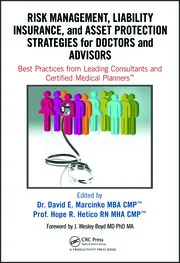
ORDER: https://www.routledge.com/Risk-Management-Liability-Insurance-and-Asset-Protection-Strategies-for/Marcinko-Hetico/p/book/9781498725989

***

A-POLITICAL: Investing SPAC Initial Public Offering of DJT Stock

By Staff Reporters

***

***

Markets: The stock market kicked off its short trading week down as some investors questioned the enthusiasm around the Fed’s recent assurances that it’s still planning three rate cuts this year.

But Digital World Acquisition Corporation roared as the shell company that’s merging with Donald Trump’s Truth Social and will begin trading under its new ticker, DJT, today.

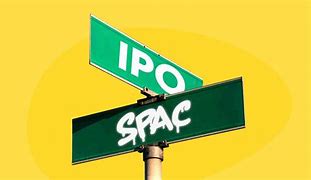
Digital World Acquisition Corp. (Nasdaq: DWAC) is a special purpose acquisition company formed for the purpose of effecting a merger, capital stock exchange, asset acquisition, stock purchase, reorganization or similar business combination with one or more businesses.

SPACS: https://medicalexecutivepost.com/2022/06/13/spac-v-direct-listing-v-ipo/

And, it popped after Trump got good news from a New York appeals court.

CITE: https://www.r2library.com/Resource/Title/082610254

COMMENTS APPRECIATED

***

***

DAILY UPDATE: Nurses Strike as Stocks Decline

By Staff Reporters

***

***

About 1,300 nurses at Staten Island University Hospital (SIUH) will strike on April 2nd if contract negotiations fail, the New York State Nurses Association (NYSNA) announced Thursday. The union, which represents about 42,000 nurses across the state, is looking for higher wages and improved nurse-to-patient ratios for their members—sticking points for Northwell Health, according to NYSNA.

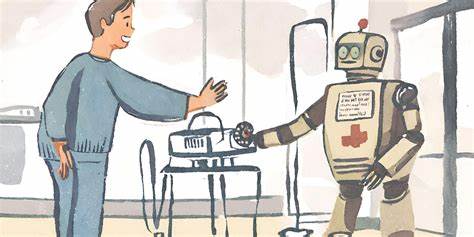
AI RN Replacements: https://gizmodo.com/nvidia-wants-replace-nurses-with-ai-1851347917?utm_campaign=hcb&utm_medium=newsletter&utm_source=morning_brew

CITE: https://www.r2library.com/Resource

Here’s where the major benchmarks ended:

  • The S&P 500 index sank 15.99 points (0.3%) to 5,218.19; the Dow Jones Industrial Average dropped 162.26 points (0.4%) to 39,313.64; the NASDAQ Composite lost 44.35 points (0.3%) to 16,384.47. 
  • The 10-year Treasury note yield (TNX) rose three basis points to 4.25% after a four-day retreat.
  • The CBOE Volatility Index® (VIX) edged up 0.14 to 13.20.

The energy sector followed crude oil prices and was the strongest sector Monday. Utilities and materials also saw strength. Weakest sectors included industrials, information technology, and real estate.

COMMENTS APPRECIATED

Thank You

***

***

PODCAST: Time To Get Serious About Healthcare Costs

By Eric Bricker MD

***

***

CITE: https://www.r2library.com/Resource

***

***

***

***

WHAT IS THE “LUXURY PRODUCT” ECONOMIC PARADOX?

WHAT IS THE “LUXURY PRODUCT” ECONOMIC PARADOX?

By Dr. David Edward Marcinko MBA

Courtesy: http://www.CertifiedMedicalPlanner.org

The more expensive something is – the less likely you are to use it. This relationship between price and product utility is graphed as an “inverted U.”

CITE: https://www.r2library.com/Resource/Title/082610254

So, super car Ferraris sit in garages; but Fords get driven.

ESSAY: https://medicalexecutivepost.com/2014/01/08/the-jaguar-touring-sedan-one-of-the-finest-luxury-cars-built-yesterday/

My own Jaguar touring sedan illustrates this paradox.

dem-jag

ESSAY: https://medicalexecutivepost.com/2018/09/02/my-jaguar-mechanic-vs-doctor-story/

This theory may even be valid for services; as well as products?

THINK: Plastic and cosmetic surgery?

Assessment: Your thoughts and comments are appreciated.

THANK YOU

***

Product DetailsProduct DetailsProduct Details

***


Me, Marcinko and Dr. Avatar [Metaverse?]

The Virtual Doctor Will See You Now!

By Dr. David Edward Marcinko MBA CMP™

[Publisher-in-Chief]

Recently, I was invited to speak at a regional convention. No surprise there as I have been doing so – around the world – for more than twenty years – webcasts included. And, I was asked to submit the usual paraphernalia; a formal CV, audio-visual needs, travel arrangements and times, PPE, and a personal photo which were all dutifully supplied.

Then, I was asked to supply something that flabbergasted me; I became slack-jawed, actually.

DEM’s Avatar 

Imagine my surprise when I was asked for an avatar; not just a digital photograph. So – having none – I had one made and now submit it for your review.

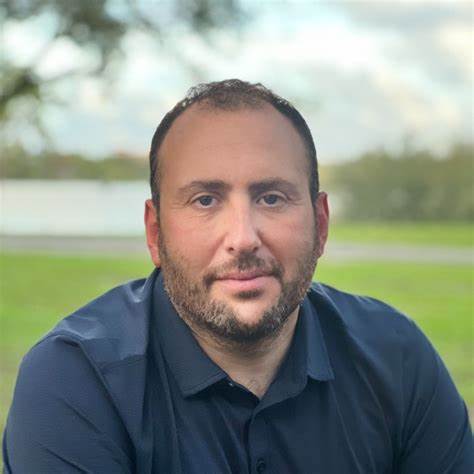
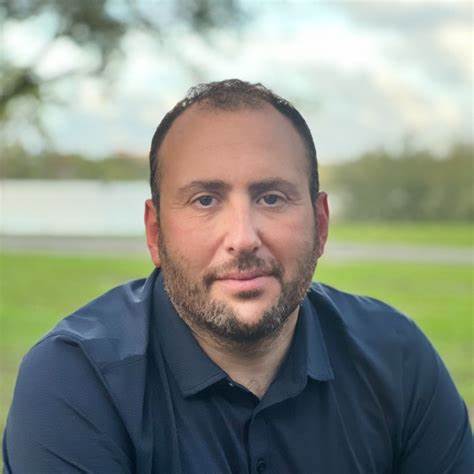
  Photograph of Dr. David Edward Marcinko @ home

 Avatar of Dr. David Edward Marcinko @ work

***

Assessment

So, how do I virtually look – better or worse – glasses or contact lens? It seems as though some folks are more interested in the virtual me; than the real me. Go figure!

Conclusion

Your thoughts and comments on this ME-P are appreciated. Feel free to review our top-left column, and top-right sidebar materials, links, URLs and related websites, too. Then, subscribe to the ME-P. It is fast, free and secure.

Speaker: If you need a moderator or speaker for an upcoming event, Dr. David E. Marcinko; MBA – Publisher-in-Chief of the Medical Executive-Post – is available for seminar or speaking engagements. Contact: MarcinkoAdvisors@msn.com

Our Other Print Books and Related Information Sources:

Risk Management, Liability Insurance, and Asset Protection Strategies for Doctors and Advisors: Best Practices from Leading Consultants and Certified Medical Planners™8Comprehensive Financial Planning Strategies for Doctors and Advisors: Best Practices from Leading Consultants and Certified Medical Planners™

Product DetailsProduct DetailsProduct Details

Product Details  Product Details

Product Details

Invite Dr. Marcinko

***

DAILY UPDATE: Wingstop and the Markets

By Staff Reporters

***

***

Investors hope this week on Wall Street will be as enjoyable as the last, when stocks raced higher after Fed Chair Jerome Powell previewed a series of rate cuts. Wingstop stock has surged more than 380% in the last five years.

CITE: https://www.r2library.com/Resource

Here’s where the major benchmarks ended last week:

  • The S&P 500 index sank 7.35 points (0.1%) to 5,234.18, up 2.3% for the week; the Dow Jones Industrial Average dropped 305.47 points (0.8%) to 39,475.90, up 2% for the week; the NASDAQ Composite rose 26.98 points (0.2%) to 16,428.82, up 2.9% for the week. 
  • The 10-year Treasury note yield dipped five basis points to 4.22%, down nearly nine basis points for the week.
  • The CBOE Volatility Index edged up 0.14 to 13.06, falling 1.34 points for the week.

COMMENTS APPRECIATED

Thank You

***

***

PODCAST: Small and Medium Medical Practices are Struggling

By Colin Hung

***

Small- and medium-sized medical practices are struggling. The uncertain economic environment, staffing challenges, and the increasing complexity of providing care is putting practice owners under tremendous stress. EverHealth, providers of end-to-end solutions for healthcare providers, believes that these practices need support from partners that can take on some of the administrative, operational, and financial tasks so they can continue to deliver care to patients.

CITE: https://www.r2library.com/Resource

Healthcare IT Today sat down with Adam Laskey, General Manager of EverHealth at EverCommerce, to find out more about the company’s work, their vision for medical practices, and how the acquisitions of DrChrono and Updox is progressing.

***

COMMENTS APPRECIATED

Sign-Up

***

***

PODCAST: Health Insurance Medical Policy Explained

GUEST

By Eric Bricker MD

***

***

COMMENTS APPRECIATED

Thank You

***

***

DAILY UPDATE: Senior Care Facility Bankruptcies Up with Recession Life Spans?

By Staff Reporters

***

***

Financial hardship has led dozens of operators of senior facilities to file for bankruptcy over the past three years, with 13 companies filing petitions in 2021, 12 debtors filing in 2022 and 15 more in 2023, according to Gibbins Advisors.

***

***

Notable Chapter 11 filings over the past year have included Evangelical Retirement Homes of Greater Chicago, which filed Chapter 11 in the U.S. Bankruptcy Court for the Northern District of Illinois in June 2023 to sell its assets at auction. Also, Windsor Terrace Health, an operator of 32 nursing homes in California and three in Arizona, filed its petition in the U.S. Bankruptcy Court for the Central District of California in August 2023 listing $1 million to $10 million in assets and liabilities and unable to pay its debts.

CITE: https://www.r2library.com/Resource/Title/082610254

More recently, Magnolia Senior Living, an operator of four facilities in Georgia, filed for Chapter 11 protection on March. 19 in the U.S. Bankruptcy Court for the Northern District of Georgia.

***

The Great Recession of 2008 had a lot of downsides: People lost homes, jobs, and retirement savings, had their careers derailed, and were forced to learn what the heck synthetic collateralized debt obligations are. But according to recent research, it also made people in the US live longer.

COMMENTS APPRECIATED

Thank You

***

***

INVESTING: Putting a Charge Back into the EV Market

By Vitaliy Katsenelson CFA

***

***

Over the last few months, electric car sales seem to have gone from hot to cold. Hertz is dumping 20% of its 100,000 Tesla fleet, and Ford is cutting production of its F-150 Lightning. Tesla has gone from raising prices to cutting them. In fact, Tesla is reducing prices so much that the CEO of Stellantis (a merger between Fiat and Peugeot) has expressed concern that if other automakers join Tesla CEO Elon Musk in implementing similar cuts, it will result in a bloodbath for the industry.

And so, are electric cars a fad, like beanie babies, pet rocks, or fidget spinners?
The short answer is no. The full answer comes with a lot of nuance. READ HERE:

Putting a Charge Back into the EV Market

COMMENTS APPRECIATED

Thank You

***

***

DAILY UPDATE: Weak Sock Markets Following a Good Week

By Staff Reporters

***

***

Investors slowed their roll yesterday but the Dow still pulled off its best week of the year. Lululemon reported a disappointing forecast and slowing US sales growth. The athleisure company suffered its worst day since March 2020.

Here’s where the major benchmarks ended:

  • The S&P 500 index sank 7.35 points (0.1%) to 5,234.18, up 2.3% for the week; the Dow Jones Industrial Average dropped 305.47 points (0.8%) to 39,475.90, up 2% for the week; the NASDAQ Composite rose 26.98 points (0.2%) to 16,428.82, up 2.9% for the week. 
  • The 10-year Treasury note yield dipped five basis points to 4.22%, down nearly nine basis points for the week.
  • The CBOE Volatility Index edged up 0.14 to 13.06, falling 1.34 points for the week.

Utilities, information technology, and communication services were among the strongest sectors. Real estate and financials saw relative weakness Friday.

CITE: https://www.r2library.com/Resource

COMMENTS APPRECIATED

Thank You

***

***

INVESTING: A New Era of Global Tensions

By Vitaliy Katsenelson CFA

***

***

You don’t have to worry about the market and its crazy valuations. That’s your neighbor’s problem, not yours. In building your portfolio, we are aiming for resilience.

READ: https://investor.fm/investing-in-a-new-era-of-global-tensions/?mc_cid=e9237c7145&mc_eid=671e2735cc

COMMENTS APPRECIATED

Thank You

***

***

DAILY UPDATE: Apple Down but Stocks Gain

By Staff Reporters

***

***

Stocks soared again on Thursday, pushing the major indexes to new records as tech companies over performed and investors hung onto the good vibes from this week’s Fed meeting. It was a scintillating debut for Reddit, which rocketed nearly 50% in its first day as a public company.

Here’s where the major benchmarks ended:

  • The S&P 500 index added 16.91 points (0.3%) to 5,241.53; the Dow Jones Industrial Average surged 269.24 points (0.7%) to 39,781.37; the NASDAQ Composite rose 32.43 points (0.2%) to 16,401.84. 
  • The 10-year Treasury note yield (TNX) was flat at 4.27%.
  • The CBOE Volatility Index® (VIX) dropped 0.11 to 12.93.

Industrials, financials, and energy stocks were among the strongest sectors. Utilities and communication services finished modestly lower.

Apple (AAPL) was the biggest loser in the Dow Jones Industrial Average, falling 4.1% on reports the Justice Department filed an antitrust lawsuit against the company. Other widely held stocks were mostly higher: Microsoft (MSFT) added 1%, Meta Platforms (META) gained 0.4%, and Amazon (AMZN) was unchanged on the day.

CITE: https://www.r2library.com/Resource

COMMENTS APPRECIATED

Thank You

***

***

Health Care Entity: Venture Capital Funding

http://www.MARCINKOASSOCIATES.com

***

***

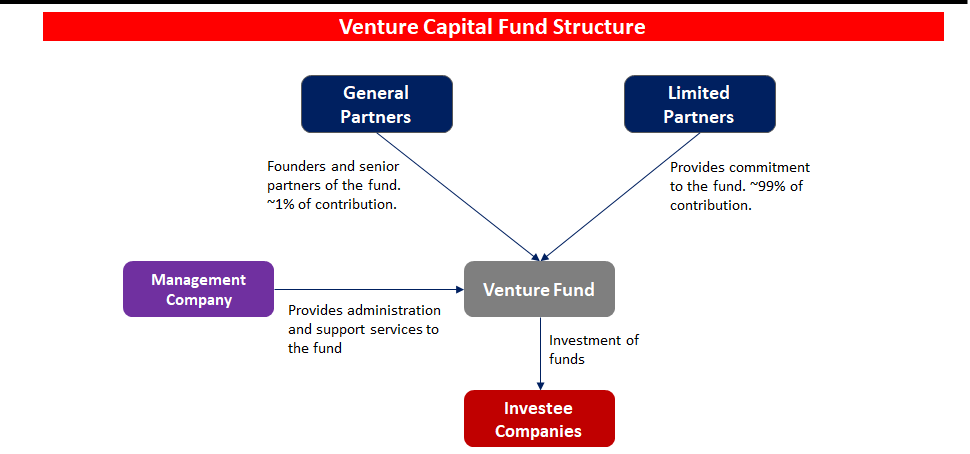
Venture capital funding in the digital health space cooled a bit in 2022 following a red-hot 2021. Overall, digital health companies raised $15.3 billion last year, down from the $29.1 billion raised in 2021—but still above the $14.1 billion raised in 2020, according to Rock Health a seed fund that supports digital health startups.

MORE: https://marcinkoassociates.com/fmv-appraisals/

Nevertheless, analysts predict VC investors and bankers will still put a good amount of money into digital health in 2024 and 2025, especially in alternative care, drug development, health information technology technology, EMRs and software that reduces physician workload.

CITE: https://www.r2library.com/Resource

Of course. an essential first part of attracting VC interest and money is the crafting and presentation of your formal business plan [“elevator pitch”]; as well as the needed technical and managerial experience. This is crucial for success and exactly where we can assist.

***

READ MORE: https://marcinkoassociates.com/welcome-medical-colleagues/

CONTACT: MarcinkoAdvisors@msn.com

***

***

FINANCIAL PLANNING: Next Generation for Physicians Only

By Dr. David Edward Marcinko MBA CMP™

SPONSOR: http://www.MARCINKOASSOCIATES.com

***

SPONSOR: http://www.CertifiedMedicalPlanner.org

(“Informed Voice of a New Generation of Fiduciary Advisors for Healthcare”)

For most lay folks, personal financial planning typically involves creating a personal budget, planning for taxes, setting up a savings account and developing a debt management, retirement and insurance recovery plan. Medicare, Social Security and Required Minimal Distribution [RMD] analysis is typical for lay retirement. Of course, we can assist in all of these activities, but lay individuals can also create and establish their own financial plan to reach short and long-term savings and investment goals.

But, as fellow doctors, we understand better than most the more complex financial challenges doctors can face when it comes to their financial planning. Of course, most physicians ultimately make a good income, but it is the saving, asset and risk management tolerance and investing part that many of our colleagues’ struggle with. Far too often physicians receive terrible guidance, have no time to properly manage their own investments and set goals for that day when they no longer wish to practice medicine.

For the average doctor or healthcare professional, the feelings of pride and achievement at finally graduating are typically paired with the heavy burden of hundreds of thousands of dollars in student loan debt.

CITE: https://www.r2library.com/Resource

You dedicated countless hours to learning, studying, and training in your field. You missed birthdays and holidays, time with your families, and sacrificed vacations to provide compassionate and excellent care for your patients. Amidst all of that, there was no time to give your finances even a second thought.

Between undergraduate, medical school, and then internship and residency, most young physicians do not begin saving for retirement until late into their 20s, if not their 30s. You’ve missed an entire decade or more of allowing your money and investments to compound and work for you. When it comes to addressing your financial health and security, there’s no time to waste.

And you may be misled by unscrupulous “advisors”.

READ HERE: https://marcinkoassociates.com/financial-planning/

RELATED: https://medicalexecutivepost.com/2023/12/15/doctor-are-you-a-financial-advisors-customer-or-client/

COMMENTS APPRECIATED

Thank You

***

***

PODCAST: Economic Cycles in Healthcare

By Eric Bricker MD

***

***

CITE: https://www.r2library.com/Resource

***

***

***

***

CITE: https://www.r2library.com/Resource

***
COMMENTS APPRECIATED

Thank You

***

DAILY UPDATE: Kroger Selling Pharma Business as Nvidia and Stock Markets Rise

By Staff Reporters

CHERRY BLOSSOM FESTIVAL, DC.

***

***

KROGER, the supermarket chain said it expects to close the sale of its specialty pharmacy business during the second half of 2024. Kroger said it is planning to sell its speciality pharmacy business to pharmacy benefit manager CarelonRx, a subsidiary of Elevance Health, the company just reported.

CITE: https://www.r2library.com/Resource

***

Nvidia continues its bid for world domination with the announcement of its new B200 “Blackwell” chip. The Blackwell is 2.5 times more powerful than the “Hopper” chip which helped it become a $2 trillion company. (Bloomberg)

Here’s where the major benchmarks ended:

  • The S&P 500 index added 46.11 points (0.9%) to 5,224.62; the Dow Jones Industrial Average gained 401.37 points (1%) to 39,512.13; the NASDAQ Composite rose 202.62 points (1.3%) to 16,369.41. 
  • The 10-year Treasury note yield slid two basis points to 4.27%.
  • The CBOE Volatility Index®(VIX) fell 0.77 to 13.06.
     

Health care was the biggest loser among the S&P 500 sectors. Energy was also lower after crude oil prices sank on the heels of weekly inventory data. Brent Crude Oil (/BZ) futures, the global benchmark, dropped 1.6% on the heels of five days of gains.

COMMENTS APPRECIATED

Thank You

***

***

DAILY UPDATE: Medicare Payment Policy and Inflation as the Stock Markets Gain

By Staff Reporters

***

***

MEDICARE: https://www.medpac.gov/wp-content/uploads/2024/03/Mar24_MedPAC_Report_To_Congress_SEC.pdf

The producer price index (PPI) rose 0.6% for the month, according to the Bureau of Labor Statisticsdouble the Dow Jones estimate, CNBC reported. February’s larger-than-expected PPI uptick follows a more modest 0.3% increase in January and a 0.1% decline in December. On an annual basis, the PPI increased 1.6%, “the largest rise since moving up 1.8% for the 12 months ended September 2023,” according to the BLS.

CITE: https://www.r2library.com/Resource

Here’s where the major benchmarks ended:

The market had a good Tuesday, with stocks climbing as investors await word from the Fed meeting today on any changes to interest rates. The bank is expected to keep rates the same for now, but could signal when (or how often) it’ll lower them later in the year. Meanwhile, Nordstrom shares surged following a report that the retailer’s founding family wants to take it private.
 

  • The S&P 500 index added 29.09 points (0.6%) to 5,178.51; the Dow Jones Industrial Average® ($DJI) gained 320.33 points (0.8%) to 39,110.76; the NASDAQ Composite® ($COMP) rose 63.34 points (0.40%) to 16,166.79.
  • The 10-year Treasury note yield (TNX) eased four basis points to just under 4.3%.
  • The CBOE Volatility Index® (VIX) lost 0.50 to 13.83. 

The energy sector was the top performer after crude oil prices notched multi-month highs ahead of weekly inventory data from the American Petroleum Institute. After a 2% rally to start the trading week, Brent Crude Oil (/BZ) futures, the global benchmark, added another 0.6% Tuesday.

Industrials, consumer discretionary, and utilities were among the other strong sectors. Communications, real estate, and materials finished modestly lower.

COMMENTS APPRECIATED

Thank You

***

***

Is a Podiatrist …. A Physician?

By Staff Reporters

***

***

MD versus DO: https://medicalexecutivepost.com/2023/06/17/the-md-versus-do-degree/

***

Almost every medical profession has its fair share of grossness and unbelievable moments. But, when it comes to podiatrists, you could argue that they have it extra bad for the simple reason that they specialize in feet. Most people would probably agree feet can be one of the human body’s most disgusting parts. People often neglect or ignore their feet, which can suffer badly from some common diseases and become a hotbed for unsanitary practices. 

But, is a podiatrist really a physician?

You bet! Now, while the American Podiatric Medical Association [APMA] defines Doctor of Podiatric Medicine, or podiatrist, as “a physician and surgeon of the foot and ankle,” the The Social Security Administration’s Program Operations Manual System (POMS) legally defines a podiatrist as the following:

A podiatrist is a “physician” with respect to those functions which the podiatrist is legally authorized to perform in the State in which the individual performs them. Furthermore, the POMS states: A podiatrist is considered a “physician” for any of the following purposes: 1. for making the required physician certification and re-certifications of the medical necessity for Part A and Part B provider services. 2. for the purpose of establishing and periodically reviewing a home health plan of treatment; and for purposes of constituting a member of a Utilization Review (UR) committee but only if: a. the performance of these functions is consistent with the policy of the institution or agency with respect to which the podiatrist performs them; b. the podiatrist is legally authorized by the State to perform such functions; and c. at least two of the physicians on the Utilization Review  committee are doctors of medicine or osteopathy.

In the United States, podiatrists are educated and licensed as Doctors of Podiatric Medicine (DPM). After a 4-year bachelor’s degree, the preparatory education of most podiatric physicians — similar to the paths of traditional physicians (MD or DO) — includes four years of undergraduate work, followed by four years in an accredited podiatric medical school, followed by a three or four year hospital-based residency program.

Optional one to two-year fellowships in foot and ankle reconstruction, surgical limb salvage, sports medicine, plastic surgery, pediatric foot and ankle surgery, and wound care is also available. Podiatric medical residencies and/ or fellowships are accredited by the Council on Podiatric Medical Education (CPME). The overall scope of podiatric practice varies from state to state with a common focus on foot and ankle surgery. Podiatrists work in hospitals, private practices and clinics, university medical centers and/or specialized practices.

Generally podiatrists can:

  • Perform physical examinations and study medical histories
  • Order and interpret X-rays and also other imaging studies like MRIs, and CAT scans.
  • Giving podiatric advice, second opinions and diagnosis
  • Administer drugs, narcotics, anesthetics and also sedation
  • Perform surgery related to the foot, ankle and legs
  • Perform plastic, macro and micro-surgeries and reconstructive bone surgeries
  • Prescribe medications such as narcotic pain killers, sleep aides and antibiotics
  • Perform certain physical and occupational therapies
  • Be on hospital staffs and take Emergency Room hospital call
  • Be on health insurance plans for covered physicians and medical providers
  • Prescribe, order, and fit prosthetics, casts, insoles, and orthotic devices
  • Attest to physical disability, write a doctor’s medical, treatment or absentee note, etc

In fact, the American Board of Podiatric Medicine [ABPM] offers a comprehensive qualification and certification process in podiatric medicine and orthopedics. Sub-specialties of podiatry include:

  • General podiatry
  • Podiatric reconstructive surgery
  • Podiatric medicine
  • Podiatric orthopedics
  • Podiatric sports medicine
  • Podiatric high-risk wound care
  • Podiatric rheumatology
  • Podiatric oncology
  • Podiatric vascular medicine
  • Podiatric dermatology
  • Podiatric radiology
  • Podiatric gerontology
  • Podiatric diabetology (limb salvage)
  • Podiatric pediatrics
  • Forensic podiatry,
  • etc.

MD/DO: https://medicalexecutivepost.com/2023/06/17/the-md-versus-do-degree/

COMMENTS APPRECIATED

Thank You

***

***

DAILY UPDATE: Stock Markets Up Before FOMC Meeting

By Staff Reporters

***

***

Stocks started the week off strong yesterday as tech companies rose. Chipotle, Progressive, and more hit all-time highs. Tesla got a boost after announcing higher prices for its Model Y in the US and parts of Europe.

Here’s where major benchmarks ended yesterday:

  • The S&P 500 index rose 32 points (0.6%) to 5,149.42; the Dow Jones Industrial Average ($DJI) gained 75.66 points (0.2%) to 38,790.43; the NASDAQ Composite jumped 130.27 points (0.8%) to 16,103.45. 
  • The 10-year Treasury note yield rose nearly four basis points to 4.34%. 
  • The CBOE Volatility Index® (VIX) dipped 0.08 to 14.33.

All but two S&P 500 sectors finished in the green, with communications, information technology, consumer discretionary, and consumer staples leading the advance. Health care and real estate finished modestly lower.

Crude oil prices rose to multi-month highs on the heels of stronger-than-expected industrial production data from China and concerns over potential supply disruptions.

According to Reuters, a Ukrainian strike sparked a fire at the Slavyansk refinery in Krasnodar on Saturday and ongoing attacks have now idled around 7% of Russia’s refining capacity so far this year. Brent Crude Oil (/BZ) futures, the global benchmark, gained 2% Monday.

CITE: https://www.r2library.com/Resource

COMMENTS APPRECIATED

Thank You

***

***

PODCAST: Sage Transparency Hospital Pricing Tool

By Eric Bricker MD

HOSPITAL PRICE COMPARISONS

***

***

COMMENTS APPRECIATED

Thank You

***

***

DAILY UPDATE: Salesforce Health Care AI and the National Association of Realtors Rebuke

By Staff Reporters

***

Salesforce just announced new AI solutions for health-care workers that could help automate some of the manual administrative tasks that are driving physician burnout. READ MORE

***

***

***

On Friday, National Association of Realtors (NAR) agreed to pay $418 million over the next four years to settle several lawsuits alleging it artificially inflated realtor commissions. Included in the deal is a policy change that will likely obliterate agents’ 5%–6% commissions.

CITE: https://www.r2library.com/Resource

***

***

COMMENTS APPRECIATED

Thank You

***

***

PODCAST: Risk Adjustment in Medicare Advantage [Part C] Plans

CMS PAYMENTS TO INSURANCE PLANS

By Eric Bricker MD

***

***

COMMENTS APPRECIATED

Thank You

CITE: https://www.r2library.com/Resource

COMMENTS APPRECIATED

Thank You

***

***

***

Paper is Immune to Ransomware

***

***

By Darrell Pruitt DDS

“A major cyberattack has caused a Pittsfield medical practice to run out of money. Staff are continuing to treat patients”

The extortionists are getting closer and closer to us, Doc. I’m surprised it has taken them this long.

READ: https://www.berkshireeagle.com/news/local/cyberattack-change-healthcare-united-ransomware-medical-insurance-payments-berkshire-allergy-care/article_a5547ef2-e302-11ee-9162-2b0ff10b145f.html

(Do you miss paper records yet? Give it a little more time.)

***

***

COMMENTS APPRECIATED

Thank You

***

DAILY UPDATE: Reddit IPO

By Staff Reporters

***

***

Stat: $748 million. That’s how much Reddit plans to raise ahead of its upcoming IPO, where the company is seeking an approximate $6.5 billion valuation. After a couple of rocky IPO years, investors have been hotly anticipating Reddit’s IPO, which would mark the first social media IPO since Pinterest’s in 2019.(CNBC)

But, The FTC is investigating Reddit’s policies of licensing data for training AI, the company said Friday as it gears up for an IPO.

CITE: https://www.r2library.com/Resource

COMMENTS APPRECIATED

Thank You

HAPPY ST. URHO’S DAY

***

***

Happy SAINT URHO’S Day 2024

Happy Saint Urho’s Day on March 16th!

[By Staff reporters]

***

Saint Urho is a fictional saint of Finland, created and elaborated by Finnish Americans.

***

***

Finnish Americans comprise Americans with ancestral roots from Finland or Finnish people who emigrated to and reside in the United States. The Finnish American population numbered about 600,000 in the 1950s. To celebrate their heritage and pre-empted and extend celebrations of St. Patrick’s Day the day before.

***

***

NOTE: Blue grapes denoted Finnish wine. Just as a green 4-leaf clover represented “good luck” on St. Patrick’s Day.

MORE: https://en.wikipedia.org/wiki/Saint_Urho

Assessment: Your thoughts and comments are appreciated.

COMMENTS APPRECIATED

THANK YOU

***

DAILY UPDATE: Stocks Slide

By Staff Reporters

***

***

Stocks fell yesterday after this week’s inflation data made investors worried about high prices. Tech companies took a hosing, especially Adobe, which dropped after releasing a weak sales forecast.

Here’s where the major benchmarks ended:

  • The S&P 500 index fell 33.39 points (0.7%) to 5,117.09, down 0.1% for the week; the Dow Jones Industrial Average lost 190.89 points (0.5%) to 38,714.77, down 0.02% for the week; the NASDAQ Composite fell 155.36 points (1.0%) to 15,973.17, down 0.7% for the week.
  • The 10-year Treasury note yield (TNX) rose about 1 basis point to 4.308%.
  • The CBOE Volatility Index® (VIX) rose 0.01 to 14.41.

Tech weakness sent the NASDAQ-100® (NDX), which includes the NASDAQ’s biggest non-financial companies, down 1.2% to its lowest level in over three weeks. The small-cap-focused Russell 2000® Index (RUT) bounced Friday but still ended the week with a 2.1% loss, breaking a two-week winning streak. Energy companies extended a recent rally behind climbing crude oil prices, pushing the Philadelphia Oil Services Index (OSX) up almost 5% for the week to its highest level since early November. 

In other markets, the U.S. dollar strengthened behind expectations the Fed will keep interest rates high. The U.S. dollar index ($DXY) posted a gain of 0.7% for the week.

CITE: https://www.r2library.com/Resource

COMMENTS APPRECIATED

Thank You

***

***

What is ZENO’S Paradox?

By Staff Reporters

***

Zeno of Elea was a pre-Socratic Greek philosopher of Magna Graecia and a member of the Eleatic School founded by Parmenides. Aristotle called him the inventor of the dialectic. He is best known for his paradoxes, which Bertrand Russell described as “immeasurably subtle and profound”

Now, Zeno’s paradoxes are a set of philosophical problems generally thought to have been devised to support Parmenides’ doctrine that contrary to the evidence of one’s senses, the belief in plurality and change is mistaken, and in particular that motion is nothing but an illusion.

CITE: https://www.r2library.com/Resource/Title/082610254

***

Can you solve Zeno's paradox? - Brain Teaser - YouTube

READ: https://en.wikipedia.org/wiki/Zeno%27s_paradoxes

***

COMMENTS APPRECIATED.

Thank You

Subscribe to the Medical Executive-Post

***

***

What is TOKENIZATION?

By Staff Reporters

***

***

Tokenization is the process of converting an asset or the ownership rights of an asset to a unique unit called tokens. Tokens are commonly referred to when discussing blockchain technology, where they are used to indicate the ownership of a valuable asset. 

Tokens can indicate ownership of tangible assets, like art, or they can indicate ownership of intangible assets, such as shares in a company or voting rights. Tokenization can occur for any item that is deemed valuable. 

Tokens can then be used to transfer ownership of an asset, make payments and complete other financial tasks. An example of tokenization would be Bitcoin. It is a popular cryptocurrency that uses tokens to represent how much BTC a person owns.

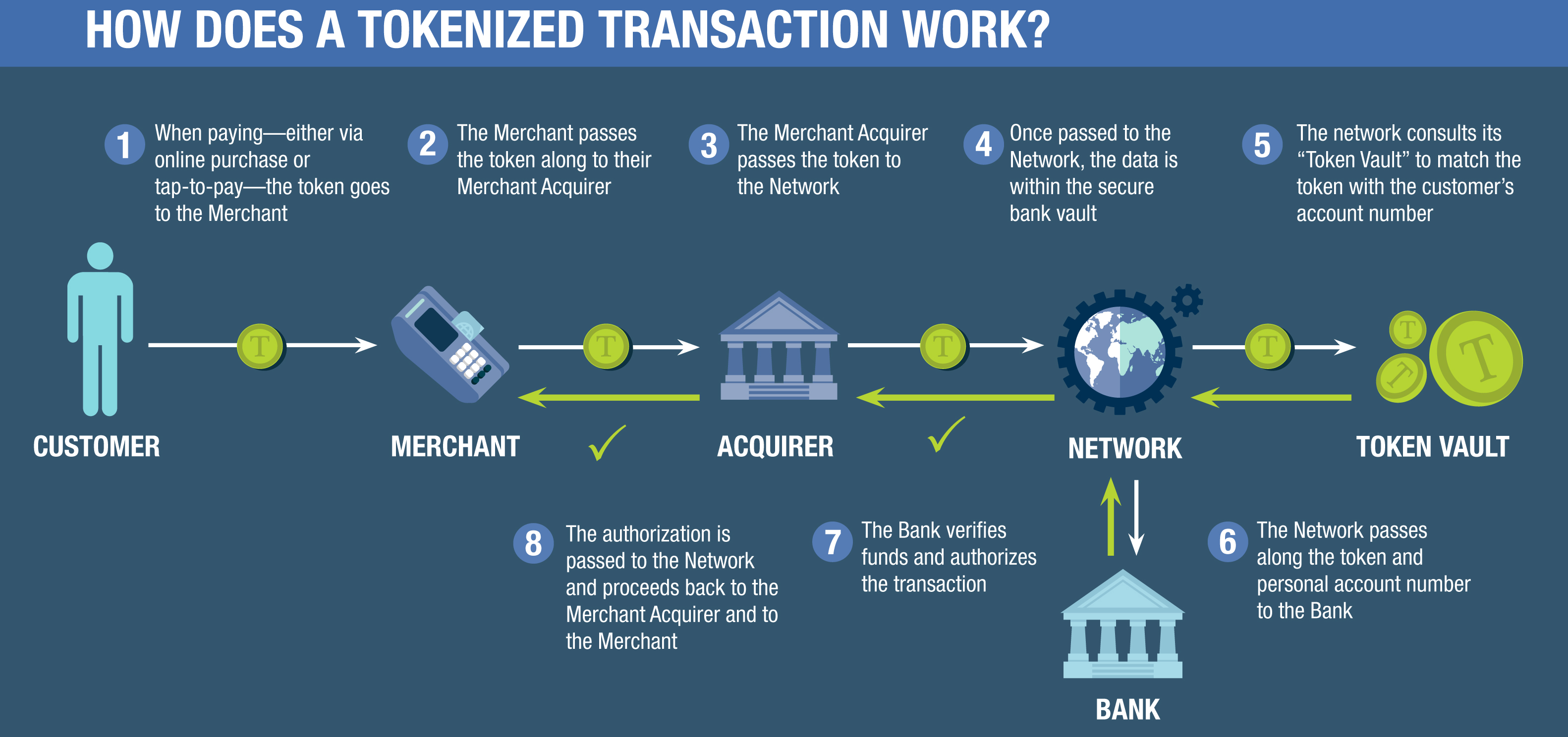
Tokenization began as a type of data security for businesses that replaces sensitive information with unique, non-sensitive data. Tokens don’t contain the original data, but they usually share similar characters or formatting. 

A user would need access to the tokens that are connected to the separately-stored originals in order to restore the tokens and view the secured data. Otherwise, a user would not be able to decipher the token to view the data. Therefore, they can be useful for securing personal information, financial transaction data and other sensitive data.

***

***

There are multiple types of blockchain tokenization and non-blockchain tokenization.

Blockchain Tokenization

Types of blockchain tokenization include:

  • Fungible tokenization. These are standard blockchain tokens. They have identical values, so they can easily replace one another — think of swapping one dollar for another dollar.
  • Non-fungible tokenization. These are less common blockchain tokens that do not have a set value. Instead, they represent ownership of an asset, such as digital art or real estate, that determines the value of the token.
  • Governance tokenization. These tokens represent voting rights and can be used to vote and collaborate on a blockchain system.
  • Utility tokenization. These tokens are used to give access to certain products and services on a specific blockchain, so they can be used to complete actions like paying transaction fees or operating a decentralized market system. 

Non-blockchain Tokenization

Types of non-blockchain tokenization include:

  • Vault tokenization. This is the standard type of tokenization to protect payment information, where the token is used to process payments without providing card numbers or other data.
  • Vaultless tokenization. This is a type of tokenization used for payment processing that doesn’t require a token vault for storage. Instead, it uses cryptographic devices and algorithms to convert data to a token.
  • Natural language processing tokenization. This type of tokenization breaks information down into simpler terms to make it more easily understood by computers. It includes word, sub word and character tokenization.

While tokenization began with the idea of protecting data assets using non-blockchain tokenization, it has developed into a way to protect the ownership of many other types of assets by using blockchain technology.

MORE: https://www.blockchain-council.org/blockchain/what-is-tokenization/

***

***

COMMENTS APPRECIATED

Thank You

***

DAILY UPDATE: The Ides of March as Stock Markets Slide

By Staff Reporters

***

***

Stocks fell yesterday after another round of hotter-than-expected inflation data chilled investors. But it was a tremendous Thursday for sporting goods store Dick’s, as it soared 15% after posting its largest sales quarter in history in Q4, thanks in part to consumers buying more expensive items.

Here’s where the major stock benchmarks ended:

  • The S&P 500 index fell 14.83 points (0.3%) to 5,150.48; the Dow Jones Industrial Average® ($DJI) declined 137.66 points (0.4%) to 38,905.66; the NASDAQ Composite shed 49.24 points (0.3%) to 16,128.53.
  • The 10-year Treasury note yield (TNX) rose about 10 basis points to 4.292%.
  • The CBOE Volatility Index® (VIX) rose 0.65 to 14.40.

Technology shares remained under pressure, as a pullback in Nvidia (NVDA) and other chip makers sent the Philadelphia Semiconductor Index (SOX) down almost 2% to its lowest close of the month. Nvidia fell 3.2% Thursday and has dropped nearly 10% from a record intraday high of $974 last Friday. Banks and small-cap stocks were also among the market’s weakest performers.

“Tech shares appear to be going through a corrective phase following last Friday’s key reversal day in Nvidia. The question remains whether a potential correction in tech will spill over into the broader market or whether money will rotate into other areas of the market.”

In other markets, WTI crude oil futures (/CL) extended this week’s rally with a gain of 1.7% and ended slightly above $81 per barrel, its highest level since early November. Oil’s strength has been driven by an unexpected drop in U.S. inventories and concerns over supply disruptions after Ukrainian strikes on oil refineries in Russia.

CITE: https://www.r2library.com/Resource

COMMENTS APPRECIATED

Thank You

***

***

PRIVATE EQUITY: Hospitals Experience Adverse Patient Outcomes

By Health Capital Consultants, LLC

***

***

On December 26, 2023, a study published in the Journal of the American Medical Association (JAMA) found concerning changes in patient outcomes and hospital adverse events associated with private equity (PE) acquisition and ownership of hospitals. Over the past ten years, PE firms have set their sights on hospitals as a lucrative investment opportunity, spending nearly $1 trillion to finance healthcare acquisitions, and purchasing more than 200 hospitals from non-PE owners.

CITE: https://www.r2library.com/Resource

This Health Capital Topics article reviews the JAMA study and the impact of PE ownership on the healthcare industry. (Read more…)

COMMENTS APPRECIATED

Thank You

***

***