Using Debt Wisely to Build Wealth

By Staff Reporters

SPONSOR: http://www.MarcinkoAssociates.com

***

***

Sometimes debt is a necessary tool in building wealth

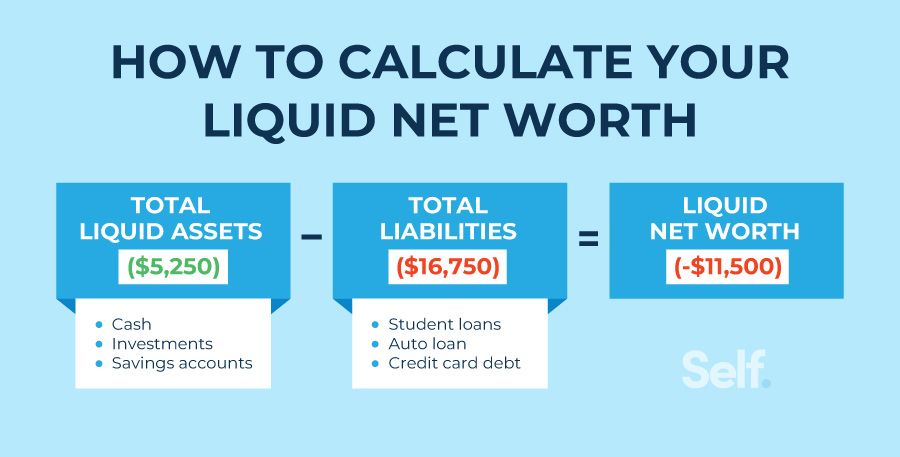
Using debt to build wealth might seem counterintuitive. After all, when you calculate your wealth, you look at what you own (assets) and subtract what you owe (debts and liabilities) to determine what your net worth (wealth) is.

It’s easy to oversimplify that debt is bad and is harmful to your wealth. Because some debt is really harmful, like credit cards, automobile, debt gets lumped into the category of “bad.”

But some types of debt can be useful and sometimes necessary to create wealth; home, education, business, etc. For folks that don’t readily have access to large sums of cash or capital, debt may be the tool that allows them to expand.

Borrow Carefully * Invest Wisely!

COMMENTS APPRECIATED

Subscribe and Refer

***

***

NET WORTH: Defined for Physicians

By Staff Reporters

SPONSOR: http://www.CertifiedMedicalPlanner.org

***

***

What does net worth really mean?

Net worth is everything you own of significance (Assets) minus what is owed in debts (Liabilities). Assets include cash and investments, real estate, cars and anything else of value.

BROKE DOCTORS: https://medicalexecutivepost.com/2025/08/02/doctors-going-broke-and-living-paycheck-to-paycheck/

How is net worth calculated? Assets – Debt = Net Worth. Net worth is calculated by adding all owned assets (anything of value) and then subtracting all of your liabilities.

Is net worth yearly? No, net worth is not yearly. Net worth isn’t inherently yearly but is often tracked on an annual basis to assess financial progress year over year.

What net worth is considered wealthy, rich and upper class?
In the U.S. salary average is around $59,000, and only 20% of Americans have a household income of $100,000 or more.

MONEY ADDICTION: https://medicalexecutivepost.com/2025/08/07/moiney-addicted-physicians-the-investing-and-trading-personality-of-doctors/

Is net worth the same as net income? No, net worth is not the same as net income. Net income is what you actually bring home after taxes and payroll deductions, like Social Security and 401(k) contributions.

Can one measure their net worth if they don’t have many assets or a high income? Yes. Knowing your net worth isn’t about the amount you have; it’s about understanding your financial position. It helps you track your progress, informs your financial decisions, and motivates you to improve your financial health, regardless of where you start.

HEDGE FUNDS: https://medicalexecutivepost.com/2025/06/08/hedge-funds-defined-for-doctors/

COMMENTS APPRECIATED

Like and Subscribe

***

***

MONEY SCRIPTS: Fundamental Subconscious Beliefs and Economic Behavioral Patterns Defined

SALES PSYCHOLOGY FOR INVESTMENT ADVISORS, FINANCIAL ADVISORS, INSURANCE AGENTS, WEALTH MANAGERS AND FINANCIAL PLANNERS

By Dr. David Edward Marcinko; MBA MEd CMP®

http://www.MarcinkoAssociates.com

***

***

SPONSOR: http://www.CertifiedMedicalPlanner.org

***

***

Stocks were decimated yesterday in the first full trading day following President Trump’s tariff announcement. It was the biggest single-day decline since the start of the Covid-19 pandemic in March 2020. Every Magnificent Seven stock was battered—Apple worst of all. And so perhaps it is a good time to discuss the concept of “Money Scripts”.

***

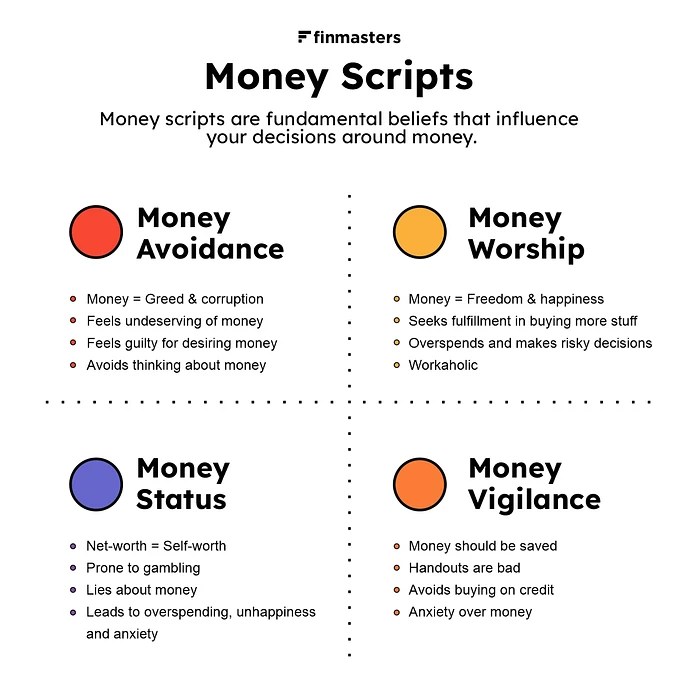
Money Scripts are unconscious beliefs about money that are typically only partially true, are developed in childhood, and drive adult financial behaviors. Money scripts may be the result of “financial flashpoints,” which are salient early experiences around money that have a lasting impact in adulthood. Money scripts are often passed down through the generations and social groups often share similar money scripts. And so, we argue that Money scripts are at the root of all illogical, ill-advised, self-destructive, or self-limiting financial behaviors.

In research at Kansas State University [KSU], researchers identified four distinct Money script patterns, which are associated with financial health and predict financial behaviors. These include: (a) money avoidance, (b) money worship, (c) money status, and (d) money vigilance [personal communication Brad Klontz, PsyD, CFP®, Kenneth Shubin-Stein, MD, MPH, MS, CFA and Sonya Britt, PhD, CFP®].

And so, we all like to think our financial decisions are fully rational, but the truth is that our subconscious beliefs have a dramatic impact on our money and financial decisions. These money scripts are important to know and understand. A summary is below:

            Money Avoidance

Money avoidance scripts are illustrated by beliefs such as “Rich people are greedy,” “It is not okay to have more than you need,” and “I do not deserve a lot of money when others have less than me.” Money avoiders believe that money is bad or that they do not deserve money. They believe that wealthy people are corrupt and there is virtue in living with less money. They may sabotage their financial success or give money away even though they cannot afford to do so. Money avoidance scripts may be associated with lower income and lower net worth and predict financial behaviors including ignoring bank statements, overspending, financial dependence on others, financial enabling of others, and having trouble sticking to a budget.

            Money Worship 

Money worship is typified by beliefs such as “More money will make you happier,” “You can never have enough money,” and “Money would solve all my problems.” Money worshipers are convinced that money is the key to happiness. At the same time, they believe that one can never have enough. Money worships have lower income, lower net worth, and higher credit card debt. They are more likely to be hoarders, spend compulsively, and put work ahead of family.

            Money Status

Money status scripts include “I will not buy something unless it is new,” “Your self-worth equals you net worth,” and “If something isn’t considered the ‘best’ it is not worth buying.” Money status seekers see net worth and self-worth as being synonymous. They pretend to have more money than they do and tend to overspend as a result. They often grew up in poorer families and believe that the universe should take care of their financial needs if they live a virtuous life. Money status scripts are associated with compulsive gambling, overspending, being financially dependent on others, and lying to one’s spouse about spending.

            Money Vigilance

Money vigilant beliefs include “It is important to save for a rainy day,” “You should always look for the best deal, even if it takes more time,” and “I would be a nervous wreck if I did not have an emergency fund.” The money vigilants are alert, watchful and concerned about their financial welfare. They are more likely to save and less likely to buy on credit. As a result, they tend to have higher income and higher net worth. They also have a tendency to be anxious about money and are secretive about their financial status outside of their household. While money vigilance is associated with frugality and saving, excessive anxiety can keep someone from enjoying the benefits that money can provide.

Identification

When money scripts are identified, it is helpful to examine where they came from. A simple behavioral finance technique involves reflecting on the following questions:

  • What three lessons did you learn about money from your mother?
  • What three lessons did you learn about money from your father?
  • What is your first memory around money?
  • What is your most painful money memory?
  • What is your most joyful money memory?
  • What money scripts emerged for you from this experience?
  • How have they helped you?
  • How have they hurt you?
  • What money scripts do you need to change?

Conclusion

Ideally, from a balanced middle ground, we can see past the limitations of money scripts, our self and others who are polarized. Those who believe “Money is meant to be spent” or “Money is meant to be saved” have a world view that results in extreme positions. Labeling them as “correct” or “wrong” is not a useful way to try to shift anyone’s polarized money script beliefs.

EDUCATION: Books

SPEAKING: Dr. Marcinko will be speaking and lecturing, signing and opining, teaching and preaching, storming and performing at many locations throughout the USA this year! His tour of witty and serious pontifications may be scheduled on a planned or ad-hoc basis; for public or private meetings and gatherings; formally, informally, or over lunch or dinner. All medical societies, financial advisory firms or Broker-Dealers are encouraged to submit a RFP for speaking engagements: CONTACT: MarcinkoAdvisors@outlook.com 

COMMENTS APPRECIATED

Read, Refer, Like and Subscribe

***

***

PHYSICIAN NET WORTH: Versus Average Family

By Dr. David Edward Marcinko MBA MEd CMP®

SPONSOR: http://www.MarcinkoAssociates.com

***

***

Average Net Worth of an American Family

Both median and average family net worth surged between 2019 and 2022, according to the U.S. Federal Reserve. Average net worth increased by 23% to $1,063,700, the Fed reported in October 2023, the most recent year it published the data. Median net worth, on the other hand, rose 37% over that same period to $192,900.

You might wonder why the average and median net worth figures are so different. That’s because when you take the average of something, you add together every value in a data set and then divide that figure by the number of individual values.

When calculating a median, you simply look at the middle figure within a data set. That said, an average figure can be significantly higher or lower than a median figure if there are extreme outliers – meaning a group of people with significantly more net worth than the rest of the group can bring the average higher.

Average Net Worth by Age

The average net worth of someone younger than 35 years old is $183,500, as of 2022. From there, average net worth steadily rises within each age bracket. Between 35 to 44, the average net worth is $549,600, while between 45 and 54, that number increases to $975,800. Average net worth surges above the $1 million mark between 55 to 64, reaching $1,566,900.

Average net worth again rises for those ages 65 to 74, to $1,794,600, before falling to $1,624,100 for the 75 and older group. The median net worth within every single age bracket, however, is much lower than the average net worth.

***

***

Physicians [MD/DO] Net Worth by Specialty

A 2023 Medscape report shows the top 10 specialties with the most survey respondents saying they are worth more than $5 million.

  1. Plastic Surgery (31% of all survey respondents)
  2. Orthopedics (28%)
  3. Gastroenterology (25%)
  4. Urology (23%)
  5. Cardiology (22%)
  6. Ophthalmology (18%)
  7. Radiology (17%)
  8. Oncology (17%)
  9. Pathology (14%)
  10. Ob/Gyn (14%)

EDUCATION: Books

SPEAKING: Dr. Marcinko will be speaking and lecturing, signing and opining, teaching and preaching, storming and performing at many locations throughout the USA this year! His tour of witty and serious pontifications may be scheduled on a planned or ad-hoc basis; for public or private meetings and gatherings; formally, informally, or over lunch or dinner. All medical societies, financial advisory firms or Broker-Dealers are encouraged to submit a RFP for speaking engagements: CONTACT: MarcinkoAdvisors@outlook.com 

COMMENTS APPRECIATED

Subscribe, Refer, Like and Read

***

NET WORTH: Retirees Economic Class

LIMITED RESOURCES TO WEALTHY

By Staff Reporters

SPONSOR: http://www.MarcinkoAssociates.com

***

***

In retirement, according to Josephine Nesbit, your economic class can be broadly categorized into four distinct groups, each defined by their net worth and financial capabilities, ranging from retirees with limited resources to the wealthy. And, according to Moneywise, here are the net worth categories of the poor, middle class (and upper-middle class) and rich:

  • Poor retirees: Poor retirees are in the lower 20th percentile, and may have a net worth of around $10,000. This is often without property ownership, forcing many to rely mainly on Social Security or minimal pensions.
  • Middle-class retirees: Making up the 50th percentile, with a median net worth of approximately $281,000, this group usually includes home equity, retirement savings and a 401(k) plan.
  • Upper-middle-class retirees: These retirees possess a net worth between $201,800 and $608,900. They have diversified assets and enjoy a comfortable retirement cushion.
  • Rich retirees: In the 90th percentile, with net worth starting at $1.9 million, this group has much more financial freedom and is able to afford luxuries and legacy planning.

COMMENTS APPRECIATED

Refer and Subscribe

***

***

SALARY PRIME NUMBERS: Financial Success by Generation

By Staff Reporters

***

***

According to HVL from Morning Brew, a new survey from financial services company Empower ignited a conversation about what monetary success means. Turns out, it depends on who you ask. Boomers believe that success means having an annual salary of about $100,000. Gen Z thinks your mom can’t brag about you to her dentist until you earn $600k/year. On average, respondents said success is making $270,000 annually.

Additionally, less than 40% of respondents said they considered themselves financially successful. Almost 50% don’t believe they will achieve the level of success they desire.

But there was some good news: Forty-three percent said their idea of success didn’t depend on a specific sum of money. And almost 60% said happiness is most important, as long as happiness is defined as “being able to spend money on the things and experiences that bring the most joy.”

COMMENTS APPRECIATED

Subscribe Today!

***

***

PHYSICIAN NET WORTH: Personalized Projections

HOW DO YOU RANK – DOCTOR?

By Dr. David Edward Marcinko MBA MEd CMP

***

SPONSOR: http://www.MarcinkoAssociates.com

***

Once the value of all personal assets and liabilities is known, net worth can be determined with the following formula: Net worth = assets minus liabilities. Obviously, higher is better.

CITE: https://www.r2library.com/Resource

In The Millionaire Next Door, Thomas H. Stanley, PhD, and William H. Danko give the following benchmark for net worth accumulation. Although conservative for physicians of a past generation, it may be more applicable in the future because of current managed care environment. Here is the guide: Multiple your age by your annual pre-tax income from all sources; except inheritances, and then divide by ten.

Example:

As an HMO pediatrician, Dr. Curtis earned $ 90,000 last year. So, if she is 35, her net worth should be at least $ 315,000.

How do you get to that point? In a word, consume less and save more. Stanley and Danko found that the typical millionaire set aside 15 percent of earned income annually and has enough invested to survive 10 years, at current income levels if he stopped working.

Question: If Dr. Curtis lost her job tomorrow, how long could she pay herself the same salary? Could you?

COMMENTS APPRECIATED

Thank You

***

***

DOCTOR: What’s Your Net Worth?

How Would You Respond … if Asked?

By Rick Kahler MS CFP® http://www.KahlerFinancial.com

Rick Kahler CFPFinancial professionals like me think nothing of asking clients this question.

But, if the tables were turned, though, and clients or prospective clients asked the same question of us, how would we respond?

The “Talk”

Every now and then this issue comes up in conversations among financial planners. Some advisors think their net worth is none of their clients’ business, any more than doctors’ cholesterol levels are any business of their patients.

Others are concerned that a single number like net worth is incomplete information and can even be misleading. Knowing a financial professional has a net worth of, say, five million dollars doesn’t necessarily mean the person is trustworthy or a capable financial planner. Net worth tells prospective clients nothing about where the money came from. The planner may have inherited it, won the lottery, earned it through a business other than financial planning, earned it from commissions on poor investments, or even obtained it illegally.

Wither the “Number”

Nor does net worth reveal anything useful about the understanding of money or knowledge of financial planning. I’ve worked with plenty of multi-millionaires who were skilled at making money but were horrible money managers and inept at investing. Even more, there are many brilliant young planners who haven’t had the time to accumulate a large net worth.

I suspect that most clients who want to know about their planners’ net worth actually have several deeper questions in mind. Some may be asking if the professional actually follows his or her own advice. Imagine how troubling it might be to find out your financial planner doesn’t have a retirement plan, is a habitual over-spender, or hasn’t gotten around to making a will.

Other Reasons Why

Another reason for the question may be a concern whether the planner is financially stable and will be around in the future. During the Great Recession, many financial professionals saw their revenues fall by 30% to 40%. Some who did not have a business emergency reserve had to resort to laying off staff, cutting services, or in some cases closing their doors.

Still another concern may be whether the planner is familiar with a potential client’s particular financial issues. This is especially true of high net worth clients. They need to know a planner can relate to the complexities, responsibilities, and emotional challenges of managing wealth.

***

Net Worth MDs

***

The Questions

All of these are legitimate concerns. Knowing a financial planner’s net worth, however, doesn’t address those concerns. To discover whether a planner is a good fit for you, it would be more useful to ask questions like the following:

  • Do you follow the same advice you give clients? Give me some examples.
  • Do you have six months’ living expenses in an emergency account?
  • Do you invest your money in the same manner you will invest mine?
  • If I were to run a credit report on you, what would it tell me?
  • What are some of the things you have learned from your financial mistakes?
  • Tell me what your company has in place for emergency planning and succession planning.
  • Tell me why you can relate to someone with my net worth and the issues I am facing.

Assessment

If a planner is offended by these questions or dances around answering them, that may be a red flag. If a planner offers answers freely and transparently, you may have found someone who provides exceptional service. Planners who share some of their own financial information are clearly committed to building the trust that is so essential between planner and client.

As a prospective client, you may hesitate to ask these questions even though you want to know the answers. Don’t be shy; ask.

More:

Conclusion

Your thoughts and comments on this ME-P are appreciated. Feel free to review our top-left column, and top-right sidebar materials, links, URLs and related websites, too. Then, subscribe to the ME-P. It is fast, free and secure.

Speaker: If you need a moderator or speaker for an upcoming event, Dr. David E. Marcinko; MBA – Publisher-in-Chief of the Medical Executive-Post – is available for seminar or speaking engagements. Contact: MarcinkoAdvisors@msn.com

OUR OTHER PRINT BOOKS AND RELATED INFORMATION SOURCES:

Financial Planning MDs 2015TEXT BOOK

Comprehensive Financial Planning Strategies for Doctors and Advisors: Best Practices from Leading Consultants

PHYSICIANS BEWARE: Traditional Financial Planning “Rules of Thumb”

DOCTORS AND MEDICAL PROFESSIONALS BEWARE?

We ARE Different!

SPONSOR: http://MarcinkoAssociates.com

By Dr. David E. Marcinko MBA CMP®

SPONSOR: http://www.CertifiedMedicalPlanner.org

CMP logo

***

  • While financial planning rules of thumbs are useful to people as general guidelines, they may be too oversimplified in many situations, leading to underestimating or overestimating an individual’s needs. This may be especially true for physicians and many medical professionals. Rules of thumb do not account for specific circumstances or factors occurring at a particular time, or that could change over time, which should be considered for making sound financial decisions.
  • Great Health Industry Resignation: https://medicalexecutivepost.com/2021/12/12/healthcare-industry-hit-with-the-great-resignation-retirement/

For example, in a tight job market, an emergency fund amounting to six months of household expenses does not consider the possibility of extended unemployment. I’ve always suggested 2-3 years for doctors. Venture capitalist lay-offs of physicians during the pandemic confirm this often criticized benchmark opinion of mine.

As another example, buying life insurance based on a multiple of income does not account for the specific needs of the surviving family, which include a mortgage, the need for college funding and an extended survivor income for a non-working spouse. Again a huge home mortgage, or several children or dependents, may be the financial bane of physician colleagues and life insurance.

CITE: https://www.r2library.com/Resource/Title/082610254

***

EXAMPLES: Old/New Rules

  • A home purchase should cost less than an amount equal to two and a half years of your annual income. I think physicians in practice for 3-5 years might go up to 3.5X annual income; ceteras paribus.
  • Save at least 10-15% of your take-home income for retirement. Seek to save 20% or more.
  • Have at least five times your gross salary in life insurance death benefit. Consider 10X this amount in term insurance if young, and/or with several children or other special circumstances.
  • Pay off your highest-interest credit cards first. Agreed.
  • The stock market has a long-term average return of 10%. Agreed, but appreciated risk adjusted rates of return..
  • You should have an emergency fund equal to six months’ worth of household expenses. Doctors should seek 2-3 years.
  • Your age represents the percentage of bonds you should have in your portfolio. Risk tolerance and assets may be more vital.
  • Your age subtracted from 100 represents the percentage of stocks you should have in your portfolio. Risk tolerance and assets may still be more vital.
  • A balanced portfolio is 60% stocks, 40% bonds. With historic low interest rates, cash may be a more flexible alternative than bonds; also avoid most bond mutual funds as they usually never mature.

There are also rules of thumb for determining how much net worth you will need to retire comfortably at a normal retirement age. Here is the calculation that Investopedia uses to determine your net worth:

Compensation in the Physician Specialties: Mostly Stable - NEJM  CareerCenter Resources

RULES 72, 78 and 115: https://medicalexecutivepost.com/2022/01/30/the-rules-of-72-78-and-115/

INVITATION: https://medicalexecutivepost.com/2021/05/08/invite-dr-marcinko-to-your-next-big-event/

***

COMMENTS ARE APPRECIATED

Thank You

Subscribe to the Medical Executive-Post

***

FINANCE: https://www.amazon.com/Comprehensive-Financial-Planning-Strategies-Advisors/dp/1482240289/ref=sr_1_1?ie=UTF8&qid=1418580820&sr=8-1&keywords=david+marcinko

***

NET WORTH: Average by Age

By Staff Reporters

SPONSOR: http://www.CertifiedMedicalPlanner.org

***

The average net worth of someone younger than 35 years old is $76,300, as of 2019. From there, average net worth steadily rises within each age bracket. Between 35 to 44, the average net worth is $436,200, while between 45 to 54 that number increases to $833,200. Average net worth cracks the $1 million mark between 55 to 64, reaching $1,175,900.

Average net worth again rises for those ages 65 to 74, to $1,217,700, before falling to $977,600 for someone over age 75.

CITE: https://www.r2library.com/Resource

The median net worth within every single age bracket, however, is lower than the average net worth.

MARCINKO & ASSOCIATES: http://www.MarcinkoAssociates.com

PHYSICIAN NET WORTH: https://medicalexecutivepost.com/2023/09/27/physician-assets-liabilities-and-personal-net-worth/

***

COMMENTS APPRECIATED

Thank You

***

***

Physician Assets, Liabilities and Personal Net Worth

How are Assets and Liabilities Related to Doctor Net Worth?

cropped-dem

Dr. David E. Marcinko MBA  

Before the relationship among financial assets, liabilities and net worth can be examined, some based definitions must be understood. 

LINK: http://www.CertifiedMedicalPlanner.org

[A] Short-Term Assets

Short-term goals (less than 12 months) require liquidity or short-term assets. These assets include cash, checking and saving accounts, certificates of deposit, and money market accounts. These accounts have two things in common. The principal is guaranteed from risk of loss, and pay a very low interest rate.  As an investment, they are considered substandard and one would only keep what is actually needed for liquidity purposes in these accounts.           

[B] Long-Term Assets

Longer-term assets (more than 12 months) include real estate, mutual funds, retirement plans, stocks, and life insurance cash value policies. Bonds may also be an appropriate long-term investment asset for a number of reasons, for example, if you are seeking a regular and reliable stream of income or if you have no immediate need for the amount of the principal invested. Bonds also can be used to diversify your portfolio and reducing the overall risk that is inherent in stock investments. 

[C] Short-Term Liabilities

Short-term liabilities (less than 12 months) include credit card debt, utility bills, and auto loans or leasing. When a young doctor leaves residency and starts practice, the foremost concern is student debt. This is an unsecured debt that is not backed by any collateral, except a promise to pay. There are recourses that an unsecured creditor can take to recoup the bad debt. Usually, if the unsecured creditor is successful obtaining a judgment, it can force wages to be garnished, and the Department of Education can withhold up to ten percent of a wages without first initiating a lawsuit, if in default.  It is also probable that young medical professionals have been holding at least one credit card since their sophomore year in college.  Credit card companies consider college student the most lucrative target market and medical students hold their first card for an average of fifteen years. There are several other types of other unsecured debt, including department store cards, professional fees, medical and dental bills, alimony, child support, rent; utility bills, personal loans from relatives, and health club dues, to name a few.  

[D] Long-Term Liabilities

A secured debt, on the other hand, is debt that is pledged by a specific property. This is a collateralized loan. Generally, the purchased item is pledged with the proceeds of the loan. This would include long-term liabilities (more than 12 months) such as a mortgage, home equity loan, or a car loan. Although the creditor has the ability to take possession of your property in order to recover a bad debt, it is done very rarely. A creditor is more interested in recovering money. Sometimes, when borrowing money, there may be a requirement to pledge assets that are owned prior to the loan.  

For example, a personal loan from a finance company requires that you pledge all personal property such as your car, furniture, and equipment.  The same property may become subject to a judicial lien if you are sued and a judgment is made against you. In this case, you would not be able to sell or pledge these assets until the judgment is satisfied.

A common example of a lien would be from unpaid federal, state or local taxes. Doctors can be found personally liable for unpaid payroll taxes of employees in their professional corporations.  Be aware that some assets and liabilities defy short or long-term definition. When this happens, simply be consistent in your comparison of financial statements, over time. 

[E] Personal Physician Net Worth

Once the value of all personal assets and liabilities is known, net worth can be determined with the following formula: Net worth = assets minus liabilities. Obviously, higher is better.  In The Millionaire Next Door, Thomas H. Stanley, PhD, and William H. Danko give the following benchmark for net worth accumulation. Although conservative for physicians of a past generation, it may be more applicable in the future because of current managed care environment.

Here is the guide: Multiple your age by your annual pre-tax income from all sources – except inheritances – and divide by ten. 

Real-Life Medical Example: As an HMO pediatrician, Dr. Curtis earned $ 60,000 last year. So, if she is 35, her net worth should be at least $ 210,000.

How do you get to that point? In a word, consume less, save more and watch the student loans. Stanley and Danko found that the typical millionaire set aside 15 percent of earned income annually and has enough invested to survive 10 years, at current income levels if he stopped working.  Now, if Dr. Curtis lost her job tomorrow, how long could she pay herself the same salary? 

[F] Common Liability Management Mistakes

 A common liability management mistake is not recognizing when you are heading for trouble. If doctors are paying only the minimum payments on credit card debt, while continuing to charge purchases at a rate faster than the pay-down, trouble is brewing. If you don’t categorize your debt, you could find yourself paying down non-priority debt while ignoring priority debt.

A priority debt is one that is essential or subject to serious consequences, if not paid. Examples include rent, mortgage payments, utility bills, child support, car payments, unpaid taxes, and other secured debt. If in one month, a doctor had to choose between paying his accounting bill or his rent, it would be essential to pay the rent. 

CITE: https://www.r2library.com/Resource/Title/082610254

Conclusion

Your thoughts and comments on this ME-P are appreciated. Feel free to review our top-left column, and top-right sidebar materials, links, URLs and related websites, too. Then, subscribe to the ME-P. It is fast, free and secure.

Speaker: If you need a moderator or speaker for an upcoming event, Dr. David E. Marcinko; MBA – Publisher-in-Chief of the Medical Executive-Post – is available for seminar or speaking engagements. Contact: MarcinkoAdvisors@msn.com

OUR OTHER PRINT BOOKS AND RELATED INFORMATION SOURCES:Comprehensive Financial Planning Strategies for Doctors and Advisors: Best Practices from Leading Consultants and Certified Medical Planners(TM)Invite Dr. Marcinko

***

How Much Money Do You Make – Doctor?

Join Our Mailing List

Ruminations on the Last Taboo!

By Rick Kahler MS CFP® http://www.KahlerFinancial.com

Rick Kahler CFP“How much money do you make?”

We don’t ask people, let alone doctors and medical professionals, that question; but we’d love to know the answer.

In this country, we’re fixated on a person’s annual income. That’s the primary measure we use to determine social status and define success.

Income Qualifier?

Income also is the qualifier for government welfare programs. It defines people as poor, middle class, or rich. And, of course, it determines how much of your income the government will take. The more you bring in, the higher the percentage of your earnings you will pay in federal, state, and local taxes.

Income as a Poor Indicator of Net Worth

While we project a lot of things onto someone’s income, most of what we project is untrue. Income is not the best indicator of a person’s wealth or net worth.

Examples:

Last year Dr. Brent’s tax return showed an adjusted gross income of $20,000. Dr. Bill’s was $2 million. Who is richer? Most people would say Bill. The US and state governments also would say Bill. Actually, Brent is far and away the wealthier of the two.

Why and How?

Consider these two real-life examples:

  • Dr. Bill lives in New York, New York, which has both high property taxes and a city income tax. Paying city, state, and federal income taxes, plus property taxes on his luxurious home, takes around half of his salary. With take-home pay of about $1 million, Bill spends $1.2 million a year on his mortgage payments, college and private school tuition, and his lifestyle. He overspends his net income by $200,000 a year. He owes more on his condo than it’s worth, and he has significant credit card debt. When you total his assets and liabilities, he has a negative net worth of $1 million. He has managed to hold everything together so far, but technically, Bill is bankrupt.

Jaguar XJ

  • Dr. Brent lives in Rapid City, South Dakota. He is retired, owns a modest home which is paid for, and lives on about $40,000 a year. He didn’t pay any income taxes last year, partly because some of his income is from tax-free municipal bonds and mostly because he wrote off a large investment loss which left him with $20,000 of adjusted gross income. Brent has no debt. His net worth is $5,000,000.

Steering Jaguar

The truth is that what people make tells us very little about whether they are rich or not. In these examples, judging from income alone, it would be easy to reach the inaccurate conclusion that Bill must be far wealthier than Brent. His lifestyle is certainly more lavish—which of course is part of the reason he isn’t wealthy.

Many people who have high incomes but are heavily in debt might have lifestyles lower than others who make significantly less but have no debt. It’s not uncommon that people with high incomes choose to live a lifestyle that is far below what they could afford. In fact, this is one of the best ways to build real wealth.

The Income Non-Indicator

Income is a poor indicator of whether someone is rich. Even more important, it’s a poor indicator of how they handle money. I once worked with a family with an annual income of around $5 million who had a net worth of minus $3.5 million. They may have looked like “millionaires,” but they were not.

On the other hand, I work with many clients who have annual incomes around $100,000 a year, spend $60,000 a year, and are worth $2 to $5 million.

Assessment

The bottom line is that wealth is defined by net worth, not income. A high income doesn’t equal wealth; it equals a better opportunity to build wealth. Not everyone is wise enough to take advantage of that opportunity.

More:

Conclusion

Your thoughts and comments on this ME-P are appreciated. Feel free to review our top-left column, and top-right sidebar materials, links, URLs and related websites, too. Then, subscribe to the ME-P. It is fast, free and secure.

Speaker: If you need a moderator or speaker for an upcoming event, Dr. David E. Marcinko; MBA – Publisher-in-Chief of the Medical Executive-Post – is available for seminar or speaking engagements. Contact: MarcinkoAdvisors@msn.com

OUR OTHER PRINT BOOKS AND RELATED INFORMATION SOURCES:

Product Details  Product Details

Product Details

More on Doctors and Personal Net Worth

Join Our Mailing List

Determinations Using Rules-of-Thumb

[By Staff Reporters]fp-book1

Once the value of all personal assets and liabilities is known, physician net worth can be determined with the following formula: Net worth – assets minus liabilities. Obviously, higher is better.

And, although eschewed in the past, rule-of-thumb determinations are making a comeback because of the recent financial implosion and stock market meltdown.

Benchmarks

In The Millionaire Next Door, Thomas H. Stanley, Ph.D., and William H. Danko gave the following benchmark for net worth accumulation. Although conservative for physicians of a past generation, it may again be more applicable in the future because of the current managed care environment and political turmoil.

Here is the guide: Multiple your age by your annual pre-tax income from all sources, except inheritances; and then divide by ten.

Example

As an HMO pediatrician, Dr. Curtis earned $60,000 last year. So, if she is 35, her net worth should be at least $210,000. How do you get to that point? In a word, consume less and save more. Stanley and Danko found that the typical millionaire set aside 15 percent of earned income annually and has enough invested to survive 10 years, at current income levels if he stopped working. If Dr. Curtis lost her job tomorrow, how long could she pay herself the same salary?

More:

Assessment 

In one non-medical but stark example of inattentiveness to net-worth, John McAfee, the entrepreneur who founded the antivirus software company that bears his name, is now worth about $4 million, down from a peak of more than $100 million, according to the New York Times.

Conclusion

Your thoughts and comments on this ME-P are appreciated. Feel free to review our top-left column, and top-right sidebar materials, links, URLs and related websites, too. Then, subscribe to the ME-P. It is fast, free and secure.

Link: http://feeds.feedburner.com/HealthcareFinancialsthePostForcxos

Speaker: If you need a moderator or speaker for an upcoming event, Dr. David E. Marcinko; MBA – Publisher-in-Chief of the Medical Executive-Post – is available for seminar or speaking engagements. Contact: MarcinkoAdvisors@msn.com

OUR OTHER PRINT BOOKS AND RELATED INFORMATION SOURCES:

DICTIONARIES: http://www.springerpub.com/Search/marcinko
PHYSICIANS: www.MedicalBusinessAdvisors.com
PRACTICES: www.BusinessofMedicalPractice.com
HOSPITALS: http://www.crcpress.com/product/isbn/9781466558731
CLINICS: http://www.crcpress.com/product/isbn/9781439879900
BLOG: www.MedicalExecutivePost.com
FINANCE: Financial Planning for Physicians and Advisors
INSURANCE: Risk Management and Insurance Strategies for Physicians and Advisors

Product Details  Product Details

Comprehensive Financial Planning Strategies for Doctors and Advisors: Best Practices from Leading Consultants and Certified Medical Planners(TM)