QUANTUM COMPUTING: Healthcare and Banking Affected [B-QTUM Index Fund]

FUNDAMENTAL INDUSTRY CHANGES

By Staff Reporters

***

***

Index Funds

An index mutual fund or ETF (exchange-traded fund) tracks the performance of a specific market benchmark—or “index,” like the popular S&P 500 Index—as closely as possible. That’s why you may hear people refer to indexing as a “passive” investment strategy.

Instead of hand-selecting which stocks or bonds the fund will hold, the fund’s manager buys all (or a representative sample) of the stocks or bonds in the index it tracks.

***

Quantum Computing

Unlike traditional computers that use bits, quantum computers utilize qubits. These qubits are capable of being in a state of superposition, where they can represent both 0 and 1 simultaneously, enabling the processing of multiple calculations at once. This could allow quantum computers to outperform classical computers in solving certain complex problems. However, the field is still overcoming challenges such as qubit stability and decoherence; especially in these three areas:

  • Quantum computing could fundamentally alter healthcare by accelerating drug discovery and improving individualized medicine. Rapid analysis of enormous volumes of biological data allows quantum computers to find trends that might guide the creation of more potent treatments. In addition to accelerating drug development, this will enable customized treatments tailored to unique genetic profiles.
  • Faster and more accurate financial models produced by quantum computing will transform the banking sector. Through real-time analysis of intricate financial systems, it can help investors to control risk and make better decisions. More precise market forecasts will help maximize portfolio management and trading strategies.
  • Through greatly enhanced medical diagnosis and patient care, quantum computing can transform the healthcare industry. Quantum computers can remarkably accurately find trends and possible health hazards by analyzing enormous volumes of medical data in a fraction of the time. Early diagnosis and more customized treatment alternatives follow from this.

BQTUM Index Fund

Index Description: The BlueStar® Machine Learning and Quantum Computing Index (BQTUM) tracks liquid companies in the global quantum computing and machine learning industries, including products and services related to quantum computing or machine learning, such as the development or use of quantum computers or computing chips, superconducting materials, applications built on quantum computers, embedded artificial intelligence chips, or software specializing in the perception, collection, visualization, or management of big data.

Citation and Disclosure: https://www.defianceetfs.com/qtum/

COMMENTS APPRECIATED

Read, Like, Subscribe and Refer

***

***

INFINITE BANKING: Life Insurance Defined

By Staff Reporters

***

***

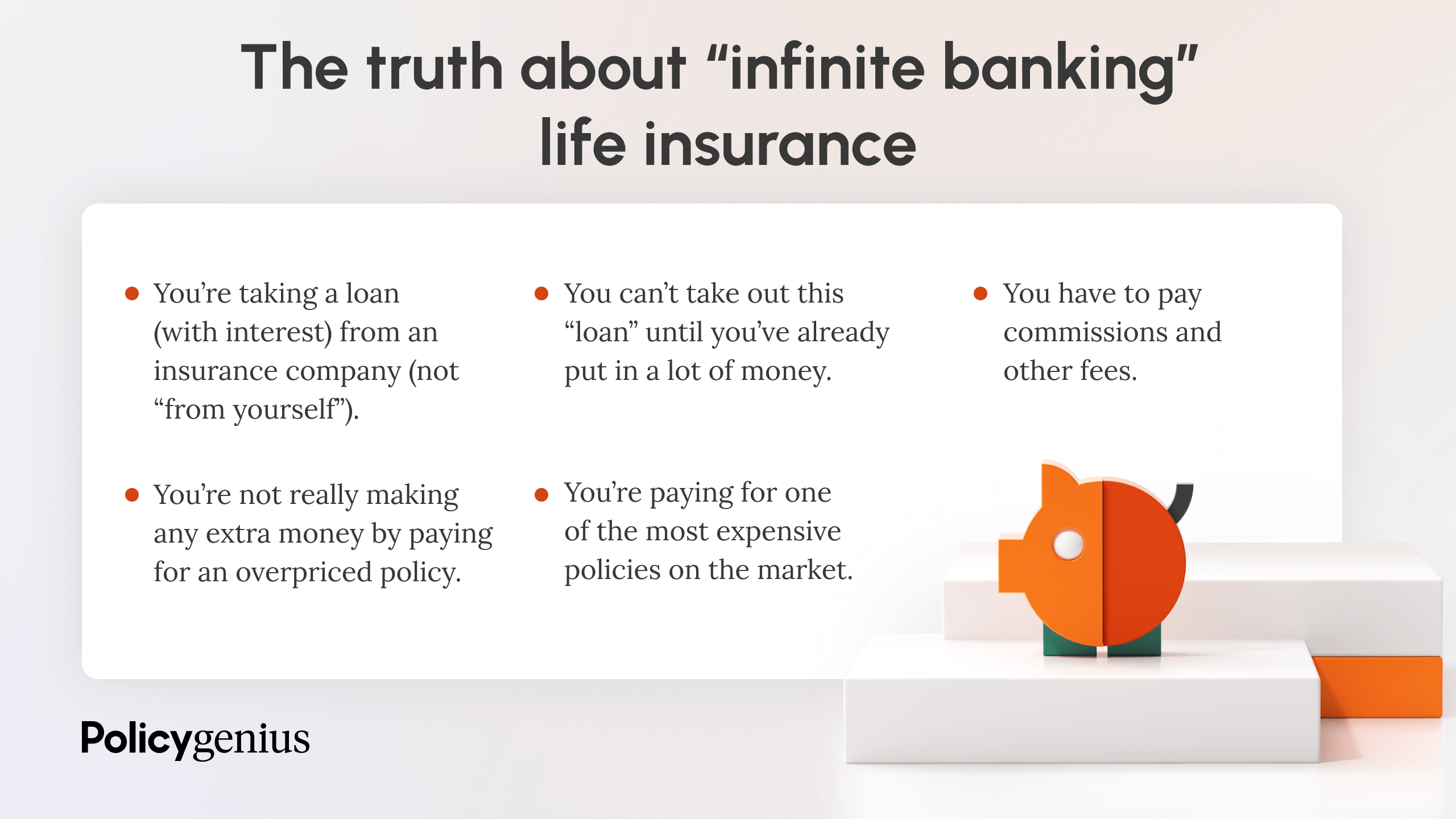
Infinite banking is not a product or service offered by a specific institution. It’s a concept promoted as a way you can “be your own bank” to have more control over your money. 

Infinite banking is a strategy in which you buy a life insurance policy that accumulates interest-earning cash value and take out loans against it, “borrowing from yourself” as a source of capital. Then eventually pay back the loan and start the cycle all over again. To whit:

  1. Buy a cash value life insurance policy, which you own and control.
  2. Pay policy premiums, a portion of which builds cash value.
  3. Cash value earns compounding interest.
  4. Take a loan out against the policy’s cash value, tax-free.
  5. Repay loans with interest.
  6. Cash value accumulates again, and the cycle repeats.

If you use this concept as intended, you’re taking money out of your life insurance policy to purchase everything you’d need for the rest of your life. Cars. Houses. Airplane tickets. Netflix.

So, when you pay back the policy loan, just as you’d have to pay back any mortgage, auto loan, or credit card, you’re paying yourself back.

Nelson Nash popularized this concept in his book Becoming Your Own Banker.

COMMENTS APPRECIATED

Refer and Subscribe

***

***

CHECKS: Cashier V. Certified V. Money Order V. Bank Draft

By Staff Reporters

***

Types of Checks

A cashier’s check is a check drawn from the bank’s own funds, not yours, and signed by a cashier or teller. Unlike a regular check, the bank, not the check writer, guarantees payment of a cashier’s check. A cashier’s check can also be called an official check.

A certified check is a personal check that the payer’s bank has certified to be legitimate and has earmarked the funds for the check. It’s a type of “official” payment. People often confuse certified checks with cashier’s checks. … Then, the bank prints a check against the funds they are holding.

MORE: https://www.gobankingrates.com/banking/checking-account/certified-check-vs-cashiers-check/#:~:text=What%20Is%20the%20Difference%20Between%20a%20Cashier%E2%80%99s%20Check,4%20Availability%20of%20Funds.%20…%205%20Safety.%20

A money order is a method of paying for something with cash using a check from a third party. You pay for the money order, and the third party issues you a check that you can give or send to someone. This person deposits the money order in their bank account or exchanges it for cash at a business or post office.

A bank draft is a negotiable instrument where payment is guaranteed by the issuing bank. Banks verify and withdraw funds from the requester’s account and deposit them into an internal account to cover the amount of the draft. A seller may require a bank draft when they have no relationship with the buyer.

CITE: https://www.r2library.com/Resource/Title/0826102549

YOUR COMMENTS ARE APPRECIATED.

***

FIN PLANNING: https://www.amazon.com/Comprehensive-Financial-Planning-Strategies-Advisors/dp/1482240289/ref=sr_1_1?ie=UTF8&qid=1418580820&sr=8-1&keywords=david+marcinko

Thank You

***

DAILY UPDATE: Second Apple Downgrade with Mixed Markets as Investors Await Payroll Data and Lilly Sells Medications Directly to Patients

By Staff Reporters

***

SPONSOR: http://www.MarcinkoAssociates.com

***

Here’s where the major benchmarks ended:

  • The S&P 500® index (SPX) was down 16.13 points (0.3%) at 4,688.68; the Dow Jones Industrial Average® (DJI) was up 10.15 points at 37,440.34; the NASDAQ Composite was down 81.91 points (0.6%) at 14,510.30.
  • The 10-year Treasury note yield (TNX) was up about 9 basis points at 3.997%.
  • The CBOE® Volatility Index (VIX) was up 0.08 at 14.12.

Oilfield services and consumer discretionary shares were also among the market’s weakest performers Thursday. Banking and health care were among the strongest sectors, illustrating renewed investor interest in stocks that lagged the broader market last year.

CITE: https://www.r2library.com/Resource

And, Eli Lilly is poised to sell medicine directly to consumers — with an emphasis on newly popular weight-loss drugs — in a move toward cutting out the controversial middle players in drug distribution.

COMMENTS APPRECIATED

Refer a Colleague: MarcinkoAdvisors@msn.com

Your referral Count: 0

Thank You

***

***

DAILY UPDATE: A.I. Financial Audits, Microsoft & Amazon and the Mixed Markets

By Staff Reporters

***

***

We’ve all known the AI audit is coming—but a new report from KPMG proves just how popular AI has already become in the audit process. The report polled more than 200 financial reporting leaders in the US between July and August. The headline takeaway? The AI audit is already close to ubiquitous.

Sixty-five percent of respondents said they’re already using AI in their job functions, while 49% said they’ve “piloted or deployed generative AI solutions.” Meanwhile, 71% said they expect to use AI “extensively in the next three years.”

CITE: https://www.r2library.com/Resource

***

Microsoft and Amazon are reportedly in the midst of a mega deal summing up to approximately $1 billion.The deal will help Amazon acquire 550,000 Microsoft 365 E5 licenses for its corporate workers, alongside one million Microsoft 365 F5 licenses for its front line employees.Amazon employees already use traditional, on-premises Microsoft Office software, but the company is now gearing up to transition to cloud-based productivity tools.

***

Here is where the major benchmarks ended:

  • The S&P 500 Index was up 7.64 points (0.2%) at 4,365.98; the Dow Jones Industrial Average was up 34.54 points (0.1%) at 34,095.86; the NASDAQ Composite (COMP) was up 40.50 points (0.3%) at 13,518.78.
  • The 10-year Treasury note yield was up about 9 basis points at 4.649%.
  • CBOEs Volatility Index (VIX) was down 0.02 at 14.89.

Oilfield services shares and other energy companies were among the weakest performers Monday despite crude oil futures rising after Saudi Arabia and Russia reaffirmed commitments to extra voluntary oil supply cuts until the end of the year.

The banking and real estate sectors were also under pressure. Health care stocks led gainers, as the S&P 500 Health Care Index (SP500-35) climbed to its highest level in nearly three weeks. The small-cap-focused Russell 2000 Index (RUT) dropped about 1.3%

COMMENTS APPRECIATED

Thank You

***

***

BANKS: New Federal Reserve Rules?

Detailing Oversight Lapses

By Staff Reporters

***

***

The Fed says it’s time for new bank rules

Just in time for a new looming bank failure, the Federal Reserve issued a 102-page report dissecting the corpse of Silicon Valley Bank. Meanwhile, FRB [First Republic Bank] FRB was just sold to JPMorgan Chase.

LINK: https://medicalexecutivepost.com/2023/05/01/daily-update-frb-bidding-sold-to-jpmorgan-chase/

The Fed pointed the finger at both its own inadequate supervision and the bank’s management.

CITE: https://www.r2library.com/Resource

And in an accompanying letter, Michael Barr, the Fed’s vice chair for supervision, called for stricter rules to be applied to more financial institutions and for more tools to be given to regulators to bring firms with poor capital planning and risk management into line.

MORE: https://www.wsj.com/articles/jpmorgan-pnc-bid-to-buy-first-republic-as-part-of-fdic-takeover-aeb936a0?mod=RSSMSN

***

https://www.routledge.com/Risk-Management-Liability-Insurance-and-Asset-Protection-Strategies-for/Marcinko-Hetico/p/book/9781498725989

***

COMMENTS APPRECIATED

Thank You

***

METAVERSE: In Banking and the Financial Services Industry

By Staff Reporters

***

***

Practical applications in financial services

Among practical applications provided by the Metaverse, its ability to create virtual environments for people to connect may severely impact the financial industry. The employment of VR and AR during COVID-19 and remote work conditions enabled greater collaboration in teleconferencing where professionals used annotating, chatting and screen-sharing features, allowing them to work efficiently while not in the same physical space.

VR and AR can also be used by financiers in individual capacities, particularly with data visualization, aiding them in analyzing financial risks, providing more precise services to customers. This raises the bar on their expectations, stimulating competition and innovation in the market.

Moreover, virtual environments can be used in consumer-oriented manners. The creation of digital shopping environments in the Metaverse acts as a hub for companies to reach a wider range of consumers without geographical constraints, allowing for greater exposure. Such virtual shopping hubs can employ digital payment means so that transactions take place entirely within the realm of the Metaverse.

Through digital means, financial advisors can provision for greater convenience, signifying a shift in the industry, and broadening the scope of the services clients can be provided with, such as AR being used to simulate different financial scenarios so that customers can visualize them with ease. With the progression of the Metaverse in finance and banking, the next developments could see the creation of fully-digital bank branches, diminishing or perhaps eliminating the need for physical ones. Such client centric developments can either build upon existing consumer experiences or create entirely new ones.

A main attractive feature of using VR or AR is the ability to superimpose a wider range of information digitally, which mobile devices or computer screens would not accommodate. Thereby, complementing existing mobile banking apparatus, such as apps that showcase customers’ account balances or direct them to the nearest bank branches using AR.

CITE: https://www.r2library.com/Resource/Title/082610254

***

Why are Banks Entering the Metaverse?

Some people are concerned about whether there is anything for banks to benefit from entering the metaverse. There are a host of new opportunities for banks in the metaverse. So, tet’s look at the most important ones

Firstly, they are working with the idea that being the early adopters by entering the field before others will give them an advantage over latecomers in the future. That is why they are investing in potentially strategic locations in the metaverse.

Secondly, some digital banks imagine that the metaverse has the potential for the banking industry to reinvent transactions for a three-dimensional (3D) world. That is why they are experimenting with it. The primary objective has been to learn new ways of meeting the needs of their customers who are crazy about trending technologies. With metaverse, it could be possible to enable customers to pay bills, check balances, and transfer money using VR or AR channels.

Thirdly, as the younger generations are becoming more attracted to crypto-friendly banksNFT marketplaces, and other blockchain-based platforms, digital banks are looking for unconventional ways to improve their brand image. So, a smart marketing strategy is to create the presence of their brands in the metaverse and win the hearts of their customers through their show of modernity.

Fourthly, the metaverse can offer new ways for banks to engage with their customers. A customer could stay at home and interact with an avatar concerning any business they have with their bank. This technology can be used to deliver personalized financial advice, product recommendations, and even financial planning.

Finally, entering the metaverse is a way for digital banks to pool highly talented employees. It makes them attractive to professionals such as data scientists, developers, and other IT experts who have been working in this developing field and are looking for job opportunities that can bring out the best in them. For example, the metaverse has the potential for use in on-boarding remote workers and training employees on safety and other aspects of their jobs using simulated environments.

***

ORDER: https://www.amazon.com/Dictionary-Health-Information-Technology-Security/dp/0826149952/ref=sr_1_5?ie=UTF8&s=books&qid=1254413315&sr=1-5

***

ORDER: https://www.routledge.com/Comprehensive-Financial-Planning-Strategies-for-Doctors-and-Advisors-Best/Marcinko-Hetico/p/book/9781482240283

***

COMMENTS APPRECIATED

Thank You

***

PODCAST: Fractional Reserve Banking

By Staff Reporters

***

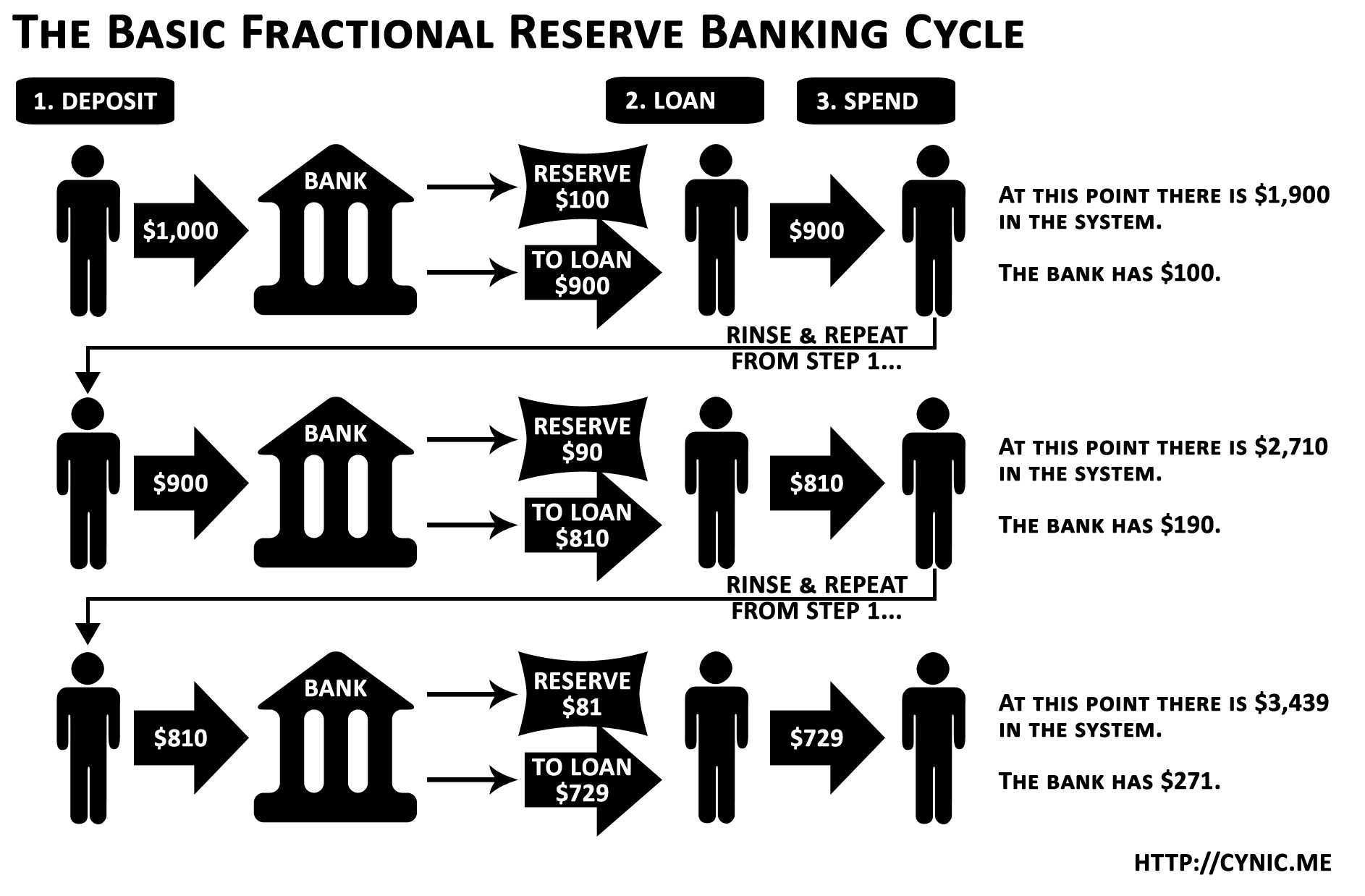
Fractional reserve banking is a system in which only a fraction of bank deposits are backed by actual cash on hand and available for withdrawal. This is done to theoretically expand the economy by freeing capital for lending. Today, most economies’ financial systems use fractional reserve banking.

CITE: https://www.r2library.com/Resource/Title/082610254

***

***

LINK: https://www.youtube.com/watch?v=gd8B-zrMSYk

***

COMMENTS APPRECIATED

THANK YOU

***

ORDER: https://www.routledge.com/Comprehensive-Financial-Planning-Strategies-for-Doctors-and-Advisors-Best/Marcinko-Hetico/p/book/9781482240283

***

Data Show Little-Known Bank Regulator Goes Easy on Enforcement

Office of the Comptroller of the Currency

By Marian Wang, ProPublica – March 29, 2010 12:51 pm EDT

The New York Times business section had a piece recently about a little-known bank regulator [1] called the Office of the Comptroller of the Currency. It points out that while the Federal Reserve has shouldered most of the criticism directed toward bank regulators, because of its relative obscurity, the OCC [2] has escaped much of the scrutiny.

[picapp align=”none” wrap=”false” link=”term=John+C.+Dugan&iid=5559429″ src=”b/6/1/5/House_committee_examines_a74a.JPG?adImageId=11861248&imageId=5559429″ width=”380″ height=”500″ /]

John C. Dugan

The Times piece focuses mostly on John C. Dugan, the former bank lobbyist who heads the agency. It highlights criticism that Dugan is too pro-bank, and goes back and forth between criticism and Dugan’s response. Mr. Dugan bristles at the notion that he is too easy on banks and says his agency’s record on consumer protection has been “vigorous and sustained.” He says it is a “cheap shot” to suggest that his lobbying years color his viewpoint and that it demeans his employees and his years of public service. In point-counterpoint situations, what’s often helpful is hard data [3]. The Times brings it into the story later on, with statistics on the OCC’s formal enforcement orders against banks.

Assessment

The OCC has both formal and informal enforcement orders against banks. The Times’ chart shows that the agency rarely takes formal enforcement action against banks, and even more rarely doles out actual penalties to the banks in the form of fines, restitutions or refunds to consumers. The agency defended its small number of enforcement actions, saying it works closely with banks [4] to fix problems while they’re small, so as not to require stronger measures.

Conclusion

And so, your thoughts and comments on this ME-P are appreciated. Feel free to review our top-left column, and top-right sidebar materials, links, URLs and related websites, too. Then, be sure to subscribe to the ME-P. It is fast, free and secure.

Link: http://feeds.feedburner.com/HealthcareFinancialsthePostForcxos

Our Other Print Books and Related Information Sources:

Practice Management: http://www.springerpub.com/prod.aspx?prod_id=23759

Physician Financial Planning: http://www.jbpub.com/catalog/0763745790

Medical Risk Management: http://www.jbpub.com/catalog/9780763733421

Healthcare Organizations: www.HealthcareFinancials.com

Health Administration Terms: www.HealthDictionarySeries.com

Physician Advisors: www.CertifiedMedicalPlanner.com

Subscribe Now: Did you like this Medical Executive-Post, or find it helpful, interesting and informative? Want to get the latest ME-Ps delivered to your email box each morning? Just subscribe using the link below. You can unsubscribe at any time. Security is assured.

Link: http://feeds.feedburner.com/HealthcareFinancialsthePostForcxos

Sponsors Welcomed

And, credible sponsors and like-minded advertisers are always welcomed.

Link: https://healthcarefinancials.wordpress.com/2007/11/11/advertise

Impact of Performance Fees on Mutual Funds and Physician Portfolios

Join Our Mailing List

More Complex than Realized by Some Doctors

[By Dr. David Edward Marcinko; FACFAS, MBA, CMP™]

[By Professor Hope Rachel Hetico; RN, MHA, CMP™]dave-and-hope4

Physician-investors may find themselves paying advisory fees, brokerage commissions, and other sales charges and expenses. All of these layers of expense can reduce or eliminate the advantage of professional management, if not monitored carefully. Also, fees can have a major impact on investment results. As a percentage of the portfolio, they normally range from low of 15–30 basis points (or .15% to .30%, a basis point is one one-hundredth of one percent) to a high of 300–400 basis points or even higher.

Charges are Universal

All portfolio managers, mutual funds, and investment advisors charge fees in one form or another. Ultimately, they must justify their fees by creating value added, or they would not be in business. Value added includes tangibles, such as greater investment return, as well as intangibles, such as assurance that the investment plan is successfully implemented and monitored, investor convenience, and professional service.

Comparisons Required

Always compare investment performance of funds or managed accounts after fees are deducted; only then can adequate comparisons be made. Also, compare fees within asset classes. Management fees and expenses of investing in bonds or bond funds are much different than the fees of investing in, for example, small companies or emerging market stocks. Whereas 100–200 basis points of fees may be appropriate for an equity portfolio or fund, similar charges may offset the advantages of a managed bond portfolio. With managed bond portfolios, real bond returns have limited long-term potential, because returns are ultimately based on interest rates. For example, if a 3% real (i.e., after inflation) return is expected, 200 basis points in fees may produce a negative after-tax result: 3% real return minus 2% fees minus 10% taxes equals a negative 9% total return.fp-book22

Sales Charges

Mutual funds (and some private portfolio managers) charge sales charges to sell or “distribute” the product. Investors who buy funds through the advice of brokers or “commission based” financial planners will pay a sales load. The many combinations of sales charges fall into three basic categories: front-end, deferred (or back-end), and continuous.

Front-End Fees

Front-end fees are a direct assessment against the initial investment and are limited to a maximum of 8.5%. They usually are stated either as a percentage of the investment or as a percentage of the investment, net of sales charges. For example, a 6% charge on a $10,000 investment is really a $600 charge to invest $9,400 or a real charge of 6.4%. Many low-load funds charge in the range of 1% to 3%. Rather than pay brokers or other purveyors, these fund companies or sponsors use the charges to offset selling or distribution costs. Although rare, some funds charge a load against reinvested dividends.

Deferred Charges

Deferred charges (or back-end loads, or redemption fees) come in many forms. Often, the longer the investor stays with the fund the smaller the charge is upon fund redemption. A typical sliding scale used for deferred charges may be 5-4-3-2-1, where redemption in year 1 is charged 5%, and redemption in year 5 is charged 1%; after year 5, there are no sales charges. Sometimes deferred charges are combined with front-end charges.

Redemption Fees

Certain quoted redemption fees may not apply after a period, such as one year. Funds often use such fees to discourage the trading of funds. Frequently, these charges are paid to the fund itself rather than to the fund management company; or broker. Long-term physician investors actually benefit from this fee structure; short-term shareholders who redeem shares bear the additional liquidation costs to satisfy redemption requests.

Continuous Charges

Continuous sales charges, known as 12b-1 fees for the SEC rule governing such charges, represent ongoing charges to pay distribution costs, including those of brokers who sell and maintain accounts, in which case they are known as “trail commissions.” The fund company may be reimbursed for distribution costs as well. In the prospectus, funds quote 12b-1 charges in the form of a maximum charge. This does not mean that the full charge is incurred, however. For example, a fund with a .75% 12b-1 approved plan may actually incur much lower expenses than .75%. Compared to front-end charges, a .75% per year sales charge of this type could be more costly to investment performance, given enough time.

Sales Loads

Portfolio managers can charge sales loads as well, usually in the form of a traditional WRAP fee arrangement (the investor pays a broker an all-inclusive fee that covers portfolio manager fees and transactions costs). No-load funds can be purchased through brokers or discount brokerage firms. The broker charges a commission for such purchases or sales.

Management Advisory Fees

Private account managers and mutual funds charge a fee for managing the portfolio. These fees typically range between 25 and 150 basis points. Bond funds tend to charge in the range of 25 to 100 basis points, and equity funds charge 75 to 150 basis points. Fees charged by private account managers usually are higher because of the direct attention given to a single doctor client. These managers do not pass along additional administrative costs, however, because they pay them out of the management fee. These management fees come in many forms. Tiered fees can charge smaller accounts a higher fee than larger accounts. Mutual funds often charge “group fees”: a fund family may tier its fee structure to encompass all funds offered by the fund family or by a group of similar funds (such as all international equity funds). Performance fees, although subject to SEC regulations, may be charged as well. A performance fee may be charged if the manager exceeds a certain return or outperforms a particular index or benchmark portfolio.

Administrative Expenses and Expense Ratios

Most private managers are compensated with higher management fees, as mentioned above. Therefore, many private accounts usually do not incur separate administrative expenses. Some management firms charge custodial fees or similar account maintenance fees. Mutual funds incur a number of administrative expenses, including shareholder servicing, prospectuses, reporting, legal and auditing costs, and registration and custodial costs. Mutual funds report these expenses and management fees as an expense ratio—the ratio of expenses to the average net assets of the fund. Expense ratios also include distribution costs or 12b-1 charges.insurance-book10 

Brokerage Commissions

Almost all buyers and sellers of securities incur brokerage commissions. Private “wealth managers” usually provide commission schedules to prospective physician-investors or current clients. Some private managers charge higher management fees and a discounted commission schedule, while others charge lower fees and higher commissions. These combinations of management and commission fees make comparison of prospective managers’ cost structures a difficult task. Most portfolio managers obtain research from brokerage firms, which can affect the commission relationship between broker and manager. Reduced commission schedules exchanged for information are known as “soft dollar costs.” Mutual funds may negotiate similar reduced commission schedules. In this regard, more-competitive brokerage firms can charge lower fees to investors. Commissions are not part of the expense ratio, because they are a part of the security cost basis. Firms with higher portfolio turnover are more likely to have higher commission costs than those with low turnover. Asset class impacts such costs as well. For example, small-cap stocks may be more expensive than large-cap stocks, or foreign bonds may be more expensive than domestic bonds.

Total Cost Approach

To arrive at a relevant comparison of fees among funds and managers, and to see what the total effect of fees on investment performance is, analyze the various charges on a net present value basis. Begin with a given investment amount (e.g., $10,000) and factor in fees over time to arrive at the present value of those fees. Present the comparisons in an easy-to-use table.

Sources of Fee Information

Consult the mutual fund prospectus for fee information. The prospectus has a fund expenses section that summarizes sales charges, expense ratios, and management fees; it does not cover commissions, however. Expense ratios usually are reported for the past 10 years. Commission or brokerage fees are more difficult to find. The statement of additional information and often the annual report disclose the annual amounts paid for commissions. When the total commission paid is divided by average asset values a sense of commission costs can be determined. Private wealth managers disclose fee structures in the ADV I filed with the SEC. Managers must disclose these fees to potential and current clients by providing either ADV Part II or equivalent form to the investor.

Reporting Services

Reporting services, such as Morningstar and Lipper, provide similar information from their own research of mutual funds. These services can be extremely beneficial, because fee information is summarized and often accounted for in the reports’ investment return calculations. This helps the investor and planner make good comparisons of funds. Information services that cover private managers provide information, primarily about management fees.

Assessment

To the extent that online trading, deep discount brokerages, lack of SEC and FINRA oversight, and the recent financial, insurance and banking meltdown has affected the above, it is left up to your discretion and personal situation. Generally, all fess are, and should be, negotiable.

Disclaimer: Both contributors are former licensed insurance agents and financial advisors.

Conclusion

Your thoughts and comments on this ME-P are appreciated. Feel free to review our top-left column, and top-right sidebar materials, links, URLs and related websites, too. Then, subscribe to the ME-P. It is fast, free and secure.

Link: http://feeds.feedburner.com/HealthcareFinancialsthePostForcxos

Speaker: If you need a moderator or speaker for an upcoming event, Dr. David E. Marcinko; MBA – Publisher-in-Chief of the Medical Executive-Post – is available for seminar or speaking engagements. Contact: MarcinkoAdvisors@msn.com

OUR OTHER PRINT BOOKS AND RELATED INFORMATION SOURCES:

Comprehensive Financial Planning Strategies for Doctors and Advisors: Best Practices from Leading Consultants and Certified Medical Planners™

***