

|
||||
|



Share this:

Filed under: Health Economics, iMBA, Inc., Investing, Practice Management, Recommended Books | Tagged: FOMC, interest rates, IRS, Michael A. Gayed CFA | 5 Comments »
ME-P SYNDICATIONS:
WSJ.com,
CNN.com,
Forbes.com,
WashingtonPost.com,
BusinessWeek.com,
USNews.com, Reuters.com,
TimeWarnerCable.com,
e-How.com,
News Alloy.com,
and Congress.org


BOARD CERTIFICATION EXAM STUDY GUIDES
Lower Extremity Trauma
[Click on Image to Enlarge]
The “Medical Executive-Post” is about connecting doctors, health care executives and modern consulting advisors. It’s about free-enterprise, business, practice, policy, personal financial planning and wealth building capitalism. We have an attitude that’s independent, outspoken, intelligent and so Next-Gen; often edgy, usually controversial. And, our consultants “got fly”, just like U. Read it! Write it! Post it! “Medical Executive-Post”. Call or email us for your FREE advertising and sales consultation TODAY [678.779.8597] Email: MarcinkoAdvisors@outlook.com



 ePodiatryConsentForms.com
 “Providing Management, Financial and Business Solutions for Modernity”
 Support our online development, and advance our onground research initiatives in free market economics, as we seek to showcase the brightest Next-Gen minds.
THE ME-P DISCLAIMER: Posts, comments and opinions do not necessarily represent iMBA, Inc., but become our property after submission. Copyright © 2006 to-date. iMBA, Inc allows colleges, universities, medical and financial professionals and related clinics, hospitals and non-profit healthcare organizations to distribute our proprietary essays, photos, videos, audios and other documents; etc. However, please review copyright and usage information for each individual asset before submission to us, and/or placement on your publication or web site. Attestation references, citations and/or back-links are required. All other assets are property of the individual copyright holder.
Support our online development, and advance our onground research initiatives in free market economics, as we seek to showcase the brightest Next-Gen minds.
THE ME-P DISCLAIMER: Posts, comments and opinions do not necessarily represent iMBA, Inc., but become our property after submission. Copyright © 2006 to-date. iMBA, Inc allows colleges, universities, medical and financial professionals and related clinics, hospitals and non-profit healthcare organizations to distribute our proprietary essays, photos, videos, audios and other documents; etc. However, please review copyright and usage information for each individual asset before submission to us, and/or placement on your publication or web site. Attestation references, citations and/or back-links are required. All other assets are property of the individual copyright holder.


|
||||
|
Filed under: Health Economics, iMBA, Inc., Investing, Practice Management, Recommended Books | Tagged: FOMC, interest rates, IRS, Michael A. Gayed CFA | 5 Comments »

On cars and houses
 [By Josh Velazquez CMPS]
jvelazquez@bankingunusual.com
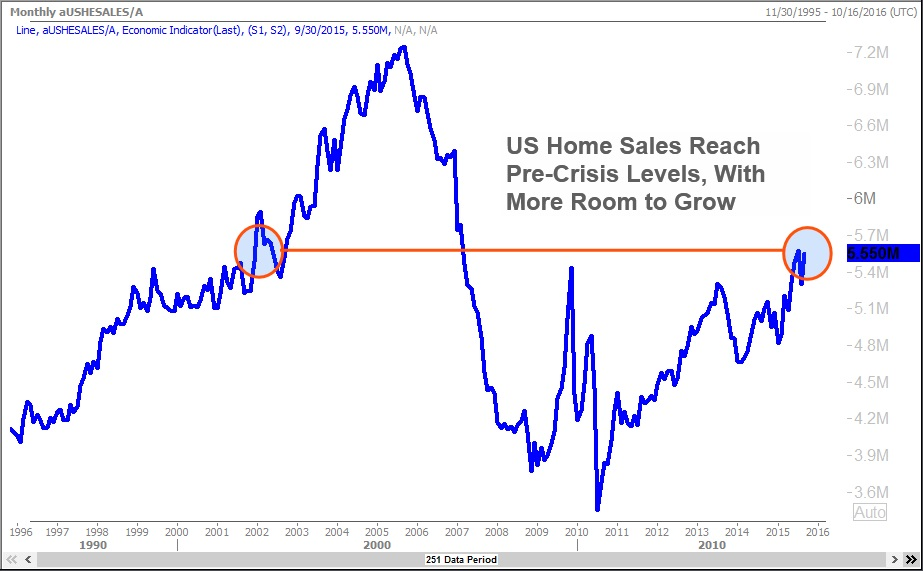
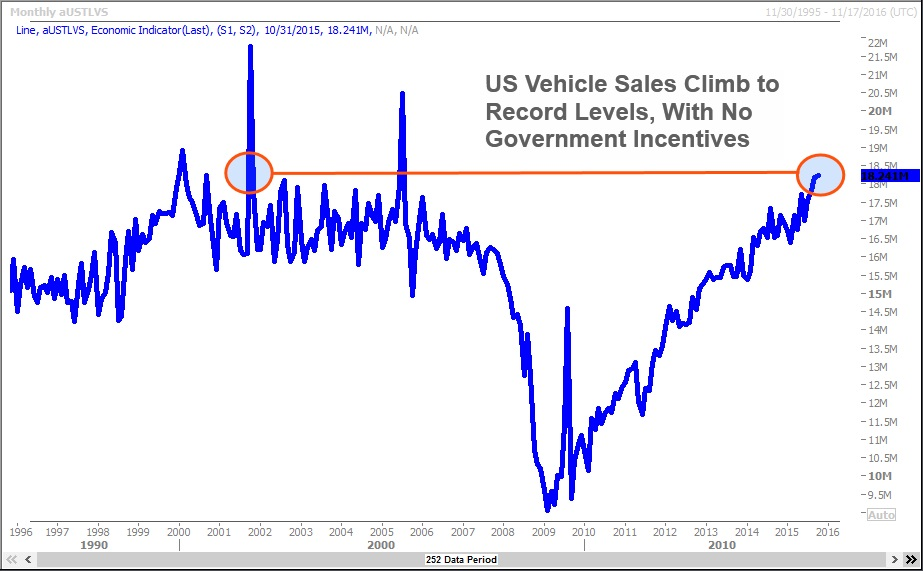
The US economy is roaring back to life as measured by the two largest purchases that people make: cars and houses. The interesting thing is that the uptick in sales is not being driven by artificial government incentives.
Instead, consumer demand is the main driver. It’s also interesting to note the impact of housing on your local economy.
***
***
According to data compiled by the Bureau of Economic Analysis (BEA) and the National Association of Realtors (NAR), the value of construction as well as real estate and rental and leasing represents approximately 16.8% of the US economy, but the impact is much larger in some states.
Click here to check out the impact of housing in your state.
***
***
Conclusion
Your thoughts and comments on this ME-P are appreciated. Feel free to review our top-left column, and top-right sidebar materials, links, URLs and related websites, too. Then, subscribe to the ME-P. It is fast, free and secure.
Speaker: If you need a moderator or speaker for an upcoming event, Dr. David E. Marcinko; MBA – Publisher-in-Chief of the Medical Executive-Post – is available for seminar or speaking engagements. Contact: MarcinkoAdvisors@msn.com
***

***
OUR OTHER PRINT BOOKS AND RELATED INFORMATION SOURCES:
***
Filed under: Alternative Investments, Investing, Op-Editorials, Research & Development | Tagged: Bureau of Economic Analysis, Josh Velazquez, National Association of Realtors, US economy | 3 Comments »
Be Ready for a Great 2016!

[By Patrick Bourbon CFA]
1. IRA – 401(k) / 403(b) retirement accounts – Are you on track for a comfortable retirement? You could increase the funding of your IRA and company retirement plan like a 401(k) or 403(b) accounts. 401(k) and 403(b) accounts allow individuals younger than 50 to contribute $18,000 each year, and individuals 50 and older to contribute $24,000. Some plans allow workers to make additional contributions of after-tax money.
For those under 50, the maximum is $53,000 for 2015. Doing so does not reduce your taxable income, but taxes are deferred on any earnings that the after-tax money makes. Later, some people roll these contributions into a Roth IRA, tax-free so the money would then grow tax-free. Traditional and Roth IRAs allow individuals younger than 50 to contribute $5,500 each year and individuals 50 and older to contribute $6,500. Even if you earn too much to contribute to a Roth IRA directly, you can open a traditional nondeductible IRA and convert it to a Roth; there is no income limit on traditional nondeductible IRAs or conversions. Returns generated in IRA and 401(k) / 403(b) accounts compound tax-free over their entire life.
2. Start tax planning! It’s not too early to think about taxes. Asset location & Tax efficiency Review your taxable and non-taxable accounts to ensure they are optimized for tax efficiency. If you have foreign bank accounts, make sure you comply with FATCA and FBAR (forms FinCEN 114, 8938, 8621…). If you have forgotten, you may look into the Offshore Voluntary Disclosure Program (OVDP) or Streamlined procedures.
3. Portfolio rebalancing Make sure you have rebalanced your portfolios to keep them in line with your goals, time horizon and risk tolerance. The market movements this summer may have thrown off your portfolio balance between stocks and bonds. David Swensen, the Chief Investment Officer at the Yale Endowment, performed an analysis that showed optimal rebalancing could add 0.4% to your annual return.
4. Harvest your capital losses Maybe it is time to sell some funds, ETF, stocks to generate some capital losses? Tax-loss harvesting is a method of reducing your taxes by selling an investment that is trading at a significant loss. Find out if you have any loss carryovers from prior years to be applied against capital gains (from sale of funds, ETF, stocks… in your taxable/brokerage accounts). If your current year’s capital losses exceed your capital gains, you have a net capital loss. You can use up to $3,000 of that loss ($1,500 if you are married filing separately) to offset other taxable income such as your salaries, wages, interest and dividends. If the capital loss is more than $3,000, you can carry over the excess and apply it against capital gains next year.
5. Emergency fund Don’t forget to establish or tune up your emergency fund. This is a good time to set aside money for next year’s cash needs. It is an account that is used to set aside funds to be used in an emergency, such as the loss of a job, an illness or a major expense.
6. Review your insurance policies Do you have a life, disability and long term care insurance? Make sure you and your loved ones are well protected if something happens to you. Your life may have changed (birth, marriage …). If you do have enough coverage it is also a good time simply to review the different types of coverage you have. Whole life or Variable Universal Life may help you reduce your taxes.
7. Health Spending Account Did you maximize your contribution to your healthcare HSA? The interest and earnings in this account are tax free! The maximum contribution for 2015 is $3,350 for an individual and $6,650 for a family ($1,000 catch-up over 55). The contributions are tax deductible and withdraws are non-taxable if they are used for medical expenses. Over the age of 65 you can withdraw funds at your ordinary tax rate (if the distribution is not used for unreimbursed medical expenses). Fidelity estimates that a 65-year-old couple retiring in 2014 will need $220,000 for health care costs in retirement, in addition to expenses covered by Medicare. The HSA can be a great source of tax-free money to pay those bills.
8. Required Minimum Distribution If you are age 70.5 or older, remember to take your required minimum distribution to avoid a potential 50% penalty.
9. 529 Plan Did you contribute to your 529 educational plan for your child/children? You can contribute $14,000 per year (annual limit) for each parent or you can pre-fund in a single instance up to five years’ worth of contributions, up to $70,000 (5 x $14,000). Together, that means a married couple can open a 529 plan with $140,000. Money saved in a 529 plan grows tax-free when used for eligible educational expenses, and some states have additional tax benefits for residents who contribute to a plan in that state.
10. Determine your net worth Add up what you own (home, car, savings, investments…) and subtract what you owe (mortgage, loans, credit cards, …). This will allow you to track your progress year to year. It may also give you some incentive to save more and create a better budget for next year.
11. Check your credit score Go to annualcreditreport.com and request a free credit report from each of the three nationwide credit reporting agencies. You’re entitled to one free report from each agency every 12 months.
12. Check your beneficiaries You can check the beneficiaries on your retirement accounts or insurance policies at any time, but it’s a good idea to do this at least annually.
13. Update your estate plan New baby? Newly married or divorced? Make sure your beneficiary designations reflect any changes. Don’t yet have an estate plan? Make that a new year’s resolution! Estate planning may include updating or establishing a “will” or trust that can help avoid public disclosure of assets in probate.
14. Spending and automated savings – You want to look ahead Did you review your budget and set up automated savings? You may have started the year with a clear budget, but did you to stick to it? Fall can be a good time of the year for your financial checkup and to reflect on your spending and develop a budget for next year. It is also a very good time to put whatever you can on automatic. Bills, recurring payments, even savings—the more you can put on auto pay now, the easier your financial life will be next year. With this year’s facts and figures in front of you, it will be easier to plan and prioritize your expenditures for next year.
Assessment

Conclusion
Your thoughts and comments on this ME-P are appreciated. Feel free to review our top-left column, and top-right sidebar materials, links, URLs and related websites, too. Then, subscribe to the ME-P. It is fast, free and secure.
Speaker: If you need a moderator or speaker for an upcoming event, Dr. David E. Marcinko; MBA – Publisher-in-Chief of the Medical Executive-Post – is available for seminar or speaking engagements. Contact: MarcinkoAdvisors@msn.com
OUR OTHER PRINT BOOKS AND RELATED INFORMATION SOURCES:
***
Front Matter with Foreword by Jason Dyken MD MBA

“BY DOCTORS – FOR DOCTORS – PEER REVIEWED – FIDUCIARY FOCUSED”
***
Filed under: Experts Invited, Insurance Matters, Investing, Portfolio Management | Tagged: 2015 Year-End Financial Checklist, Financial Planning, Investing, Patrick Bourbon CFA | Leave a comment »
And, the Bureau of Labor Statistics (BLS) said …

By Arthur Chalekian GEPC
[Financial Consultant]
U.S. job growth surpassed expectations in October. About 271,000 jobs were created across diverse industries: professional and business services, health care, retail, construction, and others. That was a significantly higher number than predicted by economists who participated in a survey conducted by The Wall Street Journal. They expected to see 183,000 new jobs for October.
BLS revised
The BLS revised August and September jobs numbers higher overall and reported improvement on the wage front, too. Average hourly earnings increased by nine cents during October. For the year, hourly earnings are up 2.5 percent. Rising wages and a 5 percent unemployment rate “appear to indicate the labor market has reached full employment,” reported Barron’s.
Strong employment data supports the idea the Fed will begin to lift the Fed funds rate this year. On Friday, former Chairman of the Federal Reserve Ben Bernanke wrote in his blog:
“Wednesday was something of a trifecta for Fed watchers: Chair Yellen, Board Vice-Chair Stanley Fischer, and Federal Reserve Bank of New York president Bill Dudley (who is also the vice chair of the Federal Open Market Committee) all made public appearances. Moreover, the comments by all three members of the Fed’s leadership explicitly or implicitly supported the idea that a December rate increase by the FOMC is a distinct possibility. (The possibility of a rate increase is even more distinct with this morning’s strong job market report.)”
Markets responded swiftly, according to The Wall Street Journal, as investors repositioned their portfolios in anticipation of a rate hike. While stock market indices remained relatively steady, there was considerable volatility within certain sectors. An expert cited by the publication commented:
“…one of the big rotation trades on Friday was investors taking money out of companies such as utilities and real-estate-investment trusts, and putting it into those that are expected to benefit from higher rates, such as financial companies.”
Conclusion
Your thoughts and comments on this ME-P are appreciated. Feel free to review our top-left column, and top-right sidebar materials, links, URLs and related websites, too. Then, subscribe to the ME-P. It is fast, free and secure.
Speaker: If you need a moderator or speaker for an upcoming event, Dr. David E. Marcinko; MBA – Publisher-in-Chief of the Medical Executive-Post – is available for seminar or speaking engagements. Contact: MarcinkoAdvisors@msn.com
OUR OTHER PRINT BOOKS AND RELATED INFORMATION SOURCES:
***
***
Filed under: Health Economics, Investing | Tagged: Arthur Chalekian, Ben Bernanke, Bill Dudley, BLS, Bureau of Labor Statistics, Federal Open Market Committee, FOMC, interest rates, Stanley Fischer | 2 Comments »
***

[Foreword Dr. Phillips MD JD MBA LLM] *** [Foreword Dr. Nash MD MBA FACP]
[Mike Stahl PhD MBA] *** [Foreword Dr.Mata MD CIS] *** [Dr. Getzen PhD]
***
***
Dr. David Edward Marcinko, editor-in-chief, is a next-generation apostle of Nobel Laureate Kenneth Joseph Arrow, PhD, as a health-care economist, insurance advisor, financial advisor, risk manager, and board-certified surgeon from Temple University in Philadelphia. In the past, he edited eight practice-management books, three medical textbooks and manuals in four languages, five financial planning yearbooks, dozens of interactive CD-ROMs, and three comprehensive health-care administration dictionaries. Internationally recognized for his clinical work, he is a distinguished visiting professor of surgery and a recipient of an honorary Bachelor of Medicine–Bachelor of Surgery (MBBS) degree from Marien Hospital in Aachen, Germany. He provides litigation support and expert witness testimony in state and federal court, with medical publications archived in the Library of Congress and the Library of Medicine at the National Institutes of Health.
***
Filed under: Book Reviews, Financial Planning, Health Economics, Health Insurance, Health Law & Policy, Healthcare Finance, iMBA, Information Technology, Insurance Matters, Investing, Portfolio Management, Practice Management, Retirement and Benefits, Taxation | Tagged: david marcinko, Financial Planning, Health Economics, Health Insurance, physician investing, Portfolio Management | 1 Comment »
Qualitatively and quantitatively intensive!
By Vitaliy N. Katsenelson CFA
 Our investment process at IMA is both qualitatively and quantitatively intensive. Throughout the course of a year we look at hundreds of companies. Most of them receive only a cursory look – we don’t like the business, the valuation is too stretched, or we simply have no insight into the business. We usually glance at them and move on.
But, if we really like the business and/or its valuation, we build a model. Often, just from a cursory look we know that the stock is not cheap enough, but if we really (really!) like the business we’ll invest the time to model it so we can understand it better and set a price at which we want to buy it (and then wait).
***
We build models
***
We build a lot of models. We built over a hundred models last year (we bought only a handful of stocks). Building models is important for us. Models help us to understand businesses better. They provide insights as to which metrics matter and which don’t. They allow us stress test the business: we don’t just look at the upside but spend a lot of times looking at the downside – we try to “kill” the business. We usually try to drill down to essential operating metrics. If it is a convenience store retailer, we’ll look into gallons of gas sold and profit per gallon. If it is a driller (see our Helmerich & Payne analysis), we look at utilization rates, rigs in service, average revenue per rig per day, etc.
***
In the past, when we owned Joseph A. Banks, a model helped us understand the impact maturation of its new stores had on same-store sales (PDF, see slide 49). Half of Joseph A. Banks stores were less than five years old, and their maturation drove significant same-store sales increase for years.
***
We looked at American Express before the crisis, which gave us insight into inflated profit margins of the financial sector, and thus we avoided for the most part the carnage in the financials. We thought American Express stock was not cheap enough at the time, but we learned that Amex’s high swipe-fee revenue provided an important buffer to help the company absorb significant loan losses. Amex could have withstood over 10% loan losses on its credit card portfolio and still have remained profitable. This insight gave us the confidence to buy Amex during the crisis.
***

***
Models are important because they help us remain rational. It is only the matter of time before a stock we own will “blow up” (or, in layman’s terms, decline). We can go back to our model and assess whether the decline is warranted. The model then gives us the confidence to make a rational (very key word) decision: buy more, do nothing, or sell.
***
Assessment
***
Models are frameworks that help us think about the businesses we analyze. We are always aware of John Maynard Keynes’ expression, “I’d rather be vaguely right than precisely wrong.” Models are not a panacea, but they are an important and often invaluable tool. However, models are only as good as their builders and the inputs to them.
***
ABOUT
Vitaliy N. Katsenelson, CFA, is Chief Investment Officer at Investment Management Associates in Denver, Colo. He is the author of Active Value Investing (Wiley 2007) and The Little Book of Sideways Markets (Wiley, 2010). His books have been translated into eight languages. Forbes called him – the new Benjamin Graham.
***
Conclusion
Your thoughts and comments on this ME-P are appreciated. Feel free to review our top-left column, and top-right sidebar materials, links, URLs and related websites, too. Then, subscribe to the ME-P. It is fast, free and secure.
Speaker: If you need a moderator or speaker for an upcoming event, Dr. David E. Marcinko; MBA – Publisher-in-Chief of the Medical Executive-Post – is available for seminar or speaking engagements. Contact: MarcinkoAdvisors@msn.com
OUR OTHER PRINT BOOKS AND RELATED INFORMATION SOURCES:
Front Matter with Foreword by Jason Dyken MD MBA
“BY DOCTORS – FOR DOCTORS – PEER REVIEWED – FIDUCIARY FOCUSED”
***
Filed under: Investing, Portfolio Management | Tagged: Helmerich & Payne analysis, Investing, Investment Management Associates, investment models, Vitaliy N. Katsenelson CFA | 1 Comment »
“Altitude Sickness,” or Value Asphyxiation?
[By Vitaliy N. Katsenelson CFA]
“Asphyxiation is a condition in which the body doesn’t receive enough oxygen.”
That’s how I started another column awhile back , in which I explained how the recent U.S. equity market highs have been creating “altitude sickness,” or value asphyxiation, for investors. If you look down from 30,000 feet, the market is trading at a significant premium to its average long-term valuation, especially if you normalize earnings for sky-high profit margins.
The Trench View
The view from the trenches is not much different. I spend a lot of time looking for new stocks, either by screen or by reading or talking to other value investors. We are all having a hard time finding many stocks of interest. In fact, we’ve been doing a lot more selling than buying.
I often get asked a question: Are we in a bubble? Bubble is a word that has been thrown around a lot lately. There may be an academic definition of what a bubble is — probably something to do with valuations at least a few standard deviations from the mean — but I don’t really care what it is. (Only academics believe in normal distributions.)
The Practitioner’s View
From the practitioner’s perspective, a bubbly valuation occurs when the price-earnings ratio of a company is so high that its earnings will have a hard time growing into investors’ expectations. In other words, the stock is so expensive that investors holding it will find it difficult to realize a positive return for a long time (think of Cisco Systems, Microsoft and Sun Microsystems in 2000). There are some bubbly stocks in the market today. Most years you see some, but today there are probably a few more than usual.
We see a lot of overvalued or fully valued stocks. Expectations (valuations) of those stocks have already more than priced in rosy earnings growth scenarios. If these scenarios play out, investors will likely make very little money, as earnings growth will merely offset P/E compression. But here is where it gets interesting: The line between overvalued and bubbly stocks is often very murky. If the economy’s growth is lower than expected or corporate profit margins revert toward the mean (or, in the situation we have today, decline), the return profiles of these stocks will not be substantially different from those of the bubbly ones. Unfortunately for the value-asphyxiated investor, there are a lot of stocks that fall into this overvalued bucket.
It is very hard for investors to remain disciplined and stick to an investment process. Selling overvalued stocks is hard, because every sell decision brings consequent pain as overvalued stocks that are not aware you’ve sold them keep on marching higher. Just as Pavlov’s dog responded to a bell, the pain of selling teaches us not to sell.
More Pain
If that pain were not enough, cash keeps burning a hole in our portfolios. Cash doesn’t rise in value when everything else is rising; thus investors feel forced to buy. When you are forced into a buy or sell decision, the outcome will usually not be good. Forced buy decisions are usually bad buy decisions. Just because a stock looks less bad than the rest of the market doesn’t make it a good stock. Maybe its peer is trading at 23 times earnings and your pick is trading at “only” 19. Such relative logic is dangerous today, because it anchors you to a transitory environment that may or may not be there for you in the future (most likely not).
***

***
An Annoying Phase
We are in the most annoying phase of the investing calendar: the month when every market strategist and his dog have to make a prediction as to what the market will do next year. To be right in forecasting, you have to predict often. And market strategists do. In fact, they predict so often that no one remembers how often their predictions worked out. I am not knocking the prognosticators: That is their job. They predict and sound smart doing it — just like it’s the barber’s job to cut your hair and pretend he is concentrating on not cutting off your ear.
It is your job, however, not to pay attention to the predictors. They simply don’t know. They may have a gut feeling, but that feeling is worth as much as you pay for it — very little. To time the market, you have to forecast what the economy will do, which is also very difficult. The Fed has 450 economists working full time on that (half of them are Ph.D.s, but I am not going to hold it against them), and they have an amazingly poor track record. Then you have to figure out how other market participants will respond to the economics news — and that is incredibly difficult. Let’s say you nailed both of these tasks. You still need to predict the multitude of random events — a few of which may be very large black swans — that will show up in the next 12 months. There is a reason why they are called “random.”
Assessment
Though it is dangerous to drink the market’s Kool-Aid and celebrate, it is not time to be gloomy either. There is good news for all of us: Cyclical bull markets are here to absolve us from our “buy” sins. Not every stock in your portfolio is marching in rhythm to its fundamentals. Indeed, this market has lifted many stocks while divorcing them from their weak fundamentals. This absolution is temporary: Take advantage of it.
ABOUT
Vitaliy N. Katsenelson, CFA, is Chief Investment Officer at Investment Management Associates in Denver, Colo. He is the author of Active Value Investing (Wiley 2007) and The Little Book of Sideways Markets (Wiley, 2010). His books have been translated into eight languages. Forbes called him – the new Benjamin Graham.
Conclusion
Your thoughts and comments on this ME-P are appreciated. Feel free to review our top-left column, and top-right sidebar materials, links, URLs and related websites, too. Then, subscribe to the ME-P. It is fast, free and secure.
Speaker: If you need a moderator or speaker for an upcoming event, Dr. David E. Marcinko; MBA – Publisher-in-Chief of the Medical Executive-Post – is available for seminar or speaking engagements. Contact: MarcinkoAdvisors@msn.com
OUR OTHER PRINT BOOKS AND RELATED INFORMATION SOURCES:
***
Filed under: Investing, Portfolio Management | Tagged: Investing, market bubbles, value investors, Vitaliy N. Katsenelson | Leave a comment »
 By Daniel J. Antokal MBA
[Financial Advisor]
As the year draws to a close, there might be a slew of tasks on your to-do list. One task to consider is setting up a meeting with your financial professional to review your investments. If you take the time to get organized now, it may help you accomplish your long-term goals more efficiently.
Here are some steps that might help:
During the meeting with your financial professional, review how your overall investment portfolio fared over the past year and determine whether adjustments are needed to keep it on track.
Here are some questions to consider:
Addressing these issues might help you determine whether your investment strategy needs to change in the coming year.
During the portfolio review process, look at your current asset allocation among stocks, bonds, and cash alternatives. You might determine that one asset class has outperformed the others and now represents a larger proportion of your portfolio than desired. In this situation, you might want to rebalance your portfolio.
The process of rebalancing typically involves buying and selling securities to restore your portfolio to your targeted asset allocation based on your risk tolerance, investment objectives, and time frame. For example, you might sell some securities in an overweighted asset class and use the proceeds to purchase assets in an underweighted asset class; of course, this could result in a tax liability.
***

***
Tax losses
If you own taxable investments that have lost money, consider selling shares of losing securities before the end of the year to recognize a tax loss on your tax return. Tax losses, in turn, could be used to offset any tax gains. When attempting to realize a tax loss, remember the wash sale rule, which applies when you sell a security at a loss and repurchase the same security within 30 days of the sale. When this happens, the loss is disallowed for tax purposes.
If you don’t want to sell any of your current investments but want to change your asset allocation over time, you might adjust future investment contributions so that more money is directed to the asset class you want to grow. Once your portfolio’s asset allocation reaches your desired balance, you can revert back to your previous strategy, if desired. Keep in mind that asset allocation and diversification do not guarantee a profit or protect against loss; they are methods used to help manage investment risk.
Your financial professional can help you understand how your investments may be affected by capital gains and other taxes. You can learn more about current tax laws and rates by visiting www.irs.gov.
After your year-end investment review, you might resolve to increase contributions to an IRA, an employer-sponsored retirement plan, or a college fund next year. With a fresh perspective on where you stand, you may be able to make better choices next year, which could potentially benefit your investment portfolio over the long term.
Conclusion
Your thoughts and comments on this ME-P are appreciated. Feel free to review our top-left column, and top-right sidebar materials, links, URLs and related websites, too. Then, subscribe to the ME-P. It is fast, free and secure.
Speaker: If you need a moderator or speaker for an upcoming event, Dr. David E. Marcinko; MBA – Publisher-in-Chief of the Medical Executive-Post – is available for seminar or speaking engagements. Contact: MarcinkoAdvisors@msn.com
OUR OTHER PRINT BOOKS AND RELATED INFORMATION SOURCES:
***
***
Filed under: Financial Planning, iMBA, Investing | Tagged: By Daniel J. Antokal MBA, Year-End Investment Planning | 1 Comment »


Speaker: If you need a moderator or speaker for an upcoming event, Dr. David E. Marcinko; MBA – Publisher-in-Chief of the Medical Executive-Post – is available for seminar or speaking engagements. Contact: MarcinkoAdvisors@msn.com
OUR OTHER PRINT BOOKS AND RELATED INFORMATION SOURCES:
***
***
Filed under: Funding Basics, Investing, Portfolio Management | Tagged: Arthur Chalekian, Elite Financial Partners, European Central Bank, Mario Draghi, People's Bank of China | 2 Comments »
Our default brain operating system is programmed to make poor financial decisions?
 By Rick Kahler MS CFP® http://www.KahlerFinancial.com
If you’ve ever struggled to learn new software or unravel a computer problem, you know that part of the frustration of dealing with technology is its logic. Computers respond according to their default operating systems. If we want them to do something different, they need to be reprogrammed.
In the same way, the default operating systems of our brains are actually programmed to make poor financial decisions. This is normal. Making good financial decisions actually takes a deliberate reprogramming of your internal operating system. Here is why.
Our brains are divided into three sections: the reptilian brain, the mammalian brain, and the prefrontal cortex.
The reptilian brain is the oldest, most primitive part. In a talk at the Financial Therapy Association’s annual conference in July 2015 in San Jose del Cabo, Mexico, Dr. Ted Klontz explained that the reptilian brain continually scans for threats. It is waiting for death to come walking through the doorway, so it lives in anxiety. Since anything positive is not a threat, it’s oblivious to the positive. It also doesn’t understand the concept of the future, but lives only in this moment.
Left to its own programming, then, of course the reptilian brain might have a problem making monthly contributions to a retirement account. Saving for the future isn’t a concept it even understands. Further, it sees taking money out of the checkbook as a threat because that leaves fewer resources to battle death when it comes through the doorway. Making things even worse, the reptilian brain is nearly impossible to change. The best most of us can do is manage it.
***

***
This brings us to the mammalian brain, whose only job is to manage the anxiety of the reptilian brain. It does so in three ways:
Most of us favor one of these three responses to threats, and according to Dr. Klontz we select our preferred response by the age of six. When the mammalian brain responds, it processes exponentially faster than the thinking part of our brain, the prefrontal cortex. Because of the ease with which the mammalian brain responds to threats, 90% of all decisions—including financial ones—are made here.
With the mammalian brain managing the anxiety of the reptilian brain, we have a more sophisticated response to our potential retirement plan contribution. Some of us will verbally fight and defeat any messenger (article, employer, financial advisor, spouse) that suggests we drain our current resources to send money into a black hole. Others will simply flee the messenger by diverting our attention to the Monday night football game or any task at hand. A portion of us will just freeze into a glassy-eyed stare. Nobody is home.
That leaves us with our only hope, the understanding and thinking part of the brain, the prefrontal cortex. This part of our brain doesn’t fully come on line until the mid-twenties. It functions as the parent of the other two brains, but unfortunately it processes information very slowly and with great effort.
***

***
More:
Assessment
Fortunately, this is the brain that is easiest to change. By training it to become aware when the lower parts of the brain are about to make a hair-trigger decision, we can stop the ensuing action long enough to add logic as well as emotion to the process.
More:
Reprogramming the brain takes time, practice, and using resources like education, mentors, advisors, and counseling. Eventually, wise financial choices like saving for retirement can become the new default programming, even in spite of the reptilian brain.
Conclusion
Your thoughts and comments on this ME-P are appreciated. Feel free to review our top-left column, and top-right sidebar materials, links, URLs and related websites, too. Then, subscribe to the ME-P. It is fast, free and secure.
Speaker: If you need a moderator or speaker for an upcoming event, Dr. David E. Marcinko; MBA – Publisher-in-Chief of the Medical Executive-Post – is available for seminar or speaking engagements. Contact: MarcinkoAdvisors@msn.com
OUR OTHER PRINT BOOKS AND RELATED INFORMATION SOURCES:
***
***
Filed under: Investing, LifeStyle | Tagged: behavioral economics, behavioral finance, Emotional Intelligence, EQ, IQ, Rick Kahler CFP®, Ted Klontz | 1 Comment »
|
||||||||
|
Filed under: Book Reviews, Investing, Portfolio Management, Videos | Tagged: Buffett, CFA Institute, Dr. David Marcinko, Education of a Value Investor, Guy Spier, Mohnish Pabrai, Munger, value investing, Vitaliy N. Katsenelson CFA | 1 Comment »
A Motley Fool Interview
ABOUT
Vitaliy N. Katsenelson CFA is Chief Investment Officer at Investment Management Associates in Denver, Colo. He is the author of Active Value Investing (Wiley 2007) and The Little Book of Sideways Markets (Wiley, 2010). His books were translated into eight languages. Forbes Magazine called him “The new Benjamin Graham”.
|
Filed under: Investing | Tagged: Forbes, James Early, Motley Fool, stock price, value investing, Vitaliy N. Katsenelson | 1 Comment »
It’s already priced into the markets … according to some experts!
By Arthur Chalekian GEPC [Elite Financial Partners]
The Markets UPDATE

Your thoughts and comments on this ME-P are appreciated. Feel free to review our top-left column, and top-right sidebar materials, links, URLs and related websites, too. Then, subscribe to the ME-P. It is fast, free and secure.
Speaker: If you need a moderator or speaker for an upcoming event, Dr. David E. Marcinko; MBA – Publisher-in-Chief of the Medical Executive-Post – is available for seminar or speaking engagements. Contact: MarcinkoAdvisors@msn.com
OUR OTHER PRINT BOOKS AND RELATED INFORMATION SOURCES:
***
Filed under: Investing | Tagged: Arthur Chalekian GEPC, Barron's, contrarian investors, Elite Financial Partners, market emotions | 2 Comments »
[Staff reporters]
According to NEIL IRWIN; it is the 82-Year-Old Banking Law That Stirred a Debate!
What is the Glass-Steagall Act [Banking Act of 1933]?
When people talk about banking, they are talking about two broad classes of activities.
Commercial banking is what happens at your neighborhood branch: You deposit money in a checking or savings account, and the bank uses those deposits to make loans to consumers or small businesses.
Investment banking refers to the kind of banking activity more common on Wall Street, like helping large companies issue stock or bonds in order to fund themselves, and trading securities in hope of making a profit.
The government’s response was the Banking Act of 1933, commonly known as the Glass-Steagall Act (for the bill’s sponsors, Senator Carter Glass of Virginia and Representative Henry Steagall of Alabama), which required that commercial banking and securities activities be separated, not to take place within the same financial institution.
More: The Three Types of Banks
***

***
More:
Assessment
So, here is a look at why the Democratic presidential candidates Bernie Sanders and Martin O’Malley want to reinstate it.
TERMS: Investment Banking DR. MARCINKO
Conclusion
Your thoughts and comments on this ME-P are appreciated. Feel free to review our top-left column, and top-right sidebar materials, links, URLs and related websites, too. Then, subscribe to the ME-P. It is fast, free and secure.
Speaker: If you need a moderator or speaker for an upcoming event, Dr. David E. Marcinko; MBA – Publisher-in-Chief of the Medical Executive-Post – is available for seminar or speaking engagements. Contact: MarcinkoAdvisors@msn.com
OUR OTHER PRINT BOOKS AND RELATED INFORMATION SOURCES:
***
***
Filed under: Investing | Tagged: Banking Act of 1933, Commercial banking, Glass Steagall Act, INVESTMENT BANKING | 1 Comment »
By Arthur Chalekian GEPC
[Financial Consultant]
***

Your thoughts and comments on this ME-P are appreciated. Feel free to review our top-left column, and top-right sidebar materials, links, URLs and related websites, too. Then, subscribe to the ME-P. It is fast, free and secure.
Speaker: If you need a moderator or speaker for an upcoming event, Dr. David E. Marcinko; MBA – Publisher-in-Chief of the Medical Executive-Post – is available for seminar or speaking engagements. Contact: MarcinkoAdvisors@msn.com
OUR OTHER PRINT BOOKS AND RELATED INFORMATION SOURCES:
8
***
Filed under: Investing | Tagged: Arthur Chalekian, Investing | 1 Comment »
By Arthur Chalekian GEPC
[Financial Consultant]
Conclusion
Your thoughts and comments on this ME-P are appreciated. Feel free to review our top-left column, and top-right sidebar materials, links, URLs and related websites, too. Then, subscribe to the ME-P. It is fast, free and secure.
Speaker: If you need a moderator or speaker for an upcoming event, Dr. David E. Marcinko; MBA – Publisher-in-Chief of the Medical Executive-Post – is available for seminar or speaking engagements. Contact: MarcinkoAdvisors@msn.com
OUR OTHER PRINT BOOKS AND RELATED INFORMATION SOURCES:
***
Front Matter with Foreword by Jason Dyken MD MBA
“BY DOCTORS – FOR DOCTORS – PEER REVIEWED – FIDUCIARY FOCUSED”
***
Filed under: Investing, Portfolio Management | Tagged: Arthur Chalekian, Business Standard, FOMC, Investing, Portfolio Management, Shenzhen Stock Exchange Composite Index | 3 Comments »
Linear thinking is dangerous
[By Vitaliy Katsenelson, CFA]
Linear thinking is dangerous. It is the easiest form of reasoning, lying on the path of least resistance. The simpler the path, the more readily people will march along it. Linear arguments are easy to make, as they require the least amount of evidence — past data points with a straight line drawn through them.However, the larger the crowd that follows the wrong line of reasoning, the more people pile in, and the greater the consequences if they are proved wrong.
A lot of things in nature, and thus in investing, are not linear. A past trend may or may not persist into the future. Events don’t happen in a vacuum; they are observed, studied and capitalized on — which in the case of investing may preclude a company’s future from resembling its past. As I write this, I think of successful companies whose achievements attracted competition, which then marginalized them.
Some things are inherently nonlinear, their behavior reminiscent of a pendulum’s: The further they swing in one direction, the harder they’ll go in the opposite direction. It is very dangerous to default to linearity with such nonlinear phenomena, as the more confident we become in the swing (the more linearity we observe), the closer we are to the pendulum’s reversing course.
Price-earnings ratios often follow a pendulum behavior. If you look at high-quality dividend-paying stocks — the Coca-Colas and Procter & Gambles of the world — they are now changing hands at more than 20 times earnings. Their recent performance has driven linear thinkers to pile into them, expecting more of the same in the future. Don’t! These stocks were beneficiaries of a swing in the P/E pendulum as it went from low to average and then to above-average levels.
Pattern recognition is an important contributor to success in investing. Mark Twain once said that history doesn’t repeat itself, but it rhymes. If you can identify a rhyme (that is, see a pattern) relating to the current situation, then you can develop a framework to analyze and forecast it. But what if the current situation is very different — if it doesn’t rhyme with anything in the past? This is where the ability to draw parallels becomes helpful. It allows you to overlay rhymes (patterns) from other companies, industries or even fields. Building analogous frameworks is a cure for linear thinking; it helps us see nonlinearity and facilitates the creation of nonlinear mental models.
Then there is pseudolinearity: things that seem to be linear but are forced into linearity by extrinsic factors. This was a subtopic of my presentation at the Valuex Vail investing conference in June. I drew a parallel between two entities that suddenly looked analogous: Jos. A. Bank Clothiers, a Hampstead, Maryland–based retailer of men’s apparel, and the Federal Reserve.
***

***
Jos. A. Bank
Jos. A. Bank has always been a very promotional retailer. It would jack up prices, then run sales for consumers happy to be deceived — a typical American retail tale. But sometime in 2008, Jos. A. Bank went promotional on steroids. You could not watch CNBC for an hour without seeing one of its ads. The company started out by encouraging you to buy one suit and get one free. Then you got two free suits. Finally, it started giving away Android phones with suit purchases. For a while this past March, Jos. A. Bank offered consumers the opportunity to buy one suit and get three free.
There are several problems with the strategy: It does not emphasize the quality of the suits or the company’s great service, and the ads aren’t helping to build a brand but are intended just to pimp sales at Jos. A. Bank, as if it were a grocery store with USDA choice beef on sale.
This brings us to the latest quarter. Jos. A. Bank’s same-store sales dropped 8 percent, but what really piqued my interest was this explanation by its CEO, R. Neal Black, during its earnings call in June: “Since 2008, at the beginning of the financial crisis and the recession, the overall sales picture has been one of volatility, and strong promotional activity has been consistently and effectively driving our sales increases. This strategy was designed with 18 to 24 months of effectiveness in mind, and we stuck with it for more than 60 months since — as the economy remained weak. Now the strategy has become less effective.”
What Jos. A. Bank has really been doing since the financial crisis is running its own version of quantitative easing. The company had a temporary strategy that was supposed to get people into its stores during the recession — much like the Fed’s original QE, which was designed to provide liquidity in a time of crisis — but the recovery that ensued was not to Jos. A. Bank’s liking. So just as the Fed implemented QE2, and then QE3 when the economy did not improve to its satisfaction, the retailer followed with more QE.
It is understandable why Jos. A. Bank’s management did what it did. The company was being responsible to its employees — it didn’t want to close stores or have layoffs — and it had to report quarterly to shareholders. The focus shifted from building a long-term sustainable franchise to using short-term measures to grow earnings the next quarter and the quarter after that.
There are many lessons that one can draw from the parallels between Jos. A. Bank’s behavior and the Fed’s handling of our economy. First, it is very hard to challenge someone who has a linear argument. Let’s say that a year ago you talked to Jos. A. Bank’s management and raised the question of the sustainability of their advertising strategy. They’d have pointed to four years of success, and they’d have been right, at least up to that moment. They would have had four years of data points and a bulletproof linear argument, and you would have had your common sense and little else.
***

***
Ben Bernanke
Right now Ben Bernanke looks like a genius. He can show you all the data points in the recovery, but so could Jos. A. Bank, and this leads us to a second lesson: Pain is postponable, but it is cumulative. During Jos. A. Bank’s quarterly call, its CEO also said: “The decline in traffic is because existing customers are returning slightly less frequently. . . . It makes sense when you consider the saturating effect of our intense promotional activity over the past several years.”
With every sale Jos. A. Bank stole its future purchases, because when you buy one suit and get three for free, you may not need to buy another one for a while.But there is also a snowball effect that you cannot ignore: Every ad chipped away at the company’s brand. Now when you show someone that you wear a Jos. A. Bank suit, they don’t think about its quality, just that you have two or three more suits in your closet.
There is a cost to our recovery — a bloated Federal Reserve balance sheet and our addiction to low interest rates. Of course, we spread that addiction globally.
According to Hugh Hendry, founding partner and CIO of London-based hedge fund firm Eclectica Asset Management, rising U.S. bond yields have driven global yields higher. “In Brazil for instance, the biggest emerging debt market, no company has been able to raise debt abroad since mid-May as borrowing costs soared to a four-year high in June, at 7.1 percent,” he wrote in a recent investment letter.
The Fed is betting on George Soros’ theory of reflexivity, in which people’s biases and actions can change the economy: Instead of the wagon being towed by the horse, the wagon, in expectation that it will be towed by the horse, starts moving on its own, thereby motivating the horse to start towing the wagon.Lower interest rates drive people to riskier assets, and as asset values go up, people feel confident and spend money, and the economy grows. But this policy puts us on very shaky ground, because reflexivity cuts both ways: If asset prices start to decline, confidence declines — and so will the economy. Now there are a lot more savers owning riskier assets than they otherwise would have, and their wealth is at risk of getting wiped out.
The third lesson from the parallels between the Fed and Jos. A. Bank: We are in the midst of a game of musical chairs, and when the music stops, no one wants to be left standing around holding risky assets. Everyone is focused on the Fed’s tapering, and they are right to do so. Just as we saw with Jos. A. Bank, economic promotions cannot go on forever. With every sale the company had to increase the ante, giving away more and more to get people to come into its stores. The Fed may continue to buy Treasuries and mortgage securities, but the purchases will be less and less effective. And the music may stop on its own, without the Fed doing anything about it.
Last, pseudolinearity eventually leads to high uncertainty and thus lower valuations. Put yourself in the shoes of an investor analyzing Jos. A. Bank today. Before buying the stock, you’d have to answer the following questions: What is the company’s earnings power? How much did its promotional strategy damage the brand? And how much in future sales did that strategy steal?
Assessment
In the wake of Jos. A. Bank’s own five-year, nonstop version of QE, it is difficult to answer these questions with confidence. The company’s earnings power is uncertain, and investors will be willing to pay less for a dollar of uncertain earnings, thus resulting in a lower P/E. At some point, when U.S. economic activity weakens, investors will have to answer similar questions about the U.S. and global economies. And as they look for answers, they’ll be putting a lower P/E on U.S. stocks.
ABOUT
Vitaliy N. Katsenelson CFA is Chief Investment Officer at Investment Management Associates in Denver, Colo. He is the author of Active Value Investing (Wiley 2007) and The Little Book of Sideways Markets (Wiley, 2010). His books were translated into eight languages. Forbes Magazine called him “The new Benjamin Graham”.
Conclusion
Your thoughts and comments on this ME-P are appreciated. Feel free to review our top-left column, and top-right sidebar materials, links, URLs and related websites, too. Then, subscribe to the ME-P. It is fast, free and secure.
Speaker: If you need a moderator or speaker for an upcoming event, Dr. David E. Marcinko; MBA – Publisher-in-Chief of the Medical Executive-Post – is available for seminar or speaking engagements. Contact: MarcinkoAdvisors@msn.com
OUR OTHER PRINT BOOKS AND RELATED INFORMATION SOURCES:
***
“The informed voice of a new generation of fiduciary advisors for healthcare”


“BY DOCTORS – FOR DOCTORS – PEER REVIEWED – FIDUCIARY FOCUSED”
***
Filed under: Alternative Investments, Investing, Op-Editorials | Tagged: Ben Bernanke, Federal Reserve, FOMC, George Soros, Jos. A. Bank, Linear thinking, Quantitative Easing, R. Neal Black, Vitaliy Katsenelson | 1 Comment »
Balancing profits, people and the planet
By Rick Kahler MS CFP® http://www.KahlerFinancial.com
Balancing profits, people, and the planet can be tricky. Many physicians and other investors prefer to put their funds into companies that not only make money, but that also reflect the investors’ values. Some take this concept, often described as “socially conscious” or “socially responsible” investing, very seriously. There are also financial advisors who specialize in this niche.
Yet investing in companies whose values align with your own is not as simple as it may seem.
Business owners and corporate executives
In my experience with business owners and corporate executives, most of them take an interest in bettering the people who work with them, the planet, and their own lives. They run their companies with integrity. They don’t break the law. They respect their customers and don’t take advantage of them, but give them fair value in exchange for their money. They offer compensation and working conditions that will attract and retain good employees. Ultimately, they understand that ethical business practices are not only the right thing to do, but the best way to run profitable businesses.
But, how do you as an investor know whether a company is bettering people and the planet while it is making a profit? One method is to choose companies in which to invest by using some type of socially responsible screening. Such screening looks to exclude companies producing products that harm people or the earth, or companies judged to have poor corporate cultures.
The challenges
One challenge with using such screens is that we don’t all have the same definitions of what may be socially or morally offensive. Investor A may not want to own stock in oil or mining companies. Investor B may be concerned about goods produced in unsafe working conditions. Investor C may not want to support companies that sell tobacco or alcohol.
A second challenge is that companies change. They may expand, diversify, or merge with other companies until it’s difficult to pinpoint their values, products, and company culture. A company may sell a lot of great products that do a lot of good for people, but have one division that produces a product some investors may find offensive. And it’s even harder to screen for companies that have good cultures—especially since there’s no clear definition of a “good” culture.
Choices
Investors can choose mutual funds that include only socially responsible companies, but any such fund is almost guaranteed to include companies that you would otherwise exclude.
If you are serious about investing only in companies that support your values, it’s essential to research them before you invest and monitor them regularly to ensure their practices or products don’t change. You also may find it necessary to give companies or SRI funds a little leeway—settling for perhaps 95% compliance with your values rather than insisting on 100%.
But sadly, even if you could invest your money in the shares of companies that totally support your values, doing so may not have much impact on that company, its people, or the planet. One reason for this is that your investment is likely to be a miniscule fraction of the company’s stock.
In addition, most often when we invest in stocks, we do not buy shares directly from the company. We buy shares, through a stock exchange, that are being sold by other investors. The profits or losses involved in trading those stocks accrue to the third-party buyers and sellers. They don’t directly affect the company’s bottom line.
***

***
Assessment
For most small investors, making a difference through socially responsible investing may be an illusory goal. Its only real impact may be to help us feel better about ourselves.
Conclusion
Your thoughts and comments on this ME-P are appreciated. Feel free to review our top-left column, and top-right sidebar materials, links, URLs and related websites, too. Then, subscribe to the ME-P. It is fast, free and secure.
Speaker: If you need a moderator or speaker for an upcoming event, Dr. David E. Marcinko; MBA – Publisher-in-Chief of the Medical Executive-Post – is available for seminar or speaking engagements. Contact: MarcinkoAdvisors@msn.com
OUR OTHER PRINT BOOKS AND RELATED INFORMATION SOURCES:
***
“The informed voice of a new generation of fiduciary advisors for healthcare”
Front Matter with Foreword by Jason Dyken MD MBA
“BY DOCTORS – FOR DOCTORS – PEER REVIEWED – FIDUCIARY FOCUSED”
***
Filed under: Ethics, Investing | Tagged: rick kahler, Socially Responsible Investing | 3 Comments »
DJIA: 16,330.47 -179.72 -1.09% What to watch The Federal Reserve [FOMC] announced last week that it will leave the federal funds rate unchanged. Unease concerning the domestic implications of international weakness, particularly with regard to inflation, contributed to the Fed’s decision to delay changing its policy right now. Why it’s important The Fed’s decision to stay put indicates that policymakers are not as “reasonably confident” that inflation is heading towards their target of 2% as they’d like to be. For example, Core Inflation [CI], one key economic measure the Fed is watching, is heading into a third year of running below the Fed’s long-run 2% target rate. While the labor market portion of the Fed’s dual mandate appears in good shape, in part indicated by an unemployment rate within their estimate of full employment, policymakers decided to postpone a decision to raise their policy rate for the first time in nearly a decade, citing concerns around the impact that global economic and financial developments could have on domestic conditions. ****
**** Assessment According to the Vanguard Group, despite the attention given to the timing of when the Fed starts raising rate, some believe the more important questions are how quickly rates will go up and where they stop. Whether liftoff happens in the coming months or even next year, we expect the Fed to make more measured, staggered rate increases than in previous tightening cycles, especially given the fragility in global economic growth. This “dovish tightening” will gradually normalize policy in a global environment not yet ready for a positive real fed funds rate. |
Conclusion
Your thoughts and comments on this ME-P are appreciated. Feel free to review our top-left column, and top-right sidebar materials, links, URLs and related websites, too. Then, subscribe to the ME-P. It is fast, free and secure.
Speaker: If you need a moderator or speaker for an upcoming event, Dr. David E. Marcinko; MBA – Publisher-in-Chief of the Medical Executive-Post – is available for seminar or speaking engagements. Contact: MarcinkoAdvisors@msn.com
OUR OTHER PRINT BOOKS AND RELATED INFORMATION SOURCES:
***
Front Matter with Foreword by Jason Dyken MD MBA
“BY DOCTORS – FOR DOCTORS – PEER REVIEWED – FIDUCIARY FOCUSED”
***
Filed under: iMBA, Investing, Portfolio Management | Tagged: Core Inflation, Federal Reserve, global economic environment, US economy, Vanguard’s Investment Strategy Group | 12 Comments »
On changing monetary policy
By Arthur Chalekian, GEPC
[Financial Consultant – Elite Financial Partners]
Economic Growth
It’s safe to say many people – like doctors ad medical professionals – are worried about whether economic growth – in the United States and abroad – will be stifled by changing monetary policy in the United States. As a result, all eyes have been on the Federal Reserve, which is expected to begin raising the Fed funds rates sometime soon. But, it didn’t happen on 9/17/15.
However, the Federal Reserve’s monetary policy isn’t the only game in town. Fiscal policy – the actions taken by our government – can also have a profound effect on economic growth. A July Brookings’ blog post ‘Fiscal Headwinds are Abating,’ reported:
“Tight fiscal policy by local, state, and federal governments held down economic growth for more than four years, but that restraint finally appears to be over….Fiscal policy is no longer a source of contraction for the economy, but neither is it a source of strength.”
The blog post discusses the reasons that government spending has held back economic growth. At the federal level, contraction was attributed to “… tight caps on annually appropriated spending and the automatic spending cuts known as sequestration.” The organization’s Federal Impact Measure (FIM), which estimates the effect of federal, state, and local spending (and taxes) on gross domestic product growth, suggests federal spending caused economic growth to be 0.35 percentage points lower per year, on average, between 2011 and 2013.
There is talk of a government shutdown at the end of September. If it happens, it could have an effect on economic growth. The last time the government shut down was in 2013. Experts cited by the BBC reported the 2013 shutdown cost the U.S. economy about $24 billion and reduced quarterly economic growth by 0.6 percent. That shutdown lasted 16 days.
***

***
Assessment
It is possible economic growth may slow for some period of time. It’s also possible monetary policy, fiscal policy, and other factors may be responsible.
Conclusion
Your thoughts and comments on this ME-P are appreciated. Feel free to review our top-left column, and top-right sidebar materials, links, URLs and related websites, too. Then, subscribe to the ME-P. It is fast, free and secure.
Speaker: If you need a moderator or speaker for an upcoming event, Dr. David E. Marcinko; MBA – Publisher-in-Chief of the Medical Executive-Post – is available for seminar or speaking engagements. Contact: MarcinkoAdvisors@msn.com
OUR OTHER PRINT BOOKS AND RELATED INFORMATION SOURCES:
Front Matter with Foreword by Jason Dyken MD MBA
“BY DOCTORS – FOR DOCTORS – PEER REVIEWED – FIDUCIARY FOCUSED”
***
Filed under: Investing | Tagged: Arthur Chalekian, Federal Impact Measure, monetary policy | 1 Comment »
|
|
“Asphyxiation is a condition in which the body doesn’t receive enough oxygen.”
That’s how I started a column a while back, in which I explained how the recent U.S. equity market highs have been creating “altitude sickness,” or value asphyxiation, for investors. If you look down from 30,000 feet, the market is trading at a significant premium to its average long-term valuation, especially if you normalize earnings for sky-high profit margins.
The view from the trenches is not much different. I spend a lot of time looking for new stocks, either by screen or by reading or talking to other value investors. We are all having a hard time finding many stocks of interest. In fact, we’ve been doing a lot more selling than buying.
A Bubble?
I often get asked a question: Are we in a bubble? Bubble is a word that has been thrown around a lot lately. There may be an academic definition of what a bubble is — probably something to do with valuations at least a few standard deviations from the mean — but I don’t really care what it is. (Only academics believe in normal distributions.)
From the practitioner’s perspective, a bubbly valuation occurs when the price-earnings ratio of a company is so high that its earnings will have a hard time growing into investors’ expectations. In other words, the stock is so expensive that investors holding it will find it difficult to realize a positive return for a long time (think of Cisco Systems, Microsoft and Sun Microsystems in 2000). There are some bubbly stocks in the market today. Most years you see some, but today there are probably a few more than usual.
A murky line
We see a lot of overvalued or fully valued stocks. Expectations (valuations) of those stocks have already more than priced in rosy earnings growth scenarios. If these scenarios play out, investors will likely make very little money, as earnings growth will merely offset P/E compression. But, here is where it gets interesting: The line between overvalued and bubbly stocks is often very murky. If the economy’s growth is lower than expected or corporate profit margins revert toward the mean (or, in the situation we have today, decline), the return profiles of these stocks will not be substantially different from those of the bubbly ones. Unfortunately for the value-asphyxiated investor, there are a lot of stocks that fall into this overvalued bucket.
It is very hard for investors to remain disciplined and stick to an investment process. Selling overvalued stocks is hard, because every sell decision brings consequent pain as overvalued stocks that are not aware you’ve sold them keep on marching higher. Just as Pavlov’s dog responded to a bell, the pain of selling teaches us not to sell.
***

More pain
If that pain were not enough, cash keeps burning a hole in our portfolios. Cash doesn’t rise in value when everything else is rising; thus investors feel forced to buy. When you are forced into a buy or sell decision, the outcome will usually not be good. Forced buy decisions are usually bad buy decisions. Just because a stock looks less bad than the rest of the market doesn’t make it a good stock. Maybe its peer is trading at 23 times earnings and your pick is trading at “only” 19. Such relative logic is dangerous today, because it anchors you to a transitory environment that may or may not be there for you in the future (most likely not).
An annoying phase
We are in the most annoying phase of the investing calendar: the month when every market strategist and his dog have to make a prediction as to what the market will do next year. To be right in forecasting, you have to predict often. And market strategists do. In fact, they predict so often that no one remembers how often their predictions worked out. I am not knocking the prognosticators: That is their job. They predict and sound smart doing it — just like it’s the barber’s job to cut your hair and pretend he is concentrating on not cutting off your ear.
It is your job, however, not to pay attention to the predictors. They simply don’t know. They may have a gut feeling, but that feeling is worth as much as you pay for it — very little. To time the market, you have to forecast what the economy will do, which is also very difficult. The Fed has 450 economists working full time on that (half of them are Ph.D.s, but I am not going to hold it against them), and they have an amazingly poor track record. Then you have to figure out how other market participants will respond to the economics news — and that is incredibly difficult. Let’s say you nailed both of these tasks. You still need to predict the multitude of random events — a few of which may be very large black swans — that will show up in the next 12 months. There is a reason why they are called “random.”
Assessment
Though it is dangerous to drink the market’s Kool-Aid and celebrate, it is not time to be gloomy either. There is good news for all of us: Cyclical bull markets are here to absolve us from our “buy” sins. Not every stock in your portfolio is marching in rhythm to its fundamentals. Indeed, this market has lifted many stocks while divorcing them from their weak fundamentals. This absolution is temporary: Take advantage of it.
ABOUT
Vitaliy N. Katsenelson CFA is Chief Investment Officer at Investment Management Associates in Denver, Colo. He is the author of Active Value Investing (Wiley 2007) and The Little Book of Sideways Markets (Wiley, 2010). His books were translated into eight languages. Forbes Magazine called him “The new Benjamin Graham”.
Conclusion
Your thoughts and comments on this ME-P are appreciated. Feel free to review our top-left column, and top-right sidebar materials, links, URLs and related websites, too. Then, subscribe to the ME-P. It is fast, free and secure.
Speaker: If you need a moderator or speaker for an upcoming event, Dr. David E. Marcinko; MBA – Publisher-in-Chief of the Medical Executive-Post – is available for seminar or speaking engagements. Contact: MarcinkoAdvisors@msn.com
OUR OTHER PRINT BOOKS AND RELATED INFORMATION SOURCES:
***
Front Matter with Foreword by Jason Dyken MD MBA
“BY DOCTORS – FOR DOCTORS – PEER REVIEWED – FIDUCIARY FOCUSED”
***
Filed under: Investing, Portfolio Management | Tagged: Cyclical bull markets, equity market highs, stock valuations, Vitaliy N. Katsenelson CFA | 1 Comment »
The Wall Street Journal Called
By Rick Kahler CFP® CLU MS http://www.KahlerFinancial.com
[FOMC Holds Steady Today]
A few weeks ago, when the US markets started dropping dramatically, a reporter for The Wall Street Journal called. He asked me if I had received any calls from worried clients. I told him I had heard from 5% of my clients. “What changes in their portfolios are you making?” he asked.
“I’m not making any changes to my investment strategy.”
He expressed amazement that I was not “doing something.” Most investors and their advisors he was speaking with were making “adjustments” to their portfolios. He told me I must have a “stomach of steel.”
Hardly. My gut is certainly not immune to those fearful sinking feelings that go along with market plunges. What I do have is enough experience to trust my long-term investment strategy.
The time most investors and advisors decide an investment strategy doesn’t work is when their portfolios lose value, usually due to a decline in US stocks. This confuses me.
Here’s why:
First, I’m confused that so many investors believe it’s possible to move in and out of markets in such a way that their portfolios will rarely, if ever, suffer a negative return.
This is magical or delusional thinking. The only investor I’m aware of who consistently produced positive returns, year after year, was a fellow by the name of Bernie Madoff. If you have never heard of this investment wizard, he’s the one who is now serving a life sentence in a federal prison for propagating a Ponzi scheme that robbed billions of dollars from investors.
Short-term or moderate-term losses are inevitable in any portfolio that seeks to earn returns above those offered by a bank Certificate of Deposit. Usually, in the long run, markets recover and so does your portfolio.
Sadly, too many investors turn short-term losses into long-term losses by abandoning their investment strategy when the US markets turn down. This locks in their losses, never to be recovered.
If your portfolio is widely diversified among many markets—like bonds, emerging markets, commodities, real estate, TIPs, and various investment strategies—you will almost always have an asset class losing money. You will also almost always have an asset class making money. If not, you probably don’t have a diversified portfolio.
Here’s the second reason I’m confused.
Most investment strategies assume that the US market will decline, and they have a strategy in place for dealing with those declines. For a buy-and-hold investor, the strategy is to do absolutely nothing. For a strategic asset allocator like myself, it’s to rebalance frequently by selling appreciating asset classes and buying into those in decline. By not making changes to clients’ portfolios during a market decline, I am not “doing nothing;” I am simply continuing to follow an investment strategy.
Because most of my clients have learned over time to trust this strategy, relatively few of them make panicky calls to my office during downturns. Yet I have noticed a direct correlation between US stock market declines and my daily phone call volume. Many of the calls are from reporters wanting to know what I am doing and am telling clients. My response—that I’m not doing anything different—is the same thing I told them when the markets last declined in 2011 and before that in 2009, 2008, 2002, 2001, 2000, 1997, etc.
***

***
Assessment
This isn’t the response an anxious client or a concerned reporter wants to hear. When the emotional center of the brain is overcome with panic and fear, taking action helps relieve anxiety. If that short-term action is selling into volatile stock markets, however, it often turns out to be a long-term mistake.
Conclusion
Your thoughts and comments on this ME-P are appreciated. Feel free to review our top-left column, and top-right sidebar materials, links, URLs and related websites, too. Then, subscribe to the ME-P. It is fast, free and secure.
Speaker: If you need a moderator or speaker for an upcoming event, Dr. David E. Marcinko; MBA – Publisher-in-Chief of the Medical Executive-Post – is available for seminar or speaking engagements. Contact: MarcinkoAdvisors@msn.com
OUR OTHER PRINT BOOKS AND RELATED INFORMATION SOURCES:
Front Matter with Foreword by Jason Dyken MD MBA
“BY DOCTORS – FOR DOCTORS – PEER REVIEWED – FIDUCIARY FOCUSED”
***
Filed under: Investing, Portfolio Management | Tagged: rick kahler, Stock Market Volatility, The Wall Street Journal, volatile stock markets | 2 Comments »
By the Economic Policy Institute
EPI’s Family Budget Calculator measures the income a family needs in order to attain a secure yet modest standard of living in 618 areas across the country.
Compared with the federal poverty line, EPI’s family budgets provide a more accurate and complete measure of economic security in America.
These factsheets offer a full picture of what it costs to live in a given area and how family size affects these costs.
Assessment
So doctor – how does your budget rate relative to the above for this Labor Day Weekend?
Conclusion
Your thoughts and comments on this ME-P are appreciated. Feel free to review our top-left column, and top-right sidebar materials, links, URLs and related websites, too. Then, subscribe to the ME-P. It is fast, free and secure.
Speaker: If you need a moderator or speaker for an upcoming event, Dr. David E. Marcinko; MBA – Publisher-in-Chief of the Medical Executive-Post – is available for seminar or speaking engagements. Contact: MarcinkoAdvisors@msn.com
OUR OTHER PRINT BOOKS AND RELATED INFORMATION SOURCES:
Sponsors Welcomed: Credible sponsors and like-minded advertisers are always welcomed.
Front Matter with Foreword by Jason Dyken MD MBA
“BY DOCTORS – FOR DOCTORS – PEER REVIEWED – FIDUCIARY FOCUSED”
Filed under: Career Development, Investing | Tagged: Family Budgets | 1 Comment »
Why Invest … At all!
DJIA plummets 470 today!
By Lon Jefferies CFP MBA lon@networthadvice.com | http://www.networthadvice.com
 Why do we invest in the stock market? To make money so we can improve our standard of living, right?
Notice that we aren’t investing just to get our money back. If we simply wanted our money back, we would place the money in a savings account at a bank where we would likely be able to access it any time and know that we could redeem it at full value.
However, making money is better than simply getting our invested dollars back, so there has to be a trade off for receiving that additional benefit.
Market Corrections
Of course, the trade off is that investing in the market involves more risk than simply depositing money in a bank account. The additional return that is required by investors for investing in an asset that could potentially lose money is called the equity risk premium. There must be a potential downside in exchange for the larger reward that can be obtained by investing in the stock market. Otherwise, no one would ever deposit money into the more secure bank accounts and people would always invest in the stock market generating superior returns. Unfortunately, this would make things too easy, and as we have learned our whole lives, the easier a goal is the less reward we get for achieving that goal. That is why positions that can only be filled by a select few individuals with rare talents (CEOs, doctors, Lebron James) are handsomely compensated.
By now, most people know that over a sufficiently lengthy period of time, the stock market has historically produced returns of approximately 10% per year. This seems like a simple and easy way to make money, so why don’t all investors buy stocks and hold them for extended periods of time? The fact that we aren’t all rich suggests that buying stocks and allowing the market time to do its thing isn’t easy. This is because enduring risk and suffering losses creates negative emotions that get the best of many investors, causing them to sell at the wrong time and stop investing new dollars.
Yet, when we refer back to the concept that the tougher the task the greater the reward, we should be happy that buying and holding stocks isn’t easy because it makes the strategy more profitable.
For this reason, the next time the market goes through a correction or even a crash, wise investors should be grateful. Market volatility causes unsuccessful investors to sell when prices are down and increases the rewards for those who can stick with their investment strategy by holding their assets or even buying new positions.
***

***
Supply and Demand
Supply and demand suggests that when the markets are decreasing in value, more people are selling assets than buying. The people who are selling their investments at a loss create an equity risk premium for those who can endure market volatility. This increases the reward for successful investors by both providing an opportunity to buy assets when they are inexpensive, and reminding the marketplace that investing in volatile positions is unpleasant. Of course, things that are unpleasant aren’t easy to accomplish, which means there is a large benefit for achieving those things.
Thus, market corrections are great for successful investors because it is volatility and easily-rattled buy-and-sell investors that enable buy-and-hold investors to make significant profits over the long term. In fact, it wouldn’t be possible for stock market investors to make money without periodic intervals of unpleasantness as it is this discomfort which causes some investors to sell and creates an equity risk premium for the rest of us.
***

***
Great Fall of China
Until the Great Fall of China recently, it has been easy for investors to buy and hold for the last six years as the market has been nothing but accommodating since early 2009.
However, when things get too easy, it reduces our reward for being a long-term investor because everyone can do it. For this reason, we need the market to experience a correction at some point to shake out the unsuccessful investors, causing them to sell assets and create an equity risk premium once more.
Assessment
When the next correction occurs, you can either sell assets and create a risk premium for others, or you can stay invested and take advantage of the money unsuccessful investors leave on the table. Successful investors with a sufficiently lengthy investment time horizon remind themselves of this concept frequently so that when the market experiences a decline they aren’t overcome by fear but grateful for the opportunity provided by the short-sighted.
Conclusion
Your thoughts and comments on this ME-P are appreciated. Feel free to review our top-left column, and top-right sidebar materials, links, URLs and related websites, too. Then, subscribe to the ME-P. It is fast, free and secure.
Speaker: If you need a moderator or speaker for an upcoming event, Dr. David E. Marcinko; MBA – Publisher-in-Chief of the Medical Executive-Post – is available for seminar or speaking engagements. Contact: MarcinkoAdvisors@msn.com
OUR OTHER PRINT BOOKS AND RELATED INFORMATION SOURCES:
Sponsors Welcomed: Credible sponsors and like-minded advertisers are always welcomed.
Front Matter with Foreword by Jason Dyken MD MBA
“BY DOCTORS – FOR DOCTORS – PEER REVIEWED – FIDUCIARY FOCUSED”
Filed under: Investing, Portfolio Management | Tagged: Great Fall of China, Investing, Lon Jefferies MBA CFP®, Market Corrections, Supply and Demand | 6 Comments »
***
More:
Conclusion
Your thoughts and comments on this ME-P are appreciated. Feel free to review our top-left column, and top-right sidebar materials, links, URLs and related websites, too. Then, subscribe to the ME-P. It is fast, free and secure.
Speaker: If you need a moderator or speaker for an upcoming event, Dr. David E. Marcinko; MBA – Publisher-in-Chief of the Medical Executive-Post – is available for seminar or speaking engagements. Contact: MarcinkoAdvisors@msn.com
OUR OTHER PRINT BOOKS AND RELATED INFORMATION SOURCES:
Front Matter with Foreword by Jason Dyken MD MBA
“BY DOCTORS – FOR DOCTORS – PEER REVIEWED – FIDUCIARY FOCUSED”
***
Filed under: Alternative Investments, Investing | Tagged: Dunham & Tate, hedge funds | 4 Comments »
Two business school students telling you how it is.

Physician-executives during options trade discussion!
More:
Conclusion
Your thoughts and comments on this ME-P are appreciated. Feel free to review our top-left column, and top-right sidebar materials, links, URLs and related websites, too. Then, subscribe to the ME-P. It is fast, free and secure.
Speaker: If you need a moderator or speaker for an upcoming event, Dr. David E. Marcinko; MBA – Publisher-in-Chief of the Medical Executive-Post – is available for seminar or speaking engagements. Contact: MarcinkoAdvisors@msn.com
OUR OTHER PRINT BOOKS AND RELATED INFORMATION SOURCES:
Front Matter with Foreword by Jason Dyken MD MBA
“BY DOCTORS – FOR DOCTORS – PEER REVIEWED – FIDUCIARY FOCUSED”
***
Filed under: Alternative Investments, Investing | Tagged: Alternative Investments, Dunham & Tate, Options Trading | 1 Comment »
By Vitaliy N. Katsenelson CFA
This was the actual subject line of an e-mail I received that really summed up most of the correspondence I got in response to an article I published recently. To be fair, I painted a fairly negative macro picture of the world, throwing around a lot of fancy words, like “fragile” and “constrained system.” I guess I finally figured out the three keys to successful storytelling: One, never say more than is necessary; two, leave the audience wanting more; and three … Well, never mind No. 3, but here is more.
Domestic / Global Economy
Before I go further, if you believe the global economy is doing great and stocks are cheap, stop reading now; this column is not for you. I promise to write one for you at some point when stocks are cheap and the global economy is breathing well on its own — I just don’t know when that will be. But if you believe that stocks are expensive — even after the recent sell-off — and that a global economic time bomb is ticking because of unprecedented intervention by governments and central banks, then keep reading.
Today, after the stock market has gone straight up for five years, investors are faced with two extremes: Go into cash and wait for the market crash or a correction and then go all in at the bottom, or else ride this bull with both feet in the stirrups, but try to jump off before it rolls over on you, no matter how quickly that happens.
Of course, both options are really nonoptions. Tops and bottoms are only obvious in the rearview mirror. You may feel you can time the market, but I honestly don’t know anyone who has done it more than once and turned it into a process.
***

[INSANITY]
Psychology
Those little gears spinning but not quite meshing in your so-called mind — will drive you insane. It is incredibly difficult to sit on cash while everyone around you is making money. After all, no one knows how much energy this steroid-maddened bull has left in him. This is not a naturally raised farm animal but a by-product of a Frankenstein-like experiment by the Fed. This cyclical market (note: not secular; short-term, not long-term) may end tomorrow or in five years. Riding this bull is difficult because if you believe the market is overvalued and if you own a lot of overpriced stocks, then you are just hoping that greater fools will keep hopping on the bull, driving stock prices higher. More important, you have to believe that you are smarter than the other fools and will be able to hop off before them (very few manage this). Good luck with that — after all, the one looking for a greater fool will eventually find that fool by looking in the mirror.
As I wrote in an article last spring, “As an investor you want to pay serious attention to ‘climate change’ — significant shifts in the global economy that can impact your portfolio.” There are plenty of climate-changing risks around us — starting with the prospect of higher, maybe even much higher, interest rates — which might be triggered in any number of ways: the Fed withdrawing quantitative easing, the Fed losing control of interest rates and seeing them rise without its permission, Japanese debt blowing up. Then we have the mother of all bubbles: the Chinese overconsumption of natural and financial resources bubble.
Of course, Europe is relatively calm right now, but its structural problems are far from fixed. One way or another, the confluence of these factors will likely lead to slower economic growth and lower stock prices. So “what the —-” is our strategy? Read on to find out. I’ll explain what we’re doing with our portfolio, but first let me tell you a story.
My Story
When I was a sophomore in college, I was taking five or six classes and had a full-time job and a full-time (more like overtime) girlfriend. I was approaching finals, I had to study for lots of tests and turn in assignments, and to make matters worse, I had procrastinated until the last minute. I felt overwhelmed and paralyzed. I whined to my father about my predicament. His answer was simple: Break up my big problems into smaller ones and then figure out how to tackle each of those separately. It worked. I listed every assignment and exam, prioritizing them by due date and importance. Suddenly, my problems, which together looked insurmountable, one by one started to look conquerable. I endured a few sleepless nights, but I turned in every assignment, studied for every test and got decent grades.
[Physician] investors need to break up the seemingly overwhelming problem of understanding the global economy and markets into a series of small ones, and that is exactly what we do with our research. The appreciation or depreciation of any stock (or stock market) can be explained mathematically by two variables: earnings and price-earnings ratio. We take all the financial-climate-changing risks — rising interest rates, Japanese debt, the Chinese bubble, European structural problems — and analyze the impact they have on the Es and P/Es of every stock in our portfolio and any candidate we are considering. Let me walk you through some practical applications of how we tackle climate-changing risks at my firm.
When China eventually blows up, companies that have exposure to hard commodities, directly or indirectly (think Caterpillar), will see their sales, margins and earnings severely impaired. Their P/Es will deflate as well, as the commodity supercycle that started in the early 2000s comes to an end. Countries that export a lot of hard commodities to China will feel the aftershock of the Chinese bubble bursting. The obvious ones are the ABCs: Australia, Brazil and Canada.
However, if China takes oil prices down with it, then Russia and the Middle East petroleum-exporting mono-economies that have little to offer but oil will suffer. Local and foreign banks that have exposure to those countries and companies that derive significant profits from those markets will likely see their earnings pressured. (German automakers that sell lots of cars to China are a good example.) Japan is the most indebted first-world nation, but it borrows at rates that would make you think it was the least indebted country. As this party ends, we’ll probably see skyrocketing interest rates in Japan, a depreciating yen, significant Japanese inflation and, most likely, higher interest rates globally. Japan may end up being a wake-up call for debt investors. The depreciating yen will further stress the Japan-China relationship as it undermines the Chinese low-cost advantage.
So paradoxically, on top of inflation, Japan brings a risk of deflation as well. If you own companies that make trinkets, their earnings will be under assault. Fixed-income investors running from Japanese bonds may find a temporary refuge in U.S. paper (driving our yields lower, at least at first) and in U.S. stocks. But it is hard to look at the future and not bet on significantly higher inflation and rising interest rates down the road.
***

***
A Side Note
Economic instability will likely lead to political instability. We are already seeing some manifestations of this in Russia. Waltzing into Ukraine is Vladimir Putin’s way of redirecting attention from the gradually faltering Russian economy to another shiny object — Ukraine. Just imagine how stable Russia and the Middle East will be if the recent decline in oil prices continues much further. Defense industry stocks may prove to be a good hedge against future global economic weakness. Inflation and higher interest rates are two different risks, but both cause eventual deflation of P/Es. The impact on high-P/E stocks will be the most pronounced.
I am generalizing, but high-P/E growth stocks are trading on expectations of future earnings that are years and years away. Those future earnings brought to the present (discounted) are a lot more valuable in a near-zero interest rate environment than when interest rates are high. Think of high-P/E stocks as long-duration bonds: They get slaughtered when interest rates rise (yes, long-term bonds are not a place to be either). If you are paying for growth, you want to be really sure it comes, because that earnings growth will have to overcome eventual P/E compression. Higher interest rates will have a significant linear impact on stocks that became bond substitutes. High-quality stocks that were bought indiscriminately for their dividend yield will go through substantial P/E compression.
These stocks are purchased today out of desperation. Desperate people are not rational, and the herd mentality runs away with itself. When the herd heads for the exits, you don’t want to be standing in the doorway. Real estate investment trusts (REITs) and master limited partnerships (MLPs) have a double-linear relationship with interest rates: Their P/Es were inflated because of an insatiable thirst for yield, and their earnings were inflated by low borrowing costs. These companies’ balance sheets consume a lot of debt, and though many of them were able to lock in low borrowing costs for a while, they can’t do so forever. Their earnings will be at risk.
As I write this, I keep thinking about Berkshire Hathaway vice chairman Charlie Munger’s remark at the company’s annual meeting in 2014, commenting on the then-current state of the global economy: “If you’re not confused, you don’t understand things very well.” A year later the state of the world is no clearer. This confusion Munger talked about means that we have very little clarity about the future and that as an investor you should position your portfolio for very different future economies. Inflation? Deflation? Maybe both? Or maybe deflation first and inflation second? I keep coming back to Japan because it is further along in this experiment than the rest of the world.
The Japanese real estate bubble burst, the government leveraged up as the corporate sector deleveraged, interest rates fell to near zero, and the economy stagnated for two decades. Now debt servicing requires a quarter of Japan’s tax receipts, while its interest rates are likely a small fraction of what they are going to be in the future; thus Japan is on the brink of massive inflation. The U.S. could be on a similar trajectory. Let me explain why. Government deleveraging follows one of three paths. The most blatant option is outright default, but because the U.S. borrows in its own currency, that will never happen here. (However, in Europe, where individual countries gave the keys to the printing press to the collective, the answer is less clear.) The second choice, austerity, is destimulating and deflationary to the economy in the short run and is unlikely to happen to any significant degree because cost-cutting will cost politicians their jobs.
***
***
Last, we have the only true weapon government can and will use to deleverage: printing money. Money printing cheapens a currency — in other words, it brings on inflation. In case of either inflation or deflation, you want to own companies that have pricing power — it will protect their earnings. Those companies will be able to pass higher costs to their customers during a time of inflation and maintain their prices during deflation. On the one hand, inflation benefits companies with leveraged balance sheets because they’ll be paying off debt with inflated (cheaper) dollars.
IRs
However, that benefit is offset by the likely higher interest rates these companies will have to pay on newly issued debt. Leverage is extremely dangerous during deflation because debt creates another fixed cost. Costs don’t shrink as fast as nominal revenues, so earnings decline. Therefore, unless your crystal ball is very clear and you have 100 percent certainty that inflation lies ahead, I’d err on the side of owning underleveraged companies rather than ones with significant debt. A lot of growth that happened since 2000 has taken place at the expense of government balance sheets. It is borrowed, unsustainable growth that will have to be repaid through higher interest rates and rising tax rates, which in turn will work as growth decelerators. This will have several consequences:
First, it’s another reason for P/Es to shrink. Second, a lot of companies that are making their forecasts with normal GDP growth as the base for their revenue and earnings projections will likely be disappointed. And last, investors will need to look for companies whose revenues march to their own drummers and are not significantly linked to the health of the global or local economy. The definition of “dogma” by irrefutable Wikipedia is “a principle or set of principles laid down by an authority as incontrovertibly true.” On the surface this is the most dogmatic columns I have ever written, but that was not my intention. I just laid out an analytical framework, a checklist against which we stress test stocks in our portfolio. Despite my speaking ill of MLPs, we own an MLP. But unlike its comrades, it has a sustainable yield north of 10 percent and, more important, very little debt. Even if economic growth slows down or interest rates go up, the stock will still be undervalued — in other words, it has a significant margin of safety even if the future is less pleasant than the present.
There are five final bits of advice I want to leave you
First, step out of your comfort zone and expand your fishing pool to include companies outside the U.S. That will allow you to increase the quality of your portfolio without sacrificing growth characteristics or valuation. It will also provide currency diversification as an added bonus.
Second, disintermediate your buy and sell decisions. The difficulty of investing in an expensive market that is making new highs is that you’ll be selling stocks that hit your price targets. (If you don’t, you should.) Of course, selling stocks comes with a gift — cash. As this gift keeps on giving, your cash balance starts building up and creates pressure to buy. As parents tell their teenage kids, you don’t want to be pressured into decisions. In an overvalued market you don’t want to be pressured to buy; if you do, you’ll be making compromises and end up owning stocks that you’ll eventually regret.
Assessment
Margin of safety, margin of safety, margin of safety — those are my last three bits of advice. In an environment in which the future of Es and P/Es is uncertain, you want to cure some of that uncertainty by demanding an extra margin of safety from stocks in your portfolio.
ABOUT
Vitaliy N. Katsenelson CFA is Chief Investment Officer at Investment Management Associates in Denver, Colo. He is the author of Active Value Investing (Wiley 2007) and The Little Book of Sideways Markets (Wiley, 2010). His books were translated into eight languages. Forbes Magazine called him “The new Benjamin Graham”.
Conclusion
Your thoughts and comments on this ME-P are appreciated. Feel free to review our top-left column, and top-right sidebar materials, links, URLs and related websites, too. Then, subscribe to the ME-P. It is fast, free and secure.
Speaker: If you need a moderator or speaker for an upcoming event, Dr. David E. Marcinko; MBA – Publisher-in-Chief of the Medical Executive-Post – is available for seminar or speaking engagements. Contact: MarcinkoAdvisors@msn.com
OUR OTHER PRINT BOOKS AND RELATED INFORMATION SOURCES:
Sponsors Welcomed: Credible sponsors and like-minded advertisers are welcomed.
Front Matter with Foreword by Jason Dyken MD MBA
“BY DOCTORS – FOR DOCTORS – PEER REVIEWED – FIDUCIARY FOCUSED”
Filed under: Investing, Portfolio Management | Tagged: Chinese economy, Global Economy, Japanese debt, Nikkei Index, stock market crash, Vitaliy N. Katsenelson CFA | 8 Comments »
On Stock market uncertainty?
By Lon Jefferies CFP MBA lon@networthadvice.com | http://www.networthadvice.com
On August 24th 2015, the Dow Jones Industrial Average opened the day decreasing in value by more than 1,000 points, equating to a -6.42% decline. One of the most volatile days in memory continued, with the DOW fighting back to nearly even by mid-day, down only 98 points or about -0.60%.
Unfortunately, the bounce couldn’t be maintained through the market close with the DOW ending the day down 588 points, off about -3.6%.
How are investors to deal with this level of uncertainty?
First and foremost, remember that this is what diversification is for. It is easy to look at a major market index like the DOW or the S&P 500 and equate the performance of those assets to the performance of your portfolio. However, the first thing investors should remind themselves is that they don’t have a portfolio consisting of only large cap stocks, which is what is measured by both the DOW and S&P 500 index.
In fact, most investors don’t have a portfolio consisting of just stocks. Many investors who are nearing or enjoying retirement may have a portfolio that is closer to only 50% or 60% stocks. If an investor only has 50% of his portfolio invested in stocks, only 50% of the portfolio is invested in the asset that declined in value by -3.6% on August 24th, meaning the individual’s portfolio likely only decreased by about -1.80%. While a -1.80% decline is not pleasant, it is hardly catastrophic.
The next step is to remind ourselves that temporary sharp market declines are common. Morgan Housel, one of my favorite financial writers, noticed that the correction the market is currently experiencing is still not nearly as bad as the correction that took place in the summer of 2011 when the DOW lost 2,000 points in 14 days (a loss of about -15.5%). Mr. Housel points out that no one now remembers or cares about that short-term correction. These market pullbacks will always come and go, and the world will continue to turn.
Additionally, it is useful to acknowledge that while we tend to remember dramatic and shocking market decreases, stocks tends to be an efficient investment over time. Another one of my favorite financial journalists, Ben Carlson, pointed out in his blog that when investors think of the ‘80s the first thing that comes to mind is usually the Crash of ’87 when the Dow lost -22% in one day (Black Monday). However, U.S. stocks were up over 400% during the decade. Similarly, even though stocks are up 200% since March of 2009, many investors have spent the last five years trying to anticipate the next 10% – 20% correction. In retrospect, an investor would have clearly been better off riding the equities rollercoaster during both the good and bad times and ending with a 200% gain rather than being out of the market in an attempt to avoid a small temporary decline. Given a long enough investment time frame, this has always been true and I believe this will continue to be the case.
Finally, as I pointed out in a previous article, it is useful to recall that market corrections are actually a good thing for long-term investors. Fear among investors is what creates the equity risk premium that enables stocks to produce superior investment results when compared to investments with no risk such as CDs and money markets, which essentially experience no growth after accounting for inflation. When investors forget that equities can go both up and down in value, everyone wants to invest their money in stocks. This excess demand inflates asset purchase prices to the point that owning equities is no longer profitable. Market declines reintroduce risk to the investing public, and it is the presence of risk that makes stocks an appreciating asset. Thus, for those who don’t intend to sell their investments for 10+ years, short periods of volatility are a positive because they recreate the equity risk premium which raises rates of return over time.
***

***
Logical steps
These are all logical steps for mentally dealing with market corrections. For those who need it, Josh Brown from CBNC proposes a less logical step for tricking your mind into embracing the market pullback. During scary market environments, Mr. Brown proposes that you identify a couple of stocks you’ve always felt you missed out on. Have you always wished you got in earlier on Apple, Google, Netflix, Chipotle, etc? A market correction like we are experiencing might be the perfect opportunity to become an owner of a great stock at an attractive price. Why not set a number for each of these stocks – say, if they drop in value by 20% – and if those targets are met you commit to buying some shares?
This strategy truly enables you to use lemons to make lemonade. It provides an opportunity to buy shares of companies that you have always wanted without overpaying for them. This mental trick can actually cause you to hope that the market correction continues because you are now hoping for a chance to buy. Rooting for a further correction can certainly make volatile market periods more tolerable.
As I mentioned, this mentality isn’t completely logical because the rest of your portfolio will likely need to decline in value in order to afford you the opportunity to purchase those coveted stocks. However, implementing this strategy is a bit of a mental hedge that enables you to get something good out of whichever direction the market turns. Think of promising yourself a fancy dinner if your favorite sports team loses – of course you don’t want your team to lose, but even if they do you still get something positive out of it.
Assessment
I’m confident that most of my clients already know that selling in the middle of a market correction is not a good idea. Still, I acknowledge that doing nothing as the market seems to be collapsing around you can be nerve-racking – even though it has historically been an appropriate response. Hopefully these mental strategies and tricks enable you to stick to your long-term buy-and-hold investment strategy which has always proved to be profitable given a long enough time frame.
NOTE:
–On a side note, I had zero clients call or email expressing a desire to sell positions yesterday. This enabled everyone to participate in today’s market bounce. Smart clients rule.
Conclusion
Your thoughts and comments on this ME-P are appreciated. Feel free to review our top-left column, and top-right sidebar materials, links, URLs and related websites, too. Then, subscribe to the ME-P. It is fast, free and secure.
Speaker: If you need a moderator or speaker for an upcoming event, Dr. David E. Marcinko; MBA – Publisher-in-Chief of the Medical Executive-Post – is available for seminar or speaking engagements. Contact: MarcinkoAdvisors@msn.com
OUR OTHER PRINT BOOKS AND RELATED INFORMATION SOURCES:
Sponsors Welcomed: Credible sponsors and like-minded advertisers are always welcomed.
Front Matter with Foreword by Jason Dyken MD MBA
“BY DOCTORS – FOR DOCTORS – PEER REVIEWED – FIDUCIARY FOCUSED”
Filed under: Investing, Portfolio Management | Tagged: Dow Jones Industrial Average, Lon Jefferies MBA CFP®, Navigating the Market Pullback, risk and volatility, Stock Market Volatility | 2 Comments »
An Infographic
[By Towers Watson]
The Pensions & Investments / Towers Watson 300 infographic illustrates the top five facts arising from the joint research of the largest global pension funds in 2013.
*** 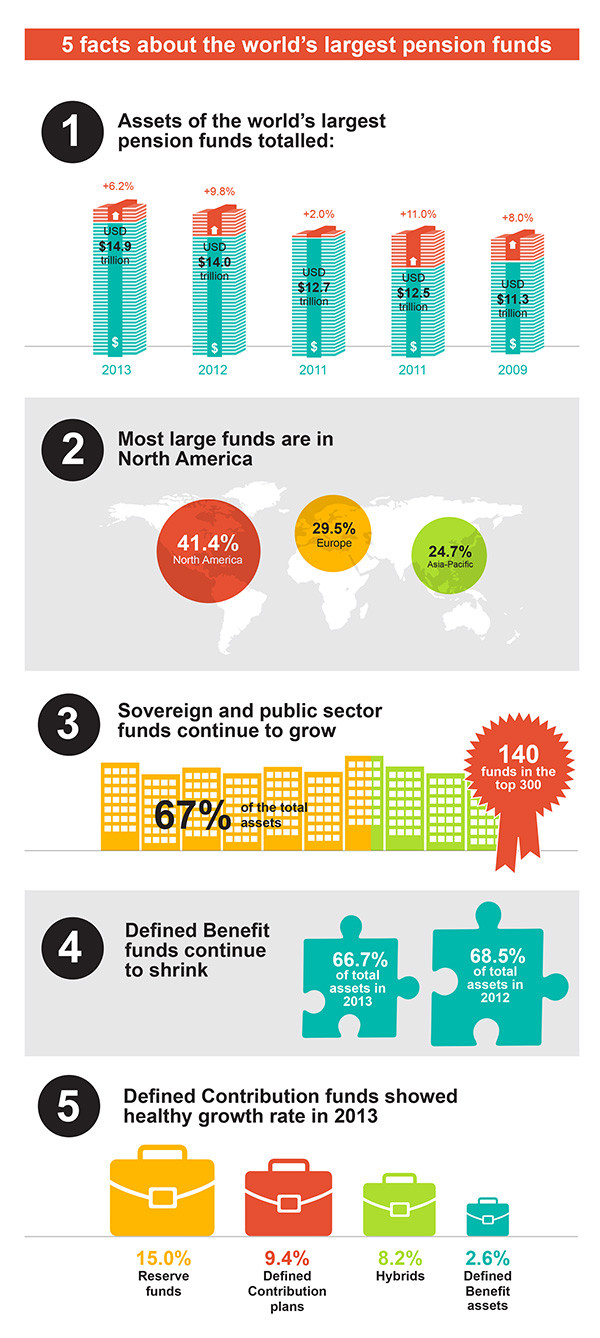
***
Editor’s Note:
The healthcare industry relevance of this info-graphic lies in these back-of-envelope statistics for traditional hospital, health pension and related 403[b] retirement plans, as follows:
Assessment
So, can you now appreciate the massive amount of potential fees [range 1-8%] generated by Wall Street investment bankers and fund management gurus?
More: Pension funds linger, even make comeback, among healthcare providers
Conclusion
Your thoughts and comments on this ME-P are appreciated. Feel free to review our top-left column, and top-right sidebar materials, links, URLs and related websites, too. Then, subscribe to the ME-P. It is fast, free and secure.
Speaker: If you need a moderator or speaker for an upcoming event, Dr. David E. Marcinko; MBA – Publisher-in-Chief of the Medical Executive-Post – is available for seminar or speaking engagements. Contact: MarcinkoAdvisors@msn.com
OUR OTHER PRINT BOOKS AND RELATED INFORMATION SOURCES:
Front Matter with Foreword by Jason Dyken MD MBA
“BY DOCTORS – FOR DOCTORS – PEER REVIEWED – FIDUCIARY FOCUSED”
Filed under: Investing | Tagged: global pension funds, Pensions & Investments, Towers Watson 300 | 1 Comment »
By Vitaliy Katsenelson CFA
So many articles have been written recently about Apple — defending it or explaining why this glorious fruit will turn into a shriveling pumpkin by midnight (with Samsung’s help) — that I really haven’t felt the need to contribute to the unending debate.
But, when Apple’s stock crashed to $450 back in January 2013, we bought a little for our clients. After receiving an outraged e-mail from one of them calling the purchase “irresponsible” and proclaiming that everyone (including his neighbor) knows that Apple is going down to $300, I decided it was time to join the discourse. Clients rarely (almost never) contact us about stocks we own in their accounts. More important, this is far from the most “radioactive” stock we own or have owned.
So, here is a column on Apple, I wrote back then. I have no intention of defending or prosecuting the company, but I would like to share some thoughts about it that many pundits have either overlooked or ignored.
***

***
The Psychlogy
What makes Apple stock difficult to own is psychology. The company’s success since 2000 is a black swan. We tend to think of Nassim Nicholas Taleb’s black swans as significant random negative events, but Apple is a positive one. When co-founder Steve Jobs came back to the company in the late ’90s, Apple was about to take its last breath. Jobs pulled off a miracle. He revived the company’s computer product line, making Macs exciting again, and then came out with three revolutionary “i” products in a row: the iPod, iPhone and iPad. You could argue that the success of each “i” product in itself was a black swan, exceeding all rational expectations and revolutionizing, transforming and in some cases creating new categories of merchandise that had never existed before.
Revenue and Market Capitalization
Apple’s revenue and market capitalization deservedly surpassed those of almighty Microsoft Corp. — the hairy monster with stinky breath that performed CPR on dying Apple in the late ’90s by injecting liquidity into the company by buying its preferred stock. We have a hard time processing this highly improbable success and an even harder time imagining that there is another black swan about to take flight from the Apple labs, especially with no Steve Jobs around to sit on the egg.
Black swans come out of nowhere, unannounced, but their impact may be long-lasting. The wildly successful “i” gadgets dug a formidable moat around Apple. They created the most valuable and still most inspirational brand in the world, funded an enormous research and development effort, enabled huge buying power (Apple locks up supply and pays much lower prices than many of its competitors for parts), filled out a mature product ecosystem and stuffed Apple’s debt-free balance sheet with $137 billion — half the market capitalization of Microsoft. The moat is wide, deep and unlikely to be breached any time soon.
***

***
High Price
One reason the psychology of owning Apple stock is so difficult: it’s high price. (Note: I am talking not about its valuation but purely about its price.) Apple has had only one stock split since the late ’90s, when it was trading in double digits, and it now changes hands at about $450 (down from $700 just a few months ago). Stock splits create zero economic value in the long run — absolutely none. Apple could split its stock ten to one and you’d have ten $45 shares, and nothing about the company or its business would change. But, I’d argue that a 3 percent “slide” of $1.35 would grab fewer headlines than a $13.50 “drop” — there is a media magnification factor that is hard to ignore.
Hardware versus Software
Is Apple a hardware or a software company? This is a very important question because Apple’s net margins of 25 percent are dangerously higher than those of Microsoft, a software monopoly that, with the minor exception of the Xbox and its new venture into tablets, sells only software, which has a 100 percent incremental margin.
Apple is either a smart hardware company or a software maker dressed in hardware company clothes. Take a look at the PC businesses of traditional “dumb” hardware companies like Dell and Hewlett-Packard Co. (I am not insulting these companies, I am just highlighting their lack of PC-directed R&D.) They buy hard drives from Western Digital Corp., graphic cards from Nvidia Corp., processors from Intel Corp. and an operating system from Microsoft, then they have contract manufacturers put together these parts in Asia and ship PCs all over the world. Dell and HP engineers design the PCs but contribute minimal R&D to their boxes; most of the R&D is done by the suppliers. Dell and HP are really asset-lite marketing and logistics companies — this explains their razor-thin margins. (Side note: Because of a lack of fixed costs, Dell and HP can remain profitable despite the ongoing decline in PC sales.)
Same Surface
On the surface, Apple’s personal computer business is not that much different from Dell’s or HP’s: It uses the same highly commoditized hardware and it also outsources manufacturing, but Apple spends much more on the R&D of its own operating system and creates distinctive, innovative products. Apple gets to keep a slice of revenue that would otherwise go to Microsoft for the operating system. Also, Apple is able to charge a premium (usually a few hundred dollars per PC) for the aesthetic appeal and perceived ease of use of its products.
However, when it comes to the “i” devices, Apple is a much smarter hardware company; its value added goes further than just basic design and software. Though there is a lot of commoditized hardware that goes into an iPhone or iPad, Apple’s skill at fitting an ever-growing number of components into ever-shrinking devices constantly increases. Add world-class touch and feel, superior battery life and durability, and you have a package that turns what would otherwise be commodity items into highly differentiated, and undeniably sexy, products. Apple has even gone a step further and is designing its own microprocessors.
But — and this is a very important “but” — as phones and tablets mature, processor speed, battery life and weight will tend to become uniform across all devices. It is arguable that the competition has already caught up with Apple in the hardware race. As the hardware premium goes away, there will be only two premiums left: Apple’s brand and its ecosystem. (I will go into detail about the “i” ecosystem and what it means for Apple’s margins and profitability in my second essay posted below).
Note that I did not mention the software premium. Unlike Microsoft, which charges for the Windows operating system installed on PCs, Google gives away Android to anyone who dares to make a phone or a tablet. Unless Apple can maintain the operating system lead against Android, that premium will go away.
Assessment
Recently, I spent a few days playing with Nexus 7, Google’s Android-powered 7-inch tablet, which retails for $200 ($130 cheaper than Apple’s iPad mini). Nexus 7 is a good product, but I kept remembering that humans and monkeys share 98 percent of their DNA, and the Android operating system is missing the 2 percent that makes Apple iOS so special.
***
Apple’s ecosystem is an important and durable competitive advantage; it creates a tangible switching cost (or, an inconvenience) after Apple has locked you into the i-ecosystem. It takes time to build an ecosystem that consists of speakers and accessories that will connect only via Apple systems: Apple TV, which easily recreates an iPhone or iPad screen on a TV set; the music collection on iTunes (competition from Spotify and Google Play lessens this advantage); a multitude of great apps (in all honesty, gaming apps have a half-life of only a few weeks, but productivity apps and my $60 TomTom GPS have a much longer half-life); and, last, the underrated Photo Stream, a feature in iOS 6 that allows you to share photos with your close friends and relatives with incredible ease. My family and friends share pictures from our daily lives (kids growing up, ski trips, get-togethers), but that, of course, only works when we’re all on Apple products. (This is why Facebook bought Instagram for $1 billion. Photo Stream is a real competitive threat to Facebook, especially if you want to share pictures with a limited group of close friends.)
The i-ecosystem makes switching from the iPhone to a competitor’s device an unpleasant undertaking, something you won’t do unless you are really significantly dissatisfied with your i-device (or you are simply very bored). How much extra are you willing to pay for your Apple goodies? Brand is more than just prestige; it is the amalgamation of intangible things like perceptions and tangible things like getting incredible phone and e-mail customer service (I’ve been blown away by how great it is!) or having your problems resolved by a genius at the Apple store.
Of course, as the phone and tablet categories mature, Apple’s hardware premium will deflate and its margins will decline. The only question is, by how much?
Let me try to answer
From 2003 to 2012, Apple’s net margins rose from 1.1 percent to 25 percent. In 2003 they were too low; today they are too high. Let’s look at why the margins went up. Gross margins increased from 27.5 percent to 44 percent: Apple is making 16.5 cents more for every dollar of product sold today than it did in 2001. Looking back at Nokia Corp. in its heyday, in 2003 the Finnish cell phone maker was able to command a 41.5 percent margin, which has gradually drifted down to 28 percent.
Today, Nokia is Microsoft’s bitch, completely dependent on the success of the Windows operating system, which is far from certain. Nokia is a sorry shell of what used to be a great company, while Apple, despite its universal hatred by growth managers, is still, well, Apple. Its gross margins will decline, but they won’t approach those of 2003 or Nokia’s current level.
For Apple to conquer emerging markets and keep what it has already won there, it will need to lower prices. The company is not doing horribly in China — its sales are running at $25 billion a year and were up 67 percent in the past quarter.
However, a significant number of the iPhones sold in China (Apple doesn’t disclose the figure) are not $650 iPhone 5’s but the cheaper 4 and 4s models. (Also, on a recent conference call, Verizon Communications mentioned that half of the iPhones it has sold were the 4 and 4s models.) Apple’s price premium over its Android brethren is not as high as everyone thinks.
What is truly astonishing is that Apple’s spending on R&D and selling, general and administrative (SG&A) expenses has fallen from 7.6 percent and 19.5 percent, respectively, in 2003 to a meager 2.2 percent and 6.4 percent today. R&D and SG&A expenses actually increased almost eightfold, but they didn’t grow nearly as fast as sales. Apple spends $3.4 billion on R&D today, compared with $471 million in 2001. This is operational leverage at its best. As long as Apple can grow sales, and R&D and SG&A increase at the same rate as sales or slower, Apple should keep its 18.5 percentage points gain in net margins through operational leverage.
***

***
Growth of sales is an assumption in itself. Apple’s annual sales are approaching $180 billion, and it is only a question of when they will run into the wall of large numbers. At this point, 20 percent-a-year growth means Apple has to sell as many i-thingies as it sold last year plus an additional $36 billion worth. Of course, this argument could have been made $100 billion ago, and the company did report 18 percent revenue growth for the past quarter, but Apple is in the last few innings of this high-growth game; otherwise its sales will exceed the GDP of some large European countries.
If you treat Apple as a pure hardware company, you’ll miss a very important element of its business model: recurrence of revenues through planned obsolescence. Apple releases a new device and a new operating system version every year. Its operating system only supports the past three or four generations of devices and limits functionality on some older devices. If you own an iPhone 3G, iOS 6 will not run on it, and thus a lot of apps will not work on it, so you will most likely be buying a new iPhone soon. In addition — and not unlike in the PC world — newer software usually requires more powerful hardware; the new software just doesn’t run fast enough on old phones. My son got a hand-me-down iPhone 3G but gave it to his cousin a few days later — it could barely run the new software.
As I wrote above, Apple’s success over the past decade is a black swan, an improbable but significant event, thanks in large part to the genius of Steve Jobs. Today investors are worried because Jobs is not there to create another revolutionary product, and they are right to be concerned. Jobs was more important to Apple’s success than Warren Buffett is to Berkshire Hathaway’s today. (Berkshire doesn’t need to innovate; it is a collection of dozens of autonomous companies run by competent managers.) Apple will be dead without continued innovation.
Jobs was the ultimate benevolent dictator, and he was the definition of a micro-manager. In his book Steve Jobs, Walter Isaacson describes how Jobs picked shades of white for Apple Store bathroom tiles and worked on the design of the iPhone box. He had to sign off on every product Apple made, down to and including the iPhone charger. His employees feared, loved and worshiped him, and they followed him into the fire. Jobs could change the direction of the company on a dime — that was what it took to deliver black i-swans. Jobs is gone, so the probability of another product achieving the success of the iPhone or iPad has declined exponentially.
***

***
What is really amazing about Apple is how underwhelming its valuation is today — it doesn’t require new black swans.
In an analysis we tried very hard to kill the company. We tanked its gross margins to a Nokia-like 28 percent and still got $30 of earnings per share (the Street’s estimate for 2013 is $45), which puts its valuation, excluding $145 a share in cash, at 10 times earnings. We killed its sales growth to 2 percent a year for ten years, discounted its cash flows and still got a $500 stock.
There is a lot of value in Apple’s enormous ability to generate cash. The company is sitting on an ever-growing pile of it — $137 billion, about one third of its market cap. Over the past 12 months, despite spending $10 billion on capital expenditures, Apple still generated $46 billion of free cash flows. If it continues to generate free cash flows at a similar rate (I am assuming no growth), by the end of 2015 it will have stockpiled $300 of cash per share. At today’s price [2013] it will be commanding a price-earnings ratio (if you exclude cash) of 4.
Of course, the market is not giving Apple credit for its cash, but I think the market is wrong. Unlike Microsoft, which does something dumber than dumb with its cash every other year, Apple has a pristine capital allocation track record. It has not made any foolish acquisitions — or, indeed, any acquisitions of size. Other than buying an Eastern European country and renaming it i-Country, Apple will not be able to acquire a technologically related company of size, nor will it want or need to. The cash it accumulates will end up in shareholders’ hands, either through dividends or share buybacks.
What is Apple worth?
After the financial acrobatics I’ve done trying to murder the valuation of Apple, it is easier to say that it is worth more than $450 than to pinpoint a price target. When I use a significantly decelerating sales growth rate and normalize margins (reducing them, but not as low as Nokia’s current margins), I get a price of about $600 to $800 a share.
Growth managers don’t want Apple to pay a large dividend, as though that would somehow transform this growing teenager into a mature adult. But I have news for them: Apple already is a mature adult. Second, when your return on capital is pushing infinity (as Apple’s is), you don’t need to retain much cash to grow. Two thirds of Apple’s cash is offshore, but that doesn’t make it worthless; it just makes it worth less — only $65 billion, maybe, not $97 billion, once the company pays its tax bill to Uncle Sam.
***

***
Assessment
In the short term none of the things I am writing about here will matter. Remember, “Everyone knows Apple is going to $300,” as a client recently e-mailed me, as everyone knew it was going to a $1,000 a few months ago when Apple’s stock was trading at $700. The company’s stock will trade on emotion, fundamentals will not matter, and growth managers will likely rotate out of Apple, because once the stock declined from $700 to $450, the label on it changed from “growth” to “value.”
But ultimately, fundamentals will prevail. Like the laws of physics, they can only be suspended for so long. And so, do these retrospective thoughts on Apple hint of future prospects?
More: Should You Buy Apple Stock Ahead of Its September Event …
ABOUT
Vitaliy N. Katsenelson CFA is Chief Investment Officer at Investment Management Associates in Denver, Colo. He is the author of Active Value Investing (Wiley 2007) and The Little Book of Sideways Markets (Wiley, 2010). His books were translated into eight languages. Forbes Magazine called him “The new Benjamin Graham”.
Conclusion
Your thoughts and comments on this ME-P are appreciated. Feel free to review our top-left column, and top-right sidebar materials, links, URLs and related websites, too. Then, subscribe to the ME-P. It is fast, free and secure.
Speaker: If you need a moderator or speaker for an upcoming event, Dr. David E. Marcinko; MBA – Publisher-in-Chief of the Medical Executive-Post – is available for seminar or speaking engagements. Contact: MarcinkoAdvisors@msn.com
OUR OTHER PRINT BOOKS AND RELATED INFORMATION SOURCES:
Front Matter with Foreword by Jason Dyken MD MBA
***
Filed under: Experts Invited, Investing | Tagged: Android, Apple Inc, behavioral economics, behavioral finance, microsoft, Nexus 7, Nokia, psychology, Steve Jobs, Vitaliy Katsenelson CFA, Warren Buffett | 3 Comments »
|
By Dr. David Edward Marcinko MBA CMP™
http://www.CertifiedMedicalPlanner.org |
|||||||||||||||
|
*** IntroductionMuch has been written, said and opined on this ME-P and elsewhere on financial advisory fees, commissions and other means of rumination. So, what method is really best for the physician or other client? Full service, discounted fee for service, AUMs, commissions, wrap fees, ETFs, load or no-load mutual funds, annuities, stocks or individual bonds, etc? Oh! Did I forget the current [higher] fiduciary standard versus [lower] suitability conundrum? And now, the latest fad is the … Robo-Advisor service. Of course, the very need for any sort of “professional” financial advisor is often questioned by the DIYer. The Need According to some research however, a financial advisor can help improve an investor’s net portfolio returns over time by building a portfolio with low-cost investments, minimizing taxes, and serving as an investing coach during volatile times in the market. Source: Francis M. Kinniry Jr., Colleen M. Jaconetti, Michael A. DiJoseph, and Yan Zilbering, 2014. Putting a value on your value: Quantifying Vanguard Advisor’s Alpha. Valley Forge, Pa.: The Vanguard Group. For a copy of the research paper, visit vanguard.com/advisorvalue ***
*** The Vanguard Personal Advisor Services With a new offering from Vanguard Personal Advisor Services, you’ll purportedly work with a financial advisor who’s a Certified Financial Planner® professional. Your dedicated advisor will:
Assessment And, just as you’d expect from Vanguard, the cost for this service is low, about one-third the industry average. But alsa, no such relationship exists for medical professionals from a Certified Medical Planner™ Source: PriceMetrix, 2013. The industry average fee is 0.99% annually of assets under management compared with Vanguard’s annual cost of only 0.30% of assets under management. For a copy of the complete report, go to pricemetrix.com. Advisor fees may differ depending on the type and nature of the services offered. More:
|

Full Disclosure: I am not affiliated with Vanguard Advisory Services in any way.
Conclusion
Your thoughts and comments on this ME-P are appreciated. Feel free to review our top-left column, and top-right sidebar materials, links, URLs and related websites, too. Then, subscribe to the ME-P. It is fast, free and secure.
Speaker: If you need a moderator or speaker for an upcoming event, Dr. David E. Marcinko; MBA – Publisher-in-Chief of the Medical Executive-Post – is available for seminar or speaking engagements. Contact: MarcinkoAdvisors@msn.com
OUR OTHER PRINT BOOKS AND RELATED INFORMATION SOURCES:
Front Matter with Foreword by Jason Dyken MD MBA
“BY DOCTORS – FOR DOCTORS – PEER REVIEWED – FIDUCIARY FOCUSED”
***
Filed under: Career Development, CMP Program, iMBA, Investing | Tagged: certified medical planner, Vanguard Personal Advisor Services | Leave a comment »
|
|
| What would you get if you crossed Warren Buffett, Richard Branson and Steve Jobs? Answer: Masayoshi Son, the Korean-Japanese, University of California, Berkeley–educated founder of one of Japan’s most successful companies, SoftBank Corp.
***
[A capital allocator]*** Masayoshi Son Just like Buffett, Son is a tremendous capital allocator with a very impressive record: Over the past nine and a half years, SoftBank’s investments have had a 45 percent annualized rate of return. A big chunk of this success can be attributed to one stock: Chinese e-commerce giant Alibaba, a $100 million investment SoftBank made in 2001 that is worth about $80 billion today. Though you may put Alibaba in the (positive) black swan column, Son’s success as an investor goes well beyond it — the list of his investments that have brought multibagger returns is very long. Today, at the tender age of 57, he is the richest man in Japan, and SoftBank, which he started in 1981 and owns 19 percent of, has a market capitalization of $72 billion. Son, like Apple co-founder Jobs, is blessed with clairvoyance. He saw the Internet as an amazing, transformative force well before that fact became common knowledge. In 1995 he invested in a then-tiny company, Yahoo!, earning six times his investment. But he didn’t stop there; he created a joint venture with Yahoo! by forming Yahoo! Japan, putting about $70 million in a company that today is worth around $8 billion. (Yahoo! Japan is a publicly traded company listed in Japan). What is shocking is that Son saw that the iPhone would revolutionize the telecom industry before Apple announced it or even invented it. See for yourself in this excerpt from an interview with Charlie Rose, where Son describes his conversation with Jobs in 2005 — two years before the iPhone was introduced: “I brought my little drawing of [an] iPod with mobile capabilities. I gave [Jobs] my drawing, and Steve says, “Masa, you don’t give me your drawing. I have my own.” I said, “Well, I don’t need to give you my dirty paper, but once you have your product, give me for Japan.” He said, “Well, Masa, you are crazy. We have not talked to anybody, but you came to see me as the first guy. I give to you.” Richard Branson Similar to Virgin Group founder Branson, who had the testicular fortitude to create Virgin Atlantic Airways in the U.K. to compete against the state-owned behemoth British Airways, Son started two telecom businesses in Japan — one fixed-line and one wireless — with which he challenged the state-owned NTT monopoly. In 2001, disgusted with Japan’s horrible broadband speeds, he convinced the government to deregulate the telecom industry. When no other companies emerged to compete with NTT (I don’t blame them, really), Son took it upon himself to start a fixed-line competitor, Yahoo! BB (Broadband). Thanks to him, now Japan enjoys one of the highest broadband speeds in the world and Yahoo! BB is a leading fixed-line telecom. It took Son four years to bring his broadband business to profitability. This is how the Wall Street Journal described that period in 2012: “The problems at the broadband unit contributed to losses for the entire company for four consecutive years. Mr. Son set up an office in a meeting room 13 floors below his executive suite to be closer to the problem unit. He slept in the office at times and routinely summoned executives and partners for meetings late at night. . . . He worked out of the meeting room for 18 months, until the broadband unit had cut enough costs and moved enough customers to more lucrative plans.” A normal person might have taken a break and enjoyed the fruits of his labor at that point, but not Son. Just as his broadband business went in the black, Son executed on his vision for the Internet and bought Vodafone K.K., a struggling, poorly run wireless telecom in Japan. SoftBank paid about $15 billion, borrowing $10 billion. Fast-forward eight years, and SoftBank Mobile is an incredible success. It is one of the largest mobile companies in Japan, even faster growing than NTT Docomo (a subsidiary of almighty NTT). Today it spits out about $5 billion in operating profits annually — not bad for a $5 billion equity investment. Like Branson, Son is a serial entrepreneur who has started multiple, often unrelated businesses and has succeeded a lot more than he has failed. SoftBank has built a robot named Pepper that can read human emotions; and after the earthquake that crippled Japanese power generation, Son started a renewable-energy business. Son has a very ambitious goal for SoftBank: He wants it to become one of the largest companies in the world. Unlike the average Wall Street CEO, whose time horizon has shrunk to quarters, Son thinks in centuries. I kid you not — he has a 300-year vision for SoftBank. Practically speaking, 300 years is a bit challenging even for long-term investors, but at the core of his vision Son is building a company that he wants to last forever (or 300 years, whichever comes first). He views SoftBank as an Internet company and is committed to investing in Internet companies in China and India. He thinks that as these countries develop, their GDPs will eclipse those of the U.S. and Europe. Jobs, Branson, Buffett — it is very rare for somebody to embody strengths of all three of these giants. None of them has the qualities of the other two. Buffett is not a visionary, nor does he want to run the companies in his portfolio. Branson is not a visionary — in his book Losing My Virginity he admits he did not see analog music (CDs) being destroyed by digital music (iTunes) and demolishing his music store business. Jobs probably came the closest, as both a visionary and a business builder, but he was not known for his investing acumen. You’d think SoftBank would be richly priced to reflect Son’s premium. Wrong! Today its stock is trading at about a 40 percent discount to the fair value of its known assets (SoftBank has about 1,300 investments, many of them not consolidated on its financials).This discount is not rational, but maybe the market thinks Alibaba is overvalued, or it expects the Japanese yen to continue its decline (I would not disagree), and thus wholly owned Japanese telecom businesses are going to be worth less in U.S. dollars. Or maybe SoftBank’s Sprint investment is not going to work out. Oh, I forgot to mention that one — let’s address it next. SoftBank’s Japanese telecom businesses generate about $6 billion of very stable operating income, but there is little room for growth in Japan. Unable to find anything telecom to buy in Asia, in 2013 the company took advantage of the strong yen and bought 80 percent of Sprint for $21 billion, or $7.65 a share. Sprint is the No. 3 mobile company in the U.S., a market dominated by AT&T and Verizon, which together account for about 75 percent of wireless revenue and more than 100 percent of wireless profits (T-Mobile and Sprint are losing money). If I knew no more than that, I’d say Sprint’s chances of success in the U.S. are slim — after all, it is competing against two very profitable giants. But I would have said the same thing about SoftBank’s adventure into fixed-line and then wireless in Japan, and I would have been dead wrong. Admittedly, Sprint’s turnaround will not be easy and will be far from linear, and its $30 billion debt load will not help. SoftBank is looking to apply the tremendous experience it gained through a lot of hard work in turning an ailing Vodafone K.K. into one of the best wireless companies in the world. However, this time around SoftBank is even better equipped to fight its competition: It has lots of experience with 2.5 GHz spectrum in Japan, where its network is several times faster than Verizon’s and AT&T’s networks in the U.S. SoftBank brought 200 engineers from Japan to help Sprint design its new network; the two companies combined have tremendous buying power in equipment, second only to China Mobile. In fact, suppliers Alcatel-Lucent, Nokia and Samsung just agreed to provide Sprint with $1.8 billion in vendor financing. But most important, SoftBank has already had success with a telecom turnaround. It is following the same road map with Sprint that it used in Japan with Vodafone K.K.: improve the network, cut costs, provide better customer service and top all that with cutthroat price reductions. ***
*** Sprint News Over the past several months, the news flow from Sprint has not been great: It cut guidance, and its stock declined to $4 a share. This may explain why SoftBank’s stock is down; however, even if Sprint meets its maker, the impact on SoftBank should be just $5 a share. Sprint’s $30 billion debt is nonrecourse to SoftBank. Even at current market values, SoftBank’s equity stake in Sprint is worth only $12 billion, while its 32 percent stake in Alibaba is worth $80 billion, and its Japanese telecom businesses are worth about $50 billion (at five times earnings before depreciation and amortization). SoftBank’s stake in Yahoo! Japan is worth north of $8 billion. Softbank As part of our investment analysis, we tried to hypothetically kill SoftBank — smother it with a pillow — but we simply could not. We assumed that the yen will depreciate against the dollar to 180 from 120 today, slashing the value of Japanese businesses by a third. Alibaba stock is trading at around $100, about 30 times 2015 earnings forecasts; we took the earnings multiple down to 20 times, pricing the stock at $60. We even assumed SoftBank will have to pay capital gains taxes on selling Alibaba. We halved the price of Sprint’s stock. However, even in this fairly grim scenario we could not get SoftBank’s stock to decline much below its current price of $30. In the worst case we are paying fair value for SoftBank’s assets and get Son’s magic for free. This places no value on his 1,300 other investments, either. Sprint may, by the way, actually work out to be a tremendous success for SoftBank. There are many ways to look at SoftBank. You can think of it as buying a stock at a roughly 50 percent discount to the market value of its assets or as a way to buy Alibaba at less than half its current price. Alibaba is a great play on China — not the China that builds ghost towns and bridges to nowhere but the Chinese consumer, and not just the Chinese consumer but the Chinese consumer who is spending more and more money shopping online. Alibaba is synonymous with Chinese online shopping, whose growth may accelerate with higher smartphone penetration and, just as important, the ongoing rollout of a fast wireless LTE network. I’d be remiss if I did not discuss an important asterisk in the ownership of Alibaba. Its shares listed on the NYSE and owned by SoftBank don’t have an economic interest in Alibaba, although, through a stake in a Cayman Islands entity, they have contractual rights to profits from Alibaba China. The latter is owned and controlled by Jack Ma, Alibaba’s founder and CEO. This structure is not a by-product of Ma’s evil intent to steal Alibaba from gullible investors but rather is forced by Chinese law that prohibits foreign ownership in certain industries. There is a risk that the Chinese government might find this structure illegal, but at Alibaba’s size — $240 billion — the company is simply too big to be messed with. China’s economy would pay a huge price if its second-largest public company just disappeared due to a legal technicality. This would also turn into an international public relations nightmare for China, not only with the U.S. but with Japan as well. It would make Ma richer at the expense of U.S. shareholders but also at the expense of SoftBank and Japan’s richest man, Son. (Those who have a problem with Ma maintaining complete operational control of Alibaba should recall that the phenomenon of founder as benevolent dictator is nothing new — just look at Google. In fact, I’d argue that this control has allowed Ma to sustain his long-term time horizon and this is what has helped Alibaba drive eBay out of China; but that’s a discussion for another time). Assessment You can also look at SoftBank as a vehicle through which to invest in emerging markets — not just China but India as well. It is almost like hiring the combination of Buffett, Branson and Jobs to go to work for you investing in markets whose economies in a few decades will surpass that of the U.S., while also investing in a segment of the economy — the Internet — that is growing at a much faster rate than the overall economy. And yes, of course, you have Masayoshi Son, the super-Buffett-Branson-Jobs fusion, making these investments for you. With SoftBank at this valuation, you can forget about your emerging-markets mutual fund. More: Ode to Steve Jobs |
ABOUT
Conclusion
Your thoughts and comments on this ME-P are appreciated. Feel free to review our top-left column, and top-right sidebar materials, links, URLs and related websites, too. Then, subscribe to the ME-P. It is fast, free and secure.
Speaker: If you need a moderator or speaker for an upcoming event, Dr. David E. Marcinko; MBA – Publisher-in-Chief of the Medical Executive-Post – is available for seminar or speaking engagements. Contact: MarcinkoAdvisors@msn.com
OUR OTHER PRINT BOOKS AND RELATED INFORMATION SOURCES:
Front Matter with Foreword by Jason Dyken MD MBA
“BY DOCTORS – FOR DOCTORS – PEER REVIEWED – FIDUCIARY FOCUSED”
***
Filed under: Investing, Portfolio Management | Tagged: Masayoshi Son, Richard Branson, SoftBank, Steve Jobs, Warren Buffett | 2 Comments »
Fear of Missing Out
By Lon Jefferies CFP MBA
Fear of missing out (FOMO) is an increasingly powerful emotion in our daily lives – so much so that FOMO was officially added to the Oxford English Dictionary in 2013.
DEFINITION
Have you ever looked at your Facebook feed and been jealous of someone’s picture from a beautiful viewpoint, or enviable of a friend’s photo of an expensive dinner with a strategically placed bottle of fancy wine in the background?
That is FOMO – the fear that at any given moment someone is doing something more appealing than what we are doing at the time.
Part of Life
A fear of missing out has always been part of life, but it has become more prevalent with the emergence of social media. Personally, I can’t help but check my Twitter feed every hour or so to make sure that I’m not missing out on an article published by one of my favorite financial writers. Yet, social media has increased the power of FOMO more than I realized.
Example
I have absolutely zero interest in horse racing – frankly, I dislike the sport. However, due to all the hype on Facebook and Twitter, I couldn’t help but watch the Belmont Stakes out of fear of missing American Pharaoh become the first Triple Crown winner of my lifetime.
FOMO is frequently a counter-productive emotion, leading to jealousy of others, dissatisfaction with our own lives, and bad decision-making processes. Nowhere is the negative impact of FOMO more apparent than in some individuals’ investment strategy. For years, no one has enjoyed going to the neighborhood BBQ only to have to listen to their next door neighbor brag about how his portfolio has outperformed the S&P 500 index over the last six months. Not only is listening to the boasting annoying, it makes us discontent with the return our own portfolio has achieved and makes us wonder if we should adapt a different strategy (i.e. take more risk right after the market achieved a new all-time high).
Social media has expanded the impact of FOMO on investment strategies. For the last year, the internet has ensured we are aware that large cap indexes like the S&P 500, Dow Jones Industrial Average, and NASDAQ are at all-time highs and achieving appealing returns, and we wonder why our more diversified portfolio isn’t behaving in a similar fashion. It is hard to be content with our diversified strategy when every media outlet is constantly reminding us how we are missing out on the stellar performance that could be obtained if only we had a non-diversified portfolio that invested only in the asset category that is currently in the middle of a hot streak.
When it comes to investing, FOMO is significantly impacted by recency bias. Our fear of missing out becomes more and more intense after the market has just experienced an uptick. If we take a couple of steps back, it is clear why we maintain a diversified portfolio – it provides the most appealing tradeoff between maximizing returns and minimizing risk.
***

***
Yet, it is hard to remind ourselves of this when it seems like everyone around us is taking advantage of the latest market trends and we are missing out.
Of course, changing our portfolio to try and take advantage of a run that has already taken place would be foolish, as we would be selling assets with prices that have remained flat and may now be undervalued relative to the market in order to buy assets that have recently experience significant growth and are likely now expensive. These are the type of decisions that FOMO can cause and we would be wise to avoid this type of thinking.
A Re-Do?
We have been in this position before. In the late 1990s, people wanted to abandon their diversified portfolio and put a heavy focus on the technology stocks that were making all their neighbors rich. In the mid 2000s, everyone wanted to borrow as much money as possible and utilize the funds to buy and flip real estate.
In the early 2010s, everyone was wondering if they should sell their stocks before a double-dip recession began and use the resulting funds to buy gold. In each of these scenarios we were hearing individual stories of others who had implemented these strategies and were doing better than we were.
Of course, with the benefit of hindsight, we can see that changing our long-term investment strategy due to a fear of missing out on what was working for others over a short time period would have been a drastic mistake in each of these circumstances. After the market has done well, recency bias and FOMO causes investors to be more afraid of missing a bull market than of suffering large losses.
However, in these times, we need to remember that we chose a diversified investment strategy because it provides us with the highest probability of obtaining our financial goals while exposing us to the least amount of volatility possible.
Assessment
When the media and our acquaintances insist on informing us how we would have been better off placing heavy bets on the asset categories that have recently done well, we would be well served to remember that a diversified portfolio strategy will almost certainly provide us with the best chance to achieve long-term investment success.
Conclusion
Your thoughts and comments on this ME-P are appreciated. Feel free to review our top-left column, and top-right sidebar materials, links, URLs and related websites, too. Then, subscribe to the ME-P. It is fast, free and secure.
Speaker: If you need a moderator or speaker for an upcoming event, Dr. David E. Marcinko; MBA – Publisher-in-Chief of the Medical Executive-Post – is available for seminar or speaking engagements. Contact: MarcinkoAdvisors@msn.com
OUR OTHER PRINT BOOKS AND RELATED INFORMATION SOURCES:
Front Matter with Foreword by Jason Dyken MD MBA
“BY DOCTORS – FOR DOCTORS – PEER REVIEWED – FIDUCIARY FOCUSED”
***
Filed under: Investing | Tagged: Fear of Missing Out, FOMO, Lon Jefferies, NASDAQ, S&P 500 | Leave a comment »
In Global Investable Markets
 [By Timothy J. McIntosh MBA CFP® MPH]
International bonds now account for more than 35% of the world’s investable assets, and yet many physicians and other investors have little or no exposure to these types of securities. International fixed income securities make up a noteworthy portion of the global investable market.
While investors in international bonds are exposed to the hazard of interest rate movements and political risks, the principal factors driving international bond prices are actually uncorrelated to the most common U.S. risk factors. This indicates a true diversification benefit for any investor. International bonds have become more prominent and attractive due to the increase in globalization and the pervasive expansion of debt issuance overseas, primarily by governments. There has been a near doubling of the relative weight of the non-U.S. bond market from approximately 19% in 2000 to approximately 37% in 2011. Thus, there is more selection of international bonds than ever for U.S. investors.
***

***
Investing in international bonds involves contact to the movements of global currencies. This is the primary component of determining international bond returns. Alternations in currencies create an extra layer of volatility in these types of securities.
However, that volatility actually enhances diversification benefits. One of the key considerations of any purchase of international bonds is whether or not to hedge the currency impact. These deviations create return volatility above the level inherent to the underlying investment. An allocation to an unhedged international bond does reflect an investor’s bearish view of the U.S. dollar. This is because as the dollar depreciates against a foreign currency, an international bond will gain in value. The last 25-plus years have witnessed a long-term decline in the U.S. dollar, actually providing a tail wind for international bond investors.
***

***
In fact, according to data from Vanguard, unhedged international bonds outperformed hedged bonds by 2.2 percentage points a year since 1987. The diversification benefit from international bonds is also attractive.
For example, from January 1, 1992 to March 31, 2013, the correlation between the Citigroup World Government Bond Index ex-US 1-3 Years index and five-year U.S. Treasury notes was a mere 0.35. An allocation to international bonds can amplify portfolio diversification across economies, currencies, and yield curves.
***

***
More:
Conclusion
Your thoughts and comments on this ME-P are appreciated. Feel free to review our top-left column, and top-right sidebar materials, links, URLs and related websites, too. Then, subscribe to the ME-P. It is fast, free and secure.
ABOUT
Timothy J. McIntosh is Chief Investment Officer and founder of SIPCO. As chairman of the firm’s investment committee, he oversees all aspects of major client accounts and serves as lead portfolio manager for the firm’s equity and bond portfolios. Mr. McIntosh was a Professor of Finance at Eckerd College from 1998 to 2008. He is the author of The Bear Market Survival Guide and the The Sector Strategist. He is featured in publications like the Wall Street Journal, New York Times, USA Today, Investment Advisor, Fortune, MD News, Tampa Doctor’s Life, and The St. Petersburg Times. He has been recognized as a Five Star Wealth Manager in Texas Monthly magazine; and continuously named as Medical Economics’ “Best Financial Advisors for Physicians since 2004. And, he is a contributor to SeekingAlpha.com., a premier website of investment opinion. Mr. McIntosh earned a Bachelor of Science Degree in Economics from Florida State University; Master of Business Administration (M.B.A) degree from the University of Sarasota; Master of Public Health Degree (M.P.H) from the University of South Florida and is a CERTIFIED FINANCIAL PLANNER® practitioner. His previous experience includes employment with Blue Cross/Blue Shield of Florida, Enterprise Leasing Company, and the United States Army Military Intelligence.
Speaker: If you need a moderator or speaker for an upcoming event, Dr. David E. Marcinko; MBA – Publisher-in-Chief of the Medical Executive-Post – is available for seminar or speaking engagements. Contact: MarcinkoAdvisors@msn.com
OUR OTHER PRINT BOOKS AND RELATED INFORMATION SOURCES:
“Physicians who don’t understand modern risk management, insurance, business and asset protection principles are sitting ducks waiting to be taken advantage of by unscrupulous insurance agents and financial advisors; and even their own prospective employers or partners.
This comprehensive volume from Dr. David Marcinko, and his co-authors, will go a long way toward educating physicians on these critical subjects that were never taught in medical school or residency training.”
Dr. James M. Dahle MD FACEP
[Editor of The White Coat Investor, Salt Lake City, Utah, USA]

***
Filed under: Investing, Portfolio Management | Tagged: International Bond Advantages?, International Bonds, SIPCO, Timothy J. McIntosh MBA CFP® | Leave a comment »
Are We There … Yet?By Vitaliy N. Katsenelson CFA
|
|
NOTE: This article was first written in May 2013, but it is still as relevant today as it was then. Preface In early May 2015 I had the pleasure of attending and speaking at the Value Investing Congress in Las Vegas. The last time I had spoken there, it was May 2008 and the market was just coming off its top. The Standard & Poor’s 500 index was trading at 18 times trailing earnings. Profit margins were at a modern-day high. They subsequently collapsed but came back to set an even higher high. If you normalize profits for high margins and look at ten-year trailing earnings, in 2008 stocks were trading 66 percent above their average. They were at 30 times ten-year trailing earnings. The Market Repeats In all honesty, I could do the same presentation today that I did five years ago, since market valuation is not dramatically different from what it was then. A cyclical bear and a cyclical bull market later, the S&P 500 is at (the same) 18 times trailing earnings and 26 times ten-year trailing earnings. Investors who were on the sidelines the past few years and who are now pouring money into stocks, expecting that we are in the midst of a secular bull market, will likely be disappointed. The previous sideways market, of 1966–82, included four cyclical bull markets and five cyclical bear markets. From 1970 to 1973 the Dow went from 700 to 1,000, just to drop again, to 600. Lost Hope Sideways markets are there to destroy hope. It is when nobody wants to own stocks ever again, when valuations are below their historical average, that a secular sideways market finally dies (actually, more like goes into hibernation), and the next secular bull market is born. But even that is not enough: Stocks need to spend time at below-average valuations. In the 1966–82 market they spent half of their time at below-average valuations. During the recent crisis we tiptoed into below-average valuations, but we danced right back out. A present day secular bull market? To believe we are in the midst of a secular bull market, you have to be very comfortable with three things, starting with profit margins.
Stock returns are driven by two variables, earnings growth and changes in P/Es. Earnings growth for the next five to ten years is unlikely to be exciting and may not even be positive, and P/Es are likely to change for the worse, not the better. ***
*** Interest rates Interest rates were much higher in the ’70s and early ’80s than they are today, and thus stocks may deserve higher valuations than they did then. This applies to all assets. But, the Federal Reserve’s policy may inflate stocks’ valuations for a while. If the Fed succeeds and real growth resumes, then interest rates will rise and (expensive) stocks that were discounting all-time-low rates will get crushed. After all, they — like long-duration bonds — do great when interest rates decline and bite the dust when interest rates rise. Of course, on many levels things are better now than they were in 2008. The financial crisis and real estate bubble are behind us; we are probably not going to see those again for a while. But their resolution came at a big price: much higher government debt and a command-control interest-rate policy that would have made the Soviets proud. Today We’re now living in a Lance Armstrong economy. We’ve consumed so many performance enhancement drugs through endless quantitative easing that it is hard to know how well the economy is really doing. Unfortunately, as Armstrong at some point did, we’ll have an Oprah Winfrey moment when the economy will have to fess up for all the QEs. We are living through one of the most grandiose and untested lab experiments ever conducted by a central bank: QE Infinity. At the recent Berkshire Hathaway annual meeting, Warren Buffett said, “Watching the economy today is like watching a good movie — you don’t know the ending.” His sidekick Charlie Munger added, “If you are not confused about the economy, you don’t understand it very well.” The FOMC The Fed’s unprecedented intervention in the economy has increased the possible range and severity of negative outcomes, from runaway inflation to deflation or a freaky combination of the two (freakflation). Deflation (or freakflation) is not good for stocks or their valuations. Just look at Japan. Over the past 20 years, stock valuations declined despite interest rates being at incredibly low levels. Expensive stocks (as I’ve mentioned, stocks in general are very expensive) discount earnings growth. If growth fails to materialize, these P/Es will decline. Unknowns are simply unknown. Caution At a time when the market is making all-time highs, it is easy to become complacent and let your guard down. Don’t. • • |
ABOUT
|
Vitaliy N. Katsenelson CFA is Chief Investment Officer at Investment Management Associates in Denver, Colo. He is the author of Active Value Investing (Wiley 2007) and The Little Book of Sideways Markets (Wiley, 2010). His books were translated into eight languages. Forbes Magazine called him “The new Benjamin Graham”.
|
Assessment
Your thoughts and comments on this ME-P are appreciated.
Conclusion
Feel free to review our top-left column, and top-right sidebar materials, links, URLs and related websites, too. Then, subscribe to the ME-P. It is fast, free and secure.
Speaker: If you need a moderator or speaker for an upcoming event, Dr. David E. Marcinko; MBA – Publisher-in-Chief of the Medical Executive-Post – is available for seminar or speaking engagements. Contact: MarcinkoAdvisors@msn.com
OUR OTHER PRINT BOOKS AND RELATED INFORMATION SOURCES:
Front Matter with Foreword by Jason Dyken MD MBA
“BY DOCTORS – FOR DOCTORS – PEER REVIEWED – FIDUCIARY FOCUSED”
***
Filed under: Investing | Tagged: Investing, sideways markets, Standard & Poor’s 500 index, Vitaliy N. Katsenelson CFA | 7 Comments »
Are You Listening – Doctors?
By Rick Kahler MS CFP® http://www.KahlerFinancial.com
Ask ten people how the rich got rich and you will get at least ten opinions.
Some of the more common assumptions are that people become wealthy by inheriting fortunes, taking advantage of those less fortunate, or “playing” the stock market. I even remember one government employee who insisted anyone who obtained wealth had to do so illegally.
While a few people become rich in these ways, they are the exception rather than the rule. A survey by the Spectrem Group asked 132,000 people with a net worth of over $25 million where their wealth came from.
Here are the results:
***

***
Assessment
It appears that success in building wealth is similar to success in other areas: the harder and smarter you work, the more success you are likely to have.
Conclusion
Your thoughts and comments on this ME-P are appreciated. Feel free to review our top-left column, and top-right sidebar materials, links, URLs and related websites, too. Then, subscribe to the ME-P. It is fast, free and secure.
Speaker: If you need a moderator or speaker for an upcoming event, Dr. David E. Marcinko; MBA – Publisher-in-Chief of the Medical Executive-Post – is available for seminar or speaking engagements. Contact: MarcinkoAdvisors@msn.com
OUR OTHER PRINT BOOKS AND RELATED INFORMATION SOURCES:
Front Matter with Foreword by Jason Dyken MD MBA
This book was crafted in response to the frustration felt by doctors who dealt with top financial, brokerage, and accounting firms. These non-fiduciary behemoths often prescribed costly wholesale solutions that were applicable to all, but customized for few, despite ever-changing needs.
It is a must-read to learn why brokerage sales pitches or Internet resources will never replace the knowledge and deep advice of a physician-focused financial advisor, medical consultant, or collegial Certified Medical Planner™ financial professional.
Parin Khotari MBA
[Whitman School of Management, Syracuse University, New York]
***
Filed under: Career Development, Investing | Tagged: How Rich – Got Rich?, Rick Kahler CFP® | 3 Comments »
On the Stock-Splits Newsletter
[By Neil Macneale] http://www.2for1Index.com or http://www.USCFAdvisers.com
 Just wanted to say hello!
Many who subscribe, or read this ME-P, are personal friends or subscribers to our 2 for 1 newsletter. Others have connected to me one way or the other, such as on LinkedIn.
You may not be aware of the recent events concerning the 2 for 1 Index® and the 2 for 1® newsletter.
As of 7/31/15, the index has doubled the gain of the S&P 500 over the trailing 12 months. That’s +19% vs +9% since 7/31/2014, a great showing in a rather jittery market.
***
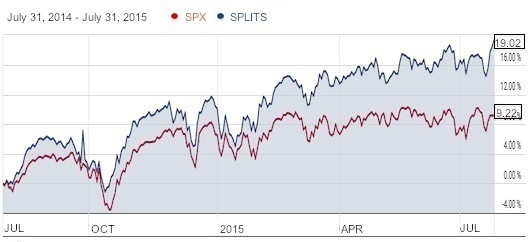
***
Assessment
The 2 for 1 Index (NYSE: SPLITS) is comprised of approximately 30 companies which trade on major US stock exchanges. Companies eligible for inclusion have all announced a stock split within the 6 months prior to selection for the Index. Each month, the 2 for 1 Index is updated on the Friday closest to the 15th of that month. The pool of eligible companies is evaluated and ranked according to a proprietary methodology, and the top ranked candidate is selected for the Index. Sector and market-cap diversification is considered in the selection algorithm. One new stock is added to the Index, and one of the oldest stocks is removed. All positions are rebalanced to equal weight.
Conclusion
Your thoughts and comments on this ME-P are appreciated. Feel free to review our top-left column, and top-right sidebar materials, links, URLs and related websites, too. Then, subscribe to the ME-P. It is fast, free and secure.
Speaker: If you need a moderator or speaker for an upcoming event, Dr. David E. Marcinko; MBA – Publisher-in-Chief of the Medical Executive-Post – is available for seminar or speaking engagements. Contact: MarcinkoAdvisors@msn.com
OUR OTHER PRINT BOOKS AND RELATED INFORMATION SOURCES:
Front Matter with Foreword by Jason Dyken MD MBA
“BY DOCTORS – FOR DOCTORS – PEER REVIEWED – FIDUCIARY FOCUSED”
***
Filed under: Investing | Tagged: Neil Macneale, Stock-Splits | Leave a comment »
Yield Curve 101
[By GREGOR AISCH and AMANDA COX]
The yield curve shows how much it costs the federal government to borrow money for a given amount of time, revealing the relationship between long- and short-term interest rates.
It is, inherently, a forecast for what the economy holds in the future — how much inflation there will be, for example, and how healthy growth will be over the years ahead — all embodied in the price of money today, tomorrow and many years from now.
***
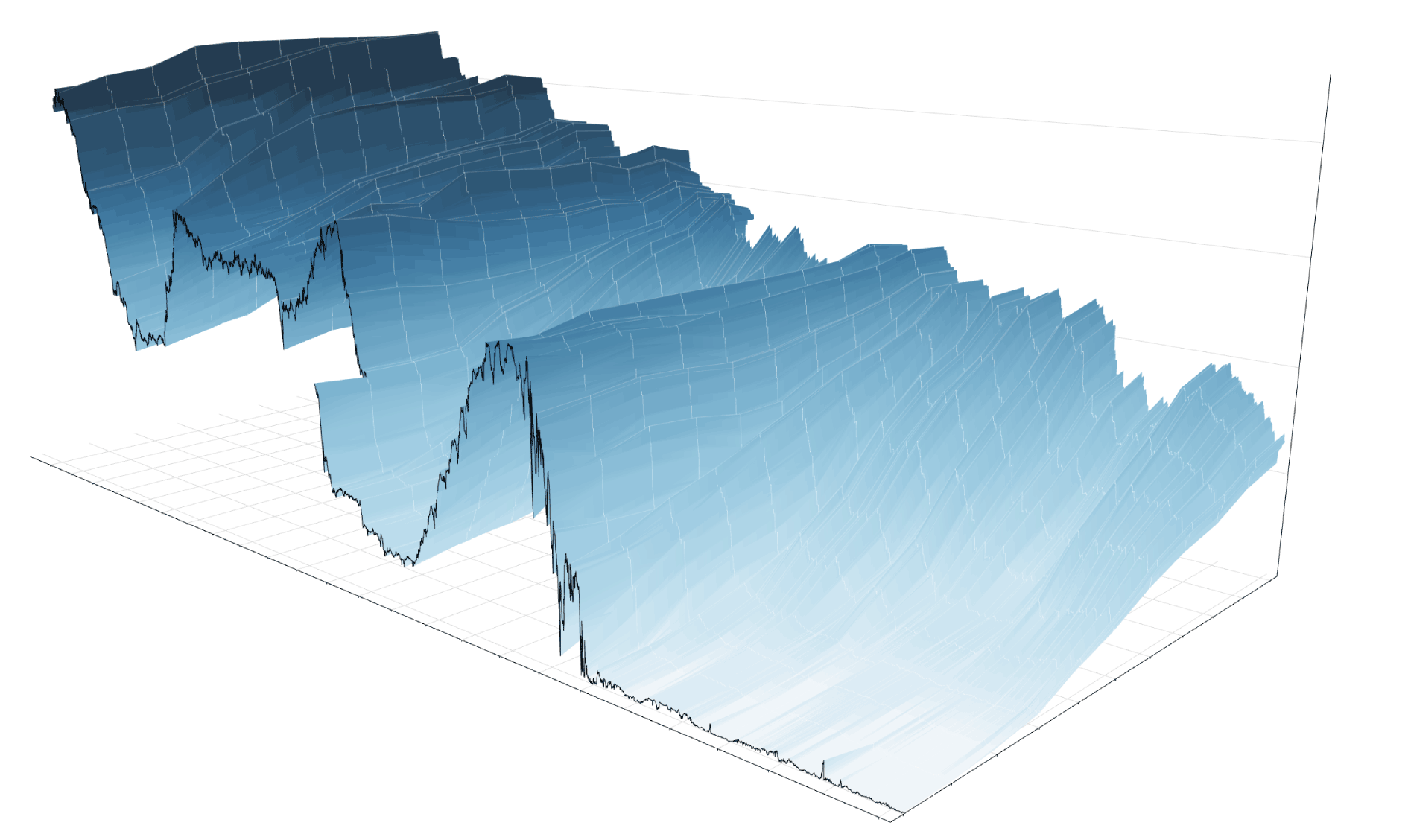
***
More:
Conclusion
Your thoughts and comments on this ME-P are appreciated. Feel free to review our top-left column, and top-right sidebar materials, links, URLs and related websites, too. Then, subscribe to the ME-P. It is fast, free and secure.
Speaker: If you need a moderator or speaker for an upcoming event, Dr. David E. Marcinko; MBA – Publisher-in-Chief of the Medical Executive-Post – is available for seminar or speaking engagements. Contact: MarcinkoAdvisors@msn.com
OUR OTHER PRINT BOOKS AND RELATED INFORMATION SOURCES:
Front Matter with Foreword by Jason Dyken MD MBA
“BY DOCTORS – FOR DOCTORS – PEER REVIEWED – FIDUCIARY FOCUSED”
***
Filed under: Investing | Tagged: AMANDA COX, FOMC, GREGOR AISCH, inflation, long-and short-term interest rates, Yield Curve 101 | 1 Comment »
***
ADVERTISEMENT

For those who can’t join us in person on the 29th, feel free to join us virtually.
***
Filed under: Alternative Investments, Investing | Tagged: Alternative Finance Programs, FinFair, FinTech, Wall Street | Leave a comment »
Gazing into the Future … Always Dangerous!
[By Timothy J. McIntosh MBA CFP® MPH]
Given that government bond yields today are at historical lows, the opportunity for price appreciation is minimal. More likely, the collection of interest payments will provide most, if not all, of market returns.
Additionally, interest rates could also trend up over the ensuing decade. This would result in capital losses as bond prices decline, reducing total return further. Much like the decade of the 1940s, total returns from bonds will most likely be subdued as either market interest rates remain constant or interest rates trend upwards.
Most certainly, physicians and all investors, cannot expect an average long term return of 5.40%. A 3% total return over the ensuing decade is most probable. The problem with this examination is that most individual investors have a substantial portion of their assets in bonds, especially of the government sort. As the average total portfolio return target for most investors is 6-8% on an annualized basis, investors must expect either a substantial decline in interest rates from the current historic lows, or that stocks will make up the difference.
***

***
Although bonds do present moderate investments returns for today’s investor, without bonds as part of a portfolio, investment losses could be a much higher percentage if invested in stocks alone. But, stocks do generate a higher rate of return over a long period, in short or immediate term, they may well be outperformed by bonds, especially at critical periods in the economic cycle. Bonds in general are known for the stability and predictability of returns. Bonds, especially those of the government kind, have a low standard deviation (volatility).
In fact, bonds are one of the least risky asset classes an investor can own. When combining bonds in a diversified portfolio, you will lower your overall risk. The tradeoff, of course, is the return will be lower than an all stock portfolio.
Most investors have money parked in bonds of the government type, i.e. notes, bills, or bonds. The reason for this has to do with risk and diversification. Government bonds have one of the lowest risk profiles of any asset class, and have generally produced consistent returns. Government bonds are also thought to maintain a very low correlation (a statistical measure of how two securities move in relation to each other) with equities. The long-term average correlation is about 0.09.
***

***
However, this verity has to be examined on a long-term framework. In fact, correlations between U.S. stocks and treasury bonds have swung widely over the past eighty years. The correlation was positive for most of the late 1930s and throughout the 1940s. In the 1950s, the correlation was actually negative as stocks advanced strongly and bonds suffered from declining prices (due to increasing interest rates). From the mid-1960s until 2000 there was a positive correlation, averaging about 0.50. The correlation turned negative once gain during the past decade.
This was primarily due to the fact that stocks struggled mightily with two large bear market declines (2002, 2008), while bonds rallied strongly as interest rates declined. So much of the supposed low or negative correlation depends upon what time period you examine. The principal problem with owning government bonds is the negative correlation an investor is looking for only appears sporadically throughout history.
Assessment
There are a number of risk variables to consider when investing in bonds as they may affect the value of the bond investment over time. These variables include changes in interest rates, income payments, bond maturity, redemption features, credit quality, priority in capital structure, price, yield, tax status and other provisions.
ABOUT
Timothy J. McIntosh is Chief Investment Officer and founder of SIPCO. As chairman of the firm’s investment committee, he oversees all aspects of major client accounts and serves as lead portfolio manager for the firm’s equity and bond portfolios. Mr. McIntosh was a Professor of Finance at Eckerd College from 1998 to 2008. He is the author of The Bear Market Survival Guide and the The Sector Strategist. He is featured in publications like the Wall Street Journal, New York Times, USA Today, Investment Advisor, Fortune, MD News, Tampa Doctor’s Life, and The St. Petersburg Times. He has been recognized as a Five Star Wealth Manager in Texas Monthly magazine; and continuously named as Medical Economics’ “Best Financial Advisors for Physicians since 2004. And, he is a contributor to SeekingAlpha.com., a premier website of investment opinion. Mr. McIntosh earned a Bachelor of Science Degree in Economics from Florida State University; Master of Business Administration (M.B.A) degree from the University of Sarasota; Master of Public Health Degree (M.P.H) from the University of South Florida and is a CERTIFIED FINANCIAL PLANNER® practitioner. His previous experience includes employment with Blue Cross/Blue Shield of Florida, Enterprise Leasing Company, and the United States Army Military Intelligence.
Conclusion
Your thoughts and comments on this ME-P are appreciated. Feel free to review our top-left column, and top-right sidebar materials, links, URLs and related websites, too. Then, subscribe to the ME-P. It is fast, free and secure.
Speaker: If you need a moderator or speaker for an upcoming event, Dr. David E. Marcinko; MBA – Publisher-in-Chief of the Medical Executive-Post – is available for seminar or speaking engagements. Contact: MarcinkoAdvisors@msn.com
OUR OTHER PRINT BOOKS AND RELATED INFORMATION SOURCES:
“Physicians who don’t understand modern risk management, insurance, business and asset protection principles are sitting ducks waiting to be taken advantage of by unscrupulous insurance agents and financial advisors; and even their own prospective employers or partners.
This comprehensive volume from Dr. David Marcinko, and his co-authors, will go a long way toward educating physicians on these critical subjects that were never taught in medical school or residency training.”
Dr. James M. Dahle MD FACEP
[Editor of The White Coat Investor, Salt Lake City, Utah, USA]
Filed under: Investing, Portfolio Management | Tagged: Government Bond Yields, Prognostications Over Government Bond Yields?, SIPCO, Timothy J. McIntosh | 1 Comment »
On Economics, Investing and Behavioral Finance

[By Dr. David E. Marcinko MBA]
Although I did not fall asleep during my psychiatry rotations, or psychology classes, in medical school; the concept of ToC was not known to me until my first economics class while in B-School.
What it is!
The tragedy of the commons is a term, originally used by Garrett Hardin, to denote a situation where individuals acting independently and rationally according to each’s self-interest behave contrary to the best interests of the whole group by depleting some common resource.
The term is taken from the title of an article written by Hardin in 1968, which is in turn based upon an essay by a Victorian economist on the effects of unregulated grazing on common land.
“Commons” in this sense has come to mean such resources as atmosphere, oceans, rivers, fish stocks, the office refrigerator, energy or any other shared resource which is not formally regulated; not common land in its agricultural sense.
The tragedy of the commons concept is often cited in connection with sustainable development, meshing economic growth and environmental protection, as well as in the debate over global warming. It has also been used in analyzing behavior in the fields of economics, evolutionary psychology, anthropology, game theory, politics, taxation, and sociology.
However the concept, as originally developed, has also received criticism for not taking into account the many other factors operating to enforce or agree on regulation in this scenario.
Example: UMD ‘tragedy of the commons‘ tweet goes viral – Baltimore Sun
Investing Behavior?
Today, some financial advisors, wealth managers, doctors and behavioral psychologists believe the ToC is an increasingly important concept in investing.
Source: https://en.wikipedia.org/wiki/Tragedy_of_the_commons
***
***
Assessment
So what does all this have to do with investing? Are we experiencing this phenomenon in the markets, today?
Read the article thru the link above; fear and greed.
More:
Conclusion
Your thoughts and comments on this ME-P are appreciated. Feel free to review our top-left column, and top-right sidebar materials, links, URLs and related websites, too. Then, subscribe to the ME-P. It is fast, free and secure.
Speaker: If you need a moderator or speaker for an upcoming event, Dr. David E. Marcinko; MBA – Publisher-in-Chief of the Medical Executive-Post – is available for seminar or speaking engagements. Contact: MarcinkoAdvisors@msn.com
OUR OTHER PRINT BOOKS AND RELATED INFORMATION SOURCES:
Front Matter with Foreword by Jason Dyken MD MBA
“BY DOCTORS – FOR DOCTORS – PEER REVIEWED – FIDUCIARY FOCUSED”
***
Filed under: Ethics, Health Economics, Investing | Tagged: behavioral finance, Dr. David Marcinko, emotional investing, Garrett Hardin, tragedy of the commons | 1 Comment »
Our Searchable, and Ranking, Knowledge Portal
By Ann Miller RN MHA
[Executive Director]
We’ve collected all of our best research, solution information, and social buzz to create the Medical Executive-Post Portal and new virtual, and real, library.
From the new ME-P Portal, you can search, sort, and filter through our information archives to quickly find what you’re looking for—or feel free to browse and explore a variety of topics when you have a few minutes to spare.
From subject-specific original, or curated, blog posts and researched-based white papers, to solution overviews, e-Briefs, infographics, dictionaries, CD-ROMs, handbooks, major textbooks and more; you’ll find the answers to your healthcare economics, administration, financial planning and medical practice management and business questions here.

Even better, our web-based platform serves up the content you want most in your preferred format. Choose a user-friendly text-file, web-based flip book, e-file, or download, save, and print a PDF – or order a soft back or hard cover book – it’s your choice.
Conclusion
Your thoughts and comments on this ME-P are appreciated. Feel free to review our top-left column, and top-right sidebar materials, links, URLs and related websites, too. Then, subscribe to the ME-P. It is fast, free and secure.
Speaker: If you need a moderator or speaker for an upcoming event, Dr. David E. Marcinko; MBA – Publisher-in-Chief of the Medical Executive-Post – is available for seminar or speaking engagements. Contact: MarcinkoAdvisors@msn.com
OUR OTHER PRINT BOOKS AND RELATED INFORMATION SOURCES:


Filed under: Financial Planning, Glossary Terms, Health Economics, iMBA, Investing | Tagged: ME-P library, medical executive post | Leave a comment »
|
IQ versus EQ
By Vitaliy Katsenelson CFA Your knee hurts, so you pay a visit to your favorite orthopedist. He smiles, maybe even gives you a hug, and then tells you: “I feel your pain. Really, I do. But I don’t treat left knees, only right ones. I find I am so much better with the right ones. Last time I worked on a left knee, I didn’t do so well.” Though many professionals — doctors as well as lawyers, architects and engineers — get to choose their specializations, they rarely get to choose the problems they solve. Problems choose them. Investors enjoy the unique luxury of choosing problems that let them maximize the use of not just their IQ but also their EQ — emotional intelligence. Let’s start with IQ Our intellectual capacity to analyze problems will vary with the problem in front of us. Just as we breezed through some subjects in college and struggled with others, our ability to understand the current and future dynamics of various companies and industries will fluctuate as well. This is why we buy stocks that fall within our sphere of competence. We tend to stick with ones where our IQ is the highest. Though we usually think about our capacity to analyze problems as being dependable and stable over time, it isn’t. It might be if we were characters from Star Trek, with complete control over our emotions, like Mr. Spock, or who lacked emotions, like Lieutenant Commander Data. This is where our EQ comes in. I am not a licensed psychologist, but I have huge experience treating a very difficult patient: me. And what I have found is that emotions have two troublesome effects on me. First, they distort probabilities; so even if my intellectual capacity to analyze a problem is not impacted, my brain may be solving a distorted problem. Second, my IQ is not constant, and my ability to process information effectively declines under stress. I either lose the big picture or overlook important details. This dilemma is not unique to me; I’m sure it affects all of us to various degrees. The higher my EQ with regard to a particular company, the more likely that my IQ will not degrade when things go wrong (or even when they go right). There is a good reason why doctors don’t treat their own children: Their ability to be rational (properly weighing probabilities) may be severely compromised by their emotions. Example: A friend of mine who is a terrific investor, and who will remain nameless though his name is George, once told me that he never invests in grocery store stocks because he can’t be rational when he holds them. If we spent some Freudian time with him, we’d probably discover that he had a traumatic childhood event at the grocery store (he may have been caught shoplifting a candy bar when he was eight), or he may have had a bad experience with a grocery stock early in his career. The reason for his problem is irrelevant; what is important is that he has realized that his high IQ will be impaired by his low EQ if he owns grocery stocks. There is no cure for emotions, but we can dramatically minimize the impact they have on us as investors by adjusting our investment process. First and foremost, investors have the incredible advantage of picking domains where they can remain rational. For instance, I would not be able to keep a cool head if I owned gold. I can recite the arguments for and against gold (lately, with negative interest rates in certain European countries, the “for” arguments have started to make even more sense). But, intellectually, I cannot reconcile the fact that gold is an asset that generates no cash flows, and thus to me it has no financial center of gravity. I have no idea what it is worth. The very idea of owning gold bothers me, and therefore I know that if I did own it, my EQ would be low. I’d be buying high and selling low. Now, as a value investor, when I buy a stock and it declines 30 percent, I want to buy more of it (assuming its business has not changed). I wouldn’t trust that I could do this in the gold market. To be a successful investor, you don’t need Albert Einstein’s IQ (though sometimes I wish I had Spock’s EQ). Warren Buffett undoubtedly has a very high IQ, but even the Oracle of Omaha chooses carefully his battles; for instance, he doesn’t invest in technology stocks. ***
Our Luxury Investors have the luxury of investing only in stocks for which both their IQ and EQ are maximized, because there are tens of thousands of stocks out there to choose from, and they need just a few dozen. Assessment Meanwhile, I hope when I go see the doctor, he will tell me, “I don’t do left knees,” because the best result will come from a doctor who while treating me will utilize both IQ and EQ. ABOUT Vitaliy N. Katsenelson, CFA, is Chief Investment Officer at Investment Management Associates in Denver, Colo.
Conclusion Your thoughts and comments on this ME-P are appreciated. Feel free to review our top-left column, and top-right sidebar materials, links, URLs and related websites, too. Then, subscribe to the ME-P. It is fast, free and secure. Speaker: If you need a moderator or speaker for an upcoming event, Dr. David E. Marcinko; MBA – Publisher-in-Chief of the Medical Executive-Post – is available for seminar or speaking engagements. Contact: MarcinkoAdvisors@msn.com OUR OTHER PRINT BOOKS AND RELATED INFORMATION SOURCES:
Written by doctors and healthcare professionals, this textbook should be mandatory reading for all medical school students—highly recommended for both young and veteran physicians—and an eliminating factor for any financial advisor who has not read it. The book uses jargon like ‘innovative,’ ‘transformational,’ and ‘disruptive’—all rightly so! It is the type of definitive financial lifestyle planning book we often seek, but seldom find. LeRoy Howard MA CMPTM [Candidate and Financial Advisor, Fayetteville, North Carolina] http://www.CertifiedMedicalPlanner.org |
Filed under: Ethics, Investing | Tagged: Emotional Intelligence, value investing, Vitaliy Katsenelson CFA | 3 Comments »
Including an Evolutionary Info-graphic

In simpler times, American workers relied on pensions to secure their retirement. Those who desired a supplement to their pension income opted to save during their pre-retirement years. Like television stations, investment options were primarily limited to three main providers. Instead of being bogged down with choices, savers essentially had their pick of placing money in interest bearing savings accounts, stocks or bonds. With the exception of occasionally having to get up from the sofa to change the television channel, life was pretty uncomplicated.
Then the 70s arrived – bringing a rash of polyester and laying the groundwork for sweeping changes throughout the financial system.
Ever since, our capital markets have been in a perpetual state of transformation fueled by innovations in brokerage services, advisory tools, investment products, retirement plans, financial technology and shifts in both the political as well as economic climate. The confluence of these evolutions – as depicted in the infographic below – continues to not only redefine retail investing, but America’s entire retirement framework.
***
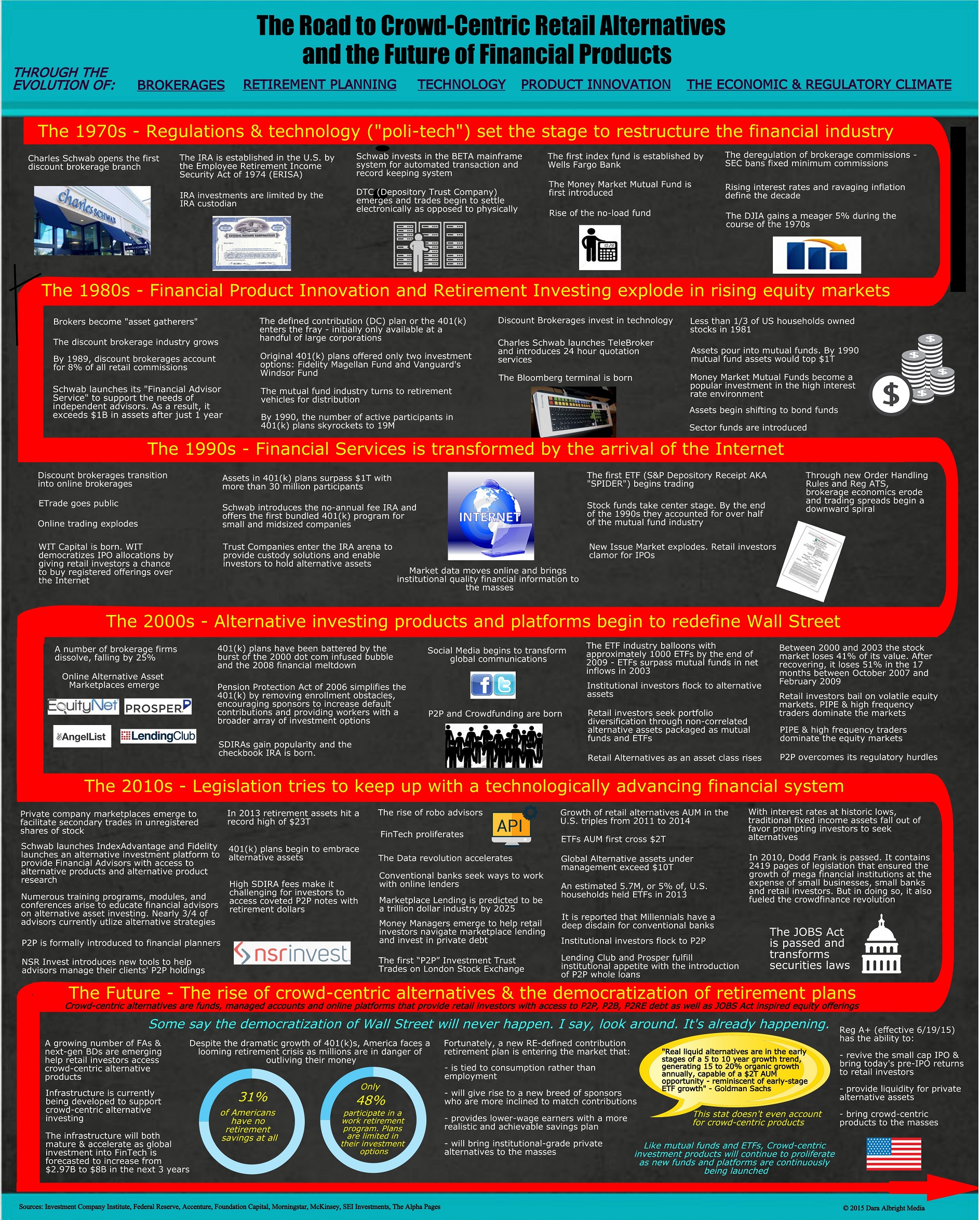
***
From salespeople into asset gatherers
During the past four and a half decades the brokerage business has moved online, slashed commissions and turned its commission-based securities salespeople into asset gatherers. As the number of brokerage firms steadily declined, online alternative asset marketplaces began to rise.
The IRA and 401(k) transformed America’s retirement structure as pension plans became less and less prevalent. These new retail retirement vehicles fed the mutual fund business, and in tandem both industries ballooned into multi trillion dollar markets.
Tools were developed that would enable financial advisors to navigate across a growing number of asset classes and help ensure the proper diversification of retail portfolios. These advisory resources also contributed to the proliferation of new asset classes and retirement accounts.
Legislative changes coupled with technological achievement led to the democratization of both financial products as well as market data. This “poli-tech” dynamic not only furthered the growth of conventional asset classes, it inspired a host of innovative online investing platforms, lending models, equity financing structures and the creation of new asset classes.
A groundswell of investment products
Over the years, a groundswell of investment products has been engineered for the mass market resulting in the flow of retail dollars across money markets, mutual funds and ETFs. Particularly during the recent years, as interest rates reached historic lows and equity markets became excessively volatile, there has been an upsurge of interest in uncorrelated alternative assets.
To meet the mounting demand, a wave of retail alternative products entered the market. According to McKinsey, retail alternatives will soon account for almost 50% of total retail revenues. Furthermore, Goldman Sachs believes that retail alternatives are in the early stages of a 5-10 year growth trend – reminiscent of early-stage ETF growth and capable of becoming a $2T AUM opportunity.
As financial advisors were becoming acquainted with a growing number of retail alternative products packaged through mutual funds and ETFs, a new niche of alternatives known as crowd-centric alternatives had been gaining popularity – particularly among institutional and internet savvy retail investors.
These crowd-centric alternatives – designed to bring non-correlated yield and pre-IPO equity growth to mainstream investors’ portfolios – are made up of public as well as private funds, managed accounts and online platforms that provide investors with access to peer-to-peer, peer-to-business and peer-to-real estate debt as well as JOBS Act inspired equity offerings.
While momentum continues to build for crowd-centric alternatives, an interesting phenomenon has been brewing in the retirement plan industry. Flaws in the current IRA and 401(k) structures as well as the social security system have legislators as well as economists scrambling to prevent a looming retirement crisis. Thus far, none of the publicly proposed solutions even begin to scratch the surface of the predicament. That is until now.
Fortunately, a soon-to-be-unveiled RE-defined contribution retirement plan will resolve inherent issues by 1) unleashing a new generation of plan sponsors more inclined to match contributions, 2) providing lower-wage earners with a more realistic and achievable savings plan, and by 3) bringing higher yielding institutional-grade alternatives to the masses. (A new white paper: “The RE-defined Contribution Plan: Powering Economic Growth While Preventing a National Retirement Crisis” will be released shortly)
Fascinatingly, the RE-defined contribution plan and crowd-centric alternative assets have the potential to power one another’s expansion in much the same way that the IRA, 401(k) and mutual fund industry fueled each other’s massive growth in prior decades.
***

***
Crowd-centric alternatives
While the existing statistics for retail alternatives are staggering, none of the forecasters have even accounted for crowd-centric alternatives. If history is any guide, crowd-centric alternatives are about to catapult the retail alternative industry to unforeseen heights – particularly given the following key factors:
Assessment
Although I cannot promise that polyester and orange shag carpets won’t make a comeback, I can absolutely guarantee that financial services will continue to evolve through the progression of new ideas, products, tools and technology.
More:
Conclusion
Your thoughts and comments on this ME-P are appreciated. Feel free to review our top-left column, and top-right sidebar materials, links, URLs and related websites, too. Then, subscribe to the ME-P. It is fast, free and secure.
Speaker: If you need a moderator or speaker for an upcoming event, Dr. David E. Marcinko; MBA – Publisher-in-Chief of the Medical Executive-Post – is available for seminar or speaking engagements. Contact: MarcinkoAdvisors@msn.com
OUR OTHER PRINT BOOKS AND RELATED INFORMATION SOURCES:
8
Health professionals are small business owners who need to apply their self-discipline tactics in establishing and operating successful practices. Talented trainees are leaving the medical profession because they fail to balance the cost of attendance against a realistic business and financial plan. Principles like budgeting, saving, and living below one’s means, in order to make future investments for future growth, asset protection, and retirement possible are often lacking. This textbook guides the medical professional in his/her financial planning life journey from start to finish. It ranks a place in all medical school libraries and on each of our bookshelves.
Dr. Thomas M. DeLauro DPM [Professor and Chairman – Division of Medical Sciences, New York College of Podiatric Medicine]
Filed under: Investing, Research & Development, Retirement and Benefits | Tagged: Crowd-Centric financial products, Dara Albright, robo advisors | 2 Comments »
Benefits of portfolio rebalancing well documented
[By Lon Jefferies MBA CFP®] http://www.NetWorthAdvice.com
The benefits of rebalancing a portfolio are well documented. Constant and routine rebalancing forces a physician or any investor to lighten the portfolio positions that have recently performed well and use the resulting funds to buy more shares of the assets in the portfolio that have remained flat or even declined in value. In other words, rebalancing causes the investor to sell high and buy low.
Most financial professionals recommend rebalancing your portfolio at least once a year (I rebalance my clients’ portfolios on a semi-annual basis).
However, the tax status of an investment account can have a significant impact on a rebalancing strategy. While investments within a tax-advantaged account like a traditional or Roth IRA can be sold without tax implications, selling appreciated assets in a taxable investment accounts will create a capital gains liability.
Consequently, while rebalancing within a tax-advantaged account should be a no-brainer, investors should carefully consider the tax implications that may result from rebalancing a normal investment account.
***

[Routine Portfolio Rebalancing]
***
For this reason, investors should view every deposit to or withdrawal from a taxable investment account as a chance to rebalance. Depositing new money is a free opportunity to buy more of the positions in which the portfolio is underweight.
Example:
For example, suppose an investment account of $100,000 has a target asset allocation of 50% stocks and 50% bonds ($50,000 invested in both). After a year in which stocks made 10% and bonds were flat, the portfolio would consist of $55,000 of stocks and $50,000 of bonds, for a total account balance of $105,000. If at this point the investor would like to invest an additional $5,000, the entire contribution should be placed in bonds, bringing the actual portfolio allocation back to 50% stocks and 50% bonds ($55,000 in each).
Of course, this same strategy can be implemented regardless of the size of the additional contribution. If the investor wanted to contribute $10,000 in year two, the total account value would be $115,000 ($105k current balance + $10k new money). In order to get back to our 50% stock and 50% bond targets, we would want $57,500 in each position. With $55,000 already invested in stocks, we would only want to invest $2,500 of the new money into stocks and place the remaining $7,500 into bonds, bringing both portions of the portfolio up to their targets.
Taking withdrawals from a taxable investment account should also be viewed as an opportunity to rebalance. Rebalancing via withdrawals may not be free as it is when rebalancing is done when new funds are deposited because appreciated assets are likely sold, creating a tax liability. However, when a withdrawal is taken from a taxable account, it is still wise to sell overweight asset categories to produce the funds needed for the distribution.
Example:
Let’s return to our previous example of a 50% stock and 50% bond target portfolio that had grown to $55,000 of stock and $50,000 of bonds. If the investor then wanted to withdraw $10,000, he could take the entire distribution out of bonds which would allow him to free up the amount needed without creating a tax liability. However, the resulting portfolio would consist of $55,000 of stocks and $40,000 of bonds – a ratio of approximately 58% stocks and 42% bonds.
This is a significantly more volatile portfolio than the target 50% / 50% portfolio. For example, in 2008 a portfolio that consisted of 50% large cap stocks and 50% long term government bonds lost -7.16%. Meanwhile, a portfolio of 58% stocks and 42% bonds lost -11.93% over the same period – a 66.6% increase in volatility.
Alternatively, I’d suggest using the $10,000 withdrawal to rebalance the portfolio, bringing the resulting $95,000 portfolio back to 50% stocks and 50% bonds ($47,500 in each). Of course, to do this, the investor would liquidate $7,500 of stocks and $2,500 of bonds. Although this could potentially create a small capital gains tax liability, this is a tax bill that will need to be paid at some point anyhow, and the investor will maintain a portfolio with the target amount of volatility.
Further, remember that the long-term capital gains rate (which applies to any capital assets held for over a year) is a favorable tax rate. For single filers with a taxable income of less than $37,450 and joint filers with a taxable income of less than $74,900, the capital gains tax rate is actually 0%!
Additionally, for single filers with a taxable income of between $37,450 and $406,750 and joint filers with a taxable income of between $74,900 and $457,600, the capital gains tax rate is only 15%. Consequently, the investor can likely rebalance the portfolio back to the target allocation via the withdrawal while incurring only a nominal tax bill.
***

***
Assessment
While rebalancing provides a significant increase in investment return over long time periods, tax implications should be considered when determining whether or not to rebalance a taxable investment account. However, depositing money to or withdrawing money from these accounts provides a favorable opportunity to obtain the return premium rebalancing creates while minimizing tax implications.
Conclusion
Your thoughts and comments on this ME-P are appreciated. Feel free to review our top-left column, and top-right sidebar materials, links, URLs and related websites, too. Then, subscribe to the ME-P. It is fast, free and secure.
Speaker: If you need a moderator or speaker for an upcoming event, Dr. David E. Marcinko; MBA – Publisher-in-Chief of the Medical Executive-Post – is available for seminar or speaking engagements. Contact: MarcinkoAdvisors@msn.com
OUR OTHER PRINT BOOKS AND RELATED INFORMATION SOURCES:
8
Physicians are notoriously excellent at diagnosing and treating medical conditions. However, they are also notoriously deficient in managing the business aspects of their medical practices. Most will earn $20-30 million in their medical lifetime, but few know how to create wealth for themselves and their families. This book will help fill the void in physicians’ financial education. I have two recommendations: 1) every physician, young and old, should read this book; and 2) read it a second time!
Dr. Neil Baum MD [Clinical Associate Professor of Urology, Tulane Medical School, New Orleans, Louisiana]
Filed under: Investing, Portfolio Management, Risk Management | Tagged: Deposits and Withdrawals, Investing, investing portfolio management, Lon Jefferies MBA CFP®, rebalancing portfolio | 2 Comments »
It is Not What You Think!
[By Lon Jefferies MBA CMP® CFP®]
A new logic has been surfacing amongst the top minds in the financial planning industry.
Many of my favorite financial authors – Warren Buffett, Josh Brown, Nick Murray, Howard Marks, and others – have proposed the need to redefine the word “risk.”
“Risk” vs “Volatility”
Most investors and financial advisors tend to utilize the words “risk” and “volatility” interchangeably. We measure how risky a portfolio is by examining its potential downside performance.
For example, we review how much a similar portfolio lost during 2008 or when the tech bubble popped in 2000-2002. When doing this, we are really talking about volatility rather than risk. Volatility – usually measured by standard deviation – reflects how much a portfolio is likely to increase or decrease in value when the market as a whole fluctuates. Risk, however, is quite different.
Two Threats
Josh Brown characterizes risk as the possibility of two threats:
Example:
In a dramatic example of how volatility is different from risk, consider a retiree with a $10 million portfolio who only spends $50,000 a year. Next, assume the investor experiences a two-year period in which during the first year his portfolio loses 50% of its value and in year two the portfolio earns a 100% return. Thus, after year one the portfolio would only be worth $5 million and after year two it would again be worth $10 million.
Clearly, this is a very volatile portfolio that is subject to a wide range of potential performance outcomes. However, is this portfolio truly risky to the investor? According to Mr. Brown’s first factor, the portfolio is not risky because the investor will have enough money to fund his $50k per year retirement regardless of whether his portfolio is valued at $10 million or $5 million. Additionally, the portfolio is also not risky according to the second factor in that the investor didn’t experience a permanent loss.
Investors tend to view stocks as risky assets because their returns have a large standard deviation (variation from a mean). Similarly, we tend to view money market equivalents such as CDs and savings accounts as very safe investments because their returns have less dispersion, and consequently, are more predictable.
However, rather than considering stocks to be risky and cash equivalents to be safe, it would be more accurate to consider stocks an investment with high volatility and cash to be a holding with low volatility.
***

***
What is the difference?
Suppose it is determined that you need an average rate of return of 6% over time to achieve your retirement goals. Historically, over a sufficiently significant period of time, stocks have returned an average of about 10% per year while cash equivalents have returned about 3% per year. Consequently, if these averages continue in the future, you actually have a very low chance of reaching your retirement goal of not outliving your money if you place money in the “safe” investment of a cash equivalent, while you would actually have a high probability of reaching your retirement goal if you place money in a more volatile basket of stocks.
By this metric, cash is actually the more risky investment because investing in it would increase the probability of outliving your funds. Meanwhile a basket of stocks, if given enough time to achieve its historically average rate of return, is actually the safer investment as it gives you a higher probability of not outliving your nest egg. Thus, while a portfolio of stocks will almost certainly experience more short-term volatility, over an extended period of time it very well may be a safer investment for ensuring your retirement goals are met.
Further, Mr. Brown proposes that the muddying of definition between risk and volatility is something a portion of the financial service industry has done on purpose. Brown suggests that the easiest way to sell someone a product is to first convince them they have a need. If hedge fund managers, insurance agents, and annuity salesmen can make consumers believe that volatility is equal to risk, and that since their products minimize volatility they must also minimize risk, they can achieve more sales.
However, even if an annuity can eliminate downside volatility, if it limits potential return to an amount that is insufficient to achieve the investor’s long-term goals, the investment is still more risky than an investment with more short-term volatility but a higher probability of long-term success.
***
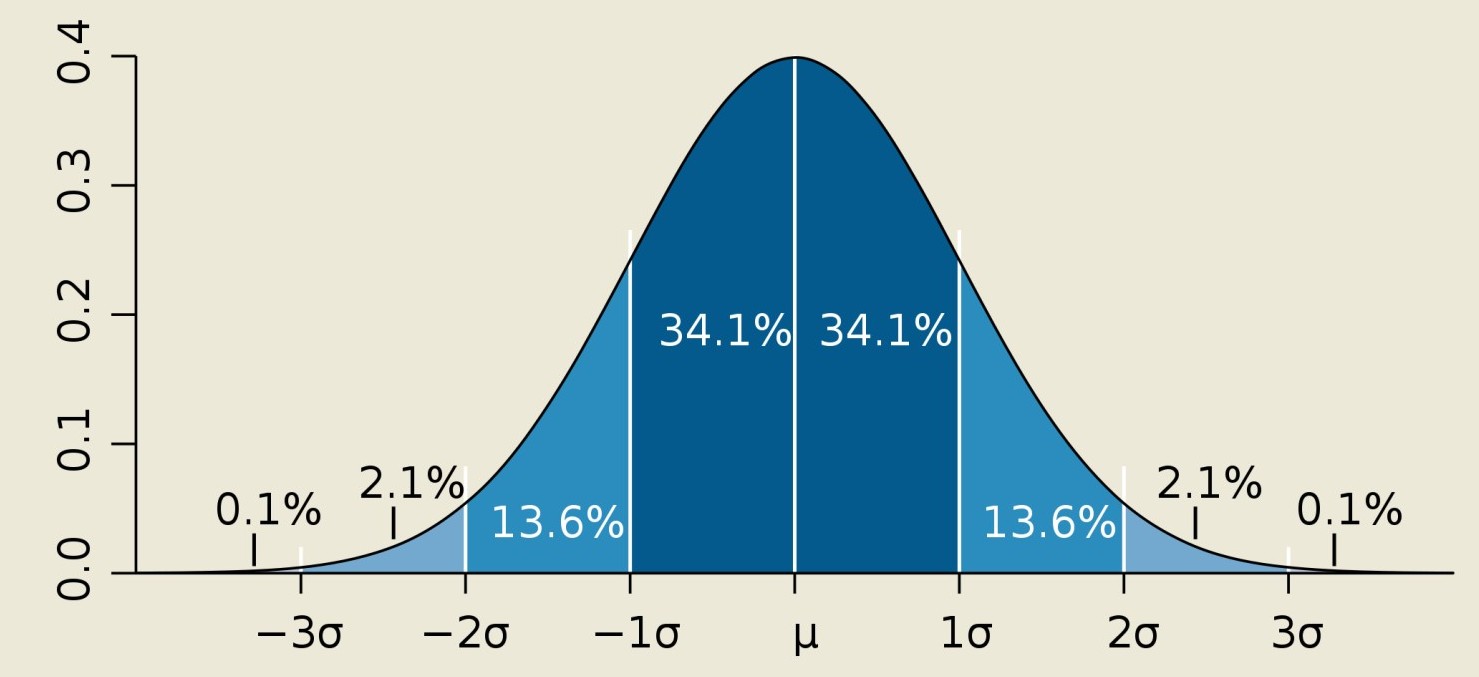
***
Assessment
Next time the market goes through a correction, remember that the drop in your portfolio’s value is a reflection of the potential volatility your portfolio is capable of experiencing. Yet, recall that as long as you don’t sell your assets and suffer a permanent loss of your investment capital, you can allow the market time to recover and achieve its historical rate of return.
Doing so will ultimately make your investment strategy less risky than utilizing investment options that experience less volatility because it maximizes the probability you will eventually achieve your long-term financial goals.
More:
Conclusion
Your thoughts and comments on this ME-P are appreciated. Feel free to review our top-left column, and top-right sidebar materials, links, URLs and related websites, too. Then, subscribe to the ME-P. It is fast, free and secure.
Speaker: If you need a moderator or speaker for an upcoming event, Dr. David E. Marcinko; MBA – Publisher-in-Chief of the Medical Executive-Post – is available for seminar or speaking engagements. Contact: MarcinkoAdvisors@msn.com
OUR OTHER PRINT BOOKS AND RELATED INFORMATION SOURCES:
8
This book was crafted in response to the frustration felt by doctors who dealt with top financial, brokerage, and accounting firms. These non-fiduciary behemoths often prescribed costly wholesale solutions that were applicable to all, but customized for few, despite ever-changing needs. It is a must-read to learn why brokerage sales pitches or Internet resources will never replace the knowledge and deep advice of a physician-focused financial advisor, medical consultant, or collegial Certified Medical Planner™ financial professional.
Parin Khotari MBA [Whitman School of Management, Syracuse University, New York]
http://www.CertifiedMedicalPlanner.org
Filed under: Financial Planning, Investing, Portfolio Management | Tagged: Howard Marks, Investing, Josh Brown, Lon Jefferies MBA CFP®, Nick Murray, physician investors, risk and volatility, Warren Buffett | Leave a comment »
SPONSOR:
http://www.CertifiedMedicalPlanner.org

By Dr. David Edward Marcinko MBA CMP™
As we know, the investment industry and Modern Portfolio Theory [MPT] strives to make optimal ‘allocations’ into different ‘asset classes’; according to some defined risk tolerance level or efficient frontier.
Equities, fixed income, property, private equity, emerging markets and so, are all ‘asset classes’, into which physician investors and mutual fund or portfolio managers will make an allocation of their total funds under management. It is quite proper for them to do this as they seek to balance the risk and potential returns for their own; ME, Inc., or other clients’ money.
And, by creating a “new” asset class, this concept opens the door to significant capital flows; advisory and management fees. Hence; the unrelenting innovation of Wall Street, and its’ commission driven and fee-seeking mavens, is unending.
The Social Security Example:
This concept may be illustrated using Social Security as an example.
Wall Street opines, if you’re not counting on Social Security benefits as a part of an overall asset allocation strategy, you may be missing out on bigger gains in a retirement portfolio. Those of this ilk say that retirement investors should consider the value of their Social Security as a portion of their fixed-income investments …. Others believe it may be too risky.
***

***
The Portfolio Shift
Generally, adopting this strategy would mean shifting a big portion of investible assets out of bonds and into stocks and into the hands of money managers, stock brokers and wealth managers for a fee; of course. This is akin to those financial advisors who rightly or wrongly goaded clients to not pay off a home mortgage and instead reposition the free cash flow into a rising; and then falling; market. Of course, there are detractors, as well as proponents of this emerging financial planning philosophy.
For example, Jack Bogle, founder of the Vanguard Group, often cites his penchant for basing one’s asset allocation on age. (If you’re 40 years old, you have 40% of your investments in fixed income and 60% in equities. By the time you’re 60, you’ve got 60% in fixed income, 40% in equities).
Now, let’s again consider Social Security, citing a physician with $300,000 in an investment portfolio, and capitalizing the stream of future payments. If the $300,000 is all in equity funds, even equity-index funds, and $300,000 in Social Security, you are already at 50/50″ fixed income versus equities.
The next step is a conversation as this the nexus of where Social Security meets risk management. So, how will the doctor feel when market goes up and down? Some may believe the concept, but not enjoy the inevitable more fluctuating self-directed 401-k, or 403-b plan. One must be comfortable with taking on a larger stock position.
Sources:
Others experts, like Paul Merriman, opine that Social Security is not an asset class and the idea is fundamentally flawed and should not be a part of anyone’s portfolio.
***

***
Why?
As classically defined, a portfolio is composed of financial assets. A financial asset is something that can be sold. Social Security cannot be bought and sold. Because of that, it has a market value of zero.
Therefore, since a medical practice can be bought or sold, the definitional decision is left up to the informed reader, modern physician or financially enlightened financial advisor; or Certified Medical Planner™.
Source:
Order NOW!
To help you decide if medical practice is indeed an asset class – and how much a practice may be worth – and how to valuate a practice – request your free white paper using the order form below.
http://www.CertifiedMedicalPlanner.org
Filed under: Career Development, Investing, Practice Worth, Touring with Marcinko | Tagged: Andrea Coombes, Dr. David Marcinko, Is Medical Practice an Asset Class ?, Modern Portfolio Theory, Paul Merriman, Social Security as an Asset Class?, stock diversification | Leave a comment »
By Vitaliy Katsenelson CFA
I am about to write a quarterly letter to clients, telling them that despite all the giddiness in the stock market, we are in Value Investor Second Hell. This is not the first hell; that one is reserved for value traps — stocks that look cheap based on past earnings but whose earnings are about to disappear, whereupon the stocks will permanently decline.
***
The second hell is when you cannot find value. I recently read a study that said the difference in valuation between the cheapest stocks (the lowest 10 percent of the market) and the rest of the market is the smallest it has been in more than 20 years. Of course, the market overall is very pricey; finding undervalued stocks in this environment has become increasingly difficult.
***
To adapt, you need to understand that there are two types of value stocks. The first are statistically cheap — their cheapness stares you in the face. This breed is quickly becoming scarce; even Hewlett-Packard Co. and Xerox Corp. are now found in growth investors’ portfolios. But before I talk about the second type of value stocks, let me tell you how my wife and I bought our house.
***
***
It was 2005. The housing market in Denver, just as in the rest of the U.S., was getting bubbly. Our family was about to grow, though we did not know it yet. We had sold our condo and were renting month to month and thus were under no pressure to buy a house, but we were keeping our eyes peeled for the right one at the right price. It was a nine-month journey. We even made some offers (usually below the asking price), which the sellers laughed at. They were right; their houses sold above the asking prices in just a few days.
***
I vividly remember how we finally found our house — and I have to admit it was entirely my wife’s doing. We were flipping through photos of house listings that met our criteria. We stumbled on a picture of an ugly green house with a bright red garage door, which had been on the market for six months. I made a snarky comment that this house would be on the market for another six months and was about to click to the next, but my supersmart wife said, “Wait.” She skipped all the pictures of the ugly outside and zeroed in on the photos of the interior of the house.
***
To my great surprise, this ugly duckling was ugly only on the exterior and had been completely redesigned inside. It was a perfect house for us. Since it had been on the market for a long time, the seller was willing to accept our low offer. I, like everyone else who did not buy this house for six months, was turned off by an ugly outside (which could be easily corrected with some paint) and failed to look deeper.
***
Back to the stock market. The other breed of value stocks are the ones with “ugly green paint jobs and bright red garage doors,” the ones that look unappealing from the outside and aren’t even cheap, at least not according to the statistics at everyone’s fingertips. Often, backward-looking statistics don’t capture such companies’ true earnings power, as it has yet to show itself. These are the stocks you should patiently seek out, especially in today’s value-deprived environment.
***

***
A stock that comes to mind is Micron Technology, a maker of memory chips. Micron has destroyed more capital over the years than Communism and Socialism combined. To be fair, it was not Micron’s fault: Its profitability — or lack thereof — was determined by its industry. Micron was a large player in a very fragmented business that Asian governments thought was strategic to the development of their countries, and so they subsidized their local companies. The memory industry was ridden with overcapacity. But nothing transforms an industry better than a financial crisis. The 2008–’09 global recession weeded out the weak players, and Micron bought the last one, Elpida Memory, in 2013 on the cheap, almost doubling its revenues.
***
Now the DRAM industry has only three players: Micron, Samsung and SK Hynix (a South Korean version of Micron). NAND memory (used in flash and solid-state drives) has the same competitors plus SanDisk Corp. Barriers to entry are enormous — a new entrant would have to spend billions of dollars on R&D and then tens of billions on factories. Therefore this cozy, oligopolylike industry structure is unlikely to change. Samsung, the largest player in the space, has an extra incentive to keep chip prices high because they give it a competitive advantage against Apple and, more important, against low-end Chinese smartphone makers that have to buy memory at market prices.
***
Gross margins of all memory companies have been gradually rising and still have significant room to grow. If Micron achieves its target margin level, in the mid to high 40s, its earnings will hit $4 to $6 per share in a few years, giving it a modest price-earnings ratio of 4 to 5 times. This is one cheap “ugly green paint job, bright red garage door” stock.
***
|
|
Conclusion
Your thoughts and comments on this ME-P are appreciated. Feel free to review our top-left column, and top-right sidebar materials, links, URLs and related websites, too. Then, subscribe to the ME-P. It is fast, free and secure.
Speaker: If you need a moderator or speaker for an upcoming event, Dr. David E. Marcinko; MBA – Publisher-in-Chief of the Medical Executive-Post – is available for seminar or speaking engagements. Contact: MarcinkoAdvisors@msn.com
OUR OTHER PRINT BOOKS AND RELATED INFORMATION SOURCES:
8
I have read these texts and used consulting services from the Institute of Medical Business of Advisors, Inc., on several occasions.
MARSHA LEE; DO [Radiologist, Norcross, GA]
Filed under: Investing, Portfolio Management | Tagged: DRAM industry, Micron, NAND memory, Samsung, SanDisk Corp, SK Hynix, Vitaliy Katsenelson CFA | 1 Comment »
|
|
ABOUT
|
|
Conclusion
Your thoughts and comments on this ME-P are appreciated. Feel free to review our top-left column, and top-right sidebar materials, links, URLs and related websites, too. Then, subscribe to the ME-P. It is fast, free and secure.
Speaker: If you need a moderator or speaker for an upcoming event, Dr. David E. Marcinko; MBA – Publisher-in-Chief of the Medical Executive-Post – is available for seminar or speaking engagements. Contact: MarcinkoAdvisors@msn.com
OUR OTHER PRINT BOOKS AND RELATED INFORMATION SOURCES:
BOOK REVIEW
This is an excellent book. It is all inclusive yet easy to read with current citations, references and much frightening information. I highly recommend this text. It is a fine educational and risk management tool for all doctors and medical professionals.
DR. DAVID B. LUMSDEN; MD, MS, MA
[Orthopedic Surgeon-Baltimore, Maryland]
Filed under: Investing | Tagged: Aéropostale, Amazon, Vitaliy Katsenelson CFA | 1 Comment »
By Dr. James Dahle MD – White Coat Investor

Dr. James Dahle, editor of www.whitecoatinvestor.com and the rising star of physician financial advice and straight talk about success was kind enough to share his time and expertise with us and talked to us about:
***
***
Assessment
His new book is The White Coat Investor: A Doctor’s Guide to Personal Finance and Investing.
Conclusion
Your thoughts and comments on this ME-P are appreciated. Feel free to review our top-left column, and top-right sidebar materials, links, URLs and related websites, too. Then, subscribe to the ME-P. It is fast, free and secure.
Speaker: If you need a moderator or speaker for an upcoming event, Dr. David E. Marcinko; MBA – Publisher-in-Chief of the Medical Executive-Post – is available for seminar or speaking engagements. Contact: MarcinkoAdvisors@msn.com
OUR OTHER PRINT BOOKS AND RELATED INFORMATION SOURCES:
Physicians who don’t understand modern risk management, insurance, business and asset protection principles are sitting ducks waiting to be taken advantage of by unscrupulous insurance agents and financial advisors; and even their own prospective employers or partners. This comprehensive volume from Dr. David Marcinko, and his co-authors, will go a long way toward educating physicians on these critical subjects that were never taught in medical school or residency training.
JAMES M. DAHLE; MD, FACEP
Filed under: Investing, Portfolio Management, Videos | Tagged: financial education, James Dahle MD, student loan debt, whitecoatinvestor | 1 Comment »


















 The Leading Business Education Network for Doctors, Financial Advisors and Health Industry Consultants
