R.I.P. these Industry Sectors?

Join Our Mailing List

Can You Think of any Others?

[By Staff Reporters]

***

RIP Tech

***

More:

Conclusion

Your thoughts and comments on this ME-P are appreciated. Feel free to review our top-left column, and top-right sidebar materials, links, URLs and related websites, too. Then, subscribe to the ME-P. It is fast, free and secure.

Speaker: If you need a moderator or speaker for an upcoming event, Dr. David E. Marcinko; MBA – Publisher-in-Chief of the Medical Executive-Post – is available for seminar or speaking engagements. Contact: MarcinkoAdvisors@msn.com

OUR OTHER PRINT BOOKS AND RELATED INFORMATION SOURCES:

[HOSPITAL OPERATIONS, ORGANIZATIONAL BEHAVIOR AND FINANCIAL MANAGEMENT COMPANION TEXTBOOK SET]

Product DetailsProduct Details

***

2015 Kent State University College of Podiatric Medicine Holds “White Coat” Ceremony

Join Our Mailing List 

Welcome the New KSUCPM “White-Coats”

[By Staff Reporters via PMNews August 14, 2015 #5,445]

Kent State University College of Podiatric Medicine (KSUCPM) recently celebrated the Class of 2019 White Coat Ceremony. The College of Podiatric Medicine welcomed 122 students into the Class of 2019. The ceremony was held in the University Auditorium at Cartwright Hall on the Kent Campus in Kent, OH.

***

KSCPM

KSUCPM Class of  2019 at White Coat Ceremony

***

Dean Speak

Dr. Allan M. Boike DPM, Dean, stated, “I am very pleased to welcome this remarkable group of students to Kent State University. This class represents 35 states, as well as four nations.”

Keynote Speaker Speak

Dr. Karen Kellogg served as the keynote speaker. She received a Doctorate of Podiatric Medicine from the Ohio College of Podiatric Medicine in 2000. And, she completed a three-year podiatric surgery residency at Dunlap Memorial Hospital in Orrville, OH.

More: 2015 Harvard Medical School Class

Conclusion

Your thoughts and comments on this ME-P are appreciated. Feel free to review our top-left column, and top-right sidebar materials, links, URLs and related websites, too. Then, subscribe to the ME-P. It is fast, free and secure.

Speaker: If you need a moderator or speaker for an upcoming event, Dr. David E. Marcinko; MBA – Publisher-in-Chief of the Medical Executive-Post – is available for seminar or speaking engagements. Contact: MarcinkoAdvisors@msn.com

OUR OTHER PRINT BOOKS AND RELATED INFORMATION SOURCES:

[HOSPITAL OPERATIONS, ORGANIZATIONAL BEHAVIOR AND FINANCIAL MANAGEMENT COMPANION TEXTBOOK SET]

Product DetailsProduct Details

 ***

Ratio of [Start-Up] Deals Reviewed to Investments [Ultimately] Made

Join Our Mailing ListProduct Details

Top Ten Most Innovative Healthcare Companies of 2015

Medical Entrepreneurs – Take Note!

Conclusion

Your thoughts and comments on this ME-P are appreciated. Feel free to review our top-left column, and top-right sidebar materials, links, URLs and related websites, too. Then, subscribe to the ME-P. It is fast, free and secure.

Speaker: If you need a moderator or speaker for an upcoming event, Dr. David E. Marcinko; MBA – Publisher-in-Chief of the Medical Executive-Post – is available for seminar or speaking engagements. Contact: MarcinkoAdvisors@msn.com

OUR OTHER PRINT BOOKS AND RELATED INFORMATION SOURCES:

***

David Cummings on Startups

Recently, I was reading the limited partner quarterly updates for a fund where I’m an investor. In the update, the author highlighted that the fund had reviewed 1,000 potential deals last year and invested in four companies. At a ratio of 250:1, it’s clear that there are many more startups trying to raise a Series A than there are Series A investments (see the Series A crunch talked about four years ago).

Here’s how the investment process might work at a venture fund:

  • 250 deals reviewed
  • 25 one-on-one pitches (where the entrepreneur pitches a single partner)
  • 5 full partner pitches (where all the partners hear the pitch)
  • 2 term sheets
  • 1 investment

Raising money is much harder than most entrepreneurs expect. With funds seeing so many opportunities, but only being able to invest in 1-2 companies per year per investor, it’s clear that most entrepreneurs will feel rejected when out raising…

View original post 17 more words

Blogging for Medical Practice Promotion?

Join Our Mailing List

Strategic Questions for Doctors to Consider

[By staff reporters]

There’s all sorts of advice on why and how to blog in order to promote a medical practice. Yet, most doctors STILL haven’t scratched the surface to understand what blogging is actually about and what roles it may play in their overall Business Plan and strategic presence – on and offline.

But, all practices have different concerns and goals, and every media, communications and marketing strategy is different from the other.

Today, “blogging” just doesn’t mean the publishing of content on a website. It’s more about being proficient in various media: from traditional to emerging; a new set of skills every doctor or physician executive needs to acquire and hone. Blogging is a constant learning process. It’s also a way to reveal strengths and weaknesses inherent in any healthcare organizations, culture and processes.

***

Blog

***

The Expert Speaks?

According to Phil Baumann RN, of Phil.Baumann.com, the following are helpful to consider when planning a blogging campaign to promote your medical practice:

  1. What’s the purpose? Practice development? Patient availability? A place to house your medical expertise and knowledge? A place to create a [professional or patient] community where ideas and questions can be explored openly? What value do you expect to provide or extract?
  2. Who is your audience(s)? Are you thinking that your only audience would be patients? Or, perhaps your colleagues, other healthcare industry influencers, vendors or the public? Will you be able to track the social footprint of your audience – who they are and where else on the Web they interact?
  3. What kinds of content are you delivering? Is it informational? Editorial? Inspirational? Industrially insightful? Action-calling? How might the kind(s) of content and information you publish influence your audience? Are you willing to let your audience help determine your content?
  4. What kinds of media will you provide on the blog? Text? Video? Audio? Slidedecks? Different media have different properties. Have you thought about the properties of traditional media and how they differ from emerging media? How much of your traditional practice marketing expertise evolved around the properties of print, radio, traditional websites and TV? Given that new media possess different properties, how might your marketing and promotional strategies need to adapt?
  5. Do you know what kinds of assets a blog can build? Appointment leads? A small but relevant community of patients or influencers? Professional or street credibility? Search engine optimization [SEO] and ranking? Which do you need?
  6. How will you distribute your content? Have you developed other web real estate – outposts on Facebook, Twitter, Youtube, Slideshare; or will you use strictly medical networks, healthcare related platforms or build your own? Which ones make the most sense to invest in? Can you build a visual map of your entire Web presence and how different Web and traditional presences relate to the bigger picture?
  7. If you successfully build your community, do you know how to leverage it? Will you be satisfied to just have visitors? Or, will you engage with your community – not only on your blog but elsewhere? Will you continually monitor your efforts and make the best of the connections you make? Will you develop a system to reach your community beyond your blog – either via email or other media outreach?
  8. Do you think blogging is just putting content on a website – or do you believe it is a spectrum of media skills? What’s your conception of medical practice blogging? Might there be more to blogging than what you think you know? What skills may you need to develop or build upon
  9. Do you have a plan on how to distribute your blog content to traditional media (where else is your audience)? What are your overall communications and marketing strategies? How might emerging media not only play a part, but how might their proliferation impact your established practice strategies?
  10. How committed will you be? Is this going to be a chore “to be done” or will you intelligently integrate it into your promotional routine? Do you understand the skills and resources needed to become proficient? When thinking about resources, are you considering time and talent and networks? Or, will you outsource, and can you afford it?
  11. Do you have the stamina to sustain your efforts in the long-term? Investing in new media is about sustaining long-term capital. Given your resources, will you create the kind of working environment for your employees to enjoy the art of creating content, conversing across different networks and advancing the practice’s objectives?
  12. Do you know how to make it easy (and enticing) for your audience to comment? Will you thank and comment back? Is sharing via email and other sources easy?
  13. Are you willing to fail? More importantly: how do you define failure? This is important to know because if you define failure appropriately, then you’re more likely to know what to do when you encounter it: in fact, you may see it as a huge opportunity.

***

hipster

***

Assessment

Take your time answering these questions because they aren’t just about blogging: they’re about your understanding promotional media and your medical practice. What other questions do you think you need to ask yourself?

More:

Conclusion

Your thoughts and comments on this ME-P are appreciated. Feel free to review our top-left column, and top-right sidebar materials, links, URLs and related websites, too. Then, subscribe to the ME-P. It is fast, free and secure.

Speaker: If you need a moderator or speaker for an upcoming event, Dr. David E. Marcinko; MBA – Publisher-in-Chief of the Medical Executive-Post – is available for seminar or speaking engagements. Contact: MarcinkoAdvisors@msn.com

OUR OTHER PRINT BOOKS AND RELATED INFORMATION SOURCES:

Product Details

***

Product Details

Advertise with Us!

***

Online Doctor Reputation Management

Join Our Mailing List

How doctors can protect their online reputation

A continuing series on physician online reputation.  Created in partnership with The Doctors Company as part of their social media resources for physicians

Conclusion

Your thoughts and comments on this ME-P are appreciated. Feel free to review our top-left column, and top-right sidebar materials, links, URLs and related websites, too. Then, subscribe to the ME-P. It is fast, free and secure.

Speaker: If you need a moderator or speaker for an upcoming event, Dr. David E. Marcinko; MBA – Publisher-in-Chief of the Medical Executive-Post – is available for seminar or speaking engagements. Contact: MarcinkoAdvisors@msn.com

OUR OTHER PRINT BOOKS AND RELATED INFORMATION SOURCES:

Product Details

 [Foreword Dr.Mata MD CIS]

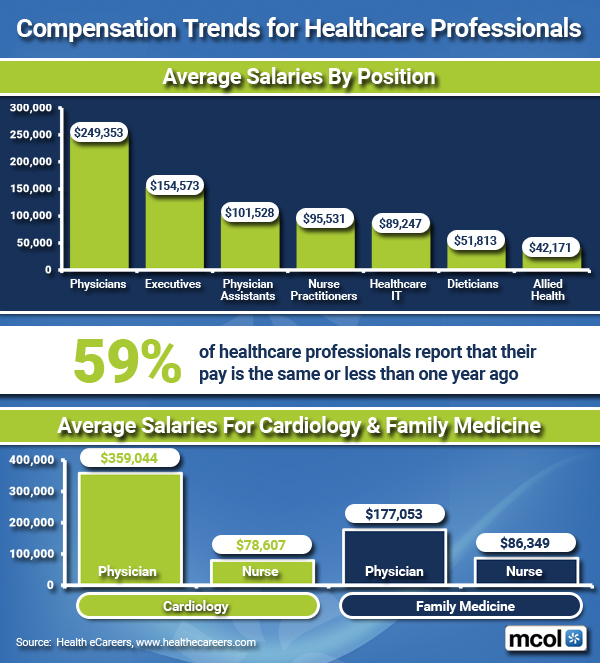
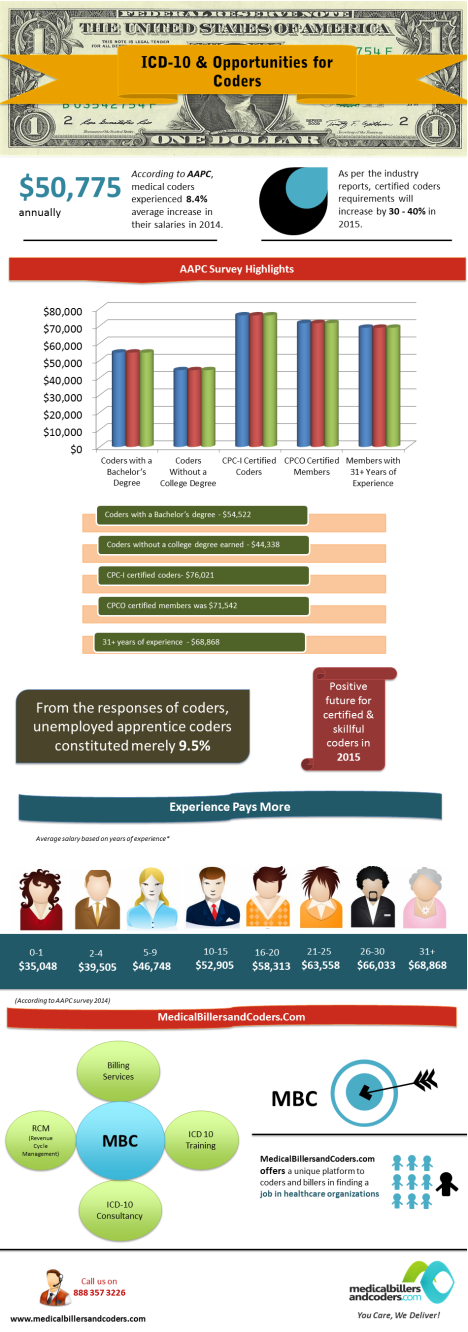
Compensation Trends for Allied Healthcare Professionals

Join Our Mailing List

Beyond Physician Salary [Average by Position]

By http://www.MCOL.com

***

Compensation

***

More:

  1. Doctor Salary v. Others [Present Value of Career Wealth]
  2. The 2015 Physician Pay Check-Up

***

coders

***

Conclusion

Your thoughts and comments on this ME-P are appreciated. Feel free to review our top-left column, and top-right sidebar materials, links, URLs and related websites, too. Then, subscribe to the ME-P. It is fast, free and secure.

Speaker: If you need a moderator or speaker for an upcoming event, Dr. David E. Marcinko; MBA – Publisher-in-Chief of the Medical Executive-Post – is available for seminar or speaking engagements. Contact: MarcinkoAdvisors@msn.com

OUR OTHER PRINT BOOKS AND RELATED INFORMATION SOURCES:

Risk Management, Liability Insurance, and Asset Protection Strategies for Doctors and Advisors: Best Practices from Leading Consultants and Certified Medical Planners™8Comprehensive Financial Planning Strategies for Doctors and Advisors: Best Practices from Leading Consultants and Certified Medical Planners™

“I have read these texts and used consulting services from the Institute of Medical Business of Advisors, Inc. on several occasions.”
Dr. Marsha Lee DO [Radiologists, Norcross, Georgia, USA]

logos

“BY DOCTORS – FOR DOCTORS – PEER REVIEWED AND FIDUCIARY FOCUSED”

Understanding the Psychology of [Medical] Data Analytics

Join Our Mailing List

Right with People

Gary Jackson

By Gary Jackson

[Psychology of the Analytics Dilemma]

What if analytical models would have predicted that same sex marriages were going to be legal in the United States by 2015 way back in 1995?

  • Would the concept have been accepted earlier?
  • Debated earlier?
  • Viewpoints changed?

Assessment

Probably not!

The Psychology of Analytics – Right with People

***

Analytics

***

More:

Even More:

Much More:

About Gary Jackson

Gary Jackson is technologist, a host of a podcast called bigdatastupid.com and a Writer for icrunchdata News Hong Kong, China.

Conclusion

Your thoughts and comments on this ME-P are appreciated. Feel free to review our top-left column, and top-right sidebar materials, links, URLs and related websites, too. Then, subscribe to the ME-P. It is fast, free and secure.

Speaker: If you need a moderator or speaker for an upcoming event, Dr. David E. Marcinko; MBA – Publisher-in-Chief of the Medical Executive-Post – is available for seminar or speaking engagements. Contact: MarcinkoAdvisors@msn.com

OUR OTHER PRINT BOOKS AND RELATED INFORMATION SOURCES:

Risk Management, Liability Insurance, and Asset Protection Strategies for Doctors and Advisors: Best Practices from Leading Consultants and Certified Medical Planners™8Comprehensive Financial Planning Strategies for Doctors and Advisors: Best Practices from Leading Consultants and Certified Medical Planners™

“The Certified Medical Planner™ professional designation and education program was created by the Institute of Medical Business Advisors Inc., and Dr. David Edward Marcinko and his team (who wrote this book). It is intended for financial advisors who aim specifically to serve physicians and the medical community.

Content focuses not only on the insurance and professional liability issues relevant to physicians, but also provides an understanding of the risky business of medical practice so advisors can help work more successfully with their doctor-clients.”

Michael E. Kitces, MSFS, MTAX, CFP®, CLU, ChFC, RHU, REBC, CASL

[www.Kitecs.com, Reston, Virginia, USA]

http://www.CertifiedMedicalPlanner.org

***

How Rich – Got Rich?

Join Our Mailing List 

Are You Listening – Doctors?

By Rick Kahler MS CFP® http://www.KahlerFinancial.com

Rick Kahler MS CFPAsk ten people how the rich got rich and you will get at least ten opinions.

Some of the more common assumptions are that people become wealthy by inheriting fortunes, taking advantage of those less fortunate, or “playing” the stock market. I even remember one government employee who insisted anyone who obtained wealth had to do so illegally.

While a few people become rich in these ways, they are the exception rather than the rule. A survey by the Spectrem Group asked 132,000 people with a net worth of over $25 million where their wealth came from.

Here are the results: 

  1. Hard Work, 87%. The majority obtained their wealth by working hard. Most millionaires put in long hours, often in careers they love enough so that work becomes play.
  2. Education, 78%. Certainly, people with college educations earn more than those without. However, the right type of education for building wealth may not be found in a college curriculum. For example, I know one person with no college degree who took the equivalent of 75 credit hours of real estate education and amassed large real estate holdings.
  3. Smart Investing, 72%. Don’t confuse smart investing with sophisticated investments. It’s just not that hard to invest smartly: start young, invest regularly, don’t speculate, diversify your investments over multiple asset classes and multiple securities, reduce fees and minimize taxes, and don’t time the markets.
  4. Taking Risks, 63%. I would add, “smart risks.” Actions like starting a business, buying into the company you work for, relocating your family to a city with brighter prospects, changing careers, or borrowing to purchase investment real estate all carry with them a certain degree of risk. And with risk inevitably comes failure. In The Millionaire Next Door, Thomas J. Stanley and William D. Danko point out that the average millionaire makes 3.1 major financial, career, or business mishaps in a lifetime, while the average non-millionaire makes 1.6 such mistakes.
  5. Frugality, 59%. I’ve often called this the common denominator of people that have wealth. My guess is that it didn’t rank higher only because many wealth builders don’t view themselves as frugal. They tend to not have written budgets, they don’t shop at thrift stores, they buy name brands, and they spend everything in their checking account. But what they forget is that they pay themselves first, which includes paying all their bills and taxes, spending heavily for education, and investing 20 to 50% of their paycheck. Then they blow what’s left. I call that frugality.
  6. Being in the Right Place at the Right Time, 56%; and
  7. Luck, 53%. Of course circumstances and luck—factors like timing, knowing people who can help you, and being blessed with abilities and good health—play roles in building wealth. What also matters, however, is being prepared to take advantage of favorable circumstances.
  8. Running a Business, 46%. This fits closely with reason number one: working hard. When you work hard and take smart risks in your own business, or medical practice, you go beyond earning a substantial salary. You build a valuable asset.
  9. Guidance of an Adviser, 35%. Part of reason number three, smart investing, is being smart enough to learn from skilled mentors and advisors.
  10.  Inheritance, 30%. Yes, inheritance is one source of wealth. I’d suggest that most of the inheritors who are able to keep and build on that wealth do so because of factors like hard work, education, and smart investing.

***

Niche

[Not for Everyone]

***

Assessment

It appears that success in building wealth is similar to success in other areas: the harder and smarter you work, the more success you are likely to have. 

More: The “Rich Doctor” Myth

Conclusion

Your thoughts and comments on this ME-P are appreciated. Feel free to review our top-left column, and top-right sidebar materials, links, URLs and related websites, too. Then, subscribe to the ME-P. It is fast, free and secure.

Speaker: If you need a moderator or speaker for an upcoming event, Dr. David E. Marcinko; MBA – Publisher-in-Chief of the Medical Executive-Post – is available for seminar or speaking engagements. Contact: MarcinkoAdvisors@msn.com

OUR OTHER PRINT BOOKS AND RELATED INFORMATION SOURCES:

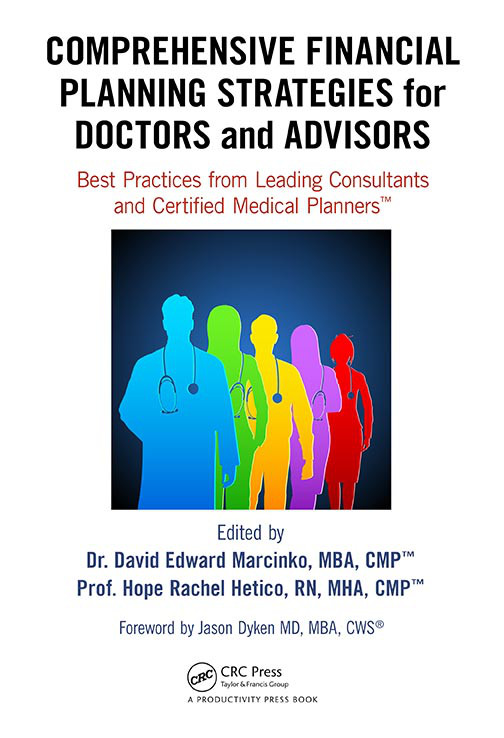
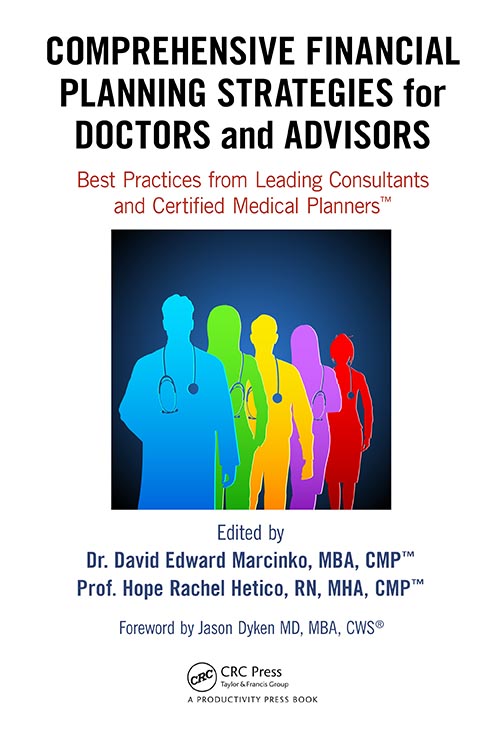
Comprehensive Financial Planning Strategies for Doctors and Advisors: Best Practices from Leading Consultants and Certified Medical Planners(TM)

Front Matter with Foreword by Jason Dyken MD MBA

This book was crafted in response to the frustration felt by doctors who dealt with top financial, brokerage, and accounting firms. These non-fiduciary behemoths often prescribed costly wholesale solutions that were applicable to all, but customized for few, despite ever-changing needs.

It is a must-read to learn why brokerage sales pitches or Internet resources will never replace the knowledge and deep advice of a physician-focused financial advisor, medical consultant, or collegial Certified Medical Planner™ financial professional.

Parin Khotari MBA

[Whitman School of Management, Syracuse University, New York]

http://www.CertifiedMedicalPlanner.org

***

Happy Birthday Irene Bergman [A 99-year-old financial advisor]

Join Our Mailing List 

Happy Birthday – Ring that NYSE Bell

[By staff reporters]

A 99-year-old financial advisor and holocaust survivor will be the oldest person to ring to the bell at the New York Stock Exchange in honor of her 100th birthday; today August. 2nd, 2015.

As a teen, Irene Bergman wanted to follow her private banker father to the Berlin stock exchange, but the Nazis chased them out of Europe in 1942. Now she is a financial advisor at Stralem & Co., overseeing institutional and individual clients, which she advises from her midtown apartment decorated with paintings from Dutch masters and pre-war European furniture.

***

stock-exchange-

***

Conclusion

Your thoughts and comments on this ME-P are appreciated. Feel free to review our top-left column, and top-right sidebar materials, links, URLs and related websites, too. Then, subscribe to the ME-P. It is fast, free and secure.

Speaker: If you need a moderator or speaker for an upcoming event, Dr. David E. Marcinko; MBA – Publisher-in-Chief of the Medical Executive-Post – is available for seminar or speaking engagements. Contact: MarcinkoAdvisors@msn.com

OUR OTHER PRINT BOOKS AND RELATED INFORMATION SOURCES:

Comprehensive Financial Planning Strategies for Doctors and Advisors: Best Practices from Leading Consultants and Certified Medical Planners(TM)

“In an era where doctors must have a solid understanding of the basics of financial management, this book is a must-have on every physician’s private book collection. Although not a substitute for a formal business education, this book will help physicians navigate effectively through the hurdles of day-to-day financial decisions with the help of an accountant, financial and legal advisors.

This book would make an excellent reference for teaching medical students and residents the basics of monetary management. I highly recommend this book and commend Dr. Marcinko and the Institute of Medical Business Advisors, Inc. on a job well done.”

Manuel J. Colón MD

Some Thoughts on the Role of Animals in Medicine

Join Our Mailing List

The backbone of anatomical, physiological and clinical research

[By Stephanie Eichberg]

In 2012, a book appeared on the shelves of popular science that (re)acquainted the public with a medical revelation; namely that animals share with humans a wide range of acute and chronic diseases as well as psychological disorders, and that they can accordingly ‘teach us about being human’.

From the point of view of the history of medicine, it appears strange that this is presented as ‘new’ knowledge, considering human-animal comparisons have long formed the backbone of anatomical, physiological and clinical research.

No matter what historical period you investigate, you’ll find that the diseased bodies, brains and behaviors of animals have always been serving as surrogates for our own afflicted bodies, brains and behaviors.

 ***

guinea pig

Some Thoughts on the Role of Animals in Medicine

***

More: October is “Cut Out Dissection” Month

Conclusion

Your thoughts and comments on this ME-P are appreciated. Feel free to review our top-left column, and top-right sidebar materials, links, URLs and related websites, too. Then, subscribe to the ME-P. It is fast, free and secure.

Speaker: If you need a moderator or speaker for an upcoming event, Dr. David E. Marcinko; MBA – Publisher-in-Chief of the Medical Executive-Post – is available for seminar or speaking engagements. Contact: MarcinkoAdvisors@msn.com

OUR OTHER PRINT BOOKS AND RELATED INFORMATION SOURCES:

Product Details

[Foreword Dr. Phillips MD JD MBA LLM] 

Product Details

[Foreword Dr. Nash MD MBA FACP]

We’ve seen the Future of Translational Medicine

Join Our Mailing List

An Encore Presentation

[By Steve Blank]

A team of 110 researchers and clinicians, in therapeutics, diagnostics, devices and digital health in 25 teams at UCSF, has just shown us the future of translational medicine.  It’s Lean, it’s fast, it works and it’s unlike anything else ever done.

It’s going to get research from the lab to the bedside cheaper and faster.

Lean LaunchPad for Life Sciences and Healthcare

Welcome to the Lean LaunchPad for Life Sciences and Healthcare (part of the National Science Foundation I-Corps).

This post is part of our series on the Lean Startup in Life Science and Health Care.

***

disruptive

 ***

We’ve seen the Future of Translational Medicine and it’s Disruptive

The Class

Our class talked to 2,355 customers, tested 947 hypotheses and invalidated 423 of them.  They had 1,145 engagements with instructors and mentors. (We kept track of all this data by instrumenting the teams with LaunchPad Central software.)

In a packed auditorium in Genentech Hall at UCSF, the teams summarized what they learned after 10 weeks of getting out of the building. This was our version of Demo Day – we call it “Lessons Learned” Day. Each team make two presentations:

  • 2 minutes YouTube Video: General story of what they learned from the class
  • 8 minute Lessons Learned Presentation: Very specific story about what they learned in 10 weeks about their business model

Assessment

In the next few posts I’m going to share a few of the final “Lessons Learned” presentations and videos and then summarize lessons learned from the teaching team.

We’ve seen the Future of Translational Medicine and it’s Disruptive

Conclusion

Your thoughts and comments on this ME-P are appreciated. Feel free to review our top-left column, and top-right sidebar materials, links, URLs and related websites, too. Then, subscribe to the ME-P. It is fast, free and secure.

Speaker: If you need a moderator or speaker for an upcoming event, Dr. David E. Marcinko; MBA – Publisher-in-Chief of the Medical Executive-Post – is available for seminar or speaking engagements. Contact: MarcinkoAdvisors@msn.com

OUR OTHER PRINT BOOKS AND RELATED INFORMATION SOURCES:

Product Details

Product Details

Product Details

“When a practicing physician thinks about their risk exposure resulting from providing patient care, medical malpractice risk immediately comes to mind. But; malpractice and liability risk is barely the tip of the iceberg, and likely not even the biggest risk in the daily practice of medicine. There are risks from having medical records to keep private, risks related to proper billing and collections, risks from patients tripping on your office steps, risks from medical board actions, risk arising from divorce, and the list goes on and on. These liabilities put a doctor’s hard earned assets and career in a very vulnerable position.

These new books from Dr. David Marcinko and Prof. Hope Hetico show doctors the multiple types of risk they face and provides examples of steps to take to minimize them. They are written clearly and to the point, and are a valuable reference for any well-managed practice. Every doctor who wants to take preventive action against the risks coming at them from all sides needs to read these books.”

Richard Berning MD FACC [New Haven, Connecticut, USA]

***

Financial Projections for Startups

David Cummings on Startups

Recently I saw another one of the dreaded financial charts in a startup’s executive summary: $0 revenue today and $25 million in revenue in year three. Whenever I see this, I immediately know that the CEO either a) doesn’t have any startup experience or b) hasn’t done the appropriate homework. Can a company go from $0 to $25 million in three years from a cold start? Yes. Does it make the startup look credible in an executive summary? No.

Here are a few thoughts on financial projections for startups:

  • Study the Inc. 500, especially technology companies. What does the revenue ramp look like there? These are some of the fastest growing companies in the country, and annual revenueslike $1M to $4M to $10M are more the norm (and incredibly high growth).
  • Build a bottom-up forecast based on number of leads generated, conversion from lead to opportunity, number of trained…

View original post 100 more words

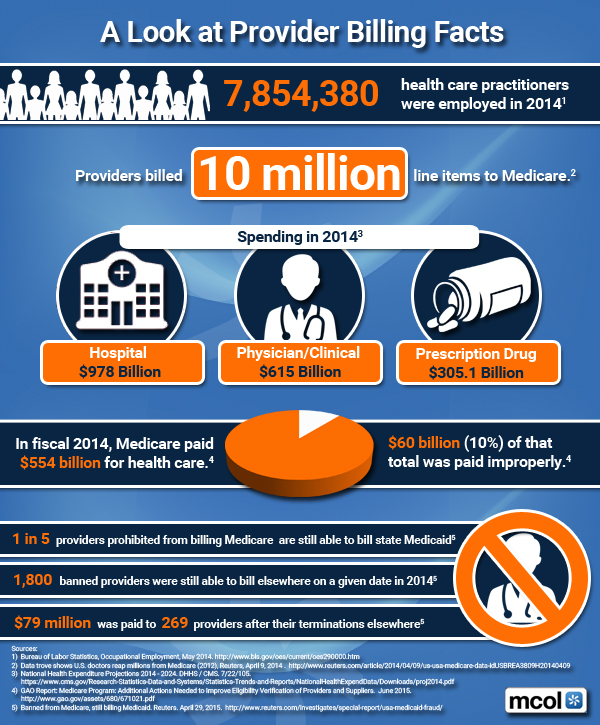
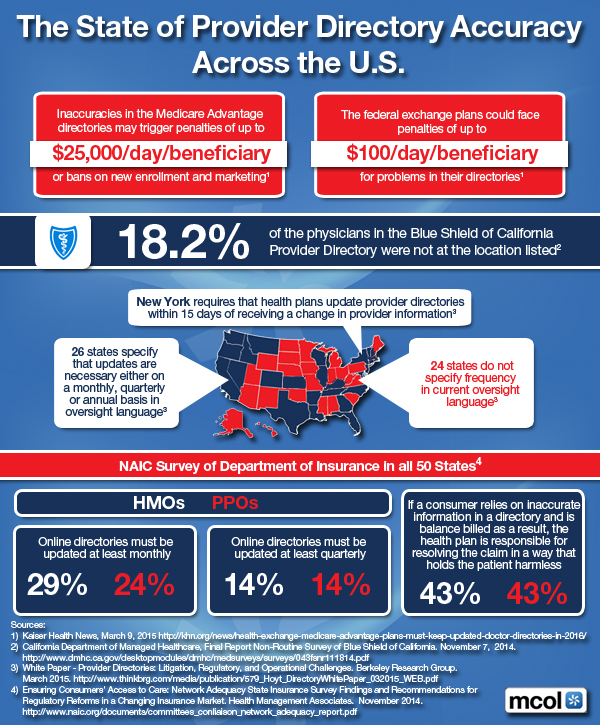
On the State of Medical Provider Directory Accuracy?

Join Our Mailing List

Across the USA

By http://www.MCOL.com

***

directory

***

Conclusion

Your thoughts and comments on this ME-P are appreciated. Feel free to review our top-left column, and top-right sidebar materials, links, URLs and related websites, too. Then, subscribe to the ME-P. It is fast, free and secure.

Speaker: If you need a moderator or speaker for an upcoming event, Dr. David E. Marcinko; MBA – Publisher-in-Chief of the Medical Executive-Post – is available for seminar or speaking engagements. Contact: MarcinkoAdvisors@msn.com

OUR OTHER PRINT BOOKS AND RELATED INFORMATION SOURCES:

      Product DetailsProduct DetailsProduct Details

I-Corps at the NIH

Join Our Mailing List

More on Evidence-Based Translational Medicine

By Steve Blank

We have learned a remarkable process that allow us to be highly focused, and we have learned a tool of trade we can now repeat. This has been of tremendous value to us.

Andrew Norris

Principal Investigator BCN Biosciences

Over the last three years the National Science Foundation I-Corps has taught over 700 teams of scientists how to commercialize their technology and how to fail less, increasing their odds for commercial success.

To see if this same curriculum would work for therapeutics, diagnostics, medical devices and digital health, we taught 26 teams at UCSF a life science version of the NSF curriculum. 110 researchers and clinicians, and Principal Investigators got out of the lab and hospital, and talked to 2,355 customers. (Details here)

For the last 10 weeks 19 teams in therapeutics, diagnostics and medical devices from the National Institutes of Health (from four of the largest institutes; NCINHBLI, NINDS, and NCATS) have gone through the I-Corps at NIH.

87 researchers and clinicians spoke to 2,120 customers, tested 695 hypotheses and pivoted 215 times. Every team spoke to over 100 customers.

Three Big Questions
The NIH teams weren’t just teams with ideas, they were fully formed companies with CEO’s and Principal Investigators who already had received a $150,000 grant from the NIH. With that SBIR-Phase 1 funding the teams were trying to establish the technical merit, feasibility, and commercial potential of their technology. Many will apply for a Phase II grant of up to $1 million to continue their R&D efforts.

Going into the class we had three questions:

  1. Could companies who were already pursuing a business model be convinced to revisit their key commercialization hypotheses – and iterate and pivot if needed?
  2. Was getting the Principal Investigators and CEO out of the building more effective than the traditional NIH model of bringing in outside consultants to do commercialization planning?
  3. Would our style of being relentlessly direct with senior scientists, who hadn’t had their work questioned in this fashion since their PhD orals, work with the NIH teams?

I-Corps at the NIH: Evidence-based Translational Medicine 

Evidence-based Translational Medicine
We’ve learned that information from 100 customers is just at the edge of having sufficient data to validate/invalidate a company’s business model hypotheses. As for whether you can/should push scientists past their comfort zone, the evidence is clear – there is no other program that gets teams anywhere close to talking to 100 customers. The reason? For entrepreneurs to get out of the building at this speed and scale is an unnatural act. It’s hard, there are lots of other demands on their time, etc. But we push and cajole hard, (our phrase is we’re relentlessly direct,) knowing that while they might find it uncomfortable the first three days of the class, they come out thanking us.

The experience is demanding but time and again we have seen I-Corps teams transform their business assumptions. This direct interaction with potential users and customers is essential to commercialize science (whether to license the technology or launch a startup.) This process can’t be outsourced. These teams saved years and millions of dollars for themselves, the NIH and the U.S. taxpayer. Evidence is now in-hand that with I-Corps@NIH the NIH has the most effective program for commercializing science.

Lessons Learned Day
Every week of this 10 week class, teams present a summary of what they learned from their customers interviews. For the final presentation each team created a two minute video about their 10-week journey and a 8-minute PowerPoint presentation to tell us where they started, what they learned, how they learned it, and where they’re going. This “Lessons Learned” presentation is much different than a traditional demo day. It gives us a sense of the learning, velocity and trajectory of the teams, rather than a demo day showing us how smart they are at a single point in time.

BCN Biosciences
This video from team BCN Biosciences describes what the intensity, urgency, velocity and trajectory of an I-Corps team felt like. Like a startup it’s relentless.

BCN is developing a drug that increases anti-cancer effect of radiation in lung cancer (and/or reduces normal tissue damage by at least 40%). They were certain their customers were Radiation Oncologists, that MOA data was needed, that they needed to have Phase 1 trial data to license their product, and needed >$5 million and 6 years. After 10 weeks and 100 interviews, they learned that these hypotheses were wrong.

If you can’t see the BCN Biosciences video click here

The I-Corps experience helped the BCN Bioscience team develop an entirely new set set of business model hypotheses – this time validated by customers and partners. The “money slides” for BCN Biosciences are slides 22 and 23.

I-Corps at the NIH: Evidence-based Translational Medicine 

Conclusion

Your thoughts and comments on this ME-P are appreciated. Feel free to review our top-left column, and top-right sidebar materials, links, URLs and related websites, too. Then, subscribe to the ME-P. It is fast, free and secure.

Speaker: If you need a moderator or speaker for an upcoming event, Dr. David E. Marcinko; MBA – Publisher-in-Chief of the Medical Executive-Post – is available for seminar or speaking engagements. Contact: MarcinkoAdvisors@msn.com

OUR OTHER PRINT BOOKS AND RELATED INFORMATION SOURCES:

Product Details

Product Details

Product Details

“When a practicing physician thinks about their risk exposure resulting from providing patient care, medical malpractice risk immediately comes to mind. But; malpractice and liability risk is barely the tip of the iceberg, and likely not even the biggest risk in the daily practice of medicine. There are risks from having medical records to keep private, risks related to proper billing and collections, risks from patients tripping on your office steps, risks from medical board actions, risk arising from divorce, and the list goes on and on. These liabilities put a doctor’s hard earned assets and career in a very vulnerable position.

These new books from Dr. David Marcinko and Prof. Hope Hetico show doctors the multiple types of risk they face and provides examples of steps to take to minimize them. They are written clearly and to the point, and are a valuable reference for any well-managed practice. Every doctor who wants to take preventive action against the risks coming at them from all sides needs to read these books.”

Richard Berning MD FACC [New Haven, Connecticut, USA]

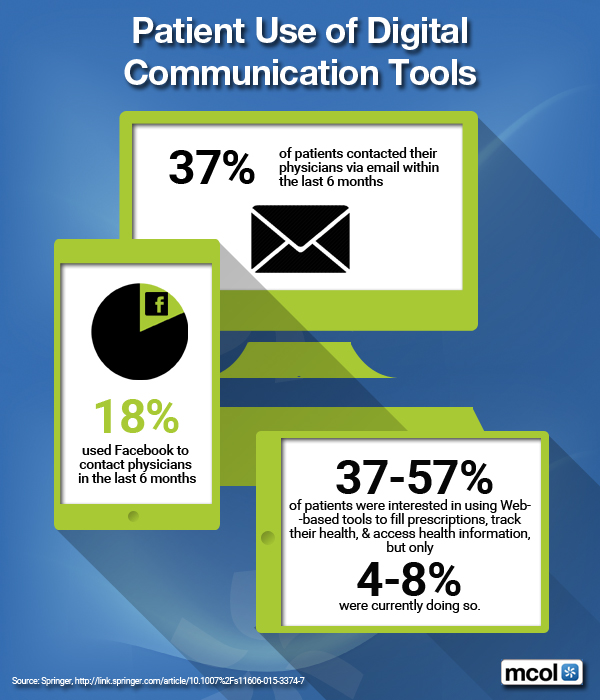
Patient Use of Digital Communication Tools

Join Our Mailing List

An Info-Graphic

http://www.MCOL.com

***

digital tools

***

Conclusion

Your thoughts and comments on this ME-P are appreciated. Feel free to review our top-left column, and top-right sidebar materials, links, URLs and related websites, too. Then, subscribe to the ME-P. It is fast, free and secure.

Speaker: If you need a moderator or speaker for an upcoming event, Dr. David E. Marcinko; MBA – Publisher-in-Chief of the Medical Executive-Post – is available for seminar or speaking engagements. Contact: MarcinkoAdvisors@msn.com

OUR OTHER PRINT BOOKS AND RELATED INFORMATION SOURCES:

Product Details

Product DetailsProduct Details

[Foreword Dr. Phillips MD JD MBA LLM] *** [Foreword Dr. Nash MD MBA FACP]

Calculate the Odds that your Job will be Stolen by a ROBOT?

Join Our Mailing List

What are your chances?

[By staff reporters]

In an increasingly digital world the workforce is becoming more automated than ever before. In this decade we’ve faced the challenge of interactive POS systems impacting the retail employment sector, but what industries are next?

Understanding the future of your job role can help you plan your career path more effectively, and decide if it’s time to change direction.

Using NPR’s handy calculator you can see just how safe your job is from the robots. To save you some time we’ve listed the top industries and their rankings

  • Sales: 99% chance of being automated
  • Accountants: 93.5% chance of being automated
  • Retail: 92.3% chance of being automated
  • Programmers: 48% chance of being automated
  • Housekeeping: 68.8% chance of being automated
  • Lawyer: 3.5% chance of being automated
  • Teaching: >1% chance of being automated

***

Feeling pretty confident? Congratulations!

SplitShire-

Source:

http://www.npr.org/sections/money/2015/05/21/408234543/will-your-job-be-done-by-a-machine

***

Assessment

Even if you are a doctor, nurse, accountant or financial advisor – use the calculator to check it out.

More:

Even More:

The Great and Powerful WOZ Speaks:

Steve Wozniak, Other Geniuses Debate Whether Robots Will Tend To Our Every Whim Or Murder Us

Conclusion

Your thoughts and comments on this ME-P are appreciated. Feel free to review our top-left column, and top-right sidebar materials, links, URLs and related websites, too. Then, subscribe to the ME-P. It is fast, free and secure.

Speaker: If you need a moderator or speaker for an upcoming event, Dr. David E. Marcinko; MBA – Publisher-in-Chief of the Medical Executive-Post – is available for seminar or speaking engagements. Contact: MarcinkoAdvisors@msn.com

OUR OTHER PRINT BOOKS AND RELATED INFORMATION SOURCES:

Risk Management, Liability Insurance, and Asset Protection Strategies for Doctors and Advisors: Best Practices from Leading Consultants and Certified Medical Planners™8Comprehensive Financial Planning Strategies for Doctors and Advisors: Best Practices from Leading Consultants and Certified Medical Planners™

I read and use this book, and several others, from Dr. David Edward Marcinko and his team of advisors.

JOHN KELLEY; DO

Life Science Startups Rising

Join Our Mailing List

Life Science Startups Rising in the UK

Stephen Chambers spent 22 years in some of the most innovative companies in life science as the director of gene expression and then as a co-founder of his own company.

Here’s his story

Today he runs SynbiCITE, the UK’s synthetic biology consortium of 56 industrial partners and 19 Academic institutions located at Imperial College in London.

Stephen and SynbiCITE, just launched the world’s first Lean LaunchPad for Synthetic Biology program.

***

steve blank

By Steve Blank

Conclusion

Your thoughts and comments on this ME-P are appreciated. Feel free to review our top-left column, and top-right sidebar materials, links, URLs and related websites, too. Then, subscribe to the ME-P. It is fast, free and secure.

Speaker: If you need a moderator or speaker for an upcoming event, Dr. David E. Marcinko; MBA – Publisher-in-Chief of the Medical Executive-Post – is available for seminar or speaking engagements. Contact: MarcinkoAdvisors@msn.com

OUR OTHER PRINT BOOKS AND RELATED INFORMATION SOURCES:

Product DetailsProduct Details

FREE WHITE PAPER [Is Medical Practice a New Asset Class?] from iMBA, Inc.

Is Medical Practice a New Asset Class Under MPT?

Get your FREE White Paper

SPONSOR:

http://www.CertifiedMedicalPlanner.org

Valuing the Private Practice Physician’s Quintessential Alternative Financial Investment

Dr. DEM

By Dr. David Edward Marcinko MBA CMP

As we know, the investment industry and Modern Portfolio Theory [MPT] strives to make optimal ‘allocations’ into different ‘asset classes’; according to some defined risk tolerance level or efficient frontier.

Equities, fixed income, property, private equity, emerging markets and so, are all ‘asset classes’, into which physician investors and mutual fund or portfolio managers will make an allocation of their total funds under management. It is quite proper for them to do this as they seek to balance the risk and potential returns for their own; ME, Inc., or other clients’ money.

And, by creating a “new” asset class, this concept opens the door to significant capital flows; advisory and management fees. Hence; the unrelenting innovation of Wall Street, and its’ commission driven and fee-seeking mavens, is unending.

The Social Security Example:

This concept may be illustrated using Social Security as an example.

Wall Street opines, if you’re not counting on Social Security benefits as a part of an overall asset allocation strategy, you may be missing out on bigger gains in a retirement portfolio. Those of this ilk say that retirement investors should consider the value of their Social Security as a portion of their fixed-income investments …. Others believe it may be too risky.

***

Empty Retired Doctor's Lounge

***

The Portfolio Shift

Generally, adopting this strategy would mean shifting a big portion of investible assets out of bonds and into stocks and into the hands of money managers, stock brokers and wealth managers for a fee; of course. This is akin to those financial advisors who rightly or wrongly goaded clients to not pay off a home mortgage and instead reposition the free cash flow into a rising; and then falling; market. Of course, there are detractors, as well as proponents of this emerging financial planning philosophy.

For example, Jack Bogle, founder of the Vanguard Group, often cites his penchant for basing one’s asset allocation on age. (If you’re 40 years old, you have 40% of your investments in fixed income and 60% in equities. By the time you’re 60, you’ve got 60% in fixed income, 40% in equities).

Now, let’s again consider Social Security, citing a physician with $300,000 in an investment portfolio, and capitalizing the stream of future payments. If the $300,000 is all in equity funds, even equity-index funds, and $300,000 in Social Security, you are already at 50/50″ fixed income versus equities.

The next step is a conversation as this the nexus of where Social Security meets risk management. So, how will the doctor feel when market goes up and down? Some may believe the concept, but not enjoy the inevitable more fluctuating self-directed 401-k, or 403-b plan. One must be comfortable with taking on a larger stock position.

Sources:

  • Andrea Coombes; MarketWatch, September, 2013.

Others experts, like Paul Merriman, opine that Social Security is not an asset class and the idea is fundamentally flawed and should not be a part of anyone’s portfolio.

***

Physician SGR Critics and the Doctor Fix

***

Why?

As classically defined, a portfolio is composed of financial assets. A financial asset is something that can be sold. Social Security cannot be bought and sold. Because of that, it has a market value of zero.

Therefore, since a medical practice can be bought or sold, the definitional decision is left up to the informed reader, modern physician or financially enlightened financial advisor; or Certified Medical Planner.

Source:

Order NOW!

To help you decide if medical practice is indeed an asset class – and how much a practice may be worth – and how to valuate a practice – request your free white paper using the order form below.

 Comprehensive Financial Planning Strategies for Doctors and Advisors: Best Practices from Leading Consultants and Certified Medical Planners(TM)

Courtesy

http://www.CertifiedMedicalPlanner.org

Request your FREE White Paper Here!

← Back

Thank you for your response. ✨

DOCs – Declare your INDEPENDENCE Day!

Join Our Mailing List

By Pamela Wible MD via Ann Miller RN MHA

***

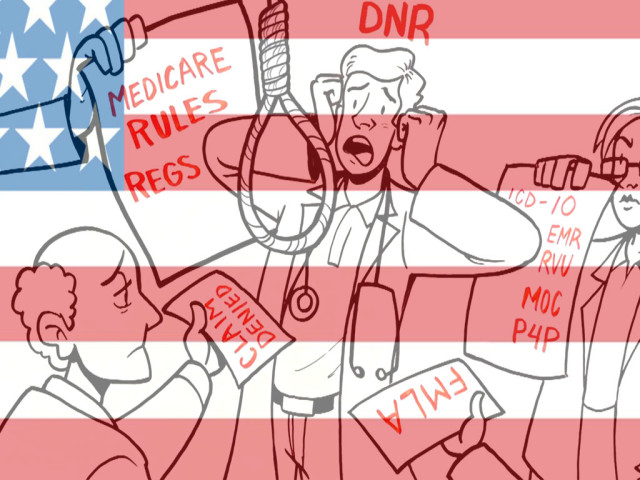
9 out of 10 doctors wouldn’t recommend medicine as a profession

Doctors4th-640x480

 Why?

***
Here are a few factoids.
  • Pages in U.S. tax code: 74,608
  • Pages of Medicare regulations by which physicians must abide: > 132,000
  • Current number of diagnostic and procedure codes doctors must know: 17,000
  • Number of codes docs are responsible for with new guidelines in October: >140,000.
  • Percent of working hours doctors spend on non-patient-related paperwork: 22 percent
  • Percent of working hours doctors spend on patient-related paperwork: > 60 percent
  • Percent of time doctors spend looking at computers instead of patients: 40 percent
  • Percent of working hours new doctors spend face-to-face with patients: 12 percent
  • Which is how many minutes per patient: 8

Assessment

Maybe that’s why over 1 million Americans will lose their doctors to suicide this year.

More:

Join me this July 4th weekend to declare your independence

LINK: https://www.youtube.com/watch?v=VDF0kJpVpXw&feature=player_embedded

LINK: youtube https://www.youtube.com/watch?v=VDF0kJpVpXw?feature=player_detailpage&w=640&h=360

A Mid-Year Update on Physician Compensation

Join Our Mailing List

Medscape Compensation Report

vicki

By Vicki Rackner MD

A 2015  Medscape Compensation Report sheds light on physicians’ earning potential.

Here are some key findings from a survey of 20,000 physicians in 26 specialties:

  • Orthopedists ($421,000) and cardiologists ($376,000) are still the top earners among physicians.
  • Physicians in private practice earn significantly more ($329,000 for specialists) than do employed physicians ($258,000 for specialists), despite the trend toward employment.
  • Male physicians earn more ($284,000) than their female counterparts ($215,000).
  • North Dakota and Alaska ($330,000) are the top-paying states for physicians, while Rhode Island ($217,000) and Maryland ($237,000) are the lowest-paying.
  • 9% of physicians have concierge or cash-only practices, the same percentage as last year, while ACO participation continues to grow.
Assessment

However, it’s not what you make that’s important; it’s what you keep. Click here to read a blog post about the Myth of the Rich Doctor that addresses the disconnect between income and wealth.

***

fashion-

***

More:

So, what are your thoughts about physicians’ potential to enjoy financial independence?

ABOUT

Vicki Rackner MD is an author, speaker and consultant who offers a bridge between the world of medicine and the world of business. She helps businesses acquire physician clients, and she helps physicians run more successful practices. Contact her at (425) 451-3777

pnhp-long-setweisbartversion-52-638

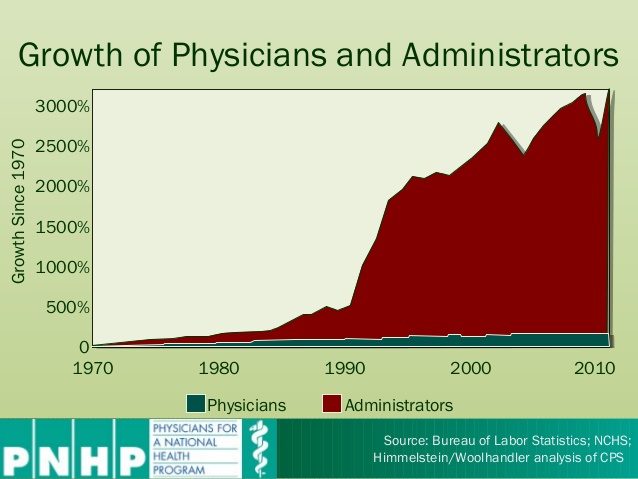
Will single-payer really reduce administrative waste?

Conclusion

Your thoughts and comments on this ME-P are appreciated. Feel free to review our top-left column, and top-right sidebar materials, links, URLs and related websites, too. Then, subscribe to the ME-P. It is fast, free and secure.

Speaker: If you need a moderator or speaker for an upcoming event, Dr. David E. Marcinko; MBA – Publisher-in-Chief of the Medical Executive-Post – is available for seminar or speaking engagements. Contact: MarcinkoAdvisors@msn.com

OUR OTHER PRINT BOOKS AND RELATED INFORMATION SOURCES:

Risk Management, Liability Insurance, and Asset Protection Strategies for Doctors and Advisors: Best Practices from Leading Consultants and Certified Medical Planners™8Comprehensive Financial Planning Strategies for Doctors and Advisors: Best Practices from Leading Consultants and Certified Medical Planners™

There is no other comprehensive book like it to help doctors, nurses, and other medical providers accumulate and preserve the wealth that their years of education and hard work have earned them.
—Dr. Jason Dyken MD MBA

[Dyken Wealth Strategies, Gulf Shores, Alabama]

About the Institute of Medical Business Advisors, Inc

Join Our Mailing List

Who we are – What we do!

[By Ann Miller RN MHA]

www.MedicalBusinessAdvisors.com

The Institute of Medical Business Advisors, Inc provides a team of experienced, senior level consultants led by iMBA Chief Executive Officer Dr. David Edward Marcinko MBA CMPMBBS [Hon] and President Hope Rachel Hetico RN MHA CMP™ to provide going contact with our clients throughout all phases of each project, with most of the communications between iMBA and the key client participants flowing through this Senior Team.

iMBA Inc., and its skilled staff of certified professionals have many years of significant experience, enjoy a national reputation in the healthcare consulting field, and are supported by an unsurpassed research and support staff of CPAs, MBAs, MPHs, PhDs, CMPs™, CFPs® and JDs to maintain a thorough and extensive knowledge of the healthcare environment.

The iMBA team approach emphasizes providing superior service in a timely, cost-effective manner to our clients by working together to focus on identifying and presenting solutions for our clients’ unique, individual needs.

***

Risk Management and Insurance Foreword for Doctors by Lloyd Krieger MD MBA article-2270211-173CD250000005DC-373_634x447

Financial Planning for Physicians Foreword by Jason Dyken MD MBA

***

Our Team 

The iMBA Inc project team’s exclusive focus on the healthcare industry provides a unique advantage for our clients.  Over the years, our industry specialization has allowed iMBA to maintain instantaneous access to a comprehensive collection of healthcare industry-focused data comprised of both historically-significant resources as well as the most recent information available.

iMBA Inc’s specific, in-depth knowledge and understanding of the “value drivers” in various healthcare markets, in addition to the transaction marketplace for healthcare entities, will provide you with a level of confidence unsurpassed in the public health, health economics, management, administration, and financial planning and consulting fields.

iMBA Inc’s information resources and network of healthcare industry textbook resources enhanced by our professional consultants and research staff, ensure that the iMBA project team will maintain the highest level of knowledge regarding the current and future trends of the specific specialty market related to the project, as well as the healthcare industry overall, which serves as the “foundation” for each of our client engagements.

Comprehensive Financial Planning Strategies for Doctors and Advisors: Best Practices from Leading Consultants and Certified Medical Planners(TM) 

Product Details

Product DetailsProduct Details

Product DetailsProduct DetailsProduct Details


Medical Executive-Post

And, through the balanced collaboration of this rich-media sharing and ranking ME-P forum, we have become a leading network at the intersection of health administration, practice management, medical economics, business strategy and financial planning for doctors and their consulting advisors. Even if not seeking our products or services, we hope this knowledge silo is useful to you.

In the Health 2.0 era of political reform, our goal is to: “bridge the gap between practice mission and financial solidarity for all medical professionals.”

Join the ME-P Nation today … and tell us what you think! 

We are at your service.

← Back

Thank you for your response. ✨

Help US Make the ME-P even Better 4-U

Join Our Mailing List

Dear Medical Providers, Financial Services Professionals, and Related Management Consultants and ME-P Colleagues,

By Dr. David Edward Marcinko MBA

DEM blue[Editor-in-Chief]

As a professional in the ME-P ecosystem, you have a lot of sources for news, analysis, and insights.

So, we’d like to know which are the best for you.

Please share your opinion about information outlets you value, and what additional information you’d like to receive that you can’t find anywhere else.

We are asking you to take a brief survey about your preferred sources for medical news and related health economics, financial planning and business information. Your input can make a real difference.

Please use the contact-form below. This open-ended online survey will take just a few minutes to complete. Tell us whatever you like!

invite

Thanks for your help – your input really matters!

← Back

Thank you for your response. ✨

The 2015 – 18 Physician Pay Check-Up

Join Our Mailing List

Annual Medscape Findings

[By Staff Reporters]

***

Medscape2015Report

***

iMBA Inc., Historical Review

[By Hope R. Hetico RN MHA CMP™]

[By Dr. David Edward Marcinko MBA CMP™]

dave-and-hope9

http://www.CertifiedMedicalPlanner.org

SOAR

***

Other MEDICAL Professional SALARIES 

Dentists are Different

A 2003 Survey of Dental Practices reported net income from dentistry-related sources. Dentists differ from physicians in that 90% are in private practice.

In 2002, the average practitioner’s net income was $174,350. The average dental specialist’s net was $291,250. These figures represent a 0.7% and a 5.8% increase over 2001, respectively. Net income rose steadily since 1986, when general dentists made an average of $69,920 and specialists an average of $97,920.

But, by 2010, according to PayScale.com, the average general dentist earned $98,276 – $157,437; a decreasing trend allocated as follows.

Salary $92,689 – $147,682
Bonus $1,996 – $19,727
Profit Sharing $1,038 – $27,514
Commissions $480.74 – $32,500

Source: http://www.ada.org/prof/resources/pubs/dbguide/newdent/income.asp#private

Source: http://www.payscale.com/research/US/Job=Dentist/Salary

dental

So Are Chiropractors

According to Salary.com, the median salary for strictly office-based chiropractors was $78,994 in 2005; while Collegegrad.com reported the median annual earnings of a salaried chiropractor as $65,330 in 2002; with the middle 50% earning between $44,140 and $102,400.

The U.S. Bureau of Labor Statistics estimated chiropractors earned an average salary of $84,020 in 2004. A Chiropractic Economics survey in 2005 suggested mean salary at $104,363.

Another survey, for 2007, in Chiropractic Economics is available here: http://www.chiroeco.com/article/2007/Issue8/images/CES&ESurvey2007.pdf

And, a range of $44,511 – $82,826 was reported in 2010 by PayScale.com, allocated as follows:

Salary $42,106 – $78,129
Bonus $1,008 – $10,205
Profit Sharing $973 – $8,139
Commission $750 – $10,113
Total PayXTotal Pay combines base annual salary or hourly wage, bonuses, profit sharing, tips, commissions, overtime pay and other forms of cash earnings, as applicable for this job. It does not include equity (stock) compensation, cash value of retirement benefits, or the value of other non-cash benefits (e.g. healthcare). $44,511 – $82,826

Source: http://www.payscale.com/research/US/Job=Chiropractor/Salary

Future Doc!

Podiatrist’s Potential Rising

The salary range for a podiatrist, or Doctor of Podiatric Medicine, in 2006 was reported as $128,000 to $292,000 according to http://www.allied-physicians.com/salary_surveys/physician-salaries.htm.

This robust growth was likely due to expanded education, training, and general allopathic and osteopathic acceptance by the medical community, as well as by insurance companies, employers, patients and various governmental agencies and third party payers.

Increased surgical sub-specialization, in-patient hospital and ambulatory out-patient surgical center activity were also positive compensation factors.

***

Ankle-Leg Trauma

***

Conclusion

Your thoughts and comments on this ME-P are appreciated. Feel free to review our top-left column, and top-right sidebar materials, links, URLs and related websites, too. Then, subscribe to the ME-P. It is fast, free and secure.

Speaker: If you need a moderator or speaker for an upcoming event, Dr. David E. Marcinko; MBA – Publisher-in-Chief of the Medical Executive-Post – is available for seminar or speaking engagements. Contact: MarcinkoAdvisors@msn.com

OUR OTHER PRINT BOOKS AND RELATED INFORMATION SOURCES:

Comprehensive Financial Planning Strategies for Doctors and Advisors: Best Practices from Leading Consultants and Certified Medical Planners(TM)

Product DetailsProduct Details

Product Details

An Investor’s Guide to Better Writing

Join Our Mailing List

Seriously?

[By Vitaliy N. Katsenelson, CFA]

ImageProxyI never thought I’d be giving writing advice. I was always the worst student in my literature class in Russia. I never received a grade higher than a C on any Russian essay I ever wrote. I have a theory that my teachers got sick of reading and grading my horrible essays, so they stopped and automatically gave me a passing grade out of pity. I don’t blame them.

When I came to the U.S., my grades in English class in college were not spectacular either; in fact, English was the only class I failed in college and actually had to retake my senior year.

My writing has improved slightly since then – and you, my loyal readers, get to be the judge of my scribbles. However, if the prequalification for giving writing advice was based solely on quantity – on how many words have blackened a perfectly fine white screen or besmirched innocent paper – then I am more than qualified. I have been at it for exactly a decade.

My writing “career” started in 2004 when I was hired as a writer by TheStreet.com. I was not hired because I was good – I wasn’t. But I had an investing background, and TheStreet.com was not very picky; it needed warm bodies (ideally with CFA next to their names) to comment on the markets and stocks. TheStreet.com paid almost nothing, and it was overpaying me.

I had zero experience, but I was ambitious. I took writing very seriously, and therefore my articles were serious. They were filled with big words, and, quite frankly, they were enormously boring. In addition, I was extremely self-conscious about grammar. Sentence structure and punctuation drove me nuts, and I was afraid of confusing words that were spelled similarly but had unrelated meanings (like comma and coma).

***

Typewriter

***

LESSONS LEARNED

This brings me to the first lesson that I want to impart about writing, and it’s one that will drive English teachers insane: Don’t worry about grammar.

Once I stopped worrying about grammar, I felt a huge weight lifted from my shoulders (as all those little punctuation marks emptied themselves from my brain). I completely gave up on a, an and the (my 12-year-old son, who was born here, does a great job fixing those for me), I stopped obsessing about commas (and comas), and I stopped trying to ferret out all the other marvelous secrets of English grammar. I let copy editors – who are very talented and oh so skilled at this – catch me out in all my little peccadilloes. Instead I channel my energy into making writing interesting and funny (if appropriate); this is Lesson No. 2.There are a lot of smart investors, and a lot of them write (just visit the web site Seeking Alpha), but only a small fraction manage to make their writing interesting (again, just visit Seeking Alpha) – and those are the ones who are read more than once.

As I mentioned, when I started writing, my articles were technical and boring. I still feel sorry for the people who read them and especially for my dear friends who felt an obligation to read them.

Then an accident happened. Six months into writing for TheStreet.com, I wrote about the digital video recorder company TiVo. In that article I dared to use a little bit of humor to describe a painful experience I had when I called TiVo’s automated telephone customer service, which did not seem to understand my “slight” Russian accent. To my embarrassment, I had to ask my three-year-old son, who by that time had already acquired a perfect “Disney” accent, to talk to the machine instead, and of course it understood him just fine.

That article was not brilliant – it contained as many or as few insights as my previous articles did – but it was not “proper,” and it was not boring. Suddenly, the feedback from readers was much different – I received a ton of e-mail. Then I understood the power of humor. But it was not just humor: I was able to deliver my otherwise boring message in an interesting way.

I realized that knowing what you want to say is not enough; you need to figure out how to say it.

To this day, I spend hours staring at the computer, trying to come up with an interesting analogy or a compelling angle on how to say something I already know. I often use analogies to tell a story, especially if the topic is complex. They help me relate complex ideas through simple examples.

Let me illustrate. I have a very smart investor friend of German ancestry. True to his roots, he is very efficient in everything he does. (I am stereotyping here, but why not?) He has written a very smart investment book. If you read the whole thing, you’d learn a lot. But that is a big if. His book is as efficient and properly structured as you would expect from a well-engineered German car or an instruction manual for that car. It doesn’t have an extra word or a superfluous sentence. But unfortunately, in the process of making it efficient, he sterilized his book. I was excited to read it but could not get past Chapter 3. I got terminally bored, and I do investments for a living.

Oh, and while we’re on the subject of boredom: Follow novelist Elmore Leonard’s advice when he said, “I try to leave out the parts that people skip.” Don’t try to be descriptive for the sake of being descriptive.

Andrew Blum in 2012 wrote a terrific book called Tubes: A Journey to the Center of the Internet . However, in his other life Andrew is a reporter who covers architecture. His job is to describe inanimate objects. In Tubes he often goes into “descriptive mode,” telling us all about things that do not need to be described. For example, at one point he falls into an exhaustive description of the hotel he stayed in near the Los Angeles International Airport. The hotel room had nothing to do with the story, but he went on and on, describing bars of soap, their colors, the plate they were on and how the sunlight bounced off each one of them.

After making it through the third chapter, I gave up and downloaded the audiobook of Tubes. So maybe Andrew succeeded after all, since I ended up buying two versions of his book. (And I do highly recommend listening to his book if you want to learn about the Internet.)

It took a while for my writing style to develop. A big part of its development came through reading great writers. The two people who had the most impact on me were John Mauldin and Cliff Asness.

John needs no introduction, as his economics newsletter (Mauldin Economics) is read by millions. He has a gift for explaining complex investment topics simply, but he also invites you into his life. He shares stories about the trips he takes and the people he meets; he talks about his kids and their travails, his lack of time for the gym and his penchant for cooking mushrooms. When you read him, you feel as if he’s writing for you – just you. This is different from fiction writing, in which the author’s fingerprints are hidden.

Cliff Asness has had a tremendous impact on me as well. Cliff is a hedge fund manager; he runs the large quant firm AQR Capital Management in Greenwich, Connecticut. Cliff has an incredible gift for being witty. Back in 2005 I read a paper by Cliff discussing the most boring topic on earth: the expensing of employee stock options. At the time, companies did not consider them an expense. Cliff argued that the companies were wrong and needed to show the options on their income statements, just like any other expense.

I had written on the same topic just a few months before, making a similar point. But after I read his paper, I sent Cliff an e-mail with the subject line “I am not worthy.” Cliff’s paper was published in the most boring finance magazine in the whole universe: Financial Analysts Journal (every article in it is full of geeky Greek symbols). To my astoundment, Cliff was able to inject humor where I thought it was not possible. I wrote a very boring, unmemorable article on stock options; Cliff wrote a great, funny article on the same topic that I still remember today.

John Mauldin showed me through his writing that it’s okay to be personal, and Cliff proved it is okay to be funny. No, Cliff proved that you must be funny when you discuss boring topics – this is how you make the reader stick with it. Lesson No. 3: Identify your favorite writers, the ones whose voices you can really relate to, and learn from them.

I could relate to John’s and Cliff’s writings because they fit my personality and my natural writing style. They liberated me from being sanitized, impersonal and boring.

A sublesson here is, Read to write. When you read, always have your writer’s hat on, and pay attention not just to content but to the quality of the writing as well. That is not something that comes automatically to most of us; we have to manually hit the “on” switch.

Lesson No. 4: Be respectful of your environment. This is not an ecological statement; I am talking about your writing environment. If you write long enough, you start to appreciate the importance of your external and internal environment. Stephen King, in his terrific book On Writing: A Memoir on the Craft , said that he listens to heavy metal band AC/DC when he writes; he feels it walls him off from the external world and helps him build his own worlds. I listen to classical music, and if I am really stuck, I start listening to opera.

And if that weren’t weird enough, I write only in italics. This little trick makes my letters look a bit friendlier to me. If you find that you like your font to be pink, go for it. We writers need any edge we can get, and you can always change back to a color and format that is acceptable to society when you are done.

The final lesson: Be prepared for pain – or maybe not. Writing is a very personal process. Some of us are great thinkers, able to puzzle through very complex ideas in our heads and lay them out logically on paper. I have tremendous respect for those lucky ones. For most of us, present company included, writing is usually a painful endeavor that involves staring at a blank screen for hours on end and writing and rewriting multiple times.

In fact, let me take it a step farther: I think through writing. A quote from George Bernard Shaw comes to mind: “Few people think more than two or three times a year; I have made an international reputation for myself by thinking once or twice a week.”

If you ask me a question about something I have not thought about before, even if you give me a minute to think about it, my answer will usually, well … suck. I have not written about that topic yet, and so I may not have thought it through, and the logical links may not have been made. That’s just how my mind operates.

Quite frankly, I am embarrassed for my brain. It’s like the dirty apartment of a confirmed bachelor, with unwashed clothes, empty pizza boxes and beer bottles all over the floor. For an idea to be developed to the point at which it can leave the room, I have to clean it up, organize it, put things in their rightful place. That is why I write – sorry, dear reader, it’s not about you; it’s about me, me and me again.

***

money

***

More:

ASSESSMENT

Writing is not a linear process, and when you sit down to write, your thoughts may not be quite ready to come out – it’s okay if they just haven’t come to a boil yet. Don’t blame it on writer’s block. Author Tom Clancy once said, “Writer’s block is just an official term for being lazy, and the way to get through it is work.” Just take some time off, do something fun and then get back on the writing horse.

ABOUT

Vitaliy N. Katsenelson, CFA, is Chief Investment Officer at Investment Management Associates in Denver, Colo. He is the author of The Little Book of Sideways Markets (Wiley, December 2010). To receive Vitaliy’s future articles by email or read his articles click here.

Investment Management Associates Inc. is a value investing firm based in Denver, Colorado. Its main focus is on growing and preserving wealth for private investors and institutions while adhering to a disciplined value investment process, as detailed in Vitaliy’s book Active Value Investing (Wiley, 2007).

Conclusion

Your thoughts and comments on this ME-P are appreciated. Feel free to review our top-left column, and top-right sidebar materials, links, URLs and related websites, too. Then, subscribe to the ME-P. It is fast, free and secure.

Speaker: If you need a moderator or speaker for an upcoming event, Dr. David E. Marcinko; MBA – Publisher-in-Chief of the Medical Executive-Post – is available for seminar or speaking engagements. Contact: MarcinkoAdvisors@msn.com

OUR OTHER PRINT BOOKS AND RELATED INFORMATION SOURCES:

Comprehensive Financial Planning Strategies for Doctors and Advisors: Best Practices from Leading Consultants and Certified Medical Planners(TM)

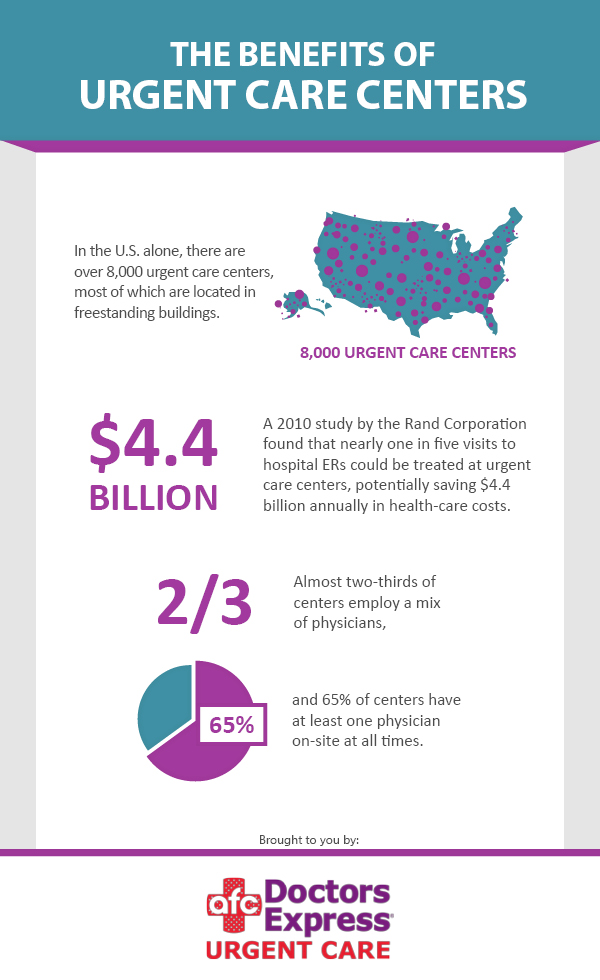
On Urgent Care Centers and Retail Medical Clinics

Join Our Mailing List 

And the Convenient Care Association

[By Dr. David Edward Marcinko MBA]

DEM blueThe Convenient Care Association [CCA] is comprised of companies, medical providers and healthcare systems that provide patients and consumers with accessible, [urgent], affordable and quality healthcare in retail-based locations.

The CCA works primarily to enhance and sustain the growth of the convenient care industry through sharing of best practices and common standards of operation.

urgent urgent

The CCA was founded in October 2006 and the first Convenient Care Clinics [CCCs] opened in 2000. The industry grew quickly since then.

Today there are approximately 1,060 clinics in operation, and CCA member clinics represent more than 95% of the industry.

To date, CCCs have served more than 3.5 million patients with its nurse practitioners [NPs] and physician assistants [PAs]. With this rapid expansion, and projected continued growth, it quickly became clear that the shared concerns and needs of both providers and patients could best be served through an association that allowed for:

  • Sharing best practices, common standards of operation, experiences and ideas.
  • Developing common standards of operation to ensure the highest quality of care.
  • A united voice to advance the needs of CCCs and their customers
  • A unified effort to promote the concept of CCCs, and to respond to questions about this evolving industry.
  • Reaching out to the existing medical community and creating new partnerships.
  • Building synergies with traditional medical service providers.

Assessment

The Public Health Management Corporation [PHMC], a nonprofit public health institute, provides executive management and administrative support for the Convenient Care Association.

urg 2

Conclusion

Your thoughts and comments on this ME-P are appreciated. Feel free to review our top-left column, and top-right sidebar materials, links, URLs and related websites, too. Then, subscribe to the ME-P. It is fast, free and secure.

Speaker: If you need a moderator or speaker for an upcoming event, Dr. David E. Marcinko; MBA – Publisher-in-Chief of the Medical Executive-Post – is available for seminar or speaking engagements. Contact: MarcinkoAdvisors@msn.com

OUR OTHER PRINT BOOKS AND RELATED INFORMATION SOURCES:

Product Details

Product DetailsProduct Details

Fatigue and its Effect on Doctor’s & Prescriptions

Join Our Mailing List

Fatigue Matters 

[By Staff Reporters]

First we had slow medicine, then fast medicine, and now it’s … fatigued medicine.

According to Aaron Carroll MD; fatigue matters even when it comes to doctors … especially when it comes to doctors.

Here is the data link in Healthcare Triage News.

Assessment

For those of you who want to read more, here is the paper we’re discussing!

***

free

***

Conclusion

Your thoughts and comments on this ME-P are appreciated. Feel free to review our top-left column, and top-right sidebar materials, links, URLs and related websites, too. Then, subscribe to the ME-P. It is fast, free and secure.

Speaker: If you need a moderator or speaker for an upcoming event, Dr. David E. Marcinko; MBA – Publisher-in-Chief of the Medical Executive-Post – is available for seminar or speaking engagements. Contact: MarcinkoAdvisors@msn.com

OUR OTHER PRINT BOOKS AND RELATED INFORMATION SOURCES:

Product DetailsProduct Details

Enter the ROBO Financial & Medical Advisors

Join Our Mailing List 

Machines will Rule … Soonest?

[By Dr. David Edward Marcinko MBA CMP™]

DEM white  shirtMachines beat humans at chess. Machines can pilot airplanes to land at O’Hare; or on Mars. There is now a machine that beats the best of us at Jeopardy.

And, many predict that an Artificial Intelligent medical clinician is ten years away.

Just think tele-medicine and tele-health.

And, no one will use a biological doctor in twenty five years. Then, of course, enter the singularity*.

Innovation

I’m not sure who said it first, but this quote has been floating around Twitter lately:

“In 2015 Uber, the world’s largest taxi company owns no vehicles, Facebook the world’s most popular media owner creates no content, Alibaba, the most valuable retailer has no inventory, and Airbnb, the world’s largest accommodation provider owns no real estate.”

Assessment

Fundamental assumptions about what is needed to be a successful doctor, financial advisor, or other business has changed in just the last few years.

So – I ask MD and FA colleagues – will you keep up professionally, or fall behind? What are the ethical implications of these technology innovations; if any?

***

robot

[Vanguard’s “Robo Advisor” – Good for Clients but Bad for Advisors?] 

***

More:

Even More:

Note: From Wikipedia, the free encyclopedia.

The Singularity

The technological singularity is the hypothesis that accelerating progress in technologies will cause a runaway effect wherein artificial intelligence will exceed human intellectual capacity and control, thus radically changing civilization in an event called “the singularity”.[1] Because the capabilities of such an intelligence may be impossible for a human to comprehend, the technological singularity is an occurrence beyond which events may become unpredictable, unfavorable, or even unfathomable.[2]

The first use of the term “singularity” in this context was by mathematician John von Neumann. In 1958, regarding a summary of a conversation with von Neumann, Stanislaw Ulam described “ever accelerating progress of technology and changes in the mode of human life, which gives the appearance of approaching some essential singularity in the history of the race beyond which human affairs, as we know them, could not continue”.[3] The term was popularized by science fiction writer Vernor Vinge, who argues that artificial intelligence, human biological enhancement, or brain–computer interfaces could be possible causes of the singularity.[4] Futurist Ray Kurzweil cited von Neumann’s use of the term in a foreword to von Neumann’s classic The Computer and the Brain.

Proponents of the singularity typically postulate an “intelligence explosion”,[5][6] where superintelligences design successive generations of increasingly powerful minds, that might occur very quickly and might not stop until the agent’s cognitive abilities greatly surpass that of any human.

Kurzweil predicts the singularity to occur around 2045[7] whereas Vinge predicts some time before 2030.[8] At the 2012 Singularity Summit, Stuart Armstrong did a study of artificial general intelligence (AGI) predictions by experts and found a wide range of predicted dates, with a median value of 2040. Discussing the level of uncertainty in AGI estimates, Armstrong said in 2012, “It’s not fully formalized, but my current 80% estimate is something like five to 100 years.”[9]

***

eye

***

Conclusion

Your thoughts and comments on this ME-P are appreciated. Feel free to review our top-left column, and top-right sidebar materials, links, URLs and related websites, too. Then, subscribe to the ME-P. It is fast, free and secure.

Speaker: If you need a moderator or speaker for an upcoming event, Dr. David E. Marcinko; MBA – Publisher-in-Chief of the Medical Executive-Post – is available for seminar or speaking engagements. Contact: MarcinkoAdvisors@msn.com

OUR OTHER PRINT BOOKS AND RELATED INFORMATION SOURCES:

Comprehensive Financial Planning Strategies for Doctors and Advisors: Best Practices from Leading Consultants and Certified Medical Planners(TM) 

On The State Licensing Process of Physicians

Join Our Mailing List

By State Medical Boards

robert-cimasitodd-zigrang

By ROBERT JAMES CIMASI; MHA, ASA, FRICS, MCBA, AVA, CM&AA, CMP

By TODD A. ZIGRANG; MBA, MHA, ASA, FACHE

(C) Health Capital Consultants, LLC All rights reserved. St. Louis, MO USA

A SPECIAL ME-P REPORT

USA

http://www.HealthCapital.com

Every state and the District of Columbia require the licensure of all allopathic (M.D.) and osteopathic (D.O.) physicians [1] Although the specific criteria for licensure vary by state, each state requires candidates to submit proof of completion of the requisite number of years of graduate medical education and passage of examinations verifying that “the physician is ready and able to practice competently and safely in an independent setting [2].

Moral Character

Additionally, a physician applying for licensure is typically required to have “good moral character,” absent his or her involvement in illegal activities [3] Most physicians satisfy the exam requirement by submitting proof of their successful completion of the United States Medical Licensing Examination (USMLE) or the Comprehensive Osteopathic Medical Licensing Examination (COMLEX-USA) to the licensure board [4] However, as some practicing physicians may have been licensed under a previously administered exam, certain state licensing boards may consider a combination of other examinations sufficient to meet licensure requirements, so long as those exams were completed prior to 2000 [5]

Of State Medical Boards

The licensure of physicians is governed by a state medical board, the “primary responsibility” of which board, according to the Federation of State Medical Boards, is to “protect consumers of health care by ensuring that all physicians…are properly licensed and comply with various laws and regulations pertaining to the practice of medicine[6] To accomplish this goal, state legislatures have delegated certain powers to the state’s medical board, including the power to grant, suspend, and revoke licenses; conduct investigations into complaints against physicians; and, release guidelines related to best medical practices [7] State medical boards have traditionally consisted solely of physicians; however, there has recently been an increase in the number of non-physician board members on state medical boards [8].

History

Over the last 50 years, state medical boards have faced intense scrutiny regarding their commitment to disciplining physicians based on quality concerns [9] In 1960, the American Medical Association (AMA) heard “sobering” facts from the Federation of State Medical Boards that “much confusion over the definitions and objectives exists” related to state medical board enforcement of medical standards [10] From 1963 to 1967, 0.06% of all physicians were subject to discipline, while in 1981, 0.14% of all physicians were subject to discipline, due in large part to the problems identified by the AMA [11] Although the rate of physician discipline rose eightfold by the mid-1990s, to date, there are continuing concerns regarding state medical board enforcement of quality standards.

A March 2011 report by advocacy group Public Citizen found that over 55% of physicians who faced clinical privilege disciplines by hospitals from 1990 to 2009 did not have a corresponding action from a state medical board [12] Additionally, in 2011, state medical boards imposed 3.06 “serious disciplinary actions” (e.g., revocations, surrenders, suspensions, and probations of medical licenses) per 1,000 physicians, an increase from the 2010 rate of 2.97 per 1,000, but a decrease from the 2004 rate of 3.72 per 1,000 [13] Numerous reasons have been offered to explain the disparity in quality enforcement by state medical boards, the most prominent being that physicians are loath to report fellow physicians for major disciplinary actions such as licensure revocation[14]

***

nurses

***

Assessment

Other reasons include a focus by state medical boards on “character-related misconduct” over clinical quality standards [15] as well as a lack of resources to investigate and enforce quality standards, which forces state medical boards to rely on physicians and hospitals to “police” themselves [16].

More:

Channel Surfing the ME-P

Have you visited our other topic channels? Established to facilitate idea exchange and link our community together, the value of these topics is dependent upon your input. Please take a minute to visit. And, to prevent that annoying spam, we ask that you register. It is fast, free and secure.

© 2015 HCC, LLC. All rights reserved. USA

Conclusion

Your thoughts and comments on this ME-P are appreciated. Feel free to review our top-left column, and top-right sidebar materials, links, URLs and related websites, too. Then, subscribe to the ME-P. It is fast, free and secure.

Speaker: If you need a moderator or speaker for an upcoming event, Dr. David E. Marcinko; MBA – Publisher-in-Chief of the Medical Executive-Post – is available for seminar or speaking engagements. Contact: MarcinkoAdvisors@msn.com

OUR OTHER PRINT BOOKS AND RELATED INFORMATION SOURCES:

 REFERENCES

[1]       “State Medical Boards: Future Challenges for Regulation and Quality Enhancement of Medical Care,” By James N. Thompson, Journal of Legal Medicine, Vol. 33, No. 9 (January-March 2012).

[2]       “State Medical Boards: Future Challenges for Regulation and Quality Enhancement of Medical Care,” By James N. Thompson, Journal of Legal Medicine, Vol. 33, No. 9 (January-March 2012); “Healthcare Valuation: The Four Pillars of Healthcare Value,” By Robert James Cimasi, MHA, ASA, FRICS, MCBA, AVA, CM&AA, Hoboken, NJ: John Wiley & Sons, Inc., 2014, p. 449-450.

[3]       “Medical Practice: Education and Licensure,” in “Legal Medicine,” By S. Sandy Sanbar et al., 6th Ed., Mosby, 2004, p. 81.

[4]       “Medical Licensure,” American Medical Association, 2014, http://www.ama-assn.org/ama/pub/education-careers/becoming-physician/medical-licensure.page, (Accessed 12/19/14); “COMLEX-USA,” National Board of Osteopathic Medical Examiners, 2014, http://www.nbome.org/exams-faq.asp (Accessed 12/19/14).

[5]       “Medical Licensure,” American Medical Association, 2014, http://www.ama-assn.org/ama/pub/education-careers/becoming-physician/medical-licensure.page, (Accessed on 12/19/14); “Healthcare Valuation: The Four Pillars of Healthcare Value,” By Robert James Cimasi, MHA, ASA, FRICS, MCBA, AVA, CM&AA, Hoboken, NJ: John Wiley & Sons, Inc., 2014, p. 450.

[6]       “What is a State Medical Board?” Federation of State Medical Boards, 2014, http://www.fsmb.org/policy/what-is-a-smb-faq (Accessed 12/19/14).

[7]       “What is a State Medical Board?” Federation of State Medical Boards, 2014, http://www.fsmb.org/policy/what-is-a-smb-faq (Accessed 12/19/14).

[8]       “What is a State Medical Board?” Federation of State Medical Boards, 2014, http://www.fsmb.org/policy/what-is-a-smb-faq (Accessed 12/19/14); “Character, Competence, and the Principles of Medical Discipline,” By Nadia N. Sawicki, Journal of Health Care Law & Policy, Vol. 13, No. 1, 2010, p. 291.

[9]       “Character, Competence, and the Principles of Medical Discipline,” By Nadia N. Sawicki, Journal of Health Care Law & Policy, Vol. 13, No. 1, 2010, p. 287, n. 7; “To Err is Human: Building a Safer Health System – Summary,” Institute of Medicine, 2000, http://www.iom.edu/~/media/Files/Report%20Files/1999/To-Err-is-Human/To%20Err%20is%20Human%201999%20%20report%20brief.pdf (Accessed 12/19/14).

[10]     “Medical Licensure Statistics for 1960,” Journal of the American Medical Association, Vol. 176, No. 8 (May 27, 1961), p. 694.

[11]     “Medical Licensing Board Characteristics and Physician Discipline: An Empirical Analysis,” By Mark T. Law & Zeynep K. Hansen, Journal of Health Politics, Policy and Law, Vol. 35, No. 1 (February 2010), p. 66.

[12]     “State Medical Boards Fail to Discipline Doctors with Hospital Actions Against Them,” By Alan Levine et al., Public Citizen, March 2011, http://www.citizen.org/documents/1937.pdf (Accessed 12/19/14).

[13]     “Public Citizen’s Health Research Group Ranking of the Rate of State Medical Boards’ Serious Disciplinary Actions, 2009-2011,” By Sidney M. Wolfe, M.D., et al., Public Citizen, May 17, 2012, http://www.citizen.org/documents/2034.pdf (Accessed 12/19/14).

[14]     “Medical Boards are Too Lax, Critics Claim,” By Wayne J. Guglielmo, MA, MedScape, October 17, 2014, http://www.medscape.com/viewarticle/833141 (Accessed 12/3/14);

[15]     “Character, Competence, and the Principles of Medical Discipline,” By Nadia N. Sawicki, Journal of Health Care Law & Policy, Vol. 13, No. 1, 2010, p. 287.

[16]     “Medical Licensing Board Characteristics and Physician Discipline: An Empirical Analysis,” By Mark T. Law & Zeynep K. Hansen, Journal of Health Politics, Policy and Law, Vol. 35, No. 1 (February 2010), p. 90; “Medical Licensure Statistics for 1960,” Journal of the American Medical Association, Vol. 176, No. 8, May 27, 1961, p. 694.

NC Update: H543v2 – 04152015

Comprehensive Financial Planning Strategies for Doctors and Advisors: Best Practices from Leading Consultants and Certified Medical Planners(TM)* 8

Product DetailsProduct Details

The “Doc-Fix” Taxpayer Calculator

Join Our Mailing List 

Determining you Financial Share on “TAX DAY”

[By Staff Reporters]

One of the most-onerous votes in recent years on Capitol Hill is the so-called “doc fix.” That’s the patch Congress re-ups periodically to make sure that seniors on Medicare continue to receive medical care.

If Congress doesn’t cough up a chunk of change for the doc fix, doctors who treat Medicare recipients could experience an abrupt 21 percent reduction in their federal reimbursement – and would likely stop taking those patients.

In late March, the House approved a permanent replacement for the doc fix.

*** surgery

Click here to see your share of the Medicare doc fix

***

A solution has eluded lawmakers for years 

In fact lawmakers tinkered with this particular Medicare payment method some 17 times since 1997. That’s when the amount of money the federal government had available to pay doctors started to dip into the red. So in order to make sure physicians were paid and seniors didn’t lose benefits, Congress engineered a short-term –but expensive– Band-Aid to cover the difference.

Assessment

Hence the name, the “doc fix.”

Conclusion

Your thoughts and comments on this ME-P are appreciated. Feel free to review our top-left column, and top-right sidebar materials, links, URLs and related websites, too. Then, subscribe to the ME-P. It is fast, free and secure.

Speaker: If you need a moderator or speaker for an upcoming event, Dr. David E. Marcinko; MBA – Publisher-in-Chief of the Medical Executive-Post – is available for seminar or speaking engagements. Contact: MarcinkoAdvisors@msn.com

OUR OTHER PRINT BOOKS AND RELATED INFORMATION SOURCES:

Product DetailsProduct Details

Understanding State Medical Board Structures

Join Our Mailing List

 “The Tale of Two Boards”

[By Eric A. Dover MD]

[By Michael Lawrence Langan MD]

SOAR

***

The great majority of States have in reality two Medical Boards. All States have a “Board Proper” and all but a handful have an “Administrative Board”.

First Board

The “Board Proper” is, depending on the State, made up of seven to sixteen individuals. There will be a President (Chairperson) and President Elect. The Board Members are “volunteers”, typically placed by the State Governor. The individuals who constitute the Board may vary greatly and are somewhat determined by the medical disciplines overseen by the Medical Board. Oklahoma presently separates Medical Doctors (M.D.) and (D.O.) into two Boards http://www.okmedicalboard.org/

Other Medical Boards may oversee Physician Assistants (P.A.), Midwives, Respiratory Therapists, Podiatrists, Athletic Trainers, etc., who may or may not have direct Board representation. All States have M.D.s on the Board, and some Boards are all M.D.s. Others members of the Board may include D.O.s, P.A.s, Podiatrists, Midwives, Respiratory Therapists, a representative from the Secretary of State’s office, the Commissioner of State Boards or an Educational Director. Many, but not all Medical Boards, will have anywhere from one to three Public Members.

Some States require Public Member(s) come from a specific profession such as a lawyer or hospital administrator. Other States have no such qualifications; therefore the Public Member can be from any profession.

Second Board

The “Administrative Board” is the other Medical Board. They run the operation throughout the year. Their personnel, structure and operation vary widely from State to State.

Most States will have an Executive Director who supervises the Board.   Some states, such as New Mexico http://www.nmmb.state.nm.us/ or Indiana http://www.in.gov/pla/3638.htm, use a State Board Director for all boards, and don’t have a specific Executive Director.

Pennsylvania uses a State Administrator in lieu of an Executive Director. Individuals filling these positions are either legally or administratively trained.

http://www.dos.pa.gov/ProfessionalLicensing/BoardsCommissions/Medicine/Pages/default.aspx#.VOO-ZfZ0zIU

Many States have a Medical Director. They are physicians whose tasks, for example, may include working with Investigators, lending medical expertise or working on Board Committees. Many other State Medical Boards, such as Delaware don’t have one. http://dpr.delaware.gov/boards/medicalpractice/members.shtml

Medical Boards are divided regarding in-house Legal Staff. Oregon has in-house legal staff, but also relies upon a single Assistant Attorney General from the State Department of Justice   http://www.oregon.gov/OMB/Pages/index.aspx.

In Pennsylvania, all State Boards use the Office of General Council for legally related issues. http://www.dos.pa.gov/ProfessionalLicensing/BoardsCommissions/Medicine/Pages/default.aspx#.VOO-ZfZ0zIU.

***

professor

***

Assessment

Each State handles their Medical Board investigations differently. Some have in-house investigators. They may be ex-police officers, which are common, but they don’t have to be.

California’s Investigators are called “Peace Officers” and they aren’t typically ex-police http://www.mbc.ca.gov/

In North Dakota, the Board Members act as the investigative staff and will hire outside investigators if necessary https://www.ndbomex.org/

In Delaware, investigations are handled for all Boards by the Division of Professional Regulation http://dpr.delaware.gov/boards/medicalpractice/members.shtml.

About the Authors

Dr. Eric Dover is a board certified family practice and primary care physician in Portland, Oregon. He is a graduate of the University of California at Los Angeles [UCLA] School of Medicine.

Dr. Michael L. Langan graduated from Oregon Health Sciences University School of Medicine, Portland Oregon as a Medical Doctor 21 years ago. He had his residency training of Geriatric Medicine-Internal Medicine at Beth Israel Deaconess Medicine Center and Internal Medicine at St Vincent Hospital Medicine Center.

Channel Surfing the ME-P

Have you visited our other topic channels? Established to facilitate idea exchange and link our community together, the value of these topics is dependent upon your input. Please take a minute to visit. And, to prevent that annoying spam, we ask that you register. It is fast, free and secure.

Conclusion

Your thoughts and comments on this ME-P are appreciated. Feel free to review our top-left column, and top-right sidebar materials, links, URLs and related websites, too. Then, subscribe to the ME-P. It is fast, free and secure.

Speaker: If you need a moderator or speaker for an upcoming event, Dr. David E. Marcinko; MBA – Publisher-in-Chief of the Medical Executive-Post – is available for seminar or speaking engagements. Contact: MarcinkoAdvisors@msn.com

OUR OTHER PRINT BOOKS AND RELATED INFORMATION SOURCES:

Comprehensive Financial Planning Strategies for Doctors and Advisors: Best Practices from Leading Consultants and Certified Medical Planners(TM)* 8


On Physicians Texting [SMS]

Join Our Mailing List 

Some Technical Considerations

By Carol Miller BSN RN MBA PMP [Miller Consulting]

Carol S. Miller

Text (SMS = Short Message Service) Messaging has become nearly ubiquitous on mobile devices. According to one survey, approximately 72 percent of mobile phone users send text messages (TMs).

Clinical medical care is not immune from the trend, and in fact physicians appear to be embracing texting on par with the general population. Another survey found that 73 percent of physicians text other physicians about work.

(Source:  Journal of AHIMA, “HIPAA Compliance for Clinician Texting”, by Adam Green, April 2012)

Advantages

Texting can offer providers numerous advantages for clinical care. It may be the fastest and most efficient means of sending information in a given situation, especially with factors such as background noise, spotty wireless network coverage, lack of access to a desktop or laptop, and a flood of e-mails clogging inboxes.

Further, texting is device neutral—it will work on personal or provider-supplied devices of all shapes and sizes. Because of these advantages, physicians may utilize texting to communicate clinical information, whether authorized to do so or not.

Risks

All forms of communication involve some level of risk. Text messaging merely represents a different set of risks that, like other communication technologies, needs to be managed appropriately to ensure both privacy and security of the information exchanged.

Text messages, like all digital data,  may reside on a mobile device indefinitely, where the information can be exposed to unauthorized third parties due to theft, loss, or recycling of the device. Text messages often can be accessed without any level of authentication, meaning that anyone who has access to the mobile phone may have access to all text messages on the device without the need to enter a password.

***

AA9tsnE

***

Texts also are generally not subject to central monitoring by the IT department. Although text messages communicated wirelessly are usually encrypted by the carrier, interception and decryption of such messages can be done with inexpensive equipment and freely available software (although a substantial level of sophistication is needed.

If text messages are used to make decisions about patient care, then they may be subject to the rights of access and amendment. There is a risk of noncompliance with the privacy rule if the covered entity cannot provide patients with access to or amend such text messages.

The Wireless Association

According to 2012 data from CTIA–The Wireless Association, U.S. citizens alone exchange nearly 200 billion text messages every month. So it’s not surprising that an increasing number of clinicians are using text messaging to exchange clinical information, along with a wide range of other modes — smartphones, pagers, computerized physician order entry, emails, etc. Electronic communication is certainly faster, can be more efficient, enhances clinical collaboration and enables clinicians to focus on patient care. But with these benefits comes an increased risk of security breaches.

(Source:  Clarifying the Confusion about HIPAA – Compliant Texting, by Megan Hardiman and Terry Edwards, May 2013)

Unfortunately, vendor hype about the Health Insurance Portability and Accountability Act [HIPAA] is causing many hospitals and health systems to implement stop-gap measures that address part — but not all — of a problem. To identify all vulnerabilities, health care leaders need to consider not only text messaging, but all mechanisms by which protected health information in electronic form is transmitted — as well as the security of those mechanisms.

Mobile device-to-mobile device SMS text messages are generally not secure because they lack encryption.  The sender does not know with certainty that his or her message is indeed received by the intended recipient.  In addition, telecommunications vendor/wireless carrier may store the text messages.

Recent HHS guidance indicates text messaging, as a means of communicating PHI, can be permissible under HIPAA depending in large part on the adequacy of the controls used.  A hospital or provider may be approved for texting after performing a risk analysis or implementing a third-party messaging solution that incorporates measures to establish a secure communication platform that will allow texting on approved mobile devices.

***

AA9tvIj

***

The Ponemon Institute

A study reported in Computer World in May 2013 by the Ponemon Institute with 577 healthcare and It professional in facilities that ranged from fewer than 100 beds to over 500 beds stated that fifty-one percent of the respondents felt HIPAA compliance requirements can be a barrier to providing effective patient care.

Specifically HIPAA reduces time available for patient care (85% of the respondents), makes access to electronic patient information difficult (79% of the respondents) and restricts the use of electronic mobile communications (56% of the respondents).

The study stated “respondents agreed that the deficient communications tools currently in use decrease productivity and limit the time doctors have to spend with patients. “ They also stated “they recognized the value of implementing smartphones, text messaging and other modern forms of communications, but cited overly restrictive security policies as a primary reason why these technologies were not used.”

Clinicians in the survey stated that only 45% of each workday is spent with patients; the remaining 55% is spent communicating and collaborating with other clinicians and using the electronic medical record and other clinical IT systems.

Several other statements made were:

  • Because of the need for security, hospitals and other healthcare organizations continue to use older, outdate technology such as pagers, email and facsimile machines. The use of older technology can also delay patient discharges – now taking an average of 102 minutes.
  • The Ponemon Institute estimated that the lengthy discharge process costs the U.S. hospital industry more than $3.189 billion a year in lost revenue, with another $5 billion lost through decrease doctor productivity and use of outdated technology. Secure text messaging could cut discharge time by 50 minutes.

(Source:  Computer World, “HIPAA rules, outdate tech cost U.S. hospitals $3.38 B a year”, by Lucas Mearian, May, 2013)

***

smart phone mobile ME-P

***

Assessment

Several suggestions offered for these preferred mobile devises are:  1) ensure encryption and access to individuals who need to have access; 2) use secure texting applications; and 3) even consider alerting employees with warnings before they send an email or share files that lets them know they are liable for the information sent

Channel Surfing the ME-P

Have you visited our other topic channels? Established to facilitate idea exchange and link our community together, the value of these topics is dependent upon your input. Please take a minute to visit. And, to prevent that annoying spam, we ask that you register. It is fast, free and secure.

ABOUT CAROL MILLER; BSN, MBA, PMP millerconsultgroup@gmail.com ACT IAC Executive Committee Vice Chairwoman at-Large HIMSS NCA Board Member [President – Miller Consulting Group] Phone: 703-407-4704 and Fax: 703-790-3257

Ms. Carol S. Miller has an extensive healthcare background in operations, business development and capture in both the public and private sector. Over the last 10 years she has provided management support to projects in the Department of Health and Human Services, Veterans Affairs, and Department of Defense medical programs. In most recent years, Carol has served as Vice President and Senior Account Executive for NCI Information Systems, Inc., Assistant Vice President at SAIC, and Program Manager at MITRE. She has led the successful capture of large IDIQ/GWAC programs, managed the operations of multiple government contracts, interacted with many government key executives, and increased the new account portfolios for each firm she supported. She earned her MBA from Marymount University; BS in Business from Saint Joseph’s College, and BS in Nursing from the University of Pittsburgh. She is a Certified PMI Project Management Professional (PMP) (PMI PMP) and a Certified HIPAA Professional (CHP), with Top Secret Security clearance issued by the DoD in 2006. Ms. Miller is also a HIMSS Fellow.

Conclusion

How does this relate to emails? Your thoughts and comments on this ME-P are appreciated. Feel free to review our top-left column, and top-right sidebar materials, links, URLs and related websites, too. Then, subscribe to the ME-P. It is fast, free and secure.

Speaker: If you need a moderator or speaker for an upcoming event, Dr. David E. Marcinko; MBA – Publisher-in-Chief of the Medical Executive-Post – is available for seminar or speaking engagements. Contact: MarcinkoAdvisors@msn.com

OUR OTHER PRINT BOOKS AND RELATED INFORMATION SOURCES:

Product DetailsProduct Details

An Educational Niche Resource Supporting Doctors and their Consulting Advisors

Join Our Mailing List

By Eugene Schmuckler PhD MBA MEd CTS [Academic Provost]

About the Medical Executive-Post

We are an emerging online and onground community that connects medical professionals with financial advisors and management consultants.

We participate in a variety of insightful educational seminars, teaching conferences and national workshops. We produce journals, textbooks and handbooks, white-papers, CDs and award-winning dictionaries. And, our didactic heritage includes innovative R&D, litigation support, opinions for engaged private clients and media sourcing in the sectors we passionately serve.

Through the balanced collaboration of this rich-media sharing and ranking forum, we have become a leading network at the intersection of healthcare administration, practice management, medical economics, business strategy and financial planning for doctors and their consulting advisors. Even if not seeking our products or services, we hope this knowledge silo is useful to you.

In the Health 2.0 era of political reform, our goal is to: “bridge the gap between practice mission and financial solidarity for all medical professionals.”

More: Letterhead.iMBA_Inc.

***

niche

 ***

Enter the Certified Medical Planners™

There is no certification program, course of study or professional designation for FAs who wish to enter the lucrative financial planning space serving physicians and healthcare professionals.

That’s why the R&D efforts of our governing board of physician-directors, accountants, financial advisors, academics and health economists identified the need for integrated personal financial planning and medical practice management as an effective first step in the survival and wealth building life-cycle for physicians, nurses, healthcare executives, administrators and all medical professionals.

Now – more than ever – desperate doctors of all ages are turning to knowledge able financial advisors and medical management consultants for help. Symbiotically too, generalist advisors are finding that the mutual need for extreme niche synergy is obvious.

But, there was no established curriculum or educational program; no corpus of knowledge or codifying terms-of-art; no academic gravitas or fiduciary accountability; and certainly no identifying professional designation that demonstrated integrated subject matter expertise for the increasingly unique healthcare focused financial advisory niche … Until Now!

Enter the Certified Medical Planner™ charter professional designation. And, CMPs™ are FIDUCIARIES, 24/7.

FAs

Video: http://vimeo.com/84247360

An Interview with Bennett Aikin AIF®

Physician-Investors and the “F” Word

More:

Channel Surfing the ME-P

Have you visited our other topic channels? Established to facilitate idea exchange and link our community together, the value of these topics is dependent upon your input. Please take a minute to visit. And, to prevent that annoying spam, we ask that you register. It is fast, free and secure.

Conclusion

Your thoughts and comments on this ME-P are appreciated. Feel free to review our top-left column, and top-right sidebar materials, links, URLs and related websites, too. Then, subscribe to the ME-P. It is fast, free and secure.

Speaker: If you need a moderator or speaker for an upcoming event, Dr. David E. Marcinko; MBA – Publisher-in-Chief of the Medical Executive-Post – is available for seminar or speaking engagements. Contact: MarcinkoAdvisors@msn.com

OUR OTHER PRINT BOOKS AND RELATED INFORMATION SOURCES:

Comprehensive Financial Planning Strategies for Doctors and Advisors: Best Practices from Leading Consultants and Certified Medical Planners(TM)

How may we assist you?

← Back

Thank you for your response. ✨

Psychopathy and the Medical Profession

Join Our Mailing List 

Psychopathy Everywhere?

A SPECIAL ME-P REPORT

By Michael Lawrence Langan MD

Psychopathy is present in all professions.

In The Wisdom of Psychopaths: What Saints, Spies, and Serial Killers Can Teach Us About Success, Kevin Dutton provides a side-by-side list of professions with the highest (CEO tops the list) and lowest (care-aid) percentage of psychopaths.

Interestingly surgeons come in at #5 among the professions with the highest percentage of psychopathy while doctors  (in general) are listed among the lowest [more ……>]

Psychopathy and the Medical Profession

 holloween

More:

Channel Surfing the ME-P

Have you visited our other topic channels? Established to facilitate idea exchange and link our community together, the value of these topics is dependent upon your input. Please take a minute to visit. And, to prevent that annoying spam, we ask that you register. It is fast, free and secure.

Conclusion

Your thoughts and comments on this ME-P are appreciated. Feel free to review our top-left column, and top-right sidebar materials, links, URLs and related websites, too. Then, subscribe to the ME-P. It is fast, free and secure.

Speaker: If you need a moderator or speaker for an upcoming event, Dr. David E. Marcinko; MBA – Publisher-in-Chief of the Medical Executive-Post – is available for seminar or speaking engagements. Contact: MarcinkoAdvisors@msn.com

OUR OTHER PRINT BOOKS AND RELATED INFORMATION SOURCES:

Product DetailsProduct Details

Doctor – What Do You Say When People Ask, “What Do You Do?”

Join Our Mailing List

The Lesson of Magnets?

VR MD

[By Vicki Rackner MD]

http://www.CertifiedMedicalPlanner.org

Whether you’re a clinic employee or a private practitioner, you reap the greatest career satisfaction when you see more of your best-fit patients. How do you attract them?

Magnets

Magnets offer an important lesson.

Depending on the orientation, two magnets will either attract or repel each other.  The strength of the magnetic force is called the magnetism.

The way you present yourself to would-be patients, referring physicians and other SENDERS–people who send you patients– will either attract them or repel them.

Your goal is to optimize your magnetism so you will attract the attention of people you want to engage.

It begins with hello. They say you only have one chance to make a first impression.

One of the first questions people ask you at a social event is, “What do you do?”  To generate referrals, answer in a way that increases the chances of attracting your best-fit patients to your practice. You want your listener to say, “Wow!  I know someone who needs to see you!”

***

Magnets

***

The Three Answers

There are three ways of answering this question:

  1. By title: You could say, “I’m a rheumatologist” or “I’m a pediatrician.”

The problem with this approach is that your title brings an image to the mind of the listener over which you have little control.

I was at a wedding when a budding Barbara Walters-type  started interviewing me.  This child said to me, “You’re a doctor.”  I nodded.  She asked , “What kind of doctor?”  I told her, “I’m   a surgeon.”  She asked “What kind of surgeon?”  I told her,  “A   general surgeon.”  Her eyes got big as saucers as she said, “Oh, you’re the person who puts those warning labels on the cigarette packs!”

  1. By diagnostic and therapeutic activity: You could say, “I treat orthopedic injuries.”  or “I treat diseases of digestion.”

The problem with this approach is that you’re asking your listener to become a diagnostician. Is their mother’s sub-sternal burning angina or acid reflux?

  1. By result:  You could say, “I help women make a gracious transition through menopause.”  Or , “I help parents set their kids up for a life of health.”  This is the approach with the highest magnetism score.

The most attractive positioning statement answers these three questions:

  • Whom do you help?
  • What results do you help people get?
  • Why is this result important ?

Ideally you craft a simple, memorable, repeatable sound bite.  You and your staff members use it.  People calling your office repeat it.

Assessment

The most magnetic positioning statements are deceptively simple.  Keep working at it.  You’ll know when you’ve found yours.  You pique the curiosity of your listener.  They want to learn more

About the Author

Vicki Rackner MD, author, speaker, ME-P thought-leader and President of Targeting Doctors, helps financial advisors accelerate their practice growth by acquiring more physician clients. She calls on her experience as a practicing surgeon, clinical faculty at the University of Washington School of Medicine and nationally-noted expert in physician engagement to offer a bridge between the world of medicine and the world of business.

Conclusion

Your thoughts and comments on this ME-P are appreciated. Feel free to review our top-left column, and top-right sidebar materials, links, URLs and related websites, too. Then, subscribe to the ME-P. It is fast, free and secure.

Speaker: If you need a moderator or speaker for an upcoming event, Dr. David E. Marcinko; MBA – Publisher-in-Chief of the Medical Executive-Post – is available for seminar or speaking engagements. Contact: MarcinkoAdvisors@msn.com

OUR OTHER PRINT BOOKS AND RELATED INFORMATION SOURCES:

Product DetailsProduct Details

A Frank Look at Physician Suicide

Join Our Mailing List

Staring Down the Enemy

[By Staff Reporters]

We have skirted around this issue before on the ME-P; as well as our related physician-executive leadership, risk-management and career development essays in our books and print publications.

But now, we look directly into the face of the terminal demon/beast.

So, her is a powerful look at the growing problem of physician suicide by two leading physicians and expert-bloggers Michael Lawrence Langan MD; an ME-P “thought-leader” – as well as a video by Pamela Wible MD.

***

suicide

***

Physician Suicide

Conclusion

Your thoughts and comments on this ME-P are appreciated. Feel free to review our top-left column, and top-right sidebar materials, links, URLs and related websites, too. Then, subscribe to the ME-P. It is fast, free and secure.

Speaker: If you need a moderator or speaker for an upcoming event, Dr. David E. Marcinko; MBA – Publisher-in-Chief of the Medical Executive-Post – is available for seminar or speaking engagements. Contact: MarcinkoAdvisors@msn.com

OUR OTHER PRINT BOOKS AND RELATED INFORMATION SOURCES:

 Product DetailsProduct Details

Product Details

Product Details  Product Details


About the INSTITUTE OF MEDICAL BUSINESS ADVISORS, Inc.

Join Our Mailing List

About

INSTITUTE OF MEDICAL BUSINESS ADVISORS, Inc.

  ***

The Institute of Medical Business Advisors, Inc provides a team of experienced, senior level consultants led by iMBA Chief Executive Officer Dr. David Edward Marcinko MBA CMPMBBS [Hon] and President Hope Rachel Hetico RN MHA CMP™ to provide going contact with our clients throughout all phases of each project, with most of the communications between iMBA and the key client participants flowing through this Senior Team.

Product Details

iMBA Inc., and its skilled staff of certified professionals have many years of significant experience, enjoy a national reputation in the healthcare consulting field, and are supported by an unsurpassed research and support staff of CPAs, MBAs, MPHs, PhDs, CMPs™, CFPs® and JDs to maintain a thorough and extensive knowledge of the healthcare environment.

Product Details

The iMBA team approach emphasizes providing superior service in a timely, cost-effective manner to our clients by working together to focus on identifying and presenting solutions for our clients’ unique, individual needs.

Product Details

The iMBA Inc project team’s exclusive focus on the healthcare industry provides a unique advantage for our clients.  Over the years, our industry specialization has allowed iMBA to maintain instantaneous access to a comprehensive collection of healthcare industry-focused data comprised of both historically-significant resources as well as the most recent information available.  iMBA Inc’s specific, in-depth knowledge and understanding of the “value drivers” in various healthcare markets, in addition to the transaction marketplace for healthcare entities, will provide you with a level of confidence unsurpassed in the public health, health economics, management, administration, and financial planning and consulting fields.

 Product DetailsProduct DetailsProduct Details

iMBA Inc’s information resources and network of healthcare industry textbook resources enhanced by our professional consultants and research staff, ensure that the iMBA project team will maintain the highest level of knowledge regarding the current and future trends of the specific specialty market related to the project, as well as the healthcare industry overall, which serves as the “foundation” for each of our client engagements.

Product Details  Product Details

Ann Miller RN MHA

www.MedicalBusinessAdvisors.com

Financial Advisor Education Letterhead CMP

Solicitation Letterhead.iMBA, Inc

Sample iMBA Engagements

iMBA Seminar Topics

***

Financial Planning MDs 2015

Comprehensive Financial Planning Strategies for Doctors and Advisors: Best Practices from Leading Consultants and Certified Medical Planners™

***

The Medical Profession, Moral Entrepreneurship, Moral Panics, and Social Control

Disrupted Physician

IMG_9005The Medical Profession, Moral Entrepreneurship, and Social Control

Sociologist Stanley Cohen  used the term “”moral panic” to characterize the amplification of deviance by the media, the public, and agents of social control.1  Labeled as being outside the central core values of consensual society, the deviants in the designated group are perceived as posing a threat to both the values of society and society itself.   Belief in the seriousness of the situation justifies intolerance and unfair treatment of the accused.   The evidentiary standard is lowered.

Howard Becker describes the role of “moral entrepreneurs,” who crusade for making and enforcing rules that benefit their own interests by bringing them to the attention of the public and those in positions of power and authority under the guise of righting a society evil. 2

And according to cultural theorist Stuart Hall, the media obtain their information from the primary definers of social…

View original post 2,659 more words

How Financial Advisors Build Trust with Physician Prospects and Clients

Join Our Mailing List 

A SPECIAL ME-P REPORT

Niche Career Development for Financial Advisors

VR MD

[By Vicki Rackner MD]

Attention Physician Focused Financial Advisors

If you are a financial advisor who would like to acquire more physician clients, consider these facts:

  • Fact: Half of physicians are behind where they would like to be in retirement planning.
  • Fact: About half of physicians work with professional financial advisors.
  • Fact: Physicians who work with financial advisors are better prepared for retirement.

The Survey

How can YOU build trust and be found by more physician prospects? Here are some steps. Trust is an abstract concept. It begs the question: Trust to do what? I asked my physician colleagues and friends, “When you say you trust your financial advisor, what do you mean?”

Here are some of the answers:

  • You may trust your hairdresser to give you a great look, but you would not trust her to take out your gallbladder.
  • Ask, “Trust to do what?”
  • A recent survey offers insights. Almost half of physicians said that they do not work with advisors because they cannot find someone they trust.
  • This leads to an obvious question: Why would physicians–smart professionals who spend their days identifying problems and fixing them–fail to take action and get on track for retirement?
  1. I trust that she cares about me.
  2. I trust he puts my best interests before his own.
  3. I trust he knows what he’s doing.
  4. I trust he understands the challenges I face.
  5. I trust that she’s honest and direct. A person of integrity.
  6. I trust that he’ll challenge me if I’m about to make a dumb financial move.
  7. I trust the person who gave me his name.
  8. I trust that I’ll keep more money than I spend in fees.

***

Product Details  Product DetailsProduct Details

***

Take steps to build rapport and trust – Be authentic

Tell the story of how and why you came to offer financial advice to physicians.

Here are a few examples from my own clients:

  • Show you care. A famous quote among physicians is, “For the secret in the care of the patient is caring for the patient.” Your first step in building trust with physician prospects and clients is demonstrating you care about them.
  • You can survey your clients and Identify how they how they see your trust-building strengths.
  • An advisor tells the story of his surgeon father who outlived his money. That inspired him to help other surgeons enjoy true financial security.
  • A cancer survivor tells physicians he’s giving back to the doctors who helped his kids grow up with a father.
  • An advisor tells the story of always wanting to be a cardiologist. Now he’s using his real gift–making money grow–to help cardiologists build wealth.

More Tips:

Keep your promises

As my grandmother said, “Keep every promise you make, and only make promises you can keep.”

Conduct yourself like a physician

What does your personal physician do to win your trust? Do the same!

Be consistent

Conservative physicians may need to be exposed to you and your message six to ten times before they take action. Do you have lists of prospects and clients? Have you built an automated way of delivering something of value to them on a regular basis?

Quote other physicians

The most influential person in a physician’s life is another physician. If a physician offers a great idea or a best practice, ask permission to share this pearl of wisdom with other physicians. You want to be known as the financial advisor who rubs shoulders with physician leaders.

Regularly ask

Ask MD prospects and clients, “How can I do better?”

Take steps to be found

Physicians find financial advisors in much the same way you find a personal physician. You begin with someone you trust. Like me, most physicians turn to their own colleagues for names of financial advisors.

Address painful problems that need to be fixed TODAY

Busy people tend to put off problems that are asymptomatic today, even when they know the neglected problems will lead to pain in the future. Retirement is years away for most physicians. However, they seek relief from the acute financial pain of ObamaCare today.

Partner with experts and offer solutions to the problems of falling reimbursements, rising practice costs and heavier tax burdens. When physicians have more money to invest, they build wealth more quickly.

Interview key physician opinion leaders

Ask top physicians how ObamaCare impacts their day-to-day practice and their plans for the future. Uncover specific active problems. These are all opportunities for you. A key physician could introduce you to many physicians.

Listen to physicians

Active listening builds trust. Further, when you express true curiosity in others, they will want to learn about you.

Go to places physicians gather

Offer to speak at medical meetings about topics that the key physician opinion leaders identify. Submit articles for association publications. Join conversations on social media if that’s where your physician prospects gather.

What this means for you

Here’s why you may want to build trust and be found among physicians: you can mine the treasures in the medical market.

  • Fact: Doctors make up 9 of the top 10 earners in the US.
  • Fact: 500,000 US practicing physicians and dentists are financial do-it-yourself’ers.
  • Fact: 40% of practicing physicians are age 55 or older.Physicians’ acute financial pain is your business opportunity. Someone will offer financial leadership to physicians. Why not you?
  • Assessment
  • Every physician is actively developing a personal ObamaCare plan; this is complex personal financial plan for which physicians solicit expert opinions.

Assessment

Enter the Certified Medical Planners

About the Author

Vicki Rackner MD, author, speaker and President of Targeting Doctors, helps financial advisors accelerate their practice growth by acquiring more physician clients. She calls on her experience as a practicing surgeon, clinical faculty at the University of Washington School of Medicine and nationally-noted expert in physician engagement to offer a bridge between the world of medicine and the world of business.

Conclusion

Your thoughts and comments on this ME-P are appreciated. Feel free to review our top-left column, and top-right sidebar materials, links, URLs and related websites, too. Then, subscribe to the ME-P. It is fast, free and secure.

Speaker: If you need a moderator or speaker for an upcoming event, Dr. David E. Marcinko; MBA – Publisher-in-Chief of the Medical Executive-Post – is available for seminar or speaking engagements. Contact: MarcinkoAdvisors@msn.com

OUR OTHER PRINT BOOKS AND RELATED INFORMATION SOURCES:

Comprehensive Financial Planning Strategies for Doctors and Advisors: Best Practices from Leading Consultants and Certified Medical Planners™

The “ObamaCare Opportunity” for Financial Advisors

Join Our Mailing List

Why Physicians Need Financial Advisors Now!

[By Vicki Rackner MD]

http://www.CertifiedMedicalPlanner.org

VR MDI recently attended a surgical meeting. Most conversations with my physician colleagues turned to the same singular topic: physicians’ new financial reality.

And the message is, “It hurts!”

Physicians’ Financial Plans

Financially savvy physicians execute thoughtful retirement plans. Yet, today about half of surveyed physicians are behind where they would like to be in retirement preparedness. Further, today only about half of physicians work with professional financial planners.

As a physician myself, I understand why smart physicians fail to take smart financial action. We physicians dedicate ourselves to the alleviation of pain and suffering of others. Retirement is a distant personal concern that does not cause immediate financial pain today. We put it off.

Lesson from My Dentist

Years ago my dentist recommended that I undergo a procedure to replace a filling. He explained that the filling material put in my mouth about 40 years ago tends to pull from the tooth over time and allow new cavities to form.

As much as I like my dentist, I actively avoid spending time in his dental chair. I put off the recommended filling replacement year after year. That is, of course, until I experienced vague throbbing from that tooth. I rearranged my schedule so I could tend to this small problem before it became a much bigger problem. Who wants a root canal!

For physicians retirement planning is like that proactive filling replacement. We understand that without action there will be problems down the road. However, the threat of a problem in the distant future does not propel many like myself to action today.

***

Product Details  Product Details

***

The ObamaCare [PP-ACA] Opportunity for Financial Advisors

ObamaCare is the source of acute financial pain for physicians. It’s the financial toothache. Practicing physicians are looking at:

  • Higher taxes. Doctors represent 9 of the 10 highest earners in the US.
  • Rising costs of goods and services as businesses address their own higher tax bills.
  • The costs of building the infrastructure that will lead to greater healthcare efficiencies, like converting to electronic medical records, hiring new staff to address new administrative demands and aligning with new compliance requirements.
  • Lower professional fees. The 24% Medicare fee reduction that was averted this year will become reality soon. As Medicare goes, so, too, go the rest of the insurance fee schedules.
  • Decreasing patient referrals as primary care doctors sell their practices.
  • Physicians know they need to act now to avoid the financial root canal. Each physician is in the process of creating a personal ObamaCare plan.

Physicians’ Wants and Needs

As a financial advisor, you know that physicians NEED a retirement plan. Kids need to eat their broccoli, too. It’s good for them.

Physicians WANT a plan to help them achieve the personal, professional and financial goals that drew them to a career in medicine. Engaging physicians by address their ObamaCare plan is about as hard as getting kids to eat ice cream.

What This Means for You

Today physicians actively seek experts to help them create their ObamaCare plans.

Financial advisor are winning new physician clients. As Seattle Seahawks quarterback Russell Wilson asks, “Why not you?”

If you want to work with more physician clients, this is your moment! Seize it. You have a chance to join the high-performing financial advisors mining the treasures in the medical market.

Assessment

Should wish to learn more here’s a video that addresses 4 questions:

  • Why do physicians need you now?
  • What do you need to know about physicians now?
  • How do you engage physicians now?
  • How do you conduct yourself so physicians want to conduct business with you now?

About the Author

Vicki Rackner MD is an author, speaker and consultant who offers a bridge between the world of medicine and the world of business. She helps businesses acquire physician clients.

VIDEO: https://www.youtube.com/watch?v=CeCyidc4JP8&feature=player_embedded

Enter the Certified Medical Planners

Conclusion

Your thoughts and comments on this ME-P are appreciated. Feel free to review our top-left column, and top-right sidebar materials, links, URLs and related websites, too. Then, subscribe to the ME-P. It is fast, free and secure.

Speaker: If you need a moderator or speaker for an upcoming event, Dr. David E. Marcinko; MBA – Publisher-in-Chief of the Medical Executive-Post – is available for seminar or speaking engagements. Contact: MarcinkoAdvisors@msn.com

OUR OTHER PRINT BOOKS AND RELATED INFORMATION SOURCES:

Financial Planning MDs 2015

Comprehensive Financial Planning Strategies for Doctors and Advisors: Best Practices from Leading Consultants and Certified Medical Planners™

I’m a 47 year old MD – Can you help me?

Join Our Mailing Listcmp-logo

cmp-program1

A Real-Life Case Model

By Ann Miller RN MHA

http://www.CertifiedMedicalPlanner.org

As a generic financial advisor, how would you answer this client prospect’s inquiry?

QUESTION: I’m a 47 year old MD – Can you help me?

TRADITIONAL ANSWER: I am a stock-broker [aka financial advisor] or insurance agent, and I sell financial products and insurance policies on a commission basis.

What do you want to buy?

CURRENT ANSWER: I am a financial planner, and I charge a percentage amount on the assets I “manage” for you. But, I have a minimum portfolio amount.

So how much money do you have to invest?

DEEP NICHE ANSWER: Yes! I am a fully CERTIFIED MEDICAL PLANNER™ practitioner.  I understand holistic financial planning for medical professionals and current health industry tumult. And, as an informed fiduciary – with transparent fees – I can help with your medical practice, business and/or personal financial planning matters.

When can we meet to discuss your needs?

***

Financial Planning MDs 2015

Comprehensive Financial Planning Strategies for Doctors and Advisors: Best Practices from Leading Consultants and Certified Medical Planners™

***

ENTER THE CMPs

Enter the CMPs

Conclusion

Your thoughts and comments on this ME-P are appreciated. Feel free to review our top-left column, and top-right sidebar materials, links, URLs and related websites, too. Then, subscribe to the ME-P. It is fast, free and secure.

Speaker: If you need a moderator or speaker for an upcoming event, Dr. David E. Marcinko; MBA – Publisher-in-Chief of the Medical Executive-Post – is available for seminar or speaking engagements. Contact: MarcinkoAdvisors@msn.com

OUR OTHER PRINT BOOKS AND RELATED INFORMATION SOURCES:

 Product Details  Product Details

Medical Assistants Recognition Week

Join Our Mailing List

Week of October 20-24, 2014

[By Staff Reporters]

Medical Assistants Recognition Day [October 22nd], and Week, is celebrated on Wednesday of the third full week in October.

What is a Medical Assistant?

Medical assistants work alongside physicians, mainly in outpatient or ambulatory care facilities, such as medical offices and clinics.

Job Responsibilities  |  Medical assistants are cross-trained to perform administrative and clinical duties.

Here is a quick overview (duties vary from office to office depending on location, size, specialty, and state law):

Administrative Duties (may include, but not limited to):

  • Using computer applications
  • Answering telephones
  • Greeting patients
  • Updating and filing patient medical records
  • Coding and filling out insurance forms
  • Scheduling appointments
  • Arranging for hospital admissions and laboratory services
  • Handling correspondence, billing, and bookkeeping.

Clinical Duties (may include, but not limited to):

  • Taking medical histories
  • Explaining treatment procedures to patients
  • Preparing patients for examination
  • Assisting the physician during exams
  • Collecting and preparing laboratory specimens
  • Performing basic laboratory tests
  • Instructing patients about medication and special diets
  • Preparing and administering medications as directed by a physician
  • Authorizing prescription refills as directed
  • Drawing blood
  • Taking electrocardiograms
  • Removing sutures and changing dressings.

PCMH Team Member  |  Medical assistants are essential members of the Patient-Centered Medical Home team. According to a survey by the Healthcare Intelligence Network, medical assistants ranked as one of the top five professionals necessary to the PCMH team.

CMA (AAMA) Certification  |  Many employers of allied health personnel prefer, or even insist, that their medical assistants are CMA (AAMA) certified.

The American Association of Medical Assistants (AAMA) offers certification to graduates of medical assisting programs accredited by the Commission on Accreditation of Allied Health Education Programs (CAAHEP) or the Accrediting Bureau of Health Education Schools (ABHES).

***

MAs

***

Our heart is your heart

To spread the spirit of Medical Assistants Recognition Week, we are sharing the MARWeek logo with you. Use the logo to promote the week. Your options are endless!

  • Print the logo on T-shirts, bumper stickers, buttons, and flyers.
  • Embroider it on hats and apparel items.
  • Print it on giveaway gifts for patients and colleagues.

The logos are provided in three file formats:

  • JPEG: This low-resolution (72 dpi) format is standard for web page design and PowerPoint presentations.
  • TIFF: This high-resolution (300 dpi) format is standard for professional offset printing or home and office laser printing.
  • EPS: The EPS format is resolution independent and can be dramatically resized for use on signage.

Downloading instructions:

Right-click on the link to the desired logo below and select “Save Target As…” to save the image to your hard drive.

2-color logo (JPEG) Black-and-white logo (JPEG)
2-color logo (TIFF) Black-and-white logo (TIFF)
2-color logo (EPS) Black-and-white logo (EPS)

Patient Liaison 

Medical assistants are also instrumental in helping patients feel at ease in the physician’s office and often explain the physician’s instructions.

marweek-logo-2c-jpg

Assessment

Medical assisting is one of the nation’s fastest growing careers, according to the United States Bureau of Labor Statistics, attributing job growth to the following:

  • Predicted surge in the number of physicians’ offices and outpatient care facilities.
  • Technological advancements.
  • Growing number of elderly Americans who need medical treatment.

More:

Conclusion

Your thoughts and comments on this ME-P are appreciated. Feel free to review our top-left column, and top-right sidebar materials, links, URLs and related websites, too. Then, subscribe to the ME-P. It is fast, free and secure.

Speaker: If you need a moderator or speaker for an upcoming event, Dr. David E. Marcinko; MBA – Publisher-in-Chief of the Medical Executive-Post – is available for seminar or speaking engagements. Contact: MarcinkoAdvisors@msn.com

OUR OTHER PRINT BOOKS AND RELATED INFORMATION SOURCES:

Product DetailsProduct DetailsProduct Details

Career Advice for those Interested in Chiropracty

What is a Chiropractor?

[By Cheryl S.]

A chiropractor is a doctor who specializes in treating the spine this includes the neck, back and lumbar region and the connecting muscles. The theory is that poorly aligned joints in the spine cause muscular-skeletal problems that can impact on other areas of health. Through regular manipulation a chiropractor can improve bone alignment and posture and this in turn improves health and wellbeing.

With stimulating, fulfilling work and high demand for their services, chiropractors are a well-regarded part of the care community. Many people consider the practice as being closer to a complementary healthcare service than conventional medicine, but it certainly does provide comfort and healing for many people. They do this by means of a practice called spinal adjustment.

The Bureau of Labor Statistics predicts that there will be a growth in demand for medical professionals across all medical fields over the next six years; this is certainly a good time for anybody who is considering studying in this sector.

Brief history

Daniel David Palmer developed Chiropracty in 1895. He believed that “95 percent of diseases are caused by displaced vertebrae; the remainder by luxations of other joints”. The first school of chiropracry was set up in the Palmer Infirmary in Davenport, Iowa. Today, the Palmer College of Chiropractic is one of the leading establishments in this field.

Chiropracty developed a bad reputation during the 1970s, mostly because of poor regulation; many people claimed to be able to cure many illnesses and diseases. However, these people have since been discredited. What remains is a professional industry that provides invaluable treatments to people suffering from chronic pain and discomfort.

Requirements to work as a Chiropractor

An individual must have completed at least four years of study to work as a chiropractor. The agency that regulates courses in chiropractic is The Council on Chiropractic Education; this agency has been certified by the Department of Education.

The Department of Education has approved 15 chiropractic programs at just 18 locations. Any chiropracty course that has not been officially approved will not provide a valid qualification so students must take care to ensure that they only enroll on approved courses.

Chiropracty has some special educational requirements. An individual must train for at least four years towards becoming a doctor before they can start treating patients. Chiropractic training is done in four parts.

Part 1 is the initial two years of basic sciences that all student doctors must complete. This covers all areas of medicine and healthcare and is really a foundation year before students start to specialize and focus on their chosen career subjects.

Part 2 covers clinical subjects such as general diagnosis, diagnostic imaging, and principles of chiropracty and chiropractic practice.

Part 3 includes case history, physical examination and diagnostics. It also starts to teach chiropractic techniques, supportive techniques and case management. This part is sometimes completed during a clinical internship; it is at this time that a chiropractry student can first start working with patients, although this should always be under supervision from an experienced doctor.

Part 4 covers more advanced diagnosis and techniques and is done during a clinical phase. It is during this phase of training that students receive most of their work experience before they eventually go on to become a chiropractic doctor.

No drugs

Many people are drawn to chiropracty because the treatment avoids the use of drugs; instead the emphasis is on repairing the body through external manipulation. It actually has some similarities with Eastern medicine in this respect. Also, the even increasing cost of drugs and medical diagnosis, especially for chronic pain and other incurable conditions, means that chiropracty is a very valid option for many people today.

Similar roles

There are several roles that are similar to chiropracty, one of which is physiotherapy. In fact, because of new research and understanding, chiropractic is being used more in sports therapy and replacing some physiotherapy procedures. Physiotherapy is mostly focused on manipulation of muscles to aid and speed healing following injuries and surgery. Chiropracty often goes direct to the source of the problem and manipulates the bones that in turn manipulate muscles and tendons.

Successful Chiropractors

Many people have managed to build successful chiropractic services after obtaining their qualifications. New centers, such as Detroit Chiropractic  are springing up all the time and these are bringing the latest new techniques and providing patients with an excellent service http://www.healthquest.us/ChiropracticCare.html

Chiropracty is developing into a well-respected profession and every year thousands of people benefit from the treatment. With an ever aging population that is often sedentary and overweight, spinal problems will only worsen and the role of the chiropractor becomes more important.

1613487772200

Conclusion

Your thoughts and comments on this ME-P are appreciated. Feel free to review our top-left column, and top-right sidebar materials, links, URLs and related websites, too. Then, subscribe to the ME-P. It is fast, free and secure.

Speaker: If you need a moderator or speaker for an upcoming event, Dr. David E. Marcinko; MBA – Publisher-in-Chief of the Medical Executive-Post – is available for seminar or speaking engagements. Contact: MarcinkoAdvisors@msn.com

OUR OTHER PRINT BOOKS AND RELATED INFORMATION SOURCES:

Product DetailsProduct Details

COMPREHENSIVE FINANCIAL PLANNING STRATEGIES for DOCTORS and ADVISORS

Join Our Mailing List

UPCOMING: Our Newest Major Textbook Release

[By Ann Miller RN MHA]

Release: February 19th, 2015 by Productivity Press, Inc

744 Pages | 43 Illustrations

Editor(s): Dr. David Edward Marcinko MBA CMP™ and Professor Hope Rachel Hetico RN MHA CMP™

***

 COMPREHENSIVE FINANCIAL PLANNING STRATEGIES for DOCTORS and ADVISORS 

[Best Practices from Leading Consultants and

Certified Medical Planners™]

Comprehensive Financial Planning Strategies for Doctors and Advisors: Best Practices from Leading Consultants and Certified Medical Planners™

 Features: 

  • Engaging content with case models, templates and examples for all medical professionals and their consulting advisors.
  • Combines holistic financial planning with new topics like hedge funds, investment banking, Wall Street practices and shenanigans; securities markets and margin accounts; alternative asset classes and investment policy creation – all integrated with emerging health industry concerns like the PP-ACA, ACOs, new tax laws and reimbursement models; practice sales, contracting and valuations; social media, hospital employee fringe benefits and PHO stock options.
  • Presents disruptive theories on industry suitability rules, fiduciary accountability and stewardship principles, and how to select the most knowledgeable and cost-efficient advisor for every life-cycle need.

Summary

Drawing on the expertise of multi-degreed doctors, and multi-certified financial advisors, COMPREHENSIVE  FINANCIAL PLANNING STRATEGIES FOR DOCTORS AND ADVISORS[Best Practices from Leading Consultants and Certified Medical Planners™]will shape the industry landscape for the next-generation as the current ecosystem strives to keep pace. Traditional generic products and sales-driven advice will yield to a new breed of deeply informed financial advisor, or Certified Medical Planner™.

The profession is set to be transformed by “cognitive-disruptors” that will significantly impact the $2.8 trillion healthcare marketplace for those financial consultants serving this challenging sector. There will be winners and losers. The text which contains 24 chapters, and champions healthcare providers while informing financial advisors, is divided into four sections compete with glossary of terms, CMP™ curriculum content, and related information sources:

  1. For ALL medical providers and financial industry practitioners
  2. For NEW medical providers and financial industry practitioners
  3. For MID-CAREER medical providers and financial industry practitioners
  4. For MATURE medical providers and financial industry practitioners.

Using an engaging style, the book is filled with authoritative guidance and health care–centered discussions, to provide tools and techniques to create a personalized financial plan using professional advice. Comprehensive coverage includes topics likes behavioral finance, medical risk management, Modern Portfolio Theory (MPF), the Capital Asset Pricing Model (CAP-M) and Arbitrage Pricing Theory (APT); as well as insider insights on commercial real estate; High Frequency Trading platforms and robo-advisors; the Patriot and Sarbanes–Oxley Acts; hospital endowment fund management, ethical wills, divorce and other special situations.

The result is a codified “must-have” book, for all health industry participants, and those seeking advice from the growing cadre of financial consultants and Certified Medical Planners™ who seek to “do well – by doing good”, dispensing granular physician-centric financial advice: Omnia pro medicus-clientis.

Financial Planning 2015

 RAISING THE BAR

CERTIFIED MEDICAL PLANNER

“The informed voice of a new generation of fiduciary advisors for healthcare”

[Omnia pro medicus-clientis]  

More:

BOOK: Comprehensive Financial Planning Strategies for Doctors and Advisors: Best Practices from Leading Consultants and Certified Medical Planners™

Conclusion

Your thoughts and comments on this ME-P are appreciated. Feel free to review our top-left column, and top-right sidebar materials, links, URLs and related websites, too. Then, subscribe to the ME-P. It is fast, free and secure.

Link: http://feeds.feedburner.com/HealthcareFinancialsthePostForcxos

Speaker: If you need a moderator or speaker for an upcoming event, Dr. David E. Marcinko; MBA – Publisher-in-Chief of the Medical Executive-Post – is available for seminar or speaking engagements. Contact: MarcinkoAdvisors@msn.com

OUR OTHER PRINT BOOKS AND RELATED INFORMATION SOURCES:

Product DetailsProduct DetailsProduct Details

Product DetailsProduct Details

Risk Management, Liability Insurance, and Asset Protection Strategies for Doctors and Advisors: Best Practices from Leading Consultants and Certified Medical Planners™8Comprehensive Financial Planning Strategies for Doctors and Advisors: Best Practices from Leading Consultants and Certified Medical Planners™

Results of the “Great American Physician Survey”

Join Our Mailing List

Majority of Physicians Remain Happy with Career Choice

By Physicians Practice

Long hours, never-ending regulations, non-compliant patients, and payer problems are just some of the issues awaiting physicians each day they report to work.

***

survey

***

Assessment

Yet, Of the 1,311 physicians taking the 2014 Great American Physician Survey, Sponsored by Kareo, 8 in 10 said they still like being a physician. Furthermore, given the choice to change history and choose another path, 56 percent said thanks, but no thanks.

Conclusion

Your thoughts and comments on this ME-P are appreciated. Feel free to review our top-left column, and top-right sidebar materials, links, URLs and related websites, too. Then, subscribe to the ME-P. It is fast, free and secure.

Speaker: If you need a moderator or speaker for an upcoming event, Dr. David E. Marcinko; MBA – Publisher-in-Chief of the Medical Executive-Post – is available for seminar or speaking engagements. Contact: MarcinkoAdvisors@msn.com

OUR OTHER PRINT BOOKS AND RELATED INFORMATION SOURCES:

Product DetailsProduct Details

Is the CFP-BOD, and the CFP® mark, in Jeopardy? [VOTE]

Join Our Mailing List

Early CFP® Board Leader Says Future of Certification in Jeopardy

[By Staff Reporters]

The CFP® Board’s strategy of punishing some certificate holders over compensation disclosure issues in what critics charge is an arbitrary manner threatens the future of the CFP® designation, according to one of the early leaders of the board who also chaired its disciplinary commission.

Please vote

And so, we ask this question.

Assessment 

Link: http://www.financial-planning.com/news/early-cfp-board-leader-says-future-of-certification-in-jeopardy-2686698-1.html?ET=financialplanning:e14975:86235a:&st=email&utm_source=editorial&utm_medium=email&utm_campaign=FP_Weekend__092713

Read More:

Read even more:

2016 Update:


Conclusion

Your thoughts and comments on this ME-P are appreciated. Feel free to review our top-left column, and top-right sidebar materials, links, URLs and related websites, too. Then, subscribe to the ME-P. It is fast, free and secure.

Link: http://feeds.feedburner.com/HealthcareFinancialsthePostForcxos

Speaker: If you need a moderator or speaker for an upcoming event, Dr. David E. Marcinko; MBA – Publisher-in-Chief of the Medical Executive-Post – is available for seminar or speaking engagements. Contact: MarcinkoAdvisors@msn.com

OUR OTHER PRINT BOOKS AND RELATED INFORMATION SOURCES:

DICTIONARIES: http://www.springerpub.com/Search/marcinko
PHYSICIANS: www.MedicalBusinessAdvisors.com
PRACTICES: www.BusinessofMedicalPractice.com
HOSPITALS: http://www.crcpress.com/product/isbn/9781466558731
CLINICS: http://www.crcpress.com/product/isbn/9781439879900
BLOG: www.MedicalExecutivePost.com
FINANCE: Financial Planning for Physicians and Advisors
INSURANCE: Risk Management and Insurance Strategies for Physicians and Advisors

Product DetailsProduct DetailsProduct Details

Product Details  Product Details

Product DetailsProduct Details

Developing the Millionaire’s Mindset [Part 1]

Join Our Mailing List 

To Build a Solid Financial Foundation to Support your Goals

By Rick Kahler MS CFP® http://www.KahlerFinancial.com

Rick Kahler CFPIf you’re a new graduate, nursing or medical student, taking your first steps into the adult world, here is the most important financial advice I can offer: Develop a millionaire mindset.

This absolutely does not mean making wealth your life goal. But, thinking like a millionaire will help you build a solid financial foundation to support you in reaching your life goals.

Definitions

First of all, let me define “millionaire.” A millionaire is someone with a net worth of one million dollars. That amount would generate an income of around $30,000 a year. In today’s world, that’s not even close to lavish-lifestyle wealth.

You probably know several millionaires. If you don’t think of them as rich, it’s most likely because they practice the millionaire mindset.

Here’s how:

1. Spend like a millionaire

The number-one common denominator of wealth accumulators is frugality. Millionaires shop sales, clip coupons, read labels, compare prices, and bargain. People who build wealth usually don’t wear designer clothes, drive luxury cars, live in extravagant houses, or shop at Neiman Marcus. They typically wear jeans bought on sale, drive used Toyotas, live in middle class neighborhoods, and shop at Walmart.

There’s no place in a millionaire mindset for credit card debt. Pay cash for everything but your home. Use a credit card only for convenience and pay it off every month. If you ever find yourself unable to pay the full amount, cut up your card. Pay off the balance as quickly as you can, and then don’t use a credit card for at least one year.

2. Work like a millionaire

Most millionaires work long hours, and most of them love what they do. They often have some “skin in the game” by owning part or all of their own businesses. As much as possible, find a job and career you love. When you do, your work becomes play. Invest time and money to keep your career skills and knowledge current. The millionaire mindset knows that your career is your most valuable financial asset.

3. Budget like a millionaire

Most college students live on budgets that allow only a Ramen noodle lifestyle. When you start getting career paychecks, keep that lifestyle for a time. Don’t increase your budget when you get a new job, a raise, or a promotion. Always have your lifestyle at least one step below your income.

***

Millionaire's Jaguar

***

To budget like a millionaire, follow these steps on every gross dollar you earn:

  • First, pay your taxes. Estimate your total tax liability and be sure your employer withholds enough to cover it. If you are self-employed, deposit a percentage of every check into a savings account that you use solely to pay your quarterly estimated taxes. Never “raid” these funds.
  • Second, put away at least 20% or more of every gross dollar you earn until you have six months to one year of living expenses in an emergency account. Then continue to invest that 20% of your gross pay in qualified retirement plans like 401ks, 403bs, or IRAs.
  • Third, pay your fixed expenses like housing and utilities.
  • Fourth, set up short-term savings accounts for foreseeable future “unexpected” lump-sum expenses like car and home repairs, vacations, holiday giving, college tuition, and medical emergencies.
  • Fifth, go ahead and blow the rest any way you wish. For most people, this means living on 30 to 60 cents out of every gross dollar you earn.

Assessment

The ways you spend, budget, and work are only part of the millionaire mindset. In a future ME-P, we’ll look at other ways you can build a fulfilling life by thinking like a millionaire.

PART TWO: Developing the Millionaire’s Mindset [Part 2]

Conclusion

Your thoughts and comments on this ME-P are appreciated. Feel free to review our top-left column, and top-right sidebar materials, links, URLs and related websites, too. Then, subscribe to the ME-P. It is fast, free and secure.

Link: http://feeds.feedburner.com/HealthcareFinancialsthePostForcxos

Speaker: If you need a moderator or speaker for an upcoming event, Dr. David E. Marcinko; MBA – Publisher-in-Chief of the Medical Executive-Post – is available for seminar or speaking engagements. Contact: MarcinkoAdvisors@msn.com

OUR OTHER PRINT BOOKS AND RELATED INFORMATION SOURCES:

Product Details  Product Details

2014 Healthcare Innovation Conferences

Join Our Mailing List

The List for 2014

By Staff Reporters

On the Future of Nursing Practice

 Join Our Mailing List

Focus on Scope of Practice

[By Staff Reporters]

Transforming the health care system to meet the demand for safe, quality, and affordable care will require a fundamental rethinking of the roles of many health care professionals, including nurses. The 2010 Affordable Care Act represents the broadest health care overhaul since the 1965 creation of the Medicare and Medicaid programs, but nurses are unable to fully participate in the resulting evolution of the U.S. health care system. This is true for nurses at all levels, whether they practice in schools or community and public health centers or acute care settings. A variety of historical, cultural, regulatory, and policy barriers limit nurses’ ability to contribute to widespread and meaningful change.

In 2008, the Robert Wood Johnson Foundation (RWJF) and the Institute of Medicine (IOM) launched a two-year initiative to respond to the need to assess and transform the nursing profession. The IOM appointed the Committee on the RWJF Initiative on the Future of Nursing, at the IOM, with the purpose of producing a report that would make recommendations for an action-oriented blueprint for the future of nursing.

As part of its report, the committee considered the obstacles all nurses encounter as they take on new roles in the transformation of health care in the United States. While challenges face nurses at all levels, the committee took particular note of the legal barriers in many states that prohibit advance practice registered nurses (APRNs) from practicing to their full education and training. The committee determined that such constraints will have to be lifted in order for nurses to assume the responsibilities they can and should be taking during this time of great need.

***

RN

***

The Changing Health Care System

In the 21st century, the health challenges facing the nation have shifted dramatically. The health care system is in the midst of great change as care providers discover new ways to provide patient-centered care; to deliver more primary care as opposed to specialty care; and to deliver more care in the community rather than the acute care setting. Nurses are well poised to meet these needs by virtue of their numbers, scientific knowledge, and adaptive capacity, and health care organizations would benefit from taking advantage of the contributions nurses can make.

Assessment

As the health care system has expanded over the past 40 years, the education and roles of APRNs, in particular, have evolved in such a way that nurses now enter the workplace qualified to provide more services than had been the case previously. Yet while APRNs are educated and trained to do more, some physicians challenge expanding scopes of practice for nurses. The committee stresses that physicians are highly trained and skilled providers and that some services clearly should be provided by physicians, who have received more extensive and specialized education and training than APRNs. However, given the great need for more affordable health care, nurses should be playing a larger role in the health care system, both in delivering care and in decision making about care.

The committee argues that APRNs are not acting as physician extenders or substitutes. They work throughout the entirety of health care, from health promotion and disease prevention to early diagnosis to prevent or limit disability. APRNs sometimes provide services that many people associate with physicians, such as assessing patient conditions or ordering and evaluating tests, but they also incorporate a range of services from other disciplines, including social work, nutrition, and physical therapy.

Conclusion

Your thoughts and comments on this ME-P are appreciated. Feel free to review our top-left column, and top-right sidebar materials, links, URLs and related websites, too. Then, subscribe to the ME-P. It is fast, free and secure.

Link: http://feeds.feedburner.com/HealthcareFinancialsthePostForcxos

Speaker: If you need a moderator or speaker for an upcoming event, Dr. David E. Marcinko; MBA – Publisher-in-Chief of the Medical Executive-Post – is available for seminar or speaking engagements. Contact: MarcinkoAdvisors@msn.com

OUR OTHER PRINT BOOKS AND RELATED INFORMATION SOURCES:


Product DetailsProduct DetailsProduct Details

Product DetailsProduct Details

Product Details

Are [Medical] Trade Fairs Good Entertainment?

 ADVERTISEMENT

Join Our Mailing List

They Ought to Be . . .

By Vanessa

http://thedisplayoutlet.com

Just because medical trade fairs and other exhibitions are designed to help hospitals, medical practices and businesses grow, or show case their products and services and increase their gain in the market place – it doesn’t all have to be work – some trade shows and exhibitions are boring! The best trade fairs are the ones which successfully inject a little fun into the proceedings and the most successful trade booths are the ones which engage the visitors in that fun.

***

DisplayOutlet-FirstBatch-11-1

***

The first thing that a visitor to a trade show sees is the booths, rows and rows of booths – large booths, smaller booths, brightly colored booths, brightly lit booths . . . booths, booths and more booths. The second thing that a visitor to a trade show sees is the people, the staff, the personnel in your booth. The booth and your sales staff reflect your company, your products, your professionalism and your services. Make sure that your booth and the staff give the right sort of impression. Friendly, welcoming and knowledge staff is important – ideally dressed to co-ordinate in with the theme of your trade show booth. This doesn’t have to include an entire uniform; just a blouse or shirt with the company emblem or logo in corresponding colors will do fine.

***

DisplayOutlet-FirstBatch-11-2

***

Your staff needs to be welcoming and friendly; it helps to have a pot of coffee on the go and maybe even some nice smelling cookies. People need to feel comfortable enough to approach your booth and if you have some fun, interactive activity on there it will surely attract their attention. Nothing attracts the attention of a passer by more than people having fun, trying to do something, hold something or win something. The addition of items like “prize wheels” can really help to add this type of dimension to your trade show booth. A spinning prize wheel with the chance to win something exciting is a gem of an attraction in a sea of otherwise boring trade booths. If your display is tall, well lit and gets the message across then you have a very good chance of a successful trade show.

If your medical clinic, practice business is rather small and you cannot really afford a very large pitch then try to take a smaller booth next to a large, popular stand. This works best if the neighboring company is not in direct competition with you, rather just a complimentary type of business. That way, as they are busy attracting the visitors to their stand you can be on the sidelines catching them as they move away . . . that fabulous fresh coffee aroma could do wonders for your popularity.

Another good location for a pitch is close to the refreshment bar – any place which attracts the majority of the visitors is a good option. Some trade shows and exhibitions hire entertainers to keep the visitors happy and the mood light and playful (which is incidentally very productive). If you do know that there will be a magician or other types of entertainer around then try to get as close to his stand as possible.

***

DisplayOutlet-FirstBatch-11-3

***

The Display Outlet has a great range of products which are designed to help your booth stand out from the crowd and make your trade fair experience a success. It is important to think outside the box and try to come up with creative ideas for visitors to flock to your stand for a little light relief, once you’ve got their attention the rest is up to you and your sales staff.

Assessment

http://thedisplayoutlet.com/collections/prize-wheel

Conclusion

Your thoughts and comments on this ME-P are appreciated. Feel free to review our top-left column, and top-right sidebar materials, links, URLs and related websites, too. Then, subscribe to the ME-P. It is fast, free and secure. Link: http://feeds.feedburner.com/HealthcareFinancialsthePostForcxos

Speaker: If you need a moderator or speaker for an upcoming event, Dr. David E. Marcinko; MBA – Publisher-in-Chief of the Medical Executive-Post – is available for seminar or speaking engagements. Contact: MarcinkoAdvisors@msn.com

OUR OTHER PRINT BOOKS AND RELATED INFORMATION SOURCES: