PRESIDENTS DAY 2025: US Stock Markets, BoA, Citigroup and Twitter [X]

By Staff Reporters

***

***

U.S. Stock Markets will be closed for Presidents Day. But crypto trading takes no days off.

The Presidents Day holiday was originally intended to celebrate the birthday of the first President George Washington on February 22nd, according to the Library of Congress. The holiday is still formally designated as Washington’s Birthday by the Office of Personnel Management. Washington’s birthday was an informal holiday during the country’s early existence and President Rutherford B. Hayes formalized the holiday in 1879, according to History.com. The holiday’s proximity to the birthday of President Abraham Lincoln on February 12th caused the general public to link the two and later expand the celebration to all presidents.

***

Berkshire Hathaway, the investment conglomerate led by Warren Buffett, reduced its holdings in two US banks. Bank of America (BoA) and Citigroup shares were sold in the final quarter of 2024. The move, disclosed in a regulatory filing last Friday, comes as Buffett continues to trim Berkshire’s stock portfolio, favoring safer investments such as US Treasury bills.

***

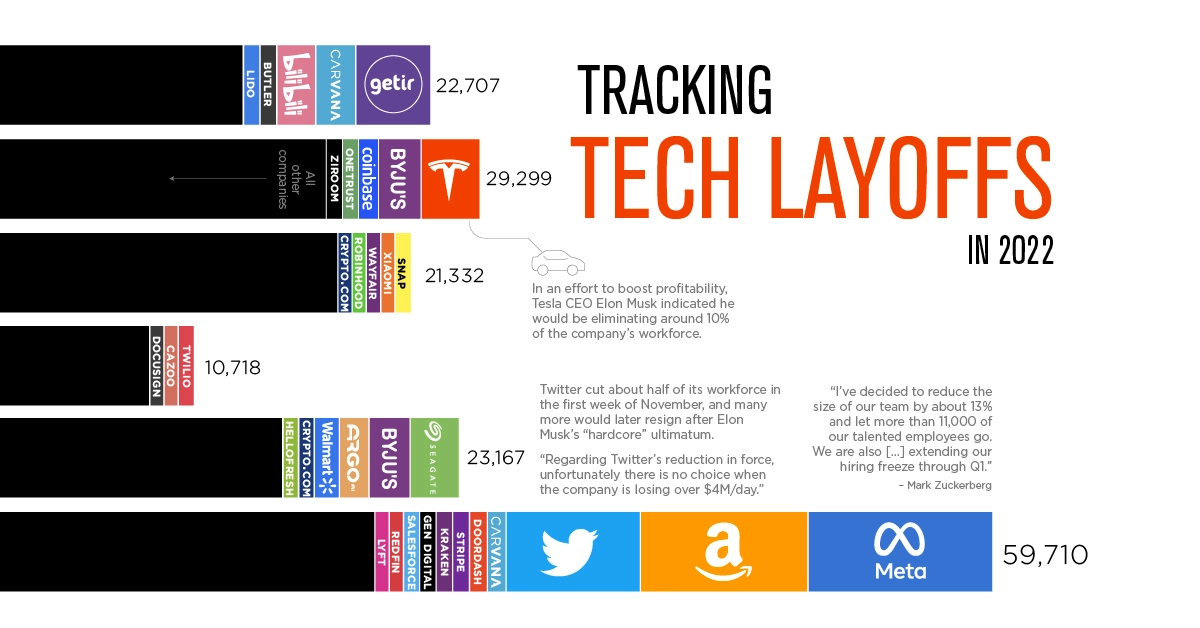
Wall Street just dumped nearly every dollar of the $12.5 billion in loans that helped Elon Musk buy Twitter—now called X—in 2022. A group of seven major banks, led by Morgan Stanley, offloaded $4.74 billion of the debt last Friday, selling more than their planned $3 billion as investors flooded in with $12 billion in orders, according to a report from the Financial Times.

COMMENTS APPRECIATED

Refer and Subscribe

***

***

DAILY UPDATE: D-Day, Digital Health, Stock Companies as Markets Zoom Up!

MEDICAL EXECUTIVE-POST TODAY’S NEWSLETTER BRIEFING

***

Essays, Opinions and Curated News in Health Economics, Investing, Business, Management and Financial Planning for Physician Entrepreneurs and their Savvy Advisors and Consultants

Serving Almost One Million Doctors, Financial Advisors and Medical Management Consultants Daily

A Partner of the Institute of Medical Business Advisors , Inc.

http://www.MedicalBusinessAdvisors.com

SPONSORED BY: Marcinko & Associates, Inc.

***

http://www.MarcinkoAssociates.com

Daily Update Provided By Staff Reporters Since 2007.
How May We Serve You?
© Copyright Institute of Medical Business Advisors, Inc. All rights reserved. 20224

REFER A COLLEAGUE: MarcinkoAdvisors@msn.com

SPONSORSHIPS AVAILABLE: https://medicalexecutivepost.com/sponsors/

ADVERTISE ON THE ME-P: https://tinyurl.com/ytb5955z

***

Today is the 80th anniversary of D-Day: More than 60 World War II veterans flew to Paris over the weekend to take part in what organizers believe could be the final major WWII commemoration involving living veterans. American veterans will be joined by President Joe Biden and other heads of state in Normandy.

CITE: https://www.r2library.com/Resource

The digital health market has had a tough year, with no IPOs in all of 2023. Comparatively, the industry saw roughly 20 public exits in 2021. The recent slowdown in the broader IPO market is linked to several trends, including high interest rates and some high-profile bankruptcies, according to Adriana Krasniansky, head of research at digital health strategy group and venture fund Rock Health’s advisory arm.

Here’s where the major benchmarks ended:

  • The S&P 500 index rose 62.69 points (1.2%) to 5,354.03; the Dow Jones Industrial Average® ($DJI) gained 96.04 points (0.3%) to 38,807.33; the NASDAQ Composite rallied 330.86 points (2.0%) to 17,187.90.
  • The 10-year Treasury note yield (TNX) fell more than 5 basis points to 4.283%, its lowest level since April 1.
  • The CBOE Volatility Index® (VIX) declined 0.53 to 12.63.

What’s up

  • Nvidia only rose 5.16% today, but it was enough to surpass Apple’s market cap, making the high-flying semiconductor stock the second most valuable public company in the US.
  • Crowdstrike rose 11.98% today after reporting better than expected fiscal first quarter earnings yesterday afternoon.
  • Guidewire Software rose 17.63% today after its beat & raise quarterly report late yesterday.
  • Stitch Fix rose 29.40% after a red-hot earnings report, completely turning around the stock’s slow slide downward this year.
  • SweetGreen popped 12.76% this afternoon after revealing that its new automated kitchens can actually save on costs and cut time for orders in the long run.

What’s down

CITE: https://tinyurl.com/2h47urt5

In case you needed more proof that we’re living in the strangest timeline: Morgan Stanley, which owns E*Trade, is contemplating kicking stock influencer Roaring Kitty off the platform. It’s concerned he manipulated GameStop stocks by…posting a meme on X. (the Wall Street Journal)

CITE: https://tinyurl.com/tj8smmes

COMMENTS APPRECIATED

PLEASE SUBSCRIBE: MarcinkoAdvisors@msn.com

Thank You

***

***

***

***

EDUCATIONAL TEXTBOOKS: https://tinyurl.com/4zdxuuwf

***

DAILY UPDATE: Business News Briefs Plus TESLA and the Markets

By Staff Reporters

***

***

1. Regional banks’ plight was Morgan Stanley’s perk. The bank saw nearly $20 billion in new client assets in the wake of the banking crisis that rocked smaller banks like First Republic. Why the bank became a “destination of choice” amid the crisis.

2. Taylor Swift was the only one asking the right question on FTX. The mega star didn’t sign a $100 million sponsorship deal with the crypto exchange because, unlike seemingly everyone in Silicon Valley, she did some form of due diligence.

3. The new-age pension plan. Fidelity and State Street are rolling out annuity options within their 401(k) products, The Wall Street Journal reports. But it comes with a hefty price tag, and not everyone is sold on it.

4. It’s starting to get scary in the housing market. Foreclosure filings were up 22% in Q1 compared to last year, and repossessions are headed in the wrong direction as well.

Finally, Fintel reports that on April 21, 2023, Goldman Sachs maintained coverage of Tesla (NASDAQ:TSLA) with a Buy recommendation. As of April 6th, 2023, the average one-year price target for Tesla is $203.14. The forecasts range from a low of $24.58 to a high of $315.00. The average price target represents an increase of 24.63% from its latest reported closing price of $162.99. The projected annual revenue for Tesla is $118,517MM, an increase of 37.75%. The projected annual non-GAAP EPS is $5.70.

CITE: https://www.r2library.com/Resource

***

  • The S&P 500® Index was up 3.52 points (0.1%) at 4137.04; the Dow Jones industrial average was up 66.44 (0.2%) at 33,875.40; the NASDAQ Composite was down 35.25 (0.3%) at 12,037.20.
  • The 10-year Treasury yield was down about 7 basis points at 3.50%.
  • CBOEs Volatility Index was up 0.12 at 16.89.

Real estate and financials were among Monday’s weakest-performing sectors, while energy companies led gainers thanks to a jump of about 1% in crude oil futures. The U.S. dollar index fell to about 101.37, its weakest level since mid-April, while Treasury yields eased slightly.

***

CITE: https://www.amazon.com/Dictionary-Health-Information-Technology-Security/dp/0826149952/ref=sr_1_5?ie=UTF8&s=books&qid=1254413315&sr=1-5

***

ORDER: https://www.routledge.com/Comprehensive-Financial-Planning-Strategies-for-Doctors-and-Advisors-Best/Marcinko-Hetico/p/book/9781482240283

***

COMMENTS APPRECIATED

Thank You

***

DAILY UPDATE: Charles Schwab and the Major Market Indices

By Staff Reporters

***

***

Analysts at Morgan Stanley downgraded Charles Schwab Corp (NYSE: SCHW) on Tuesday, citing concerns over cash sorting and regulatory changes. But, Schwab CEO Walt Bettinger recently said that the company’s banking unit had enough liquidity to cover if 100% of its bank deposits ran off without having to sell a single security — Morgan Stanley says otherwise. Schwab’s recent performance has not been up to Morgan Stanley’s expectations, with customers moving cash out of sweep accounts into money market funds at a rate twice that which the bank had been modeling.

CITE: https://www.r2library.com/Resource/Title/082610254

***

Here’s how the major indexes performed Thursday.

  • The S&P 500® Index rose 23 points (0.57%) to 4050.84; the Dow Jones industrial average was up 141 points (0.43%) at 32859.03; the NASDAQ Composite was up 87 points (0.73%) at 12013.47.
  • The 10-year Treasury yield slipped 2 basis points to 3.555%.
  • CBOE’s Volatility Index was little changed at 19.14.

***

ORDER: https://www.routledge.com/Comprehensive-Financial-Planning-Strategies-for-Doctors-and-Advisors-Best/Marcinko-Hetico/p/book/9781482240283

***

COMMENTS APPRECIATED

Thank You

***

MORGAN STANLEY: S&P 500 May Drop Another 22% in 2023?

By Staff Reporters

Many investors were happy to wave goodbye to 2022, Wall Street’s worst year since 2008. The S&P finished down 19.4%, while the tech centered NASDAQ shed 33.1%. The blue-chip focused Dow Jones did better, losing just 8.8% across the year. Unfortunately, a number of senior investment bankers predict 2023 could bring more stock market woes. Most recently, in fact, Morgan Stanley Chief U.S. Equity Strategist & Chief Investment Officer, Michael Wilson, said he thought the S&P 500 could drop by another 22% in 2023.

Wilson wrote in a note this week that next year’s losses could be more significant than many are expecting. According to Bloomberg, Wilson thinks a peak in inflation would be “very negative for profitability.” He added, “The consensus could be right directionally, but wrong in terms of magnitude.”

Some analysts think that when inflation peaks, the Federal Reserve will ease up on its aggressive rate hikes and the stock market will recover. But Wilson argues this is only part of the picture. He thinks falling prices would have a knock-on effect on company profits, and the subsequent drop in margins would outweigh any benefit from a change in the Fed’s stance.

CITE: https://www.r2library.com/Resource/Title/0826102549

Wilson also alerted clients to the risk that companies would be caught “off guard” by a combination of falling demand and a catch up in supply. Supply chain issues, caused by a mix of COVID-19 lock downs, labor shortages, and other factors, have contributed to price increases and had a negative impact on production. If the supply chain starts to recover at the same time as recession-induced drops in consumption levels, he thinks the stock market could fall further.

***

ORDER: https://www.routledge.com/Comprehensive-Financial-Planning-Strategies-for-Doctors-and-Advisors-Best/Marcinko-Hetico/p/book/9781482240283

***

COMMENTS APPRECIATED

Thank You

***

A ‘Flawed’ SEC Program [A Retrospective “April Fool’s Day” Analysis]

Join Our Mailing List

SEC Failed to Rein in Investment Banks [April Fool’s Day – 2015]

By Ben Protess, ProPublica – October 1, 2008 5:01 pm EDT

Editor’s Note: This investigative report was first published ten years ago. And so, we ask you to consider – on this April Fool’s Day 2019 – how [if] things have changed since then?  

***

Flag MOney

***

The Securities and Exchange Commission [SEC] last week abolished the special regulatory program that it applied to Wall Street’s largest investment banks. Known as the “consolidated supervised entities” program, it relaxed the minimum capital requirements for firms that submitted to the commission’s oversight, and thus, in the view of some experts, helped create the current global financial crisis.

But, the SEC’s decision to ax the program currently affects no one, since three of the five firms that voluntarily joined the program previously collapsed and the other two reorganized.

The Decision – 18 Months Ago

The decision came last Friday, one day after the commission’s inspector general released a report [1] (PDF) detailing the program’s failed oversight of Bear Stearns before the firm collapsed in March. The commission’s chairman, Christopher Cox, a longtime opponent of industry regulation, said in a statement [2] that the report “validates and echoes the concerns” he had about the program, which had been voluntary for the five Wall Street titans since 2004.

The report found that the SEC division that oversees trading and markets was “not fulfilling its obligations. “These reports are another indictment of failed leadership,” said Sen. Charles Grassley (R-Iowa) who requested the inspector general’s investigation.

The SEC program, approved by the commission in 2004 under Cox’s predecessor, William Donaldson, allowed investment banks to increase their amount of leveraged debt. But, there was a tradeoff: Banks that participated allowed their broker-dealer operations and holding companies to be subject to SEC oversight. Previous to 2004, the SEC only had authority to oversee the banks’ broker dealers.

Longstanding SEC rules required the broker dealers to limit their debt-to-net-capital ratio and issue an early warning if they began to approach the limit. The limit was about 15-to-1, according to the inspector general report, meaning that for every $15 of debt, the banks were required to have $1 of equity.

But the 2004 “consolidated supervised entities” program revoked these limits. The new program also eliminated the requirement that firms keep a certain amount of capital as a cushion in case an asset defaults.

Bear Sterns

As a result, the oversight program created the conditions that helped cause the collapse of Bear Stearns. Bear had a gross debt ratio of about 33-to-1 prior to its demise, the inspector general found. The inspector general also found that Bear was fully compliant with the programs’ requirements when it collapsed, which raised “serious questions about whether the capital requirement amounts were adequate,” the report said.

The report quoted Lee Pickard, a former SEC official who helped write the original debt-limit requirements in 1975 and now argues the 2004 program is largely to blame for the current Wall Street crisis.

“The SEC gave up the very protections that caused these firms to go under,” Pickard said in an interview with ProPublica. “The SEC in 2004 thought it gained something in oversight, but in turn it gave up too much public protection. You don’t bargain in a way that causes you to give up serious protections.”

Pickard, now a senior partner at a Washington, D.C.-based law firm, estimated that prior to the 2004 program most firms never exceeded an 8-to-1 debt-to-net capital ratio.

The previous program “had an excellent track record in preserving the securities markets’ financial integrity and protecting customer assets,” Pickard wrote [3] in American Banker this August. The new program required “substantial SEC resources for complex oversight, which apparently are not always available.”

Asked if he believes the 2004 program was a direct cause of the current crisis, Pickard told ProPublica, “I’m afraid I do.”

The New York Times reported Saturday that the SEC created the program after “heavy lobbying” for the plan from the investment banks. The banks favored the SEC as their regulator, the Times reported, because that let them avoid regulation of their fast-growing European operations by the European Union, which has been threatening to impose its own rules since 2002.

SEC Spokesman

A SEC spokesman declined to comment for this article, referring inquires to Chairman Cox’s statement. In the statement, Cox admitted the program “was fundamentally flawed from the beginning.” But Cox, a former Republican congressman from California, offered mild support for the program as recently as July when he testified before the House Committee on Financial Services. The program, among other oversight efforts, Cox said, had “gone far to adapt the existing regulatory structure to today’s exigencies.” He added that legislative improvements were necessary as well, and has since told Congress that the program failed.

More Questions

So why did the commission not end the program sooner? Some say that the program’s flaws only recently became apparent. “As late as 2005, the program seemed to make a lot of sense,” said Charles Morris, a former banker who predicted the current financial crisis in his book written last year, The Trillion Dollar Meltdown [4]. The SEC “didn’t know it didn’t work until we had this stress.”

And leverage does not always spell trouble. In a strong economy, leverage can also be attractive because it can increase the profitability of banks through lending.

In his recent statement, Cox said the inspector general’s findings reflect a deeper problem: “the lack of specific legal authority for the SEC or any other agency to act as the regulator of these large investment bank holding companies.”

Secretary of the Treasury Henry Paulson has called for a refining of the regulatory structure to reflect the global and interconnected nature of today’s financial system. In any case, the program’s failure can be seen in the disappearance of the participating banks: Bear Stearns, Lehman Brothers, Merrill Lynch, Morgan Stanley and Goldman Sachs.

skeleton-jpeg1

***

Assessment

Merrill Lynch’s leverage ratio was possibly as high as 40-to-1 this year and Lehman Brothers faced a ratio of about 30-to-1, according to Bloomberg [5].

The Fed and Treasury Department forced Bear Stearns into a merger with JPMorgan Chase in March. And the last two months, Lehman Brothers went bankrupt and sold their core U.S. business to British bank Barclays PLC, and Merrill Lynch was acquired by Bank of America. Morgan Stanley and Goldman Sachs, the two remaining large independent investment banks, changed their corporate structures to become bank holding companies, which are regulated by the Federal Reserve.

As these banks have folded or reorganized over the last several months, the Federal Reserve has largely assumed the SEC’s oversight responsibilities, though the commission will still have the power to regulate broker dealers.

Original Essay: http://www.propublica.org/article/flawed-sec-program-failed-to-rein-in-investment-banks-101

Conclusion

Your thoughts and comments on this ME-P are appreciated. Feel free to review our top-left column, and top-right sidebar materials, links, URLs and related websites, too. Then, subscribe to the ME-P. It is fast, free and secure.

Link: http://feeds.feedburner.com/HealthcareFinancialsthePostForcxos

Speaker: If you need a moderator or speaker for an upcoming event, Dr. David E. Marcinko; MBA – Publisher-in-Chief of the Medical Executive-Post – is available for seminar or speaking engagements. Contact: MarcinkoAdvisors@msn.com

OUR OTHER PRINT BOOKS AND RELATED INFORMATION SOURCES:

Product DetailsProduct DetailsProduct Details

Comprehensive Financial Planning Strategies for Doctors and Advisors: Best Practices from Leading Consultants and Certified Medical Planners(TM)

“Sell Everything!”

 Join Our Mailing List

Rick Kahler MS CFP

[By Rick Kahler MS CFP]

“Sell Everything!”

That’s the advice to investors from RBS, a large investment bank based in Scotland, which issued the dire recommendation to its customers on January 8th, 2016.

The warning urged investors to sell everything except high-quality bonds, predicting the global economy was in for a “fairly cataclysmic year ahead …. similar to 2008.” They said this is a year to focus on the return of capital rather a return on capital.

Stunning

I was first stunned that a respectable investment bank would issue such a radical recommendation. Then I was amused at my own surprise. I had momentarily forgotten this is logical behavior for a company whose profits depend on its customers actively buying and selling. It is not legally required to look out for customers’ best interests and has no incentive to do so.

Clearly, the time-honored way of earning market returns over the long haul is to diversify among asset classes, rebalance religiously, and always stay in the markets. The research is overwhelming that shows those who attempt to time the markets have significantly lower returns over the long haul than those who don’t.

Example:

For example, according to a study by Dalbar, Inc., over the last twenty years the average underperformance of investors and advisors that timed the market was 7.12% a year.

What’s so bad about trying to minimize loses and selling out when things begin looking scary?

Nothing. Who wouldn’t want to exit markets just in time to watch them fall so low that you could sweep up bargains by buying back in? Therein lies the problem: not only do you need to get out on time (not too early and not too late), but you must then know when to get back in.

The Crystal Ball

The only way I know to do this is to own a crystal ball, which the economists at RBS apparently possess.

Here are a few of the things they say to expect:

  • Oil could fall as low as $16 a barrel.
  • The world has far too much debt to be able to grow well.
  • Advances in technology and automation will wipe out up to half of all jobs.
  • Global disinflation is turning to global deflation as China and the US sharply devalue their currencies.
  • Stocks could fall 10% to 20%.

Prediction

The last prediction was the one that grabbed my attention. Given the comparison of the coming year to 2008, I expected a forecast of a significantly greater drop in stocks, say 40% to 60%. Comparatively, their forecast of 10% to 20% seems almost rosy.

While RBS is particularly gloomy, bearish forecasts have also been issued by other investment brokerage firms, including JP Morgan, Morgan Stanley, Bank of America Merrill Lynch, Barclays, Deutsche Bank, Societe Generale, and Macquarie.

Just for perspective, here’s a look as reported by The Spectator at previous predictions from Andrew Roberts, the RBS analyst who issued the recent dire warning. In June 2010, he warned,

“We cannot stress enough how strongly we believe that a cliff-edge may be around the corner, for the global banking system (particularly in Europe) and for the global economy. Think the unthinkable.” In July 2012, he said, “People talk about recovery, but to me we are in a much worse shape than the Great Depression.”

Incidentally, one thing Roberts did not predict was the meltdown of 2008.

***

212_1

“Sell Everything?”

***

Assessment

The inaccuracy of earlier dire predictions should encourage physicians and all investors to stay the course.

As usual, chances are that those who diversify their investments among five or more asset classes and periodically rebalance their portfolios will come out on top. The odds greatly favor consumers who ignore doom-and-gloom warnings, especially from those whose companies may profit from investor panic.

Conclusion

Your thoughts and comments on this ME-P are appreciated. Feel free to review our top-left column, and top-right sidebar materials, links, URLs and related websites, too. Then, subscribe to the ME-P. It is fast, free and secure.

Speaker: If you need a moderator or speaker for an upcoming event, Dr. David E. Marcinko; MBA – Publisher-in-Chief of the Medical Executive-Post – is available for seminar or speaking engagements. Contact: MarcinkoAdvisors@msn.com

OUR OTHER PRINT BOOKS AND RELATED INFORMATION SOURCES:


Risk Management, Liability Insurance, and Asset Protection Strategies for Doctors and Advisors: Best Practices from Leading Consultants and Certified Medical Planners™         Comprehensive Financial Planning Strategies for Doctors and Advisors: Best Practices from Leading Consultants and Certified Medical Planners™

***

Health 2.0 Financial Planning for Medical Executive-Post Members

A By-Product of Health 2.0?

By Dr. David Edward Marcinko FACFAS MBA CMP*

[Founder and CEO]

www.MedicalBusinessAdvisors.com

Dr David E Marcinko MBAA decade ago, Editor Gregory J. Kelley of Physician’s MONEY DIGEST and I reported that a 47 year old-doctor with $184,000 annual income would need about $5.5 million dollars for retirement at age 65. Then came the “flash-crash’ of 2007-08, the home mortgage fiasco and the Patient Protection and Accountable Care Act [PP-ACA] of 2010; etc.

No wonder that medical provider career panic is palpable. Much like the new medical home concept, the idea of holistic life planning was born.

Life Planning

Life planning has many detractors and defenders. Formally, life planning has been defined in the following way. 

Financial Life Planning is an approach to financial planning that places the history, transitions, goals, and principles of the client at the center of the planning process.  For the client, their life becomes the axis around which financial planning develops and evolves.

But, for physicians, life planning’s quasi-professional and informal approach to the largely isolated disciplines of medically focused financial planning, was still largely inadequate.

Why? 

Today’s personal financial and practice environment is incredibly more complex than it was in 2007-08, as economic stress from HMOs, Wall Street, liability fears, criminal scrutiny from government agencies, IT mischief from hackers, economic benchmarking from hospitals and the lost confidence of patients all converged to inspire a robust new financial planning 2.0 approach for medical professionals.

Example of a financial planning mistake 

Recall the tale of Dr. Debasis Kanjilal, a pediatrician from New York who put more than $500,000 into the dot.com company, InfoSpace, upon the advice of Merrill Lynch’s star but non fiduciary analyst Henry Bloget.

Is it any wonder that when the company crashed, the analyst was sued, and Merrill settled out of court? Other analysts, such as Mary Meeker of Morgan Stanley, Dean Witter and Jack Grubman from Salomon Smith Barney, were involved in similar fiascos.

Although sad, this story is a matter of public record. Hopefully, doctors now understand that the big brokerage houses that underwrite and recommend stocks may have credibility problems, and that physicians got burned with the adrenalin rush of “self-directed” investment portfolios.

Example of a medical practice management mistake 

Just reflect a moment on colleagues willing to securitize their medical practices a few years ago, and cash out to Wall Street for perceived riches that were not rightly deserved

Where are firms such as MedPartners, Phycor, FPA and Coastal now? A recent survey of the Cain Brothers Physician Practice Management Corporation Index of publicly traded PPMCs revealed a market capital loss of more than 95%, since inception. 

Another Approach?

This disruptive narrative shift was formally noted by the Institute of Medical Business Advisors Inc [iMBA, Inc] and introduced to the medical and financial services industry. This research and corpus of work resulted in hundreds of publications in the Library of Medicine, National Institute of Health (NIH) and the Library of Congress, along with related publications, a dozen textbooks and white papers

http://www.ncbi.nlm.nih.gov/nlmcatalog?term=marcinko

The iMBA approach to financial planning, as championed by the www.CertifiedMedicalPlanner.org professional charter designation, integrates the traditional concepts of fiduciary focused financial planning, with the increasing complex business concepts of medical practice management.

The former ideas are presented in our textbook on financial planning for doctors: Financial Planning for Physicians and Advisors

The later in our companion book: Business of Medical Practice [Edition 3.0]

A textbook for hospital CXOs and physician-executives: Hospitals & Healthcare Organizations

While most issues of risk management, liability and insurance are found in Risk Management and Insurance Strategies for Physicians and Advisors

And, for the perplexed, all definitions are codified in the dictionary glossary Health Dictionary Series

Health 2.0 Paradigm Shift

And so, the ME-P community now realizes that a more integrated approach is needed.  The traditional vision of medical practice management, personal physician financial planning and how they may look in the future are rapidly changing as the retail mentality of medicine is replaced with a wholesale philosophy.

Or, how views on maximizing current practice income might be more profitably sacrificed for the potential of greater wealth upon eventual practice sale and disposition.

Or, how Yale University economist Robert J Shiller warns in “The New Financial Order” [Risk in the 21st Century] that the risk for choosing the wrong healthcare profession or specialty might render physicians obsolete by technological changes, managed care systems or fiscally unsound demographics. 

Physician-Executive

My Assessment

Yet, the opportunity to re-vise the future at any age through personal re-engineering, exists for all of us, and allows a joint exploration of the medicine, business and the meaning and purpose of life.

To allow this deeper and more realistic approach, the advisor and the doctor must build relationships based on fiduciary trust, greater self-knowledge and true medical business and financial enhancement acumen.

Are you up to the task?

Conclusion

Your thoughts and comments on this ME-P are appreciated. Feel free to review our top-left column, and top-right sidebar materials, links, URLs and related websites, too. Then, subscribe to the ME-P. It is fast, free and secure.

Link: http://feeds.feedburner.com/HealthcareFinancialsthePostForcxos

Speaker: If you need a moderator or speaker for an upcoming event, Dr. David E. Marcinko; MBA – Publisher-in-Chief of the Medical Executive-Post – is available for seminar or speaking engagements. Contact: MarcinkoAdvisors@msn.com

OUR OTHER PRINT BOOKS AND RELATED INFORMATION SOURCES:

Product DetailsProduct DetailsProduct Details

Product Details  Product Details

Product DetailsProduct Details

Morgan Stanley Peddled Security Its Own Employee Called ‘Nuclear Holocaust’

Join Our Mailing List
An Explosive Charge
By Jesse Eisinger Pro Publica
###
A new lawsuit suggests employees at Morgan Stanley understood the housing market was in trouble and exploited that knowledge to bet against securities and unload garbage investments on the unsuspecting.

The bank denies wrongdoing.

Bank

Link: Explosive Charge: Morgan Stanley Peddled Security Its Own Employee Called ‘Nuclear Holocaust’

Conclusion

Your thoughts and comments on this ME-P are appreciated. Feel free to review our top-left column, and top-right sidebar materials, links, URLs and related websites, too. Then, subscribe to the ME-P. It is fast, free and secure.

Speaker: If you need a moderator or speaker for an upcoming event, Dr. David E. Marcinko; MBA – Publisher-in-Chief of the Medical Executive-Post – is available for seminar or speaking engagements. Contact: MarcinkoAdvisors@msn.com

OUR OTHER PRINT BOOKS AND RELATED INFORMATION SOURCES:

Product Details  Product Details

***