Doctors to Get a Smaller Piece of American Pie?

Join Our Mailing List

And Contracting Lifestyles for Us All

By Rick Kahler MS CFP® ChFC CCIM www.KahlerFinancial.com

“Any way you slice the pie, Americans better come to grips with the fact their lifestyles are going to contract.” That’s the bottom line I’ve gleaned from attending several conferences and listening to some of the nation’s top economists recently.

But, what about Doctors and Medical Professioanals?

New Medical Practice Entrepreneurial Business Rules for Young Physicians [circa 2012]

The Fundamentals

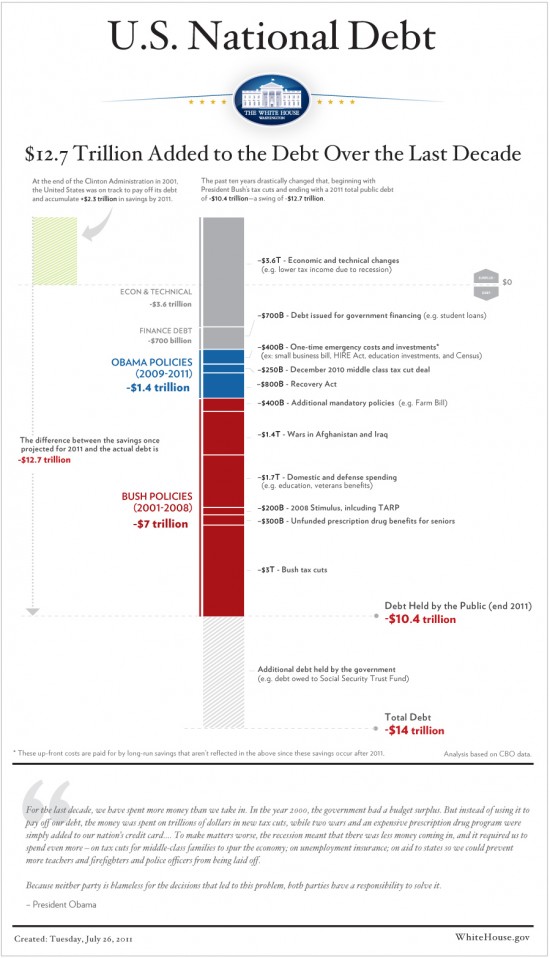
Basically, the US is spending far more than it takes in via tax revenues, creating an annual deficit. The shortfall is covered by borrowing the money, which adds to the national debt. The Treasury Department borrows the money from two sources: private investors (individuals, banks, companies, and other governments) and the Federal Reserve Bank.

The Federal Reserve Bank

Where does the Federal Reserve get money? I’ve written about this before and our Editor has commented on it. They create it with a keystroke, which is the digital-age equivalent of printing money.

The Modern US Monetary System

It’s important to understand that the US government has no intention of ever paying down the US debt. Neither politicians nor economists can agree on whether to stop borrowing (or creating) money to fund the annual deficit. To actually reduce the national debt, we must run surpluses, something we haven’t done in over 15 years and then it was only for one year. We actually have never paid off our debt from WWII.

Deficit Spending

Reducing our deficit spending requires us either to raise taxes, cut spending, or borrow (which includes creating) more money. If we raise taxes to cover the deficit, we will most likely force a recession or depression. We simply can’t take $1.3 trillion out of the private sector without imploding the economy. If we cut spending, we will most likely create a recession or depression, as we simply can’t cut $1.3 trillion of government spending overnight without imploding the economy. If we do both, we will most likely still have a recession or depression.

Print or Borrow

At the moment, Congress can’t agree what to do, so we continue to borrow and print money. An increasing national debt means higher borrowing costs (interest). This means we need more revenues (from taxes or creating more money) to continue to fund Social Security, Medicare, welfare programs, infrastructure, and national defense. Creating (printing) money can lead to rising inflation, though it doesn’t automatically do so, as Japan has demonstrated for 20 years. This results in the devaluation of our global purchasing power, meaning the cost of everything we buy from other countries increases. It’s clear that the most appealing option to politicians and most economists is to continue to borrow and inflate.

Why the Government is Not-Like Medical Professionals

The Message

No matter how you cut and paste these options, one result is the same. Americans’ lifestyles will contract. This will come either from less government support and services, less spendable income via higher taxes, or an erosion of purchasing power from a declining dollar. This is the last message most Americans want to hear. The attitude is like that of the overspender who recently asked me, “How can I cut my expenses but maintain my current lifestyle?” The most honest answer is, “Sorry, but it can’t be done.” True, it’s possible to find creative ways to keep the parts of your lifestyle that matter the most. However, reducing expenses almost always means a lifestyle reduction. This is one reason so many people resist budgeting.

Assessment

For most doctors, lawyers, CPAs, FAs, laborers and all Americans, budgeting means reducing spending, even though that isn’t inherently what budgeting is. In its purest form, it is becoming aware of our current spending patterns and redirecting income to the areas of spending that will best support our desired lifestyle. The more our income shrinks, the more crucial it becomes to redirect it carefully and consciously.

Personal Budgeting Guidelines for Doctors

Conclusion

In other words, if we have to settle for a smaller piece of pie, we’d better make sure we’re buying the kind of pie we really want.

Your thoughts and comments on this ME-P are appreciated. Feel free to review our top-left column, and top-right sidebar materials, links, URLs and related websites, too. Then, subscribe to the ME-P. It is fast, free and secure.

Link: http://feeds.feedburner.com/HealthcareFinancialsthePostForcxos

Speaker: If you need a moderator or speaker for an upcoming event, Dr. David E. Marcinko; MBA – Publisher-in-Chief of the Medical Executive-Post – is available for seminar or speaking engagements. Contact: MarcinkoAdvisors@msn.com

Our Other Print Books and Related Information Sources:

Health Dictionary Series: http://www.springerpub.com/Search/marcinko

Practice Management: http://www.springerpub.com/product/9780826105752

Physician Financial Planning: http://www.jbpub.com/catalog/0763745790

Medical Risk Management: http://www.jbpub.com/catalog/9780763733421

Hospitals: http://www.crcpress.com/product/isbn/9781439879900

Physician Advisors: www.CertifiedMedicalPlanner.org

Product Details  Product Details

Product Details

The Tax Man Cometh to Police You on Health Care

Join Our Mailing List

About the New Health Care Tax and IRS Job Creation

WASHINGTON (AP)

The Supreme Court’s decision to uphold most of President Barack Obama’s health care law will come home to roost for most taxpayers in about 2 1/2 years, when they’ll have to start providing proof on their tax returns that they have health insurance.

LINK: New Jobs: IRS to hire thousands more agents to collect new health care taxes

Conclusion

Your thoughts and comments on this ME-P are appreciated. Feel free to review our top-left column, and top-right sidebar materials, links, URLs and related websites, too. Then, subscribe to the ME-P. It is fast, free and secure.

Link: http://feeds.feedburner.com/HealthcareFinancialsthePostForcxos

Speaker: If you need a moderator or speaker for an upcoming event, Dr. David E. Marcinko; MBA – Publisher-in-Chief of the Medical Executive-Post – is available for seminar or speaking engagements. Contact: MarcinkoAdvisors@msn.com

Our Other Print Books and Related Information Sources:

Health Dictionary Series: http://www.springerpub.com/Search/marcinko

Practice Management: http://www.springerpub.com/product/9780826105752

Physician Financial Planning: http://www.jbpub.com/catalog/0763745790

Medical Risk Management: http://www.jbpub.com/catalog/9780763733421

Hospitals: http://www.crcpress.com/product/isbn/9781439879900

Physician Advisors: www.CertifiedMedicalPlanner.org

Product Details  Product Details

New IRS Guidance on Health FSAs for Doctors

Join Our Mailing List

On Section 125 Cafeteria Plans

By Children’s Home Society of Florida Foundation

In Notice 2012-40; 2012-25 IRB 1 (29 May 2012), the IRS issued guidance on the changes required in 2013 for Sec. 125 Cafeteria Plans.

Section 125 Plans

Many companies have created healthcare flexible spending accounts under Section 125.  For 2013, the salary reduction contributions are limited to $2,500.  The notice indicates that this limit will be adjusted for inflation in 2014 and later years. If contributions greater than $2,500 are made to the account, the excess funds will not subject the employee to penalties if the funds are distributed as taxable income in the taxable year in which the cafeteria plan year ends.  The $2,500 limit does not apply to non-elective plans.  Many of these plans are described as “flex limit” or similar plans.

New Limits

Written cafeteria plans must be modified to reflect the new $2,500 limit and other provisions.  If the plan follows the proposed regulations issued in 2007, the participants may rely on the plan to be qualified.

Assessment

And so, as more and more medical professionals become employees, FSA rules should be monitored closely by doctors and their FAs.

Conclusion

Your thoughts and comments on this ME-P are appreciated. Feel free to review our top-left column, and top-right sidebar materials, links, URLs and related websites, too. Then, subscribe to the ME-P. It is fast, free and secure.

Speaker: If you need a moderator or speaker for an upcoming event, Dr. David E. Marcinko; MBA – Publisher-in-Chief of the Medical Executive-Post – is available for seminar or speaking engagements. Contact: MarcinkoAdvisors@msn.com

OUR OTHER PRINT BOOKS AND RELATED INFORMATION SOURCES:

Product Details  Product Details

The Supreme Court Permits Healthcare Taxation “Penalty”

Join Our Mailing List

On the PP-ACA

By Children’s Home Society of Florida Foundation

In 2010 Congress passed the Patient Protection and Affordable Care Act (PPACA). A key part of the Act is an individual mandate for health insurance. All individuals must have health insurance by 2014 or pay a tax-penalty.

The Tax Penalty

The tax-penalty starts at the greater of $285 per family or 1% of income in 2014. However, by 2016, the tax-penalty increases to $2,085 per family or 2.5% of income, whichever is larger.

Commerce Clause

Many states sued the federal government and asked that the individual mandate be held invalid. While the various courts had different positions on the issue, some federal judges were concerned that requiring a person to purchase insurance could be a violation of the Commerce Clause of the U.S. Constitution.

CJSC John Roberts

Chief Justice of the Supreme Court John Roberts wrote the opinion for a 5-4 majority in the PPACA case. First, he determined whether or not the Court was prohibited from ruling on the case under the Anti-Injunction Act. He decided that the required payment would be a “penalty” for purposes of that Act and not a tax. Therefore, the Supreme Court could issue a ruling.

Second, Chief Justice Roberts reviewed the powers of government under the Commerce Clause. He agreed with the other four justices opposing PPACA that Congress had the right to regulate commerce, but does not have the right to regulate non-activity. Therefore, requiring individuals to purchase health insurance is not a permitted power under that provision. PPACA could not be approved under the Commerce Clause.

However, Roberts observed that it is permissible for the Court to consider the validity of PPACA under the power of the government to tax. He determined that the individual mandate to purchase insurance or pay a penalty-tax is permitted under that power. Roberts stated, “Because the Constitution permits such a tax, it is not our role to forbid it, or to pass upon its wisdom or fairness.” He carefully approved the use of the power without discussing the appropriateness of PPACA provisions.

Roberts found several reasons for permitting the taxing power. The tax-penalty will be paid when filing IRS Form 1040. As is true with other tax provisions, lower-income individuals are excluded from this tax-penalty. The tax-penalty is part of the Internal Revenue Code and will be collected by the IRS.

Dissenters

The four dissenting Justices would have determined that PPACA fails to meet the requirements of the Commerce Clause and would have invalidated the entire bill.

Editor’s Note: The taxes to pay for PPACA include a new tax on medical devices that will increase costs to individuals and healthcare providers. There also is a new 3.8% Medicare tax. It applies in 2013 to income and capital gains. If the expected post-election tax bill extends the current 15% capital gain rate, then the capital gains tax rate will be 18.8% in 2013. However, if the 15% federal capital gains tax rate is increased to 20%, then the new rate in January of 2013 will be 23.8%. The increase in capital gains rate may influence charitable gifts of appreciated property in 2013.

Conclusion

Your thoughts and comments on this ME-P are appreciated. Feel free to review our top-left column, and top-right sidebar materials, links, URLs and related websites, too. Then, subscribe to the ME-P. It is fast, free and secure.

Link: http://feeds.feedburner.com/HealthcareFinancialsthePostForcxos

Speaker: If you need a moderator or speaker for an upcoming event, Dr. David E. Marcinko; MBA – Publisher-in-Chief of the Medical Executive-Post – is available for seminar or speaking engagements. Contact: MarcinkoAdvisors@msn.com

Our Other Print Books and Related Information Sources:

Health Dictionary Series: http://www.springerpub.com/Search/marcinko

Practice Management: http://www.springerpub.com/product/9780826105752

Physician Financial Planning: http://www.jbpub.com/catalog/0763745790

Medical Risk Management: http://www.jbpub.com/catalog/9780763733421

Hospitals: http://www.crcpress.com/product/isbn/9781439879900

Physician Advisors: www.CertifiedMedicalPlanner.org

Product Details

Taxes and the SCOTUS ACA Decision

Join Our Mailing List

My Synopsis for Physician Investors

By Dr. David Edward Marcinko FACFAS MBA CMP™

www.CertifiedMedicalPlanner.org

[Publisher-in-Chief]

I was at Emory University this past weekend for an unrelated colloquium. But all the chatter, of course, was about SCOTUS, taxes and the just announced ACA decision.

Most doctors I know – just don’t like paying needless taxes. So, what’s the buzz for physicians and other medical professional investors, and their financial advisors [FAs]?

The Synopsis

The taxes to pay for the Affordable Care Act include a new tax on medical devices that will increase costs to individuals and healthcare providers.

There also is a new 3.8% Medicare tax. It applies in 2013 to income and capital gains.

If the expected post-election tax bill extends the current 15% capital gain rate, then the capital gains tax rate will be 18.8% in 2013. However, if the 15% federal capital gains tax rate is increased to 20%, then the new rate in January of 2013 will be 23.8%.

In addition to dividend seeking investors, the increase in capital gains rate may also influence charitable gifts of appreciated property in 2013.

Assessment

Please weigh-in all you FAs and healthcare focused CPAs. What is a physician investor supposed to do, now?

Conclusion

Your thoughts and comments on this ME-P are appreciated. Feel free to review our top-left column, and top-right sidebar materials, links, URLs and related websites, too. Then, subscribe to the ME-P. It is fast, free and secure.

Speaker: If you need a moderator or speaker for an upcoming event, Dr. David E. Marcinko; MBA – Publisher-in-Chief of the Medical Executive-Post – is available for seminar or speaking engagements. Contact: MarcinkoAdvisors@msn.com

OUR OTHER PRINT BOOKS AND RELATED INFORMATION SOURCES:

Product Details

Update on Tax Reform and New Revenue with FFS Medicare Plans?

Join Our Mailing List

About the Bipartisan Policy Center Debt Reduction Task Force

By Children’s Home Society of Florida Foundation

Senator Max Baucus (D-MT) is continuing his series of tax reform hearings as Chairman of the Senate Finance Committee. On June 19, former Sen. Pete Domenici (R-NM) and Alice Rivlin, former Director of the Congressional Budget Office and the Office of Management and Budget, described their solution. Domenici and Rivlin are the Co-Chairs of the Bipartisan Policy Center Debt Reduction Task Force.

The Domenici-Rivlin Plan

Domenici emphasized that there are two essential parts of the potential 2013 financial reform. He stated, “Healthcare reform and tax reform that raises additional revenue are essential pieces of any serious plan.” Then, Rivlin continued to describe the basic principles for tax reform. She commented, “Assume that all income from whatever source is taxable, which would enable you to raise more revenue from much lower rates, and then go back to decide which modifications are absolutely essential, even though they would raise the rates.”

Two Major Changes

The Domenici-Rivlin plan starts with a modification of Medicare. They propose two major changes.

1. Federal Medicare Exchanges. Private companies could offer fee-for-service and other comprehensive Medicare plans. All Medicare beneficiaries could choose their plan.

2. Competitive Pricing. The private plans and traditional fee-for-service Medicare plans would receive federal support at the level of the second-lowest-cost plan. This pricing method encourages plan providers to economize and reduce overall costs.

Tax Reform

Domenici and Rivlin also offered very specific proposals for comprehensive tax reform.

1. Tax Brackets. Their personal tax system has brackets of 28% and 15%. The corporate rate is 28%.

2. Capital Gains. All gains from capital asset sales are taxed at ordinary income rates. Most taxpayers would pay 28% capital gains rates.

3. Child Credit. The credit per child would be $1,600.

4. Itemized Deductions. None; except miscellaneous deductions that exceed 5% of adjusted gross income.

5. Mortgage Deduction. A 15% credit on interest paid with a limit of $25,000 per year.

6. Charitable Gifts. A 15% credit on deductible gifts.

7. State and Local Taxes. Not deductible.

8. IRAs and Retirement Plans. A 15% tax credit or deductions up to $20,000 per year.

Assessment

Ms. Rivlin concluded her discussion by observing that the plan under discussion was similar to the Bowles-Simpson plan approved by the National Commission on Fiscal Responsibility and Reform. She observed, “The basic structure is the same. You can’t get there any other way.”

Editor’s Note:

Sen. Baucus and House Ways and Means Chairman Dave Camp (R-MI) are steadily moving toward major tax reform in 2013. The two bipartisan groups advocating reform have agreed on general principles. However, there still remains a major political discussion at the end of this year before broad-based reform can commence. Your editor and this organization take no specific position on these recommendations. This information is offered because it will have major impact on all Americans.

Conclusion

Your thoughts and comments on this ME-P are appreciated. Feel free to review our top-left column, and top-right sidebar materials, links, URLs and related websites, too. Then, subscribe to the ME-P. It is fast, free and secure.

Link: http://feeds.feedburner.com/HealthcareFinancialsthePostForcxos

Speaker: If you need a moderator or speaker for an upcoming event, Dr. David E. Marcinko; MBA – Publisher-in-Chief of the Medical Executive-Post – is available for seminar or speaking engagements. Contact: MarcinkoAdvisors@msn.com

Our Other Print Books and Related Information Sources:

Health Dictionary Series: http://www.springerpub.com/Search/marcinko

Practice Management: http://www.springerpub.com/product/9780826105752

Physician Financial Planning: http://www.jbpub.com/catalog/0763745790

Medical Risk Management: http://www.jbpub.com/catalog/9780763733421

Hospitals: http://www.crcpress.com/product/isbn/9781439879900

Physician Advisors: www.CertifiedMedicalPlanner.org

Product Details  Product Details


The Physician’s Home Mortgage Tax Benefit

Join Our Mailing List

What is the Real Benefit?

Your home is likely your biggest investment. So, knowing exactly what, and how much, you’re paying is just common sense.

Total Costs

But, when medical professionals map out the life of their home mortgage and the total cost — even factoring the best mortgage rate – they often fail to consider the copious tax benefits they will receive.

Going Granular

We take a look at three home-buyer scenarios to determine just how much they will receive in tax benefits over the life of their loan, and the total amount they will have paid when their loan is finally over.

Assessment

Also included is the cutoff point for each filing status for when the standard tax deduction becomes more than the itemized deduction.

Conclusion

Your thoughts and comments on this ME-P are appreciated. Feel free to review our top-left column, and top-right sidebar materials, links, URLs and related websites, too. Then, subscribe to the ME-P. It is fast, free and secure.

Link: http://feeds.feedburner.com/HealthcareFinancialsthePostForcxos

Speaker: If you need a moderator or speaker for an upcoming event, Dr. David E. Marcinko; MBA – Publisher-in-Chief of the Medical Executive-Post – is available for seminar or speaking engagements. Contact: MarcinkoAdvisors@msn.com

Our Other Print Books and Related Information Sources:

Health Dictionary Series: http://www.springerpub.com/Search/marcinko

Practice Management: http://www.springerpub.com/product/9780826105752

Physician Financial Planning: http://www.jbpub.com/catalog/0763745790

Medical Risk Management: http://www.jbpub.com/catalog/9780763733421

Hospitals: http://www.crcpress.com/product/isbn/9781439879900

Physician Advisors: www.CertifiedMedicalPlanner.org

Product Details  Product Details

The Case for Major Tax Reform in 2013

Join Our Mailing List

Tax Code is “Beast with Hundreds of Heads”

By Children’s Home Society of Florida Foundation

Senate Finance Committee Chairman Max Baucus (D-MT) has been holding a series of hearings in preparation for major tax reform in 2013. In an address on June 11 to the Bipartisan Policy Center, Baucus outlined the basic guidelines for major tax reform. He compared the current tax code to “Hydra, the mythical Greek beast with hundreds of heads.” Baucus noted that the last major tax reform of the entire code was 1986. Since that time, Congress has made 15,000 changes to the Tax Code. He suggested it is long past time to “get rid of the deadwood and simplify the code.” Baucus believes that the Tax Code needs to reflect the major changes in America since 1986.

Deficits and Debt:

There has been a rapid growth in both the deficit and the debt in the past decade. The public debt is now 73% of America’s gross domestic product (GDP). This is the highest level of debt since World War II. In addition, with the reduction in tax revenue from capital gains and other business revenue, the total receipts by the government are the “lowest they have been since World War II.” A combination of higher spending and lower revenues has created a serious debt and deficit problem. Tax reform will need to be accompanied by a sound budget that reduces the national debt and deficit. This will include both tax increases and spending reductions.

World Competition:

All of America faces major challenges because of the changing world. The U.S. economy has grown 88% since 1986. However, most of the gains have gone to upper-income individuals. In the past 15 years, America has 15% more college graduates. However, some of the other nations in the third world have increased their number of graduates by 90%. All of these new college graduates throughout the world are creating substantial competition for job growth. Families have also changed significantly. In 1986, there were more couples with one breadwinner. Now there are more single persons and working couples. There are fewer manufacturing jobs. The American economy has moved steadily from manufacturing to exporting financial services, software and engineering.

Finally, many foreign nations have acted aggressively to modernize their education systems, infrastructure and tax codes. Foreign companies increasingly have grown to join the members of the Fortune Global 500. Many of these large foreign companies have been acquiring U.S. companies and reducing the jobs in this nation. For example, when the European company Unilever acquired the U.S. company Alberto Culver, it closed an Illinois production facility and moved hundreds of jobs overseas.

A Solution?

Baucus foresees a four-part solution. A new tax code will be needed that has a focus on jobs, competition, innovation and opportunity.

1. Jobs.

The primary factor that will increase employment is to reduce personal income tax rates. This will require reducing or eliminating tax expenditures (such as deductions for medical care, retirement plans, mortgage interest, state and local taxes and charitable giving).

2. Competition.

The foreign nations have all reduced their corporate tax rates. America now has the highest corporate tax rate in the industrial world. The corporate tax rate will need to be reduced by eliminating many corporate deductions.

3. Innovation.

America will need to encourage research and new technologies with appropriate incentives.

4. Opportunity.

In the present world, education is more important than ever before. Therefore, a new tax code will need to facilitate higher education opportunities. Baucus stated that he is “making progress on a detailed tax reform proposal that will attract bipartisan support.”

Editor’s Note: Chairman Baucus and House Ways and Means Chair Dave Camp (R-MI) are both holding hearings. They believe that 2013 is the “once-in-a-generation” opportunity for them to craft comprehensive new personal and corporate tax codes.

Conclusion

Your thoughts and comments on this ME-P are appreciated. Feel free to review our top-left column, and top-right sidebar materials, links, URLs and related websites, too. Then, subscribe to the ME-P. It is fast, free and secure.

Link: http://feeds.feedburner.com/HealthcareFinancialsthePostForcxos

Speaker: If you need a moderator or speaker for an upcoming event, Dr. David E. Marcinko; MBA – Publisher-in-Chief of the Medical Executive-Post – is available for seminar or speaking engagements. Contact: MarcinkoAdvisors@msn.com

Our Other Print Books and Related Information Sources:

Health Dictionary Series: http://www.springerpub.com/Search/marcinko

Practice Management: http://www.springerpub.com/product/9780826105752

Physician Financial Planning: http://www.jbpub.com/catalog/0763745790

Medical Risk Management: http://www.jbpub.com/catalog/9780763733421

Hospitals: http://www.crcpress.com/product/isbn/9781439879900

Physician Advisors: www.CertifiedMedicalPlanner.org


Product Details  Product Details

CBO Director Elmendorf on Debt and Taxes

Join Our Mailing List

A CBO Political Review

By Children’s Home Society of Florida Foundation

The nonpartisan Congressional Budget Office (CBO) is responsible for providing Congress with financial estimates for future budget and tax policies. CBO Director Douglas Elmendorf testified before the Budget Committee of the House of Representatives on June 6.

Elmendorf started by noting that the public federal debt for the past 40 years has averaged 38% of the economy. At the end of 2008, the public debt was 40% of gross domestic product (GDP). By the end of 2012, the public debt will be 70% of GDP.

Elmendorf pointed out that there are two major trends that will substantially impact the federal budget. First, there are 78 million baby boomers that will be retiring and receiving benefits from Social Security and Medicare. Second, the cost of healthcare for the past decade has been increasing more rapidly than the general inflation rate. He suggests that this increasing cost for healthcare is going to continue for the foreseeable future.

Elmendorf then offered two scenarios for the future. He called these the “baseline scenario” and the “alternative scenario.”

Baseline Scenario

The baseline scenario assumes that the current law will be applicable. On January 1, 2013, the existing tax cuts will expire. In addition to higher tax rates, many individuals will be subject to alternative minimum tax. Finally, the 3.8% tax under the Affordable Care Act will apply starting in 2013.

With the substantial tax increases under the baseline scenario, federal tax revenue increases to 24% of the economy by the year 2037. Elmendorf noted that this would be the highest level of taxation since World War II. Under this scenario, the increasing tax revenue permits debt to be reduced from the current 70% to 53% of GDP by 2037.

The alternative scenario assumes that Congress will follow the pattern of the past four years. The tax cuts enacted in 2001 and 2003 will be extended. The alternative minimum tax exemptions will be indexed. The $5.12 million applicable exclusion amount for gift and estate taxes will continue (with indexed increases in future years). Medicare payment rates for physicians will continue to increase. This last provision has been called the “Doc Fix” in Washington. Finally, federal budgets will continue with the same general provisions that exist today.

Under the alternative scenario, the increasing deficits lead to public debt of 90% of GDP by 2022. With the rising expenditures for the baby boom generation, the public debt increases to 200% of GDP by 2037.

Elmendorf Opines

Elmendorf noted that many economists believe that this large debt may lead to creation of fewer new jobs. He suggested that it will be necessary to increase revenue and decrease spending substantially from projected levels to avoid a large increase in the national debt. He did not specify how this should be accomplished.

Assessment

Chairman of the Federal Reserve Ben Bernanke also testified before Congress this week. He pointed out that January 1 is a “fiscal cliff” that could have great impact on the nation. Bernanke believes that the scheduled increase in taxes and reduction in spending should be spaced out over time to avoid a dramatic impact in January. However, he also declined to offer any advice on specific ways to increase taxes or cut spending.

Editor’s Note: These discussions in Congress are preparations for the legislative session that will occur following the November election. Congress is debating the combination of tax increases and budget cuts to pass this year. In addition, preparations are being made for a major tax reform act in 2013.

Conclusion

Your thoughts and comments on this ME-P are appreciated. Feel free to review our top-left column, and top-right sidebar materials, links, URLs and related websites, too. Then, subscribe to the ME-P. It is fast, free and secure.

Link: http://feeds.feedburner.com/HealthcareFinancialsthePostForcxos

Speaker: If you need a moderator or speaker for an upcoming event, Dr. David E. Marcinko; MBA – Publisher-in-Chief of the Medical Executive-Post – is available for seminar or speaking engagements. Contact: MarcinkoAdvisors@msn.com

Our Other Print Books and Related Information Sources:

Health Dictionary Series: http://www.springerpub.com/Search/marcinko

Practice Management: http://www.springerpub.com/product/9780826105752

Physician Financial Planning: http://www.jbpub.com/catalog/0763745790

Medical Risk Management: http://www.jbpub.com/catalog/9780763733421

Hospitals: http://www.crcpress.com/product/isbn/9781439879900

Physician Advisors: www.CertifiedMedicalPlanner.org

Product DetailsProduct DetailsProduct Details

Product Details  Product Details

Product Details

Physician’s Understanding Payroll Tax Deductions

Join Our Mailing List

Doctor as Employer or Employee [A Primer]

The Payroll and Tax Deductions infographic from Paycor takes an unbelievably dry topic and makes it interesting by visually walking someone through their paycheck. The design allows them to understand all of the different things that may come out prior to the final amount that makes it to their bank account.

Are We Un-Aware

Some American healthcare workers aren’t aware of the factors that determine how much is deducted from their paychecks, yet it’s important to have that understanding so you can speak up about any errors.

Typical Deductions

So what exactly is that payroll software deducting from your paycheck? Typical deductions include federal income tax, OASDI, Medicare tax, disability and state income tax. Your tax bracket will range from 10% to 35% depending on your amount of taxable income. Medicare tax rates will be different depending on whether you work for a hospital or medical company; or are self-employed in private practice.

State Level

At the state level, individual states handle taxes differently, with seven states charging all residents a flat tax rate and nine other states not collecting any income taxes at all.

Assessment

Use this calculator  to help determine the impact of changing your payroll deductions. You can  enter your current payroll information and deductions, and then compare them to  your proposed deductions. Try changing your withholdings, filing status or  retirement savings and let the payroll deduction calculator show you the [approximate] impact on your take home pay.

LinkPayroll Tax Calculator http://www.bankrate.com/calculators/tax-planning/401k-deduction-calculator-taxes.aspx#ixzz1x3EbwgTf

Conclusion

Your thoughts and comments on this ME-P are appreciated. Feel free to review our top-left column, and top-right sidebar materials, links, URLs and related websites, too. Then, subscribe to the ME-P. It is fast, free and secure.

Link: http://feeds.feedburner.com/HealthcareFinancialsthePostForcxos

Speaker: If you need a moderator or speaker for an upcoming event, Dr. David E. Marcinko; MBA – Publisher-in-Chief of the Medical Executive-Post – is available for seminar or speaking engagements. Contact: MarcinkoAdvisors@msn.com

Our Other Print Books and Related Information Sources:

Health Dictionary Series: http://www.springerpub.com/Search/marcinko

Practice Management: http://www.springerpub.com/product/9780826105752

Physician Financial Planning: http://www.jbpub.com/catalog/0763745790

Medical Risk Management: http://www.jbpub.com/catalog/9780763733421

Hospitals: http://www.crcpress.com/product/isbn/9781439879900

Physician Advisors: www.CertifiedMedicalPlanner.org

Product Details  Product Details

Physician’s Update on Flexible Spending Accounts [FSAs]

Join Our Mailing List

A Proposed $500 Bonus

[By Children’s Home Society of Florida Foundation]

House Ways and Means Committee Chair, Dave Camp, recently proposed an amendment on May 30 2012 that would permit new pliability for flexible health spending accounts. His amendment to the Health Flexible Spending Arrangements Improvement Act of 2012 permits employees who have a balance of up to $500 at the end of a year to receive a taxable payment of that amount.

Current Rules

Under current rules, employees are permitted to use salary reductions to allocate funds to a healthcare flexible spending account. The funds in the account may then be used for payment of qualified healthcare expenses.

However, the funds allocated to the account are forfeited back to the employer at the end of the year. Therefore, the accounts are frequently described as a “use it or lose it” plan.

Oversight Committee

Ways and Means Oversight Subcommittee Chair, Charles Boustany, Jr. (R-LA), proposed that the unspent money could be distributed to the employee as taxable income at the end of the year. Chairman Camp would permit the distribution, but only up to a maximum of $500.

Assessment

The proposed change in flexible spending accounts will cost the government about $4 billion over the next 10 years according to the Congressional Joint Committee on Taxation.

And so, as more and more medical professionals become employees, FSA rules should be monitored closely by doctors and their FAs.

Editor’s Note: If the House passes this change, the Senate would also need to take action. With the fall elections growing closer, it is becoming progressively more difficult to move forward on additional tax bills. If the change does not pass this year, it could quite possibly be included in the anticipated major tax reform expected for 2013.

Conclusion

Your thoughts and comments on this ME-P are appreciated. Feel free to review our top-left column, and top-right sidebar materials, links, URLs and related websites, too. Then, subscribe to the ME-P. It is fast, free and secure.

Link: http://feeds.feedburner.com/HealthcareFinancialsthePostForcxos

Speaker: If you need a moderator or speaker for an upcoming event, Dr. David E. Marcinko; MBA – Publisher-in-Chief of the Medical Executive-Post – is available for seminar or speaking engagements. Contact: MarcinkoAdvisors@msn.com

OUR OTHER PRINT BOOKS AND RELATED INFORMATION SOURCES:

DICTIONARIES: http://www.springerpub.com/Search/marcinko
PHYSICIANS: www.MedicalBusinessAdvisors.com
PRACTICES: www.BusinessofMedicalPractice.com
HOSPITALS: http://www.crcpress.com/product/isbn/9781466558731
CLINICS: http://www.crcpress.com/product/isbn/9781439879900
BLOG: www.MedicalExecutivePost.com
FINANCE: Financial Planning for Physicians and Advisors
INSURANCE: Risk Management and Insurance Strategies for Physicians and Advisors

Product Details  Product Details

Why Physicians Should Double-Check Their 2012 Taxes

 Join Our Mailing List

A New AICPA Service

The American Institute of CPAs (AICPA) is offering a new service on the Total Tax Insights Website.

Surveys by the AICPA show that most Americans do not realize how much they are paying in federal, state and local taxes. AICPA President Barry C. Melancon noted, “Our recent national poll showed that taxpayers do not know the percentage of their income that goes to pay taxes or how many types of tax they pay annually. AICPA’s goal is to make federal, state and local taxes more transparent and the total tax insights calculator does that.”

In AICPA surveys, two-thirds of Americans did not understand the amount of tax that they were paying. Many did not realize that they were paying 10 to 20 different taxes over the course of a year.

The Total Tax Insights Website

AICPA’s website, www.totaltaxinsights.org is designed as a public service to help everyone understand taxes. AICPA believes that understanding taxes will be very helpful to Americans in their monthly financial planning.

The Total Tax Insights calculator enables taxpayers to enter their basic information. This includes their city, marital status, adjusted gross income and number of dependents. The optional entries include medical deductions, property taxes, charitable deductions and similar items.

After entering in your information, the calculator will show your federal income tax, state income tax and 10 to 15 other potential taxes. In addition to the list of potential taxes, there also is a pie-chart that shows the total amount and the percentage of each tax.

Assessment

Your identification is protected on the site. There is no name or identification required. The AICPA offers the educational website and calculator as a public service. So doctors, check it out and tell us what you think?

Conclusion

Your thoughts and comments on this ME-P are appreciated. Feel free to review our top-left column, and top-right sidebar materials, links, URLs and related websites, too. Then, subscribe to the ME-P. It is fast, free and secure.

Link: http://feeds.feedburner.com/HealthcareFinancialsthePostForcxos

Speaker: If you need a moderator or speaker for an upcoming event, Dr. David E. Marcinko; MBA – Publisher-in-Chief of the Medical Executive-Post – is available for seminar or speaking engagements. Contact: MarcinkoAdvisors@msn.com

Our Other Print Books and Related Information Sources:

Health Dictionary Series: http://www.springerpub.com/Search/marcinko

Practice Management: http://www.springerpub.com/product/9780826105752

Physician Financial Planning: http://www.jbpub.com/catalog/0763745790

Medical Risk Management: http://www.jbpub.com/catalog/9780763733421

Hospitals: http://www.crcpress.com/product/isbn/9781439879900

Physician Advisors: www.CertifiedMedicalPlanner.org

Product Details  Product Details

How to Avoid Whitney Houston’s Estate Planning Mistakes

Join Our Mailing List

Look at Money Scripts

By Rick Kahler MS CFP® ChFC CCIM

Since the death of singer Whitney Houston, I’ve seen several articles from attorneys and financial advisors about the errors in her estate planning. They have summarized three areas where it was badly flawed:

1. Lack of privacy. Ms. Houston had a simple will that was subject to public probate, rather than a living trust that would have kept her affairs private. Anyone with thumbs and access to the Internet can see a copy of her will.

2. Lack of protection from claims, con artists, and circumstances. The estate, estimated to be worth over 20 million dollars, was left to Ms. Houston’s daughter, Bobbi Kristina Brown. A vulnerable young woman just barely of legal age will receive three huge payouts over the next decade and become a multi-millionaire by the time she’s 30. A trust could have given her some limits and structure, as well as providing for advisors to help her learn how to manage her wealth and protect herself from predators.

3. Lack of tax planning. The federal estate tax of 35% on anything over $5,120,000 will apply to the estate, so Uncle Sam will take around a third of it off the top.

Estate Planning – How Time Flys By

Unfortunately, this lack of skilled estate planning isn’t all that rare among wealthy people; or even some medical professionals. So, here are a few of the money beliefs that may be behind inadequate estate planning:

  1. “Complicated estate planning is for rich people, and I’m not rich.” This may especially apply to owners of small businesses – like some doctors – who don’t have a particularly high income or lifestyle but whose land or businesses may be worth several million dollars. Yet good estate planning advice is especially important for them, because their heirs aren’t necessarily aware of or prepared for a substantial inheritance.
  2. “The financial advice that was good enough when I was just starting out is good enough now that I’m successful.” A tax preparer, accountant, or financial advisor who is highly competent with small individual or business matters may not have the knowledge necessary for more complex estate planning. Seeking out different financial advisors as your income and net worth grow is no different from consulting a specialist rather than a general practitioner if you have specific medical needs.
  3. “When you can afford the best, you’ll get the best.” Trying to save money by hiring bargain-basement financial advisors is almost always a mistake. It can also be a mistake to assume that someone who charges top-tier fees will always have top-tier skills and integrity. Even if a financial planner or other professional has a reputation as an advisor to the wealthy, it’s still essential to verify that the person or firm is right for you. Ask for references and be willing to ask hard questions about compensation, investment philosophy, and services. Make sure you are a client, not a customer. Work only with financial advisors who, like accountants or attorneys, have a fiduciary duty to put your interests first.
  4. “I know how to make money, so of course I know how to manage money.” Many highly educated and skilled professionals are high earners but don’t necessarily have the knowledge to manage their earnings well. In order to know whether the advisors you hire are competent, it’s important to learn the basics of investing and money management. Look for advisors who don’t set themselves up as “gurus” but are willing to teach and to work in partnership with you.

Assessment

When it comes to financial advice, it isn’t enough to find someone who will “make you feel like a million dollar bill.” It’s more important to find advisors who will help you take good care of all your dollars.

Conclusion

Your thoughts and comments on this ME-P are appreciated. Feel free to review our top-left column, and top-right sidebar materials, links, URLs and related websites, too. Then, subscribe to the ME-P. It is fast, free and secure.

Link: http://feeds.feedburner.com/HealthcareFinancialsthePostForcxos

Speaker: If you need a moderator or speaker for an upcoming event, Dr. David E. Marcinko; MBA – Publisher-in-Chief of the Medical Executive-Post – is available for seminar or speaking engagements. Contact: MarcinkoAdvisors@msn.com

Our Other Print Books and Related Information Sources:

Health Dictionary Series: http://www.springerpub.com/Search/marcinko

Practice Management: http://www.springerpub.com/product/9780826105752

Physician Financial Planning: http://www.jbpub.com/catalog/0763745790

Medical Risk Management: http://www.jbpub.com/catalog/9780763733421

Hospitals: http://www.crcpress.com/product/isbn/9781439879900

Physician Advisors: www.CertifiedMedicalPlanner.org

Product Details  Product Details

Doctors and the “Buffett Rule”

Join Our Mailing List

Once Earned – Twice Taxed

By Rick Kahler MS CFP® ChFC CCIM www.kahlerfinancial.com

The recent discussion of the “Buffett Rule” proposal to increase taxes on the wealthy [medical professionals and dividend seeking investors?] has focused attention on U. S. tax rates. It’s giving Americans a chance to better understand our tax policy and the economics of the free market system.

Mitt Romney, the probable Republican Presidential candidate, has come under attack from both Democrats and other Republican primary candidates for his high income and net worth and his low overall tax rate. The arguments are that Romney made his money by the wrong type of capitalism and that he pays too little in federal taxes.

A Tale of Two Tax Returns

The tax returns Romney has made public show most of his money comes from investment returns on his holdings rather than from wages or a salary. His overall tax rate in 2010 was 13.9% and his estimated rate for 2011 is 15.4%. This caused a predictable outcry that his tax rate is lower than the income tax bracket of many middle class Americans.

President Obama’s 2011 tax return shows a tax rate of just over 20%. Former Republican candidate Newt Gingrich paid 31% of his 2010 income in federal taxes.

Unfair Appearance

To the uninformed, these varying tax rates initially look unfair. What many people don’t understand is the big difference between “ordinary income” (from wages, a salary, short-term capital gains, and interest) and “passive income” (from stock dividends and long-term capital gains). The federal government taxes ordinary income at up to 35% and passive income at 15%.

Why the different rates?

First, let’s look at dividend income and long-term capital gains taxes on investments held over 12 months. Dividends come from corporations that must first pay income taxes on any profits. Long-term capital gains come from shares of a company purchased and held for more than 12 months.

Since the effective corporate rate is 39.2% (the top federal rate and the average state tax rate), the corporation has already paid taxes on all income, including what is paid out to investors as dividends. Prior to the Bush tax cuts in 2001, dividends were then additionally taxed at almost 40%. This meant every dollar of dividend income was taxed twice, once at the corporate level and again at the individual level. The result was that 60 cents out of every dollar of profit made by a company was paid to the federal government. The Bush tax cuts continued the practice of double taxation, but lowered the amount paid at the individual level to 15%.

The same double taxation applied to long-term capital gains, except that the tax rate was a flat 28% before the Bush tax cuts reduced it to 15%.

This double tax makes it seem that the wealthy pay less tax than they really do. An individual may pay 15% on passive income of, say, five million dollars. Yet corporations have already paid taxes of around 39.2% on that same income, for a total tax rate of 54.2%. Of the five million in profit, over two and a half million goes to Uncle Sam. That would seem to be more than a “fair share.”

Assessment

According to Congressional Budget Office figures from 2011, the top 1% of taxpayers pay an average of 29.5%, those in the percentiles from 81% to 99% pay 22.8%, those from 21% through 80% pay 15.1%, and the bottom 20% pay 4.7%. Those numbers, of course, don’t include the 49.5% of Americans who pay no federal income tax at all.

Even factoring in the different tax rates on ordinary and passive income, it’s clear that the more money Americans earn, the more tax they pay. What could be more fair than that?

Conclusion

Your thoughts and comments on this ME-P are appreciated. Feel free to review our top-left column, and top-right sidebar materials, links, URLs and related websites, too. Then, subscribe to the ME-P. It is fast, free and secure.

Link: http://feeds.feedburner.com/HealthcareFinancialsthePostForcxos

Speaker: If you need a moderator or speaker for an upcoming event, Dr. David E. Marcinko; MBA – Publisher-in-Chief of the Medical Executive-Post – is available for seminar or speaking engagements. Contact: MarcinkoAdvisors@msn.com

Our Other Print Books and Related Information Sources:

Health Dictionary Series: http://www.springerpub.com/Search/marcinko

Practice Management: http://www.springerpub.com/product/9780826105752

Physician Financial Planning: http://www.jbpub.com/catalog/0763745790

Medical Risk Management: http://www.jbpub.com/catalog/9780763733421

Hospitals: http://www.crcpress.com/product/isbn/9781439879900

Physician Advisors: www.CertifiedMedicalPlanner.org

Product Details  Product Details

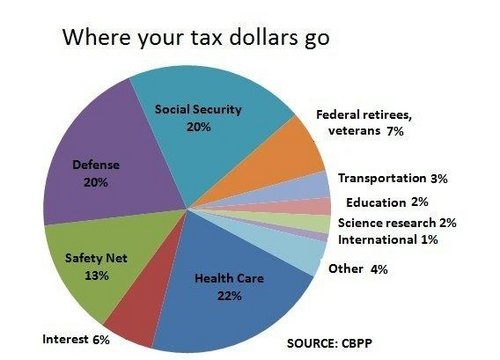
Where Tax Dollars Go?

Join Our Mailing List

Conclusion

Your thoughts and comments on this ME-P are appreciated. Feel free to review our top-left column, and top-right sidebar materials, links, URLs and related websites, too. Then, subscribe to the ME-P. It is fast, free and secure.

Link: http://feeds.feedburner.com/HealthcareFinancialsthePostForcxos

Speaker: If you need a moderator or speaker for an upcoming event, Dr. David E. Marcinko; MBA – Publisher-in-Chief of the Medical Executive-Post – is available for seminar or speaking engagements. Contact: MarcinkoAdvisors@msn.com

Our Other Print Books and Related Information Sources:

Health Dictionary Series: http://www.springerpub.com/Search/marcinko

Practice Management: http://www.springerpub.com/product/9780826105752

Physician Financial Planning: http://www.jbpub.com/catalog/0763745790

Medical Risk Management: http://www.jbpub.com/catalog/9780763733421

Hospitals: http://www.crcpress.com/product/isbn/9781439879900

Physician Advisors: www.CertifiedMedicalPlanner.org

Product Details  Product Details

Tax Freedom Day is April 17th 2012

Join Our Mailing List

Working 107 days for Uncle Sam

By Children’s Home Society of Florida Foundation

Each day the Tax Foundation publishes the “Tax Freedom Day.” For this year, Tax Freedom Day will be on April 17, 2012. Based on averages of incomes and taxes, Americans will work 107 days from January 1 to April 17 to pay the combined 29.2% tax bill for federal, state and local taxes. If the budget deficit amount were paid for through taxes, Tax Freedom Day would be extended to May 14, an additional 27 days.

Varying Dates

Tax Freedom Day has typically arrived earlier during the past five years. The latest Tax Freedom Day was May 1, 2000, when the total tax revenue was 33%. Generally, because of tax reductions in the stimulus bill enacted in 2008, Tax Freedom Day has come earlier during the past four years.

State Taxes

Several states collect lower taxes and have an earlier Tax Freedom Day. These states’ Tax Freedom Day include Tennessee on March 31, Louisiana and Mississippi on April 1 and South Carolina on April 3rd. The highest tax state is Connecticut, with Tax Freedom Day on May 5. However, New Jersey and New York both celebrate Tax Freedom Day on May 1st. The Tax Foundation also estimates the number of days that you may work to pay taxes in these separate categories.


Tax   Category Days
Federal   Income 32
State/Local   Income 8
Fed.   Social Insurance 23
State.   Social Insurance 1
Fed.   Sales 2
State   Sales 12
Property   Taxes 12
Fed.   Corporation 9
Other   Fed. 3
State   Corp 1
Other   State 4

Editor’s Note: The Tax Foundation publishes these calculations each year. They are based on overall tax payment averages. Other publications have observed that the dates would change if the numbers were calculated based upon taxpayer income tiers. However, no other publication calculates Tax Freedom Days for low-income, mid income and high-income taxpayers.

Conclusion

Your thoughts and comments on this ME-P are appreciated. Feel free to review our top-left column, and top-right sidebar materials, links, URLs and related websites, too. Then, subscribe to the ME-P. It is fast, free and secure.

Link: http://feeds.feedburner.com/HealthcareFinancialsthePostForcxos

Speaker: If you need a moderator or speaker for an upcoming event, Dr. David E. Marcinko; MBA – Publisher-in-Chief of the Medical Executive-Post – is available for seminar or speaking engagements. Contact: MarcinkoAdvisors@msn.com

Our Other Print Books and Related Information Sources:

Health Dictionary Series: http://www.springerpub.com/Search/marcinko

Practice Management: http://www.springerpub.com/product/9780826105752

Physician Financial Planning: http://www.jbpub.com/catalog/0763745790

Medical Risk Management: http://www.jbpub.com/catalog/9780763733421

Hospitals: http://www.crcpress.com/product/isbn/9781439879900

Physician Advisors: www.CertifiedMedicalPlanner.org

Product Details  Product Details

Tax Facts for Taxpayers and Young Physicians

Join Our Mailing List

The Tax Foundation

By Children’s Home Society of Florida Foundation

The Tax Foundation, a nonpartisan research organization, monitors the taxes paid by Americans each year.  On April 11, 2012, they released their report for the past year.  As Americans prepare to file before the April 17 deadline this year, many may be interested in the impact of taxes on their daily lives.

In tax year 2010, the total federal income taxes paid were $945 billion.  143 million families filed tax returns.  85 million paid taxes and 58 million were not required to make tax payments.  The taxpayers with more modest incomes received refundable credits of $105 billion.

The following table shows the income, effective tax rates and percent of the total tax paid by three groups of taxpayers.

Effective Tax Rates and Payments

Income Effective Tax Rate Percent of Taxes Paid
$0 – $50,000 3.5% 6.7%
$50,000 – $250,000 14.1% 47.6%
$250,000+ 23.4% 45.7%

About one-third of taxpayers chose to itemize deductions.  Twenty-five percent of taxpayers deducted mortgage interest and saved approximately $381 billion.  Charitable gifts were reported by 27% of taxpayers.  These gifts produced a tax savings of $158 billion.

The tax code continues to grow in size and complexity.  It now has expanded to 3.8 million words.  For the past decade, there has been an average of one change to the tax code every day.  What is the time required to complete taxes this year?  Over seven billion hours will be devoted to complying with the tax code.

Editor’s Note:  There is great debate on many aspects of tax law.  However, there is a general agreement by Americans from all walks of life that a tax code with 3.8 million words is too long and too complicated.  When Congress turns its efforts toward major tax reform in 2013, it hopefully will be able to reduce the size and complexity.  By working diligently, perhaps Congress might be able to reduce the Internal Revenue Code to only 3.7 million words.

Conclusion

Your thoughts and comments on this ME-P are appreciated. Feel free to review our top-left column, and top-right sidebar materials, links, URLs and related websites, too. Then, subscribe to the ME-P. It is fast, free and secure.

Link: http://feeds.feedburner.com/HealthcareFinancialsthePostForcxos

Speaker: If you need a moderator or speaker for an upcoming event, Dr. David E. Marcinko; MBA – Publisher-in-Chief of the Medical Executive-Post – is available for seminar or speaking engagements. Contact: MarcinkoAdvisors@msn.com

Our Other Print Books and Related Information Sources:

Health Dictionary Series: http://www.springerpub.com/Search/marcinko

Practice Management: http://www.springerpub.com/product/9780826105752

Physician Financial Planning: http://www.jbpub.com/catalog/0763745790

Medical Risk Management: http://www.jbpub.com/catalog/9780763733421

Hospitals: http://www.crcpress.com/product/isbn/9781439879900

Physician Advisors: www.CertifiedMedicalPlanner.org

Product Details  Product Details

IRS Help for Last-Minute Tax Filing Doctors

Join Our Mailing List

2011 Tax Tips for 2012 [Are You Ready to File?]

By Children’s Home Society of Florida Foundation

The IRS published information letters last week to assist taxpayers who are filing their taxes before the April 17, 2012 deadline. Doctors, dentists and some other medical professionals may especially need some help.

And, the IRS YouTube channel is the fourth most popular government channel.

The IRS receives about 1 million views per year. Taxpayers may find several YouTube programs helpful. They are available in English, Spanish and American’s Sign Language.

IRS YouTube Programs

* Need more time to file your tax return?
* Last-Minute Tax Tips
* IRS Tax Payment Options
* Owe Taxes but can’t pay?
* When will I get my refund?

Smart Phone Accessible

The IRS YouTube videos are also available on iPhone or Android through the IRS2Go application that may be downloaded through the App Store or Android Marketplace. This is a nice feature for doctors interested in m-health.

For individual physicians who need extra time to file, it is possible to request an extension with Form 4868 (either electronically or by paper). This extension filing requires that you estimate and pay the correct tax, but your time to file is extended to October 15th. If you do not pay the correct tax, there is interest of 3% per year and a late penalty of 0.5% per month on the balance.

The Exceptions

There are three exceptions to the filing date. If you live and work abroad or are on military duty outside the U.S., you may pay on April 17 and file by June 15. Military members serving in Iraq or Afghanistan may file 180 days after departing the combat zone. Finally, several federal disaster areas in the Midwest are permitted to file and pay on May 31.

Need More Time?

Some taxpayers will need more time to pay. If your tax, penalties and interest are $50,000 or less, you may request a payment agreement from the IRS with Form 9465-FS. If you are unemployed or self-employed with a 25% reduction in income for 2011, you may file Form 1127-A to request permission to pay by October 15, 2012. You still must to pay the tax plus interest at that time.

Assessment

Finally, if you have a substantial overdue tax obligation, you may be able to negotiate an “offer-in-compromise” with the IRS. This will require the IRS to review all of your income and assets to make a determination as to the correct tax payment.

Conclusion

Your thoughts and comments on this ME-P are appreciated. Feel free to review our top-left column, and top-right sidebar materials, links, URLs and related websites, too. Then, subscribe to the ME-P. It is fast, free and secure.

Link: http://feeds.feedburner.com/HealthcareFinancialsthePostForcxos

Speaker: If you need a moderator or speaker for an upcoming event, Dr. David E. Marcinko; MBA – Publisher-in-Chief of the Medical Executive-Post – is available for seminar or speaking engagements. Contact: MarcinkoAdvisors@msn.com

Our Other Print Books and Related Information Sources:

Health Dictionary Series: http://www.springerpub.com/Search/marcinko

Practice Management: http://www.springerpub.com/product/9780826105752

Physician Financial Planning: http://www.jbpub.com/catalog/0763745790

Medical Risk Management: http://www.jbpub.com/catalog/9780763733421

Hospitals: http://www.crcpress.com/product/isbn/9781439879900

Physician Advisors: www.CertifiedMedicalPlanner.org

Product Details  Product Details

Dire Emails About New Medicare Surtax Have It Wrong

Join Our Mailing List

Enter the Obama Care Fear Mongers

By Rick Kahler MS, CFP®, ChFC, CCIM

www.KahlerFinancial.com

Ronald Reagan was noted for saying, “Trust but verify.” And, that was before Al Gore invented the Internet. When it comes to believing forwarded emails with dire warnings, it’s a good idea to go even further and “Verify before trusting.”

My e-mail

Here are a few lines from an email I’ve received numerous times over the past two years: “Did you know that if you sell your house after 2012 you will pay a 3.8% sales tax on it? That’s $3,800 on a $100,000 home . . . It’s in the health care bill and goes into effect in 2013. . . . Under the new health care bill all real estate transactions will be subject to a 3.8% Sales Tax. If you sell a $400,000 home, there will be a $15,200 tax.”

Before trusting this, I verified it with Paul Thorstenson, an accountant with Ketel Thorstenson in Rapid City, South Dakota. He said, “The information in this email is nearly entirely false.”

As with a lot of what you read on the Internet and hear from politicians, if you sift through the rubbish in this statement you will find a few grains of truth.

The True, and Not So True, Grains

First the truth

There is a 3.8% Medicare surtax contained in the health care act passed by Congress and signed into law by President Obama in 2009. It does take effect in 2013.

Now the falsehoods

This is not a sales tax. Sales taxes apply to the gross sale price of an item. Thorstenson explained this is a surtax that only applies to a gain (not the sales price) on sale of an investment asset. This not only includes real estate, but other investments like stocks, bonds, mutual funds, commodities, precious metals, and collectables. The surtax will also apply to other passive and investment income, such as interest, dividends, and net rental income.

The act only applies the surtax to investment gains when the total adjusted gross income on a return exceeds $250,000 for couples and $200,000 for single taxpayers. If your adjusted gross income is less than those amounts, the surtax will not apply.

If you sell a primary residence, the surtax will not apply to the first $500,000 of gain for couples or the first $250,000 of gain for individuals (IRS Code Section 121). “The surtax will only apply if the gain is above $500,000,” explained Thorstenson, who added, “And who even has a gain in a home these days, let alone over $500,000?”

Section 121

What is important to note is there is no Section 121 exclusion on the gains of vacation homes, second homes, or rental property. So if your adjusted gross income tips over $200,000 for individuals and $250,000 for couples in the year you sell an investment like a mutual fund, rental property, second home, or small business, you will be hit with a 3.8% tax on the portion that exceeds the $200/$250 threshold.

Assessment

Now consider what happens if President Obama gets his way and raises the capital gains tax to 28% on taxpayers earning over the $200/$250 limits. You could easily see the capital gains rate more than double from 15% to 31.8%. On every $100,000 of gain, that means a tax increase from $15,000 to $31,800.

Thorstenson told me, “This law is an atrocity in my opinion. It is an attack on successful investors, and the tax revenues aren’t even earmarked for Medicare. The proceeds just go into the general fund.”

The truth about this surtax is bad enough without believing exaggerations about it. The next time this particular email shows up in your inbox, just delete it. Trust me; I verified.

Conclusion             

And so, your thoughts and comments on this ME-P are appreciated. Please review our top-left column, and top-right sidebar materials, links, URLs and related websites, too. Then, subscribe to the ME-P. It is fast, free and secure.

Link: http://feeds.feedburner.com/HealthcareFinancialsthePostForcxos

Speaker: If you need a moderator or speaker for an upcoming event, Dr. David E. Marcinko; MBA – Publisher-in-Chief of the Medical Executive-Post – is available for seminar or speaking engagements. Contact: MarcinkoAdvisors@msn.com

Our Other Print Books and Related Information Sources:

Health Dictionary Series: http://www.springerpub.com/Search/marcinko

Practice Management: http://www.springerpub.com/product/9780826105752

Physician Financial Planning: http://www.jbpub.com/catalog/0763745790

Medical Risk Management: http://www.jbpub.com/catalog/9780763733421

Healthcare Organizations: www.HealthcareFinancials.com

Physician Advisors: www.CertifiedMedicalPlanner.org

Subscribe Now: Did you like this Medical Executive-Post, or find it helpful, interesting and informative? Want to get the latest ME-Ps delivered to your email box each morning? Just subscribe using the link below. You can unsubscribe at any time. Security is assured.

Link: http://feeds.feedburner.com/HealthcareFinancialsthePostForcxos

Sponsors Welcomed: And, credible sponsors and like-minded advertisers are always welcomed.

Link: https://healthcarefinancials.wordpress.com/2007/11/11/advertise

Product DetailsProduct DetailsProduct Details

Product Details  Product Details

Product Details

IRS Announces Online “EO” Search Tool

Join Our Mailing List

About “Exempt Organizations Select Check”

By Children’s Home Society of Florida

The IRS announced last week that it has created an online search tool called Exempt Organizations Select Check. The new search tool is very useful in understanding whether a charitable organization currently qualifies for deductible gifts.

Internal Revenue Service Website

On www.IRS.gov, select Charities and Nonprofits – More Topics. On the right side of the screen, select Search for Charities and load the Exempt Organizations Select Check page.

The new page allows three types of searches.

1. Exempt Organization Publication 78 Organizations qualified to receive deductible contributions.

2. Non-exempt Organizations – Because many smaller organizations did not file Form 990-N (ePostcard), their exemptions were automatically revoked.

3. Qualifying Form 990-N Organizations Those organizations that did comply with the ePostcard notice are listed.

Editor’s Note: Advisors or board members of charities may find the new EO Select Check useful in determining whether a charity has complied with the requirements to file IRS Form 990, Form 990-EZ or IRS Form 990-N. If an organization is no longer exempt it may be appropriate to file a new IRS Form 1023 and apply for exempt status.

Conclusion

Your thoughts and comments on this ME-P are appreciated. Feel free to review our top-left column, and top-right sidebar materials, links, URLs and related websites, too. Then, subscribe to the ME-P. It is fast, free and secure.

Link: http://feeds.feedburner.com/HealthcareFinancialsthePostForcxos

Speaker: If you need a moderator or speaker for an upcoming event, Dr. David E. Marcinko; MBA – Publisher-in-Chief of the Medical Executive-Post – is available for seminar or speaking engagements. Contact: MarcinkoAdvisors@msn.com

Our Other Print Books and Related Information Sources:

Health Dictionary Series: http://www.springerpub.com/Search/marcinko

Practice Management: http://www.springerpub.com/product/9780826105752

Physician Financial Planning: http://www.jbpub.com/catalog/0763745790

Medical Risk Management: http://www.jbpub.com/catalog/9780763733421

Healthcare Organizations: www.HealthcareFinancials.com

Physician Advisors: www.CertifiedMedicalPlanner.com

Subscribe Now: Did you like this Medical Executive-Post, or find it helpful, interesting and informative? Want to get the latest ME-Ps delivered to your email box each morning? Just subscribe using the link below. You can unsubscribe at any time. Security is assured.

Link: http://feeds.feedburner.com/HealthcareFinancialsthePostForcxos

Sponsors Welcomed: And, credible sponsors and like-minded advertisers are always welcomed.

Link: https://healthcarefinancials.wordpress.com/2007/11/11/advertise

Product Details  Product Details

Property Taxes in America

Join Our Mailing List

A Seldom Discussed Topic Among Medical Professionals

The housing market across the country has tanked. That should mean lower property taxes, right?

It’s true that property taxes do fall when housing values drop. But, this fall doesn’t happen in perfect time with the market. There’s usually a delay. And even when property taxes do fall, it’s often not enough to satisfy cash-strapped doctors and other homeowners.

Plummeting Home Values

This isn’t surprising. Homeowners today are struggling with plummeting home values. Those who bought their homes in 2004, 2005 or early 2006, especially, have most likely seen their homes lose tens of thousands of dollars in value.

It is little wonder, then, that physicians and others homeowners today are taking a closer look at their property taxes. Here is a look at what type of property taxes you pay depending on the state that you call home.

For example, if you live in New Jersey, you might not want to open that property tax bill. The state featured the highest median property taxes on owner-occupied housing, according to 2008 data by the U.S. Census Bureau. Homeowners here paid a median of $6,320 in property taxes each year. Connecticut came in second with a median property tax of $4,603 on its households. Right behind was New Hampshire, $4,501; and New York, $3,622.

Other states with high median property taxes include Rhode Island, $3,534; Massachusetts, $3,404; and Vermont, $3,281. Looks like you shouldn’t buy a home in the East if you want to pay lower property taxes.

On other end of the scale, Louisiana homeowners paid a median of $188 on their property taxes. In Arkansas, that number rose a bit to $383, while it stood at a still low $457 in West Virginia. In Mississippi, this median value stood at $468. Other states with low median property tax figures were South Carolina, $678; Oklahoma, $762; and New Mexico, $843.

Median Values

In general, these median property tax numbers do make sense. The states that have the highest median property taxes tend to have the highest median housing values, too. The opposite holds true, too.

For instance, the states with the lowest median housing values include West Virginia, $95,900; Mississippi, $99,700; Arkansas, $105,700; Oklahoma, $105,500; North Dakota, $112,500; and Alabama, $121,500. These states also tend to have some of the lowest property taxes.

Highest Median Home Values

Some of the states with the highest median home values include Hawaii, with a median value of $560,000; California, $467,000; New Jersey, $364,100; Massachusetts, $353,600; and Maryland, $341,200. Again, the property taxes tend to align well with these prices. Homeowners in these states pay some of the higher median property taxes in the country.

Relation to Home Values

The most important number, though, when analyzing property taxes isn’t what homeowners pay in each state. It’s how high this figure is in relation to home values.

For instance, Texans don’t pay the highest median property taxes in the country. They do, though, pay the highest percentage of their home values in property taxes, 1.76 percent.

Other states fare poorly in this measure, too: New Jersey, 1.74 percent; Nebraska, 1.72 percent; Wisconsin, 1.71 percent; and New Hampshire, 1.70 percent.

If you want to live somewhere where property taxes take up the lowest percentages of your home’s value, you might want to consider moving to the South.

For instance, homeowners in Louisiana pay 0.14 percent of their home values in property taxes, lowest in the nation. Hawaii comes in second with a figure of 0.24 percent. In Arkansas, that number is a still low 0.32 percent, while it’s at 0.47 percent in Mississippi. In West Virginia, the percentage rises to a still low 0.47 percent.

Assessment

Analyzing the impact of property taxes is far from an exact science. But by looking at how large of a percentage these taxes take up when compared to housing values, homeowners will get a better idea of what kind of financial burden property taxes are placing on them.

Source: www.CreditLoan.com

Conclusion

Your thoughts and comments on this ME-P are appreciated. Feel free to review our top-left column, and top-right sidebar materials, links, URLs and related websites, too. Then, subscribe to the ME-P. It is fast, free and secure.

Link: http://feeds.feedburner.com/HealthcareFinancialsthePostForcxos

Our Other Print Books and Related Information Sources:

Health Dictionary Series: http://www.springerpub.com/Search/marcinko

Practice Management: http://www.springerpub.com/product/9780826105752

Physician Financial Planning: http://www.jbpub.com/catalog/0763745790

Medical Risk Management: http://www.jbpub.com/catalog/9780763733421

Healthcare Organizations: www.HealthcareFinancials.com

Physician Advisors: www.CertifiedMedicalPlanner.com

Subscribe Now: Did you like this Medical Executive-Post, or find it helpful, interesting and informative? Want to get the latest ME-Ps delivered to your email box each morning? Just subscribe using the link below. You can unsubscribe at any time. Security is assured.

Link: http://feeds.feedburner.com/HealthcareFinancialsthePostForcxos

Sponsors Welcomed: And, credible sponsors and like-minded advertisers are always welcomed.

Link: https://healthcarefinancials.wordpress.com/2007/11/11/advertise

Product Details  Product Details

Half of All Americans Don’t Pay Income Tax to Uncle Sam

Join Our Mailing List 

Were you Aware?

It often seems [especially to frustrated medical professionals] that we all have that cash-creative “friend” who manages to find every loophole, legal or otherwise, come tax time.

But, a startling new infographic from the Heritage Foundation shows that nearly half of all Americans avoided paying federal income taxes in 2009.

Assessment

That’s not even counting the folks who’ve fallen off the paycheck grid because of the nation’s high unemployment rate – OR – financial advisors, doctors and medical management professionals who’ve experienced same.

Conclusion

And so, your thoughts and comments on this ME-P are appreciated. Do you pay your “fair share”?  Please review our top-left column, and top-right sidebar materials, links, URLs and related websites, too. Then, subscribe to the ME-P. It is fast, free and secure.

Link: http://feeds.feedburner.com/HealthcareFinancialsthePostForcxos

Speaker: If you need a moderator or speaker for an upcoming event, Dr. David E. Marcinko; MBA – Publisher-in-Chief of the Medical Executive-Post – is available for seminar or speaking engagements. Contact: MarcinkoAdvisors@msn.com

Our Other Print Books and Related Information Sources:

Health Dictionary Series: http://www.springerpub.com/Search/marcinko

Practice Management: http://www.springerpub.com/product/9780826105752

Physician Financial Planning: http://www.jbpub.com/catalog/0763745790

Medical Risk Management: http://www.jbpub.com/catalog/9780763733421

Healthcare Organizations: www.HealthcareFinancials.com

Physician Advisors: www.CertifiedMedicalPlanner.com

Subscribe Now: Did you like this Medical Executive-Post, or find it helpful, interesting and informative? Want to get the latest ME-Ps delivered to your email box each morning? Just subscribe using the link below. You can unsubscribe at any time. Security is assured.

Link: http://feeds.feedburner.com/HealthcareFinancialsthePostForcxos

Sponsors Welcomed: And, credible sponsors and like-minded advertisers are always welcomed.

Link: https://healthcarefinancials.wordpress.com/2007/11/11/advertise

Product Details  Product Details

A “Buffett Tax” Voting and Opinion Poll

Taxing Millionaires?

Join Our Mailing List

Nearly two-thirds of Americans support imposing a minimum tax rate of 30 percent on those who earn $1 million or more a year, according to a recent Reuters / Ipsos poll.

And so, we ask: Do you favor the Buffett Tax?

Conclusion

Your thoughts and comments on this ME-P are appreciated. Feel free to review our top-left column, and top-right sidebar materials, links, URLs and related websites, too. Then, subscribe to the ME-P. It is fast, free and secure.

Link: http://feeds.feedburner.com/HealthcareFinancialsthePostForcxos

Speaker: If you need a moderator or speaker for an upcoming event, Dr. David E. Marcinko; MBA – Publisher-in-Chief of the Medical Executive-Post – is available for seminar or speaking engagements. Contact: MarcinkoAdvisors@msn.com

Our Other Print Books and Related Information Sources:

Health Dictionary Series: http://www.springerpub.com/Search/marcinko

Practice Management: http://www.springerpub.com/product/9780826105752

Physician Financial Planning: http://www.jbpub.com/catalog/0763745790

Medical Risk Management: http://www.jbpub.com/catalog/9780763733421

Healthcare Organizations: www.HealthcareFinancials.com

Physician Advisors: www.CertifiedMedicalPlanner.com

Subscribe Now: Did you like this Medical Executive-Post, or find it helpful, interesting and informative? Want to get the latest ME-Ps delivered to your email box each morning? Just subscribe using the link below. You can unsubscribe at any time. Security is assured.

Link: http://feeds.feedburner.com/HealthcareFinancialsthePostForcxos

Sponsors Welcomed: And, credible sponsors and like-minded advertisers are always welcomed.

Link: https://healthcarefinancials.wordpress.com/2007/11/11/advertise

Product DetailsProduct DetailsProduct Details

Product Details  Product Details

Product Details

On Payroll and Income Tax Paycheck Deductions

Join Our Mailing List

Explaining  Your Paycheck

This infographic takes a dry topic, unknown to some employed medical professionals and healthcare workers, and makes it interesting by visually walking us through a paycheck.

The design allows us to understand all the different deductions that may come out prior to the final amount that makes it to your bank account.

Importance

Most American [healthcare] workers aren’t aware of the factors that determine how much is deducted from their paychecks, yet it’s important to have that understanding so you can speak up about any errors.

The Deductions

So what exactly is that payroll software deducting from your paycheck?

Typical deductions include federal income tax, OASDI, Medicare tax, disability and state income tax. Your tax bracket will range from 10% to 35% depending on your amount of taxable income. Medicare tax rates will be different depending on whether you work for a hospital, clinic or are a self-employed medical professional.

Assessment

At the state level, individual states handle taxes differently, with seven states charging all residents a flat tax rate and nine other states not collecting any income taxes at all.

Source: Paycor

Conclusion

Your thoughts and comments on this ME-P are appreciated. Feel free to review our top-left column, and top-right sidebar materials, links, URLs and related websites, too. Then, subscribe to the ME-P. It is fast, free and secure.

Link: http://feeds.feedburner.com/HealthcareFinancialsthePostForcxos

Speaker: If you need a moderator or speaker for an upcoming event, Dr. David E. Marcinko; MBA – Publisher-in-Chief of the Medical Executive-Post – is available for seminar or speaking engagements. Contact: MarcinkoAdvisors@msn.com

Our Other Print Books and Related Information Sources:

Health Dictionary Series: http://www.springerpub.com/Search/marcinko

Practice Management: http://www.springerpub.com/product/9780826105752

Physician Financial Planning: http://www.jbpub.com/catalog/0763745790

Medical Risk Management: http://www.jbpub.com/catalog/9780763733421

Healthcare Organizations: www.HealthcareFinancials.com

Physician Advisors: www.CertifiedMedicalPlanner.com

Subscribe Now: Did you like this Medical Executive-Post, or find it helpful, interesting and informative? Want to get the latest ME-Ps delivered to your email box each morning? Just subscribe using the link below. You can unsubscribe at any time. Security is assured.

Link: http://feeds.feedburner.com/HealthcareFinancialsthePostForcxos

Sponsors Welcomed: And, credible sponsors and like-minded advertisers are always welcomed.

Link: https://healthcarefinancials.wordpress.com/2007/11/11/advertise

Product Details  Product Details

Why the White House Proposed Corporate Tax Reform

Join Our Mailing List

Twenty-Five Years Since Last Revision

By Children’s Home Society of Florida Foundation

On February 22nd 2012, Treasury Secretary Timothy Geithner spoke to Congress and outlined the White House proposal for corporate tax reform. Geithner noted that there has not been a comprehensive corporate tax reform for 25 years. Since the last major corporate tax reform, there have been many significant events. These include the following changes.

  1. Internet is widely used.
  2. Cell phones are now common place.
  3. China and India have become significant economies.
  4. Global trade has greatly expanded.
  5. Nearly all other industrial societies have lowered their corporate rates.

The Five Elements of Reform

  1. Reduced Rates – The elimination of tax loopholes and subsidies will permit a reduction of the corporate tax rate from 35% to 28%.
  2. Manufacturing Incentives – The effective tax rate for manufacturing companies will be reduced to 25% through incentives.
  3. International Taxation System – Companies could pay penalties for shifting income overseas.
  4. Simplification – Small businesses would benefit from reduced complexity in the Tax Code.
  5. Revenue Neutrality – The reduced rates are achieved through eliminating various tax deductions.

Assessment

Treasury Secretary Geithner indicated that he plans to meet with Senate Finance Chair Max Baucus (D-MT) and House Ways and Means Chair Dave Camp (R-MI). He hopes that it will be possible to build a bipartisan consensus for corporate tax reform.

Editor’s Note: Sen. Baucus and Chairman Camp have been holding hearings and proposing corporate tax reform for the past year. With the White House announcement, that the President, the House and the Senate agree that there should be simplification and a lower corporate top rate. The challenge will come when the government grapples with the question of which major corporate deductions (such as bonus depreciation) will actually be removed in order to lower rates. Because of the magnitude of major tax reform, it is not likely that an actual bill could be passed before 2013.

Conclusion

And so, your thoughts and comments on this ME-P are appreciated. Please review our top-left column, and top-right sidebar materials, links, URLs and related websites, too. Then, subscribe to the ME-P. It is fast, free and secure.

Link: http://feeds.feedburner.com/HealthcareFinancialsthePostForcxos

Our Other Print Books and Related Information Sources:

Health Dictionary Series: http://www.springerpub.com/Search/marcinko

Practice Management: http://www.springerpub.com/product/9780826105752

Physician Financial Planning: http://www.jbpub.com/catalog/0763745790

Medical Risk Management: http://www.jbpub.com/catalog/9780763733421

Healthcare Organizations: www.HealthcareFinancials.com

Physician Advisors: www.CertifiedMedicalPlanner.com

Subscribe Now: Did you like this Medical Executive-Post, or find it helpful, interesting and informative? Want to get the latest ME-Ps delivered to your email box each morning? Just subscribe using the link below. You can unsubscribe at any time. Security is assured.

Link: http://feeds.feedburner.com/HealthcareFinancialsthePostForcxos

Sponsors Welcomed: And, credible sponsors and like-minded advertisers are always welcomed.

Link: https://healthcarefinancials.wordpress.com/2007/11/11/advertise

Product Details  Product Details

Is there an IRS Smart Phone App for Taxes?

Yep –  Now Doctors Can Get IRS2GO

Join Our Mailing List 

By Children’s Home Society of Florida Foundation

IRS Commissioner Doug Shulman was pleased to just announce a substantially enhanced application for iPhone and Android phones.  The IRS2GO application was first announced in 2011 and had 350,000 downloads.  Commissioner Shulman expects the new application to be widely used.

He stated, “The new smartphone app provides an easy way for people to get helpful information about their taxes.  IRS2GO reflects a wider commitment at the IRS to find innovative ways to serve taxpayers in a rapidly changing world.”

The Top Five [5]

The new version has five major sections:

1. YouTube – The smartphone app includes links to many short YouTube videos.  The videos have titles such as “Tax Tips: Taxable and Non-Taxable Income,” “Tax Tips: When Will I Get My Refund,” “Healthcare: Small Business Healthcare Tax Credit,” and “Free Help Preparing Your Tax Return.”

2. News – The IRS periodically produces news releases.  These news items may be viewed on your iPhone or Android phone.

3. Get My Tax Record – By entering your Social Security Number and other identifying information, you may have access to your personal tax records.

4. Get My Refund Status – By entering your Social Security Number and other information, it is possible to obtain your refund status.

5. Follow Us – If you so desire, you may follow the IRS on Twitter.

Editor’s Note:  The IRS has developed a good smartphone application.  It is easy to use and includes very helpful content.  This updated IRS application will be very popular with taxpayers.  Finally, it is not very often that your editor uses the words “IRS” and “popular” in the same sentence.

Conclusion

And so, your thoughts and comments on this ME-P are appreciated. Please review our top-left column, and top-right sidebar materials, links, URLs and related websites, too. Then, subscribe to the ME-P. It is fast, free and secure.

Link: http://feeds.feedburner.com/HealthcareFinancialsthePostForcxos

Speaker: If you need a moderator or speaker for an upcoming event, Dr. David E. Marcinko; MBA – Publisher-in-Chief of the Medical Executive-Post – is available for seminar or speaking engagements. Contact: MarcinkoAdvisors@msn.com

Our Other Print Books and Related Information Sources:

Health Dictionary Series: http://www.springerpub.com/Search/marcinko

Practice Management: http://www.springerpub.com/product/9780826105752

Physician Financial Planning: http://www.jbpub.com/catalog/0763745790

Medical Risk Management: http://www.jbpub.com/catalog/9780763733421

Healthcare Organizations: www.HealthcareFinancials.com

Physician Advisors: www.CertifiedMedicalPlanner.com

Subscribe Now: Did you like this Medical Executive-Post, or find it helpful, interesting and informative? Want to get the latest ME-Ps delivered to your email box each morning? Just subscribe using the link below. You can unsubscribe at any time. Security is assured.

Link: http://feeds.feedburner.com/HealthcareFinancialsthePostForcxos

Sponsors Welcomed: And, credible sponsors and like-minded advertisers are always welcomed.

Link: https://healthcarefinancials.wordpress.com/2007/11/11/advertise

Product Details

On the White House Tax Proposals

Reviewing the State of the Union Address

Join Our Mailing List 

By Children’s Home Society of Florida Foundation

In his State of the Union Address last week, President Obama included several tax proposals. He stated his hope that high-income earners pay larger taxes in the future. The President also proposed a substantial number of major tax changes for businesses with international operations.

White House Examples

For example, he restated the “Buffet rule” that asks high income individuals to pay at least as high a rate as that paid by middle-income earners. The President noted, “Right now, because of loopholes and shelters in the Tax Code, a quarter of all millionaires pay lower tax rates than millions of middle-class households.”

The White House also proposed that those with incomes over $1 million pay a minimum tax rate of 30%. Taxpayers with incomes over $1 million will have new limits on deductions for mortgage interest, healthcare expenses, qualified retirement plan contributions and childcare.

The Proposals

Many of the proposals for businesses were outlined in a White House press release on January 25th 2012. These major changes are designed to encourage U.S. companies to maintain their U.S. operations and increase employment here rather than overseas:

1. Overseas Plants – There would not be deductions for moving plants overseas. In addition, there would be a 20% tax credit against the cost of moving jobs from overseas back to the United States.

2. Manufacturing – Those manufacturers who purchase equipment would be able to expense 100% of those purchases. This option also existed in prior years and is expected to encourage building factories in the U.S. rather than abroad.

3. Major Job Losses – Areas that have experienced a closing of a military base or a major factory could qualify for a new investment credit of up to $2 billion. This credit creates incentives for building new plants or factories in depressed areas.

4. Minimum Tax – Corporations could be subject to a new minimum tax on their overseas jobs and profits.

Conclusion

And so, your thoughts and comments on this ME-P are appreciated. Please review our top-left column, and top-right sidebar materials, links, URLs and related websites, too. Then, subscribe to the ME-P. It is fast, free and secure.

Link: http://feeds.feedburner.com/HealthcareFinancialsthePostForcxos

Speaker: If you need a moderator or speaker for an upcoming event, Dr. David E. Marcinko; MBA – Publisher-in-Chief of the Medical Executive-Post – is available for seminar or speaking engagements. Contact: MarcinkoAdvisors@msn.com

Our Other Print Books and Related Information Sources:

Health Dictionary Series: http://www.springerpub.com/Search/marcinko

Practice Management: http://www.springerpub.com/product/9780826105752

Physician Financial Planning: http://www.jbpub.com/catalog/0763745790

Medical Risk Management: http://www.jbpub.com/catalog/9780763733421

Healthcare Organizations: www.HealthcareFinancials.com

Physician Advisors: www.CertifiedMedicalPlanner.com

Subscribe Now: Did you like this Medical Executive-Post, or find it helpful, interesting and informative? Want to get the latest ME-Ps delivered to your email box each morning? Just subscribe using the link below. You can unsubscribe at any time. Security is assured.

Link: http://feeds.feedburner.com/HealthcareFinancialsthePostForcxos

Sponsors Welcomed: And, credible sponsors and like-minded advertisers are always welcomed.

Link: https://healthcarefinancials.wordpress.com/2007/11/11/advertise

Product Details  Product Details

Are We Finally Lifting the Secret IRS Veil on Un-Paid Taxes?

The Tax Gap Increases to $450 Billion

By Children’s Home Society of Florida Foundation

By Dr. David Edward Marcinko MBA, CMP

Join Our Mailing List

Each year the IRS conducts a survey to determine the amount of unpaid taxes. The “tax gap” is defined as the amount of taxes that are owed by taxpayers but not paid on time.

2006 Results

For the year 2006, revised figures released this week showed that the tax gap increased.  The previous estimate of the 2006 tax gap was $345 billion but it increased to $450 billion. The “net tax gap” is a smaller number that reflects the ability of the IRS to collect some of the unpaid taxes.  When the additional $65 billion in taxes collected later is subtracted from the $450 billion, the net tax gap is $385 billion.  The net tax gap number increased from $290 billion in 2001 to the larger number by 2006.

Tax Compliance Level

The compliance level for taxpayers remains 83.7%.  This indicates that the majority of Americans are continuing to calculate and pay their taxes correctly.

Sen. Max Baucus (D-MT) is Chairman of the Senate Finance Committee.  He responded to the IRS survey by noting,

“This report shows that closing the tax gap needs to be a major focus of tax reform.  An improved tax code that’s simple and fair to all Americans will help close the tax gap, boost our economy and create jobs.”

Editor’s Note: 

Both Sen. Baucus and House Ways and Means Committee Chair Dave Camp (R-MI) have been conducting hearings that will lead to major tax reform in 2013.  For the vast majority of Americans who pay their fair share of taxes, it is beneficial if Baucus and Camp are able to simplify the tax system and reduce the tax gap.  More effective collection of revenue decreases the need to raise taxes on those who are currently paying their fair share.

Conclusion     

And so, your thoughts and comments on this ME-P are appreciated. What is the tax-gap for medical professsionals? Please review our top-left column, and top-right sidebar materials, links, URLs and related websites, too. Then, subscribe to the ME-P. It is fast, free and secure.

Link: http://feeds.feedburner.com/HealthcareFinancialsthePostForcxos

Speaker: If you need a moderator or speaker for an upcoming event, Dr. David E. Marcinko; MBA – Publisher-in-Chief of the Medical Executive-Post – is available for seminar or speaking engagements. Contact: MarcinkoAdvisors@msn.com

Our Other Print Books and Related Information Sources:

Health Dictionary Series: http://www.springerpub.com/Search/marcinko

Practice Management: http://www.springerpub.com/product/9780826105752

Physician Financial Planning: http://www.jbpub.com/catalog/0763745790

Medical Risk Management: http://www.jbpub.com/catalog/9780763733421

Healthcare Organizations: www.HealthcareFinancials.com

Physician Advisors: www.CertifiedMedicalPlanner.com

Subscribe Now: Did you like this Medical Executive-Post, or find it helpful, interesting and informative? Want to get the latest ME-Ps delivered to your email box each morning? Just subscribe using the link below. You can unsubscribe at any time. Security is assured.

Link: http://feeds.feedburner.com/HealthcareFinancialsthePostForcxos

Sponsors Welcomed: And, credible sponsors and like-minded advertisers are always welcomed.

Link: https://healthcarefinancials.wordpress.com/2007/11/11/advertise


Product Details  Product Details

Doctors May Save Some Money with These 2011 IRS Tax Changes

A Brief IRS Tax Code Update

By Children’s Home Society of Florida Foundation

Join Our Mailing List

In an information letter, the IRS outlined seven specific changes in the 2011 law that will be useful to doctors and all taxpayers filing their tax returns this year. And, some of these 2011 tax law changes may reduce your taxes:

1. Energy Credits – The energy credit was reduced from the $1,500 limit for 2010 to a maximum of $500 for 2011. Up to 10% of qualified expenditures for high-efficiency heating and air conditioning systems, water heaters, biomass stoves, energy-efficient windows and doors and other energy improvements will qualify. The 2011 limit is $500. This credit is reduced by previously-taken energy credits and will generally be available for taxpayers who made their first energy improvements in 2011.

2. 2008 Homebuyer Credits – Some purchasers of new homes in 2008 qualified for a first-time homebuyer credit. The credit was essentially an interest-free loan to be paid back over 15 years. For these taxpayers, the second repayment of the credit amount will apply for 2011.

3. Capital Gains and Losses – Previously, capital gains and losses were recorded on Schedule D. There is a new Form 8949 to report gains and losses. Schedule D will still be used for a summary of capital gains and losses.

4. Roth Conversions – Those individuals who converted a traditional IRA to a Roth IRA in 2011 must report their taxable income. In previous years, only half of the income was reported each year for two years. However, for 2011 conversions the full amount is reportable.

5. Standard Mileage Rates – The standard mileage rates changed on July 1 for business use, medical travel, moving or charitable services. For the first half of 2011, the rates are business travel at 51 cents, medical and moving travel at 19 cents, and charitable travel at 14 cents per mile. For July 1 through the end of the year, business travel is 55.5 cents, medical and moving travel at 23.5 cents and charitable travel remains 14 cents per mile.

6. Alternative Minimum Tax Exemption – The AMT exemption for 2011 will be $74,450 for a married couple, $37,225 for married persons filing separately and $48,450 for single person or heads of household.

7. Health Insurance – Generally, self employed persons who operate a small business will qualify for deduction of health insurance premiums.

Conclusion

And so, your thoughts and comments on this ME-P are appreciated. Please review our top-left column, and top-right sidebar materials, links, URLs and related websites, too. Then, subscribe to the ME-P. It is fast, free and secure.

Link: http://feeds.feedburner.com/HealthcareFinancialsthePostForcxos

Speaker: If you need a moderator or speaker for an upcoming event, Dr. David E. Marcinko; MBA – Publisher-in-Chief of the Medical Executive-Post – is available for seminar or speaking engagements. Contact: MarcinkoAdvisors@msn.com

Our Other Print Books and Related Information Sources:

Health Dictionary Series: http://www.springerpub.com/Search/marcinko

Practice Management: http://www.springerpub.com/product/9780826105752

Physician Financial Planning: http://www.jbpub.com/catalog/0763745790

Medical Risk Management: http://www.jbpub.com/catalog/9780763733421

Healthcare Organizations: www.HealthcareFinancials.com

Physician Advisors: www.CertifiedMedicalPlanner.com

Subscribe Now: Did you like this Medical Executive-Post, or find it helpful, interesting and informative? Want to get the latest ME-Ps delivered to your email box each morning? Just subscribe using the link below. You can unsubscribe at any time. Security is assured.

Link: http://feeds.feedburner.com/HealthcareFinancialsthePostForcxos

Sponsors Welcomed: And, credible sponsors and like-minded advertisers are always welcomed.

Link: https://healthcarefinancials.wordpress.com/2007/11/11/advertise

Product Details  Product Details

Change in Distribution of Income Among Tax Filers 1996-2006

A Congressional Research Services White Paper

Join Our Mailing List 

As tax season draws near, here is an important essay from CRS, by:

Thomas L. Hungerford

[Specialist in Public Finance]

Assessment

Link: http://taxprof.typepad.com/files/crs-1.pdf

Conclusion       

And so, your thoughts and comments on this ME-P are appreciated. Please review our top-left column, and top-right sidebar materials, links, URLs and related websites, too. Then, subscribe to the ME-P. It is fast, free and secure.

Link: http://feeds.feedburner.com/HealthcareFinancialsthePostForcxos

Speaker: If you need a moderator or speaker for an upcoming event, Dr. David E. Marcinko; MBA – Publisher-in-Chief of the Medical Executive-Post – is available for seminar or speaking engagements. Contact: MarcinkoAdvisors@msn.com

Our Other Print Books and Related Information Sources:

Health Dictionary Series: http://www.springerpub.com/Search/marcinko

Practice Management: http://www.springerpub.com/product/9780826105752

Physician Financial Planning: http://www.jbpub.com/catalog/0763745790

Medical Risk Management: http://www.jbpub.com/catalog/9780763733421

Healthcare Organizations: www.HealthcareFinancials.com

Physician Advisors: www.CertifiedMedicalPlanner.com

Subscribe Now: Did you like this Medical Executive-Post, or find it helpful, interesting and informative? Want to get the latest ME-Ps delivered to your email box each morning? Just subscribe using the link below. You can unsubscribe at any time. Security is assured.

Link: http://feeds.feedburner.com/HealthcareFinancialsthePostForcxos

Sponsors Welcomed: And, credible sponsors and like-minded advertisers are always welcomed.

Link: https://healthcarefinancials.wordpress.com/2007/11/11/advertise

Product Details  Product Details

An Essay on Tax Fairness for Doctors to Consider?

Some Thoughts While Touring Southeast Asia

Join Our Mailing List 

[By Rick Kahler CFP® MS ChFC CCIM]

On my recent tour of Southeast Asia, I was taken by the vibrancy of the economies in Hong Kong and Singapore. I knew the 2011 Index of Economic Freedom rated those two countries the first and second most free economies in the world, but experiencing it made a big impact on me.

The Index of Economic Freedom

The index ranks each country on 10 different components including government spending, corruption, labor, and business. While the U.S. is behind Hong Kong and Singapore in most of the categories, our ninth place ranking in the world is largely due to our being far behind in two categories: fiscal freedom (the tax burden) and government spending.

On Tax Brackets

The top tax bracket is 15% in Hong Kong and 20% in Singapore. Since these are city-states, that is equivalent to our local, state, and federal taxes. Local people I talked with—none of whom were in the top 1%—seemed rather proud of that. The top brackets in the U.S. are two to three times higher. Our rates will be significantly above 50% (state and local) on top wage earners a year from now when the tax code reverts to 2001 levels and the Obamacare surtaxes kick in.

That raised the eyebrows of most Asians I spoke with. Their jaws dropped when I explained that growing numbers of Americans view upper income earners with disdain and demand we raise their taxes because they are not paying their “fair share.” One person wondered if America has lost her way.

A Fair-Share!

What is “one’s fair share?” I’ve asked a number of people advocating “the rich need to pay their fair share” exactly how much the top income bracket should be. I usually can’t get them to name a specific number. When they do, the median is usually 50%. When I point out that in most states the top income earners are already paying 50%, they usually harrumph in disbelief.

The bottom line is that if I suggest others need to pay “their fair share” I am simply saying they need to pay more in taxes. Fairness is really not part of the equation. If it was, we would raise taxes on the bottom 50% who contribute just 3% of their income to the national revenue. Would asking them to pay more, too, say 6% or 9%, be asking too much? The answer is obvious. Raising my taxes is bad public and economic policy, but raising your taxes is “fair.”

Speaking of fairness, I will note that the top income earners are paying a lower percentage of their income in taxes than they used to. The wealthiest 0.01% saw their overall federal income taxes fall from 42.9% in 1979 to 31.5% in 2005. (The New York Times, September 21, 2011). That doesn’t change the fact that top income earners pay an exponentially higher amount of their income than those in the lower brackets. Even at today’s lower brackets, they pay two to three times more than their peers in the most economically free countries.

If we wanted to follow the model of Singapore and Hong Kong to more economic prosperity, we would do well to have an informed discussion about fairness; much like informed patient consent for surgery.

The Purpose of Taxation 

Maybe it should start with defining the purpose of taxation. If we believe taxes are meant to provide public services like roads and defense that are used by all, we might view “fairness” differently than if we believe taxes are intended to provide services like medical care or even basic income to those who don’t or can’t take care of themselves.

Assessment

In fairness to those at all income levels, this is a discussion all Americans ought to have – even her doctors.

The Author

Rick Kahler, Certified Financial Planner®, MS, ChFC, CCIM, is the founder and president of Kahler Financial Group in Rapid City, South Dakota. In 2009 his firm was named by Wealth Manager as the largest financial planning firm in a seven-state area. A pioneer in the evolution of integrating financial psychology with traditional financial planning profession, Rick is a co-founder of the five-day intensive Healing Money Issues Workshop offered by Onsite Workshops of Nashville, Tennessee. He is one of only a handful of planners nationwide who partner with professional coaches and financial therapists to deliver financial coaching and therapy to his clients. Learn more at KahlerFinancial.com

Conclusion      

As always, your thoughts and comments on this ME-P are appreciated. Feel free to review our top-left column, and top-right sidebar materials, links, URLs and related websites, too. Then, subscribe to the ME-P. It is fast, free and secure.

Link: http://feeds.feedburner.com/HealthcareFinancialsthePostForcxos

Speaker: If you need a moderator or speaker for an upcoming event, Dr. David E. Marcinko; MBA – Publisher-in-Chief of the Medical Executive-Post – is available for seminar or speaking engagements. Contact: MarcinkoAdvisors@msn.com

Our Other Print Books and Related Information Sources:

Health Dictionary Series: http://www.springerpub.com/Search/marcinko

Practice Management: http://www.springerpub.com/product/9780826105752

Physician Financial Planning: http://www.jbpub.com/catalog/0763745790

Medical Risk Management: http://www.jbpub.com/catalog/9780763733421

Healthcare Organizations: www.HealthcareFinancials.com

Physician Advisors: www.CertifiedMedicalPlanner.com

Subscribe Now: Did you like this Medical Executive-Post, or find it helpful, interesting and informative? Want to get the latest ME-Ps delivered to your email box each morning? Just subscribe using the link below. You can unsubscribe at any time. Security is assured.

Link: http://feeds.feedburner.com/HealthcareFinancialsthePostForcxos

Sponsors Welcomed: And, credible sponsors and like-minded advertisers are always welcomed.

Link: https://healthcarefinancials.wordpress.com/2007/11/11/advertise

Product DetailsProduct DetailsProduct Details

Product Details  Product Details

   Product Details

End of Year Tax Giving Tips for Charitable Giving

On IRS published IR-2011-18

By Children’s Home Society of Florida Foundation

Join Our Mailing List

On December 14, 2011, the IRS published IR-2011-18 and suggested a number of tax tips for end-of-year charitable giving. These included several specific recommendations.

1. IRA Rollover – For individuals age 70½ and older who are IRA owners, they may have their IRA custodian make a direct transfer to qualified charities of up to $100,000. These direct transfers may fulfill part or all of the required minimum distribution for this year.

2. Clothing and Household Goods – Deductions for gifts of clothing and household goods are permitted if they are in “good used condition or better.” A gift item that has a value over $500 may be of a different quality, provided that there is an appraisal.

3. Gifts of Money – All gifts of money must be documented through a bank record or receipt. The gift should show the date, amount of the gift and the name of the charitable organization. Bank records may include a cancelled check, a bank statement or a credit card statement. Gifts may also be made through payroll deductions. In this case, the taxpayer should retain a pay stub, Form W-2 or a pledge card that shows the amount, the date of the gift and the name of the charity. If the gift is $250 or more, a contemporaneous written acknowledgement from the charity is required. This receipt must be in the taxpayer’s possession on the date of filing his or her tax return.

4. Timing – A contribution is deductible in the year when it is given. Credit card contributions may be made through December 31st, 2011. Similarly, checks that are sent through U.S. mail by December 31 are deductible if they clear in the normal course.

5. Charities – Deductions are only permitted for gifts to qualified charities. IRS Publication 78 is available on http://www.irs.gov and lists the qualified charitable organizations.

6. Itemized Deductions – Individuals who wish to claim their charitable gifts will need to itemize deductions on Schedule A of Form 1040. Normally, a taxpayer will itemize only if his or her charitable gifts, state and local taxes, mortgage interest and other deductions are larger than the standard deduction.

7. Clothing and Household Item Receipts – The taxpayer should obtain a receipt from the charity. It must list the name of the charity, the date of the gift and a reasonably-detailed description of the gift items.

8. Boat, RV or Car – The gift is usually limited to the gross proceeds from sale if the vehicle is valued at over $500. The charity will send IRS Form 1098-C to the taxpayer and this should be attached to Form 1040.

Conclusion

Your thoughts and comments on this ME-P are appreciated. Feel free to review our top-left column, and top-right sidebar materials, links, URLs and related websites, too. Then, subscribe to the ME-P. It is fast, free and secure.

Link: http://feeds.feedburner.com/HealthcareFinancialsthePostForcxos

Speaker: If you need a moderator or speaker for an upcoming event, Dr. David E. Marcinko; MBA – Publisher-in-Chief of the Medical Executive-Post – is available for seminar or speaking engagements. Contact: MarcinkoAdvisors@msn.com

OUR OTHER PRINT BOOKS AND RELATED INFORMATION SOURCES:

DICTIONARIES: http://www.springerpub.com/Search/marcinko
PHYSICIANS: www.MedicalBusinessAdvisors.com
PRACTICES: www.BusinessofMedicalPractice.com
HOSPITALS: http://www.crcpress.com/product/isbn/9781466558731
CLINICS: http://www.crcpress.com/product/isbn/9781439879900
BLOG: www.MedicalExecutivePost.com
FINANCE: Financial Planning for Physicians and Advisors
INSURANCE: Risk Management and Insurance Strategies for Physicians and Advisors

Product Details  Product Details

Is an EMR Incentive Check Taxable?

Ask an Advisor

By Staff Reporters

Join Our Mailing List

According to PM News #4325, a podiatrist in San Luis Obispo, CA, recently received his first EMR incentive check. 

Congratulations and kudos were had by all in the practice. Then, reality set in as the doctor wondered out loud!

Q: Is the incentive check taxable?

Assessment

We now seek input and advice from medical management consultants, financial advisors and accountants.

Conclusion     

And so, your thoughts and comments on this ME-P are appreciated.

Feel free to review our top-left column, and top-right sidebar materials, links, URLs and related websites, too.

Then, subscribe to the Medical Executive-Post. It is fast, free and secure.

Link: http://feeds.feedburner.com/HealthcareFinancialsthePostForcxos

Speaker: If you need a moderator or speaker for an upcoming event, Dr. David E. Marcinko; MBA – Publisher-in-Chief of the Medical Executive-Post – is available for seminar or speaking engagements. Contact: MarcinkoAdvisors@msn.com

Our Other Print Books and Related Information Sources:

Health Dictionary Series: http://www.springerpub.com/Search/marcinko

Practice Management: http://www.springerpub.com/product/9780826105752

Physician Financial Planning: http://www.jbpub.com/catalog/0763745790

Medical Risk Management: http://www.jbpub.com/catalog/9780763733421

Healthcare Organizations: www.HealthcareFinancials.com

Physician Advisors: www.CertifiedMedicalPlanner.com

Subscribe Now: Did you like this Medical Executive-Post, or find it helpful, interesting and informative? Want to get the latest ME-Ps delivered to your email box each morning? Just subscribe using the link below. You can unsubscribe at any time. Security is assured.

Link: http://feeds.feedburner.com/HealthcareFinancialsthePostForcxos

Sponsors Welcomed: And, credible sponsors and like-minded advertisers are always welcomed. Link: https://healthcarefinancials.wordpress.com/2007/11/11/advertise

Product Details

Update on Estate and Gift Taxes for 2012

On IRS Publication 950

By Children’s Home Society of Florida Foundation

Join Our Mailing List 

The IRS recently released Publication 950, Introduction to Estate Gift Taxes. It provides a very general overview for the public, doctors and many professional financial advisors with respect to estate and gift taxes. The publication is a useful and concise description of the changes that apply in 2012.

1. Unified Credit – The unified credit on the basic exclusion for 2012 will be $1,772,800. This will exempt an estate of $5,120,000 from tax.

2. DSUE Amount – Under the principal of marital portability, the basic exclusion amount of $1,772,800 may be augmented by the unused exclusion amount of the last deceased spouse who passes away in 2011 or 2012.

3. Gift Annual Exclusion – The annual exclusion for present interest gifts for 2012 will be $13,000. The exclusion will not apply for gifts of a future interest.

4. Permitted Gifts – There are several categories of gifts that are permitted without payment of gift tax. These include an unlimited transfer for outright gifts to spouse, gifts to a qualified charitable organization, payments of tuition to an educational institution, or payments of qualified medical expenses to a hospital or other medical institution.

5. Gift Splitting – If one spouse of a married couple makes a gift to an individual, the two may file an IRS Form 709 Gift Tax Return and report one-half of the gift.

6. Gift Tax Unified Credit – The gift tax return will require determining taxable gifts and then a reduction by the unified credit. After adding up the amount of the gifts and reducing the amount by a marital deduction, charitable deductions, educational exclusions or medical exclusions, the $13,000 annual exclusion is applied first. This is a per-donor, per-donee exclusion. The remaining amount will be covered by the unified credit. If the full amount of unified credit is exceeded, then gift tax at a rate of 35% will be applicable on the excess.

7. Gift Tax Return Filing – The gift tax return is generally required if there are gifts to a non-spouse that are over the annual exclusion, a married couple are splitting gifts, there is a gift of a future interest or there is a gift to a spouse of an interest in property that will be ended by a future event.

8. Gross Estate – The gross estate generally includes all probate and non-probate assets owned at death. Life insurance payable to the estate or owned by the decedent is included. Most annuities and some property transferred within three years of death are also included.

9. Estate Deductions – On the estate tax return, the executor may deduct funeral expenses, last medical expenses, debts, the marital and charitable deduction and the state death tax deduction. The balance will be subject to the unified credit for the applicable exclusion amount. Any excess estate value over the applicable $5.12 million exclusion in 2012 may be subject to tax at 35%.

10. Filing IRS Form 706 – An estate tax return will be required if the estate exceeds the applicable exclusion amount of $5,120,000 in 2012. It also is required in order to preserve a deceased spousal unused exclusion amount. Therefore, many married couples with fairly modest estates may choose to file IRS Form 706 when the first spouse passes away.

11. Generation Skipping Transfer Tax (GSTT) – An additional transfer tax may be applicable for distributions to a person who is two or more generations below the generation of the donor. A grandchild or great-grandchild is a typical skip person for GSTT purposes. The GSTT of 35% may be applicable if a direct skip, taxable distribution or taxable termination is in excess of the applicable exclusion amount.

12. Income Taxes on an Estate – If an estate has $600 or more of gross income or a beneficiary who is a nonresident alien, then an IRS Form 1041 income tax return is required. In addition, the estate must send Schedule K-1 (Form 1041) to beneficiaries of the estate. These beneficiaries may be required to include income, deductions and credits in their personal IRS Form 1040 Tax Return.

Conclusion

Your thoughts and comments on this ME-P are appreciated. Feel free to review our top-left column, and top-right sidebar materials, links, URLs and related websites, too. Then, subscribe to the ME-P. It is fast, free and secure.

Link: http://feeds.feedburner.com/HealthcareFinancialsthePostForcxos

Speaker: If you need a moderator or speaker for an upcoming event, Dr. David E. Marcinko; MBA – Publisher-in-Chief of the Medical Executive-Post – is available for seminar or speaking engagements. Contact: MarcinkoAdvisors@msn.com

OUR OTHER PRINT BOOKS AND RELATED INFORMATION SOURCES:

DICTIONARIES: http://www.springerpub.com/Search/marcinko
PHYSICIANS: www.MedicalBusinessAdvisors.com
PRACTICES: www.BusinessofMedicalPractice.com
HOSPITALS: http://www.crcpress.com/product/isbn/9781466558731
CLINICS: http://www.crcpress.com/product/isbn/9781439879900
BLOG: www.MedicalExecutivePost.com
FINANCE: Financial Planning for Physicians and Advisors
INSURANCE: Risk Management and Insurance Strategies for Physicians and Advisors

Product Details  Product Details

The President Proposes 2012 Payroll Tax Cut

American Jobs Act of 2011

By Children’s Home Society of Florida Foundation

Join Our Mailing List

Recently, President Barack H. Obama traveled to Manchester, New Hampshire to speak at a high school. There, he proposed a new payroll tax cut in the American Jobs Act of 2011.

The TR-UIR and JCA of 2010

In the Tax Relief, Unemployment Insurance Reauthorization and Job Creation Act of 2010, the employee contribution for Social Security was reduced from 6.2% to 4.2% for 2011. This reduction reduced employee taxes and resulted in lower contributions to the Social Security fund for 2011.

In 2012

President Obama proposed a reduction again for 2012. The American Jobs Act reduces the employee contribution from 6.2% to 3.1% for the year. In addition, there also would be a 3.1% reduction in the employer’s share for the first $5 million in payroll contributions.

Assessment

House Speaker John Boehner (R-OH) suggested that he was willing to work with the President on this proposal. He stated, “We told the President in September that we stand ready to have an honest and fruitful discussion with him regarding the payroll tax extension.”

Conclusion      

And so, your thoughts and comments on this ME-P are appreciated. Feel free to review our top-left column, and top-right sidebar materials, links, URLs and related websites, too. Then, subscribe to the ME-P. It is fast, free and secure.

Link: http://feeds.feedburner.com/HealthcareFinancialsthePostForcxos

Speaker: If you need a moderator or speaker for an upcoming event, Dr. David E. Marcinko; MBA – Publisher-in-Chief of the Medical Executive-Post – is available for seminar or speaking engagements. Contact: MarcinkoAdvisors@msn.com

Our Other Print Books and Related Information Sources:

Health Dictionary Series: http://www.springerpub.com/Search/marcinko

Practice Management: http://www.springerpub.com/product/9780826105752

Physician Financial Planning: http://www.jbpub.com/catalog/0763745790

Medical Risk Management: http://www.jbpub.com/catalog/9780763733421

Healthcare Organizations: www.HealthcareFinancials.com

Physician Advisors: www.CertifiedMedicalPlanner.com

Subscribe Now: Did you like this Medical Executive-Post, or find it helpful, interesting and informative? Want to get the latest ME-Ps delivered to your email box each morning? Just subscribe using the link below. You can unsubscribe at any time. Security is assured.

Link: http://feeds.feedburner.com/HealthcareFinancialsthePostForcxos

Sponsors Welcomed: And, credible sponsors and like-minded advertisers are always welcomed.

Link: https://healthcarefinancials.wordpress.com/2007/11/11/advertise

Product Details  Product Details

Doctors and Gift Annuities

On the ACGA Support for Tax Initiatives

By Children’s Home Society of Florida Foundation

Join Our Mailing List

A Senate Finance Committee hearing was held on October 18th, 2011 to discuss potential changes in the tax law relating to charitable deductions. Conrad Teitell, volunteer counsel to the American Council on Gift Annuities, prepared a statement for the record that was submitted to the Senate Finance Committee.

Teitell outlined five principles for considering changes to charitable deductions; including the following:

1. Tax Incentives – A reduction in tax incentives would harm a broad spectrum of Americans served by charities.

2. Current IRA Rollovers – The option for an IRA rollover up to $100,000 per IRA owner over age 70½ will expire on December 31, 2011. This should be made permanent.

3. IRA Nonitemizer Deduction – For IRA owners over age 70½ who do not itemize (about 70% of taxpayers), the IRA rollover functions in a manner similar to a nonitemizer deduction. While the IRA transfer is not deductible, an IRA owner’s taxable required minimum distribution is reduced by the amount of the qualified charitable distribution (QCD). This reduces taxable income by the amount of the IRA rollover.

4. Expanded IRA Rollover – The IRA rollover should permit the transfer from an IRA trustee to a charitable organization for a charitable gift annuity or to a trustee of a charitable remainder trust.

5. Decreased Federal and State Support – Budget cuts at both the Federal and the state level are frequently targeting social services and the most vulnerable citizens of our nation.

Teitell also outlined a proposed “All-American Charitable IRA Rollover Act of 2012.” His proposed bill permits the current tax-free distributions to charities of $100,000 per year for IRA owners over age 70½.

Expanded Rollover

However, he advocates an expanded rollover that would enable IRA owners over age 59½ to make QCDs up to $500,000 for a charitable gift annuity or to a charitable remainder trust. The QCD would be available for a one life gift annuity or CRT, or two lives for an IRA owner and spouse.

Assessment

QCDs would not be deductible charitable gifts, but they are also not included in taxable income. A QCD is permitted for a public charity gift, but not for transfers to a donor advised fund or supporting organization. All payments from a life income agreement will be ordinary income.

Conclusion

Your thoughts and comments on this ME-P are appreciated. Feel free to review our top-left column, and top-right sidebar materials, links, URLs and related websites, too. Then, subscribe to the ME-P. It is fast, free and secure.

Speaker: If you need a moderator or speaker for an upcoming event, Dr. David E. Marcinko; MBA – Publisher-in-Chief of the Medical Executive-Post – is available for seminar or speaking engagements. Contact: MarcinkoAdvisors@msn.com

OUR OTHER PRINT BOOKS AND RELATED INFORMATION SOURCES:

Product Details  Product Details

Where Does our National Debt Originate?

Letting the White House … Tell Us!

Join Our Mailing List

By Staff Reporters

One of the fundamental things to understand about reducing our national debt is how we accumulated so much in the first place.

Assessment

To explain the impact various policies have had over the past decade, shifting us from projected surpluses to actual deficits and, as a result, running up the national debt, the White House has developed a graphic for us.

Source: Whitehouse.gov

Conclusion     

And so, your thoughts and comments on this ME-P are appreciated. Feel free to review our top-left column, and top-right sidebar materials, links, URLs and related websites, too. Then, subscribe to the ME-P. It is fast, free and secure.

Link: http://feeds.feedburner.com/HealthcareFinancialsthePostForcxos

Speaker: If you need a moderator or speaker for an upcoming event, Dr. David E. Marcinko; MBA – Publisher-in-Chief of the Medical Executive-Post – is available for seminar or speaking engagements. Contact: MarcinkoAdvisors@msn.com

Our Other Print Books and Related Information Sources:

Health Dictionary Series: http://www.springerpub.com/Search/marcinko

Practice Management: http://www.springerpub.com/product/9780826105752

Physician Financial Planning: http://www.jbpub.com/catalog/0763745790

Medical Risk Management: http://www.jbpub.com/catalog/9780763733421

Healthcare Organizations: www.HealthcareFinancials.com

Physician Advisors: www.CertifiedMedicalPlanner.com

Subscribe Now: Did you like this Medical Executive-Post, or find it helpful, interesting and informative? Want to get the latest ME-Ps delivered to your email box each morning? Just subscribe using the link below. You can unsubscribe at any time. Security is assured.

Link: http://feeds.feedburner.com/HealthcareFinancialsthePostForcxos

Sponsors Welcomed: And, credible sponsors and like-minded advertisers are always welcomed.

Link: https://healthcarefinancials.wordpress.com/2007/11/11/advertise

Product Details  Product Details

A Social Security Owner’s Manual [Book Review]

A New Book by Jim Blankenship

By Staff Reporters

Who he is

Jim Blankenship is a Certified Financial Planner [CFP®], Enrolled Agent [EA] and the owner of Blankenship Financial Planning in Illinois.

Link: http://www.bfponline.com/

What he’s done

We’ve been following his blog Getting Your Financial Ducks In A Row for some time now. We also have referred to his online publication The IRA Owner’s Manual from time to time, with questions about inherited IRAs, etc. Jim knows his stuff.

Our Omission

Now, we admit that we’ve not paid much attention to Social Security because we are all still far from being eligible for it, and at the ME-P, we assume it won’t be here for us.

The Book

Nevertheless, when Jim published a new book A Social Security Owner’s Manual, we took the opportunity to learn more about Social Security.

And, we think, so should all medical professionals and their financial advisors.

Assessment

Jim provides expert guidance for retirement, education funding, and income tax issues, too. In addition to this all this, you’ll find Jim’s writings all around the internet, as he is a regular contributor to Forbes.com, TheStreet.com, and FiGuide. Several other sites also republish his work.

Conclusion                

Your thoughts and comments on social security and this ME-P are appreciated. Feel free to review our top-left column, and top-right sidebar materials, links, URLs and related websites, too. Then, subscribe to the ME-P. It is fast, free and secure.

Link: http://feeds.feedburner.com/HealthcareFinancialsthePostForcxos

Speaker: If you need a moderator or speaker for an upcoming event, Dr. David E. Marcinko; MBA – Publisher-in-Chief of the Medical Executive-Post – is available for seminar or speaking engagements. Contact: MarcinkoAdvisors@msn.com

Our Other Print Books and Related Information Sources:

Health Dictionary Series: http://www.springerpub.com/Search/marcinko

Practice Management: http://www.springerpub.com/product/9780826105752

Physician Financial Planning: http://www.jbpub.com/catalog/0763745790

Medical Risk Management: http://www.jbpub.com/catalog/9780763733421

Healthcare Organizations: www.HealthcareFinancials.com

Physician Advisors: www.CertifiedMedicalPlanner.com

Subscribe Now: Did you like this Medical Executive-Post, or find it helpful, interesting and informative? Want to get the latest ME-Ps delivered to your email box each morning? Just subscribe using the link below. You can unsubscribe at any time. Security is assured.

Link: http://feeds.feedburner.com/HealthcareFinancialsthePostForcxos

Sponsors Welcomed: And, credible sponsors and like-minded advertisers are always welcomed.

Link: https://healthcarefinancials.wordpress.com/2007/11/11/advertise

Product Details  Product Details

David Camp Proposes Corporate Tax Reform

The House Ways and Means Committee Chairman Speaks

By Children’s Home Society of Florida Foundation

On October 26th 2011, House Ways and Means Committee Chairman Dave Camp (R-MI) proposed a comprehensive tax reform of corporate taxes. He stated that the present “outdated” tax system discourages employers from hiring in America and transfers jobs overseas.

Camp noted, “If we are serious about creating a climate for job creation, now is the time to adopt tax policies that empower American companies to become more competitive and make theUnited States a more attractive place to invest and create the jobs this country needs.”

The Specifics

The discussion proposal specified the changes that Camp would make in the corporate tax system:

1. Corporate Tax Rate – The top rate would be reduced from 35% to 25%. The rate reductions would be accomplished through major changes in corporate tax deductions for depreciation, depletion and other items.
2. Territorial Tax System – The “worldwide” system of taxation was created five decades ago and the U.S. should move to a territorial tax system similar to that used by most other industrial nations.
3. Repatriation – There would be a 95% exclusion for overseas earnings brought back to America. At present, many large American companies have billions of dollars in cash and investments that are held overseas to avoid U.S. corporate taxes.
4. Anti-Abuse Rules – There would be multiple rules and guidelines to preclude companies avoiding a payment of their fair share of tax.
5. Global Competition – An updated tax system for corporations would encourage American companies to hire U.S. citizens and make them more competitive on a global basis.

The prime concern that Camp expressed is that all of the industrial nations in Europe and Asia (except Japan) have reduced their corporate tax rates during the past decade. The comparatively higher U.S. corporate tax rates place our companies at a disadvantage and encourage movement of jobs overseas.

Assessment

One major concern with the reduction in rates is that manufacturing corporations will pay higher taxes because of the loss of their various deductions.

Ways and Means Committee ranking member Sander Levin (D-MI) noted, “Lowering the top corporate tax rate to 25% without adding to the deficit would require repealing key provisions that strengthen domestic manufacturing and encourage American innovation and investment.”

He also expressed concern that lowering the corporate rates could cause a shift in the tax burden to individuals.

Editor’s Note: It is a very long path to major tax reform. The main debate between the parties is whether or not tax reform should be revenue-neutral or produce higher revenue. Comprehensive tax reform will await a resolution of this debate in Congress.

Conclusion                

And so, your thoughts and comments on this ME-P are appreciated. Feel free to review our top-left column, and top-right sidebar materials, links, URLs and related websites, too. Then, subscribe to the ME-P. It is fast, free and secure.

Link: http://feeds.feedburner.com/HealthcareFinancialsthePostForcxos

Our Other Print Books and Related Information Sources:

Health Dictionary Series: http://www.springerpub.com/Search/marcinko

Practice Management: http://www.springerpub.com/product/9780826105752

Physician Financial Planning: http://www.jbpub.com/catalog/0763745790

Medical Risk Management: http://www.jbpub.com/catalog/9780763733421

Healthcare Organizations: www.HealthcareFinancials.com

Physician Advisors: www.CertifiedMedicalPlanner.com

Subscribe Now: Did you like this Medical Executive-Post, or find it helpful, interesting and informative? Want to get the latest ME-Ps delivered to your email box each morning? Just subscribe using the link below. You can unsubscribe at any time. Security is assured.

Link: http://feeds.feedburner.com/HealthcareFinancialsthePostForcxos

Sponsors Welcomed: And, credible sponsors and like-minded advertisers are always welcomed.

Link: https://healthcarefinancials.wordpress.com/2007/11/11/advertise

Product Details  Product Details

How Doctors Can [Legally] Lower their Investment Taxes

Strategies all Medical Professionals Can Use to Out-Smart the Tax Man

By Rick Kahler MS CFP® ChFC CCIM

Maybe Warren Buffett, the second richest man on the planet, doesn’t care how much he pays in taxes.

For medical professionals and the rest of us however, what our investments earn after taxes is much more important than what they earn before taxes. Federal and state income taxes, capital gains taxes, and alternative minimum taxes can reduce your investment earnings by up to 50%.

How so?

It doesn’t take much to substantially reduce your nest egg. If Dr. Smith earned an average of 8% and was taxed at 28%, his after-tax rate of return is 5.76%. A $50,000 investment earning 5.76% grows to $87,536 in 10 years. If that same $50,000 investment isn’t subject to taxes, it grows to $107,946. The higher tax bracket he is in, the more important it is for him to seek out ways to lower his tax bill.

Tax Free Growth

One of the best tax maneuvers is to invest your money where it will grow tax-free, meaning you will never pay any taxes on the income or accumulation.

One way to do this is via a Roth IRA or a Roth 401k plan. All earnings compound tax-free and are not subject to tax or penalties when you take them out of the Roth after age 59½. The downside is that your contribution is not deductible from current earnings.

Another tax-free investment is interest from municipal bonds. The higher income bracket a person is in, the more an investment in municipal bonds makes sense.

For a doctor in the 33% tax bracket, a 5% interest rate on a municipal bond is equivalent to a 7.46% rate on a taxable bond. But, for a new practitioner in the 15% tax bracket, it’s only equivalent to a taxable rate of 5.88%. Don’t make the mistake of investing in municipal bonds only because they have tax free income. Be sure the investment makes sense for you.

Tax Deferred Investing

After tax-free investing comes tax-deferred investing. This includes traditional retirement vehicles like IRA’s, 401k’s, 403b’s, pension plans, and annuities. Contributions to these plans are pre-tax, while contributions to annuities are after-tax. The earnings are not taxed until taken out, usually after retirement when you may be in a lower tax bracket.

Retirement Tax Rates

If you anticipate your overall tax rate (the average percentage of income taxes you pay for the year) in retirement to be over 15%, you’ll want to evaluate whether investments that earn most of their returns in the form of long-term capital gains might be better held outside of a tax-deferred account. That’s because withdrawals from tax-deferred accounts generally are taxed at your ordinary income tax rate, which may be higher than your capitals gains tax rate (currently 15%).

Get Advice

Look for advice from accountants and investment advisors who manage investments in ways that can help reduce the taxable distributions. Investment managers can employ a combination of tactics, such as investing in stocks that don’t pay dividends, counterbalancing the sale of stocks with gains against those with losses, tax harvesting, and minimizing portfolio turnover.

As important as minimizing tax is, be careful not to let the tax tail wag the dog. A poor investment doesn’t become a good one just because it’s tax-free.

Records

Finally, keep good records of purchases, sales, and distributions so you can accurately calculate the tax basis of your investments. Not keeping good records could mean paying more tax than you should when you eventually sell.

Assessment

While you can’t control the direction of the economy and markets, you can have a lot of control over where you invest your retirement funds, the taxes you will pay, and the costs. The tax consequences of investment choices matter to the rich. They matter even more to smaller investors; like doctors and nurses.

The Author

Rick Kahler, Certified Financial Planner®, MS, ChFC, CCIM, is the founder and president of Kahler Financial Group in Rapid City, South Dakota. In 2009 his firm was named by Wealth Manager as the largest financial planning firm in a seven-state area. A pioneer in the evolution of integrating financial psychology with traditional financial planning profession, Rick is a co-founder of the five-day intensive Healing Money Issues Workshop offered by Onsite Workshops of Nashville, Tennessee. He is one of only a handful of planners nationwide who partner with professional coaches and financial therapists to deliver financial coaching and therapy to his clients. Learn more at KahlerFinancial.com

Conclusion

And so, your thoughts and comments on this ME-P are appreciated. Feel free to review our top-left column, and top-right sidebar materials, links, URLs and related websites, too. Then, subscribe to the ME-P. It is fast, free and secure.

Link: http://feeds.feedburner.com/HealthcareFinancialsthePostForcxos

Speaker: If you need a moderator or speaker for an upcoming event, Mr. Rick Kahler and Dr. David E. Marcinko; MBA – Publisher-in-Chief of the Medical Executive-Post – are available for seminar or speaking engagements. Contact: MarcinkoAdvisors@msn.com

Our Other Print Books and Related Information Sources:

Health Dictionary Series: http://www.springerpub.com/Search/marcinko

Practice Management: http://www.springerpub.com/product/9780826105752

Physician Financial Planning: http://www.jbpub.com/catalog/0763745790

Medical Risk Management: http://www.jbpub.com/catalog/9780763733421

Healthcare Organizations: www.HealthcareFinancials.com

Physician Advisors: www.CertifiedMedicalPlanner.com

Subscribe Now: Did you like this Medical Executive-Post, or find it helpful, interesting and informative? Want to get the latest ME-Ps delivered to your email box each morning? Just subscribe using the link below. You can unsubscribe at any time. Security is assured.

Link: http://feeds.feedburner.com/HealthcareFinancialsthePostForcxos

Sponsors Welcomed: And, credible sponsors and like-minded advertisers are always welcomed.

Link: https://healthcarefinancials.wordpress.com/2007/11/11/advertise

Product Details  Product Details

Attacking the Home Mortgage Tax Deduction?

On Tax Reform

By Children’s Home Society of Florida Foundation

Join Our Mailing List 

Senate Finance Committee Chairman Max Baucus (D-MT) has been holding a series of hearings on major tax reform. The hearings focus on potential changes in itemized deductions. If itemized deductions for medical care, mortgage interest, state and local taxes or charitable gifts are reduced, then it may be possible to lower the overall tax rates.

The “Big Four” Tax Decuctions

These four deductions are termed “tax expenditures” and are all currently under review. At the October 6th hearing of the Senate Finance Committee, witnesses discussed changes in home mortgage deductions.

Sen. Baucus stated, “As we work to improve and simplify the tax code, we need to make sure tax incentives are structured to encourage certainty and stability, not booms and busts in the housing market. And as we reduce the deficit, we need to insure every dollar in tax expenditures is spent wisely – and spent efficiently.”

Orrin Hatch Speaks

The senior Republican Senator on the committee is Orrin Hatch (R-UT). He expressed concern about changing the mortgage deduction and noted, “Given the still precarious status of the nation’s housing markets and past mistakes made by government to prop up these markets, it is fair to say that Congress needs to tread carefully when addressing policies that affect real estate.”

John Breaux Speaks

Former Sen. John Breaux was a Co-Chair of the President’s Advisory Panel on Federal Tax Reform in 2005. This panel started by reviewing the ability of taxpayers to deduct interest payments on up to “$1.1 million of housing debt on first and second homes.” They suggested that this benefit is primarily helpful to those with larger incomes who itemize deductions. The panel proposed that the mortgage deduction should be changed to a credit of 15% of mortgage payments on loans up to $412,000. In recognition of the major impact of this change on homeowners, Sen. Breaux recommended that the change would be phased in gradually over five years.

Home Builders Speak

Representatives of the home building industry also testified before the panel. Gregory Nelson, Vice President for homebuilder PulteGroup, Inc. stated, “Eliminating the mortgage interest deduction would quickly turn that fear into reality and send us into another negative feedback loop of falling house prices, hundreds of thousands of mortgages sinking under water and more house foreclosures hitting banks balance sheets and the resale market.”

Editor’s Note: Sen. Baucus will continue to hold hearings on major tax reform. Your editor and this organization take no specific position on any of the proposals. This information is offered as a service to our readers.

Conclusion

And so, your thoughts and comments on this ME-P are appreciated. Feel free to review our top-left column, and top-right sidebar materials, links, URLs and related websites, too. Then, subscribe to the ME-P. It is fast, free and secure.

Link: http://feeds.feedburner.com/HealthcareFinancialsthePostForcxos

Speaker: If you need a moderator or speaker for an upcoming event, Dr. David E. Marcinko; MBA – Publisher-in-Chief of the Medical Executive-Post – is available for seminar or speaking engagements. Contact: MarcinkoAdvisors@msn.com

Our Other Print Books and Related Information Sources:

Health Dictionary Series: http://www.springerpub.com/Search/marcinko

Practice Management: http://www.springerpub.com/product/9780826105752

Physician Financial Planning: http://www.jbpub.com/catalog/0763745790

Medical Risk Management: http://www.jbpub.com/catalog/9780763733421

Healthcare Organizations: www.HealthcareFinancials.com

Physician Advisors: www.CertifiedMedicalPlanner.com

Subscribe Now: Did you like this Medical Executive-Post, or find it helpful, interesting and informative? Want to get the latest ME-Ps delivered to your email box each morning? Just subscribe using the link below. You can unsubscribe at any time. Security is assured.

Link: http://feeds.feedburner.com/HealthcareFinancialsthePostForcxos

Sponsors Welcomed: And, credible sponsors and like-minded advertisers are always welcomed.

Link: https://healthcarefinancials.wordpress.com/2007/11/11/advertise

Product Details  Product Details

Taxing the [not so] Rich [doctors]

The Effect of Taxing America’s Wealthy

Join Our Mailing List 

Did you know that the wealth difference between the states, demonstrates that certain states have had much stronger increases in affluent taxpayers, the last few years?

Individuals

Warren Buffett recently called to raise tax rates on taxpayers making more than $1 million and proposed an additional increase on taxpayers whose income exceeds $10 million.

How many doctors do you think this would affect? Where do the “super-rich live and what would it look like if they were given additional taxes?”

Assessment

Brought to you by blog.turbotax.intuit.com

Conclusion

Your thoughts and comments on this ME-P are appreciated. Feel free to review our top-left column, and top-right sidebar materials, links, URLs and related websites, too. Then, subscribe to the ME-P. It is fast, free and secure.

Link: http://feeds.feedburner.com/HealthcareFinancialsthePostForcxos

Speaker: If you need a moderator or speaker for an upcoming event, Dr. David E. Marcinko; MBA – Publisher-in-Chief of the Medical Executive-Post – is available for seminar or speaking engagements. Contact: MarcinkoAdvisors@msn.com

OUR OTHER PRINT BOOKS AND RELATED INFORMATION SOURCES:

Product DetailsProduct DetailsProduct Details

Product Details  Product Details

   Product Details

For Doctors Who Wish to Retire Wealthy [Despite the Economy?]

Financial Planning for Physicians and Advisors


Financial Planning Handbook for Physicians and Advisors


Speaker: If you need a moderator or speaker for an upcoming event, Dr. David E. Marcinko; MBA – Publisher-in-Chief of the Medical Executive-Post – is available for seminar or speaking engagements. Contact: MarcinkoAdvisors@msn.com


Labor Day US Budget Deficit Estimated at $1.32 Trillion Dollars

Office of Management and Budget Report for 2011

By Children’s Home Society of Florida Foundation

Join Our Mailing List

On September 1st, 2011, the White House Office of Management and Budget (OMB) released an updated estimate of the budget deficit. OMB Director Jacob Lew indicated that the deficit projections are now reduced.

OMB Projections

The February projection by OMB had been a deficit of $1.65 trillion for the current fiscal year. The new deficit number for fiscal year 2011 is $1.32 trillion. The larger number would be 10.9% of the economy. The reduced deficit number is still approximately 8.8% of the gross domestic product.

Lew gives credit to the Budget Control Act of 2011, signed by President Obama on August 2nd. Under the provisions of that act, there are substantial spending reductions.

Budget Committee Pleased

Senate Budget Committee Chair Kent Conrad (D-ND) was pleased with the lower budget numbers, but indicated there still is a long road to recovery. Referring to the Joint Select Committee on Deficit Reduction, he stated, “It is my hope the committee exceeds its $1.5 trillion target. It is also critical that the special committee considers measures to address the near-turn struggling economy.”

Assessment

In his address on September 8th 2011, President Obama is expected to discuss both the Joint Select Committee and long-term budget goals.

The OMB report also estimated the total debt by the end of 2011. The federal debt is a combination of debt held by the public and various government trust funds. The debt held by the public at the end of 2011 is estimated to be $10.26 trillion or 72% of the economy.

Conclusion

And so, your thoughts and comments on this ME-P are appreciated. Feel free to review our top-left column, and top-right sidebar materials, links, URLs and related websites, too. Then, subscribe to the ME-P. It is fast, free and secure.

Link: http://feeds.feedburner.com/HealthcareFinancialsthePostForcxos

Our Other Print Books and Related Information Sources:

Health Dictionary Series: http://www.springerpub.com/Search/marcinko

Practice Management: http://www.springerpub.com/product/9780826105752

Physician Financial Planning: http://www.jbpub.com/catalog/0763745790

Medical Risk Management: http://www.jbpub.com/catalog/9780763733421

Healthcare Organizations: www.HealthcareFinancials.com

Physician Advisors: www.CertifiedMedicalPlanner.com

Subscribe Now: Did you like this Medical Executive-Post, or find it helpful, interesting and informative? Want to get the latest ME-Ps delivered to your email box each morning? Just subscribe using the link below. You can unsubscribe at any time. Security is assured.

Link: http://feeds.feedburner.com/HealthcareFinancialsthePostForcxos

Sponsors Welcomed: And, credible sponsors and like-minded advertisers are always welcomed.

Link: https://healthcarefinancials.wordpress.com/2007/11/11/advertise

Product Details  Product Details


The Debt Agreement Explained in Three Steps

The Bi-Partisan Compromise

Join Our Mailing List

The recent budget compromise created a joint committee of Congress, which you might have seen referred to as the “super committee.”

This committee is responsible for developing a bipartisan plan for reducing our deficit by $1.5 trillion over the next 10 years. (That’s on top of about $1 trillion from the down payment that was included in the first phase of the deal.)

Brought to you by The White House.


Conclusion

And so, your thoughts and comments on this ME-P are appreciated. Feel free to review our top-left column, and top-right sidebar materials, links, URLs and related websites, too. Then, subscribe to the ME-P. It is fast, free and secure.

Link: http://feeds.feedburner.com/HealthcareFinancialsthePostForcxos

Our Other Print Books and Related Information Sources:

Health Dictionary Series: http://www.springerpub.com/Search/marcinko

Practice Management: http://www.springerpub.com/product/9780826105752

Physician Financial Planning: http://www.jbpub.com/catalog/0763745790

Medical Risk Management: http://www.jbpub.com/catalog/9780763733421

Healthcare Organizations: www.HealthcareFinancials.com

Physician Advisors: www.CertifiedMedicalPlanner.com

Subscribe Now: Did you like this Medical Executive-Post, or find it helpful, interesting and informative? Want to get the latest ME-Ps delivered to your email box each morning? Just subscribe using the link below. You can unsubscribe at any time. Security is assured.

Link: http://feeds.feedburner.com/HealthcareFinancialsthePostForcxos

Sponsors Welcomed: And, credible sponsors and like-minded advertisers are always welcomed.

Link: https://healthcarefinancials.wordpress.com/2007/11/11/advertise

Product DetailsProduct DetailsProduct Details       

Product Details  Product Details

   Product Details 

Why PACs Won’t Jeopardize a Hospital’s Tax Exempt Status?

According to IRS Private Letter Ruling

By http://www.garfunkelwild.com/

Recently, the Internal Revenue Service (“IRS”) issued a private letter ruling (the “Ruling”) that will allow the requesting tax-exempt hospital to establish and operate a social welfare organization as a means of engaging in political activities and establishing a larger presence in the political arena. The Ruling concluded that these actions will not jeopardize the hospital’s tax-exempt status under the Internal Revenue Code of 1986, as amended, (“IRC”) § 501(c)(3). Pursuant to IRC § 501(c)(3), a corporation organized and operated exclusively for religious, charitable, scientific, literary or educational purposes is exempt from federal income taxes, provided that its net earnings do not inure to the benefit of a private individual and a substantial part of its activities do not involve lobbying or related political conduct.

The Requesting Hospital

The requesting hospital is a comprehensive regional, integrated health care system that has qualified as a tax-exempt, charitable organization (the “Hospital”).  Currently, the Hospital conducts an insubstantial amount of lobbying through its government affairs department (the “Department”), in an effort to improve the cost efficiency of health care services. The Ruling serves to permit the Hospital to take a more active role in the political arena, through the formation of a separate, non-profit social welfare organization (the “Organization”) that will, in turn, establish two independent political action committees (collectively “PACs”).

Social welfare organizations are tax-exempt entities that are designed to promote the general welfare of the community. See IRC § 501(c)(4).  Social welfare organizations may conduct political campaign activities and establish political organizations, as long as political campaigning is not the primary activity. Reg. § 1.501(c)(4)-1(a)(2)(ii).  Accordingly, in order for the Hospital to create the Organization, the IRS requires that the Organization (a) remain independent from the Hospital and (b) apply for tax-exempt status as a social welfare organization.  Notwithstanding the preceding sentence, the Hospital proposed that it would remain the sole voting member of the Organization, and that the majority of the Organization’s Board of Directors would be officers, directors or employees of the Hospital.  The IRS permitted the Hospital to act accordingly, provided the Hospital complied with the IRS requirements set forth in this Legal Alert, and expanded upon in the Ruling.

More on the Private Ruling

The Ruling permitted the Organization to establish two PACs for the purpose of accepting contributions from, or making expenditures to, a political candidate or party.  See IRC § 527(e). As part of its analysis, the IRS concluded that the PACs, Organization and Hospital must operate independently, in order to ensure that the political activities of the Organization and the PACs would not be attributed to the Hospital and would not impact the Hospital’s tax-exempt status.  To comply with the Ruling, the PACs must maintain separate bank accounts and records, as well as separate addresses and phone numbers.  In addition, any leasing or sharing of employees, goods or services among the Hospital, Organization and PACs must be conducted at arms-length.

Assessment

Furthermore, the Ruling concluded that the Hospital may establish and operate a voluntary payroll deduction plan permitting Hospital employees to make political contributions through the PACs.  The Ruling provided that political contributions by employees of the Hospital will not impact the tax-exempt status of the Hospital, as long as the Hospital does not influence the employees’ choices regarding contribution.

Editor’s Note

Please note that this Private Letter Ruling is limited to the facts at issue, and should not be relied upon by anyone other than the Hospital.

Conclusion

And so, your thoughts and comments on this ME-P are appreciated. Feel free to review our top-left column, and top-right sidebar materials, links, URLs and related websites, too. Then, subscribe to the ME-P. It is fast, free and secure.

Link: http://feeds.feedburner.com/HealthcareFinancialsthePostForcxos

Our Other Print Books and Related Information Sources:

Health Dictionary Series: http://www.springerpub.com/Search/marcinko

Practice Management: http://www.springerpub.com/product/9780826105752

Physician Financial Planning: http://www.jbpub.com/catalog/0763745790

Medical Risk Management: http://www.jbpub.com/catalog/9780763733421

Healthcare Organizations: www.HealthcareFinancials.com

Physician Advisors: www.CertifiedMedicalPlanner.com

Subscribe Now: Did you like this Medical Executive-Post, or find it helpful, interesting and informative? Want to get the latest ME-Ps delivered to your email box each morning? Just subscribe using the link below. You can unsubscribe at any time. Security is assured.

Link: http://feeds.feedburner.com/HealthcareFinancialsthePostForcxos

Sponsors Welcomed: And, credible sponsors and like-minded advertisers are always welcomed.

Link: https://healthcarefinancials.wordpress.com/2007/11/11/advertise

Product DetailsProduct DetailsProduct Details      

Medicare and the Budget Control Act’s Joint Select Committee

Creating Spending Reductions for the Next Decade?

By Children’s Home Society of Florida Foundation

Join Our Mailing List 

Under the compromise between President Obama and leaders of the House and Senate, the Budget Control Act of 2011 created spending reductions of over $900 billion during the next decade. The bill also requires leaders of the House and Senate to appoint members to a Joint Select Committee. The committee has three Republican, three Democratic Senators, three Republican and three Democratic Representatives.

House and Senate leaders have now appointed the committee members. The 12 committee members are tasked with creating a $1.5 trillion budget solution by Thanksgiving. Their bill will be voted on without amendments by December 23, 2011.

If the committee is not able to develop and pass a bill by Dec. 23, there will be $1.2 trillion in budget cuts. Half of the cuts will come from the Department of Defense and one-half will be reductions in payments to Medicare providers.

Majority Leader Harry Reid (D-NV) appointed three Senators. The Co-Chair of the Joint Select Committee will be Sen. Patty Murray (D-WA). His other two appointees are Sen. John Kerry (D-MA) and Sen. Max Baucus (D-MT). Sen. Kerry is Chair of the Senate Foreign Relations Committee and Sen. Baucus is Chair of the Senate Finance Committee.

Republican Leader Mitch McConnell (R-KY) appointed Sen. John Kyl (R-AZ), Sen. Pat Toomey (R-PA) and Sen. Rob Portman (R-OH). Sen. Kyl is the Republican Whip and a senior member of the Finance Committee. Sen. Toomey is a member of the Budget Committee. Sen. Portman was previously Director of the Office of Management and Budget.

Speaker John Boehner (R-OH) appointed Rep. Jeb Hensarling (R-TX) as Co-Chair of the committee. His other appointments are Rep. Dave Camp (R-MI) and Rep. Fred Upton (R-MI). Rep. Camp is Chairman of the Ways and Means Committee and Rep. Upton chairs the Energy and Commerce Committee.

Democratic Leader Nancy Pelosi (D-CA) appointed Rep. James Clyburn (D-SC), House Ways and Means Member Xavier Becerra (D-CA) and Budget Committee Member Chris Van Hollen (D-MD).

The Joint Select Committee is expected to initiate meetings in September after Congress returns from the August recess.

Editor’s Note: There will undoubtedly be a spirited debate. All of the twelve committee members will want to avoid drastic budget cuts for the Department of Defense or Medicare providers. The group will need to discuss potential cuts in discretionary expenditures, defense and entitlements. With the appointments of key taxwriters Baucus and Camp, it is clear that taxes will also be a part of the discussion. Whether or not there are tax increases as part of the budget solution remains to be seen.

Conclusion

And so, your thoughts and comments on this ME-P are appreciated. Feel free to review our top-left column, and top-right sidebar materials, links, URLs and related websites, too. Then, subscribe to the ME-P. It is fast, free and secure.

Link: http://feeds.feedburner.com/HealthcareFinancialsthePostForcxos

Speaker: If you need a moderator or speaker for an upcoming event, Dr. David E. Marcinko; MBA – Publisher-in-Chief of the Medical Executive-Post – is available for seminar or speaking engagements. Contact: MarcinkoAdvisors@msn.com

Our Other Print Books and Related Information Sources:

Health Dictionary Series: http://www.springerpub.com/Search/marcinko

Practice Management: http://www.springerpub.com/product/9780826105752

Physician Financial Planning: http://www.jbpub.com/catalog/0763745790

Medical Risk Management: http://www.jbpub.com/catalog/9780763733421

Healthcare Organizations: www.HealthcareFinancials.com

Physician Advisors: www.CertifiedMedicalPlanner.com

Subscribe Now: Did you like this Medical Executive-Post, or find it helpful, interesting and informative? Want to get the latest ME-Ps delivered to your email box each morning? Just subscribe using the link below. You can unsubscribe at any time. Security is assured.

Link: http://feeds.feedburner.com/HealthcareFinancialsthePostForcxos

Sponsors Welcomed: And, credible sponsors and like-minded advertisers are always welcomed.

Link: https://healthcarefinancials.wordpress.com/2007/11/11/advertise

Product Details  Product Details

   Product Details 


Raise the Roof [A Look at the U.S. Debt Ceiling]

How the National Debt Affects You

Join Our Mailing List 

The Debt Ceiling and its’ impact on World Markets! Brought to you by mint.com in collaboration with columnfivemedia.com

Conclusion

And so, your thoughts and comments on this ME-P are appreciated. Feel free to review our top-left column, and top-right sidebar materials, links, URLs and related websites, too. Then, subscribe to the ME-P. It is fast, free and secure.

Link: http://feeds.feedburner.com/HealthcareFinancialsthePostForcxos

Speaker: If you need a moderator or speaker for an upcoming event, Dr. David E. Marcinko; MBA – Publisher-in-Chief of the Medical Executive-Post – is available for seminar or speaking engagements. Contact: MarcinkoAdvisors@msn.com

Our Other Print Books and Related Information Sources:

Health Dictionary Series: http://www.springerpub.com/Search/marcinko

Practice Management: http://www.springerpub.com/product/9780826105752

Physician Financial Planning: http://www.jbpub.com/catalog/0763745790

Medical Risk Management: http://www.jbpub.com/catalog/9780763733421

Healthcare Organizations: www.HealthcareFinancials.com

Physician Advisors: www.CertifiedMedicalPlanner.com

Subscribe Now: Did you like this Medical Executive-Post, or find it helpful, interesting and informative? Want to get the latest ME-Ps delivered to your email box each morning? Just subscribe using the link below. You can unsubscribe at any time. Security is assured.

Link: http://feeds.feedburner.com/HealthcareFinancialsthePostForcxos

Sponsors Welcomed: And, credible sponsors and like-minded advertisers are always welcomed.

Link: https://healthcarefinancials.wordpress.com/2007/11/11/advertise

Product Details  Product Details

IRS and the Affordable Care Act

Proud of Track Record

By Children’s Home Society of Florida Foundation

Join Our Mailing List 

IRS Commissioner Douglas Shulman testified before the Senate Appropriations Subcommittee on Financial Services and General Government on June 8 2011. He stated, “Mr. Chairman, the IRS is also proud of its implementation track record over the past few years.”

IRS Successes

There are multiple areas the IRS views as significant successes:

1. Collecting Taxes on International Funds – The IRS created a “landmark deal” with the government of Switzerland and has recovered substantial amounts of income tax. Over 15,000 taxpayers participated in the Voluntary Disclosure Program (VDP). In addition, 4,000 other taxpayers have voluntarily disclosed bank accounts throughout the world. The bank accounts have produced substantial taxes and penalties for the IRS. In addition, the overseas funds will be subject to U.S. taxes in the future.

2. Preparer Tax Identification Numbers (PTIN) – The PTIN now is required for all tax return preparers. Over 700,000 preparers have registered. This enables the IRS to monitor preparers’ qualificatons and to identify preparers who are committing tax fraud.

3. Telephone Support – The IRS has a goal of 93% toll-free tax law accuracy. The toll-free customer satisfaction rating for the IRS the past year was 92%.

4. Website – http://www.irs.gov has been very popular with taxpayers. There were 305 million webpage visits to the site in the past year. This is up 14% over the prior year. The “Where’s My Refund?” electronic tracking tool also increased in popularity.

5. Smart Phone – The IRS unveiled its first application for smart phones called “IRS2Go.” This application allows taxpayers with smart phones to check the status of tax refunds and obtain additional information.

6. eFiling – Each year, over 100 million taxpayers use the eFile Program. The IRS has been able to close five of 10 sites that previously were processing paper returns because of the efficiency of the eFile System.

IRS Changes

The IRS is also preparing for major increased responsibility that will be required under the Affordable Care Act (ACA). Under the wide-ranging healthcare law, there will be major changes for most Americans. The majority of these changes will affect individuals in 2014:

1. Premium Assistance Tax Credit – Individuals with lower and moderate incomes may qualify for a healthcare tax credit.

2. Advanced Premium Payments – Individuals who qualify for the healthcare tax credit may receive advance monthly payments to their healthcare insurance provider.

3. Reconciling Tax Credits – For those individuals who receive advance healthcare payments to providers, their tax return will necessarily require a reconciliation of the tax credits with the advance payments. It appears that the first date for this return will be April 15, 2015. IRS forms will include a reconciliation for the 2014 tax credits.

4. Individual Coverage Requirement – For individuals in 2014, there will be a mandatory coverage requirement. Those without coverage will be required to make a payment to the IRS.

5. Employer Payments – For employers who are required to participate in the healthcare programs for employees, they will need to report that participation or make an employer payment to the IRS.

ACA

Editor’s Note: Your editor and this organization take no position with respect to IRS practices and the comments of IRS Commissioner Shulman. This information is offered as a service to our readers.

Channel Surfing the ME-P

Have you visited our other topic channels? Established to facilitate idea exchange and link our community together, the value of these topics is dependent upon your input. Please take a minute to visit. And, to prevent that annoying spam, we ask that you register. It is fast, free and secure.

Conclusion

Your thoughts and comments on this ME-P are appreciated. Feel free to review our top-left column, and top-right sidebar materials, links, URLs and related websites, too. Then, subscribe to the ME-P. It is fast, free and secure.

Speaker: If you need a moderator or speaker for an upcoming event, Dr. David E. Marcinko; MBA – Publisher-in-Chief of the Medical Executive-Post – is available for seminar or speaking engagements. Contact: MarcinkoAdvisors@msn.com

OUR OTHER PRINT BOOKS AND RELATED INFORMATION SOURCES:

Product DetailsProduct DetailsProduct Details

Product Details  Product Details

   Product Details