Looking to Convert to a Paperless Dental [Medical] Practice?

Why Does the ADA Promote eDRs?

By Darrell K. Pruitt DDS

Not so Fast!

Before a dentist trustingly accepts the recommendation of the American Dental Association and unwittingly converts his or her practice to paperless, one should read the story I copied below which was posted on VillageSoup.com yesterday.

Unlucky dentist loses everything …

http://waldo.villagesoup.com/business/brief/business-services/unlucky-dentist-loses-everything/373672

Worst Way to Start Off the Year

I have been on my own for last 7 yrs. We have a small business server (windows 2003) 6 work stations, completely paperless using Dentrix 11 and Vixwin platinum. One morning, when we returned to work, we could not access the server. Went into panic mode! Not able to get anything! Not knowing the schedule. Who is coming what they are coming for, etc. It was decided that my server crashed. It was set up w/2 hard drives to mirror each other and also had an external drive back up (Seagate). We ended up rushing the drives to a data recovery company in (data doctors). They sounded very promising claim 90% success). I agreed to pay additional $4100 to rush case! We were led to believe all is well once they diagnosed case. A few hrs later every thing changed. We got the bad news that both drives are not recoverable since they found a minute scratch on one of the plates. Also we are not able to recover anything from the external drive.

At this point I have lost all patient records including x rays going back 7 yrs. I have no access to schedule, ledgers, notes, insurance, X-rays, anything. This is leading both me and my wife into depression. We are very stressed, at a loss. This is a catastrophic loss. Not sure how to move forward?

I am worried about the liability on top of everything else. How do I tell my patients? How do I know who paid for what balances on work that needs to be done, etc. I keep waking up at night thinking of all the possible problems.

This is the lowest point in my career. I don’t even want to go into the office from stress. If any one can offer any advice I would really appreciate it. I know in the past you guys lifted me up. I love forum name.

Thank you.

Assessment

On top of the anguish this person already suffers, the HIPAA violation must be reported to the Department of Health and Human Services. Thanks to HITECH, an expensive inspection is likely to follow. The dentist’s letter reminds me of a desperate private note from a dentist a few months ago describing his HIPAA violation. He lost a laptop computer he was using as a daily backup device. Since there were thousands of his patients’ unencrypted PHI on the computer, he was similarly paralyzed by the same cold and lonely panic a professional feels when optimistic career plans suddenly crumble into a dark void that includes abject business failure. People sometimes hurt themselves and others when even choosing to do the right thing leads to ruin. A person with any compassion can tell from reading the dentist’s plea for help that the newer harsher penalties from HHS and state Attorneys General for data breaches will only further destroy the lives of innocent dentists and their families. HITECH is cruel nonsense in dentistry and ADA leaders are stone-cold heartless.

Although encryption is strongly advised in the “ADA Practical Guide to HIPAA Compliance,” If ADA officials dared to keep track of their failure in promoting safe digital dental records, I bet their own data would show that less than 3% of US dental patients’ PHI is encrypted. Yet proud leaders in my profession remain stoically unresponsive to members’ and patients’ concerns about risks of data breaches. They call their aloofness “professionalism.” It infuriates me that shy ADA officials hide from personal accountability for the careless harm they cause dentists and dental patients.

“Image is everything” ADA/IDM slogan

The nation’s ambulatory healthcare providers – including dentists, podiatrists, chiropractic doctors and physicians – cannot continue to blindly trust our professional organizations to protect our practices from the dangers of the electronic health records they promote for their personal benefit. We’ve been sold out.

Assessment

As far as I can tell, selfish ADA leaders with careers invested in dental informatics just can’t tolerate truth. When I consider the pain they cause at no risk to themselves, I say the parasites should be encouraged to move on down the road and look for their power in a field where they won’t endanger others.

Conclusion

Your thoughts and comments on this ME-P are appreciated. Feel free to review our top-left column, and top-right sidebar materials, links, URLs and related websites, too. Then, subscribe to the ME-P. It is fast, free and secure.

Speaker: If you need a moderator or speaker for an upcoming event, Dr. David E. Marcinko; MBA – Publisher-in-Chief of the Medical Executive-Post – is available for seminar or speaking engagements. Contact: MarcinkoAdvisors@msn.com

OUR OTHER PRINT BOOKS AND RELATED INFORMATION SOURCES:


Product DetailsProduct DetailsProduct Details

***

Introducing the Body Browser

A New Offering by Google

By Staff Reporters

No this is not a porno club or whole body airport security scanner.

Rather, it is a new offering from Google. The just released Body Browser is a 3-dimensional multi-layered anatomical model of the human body that you can rotate, zoom in on, and search.

One can also peel back anatomical layers, click to identify anatomy, or search for muscles, organs, bones and more. You can also share the exact scene you are viewing by copying and pasting the URL

Some pundits have even called it the equivalent of Google Earth for the human body?

Assessment

To use it, you’ll need a beta version of Chrome, Firefox or Safari that supports WebGL.

Conclusion

And so, your thoughts and comments on this ME-P are appreciated. Feel free to review our top-left column, and top-right sidebar materials, links, URLs and related websites, too. Then, subscribe to the ME-P. It is fast, free and secure.

Speaker: If you need a moderator or speaker for an upcoming event, Dr. David E. Marcinko; MBA – Publisher-in-Chief of the Medical Executive-Post – is available for seminar or speaking engagements. Contact: MarcinkoAdvisors@msn.com and http://www.springerpub.com/Search/marcinko

Get our Widget: Get this widget!

Our Other Print Books and Related Information Sources:

Health Dictionary Series: http://www.springerpub.com/Search/marcinko

Practice Management: http://www.springerpub.com/product/9780826105752

Physician Financial Planning: http://www.jbpub.com/catalog/0763745790

Medical Risk Management: http://www.jbpub.com/catalog/9780763733421

Healthcare Organizations: www.HealthcareFinancials.com

Physician Advisors: www.CertifiedMedicalPlanner.com

Subscribe Now: Did you like this Medical Executive-Post, or find it helpful, interesting and informative? Want to get the latest ME-Ps delivered to your email box each morning? Just subscribe using the link below. You can unsubscribe at any time. Security is assured.

Link: http://feeds.feedburner.com/HealthcareFinancialsthePostForcxos

Sponsors Welcomed: And, credible sponsors and like-minded advertisers are always welcomed.

Link: https://healthcarefinancials.wordpress.com/2007/11/11/advertise

Product DetailsProduct DetailsProduct Details   

PhysAssist Scribes for eMRs [Necessity or Frivolity?]

Join Our Mailing List

On Human eHR Input Devices [aka Personal Secretaries]

By Dr. David Edward Marcinko MBA CMP™

[Publisher-in-Chief] www.CertifiedMedicalPlanner.org

What it Is – How it Works?

According to their website, PhysAssist Scribes provide turn-key solutions, recruits, interviews, trains and certifies staff, schedules and maintains highly-trained human eHR input scribes for their clients [$8-10/hour wages]. Emergency room departments and physicians were an initial target market.

Data Input Services

Scribes provide real-time charting for physicians by shadowing them throughout their shifts and performing a variety of tasks including recording patients’ history and chief complaints, transcribing the physical exam, ordering x-rays, recording diagnostic test results, and preparing plans for follow-up care, etc.

Typical Clients

Clients are mostly hospital based physicians, but one can imagine progressing down the food chain to large medical practices and even to solo practitioners as technology advances and HR costs are reduced. So, give em’ a click, and tell us what you think.

http://iamscribe.com

Reported Benefits

  • Increase physician performance
  • Increase physician job satisfaction
  • Increase overall patient satisfaction
  • Improve chart accuracy
  • Decrease patient length of stay
  • Increase communication among ED staff
  • Improve physician recruiting and [retension] retention.

Related story: http://www.hhnmag.com/hhnmag_app/jsp/articledisplay.jsp?dcrpath=HHNMAG/Article/data/12DEC2010/1210HHN_FEA_staffingissues&domain=HHNMAG

Assessment

  • It seems implausible to me that in order to facilitate the widespread use of eMRs, one has to hire another layer of bureaucracy in order to input the patient encounter. Is this an indictment of the various speech recognition systems or physician keyboarding ability? I am not a technophobe but eHRs are not yet up to pragmatic-use snuff. This is reminiscent of jeweled encrusted “buggy-whips” of the 1850’s. They were expensive, cumbersome and added no utility; but were “nice-to-have” devices for the affluent until the internal combustion engine came along [i.e. non-solo or small group medical practitioner].
  • Of course, injecting another human resource [i.e. personal secretary] into the data input equation increases privacy breach possibilities for this protected health information [PHI]. And, it is not exactly the model of a contemporary and lean micro-medical office.
  • Does a secretary-scribe really have to be “certified”? Won’t a good typist do just as well? Is this an example of vertical integration in the PhysAssist business model?  How long till the scribes join the labor-union movement and seek employment benefits?
  • What happens to the doctor, patient and data input chain when a scribe quits, or is a no-show for work?
  • What ever happened to Occam’s razor (or Ockham’s razor), often expressed in Latin as the lex parsimoniae (translating to the law of parsimony, law of economy or law of succinctness), which is a principle that generally recommends selecting a hypothesis that makes the fewest new assumptions. IOW: KISS
  • Of additional interest to note is the misspelling of the word retention, as “retension” on the www.IAmScribe.com website. Not a very good impression for a transcribing firm; or am I just an aging editorial curmudgeon?
  • Are e-MR scribes a necessity or mere frivolity?

Conclusion

And so, your thoughts and comments on this ME-P are appreciated. Are such secretary scribes a “covered entity” or “business associate” under the HIPAA laws with the needed paperwork, etc? Or, is this an Obama administration job creation initiative?

And, feel free to review our top-left column, and top-right sidebar materials, links, URLs and related websites, too. Then, subscribe to the ME-P. It is fast, free and secure.

Link: http://feeds.feedburner.com/HealthcareFinancialsthePostForcxos

Speaker: If you need a moderator or speaker for an upcoming event, Dr. David E. Marcinko; MBA – Publisher-in-Chief of the Medical Executive-Post – is available for seminar or speaking engagements. Contact: MarcinkoAdvisors@msn.com

OUR OTHER PRINT BOOKS AND RELATED INFORMATION SOURCES:

DICTIONARIES: http://www.springerpub.com/Search/marcinko
PHYSICIANS: www.MedicalBusinessAdvisors.com
PRACTICES: www.BusinessofMedicalPractice.com
HOSPITALS: http://www.crcpress.com/product/isbn/9781466558731
CLINICS: http://www.crcpress.com/product/isbn/9781439879900
BLOG: www.MedicalExecutivePost.com
FINANCE: Financial Planning for Physicians and Advisors
INSURANCE: Risk Management and Insurance Strategies for Physicians and Advisors

Product DetailsProduct DetailsProduct Details

Product Details  Product Details

   Product Details 

About ZocDoc!

What it is – How it works?

By Staff Reporters

Join Our Mailing List 

ZocDoc is a free service that allows patients to book medical appointments online. ZocDoc started in September of 2007 as a service to help people find and make dentist appointments in New York City.

Expanded Offerings

Today ZocDoc also offers primary care, dermatologist, eye-specialist, ENT, orthopedist, OB/GYN, allergist, podiatrist, cardiologist, pediatrician, radiologist and psychiatrist appointments in New York City, Washington DC, San Francisco, Chicago and Dallas. More are slated to onboard soon.

Assessment

So, use em’ – or give em’ a click – and tell us what you think?

http://www.zocdoc.com

Conclusion

And so, your thoughts and comments on this ME-P are appreciated. Is this a valuable service or un-needed intermediary? Feel free to review our top-left column, and top-right sidebar materials, links, URLs and related websites, too. Then, subscribe to the ME-P. It is fast, free and secure.

Speaker: If you need a moderator or speaker for an upcoming event, Dr. David E. Marcinko; MBA – Publisher-in-Chief of the Medical Executive-Post – is available for seminar or speaking engagements. Contact: MarcinkoAdvisors@msn.com and http://www.springerpub.com/Search/marcinko

Get our Widget: Get this widget!

Our Other Print Books and Related Information Sources:

Health Dictionary Series: http://www.springerpub.com/Search/marcinko

Practice Management: http://www.springerpub.com/product/9780826105752

Physician Financial Planning: http://www.jbpub.com/catalog/0763745790

Medical Risk Management: http://www.jbpub.com/catalog/9780763733421

Healthcare Organizations: www.HealthcareFinancials.com

Physician Advisors: www.CertifiedMedicalPlanner.com

Subscribe Now: Did you like this Medical Executive-Post, or find it helpful, interesting and informative? Want to get the latest ME-Ps delivered to your email box each morning? Just subscribe using the link below. You can unsubscribe at any time. Security is assured.

Link: http://feeds.feedburner.com/HealthcareFinancialsthePostForcxos

Sponsors Welcomed: And, credible sponsors and like-minded advertisers are always welcomed.

Link: https://healthcarefinancials.wordpress.com/2007/11/11/advertise

Product DetailsProduct DetailsProduct Details      

eMR Privacy versus Healthcare Efficiency [A Voting Opinion Poll]

The Electronic Controversy Continues

By Anonymous

Medicine may be the last industry to resist the digital revolution as many doctors still use paper medical records.

Framing the Debate

Privacy advocates worry that if the move to eMRs is rushed, patient privacy will suffer. Supporters, on the other hand, argue that health information technologies have advanced to the point that such concerns are vastly overblown. Any loss of privacy will, they insist, be more than offset by efficiency gains. Who is right?

Link: http://www.economist.com/debate/debates/overview/189

Assessment

Will any privacy loss from eMRs be compensated for by commensurate welfare gains from increased medical delivery efficiency?

Conclusion

And so, your thoughts and comments on this ME-P are appreciated. Feel free to review our top-left column, and top-right sidebar materials, links, URLs and related websites, too. Then, subscribe to the ME-P. It is fast, free and secure.

Speaker: If you need a moderator or speaker for an upcoming event, Dr. David E. Marcinko; MBA – Publisher-in-Chief of the Medical Executive-Post – is available for seminar or speaking engagements. Contact: MarcinkoAdvisors@msn.com and http://www.springerpub.com/Search/marcinko

Get our Widget: Get this widget!

Our Other Print Books and Related Information Sources:

Health Dictionary Series: http://www.springerpub.com/Search/marcinko

Practice Management: http://www.springerpub.com/product/9780826105752

Physician Financial Planning: http://www.jbpub.com/catalog/0763745790

Medical Risk Management: http://www.jbpub.com/catalog/9780763733421

Healthcare Organizations: www.HealthcareFinancials.com

Physician Advisors: www.CertifiedMedicalPlanner.com

Subscribe Now: Did you like this Medical Executive-Post, or find it helpful, interesting and informative? Want to get the latest ME-Ps delivered to your email box each morning? Just subscribe using the link below. You can unsubscribe at any time. Security is assured.

Link: http://feeds.feedburner.com/HealthcareFinancialsthePostForcxos

Sponsors Welcomed: And, credible sponsors and like-minded advertisers are always welcomed.

Link: https://healthcarefinancials.wordpress.com/2007/11/11/advertise

Product DetailsProduct DetailsProduct Details       

Product Details  Product Details

   Product Details 

Grading Texas Lawmakers on Patient Privacy

Join Our Mailing List

Grade Spread Runs Gamut from F to A+

[By D. Kellus Pruitt DDS]

Are the interests of my dental patients in Fort Worth, Texas being adequately represented by their elected officials in Austin and Washington DC? Starting a few months ago, I’ve sent multiple emails concerning patient privacy and identity theft to my elected government officials on state and national levels; as a test of responsiveness.

The Elected Officials

These include:

  • Texas US Senators John Cornyn and Kay Bailey Hutchison
  • US Representatives Joe Barton and Michael Burgess
  • Texas State Senators Wendy Davis and Chris Harris
  • Texas State Representatives Diane Patrick and Marc Veasey.

Of the 8 lawmakers I contacted through their Websites, I received no response from state officials Davis, Harris, Patrick and Veasey. However, from my national representation, only Joe Barton failed to reply. I simply have to give those 5 a grade of F. I assumed my state representatives would be more patient-friendly than members of the US Congress. But, I was wrong.

Texas US Senators 

US Senator Cornyn has responded twice: Once in September and again on December 6. In both emails he says,

“Dear Darrell Pruitt,

Thank you for contacting my offices. Your correspondence has been received, and we will respond to you as quickly as possible.”

I suppose there’s still hope for a response, but he also failed. Cornyn also earned an F.

On the other hand, I’m more disappointed with Kay Bailey Hutchison’s staff than John Cornyn’s. In all 3 of her identical responses to my emails, she addresses me as “Dear Friend,” before wasting my time with a vanilla lecture about the origin and intention of the HITECH Act that I can get from HHS:

“The HITECH Act includes privacy and security provisions to expand current requirements under the Health Insurance Portability and Accountability Act (HIPAA) and strengthens the HIPAA privacy rule, blah, blah, blah.”

If Hutchison’s staff member had read the first paragraph of any of the three emails I sent before he or she assigned me the same canned response all three times, the bonehead would have recognized that an explanation of HIPAA was not what I needed from his or her boss. I’m pretty sure I know more about HIPAA than the Senator, and that is the reason I wrote her in the first place.

Senator Hutchison closed all three emails with,

“I appreciate hearing from you, and I hope that you will not hesitate to contact me on any issue that is important to you. Sincerely, United States Senator Kay Bailey Hutchison”

Then she added,

“PLEASE DO NOT REPLY to this message as this mailbox is only for the delivery of outbound messages, and is not monitored for replies.”

Although I should have known better, following her dead-end reply, I returned to her Website and complimented the Senator for being my patients’ first elected official to respond to my emails. I told Kay Bailey how special her personal attention made me feel as an American… which attracted the same response, which quickly stopped that special feeling. Compared to Hutchison’s predictable responses, Senator Cornyn’s thin promises of a meaningful response some day don’t look so bad. Hutchison gets an F, but I’ll upgrade Cornyn to a D for incomplete.

Enter Dr. Michael Burgess 

And then there is Michael C. Burgess. Compared to this man, everyone else is just a failing politician, in my opinion. Dr. Burgess gets an A+.

In response to both emails I sent to US Representative Michael Burgess MD in the last few weeks, I received sincere, personalized responses. This week, I sent Dr. Burgess a copy of the timely comment I posted Tuesday on this Medical Executive-Post, “Is ‘encryption of PHI’ discussed in dentistry?”

https://medicalexecutivepost.com/2010/12/07/%e2%80%9cthe-ada-practical-guide-to-hipaa-compliance%e2%80%9d/#comment-9242

While Senator Hutchison is unaware that her staff is asleep, and while I’ve been waiting for John Cornyn to get back in touch with me for months, Congressman Burgess’ meaningful and personalized response arrived within 48 hours on Thursday:

Dear Dr. Pruitt:

Thank you for your continued correspondence regarding your concerns for privacy as it relates to health information technologies (HIT). I appreciate hearing from you on this matter.

I assure you that I understand the concerns you have that the implementation of HIT will have harmful effects on patients’ privacy, specifically as it relates to dentistry. As problems arise, I will work closely with the Department of Health and Human Service as well as organized dentistry to make sure that these problems are dealt with quickly and efficiently so that patients continue to receive the rights guaranteed to them in HIPAA.

As one of the few Members of Congress who have run a medical practice and been required to meet HIPAA, I take your concerns to heart and will be vigilant in my oversight.

Again, thank you for taking the time to contact me. I appreciate having the opportunity to represent you in the U.S. House of Representatives. Please feel free to visit my website (www.house.gov/burgess) or contact me with any future concerns.

Sincerely,

Michael C. Burgess, MD

[Member of Congress]

—————————–

So of those 8 elected officials from the Dallas /Ft. Worth area, who you think, I should trust with my patients’ interests next time I vote?  As for my state representatives whom I could run into almost anywhere in my community, they never bothered responding at all.

For months, I’ve emailed Diane Patrick more times than any other lawmaker. Long ago, I assumed that since she is married to a dentist, she might have natural interest in the welfare of dental patients. I was wrong. Even though the Fort Worth District Dental Society supports her campaigns, I have to wonder why?

Assessment 

And as for Marc Veasey, I met the man once, but I don’t think he remembers me. His campaign office is four doors down the hall from me as I type Tip O’Neal’s quote. “All politics is local.”

Conclusion

Your thoughts and comments on this ME-P are appreciated. Feel free to review our top-left column, and top-right sidebar materials, links, URLs and related websites, too. Then, subscribe to the ME-P. It is fast, free and secure.

Speaker: If you need a moderator or speaker for an upcoming event, Dr. David E. Marcinko; MBA – Publisher-in-Chief of the Medical Executive-Post – is available for seminar or speaking engagements. Contact: MarcinkoAdvisors@msn.com

OUR OTHER PRINT BOOKS AND RELATED INFORMATION SOURCES:

Product DetailsProduct DetailsProduct Details

Product Details  Product Details

   Product Details 

“The ADA Practical Guide to HIPAA Compliance”

Book Review – Dark, Dark Reading

By Darrell K. Pruitt DDS

Complying with HIPAA is an investment in the future of your dental practice. HIPAA Privacy sets forth requirements regarding the proper protection, use, and disclosure of patient information. HIPAA Security addresses using and protecting electronic patient information and the electronic technology that can save time, increase revenues, and improve workflow.” So are those evidence-based claims or an advertisement in the $250 ADA publication I purchased?

On Being Leary 

I’ve learned to be wary when dentalcare stakeholders like authors Ed Jones and Carolyn P. Hartley call HIPAA an “investment in the future of your practice” much like I would advise people to be wary of a dentist who sells cosmetic veneers by calling it an “investment in your smile!” All too often it turns out to be an investment in the dentist’s smile.

Unsupported Claims

Contrary to the authors’ unsupported claims in the Introduction of “The ADA Practical Guide to HIPAA Compliance,” there is no evidence that electronic technology saves time, increases revenues or improves workflow in dental offices. And even though Jones and Hartley mention “investment” numerous times in their HIPAA guide, how smart is it for a dentist to sink money into expensive electronic technology that demands mind-numbing documentation (even if it’s done on a computer); that exposes a practice to government inspections which carry liabilities up to $1.5 million even before state attorneys general get involved; that endangers the long-term welfare of both the dental practice as well as dental patients, and that promises no financial return? So just how smart is a HIPAA investment in the future of one’s practice?

Disaster Recovery 

I wasn’t far into Jones and Hartley’s imaginative guide to HIPAA compliance before reading other long-since rejected selling points that are so lame that even rookie eDR vendors know better than to attempt them. The authors’ naïve claim of the digital advantage of easier “disaster recovery” from a fire or hurricane is a good example of ADA-approved HIT fiction. Just ask yourself why disaster recovery was hardly a concern throughout the history of dentistry until the ADA leadership mindlessly bought in to promoting paperless practices and suddenly needed selling points in the worst way.

ADA Slogan

“Dentistry is healthcare that works”.

Beware

Any time dentalcare stakeholders trot out solutions, before asking the price, dentists should determine that there is indeed a corresponding problem that needs to be solved. Here is a simple marketplace test of Jones and Hartley’s disaster recovery claim: Which is cheaper: Disaster recovery insurance or data breach insurance? Common sense says that dentists’ offices are much more likely to be hit by burglars than fires and hurricanes. When burglars break into dentists’ offices, they don’t go for filing cabinets and ledger cards. They steal computers that can contain thousands of patients’ identities. As for the small percentage of US dentists whose offices are located in coastal cities and vulnerable to hurricanes, perhaps those dentists should maintain both digital and paper patient records. After all, which kind is easier to read during power failures that are common with hurricanes as well as ice storms – which occur much more frequently and throughout the nation?  What’s more, pegboards and ledger card boxes in a paper-based practice are not only hack-proof, but their use is unaffected when Internet servers go down, or are hacked. Confused yet? 

“You may decide to engage a technology consultant at some point, but after reading this book, you’ll have specific reasons for that engagement.”

Still Not a Fan

I’m not a fan of creative writers Ed Jones and Carolyn P. Hartley’s style of humor, but I needed a few continuing education credits and decided to pick up 8 easy hours through the ADA by purchasing their HIPAA guide and accompanying test. After finally conquering the first 2 bureaucratic-tedious chapters, it’s a pretty sure bet that I’ll try to wing it on the test long before getting through all 360 pages – many with footnotes even.

In the Minority 

I think studying for a CPA exam would be more riveting reading for me, as well as perhaps more meaningful for my dental patients – even if I were a HIPAA-covered entity. But since I’m one of the 4% of dentists in the nation who still doesn’t store or transmit patients’ protected health information (PHI) in slippery digital form, I never have to worry about attracting a subjective inspection because of my highly visible opinions about the absurdity of HIPAA in dentistry. Fines for being “willfully negligent” start at $50,000, and my transparent lack of respect for the Law would understandably trigger an inspection if I were a HIPAA-covered entity.

Join Our Mailing List 

HIPAA Flexibility 

On the other hand, since the HIPAA Rule is “flexible” by design, and HIPAA-covered dentists can be charged with huge fines – the other 96% of dentists in the nation who use computers in the business office have good reason to be careful about exercising their basic freedoms in the land of the free. It’s easy to see why covered entities aren’t complaining. Not to worry. As always, Proots has your six, good buddy. Are flexible laws really in American citizen’s best interest?

Although authors Jones and Hartley repeatedly point out that the HIPAA Rule’s flexibility is its beauty – even to the extent of allowing dentists to decide whether or not to notify their patients of a breach – dentists simply must be warned of the dangers that are inherent in vague laws: Flexibility for the dentist always means subjectivity for the inspector. History has shown us that subjectivity is dangerous in the hands of poorly-trained people with badges working on commission. The odds of fair treatment following even a self-reported data breach are not in a dentist’s favor. Even the simplest investigation by HHS representatives will cost a dentist at least $100 – even if the dentist is determined to be innocent of a baseless complaint – perhaps filed by a disappointed patient or employee.

Investigations and Violations 

“Violation Category (A) Did Not Know:  For a violation in which it is established that the Covered Entity did not know and, by exercising reasonable diligence, would not have known the Covered Entity violated such provision [$100-$50,000 per violation]. Chapter 2, page 20. HHS Secretary Kathleen Sebelius promised Congress that she intends to efficiently investigate every complaint against providers and vows to stop data breaches through stricter enforcement of the (hazy) HIPAA Rule – starting real soon. How is that not tyranny?

HITECH Subjectivity?

The ADA’s guide to HIPAA compliance has reaffirmed to me that HITECH HIPAA is a subjective law designed for abuse by those who created it. What’s more, eDRs provide NOTHING to dental care that has not been adequately and safely handled by conventional means of communication for decades at far lower costs. Sooner or later, the sudden news about HIPAA’s absurdity in dentistry is going to hit the HIT market like a brick. Following that flash of honesty, anyone who doesn’t agree that HIPAA is absurd in dentistry will do so at risk of snickers. So how complicated is compliance?

Chapter One: Dentist’s Obligations 

Chapter 1, page 1: “This book is concerned with only a portion of [Public Law 104-191]: Subtitle F — Administrative Simplification, hereinafter referred to as ‘HIPAA.’” Later in Chapter 1, Jones and Hartley use a paragraph to describe dentists’ obligations.

“Adopting Health IT presents challenges as well. For example, a dental practice must research and evaluate available systems, assess the current and foreseeable needs of the practice, negotiate the terms of the contract for the system and related services, including items such as the cost and availability of tech support, the number of licenses and authorized users that the contract will include, and the hardware and software features that enable HIPAA and HITECH compliance. Time and energy must be devoted to training staff to use the electronic health record system. A dental practice adopting an electronic health record should consult its attorney both with regard to the acquisition itself (including any contracts, licenses, and other legal documents) as well as with regard to the legal implications of using an electronic health record (for example, the dental practice should understand what will constitute the legal record and how the electronic health record would affect document retention requirements). A dental practice that intends to take advantage of the HITECH Act Medicare or Medicaid reimbursement incentives must understand and stay abreast of developments regarding the incentives, such as the qualifications of an “eligible provider,” how to demonstrate compliance with the “meaningful use” criteria,  how reimbursement incentives will be structured, and certification criteria of dental information systems.” 

Now do you see why the name “HIPAA” works better for stakeholders than “Administrative Simplification”?

HIT Rot 

As another illustration of how effectively stakeholders have hidden rot in HIT, the most common misspelling of HIPAA is “HIPPA,” and most consumers trustingly assume at least one of the Ps stands for “Privacy.” HIPAA hasn’t been about patient privacy since it was amended 8 years ago, and the P stands for “Portability.” And boy-howdy are digital records ever portable! HIPAA has ceased to be a benevolent law for Americans. It’s become instead a bi-partisan plan to take control of healthcare from healthcare principals and award it to healthcare stakeholders such as the HIT industry.

Assessment

You’ll spend a good amount of time implementing the Security Rule in your dental practice, but it’s the maintenance measures that will keep you in compliance.” This is a beautiful, meaningless point, Ed Jones and Carolyn P. Hartley.

Conclusion

Your thoughts and comments on this ME-P are appreciated. Feel free to review our top-left column, and top-right sidebar materials, links, URLs and related websites, too. Then, subscribe to the ME-P. It is fast, free and secure.

Link: http://feeds.feedburner.com/HealthcareFinancialsthePostForcxos

Speaker: If you need a moderator or speaker for an upcoming event, Dr. David E. Marcinko; MBA – Publisher-in-Chief of the Medical Executive-Post – is available for seminar or speaking engagements. Contact: MarcinkoAdvisors@msn.com

OUR OTHER PRINT BOOKS AND RELATED INFORMATION SOURCES:

DICTIONARIES: http://www.springerpub.com/Search/marcinko
PHYSICIANS: www.MedicalBusinessAdvisors.com
PRACTICES: www.BusinessofMedicalPractice.com
HOSPITALS: http://www.crcpress.com/product/isbn/9781466558731
CLINICS: http://www.crcpress.com/product/isbn/9781439879900
BLOG: www.MedicalExecutivePost.com
FINANCE: Financial Planning for Physicians and Advisors
INSURANCE: Risk Management and Insurance Strategies for Physicians and Advisors

Product DetailsProduct DetailsProduct Details

Product Details  Product Details

   Product Details 

Of WikiLeaks, Politics and eMRs [A Voting Opinion Poll]

Is Reporting for “Accidental” Political Downloads a HIT Security Game-Changer?

By Dr. David Edward Marcinko MBA CMP™

[Publisher-in-Chief]

Recently, I read in The New York Times that Federal workers are being told to avoid the website WikiLeaks and stay away from those classified cables leaked from the US State Department! Classified information, whether or not already posted on public websites or disclosed to the media, remains classified, and must be treated as such by federal employees and contractors”,  the Office of Management and Budget [OMB] said in a notice sent out last Friday.

Link: http://www.msnbc.msn.com/id/40512200/ns/us_news-wikileaks_in_security

Of Advice … Not Threats?

According the release, The New York Times was told by a White House official that it does not advise agencies to block WikiLeaks or other websites on government computer systems. Nor does it bar federal employees from reading news stories about the leaks! But – and this is a big one – if they “accidentally download” any leaked cables, they are being told to notify their “information security offices.”

Too Many Conflicting Questions 

  • Is document leaker PFC Bradley Manning a hero and a real patriot – not the mislabeling of an ACT as THE PATRIOT ACT – or traitor goat? What about Julian Assange – is he a full-disclosure hero or guilty of treason – should he be treated as an enemy combatant of the US Government?
  • How could a mere PFC download a quarter million classified documents without raising a red flag? Is the government incompetent? Has it just issued a not so thinly veiled threat to its own citizens with this admonishment? Are we becoming more like China in our use and restrictions of the Internet? Was the big brother prescience of George Orwell’s 1984, correct?
  • Is the admonishment of security officer notification following “accidental download” akin to the “don’t ask – don’t tell” policy on gays in the armed forces? So much for the transparency we were told our current administration wanted.
  • Should we forget about, or modify, the eMR privacy debate and/or should HIPAA be modernized?
  • Should Hillary Clinton resign?

Health Care Security Questions

  • Who exactly is a government employee anyway? And, does this include workers in the VA system, prison health system, Indian Health Service, postal workers, Medicare and Medicaid recipients, school kids with government meal subsidies and/or independent contractors and recipients of budgetary pork projects, US tax credits or federal unemployment benefits, etc?
  • Have these employed folks signed a HIPAA-like “business associate agreement” with Uncle Sam? Should government workers close their eyes and ears, too! And, with the expansion of federal government, does this mean that even more folks will have access to classified information [and more accidental downloads] than ever before? Who is left and allowed to read WikiLeaks and who is actually immune, or not?
  • If government can not protect its own data, records, confidential information or websites with certainty, how does it expect a solo medical professional [DPM, DO, DDS, DC, etc] to do the same with eMRs, and at what cost! HIPAA rules and regulations spell ou very specific health policy mandates and onerous legal punishments and fines for protected health information [PHI] data breach don’t they; not just the notification of a Chief Medical Information Security Officer [CMISO]. Is this a federal double standard?

Historical Re-Do

Federal employees were told to not read the Pentagon Papers. The leaker, economist Daniel Ellsberg PhD, precipitated a national controversy in 1971 when he released them. The right of the press to publish the papers was upheld in New York Times Co. v. United States. As a response, the Nixon administration began a campaign against further leaks – and  a smear campaign against Ellsberg personally – by creating the White House “plumbers”, which in turn led to the Watergate burglary of the LA office of Dr. Lewis Fielding MD [Ellsberg’s psychiatrist] in an effort to discredit him. According to Ellsberg;

“The public is lied to every day by the President, by his spokespeople, by his officers. If you can’t handle the thought that the President lies to the public for all kinds of reasons, you couldn’t stay in the government at that level, or you’re made aware of it, a week … The fact is Presidents rarely say the whole truth—essentially, never say the whole truth—of what they expect and what they’re doing and what they believe and why they’re doing it and rarely refrain from lying, actually, about these matters.”

Note: “Presidential Decisions and Public Dissent”, Conversations with History, July 29, 1998].

Now … Four Decades Later

Has anything changed since the above scandal? Almost forty years later, those with security clearance across the board were given this same directive about WikiLeaks. Will they comply; nope! Did little Johnny refrain when his mother told him not to read Playboy magazine; of course not! The surest way to perusal, or unwanted behavior, is prohibition. Just tell someone NOT to do something, and watch that activity increase.  Human nature is human nature. Recall, the 18th. amendment [1919-1933] was repealed by the 21st. amendment whose 77th. anniversary is celebrated just this week.  

Assessment

Look, like most traditional news organizations and journalists, we at the ME-P fiercely advocate for our First Amendment Rights. Anyone looking at classified information without clearance, while not necessarily illegal when posted by a media organization, is considered to be making an “ethics” violation of the rules of secrecy as established by the intelligence community. And, we always strive to be ethical as part of our Judeo-Christian heritage.

But, citizens and members of the fourth estate are not in the intelligence community. What does this mean for average citizens and private doctors … nothing at all. What a HIPAA breach means to a medical professional however, is another serious matter! Fear the government’s admonition: Do as I say – Not as I do. Use paper medical records; eschew eMRs?

Voting Poll and Survey

Conclusion

Is reporting for “accidental” downloads, or security breaches, an HIT security game-changer? Your thoughts and comments on this ME-P are appreciated. Is WikiLeaks like eMR security; more potentially legal and economically damaging to the leaker than the outed? What about Julian Assange and the need to revise the HIPAA statutes? Is there an analogy here; or not?Feel free to review our top-left column, and top-right sidebar materials, links, URLs and related websites, too. Then, subscribe to the ME-P. It is fast, free and secure.

Speaker: If you need a moderator or speaker for an upcoming event, Dr. David E. Marcinko; MBA – Publisher-in-Chief of the Medical Executive-Post – is available for seminar or speaking engagements. Contact: MarcinkoAdvisors@msn.com and http://www.springerpub.com/Search/marcinko

Get our Widget: Get this widget!

Our Other Print Books and Related Information Sources:

Health Dictionary Series: http://www.springerpub.com/Search/marcinko

Practice Management: http://www.springerpub.com/product/9780826105752

Physician Financial Planning: http://www.jbpub.com/catalog/0763745790

Medical Risk Management: http://www.jbpub.com/catalog/9780763733421

Healthcare Organizations: www.HealthcareFinancials.com

Physician Advisors: www.CertifiedMedicalPlanner.com

Subscribe Now: Did you like this Medical Executive-Post, or find it helpful, interesting and informative? Want to get the latest ME-Ps delivered to your email box each morning? Just subscribe using the link below. You can unsubscribe at any time. Security is assured.

Link: http://feeds.feedburner.com/HealthcareFinancialsthePostForcxos

Sponsors Welcomed: And, credible sponsors and like-minded advertisers are always welcomed.

Link: https://healthcarefinancials.wordpress.com/2007/11/11/advertise

Product DetailsProduct DetailsProduct Details       

Product Details  Product Details

   Product Details 


About the Mortgage Electronic Registry System

Loan Help or Hindrance?

By Dr. David Edward Marcinko MBA, CMP™

[Editor-in-Chief]

According to their website, Mortgage Electronic Registry System [MERS] is an innovative process that simplifies the way mortgage ownership and servicing rights are originated, sold and tracked. Created by the real estate finance industry, MERS eliminates the need to prepare and record assignments when trading residential and commercial mortgage loans www.MERSInc.org Sounds good, right?

State Laws

Unfortunately, property law is handled on a state-by-state basis and digital MERS may not be a legal replacement for paper. In fact, MERS use may devalue the physical paper trail and lead to lost or misplaced loan documents [aka: admissible evidence].

Assessment

As a financial advisor for more than 15 years, and a former certified financial planner for more than a decade, who resigned due to the industry’s lack of fiduciary accountability, I appreciated this issue deeply

www.MedicalBusinessAdvisors.com

Full Disclosure:

I am also the Founder and CEO of www.CertifiedMedicalPlanner.com; an online certification, licensure and educational program for financial advisors and medical management consultants working in the healthcare space; who are always fiduciary advisors.

Conclusion

And so, your thoughts and comments on this ME-P are appreciated. Feel free to review our top-left column, and top-right sidebar materials, links, URLs and related websites, too. Then, subscribe to the ME-P. It is fast, free and secure.

Speaker: If you need a moderator or speaker for an upcoming event, Dr. David E. Marcinko; MBA – Publisher-in-Chief of the Medical Executive-Post – is available for seminar or speaking engagements. Contact: MarcinkoAdvisors@msn.com and http://www.springerpub.com/Search/marcinko

Get our Widget: Get this widget!

Our Other Print Books and Related Information Sources:

Health Dictionary Series: http://www.springerpub.com/Search/marcinko

Practice Management: http://www.springerpub.com/product/9780826105752

Physician Financial Planning: http://www.jbpub.com/catalog/0763745790

Medical Risk Management: http://www.jbpub.com/catalog/9780763733421

Healthcare Organizations: www.HealthcareFinancials.com

Physician Advisors: www.CertifiedMedicalPlanner.com

Subscribe Now: Did you like this Medical Executive-Post, or find it helpful, interesting and informative? Want to get the latest ME-Ps delivered to your email box each morning? Just subscribe using the link below. You can unsubscribe at any time. Security is assured.

Link: http://feeds.feedburner.com/HealthcareFinancialsthePostForcxos

Sponsors Welcomed: And, credible sponsors and like-minded advertisers are always welcomed.

Link: https://healthcarefinancials.wordpress.com/2007/11/11/advertise

Product DetailsProduct DetailsProduct Details       

Product Details  Product Details

   Product Details 

Do Passwords Protect the Identity of Patients?

Essay on eDR and eHR Data Integrity

By D. Kellus Pruitt DDS

“ADA Tip: Password protection is the responsibility of each workforce member. Strong alphanumeric passwords provide a strong defense against unauthorized electronic system intrusion. Passwords that cannot be guessed, that are not publicly posted, and that are changed on a regular basis will help your practice avoid the occurrence of security incidents.”

– 2010 ADA Practical Guide to HIPAA Compliance, Chapter 4, page 26.

Not So Fast, ADA 

I read a recent article on lifehacker.com titled “How to Break into a Windows PC (And Prevent It from Happening to You).” The unnamed author tells a different story.

http://lifehacker.com/5674972/how-to-break-into-a-windows-pc-and-prevent-it-from-happening-to-you

Running on Windows®  

Apparently, if a healthcare provider’s office computer runs on Windows and it is not encrypted, password protection is worse than ineffective security. Passwords are false security. If lifehacker.com is correct, all a dishonest employee needs to download thousands of patient identities to sell for a few hundred bucks is a Linux CD and 10 minutes of snuggle-time with an office terminal.

What’s more, it is unlikely that if the thief will ever be caught if he or she sports common sense. Months or years following the silent heist, the doctor could learn of a rash of neighborhood identity thefts from a federal investigator with a badge – waiting in the reception room for the doc’s next break between patients. Please remember this gaping hole in security the next time a HIT stakeholder like the ADA assures Americans that HIPAA is swell protection from identity theft. HIPAA empowers identity theft. The amendments to the 1996 Rule in 2002 gave too much away to campaign contributors, in my opinion.

About De-identification 

Now then; since you’ve made it this far, is anyone ready to consider a different path to the benefits of electronic dental records? It’s called de-identification. My goal has always been to stimulate open discussion of de-identifying dental records because it is so common sense to remove fuses from bombs. In 5 years, I’ve had very little success attracting sincere discussion about de-identification other than privately. Nevertheless, over the years I entertained an adequate amount of ridicule that stopped a few months ago. Like Charlie Brown and his persevering faith in the Great Pumpkin, I’m resolute.

HIPPA Data-Breach Liability 

Physicians might not be able to get away with sidestepping HIPAA and data-breach liability using de-identification because it is so easy to re-identify owners of medical records. And insurance company CEOs who don’t know the difference between cost control and quality control will fight de-identification of dental records before giving up the exclusive right to bend proprietary algorithms toward bonuses.

Here Comes the Pitch!  

Is America interested in better dental care through a transparent 2.0 platform that incentivizes value-based competition for dental patients instead of paid ads? I have a better solution than HIPAA: Drop the PHI identifiers from dental records and store volatile health histories on one or two well-guarded flash drives. It’s that simple. Want to see miracle discoveries in dentistry? Offer the boring but safe raw, de-identified dental data to anyone who cares to perform Evidence-Based Dental research. Interoperability will still be incredibly tedious and expensive, but at least the effort won’t be doomed by dangerous and expensive HIPAA regulations.

Assessment

So how about it? Imagine the incentives for self-improvement if dentists could privately compare their treatment results with competitors’ – without risk of harming their patients or practices – on an “opt-in” basis rather than a mandated fantasy of a “pay-for-performance” [P4P] model run by stakeholders with investors to answer to. If our grandchildren are to benefit from unbiased Evidence-Based Dental research mined from facts rather than manicured dental claims, passwords won’t allow them a return on ARRA investment and encryption is just one more layer of expensive and futile complication.

Conclusion

Your thoughts and comments on this ME-P are appreciated. Feel free to review our top-left column, and top-right sidebar materials, links, URLs and related websites, too. Then, subscribe to the ME-P. It is fast, free and secure.

Speaker: If you need a moderator or speaker for an upcoming event, Dr. David E. Marcinko; MBA – Publisher-in-Chief of the Medical Executive-Post – is available for seminar or speaking engagements. Contact: MarcinkoAdvisors@msn.com

OUR OTHER PRINT BOOKS AND RELATED INFORMATION SOURCES:


Product DetailsProduct DetailsProduct Details

   Product Details 

Doctors Will Replace App Stores as Main Distribution Channels for Mobile Health Apps

ADVERTISEMENT

In the Year 2015?

By Markus Pohl

Join Our Mailing List 

Dear Publisher Dr. David Edward Marcinko

Please review this brief survey and press release. We think it is of some interest to you and your ME-P readers.

Berlin, 24 November 2010A global survey by research2guidance amongst leading mHealth developers and healthcare companies shows that mHealth apps will predominantly be distributed through traditional healthcare channels by 2015.

mHealth

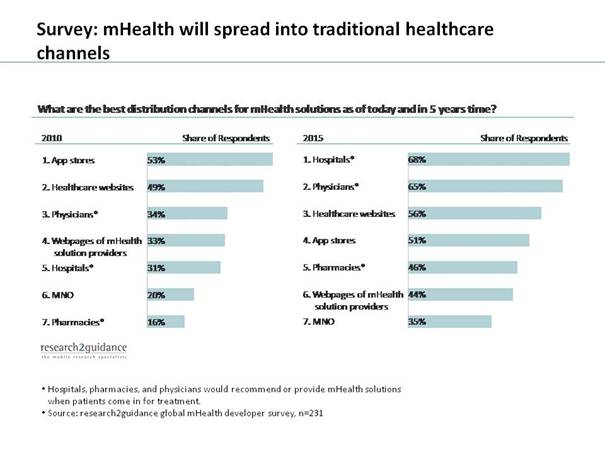
In the years to come mHealth applications will cease to be distributed primarily through the app stores survey participants anticipate. At the moment app stores are still the distribution channels of choice but in the future it is expected that traditional healthcare distribution channels like hospitals and specialized healthcare product vendors will become the predominant distribution channels. This would represent a significant shift when compared to the market today, as the smartphone app store model has been the key driver behind the initial success of mHealth applications over the last two years.

The Survey Results

More than half of all respondents (53%) believe that currently app stores are the best distribution channels followed only by healthcare websites (49%). Traditional health distribution channels like doctors (34%), hospitals (31%) and pharmacies (16%) are ranked as second and third tier distribution channels today. Despite the fact that mobile operators are regarded as players who will help the mHealth market to grow, they are not seen as appropriate distribution channels either now or in the future.

In 5 years’ time survey participants anticipate that the traditional distribution channels like hospitals (68%), doctors (65%) and traditional healthcare websites (56%) will become the main platforms on which to sell mHealth solutions. Generally speaking all distribution channels will grow in importance, but developers envision that in just 5 years’ time the major distribution channel will be doctors prescribing or suggesting applications to patients as a component of treatment.

About the Survey

The survey was conducted by research2guidance to identify emerging trends demonstrated by common thinking amongst early adopters in this new market. It is part of the comprehensive “Mobile Health Market Report 2010-2015“ (http://www.research2guidance.com/shop/index.php/mhealth-report).

About research2guidance:

research2guidance is a Berlin-based market research company specialized in the mobile industry. The company’s service offerings include comprehensive market studies, as well as bespoke research and consultancy.

Contact:

Robert Kuersten

Conclusion

Your thoughts and comments on this ME-P are appreciated. Feel free to review our top-left column, and top-right sidebar materials, links, URLs and related websites, too. Then, subscribe to the ME-P. It is fast, free and secure.

Link: http://feeds.feedburner.com/HealthcareFinancialsthePostForcxos

Speaker: If you need a moderator or speaker for an upcoming event, Dr. David E. Marcinko; MBA – Publisher-in-Chief of the Medical Executive-Post – is available for seminar or speaking engagements. Contact: MarcinkoAdvisors@msn.com

OUR OTHER PRINT BOOKS AND RELATED INFORMATION SOURCES:

DICTIONARIES: http://www.springerpub.com/Search/marcinko
PHYSICIANS: www.MedicalBusinessAdvisors.com
PRACTICES: www.BusinessofMedicalPractice.com
HOSPITALS: http://www.crcpress.com/product/isbn/9781466558731
CLINICS: http://www.crcpress.com/product/isbn/9781439879900
BLOG: www.MedicalExecutivePost.com
FINANCE: Financial Planning for Physicians and Advisors
INSURANCE: Risk Management and Insurance Strategies for Physicians and Advisors

Product DetailsProduct DetailsProduct Details

Should Doctors Make the Patient Internet Portal Leap?

An ME-P Readers Survey

By Staff Reporters

Join Our Mailing List 

Patient Portals

In healthcare, for example, the use of patient website portals is a hotly debated topic. These are [should be]  sophisticated HIPPA compliant and secure Web sites offered by medical practices to help engage patients electronically, with the promise of better service and care for patients — and less hassle for the medical practice, doctors and nurses. Often clinical, insurance and financial data gathering and scheduling functions are included, along with separate patient log-in, e-prescribing, and laboratory result features, etc. The promise of eMRs only increases the sophistication of these burgeoning sites.

Use Still in Infancy

But, according to www.MedicalBusinessAdvisors.com unscientific sampling of our clients and technically sophisticated practices [skewed cohort], physicians note that the uptake of portal use by patients outside of tech savvy urban centers is still small, although use by senior citizens is rapidly increasingly. And, tech savvy youngsters are typically not in need of healthcare.

The Survey Question

So, this raises the question, unanswered by other professionally focused websites like Physicians Practice, should you make the patient portal leap?

Definitions

Before we answer that question, let’s provide a bit more historical detail on this technology. In contrast to a traditional [first generation – health 1.0] practice Web site, which provides smiling pictures of the physicians, directions, hours of operation, policies, and maybe a smattering of educational materials, a patient portal is designed for active interaction between patient and practice [second generation – health 2.0].

Example:

As an example, a patient portal typically provides secure e-mail, allowing the patient to make a quick query of the physician (and presumably receive a reasonably quick response) without the delay and inconvenience of attempting to catch the physician on the phone between visits or after hours. Patient portals can also be used for open-source scheduling, allowing patients to make requests for particular times and days.

Assessment

Finally, the newest and most sophisticated patient e-MR engaged portals will allow patients to take a peek inside their patient record, giving them online (and secure) access to their medication list, recent labs, and other data that might be useful in self management, or if the patient is seeing another provider, etc. 

Conclusion

And so, your thoughts and comments on this ME-P are appreciated. Should doctors and medical clinics make the patient portal leap? Feel free to review our top-left column, and top-right sidebar materials, links, URLs and related websites, too. Then, subscribe to the ME-P. It is fast, free and secure.

Speaker: If you need a moderator or speaker for an upcoming event, Dr. David E. Marcinko; MBA – Publisher-in-Chief of the Medical Executive-Post – is available for seminar or speaking engagements. Contact: MarcinkoAdvisors@msn.com and http://www.springerpub.com/Search/marcinko

Get our Widget: Get this widget!

Our Other Print Books and Related Information Sources:

Health Dictionary Series: http://www.springerpub.com/Search/marcinko

Practice Management: http://www.springerpub.com/product/9780826105752

Physician Financial Planning: http://www.jbpub.com/catalog/0763745790

Medical Risk Management: http://www.jbpub.com/catalog/9780763733421

Healthcare Organizations: www.HealthcareFinancials.com

Physician Advisors: www.CertifiedMedicalPlanner.com

Subscribe Now: Did you like this Medical Executive-Post, or find it helpful, interesting and informative? Want to get the latest ME-Ps delivered to your email box each morning? Just subscribe using the link below. You can unsubscribe at any time. Security is assured.

Link: http://feeds.feedburner.com/HealthcareFinancialsthePostForcxos

Sponsors Welcomed: And, credible sponsors and like-minded advertisers are always welcomed.

Link: https://healthcarefinancials.wordpress.com/2007/11/11/advertise

Product DetailsProduct DetailsProduct Details       

Product Details  Product Details

   Product Details 

A Brief History of the ME-P

Enhancing Health 2.0 Connectivity for Physicians and their Financial Advisors

By Staff Reporters

Join Our Mailing List 

The Medical Executive-Post [ME-P] was launched in 2006, and was a resounding success. We first went online in October 2006 with an overwhelmingly positive response. Readers and subscribers alike reported finding it a credible source of information with more than half saying the information was far new to them. Our parent company remains: www.MedicalBusinessAdvisors.com

Our Research

In additional, our internal research revealed:

  • 85% of those surveyed considered practice-related, non-clinical information very important to them.
  • 82% heavily favored solutions and essays to specific needs versus general editorial content.
  • 77% found practice management information integrated with financial planning content very unique.
  • 68% felt a journal or newspaper presentation as increasingly irrelevant.

Physician and Financial Advisory Books Launched Since Inception

Product DetailsProduct DetailsProduct Details       

Product Details  Product Details

   Product Details 

Healthcare Organizations Financial Journal: www.HealthcareFinancials.com

Medical Practice Management CD-ROMs

Personal Financial and Medical Management Consulting Services

Link: https://medicalexecutivepost.com/schedule-a-consultation/

Certification Education for Financial Advisors and Management Consultants

Link: www.CertifiedMedicalPlanner.com

More about Us

Link: https://medicalexecutivepost.com/2007/10/08/hello-world/

Advertise with Us

Link: https://medicalexecutivepost.com/2007/11/11/advertise/

Sponsor Us                                             

Link: https://healthcarefinancials.wordpress.com/2007/11/11/advertise

Speaker: If you need a moderator or speaker for an upcoming event, Dr. David E. Marcinko; MBA – Publisher-in-Chief of the Medical Executive-Post – is available for seminar or speaking engagements. Contact: MarcinkoAdvisors@msn.com and http://www.springerpub.com/Search/marcinko

Get our Widget: Get this widget!

Our Other Print Books and Related Information Sources:

Health Dictionary Series: http://www.springerpub.com/Search/marcinko

Practice Management: http://www.springerpub.com/product/9780826105752

Physician Financial Planning: http://www.jbpub.com/catalog/0763745790

Medical Risk Management: http://www.jbpub.com/catalog/9780763733421

Healthcare Organizations: www.HealthcareFinancials.com

Physician Advisors: www.CertifiedMedicalPlanner.com

Subscribe Now: Did you like this Medical Executive-Post, or find it helpful, interesting and informative? Want to get the latest ME-Ps delivered to your email box each morning? Just subscribe using the link below. You can unsubscribe at any time. Security is assured.

Link: http://feeds.feedburner.com/HealthcareFinancialsthePostForcxos

Inviting Debate with eDR Stakeholders

An ME-P Exclusive – Almost

By D. Kellus Pruitt DDS

I really, really love being provocative in my neighborhood that I know so well. It just doesn’t seem fair. In fact, for five years, I’ve watched the electronic dental record [eDR] market very closely, and I tell you, something big is moving under the radar. If you recall, in the last couple of weeks I brought your attention to unexplained interest blips appearing on the Medical Executive-Post www.MedicalExecutivePost.com concerning eDRs. I suggested that Internet interest in the topic following years of silence from even the ADA, could be a sign that important news about electronic health records in dentistry may be breaking soon.

CCHIT Seeking Comments 

Just a couple of hours ago, Andis Robeznieks posted “CCHIT seeks comments on specialized EHRs” on ModernHealthcare.com.

http://www.modernhealthcare.com/article/20101119/NEWS/311199996/#

Robeznieks writes: “The Certification Commission for Health Information Technology has opened a public comment period for its proposed oncology and women’s-health electronic health-record certification criteria and test scripts. The comment period will end December 10th at 5 pm CT.”

Meaningful Dental Use 

Is it possible that following the establishment of “meaningful use” guidelines for these specialists, dentistry could be next in line? The nature of the approaching bolus of news concerning eDRs is pure speculation, but rest assured I’ll be right in the middle of it – which brings me to the next sign that eDR stakeholders are getting restless: An almost unheard of conversation about eDRs appeared today on the Internet. Since the only news about eDRs on the Internet are press releases from Dentrix – the largest vendor in the nation – conversations about value of electronic dental records only rarely break out. But, when they appear, I always try my best to be provocative – just to tease out new rationalizations I might have otherwise missed.

I think I found promising opportunity this morning following an article by “John” titled, “EMR Stimulus Q and A: EMR Stimulus Money and Dentists.” It was posted yesterday on the EMR and HIPAA blog.

http://www.emrandhipaa.com/emr-and-hipaa/2010/11/18/emr-stimulus-q-and-a-emr-stimulus-money-and-dentists/comment-page-1/#comment-126257

My Comments

I’ve looked into whether stimulus money will be available to dentists. Many in your audience won’t like it, but here’s your answer: 

Dentists will not receive any ARRA stimulus to help pay for electronic dental records – even if a practice is 30% Medicaid as required. For one thing, it’s already too late to collect on the biggest portion of our grandchildren’s money unless the practice can prove utilization of an ONC-certified eDR in a “meaningful” way by this time next year. And, that’s simply impossible because there are no ONC-certified eDRs, and meaningful use has still not been defined by HHS – with help from the ADA. Eventually, someone from the ADA will either have to promote computer busywork as meaningful use, or concede that meaningful use of eHRs in dentistry simply does not exist.

Example

For example, do you want to log on to a password-protected, HIPAA-compliant computer just to notify the lab that you have a pick-up? For dental practices, speed-dial on the telephone – or fax machine – is much more meaningful, and neither requires the dentist to be a HIPAA-covered entity. In addition, none of the conventional ways of communicating put patients’ identities at risk like digital records on a stolen or hacked computer. That’s Hippocratic meaningful.

Digital Drawbacks 

Here’s another drawback to digitalization: Even though electronic dental records are cutting-edge cool, they have yet to show a return on investment for dental practices, and data breaches will continue to make them more and more expensive. Without ROI, paperless is a hobby paid for by clueless patients in higher fees. Bet you haven’t heard that chunk of honesty very often. Honesty about hi-tech non-solutions is repressed even in the ADA because it is so politically incorrect to admit that our dental leaders who misled members were misled themselves by HIT stakeholders and Newt Gingrich. It’s really difficult for high officials inside and outside dentistry to stand up and say, “Oops! We were wrong.”

See: “Is ARRA Stimulus Money for Dentists?”

https://medicalexecutivepost.com/2010/11/16/is-arra-stimulus-money-for-dentists/

Assessment

I happened to post the article on the Medical Executive-Post two days before John’s article was posted here on the EMR and HIPAA forum. I invite you to read it, and tell me what you think. Other than here, nobody talks about these issues. That can’t be good for dental patients.

Conclusion

And so, your thoughts and comments on this ME-P are appreciated. Feel free to review our top-left column, and top-right sidebar materials, links, URLs and related websites, too. Then, subscribe to the ME-P. It is fast, free and secure.

Speaker: If you need a moderator or speaker for an upcoming event, Dr. David E. Marcinko; MBA – Publisher-in-Chief of the Medical Executive-Post – is available for seminar or speaking engagements. Contact: MarcinkoAdvisors@msn.com and http://www.springerpub.com/Search/marcinko

Get our Widget: Get this widget!

Our Other Print Books and Related Information Sources:

Health Dictionary Series: http://www.springerpub.com/Search/marcinko

Practice Management: http://www.springerpub.com/product/9780826105752

Physician Financial Planning: http://www.jbpub.com/catalog/0763745790

Medical Risk Management: http://www.jbpub.com/catalog/9780763733421

Healthcare Organizations: www.HealthcareFinancials.com

Physician Advisors: www.CertifiedMedicalPlanner.com

Subscribe Now: Did you like this Medical Executive-Post, or find it helpful, interesting and informative? Want to get the latest ME-Ps delivered to your email box each morning? Just subscribe using the link below. You can unsubscribe at any time. Security is assured.

Link: http://feeds.feedburner.com/HealthcareFinancialsthePostForcxos

Sponsors Welcomed: And, credible sponsors and like-minded advertisers are always welcomed.

Link: https://healthcarefinancials.wordpress.com/2007/11/11/advertise

Product DetailsProduct DetailsProduct Details       

Product Details  Product Details

   Product Details 

eHRs by 2014?

How’s the $19-B eHR Mandate Going?

By D. Kellus Pruitt DDS

In 2004, President Bush declared that all Americans’ health records will be digital by 2014. Upon taking the office 2 years ago, President Obama also adopted the popular, HIT industry-supported bi-partisan goal. Will the mandate make a difference – even if we kick in our grandchildren’s money?

Not without the cooperation of doctors and patients. What were you thinking, Mr. Presidents?

Looking Pretty Doubtful

Yesterday, even FierceHealthIT editor Neil Versel declared,

“It’s looking pretty doubtful that the Bush/Obama goal of 2014 will happen, whether you’re shooting for ‘most’ or ‘all’ Americans.”

http://www.fiercehealthit.com/story/amia-2010-five-10-years-away-always-seems-five-10-years-away/2010-11-15#ixzz15TianByl

My Two Cents

In my opinion, the eHR mandate was doomed on delivery when the consumer-friendly 1996 HIPAA Rule was amended in 2003 – taking control of healthcare from patients and doctors and granting it to reckless healthcare stakeholders who cannot be held accountable for harming Americans.

Assessment

In 2003, our privacy was sold for bi-partisan contributions. If Americans don’t trust digital health records, they’ll be worse than worthless. They’ll be dangerous.

Conclusion

Your thoughts and comments on this ME-P are appreciated. Feel free to review our top-left column, and top-right sidebar materials, links, URLs and related websites, too. Then, subscribe to the ME-P. It is fast, free and secure.

Speaker: If you need a moderator or speaker for an upcoming event, Dr. David E. Marcinko; MBA – Publisher-in-Chief of the Medical Executive-Post – is available for seminar or speaking engagements. Contact: MarcinkoAdvisors@msn.com

OUR OTHER PRINT BOOKS AND RELATED INFORMATION SOURCES:

Product DetailsProduct DetailsProduct Details

Product Details  Product Details

   Product Details 

Is ARRA Stimulus Money for Dentists?

Join Our Mailing List

Now is the Time to Say “No Thank You” to the ADA

[By D. Kellus Pruitt DDS]

A few days ago on Twitter, @techguy said: “@Dentrix, Are you guys helping dentists get access to the ARRA EHR Stimulus money?” This morning I “retweeted” his question to the electronic dental record giant: “That’s a great question, @Dentrix. What are you doing to help dentists receive stimulus money?

Of Faded Promises  

Dentrix officials no longer shop faded promises of free stimulus money to help dentists purchase their software. The truth is, without taxpayer help, Dentrix’s product offers dentists no return on investment, and it’s unlikely that the profession will ever see a cent of stimulus money. In fact, if American Dental Association President Raymond Gist wants to be a national hero, now would be the time to purchase a press release to tell the nation, “American dentists graciously decline your offer of stimulus money, taxpayers. We say, let our grandchildren keep it for themselves.” The deficit-weary public is very interested in that kind of good news these days. But, the ADA’s PR opportunity has a shelf life. The sooner they jump on this minor deception the more generous American dentists will appear. A year from now, the chunk of faux-generosity won’t work.

Too Late for Cash Give-Aways 

For one thing, it’s simply too late for dentists to take part in the cash giveaway. And even if there was time for a significant number of dentists to convert from paper to digital before September 2011, to receive promised stimulus money, a dentist’s practice has to be 30% Medicaid. That qualification rules out almost all dental practices right off, and here in Texas last week, Governor Perry threatened to opt my state out of Medicaid (and stimulus money) completely. A year ago, Perry threatened secession from the Union. It sounds to me like you are softening him up, Washington.

Meaningful Use Requirements 

That’s not all. Before a dentist can qualify to be reimbursed up to $44,000 dollars, the practice must show “meaningful use” of certified electronic dental records. However, meaningful use of digital records in dentistry has not yet been determined and perhaps does not actually exist. Nevertheless, the best minds in the ADA and HHS are searching for the next best thing – humorous rationalizations. For example, imagine the convenience of the speed-dial on the telephone compared to logging on to a highly secure, password-protected, HIPAA-compliant, encrypted computer just to tell the lab you have a pick up – just to show the Department of Health and Human Services that you are making “meaningful use” of your Dentrix product and spending taxpayer money wisely.

Assessment 

Do you know what is scary about the leadership in my profession? I’m apparently the only dentist in the nation who dares admit that as far as ARRA stimulus money goes, American dentists are out of luck and clueless. Even @techguy is in the dark for crying out loud!

Conclusion

Your thoughts and comments on this ME-P are appreciated. Feel free to review our top-left column, and top-right sidebar materials, links, URLs and related websites, too. Then, subscribe to the ME-P. It is fast, free and secure.

Speaker: If you need a moderator or speaker for an upcoming event, Dr. David E. Marcinko; MBA – Publisher-in-Chief of the Medical Executive-Post – is available for seminar or speaking engagements. Contact: MarcinkoAdvisors@msn.com

OUR OTHER PRINT BOOKS AND RELATED INFORMATION SOURCES:

Product Details 

Front Matter BoMP – 3

A Physician Query on “Used” eMR Billing System Value?

Understanding Residual Worth

“Ask an Advisor”

Submitted by an Anonymous, MD

Join Our Mailing List 

Greetings!

I am in a three man Neurology practice. Five years ago we invested in an all inclusive EMR / billing system with A4 Health Systems and Allscripts. The system cost close to $60,000 and has been constantly upgraded (for “free”). There are also yearly “maintenance” fees of about $7,000. Each physician also had to get a license at a cost of $7,000 each. A license now per physician is $13,000!  

Buy-Out Value

I am going to be leaving the practice in one year and would like to know how I go about getting the EMR appraised for my buy-out. I am not about to turn this very valuable system over to my partners as a “going away gift”. The system has been upgraded several times a year and the practice obviously could not run without it (i.e.: it is a tangible asset and has continued value in use). 

Assessment

PCs, printers, etc. may have depreciated in value but the system has not especially since it has been upgraded on a regular basis. Can you refer me to someone who is familiar with appraising EMR systems?

Conclusion

And so, your thoughts and comments on this ME-P are appreciated. How do you appraise a “used or second-hand” eMR system? Does it have any residual value at all! Feel free to review our top-left column, and top-right sidebar materials, links, URLs and related websites, too. Then, subscribe to the ME-P. It is fast, free and secure.

Speaker: If you need a moderator or speaker for an upcoming event, Dr. David E. Marcinko; MBA – Publisher-in-Chief of the Medical Executive-Post – is available for seminar or speaking engagements. Contact: MarcinkoAdvisors@msn.com and http://www.springerpub.com/Search/marcinko

Get our Widget: Get this widget!

Our Other Print Books and Related Information Sources:

Health Dictionary Series: http://www.springerpub.com/Search/marcinko

Practice Management: http://www.springerpub.com/product/9780826105752

Physician Financial Planning: http://www.jbpub.com/catalog/0763745790

Medical Risk Management: http://www.jbpub.com/catalog/9780763733421

Healthcare Organizations: www.HealthcareFinancials.com

Physician Advisors: www.CertifiedMedicalPlanner.com

Subscribe Now: Did you like this Medical Executive-Post, or find it helpful, interesting and informative? Want to get the latest ME-Ps delivered to your email box each morning? Just subscribe using the link below. You can unsubscribe at any time. Security is assured.

Link: http://feeds.feedburner.com/HealthcareFinancialsthePostForcxos

Sponsors Welcomed: And, credible sponsors and like-minded advertisers are always welcomed.

Link: https://healthcarefinancials.wordpress.com/2007/11/11/advertise

Product DetailsProduct DetailsProduct Details       

Product Details  Product Details

   Product Details 

Useful Managed Care Provider, Staffing, Activity and Financial Trends

Part Two

By Dr. David Edward Marcinko MBA

[Publisher-in-Chief]

Dr. DEMIf you read this ME-P regularly or have read my earlier blogs, you know that I am writing a book on practice management for the private medical practitioner.

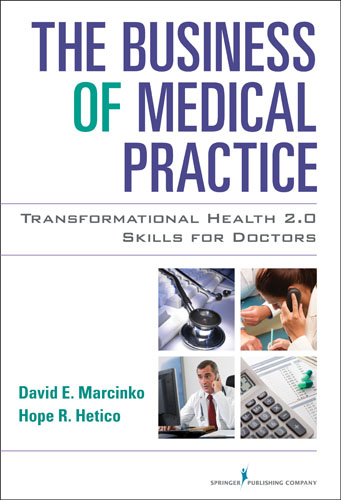
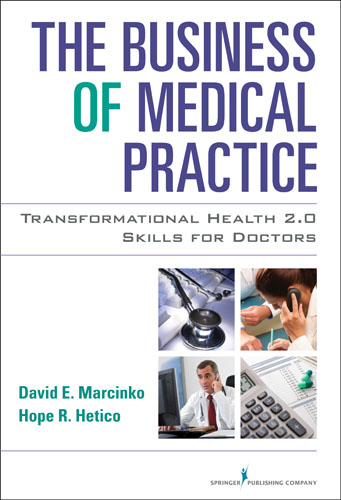
The Business of Medical Practice [Transformational Health 2.0 Skills for Doctors]; third edition: www.BusinessofMedicalPractice.com

Link: Front Matter BoMP – 3

A recent story in the Chicago Tribune on the difficult business life of private practitioners today reminds me that I need to keep my nose to the grindstone.

For example, according to the sanofi-aventis Pharmaceutical Company Managed Care Digest Series, for 2008-10, the following patterns and comparative trend information has been empirically determined and may provide a basic starting point for medical practitioners to share business management, facilities, personnel, and records information for enhanced success www.managedcaredigest.com

Mid-Level Provider and Staffing Trends

  • Mid-level provider use increased among multi-specialty groups, especially in those with more than half of their revenue from capitated contracts. Use also rose with the size of the practice and was highest with OB/GYN groups.
  • Medical support staff for all multi-specialty groups fell and was lowest in medical groups with less than 10 full-time equivalent (FTE) physicians. However, groups with a large amount of capitated revenue actually added support staff. Smaller groups limited support staff.
  • Compensation costs of support staff increased and the percentages of total operating costs associated with laboratories, professional liability insurance, IT services, and imaging also increased. Support staff costs increase with capitation levels and more than half of all operating costs are tied to support staff endeavors.

Managed Care Activity and Contracting Trends

  • More medical group practices are likely to own interests in preferred provider organizations (PPOs) than in HMOs and the percentages of groups with managed care revenue continues to rise. Multi-specialty and large groups also derive more revenue from MCOs than single specialty or smaller groups.
  • Managed care has little effect on physician payment methods that are still predominantly based on productivity. Physicians were paid differently for at-risk managed care contracts in only a small percentage of cases.
  • Most medical groups (75%) participating in managed care medicine have PPO contracts. Group practices contract with network HMOs more often than solo practices. Single-specialty groups more often have PPO contracts.
  • Capitated lives often raise capitation revenues in large group practices. Group practices are more highly capitated than smaller groups or solo practices. Almost 30% of highly capitated medical groups have more than 15 contracts and 22% have globally capitated contracts.
  • Higher capitation is linked with increased risk contracting. Larger groups have more risk contracting than smaller groups.

Physician Health

Financial Profile Trends

  • Medicare fee-for-service reimbursement is decreasing. Highly capitated groups incur high consulting fees.
  • The share of total gross charges for OB/GYN groups associated with managed care at-risk contracts is rising while non-managed care, or not-at-risk charges are declining.
  • Capitated contracts have little effect on the amount of on-site office non-surgical work. Off-site surgeries are most common for surgery groups, not medical groups.
  • Half of all charges are for on-site non-surgical procedures.
  • Highly capitated medical groups have higher operating costs and lower net profits.
  • Groups without capitation have higher laboratory expenses than those who do.
  • Physician costs are highest in orthopedic surgery group practices. Generally, median costs at most specialty levels are rising and profits shrinking.

Assessment

Obviously, the above information is only a gauge since regional differences, and certain medical sub-specialty practices and carve-outs, do exist.

Part One: Useful Managed Care Patterns and Procedural Utilization Trends

Conclusion

Your thoughts and comments on this ME-P are appreciated. Feel free to review our top-left column, and top-right sidebar materials, links, URLs and related websites, too. Then, subscribe to the ME-P. It is fast, free and secure.

Speaker: If you need a moderator or speaker for an upcoming event, Dr. David E. Marcinko; MBA – Publisher-in-Chief of the Medical Executive-Post – is available for seminar or speaking engagements. Contact: MarcinkoAdvisors@msn.com

OUR OTHER PRINT BOOKS AND RELATED INFORMATION SOURCES:

Product DetailsProduct DetailsProduct Details

Product Details  Product Details

   Product Details 

On the Election Results of November 2010

Gauging the Impact of the Affordable Care Act?

Question:

ME-P readers and others have been asking us – what does the election outcome mean for health care and the ACA?

Answer:

In short, not as much as many think, according to Steve Pizer JD and Austin Frakt PhD of the Incidental Economist.

Link:

http://theincidentaleconomist.com/wordpress/what-the-election-means-for-health-care/?utm_source=feedburner&utm_medium=email&utm_campaign=Feed%3A+TheIncidentalEconomist+%28The+Incidental+Economist+%28Posts%29%29

Conclusion

And so, your thoughts and comments on this ME-P are appreciated. Feel free to review our top-left column, and top-right sidebar materials, links, URLs and related websites, too. Then, subscribe to the ME-P. It is fast, free and secure.

Get our Widget: Get this widget!

Our Other Print Books and Related Information Sources:

Health Dictionary Series: http://www.springerpub.com/Search/marcinko

Practice Management: http://www.springerpub.com/product/9780826105752

Physician Financial Planning: http://www.jbpub.com/catalog/0763745790

Medical Risk Management: http://www.jbpub.com/catalog/9780763733421

Healthcare Organizations: www.HealthcareFinancials.com

Physician Advisors: www.CertifiedMedicalPlanner.com

Subscribe Now: Did you like this Medical Executive-Post, or find it helpful, interesting and informative? Want to get the latest ME-Ps delivered to your email box each morning? Just subscribe using the link below. You can unsubscribe at any time. Security is assured.

Link: http://feeds.feedburner.com/HealthcareFinancialsthePostForcxos

Sponsors Welcomed:  And, credible sponsors and like-minded advertisers are always welcomed.

Link: https://healthcarefinancials.wordpress.com/2007/11/11/advertise

Product DetailsProduct DetailsProduct Details       

Smartphone Apps Market Model Takes mHealth Market to New Level

ADVERTISEMENT

Will mobile apps become the killer application of the mHealth market?

By Markus Pohl                                                                                   

research2guidance / The Mobile Research Specialists

phone: +49 (0) 30 60 989 3363

mobile: +49 (0) 178 4007736

fax: +49 (0) 30 60 989 3369

email: mp@research2guidance.com

Join Our Mailing List 

Dear Dr. Marcinko,  

New research by research2guidance concludes that mobile applications and the new smartphone market model will help the mHealth market to reach a new level. The mHealth market will develop from a trial market to a global market, which is about to realize its full potential.

A Long Time Topic 

mHealth solutions have been discussed since the end of the 90s. There were very positive market projections indicating that the mHealth market would soon become a billion Dollar market at that time. But the market never really took off. What stopped the early mHealth market from being successful?

In the last years a new market model has been created by Apple: The mobile applications eco-system. Can this new system ignite the market development that everybody has been expecting for the last years? Will smartphone apps become the killer application of the mHealth market?

Barriers to Entry

The following list shows the main barriers which prevented the mHealth market from growing in the past and the changes the new model will bring:

1. Devices: Early solution providers had to live with limited device capabilities and in order to achieve successful market entry and profitability had to find hardware partners to develop the mobile device. Furthermore, reach was very limited for any kind of smarter phone. Many of the features that early solutions providers had to find special solutions for are now included as standard on smartphones (e.g. GPS or sensors). Reach of smartphones, although limited today, won’t be in 2 years time with the number of smartphone users projected to be 1 in 2013.

2. Distribution: In the early days mHealth solutions providers had to seek partnerships with MNOs in order to gain some support with the distribution of the service or had to do it on their own. The new market model offers global reach without having to deal with an MNO.  Still, traditional distribution channels like doctors, hospitals and health insurance providers are not being affected by the new model.

3. Patients and doctors: The awareness of mHealth solutions was very limited. The new market model offers a better user experience along the entire value chain: discovery and access, billing and usage. The hype for smartphone apps also brings mHealth apps into the spotlight of its potential users. Still, one of the biggest target groups for mHealth solutions, the elderly, will have the biggest issues with technology adoption, although they would benefit most from mHealth application usage. This mismatch will not be changed by the new market model in the near future.

4. Regulations: The new market model has only limited impact on one of the key barriers regulation. As long as mHealth solutions and services don’t get clearance from national regulators and are thus not reimbursable by health insurance providers, patients must pay expenses them-selves. Doctors won’t prescribe e.g. a pill reminder application and will have no financial incentive to propose such solutions to the majority of their patients. The market will remain a consumer driven market, which means that the full potential will remain untapped.  Another barrier remains the discussion around security and confidentiality of data. Major projects like electronic health records have been mandated a decade ago in some countries but implementation has been delayed until now mainly because of security and confidentiality reasons.

The findings are a part of a new report by market research institute research2guidance about the global mHealth market. The report analyzes in detail the impact of the new market model, the business opportunities for mHealth app publishers, and how the market will look like in 2015 and will be published at the end of October 2010

Assessment 

Link to related blog post: http://www.research2guidance.com/will-smartphone-apps-become-the-killer-application-of-the-mhealth-market/

Link to graph: http://www.research2guidance.com/wp-content/uploads/2010/10/Barriers.jpg

For more information please contact:

Robert Krsten,

email: rk@research2guidance.com

phone: +49 30 60 989 3366

web: www.research2guidance.com

Conclusion

Your thoughts and comments on this ME-P are appreciated. Feel free to review our top-left column, and top-right sidebar materials, links, URLs and related websites, too. Then, subscribe to the ME-P. It is fast, free and secure.

Speaker: If you need a moderator or speaker for an upcoming event, Dr. David E. Marcinko; MBA – Publisher-in-Chief of the Medical Executive-Post – is available for seminar or speaking engagements. Contact: MarcinkoAdvisors@msn.com

OUR OTHER PRINT BOOKS AND RELATED INFORMATION SOURCES:

Product DetailsProduct DetailsProduct Details

   Product Details

***

Brief Summary of “Meaningful-Use” for eHRs

Objectives Listed

By Shahid N. Shah MS

www.BusinessofMedicalPractice.com

In 2009, the ARRA HITECH bill coined the term “meaningful use” and was a game-changer in the healthcare IT industry. In a series of regulations, the Recovery Act specifically required the following.

Summary of MU

Here are the substantive Meaningful Use objectives of the new ARRA HITECH bill:

  • Use Computer Provider Order Entry (CPOE).
  • Implement drug-drug, drug-allergy, drug-formulary checks.
  • Maintain an up-to-date problem list of current and active diagnoses based on ICD-9-CM or SNOMED CT®.
  • Maintain active medication list.
  • Maintain active medication allergy list.
  • Record demographics.
  • Record and chart changes in vital signs.
  • Record smoking status for patients 13 years and older.
  • Incorporate clinical lab-test results into EHR as structured data.
  • Generate lists of patients by specific conditions to use for quality improvement, reduction of disparities, and outreach. This is a common feature in EHRs.
  • Report ambulatory quality measures to CMS or the States.
  • Implement 5 clinical decision support rules relevant to specialty or high clinical priority, including diagnostic test ordering, along with the ability to track compliance with those rules.
  • Check insurance eligibility electronically from public and private payers.
  • Submit claims electronically to public and private payers.
  • Provide patients with an electronic copy of their health information upon request.
  • Capability to electronically exchange key clinical information among providers of care and patient-authorized entities.
  • Perform medication reconciliation at relevant encounters and each transition of care.
  • Provide summary care record for each transition of care and referral.
  • Capability to submit electronic data to immunization registries and actual submission where required and accepted.
  • Capability to provide electronic syndromic surveillance data to public health agencies and actual transmission according to applicable law and practice.
  • Protect electronic health information created or maintained by the certified EHR technology through the implementation of appropriate technical capabilities
  • Generate and transmit permissible prescriptions electronically.
  • Send reminders to patients per patient preference for preventive/follow-up care.
  • Provide patients with timely electronic access to their health information within 96 hours of information being available to the EP.
  • Provide clinical summaries for patients for each office visit.

Conclusion

Your thoughts and comments on this ME-P are appreciated. Feel free to review our top-left column, and top-right sidebar materials, links, URLs and related websites, too. Then, subscribe to the ME-P. It is fast, free and secure.

Speaker: If you need a moderator or speaker for an upcoming event, Dr. David E. Marcinko; MBA – Publisher-in-Chief of the Medical Executive-Post – is available for seminar or speaking engagements. Contact: MarcinkoAdvisors@msn.com

OUR OTHER PRINT BOOKS AND RELATED INFORMATION SOURCES:


Product DetailsProduct DetailsProduct Details

Content Exchange and Vocabulary Standards for eMRs

Understanding Terms and Definitions

By Shahid N. Shah MS

As per the HHS rules, vocabulary standards are standardized nomenclatures and e-code sets used to describe clinical problems and procedures, medications, and allergies for eMRs. Some commons terms and definitions are listed below:

Terms and Definitions

  • ASTM’s CCR – for most of your basic patient summary exchange needs the CCR will meet your needs. If you’re moving from low or no interoperability today to some interoperable capabilities then CCR is your best starting place.
  • International Classification of Diseases, 9th Revision, Clinical Modifications (ICD-9- CM) or SNOMED CT® should populate a problem list. If you’re not familiar with both standards and are unsure where to start, go with ICD-9 for problem lists. SNOMED is not commonly supported in the broad EMR industry but ICD-9 support is quite common so start there.
  • Health Level Seven (HL7) Clinical Document Architecture (CDA) Release 2 (R2) Level 2 CCD – for more advanced patient summary exchange needs the HL7 CDA is recommended. If you’re already supporting CCR exchange and it’s not meeting your needs then HL7 CDA is the next logical place to go.
  • For patient summary exchanges, HHS expect the following fields to be populated: problem list; medication list; medication allergy list; procedures; vital signs; units of measure; lab orders and results; and, where appropriate, discharge summary.
  • ICD-9-CM [ACD-10] or American Medical Association (AMA) Current Procedural Terminology (CPT®) Fourth Edition (CPT–4) to populate information related to procedures. Both of these standards are support broadly by most existing vendors so going with either or both is good.
  • For medication lists, HHS requires the use of codes from a drug vocabulary the National Library of Medicine has identified as an RxNorm drug data source provider with a complete data set integrated within RxNorm.
  • For lab results, HHS requires the use of LOINC® to populate information in a patient summary record related to lab orders and results when LOINC® codes have been received from a laboratory and are retained and subsequently available in your EMR. HHS states that in instances where LOINC® codes have not been received from a laboratory, the use of any local or proprietary code is permitted. HHS does not require these local or proprietary codes to be converted to LOINC® codes in order to populate a patient summary record.
  • For the purposes of electronic prescribing, your vendor must be capable of using NCPDP SCRIPT 8.1 or NCPDP SCRIPT 8.1 and 10.6. With respect to a vocabulary standard, your vendor must use codes from a drug vocabulary currently integrated into the NLM’s RxNorm. For the purposes of performing a drug formulary check, your vendor must be capable of using NCPDP Formulary & Benefits Standard 1.0 adopted by HHS (73 FR 18918).
  • There are standards required for insurance data like eligibility checking and submissions of claims. ASC X12N and NCPDP standards (Versions 4010/4010A and 5010 and Versions 5.1 and D.0, respectively) should be used for these transactions. It’s important to realize that Version 4010 is being phased out in favor of Version 5010 so your vendors need to support both at this time and must be able to move exclusively to Version 5010 in the future.
  • For the purposes of electronically submitting calculated quality measures required by CMS or by States, your vendor must be capable of using the CMS PQRI 2008 Registry XML Specification. Going forward, HL7 Quality Reporting Document Architecture (QRDA) Implementation Guide based on HL7 CDA Release 2 may be allowed but for now focus on the CMS PQRI requirements until HHS provides more guidance in the future.
  • For the purposes of submitting lab results to public health agencies, your vendor must be capable of using HL7 2.5.1.
  • For the purposes of electronically submitting information to public health agencies for surveillance and reporting, your vendor must be capable of using HL7 2.3.1 or HL7 2.5.1 as a content exchange standard. At this time HHS not required adverse event reporting nor have they adopted a specific vocabulary standard for submitting information to public health agencies for surveillance and reporting.
  • For the purposes of electronically submitting information to immunization registries your vendor must be capable of using HL7 2.3.1 or HL7 2.5.1 as a content exchange standard and the CDC maintained HL7 standard code set CVX -Vaccines Administered18 as the vocabulary standard.

Assessment

www.BusinessofMedicalPractice.com

Conclusion

And so, your thoughts and comments on this ME-P are appreciated. Feel free to review our top-left column, and top-right sidebar materials, links, URLs and related websites, too. Then, subscribe to the ME-P. It is fast, free and secure.  

Speaker: If you need a moderator or speaker for an upcoming event, Dr. David E. Marcinko; MBA – Publisher-in-Chief of the Medical Executive-Post – is available for seminar or speaking engagements. Contact: MarcinkoAdvisors@msn.com and http://www.springerpub.com/Search/marcinko

Get our Widget: Get this widget!

Our Other Print Books and Related Information Sources:

Health Dictionary Series: http://www.springerpub.com/Search/marcinko 

Practice Management: http://www.springerpub.com/product/9780826105752

Physician Financial Planning: http://www.jbpub.com/catalog/0763745790

Medical Risk Management: http://www.jbpub.com/catalog/9780763733421

Healthcare Organizations: www.HealthcareFinancials.com

Physician Advisors: www.CertifiedMedicalPlanner.com

Subscribe Now: Did you like this Medical Executive-Post, or find it helpful, interesting and informative? Want to get the latest ME-Ps delivered to your email box each morning? Just subscribe using the link below. You can unsubscribe at any time. Security is assured.

Link: http://feeds.feedburner.com/HealthcareFinancialsthePostForcxos

Sponsors Welcomed: And, credible sponsors and like-minded advertisers are always welcomed.

Link: https://healthcarefinancials.wordpress.com/2007/11/11/advertise

Product DetailsProduct DetailsProduct Details       

Understanding the Medical Records R[e]Volution

Join Our Mailing List

It’s Not All about Electronic Records

By Dr. David Edward Marcinko; MBA, CMP™

[Editor-in-Chief]

Introduction

To understand the medical records revolution that has occurred this decade, put your self for a moment in the position of a third-party payer; ie; a private insurance company, Medicare or Medicaid etc.

For example, you want to know if Dr. Joel Brown MD actually gave the care for which he is submitting a [super] bill or invoice. You want to know if that care was needed. You want to know that the care was given to benefit the patient, rather than to provide financial benefit to the provider beyond the value of the services rendered.

www.BusinessofMedicalPractice.com

Of Doubts and Uncertainty

Can you send one of your employees to follow Dr. Brown around on his or her office hours and hospital visits?  Of course not! You cannot see what actually happened in Dr. Brown’s office that day or why Dr. Black ordered a PET scan on the patient at the imaging center. What you can do however, is review the medical record that underlies the bill for services rendered from Dr. Blue. Most of all, you can require the doctor to certify that the care was actually rendered and was indicated. You can punish Dr. White severely if an element of a referral of a patient to another health care provider was to obtain a benefit in cash or in kind from the health care provider to whom the referral had been made. You can destroy Dr. Rose financially and put him in jail if his medical records do not document the bases for the bills he submitted for payment.

The Payment Paradigm Shift

This nearly complete change in function of the medical record has precious little to do with the quality of patient care. To illustrate this medical records evolution/revolution point, consider only an office visit in which the care was exactly correct, properly indicated and flawlessly delivered, but not recorded in the office chart. As far as the patient was concerned, everything was correct and beneficial to the patient. As far as the third-party payer is concerned, the bill for those services is completely unsupported by required documentation and could be the basis for a False Claims Act [FCA] charge, a Medicare audit, or a criminal indictment.  We have left the realm of quality of patient care far behind.

mobile EHR health

Provider Attitude Adjustments Required

Instead, medical practitioners must adjust their attitudes to the present function of patient records.  They must document as required under pain of punishment for failure to do so. That reality is infuriating to many since they still cling to the ideal of providing good quality care to their patients and disdain such requirements as hindrances to reaching that goal. They are also aware of the fact that full documentation can be provided without a reality underlying it. “Fine, you want documentation?  I’ll give you documentation!”

Computer Charting and eMRs

Some doctors have given in to the temptation of “cookbook” entries in their charts, canned computer software programs or eMRs listing all the examinations they should have done, all the findings which should be there to justify further treatment.  Many have personally seen, for example, hospital chart notes which describe extensive discussion with the patient of risks, alternatives and benefits in obtaining informed consent when the remainder of the record demonstrates the patient’s complaint that the surgeon has never told her what he planned to do; operative reports of procedures done and findings made in detail which, unfortunately, bear no correlation with the surgery which was actually performed.

Assessment

Whether electronic medical records (eMRs) will be helpful regarding fraud prevention, in the future is still not known. But, it is at best naive and more frequently closer to a death wish to think that a practitioner can beat the system, with handwritten notes, computer generated records, or fabricated eMR documentation.

Conclusion

Your thoughts and comments on this ME-P are appreciated. Feel free to review our top-left column, and top-right sidebar materials, links, URLs and related websites, too. Then, subscribe to the ME-P. It is fast, free and secure.

Link: http://feeds.feedburner.com/HealthcareFinancialsthePostForcxos

Speaker: If you need a moderator or speaker for an upcoming event, Dr. David E. Marcinko; MBA – Publisher-in-Chief of the Medical Executive-Post – is available for seminar or speaking engagements. Contact: MarcinkoAdvisors@msn.com

OUR OTHER PRINT BOOKS AND RELATED INFORMATION SOURCES:

DICTIONARIES: http://www.springerpub.com/Search/marcinko
PHYSICIANS: www.MedicalBusinessAdvisors.com
PRACTICES: www.BusinessofMedicalPractice.com
HOSPITALS: http://www.crcpress.com/product/isbn/9781466558731
CLINICS: http://www.crcpress.com/product/isbn/9781439879900
BLOG: www.MedicalExecutivePost.com
FINANCE: Financial Planning for Physicians and Advisors
INSURANCE: Risk Management and Insurance Strategies for Physicians and Advisors

Product Details  Product Details

Concerning ShareCare.com

A New Consumer Health Information Internet Portal

By Staff Reporters

Join Our Mailing List 

Founded in 2009, Sharecare is an interactive social QA platform created by Jeff Arnold and Dr. Mehmet Oz in partnership with Harpo Studios, HSW International, Sony Pictures Television and Discovery Communications.

Health Information Search Simplified

Sharecare is designed to greatly simplify the search for quality healthcare information and provide consumers with the necessary tools to make smart health choices and live healthier lives. Its’ mission is to answer the world’s questions of health and achieve a collective wisdom by developing a comprehensive database of all of the questions of health and wellness and actively recruiting industry experts to answer them. Leading physicians, nurses, hospitals, clinics, authors, healthcare companies and non-profits connect, interact and share their collective expertise encouraging consumers to ask, learn and act upon questions of health.

Assessment

Sharecare is dedicated to providing consumers with information they can trust and connecting them with industry experts and other knowledgeable consumers in order to educate, empower and continue the conversations of health. All doctors should be aware of it.

Conclusion

And so, your thoughts and comments on this ME-P are appreciated. Give em’ a click and tell us what you think www.ShareCare.com Feel free to review our top-left column, and top-right sidebar materials, links, URLs and related websites, too. Then, subscribe to the ME-P. It is fast, free and secure.

Speaker: If you need a moderator or speaker for an upcoming event, Dr. David E. Marcinko; MBA – Publisher-in-Chief of the Medical Executive-Post – is available for seminar or speaking engagements. Contact: MarcinkoAdvisors@msn.com and http://www.springerpub.com/Search/marcinko

Get our Widget: Get this widget!

Our Other Print Books and Related Information Sources:

Health Dictionary Series: http://www.springerpub.com/Search/marcinko

Practice Management: http://www.springerpub.com/product/9780826105752

Physician Financial Planning: http://www.jbpub.com/catalog/0763745790

Medical Risk Management: http://www.jbpub.com/catalog/9780763733421

Healthcare Organizations: www.HealthcareFinancials.com

Physician Advisors: www.CertifiedMedicalPlanner.com

Subscribe Now: Did you like this Medical Executive-Post, or find it helpful, interesting and informative? Want to get the latest ME-Ps delivered to your email box each morning? Just subscribe using the link below. You can unsubscribe at any time. Security is assured.

Link: http://feeds.feedburner.com/HealthcareFinancialsthePostForcxos

Sponsors Welcomed: And, credible sponsors and like-minded advertisers are always welcomed.

Link: https://healthcarefinancials.wordpress.com/2007/11/11/advertise

Product DetailsProduct DetailsProduct Details       

Seeking Your Favorite Health 2.0 Patient Story

Collaborative Care – Not Yet So Collaborative

Ann Miller RN MHA

[Executive-Director]

Join Our Mailing List 

Dear ME-P Medical Readers

Please send in your favorite story [serious, humorous, poignant, personal, etc] or anecdote on participatory medicine and electronic patient connectivity. If selected, it may be posted on the ME-P or used in our new book in a blinded or named fashion; or on an individual or aggregated basis.

ME-P Support

Editorial support is available, as your input would not only assist your colleagues, but be illustrative in an erudite and credible fashion. Your synergy in this space also seems ideal.  Length is up to you in a prose writing style. And, be sure to address health 2.0 modernity. 

Definition: https://healthcarefinancials.wordpress.com/2008/09/12/emerging-healthcare-20-initiatives

Please contact me for more details, if interested. Regardless, we remain apostles promoting your core vision whenever possible.

Ann Miller: MarcinkoAdvisors@msn.com

Speaker: If you need a moderator or speaker for an upcoming event, Dr. David E. Marcinko; MBA – Publisher-in-Chief of the Medical Executive-Post – is available for seminar or speaking engagements. Contact: MarcinkoAdvisors@msn.com and http://www.springerpub.com/Search/marcinko

Get our Widget: Get this widget!

Our Other Print Books and Related Information Sources:

Health Dictionary Series: http://www.springerpub.com/Search/marcinko

Practice Management: http://www.springerpub.com/product/9780826105752

Physician Financial Planning: http://www.jbpub.com/catalog/0763745790

Medical Risk Management: http://www.jbpub.com/catalog/9780763733421

Healthcare Organizations: www.HealthcareFinancials.com

Physician Advisors: www.CertifiedMedicalPlanner.com

Subscribe Now: Did you like this Medical Executive-Post, or find it helpful, interesting and informative? Want to get the latest ME-Ps delivered to your email box each morning? Just subscribe using the link below. You can unsubscribe at any time. Security is assured.

Link: http://feeds.feedburner.com/HealthcareFinancialsthePostForcxos

Sponsors Welcomed: And, credible sponsors and like-minded advertisers are always welcomed.

Link: https://healthcarefinancials.wordpress.com/2007/11/11/advertise

Product DetailsProduct DetailsProduct Details       

Product Details  Product Details

   Product Details 

On e-Confidentiality Conflicts in Medicine

Understanding the Potential Role of eMR Compromise

By Render Davis MHA CHE

www.BusinessofMedicalPractice.com

Whether it is an employer interested in the results of an employee’s health screening; an insurer attempting to learn more about an enrollee’s prior health history; the media in search of a story; or health planners examining the potential value of national health databases, the confidential nature of the traditional doctor-patient relationship may be compromised through demands for clinical information by parties other than the patient and treating caregivers. 

Impact of eMRs

In addition, without clear safeguards the growth in use of electronic medical records may put personal health information at risk of tampering or unauthorized access.  Clearly, employers and insurers are interested in the status of an individual’s health and ability to work; but does this desire to know, combined with their role as payers for health care, constitute a right to know?  The patient’s right to privacy remains a volatile and unresolved issue.

Assessment

Counter to this concern is the recognition that electronic records may dramatically improve communications by offering greater accessibility of information to clinicians in the hospital or office potentially reducing medical errors through elimination of handwritten notes, increased use of built in prompts and clinically-derived triggers for orders and treatments, and development of pathways for optimal treatments based on clinically valid and tested best practices.

Conclusion

And so, your thoughts and comments on this ME-P are appreciated. What do you think about this confidentiality conflict and the role of eMRs? Feel free to review our top-left column, and top-right sidebar materials, links, URLs and related websites, too. Then, subscribe to the ME-P. It is fast, free and secure.

Speaker: If you need a moderator or speaker for an upcoming event, Dr. David E. Marcinko; MBA – Publisher-in-Chief of the Medical Executive-Post – is available for seminar or speaking engagements. Contact: MarcinkoAdvisors@msn.com

Get our Widget: Get this widget!

Our Other Print Books and Related Information Sources:

Practice Management: http://www.springerpub.com/prod.aspx?prod_id=23759

Physician Financial Planning: http://www.jbpub.com/catalog/0763745790

Medical Risk Management: http://www.jbpub.com/catalog/9780763733421

Healthcare Organizations: www.HealthcareFinancials.com

Physician Advisors: www.CertifiedMedicalPlanner.com

Subscribe Now: Did you like this Medical Executive-Post, or find it helpful, interesting and informative? Want to get the latest ME-Ps delivered to your email box each morning? Just subscribe using the link below. You can unsubscribe at any time. Security is assured.

Link: http://feeds.feedburner.com/HealthcareFinancialsthePostForcxos

Sponsors Welcomed: And, credible sponsors and like-minded advertisers are always welcomed.

Link: https://healthcarefinancials.wordpress.com/2007/11/11/advertise

About HealthCareTownHall.com

Informed Healthcare Reform Dialogue

By Staff Reporters

Join Our Mailing List 

Milliman is the host of this blog to encourage an informed dialogue about healthcare reform.

Complications

Healthcare is complicated, and there is no single, silver-bullet answer to the question of “How do we best improve the current system?”  

Assessment

But, thoughtful discussions will help move reform in the right direction and mend the fractured system; especially in terms of entitlements, costs and spending, etc.

  Conclusion

And so, your thoughts and comments on this ME-P are appreciated. Visit www.HealthCareTownHall.com and tell us what you think? Feel free to review our top-left column, and top-right sidebar materials, links, URLs and related websites, too. Then, subscribe to the ME-P. It is fast, free and secure.

Speaker: If you need a moderator or speaker for an upcoming event, Dr. David E. Marcinko; MBA – Publisher-in-Chief of the Medical Executive-Post – is available for seminar or speaking engagements. Contact: MarcinkoAdvisors@msn.com and http://www.springerpub.com/Search/marcinko

Get our Widget: Get this widget!

Subscribe Now: Did you like this Medical Executive-Post, or find it helpful, interesting and informative? Want to get the latest ME-Ps delivered to your email box each morning? Just subscribe using the link below. You can unsubscribe at any time. Security is assured.

Link: http://feeds.feedburner.com/HealthcareFinancialsthePostForcxos

Sponsors Welcomed: And, credible sponsors and like-minded advertisers are always welcomed.

Link: https://healthcarefinancials.wordpress.com/2007/11/11/advertise

Understanding Disease Management

Join Our Mailing List

How Technology Affects Patient Care

By Brent A. Metfessel MD, CMP™ [Hon]

www.BusinessofMedicalPractice.com

One area where technology assessments, clinical guidelines, and EMR data can make a true difference in patient care is in disease management.

DMAA Definition

The Disease Management Association of America (DMAA) defines disease management as “a system of coordinated health care interventions and communications for populations with conditions in which patient self-care efforts are significant”.  Disease management supports the physician-patient relationship and places particular significance on the prevention of exacerbations and complications of chronic diseases using evidence-based clinical guidelines and integrating those recommendations into initiatives to empower patients to be active partners with their physicians in managing their conditions.

Usual Conditions

Typically, targets for disease management efforts include chronic conditions such as asthma, diabetes, chronic obstructive pulmonary disease, coronary artery disease, and heart failure, where patients can be active in self-care and where appropriate lifestyle changes can have a significant favorable impact on illness progression.

Outcomes Measurement

The DMAA also emphasizes the importance of process and outcomes measurement and evaluation, along with using the data to influence management of the medical condition.

Assessment

Although claims and administrative data can be used to measure and evaluate selected processes and outcomes, EMRs will be needed to capture the full spectrum of data for analyzing illness response to disease management programs and to support necessary changes in care plans to improve both intermediate outcomes (such as lab values), and long-range goals (such as the prevention of illness exacerbations, managing co-morbidities, and halting the progression of complications).

Channel Surfing the ME-P

Have you visited our other topic channels? Established to facilitate idea exchange and link our community together, the value of these topics is dependent upon your input. Please take a minute to visit. And, to prevent that annoying spam, we ask that you register. It is fast, free and secure.

Conclusion

Your thoughts and comments on this ME-P are appreciated. Feel free to review our top-left column, and top-right sidebar materials, links, URLs and related websites, too. Then, subscribe to the ME-P. It is fast, free and secure.

Speaker: If you need a moderator or speaker for an upcoming event, Dr. David E. Marcinko; MBA – Publisher-in-Chief of the Medical Executive-Post – is available for seminar or speaking engagements. Contact: MarcinkoAdvisors@msn.com

OUR OTHER PRINT BOOKS AND RELATED INFORMATION SOURCES:

Product Details

A Poll on RECs

Five Reasons We Think Regional Extension Centers are Reckless

By Houston Neal

Software Advice

http://www.softwareadvice.com/medical

Join Our Mailing List 

Hi Dr. Marcinko and all ME-P Readers

I hope you are doing well. I am hosting a poll about RECs on my blog at: http://www.softwareadvice.com/articles/medical/five-reasons-we-think-recs-are-reckless-1092310/#survey 

I’m hoping to get as many participants as possible to make this a meaningful survey. I’d really appreciate your help spreading the word to your ME-P membership.

Digital White e-Paper

The poll coincides with an article I wrote on “5 Reasons We Think Regional Extension Centers are RECkless.” I’m excited to see progress of HITECH Act initiatives, but I’m skeptical that throwing money at the problem will lead to efficient and successful adoption of EHRs.

Assessment

It would also be interesting to read any anecdotes you might have about Regional Extension Centers. Please let me know what you and your readers think:

(512) 364-0117 (office)
(800) 918-2764 (toll free)
houston@softwareadvice.com

Conclusion

And so, your thoughts and comments on this ME-P are appreciated. Be the first to vote. Feel free to review our top-left column, and top-right sidebar materials, links, URLs and related websites, too. Then, subscribe to the ME-P. It is fast, free and secure.

Speaker: If you need a moderator or speaker for an upcoming event, Dr. David E. Marcinko; MBA – Publisher-in-Chief of the Medical Executive-Post – is available for seminar or speaking engagements. Contact: MarcinkoAdvisors@msn.com

Get our Widget: Get this widget!

Our Other Print Books and Related Information Sources:

Practice Management: http://www.springerpub.com/prod.aspx?prod_id=23759

Physician Financial Planning: http://www.jbpub.com/catalog/0763745790

Medical Risk Management: http://www.jbpub.com/catalog/9780763733421

Healthcare Organizations: www.HealthcareFinancials.com

Physician Advisors: www.CertifiedMedicalPlanner.com

Subscribe Now: Did you like this Medical Executive-Post, or find it helpful, interesting and informative? Want to get the latest ME-Ps delivered to your email box each morning? Just subscribe using the link below. You can unsubscribe at any time. Security is assured.

Link: http://feeds.feedburner.com/HealthcareFinancialsthePostForcxos

Sponsors Welcomed: And, credible sponsors and like-minded advertisers are always welcomed.

Link: https://healthcarefinancials.wordpress.com/2007/11/11/advertise

More About Regional Extension Centers

RECs Explained

By Shahid N. Shah; MS 

www.BusinessofMedicalPractice.com

The Meaningful Use and Certification requirements along with the myriad of government regulations around Medicare and Medicaid reimbursements will be too complicated for most physicians to understand and manage on their own. To help out small practices, one of the interesting things funded by the HITECH Act was the creation of the Health Information Technology Extension Program. Via that program, the Department of Health and Human Services is required to invest in Regional Extension Centers (called “RECs” and pronounced like “wrecks”). RECs are designed to offer consulting and technical support to physicians in order to help accelerate adoption of Electronic Health Records (EHRs).

Purpose

The purpose of the RECs is to provide guidance on which products to buy, help reduce prices of software through group purchase agreements, and give technical assistance on implementation and deployment. These services will be free of charge to physicians. However, keep in mind that all RECs are non-profit organizations and most have little or no inherent knowledge about EMRs, EHRs, implementations, deployments, computer skills, etc.; initially they are groups that responded to the grant request in a manner that fulfilled documentation required by the government and will be provided government money to help Physicians become meaningful users [MUs].

No Cost Advice

In the short run no RECs will be very good because they will all be inexperienced. Over the long run, some RECs will become very good at their jobs while other RECs will be mediocre or not good at all; only time will tell which ones will be superb and helpful vs. not. Since RECs will be paid by the government for each physician they sign up, RECs will be very eager to approach and conduct outreach to sign you up. And, it will not cost you anything to sign up and the advice and assistance will be free to MDs.

Assessment

Keep in mind, though, that whenever something is free to you, always think about why it’s free. What does the organization get out of providing you free advice, assistance, knowledge, etc. – in the case of RECs, it’s is money from the government. The good news is that RECs are being told by the government that will only be paid if you become a “meaningful user.” However, the bad news is that some RECs will not be able to do a good job and may give you bad advice.

Conclusion

And so, your thoughts and comments on this ME-P are appreciated. Feel free to review our top-left column, and top-right sidebar materials, links, URLs and related websites, too. Then, subscribe to the ME-P. It is fast, free and secure.

Get our Widget: Get this widget!

Our Other Print Books and Related Information Sources:

Practice Management: http://www.springerpub.com/prod.aspx?prod_id=23759

Physician Financial Planning: http://www.jbpub.com/catalog/0763745790

Medical Risk Management: http://www.jbpub.com/catalog/9780763733421

Healthcare Organizations: www.HealthcareFinancials.com

Physician Advisors: www.CertifiedMedicalPlanner.com

Subscribe Now: Did you like this Medical Executive-Post, or find it helpful, interesting and informative? Want to get the latest ME-Ps delivered to your email box each morning? Just subscribe using the link below. You can unsubscribe at any time. Security is assured.

Link: http://feeds.feedburner.com/HealthcareFinancialsthePostForcxos

Sponsors Welcomed: And, credible sponsors and like-minded advertisers are always welcomed.

Link: https://healthcarefinancials.wordpress.com/2007/11/11/advertise

2010 m-HEALTH SUMMIT ANNOUNCES NEW SPEAKERS

Panelists Represent Industry, Academia, Non-Profit, and Government Perspectives

ADVERTISEMENT

Join Our Mailing List 

Dear Ann and ME-P Readers

The 2010 mHealth Summit, the must-attend event for all interested in the implementation of mobile technology to advance improved health outcomes, is today announcing newly confirmed speakers who will contribute to the cross-sectoral dialogue during the Summit’s three-day conference program.

Who: The 2010 mHealth Summit is organized by the Foundation for the National Institutes of Health in partnership with the mHealth Alliance and the National Institutes of Health (NIH). The event will advance discussion, collaboration and decision-making at the intersection of mobile technologies and health to advance the delivery of high-impact, sustainable health solutions.

When: November 8-10, 2010, and online at www.mhealthsummit.org
Where: The Walter E. Washington Convention Center, Washington, D.C.
What: The following speakers will join other experts driving transformation in the health ecosystem domestically and internationally.

Academia

  • Dr. Jessica Haberer, MS, Assistant in Health Decision Sciences, Massachusetts General Hospital; Research Scientist, Harvard Institute of Global Health
  • Dr. Patricia Mechael, Center for Global Health and Economic Development at the Earth Institute, Columbia University
  • Donna Spruijt-Metz, Associate Professor, University of California
  • Dr. Robyn Whittaker, Public Health Physician, University of Auckland, New Zealand

Non-Profit

  • Dr. Kelly L’Engle, Behavioral Scientist, Family Health International
  • Josh Nesbit, Executive Director, Frontline SMS: Medic
  • Carrie Varoquiers, President, McKesson Foundation

Private Sector

  • Donald Casey, CEO, West Wireless Health Institute
  • Donald Jones, VP, Business Development, Qualcomm
  • Anthony A. Lewis, Vice President, Open Development, Verizon Wireless
  • Dr. Richard Migliori, EVP and Chief Medical Officer, United Health Group
  • Peter Neupert, Corporate Vice President, Microsoft Health Solutions Group

Government

  • Dr. Charles P. Friedman, Chief Scientific Officer, U.S. Department of Health and Human Services
  • Dr. Jeffrey Shuren, Director, U.S. Food and Drug Administration

Keynotes

  • Aneesh Chopra, U.S. Chief Technology Officer. The White House
  • Francis S. Collins, Ph.D., Director, National Institutes of Health
  • Dr. Julio Frenk, Dean of Faculty, Harvard School of Public Health and former Minister of Health, Mexico
  • Bill Gates, Co-Chair and Trustee, Bill & Melinda Gates Foundation
  • Ted Turner, Chairman, United Nations Foundation

EVENT HIGHLIGHTS:

Network with over 2,000 professionals from the U.S and 30+ countries, and gain unparalleled access to the biggest names in the health, policy and the mobile ecosystem

Learn from keynotes, super sessions, exhibits, and poster presentations

For further information contact:
Kate Barrett at kbarrett@fnih.org, 301 435 2613.
For General Registration and Conference Details, visit: www.mhealthsummit.org
For Media Credentials and Registration, go to: http://mhealthsummit.org/press/registration
Twitter hashtag: #mHS10
Tweet me: #mHealth Summit announces conference new confirmed speakers – www.mhealthsummit.org #mHS10
Note to Editors
: Visit www.mhealthsummit.org/conference/speakers-moderators for a regularly-updated list of confirmed speakers.

Get our Widget: Get this widget!

Our Other Print Books and Related Information Sources:

Practice Management: http://www.springerpub.com/prod.aspx?prod_id=23759

Physician Financial Planning: http://www.jbpub.com/catalog/0763745790

Medical Risk Management: http://www.jbpub.com/catalog/9780763733421

Healthcare Organizations: www.HealthcareFinancials.com

Physician Advisors: www.CertifiedMedicalPlanner.com

Subscribe Now: Did you like this Medical Executive-Post, or find it helpful, interesting and informative? Want to get the latest ME-Ps delivered to your email box each morning? Just subscribe using the link below. You can unsubscribe at any time. Security is assured.

Link: http://feeds.feedburner.com/HealthcareFinancialsthePostForcxos

Sponsors Welcomed: And, credible sponsors and like-minded advertisers are always welcomed.

Link: https://healthcarefinancials.wordpress.com/2007/11/11/advertise

Hospital RFID versus Wi-Fi Technologies

Understanding Wireless Communications and Inventory Tracking Systems

By Staff Reporters

Join Our Mailing List 

According to inventory tracking system expert David J. Piasecki, the two wireless technologies currently competing to provide hospitals with better systems for managing equipment inventories are: wireless-fidelity (WiFi) and active RFID. WiFi is the name of the popular wireless networking technology that uses radio waves to provide wireless high-speed Internet connections. The WiFi Alliance is the non-profit organization that owns WiFi (registered trademark) and the term specifically defines WiFi as any “wireless local area network products that are based on the Institute of Electrical and Electronics Engineers’s 802.11 standards.”  Yet, less than 5 percent of North American healthcare facilities are equipped with these real-time locating systems, so the market is currently up for grabs.

Wi-Fi Advantages/ Disadvantages

The advantage of WiFi-based real time locating systems (RTLSs) is that most hospitals already have WiFi networks in place, and many medical devices are equipped with WiFi functionality. Moreover, WiFi vendors such as Aeroscout, Ekahau, and PanGo market their products based on a standards-based non-proprietary functionality. And, development of the so-called “super Wi-Fi” is now on the horizon. The downside of WiFi systems is that hospitals will need to install additional access points to bring the needed functionality to existing networks.

RFID Advantages/ Disadvantages

On the other hand, RFID vendors such as RF Code and Radianse point to the wide application of RFID for asset tracking, and to the technology’s longevity in the industry. Still, RFID tags remain suspect because their ability to efficiently track DME may not be private or secure. Increasingly, WiFi seems more ubiquitous than RFID.

Assessment

Finally, of the three WiFi major vendors, only Ekahau makes a point of stressing that its inventory system is based only on WiFi and not RFID, so the issue isn’t clear cut.  Perhaps it will take both technologies to deploy for hospitals.

Conclusion

And so, your thoughts and comments on this ME-P are appreciated. Feel free to review our top-left column, and top-right sidebar materials, links, URLs and related websites, too. Then, subscribe to the ME-P. It is fast, free and secure.

Get our Widget: Get this widget!

Our Other Print Books and Related Information Sources:

Practice Management: http://www.springerpub.com/prod.aspx?prod_id=23759

Physician Financial Planning: http://www.jbpub.com/catalog/0763745790

Medical Risk Management: http://www.jbpub.com/catalog/9780763733421

Healthcare Organizations: www.HealthcareFinancials.com

Physician Advisors: www.CertifiedMedicalPlanner.com

Subscribe Now: Did you like this Medical Executive-Post, or find it helpful, interesting and informative? Want to get the latest ME-Ps delivered to your email box each morning? Just subscribe using the link below. You can unsubscribe at any time. Security is assured.

Link: http://feeds.feedburner.com/HealthcareFinancialsthePostForcxos

Sponsors Welcomed: And, credible sponsors and like-minded advertisers are always welcomed.

Link: https://healthcarefinancials.wordpress.com/2007/11/11/advertise

Product DetailsProduct DetailsProduct Details

More on the Meaningful Use of eMRs

Join Our Mailing List

Final Meaningful Use Rules Released by HHS on July 13, 2010.

[By Shahid N. Shah MS]

Link: http://shahid.shah.org

For ambulatory care practices and physicians there are about 25 objectives and measures that must be met to become a “meaningful user”. Keep in mind that meaningful use is not tied to a certified EHR alone; in fact, unless you use the EHR properly and in all the ways the government wants you to, you will not be a “meaningful user”. Don’t be fooled by EHR vendors guaranteeing that they will make you a “meaningful user” – no vendor’s software, no matter how nice, can get your staff to use the software in the way the government wants. You, as the CIO of your practice, are the only one that can guarantee that. In fact, you don’t even need an EHR from a vendor to meet the requirements – you can even roll your own, use open source, or find any other means. But, in general, as long as you can attest and send data to the government that they require you can do it in any way that you want. Be aware that some unscrupulous vendors are scaring practices and making promises that they cannot keep.

Final MU Rules

The final Meaningful Use (MU) Rule was published by HHS on July 13, 2010. It defines 24 objectives for and measures eligible hospitals that could be met to become a meaningful user and qualify for incentive funding. There is a “core set” that must be met by all institutions and a “menu set” of from which organizations must implement at least 5 objectives.

Core Set Objectives

These are the “core set” of 14 objectives that must be met by all institutions and a “menu set” of 10 from which organizations must implement at least 5 objectives (at least 1 public health objective must be chosen from that set).

  1. Use Computer Provider Order Entry (CPOE).
  2. Implement drug-drug, drug-allergy, and drug-formulary checks.
  3. Record demographics.
  4. Implement one clinical decision support rule.
  5. Maintain a problem list of current and active Dxs based on ICD-9-CM or SNOMED CT.
  6. Maintain active medication list.
  7. Maintain active medication allergy list.
  8. Record and chart changes in vital signs.
  9. Record smoking status for patients 13 years or older.
  10. Report hospital clinical quality measures to CMS or States.
  11. Provide patients with an electronic copy of their health information, upon request.
  12. Provide patients an e-copy of discharge instructions at time of discharge, upon request.
  13. Exchange key clinical e-information among providers and patient-authorized entities.
  14. Protect electronic health information.

Menu Set Objectives

These are the “menu set” of 10 objectives from which organizations must implement at least 5. At least one public health objective must be chosen from this set as well (numbers 8, 9, or 10).

  1. Drug-formulary checks.
  2. Record advanced directives for patients 65 years or older.
  3. Incorporate clinical lab test results as structured data.
  4. Generate lists of patients by specific conditions.
  5. Use certified eHR technology to identify patient-specific education resources and provide to patient, if appropriate.
  6. Medication reconciliation.
  7. Summary of care record for each transition of care/referrals.
  8. Capability to submit electronic data to immunization registries/systems.
  9. Capability to provide electronic submission of reportable lab results to public health agencies.
  10. Capability to provide electronic syndromic surveillance data to public health agencies.

Assessment

As can be seen in the link below, the Office of the National Coordinator for Healthcare IT (ONCHIT) is a component of the Department of Health and Human Services (HHS). ONCHIT, usually abbreviated just ONC, is the principal policy group of the Federal Government that defines and manages NHIN.

  • ONC is responsible for coordinating with the Department of Commerce’s National Institute of Standards and Technology (NIST) on the specifications for the NHIN standards.
  • The HIT Policy and HIT Standards Committees are the working groups that advise ONC on what to put in the standards.
  • NIST is responsible for coming up with the test materials (assertions, procedures, methods, tools, data, and so on) that will be used to certify working systems.

Conclusion

Your thoughts and comments on this ME-P are appreciated. Feel free to review our top-left column, and top-right sidebar materials, links, URLs and related websites, too. Then, subscribe to the ME-P. It is fast, free and secure.

Speaker: If you need a moderator or speaker for an upcoming event, Dr. David E. Marcinko; MBA – Publisher-in-Chief of the Medical Executive-Post – is available for seminar or speaking engagements. Contact: MarcinkoAdvisors@msn.com

OUR OTHER PRINT BOOKS AND RELATED INFORMATION SOURCES:

Product Details 

About the eHealth Initiative

Foundation for eHealth Initiative

By Staff Reporters

Join Our Mailing List 

The eHealth Initiative and the Foundation for eHealth Initiative are independent, non-profit affiliated organizations whose missions are the same: to drive improvement in the quality, safety, and efficiency of healthcare through information and information technology.

Dual Entities

Both organizations are focused on engaging multiple and diverse stakeholders – including hospitals and other healthcare organizations, clinician groups, consumer and patient groups, employers and purchasers, health plans, healthcare information technology organizations, manufacturers, public health agencies, academic and research institutions, and public sector stakeholders – to define and then implement specific actions that will address the quality, safety and efficiency challenges of our healthcare system through the use of interoperable information technology.

Strategic Initiatives

The eHealth Initiative is engaged in a number of strategic initiatives to raise national awareness about the value of using electronic health information to address health care challenges. Currently, the eHealth Initiative is focused the following initiatives:

Assessment

Their united vision is that consumers, health care providers, and those responsible for population health will have ready access to timely, relevant, reliable and secure information and services through an interconnected, electronic health information infrastructure to support better health and healthcare.

Conclusion

And so, your thoughts and comments on this ME-P are appreciated. Give em’ a click and tel us what you think http://www.ehealthinitiative.org? Feel free to review our top-left column, and top-right sidebar materials, links, URLs and related websites, too. Then, subscribe to the ME-P. It is fast, free and secure.

Speaker: If you need a moderator or speaker for an upcoming event, Dr. David E. Marcinko; MBA – Publisher-in-Chief of the Medical Executive-Post – is available for seminar or speaking engagements. Contact: MarcinkoAdvisors@msn.com

Our Other Print Books and Related Information Sources:

Practice Management: http://www.springerpub.com/prod.aspx?prod_id=23759

Physician Financial Planning: http://www.jbpub.com/catalog/0763745790

Medical Risk Management: http://www.jbpub.com/catalog/9780763733421

Healthcare Organizations: www.HealthcareFinancials.com

Health Administration Terms: www.HealthDictionarySeries.com

Physician Advisors: www.CertifiedMedicalPlanner.com

Subscribe Now: Did you like this Medical Executive-Post, or find it helpful, interesting and informative? Want to get the latest ME-Ps delivered to your email box each morning? Just subscribe using the link below. You can unsubscribe at any time. Security is assured.

Link: http://feeds.feedburner.com/HealthcareFinancialsthePostForcxos

Sponsors Welcomed: And, credible sponsors and like-minded advertisers are always welcomed.

Link: https://healthcarefinancials.wordpress.com/2007/11/11/advertise

About Healthcare for A Smarter Planet.Com

IBM’s Future Vision

By Staff Reporters

Join Our Mailing List 

Building A Smarter Planet is a blog intended to provide readers with a place to talk about the issues raised within its content space. The goal is for readers to feel compelled to share some of the things they see, read and hear with friends, family and peers. 

The Editor

The Smarter Planet blog is edited by James Mathewson. Click here for a full list of authors and their contributions. There are more than 40 topic channels from analytics to technology.

HealthCare Channel

The blog is not going to deliver final answers to the issues raised, but may serve as a starting point for conversations about how to make our planet smarter.

http://asmarterplanet.com/blog/category/smarter-healthcare

Assessment

Primary Care Sample: http://asmarterplanet.com/blog/2010/05/reinventing-primary-care-your-family-doc-may-never-look-the-same-again.html

Conclusion

And so, your thoughts and comments on this ME-P are appreciated. Give em’ a click and tell us what you think. Feel free to review our top-left column, and top-right sidebar materials, links, URLs and related websites, too. Then, subscribe to the ME-P. It is fast, free and secure.

Speaker: If you need a moderator or speaker for an upcoming event, Dr. David E. Marcinko; MBA – Publisher-in-Chief of the Medical Executive-Post – is available for seminar or speaking engagements. Contact: MarcinkoAdvisors@msn.com

Get our Widget: Get this widget!

Our Other Print Books and Related Information Sources:

Practice Management: http://www.springerpub.com/prod.aspx?prod_id=23759

Physician Financial Planning: http://www.jbpub.com/catalog/0763745790

Medical Risk Management: http://www.jbpub.com/catalog/9780763733421

Healthcare Organizations: www.HealthcareFinancials.com

Health Administration Terms: www.HealthDictionarySeries.com

Physician Advisors: www.CertifiedMedicalPlanner.com

Subscribe Now: Did you like this Medical Executive-Post, or find it helpful, interesting and informative? Want to get the latest ME-Ps delivered to your email box each morning? Just subscribe using the link below. You can unsubscribe at any time. Security is assured.

Link: http://feeds.feedburner.com/HealthcareFinancialsthePostForcxos

Sponsors Welcomed: And, credible sponsors and like-minded advertisers are always welcomed.

Link: https://healthcarefinancials.wordpress.com/2007/11/11/advertise

An Open Letter to the TDA Council on Ethics

And … Judicial Affairs

By Darrell K. Pruitt DDS

Dear Dr. Roy N. Burk – Chairman

In your email to me on Thursday, you informed me that you would call my office this week at your convenience to discuss the as yet to be defined complaints about my “unprofessional conduct” from unnamed origins – some of which are rumored to be as old as three years. Also in your reply that was days late, you confirmed my suspicion that you rarely check your email (even though you provided your address). That is why I asked the manager of the TDA Twitter account to send you the message not to call my office. I’ve given her another message today to tell you to check you email. You said you prefer to have a phone conversation with me. However, I naturally decline because of obvious reasons such as inconvenience, misinterpretations and limited exchange of information.

Foundation of our Nation

The foundation of our nation was defined in carefully chosen words written by Thomas Jefferson, Thomas Paine and others. You have to admit that writing is a much more meaningful and efficient way to resolve the TDA’s mistake than with a 5 minute phone conversation. In addition, by working out our misunderstanding in meaningful sentences that can be viewed by all, both of us are much less likely to say something we might regret if our conversation gets heated… which it will. After all, you threatened my reputation in my community, Dr. Roy Burk. And for that reason, I intend to hold you personally accountable in your community if Judicial Case No. 12-2010-3 is not dismissed. Fair is fair.

Let’s Talk 

Things said in anger help nobody, and can be completely avoided with the written word. In short, there is no reason for either our phone conversation or the meeting you have planned for me on September 18. We can all do something else on that Saturday rather than waste the morning in an Omni Fort Worth hotel room. That is, if you are more interested in resolution than punishment. So let’s negotiate this mistake quickly and quietly, but in a transparent manner, Dr. Burk. As Dr. David May said (but did not mean) when he took over as TDA President in 2007, “Let’s talk.”

TDA Censorship? 

The issue at hand is clearly TDA censorship for political reasons rather than “unprofessionalism.” Trust me when I tell you that nobody who is following us is fooled by the kangaroo court you propose. Considering the recent NLRB decision against the TDA for mistreating employees, the TDA is no longer considered an ethically run organization by many. That means your credibility is shot from the beginning. This week, Jan Jarvis, whom I’m sharing this email with, published “Fort Worth medical clinic spends $15,000 notifying patients of theft” in the Fort Worth Star-Telegram.”

http://www.star-telegram.com/2010/08/06/2389717/fort-worth-medical-clinic-spends.html#ixzz0wIaU5AQa

My Community 

This is my community. Some of my patients are (or rather were) also patients of the local allergy clinic where computers containing 25,000 patients’ PHI were stolen in a burglary. In the end, the data breach will cost the clinic hundreds of thousands of dollars in lost customers because of the bad publicity, in addition to possible HIPAA fines and perhaps a lawsuit from Texas Attorney General Gregg Abbott. Yet, the TDA has still failed to warn members of the liability of their computers. There is simply no excuse for the TDA’s neglect, and punishing me for revealing the truth will not help anyone, and it aggravates me. That said, please allow me to show you exactly how the TDA’s censorship is hurting dentists as well as endangering their patients in Texas – even as we speak: One year ago today, I posted the following article concerning the liabilities of data breaches on the TDA’s Facebook. It is one of many cautionary articles I contributed about data breaches, electronic dental records and HIPAA. However, the TDA as well as the ADA has ignored the exploding identity theft problem because of undisclosed allegiances to entities other than dentists and patients. The behavior of my professional organization is counter to the Hippocratic Oath and indefensible.

In October, an unnamed person in the TDA determined that TDA members should be prevented from reading the following information.

TDA Facebook, August 11, 2009

HITECH/HIPAA Breach notification

On August 18, American dentists will hear from HHS that HITECH-empowered HIPAA now requires that patients be notified if a breach includes their identifiers. Most will be surprised to learn that the notification requirement is nothing new. The law has been there for years. Besides the law, everyone has to admit that notifying those whose welfare is at risk is the only ethical thing to do, even if it bankrupts a practice. And that is the problem. Breach notification will bankrupt a dental practice. The law has been around for years. It simply never was enforced by either HHS or CMS because it would be so devastating to small medical and dental practices. I assume that the shoddy enforcement is why the ADA did not see a need to distribute discouraging information about the HIPAA requirement. For some reason, the ADA supported the adoption of HIPAA. Some day we’ll know why.  This is not the first time I’ve brought up the breach notification topic on a TDA publication. At the first of 2007, the TDA ventured into the blogosphere with “Ask a Colleague” Forum as part of the TDA’s Website. I began to take over the forum with a contribution posted on January 13, 2008 which I copied below. It is a snail-mail letter I received from President-elect Dr. John S. Findley, describing for the only time in ADA history, the ADA’s Data Breach protocol.

ADA Resources? 

As you can see from the hard work put into the letter, it took a considerable amount of ADA dues to produce this response for only one ADA member. Nevertheless, my question was not taken lightly because they probably assumed it would show up again. And, they were correct. Even though the leaders failed to share it with other ADA members, before it was forgotten, it was cc’d to

  • Dr. S. Jerry Long, trustee, Fifteenth District
  • Dr. James Bramson, executive director
  • Ms. Mary Logan, chief operative officer
  • Ms. Tamra Kempf, chief legal counsel
  • Ms. Mary Kay Linn, executive director, Texas Dental Association

Two and a half years later, Findley’s letter is current enough to be posted with only minor changes. For example, Dr. James Bramson and Ms. Mary Logan no longer work for the ADA.

One more note about Dr. Findley’s response to my question, I did not misrepresent myself in my email to him that I had a computer stolen. He knew from six months earlier when I first emailed him my question that it was a hypothetical question about an obscure topic that ADA leaders did not want to talk about.

Posted: 13 Jan 2008 10:05 AM on the TDA.org Forum

Data breach protocol announced

On January 8th, Dr. John S. Findley, President-elect of the American Dental Association, signed the letter below which defines a data breach, describes a dentist’s obligation under the law in Texas to notify patients involved and the penalty for failing to do so. This is the first time this information has been made available to dentists anywhere in the nation in the 12 years of the HIPAA rule. Dr. Findley and his team are to be congratulated for working through an arduous and unpopular task. It demanded courage.

Darrell

ADA

American Dental Association

http://www.ada.org

John S. Findley, D. D. S. President-Elect

January 8, 2008

Dr. Darrell Pruitt

6737 Brentwood Stair Rd., Ste. 220

Fort Worth, Texas 76112-3337

Dear Doctor Pruitt:

I received your email of December 26th and regret to learn of the loss of your computer. I did inquire as to appropriate procedures upon the occurrence of such an event and am copying below an excerpt from the response of out legal department. “It appears that under these circumstances the dentist may wish to notify affected patients that their information may have been compromised so that they can take necessary steps to protect themselves (i.e. cancel credit cards, notify social security about potentially stolen social security numbers…). (This communication is informational and personal consultation between the dentist and his or her attorney is recommended.) They should also check their state breach notification laws to determine if there is anything else that is required. In this case, the Texas Identity Theft Enforcement and Protection Act (Texas Code Sec. 48 et seq) (the “Act”) covers data breach notification. The Act protects both “Personal Identifying Information,” which is defined as any information that alone, or in conjunction with other information, can be used to identify an individual and an individual’s:

A) name, social security number, date of birth, or government-issued identification number;

B) mother’s maiden name;

C) unique biometric data, including the individual’s fingerprint, voice print, and retina or iris image;

D) unique electronic identification number, address, or routing code; and

E) telecommunication access device.

The Act also protects “Sensitive Personal Information,” which is defined as an individual’s first name or first initial and last name in combination with any one or more of the following items, if the name and the items are not encrypted:

i) social security number;

ii) driver’s license number or government-issued identification number; or

iii) account number or credit or debit card number in combination with any required security code, access code, or password that would permit access to an individual’s financial account.

Sec. 48.102 of the Act creates a duty for businesses to protect and safeguard information through creating and implementing procedures for such purpose. If there is a breach in the security of information, the Act requires a business that maintains ‘Sensitive Personal Information” to notify the owners of such information as soon as possible that a breach has occurred. The Act specifies one of the following modes of notice to be provided:

1) written notice;

2) electronic notice, if the notice is provided in accordance with 15 U.S.C. Section 7001 (which basically requires that a consumer must consent to receiving such notice in electronic form); or

3) notice as provided by Subsection (f) (see below).

(f) If the person or business demonstrates that the cost of providing notice would exceed $250,000, the number of affected persons exceeds 500,000, or the person does not have sufficient contact information, the notice may be given by:

1) electronic mail, if the person has an electronic mail address for the affected persons;

2) conspicuous posting of the notice on the person’s website; or

3) notice published in or broadcast on major statewide media.

Violations

“A person who violates the Act is liable to the state for a civil penalty of at least $2,000 but not more than $50,000 for each violation.” The information pertaining to your question was found in the Identity Theft Enforcement and Protection Act, Chapter 48 of the Business and Commerce Act of Texas.

We hope this information helps.

Sincerely,

John S. Findley, D.D.S.

President-elect

JSF:cac

cc: Dr. S. Jerry Long, trustee, Fifteenth District

  • Dr. James Bramson, executive director
  • Ms. Mary Logan, chief operative officer
  • Ms. Tamra Kempf, chief legal counsel
  • Ms. Mary Kay Linn, executive director, Texas Dental Association

Assessment

Dr. Findley’s letter to me was also deleted from the now closed TDA.org Forum.  The TDA’s actions are a lot like burning books, Dr. Roy Burk.

Conclusion

Your thoughts and comments on this ME-P are appreciated. Feel free to review our top-left column, and top-right sidebar materials, links, URLs and related websites, too. Then, subscribe to the ME-P. It is fast, free and secure.

Link: http://feeds.feedburner.com/HealthcareFinancialsthePostForcxos

Speaker: If you need a moderator or speaker for an upcoming event, Dr. David E. Marcinko; MBA – Publisher-in-Chief of the Medical Executive-Post – is available for seminar or speaking engagements. Contact: MarcinkoAdvisors@msn.com

OUR OTHER PRINT BOOKS AND RELATED INFORMATION SOURCES:

Product DetailsProduct DetailsProduct Details

How Expensive are Healthcare Data Breaches?

Join Our Mailing List

Estimating Financial Damage Often Difficult 

By D. Kellus Pruitt DDS

Dom Nicastro just posted an article on HealthLeaders Media titled “HITRUST: HIPAA Breaches Near $1 Billion.”

http://www.healthleadersmedia.com/content/TEC-255015/HITRUST-HIPAA-Breaches-Near-1-Billion##

“Covered entities and business associates reporting breaches of unsecured personal health information (PHI) affecting 500 or more individuals to the Office for Civil Rights (OCR) together could spend nearly $1 billion because of those breaches.”  Nicastro continues:

“HITRUST used the 2009 Ponemon Institute study that found the average cost for a compromised record to be approximately $144 in indirect costs and $60 of direct costs, for a total cost of $204.”

Fort Worth Star-Telegram

Just days ago, Jan Jarvis described a data breach in the Fort Worth Star-Telegram titled “Fort Worth medical clinic spends $15,000 notifying patients of theft.”

http://www.star-telegram.com/2010/08/06/2389717/fort-worth-medical-clinic-spends.html#ixzz0wIaU5AQa

Jarvis writes,

“In June, employees at a Fort Worth allergy clinic discovered that the office door had been kicked in and four computers containing patients’ personal information including Social Security numbers and birth dates had been stolen.”

Jarvis reports that 25,000 records were involved, and it only cost $15,000 to notify them. That’s only 60 cents per record instead of 60 dollars each as estimated by the Ponemon Institute. Instead of it costing the clinic $1.5 million for direct costs, it only cost them $15,000. That’s a savings of 99%.

Assessment

So what’s the deal? Is the Ponemon Institute that far off in their estimates?

Conclusion

Your thoughts and comments on this ME-P are appreciated. Feel free to review our top-left column, and top-right sidebar materials, links, URLs and related websites, too. Then, subscribe to the ME-P. It is fast, free and secure.

Link: http://feeds.feedburner.com/HealthcareFinancialsthePostForcxos

Speaker: If you need a moderator or speaker for an upcoming event, Dr. David E. Marcinko; MBA – Publisher-in-Chief of the Medical Executive-Post – is available for seminar or speaking engagements. Contact: MarcinkoAdvisors@msn.com

OUR OTHER PRINT BOOKS AND RELATED INFORMATION SOURCES:

DICTIONARIES: http://www.springerpub.com/Search/marcinko
PHYSICIANS: www.MedicalBusinessAdvisors.com
PRACTICES: www.BusinessofMedicalPractice.com
HOSPITALS: http://www.crcpress.com/product/isbn/9781466558731
CLINICS: http://www.crcpress.com/product/isbn/9781439879900
BLOG: www.MedicalExecutivePost.com
FINANCE: Financial Planning for Physicians and Advisors
INSURANCE: Risk Management and Insurance Strategies for Physicians and Advisors

Product Details

About the Ideal Medical Practices Website

What it is – How it Works

By Staff Reporters

Join Our Mailing List 

The authors of this website believe that effective, comprehensive primary care is the foundation of high performing health systems. And, so do we!

[picapp align=”none” wrap=”false” link=”term=physicians&iid=9016855″ src=”http://view.picapp.com/pictures.photo/image/9016855/shot-infant-during/shot-infant-during.jpg?size=500&imageId=9016855″ width=”380″ height=”579″ /]

A Site Support Primary Care

Therefore, this multi-contributor blog addresses effective, comprehensive primary care and how we might create a policy environment that truly supports effective, comprehensive primary care.

Assessment

http://idealmedicalpractices.typepad.com/ideal_medical_practices/

Conclusion

And so, your thoughts and comments on this ME-P are appreciated. Give em’ a click, and tell us what you think? Feel free to review our top-left column, and top-right sidebar materials, links, URLs and related websites, too. Then, subscribe to the ME-P. It is fast, free and secure.

Speaker: If you need a moderator or speaker for an upcoming event, Dr. David E. Marcinko; MBA – Publisher-in-Chief of the Medical Executive-Post – is available for seminar or speaking engagements. Contact: MarcinkoAdvisors@msn.com

Get our Widget: Get this widget!

Our Other Print Books and Related Information Sources:

Practice Management: http://www.springerpub.com/prod.aspx?prod_id=23759

Physician Financial Planning: http://www.jbpub.com/catalog/0763745790

Medical Risk Management: http://www.jbpub.com/catalog/9780763733421

Healthcare Organizations: www.HealthcareFinancials.com

Health Administration Terms: www.HealthDictionarySeries.com

Physician Advisors: www.CertifiedMedicalPlanner.com

Subscribe Now: Did you like this Medical Executive-Post, or find it helpful, interesting and informative? Want to get the latest ME-Ps delivered to your email box each morning? Just subscribe using the link below. You can unsubscribe at any time. Security is assured.

Link: http://feeds.feedburner.com/HealthcareFinancialsthePostForcxos

Sponsors Welcomed: And, credible sponsors and like-minded advertisers are always welcomed.

Link: https://healthcarefinancials.wordpress.com/2007/11/11/advertise

About Tele-Health and Medicare

Medicare TeleHealth Enhancement Act of 2009

By Staff Reporters

Join Our Mailing List

According to Richard S. Bakalar, MD, past president of the American Telemedicine Association, many physicians think that telehealth is a wave of the future for Medicare, but so far the program has been slow to embrace technology. Congressional legislation in 1997 and 2000 largely established the telehealth component of Medicare, yet in 2006 the program spent only $2 million on medical services conducted electronically, out of more than $400 billion in total spending.

The Physical Presence Blockade

Remote patient visits, consultations and other care can generate payment only if they fall under a handful of Medicare payment codes approved for telehealth applications, while the patient must be physically present with a health professional at the originating call site located outside of a metropolitan area. Some types of facilities are not approved to get paid for these services, and Medicare will only pay for home telehealth devices and care as part of an approved pilot project.

Assessment

A major factor in Medicare’s cautious stance is concern that a large expansion would strain the system’s finances by opening the doors for physicians and others to bill for a whole host of costly and potentially unnecessary telehealth services. For further discussion, see www.atmeda.org.

Current Updates for 2010

Link: Medicare Telehealth

Conclusion

Your thoughts and comments on this ME-P are appreciated. Feel free to review our top-left column, and top-right sidebar materials, links, URLs and related websites, too. Then, subscribe to the ME-P. It is fast, free and secure.

Speaker: If you need a moderator or speaker for an upcoming event, Dr. David E. Marcinko; MBA – Publisher-in-Chief of the Medical Executive-Post – is available for seminar or speaking engagements. Contact: MarcinkoAdvisors@msn.com

OUR OTHER PRINT BOOKS AND RELATED INFORMATION SOURCES:

Product Details

A Voting Poll on eMRs as a Balance Sheet Item?

A Real or Economically Stimulated Need?

Join Our Mailing List 

Many doctors – and their CPAs – view an in office electronic medical record [eMR] system as a balance sheet item to purchase for a medical practice; much like any other piece of business equipment or medical instrumentation.

Of course, ARRA and the HITECH Acts also treat eMRs like an asset that the Federal government can motivate doctors to purchase thru their “meaningful use” economic stimulus and rebate program … sort of a social engineering fiscal health policy for medical professionals. 

And so, the question for doctors really is: do you believe in eMRs as a stand-alone item above and beyond their rebate earning capacity?

THINK “cash for clunkers”, or the first time home buyer “mortgage credit rebate program”.

In other words, sans this Federal economic rebate program externality, would you purchase an eMR system despite the HITECH Act? Will you purchase one once the rebate period has expired. Are eMRs a depreciating or appreciating asset?

Please opine with your vote!

Conclusion

And so, your thoughts and comments on this ME-P are appreciated. Feel free to review our top-left column, and top-right sidebar materials, links, URLs and related websites, too. Then, be sure to subscribe to the ME-P. It is fast, free and secure.

Speaker: If you need a moderator or speaker for an upcoming event, Dr. David E. Marcinko; MBA – Publisher-in-Chief of the Medical Executive-Post – is available for seminar or speaking engagements. Contact: MarcinkoAdvisors@msn.com

Get our Widget: Get this widget!

Our Other Print Books and Related Information Sources:

Practice Management: http://www.springerpub.com/prod.aspx?prod_id=23759

Physician Financial Planning: http://www.jbpub.com/catalog/0763745790

Medical Risk Management: http://www.jbpub.com/catalog/9780763733421

Healthcare Organizations: www.HealthcareFinancials.com

Health Administration Terms: www.HealthDictionarySeries.com

Physician Advisors: www.CertifiedMedicalPlanner.com

Subscribe Now: Did you like this Medical Executive-Post, or find it helpful, interesting and informative? Want to get the latest ME-Ps delivered to your email box each morning? Just subscribe using the link below. You can unsubscribe at any time. Security is assured.

Link: http://feeds.feedburner.com/HealthcareFinancialsthePostForcxos

Sponsors Welcomed: And, credible sponsors and like-minded advertisers are always welcomed.

Link: https://healthcarefinancials.wordpress.com/2007/11/11/advertise

Dr. David Blumenthal Spins “Professionalism”

My Take on “Meaningful Use”

D. Kellus Pruitt DDS

Recently, lawmakers complained that the federal criteria for “meaningful use” of eHRs – usage required before providers who risk purchasing electronic health record systems can be reimbursed – aren’t strict enough to justify the billions of dollars in incentive payments that the government promised physicians and hospitals. Matthew DoBias, writing for ModernHealthcare, quoted Rep. Wally Herger (Calif.) – the senior Republican on the Ways and Means Committee’s health subcommittee – who said:

“The new HIT regulations are a step in the right direction and should put Medicare on a path to improved quality and efficiency. However; by watering down the final regulations, we have missed an opportunity to advance healthcare delivery and ensure wise use of taxpayer money.”

http://www.modernhealthcare.com/article/20100721/NEWS/100729995/1153

Rep. Wally Herger

“Improved quality” you say, Rep. Herger? That proves that politicians like Herger will say whatever it takes to get elected, even if it’s transparently misleading. Herger’s confident claim of improved quality of care from using eHRs is typical of Washington even though quality claims are widely disputed in most medical circles. And if eHRs were as efficient as Herger and his campaign donor’s claim, then the billions of dollars in incentive payments that have already been billed to our grandchildren wouldn’t be wasted to bribe physicians to purchase eHR systems that are too lousy to move off the shelves. If HIT stakeholders’ products offered value for Americans in the land of the free, they would sell for natural reasons of consumer demand and wouldn’t require a government mandate and Herger’s deception. Besides, what does any politician know about “wise use of taxpayer money” even outside of the medical field, Mr. Herger?

[picapp align=”none” wrap=”false” link=”term=doctor+computer&iid=107036″ src=”http://view3.picapp.com/pictures.photo/image/107036/medical-professional-using/medical-professional-using.jpg?size=500&imageId=107036″ width=”337″ height=”506″ /]

The Criteria

The criteria for meaningful use have been cut down to 15 issues allegedly because demanding all 25 risked improving care and saving money far too ambitiously. Tony Trenkle, director of the Office of E-Health Standards and Services at CMS, puts his special spin to the “watering down” of requirements. He is quoted in an article by Emily Long in NextGov:

“We set the bar where we felt it was appropriate and also signaled for future stages that we would be setting the bar much higher, We’re going along with ways we can modify to reflect real-life experiences we hit once the program begins.”

Why didn’t Trenkle just say, “We at CMS are making this sucker up as we go”?

http://www.nextgov.com/nextgov/ng_20100720_9874.php?oref=topnews

Dr. David Blumenthal

Dr. David Blumenthal, the national coordinator for health IT, has given up apologizing for bankrupt ideas like the CMS’s criteria for “meaningful use” of electronic health records – as if they made sense. They don’t, and Blumenthal must know that the clicking-for-cash busywork plan he inherited is a waste of time and money. Otherwise, the AMA wouldn’t be complaining.

(See “AMA Weighs in on ‘Meaningful Use’ Requirements For E-Records” – Wall Street Journal Blog)

http://blogs.wsj.com/health/2010/07/21/ama-weighs-in-on-meaningful-use-requirements-for-e-records/  

Surely Dr. Blumenthal recognizes that naive lawmakers like Rep. Wally Herger are foolishly demanding unwanted and dangerous micromanagement of healthcare, not in the interest of patients’ welfare, but for political power. (Do Americans really want Wally Herger from California regulating healthcare?) Rather than attempting to sell systems to doctors based on disingenuous claims of unproven value, Blumenthal chose to punt. All he could offer was a lame appeal to pride: “Much more important than incentives will be a professional sense of obligation,” (Emily Long, NextGov, ibid).

The Oath

Doesn’t the Hippocratic Oath, as well as business survival trump the dangerous nonsense Dr. Blumenthal calls “professional obligations”? As if to emphasize that point, just hours ago, some relevant news was posted concerning the danger of eHRs: “A Massachusetts hospital is under scrutiny after hundreds of thousands of patient and employee records went missing earlier this year. The missing files underscore the problems health care providers face when balancing patient privacy and the need to store massive amounts of data, especially as new federal rules for electronic health records come into play.” (See “Massachusetts Hospital Reports 800,000 Personal Records Missing” by Brian T. Horowitz for eWeek, 7/21/10).

http://www.eweek.com/c/a/Health-Care-IT/Massachusetts-Hospital-Reports-800000-Personal-Records-Missing-638660/ 

Assessment

How does risking such harm to patients rise to the level of a “professional obligation”? I think Dr. Blumenthal might be confusing professionalism with patriotism. They are both traditional, flexible buzzwords that start with the letter “P” and are often used for just about any bureaucratic chore – even so far as to prove diametrically opposing views.

Conclusion

Please comment on this post and feel free to review our top-left column, and top-right sidebar materials, links, URLs and related websites, too. Then, be sure to subscribe to the ME-P. It is fast, free and secure.

Speaker: Our publisher, Dr. David E. Marcinko, is a sought after speaker in the areas of health economics, financial planning, medical practice management and related entrepreneurial e-insights for many intersecting sectors in the healthcare industrial complex. Contact the ME-P for availability and scheduling. 

Get our Widget: Get this widget!

Our Other Print Books and Related Information Sources:

Practice Management: http://www.springerpub.com/prod.aspx?prod_id=23759

Physician Financial Planning: http://www.jbpub.com/catalog/0763745790

Medical Risk Management: http://www.jbpub.com/catalog/9780763733421

Healthcare Organizations: www.HealthcareFinancials.com

Physician Advisors: www.CertifiedMedicalPlanner.com

Subscribe Now: Did you like this Medical Executive-Post, or find it helpful, interesting and informative? Want to get the latest ME-Ps delivered to your email box each morning? Just subscribe using the link below. You can unsubscribe at any time. Security is assured.

Link: http://feeds.feedburner.com/HealthcareFinancialsthePostForcxos

Sponsors Welcomed: And, credible sponsors and like-minded advertisers are always welcomed.

Link: https://healthcarefinancials.wordpress.com/2007/11/11/advertise

Understanding HIT Security Risks – The Ugly Truth!

Join Our Mailing List

On the Privacy and Security of Healthcare Records

Dr. Mata

[By Richard J. Mata, MD, CIS]

There is no privacy …  get over it.

Scott McNealy, Former Sun Microsystems CEO

Storing and transmitting health information in electronic form exposes it to risks that do not exist, or exist to a lesser extent, when the information is maintained in paper.  For example, although both paper-based and electronic systems need protection from fire, water, and wear and tear because of aging, electronic data is also vulnerable to hardware or software malfunctions that can make data inaccessible or become corrupt, and to non-secure policies that can make data vulnerable to illegal access.  In addition, cyber-crimes, and unauthorized intrusions originating both internally and externally, are increasing dramatically every year, costing companies millions of dollars.  Nonetheless, electronic medical records (EMRs) are usually considered more secure than paper patient charts because paper records lack an audit trail, papers are easily lost, and their contents can be illegible.

Take Care the Risks

Healthcare organizations must take the new risks seriously, however, because health information is a vital business asset, and protecting it preserves the value of this asset.  In addition, securing patients’ information protects their privacy and enhances the organization’s reputation for professionalism, patient well-being, and trustworthiness.  Hospitals, emerging healthcare organizations (EHOs), physicians, and healthcare entities long ago recognized the value of health information, and implemented security policies and procedures, but as they move more into the electronic arena, it is vital to revise and update policies and procedures to acknowledge the different risks inherent in the digital age.

Three Components of Security

The three classic components of information security are confidentiality, integrity, and availability.  Donn B. Parker, a pioneer in the field of computer information protection,[1] added possession, authenticity, and utility to the original three.  These six attributes of information that need to be protected by information security measures can be defined as follows:  

  • Confidentiality: The protection and ethics of guarding personal information — for example, being cognizant of verbal communication leaks beyond conversation with associated healthcare colleagues.
  • Possession: The ownership or control of information, as distinct from confidentiality — a database of protected health information (PHI) belongs to the patients.
  • Data integrity: The process of retaining the original intention of the definition of the data by an authorized user — this is achieved by preventing accidental or deliberate but unauthorized insertion, modification or destruction of data in a database.  Make frequent backups of data to compare with other versions for changes made.
  • Authenticity: The correct attribution of origin — such as the authorship of an e-mail message or the correct description of information such as a data field that is properly named.  Authenticity may require encryption.
  • Availability: The accessibility of a system resource in a timely manner — for example, the measurement of a system’s uptime.  Is the intranet available?
  • Utility: Usefulness; fitness for a particular use — for example, if data are encrypted and the decryption key is unavailable, the breach of security is in the lack of utility of the data (they are still confidential, possessed, integral, authentic and available).

Ethics

When these attributes are considered in the healthcare context, another factor comes into play: ethics.  According to Dr. J. A. Magnuson, professor of public health informatics at Oregon Health Science University’s Medical Informatics Program, privacy,[2] security, and ethics are inextricably intertwined, and all are critical to public health’s role as a trustee of the public’s data.  As public health becomes increasingly involved in Electronic Data Interchange (EDI;[3]), the information aspects of privacy, security, and ethics become ever more critical.  All doctors take an ethical oath to protect the patient, and the obligation to uphold this oath extends to health data management, even for employees who do not take an oath.

The fields of medicine and information technology (IT) each have separate and related ethical considerations.  Ethics may prohibit technology, for example, when using a specific application that would make a security breach likely.  However, ethics may also demand technology.  Suppose that a new surveillance application would improve public health — is it not ethically imperative to utilize it to save countless lives?  But suppose it also almost guarantees a security breach — what does the ethical position on use of the application become then?  That is an extreme example, though not completely unrealistic.

FISA

Varied Uses

Complicating the picture is the fact that IT in the healthcare arena has so many and varied uses.  For instance, office-, clinic-, and hospital-based medical enterprise resource planning (ERP) is based on the same back-end functions that a company requires, including manufacturing, logistics, distribution, inventory, shipping, invoicing, and accounting.  ERP software can also aid in the control of many business activities, like sales, delivery, billing, production, inventory management, quality management, and human resources management.  However, other applications particular to the medical setting include the following:

  • The EMR, which has the potential to replace medical charts in the future, is feasible.[4]
  • Healthcare application service providers (ASPs)[5] are available via Internet portals.
  • Custom software production may produce more solution-specific applications.
  • Medical speech recognition systems and implementation are replacing dictation systems.
  • Healthcare local area networks (LANs), wide area networks (WANs), voice-over Internet protocol (IP) networks, Web and ATM file servers are ubiquitous.
  • The use of barcodes to monitor pharmaceuticals is decreasing the chance of medication errors and warns providers of potential adverse reactions.
  • Telemedicine and real-time video conferencing are already a reality.
  • Biometrics will be used more often for data access.
  • Personal digital assistant (PDA) wireless connectivity, which relies on digital or broadband technology including satellites, and radio-wave communications are increasingly common.
  • The use of wireless technology in medical devices will be increasing.

No Healthcare Standardization

All of these applications offer advantages, but the security of these IT methods and devices is not yet fully standardized or familiar to health professionals; despite the CCHIT, Office of the National Coordinator for Health Information Technology, etc.  They all involve inherent security and privacy risks, and the prudent healthcare organization will want to ensure that these risks are identified and contained.  For instance, a single firewall or intrusion detection system (IDS) may not be enough.

The process must begin by conducting a security risk assessment — that is, doing a thorough assessment of current systems and data, and performing checks such as real-time intrusion testing, validation of data audit trails, firewall testing, and remediation when gaps or failed systems are exposed.  These activities are part of developing a healthcare security plan, including disaster recovery.

Privacy Officers

To ensure that the risk assessment is thorough, hospital network administrators and Privacy Officers should have a working knowledge of federal regulations and of the following security mechanisms:

  • vulnerability assessment;
  • security policy development;
  • risk management;
  • firewall assessment;
  • security application assessment;
  • network security assessment;
  • incident response and recovery assessment;
  • authentication and authorization systems;
  • security products;
  • firewall implementation;
  • public key infrastructure (PKI) design;
  • virtual private network (VPN) design and implementation
  • intrusion detection systems;
  • penetration testing;
  • security program implementation;
  • security policy assessment; and
  • security awareness training.

The federal government has recognized the importance of health information security by establishing regulatory guidance with its Health Insurance Portability and Accountability Act of 1996 (HIPAA).

The International Standards Organization

Join Our Mailing List 

IT system managers in healthcare settings are also familiar with the comprehensive security model offered by the International Standards Organization (ISO).  For instance, using ISO’s 17799 Code of Practice for Information Security Management, versions 2000, 2005, or 2010 information security is achieved by implementing a suitable set of controls to govern policies, processes, procedures, organizational structures and software and hardware functions.  The Code requires the IT manager to establish, implement, monitor, review, and where necessary, improve these controls to ensure that the specific security and business objectives of a healthcare organization are met.

Assessment

The work of the National Institute of Science and Technology (NIST) in developing innovative technology for the healthcare sector is also of interest to IT system managers.  For instance, research on a computer note-writing system that captures clinical data automatically and a data repository system that captures patient data and integrates it with clinical decision support and knowledge bases are two of the initiatives that have originated with NIST.  In addition, the organization publishes numerous Special Publications that provide guidance on how to establish and maintain IT security.

CASE MODEL: HIT Security

Conclusion

Your thoughts and comments on this ME-P are appreciated. Feel free to review our top-left column, and top-right sidebar materials, links, URLs and related websites, too. Then, subscribe to the ME-P. It is fast, free and secure.

Speaker: If you need a moderator or speaker for an upcoming event, Dr. David E. Marcinko; MBA – Publisher-in-Chief of the Medical Executive-Post – is available for seminar or speaking engagements. Contact: MarcinkoAdvisors@msn.com

OUR OTHER PRINT BOOKS AND RELATED INFORMATION SOURCES:

References:


[1]   Donn B. Parker developed the so-called Parkerian Hexad Principles, which discuss the attributes of information security.

[2]   Privacy generally refers to a ‘people’ context, a state of being free from unauthorized intrusion or invasion.  This concept is as applicable to medical records as it is to your own house.  Confidentiality is viewed more in the context of information, usually dealing with accessing and sharing information or data.

[3]   EDI involves electronic transmission methods, often utilizing networks or the Internet.[3]  The benefits of EDI include speed, data entry savings, and reduction of manual errors; the risks are legion.

[4]   Terms used in the field include electronic medical record (EMR), electronic patient record (EPR), electronic health record (EHR), computer-based patient record (CPR), etc.  These terms can be used interchangeably or generically, but some specific differences have been identified.  For example, an EPR has been defined as encapsulating a record of care provided by a single site, in contrast to an EHR, which provides a longitudinal record of a patient’s care carried out across different institutions and sectors.  However, such differentiations are not consistently observed.

[5]   An application service provider (ASP) is a business that provides computer-based services to customers over a network.

Buy from Amazon

What is the Cost of eHRs?

Join Our Mailing List

A Retrospective Look-Back

By Richard J. Mata; MD CIS CMP™

Studies by the Organization for Economic Cooperation and Development (OECD) show that healthcare spending in the U.S. accounts for 16-17% of GDP, which is more than six-seven percentage points higher than the average of 8.9% in other OECD countries.  This translates into per capita health spending of $5,635 in the U.S. compared with median costs of $2,280 in other OECD countries.[1]  Suggestions as to the economic drivers of U.S. health spending include excessive service use, administrative complexity, population aging, threats of malpractice litigation, defensive medicine practices, and the lack of patient waiting lists.  In further comparisons with the OECD countries, it appears the U.S. overpays for physician visits, hospital stays, and pharmaceuticals.

In the Year 2004

A 2004 OECD paper suggested that one way of improving performance would be to move towards EHR:

Health systems should invest in automated health-data systems, including electronic medical records and systems to automate medication orders in hospitals. Better systems for recording and tracking data on patients, health and health care are needed to make major improvements in the quality of care.[2]

In the U.S., possible savings from the adoption of EHR have been projected to reach $142 billion in physician office visits, and $371 billion in hospital costs over a 15-year period.  These projections have not been validated by the experience in other OECD countries where the adoption movement is ahead of U.S. efforts by anything from four to thirteen years.

Nevertheless, the U.S. began its quest to move towards EHR in 2004 as medical software companies began actively marketing their systems, although funding for this endeavor did not come through until 2006.  In spite of this effort, the U.S. has the lowest percentage of physician providers using any EHR compared to Germany, Canada, United Kingdom, and Australia.  The U. S. physicians’ low adoption rate involves fear of the loss of productivity, lack of financial incentives, and high startup costs of as high as $40,000 per physician EHR adoption.

When spending on IT implementation in the healthcare system is compared on an international level, the U.S. lags dramatically behind the major OECD countries.  The U.S. spends $0.43 per capita compared to a high of $193 in the U.K.  This difference is even more dramatic when compared with the German experience, where IT adoption in the healthcare system is almost universal.  In thirteen years, Germany has spent $1.88 billion.  Their annual per capita cost has been $1.63.  The U.S. has reached only 25% of that expenditure so far.

Barriers to Adoption

The greatest barrier to adoption of EHR in most OECD countries has been the need to simplify the health insurance contracts payment structures with standard nomenclatures that can be adapted to EHR.  The major OECD countries also report that there must be a national adoption of IT standards in the healthcare system as well as a national effort to focus on privacy and confidentiality standards.  This assures better coordination of implementation and provides better strategies for adoptions through public incentives and grants.


Domestic 5 Year Costs

In the U.S., the five-year costs for a national IT healthcare network have been estimated to be as high as $103 billion in capital and $53 billion in interoperability.  Hospital costs for functionality were estimated to be $51 billion, skilled nursing facilities would bear $31 billion of costs, and physician offices would bear $18 billion of the costs. (Anderson, 2006)  EHR systems that have been implemented have been used mainly for administrative rather than clinical purposes.

In the Year 2005

A 2005 study by Richard Hillestad and colleagues at RAND[3] estimates that implementation of a nationwide EHR network would take about 15 years and cost hospitals about $98 billion and physicians about $17 billion.  Over the 15-year period, the average annual cost to hospitals would be $6.5 billion and the average annual cost to physicians would be $1.1 billion (CQ HealthBeat [1], 9/14). However, if 90% of providers adopted such a network, annual savings would total $81 billion, including $77 billion from improved efficiency and $4 billion from reduced medical errors, the RAND study found.  The study estimates that an EHR network would reduce adverse drug events in inpatient hospital settings by 200,000 annually and reduce such events in ambulatory settings by two million annually, saving $1 billion annually in hospitals and $3.5 billion in ambulatory settings.  For hospitals, about 60% of these savings would be from reduced adverse drug events in patients ages 65 and older, while 40% of savings to ambulatory practices from reduced medication errors would be in patients 65 and older (CQ HealthBeat [1], 9/14).

Assessment

In addition, the study estimates that a national EHR network would save Medicare about $23 billion annually and save private insurers about $31 billion annually.  The study projects that the estimated total annual savings of $81 billion would double if providers followed all checkup reminders and other prompts from the system (AP/Las Vegas Sun, 9/14).  Currently, about 20% to 25% of hospitals and 15% to 20% of physician offices have EHR systems, according to the study (CQ HealthBeat [1], 9/14).

But, what is the estimated cost in 2010?

Join Our Mailing List 

Conclusion

Your thoughts and comments on this ME-P are appreciated. Feel free to review our top-left column, and top-right sidebar materials, links, URLs and related websites, too. Then, subscribe to the ME-P. It is fast, free and secure.

Link: http://feeds.feedburner.com/HealthcareFinancialsthePostForcxos

Speaker: If you need a moderator or speaker for an upcoming event, Dr. David E. Marcinko; MBA – Publisher-in-Chief of the Medical Executive-Post – is available for seminar or speaking engagements. Contact: MarcinkoAdvisors@msn.com

OUR OTHER PRINT BOOKS AND RELATED INFORMATION SOURCES:

DICTIONARIES: http://www.springerpub.com/Search/marcinko
PHYSICIANS: www.MedicalBusinessAdvisors.com
PRACTICES: www.BusinessofMedicalPractice.com
HOSPITALS: http://www.crcpress.com/product/isbn/9781466558731
CLINICS: http://www.crcpress.com/product/isbn/9781439879900
BLOG: www.MedicalExecutivePost.com
FINANCE: Financial Planning for Physicians and Advisors
INSURANCE: Risk Management and Insurance Strategies for Physicians and Advisors

References:


[1]    For details of the report, see http://www.oecd.org/dataoecd/29/52/36960035.pdf.

[2]   OECD, Towards High-Performing Health Systems, see http://www.oecd.org/document/26/0,2340,en_2649_37407_31734042_1_1_1_37407,00.htm.

[3]   See http://www.rand.org/health/feature/2006/060414_shekelle.html.  The report is also discussed in some detail in Neergaard, AP/Las Vegas Sun, 9/14/05.  See http://www.ihealthbeat.org/index.cfm?Action=dspItem&itemID=114707.

Product DetailsProduct Details

Product Details

Health Information Privacy Breaches

Breaches Affecting 500 or More Individuals

By Staff Reporters

Join Our Mailing List

As required by section 13402(e)(4) of the HITECH Act, the DHHS Secretary must post a list of breaches of unsecured protected health information affecting 500 or more individuals. The following breaches have been reported to the Secretary.

www.hhs.gov/ocr/privacy/hipaa/administrative/breachnotificationrule/postedbreaches.html

Conclusion

Your thoughts and comments on this ME-P are appreciated. Feel free to review our top-left column, and top-right sidebar materials, links, URLs and related websites, too. Then, subscribe to the ME-P. It is fast, free and secure.

Link: http://feeds.feedburner.com/HealthcareFinancialsthePostForcxos

Speaker: If you need a moderator or speaker for an upcoming event, Dr. David E. Marcinko; MBA – Publisher-in-Chief of the Medical Executive-Post – is available for seminar or speaking engagements. Contact: MarcinkoAdvisors@msn.com

OUR OTHER PRINT BOOKS AND RELATED INFORMATION SOURCES:

DICTIONARIES: http://www.springerpub.com/Search/marcinko
PHYSICIANS: www.MedicalBusinessAdvisors.com
PRACTICES: www.BusinessofMedicalPractice.com
HOSPITALS: http://www.crcpress.com/product/isbn/9781466558731
CLINICS: http://www.crcpress.com/product/isbn/9781439879900
BLOG: www.MedicalExecutivePost.com
FINANCE: Financial Planning for Physicians and Advisors
INSURANCE: Risk Management and Insurance Strategies for Physicians and Advisors

Product DetailsProduct DetailsProduct Details

The Pros and Cons of eMRs

Join Our Mailing List

Delving Deeper into the Historic Origins of Debate

Dr. Mata

[By Richard J. Mata MD, CIS, CMP™]

Buy from Amazon

According to Wager, Ornstein, and Jenkins, in 2005, the perceived advantages of an EHR system include the following:

  •  Quality of the patient records (legible, complete, organized) — 86%
  •  Better access to patient records (available, convenient, fast) — 86%
  •  Improved documentation for patient care purposes — 93%
  •  Improved documentation of preventive services — 82%
  •  Improved documentation for quality improvement activities — 82%

Items viewed as an advantage by fewer respondents include the following:

  •  Administrative cost savings — 38%
  •  Improved efficiency — 61%
  •  Security of patient records — 64%

Nothing directly was said about cost savings or increased medical care quality. These topics have become more contentious issues during the past few years.

The Gurley Opinion

According to HIT expert Lori Gurley, in 2006, of the American Academy of Medical Administrators:

“The EHR provides the essential infrastructure required to enable the adoption and effective use of new healthcare modalities and information management tools such as integrated care,  evidenced-based medicine, computer-based decision support, care planning and pathways, and outcomes analysis” (Schloefell et al).  Although the benefits that support implementation of an EHR are clear, there are still barriers too, therefore the concept is still not accepted. “However, this could also be said of almost every other area of positive change and improvement within healthcare systems […]” (Schloefell et al).  There must be more involvement by the government and the private sector “to make changes where possible to instigate, motivate, and provide incentives to accelerate the development of solutions to overcome the barriers” (Young).

THINK: ARRA and HITECH, today. Of course, there are obviously advantages and disadvantages to both the paper medical record and the EHR.

Multi-Factorial Issues

Many factors must be considered before any healthcare organization or medical practice should implement an EHR.  The organization must first obtain as much information as possible about this new concept, and then the information must be carefully reviewed and the pros and cons discussed. Only then should the organization make their decision about this very important issue.

“The [EHR] as a part of a Clinical Information System (CIS) is a powerful tool which ties together documentation of the patient visit (clinical information), coding (diagnosis, and treatment procedures), which then translates into more accurate billing processes, reduces reprocessing of medical claims, and that translates into increased customer satisfaction with a provider” (Koeller). Although the technology is available, progress towards an EHR has been slower than expected. “Widespread use of [EHRs] would serve both private-and public-sector objectives to transform healthcare delivery in the United States” […] EHRs would also “enhance the health of citizens and reduce the costs of care” (Dick, Steen, and Detmer).

The MRI Study

According to a 2005-07 survey by the Medical Records Institute, the following factors are driving the push towards EHR systems within medical organizations:

Motivating Factors 2005 Ambulatory
The need to improve clinical processes or workflow efficiency. 89.3% 91.2%
The need to improve quality of care. 85.0% 85.3%
The need to share patient record information among healthcare practitioners and professionals. 81.1% 66.9%
The need to reduce medical errors (improve patient safety). 76.1% 69.1%
The need to provide access to patient records at remote locations. 67.9% 65.4%
The need to improve clinical documentation to support appropriate billing service levels. 67.1% 76.5%
The need to improve clinical data capture. 64.6% 61.0%
The need to facilitate clinical decision support. 60.7% 50.7%
The requirement to contain or reduce healthcare delivery costs. 54.6% 61.8%
The need to establish a more efficient and effective information infrastructure as a competitive advantage. 53.6% 53.7%
The need to meet the requirements of legal, regulatory, or accreditation standards. 50.0% 44.1%
Other 5.7% 5.1%
Totals 280 136
Margin of Error +/- 5.8% +/- 8.4%

Now, compare this with the results of the 2007 survey that focused on the factors driving hospitals to expand their use of EHR.

Driving Factors in a Hospital 2007
Efficiency and convenience, e.g., better networking to the medical community and patients and remote access 57.8%
Satisfaction of physicians and clinician employees 42.2%
The need to survive and thrive in a much more competitive, interconnected world. 41.0%
Regulatory requirements of JCAHO or NCQA. 35.6%
Savings in the Medical Record Department and elsewhere, including transcription. 24.0%
Value-based purchasing/pay for performance 17.7%
Pressure from payer groups, such as Leapfrog Group 15.2%
Possibility of subsidized purchase of HER, e-prescribing systems, etc. by purchasers/payers/large health systems. 8.8%
Totals 329
Margin of Error +/- 5.4%

Assessment

How have these motivating and driving factors changed today; have they really changed in 2010?

Does this deeper dive reveal any other truths; political, social, business or economic? Is this historical review helpful in understanding the reluctance or eagerness for EMR acceptance, or not?

Join Our Mailing List 

Conclusion

Your thoughts and comments on this ME-P are appreciated. Feel free to review our top-left column, and top-right sidebar materials, links, URLs and related websites, too. Then, subscribe to the ME-P. It is fast, free and secure.

Link: http://feeds.feedburner.com/HealthcareFinancialsthePostForcxos

Speaker: If you need a moderator or speaker for an upcoming event, Dr. David E. Marcinko; MBA – Publisher-in-Chief of the Medical Executive-Post – is available for seminar or speaking engagements. Contact: MarcinkoAdvisors@msn.com

OUR OTHER PRINT BOOKS AND RELATED INFORMATION SOURCES:

DICTIONARIES: http://www.springerpub.com/Search/marcinko
PHYSICIANS: www.MedicalBusinessAdvisors.com
PRACTICES: www.BusinessofMedicalPractice.com
HOSPITALS: http://www.crcpress.com/product/isbn/9781466558731
CLINICS: http://www.crcpress.com/product/isbn/9781439879900
BLOG: www.MedicalExecutivePost.com
FINANCE: Financial Planning for Physicians and Advisors
INSURANCE: Risk Management and Insurance Strategies for Physicians and Advisors

Product DetailsProduct DetailsProduct Details

Product Details  Product Details

   Product Details 

Understanding Clinical and Financial Features of Medical Practice eMRs & Hospital IT Systems

ADVERTISEMENT

[A Three Part CD Primer for the Practicing Physician, CXO or Nurse-Executive]

Are You in Medical Practice or Healthcare Administration? – Buy this CD-ROM!

Join Our Mailing List 

PART I: Understanding Hospital Information Systems

For the last 30 years, hospital information systems (HISs) have steadily grown in popularity. At present, nearly every acute care hospital in the United States has at least some form of HIS – at a minimum – performing administrative tasks such as patient billing, payor accounting, and employee payroll tracking. Depending on the size of the hospital, an information system may initially cost from several hundred thousand dollars to tens of millions of dollars. In 2005, about $25.8 billion was spent on hospital information technology (IT) in the United States.

By 2010-11 and beyond, it has become critical that such a system produce a positive return on investment (ROI) through patient care quality improvements, increases in organizational efficiency, or enhanced negotiating power with third-party payors and other stakeholders. Some HIS projects, especially more complex undertakings, have been clear failures to the extent that the organization had to abandon the new HIS in favor of the previous manual system. The goal of Part I is to illustrate how hospitals can maximize the chances for successful implementations of HIS while at the same time providing a positive ROI.

PART II: eMRs for the Independent Medical Practice

Many large organizations have a Chief Information Officer (CIO), a Chief Technology Officer (CTO), perhaps a Chief Medical Information Officer (CMIO), or Chief Medical Officer (CMO) that is tasked to do things like figure out the information technology (IT) and computer systems that support clinical and business goals within a healthcare organization. Smaller groups and practices don’t have enough resources to have dedicated staff for such a purpose so the selection, launch and implementation of eMRs will fall onto the physician staff or other senior leadership at a practice … Are you ready?

PART III: Health Information Technology Risks

Your clinical and business data and how it is used is vital to your medical organization.  Information technology (IT) and its infrastructure must therefore be protected through careful security policies.  These policies are guided in part by the risk inherent in your health organization’s IT infrastructure, its competitive strategy, and its asset and risk management policies.  It is important, however, not to over focus on security implementation so that you overlook the clinical operation management and patient-centered care in your healthcare facility.

There are two parts to the security equation: the first involves meticulous inventory of hardware, accessories, and software and the other involves establishing secure IT policies and procedures.  Management systems like those developed by the International Standards Organization (ISO) and the National Institute of Standards and Technology (NIST) serve as very functional models that can be applied in the clinical setting.

Part III of this CD-ROM  reviews the model codes that offer templates on how to put protections in place and the regulations that have been designed to ensure information security.  It also discusses the business continuity and risk management systems you need to keep your organization functioning in case of security and/or privacy breaches. It also offers interpretation and recommendations in making choices as they relate to the IT systems and discusses good healthcare security and privacy practices.  For example, the use of role-based access in an electronic health record (EHR) is not mandatory, but that does not mean that it cannot be implemented. In fact, it is usually desirable.  Many organizations will used a modified role-based system to limit the amount of protected health information (PHI) that one needs to access.

Special Added Bonus

We also include the following valuable resources for your office staff:

1. Glossary of managed care terms

2. Glossary of health information technology

3. Glossary of medical management abbreviations and practice business acronyms. 

Table of Contents: CD-TOC

Now, be among the first-adopters to use this CD for the vital HIT, eMR and IT administration aspects of your medical office, hospital or clinic. You will be glad you did.

Testimonial:

“I am finally beginning to understand HIT and eMRs” [Dr. Sarah Jane Fergson] 

And, the handsome, sturdy package makes the checklist CD an ideal gift for the recent graduate, mid-career doctor or mature medical practitioner.

Product Specifications:

Compatible with any PC or Mac computer; Adobe Acrobat Reader® required.

Price: Only $99 USD, includes SPH and tax.

TO ORDER: Please send your check or money order [for CD-ROM] to: iMBA Inc, Suite #5901 Wilbanks Drive, Norcross, GA 30092-1141 [770.448.0769] or MarcinkoAdvisors@msn.com

OR – you may order electronically right here:  <a href=”https://www.e-junkie.com/ecom/gb.php?c=cart&i=762864&cl=109140&ejc=2