How affordable is the new health care law – Really?

Join Our Mailing List 

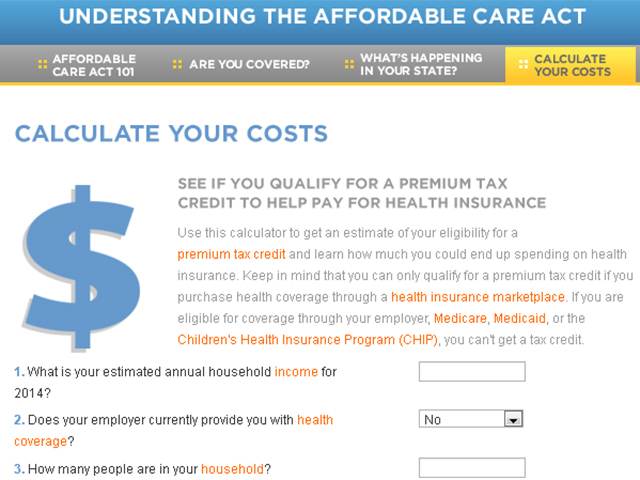
Calculate your costs

[By Staff Reporters]

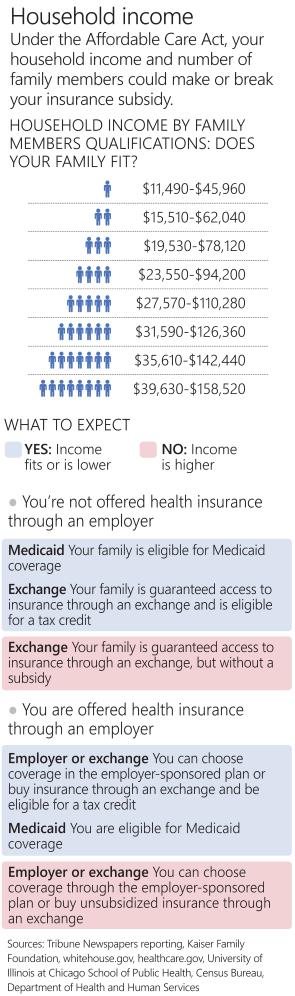
The Affordable Care Act is going to change health care for tens of millions of Americans.

But, what about the cost?

LET’S BEGIN

ACA

###

NOW CALCULATE

Whether you’re an individual who has health insurance or needs it, or a small business owner, you need to know how health care reform affects you.

What’s it going to cost? What’s happening in your state?

### 8C9220491-tdy-130929-aca-calculator-4x3-606p_blocks_desktop_large

### 

Link: http://www.nbcnews.com/health/how-affordable-new-health-care-law-really-calculate-your-cost-8C11296290

Conclusion

Your thoughts and comments on this ME-P are appreciated. Feel free to review our top-left column, and top-right sidebar materials, links, URLs and related websites, too. Then, subscribe to the ME-P. It is fast, free and secure.

Link: http://feeds.feedburner.com/HealthcareFinancialsthePostForcxos

Speaker: If you need a moderator or speaker for an upcoming event, Dr. David E. Marcinko; MBA – Publisher-in-Chief of the Medical Executive-Post – is available for seminar or speaking engagements. Contact: MarcinkoAdvisors@msn.com

OUR OTHER PRINT BOOKS AND RELATED INFORMATION SOURCES:

Health Dictionary Series: http://www.springerpub.com/Search/marcinko

Practice Management: http://www.springerpub.com/product/9780826105752

Physician Financial Planning: http://www.jbpub.com/catalog/0763745790

Medical Risk Management: http://www.jbpub.com/catalog/9780763733421

Hospitals: http://www.crcpress.com/product/isbn/9781439879900

Physician Advisors: www.CertifiedMedicalPlanner.org

Product DetailsProduct DetailsProduct Details

Product Details  Product Details

Product DetailsProduct Details

Affordable Care Act HIEs at Launch

Join Our Mailing List

Some Important Launching Information for Doctors and Business Owners

By Bobby Whirley CPA

[Whirley & Associates LLC – Alpharetta, GA]

Dear ME-P Readers,

The ACA (Affordable Care Act) requires employers to provide their workers with a notice about the state health insurance exchanges.

Today October 1st is the deadline for providing these notices.

These exchanges will sell insurance to individuals who don’t get coverage through their employers. The exchanges are also available to medical practices and small businesses, which may or may not currently offer heath care coverage.

The Fines?

Some doctors or business owners are concerned about paying a fine of up to $100 per day under the general non-compliance penalty provisions.

The recent notice of the Affordable Health Care Act states that there will be no penalty.  Please refer to http://www.dol.gov/ebsa/faqs/faq-noticeofcoverageoptions.html

If your medical practice, clinic or company is covered by the Fair Labor Standards Act (you have one or more employees, sales of over $500,000, and deal in interstate commerce), you must provide a written notice to your employees about the Health Insurance Marketplace by Oct 1, 2013.

Model Notices

The U.S. Department of Labor has two model notices to help employers comply. There is one model for employers who do not offer a health plan and another model for employers who offer a health plan or some or all employees.

More:

The model notices are also available in Spanish and MS Word format at http://www.dol.gov/ebsa/healthreform/

###

Health-Information-Exchange

###

Assessment

Employers may use one of these models, as applicable, or a modified version. More compliance assistance information is available in a Technical Release issued by the US Department of Labor.

Your thoughts and comments on this ME-P are appreciated. Feel free to review our top-left column, and top-right sidebar materials, links, URLs and related websites, too. Then, subscribe to the ME-P. It is fast, free and secure.

Link: http://feeds.feedburner.com/HealthcareFinancialsthePostForcxos

Speaker: If you need a moderator or speaker for an upcoming event, Dr. David E. Marcinko; MBA – Publisher-in-Chief of the Medical Executive-Post – is available for seminar or speaking engagements. Contact: MarcinkoAdvisors@msn.com

OUR OTHER PRINT BOOKS AND RELATED INFORMATION SOURCES:

LEXICONS: http://www.springerpub.com/Search/marcinko
PHYSICIANS: www.MedicalBusinessAdvisors.com
PRACTICES: www.BusinessofMedicalPractice.com
HOSPITALS: http://www.crcpress.com/product/isbn/9781466558731
CLINICS: http://www.crcpress.com/product/isbn/9781439879900
ADVISORS: www.CertifiedMedicalPlanner.org
BLOG: www.MedicalExecutivePost.com

Product DetailsProduct Details

Product Details

Did the NSA End Obamacare?

Join Our Mailing List

Did ambitious NSA officials unintentionally end Obamacare years ago?

[By D. Kellus Pruitt DDS]

1-darrellpruittIf loss of trust in encryption ends Obamacare, can whistleblower Edward Snowden be blamed for that as well? Yep.

What’s even more ominous, the former National Security Agency contractor’s news that encrypted medical records are no longer secure reached Alaska on a weekend.

“Risky electronic health records: Alaska should make information exchange system safer – Imagine: The National Security Agency slips into your doctor’s office and peeks at your medical records,”

by Alaska ACLU executive director Joshua Decker was posted hours ago on Newsminer.com, out of Fairbanks.

http://www.newsminer.com/opinion/community_perspectives/risky-electronic-health-records-alaska-should-make-information-exchange-system/article_a9947eb0-1863-11e3-8153-001a4bcf6878.html

Decker questions the security of the state’s Health Information Exchange (HIE), and offers common sense but costly steps which arguably lessen the danger of privacy breaches – including giving patients the choice of “opting-in” to permit their encrypted, but increasingly vulnerable identities to be shared online via Obamacare’s exchanges.

My POV 

In my opinion, if informed Americans are given the choice of volunteering to risk identity theft, HIEs won’t be around a year from now, and neither will Obamacare. If informed Americans are not given a choice, the costs are even greater. Americans deserve honesty.

National Obamacare Hangs in the Balance

In a related, slow-burning game-changer, Obamacare hangs in the balance, not just for Alaska, but for the nation.

It was September 5th when the Guardian Weekly posted: “Revealed: how US and UK spy agencies defeat internet privacy and security,” written by James Ball, Julian Borger and Glenn Greenwald, and based on top secret NSA information Snowden stole.

http://www.theguardian.com/world/2013/sep/05/nsa-gchq-encryption-codes-security

Snowden told the Guardian that years ago, the NSA joined with the UK’s spy agency GCHQ (Government Communications Headquarters) to successfully make encryption obsolete – including for medical records.

Naturally, if properly informed Americans fear that secrets they tell their doctors might be breached, incorrect EHRs become less than worthless. They become dangerous.

More on Health Information Exchanges

What’s more, even before the added expense of waiting for Americans to opt-in to the exchanges – instead of discouraging them from opting-out – the very funding for the increasingly-battered Obamacare is based on a rumor of savings.

Starting years ago, health IT lobbyists, including former Speaker of the House Newt Gingrich, told lawmakers to expect annual savings of $77 billion and 100,000 lives – quoting the results of a once popular, EHR-friendly 2005 RAND study which was funded by General Electric and Cerner Corporation.

Obamacare

As you can see, while we were not paying attention, we were had!

The RAND Study

Predictably, both GE and Cerner profited immensely from the development and sales of EHR systems before the RAND study was widely discredited months ago – even by RAND.

According to a NY Times article from January, “Cerner’s revenue has nearly tripled since the report was released, to a projected $3 billion in 2013, from $1 billion in 2005.”

(See: “In Second Look, Few Savings From Digital Health Records by Reed Abelson and Julie Creswell, January 10, 2013).

http://www.nytimes.com/2013/01/11/business/electronic-records-systems-have-not-reduced-health-costs-report-says.html?_r=0

Assessment

Last weekend’s bad news for Obamacare is still under the radar, but I predict within days it will become apparent that the mounting obstacle between President Obama and healthcare reform will be in regaining trust his administration squandered while helping GE and Cerner profits at the expense of soon-to-be pissed off American patients.

Conclusion

Your thoughts and comments on this ME-P are appreciated. Feel free to review our top-left column, and top-right sidebar materials, links, URLs and related websites, too. Then, subscribe to the ME-P. It is fast, free and secure.

Link: http://feeds.feedburner.com/HealthcareFinancialsthePostForcxos

Speaker: If you need a moderator or speaker for an upcoming event, Dr. David E. Marcinko; MBA – Publisher-in-Chief of the Medical Executive-Post – is available for seminar or speaking engagements. Contact: MarcinkoAdvisors@msn.com

OUR OTHER PRINT BOOKS AND RELATED INFORMATION SOURCES:

DICTIONARIES: http://www.springerpub.com/Search/marcinko
PHYSICIANS: www.MedicalBusinessAdvisors.com
PRACTICES: www.BusinessofMedicalPractice.com
HOSPITALS: http://www.crcpress.com/product/isbn/9781466558731
CLINICS: http://www.crcpress.com/product/isbn/9781439879900
BLOG: www.MedicalExecutivePost.com
FINANCE: Financial Planning for Physicians and Advisors
INSURANCE: Risk Management and Insurance Strategies for Physicians and Advisors

Product DetailsProduct Details

On Mentally Ill Inmates

Join Our Mailing List
###
By Christie Thompson
[This story was co-produced with WNYC]

In New York, inmates diagnosed with “serious” disorders have been protected from solitary confinement. But, since that policy began, the number of inmates diagnosed with such disorders has dropped.

###

Hospital

###

Link: New York Promised Help for Mentally Ill Inmates – But Still Sticks Many in Solitary

Conclusion

Your thoughts and comments on this ME-P are appreciated. Feel free to review our top-left column, and top-right sidebar materials, links, URLs and related websites, too. Then, subscribe to the ME-P. It is fast, free and secure.

Link: http://feeds.feedburner.com/HealthcareFinancialsthePostForcxos

Speaker: If you need a moderator or speaker for an upcoming event, Dr. David E. Marcinko; MBA – Publisher-in-Chief of the Medical Executive-Post – is available for seminar or speaking engagements. Contact: MarcinkoAdvisors@msn.com

OUR OTHER PRINT BOOKS AND RELATED INFORMATION SOURCES:

Health Dictionary Series: http://www.springerpub.com/Search/marcinko

Practice Management: http://www.springerpub.com/product/9780826105752

Physician Financial Planning: http://www.jbpub.com/catalog/0763745790

Medical Risk Management: http://www.jbpub.com/catalog/9780763733421

Hospitals: http://www.crcpress.com/product/isbn/9781439879900

Physician Advisors: www.CertifiedMedicalPlanner.org

Product DetailsProduct Details

Understanding the Impact of Regulations, Laws, and Healthcare Reform

Join Our Mailing List 

Consequences of the Accountable Care Act [PP-ACA]

By Dr. David Edward Marcinko MBA CMP

[Editor-in-Chief]

Dr David E Marcinko MBAThere is a fair amount of activity that will take place in the next 24 months in response to ICD-10 transition, healthcare reform, Accountable Care Act (ACA), meaningful use compliance and its financial incentives, and other regulatory issues that will require system or software upgrades to support the new efforts.

Some ACA Examples

As an example, The Affordable Care Act is sure to significantly alter reimbursement structures and delivery of care.

Below are several areas that will be affected:

  •  With the projected increase in patient volumes, the associated cost of about 62% will emanate from Medicare cuts: $162 Billion through reducing fee-for-service Medicare payments; $136 Billion from setting Medicare Advantage rates based on Fee-for-Service payments; and $36 Billion from cutting hospital Medicare/Medicaid disproportionate share.
  • Compliance reviews will be increased through the Recovery Audit Contractors (RACs) where Centers for Medicare and Medicaid Services (CMS) expect to obtain $2.9 Billion in additional savings. With the RAC in place, hospitals and providers need to increase their focus and attention in improving documentation quality and validating medical necessity to substantiate their reviews.
  • Reduced payments for readmissions and Medicare penalties for poor outcomes can and will affect the bottom line for both hospitals and providers in the future.
  • By 2015, more than 19 million uninsured will receive coverage and in 2016, another 11 Million uninsured will be insured.  This will create more patients per hospital/provider and will require more full-time equivalents to support the revenue cycle process of registration, documentation, billing and collection.
  • With the ICD-10 conversion will create a more complex requirement for documenting diagnoses and will require software modifications for hospitals and providers as well as significant training.

###

Product Details

[Our Forthcoming Book]

More:

Channel Surfing the ME-P

Have you visited our other topic channels? Established to facilitate idea exchange and link our community together, the value of these topics is dependent upon your input. Please take a minute to visit. And, to prevent that annoying spam, we ask that you register. It is fast, free and secure.

Conclusion

Your thoughts and comments on this ME-P are appreciated. Feel free to review our top-left column, and top-right sidebar materials, links, URLs and related websites, too. Then, subscribe to the ME-P. It is fast, free and secure.

Speaker: If you need a moderator or speaker for an upcoming event, Dr. David E. Marcinko; MBA – Publisher-in-Chief of the Medical Executive-Post – is available for seminar or speaking engagements. Contact: MarcinkoAdvisors@msn.com

OUR OTHER PRINT BOOKS AND RELATED INFORMATION SOURCES:

Product DetailsProduct DetailsProduct Details

Does the U.S. Supreme Court decision resolve the gene-patenting issue?

Join Our Mailing List

Human Genes are NOT Patentable

By Karen Matthias RN MBA

[Vice-President of Marketing]

Hayes, Inc kmatthias@hayesinc.com

Yesterday, the U.S. Supreme Court unanimously agreed that human genes are not patentable, making a distinction between “natural” DNA found in the human body and the laboratory-created “synthetic” DNA. This opinion reinforces those of many in the genetics community who have argued for years that genes are products of nature rather than inventions.

A Resolution?

But, does the Supreme Court decision completely resolve the gene-patenting issue?

Dr. Diane Allingham-Hawkins, Senior Director, Genetic Test Evaluation Program and Technical Editing at Hayes, Inc., doesn’t think so.

“The Justices compromised somewhat in their decision that while human genes as they exist in nature were ruled not patentable, the opinion allowed that synthetic copies – so-called complementary DNA or cDNA – may be”.

The Court did not rule, however, that cDNA meets all requirements of patent eligibility, just that cDNA would not be considered a ’product of nature’.

Issues Not Addressed

In addition, Dr. Allingham-Hawkins points out what the decision does not address.

“Notably, the opinion clearly stated that it was not ruling on any methods patents related to the two genes or on any applications regarding what Myriad had learned about the genes, leaving the door open for narrower genetic testing patents.

Nevertheless, this is a major victory for the plaintiffs in the case and for patients, who will now have choices related to who performs their genetic testing and options to seek second opinions from independent laboratories.”

###

US supreme court building

More 

Our new white paper on the history of gene patenting in the United States can be an excellent resource as you search for background information on this topic.

Download a complimentary copy here:  http://www.hayesinc.com/hayes/resource-center/white-papers/gene-patenting-in-the-united-states/.

Assessment  

Thanks for considering.

Conclusion

Your thoughts and comments on this ME-P are appreciated. Feel free to review our top-left column, and top-right sidebar materials, links, URLs and related websites, too. Then, subscribe to the ME-P. It is fast, free and secure.

Link: http://feeds.feedburner.com/HealthcareFinancialsthePostForcxos

Speaker: If you need a moderator or speaker for an upcoming event, Dr. David E. Marcinko; MBA – Publisher-in-Chief of the Medical Executive-Post – is available for seminar or speaking engagements. Contact: MarcinkoAdvisors@msn.com

OUR OTHER PRINT BOOKS AND RELATED INFORMATION SOURCES:

Health Dictionary Series: http://www.springerpub.com/Search/marcinko

Practice Management: http://www.springerpub.com/product/9780826105752

Physician Financial Planning: http://www.jbpub.com/catalog/0763745790

Medical Risk Management: http://www.jbpub.com/catalog/9780763733421

Hospitals: http://www.crcpress.com/product/isbn/9781439879900

Physician Advisors: www.CertifiedMedicalPlanner.org

Product DetailsProduct Details

Doubting the Accountable Care Organization B-Model

New Healthcare Business Model or Edsel Model?

Join Our Mailing List 

By David Edward Marcinko MBA http://www.CertifiedMedicalPlanner.org

[Publisher-in-Chief]

Dr. Marcinko with ME-P FansDefined by Professor Michael Porter at Harvard Business School, value is defined as a function of outcomes and costs. Therefore to achieve high value we must deliver the best possible outcomes in the most efficient way, outcomes which matter from the perspective of the individual receiving healthcare and not provider process measures or targets.

Sir Muir Gray expanded on the idea of technical value (outcomes/costs) to specifically describe ‘personal value’ and ‘allocative value’, encouraging us to focus also on shared decision making, individual preferences for care and ensuring that resources are allocated for maximum value.

Healthcare Value and ACOs

According to our Medical Executive-Post Health Dictionary Series of administrative terms http://www.HealthDictionarySeries.org  and health economist and colleague Robert James Cimasi MHA, ASA, AVA CMP™ of www.HealthCapital.com; an ACO is a healthcare organization in which a set of providers, usually large physician groups and hospitals, are held accountable for the cost and quality of care delivered to a specific local population.

ACOs aim to affect provider’s patient expenditures and outcomes by integrating clinical and administrative departments to coordinate care and share financial risk.

ACO Launch

Since their four-page introduction in the PP-ACA of 2010, ACOs have been implemented in both the Federal and commercial healthcare markets, with 32 Pioneer ACOs selected (on December 19, 2011), 116 Federal applications accepted (on April 10, 2012 and July 9, 2012), and at least 160 or more Commercial ACOs in existence today.

Federal Contracts

Federal ACO contracts are established between an ACO and CMS, and are regulated under the CMS Medicare Shared Savings Program (MSSP) Final Rule, published November 2, 2011.  ACOs participating in the MSSP are accountable for the health outcomes, represented by 33 quality metrics, and Medicare beneficiary expenditures of a prospectively assigned population of Medicare beneficiaries.

If a Federal ACO achieves Medicare beneficiary expenditures below a CMS established benchmark (and meets quality targets), they are eligible to receive a portion of the achieved Medicare beneficiary expenditure savings, in the form of a shared savings payment.

Commercial Contracts

Commercial ACO contracts are not limited by any specific legislation, only by the contract between the ACO and a commercial payor.

In addition to shared savings models, Commercial ACOs may incentivize lower costs and improved patient outcomes through reimbursement models that share risk between the payor and the providers, i.e., pay for performance compensation arrangements and/or partial to full capitation.

Although commercial ACOs experience a greater degree of flexibility in their structure and reimbursement, the principals for success for both Federal ACOs and Commercial ACOs are similar.

###

Eidsel

Dr. David E. Marcinko with 1960 Ford Edsel

[© iMBA, Inc. All rights reserved, USA.]

[The Edsel was an automobile marque that was planned, developed, and manufactured by the Ford Motor Company during the 1958, 1959, and 1960 model years. With the Edsel, Ford had expected to make significant inroads into the market share of both General Motors and Chrysler and close the gap between itself and GM in the domestic American automotive market. But, contrary to Ford’s internal plans and projections, the Edsel never gained popularity with contemporary American car buyers and sold poorly. The Ford Motor Company lost millions of dollars on the Edsel’s development, manufacturing and marketing].

More:


Update

Junking the Merit-Based Incentive Payment System (MIPS) would undoubtedly let the proverbial air out of the MACRA balloon, dealing a significant blow to the value-based reimbursement shift; right?

Assessment

Although nearly any healthcare enterprise can integrate and become an ACO, larger enterprises, may be best suited for ACO status.

Larger organizations are more able to accommodate the significant capital requirements of ACO development, implementation, and operation (e.g., healthcare information technology), and sustain the sufficient number of beneficiaries to have a significant impact on quality and cost metrics.

Conclusion

But, will this new B-Model work? Isn’t leading doctors in a shared collaborative effort a bit like herding cats? And, what about patients, HIEs, outcomes management, data analytics and … Population Health via our colleague David B. Nash MD MBA of Thomas Jefferson University, often considered the “father” of Pop Health?

OR, what about the developing IRS scandal and full PP-ACA launch in 2014? Will it affect federal funding, full roll-out, or even repeal of the entire Act?

Your thoughts and comments on this ME-P are appreciated. Feel free to review our top-left column, and top-right sidebar materials, links, URLs and related websites, too. Then, subscribe to the ME-P. It is fast, free and secure.

Link: http://feeds.feedburner.com/HealthcareFinancialsthePostForcxos

Speaker: If you need a moderator or speaker for an upcoming event, Dr. David E. Marcinko; MBA – Publisher-in-Chief of the Medical Executive-Post – is available for seminar or speaking engagements. Contact: MarcinkoAdvisors@msn.com

OUR OTHER PRINT BOOKS AND RELATED INFORMATION SOURCES:

DICTIONARIES: http://www.springerpub.com/Search/marcinko
PHYSICIANS: www.MedicalBusinessAdvisors.com
PRACTICES: www.BusinessofMedicalPractice.com
HOSPITALS: http://www.crcpress.com/product/isbn/9781466558731
CLINICS: http://www.crcpress.com/product/isbn/9781439879900
BLOG: www.MedicalExecutivePost.com
FINANCE: Financial Planning for Physicians and Advisors
INSURANCE: Risk Management and Insurance Strategies for Physicians and Advisors

Product DetailsProduct Details

Healthcare Promises [aka ACA]

Join Our Mailing List

On the Affordable Care Act

By Rick Kahler MS CFP® ChFC CCIM www.KahlerFinancial.com

Rick Kahler CFP“I’m not sure what’s wrong or what kind of surgery you need, but we have to operate right now.”

If you heard this from your doctor, you’d jump off the examination table and run for the door. Yet that’s essentially the approach the President and Congress used three years ago to pass a bill, optimistically called the Affordable Care Act, which was the largest transformation of the U.S. health care system in our lifetime.

The Debate

During the frenzied debate our elected leaders made many promises as to the amazing benefits this legislation would bestow on Americans. After listening to speeches from President Obama, Speaker of the House Nancy Pelosi, and President of the Senate Harry Reid, I recounted those promises in this blog on March 21, 2010.

The Promises

Let’s revisit those promises.

  1. All Americans will now receive affordable, or free, quality health care.
  2. No one will ever be denied coverage.
  3. No one will ever go into bankruptcy because of the costs of health care.
  4. There will be increased access to health care for 95% of Americans.
  5. There will be no decline in the quality of health care.
  6. Health care costs will go down.
  7. Health insurance coverage will be affordable to the middle class.
  8. There will be no decline in Medicare benefits.
  9. Insurance premiums will decline for the middle class.
  10. It will unleash unprecedented entrepreneurial opportunity for the economy.
  11. The deficit will decline, saving taxpayers $1.3 trillion.
  12. It will cut $500 billion of waste, fraud, and abuse out of Medicare.
  13. No government funds will be used to fund abortion.

Are these promises coming true? Many of them are pending full implementation of the act in 2014. Others have fallen flat or encountered the law of unintended consequences.

Obama Care

Business Owner’s

I’ve heard recently from several owners of small businesses about their increased health insurance costs. In addition to premium increases of nearly 50% over the past two years, they are seeing increased administrative costs from what one person called the “insanity and complexity” of the new regulations.

Businesses with fewer than 50 employees aren’t required to provide health insurance. The incentive for owners of businesses close to that threshold is to keep employee numbers below 50, which means curtailing growth or even laying people off.

Those without employer-provided insurance are supposed to be able to shop for coverage in new health care exchanges, beginning this October. However, half the states have chosen to rely on the federal government instead of setting up their own exchanges.

This has brought criticism even from former supporters like Democratic Senator Max Baucus of Montana, who helped write the health care bill. He is concerned that the exchanges will not open on time and consumers won’t have the information they need to use them. He told the Huffington Post that Obamacare is headed for a “train wreck.”

ACA Cost Estimates

The proponents said the ACA would cost $938 billion over 10 years. In addition to the promised Medicare savings, this was to be covered by a total tax increase of $562 billion over 10 years. This included a Medicare tax of 3.8% on dividends, rents, interest, and investment income on individuals and small business earning over $250,000.

The Office of Management and Budget, however, places the cost at $1.8 trillion over 10 years, resulting in a shortfall of around $900 billion.

Assessment

Whether Obamacare becomes the wild success the proponents guaranteed is yet to be seen. However, what we’ve seen so far isn’t promising. We as consumers would be well advised to pay close attention and ask tough questions before we accept this drastic surgery.

More

Conclusion

Are these promises coming true? Your thoughts and comments on this ME-P are appreciated. Feel free to review our top-left column, and top-right sidebar materials, links, URLs and related websites, too. Then, subscribe to the ME-P. It is fast, free and secure.

Link: http://feeds.feedburner.com/HealthcareFinancialsthePostForcxos

Speaker: If you need a moderator or speaker for an upcoming event, Dr. David E. Marcinko; MBA – Publisher-in-Chief of the Medical Executive-Post – is available for seminar or speaking engagements. Contact: MarcinkoAdvisors@msn.com

OUR OTHER PRINT BOOKS AND RELATED INFORMATION SOURCES:

DICTIONARIES: http://www.springerpub.com/Search/marcinko
PHYSICIANS: www.MedicalBusinessAdvisors.com
PRACTICES: www.BusinessofMedicalPractice.com
HOSPITALS: http://www.crcpress.com/product/isbn/9781466558731
CLINICS: http://www.crcpress.com/product/isbn/9781439879900
BLOG: www.MedicalExecutivePost.com
FINANCE: Financial Planning for Physicians and Advisors
INSURANCE: Risk Management and Insurance Strategies for Physicians and Advisors

Product DetailsProduct DetailsProduct Details

Product Details  Product Details

Product DetailsProduct Details


“The Doctor’s Dilemma”

Join Our Mailing List

On Hospital Monopolistic Powers

By Ann Miller RN MHA

As George Bernard Shaw, whose works include “The Doctor’s Dilemma” might have put it, that any lawmaker would grant hospitals monopolistic powers plus the freedom to price as they see fit is enough to make one despair of political humanity.

C.O.N.

And, here is a post on Certificates of Need, too.

http://www.ncsl.org/issues-research/health/con-certificate-of-need-state-laws.aspx

Conclusion

Your thoughts and comments on this ME-P are appreciated. Feel free to review our top-left column, and top-right sidebar materials, links, URLs and related websites, too. Then, subscribe to the ME-P. It is fast, free and secure.

Link: http://feeds.feedburner.com/HealthcareFinancialsthePostForcxos

Speaker: If you need a moderator or speaker for an upcoming event, Dr. David E. Marcinko; MBA – Publisher-in-Chief of the Medical Executive-Post – is available for seminar or speaking engagements. Contact: MarcinkoAdvisors@msn.com

Our Other Print Books and Related Information Sources:

Health Dictionary Series: http://www.springerpub.com/Search/marcinko

Practice Management: http://www.springerpub.com/product/9780826105752

Physician Financial Planning: http://www.jbpub.com/catalog/0763745790

Medical Risk Management: http://www.jbpub.com/catalog/9780763733421

Hospitals: http://www.crcpress.com/product/isbn/9781439879900

Physician Advisors: www.CertifiedMedicalPlanner.org

Product DetailsProduct Details

Controlling the Power of a “Power of Attorney”

Join Our Mailing List

A Primer and Review for Doctors

By Rick Kahler MS CFP® ChFC CCIM www.KahlerFinancial.com

Rick Kahler CFPIs it a good idea to give control of your finances to someone else through a power of attorney?

Maybe. Or maybe not. It’s foolish to sign away complete authority to someone who may or may not be trustworthy. It’s equally foolish to refuse to consider a power of attorney in circumstances where it could serve you well.

The Patricia Cornwell Case

In a recent case where a power of attorney might have been given too easily, best-selling author Patricia Cornwell charged a financial management firm with negligence, alleging that it cost her millions of dollars. She had hired the firm to take care of her financial affairs, authorizing its manager through a power of attorney to make decisions on her behalf.

A More Typical Case Example

At the other extreme, one of my clients was taking care of financial matters for her elderly father, who had Alzheimer’s. Yet when she mentioned a power of attorney, her father refused to sign one. Even with his memory failing, he had retained the idea that giving control of his money to someone else was a really bad idea.

Options are Wide Ranging

Doctors don’t necessarily realize that a power of attorney can offer a whole range of options between “go ahead and do everything” and “absolutely not.” There are many situations where a limited power of attorney might be useful. Such a document authorizes someone to act on your behalf only for a one narrow purpose. It spells out the boundaries of that person’s authority and often expires after a given period of time.

For example:

One common use for a limited power of attorney is to facilitate the sale of a piece of real estate or other property from a distance. If you have to move to Ohio but your house back in Nebraska hasn’t sold yet, you could authorize a trusted friend, relative, or financial professional to handle the transaction for you.

Another way a limited power of attorney is often used is to have someone take care of your affairs while you are temporarily unavailable or incapable. Suppose you’re undergoing treatment for a serious illness or injury, or you’re taking a three-month trip around the world. You might want to authorize a family member to pay your bills and make other necessary decisions. The authority you give them could be as broad or narrow as you deem appropriate.

Many physician-couples execute durable powers of attorney granting their spouses or children broad authority to act for them if they become disabled. This has become a common and helpful component of retirement/old age planning.

IBNRs

###

Limiting the Limited Power

Yet, I see far fewer folks, and even medical professionals, using limited powers of attorney. One reason for this may be the expense and hassle. You don’t necessarily want to hire an attorney to draw up a complex document every time you go on vacation.

If you think limited powers of attorney might be useful for you, one possibility could be to look online. Several sites offer legal forms at reasonable rates. Just keep in mind these are “one size fits all.” Be sure the forms are valid in your state and that you understand what you’re signing.

Another option might be to see if your attorney would draft one document as a template, including language to cover various situations. Then you could adapt it as needed for specific purposes.

Assessment

Whatever the circumstances; remember that a power of attorney is a useful but potentially dangerous tool. It’s a bit like a chainsaw—an expert can make beautiful sculpture with it, but an amateur can cut someone’s leg off. Before you put that much power into anyone’s hands, make sure you can trust the person to use it well.

Conclusion

Your thoughts and comments on this ME-P are appreciated. Feel free to review our top-left column, and top-right sidebar materials, links, URLs and related websites, too. Then, subscribe to the ME-P. It is fast, free and secure.

Link: http://feeds.feedburner.com/HealthcareFinancialsthePostForcxos

Speaker: If you need a moderator or speaker for an upcoming event, Dr. David E. Marcinko; MBA – Publisher-in-Chief of the Medical Executive-Post – is available for seminar or speaking engagements. Contact: MarcinkoAdvisors@msn.com

Our Other Print Books and Related Information Sources:

Health Dictionary Series: http://www.springerpub.com/Search/marcinko

Practice Management: http://www.springerpub.com/product/9780826105752

Physician Financial Planning: http://www.jbpub.com/catalog/0763745790

Medical Risk Management: http://www.jbpub.com/catalog/9780763733421

Hospitals: http://www.crcpress.com/product/isbn/9781439879900

Physician Advisors: www.CertifiedMedicalPlanner.org

Product Details  Product Details


Dr. Benjamin Solomon Carson, Sr for President?

Join Our Mailing List

Forget …. Being like Mike – Instead … Be like Ben 

By Dr. David Edward Marcinko MBA CMP™

Hopkins Medical SchoolA unique speech was delivered by neuro-surgeon Benjamin Carson MD on February 7, 2013 at the National Prayer Breakfast in President Barack Obama’s presence.

Who is Ben Carson MD?

Benjamin Solomon “Ben” Carson, Sr. (born September 18, 1951) is an American neurosurgeon and the Director of Pediatric Neurosurgery at Johns Hopkins Hospital. He was awarded the Presidential Medal of Freedom, the highest civilian award in the United States, by President George W. Bush, in 2008.

The Breakfast

During the breakfast, Carson suggested that political correctness is a “dangerous” threat to free speech and encouraged Americans to share their views without hesitation. Carson also included his ideas on the national debt, deficits, taxation and health care; he explains his personal position on each matter.

Here is a teaser quote:

I don’t like to bring up problems without coming up with solutions… What about our taxation system? It is so complex, there is no one who can possibly comply with every jot and tittle. That doesn’t make any sense.

What we need to do is come up with something that’s simple. The inherently fair principle is proportionality: you make 10 billion dollars, you put in a billion. You make 10 dollars, you put in one. Of course, you have to get rid of the loopholes.

Some people say, ‘That’s not fair! It’s doesn’t hurt the guy who made 10 billion dollars.’ Where does it say you have to hurt that guy? He just put a billion dollars into the pot!

My Connectinon to Ben Carson

Ok, I really don’t have any connection to Dr. Carson despite the seven degrees of separation philosophy. But, I did grow up in Baltimore Maryland and played stickball in the parking lot of the famed Johns Hopkins University  Hospital. I was even seen in the ER for a minor injury as a kid.

But, I was not accepted into medical school there, and could not attend Johns Hopkins University up on North Charles Street for my undergraduate career, because of the expense.

The Video

Nevertheless, this video is worth watching. It is 26 minutes in length and it is interesting to watch the president grimace as he gives a complete opposite solution to every problem the country faces.

Link: http://www.youtube.com/watch?v=vyyHegP255g

Ben’s Proposals

I especially liked Ben’s thoughts on the following topics:

  • Replacing the IRS with tithing for all income levels. No need to hurt the successful among us with a graduated tax system.
  • Giving all Americans a Health Savings Account [HSA] at birth. This will not only give them some financial skin-in-the game, but makes them educated stewards of their healthcare needs, treatments and expenses. And, the savings portion would be transferrable to a next generation beneficiary for estate-like continuity.
  • Giving everyone a personal electronic health record [pEHR] at birth.
  • Reforming the welfare state so it does not become a way of life
  • Morality and the PC mania.

Assessment

Ben is one smart pediatric brain surgeon. I would consider voting for him in a heart-beat. But, as a surgeon, I am like him, a doer who wants to solve a problem.

Unfortunately, Washington politicians are often talkers who place self-interest above all. Problem solving often takes a back-seat to pleasing constituents. 

Conclusion

Your thoughts and comments on this ME-P are appreciated. Feel free to review our top-left column, and top-right sidebar materials, links, URLs and related websites, too. Then, subscribe to the ME-P. It is fast, free and secure.

Link: http://feeds.feedburner.com/HealthcareFinancialsthePostForcxos

Speaker: If you need a moderator or speaker for an upcoming event, Dr. David E. Marcinko; MBA – Publisher-in-Chief of the Medical Executive-Post – is available for seminar or speaking engagements. Contact: MarcinkoAdvisors@msn.com

Our Other Print Books and Related Information Sources:

Health Dictionary Series: http://www.springerpub.com/Search/marcinko

Practice Management: http://www.springerpub.com/product/9780826105752

Physician Financial Planning: http://www.jbpub.com/catalog/0763745790

Medical Risk Management: http://www.jbpub.com/catalog/9780763733421

Hospitals: http://www.crcpress.com/product/isbn/9781439879900

Physician Advisors: www.CertifiedMedicalPlanner.org

Product DetailsProduct DetailsProduct Details

Product Details  Product Details

Product DetailsProduct Details

How the Affordable Care Act Affects Taxpayers Now? [Audio-Link]

Join Our Mailing List

Sound Medicine –  How does the Affordable Care Act affect taxpayers now?

By Ann Miller RN MHA

Sound Medicine is a radio show produced by the Indiana University School of Medicine and WFYI Public Radio.

In the last few years Aaron Carroll MS MD associate professor of pediatrics at the Indiana University School of Medicine, has been their go-to guy on health policy.

Audio Link

So, for those of you who would find your day brightened by the sound of his voice, enjoy the following from www.theIncidentalEconomist.com

Assessment

Dr. Carroll discusses how the Affordable Care Act will affect taxpayers in the coming months. The Affordable Care Act officially takes effect in January 2014, but several provisions are being implemented this year. These provisions specifically affect Medicare and Medicaid recipients, caregivers and all taxpayers.

Conclusion

Your thoughts and comments on this ME-P are appreciated. Feel free to review our top-left column, and top-right sidebar materials, links, URLs and related websites, too. Then, subscribe to the ME-P. It is fast, free and secure.

Link: http://feeds.feedburner.com/HealthcareFinancialsthePostForcxos

Speaker: If you need a moderator or speaker for an upcoming event, Dr. David E. Marcinko; MBA – Publisher-in-Chief of the Medical Executive-Post – is available for seminar or speaking engagements. Contact: MarcinkoAdvisors@msn.com

Our Other Print Books and Related Information Sources:

Health Dictionary Series: http://www.springerpub.com/Search/marcinko

Practice Management: http://www.springerpub.com/product/9780826105752

Physician Financial Planning: http://www.jbpub.com/catalog/0763745790

Medical Risk Management: http://www.jbpub.com/catalog/9780763733421

Hospitals: http://www.crcpress.com/product/isbn/9781439879900

Physician Advisors: www.CertifiedMedicalPlanner.org

Product DetailsProduct Details

Building Up to the Fiscal Cliff

Join Our Mailing List

A Historic Review

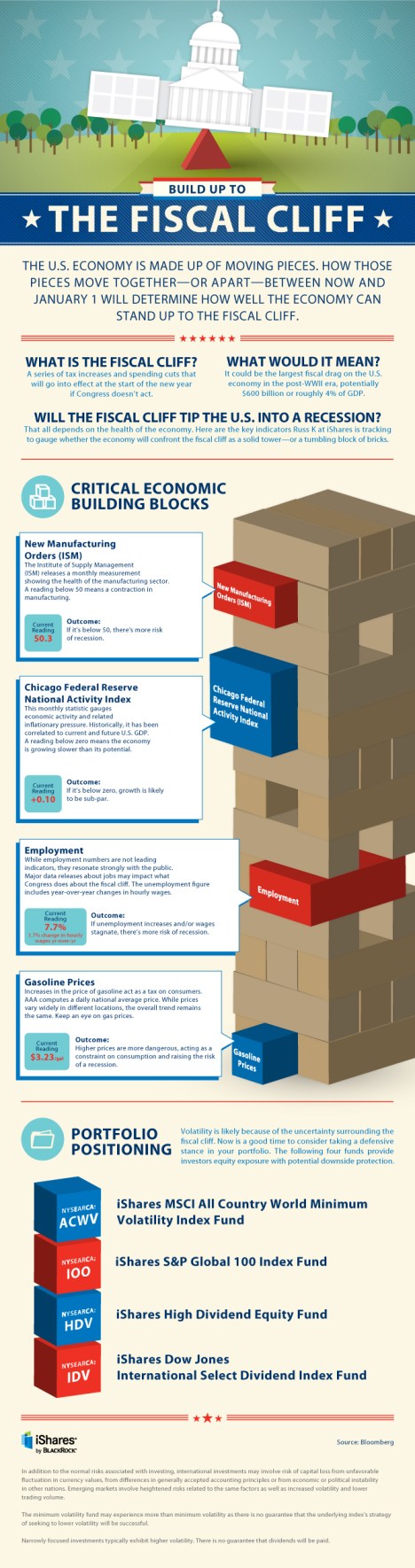
Fiscal Cliff

Assessment

Doctors, FAs and all ME-P readers. What is your strategy for the fiscal cliff situation?

Conclusion

Your thoughts and comments on this ME-P are appreciated. Feel free to review our top-left column, and top-right sidebar materials, links, URLs and related websites, too. Then, subscribe to the ME-P. It is fast, free and secure.

Link: http://feeds.feedburner.com/HealthcareFinancialsthePostForcxos

Speaker: If you need a moderator or speaker for an upcoming event, Dr. David E. Marcinko; MBA – Publisher-in-Chief of the Medical Executive-Post – is available for seminar or speaking engagements. Contact: MarcinkoAdvisors@msn.com

Our Other Print Books and Related Information Sources:

Health Dictionary Series: http://www.springerpub.com/Search/marcinko

Practice Management: http://www.springerpub.com/product/9780826105752

Physician Financial Planning: http://www.jbpub.com/catalog/0763745790

Medical Risk Management: http://www.jbpub.com/catalog/9780763733421

Hospitals: http://www.crcpress.com/product/isbn/9781439879900

Physician Advisors: www.CertifiedMedicalPlanner.org

Product Details  Product Details

The Case for Domestic Healthcare Change—Why Bother?

Join Our Mailing List

A Crisis of Volume and Cost

By Jennifer Tomasik MS

“Fee-for-service” has been the dominant financial dynamic in the US healthcare system for decades, whereby providers are reimbursed for the quantity of visits, tests, or procedures that are performed, often without adequate regard for the cost of the interventions relative to patient outcomes.

Atul Speaks

This focus has arguably fueled incredible advances in medical devices, diagnostic tests, pharmaceuticals, and other innovations. Atul Gawande MD, surgeon and author, describes how far medicine has come since the days before penicillin—when convalescence in the shelter of a hospital was the best of only a few treatment options and, therefore, “when what was known you [as a doctor] could know. You could hold it all in your head, and you could do it all.”

The surge in the number of diagnoses and treatments that physicians have access to today is transforming their profession from a field of autonomous craftsmen wielding basic tools to what Gawande suggests should be race-car like “pit crews” that together can deliver on the scientific promise of 4,000 medical and surgical procedures and 6,000 drugs.

A Double-Edged Sword

This is a double-edged sword, as the autonomous mentality on which the field developed is now often at odds with the machine-like functioning expected of an effective and efficient “pit crew.” Together with the fee-for-service incentive structure, these realities have collided in a perfect storm propelling tremendous growth in healthcare spending characterized by fragmentation and high volume, a high cost per episode, and inconsistent quality.

Assessment

And so, we are now witnessing the costly “failure of success” from focusing so extremely on “sick care” while ignoring “well care” attempts to keep individuals and populations healthy from the start.

More info Link: http://www.routledge.com/books/details/9781466558731/

Conclusion

Your thoughts and comments on this ME-P are appreciated. Feel free to review our top-left column, and top-right sidebar materials, links, URLs and related websites, too. Then, subscribe to the ME-P. It is fast, free and secure.

Link: http://feeds.feedburner.com/HealthcareFinancialsthePostForcxos

Speaker: If you need a moderator or speaker for an upcoming event, Dr. David E. Marcinko; MBA – Publisher-in-Chief of the Medical Executive-Post – is available for seminar or speaking engagements. Contact: MarcinkoAdvisors@msn.com

Our Other Print Books and Related Information Sources:

Health Dictionary Series: http://www.springerpub.com/Search/marcinko

Practice Management: http://www.springerpub.com/product/9780826105752

Physician Financial Planning: http://www.jbpub.com/catalog/0763745790

Medical Risk Management: http://www.jbpub.com/catalog/9780763733421

Hospitals: http://www.crcpress.com/product/isbn/9781439879900

Physician Advisors: www.CertifiedMedicalPlanner.org

Our Newest Textbook Release

Buy from Amazon

Learn How to Profit and Thrive in the PP-ACA Era

BOOK FOREWORD / TESTIMONIAL

Vote on Election Day 2012

Join Our Mailing List

The ME-P … Endorses?

Dr. David Edward Marcinko MBA

[Publisher-in-Chief]

President Barack Obama and GOP nominee Mitt Romney are essentially neck-and-neck in the homestretch to the presidential election today with considerable healthcare, economic, tax and financial consequences at stake. All are integral topics of this electronic ME-P publication.

And so, although your publisher, editors and staff seek to remain fair, neutral and balanced on the presidential election, we encourage all Medical Executive-Post readers, subscribers and visitors to vote today.

### 

Exercise your franchise or loose it!


Election Day 2012

What Does Health Reform Mean for You?

Join Our Mailing List

Ideas Changing the World

By National Center for Policy Analysis [NCPA]

Although the third presidential debate last night centered on foreign affairs, the PP-ACA seems to be the moniker of the Obama Presidency.

And so, here is a slide-show and white paper [updated September 2012] from the NCPA on what health reforms means for you.

Slide show MSFT-ppt link: What-Does-Health-Reform-Mean-for-You_Presentation

White paper .pdf link: What-Does-Health-Reform-Mean-for-You-A-Consumers-Guide

About the NCPA

The National Center for Policy Analysis is a public policy research organization that develops and promotes private alternatives to government regulation and control.

Conclusion

Your thoughts and comments on this ME-P are appreciated. Feel free to review our top-left column, and top-right sidebar materials, links, URLs and related websites, too. Then, subscribe to the ME-P. It is fast, free and secure.

Link: http://feeds.feedburner.com/HealthcareFinancialsthePostForcxos

Speaker: If you need a moderator or speaker for an upcoming event, Dr. David E. Marcinko; MBA – Publisher-in-Chief of the Medical Executive-Post – is available for seminar or speaking engagements. Contact: MarcinkoAdvisors@msn.com

Our Other Print Books and Related Information Sources:

Health Dictionary Series: http://www.springerpub.com/Search/marcinko

Practice Management: http://www.springerpub.com/product/9780826105752

Physician Financial Planning: http://www.jbpub.com/catalog/0763745790

Medical Risk Management: http://www.jbpub.com/catalog/9780763733421

Hospitals: http://www.crcpress.com/product/isbn/9781439879900

Physician Advisors: www.CertifiedMedicalPlanner.org

Product DetailsProduct DetailsProduct Details

The High Cost of HIPAA Violations

Join Our Mailing List

A Review of Serious Penalties

The Health Insurance Portability and Accountability Act (HIPAA) was instituted in order to protect the personal health information held by covered entities, including doctors, pharmacies and health insurance companies.

The Violations

A HIPAA violation can cost an individual or entity millions of dollars in fines and can even land those responsible in prison.

Assessment

In this HIPAA infographic, we detail some of the most serious penalties ever dished out by the federal government and break down the various fines that are on the table for noncompliance.

Conclusion

Your thoughts and comments on this ME-P are appreciated. Feel free to review our top-left column, and top-right sidebar materials, links, URLs and related websites, too. Then, subscribe to the ME-P. It is fast, free and secure.

Link: http://feeds.feedburner.com/HealthcareFinancialsthePostForcxos

Speaker: If you need a moderator or speaker for an upcoming event, Dr. David E. Marcinko; MBA – Publisher-in-Chief of the Medical Executive-Post – is available for seminar or speaking engagements. Contact: MarcinkoAdvisors@msn.com

Our Other Print Books and Related Information Sources:

Health Dictionary Series: http://www.springerpub.com/Search/marcinko

Practice Management: http://www.springerpub.com/product/9780826105752

Physician Financial Planning: http://www.jbpub.com/catalog/0763745790

Medical Risk Management: http://www.jbpub.com/catalog/9780763733421

Hospitals: http://www.crcpress.com/product/isbn/9781439879900

Physician Advisors: www.CertifiedMedicalPlanner.org

Product Details

Who Won the Vice Presidential Debate [Opinion Poll]?

Join Our Mailing List

A ME-P Voting and Opinion Poll

Who Won the Vice Presidential Debate Last Night?

Assessment

The pressure is on: http://firstread.nbcnews.com/_news/2012/10/10/14340705-first-thoughts-the-pressure-is-on?lite&gt1=43001

Conclusion

Your thoughts and comments on this ME-P are appreciated. Feel free to review our top-left column, and top-right sidebar materials, links, URLs and related websites, too. Then, subscribe to the ME-P. It is fast, free and secure.

Link: http://feeds.feedburner.com/HealthcareFinancialsthePostForcxos

Speaker: If you need a moderator or speaker for an upcoming event, Dr. David E. Marcinko; MBA – Publisher-in-Chief of the Medical Executive-Post – is available for seminar or speaking engagements. Contact: MarcinkoAdvisors@msn.com

Our Other Print Books and Related Information Sources:

Health Dictionary Series: http://www.springerpub.com/Search/marcinko

Practice Management: http://www.springerpub.com/product/9780826105752

Physician Financial Planning: http://www.jbpub.com/catalog/0763745790

Medical Risk Management: http://www.jbpub.com/catalog/9780763733421

Hospitals: http://www.crcpress.com/product/isbn/9781439879900

Physician Advisors: www.CertifiedMedicalPlanner.org

Product Details


Who Won the First Presidential Debate?

Join Our Mailing List

Mitt or Barack? A Voting and ME-P Opinion Poll

Conclusion

Your thoughts and comments on this ME-P are appreciated. Feel free to review our top-left column, and top-right sidebar materials, links, URLs and related websites, too. Then, subscribe to the ME-P. It is fast, free and secure.

Link: http://feeds.feedburner.com/HealthcareFinancialsthePostForcxos

Speaker: If you need a moderator or speaker for an upcoming event, Dr. David E. Marcinko; MBA – Publisher-in-Chief of the Medical Executive-Post – is available for seminar or speaking engagements. Contact: MarcinkoAdvisors@msn.com

Our Other Print Books and Related Information Sources:

Health Dictionary Series: http://www.springerpub.com/Search/marcinko

Practice Management: http://www.springerpub.com/product/9780826105752

Physician Financial Planning: http://www.jbpub.com/catalog/0763745790

Medical Risk Management: http://www.jbpub.com/catalog/9780763733421

Hospitals: http://www.crcpress.com/product/isbn/9781439879900

Physician Advisors: www.CertifiedMedicalPlanner.org

     Our Newest Textbook Release

Buy from Amazon

Learn How to Profit and Thrive in the PP-ACA Era

BOOK FOREWORD / TESTIMONIAL

Understanding the House Democrats’ Health Plan [PP-ACA]

Join Our Mailing List

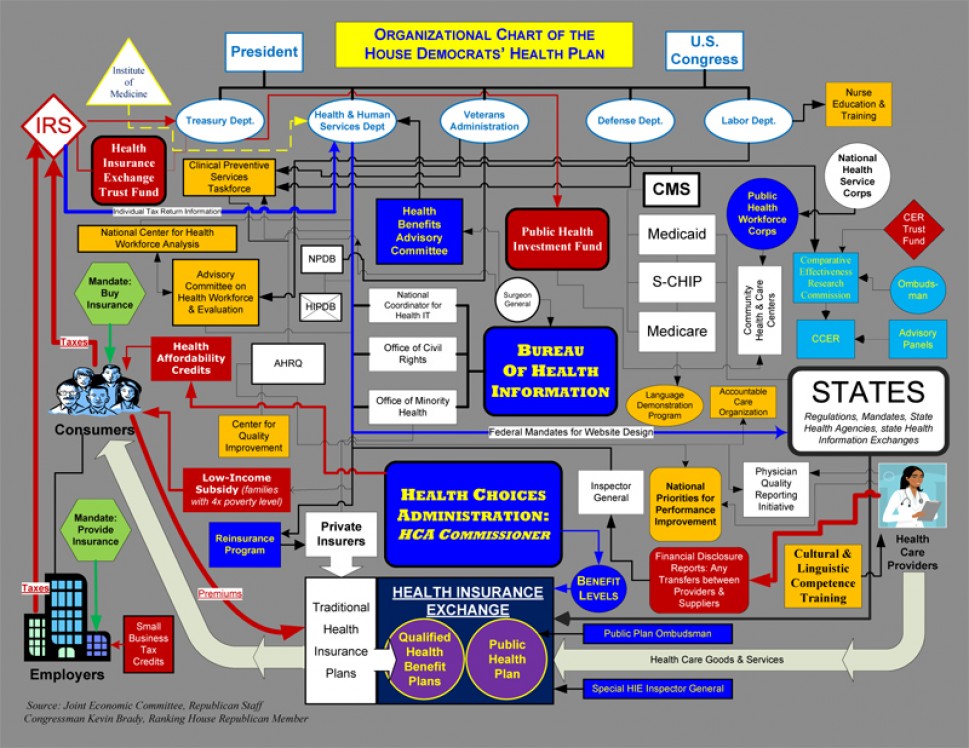
An Organization Chart

By Staff Reporters

If you have ever wondered exactly how health care reform will work for the United States, there is unfortunately no easy answer.

But, with the democrats and republicans strongly divided on universal health care, it can be tough for the average American citizen to find answers.

Fortunately, the graphic below will help.

PP-ACA

Assessment

However, it is important to listen to both sides to make a well-rounded decision of whether or not you can get behind health care reform.

Conclusion

Your thoughts and comments on this ME-P are appreciated. Feel free to review our top-left column, and top-right sidebar materials, links, URLs and related websites, too. Then, subscribe to the ME-P. It is fast, free and secure.

Link: http://feeds.feedburner.com/HealthcareFinancialsthePostForcxos

Speaker: If you need a moderator or speaker for an upcoming event, Dr. David E. Marcinko; MBA – Publisher-in-Chief of the Medical Executive-Post – is available for seminar or speaking engagements. Contact: MarcinkoAdvisors@msn.com

Our Other Print Books and Related Information Sources:

Health Dictionary Series: http://www.springerpub.com/Search/marcinko

Practice Management: http://www.springerpub.com/product/9780826105752

Physician Financial Planning: http://www.jbpub.com/catalog/0763745790

Medical Risk Management: http://www.jbpub.com/catalog/9780763733421

Hospitals: http://www.crcpress.com/product/isbn/9781439879900

Physician Advisors: www.CertifiedMedicalPlanner.org

Product DetailsProduct DetailsProduct Details

Product Details  Product Details

Product Details

The NBER Bulletin on Aging and Health

Join Our Mailing List

The National Bureau of Economic Research — 2012 No. 2

The 2012 No. 2 Bulletin includes the articles below:

1)  Can Low-Cost Interventions Affect Retirement Saving Behavior?

by Gopi Shah Goda, Colleen Flaherty Manchester, and Aaron Sojourner –  #17927
by James Choi, Emily Haisley, Jennifer Kurkoski, and Cade Massey – #17843

http://www.nber.org/aginghealth/2012no2/w17927.html

2)  Labor Market Effects of the Massachusetts Health Insurance Reform

by Jonathan Kolstad and Amanda Kowalski

http://www.nber.org/aginghealth/2012no2/w17933.html

3)  Can Germany’s Riester Pensions Fill the Pension Gap?

by Axel Boersch-Supan, Michela Coppola, and Anette Reil-Held

http://www.nber.org/aginghealth/2012no2/w18014.html

4)  Retirement Before the Social Security Entitlement Age

by Kevin Milligan

http://www.nber.org/aginghealth/2012no2/w18051.html

5)  Are Consumers Forward-Looking in Responding to Health Care Prices?

by Aviva Aron-Dine, Liran Einav, Amy Finklestein, and Mark Cullen

http://www.nber.org/aginghealth/2012no2/w17802.html

NBER Profile:  Patricia Danzon

http://www.nber.org/aginghealth/2012no2/danzon.html

NBER Profile:  Doug Staiger

http://www.nber.org/aginghealth/2012no2/staiger.html

Conclusion

Your thoughts and comments on this ME-P are appreciated. Feel free to review our top-left column, and top-right sidebar materials, links, URLs and related websites, too. Then, subscribe to the ME-P. It is fast, free and secure.

Link: http://feeds.feedburner.com/HealthcareFinancialsthePostForcxos

Speaker: If you need a moderator or speaker for an upcoming event, Dr. David E. Marcinko; MBA – Publisher-in-Chief of the Medical Executive-Post – is available for seminar or speaking engagements. Contact: MarcinkoAdvisors@msn.com

Our Other Print Books and Related Information Sources:

Health Dictionary Series: http://www.springerpub.com/Search/marcinko

Practice Management: http://www.springerpub.com/product/9780826105752

Physician Financial Planning: http://www.jbpub.com/catalog/0763745790

Medical Risk Management: http://www.jbpub.com/catalog/9780763733421

Hospitals: http://www.crcpress.com/product/isbn/9781439879900

Physician Advisors: www.CertifiedMedicalPlanner.org

Product DetailsProduct DetailsProduct Details

Product Details Product Details

Product Details

Is There a Six Month Deferral for the Fiscal Cliff?

Join Our Mailing List

The Budget Control Act of 2011

By Children’s Home Society of Florida Foundation

Speaking in Chicago last week, Senate Whip Richard Durbin (D-IL) proposed a change in the plan to reduce spending starting January 1, 2013. Under the Budget Control Act of 2011, substantial spending cuts in both defense and Medicare providers will commence on that date. These cuts together with potential tax increases have been described as a “fiscal cliff” that could send the nation back into recession.

Spending Cuts

The spending cuts are required because the Joint Congressional Committee in 2011 was unable to agree on a budget and tax plan. The anticipated spending cuts are designed to reduce costs by $1.2 trillion over the next decade.

Sen. Durbin proposes delaying the spending cuts for a term of six months. The Budget Control Act would be modified to allow the Senate Finance Committee and the House Ways and Means Committee an opportunity to develop a new plan.

Under Durbin’s proposal, the two committees must submit bills by June of 2013. The plans must total $4 trillion in budget savings. There would be $1.33 trillion in increased taxes and $2.67 trillion in budget reductions.

Assessment

Following hearings by both committees, the bill would need to be submitted to a conference committee. After passage by both the House and the Senate, the $4 trillion plan could be signed by the President. If all of those steps were completed by June 30, 2013, the mandatory budget cuts would not take place. They would be replaced by the agreements for tax increases and budget cuts in the new law.

Editor’s Note: The mandatory budget reductions in defense and Medicare take effect in 2013 because the Joint Congressional Committee was unable to agree on the balance of tax increases and budget reductions. There will be an opportunity for enacting new tax and budget provisions in the November session following the elections. Because the time is quite short for writing major legislation, many Senators and Representatives would like to defer action to 2013. However, there is a general reluctance to agree on the level of tax increases and budget reductions necessary for a compromise bill.

Conclusion

Your thoughts and comments on this ME-P are appreciated. Feel free to review our top-left column, and top-right sidebar materials, links, URLs and related websites, too. Then, subscribe to the ME-P. It is fast, free and secure.

Link: http://feeds.feedburner.com/HealthcareFinancialsthePostForcxos

Speaker: If you need a moderator or speaker for an upcoming event, Dr. David E. Marcinko; MBA – Publisher-in-Chief of the Medical Executive-Post – is available for seminar or speaking engagements. Contact: MarcinkoAdvisors@msn.com

Our Other Print Books and Related Information Sources:

Health Dictionary Series: http://www.springerpub.com/Search/marcinko

Practice Management: http://www.springerpub.com/product/9780826105752

Physician Financial Planning: http://www.jbpub.com/catalog/0763745790

Medical Risk Management: http://www.jbpub.com/catalog/9780763733421

Hospitals: http://www.crcpress.com/product/isbn/9781439879900

Physician Advisors: www.CertifiedMedicalPlanner.org

Product DetailsProduct DetailsProduct Details

Product Details Product Details

Product Details

Where the Presidential Candidates Stand on Medicare and Medicaid

Join Our Mailing List

The Big Picture View

By Suevon Lee ProPublica, Sept. 14, 2012, 2:26 p.m.

Medicare and Medicaid, which provide medical coverage for seniors, the poor and the disabled, together [1]make up nearly a quarter [1] of all federal spending. With total Medicare spending projected to cost [2] $7.7 trillion over the next 10 years, there is consensus that changes are in order. But what those changes should entail has, of course, been one of the hot-button issues [3] of the campaign.

With the candidates slinging charges [4], we thought we’d lay out the facts. Here’s a rundown of where the two candidates stand on Medicare and Medicaid:

THE CANDIDATES ON MEDICARE

Big Picture

Earlier this year, the Medicare Board of Trustees estimated [5] that the Medicare hospital trust fund would remain fully funded only until 2024. Medicare would not go bankrupt or disappear, but it wouldn’t have enough money to cover all hospital costs.

Under traditional government-run Medicare, seniors 65 and over and people with disabilities are given health insurance for a fixed set of benefits, in what’s known as fee-for-service [6] coverage. Medicare also offers a subset of private health plans known as Medicare Advantage, in which roughly one-quarter [7] of Medicare beneficiaries are currently enrolled. Obama retains this structure.

The Obama administration has also made moves that it says would keep Medicare afloat. It says the Affordable Care Act would extend solvency [8] by eight years, mainly by imposing tighter spending controls on Medicare payments to private insurers and hospitals.

In contrast, Rep. Paul Ryan, Mitt Romney’s running mate, has proposed a more fundamental overhaul of Medicare, which he says [9] is on an “unsustainable path.” On his campaign website [10], Romney says that Ryan’s proposals “almost precisely mirrors” his ideas on Medicare. But he’s been fuzzy on other aspects of the plan.

A Romney-Ryan administration would replace a defined benefits system with a defined contribution system [11] in which seniors are given federal vouchers to purchase health insurance in a newly created private marketplace known as Medicare Exchange. In this marketplace, private health plans, along with traditional Medicare, would compete for enrollees’ business. These changes wouldn’t start until 2023, meaning current beneficiaries aren’t affected – just those under 55.

Under the Romney-Ryan, the vouchers would be valued [12] at the second-cheapest private plan or traditional Medicare, whichever costs less. Seniors who opt for a more expensive plan would pay the difference. If they choose a cheaper plan, they keep the savings.

Who’s Covered

In the current system, people 65 and over are eligible for Medicare, which Obama has said he would keep [13] for now.

Romney has proposed [14]raising the eligibility age for Medicare beneficiaries from 65 to 67 in 2022, then increasing it by a month each year after that. In the long run, he would index [15] eligibility levels to “longevity.” Ryan’s budget plan proposes [16] raising Medicare eligibility age by two months a year starting in 2023, until it reaches 67 by 2034.

Many others looking to keep Medicare solvent have also proposed [17]raising the age of eligibility.

The Congressional Budget Office estimates [18]that raising the minimum age from 65 to 67 would reduce annual federal spending by 5 percent.But it would also result in higher premiums and out-of-pocket costs for seniors who would lose access to Medicare.

Obama’s health care law also adds [19] some benefits for seniors, such as annual wellness visits without co-pays, preventive services like free cancer screenings and prescription drug savings.

Proposed Savings

The Affordable Care Act is projected to reduce Medicare spending by $716 billion over the next 10 years. These reductions, as detailed [20] by Washington Post’s Wonkblog, will come mostly from reducing payments to hospitals, nursing homes and private health care providers.

While Ryan criticized [21] such spending cuts in his speech at the Republican National Convention, his own budget proposed [22] keeping these reductions.

“The ACA grows the trust fund by giving more general revenue to the Treasury, which then gives the trust fund bonds. But it then uses the money from those bonds to expand coverage for low- and middle-income people,” explains [23] Dylan Matthews on Washington Post’s Wonkblog.

Romney hasn’t really come up with a solid answer: he previously said he would restore [24] the $716 billion savings that the health care law imposes. Per this New York Times story [24], the American Institutes for Research calculates this would increase premiums and co-payments for Medicare beneficiaries by $342 a year on average over the next 10 years.

For more on where the candidates stand on the $716 billion, the private health policy Commonwealth Fund offers this helpful explanation [25].

Caps on Spending

Both Obama and Ryan have set an identical target rate [26] that would cap Medicare spending at one-half a percentage point above the nation’s gross domestic product.

But they have different ideas on mechanisms to achieve it.

The Affordable Care Act establishes a 15-member Independent Payment Advisory Board [27] that, starting in 2015, would make binding recommendations to reduce spending rates. As Jonathan Cohn points out [28] in the New Republic, the commission is prohibited from making any changes that would affect beneficiaries.

Ryan has proposed hard caps on spending and derided [29]this panel of appointed members as “unelected, unaccountable bureaucrats.” When laying out his plan in a 2011 memo [30], Ryan wrote that to control spending, “Congress would be required to intervene and could implement policies that change provider reimbursements, program overhead, and means-tested premiums.”

Romney hasn’t stated [31] clear proposals for imposing a cap on spending.

THE CANDIDATES ON MEDICAID

Big Picture

Though, it’s far less discussed [32] on the campaign trail, Medicaid actually covers more people than Medicare. The joint federal-state insurance program for the poor, the disabled, and elderly individuals in long-term nursing home care currently covers about 60 million Americans. The Affordable Care Act hasexpanded [33] Medicaid coverage further. Beginning 2014, Medicaid will include [34]people under 65 with income below 133 percent of the federal poverty level (roughly $15,000 for an individual, $30,000 for a family of four). This was estimated [35] to cover an additional 17 million Americans as eligible beneficiaries.

In June, however, the U.S. Supreme Court ruled [36] that states could opt out of the Medicaid expansion. A ProPublica analysis estimated [37] that the 26 states that challenged the health care law, and thus may possibly opt out, would account for up to 8.5 million of those new beneficiaries.

Romney and Ryan would overhaul this current system by turning Medicaid into a system of block grants [38]: the federal government would issue lump sum payments to the states, who would determine eligibility criteria and benefits for enrollees. These grants would begin in 2013.

Effects on spending

The Congressional Budget Office estimates [39] that Medicaid expansion under the new health care law would cost an additional $642 billion over the next 10 years.

Under the Ryan plan, federal Medicaid grants would be adjusted only for inflation, but not health care costs, which grow at a much higher rate. The CBO estimates [40] Ryan’s plan would save the federal government $800 billion over the next 10 years. Another study conducted by Bloomberg News shows that the block-grants could decrease Medicaid funding by as much as $1.26 trillion [41] over the next nine years.

Actual Impact

The New York Times points out [42] that more than half of Medicaid spending goes toward the elderly and disabled. An Urban Institute analysis estimates [43] the Ryan plan would result in 14 million to 27 million fewer people receiving Medicaid coverage by 2021.

Assessment

Though rarely mentioned by any of the candidates, Medicaid costs are soaring to cover the elderly who require long-term nursing care. As the Times’ details [44] how, states saddled by high Medicaid costs have begun turning to private managed care plans to blunt the cost.

Conclusion

Your thoughts and comments on this ME-P are appreciated. Feel free to review our top-left column, and top-right sidebar materials, links, URLs and related websites, too. Then, subscribe to the ME-P. It is fast, free and secure.

Speaker: If you need a moderator or speaker for an upcoming event, Dr. David E. Marcinko; MBA – Publisher-in-Chief of the Medical Executive-Post – is available for seminar or speaking engagements. Contact: MarcinkoAdvisors@msn.com

OUR OTHER PRINT BOOKS AND RELATED INFORMATION SOURCES:

Product DetailsProduct DetailsProduct Details

Product Details  Product Details

Product Details

The Tax Foundation Reviews the Presidential Candidates’ Tax Proposals

Join Our Mailing List

Goals for Sound Tax Policy

By Children’s Home Society of Florida Foundation

The nonpartisan Tax Foundation states that its goals for sound tax policy include, “simplicity, neutrality, transparency and stability.”

The Review

It published a review on September 6, 2012 of three different major tax proposals. The review discussed the tax proposals of the National Commission on Fiscal Responsibility and Reform, co-chaired by Alan Simpson and Erskine Bowles, the proposals of President Obama and the proposals of Presidential Candidate Mitt Romney. The nonpartisan Tax Commission attempted to provide an objective comparison of the three proposals. It discussed proposals for income tax, capital gains tax, corporate tax and gas tax for each plan.

The National Commission on Fiscal Responsibility and Reform produced a plan in December of 2010. With nine Democrats and nine Republicans on the committee, the plan received 11 of 18 votes. However, it did not receive a sufficiently large majority to be submitted for a vote by the House and Senate.

The plan is commonly described as the “Simpson-Bowles” plan after the Republican and Democratic Co-Chairs of the Commission.

The “Simpson-Bowles” Plan

Simpson-Bowles proposes a 28% top rate on personal income taxes. Capital gains and corporations would also be taxed at 28%. Corporations would not pay tax on earnings overseas. The alternative minimum tax would be repealed. Taxes on gasoline would be increased from 18 cents to 23 cents per gallon.

With the reduction in the top income tax rate, most credits and deductions would be greatly limited. There would be a child credit, an earned income tax credit, a limited deduction for mortgage interest and deductions for health and retirement plans.

The principal goal of Simpson-Bowles is to reduce spending to 21% of gross domestic product (GDP) and to raise taxes to that same level. Simpson-Bowles is projected to balance the budget by 2037.

The Tax Foundation

The Tax Foundation study of proposals by President Obama covered many of the same areas. The top income tax rate would be set at 39.6%. Long-term capital gains are taxed at 30% under the “Buffett Rule.” Dividends are potentially taxed at the top rate of 39.6% plus the 3.8% additional tax under the Affordable Care Act. Corporate taxes for both U.S. and foreign profits are 28%. The alternative minimum tax is retained with the “Buffett Rule” level of 30%.

President Obama proposes retaining most credits and deductions with some technical changes. The benefit of deductions for the upper income brackets of 39.6% and 36% would be limited to the tax savings in the 28% bracket.

Presidential Candidate Mitt Romney proposes a top income tax rate of 28%. Capital gains would continue to be taxed at 15% and dividends at 15%. Corporate tax rates would be reduced to 25%, and foreign income would not be taxed. There would be substantial limits on credits and deductions. There would be limited deductions for home mortgage, charitable gifts, retirement plans and health plans. The alternative minimum tax would be repealed. Candidate Romney’s plans are projected to balance the budget by 2020.

Editor’s Note: This nonpartisan review by Dr. McBride and the Tax Foundation is offered as an educational service to our readers. Your editor and this organization take no position on the specific provisions that are involved. Our readers should recognize that with the complexity of our tax system, the comparison by Dr. McBride involves review of extensive information and a number of judgments on the various proposals.

Conclusion

Your thoughts and comments on this ME-P are appreciated. Feel free to review our top-left column, and top-right sidebar materials, links, URLs and related websites, too. Then, subscribe to the ME-P. It is fast, free and secure.

Link: http://feeds.feedburner.com/HealthcareFinancialsthePostForcxos

Speaker: If you need a moderator or speaker for an upcoming event, Dr. David E. Marcinko; MBA – Publisher-in-Chief of the Medical Executive-Post – is available for seminar or speaking engagements. Contact: MarcinkoAdvisors@msn.com

Our Other Print Books and Related Information Sources:

Health Dictionary Series: http://www.springerpub.com/Search/marcinko

Practice Management: http://www.springerpub.com/product/9780826105752

Physician Financial Planning: http://www.jbpub.com/catalog/0763745790

Medical Risk Management: http://www.jbpub.com/catalog/9780763733421

Hospitals: http://www.crcpress.com/product/isbn/9781439879900

Physician Advisors: www.CertifiedMedicalPlanner.org

Product DetailsProduct DetailsProduct Details

Product Details Product Details

Product Details

Succeed with the “Business of Medical Practice” Textbook

ADVERTISEMENT

[Transformational Health 2.0 Skills for Doctors]

By Ann Miller RN, MHA

www.BusinessofMedicalPractice.com

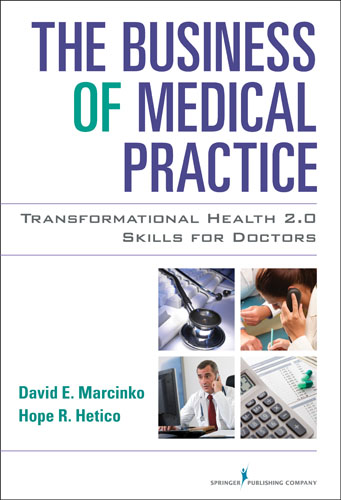
December 23rd, 2011 – The Institute of Medical Business Advisors [iMBA] Inc, in Atlanta, GA www.MedicalBusinessAdvisors.com and Springer Publishing Company of New York, just released the third edition of “The Business of Medical Practice” [Transformational Health 2.0 Skills for Doctors] edited by iMBA founder Dr. David Edward Marcinko MBA, CMP™ and President Hope Rachel Hetico RN, MHA, CPHQ, CMP™

Internal Contents

The 37 chapter, 750 page hard-cover textbook provides a comprehensive resource for those physicians, medical professionals, practice managers, nurse executives, health care administrators and graduate students seeking working knowledge on running a private facility or medical clinic.

Three Major Sections

The BoMP is comprised of three enterprise-wide sections: [1] Qualitative Office Operations, [2] Quantitative Aspects of Medical Practice and [3] Health Policies, Ethics and Leadership. Topics like ARRA, HITECH, ACA and the social networking aspects and ramifications of health 2.0 connectivity for all stakeholders are included for modernity.

Tools and Templates

Tools used throughout the book help readers reference and retain complex information. These tools include:

  • Sidebars. Key terms, key concepts, key sources, associations, and factoids all serve to enhance and reinforce the core takeaways from each chapter.
  • Tables. Tables are used to display and reference benchmark data, draw comparisons, and illustrate industry data trends.
  • Figures. Graphical depictions of concepts help you comprehend the material.
  • Charts. Charts allow easily referenced standard industry taxonomies alongside comparisons of related topics.

Assessment

For a further description of the Business of Medical Practice, with online “live’ community, please click: www.BusinessofMedicalPractice.com

To order directly: http://www.springerpub.com/product/9780826105752 

Conclusion

Your thoughts and comments on this ME-P are appreciated. Feel free to review our top-left column, and top-right sidebar materials, links, URLs and related websites, too. Then, subscribe to the ME-P. It is fast, free and secure.

Link: http://feeds.feedburner.com/HealthcareFinancialsthePostForcxos

Speaker: If you need a moderator or speaker for an upcoming event, Dr. David E. Marcinko; MBA – Publisher-in-Chief of the Medical Executive-Post – is available for seminar or speaking engagements. Contact: MarcinkoAdvisors@msn.com

OUR OTHER PRINT BOOKS AND RELATED INFORMATION SOURCES:

DICTIONARIES: http://www.springerpub.com/Search/marcinko
PHYSICIANS: www.MedicalBusinessAdvisors.com
PRACTICES: www.BusinessofMedicalPractice.com
HOSPITALS: http://www.crcpress.com/product/isbn/9781466558731
CLINICS: http://www.crcpress.com/product/isbn/9781439879900
BLOG: www.MedicalExecutivePost.com
FINANCE: Financial Planning for Physicians and Advisors
INSURANCE: Risk Management and Insurance Strategies for Physicians and Advisors

Product Details

Product DetailsProduct DetailsProduct Details

Opinion Poll on the Most Disruptive Health Issue Today?

Join Our Mailing List

A Voting Opinion Poll

Today’s opinion poll for all modern hospital executives, financial advisors, health economists, patients and physician leaders is right on-point.

It was sent in by an astute ME-P subscriber and we are most pleased to oblige.

VOTE HERE

And so, what is the most singular disruptive development that you should be thinking about if you want your medical practice, clinic, hospital, state, local government or healthcare organization to thrive in the coming years?

Conclusion

Your thoughts and comments on this ME-P are appreciated. Feel free to review our top-left column, and top-right sidebar materials, links, URLs and related websites, too. Then, subscribe to the ME-P. It is fast, free and secure.

Link: http://feeds.feedburner.com/HealthcareFinancialsthePostForcxos

Speaker: If you need a moderator or speaker for an upcoming event, Dr. David E. Marcinko; MBA – Publisher-in-Chief of the Medical Executive-Post – is available for seminar or speaking engagements. Contact: MarcinkoAdvisors@msn.com

Our Other Print Books and Related Information Sources:

Health Dictionary Series: http://www.springerpub.com/Search/marcinko

Practice Management: http://www.springerpub.com/product/9780826105752

Physician Financial Planning: http://www.jbpub.com/catalog/0763745790

Medical Risk Management: http://www.jbpub.com/catalog/9780763733421

Hospitals: http://www.crcpress.com/product/isbn/9781439879900

Physician Advisors: www.CertifiedMedicalPlanner.org

Product DetailsProduct DetailsProduct Details

Product Details  Product Details

Product Details

What Health Care Fraud Costs Us

Join Our Mailing List

Scrutiny Needed from the Patient Citizenry – Too?

As health care takes the center stage at the forefront of contemporary politics it is under scrutiny from several angles.

The Fraud Rate

One aspect of the health care system that has been garnering growing levels of interest is the rate at which medical fraud occurs. As the developed world steeps itself further and further into the digital age, things like medical history and billing records become more easily susceptible to fraud since they’re accessible from virtually anywhere.

Expensive Care

And, the fact of the matter is that trying to stay healthy is an expensive business. Each year, 300 million Americans spend about $2 trillion on health care, but the amount of that money that is lost to fraud seems to have grown a great deal in recent years.

Types

The government continues to crack down and identify fraudsters in all their forms—and they do come in many forms. Perhaps the most common type of health care fraud concerns how medical care providers bill. This type of fraud relies heavily on the fact that many patients don’t take the proper amount of time to really scrutinize their medical bills and invoices.

Source: InsuranceQuotes.org

Assessment

Fraud can cost a huge amount of money for victim, insurance companies and society. The best defense against fraud remains understanding EOBs forms and what’s on your medical bills.

Conclusion

Your thoughts and comments on this ME-P are appreciated. Feel free to review our top-left column, and top-right sidebar materials, links, URLs and related websites, too. Then, subscribe to the ME-P. It is fast, free and secure.

Speaker: If you need a moderator or speaker for an upcoming event, Dr. David E. Marcinko; MBA – Publisher-in-Chief of the Medical Executive-Post – is available for seminar or speaking engagements. Contact: MarcinkoAdvisors@msn.com

OUR OTHER PRINT BOOKS AND RELATED INFORMATION SOURCES:


Product DetailsProduct DetailsProduct Details

The Financial Impact of Reducing Avoidable Hospital Admissions

Join Our Mailing List

Population Health Models

By Staff Reporters

Most readers are aware that colleague David B. Nash MD, MBA is the population health guru for the ME-P. In fact, he is an ME-P “thought-leader.” And, to use a modern colloquialism, he was into population health before PH was cool.

Link: http://nashhealthpolicy.blogspot.com

Preventing Avoidable Hospitalizations

And so, as hospitals and health systems accelerate towards population health models, there is an increasing focus for physicians and health systems to work together to prevent avoidable hospitalizations.

The Infographic

This infographic shows that an average 300-bed hospital is at risk of losing $9.5 million in annual contribution when inpatient admissions for 11 potentially avoidable conditions are completely reduced. These 11 conditions, identified by AHRQ, represent diagnoses for which coordinated outpatient care and early intervention can potentially prevent the need for hospitalization.

Source: Objective Health [McKinsey & Company]

Assessment

A colloquialism is a word or phrase that is employed in conversational or informal language but not in formal speech or formal writing.

Conclusion

Your thoughts and comments on this ME-P are appreciated. Feel free to review our top-left column, and top-right sidebar materials, links, URLs and related websites, too. Then, subscribe to the ME-P. It is fast, free and secure.

Link: http://feeds.feedburner.com/HealthcareFinancialsthePostForcxos

Speaker: If you need a moderator or speaker for an upcoming event, Dr. David E. Marcinko; MBA – Publisher-in-Chief of the Medical Executive-Post – is available for seminar or speaking engagements. Contact: MarcinkoAdvisors@msn.com

Our Other Print Books and Related Information Sources:

Health Dictionary Series: http://www.springerpub.com/Search/marcinko

Practice Management: http://www.springerpub.com/product/9780826105752

Physician Financial Planning: http://www.jbpub.com/catalog/0763745790

Medical Risk Management: http://www.jbpub.com/catalog/9780763733421

Hospitals: http://www.crcpress.com/product/isbn/9781439879900

Physician Advisors: www.CertifiedMedicalPlanner.org

Buy from Amazon

Learn How to Profit and Thrive in the PP-ACA Era

BOOK FOREWORD / TESTIMONIAL

The Tax Man Cometh to Police You on Health Care

Join Our Mailing List

About the New Health Care Tax and IRS Job Creation

WASHINGTON (AP)

The Supreme Court’s decision to uphold most of President Barack Obama’s health care law will come home to roost for most taxpayers in about 2 1/2 years, when they’ll have to start providing proof on their tax returns that they have health insurance.

LINK: New Jobs: IRS to hire thousands more agents to collect new health care taxes

Conclusion

Your thoughts and comments on this ME-P are appreciated. Feel free to review our top-left column, and top-right sidebar materials, links, URLs and related websites, too. Then, subscribe to the ME-P. It is fast, free and secure.

Link: http://feeds.feedburner.com/HealthcareFinancialsthePostForcxos

Speaker: If you need a moderator or speaker for an upcoming event, Dr. David E. Marcinko; MBA – Publisher-in-Chief of the Medical Executive-Post – is available for seminar or speaking engagements. Contact: MarcinkoAdvisors@msn.com

Our Other Print Books and Related Information Sources:

Health Dictionary Series: http://www.springerpub.com/Search/marcinko

Practice Management: http://www.springerpub.com/product/9780826105752

Physician Financial Planning: http://www.jbpub.com/catalog/0763745790

Medical Risk Management: http://www.jbpub.com/catalog/9780763733421

Hospitals: http://www.crcpress.com/product/isbn/9781439879900

Physician Advisors: www.CertifiedMedicalPlanner.org

Product Details  Product Details

A Review of LP / LLC Transfer Hazards for Physicians

Join Our Mailing List

Can standard boilerplate and default corporate law provisions inadvertently disinherit your family from controlling the business or cost millions in additional estate/gift tax?

By Ed Morrow, JD, LL.M. (tax), MBA, CFP®

[Manager, Wealth Strategies Communications, Key Private Bank]

Many physicians use limited liability companies, limited liability partnerships or limited partnerships (“LLCs”, “LLPs” and “LPs”) to operate a trade or business, to hold real estate, or even to hold investment assets.  When only immediate family are owners, these are often referred to as family limited partnerships or limited liability companies (“FLPs” and “FLLCs”).  There are numerous business, asset protection and estate planning reasons for using these entities (hereinafter lumped together for simplicity as “LLCs”).  In many cases, these are preferable to old-fashioned corporations (see separate companion article on LP/LLC Advantages).

As a doctor – you must be very careful, however, when transferring LLC shares during lifetime or at death, to your spouse, children, trusts or others.  Especially when there are co-owners outside the immediate family.  This is due to a stark difference between LLC/partnership law and corporate law and the concept known as “assignee interests”.  Understanding this is even more crucial in 2012 because of the overwhelming demand and interest in transferring LLC interests to irrevocable trusts to exploit the $5.12million gift tax exclusion, which is slated to reduce to only $1 million in 2013.

An LLC owner (called a “member”, not a “stockholder”) has two bundles of rights:

  1. Economic rights – which are the rights to receive property from the LLC both during existence and upon liquidation, along with tax attributes and profit/losses; and
  2. Management rights – the right to vote, participate in management and receive reports and accountings.

It is the latter category that can cause problems when transferring LLC interests by gift or at death.

Members of an LLC usually establish an Operating Agreement to set the rules for transfer of interests.  State statutes (such as the Uniform Limited Liability Company Act) usually provide default rules where the document is silent.

The problem occurs when an LLC member transfers a portion of his or her ownership interest in the LLC to another person, either during lifetime or at death.  At that point, the transferee may become a “mere assignee” of the LLC interest, and not a full “substitute member.”  Under the laws of most states, unless the Operating Agreement provides or parties otherwise agree, an assignee only receives the transferor’s economic rights in the LLC, but not the management rights.

In fact, some court cases require member consent even if the operating agreement seems to otherwise permit such transfers (Ott v. Monroe, 719 S.E.2d 309, 282 Va. 403 (2011).  These state laws were enacted to protect business owners from unwillingly becoming partners with someone they never intended or contracted to be partners with.

This treatment is completely different from transferring C or S corporation stock – when you buy P&G stock, you get the same rights as the previous owner.  S Corporation stock is not even allowed to have differing classes of ownership interests (although voting/non-voting is permitted).  Usually, this quirk in the law has numerous asset protection benefits to LLC owners (discussed in the companion article), but it can cause havoc to one’s business planning in unforeseen circumstances.

Examples of Inadvertent Loss of Control

#1- Doctors Able and Baker, unrelated parties, form and operate an LLC.  Able owns 49% and Baker owns 51%.  Baker has a controlling interest in the LLC.  Baker dies and his 51% interest in the LLC is transferred to his revocable living trust.  Now, the trust is a “mere assignee” and while the trust receives 100% of Baker’s economic rights in the LLC (51% of the total LLC economic rights), it has none of the management rights.  After Baker’s death, Able will have 100% of the LLC’s management rights.  The trustee may have serious difficulty even getting books and records of the LLC, much less have any say on reviewing Able’s business decisions (including new hire and new salary expectations).

#2 – Same ownership structure as above, but Baker leaves assets via Transfer on Death designation or via Will to his spouse, children or others directly.  Same result.

#3 – Same ownership scenario as above, but Baker gifts his membership interests during life to his spouse, children, UTMA account or an irrevocable grantor trust.  Same result.

#3a – Same scenario as above, but Baker simply transfers his shares to his revocable living trust (called “funding”) via Schedule A attached to trust or other assignment.  Same result.

#4 – Same scenario, but Dr. Baker got express permission of Able to transfer his LLC interest to his revocable living trust and have it remain a full substitute member.  No issue – until Baker dies and the LLC interests pass to a new subtrust, such as a bypass, marital, QTIP, or other irrevocable trust, or to beneficiaries outright.  Able must have agreed to this subsequent transfer as well, otherwise the transfer to the new subtrust will be a mere assignee interest and the Baker family loses control.

Creditor Issues

Again, Able and Baker own 49%/51%.  Baker has some creditor issues from a tort claim and co-signed loans unrelated to the LLC.  He files bankruptcy to reorganize or get a clean start (or perhaps the creditor forces a bankruptcy).  This is probably another trigger that causes Baker to lose all of his management rights in the LLC.

Incapacity Issues

Again, Able and Baker own 49% and 51% economic and management rights respectively.  This time, Baker has a stroke or an accident and his wife or one of his family takes over as guardian or conservator.  Similar result.  Able now has 100% controlling management rights, even though Baker still keeps the same economic rights.  He can fire Baker and raise his own salary.

Estate/Gift Tax Issues 

Able and Baker’s company is worth $10Million.  Baker’s 51% interest gets marketability discount, but a controlling premium, so valuation experts and the IRS agree it is worth $4Million.  Able’s 49% interest gets a marketability and lack of control discount, so his interest is only worth $3 million.  Yet when Baker dies, he leaves this 51% interest to his spouse (or marital trust) as a mere assignee, and because the interest has no voting control or management rights, it may be worth only about $3 million in the hands of the spouse/trust (because there is no “control” or management rights, the 51% is worth considerably less).  Thus, Baker’s 51% interest is taxed at $4 million, but only gets a $3 million marital deduction (this same discrepancy is true for charitable gifts, which is why physicians should also be careful gifting LLC interests to charities or charitable trusts).  Did $1 million in value inadvertently pass to Able?  At best, this wastes Baker’s estate tax exemption.  At worst, it may lead to an additional 55% tax (and probably penalties, since it would unlikely be reported and caught on audit) on $1million, or $550,000 additional tax that could easily be avoided.

This same issue arises in gifting shares to a spouse or to a trust for a spouse that is intended to qualify for the marital deduction (or to charities or charitable trusts).

In addition, gifting a mere “assignee” interest risks disqualifying any LLC/LP gifts for the “present interest” annual exclusion under IRC 2503(e) ($13,000 per donor per donee) pursuant to the recent IRS wins in the Hackl, Fisher and Price cases.

Furthermore, it adds grist to a favorite line of attack that the IRS uses to add to taxpayers’ estate tax bill.  If a taxpayer has a “retained interest” in a gift, the IRS has been successful in pulling such gifts back into a taxpayer’s estate (therefore causing additional 35-55% estate tax).

What Can Physicians Who Own LP/LLCs Do?

If you want to transfer both economic rights and management rights in your LLCs, similar to shares of stock of a corporation, then the LLC’s written Operating Agreement should be reviewed and/or revised to admit certain transferees or assignees (like a guardian/conservator, spouse, children, trust, subtrusts, etc) as full “substitute members”, while other transferees (like creditors, ex-spouses) can remain “mere assignees”, with no management rights.

LLC owners may decide on other variations on the above solution if desired.  For instance, some owners might prefer to exclude a surviving spouse or children from management rights, but be perfectly comfortable with having an independent or agreed upon trustee of a marital trust accede to those rights.  The key to good planning is to know the consequences of gifts/bequests beforehand to adequately plan.

Make sure your entire wealth management team is on the same page when orchestrating your wealth planning.  Ask whether they use a checklist of any sorts in their planning, or even if they do, whether they communicate the checklist with other advisors on your team – many do not.

Assessment

As noted in Atul Gawande’s The Checklist Manifesto, simple checklists can often prevent mistakes and miscommunications among even the most educated of professionals – this is certainly true for asset protection and tax planning for LLC interests, and at no time more than in 2012 with all of the anticipated tax changes and proposals threatening to snare any missteps in planning.

ABOUT THE AUTHOR

© 2012 Edwin P. Morrow III and KeyBank, NA.  The author holds the following designations:  J.D., LL.M. (masters in tax law), MBA, CFP® and RFC®.  He is a Board Certified Specialist in Estate Planning, Probate and Trust Law through the Ohio State Bar Association.  He is an approved arbitrator for the Financial Industry Regulatory Association (FINRA).  He currently provides educational and consultative services nationwide for the financial advisors and clients of Key Private Bank.  Contact:  (937) 285-5343 or:  Edwin_P_Morrow@KeyBank.com Ed is also a friend of the ME-P and designated “thought-leader”. 

Conclusion

Your thoughts and comments on this ME-P are appreciated. Feel free to review our top-left column, and top-right sidebar materials, links, URLs and related websites, too. Then, subscribe to the ME-P. It is fast, free and secure.

Link: http://feeds.feedburner.com/HealthcareFinancialsthePostForcxos

Speaker: If you need a moderator or speaker for an upcoming event, Dr. David E. Marcinko; MBA – Publisher-in-Chief of the Medical Executive-Post – is available for seminar or speaking engagements. Contact: MarcinkoAdvisors@msn.com

OUR OTHER PRINT BOOKS AND RELATED INFORMATION SOURCES:

DICTIONARIES: http://www.springerpub.com/Search/marcinko
PHYSICIANS: www.MedicalBusinessAdvisors.com
PRACTICES: www.BusinessofMedicalPractice.com
HOSPITALS: http://www.crcpress.com/product/isbn/9781466558731
CLINICS: http://www.crcpress.com/product/isbn/9781439879900
BLOG: www.MedicalExecutivePost.com
FINANCE: Financial Planning for Physicians and Advisors
INSURANCE: Risk Management and Insurance Strategies for Physicians and Advisors

Product Details  Product Details

How Health Reform Could Expand Medicaid

Join Our Mailing List

PP-ACA Results State-by-State

By Lena Groeger
ProPublica

Experts estimate that nearly 16 million Americans could be added to the Medicaid rolls by 2019 under an expansion in the Affordable Care Act. But, the Supreme Court ruled last Thursday that states can opt out without risk of losing federal support for Medicaid, raising the stakes that some may do so.

The Big Picture

Here is a look at forecast growth in state Medicaid rolls under the expansion. Twenty-six challenged the act in court.

IMAGE LINK: http://www.propublica.org/special/state-by-state-how-health-reform-could-expand-medicaid

Related: Mystery After the Health Care Ruling: Which States Will Refuse Medicaid Expansion?

Conclusion

Your thoughts and comments on this ME-P are appreciated. Feel free to review our top-left column, and top-right sidebar materials, links, URLs and related websites, too. Then, subscribe to the ME-P. It is fast, free and secure.

Speaker: If you need a moderator or speaker for an upcoming event, Dr. David E. Marcinko; MBA – Publisher-in-Chief of the Medical Executive-Post – is available for seminar or speaking engagements. Contact: MarcinkoAdvisors@msn.com

OUR OTHER PRINT BOOKS AND RELATED INFORMATION SOURCES:

Product Details

The Supreme Court Permits Healthcare Taxation “Penalty”

Join Our Mailing List

On the PP-ACA

By Children’s Home Society of Florida Foundation

In 2010 Congress passed the Patient Protection and Affordable Care Act (PPACA). A key part of the Act is an individual mandate for health insurance. All individuals must have health insurance by 2014 or pay a tax-penalty.

The Tax Penalty

The tax-penalty starts at the greater of $285 per family or 1% of income in 2014. However, by 2016, the tax-penalty increases to $2,085 per family or 2.5% of income, whichever is larger.

Commerce Clause

Many states sued the federal government and asked that the individual mandate be held invalid. While the various courts had different positions on the issue, some federal judges were concerned that requiring a person to purchase insurance could be a violation of the Commerce Clause of the U.S. Constitution.

CJSC John Roberts

Chief Justice of the Supreme Court John Roberts wrote the opinion for a 5-4 majority in the PPACA case. First, he determined whether or not the Court was prohibited from ruling on the case under the Anti-Injunction Act. He decided that the required payment would be a “penalty” for purposes of that Act and not a tax. Therefore, the Supreme Court could issue a ruling.

Second, Chief Justice Roberts reviewed the powers of government under the Commerce Clause. He agreed with the other four justices opposing PPACA that Congress had the right to regulate commerce, but does not have the right to regulate non-activity. Therefore, requiring individuals to purchase health insurance is not a permitted power under that provision. PPACA could not be approved under the Commerce Clause.

However, Roberts observed that it is permissible for the Court to consider the validity of PPACA under the power of the government to tax. He determined that the individual mandate to purchase insurance or pay a penalty-tax is permitted under that power. Roberts stated, “Because the Constitution permits such a tax, it is not our role to forbid it, or to pass upon its wisdom or fairness.” He carefully approved the use of the power without discussing the appropriateness of PPACA provisions.


Roberts found several reasons for permitting the taxing power. The tax-penalty will be paid when filing IRS Form 1040. As is true with other tax provisions, lower-income individuals are excluded from this tax-penalty. The tax-penalty is part of the Internal Revenue Code and will be collected by the IRS.
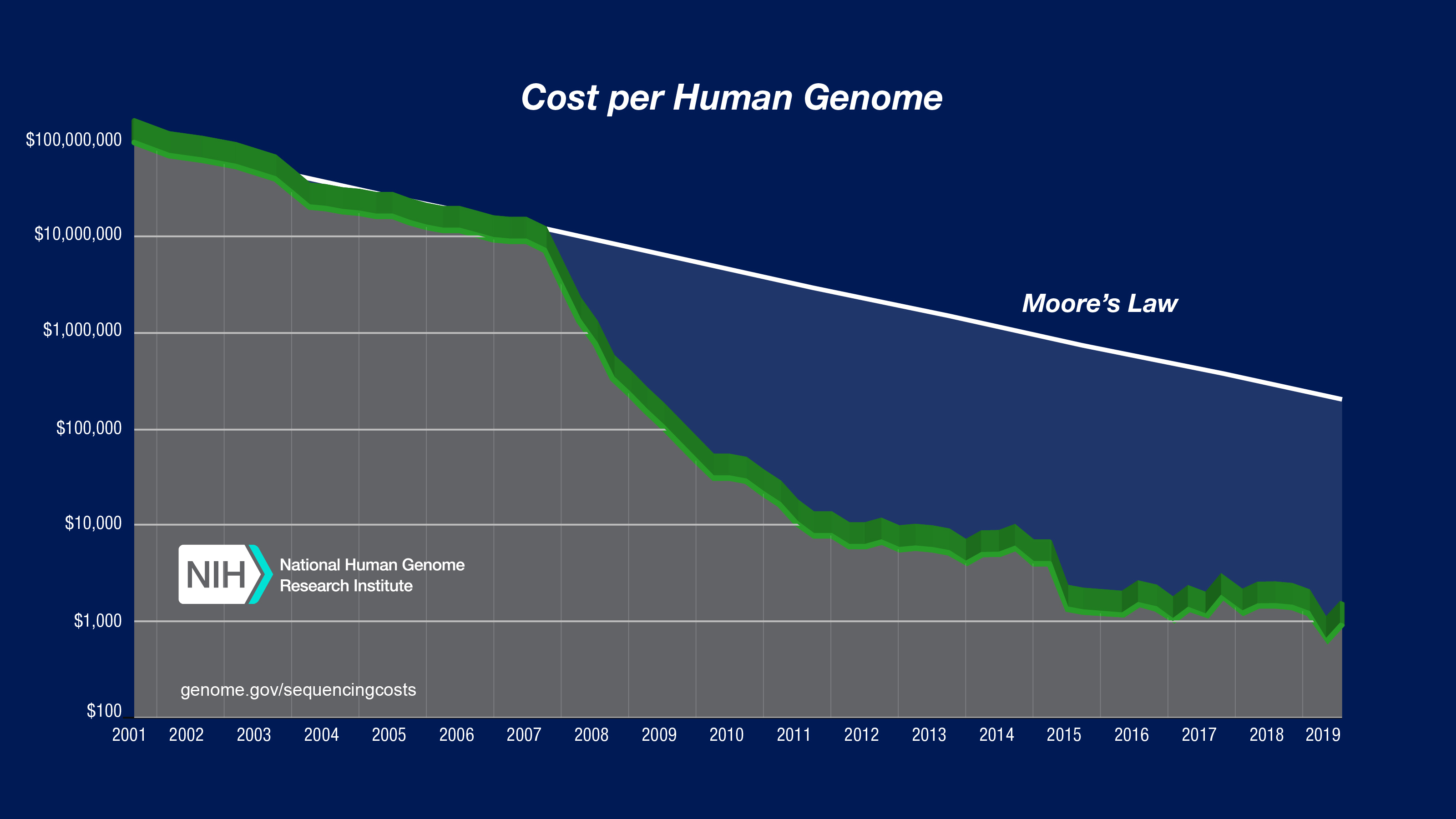
Dissenters

The four dissenting Justices would have determined that PPACA fails to meet the requirements of the Commerce Clause and would have invalidated the entire bill.

Editor’s Note: The taxes to pay for PPACA include a new tax on medical devices that will increase costs to individuals and healthcare providers. There also is a new 3.8% Medicare tax. It applies in 2013 to income and capital gains. If the expected post-election tax bill extends the current 15% capital gain rate, then the capital gains tax rate will be 18.8% in 2013. However, if the 15% federal capital gains tax rate is increased to 20%, then the new rate in January of 2013 will be 23.8%. The increase in capital gains rate may influence charitable gifts of appreciated property in 2013.

Conclusion

Your thoughts and comments on this ME-P are appreciated. Feel free to review our top-left column, and top-right sidebar materials, links, URLs and related websites, too. Then, subscribe to the ME-P. It is fast, free and secure.

Link: http://feeds.feedburner.com/HealthcareFinancialsthePostForcxos

Speaker: If you need a moderator or speaker for an upcoming event, Dr. David E. Marcinko; MBA – Publisher-in-Chief of the Medical Executive-Post – is available for seminar or speaking engagements. Contact: MarcinkoAdvisors@msn.com

Our Other Print Books and Related Information Sources:

Health Dictionary Series: http://www.springerpub.com/Search/marcinko

Practice Management: http://www.springerpub.com/product/9780826105752

Physician Financial Planning: http://www.jbpub.com/catalog/0763745790

Medical Risk Management: http://www.jbpub.com/catalog/9780763733421

Hospitals: http://www.crcpress.com/product/isbn/9781439879900

Physician Advisors: www.CertifiedMedicalPlanner.org

Product Details

Taxes and the SCOTUS ACA Decision

Join Our Mailing List

My Synopsis for Physician Investors

By Dr. David Edward Marcinko FACFAS MBA CMP™

www.CertifiedMedicalPlanner.org

[Publisher-in-Chief]

I was at Emory University this past weekend for an unrelated colloquium. But all the chatter, of course, was about SCOTUS, taxes and the just announced ACA decision.

Most doctors I know – just don’t like paying needless taxes. So, what’s the buzz for physicians and other medical professional investors, and their financial advisors [FAs]?

The Synopsis

The taxes to pay for the Affordable Care Act include a new tax on medical devices that will increase costs to individuals and healthcare providers.

There also is a new 3.8% Medicare tax. It applies in 2013 to income and capital gains.

If the expected post-election tax bill extends the current 15% capital gain rate, then the capital gains tax rate will be 18.8% in 2013. However, if the 15% federal capital gains tax rate is increased to 20%, then the new rate in January of 2013 will be 23.8%.

In addition to dividend seeking investors, the increase in capital gains rate may also influence charitable gifts of appreciated property in 2013.

Assessment

Please weigh-in all you FAs and healthcare focused CPAs. What is a physician investor supposed to do, now?

Conclusion

Your thoughts and comments on this ME-P are appreciated. Feel free to review our top-left column, and top-right sidebar materials, links, URLs and related websites, too. Then, subscribe to the ME-P. It is fast, free and secure.

Speaker: If you need a moderator or speaker for an upcoming event, Dr. David E. Marcinko; MBA – Publisher-in-Chief of the Medical Executive-Post – is available for seminar or speaking engagements. Contact: MarcinkoAdvisors@msn.com

OUR OTHER PRINT BOOKS AND RELATED INFORMATION SOURCES:

Product Details

ACA – UPHELD

The Patient Protection and Affordable Care Act

S.C.O.T.U.S.

UPHELD

Read the Entire Court Ruling

A Video Exploring Better Ways to Pay for Health Care?

Join Our Mailing List

A YouTube Encore Presentation

Harold Luft, Director, Palo Alto Medical Foundation Research Institute; Professor Emeritus of Health Policy and Health Economics explores ways to pay for healthcare. 

Video: http://www.youtube.com/watch?v=FfcVtglVM54

Conclusion

Your thoughts and comments on this ME-P are appreciated. Feel free to review our top-left column, and top-right sidebar materials, links, URLs and related websites, too. Then, subscribe to the ME-P. It is fast, free and secure.

Link: http://feeds.feedburner.com/HealthcareFinancialsthePostForcxos

Speaker: If you need a moderator or speaker for an upcoming event, Dr. David E. Marcinko; MBA – Publisher-in-Chief of the Medical Executive-Post – is available for seminar or speaking engagements. Contact: MarcinkoAdvisors@msn.com

Our Other Print Books and Related Information Sources:

Health Dictionary Series: http://www.springerpub.com/Search/marcinko

Practice Management: http://www.springerpub.com/product/9780826105752

Physician Financial Planning: http://www.jbpub.com/catalog/0763745790

Medical Risk Management: http://www.jbpub.com/catalog/9780763733421

Hospitals: http://www.crcpress.com/product/isbn/9781439879900

Physician Advisors: www.CertifiedMedicalPlanner.org

Product Details

Who Should Share The Presidential Ticket With Mitt Romney as Best for all Healthcare Stakeholders?

Join Our Mailing List

A Voting Opinion Poll

By ME-P Staff

The 2012 Election for President of the United States [POTUS]

The ME-P is conducting an important election year poll. With Mitt Romney now positioned to receive the GOP nomination for president of the United States, who would you like to see as his Vice Presidential running mate?

The results of the poll will be available to you after you submit your vote and we’ll also share the poll results with major media outlets across the country. Thousands will vote, so take a moment right now to stand up and be counted. Your opinion matters!

Vote today!


Conclusion

Your thoughts and comments on this ME-P are appreciated. Feel free to review our top-left column, and top-right sidebar materials, links, URLs and related websites, too. Then, subscribe to the ME-P. It is fast, free and secure.

Link: http://feeds.feedburner.com/HealthcareFinancialsthePostForcxos

Speaker: If you need a moderator or speaker for an upcoming event, Dr. David E. Marcinko; MBA – Publisher-in-Chief of the Medical Executive-Post – is available for seminar or speaking engagements. Contact: MarcinkoAdvisors@msn.com

Our Other Print Books and Related Information Sources:

Health Dictionary Series: http://www.springerpub.com/Search/marcinko

Practice Management: http://www.springerpub.com/product/9780826105752

Physician Financial Planning: http://www.jbpub.com/catalog/0763745790

Medical Risk Management: http://www.jbpub.com/catalog/9780763733421

Hospitals: http://www.crcpress.com/product/isbn/9781439879900

Physician Advisors: www.CertifiedMedicalPlanner.org

Product DetailsProduct DetailsProduct Details

Product Details  Product Details

Product Details

Physician’s Update on Flexible Spending Accounts [FSAs]

Join Our Mailing List

A Proposed $500 Bonus

[By Children’s Home Society of Florida Foundation]

House Ways and Means Committee Chair, Dave Camp, recently proposed an amendment on May 30 2012 that would permit new pliability for flexible health spending accounts. His amendment to the Health Flexible Spending Arrangements Improvement Act of 2012 permits employees who have a balance of up to $500 at the end of a year to receive a taxable payment of that amount.

Current Rules

Under current rules, employees are permitted to use salary reductions to allocate funds to a healthcare flexible spending account. The funds in the account may then be used for payment of qualified healthcare expenses.

However, the funds allocated to the account are forfeited back to the employer at the end of the year. Therefore, the accounts are frequently described as a “use it or lose it” plan.

Oversight Committee

Ways and Means Oversight Subcommittee Chair, Charles Boustany, Jr. (R-LA), proposed that the unspent money could be distributed to the employee as taxable income at the end of the year. Chairman Camp would permit the distribution, but only up to a maximum of $500.

Assessment

The proposed change in flexible spending accounts will cost the government about $4 billion over the next 10 years according to the Congressional Joint Committee on Taxation.

And so, as more and more medical professionals become employees, FSA rules should be monitored closely by doctors and their FAs.

Editor’s Note: If the House passes this change, the Senate would also need to take action. With the fall elections growing closer, it is becoming progressively more difficult to move forward on additional tax bills. If the change does not pass this year, it could quite possibly be included in the anticipated major tax reform expected for 2013.

Conclusion

Your thoughts and comments on this ME-P are appreciated. Feel free to review our top-left column, and top-right sidebar materials, links, URLs and related websites, too. Then, subscribe to the ME-P. It is fast, free and secure.

Link: http://feeds.feedburner.com/HealthcareFinancialsthePostForcxos

Speaker: If you need a moderator or speaker for an upcoming event, Dr. David E. Marcinko; MBA – Publisher-in-Chief of the Medical Executive-Post – is available for seminar or speaking engagements. Contact: MarcinkoAdvisors@msn.com

OUR OTHER PRINT BOOKS AND RELATED INFORMATION SOURCES:

DICTIONARIES: http://www.springerpub.com/Search/marcinko
PHYSICIANS: www.MedicalBusinessAdvisors.com
PRACTICES: www.BusinessofMedicalPractice.com
HOSPITALS: http://www.crcpress.com/product/isbn/9781466558731
CLINICS: http://www.crcpress.com/product/isbn/9781439879900
BLOG: www.MedicalExecutivePost.com
FINANCE: Financial Planning for Physicians and Advisors
INSURANCE: Risk Management and Insurance Strategies for Physicians and Advisors

Product Details  Product Details

Anatomy of Health Insurance

Join Our Mailing List

An Overview

Health insurance is a hotly debated topic in this year’s presidential elections. Obama-care has some doctors and citizens fuming over the possibility of universal healthcare. But, before preaching, one should get a full grasp of what health insurance entails for a typical buyer.

This infographic gives an overview of how the health insurance industry works. One thing for sure, the health insurance industry is a booming business, as the typical 22-year old will pay $400,000 for health care and insurance in his or her lifetime.

Assessment

So study up with our handbooks, textbooks, dictionaries and this ME-P so you can responsibly select an insurance plan that is right for you.

Conclusion

Your thoughts and comments on this ME-P are appreciated. Feel free to review our top-left column, and top-right sidebar materials, links, URLs and related websites, too. Then, subscribe to the ME-P. It is fast, free and secure.

Link: http://feeds.feedburner.com/HealthcareFinancialsthePostForcxos

Speaker: If you need a moderator or speaker for an upcoming event, Dr. David E. Marcinko; MBA – Publisher-in-Chief of the Medical Executive-Post – is available for seminar or speaking engagements. Contact: MarcinkoAdvisors@msn.com

Our Other Print Books and Related Information Sources:

Health Dictionary Series: http://www.springerpub.com/Search/marcinko

Practice Management: http://www.springerpub.com/product/9780826105752

Physician Financial Planning: http://www.jbpub.com/catalog/0763745790

Medical Risk Management: http://www.jbpub.com/catalog/9780763733421

Hospitals: http://www.crcpress.com/product/isbn/9781439879900

Physician Advisors: www.CertifiedMedicalPlanner.org

Product DetailsProduct DetailsProduct Details

Product Details  Product Details

Product Details

On the Genetic Information Non-Discrimination Act

Join Our Mailing List

A Review of GINA – 2008

[By Carol Miller RN MBA]

This Act prohibits the use of genetic information to make health insurance coverage determinations and in employment-related decisions.

GINA supports a patient’s privacy. Forty states have enacted legislation related to genetic discrimination in health insurance and thirty-one states have adopted laws regarding genetic discrimination in the workplace according to the National Human Genome Research Institute.

Assessment

For more info: www.genome.gov

***

UPDATE 2020

Channel Surfing the ME-P

Have you visited our other topic channels? Established to facilitate idea exchange and link our community together, the value of these topics is dependent upon your input. Please take a minute to visit. And, to prevent that annoying spam, we ask that you register. It is fast, free and secure.

Conclusion

Your thoughts and comments on this ME-P are appreciated. Feel free to review our top-left column, and top-right sidebar materials, links, URLs and related websites, too. Then, subscribe to the ME-P. It is fast, free and secure.

Speaker: If you need a moderator or speaker for an upcoming event, Dr. David E. Marcinko; MBA – Publisher-in-Chief of the Medical Executive-Post – is available for seminar or speaking engagements. Contact: MarcinkoAdvisors@msn.com

OUR OTHER PRINT BOOKS AND RELATED INFORMATION SOURCES:

Product DetailsProduct DetailsProduct Details

Evaluating ACOs at Mid-Launch

Join Our Mailing List

Moving Forward but Challenges Ahead

[By ME-P Staff]

Accountable Care Organizations [ACOs] are generating considerable attention for their potential to improve the value of our health care spending through better coordination of care and new payment incentives that focus on quality and efficiency of care.

The Challenges

Yet, even as ACOs develop at a fairly rapid clip across the nation, they face substantial challenges.

For example, In this essay, Steven Lieberman reviews the ACO landscape in both the public and private sectors and examines the major obstacles confronting these emerging organizations, including limited tools for influencing patient choice, the need for immediate and sustained cost savings, and system-wide concerns about rising costs due to enhanced market power.

Assessment

Link: http://nihcm.org/images/stories/EV_Lieberman_FINAL.pdf

Conclusion

Your thoughts and comments on this ME-P are appreciated. Feel free to review our top-left column, and top-right sidebar materials, links, URLs and related websites, too. Then, subscribe to the ME-P. It is fast, free and secure.

Link: http://feeds.feedburner.com/HealthcareFinancialsthePostForcxos

Speaker: If you need a moderator or speaker for an upcoming event, Dr. David E. Marcinko; MBA – Publisher-in-Chief of the Medical Executive-Post – is available for seminar or speaking engagements. Contact: MarcinkoAdvisors@msn.com

OUR OTHER PRINT BOOKS AND RELATED INFORMATION SOURCES:

DICTIONARIES: http://www.springerpub.com/Search/marcinko
PHYSICIANS: www.MedicalBusinessAdvisors.com
PRACTICES: www.BusinessofMedicalPractice.com
HOSPITALS: http://www.crcpress.com/product/isbn/9781466558731
CLINICS: http://www.crcpress.com/product/isbn/9781439879900
BLOG: www.MedicalExecutivePost.com
FINANCE: Financial Planning for Physicians and Advisors
INSURANCE: Risk Management and Insurance Strategies for Physicians and Advisors

Product Details

Actual DEA “Meth Lab” Drug Raid [POV Photo Essay]

Join Our Mailing List

Just say No to “Illegal” Drugs

By Anonymous DEA Agent

Preparing for a clandestine night-time lab raid – inner city row-house; Baltimore, MD

Spot lights and infrared beams cast a luminescent hue.

Note the armed agent silhouetted in the attic window.

Assessment

Danger – these guys mean business.

Conclusion

Your thoughts and comments on this ME-P are appreciated. Feel free to review our top-left column, and top-right sidebar materials, links, URLs and related websites, too. Then, subscribe to the ME-P. It is fast, free and secure.

Link: http://feeds.feedburner.com/HealthcareFinancialsthePostForcxos

Speaker: If you need a moderator or speaker for an upcoming event, Dr. David E. Marcinko; MBA – Publisher-in-Chief of the Medical Executive-Post – is available for seminar or speaking engagements. Contact: MarcinkoAdvisors@msn.com

OUR OTHER PRINT BOOKS AND RELATED INFORMATION SOURCES:

DICTIONARIES: http://www.springerpub.com/Search/marcinko
PHYSICIANS: www.MedicalBusinessAdvisors.com
PRACTICES: www.BusinessofMedicalPractice.com
HOSPITALS: http://www.crcpress.com/product/isbn/9781466558731
CLINICS: http://www.crcpress.com/product/isbn/9781439879900
BLOG: www.MedicalExecutivePost.com
FINANCE: Financial Planning for Physicians and Advisors
INSURANCE: Risk Management and Insurance Strategies for Physicians and Advisors

Product DetailsProduct DetailsProduct Details

May Patients Privately Contract with their Doctors?

Join Our Mailing List

Ask-An-Advisor

QUESTION: A question to ME-P readers and subscribers.

Medicare may disallow private contracting by federal law. But, can private insurances, whether PPO or managed care, legally prevent a patient from privately contracting with their doctor for services or goods above the contracted rates, as long as informed consent and appropriate waivers are executed in advance of the service?

IOWs: Do private managed care insurance companies have the legal  right to limit a person’s liberty to seek care above the constraints of the health insurers contract, if the patient so desires?  I understand that an insurer by contract with provider and patient is obligated to pay only a negotiated fee for a specific service or good, but if the patient desires a more accommodating service or extra features to a durable good, do they have the right to privately contract for such services beyond the contract payment or benefit restraints. I believe that this goes into state law safeguards for patient welfare in as much as most non-federal or non-ERISA health insurances are guided by state law.

Assessment

This is not a naïve question for I have posed it to various plan medical directors in our area and have had surprisingly varied responses.

I welcome your crowd-sourced comments with thanks in advance.

Dr. Mark D. Dollard

Loudoun Foot and Ankle Center

46440 Benedict Drive

Suite #111  – Sterling, VA 20164

703 444-9555 [ph] 703 444-1190 [fax]

mdollard@erols.com

Conclusion

Your thoughts and comments on this ME-P are appreciated; especially from our healthlaw attorney readers, plan subscribers, consultants and medical directors. Feel free to review our top-left column, and top-right sidebar materials, links, URLs and related websites, too. Then, subscribe to the ME-P. It is fast, free and secure.

Link: http://feeds.feedburner.com/HealthcareFinancialsthePostForcxos

Our Other Print Books and Related Information Sources:

Health Dictionary Series: http://www.springerpub.com/Search/marcinko

Practice Management: http://www.springerpub.com/product/9780826105752

Physician Financial Planning: http://www.jbpub.com/catalog/0763745790

Medical Risk Management: http://www.jbpub.com/catalog/9780763733421

Hospitals: http://www.crcpress.com/product/isbn/9781439879900

Physician Advisors: www.CertifiedMedicalPlanner.org

Product Details

Pre-Reform Impact of Self-Pay Patients on US Hospitals

Join Our Mailing List

Pre-healthcare reform, and full PP-ACA implementation, many hospitals experience significant uncompensated care costs from self-pay patients.  This infographic illustrates the variation in self-pay uncompensated care costs across US hospitals and regions.

Despite the uncompensated care risk, 1/6th of self-pay inpatients are scheduled admissions, though their procedures are much less elective than the procedures of the insured.

Conclusion

Your thoughts and comments on this ME-P are appreciated. Feel free to review our top-left column, and top-right sidebar materials, links, URLs and related websites, too. Then, subscribe to the ME-P. It is fast, free and secure.

Link: http://feeds.feedburner.com/HealthcareFinancialsthePostForcxos

Speaker: If you need a moderator or speaker for an upcoming event, Dr. David E. Marcinko; MBA – Publisher-in-Chief of the Medical Executive-Post – is available for seminar or speaking engagements. Contact: MarcinkoAdvisors@msn.com

Our Other Print Books and Related Information Sources:

Health Dictionary Series: http://www.springerpub.com/Search/marcinko

Practice Management: http://www.springerpub.com/product/9780826105752

Physician Financial Planning: http://www.jbpub.com/catalog/0763745790

Medical Risk Management: http://www.jbpub.com/catalog/9780763733421

Hospitals: http://www.crcpress.com/product/isbn/9781439879900

Physician Advisors: www.CertifiedMedicalPlanner.org

Product Details

Enter the HIPAA Fear Mongers

Join Our Mailing List

Fear of HIPAA Sells

[By Darrelkl K. Pruitt DDS]

“The HHS Office for Civil Rights (OCR) can show up at your door and ask to perform an audit on short notice, and your organization will need to be ready, or face fines of up to $50,000 per day for each regulatory provision violated.”

– Gene Kraemer [Customer Relationship Director at The Coding Institute]

http://www.audioeducator.com/hipaa-audits-and-enforcement-042412.html?utm_medium=email&utm_source=E99NAGAJ&utm_campaign=E99NAGAJ

The most successful of opportunistic HIPAA consultants are the scariest

As a dentist for almost 30 years, I’ve noticed that along with even rumors of mandate enforcement, ambitious compliance consultants’ fear-inspiring ads start interrupting happier thoughts. It happened with OSHA’s push into dentistry 20 years ago and we clearly see the aggressive sales pitches with HIPAA as well.

The scariest part of Gene Kraemer’s description of HIPAA’s tedious requirements and bankruptcy-level liabilities is that he is simply telling the truth. So if you are a HIPAA covered dentist, be scared.

On the other hand, if you don’t store or send your patients’ digital PHI – choosing instead to use the US Mail – you are increasingly fortunate in the dentistry market. For one thing, our patients are fed up with identity thefts, and paper dental records are the gold standard in security. In addition, nothing is holding down your competitors’ costs for HIPAA compliance and it is increasing much faster than the cost of postage.

De-identify now or lose computerization, Doc. If your patients’ PHI is not present it simply cannot be hacked by an identity thief. Guaranteed more secure than Cloud. Arguably more secure than even paper dental records.

Or … You can hire The Coding Institute.

You can bet Gene Kraemer isn’t someone who would hold down the cost of compliance.


From: Gene_Kraemer@mail.vresp.com

Subject: HIPAA Audits & Enforcement: New Penalties & Push for Compliance – Final Notice!

Good Morning,

The US Department of Health and Human Services (HHS) is currently implementing audits to meet requirements in the HITECH Act in the American Recovery and Reinvestment Act of 2009 (ARRA) for performing periodic audits of compliance with the HIPAA Privacy and Security Rules, and up to 150 random HIPAA compliance audits will be performed by the end of 2012.  While in the past, audits had been performed only at entities that had had a complaint filed against them, the new rule calls for audits whether or not there is a complaint.  This means, the HHS Office for Civil Rights (OCR) can show up at your door and ask to perform an audit on short notice, and your organization will need to be ready, or face fines of up to $50,000 per day for each regulatory provision violated.

Join us for this live audio conference on Tuesday, April 24, 2012 at 1 pm ET | 12 pm CT | 11 am MT | 10 am PT. This conference is being presented by Jim Sheldon-Dean, the founder and director of compliance services at Lewis Creek Systems, LLC, a Vermont-based consulting firm founded in 1982, providing information privacy and security regulatory compliance services to health care firms and businesses throughout the Northeast and nationally. He serves on the HIMSS Information Systems Security Workgroup, the Workgroup for Electronic Data Interchange Privacy and Security Workgroup, and co-chairs the WEDI HIPAA Updates sub-workgroup.  Sheldon-Dean is a participating member of the advisory board of Vermont Information Technology Leaders (VITL), and has participated in VITL’s Vermont Health Information Technology Plan working group, VITL’s Physician EMR adoption project, and the Security Workgroup of the New Hampshire/Vermont Strategic HIPAA Implementation Plan (NHVSHIP).

Highlights of the session :

• Fines and penalties for violations of the HIPAA regulations have been significantly increased and now include mandatory fines for willful negligence that begin at $10,000 minimum.

• HIPAA Audits have been few and far between in the past, but that’s now changing – the HHS will be auditing HIPAA covered entities and business associates even if there have been no complaints or problems reported.

• What HHS OCR is likely to ask you if you are selected for an audit, and what you’ll have to have prepared already when they do.

• The rules are that you need to comply with will be explained. Learn about the policies you can adopt that can help you come into compliance and be prepared for an audit.

• How the HIPAA rules have changed and how you may need to change. How you work to keep up with them.

• How having a good compliance process can help you stay compliant and respond to audits more easily.

• The documentation needed to survive an audit and avoid fines will be described.

• A discussion on what you’ll need to think about to deal with current and future threats to the security of patient information.

If interested, please click the following link to register and get your early bird discount : –

http://www.audioeducator.com/hipaa-audits-and-enforcement-042412.html?utm_medium=email&utm_source=E99NAGAJ&utm_campaign=E99NAGAJ

Please apply discount code “GENE20” at checkout to get your $20 discount on early registration.

Looking forward to having you onboard here.

Thanks,

Gene Kraemer

Customer Relationship Director

The Coding Institute LLC

2222 Sedwick Drive,

Durham, NC 27713

************************************************************************************8*************************

Conclusion

Your thoughts and comments on this ME-P are appreciated. Feel free to review our top-left column, and top-right sidebar materials, links, URLs and related websites, too. Then, subscribe to the ME-P. It is fast, free and secure.

Speaker: If you need a moderator or speaker for an upcoming event, Dr. David E. Marcinko; MBA – Publisher-in-Chief of the Medical Executive-Post – is available for seminar or speaking engagements. Contact: MarcinkoAdvisors@msn.com

OUR OTHER PRINT BOOKS AND RELATED INFORMATION SOURCES:

Product Details

Product Details

The Best, Most Revealing Reporting on Our Healthcare System

Join Our Mailing List

Reading and Reviewing

By Blair Hickman and Cora Currier

ProPublica,  March 30, 2012, 1:44 pm

As we wait for the Supreme Court to issue its verdict on the health-care reform law  we rounded up some of the most revealing reporting on the issues.

They’re grouped roughly into articles on high costs and those on insurance.

Assesment

Link: http://www.propublica.org/article/top-muckreads-the-best-most-revealing-reporting-on-our-healthcare-system

Conclusion

Your thoughts and comments on this ME-P are appreciated. Feel free to review our top-left column, and top-right sidebar materials, links, URLs and related websites, too. Then, subscribe to the ME-P. It is fast, free and secure.

Link: http://feeds.feedburner.com/HealthcareFinancialsthePostForcxos

Speaker: If you need a moderator or speaker for an upcoming event, Dr. David E. Marcinko; MBA – Publisher-in-Chief of the Medical Executive-Post – is available for seminar or speaking engagements. Contact: MarcinkoAdvisors@msn.com

Our Other Print Books and Related Information Sources:

Health Dictionary Series: http://www.springerpub.com/Search/marcinko

Practice Management: http://www.springerpub.com/product/9780826105752

Physician Financial Planning: http://www.jbpub.com/catalog/0763745790

Medical Risk Management: http://www.jbpub.com/catalog/9780763733421

Hospitals: http://www.crcpress.com/product/isbn/9781439879900

Physician Advisors: www.CertifiedMedicalPlanner.org

Hospitals & Healthcare Organizations: Management Strategies, Operational Techniques, Tools, Templates and Case Studies

Hospitals & Healthcare Organizations: Management Strategies, Operational Techniques, Tools, Templates and Case Studies

Buy from Amazon

Social Media in Medicine

Join Our Mailing List

A New Policy Resource For Hospitals and Doctors

Social media is becoming increasingly more prevalent within the healthcare industry. With more hospitals and doctors joining social-media platforms on a consistent basis, it begs the question of “helpful or harmful”? One thing is certain: clear parameters must be established, so professional and personal lines don’t become blurred.

It’s vital to have a well-diversified and comprehensive social-media policy in place, outlining the dos and don’ts for everyone within your facility.

So, start reducing risk and liability associated with social media, stat—access renowned medical facilities’ social media policies for their guidelines on getting social.

Conclusion

Your thoughts and comments on this ME-P are appreciated. Feel free to review our top-left column, and top-right sidebar materials, links, URLs and related websites, too. Then, subscribe to the ME-P. It is fast, free and secure.

Speaker: If you need a moderator or speaker for an upcoming event, Dr. David E. Marcinko; MBA – Publisher-in-Chief of the Medical Executive-Post – is available for seminar or speaking engagements. Contact: MarcinkoAdvisors@msn.com

OUR OTHER PRINT BOOKS AND RELATED INFORMATION SOURCES:

Product DetailsProduct DetailsProduct Details

Product Details  Product Details

Product Details

Dire Emails About New Medicare Surtax Have It Wrong

Join Our Mailing List

Enter the Obama Care Fear Mongers

By Rick Kahler MS, CFP®, ChFC, CCIM

www.KahlerFinancial.com

Ronald Reagan was noted for saying, “Trust but verify.” And, that was before Al Gore invented the Internet. When it comes to believing forwarded emails with dire warnings, it’s a good idea to go even further and “Verify before trusting.”

My e-mail

Here are a few lines from an email I’ve received numerous times over the past two years: “Did you know that if you sell your house after 2012 you will pay a 3.8% sales tax on it? That’s $3,800 on a $100,000 home . . . It’s in the health care bill and goes into effect in 2013. . . . Under the new health care bill all real estate transactions will be subject to a 3.8% Sales Tax. If you sell a $400,000 home, there will be a $15,200 tax.”

Before trusting this, I verified it with Paul Thorstenson, an accountant with Ketel Thorstenson in Rapid City, South Dakota. He said, “The information in this email is nearly entirely false.”

As with a lot of what you read on the Internet and hear from politicians, if you sift through the rubbish in this statement you will find a few grains of truth.

The True, and Not So True, Grains

First the truth

There is a 3.8% Medicare surtax contained in the health care act passed by Congress and signed into law by President Obama in 2009. It does take effect in 2013.

Now the falsehoods

This is not a sales tax. Sales taxes apply to the gross sale price of an item. Thorstenson explained this is a surtax that only applies to a gain (not the sales price) on sale of an investment asset. This not only includes real estate, but other investments like stocks, bonds, mutual funds, commodities, precious metals, and collectables. The surtax will also apply to other passive and investment income, such as interest, dividends, and net rental income.

The act only applies the surtax to investment gains when the total adjusted gross income on a return exceeds $250,000 for couples and $200,000 for single taxpayers. If your adjusted gross income is less than those amounts, the surtax will not apply.

If you sell a primary residence, the surtax will not apply to the first $500,000 of gain for couples or the first $250,000 of gain for individuals (IRS Code Section 121). “The surtax will only apply if the gain is above $500,000,” explained Thorstenson, who added, “And who even has a gain in a home these days, let alone over $500,000?”

Section 121

What is important to note is there is no Section 121 exclusion on the gains of vacation homes, second homes, or rental property. So if your adjusted gross income tips over $200,000 for individuals and $250,000 for couples in the year you sell an investment like a mutual fund, rental property, second home, or small business, you will be hit with a 3.8% tax on the portion that exceeds the $200/$250 threshold.

Assessment

Now consider what happens if President Obama gets his way and raises the capital gains tax to 28% on taxpayers earning over the $200/$250 limits. You could easily see the capital gains rate more than double from 15% to 31.8%. On every $100,000 of gain, that means a tax increase from $15,000 to $31,800.

Thorstenson told me, “This law is an atrocity in my opinion. It is an attack on successful investors, and the tax revenues aren’t even earmarked for Medicare. The proceeds just go into the general fund.”

The truth about this surtax is bad enough without believing exaggerations about it. The next time this particular email shows up in your inbox, just delete it. Trust me; I verified.

Conclusion             

And so, your thoughts and comments on this ME-P are appreciated. Please review our top-left column, and top-right sidebar materials, links, URLs and related websites, too. Then, subscribe to the ME-P. It is fast, free and secure.

Link: http://feeds.feedburner.com/HealthcareFinancialsthePostForcxos

Speaker: If you need a moderator or speaker for an upcoming event, Dr. David E. Marcinko; MBA – Publisher-in-Chief of the Medical Executive-Post – is available for seminar or speaking engagements. Contact: MarcinkoAdvisors@msn.com

Our Other Print Books and Related Information Sources:

Health Dictionary Series: http://www.springerpub.com/Search/marcinko

Practice Management: http://www.springerpub.com/product/9780826105752

Physician Financial Planning: http://www.jbpub.com/catalog/0763745790

Medical Risk Management: http://www.jbpub.com/catalog/9780763733421

Healthcare Organizations: www.HealthcareFinancials.com

Physician Advisors: www.CertifiedMedicalPlanner.org

Subscribe Now: Did you like this Medical Executive-Post, or find it helpful, interesting and informative? Want to get the latest ME-Ps delivered to your email box each morning? Just subscribe using the link below. You can unsubscribe at any time. Security is assured.

Link: http://feeds.feedburner.com/HealthcareFinancialsthePostForcxos

Sponsors Welcomed: And, credible sponsors and like-minded advertisers are always welcomed.

Link: https://healthcarefinancials.wordpress.com/2007/11/11/advertise

Product DetailsProduct DetailsProduct Details

Product Details  Product Details

Product Details

Healthcare Reform Thru 2018

Join Our Mailing List

An Evolving System

Conclusion

Your thoughts and comments on this ME-P are appreciated. Feel free to review our top-left column, and top-right sidebar materials, links, URLs and related websites, too. Then, subscribe to the ME-P. It is fast, free and secure.

Link: http://feeds.feedburner.com/HealthcareFinancialsthePostForcxos

Speaker: If you need a moderator or speaker for an upcoming event, Dr. David E. Marcinko; MBA – Publisher-in-Chief of the Medical Executive-Post – is available for seminar or speaking engagements. Contact: MarcinkoAdvisors@msn.com

Our Other Print Books and Related Information Sources:

Health Dictionary Series: http://www.springerpub.com/Search/marcinko

Practice Management: http://www.springerpub.com/product/9780826105752

Physician Financial Planning: http://www.jbpub.com/catalog/0763745790

Medical Risk Management: http://www.jbpub.com/catalog/9780763733421

Hospitals: http://www.crcpress.com/product/isbn/9781439879900

Physician Advisors: www.CertifiedMedicalPlanner.org

Product DetailsProduct DetailsProduct Details

Product Details  Product Details

Product Details