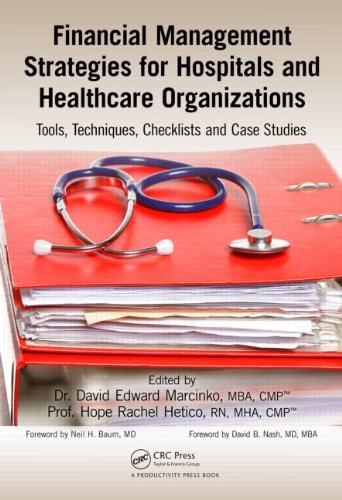
Hospitals and Healthcare Organizations [2 New Print Books]

Join Our Mailing List

ADVERTISEMENT

Healthcare Organization and Hospital Financial Management Strategies

All hospitals and healthcare organizations, both emerging and mature, face a daunting financial scenario in today’s volatile healthcare re-imbursement environment.

Decreasing revenues, increasing costs, and high consumer expectations present a complex challenge for CEOs, CFOs, physicians and nurse executives, administrators, financial advisors and department managers who must not only lead in today’s climate, but also position their organizations for tomorrow’s financial tumult and potential political changes of the Obama Administration and ACA, etc.

A National Team of Contributors

Produced by  economists, administrators – accountants, business leaders, MDs and IT consultants, among others; Hospitals and Healthcare Organizations [Financial Management Strategies] looks at ways to manage assets, costs, human resources and healthcare claims.  Everything – from inventory management to hybrid and activity based cost analysis in order to accelerate the cash conversion cycle – is scrutinized.  And, modern health economic themes like competitive strategy, workplace violence and financial benchmarks, for both public and private entities, are included.

Contemporaneous Health 2.0 Topics

We also examine contemporaneous topics such as the lessons learned from the corporate healthcare market competition and the PPMC imbroglio of the early 2000’s, and the domestic financial meltdown of 2009. This includes current methods for achieving hospital objectives, negotiating and analyzing cost-volume-profit contracts, and understanding the financial impact of regulatory requirements under HIPAA, STARK I-III, OSHA, the US Patriot Acts, the Deficit Reduction Act [DRA], the often contentious Sarbanes-Oxley Act, ARRA and HITECH Acts, and the Fair and Accurate Credit Transactions [FACT] Act. In addition, information technology issues like electronic medical records (eMRs), RFID controls, RSS feeds and blogs, Health 2.0 initiatives and computerized physician order entry (CPOE) systems are examined in detail. Virtually no operational, strategic business, health economics, or financial management topic is omitted.

Assessment

Product DetailsProduct Details

Hospitals and Health Care Organizations [Financial Management Strategies] is dedicated to meeting the administrative needs of our nation’s healthcare organizations in order to help them maintain a competitive edge in the markets they serve; and to take advantage of emerging business opportunities. We therefore invite you to be the first health economics cynosure in your hospital, facility, or healthcare system to join us for the journey.

Channel Surfing the ME-P

Have you visited our other topic channels? Established to facilitate idea exchange and link our community together, the value of these topics is dependent upon your input. Please take a minute to visit. And, to prevent that annoying spam, we ask that you register. It is fast, free and secure.

Conclusion

Your thoughts and comments on this ME-P are appreciated. Feel free to review our top-left column, and top-right sidebar materials, links, URLs and related websites, too. Then, subscribe to the ME-P. It is fast, free and secure.

Speaker: If you need a moderator or speaker for an upcoming event, Dr. David E. Marcinko; MBA – Publisher-in-Chief of the Medical Executive-Post – is available for seminar or speaking engagements. Contact: MarcinkoAdvisors@msn.com

OUR OTHER PRINT BOOKS AND RELATED INFORMATION SOURCES:

Product DetailsProduct DetailsProduct Details

   Product DetailsProduct Details

Life and Death Choices as South Africans Ration Dialysis Care

Dialysis Unit at Tygerberg Academic Hospital – Near Cape

By Sheri Fink, Special to ProPublica Dec. 15, 2010, 3:18 pm

Join Our Mailing List 

Late last August, 41-year-old Amos Phillips arrived by ambulance at Tygerberg Academic Hospital near Cape Town, South Africa. His kidneys had failed. He was confused, struggling to breathe, and desperate enough to ask doctors to end his life.

The same month, a 43-year-old widow with three children was also treated at Tygerberg for kidney failure. The patient, Karen MacPherson, desperately wanted to live. She said she had been plagued by high blood pressure, a risk factor for kidney disease, since her children’s birth. “It’s because of the high blood [pressure] the kidneys don’t want to work anymore,” she said.

Kidney failure can come on suddenly and affect anyone. Some forms are partial or reversible. Others are permanent and fatal without treatment.

To live, both Amos Phillips and Karen MacPherson would need ongoing dialysis treatment to filter toxins from their blood, sustaining them until they received a kidney transplant. But needing treatment didn’t mean they would get it.

Public hospitals in South Africa strictly limit the number of expensive dialysis treatment slots for chronic kidney failure to save money for other pressing health priorities. It falls to the medical staff to do the rationing.

The situation in South Africa is strikingly similar to that of the United Sates in the 1960s, when dialysis first became available. Demand for the procedure was far greater than the supply, and hospital-based committees quietly rationed dialysis—much as they do in South Africa today.

In the United States, committees granted or denied dialysis in large part by judging how much a particular patient’s life was worth. A 1962 article in LIFE magazine exposed the selection process at one Seattle clinic, triggering public outcry. Lawmakers created a program that now entitles almost anyone diagnosed with kidney failure to dialysis treatment under Medicare.

A few kidney doctors have argued publicly that access in the United States has become too broad, including patients who are unlikely to benefit from the expensive therapy. They have called for limits on which types of patients should receive dialysis.

But where to draw the line? The scenes that unfold each week in Cape Town, South Africa, where committees meet to choose dialysis patients, are a reminder of how difficult any selection process can be.

I was granted access to closed dialysis selection committee meetings at the two hospitals that provide public dialysis services to adult kidney patients in the Cape Town Area. It is the first time a reporter has been allowed to attend a committee meeting at Tygerberg and report on the process.

An investigation by ProPublica [1] recently highlighted the high cost of the massive, rapidly expanding kidney disease program in the United States and the poor outcomes experienced by many dialysis patients.

The challenge for the United States is to address systemic flaws and achieve the superior results that patients in other wealthy countries, such as Italy, enjoy. In less-affluent countries like South Africa, the central question is a different one: How can these nations expand access to dialysis—and in the interim bring some modicum of consistency and transparency to the heartbreaking task of rationing lifesaving care.

Global inequities

When it comes to expensive, chronic therapies like dialysis, there is still a stark divide between wealthy nations and much of the rest of the world. In the United States, Western Europe and Japan, there is widespread access to dialysis care, most of it paid for publicly. But in many countries, the vast majority of patients with kidney disease don’t have access to dialysis [2].

In South Africa, only the roughly one out of five patients who have a form of health insurance or the small proportion of patients who can afford pay are able to get dialysis at private clinics or hospitals based on medical need alone. The cost of paying out of pocket—about $20,000 per year— is nearly double the gross domestic product per capita.

The remaining patients rely on an overburdened public health system in which an increasing number of chronic kidney disease patients are denied dialysis.

“Probably in the middle of the last decade we were turning away 50 percent of the patients,” said Dr. Rafique Moosa, a kidney specialist at Tygerberg Hospital and head of the Department of Medicine at the University of Stellenbosch. According to him, as of August they were turning away 80 percent, and in November, only two out of 20 patients were accepted. “We just don’t have the resources to deal with the patients,” Moosa said. But deciding to reject patients for the program can feel like issuing a “death sentence,” he said.

“In a court of law, you have courts of appeal and you have a higher court and all those kinds of processes before the death sentence is eventually applied,” Moosa said. “Here, essentially if we say no, the process is essentially terminated.”

So, the doctors have adopted a firing-squad-like approach to share the responsibility and the burden. “It’s a tough process having to decide who lives and who doesn’t,” Moosa said. “One of the ways of dispersing the guilt and the blame and all the badgering that goes with this is to do it as a group rather than an individual.”

The question of how groups of medical professionals choose who lives is particularly important given South Africa’s history. Tygerberg was built during the apartheid era, when the government mandated racial segregation. The vast hospital has hallways that stretch out east and west, in wings that are mirror images. One side used to treat white patients. The other treated nonwhites.

For decades, a committee at the hospital has decided who gets dialysis treatment. In a recent study of historical data from Tygerberg’s program, Moosa found that patient selection often fell along racial lines. “What we clearly discovered in that initial paper was that black patients were disadvantaged,” he said.

The apartheid era ended with the first multiracial, democratic elections of 1994. However, between 1988 and 2003, Moosa’s study found, white patients were nearly four times more likely to be accepted for dialysis treatment than nonwhites at Tygerberg. (In recent years, the vast majority of white kidney disease patients have shifted to the growing private dialysis sector for care, and their cases are no longer subject to review by Tygerberg’s dialysis selection committee.) During that period, there was little in the way of detailed guidance governing the selection process. That left patients and the public with limited insight into the basis for the committee’s decisions.

Several years ago, the government announced cutbacks that would further squeeze the dialysis program. At the same time, the number of new kidney patients was skyrocketing thanks to a growing rate of diabetes and other risk factors.

Moosa protested the budget cuts and sought to have government officials in charge of his hospital take more public responsibility for rationing.

“We were making these clinical decisions that would have economic benefit to the hospital, and the hospital managers played absolutely no role in this,” he said. “We felt that was blatantly unfair.”

Provincial officials agreed to work with the medical professionals to establish official guidelines [3] for patient selection—essentially a more standardized and explicit rationing system. Ethicists and several patients with kidney disease also provided input.

Participants differed somewhat over the criteria for allotting dialysis treatment—there are no universally accepted methods to ration health care. However, they worked to ensure that the selection guidelines were developed in a just way and that the selection process would be more accountable.

“The main thrust of this was to be fair and equitable and transparent,” Moosa said. The provincial government adopted the new system earlier this year. It calls for the dialysis selection committees at public hospitals to place patients into three prioritization categories based on a variety of medical and social factors.

This was the system that was in place when Amos Phillips and Karen MacPherson, two of the recent patients at Tygerberg, were considered.

The Committee

On a recent Tuesday morning, about a dozen medical professionals, stethoscopes dangling from their necks, gathered in a small conference room at the hospital. The committee meets weekly to decide who will be accepted into the dialysis treatment and transplant program.

The hospital’s longtime social worker for kidney patients, Marietjie Swart, presided. She projected a photo of Amos Phillips onto a large screen.

The image showed a man with closely cropped brown hair lying in his hospital bed.

Phillips’ doctor outlined his medical condition, and then Swart reviewed other aspects of his life that might have a bearing on the committee’s decision. She began with his age and where he lives. “He can read and write,” she added. “He speaks Afrikaans and Xhosa, as well.”

Phillips “never smoked, never used any drugs,” Swart continued. “He only drank over weekends with his wife, but they would only buy about four bottles, 750 ml, between the two of them.” Phillips was, Swart said, “not a party animal.”

That was a point in his favor. Under the guidelines, active substance abuse automatically excludes a patient from receiving dialysis.

Swart also discussed Phillips’ living conditions. “It’s a one-bedroom house, with a lounge, kitchen and a bathroom,” she said. The bathroom had a tub, sink and a toilet.

The guidelines call these “good home circumstances,” and they, too, improved Phillips’ chances of being chosen for dialysis. Running water, sanitation and electricity are important for performing a form of dialysis safely at home. However, these criteria can disadvantage the poorest South Africans, who often lack such utilities.

Swart offered more personal details. “He is employed on a farm,” she said. “His income is more or less 1,200-1,500 rand ($175-$220) a month.” He had “no criminal record” and was married to a 33-year-old woman. “They’ve got three children of 13, 9, and 4 years old, all three living with them.”

These factors—criminal and employment history, whether the patient is a parent—have little to do with the chances of benefiting medically from dialysis. They are, instead, measures of social worth.

Dr. Moosa said the committee used to weigh these factors heavily when considering patients for dialysis. “I suppose we used a utilitarian approach,” he said. “The question that we used to ask ourselves—you know, if we put this patient onto our program, of what benefit can he be to the society?”

According to the new guidelines, those factors are no longer considered. The ethicists who helped draw up the guidelines argued that medical practitioners should not judge which patients are the worthiest contributors to society.

Judgments are often wrong. For example, former prisoners might have been falsely convicted, especially during the apartheid years. Patients who lack their own children might be helping to raise others.

Most important, the ethicists said, are medical criteria. Is the patient healthy enough to undergo a kidney transplant? If so, he or she might someday no longer need dialysis, and that would free up a slot for a new patient.

The problem is, few actually are able to get transplants. There are far more good medical candidates than there are dialysis slots. Therefore, the committee falls back on subjective criteria—does the patient seem motivated? Does he or she have a good social support network?

The committee still discusses some social factors that are no longer included in the government-approved priority setting guidelines Moosa helped to develop for the province. For example, the checklist still used by the committee penalizes those who’ve been convicted of serious crimes and requires gainful employment for a patient to be accepted into “Category One,” the only category of patients guaranteed access to the dialysis program. Both of these “social worth” factors are missing from the new guidelines.

Moosa said in an interview that he had not had time to update the checklist tool to conform with the new guidelines, but that those factors are mentioned at committee meetings “more out of habit” and are “not something we pay a lot of attention to anymore.”

The assessment committee weighed the factors in Amos Phillips’ case, deciding whether he should be ranked “Category One” and guaranteed dialysis.

“I think he would almost be a Category One patient if it wasn’t for his late presentation,” Moosa said to his colleagues at the committee meeting.

By “late presentation,” Moosa meant that Phillips had arrived at the hospital after his kidneys had already failed. He needed to be put on life support, with a breathing tube and emergency dialysis, until he was stabilized. That bumped him to Category Two—not guaranteed a spot in the chronic dialysis program.

The Case for Karen MacPherson

The same day, the committee members also talked about Karen MacPherson, the widowed mother of three.

Her picture was projected on the screen. Her wide eyes peered at the camera through large plastic glasses. Dr. Yazid Chothia described her medical and social situation.

“She’s the only breadwinner,” he said, and she had been raising several children. Now other family members were caring for her. “Yesterday they brought her in here because she was nauseous, vomiting,” Chothia said. “It sounds like the family is struggling in terms of taking care of her.”

MacPherson’s case had come to the committee before. She had many characteristics that counted in her favor.

She was well below age 60, the cutoff for initiating dialysis under the government-approved guidelines used at the hospital. She didn’t have any other serious medical or psychiatric disorder, which could disqualify her. She had a home near the hospital with running water and electricity.

Before the new guidelines were adopted, the selection committee might have given great consideration to the fact that she was a mother with a steady job and no criminal history. But the committee had recently turned her down.

“We didn’t accept her for the program?” Moosa asked his colleagues. He had been on vacation when the case had come up before.

“It was mainly based on her BMI, prof,” Chothia said. “Her BMI was 39.”

BMI is body mass index. MacPherson’s was high. She was obese.

Although obese patients do better than average on dialysis, they have a poorer prognosis when it comes to a kidney transplant. That, according to the new rationing guidelines, takes precedence.

Moosa accepted the committee’s previous decision. MacPherson had been assigned to Category Three—automatically excluded from dialysis treatment. She was already very sick.

“It probably won’t be for very much longer,” Moosa said. “Shame.”

The committee members took some steps to help her. They agreed to provide a letter that could be used to relieve a debt. They also referred her to Eagle’s Rest, an inpatient hospice located on the grounds of an evangelical church.

Grasping for Hope

The next day, MacPherson lay in bed at the hospice beneath a pink blanket. She trembled when she sat up. She was too nauseated to keep down her food.

Her father came to visit, and she asked him about her prognosis. “Did the doctor tell you how much longer I’ve got to live?”

“You’re going to live long enough,” her father, Richard MacPherson, answered. “Don’t you worry about that. You just get well. That’s all.” He smiled at her. “There’s no limitation. The doctor can’t say that.”

With her family’s support and the nurses’ prayers, Karen MacPherson tried to stay hopeful.

“I want to get better, I want to get out of here, get my life back on track—get back to my kids,” she said. “My daughter needs me.”

As she spoke, she seemed unaware that she had been turned down for dialysis, or even that dialysis could help her. Her doctor later confirmed that he didn’t tell Karen MacPherson about the program, although he said he informed her father.

According to the prioritization guidelines, patients or their family membersare supposed to be fully informed of the committee’s decision and the reasons for denial and given the opportunity to appeal.

“It’s an ethical obligation to actually communicate openly, truthfully, and sincerely with one’s patients,” said Dr. Keymanthrie Moodley, a bioethics professor at Tygerberg and Stellenbosch University. Moodley said this can prevent the misconception that a patient was rejected for reasons of race or socioeconomic status. “To create a healthier society from both a physical and a mental and psychological perspective, an open line of communication is absolutely critical.”

Dr. Moosa said the guidelines require informing patients or their family members however challenging that may be.

“The reality is that it’s very difficult to go to a patient and inform them, well look, there is this particular form of therapy which is available to you which will help you live another reasonably healthy life for another five to 10 years, and then in the same breath say, well, unfortunately I can’t offer it to you,” he said. “I think it’s actually cruel to dangle that almost as a carrot in front of the patient.”

Pushing the Boundaries

South African physicians are looking to expand public dialysis programs by partnering with private clinics, campaigning for more funding and trying to cut costs. Still, any such plans will come too late for today’s kidney patients. Tygerberg Hospital has no free slots for dialysis.

Sometimes, however, room is made for exceptions.

Several months ago, one of the patients who had received a kidney transplant at Tygerberg in the mid-1990s experienced rejection of her organ and developed kidney failure again. She was brought before the committee to be reconsidered for dialysis. She was now 59 years old and experiencing heart failure­—no longer a candidate for kidney transplant under the guidelines, and therefore no longer a candidate for dialysis at the public hospital.

“If you look at the criteria, she should not be [accepted to] our program,” Swart said. But the woman had provided many years of service to the hospital’s patient-support group overseen by Swart. By this point, the woman had secured private health coverage, known as “medical aid,” but she wanted to continue being treated at Tygerberg, which no longer accepts such patients.

“I just said, ‘Guys, there’s no way that you’re going to turn down this lady,’ ” Swart recalled. “ ‘She’s my left and my right hand.’ ” The committee approved her, and she currently performs dialysis at home that is overseen by the clinic at Tygerberg. “She’s just a very, very special case,” Swart said.

She is not the only one for whom extraordinary efforts have been made.

The day after the recent committee meeting, Dr. André Nortje went to the bedside of kidney patient Amos Phillips. “Mr. Phillips, we discussed you yesterday in our meeting,” Nortje informed him.

The committee had classified Phillips as a Category Two patient— eligible for dialysis only “provided resources allow.”

The program was full, but Phillips was borderline. The committee members thought he had a good chance of benefitting from dialysis, and they hate turning anyone away. They had accepted him for dialysis.

“We decided at our meeting yesterday morning that we will support you in terms of that,” Nortje said. “What I mean by that is that we will offer you, in future, a kidney transplant.”

Phillips looked up at the doctor from his hospital bed. “Yes. I understand.”

“You understand?” Nortje asked.

“I understand and am very happy.”

Phillips began receiving regular dialysis and soon returned home to his family.

Karen MacPherson was buried two weeks after the committee meeting—on what would have been her 44th birthday.

Conclusion

Your thoughts and comments on this ME-P are appreciated. Feel free to review our top-left column, and top-right sidebar materials, links, URLs and related websites, too. Then, subscribe to the ME-P. It is fast, free and secure.

Speaker: If you need a moderator or speaker for an upcoming event, Dr. David E. Marcinko; MBA – Publisher-in-Chief of the Medical Executive-Post – is available for seminar or speaking engagements. Contact: MarcinkoAdvisors@msn.com

OUR OTHER PRINT BOOKS AND RELATED INFORMATION SOURCES:

Product DetailsProduct DetailsProduct Details

Product Details  Product Details

   Product Details 

ME-P Recommends the “Health Dictionary Series”

Product DetailsProduct DetailsProduct Details       

   ADVERTISEMENT 

Is Medicine Still a Sovereign Profession? [A Voting Opinion Poll]

The Social Transformation of American Medicine

By Dr. David Edward Marcinko MBA CMP™

Historical Review, Book Excerpts and ME-P Survey for Modernity

Join Our Mailing List 

The Social Transformation of American Medicine [The rise of a sovereign profession and the making of a vast industry].

This classic book was written by Paul Starr in 1984. I first read it while in business school back in 1994-96. Here is an excerpt from pages 227 and 232. It is even more relevant for the healthcare industrial complex today.

Quoting Kenneth Arrow PhD

The structural features Arrow[*] discusses have a history. He writes that when the market fails, “society” will make adjustments. […] But, modern day economists like Austin Frakt PhD and others, have to ask: For whom did the market fail, and how did “society” make these adjustments?

Of Failed Markets

The competitive market was failing no one more than the medical profession, and it was the profession that organized to change it. […]. By the 1920s, the medical profession had successfully resolved the most difficult problems confronting it as late as 1900. It had […] won stronger licensing laws; turned hospitals, drug manufacturers and public health from threats to its position into bulwarks of support; and checked the entry into health services of corporations and mutual societies. It has succeeded in controlling the development of technology, organizational forms, and the division of labor. In short, it had helped shape the medical system so that its structure supported professional sovereignty instead of undermining it.

Master over Diseases

Over the next few decades, the advent of antibiotics and other advances gave physicians increased mastery of disease and confirmed confidence in their judgment and skill. The chief threat to the sovereignty of the profession was the result of this success. So valuable did medical care appear that to withhold it seemed deeply unjust. Yet as the felt need for medical care rose, so did its cost, beyond what many families could afford. Some agency to spread the cost was unavoidable. It would have to be a third party, and yet this was exactly what physicians feared. The struggle of the profession to maintain its autonomy then became a campaign of resistance not only to programs of reform but also to the very expectations and hopes that the progress of medicine was constantly arousing. To continue to escape the corporation and the state meant preserving a system that was at war with itself.

Notes: Arrow, Kenneth J. “Uncertainty and the Welfare Economics of Medical Care.” American Economic Review 53 (December 1963), pp. 941–73. Dr. Arrow is my favorite health economist and indeed father of the profession*.

Link: 1963Arrow_AER

The Opinion Poll [Please Vote]

Conclusion

And so, your thoughts and comments on this ME-P are appreciated. Is Medicine Still a Sovereign Profession? Feel free to review our top-left column, and top-right sidebar materials, links, URLs and related websites, too. Then, subscribe to the ME-P. It is fast, free and secure.

Speaker: If you need a moderator or speaker for an upcoming event, Dr. David E. Marcinko; MBA – Publisher-in-Chief of the Medical Executive-Post – is available for seminar or speaking engagements. Contact: MarcinkoAdvisors@msn.com and http://www.springerpub.com/Search/marcinko

Get our Widget: Get this widget!

Our Other Print Books and Related Information Sources:

Health Dictionary Series: http://www.springerpub.com/Search/marcinko 

Practice Management: http://www.springerpub.com/product/9780826105752

Physician Financial Planning: http://www.jbpub.com/catalog/0763745790

Medical Risk Management: http://www.jbpub.com/catalog/9780763733421

Healthcare Organizations: www.HealthcareFinancials.com

Physician Advisors: www.CertifiedMedicalPlanner.com

Subscribe Now: Did you like this Medical Executive-Post, or find it helpful, interesting and informative? Want to get the latest ME-Ps delivered to your email box each morning? Just subscribe using the link below. You can unsubscribe at any time. Security is assured.

Link: http://feeds.feedburner.com/HealthcareFinancialsthePostForcxos

Sponsors Welcomed: And, credible sponsors and like-minded advertisers are always welcomed.

Link: https://healthcarefinancials.wordpress.com/2007/11/11/advertise

Product DetailsProduct DetailsProduct Details       

Product Details  Product Details

   Product Details 

On Physicians’ Responses to Payment Changes‏

Expect the Unexpected?

By Nancy Chockley, PhD
President & CEO
National Institute for Health Care Management

Join Our Mailing List 

Across the Blogosphere – Expert Voices

Reducing unit prices is one possible weapon in the battle to stem rising health care spending, but this approach can have unintended consequences if utilization increases by more than prices have fallen.

Current Essay on Medicare Drug Payment Reductions

In his essay, Dr. Jacobson and Dr. Newhouse present findings from their recent research on how physicians have responded to reductions in Medicare payments for chemotherapy drugs. Their work documents an increase in chemotherapy use rates and a switch from the drugs whose reimbursement declined to a drug that offered a higher profit for physicians. These findings serve as a reminder to policymakers that unanticipated behavioral responses can undermine their ability to achieve savings simply through fee reductions.

Assessment

I hope you enjoy reading the essay and others on the NIHCM website.

http://www.nihcm.org/pdf/EV-JacobsonNewhouseFINAL.pdf

Contact Information:

phone:202-296-4426
email: nihcm@nihcm.org
website: www.nihcm.org

Conclusion

And so, your thoughts and comments on this ME-P are appreciated. Feel free to review our top-left column, and top-right sidebar materials, links, URLs and related websites, too. Then, subscribe to the ME-P. It is fast, free and secure.

Speaker: If you need a moderator or speaker for an upcoming event, Dr. David E. Marcinko; MBA – Publisher-in-Chief of the Medical Executive-Post – is available for seminar or speaking engagements. Contact: MarcinkoAdvisors@msn.com and http://www.springerpub.com/Search/marcinko

Get our Widget: Get this widget!

Our Other Print Books and Related Information Sources:

Health Dictionary Series: http://www.springerpub.com/Search/marcinko

Practice Management: http://www.springerpub.com/product/9780826105752

Physician Financial Planning: http://www.jbpub.com/catalog/0763745790

Medical Risk Management: http://www.jbpub.com/catalog/9780763733421

Healthcare Organizations: www.HealthcareFinancials.com

Physician Advisors: www.CertifiedMedicalPlanner.com

Subscribe Now: Did you like this Medical Executive-Post, or find it helpful, interesting and informative? Want to get the latest ME-Ps delivered to your email box each morning? Just subscribe using the link below. You can unsubscribe at any time. Security is assured.

Link: http://feeds.feedburner.com/HealthcareFinancialsthePostForcxos

Sponsors Welcomed:  And, credible sponsors and like-minded advertisers are always welcomed.

Link: https://healthcarefinancials.wordpress.com/2007/11/11/advertise

Product DetailsProduct DetailsProduct Details       

Product Details  Product Details

   Product Details 

A Brief History of the ME-P

Enhancing Health 2.0 Connectivity for Physicians and their Financial Advisors

By Staff Reporters

Join Our Mailing List 

The Medical Executive-Post [ME-P] was launched in 2006, and was a resounding success. We first went online in October 2006 with an overwhelmingly positive response. Readers and subscribers alike reported finding it a credible source of information with more than half saying the information was far new to them. Our parent company remains: www.MedicalBusinessAdvisors.com

Our Research

In additional, our internal research revealed:

  • 85% of those surveyed considered practice-related, non-clinical information very important to them.
  • 82% heavily favored solutions and essays to specific needs versus general editorial content.
  • 77% found practice management information integrated with financial planning content very unique.
  • 68% felt a journal or newspaper presentation as increasingly irrelevant.

Physician and Financial Advisory Books Launched Since Inception

Product DetailsProduct DetailsProduct Details       

Product Details  Product Details

   Product Details 

Healthcare Organizations Financial Journal: www.HealthcareFinancials.com

Medical Practice Management CD-ROMs

Personal Financial and Medical Management Consulting Services

Link: https://medicalexecutivepost.com/schedule-a-consultation/

Certification Education for Financial Advisors and Management Consultants

Link: www.CertifiedMedicalPlanner.com

More about Us

Link: https://medicalexecutivepost.com/2007/10/08/hello-world/

Advertise with Us

Link: https://medicalexecutivepost.com/2007/11/11/advertise/

Sponsor Us                                             

Link: https://healthcarefinancials.wordpress.com/2007/11/11/advertise

Speaker: If you need a moderator or speaker for an upcoming event, Dr. David E. Marcinko; MBA – Publisher-in-Chief of the Medical Executive-Post – is available for seminar or speaking engagements. Contact: MarcinkoAdvisors@msn.com and http://www.springerpub.com/Search/marcinko

Get our Widget: Get this widget!

Our Other Print Books and Related Information Sources:

Health Dictionary Series: http://www.springerpub.com/Search/marcinko

Practice Management: http://www.springerpub.com/product/9780826105752

Physician Financial Planning: http://www.jbpub.com/catalog/0763745790

Medical Risk Management: http://www.jbpub.com/catalog/9780763733421

Healthcare Organizations: www.HealthcareFinancials.com

Physician Advisors: www.CertifiedMedicalPlanner.com

Subscribe Now: Did you like this Medical Executive-Post, or find it helpful, interesting and informative? Want to get the latest ME-Ps delivered to your email box each morning? Just subscribe using the link below. You can unsubscribe at any time. Security is assured.

Link: http://feeds.feedburner.com/HealthcareFinancialsthePostForcxos

A Funny [Poignant] Video about Health Insurance

What Exactly Do Patients Know and Understand?

By Staff Reporters

Join Our Mailing List 

This video illustrates the current state-of-the-art regarding patient understanding of health insurance reimbursement and physician income. But, should it be played in all doctors offices’ and waiting rooms?

Title

It is titled: “What the public does not know about doctors and insurance.”

Link: http://www.youtube.com/watch?v=Y00kxCn7m0s

Assessment

The movie was made and uploaded with Xtranormal’s State. To make your own movie just visit: http://xtranormal.com

Source: Dr. Jon Purdy

Conclusion

And so, your thoughts and comments on this ME-P are appreciated. Feel free to review our top-left column, and top-right sidebar materials, links, URLs and related websites, too. Then, subscribe to the ME-P. It is fast, free and secure.

Speaker: If you need a moderator or speaker for an upcoming event, Dr. David E. Marcinko; MBA – Publisher-in-Chief of the Medical Executive-Post – is available for seminar or speaking engagements. Contact: MarcinkoAdvisors@msn.com and http://www.springerpub.com/Search/marcinko

Get our Widget: Get this widget!

Our Other Print Books and Related Information Sources:

Health Dictionary Series: http://www.springerpub.com/Search/marcinko

Practice Management: http://www.springerpub.com/product/9780826105752

Physician Financial Planning: http://www.jbpub.com/catalog/0763745790

Medical Risk Management: http://www.jbpub.com/catalog/9780763733421

Healthcare Organizations: www.HealthcareFinancials.com

Physician Advisors: www.CertifiedMedicalPlanner.com

Subscribe Now: Did you like this Medical Executive-Post, or find it helpful, interesting and informative? Want to get the latest ME-Ps delivered to your email box each morning? Just subscribe using the link below. You can unsubscribe at any time. Security is assured.

Link: http://feeds.feedburner.com/HealthcareFinancialsthePostForcxos

Sponsors WelcomedAnd, credible sponsors and like-minded advertisers are always welcomed.

Link: https://healthcarefinancials.wordpress.com/2007/11/11/advertise

Product DetailsProduct DetailsProduct Details       

Product Details  Product Details

   Product Details 

Useful Managed Care Provider, Staffing, Activity and Financial Trends

Part Two

By Dr. David Edward Marcinko MBA

[Publisher-in-Chief]

Dr. DEMIf you read this ME-P regularly or have read my earlier blogs, you know that I am writing a book on practice management for the private medical practitioner.

The Business of Medical Practice [Transformational Health 2.0 Skills for Doctors]; third edition: www.BusinessofMedicalPractice.com

Link: Front Matter BoMP – 3

A recent story in the Chicago Tribune on the difficult business life of private practitioners today reminds me that I need to keep my nose to the grindstone.

For example, according to the sanofi-aventis Pharmaceutical Company Managed Care Digest Series, for 2008-10, the following patterns and comparative trend information has been empirically determined and may provide a basic starting point for medical practitioners to share business management, facilities, personnel, and records information for enhanced success www.managedcaredigest.com

Mid-Level Provider and Staffing Trends

  • Mid-level provider use increased among multi-specialty groups, especially in those with more than half of their revenue from capitated contracts. Use also rose with the size of the practice and was highest with OB/GYN groups.
  • Medical support staff for all multi-specialty groups fell and was lowest in medical groups with less than 10 full-time equivalent (FTE) physicians. However, groups with a large amount of capitated revenue actually added support staff. Smaller groups limited support staff.
  • Compensation costs of support staff increased and the percentages of total operating costs associated with laboratories, professional liability insurance, IT services, and imaging also increased. Support staff costs increase with capitation levels and more than half of all operating costs are tied to support staff endeavors.

Managed Care Activity and Contracting Trends

  • More medical group practices are likely to own interests in preferred provider organizations (PPOs) than in HMOs and the percentages of groups with managed care revenue continues to rise. Multi-specialty and large groups also derive more revenue from MCOs than single specialty or smaller groups.
  • Managed care has little effect on physician payment methods that are still predominantly based on productivity. Physicians were paid differently for at-risk managed care contracts in only a small percentage of cases.
  • Most medical groups (75%) participating in managed care medicine have PPO contracts. Group practices contract with network HMOs more often than solo practices. Single-specialty groups more often have PPO contracts.
  • Capitated lives often raise capitation revenues in large group practices. Group practices are more highly capitated than smaller groups or solo practices. Almost 30% of highly capitated medical groups have more than 15 contracts and 22% have globally capitated contracts.
  • Higher capitation is linked with increased risk contracting. Larger groups have more risk contracting than smaller groups.

Physician Health

Financial Profile Trends

  • Medicare fee-for-service reimbursement is decreasing. Highly capitated groups incur high consulting fees.
  • The share of total gross charges for OB/GYN groups associated with managed care at-risk contracts is rising while non-managed care, or not-at-risk charges are declining.
  • Capitated contracts have little effect on the amount of on-site office non-surgical work. Off-site surgeries are most common for surgery groups, not medical groups.
  • Half of all charges are for on-site non-surgical procedures.
  • Highly capitated medical groups have higher operating costs and lower net profits.
  • Groups without capitation have higher laboratory expenses than those who do.
  • Physician costs are highest in orthopedic surgery group practices. Generally, median costs at most specialty levels are rising and profits shrinking.

Assessment

Obviously, the above information is only a gauge since regional differences, and certain medical sub-specialty practices and carve-outs, do exist.

Part One: Useful Managed Care Patterns and Procedural Utilization Trends

Conclusion

Your thoughts and comments on this ME-P are appreciated. Feel free to review our top-left column, and top-right sidebar materials, links, URLs and related websites, too. Then, subscribe to the ME-P. It is fast, free and secure.

Speaker: If you need a moderator or speaker for an upcoming event, Dr. David E. Marcinko; MBA – Publisher-in-Chief of the Medical Executive-Post – is available for seminar or speaking engagements. Contact: MarcinkoAdvisors@msn.com

OUR OTHER PRINT BOOKS AND RELATED INFORMATION SOURCES:

Product DetailsProduct DetailsProduct Details

Product Details  Product Details

   Product Details 

Useful Managed Care Patterns and Procedural Utilization Trends

Join Our Mailing List

Part One of Two

By Dr. David Edward Marcinko MBA

[Publisher-in-Chief]

If you read this ME-P regularly or have read my earlier blogs, you know that I am writing a book on practice management for the private medical practitioner.

The Business of Medical Practice [Transformational Health 2.0 Skills for Doctors]; third edition: www.BusinessofMedicalPractice.com

Link: Front Matter BoMP – 3

And, a recent story in the Chicago Tribune on the difficult business life of private practitioners today reminds me that I need to keep my nose to the grindstone.

For example, knowing your medical contract negotiation objectives, gathering information on the choices of contracts and discount payment systems, and understanding the pitfalls to watch for when evaluating a contract are the keys to any successful negotiation process.

Reimbursement Contract Negotiations

According to the sanofi-aventis Pharmaceutical Company Managed Care Digest Series, for 2008-10, the following pattern and trend comparative information has been empirically determined and may provide a basic starting point for practitioners to share business management, facilities, personnel, and other records for enhanced contract negotiation success.

www.managedcaredigest.com

hos

Procedural Utilization Trends

  • Among all physicians in a single-specialty group practice, invasive cardiologists averaged the most encounters with total hospital inpatient admissions down from the prior year. However, encounters rose for cardiologists in multispeciality group practices.
  • Echocardiography was the most commonly performed procedure on HMO seniors, followed by coronary artery bypass graft surgery. Group practices performed cardiovascular stress tests for circulatory problems most often.
  • CT studies of the brain and chest were the most common studies for HMO seniors, while MRI head studies were the most common diagnostic test on commercial HMO members.
  • Colonoscopy was the most common digestive system procedure on senior HMO members, while barium enemas were more common on commercial members.
  • Hospital admission volume decreased for allergists, family practitioners, internists, OB/GYNs, pediatricians, and general surgeons.
  • Internists ordered more in-hospital laboratory procedures than any other physicians in single-specialty groups.
  • Non-hospital MD/DOs used in-hospital radiology services most frequently, continuing a three-year upward trend.
  • Pediatricians averaged the most ambulatory encounters, down from the prior year.
  • Non-hospitalist internists ordered a higher number of in-hospital laboratory procedures than any other single medical specialty group, but allergists and immunologists increased their laboratory usage.
  • The number of ambulatory encounters increased for general surgeons, while group surgeons had the most cases. Capitated surgeons, of all types, had a lower mean number of surgical cases than surgeons in groups without capitation. Surgeons in internal medical groups also had more cases than those in multi-specialty groups.
  • The average number of total office visits per commercial and senior HMO visits fell, along with the number of institutional visits for both commercial and senior HMO members.
  • The average length of hospital stay for all commercial HMO members increased to 3.6 days but decreased to 6 days for all HMO members.
  • The total number of births increased for commercial HMO members served by medical group practices, and decreased for solo practitioners.
  • More than one-third of all medical groups use treatment protocols, rising from the year before. Multi-specialty groups were more likely to use them than single-specialty groups, who often develop their own protocols. The use of industry benchmarks to judge the quality of healthcare delivery also increased.
  • Outcome studies are most common at larger medical groups, and multi-specialty groups pursue quality assurance activities more often than single-specialty groups.
  • Provider interaction during office visits is increasingly coming under scrutiny. Patients approve of cardiologists more frequently than allergists and ophthalmologists.

Assessment

Obviously, the above information is only a gauge since regional differences, and certain medical sub-specialty practices and carve-outs, do exist.

Part Two: Useful Managed Care Provider, Staffing, Activity and Financial Trends

Conclusion

Your thoughts and comments on this ME-P are appreciated. Feel free to review our top-left column, and top-right sidebar materials, links, URLs and related websites, too. Then, subscribe to the ME-P. It is fast, free and secure.

Speaker: If you need a moderator or speaker for an upcoming event, Dr. David E. Marcinko; MBA – Publisher-in-Chief of the Medical Executive-Post – is available for seminar or speaking engagements. Contact: MarcinkoAdvisors@msn.com

OUR OTHER PRINT BOOKS AND RELATED INFORMATION SOURCES:

Product DetailsProduct DetailsProduct Details

Product Details  Product Details

   Product Details 

Higher Spending on Healthcare Doesn’t Always Deliver Quality

Join Our Mailing List

Law of Diminishing Returns

[By Staff Reporters] 

Health plans that spend the most on care don’t always deliver the best quality, concludes a new report from the National Committee for Quality Assurance (NCQA).

The Costly Chronic Illnesses

Insurers said they spend most on five costly, common chronic illnesses–asthma, cardiovascular disease, chronic obstructive pulmonary disease, diabetes and hypertension.

However, there was a high degree of variation among plans and no clear correlation between resource use and quality.

Quality Medial Management

Assessment

Sources:

http://www.fiercehealthpayer.com/story/insurers-high-spending-care-doesnt-always-deliver-quality/2010-10-15?utm_medium=nl&utm_source=internal

http://theincidentaleconomist.com/wordpress/how-do-we-rate-the-quality-of-the-us-health-care-system-%e2%80%93-infrastructure/?utm_source=feedburner&utm_medium=email&utm_campaign=Feed%3A+TheIncidentalEconomist+%28The+Incidental+Economist+%28Posts%29%29

Is this like the domestic public education system, or a modification of the Laffer Curve in economics?

Conclusion

Your thoughts and comments on this ME-P are appreciated. Feel free to review our top-left column, and top-right sidebar materials, links, URLs and related websites, too. Then, subscribe to the ME-P. It is fast, free and secure.

Speaker: If you need a moderator or speaker for an upcoming event, Dr. David E. Marcinko; MBA – Publisher-in-Chief of the Medical Executive-Post – is available for seminar or speaking engagements. Contact: MarcinkoAdvisors@msn.com

OUR OTHER PRINT BOOKS AND RELATED INFORMATION SOURCES:

Product DetailsProduct DetailsProduct Details

Product Details  Product Details

   Product Details 

The Effects of Healthcare Reform Legislation on Physician Compensation

Is a Future Look Predicated on the Past?

By Dr. Brian J. Knabe; CFP® CMP™

By Dr. David Edward Marcinko; MBA CMP™

By Prof. Hope Rachel Hetico; RN, MHA CPHQ CMP™

www.BusinessofMedicalPractice.com

With the passage of healthcare reform legislation, officially known as the Patient Protection and Affordable Care Act of 2010, many questions remain regarding its effect upon physicians’ livelihood.

Undoubtedly this bill moves the healthcare system several steps closer to a socialized model, but the effects on physicians’ salaries and compensation models are far from clear.

Other Countries

One way to see the effect that this shift may have on compensation is to look to other countries, many of which already have a more socialized system in place.

According to the CRS Report for Congress, US Health Care Spending:  Comparison with Other OECD Countries http://assets.opencrs.com/rpts/RL34175_20070917.pdf) US specialists rank near the top in compensation compared to these other countries, trailing the Netherlands and Australia.  The average specialist in the US made $230,000 in this survey.  The comparable salary in Canada is $161,000, $150,000 in the UK, and $253,000 in the Netherlands.  Generalists in the US are at the top in terms of compensation with an average of $161,000.  This compares to $107,000 in Canada, $118,000 in the UK, and $117,000 in the Netherlands.

Inflation Adjustments

Another indicator of physician salary trends is the change in compensation adjusted for inflation.  According to the American Medical Association, the inflation-adjusted income for the average patient care physician declined from $180,930 to $168,122 from 1995 to 2003, a 7% decrease. And, the inflation adjusted decrease is more substantial given the low interest rate environment thru 2010, and going forward.

Physician Net Income Chart

  Average net income
  1995 2003 Decrease
All patient care physicians $180,930 $168,122 7%
Primary care physicians $135,036 $121,262 10%
Medical specialists $178,840 $175,011 2%
Surgical specialists $245,162 $224,998 8%

Source: http://www.ama-assn.org/amednews/site/free/prsc0724.htm

Given these trends, as well as the fact that an increasing percentage of healthcare payments are coming from dwindling government sources, it is likely that physician salaries will decline as “healthcare reform” legislation is implemented.  In fact, it is likely that this trend will accelerate.  A 15% to 25% inflation-adjusted decline in salaries over the next decade is a reasonable prediction.

Assessment

It is also important to note that the level of student debt in the US continues to rise, while college and medical education are usually subsidized in other countries.  Many foreign physicians graduate with no student loan debt.  The ratio of debt level to salary in the US continues to become more onerous for new physicians.

Conclusion

Your thoughts and comments on this ME-P are appreciated. Feel free to review our top-left column, and top-right sidebar materials, links, URLs and related websites, too. Then, subscribe to the ME-P. It is fast, free and secure.

Link: http://feeds.feedburner.com/HealthcareFinancialsthePostForcxos

Speaker: If you need a moderator or speaker for an upcoming event, Dr. David E. Marcinko; MBA – Publisher-in-Chief of the Medical Executive-Post – is available for seminar or speaking engagements. Contact: MarcinkoAdvisors@msn.com

OUR OTHER PRINT BOOKS AND RELATED INFORMATION SOURCES:

Product Details  Product Details

About HealthCareTownHall.com

Informed Healthcare Reform Dialogue

By Staff Reporters

Join Our Mailing List 

Milliman is the host of this blog to encourage an informed dialogue about healthcare reform.

Complications

Healthcare is complicated, and there is no single, silver-bullet answer to the question of “How do we best improve the current system?”  

Assessment

But, thoughtful discussions will help move reform in the right direction and mend the fractured system; especially in terms of entitlements, costs and spending, etc.

  Conclusion

And so, your thoughts and comments on this ME-P are appreciated. Visit www.HealthCareTownHall.com and tell us what you think? Feel free to review our top-left column, and top-right sidebar materials, links, URLs and related websites, too. Then, subscribe to the ME-P. It is fast, free and secure.

Speaker: If you need a moderator or speaker for an upcoming event, Dr. David E. Marcinko; MBA – Publisher-in-Chief of the Medical Executive-Post – is available for seminar or speaking engagements. Contact: MarcinkoAdvisors@msn.com and http://www.springerpub.com/Search/marcinko

Get our Widget: Get this widget!

Subscribe Now: Did you like this Medical Executive-Post, or find it helpful, interesting and informative? Want to get the latest ME-Ps delivered to your email box each morning? Just subscribe using the link below. You can unsubscribe at any time. Security is assured.

Link: http://feeds.feedburner.com/HealthcareFinancialsthePostForcxos

Sponsors Welcomed: And, credible sponsors and like-minded advertisers are always welcomed.

Link: https://healthcarefinancials.wordpress.com/2007/11/11/advertise

Dental Compensation Different than Docs

On Medical Professional Salaries

Staff Reporters

www.BusinessofMedicalPractice.com

A 2003 Survey of Dental Practices reported net income from dentistry-related sources.

Dentists Differ from Doctors

Dentists differ from physicians in that 90% are in private practice. In 2002, the average practitioner’s net income was $174,350. The average dental specialist’s net was $291,250. These figures represent a 0.7% and a 5.8% increase over 2001, respectively.

Assessment

Net income rose steadily since 1986, when general dentists made an average of $69,920 and specialists an average of $97,920. But, by 2010, according to PayScale.com, the average general dentist earned $98,276 – $157,437; a decreasing trend allocated as follows.

Compensation Chart 

Salary  $92,689 – $147,682
Bonus  $1,996 – $19,727
Profit Sharing  $1,038 – $27,514
Commissions  $480.74 – $32,500

Conclusion

And so, your thoughts and comments on this ME-P are appreciated. Feel free to review our top-left column, and top-right sidebar materials, links, URLs and related websites, too. Then, subscribe to the ME-P. It is fast, free and secure.

Speaker: If you need a moderator or speaker for an upcoming event, Dr. David E. Marcinko; MBA – Publisher-in-Chief of the Medical Executive-Post – is available for seminar or speaking engagements. Contact: MarcinkoAdvisors@msn.com

Get our Widget: Get this widget!

Our Other Print Books and Related Information Sources:

Practice Management: http://www.springerpub.com/prod.aspx?prod_id=23759

Physician Financial Planning: http://www.jbpub.com/catalog/0763745790

Medical Risk Management: http://www.jbpub.com/catalog/9780763733421

Healthcare Organizations: www.HealthcareFinancials.com

Physician Advisors: www.CertifiedMedicalPlanner.com

Subscribe Now: Did you like this Medical Executive-Post, or find it helpful, interesting and informative? Want to get the latest ME-Ps delivered to your email box each morning? Just subscribe using the link below. You can unsubscribe at any time. Security is assured.

Link: http://feeds.feedburner.com/HealthcareFinancialsthePostForcxos

Sponsors Welcomed

And, credible sponsors and like-minded advertisers are always welcomed.

Link: https://healthcarefinancials.wordpress.com/2007/11/11/advertise

Product DetailsProduct DetailsProduct Details       

Product Details  Product Details

   Product Details 

Health Plan Management Navigator

Mid-September 2010 Edition

By Douglas B. Sherlock, CFA

Join Our Mailing List 

In this edition of Plan Management Navigator, we summarize on the results of selected TPAs. Administrative expenses for core services of selected TPAs were 84% of fees in 2009. This was $11.56 per employee per month (PEPM) or $6.06 per member per month (PMPM). Core Medical product costs were $25.28 PEPM and $11.56 PMPM.

Elite Performers

While the universe of participants was small, at 5 TPAs, the surveyed TPAs may be elite performers. Function-by-function, these TPAs had lower costs than are typically found in competitive products of Blue Cross Blue Shield and Independent/ Provider-Sponsored plans.  They are also typically among the largest 20% of TPAs. Finally, they have accounting systems sufficiently robust to report with the granularity of the Sherlock survey. This may be an indicator of strong management if “you manage what you measure.”

Sherlock Expense Evaluation Report

The summary in Navigator is excerpted from the 2010 TPA edition of the Sherlock Expense Evaluation Report, which is now available to licensees and participants.

Web Conference 

We will host a web conference on Wednesday, September 22 from 2:00 PM to 3:00 PM East Coast Time to discuss the summary results. Doug Sherlock will offer a brief presentation, followed by questions and answers. To participate in the web conference, please register at https://www2.gotomeeting.com/register/ 933935259. Once registered, dial-in information and a link to connect to the web will be provided in a confirmation email. Please note that if more than one person from your firm would like to participant in the conference call and everyone will be in one room, only ONE person needs to register for the conference. 

Assessment

Thank you for your continued interest in our research.

Link: Mid-September 2010 Navigator 09-20

Sherlock Company
sherlock@sherlockco.com
Ph:  215-628-2289
Fax: 215-542-0690

Conclusion

And so, your thoughts and comments on this ME-P are appreciated. Feel free to review our top-left column, and top-right sidebar materials, links, URLs and related websites, too. Then, subscribe to the ME-P. It is fast, free and secure.

Get our Widget: Get this widget!

Our Other Print Books and Related Information Sources:

Practice Management: http://www.springerpub.com/prod.aspx?prod_id=23759

Physician Financial Planning: http://www.jbpub.com/catalog/0763745790

Medical Risk Management: http://www.jbpub.com/catalog/9780763733421

Healthcare Organizations: www.HealthcareFinancials.com

Physician Advisors: www.CertifiedMedicalPlanner.com

Subscribe Now: Did you like this Medical Executive-Post, or find it helpful, interesting and informative? Want to get the latest ME-Ps delivered to your email box each morning? Just subscribe using the link below. You can unsubscribe at any time. Security is assured.

Link: http://feeds.feedburner.com/HealthcareFinancialsthePostForcxos

Sponsors Welcomed: And, credible sponsors and like-minded advertisers are always welcomed.

Link: https://healthcarefinancials.wordpress.com/2007/11/11/advertise

Essay on Medicare Pricing Distortions

In Physician Fee Schedules

By Nancy Chockley PhD
President & CEO
NIHCM Foundation

Join Our Mailing List 

Leaving Medicare F-F-S Reimbursement

While there is near universal agreement that we need to move away from Medicare’s fee-for-service [F-F-S] physician payment system, Dr. Robert Berenson argues that in the short term we still need to focus on improving the current physician fee schedule.

Reasons Why?

Not only are the value-based payment systems that most reformers envision still many years from widespread reality, the existing fee schedule prices will serve as the building blocks for some of the newer aggregate payment approaches.

Assessment

In his Expert Voices essay, Dr. Berenson offers thoughts on how to improve the system in ways that both address current payment system woes and serve as a step toward future value-based payment systems.

Link: http://nihcm.org/pdf/NIHCM-EV-Berenson_FINAL.pdf

Contact

phone: 202-296-4426
email: nihcm@nihcm.org
website: www.nihcm.org

Conclusion

And so, your thoughts and comments on this ME-P are appreciated. Feel free to review our top-left column, and top-right sidebar materials, links, URLs and related websites, too. Then, subscribe to the ME-P. It is fast, free and secure.

Speaker: If you need a moderator or speaker for an upcoming event, Dr. David E. Marcinko; MBA – Publisher-in-Chief of the Medical Executive-Post – is available for seminar or speaking engagements. Contact: MarcinkoAdvisors@msn.com

Get our Widget: Get this widget!

Our Other Print Books and Related Information Sources:

Practice Management: http://www.springerpub.com/prod.aspx?prod_id=23759

Physician Financial Planning: http://www.jbpub.com/catalog/0763745790

Medical Risk Management: http://www.jbpub.com/catalog/9780763733421

Healthcare Organizations: www.HealthcareFinancials.com

Physician Advisors: www.CertifiedMedicalPlanner.com

Subscribe Now: Did you like this Medical Executive-Post, or find it helpful, interesting and informative? Want to get the latest ME-Ps delivered to your email box each morning? Just subscribe using the link below. You can unsubscribe at any time. Security is assured.

Link: http://feeds.feedburner.com/HealthcareFinancialsthePostForcxos

Sponsors Welcomed: And, credible sponsors and like-minded advertisers are always welcomed.

Link: https://healthcarefinancials.wordpress.com/2007/11/11/advertise

   Product Details

[Health] Plan Management Navigator

September 2010

ADVERTISEMENT

By Douglas B. Sherlock, CFA

Join Our Mailing List 

In this edition of Plan Management Navigator, we write on issues that are especially timely for health plans in their current budgeting process. Topics are as follows:

Trends in Health Plan Business Process Outsourcing

This analysis is based on data excerpted from recent editions of the Sherlock Expense Evaluation Report. Outsourcing and the use of external contractors has been increasing, especially in the information systems functional area.

TPAs: A New Universe for SEER

For the first time, we will be publishing on the administrative expenses of Third Party Administrators. We believe that this analysis is unprecedented in its depth and granularity. This publication is helpful for TPAs, those that compete with them and all their business partners.

Dashboard Summary

This reports on results and trends from the three months ended July 2010 for non-public health plans. Because of the timing of the publication of this data, we would expect this to be a leading indicator to national results.

SEER Publication Schedule

In the challenging economic environment and with the advent of health care reform, health plans are trying to identify whether they operate at best practice and, to the degree that they vary from this, what functional areas are the most fruitful for the focus of management attention! This outlines the publication schedule for the peer group that best matches your organization.

Assessment 

By the way, in the next month or so, Navigator will be summarizing the results of the Sherlock universes of TPAs, Medicare plans and Medicaid plans. We also will have an interesting discussion on best practices for Blue Cross Blue Shield Plans and Independent / Provider – Sponsored plans. (Incidentally, the definition of “best practice” that we will employ may be found in the Early July 2010 edition of Plan Management Navigator).

Conclusion

Thank you for your continued interest in our research.

September 2010 Navigator[1]

Sherlock Company
Senior Health Care Analyst
sherlock@sherlockco.com
Ph:  215-628-2289
Fax: 215-542-0690

Get our Widget: Get this widget!

Our Other Print Books and Related Information Sources:

Practice Management: http://www.springerpub.com/prod.aspx?prod_id=23759

Physician Financial Planning: http://www.jbpub.com/catalog/0763745790

Medical Risk Management: http://www.jbpub.com/catalog/9780763733421

Healthcare Organizations: www.HealthcareFinancials.com

Physician Advisors: www.CertifiedMedicalPlanner.com

Subscribe Now: Did you like this Medical Executive-Post, or find it helpful, interesting and informative? Want to get the latest ME-Ps delivered to your email box each morning? Just subscribe using the link below. You can unsubscribe at any time. Security is assured.

Link: http://feeds.feedburner.com/HealthcareFinancialsthePostForcxos

Sponsors Welcomed: And, credible sponsors and like-minded advertisers are always welcomed.

Link: https://healthcarefinancials.wordpress.com/2007/11/11/advertise

On Hospital Bond Insurers and Credit Enhancement

Understanding the Capital Formation Process

By Calvin W. Wiese CPA MBA

www.HealthcareFinancials.com

Join Our Mailing List 

Credit enhancement is commonly used when issuing tax-exempt bonds. Credit providers guarantee the payments promised by the bonds, essentially co-signing. As a party with recognized credibility in the market, the bond provider agrees to make payments on behalf of the obligor in the event the obligor fails to make payments. The effect of this is that the credit rating on the credit enhanced instruments is higher than the underlying credit rating of the hospital obligor.

Credit Enhancement

Credit enhancement is primarily provided by bond insurers and commercial banks. Bond insurers issue insurance policies that cover the payments of principal and interest over the life of the bonds, usually up to 30 years. For this policy, the bond insurer is paid an upfront premium; typically in the range of 40 to 300 basis points (hundredths of one percent) applied to the total principal and interest payments. Effectively, the credit rating of the insured bonds becomes the credit rating of the bond insurer, typically ‘AAA’ or ‘AA,’ instead of the underlying rating of the hospital obligor. The credit enhanced bonds then are priced on the basis of the bond insurer’s credit rating resulting in lower interest rates. The difference between the interest rate based on the hospital obligor’s underlying credit rating and the bond insurer’s credit rating is the savings in interest payments derived by the insurance. The premium paid to the bond insurer is usually about two-thirds of the present value of this interest savings.

[picapp align=”none” wrap=”false” link=”term=financial+bonds&iid=167808″ src=”http://view.picapp.com/pictures.photo/image/167808/stocks-and-bonds/stocks-and-bonds.jpg?size=500&imageId=167808″ width=”337″ height=”506″ /]

Commercial Banks

Commercial banks issue letters of credit to enhance hospital obligations. Letters of credit basically provide that the issuing bank will make any principal or interest payments that the hospital obligor fails to make. Usually, letters of credit are issued for three to five years with “evergreen” provisions. Evergreen provisions provide the mechanism whereby the letter of credit can be extended for an additional year at each anniversary upon the agreement of the parties (not automatically). An important difference between bond insurance and letters of credit is the term: bond insurance covers the entire term of the bonds, while letters of credit cover less than the entire term (casting uncertainty on the credit enhancement provided by a letter of credit). Another important difference is the fee structure: letters of credit fees are paid on a quarterly basis, while bond insurance premiums are paid upfront.

Letters of Credit

Due to its short term, the letter of credit has to provide a “take out” mechanism that is exercised in the event the letter of credit is not renewed. This “take out” mechanism converts the underlying instrument into a bank loan with a short amortization — usually five to seven years — and a “prime plus” rate of interest.

Assessment

Letters of credit are most commonly used to support variable-rate tax-exempt instruments. These instruments are usually auctioned once a week and a new interest set for the next week. The interest rates are extremely low and make very favorable forms of financing. They do introduce interest rate uncertainty. Although the rates are low, there is no certainty that they will remain low, although they have never traded above about 6% in the 20 or so years they have been in the market. Because of this uncertainty, they are typically limited to something less than half the debt of a hospital.

Conclusion

And so, your thoughts and comments on this ME-P are appreciated. Has the flash-crash of 2008-09 affected your opinion of the rating agencies? Feel free to review our top-left column, and top-right sidebar materials, links, URLs and related websites, too. Then, subscribe to the ME-P. It is fast, free and secure.

Speaker: If you need a moderator or speaker for an upcoming event, Dr. David E. Marcinko; MBA – Publisher-in-Chief of the Medical Executive-Post – is available for seminar or speaking engagements. Contact: MarcinkoAdvisors@msn.com 

Get our Widget: Get this widget!

Our Other Print Books and Related Information Sources:

Practice Management: http://www.springerpub.com/prod.aspx?prod_id=23759

Physician Financial Planning: http://www.jbpub.com/catalog/0763745790

Medical Risk Management: http://www.jbpub.com/catalog/9780763733421

Healthcare Organizations: www.HealthcareFinancials.com

Health Administration Terms: www.HealthDictionarySeries.com

Physician Advisors: www.CertifiedMedicalPlanner.com

Subscribe Now: Did you like this Medical Executive-Post, or find it helpful, interesting and informative? Want to get the latest ME-Ps delivered to your email box each morning? Just subscribe using the link below. You can unsubscribe at any time. Security is assured.

Link: http://feeds.feedburner.com/HealthcareFinancialsthePostForcxos

Sponsors Welcomed: And, credible sponsors and like-minded advertisers are always welcomed.

Product DetailsProduct DetailsProduct Details       

Product Details  Product Details

Regarding Hospital Security and Financial Covenants

Join Our Mailing List

Understanding the Capital Formation Process

[By Calvin W. Wiese CPA MBA]

Almost every bond issue has security provisions. Usually the security for bond holders is described in the bond indenture. Security for credit enhancers typically is greater than that provided bond holders and is spelled out in the agreements between the credit enhancers and the hospital obligor. Covenants are promises made between the parties and are used to describe the security provisions.

Mortgages

Mortgages on properties are not common security provisions. Mortgages, reserved for poorer credits, are considered somewhat arcane. More in favor are covenants not to encumber. The idea is to ensure that no property has a superior security interest to the interests of the bond holders. This form is less restrictive and provides more flexibility to the hospital obligor. Almost all bond issues will provide either a covenant not to encumber or a mortgage on almost all property as security for the promise to make payments.

Hospital

Debt Service Covenant

Covenants based on debt service coverage are fairly common. Debt service coverage is a metric that expresses how much cash is being generated relative to the debt service of the hospital. It is, as a rule, calculated as net income available for debt services divided by annual debt service. Net income available for debt service is net income plus depreciation expense plus interest expense. Debt service is the principal and interest payments for all long-term debt. Sometimes, maximum annual debt service is used; debt service is scheduled out for each year into the future and the year with the highest amount is used. Debt service coverage is used as a trigger for various covenants. If debt service coverage falls below specified level, then provisions of covenants kick in.

The Rate Covenant

The most common covenant is the rate covenant: hospital covenants to set rates sufficiently high to ensure that debt service coverage is at least X (typically 1.10). If the specified coverage is not maintained, then the hospital promises to hire a consultant to do a study and determine what changes need to be made to achieve the specified debt service coverage.

Long Term Borrowing Covenant

Perhaps the most confusing covenants deal with additional long-term borrowing. Usually, additional long-term debt can only be borrowed when the pro-forma debt service coverage (debt service coverage including the additional long-term debt) is higher than a specified level. This limits the amount of long-term debt hospitals can borrow.

Assessment

Covenants made to bond holders are very rigid. Since there can be many bond holders, and many of them may be fairly unsophisticated, there is almost no way to get relief from them. If they are too tight, about the only means to gain relief from them is to refund the bonds. Thus, great care must be used in making covenants to bond holders. Covenants with credit enhancers can be more flexible since credit enhancers can waive covenants — if relief is needed, hospitals have the option of requesting waivers from the credit enhancers who are usually quite sophisticated and may very well find it in their interest to waive.

Conclusion

Your thoughts and comments on this ME-P are appreciated. Feel free to review our top-left column, and top-right sidebar materials, links, URLs and related websites, too. Then, subscribe to the ME-P. It is fast, free and secure.

Speaker: If you need a moderator or speaker for an upcoming event, Dr. David E. Marcinko; MBA – Publisher-in-Chief of the Medical Executive-Post – is available for seminar or speaking engagements. Contact: MarcinkoAdvisors@msn.com

OUR OTHER PRINT BOOKS AND RELATED INFORMATION SOURCES:

Product DetailsProduct Details

Managing Hospital Credit Relationships

Understanding the Capital Formation Process

By Calvin W. Wiese; CPA MBA

www.HealthcareFinancials.com

Every hospital needs to manage their credit relationships. Rating agencies and credit providers need to be targeted by hospitals for development and maintenance of credit relationships. Credit relationships are an ongoing process. They need to be fed and nurtured. Hospitals should make sure that they cultivate their relationships with credit analysts even during times when they are not seeking credit.

Capital Financing

Too often, hospitals work on credit relationships only when they need capital financing. That’s the wrong time. Relationships need to be in place before they need financing. Credit relationships should not be transaction based; rather formed and nurtured on an ongoing basis, resulting in better, more optimal transaction results. Credit relationships are fed and nurtured through communication. Communication strategies need to be multi-faceted: quarterly reporting, annual face-to-face reviews, and ad-hoc telephone conversations. Reporting needs to go beyond just what is required by the covenants. Covenanted reporting should be viewed as the minimum.

[picapp align=”none” wrap=”false” link=”term=hospital&iid=246735″ src=”http://view1.picapp.com/pictures.photo/image/246735/woman-hospital-recovery/woman-hospital-recovery.jpg?size=500&imageId=246735″ width=”320″ height=”480″ /]

Annual Meetings

Perhaps the most important component of nurturing credit relationships is the annual meeting. Annual meetings should be set up and conducted at the offices of the credit analysts. The meeting should review the past year and describe the plans for the future. An important component of the annual review is the financial forecast. Credibility is established by presenting a three- to five-year financial forecast each year. Variances from the forecast should be discussed and whether they are favorable or unfavorable should be explained. Candor about the good and especially the bad creates understanding and trust, which are critical components in credibility.

Uncertain Forecasts

Financial forecasts are inherently uncertain. The future is unknown, and in most cases unknowable. A financial forecast is not so much a prediction of the future, but a description of a management team’s view of the future. That view encompasses both external factors that are largely out of the control of management, and internal factors that are controllable. The forecast describes management’s strategies of dealing with that environment. As such, the financial forecast creates the context for a very profitable discussion between management and analysts. The view of the external environment can be compared and contrasted and challenged by the analysts. It is important for them to develop a comfort level with management’s view of the external environment. Given that environment, analysts can then evaluate management’s strategies for successfully leading the hospital through that environment.

Assessment

Presenting updated forecasts each year provides additional dimensions for useful dialogue. Changes in environmental views can be highlighted and discussed. Implications to hospital strategy can then be usefully identified and debated. Failures and successes in meeting the assumptions presented in prior forecasts highlight strengths and weaknesses of management in dealing with the uncertainties of its environment.

Conclusion

And so, your thoughts and comments on this ME-P are appreciated. Are the credit relationships at your healthcare institution proactive or retro-active? Feel free to review our top-left column, and top-right sidebar materials, links, URLs and related websites, too. Then, subscribe to the ME-P. It is fast, free and secure.

Speaker: If you need a moderator or speaker for an upcoming event, Dr. David E. Marcinko; MBA – Publisher-in-Chief of the Medical Executive-Post – is available for seminar or speaking engagements. Contact: MarcinkoAdvisors@msn.com

Get our Widget: Get this widget!

Our Other Print Books and Related Information Sources:

Practice Management: http://www.springerpub.com/prod.aspx?prod_id=23759

Physician Financial Planning: http://www.jbpub.com/catalog/0763745790

Medical Risk Management: http://www.jbpub.com/catalog/9780763733421

Healthcare Organizations: www.HealthcareFinancials.com

Health Administration Terms: www.HealthDictionarySeries.com

Physician Advisors: www.CertifiedMedicalPlanner.com

Subscribe Now: Did you like this Medical Executive-Post, or find it helpful, interesting and informative? Want to get the latest ME-Ps delivered to your email box each morning? Just subscribe using the link below. You can unsubscribe at any time. Security is assured.

Link: http://feeds.feedburner.com/HealthcareFinancialsthePostForcxos

Sponsors Welcomed: And, credible sponsors and like-minded advertisers are always welcomed.

About Tax-Exempt Hospital Debt

Understanding the Capital Formation Process

By Calvin W. Wiese CPA MBA

www.HealthcareFinancials.com

Tax exempt debt has become an important means of external financing for hospitals, primarily because its cost is very attractive. Interest rates on tax-exempt financing are lower than interest rates on financing that is not tax-exempt because the interest income earned by the holders is exempt from federal income tax. In some states, it is also exempt from state income tax and in some cities; it is also exempt from city income tax. Accordingly, the holders of these debt instruments (usually bonds) are willing to accept lower rates of interest.

State and Local Governments Issue Hospital Debt

Hospitals themselves are not capable of issuing tax-exempt debt. Only state and local governments are. A state or local government issues tax-exempt debt for hospitals and then loans the proceeds to hospitals. This is called “conduit” financing: the state or local government acts as a conduit through which hospitals can access tax-exempt debt markets. State and local governments are authorized to loan proceeds of their bond issues to hospitals through state statutes, and each state statute is different. Some states authorize any state or local government to issue bonds to loan to hospitals. Other states restrict such power to special purpose governmental entities only. And some states restrict this power to a single governmental entity that is specially formed for the sole purpose of issuing tax-exempt bonds on behalf of hospitals.

[picapp align=”none” wrap=”false” link=”term=medical+clinic&iid=252095″ src=”http://view2.picapp.com/pictures.photo/image/252095/clinical-waiting-room/clinical-waiting-room.jpg?size=500&imageId=252095″ width=”324″ height=”480″ /]

The IRS and Tax Exempt Financing

The Internal Revenue Service (IRS) regulates the issuance of tax-exempt financing. While the IRS code nominally provides that debt instruments issued by state and local governments are exempt from federal income tax, it imposes special rules on conduit issues. Therefore, tax-exempt issues whose proceeds are loaned to hospitals must comply with special IRS rules. Although very complex, these rules primarily regulate the use of proceeds, restricting the use of tax-exempt proceeds to the acquisition of property, plant components and equipment. Given state statutes, IRS code and applicable security laws (both state and federal), issuing tax-exempt bonds is legally complex. Many lawyers get paid handsome fees every time tax-exempt debt is issued. The quarterback of the legal team is the bond counsel who represents the interests of the bondholders; the bond counsel issues the critical tax opinion that investors rely upon to claim tax-exemption on the interest from these instruments. Everything revolves around getting this opinion. Given its’ critical nature, only highly qualified lawyers are accepted by the market to provide this opinion. Underwriter’s counsel represents the interests of the investment bankers; their primary concern is compliance with security laws. Issuer’s counsel represents the interests of the state or local government, and hospital counsel represents the interests of the hospital; both have relatively minor roles. In the event credit enhancement is involved, credit enhancement counsel represents their interests and has significant influence on the process.

Bond Trustees

Another unique party to most tax-exempt bond issues is the bond trustee. The bond trustee is usually a bank who performs a fiduciary duty on behalf of the bond holders throughout the life of the bonds. The face of the faceless bond holders, they act on their behalf. And they, too, are represented by counsel in the bond issuance process. State or local government typically appoints bond counsel. In many cases, they work with only a single firm. Not unusually, these relationships are quite cozy, and often result in fees being paid that are well in excess of what otherwise would be paid.

The Indenture

An excess of documents is involved in most tax-exempt financings. The heart of the documents is the indenture, which is the agreement between the bond trustee (on behalf of the bond holders) and the state or local government issuer. It contains the promises made to the bond holders, and it describes the work of the bond trustee. The bond trustee will only perform actions on behalf of bond holders that are explicitly set forth in the bond indenture. The bond indenture is the security given to the bond holders, describing all their recourses.

Assessment

The bond indenture is typically supported by the loan agreement between the state or local government that issues the bonds and the hospital to which the proceeds are loaned. Its terms complement the terms of the bond indenture, which together, form the conduit.

Conclusion

And so, your thoughts and comments on this ME-P are appreciated. Feel free to review our top-left column, and top-right sidebar materials, links, URLs and related websites, too. Then, subscribe to the ME-P. It is fast, free and secure.

Speaker: If you need a moderator or speaker for an upcoming event, Dr. David E. Marcinko; MBA – Publisher-in-Chief of the Medical Executive-Post – is available for seminar or speaking engagements. Contact: MarcinkoAdvisors@msn.com

Get our Widget: Get this widget!

Our Other Print Books and Related Information Sources:

Practice Management: http://www.springerpub.com/prod.aspx?prod_id=23759

Physician Financial Planning: http://www.jbpub.com/catalog/0763745790

Medical Risk Management: http://www.jbpub.com/catalog/9780763733421

Healthcare Organizations: www.HealthcareFinancials.com

Health Administration Terms: www.HealthDictionarySeries.com

Physician Advisors: www.CertifiedMedicalPlanner.com

Subscribe Now: Did you like this Medical Executive-Post, or find it helpful, interesting and informative? Want to get the latest ME-Ps delivered to your email box each morning? Just subscribe using the link below. You can unsubscribe at any time. Security is assured.

Link: http://feeds.feedburner.com/HealthcareFinancialsthePostForcxos

Sponsors Welcomed: And, credible sponsors and like-minded advertisers are always welcomed.

Product DetailsProduct DetailsProduct Details       

Hospital Credit Analysis

Join Our Mailing List

Understanding the Definition of “Essentiality”

[By Calvin W. Wiese CPA MBA]

An important component of hospital credit analysis is essentiality. Hospitals are unusual businesses that many times possess some form of essentiality to their communities. Healthcare is important to the economic vitality of every community. Many hospitals have served their communities for many years; it is not uncommon to find hospitals that have been continuously operating for more than 100 years in the same community.

Not for Profit Entities

Most hospitals are not-for-profit. In not-for-profit hospitals, no private party actually “owns” the hospital; control is vested in various boards, but no one explicitly “owns” a not-for-profit hospital. In a broad sense, communities own not-for-profit hospitals. They are considered “charities” with a “charitable purpose.” Though a not-for profit hospital may not have owners, it has many” stakeholders,” parties that have vested interests in the continuing success of the hospital.

Stakeholder Webs

Many hospitals have broad and vast webs of stakeholders. Stakeholders are why hospitals rarely close or are shut down. Too many stakeholders have interests in the continuing successful operation of hospitals.

Hospital stakeholder relationships need to be considered in the analysis of essentiality. How strong are these relations? How many are there? How important is the continuing success of this hospital to these stakeholders?

Service Analysis

Another dimension of the essentiality analysis is service analysis. How significant are the hospital’s services? If the hospital shuts down, what population segments would suffer? How significant is the population that would suffer? How much would they suffer?

Product DetailsProduct DetailsProduct Details

Assessment

Analysis of hospital’s stakeholders and services should provide a credible view of the degree of essentiality associated with a hospital. Higher degrees of essentiality suggest higher likelihoods that hospitals, one way or another, will meet their commitments, particularly their payment commitments.

Channel Surfing the ME-P

Have you visited our other topic channels? Established to facilitate idea exchange and link our community together, the value of these topics is dependent upon your input. Please take a minute to visit. And, to prevent that annoying spam, we ask that you register. It is fast, free and secure.

Conclusion

Your thoughts and comments on this ME-P are appreciated. Feel free to review our top-left column, and top-right sidebar materials, links, URLs and related websites, too. Then, subscribe to the ME-P. It is fast, free and secure.

Speaker: If you need a moderator or speaker for an upcoming event, Dr. David E. Marcinko; MBA – Publisher-in-Chief of the Medical Executive-Post – is available for seminar or speaking engagements. Contact: MarcinkoAdvisors@msn.com

OUR OTHER PRINT BOOKS AND RELATED INFORMATION SOURCES:

Product DetailsProduct Details

Dueling New Medicare Reports

Medicare Trustees versus Medicare Actuaries

By Staff Reporters

Join Our Mailing List 

According to John Goodman, President, CEO & Kellye Wright Fellow National Center for Policy Analysis, the release of this year’s Medicare Trustees report was unprecedented.

No Medicare Signature Sign-Off 

As noted on www.TheHealthCareBlog.com, in previous posts there and at this blog here and here, Medicare’s chief actuary not only refused to sign off on it, he disowned it — encouraging readers to ignore it and focus instead on an alternative report, prepared by the office of the Medicare actuaries.

Assessment

Industry Indignation Index: 50

Conclusion

Are doctors different than the average investor noted in this essay?

Your thoughts and comments on this ME-P are appreciated. Feel free to review our top-left column, and top-right sidebar materials, links, URLs and related websites, too. Then, subscribe to the ME-P. It is fast, free and secure.

Link: http://feeds.feedburner.com/HealthcareFinancialsthePostForcxos

Speaker: If you need a moderator or speaker for an upcoming event, Dr. David E. Marcinko; MBA – Publisher-in-Chief of the Medical Executive-Post – is available for seminar or speaking engagements. Contact: MarcinkoAdvisors@msn.com

OUR OTHER PRINT BOOKS AND RELATED INFORMATION SOURCES:

Product DetailsProduct Details

Product Details

About Healthcare for A Smarter Planet.Com

IBM’s Future Vision

By Staff Reporters

Join Our Mailing List 

Building A Smarter Planet is a blog intended to provide readers with a place to talk about the issues raised within its content space. The goal is for readers to feel compelled to share some of the things they see, read and hear with friends, family and peers. 

The Editor

The Smarter Planet blog is edited by James Mathewson. Click here for a full list of authors and their contributions. There are more than 40 topic channels from analytics to technology.

HealthCare Channel

The blog is not going to deliver final answers to the issues raised, but may serve as a starting point for conversations about how to make our planet smarter.

http://asmarterplanet.com/blog/category/smarter-healthcare

Assessment

Primary Care Sample: http://asmarterplanet.com/blog/2010/05/reinventing-primary-care-your-family-doc-may-never-look-the-same-again.html

Conclusion

And so, your thoughts and comments on this ME-P are appreciated. Give em’ a click and tell us what you think. Feel free to review our top-left column, and top-right sidebar materials, links, URLs and related websites, too. Then, subscribe to the ME-P. It is fast, free and secure.

Speaker: If you need a moderator or speaker for an upcoming event, Dr. David E. Marcinko; MBA – Publisher-in-Chief of the Medical Executive-Post – is available for seminar or speaking engagements. Contact: MarcinkoAdvisors@msn.com

Get our Widget: Get this widget!

Our Other Print Books and Related Information Sources:

Practice Management: http://www.springerpub.com/prod.aspx?prod_id=23759

Physician Financial Planning: http://www.jbpub.com/catalog/0763745790

Medical Risk Management: http://www.jbpub.com/catalog/9780763733421

Healthcare Organizations: www.HealthcareFinancials.com

Health Administration Terms: www.HealthDictionarySeries.com

Physician Advisors: www.CertifiedMedicalPlanner.com

Subscribe Now: Did you like this Medical Executive-Post, or find it helpful, interesting and informative? Want to get the latest ME-Ps delivered to your email box each morning? Just subscribe using the link below. You can unsubscribe at any time. Security is assured.

Link: http://feeds.feedburner.com/HealthcareFinancialsthePostForcxos

Sponsors Welcomed: And, credible sponsors and like-minded advertisers are always welcomed.

Link: https://healthcarefinancials.wordpress.com/2007/11/11/advertise

On Professor Kenneth Arrow PhD

The “Father” of Health Economics

By Dr. David Edward Marcinko MBA, CMP™

[Editor-in-Chief]

Professor Kenneth Arrow is a Nobel laureate who explored the characteristics of a perfectly competitive marketplace for an ordinary commodity – and how the healthcare industry deviated from those characteristics – and what aspects of health care might explain these deviations.

But, in as much as he did all this in the 1960’s, he is known today as the “father” of health [not health care] economics. 

LINK: https://www.nobelprize.org/prizes/economic-sciences/1972/arrow/facts/

Required ME-P Reading

In fact, his 1963 paper launched health economics as a unique discipline and is as close to required reading as can exist for followers of the ME-P and our related websites and educational consulting firms [sidebar].

Assessment

Arrow Title: “Uncertainty and the Welfare Economics of Medical Care”

Link: Arrow

Commentary

Glossary: Dictionary of Health Economics and Finance

Product DetailsConclusion

Your thoughts and comments on this ME-P are appreciated. Feel free to review our top-left column, and top-right sidebar materials, links, URLs and related websites, too. Then, subscribe to the ME-P. It is fast, free and secure.

Link: http://feeds.feedburner.com/HealthcareFinancialsthePostForcxos

Speaker: If you need a moderator or speaker for an upcoming event, Dr. David E. Marcinko; MBA – Publisher-in-Chief of the Medical Executive-Post – is available for seminar or speaking engagements. Contact: MarcinkoAdvisors@msn.com

OUR OTHER PRINT BOOKS AND RELATED INFORMATION SOURCES:

DICTIONARIES: http://www.springerpub.com/Search/marcinko
PHYSICIANS: www.MedicalBusinessAdvisors.com
PRACTICES: www.BusinessofMedicalPractice.com
HOSPITALS: http://www.crcpress.com/product/isbn/9781466558731
CLINICS: http://www.crcpress.com/product/isbn/9781439879900
BLOG: www.MedicalExecutivePost.com
FINANCE: Financial Planning for Physicians and Advisors
INSURANCE: Risk Management and Insurance Strategies for Physicians and Advisors

Product DetailsProduct DetailsProduct Details

***

On Hospital Revenue Cycle Opportunities

Do They Still Exist in Today’s Healthcare Milieu?

Staff Reporters

Join Our Mailing List 

For a decade now, healthcare providers have been challenged to deliver quality patient care in an environment of shrinking profit margins. Total margins and operating margins have followed the same trend. Analysts report that an operating margin of less than 5% leaves an organization without the resources to invest in new technology and capital projects, and will eventually force the facility to close or merge. With rising labor costs, a poorly performing economy, and an aging population, these numbers are not likely to improve soon.

Bar code use in hospitals may save lives

Industry Status

Although the industry has seen an overall improvement in accounts receivable days and bad debt for an extended period, it appears that many facilities have reached their peak in addressing these areas, particularly given current demands to reduce staff and other operational costs. So, where is the next major opportunity for reducing costs or maximizing revenue opportunities?

The Experts Opine

According to private consultants Ross J. Fidler and Karen White PhD, revenue cycle improvement still seems to be a promising and popular area today. And, PriceWaterhouseCoopers recently listed five areas to reinvent the revenue cycle:

1) organizational / accountability;

2) process/workflow improvements;

3) information systems/management reporting enhancements;

4) quality assurance mechanisms; and

5) department and staff productivity measurements.

Assessment

A thorough re-examination of the revenue cycle process will typically uncover cost drains and revenue opportunities.

Conclusion

To succeed in enhancing hospital revenue streams, for example, we commence with patient access through HIM to PFS, by applying optimal organizational structures, benchmarking, and technology adoption. Only then will outcomes trend toward higher performing revenue cycles.

And so, your thoughts and comments on this ME-P are appreciated. Feel free to review our top-left column, and top-right sidebar materials, links, URLs and related websites, too. Then, subscribe to the ME-P. It is fast, free and secure.

Speaker: If you need a moderator or speaker for an upcoming event, Dr. David E. Marcinko; MBA – Publisher-in-Chief of the Medical Executive-Post – is available for seminar or speaking engagements. Contact: MarcinkoAdvisors@msn.com

Get our Widget: Get this widget!

Our Other Print Books and Related Information Sources:

Practice Management: http://www.springerpub.com/prod.aspx?prod_id=23759

Physician Financial Planning: http://www.jbpub.com/catalog/0763745790

Medical Risk Management: http://www.jbpub.com/catalog/9780763733421

Health Administration Terms: www.HealthDictionarySeries.com

Subscribe Now: Did you like this Medical Executive-Post, or find it helpful, interesting and informative? Want to get the latest ME-Ps delivered to your email box each morning? Just subscribe using the link below. You can unsubscribe at any time. Security is assured.

Link: http://feeds.feedburner.com/HealthcareFinancialsthePostForcxos

Sponsors Welcomed: And, credible sponsors and like-minded advertisers are always welcomed.

Link: https://healthcarefinancials.wordpress.com/2007/11/11/advertise

Product DetailsProduct Details

On Medical Pricing Transparency

For Hospitals, Clinics and Physicians

[By Staff Reporters]

Join Our Mailing List

In 2007, federal and state legislatures called for hospitals across the country to make their prices “transparent.” The term was defined as the full, accurate, and timely disclosure of hospital charges to consumers of healthcare, as well as the process employed to arrive at those fees. Moreover, transparency does not merely involve publishing a list of prices and fees.  Essentially, hospital CXOs must be able to present their prices in a manner that is understandable to the general public and they must be prepared to explain the rationale behind their charges.

State Initiatives

More recently, at least 38 states have already proposed or passed legislation regarding publication of hospital charges. For example, the average cost for a hip, knee or ankle joint replacement is $38,443; while a heart valve operation is $124,561and a back fusion is $60,406.  Torrance California based HealthCare Partners now notes on its Website that it charges $15 for flu vaccines, $61 for a chest X-ray, while a colonoscopy costs $424.

Assessment

Such initiatives demonstrate increased industry competition and advancing patient empowerment with CDHPs.

Current Updates for 2010

Link: http://www.govtrack.us/congress/bill.xpd?bill=h111-2566

Conclusion

Your thoughts and comments on this ME-P are appreciated. Feel free to review our top-left column, and top-right sidebar materials, links, URLs and related websites, too. Then, subscribe to the ME-P. It is fast, free and secure.

Link: http://feeds.feedburner.com/HealthcareFinancialsthePostForcxos

Speaker: If you need a moderator or speaker for an upcoming event, Dr. David E. Marcinko; MBA – Publisher-in-Chief of the Medical Executive-Post – is available for seminar or speaking engagements. Contact: MarcinkoAdvisors@msn.com

OUR OTHER PRINT BOOKS AND RELATED INFORMATION SOURCES:

   Product Details 

Price Adjustment Medical Costing

End of Life Care Programs

By Dean G. Smith PhD and the Accounting Workgroup

Join Our Mailing List

An alternative to traditional medical resource costing is ‘price adjustment’.  In an international context, this method compares the monetary estimates of resource used, after adjustment for price level differences between countries and over time to standard current values.  In order to attempt comparisons of different cost estimates, analysts must be at least certain as to what items are included in costs and whether costs are being based on opportunity costs, charges, or average costs.

Medicare Cost-to-Charge Ratios

In the US context, the price adjustment approach underlies the use of Medicare Cost-to-Charge Ratios (CCR).  Costs are estimated using the CCR approach by multiplying the number of units of each procedure billed by its Medicare charge and CCR and then summing these costs.  Some health care organizations have begun to invest in sophisticated, computerized cost-accounting systems (CAS) that are capable of providing procedure-specific cost estimates, usually based on relative value units, but these systems often rely on billing data to obtain service units.

The Studies

A couple of studies have used a combination of CCR and CAS to estimate costs (costs to the institution – costs to Medicare are the Medicare charges). In both studies, the CAS was for hospital costs only, with Medicare reimbursement (not institution costs) being used for professional services by using relative value units and a conversion factor from the Medicare Fee Schedule.

Inaccuracy

To overcome the issues of inaccurately (or non-transparently) measuring resource units, it has become more common in clinical trials (a distinct sub-set of possible study methods) to develop case report forms to capture all study end points, including medical service use.  These studies then translate medical service use into costs using standard charges or costs, or a series of representative data sets of charges or costs, to the resource units. These methods have become so common that all submissions to the British Medical Journal are required to document methods using a 35-part form that includes items such as: part 16) Quantities of resources are reported separately from their unit costs; part 17) Methods for the estimation of quantities and unit costs are described; part 18) Currency and price data are recorded; and part 19) Details of currency of price adjustments for inflation or currency conversion are given.

Following these guidelines, a Michigan-based study is collecting data through a resource use data collection form and applying to standard costs per unit of service to produce costs for a RWJ-sponsored palliative care program.

Not the Usual Medical Care

There are a few studies on the costs and cost-effectiveness of end of life programs or the impact of serious illness on patient’s families.  Those studies that do evaluate end of life care programs are usually small in scope, compare the end of life program (e.g., as in hospice) to “usual care,” or have no comparison group, or do not evaluate the costs of the program.

Assessment

Criticisms of studies of only one medical resource/cost item often surround the total costs of care – suggesting that the use of focused studies may not be well received.  In fact, even studies that capture the total costs of medical care services are criticized for not capturing the indirect costs – family expenses on end of life care are substantial and are not factored into most cost-analysis studies. Very few studies try to capture all costs to enable adjustments of costs for selection processes that may influence resource use.

Editor’s Note: Accounting workgroup members:

1 Stephen Seninger PhD: Professor, Bureau of Business and Economic Research, University of Montana, Missoula, MT

2 Ira Byock, MD: Director, Promoting Excellence in End of Life Care, Practical Ethics Center, University of Montana, Missoula, MT

3 Carol D’Onofrio,DrPH: Research Director, Sutter Visiting Nurse Association & Hospice, Piedmont, CA

4 Jennifer Elston-Lafata PhD: Director, Center for Health Services Research, Henry Ford Health System, Detroit, MI 

5 Joe Engelhardt PhD: Research Coordinator, Life Institute VA Medical Center, Albany, NY

6 Carol A. Lockhart PhD: Project Director, Phoenix Care, Hospice of the Valley, Phoenix, AZ

7 Steven H. Miles MD: Professor of Medicine, Center for Bioethics, University of Minnesota, Minneapolis, MN

8 Herbert A. Rosefield: Corrections Care Consultant, Volunteers of America, Raleigh, NC

9 Anne M. Wilkinson PhD:Senior Health Policy Analyst, RAND, Arlington, VA

10 Barbara Volk-Craft RN, MBA  Program Manager: Phoenix Care, Hospice of the Valley, Phoenix, AZ

11 Dean G. Smith, PhD  Professor and Chair, Department of Health Management & Policy, University of Michigan, Ann Arbor, MI

Conclusion

Your thoughts and comments on this ME-P are appreciated. Feel free to review our top-left column, and top-right sidebar materials, links, URLs and related websites, too. Then, subscribe to the ME-P. It is fast, free and secure.

Speaker: If you need a moderator or speaker for an upcoming event, Dr. David E. Marcinko; MBA – Publisher-in-Chief of the Medical Executive-Post – is available for seminar or speaking engagements. Contact: MarcinkoAdvisors@msn.com

OUR OTHER PRINT BOOKS AND RELATED INFORMATION SOURCES:

Product Details

***

Physician Self-Referral “under arrangement” Scrutiny

And IDTF Prohibitions

[By Staff Reporters]

According to Robert James Cimasi MHA, ASA, AVA, CBA, CMP™ certain physician/hospital relationships referred to as “under arrangements” and “per click” leasing ventures have come under increasing regulatory scrutiny.

Definition

An under arrangement transaction occurs when the hospital contracts with a third party (typically a joint venture owned, at least in part, by physicians who may refer) to provide a hospital service, and the hospital then bills and is reimbursed by Medicare for those services and pays the supplier, or joint venture.  As the “entity” to which the physicians refer patients is the hospital, not the joint venture (i.e., the “entity” is deemed to be the entity that submits the reimbursement claim to Medicare) this type of “arrangement” is permitted under Stark.

Stark Revisions

However, buried in the July 2, 2007, 2008 Medicare Physician Fee Schedule proposed rule, CMS has proposed revisions to the Stark regulations that broaden the definition of “entity” to include the person or entity that performs the designated health services and would prohibit space and equipment lease arrangements where per-click payments are made to a physician lessor who refers patients to the lessee.  Although the proposed self-referral prohibitions (as well as arrangements where the physician is the lessee and rents space from a hospital) did not appear in the Final Rule, similar provisions are expected in 2008.

CMS has also passed restrictions related to independent diagnostic testing facility [IDTF] arrangements.

gag

Assessment

For example, since January 1, 2008, IDTFs are no longer allowed to share practice locations, operations, and diagnostic testing equipment with other Medicare-enrolled providers, including leasing and subleasing agreements.

Conclusion

Your thoughts and comments on this ME-P are appreciated. Feel free to review our top-left column, and top-right sidebar materials, links, URLs and related websites, too. Then, subscribe to the ME-P. It is fast, free and secure.

Speaker: If you need a moderator or speaker for an upcoming event, Dr. David E. Marcinko; MBA – Publisher-in-Chief of the Medical Executive-Post – is available for seminar or speaking engagements. Contact: MarcinkoAdvisors@msn.com

OUR OTHER PRINT BOOKS AND RELATED INFORMATION SOURCES:

Product DetailsProduct DetailsProduct Details      

Product DetailsProduct Details

Update on Senior Donut Hole Rebate Checks

More Seniors to Receive One-Time Donut Hole Rebate Checks

By Staff Reports

Medicare Beneficiaries Whose High Prescription Drug Costs Have Put Them in the Medicare Part D Donut Hole to Receive $250 Rebate Checks as a Result of the Affordable Care Act

WASHINGTON – The next round of more than 300,000 eligible seniors who have entered the Medicare Part D “donut hole” this year have been mailed their tax-free, one time rebate check for $250, U.S. Department of Health and Human Services Secretary Kathleen Sebelius announced recently. These one-time rebate checks are the first step in closing the prescription drug coverage gap under the Affordable Care Act. The first round of checks were distributed in the middle of June. As qualifying Medicare recipients “fall into the donut hole,” they will be sent a rebate check by Medicare.

“Seniors and other Medicare recipients in the Medicare donut hole are struggling to afford the medications they need and their basic living expenses. Seventy percent of our first round of these $250 rebate checks were cashed within a week of eligible Medicare recipients receiving them; so, we know that folks really need some help,” said Secretary Sebelius. “The Affordable Care Act starts to close the donut hole this year, giving much-needed relief to millions of seniors. In 2011, the Affordable Care Act takes an additional step for Medicare beneficiaries in the donut hole by providing them with a 50 percent discount on their brand name medications. Every year from 2012 until 2020, the Affordable Care Act will take progressive steps to close the donut hole.” 

“Seniors also need to know that they will just receive their check at their usual address – they don’t have to take any extra steps,” said Centers for Medicare & Medicaid Services Deputy Administrator and Director for the Center for Medicare, Jonathan Blum. “And they should never give out their personal information. If someone asks for your personal Medicare information over the phone who isn’t a trusted resource like Medicare, please don’t provide it. Seniors or family members should contact us at 1-800-MEDICARE to report any of these types of calls or go to www.stopmedicarefraud.gov to learn more about efforts to fight fraud and scams against seniors.”

On Thursday, July 8th, at 2:00 p.m., HHS Secretary Kathleen Sebelius joined local officials in Manchester, N.H., for a forum with senior citizens to discuss the rebate checks and other benefits of the Affordable Care Act as well as efforts to fight Medicare fraud.

The $250 checks are being mailed to those Medicare beneficiaries who entered the Medicare Part D donut hole, also known as the coverage gap, in the second quarter of 2010 and are not eligible for Medicare Extra Help (also known as the low-income subsidy or LIS) or enrolled in a qualified retiree prescription drug plan. The donut hole is the period in the prescription drug benefit in which the beneficiary pays 100 percent of the cost of their drugs until they reach the catastrophic coverage phase.

About Medicare Extra Help

Medicare Extra Help provides assistance to seniors so they don’t face higher costs or a coverage gap in their prescription drug coverage. Qualifying Medicare beneficiaries who entered the donut hole in the first quarter of 2010 who were not eligible for Medicare Extra Help received a check in the first round of rebates mailed June 10th. Going forward, a check for qualifying beneficiaries newly reaching the donut hole in 2010 will be mailed monthly.

Assessment

More information about the “donut hole” rebate checks, please contact www.HealthCare.gov or 1-800-MEDICARE. For further questions about Extra Help (or the LIS) benefit under Part D, please contact the Social Security Administration at www.ssa.gov.

Conclusion

Doctors and FAs – how will this rebate assist your patients and clients? Feel free to comment and review our top-left column, and top-right sidebar materials, links, URLs and related websites, too. Then, be sure to subscribe to the ME-P. It is fast, free and secure.

Get our Widget: Get this widget!

Our Other Print Books and Related Information Sources:

Practice Management: http://www.springerpub.com/prod.aspx?prod_id=23759

Physician Financial Planning: http://www.jbpub.com/catalog/0763745790

Medical Risk Management: http://www.jbpub.com/catalog/9780763733421

Healthcare Organizations: www.HealthcareFinancials.com

Health Administration Terms: www.HealthDictionarySeries.com

Physician Advisors: www.CertifiedMedicalPlanner.com

Subscribe Now: Did you like this Medical Executive-Post, or find it helpful, interesting and informative? Want to get the latest ME-Ps delivered to your email box each morning? Just subscribe using the link below. You can unsubscribe at any time. Security is assured.

Link: http://feeds.feedburner.com/HealthcareFinancialsthePostForcxos

Sponsors Welcomed: And, credible sponsors and like-minded advertisers are always welcomed.

Link: https://healthcarefinancials.wordpress.com/2007/11/11/advertise

Product DetailsProduct DetailsProduct Details     

What is the Cost of eHRs?

Join Our Mailing List

A Retrospective Look-Back

By Richard J. Mata; MD CIS CMP™

Studies by the Organization for Economic Cooperation and Development (OECD) show that healthcare spending in the U.S. accounts for 16-17% of GDP, which is more than six-seven percentage points higher than the average of 8.9% in other OECD countries.  This translates into per capita health spending of $5,635 in the U.S. compared with median costs of $2,280 in other OECD countries.[1]  Suggestions as to the economic drivers of U.S. health spending include excessive service use, administrative complexity, population aging, threats of malpractice litigation, defensive medicine practices, and the lack of patient waiting lists.  In further comparisons with the OECD countries, it appears the U.S. overpays for physician visits, hospital stays, and pharmaceuticals.

In the Year 2004

A 2004 OECD paper suggested that one way of improving performance would be to move towards EHR:

Health systems should invest in automated health-data systems, including electronic medical records and systems to automate medication orders in hospitals. Better systems for recording and tracking data on patients, health and health care are needed to make major improvements in the quality of care.[2]

In the U.S., possible savings from the adoption of EHR have been projected to reach $142 billion in physician office visits, and $371 billion in hospital costs over a 15-year period.  These projections have not been validated by the experience in other OECD countries where the adoption movement is ahead of U.S. efforts by anything from four to thirteen years.

Nevertheless, the U.S. began its quest to move towards EHR in 2004 as medical software companies began actively marketing their systems, although funding for this endeavor did not come through until 2006.  In spite of this effort, the U.S. has the lowest percentage of physician providers using any EHR compared to Germany, Canada, United Kingdom, and Australia.  The U. S. physicians’ low adoption rate involves fear of the loss of productivity, lack of financial incentives, and high startup costs of as high as $40,000 per physician EHR adoption.

When spending on IT implementation in the healthcare system is compared on an international level, the U.S. lags dramatically behind the major OECD countries.  The U.S. spends $0.43 per capita compared to a high of $193 in the U.K.  This difference is even more dramatic when compared with the German experience, where IT adoption in the healthcare system is almost universal.  In thirteen years, Germany has spent $1.88 billion.  Their annual per capita cost has been $1.63.  The U.S. has reached only 25% of that expenditure so far.

Barriers to Adoption

The greatest barrier to adoption of EHR in most OECD countries has been the need to simplify the health insurance contracts payment structures with standard nomenclatures that can be adapted to EHR.  The major OECD countries also report that there must be a national adoption of IT standards in the healthcare system as well as a national effort to focus on privacy and confidentiality standards.  This assures better coordination of implementation and provides better strategies for adoptions through public incentives and grants.


Domestic 5 Year Costs

In the U.S., the five-year costs for a national IT healthcare network have been estimated to be as high as $103 billion in capital and $53 billion in interoperability.  Hospital costs for functionality were estimated to be $51 billion, skilled nursing facilities would bear $31 billion of costs, and physician offices would bear $18 billion of the costs. (Anderson, 2006)  EHR systems that have been implemented have been used mainly for administrative rather than clinical purposes.

In the Year 2005

A 2005 study by Richard Hillestad and colleagues at RAND[3] estimates that implementation of a nationwide EHR network would take about 15 years and cost hospitals about $98 billion and physicians about $17 billion.  Over the 15-year period, the average annual cost to hospitals would be $6.5 billion and the average annual cost to physicians would be $1.1 billion (CQ HealthBeat [1], 9/14). However, if 90% of providers adopted such a network, annual savings would total $81 billion, including $77 billion from improved efficiency and $4 billion from reduced medical errors, the RAND study found.  The study estimates that an EHR network would reduce adverse drug events in inpatient hospital settings by 200,000 annually and reduce such events in ambulatory settings by two million annually, saving $1 billion annually in hospitals and $3.5 billion in ambulatory settings.  For hospitals, about 60% of these savings would be from reduced adverse drug events in patients ages 65 and older, while 40% of savings to ambulatory practices from reduced medication errors would be in patients 65 and older (CQ HealthBeat [1], 9/14).

Assessment

In addition, the study estimates that a national EHR network would save Medicare about $23 billion annually and save private insurers about $31 billion annually.  The study projects that the estimated total annual savings of $81 billion would double if providers followed all checkup reminders and other prompts from the system (AP/Las Vegas Sun, 9/14).  Currently, about 20% to 25% of hospitals and 15% to 20% of physician offices have EHR systems, according to the study (CQ HealthBeat [1], 9/14).

But, what is the estimated cost in 2010?

Join Our Mailing List 

Conclusion

Your thoughts and comments on this ME-P are appreciated. Feel free to review our top-left column, and top-right sidebar materials, links, URLs and related websites, too. Then, subscribe to the ME-P. It is fast, free and secure.

Link: http://feeds.feedburner.com/HealthcareFinancialsthePostForcxos

Speaker: If you need a moderator or speaker for an upcoming event, Dr. David E. Marcinko; MBA – Publisher-in-Chief of the Medical Executive-Post – is available for seminar or speaking engagements. Contact: MarcinkoAdvisors@msn.com

OUR OTHER PRINT BOOKS AND RELATED INFORMATION SOURCES:

DICTIONARIES: http://www.springerpub.com/Search/marcinko
PHYSICIANS: www.MedicalBusinessAdvisors.com
PRACTICES: www.BusinessofMedicalPractice.com
HOSPITALS: http://www.crcpress.com/product/isbn/9781466558731
CLINICS: http://www.crcpress.com/product/isbn/9781439879900
BLOG: www.MedicalExecutivePost.com
FINANCE: Financial Planning for Physicians and Advisors
INSURANCE: Risk Management and Insurance Strategies for Physicians and Advisors

References:


[1]    For details of the report, see http://www.oecd.org/dataoecd/29/52/36960035.pdf.

[2]   OECD, Towards High-Performing Health Systems, see http://www.oecd.org/document/26/0,2340,en_2649_37407_31734042_1_1_1_37407,00.htm.

[3]   See http://www.rand.org/health/feature/2006/060414_shekelle.html.  The report is also discussed in some detail in Neergaard, AP/Las Vegas Sun, 9/14/05.  See http://www.ihealthbeat.org/index.cfm?Action=dspItem&itemID=114707.

Product DetailsProduct Details

Product Details

Health Plan Management Navigator

ADVERTISEMENT

July 2010 Edition

By Erin Sawchuk

erinsawchuk@sherlockco.com

Join Our Mailing List

Dear ME-P Readers

Please find attached the early July 2010 Edition of our health Plan Management Navigator. In this month’s edition, we suggest an approach to quantifying best practice of administrative activities of health plans. Determining best practice for health plans is a knotty problem because of the complexity of the product and because some of what makes for best practice cannot be captured in the current year’s administrative expense line. We offer a solution that we hope to implement but we would be grateful for any insights you wish to share on this matter.

Financial and Operating Results

Navigator also summarizes some of the May financial and operating results of health plans reporting in our Dashboard. Operating earnings are weak on soft revenues and compressing margins. Enrollment trends in Medicare, Medicaid and ASO products are relative bright spots. Plans are adapting by reducing staffing ratios.

Link: Early July 2010 Navigator[1]

Web Casts

Please save 2:00 on July 16, and 2:00 on August 5 for two important web conferences. The first will summarize the results of this year’s SEER benchmarks for Independent / Provider-Sponsored plans. The second will summarize this year’s SEER benchmarks for Blue Cross Blue Shield Plans.

The Plan Management Navigators containing the respective peer group data will be sent to you a day or so before the web conference. There is no charge to participate, but we would be grateful if you would let us know in advance. Please reply back to me.

Assessment

Erin Sawchuk [Sherlock Company]

P.O. Box 413

Gwynedd, PA 19436

www.sherlockco.com

215-628-2289 – Phone

Conclusion

Feel free to comment and review our top-left column, and top-right sidebar materials, links, URLs and related websites, too. Then, be sure to subscribe to the ME-P. It is fast, free and secure

Get our Widget: Get this widget!

Our Other Print Books and Related Information Sources:

Practice Management: http://www.springerpub.com/prod.aspx?prod_id=23759

Physician Financial Planning: http://www.jbpub.com/catalog/0763745790

Medical Risk Management: http://www.jbpub.com/catalog/9780763733421

Healthcare Organizations: www.HealthcareFinancials.com

Health Administration Terms: www.HealthDictionarySeries.com

Physician Advisors: www.CertifiedMedicalPlanner.com

Subscribe Now: Did you like this Medical Executive-Post, or find it helpful, interesting and informative? Want to get the latest ME-Ps delivered to your email box each morning? Just subscribe using the link below. You can unsubscribe at any time. Security is assured.

Link: http://feeds.feedburner.com/HealthcareFinancialsthePostForcxos

Sponsors Welcomed: And, credible sponsors and like-minded advertisers are always welcomed.

Link: https://healthcarefinancials.wordpress.com/2007/11/11/advertise

The PPACA and Physician’s Ability to Bill

ADVERTISEMENT

Failure of Physician Referral Sources to Enroll in Medicare’s Provider Enrollment, Chain and Ownership System [PECOS] May Affect their Ability to Bill

Join Our Mailing List


By Garfunkel Wild, PC

In response to, among other things, the Patient Protection and Affordable Care Act that was signed into law earlier this year, the Centers for Medicare and Medicaid Services (CMS) issued an interim final rule on May 5, 2010 that requires all:

  • Physicians [1] and non-physician practitioners [2] who order or refer Medicare beneficiaries for, or furnish Medicare beneficiaries with, Part B covered items and services; and
  • Physicians who certify home health services be enrolled in PECOS as of July 6, 2010 in order for the billing provider to receive payment for the ordered, referred, or furnished items or services under Medicare Part B (and, in the case of home health services, Part A).  Some of the types of claims that will be affected by this new rule include:
  • Claims from laboratories for ordered tests;
  • Claims from imaging centers for ordered imaging procedures;
  • Claims from suppliers of DMEPOS for ordered DMEPOS;
  • Certification for Part A and Part B covered home health services; and
  • Claims from specialists or specialty groups for referred services (including, but not limited to, physical therapy services).

In addition to prohibiting payment for these services, the interim final rule also requires that the teaching physician — NOT the intern or resident — be identified on the claim for Part B services as the referring or ordering physician whenever an intern or resident orders or refers.  This is also effective as of July 6, 2010.

Physician Health

Assessment Therefore, all providers who bill for ordered, referred, or furnished items or services that are payable under Medicare Part B (and home health care providers who bill for Part A and/or Part B covered services) should check the “Ordering and Referring Report” maintained by CMS to confirm whether the ordering or referring provider has an enrollment record in PECOS before submitting a claim as of July 6, 2010.

This Report can be viewed at: www.cms.gov/MedicareProviderSupEnroll/06_MedicareOrderingandReferring.asp.

If the ordering or referring provider is not listed on the Report, there is confusion as to whether billing providers are entitled to submit claims for items and services ordered or referred by such providers.  While CMS has acknowledged that some providers have encountered problems getting their information into PECOS and announced that, for the time being, it will not implement changes that would automatically reject claims based on orders, certifications, and referrals made by providers that have not yet had their applications approved by July 6, 2010, CMS has expressly declined to delay implementation of the interim final rule as of the date of this Alert.

References [1] This includes a doctor of medicine or osteopathy, doctor of dental medicine, doctor of dental surgery, doctor of podiatric medicine, doctor of optometry, and doctor of chiropractic medicine.

Conclusion

Your thoughts and comments on this ME-P are appreciated. Feel free to review our top-left column, and top-right sidebar materials, links, URLs and related websites, too. Then, subscribe to the ME-P. It is fast, free and secure.

Link: http://feeds.feedburner.com/HealthcareFinancialsthePostForcxos

Speaker: If you need a moderator or speaker for an upcoming event, Dr. David E. Marcinko; MBA – Publisher-in-Chief of the Medical Executive-Post – is available for seminar or speaking engagements. Contact: MarcinkoAdvisors@msn.com

OUR OTHER PRINT BOOKS AND RELATED INFORMATION SOURCES:


Product DetailsProduct Details

Product Details


Understanding the Premise of Appraisal Value and Investment Time Horizon

Join Our Mailing List

Key Issues in Healthcare Entity Valuation and Appraisal

By Robert James Cimasi; MHA, ASA, AVA, CBA, CMP™

cimasiwww.HealthCapital.com

The Premise of Value under which any healthcare entity fair market valuation is conducted is an assumption further defining the Standard of Value to be used.

The Premise of Value defines the hypothetical terms of the sale and answers the question, “Value under what further defining circumstances?”  Two general concepts relate to the consideration and selection of the Premise of Value, i.e., “value in use” and “value in exchange.”

Value in Use

Value in use is that premise of value that assumes that the assets will continue to be used as part of an ongoing business enterprise, producing profits as a benefit of ownership.

For example, in valuing the assets of a surgical hospital, the valuator must determine whether it is appropriate to value simply the tangible assets, or if it is appropriate to consider the enterprise as a going concern and incorporate the potential value of intangible assets. Orderly liquidation value involves assuming that the equipment is sold, perhaps separately, over a reasonable period of time. Forced liquidation assumes that the equipment is sold as quickly as possible to the first bidder.

Value in Exchange

Value in exchange is often referred to as “liquidation value.”  Liquidation value describes a sale of the assets of a business enterprise under conditions other than its continued operation as a going concern.

The liquidation can be on the basis of an orderly disposition of the assets where more extensive marketing efforts are made and sufficient time is permitted to achieve the best price for all assets, or on the basis of forced liquidation where assets are sold immediately and without concern for obtaining the best price.

hospital

Liquidation

Of course, costs of liquidation should be considered in the value estimate when using this premise of value.  Shortening the investment time horizon may have a deleterious effect on the valuation of the subject entity as it presents a restriction on the available pool of buyers and investors and the level of physician ownership, as required under the standard of Fair Market Value.

Assessment

Do the dual issues of value premise and time horizon still seem logical in modernity; why or why not? How comfortable are you that a reasonable FMV can be determined for any healthcare entity after passage of  The Patient Protection and Affordable Care Act in March of 2010? Please comment and opine. 

Channel Surfing the ME-P

Have you visited our other topic channels? Established to facilitate idea exchange and link our community together, the value of these topics is dependent upon your input. Please take a minute to visit. And, to prevent that annoying spam, we ask that you register. It is fast, free and secure.

Conclusion

Your thoughts and comments on this ME-P are appreciated. Feel free to review our top-left column, and top-right sidebar materials, links, URLs and related websites, too. Then, subscribe to the ME-P. It is fast, free and secure.

Speaker: If you need a moderator or speaker for an upcoming event, Dr. David E. Marcinko; MBA – Publisher-in-Chief of the Medical Executive-Post – is available for seminar or speaking engagements. Contact: MarcinkoAdvisors@msn.com

OUR OTHER PRINT BOOKS AND RELATED INFORMATION SOURCES:

Product DetailsProduct DetailsProduct Details

Speaking and Opining at Health Conference Away Games

On the Road Again … with Me

By Dr. David Edward Marcinko; MBA

[Publisher-in-Chief]

I just returned from a quick unplanned trip to Baltimore, Maryland visiting several individual and corporate consulting clients.  There was also an antecedent side-trip to serve as a pharmaceutical company speaker and workshop conference mentor, as well.

Topics for the manager’s meeting in Atlanta Georgia included healthcare policy and reform, eMRs, economics, compensation and leadership. Not only was it held close to home and where I did my internship, residency and fellowship training, among other things; it was located near where I attended business school almost two decades earlier. So; how could a conference in such a storied location fail to be tons of fun? It can’t – and it didn’t.

[picapp align=”none” wrap=”false” link=”term=baltimore+maryland&iid=301134″ src=”http://view.picapp.com/pictures.photo/image/301134/buildings-the-waterfront/buildings-the-waterfront.jpg?size=500&imageId=301134″ width=”380″ height=”253″ /]

Impressive Venue

I was impressed with the Marriott Marquis hotel organization (lots of conference staff with directions to buildings and meeting rooms), the resources (catering, efficiently delivered and free WiFi everywhere), attendees, presenters, and beautiful downtown urban location.

Impressive Meeting

But, most of all I was impressed with the speakers, topics and content – and floored by the informal post-mortem discussions. I received good-excellent feedback on the slide-show I authored and presented, and even watched a few speakers take their licks, always kindly delivered (all in the name of progress) from an informed and engaged audience. If I’m ever able to perform half as well as the average discussant in the future, I’ll be very pleased, indeed.

Self-Learning Didactics

Of course, I gave and learned a much vis-a-vie the bilateral educational principles of andragogy and heutagogy, although nothing I’m ready to put into writing right now. Rest assured however, future ME-Ps will be of higher quality relative to the counterfactual that I didn’t attend the conference meeting.

Assessment

Finally, I met several colleagues who read, comment and post to the ME-P. All had kind words to say about this electronic forum. From what I heard, it’s beginning to feel like we are becoming a valuable resource to the community we serve. I’m delighted.

Please continue to send in ideas, alert us of important developments in healthcare administration and financial planning; and/or ping us when you see a good paper or topic idea that needs to be fleshed-out, or a book, product or service that deserves to be promoted; etc.

Join Our Mailing List 

Conclusion

Feel free to review our top-left column, and top-right sidebar materials, links, URLs and related websites, too. Then, be sure to subscribe. It is fast, free and secure.

Speaker: If you need a moderator or speaker for an upcoming event, Dr. David E. Marcinko; MBA – Publisher-in-Chief of the Medical Executive-Post – is available for seminar or speaking engagements. Contact: MarcinkoAdvisors@msn.com 

Get our Widget: Get this widget!

Our Other Print Books and Related Information Sources:

Practice Management: http://www.springerpub.com/prod.aspx?prod_id=23759

Physician Financial Planning: http://www.jbpub.com/catalog/0763745790

Medical Risk Management: http://www.jbpub.com/catalog/9780763733421

Healthcare Organizations: www.HealthcareFinancials.com

Health Administration Terms: www.HealthDictionarySeries.com

Physician Advisors: www.CertifiedMedicalPlanner.com

Subscribe Now: Did you like this Medical Executive-Post, or find it helpful, interesting and informative? Want to get the latest ME-Ps delivered to your email box each morning? Just subscribe using the link below. You can unsubscribe at any time. Security is assured.

Link: http://feeds.feedburner.com/HealthcareFinancialsthePostForcxos

Sponsors Welcomed: And, credible sponsors and like-minded advertisers are always welcomed.

Link: https://healthcarefinancials.wordpress.com/2007/11/11/advertise

Are Hospitals Auctioning Debt?

Understanding Modern Cash Flow Strategies

By Ross Filder

By Karen White PhD

www.HealthcareFinancials.com

As a sign of the contracting economic times, some struggling hospitals are using a new method to collect revenue: the Internet. It has become a channel to cut write-offs and bad debt ratios, which lower stock prices if publicly held.

Rather than simply hiring agencies to collect patient bills, hospitals have begun to put their accounts receivable (ARs) up for auction online. Bidders on the debt include the same agencies that serve the hospitals, some of which provide guaranteed payments to hospitals in exchange for access to the debt. 

Strategy Attractive to Buyer and Sellers

The auctions are also attracting other companies that buy the debt outright. For example, one method that a facility based medical practice used to auction debt was for the hospital to determine the criteria it would use for selecting the debt to be auctioned. The criteria generally focus on ARs that are a certain age, but demographic regions, legal accounts, and monthly payment accounts were also be considered.

[picapp align=”none” wrap=”false” link=”term=accounting&iid=289186″ src=”http://view4.picapp.com/pictures.photo/image/289186/corporate-details/corporate-details.jpg?size=500&imageId=289186″ width=”335″ height=”480″ /]

Request for Proposal

Once the criteria are determined, a listing of accounts is generated and supplied to potential buyers along with a Request for Proposal that asks each potential buyer to provide information on their experience in servicing hospital-type ARs, as well as details of their expertise, collection techniques, references, and price. 

Usually the winning bidder will pay a flat price for the entire AR.  It is important for the hospital to understand that when auctioning ARs the winning bidder owns the accounts and their collection tactics will not necessarily comply with the hospital’s standards for collections.

Automation

Automation can lead to decreased paperwork, process standardization, increased productivity, and cleaner claims. In 2004, Hospital & Health Network’s “Most Wired Survey” [1] found that the 100 most wired hospitals — including three out of the four AA+ hospitals in the country — had better control of expenses, higher productivity, and efficient utilization management. These numerics are much higher today. Additionally, these top hospitals tend to be larger and have better access to capital.

Assessment

The positive return on investment in technology increases allocation of funding to technology. This correlation is important because it begins to link the investment in information technology with positive financial returns in all areas of a hospital’s business, including the revenue cycle.

Conclusion

Please comment and opine on this ME-P? Feel free to review our top-left column, and top-right sidebar materials, links, URLs and related websites, too. Then, be sure to subscribe. It is fast, free and secure.

Speaker: If you need a moderator or speaker for an upcoming event, Dr. David E. Marcinko; MBA – Publisher-in-Chief of the Medical Executive-Post – is available for seminar or speaking engagements. Contact: MarcinkoAdvisors@msn.com 

Get our Widget: Get this widget!

Our Other Print Books and Related Information Sources:

Practice Management: http://www.springerpub.com/prod.aspx?prod_id=23759

Physician Financial Planning: http://www.jbpub.com/catalog/0763745790

Medical Risk Management: http://www.jbpub.com/catalog/9780763733421

Healthcare Organizations: www.HealthcareFinancials.com

Health Administration Terms: www.HealthDictionarySeries.com

Physician Advisors: www.CertifiedMedicalPlanner.com

Subscribe Now: Did you like this Medical Executive-Post, or find it helpful, interesting and informative? Want to get the latest ME-Ps delivered to your email box each morning? Just subscribe using the link below. You can unsubscribe at any time. Security is assured.

Link: http://feeds.feedburner.com/HealthcareFinancialsthePostForcxos

Sponsors Welcomed: And, credible sponsors and like-minded advertisers are always welcomed.

Link: https://healthcarefinancials.wordpress.com/2007/11/11/advertise

References:


[1]   See http://www.hhnmostwiredsurvey.com. The Most Wired Survey is conducted annually between January and March to “promote the effective use of information technology in achieving clinical and operating excellence.”

On the Credibility of Financial Experts

ADVERTISEMENT

Keys to Protecting your Financial Expert’s Credibility in Court

By Trugman Valuation Associates

Join Our Mailing List

Dear Valued Friends and ME-P Colleagues

We hope this e-mail finds you happy and healthy! We have attached our most recent newsletter for your perusal and hope that you will find something of interest in it.

Link: Trugman Summer 2010

Assessment

All of us at Trugman Valuation Associates wish you and yours a happy and safe 4th of July and remainder of the summer.

www.trugmanvaluation.com  

Product DetailsProduct DetailsProduct Details    

Conclusion

Feel free to comment and review our top-left column, and top-right sidebar materials, links, URLs and related websites, too. Then, be sure to subscribe to the ME-P. It is fast, free and secure.

Get our Widget: Get this widget!

Our Other Print Books and Related Information Sources:

Practice Management: http://www.springerpub.com/prod.aspx?prod_id=23759

Physician Financial Planning: http://www.jbpub.com/catalog/0763745790

Medical Risk Management: http://www.jbpub.com/catalog/9780763733421

Healthcare Organizations: www.HealthcareFinancials.com

Health Administration Terms: www.HealthDictionarySeries.com

Physician Advisors: www.CertifiedMedicalPlanner.com

Subscribe Now: Did you like this Medical Executive-Post, or find it helpful, interesting and informative? Want to get the latest ME-Ps delivered to your email box each morning? Just subscribe using the link below. You can unsubscribe at any time. Security is assured.

Link: http://feeds.feedburner.com/HealthcareFinancialsthePostForcxos

Sponsors Welcomed: And, credible sponsors and like-minded advertisers are always welcomed.

Link: https://healthcarefinancials.wordpress.com/2007/11/11/advertise

Current Outlook for the Hospital Industry

Join Our Mailing List

Adaptation is Key in 2010 and Going Forward

By Robert James Cimasi; MHA, ASA, AVA, CBA, CMP™

cimasi

www.HealthCapital.com

Hospitals today must continually adjust to deal with pressures to contain reimbursement and utilization levels.  The continuing cost containment pressures manifest themselves in many patients being shifted not only to lower acuity treatments but also to other providers.

Reimbursement mechanisms are increasingly designed to control costs and access. Managed care insurance plans continue to be a strong influence as payers for acute care hospital services. Medicare’s HOPPS [hospital outpatient prospective payment system] has reduced many of the financial benefits of shifting more care to outpatient settings.

Personnel Shortages

Personnel shortages have plagued the industry, and with the pending retirement of baby-boomers, relief from these shortages seems remote. This population also heavily influences the consumer side of the industry, since healthcare plans are based heavily upon demographics.  Aging baby-boomers are the fastest-growing segment of the population; the portion of the population over 65 years old is expected to increase from 20 million in 1970 to 69.4 million in 2030. Following closely behind is the increase in other minority populations.  Both groups will influence how healthcare services are dispensed.

Additionally, despite pressure to limit ALOS [average length of stay] and the shift to outpatient and freestanding, off-campus care, there will continue to be demand for acute care hospitals and the demographic trends will support this demand for many years.

Technology

Technological advances always play a central role in changing the medical industry.  The issue will be how healthcare providers will adopt new technologies under their current capital constraints.

Currently, health care insurance coverage is a major unfolding issue in the US, and there remains uncertainty about the future level of both public and private insurance coverage.  Now, facing the recent economic instability, employers are looking at restraining healthcare benefits for their employees even more as a way to stay profitable.

Assessment

The decline in the healthcare workforce coinciding with the increase in labor costs and resource consumption poses an ongoing challenge.  And yet, in the midst of the economic turmoil, hospitals must continue to provide services while remaining aware of the economic threats that may still lie ahead.

More:

Conclusion

Your thoughts and comments on this ME-P are appreciated. Feel free to review our top-left column, and top-right sidebar materials, links, URLs and related websites, too. Then, subscribe to the ME-P. It is fast, free and secure.

Speaker: If you need a moderator or speaker for an upcoming event, Dr. David E. Marcinko; MBA – Publisher-in-Chief of the Medical Executive-Post – is available for seminar or speaking engagements. Contact: MarcinkoAdvisors@msn.com

OUR OTHER PRINT BOOKS AND RELATED INFORMATION SOURCES:

Product DetailsProduct Details

Where Are The Health Care Entrepreneurs?

The Failure of Organizational Innovation in Health Care

Submitted by Ann Miller RN, MHA

[Executive-Director]

Join Our Mailing List

The following quote is from a white paper by David M. Cutler

NBER Working Paper No. 16030
Issued in May 2010

Medical care is characterized by enormous inefficiency. Costs are higher and outcomes worse than almost all analyses of the industry suggest should occur. In other industries characterized by inefficiency, efficient firms expand to take over the market, or new firms enter to eliminate inefficiencies. This has not happened in medical care, however.

Therefore, this paper explores the reasons for this failure of innovation. I identify two factors as being particularly important in organizational stagnation: public insurance programs that are oriented to volume of care and not value, and inadequate information about quality of care.

Assessment

Recent reforms have aspects that bear on these problems.

Link: http://papers.nber.org/papers/w16030

Conclusion

The thoughts of all ME-P readers are appreciated. Then, be sure to subscribe. It is fast, free and secure.

Get our Widget: Get this widget!

Our Other Print Books and Related Information Sources:

Practice Management: http://www.springerpub.com/prod.aspx?prod_id=23759

Physician Financial Planning: http://www.jbpub.com/catalog/0763745790

Medical Risk Management: http://www.jbpub.com/catalog/9780763733421

Healthcare Organizations: www.HealthcareFinancials.com

Health Administration Terms: www.HealthDictionarySeries.com

Physician Advisors: www.CertifiedMedicalPlanner.com

Subscribe Now: Did you like this Medical Executive-Post, or find it helpful, interesting and informative? Want to get the latest ME-Ps delivered to your email box each morning? Just subscribe using the link below. You can unsubscribe at any time. Security is assured.

Link: http://feeds.feedburner.com/HealthcareFinancialsthePostForcxos

Sponsors Welcomed: And, credible sponsors and like-minded advertisers are always welcomed.

Link: https://healthcarefinancials.wordpress.com/2007/11/11/advertise

Product Details

Implementation of the Healthcare Deficit Reduction Act

Signed by President Bush in 2006

By Gregory O. Ginn; PhD, MBA, CPA, MEd

By Hope Rachel Hetico; RN, MHA, CMP™

The Deficit Reduction Act (DRA), S. 1932, was signed by President Bush on February 8, 2006, and became Public Law No. 109-171.  Implementation of the act includes these provisions:

www.CertifiedMedicalPlanner.com

Subtitle A – Provisions Relating to Medicare Part A

  • hospital quality improvement (section 5001);
  • improvements to Medicare-dependent hospital (MDH) programs (section 5003);
  • reduction in payments to skilled nursing facilities (SNFs; section 5004);
  • phase-in of inpatient rehabilitation facility classification criteria (section 5005);
  • development of a strategic plan regarding investment in specialty hospitals (section 5006);
  • demonstration projects to permit gain-sharing arrangements (section 5007); and
  • post-acute care payment reform demonstration programs (section 5008).

Subtitle B  Provisions Relating to Medicare Part B

  • title transfer of certain durable medical equipment (DME) to patients after 13-month rental (section 5101);
  • adjustments in payment for imaging services (section 5102);
  • limitations on payments for procedures in ambulatory surgical centers (ASCs; section 5103);
  • minimum updates for physician services (section 5104);
  • three-year extension of hold-harmless provisions for small rural hospitals and sole community hospitals (section 5105);
  • updates on composite rate components of basic care-mix adjusted prospective payment systems (PPS) for dialysis services (section 5106);
  • accelerated implementation of income-related reductions in Part B premium subsidy (section 5111);
  • Medicare coverage of ultrasound screening for abdominal aortic aneurysms; National Educational And Information Campaign (section 5112);
  • improvements to patient access and utilization of colorectal cancer screening under Medicare (section 5113);
  • delivery of services at federally qualified health centers (FQHC) (section 5114); and
  • waiver of Part B Late Enrollment Penalty for certain international volunteers (section 5115).

Subtitle C – Provisions Relating To Parts A and B

  • home health payments (section 5201);
  • revision of period for providing payment for claims that are not submitted electronically (section 5202);
  • timeframe for Part A and B payments (section 5203); and
  • Medicare Integrity Program (MIP) funding (section 5204).

Subtitle D – Provisions Relating To Part C

  • phase-out of risk adjustment budget neutrality in determining payments to Medicare Advantage organizations (section 5301); and
  • Rural PACE Provider Grant Programs (section 5302).[1]

Join Our Mailing List

The goal of the act is to save nearly $40 billion over five years from mandatory spending programs through slowing the growth in spending for Medicare and Medicaid. Has it been successful to-date?

Assessment

We know from personal experience that the DRA can be implemented by all healthcare stakeholders to the benefits of the industry sector in the aggregate. But, has it been?

Conclusion

And so, your thoughts and comments on this ME-P are appreciated. Feel free to review our top-left column, and top-right sidebar materials, links, URLs and related websites, too. Then, be sure to subscribe to the ME-P. It is fast, free and secure.

Editors Note: Gregory Ginn has been a professor in the Department of Health Care Administration at the University of Nevada, Las Vegas, since 2000. He received his doctorate, MBA, M.Ed., and undergraduate degree from the University of Texas at Austin, and is an inactive Certified Public Accountant registrant in the States of Nebraska and Texas. Before his current position at UNLV, he spent time teaching at Clarkson College, College of Saint Mary, University of Findlay, University of Central Texas, Stephen F. Austin State University, State University of New York at Buffalo, University of Houston at Victoria, University of Texas at Austin, and the Southwest Texas State University. Prior to his academic roles, he was an accountant for Touche Ross & Co., and an Internal Revenue Service Tax Auditor. Dr. Ginn has also been a reviewer for organizations such as: Health Care Management Review and the Health Care Administration Division of the Academy of Management. He is Treasurer for the Nevada Executive Health Care Forum and was a member of the Southern Nevada Wellness Council. His graduate teaching experience in healthcare administration is abundant, having taught courses in: Management of Health Services Organizations, Quantitative Methods, The U.S. Health Care System, Health Care Systems and Policy, Health Care Finance, Group Practice Management, Long-term Care, and Health Care Law.  He has been published in numerous journals, including Journal of Healthcare Management, Hospital Topics, Nursing Homes, Journal of Nursing Administration, International Electronic Journal of Health Education, and Hospital and Health Services Administration. His current and former professional memberships include: American College of Healthcare Executives, Nevada Executive Healthcare Forum, Academy of Management, Association of University Programs in Health Administration, Certified Medial Planner (Hon.) and Heartland Health Care Executives.

Speaker: If you need a moderator or speaker for an upcoming event, Dr. David E. Marcinko; MBA – Publisher-in-Chief of the Medical Executive-Post – is available for seminar or speaking engagements. Contact: MarcinkoAdvisors@msn.com

OUR OTHER PRINT BOOKS AND RELATED INFORMATION SOURCES:


Source: www.ncsl.org/statefed/health/ReconDocs0206.htm

Product DetailsProduct Details

Product Details


Coordination, Switching Costs and the Division of Labor in General Medicine

An Economic Explanation for the Emergence of Hospitalists in the United States

Submitted by Hope Rachel Hetico RN, MHA

[Managing Editor]

Join Our Mailing List

From a white paper by David O. Meltzer, Jeanette W. Chung

NBER Working Paper No. 16040
Issued in May 2010

General medical care in the United States has historically been provided by physicians who care for their patients in both ambulatory and hospital settings.  Care is now increasingly divided between physicians specializing in hospital care (hospitalists) and ambulatory-based care primary care physicians.  We develop and find strong empirical support for a theoretical model of the division of labor in general medicine that views the use of hospitalists as balancing the costs of coordinating care across physicians in the hospitalist model against physicians costs switching between ambulatory and hospital settings in the traditional model.

Assessment

These findings suggest opportunities to improve care.

Link: http://papers.nber.org/papers/w16040

Conclusion

All ME-P readers are invited to opine.

Get our Widget: Get this widget!

Our Other Print Books and Related Information Sources:

Practice Management: http://www.springerpub.com/prod.aspx?prod_id=23759

Physician Financial Planning: http://www.jbpub.com/catalog/0763745790

Medical Risk Management: http://www.jbpub.com/catalog/9780763733421

Healthcare Organizations: www.HealthcareFinancials.com

Health Administration Terms: www.HealthDictionarySeries.com

Physician Advisors: www.CertifiedMedicalPlanner.com

Subscribe Now: Did you like this Medical Executive-Post, or find it helpful, interesting and informative? Want to get the latest ME-Ps delivered to your email box each morning? Just subscribe using the link below. You can unsubscribe at any time. Security is assured.

Link: http://feeds.feedburner.com/HealthcareFinancialsthePostForcxos

Sponsors Welcomed: And, credible sponsors and like-minded advertisers are always welcomed.

Link: https://healthcarefinancials.wordpress.com/2007/11/11/advertise

Why Hospital IT is Almost like a Retail Mall

Hospital Bar-Coding Systems

By Brent A. Metfessel; MD, MIS

www.HealthcareFinancials.com

Given anticipated benefits in patient safety, the FDA required in April 2006, that bar codes be installed on all medications used in hospitals and dispensed based on a physician’s order.  The bar code must contain at least the National Drug Code (NDC) number, which specifically identifies the drug. 

Unfortunately, by 2008 only about 18% of hospitals used bedside bar coding systems. Nevertheless, this ruling heightened the priority of implementing hospital-wide systems for patient/drug matching using bar codes and implementation that is still growing rapidly today.

Procedures

Conceptually, the procedure for bar coding is as follows:

  • The drug is given to the nurse or other provider for administration to the patient.
  • Once in the patient’s room, the provider scans the bar code on the patient’s identification badge, which positively identifies the patient.
  • The medication container is then passed through the scanner, which then identifies the drug.
  • The computer matches the patient to the drug order.  If there is not a match, including drug, dosage, and time of administration, an alert is displayed in real-time, enabling correction of the error prior to drug administration.

Enter the FDA

The FDA estimates that over 500,000 fewer adverse events will occur over the next 20 years, a result of an expected 50% decrease in drug dispensing and administration errors. The decrease in pain, suffering, and lengths of stay from drug errors is estimated to result in $93 billion in savings over the next 20 years. 

Avoidance of litigation, decreased malpractice premiums, reduction in inventory carrying costs, and increase in revenue from more accurate billing result from the improvement in quality and efficiency of care.

This makes implementation of bar coding technology relatively low-risk, although there needs to be sufficient informatics capability to capture and store drug orders.

Estimated Cost Savings

For a bar coding system, a 300-bed hospital may expect up-front costs of $700,000 to $1.5 million with about $150,000 in maintenance fees annually.  The returns, however, in terms of improved patient safety and cost of care make an investment in bar coding technology one of the more cost-effective information systems investments.

Assessment

Also, given the increasing consumerism in healthcare, prospective patients will be more assured of care quality from a hospital investing in state-of-the-art technology in this area, giving the medical center a competitive advantage.

Conclusion

Thus, hospitals are becoming more like retail businesses every day … finally!

And so, your thoughts and comments on this ME-P are appreciated. Feel free to review our top-left column, and top-right sidebar materials, links, URLs and related websites, too. Then, be sure to subscribe. It is fast, free and secure.

Speaker: If you need a moderator or speaker for an upcoming event, Dr. David E. Marcinko; MBA – Publisher-in-Chief of the Medical Executive-Post – is available for seminar or speaking engagements. Contact: MarcinkoAdvisors@msn.com

Get our Widget: Get this widget!

Our Other Print Books and Related Information Sources:

Practice Management: http://www.springerpub.com/prod.aspx?prod_id=23759

Physician Financial Planning: http://www.jbpub.com/catalog/0763745790

Medical Risk Management: http://www.jbpub.com/catalog/9780763733421

Healthcare Organizations: www.HealthcareFinancials.com

Health Administration Terms: www.HealthDictionarySeries.com

Physician Advisors: www.CertifiedMedicalPlanner.com

Subscribe Now: Did you like this Medical Executive-Post, or find it helpful, interesting and informative? Want to get the latest ME-Ps delivered to your email box each morning? Just subscribe using the link below. You can unsubscribe at any time. Security is assured.

Link: http://feeds.feedburner.com/HealthcareFinancialsthePostForcxos

Sponsors Welcomed

And, credible sponsors and like-minded advertisers are always welcomed.

Link: https://healthcarefinancials.wordpress.com/2007/11/11/advertise

Product DetailsProduct DetailsProduct Details     

Of Wants, Needs, Economic Sustainability and Even Healthcare Reform

A Social Domestic Healthcare Initiative?

By Somnath Basu PhD, MBA [www.clunet.edu/cif]

[Director California Institute of Finance]

Necessities, conveniences and luxuries are an articulation of the hierarchy within wants and needs. The scale and scope of this hierarchy seems quite seamless at the surface. Food, micro waved dinners to gourmet meals. Transportation needs become personal transportation needs and then into Ferraris. Family picnics are replaced by TVs and then by exotic vacations. Home rentals needs change to the wanting of mansions.

As we move up each of the needs totem poles, our monetary requirements stretch endlessly; otherwise if we were all able to bask in everlasting luxury, the end of capitalism and free markets would be in sight. The ideal of everlasting luxury forever too is therefore necessarily unachievable but something that is pursuable, forever. In this vein of reasoning, all of society’s resources and endeavors must go towards attaining this ideal. What then are the limitations of such pursuits?

The above concept of needs and wants also defines layers of society by their consumption abilities. It also defines the pressures imposed upon the growth of GDP from large sections of society to increase their consumption. It is a single-minded pursuit by the upper middle-class of society to strive towards the entering the class of the wealthy, followed by the middle class seeking upper-middle class status, etc. The wealthy comprise a group who are small in number (10% or less) but who account for more than 67% of the ownership and consumption of resources and production, respectively. As large numbers of people start striving to break into the next higher classes of citizenry, pressures increase for GDP to grow. Over time, the wealthy get wealthier, some new entrants appear in each socio-economic group while the general population at large become poorer and more frustrated from this sum-zero game. At some point, the sustainability of the economic system is tested and then broken; societies develop, peak and then wither through strife.

GDP Pressures

For the event of the entire upper-middle class citizenry of joining the class of the wealthy to happen, the GDP would probably need to grow at about a rate of 10 – 12% per year, for each of the next 10 to 20 years! We can easily deduce that for the remaining 80% of the population, the ideal is mostly unachievable. Thus, it may be useful to ask ourselves what is a desirable benchmark for our way of life? “How much money do we need to be happy?” may be another variable approach. Clearly, there are social costs arising from our relentless pursuits of wealth.

To properly assess the cost-benefits of our economic system we need to explore two issues at the heart of the situation. One is the production of wealth. The second is its distribution. Clearly, distributing some wealth inequally is preferred to distributing nothing equally. The question then becomes one of society’s tolerances of inequality. Thought another way, how is enough provided at each level of society such that there is strive and not strife, such that the entire society is better off.

The Elderly

One victim to the current economic system is the elderly. In relentlessly pursuing growth and consumption of luxuries over anything else, we often forget to save for the years where we are no more productive, in a GDP sense.  The retirement woes of the generation of unprepared baby boomers can be seen in articles and papers in many depressing data forms. The main reason we fall victim to being unprepared for retirement is the need to spend every penny we earn on consumption so as not to forget that we are striving to attain the ranks of the upper echelons of society and which demands that our consumption and lifestyles mimic those we aspire to emulate. Using this example, we can take a closer look at some of our spending patterns and understand the pressures we impose upon our savings, GDP growth and the limitations inherent in such growth.


What is Enough?

We spend about 17% on transportation, another 15% on food, and about 35% on housing. This is the national average. If collectively we wished to move into the class of the wealthy, we would impose immense pressure on GDP, one that would clearly not be sustainable. That begs the question as to what’s enough. There is somewhere along these lines of reasoning a place of social well being, where the pressures of producing wealth do not dominate our lifestyles.

Global Considerations

On another plane an argument can be made for the prolongation of our imperial life cycle. As with any cycle, micro or macro, our rein at the top of the global economic cycle is waning; the question then becomes as to what course of action can slow down our descent. It is the respite we need where we can also plan for our grandchildren and beyond, rather than be engrossed in current mindless consumption and the bequest of their repercussions for generations to come. Slowing down consumption is one way of prolonging our place near the top; our “apparent” successor, China, depends mostly on us to buy the goods that they produce on our behalf. Developing fully China’s own middle markets for consumption and reducing its dependency on our consumption will take more than one lifetime for the Chinese. On the same note, let us not give away our technological supremacy to India either. In pursuit of the bottom line and exporting many technical and business jobs to India in the name of bottom line economics will also eventually impoverish our own citizens.

American Economics Nobel laureates

A recent study conducted by two American Economics Nobel laureates (Joseph Stiglitz and Amartya Kumar Sen) examined the very issue of GDP focus on behalf of the Government of France. Their findings were of a similar vein where they questioned the government’s fixation with GDP and society’s need for a balanced, sustainable and comfortable lifestyle. They found that using only GDP as the benchmark lead to myopia of sorts amongst government officials that people are happy and satisfied or that their relentless pursuit of GDP growth does not matter to them. The scientists also found that a need exists among people to also have an achievable benchmark of happiness and satisfaction with life without the mires of just GDP alone.

In a sense, if people can be liberated from the necessary requirements of basic living (food, shelter, basic healthcare and retirement), the self-induced pressures to outperform economically, along with the accompanying social malaises, would not be necessary; our lifestyles would also possibly change in very meaningful and simplifying ways as we seek more sustainable allocations of our land, labor and capital.

While the idea above may sound utopian at first, it may be useful to note that there are some societies in the world (primarily Scandinavia) where a much smaller version of such a system exists. First, a visit to any of those countries will persuade any American that their style of life is no less than ours. This is in spite of lesser wages and a staggering (income and sales) tax burden. However, ironically, it is the latter reason (high tax rate) that allows the citizens in Scandinavia to enjoy free education (up to any academic level and including boarding, lodging and international studies!), adequate and free healthcare, subsidized and efficient transportation and a basic pension for all upon retirement. However, this magic is mainly because of a small and highly efficient government giving back probably 90 cents for every dollar worth of taxes collected. Now, that is public good.

Join Our Mailing List

The First Issue

What are the issues for us to scale to such a system? Obviously, the first is not having such a big and unwieldy government. Unfortunately, a lean, mean and highly efficient government is not foreseeable for us either in the near future and neither are higher tax rates. Higher tax rates just drives high income individuals and businesses underground and is not a market solution. Can our society at large demanding such a welfare state, be willing participants in such a system and demand such a government? If it did, we certainly could sail smoother through our busy impersonal lives. Having the GDP monkey off our backs will certainly calm us; consider the intense polarization in political thought around the globe arising from inequities of both consumption and thought. A sustainable solution that creates a safety net for all citizens would indeed be desirable for any society.

The Second Issue

This brings back the second issue, the issue of wealth distribution among society. Even when a non-market system (such as taxes) does not work in making society more egalitarian, a reallocation of wealth is somewhat desirable but no tools exist to make this happen. Possibly, the only market solution is philanthropy where suppliers provide capital for fulfilling social needs.

In the true sense of a long run, the ethical decision of philanthropy is also utilitarian; the value of the family name pays back handsomely to the family over the years. It is well known that where moderately large inheritances are left purely to the children and family inheritors, the family descends into decadence and the wealth is squandered in about three generations.

Of Relentless Pursuits

In a society where economic demarcation lines cannot be drawn but exist, the population at large will go towards a state of constant strife for higher status and eventually self-destruct. In other words, a mass population fed on this idea of relentless pursuit of income or wealth will eventually not be able to sustain itself and disintegrate and decay in its social fabric. In the long run, keeping people distracted by wars, economic woes or other narrow global or domestic events will not keep people placated forever; people have a way of collectively being heard.

Our Global Role

While the above may seem like a commentary on our own social system, it is not. The recent financial disasters have taught us that going into the future, no solution can remain purely domestic in nature. This world, through the unifying effect of the financial disaster, has learnt like never before, that any sustainable solution has to be global in nature. Now, more than at any time before, we must shed any feeling of ethnocentrism and nationalism and prepare to enter and lead the world through global solutions. After all, in relation to the about 5.5 other billion people, our way of life is still grand and we remain the Mecca of all aspiring global citizens.

Politics

As a political nation, we have shown that we are more enlightened than any other nation when we elected the Mr. Barack H. Obama as the President of the country. Ask this simple question: which Caucasian majority country will next vote a non-Caucasian to its highest seat? Nowhere, not in our lifetimes, I think.

Yet by electing President Obama, we sent a clear signal to the rest of the world about our system of meritocracy which very few societies can show and also not brag about.  Through this action we have also shown that we have the political will and dedication to bring around changes in shape to global economic systems as well.

A social domestic healthcare initiative, even if it be a non-market solution, is one in the right vein, though only time will tell if we executed the policy correctly or not.


Editor’s Note: Somnath Basu PhD is program director of the California Institute of Finance in the School of Business at California Lutheran University where he’s also a professor of finance. He can be reached at (805) 493 3980 or basu@callutheran.edu. See the agebander at work at www.agebander.com

Assessment

As for myself, I would be willing to pay the costs for a social safety net. If I was assured of some basic amenities by way of food, lodging, healthcare and retirement, I would be quite willing to do the requisite work to pay the appropriate cost and spend the rest of my time in a warm sunny beach and eventually experience the liberating feeling of retirement and enjoy each day as the holiday it is.

Conclusion

Your thoughts and comments on this ME-P are appreciated. Feel free to review our top-left column, and top-right sidebar materials, links, URLs and related websites, too. Then, subscribe to the ME-P. It is fast, free and secure.

Speaker: If you need a moderator or speaker for an upcoming event, Dr. David E. Marcinko; MBA – Publisher-in-Chief of the Medical Executive-Post – is available for seminar or speaking engagements. Contact: MarcinkoAdvisors@msn.com

OUR OTHER PRINT BOOKS AND RELATED INFORMATION SOURCES:

Comprehensive Financial Planning Strategies for Doctors and Advisors: Best Practices from Leading Consultants and Certified Medical Planners™

***