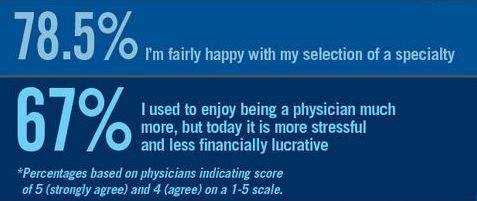
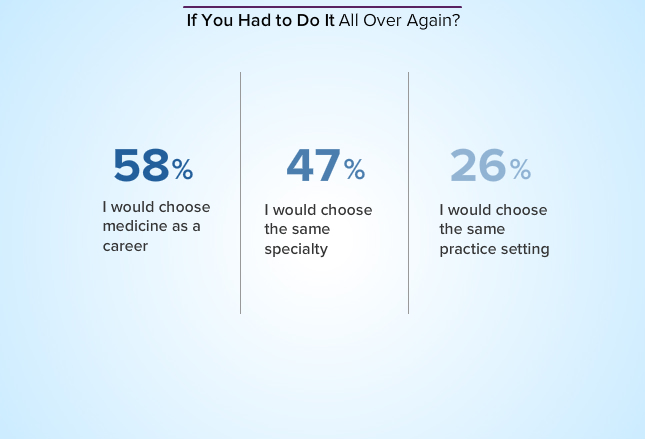
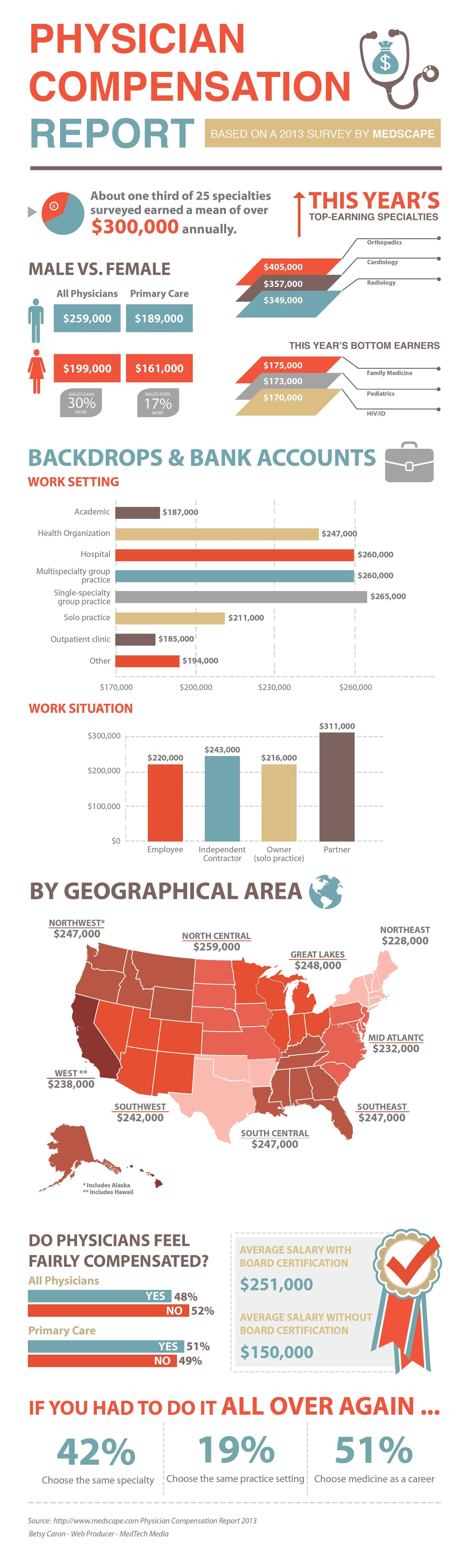
Re-Thinking the Medical Career Choice?

Join Our Mailing List

By Medscape

Would You Do it All Over Again?

Redeux

[Click to Enlarge]

Full Report:

More:

Conclusion

Your thoughts and comments on this ME-P are appreciated. Feel free to review our top-left column, and top-right sidebar materials, links, URLs and related websites, too. Then, subscribe to the ME-P. It is fast, free and secure.

Link: http://feeds.feedburner.com/HealthcareFinancialsthePostForcxos

Speaker: If you need a moderator or speaker for an upcoming event, Dr. David E. Marcinko; MBA – Publisher-in-Chief of the Medical Executive-Post – is available for seminar or speaking engagements. Contact: MarcinkoAdvisors@msn.com

OUR OTHER PRINT BOOKS AND RELATED INFORMATION SOURCES:

Product DetailsProduct Details

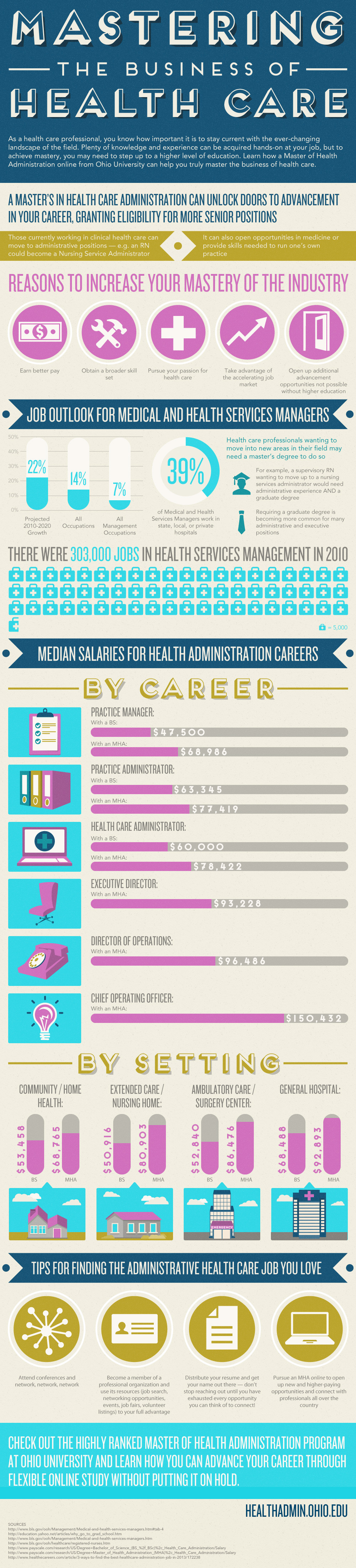
Mastering the Business of Healthcare

Ohio University Master of Health Administration Online

Join Our Mailing List

By Frankie Rendón

Ohio University online MHA

MBH

Link: Ohio University Master of Health Administration Online

Conclusion

Your thoughts and comments on this ME-P are appreciated. Feel free to review our top-left column, and top-right sidebar materials, links, URLs and related websites, too. Then, subscribe to the ME-P. It is fast, free and secure.

Link: http://feeds.feedburner.com/HealthcareFinancialsthePostForcxos

Speaker: If you need a moderator or speaker for an upcoming event, Dr. David E. Marcinko; MBA – Publisher-in-Chief of the Medical Executive-Post – is available for seminar or speaking engagements. Contact: MarcinkoAdvisors@msn.com

OUR OTHER PRINT BOOKS AND RELATED INFORMATION SOURCES:

DICTIONARIES: http://www.springerpub.com/Search/marcinko
PHYSICIANS: www.MedicalBusinessAdvisors.com
PRACTICES: www.BusinessofMedicalPractice.com
HOSPITALS: http://www.crcpress.com/product/isbn/9781466558731
CLINICS: http://www.crcpress.com/product/isbn/9781439879900
BLOG: www.MedicalExecutivePost.com
FINANCE: Financial Planning for Physicians and Advisors
INSURANCE: Risk Management and Insurance Strategies for Physicians and Advisors

Product DetailsProduct Details

Product Details

Seeking Securities Analysts, Stock-Brokers and Investment Bankers for New “Financial Planning Textbook for Doctors”

  Join Our Mailing List 

Planning our newest major textbook

By Ann Miller RN MHA [ph-770-448-0769]

[Executive-Director]

Dear Stock Brokers, IBs and Securities Analysts,

Greetings from the Institute of Medical Business Advisors, in Atlanta, Georgia.

Historical Review

As you may know, we released: Financial Planning Handbook for Physicians and Advisors, some time ago. It has enjoyed much success and acclaim in the medical and financial service sectors.

Recently, we have been asked to produce the next edition of this book for our target market of physicians, nurses, medical professionals, healthcare administrators – and those in the financial services sector who target this large and fertile, but rapidly changing niche market.

Why Now?

Urgency for the update has been prompted by ARRA, HI-TECH, the flash-crash of 2008 and the day-crash of 2011; by social, macro-economic and demographic changes; by political fiat and especially the PP-ACA.

Our medical colleagues are frustrated, afraid and fearful for their financial futures. They WANT informed advice.

Thus, true integrated financial planning information that targets this market – very expertly and specifically – is greatly needed.

The Invitation 

And so, we ask if you are interested in contributing an updated vision of an existing book chapter.

  • INVESTMENT BANKING-SECURITIES-MARKETS-MARGIN
  • HOSPITAL EMPLOYEE BENEFITS AND STOCK OPTIONS
  • INVESTMENT POLICY STATEMENT CONSTRUCTION

Not to worry – The original MS-WORD® chapter files are archived and available for use. We will forward it to you, upon assignment acceptance.

And, we are again fortunate that our Editor-in-Chief will be Dr. David Edward Marcinko FACFAS MBA CMP™ along with Professor Hope Rachel Hetico RN MHA CMP™ serving as Managing Editor.

They opined at a recent interview for the ME-P.

David and Hope” … We have entered into an emerging era in the financial planning ecosystem. It is a new era where one size does not fit all; and off-the-shelf financial products and mass sales customization is no long adequate for physicians and medical professionals; or their related generic financial planners or wire-house advisors.

It is a period of rapid change, shifting reimbursement paradigms and salary reductions that focus the healthcare industrial complex on pay-for-performance [P4], compensation for value and quality care; rather than procedures performed and quantity of care.

All must learn to do more with less professionally; and plan their personal financial lives more efficiently than ever before. Mistakes will be more difficult to overcome and the wiggle room that high income earning physicians, nurses and medical professionals used to enjoy is being narrowed by demographic, economic, social, technological and political fiat.

This emerging financial planning analog follows the health industry’s fiscal metamorphosis …”

Style Instructions 

The look and feel, format and style, and font and size of the book will remain the same. We use endnotes, not foot notes; and include mini-case reports or illustrative case models. It will be a major text; not a handbook.

Timeline for submission is about 3 months. Additional time is available, if needed, for a comprehensive update. But, we are trying to avoid running too far along into 2014 in order to avoid income tax season and the related time constraints on all concerned.

Writers Search

A Pleasure – Not Burden 

This should be a pleasurable project for you; and not anxiety provoking.

So, if you are a medically focused and experienced financial advisor with an: MBA, CFP®, PhD, MD, DDS, MSA/MS, CPA, RN, CMP®, DO, JD and/or CFA degree or designation, etc; please let me know if you are interested in updating and revising our chapters. OR, authoring a new to the world chapter.

Your Payback 

In return for your conscientious industry, you will receive a complimentary edition of the entire textbook; be listed on this ME-P as thought-leader with related book advertising content attributed to you; and given e-exposure to our almost 600,000 readers and ME-P subscribers …. Such the deal!

And, you will be added to our roster of experts for potential referrals, interviews, pod-casts and other marketing efforts

Assessment

Regardless of your decision, we remain apostles promoting your core vision of physician focused financial planning whenever possible.

Or, you may suggest another possible author- writer-expert contributor; if you wish.

Just let me know; ASAP [MarcinkoAdvisors@msn.com]

Thank you.
ANN
ANN MILLER RN MHA
[Executive-Director]
INSTITUTE OF MEDICAL BUSINESS ADVISORS, INC.
Suite #5901 Wilbanks Drive
Norcross, Georgia, 30092-1141 USA
[Ph] 770.448.0769

DICTIONARIES: http://www.springerpub.com/Search/marcinko
PRACTICES: www.BusinessofMedicalPractice.com
HOSPITALS: http://www.crcpress.com/product/isbn/9781466558731
CLINICS: http://www.crcpress.com/product/isbn/9781439879900
ADVISORS: www.CertifiedMedicalPlanner.org
BLOG: www.MedicalExecutivePost.com 

Product Details  Product Details

NOTICE: This invitation is not for all readers of the ME-P. It is a privilege invitation intended for those who possess the needed credentials, as decided by us, with an inclination to serve.  We reserve the right to accept or reject contributors, and content, at our own non-disclosed discretion.

##

Seeking a Physician Leader of Population Health Management‏

Join Our Mailing List 

Centene Corporation Seeking Medical Director

By Paul Esselman

Dear Dr. Marcinko,

Centene Corporation is seeking a Medical Director to manage its newly formed health plan, Arkansas Health & Wellness Solutions.

Based in Little Rock, Arkansas with its core operational functions handled by NovaSys Health, this plan has been approved to participate as a Qualified Health Plan issuer in the Arkansas Health Insurance Marketplace.

The Medical Director will work with a well-established provider to help build a new business line from inception; partnering with NovaSys senior leadership, s/he will assist in development of a medical management infrastructure to position the organization to expand its membership with the Medicaid patients in the state.

Centene-Corporation

Assessment

I would welcome your thoughts as to whom I may contact regarding this highly visible role.

Kind regards,

Paul Esselman
Cejka Executive Search
4 CityPlace Dr., Ste. 300
St. Louis, MO 63141
314.236.4588 Office
pesselman@cejkasearch.com
http://www.cejkaexecutivesearch.com

Conclusion

Your thoughts and comments on this ME-P are appreciated. Feel free to review our top-left column, and top-right sidebar materials, links, URLs and related websites, too. Then, subscribe to the ME-P. It is fast, free and secure.

Link: http://feeds.feedburner.com/HealthcareFinancialsthePostForcxos

Speaker: If you need a moderator or speaker for an upcoming event, Dr. David E. Marcinko; MBA – Publisher-in-Chief of the Medical Executive-Post – is available for seminar or speaking engagements. Contact: MarcinkoAdvisors@msn.com

OUR OTHER PRINT BOOKS AND RELATED INFORMATION SOURCES:

DICTIONARIES: http://www.springerpub.com/Search/marcinko
PHYSICIANS: www.MedicalBusinessAdvisors.com
PRACTICES: www.BusinessofMedicalPractice.com
HOSPITALS: http://www.crcpress.com/product/isbn/9781466558731
CLINICS: http://www.crcpress.com/product/isbn/9781439879900
BLOG: www.MedicalExecutivePost.com
FINANCE: Financial Planning for Physicians and Advisors
INSURANCE: Risk Management and Insurance Strategies for Physicians and Advisors

Product DetailsProduct Details

Product Details

Empathy – the business of treating people [Video]

Join Our Mailing List

A Cleveland Clinic Initiative

[By staff reporters]

If you haven’t seen this viral video yet, you’re in for tear-jerking treat.

A production of Cleveland Clinic highlighting the need to “understand” people in the medical setting. The direct implication is that such understanding goes beyond the medical setting, and can be transferred to all settings where people interact.

Watch “If We Could See Inside Others’ Hearts” here:

Delacroix[DELACROIX]

Assessment

This short film captures the essence of the “business” of treating people: empathy.

More: www.CertifiedMedicalPlanner.org

Conclusion

Your thoughts and comments on this ME-P are appreciated. Feel free to review our top-left column, and top-right sidebar materials, links, URLs and related websites, too. Then, subscribe to the ME-P. It is fast, free and secure.

Link: http://feeds.feedburner.com/HealthcareFinancialsthePostForcxos

Speaker: If you need a moderator or speaker for an upcoming event, Dr. David E. Marcinko; MBA – Publisher-in-Chief of the Medical Executive-Post – is available for seminar or speaking engagements. Contact: MarcinkoAdvisors@msn.com

OUR OTHER PRINT BOOKS AND RELATED INFORMATION SOURCES:

LEXICONS: http://www.springerpub.com/Search/marcinko
PHYSICIANS: www.MedicalBusinessAdvisors.com
PRACTICES: www.BusinessofMedicalPractice.com
HOSPITALS: http://www.crcpress.com/product/isbn/9781466558731
CLINICS: http://www.crcpress.com/product/isbn/9781439879900
ADVISORS: www.CertifiedMedicalPlanner.org
BLOG: www.MedicalExecutivePost.com

Product DetailsProduct Details

Product Details

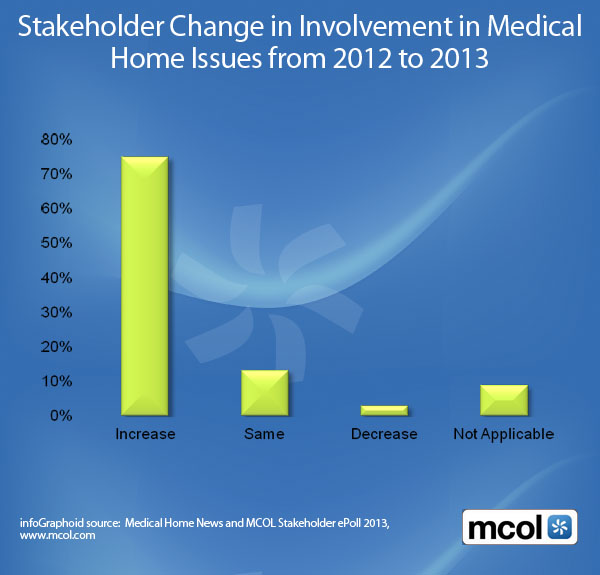
Stakeholder Changes for Involvement in Medical Homes [2012-13]

Join Our Mailing List

Update on the Patient Centered Medical Home Movement

By: www.MCOL.com

The medical home, also known as the patient-centered medical home (PCMH), is a team based health care delivery model led by a physician, PA, NP or ANP that provides comprehensive and continuous medical care to patients with the goal of obtaining maximized health outcomes. It is “an approach to providing comprehensive primary care for children, youth and adults”.

The provision of medical homes may allow better access to health care, increase satisfaction with care, and improve health. Joint principles that define a PCMH have been established through the cohesive efforts of the American Academy of Pediatrics (AAP), American Academy of Family Physicians (AAFP), American College of Physicians (ACP), and American Osteopathic Association (AOA).

MHs

Assessment

With a medical home, care coordination is an essential component of the PCMH. Care coordination requires additional resources such as health information technology, and appropriately trained staff to provide coordinated care through team-based models.

Additionally, payment models that compensate PCMHs for their effort devoted to care coordination activities and patient-centered care management that fall outside the face-face patient encounter may help encourage coordination.

More:

Conclusion

Your thoughts and comments on this ME-P are appreciated. Feel free to review our top-left column, and top-right sidebar materials, links, URLs and related websites, too. Then, subscribe to the ME-P. It is fast, free and secure.

Link: http://feeds.feedburner.com/HealthcareFinancialsthePostForcxos

Speaker: If you need a moderator or speaker for an upcoming event, Dr. David E. Marcinko; MBA – Publisher-in-Chief of the Medical Executive-Post – is available for seminar or speaking engagements. Contact: MarcinkoAdvisors@msn.com

OUR OTHER PRINT BOOKS AND RELATED INFORMATION SOURCES:

LEXICONS: http://www.springerpub.com/Search/marcinko
PHYSICIANS: www.MedicalBusinessAdvisors.com
PRACTICES: www.BusinessofMedicalPractice.com
HOSPITALS: http://www.crcpress.com/product/isbn/9781466558731
CLINICS: http://www.crcpress.com/product/isbn/9781439879900
ADVISORS: www.CertifiedMedicalPlanner.org
BLOG: www.MedicalExecutivePost.com

Product DetailsProduct DetailsProduct Details

Product DetailsProduct Details

Product Details

Video on Wall Street’s View on Prospects for the Health Care Industry

Join Our Mailing List

Nashville Health Care Council

[By staff reporters]

The Nashville Health Care Council’s recent signature: “Wall Street’s View on Prospects for the Health Care Industry” panel discussion and video, offers timely insights and forecasts for Nashville’s $70 billion health care industry.

Medical tree

Video link: http://www.healthsharetv.com/content/wall-streets-view-prospects-health-care-industry

Assessment

The effects of the PP-ACA are still being revealed under the law of unintended consequences.

Conclusion

Your thoughts and comments on this ME-P are appreciated. Feel free to review our top-left column, and top-right sidebar materials, links, URLs and related websites, too. Then, subscribe to the ME-P. It is fast, free and secure.

Link: http://feeds.feedburner.com/HealthcareFinancialsthePostForcxos

Speaker: If you need a moderator or speaker for an upcoming event, Dr. David E. Marcinko; MBA – Publisher-in-Chief of the Medical Executive-Post – is available for seminar or speaking engagements. Contact: MarcinkoAdvisors@msn.com

OUR OTHER PRINT BOOKS AND RELATED INFORMATION SOURCES:

LEXICONS: http://www.springerpub.com/Search/marcinko
PHYSICIANS: www.MedicalBusinessAdvisors.com
PRACTICES: www.BusinessofMedicalPractice.com
HOSPITALS: http://www.crcpress.com/product/isbn/9781466558731
CLINICS: http://www.crcpress.com/product/isbn/9781439879900
ADVISORS: www.CertifiedMedicalPlanner.org
BLOG: www.MedicalExecutivePost.com

Product DetailsProduct Details

Product Details

Changes are Afoot at the CFP-Board of Directors

Join Our Mailing List 

Well-intentioned attempts to protect consumers backfire?

By Rick Kahler CFP® http://www.KahlerFinancial.com

Rick Kahler CFPIntegrity. Trustworthiness.

A commitment to clients’ best interests. These are all essential qualities for any advisor you entrust with your financial affairs.

One clue to financial planners’ trustworthiness is the certifications they hold. Designations such as CFP® (Certified Financial Planner) and Chartered Financial Consultant (ChFC) require adhering to certain professional standards and codes of ethics.

The organizations that maintain these standards safeguard the integrity of their professional designations and especially the well-being of consumers who seek out their members’ services. Yet sometimes, their well-intentioned attempts to protect consumers can backfire.

New Rules

The CFP® Board recently adopted new rules meant to prevent financial planners from calling themselves “fee-only” while still receiving commissions by selling financial products through separate companies. Now, CFP®s and members of their families can no longer own an interest in financial service companies that earn commissions if they wish to brand themselves as “fee only.”

This would be good, except the Board has cast its net so wide that it is catching the dolphins along with the sharks. It defines “financial service company” too broadly, including real estate firms, mortgage companies, and property management companies. It also illogically focuses on what clients could pay and what the planner could receive, rather than what clients do pay and what the planner does receive.

Example:

I have a minority interest in and occasionally receive dividends from a real estate brokerage and a property management firm. While I do maintain a license as a real estate broker, I am not active in the business. Because I could potentially receive a commission for selling real estate and because I do receive dividends, I’ve been told by a representative of the CFP® Board that I can no longer call myself “fee only” and must advertise myself as a “fee and commission” financial planner.

This would dishonestly insinuate I sell mutual funds, life insurance, or annuities. “Fee-only,” which to consumers means I sell no financial products, is much more accurate.

Disgruntled Calls Growing

I’ve received calls from other CFP®s affected in similar ways by the new rules.

Example:

One is a young fee-only planner who does not sell any financial products or own a portion of any company that does. Yet, he recently married a woman who owns a minority interest in her family’s property casualty insurance company. She holds an insurance license but does not work in the business. Because she, a “related party,” could legally receive commissions, her husband can no longer hold himself out as a “fee-only” CFP® and must list himself as a “fee and commission” planner.

00290065-0000-0000-0000-000000000000_bd9e518c-8b9e-4904-b459-4f2b1c196df1_20130621181508_noh8

Is the CFP-BOD, and the CFP® mark, in Jeopardy? [VOTE]

If a financial planner’s clients pay only fees and do not purchase financial products like mutual funds, insurance, and annuities from a related company, the CFP® Board needs to designate the planner as “fee only.” The same applies to planners who maintain financial services licenses (as those in Illinois must if they give insurance advice) but do not receive commissions. The CFP® Board should not consider companies that offer services unrelated to financial planning, such as selling and managing real estate or originating mortgages, as financial services companies.

I understand and fully support the CFP® Board’s intent to stop those who were abusing the brand of “fee only.” Yet the Board’s rules in their present form will only devalue the CFP® designation.

Assessment

It appears the only way I can continue to honestly advertise my practice as “fee-only” is to terminate as a CFP®. What’s most important for me is to be seen as a fiduciary planner, working with integrity in the best interest of my clients. I won’t dishonestly brand myself as a “fee and commission” planner to keep my CFP® designation.

Conclusion

Your thoughts and comments on this ME-P are appreciated. Feel free to review our top-left column, and top-right sidebar materials, links, URLs and related websites, too. Then, subscribe to the ME-P. It is fast, free and secure.

Link: http://feeds.feedburner.com/HealthcareFinancialsthePostForcxos

Speaker: If you need a moderator or speaker for an upcoming event, Dr. David E. Marcinko; MBA – Publisher-in-Chief of the Medical Executive-Post – is available for seminar or speaking engagements. Contact: MarcinkoAdvisors@msn.com

OUR OTHER PRINT BOOKS AND RELATED INFORMATION SOURCES:

LEXICONS: http://www.springerpub.com/Search/marcinko
PHYSICIANS: www.MedicalBusinessAdvisors.com
PRACTICES: www.BusinessofMedicalPractice.com
HOSPITALS: http://www.crcpress.com/product/isbn/9781466558731
CLINICS: http://www.crcpress.com/product/isbn/9781439879900
BLOG: www.MedicalExecutivePost.com

Product Details  Product Details

Upcoming Webinars and Health Administration Essays around the Net

Join Our Mailing List

By Staff Reporters

Some Topics of Interest for ME-P Readers

###

US capitol

###

Assessment

Enjoy these informative private sector and government publications.

Conclusion

Your thoughts and comments on this ME-P are appreciated. Feel free to review our top-left column, and top-right sidebar materials, links, URLs and related websites, too. Then, subscribe to the ME-P. It is fast, free and secure.

Link: http://feeds.feedburner.com/HealthcareFinancialsthePostForcxos

Speaker: If you need a moderator or speaker for an upcoming event, Dr. David E. Marcinko; MBA – Publisher-in-Chief of the Medical Executive-Post – is available for seminar or speaking engagements. Contact: MarcinkoAdvisors@msn.com

OUR OTHER PRINT BOOKS AND RELATED INFORMATION SOURCES:

Health Dictionary Series: http://www.springerpub.com/Search/marcinko

Practice Management: http://www.springerpub.com/product/9780826105752

Physician Financial Planning: http://www.jbpub.com/catalog/0763745790

Medical Risk Management: http://www.jbpub.com/catalog/9780763733421

Hospitals: http://www.crcpress.com/product/isbn/9781439879900

Physician Advisors: www.CertifiedMedicalPlanner.org

Product DetailsProduct DetailsProduct Details

Product Details  Product Details

Product DetailsProduct Details

How to Reach Your Career Goals Faster

Join Our Mailing List

A Three Step Program

By Marie Abrahms

We all have the ability to reach our career goals in everyday life.

For many people, this involves obtaining a big paycheck. While for others like FAs and allied healthcare professionals, doing what you love is important. Regardless, most of us might like a little extra aid in order to progress down our career paths.

So, if you wish to reach your goals, below are three things that that can be done in order to augment your career path.

1. Further Your Education

In order to look more inviting to prospective employers you should do things to improve your CV. One strategy is simply by continuing college. An MBA, by way of example, can make it likelier that you’ll be able to uncover a higher paying job.

Moreover, this is easier if you have use of a http://www.amerasiaconsulting.com MBA admissions consultant that will steer you from the right direction and still provide the guidance you need.

2. Promote Your Self on Networking Sites

If you wish to advance inside your career, you must create as many opportunities as you can. There are many work-at-home opportunities available online, in case you are prepared to spend some more time developing them. You’ll find popular networking sites such as LinkedIn and CareerBuilder to promote your resume.

Although they offer no guarantees, they certainly improve your chances.

##

Amerasia-3-1

##

3. Study the Success of Others

When you have chosen the career path you want to capture, you could take advice from others who have already managed to rise in their particular field. You’ll find books, classes and even mentoring programs where you stand to study the secrets of the pros.

###

Amerasia-3-2

###

Assessment

Should you be prepared to take a positive step towards reaching your work goals, visit http://www.amerasiaconsulting.com where you will discover the assistance you’ll need to achieve the MBA degree that may help you meet your employment objectives.

Good luck!

###

Professional Wake Up Call

ADVERTISEMENT

A New Physician Compensation Report

Join Our Mailing List
A Physician Compensation Infographic and Review

Doctors saw a small salary increases in 2012 but they were smaller than those in 2011, according to a physician compensation survey released this week by global consulting firm, the Hay Group.

For example, in 2011, physician salaries increased by 2.7 percent but 2012 saw they increased only by 2.5 percent.

####
Pay
More

Conclusion

Your thoughts and comments on this ME-P are appreciated. Feel free to review our top-left column, and top-right sidebar materials, links, URLs and related websites, too. Then, subscribe to the ME-P. It is fast, free and secure.

Link: http://feeds.feedburner.com/HealthcareFinancialsthePostForcxos

Speaker: If you need a moderator or speaker for an upcoming event, Dr. David E. Marcinko; MBA – Publisher-in-Chief of the Medical Executive-Post – is available for seminar or speaking engagements. Contact: MarcinkoAdvisors@msn.com

OUR OTHER PRINT BOOKS AND RELATED INFORMATION SOURCES:

Product DetailsProduct Details

Medical Director Needed for NovaSys Health

Join Our Mailing List

Physician Career Opportunity

By Paul Esselman

[Executive Vice President, and Managing Principal]

Cejka Executive Search

Dear Dr. Marcinko,

Centene Corporation is seeking a Medical Director for NovaSys Health, a full-service managed care company and health plan administrator based in Little Rock. This newly created position will be responsible for assisting in the development of a medical management infrastructure for the health plan as NovaSys expands their member base through the participation in the Arkansas Healthcare Exchange.

A Fortune 500 company, Centene is a national leader in low-cost solutions for high quality healthcare services for uninsured and underinsured patients. Centene’s subsidiary health plans bring better health outcomes to their 1.5 million members. Centene’s core philosophy is that quality healthcare is best delivered locally. This local approach enables them to provide accessible, high quality and culturally sensitive healthcare services to their members in their own communities.

The Medical Director will perform utilization review, quality assurance and medical review of services; oversee the activities of physician advisors; assist in provider network development and expansion; and participate in strategic program developments for improving quality of care while lowering costs. The Medical Director will also work closely with the Plan President and Vice President, Medical Management (RN) in establishing and carrying out the strategic vision of the organization working closely with external constituents as appropriate.

Successful candidates will be physician leaders with knowledge of quality improvement practices and familiarity with medical information systems, medical claims payment processing and coding. Knowledge of managed care, Medicaid and case management programs are preferred. Board certification in a recognized medical specialty, preferably in internal medicine, family practice, pediatrics or emergency medicine, and an active medical license are required.

###

inheritance

Assessment

Qualified candidates should submit their resumes for consideration to me:

Thank you. 

Paul Esselman Executive Vice President, Managing Principal Cejka Executive Search 4 CityPlace Dr., Ste. 300 St. Louis, MO 63141 314.236.4588 Office pesselman@cejkasearch.com http://www.cejkaexecutivesearch.com

Conclusion

Your thoughts and comments on this ME-P are appreciated. Feel free to review our top-left column, and top-right sidebar materials, links, URLs and related websites, too. Then, subscribe to the ME-P. It is fast, free and secure.

Speaker: If you need a moderator or speaker for an upcoming event, Dr. David E. Marcinko; MBA – Publisher-in-Chief of the Medical Executive-Post – is available for seminar or speaking engagements. Contact: MarcinkoAdvisors@msn.com

OUR OTHER PRINT BOOKS AND RELATED INFORMATION SOURCES:

Product DetailsProduct DetailsProduct Details

Product Details  Product Details

Product DetailsProduct Details

Will Future Doctors Need a Medical License?

Join Our Mailing List 

Licensing Doctors – Do Economists Agree?

By Dr. David Edward Marcinko MBA CMP™

[Editor-in-Chief]

Dr. MarcinkoChallenging conventional wisdom is something I like to think … that I do.

After all, I am considered a healthcare ‘thought-leader”, and to the extent possible, we publish outside traditional box thinking on this Medical Executive-Post.

It’s all Relative

But, I am a piker compared to Shirley Svorny PhD.

Who is she?

Dr. Shirley Svorny is chair of the economics department at California State University, Northridge, and she holds a PhD in economics from UCLA

Medical Licensure Issues

Now, remember the old saying, “if everyone is thinking alike, then nobody is thinking”.

Well, a while back, Dr. Svorny wondered if a medical degree is a barrier – rather than enabler – of affordable healthcare. Enter the PP-ACA of 2010.

As an expert on the regulation of health care professionals, including medical professional licensing, she has participated in health policy summits organized by Cato and the Texas Public Policy Foundation. She argued that licensure not only fails to protect consumers from incompetent physicians, but, by raising barriers to entry, makes health care more expensive and less accessible.

Institutional oversight and a sophisticated network of private accrediting and certification organizations, all motivated by the need to protect reputations and avoid legal liability, offer whatever consumer protections exist today. Malpractice attorneys, and monetary gain motives, too!

Her Published Abstract

“Despite the wide reach of medical licensing in health care production through its impact on the nature and cost of care, it has been all but ignored in debates over health care reform.

This paper pulls together statements made by economists whose expertise is in the area of health economics or, more specifically, medical licensure and discipline. Economists who have examined the market for physician services in the United States generally view state licensing as a means by which to enforce cartel-like restrictions on entry that benefit physicians at the expense of consumers. Medical licensing is seen as a constraint on the efficient combination of inputs, a drag on innovations in health care and medical education, and a significant barrier to effective, cost efficient health care.”

Full paper link:  2004-08-svorny-reach_concl

jester_hat

Am I Thought-Leader?

Am I a thought leader? Well, I don’t rightly know; that’s for others to decide. But, I do know that this essay was published a decade ago; in 2004, and at a time before the ME-P’s existence.

And so, based on this essay, Dr. Svorny is surely a “thought-leader” in my opinion

More about Dr. Svorny

In 1986-87, Dr. Svorny managed an industry risk group at Security Pacific Bank. She was a Milken Institute Affiliated Scholar and served as director of the San Fernando Valley Economic Research Center at Cal State Northridge. She has published articles in Economics of Education Review, Contemporary Economic Policy, Urban Affairs Review, Public Choice, Regional Science and Urban Economics, Cato Journal, Applied Economics, The Journal of Medical Licensure and Discipline, The Energy Journal, Economic Inquiry, and the Journal of Labor Research. Her opinion articles have appeared in the Los Angeles Times and the Los Angeles Daily News. Her research interests are in the areas of urban, labor, and health economics.

Assessment

Do traditionalists or collective healthcare reform advocates and health economists react rationally; or irrationally on this issue? What do you think?

Conclusion

Your thoughts and comments on this ME-P are appreciated. Feel free to review our top-left column, and top-right sidebar materials, links, URLs and related websites, too. Then, subscribe to the ME-P. It is fast, free and secure.

Speaker: If you need a moderator or speaker for an upcoming event, Dr. David E. Marcinko; MBA – Publisher-in-Chief of the Medical Executive-Post – is available for seminar or speaking engagements. Contact: MarcinkoAdvisors@msn.com

***

Risk Management, Liability Insurance, and Asset Protection Strategies for Doctors and Advisors: Best Practices from Leading Consultants and Certified Medical Planners™8Comprehensive Financial Planning Strategies for Doctors and Advisors: Best Practices from Leading Consultants and Certified Medical Planners™

Finding Emotional Freedom [Access the Truth Your Brain Already Knows]

Join Our Mailing List

Book Review

By Rick Kahler MS CFP® ChFC CCIM http://www.KahlerFinancial.com

Rick Kahler CFP“It’s not about the money.” This saying has become almost a cliché among financial planners and therapists who help clients address the emotional aspects of their relationships with money.

We keep using this phrase because it is so true. Overspending, taking unreasonable risks, money conflicts that strain marriages, failing to learn from money mistakes, and a host of other problematic money patterns are not about money. They are about emotions. And since brain researchers tell us that 90% of all decisions are made emotionally, it literally “pays” to pay attention to your emotions.

Because money affects so many aspects of our lives, it’s only natural that destructive behavior around money is one of the ways people try to cope with emotional pain. Money dysfunction is really no different from other destructive behaviors like addiction or codependency. Like them, it can have high physical, emotional, relationship, and financial costs.

The more I learn about the relationship between our emotions and our money choices, the more I understand why financial knowledge alone isn’t enough to help people change unhelpful behaviors that keep them stuck. I am convinced of the value of financial therapy and other forms of counseling to help people create financial and emotional balance in their lives. It’s clear to me that psychotherapy offers clear financial benefits as well as emotional ones.

The Book

A new book by Dave Jetson, Finding Emotional Freedom: Access the Truth Your Brain Already Knows, addresses these issues in one of the more clear and succinct manners I’ve encountered.

Dave is one of the few counselors in the nation who understands and practices financial therapy. In his practice and workshops, he uses experiential therapy techniques that access both the conscious and unconscious parts of the brain to help people recover from any type of abuse and trauma, including financial. I’ve seen first-hand how effective this work is.

I also know that Dave is one of those rare guides who’s actually done and succeeded at what he teaches. He is one of those who walks the walk. Now he has written a book describing that walk.

Finding Emotional Freedom includes a clear, readable description of how our brains process emotions. This is useful, even critical information for anyone who wants to make wiser money choices.

Finding Emotional Freedom: Access the Truth Your Brain Already

Co-Dependency

Dave also describes how codependency develops and some of the patterns it takes. Many of these patterns—from addictions, to shopping as “retail therapy,” to excessive taking care of others—have financial as well as emotional costs.

Even though Dave offers financial therapy and has created a workshop on Financial Recovery, he doesn’t specifically discuss financial codependency in this book. This doesn’t mean the issue is not important. In fact, it serves to underscore the principle that that many money issues really are not about the money.

Assessment

Finally, this book explains how experiential therapy works and the deep changes it can make. Finding Emotional Freedom shows the possibilities for not only healing emotional wounds, but for increasing your emotional intelligence. It’s a powerful book, and I highly recommend it.

When I was starting out as a financial planner 30 years ago, I wouldn’t necessarily have even picked up a book like this, much less have felt comfortable recommending it to clients. Now I know better.

What I have learned over those years is that real financial planning is about much more than just the money. Providing investment advice that helps people achieve financial health is certainly important. But the larger role of a financial planner is to help clients prosper. Real prosperity includes not only financial health, but also emotional health and happiness.

Conclusion

Your thoughts and comments on this ME-P are appreciated. Feel free to review our top-left column, and top-right sidebar materials, links, URLs and related websites, too. Then, subscribe to the ME-P. It is fast, free and secure.

Link: http://feeds.feedburner.com/HealthcareFinancialsthePostForcxos

Speaker: If you need a moderator or speaker for an upcoming event, Dr. David E. Marcinko; MBA – Publisher-in-Chief of the Medical Executive-Post – is available for seminar or speaking engagements. Contact: MarcinkoAdvisors@msn.com

OUR OTHER PRINT BOOKS AND RELATED INFORMATION SOURCES:

Health Dictionary Series: http://www.springerpub.com/Search/marcinko

Practice Management: http://www.springerpub.com/product/9780826105752

Physician Financial Planning: http://www.jbpub.com/catalog/0763745790

Medical Risk Management: http://www.jbpub.com/catalog/9780763733421

Hospitals: http://www.crcpress.com/product/isbn/9781439879900

Physician Advisors: www.CertifiedMedicalPlanner.org

Product Details  Product Details

Seeking Vice-President of Medical Management

Join Our Mailing List 

Advocate BroMenn Medical Center and Advocate Eureka Hospital in Normal, Illinois

By Paul Esselman
Executive Vice President, Managing Principal
Cejka Executive Search
4 CityPlace Dr., Ste. 300
St. Louis, MO 63141
pesselman@cejkasearch.com

Dear Dr. Marcinko,

Cejka Executive Search has been retained to recruit a physician executive to be the Vice President, Medical Management of Advocate BroMenn Medical Center and Advocate Eureka Hospital.

The Opportunity

Advocate BroMenn Medical Center, a 221-bed full-service, not-for-profit, Level II trauma center and teaching facility located in Normal, Illinois, is one of the most advanced acute care facilities in central Illinois.  Last year, Advocate BroMenn opened a new 136,000 sq. ft. hospital addition housing state-of-the-art diagnostic and therapeutic services as well as opened a new 84,000 sq. ft. outpatient center, housing imaging, therapy and laboratory services and physician practices.

Advocate Eureka Hospital is a 25-bed critical access facility located 25 miles north of Normal.  With their affiliation with Advocate Health Care in 2010, Advocate BroMenn and Advocate Eureka are now part of the largest integrated healthcare system in Illinois and one of the Top 10 health systems in the country. Advocate BroMenn has been consistently recognized for high performance and awarded the Consumer Choice Award as the “Most Preferred Hospital for Overall Quality and Image” in its region.

Leadership Team

As a key member of the senior leadership team, the VPMM will serve as the clinical strategist to drive improvement in hospital-wide services and quality measures for the two hospitals.  The VPMM will be instrumental in working with the medical staffs and Advocate Health Care’s Clinical Integration division to implement its nationally-recognized approach to patient care utilizing the best practices in evidence-based medicine, advanced technology and quality improvement techniques.  The VPMM will lead the organization in achieving a high level of quality, service, and outcomes and align the culture of physician providers and the hospitals in preparation for healthcare reform.

The VPMM will also coordinate medical affairs and implement consistent policies and practices; manage and develop physician education initiatives; and oversee clinical utilization, case and risk management, and physician satisfaction at both facilities.

###

jobs

Candidates

Successful candidates will have at least five years of experience in clinical practice and at least three years of demonstrated success in a senior medical executive role within a hospital, preferably serving in a similar position.  Current board certification is required.  An MBA/ MMM degree is highly desirable.

Information Requests

For more information or to nominate candidates, kindly contact me. Thank you.

OUR OTHER PRINT BOOKS AND RELATED INFORMATION SOURCES:

Health Dictionary Series: http://www.springerpub.com/Search/marcinko

Practice Management: http://www.springerpub.com/product/9780826105752

Physician Financial Planning: http://www.jbpub.com/catalog/0763745790

Medical Risk Management: http://www.jbpub.com/catalog/9780763733421

Hospitals: http://www.crcpress.com/product/isbn/9781439879900

Physician Advisors: www.CertifiedMedicalPlanner.org

Product DetailsProduct DetailsProduct Details

Product Details  Product Details

Product DetailsProduct Details

Administrative Professionals’ Day

Join Our Mailing List

Difference makers: On the job with admin

By Staff Reporters

In honor of Administrative Professionals’ Day 2013, celebrated just last week, here’s a closer look at the key roles these individuals play in order to keep medical, financial advisory and other offices everywhere – running smoothly.APD

Conclusion

Your thoughts and comments on this ME-P are appreciated. Feel free to review our top-left column, and top-right sidebar materials, links, URLs and related websites, too. Then, subscribe to the ME-P. It is fast, free and secure.

Link: http://feeds.feedburner.com/HealthcareFinancialsthePostForcxos

Speaker: If you need a moderator or speaker for an upcoming event, Dr. David E. Marcinko; MBA – Publisher-in-Chief of the Medical Executive-Post – is available for seminar or speaking engagements. Contact: MarcinkoAdvisors@msn.com

OUR OTHER PRINT BOOKS AND RELATED INFORMATION SOURCES:

Health Dictionary Series: http://www.springerpub.com/Search/marcinko

Practice Management: http://www.springerpub.com/product/9780826105752

Physician Financial Planning: http://www.jbpub.com/catalog/0763745790

Medical Risk Management: http://www.jbpub.com/catalog/9780763733421

Hospitals: http://www.crcpress.com/product/isbn/9781439879900

Physician Advisors: www.CertifiedMedicalPlanner.org

Product DetailsProduct DetailsProduct Details

Defining Tomorrow’s Doctor [Vote]

Join Our Mailing List 

What does the 21st Century Physician look like – Please tell us your vision?

Doctors

We can’t solve problems by using the same kind of thinking we used when we created them.  Tell us your vision or just view the list of visions so far.

Tomorrow’s Doctor

[This is a collective initiative lead by folks like you] 

Assessment

Why Become A Doctor?

Conclusion

Your thoughts and comments on this ME-P are appreciated. Feel free to review our top-left column, and top-right sidebar materials, links, URLs and related websites, too. Then, subscribe to the ME-P. It is fast, free and secure.

Link: http://feeds.feedburner.com/HealthcareFinancialsthePostForcxos

Speaker: If you need a moderator or speaker for an upcoming event, Dr. David E. Marcinko; MBA – Publisher-in-Chief of the Medical Executive-Post – is available for seminar or speaking engagements. Contact: MarcinkoAdvisors@msn.com

OUR OTHER PRINT BOOKS AND RELATED INFORMATION SOURCES:

Health Dictionary Series: http://www.springerpub.com/Search/marcinko

Practice Management: http://www.springerpub.com/product/9780826105752

Physician Financial Planning: http://www.jbpub.com/catalog/0763745790

Medical Risk Management: http://www.jbpub.com/catalog/9780763733421

Hospitals: http://www.crcpress.com/product/isbn/9781439879900

Physician Advisors: www.CertifiedMedicalPlanner.org

Product DetailsProduct Details

Health 2.0 Financial Planning for Medical Executive-Post Members

A By-Product of Health 2.0?

By Dr. David Edward Marcinko FACFAS MBA CMP*

[Founder and CEO]

www.MedicalBusinessAdvisors.com

Dr David E Marcinko MBAA decade ago, Editor Gregory J. Kelley of Physician’s MONEY DIGEST and I reported that a 47 year old-doctor with $184,000 annual income would need about $5.5 million dollars for retirement at age 65. Then came the “flash-crash’ of 2007-08, the home mortgage fiasco and the Patient Protection and Accountable Care Act [PP-ACA] of 2010; etc.

No wonder that medical provider career panic is palpable. Much like the new medical home concept, the idea of holistic life planning was born.

Life Planning

Life planning has many detractors and defenders. Formally, life planning has been defined in the following way. 

Financial Life Planning is an approach to financial planning that places the history, transitions, goals, and principles of the client at the center of the planning process.  For the client, their life becomes the axis around which financial planning develops and evolves.

But, for physicians, life planning’s quasi-professional and informal approach to the largely isolated disciplines of medically focused financial planning, was still largely inadequate.

Why? 

Today’s personal financial and practice environment is incredibly more complex than it was in 2007-08, as economic stress from HMOs, Wall Street, liability fears, criminal scrutiny from government agencies, IT mischief from hackers, economic benchmarking from hospitals and the lost confidence of patients all converged to inspire a robust new financial planning 2.0 approach for medical professionals.

Example of a financial planning mistake 

Recall the tale of Dr. Debasis Kanjilal, a pediatrician from New York who put more than $500,000 into the dot.com company, InfoSpace, upon the advice of Merrill Lynch’s star but non fiduciary analyst Henry Bloget.

Is it any wonder that when the company crashed, the analyst was sued, and Merrill settled out of court? Other analysts, such as Mary Meeker of Morgan Stanley, Dean Witter and Jack Grubman from Salomon Smith Barney, were involved in similar fiascos.

Although sad, this story is a matter of public record. Hopefully, doctors now understand that the big brokerage houses that underwrite and recommend stocks may have credibility problems, and that physicians got burned with the adrenalin rush of “self-directed” investment portfolios.

Example of a medical practice management mistake 

Just reflect a moment on colleagues willing to securitize their medical practices a few years ago, and cash out to Wall Street for perceived riches that were not rightly deserved

Where are firms such as MedPartners, Phycor, FPA and Coastal now? A recent survey of the Cain Brothers Physician Practice Management Corporation Index of publicly traded PPMCs revealed a market capital loss of more than 95%, since inception. 

Another Approach?

This disruptive narrative shift was formally noted by the Institute of Medical Business Advisors Inc [iMBA, Inc] and introduced to the medical and financial services industry. This research and corpus of work resulted in hundreds of publications in the Library of Medicine, National Institute of Health (NIH) and the Library of Congress, along with related publications, a dozen textbooks and white papers

http://www.ncbi.nlm.nih.gov/nlmcatalog?term=marcinko

The iMBA approach to financial planning, as championed by the www.CertifiedMedicalPlanner.org professional charter designation, integrates the traditional concepts of fiduciary focused financial planning, with the increasing complex business concepts of medical practice management.

The former ideas are presented in our textbook on financial planning for doctors: Financial Planning for Physicians and Advisors

The later in our companion book: Business of Medical Practice [Edition 3.0]

A textbook for hospital CXOs and physician-executives: Hospitals & Healthcare Organizations

While most issues of risk management, liability and insurance are found in Risk Management and Insurance Strategies for Physicians and Advisors

And, for the perplexed, all definitions are codified in the dictionary glossary Health Dictionary Series

Health 2.0 Paradigm Shift

And so, the ME-P community now realizes that a more integrated approach is needed.  The traditional vision of medical practice management, personal physician financial planning and how they may look in the future are rapidly changing as the retail mentality of medicine is replaced with a wholesale philosophy.

Or, how views on maximizing current practice income might be more profitably sacrificed for the potential of greater wealth upon eventual practice sale and disposition.

Or, how Yale University economist Robert J Shiller warns in “The New Financial Order” [Risk in the 21st Century] that the risk for choosing the wrong healthcare profession or specialty might render physicians obsolete by technological changes, managed care systems or fiscally unsound demographics. 

Physician-Executive

My Assessment

Yet, the opportunity to re-vise the future at any age through personal re-engineering, exists for all of us, and allows a joint exploration of the medicine, business and the meaning and purpose of life.

To allow this deeper and more realistic approach, the advisor and the doctor must build relationships based on fiduciary trust, greater self-knowledge and true medical business and financial enhancement acumen.

Are you up to the task?

Conclusion

Your thoughts and comments on this ME-P are appreciated. Feel free to review our top-left column, and top-right sidebar materials, links, URLs and related websites, too. Then, subscribe to the ME-P. It is fast, free and secure.

Link: http://feeds.feedburner.com/HealthcareFinancialsthePostForcxos

Speaker: If you need a moderator or speaker for an upcoming event, Dr. David E. Marcinko; MBA – Publisher-in-Chief of the Medical Executive-Post – is available for seminar or speaking engagements. Contact: MarcinkoAdvisors@msn.com

OUR OTHER PRINT BOOKS AND RELATED INFORMATION SOURCES:

Product DetailsProduct DetailsProduct Details

Product Details  Product Details

Product DetailsProduct Details

More on the Doctor Salary “WARS” – er! ah! … CONUNDRUM!

Join Our Mailing List

Compensation Trend Data Sources

cropped-dem

By Dr. David Edward Marcinko MBA

[Editor-in-Chief] www.BusinessofMedicalPractice.com

Related chapters: Chapter 27: Salary Compensation and Chapter 29: Concierge Medicine and Chapter 30: Practice Value-Worth


***

PERSONAL PREAMBLE

***

Physician compensation is a contentious issue and often much fodder for public scrutiny. Throw modern pay for performance [P4P], and related metrics, into the mix and few situations produce the same level of emotion as doctors fighting over wages, salary and other forms of reimbursement.

This situation often springs from a failure of both sides to understand mutual compensation terms-of-art when the remuneration deal was first negotiated. This physician salary and compensation information is thus offered as a reference point for further investigations.

Introduction 

More than a decade ago, Fortune magazine carried the headline “When Six Figured Incomes Aren’t Enough. Now Doctors Want a Union.” To the man in the street, it was just a matter of the rich getting richer. The sentiment was quantified in the March 31, 2005 issue of Physician’s Money Digest when Greg Kelly and I reported that a 47-y.o. doctor with 184,000 dollars in annual income would need about 5.5 million dollars for retirement at age.

Of course, physicians were not complaining back then under the traditional fee-for-service system; the imbroglio only began when managed care adversely impacted income and the stock market crashed in 2008.

Today, the situation is vastly different as medical professionals struggle to maintain adequate income levels. Rightly or wrongly, the public has little sympathy for affluent doctors following healthcare reform. While a few specialties flourish, others, such as primary care, barely move.

In the words of colleague Atul Gawande, MD, a surgeon and author from Brigham and Women’s Hospital in Boston, “Doctors quickly learn that how much they make has little to do with how good they are. It largely depends on how they handle the business side of practice.”  And so, it is critical to understand contemporary thoughts on physician compensation and related trends.

Compensation Trend Data Sources

A growing number of surveys measure physician compensation, encompassing a varying depth of analysis. Physician compensation data, divided by specialty and subspecialty, is central to a range of consulting activities including practice assessments and valuations of medical entities. It may be used as a benchmarking tool, allowing the physician executive or consultant to compare a practitioner’s earnings with national and local averages.

The Medical Group Management Association’s (MGMA’s) annual Physician Compensation and Production Correlations Survey is a particularly well-known source of this data in the valuation community. Other information sources include Merritt Hawkins and Associates; and the annual the Health Care Group’s, [www.theHealthCareGroup.com] Goodwill Registry.

###

Portfolio analysis

www.CertifiedMedicalPlanner.org

Assessment

However, all sources are fluid and should be taken with a grain of statistical skepticism, and users are urged to seek out as much data as possible and assess all available information in order to determine a compensation amount that may be reasonably expected for a comparable specialty situation. And, realize that net income is defined as salary after practice expenses but before payment of personal income taxes.

Conclusion

Your thoughts and comments on this ME-P are appreciated. Feel free to review our top-left column, and top-right sidebar materials, links, URLs and related websites, too. Then, subscribe to the ME-P. It is fast, free and secure.

Link: http://feeds.feedburner.com/HealthcareFinancialsthePostForcxos

Speaker: If you need a moderator or speaker for an upcoming event, Dr. David E. Marcinko; MBA – Publisher-in-Chief of the Medical Executive-Post – is available for seminar or speaking engagements. Contact: MarcinkoAdvisors@msn.com

OUR OTHER PRINT BOOKS AND RELATED INFORMATION SOURCES:

DICTIONARIES: http://www.springerpub.com/Search/marcinko
PHYSICIANS: www.MedicalBusinessAdvisors.com
PRACTICES: www.BusinessofMedicalPractice.com
HOSPITALS: http://www.crcpress.com/product/isbn/9781466558731
CLINICS: http://www.crcpress.com/product/isbn/9781439879900
BLOG: www.MedicalExecutivePost.com
FINANCE: Financial Planning for Physicians and Advisors
INSURANCE: Risk Management and Insurance Strategies for Physicians and Advisors

Product Details

Risk Management, Liability Insurance, and Asset Protection Strategies for Doctors and Advisors: Best Practices from Leading Consultants and Certified Medical Planners™ Risk Management, Liability Insurance, and Asset Protection Strategies for Doctors and Advisors: Best Practices from Leading Consultants and Certified Medical Planners™

***

Invite Dr. Marcinko

***

ME-P Book Reviewers Needed

Join Our Mailing List
New Text Book Testimonials Requested
By Dr. David Edward Marcinko MBA
[Editor-in-Chief]
DEM 2013
Greetings all ME-P Readers from Atlanta, Georgia
###
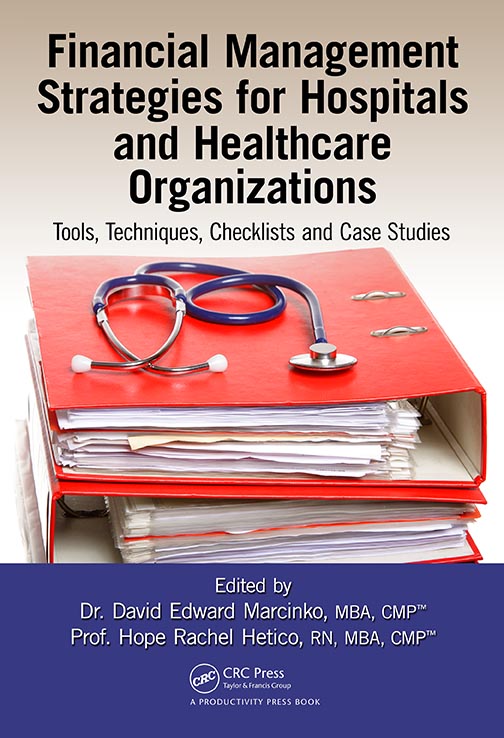
After reading and being inspired by Dr. Atul Gawandi’s December 10, 2007 New  Yorker article, “The Checklist”, as well as the Checklist Manifesto, I am writing to ask that you consider this request to write a 3-5 sentence testimonial review to our upcoming new textbook:  Financial  Management Strategies for Hospitals and Healthcare Organizations: Tools,  Techniques, Checklists and Case Studies

It is the follow up to: Hospitals & Health Care Organizations: Management Strategies, Operational Techniques,  Tools, Templates, and Case Studies

Book Focus

Please realize that the focus of the work is non-clinical in nature, and is replete with managerial case models and administrative checklists following each chapter.

Just as Atul believed the time is right for medical checklists, we believe in a similar philosophy for hospitals, health enitites, and healthcare administration. It is right for any physician or medical practitioner, regardless of degree or specialty designation.

New Book

Ideal Reviewers

Ideal book reviewers are doctors, financial advisors, economists, accountants, nurses, insurance agents, politicians and healthcare CXOs. So, please see the TOC links as we ask you to keep this request confidential.  Regardless of your decision, we remain an apostle of your core vision whenever possible.

Fraternally,

Dr. David Edward Marcinko MBA

[Editor-in-Chief]

INSTITUTE OF MEDICAL BUSINESS ADVISORS, INC.

Suite #5901 Wilbanks Drive Norcross, Georgia, 30092 USA

Phone: 770.448.0769

MarcinkoAdvisors@msn.com

Secrets

###

Is your Financial Advisor a Psychopath?

Join Our Mailing List

On Going Rogue?

Research shows the financial industry attracts more than its share of charming, manipulative egotists. Or, does it?

Avatar of Dr. Marcinko Speaking as MSL

Assessment

Here is what to watch for:

Conclusion

Your thoughts and comments on this ME-P are appreciated. Feel free to review our top-left column, and top-right sidebar materials, links, URLs and related websites, too. Then, subscribe to the ME-P. It is fast, free and secure.

Link: http://feeds.feedburner.com/HealthcareFinancialsthePostForcxos

Speaker: If you need a moderator or speaker for an upcoming event, Dr. David E. Marcinko; MBA – Publisher-in-Chief of the Medical Executive-Post – is available for seminar or speaking engagements. Contact: MarcinkoAdvisors@msn.com

Our Other Print Books and Related Information Sources:

Health Dictionary Series: http://www.springerpub.com/Search/marcinko

Practice Management: http://www.springerpub.com/product/9780826105752

Physician Financial Planning: http://www.jbpub.com/catalog/0763745790

Medical Risk Management: http://www.jbpub.com/catalog/9780763733421

Hospitals: http://www.crcpress.com/product/isbn/9781439879900

Physician Advisors: www.CertifiedMedicalPlanner.org

Product Details  Product Details

Director of Hospital Quality Management Needed

Join Our Mailing List

For A Hospital in Mississippi

Dear Dr. Marcinko,

Perhaps you can help a colleague?

I am conducting a confidential search for well qualified candidates to fill an immediate opening as a Director of Quality Management in a Mississippi hospital. Candidates must have hospital quality management experience and be willing to relocate if not already in the area.

This is an ideal opportunity for a strong Quality Manager to advance as Director in a modest size hospital which is a part of a growing national healthcare system.

To be considered, please email all resumes or candidates to me. Candidates may also contact me directly. If there appears to be a match, I’ll be able to disclose the location and discuss the details of the role.

So, please let me know if you know someone who may be qualified for this role.

Thank you.

Steve Haynes | Recruiting Manager
Avery Partners, LLC
steve.haynes@averypartners.com

###

Team Quality

Books for Savvy Doctors and their Financial Advisors and Management Consultants

Join Our Mailing List

Learn and Prosper from the ME-P

By Ann Miller RN MHA

Product DetailsProduct DetailsProduct Details

Product Details  Product Details

Product DetailsProduct Details

Assessment

Click on each image for more information.

Feel free to write a review and tell us what you think?

Conclusion

Your thoughts and comments on this ME-P are appreciated. Feel free to review our top-left column, and top-right sidebar materials, links, URLs and related websites, too. Then, subscribe to the ME-P. It is fast, free and secure.

Speaker: If you need a moderator or speaker for an upcoming event, Dr. David E. Marcinko; MBA – Publisher-in-Chief of the Medical Executive-Post – is available for seminar or speaking engagements. Contact: MarcinkoAdvisors@msn.com

OUR OTHER PRINT BOOKS AND RELATED INFORMATION SOURCES:

Product Details

About “Hospitals and Healthcare Organizations” in 2014

Join Our Mailing List

Management Strategies, Operational Techniques, Tools, Templates and Case Studies

Product DetailsProduct Details

Search Inside these Books

###

Conclusion

Your thoughts and comments on this ME-P are appreciated. Feel free to review our top-left column, and top-right sidebar materials, links, URLs and related websites, too. Then, subscribe to the ME-P. It is fast, free and secure.

Link: http://feeds.feedburner.com/HealthcareFinancialsthePostForcxos

Speaker: If you need a moderator or speaker for an upcoming event, Dr. David E. Marcinko; MBA – Publisher-in-Chief of the Medical Executive-Post – is available for seminar or speaking engagements. Contact: MarcinkoAdvisors@msn.com

OUR OTHER PRINT BOOKS AND RELATED INFORMATION SOURCES:

DICTIONARIES: http://www.springerpub.com/Search/marcinko
PHYSICIANS: www.MedicalBusinessAdvisors.com
PRACTICES: www.BusinessofMedicalPractice.com
HOSPITALS: http://www.crcpress.com/product/isbn/9781466558731
CLINICS: http://www.crcpress.com/product/isbn/9781439879900
BLOG: www.MedicalExecutivePost.com
FINANCE: Financial Planning for Physicians and Advisors
INSURANCE: Risk Management and Insurance Strategies for Physicians and Advisors

###

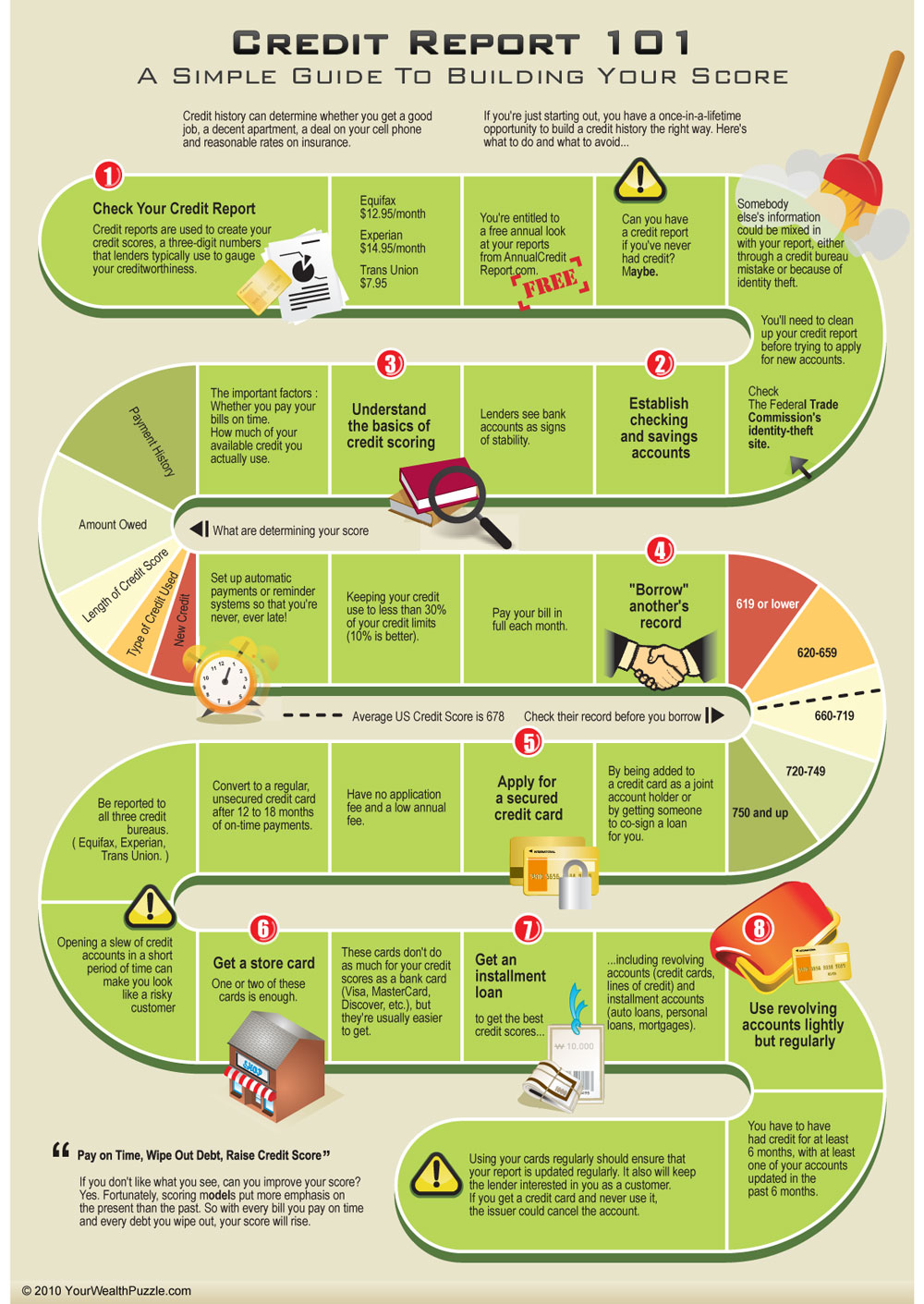
Credit Reporting for Medical Students, Interns, Residents, Fellows and New Practitioners

Join Our Mailing List

Understanding and Building your Score [The Basics]

Credit-Infographic

More:

Conclusion

Your thoughts and comments on this ME-P are appreciated. Feel free to review our top-left column, and top-right sidebar materials, links, URLs and related websites, too. Then, subscribe to the ME-P. It is fast, free and secure.

Link: http://feeds.feedburner.com/HealthcareFinancialsthePostForcxos

Speaker: If you need a moderator or speaker for an upcoming event, Dr. David E. Marcinko; MBA – Publisher-in-Chief of the Medical Executive-Post – is available for seminar or speaking engagements. Contact: MarcinkoAdvisors@msn.com

Our Other Print Books and Related Information Sources:

Health Dictionary Series: http://www.springerpub.com/Search/marcinko

Practice Management: http://www.springerpub.com/product/9780826105752

Physician Financial Planning: http://www.jbpub.com/catalog/0763745790

Medical Risk Management: http://www.jbpub.com/catalog/9780763733421

Hospitals: http://www.crcpress.com/product/isbn/9781439879900

Physician Advisors: www.CertifiedMedicalPlanner.org

Product Details

Is Working with a Financial Advisor Worth It?

Join Our Mailing List

The Future of Retirement, the Power of Planning

By Lon Jefferies CFP® MBA

Lon JeffriesHSBC recently published an article titled “The Future of Retirement, the Power of Planning” which compares the circumstances of investors who work with a financial planner to those who invest on their own. The goal of the study was to determine if there is a benefit to working with an investment professional.

The Survey

The survey categorized survey respondents as non-planners, advice-seeking non-planners, self-guided planners, and advice seeking planners.

The Psychological Profile

  1. Non-planners have done nothing by way of financial planning or obtaining financial advice. This group represented 38% of all respondents.
  2. Advice-seeking non-planners are individuals who do not have a financial plan, though they do seek professional financial advice from time to time. They are likely to seek advice about one particular need rather than taking holistic, comprehensive advice. This group made up 12% of all respondents.
  3. Self-guided planners have a financial plan in place but do not seek professional expertise to help them make sense of their finances. Members of this group are likely to be younger, internet savvy, and mid-to-high income earners. This group accounted for 22% of respondents.
  4. Advice-seeking planners have a financial plan and utilize a financial professional to help manage their finances. Members of this grouping are more likely to be approaching retirement or retired, and are typically more wealthy. They made up 28% of survey respondents.

Errors

The most glaring findings of the study is the importance of a financial plan. Those with advisor directed financial plans have nest-eggs that are over four times as large as those without plans. Further, consistently working with a financial planner seems to add significant value; Advice-seeking planners had nest-eggs that were 57% larger than self-guided planners.

Why?

The Financial Engines & AON Hewitt report that investors who manage their investments with the aid of a financial advisor are more diversified, take less risk, and obtain better returns than self-directed investors. In fact, advisor directed investors were found to increase their returns by 2.92% per year after expenses!

Lastly, if you are curious how the size of your nest-egg compares to that of the average American worker, you might be shocked.

Homestead

Excluding the value of a primary residence and defined benefit plans (pensions), 60% of American workers have less than $50k in savings and investments, according to the Employee Benefit Research Institute. Moreover, 79% have less than $100k saved. Only 10% of workers have accumulated a nest-egg of over $250k.

Now, how does this compare with doctors and medical professionals; of today and yesterday. How about you? What about a fiduciary focused Certified Medical Planner www.CertifiedMedicalPlanner.org?

Assessment

Conclusion

Your thoughts and comments on this ME-P are appreciated. Feel free to review our top-left column, and top-right sidebar materials, links, URLs and related websites, too. Then, subscribe to the ME-P. It is fast, free and secure.

Link: http://feeds.feedburner.com/HealthcareFinancialsthePostForcxos

Speaker: If you need a moderator or speaker for an upcoming event, Dr. David E. Marcinko; MBA – Publisher-in-Chief of the Medical Executive-Post – is available for seminar or speaking engagements. Contact: MarcinkoAdvisors@msn.com

OUR OTHER PRINT BOOKS AND RELATED INFORMATION SOURCES:

DICTIONARIES: http://www.springerpub.com/Search/marcinko
PHYSICIANS: www.MedicalBusinessAdvisors.com
PRACTICES: www.BusinessofMedicalPractice.com
HOSPITALS: http://www.crcpress.com/product/isbn/9781466558731
CLINICS: http://www.crcpress.com/product/isbn/9781439879900
BLOG: www.MedicalExecutivePost.com
FINANCE: Financial Planning for Physicians and Advisors
INSURANCE: Risk Management and Insurance Strategies for Physicians and Advisors

Product Details  Product Details

Crafting a Business Plan and Starting a Medical Practice “Live” Audio Conference

Medical Office Business PlanCrafting A Business Plan And Starting A Medical Practice
Speaker: Dr. David Edward Marcinko MBA CMP
Live Audio Conference
Date:Wednesday, January 30, 2013 Time: 1 pm Eastern | 12 pm Central | 11 am Mountain | 10 am Pacific Length: 60 Minutes
 Order
Do you need money to start or Grow your medical practice?
The “Business Plan” is a key tool for raising start-up capital for a new medical practice, or financing a medical / surgical service line extension for a mature one. It is also used for acquiring loans to finance growth of an existing practice. Although long recognized as a quintessential business tool, its’ formal structure and mental rigor are only now being recognized in the medical community as competition increases in the healthcare industrial complex. There are many reasons to write a medical practice business plan. The process of gathering, compiling and analyzing information is an invaluable experience to the beginning practitioner, or experienced veteran physician. Our expert Dr. David, will discuss all these, step by step in this 1-hour enlightening event. See the steps below:

  • Determine the feasibility of a new practice start-up.
  • Raise money from investment bankers for a new practice.
  • Obtain financing to expand an existing office or turn-around a declining satellite.
  • Develop an operational strategic plan and conduct due diligence.
  • Create a budget, time frame or business direction for a practice.
  • Unmask potential problems, risks or benefits of a medical practice.
  • Focus on market opportunities by determining revenue centers or cost drivers.
  • Persuade third party payers, networks and insurance carriers that your practice has a future and represents a viable synergistic partner for their organization.
  • And more
As a attendee you will get:

  • Power Point slide presentation.
  • Time-line checklist to new medical office launch.
  • Topical comprehensive white paper.
  • Electronic blog forum for further information.
  • And more
Dr. David in this 60-minute conference will present to you:

  • Executive Summary: Where you concisely state the purpose of the loan, the exact amount of money required, an explanation of what the loan will be used for and why it’s needed.
  • Pro-forma Cash Budgets and Financial Statements:You’ll learn to how effectively use your data and underlying assumptions to prepare information that your banker can easily read and buy into.
  • Doctor’s Personal Financial Statements: Learn how to use copies of the last 3 years of personal tax returns for the bank as well as identify the collateral being pledged as security for the loan.
  • Representation: Here is where this presentation is invaluable.
  • And more
Order
Call 1-866-458-2965 and mention code STCIGH02
Ask a question at the Q&A session following the live event and get advice unique to your situation
About Our Speaker
Dr. David Edward Marcinko MBA CMP is founding CEO of the Institute of Medical Business Advisors, Inc www.MedicalBusinessAdvisors.com and Publisher of the Medical Executive-Post www.MedicalExecutivePost.com iMBA Inc is a leading national scope provider of real time medical practice management reports, books, dictionaries, journals, financial planning and advisory opinions, Fair Market Value appraisals and educational seminars www.CertifiedMedicalPlanner.org  The firm serves physicians, nurses and medical societies; financial advisors, wealth managers and CPAs; emerging healthcare entities, hospitals, clinics, IPAs and their CXOs; the press, media and all related organizations. Read more
Get $20 Off On Registering NOW!(Use Codé “David20” at Checkóut )

Order

Certified Medical Planner

Are Doctors Unique -OR- New Members of the Working Class hoi-polloi?

Join Our Mailing List

United We Stand – Divided We Fall?

By Dr. David Edward Marcinko MBA

BC Dr. MarcinkoPhysician blogger Kent Bottles MD recently asked if doctors are really different; a special class of folks?

And, some colleagues are shocked when an authority like Uwe Reinhardt PhD, of Princeton University, points out that collectively many MDs act just like any other worker in the domestic economy.

LinkAre physicians really that special?

In fact, the classic 1986 letters between the Princeton professor, and former New England Journal of Medicine editor Arnold Relman MD, highlight the tension between how we think of ourselves and how we act.

Medical Labor Unions

Now, also recall that healthcare journalist William F. Shea, opined more than a decade ago, that there were numerous psychological barriers against the formation of physician unions [personal communication].

Barriers

These included (1) the public perception of doctor’s as a “cut above” ordinary workers; (2) doctor’s attempts to wrap collective bargaining in a mantle of patient’s rights that lacked credibility; and (3) the highly educated physician’s ability to re-engineer and seek alternate employment opportunities rather than accept the salary scale or lack of autonomy present in restrictive managed care entities.

Professional Wake Up Call

Tincture of Time

Time has proven Shea both correct and incorrect, as MD resignation through individual re-deployment and/or innovation has been more effective than any “union strike” if called by one practitioner at a time.

On the other hand, more than 40% of all physicians are now collective employees … So, what gives?

Link: Legal Strategies for Doctors Sheltering Employment Income

Assessment

And so, are doctors really different than the man-in-the-street; or more like union workers and the OWStreeters? Did we stand united, or have we fallen individually since the comments of Shea, Reinhardt and Relman?

Conclusion

Your thoughts and comments on this ME-P are appreciated. Feel free to review our top-left column, and top-right sidebar materials, links, URLs and related websites, too. Then, subscribe to the ME-P. It is fast, free and secure.

Speaker: If you need a moderator or speaker for an upcoming event, Dr. David E. Marcinko; MBA – Publisher-in-Chief of the Medical Executive-Post – is available for seminar or speaking engagements. Contact: MarcinkoAdvisors@msn.com

OUR OTHER PRINT BOOKS AND RELATED INFORMATION SOURCES:

 

Product DetailsProduct DetailsProduct Details

Product Details  Product Details

Product DetailsProduct Details

A New Book for Physician Entrepreneurs and Innovators

Join Our Mailing List

Innovation and Entrepreneurship in the Healthcare Sector: From Idea to Funding to Launch

###

Innovation and Entrepreneurship in the Healthcare Sector: From Idea to Funding to Launch
###
Assessment
Innovation and Entrepreneurship in the Healthcare Sector [From Idea to Funding to Launch].  MORE: http://www.entrepreneurialmd.com/index/2013/1/8/innovation-entrepreneurship-book-in-brief-for-physician-entr.html
###
Conclusion

Your thoughts and comments on this ME-P are appreciated. Feel free to review our top-left column, and top-right sidebar materials, links, URLs and related websites, too. Then, subscribe to the ME-P. It is fast, free and secure.

Link: http://feeds.feedburner.com/HealthcareFinancialsthePostForcxos

Speaker: If you need a moderator or speaker for an upcoming event, Dr. David E. Marcinko; MBA – Publisher-in-Chief of the Medical Executive-Post – is available for seminar or speaking engagements. Contact: MarcinkoAdvisors@msn.com

OUR OTHER PRINT BOOKS AND RELATED INFORMATION SOURCES:

DICTIONARIES: http://www.springerpub.com/Search/marcinko
PHYSICIANS: www.MedicalBusinessAdvisors.com
PRACTICES: www.BusinessofMedicalPractice.com
HOSPITALS: http://www.crcpress.com/product/isbn/9781466558731
CLINICS: http://www.crcpress.com/product/isbn/9781439879900
BLOG: www.MedicalExecutivePost.com
FINANCE: Financial Planning for Physicians and Advisors
INSURANCE: Risk Management and Insurance Strategies for Physicians and Advisors

Product DetailsProduct Details

Phelps Medical Associates Seeks Vice President, Medical Director‏

Join Our Mailing List

Employment Opportunity

By Deedra Hartung
Senior EVP, Managing Director
dhartung@cejkasearch.com
http://www.cejkaexecutivesearch.com

Dr. Marcinko,

Phelps Memorial Hospital Center has retained Cejka Executive Search to recruit a Vice President, Medical Director. Phelps Memorial Hospital Center is a 238-bed general medical and surgical hospital in Sleepy Hollow, NY, 27 miles north of New York City; Phelps Medical Associates is their physician practice.

Seeking VP and MD

The Vice President, Medical Director will champion the physician integration initiatives of Phelps Medical Center with their medical staff. The Vice President, Medical Director will work to strengthen relationships, improve clinical quality, instill evidence based medical practices and encourage the use of the electronic medical record. Continued growth of Phelps Medical Associates will be a priority of this position as well as attaining physician growth targets in strategic clinical areas. The Vice President, Medical Director will oversee the operations and management of Phelps Medical Associates and its policies, including physician compensation, and lead the group towards becoming a model of quality, value and physician satisfaction. The Vice President, Medical Director will be a member of the Hospital Center’s senior administrative team and will report to the CEO and a subcommittee of the Board of Trustees of Phelps Memorial Hospital Center.

###

jobs

Requirements

This position requires an M.D. or D.O. and the ability to obtain a license to practice in the State of New York with current Board certification in the associated area of practice. Postgraduate education in business or administration is preferred. A minimum of 3 years prior physician leadership experience including management experience in a physician group practice setting is required. Excellent problem solving and verbal and written communication skills are required along with the ability to adapt and respond in a rapidly changing and demanding healthcare environment.

Link: View this email as a web page

Assessment

Nominations and interested candidates should contact and submit their CV to me directly.

Kindest Regards,

Deedra Hartung

Deedra Cejka Executive Search
4 CityPlace Dr., Ste. 300
St. Louis, MO 63141
800-209-8143 Office Hartung

Your thoughts and comments on this ME-P are appreciated. Feel free to review our top-left column, and top-right sidebar materials, links, URLs and related websites, too. Then, subscribe to the ME-P. It is fast, free and secure.

Link: http://feeds.feedburner.com/HealthcareFinancialsthePostForcxos

Speaker: If you need a moderator or speaker for an upcoming event, Dr. David E. Marcinko; MBA – Publisher-in-Chief of the Medical Executive-Post – is available for seminar or speaking engagements. Contact: MarcinkoAdvisors@msn.com

OUR OTHER PRINT BOOKS AND RELATED INFORMATION SOURCES:

DICTIONARIES: http://www.springerpub.com/Search/marcinko
PHYSICIANS: www.MedicalBusinessAdvisors.com
PRACTICES: www.BusinessofMedicalPractice.com
HOSPITALS: http://www.crcpress.com/product/isbn/9781466558731
CLINICS: http://www.crcpress.com/product/isbn/9781439879900
BLOG: www.MedicalExecutivePost.com
FINANCE: Financial Planning for Physicians and Advisors
INSURANCE: Risk Management and Insurance Strategies for Physicians and Advisors

Product DetailsProduct DetailsProduct Details

Product Details  Product Details

Product DetailsProduct Details

Women Leaving Medicine

Join Our Mailing List

Career Development

[By Ann Miller RN MHA]

There is a new, two year old, website called Women Leaving Medicine. It was founded by Dr. Philippa Kennealy, a work-from-home physician business person, mom and fierce physician advocate. She is also a colleague from http://www.entrepreneurialmd.com

According to her WLM website, she is deeply troubled by the disillusionment and disengagement many physicians experience, and the impact on the future of healthcare. She is equally distressed by the difficulties women physicians face when balancing the demands of families and professional responsibilities.

Link: www.WomenLeavingMedicine.com

WLM Beliefs

WLM  believes that:

  • Slowing the Physician Brain Drain is vital to the well-being of our society
  • Women physicians have the right to nurture their families to the extent they desire
  • Women leaving medicine represent a great wealth of training and experience that must be tapped, to continue to benefit society.

The Challenge

Dr. Kennealy challenges all Women Leaving Medicine to consider the following:

  • You are too valuable to society to “go to waste”
  • Success does not demand the sacrifice of your loved ones
  • You can nurture your family and continue to change the world
  • It’s up to you to craft your personal and professional journeys, as you would a Work of Art
  • Crafting your Well-Lived Life takes imagination, boldness and creativity, along with all of those amazing physician “smarts” of yours

Survey: http://www.entrepreneurialmd.com/index/2013/1/15/women-physicians-thinking-of-leaving-medicine-how-can-i-help.html

Assessment

Dr. Kennealy knows that stay-at-home women physicians want to still contribute meaningfully to others, and lack the right opportunities. She is inspired to be part of the solution to our healthcare crisis.

More:

Conclusion

Your thoughts and comments on this ME-P are appreciated. Feel free to review our top-left column, and top-right sidebar materials, links, URLs and related websites, too. Then, subscribe to the ME-P. It is fast, free and secure.

Speaker: If you need a moderator or speaker for an upcoming event, Dr. David E. Marcinko; MBA – Publisher-in-Chief of the Medical Executive-Post – is available for seminar or speaking engagements. Contact: MarcinkoAdvisors@msn.com

OUR OTHER PRINT BOOKS AND RELATED INFORMATION SOURCES:

Product Details  Product Details

Product DetailsProduct Details

Hear Dr. Marcinko on Audio-Educator [Do you Need Money to Start or Grow Your Medical Practice?]

Join Our Mailing List

Crafting a Business Plan and Starting a Medical Practice [A “Live” Audio-Conference]

Conference Registration: http://www.audioeducator.com/hospitals-and-health-systems/business-plan-for-medical-practice-013012.html

Wednesday, Jan 30th, 2013 at 1 PM, EST for 60 minutes

Order

By Staf Reporters www.CertifiedMedicalPlanner.org

Dr David E Marcinko MBAThe “Business Plan” is a key tool for raising start-up capital for a new medical practice, or financing a medical / surgical service line extension for a mature one. It is also used for acquiring loans to finance growth of an existing practice.
Although long recognized as a quintessential business tool, its’ formal structure and mental rigor are only now being recognized in the medical community as competition increases in the healthcare industrial complex.

Reasons for the Plan

There are many reasons to write a medical practice business plan. The process of gathering, compiling and analyzing information is an invaluable experience to the beginning practitioner, or experienced veteran physician. Our expert Dr. David E. Marcinko MBA CMPwill discuss all these, step by step in this 1-hour enlightening event.

See the steps below:

  • Determine the feasibility of a new practice start-up.
  • Raise money from investment bankers for a new practice.
  • Obtain financing to expand an existing office or turn-around a declining satellite.
  • Develop an operational strategic plan and conduct due diligence.
  • Create a budget, time frame or business direction for a practice.
  • Unmask potential problems, risks or benefits of a medical practice.
  • Focus on market opportunities by determining revenue centers or cost drivers.
  • Persuade third party payers, networks and insurance carriers that your practice has a future and represents a viable synergistic partner for their organization.

Medical Office Business Plan

As an attendee you will get:

  • Power Point slide presentation.
  • Time-line checklist to new medical office launch.
  • Topical comprehensive white paper.
  • Electronic blog forum for further information.

Dr. Marcinko in this 60-minute conference will present to you:

  • Executive Summary: Where you concisely state the purpose of the loan, the exact amount of money required, an explanation of what the loan will be used for and why it’s needed.
  • Pro-forma Cash Budgets and Financial Statements: You’ll learn to how effectively use your data and underlying assumptions to prepare information that your banker can easily read and buy into.
  • Doctor’s Personal Financial Statements: Learn how to use copies of the last 3 years of personal tax returns for the bank as well as identify the collateral being pledged as security for the loan.
  • Representation: Here is where this presentation is invaluable.

Ask a question at the Q&A session following the live event and get advice unique to your situation, directly from our expert speaker.

Who should attend? Medical students, interns, residents and fellows, New, mid-career and mature medical practitioners, Office managers, clinic administrators, healthcare CXOs and physician / nurse executives, All doctors who wish to be employers; not employees.

http://businessofmedicalpractice.com/chapter-3-2/

Why use AudioEducator?

  • Save money on travel. Our conferences are available from the comfort and convenience of your own office or meeting room.
  • Meet your specific training needs. Whether you attend a live event, load up one of our encore broadcasts, or purchase a CD or PDF transcript — you’ll get the information you need on your schedule.
  • Keep learning after the event. Every conference purchase includes the speaker’s materials so you can keep learning long after the conference is over.
  • Save time training your whole staff. Gather around a speaker phone or computer and enlighten your entire team for one low price.
  • Do you work with a virtual team or multiple locations? Ask our customer specialists about discounts for your whole staff.

REGISTER HERE

http://www.audioeducator.com/speakers/index/speaker/600

###

 Product Details

www.BusinessofMedicalPractice.com

Order


On Googling Myself [Oh My]

Join Our Mailing List

A Solitary Pursuit?

By Dr. David Edward Marcinko MBA CMP™ www.CertifiedMedicalPlanner.org

Dr. MarcinkoI am a doctor, financial advisor, editor, publisher, health economist, teacher, runner and a few other things, as well. A real diletant!

But, there is something else I must admit to you. It is sinister. Something I often do at night, in the dark, when no one else is around. Not even my wife.

What is It? …. Why Googling my self, of course! Also known as “ego surfing.”

Ego Surfing

Have you ever Googled yourself or your financial advisory, management or medical practice? Did you know that you have an ever growing online reputation? Whether you know it or not, Financial Advisors and Doctors have an online presence. When you type your name in a search engine you may be surprised by what you find.

Digital Footprints

Everything you do professionally, or socially, creates a digital footprint. If you are involved in social media then you are contributing to your online reputation. If not, your online reputation is being written for you. There is a conversation taking place about you online, but unfortunately you may not be included in it.

google-chrome-logo

So Much Information

A simple Google search of your name will likely show your practice website. Your name will also appear in numerous third party review sites. Take the time to read a few. You may be surprised. You will find your name and your practice appearing on people’s Facebook and Twitter pages too.

And, you may see comments from clients and patients [both satisfied, and not so much], too. So, keep abreast of your digital bona fides. Google yourself regularily …. Just, dont go blind.

Assessment

While at first this may be disturbing, I view it as an opportunity to get the [positive] word out. How about you? Sinister, or no?

Conclusion

Your thoughts and comments on this ME-P are appreciated. Feel free to review our top-left column, and top-right sidebar materials, links, URLs and related websites, too. Then, subscribe to the ME-P. It is fast, free and secure.

Link: http://feeds.feedburner.com/HealthcareFinancialsthePostForcxos

Speaker: If you need a moderator or speaker for an upcoming event, Dr. David E. Marcinko; MBA – Publisher-in-Chief of the Medical Executive-Post – is available for seminar or speaking engagements. Contact: MarcinkoAdvisors@msn.com

Our Other Print Books and Related Information Sources:

Health Dictionary Series: http://www.springerpub.com/Search/marcinko

Practice Management: http://www.springerpub.com/product/9780826105752

Physician Financial Planning: http://www.jbpub.com/catalog/0763745790

Medical Risk Management: http://www.jbpub.com/catalog/9780763733421

Hospitals: http://www.crcpress.com/product/isbn/9781439879900

Physician Advisors: www.CertifiedMedicalPlanner.org

Product DetailsProduct DetailsProduct Details

Product Details  Product Details

Product DetailsProduct Details

US Income Distribution [Doctors versus Laymen]

Join Our Mailing List

Fortunate Medical Professionals

www.CertifiedMedicalPlanner.org

The income gap between the 95th percentile and 80th percentile grew by $1,424 from 2010 to 2011. Indeed, income distribution appears to be widening, and fast, according to the graphic below.

income distribution

Inequality Grows

Okay, we don’t have inequality figures for 2012 yet. But, we do have income data for 2011, and it suggests that the post-war trend of widening income gaps show little sign of abating.

Assessment

And so, the gap between the top 5 percent and the rest of the country just kept growing. But, what about doctors and related medical professionals?

Conclusion

Your thoughts and comments on this ME-P are appreciated. Feel free to review our top-left column, and top-right sidebar materials, links, URLs and related websites, too. Then, subscribe to the ME-P. It is fast, free and secure.

Speaker: If you need a moderator or speaker for an upcoming event, Dr. David E. Marcinko; MBA – Publisher-in-Chief of the Medical Executive-Post – is available for seminar or speaking engagements. Contact: MarcinkoAdvisors@msn.com

OUR OTHER PRINT BOOKS AND RELATED INFORMATION SOURCES:

Product Details  Product Details

Product Details

Request to Become an ME-P Contributor

Join Our Mailing List

By Ann Miller RN MHA

[Executive-Director]

MarcinkoAdvisors@msn.com

###

We are always looking to add new expert contributors and topics to the ME-P. If you are a financial advisor, healthcare consultant or medical professional that would like to become a contributor, please contact us and let us know what topics you would like to write on – and any prior experience you may have in journalism before other professionals. Informed opinions and comments are welcomed, too! We will be in touch with you shortly about your inquiry.

Thank you, in advance, for your interest in working with us!

###

Our Newest Textbook Release

Buy from Amazon

Learn How to Profit and Thrive in the PP-ACA Era

BOOK FOREWORD / TESTIMONIAL

Why You Can’t Afford Poor Health Habits

Join Our Mailing List

By Rick Kahler MS CFP® ChFC CCIM www.KahlerFinancial.com

Does about $40 a month for a fitness center membership seem beyond your budget? Do you cringe at the cost of fresh fruits and vegetables? Is your wallet too lean to let you buy lean protein? And the cost of a medical checkup is something you don’t even want to think about.

At first glance, the cost of staying healthy might seem way too high. Certainly, maintaining good health comes at a cost. Yet in the long run, maintaining poor health will cost far more.

Good Health Finances

Let’s look at some of the ways it pays financially to take care of your health.

1. Exercise. Before you decide you can’t afford a $40 gym membership, consider this: What do you do with the time you don’t spend exercising? Shop? Watch movies? If you’re like most people, you spend some of that time spending money. Maybe even enough money to cover the gym membership. There are also plenty of free ways to exercise, like running, biking, or walking. In Rapid City, all our hills provide a great workout at no extra charge.

2. Diet. Eating a healthy diet doesn’t have to mean adding expensive organic produce to your grocery bill. You can buy plenty of real food that’s canned or frozen. At the same time, subtract highly processed foods and junk. You may even end up saving money. You’ll save even more if you eliminate health-destroying habits like smoking or excessive drinking. This is a two-for-one: you improve your health and save money at the same time.

3. Preventive checkups. Check your insurance coverage. Under current health care laws, some preventive care is fully covered. And if you think a routine visit to the dentist is too expensive, check out the cost of a root canal or getting a tooth pulled.

Every penny you may save by not exercising or eating right, you’ll eventually spend in additional medications, doctor visits, medical co-pays, medical equipment, transportation, and housing costs.

Poor Health Finances

Poor health will directly affect your health insurance premiums. It will indirectly raise your taxes. Even if you’re healthy, you’ll help pay for those with poor health through Medicaid and Medicare taxes.

Probably the greatest cost of poor health, however, is one most of us never consider. This is the decrease in one’s earning power. For most people, their greatest asset is their capacity to earn. Poor health may hold people back from reaching their potential, or even make them unable to continue to earn any income. A survey of pre-retirees found that 80% of them planned on working after 65. Yet only 19% of people over 65 are actually working. Why? Over 40% are unable to work because of poor health.

Poor Health Financial advantages

There is one financial advantage to poor health: it reduces your life expectancy so you run less risk of outliving your money. However, don’t think that dying younger means you can live more lavishly. A recent study shows the number of unhealthy years—with their related health-care costs—are the same regardless of life expectancy.

Assessment

There are many ways to define wellness, most of which include a combination of financial, emotional, and physical health. If a person isn’t healthy, money alone isn’t of much value. But take money out of the picture, and good health is almost impossible to sustain. Our health and our money have a direct impact on each other.

Since good health is such a vital asset, it makes sense to use some of your financial resources to support it. Part of good financial planning and money management is doing what you can to stay healthy enough to enjoy your financial independence.

Conclusion

Your thoughts and comments on this ME-P are appreciated. Feel free to review our top-left column, and top-right sidebar materials, links, URLs and related websites, too. Then, subscribe to the ME-P. It is fast, free and secure.

Speaker: If you need a moderator or speaker for an upcoming event, Dr. David E. Marcinko; MBA – Publisher-in-Chief of the Medical Executive-Post – is available for seminar or speaking engagements. Contact: MarcinkoAdvisors@msn.com

OUR OTHER PRINT BOOKS AND RELATED INFORMATION SOURCES:

     Our New Textbook Release

Buy from Amazon

Learn How to Profit and Thrive in the PP-ACA Era

BOOK FOREWORD / TESTIMONIAL

The Average Day in the Life of a Nurse

Join Our Mailing List

A Typical Work Day?

By the numbers, a typical work day can be similar for nurses all across the US.

The major difference lies within salaries earned by nurses, which directly correlates to the certification or degree any given nurse may hold. Nurses with a Bachelor of Science in Nursing (BSN) degree earn a higher income than do Registered Nurses (RN). Those who advance their careers with a graduate degree in nursing earn an even higher salary.

Brought to you by Jacksonville University

Assessment

The increased demand for highly qualified nurses is evident by the rising increase of pay earned each year by nurses with advanced degrees. A larger number of degree holding individuals within the industry benefits patients as well as nurses.

Conclusion

Your thoughts and comments on this ME-P are appreciated. Feel free to review our top-left column, and top-right sidebar materials, links, URLs and related websites, too. Then, subscribe to the ME-P. It is fast, free and secure.

Link: http://feeds.feedburner.com/HealthcareFinancialsthePostForcxos

Speaker: If you need a moderator or speaker for an upcoming event, Dr. David E. Marcinko; MBA – Publisher-in-Chief of the Medical Executive-Post – is available for seminar or speaking engagements. Contact: MarcinkoAdvisors@msn.com

Our Other Print Books and Related Information Sources:

Health Dictionary Series: http://www.springerpub.com/Search/marcinko

Practice Management: http://www.springerpub.com/product/9780826105752

Physician Financial Planning: http://www.jbpub.com/catalog/0763745790

Medical Risk Management: http://www.jbpub.com/catalog/9780763733421

Hospitals: http://www.crcpress.com/product/isbn/9781439879900

Physician Advisors: www.CertifiedMedicalPlanner.org

Our Newest Textbook Release

Buy from Amazon

Learn How to Profit and Thrive in the PP-ACA Era

BOOK FOREWORD / TESTIMONIAL


Understanding the Domestic Unemployment Numbers

Join Our Mailing List

How Can Unemployment Be Going Down?

By Rick Kahler MS CFP® ChFC CCIM www.KahlerFinancial.com

In an economy that isn’t exactly robust, how can unemployment be going down? The recent drop in the unemployment rate from 8.1% to 7.8% caught almost everyone, including me, by surprise. The GDP grew by only 1.5% in the first quarter, and its growth was under 2% for the last 12 years. To get the economy moving again we will need growth of 3% a year.

It isn’t surprising that many pundits were questioning the timing within minutes after the latest unemployment numbers were announced. After all, unemployment is one of the major issues in the Presidential election. Former General Electric CEO Jack Welch and several Fox News commentators even suggested the administration was cooking the books.

The BLS

I don’t believe the Bureau of Labor Statistics is manipulating unemployment data. The process of computing the data is straightforward and transparent. Two surveys go into projecting the unemployment rate, one covering 400,000 businesses and the other questioning 60,000 households. The surveys ask about the number of full-time and part-time employees, whether the part-time employees really want full-time employment, and whether those without a job have looked for a job within the last month.

Cooked Books?

But that doesn’t mean the books aren’t cooked. They are.

“The way the government derives the unemployment numbers has changed significantly over the last 30 years,” writes John Mauldin, editor of the economic newsletter Thoughts from the Frontline, in the October 8, 2012, issue. “Whatever administration is involved, the new equations for determining unemployment result in a lower unemployment rate than they would have if the 1980’s methodology were still in place.”

The Changes

One of the more bizarre changes in the unemployment rate calculation is that people are not considered unemployed unless they have looked for a job in the last 30 days, even if they currently receive unemployment benefits. Mauldin says there are probably many people who haven’t looked for a job in the last 30 days and that most, if not all, of them would consider themselves unemployed. “If you’re not disabled and you’re receiving unemployment or welfare benefits I think you should be counted as unemployed,” he says. He estimates our actual unemployment rate is well over 12%, which doesn’t take into account the 50% of college graduates who are underemployed.

Don’t Blame Obama

Before you blame the Obama administration for the dumbing down of the unemployment rate, this is the same way the Bush administration calculated unemployment.

It’s the same story with the Consumer Price Index, which the government has continually tweaked to give the illusion of a lower CPI than if the 1980’s formula was used.

ShadowStats.com, run by John Williams, calculates the current unemployment and inflation rates using the formulas from the 1980’s. According to that methodology, Williams calculates the unemployment rate (U-6) is 15% and the CPI is 9%.

Regaining Jobs?

The economy has currently regained about half of the jobs lost in the Great Recession of 2008-2009. According to the Liscio Report, it will take another 40 months to reach the level of employment we had prior to the recession. That is if we don’t have another recession, which is doubtful. If all the tax increases slated for January 1 go into effect, the Congressional Budget Office says GDP will shrink 2.9%, which guarantees a recession.

Assessment

So, what was behind the fall in the unemployment rate this month? According to Mauldin, the entire drop came from an increase in part-time workers. He says, “That such significant numbers of people can only find part-time work is not a sign of a strong and growing economy.”

When we look a little deeper, maybe the latest unemployment numbers aren’t such a surprise after all.

Conclusion

Your thoughts and comments on this ME-P are appreciated. Feel free to review our top-left column, and top-right sidebar materials, links, URLs and related websites, too. Then, subscribe to the ME-P. It is fast, free and secure.

Speaker: If you need a moderator or speaker for an upcoming event, Dr. David E. Marcinko; MBA – Publisher-in-Chief of the Medical Executive-Post – is available for seminar or speaking engagements. Contact: MarcinkoAdvisors@msn.com

OUR OTHER PRINT BOOKS AND RELATED INFORMATION SOURCES:

Product Details  Product Details

Contribute to the ME-P

Join Our Mailing List

By Ann Miller RN MHA

[Executive-Director]

Contributors

The Medical Executive-Post is written by contributors that represent a range of professional expertise.  From PhDs, MDs, DDSs, FAs, CPAs, MBAs, CFPs and CMPs, RNs etc; becasue managing a medical practice, clinic or healthcare business, and tracking one’s personal financial career is a complex and difficult task.

So, we have asked physicians, practice managers, CXOs and financial services industry participants and leaders to provide advice, experience and insight.

Link: ME-P MAST HEAD

Want to Join Us?

Have something important to add – join us.

Link: Why Post Your e-Content or Print Publish with Us?

We welcome your comments and if you would like to become a featured author just complete the reply form below and we will contact you.

Crowd-Sourced Print Examples of Our Text Books

Product DetailsProduct DetailsProduct Details

Product Details Product Details

Product Details

Our Newest Textbook Release

Buy from Amazon

Learn How to Profit and Thrive in the PP-ACA Era

BOOK FOREWORD / TESTIMONIAL

About the Certified Medical Planner™ Program

Certified Medical Planner

ADVERTISEMENT

The Virtual Certified Medical Planner™ Program, from iMBA Inc.

Our flagship 500 hour Certified Medical Planner™ professional designation program is designed for fiduciary focused FAs, CFPs®, CPAs, RIAs and other financial services professionals and/or doctors, nurses, health entity CXOs, managers and administrators [medical management consultants] and those in career transition looking to enhance their theoretical knowledge and practical experience in the integrated and expanding fields of medical practice management and personal financial planning.

In all our courses, we cover the full spectrum for any given topic.  Best of all, we utilize real-life case studies from the marketplace, either as a financial advisor or medical management consultant, so students can actively participate in a mock “working financial advisory group” or “medical managerial team”.

And, our unique CMP™ teaching methodology uses “live” dedicated instructors to help [adult-learners] students understand how to fully integrate quantitative and qualitative analysis when advising clients.

We offer 24/7/365 classes designed for working professionals with a heavy workload or travel schedule. In addition, our courses can be taken without ever having to leave your desk, home, office, practice, or even your hotel room.

Our training program is internet based so most of our students take the course virtually. Nevertheless, while our service delivery model is virtual – the educational benefits and notoriety you receive are REAL!

More info:

Ann Miller RN MHA

[Executive-Director]

www.CertifiedMedicalPlanner.org

###

Product DetailsProduct DetailsProduct Details

Product Details  Product Details

Product DetailsProduct Details

Product Details

Events Planner: September 2012

ADVERTISEMENT

Events-Planner: SEPTEMBER 2012

By Staff Writers

Keeping track of important health economics and financial industry meetings, conferences and summits

Welcome to this issue of the Medical Executive-Post and our Events-Planner. It contains the latest information on conferences, news, and relevant resources in healthcare finance, economics, research and development, business management, pharmaceutical pricing, and physician/entity reimbursement! Watch for a new Events-Planner each month.

First, a little about us! The Medical Executive-Post is still a relative newcomer. But today, we have almost 175,000 visitors and readers each month from all over the country, in addition to our growing subscriber base. We have been a successful collaborative effort, thanks to your contributions.  As a result, we are adding new resources daily. And, we hope the website continues to provide the best place to go for journals, books, conferences, educational resources, tools, and other things you need to establish the value your healthcare consulting and financial advisory intervention.

So, enjoy the Medical Executive-Post and this monthly Events-Planner with our compliments.

A Look Ahead this Month – And now, the important dates:

  • September 14-16: Physicians in Management Seminar, Atlanta, GA
  • September 16-19: Association Healthcare Environment, Phoenix, AZ
  • September 19-22: SHSMD Meeting, Philadelphia, PA
  • September 22-25: ASHHRA Meeting, Denver, CO

MarcinkoAdvisors@msn.com

Speaker: If you need a moderator or speaker for an upcoming event, Dr. David E. Marcinko; MBA – Publisher-in-Chief of the Executive-Post – is available for seminar or speaking engagements. Contact: MarcinkoAdvisors@msn.com 

Subscribe Now: Did you like this Medical Executive-Post, or find it helpful, interesting and informative? Want to get the latest E-Ps delivered to your email box each morning? Just subscribe using the link below. It’s free. You can unsubscribe at any time. Security is assured.

Link: http://feeds.feedburner.com/HealthcareFinancialsthePostForcxos

Product DetailsProduct DetailsProduct Details

Product Details  Product Details

Product Details

Medical Office Fee Strategies for Disgruntled Patients

Join Our Mailing List

Adroitly Handling a Tough but Common Office Situation

[By Dr. Gary L. Bode MSA CPA]

A common scenario, in medical practice, is patient disgruntlement over professional fees.

The Scenario

This scenario should not occur in front of other patients. Many receptionists find that genuine, cute little quips like, “I know it seems high, but (wink), I’m expensive to maintain,” defuse the situation by gentling pointing out the overhead factor.

The Balk

When a patient balks at fees, gently and politely imply that we could inquire if the local plumber was available to do the exam, procedure or surgery.

Assessment

This brings training and relative cost issues into play while making them smile.  Costs are high, but justifiable.

More:

Conclusion

Your thoughts and comments on this ME-P are appreciated. Feel free to review our top-left column, and top-right sidebar materials, links, URLs and related websites, too. Then, subscribe to the ME-P. It is fast, free and secure.

Link: http://feeds.feedburner.com/HealthcareFinancialsthePostForcxos

Speaker: If you need a moderator or speaker for an upcoming event, Dr. David E. Marcinko; MBA – Publisher-in-Chief of the Medical Executive-Post – is available for seminar or speaking engagements. Contact: MarcinkoAdvisors@msn.com

OUR OTHER PRINT BOOKS AND RELATED INFORMATION SOURCES:

Product Details

Is Retirement Today a Game Changer for Mature Physicians?

Join Our Mailing List

Understanding Succession and Exit Planning for Physicians

By Michael J. Searcy, ChFC, CFP®, AIFA®

www.SearcyFinancial.com

Doctors who once planned to rely on the sale of their practice to fund their retirement are now finding it more difficult to recruit younger physicians for their succession plan.  If you are a mature doctor today who owns a smaller medical / dental practice (one or two doctor groups), you may be finding that both the economy and desires of younger doctors are changing the game for developing an exit strategy.

The Plan

In preparing a succession plan, a major key to success is starting the process early.  Waiting until you near retirement to begin thinking about selling your practice may leave you with limited (often unfavorable) options.  While some doctors choose to fund a buy-out vehicle during the early stages of their practice with the end goal of selling and retiring in mind, the majority are not in a position where they have a longstanding plan in place.  For doctors who are more than 5-7 years out from retirement, making time to consult with professionals and come up with an enticing purchase proposition for a younger doctor can lead to receiving maximum value for the practice.

Understand the Obstacles

Several factors lead to younger doctors not purchasing existing practices.  These include the heavy competition from hospitals that are competing for more doctors, their desire to set up their own practice, or their aversion to the responsibilities of running a business.  By understanding the obstacles you may face in finding a successor, you can plan ahead to overcome them and get your practice in optimal operating order to increase its attractiveness to potential successors.

The Questions

Questions to consider during the process include:

  • Do I know my practice’s worth?  Getting an accurate valuation is important for you and your successor.  Valuation companies that specialize in medical and dental practice valuations will consider your tangible assets, accounts receivable and the goodwill/brand of your practice to give you an accurate picture of your worth.  By overvaluing your practice, you may repel potential buyers.
  • Are all operations running smoothly?  There may be areas of your practice that need strengthened before a sale.  This can make things smoother as you prepare for a sale, and also make the practice more attractive.
  • Can I/we sustain another doctor’s salary while they are being groomed to take over?
  • If not, is there a hospital affiliate who can hire the doctor to work in my practice until we build the financial base to sustain another salary?
  • Am I protecting my patients?  Aside from adhering to any patient notification laws of your state, you want your patients to understand any upcoming transitions.  Creating a plan to protect your clients may help retain them after the transition.

Build an Alternative Nest Egg

While the sale of your practice may be a wonderful addition to your retirement fund, it is important to build a nest egg as you work and not rely on that big chunk from a sale at the end of your career.  No sale or purchase price is guaranteed and economic changes or new regulations could make your practice unsellable.  By building a nest egg for retirement throughout the course of your career, you can have greater peace of mind that you can experience financial freedom in retirement.

Assessment

Developing your exit strategy will take time, organization and careful planning.  Avoid adding additional stress by viewing the sale of your practice as your financial freedom for retirement.  When it comes time to transfer your ownership out of your practice, make sure you are able to focus solely on a successful outcome!

The Author

Michael J. Searcy, ChFC, CFP, AIFA, is President of Searcy Financial Services, Inc., a registered investment advisory firm in Overland   Park, KS, offering integrated wealth management solutions to doctors.  Searcy has been listed by Medical Economics as one of the “Top 150 Financial Advisors for Doctors” in 2002-2006 and 2011.  For additional information, visit www.SearcyFinancial.com

Your thoughts and comments on this ME-P are appreciated. Feel free to review our top-left column, and top-right sidebar materials, links, URLs and related websites, too. Then, subscribe to the ME-P. It is fast, free and secure.

Link: http://feeds.feedburner.com/HealthcareFinancialsthePostForcxos

Speaker: If you need a moderator or speaker for an upcoming event, Dr. David E. Marcinko; MBA – Publisher-in-Chief of the Medical Executive-Post – is available for seminar or speaking engagements. Contact: MarcinkoAdvisors@msn.com

OUR OTHER PRINT BOOKS AND RELATED INFORMATION SOURCES:

LEXICONS: http://www.springerpub.com/Search/marcinko
PHYSICIANS: www.MedicalBusinessAdvisors.com
PRACTICES: www.BusinessofMedicalPractice.com
HOSPITALS: http://www.crcpress.com/product/isbn/9781466558731
CLINICS: http://www.crcpress.com/product/isbn/9781439879900
ADVISORS: www.CertifiedMedicalPlanner.org
BLOG: www.MedicalExecutivePost.com

Product DetailsProduct DetailsProduct Details

Product Details Product Details

Product Details

Selling into a House Poor Market

When the Local Real-Estate Market is Challenging

Join Our Mailing List

By Rick Kahler MS CFP® ChFC CCIM www.KahlerFinancial.com

An exciting new medical practice opportunity in another state …. Health problems that make one-level living an urgent necessity …. The need to downsize quickly because of a hospitalist job loss ….

These are just a few of the reasons medical professionals might need to sell a home sooner rather than later. The real problem arises when the local real estate market is a challenging one. Here are a few suggestions for anyone looking to sell a house under difficult conditions.

1. Evaluate the urgency of your situation. If you can wait a few months without harming your career, your finances, or your health, that may be the wiser choice. If you can’t make payments, or you need to relocate right away and can’t buy a new house until you sell the current one, waiting to sell is usually a losing proposition.

2. Take a hard look at the costs of waiting. You often can cut your overall housing costs significantly by biting the bullet and selling, rather than paying for two homes until you get the price you want. In addition to mortgage payments, add up expenses like property taxes, maintenance, utilities, and commuting costs.

Example:

For example, suppose you paid $400,000 for a house that’s worth $300,000 in the current market. Selling it now would mean a loss of $100,000, but holding onto it costs $3000 a month. Suppose the market improves by 33% in three years, which of course is not something you can count on. You sell the house then for $400,000. In the meantime, keeping it has cost you $108,000. If you keep the house on the market for a year, then give up and sell at $300,000, you’ve added $10,800 to the original $100,000 loss. You’re often better off to cut your losses and sell.

3. Grit your teeth, hold your nose, and be realistic about the market value of the home you are selling. Your original purchase price has NOTHING to do with current reality. The market is the market, and buyers couldn’t care less about what you paid for the home. They only care about the competition and getting the most home for their money, just as you did when you bought the property.

You need to research the housing market in your area or hire competent help (like an appraiser) to help you determine the market value of your property. Real estate agents can help with pricing, but you must proceed carefully. Some agents practice a technique of “tell them what they want to hear, get the house listed, and then work on getting them to reduce the price.”

4. Think like a buyer as well as a seller. Many sellers forget that the pain of selling at a loss is eased if the replacement home they buy is also valued less than it was several years ago. The loss in the home being sold can often be offset by the bargain price of the home being purchased.

5. Do your best to negotiate with your lender. If your mortgage is more than the sale price of the house, you’ll owe money to the lender at closing. Depending on the circumstances, it may be possible to get the lender to accept a lower payoff. Before the closing date, find out exactly how much you’ll need to pay and know where you’re going to get it.

Assessment

Our reluctance to sell a property for less than the amount we’ve put into it is described as “sunk cost fallacy.” Holding on until we get our money back sometimes works. More often, though, all it does is sink us deeper into a financial hole.

Conclusion

Your thoughts and comments on this ME-P are appreciated. Feel free to review our top-left column, and top-right sidebar materials, links, URLs and related websites, too. Then, subscribe to the ME-P. It is fast, free and secure.

Link: http://feeds.feedburner.com/HealthcareFinancialsthePostForcxos

Speaker: If you need a moderator or speaker for an upcoming event, Dr. David E. Marcinko; MBA – Publisher-in-Chief of the Medical Executive-Post – is available for seminar or speaking engagements. Contact: MarcinkoAdvisors@msn.com

Our Other Print Books and Related Information Sources:

Health Dictionary Series: http://www.springerpub.com/Search/marcinko

Practice Management: http://www.springerpub.com/product/9780826105752

Physician Financial Planning: http://www.jbpub.com/catalog/0763745790

Medical Risk Management: http://www.jbpub.com/catalog/9780763733421

Hospitals: http://www.crcpress.com/product/isbn/9781439879900

Physician Advisors: www.CertifiedMedicalPlanner.org

Product DetailsProduct DetailsProduct Details

Product Details  Product Details

Product Details

Doctors and Financial Advisors “Working 9 to 5”

Join Our Mailing List

What an “Old” Way to Make a Living

[Challenging the Current Business Process Model and Scheduling Paradigm]

By Dr. David Edward Marcinko FACFAS MBA CMP™

[Editor-in-Chief]

First off – my apologies to Dolly Parton for bastardizing the title of her song

My dad worked for General Motors; the 11-PM to 7-AM shift to be precise. The company ran 3 shifts [8hr. X 3da. = 24 hrs / day / 7 days / week]. He was always home during the day for his children. In fact, it seemed as though he never slept. My mom worked the 9-AM to 5-PM  shift / 5 days / week as a banker. What a great arrangement; loving parental child care 24/7/365.

Then, after my own medical school, internship, residency training, fellowship, clinical practice and business school, I often wondered why corporate America and her white collar workers used the 9-5 work day paradigm and not the traditional blue collar 3 shift [24/7/375] manufacturing model – like  GM?

Working

With a 24/7/365 work day schedule [3 shifts/day], fixed office costs would remain the same, while variable costs would increase slightly but be compensated for by increased revenues, less HR stress, fewer utilities and reduced private and public infra-structure maintenance, etc [old styled B-school pedagogy]. This would increase operating capacity and output [patient/client output, CPT® codes, hourly fees, AUMs, etc]. You know – real top line revenue and bottom line profits. And, that’s a good thing for business and commerce.

But, is this 3 shift model applicable to the healthcare industrial complex and the financial services industry? If not – why not? And, I mean real work – examining and treating patients and interviewing clients – not automatic websites or interactive blogs, etc. Doctors, consultants and FAs actually interacting with real folks; not avatars!

An Old but Novel Idea?

As a medical business process consultant, my simple idea is more than two decades old. Yet, it remains largely untested and still considered novel … Perhaps until now! Offering extended hours is one way that physicians – can position themselves for the changes coming in the new healthcare era. How else will we accomodate 34 million new Medicaid insured patients.

In fact, so should financial advisors and medical management consultants. Shoot, why can’t most professionals use this model. Why be constrained to person, place and time [3-Dimensions]?

The Decision

This decision, however, should not be taken lightly and should be evaluated both from a provider, patient, civics, cultural and business standpoint. So, please read this essay for an elegant description of this model.

Then, our ME-P text books can be used to go granular into the nitty-gritty details; with real-life tools, templates, case models and checklists, etc.

Assessment

Link: Ready to offer extended patient hours?

Link: New Medical Practice Entrepreneurial Business Rules for Young Physicians [circa 2012]

Conclusion

Your thoughts and comments on this ME-P are appreciated. Colleagues – when not if – are you going 24/5 … or 6 … or 7?

Feel free to review our top-left column, and top-right sidebar materials, links, URLs and related websites, too. Then, subscribe to the ME-P. It is fast, free and secure.

Link: http://feeds.feedburner.com/HealthcareFinancialsthePostForcxos

Speaker: If you need a moderator or speaker for an upcoming event, Dr. David E. Marcinko; MBA – Publisher-in-Chief of the Medical Executive-Post – is available for seminar or speaking engagements. Contact: MarcinkoAdvisors@msn.com

Our Other Print Books and Related Information Sources:

Health Dictionary Series: http://www.springerpub.com/Search/marcinko

Practice Management: http://www.springerpub.com/product/9780826105752

Physician Financial Planning: http://www.jbpub.com/catalog/0763745790

Medical Risk Management: http://www.jbpub.com/catalog/9780763733421

Hospitals: http://www.crcpress.com/product/isbn/9781439879900

Physician Advisors: www.CertifiedMedicalPlanner.org

Product DetailsProduct Details

How Do We Improve Collaboration between Physicians and Hospital Administrators?

Join Our Mailing List

An Opinion Poll for Doctors, FAs and Patients

By Jennifer Tomasik MS [Principal: www.CFAR.com]

“It is the long history of humankind (and animal kind, too) those who learned to collaborate and improvise most effectively have prevailed.”

– Charles Darwin

Beyond institutional mergers and joint ventures, collaboration in healthcare is being driven by other factors; there is a need to move from a healthcare system driven by volume and characterized by fragmentation, waste, high cost, and inconsistent quality to a system where care is coordinated, costs are lower, and quality is higher.

Merger Mania

Merger mania in the 1990’s was driven by similar concerns, including the fear of for-profit competition and the rise of managed care. The results of this earlier round of mergers were unexpected. The 1990s ‘consolidation fever’ raised hospital prices by at least 5%, and did not measurably improve quality.[i] Hospitals purchased physician practices without a great deal of thought about expectations and mutual accountability, and many of those relationships failed—usually with significant financial implications.

Of Savvy Healthcare Leaders

Fearful of history repeating itself, savvy healthcare leaders are thinking differently about how to develop the collaborative relationships they need to succeed today. They see Accountable Care Organizations [ACOs] and Global Payments—where institutions will take on greater risk for the cost and quality of the services a patient requires—as an opportunity to get clear about how they can best position themselves across the full continuum of care. They believe potentials gains are not likely to show up simply as a result of mergers and acquisitions or consolidation per se. Rather than just integrating the bottom lines of their institutions, they are focused on ensuring that those individuals and teams who actually care for patients can productively collaborate with each other, and that they understand the clear and compelling rationale for why that collaboration is necessary.

Nowhere is this relationship more important than between hospital administrators and the medical staff.

What is “Collaboration” Anyway?

Merriam-Webster defines collaboration as “to work jointly with others or together especially in an intellectual endeavor.” While true, we find this definition insufficient for our purposes. Our colleagues at The Rhythm of Business, a consulting firm focused exclusively on collaboration, provide a more productive way to think about collaboration:

“Collaboration is a purposeful, strategic way of working that leverages the resources of each party for the benefit of all by coordinating activities and communicating information within an environment of trust and transparency.”

We add to this definition one additional, yet critical dimension. Collaboration also means working with, and through, differences. Any highly functioning team will, by its very nature, have differences – team members are ideally bringing innovative ideas that compete for “idea space” at the table.

Effective collaboration requires that teams not only value differences, but in fact encourage them to be surfaced. Viewed in this way, collaboration is not an event or an idea. It’s not “agreeing to get along.” Effective collaboration is an ongoing, systematic, strategic process. It is also, we believe, a business imperative – and nowhere more so than in healthcare.

Assessment

Given the often difficult nature of relationships between hospital administrators and medical staff, how do you improve collaboration to increase productivity and performance?


NOTE: [i] Vogt, William B and Robert Town. “How has hospital consolidation affected the price and quality of hospital care?” Robert Wood Johnson Foundation: Policy Brief No. 9. 2006.

Conclusion

And so, how do we improve collaboration between Physicians and Hospital Administrators?

Your thoughts and comments on this ME-P are appreciated. Feel free to review our top-left column, and top-right sidebar materials, links, URLs and related websites, too. Then, subscribe to the ME-P. It is fast, free and secure.

Link: http://feeds.feedburner.com/HealthcareFinancialsthePostForcxos

About the Author

Jennifer Tomasik, Principal,  leads CFAR’s Health and Hospital Systems practice. She works with her clients to solve complex strategic and organizational challenges. Her approach to consulting emphasizes communication and collaboration, supported by a blend of quantitative and qualitative analytics. Jennifer has worked in the health care sector for nearly 15 years, with expertise in public health, clinical quality measurement, strategic management, and organizational change. Her clients include some of the most prestigious hospitals, health systems and academic medical centers in the country. She has a Master’s in Health Policy and Management from the Harvard School of Public Health.

Speaker: If you need a moderator or speaker for an upcoming event, Dr. David E. Marcinko; MBA – Publisher-in-Chief of the Medical Executive-Post – is available for seminar or speaking engagements. Contact: MarcinkoAdvisors@msn.com

Our Other Print Books and Related Information Sources:

Health Dictionary Series: http://www.springerpub.com/Search/marcinko

Practice Management: http://www.springerpub.com/product/9780826105752

Physician Financial Planning: http://www.jbpub.com/catalog/0763745790

Medical Risk Management: http://www.jbpub.com/catalog/9780763733421

Hospitals: http://www.crcpress.com/product/isbn/9781439879900

Physician Advisors: www.CertifiedMedicalPlanner.org

Buy from Amazon

How to Get Started in Healthcare IT [Video Presentation]

Join Our Mailing List

An Encore Presentation from a ME-P Thought-Leader

By Ann Miller RN MHA [Executive-Director]

In this ME-P, Shahid N. Shah MS shares his best advice for information technology workers looking to get started in the healthcare industry.

Mr. Shah is also known as the Healthcare IT Guy [http://www.healthcareguy.com] informing us about technology issues in the healthcare field.

Link: http://www.physbiztech.com/video/shahid-shah-how-get-started-healthcare-it

###

More Expert Advice from Leaders in Healthcare Management

And, sourced below are related interviews with these experts:

  • Todd Linden, President and CEO of Grinnell Regional Medical Center (about rural healthcare management);
  • Paul Levy, former CEO of Beth Israel Deaconess Medical Center; and
  • Dr. Robert Wachter, Professor of Medicine, University of California, San Francisco (author of “Understanding Patient Safety” and the blog “Wachter’s World”).

Link: Health Administration Degrees http://www.healthadministrationdegrees.com

Assessment

Shahid also authored Chapter 13 on eMRs, HIT and Clinical GroupWare [INTEROPERABLE e-MRs FOR THE SMALL-MEDIUM SIZED MEDICAL PRACTICE] in our best-selling book, the “Business of Medical Practice” http://businessofmedicalpractice.com/chapter-13-2/

So, the text and videos are worth a look www.BusinessofMedicalPractice.com Our colleague, and uber hospitalist Robert Wachter MD, is also mentioned in the book.

Conclusion

Your thoughts and comments on this ME-P are appreciated. Feel free to review our top-left column, and top-right sidebar materials, links, URLs and related websites, too. Then, subscribe to the ME-P. It is fast, free and secure.

Link: http://feeds.feedburner.com/HealthcareFinancialsthePostForcxos

Speaker: If you need a moderator or speaker for an upcoming event, Dr. David E. Marcinko; MBA – Publisher-in-Chief of the Medical Executive-Post – is available for seminar or speaking engagements. Contact: MarcinkoAdvisors@msn.com

Our Other Print Books and Related Information Sources:

Health Dictionary Series: http://www.springerpub.com/Search/marcinko

Practice Management: http://www.springerpub.com/product/9780826105752

Physician Financial Planning: http://www.jbpub.com/catalog/0763745790

Medical Risk Management: http://www.jbpub.com/catalog/9780763733421

Hospitals: http://www.crcpress.com/product/isbn/9781439879900

Physician Advisors: www.CertifiedMedicalPlanner.org

Product Details

New IRS Guidance on Health FSAs for Doctors

Join Our Mailing List

On Section 125 Cafeteria Plans

By Children’s Home Society of Florida Foundation

In Notice 2012-40; 2012-25 IRB 1 (29 May 2012), the IRS issued guidance on the changes required in 2013 for Sec. 125 Cafeteria Plans.

Section 125 Plans

Many companies have created healthcare flexible spending accounts under Section 125.  For 2013, the salary reduction contributions are limited to $2,500.  The notice indicates that this limit will be adjusted for inflation in 2014 and later years. If contributions greater than $2,500 are made to the account, the excess funds will not subject the employee to penalties if the funds are distributed as taxable income in the taxable year in which the cafeteria plan year ends.  The $2,500 limit does not apply to non-elective plans.  Many of these plans are described as “flex limit” or similar plans.

New Limits

Written cafeteria plans must be modified to reflect the new $2,500 limit and other provisions.  If the plan follows the proposed regulations issued in 2007, the participants may rely on the plan to be qualified.

Assessment

And so, as more and more medical professionals become employees, FSA rules should be monitored closely by doctors and their FAs.

Conclusion

Your thoughts and comments on this ME-P are appreciated. Feel free to review our top-left column, and top-right sidebar materials, links, URLs and related websites, too. Then, subscribe to the ME-P. It is fast, free and secure.

Speaker: If you need a moderator or speaker for an upcoming event, Dr. David E. Marcinko; MBA – Publisher-in-Chief of the Medical Executive-Post – is available for seminar or speaking engagements. Contact: MarcinkoAdvisors@msn.com

OUR OTHER PRINT BOOKS AND RELATED INFORMATION SOURCES:

Product Details  Product Details