Brexit Re-Deux?

Join Our Mailing List

Rick Kahler MS CFP[By Rick Kahler MSFS CFP®]

British voters shocked the world last week with their 52% to 48% decision to leave the European Union. The uncertainty of how this complex divorce will play out over the coming decade sent global markets reeling.

In fact, London’s Financial Times Stock Exchange 100 lost 4.4% of its value in one day, and the British pound sterling was down 14% against the yen and 10% against the dollar. The financial news media went berserk.

Britain has two years after notifying the EU of its intention to leave to negotiate its exit with policy makers, so we can expect the markets to remain volatile for some time.

Why all the fuss?

The thinking is that British companies will lose access to the European market for duty-free trade and financial services. Some think London will no longer be able to function as Europe’s financial center as it has done, since companies have long seen Britain as the gateway to free trade with the 28 nations in the EU. Eventually, Britain could lose American investment and manufacturing jobs that would move across the channel to mainland Europe. However, this is all speculation. Nobody knows exactly how the Brexit will play out long-term.

One reason it’s unwise to assume the worst is because the Brexit vote is not legally binding on the government. Since British Prime Minister David Cameron resigned his post and called for a new election by October, it’s possible the new government might decide to delay withdrawing from the EU. Or Parliament could instruct the new prime minister not to notify the EU that Britain is withdrawing until the government has had a chance to study further the implications. There could even be a second referendum to undo the first.

Given all these uncertainties, what was and continues to be my advice to investors?

It’s Quite Simple – Do nothing!

The current market disruptions represent an emotional roller coaster, a short-term panic reaction to what is likely to be a very long-term, well-constructed exit from the EU. British companies were certainly not 4% less valuable the day after the vote than the day before, and the pound sterling is not suddenly a second-rate currency. The US, China, and Japan are not part of the EU. Global economies function fine and they will continue to function without Britain in the EU, just as they functioned well before the EU was created in 1989.

The emotions of traders and speculators are driving the short-term market responses to a long-term event that will be worked out by reasonable people who will have their nation’s economic best interests at heart. Long-term investors who sold because of the Brexit will undoubtedly realize they were suckered and manipulated once again by panic masquerading as an assessment of real damage to the companies they’ve invested in.

***

british_pound_sign_black

***

Good News

The good news is that long-term investors who are diversified have only a minority of their portfolios in equities. While the Brexit was not good in the short run for Britain’s currency and global equity markets, it was a positive for investment vehicles. Gold, bonds, and managed futures all profited nicely upon the news of the Brexit. The strategy of global diversification worked—again. And, if equity markets decline sufficiently, long-term investors will be able to rebalance their portfolios by selling a portion of what has appreciated and buying equities. That is called “selling high and buying low.”

Second Thoughts?

Assessment

However much short-term disruption there may be, Britain and the EU will find a way to move through this unexpected event without too much damage. Like every other recent short-term financial calamity, Brexit will become just another blip on the long-term charts.

Conclusion

Your thoughts and comments on this ME-P are appreciated. Feel free to review our top-left column, and top-right sidebar materials, links, URLs and related websites, too. Then, subscribe to the ME-P. It is fast, free and secure.

Speaker: If you need a moderator or speaker for an upcoming event, Dr. David E. Marcinko; MBA – Publisher-in-Chief of the Medical Executive-Post – is available for seminar or speaking engagements. Contact: MarcinkoAdvisors@msn.com

OUR OTHER PRINT BOOKS AND RELATED INFORMATION SOURCES:

Risk Management, Liability Insurance, and Asset Protection Strategies for Doctors and Advisors: Best Practices from Leading Consultants and Certified Medical Planners™8Comprehensive Financial Planning Strategies for Doctors and Advisors: Best Practices from Leading Consultants and Certified Medical Planners™

***

CEO Compensation is Down

Join Our Mailing List 

NO, IT’S UP – YOU BETTER JUDGE FOR YOURSELF        

ArtBy Arthur Chalekian GEPC

[Financial Consultant]

The New York Times reported the 200 most-highly-paid CEOs in the United States collectively experienced a pay cut last year!

CEOs’ average compensation – all CEOs compensation added together and then divided by 200 – fell by 15 percent from 2014 to 2015.

Of course, you know what they say about lies and statistics

Equilar, the company responsible for the study, reported CEO pay grew modestly in 2015. They looked at median CEO pay – the number in the middle. It was $16.6 million for fiscal 2015. That’s up 5 percent from the previous year.

No matter how you interpret the results, not one CEO earned more than $100 million. CEOs in the technology industry had the highest median pay while those in basic materials (which includes oil and gas companies) had the lowest, according to Equilar.

Many people have argued company performance should inform CEO pay, but there wasn’t much evidence this was the case. Although there may have been a basis for CEO pay changes, there was no clear correlation to shareholder returns or company revenues.

For instance:

  • A 702 percent increase in pay was awarded when total shareholder return was down 5 percent, and company revenues were down 1 percent.
  • A 286 percent increase in pay was awarded when total shareholder return was up 16 percent, and company revenues were up 9 percent.
  • A 48 percent reduction in pay occurred when total shareholder return was up 25 percent, and company revenues were up 4 percent.

Assessment

The portion of 2015 corporate budgets allotted to pay hikes for employees increased by 2.8 percent, on average, according to Mercer. The report said, “… the highest-performing employees received average base pay increases of 4.8 percent in 2015 compared to 2.7 percent for average performers and 0.2 percent for the lowest performers …”

Conclusion

Your thoughts and comments on this ME-P are appreciated. Feel free to review our top-left column, and top-right sidebar materials, links, URLs and related websites, too. Then, subscribe to the ME-P. It is fast, free and secure.

Speaker: If you need a moderator or speaker for an upcoming event, Dr. David E. Marcinko; MBA – Publisher-in-Chief of the Medical Executive-Post – is available for seminar or speaking engagements. Contact: MarcinkoAdvisors@msn.com

OUR OTHER PRINT BOOKS AND RELATED INFORMATION SOURCES:

Risk Management, Liability Insurance, and Asset Protection Strategies for Doctors and Advisors: Best Practices from Leading Consultants and Certified Medical Planners™ Risk Management, Liability Insurance, and Asset Protection Strategies for Doctors and Advisors: Best Practices from Leading Consultants and Certified Medical Planners™

***

CMS Announces New Random Payment Generator

Join Our Mailing List

Center for Medicare & Medicaid Innovation

By CMS and CMMI

CMS JUST ANNOUNCED a new Innovation Model from the Center for Medicare & Medicaid Innovation, the Random Payment Generator, which will launch as a demonstration in January 2017.

“We’re pleased to add an eighth category of Innovation Models to our innovation portfolio,”

says CMMI spokesperson Dr. Emmett Brown.

“We felt that with the wide range of models developed to date, we needed to develop a ‘placebo’ initiative that could be measured against the various concepts we have been testing. We’ll be able to better determine if simply taking random actions while facing the formidable challenges in purchasing and coordinating healthcare services yields any different results than the complex models we have undertaken.”

The Random Payment Generator will simply randomize payment amounts to be paid for billed services, based on an algorithm that has programmed into repurposed surplus portable equipment being distributed to Medicare Administrative Contractors. Doctor Brown explained that the older equipment has no Internet connectivity and thus is not susceptible to breaches from outside hackers.

CMS is seeking hospital and medical group applicants to participate in the one-year Medicare trial in which they may render services and submit billings without being subject to most provider program requirements, but will accept whatever payment amount is assigned by the Random Payment Generator as payment in full.

“A number of provider participants in our other models have complained that they can’t understand or find any logic in how they are getting paid, and the basis for payment under this new model will certainly be easier to communicate and understand,”

Doctor Brown continued.

***

ImageProxy

[A Random Payment Generator being shipped to Medicare Administrative Contractors]

Conclusion

Your thoughts and comments on this ME-P are appreciated. Feel free to review our top-left column, and top-right sidebar materials, links, URLs and related websites, too. Then, subscribe to the ME-P. It is fast, free and secure.

Speaker: If you need a moderator or speaker for an upcoming event, Dr. David E. Marcinko; MBA – Publisher-in-Chief of the Medical Executive-Post – is available for seminar or speaking engagements. Contact: MarcinkoAdvisors@msn.com

OUR OTHER PRINT BOOKS AND RELATED INFORMATION SOURCES:


On “Negative” Interest Rates

Join Our Mailing List

ArtBy Arthur Chalekian GEPC

[Financial Consultant]

Are markets suffering from excessive worry?

Last week, markets headed south because investors were concerned about the possibility of negative interest rates in the United States – even though the U.S. Federal Reserve has been tightening monetary policy (i.e., they’ve been raising interest rates).

The worries appear to have taken root after the House Financial Services Committee asked Fed Chair Janet Yellen whether the Federal Reserve was opposed to reducing its target rate below zero should economic conditions warrant it (e.g., if the U.S. economy deteriorated in a significant way). Barron’s reported on the confab between the House and the Fed:

“Another, equally remote scenario also gave markets the willies last week: that the Federal Reserve could potentially push its key interest-rate targets below zero, as its central-bank counterparts in Europe and Japan already have. Not that anybody imagined it was on the agenda of the U.S. central bank, which, after all, had just embarked on raising short-term interest rates in December and marching to a different drummer than virtually all other central banks, which are in rate-cutting mode.”

Worried investors may want to consider insights offered by the Financial Times, which published an article in January titled, “Why global economic disaster is an unlikely event.” It discussed global risks, including inflation shocks, financial crises, and geopolitical upheaval and conflict while pointing out:

“The innovation-driven economy that emerged in the late 18th and 19th centuries and spread across the globe in the 20th and 21st just grows. That is the most important fact about it. It does not grow across the world at all evenly – far from it. It does not share its benefits among people at all equally – again, far from it. But it grows. It grew last year. Much the most plausible assumption is that it will grow again this year. The world economy will not grow forever. But it will only stop when…resource constraints offset innovation. We are certainly not there yet.”

Assessment

Markets bounced at the end of the week when the Organization of Petroleum Exporting Countries (OPEC) indicated its members were ready to cut production. The news pushed oil prices about 12 percent higher and alleviated one worry – for now.

NY Fed Reserve Bank

Conclusion

Your thoughts and comments on this ME-P are appreciated. Feel free to review our top-left column, and top-right sidebar materials, links, URLs and related websites, too. Then, subscribe to the ME-P. It is fast, free and secure.

Speaker: If you need a moderator or speaker for an upcoming event, Dr. David E. Marcinko; MBA – Publisher-in-Chief of the Medical Executive-Post – is available for seminar or speaking engagements. Contact: MarcinkoAdvisors@msn.com

OUR OTHER PRINT BOOKS AND RELATED INFORMATION SOURCES:

***

Risk Management, Liability Insurance, and Asset Protection Strategies for Doctors and Advisors: Best Practices from Leading Consultants and Certified Medical Planners™8Comprehensive Financial Planning Strategies for Doctors and Advisors: Best Practices from Leading Consultants and Certified Medical Planners™

***

Was the San Bernardino CA Massacre Work Place Violence?

Join Our Mailing List 

ASSESSMENT OF WORKPLACE VIOLENCE … A HEALTHCARE P.O.V.

  • By Eugene Schmuckler PhD MBA MEd CTS
  • By Dr. David Edward Marcinko MBA MBBS

What Really Is Workplace Violence?

Workplace violence is more than physical assault — it is any act in which a person is abused, threatened, intimidated, harassed, or assaulted in his or her employment. Swearing, verbal abuse, playing “pranks,” spreading rumors, arguments, property damage, vandalism, sabotage, pushing, theft, physical assaults, psychological trauma, anger-related incidents, rape, arson, and murder are all examples of workplace violence.

Registered Nurses Association of Nova Scotia

The Registered Nurses Association of Nova Scotia defines violence as “any behavior that results in injury whether real or perceived by an individual, including, but not limited to, verbal abuse, threats of physical harm, and sexual harassment.” As such, workplace violence includes:

  • threatening behavior — such as shaking fists, destroying property, or throwing objects;
  • verbal or written threats — any expression of intent to inflict harm;
  • harassment — any behavior that demeans, embarrasses, humiliates, annoys, alarms, or verbally abuses a person and that is known or would be expected to be unwelcome. This includes words, gestures, intimidation, bullying, or other inappropriate activities;
  • verbal abuse — swearing, insults, or condescending language;
  • muggings — aggravated assaults, usually conducted by surprise and with intent to rob; or
  • physical attacks — hitting, shoving, pushing, or kicking.

 Non-work Related Situations

Workplace violence can be brought about by a number of different actions in the workplace. It may also be the result of non-work related situations such as domestic violence or “road rage.” Workplace violence can be inflicted by an abusive employee, a manager, supervisor, co-worker, customer, family member, or even a stranger.

University of Iowa Injury Prevention Research Center

The University of Iowa Injury Prevention Research Center classifies most workplace violence into one of four categories.[1]

  • Type I Criminal Intent — Results while a criminal activity (e.g., robbery) is being committed and the perpetrator had no legitimate relationship to the workplace.
  • Type II Customer/Client — The perpetrator is a customer or client at the workplace (e.g., healthcare patient) and becomes violent while being assisted by the worker.
  • Type III Worker on Worker — Employees or past employees of the workplace are the perpetrators.
  • Type IV Personal Relationship — The perpetrator usually has a personal relationship with an employee (e.g., domestic violence in the workplace).

***

workplace-violence

***

Assessment

And so, was San Bernardino workplace violence – or not; please opine?

More:

ABOUT

Dr. Eugene Schmuckler was Coordinator of Behavioral Sciences at a Public Training Center before accepting his current position as Academic Dean for iMBA, Inc. He is an international expert on personal re-engineering and coaching whose publications have been translated into Dutch and Russian. He now focuses on career development, change management, coaching and stress reduction for physicians and financial professionals. Behavioral finance, life planning and economic risk tolerance assessments are additional areas of focus. Formerly, Dr. Schmuckler was a senior adjunct faculty member at the Keller Graduate School of Management, Atlanta. He taught courses in Organizational Behavior and Leadership, Strategic Staffing, Training and Development, and the capstone course in human resources management. He is a member of a number of professional organizations including the American Psychological Association, the Academy of Management, and the Society for Human Resource Management. A native of Brooklyn New York, he received his BS degree in Psychology from Brooklyn College. He earned his MBA and PhD degrees in Industrial and Organizational Psychology from Louisiana State University. Currently, he serves on the executive BOD for:  www.MedicalBusinessAdvisors.com  and is the Dean of Admissions for www.CertifiedMedicalPlanner.org

Conclusion

Your thoughts and comments on this ME-P are appreciated. Feel free to review our top-left column, and top-right sidebar materials, links, URLs and related websites, too. Then, subscribe to the ME-P. It is fast, free and secure.

Speaker: If you need a moderator or speaker for an upcoming event, Dr. David E. Marcinko; MBA – Publisher-in-Chief of the Medical Executive-Post – is available for seminar or speaking engagements. Contact: MarcinkoAdvisors@msn.com

OUR OTHER PRINT BOOKS AND RELATED INFORMATION SOURCES:

[1]   Cal/OSHA, 1995; UIIPRC, 2001. For an upcoming event, Dr. David E. Marcinko; MBA – Publisher-in-Chief of the Medical Executive-Post – is available for seminar or speaking engagements. Contact: MarcinkoAdvisors@msn.com

***

  Risk Management, Liability Insurance, and Asset Protection Strategies for Doctors and Advisors: Best Practices from Leading Consultants and Certified Medical Planners™  Risk Management, Liability Insurance, and Asset Protection Strategies for Doctors and Advisors: Best Practices from Leading Consultants and Certified Medical Planners™

***

Congrats to Dr. Angus Stewart Deaton

Join Our Mailing List

[Staff reporters]

Angus Deaton – Princeton University

The Princeton University economist Angus Deaton won this year’s Nobel Prize in economic sciences.

https://en.wikipedia.org/wiki/Angus_Deaton

Nobel Prize Medal

***

2015 Harvard Medical School Class

Join Our Mailing List

Congratulations to the 160 HMS and 37 HSDM

[By staff reporters]

#HarvardMed15

ImageProxy

[By figure1 on Instagram]

Channel Surfing

Have you visited our other topic channels? Established to facilitate idea exchange and link our community together, the value of these topics is dependent upon your input. Please take a minute to visit. And, to prevent that annoying spam, we ask that you register.

Link: http://feeds.feedburner.com/HealthcareFinancialsthePostForcxos

More:

Conclusion

Your thoughts and comments on this ME-P are appreciated. Feel free to review our top-left column, and top-right sidebar materials, links, URLs and related websites, too. Then, subscribe to the ME-P. It is fast, free and secure.

Speaker: If you need a moderator or speaker for an upcoming event, Dr. David E. Marcinko; MBA – Publisher-in-Chief of the Medical Executive-Post – is available for seminar or speaking engagements. Contact: MarcinkoAdvisors@msn.com

OUR OTHER PRINT BOOKS AND RELATED INFORMATION SOURCES:

Product Details

Product DetailsProduct Details

Risk Management, Liability Insurance, and Asset Protection Strategies for Doctors and Advisors: Best Practices from Leading Consultants and Certified Medical Planners™8Comprehensive Financial Planning Strategies for Doctors and Advisors: Best Practices from Leading Consultants and Certified Medical Planners™

John F. Nash Jr., 86, dies in car accident

Join Our Mailing List

John Nash, subject of ‘A Beautiful Mind,’ Dies in Crash

[By staff reporters]

Famed mathematician John Nash, whose accomplished life inspired the movie “A Beautiful Mind” was killed in a crash on the New Jersey Turnpike.

***

nash

***

Assessment

R.I.P. [requiescat in pace]

Conclusion

Your thoughts and comments on this ME-P are appreciated. Feel free to review our top-left column, and top-right sidebar materials, links, URLs and related websites, too. Then, subscribe to the ME-P. It is fast, free and secure.

Speaker: If you need a moderator or speaker for an upcoming event, Dr. David E. Marcinko; MBA – Publisher-in-Chief of the Medical Executive-Post – is available for seminar or speaking engagements. Contact: MarcinkoAdvisors@msn.com

OUR OTHER PRINT BOOKS AND RELATED INFORMATION SOURCES:

Product DetailsProduct Details

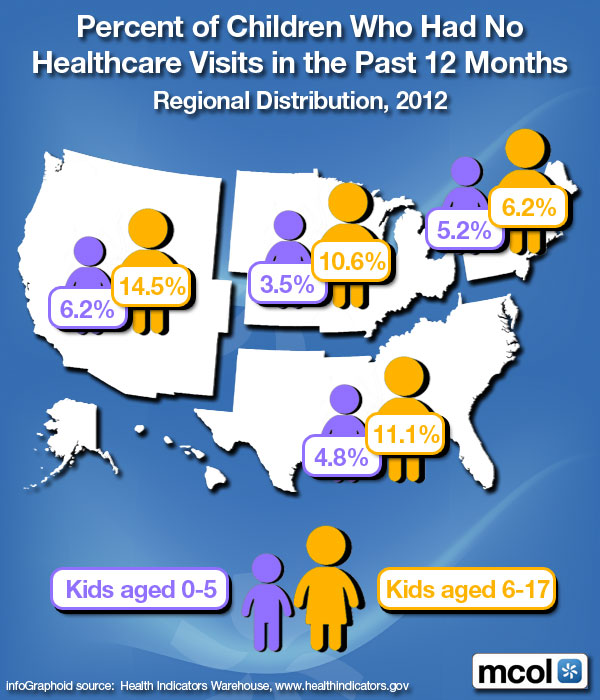
Children with NO Healthcare Visits within 12 Months

Join Our Mailing List

Regional Distribution 2012

By http://www.MCOL.com

ImageProxy

Speaker: If you need a moderator or speaker for an upcoming event, Dr. David E. Marcinko; MBA – Publisher-in-Chief of the Medical Executive-Post – is available for seminar or speaking engagements. Contact: MarcinkoAdvisors@msn.com

OUR OTHER PRINT BOOKS AND RELATED INFORMATION SOURCES:

Product DetailsProduct Details

The “Doc-Fix” Taxpayer Calculator

Join Our Mailing List 

Determining you Financial Share on “TAX DAY”

[By Staff Reporters]

One of the most-onerous votes in recent years on Capitol Hill is the so-called “doc fix.” That’s the patch Congress re-ups periodically to make sure that seniors on Medicare continue to receive medical care.

If Congress doesn’t cough up a chunk of change for the doc fix, doctors who treat Medicare recipients could experience an abrupt 21 percent reduction in their federal reimbursement – and would likely stop taking those patients.

In late March, the House approved a permanent replacement for the doc fix.

*** surgery

Click here to see your share of the Medicare doc fix

***

A solution has eluded lawmakers for years 

In fact lawmakers tinkered with this particular Medicare payment method some 17 times since 1997. That’s when the amount of money the federal government had available to pay doctors started to dip into the red. So in order to make sure physicians were paid and seniors didn’t lose benefits, Congress engineered a short-term –but expensive– Band-Aid to cover the difference.

Assessment

Hence the name, the “doc fix.”

Conclusion

Your thoughts and comments on this ME-P are appreciated. Feel free to review our top-left column, and top-right sidebar materials, links, URLs and related websites, too. Then, subscribe to the ME-P. It is fast, free and secure.

Speaker: If you need a moderator or speaker for an upcoming event, Dr. David E. Marcinko; MBA – Publisher-in-Chief of the Medical Executive-Post – is available for seminar or speaking engagements. Contact: MarcinkoAdvisors@msn.com

OUR OTHER PRINT BOOKS AND RELATED INFORMATION SOURCES:

Product DetailsProduct Details

A Financial Planning Curated News Round-Up for MDs

Join Our Mailing List

Interesting news and topics from around the blog-o-sphere

[By Staff Reporters]

  • How 6 Types of Retirement Income Are Taxed
    A common mistake retirees make when calculating their living expenses is forgetting how big a bite state and federal taxes can take out of savings. And how you tap your accounts can make a big difference.
  • Long-term Care by the Numbers
    Seven out of ten people will need long-term care sometime after 65. One expert examines the numbers behind long-term care.
  • Three Retirement Goals People Never Achieve
    New and soon-to-be retirees often set lofty retirement goals based on newfound time and opportunities. However, some of their most common goals and dreams are never even attempted, let alone achieved.
  • How Rising Rates Could Impact 3 Key Sectors
    How might different fixed income sectors respond to rising rates? And how might investors position their portfolios? This article offers a view of three widely held fixed income sectors.

healthfinance

Assessment

Conclusion

Your thoughts and comments on this ME-P are appreciated. Feel free to review our top-left column, and top-right sidebar materials, links, URLs and related websites, too. Then, subscribe to the ME-P. It is fast, free and secure.

Speaker: If you need a moderator or speaker for an upcoming event, Dr. David E. Marcinko; MBA – Publisher-in-Chief of the Medical Executive-Post – is available for seminar or speaking engagements. Contact: MarcinkoAdvisors@msn.com

OUR OTHER PRINT BOOKS AND RELATED INFORMATION SOURCES:

Financial Planning MDs 2015

 Comprehensive Financial Planning Strategies for Doctors and Advisors: Best Practices from Leading Consultants and Certified Medical Planners™


COMPREHENSIVE FINANCIAL PLANNING STRATEGIES for DOCTORS and ADVISORS

Join Our Mailing List

UPCOMING: Our Newest Major Textbook Release

[By Ann Miller RN MHA]

Release: February 19th, 2015 by Productivity Press, Inc

744 Pages | 43 Illustrations

Editor(s): Dr. David Edward Marcinko MBA CMP™ and Professor Hope Rachel Hetico RN MHA CMP™

***

 COMPREHENSIVE FINANCIAL PLANNING STRATEGIES for DOCTORS and ADVISORS 

[Best Practices from Leading Consultants and

Certified Medical Planners™]

Comprehensive Financial Planning Strategies for Doctors and Advisors: Best Practices from Leading Consultants and Certified Medical Planners™

 Features: 

  • Engaging content with case models, templates and examples for all medical professionals and their consulting advisors.
  • Combines holistic financial planning with new topics like hedge funds, investment banking, Wall Street practices and shenanigans; securities markets and margin accounts; alternative asset classes and investment policy creation – all integrated with emerging health industry concerns like the PP-ACA, ACOs, new tax laws and reimbursement models; practice sales, contracting and valuations; social media, hospital employee fringe benefits and PHO stock options.
  • Presents disruptive theories on industry suitability rules, fiduciary accountability and stewardship principles, and how to select the most knowledgeable and cost-efficient advisor for every life-cycle need.

Summary

Drawing on the expertise of multi-degreed doctors, and multi-certified financial advisors, COMPREHENSIVE  FINANCIAL PLANNING STRATEGIES FOR DOCTORS AND ADVISORS[Best Practices from Leading Consultants and Certified Medical Planners™]will shape the industry landscape for the next-generation as the current ecosystem strives to keep pace. Traditional generic products and sales-driven advice will yield to a new breed of deeply informed financial advisor, or Certified Medical Planner™.

The profession is set to be transformed by “cognitive-disruptors” that will significantly impact the $2.8 trillion healthcare marketplace for those financial consultants serving this challenging sector. There will be winners and losers. The text which contains 24 chapters, and champions healthcare providers while informing financial advisors, is divided into four sections compete with glossary of terms, CMP™ curriculum content, and related information sources:

  1. For ALL medical providers and financial industry practitioners
  2. For NEW medical providers and financial industry practitioners
  3. For MID-CAREER medical providers and financial industry practitioners
  4. For MATURE medical providers and financial industry practitioners.

Using an engaging style, the book is filled with authoritative guidance and health care–centered discussions, to provide tools and techniques to create a personalized financial plan using professional advice. Comprehensive coverage includes topics likes behavioral finance, medical risk management, Modern Portfolio Theory (MPF), the Capital Asset Pricing Model (CAP-M) and Arbitrage Pricing Theory (APT); as well as insider insights on commercial real estate; High Frequency Trading platforms and robo-advisors; the Patriot and Sarbanes–Oxley Acts; hospital endowment fund management, ethical wills, divorce and other special situations.

The result is a codified “must-have” book, for all health industry participants, and those seeking advice from the growing cadre of financial consultants and Certified Medical Planners™ who seek to “do well – by doing good”, dispensing granular physician-centric financial advice: Omnia pro medicus-clientis.

Financial Planning 2015

 RAISING THE BAR

CERTIFIED MEDICAL PLANNER

“The informed voice of a new generation of fiduciary advisors for healthcare”

[Omnia pro medicus-clientis]  

More:

BOOK: Comprehensive Financial Planning Strategies for Doctors and Advisors: Best Practices from Leading Consultants and Certified Medical Planners™

Conclusion

Your thoughts and comments on this ME-P are appreciated. Feel free to review our top-left column, and top-right sidebar materials, links, URLs and related websites, too. Then, subscribe to the ME-P. It is fast, free and secure.

Link: http://feeds.feedburner.com/HealthcareFinancialsthePostForcxos

Speaker: If you need a moderator or speaker for an upcoming event, Dr. David E. Marcinko; MBA – Publisher-in-Chief of the Medical Executive-Post – is available for seminar or speaking engagements. Contact: MarcinkoAdvisors@msn.com

OUR OTHER PRINT BOOKS AND RELATED INFORMATION SOURCES:

Product DetailsProduct DetailsProduct Details

Product DetailsProduct Details

Risk Management, Liability Insurance, and Asset Protection Strategies for Doctors and Advisors: Best Practices from Leading Consultants and Certified Medical Planners™8Comprehensive Financial Planning Strategies for Doctors and Advisors: Best Practices from Leading Consultants and Certified Medical Planners™

Ascel Bio on Forecasting Infectious Disease Outbreaks

Join Our Mailing List 

My Invitation to Join the Ascel Bio BOD?

Dr. DEMDear Dr. Marcinko,

I found your name in a search for new board directors and advisors to my company. I am president of a disease forecasting and outbreak warning company named Ascel Bio.

The Firm 

My company has had tremendous technical success in developing software that can forecast infectious disease outbreaks.

We’ve invented technology that turns hospitals (specifically their electronic health records) into RADAR Stations for Infectious Disease.  We’ve also invented outbreak detection and measurement technology that we use to deliver something akin to an AccuWeather style service.  We have good validation with federal customers and in use in a hospital setting in Colorado.  And, we’ve had some good success as well in trial use with a major EHR provider, and interest from others.

Status 

But, we’re still small and are really stuck in gaining the next 10 hospital users.  I’m writing because I am curious whether you might be able to offer suggestions that would help us solve the puzzle.

About Ascel Bio LLC

Ascel Bio is a private disease forecasting company founded in 2010. It is an industry pioneer with a corporate mission to halve the morbidity and mortality of infectious diseases over the next 25 years. The company uses advanced predictive systems combined with the judgment of astute clinicians in building its forecasts.

***

Nigeria

***

Assessment

I wanted to explain our business, seek your thoughts, and see if there might be cause for engagement. If you have a moment to speak with me, I’d be grateful for your time.

Research Reports:

Kind regards,

Ascel Bio

James Tunkey

More

Why I’m Joining the Physician Nexus Medical Advisory Board

Conclusion

I will f/u privately on this invitation. But, your thoughts and comments on the ME-P are appreciated. Feel free to review our top-left column, and top-right sidebar materials, links, URLs and related websites, too. Then, subscribe to the ME-P. It is fast, free and secure.

Speaker: If you need a moderator or speaker for an upcoming event, Dr. David E. Marcinko; MBA – Publisher-in-Chief of the Medical Executive-Post – is available for seminar or speaking engagements. Contact: MarcinkoAdvisors@msn.com

OUR OTHER PRINT BOOKS AND RELATED INFORMATION SOURCES:

 Product DetailsProduct Details

Two Healthcare Sectors the Stock Market Got Wrong on Election Day 2012

Join Our Mailing List

How various sectors in the Health Care Industry fared under the PP-ACA legislation?

[A SPECIAL R&D REPORT FOR THE ME-P]

By David K. Luke MIM, MS-PFP, CMP™ [Certified Medical Planner™]

Website: http://www.networthadvice.com

David K. LukeThere has been a lot of speculation since the words “Affordable Care Act” were first whispered years ago on how the various sectors in the Health Care Industry would fare under such legislation. I proposed that a good indicator would be to look at the performance of the individual health care sector stocks on the first trading day after the election.

(See With Obama Election Win, “Mr. Market” Weighs in on the ACA Equity Winners and Losers by David K. Luke on November 16, 2012).

Link: With Obama Election Win “Mr. Market” Weighs in on the ACA Equity Winners and Losers

The day after Pres. Obama’s reelection on Wednesday, November 7, 2012 the stock market was down over 2% as measured by the S&P 500 and the Dow Jones Industrial Average (DJIA). The common reason given was increased doubt that the impending “fiscal cliff” issue, which was splitting the House and the Senate, would be resolved. There was however, another big concern on investor’s mind: the future of the Affordable Care Act. While the election was close when measured by the popular vote with President Obama earning 51.06% versus Mitt Romney with 47.20%, the electoral vote showed a hands-down Obama victory with 332 versus 206 votes. Investors voted with their pocketbooks with that first trading session following the election showing certain healthcare sectors up in price, other healthcare sectors with moderate returns, and certain healthcare sectors down in price.

Disparate Health Care Sector Returns

It is interesting to look back now over a year and a half later and see how accurate those investor votes were on that first day of realization that health care reform was continuing forward at a much faster pace now that President Obama would be serving a second term. Keeping in mind that the day was a very negative day as a whole in the stock market, a number of healthcare sectors were up in price. This group includes Hospital Stocks and Medicaid HMOs. Note the phenomenal one-day returns (in a down 2% market!) on the sample stocks in these two groups:

Hospital Stocks

  • Health Management Associates (HMA) +7.3%
  • HCA Holdings Inc. (HCA) +9.4%
  • Community Health Systems Inc. (CYH) +6.0%
  • Tenet Healthcare Corp. (THC) +9.6%

Medicaid HMOs

  • Molina Healthcare Inc. (MOH) +4.6%
  • Centene Corp. (CNC) +10.1%
  • WellCare Health Plans Inc. (WCG) +4.4%

Such positive returns on a big down day in the market indicates investors assessing these healthcare sectors being good investments under an Obama presidency and a positive outlook for the implementation of the Affordable Care Act. The other up sector on that day was the Drug Wholesalers, up almost 1% on that negative day. (See “Selected Health Care Performance” Chart – below).

The market had a tepid response to the Pharmacy Benefit sector, as well as the Generic Pharmacy, Testing Labs, and Big Pharma. In my sample group, these sectors were down -.4%, -7%, -1.7%, and -1.4% respectively. It is important to note however that these sectors while slightly positive or barely negative still performed better than the general market that day.

Two Sectors

But, the two healthcare sectors that the stock market severely punished with the voting of substantially more sellers than buyers by investors on that first post-election day were the Medical Device Companies (down 2.5% in the sample group) and the Medicare Part D Companies (down 4.7% in the sample group). The thought at the time was that Medical Device Companies, facing an impending medical device excise tax of 2.3% on the sale of most medical devices in the United States, would be devastated, and that Medicare Part D Companies would face severe profit constraints with tighter-fisted government regulations imposed by the ACA.

***

Stock_Market

***

The Retro-Specto-Scope

In hindsight, investors were correct on two out of the three predictions based on stock market prices on the various healthcare sectors. Hospital Stocks, Medicaid HMOs, and Drug Wholesalers, the leading sectors indicated to be winners with the impending implementation of the ACA, are up 69.8%, 63.6% and 76.5% respectively in the sample groups since November 7, 2012. This remarkable and closely parallel return for these three sectors seemed to prove that the stock market on November 7, 2012 correctly picked the three winning health care sectors! The S&P 500 index for the same time is up 32.02%, a nice return for 1 ½ years but about half the return of these apparently huge benefactors of the ACA. The healthcare sectors that investors felt less positive about (but more positive than the general stock market) on that first postelection day were Pharmacy Benefit Companies, Generic Pharmacy Companies, Testing Labs, and Big Pharma. These four health care sectors are up 43.8%, 40.5%, 6.4%, and 20.5% respectively. Again, in terms of ranking the sectors, these four sectors performed in line based on the comparative returns of the other healthcare sectors.

Wisdom of Crowds

Amazingly, it appears that the emotional Mr. Market predicated quite accurately on Wednesday, November 7, 2012, in one day of trading, not just which health sectors would be good investments for the near future, but the actually ranking of the future performance of the sectors! It seems as though the stock market, as one large voting machine, precisely dissected the over 20,000 pages + of resulting legislation created from the original 906 pages (pdf here) of the PPACA law and distilled it down to profits and losses with the resulting winners and losers in the health care industry in one trading session.

Two [2] Big Misses

Investors however were way off on their concerns about Medical Device Companies and Medicare Part D Companies. The two sample groups were up 71.3% and 66.4% in the time of November 7, 2012 to May 19, 2014 respectively, more than double the S&P 500 for the same period, and in line with the best performing sectors! This is spite of the fact that stock sample of these two groups were the two worst performers on post-election day trading. What happened?

***

Bear + A Falling Stock Chart

***

The “Medical Device Excise Tax” Fable and the “Private Insurers Will Control Costs” Fairy Tale

Wall Street has sharpened their pencils in the last year and a half and realized they have gravely underestimated the profit potential of the Medical Device makers and the Managed Care Health Insurers, in spite of the ACA. Based on stock price performance of the sample group of major players in the past 18 months, fewer sectors look as profitable as the Medical Device Industry and the Medicare Part D Industry. What happened?

The Medical Device industry states that the tax will cost the US “tens of thousands of jobs” and that those jobs will be shipped overseas. A number of issues that are involved here however refute these claims (http://www.factcheck.org/2013/10/boehner-and-the-medical-device-tax/. It appears that any targeted reductions were not related to the implementation of the tax, which became effective January 1, 2013, in spite of heavy protest by the industry. Medical technology continues to have a bright future regardless of the tax.

The notion that the “Affordable” Care Act will help reign in the rampant cost increases of Medicare’s “Part D” program seem to be elusive. Private insurers have done a poor job of keeping drug prices down, especially when compared to the discounts the government gets for Medicaid. Medicare Part D companies wield significant influence on Capitol Hill, and impending steeper discounts look unlikely.

Everybody Wins, Except …

Before the ACA implementation, about 85% of Americans had health insurance. Currently with an additional 7 million Americans with health insurance thanks to Obamacare, an additional 2.2% of Americans now have coverage, or about 87% of all Americans. How can such a slight increase in new health care consumers be responsible for such large anticipated profits in the health care sector? It cannot. Wall Street is telling us that the new health law is not about new customers, but about increased profit margins for the health care industry. I can draw three conclusions:

  1. The Affordable Care Act may not be so affordable for health consumers
  2. Most companies in the Health Care Industry stand to gain financially with ACA. There is one sure loser with ACA: The physician, who can only look forward to increased workloads and mpending Medicare SGR pay cuts.

THE CHART [Research and Development]

Selected Health Care Sector Stock Performance Random Sampling of Publically Traded Companies From President Obama Re-election Date to Present

Chart

Conclusion

Your thoughts and comments on this ME-P are appreciated. Feel free to review our top-left column, and top-right sidebar materials, links, URLs and related websites, too. Then, subscribe to the ME-P. It is fast, free and secure.

Link: http://feeds.feedburner.com/HealthcareFinancialsthePostForcxos

Speaker: If you need a moderator or speaker for an upcoming event, Dr. David E. Marcinko; MBA – Publisher-in-Chief of the Medical Executive-Post – is available for seminar or speaking engagements. Contact: MarcinkoAdvisors@msn.com

OUR OTHER PRINT BOOKS AND RELATED INFORMATION SOURCES:

Product DetailsProduct DetailsProduct Details

Product DetailsProduct Details

Product Details  Product Details

Product Details

How “Leaner” Hospitals Can Be Profitable in 2014

    Our Newest Textbooks with Checklists

Buy from Amazon

Learn How to Profit and Thrive in the PP-ACA Era

BOOK FOREWORD / TESTIMONIAL

###

Financial Management Strategies for Hospitals and Healthcare Organizations: Tools, Techniques, Checklists and Case Studies

###

The Business of Christmas 2013

X-Mass Illustrated

Join Our Mailing List 

XMass

With Christmas today, we thought it would be fun to post an infographic on the business of Christmas.

From the explosive growth of online shopping to the top selling Christmas gifts of different decades, we’ve got it covered.

Conclusion

Your thoughts and comments on this ME-P are appreciated. Feel free to review our top-left column, and top-right sidebar materials, links, URLs and related websites, too. Then, subscribe to the ME-P. It is fast, free and secure.

Link: http://feeds.feedburner.com/HealthcareFinancialsthePostForcxos

Speaker: If you need a moderator or speaker for an upcoming event, Dr. David E. Marcinko; MBA – Publisher-in-Chief of the Medical Executive-Post – is available for seminar or speaking engagements. Contact: MarcinkoAdvisors@msn.com

OUR OTHER PRINT BOOKS AND RELATED INFORMATION SOURCES:

DICTIONARIES: http://www.springerpub.com/Search/marcinko
PHYSICIANS: www.MedicalBusinessAdvisors.com
PRACTICES: www.BusinessofMedicalPractice.com
HOSPITALS: http://www.crcpress.com/product/isbn/9781466558731
CLINICS: http://www.crcpress.com/product/isbn/9781439879900
BLOG: www.MedicalExecutivePost.com
FINANCE: Financial Planning for Physicians and Advisors
INSURANCE: Risk Management and Insurance Strategies for Physicians and Advisors

Product DetailsProduct DetailsProduct Details

Product Details  Product Details

   Product Details

An Open Call for ME-P Support

Join Our Mailing List 

A Letter with Advanced Appreciation

By Ann Miller RN MHA [Executive-Director]

MarcinkoAdvisors@msn.com

Dear ME-P Readers,

As the holidays approach and the year winds down, we’re reminded of how much each of you brings to the ME-P and our work.

We couldn’t do what we do so effectively without the subscribers to our daily news and book purchasers, the comments on our stories, the participants in our groups – the people who not only read our ME-P posts, but think about them, talk about it with friends and colleagues, support and push for change based on what they read.

Donate

We hope you agree that we’ve worked hard this year to deliver on our mission. It’s been a year in which we didn’t hesitate to take on the biggest subjects from the NSA ObamaCare encryption mess to Medicare Part D, from the HIEs to the latest abuses by the CFP-BOD on fiduciary terms, advisor payment definitions and conflicts of CEU interest.

If you value this work, I hope we can count on you to show your support at this season by becoming a ME-P subscriber, reader and donor.

gift

Assessment

With many thanks and best wishes for the holidays.

Conclusion

Your thoughts and comments on this ME-P are appreciated. Feel free to review our top-left column, and top-right sidebar materials, links, URLs and related websites, too. Then, subscribe to the ME-P. It is fast, free and secure.

Link: http://feeds.feedburner.com/HealthcareFinancialsthePostForcxos

Speaker: If you need a moderator or speaker for an upcoming event, Dr. David E. Marcinko; MBA – Publisher-in-Chief of the Medical Executive-Post – is available for seminar or speaking engagements. Contact: MarcinkoAdvisors@msn.com

OUR OTHER PRINT BOOKS AND RELATED INFORMATION SOURCES:

DICTIONARIES: http://www.springerpub.com/Search/marcinko
PRACTICES: www.BusinessofMedicalPractice.com
HOSPITALS: http://www.crcpress.com/product/isbn/9781466558731
CLINICS: http://www.crcpress.com/product/isbn/9781439879900
ADVISORS: www.CertifiedMedicalPlanner.org
BLOG: www.MedicalExecutivePost.com
FINANCE: Financial Planning for Physicians and Advisors
INSURANCE: Risk Management and Insurance Strategies for Physicians and Advisors

Product DetailsProduct DetailsProduct Details

Product Details  Product Details

Product DetailsProduct Details

Product Details

Changes are Afoot at the CFP-Board of Directors

Join Our Mailing List 

Well-intentioned attempts to protect consumers backfire?

By Rick Kahler CFP® http://www.KahlerFinancial.com

Rick Kahler CFPIntegrity. Trustworthiness.

A commitment to clients’ best interests. These are all essential qualities for any advisor you entrust with your financial affairs.

One clue to financial planners’ trustworthiness is the certifications they hold. Designations such as CFP® (Certified Financial Planner) and Chartered Financial Consultant (ChFC) require adhering to certain professional standards and codes of ethics.

The organizations that maintain these standards safeguard the integrity of their professional designations and especially the well-being of consumers who seek out their members’ services. Yet sometimes, their well-intentioned attempts to protect consumers can backfire.

New Rules

The CFP® Board recently adopted new rules meant to prevent financial planners from calling themselves “fee-only” while still receiving commissions by selling financial products through separate companies. Now, CFP®s and members of their families can no longer own an interest in financial service companies that earn commissions if they wish to brand themselves as “fee only.”

This would be good, except the Board has cast its net so wide that it is catching the dolphins along with the sharks. It defines “financial service company” too broadly, including real estate firms, mortgage companies, and property management companies. It also illogically focuses on what clients could pay and what the planner could receive, rather than what clients do pay and what the planner does receive.

Example:

I have a minority interest in and occasionally receive dividends from a real estate brokerage and a property management firm. While I do maintain a license as a real estate broker, I am not active in the business. Because I could potentially receive a commission for selling real estate and because I do receive dividends, I’ve been told by a representative of the CFP® Board that I can no longer call myself “fee only” and must advertise myself as a “fee and commission” financial planner.

This would dishonestly insinuate I sell mutual funds, life insurance, or annuities. “Fee-only,” which to consumers means I sell no financial products, is much more accurate.

Disgruntled Calls Growing

I’ve received calls from other CFP®s affected in similar ways by the new rules.

Example:

One is a young fee-only planner who does not sell any financial products or own a portion of any company that does. Yet, he recently married a woman who owns a minority interest in her family’s property casualty insurance company. She holds an insurance license but does not work in the business. Because she, a “related party,” could legally receive commissions, her husband can no longer hold himself out as a “fee-only” CFP® and must list himself as a “fee and commission” planner.

00290065-0000-0000-0000-000000000000_bd9e518c-8b9e-4904-b459-4f2b1c196df1_20130621181508_noh8

Is the CFP-BOD, and the CFP® mark, in Jeopardy? [VOTE]

If a financial planner’s clients pay only fees and do not purchase financial products like mutual funds, insurance, and annuities from a related company, the CFP® Board needs to designate the planner as “fee only.” The same applies to planners who maintain financial services licenses (as those in Illinois must if they give insurance advice) but do not receive commissions. The CFP® Board should not consider companies that offer services unrelated to financial planning, such as selling and managing real estate or originating mortgages, as financial services companies.

I understand and fully support the CFP® Board’s intent to stop those who were abusing the brand of “fee only.” Yet the Board’s rules in their present form will only devalue the CFP® designation.

Assessment

It appears the only way I can continue to honestly advertise my practice as “fee-only” is to terminate as a CFP®. What’s most important for me is to be seen as a fiduciary planner, working with integrity in the best interest of my clients. I won’t dishonestly brand myself as a “fee and commission” planner to keep my CFP® designation.

Conclusion

Your thoughts and comments on this ME-P are appreciated. Feel free to review our top-left column, and top-right sidebar materials, links, URLs and related websites, too. Then, subscribe to the ME-P. It is fast, free and secure.

Link: http://feeds.feedburner.com/HealthcareFinancialsthePostForcxos

Speaker: If you need a moderator or speaker for an upcoming event, Dr. David E. Marcinko; MBA – Publisher-in-Chief of the Medical Executive-Post – is available for seminar or speaking engagements. Contact: MarcinkoAdvisors@msn.com

OUR OTHER PRINT BOOKS AND RELATED INFORMATION SOURCES:

LEXICONS: http://www.springerpub.com/Search/marcinko
PHYSICIANS: www.MedicalBusinessAdvisors.com
PRACTICES: www.BusinessofMedicalPractice.com
HOSPITALS: http://www.crcpress.com/product/isbn/9781466558731
CLINICS: http://www.crcpress.com/product/isbn/9781439879900
BLOG: www.MedicalExecutivePost.com

Product Details  Product Details

Top 12 Articles [Health Administration Reading List]

Join Our Mailing List

By Staff Reporters via Austin Frakt PhD

On Health Economics, Finance and Insurance, Quality Care and Organizational Behavior

1. Substantial Health And Economic Returns From Delayed Aging May Warrant A New Focus For Medical Research

By Dana Goldman and others (Health Affairs)

2. Trends Underlying Employer Sponsored Health Insurance Growth For Americans Younger Than Age Sixty-Five

By Carolina-Nicole Herrera and others (Health Affairs)

3. Accountable Care Organization Formation Is Associated With Integrated Systems But Not High Medical Spending

By David Auerbach, Hangsheng Liu, Peter Hussey, Christopher Lau, and Ateev Mehrotra (Health Affairs)

4. The Quality Of Care Delivered To Patients Within The Same Hospital Varies By Insurance Type

By Christine S. Spencer, Darrell J. Gaskin, and Eric T. Roberts  (Health Affairs)

5. Understanding State Variation In Health Insurance Dynamics Can Help Tailor Enrollment Strategies For ACA Expansion

By John Graves and Katherine Swartz (Health Affairs)

6. When Medicare Cuts Hospital Prices, Seniors Use Less Inpatient Care

By Chapin White and Tracy Yee (Health Affairs)

7. More Americans Living Longer With Cardiovascular Disease Will Increase Costs While Lowering Quality Of Life

By Ankur Pandya, Thomas Gaziano, Milton Weinstein, and David Cutler (Health Affairs)

8. Surgical Skill and Complication Rates after Bariatric Surgery

By John Birkmeyer and others (New England Journal of Medicine)

Reading list

9. Who Is in Control? The Determinants of Patient Adherence with Medication Therapy

By Sergei Koulayev, Niels Skipper and Emilia Simeonova (National Bureau of Economic Research)

10. Fifty Years of Family Planning: New Evidence on the Long-Run Effects of Increasing Access to Contraception

By Martha Bailey (National Bureau of Economic Research)

11. Identifying the Health Production Function: The Case of Hospitals

By John Romley and Neeraj Sood (National Bureau of Economic Research)

12. ACA Standoff

By Jeffrey Drazen and Gregory Curfman (New England Journal of Medicine)

Assessment

Feel free to send us links to your own hot topic reading list so that we may share.

Conclusion

Your thoughts and comments on this ME-P are appreciated. Feel free to review our top-left column, and top-right sidebar materials, links, URLs and related websites, too. Then, subscribe to the ME-P. It is fast, free and secure.

Link: http://feeds.feedburner.com/HealthcareFinancialsthePostForcxos

Speaker: If you need a moderator or speaker for an upcoming event, Dr. David E. Marcinko; MBA – Publisher-in-Chief of the Medical Executive-Post – is available for seminar or speaking engagements. Contact: MarcinkoAdvisors@msn.com

OUR OTHER PRINT BOOKS AND RELATED INFORMATION SOURCES:

LEXICONS: http://www.springerpub.com/Search/marcinko
PHYSICIANS: www.MedicalBusinessAdvisors.com
PRACTICES: www.BusinessofMedicalPractice.com
HOSPITALS: http://www.crcpress.com/product/isbn/9781466558731
CLINICS: http://www.crcpress.com/product/isbn/9781439879900
ADVISORS: www.CertifiedMedicalPlanner.org
PODIATRISTS: www.PodiatryPrep.com
BLOG: www.MedicalExecutivePost.com

Product DetailsProduct Details

Product Details

Will Healthcare Reform Impact a Spine Surgeon’s Retirement Plan?

Certified Medical Planner

Q&A With Dr. Brian Knabe of Savant Capital Management

Brian J. Knabe MDBy Ann Miller RN MHA

Brian Knabe MD CFP® CMP® is a former medical physician turned financial advisor at Savant Capital Management, a fee-only wealth management firm.

Here, he discusses the smartest moves for spine surgeons at various stages in their careers to ensure an enjoyable retirement.

###

retirement

LINK: Will Healthcare Reform Impact a Spine Surgeon’s Retirement Plan? Q&A With Dr. Brian Knabe of Savant Capital Management

More

Conclusion

Your thoughts and comments on this ME-P are appreciated. Feel free to review our top-left column, and top-right sidebar materials, links, URLs and related websites, too. Then, subscribe to the ME-P. It is fast, free and secure.

Link: http://feeds.feedburner.com/HealthcareFinancialsthePostForcxos

Speaker: If you need a moderator or speaker for an upcoming event, Dr. David E. Marcinko; MBA – Publisher-in-Chief of the Medical Executive-Post – is available for seminar or speaking engagements. Contact: MarcinkoAdvisors@msn.com

OUR OTHER PRINT BOOKS AND RELATED INFORMATION SOURCES:

DICTIONARIES: http://www.springerpub.com/Search/marcinko
PHYSICIANS: www.MedicalBusinessAdvisors.com
PRACTICES: www.BusinessofMedicalPractice.com
HOSPITALS: http://www.crcpress.com/product/isbn/9781466558731
CLINICS: http://www.crcpress.com/product/isbn/9781439879900
BLOG: www.MedicalExecutivePost.com
FINANCE: Financial Planning for Physicians and Advisors
INSURANCE: Risk Management and Insurance Strategies for Physicians and Advisors

Product Details  Product Details

Product DetailsProduct Details

Events Planner: July 2013

ADVERTISEMENT

Events-Planner: JULY 2013

By Staff Writers
Calendar Calculator“Keeping track of important health economics and financial industry meetings, conferences and summits”

Welcome to this issue of the Medical Executive-Post and our Events-Planner. It contains the latest information on conferences, news, and relevant resources in healthcare finance, economics, research and development, business management, pharmaceutical pricing, and physician/entity reimbursement!  Watch for a new Events-Planner each month.

First, a little about us! The Medical Executive-Post is still a relative newcomer. But today, we have almost 500,000 visitors and readers each month from all over the country, in addition to our growing subscriber base. We have been a successful collaborative effort, thanks to your contributions.  As a result, we are adding new resources daily. And, we hope the website continues to provide the best place to go for journals, books, conferences, educational resources, tools, and other things you need to establish the value your healthcare consulting and financial advisory intervention.

So, enjoy the Medical Executive-Post and this monthly Events-Planner with our compliments.

A Look Ahead this Month – And now, the important dates:

  • July 21-24: ASHE Conference. Atlanta, GA
  • July 28-31: AHRMM Conference. San Diego, CA

MarcinkoAdvisors@msn.com

Speaker: If you need a moderator or speaker for an upcoming event, Dr. David E. Marcinko; MBA – Publisher-in-Chief of the Executive-Post – is available for seminar or speaking engagements. Contact: MarcinkoAdvisors@msn.com

Subscribe Now: Did you like this Medical Executive-Post, or find it helpful, interesting and informative? Want to get the latest E-Ps delivered to your email box each morning? Just subscribe using the link below. It’s free. You can unsubscribe at any time. Security is assured.

Link: http://feeds.feedburner.com/HealthcareFinancialsthePostForcxos

Product DetailsProduct DetailsProduct Details

Product Details  Product Details

Product DetailsProduct Details

Does the U.S. Supreme Court decision resolve the gene-patenting issue?

Join Our Mailing List

Human Genes are NOT Patentable

By Karen Matthias RN MBA

[Vice-President of Marketing]

Hayes, Inc kmatthias@hayesinc.com

Yesterday, the U.S. Supreme Court unanimously agreed that human genes are not patentable, making a distinction between “natural” DNA found in the human body and the laboratory-created “synthetic” DNA. This opinion reinforces those of many in the genetics community who have argued for years that genes are products of nature rather than inventions.

A Resolution?

But, does the Supreme Court decision completely resolve the gene-patenting issue?

Dr. Diane Allingham-Hawkins, Senior Director, Genetic Test Evaluation Program and Technical Editing at Hayes, Inc., doesn’t think so.

“The Justices compromised somewhat in their decision that while human genes as they exist in nature were ruled not patentable, the opinion allowed that synthetic copies – so-called complementary DNA or cDNA – may be”.

The Court did not rule, however, that cDNA meets all requirements of patent eligibility, just that cDNA would not be considered a ’product of nature’.

Issues Not Addressed

In addition, Dr. Allingham-Hawkins points out what the decision does not address.

“Notably, the opinion clearly stated that it was not ruling on any methods patents related to the two genes or on any applications regarding what Myriad had learned about the genes, leaving the door open for narrower genetic testing patents.

Nevertheless, this is a major victory for the plaintiffs in the case and for patients, who will now have choices related to who performs their genetic testing and options to seek second opinions from independent laboratories.”

###

US supreme court building

More 

Our new white paper on the history of gene patenting in the United States can be an excellent resource as you search for background information on this topic.

Download a complimentary copy here:  http://www.hayesinc.com/hayes/resource-center/white-papers/gene-patenting-in-the-united-states/.

Assessment  

Thanks for considering.

Conclusion

Your thoughts and comments on this ME-P are appreciated. Feel free to review our top-left column, and top-right sidebar materials, links, URLs and related websites, too. Then, subscribe to the ME-P. It is fast, free and secure.

Link: http://feeds.feedburner.com/HealthcareFinancialsthePostForcxos

Speaker: If you need a moderator or speaker for an upcoming event, Dr. David E. Marcinko; MBA – Publisher-in-Chief of the Medical Executive-Post – is available for seminar or speaking engagements. Contact: MarcinkoAdvisors@msn.com

OUR OTHER PRINT BOOKS AND RELATED INFORMATION SOURCES:

Health Dictionary Series: http://www.springerpub.com/Search/marcinko

Practice Management: http://www.springerpub.com/product/9780826105752

Physician Financial Planning: http://www.jbpub.com/catalog/0763745790

Medical Risk Management: http://www.jbpub.com/catalog/9780763733421

Hospitals: http://www.crcpress.com/product/isbn/9781439879900

Physician Advisors: www.CertifiedMedicalPlanner.org

Product DetailsProduct Details

Administrative Professionals’ Day

Join Our Mailing List

Difference makers: On the job with admin

By Staff Reporters

In honor of Administrative Professionals’ Day 2013, celebrated just last week, here’s a closer look at the key roles these individuals play in order to keep medical, financial advisory and other offices everywhere – running smoothly.APD

Conclusion

Your thoughts and comments on this ME-P are appreciated. Feel free to review our top-left column, and top-right sidebar materials, links, URLs and related websites, too. Then, subscribe to the ME-P. It is fast, free and secure.

Link: http://feeds.feedburner.com/HealthcareFinancialsthePostForcxos

Speaker: If you need a moderator or speaker for an upcoming event, Dr. David E. Marcinko; MBA – Publisher-in-Chief of the Medical Executive-Post – is available for seminar or speaking engagements. Contact: MarcinkoAdvisors@msn.com

OUR OTHER PRINT BOOKS AND RELATED INFORMATION SOURCES:

Health Dictionary Series: http://www.springerpub.com/Search/marcinko

Practice Management: http://www.springerpub.com/product/9780826105752

Physician Financial Planning: http://www.jbpub.com/catalog/0763745790

Medical Risk Management: http://www.jbpub.com/catalog/9780763733421

Hospitals: http://www.crcpress.com/product/isbn/9781439879900

Physician Advisors: www.CertifiedMedicalPlanner.org

Product DetailsProduct DetailsProduct Details

ME-P Book Reviewers Needed

Join Our Mailing List
New Text Book Testimonials Requested
By Dr. David Edward Marcinko MBA
[Editor-in-Chief]
DEM 2013
Greetings all ME-P Readers from Atlanta, Georgia
###
After reading and being inspired by Dr. Atul Gawandi’s December 10, 2007 New  Yorker article, “The Checklist”, as well as the Checklist Manifesto, I am writing to ask that you consider this request to write a 3-5 sentence testimonial review to our upcoming new textbook:  Financial  Management Strategies for Hospitals and Healthcare Organizations: Tools,  Techniques, Checklists and Case Studies

It is the follow up to: Hospitals & Health Care Organizations: Management Strategies, Operational Techniques,  Tools, Templates, and Case Studies

Book Focus

Please realize that the focus of the work is non-clinical in nature, and is replete with managerial case models and administrative checklists following each chapter.

Just as Atul believed the time is right for medical checklists, we believe in a similar philosophy for hospitals, health enitites, and healthcare administration. It is right for any physician or medical practitioner, regardless of degree or specialty designation.

New Book

Ideal Reviewers

Ideal book reviewers are doctors, financial advisors, economists, accountants, nurses, insurance agents, politicians and healthcare CXOs. So, please see the TOC links as we ask you to keep this request confidential.  Regardless of your decision, we remain an apostle of your core vision whenever possible.

Fraternally,

Dr. David Edward Marcinko MBA

[Editor-in-Chief]

INSTITUTE OF MEDICAL BUSINESS ADVISORS, INC.

Suite #5901 Wilbanks Drive Norcross, Georgia, 30092 USA

Phone: 770.448.0769

MarcinkoAdvisors@msn.com

Secrets

###

Crafting a Business Plan and Starting a Medical Practice “Live” Audio Conference

Medical Office Business PlanCrafting A Business Plan And Starting A Medical Practice
Speaker: Dr. David Edward Marcinko MBA CMP
Live Audio Conference
Date:Wednesday, January 30, 2013 Time: 1 pm Eastern | 12 pm Central | 11 am Mountain | 10 am Pacific Length: 60 Minutes
 Order
Do you need money to start or Grow your medical practice?
The “Business Plan” is a key tool for raising start-up capital for a new medical practice, or financing a medical / surgical service line extension for a mature one. It is also used for acquiring loans to finance growth of an existing practice. Although long recognized as a quintessential business tool, its’ formal structure and mental rigor are only now being recognized in the medical community as competition increases in the healthcare industrial complex. There are many reasons to write a medical practice business plan. The process of gathering, compiling and analyzing information is an invaluable experience to the beginning practitioner, or experienced veteran physician. Our expert Dr. David, will discuss all these, step by step in this 1-hour enlightening event. See the steps below:

  • Determine the feasibility of a new practice start-up.
  • Raise money from investment bankers for a new practice.
  • Obtain financing to expand an existing office or turn-around a declining satellite.
  • Develop an operational strategic plan and conduct due diligence.
  • Create a budget, time frame or business direction for a practice.
  • Unmask potential problems, risks or benefits of a medical practice.
  • Focus on market opportunities by determining revenue centers or cost drivers.
  • Persuade third party payers, networks and insurance carriers that your practice has a future and represents a viable synergistic partner for their organization.
  • And more
As a attendee you will get:

  • Power Point slide presentation.
  • Time-line checklist to new medical office launch.
  • Topical comprehensive white paper.
  • Electronic blog forum for further information.
  • And more
Dr. David in this 60-minute conference will present to you:

  • Executive Summary: Where you concisely state the purpose of the loan, the exact amount of money required, an explanation of what the loan will be used for and why it’s needed.
  • Pro-forma Cash Budgets and Financial Statements:You’ll learn to how effectively use your data and underlying assumptions to prepare information that your banker can easily read and buy into.
  • Doctor’s Personal Financial Statements: Learn how to use copies of the last 3 years of personal tax returns for the bank as well as identify the collateral being pledged as security for the loan.
  • Representation: Here is where this presentation is invaluable.
  • And more
Order
Call 1-866-458-2965 and mention code STCIGH02
Ask a question at the Q&A session following the live event and get advice unique to your situation
About Our Speaker
Dr. David Edward Marcinko MBA CMP is founding CEO of the Institute of Medical Business Advisors, Inc www.MedicalBusinessAdvisors.com and Publisher of the Medical Executive-Post www.MedicalExecutivePost.com iMBA Inc is a leading national scope provider of real time medical practice management reports, books, dictionaries, journals, financial planning and advisory opinions, Fair Market Value appraisals and educational seminars www.CertifiedMedicalPlanner.org  The firm serves physicians, nurses and medical societies; financial advisors, wealth managers and CPAs; emerging healthcare entities, hospitals, clinics, IPAs and their CXOs; the press, media and all related organizations. Read more
Get $20 Off On Registering NOW!(Use Codé “David20” at Checkóut )

Order

Certified Medical Planner

Celebrating Spouse’s Day 2013

Join Our Mailing List

Love Your Mate Today … and Every Day

By Ann Miller RN MHA

If you are a ME-P advocate who happens to be married, today may just be your significant other’s lucky day!

Why? Today is Spouse’s Day for 2013: Spouse’s Day

###Spouses-Day

Assessment

This annual holiday, which celebrates your better half, is observed each year on January 26th. So, love on your mate, and remind him/her that you’re committed to the relationship. Assure him/her that if you had to do it all over again, you’d still say, “I do.”

Finally, live today, tomorrow, and the days that follow like you mean your words.  Remember, say what you mean … and mean what you say. That’s the ME-P way!

Conclusion

Your thoughts and comments on this ME-P are appreciated. Feel free to review our top-left column, and top-right sidebar materials, links, URLs and related websites, too. Then, subscribe to the ME-P. It is fast, free and secure.

Link: http://feeds.feedburner.com/HealthcareFinancialsthePostForcxos

Speaker: If you need a moderator or speaker for an upcoming event, Dr. David E. Marcinko; MBA – Publisher-in-Chief of the Medical Executive-Post – is available for seminar or speaking engagements. Contact: MarcinkoAdvisors@msn.com

OUR OTHER PRINT BOOKS AND RELATED INFORMATION SOURCES:

Product Details

A New Book for Physician Entrepreneurs and Innovators

Join Our Mailing List

Innovation and Entrepreneurship in the Healthcare Sector: From Idea to Funding to Launch

###

Innovation and Entrepreneurship in the Healthcare Sector: From Idea to Funding to Launch
###
Assessment
Innovation and Entrepreneurship in the Healthcare Sector [From Idea to Funding to Launch].  MORE: http://www.entrepreneurialmd.com/index/2013/1/8/innovation-entrepreneurship-book-in-brief-for-physician-entr.html
###
Conclusion

Your thoughts and comments on this ME-P are appreciated. Feel free to review our top-left column, and top-right sidebar materials, links, URLs and related websites, too. Then, subscribe to the ME-P. It is fast, free and secure.

Link: http://feeds.feedburner.com/HealthcareFinancialsthePostForcxos

Speaker: If you need a moderator or speaker for an upcoming event, Dr. David E. Marcinko; MBA – Publisher-in-Chief of the Medical Executive-Post – is available for seminar or speaking engagements. Contact: MarcinkoAdvisors@msn.com

OUR OTHER PRINT BOOKS AND RELATED INFORMATION SOURCES:

DICTIONARIES: http://www.springerpub.com/Search/marcinko
PHYSICIANS: www.MedicalBusinessAdvisors.com
PRACTICES: www.BusinessofMedicalPractice.com
HOSPITALS: http://www.crcpress.com/product/isbn/9781466558731
CLINICS: http://www.crcpress.com/product/isbn/9781439879900
BLOG: www.MedicalExecutivePost.com
FINANCE: Financial Planning for Physicians and Advisors
INSURANCE: Risk Management and Insurance Strategies for Physicians and Advisors

Product DetailsProduct Details

Explaining the New Taxpayer Relief Act

Join Our Mailing List

aka … The Fiscal Cliff Deal Wake-Up Call

By Lon Jefferies MBA CFP®

www.NetWorthAdvice.com

Lon JeffriesBelow is a brief summary of the major implications of the Taxpayer Relief Act that was passed by congress. The changes under the act are permanent and do not expire like the previous round of Bush tax cuts. Note, however, that laws can always be changed.

The Tax Increase That Will Impact Us All

As of December 31, 2012, the Payroll Tax Cut expired. The cut reduced the FICA tax rate by 2% in 2011 and 2012. Consequently, this Social Security tax rate will return to 6.2% for employees (as opposed to the 4.2% rate during the last two years). This tax will apply to any income below the Social Security Wage Base of $113,700.

Essentially, this change will cause an average taxpayer earning $50k per year to pay $1,000 more in federal taxes.

Income Tax Brackets

The top tax bracket will increase from 35% to 39.6% and will apply to individuals with taxable income in excess of $400k and married couples with incomes over $450k. No other changes were made to the federal income tax.

Income Tax Brackets

Taxpayers in the 10% or 15% or income tax bracket will continue paying 0% tax on long-term capital gains and dividends. A 15% capital gains and dividend tax will continue to apply to all other taxpayers not in the highest tax bracket (again, individuals with incomes above $400k and married couples with incomes above $450k). For taxpayers in the top tax bracket, the capital gains and dividend tax effectually rises to 23.8% – consisting of 20% for capital gains or dividends plus an additional 3.8% Medicare tax to boot.

Phaseout of Deductions and Exemptions

Total itemized deductions are reduced by 3% of any excess income over an established limit. That limit is adjusted gross income (AGI) of $250k for individuals and $300k for married couples. Personal exemptions are also phased out once AGI is above the same limits. The exemptions are reduced by 2% for each $2,500 of excess income over these limits.

Professional Wake Up Call

Estate Taxes

While the top estate tax rate has been increased from 35% to 40%, individuals will continue to pay no taxes on estates less than $5,120,000. This figure will continue to rise with inflation. Note: couples essentially get two of these exemptions, allowing them to pass $10,240,000 to heirs without paying estate taxes.

Alternative Minimum Tax

The new AMT exemption amount will be $50,600 for individuals and $78,750 for married couples. These figures will be adjusted annually for inflation. Speak to an account to determine how this impacts your tax return.

Bonus – Potential 401k to Roth 401k Conversions

If your employer offers Roth 401k accounts, you can now convert your traditional 401k investments to the Roth plan while still employed. This process will be similar to converting a traditional IRA to a Roth IRA and taxes will be due upon conversion. However, your employer isn’t required to offer a Roth 401k, so speak to your employer’s HR department to determine if this is an option. Further, speak with your financial planner for information on whether this is a strategy you should explore.

Conclusion

Your thoughts and comments on this ME-P are appreciated. Feel free to review our top-left column, and top-right sidebar materials, links, URLs and related websites, too. Then, subscribe to the ME-P. It is fast, free and secure.

Link: http://feeds.feedburner.com/HealthcareFinancialsthePostForcxos

Speaker: If you need a moderator or speaker for an upcoming event, Dr. David E. Marcinko; MBA – Publisher-in-Chief of the Medical Executive-Post – is available for seminar or speaking engagements. Contact: MarcinkoAdvisors@msn.com

Our Other Print Books and Related Information Sources:

Health Dictionary Series: http://www.springerpub.com/Search/marcinko

Practice Management: http://www.springerpub.com/product/9780826105752

Physician Financial Planning: http://www.jbpub.com/catalog/0763745790

Medical Risk Management: http://www.jbpub.com/catalog/9780763733421

Hospitals: http://www.crcpress.com/product/isbn/9781439879900

Physician Advisors: www.CertifiedMedicalPlanner.org

Product Details  Product Details

Product Details

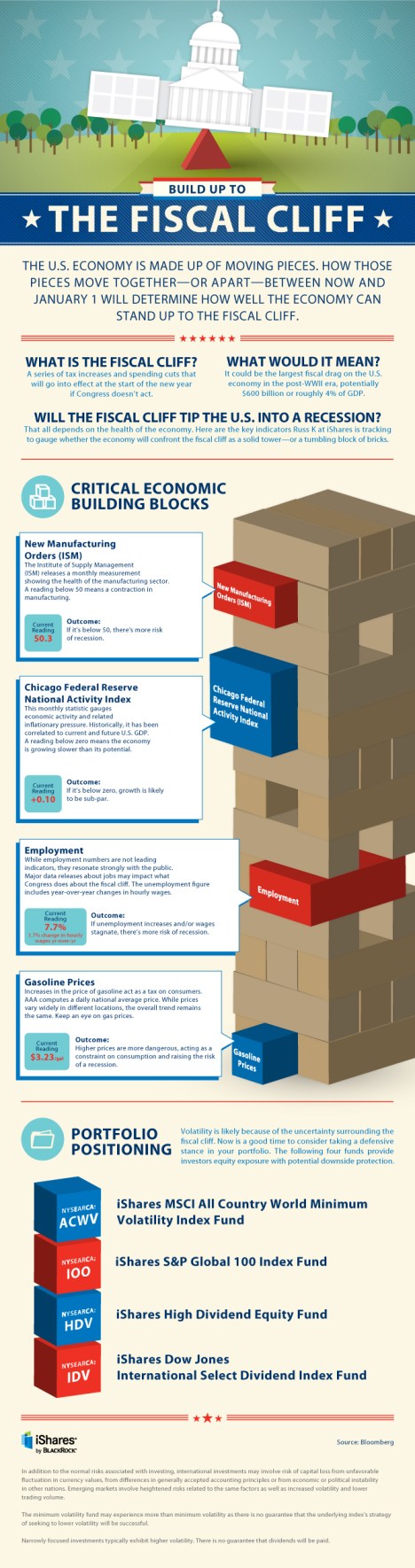
Building Up to the Fiscal Cliff

Join Our Mailing List

A Historic Review

Fiscal Cliff

Assessment

Doctors, FAs and all ME-P readers. What is your strategy for the fiscal cliff situation?

Conclusion

Your thoughts and comments on this ME-P are appreciated. Feel free to review our top-left column, and top-right sidebar materials, links, URLs and related websites, too. Then, subscribe to the ME-P. It is fast, free and secure.

Link: http://feeds.feedburner.com/HealthcareFinancialsthePostForcxos

Speaker: If you need a moderator or speaker for an upcoming event, Dr. David E. Marcinko; MBA – Publisher-in-Chief of the Medical Executive-Post – is available for seminar or speaking engagements. Contact: MarcinkoAdvisors@msn.com

Our Other Print Books and Related Information Sources:

Health Dictionary Series: http://www.springerpub.com/Search/marcinko

Practice Management: http://www.springerpub.com/product/9780826105752

Physician Financial Planning: http://www.jbpub.com/catalog/0763745790

Medical Risk Management: http://www.jbpub.com/catalog/9780763733421

Hospitals: http://www.crcpress.com/product/isbn/9781439879900

Physician Advisors: www.CertifiedMedicalPlanner.org

Product Details  Product Details

How Bad Is Our National Debt Problem, Anyway?

Join Our Mailing List

And … Will a Deal Fix It?

By Theodoric Meyer
ProPublica, Dec. 28, 2012, 12:34 p.m.

President Obama will meet with congressional leaders today [1] in another attempt to avert the fiscal cliff — the automatic tax increases and spending cuts set to take effect Jan. 1st unless Congress can strike a deal. The cuts and tax hikes, which total more than $500 billion, are so large and so sudden that many economists fear they would plunge the country back into recession.

As Washington tries to hash out a deal, we’ve taken a step back to break down the numbers behind our deficit — how it grew so big, why it is actually shrinking and whether a deal can bring it under control.

How much are we in debt?

The federal debt is just shy of $16.4 trillion [2] at the moment, which also happens to be the debt limit that Congress set in 2011. Treasury Secretary Timothy F. Geithner announced on Wednesday [3] that the nation would hit the limit on Dec. 31. The Treasury can take some “extraordinary measures” to keep paying its bills for a few weeks, but it’ll run out of cash by February or March unless Congress raises the limit again.

And that’s different from the deficit, right?

Yes. The debt is the total amount of the government’s outstanding obligations. The deficit is how much the government is in the red in a given year. In the 2012 fiscal year, which ended Sept. 30, the deficit amounted to $1.1 trillion [4].

That seems like a huge number. How did the deficit get so big?

The 2012 deficit was actually the smallest one since 2008. But it’s still a giant shortfall.

As Binyamin Appelbaum noted in The New York Times [5], the federal government has run a deficit in 45 of the last 50 years. (The exceptions were 1969 and 1998 through 2001.) The financial crisis in 2008, however, caused the deficit to skyrocket, as tax revenues fell because of the slump in incomes and production, and government spending on the stimulus and safety net measures such as unemployment insurance shot up. The deficit for the 2008 fiscal year was $455 billion. In 2009, it surged to more than $1.4 trillion.

Since then, the deficit has been falling, albeit very slowly. The government took in 6.4 percent more in taxes in 2012 than in 2011, as the economy improved a bit and several tax breaks expired. And it spent less on Medicaid, unemployment insurance and the continuing operations in Iraq and Afghanistan.

What about the total debt? How much of that is President Obama’s fault?

The debt has grown by nearly $6 trillion since Obama took office, from $10.5 trillion to $16.4 trillion.

Figuring out how much of that is due to Obama is tougher. The Washington Post’s Ezra Klein, working with the Center on Budget and Policy Priorities, calculated in January [6] that the legislation Obama had actually signed — as opposed to factors like the economy — had added about $983 billion to the debt.

Klein has also rounded up several charts [7] that break down exactly what’s caused our debt to grow so large. The biggest single factor has been the weak economy; President George W. Bush’s tax cuts and the wars in Iraq and Afghanistan also fueled the debt buildup, as did President Obama’s stimulus.

Have debt levels ever been this high before?

Yes, proportionally. Economists like talk about a country’s debt in relation to its gross domestic product (a measure of the economy’s total annual output). And instead of using a country’s total outstanding debt to calculate this debt-to-GDP ratio, economists typically use the amount of debt held by the public. (Somewhat confusingly, the federal government holds about $5 trillion in obligations to itself, most of which is money owed to the funds that support Social Security and other programs.)

Using this measurement, our debt was about 67.7 percent of GDP last year. As this chart compiled by Quartz’s Ritchie King shows [8], that’s the highest our debt-to-GDP ratio has been since the 1940s, when the need to finance World War II caused the debt to surge to 112.7 percent of GDP. But the economy grew fast enough after the war that the debt soon became a much smaller percentage of the country’s GDP.

It’s worth noting that a number of other developed countries have higher debt-to-GDP ratios [9] than the U.S. Germany’s public debt is 80.6 percent of GDP, and Canada’s is 87.4 percent. The euro zone’s most troubled countries fare even worse: Italy’s debt is 120.1 percent of GDP; Greece’s is 165.3 percent.

US Capitol

At least we’re not Greece. How much longer can we keep borrowing?

That’s a tough one. Some commentators — including Paul Krugman, the Nobel-winning economist and columnist for The New York Times — have argued that our current deficits are mostly a product of the sluggish economy. The deficit, Krugman wrote last week [10], “is a side-effect of an economic depression, and the first order of business should be to end that depression — which means, among other things, leaving the deficit alone for now.”

Other economists — including Carmen Reinhart and Kenneth Rogoff, who studied eight centuries’ worth of financial crises for their book “This Time Is Different” — argue that countries with debt-to-GDP ratios above a certain level tend to experience slower economic growth. Reinhart and Rogoff suggest the level is around 90 percent of GDP [11] — which the U.S. is rapidly approaching. A recent Congressional Research Service report [12] concluded that while the debt-to-GDP ratio can’t keep rising forever, “it can rise for a time.” The report continued:

It is hard to predict at what point bond holders would deem it to be unsustainable. A few other advanced economies have debt-to-GDP ratios higher than that of the United States. Some of those countries in Europe have recently seen their financing costs rise to the point that they are unable to finance their deficits solely through private markets. But Japan has the highest debt-to-GDP ratio of any advanced economy, and it has continued to be able to finance its debt at extremely low costs.

How does all this fit into the fiscal cliff?  Would a deal to avert it fix our debt problem?

Actually, going over the fiscal cliff would almost singlehandedly erase the deficit. Tax rates would shoot up, and the fiscal cliff’s indiscriminate budget cuts would slash military and safety-net spending alike.

The problem is that all those tax increases and spending cuts would likely throw the economy back into a recession, causing the deficit to balloon again. “The economy will, I think, go off a cliff,” said Ben Bernanke [13], the Federal Reserve chairman.

(For more detail, see The Washington Post’s exhaustive fiscal cliff explainer [14].)

What the two sides are trying to do is identify cuts that are ultimately deep enough to bring down the deficit — and thus, eventually, the debt — without stalling the economy. But negotiations collapsed last week [15] after John Boehner, the Republican House speaker, tried and failed to pass a “Plan B” alternative to the president’s proposal in the House. Obama is set to meet with congressional leaders today to try to strike a deal to block at least some of the cliff’s impact by Monday night. But its prospects seem dim.

“I have to be very honest,” Sen. Harry Reid, the majority leader, said on Thursday. “I don’t know timewise how it can happen now.”

Assessment

Of course, some analysts have pointed out that people on both the Republican and the Democratic sides may actually want to move the cliff just slightly down the road into the next Congress, which convenes Thursday, Jan. 3. The advantages: Boehner can be safely re-elected as Speaker before he has to do serious twisting of arms of fellow GOP House members to get their votes for any compromise plan. And there will be a few more Democrats in the House and the Senate for the White House to rely on in enlisting the votes it needs to ratify any such deal. The disadvantage: Delay makes the risk of miscalculation greater for either or both sides — and for the public.

Link: http://www.propublica.org/article/how-bad-is-our-debt-problem-anyway-and-will-a-deal-fix-it

Conclusion

Your thoughts and comments on this ME-P are appreciated. Feel free to review our top-left column, and top-right sidebar materials, links, URLs and related websites, too. Then, subscribe to the ME-P. It is fast, free and secure.

Link: http://feeds.feedburner.com/HealthcareFinancialsthePostForcxos

Speaker: If you need a moderator or speaker for an upcoming event, Dr. David E. Marcinko; MBA – Publisher-in-Chief of the Medical Executive-Post – is available for seminar or speaking engagements. Contact: MarcinkoAdvisors@msn.com

OUR OTHER PRINT BOOKS AND RELATED INFORMATION SOURCES:

DICTIONARIES: http://www.springerpub.com/Search/marcinko
PHYSICIANS: www.MedicalBusinessAdvisors.com
PRACTICES: www.BusinessofMedicalPractice.com
HOSPITALS: http://www.crcpress.com/product/isbn/9781466558731
CLINICS: http://www.crcpress.com/product/isbn/9781439879900
BLOG: www.MedicalExecutivePost.com
FINANCE: Financial Planning for Physicians and Advisors
INSURANCE: Risk Management and Insurance Strategies for Physicians and Advisors


Product Details  Product Details

Product Details


Letter from the Editor on Sandy Hook Elementary School

Join Our Mailing List

A Painful Op-Ed Piece

By Dr. David Edward Marcinko FACFAS, MBA, CMP™

[Publisher and Editor-in-Chief]

Dr David E Marcinko MBAThe tragedy which struck the Sandy Hook Elementary School in Newtown, Connecticut last Friday left this Medical Executive-Post, and the entire nation, stunned. So many deaths of far too young victims! It is difficult to comprehend, explain or manage. It is not so difficult to feel some of the enormous loss of the parents, families and friends of the victims.

And, I’m sure it is unnecessary for me to encourage you to keep them in your thoughts and prayers. You, like me, have probably thought of little else since Friday.

At the ME-P, we will remember the people and families in Newtown, CT. Like the rest of the nation, our home-page flag will be at half-staff through this week.

If you have children of elementary school age, you may need some opportunities to process their reactions to this tragedy. Perhaps all they need is someone to listen, or to reassure them that these tragedies are rare events. We trust your local clergy, pediatricians and counselors are available to assist you or your child if that would be helpful.

More: www.CertifiedMedicalPlanner.org

In closing, I would like to share with you a Judeo-Christian reading which might bring some comfort during these difficult days:

A Prayer

The Spirit of the Lord God is upon me, because the Lord has anointed me to bring good news to the poor …  to comfort all who mourn; to grant to those who mourn in Zion— to give them a beautiful headdress instead of ashes, the oil of gladness instead of mourning, the garment of praise instead of a faint spirit; that they may be called oaks of righteousness, the planting of the Lord, that he may be glorified.

Assessment

ME-P Textbook: Chapter 07: Workplace Violence

We trust the deep knowledge and expertise on this topic by ME-P thought-leader Gene Schmuckler is available to you, as needed.

Fraternally,

David Edward Marcinko

Conclusion

Your thoughts and comments on this ME-P are appreciated. Feel free to review our top-left column, and top-right sidebar materials, links, URLs and related websites, too. Then, subscribe to the ME-P. It is fast, free and secure.

Product Details

Product Details

Vote on Election Day 2012

Join Our Mailing List

The ME-P … Endorses?

Dr. David Edward Marcinko MBA

[Publisher-in-Chief]

President Barack Obama and GOP nominee Mitt Romney are essentially neck-and-neck in the homestretch to the presidential election today with considerable healthcare, economic, tax and financial consequences at stake. All are integral topics of this electronic ME-P publication.

And so, although your publisher, editors and staff seek to remain fair, neutral and balanced on the presidential election, we encourage all Medical Executive-Post readers, subscribers and visitors to vote today.

### 

Exercise your franchise or loose it!


Election Day 2012

On the Decline of US Economic Freedom

Join Our Mailing List

A Remarkable Plunge in Economic Freedom

By Rick Kahler MS CFP® ChFC CCIM www.KahlerFinancial.com

The United States has experienced a “remarkable plunge in economic freedom” over the past ten years. This is the conclusion of the 2012 Economic Freedom of the World Annual Report, by Gwartney, Lawson, and Hall.

The GLH Report

The report measures the degree to which a country supports the cornerstones of economic freedom, defined as personal choice, voluntary exchange, freedom to compete, and the security of privately owned property. It surveys forty-two variables used to construct an index that measures 144 countries in five areas of economic freedom: the size of government, property rights, sound money, freedom to trade, and regulation.

Historical Review

For 20 years, from 1980 to 2000, the U.S. usually ranked as the third freest economy in the world behind Hong Kong and Singapore. By 2005 the U.S. fell to eighth, and by 2010 it was ranked 18th. In addition to Hong Kong and Singapore, the US is now less economically free than New Zealand, Switzerland, Australia, Canada, Bahrain, Mauritius, Finland, Chile, UAE, Ireland, United Kingdom, Estonia, Taiwan, Denmark, and Qatar. Right on our heels within .08 of a point are Kuwait, Cyprus, Japan, Oman, Jordan, and Peru.

Size of Government 

The size of government measures the degree to which a country relies on personal choice and free markets rather than government control of markets and politics. Countries with low levels of government spending, a smaller government sector, and lower tax rates did best in this measure. The U.S. ranks 78th in this category and has seen the size of its government and control over markets significantly expand in the past 10 years.

The security of property rights and a legal system that protects them is the foundation of economic freedom and free markets. If businesses and individuals don’t have confidence that contracts will be enforced and their investments protected, it sabotages their incentive to produce. And production is at the heart of any strong economy. The U.S. ranks 28th among nations in property rights and a strong legal system. This decline is one of the more surprising to me.

Reasons for Low US Ratings

The report suggests several reasons for the low rating. One is the U.S. expansion of eminent domain powers that now allows cities to condemn private property for resale to private developers, something that was once unthinkable. Another example is the violation of the property rights of bondholders in the government bailout of GM. Finally, the ramifications of the wars on drugs and terrorism, with laws allowing the government to invade and seize property, have contributed to the sharp decline of property rights.

Sound money is the oil that keeps an economy running. While sovereign governments cannot involuntarily go bankrupt because they can create money, they are constrained by inflation. To earn a high rating in this category a country must have a low and stable rate of inflation. This is where the US scored highest, ranking seventh.

Most Free Countries

The countries with the most freedom to trade internationally have low tariffs, easy clearance and efficient administration of customs, and few controls on the movement of capital. The US ranks 57th in free trade!

Finally, a free economy avoids regulations that restrict entry into markets and restrict exchange. It allows markets to determine prices and avoids regulations that increase costs and restrict people’s ability to get into business. Here, the U.S. ranks 31st.

Report Executive Summary

Link: http://www.cato.org/pubs/efw/efw2012/efw-2012-executive-summary.pdf

Assessment

Clearly, there can be no doubt that the U.S. is in economic decline. The economic freedoms we once took for granted are slowly slipping away. Only time will tell if we will rally and turn back toward the economic principles that once made American the envy of the world, or whether we will continue our slow fall to mediocrity.

Conclusion

Your thoughts and comments on this ME-P are appreciated. Feel free to review our top-left column, and top-right sidebar materials, links, URLs and related websites, too. Then, subscribe to the ME-P. It is fast, free and secure.

Speaker: If you need a moderator or speaker for an upcoming event, Dr. David E. Marcinko; MBA – Publisher-in-Chief of the Medical Executive-Post – is available for seminar or speaking engagements. Contact: MarcinkoAdvisors@msn.com

OUR OTHER PRINT BOOKS AND RELATED INFORMATION SOURCES:

Product Details

Helping Sandy’s Victims

Join Our Mailing List

How Readers of the ME-P Can Assist

By Ann Miller RN MHA

[Executive Director]

If you want to help those hurt by hurricane Sandy, you may donate to the American Red Cross via text message, as well as by phone or online.

AMERICAN RED CROSS

The Red Cross is providing shelter, clothes, supplies, food and blood, as needed, for the victims of Sandy. You can donate blood, but in terms of items, you’ll be doing more for those in need by donating money instead of physical goods.

Text message: Text the word REDCROSS to 90999 to donate $10 to American Red Cross Disaster Relief. As in the case with other donations via mobile, the donation will show up on your wireless bill, or be deducted from your balance if you have a prepaid phone. You need to be 18 or older, or have parental permission, to donate this way. (If you change your mind, text the word STOP to 90999).

Phone: 800-RED CROSS (1-800-733-2767); for Spanish speakers, 800-257-7575; for TDD,  800-220-4095.

To donate blood: Visit this Red Cross Web page.

Online: American Red Cross

Historic Gas Prices versus Major Events

Join Our Mailing List

A 45 Year Journey

Source: www.DaveManuel.com

Assessment

Update as of 9 a.m. on Oct. 6, 2012: Record high gas prices were set across Southern California. For example, in Los Angeles County, the price of a gallon of regular unleaded was $4.66 and just a penny less in Orange County.

Click here to read more.

Dr. Marcinko with a McLaren F1 — unadorned, undisguised and entirely unofficial

Conclusion

Your thoughts and comments on this ME-P are appreciated. Feel free to review our top-left column, and top-right sidebar materials, links, URLs and related websites, too. Then, subscribe to the ME-P. It is fast, free and secure.

Speaker: If you need a moderator or speaker for an upcoming event, Dr. David E. Marcinko; MBA – Publisher-in-Chief of the Medical Executive-Post – is available for seminar or speaking engagements. Contact: MarcinkoAdvisors@msn.com

OUR OTHER PRINT BOOKS AND RELATED INFORMATION SOURCES:

Product Details  Product Details

Get Our New Medical Executive-Post Mobile Applications

Join Our Mailing List

We Are Going Mobile – Now YOU Get Going!

By Ann Miller RN MHA

[Executive Director]

If you have one of the following mobile devices, you can download an app that lets you write posts, upload photos, edit your pages, and manage comments on our ME-P blog directly from your smart-phone device.

Assessment

Check out our hosts’ apps page to see the most current applications for your phone and desktop.

Noteworthy: If your phone is not one of the above, don’t worry – you can still use m.wordpress.com – a mobile version of our dashboard that lets you easily publish new blog posts and comments; so get started now!

Conclusion

Your thoughts and comments on this ME-P mobile initiative are appreciated. Feel free to review our top-left column, and top-right sidebar materials, links, URLs and related websites, too. Then, subscribe to the ME-P. It is fast, free and secure.

Link: http://feeds.feedburner.com/HealthcareFinancialsthePostForcxos

Speaker: If you need a moderator or speaker for an upcoming event, Dr. David E. Marcinko; MBA – Publisher-in-Chief of the Medical Executive-Post – is available for seminar or speaking engagements. Contact: MarcinkoAdvisors@msn.com

Our Other Print Books and Related Information Sources:

Health Dictionary Series: http://www.springerpub.com/Search/marcinko

Practice Management: http://www.springerpub.com/product/9780826105752

Physician Financial Planning: http://www.jbpub.com/catalog/0763745790

Medical Risk Management: http://www.jbpub.com/catalog/9780763733421

Hospitals: http://www.crcpress.com/product/isbn/9781439879900

Physician Advisors: www.CertifiedMedicalPlanner.org

Product DetailsProduct DetailsProduct Details

Product Details  Product Details

Product Details

Financial Update on Non-Profit Healthcare Organizations

COMMONFUND: NONPROFIT HEALTHCARE ORGANIZATIONS REPORT FLAT INVESTMENT RETURNS

Join Our Mailing List

For Fiscal Year 2011

By Ron Chernus

Press Release

Link: 2012 CBS Healthcare release final

Conclusion

Your thoughts and comments on this ME-P are appreciated. Feel free to review our top-left column, and top-right sidebar materials, links, URLs and related websites, too. Then, subscribe to the ME-P. It is fast, free and secure.

Link: http://feeds.feedburner.com/HealthcareFinancialsthePostForcxos

Speaker: If you need a moderator or speaker for an upcoming event, Dr. David E. Marcinko; MBA – Publisher-in-Chief of the Medical Executive-Post – is available for seminar or speaking engagements. Contact: MarcinkoAdvisors@msn.com

OUR OTHER PRINT BOOKS AND RELATED INFORMATION SOURCES:

DICTIONARIES: http://www.springerpub.com/Search/marcinko
PHYSICIANS: www.MedicalBusinessAdvisors.com
PRACTICES: www.BusinessofMedicalPractice.com
HOSPITALS: http://www.crcpress.com/product/isbn/9781466558731
CLINICS: http://www.crcpress.com/product/isbn/9781439879900
ADVISORS: www.CertifiedMedicalPlanner.org
PODIATRISTS: www.PodiatryPrep.com
BLOG: www.MedicalExecutivePost.com
FINANCE: Financial Planning for Physicians and Advisors
INSURANCE: Risk Management and Insurance Strategies for Physicians and Advisors

Product DetailsProduct DetailsProduct Details

Product Details Product Details

Product Details

Events Planner: September 2012

ADVERTISEMENT

Events-Planner: SEPTEMBER 2012

By Staff Writers

Keeping track of important health economics and financial industry meetings, conferences and summits

Welcome to this issue of the Medical Executive-Post and our Events-Planner. It contains the latest information on conferences, news, and relevant resources in healthcare finance, economics, research and development, business management, pharmaceutical pricing, and physician/entity reimbursement! Watch for a new Events-Planner each month.

First, a little about us! The Medical Executive-Post is still a relative newcomer. But today, we have almost 175,000 visitors and readers each month from all over the country, in addition to our growing subscriber base. We have been a successful collaborative effort, thanks to your contributions.  As a result, we are adding new resources daily. And, we hope the website continues to provide the best place to go for journals, books, conferences, educational resources, tools, and other things you need to establish the value your healthcare consulting and financial advisory intervention.

So, enjoy the Medical Executive-Post and this monthly Events-Planner with our compliments.

A Look Ahead this Month – And now, the important dates:

  • September 14-16: Physicians in Management Seminar, Atlanta, GA
  • September 16-19: Association Healthcare Environment, Phoenix, AZ
  • September 19-22: SHSMD Meeting, Philadelphia, PA
  • September 22-25: ASHHRA Meeting, Denver, CO

MarcinkoAdvisors@msn.com

Speaker: If you need a moderator or speaker for an upcoming event, Dr. David E. Marcinko; MBA – Publisher-in-Chief of the Executive-Post – is available for seminar or speaking engagements. Contact: MarcinkoAdvisors@msn.com 

Subscribe Now: Did you like this Medical Executive-Post, or find it helpful, interesting and informative? Want to get the latest E-Ps delivered to your email box each morning? Just subscribe using the link below. It’s free. You can unsubscribe at any time. Security is assured.

Link: http://feeds.feedburner.com/HealthcareFinancialsthePostForcxos

Product DetailsProduct DetailsProduct Details

Product Details  Product Details

Product Details

About Next-Gen Bath Salts

Join Our Mailing List

By The DEA Agent

Innocent Name – The Dangerous Consequences of MDPV

The recent media explosion over bath salts is not unwarranted. Over the past two years, the public eye has zoomed in on dangerous drug, still legally sold in some states. And, there’ve been many bizarre cases of violence and psychotic outbursts from users.

About MDPV

But, what exactly are bath salts?

Assessment

Keep reading the above to learn about the history and effects of bath salts.

Source: rehab-international.org

More info: http://en.wikipedia.org/wiki/Methylenedioxypyrovalerone

Conclusion

Your thoughts and comments on this ME-P are appreciated. Feel free to review our top-left column, and top-right sidebar materials, links, URLs and related websites, too. Then, subscribe to the ME-P. It is fast, free and secure.

Speaker: If you need a moderator or speaker for an upcoming event, Dr. David E. Marcinko; MBA – Publisher-in-Chief of the Medical Executive-Post – is available for seminar or speaking engagements. Contact: MarcinkoAdvisors@msn.com

OUR OTHER PRINT BOOKS AND RELATED INFORMATION SOURCES:

Product DetailsProduct DetailsProduct Details