GROUP “Drop-In” DOCTOR VISITS ARE EVOLVING?

Join Our Mailing List

ST. LOUIS STADIUM VACATED BY RAMS TO BE USED FOR GROUP DOCTOR VISITS

By Winona Woodward [Health TurnUp News]

AFTER THE NFL APPROVED relocation of the Rams football team from St. Louis to Los Angeles, Edward Jones Dome stadium administrators knew they faced a big task in front of them, trying to find a new major tenant for the facility. Stadium officials have just announced the Greater Saint Louis Purchaser and Provider Coalition has entered into an exclusive lease for the stadium to be used for group doctor visits.

Group doctor visits, a relatively new innovation garnering increased interest in the past few years, typically involve up to a dozen patients or so and offer various efficiencies as well as benefits of shared discussion and experiences. Warn Kurter, Executive Director of the Greater Saint Louis Purchaser and Provider Coalition says

“we have decided to take group doctor visits to a whole new level, in partnership with area health plans, employers and providers, to create the world’s largest group doctor visit venue. Now tens of thousands of patients can undergo a visit with a team of doctors stationed at midfield and televised over the JumboTron. How cool is that?”

***

ImageProxy

***

The Coalition’s Kurter points out that the savings in terms of dollars, time and resources from combining patient visits on a group scale in the tens of thousands will be, in Kurter’s words, “Ginormous.” Not only that, but the Coalition has negotiated financial participation in the stadium food and beverage concessions during the group visits, according to Kurter.

“We’re also going to ensure the group visits are produced as an event that patients won’t want to miss. We will start each session with a rousing Star Spangled Banner performed by a major recording artist, and we’ll provide engaging halftime entertainment in the middle of the session while the doctors and their staff take their break,”

Kurter added.

Conclusion

Your thoughts and comments on this ME-P are appreciated. Feel free to review our top-left column, and top-right sidebar materials, links, URLs and related websites, too. Then, subscribe to the ME-P. It is fast, free and secure.

Speaker: If you need a moderator or speaker for an upcoming event, Dr. David E. Marcinko; MBA – Publisher-in-Chief of the Medical Executive-Post – is available for seminar or speaking engagements. Contact: MarcinkoAdvisors@msn.com

OUR OTHER PRINT BOOKS AND RELATED INFORMATION SOURCES:

Product DetailsProduct Details

***

US and International Healthcare Comparison

Join Our Mailing List

By http://www.MCOL.com

As a Percentage of GDP and Spending Per Capita 2013

ImageProxy

Assessment

Your thoughts and comments on this ME-P are appreciated. Feel free to review our top-left column, and top-right sidebar materials, links, URLs and related websites, too. Then, subscribe to the ME-P. It is fast, free and secure.

Speaker: If you need a moderator or speaker for an upcoming event, Dr. David E. Marcinko; MBA – Publisher-in-Chief of the Medical Executive-Post – is available for seminar or speaking engagements. Contact: MarcinkoAdvisors@msn.com

OUR OTHER PRINT BOOKS AND RELATED INFORMATION SOURCES:

Product DetailsProduct DetailsProduct Details

***

THE REAL BLIZZARD OF 2016 FOR STOCKS

Join Our Mailing List

On Mean Reversion

Michael-Gayed-sepiaBy Michael A. Gayed CFA
[Portfolio Manager]
www.pensionpartners.com

Mean reversion is perhaps the one and only constant when it comes to markets and life.  Mean reversion is as old as the Bible – he who is first shall be last, and last first.  We go from 75-degree weather on Christmas day, to one of the most historic blizzards on the east coast ever nearly a month later.

Somehow, nature (and markets) return to balance by moving from one extreme to the other. Mean reversion is dependable, but tough to remember when living in the extreme.  This is so because it is hard to imagine that everything can change in the not-too-distant future.  When dealing with markets, study after study concludes that if you take the worst performing asset classes, country indices, or strategies over the last three years, the next three years tend to be very good ones.

Fund Flows

Yet, in looking at fund flows for those areas, inevitably most exit those investments towards the tail end of that cycle which did not favor those particular investments. With volatility on-going, it is worth asking if we are on the cusp of a mean reversion moment in quite literally everything.

The iShares MSCI Emerging Market ETF (EEM) is down 8.8% year to date, with the iShares China Large-Cap ETF (FXI) down 12.92%.  Looks like a crisis, until you look at the performance of the US iShares Russell 2000 ETF (IWM) which is down 9.98%.  Emerging markets more broadly are actually down less than the average small-cap US stock despite continuous hammering of the idea that a global slowdown and fears over China are the source of market volatility. The narrative lags reality, no different than how money flows lag in response to changing cycles.

The real blizzard in 2016 is one of significant mean reversion

There are major investment themes which can change this year.  First and foremost is the theme of passive over active.  For the past several years, passive investment vehicles have been all the rage as ETFs of every stripe came out, allowing for more index allocation options.  Indeed, indexing can be a strong strategy, but what is forgotten is that as more money goes into passive strategies, the less money there is taking advantage of active anomalies and opportunities.

Mean reversion here suggests that we may be entering an environment where passive investors don’t perform as well as they had, as new momentum opportunities and risk-off periods allow for tactical trading to really shine beyond the small sample. Whether stocks have bottomed or not is irrelevant for now.

The greatest opportunities will come from 1) avoiding or minimizing the impact of more frequent corrections in stocks (not one week extremes like the start of 2016), and 2) positioning in reflation trades through commodities and emerging markets which have been left for dead as being investable.

***

Bell Curve

***

Should mean reversion begin to take hold this year, betting against those areas can result in significant loss.   Investors in those areas now are suffering and doubting their investments, which may be precisely why tremendous money can be made.

Assessment

As 2016 unfolds, we will continue to address these potential opportunities in our writings (click here to read).  The thing about the future is that it’s hard to predict what happens next…except at extremes.

Conclusion

Your thoughts and comments on this ME-P are appreciated. Feel free to review our top-left column, and top-right sidebar materials, links, URLs and related websites, too. Then, subscribe to the ME-P. It is fast, free and secure.

Speaker: If you need a moderator or speaker for an upcoming event, Dr. David E. Marcinko; MBA – Publisher-in-Chief of the Medical Executive-Post – is available for seminar or speaking engagements. Contact: MarcinkoAdvisors@msn.com

OUR OTHER PRINT BOOKS AND RELATED INFORMATION SOURCES:

Comprehensive Financial Planning Strategies for Doctors and Advisors: Best Practices from Leading Consultants and Certified Medical Planners™

***

Top Healthcare Trends of 2015

Join Our Mailing List

By eVisit

A Guide to the Changes

***

Top-Healthcare-Trends-of-2015-Infographic

 ***

Conclusion

Your thoughts and comments on this ME-P are appreciated. Feel free to review our top-left column, and top-right sidebar materials, links, URLs and related websites, too. Then, subscribe to the ME-P. It is fast, free and secure.

Speaker: If you need a moderator or speaker for an upcoming event, Dr. David E. Marcinko; MBA – Publisher-in-Chief of the Medical Executive-Post – is available for seminar or speaking engagements. Contact: MarcinkoAdvisors@msn.com

OUR OTHER PRINT BOOKS AND RELATED INFORMATION SOURCES:

Product DetailsProduct DetailsProduct Details

***

ON-CALL AND EMERGENCY DEPARTMENT RISKS

Join Our Mailing List 

The  growing revolt

[By staff reporters]

There is a growing revolt of specialists against hospital on-call duties that threatens to violate Federal law and lose status as trauma centers. Specialties most likely to refuse include plastic surgery, ENT, psychiatry, neuro-surgery, ophthalmology and orthopedics.

And, refusing to respond to assigned call is a violation of Federal law and carries fines as much as $50,000 per case.

In contrast, refusing to sign up for call does not violate the law, and more physicians are taking this option. The problem opting-out problem is especially acute in California where hospitals are combating the issues with compensation, reporting the miscreant docs to the authorities, or threatening to remove them from staff completely. In turn, doctors are fighting back with lawsuits.

As an example, essayist Jeff Goldsmith, President of Health Futures Inc, and Associate Professor of Public Health Sciences at the University of Virginia opined back in 1980, that:

*** tracheobronchial+foreign+body+aspiration

[Foreign Body Aspiration]

“We can expect intensified conflict with private physicians over the hospital’s 24-hour mission and service obligation, specifically providing physician coverage after hours and on weekends. Younger physicians have shown decreased willingness to trade their personal time to cover hospital call in exchange for hospital admitting privileges as their elders did. Those admitting privileges are either less essential or completely unnecessary in an increasingly ambulatory practice environment. The present solution is for hospitals to pay stipends to independent practitioners for call coverage or to contract with single specialty groups large enough to rotate call internally.”

Source: Goldsmith, Jeff: The Long Baby Boom, by Johns Hopkins University Press, May 2008.

Conclusion

Your thoughts and comments on this ME-P are appreciated. Feel free to review our top-left column, and top-right sidebar materials, links, URLs and related websites, too. Then, subscribe to the ME-P. It is fast, free and secure.

Speaker: If you need a moderator or speaker for an upcoming event, Dr. David E. Marcinko; MBA – Publisher-in-Chief of the Medical Executive-Post – is available for seminar or speaking engagements. Contact: MarcinkoAdvisors@msn.com

OUR OTHER PRINT BOOKS AND RELATED INFORMATION SOURCES:

Risk Management, Liability Insurance and Asset Protection Strategies for Doctors and Advisors

[Best Practices from Leading Consultants and Certified Medical Planners™] Risk Management, Liability Insurance, and Asset Protection Strategies for Doctors and Advisors: Best Practices from Leading Consultants and Certified Medical Planners™

 Harvard Medical School

Boston Children’s Hospital – Psychiatrist

Yale University

***

The PP-ACA’s Impact on Medical Liability Insurance?

Join Our Mailing List 

A SPECIAL ME-P REPORT

robert-cimasi

BY ROBERT JAMES CIMASI; MHA, ASA, FRICS, MCBA, AVA, CM&AA, CMP

HEALTH CAPITAL CONSULTANTS, LLC

www.HealthCapital.com

Aside from differences in insurer behavior, malpractice lawsuit rates, and political responses at the state level, the ACA may also have an impact on the medical liability insurance market. Following several months of partisan controversy and political debate during President Obama’s first term, Congress passed the ACA in March 2010.[1] While not achieving a universal coverage insurance program or a single payor system, the 2010 healthcare reform legislation marked the beginning of a new era in healthcare reform, resulting in a paradigm change in the way healthcare services are delivered and paid for in the U.S.

Some of the ACA’s initiatives have already had significant impact upon many aspects of the healthcare delivery system, including: (1) increased regulatory scrutiny aimed at combating fraud and abuse and antitrust violations; (2) health plan regulation; (3) addressing physician shortages; (4) access to and quality of care initiatives; and, (5) increased attention to public health and wellness activities, among others.[2]

In contrast, the ACA’s impact on the medical liability insurance market, and the medical malpractice system, is relatively unknown. The Medical Liability Monitor’s 2010 annual rate survey noted that 41% of medical liability insurers did not believe that the ACA would impact medical liability insurance markets;[3] however, by 2011, as stated above, this attitude had changed to reflect increasing concerns about provider consolidation and self-insurance for professional liability by providers.[4] These concerns continue to reflect the thinking of medical liability insurers, in part, because there have been few, if any, answers to alleviate their concerns and measure the ACA’s impact on the incidence and cost of medical malpractice.

Some of the medical liability insurer concerns regarding the ACA’s impact stems from the reality that the only one of two sections of the ACA directly relating to medical liability insurance and the current medical malpractice system have been implemented. Section 6801 of the ACA simply provides a policy statement regarding medical malpractice, stating that the U.S. Senate believes that “health care reform presents an opportunity to address issues related to medical malpractice and medical liability insurance,” and encourages Congress, as a whole, to develop demonstration programs with the goal of discovering alternatives to the current civil litigation system for medical malpractice.[5] Additionally, Section 10607 of the ACA authorizes HHS to award grants to states “for the development, implementation, and evaluation of alternatives to current tort litigation” for medical malpractice claims.[6] This section allows HHS to make $50 million available for these demonstration projects subject to Congressional approval.[7] To date, neither Congress nor the President has requested funding for these projects.[8]

Even without these direct impacts, the medical malpractice system may still face changes as a result of the ACA. First, as providers consolidate with larger health systems, medical liability insurers fear the medical liability insurance market “will shrink as their former customers become their competitors.”[9] From 2011 to 2014, medical liability insurers consistently noted to the Medical Liability Monitor that hospital or ACO acquisitions of physician practices act as “the biggest threat to their market share” because of the entity’s ability to better absorb the risk related to malpractice liability.[10] In theory, this ability to absorb medical professional liability risk will allow higher rates of self-insurance, which can affect the rates of straight indemnity insurers.  Second, the number of malpractice claims is expected to increase as more individuals gain health insurance coverage as a result of ACA enactments.

Obama Care

A 2007 Journal of the American Medical Association study concluded that insured persons who suffer a chronic condition receive higher quality and increased care compared to non-insured persons; reinforcing earlier studies suggesting insured persons receive more care than uninsured persons.[11] Building on this premise, a RAND report on the ACA and liability insurance relationships estimated that with the expected influx of newly-insured individuals, particularly in states expanding Medicaid, more physician-patient encounters will increase the volume of overall medical errors, leading to an increase in medical malpractice lawsuits.[12] Consequently, the RAND report estimates that the number of liability payments in medical malpractice actions will increase by 3.4% between pre-ACA insurance plan enrollment and enrollment post-ACA implementation.[13]

Additionally, the RAND report argues that, due to an increase in insurance plan enrollment, medical malpractice payments per claim will actually decrease in states adopting limitations to the collateral source rule. Under the collateral source rule, the damage awards for injured parties do not take into account payments previously received from other sources; consequently, the damage award includes the value of funds collected by another source (e.g., insurance) while allowing the injured party to keep the benefits of that previous value received.[14] In the medical malpractice context, plaintiffs in states adopting the collateral source rule can collect from the physician (or his medical liability insurer) as well as keep the benefits of healthcare reimbursed by their own health insurer. However, some states limit the application of the collateral source rule in medical malpractice cases where the plaintiff’s health insurance already paid for care resulting from the negligent actions of the physician, thereby preventing the plaintiff from receiving this double windfall. As insurance rates rise, RAND estimates that payouts per claim will decrease by 0.6% nationally.[15] Considering the three effects together, RAND projects that total liability claim costs will increase by 2.8% nationally by 2016 as a result of the ACA.[16]

Conversely, other healthcare industry commentators argue that the ACA’s expansion of coverage to previously uninsured individuals, as well as quality of care initiatives, will actually decrease malpractice costs by reducing the number of adverse events suffered by patients.[17] In a 2010 editorial in the Journal of Law, Medicine, and Ethics, Mark A. Rothstein, the Director of Institute for Bioethics, Health Policy, & Law at the University of Louisville – Louis D. Brandeis School of Law, argued that quality and infrastructure initiatives such as increased EHR usage, expansion of outcomes research and use of evidence-based medical standards, and better care coordination, will limit the number of adverse events that provide the basis for a medical malpractice claim.[18] Further, Rothstein posited that, by simply being insured, “significant numbers of injured patients are likely to forego medical malpractice claims.”[19]

Although President Obama signed the ACA in 2010, the effects of this landmark law on the medical malpractice market remain hazy. The current trend toward healthcare consolidation, accountable care, and self-insurance mirrors similar consolidation practices in the mid-1990s, which increased competition in the medical liability insurance market and eroded proper underwriting practices. Nevertheless, other critical ACA effects remain unknown. The impact of the expansion of health insurance coverage will likely remain unclear for the near future because new enrollees began receiving coverage through health insurance exchanges in 2014, limiting the amount of exposure to healthcare interactions that could give rise to an adverse event and result in a medical malpractice suit. Additionally, the average length of litigation surrounding preventable adverse events lasts 43.1 months from the date of the incident to the date of resolution,[20] which limits medical liability insurers from realizing the full costs of a claim and the aggregate of claims in its risk pool.

RISK

Assessment

Now, assuming that increased enrollment does not affect the average length of medical malpractice litigation,[21] the average newly insured person who suffered a preventable adverse event in July 2014 will not resolve his or her claim until March 2018. With this lag time of almost four years between adverse events and claims, it is likely that the full impact of the ACA on the medical malpractice market and medical liability insurance premiums will not be fully known until the next decade.

Conclusion

Your thoughts and comments on this ME-P are appreciated. Feel free to review our top-left column, and top-right sidebar materials, links, URLs and related websites, too. Then, subscribe to the ME-P. It is fast, free and secure.

Speaker: If you need a moderator or speaker for an upcoming event, Dr. David E. Marcinko; MBA – Publisher-in-Chief of the Medical Executive-Post – is available for seminar or speaking engagements. Contact: MarcinkoAdvisors@msn.com

OUR OTHER PRINT BOOKS AND RELATED INFORMATION SOURCES:

References 

[1]      “Patient Protection and Affordable Care Act,” Public Law 111-148, 124 Stat. 119 (March 23, 2010); “Health Care and Education Reconciliation Act” Public Law 111-152, 124 Stat. 1029 (March 25, 2010).

[2]       “Restructuring, Consolidation in Health Care Make Reform Top Health Law Issue for 2010,” By Susan Carhart et al., BNA Health Law Reporter, Vol. 19, No. 5 (January 8, 2010).

[3]       “Now Hard & Crunchy on the Outside: Could Strong Financials be Hiding a Market That’s Growing Soft Within?” By Chad C. Karls, FCAS, MAAA, Medical Liability Monitor, Vol. 35, No. 10, October 2010, p. 4.

[4]       “From Crunchy Candy to Simmering Frogs: Waiting and Hoping for a Hardening Market as the Market Trends Slowly, Steadily Softer,” By Chad C. Karls, FCAS, MAAA, Medical Liability Monitor, Vol. 36, No. 10 (October 2011), p. 5.

[5]       “Patient Protection and Affordable Care Act,” Public Law 111-148, 124 Stat. 804 (March 23, 2010).

[6]       “Patient Protection and Affordable Care Act,” Public Law 111-148, 124 Stat. 1009 (March 23, 2010).

[7]       “Patient Protection and Affordable Care Act,” Public Law 111-148, 124 Stat. 1014 (March 23, 2010).

[8]       “Medical Liability Reform – Demonstration Grants,” American College of Physicians, 2013, http://www.acponline.org/advocacy/where_we_stand/assets/iii12-medical-liability-reform-demo.pdf (Accessed 12/23/14).

[9]       “From Crunchy Candy to Simmering Frogs: Waiting and Hoping for a Hardening Market as the Market Trends Slowly, Steadily Softer,” By Chad C. Karls, FCAS, MAAA, Medical Liability Monitor, Vol. 36, No. 10 (October 2011), p. 5.

[10]     “The Slinky Effect: With Medical Professional Liability Insurance Rates Continuing to – Slowly and Steadily – Decline During the Most Recent Soft Market, It Appears It will Take Several More Years Before the Market Hardens and Rates Accelerate Upward,” By Chad C. Karls, FCAS, MAAA, Medical Liability Monitor, Vol. 39, No. 10 (October 2014), p. 6; “Casualty Actuarial Society Session Debates Potential Medical Professional Liability Implications of PPACA,” Medical Liability Monitor, Vol. 39, No. 7 (July 2014), p. 4.

[11]     “Insurance Coverage, Medical Care Use, and Short-Term Health Changes Following an Unintentional Injury or the Onset of a Chronic Condition,” By Jack Hadley, Ph.D., Journal of the American Medical Association, Vol. 297, No. 10 (March 14, 2007), p. 1080.

[12]     “How Will the Patient Protection and Affordable Care Act Affect Liability Insurance Costs?” By David I. Auerbach et al., RAND Corporation, 2014, p. 30.

[13]     “How Will the Patient Protection and Affordable Care Act Affect Liability Insurance Costs?” By David I. Auerbach et al., RAND Corporation, 2014, p. 30.

[14]     “How Will the Patient Protection and Affordable Care Act Affect Liability Insurance Costs?” By David I. Auerbach et al., RAND Corporation, 2014, p. 18.

[15]     “How Will the Patient Protection and Affordable Care Act Affect Liability Insurance Costs?” By David I. Auerbach et al., RAND Corporation, 2014, p. 18.

[16]     “How Will the Patient Protection and Affordable Care Act Affect Liability Insurance Costs?” By David I. Auerbach et al., RAND Corporation, 2014, p. 37.

[17]  “How Will the Patient Protection and Affordable Care Act Affect Liability Insurance Costs?” By David I. Auerbach et al., RAND Corporation, 2014, p. 40-41

[18]     “Currents in Contemporary Bioethics: Health Care Reform and Medical Malpractice Claims,” By Mark A. Rothstein, Journal of Law, Medicine, and Ethics, Winter 2010, p. 871.

[19]     “Currents in Contemporary Bioethics: Health Care Reform and Medical Malpractice Claims,” By Mark A. Rothstein, Journal of Law, Medicine, and Ethics, Winter 2010, p. 872.

[20]     “On Average, Physicians Spend Nearly 11 Percent of their 40-Year Careers with an Open, Unresolved Malpractice Claim,” By Seth A. Seabury et al., Health Affairs, Vol. 32, No. 1 (January 2013), p. 114.

[21]     This assumption is faulty, as it is unknown at this point whether or not claims will increase, whether insurers will or will not enter the market, and whether malpractice caseloads will increase due to the ACA.

Risk Management, Liability Insurance and Asset Protection Strategies for Doctors and Advisors

[Best Practices from Leading Consultants and Certified Medical Planners™]

   Risk Management, Liability Insurance, and Asset Protection Strategies for Doctors and Advisors: Best Practices from Leading Consultants and Certified Medical Planners™

 Harvard Medical School

Boston Children’s Hospital – Psychiatrist

Yale University

***

On Criminal Penalties for Acts Involving Federal Healthcare Programs

Join Our Mailing List

AN UPDATE

Carol S. MillerBy Carol Miller RN MBA

Individuals and entities are prohibited from “knowingly and willfully” making false statements or presentations in applying for benefits or payments under all federal and state healthcare programs. Individuals also are prohibited from fraudulently concealing or failing to disclose knowledge of an event relating to an initial or continued right to payments. There is also prohibition against knowingly and willingly soliciting or receiving any remuneration (including any kickbacks, bribes, or rebates) directly or indirectly, in cash or in kind, in exchange for referrals. Violations may result in felony convictions with penalties including imprisonment and fines.

Individuals or entities can be excluded from Medicare and Medicaid and more than 200 other federal healthcare programs for a minimum of five years if there is one prior fraud or abuse conviction. Thee exclusions last for ten years and if there are two prior convictions, the exclusion can become permanent. The minimum period of discretionary exclusion is three years, unless DHHS determines that a different period is appropriate.

It is just as important to communicate to the employees when laws or regulations do not impact your organization, such as the Family Medical Leave Act (FMLA), the employment provisions of the Americans with Disabilities Act (ADA) or continuation of health benefits under the Consolidated Omnibus Budget Reconciliation Act (COBRA). These benefits apply only to organization with a specific number of employees, so smaller organizations are not necessarily required to offer these benefits.

***

Obamacare

***

However, the Patient Protection and Affordable Care Act (PPACA) provides a slightly different situation for the provider’s practice. PPACA mandated coverage, penalizing employers who failed to provide it, and creating mechanisms for people to pool risk and buy insurance collectively.

Further the Act stated: 1) all individuals not covered by an employer sponsored health plan, Medicare or Medicaid or other public insurance programs such as Tricare to secure an approved private-insurance policy or pay a penalty, unless the individual has a financial hardship or is a member of a recognized religious sect exempted by the Internal Revenue Service and 2) businesses, including larger medical practices which employ 50 or more people but do not offer health insurance to their full-time employees will pay a tax penalty if the government has subsidized a full-time employee’s healthcare through tax deductions or other means.

Assessment

This is known as the employer mandate. What this means for the provider’s practice is that if the provider is offering healthcare benefits to their staff, the coverage needs to be comparable with the requirements stated in the PPACA and if the practice is not offering healthcare benefits, then the practice must direct the individual to one of the Health Insurance Exchanges that are offering individual coverage plans.

Conclusion

Your thoughts and comments on this ME-P are appreciated. Feel free to review our top-left column, and top-right sidebar materials, links, URLs and related websites, too. Then, subscribe to the ME-P. It is fast, free and secure.

Speaker: If you need a moderator or speaker for an upcoming event, Dr. David E. Marcinko; MBA – Publisher-in-Chief of the Medical Executive-Post – is available for seminar or speaking engagements. Contact: MarcinkoAdvisors@msn.com

OUR OTHER PRINT BOOKS AND RELATED INFORMATION SOURCES:

Risk Management, Liability Insurance and Asset Protection Strategies for Doctors and Advisors

[Best Practices from Leading Consultants and Certified Medical Planners™]

Risk Management, Liability Insurance, and Asset Protection Strategies for Doctors and Advisors: Best Practices from Leading Consultants and Certified Medical Planners™

Comparing “Best-in-Class” Blue Cross Blue Shield Plans Against Their Peers

 Join Our Mailing List

Plan Management Navigator

thoughtSherlock

By Douglas B. Sherlock CFA

sherlock@sherlockco.com

This issue of Plan Management Navigator contains a summary of our analysis comparing “Best-in-Class” Blue Cross Blue Shield Plans and the other Plans that we refer to as “Peer” Plans.

Best-in-Class Plans operated with costs, excluding Sales and Marketing and Medical Management that were 32% lower than their Peers.

Low Staffing Ratios was the primary driver in the Best-in-Class cost advantage, while Staffing Costs per FTE and Non-Labor Costs per FTE were also lower.

The functional area of Information Systems was key in superior Best-in-Class performance. Economies of scale played no role in the ranking.

img1

Invitation to Participate in the 2016 Sherlock Benchmarking Study

Our highly valid, well-populated Benchmarks provide an unbiased ranking and helps prioritize activities that will have the greatest impact on improving your health plan’s overall operating performance.

The overwhelming proportion of health plans participating last year are participating this year, and we have added several plans. Please follow this link to see what last year’s participation looked like.

We will meet to finalize the content of the survey in February, distribute the survey forms in March, collect the completed surveys in May and publish beginning in late June or early July. Participation entails efforts on your part since useful outputs require relatively granular inputs. The cost is relatively modest.

Because of the calendar, if you are considering participation, please contact me as soon as convenient. We can answer questions and help get the paperwork out of the way.

Assessment

Thank you again for your continuing interest in the Sherlock Benchmarks. Please visit this link to find the January 2016 Plan Management Navigator.

Conclusion

Your thoughts and comments on this ME-P are appreciated. Feel free to review our top-left column, and top-right sidebar materials, links, URLs and related websites, too. Then, subscribe to the ME-P. It is fast, free and secure.

Speaker: If you need a moderator or speaker for an upcoming event, Dr. David E. Marcinko; MBA – Publisher-in-Chief of the Medical Executive-Post – is available for seminar or speaking engagements. Contact: MarcinkoAdvisors@msn.com

OUR OTHER PRINT BOOKS AND RELATED INFORMATION SOURCES:

HEALTH INSURANCE, MANAGED CARE, ECONOMICS, FINANCE AND HEALTH INFORMATION TECHNOLOGY COMPANION DICTIONARY SET

Product DetailsProduct DetailsProduct Details

***

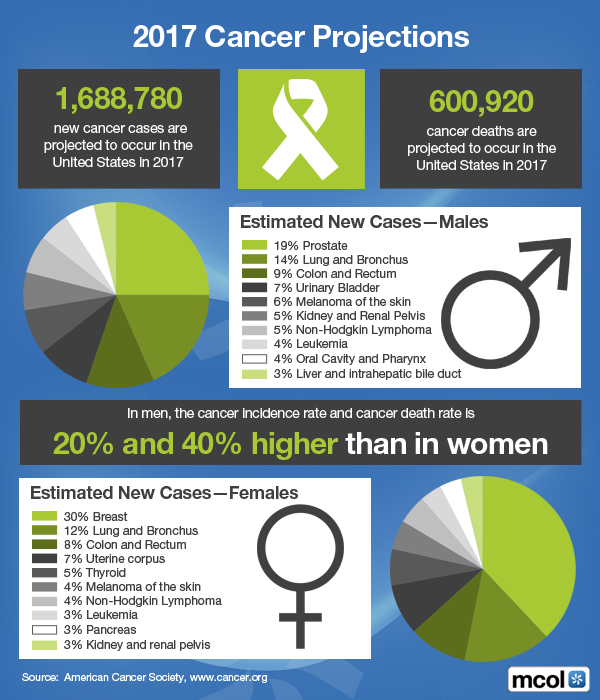
Estimated New Cancer Types

Join Our Mailing List

By http://www.MCOL.com

http://www.BusinessofMedicalPractice.com

According to Gender and Type in 2016

ImageProxy

Conclusion

Your thoughts and comments on this ME-P are appreciated. Feel free to review our top-left column, and top-right sidebar materials, links, URLs and related websites, too. Then, subscribe to the ME-P. It is fast, free and secure.

Speaker: If you need a moderator or speaker for an upcoming event, Dr. David E. Marcinko; MBA – Publisher-in-Chief of the Medical Executive-Post – is available for seminar or speaking engagements. Contact: MarcinkoAdvisors@msn.com

OUR OTHER PRINT BOOKS AND RELATED INFORMATION SOURCES:

Product DetailsProduct Details

***

The Role of MD/DOs in BIOLOGICAL and CHEMICAL Attacks

Join Our Mailing List 

Is there REALLY a Role … at all?

DEM white shirt

By Dr. David Edward Marcinko MBA 

Title X of the USA PATRIOT Act contains several calls for strengthening the public health system. Section 1013(a)(4) calls for “enhanced resources for public health officials to respond to potential bioterrorism attacks.” Section 1013(a)(6) calls for “greater resources to increase the capacity of hospitals and local healthcare workers to respond to public health threats.”

PRE 9/11

Prior to September 11, 2001, the capacity of healthcare entities to respond to biological and chemical attacks by terrorists was quite limited. Strictly speaking, however, healthcare organizational preparedness plans are not as directly encumbered by the USA PATRIOT ACT, or by the Department of Homeland Security’s (DHS’s) Chemicals of Concern [COC] List, or the various steps of its Section 550 Program as some other industries. Nevertheless, healthcare organizations may have their sources of contaminants, such as: Mercury, Dioxin: DEHP (2-ethylhexyl), Volatile Organic Compounds and Glutaraldehyde, etc.

For some time now, the Joint Commission (formerly the Joint Commission on Accreditation of Healthcare Organizations) has also required hospitals to have a disaster preparedness plan mimicking the USA PATRIOT Act [personal communication, Kenneth A. Powers, Media Relations Manager, TJC].

Post 9/11

After September 11, 2001, “disaster preparedness” evolved into something that could more accurately be described as “emergency preparedness.” Experience in New York and Virginia has shown that there will be spillover outside the immediate geographic areas affected by a terrorist attack, which will affect suburban and rural hospitals.

Thus, the emphasis in emergency preparedness is on the coordination and integration of organizations throughout the local system. Hospitals and healthcare entities therefore need to revise existing plans for disaster preparedness to reflect the realities of potential terrorist threats. Mitigation against risk is essential to safeguard the financial position of an entity. Medical practices and healthcare entities can mitigate risks by developing an emergency preparedness plan.

The entity should start by identifying possible disaster situations, such as earthquakes and biological or chemical attacks that could affect the facility. Next, the entity should identify the potential damages that could occur to structures, utilities, computer technology, and supplies. After that, the entity should use resources currently available to safeguard assets, and then budget to acquire any additional materials or alterations required to secure the facility.

travel+airplane

Practices can take several steps to mitigate even in the absence of significant funding:

  • First, establish links with ‘first responders’ such as local law enforcement, fire departments, state and local government, other healthcare organizations, emergency medical services, and local public health departments.
  • Second, establish training programs to educate staff on how to deal with chemical and biological threats.
  • Third, make changes in their information technology to facilitate disease surveillance that might give warning that an attack has occurred. Information technology may be useful in identifying the occurrence syndromes such as headache or fevers that might not be noticed individually but in the aggregate would signal that a biological or chemical agent had been released.
  • Fourth, acquire access to staff and equipment to respond to biological and chemical attack through resource sharing arrangements in lieu of outright purchases.”

In addition to preparedness for an attack within its catchment area, a healthcare organization must be prepared for an attack on its own facility or office. They should assess the vulnerability of the heating, ventilation, and air conditioning (HVAC) systems to biological or chemical attack. The positioning of the air intake vents is especially important because intakes on roofs are fairly secure as compared to intakes on ground level.

One way to increase security is to restrict access to the facility. Some facilities are using biometric screening to restrict access to their facilities. Biometric screening identifies people based on measurements of some body part such as a fingerprint, handprint, or retina. The advantage of this approach is that there are no problems with forgotten badges, and biometric features cannot be shared or lost like cards with personal identification numbers (PINs).

flu+virus+2

Assessment

In preparing for a possible attack, healthcare entities should also examine the federal, state, and local laws that might affect their response to a biological or chemical attack.

And so, is there really a roll; at all?

Unfortunately, there is no central source of legislation, and an extensive search of many sources might be required to determine the legal constraints.

Conclusion

Your thoughts and comments on this ME-P are appreciated. Feel free to review our top-left column, and top-right sidebar materials, links, URLs and related websites, too. Then, subscribe to the ME-P. It is fast, free and secure.

Speaker: If you need a moderator or speaker for an upcoming event, Dr. David E. Marcinko; MBA – Publisher-in-Chief of the Medical Executive-Post – is available for seminar or speaking engagements. Contact: MarcinkoAdvisors@msn.com

OUR OTHER PRINT BOOKS AND RELATED INFORMATION SOURCES:

Risk Management, Liability Insurance and Asset Protection Strategies for Doctors and Advisors

[Best Practices from Leading Consultants and Certified Medical Planners™]

   Risk Management, Liability Insurance, and Asset Protection Strategies for Doctors and Advisors: Best Practices from Leading Consultants and Certified Medical Planners™

***

TEAM BASED MEDICAL CARE RISKS

Join Our Mailing List 

More on Why I Still Don’t Like It

DEM white shirt

[By David Edward Marcinko MBBS MBA CMP™]

Redundancy occurs when more than one person (or committee) has the responsibility to make a decision or assume a task. Redundancy in a team based care model becomes a problem when it allows tasks to be overlooked or decisions to be avoided. This happens when a person or committee assumes that someone else with responsibility for the same task will make the necessary decisions. This can be due to a misunderstanding, or it can be due to an intentional dodging of the task or decision.

***

cropped-header

***

Redundancy is best avoided by having only one person, lead physician or committee responsible for each task or decision. Since this is almost impossible in a hospital or large organization, there must be an unambiguous protocol for allocating tasks and decisions among the responsible personnel. The protocol must also establish a system for handling problems that the assigned personnel cannot solve.

Assessment

It is important that such problems be brought to the attention of a supervisor for reassignment to new personnel. Reassignment should not be done by first level personnel; reassignment at that level will make it impossible to prevent the dodging of unpleasant tasks.

More: Why I Rue the Hospital “Team-Based Medicine” Approach to In-Patient Care

Conclusion

Your thoughts and comments on this ME-P are appreciated. Feel free to review our top-left column, and top-right sidebar materials, links, URLs and related websites, too. Then, subscribe to the ME-P. It is fast, free and secure.

Speaker: If you need a moderator or speaker for an upcoming event, Dr. David E. Marcinko; MBA – Publisher-in-Chief of the Medical Executive-Post – is available for seminar or speaking engagements. Contact: MarcinkoAdvisors@msn.com

OUR OTHER PRINT BOOKS AND RELATED INFORMATION SOURCES:

 Our New Textbook – “Take a Sneek Peek InsideNow Available!

Risk Management, Liability Insurance and Asset Protection Strategies for Doctors and Advisors

[Best Practices from Leading Consultants and Certified Medical Planners™]

Risk Management, Liability Insurance, and Asset Protection Strategies for Doctors and Advisors: Best Practices from Leading Consultants and Certified Medical Planners™
Foreword by: J. WESLEY BOYD MD PhD MA

 Harvard Medical School

Boston Children’s Hospital – Psychiatrist

Yale University

***

The Importance of Talking about End-of-Life Care

Join Our Mailing List

By Samantha Wanner  [VITAS Healthcare]

Watch this short animation to learn why advance directives are so important.

***

What Do You Want?

It’s not easy, but the medical treatments you would want near the end of life need to be discussed with others. If you never bring up the topic and you were unexpectedly incapacitated and unable to speak for yourself, your medical wishes would never be known.

Despite the topic’s importance, only 27% of Americans report having talked with their families about end-of-life care. The best way to make your medical wishes known is to create an advance directive and share it with your family and your doctor.

Advance Directives

An advance directive is actually two legal documents that enable you to plan and communicate your end-of-life wishes.  When you create your advance directive, you are being proactive about your medical care and sparing your loved ones from having to make difficult medical decisions in a time of crisis.

***

end_of_life_infographic

***

Assessment

Don’t wait for a crisis. Create your advance directive, share copies with your loved ones and doctor and keep your copy in an accessible location others can find.

Conclusion

Your thoughts and comments on this ME-P are appreciated. Feel free to review our top-left column, and top-right sidebar materials, links, URLs and related websites, too. Then, subscribe to the ME-P. It is fast, free and secure.

Speaker: If you need a moderator or speaker for an upcoming event, Dr. David E. Marcinko; MBA – Publisher-in-Chief of the Medical Executive-Post – is available for seminar or speaking engagements. Contact: MarcinkoAdvisors@msn.com

OUR OTHER PRINT BOOKS AND RELATED INFORMATION SOURCES:

            Risk Management, Liability Insurance, and Asset Protection Strategies for Doctors and Advisors: Best Practices from Leading Consultants and Certified Medical Planners™    Risk Management, Liability Insurance, and Asset Protection Strategies for Doctors and Advisors: Best Practices from Leading Consultants and Certified Medical Planners™

 Harvard Medical School

Yale University

***

How Much Will a Ticket Raise My Car Insurance Rates?

Join Our Mailing List

[By Dr. David E. Marcinko MBA]

Be careful out there!

A GMAC survey revealed that 1 in 5 drivers would not pass the written driver’s test if they took it today. And, getting a ticket will raise your car insurance rate, but by how much?

The Survey

The survey found that reckless driving triggers the highest hike — an average increase of 22 percent — yet many drivers aren’t even sure what constitute reckless driving?

***

DEM in his 1990 Miata

***

Reckless Driving

Depending on state laws, reckless driving can be defined as: driving over 80 mph, driving too fast for weather conditions, knowingly driving in a way that endangers others.

Conclusion

Your thoughts and comments on this ME-P are appreciated. Feel free to review our top-left column, and top-right sidebar materials, links, URLs and related websites, too. Then, subscribe to the ME-P. It is fast, free and secure.

Speaker: If you need a moderator or speaker for an upcoming event, Dr. David E. Marcinko; MBA – Publisher-in-Chief of the Medical Executive-Post – is available for seminar or speaking engagements. Contact: MarcinkoAdvisors@msn.com

OUR OTHER PRINT BOOKS AND RELATED INFORMATION SOURCES:

Risk Management, Liability Insurance, and Asset Protection Strategies for Doctors and Advisors: Best Practices from Leading Consultants and Certified Medical Planners™

***

How Physicians and All Investors Should Deal With the Overwhelming Problem Of Understanding The World Economy

Join Our Mailing List

“What the —- do I do now?”

vitaly

By Vitaliy N. Katsenelson CFA

A SPECIAL ME-P REPORT

This was the actual subject line of an e-mail I received that really summed up most of the correspondence I got in response to an article I published last summer. To be fair, I painted a fairly negative macro picture of the world, throwing around a lot of fancy words, like “fragile” and “constrained system.” I guess I finally figured out the three keys to successful storytelling: One, never say more than is necessary; two, leave the audience wanting more; and three … Well, never mind No. 3, but here is more.

Before I go further, if you believe the global economy is doing great and stocks are cheap, stop reading now; this column is not for you. I promise to write one for you at some point when stocks are cheap and the global economy is breathing well on its own — I just don’t know when that will be. But if you believe that stocks are expensive — even after the recent sell-off — and that a global economic time bomb is ticking because of unprecedented intervention by governments and central banks, then keep reading.

Today

Today, after the stock market has gone straight up for five years, investors are faced with two extremes: Go into cash and wait for the market crash or a correction and then go all in at the bottom, or else ride this bull with both feet in the stirrups, but try to jump off before it rolls over on you, no matter how quickly that happens.

Of course, both options are really not options. Tops and bottoms are only obvious in the rearview mirror. You may feel you can time the market, but I honestly don’t know anyone who has done it more than once and turned it into a process. Psychology — those little gears spinning but not quite meshing in your so-called mind — will drive you insane. It is incredibly difficult to sit on cash while everyone around you is making money. After all, no one knows how much energy this steroid-maddened bull has left in him. This is not a naturally raised farm animal but a by-product of a Frankenstein-like experiment by the Fed. This cyclical market (note: not secular; short-term, not long-term) may end tomorrow or in five years. Riding this bull is difficult because if you believe the market is overvalued and if you own a lot of overpriced stocks, then you are just hoping that greater fools will keep hopping on the bull, driving stock prices higher.

More importantly, you have to believe that you are smarter than the other fools and will be able to hop off before them (very few manage this). Good luck with that — after all, the one looking for a greater fool will eventually find that fool by looking in the mirror.

Last Spring

As I wrote in an article last spring, “As an investor you want to pay serious attention to ‘climate change’ — significant shifts in the global economy that can impact your portfolio.” There are plenty of climate-changing risks around us — starting with the prospect of higher, maybe even much higher, interest rates — which might be triggered in any number of ways: the Fed withdrawing quantitative easing, the Fed losing control of interest rates and seeing them rise without its permission, Japanese debt blowing up. Then we have the mother of all bubbles: the Chinese overconsumption of natural and financial resources bubble. Of course, Europe is relatively calm right now, but its structural problems are far from fixed. One way or another, the confluence of these factors will likely lead to slower economic growth and lower stock prices. So “what the —-” is our strategy? Read on to find out. I’ll explain what we’re doing with our portfolio, but first let me tell you a story.

My Story

When I was a sophomore in college, I was taking five or six classes and had a full-time job and a full-time (more like overtime) girlfriend. I was approaching finals, I had to study for lots of tests and turn in assignments, and to make matters worse, I had procrastinated until the last minute. I felt overwhelmed and paralyzed. I whined to my father about my predicament. His answer was simple: Break up my big problems into smaller ones and then figure out how to tackle each of those separately. It worked. I listed every assignment and exam, prioritizing them by due date and importance. Suddenly, my problems, which together looked insurmountable, one by one started to look conquerable. I endured a few sleepless nights, but I turned in every assignment, studied for every test and got decent grades. Investors need to break up the seemingly overwhelming problem of understanding the global economy and markets into a series of small ones, and that is exactly what we do with our research. The appreciation or depreciation of any stock (or stock market) can be explained mathematically by two variables: earnings and price-earnings ratio. We take all the financial-climate-changing risks — rising interest rates, Japanese debt, the Chinese bubble, European structural problems — and analyze the impact they have on the Es and P/Es of every stock in our portfolio and any candidate we are considering.

Practical applications

Let me walk you through some practical applications of how we tackle climate-changing risks at my firm. When China eventually blows up, companies that have exposure to hard commodities, directly or indirectly (think Caterpillar), will see their sales, margins and earnings severely impaired. Their P/Es will deflate as well, as the commodity supercycle that started in the early 2000s comes to an end. Countries that export a lot of hard commodities to China will feel the aftershock of the Chinese bubble bursting. The obvious ones are the ABCs: Australia, Brazil and Canada.

However, if China takes oil prices down with it, then Russia and the Middle East petroleum-exporting mono-economies that have little to offer but oil will suffer. Local and foreign banks that have exposure to those countries and companies that derive significant profits from those markets will likely see their earnings pressured. (German automakers that sell lots of cars to China are a good example.)

Japan is the most indebted first-world nation, but it borrows at rates that would make you think it was the least indebted country. As this party ends, we’ll probably see skyrocketing interest rates in Japan, a depreciating yen, significant Japanese inflation and, most likely, higher interest rates globally. Japan may end up being a wake-up call for debt investors. The depreciating yen will further stress the Japan-China relationship as it undermines the Chinese low-cost advantage.

So paradoxically, on top of inflation, Japan brings a risk of deflation as well. If you own companies that make trinkets, their earnings will be under assault. Fixed-income investors running from Japanese bonds may find a temporary refuge in U.S. paper (driving our yields lower, at least at first) and in U.S. stocks. But it is hard to look at the future and not bet on significantly higher inflation and rising interest rates down the road.

untitled

[Moscow]

A side note:

Economic instability will likely lead to political instability. We are already seeing some manifestations of this in Russia. Waltzing into Ukraine is Vladimir Putin’s way of redirecting attention from the gradually faltering Russian economy to another shiny object — Ukraine. Just imagine how stable Russia and the Middle East will be if the recent decline in oil prices continues much further.

1447968781847

[Defense Industry]

Inflation and higher interest rates

Defense industry stocks may prove to be a good hedge against future global economic weakness. Inflation and higher interest rates are two different risks, but both cause eventual deflation of P/Es. The impact on high-P/E stocks will be the most pronounced. I am generalizing, but high-P/E growth stocks are trading on expectations of future earnings that are years and years away. Those future earnings brought to the present (discounted) are a lot more valuable in a near-zero interest rate environment than when interest rates are high. Think of high-P/E stocks as long-duration bonds: They get slaughtered when interest rates rise (yes, long-term bonds are not a place to be either). If you are paying for growth, you want to be really sure it comes, because that earnings growth will have to overcome eventual P/E compression. Higher interest rates will have a significant linear impact on stocks that became bond substitutes. High-quality stocks that were bought indiscriminately for their dividend yield will go through substantial P/E compression.

These stocks are purchased today out of desperation. Desperate people are not rational, and the herd mentality runs away with itself. When the herd heads for the exits, you don’t want to be standing in the doorway. Real estate investment trusts (REITs) and master limited partnerships (MLPs) have a double-linear relationship with interest rates: Their P/Es were inflated because of an insatiable thirst for yield, and their earnings were inflated by low borrowing costs. These companies’ balance sheets consume a lot of debt, and though many of them were able to lock in low borrowing costs for a while, they can’t do so forever. Their earnings will be at risk.

Charlie Munger speaks

As I write this, I keep thinking about Berkshire Hathaway vice chairman Charlie Munger’s remark at the company’s annual meeting in 2013, commenting on the then-current state of the global economy: “If you’re not confused, you don’t understand things very well.” A year later the state of the world is no clearer. This confusion Munger talked about means that we have very little clarity about the future and that as an investor you should position your portfolio for very different future economies. Inflation? Deflation? Maybe both? Or maybe deflation first and inflation second?

I keep coming back to Japan because it is further along in this experiment than the rest of the world. The Japanese real estate bubble burst, the government leveraged up as the corporate sector deleveraged, interest rates fell to near zero, and the economy stagnated for two decades. Now debt servicing requires a quarter of Japan’s tax receipts, while its interest rates are likely a small fraction of what they are going to be in the future; thus Japan is on the brink of massive inflation. The U.S. could be on a similar trajectory.

Let me explain why

Government deleveraging follows one of three paths. The most blatant option is outright default, but because the U.S. borrows in its own currency, that will never happen here. (However, in Europe, where individual countries gave the keys to the printing press to the collective, the answer is less clear.) The second choice, austerity, is destimulating and deflationary to the economy in the short run and is unlikely to happen to any significant degree because cost-cutting will cost politicians their jobs. Last, we have the only true weapon government can and will use to deleverage: printing money. Money printing cheapens a currency — in other words, it brings on inflation. In case of either inflation or deflation, you want to own companies that have pricing power — it will protect their earnings. Those companies will be able to pass higher costs to their customers during a time of inflation and maintain their prices during deflation.

On the one hand, inflation benefits companies with leveraged balance sheets because they’ll be paying off debt with inflated (cheaper) dollars. However, that benefit is offset by the likely higher interest rates these companies will have to pay on newly issued debt. Leverage is extremely dangerous during deflation because debt creates another fixed cost. Costs don’t shrink as fast as nominal revenues, so earnings decline.

Crystal ball

Therefore, unless your crystal ball is very clear and you have 100 percent certainty that inflation lies ahead, I’d err on the side of owning underleveraged companies rather than ones with significant debt. A lot of growth that happened since 2000 has taken place at the expense of government balance sheets. It is borrowed, unsustainable growth that will have to be repaid through higher interest rates and rising tax rates, which in turn will work as growth decelerators. This will have several consequences:

  1. First, it’s another reason for P/Es to shrink.
  2. Second, a lot of companies that are making their forecasts with normal GDP growth as the base for their revenue and earnings projections will likely be disappointed.
  3. And last, investors will need to look for companies whose revenues march to their own drummers and are not significantly linked to the health of the global or local economy.

The definition of “dogma” by irrefutable Wikipedia is “a principle or set of principles laid down by an authority as incontrovertibly true.” On the surface this is the most dogmatic columns I have ever written, but that was not my intention. I just laid out an analytical framework, a checklist against which we stress test stocks in our portfolio. Despite my speaking ill of MLPs, we own an MLP. But unlike its comrades, it has a sustainable yield north of 10 percent and, more important, very little debt. Even if economic growth slows down or interest rates go up, the stock will still be undervalued — in other words, it has a significant margin of safety even if the future is less pleasant than the present.

Final bits

There are five final bits of advice with which I want to leave you:

  1. First, step out of your comfort zone and expand your fishing pool to include companies outside the U.S. That will allow you to increase the quality of your portfolio without sacrificing growth characteristics or valuation. It will also provide currency diversification as an added bonus.
  2. Second, disintermediate your buy and sell decisions. The difficulty of investing in an expensive market that is making new highs is that you’ll be selling stocks that hit your price targets. (If you don’t, you should.)

Of course, selling stocks comes with a gift — cash. As this gift keeps on giving, your cash balance starts building up and creates pressure to buy. As parents tell their teenage kids, you don’t want to be pressured into decisions.

Assessment

In an overvalued market you don’t want to be pressured to buy; if you do, you’ll be making compromises and end up owning stocks that you’ll eventually regret. Margin of safety, margin of safety, margin of safety — those are my last three bits of advice. In an environment in which the future of Es and P/Es is uncertain, you want to cure some of that uncertainty by demanding an extra margin of safety from stocks in your portfolio.

Conclusion

Your thoughts and comments on this ME-P are appreciated. Feel free to review our top-left column, and top-right sidebar materials, links, URLs and related websites, too. Then, subscribe to the ME-P. It is fast, free and secure.

Speaker: If you need a moderator or speaker for an upcoming event, Dr. David E. Marcinko; MBA – Publisher-in-Chief of the Medical Executive-Post – is available for seminar or speaking engagements. Contact: MarcinkoAdvisors@msn.com

OUR OTHER PRINT BOOKS AND RELATED INFORMATION SOURCES:

[PHYSICIAN FOCUSED FINANCIAL PLANNING AND RISK MANAGEMENT COMPANION TEXTBOOK SET]

  Risk Management, Liability Insurance, and Asset Protection Strategies for Doctors and Advisors: Best Practices from Leading Consultants and Certified Medical Planners™ Comprehensive Financial Planning Strategies for Doctors and Advisors: Best Practices from Leading Consultants and Certified Medical Planners™

[Dr. Cappiello PhD MBA] *** [Foreword Dr. Krieger MD MBA]

***

The 5 – 100 Rule

Join Our Mailing List

Don’t Fall Asleep on Variable Life Insurance Policies

DEM white  shirt

[By Dr. David E. Marcinko MBA CMP®]

http://www.CertifiedMedicalPlanner.org

cmp-logo16

OK; I admit it. I held life insurance license for almost a decade. But, don’t hold that against me.

With any universal life insurance policy (and certainly all variable life policies), fluctuating rates of return, the actual timing of the premium payments, and potential internal policy changes by the insurance company, all contribute to results that will probably differ substantially from the original illustration. So, be sure to monitor them periodically.

The Rule

As a professor of health economics, I know the 5 – 100 Rule states that as a result of accounting for these elements, all initial projections of cash value beyond 5 years, will necessarily be 100 percent incorrect when compared to actuality.

***

1447962729383

[Don’t Fall Asleep on Variable Life Insurance Policies]

***

Assessment

A prudent physician policy owner should therefore keep on top of any changes and react accordingly.  If a policy owner ignores his/her policy for even 5 years, any adverse changes could be so drastic as to make rectifying them very costly.

Conclusion

Your thoughts and comments on this ME-P are appreciated. Feel free to review our top-left column, and top-right sidebar materials, links, URLs and related websites, too. Then, subscribe to the ME-P. It is fast, free and secure.

Speaker: If you need a moderator or speaker for an upcoming event, Dr. David E. Marcinko; MBA – Publisher-in-Chief of the Medical Executive-Post – is available for seminar or speaking engagements. Contact: MarcinkoAdvisors@msn.com

OUR OTHER PRINT BOOKS AND RELATED INFORMATION SOURCES:

Risk Management, Liability Insurance, and Asset Protection Strategies for Doctors and Advisors: Best Practices from Leading Consultants and Certified Medical Planners™8Comprehensive Financial Planning Strategies for Doctors and Advisors: Best Practices from Leading Consultants and Certified Medical Planners™

***

Tax Changes for 2015-16

 Join Our Mailing List 

By Robert Whirley CPA

[Whirley & Associates, LLC]

Alpharetta, GA

Doctors – Be Aware!

As tax filing season rapidly approaches I wanted to provide you with a few key items to note for 2015 and 2016.  If you are interested I can send you my full list of tax changes for 2015 and 2016 – I warn you, it’s 19 pages long – and this is only my short list.

Welcome to the New Year 2016! 

  • For 2015, the standard mileage rate for business travel is 57.5¢ (54¢ for 2016).
  • The simplified per diem rates for post-Sept. 30, 2015 travel are $275 for high-cost areas and $185 for all other localities (up from $259 and $172).
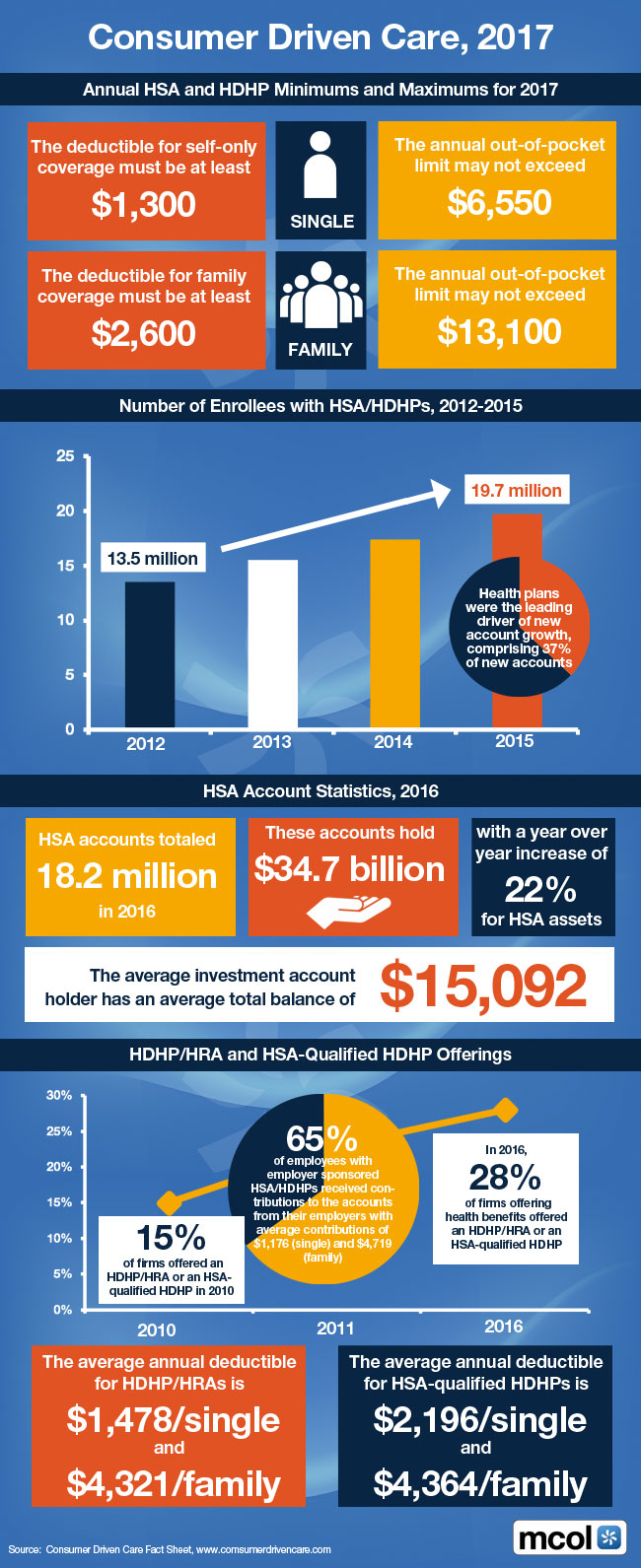
  • For 2015 and 2016, a HDHP for health savings account (HSA) purposes is a health plan with an annual deductible that is not less than $1,300 for individual coverage and $2,600 for family coverage. Maximum out-of-pocket expenses can’t exceed $6,450 for individual coverage for 2015 ($6,550 for 2016) and $12,900 for family coverage for 2015 ($13,100 for 2016). The maximum annual HSA deductible contribution is the sum of the monthly contribution limits, based on eligibility and health plan coverage on the first day of the month. The monthly limit is 1/12 of the indexed amount for self-only coverage ($3,350 for 2015 and 2016) and for family coverage ($6,650 for 2015 and $6,750 for 2016).
  • Enhanced expensing—in the form of increased limitations and treatment of certain real property as Code Sec. 179 property—was made permanent, as was the ability to revoke a Code Sec. 179 election without IRS’s consent.
  • The mileage rate for use of a car for qualified medical transportation is 23¢ per mile for expenses paid or incurred in 2015 (19¢ for 2016).
  • Bonus first-year depreciation was retroactively extended through 2019 with a number of modifications, including a gradual reduction over that time (50% for qualified property placed in service in 2015 through 2017, 40% for 2018, and 30% for 2019).
  • The de minimis safe harbor for taxpayers that don’t have an applicable financial statement was raised from $500 to $2,500. – For items expensed as miscellaneous supplies.
  • For contributions by individuals (including ranchers and farmers), the increased charitable deduction for qualified conservation easements was made permanent.
  • 15-year straight-line cost recovery for qualified leasehold improvements, qualified restaurant buildings and improvements, and qualified retail improvements was made permanent.
  • Education Tax Breaks:
  • The American Opportunity tax credit (AOTC) was made permanent. It was also made subject to heightened verification processes and paid-preparer due diligence requirements in order to reduce the number of improper payments.
  • The up-to-$250 above-the-line deduction for teachers’ out-of-pocket classroom-related expenses was made permanent.

***

IRS

***

The above-the-line deduction for qualified tuition and related expenses was retroactively extended through 2016.

  • Starting in 2015, the definition of “qualified higher education expenses” for Sec. 529 qualified tuition programs includes certain computer and technology-based costs.
  • For tax years beginning after June 29, 2015, taxpayers must receive a Form 1098-T from the educational institution containing all required information in order to claim the AOTC, the above-the-line deduction for higher education expenses, or the Lifetime Learning Credit.
  • For 2015 and 2016, the AOTC phases out at the same level of modified AGI—over $80,000 ($160,000 for a joint return).
  • For 2015 and 2016, the maximum AOTC/Hope Scholarship Credit is $2,500.
  • For 2015, the Lifetime Learning credit phases out for taxpayers with modified AGI in excess of $55,000 ($110,000 for a joint return). For 2016, the corresponding figures are $55,000 and $111,000.
  • For 2015, the higher education exclusion for savings bond income phases out ratably for taxpayers with modified AGI between $77,200 and $92,200 ($115,750 to $145,750 for joint filers). For 2016, the corresponding ranges are $77,550 to $92,550, and $116,300 to $146,300.
  • For 2015 and 2016, the deduction for interest paid on qualified higher education loans phases out ratably for taxpayers with modified AGI between $65,000 and $80,000 ($130,000 and $160,000 for joint filers).

Assessment

Just days into 2016 and you’re also facing pressures bearing down on your payroll operations. Are you ready to meet them? For example:

  • You’re not done with tax year 2015 … yet. There are FUTA credit reductions to determine and budget for, the impact of tax extenders legislation to consider (including retroactive reinstatement of parity between mass transit benefits and parking benefits), and more.
  • Major tax reform is probably off the table for now. But don’t let that fool you. New federal laws increase payroll tax penalties, change the due dates for your corporate returns and yank passports from individuals with tax debts. Of course, Payroll will bear the brunt of these new laws.
  • The IRS has issued a raft of payroll tax regulations, and proposed regulations from the Department of Labor will ratchet up the amount employees must earn to be exempt from overtime. Finally, the IRS and its sister agencies continue to issue guidance on compliance with the Affordable Care Act.
  • There’s a key FLSA case pending before the U.S. Supreme Court. Word on the street is that it may continue to permit class action lawsuits for unpaid overtime.

Conclusion

Your thoughts and comments on this ME-P are appreciated. Feel free to review our top-left column, and top-right sidebar materials, links, URLs and related websites, too. Then, subscribe to the ME-P. It is fast, free and secure.

Speaker: If you need a moderator or speaker for an upcoming event, Dr. David E. Marcinko; MBA – Publisher-in-Chief of the Medical Executive-Post – is available for seminar or speaking engagements. Contact: MarcinkoAdvisors@msn.com

OUR OTHER PRINT BOOKS AND RELATED INFORMATION SOURCES:

Comprehensive Financial Planning Strategies for Doctors and Advisors: Best Practices from Leading Consultants and Certified Medical Planners™

***

Medicaid Expansion Impact

Join Our Mailing List

On Un-Insured Rates [2013-14]

By http://www.MCOL.com

ImageProxy

Conclusion

Your thoughts and comments on this ME-P are appreciated. Feel free to review our top-left column, and top-right sidebar materials, links, URLs and related websites, too. Then, subscribe to the ME-P. It is fast, free and secure.

Speaker: If you need a moderator or speaker for an upcoming event, Dr. David E. Marcinko; MBA – Publisher-in-Chief of the Medical Executive-Post – is available for seminar or speaking engagements. Contact: MarcinkoAdvisors@msn.com

OUR OTHER PRINT BOOKS AND RELATED INFORMATION SOURCES:

Product DetailsProduct DetailsProduct Details

***

Health Insurance Costs [circa 2016]

Join Our Mailing List 

The most devious tax increases in modern history? 

Rick Kahler MS CFP

By Rick Kahler MS CFP®

http://www.KahlerFinancuial.com  

A few months ago I scoffed when my wife told me about a report from CNN that the average individual, unsubsidized health insurance premium was going up over 60%.

After receiving my 2016 premium notice from Wellmark Blue Cross and Blue Shield, I’m no longer scoffing. My monthly premium for family coverage went from $1,400 to $2,140, an increase of $740, or 53%. According to healthcare.gov, the average Wellmark increase in South Dakota is 43%.

I immediately started looking for ways to decrease my premiums. This has become an annual ritual ever since Obamacare was pushed through Congress in 2010. Back then, my family health insurance policy (now considered a Platinum plan) had a low deductible with a maximum out-of-pocket of $3,500 and cost $660 a month.

Despite the President’s promise that “If you like your plan you can keep your plan,” I can’t even purchase that same plan today. If I could, I estimate it would cost over $3,500 a month. In order to keep health insurance affordable, each year I’ve reduced my coverage, increased my deductibles, and paid a higher premium than the year before.

***

kidney

***

I set out to analyze my options for 2016. After spending six hours crunching numbers and pouring over online calculators, I admitted defeat. There is no simple way to analyze plans to determine whether, based on your personal health care expenditures, you are better served to go with a copay or a deductible plan, a Bronze or a Silver plan, or if a Health Savings Account is preferable to a plan with coinsurance. All the online calculators I found were limited in scope and woefully generic. My health insurance agent didn’t know of any better ones, either.

Adding to my angst, while Wellmark makes policyholders’ year-to-date healthcare expenses available on its website, it doesn’t provide any breakdown of costs. You must figure out for yourself how many drug or doctor co-pays you had, the average cost of a copay visit, the average total costs of those visits, and any other information you need for any type of analysis.

This task was daunting for me, a financial planner and numbers guy. How are average consumers supposed to navigate it? The need for this information is so obvious, one wonders what the insurance companies are hiding by not providing it.

Ultimately, I selected a Bronze plan with no copays and an out-of-pocket cap of $11,900 on in-network providers and $18,500 on out-of-network providers. Based on my family’s average health care costs for the last three years, my out-of-pocket spending for premiums, covered drugs, and approved in-network medical providers will be $2,612 per month, or $31,344, in 2016. It was $11,420 in 2010. That’s an increase of 273%, or 18.3% a year.

By comparison, during the same time period medical costs only increased 16.0%, or 2.7% a year. The increase in premiums is clearly not about increasing health costs.

The $1,660 extra per month I had available to spend on consumer goods and services in 2010 is now going to insurance companies to subsidize the health care of others. This is a clear-cut example of a massive transfer of wealth.

Based on my family’s needs, if I earned $97,000 a year I would qualify for a subsidy of $912 a month. But since I earn over $98,000, I pay the full premium.

***

incontinence

***

Assessment

Clearly, the only people who find the Affordable Care Act affordable are those who receive a subsidy or who have preexisting conditions. For them, Obamacare was a godsend. For the rest of us, it turned out to be one of the most devious tax increases in modern history. 

Conclusion

Your thoughts and comments on this ME-P are appreciated. Feel free to review our top-left column, and top-right sidebar materials, links, URLs and related websites, too. Then, subscribe to the ME-P. It is fast, free and secure.

Speaker: If you need a moderator or speaker for an upcoming event, Dr. David E. Marcinko; MBA – Publisher-in-Chief of the Medical Executive-Post – is available for seminar or speaking engagements. Contact: MarcinkoAdvisors@msn.com

OUR OTHER PRINT BOOKS AND RELATED INFORMATION SOURCES:

Risk Management, Liability Insurance, and Asset Protection Strategies for Doctors and Advisors: Best Practices from Leading Consultants and Certified Medical Planners™  Risk Management, Liability Insurance, and Asset Protection Strategies for Doctors and Advisors: Best Practices from Leading Consultants and Certified Medical Planners™

***

Reasons for Remaining Un-Health Insured

Join Our Mailing List

By http://www.MCOL.com

Among Adults 18-65

ImageProxy

Conclusion

Your thoughts and comments on this ME-P are appreciated. Feel free to review our top-left column, and top-right sidebar materials, links, URLs and related websites, too. Then, subscribe to the ME-P. It is fast, free and secure.

Speaker: If you need a moderator or speaker for an upcoming event, Dr. David E. Marcinko; MBA – Publisher-in-Chief of the Medical Executive-Post – is available for seminar or speaking engagements. Contact: MarcinkoAdvisors@msn.com

OUR OTHER PRINT BOOKS AND RELATED INFORMATION SOURCES:

Product DetailsProduct Details

***

LinkedIn Ads Will Now Follow You Around The Web

View Ann Miller RN MHA CMP™'s profile on LinkedIn

Join Our Mailing List

OVER HEARD IN THE DOCTOR’S LOUNGE

[LinkedIn Ads Will Now Follow You Around The Web – Here’s How to Opt-Out]

1-darrellpruitt

 [By D. K. Pruitt DDS]

Because we can’t go anywhere online without some social network tracking our data and using it to cash in on targeted advertising, LinkedIn has created its own online ad network that will allow advertisers to follow you around the web based on the information that LinkedIn knows about you.

BusinessInsider reports that the new LinkedIn Network Display service is selling ads not just on the career-oriented networking site but on 2,500 other sites, using data on LinkedIn’s 347 million registered users to carve out niches of as few as 1,000 users for advertisers to target, according to AdAge.

[Source: Chris Morran-Consumerist, February 19, 2015]

***

Risk Management Protection Strategies for Doctors and their Advisors

[Best Practices from Leading Consultants and Certified Medical Planners™]

   Risk Management, Liability Insurance, and Asset Protection Strategies for Doctors and Advisors: Best Practices from Leading Consultants and Certified Medical Planners™
                                ***

PHYSICIAN-EXECUTIVE LEADERSHIP AND RISK MANAGEMENT

Join Our Mailing List 

Human Nature, Medical Ethics and Modern Principles

  • By David Edward Marcinko FACFAS CMP® MBA MBBS
  • By Render S. Davis MHA CAE
  • By Hope Rachel Hetico RN MHA CPHQ CMP®
  • By Gary A. Cook EJD CFP® CLU RHU MSFS CMP®

In any textbook of gravitas on medical risk management, asset protection and insurance planning, a chapter on human nature is usually placed at the end of the book, or as an appendix, or an afterthought if included at all.

However, we elected to prominently place this material as the premier chapter of our textbook.

***

 Risk Management, Liability Insurance, and Asset Protection Strategies for Doctors and Advisors: Best Practices from Leading Consultants and Certified Medical Planners™

***

Why?

In the end, the success of any risk management endeavor ultimately comes down to changing human behavior – helping a doctor/nurse/technician alter whatever s/he was doing toward something that will better allow them to avoid errors and pursue quality care and practice management goals.

Yet, there is still remarkably little education or training for medical professionals focused directly on motivation or change theory, in any related area except psychiatry/psychology or perhaps professional liability.

Instead, doctors are increasingly turning to professional consultants to learn best practices on how to help them actually make the behavioral changes necessary to achieve their quality improvement and risk reduction goals; as we attempt to answer these questions.

The Queries:

  • Are you and your medical practice, or clinical, ready for change?
  • How to transition from [traditional] solo practitioner B-models to modern forms?
  • What are leadership, management and governance?
  • In group practices, how is leadership shared?
  • What issues need be considered when hiring a practice administrator or clinic CEO?
  • What is medical ethics and munificence? Why is it needed? How does it work?
  • What are the types of risk?
  • How are risks managed in the medical practice space?

***

confirmation-bias

***

Leadership Shortcomings

In addition, medical practitioners need to strive to avoid what Zenger and Folkman describe as the 10 most common leadership shortcomings based on a survey of 11,000 leaders. They include:

  • Lacks energy and enthusiasm
  • Accepts mediocre self performance
  • Lacks clear vision and direction
  • Poor judgment
  • Not collaboration
  • Not following standards
  • Resistant to new ideas
  • Doesn’t learn from mistakes
  • Lacks interpersonal skills
  • Fails to develop others.

Source: Zenger and Folkman: The Daily Stat: The 10 Most Common Failures of Business Leaders, Harvard Business Publishing, June 4, 2009. 

More:

Assessment

Want to lean even more about hundreds of medical risk management topics? Order our newest text book, today!

Conclusion

Your thoughts and comments on this ME-P are appreciated. Feel free to review our top-left column, and top-right sidebar materials, links, URLs and related websites, too. Then, subscribe to the ME-P. It is fast, free and secure.

Speaker: If you need a moderator or speaker for an upcoming event, Dr. David E. Marcinko; MBA – Publisher-in-Chief of the Medical Executive-Post – is available for seminar or speaking engagements. Contact: MarcinkoAdvisors@msn.com

OUR OTHER PRINT BOOKS AND RELATED INFORMATION SOURCES:

Risk Management, Liability Insurance, and Asset Protection Strategies for Doctors and Advisors: Best Practices from Leading Consultants and Certified Medical Planners™

***

2015 State Profiles on Women’s Health‏

Join Our Mailing List

California, Oregon and Washington

By http://www.MCOL.com

***

ImageProxy

***

Conclusion

Your thoughts and comments on this ME-P are appreciated. Feel free to review our top-left column, and top-right sidebar materials, links, URLs and related websites, too. Then, subscribe to the ME-P. It is fast, free and secure.

Speaker: If you need a moderator or speaker for an upcoming event, Dr. David E. Marcinko; MBA – Publisher-in-Chief of the Medical Executive-Post – is available for seminar or speaking engagements. Contact: MarcinkoAdvisors@msn.com

OUR OTHER PRINT BOOKS AND RELATED INFORMATION SOURCES:

***

Product Details

http://www.BusinessofMedicalPractice.com

***

Stock Market Mayhem from 1950 to 2015

 Join Our Mailing List 

Stock Market Mayhem from 1950 to 2015

The Investment Scientist

ImageProxy

Michael Zhuang

[Principal of MZ Capital]

  • Stocks Decline 14% (June 1950 to July 1950) North Korean troops attack along the South Korean border. The U.N. Security Council condemns North Korea. The U.S. gets involved.
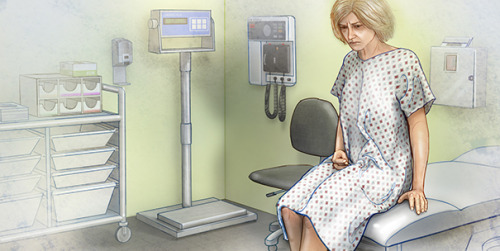
  • Stocks Decline 20.7%, (July 1957 to October 1957) The Suez Canal crisis manifests itself, the Soviets launch Sputnik and the U.S. slips into recession.
  • Stocks Decline 26.4% (January 1962 to June 1962) Stocks plunge after a decade of solid economic growth and market boom, the first “bubble” environment since 1929.

***

SHJ

***

Read more of this post

Conclusion

Your thoughts and comments on this ME-P are appreciated. Feel free to review our top-left column, and top-right sidebar materials, links, URLs and related websites, too. Then, subscribe to the ME-P. It is fast, free and secure. 

Speaker: If you need a moderator or speaker for an upcoming event, Dr. David E. Marcinko; MBA – Publisher-in-Chief of the Medical Executive-Post – is available for seminar or speaking engagements. Contact: MarcinkoAdvisors@msn.com

OUR OTHER PRINT BOOKS AND RELATED INFORMATION SOURCES:

***

Comprehensive Financial Planning Strategies for Doctors and Advisors: Best Practices from Leading Consultants and Certified Medical Planners™

***

Let’s start 2016 with beautiful music!

Join Our Mailing List
By ME-P Staff Reporters
ImageProxy
***
The Katsenelsons
(Jonah, Rachel, Mia Sarah, Hannah and Vitaliy)

Vitaliy Katsenelson CFA
 Investment Management Associates, Inc. 
5690 DTC Boulevard, 140W
Greenwood Village, CO 80111
Phone: (303) 796-8333

A Popular Medical Executive-Post “Thought-Leader”

Let’s end 2015 with beautiful music:  

Join Our Mailing List

Continue reading

The FIXATION on Financial Planning “Teams”

Join Our Mailing List 

“I Still HATE Teams”

DEMM high-def White

[By Dr. David Edward Marcinko CMP® MBA MBBS]

http://www.CertifiedMedicalPlanner.org

cmp-logo16

The Real Notion of Teams

I HATE teams. There I said it. Now; I repeat. I hate team sports, teams in medicine and especially teams in financial planning. I am NOT a team player; most doctors are independent minded and not team players.

On the other hand, my wife says that I am most assuredly a team player. But, that I just select my teams very carefully. She is much smarter than I; so perhaps she is correct!

Why I Rue the Hospital “Team-Based Medicine” Approach to In-Patient Care

Financial Planning

In financial planning, there seems to be a fixation … that a team is a financial planner [certified; or not] and an attorney; nice-but a couple and not really a team in the true sense of group development as first proposed by Bruce Tuckman PhD, in 1965.

In his model, Tucker maintained that four phases are all necessary and inevitable in order for the team to grow, to face challenges, to tackle problems, to find solutions, to plan work, and to deliver results [Forming – Storming – Norming – Performing].

Later, he added Adjourning to successfully complete the task and break up the team. Timothy Biggs PhD further added the Re-Norming stage to reflect a period where the team re-assembles, as needed. This put the emphasis back on the ME Inc or physician team leader – as too many ‘diplomats’ in a leadership role may prevent the team from reaching full potential.

Source: http://infed.org/mobi/bruce-w-tuckman-forming-storming-norming-and-performing-in-groups/

A Metaphor

This is why “team” must be more than a metaphor. It deserves more than lip service. Delivering client-centered, coordinated financial planning services and products demands true collaboration–a fully integrated team engaged in practices that involve each member at the top, highest and best use of their licensure and education; optimizing their contributions and maximizing their impact on the well being of the client [Boyer Model of Education].

In this context, board Certified Medical Planners™ may play a lead role going forward; along with other like-minded and educated professionals.

Unfortunately, the ranks of CMPs™ while growing; are still painfully small. But, in addition to true expertise, they link physician clients with appropriate providers and resources throughout the holistic professional life/practice planning continuum. They focus on the doctor-client’s totality — emotional, financial, risk and business management and psyche. As fiduciaries at all times; They advocate for the doctor client to connect him/her to the necessary resources, professional advisors and consultants who need to have their voices heard. Such successful, high-functioning financial planning teams give each member a voice.

The medical professional must be an active participant; not a passive bystander. This is not the norm in financial planning today where doctors are urged to hire a team quarterback. But, the NFL-QB is not a generalist at all; his arm is special and unlike all other teams players. He/she is unique, skilled and exceptional. A franchise player!

Past not Prologue

Fortunately, past is not prologue in the era of transparency, information at your fingertips, tablet PCs, Skype® and smart phones. To succeed in the hyper competitive new era of health reform requires education, involvement and active participation.

In short, a new model of physician focused advisor. No longer is there a free lunch of passivity for medical professionals; either as doctors or advisory clients themselves.

For financial planning in the new era of healthcare reform, and robo-advisors, successful doctors will assume the mantle of self-quarterback themselves.

***

a9985330904385_56389b1f75cd9

[Go Team Go]

***

ME Inc., or Going it Alone – but with a Team

The physician, nurse, or other medical professional should easily recognize that there are a vast array of opportunities, obstacles, and pitfalls when it comes to managing one’s finances.

Still, with some modicum of effort, the basic aspects of insurance, investments, taxes, accounting, portfolio management, retirement and estate planning, debt reduction, asset protection and practice management can be largely self-taught. After all, it is NOT rocker science.

After all, anyone can purchase the exact same financial planning software that legions of FAs use, and there are many iterations on the market, as well.  This concept is not unlike patients, using Dr. Google. No license required.

And TAMPs, relegate FAs to the role of “asset gather”; or should I say salesman/woman.

Why Physician-Investors Must Understand TAMPs

Informed Patient [Client]

So, an informed patient or client is ideal; is it not?

Yet, it is realized that nuances and subtleties can make a well-intentioned plan fall short.  The devil truly is in the details.  Moreover, none of these areas can be addressed in isolation. It is common for a solution in one area to cause a new set of problems in another.
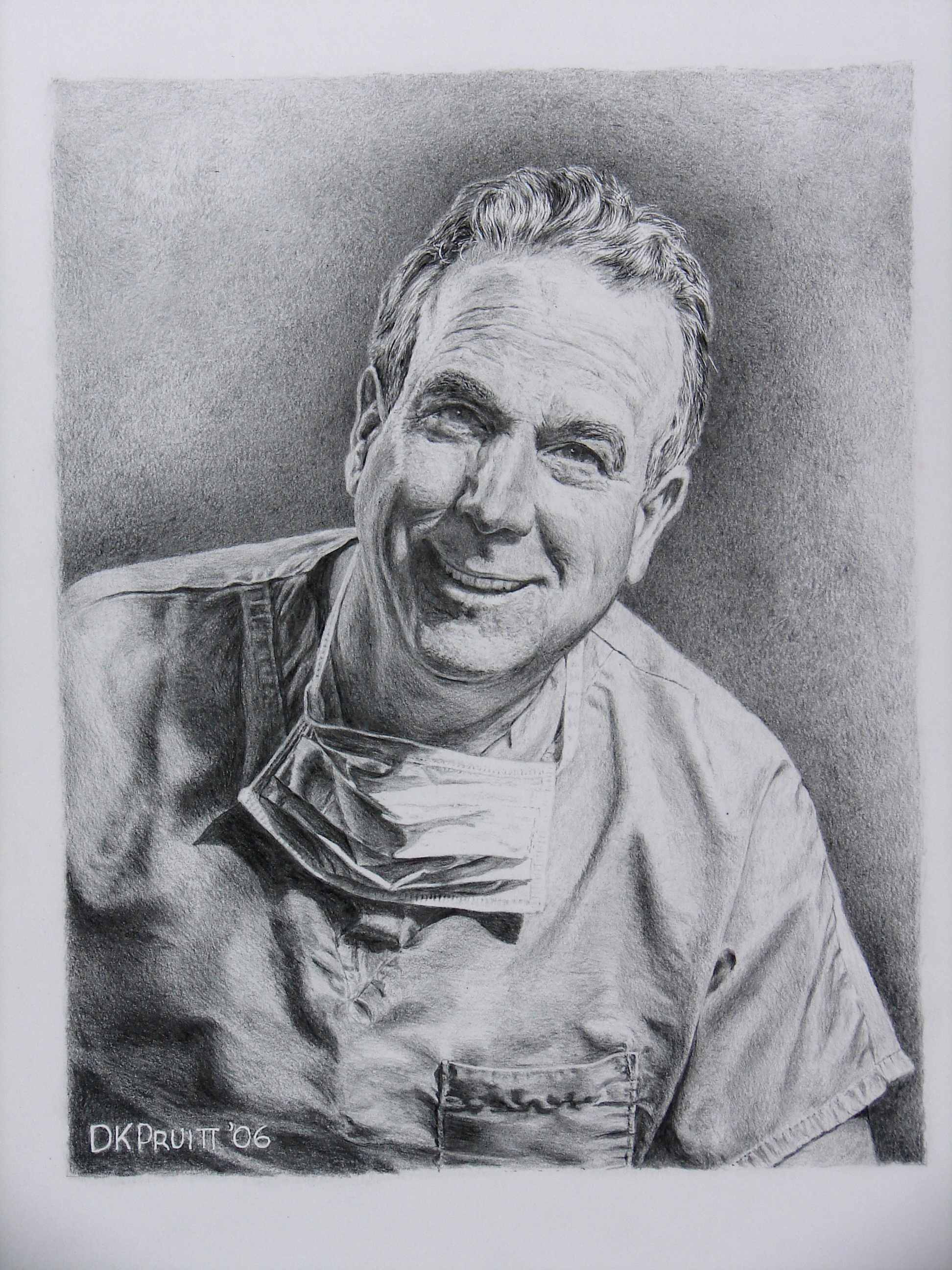
Hourly Model 

Accordingly, most health care practitioners would be well served to hire [independent, hourly compensated and prn] financial help.

Unlike some medical problems, financial issues may not cause any “pain” or other obvious symptoms.  Medical professionals tend to have far more complex financial situations than most lay people. Despite the complexities of the new world of health reform, far too many either do nothing; or give up all control totally, to an external advisor. This either/or mistake can be costly in many ways, and should be avoided.

In reality, and at various time in their careers, the medical professional needs a team comprised of at least a financial analyst [CFA], lawyer, management consultant, risk manager [PhD actuary or insurance counselor] and accountant. At various points in time, each member of the team, or significant others, will properly assume a role of more or less importance, but the doctor must usually remain the “quarterback” or leader; in the absence of a truly informed other, or Certified Medical Planner™.

This is necessary because only the doctor [client] has the personal self-mandate with skin in the game, to take a big picture view. And, rightly or wrongly, investments dominate the information available regarding personal finance and the attention of most physicians.  One is much more likely to need or want to discuss the financial markets with their financial advisor than private letter rulings by the IRS, or with their estate planning attorney or tax accountant.

So, while hiring for expertise is a good idea, there is sinister way advisors goad doctors into using all their retail services; all of the time. That artifice is – the value of time. Don’t fall for this out sourcing gambit!

How Doctors Pay for Wealth Management Services

***

crowds

[Not Going it Alone]

***

Assessment

True integrated physician focused and financial planning is at its core a service business, not a product or sales endeavor. And, increasingly money is more likely to be at the top of the list for providers as the healthcare environment is contracting.

So, eschewing the quarterback model of advice, and choosing to self-educate thru these new book and elsewhere, may be one of the best efforts a smart physician can make.

Enter the CMPs

Conclusion

Your thoughts and comments on this ME-P are appreciated. Feel free to review our top-left column, and top-right sidebar materials, links, URLs and related websites, too. Then, subscribe to the ME-P. It is fast, free and secure.

Speaker: If you need a moderator or speaker for an upcoming event, Dr. David E. Marcinko; MBA – Publisher-in-Chief of the Medical Executive-Post – is available for seminar or speaking engagements. Contact: MarcinkoAdvisors@msn.com

OUR OTHER PRINT BOOKS AND RELATED INFORMATION SOURCES:

[PHYSICIAN FOCUSED FINANCIAL PLANNING AND RISK MANAGEMENT COMPANION TEXTBOOK SET]

  Risk Management, Liability Insurance, and Asset Protection Strategies for Doctors and Advisors: Best Practices from Leading Consultants and Certified Medical Planners™ Comprehensive Financial Planning Strategies for Doctors and Advisors: Best Practices from Leading Consultants and Certified Medical Planners™

[Dr. Cappiello PhD MBA] *** [Foreword Dr. Krieger MD MBA]

***

Financial Headlines Round-Up for 2015

Join Our Mailing List

LOOKING BACK … In Review  

The Economist Explains’

Art

By Arthur Chalekian GEPC

[Elite Financial Partners]

Each week, The Economist blog expounds on subjects ranging from current events to economics, from philosophical or scientific issues to everyday oddities.

***

Let’s take a quick look at a few of its headlines during 2015

***

Why the Swiss unpegged the Swiss franc (January 18, 2015). Remember when the Swiss National Bank removed its currency peg last January? The Swiss franc realized double-digit gains in value and the Swiss stock market dropped.

Everything you want to know about falling oil prices (March 18, 2015). “The main reason for falling prices is increased supply from America thanks to its fracking boom, which has reduced its demand for oil imports. Other countries, notably Saudi Arabia, have been loth to curb supply lest they lose their share of the global oil market.”

Why so many Dutch people work part time (May 11, 2015). More than one-half of the working population in Netherlands is employed part-time – a higher percentage than anywhere else in the world. “This is partly a relic of prevailing Christian attitudes which said that mothers should be home for tea time and partly down to the wide availability of well-paid “first tier” part-time jobs.”

What Greece must do to receive a new bail-out (July 14, 2015). After challenging negotiations, Greece and its European creditors cut a deal, allowing the country to remain in the euro area.

China’s botched stock market rescue (July 30, 2015). Chinese stocks lost nearly a third of their value last summer. China’s authorities “resorted to heavy-handed measures to prop up swooning share prices, from pressuring banks to buy stocks to blocking big investors from selling theirs.”

Why is the Nobel prize in chemistry given for things that are not chemistry (October 7, 2015)? Apparently, five of the last 10 Nobel chemistry prizes have been awarded for pursuits that might better be described as biology. A possible explanation is “the diversity of chemistry prizes reflects the fact that chemistry is found everywhere…”

How the Fed will raise interest rates (December 14, 2015). Just as the Fed employed unconventional monetary tools to stimulate the economy, it is using new policy tools to try to increase the Fed funds rate.

***

gas_pump_1

***

Oil Prices

Down…down…down! Need we say more?

Assessment 

We hope 2015 has been a memorable and rewarding year for you, and we look forward to working with you, and the ME-P, in the New Year.

Conclusion

Your thoughts and comments on this ME-P are appreciated. Feel free to review our top-left column, and top-right sidebar materials, links, URLs and related websites, too. Then, subscribe to the ME-P. It is fast, free and secure.

Speaker: If you need a moderator or speaker for an upcoming event, Dr. David E. Marcinko; MBA – Publisher-in-Chief of the Medical Executive-Post – is available for seminar or speaking engagements. Contact: MarcinkoAdvisors@msn.com

OUR OTHER PRINT BOOKS AND RELATED INFORMATION SOURCES:

***

[PHYSICIAN FOCUSED FINANCIAL PLANNING AND RISK MANAGEMENT COMPANION TEXTBOOK SET]

  Risk Management, Liability Insurance, and Asset Protection Strategies for Doctors and Advisors: Best Practices from Leading Consultants and Certified Medical Planners™   Comprehensive Financial Planning Strategies for Doctors and Advisors: Best Practices from Leading Consultants and Certified Medical Planners™

[Dr. Cappiello PhD MBA] *** [Foreword Dr. Krieger MD MBA]

***

Managing Risks as [Doctor] Parent

Join Our Mailing List

Kids Create Substantial Risks for 

[Physician] Parents!

IKE

A Special ME-P Report

[By Ike Devji JD]

The number of ways that children are creating substantial risks for their [physician] parents is at an all-time high as many parents are unfortunately aware; as we begin 2016. Increased defensive planning or education by most parents despite increasingly common litigation for this vicarious liability has not increased commensurately with this risk.

Some of you believe that your kids are better behaved, smarter, and more sensible than those we hear about in the news. Such exposures are unpredictable and often arise from mundane activities you never imagined could be so serious.

Part of the discussion we encourage [physician] parents to have with their children includes a detailed explanation of the fact that you as a parents are personally financially and legally responsible (up to the level of criminal liability) for any harm, damage, or loss cause by their minor children.

Example:

In one example; a successful physician left town for the weekend with his wife, and his 17-year-old daughter threw a party at their home in a pattern repeated in nearly city in the country every weekend. Tragically, a teenager whom she had never met before crashed the party and died after he overdosed on drugs he brought with him resulting is a lawsuit against the young lady’s parents that sought damages in excess of three million dollars. Neither the young lady, nor her parents, nor anyone else in the tony private-school community of gated homes imagined that something like could happen in their nice neighborhood and the resulting claim was in excess of the limits of the homeowner’s liability policy the family had in place. Dozens of other parentally liability exposures seen over the years have come from much more mundane issues.

Negligent Supervision and Negligent Entrustment

Two ways liability is linked back to parents include negligent entrustment (providing the means or access to things or situations where some reasonably anticipatable harm occurs) and negligent supervision (basically infers that the harm would not have occurred if the minor had been properly supervised). This liability extends to others that have custody or are entrusted with supervision, so any guardian is at risk if the harm would have been prevented absent the access to the thing that created the harm and/or inadequate supervision. It also creates potential liability for you for the children of others you have custody of, even overnight for a slumber party.

Some Specific Recurring High Risk Issues:

  1. Automobiles: Minor children must be specifically named and insured on any vehicle they drive. Parents are generally liable for what minors do behind the wheel, permitted or not. If they are irresponsible drivers or if they take the car without permission you must take control of the car and treat it like a loaded weapon that’s pointed at everything you own and possibly their very own survival. Your high school senior cutting class with her friends and piling them into your car to go to Starbucks for “ditch day” is remarkably less charming when, for instance, she loses control of the vehicle on the way back to school and two of her passengers are critically injured as happened in one recent case. Thanks to commonly available and inexpensive software and tracking devices, not to mention the tracking software on your kid’s iPhones you can know where they and your vehicle are at all times.

***

Waxed Jaguar

***

  1. Access to Firearms and Other Dangerous Items: If you have guns in your home (or bows and arrows, ATVs, jet skis, a swimming pool, prescription drugs, or anything else that can be misused) you are legally and financially responsible for not only personal injury and property damage but in some states and fact patterns even criminal liability for the actions of your child and his friends. The cost of defense counsel alone could be financially fatal considering the possibility of someone getting injured or killed and the resulting liability and consequences.

***

glock-23-3rd-gen-guns-14515485-2175-1425

***

Conclusion

Your thoughts and comments on this ME-P are appreciated. Feel free to review our top-left column, and top-right sidebar materials, links, URLs and related websites, too. Then, subscribe to the ME-P. It is fast, free and secure.

Speaker: If you need a moderator or speaker for an upcoming event, Dr. David E. Marcinko; MBA – Publisher-in-Chief of the Medical Executive-Post – is available for seminar or speaking engagements. Contact: MarcinkoAdvisors@msn.com

OUR OTHER PRINT BOOKS AND RELATED INFORMATION SOURCES:

***

Risk Management, Liability Insurance, and Asset Protection Strategies for Doctors and Advisors: Best Practices from Leading Consultants and Certified Medical Planners™8Risk Management, Liability Insurance, and Asset Protection Strategies for Doctors and Advisors: Best Practices from Leading Consultants and Certified Medical Planners™

***

Second Guessing the FED

Join Our Mailing List

A HISTORICAL CHAIR REVIEW

Art

By Arthur Chalekian GEPC

[Elite Financial Partners]

***

AN AGE OLD AMERICAN PASTIME

Americans have been speculating about the Federal Reserve’s monetary policy choices – rate hikes, rate declines, quantitative easing, etc. – for a long time. It’s clear when you take a look at a few modern Fed Chairs and the Fed’s activities under their leadership.

Paul Volcker (1979-1987) took over an economic quagmire known as The Great Inflation. In the early 1980s, U.S. inflation was 14 percent and unemployment reached 9.7 percent. Volcker unexpectedly raised the Fed funds rate by 4 percent in a single month, following a secret and unscheduled Federal Open Market Committee meeting. His policies initially sent the country into recession. The St. Louis Fed reported “Wanted” posters targeted Volcker for “killing” so many small businesses. By the mid-1980s, employment and inflation reached targeted levels.

Alan Greenspan (1987-2006) was in charge through two U.S. recessions, the Asian financial crisis, and the September 11 terrorist attacks. Regardless, he oversaw the country’s longest peacetime expansion. In the late 1990s, when financial markets were bubbly, critics suggested, “…Mr. Greenspan’s monetary policies spawned an era of booms and busts, culminating in the 2008 financial crisis.”

Ben Bernanke (2006-2014) took the helm of the Fed just before the financial crisis and Great Recession. When economic growth collapsed in 2007, the Fed lowered rates and adopted unconventional monetary policy (quantitative easing) in an effort to stimulate economic growth. In 2012, economist Paul Krugman called Bernanke out in The New York Times, “…the fact is that the Fed isn’t doing the job many economists expected it to do, and a result is mass suffering for American workers.”

Janet Yellen (2014-present) is the current Chairwoman of the Fed. Under Yellen’s leadership, after providing abundant guidance, the Fed raised rates for the first time in seven years. The International Business Times reported several prominent economists think the increase was premature, in part, because there are few signs of inflation in the U.S. economy.

Assessment 

In many cases, it’s difficult to gauge the achievements and/or failures of a leader – Fed Chairperson, President, Congressman, or Congresswoman – until the economic or political dust settles. Sometimes, that’s long after they’ve left office.  

Conclusion

Your thoughts and comments on this ME-P are appreciated. Feel free to review our top-left column, and top-right sidebar materials, links, URLs and related websites, too. Then, subscribe to the ME-P. It is fast, free and secure.

Speaker: If you need a moderator or speaker for an upcoming event, Dr. David E. Marcinko; MBA – Publisher-in-Chief of the Medical Executive-Post – is available for seminar or speaking engagements. Contact: MarcinkoAdvisors@msn.com

OUR OTHER PRINT BOOKS AND RELATED INFORMATION SOURCES:

Comprehensive Financial Planning Strategies for Doctors and Advisors: Best Practices from Leading Consultants and Certified Medical Planners™

***

HISTORIC PURPOSE OF MEDICAL RECORDS and S.E.S.

 Join Our Mailing List

An iMBA Inc., Review

***

DEM white shirt

[By Dr. David Edward Marcinko CMP® MBA]

***

As little as a hundred years ago, detailed medical records were likely to have been compiled by medical researchers such as Charcot and Hughlings-Jackson. The medical record was an aide memoire for detecting changes in patients’ conditions over time, solely for the benefit of the physician in treating the patient.

As health care became more institutionalized, medical records became a communications device among health care providers.  Doctors made progress notes and gave orders.  Nurses carried them out and kept a record of patient responses.  A centralized record, theoretically, allowed all to know what each was doing.  The ideal was that if the doctor were unable to care for the patient, another physician could stand in his or her shoes and assume the patient’s care.

***

stack_of_file_12

***

Enter Third Parties 

Then pressures from third party payers occurred. As insurance and then government programs became larger players in the compensation game, they wanted to know if the care they were paying for was being delivered efficiently.

  • Why were these tests ordered?
  • Why weren’t these studies done?
  • Why had the patient remained hospitalized after his temperature had returned to normal for so many hours and no pain medications had been required?
  • Why couldn’t this pre-operative work be done on an outpatient basis?

Though the real push behind these questions was the desire to save money, utilization review also directly contributed to better patient care. A patient who was being given inefficient care was getting substandard care as well. Utilization review was mainly retrospective; denial of compensation was rarely imposed, and suasion by peers was the main effector of change.  Though “economic credentialing” was shouted about, it rarely showed itself in public.

PP-ACA

Even health reform which openly admitted economic incentives as one of its motivators preferred to find some other reason for deciding not to reimburse, or admit Dr. Jones to its narrow panel of ACA, or other “skinny” network providers, or not renewing Dr. Smith’s contract an HMO. The medical record remained essentially a record of patient care which was good or not, efficient or not.  If the record wasn’t complete, the doctor could always supplement it with an affidavit, use information from somewhere else, or provide explanations.

***

 train station

***

Socio Economic Status

Today, the concept known as Socio Economic Status [S.E.S.] is conceptualized as the social standing, or class of an individual or group. It is often measured as a combination of education, income and occupation. Examinations of socioeconomic status often reveal inequities in access to medical resources, plus issues related to privilege, power and control. SES is increasingly being considered as another payment component [CPT® codes] to medical providers, as reflected in the paper medical record, EMR and elsewhere. 

Assessment

Have you encountered any Socio Economic Status initiative in your clinic, hospital or other medical institution?

Conclusion

Your thoughts and comments on this ME-P are appreciated. Feel free to review our top-left column, and top-right sidebar materials, links, URLs and related websites, too. Then, subscribe to the ME-P. It is fast, free and secure.

Speaker: If you need a moderator or speaker for an upcoming event, Dr. David E. Marcinko; MBA – Publisher-in-Chief of the Medical Executive-Post – is available for seminar or speaking engagements. Contact: MarcinkoAdvisors@msn.com

OUR OTHER PRINT BOOKS AND RELATED INFORMATION SOURCES:

***

[PHYSICIAN FOCUSED FINANCIAL PLANNING AND RISK MANAGEMENT COMPANION TEXTBOOK SET]

  Risk Management, Liability Insurance, and Asset Protection Strategies for Doctors and Advisors: Best Practices from Leading Consultants and Certified Medical Planners™  Comprehensive Financial Planning Strategies for Doctors and Advisors: Best Practices from Leading Consultants and Certified Medical Planners™

[Dr. Cappiello PhD MBA] *** [Foreword Dr. Krieger MD MBA]

***

Emerging PATIENT Collaborative Medical Marketing Trends

Join Our Mailing List 

Seeking End-to-End Solutions?

DEM blue

[By Dr. David Edward Marcinko CMP® MBA]

http://www.BusinessofMedicalPractice.com

Given today’s economic and political environment, with its’ increasing competitive pressures, medical practices are focused more-than-ever on patient acquisition and patient retention. Modern medical practices are teaming together to offer comprehensive end-to-end solutions.

If you are partnering with other healthcare organizations to pool in your expertise, offer joint solutions and take up joint medical marketing and patient communications programs, be careful how you execute and about what you agree with your partners on sharing patient databases.

Policy

It is advisable to formulate a simple and clear privacy policy and adhere to that in the partnership agreements. Comply with the policy at all patient touch points. Communicate this very clearly with your partners and patients prominently in all your channels of communication. Inventory your data collection processes and gateways. Select appropriate projects to add security to your data across extended networks and partners.

Note there is no silver bullet to protect the privacy. Privacy compliance is as much a business issue as it is a technical issue, sometimes more so.

***

value

***

Implications for Patient Strategies

While you are formulating and implementing privacy policies; you need to address the following questions:

  • Do your patients respond to your practice’s privacy strategy? It is not enough to have a privacy policy that is so confidential no one is aware of that. It is imperative for practices, once they implement their privacy strategies, to understand how patients are responding and loop the feedback to fine-tune policies accordingly.
  •  How do you consider the impact on the patient from every privacy decision you make? Every privacy decision made will impact the patient and your practice; but to what extent? How do you determine this impact? Some of them will be patient-facing and some will be in the back–end. This step is essential so that you can make appropriate decisions and make optimum usage of resources.
  • Will your medical practice operations support the privacy initiative? Privacy enablement requires resources and training with perhaps no immediate, apparent short-term value-add to the top-line or bottom-line. Medical practices that take a proactive view of privacy enablement as cost of doing business in the 21st century will benefit. Practices still need to adopt critical processes and technology that agree with their resources and gradually privacy enable in an incremental way.

Role of Technology

There is no technology silver bullet. Privacy enabling a practice is composed of elements of company loyalty towards patients, commitment to build long lasting and profitable patient management by building trust, and engaging cross-functional teams that can pick and deploy suitable data security across the network.

***

cyber

***

Steps

Here are some salient steps for secure data management that affect technology choices of any medical practice:

  • Privacy-compliant database development – healthcare organizations have to “listen” and record what patients are saying, and if and how they prefer to be contacted, or not at all. All these details will have to be stored in a secure database, which is regularly refreshed with the outcome of practice communications with patient. This will be the central repository that the office draws upon to design and execute consistent and privacy enabled patient communications.
  • Protect the data across the practice, from group to group, area to area, or from network to network. It is not enough for a medical practice to protect data from external intruders, but also from internal data abusers. It is not enough that patient data is secure during transmission at the patient touch point. It also needs to be safe where it is stored. It is not unusual to have patient data stored or lying around where it is accessible by internal intruders. Therefore it is imperative for medical practices to go beyond traditional firewalls to have multi-layered security at the data level.

Conclusion

Your thoughts and comments on this ME-P are appreciated. Feel free to review our top-left column, and top-right sidebar materials, links, URLs and related websites, too. Then, subscribe to the ME-P. It is fast, free and secure. 

Speaker: If you need a moderator or speaker for an upcoming event, Dr. David E. Marcinko; MBA – Publisher-in-Chief of the Medical Executive-Post – is available for seminar or speaking engagements. Contact: MarcinkoAdvisors@msn.com

OUR OTHER PRINT BOOKS AND RELATED INFORMATION SOURCES:

***

Product DetailsProduct Details

***

http://www.CertifiedMedicalPlanner.org

HUMANITARIAN WISDOM IN PATIENT CARE AS A MORAL IMPERATIVE AND …

Join Our Mailing List

…. A MEDICAL RISK MANAGEMENT TOOL in 2018!

***

DEM white shirt

[Dr. David Edward Marcinko CMP™ MBA MBBS]

http://www.CertifiedMedicalPlanner.org

EDITOR-IN-CHIEF

***

In SECTION ONE, of our newest textbook, on medical practitioner personal risk management issues, let us all recall the Canadian physician Sir William Osler MD, one of the founders of Johns Hopkins Hospital in my hometown of Baltimore Maryland, and where I played stickball in the parking lot as a kid. He left a sizeable body of wisdom that has guided many physicians in the practice of medicine. So, allow me to share with you some of that accumulated wisdom and the quotes that have served me well over the years.

From Dr. Osler, I learned the art of putting myself in the patient’s shoes. “The motto of each of you as you undertake the examination and treatment of a case should be ‘put yourself in his place.’ Realize, so far as you can, the mental state of the patient, enter into his feelings.” Osler further stresses that we should “scan gently (the patient’s) faults” and offer the “kindly word, the cheerful greeting, the sympathetic look.”1

“In some of us, the ceaseless panorama of suffering tends to dull that fine edge of sympathy with which we started,” writes Osler in his famous essay “Aequanimitas.”2 “Against this benumbing influence, we physicians and nurses, the immediate agents of the Trust, have but one enduring corrective — the practice towards patients of the Golden Rule of Humanity as announced by Confucius: ‘What you do not like when done to yourself, do not do to others.’”

Medicine can be both art and science as many physicians have discovered. As Osler tells us, “Errors in judgment must occur in the practice of an art which consists largely of balancing probabilities.”2 Osler notes that “Medicine is a science of uncertainty and an art of probability” and also weighs in with the idea that “The practice of medicine is an art, based on science.”3,4

Osler emphasized that excellence in medicine is not an inheritance and is more fully realized with the seasoning of experience. “The art of the practice of medicine is to be learned only by experience,” says Osler. “Learn to see, learn to hear, learn to feel, learn to smell, and know that by practice alone can you become expert.”5

Finally, some timeless wisdom on patient care came from Osler in an address to St. Mary’s Hospital Medical School in London in 1907: “Gain the confidence of a patient and inspire him with hope, and the battle is half won.”6

Osler has also imparted plenty of advice on the business of medicine. In “Aequanimitas,” Osler says there are only two types of doctors: “those who practice with their brains, and those who practice with their tongues.”7

***

Risk Management, Liability Insurance, and Asset Protection Strategies for Doctors and Advisors: Best Practices from Leading Consultants and Certified Medical Planners™

***

In a valedictory address to medical school graduates at McGill University, Osler suggested treating money as a side consideration in a medical career.8 “You have of course entered the profession of medicine with a view of obtaining a livelihood; but in dealing with your patients let this always be a secondary consideration.”

“You are in this profession as a calling, not as a business: as a calling which exacts from you at every turn self-sacrifice, devotion, love and tenderness to your fellow man,” explains Osler in the address to St. Mary’s Hospital Medical School.6 “Once you get down to a purely business level, your influence is gone and the true light of your life is dimmed. You must work in the missionary spirit, with a breadth of charity that raises you far above the petty jealousies of life.”

It is not easy for doctors to combine a passion for patient care, a knowledge of science and the maintenance of business, according to Osler in the British Medical Journal.9 “In the three great professions, the lawyer has to consider only his head and pocket, the parson the head and heart, while with us the head, heart, and pocket are all engaged.”

While some aspects of practice may fall short or be devoid of appropriate financial remuneration, the giving of one’s time, expertise and experience in improving patient outcomes and the quality of their lives may be the greatest gift. “The ‘good debts’ of practice, as I prefer to call them … amount to a generous sum by the end of each year,” says Osler.9

***

http://www.BusinessofMedicalPractice.com

***

MEDICAL Ethics for Challenging Times

[Finding Your Moorings in an Era of Dramatic Change]

Marcinko Ethics

By Render S. Davis MHA

By David Edward Marcinko

***

And so, as you read and reflect on the chapter of SECTION ONE, always remember the words and wisdom of Dr. William Osler, and keep patient welfare as your first priority.

Dr. David Edward Marcinko; CMP™ MBA MBBS [Hon]

[Chief Executive Officer]

iMBA Inc., Norcross, GA

References

  1. Penfield W. Neurology in Canada and the Osler centennial. Can Med Assoc J. 1949; 61(1): 69-73
  2. Osler W. Aequanimitas. Chapter 9, P. Blakiston’s Son and Co., Philadelphia, 1925, p. 159
  3. Bean WB. William Osler: Aphorisms, CC Thomas, Springfield, IL, p. 129.
  4. Osler W. Aequanimitas. Chapter 3, P. Blakiston’s Son and Co., Philadelphia, 1925, p. 34
  5. Thayer WS. Osler the teacher. In: Osler and Other Papers. Johns Hopkins Press, Baltimore, 1931, p. 1.
  6. Osler W. The reserves of life. St. Mary’s Hosp Gaz. 1907;13 (1):95-8.
  7. Osler W. Aequanimitas. Chapter 7, P. Blakiston’s Son and Co., Philadelphia, 1925, p. 124
  8. Osler W. Valedictory address to the graduates in medicine and surgery, McGill University. Can Med Surg J. 1874; 3:433-42.
  9. Osler W. Remarks on organization in the profession. Brit Med J. 1911; 1(2614):237-9.
  10. Jacobs. AM: PMNews, April, 2015.

***

[PHYSICIAN FOCUSED FINANCIAL PLANNING AND RISK MANAGEMENT COMPANION TEXTBOOK SET]

  Risk Management, Liability Insurance, and Asset Protection Strategies for Doctors and Advisors: Best Practices from Leading Consultants and Certified Medical Planners™ Comprehensive Financial Planning Strategies for Doctors and Advisors: Best Practices from Leading Consultants and Certified Medical Planners™

[Dr. Cappiello PhD MBA] *** [Foreword Dr. Krieger MD MBA]

***

State Health Rankings

Join Our Mailing List

For 2015

By http://www.MCOL.com

***ImageProxy

***

Conclusion

Your thoughts and comments on this ME-P are appreciated. Feel free to review our top-left column, and top-right sidebar materials, links, URLs and related websites, too. Then, subscribe to the ME-P. It is fast, free and secure.

Speaker: If you need a moderator or speaker for an upcoming event, Dr. David E. Marcinko; MBA – Publisher-in-Chief of the Medical Executive-Post – is available for seminar or speaking engagements. Contact: MarcinkoAdvisors@msn.com

OUR OTHER PRINT BOOKS AND RELATED INFORMATION SOURCES:

***

[HOSPITAL OPERATIONS, ORGANIZATIONAL BEHAVIOR AND FINANCIAL MANAGEMENT COMPANION TEXTBOOK SET]

Product DetailsProduct Details

[Foreword Dr. Phillips MD JD MBA LLM] *** [Foreword Dr. Nash MD MBA FACP]

***

Downhill Racing Meets Value Investing

Join Our Mailing List

More on Value Investing

vitaly

By Vitaliy Katsenelson CFA

I wrote this article in May. Every time it was destined to be published in the pages of Institutional Investor, it got bumped by another, more timely one I had written. Finally, when a space opened in September, the market had taken a major dive, and what was supposed to be an “evergreen” article was suddenly out of touch with reality.

Here is the irony: This piece addresses complacency, but its author was complacent too. The X-mass market has recouped its summer losses, and this article is relevant again.

The Skier

I am a skier. When someone says this, you assume he or she is good. Well, I thought I was good. I was not Lindsey Vonn, but I had the technique down. I’d be the fastest person going down the mountain, always waiting for my friends at the bottom. Then, at the beginning of last season, I went skiing with my kids at Vail. It had snowed nonstop for a few days. Vail is a very large resort, and the mountain crew could not keep up with the snow, so I found myself skiing on unusually ungroomed slopes in powder more than knee-deep. Suddenly, something changed. I could not ski. I could barely make turns. I was falling multiple times per run. My kids, including my nine-year-old daughter, Hannah, were now waiting for me as I dug myself out of pile after pile of snow. My technique — along with my confidence — was gone. The discomfort froms constant falling turned into fear. I was ready to go back to the hotel after only two hours on the slopes. I was devastated. It was as if I had never skied.

The Ski Instructor

So I talked to a ski instructor about this incident. He told me that I’m a “good skier” on groomed slopes because they allow me to go fast without trying hard. Speed covers up a lot of mistakes and lack of skill. Skiing in powder requires different skis — not the skis I had — but more importantly, it slows you down and makes you rely on skills that I thought I had but didn’t.

The FED

During the past six years, the Federal Reserve neatly groomed, manicured and then finely polished investment slopes for all asset classes by lowering interest rates to unprecedented levels — providing a substantial accelerant that indiscriminately drove valuations of all assets higher. But ubiquitously rising valuations cover up a lot of mistakes and often a lack of skill. Whether you had a rigorous investment process or were throwing darts, over the past six years it hardly mattered — you made money. Bull markets don’t last forever, and this one is not an exception. Stock valuations (price-to-earnings) are just like a pendulum, swinging from one extreme to another.

Modernity

Today the stocks in the S&P 500 index trade at about 50 percent above their average valuation (if you adjust earnings down for very high corporate margins). Historically, above-average valuations have always been followed by below-average ones — taking away the riches that the previous years provided.

In other words, at some point it is going to snow and snow hard. Just as I, the great skier, found myself overconfident and unable to deal with the new terrain, investors will find themselves doing face-plants when the stock market turns from bull to bear. But here is great news:

Now the stock slopes are still finely groomed with stocks near all-time highs, and we all are given a unique opportunity to make adjustments to our portfolios and investment process. You should start by carefully analyzing each stock position in your portfolio. No drooling over how each of them did for you in the past. Drawing straight lines from the past into the future is very dangerous.

The Future

Instead, focus on the future — a future in which average stock valuations will likely be lower. Returns for a stock are driven by three variables: earnings growth, change in P/E and dividend yield. You should impartially examine each variable to determine if a stock deserves to be in your portfolio.

Then make one of three decisions: buy (more), hold or sell. Just remember, hold is a decision. If you choose not to sell an overvalued stock, one that has low or negative expected returns in the long run, that is a decision. We must all reexamine and future-proof our investment process. Six years of rewards and no risk will loosen the process of even the most disciplined investor.

Finally, if you are feeling very confident about your investment prowess today, take a moment to relive that gut-wrenching feeling you had the last time the stock market took a 20 percent dive. This will reset your confidence to the appropriate level and help you to avoid the mistakes that come from focusing too much on reward and too little on risk.

***

penn station

***

P.S. I took the kids skiing at Beaver Creek a week ago, for the first time this season. My daughter Hannah, who will be ten in a few weeks, has magically improved over the summer. However, Jonah, who is an amazing skier, has completely lost his form. He grew five or six inches since last spring — he’s 14 and pushing 6 feet now. His center of gravity has shifted, and he is still adjusting his technique to his new, oversized body.

Assessment

As a father, I smile when I see Hannah beating Jonah down the slope. Jonah, like any teenager, needs to be humbled. My skiing? The slopes were perfectly groomed. I was awesome! I just hope it doesn’t snow.

***

ABOUT

Vitaliy N. Katsenelson, CFA, is Chief Investment Officer at Investment Management Associates in Denver, Colo. He is the author of Active Value Investing (Wiley 2007) and The Little Book of Sideways Markets (Wiley, 2010).

Conclusion

Your thoughts and comments on this ME-P are appreciated. Feel free to review our top-left column, and top-right sidebar materials, links, URLs and related websites, too. Then, subscribe to the ME-P. It is fast, free and secure.

Speaker: If you need a moderator or speaker for an upcoming event, Dr. David E. Marcinko; MBA – Publisher-in-Chief of the Medical Executive-Post – is available for seminar or speaking engagements. Contact: MarcinkoAdvisors@msn.com

OUR OTHER PRINT BOOKS AND RELATED INFORMATION SOURCES:

***

[PHYSICIAN FOCUSED FINANCIAL PLANNING AND RISK MANAGEMENT COMPANION TEXTBOOK SET]

   Risk Management, Liability Insurance, and Asset Protection Strategies for Doctors and Advisors: Best Practices from Leading Consultants and Certified Medical Planners™ Comprehensive Financial Planning Strategies for Doctors and Advisors: Best Practices from Leading Consultants and Certified Medical Planners™

[Dr. Cappiello PhD MBA] *** [Foreword Dr. Krieger MD MBA]

***

R.I.P. Lon Jefferies MBA CFP®

Join Our Mailing List

***

Dear ME-P Readers and Subscribers

It is with a heavy heart that we inform you that Lon Jefferies passed away unexpectedly this weekend due to complications inherent with a seizure disorder.  We are extremely saddened by Lon’s all-too-soon departure.  He was a vital contributor to this Medical Executive-Post and Financial Planning industry writ large; and he will be greatly missed.

***

Lon Jefferies

http://www.NewWorthAdvice.com

***

As you know, Lon was an excellent financial planner and prolific blogger.  To his credit – one of the variables he planned for  – was the possibility of a life altering event such as this.  With this foresight, Lon chose to align his financial planning services with his team at Net Worth Advisory Group.  Lon’s plan ensures that each client can continue to receive the same high level of financial planning and assistance going forward, while allowing his beneficiaries to receive some residual income.

Our most sincere sympathies go out to Lon’s new bride Jen, his parents, and their families.

With best regards and sincere sympathy.

Dr. David Edward Marcinko MBA CMP® MBBS

[Publisher and Editor-in-Chief]

***

Top Twelve USA Pediatric Hospitals

Join Our Mailing List

Domestic Hospitals for 2015

By http://www.MCOL.com

***

ImageProxy

***

Conclusion

Your thoughts and comments on this ME-P are appreciated. Feel free to review our top-left column, and top-right sidebar materials, links, URLs and related websites, too. Then, subscribe to the ME-P. It is fast, free and secure.

Speaker: If you need a moderator or speaker for an upcoming event, Dr. David E. Marcinko; MBA – Publisher-in-Chief of the Medical Executive-Post – is available for seminar or speaking engagements. Contact: MarcinkoAdvisors@msn.com

OUR OTHER PRINT BOOKS AND RELATED INFORMATION SOURCES:

Product DetailsProduct Details

***

FORECASTS – IT’S THAT TIME OF THE YEAR FOR [Physician] INVESTORS

Join Our Mailing List 

No, not the holidays!

Art

By Arthur Chalekian GEPC

[Financial Consultant]

 ***

It’s the time when physician investors begin to consider pundits’ forecasts for the coming year.

Here are a few of those forecasts:     

1. “Flat is the new up,” was the catch phrase for Goldman Sachs’ analysts last August, and their outlook doesn’t appear to have changed for the United States. In Outlook 2016, they predicted U.S. stocks will have limited upside next year and expressed concern that positive economic news may bring additional Fed tightening. Goldman expects global growth to stabilize during 2016 as emerging markets rebound, and Europe and Japan may experience improvement.

2. Jeremy Grantham of GMO, who is known for gloomy outlooks, is not concerned about the Federal Reserve raising rates, according to Financial Times (FT). FT quoted Grantham as saying,

“We might have a wobbly few weeks … but I’m sure the Fed will stroke us like you wouldn’t believe and the markets will settle down, and most probably go to a new high.”

Grantham expects the high to be followed by a low. He has been predicting global markets will experience a major decline in 2016 for a couple years, and he anticipates the downturn could be accompanied by global bankruptcies.

3. PWC’s Trendsetter Barometer offered a business outlook after surveying corporate executives. After the third quarter of 2015, it found:

“U.S. economic fundamentals remain strong, but markets and executives like predictability, and that’s not what we’ve been getting lately … Trendsetter growth forecasts are down, so are plans for [capital expenditure] spending, hiring, and more. It doesn’t help that we’ve entered a contentious 2016 election season …”

4. The Economist had this advice for investors who are reviewing economic forecasts:

“Economic forecasting is an art, not a science. Of course, we have to make some guess. The average citizen would be well advised, however, to treat all forecasts with a bucket (not just a pinch) of salt.”

***

0be5f030277425_561bf03bbcd62

[End 2015 – Begin 2016]

***

Assessment

Doctor – What are your stock market predictions for 2016?

Conclusion

Your thoughts and comments on this ME-P are appreciated. Feel free to review our top-left column, and top-right sidebar materials, links, URLs and related websites, too. Then, subscribe to the ME-P. It is fast, free and secure.

Speaker: If you need a moderator or speaker for an upcoming event, Dr. David E. Marcinko; MBA – Publisher-in-Chief of the Medical Executive-Post – is available for seminar or speaking engagements. Contact: MarcinkoAdvisors@msn.com

OUR OTHER PRINT BOOKS AND RELATED INFORMATION SOURCES:

***

Risk Management, Liability Insurance, and Asset Protection Strategies for Doctors and Advisors: Best Practices from Leading Consultants and Certified Medical Planners™8Comprehensive Financial Planning Strategies for Doctors and Advisors: Best Practices from Leading Consultants and Certified Medical Planners™

***

Congress Passes Permanent Tax Provisions

Join Our Mailing List

By Cindy Freking CPA

[Tax Manager ]

cfreking@whirleyproactive.com

Late on December 15th, a bipartisan agreement was reached on tax extenders—i.e., the 50 or so temporary tax provisions that are routinely extended by Congress on a one- or two-year basis—and numerous other tax provisions in the “Protecting Americans from Tax Hikes (PATH) Act of 2015” (the Act). This agreement makes permanent many of the individual and business extenders and contains provisions on Real Estate Investment Trusts (REITs), IRS administration and the Tax Courts and miscellaneous other provisions.

Below are some provisions that have been made permanent:

DEPRECIATION & EXPENSING PROVISIONS

  • The Act makes permanent the $500,000 expensing limitation and $2 million phase out amounts under Code Section 179
  • For property placed in service after Dec 31, 2015, the Act provides that air conditioning and heating units are now eligible for expensing
  • Assets for which the De Minimis election applies are not counted in determining the Code Section 179 expensing election or the ceiling
  • 15 Year Write off for Qualified Leasehold , Retail Improvements & Restaurant Property

INDIVIDUALS

  • American Opportunity Credit
  • Enhanced Earned Income Tax Credit
  • Above the line Educator Expenses
  • Exclusion for Employer Provided Mass Transit & Parking
  • State and Local Sales deduction
  • Liberalized rules for Qualified Conservation Contributions
  • Nontaxable IRA transfers to eligible charities

BUSINESSES

  • Research & Development credit & offset now available against taxes in addition to income taxes
  • Reduction in S-Corporation recognition period for Built in Gains Tax
  • Exclusion of 100% Gain on certain small business stock
  • Enhanced deduction for Food Inventory
  • Differential Wage Payment Credit (active duty employees)

Assessment

The above provides a brief overview of the Act. There are various provisions that have been extended through 2016 and 2019 and other miscellaneous provisions. If you need additional information or have questions, please contact your CPA.

***

IRS

***

Conclusion

Your thoughts and comments on this ME-P are appreciated. Feel free to review our top-left column, and top-right sidebar materials, links, URLs and related websites, too. Then, subscribe to the ME-P. It is fast, free and secure.

Speaker: If you need a moderator or speaker for an upcoming event, Dr. David E. Marcinko; MBA – Publisher-in-Chief of the Medical Executive-Post – is available for seminar or speaking engagements. Contact: MarcinkoAdvisors@msn.com

OUR OTHER PRINT BOOKS AND RELATED INFORMATION SOURCES:

***

Comprehensive Financial Planning Strategies for Doctors and Advisors: Best Practices from Leading Consultants and Certified Medical Planners™

***

On Medical Provider Directory Accuracy?

Join Our Mailing List

By http://www.MCOL.com

***

ImageProxy1CUR6RZ6

***

Conclusion

Your thoughts and comments on this ME-P are appreciated. Feel free to review our top-left column, and top-right sidebar materials, links, URLs and related websites, too. Then, subscribe to the ME-P. It is fast, free and secure.

Speaker: If you need a moderator or speaker for an upcoming event, Dr. David E. Marcinko; MBA – Publisher-in-Chief of the Medical Executive-Post – is available for seminar or speaking engagements. Contact: MarcinkoAdvisors@msn.com

OUR OTHER PRINT BOOKS AND RELATED INFORMATION SOURCES:

***

[PRIVATE MEDICAL PRACTICE BUSINESS MANAGEMENT TEXTBOOK – 3rd.  Edition]

Product DetailsProduct Details

  [Foreword Dr. Hashem MD PhD] *** [Foreword Dr. Silva MD MBA]

***

Irish Health Minister For Health (Leo Varadkar) Slams Greedy Drug Companies.. Plus.. Pharma CEO, Martin Schkreli Is Arrested For Fraud..

Pharma CEO Martin Schkreli is Arrested For Fraud

***

pills+many+colors+mrc

***

Conclusion

Your thoughts and comments on this ME-P are appreciated. Feel free to review our top-left column, and top-right sidebar materials, links, URLs and related websites, too. Then, subscribe to the ME-P. It is fast, free and secure.

Speaker: If you need a moderator or speaker for an upcoming event, Dr. David E. Marcinko; MBA – Publisher-in-Chief of the Medical Executive-Post – is available for seminar or speaking engagements. Contact: MarcinkoAdvisors@msn.com

OUR OTHER PRINT BOOKS AND RELATED INFORMATION SOURCES:

On Criminal Penalties for Acts Involving Federal Healthcare Programs

Join Our Mailing List

“Knowingly and Willfully”

Carol S. Miller

[By Carol S. Miller RN MBA]

Individuals and entities are prohibited from “knowingly and willfully” making false statements or presentations in applying for benefits or payments under all federal and state healthcare programs. Individuals also are prohibited from fraudulently concealing or failing to disclose knowledge of an event relating to an initial or continued right to payments.

There is also prohibition against knowingly and willingly soliciting or receiving any remuneration (including any kickbacks, bribes, or rebates) directly or indirectly, in cash or in kind, in exchange for referrals. Violations may result in felony convictions with penalties including imprisonment and fines.

Individuals or entities can be excluded from Medicare and Medicaid and more than 200 other federal healthcare programs for a minimum of five years if there is one prior fraud or abuse conviction. Thee exclusions last for ten years and if there are two prior convictions, the exclusion can become permanent. The minimum period of discretionary exclusion is three years, unless DHHS determines that a different period is appropriate.

It is just as important to communicate to the employees when laws or regulations do not impact your organization, such as the Family Medical Leave Act (FMLA), the employment provisions of the Americans with Disabilities Act (ADA) or continuation of health benefits under the Consolidated Omnibus Budget Reconciliation Act (COBRA). These benefits apply only to organization with a specific number of employees, so smaller organizations are not necessarily required to offer these benefits.

***

business-valuation

***

However, the Patient Protection and Affordable Care Act (PPACA) provides a slightly different situation for the provider’s practice. PP-ACA mandated coverage, penalizing employers who failed to provide it, and creating mechanisms for people to pool risk and buy insurance collectively.

Further the Act stated: 1) all individuals not covered by an employer sponsored health plan, Medicare or Medicaid or other public insurance programs such as Tricare to secure an approved private-insurance policy or pay a penalty, unless the individual has a financial hardship or is a member of a recognized religious sect exempted by the Internal Revenue Service and 2) businesses, including larger medical practices which employ 50 or more people but do not offer health insurance to their full-time employees will pay a tax penalty if the government has subsidized a full-time employee’s healthcare through tax deductions or other means.

This is known as the employer mandate. What this means for the provider’s practice is that if the provider is offering healthcare benefits to their staff, the coverage needs to be comparable with the requirements stated in the PP-ACA and if the practice is not offering healthcare benefits, then the practice must direct the individual to one of the Health Insurance Exchanges that are offering individual coverage plans.

More:

Conclusion

Your thoughts and comments on this ME-P are appreciated. Feel free to review our top-left column, and top-right sidebar materials, links, URLs and related websites, too. Then, subscribe to the ME-P. It is fast, free and secure.

Speaker: If you need a moderator or speaker for an upcoming event, Dr. David E. Marcinko; MBA – Publisher-in-Chief of the Medical Executive-Post – is available for seminar or speaking engagements. Contact: MarcinkoAdvisors@msn.com

OUR OTHER PRINT BOOKS AND RELATED INFORMATION SOURCES:

***

[PHYSICIAN FOCUSED FINANCIAL PLANNING AND RISK MANAGEMENT COMPANION TEXTBOOK SET]

 Risk Management, Liability Insurance, and Asset Protection Strategies for Doctors and Advisors: Best Practices from Leading Consultants and Certified Medical Planners™  Comprehensive Financial Planning Strategies for Doctors and Advisors: Best Practices from Leading Consultants and Certified Medical Planners™

***

Doctor-Patient RELATIONSHIPS in the MODERN Health 2.0 ERA

Join Our Mailing List 

[Can We Talk? – A Collaborative Shift in Bedside Manner]

By Mario Moussa PhD MS

By David E. Marcinko MBBS MBA CMP

By Jennifer Tomasik PhD MS

Jennifer Tomasik

“The single biggest problem in communication is the illusion that it has taken place.”

George Bernard Shaw 

Star Trek fans have seen the future of medicine.

Leonard McCoy, also known as “Bones,” describes himself as a “simple country doctor,” although he plies his trade using 23rd. century medical technology. A deeply caring humanist, Bones often spars with the hyper-logical Spock—half human, half Vulcan. But as the Star Trek saga unfolds through The Next Generation, Deep Space Nine, and finally Voyager, Star Fleet physicians become increasingly rational and less recognizably human. The Voyager’s “Doctor” is no person at all. “He” is an infallible computer program designed to mimic compassion, self-assurance, and other soulful qualities.[i]

Health/Web 2.0

Today, when patients communicate through instant messaging, Twitter, Facebook, and other Health/Web 2.0 electronic mediums, they might feel that health providers are already more like the virtual “Doctor” than the all-too-human “Bones.” Before long, according to one technology expert, 20% – 50% of all doctor-patient communication will be virtual.[ii] But we suggest you pause before rocketing ahead into this brave new future that advocates call Health 2.0—the application of social media tools to the health care environment.

Electronic technology

Electronic technology in all of its forms has obviously had a profound impact on medicine. We focus here on just one of its most notable effects: the changing doctor-patient relationship. We believe Health 2.0 has the potential to deepen this relationship—or not. It depends on how you use it.

There are an almost overwhelming number of social media tools for managing the doctor-patient relationship. How do you choose the right ones? We offer some guidance in this essay by focusing on three issues:

The issues

  1. What matters most in the doctor-patient relationship?
  2. What counts as a good relationship?
  3. How should you use social media tools to build a relationship?

We have found that there is no one best way to use Health 2.0 technology. But there is just one rule. As the novelist E.M. Forster said, “Only connect.”

***

masks

***

Conclusion

Your thoughts and comments on this ME-P are appreciated. Feel free to review our top-left column, and top-right sidebar materials, links, URLs and related websites, too. Then, subscribe to the ME-P. It is fast, free and secure.

Speaker: If you need a moderator or speaker for an upcoming event, Dr. David E. Marcinko; MBA – Publisher-in-Chief of the Medical Executive-Post – is available for seminar or speaking engagements. Contact: MarcinkoAdvisors@msn.com

  • Petrany, Stephen M. “Star Trek and the Future of Family Medicine.” Family Medicine 40.2 (2008): 132 – 133.
  • Silverman, Jennifer. “Impact of Virtual Visits on Doctor-Patient Relationship Unclear: an end to ‘true medicine’?” Ob.Gyn. News 38.21 (2003): 29.

***

[PRIVATE MEDICAL PRACTICE BUSINESS MANAGEMENT TEXTBOOK – 3rd.  Edition]

Product DetailsProduct Details

  [Foreword Dr. Hashem MD PhD] *** [Foreword Dr. Silva MD MBA]

***

Does organic food cause autism? Could Nicolas Cage movies make you more likely to drown? Six ways to misuse statistics

Join Our Mailing List

***

Biostatistics Model

***

The “Perfect” Holiday Gift for your Favorite Doctor – YES REALLY!

http://www.CertifiedMedicalPlanner.org

Now, is the perfect time of year to consider one, or all, of these texts as the perfect holiday gift for your favorite doctor, or allied health care professional.

Also, may be used as a client-prospecting tool for Financial Advisors, Wealth and Practice Managers, and CPAs, etc.

Smile, learn and prosper with iMBA in 2016.

***holiday_gift***

Last Generation Holiday Gift for MDs

***

RECENT BOOKS FROM iMBA, Inc.

Comprehensive Financial Planning Strategies for Doctors and Advisors: Best Practices from Leading Consultants and Certified Medical Planners(TM)      

Product DetailsProduct Details

Product DetailsProduct DetailsProduct Details

    Product Details

  Next Generation Holiday Gifts for MDs

***

Newer Thoughts on Long Term Care Insurance

Join Our Mailing List

Most LTCI policies are SOLD… not Bought!

DEM white shirt

By Dr. David Edward Marcinko MBA CMP

To be sure, physicians and Financial Advisors are aware that there is a sometime need to recommend a LTCI policy to clients. Of course, in such cases, it is a good idea to work with a low load provider (or the physician or client’s agent).

The Need?

Yet, most LTCI policies are sold by insurance agents for big commissions; not bought, and that most statistics used to sell LTCI policies are fear-based and half-truths. I know, as I was a licensed insurance agent for more than a decade.

Even the Department of Health and Human Services [DHHS] gets into the fear mongering on their website quoting that “about 70 percent of people over age 65 require some type of long-term care services during their lifetime”

Source: http://www.longtermcare.gov/LTC/Main_Site/Planning/Index.aspx

Department of Health and Human Services

This may be a deceptive statistic as it omits the length of long-term care needed in these 70% of cases. And, it is not 3+ years in all these cases [our estimate is closer to 2.5]. With the stamp of approval by the Supreme Court of the United States SCOTUS on the PP-ACA, we may be looking at social LTCI in the US like other social medicine countries and give up on private LTCI insurance altogether.

Other Countries

Germany introduced mandatory long-term care insurance in 1995. Japan and France also have a LTCI tax funded insurance plan. And, the poor utilization and growing risks associated with long-term care insurance, are leading a growing number of insurance agents, financial advisors and Certified Medical Planners™ to recommend alternatives to their clients.

***

elderly

***

Assessment

To be a thought-leader ahead of the curve, the newest aging trend is away from LTCI and toward sheltering at home – living at home and dying at home. Perhaps, this is the way it should be.

Dying should not be a for-profit industry.

http://www.CertifiedMedicalPlanner.org

More:

Conclusion

Your thoughts and comments on this ME-P are appreciated. Feel free to review our top-left column, and top-right sidebar materials, links, URLs and related websites, too. Then, subscribe to the ME-P. It is fast, free and secure.

Speaker: If you need a moderator or speaker for an upcoming event, Dr. David E. Marcinko; MBA – Publisher-in-Chief of the Medical Executive-Post – is available for seminar or speaking engagements. Contact: MarcinkoAdvisors@msn.com

OUR OTHER PRINT BOOKS AND RELATED INFORMATION SOURCES:

***

[PHYSICIAN FOCUSED FINANCIAL PLANNING AND RISK MANAGEMENT COMPANION TEXTBOOK SET]

  Risk Management, Liability Insurance, and Asset Protection Strategies for Doctors and Advisors: Best Practices from Leading Consultants and Certified Medical Planners™    Comprehensive Financial Planning Strategies for Doctors and Advisors: Best Practices from Leading Consultants and Certified Medical Planners™

[Dr. Cappiello PhD MBA] *** [Foreword Dr. Krieger MD MBA]

***

Peri-Operative MEs and ADEs

Join Our Mailing List

One in Twenty [1/20]

By http://www.MCOL.com

***

ImageProxy

***

Conclusion

Your thoughts and comments on this ME-P are appreciated. Feel free to review our top-left column, and top-right sidebar materials, links, URLs and related websites, too. Then, subscribe to the ME-P. It is fast, free and secure.

Speaker: If you need a moderator or speaker for an upcoming event, Dr. David E. Marcinko; MBA – Publisher-in-Chief of the Medical Executive-Post – is available for seminar or speaking engagements. Contact: MarcinkoAdvisors@msn.com

OUR OTHER PRINT BOOKS AND RELATED INFORMATION SOURCES:

[HEALTH INSURANCE, MANAGED CARE, ECONOMICS, FINANCE AND HEALTH INFORMATION TECHNOLOGY COMPANION DICTIONARY SET]

Product DetailsProduct DetailsProduct Details

[Mike Stahl PhD MBA] *** [Foreword Dr.Mata MD CIS] *** [Dr. Getzen PhD]

***

Deception in the Financial Service Industry

Join Our Mailing List

ME-P Special Report

Continue reading

Healthcare Costs for 7 Primary Care Consumer Markets

Join Our Mailing List

Total Annual Spending / Per Capita

By http://www.MCOL.com

***

ImageProxy

***

More:

Conclusion

Your thoughts and comments on this ME-P are appreciated. Feel free to review our top-left column, and top-right sidebar materials, links, URLs and related websites, too. Then, subscribe to the ME-P. It is fast, free and secure.

Speaker: If you need a moderator or speaker for an upcoming event, Dr. David E. Marcinko; MBA – Publisher-in-Chief of the Medical Executive-Post – is available for seminar or speaking engagements. Contact: MarcinkoAdvisors@msn.com

OUR OTHER PRINT BOOKS AND RELATED INFORMATION SOURCES:

***

[PRIVATE MEDICAL PRACTICE BUSINESS MANAGEMENT TEXTBOOK – 3rd.  Edition]

Product DetailsProduct Details

  [Foreword Dr. Hashem MD PhD] *** [Foreword Dr. Silva MD MBA]

***

Three common misunderstandings and reality checks about the ACA’s Cadillac tax

Join Our Mailing List

Beginning in 2018

[By Grant Thornton]

***

3-misconceptions-about-the-affordable-care-acts-cadillac-tax-1-638

***

Conclusion

Your thoughts and comments on this ME-P are appreciated. Feel free to review our top-left column, and top-right sidebar materials, links, URLs and related websites, too. Then, subscribe to the ME-P. It is fast, free and secure.

Speaker: If you need a moderator or speaker for an upcoming event, Dr. David E. Marcinko; MBA – Publisher-in-Chief of the Medical Executive-Post – is available for seminar or speaking engagements. Contact: MarcinkoAdvisors@msn.com

OUR OTHER PRINT BOOKS AND RELATED INFORMATION SOURCES:

[PRIVATE MEDICAL PRACTICE BUSINESS MANAGEMENT TEXTBOOK – 3rd.  Edition]

Product DetailsProduct Details

  [Foreword Dr. Hashem MD PhD] *** [Foreword Dr. Silva MD MBA]

***

Core Universal Concepts about Wealth Preservation and Asset Protection for Doctors

Join Our Mailing List 

IKE

 By Ike Devji JD PC

Understanding these Four Core Concepts 

Think of asset protection they way you teach patients about wellness.

It’s a system and lifestyle that requires some discipline and good habits in four core areas:

  1. A culture of good habits, procedures, accountability and compliance

Avoiding or eliminating higher risk behavior often starts with having good, professionally drafted, legally compliant policies and procedures on a variety of risk management issues and consistently implementing and enforcing them uniformly. There is no more dangerous and ineffective manager than one who is conflict averse or who wants to be everyone’s friend. Leadership requires that you help everyone be and do their best by managing them actively and creating expectations and boundaries.

  1. Proactively managing all your predictable risks, not just those related to medical malpractice

We won’t dwell on this issue beyond noting that medical malpractice lawsuits are still a real threat and no matter what various experts tell you about statistics, how many actually go trial, or future reductions due to the PP-ACA, etc.; we all have seen the devastating first hand effects of these claims. And, no matter how remote a risk may be;: what if it is you? Are you emotionally, legally and financially prepared[i] for a adverse claim or judgment that could potentially stop your income, cost you your hospital privileges or practice, trigger a payer audit and/or take seven figures off your life’s work and net worth? Most physicians are not.

That said, malpractice liability is not the only, or even the most predictable and recurring exposure you face. You are a physician, but you are also potentially an executive, a parent, a business owner, a compliance officer, a breadwinner, the driver of vehicle, the owner of a home; and wear a variety of other hats you may not even think about. Having experienced help in properly identifying as many of these other, non profession liability risks as possible, and addressing them proactively both personally and professionally is a key part of any defensive strategy.

  1. Insurance, all the right kinds and in the right amounts

Insurance needs to be thought of as an “insurance program”, not a line item, and works as a system of overlapping coverage. Most physicians have an overly simplified vision of what they should have in place, mainly some form of professional liability insurance typically a “1-3” policy meaning $1-MM per occurrence policy with a $3-MM aggregate. Many attorneys advise physicians to buy, “Every dollar you can afford, then have a back-up plan.” This goes far beyond your professional liability or malpractice insurance and includes half a dozen or more varieties of specialty insurance that can be well covered with the help of a top-notch property and casualty (P&C) insurance agent. A word of caution, having an asset protection plan consisting of putting defensive legal tools in place without the complimentary insurance, commonly known as “going bare”, is never the best idea and if nothing else, subjects you to the exposure of massive legal fees for defense costs which are easily six figures.

  1. Defensive legal structures

There will inevitably be gaps in the number of things that can be covered or the dollar limit to which you can insure yourself. Do not ever rely on your “umbrella” policy alone as effective universal coverage. This is where all the trusts, LLCs, partnerships, corporate structures and estate-planning techniques attorneys are fond of and come into play. You must have good policies and procedures with insurance against instances in case those fail, and have a backup plan if the first two layers fail.

Remember that asset protection is fact specific and use your facts. Every doctor seeking asset protection must have a thorough review of his/her own assets, have his/her personal and professional risks identified and have tools and solutions implemented by a qualified and experienced professional.

In other words, the familiar pattern of examination, diagnosis and then personalized treatment. There may be a reasonable and proven course of treatment for any particular problem, but your advisors should always know what the problems are before they start proposing specific solutions.

[i]  The Physician’s (and Business Owner’s) Asset Protection Self Exam: http://www.proassetprotection.com/2012/05/the-physicians-simple-asset-protection-self-exam/

***

207_1

***

Conclusion

Your thoughts and comments on this ME-P are appreciated. Feel free to review our top-left column, and top-right sidebar materials, links, URLs and related websites, too. Then, subscribe to the ME-P. It is fast, free and secure.

Speaker: If you need a moderator or speaker for an upcoming event, Dr. David E. Marcinko; MBA – Publisher-in-Chief of the Medical Executive-Post – is available for seminar or speaking engagements. Contact: MarcinkoAdvisors@msn.com

OUR OTHER PRINT BOOKS AND RELATED INFORMATION SOURCES:

[PHYSICIAN FOCUSED FINANCIAL PLANNING AND RISK MANAGEMENT COMPANION TEXTBOOK SET]

  Risk Management, Liability Insurance, and Asset Protection Strategies for Doctors and Advisors: Best Practices from Leading Consultants and Certified Medical Planners™ Comprehensive Financial Planning Strategies for Doctors and Advisors: Best Practices from Leading Consultants and Certified Medical Planners™

[Dr. Cappiello PhD MBA] *** [Foreword Dr. Krieger MD MBA]

***

More on Texting in Medicine and HIPAA

Join Our Mailing List

Clarifying the Confusion about HIPAA

Carol S. Miller

A Special ME-P Report

[By Carol S. Miller RN MBA PMP]

millerconsultgroup@gmail.com

© iMBA Inc. All rights reserved. USA.

Texting is Ubiquitous

Text Messing (or SMS) Messaging has become nearly ubiquitous on mobile devices. According to one survey, approximately 72 percent of mobile phone users send text messages. Clinical care is not immune from the trend, and in fact physicians appear to be embracing texting on par with the general population. Another survey found that 73 percent of physicians text other physicians about work.

(Source:  Journal of AHIMA, “HIPAA Compliance for Clinician Texting”, by Adam Green, April 2012)

Texting can offer providers numerous advantages for clinical care. It may be the fastest and most efficient means of sending information in a given situation, especially with factors such as background noise, spotty wireless network coverage, lack of access to a desktop or laptop, and a flood of e-mails clogging inboxes. Further, texting is device neutral—it will work on personal or provider-supplied devices of all shapes and sizes. Because of these advantages, physicians may utilize texting to communicate clinical information, whether authorized to do so or not.

Risk Levels

All forms of communication involve some level of risk. Text messaging merely represents a different set of risks that, like other communication technologies, needs to be managed appropriately to ensure both privacy and security of the information exchanged.

Text messages may reside on a mobile device indefinitely, where the information can be exposed to unauthorized third parties due to theft, loss, or recycling of the device. Text messages often can be accessed without any level of authentication, meaning that anyone who has access to the mobile phone may have access to all text messages on the device without the need to enter a password.

Texts also are generally not subject to central monitoring by the IT department. Although text messages communicated wirelessly are usually encrypted by the carrier, interception and decryption of such messages can be done with inexpensive equipment and freely available software (although a substantial level of sophistication is needed.  If text messages are used to make decisions about patient care, then they may be subject to the rights of access and amendment. There is a risk of noncompliance with the privacy rule if the covered entity cannot provide patients with access to or amend such text messages.

According to 2012 data from CTIA–The Wireless Association, U.S. citizens alone exchange nearly 200 billion text messages every month. So it’s not surprising that an increasing number of clinicians are using text messaging to exchange clinical information, along with a wide range of other modes — smartphones, pagers, computerized physician order entry, emails, etc. Electronic communication is certainly faster, can be more efficient, enhances clinical collaboration and enables clinicians to focus on patient care. But with these benefits comes an increased risk of security breaches.

(Source:  Clarifying the Confusion about HIPAA – Compliant Texting, by Megan Hardiman and Terry Edwards, May 2013)

***

cell

***

Hype over the Health Insurance Portability and Accountability Act

Unfortunately, vendor hype about the Health Insurance Portability and Accountability Act is causing many hospitals and health systems to implement stop-gap measures that address part — but not all — of a problem. To identify all vulnerabilities, health care leaders need to consider not only text messaging, but all mechanisms by which protected health information in electronic form is transmitted — as well as the security of those mechanisms.

Mobile device-to-mobile device SMS text messages are generally not secure because they lack encryption.  The sender does not know with certainty that his or her message is indeed received by the intended recipient.  In addition, telecommunications vendor/wireless carrier may store the text messages.  Recent HHS guidance indicates text messaging, as a means of communicating PHI, can be permissible under HIPAA depending in large part on the adequacy of the controls used.  A hospital or provider may be approved for texting after performing a risk analysis or implementing a third-party messaging solution that incorporates measures to establish a secure communication platform that will allow texting on approved mobile devices.

A study reported in Computer World in May 2013 by the Ponemon Institute with 577 healthcare and It professional in facilities that ranged from fewer than 100 beds to over 500 beds stated that fifty-one percent of the respondents felt HIPAA compliance requirements can be a barrier to providing effective patient care.  Specifically HIPAA reduces time available for patient care (85% of the respondents), makes access to electronic patient information difficult (79% of the respondents) and restricts the use of electronic mobile communications (56% of the respondents).

The study stated “respondents agreed that the deficient communications tools currently in use decrease productivity and limit the time doctors have to spend with patients. “ They also stated “they recognized the value of implementing smartphones, text messaging and other modern forms of communications, but cited overly restrictive security policies as a primary reason why these technologies were not used.”  Clinicians in the survey stated that only 45% of each workday is spent with patients; the remaining 55% is spent communicating and collaborating with other clinicians and using the electronic medical record and other clinical IT systems.

Several other statements:

  • Because of the need for security, hospitals and other healthcare organizations continue to use older, outdate technology such as pagers, email and facsimile machines. The use of older technology can also delay patient discharges – now taking an average of 102 minutes.
  • The Ponemon Institute estimated that the lengthy discharge process costs the U.S. hospital industry more than $3.189 billion a year in lost revenue, with another $5 billion lost through decrease doctor productivity and use of outdated technology. Secure text messaging could cut discharge time by 50 minutes.

(Source:  Computer World, “HIPAA rules, outdate tech cost U.S. hospitals $3.38 B a year”, by Lucas Mearian, May, 2013)

***

Mobile-Security

***

Suggestions

Several suggestions offered for these preferred mobile devises are:  1) ensure encryption and access to individuals who need to have access; 2) use secure texting applications; and 3) even consider alerting employees with warnings before they send an email or share files that lets them know they are liable for the information sent. 

More:

About 

Ms. Carol S. Miller has an extensive healthcare background in operations, business development and capture in both the public and private sector. Over the last 10 years she has provided management support to projects in the Department of Health and Human Services, Veterans Affairs, and Department of Defense medical programs. In most recent years, Carol has served as Vice President and Senior Account Executive for NCI Information Systems, Inc., Assistant Vice President at SAIC, and Program Manager at MITRE. She has led the successful capture of large IDIQ/GWAC programs, managed the operations of multiple government contracts, interacted with many government key executives, and increased the new account portfolios for each firm she supported. She earned her MBA from Marymount University; BS in Business from Saint Joseph’s College, and BS in Nursing from the University of Pittsburgh. She is a Certified PMI Project Management Professional (PMP) (PMI PMP) and a Certified HIPAA Professional (CHP), with Top Secret Security clearance issued by the DoD in 2006. Ms. Miller is also a HIMSS Fellow.

Conclusion

Your thoughts and comments on this ME-P are appreciated. Feel free to review our top-left column, and top-right sidebar materials, links, URLs and related websites, too. Then, subscribe to the ME-P. It is fast, free and secure.

Speaker: If you need a moderator or speaker for an upcoming event, Dr. David E. Marcinko; MBA – Publisher-in-Chief of the Medical Executive-Post – is available for seminar or speaking engagements. Contact: MarcinkoAdvisors@msn.com

OUR OTHER PRINT BOOKS AND RELATED INFORMATION SOURCES:

[PHYSICIAN FOCUSED FINANCIAL PLANNING AND RISK MANAGEMENT COMPANION TEXTBOOK SET]

  Risk Management, Liability Insurance, and Asset Protection Strategies for Doctors and Advisors: Best Practices from Leading Consultants and Certified Medical Planners™  Comprehensive Financial Planning Strategies for Doctors and Advisors: Best Practices from Leading Consultants and Certified Medical Planners™

***