HOW PAID: College Professors?

SPONSOR: http://www.CertifiedMedicalPlanner.org

***

***

How College Professors Are Paid

The compensation of college professors in the United States is a complex system shaped by multiple factors. Unlike many professions with standardized pay scales, professor salaries vary significantly depending on academic rank, institution type, discipline, and geographic location. Understanding how professors are paid requires examining these dimensions in detail.

Academic Rank

Professors’ salaries are closely tied to their academic rank. Instructors and lecturers, who often hold temporary or non-tenure-track positions, typically earn the lowest salaries. Assistant professors, usually early in their careers, earn more as they begin to establish themselves in academia. Associate professors, often mid-career and tenured, receive higher pay, while full professors, who are senior faculty members, earn the most. This progression reflects both experience and the responsibilities associated with each rank.

Institution Type

The type of institution also plays a major role in determining pay. Public universities often provide competitive salaries, while private universities vary widely depending on prestige and resources. Elite private schools, such as Ivy League institutions, tend to offer the highest salaries. Community colleges generally pay less than four-year universities, reflecting differences in funding and mission. Research universities, which emphasize scholarship and grant acquisition, often provide the most lucrative compensation packages.

Field of Study

Discipline is another key factor. Professors in high-demand or lucrative fields such as medicine, law, business, and engineering earn significantly more than those in education, humanities, or the arts. This disparity reflects market demand and the potential for outside earnings. For example, medical school faculty may earn well above six figures, while professors in the humanities often earn considerably less.

Geographic Location

Location influences pay through cost of living and state funding. Professors in states with strong economies and large populations tend to earn higher salaries, while those in rural or less affluent states may earn less. Metropolitan areas often provide higher wages to offset living expenses, though this does not always guarantee greater financial comfort.

Tenure and Unionization

Tenure provides job security and often comes with higher pay. Unionized faculty also tend to earn more, as collective bargaining can secure better salary increases and benefits. Non-tenure-track faculty, adjuncts, and graduate assistants often earn far less, with adjuncts frequently paid per course and graduate assistants receiving modest stipends. This creates a significant divide between tenured professors and contingent faculty.

CONCLUSIONS

Professors may supplement their income through research grants, consulting work, publishing books or articles, and administrative roles such as serving as department chair. These opportunities can add substantially to their base salary, especially at research-focused institutions.

COMMENTS APPRECIATED

EDUCATION: Books

SPEAKING: Dr. Marcinko will be speaking and lecturing, signing and opining, teaching and preaching, storming and performing at many locations throughout the USA this year! His tour of witty and serious pontifications may be scheduled on a planned or ad-hoc basis; for public or private meetings and gatherings; formally, informally, or over lunch or dinner. All medical societies, financial advisory firms or Broker-Dealers are encouraged to submit an RFP for speaking engagements: CONTACT: Ann Miller RN MHA at MarcinkoAdvisors@outlook.com -OR- http://www.MarcinkoAssociates.com

Like, Refer and Subscribe

***

ADLs: Activities of Daily Living

DEFINITIONS

By Staff Reporters

SPONSOR: http://www.CertifiedMedicalPlanner.org

***

***

Activities of Daily Living (ADLs)

According to Leslie Kernisan MD MPH, these are the basic self-care tasks that we initially learn as very young children. They are sometimes referred to as “Basic Activities of Daily Living” (BADLs). They include:

  • Walking, or otherwise getting around the home or outside. The technical term for this is “ambulating.”
  • Feeding, as in being able to get food from a plate into one’s mouth.
  • Dressing and grooming, as in selecting clothes, putting them on, and adequately managing one’s personal appearance.
  • Toileting, which means getting to and from the toilet, using it appropriately, and cleaning oneself.
  • Bathing, which means washing one’s face and body in the bath or shower.
  • Transferring, which means being able to move from one body position to another. This includes being able to move from a bed to a chair, or into a wheelchair. This can also include the ability to stand up from a bed or chair in order to grasp a walker or other assistive device.

***

***

If a person is not fully independent with ADLs, then we usually include some information about the amount of assistance they require. ADLs were originally defined in the 1950s by a geriatrician named Sidney Katz, who was trying to define what it might look like for a person to recover to independence after a disabling event such as a stroke or hip fracture. So these measures are sometimes called the “Katz Index of Independence in Activities of Daily Living.”

COMMENTS APPRECIATED

Like and Subscribe

***

***

DAILY UPDATE: FBI and FDA as Stock Markets Crash

MEDICAL EXECUTIVE-POST TODAY’S NEWSLETTER BRIEFING

***

Essays, Opinions and Curated News in Health Economics, Investing, Business, Management and Financial Planning for Physician Entrepreneurs and their Savvy Advisors and Consultants

Serving Almost One Million Doctors, Financial Advisors and Medical Management Consultants Daily

A Partner of the Institute of Medical Business Advisors , Inc.

http://www.MedicalBusinessAdvisors.com

SPONSORED BY: Marcinko & Associates, Inc.

***

http://www.MarcinkoAssociates.com

Daily Update Provided By Staff Reporters Since 2007.
How May We Serve You?
© Copyright Institute of Medical Business Advisors, Inc. All rights reserved. 2025

REFER A COLLEAGUE: MarcinkoAdvisors@outlook.com

SPONSORSHIPS AVAILABLE: https://medicalexecutivepost.com/sponsors/

ADVERTISE ON THE ME-P: https://tinyurl.com/ytb5955z

Your Referral Count -0-

***

CITE: https://www.r2library.com/Resource

  • The FBI has uncovered $14.6 billion worth of fraudulent claims submitted to Medicare, Medicaid and other government health care programs, the agency said on Monday in conjunction with the Department of Justice (DOJ). The investigation resulted in 324 defendants being charged, including 96 medical professionals.
  • Now, the DOJ, FBI and HHS say they are collaborating to create a health care data fusion center that will help them identify, investigate and prosecute health care fraud.
  • And yesterday, the entities announced a DOJ-HHS False Claims Act Working Group, in which HHS will refer potential False Claims Act violations to the DOJ. Read more about the working group, its members and its goals here.

CITE: https://tinyurl.com/2h47urt5

Stocks: US equities tumbled from record highs, dragged down by megacaps, as President Trump reignited the dormant trade war with fresh tariff warnings against major trading partners (more on that in a sec). Meanwhile, the dollar bounced 0.5% against a basket of other currencies.

Commodities: Oil gained despite OPEC+ deciding to raise crude production by 548,000 barrels per day beginning in August, a larger-than-expected increase. Ultimately, Wall Street analysts expect oil futures to drop below $60 a barrel by the end of the year due to the increase in production.

CITE: https://tinyurl.com/tj8smmes

Read: FDA Commissioner Marty Makary MD is revamping the agency, with plans to use more AI assistance. (the Wall Street Journal)

Visualize: How private equity tangled banks in a web of debt, from the Financial Times.

COMMENTS APPRECIATED

PLEASE SUBSCRIBE: MarcinkoAdvisors@outlook.com

Thank You

***

***

***

***

EDUCATIONAL TEXTBOOKS: https://tinyurl.com/4zdxuuwf

***

COLD CALL COWBOY: Vocal Persuasion in Telesales

By Staff Reporters and Lawrence Rosenberg

***

***

Cold calling is a term that is typically applied to telesales, but most new business relationships actually begin with a “cold” contact of some kind. Whether through social media, email over the phone or door-to-door, “cold calling” lives up to its name; you are contacting prospects (hopefully decision makers) sans introduction and without warning. In some, if not many cases, you will be presenting to customers who have never heard of you, your firm, or your product/service prior to you getting a hold of them. You will also find yourself coming up against the palace guards (secretaries and personal assistants) whose most important job is to run interference for the boss and thwart any and all attempts that an unfamiliar caller might make to reach them. But, as the sales game will readily teach anyone with the fortitude to last long enough to learn the lesson, the more resistance one faces in the pursuit of a successful outcome, the bigger the payoff will be if one can muster the grit necessary to tough it out.

However difficult the road to riches, cold calling allows for a complete leveling of the playing field. Those that sweep the streets could tomorrow talk with billionaires; a man of little status or worth could enter into a contract with the founder of a blue chip, multinational firm — all with a single, unexpected phone call. The sheer daring of such an approach, its impromptu nature, works for so many reasons, not least of which is that it opens doors. From the intrigue and urgency the suddenness of the call implies, to the instant access a bold overture provides, cold calling is the great equalizer among executives, and a path to achievement open to all, no matter one’s experience, education or connections. Not that there ever were any truly insurmountable barriers to climbing the corporate ladder or accessing its highest rungs that a motivated self-starter could not overcome, but with the advent of the telephone and the brashness of the cold sell perfected, the most entrenched and frustrating of impediments, bureaucracy and fraternalism, ceased to be an obstacle. Yesteryear’s power elite traditionally only did business with friends, acquaintances and family (or perhaps a member of their local country club or lodge), but at the very least, those that connected in business were routinely introduced through a referral. However, the audacity of the unscheduled contact, the inspired notion of a “cold call,” and the realization that it worked, that a person of great esteem or importance was willing to do business with an unusually forward individual, made the glad-handing salesman who relied on his father’s rolodex obsolete.

With ivory towers toppled, etiquette overturned and tradition tossed out, ambitious men ignored propriety and custom and cold canvassed the board of directors and senior executive staff of companies both large and small. The old boy’s network, favoritism, and the “it’s not what you know, but who you know” principle of doing business crumbled in one fell swoop. The ramparts guarded by all manner of gatekeepers and middle men were trampled the moment the CEO became connected by wires to the outside world. Using nothing more than a telephone, a Horatio Alger-type work ethic and a well-rehearsed voice, the business world was invaded by those without patronage, underdogs and unknowns swarmed the gates. The cold call allowed the unfiltered, unapproved spirit of the upstart, unfettered by lackeys and administrators, to enter the inner sanctum of a chieftain and with the power of speech alone, win hearts and minds.

But, can one’s voice really move mountains? Must one not support the message with documentation and material, nurture relationships with lunches and meetings and personally shake hands to set the wheels of industry in motion? Is one unannounced, unsolicited, unscreened call enough?

The human voice is the master manipulator of sound and when paired with the right words it has a potent and intoxicating effect on behavior. Although some people react more favorably to stimulation of the other five senses, sound on its own can evoke them all. Those that study the science of suggestion will note the immense influence of other stimuli, such as that which affects sight and sensation, on how we make sense of our experiences, on how we make decisions, but it is the way in which such sensory bias is communicated (via the written word, and more powerfully, through speech) that truly tells the tale. The combination to unlocking the interests of many a man’s mind are often verbalized in the common yet telling replies to intriguing, thought provoking questions or action demanding requests.

***

***

It is all a matter of deciphering the code, the clue-laden language:

“What you said really touched me.”

“I see the light!”

“You can smell his fear.”

“Let’s give that guy a taste of his own medicine.”

“You are coming across loud and clear.”

The way in which we describe our observations provides the key to how we interpret data, how that data impacts us, and through what primary pathway we process such information. It is our use of language that exposes how we perceive the world around us, how the gears of our minds are moved, and which of the five senses most effectively winds the springs that turn them.

Many times a prospect will request to have a look at your proposition in writing before moving forward, others will react positively based solely on their impression. Some say seeing is believing, but if it sounds exciting and beneficial, they will take action regardless because it just feels right.

All our senses come alive when the brain is stimulated, some more than others depending on the man and the moment, but the terms, phrases and idioms that we use when speaking (their quality, nuance and character) and the way in which they are expressed, have the power to move us in life-changing ways — the spoken word, when used properly, can play us like a piano.

Whether impacted more by sight, olfaction or incitement of the somatosensory system (the way things feel physically), one can induce the imagery and kinesthesia necessary to motivate and influence a prospect from afar with voice alone. Provocative descriptions, the proper use of tone and inflection, and the strategic interweaving of silence (of which sometimes nothing can be more deafening or exert more pressure) can activate or set in motion all manner of action. Practiced speech can lighten the heaviest heart or wrest tears from the coldest stare, it can conjure up a dream state or snap you back to reality. Never underestimate what a skillful performer can do with the right vocabulary and properly trained vocals. Charlton Heston could inspire awe, Orson Welles conjure intrigue, and Luciano Pavarotti demand devotion with nothing more than the weight and timbre of their words.

You too can affect people, positions and outcomes with sonant spirit and verbal substance. Invest in the greatest tool for success a deal maker has, your lexicon, your locution and your delivery.

COMMENTS APPRECIATED

Refer and Like

***

***

Sc.D versus Ph.D Degree

By Staff Reporters

SPONSOR: http://www.CertifiedMedicalPlanner.org

***

***

In the United States, the difference between a Ph.D and a Sc.D is that the former is awarded to most, if not all, disciplines, while a Sc.D is awarded to science or STEM (science, technology, engineering, mathematics) disciplines.

This means that, in the United States at least, a Ph.D and a Sc.D are equal to one another in terms of telling people about an individual’s mastery of a particular skill, training, and prestige. A Ph.D holder and a Sc.D holder are viewed as peers and equals by most, if not all, American universities.

Meanwhile in Europe, according to Emily Summer, the difference between a Ph.D and a Sc.D is that the former is awarded at the start of an academic career, while the Sc.D is awarded much later, after the individual has built up an impressive body of work.

COMMENTS APPRECIATED

Subscribe and Refer

***

***

DAILY UPDATE: S&P 500 Notches Record Market Close

MEDICAL EXECUTIVE-POST TODAY’S NEWSLETTER BRIEFING

***

Essays, Opinions and Curated News in Health Economics, Investing, Business, Management and Financial Planning for Physician Entrepreneurs and their Savvy Advisors and Consultants

Serving Almost One Million Doctors, Financial Advisors and Medical Management Consultants Daily

A Partner of the Institute of Medical Business Advisors , Inc.

http://www.MedicalBusinessAdvisors.com

SPONSORED BY: Marcinko & Associates, Inc.

***

http://www.MarcinkoAssociates.com

Daily Update Provided By Staff Reporters Since 2007.
How May We Serve You?
© Copyright Institute of Medical Business Advisors, Inc. All rights reserved. 2025

REFER A COLLEAGUE: MarcinkoAdvisors@outlook.com

SPONSORSHIPS AVAILABLE: https://medicalexecutivepost.com/sponsors/

ADVERTISE ON THE ME-P: https://tinyurl.com/ytb5955z

Your Referral Count -0-

CITE: https://www.r2library.com/Resource

US stocks were mixed on Tuesday to begin a holiday-shortened week of trading, with potential policy moves by the Federal Reserve and President Donald Trump in focus.

The benchmark S&P 500 (^GSPC) rose nearly 0.2%, with most of the games coming in the final 10 minutes of trading, to hit a fresh record close of 6,129.58. Meanwhile, the Dow Jones Industrial Average (^DJI) and NASDAQ Composite (^IXIC) finished barely in the green.

Stocks on Wall Street were largely cautious after Monday’s closure for Presidents Day as investors debate the future path of interest rates. Fed officials over the long weekend signaled a firm belief that rates should stay at current levels to combat rising inflation.

CITE: https://tinyurl.com/2h47urt5

Treasury yields stepped higher as investors sought more clues to the chances of rate cuts this year, given recent data failed to give a clear steer. The benchmark 10-year yield (^TNX) rose to trade around 4.54%.

CITE: https://tinyurl.com/tj8smmes

Visualize: How private equity tangled banks in a web of debt, from the Financial Times.

COMMENTS APPRECIATED

PLEASE REFER AND SUBSCRIBE:

MarcinkoAdvisors@outlook.com

Thank You

***

***

***

***

EDUCATIONAL TEXTBOOKS: https://tinyurl.com/4zdxuuwf

***

Bielard, Biehl and Kaiser: Five-Way Investor Personality Model

BEHAVIORAL PSYCHOLOGY AND PROFESSIONAL FINANCIAL ADVICE

By Staff Reporters

SPONSOR: http://www.MarcinkoAssociates.com

***

***

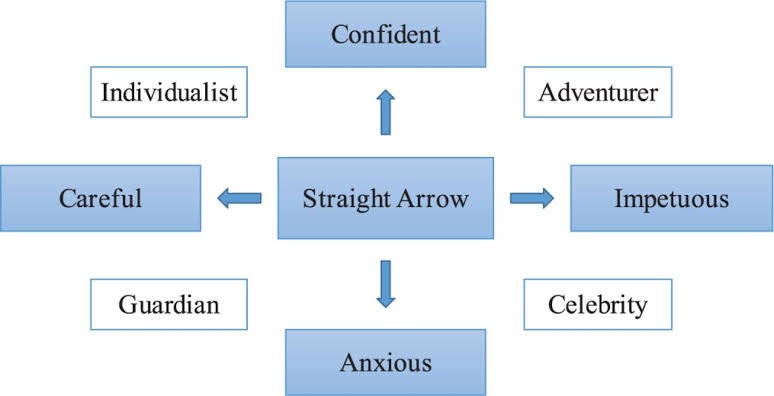
Fund managers Tom Bailard, Larry Biehl and Ron Kaiser identified five types of investors, each type characterized by their investment preferences and actions. These 5 types are: Individualists, Adventurers, Celebrities, Guardians and Straight Arrows. Key to the different categories is their different attitude to seeking professional financial advice. Defined below:

Individualists have faith in their own investment abilities so do not approach a financial adviser. But they are also cautious.

Adventurers are what may be called high rollers, in that they like big bets, tend not to diversify and are happy to put all their eggs in one basket. They, too, are unlikely to seek financial advice.

Celebrities tend to follow the crowd in investment terms but are aware of their lack of expertise so frequently consult advisers.

Guardians are fearful of losing money, thus prefer rock-solid investments such as government bonds. They, too, are likely to seek professional investment advice.

Straight Arrows exhibit some of the characteristics of individualists and some of adventurers.

COMMENTS APPRECIATED

Refer and Subscribe

***

***

The TIPPING POINT: Meanings Vary

By Staff Reporters

***

***

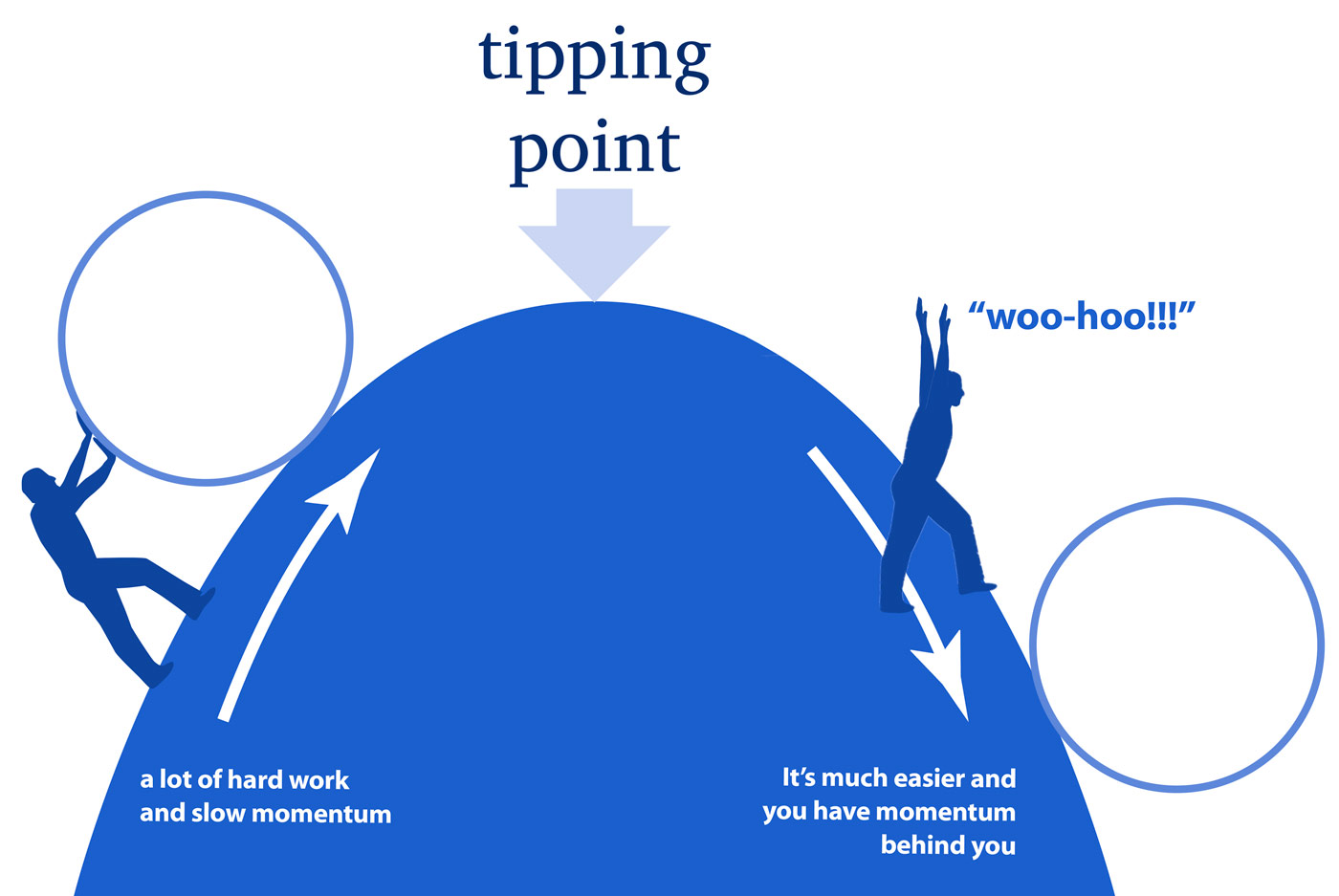
A “Tipping point” has slightly varied meanings depending upon the field of study, but is frequently defined as a series of small changes in an evolutionary process that ultimately lead to a significant change or point beyond which new circumstances and conditions obtain.

For example, the point at which emerging economies go from being a long-time source of deflation to a source of inflation can be said to be an inflationary tipping point.

***

The Tipping Point: How Little Things Can Make a Big Difference is the debut book by Malcolm Gladwell, first published by Litttle, Brown in 2000. Gladwell defines a tipping point as “the moment of critical mass, the threshold, the boiling point.” The book seeks to explain and describe the “mysterious” sociological changes that mark everyday life. As Gladwell stated: “Ideas and products and messages and behaviors spread like viruses do.”

Examples of such changes in his book include the rise in popularity and sales of Hush Puppies shoes in the mid-1990s and the steep drop in New York City‘s crime rate after 1990.

COMMENTS APPRECIATED

Subscribe Today!

***

***

PARADOX: Generosity V. Miserliness

By Staff Reporters

***

***

According to BC Smith and Hilary Davidson, generosity is paradoxical. Those who give, receive back in turn. By spending ourselves for others’ well-being, we enhance our own standing. In letting go of some of what we own, we better secure our own lives. By giving ourselves away, we ourselves move toward flourishing. This is not only a philosophical or religious teaching; it is a sociological fact.

The the generosity paradox can also be stated in the negative.

By grasping on to what we currently have, we lose out on better goods that we might have gained. In holding onto what we possess, we diminish its long-term value to us. And, by always protecting ourselves against future uncertainties and misfortunes, we are affected in ways that make us more anxious about uncertainties and vulnerable to future misfortunes.

In short, by failing to care for others, we do not properly take care of ourselves. It is no coincidence that the word “miser” is etymologically related to the word “miserable.”

COMMENTS APPRECIATED

Subscribe Today!

***

***

MEMORY: Fallibility

By Staff Reporters

***

***

Memory is Fallible. Think you have a great memory? Think again.

According to psychologist and colleague Dan Ariely PhD, memory is more like a game of telephone than a recording device. Each time you recall an event, your brain makes tiny edits, adding some flair or skipping the boring parts. It’s why you can’t remember where you left your keys but can vividly recall an embarrassing moment from high school.

So, the next time someone says, “I remember it like it was yesterday,” know that yesterday might be a heavily edited rerun.

COMMENTS APPRECIATED

Subscribe Today!

***

***

AVOIDANT BEHAVIOR: Disease and Illness

COMMON SENSE PUBLIC AND POPULATION HEALTH

By Staff Reporters

***

***

According to colleague Dan Ariely PhD, Disease Avoidant Behavior are the actions we take to avoid illness, often driven by instinctive or learned responses. It’s why we wash our hands obsessively during flu season, wear a balaclava mask and/or avoid people who are sneezing or coughing.

Note: A balaclava is a form of cloth headgear designed to expose only part of the face, usually the eyes and mouth. Depending on style and how it is worn, only the eyes, mouth and nose, or just the front of the face are unprotected. Versions with enough of a full face opening may be rolled into a hat to cover the crown of the head or folded down as a collar around the neck.

This behavior is rooted in our evolutionary survival instincts, helping us steer clear of contagious health threats like RSV, COVID and the winter flu. While it’s usually a good thing, excessive disease avoidant behavior can lead to anxiety and social isolation.

So, balance caution with common sense and public/population health directives to stay healthy and sane.

COMMENTS APPRECIATED

Thank You

***

***

DAILY UPDATE: FluMist, Neural Data and the Jobs Report

MEDICAL EXECUTIVE-POST TODAY’S NEWSLETTER BRIEFING

***

Essays, Opinions and Curated News in Health Economics, Investing, Business, Management and Financial Planning for Physician Entrepreneurs and their Savvy Advisors and Consultants

Serving Almost One Million Doctors, Financial Advisors and Medical Management Consultants Daily

A Partner of the Institute of Medical Business Advisors , Inc.

http://www.MedicalBusinessAdvisors.com

SPONSORED BY: Marcinko & Associates, Inc.

***

http://www.MarcinkoAssociates.com

Daily Update Provided By Staff Reporters Since 2007.
How May We Serve You?
© Copyright Institute of Medical Business Advisors, Inc. All rights reserved. 2024

REFER A COLLEAGUE: MarcinkoAdvisors@msn.com

SPONSORSHIPS AVAILABLE: https://medicalexecutivepost.com/sponsors/

ADVERTISE ON THE ME-P: https://tinyurl.com/ytb5955z

Your Referral Count -0-


The FDA just approved FluMist from AstraZeneca for self- or caregiver administration for the prevention of influenza virus subtypes A and B.

Plus, August’s revised jobs report showed the US actually created 159,000 jobs, up from 142,000 initially reported last month.

People in CA will have explicit rights to their own “neural data”—covering anything a person thinks or physically/emotionally feels—which is designed to prevent companies from gathering and selling that type of personal info

COMMENTS APPRECIATED

PLEASE SUBSCRIBE: MarcinkoAdvisors@msn.com

Thank You

https://www.amazon.com/Comprehensive-Financial-Planning-Strategies-Advisors/dp/1482240289/ref=sr_1_1?ie=UTF8u0026amp;qid=1418580820u0026amp;sr=8-1u0026amp;keywords=david+marcinko

***

***

***

EDUCATIONAL TEXTBOOKS: https://tinyurl.com/4zdxuuwf

***

Become a Published Print Author with Us

The Business of Medical Practice [3rd Edition]

By Hope Rachel Hetico RN, MHA, CMP™

[Managing Editor]biz-book7

Dear Colleagues,

As you may know, we are commencing work on the third edition of our best selling book: The Business of Medical Practice

TOC 1st: http://www.amazon.com/Business-Medical-Practice-Maximizing-Doctors/dp/0826113117/ref=sr_1_8?ie=UTF8&s=books&qid=1231111232&sr=1-8

TOC 2nd: http://www.springerpub.com/prod.aspx?prod_id=23759

Invitation to Contribute

Accordingly, we would be honored for you to consider contributing a new or revised chapter, in your area of expertise, for a low-effort but high-yield contribution. Our goal is to help physician colleagues and management executives benefit from nationally known experts, as an essential platform for their success in the healthcare 2.0 business industry. Many topics are still available: [health accounting and costing; law, policy and administration; Medicare fraud and abuse; coding and insurance; HIT, grid and cloud computing; finance and economics, competitive models, collaboration and leadership, etc].

Support Always Available

Editorial support is available, and you would enjoy increasing subject-matter notoriety, exposure and public relations in an erudite and credible fashion. As a reader, or preferably a subscriber to the ME-P, your synergy in this space may be ideal. Time line for submission of a 5,000-7,500 word chapter is ample, and in a prose writing style that is “wide, not deep.” 

A Health 2.0 Initiative

And, be sure to address health 2.0 modernity. Update chapters from the second edition are also available. 

Definition: https://healthcarefinancials.wordpress.com/2008/09/12/emerging-healthcare-20-initiatives

Assessment

Please contact me for more details, if interested. A best selling-book is rare; while a third-edition volume even more so. Join us in this project. Regardless, we trust you will remain apostles of our core ME-P vision, “uniting medical mission and financial profit margin”, promoting it whenever possible.

Front Matter Link: frontmatter1advancedbusinessmedicine4 

Contact Info:

MarcinkoAdvisors@msn.com

770.448.0769

Conclusion

Your thoughts and comments on this ME-P are appreciated. Feel free to review our top-left column, and top-right sidebar materials, links, URLs and related websites, too. Then, subscribe to the ME-P. It is fast, free and secure.

Link: http://feeds.feedburner.com/HealthcareFinancialsthePostForcxos

Speaker: If you need a moderator or speaker for an upcoming event, Dr. David E. Marcinko; MBA – Publisher-in-Chief of the Medical Executive-Post – is available for seminar or speaking engagements. Contact: MarcinkoAdvisors@msn.com

OUR OTHER PRINT BOOKS AND RELATED INFORMATION SOURCES:

Enter our Writing Contest

You Must Submit – to Win

By Hope Hetico; RN, MHA, CMP™

Managing Editoridea2

Enter the Medical Executive Post submissions contest and just maybe you can become famous! Simply send in a written post about some aspect of the healthcare industrial complex, finance, administration, policy or health economics space that you are particularly knowledgeable about. Or, visit our topic channels for related ideas. Use you fertile imagination.

Rules

Submission must be original, not submitted elsewhere and under 1,000 words. Rest assured that grammar, spelling, citations and punctuation counts. Originality and thought-leadership is a must. Oh, you must be a subscriber and all copyright ownership will be transferred to us, as well. Your material may even be used in some iMBA, Inc print project or publication, now in-progress or in the future.

Grand Prize

Just think! You could become one of 3 finalists featured as an upcoming Medical Executive Post monthly column, with photographic byline, or even the grand prize winner who’ll receive our free best-selling hardcover textbook, the Business of Medical Practice.

Link: http://www.springerpub.com/prod.aspx?prod_id=23759

biz-book3

Contest Close

Submissions are due December 31, 2009. There are no limits to the number of times you may apply or the number of submissions you may send in. All results are final. The anonymous judges reserve the right of non-selection. And, we reserve the right to reject any content submission; for any reason perceived as reasonable, or unreasonable.

Conclusion

And so, your thoughts and comments on this Medical Executive-Post submissions contest are appreciated.

Subscribe Now: Did you like this Medical Executive-Post, or find it helpful, interesting and informative? Want to get the latest E-Ps delivered to your email box each morning? Just subscribe using the link below. You can unsubscribe at any time. Security is assured.

Link: http://feeds.feedburner.com/HealthcareFinancialsthePostForcxos

Speaker: If you need a moderator or speaker for an upcoming event, Dr. David E. Marcinko; MBA – Publisher-in-Chief of the Executive-Post – is available for seminar or speaking engagements.