Stocks, Bonds and Commodities

By A.I.

***

***

  • Stocks: The Dow climbed thanks to UnitedHealth and Warren Buffett while the rest of the market sank as the stock rally slowed. But, despite Friday’s decline, both the S&P 500 and NASDAQ wrapped up winning weeks.
  • Bonds: Both 10-year and 2-year Treasury yields continued to climb after Thursday’s PPI reading and Friday’s consumer confidence and retail sales data.
  • Commodities: All eyes were on Anchorage, Alaska as President Trump concluded talks with President Putin—discussions that will be crucial for crude’s future.

EDUCATION: Books

COMMENTS APPRECIATED

Like and Subscribe

***

***

PARADOX: Warren Buffett and Berkshire Hathaway (BRK)

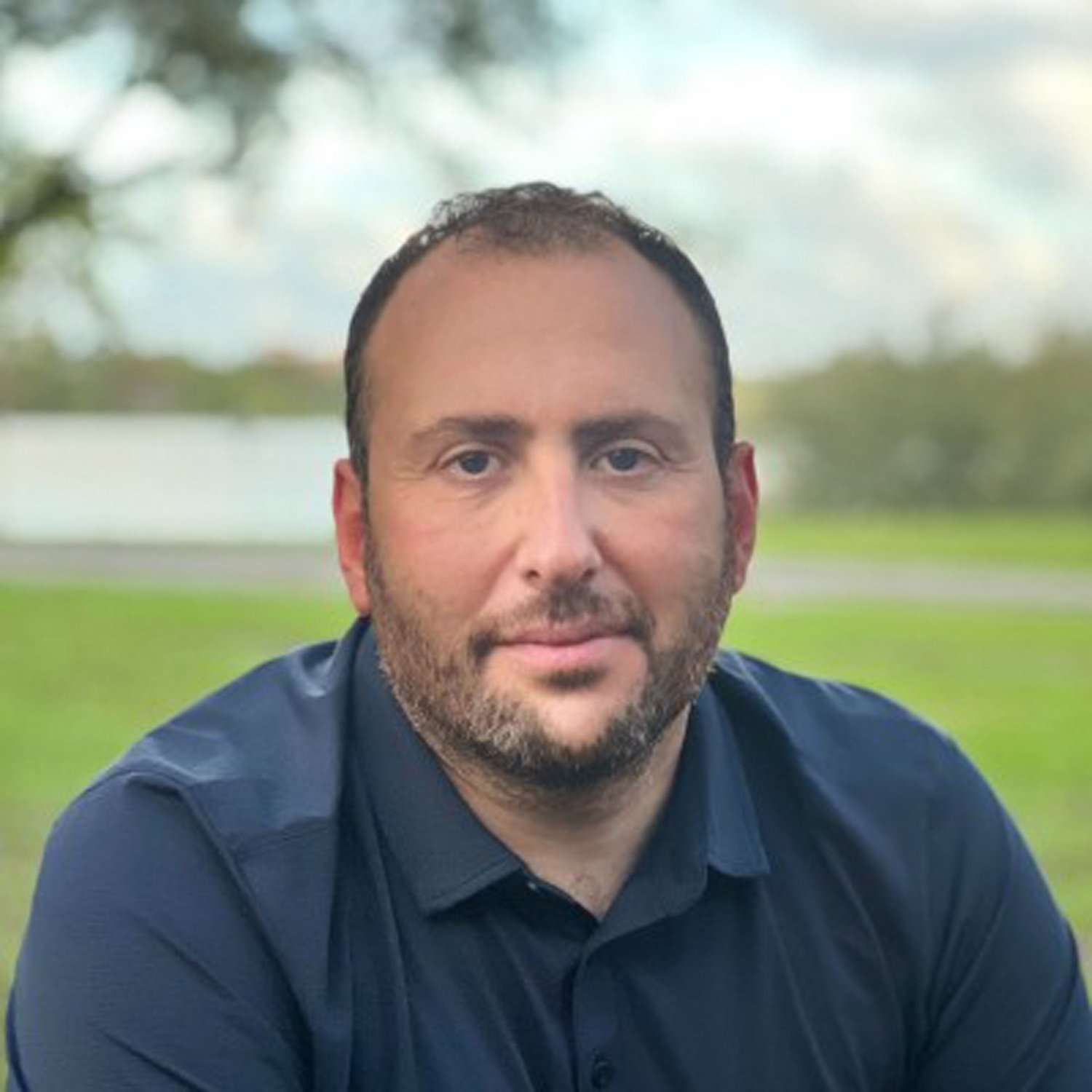
By Vitaliy Katsenelson CFA

***

***

I am back from what has become over the past two decades an annual pilgrimage to Omaha. 

What’s fascinating about this trip is that it has everything and nothing to do with Warren Buffett. The main event that draws everyone to Omaha – the Berkshire Hathaway (BRK) annual meeting – is actually the least important part. I could have watched the shareholder meeting livestreamed on YouTube from the comfort of my living room couch.

The emergence of the Berkshire phenomenon reminds me of China’s manufacturing evolution. China initially attracted capital because of its cheap labor. But over time, China took this capital and plowed it into infrastructure. Factories were built next to each other, each specializing in certain areas. A specialized ecosystem emerged. 

Today, Chinese labor is no longer cheap. It’s been replaced by automation, and now China is a powerhouse for manufacturing anything and everything.

The transformation that the BRK weekend has undergone followed a similar progression. Initially, the only way to absorb Buffett and Munger’s wisdom was to come to Omaha, as the event was not streamed. But then something interesting happened. The BRK weekend attracted people who shared the same value system, and friendships were formed. A variety of smaller events began to be scheduled throughout the same weekend across Omaha, and an equally specialized ecosystem emerged.

The shareholder meeting began to be streamed about ten years ago, but that has had no impact on attendance. This is one reason why I think Buffett is at peace with the idea of no longer presiding at the meeting – people will still come to Omaha the weekend before Mother’s Day.
The BRK weekend now features dozens of excellent events. 

I spoke at several, including an investing panel at Creighton University, alongside the wonderful Bob Robotti, a die-hard value investor who runs Robotti & Co. I’ve known Bob for years – at 72, he exhibits the same enthusiasm for stocks as someone decades younger – and this panel was an excellent example of what the BRK Omaha ecosystem has produced.

Bob and I have very different approaches to value investing. He loves cyclical businesses, while I generally shun them. Bob mentioned that he’d buy a very cheap business run by a mediocre manager, while I would not touch it with a ten-foot pole. 

There is absolutely nothing wrong with either approach; indeed, there is an important lesson in it. Your investment philosophy and process have to fit your personality and your EQ. In my case, I get nervous (and thus irrational) when I own companies run by imbeciles who don’t have either skin or soul in the game. But the great thing about the BRK weekend is that I learn from Bob every time I spend time with him. He’s a thoughtful and genuinely kind human being. 

From the outside, the BRK weekend may seem like a place where people simply want to learn how to get and stay rich. But this gathering transcends value investing and capitalism and genuinely celebrates human values. People (like me) bring their kids to this event. And just like at the main event, at the Q&A breakfast I hosted for my readers, many questions centered on life rather than investing.

My first Omaha reader meetup fit around a small restaurant table. This year, to my surprise, 450 people packed into a venue with standing-room only. I answered questions on every imaginable topic for just over two hours, and by the end I was exhausted. 

This gave me even greater admiration for Buffett, who is four decades my senior, yet still fielded questions for four solid hours. I was delighted to hear Warren give a similar answer to one I had given the day before when asked what advice he’d give to graduating students: 
“Don’t worry too much about starting salaries and be very careful who you work for because you will take on the habits of the people around you.” 

(Incidentally, we are going to host our next Q&A Breakfast on May 1, 2026. You can sign up for it here. It’s free, but I suggest you sign up early, as it fills up fast.)

I also participated (as I have for over a decade) in an investing panel at YPO (Young President Organization) in the beautiful Holland Performance Art Center with Tom Gaynor, CEO of Markel (often described as a baby Berkshire Hathaway) and Lawrence Cunningham. Lawrence authored perhaps the most important book about Buffett, The Essays of Warren Buffett, masterfully editing Warren’s annual letters into a cohesive volume. This year’s panel was one of those occasions where I found myself listening intently to my fellow panelists instead of speaking more.

Lawrence has met Greg Abel – Buffett’s designated successor – and feels optimistic about him. He’s probably right – this was one of Buffett’s most crucial decisions, which he did not make lightly. Yet I can’t imagine sitting for four hours listening to Greg Abel. I am sure he is a brilliant CEO, but he’s neither Buffett nor Munger – few individuals possess so much worldly wisdom and communicate it with such clarity and humor.

This brings me to the point of this note: the dramatic (yet not unexpected) announcement that Buffett is stepping down as CEO of BRK at the end of the year.

Before I comment on this, let me tell you a story. Imagine you have been watching a soap opera for 17 years. You arrive dutifully every year to watch every episode in person. And then you miss the last five minutes of the explosive finale before it goes off the air. This is what happened to me when Buffett announced his retirement as CEO.

A few minutes before noon, while Buffett was answering a question I’d heard before and appeared to be winding down, I suggested we slip out early for lunch to avoid the crowds. When we came back, I discovered that the meeting had gone on until 1 pm, and just before it ended, Buffett announced that he would step down at the end of the year. Seventeen years of watching Warren speak and I missed the most dramatic moment of all, followed by a five-minute standing ovation.

I think Buffett has engineered his exit brilliantly. He will still remain chairman, and even before the announcement he was not managing BRK’s day-to-day operations. As a collection of hundreds of companies that often have absolutely nothing in common with each other, BRK is already highly decentralized. Buffett’s main contribution has been capital allocation.

Giving up the CEO title while he’s still alive means Buffett has brought in his replacement in an orderly way and created a smooth transition. But I have a feeling that on January 1, 2026, when Greg Abel officially becomes CEO, nothing will really change, and Warren will continue doing what he’s been doing for as long as he can. If Buffett is able – he’ll be 95 – he’ll still drive to the office and stop by McDonald’s for a breakfast sandwich (there’s a lot of wisdom in finding pleasure in little things). His son Howard Buffett will become chairman after Warren, with his only job being to preserve the culture.
I’ve been asked what I think of BRK stock. We bought the stock during the pandemic. It has done better than I expected, in part because of the strong performance of Apple, which was BRK’s largest holding. But BRK today is an unexciting investment at its current price. In all honesty, it is a conglomerate with some good and some merely okay businesses.

As a consumer, I get a (small) glimpse into how BRK businesses are being run by visiting Dairy Queen. BRK owns DQ, and I love their soft-serve ice cream (though I only eat it when I travel). My favorite part of research!

DQ has (or maybe had) a strong brand and operates on a capital-light model as a franchisor. But most stores I have visited looked like they have been neglected and need fresh paint. To be sure, I understand the limitations of this “analysis,” and DQ overall amounts to a rounding error on BRK’s financials. But little things often reveal much about big things.

BRK’s big businesses, from what I can glean through their financials, are not particularly well managed – GEICO and BNSF (railroad) have definitely been undermanaged lately. BNSF is not nearly as efficient as its competitors that embraced precision railroading, and until recently GEICO was losing market share to Progressive. 

BRK’s reinsurance business, a significant source of BRK’s profitability, is run by the extraordinary Ajit Jain. Ajit is in his 70s and unfortunately it seems he is not in great health. Is his replacement going to shoot the lights out, like he did? We don’t know. But Ajit is probably more important to BRK today than Buffett.

BRK is not going to melt into oblivion after Buffett is gone, but its best days are behind it. As Buffett has acknowledged, just its size alone makes it very difficult for BRK to grow. Truth be told, even if Buffett were thirty years younger and continued to run BRK, I am not sure the results would be much different than what I think the future holds with Abel at the helm. 

Buffett and Charlie Munger had a tremendous impact on me as an investor and human being. I am incredibly thankful to both. I hope Warren is there next year, but, in either case, I will be.

As value investors say, “next year in Omaha”.

COMMENTS APPRECIATED

Like and Refer

***

***

BERKSHIRE HATHAWAY: Warren Buffett to Retire

BREAKING NEWS

By Staff Reporters

***

***

According to the Washington Post, legendary investor Warren Buffett said Saturday that he plans to step down from his role leading Berkshire Hathaway. Warren, 94, serves as the conglomerate’s chairman and chief executive. He said Saturday that he will recommend to the Berkshire Hathaway board that Greg Abel become CEO at the end of 2025.

“I think the time has arrived where Greg should become the chief executive officer of the company at year end,” Buffett said at Berkshire Hathaway’s annual meeting in Omaha.

Abel is chairman and CEO of Berkshire Hathaway Energy. Buffett has previously signaled that Abel would be in line to succeed him as CEO.

***

UPDATE: Berkshire Hathaway (NYSE:BRK.A)(NYSE:BRK.B) on Saturday reported its worst drop in quarterly operating earnings since 2020, and noted “considerable uncertainty” around international trade policies and tariffs. 

The sprawling conglomerate’s Q1 operating earnings slipped 14.1% Y/Y to $9.64B. This was the steepest fall in operating earnings since a 32.1% decrease logged in the third quarter of 2020

COMMENTS APPRECIATED

Like and Refer

***

***

RELIGION STOCKS: Hidden Risks

By Vitaliy Katsenelson; CFA

***

***

The Hidden Risk in “Religion” Stocks
You can also listen to a professional narration of this article on iTunes & online.
ENCORE: March 22, 2004

A basic property of religion is that the believer takes a leap of faith: to believe without expecting proof. Often you find this property of religion in other, unexpected places – for example, in the stock market. It takes a while for a company to develop a “religious” following: only a few high-quality, well-respected companies with long track records ever become worshipped by millions of investors. My partner, Michael Conn, calls these “religion stocks.” The stock has to make a lot of shareholders happy for a long period of time to form this psychological link.

The stories (which are often true) of relatives or friends buying few hundred shares of the company and becoming millionaires have to fester a while for a stock to become a religion. Little by little, the past success of the company turns into an absolute – and eternal – truth. Investors’ belief becomes set: the past success paints a clear picture of the future.

Gradually, investors turn from cautious shareholders into loud cheerleaders. Management is praised as visionary. The stock becomes a one-decision stock: buy. This euphoria is not created overnight. It takes a long time to build it, and a lot of healthy pessimists have to become converted into believers before a stock becomes a “religion.” 

Once a stock is lifted up to “religion” status, beware: Logic is out the window. Analysts start using T-bills to discount the company’s cash flows in order to justify extraordinary valuations. Why, they ask, would you use any other discount rate if there is no risk? When a T-bill doesn’t do the trick, suddenly new and “more appropriate” valuation metrics are discovered.

Other investors don’t even try to justify the valuation – the stock did well for me in the past, why would it stop working in the future? Faith has taken over the stock. Fundamentals became a casualty of “stock religion.” These stocks are widely held. The common perception is that they are not risky. 

The general public loves these companies because they can relate to the companies’ brands. A dying husband would tell his wife, “Never sell _______ (fill in the blank with the company name).” Whenever a problem surfaces at a “religion stock,” it is brushed away with the comment that “it’s not like the company is going to go out of business.” True, a “religion stock” company is a solid leader in almost every market segment where it competes and the company’s products carry a strong brand name. However, one should always remember to distinguish between good companies and good stocks.

Coca-Cola is a classic example of a “religion stock.” There are very few companies that have delivered such consistent performance for so long and have such a strong international brand name as Coca-Cola. It is hard not to admire the company.

But admiration of Coca-Cola achieved an unbelievable level in the late nineties. In the ten years leading up to 1999, Coca-Cola grew earnings at 14.5% a year, very impressive for a 103-year-old company. It had very little debt, great cash flow and a top-tier management. This admiration came at a steep price: Coca-Cola commanded a P/E of 47.5. That P/E was 2.7 times the market P/E. Even after T-bills could no longer justify Coke’s valuation, analysts started to price “hidden” assets – Coke’s worldwide brand. No money manager ever got fired for owning Coca-Cola.

The company may not have had a lot of business risk. But in 1999, the high valuation was pricing in expectations that were impossible for any mature company to meet. “The future ain’t what it used to be” – Yogi Berra never lets us down. Success over a prolonged period of time brings a problem to any company – the law of large numbers. 

Enormous domestic and international market share, combined with maturity of the soft drink market, has made it very difficult for Coca-Cola to grow earnings and sales at rates comparable to the pre-1999 years. In the past five years, earnings and sales have grown 2.5% and 1.5% respectively. After Roberto C. Goizueta’s death, Coke struggled to find a good replacement – which it acutely needed.

Old age and arthritis eventually catch up with “religion stocks.” No company can grow at a fast pace forever. Growth in earnings and sales eventually decelerates. That leads to a gradual deflation of the “religion” premium. For Coke, the descent from its “religious” status resulted in a drop of nearly 20% in the share price – versus an increase of 65% in the broad market over the same time. And at current prices, the stock still is not cheap by any means. It trades at 25 times December 2004 earnings, despite expectations for sales growth in the mid single digits and EPS growth in the low double digits. 

It takes a while for the religion premium to be totally deflated because faith is a very strong emotion. A lot of frustration with sub-par performance has to come to the surface.

Disappointment chips away at faith one day at a time. “Religion” stocks are not safe stocks. The leap of faith and perception of safety come at a large cost: the hidden risk of reduction in the “religion premium.” The risk is hidden because it never showed itself in the past. “Religion” stocks by definition have had an incredibly consistent track record. Risk was rarely observed. 

However, this hidden risk is unique because it is not a question of if it will show up but a question of when. It is very hard to predict how far the premium will inflate before it deflates – but it will deflate eventually. When it does, the damage to the portfolio can be huge.

Religion stocks generally have a disproportionate weight in portfolios because they are never sold – exposing the trying-to-be-cautious investor to even greater risks. Coca-Cola is not alone in this exclusive club. General Electric, Gillette, Berkshire Hathaway are all proud members of the “religion stock” club as well. Past members would include: Polaroid – bankrupt; Eastman Kodak – in a major restructuring; AT&T – struggling to keep its head above water. That stock is down from over $80 in 1999 to $18 today.

Emotions have no place in investing. Faith, love, hate, and disgust should be left for other aspects of our life. More often than not, emotions guide us to do the opposite of what we need to do to be successful. Investors need to be agnostic towards “religion stocks.” The comfort and false sense of certainty that those stocks bring to the portfolio come at a huge cost: prolonged under performance.

My thoughts today (20+ years later)


This is one of the first investment articles I ever wrote. I had just started writing for TheStreet.com. It’s interesting to read this article more than 20 years later. I am surprised my writing was not as bad as I had feared (though in many cases it was worse than I feared when I read my other early articles).

So much has happened since then – I am a different person today than I was back then. I have two more kids; I have written three more books and a thousand articles. The last two decades were my formative years as an investor and adult.

The goal of the article was not to make predictions but to warn readers that the long-term success of certain companies creates a cult-like following and deforms thinking. In fact, my original article – the one I submitted to TheStreet.com – did not mention any companies other than Coke. The editors wanted me to include more names so that the article would show up on more pages of Yahoo! Finance.

With the exception of Berkshire Hathaway, all of these companies have produced mediocre or horrible returns. In the best case, their fundamental returns in their old age were only a fraction of what they were when these companies were younger and the world was their oyster.

To my surprise, Coke’s stock is still trading at a high valuation. Its business has performed like the old-timer it is, with revenue and earnings growing by only 3–4% a year. The days of double-digit revenue and earnings growth were left in the 80s and 90s, though the high valuation remained. 

COMMENTS APPRECIATED

Refer, Like and Subscribe

***

***

MACRO-FORECASTING: The True Value

By Vitaliy Katsenelson CFA

***

***

The True Value of Macro Forecasting
While in Omaha for the Berkshire Hathaway annual meeting one year, I participated in an investment panel hosted by a local chapter of the Young Presidents’ Organization. I had the privilege of sharing the stage with such industry giants as Tom Russo, a partner of Gardner Russo & Gardner (famous for knowing more about consumer stocks than the management that runs them), and Tom Gayner, president and CIO of Markel Corp., a specialty insurance company that on many levels resembles the Berkshire of 30 years ago.

We were asked how much time a value investor should spend on macro forecasting. Usually macro forecasting is frowned upon in the value investing community, and Berkshire CEO Warren Buffett has everything to do with that. He is famous for saying (and I am paraphrasing), “My decision making would not change even if I knew what the Federal Reserve will do with interest rates next month.” There is sound logic behind this: Forecasting the economy is incredibly difficult in the short run. The economy is not unlike a black box with hundreds of gauges on it that in the near term give you conflicting readings about what’s inside it.

For this reason macro forecasting was disapproved of by value investors, and for 20 years this attitude paid off. The economic climate was favorable, the stock market was in overdrive, price-earnings ratios were expanding. Macro did not matter — until the housing bubble and financial crisis. Value investors who had had their heads in the sand got annihilated.

Things in life often swing, pendulum-like, from one extreme to another. Right after a crisis every investor is a macro expert. It’s kind of hilarious: Investors who just a few years earlier didn’t even know the names of most economic indicators are now spitting them out in conversations as though they had absorbed them with their mother’s milk. So what should investors do — become macro experts or economic ignoramuses?

Believe it or not, there is a logical and, more important, a practical answer to this question. As an investor you want to spend very little time on forecasting the weather (that is, what the Fed will do with interest rates next month or the rate of growth of the economy). Weather forecasting, first of all, is not always accurate, but it will certainly consume a lot of time and energy, and the forecasts have a very finite shelf life. Yesterday’s weather is irrelevant today. As long as you own companies that can survive rain without catching pneumonia — even a few weeks of rain — weather forecasting is a waste of time. This is what Buffett was implying by saying he didn’t want to be a macro forecaster.

However, instead of being a weatherman (or weatherwoman), as an investor you want to pay serious attention to “climate change” — significant shifts in the global economy that can impact your portfolio. This is exactly what Buffett did over the past few decades — he was warning about the weak dollar because of trade-deficit imbalances (he even put on a trade that bet against the dollar). He also warned about derivatives — “weapons of mass destruction” — and tried to cleanse them from the portfolio of General Re (an insurance company Berkshire acquired) as fast as he could.

COMMENTS APPRECIATED

Refer, Like and Subscribe

***

***

PRESIDENTS DAY 2025: US Stock Markets, BoA, Citigroup and Twitter [X]

By Staff Reporters

***

***

U.S. Stock Markets will be closed for Presidents Day. But crypto trading takes no days off.

The Presidents Day holiday was originally intended to celebrate the birthday of the first President George Washington on February 22nd, according to the Library of Congress. The holiday is still formally designated as Washington’s Birthday by the Office of Personnel Management. Washington’s birthday was an informal holiday during the country’s early existence and President Rutherford B. Hayes formalized the holiday in 1879, according to History.com. The holiday’s proximity to the birthday of President Abraham Lincoln on February 12th caused the general public to link the two and later expand the celebration to all presidents.

***

Berkshire Hathaway, the investment conglomerate led by Warren Buffett, reduced its holdings in two US banks. Bank of America (BoA) and Citigroup shares were sold in the final quarter of 2024. The move, disclosed in a regulatory filing last Friday, comes as Buffett continues to trim Berkshire’s stock portfolio, favoring safer investments such as US Treasury bills.

***

Wall Street just dumped nearly every dollar of the $12.5 billion in loans that helped Elon Musk buy Twitter—now called X—in 2022. A group of seven major banks, led by Morgan Stanley, offloaded $4.74 billion of the debt last Friday, selling more than their planned $3 billion as investors flooded in with $12 billion in orders, according to a report from the Financial Times.

COMMENTS APPRECIATED

Refer and Subscribe

***

***

DAILY UPDATE: State Farm & Berkshire Hathaway as ESG Retreats and Markets Rise

MEDICAL EXECUTIVE-POST TODAY’S NEWSLETTER BRIEFING

***

Essays, Opinions and Curated News in Health Economics, Investing, Business, Management and Financial Planning for Physician Entrepreneurs and their Savvy Advisors and Consultants

Serving Almost One Million Doctors, Financial Advisors and Medical Management Consultants Daily

A Partner of the Institute of Medical Business Advisors , Inc.

http://www.MedicalBusinessAdvisors.com

SPONSORED BY: Marcinko & Associates, Inc.

***

http://www.MarcinkoAssociates.com

Daily Update Provided By Staff Reporters Since 2007.
How May We Serve You?
© Copyright Institute of Medical Business Advisors, Inc. All rights reserved. 2024

REFER A COLLEAGUE: MarcinkoAdvisors@msn.com

SPONSORSHIPS AVAILABLE: https://medicalexecutivepost.com/sponsors/

ADVERTISE ON THE ME-P: https://tinyurl.com/ytb5955z

Your Referral Count -0-

Stat: Over 90%. That’s the percentage of the insurance industry’s uptick in fossil fuel securities investment coming from just two firms, State Farm and Berkshire Hathaway. (The Wall Street Journal)

CITE: https://www.r2library.com/Resource

Stocks up

  • Southwest Airlines ascended 5.42% after the company laid out its growth plans in an attempt to fend off an activist investor attack.
  • Starbucks climbed 1.93% thanks to an upgrade from Bernstein analysts who foresee a “grande comeback” for the coffee chain.
  • CarMax revved 5% higher after posting strong second-quarter earnings, beating both top and bottom line forecasts.
  • Jabil jumped 11.65% after the electronics parts manufacturer announced impressive earnings and revealed plans to cut costs.
  • Bilibili, which sounds like you’re trying to get your friend William’s attention, popped 15.44% after Goldman Sachs analysts upgraded the Chinese internet company.

Stocks down

  • Super Micro Computer plunged 12.17% on the news that the Department of Justice is launching a probe into the tech company, a few weeks after note short seller Hindenburg Research published a report alleging “accounting manipulation.”
  • Sonos, makers of your favorite subwoofer, sank 4.45% after a rare “double downgrade” by Morgan Stanley analysts, who demoted the stock from a positive “overweight” all the way to a negative “underweight.”
  • Oil stocks took a big hit today after Saudi Arabia announced it will increase its oil production next month. Diamondback Energy fell 6.46%, Shell dropped 3.91%, and ConocoPhillips lost 3.23%.

CITE: https://tinyurl.com/2h47urt5

Here’s where the major benchmarks ended:

  • The S&P 500® index (SPX) rose 23.11 points (0.40%) to 5,745.37; the Dow Jones Industrial Average® ($DJI) added 260.36 points (0.62%) to 42,175.11; the NASDAQ Composite® ($COMP) increased 108.08 points (0.60%) to 18,190.29.
  • The 10-year Treasury note yield (TNX) climbed one basis point to 3.79%.
  • The CBOE Volatility Index® (VIX) was steady at 15.57.

CITE: https://tinyurl.com/tj8smmes

A retreat from ESG is due to backlash from conservatives who are critical of the idea that fund managers should be considering any other factor but a company’s shareholders in their investment decisions. Accusations of “greenwashing” have also plagued many ESG funds, which is when an asset management firm charges higher fees for a specific thematic fund without actually delivering a unique investment strategy.

Visualize: How private equity tangled banks in a web of debt, from the Financial Times.

COMMENTS APPRECIATED

PLEASE SUBSCRIBE: MarcinkoAdvisors@msn.com

Thank You

***

***

***

***

EDUCATIONAL TEXTBOOKS: https://tinyurl.com/4zdxuuwf

***

OMAHA: Breakfast Meeting 2024

By Vitaliy Kensenelson CFA

***

***

Breakfast in Omaha Meeting 2024 – Session One
While I was in Omaha attending the BRK annual meeting, I hosted Q&A sessions for my readers. Due to high reader interest, what started out as a simple breakfast get-together turned into two breakfast sessions and an afternoon session. We had so much interest that we were still unable to accommodate all of our readers – we had 200 folks on the waiting list.

I was exhausted, but I really enjoyed answering questions and meeting readers. The upside of this is that we have three video recordings.

Over the next three weeks, I will share the videos from each session. For those who prefer to read, I will also include a lightly edited full transcript.

For those who don’t have the time to read 15 pages or watch an hour-long video, I’ll include my favorite excerpts from each session.

COMMENTS APPRECIATED

Thank You

***

***

DAILY UPDATE: FQHCs Down and Healthcare Bankruptcies Up as the Markets Extend Gains

MEDICAL EXECUTIVE-POST TODAY’S NEWSLETTER BRIEFING

***

Essays, Opinions and Curated News in Health Economics, Investing, Business, Management and Financial Planning for Physician Entrepreneurs and their Savvy Advisors and Consultants

Serving Almost One Million Doctors, Financial Advisors and Medical Management Consultants Daily

A Partner of the Institute of Medical Business Advisors , Inc.

http://www.MedicalBusinessAdvisors.com

SPONSORED BY: Marcinko & Associates, Inc.

***

http://www.MarcinkoAssociates.com

Daily Update Provided By Staff Reporters Since 2007.
How May We Serve You?
© Copyright Institute of Medical Business Advisors, Inc. All rights reserved. 2024

REFER A COLLEAGUE: MarcinkoAdvisors@msn.com

SPONSORSHIPS AVAILABLE: https://medicalexecutivepost.com/sponsors/

ADVERTISE ON THE ME-P: https://tinyurl.com/ytb5955z

***

Low-income communities often struggle to access healthcare services, but a new analysis of federally qualified health centers (FQHCs)—which provide quality care to patients regardless of ability to pay—has helped nail down one reason. When it comes to screening for certain cancers, these nonprofit community health centers have fallen far behind the national average, according to a study led by cancer center researchers at the University of Texas MD Anderson and the University of New Mexico.

CITE: https://www.r2library.com/Resource

Healthcare bankruptcies surged in 2023, and it turns out many of the companies that went under had one thing in common: private equity (PE) ownership. At least 21% of the 80 healthcare companies that filed for bankruptcy last year were PE-owned, according to a report from the nonprofit Private Equity Stakeholder Project (PESP).

CITE: https://tinyurl.com/2h47urt5

Warren Buffett on contemplated his own mortality at Berkshire’s meeting. Succession was the topic du jour at the Berkshire Hathaway shareholder meeting in Omaha last week. After his longtime business partner Charlie Munger died last year at 99, CEO Warren Buffett—who turns 94 in August—revealed his heir apparent, Greg Abel, will have the final say on investment decisions in his absence. Buffett ended his Q&A portion with the quip, “I not only hope you come next year. I hope I come next year.” Adding to the ominous vibes, Buffett said AI is a genie that “scares the hell out of me.”

CITE: https://tinyurl.com/tj8smmes

Here’s where the major benchmarks ended:

  • The S&P 500 index climbed 52.95 points (1.0%) to 5,180.74; the Dow Jones Industrial Average gained 176.59 points (0.5%) to 38,852.27; the NASDAQ Composite advanced 192.92 points (1.2%) to 16,349.25.
  • The 10-year Treasury note yield (TNX) fell about 1 basis  point to 4.491%.
  • The CBOE Volatility Index® (VIX) was little changed at 13.48.

Semiconductors were among the strongest performers Monday behind Micron Technology (MU), whose shares rallied 4.7% after Robert W. Baird upgraded the chipmaker to “outperform” from “neutral.” Micron Technology was the top gainer in the Philadelphia Semiconductor Index (SOX), which advanced 2.2% to near a four-week high.

Small-cap stocks also got out of the gate strong this week. The Russell 2000® Index (RUT) gained 1.2% to end at a four-week high but is still up just 1.7% for the year, while the S&P 500 has gained 8.6%.

COMMENTS APPRECIATED

PLEASE SUBSCRIBE: MarcinkoAdvisors@msns.com

Thank You

***

***

***

***

EDUCATIONAL TEXTBOOKS: https://tinyurl.com/4zdxuuwf

***

UPDATE: National Small Business Week 2022 and Warren Buffett

***

By Staff Reporters

***

***

National Small Business Week, hosted by the U.S. Small Business Administration, is an annual celebration of the critical contributions of America’s entrepreneurs and small business owners. Since the COVID-19 pandemic began in 2020, small businesses nationwide have faced unprecedented challenges.

That’s why, this year, National Small Business Week will celebrate the tenacity and resiliency of America’s entrepreneurs who continue to do their part to power our nation’s historic economic comeback.

Celebrated from May 2-5, 2022, the week is a great opportunity for your business to get more media coverage and a chance to interact with new customers. With the added attention on small businesses, take advantage of these seven tips to help your business stand out this year.

LINK: https://www.sba.gov/national-small-business-week

WARREN BUFFETT: He’s certainly bullish on the energy sector. In Q1, Berkshire acquired a big stake in Occidental Petroleum and juiced its stake in Chevron (which is now the company’s fourth-largest holding). And, Berkshire Hathaway is now the largest shareholder of Activision Blizzard after amassing a 9.5% stake. Activision stock has jumped more than 15% after Microsoft agreed to acquire it in January.

***

COMMENTS APPRECIATED

Thank You

***

****

About Twenty Successful Entrepreneurs

Share Their Best Advice

By staff reporters

Conclusion

Your thoughts and comments on this ME-P are appreciated. Feel free to review our top-left column, and top-right sidebar materials, links, urls and related websites, too. Then, subscribe to the ME-P. It is fast, free and secure.

Speaker: If you need a moderator or speaker for an upcoming event, Dr. David E. Marcinko; MBA – Publisher-in-Chief of the Medical Executive-Post – is available for seminar or speaking engagements. Contact: MarcinkoAdvisors@msn.com

OUR OTHER PRINT BOOKS AND RELATED INFORMATION SOURCES:

Product DetailsProduct Details

***

UPDATE: Markets, Berkshire Hathaway and the Ukraine

By Staff Reporters

***

  • Markets: Stocks boomed on a day when, to no one’s surprise, the Federal Reserve [FOMC} said it would hike interest rates.
  • Berkshire Hathaway: Class A shares closed above a half-million dollars for the first time ever—a testament to Warren Buffett’s recent hot streak.
  • Ukraine: After Ukrainian President Volodymyr Zelensky gave an impassioned address to Congress asking for more help, the White House acted. President Biden pledged $800 million worth of military aid, including 100 drones, 800 Stinger anti-aircraft systems, and 2,000 anti-armor missiles, and also called Russian President Vladimir Putin a “war criminal.”
  • HAPPY SAINT PATRICK’S DAY

***

COMMENTS APPRECIATED

Thank You

Subscribe to the Medical Executive-Post

***

***

#6: The Six Commandments of Value Investing

***

6. In the long run, stocks revert to their fair value

***

***

EDITOR’S NOTE: Although it has been some time since speaking live with busy colleague Vitaliy Katsenelson CFA, I review his internet material frequently and appreciate this ME-P series contribution. I encourage all ME-P readers to do the same and consider his value investing insights carefully.

By Vitaliy Katsenelson, CFA

***

6. In the long run, stocks revert to their fair value

Reversion to fair value is not a pie-in-the-sky concept. If a stock is significantly undervalued for a long time, then this undervaluation gets cured, eventually. That can happen through share buybacks – the company can basically buy all of its shares and take itself private.

Or it can happen by the company’s paying out its earnings in dividends, thus creating yields that the market will not be able to ignore. Or the company’s competitors will realize that it is cheaper for them to buy the company than to replicate its assets on their own. Either way, undervaluation gets cured.

This faith that undervaluation will not last forever is paramount to value investing. But this is not your regular faith, which requires belief without proof. This is evidence-supported faith with hundreds of years of data to back it. Just look at the US stock market: it has gone through cycles when it was incredibly cheap and others when it was incredibly expensive. At some points in its journey from one extreme to the other, it touched its fair value, even if it was transitory.

Historically, value investing (owning undervalued companies) has done significantly better than other strategies. Paradoxically, the reason it has done well in the long run is because it did not work consistently in the short run. If something works consistently (keyword), everybody piles into it and it stops working.

These aforementioned cycles of temporary brilliance and dumbness are not just common to us mere mortals. Even Warren Buffett’s Berkshire Hathaway goes through them. As just one example, in 1999, when the stock market went up 21%, Berkshire Hathaway stock declined 19%. In 1999, the financial press was writing obituaries for Buffett’s investment prowess.

Suddenly, in 1999, Buffett’s IQ was lagging the market by 40%. At the time, investors were infatuated with internet stocks that were not making money but that were supposed to have a bright future. Investors were selling unsexy “old economy” stocks that Buffett owned in order to buy the “new economy” ones.

If at the end of 1999, you were to sell Berkshire Hathaway and buy the S&P 500 instead, you would have done the easy thing, but it would have been a large (though very common) mistake. Over the next three years Berkshire Hathaway gained over 30% while the S&P declined over 40%. During the year 1999, Buffett’s IQ did not change much; in fact, the (book) value of businesses Berkshire Hathaway owned went up by 0.5% that year. But in 1999, the market’s attention was somewhere else and it chose to price Berkshire Hathaway 19% lower. 

As a value investor, if you do a reasonable job estimating what the business is worth, then at some point the stock market will price it accordingly. You need to have faith. I am acutely aware how wishful this statement sounds. But this faith, the belief in mean reversion, has to be deeply ingrained in our psyche. It will allow us to remain rational when people around us are not. 

***

CITE: https://www.r2library.com/Resource/Title/0826102549

COMMENTS APPRECIATED

Editor’s Final Note; Many thanks to VK for this timely series on value investing. Our ME-P readers appreciate you.

Thank You

Subscribe to the Medical Executive-Post

***

***

#1: The Six Commandments of Value Investing

1. A stock is partial ownership of a business 

***

By Vitaliy N. Katsenelson CFA

EDITOR’S NOTE: Although it has been some time since speaking live with busy colleague Vitaliy Katsenelson CFA, I review his internet material frequently and appreciate this ME-P series contribution. I encourage all ME-P readers to do the same and consider his value investing insights carefully.

***

The Six Commandments of Value Investing
Introduction

I wrote the core of this chapter in preparation for a speech I gave at an investment conference. In my speech, I wanted to show how at my firm, we took the Six Commandments of Value Investing and embedded them in our investment operating system. 

Since I was speaking to fellow value investors, this speech was written not to promote my firm but to educate. I was going to rewrite the speech for this chapter and make a bit less about us and more about you –but each attempt resulted in a dull chapter. So here is a much extended version of my original speech. 

The Six Commandments

These are the Six Commandments of Value Investing. I don’t expect any value investors reading this to be surprised by any one of them. They were brought down from the mountain by Ben Graham in his book Security Analysis.

1)    A stock is fractional ownership of a business (not trading sardines).
2)    Long-term time horizon (both analytical and expectation to hold)
3)    Mr. Market is there to serve us (know who’s the boss).
4)    Margin of safety – leave room in your buy price for being wrong.
5)    Risk is permanent loss of capital (not volatility).
6)    In the long run stocks revert to their fair value.

These commandments are very important and they sound great, but in the chaos of our daily lives it is so easy for them to turn into empty slogans. 

A slogan without execution is a lie. For these “slogans” not to be lies, we need to deeply embed them in our investment operating system – our analytical framework and our daily routines – and act on them.

The focus of this chapter goes far beyond explaining what these commandments are: My goal is to give you a practical perspective and to show you how we embed the Six Commandments in our investment operating system at my firm. 

1. A stock is partial ownership of a business 

The US and most foreign markets we invest in are very liquid. We can sell any stock in our portfolios with ease – a few clicks and a few cents per share commission and it’s gone. This instant liquidity, though it can be tremendously beneficial (we wish selling a house were that easy, fast, and cheap), can also have harmful unintended consequences: It tends to shrink the investor’s analytical time horizon and often transforms investors into pseudo-investors. 

For true traders, stocks are not businesses but trading widgets. Pork bellies, orange futures, stocks are all the same to them. Traders try to find some kind of order or a pattern in the hourly and daily chaos (randomness) of financial markets. As an investor, I cannot relate to traders –not only do we not belong to the same religion, we live in very different universes. 
Over the years I’ve met many traders, and I count a few as my dear friends. None of them confuse what they do with investing. In fact, traders are very explicit that their rules of engagement with stocks are very different from those of investors. 

I have little insight to share with traders in these pages. My message is really to market participants who on the surface look at stocks as if they were investments but who have been morphed by the allure of the market’s instant liquidity into pseudo-investors. They are not quite traders – because they don’t use traders’ tools and are not trying to find order in the daily noise – but they aren’t investors, either, because their time horizon has been shrunk and their analysis deformed by market liquidity. 

The best way to contrast the investor with the pseudo-investor is by explaining what an investor is. A true investor would do the same analysis of a public company that he would do for a private one. He’d analyze the company’s business, guestimate earnings power and cash flows. Assess its moat – the ability to protect cash flows from competition. Try to look “around the corner” to various risks. Then figure out what the business is worth and decide what price he’d want to pay for it (your required discount to what the business is worth). For an investor, the analysis would be the same if his $100,000 was buying 20% of a private business or 0.002% of a public one. This is how your rational uncle would analyze a business – your Warren Buffett or Ben Graham. 

How do we maintain this rational attitude and prevent the stock market from turning us into pseudo-investors? Very simple. We start by asking, “Would we want to own this business if the stock market was closed for 10 years?” (Thank you, Warren Buffett). This simple question changes how we look at stocks. 

Now, the immediate liquidity that is so alluring in a stock, and that turns investors into pseudo-investors, is gone from our analysis. Suddenly, quality – valuation, cash flows, competitive advantage, return on capital, balance sheet, management – has a much different, more complete meaning.

***

COMMENTS APPRECIATED

Thank You

Subscribe to the Medical Executive-Post

***

***

PODCAST: 15 Metrics for Successful Healthcare Companies

Phil Fisher Was One of the Greatest Entrepreneurial Investors of the 20th Century and a Source of Wisdom for Warren Buffett

By Eric Bricker MD

****

***

Related: https://thehealthcareblog.com/blog/2022/02/03/after-the-crash/?utm_campaign=THCB%20Reader&utm_medium=email&utm_source=Revue%20newsletter

***

COMMENTS APPRECIATED

Thank You

Subscribe to the Medical Executive-Post

***

***

***

Product Details

CITE: https://www.r2library.com/Resource/Title/0826102549

***

PODCAST: Warren Buffett’s Thoughts on Healthcare

BY ERIC BRICKER MD

CITE: https://www.r2library.com/Resource/Title/0826102549

****

***

In Response to a Question Regarding the Ending of Haven Healthcare–the Joint Venture Among Berkshire Hathaway, JP Morgan Chase and Amazon to Improve Healthcare for their Employee Health Plan Members–Warren Buffett Made the Following Statement:

“Healthcare is the Tapeworm of the US Economy and the TAPEWORM WON.”

Additionally, Warren Buffett Goes on to Say that ‘Prestigious‘ People in the Community Run Hospital Boards and These People Are ‘Fairly Happy‘ with the Healthcare System the Way It Currently Is.

It is Likely that Warren Buffett Formed Some of This Opinion in Speaking About Healthcare with the Vice Chairman of Berkshire Hathaway, Charlie Munger, and Berkshire Board Member and Famous CEO, Tom Murphy.

Charlie Munger Has Served on the Board of a Los Angeles Hospital for 31 Years and Tom Murphy Currently Serves on the NYU Langone Hospital System Board of Directors.

The Support of the Status Quo by ‘Prestigious,’ ‘Fairly Happy’ Hospital Board Members Cannot Be Understated… It Blocks Change and Warren Buffett Appears to Think Similarly.

***

YOUR COMMENTS ARE APPRECIATED.

Thank You

***

***

The Warren Buffett & Charlie Munger Show

More on Value Investing

By Vitaliy Katsenelson CFA

***

The Warren Buffett & Charlie Munger Show

Conclusion

Your thoughts and comments on this ME-P are appreciated. Feel free to review our top-left column, and top-right sidebar materials, links, URLs and related websites, too. Then, subscribe to the ME-P. It is fast, free and secure.

Speaker: If you need a moderator or speaker for an upcoming event, Dr. David E. Marcinko; MBA – Publisher-in-Chief of the Medical Executive-Post – is available for seminar or speaking engagements. Contact: MarcinkoAdvisors@msn.com

OUR OTHER PRINT BOOKS AND RELATED INFORMATION SOURCES:

Comprehensive Financial Planning Strategies for Doctors and Advisors: Best Practices from Leading Consultants and Certified Medical Planners™

***

Do RetroSpective Thoughts on Apple Inc Hint of the ProSpective Future after the “Crash” Today?

Join Our Mailing List

PART I.

Understanding Apple Requires an Analysis of Fundamentals and Psychology

vitalyBy Vitaliy Katsenelson CFA

So many articles have been written recently about Apple — defending it or explaining why this glorious fruit will turn into a shriveling pumpkin by midnight (with Samsung’s help) — that I really haven’t felt the need to contribute to the unending debate.

But, when Apple’s stock crashed to $450 back in January 2013, we bought a little for our clients. After receiving an outraged e-mail from one of them calling the purchase “irresponsible” and proclaiming that everyone (including his neighbor) knows that Apple is going down to $300, I decided it was time to join the discourse. Clients rarely (almost never) contact us about stocks we own in their accounts. More important, this is far from the most “radioactive” stock we own or have owned.

So, here is a column on Apple, I wrote back then.  I have no intention of defending or prosecuting the company, but I would like to share some thoughts about it that many pundits have either overlooked or ignored.

***
Logo of Apple Inc. to be used on a custom landing page/brand page about Apple products on the website of Shopping.com.

***

The Psychlogy

What makes Apple stock difficult to own is psychology. The company’s success since 2000 is a black swan. We tend to think of Nassim Nicholas Taleb’s black swans as significant random negative events, but Apple is a positive one. When co-founder Steve Jobs came back to the company in the late ’90s, Apple was about to take its last breath. Jobs pulled off a miracle. He revived the company’s computer product line, making Macs exciting again, and then came out with three revolutionary “i” products in a row: the iPod, iPhone and iPad. You could argue that the success of each “i” product in itself was a black swan, exceeding all rational expectations and revolutionizing, transforming and in some cases creating new categories of merchandise that had never existed before.

Revenue and Market Capitalization

Apple’s revenue and market capitalization deservedly surpassed those of almighty Microsoft Corp. — the hairy monster with stinky breath that performed CPR on dying Apple in the late ’90s by injecting liquidity into the company by buying its preferred stock. We have a hard time processing this highly improbable success and an even harder time imagining that there is another black swan about to take flight from the Apple labs, especially with no Steve Jobs around to sit on the egg.

Black swans come out of nowhere, unannounced, but their impact may be long-lasting. The wildly successful “i” gadgets dug a formidable moat around Apple. They created the most valuable and still most inspirational brand in the world, funded an enormous research and development effort, enabled huge buying power (Apple locks up supply and pays much lower prices than many of its competitors for parts), filled out a mature product ecosystem and stuffed Apple’s debt-free balance sheet with $137 billion — half the market capitalization of Microsoft. The moat is wide, deep and unlikely to be breached any time soon.

***

Ex-Cathedra black swan

***

High Price

One reason the psychology of owning Apple stock is so difficult: it’s high price. (Note: I am talking not about its valuation but purely about its price.) Apple has had only one stock split since the late ’90s, when it was trading in double digits, and it now changes hands at about $450 (down from $700 just a few months ago). Stock splits create zero economic value in the long run — absolutely none. Apple could split its stock ten to one and you’d have ten $45 shares, and nothing about the company or its business would change. But, I’d argue that a 3 percent “slide” of $1.35 would grab fewer headlines than a $13.50 “drop” — there is a media magnification factor that is hard to ignore.

Hardware versus Software

Is Apple a hardware or a software company? This is a very important question because Apple’s net margins of 25 percent are dangerously higher than those of Microsoft, a software monopoly that, with the minor exception of the Xbox and its new venture into tablets, sells only software, which has a 100 percent incremental margin.

Apple is either a smart hardware company or a software maker dressed in hardware company clothes. Take a look at the PC businesses of traditional “dumb” hardware companies like Dell and Hewlett-Packard Co. (I am not insulting these companies, I am just highlighting their lack of PC-directed R&D.) They buy hard drives from Western Digital Corp., graphic cards from Nvidia Corp., processors from Intel Corp. and an operating system from Microsoft, then they have contract manufacturers put together these parts in Asia and ship PCs all over the world. Dell and HP engineers design the PCs but contribute minimal R&D to their boxes; most of the R&D is done by the suppliers. Dell and HP are really asset-lite marketing and logistics companies — this explains their razor-thin margins. (Side note: Because of a lack of fixed costs, Dell and HP can remain profitable despite the ongoing decline in PC sales.)

Same Surface

On the surface, Apple’s personal computer business is not that much different from Dell’s or HP’s: It uses the same highly commoditized hardware and it also outsources manufacturing, but Apple spends much more on the R&D of its own operating system and creates distinctive, innovative products. Apple gets to keep a slice of revenue that would otherwise go to Microsoft for the operating system. Also, Apple is able to charge a premium (usually a few hundred dollars per PC) for the aesthetic appeal and perceived ease of use of its products.

However, when it comes to the “i” devices, Apple is a much smarter hardware company; its value added goes further than just basic design and software. Though there is a lot of commoditized hardware that goes into an iPhone or iPad, Apple’s skill at fitting an ever-growing number of components into ever-shrinking devices constantly increases. Add world-class touch and feel, superior battery life and durability, and you have a package that turns what would otherwise be commodity items into highly differentiated, and undeniably sexy, products. Apple has even gone a step further and is designing its own microprocessors.

But — and this is a very important “but” — as phones and tablets mature, processor speed, battery life and weight will tend to become uniform across all devices. It is arguable that the competition has already caught up with Apple in the hardware race. As the hardware premium goes away, there will be only two premiums left: Apple’s brand and its ecosystem. (I will go into detail about the “i” ecosystem and what it means for Apple’s margins and profitability in my second essay posted below).

Note that I did not mention the software premium. Unlike Microsoft, which charges for the Windows operating system installed on PCs, Google gives away Android to anyone who dares to make a phone or a tablet. Unless Apple can maintain the operating system lead against Android, that premium will go away.

Assessment

Recently, I spent a few days playing with Nexus 7, Google’s Android-powered 7-inch tablet, which retails for $200 ($130 cheaper than Apple’s iPad mini). Nexus 7 is a good product, but I kept remembering that humans and monkeys share 98 percent of their DNA, and the Android operating system is missing the 2 percent that makes Apple iOS so special.

*** 

Join Our Mailing List

PART II.

How Much Would You Pay for the Apple Ecosystem?

Apple’s ecosystem is an important and durable competitive advantage; it creates a tangible switching cost (or, an inconvenience) after Apple has locked you into the i-ecosystem. It takes time to build an ecosystem that consists of speakers and accessories that will connect only via Apple systems: Apple TV, which easily recreates an iPhone or iPad screen on a TV set; the music collection on iTunes (competition from Spotify and Google Play lessens this advantage); a multitude of great apps (in all honesty, gaming apps have a half-life of only a few weeks, but productivity apps and my $60 TomTom GPS have a much longer half-life); and, last, the underrated Photo Stream, a feature in iOS 6 that allows you to share photos with your close friends and relatives with incredible ease. My family and friends share pictures from our daily lives (kids growing up, ski trips, get-togethers), but that, of course, only works when we’re all on Apple products. (This is why Facebook bought Instagram for $1 billion. Photo Stream is a real competitive threat to Facebook, especially if you want to share pictures with a limited group of close friends.)

The i-ecosystem makes switching from the iPhone to a competitor’s device an unpleasant undertaking, something you won’t do unless you are really significantly dissatisfied with your i-device (or you are simply very bored). How much extra are you willing to pay for your Apple goodies? Brand is more than just prestige; it is the amalgamation of intangible things like perceptions and tangible things like getting incredible phone and e-mail customer service (I’ve been blown away by how great it is!) or having your problems resolved by a genius at the Apple store.

Of course, as the phone and tablet categories mature, Apple’s hardware premium will deflate and its margins will decline. The only question is, by how much?

Let me try to answer

From 2003 to 2012, Apple’s net margins rose from 1.1 percent to 25 percent. In 2003 they were too low; today they are too high. Let’s look at why the margins went up. Gross margins increased from 27.5 percent to 44 percent: Apple is making 16.5 cents more for every dollar of product sold today than it did in 2001. Looking back at Nokia Corp. in its heyday, in 2003 the Finnish cell phone maker was able to command a 41.5 percent margin, which has gradually drifted down to 28 percent.

Today, Nokia is Microsoft’s bitch, completely dependent on the success of the Windows operating system, which is far from certain. Nokia is a sorry shell of what used to be a great company, while Apple, despite its universal hatred by growth managers, is still, well, Apple. Its gross margins will decline, but they won’t approach those of 2003 or Nokia’s current level.

For Apple to conquer emerging markets and keep what it has already won there, it will need to lower prices. The company is not doing horribly in China — its sales are running at $25 billion a year and were up 67 percent in the past quarter.

However, a significant number of the iPhones sold in China (Apple doesn’t disclose the figure) are not $650 iPhone 5’s but the cheaper 4 and 4s models. (Also, on a recent conference call, Verizon Communications mentioned that half of the iPhones it has sold were the 4 and 4s models.) Apple’s price premium over its Android brethren is not as high as everyone thinks.

What is truly astonishing is that Apple’s spending on R&D and selling, general and administrative (SG&A) expenses has fallen from 7.6 percent and 19.5 percent, respectively, in 2003 to a meager 2.2 percent and 6.4 percent today. R&D and SG&A expenses actually increased almost eightfold, but they didn’t grow nearly as fast as sales. Apple spends $3.4 billion on R&D today, compared with $471 million in 2001. This is operational leverage at its best. As long as Apple can grow sales, and R&D and SG&A increase at the same rate as sales or slower, Apple should keep its 18.5 percentage points gain in net margins through operational leverage.

***

***

Growth of sales is an assumption in itself. Apple’s annual sales are approaching $180 billion, and it is only a question of when they will run into the wall of large numbers. At this point, 20 percent-a-year growth means Apple has to sell as many i-thingies as it sold last year plus an additional $36 billion worth. Of course, this argument could have been made $100 billion ago, and the company did report 18 percent revenue growth for the past quarter, but Apple is in the last few innings of this high-growth game; otherwise its sales will exceed the GDP of some large European countries.

If you treat Apple as a pure hardware company, you’ll miss a very important element of its business model: recurrence of revenues through planned obsolescence. Apple releases a new device and a new operating system version every year. Its operating system only supports the past three or four generations of devices and limits functionality on some older devices. If you own an iPhone 3G, iOS 6 will not run on it, and thus a lot of apps will not work on it, so you will most likely be buying a new iPhone soon. In addition — and not unlike in the PC world — newer software usually requires more powerful hardware; the new software just doesn’t run fast enough on old phones. My son got a hand-me-down iPhone 3G but gave it to his cousin a few days later — it could barely run the new software.

As I wrote above, Apple’s success over the past decade is a black swan, an improbable but significant event, thanks in large part to the genius of Steve Jobs. Today investors are worried because Jobs is not there to create another revolutionary product, and they are right to be concerned. Jobs was more important to Apple’s success than Warren Buffett is to Berkshire Hathaway’s today. (Berkshire doesn’t need to innovate; it is a collection of dozens of autonomous companies run by competent managers.) Apple will be dead without continued innovation.

Jobs was the ultimate benevolent dictator, and he was the definition of a micro-manager. In his book Steve Jobs, Walter Isaacson describes how Jobs picked shades of white for Apple Store bathroom tiles and worked on the design of the iPhone box. He had to sign off on every product Apple made, down to and including the iPhone charger. His employees feared, loved and worshiped him, and they followed him into the fire. Jobs could change the direction of the company on a dime — that was what it took to deliver black i-swans. Jobs is gone, so the probability of another product achieving the success of the iPhone or iPad has declined exponentially.

***
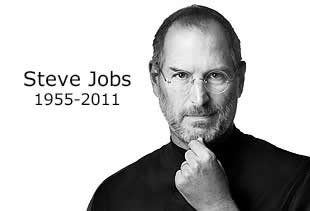
Steve Jobs RIP

***

What is really amazing about Apple is how underwhelming its valuation is today — it doesn’t require new black swans.

In an analysis we tried very hard to kill the company. We tanked its gross margins to a Nokia-like 28 percent and still got $30 of earnings per share (the Street’s estimate for 2013 is $45), which puts its valuation, excluding $145 a share in cash, at 10 times earnings. We killed its sales growth to 2 percent a year for ten years, discounted its cash flows and still got a $500 stock.

There is a lot of value in Apple’s enormous ability to generate cash. The company is sitting on an ever-growing pile of it — $137 billion, about one third of its market cap. Over the past 12 months, despite spending $10 billion on capital expenditures, Apple still generated $46 billion of free cash flows. If it continues to generate free cash flows at a similar rate (I am assuming no growth), by the end of 2015 it will have stockpiled $300 of cash per share. At today’s price [2013] it will be commanding a price-earnings ratio (if you exclude cash) of 4.

Of course, the market is not giving Apple credit for its cash, but I think the market is wrong. Unlike Microsoft, which does something dumber than dumb with its cash every other year, Apple has a pristine capital allocation track record. It has not made any foolish acquisitions — or, indeed, any acquisitions of size. Other than buying an Eastern European country and renaming it i-Country, Apple will not be able to acquire a technologically related company of size, nor will it want or need to. The cash it accumulates will end up in shareholders’ hands, either through dividends or share buybacks.

What is Apple worth?

After the financial acrobatics I’ve done trying to murder the valuation of Apple, it is easier to say that it is worth more than $450 than to pinpoint a price target. When I use a significantly decelerating sales growth rate and normalize margins (reducing them, but not as low as Nokia’s current margins), I get a price of about $600 to $800 a share.

Growth managers don’t want Apple to pay a large dividend, as though that would somehow transform this growing teenager into a mature adult. But I have news for them: Apple already is a mature adult. Second, when your return on capital is pushing infinity (as Apple’s is), you don’t need to retain much cash to grow. Two thirds of Apple’s cash is offshore, but that doesn’t make it worthless; it just makes it worth less — only $65 billion, maybe, not $97 billion, once the company pays its tax bill to Uncle Sam.

***
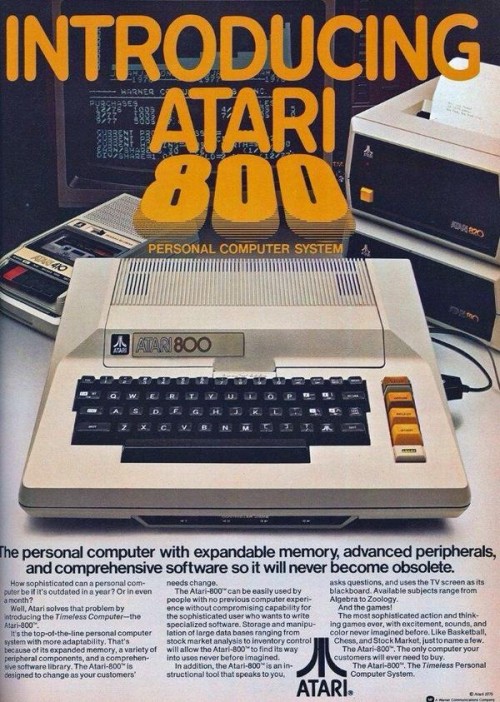
ImageProxy

***

Assessment

In the short term none of the things I am writing about here will matter. Remember, “Everyone knows Apple is going to $300,” as a client recently e-mailed me, as everyone knew it was going to a $1,000 a few months ago when Apple’s stock was trading at $700. The company’s stock will trade on emotion, fundamentals will not matter, and growth managers will likely rotate out of Apple, because once the stock declined from $700 to $450, the label on it changed from “growth” to “value.”

But ultimately, fundamentals will prevail. Like the laws of physics, they can only be suspended for so long. And so, do these retrospective thoughts on Apple hint of future prospects?

More: Should You Buy Apple Stock Ahead of Its September Event

ABOUT

Vitaliy N. Katsenelson CFA is Chief Investment Officer at Investment Management Associates in Denver, Colo. He is the author of Active Value Investing (Wiley 2007) and The Little Book of Sideways Markets (Wiley, 2010).  His books were translated into eight languages.  Forbes Magazine called him “The new Benjamin Graham”.  

Conclusion

Your thoughts and comments on this ME-P are appreciated. Feel free to review our top-left column, and top-right sidebar materials, links, URLs and related websites, too. Then, subscribe to the ME-P. It is fast, free and secure.

Speaker: If you need a moderator or speaker for an upcoming event, Dr. David E. Marcinko; MBA – Publisher-in-Chief of the Medical Executive-Post – is available for seminar or speaking engagements. Contact: MarcinkoAdvisors@msn.com

OUR OTHER PRINT BOOKS AND RELATED INFORMATION SOURCES:

Comprehensive Financial Planning Strategies for Doctors and Advisors: Best Practices from Leading Consultants and Certified Medical Planners(TM)

Front Matter with Foreword by Jason Dyken MD MBA

logos

“BY DOCTORS – FOR DOCTORS – PEER REVIEWED – FIDUCIARY FOCUSED”

 ***

Buying Warren Buffett, Richard Branson and Steve Jobs at a Discount

 Join Our Mailing List

On capital allocators with impressive records

vitaly

By Vitaliy Katsenelson CFA

What would you get if you crossed Warren Buffett, Richard Branson and Steve Jobs? Answer: Masayoshi Son, the Korean-Japanese, University of California, Berkeley–educated founder of one of Japan’s most successful companies, SoftBank Corp.

***

interview

[A capital allocator]

***

Masayoshi Son

Just like Buffett, Son is a tremendous capital allocator with a very impressive record: Over the past nine and a half years, SoftBank’s investments have had a 45 percent annualized rate of return. A big chunk of this success can be attributed to one stock: Chinese e-commerce giant Alibaba, a $100 million investment SoftBank made in 2001 that is worth about $80 billion today. Though you may put Alibaba in the (positive) black swan column, Son’s success as an investor goes well beyond it — the list of his investments that have brought multibagger returns is very long. Today, at the tender age of 57, he is the richest man in Japan, and SoftBank, which he started in 1981 and owns 19 percent of, has a market capitalization of $72 billion.

Son, like Apple co-founder Jobs, is blessed with clairvoyance. He saw the Internet as an amazing, transformative force well before that fact became common knowledge. In 1995 he invested in a then-tiny company, Yahoo!, earning six times his investment. But he didn’t stop there; he created a joint venture with Yahoo! by forming Yahoo! Japan, putting about $70 million in a company that today is worth around $8 billion. (Yahoo! Japan is a publicly traded company listed in Japan).

What is shocking is that Son saw that the iPhone would revolutionize the telecom industry before Apple announced it or even invented it. See for yourself in this excerpt from an interview with Charlie Rose, where Son describes his conversation with Jobs in 2005 — two years before the iPhone was introduced:

“I brought my little drawing of [an] iPod with mobile capabilities. I gave [Jobs] my drawing, and Steve says, “Masa, you don’t give me your drawing. I have my own.” I said, “Well, I don’t need to give you my dirty paper, but once you have your product, give me for Japan.” He said, “Well, Masa, you are crazy. We have not talked to anybody, but you came to see me as the first guy. I give to you.”

Richard Branson

Similar to Virgin Group founder Branson, who had the testicular fortitude to create Virgin Atlantic Airways in the U.K. to compete against the state-owned behemoth British Airways, Son started two telecom businesses in Japan — one fixed-line and one wireless — with which he challenged the state-owned NTT monopoly. In 2001, disgusted with Japan’s horrible broadband speeds, he convinced the government to deregulate the telecom industry. When no other companies emerged to compete with NTT (I don’t blame them, really), Son took it upon himself to start a fixed-line competitor, Yahoo! BB (Broadband). Thanks to him, now Japan enjoys one of the highest broadband speeds in the world and Yahoo! BB is a leading fixed-line telecom.

It took Son four years to bring his broadband business to profitability. This is how the Wall Street Journal described that period in 2012:

“The problems at the broadband unit contributed to losses for the entire company for four consecutive years. Mr. Son set up an office in a meeting room 13 floors below his executive suite to be closer to the problem unit. He slept in the office at times and routinely summoned executives and partners for meetings late at night. . . . He worked out of the meeting room for 18 months, until the broadband unit had cut enough costs and moved enough customers to more lucrative plans.”

A normal person might have taken a break and enjoyed the fruits of his labor at that point, but not Son. Just as his broadband business went in the black, Son executed on his vision for the Internet and bought Vodafone K.K., a struggling, poorly run wireless telecom in Japan. SoftBank paid about $15 billion, borrowing $10 billion.

Fast-forward eight years, and SoftBank Mobile is an incredible success. It is one of the largest mobile companies in Japan, even faster growing than NTT Docomo (a subsidiary of almighty NTT). Today it spits out about $5 billion in operating profits annually — not bad for a $5 billion equity investment.

Like Branson, Son is a serial entrepreneur who has started multiple, often unrelated businesses and has succeeded a lot more than he has failed. SoftBank has built a robot named Pepper that can read human emotions; and after the earthquake that crippled Japanese power generation, Son started a renewable-energy business.

Son has a very ambitious goal for SoftBank: He wants it to become one of the largest companies in the world. Unlike the average Wall Street CEO, whose time horizon has shrunk to quarters, Son thinks in centuries. I kid you not — he has a 300-year vision for SoftBank. Practically speaking, 300 years is a bit challenging even for long-term investors, but at the core of his vision Son is building a company that he wants to last forever (or 300 years, whichever comes first).

He views SoftBank as an Internet company and is committed to investing in Internet companies in China and India. He thinks that as these countries develop, their GDPs will eclipse those of the U.S. and Europe.

Jobs, Branson, Buffett — it is very rare for somebody to embody strengths of all three of these giants. None of them has the qualities of the other two. Buffett is not a visionary, nor does he want to run the companies in his portfolio. Branson is not a visionary — in his book Losing My Virginity he admits he did not see analog music (CDs) being destroyed by digital music (iTunes) and demolishing his music store business. Jobs probably came the closest, as both a visionary and a business builder, but he was not known for his investing acumen.

You’d think SoftBank would be richly priced to reflect Son’s premium. Wrong! Today its stock is trading at about a 40 percent discount to the fair value of its known assets (SoftBank has about 1,300 investments, many of them not consolidated on its financials).This discount is not rational, but maybe the market thinks Alibaba is overvalued, or it expects the Japanese yen to continue its decline (I would not disagree), and thus wholly owned Japanese telecom businesses are going to be worth less in U.S. dollars. Or maybe SoftBank’s Sprint investment is not going to work out. Oh, I forgot to mention that one — let’s address it next.

SoftBank’s Japanese telecom businesses generate about $6 billion of very stable operating income, but there is little room for growth in Japan. Unable to find anything telecom to buy in Asia, in 2013 the company took advantage of the strong yen and bought 80 percent of Sprint for $21 billion, or $7.65 a share. Sprint is the No. 3 mobile company in the U.S., a market dominated by AT&T and Verizon, which together account for about 75 percent of wireless revenue and more than 100 percent of wireless profits (T-Mobile and Sprint are losing money). If I knew no more than that, I’d say Sprint’s chances of success in the U.S. are slim — after all, it is competing against two very profitable giants.

But I would have said the same thing about SoftBank’s adventure into fixed-line and then wireless in Japan, and I would have been dead wrong. Admittedly, Sprint’s turnaround will not be easy and will be far from linear, and its $30 billion debt load will not help. SoftBank is looking to apply the tremendous experience it gained through a lot of hard work in turning an ailing Vodafone K.K. into one of the best wireless companies in the world.

However, this time around SoftBank is even better equipped to fight its competition: It has lots of experience with 2.5 GHz spectrum in Japan, where its network is several times faster than Verizon’s and AT&T’s networks in the U.S. SoftBank brought 200 engineers from Japan to help Sprint design its new network; the two companies combined have tremendous buying power in equipment, second only to China Mobile. In fact, suppliers Alcatel-Lucent, Nokia and Samsung just agreed to provide Sprint with $1.8 billion in vendor financing. But most important, SoftBank has already had success with a telecom turnaround. It is following the same road map with Sprint that it used in Japan with Vodafone K.K.: improve the network, cut costs, provide better customer service and top all that with cutthroat price reductions.

***

investmentcenter5

***

Sprint News

Over the past several months, the news flow from Sprint has not been great: It cut guidance, and its stock declined to $4 a share. This may explain why SoftBank’s stock is down; however, even if Sprint meets its maker, the impact on SoftBank should be just $5 a share. Sprint’s $30 billion debt is nonrecourse to SoftBank. Even at current market values, SoftBank’s equity stake in Sprint is worth only $12 billion, while its 32 percent stake in Alibaba is worth $80 billion, and its Japanese telecom businesses are worth about $50 billion (at five times earnings before depreciation and amortization). SoftBank’s stake in Yahoo! Japan is worth north of $8 billion.

Softbank

As part of our investment analysis, we tried to hypothetically kill SoftBank — smother it with a pillow — but we simply could not. We assumed that the yen will depreciate against the dollar to 180 from 120 today, slashing the value of Japanese businesses by a third. Alibaba stock is trading at around $100, about 30 times 2015 earnings forecasts; we took the earnings multiple down to 20 times, pricing the stock at $60. We even assumed SoftBank will have to pay capital gains taxes on selling Alibaba. We halved the price of Sprint’s stock. However, even in this fairly grim scenario we could not get SoftBank’s stock to decline much below its current price of $30. In the worst case we are paying fair value for SoftBank’s assets and get Son’s magic for free. This places no value on his 1,300 other investments, either. Sprint may, by the way, actually work out to be a tremendous success for SoftBank.

There are many ways to look at SoftBank. You can think of it as buying a stock at a roughly 50 percent discount to the market value of its assets or as a way to buy Alibaba at less than half its current price. Alibaba is a great play on China — not the China that builds ghost towns and bridges to nowhere but the Chinese consumer, and not just the Chinese consumer but the Chinese consumer who is spending more and more money shopping online. Alibaba is synonymous with Chinese online shopping, whose growth may accelerate with higher smartphone penetration and, just as important, the ongoing rollout of a fast wireless LTE network.

I’d be remiss if I did not discuss an important asterisk in the ownership of Alibaba. Its shares listed on the NYSE and owned by SoftBank don’t have an economic interest in Alibaba, although, through a stake in a Cayman Islands entity, they have contractual rights to profits from Alibaba China. The latter is owned and controlled by Jack Ma, Alibaba’s founder and CEO. This structure is not a by-product of Ma’s evil intent to steal Alibaba from gullible investors but rather is forced by Chinese law that prohibits foreign ownership in certain industries. There is a risk that the Chinese government might find this structure illegal, but at Alibaba’s size — $240 billion — the company is simply too big to be messed with. China’s economy would pay a huge price if its second-largest public company just disappeared due to a legal technicality. This would also turn into an international public relations nightmare for China, not only with the U.S. but with Japan as well. It would make Ma richer at the expense of U.S. shareholders but also at the expense of SoftBank and Japan’s richest man, Son.

(Those who have a problem with Ma maintaining complete operational control of Alibaba should recall that the phenomenon of founder as benevolent dictator is nothing new — just look at Google. In fact, I’d argue that this control has allowed Ma to sustain his long-term time horizon and this is what has helped Alibaba drive eBay out of China; but that’s a discussion for another time).

Assessment

You can also look at SoftBank as a vehicle through which to invest in emerging markets — not just China but India as well. It is almost like hiring the combination of Buffett, Branson and Jobs to go to work for you investing in markets whose economies in a few decades will surpass that of the U.S., while also investing in a segment of the economy — the Internet — that is growing at a much faster rate than the overall economy. And yes, of course, you have Masayoshi Son, the super-Buffett-Branson-Jobs fusion, making these investments for you. With SoftBank at this valuation, you can forget about your emerging-markets mutual fund.

More: Ode to Steve Jobs

ABOUT

Vitaliy N. Katsenelson, CFA, is Chief Investment Officer at Investment Management Associates in Denver, Colo.

Conclusion

Your thoughts and comments on this ME-P are appreciated. Feel free to review our top-left column, and top-right sidebar materials, links, URLs and related websites, too. Then, subscribe to the ME-P. It is fast, free and secure.

Speaker: If you need a moderator or speaker for an upcoming event, Dr. David E. Marcinko; MBA – Publisher-in-Chief of the Medical Executive-Post – is available for seminar or speaking engagements. Contact: MarcinkoAdvisors@msn.com

OUR OTHER PRINT BOOKS AND RELATED INFORMATION SOURCES:

Comprehensive Financial Planning Strategies for Doctors and Advisors: Best Practices from Leading Consultants and Certified Medical Planners(TM)

Front Matter with Foreword by Jason Dyken MD MBA

logos

“BY DOCTORS – FOR DOCTORS – PEER REVIEWED – FIDUCIARY FOCUSED”

***

Doctors Going Granular on Investment Risk

Join Our Mailing List 

It is Not What You Think!

[By Lon Jefferies MBA CMP® CFP®]

Lon JefferiesA new logic has been surfacing amongst the top minds in the financial planning industry.

Many of my favorite financial authors – Warren Buffett, Josh Brown, Nick Murray, Howard Marks, and others – have proposed the need to redefine the word “risk.”

Risk” vs “Volatility”

Most investors and financial advisors tend to utilize the words “risk” and “volatility” interchangeably. We measure how risky a portfolio is by examining its potential downside performance.

For example, we review how much a similar portfolio lost during 2008 or when the tech bubble popped in 2000-2002. When doing this, we are really talking about volatility rather than risk. Volatility – usually measured by standard deviation – reflects how much a portfolio is likely to increase or decrease in value when the market as a whole fluctuates. Risk, however, is quite different.

Two Threats

Josh Brown characterizes risk as the possibility of two threats:

  1. The possibility of not having enough money to fund a specific goal, which includes the possibility of outliving your money
  2. The possibility of a permanent loss of capital.

Example:

In a dramatic example of how volatility is different from risk, consider a retiree with a $10 million portfolio who only spends $50,000 a year. Next, assume the investor experiences a two-year period in which during the first year his portfolio loses 50% of its value and in year two the portfolio earns a 100% return. Thus, after year one the portfolio would only be worth $5 million and after year two it would again be worth $10 million.

Clearly, this is a very volatile portfolio that is subject to a wide range of potential performance outcomes. However, is this portfolio truly risky to the investor? According to Mr. Brown’s first factor, the portfolio is not risky because the investor will have enough money to fund his $50k per year retirement regardless of whether his portfolio is valued at $10 million or $5 million. Additionally, the portfolio is also not risky according to the second factor in that the investor didn’t experience a permanent loss.

Investors tend to view stocks as risky assets because their returns have a large standard deviation (variation from a mean). Similarly, we tend to view money market equivalents such as CDs and savings accounts as very safe investments because their returns have less dispersion, and consequently, are more predictable.

However, rather than considering stocks to be risky and cash equivalents to be safe, it would be more accurate to consider stocks an investment with high volatility and cash to be a holding with low volatility.

***

hacker

***

What is the difference?

Suppose it is determined that you need an average rate of return of 6% over time to achieve your retirement goals. Historically, over a sufficiently significant period of time, stocks have returned an average of about 10% per year while cash equivalents have returned about 3% per year. Consequently, if these averages continue in the future, you actually have a very low chance of reaching your retirement goal of not outliving your money if you place money in the “safe” investment of a cash equivalent, while you would actually have a high probability of reaching your retirement goal if you place money in a more volatile basket of stocks.

By this metric, cash is actually the more risky investment because investing in it would increase the probability of outliving your funds. Meanwhile a basket of stocks, if given enough time to achieve its historically average rate of return, is actually the safer investment as it gives you a higher probability of not outliving your nest egg.  Thus, while a portfolio of stocks will almost certainly experience more short-term volatility, over an extended period of time it very well may be a safer investment for ensuring your retirement goals are met.

Further, Mr. Brown proposes that the muddying of definition between risk and volatility is something a portion of the financial service industry has done on purpose. Brown suggests that the easiest way to sell someone a product is to first convince them they have a need. If hedge fund managers, insurance agents, and annuity salesmen can make consumers believe that volatility is equal to risk, and that since their products minimize volatility they must also minimize risk, they can achieve more sales.

However, even if an annuity can eliminate downside volatility, if it limits potential return to an amount that is insufficient to achieve the investor’s long-term goals, the investment is still more risky than an investment with more short-term volatility but a higher probability of long-term success.

***

Bell Curve

***

Assessment

Next time the market goes through a correction, remember that the drop in your portfolio’s value is a reflection of the potential volatility your portfolio is capable of experiencing. Yet, recall that as long as you don’t sell your assets and suffer a permanent loss of your investment capital, you can allow the market time to recover and achieve its historical rate of return.

Doing so will ultimately make your investment strategy less risky than utilizing investment options that experience less volatility because it maximizes the probability you will eventually achieve your long-term financial goals.

More:

Conclusion

Your thoughts and comments on this ME-P are appreciated. Feel free to review our top-left column, and top-right sidebar materials, links, URLs and related websites, too. Then, subscribe to the ME-P. It is fast, free and secure.

Speaker: If you need a moderator or speaker for an upcoming event, Dr. David E. Marcinko; MBA – Publisher-in-Chief of the Medical Executive-Post – is available for seminar or speaking engagements. Contact: MarcinkoAdvisors@msn.com

OUR OTHER PRINT BOOKS AND RELATED INFORMATION SOURCES:

Risk Management, Liability Insurance, and Asset Protection Strategies for Doctors and Advisors: Best Practices from Leading Consultants and Certified Medical Planners™8Comprehensive Financial Planning Strategies for Doctors and Advisors: Best Practices from Leading Consultants and Certified Medical Planners™

This book was crafted in response to the frustration felt by doctors who dealt with top financial, brokerage, and accounting firms. These non-fiduciary behemoths often prescribed costly wholesale solutions that were applicable to all, but customized for few, despite ever-changing needs. It is a must-read to learn why brokerage sales pitches or Internet resources will never replace the knowledge and deep advice of a physician-focused financial advisor, medical consultant, or collegial Certified Medical Planner™ financial professional.

Parin Khotari MBA [Whitman School of Management, Syracuse University, New York]

http://www.CertifiedMedicalPlanner.org

Enter the CMPs