PHYSICIAN INVESTING: Understanding Risk and Return

By Dr. David Edward Marcinko; MBA MEd CMP™

SPONSOR: http://www.MarcinkoAssociates.com

***

***

Investment Risk and Return

One of the major concepts that most investors should be aware of is the relationship between the risk and the return of a financial asset. It is common knowledge that there is a positive relationship between the risk and the expected return of a financial asset. In other words, when the risk of an asset increases, so does its expected return. What this means is that if an investor is taking on more risk, he/she is expected to be compensated for doing so with a higher return. Similarly, if the investor wants to boost the expected return of the investment, he/she needs to be prepared to take on more risk.

PORTFOLIO ALPHA: https://medicalexecutivepost.com/2025/07/02/managing-for-endowment-portfolio-alpha/

Harry Max Markowitz (August 24, 1927 – June 22, 2023) was an American economist who was a professor of finance at the Rady School of Management at UCSD. He is best known for his pioneering work in modern portfolio theory, studying the effects of asset risk, return, correlation and diversification on probable investment portfolio returns.

One important thing to understand about Modern Portfolio Theory (MPT) is Markowitz’s calculations treat volatility and risk as the same thing. In layman’s terms, Dr. Markowitz uses risk as a measurement of the likelihood that an investment will go up and down in value – and how often and by how much. The theory assumes that investors prefer to minimize risk. The theory assumes that given the choice of two portfolios with equal returns, investors will choose the one with the least risk. If investors take on additional risk, they will expect to be compensated with additional return.

MARKOWITZ: https://medicalexecutivepost.com/2011/01/19/the-living-legacy-of-dr-harry-markowitz/

According to MPT, risk comes in two major categories:

  • Systematic risk – the possibility that the entire market and economy will show losses negatively affecting nearly every investment; also called market risk
  • Unsystematic risk – the possibility that an investment or a category of investments will decline in value without having a major impact upon the entire market.

***

***

Diversification generally does not protect against systematic risk because a drop in the entire market and economy typically affects all investments. However, diversification is designed to decrease unsystematic risk. Since unsystematic risk is the possibility that one single thing will decline in value, having a portfolio invested in a variety of stocks, a variety of asset classes and a variety of sectors will lower the risk of losing much money when one investment type declines in value. Thus putting together assets with low correlations can reduce unsystematic risks.

DIVERSIFICATION: https://medicalexecutivepost.com/2024/08/13/the-negative-short-term-implications-of-diversification/

a.   Understanding the Risk

Although broad risks can be quickly summarized as “the failure to achieve spending and inflation-adjusted growth goals,” individual assets may face any number of other subsidiary risks:

  • Call risk – The risk, faced by a holder of a callable bond that a bond issuer will take advantage of the callable bond feature and redeem the issue prior to maturity. This means the bondholder will receive payment on the value of the bond and, in most cases, will be reinvesting in a less favorable environment (one with a lower interest rate)
  • Capital risk – The risk an investor faces that he or she may lose all or part of the principal amount invested.
  • Commodity risk – The threat that a change in the price of a production input will adversely impact a producer who uses that input.
  • Company risk – The risk that certain factors affecting a specific company may cause its stock to change in price in a different way from stocks as a whole.
  • Concentration risk – Probability of loss arising from heavily lopsided exposure to a particular group of counterparties
  • Counterparty risk – The risk that the other party to an agreement will default.
  • Credit risk – The risk of loss of principal or loss of a financial reward stemming from a borrower’s failure to repay a loan or otherwise meet a contractual obligation.
  • Currency risk – A form of risk that arises from the change in price of one currency against another.
  • Deflation risk – A general decline in prices, often caused by a reduction in the supply of money or credit.
  • Economic risk – the likelihood that an investment will be affected by macroeconomic conditions such as government regulation, exchange rates, or political stability.
  • Hedging risk – Making an investment to reduce the risk of adverse price movements in an asset.
  • Inflation risk – The uncertainty over the future real value (after inflation) of your investment.
  • Interest rate risk – Risk to the earnings or market value of a portfolio due to uncertain future interest rates.
  • Legal risk – risk from uncertainty due to legal actions or uncertainty in the applicability or interpretation of contracts, laws or regulations.
  • Liquidity risk – The risks stemming from the lack of marketability of an investment that cannot be bought or sold quickly enough to prevent or minimize a loss.

COMMENTS APPRECIATED

EDUCATION: Books

SPEAKING: Dr. Marcinko will be speaking and lecturing, signing and opining, teaching and preaching, storming and performing at many locations throughout the USA this year! His tour of witty and serious pontifications may be scheduled on a planned or ad-hoc basis; for public or private meetings and gatherings; formally, informally, or over lunch or dinner. All medical societies, financial advisory firms or Broker-Dealers are encouraged to submit an RFP for speaking engagements: CONTACT: Ann Miller RN MHA at MarcinkoAdvisors@outlook.com -OR- http://www.MarcinkoAssociates.com

Like and Subscribe

***

***

DAILY UPDATE: VA EHR Snafu and Stock Market Volatility

MEDICAL EXECUTIVE-POST TODAY’S NEWSLETTER BRIEFING

***

Essays, Opinions and Curated News in Health Economics, Investing, Business, Management and Financial Planning for Physician Entrepreneurs and their Savvy Advisors and Consultants

Serving Almost One Million Doctors, Financial Advisors and Medical Management Consultants Daily

A Partner of the Institute of Medical Business Advisors , Inc.

http://www.MedicalBusinessAdvisors.com

SPONSORED BY: Marcinko & Associates, Inc.

***

http://www.MarcinkoAssociates.com

Daily Update Provided By Staff Reporters Since 2007.
How May We Serve You?
© Copyright Institute of Medical Business Advisors, Inc. All rights reserved. 2025

REFER A COLLEAGUE: MarcinkoAdvisors@outlook.com

SPONSORSHIPS AVAILABLE: https://medicalexecutivepost.com/sponsors/

ADVERTISE ON THE ME-P: https://tinyurl.com/ytb5955z

Your Referral Count -0-

CITE: https://www.r2library.com/Resource

e Department of Veterans Affairs announced plans last week to accelerate the rollout of its embattled electronic health records system. Lawmakers, meanwhile, continue to call for oversight despite concerns over the future of the modernization program. The VA added nine new medical facilities in Ohio, Kentucky, Indiana, and Alaska to the deployment schedule, along with four sites in Michigan that will launch in 2026 after the program expansion has largely been on hold since April 2023, when the agency acknowledged glitches in the system had contributed to at least four veterans’ deaths and “catastrophic harm” to others.

CITE: https://tinyurl.com/2h47urt5

After a roller coaster day, the Dow closed lower by 349 points, or 0.91%. The broader S&P 500 fell 0.23%. The NASDAQ Composite was 0.1% higher after fluctuating between gains and losses. Wall Street’s fear gauge, the CBOE Volatility Index, or VIX, on Monday closed at the highest level since the Covid pandemic as investors fretted over the market’s next move. The VIX surpassed an intraday level of 50 points midday Monday, a rare level associated with extreme volatility.

CITE: https://tinyurl.com/tj8smmes

Visualize: How private equity tangled banks in a web of debt, from the Financial Times.

COMMENTS APPRECIATED

PLEASE SUBSCRIBE: MarcinkoAdvisors@outlook.com

Thank You

***

***

***

***

EDUCATIONAL TEXTBOOKS: https://tinyurl.com/4zdxuuwf

***

HFR INVESTMENTS: Two Credit Indices

By Staff Reporters

SPONSOR: http://www.MarcinkoAssociates.com

***

***

HFRI Fund of Funds Composite Index invests with multiple managers through funds or managed accounts. The strategy designs a diversified portfolio of managers with the objective of significantly lowering the risk (volatility) of investing with an individual manager. The Fund of Funds manager may allocate funds to numerous managers within a single strategy, or with numerous managers in multiple strategies. The investor has the advantage of diversification among managers and styles with significantly less capital than investing with separate managers. The HFRI Fund of Funds Index is not included in the HFRI Fund Weighted Composite Index.

HFRI Fund Weighted Composite Index is a global, equal-weighted index of over 2,000 single-manager funds that report to HFR Database. Constituent funds report monthly net of all fees performance in U.S. Dollar and have a minimum of $50 Million under management or a twelve (12) month track record of active performance. The HFRI Fund Weighted Composite Index does not include Funds of Hedge Funds.

COMMENTS APPRECIATED

Please subscribe and refer!

***

***

DAILY UPDATE: Stocks Down Again but Pickleball is Up!

By Staff Reporters

***

***

The NASDAQ and S&P 500 fell to two-week lows, adding to last week’s declines, as investors continued to digest hawkish Fed comments and recession risks.

Here is where the major benchmarks ended today:

  • The S&P 500 Index was down 19.51 points (0.5%) at 4,328.82; the Dow Jones Industrial Average (DJIA) was down 12.72 points at 33, 714.71; the NASDAQ Composite was down 156.74 points (1.2%) at 13,335.78.
  • The 10-year Treasury note yield (TNX) was down about 2 basis points at 3.714%.
  • CBOE’s Volatility Index (VIX) was up 0.77 at 14.21.

***

UnitedHealth Group related more people were using the healthcare system (bad news for insurers), and no one exactly knew why. Then yesterday, the sleuths at UBS published a note with a clever hypothesis: Rising healthcare utilization rates could be fueled by…pickleball injuries.

UBS calculated that the game’s surging popularity—among seniors, in particular—will contribute $377 million in medical costs this year for procedures like hip replacements and knee surgeries, Bloomberg reported.

***

ORDER: https://www.routledge.com/Risk-Management-Liability-Insurance-and-Asset-Protection-Strategies-for/Marcinko-Hetico/p/book/9781498725989

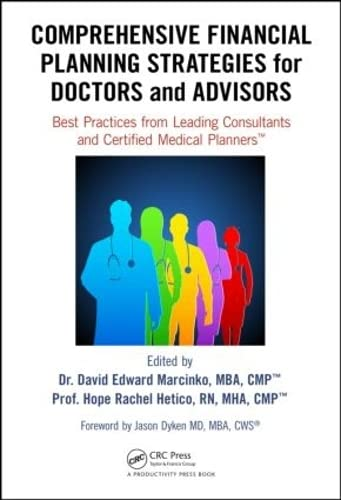
ORDER: https://www.routledge.com/Comprehensive-Financial-Planning-Strategies-for-Doctors-and-Advisors-Best/Marcinko-Hetico/p/book/9781482240283

***

COMMENTS APPRECIATED

Thank You

***

UPDATE: The Domestic GDP, Bond Yield Surge and Stock Market Volatility [VIX]

***

***

By Staff Reporters

***

The U.S. economy reversed course in this year’s first quarter, when it shrank at an annual rate of 1.4% after posting full-year growth of 5.7% in 2021. While many economists believe the first-quarter setback was temporary, it marked the worst quarterly GDP result since the second quarter of 2020, when the pandemic triggered a brief recession.

And, despite a relatively flat result in the latest week, the yield of the 10-year U.S. Treasury bond jumped in March and April, climbing from 1.83% at the start of that two-month period to around 2.89% on Friday. Rising interest rates have eroded bond prices, pushing yields higher.

Finally, the stock market’s relative calm in the first half of April was fleeting, as the past two weeks produced a 47% jump in an index that measures investors’ expectations of short-term volatility. The CBOE Volatility Indexꟷalso known as the VIXꟷrose to an index level of 33.4 on Friday, up from 22.7 on April 15.

CITE: https://www.r2library.com/Resource/Title/082610254

***

COMMENTS APPRECIATED

Thank You

***

***

#5: The Six Commandments of Value Investing

***

***

EDITOR’S NOTE: Although it has been some time since speaking live with busy colleague Vitaliy Katsenelson CFA, I review his internet material frequently and appreciate this ME-P series contribution. I encourage all ME-P readers to do the same and consider his value investing insights carefully.

By Vitaliy Katsenelson, CFA

***

5. Risk is a permanent loss of capital (not volatility)

Conventional wisdom views volatility as risk. Not value investors. We befriend volatility, embrace it, and try to take advantage of it. For someone who has not researched a company, it is not readily apparent whether a decline in shares is temporary or permanent. After all, if you don’t know what the company is worth, the quoted price becomes the quotient of intrinsic value. If you do know what the company is worth, then the change in intrinsic value is all that is going to matter. The price quoted on the exchange will be your friend, allowing you to take advantage of the difference between intrinsic value and quoted stock price. If the quoted stock price is significantly cheaper than your estimated intrinsic value, you buy it (or buy more of it if you already own it). If the opposite is true, you sell it.

What is a company worth?

Determining the intrinsic value requires a combination of art and science, in that order – it is not quoted on the exchanges. We go about this the same way a businessman would figure how much he’d want to pay for a gas station or a McDonald’s franchise. Analysis of each company will be different, but at the core we estimate the cash flows the business will produce for shareholders in the long run (at least ten years) and what the business will be worth then (based on our estimate of its earnings power at the time). The combination of the two provides us an approximation of what the business is worth now. To further embed “the right” type of risk analysis into our investment operating system, we build financial models. Models help us to understand businesses better and provide insights as to which metrics matter and which don’t. They allow us to stress test the business: We don’t just look at the upside but spend a lot of times looking at the downside – we try to “kill” the business. We look at known risks and try to imagine unknown ones; we try to quantify their impact on cash flows. This “killing” helps to us understand how much of a discount (margin of safety) we should demand to what the business is worth. By applying this discount to fair value, we arrive at a buy price. For every stock we buy we probably look at a few dozen (at least).

For instance, if we are looking at a company that is selling products or services to consumers, we’ll be focusing on customer-acquisition costs. We try to drill down to the essential operating metrics of each company. If it’s a convenience store retailer, we’ll look into gallons of gas sold and profit per gallon. If it’s an oil driller, we’ll look at utilization rates, rigs in service, average revenue per rig per day. If it’s a pharmaceuticals company, we’ll have revenue lines for each major drug it sells and model the company for the eventuality that patents will run out. (Revenues usually decline 80-90% when a patent expires).

These models help us to understand the economics of the business. We usually build two type of models. We start with what we call the “tablecloth” model. This is a very detailed, in-depth model that zeros in on different aspects of the business. But the risk we run with a tablecloth model is that we get lost in the trees and forget about the forest.

This brings us to our “napkin” model. It’s a much simpler and smaller model that focuses only on the essentials of the business. It is easier to build the tablecloth model than the “napkin.” If we can build a napkin model, that means we understand the drivers of the business – we understand what matters. Models are important because they help us remain rational. It is only the matter of time before a stock we own will “blow up” (or, in layman’s terms, decline).

In this type of analysis, what happens this month, this quarter, or even this year is only important in the context of the long run – unless the company’s good or bad earnings report in any quarter changes our assumptions on the company’s long-term cash flows. If you methodically focus on what the company is worth and if your Total IQ is maximized, then price fluctuations are just noise. Volatility becomes your friend because you can rationally take advantage of it. It’s an under-appreciated gift from Mr. Market.

Side Note: As an advisor, I feel it is one of my great responsibilities to be an honest and clear communicator. There is an asymmetry of information between us and our clients. We have invested weeks and months of research into the analysis of each stock; therefore, we have a good idea what each company is worth. Our clients have not done this research, and they should not have to – that is what they hired us to do.This is why we pour our heart and soul into our quarterly letters – we want to close this informational gap and so we try as hard as we can to explain what we think the companies in our portfolio are worth. Our letters are often 15-20 pages long. 

***
COMMENTS APPRECIATED

Thank You

Subscribe to the Medical Executive-Post

***

****