BOARD CERTIFICATION EXAM STUDY GUIDES Lower Extremity Trauma
[Click on Image to Enlarge]
ME-P Free Advertising Consultation
The “Medical Executive-Post” is about connecting doctors, health care executives and modern consulting advisors. It’s about free-enterprise, business, practice, policy, personal financial planning and wealth building capitalism. We have an attitude that’s independent, outspoken, intelligent and so Next-Gen; often edgy, usually controversial. And, our consultants “got fly”, just like U. Read it! Write it! Post it! “Medical Executive-Post”. Call or email us for your FREE advertising and sales consultation TODAY [678.779.8597] Email: MarcinkoAdvisors@outlook.com
Medical & Surgical e-Consent Forms
ePodiatryConsentForms.com
iMBA Inc., OFFICES
Suite #5901 Wilbanks Drive, Norcross, Georgia, 30092 USA [1.678.779.8597]. Our location is real and we are now virtually enabled to assist new long distance clients and out-of-town colleagues.
ME-P Publishing
SEEKING INDUSTRY INFO PARTNERS?
If you want the opportunity to work with leading health care industry insiders, innovators and watchers, the “ME-P” may be right for you? We are unbiased and operate at the nexus of theoretical and applied R&D. Collaborate with us and you’ll put your brand in front of a smart & tightly focused demographic; one at the forefront of our emerging healthcare free marketplace of informed and professional “movers and shakers.” Our Ad Rate Card is available upon request [678-779-8597].
Trump says pharma tariffs could be as high as 250%
The president revealed that he plans to formally announce tariffs on the pharmaceutical industry “within the next week or so” in an attempt to force drug manufacturing to the US, he told CNBC several days ago.
Posted on August 6, 2025 by Dr. David Edward Marcinko MBA MEd CMP™
By A.I and Staff Reporters
***
***
Illinois just became the first US state to regulate AI mental health services this week when Gov. JB Pritzker signed a law banning AI therapy.
The law forbids chatbots from acting as therapists and limits how human mental health professionals can use AI to aid their work. Companies face up to $10,000 in fines if they violate the law, according to Morning Brew.
The move comes as ChatGPT users—particularly younger ones—increasingly turn to the app for what amounts to free therapy. OpenAI recently made updates to its model to encourage users to use ChatGPT in a healthier way.
Posted on July 4, 2025 by Dr. David Edward Marcinko MBA MEd CMP™
MEDICAL EXECUTIVE-POST–TODAY’SNEWSLETTERBRIEFING
***
Essays, Opinions and Curated News in Health Economics, Investing, Business, Management and Financial Planning for Physician Entrepreneurs and their Savvy Advisors and Consultants
“Serving Almost One Million Doctors, Financial Advisors and Medical Management Consultants Daily“
A Partner of the Institute of Medical Business Advisors , Inc.
OpenAI is giving its employees a mandatory week long vacation to stave off a poaching spree launched by Meta.
Microsoft announced another round of layoffs—its largest in years—expected to impact thousands of workers across Xbox and other divisions, including 830 from its Redmond, Washington, HQ.
The S&P 500 and NASDAQ Composite tallied fresh record closing highs on Thursday, buoyed by a stronger-than-expected jobs report that helped dampen expectations for a Federal Reserve interest-rate cut in July. But after lagging their trendier rivals earlier in the year, the Russell 2000 and Dow Jones Industrial Average are finally starting to play catch up. On Thursday, the Russell 2000 turned positive for 2025 for the first time since February, as a rally that started in June has accelerated in July.
Many investors have been waiting patiently for small-cap stocks to break out. But aside from a few false starts over the past two years, they have mostly continued to lag their large-cap rivals. However, some investors believe things could finally be changing.
A team of strategists at Barclays pointed out on Wednesday that a proposed increase to interest-expense tax deductions in President Trump’s budget bill could boost small-cap companies’ earnings by double digits, due to their higher interest burdens. “This market broadening out is a heathy sign,” said Craig Johnson, chief market technician at Piper Sandler, during an interview with MarketWatch on Thursday. More small-cap participation inevitably means investors are developing more of a taste for stocks beyond information technology, which powered much of the market’s gains in 2023 and 2024.
Posted on May 4, 2025 by Dr. David Edward Marcinko MBA MEd CMP™
By Staff Reporters
***
***
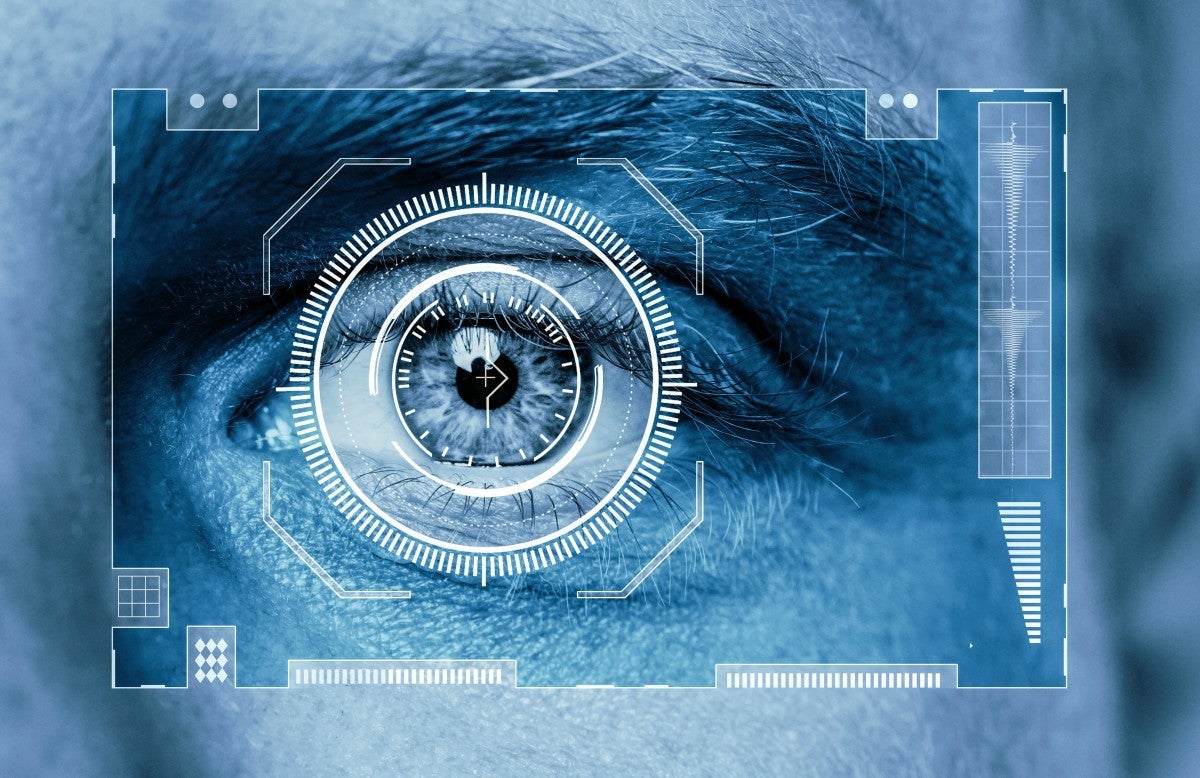
If getting answers from ChatGPT makes you feel dystopian, you may not want to hear about OpenAI CEO Sam Altman’s other co-founded venture, now rolling out stateside. It scans your eyeballs in exchange for cryptocurrency.
What in the Demolition Man? The device, which creates a unique user ID for your scan, is meant to address a problem that Altman had a hand in creating: how to verify identities and confirm humanity in a world full of artificial intelligence.
The project, called World (formerly Worldcoin), went live in other countries in 2023. Its US expansion, announced this week, featured retail outlets in five cities where you can get your eyes scanned:
Tools for Humanity, the company behind the orbs, says 12+ million people around the world have participated so far.
It claims to keep your data private, but authorities in more than a dozen places have suspended World’s operations or investigated its data practices, per the WSJ.
Posted on April 24, 2025 by Dr. David Edward Marcinko MBA MEd CMP™
MEDICAL EXECUTIVE-POST–TODAY’SNEWSLETTERBRIEFING
***
Essays, Opinions and Curated News in Health Economics, Investing, Business, Management and Financial Planning for Physician Entrepreneurs and their Savvy Advisors and Consultants
“Serving Almost One Million Doctors, Financial Advisors and Medical Management Consultants Daily“
A Partner of the Institute of Medical Business Advisors , Inc.
OpenAI would be open to buying Chrome if Google is forced by a federal court to sell the web browser, the company’s ChatGPT head said yesterday.
The FDA suspended milk quality tests in some dairy products due to reduced capacity stemming from federal workforce cuts, Reuters reported.
Roche, the Swiss pharmaceutical giant, is investing $50 billion in US manufacturing to circumvent President Trump’s tariffs, the company said yesterday.
Rite Aid is preparing to sell itself in pieces ahead of a possible second bankruptcy, Bloomberg reported.
Oklo gained 8.60% after OpenAI CEO Sam Altman announced he’s stepping down as chairman of the board of the nuclear power startup.
Duolingo popped 10.01% after Morgan Stanley initiated coverage of the language learning company, calling it a “best-in-class consumer internet asset.”
Cava climbed 6.29% due to an upgrade from analysts at Bernstein, who think the bowl slop stock will not only survive but thrive in an economic downturn.
Amphenol rose 8.21% thanks to impressive earnings for the high-speed cable company, coupled with a solid fiscal outlook.
Vertiv Holdings jumped 8.60% after the data center company posted an impressive quarterly profit and raised its fiscal forecast.
Stocks surged first thing this morning after President Trump said the media blew things out of proportion and that he has “no intention” of firing Jerome Powell. He also said he would be “very nice” to China in tariff negotiations.
Treasury Secretary Scott Bessent also did some damage control, touting the opportunity for a “big deal” between the US and China.
The combination sent a relief rally sweeping through markets, and while the euphoria faded by mid-afternoon, all three indexes ended the day in the green.
Gold fell and bitcoin rose as investors took on more risk (see below), while oil dropped on reports that OPEC+ may hike its crude output after its meeting next month.
Posted on April 11, 2025 by Dr. David Edward Marcinko MBA MEd CMP™
By Staff Reporters and Morning Brew
***
***
Microsoft is celebrating its 50th birthday this week looking like a formerly washed up A-lister who’s suddenly rebounded and getting Oscar noms again.
Ever since Bill Gates and Paul Allen huddled in a garage in 1975 to start a company that’d define the experience of sitting in front of a boxy white PC monitor, Microsoft has had an uneven run. But after years of getting roasted for Internet Explorer, it now seems to be back on top—even briefly beating Apple as the world’s most valuable public company last year.
The tech giant can not only boast bonanza earnings, it also feels like a purveyor of the next big thing again, leading in the AI race through its partnership with OpenAI.
Windows washed
In the 1990s, it felt like Microsoft’s computer geeks were the overlords of tech. Windows powered most PCs, Internet Explorer became the go-to browser, and proficiency in Office tools became standard resume skills. But in the following decade, the company slept on internet tech and smartphones, ceding ground to Apple, Alphabet, and Meta.
It responded by going into midlife crisis mode, aka blowing cash on a series of questionable acquisitions to stay hip. That…didn’t help. By the 2010s, only grandparents could be reached @hotmail.com, Windows phones were a rarity, and no one used Bing as a verb.
When Gates stepped away from running the company in 2000, its new CEO Steve Ballmer grew its revenue threefold by the end of his tenure in 2013. He spearheaded Microsoft’s foray into gaming with the Xbox console and started its blockbuster cloud computing product Azure. But Microsoft’s profit growth slowed dramatically thanks to a massive cash bleed from its shopping spree.
It dropped $6.3 billion on the owner of ad tech platforms aQuantive to compete with Google’s ad business in 2007, only to write it off as a dud five years later.
The company burned at least $8 billion trying to make Windows phones a bigger force by buying Nokia’s cellphone division in 2014.
Microsoft paid $8.5 billion for Skype in 2011, which must’ve made it extra painful to announce that it was sunsetting the video calling service this winter.
***
***
Cash-slinging comeback kid
When it blew out forty candles in 2015, the tech giant was looking past its prime. The stock was trading at around $35 a share, well below its $58 peak in 1999. Its net profit for the year was $12 billion. But investors who held on until now were rewarded with shares going for $374 on its birthday this week after the company reported a net profit of $88 billion in the last financial year.
Much of the revenue now comes from its Azure cloud computing business, which has been boosted by the booming AI industry ravenous for server power.
When Microsoft’s current CEO Satya Nadella stepped into the role in 2014, he doubled down on Azure to make Microsoft into a B2B behemoth selling computing power to tech companies.
It is now the world’s second largest cloud provider after Amazon Web Services, with a 21% market share, according to Synergy Research Group.
Microsoft also bought some businesses that didn’t fail, including LinkedIn—the thought leadership hub with a user base that has soared to 1 billion since the 2016 acquisition. It also owns GitHub, the leading code-sharing platform for software developers. And in its biggest purchase yet, it snagged gaming IP giant Activision Blizzard that owns Call of Duty and World of Warcraft for a whopping $68 billion in 2022, hoping to make itself a dominant caterer to the Xbox joystick-wielding crowd.
It’s an AI company now
The not-quite-acquisition that really got Microsoft its groundbreaker’s glitz back was pouring $13 billion into OpenAI.
Having gotten in on the ground floor of the AI boom, Microsoft is harnessing OpenAI’s models to power its CoPilot AI agent, which it embedded into its Office tools and Teams app. This pits it against other tech giants betting that AI agents automating tasks will be the biggest in-cubicle revolution since Excel.
A century ago, one fifth of the country was involved in agriculture. Due to the transformation of farming technology, only 1% of the country is now involved in farming, while our supermarkets are flooded with cheap food. I could be wrong, but I don’t see the 19% of the country who used to farm wandering around unemployed. They have retrained to do other things.
Innovation disrupts, but it also creates new jobs and improves the standard of living of society. A century ago, you could not have imagined most of the jobs we have today. I’m not just talking about social media celebrities; think about software engineers, data scientists, cybersecurity experts, etc. In fact, most white-collar jobs you see today did not exist 100 years ago. Yes, if you specialized in driving horse-powered carriages, you had to acquire new skills.
AI will displace many jobs, but it will also empower people with new productivity tools. Microsoft Excel replaced jobs that required people to add up rows of numbers with calculators, but it created many more. In the 1960s, corporations had departments filled with typists. A photocopier and then the personal computer put these hardworking folks out of a job, but they retrained to do other things.
If we have a victim mentality, AI will run us over; if we embrace it and adapt it to our lives, it may become our best friend to do the jobs we are doing, while our soon-to-be-unemployed coworkers complain about AI.
AI may have a similar impact on our lives as electricity did. Unless it becomes sentient and just like the Terminator, it turns against us (smarter people than me cannot agree on this, especially on a reasonable time frame, so I withhold my opinion on it), it will likely improve our lives significantly. One industry that immediately comes to mind is healthcare – we need major disruption in that sector.
AI may disrupt and completely reshuffle the power dynamics in some industries. Travel, for example, comes to mind; we may start looking for trips and booking tickets with the help of our AI assistant without going to the travel websites. Some companies will adapt and become winners, while others won’t and will become market-share donors.
As I am typing this, I realize (again, something I do daily now) how important management is. In our analysis, we should pay close attention to how companies are embracing AI. Are they giving it lip service or are they really adopting it and changing the business to take advantage of it?
ChatGPT is a statistical representation of things found on the web, which will increasingly include ITS OWN output (directly and secondhand). You post something picked up from it and it will use it to reinforce its own knowledge. Progressively a self-licking lollipop.
If you want to see ChatGPT creating art, for the fun of it, spend some time on myfavoriteclassical.com, where I post music articles. Every single picture there is created by AI. I love impressionist artists, and thus I love these little AI creations. However, if you zoom in closer, you’ll find violinists playing with toothpicks, pianists with three hands and cellists with multiple arms and legs.
This self-licking lollipop is impressive, but it still has a lot to learn. (By the way, if you have not signed up to receive my classical music-only articles, you have an opportunity to do it here).
Finally, the more we rely on AI and the more content it creates, the less creative it and we become.
I’ve received emails from readers asking my thoughts on DeepSeek. I need to start with two warnings. First, the usual one: I’m a generalist value investor, not a technology specialist (last week I was analyzing a bank and an oil company), so my knowledge of AI models is superficial. Second, and more unusually, we don’t have all the facts yet.
But this story could represent a major step change in both AI and geopolitics. Here’s what we know: DeepSeek—a year-old startup in China that spun out of a hedge fund—has built a fully functioning large language model (LLM) that performs on par with the latest AI models. This part of the story has been verified by the industry: DeepSeek has been tested and compared to other top LLMs. I’ve personally been playing with DeepSeek over the last few days, and the results it spit out were very similar to those produced by ChatGPT and Perplexity—only faster.
This alone is impressive, especially considering that just six months ago, Eric Schmidt (former Google CEO, and certainly no generalist) suggested China was two to three years behind the U.S. in AI. But here’s the truly shocking—and unverified—part: DeepSeek claims they trained their model for only $5.6 million, while U.S. counterparts have reportedly spent hundreds of millions or even billions of dollars. That’s 20 to 200 times less.
The implications, if true, are stunning. Despite the U.S. government’s export controls on AI chips to China, DeepSeek allegedly trained its LLM on older-generation chips, using a small fraction of the computing power and electricity that its Western competitors have. While everyone assumed that AI’s future lay in faster, better chips—where the only real choice is Nvidia or Nvidia—this previously unknown company has achieved near parity with its American counterparts swimming in cash and datacenters full of the latest Nvidia chips. DeepSeek (allegedly) had huge compute constraints and thus had to use different logic, becoming more efficient with subpar hardware to achieve a similar result. In other words, this scrappy startup, in its quest to create a better AI “brain,” used brains where everyone else was focusing on brawn—it literally taught AI how to reason.
Enter the Hot Dog Contest
Americans love (junk) food and sports, so let me explain with a food-sport analogy. Nathan’s Famous International Hot Dog Eating Contest claims 1916 as its origin (though this might be partly legend). By the 1970s, when official records began, winning competitors averaged around 15 hot dogs. That gradually increased to about 25—until Takeru Kobayashi arrived from Japan in 2001 and shattered the paradigm by consuming 50 hot dogs, something widely deemed impossible. His secret wasn’t a prodigious appetite but rather his unique methodology; He separated hot dogs from buns and dunked the buns in water, completely reimagining the approach.
Then a few years later came Joey Chestnut, who built on Kobayashi’s innovation to push the record well beyond 70 hot dogs and up to 83. Once Kobayashi broke the paradigm, the perceived limits vanished, forcing everyone to rethink their methods. Joey Chestnut capitalized on it.
DeepSeek may be the Kobayashi of AI, propelling the whole industry into a “Joey Chestnut” era of innovation. If the claims about using older chips and spending drastically less are accurate, we might see AI companies pivot away from single-mindedly chasing bigger compute capacity and toward improved model design.
I never thought I’d be quoting Stoics to explain future GPU chip demand, but Epictetus said, “Happiness comes not from wanting more, but from wanting what you have.” Two millennia ago, he was certainly not talking about GPUs, but he may as well have been. ChatGPT, Perplexity, and Google’s Gemini will have to rethink their hunger for more compute and see if they can achieve more with wanting (using) what they have.
If they don’t, they’ll be eaten by hundreds of new startups, corporations, and likely governments entering the space. When you start spelling billions with an “M,” you dramatically lower the barriers to entry.
Until DeepSeek, AI was supposed to be in reach for only a few extremely well-funded companies, (the “Magnificent Ones”) armed with the latest Nvidia chips. DeepSeek may have broken that paradigm too.
The Nvidia Conundrum
The impact on Nvidia is unclear. On one hand, DeepSeek’s success could decrease demand for its chips and bring its margins back to earth, as companies realize that a brighter AI future might lie not in simply connecting more Nvidia processors but in making models run more efficiently. DeepSeek may have reduced the urgency to build more data centers and thus cut demand for Nvidia chips.
On the other hand (I’m being a two-armed economist here), lower barriers to entry will lead to more entrants and higher overall demand for GPUs. Also, DeepSeek claims that because its model is more efficient, the cost of inference (running the model) is a fraction of the cost of running ChatGPT and requires a lot less memory—potentially accelerating AI adoption and thus driving more demand for GPUs. So this could be good news for Nvidia, depending on how it shakes out.
My thinking on Nvidia hasn’t materially changed—it’s only a matter of time before Meta, Google, Tesla, Microsoft, and a slew of startups commoditize GPUs and drive down prices.
Likewise, more competition means LLMs themselves are likely to become commoditized—that’s what competition does—and ChatGPT’s valuation could be an obvious casualty.
Geopolitical Shockwaves
The geopolitical consequences are enormous. Export controls may have inadvertently spurred fresh innovation, and they might not be as effective going forward. The U.S. might not have the control of AI that many believed it did, and countries that don’t like us very much will have their own AI.
We’ve long comforted ourselves, after offshoring manufacturing to China, by saying that we’re the cradle of innovation—but AI could tip the scales in a direction that doesn’t favor us. Let me give you an example. In a recent
interview with the Wall Street Journal, OpenAI’s product chief revealed that various versions of ChatGPT were entered into programming competitions anonymously. Out of roughly 28 million programmers worldwide, these early models ranked in the top 2–3%. ChatGPT-o1 (the latest public release) placed among the top 1,000, and ChatGPT-o3 (due out in a few months) is in the top 175. That’s the top 0.000625%! If it were a composer, ChatGPT-o3 would be Mozart.
I’ve heard that a great developer is 10x more valuable than a good one—maybe even 100x more valuable than an average one. I’m aiming to be roughly right here. A 19-year-old in Bangalore or Iowa who discovered programming a few months ago can now code like Mozart using the latest ChatGPT. Imagine every young kid, after a few YouTube videos, coding at this level. The knowledge and experience gap is being flattened fast.
I am quite aware that I am drastically generalizing (I cannot stress this enough), and but the point stands: The journey from learning to code to becoming the “Mozart of programming” has shrunk from decades to months, and the pool of Mozarts has grown exponentially. If I owned software companies, I’d become a bit more nervous—the moat for many of them has been filled with AI.
Adapting, changing your mind, and holding ideas as theses to be validated or invalidated—not as part of your identity—are incredibly important in investing (and in life in general). They become even more crucial in an age of AI, as we find ourselves stepping into a sci-fi reality faster than we ever imagined. DeepSeek may be that catalyst, forcing investors and technologists alike to question long-held assumptions and reevaluate the competitive landscape in real time.
I’d love to hear your thoughts, so please leave your comment and feedback here. Also, if you missed my previous article “Escaping Stock Market Double Hell”, you can read it and leave a comment here.
Posted on January 22, 2025 by Dr. David Edward Marcinko MBA MEd CMP™
MEDICAL EXECUTIVE-POST–TODAY’SNEWSLETTERBRIEFING
***
Essays, Opinions and Curated News in Health Economics, Investing, Business, Management and Financial Planning for Physician Entrepreneurs and their Savvy Advisors and Consultants
“Serving Almost One Million Doctors, Financial Advisors and Medical Management Consultants Daily“
A Partner of the Institute of Medical Business Advisors , Inc.
Stocks ended firmly higher on Tuesday, with the S&P 500 rising 0.88% and reclaiming the 6,000 point mark amid a pullback in Treasury yields and optimism over Donald Trump’s focus on deregulation, focused tariff strategies and the prospect of solid corporate earnings into the fourth quarter reporting season.
Tech stocks are likely to pace early gains in the Wednesday session, however, following the unveiling of a new AI joint venture called ‘Stargate’ that will include an initial $100 billion investment from SoftBank, Oracle Corp. (ORCL) and OpenAI.
Executive Order 14009, titled “Strengthening Medicaid and the Affordable Care Act,” includes several key components designed to increase access to affordable health care and reduce the number of uninsured Americans:
Reversal of Trump administration policies: The order sought to undo measures that limited ACA provisions or made healthcare less accessible.
Longer enrollment periods: The order encouraged states to lengthen enrollment periods and provided additional federal support. As a result, many states extended their enrollment windows to ensure broader access to affordable healthcare.
Restoration of pre-existing condition protections: Reaffirmed protections for individuals with pre-existing conditions and reinforced nondiscrimination policies in healthcare.
Immediate review of agency actions: The order directed various executive departments and agencies to review existing regulations, orders, and policies to ensure they align with the goal of strengthening Medicaid and the ACA.
xecutive Order 14070, titled “Continuing To Strengthen Americans’ Access to Affordable, Quality Health Coverage,” aimed to maintain and enhance Medicaid and the ACA. Key components included:
Enhanced marketplace subsidies: The order highlights the positive impact of the American Rescue Plan Act on access to coverage, including enhanced marketplace subsidies.
Extended postpartum Medicaid coverage: It provides options for states to extend postpartum Medicaid coverage.
New incentives for Medicaid expansion: The order includes new incentives for states to expand their Medicaid programs.
Posted on November 25, 2024 by Dr. David Edward Marcinko MBA MEd CMP™
MEDICAL EXECUTIVE-POST–TODAY’SNEWSLETTERBRIEFING
***
Essays, Opinions and Curated News in Health Economics, Investing, Business, Management and Financial Planning for Physician Entrepreneurs and their Savvy Advisors and Consultants
“Serving Almost One Million Doctors, Financial Advisors and Medical Management Consultants Daily“
A Partner of the Institute of Medical Business Advisors , Inc.
Amazon invests $4 billion more in Anthropic. The deal marks the second time in a year that Amazon has earmarked $4 billion for Anthropic as it seeks to keep pace with its main rival, OpenAI, which raised $6.6 billion in October.
Morningstar Inc. has announced a change to the methodology for its Morningstar Medalist Rating system that it says provides a more precise assessment of investment alpha. The change, which will take effect on October 29th, will alter the medalist ratings of about 20% of the 200,000 funds Morningstar has rated, with most of those changes downgrades. For example, Morningstar expects around 40% of funds currently assigned Bronze ratings globally will be assigned Neutral ratings after the change.
Posted on November 6, 2024 by Dr. David Edward Marcinko MBA MEd CMP™
MEDICAL EXECUTIVE-POST–TODAY’SNEWSLETTERBRIEFING
***
Essays, Opinions and Curated News in Health Economics, Investing, Business, Management and Financial Planning for Physician Entrepreneurs and their Savvy Advisors and Consultants
“Serving Almost One Million Doctors, Financial Advisors and Medical Management Consultants Daily“
A Partner of the Institute of Medical Business Advisors , Inc.
First-time homebuyers in 2024 had a median income of $97,000, and their median age was 38. OpenAI and Jeff Bezos invested in Physical Intelligence, a robot startup with the aim of “bringing general-purpose AI into the physical world.”
Cybersecurity darling Palantir soared 23.38% to a record high thanks to strong earnings, high AI demand, and big spending from the Department of Defense.
Astera Labs skyrocketed 37.70% after the semiconductor parts maker (and one of Nvidia’s key suppliers) announced strong earnings.
Crypto stocks had a great day thanks to a widespread cryptocurrency rally. Coinbase rose 4.13%, MicroStrategy gained 2.16%, and RiotPlatforms jumped 8.13%.
Stocks Down
Trump Media & Technology Grouparrested its recent downturn and popped 12% at one point today, but gave all those gains up and ended the day down 1.16%.
You’d think the end of a multi-week labor dispute costing billions of dollars would be a relief for shareholders, but Boeing still sank 2.62% on news that it’s reached an agreement with striking machinists.
It’s a me, lower revenue forecasts! Nintendo fell 1.68% after announcing that sales of its Switch console are starting to sag.
Some of the smaller semiconductor stocks on the market took a beating today. NXP Semiconductor dropped 5.17% after announcing weaker-than-expected Q4 guidance, Lattice Semiconductor tumbled 1.37% after missing on sales forecasts and announcing job cuts, and while Cirrus Logic beat expectations this quarter, it still fell 7.09% on lower forecasts.
The S&P 500®index (SPX) rose 70.07 points (1.23%) to 5,782.76; the Dow Jones Industrial Average® ($DJI) added 427.28 points (1.02%) to 42,221.88; and the NASDAQ Composite®($COMP) increased 259.19 points (1.43%) to 18,439.17.
The 10-year Treasury note yield (TNX) dropped two basis points to 4.29%.
The CBOE Volatility Index® (VIX) slipped to 20.72.
Posted on October 4, 2024 by Dr. David Edward Marcinko MBA MEd CMP™
MEDICAL EXECUTIVE-POST–TODAY’SNEWSLETTERBRIEFING
***
Essays, Opinions and Curated News in Health Economics, Investing, Business, Management and Financial Planning for Physician Entrepreneurs and their Savvy Advisors and Consultants
“Serving Almost One Million Doctors, Financial Advisors and Medical Management Consultants Daily“
A Partner of the Institute of Medical Business Advisors , Inc.
Costco, which found success selling gold bars, will now sell platinum ones, too.
US dock workers agreed to return to work after port operators sweetened their contract offer, ending a three-day strike that threatened to disrupt the American economy. The breakthrough Thursday came after port employers offered a 62% increase in wages over six years, according to people familiar with the matter.
Nvidia gained 3.32% after CEO Jensen Huang said in an interview that demand for the company’s new Blackwell chips is “insane.”
EVgo soared 60.81% after the EV charging company received both a $1.05 billion loan from the Department of Energy and an upgrade from JP Morgan analysts.
Utility stocks soared in the third quarter thanks to higher electricity demand for AI, and it isn’t stopping anytime soon. Both Vistra Corp. and Constellation Energy surged 5.62% and 4.52%, respectively, on comments from Google CEO Sundar Pichai that the tech titan may utilize nuclear energy in the coming years.
Stocks down
Levi Strauss sank 7.69% after releasing subpar earnings, cutting its full-year sales forecast , and announcing it may sell its Dockers brand.
Hims & Hers Health dropped 9.60% on the announcement that Eli Lilly’s weight-loss drugs are no longer on the FDA’s shortage list.
Joby Aviation tumbled 8.63%, giving up a portion of yesterday’s gains after the aviation startup received $500 million in additional funding from Toyota.
Stellantis, makers of Jeep, Dodge, and Chrysler vehicles, sank 4.11% to a new 52-week low today as a combination of terrible sales forecasts and a downgrade from Barclays analysts kicked the automaker while it’s already down.
Constellation Brands had strong beer sales but terrible wine and spirits sales last quarter, leading to a mixed earnings report that has shareholders worried about what the future holds. Shares sank 4.70%.
The S&P 500® index (SPX)fell 10 points (–0.17%) to 5,699.96; the Dow Jones Industrial Average ($DJI) dropped 185 points (–0.44%) to 42,011.59; the NASDAQ Composite® ($COMP) shed 7 points (–0.04%) to 17,918.48.
The 10-year Treasury note yield (TNX) added 7 basis points to 3.85%.
The CBOE Volatility Index® (VIX) rose 1.7 points to 20.59.
Posted on September 23, 2024 by Dr. David Edward Marcinko MBA MEd CMP™
MEDICAL EXECUTIVE-POST–TODAY’SNEWSLETTERBRIEFING
***
Essays, Opinions and Curated News in Health Economics, Investing, Business, Management and Financial Planning for Physician Entrepreneurs and their Savvy Advisors and Consultants
“Serving Almost One Million Doctors, Financial Advisors and Medical Management Consultants Daily“
A Partner of the Institute of Medical Business Advisors , Inc.
The Federal Trade Commission hit the three largest companies that negotiate drug prices with a lawsuit claiming they’ve artificially inflated the cost of insulin for patients. The companies—UnitedHealth Group’s Optum Rx, CVS Health’s Caremark, and Cigna’s Express Scripts—together administer ~80% of all US prescriptions, the agency said. The suit alleges they increased profits by steering patients toward higher-priced insulin with bigger rebates so they could pocket the cash that drug companies gave back.
OpenAI has so many interested investors it’ll have to turn some away from an expected $6.5 billion funding round that values the company at $150 billion.
Posted on September 14, 2024 by Dr. David Edward Marcinko MBA MEd CMP™
MEDICAL EXECUTIVE-POST–TODAY’SNEWSLETTERBRIEFING
***
Essays, Opinions and Curated News in Health Economics, Investing, Business, Management and Financial Planning for Physician Entrepreneurs and their Savvy Advisors and Consultants
“Serving Almost One Million Doctors, Financial Advisors and Medical Management Consultants Daily“
A Partner of the Institute of Medical Business Advisors , Inc.
OpenAI says its new model can reason like a person. The ChatGPT-maker released a preview of a new artificial intelligence model that’s officially called o1 named by its internal code name, Strawberry—a reference to AI’s inability to determine the correct number of r’s in the word.
Microsoftplans to lay off 650 people in its Xbox unit.
Trump Media & Technology Group soared 11.79% on the former president’s announcement that he’s “not selling” his shares of the company.
What’s down
Adobe dropped 8.47% after beating top and bottom line forecasts last quarter but projecting weaker than expected earnings next quarter.
Garmin tumbled 5.12% after Barclays analysts downgraded the stock and cut their price target, citing the device-maker’s weak sales and low profit margin.
US-listed shares of Chinese retailers like Alibaba and PDD dropped 0.93% and 2.40%, respectively, on the news that President Biden announced the US will crack down on cheap goods from China. Etsy, which competes with these retailers, popped 7.56% on the news.
ViaSat sank 14.58% thanks to a deal between United Airlines and SpaceX to use Starlink satellites to provide free in-flight WiFi instead of ViaSat’s products.
The SPX advanced 30 points (0.5%) to 5,626.02 and was up 4% for the week; the Dow Jones Industrial Average® ($DJI) gained 297 points (0.7%) to 41,393.78 and added 2.6% for the week; the NASDAQ Composite® ($COMP) rose 114 points (0.7%) to 17,683.98 and was 6% higher for the week.
The 10-year Treasury note yield (TNX) edged 2 basis points lower to 3.66%.
The CBOE Volatility Index® (VIX) fell 0.6 points to 16.48.
JPMorgan Chase and Bank of America are pledging to put in more safeguards to prevent what their industry is infamous for: overworking junior employees, the Wall Street Journal reported this week.
Visualize: How private equity tangled banks in a web of debt, from the Financial Times.
The Financial Times reports that the ChatGPT-maker is discussing changing its corporate structure, which currently has it governed by a nonprofit entity, to make it more attractive to investors as the company works to complete a funding round that values it at $100 billion.
Posted on July 12, 2024 by Dr. David Edward Marcinko MBA MEd CMP™
MEDICAL EXECUTIVE-POST–TODAY’SNEWSLETTERBRIEFING
***
Essays, Opinions and Curated News in Health Economics, Investing, Business, Management and Financial Planning for Physician Entrepreneurs and their Savvy Advisors and Consultants
“Serving Almost One Million Doctors, Financial Advisors and Medical Management Consultants Daily“
A Partner of the Institute of Medical Business Advisors , Inc.
As drugs like Wegovy and Zepbound that help people slim down have enlarged its competitors’ bottom lines, Pfizer has struggled to keep up. But now it’s moving forward with the development of a once-daily version.
Here’s where the major benchmarks ended:
The S&P 500 index fell 49.37 points (0.8%) to 5,584.54; the Dow Jones Industrial Average® ($DJI) rose 32.39 points (0.1%) to 39,753.75; the NASDAQ Composite® ($COMP) collapsed and lost 364.04 points (1.95%) to 18,283.41 but remains up 22% year to date. The SPX is still up 17% this year.
The 10-year Treasury note yield dropped eight basis points to 4.19%.
The CBOE Volatility Index® (VIX) climbed to 12.99.
More specifically, the S&P 500 and NASDAQ broke their winning streaks today, closing in the red for the first time in over a week—though both did hit intraday highs at one point. The Dow finished the afternoon in the green, just barely.
Gold breached $2,400, and is closing in on a record high of $2,449.89 set back in May.
Oil rose on today’s CPI news, with the idea being that if inflation slows and the Fed cuts rates then economic activity will pick up, as will demand for crude.
According to the Wall Street Journal, Microsoft abandoned its post as an observer on the board after realizing it was bothering antitrust officials who were looking into the relationship between the two companies. Apple, which was expected to take a similar seat on the OpenAI board, will reportedly no longer do s
Posted on July 10, 2024 by Dr. David Edward Marcinko MBA MEd CMP™
MEDICAL EXECUTIVE-POST–TODAY’SNEWSLETTERBRIEFING
***
Essays, Opinions and Curated News in Health Economics, Investing, Business, Management and Financial Planning for Physician Entrepreneurs and their Savvy Advisors and Consultants
“Serving Almost One Million Doctors, Financial Advisors and Medical Management Consultants Daily“
A Partner of the Institute of Medical Business Advisors , Inc.
The S&P 500 index®(SPX) rose 4.13 points (0.1%) to 5,576.98; the Dow Jones Industrial Average® ($DJI) fell 52.82 points (0.1%) to 39,291.97; the NASDAQ Composite® ($COMP) climbed 25.55 points (0.1%) to 18,429.9.
The 10-year Treasury note yield increased two basis points to 4.29%.
The CBOE Volatility Index® (VIX) inched up to 12.49, still near recent lows.
What’s up
Tesla rose 3.71%, putting the company squarely in the green year to date as investors continue to celebrate the automaker’s strong delivery numbers.
Corning rose yet another 3.76%, extending the glassmaker’s gains as it quickly becomes the new hot AI stock du jour.
KymeraTherapeutics shot 23.40% higher after its partner Sanofi gave the go-ahead for further studies of its experimental skin disease treatment.
Jumia Technologies soared 29.79% after Benchmark analysts initiated coverage of the African e-commerce company with a “buy” rating.
Sony rose 4.46% on the news that it has nothing to do with the merger of Paramount and Skydance as shareholders celebrate dodging a Paramount-shaped bullet.
What’s down
Albemarle dropped 8.76% after Baird analysts warned that lower lithium demand will translate to lower profits for the miner in its upcoming second quarter.
BP sank 4.80% after management warned of lower-than-expected profits and a writedown of its German refining facility to the tune of up to $2 billion.
Helios Technologies fell 10.94% on the news that the CEO of the industrial manufacturer had been placed on paid leave for potentially violating the company’s code of ethics.
OpenAI’s venture fund and Arianna Huffington’s Thrive Global are jointly funding a new startup that aims to build an AI health coach to promote healthier lifestyles.
Function Health, a health tech company focused on preventive medicine, recently closed a series A round led by Andreessen Horowitz (a16z) Bio + Health along with a slew of celebrity investors.
Posted on June 24, 2024 by Dr. David Edward Marcinko MBA MEd CMP™
MEDICAL EXECUTIVE-POST–TODAY’SNEWSLETTERBRIEFING
***
Essays, Opinions and Curated News in Health Economics, Investing, Business, Management and Financial Planning for Physician Entrepreneurs and their Savvy Advisors and Consultants
“Serving Almost One Million Doctors, Financial Advisors and Medical Management Consultants Daily“
A Partner of the Institute of Medical Business Advisors , Inc.
Apple and Meta are considering an AI partnership. The two tech giants are discussing integrating Meta’s generative AI model into Apple’s new AI platform, Apple Intelligence, the WSJ reports. Instead of building an in-house AI model, Apple opted for the partnership route and previously announced a deal with OpenAI to bring ChatGPT to iPhones. Apple has also reportedly held talks with AI startups Anthropic and Perplexity to fuse their AI models with Apple Intelligence and get that sweet, sweet distribution Apple provides.
Genome testing can spot rare disease risks at birth. Newborn babies typically get blood tested for dozens of diseases, but some parents living in North Carolina and New York have recently been able to get their bundles of joy screened for hundreds of potentially life-threatening medical conditions that regular tests can’t catch thanks to a growing field called genomic medicine. Early results from two ongoing studies are very promising, the Washington Post reported, but scaling the new type of testing could be tricky: A full genome read (which covers all of your DNA) costs around $1,000 per patient. Still, research into the cost-benefit of genome sequencing has found that it can ultimately save families money on hospital care.
Markets: Sweating the upcoming election? Investors aren’t. The S&P 500 is on track for its best first-half performance in an election year going back to 1976, per Dow Jones Market Data. And as trading begins Monday morning, Microsoft is back on the Iron Throne as the US’ most valuable company following Nvidia’s stumbles at the end of last week.
Posted on April 26, 2024 by Dr. David Edward Marcinko MBA MEd CMP™
By Staff Reporters
***
***
Microsoft is looking at a broader AI future than just OpenAI
Microsoft has been at the forefront of the AI revolution through its $13 billion stake in the ChatGPT-maker, but recently it showed it’s also making other Artificial Intelligence bets, announcing it will pursue several partnerships and is investing $2.1 billion in French startup Mistral AI. Mistral’s tech will be available to Microsoft Azure users.
And then Microsoft President Brad Smithtold Axios that OpenAI CEO Sam Altman is “brilliant”, but …… Read Axios Story.
Perhaps even to counter Mark Zuckerbergs META Platform.
United Kingdom Regulators Looking into Microsoft’s Partnership with OpenAI
A British watchdog is asking for feedback on whether Microsoft’s $13 billion, 49% stake in the ChatGPT-maker’s for-profit division constitutes a merger, the WSJ just eported. So, if the agency decides to launch a formal investigation into whether the partnership creates an unfair advantage in the artificial intelligence industry, it could eventually force the companies to change how they operate.
And, following OpenAI’s dramatic firing and rehiring of CEO Sam Altman last month, Microsoft was given a “nonvoting observer” seat on the OpenAI board.
Aetna Better Health of Georgia has invested $510,000 in 17 local organizations that offer services for individuals experiencing food insecurity and homelessness across the state of Georgia.
“A holistic approach to health care starts with ensuring each individual has stable and consistent access to healthy, nutritious foods, as well as a safe place to live,” said Sonya Nelson, division president at Aetna Medicaid. “By partnering with local organizations committed to improving the quality of life for all Georgians, we can help ensure people’s most basic needs are fulfilled and they’re able to prioritize care for themselves and their families.”
Posted on December 7, 2023 by Dr. David Edward Marcinko MBA MEd CMP™
LLM
By Staff Reporters
***
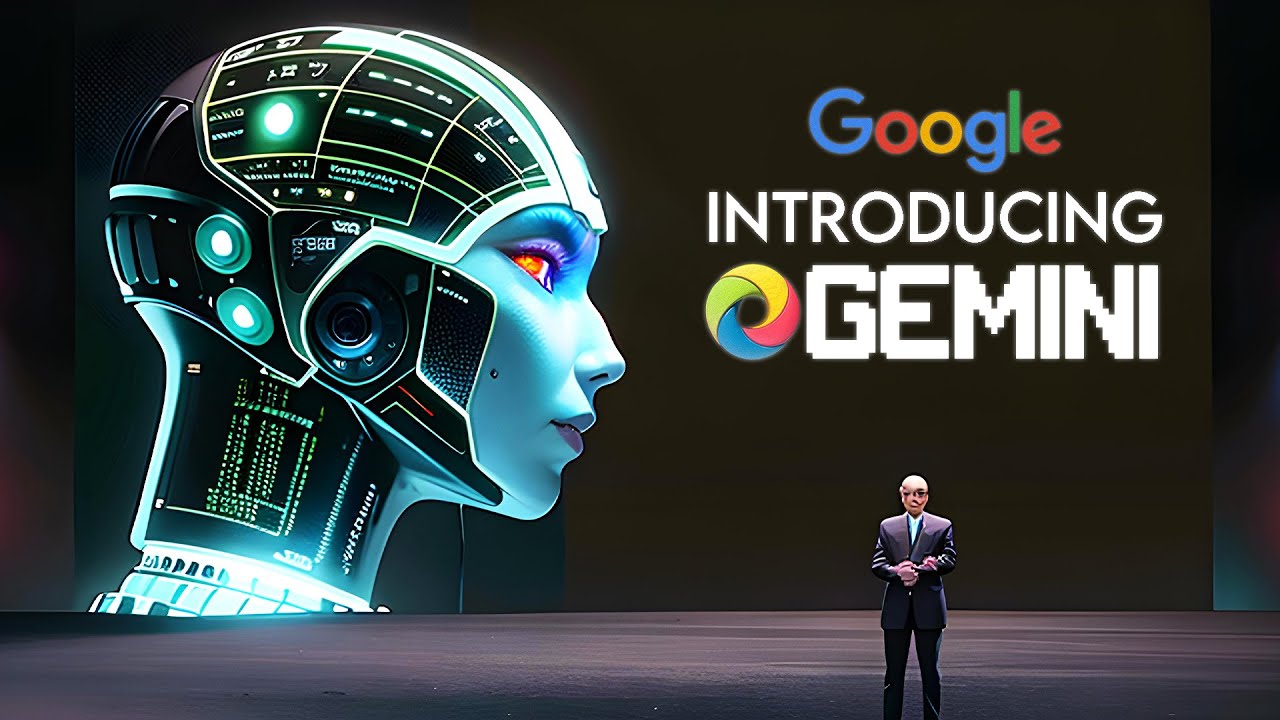
About a year after OpenAI’s launch of ChatGPT brought the simmering artificial intelligence race to a boil, Google’s highly anticipated AI model, Gemini, has finally joined the competition. Released yesterday, Gemini is a large language model (LLM) that Google CEO Sundar Pichai and executives at the company’s DeepMind AI division say will revolutionize generative technology for business and daily life.
The tech is a family of three models that Google is slowly looping into its suite of services:
Gemini Nano is mainly for mobile devices. As of yesterday, Google Pixel 8 Pro owners could enlist Gemini Nano to summarize audio recordings or draft automatic message replies.
Gemini Pro is a midsize offering designed for more complex tasks. Pro now powers Google’s chatbot, Bard, but the AI tech isn’t available to Google Cloud customers until Dec. 13.
Gemini Ultra, the powerhouse version geared toward data centers and large companies, will launch next year and underpin “Bard Advanced,” a new chatbot that will be able to simultaneously process text, images, audio, and video, according to Google’s prerecorded demonstrations.
If Gemini can do what Google promises, it could chip away at OpenAI’s lead in the LLM space.
Stocks started the short trading week by ticking upward yesterday. Microsoft climbed to its highest in a year after appearing to be the winner in OpenAI’s Sam Altman drama.
Read: Recommendations on books, classes, and music from Bill Gates. (GatesNotes)
***
Here is where the major US stock market benchmarks ended:
The S&P 500 Index was up 33.36 points (0.7%) at 4,547.38; the Dow Jones® Industrial Average (DJI) was up 203.76 points (0.6%) at 35,151.04; the NASDAQ Composite®was up 159.05 points (1.1%) at 14,284.53.
The 10-year Treasury note yield (TNX) was down about 2 basis points at 4.42%.
CBOE Volatility Index® (VIX) was down 0.39 at 13.41.
Strength in technology was illustrated by the Philadelphia Semiconductor Index (SOX), which jumped almost 2% and neared a four-month high. Communications services shares were also strong, as were energy companies, helped by a second-straight day of sharp gains in crude oil futures.
The small-cap focused Russell 2000 Index (RUT) rose 0.5% to a two-month high, following last week’s 5.4% rally that outpaced its large-cap counterparts.
And, Bayer’s stock had its worst day ever, dropping the company’s value by ~$8 billion, after a US jury ordered it to pay $1.56 billion over claims its Roundup weedkiller caused cancer and the company had to stop the trial for its top drug candidate because it wasn’t working.
In a shocking move, the OpenAI’s board of directors pushed out CEO Sam Altman, one of the world’s most prominent tech executives. The company said that Altman “was not consistently candid in his communications with the board,” and thus the board lost its confidence in Altman’s ability to lead.
OpenAI, and Altman, became household names this year after the company’s ChatGPT chatbot sparked a frenzy around the field of generative artificial intelligence. OpenAI, which has received $13 billion in investment from Microsoft, is reportedly valued at $86 billion. CTO Mira Murati will keep the CEO seat warm for now.
ChatGPT was launched nearly a year ago, in November 2022. Powered by a large language model trained on 570 gigabytes of internet data (300 billion words), the chatbot can generate text that eerily mimics human speech—but with far more information at its disposal than an actual person. Amazon is not the only company using AI to create theoretically better ads.
Meta announced its version of an ad generator last month, promising advertisers “a new era of creativity that maximizes the productivity, personalization, and performance” of campaigns.
Google says its product will allow the future of advertising to evolve.
TikTok has Creative Assistant, which “draws information from a wealth of TikTok-focused creative knowledge, providing you with the most relevant responses for when you’re creating ads.”
***
But, ChatGPT is not the same for mental health. Experts are warning that while chatbots can offer basic mental health support, they’re not equipped to provide clinical support and can raise thorny issues.
Ethics: Therapists are trained and licensed and must maintain a certain standard of care; a chatbot isn’t and doesn’t.
Privacy: When you ask a chatbot a question, you could be putting sensitive information on the internet.
Safety: A chatbot can give false information (more on that below) or provide harmful instructions.
***
ChatGPT in Education:
The bar exam: GPT-4 was in the 90th percentile with a score of 298 out of 400. GPT-3.5 came in the 10th percentile.
The SAT: GPT-4 scored 1400 out of 1600, ranking in the 89th percentile of test-takers. GPT-3.5 scored 1260.
AP exams: GPT-4 received a 5 on Art History, Biology, Environmental Science, Macroeconomics, Microeconomics, Psychology, Statistics, US Government, and US History, according to OpenAI. GPT-3.5 received a 5 only on Art History and Psychology.
Sommelier exams: GPT-4 has also passed the Introductory Sommelier, Certified Sommelier, and Advanced Sommelier exams with scores of 92%, 86%, and 77%, respectively. GPT-3.5 had a less discerning palate, earning marks of 80%, 58%, and 46%.
Posted on February 26, 2023 by Dr. David Edward Marcinko MBA MEd CMP™
Large Language Model Meta AI
By Staff Reporters
***
***
Meta joins the AI race with LLlaMa
Well, not *a* llama, but LLaMA, which stands for Large Language Model Meta AI, Meta announced yesterday. Large language models are the tech that fuels applications like OpenAI’s ChatGPT or Google’s Bard.
But LLaMA may be more democratized than its peers in two ways: 1) Any researcher can see its inner workings, which isn’t the case for Google, OpenAI, or Bing and 2) It’s petite compared to its peers, which means it costs less to operate.
Posted on January 29, 2023 by Dr. David Edward Marcinko MBA MEd CMP™
ChatGPT
By Staff Reporters
***
***
Two papers show that large language models, including ChatGPT, can pass the USMLE. The papers highlighted different approaches to using large language models to take the USMLE, which is comprised of three exams: Step 1, Step 2 CK, and Step 3. ChatGPT is an artificial intelligence (AI) search tool that mimics long-form writing based on prompts from human users. It was developed by OpenAI, and became popular after several social media posts showed potential uses for the tool in clinical practice, often with mixed results.
According to Victor Tseng, MD, of Ansible Health in Mountain View, California, and colleagues, the results showed “new and surprising evidence” that this AI tool was up to the challenge. Tseng and team noted that ChatGPT was able to perform at >50% accuracy across all of the exams, and even achieved 60% in most of their analyses. While the USMLE passing threshold does vary between years, the authors said that passing is approximately 60% most years.
Source: Michael DePeau-Wilson, Medpage Today [1/19/23]
Posted on January 17, 2023 by Dr. David Edward Marcinko MBA MEd CMP™
By Staff Reporters
***
***
Microsoft is reportedly preparing for its largest startup investment in history: a $10 billion stake in OpenAI that could value the research lab at $29 billion. OpenAI is the creator of potentially groundbreaking AI tools like ChatGPT, the multitalented chatbot that can code in Python and help high schoolers cheat on English essays.
MSFT has already invested $1 billion in OpenAI, but thinks an even tighter relationship would help it better compete with Big Tech rivals like Google (which reportedly declared a “code red” over ChatGPT’s threat to its search dominance).
But Microsoft’s AI ambitions go beyond just integrating ChatGPT know-how into its own search engine, Bing. The company wants to use OpenAI’s tools in its Office suite—and it’s already experimenting with algorithms to help users craft emails in Outlook.
OpenAI was founded in 2015 as a mission-based AI research organization by a roster from Silicon Valley’s A-list, including Elon Musk. Its stated goal is to develop safe AI for the benefit of humanity. But OpenAI has plenty of critics who have called it out for ethical concerns, a lack of transparency, and abandoning its mission for profits.
According to MorningBrew, a slew of buzzy AI product releases in 2022 has startup investors forgetting they ever heard the word “metaverse.” Languishing in the prolonged crypto winter and facing an uncertain economic environment, many venture capitalists see the field as the next big thing to shovel money into their coffers.
UPDATE: Bill Gates just hinted that he may be working on Open AI’s large language chatbot ChatGPT in collaboration with Microsoft if the reported $10 billion investment in the start-up goes through. Gates also admitted that he’s still involved with the company’s research and product plans, and said he’s watching the developments in ChatGPT “very closely.”







 Support our online development, and advance our onground research initiatives in free market economics, as we seek to showcase the brightest Next-Gen minds.
THE ME-P DISCLAIMER: Posts, comments and opinions do not necessarily represent iMBA, Inc., but become our property after submission. Copyright © 2006 to-date. iMBA, Inc allows colleges, universities, medical and financial professionals and related clinics, hospitals and non-profit healthcare organizations to distribute our proprietary essays, photos, videos, audios and other documents; etc. However, please review copyright and usage information for each individual asset before submission to us, and/or placement on your publication or web site. Attestation references, citations and/or back-links are required. All other assets are property of the individual copyright holder.
Support our online development, and advance our onground research initiatives in free market economics, as we seek to showcase the brightest Next-Gen minds.
THE ME-P DISCLAIMER: Posts, comments and opinions do not necessarily represent iMBA, Inc., but become our property after submission. Copyright © 2006 to-date. iMBA, Inc allows colleges, universities, medical and financial professionals and related clinics, hospitals and non-profit healthcare organizations to distribute our proprietary essays, photos, videos, audios and other documents; etc. However, please review copyright and usage information for each individual asset before submission to us, and/or placement on your publication or web site. Attestation references, citations and/or back-links are required. All other assets are property of the individual copyright holder.


 Trump says pharma tariffs could be as high as 250%







 What’s down
















 The Leading Business Education Network for Doctors, Financial Advisors and Health Industry Consultants