LOSS LEADERS: Marketing Tactics Used by Doctors to Attract Patients

By Dr. David Edward Marcinko MBA MEd

***
***

Doctors use loss leader tactics—offering discounted or free services—to attract new patients and build long-term loyalty. These strategies are increasingly common in competitive healthcare markets.

In today’s healthcare landscape, physicians and clinics face intense competition for patient attention. Traditional referral systems are no longer sufficient, as patients increasingly rely on online reviews, social media, and digital advertising to choose providers. To stand out, many doctors have adopted loss leader marketing tactics—a strategy borrowed from retail where a business offers a product or service at a loss to attract customers and stimulate future sales.

A loss leader in healthcare typically involves offering free consultations, discounted exams, or low-cost procedures. For example, aesthetic clinics might advertise free skin evaluations or reduced-price Botox sessions. Primary care practices may offer complimentary wellness screenings or discounted flu shots. These services are not intended to generate immediate profit but to introduce patients to the practice, build trust, and encourage them to return for more comprehensive—and profitable—care.

This tactic works particularly well in specialties where patients have discretionary choice, such as dermatology, dentistry, chiropractic care, and cosmetic surgery. By lowering the barrier to entry, doctors can attract hesitant or price-sensitive patients who might otherwise delay care. Once inside the practice, patients experience the quality of service firsthand, increasing the likelihood of repeat visits and word-of-mouth referrals.

***

***

Digital marketing amplifies the effectiveness of loss leader strategies. Physicians use platforms like Google Ads, Facebook, and Instagram to promote their offers to targeted demographics. A well-designed landing page might advertise a “$49 New Patient Exam” with a clear call to action and online booking. These campaigns often include retargeting ads and email follow-ups to nurture leads into loyal patients.

However, loss leader tactics must be carefully managed. Offering services below cost can strain resources if not paired with a clear conversion strategy. Doctors must ensure that the initial offer leads to higher-value services, such as diagnostic testing, treatment plans, or elective procedures. Additionally, practices must maintain ethical standards and avoid misleading promotions that could erode patient trust.

Reputation management plays a crucial role in sustaining the benefits of loss leader marketing. Positive patient experiences from initial discounted visits often translate into glowing online reviews, which further attract new patients. Conversely, poor execution—such as rushed appointments or upselling pressure—can backfire and damage the practice’s credibility.

Ultimately, loss leader marketing is not about giving away services indefinitely. It’s a strategic investment in patient acquisition, brand building, and long-term growth. When executed thoughtfully, it allows doctors to showcase their expertise, differentiate their practice, and foster lasting relationships with patients.

In conclusion, loss leader tactics have become a powerful tool in the modern physician’s marketing arsenal. By offering low-cost entry points to care, doctors can attract new patients, build trust, and grow their practice sustainably.

As competition intensifies, those who master this strategy—while maintaining quality and transparency—will be best positioned to thrive in the evolving healthcare marketplace.

COMMENTS APPRECIATED

EDUCATION: Books

SPEAKING: Dr. Marcinko will be speaking and lecturing, signing and opining, teaching and preaching, storming and performing at many locations throughout the USA this year! His tour of witty and serious pontifications may be scheduled on a planned or ad-hoc basis; for public or private meetings and gatherings; formally, informally, or over lunch or dinner. All medical societies, financial advisory firms or Broker-Dealers are encouraged to submit an RFP for speaking engagements: CONTACT: Ann Miller RN MHA at MarcinkoAdvisors@outlook.com -OR- http://www.MarcinkoAssociates.com

Like, Refer and Subscribe

***

***

RE-IMAGINING RETIREMENT: A Path Forward for a Broke 65-Year-Old Doctor

***

***

SPONSOR: http://www.MarcinkoAssociates.com

Turning 65 is often seen as the gateway to retirement—a time to slow down, reflect, and enjoy the fruits of decades of labor. But for some, including doctors who may have faced financial setbacks, poor planning, or unexpected life events, reaching this milestone without financial security can be deeply unsettling. The image of a broke 65-year-old doctor may seem paradoxical, given the profession’s reputation for high earnings. Yet, reality paints a more nuanced picture. Fortunately, even in the face of financial hardship, retirement is not a closed door—it’s a challenge that can be met with creativity, resilience, and strategic planning.

Understanding the Situation

Before exploring solutions, it’s important to understand how a physician might arrive at retirement age without adequate savings. Medical school debt, late career starts, divorce, health issues, poor investment decisions, or supporting family members can all contribute. Some doctors work in lower-paying specialties or underserved areas, sacrificing income for impact. Others may have lived beyond their means, assuming their high salary would always be enough. Regardless of the cause, the key is to shift focus from regret to action.

DOCTORS: https://medicalexecutivepost.com/2025/09/09/doctors-early-investing-needed-for-retirement/

Redefining Retirement

Traditional retirement—ceasing work entirely—is not the only option. For a broke 65-year-old doctor, retirement may mean transitioning to a less demanding role, reducing hours, or shifting to a new field. The goal is to create a sustainable lifestyle that balances income, purpose, and well-being.

Leveraging Medical Expertise

Even if full-time clinical practice is no longer viable, a physician’s knowledge remains valuable. Here are several ways to continue earning while easing into retirement:

  • Telemedicine: Remote consultations are in high demand, especially in primary care, psychiatry, and chronic disease management. Telemedicine offers flexibility, reduced overhead, and the ability to work from home.
  • Locum Tenens: Temporary assignments can fill staffing gaps in hospitals and clinics. These roles often pay well and allow for travel or seasonal work.
  • Medical Writing and Reviewing: Physicians can write for journals, websites, or pharmaceutical companies. Peer reviewing, editing, and content creation are viable options.
  • Teaching and Mentoring: Medical schools, nursing programs, and residency programs need experienced educators. Adjunct teaching or mentoring can be fulfilling and financially helpful.
  • Consulting: Doctors can advise healthcare startups, legal teams, or insurance companies. Their insights are valuable in product development, litigation, and policy.

Exploring Non-Clinical Opportunities

Some physicians may wish to pivot entirely. Transferable skills—critical thinking, communication, leadership—open doors in other industries:

  • Health Coaching or Life Coaching: With certification, doctors can guide clients in wellness, stress management, or career transitions.
  • Entrepreneurship: Starting a small business, such as a tutoring service, online course, or specialty clinic, can generate income and autonomy.
  • Real Estate or Investing: With careful planning, investing in rental properties or learning about the stock market can create passive income.

Maximizing Government and Community Resources

At 65, individuals become eligible for Medicare, which can significantly reduce healthcare costs. Additionally, Social Security benefits may be available, depending on work history. While delaying benefits until age 70 increases monthly payments, some may need to claim earlier to meet immediate needs.

***

***

Other resources include:

  • Supplemental Security Income (SSI): For those with limited income and assets.
  • SNAP (food assistance) and LIHEAP (energy assistance): These programs help cover basic living expenses.
  • Community Organizations: Nonprofits and religious groups often provide support with housing, transportation, and social engagement.

Downsizing and Budgeting

Reducing expenses is a powerful way to stretch limited resources. Consider:

  • Relocating: Moving to a lower-cost area or state with favorable tax policies can reduce housing and living expenses.
  • Selling Assets: A large home, unused vehicle, or collectibles may be converted into cash.
  • Shared Housing: Living with family, roommates, or in co-housing communities can cut costs and reduce isolation.
  • Minimalist Living: Prioritizing needs over wants and embracing simplicity can lead to financial and emotional freedom.

Creating a realistic budget is essential. Track income and expenses, eliminate unnecessary costs, and prioritize essentials. Free budgeting tools and financial counseling services can help.

Emotional and Mental Well-Being

Financial stress can take a toll on mental health. It’s important to cultivate resilience and maintain a sense of purpose. Strategies include:

  • Staying Active: Physical activity improves mood and health. Walking, yoga, or swimming are low-cost options.
  • Volunteering: Giving back can provide structure, community, and fulfillment.
  • Learning New Skills: Online courses, hobbies, or certifications can reignite passion and open new doors.
  • Building a Support Network: Friends, family, and peer groups offer emotional support and practical advice.

Planning for the Future

Even at 65, it’s not too late to plan. Consider:

  • Debt Management: Negotiate payment plans, consolidate loans, or seek professional help.
  • Estate Planning: Create a will, designate healthcare proxies, and organize important documents.
  • Insurance Review: Ensure adequate coverage for health, life, and long-term care.
  • Financial Advising: A fee-only advisor can help create a sustainable plan without selling products.

Embracing a New Chapter

Retirement is not a destination—it’s a transition. For a broke 65-year-old doctor, it may not look like the glossy brochures, but it can still be rich in meaning. By leveraging experience, reducing expenses, accessing resources, and nurturing well-being, retirement becomes a journey of reinvention.In many ways, doctors are uniquely equipped for this challenge. They’ve faced long hours, high stakes, and complex problems. That same grit and adaptability can guide them through financial hardship and into a fulfilling retirement.

COMMENTS APPRECIATED

EDUCATION: Books

SPEAKING: Dr. Marcinko will be speaking and lecturing, signing and opining, teaching and preaching, storming and performing at many locations throughout the USA this year! His tour of witty and serious pontifications may be scheduled on a planned or ad-hoc basis; for public or private meetings and gatherings; formally, informally, or over lunch or dinner. All medical societies, financial advisory firms or Broker-Dealers are encouraged to submit an RFP for speaking engagements: CONTACT: Ann Miller RN MHA at MarcinkoAdvisors@outlook.com -OR- http://www.MarcinkoAssociates.com

Like, Refer and Subscribe

***

***

PHYSICIANS: Do You Use A Financial Planner?

***

***

TO: All Physicians and Dentists

QUESTION?

Do you use a financial advisor?

What has been your experience with him or her?

THANK YOU

EDUCATION: Books

SPEAKING: Dr. Marcinko will be speaking and lecturing, signing and opining, teaching and preaching, storming and performing at many locations throughout the USA this year! His tour of witty and serious pontifications may be scheduled on a planned or ad-hoc basis; for public or private meetings and gatherings; formally, informally, or over lunch or dinner. All medical societies, financial advisory firms or Broker-Dealers are encouraged to submit an RFP for speaking engagements: CONTACT: Ann Miller RN MHA at MarcinkoAdvisors@outlook.com -OR- http://www.MarcinkoAssociates.com

BRANDS & BRAND MANAGEMENT: Defined and Explored for Doctors and Advisors

By A.I.

SPONSOR: http://www.CertifiedMedicalPlanner.org

***

***

What Is a Marketing Brand

A brand is a name, term, design, symbol or any other feature that distinguishes one seller’s goods or service from those of other sellers. Brands are used in business, marketing and advertising for recognition and, importantly, to create and store value as brand equity for the object identified, to the benefit of the brand’s clients, patients, customers, its owners and shareholders. Brand names are sometimes distinguished from generic or store brands.

BRANDING: https://medicalexecutivepost.com/2023/02/02/podcast-personal-branding-for-doctors/

What is Brand Management?

Brand management, also known as Marketing, is responsible for the overall management of a brand. This includes everything from product or service development and marketing to advertising and public relations. All of these aspects work together to create a particular image or reputation for a brand. The goal of brand management is to create a robust and positive reputation for a brand that will result in increased sales and market share.This process helps companies create a unique identity for their products or services in the marketplace. A successful brand management strategy can build client, patient and customer loyalty .

BRANDS: https://medicalexecutivepost.com/2021/06/03/physician-branding-post-pandemic/

Branding is essential for financial advisors, doctors and businesses because it involves creating a unique identity for a company’s products, offerings and services. It can also help build customer, client and patient loyalty and emotionally connect with the practitioner. Branding can be complex, but it is essential to understand the basics before starting a brand strategy.

Thus, doctors, podiatrists, dentists, CPAs, insurance agents, financial advisors and their practices need to understand the different aspects of branding and brand management to create a strong brand identity.

SELF BRANDING: https://medicalexecutivepost.com/wp-content/uploads/2011/03/leadership-self-branding-marcinko.pdf

EDUCATION: Books

COMMENTS APPRECIATED

Like and Subscribe

***

Physician V. Doctor V. Provider V. Prescriber V. Medical Others

HEALTHCARE DEFINITIONS

By Staff Reporters

SPONSOR: http://www.CertifiedMedicalPlanner.org

***

***

When you visit health clinic or hospital for a medical appointment, you’ll be seen by a doctor, healthcare provider and/or medical prescriber. But what do these words really mean?

***

***

Doctors / Physicians

Doctor of Medicine (MD), Doctor of Podiatric Medicine (DPM), Doctor of Osteopathy (DO, or Doctor of Dental Surgery (DDS/DMD). Doctors, also known as physicians, have extensive prescription privileges across various specialties. They can diagnose medical conditions, prescribe medication, and oversee the overall management of patient care. Doctors include general practitioners, specialists such as cardiologists or dermatologists, and surgeons. Their prescription authority encompasses a wide range of medications to address acute and chronic health conditions, ranging from antibiotics to specialized treatments for complex diseases.

MORE: https://medicalexecutivepost.com/2023/06/17/the-md-versus-do-degree/

***

***

Medical Providers

A medical provider is a general term that encompasses a wide range of education levels, skill-sets, and specializations. A provider could be a Physician Assistant (PA), Nurse Practitioner (NP), Clinical Nurse Specialist (CNS), Doctor of Medicine (MD), Doctor of Podiatric Medicine (DPM), Dentist (DDSDMD) or Doctor of Osteopathy (DO).

***

Medical Drug Prescribers

Generally, psychologists and therapists do not have prescription privileges. They focus on psychotherapy and counseling rather than medication management. However, some jurisdictions may grant limited prescription rights to psychologists who undergo additional training and certification. Like psychologists, therapists typically do not have prescription privileges. They focus on providing counseling and psychotherapy to address mental health issues and emotional concerns.

PHARMACISTS: https://medicalexecutivepost.com/2025/02/12/pharmd-doctor-of-pharmacy/

Psychiatrists are medical doctors (MD/DO) who specialize in the diagnosis and treatment of mental health disorders. They have full prescription privileges and can prescribe a wide range of medications to manage psychiatric conditions.

In most cases, physical therapists do not have the authority to prescribe medication. They primarily focus on rehabilitation and physical interventions to improve mobility and function.

MORE: https://medicalexecutivepost.com/2025/02/23/doctorate-physical-therapy/

Nurse practitioners are advanced practice nurses with the authority to diagnose, treat, and prescribe medication independently in many states and countries. They undergo extensive education and training, which allows them to provide a wide range of healthcare services, including medication management.

Similar to nurse practitioners, psychiatric nurse practitioners have the authority to prescribe medication for mental health conditions. They specialize in psychiatric and mental health care, offering comprehensive treatment that may include medication management.

Chiropractors primarily focus on diagnosing and treating musculoskeletal disorders through manual adjustments and therapies. They do not have surgical or prescription privileges in most jurisdictions.

Optometrists are trained to diagnose and treat vision problems, including prescribing corrective lenses and medications for certain eye conditions such as infections or inflammation.

Registered nurses typically do not have prescription privileges. They work under the direction of physicians and nurse practitioners, assisting with patient care but not prescribing medication themselves.

Dentists have limited prescription privileges related to dental care, such as antibiotics or pain medications for dental procedures. However, they do not have the authority to prescribe general medications outside of their scope of practice.

Nutritionists typically do not have prescription privileges. They specialize in providing dietary advice and counseling to promote health and well-being through nutrition but do not prescribe medication.

Depending on their scope of practice and legal regulations in their jurisdiction, nurse midwives may have limited prescription privileges for certain medications related to prenatal care, childbirth, and postpartum care.

MORE: http://www.HealthDictionarySeries.org

COMMENTS APPRECIATED

Like and Refer

***

***

SPINAL CORD: Injury Awareness Day 2025

By Staff Reporters

***

***

History of Spinal Cord Injury Awareness Day

The first mention of spinal cord injuries was in the ancient Egyptian Edwin Smith’s papyrus from 2,500 B.C. The ancient Egyptian physicians described the injury as “untreatable.”

The first treatment for spinal cord injuries occurred in ancient India, where Hindu doctors used traction techniques to straighten the spine. The Greeks also employed the same technique as the Hindus. For example, Hippocrates — born in the 5th century B.C. — developed traction devices that helped straighten patients’ spines. It wasn’t until the second century A.D. that Galen, a Greek physician, discovered the relation between spinal cord injuries and loss of autonomic function and sensation.

Paul of Aegina, born in 625 A.D., became the first physician to pioneer surgical techniques for spinal cord injuries. He employed laminectomy to relieve pressure on the spine and recommended using a windlass to reduce the dislocation. The notion and treatment remained the same until the latter half of the 20th century; physicians continued to believe that spinal cord injuries were incurable. Although during the Renaissance, Leonardo da Vinci and Andreas Vesalius, made contributions to S.C.I. through their accurate depiction of the human spine and nerves.

In 1981, the Canadians Albert Aguayo and Sam David ended the millennia-long belief that S.C.I. is incurable. Through experiments on rats, they showed that axons could regenerate in the central nervous system in the right environment. The introduction of imaging, surgery, medical care, and rehabilitation medicine in the mid-20th century helped improve the care for spinal cord injuries and increased the life expectancy of those living with the condition.

CHIROPRACTORS: https://medicalexecutivepost.com/2014/10/14/career-advice-for-those-interested-in-chiropracty/

Finally, the creation of emergency medical transport services in the 1970s contributed to these improvements in S.C.I. treatment.

COMMENTS APPRECIATED

Like and Refer

***

***

COUNTDOWN: To End of Year BOI Reporting?

Beneficial Ownership Information

By Staff Reporters

***

***

Small business owners face severe penalties if they don’t report to the federal government by year’s end. And, thousands of businesses may not realize they are subject to a new reporting process mandated under the Corporate Transparency Act, which went into effect in January 2024. Even lawyers, doctors, financial advisors and accountants are affected; along with “mom and pop”business owners.

For most eligible businesses, the filing deadline is Jan. 1, 2025, according to the U.S. Chamber of Commerce. “Those who fail to file by this deadline — or fail to update this information if needed — could face up to two years imprisonment and fines up to $10,000, in addition to civil penalties of up to $591 per day,” the U.S. Chamber of Commerce website reads.

Businesses that meet the reporting criteria must submit a Beneficial Ownership Information Report to the U.S. Department of Treasury’s Financial Crimes Enforcement Network (FinCEN), according to the U.S. Chamber of Commerce.

The law was created “to combat illicit activity including tax fraud, money laundering and financing for terrorism by capturing more ownership information for specific U.S. businesses operating in or accessing the country’s market,” the chamber website explained.

COMMENTS APPRECIATED

BREAKING NEWS

A federal court has ruled that the beneficial ownership information (BOI) reporting requirements established by the Corporate Transparency Act (CTA) are unconstitutional123. The decision is currently under appeal1.

Subscribe and Refer Today

***

***

Career Advice for those Interested in Chiropracty

What is a Chiropractor?

[By Cheryl S.]

A chiropractor is a doctor who specializes in treating the spine this includes the neck, back and lumbar region and the connecting muscles. The theory is that poorly aligned joints in the spine cause muscular-skeletal problems that can impact on other areas of health. Through regular manipulation a chiropractor can improve bone alignment and posture and this in turn improves health and wellbeing.

With stimulating, fulfilling work and high demand for their services, chiropractors are a well-regarded part of the care community. Many people consider the practice as being closer to a complementary healthcare service than conventional medicine, but it certainly does provide comfort and healing for many people. They do this by means of a practice called spinal adjustment.

The Bureau of Labor Statistics predicts that there will be a growth in demand for medical professionals across all medical fields over the next six years; this is certainly a good time for anybody who is considering studying in this sector.

Brief history

Daniel David Palmer developed Chiropracty in 1895. He believed that “95 percent of diseases are caused by displaced vertebrae; the remainder by luxations of other joints”. The first school of chiropracry was set up in the Palmer Infirmary in Davenport, Iowa. Today, the Palmer College of Chiropractic is one of the leading establishments in this field.

Chiropracty developed a bad reputation during the 1970s, mostly because of poor regulation; many people claimed to be able to cure many illnesses and diseases. However, these people have since been discredited. What remains is a professional industry that provides invaluable treatments to people suffering from chronic pain and discomfort.

Requirements to work as a Chiropractor

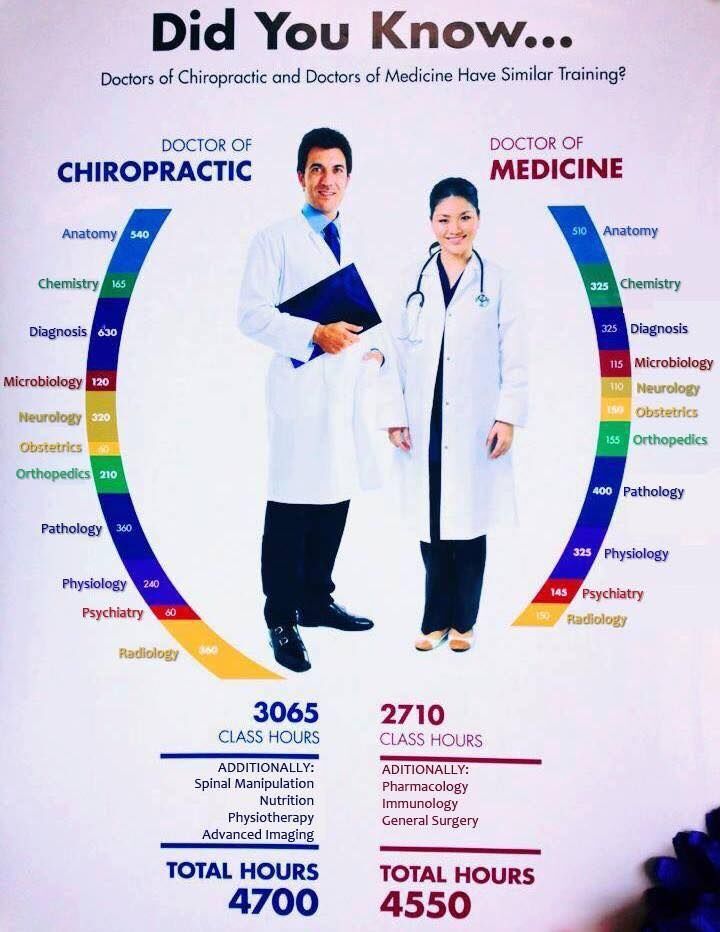
An individual must have completed at least four years of study to work as a chiropractor. The agency that regulates courses in chiropractic is The Council on Chiropractic Education; this agency has been certified by the Department of Education.

The Department of Education has approved 15 chiropractic programs at just 18 locations. Any chiropracty course that has not been officially approved will not provide a valid qualification so students must take care to ensure that they only enroll on approved courses.

Chiropracty has some special educational requirements. An individual must train for at least four years towards becoming a doctor before they can start treating patients. Chiropractic training is done in four parts.

Part 1 is the initial two years of basic sciences that all student doctors must complete. This covers all areas of medicine and healthcare and is really a foundation year before students start to specialize and focus on their chosen career subjects.

Part 2 covers clinical subjects such as general diagnosis, diagnostic imaging, and principles of chiropracty and chiropractic practice.

Part 3 includes case history, physical examination and diagnostics. It also starts to teach chiropractic techniques, supportive techniques and case management. This part is sometimes completed during a clinical internship; it is at this time that a chiropractry student can first start working with patients, although this should always be under supervision from an experienced doctor.

Part 4 covers more advanced diagnosis and techniques and is done during a clinical phase. It is during this phase of training that students receive most of their work experience before they eventually go on to become a chiropractic doctor.

No drugs

Many people are drawn to chiropracty because the treatment avoids the use of drugs; instead the emphasis is on repairing the body through external manipulation. It actually has some similarities with Eastern medicine in this respect. Also, the even increasing cost of drugs and medical diagnosis, especially for chronic pain and other incurable conditions, means that chiropracty is a very valid option for many people today.

Similar roles

There are several roles that are similar to chiropracty, one of which is physiotherapy. In fact, because of new research and understanding, chiropractic is being used more in sports therapy and replacing some physiotherapy procedures. Physiotherapy is mostly focused on manipulation of muscles to aid and speed healing following injuries and surgery. Chiropracty often goes direct to the source of the problem and manipulates the bones that in turn manipulate muscles and tendons.

Successful Chiropractors

Many people have managed to build successful chiropractic services after obtaining their qualifications. New centers, such as Detroit Chiropractic  are springing up all the time and these are bringing the latest new techniques and providing patients with an excellent service http://www.healthquest.us/ChiropracticCare.html

Chiropracty is developing into a well-respected profession and every year thousands of people benefit from the treatment. With an ever aging population that is often sedentary and overweight, spinal problems will only worsen and the role of the chiropractor becomes more important.

1613487772200

Conclusion

Your thoughts and comments on this ME-P are appreciated. Feel free to review our top-left column, and top-right sidebar materials, links, URLs and related websites, too. Then, subscribe to the ME-P. It is fast, free and secure.

Speaker: If you need a moderator or speaker for an upcoming event, Dr. David E. Marcinko; MBA – Publisher-in-Chief of the Medical Executive-Post – is available for seminar or speaking engagements. Contact: MarcinkoAdvisors@msn.com

OUR OTHER PRINT BOOKS AND RELATED INFORMATION SOURCES:

Product DetailsProduct Details

The Chiropractic Fad?

Join Our Mailing List

Now those hieroglyphics make sense!

By Anthony Narushka DC945457_573594136020162_1396079168_nAssessment

Chiropractic, it’s no fad!

Polish Chiropractic Association

New PCA BOD Members

[2009 Polish Chiropractic Association  BOD Members]

Conclusion

Your thoughts and comments on this ME-P are appreciated. Feel free to review our top-left column, and top-right sidebar materials, links, URLs and related websites, too. Then, subscribe to the ME-P. It is fast, free and secure.

Speaker: If you need a moderator or speaker for an upcoming event, Dr. David E. Marcinko; MBA – Publisher-in-Chief of the Medical Executive-Post – is available for seminar or speaking engagements. Contact: MarcinkoAdvisors@msn.com

OUR OTHER PRINT BOOKS AND RELATED INFORMATION SOURCES:

Product DetailsProduct DetailsProduct Details

Polish Chiropractic Association

Join Our Mailing List

Alternative Healthcare in Europe

[By Anthony Robert Narushka; DC]

The first Polish Chiropractic Association [PCA] was recognized by the European Chiropractors’ Union (ECU) www.ecunion.eu and founded in June, 2008. The Polish flag is listed on the page of all members. 

New PCA BOD Members

New PCA BOD Members

  • Leszek Majowski DC attended Candadian Memorial.
  • Jane Hajduk DC, attended Parker Chiropractic College, TX.
  • Anthony Narushka DC, from Orlando, attended National University of Health Sciences, Ill.  

Ministry of Health

On July 1st 2008, Dr. Narushka and these Medical Executive-Post readers met with the Ministry of Health to discuss the legalization and regulation of Chiropractic, in Poland. Open discussion of how other European countries have formalized chiropractic health care into their national heath regulations was also discussed. We met with the Department Nauki i Szkolnictwa Wyższego – from the Ministry of Health.

Assessment

Also, a very important message from Mr. Hans-Gert Pöttering’s [President of the European Parliament] supporting the European Chiropractors’ Union was presented along with the recognition of the new members, Poland and Hungary, to the association. The video can be downloaded from the ECU website -Download Page and it is found first on the downloadable link list. http://www.ecuconvention.eu/default.asp?pid=114

Although all members of the nascent PCA are encouraged to visit, read and subscribe to the Medical Executive-Post; some physicians and other domestic medical practitioners are not always enamored with chiropractors or other alternative healthcare providers; despite the Healthcare 2.0 initiative of the modern era.

Conclusion

Your thoughts and comments on this ME-P are appreciated. Feel free to review our top-left column, and top-right sidebar materials, links, URLs and related websites, too. Then, subscribe to the ME-P. It is fast, free and secure.

Link: http://feeds.feedburner.com/HealthcareFinancialsthePostForcxos

Speaker: If you need a moderator or speaker for an upcoming event, Dr. David E. Marcinko; MBA – Publisher-in-Chief of the Medical Executive-Post – is available for seminar or speaking engagements. Contact: MarcinkoAdvisors@msn.com

OUR OTHER PRINT BOOKS AND RELATED INFORMATION SOURCES:

DICTIONARIES: http://www.springerpub.com/Search/marcinko
PHYSICIANS: www.MedicalBusinessAdvisors.com
PRACTICES: www.BusinessofMedicalPractice.com
HOSPITALS: http://www.crcpress.com/product/isbn/9781466558731
CLINICS: http://www.crcpress.com/product/isbn/9781439879900
BLOG: www.MedicalExecutivePost.com
FINANCE: Financial Planning for Physicians and Advisors
INSURANCE: Risk Management and Insurance Strategies for Physicians and Advisors

Product DetailsProduct DetailsProduct Details