ME-P News Stories Wrap-Up for August 2015

Join Our Mailing List

[By ME-P Staff Reporters]

Latest News

Editor’s Pick: 

Daily Round-Up of Headlines for August 2015

BREAKING-EVENTS AND AGGREGATED STORIES 

[Editor’s Pick: A Daily Round-Up of Headlines for August 2015]

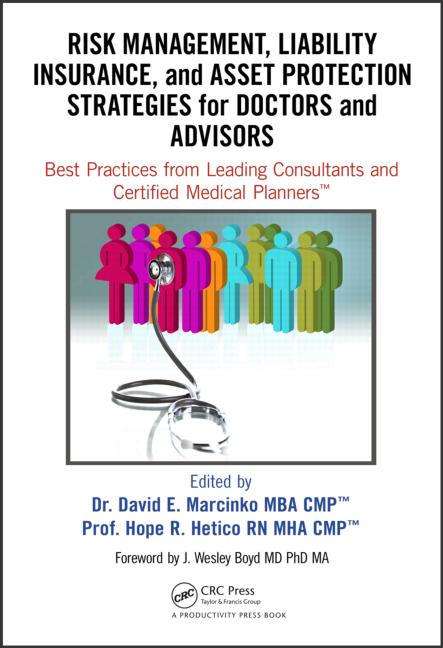
Risk Management, Liability Insurance, and Asset Protection Strategies for Doctors and Advisors: Best Practices from Leading Consultants and Certified Medical Planners™8Comprehensive Financial Planning Strategies for Doctors and Advisors: Best Practices from Leading Consultants and Certified Medical Planners™

Editor’s Pick: 

Daily Round-Up of Headlines for July 2015

BREAKING-EVENTS AND AGGREGATED STORIES 

Product DetailsProduct Details

Editor’s Pick: 

Daily Round-Up of Headlines for May 2015

BREAKING-EVENTS AND AGGREGATED STORIES 

Comprehensive Financial Planning Strategies for Doctors and Advisors: Best Practices from Leading Consultants and Certified Medical Planners(TM)  

Editor’s Pick: 

Daily Round-Up of Headlines for April 2015

Comprehensive Financial Planning Strategies for Doctors and Advisors: Best Practices from Leading Consultants and Certified Medical Planners(TM)  

***

Editor’s Pick: 

Daily Round-Up of Headlines for March 2015

Comprehensive Financial Planning Strategies for Doctors and Advisors: Best Practices from Leading Consultants and Certified Medical Planners(TM)

***

Editor’s Pick: 

Daily Round-Up of Headlines for February 2015

Comprehensive Financial Planning Strategies for Doctors and Advisors: Best Practices from Leading Consultants and Certified Medical Planners(TM)* 8

***

Editor’s Pick: 

Daily Round-Up of Headlines for January 2015

Comprehensive Financial Planning Strategies for Doctors and Advisors: Best Practices from Leading Consultants and Certified Medical Planners(TM)* 8

Editor’s Pick: 

Daily Round-Up of Headlines for December 2014

 ***

Comprehensive Financial Planning Strategies for Doctors and Advisors: Best Practices from Leading Consultants and Certified Medical Planners(TM)

***

Editor’s Pick: 

Daily Round-Up of Headlines for November 2014

Channel Surfing the ME-P

Have you visited our other topic channels? Established to facilitate idea exchange and link our community together, the value of these topics is dependent upon your input. Please take a minute to visit. And, to prevent that annoying spam, we ask that you register. It is fast, free and secure.

Conclusion

Your thoughts and comments on this ME-P are appreciated. Feel free to review our top-left column, and top-right sidebar materials, links, URLs and related websites, too. Then, subscribe to the ME-P. It is fast, free and secure.

Speaker: If you need a moderator or speaker for an upcoming event, Dr. David E. Marcinko; MBA – Publisher-in-Chief of the Medical Executive-Post – is available for seminar or speaking engagements. Contact: MarcinkoAdvisors@msn.com

OUR OTHER PRINT BOOKS AND RELATED INFORMATION SOURCES:

Product DetailsProduct DetailsProduct Details

Product Details  Product Details

Product DetailsProduct Details

Comprehensive Financial Planning Strategies for Doctors and Advisors: Best Practices from Leading Consultants and Certified Medical Planners(TM)  

Product Details

Financial Advice Re-Invented for Medical Professionals?

cmp-logo

By Dr. David Edward Marcinko MBA CMP™

Dr David E Marcinko MBA

http://www.CertifiedMedicalPlanner.org

***

Introduction 

Much has been written, said and opined on this ME-P and elsewhere on financial advisory fees, commissions and other means of rumination.

So, what method is really best for the physician or other client? Full service, discounted fee for service, AUMs, commissions, wrap fees, ETFs, load or no-load mutual funds, annuities, stocks or individual bonds, etc? Oh! Did I forget the current [higher] fiduciary standard versus [lower] suitability conundrum? And now, the latest fad is the … Robo-Advisor service.

Of course, the very need for any sort of “professional” financial advisor is often questioned by the DIYer.

The Need

According to some research however, a financial advisor can help improve an investor’s net portfolio returns over time by building a portfolio with low-cost investments, minimizing taxes, and serving as an investing coach during volatile times in the market.

Source: Francis M. Kinniry Jr., Colleen M. Jaconetti, Michael A. DiJoseph, and Yan Zilbering, 2014. Putting a value on your value: Quantifying Vanguard Advisor’s Alpha. Valley Forge, Pa.: The Vanguard Group. For a copy of the research paper, visit vanguard.com/advisorvalue

***

cmp-program1

***

The Vanguard Personal Advisor Services

With a new offering from Vanguard Personal Advisor Services, you’ll purportedly work with a financial advisor who’s a Certified Financial Planner® professional. Your dedicated advisor will:

1. Get to know you, your goals, and your unique financial situation.
2. Partner with you to create a custom-tailored financial plan.
3. Put your plan into action and manage your portfolio, allowing you to be as involved as you want to be.
4. Monitor your plan’s progress and keep you informed.
5. Rebalance your portfolio as necessary and partner with you to revise your plan when important changes in your life occur.

Assessment

And, just as you’d expect from Vanguard, the cost for this service is low, about one-third the industry average.

But alsa, no such relationship exists for medical professionals from a Certified Medical Planner™

Source: PriceMetrix, 2013. The industry average fee is 0.99% annually of assets under management compared with Vanguard’s annual cost of only 0.30% of assets under management. For a copy of the complete report, go to pricemetrix.com. Advisor fees may differ depending on the type and nature of the services offered.

More:

Become a CMP

Full Disclosure: I am not affiliated with Vanguard Advisory Services in any way.

Conclusion

Your thoughts and comments on this ME-P are appreciated. Feel free to review our top-left column, and top-right sidebar materials, links, URLs and related websites, too. Then, subscribe to the ME-P. It is fast, free and secure.

Speaker: If you need a moderator or speaker for an upcoming event, Dr. David E. Marcinko; MBA – Publisher-in-Chief of the Medical Executive-Post – is available for seminar or speaking engagements. Contact: MarcinkoAdvisors@msn.com

OUR OTHER PRINT BOOKS AND RELATED INFORMATION SOURCES:

Comprehensive Financial Planning Strategies for Doctors and Advisors: Best Practices from Leading Consultants and Certified Medical Planners(TM)

Front Matter with Foreword by Jason Dyken MD MBA

logos

“BY DOCTORS – FOR DOCTORS – PEER REVIEWED – FIDUCIARY FOCUSED”

***

Connect to the ME-P Searchable Virtual Library

Join Our Mailing List

Our Searchable, and Ranking, Knowledge Portal

By Ann Miller RN MHA

[Executive Director]

We’ve collected all of our best research, solution information, and social buzz to create the Medical Executive-Post Portal and new virtual, and real, library.

From the new ME-P Portal, you can search, sort, and filter through our information archives to quickly find what you’re looking for—or feel free to browse and explore a variety of topics when you have a few minutes to spare.

From subject-specific original, or curated, blog posts and researched-based white papers, to solution overviews, e-Briefs, infographics, dictionaries, CD-ROMs, handbooks, major textbooks and more; you’ll find the answers to your healthcare economics, administration, financial planning and medical practice management and business questions here.

And explore a library of answers to your complex healthcare business decisions

blog

Learn more – to earn more

Even better, our web-based platform serves up the content you want most in your preferred format. Choose a user-friendly text-file, web-based flip book, e-file, or download, save, and print a PDF – or order a soft back or hard cover book – it’s your choice.

Conclusion

Your thoughts and comments on this ME-P are appreciated. Feel free to review our top-left column, and top-right sidebar materials, links, URLs and related websites, too. Then, subscribe to the ME-P. It is fast, free and secure.

Speaker: If you need a moderator or speaker for an upcoming event, Dr. David E. Marcinko; MBA – Publisher-in-Chief of the Medical Executive-Post – is available for seminar or speaking engagements. Contact: MarcinkoAdvisors@msn.com

OUR OTHER PRINT BOOKS AND RELATED INFORMATION SOURCES:

Product DetailsProduct DetailsProduct Details

Product Details  Product Details

Product Details

Product DetailsProduct Details

Risk Management, Liability Insurance, and Asset Protection Strategies for Doctors and Advisors: Best Practices from Leading Consultants and Certified Medical Planners™Comprehensive Financial Planning Strategies for Doctors and Advisors: Best Practices from Leading Consultants and Certified Medical Planners™

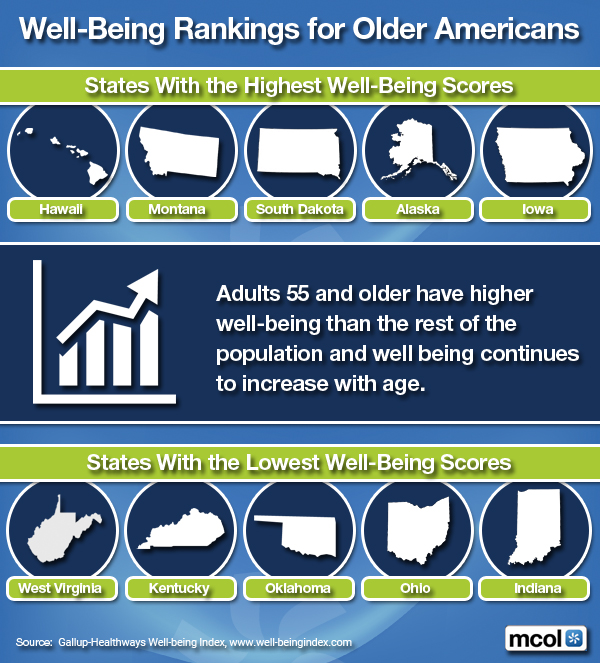
Well-Being Rankings for Older Americans

Join Our Mailing List

States with the Highest Scores

By http://www.MCOL.com

***

ImageProxy-2

***

Conclusion

Your thoughts and comments on this ME-P are appreciated. Feel free to review our top-left column, and top-right sidebar materials, links, URLs and related websites, too. Then, subscribe to the ME-P. It is fast, free and secure.

Speaker: If you need a moderator or speaker for an upcoming event, Dr. David E. Marcinko; MBA – Publisher-in-Chief of the Medical Executive-Post – is available for seminar or speaking engagements. Contact: MarcinkoAdvisors@msn.com

OUR OTHER PRINT BOOKS AND RELATED INFORMATION SOURCES:

Risk Management, Liability Insurance, and Asset Protection Strategies for Doctors and Advisors: Best Practices from Leading Consultants and Certified Medical Planners™8Comprehensive Financial Planning Strategies for Doctors and Advisors: Best Practices from Leading Consultants and Certified Medical Planners™

“With time at a premium, and so much vital information packed into one well organized resource, this comprehensive textbook should be on the desk of everyone serving in the healthcare ecosystem. The time you spend reading this frank and compelling book will be richly rewarded.”

Dr. J. Wesley Boyd MD PhD MA

[Harvard Medical School, Boston, Massachusetts, USA]

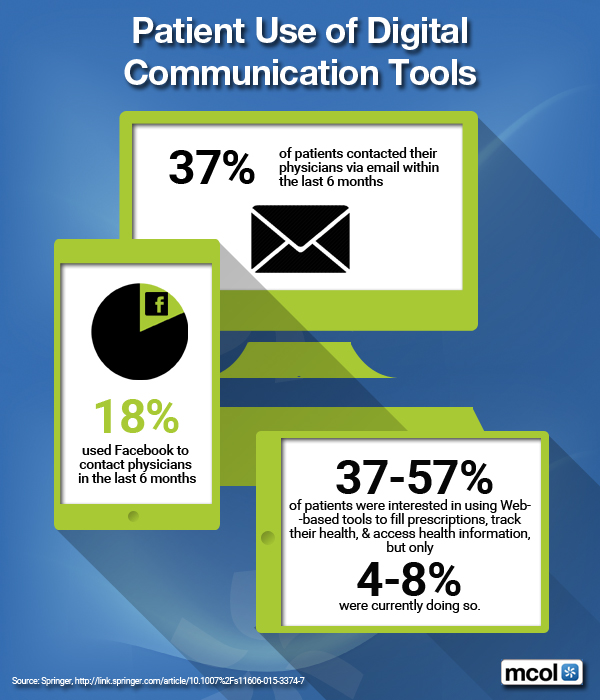
Patient Use of Digital Communication Tools

Join Our Mailing List

An Info-Graphic

http://www.MCOL.com

***

digital tools

***

Conclusion

Your thoughts and comments on this ME-P are appreciated. Feel free to review our top-left column, and top-right sidebar materials, links, URLs and related websites, too. Then, subscribe to the ME-P. It is fast, free and secure.

Speaker: If you need a moderator or speaker for an upcoming event, Dr. David E. Marcinko; MBA – Publisher-in-Chief of the Medical Executive-Post – is available for seminar or speaking engagements. Contact: MarcinkoAdvisors@msn.com

OUR OTHER PRINT BOOKS AND RELATED INFORMATION SOURCES:

Product Details

Product DetailsProduct Details

[Foreword Dr. Phillips MD JD MBA LLM] *** [Foreword Dr. Nash MD MBA FACP]

Calculate the Odds that your Job will be Stolen by a ROBOT?

Join Our Mailing List

What are your chances?

[By staff reporters]

In an increasingly digital world the workforce is becoming more automated than ever before. In this decade we’ve faced the challenge of interactive POS systems impacting the retail employment sector, but what industries are next?

Understanding the future of your job role can help you plan your career path more effectively, and decide if it’s time to change direction.

Using NPR’s handy calculator you can see just how safe your job is from the robots. To save you some time we’ve listed the top industries and their rankings

  • Sales: 99% chance of being automated
  • Accountants: 93.5% chance of being automated
  • Retail: 92.3% chance of being automated
  • Programmers: 48% chance of being automated
  • Housekeeping: 68.8% chance of being automated
  • Lawyer: 3.5% chance of being automated
  • Teaching: >1% chance of being automated

***

Feeling pretty confident? Congratulations!

SplitShire-

Source:

http://www.npr.org/sections/money/2015/05/21/408234543/will-your-job-be-done-by-a-machine

***

Assessment

Even if you are a doctor, nurse, accountant or financial advisor – use the calculator to check it out.

More:

Even More:

The Great and Powerful WOZ Speaks:

Steve Wozniak, Other Geniuses Debate Whether Robots Will Tend To Our Every Whim Or Murder Us

Conclusion

Your thoughts and comments on this ME-P are appreciated. Feel free to review our top-left column, and top-right sidebar materials, links, URLs and related websites, too. Then, subscribe to the ME-P. It is fast, free and secure.

Speaker: If you need a moderator or speaker for an upcoming event, Dr. David E. Marcinko; MBA – Publisher-in-Chief of the Medical Executive-Post – is available for seminar or speaking engagements. Contact: MarcinkoAdvisors@msn.com

OUR OTHER PRINT BOOKS AND RELATED INFORMATION SOURCES:

Risk Management, Liability Insurance, and Asset Protection Strategies for Doctors and Advisors: Best Practices from Leading Consultants and Certified Medical Planners™8Comprehensive Financial Planning Strategies for Doctors and Advisors: Best Practices from Leading Consultants and Certified Medical Planners™

I read and use this book, and several others, from Dr. David Edward Marcinko and his team of advisors.

JOHN KELLEY; DO

More on Physician Suicide

Join Our Mailing List

The Role of Hopelessness, Helplessness and Defeat

Product DetailsProduct Details

Michael Lawrence Langan, M.D.

Boston, Massachusetts

Disrupted Physician

stewart_1

Although no reliable statistics yet exist, anecdotal reports suggest a marked rise inphysician suicide in recent years. From the reports I am receiving it is a lot more than the oft cited “medical school class” of 400 per year.

This necessitates an evaluation of predisposing risk factors such as substance abuse and depression, but also requires a critical examination of what external forces may be involved.  What acute and cumulative situational and psychosocial factors are involved in the descent from suicidal ideation to planning to completion?   What makes suicide a potential option for doctors and what acute events precipitate and trigger the final act?

Depression and Substance Abuse no Different from General Population

The prevalence of depression in physicians is close to that of the general population1,2 and, if one looks critically at the evidence based literature, substance abuse in medical professionals approximates that of the…

View original post 4,094 more words

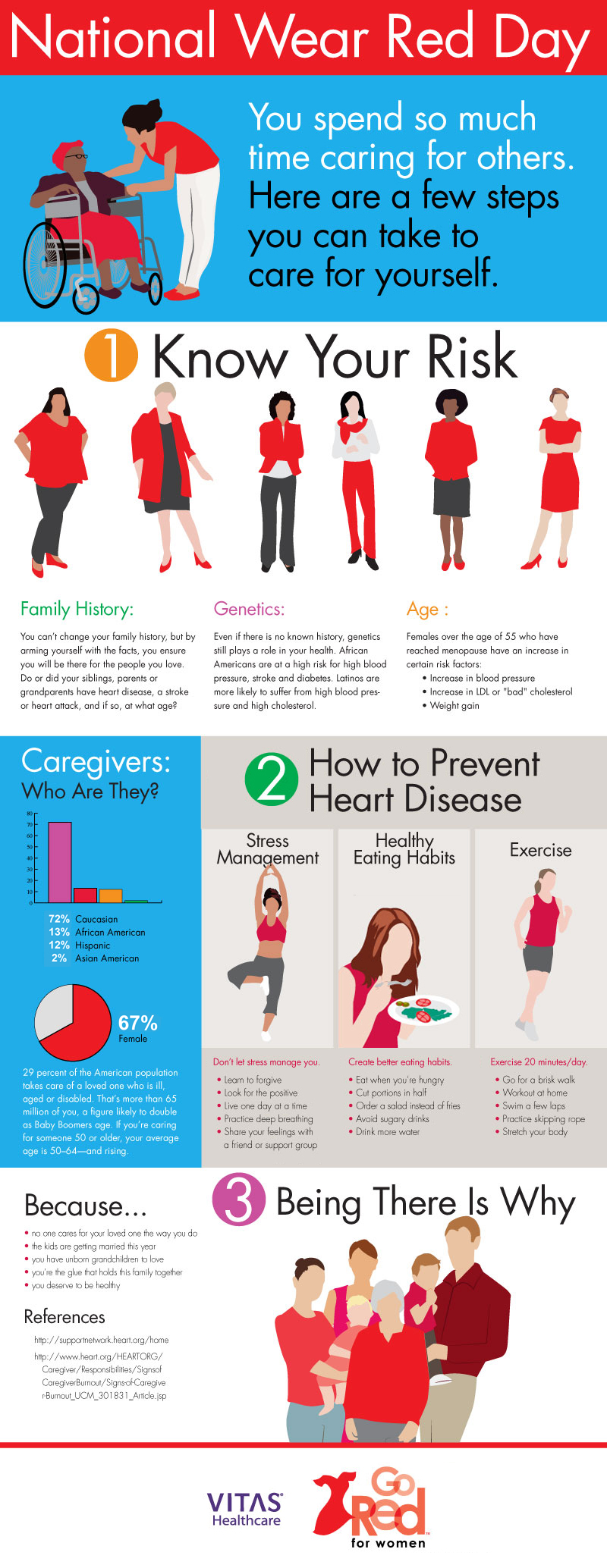
Heart Disease Prevention for Caregivers

[By Samantha Wanner]

Heart disease is the number one killer of women, killing more than all forms of cancer combined. That’s why VITAS Healthcare has partnered with the American Heart Association to raise awareness of heart disease so caregivers can live healthier, longer lives.

As a physician or caregiver, you spend much of your time caring for those around you, and it’s easy to ignore your heart health. When you compromise your health, you compromise the care that you provide to those around you.

***

image

***

Start by Taking Control

Knowledge is power and understanding your family history of heart disease is the first step in understanding your risk.

Lifestyle choices play a major role in heart disease prevention. Make sure you manage your stress levels, develop better eating habits and exercise 20 minutes per day.

You are not alone in your journey to heart health. The American Heart Association is your resource for heart health.

***

heart-health

***

Learn More About Caregiving:

Channel Surfing

Have you visited our other topic channels? Established to facilitate idea exchange and link our community together, the value of these topics is dependent upon your input. Please take a minute to visit. And, to prevent that annoying spam, we ask that you register.

Link: http://feeds.feedburner.com/HealthcareFinancialsthePostForcxos

Conclusion

Your thoughts and comments on this ME-P are appreciated. Feel free to review our top-left column, and top-right sidebar materials, links, URLs and related websites, too. Then, subscribe to the ME-P. It is fast, free and secure.

Speaker: If you need a moderator or speaker for an upcoming event, Dr. David E. Marcinko; MBA – Publisher-in-Chief of the Medical Executive-Post – is available for seminar or speaking engagements. Contact: MarcinkoAdvisors@msn.com

OUR OTHER PRINT BOOKS AND RELATED INFORMATION SOURCES:

Product DetailsProduct Details

About the Institute of Medical Business Advisors, Inc

Join Our Mailing List

Who we are – What we do!

[By Ann Miller RN MHA]

www.MedicalBusinessAdvisors.com

The Institute of Medical Business Advisors, Inc provides a team of experienced, senior level consultants led by iMBA Chief Executive Officer Dr. David Edward Marcinko MBA CMPMBBS [Hon] and President Hope Rachel Hetico RN MHA CMP™ to provide going contact with our clients throughout all phases of each project, with most of the communications between iMBA and the key client participants flowing through this Senior Team.

iMBA Inc., and its skilled staff of certified professionals have many years of significant experience, enjoy a national reputation in the healthcare consulting field, and are supported by an unsurpassed research and support staff of CPAs, MBAs, MPHs, PhDs, CMPs™, CFPs® and JDs to maintain a thorough and extensive knowledge of the healthcare environment.

The iMBA team approach emphasizes providing superior service in a timely, cost-effective manner to our clients by working together to focus on identifying and presenting solutions for our clients’ unique, individual needs.

***

Risk Management and Insurance Foreword for Doctors by Lloyd Krieger MD MBA article-2270211-173CD250000005DC-373_634x447

Financial Planning for Physicians Foreword by Jason Dyken MD MBA

***

Our Team 

The iMBA Inc project team’s exclusive focus on the healthcare industry provides a unique advantage for our clients.  Over the years, our industry specialization has allowed iMBA to maintain instantaneous access to a comprehensive collection of healthcare industry-focused data comprised of both historically-significant resources as well as the most recent information available.

iMBA Inc’s specific, in-depth knowledge and understanding of the “value drivers” in various healthcare markets, in addition to the transaction marketplace for healthcare entities, will provide you with a level of confidence unsurpassed in the public health, health economics, management, administration, and financial planning and consulting fields.

iMBA Inc’s information resources and network of healthcare industry textbook resources enhanced by our professional consultants and research staff, ensure that the iMBA project team will maintain the highest level of knowledge regarding the current and future trends of the specific specialty market related to the project, as well as the healthcare industry overall, which serves as the “foundation” for each of our client engagements.

Comprehensive Financial Planning Strategies for Doctors and Advisors: Best Practices from Leading Consultants and Certified Medical Planners(TM) 

Product Details

Product DetailsProduct Details

Product DetailsProduct DetailsProduct Details


Medical Executive-Post

And, through the balanced collaboration of this rich-media sharing and ranking ME-P forum, we have become a leading network at the intersection of health administration, practice management, medical economics, business strategy and financial planning for doctors and their consulting advisors. Even if not seeking our products or services, we hope this knowledge silo is useful to you.

In the Health 2.0 era of political reform, our goal is to: “bridge the gap between practice mission and financial solidarity for all medical professionals.”

Join the ME-P Nation today … and tell us what you think! 

We are at your service.

Go back

Your message has been sent

Warning
Warning
Warning
Warning

Warning.

2015 Harvard Medical School Class

Join Our Mailing List

Congratulations to the 160 HMS and 37 HSDM

[By staff reporters]

#HarvardMed15

ImageProxy

[By figure1 on Instagram]

Channel Surfing

Have you visited our other topic channels? Established to facilitate idea exchange and link our community together, the value of these topics is dependent upon your input. Please take a minute to visit. And, to prevent that annoying spam, we ask that you register.

Link: http://feeds.feedburner.com/HealthcareFinancialsthePostForcxos

More:

Conclusion

Your thoughts and comments on this ME-P are appreciated. Feel free to review our top-left column, and top-right sidebar materials, links, URLs and related websites, too. Then, subscribe to the ME-P. It is fast, free and secure.

Speaker: If you need a moderator or speaker for an upcoming event, Dr. David E. Marcinko; MBA – Publisher-in-Chief of the Medical Executive-Post – is available for seminar or speaking engagements. Contact: MarcinkoAdvisors@msn.com

OUR OTHER PRINT BOOKS AND RELATED INFORMATION SOURCES:

Product Details

Product DetailsProduct Details

Risk Management, Liability Insurance, and Asset Protection Strategies for Doctors and Advisors: Best Practices from Leading Consultants and Certified Medical Planners™8Comprehensive Financial Planning Strategies for Doctors and Advisors: Best Practices from Leading Consultants and Certified Medical Planners™

Great Book Gifts for Medical School and Health Care Graduates

Join Our Mailing List

[By Staff reporters]

An Educational Resource Supporting Doctors, Universities and Consulting Advisors  

We are an emerging online and onground community that connects medical professionals with financial advisors and management consultants. We participate in a variety of insightful educational seminars, teaching conferences and national workshops. We produce journals, textbooks and handbooks, white-papers, CDs and award-winning dictionaries. And, our didactic heritage includes innovative R&D, litigation support, opinions for engaged private clients and media sourcing in the sectors we passionately serve.

Through the balanced collaboration of this rich-media sharing and ranking forum, we have become a leading network at the intersection of healthcare administration, practice management, medical economics, business strategy and financial planning for doctors and their consulting advisors. Even if not seeking our products or services, we hope this knowledge silo is useful to you.

In the Health 2.0 era of political reform, our goal is to: “bridge the gap between practice mission and financial solidarity for all medical professionals.”

Join the ME-P Nation today … and tell us what you think! 

  ***gifts

***

  OUR BOOKS, TEXTS AND DICTIONARIES ARE VITAL SURVIVAL TOOLS FOR ALL PHYSICIANS … AND THEIR CONSULTING ADVISORS

***

Product Details

Product DetailsProduct Details

       Product DetailsProduct DetailsProduct Details

Risk Management, Liability Insurance, and Asset Protection Strategies for Doctors and Advisors: Best Practices from Leading Consultants and Certified Medical Planners™8Comprehensive Financial Planning Strategies for Doctors and Advisors: Best Practices from Leading Consultants and Certified Medical Planners™

***

Channel Surfing

Have you visited our other topic channels? Established to facilitate idea exchange and link our community together, the value of these topics is dependent upon your input. Please take a minute to visit. And, to prevent that annoying spam, we ask that you register.

Link: http://feeds.feedburner.com/HealthcareFinancialsthePostForcxos

More:

Conclusion

Your thoughts and comments on this ME-P are appreciated. Feel free to review our top-left column, and top-right sidebar materials, links, URLs and related websites, too. Then, subscribe to the ME-P. It is fast, free and secure.

Speaker: If you need a moderator or speaker for an upcoming event, Dr. David E. Marcinko; MBA – Publisher-in-Chief of the Medical Executive-Post – is available for seminar or speaking engagements. Contact: MarcinkoAdvisors@msn.com

OUR OTHER PRINT BOOKS AND RELATED INFORMATION SOURCES:

Join Our Mailing List

Seeking Authors by “Crowd-Sourcing” our Proposed Medical Marketing TextBook

Join Our Mailing List

MEDICAL PRACTICE MARKETING, ADVERTISING, SALES AND COMPETITIVE ANALYSIS

 [Essential Skills for the New Era]

David and HopeWe are an emerging online and onground community that connects medical professionals with financial advisors and management consultants. We participate in a variety of insightful educational seminars, teaching conferences and national workshops. We produce journals, textbooks and handbooks, white-papers, CDs and award-winning dictionaries. And, our didactic heritage includes innovative R&D, litigation support, opinions for engaged private clients and media sourcing in the sectors we passionately serve.

Through the balanced collaboration of this rich-media sharing and ranking forum, we have become a leading network at the intersection of healthcare administration, practice management, medical economics, business strategy and financial planning for doctors and their consulting advisors. Even if not seeking our products or services, we hope this knowledge silo is useful to you.

In the Health 2.0 era of political reform, our goal is to: “bridge the gap between practice mission and financial solidarity for all medical professionals.”

***

th

***

MEDICAL PRACTICE MARKETING, ADVERTISING, SALES AND COMPETITIVE ANALYSIS

And now, we are just working on our newest book proposal: MEDICAL PRACTICE MARKETING MANAGEMENT, ADVERTISING, SALES, COMMUNICATION AND SOCIAL MEDIA SKILLS – [New-Wave Success Strategies for Savvy Doctors]. © IMBA, Inc. All rights reserved.

Format and Style

This is the most journalistic styled book we’ve ever attempted. We’ve already completed about 10 chapters that need updating. They are all fascinating. So, it seems a shame to leave so much great stuff on the cutting room floor. Therefore, we are seeking about 12-15 additional de-novo chapters from you, our esteemed ME-P readers and subscribers.

Crowd-Sourcing the Book

Therefore, for the next few months we will be soliciting author-experts and contributions via this on-line Crowd Sourcing campaign to either update existing chapters; or submit totally new chapters, success stories and essays.

Of course, the existing chapters are more traditional in nature; while de-novo contributions will be more new-wave, innovative and grounding-breaking in their thought leadership marketing ideas.

We are Hoping you Can Help Us

If you have deep knowledge, experience or education in medical marketing; or an amazing story about how new sales, PR or modern channels of advertising distribution [electronic age] are transforming and changing your medical practice, clinic or hospital for the better; please do let us know. Either by posting a comment or emailing Ann, directly.

Tenor and Tone

These kinds of chapters can help bring a subject to life. To give you a sense of the range of topics we’ll be covering, as well as the book’s tone, we’ve pasted below a tentative draft of the Table of Contents. If all goes well, the print hardcover textbook it will be published in about a year.

Table of Contents: © IMBA, Inc. All rights reserved.

TOC(1)

Format Specs and Style Sheet: © IMBA, Inc. All rights reserved.

Author SPECS(1)

Recent ME-P Works: © IMBA, Inc. All rights reserved.

ME-P Text Books

Our Deep Healthcare Niche Notoriety

And, our books have used by professional organizations like the Medical Group Management Association (MGMA), American College of Medical Practice Executives (ACMPE), American College of Physician Executives (ACPE), American College of Emergency Room Physicians (ACEP), Health Care Management Associates (HMA), and PhysiciansPractice.com;

and by academic institutions like the UCLA School of Medicine, Northern University College of Business, Creighton University, Medical College of Wisconsin, University of North Texas Health Science Center, Washington University School of Medicine, Emory University School of Medicine, and the Goizueta School of Business at Emory University, University of Pennsylvania Medical and Dental Libraries, Southern Illinois College of Medicine, University at Buffalo Health Sciences Library, University of Michigan Dental Library, and the University of Medicine and Dentistry of New Jersey, among many others.

All are archived in the Library of Congress, Institute of Health and Library of Medicine.

More on the ME-P Publishing Service

Assessment

Regardless of your decision to contribute, we remain apostles promoting our mutual core interests whenever possible.  And, we are all doing our best to make it a fascinating and important book, and appreciate your help.

If interested in contributing, updating or as a peer reviewer; please contact Ann:

Ann Miller RN MHA [Project Manager]

Institute of Medical Business Advisors, Inc.

MarcinkoAdvisors@msn.com

Conclusion

Your thoughts and comments on this ME-P are appreciated. Feel free to review our top-left column, and top-right sidebar materials, links, URLs and related websites, too. Then, subscribe to the ME-P. It is fast, free and secure.

Speaker: If you need a moderator or speaker for an upcoming event, Dr. David E. Marcinko; MBA – Publisher-in-Chief of the Medical Executive-Post – is available for seminar or speaking engagements. Contact: MarcinkoAdvisors@msn.com

OUR OTHER PRINT BOOKS AND RELATED INFORMATION SOURCES:

Risk Management, Liability Insurance, and Asset Protection Strategies for Doctors and Advisors: Best Practices from Leading Consultants and Certified Medical Planners™8Comprehensive Financial Planning Strategies for Doctors and Advisors: Best Practices from Leading Consultants and Certified Medical Planners™

Help US Make the ME-P even Better 4-U

Join Our Mailing List

Dear Medical Providers, Financial Services Professionals, and Related Management Consultants and ME-P Colleagues,

By Dr. David Edward Marcinko MBA

DEM blue[Editor-in-Chief]

As a professional in the ME-P ecosystem, you have a lot of sources for news, analysis, and insights.

So, we’d like to know which are the best for you.

Please share your opinion about information outlets you value, and what additional information you’d like to receive that you can’t find anywhere else.

We are asking you to take a brief survey about your preferred sources for medical news and related health economics, financial planning and business information. Your input can make a real difference.

Please use the contact-form below. This open-ended online survey will take just a few minutes to complete. Tell us whatever you like!

invite

Thanks for your help – your input really matters!

Go back

Your message has been sent

Warning
Warning
Warning
Warning

Warning.

The Checklist Itself Doesn’t Matter

 Join Our Mailing List

More on the The Checklist Manifesto

By: Mark is an MD/MPH candidate at Columbia University who is interested in the intersection between medicine and public policy, especially as it relates to chronic disease prevention (such as for diabetes, heart disease, and obesity).

***

Anyone who understands systems will know immediately that optimizing parts is not a good route to system excellence.…We connect the engine of a Ferrari, the brakes of a Porsche, the suspension of a BMW, the body of a Volvo. What we get, of course, is nothing close to a great car; we get a pile of very expensive junk.

Chapter 8

london

                                                            Conclusion

Your thoughts and comments on this ME-P are appreciated. Feel free to review our top-left column, and top-right sidebar materials, links, URLs and related websites, too. Then, subscribe to the ME-P. It is fast, free and secure.

Speaker: If you need a moderator or speaker for an upcoming event, Dr. David E. Marcinko; MBA – Publisher-in-Chief of the Medical Executive-Post – is available for seminar or speaking engagements. Contact: MarcinkoAdvisors@msn.com

OUR OTHER PRINT BOOKS AND RELATED INFORMATION SOURCES:
• PRACTICES: http://www.BusinessofMedicalPractice.com
• HOSPITALS: http://www.crcpress.com/product/isbn/9781466558731
• CLINICS: http://www.crcpress.com/product/isbn/9781439879900
• ADVISORS: http://www.CertifiedMedicalPlanner.org

Product DetailsProduct Details

markmdmph

Anyone who understands systems will know immediately that optimizing parts is not a good route to system excellence.…We connect the engine of a Ferrari, the brakes of a Porsche, the suspension of a BMW, the body of a Volvo. What we get, of course, is nothing close to a great car; we get a pile of very expensive junk.” – Chapter 8.

I just finished reading Atul Gawande’s The Checklist Manifesto, which was first published in 2009 and spent some well-deserved time on the New York Times Bestseller List. Written by an attending general surgeon at Brigham & Women’s Hospital in Boston, this book tells the admittedly “unsexy” story of how a simple tool such as a checklist can improve the quality and consistency of outcomes in a wide range of fields: aviation, building construction, venture capital, and (even) medicine. All of these fields are complex systems –…

View original post 820 more words

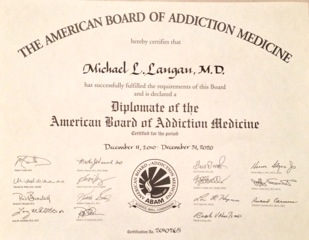
The ASAM/ABAM Diploma Mill

The ASAM/ABAM Diploma Mill

Wesley Boyd; MD PhD MA

[Harvard Medical School]

anguish

***
OUR OTHER PRINT BOOKS AND RELATED INFORMATION SOURCES:
• PRACTICES: http://www.BusinessofMedicalPractice.com
• HOSPITALS: http://www.crcpress.com/product/isbn/9781466558731
• CLINICS: http://www.crcpress.com/product/isbn/9781439879900
• ADVISORS: http://www.CertifiedMedicalPlanner.org

Disrupted Physician

“In a time of universal deceit, telling the truth is a revolutionary act.”
— George Orwell

IMG_6274 2

I can think of no other specialty or subspecialty in the profession of medicine where non-existent expertise can be incontestably announced and implemented.  If I claimed to be an ace neurosurgeon or an expert otolaryngologist and started practicing my claimed skills in the hospital I would be called on it pretty quick by both colleagues and patients–deemed a delusional fraud and run out on a rail within a week.  Both law enforcement, attorneys and psychiatry would be called in short order.

Yet doctors who have not met the usual and customary standards for professional and educational quality that have been identified for medical specialties and subspecialties are able to claim expertise in “addiction medicine” and everybody just lets them.

To make this point I sat for the 2010 American Board of Addiction Medicine Certification Examination.  I did this…

View original post 574 more words

The 2015 – 18 Physician Pay Check-Up

Join Our Mailing List

Annual Medscape Findings

[By Staff Reporters]

***

Medscape2015Report

***

iMBA Inc., Historical Review

[By Hope R. Hetico RN MHA CMP™]

[By Dr. David Edward Marcinko MBA CMP™]

dave-and-hope9

http://www.CertifiedMedicalPlanner.org

SOAR

***

Other MEDICAL Professional SALARIES 

Dentists are Different

A 2003 Survey of Dental Practices reported net income from dentistry-related sources. Dentists differ from physicians in that 90% are in private practice.

In 2002, the average practitioner’s net income was $174,350. The average dental specialist’s net was $291,250. These figures represent a 0.7% and a 5.8% increase over 2001, respectively. Net income rose steadily since 1986, when general dentists made an average of $69,920 and specialists an average of $97,920.

But, by 2010, according to PayScale.com, the average general dentist earned $98,276 – $157,437; a decreasing trend allocated as follows.

Salary $92,689 – $147,682
Bonus $1,996 – $19,727
Profit Sharing $1,038 – $27,514
Commissions $480.74 – $32,500

Source: http://www.ada.org/prof/resources/pubs/dbguide/newdent/income.asp#private

Source: http://www.payscale.com/research/US/Job=Dentist/Salary

dental

So Are Chiropractors

According to Salary.com, the median salary for strictly office-based chiropractors was $78,994 in 2005; while Collegegrad.com reported the median annual earnings of a salaried chiropractor as $65,330 in 2002; with the middle 50% earning between $44,140 and $102,400.

The U.S. Bureau of Labor Statistics estimated chiropractors earned an average salary of $84,020 in 2004. A Chiropractic Economics survey in 2005 suggested mean salary at $104,363.

Another survey, for 2007, in Chiropractic Economics is available here: http://www.chiroeco.com/article/2007/Issue8/images/CES&ESurvey2007.pdf

And, a range of $44,511 – $82,826 was reported in 2010 by PayScale.com, allocated as follows:

Salary $42,106 – $78,129
Bonus $1,008 – $10,205
Profit Sharing $973 – $8,139
Commission $750 – $10,113
Total PayXTotal Pay combines base annual salary or hourly wage, bonuses, profit sharing, tips, commissions, overtime pay and other forms of cash earnings, as applicable for this job. It does not include equity (stock) compensation, cash value of retirement benefits, or the value of other non-cash benefits (e.g. healthcare). $44,511 – $82,826

Source: http://www.payscale.com/research/US/Job=Chiropractor/Salary

Future Doc!

Podiatrist’s Potential Rising

The salary range for a podiatrist, or Doctor of Podiatric Medicine, in 2006 was reported as $128,000 to $292,000 according to http://www.allied-physicians.com/salary_surveys/physician-salaries.htm.

This robust growth was likely due to expanded education, training, and general allopathic and osteopathic acceptance by the medical community, as well as by insurance companies, employers, patients and various governmental agencies and third party payers.

Increased surgical sub-specialization, in-patient hospital and ambulatory out-patient surgical center activity were also positive compensation factors.

***

Ankle-Leg Trauma

***

Conclusion

Your thoughts and comments on this ME-P are appreciated. Feel free to review our top-left column, and top-right sidebar materials, links, URLs and related websites, too. Then, subscribe to the ME-P. It is fast, free and secure.

Speaker: If you need a moderator or speaker for an upcoming event, Dr. David E. Marcinko; MBA – Publisher-in-Chief of the Medical Executive-Post – is available for seminar or speaking engagements. Contact: MarcinkoAdvisors@msn.com

OUR OTHER PRINT BOOKS AND RELATED INFORMATION SOURCES:

Comprehensive Financial Planning Strategies for Doctors and Advisors: Best Practices from Leading Consultants and Certified Medical Planners(TM)

Product DetailsProduct Details

Product Details

More Ideas to Help [Medical] Entrepreneurs

David Cummings on Startups

After giving a tour of the Atlanta Tech Village last week to a C-level executive of a local Fortune 500 company, he asked, enthusiastically, how he could help out. I cited the normal ways like mentoring, hearing curated pitches from startups (see One Way Government Can Help Startups), and spreading the word about the innovation taking place in their own backyard. Then, he asked something else that stuck with me: what are some other ideas you’re considering to help entrepreneurs?

Here are a few more ideas to help entrepreneurs and startups:

  • Host a weekly/monthly AMA (ask me anything) in-person where a successful entrepreneur answers questions (straight Q&A)
  • Lead a regular webinar that’s open to anyone with a different entrepreneurship topic each week (e.g. product management, engineering, sales, marketing, fundraising, etc.)
  • Facilitate an entrepreneur bootcamp program
  • Run more programs to help founders meetup, internship fairs, and domain expert roundtables

Ultimately, increasing the…

View original post 20 more words

An Investor’s Guide to Better Writing

Join Our Mailing List

Seriously?

[By Vitaliy N. Katsenelson, CFA]

ImageProxyI never thought I’d be giving writing advice. I was always the worst student in my literature class in Russia. I never received a grade higher than a C on any Russian essay I ever wrote. I have a theory that my teachers got sick of reading and grading my horrible essays, so they stopped and automatically gave me a passing grade out of pity. I don’t blame them.

When I came to the U.S., my grades in English class in college were not spectacular either; in fact, English was the only class I failed in college and actually had to retake my senior year.

My writing has improved slightly since then – and you, my loyal readers, get to be the judge of my scribbles. However, if the prequalification for giving writing advice was based solely on quantity – on how many words have blackened a perfectly fine white screen or besmirched innocent paper – then I am more than qualified. I have been at it for exactly a decade.

My writing “career” started in 2004 when I was hired as a writer by TheStreet.com. I was not hired because I was good – I wasn’t. But I had an investing background, and TheStreet.com was not very picky; it needed warm bodies (ideally with CFA next to their names) to comment on the markets and stocks. TheStreet.com paid almost nothing, and it was overpaying me.

I had zero experience, but I was ambitious. I took writing very seriously, and therefore my articles were serious. They were filled with big words, and, quite frankly, they were enormously boring. In addition, I was extremely self-conscious about grammar. Sentence structure and punctuation drove me nuts, and I was afraid of confusing words that were spelled similarly but had unrelated meanings (like comma and coma).

***

Typewriter

***

LESSONS LEARNED

This brings me to the first lesson that I want to impart about writing, and it’s one that will drive English teachers insane: Don’t worry about grammar.

Once I stopped worrying about grammar, I felt a huge weight lifted from my shoulders (as all those little punctuation marks emptied themselves from my brain). I completely gave up on a, an and the (my 12-year-old son, who was born here, does a great job fixing those for me), I stopped obsessing about commas (and comas), and I stopped trying to ferret out all the other marvelous secrets of English grammar. I let copy editors – who are very talented and oh so skilled at this – catch me out in all my little peccadilloes. Instead I channel my energy into making writing interesting and funny (if appropriate); this is Lesson No. 2.There are a lot of smart investors, and a lot of them write (just visit the web site Seeking Alpha), but only a small fraction manage to make their writing interesting (again, just visit Seeking Alpha) – and those are the ones who are read more than once.

As I mentioned, when I started writing, my articles were technical and boring. I still feel sorry for the people who read them and especially for my dear friends who felt an obligation to read them.

Then an accident happened. Six months into writing for TheStreet.com, I wrote about the digital video recorder company TiVo. In that article I dared to use a little bit of humor to describe a painful experience I had when I called TiVo’s automated telephone customer service, which did not seem to understand my “slight” Russian accent. To my embarrassment, I had to ask my three-year-old son, who by that time had already acquired a perfect “Disney” accent, to talk to the machine instead, and of course it understood him just fine.

That article was not brilliant – it contained as many or as few insights as my previous articles did – but it was not “proper,” and it was not boring. Suddenly, the feedback from readers was much different – I received a ton of e-mail. Then I understood the power of humor. But it was not just humor: I was able to deliver my otherwise boring message in an interesting way.

I realized that knowing what you want to say is not enough; you need to figure out how to say it.

To this day, I spend hours staring at the computer, trying to come up with an interesting analogy or a compelling angle on how to say something I already know. I often use analogies to tell a story, especially if the topic is complex. They help me relate complex ideas through simple examples.

Let me illustrate. I have a very smart investor friend of German ancestry. True to his roots, he is very efficient in everything he does. (I am stereotyping here, but why not?) He has written a very smart investment book. If you read the whole thing, you’d learn a lot. But that is a big if. His book is as efficient and properly structured as you would expect from a well-engineered German car or an instruction manual for that car. It doesn’t have an extra word or a superfluous sentence. But unfortunately, in the process of making it efficient, he sterilized his book. I was excited to read it but could not get past Chapter 3. I got terminally bored, and I do investments for a living.

Oh, and while we’re on the subject of boredom: Follow novelist Elmore Leonard’s advice when he said, “I try to leave out the parts that people skip.” Don’t try to be descriptive for the sake of being descriptive.

Andrew Blum in 2012 wrote a terrific book called Tubes: A Journey to the Center of the Internet . However, in his other life Andrew is a reporter who covers architecture. His job is to describe inanimate objects. In Tubes he often goes into “descriptive mode,” telling us all about things that do not need to be described. For example, at one point he falls into an exhaustive description of the hotel he stayed in near the Los Angeles International Airport. The hotel room had nothing to do with the story, but he went on and on, describing bars of soap, their colors, the plate they were on and how the sunlight bounced off each one of them.

After making it through the third chapter, I gave up and downloaded the audiobook of Tubes. So maybe Andrew succeeded after all, since I ended up buying two versions of his book. (And I do highly recommend listening to his book if you want to learn about the Internet.)

It took a while for my writing style to develop. A big part of its development came through reading great writers. The two people who had the most impact on me were John Mauldin and Cliff Asness.

John needs no introduction, as his economics newsletter (Mauldin Economics) is read by millions. He has a gift for explaining complex investment topics simply, but he also invites you into his life. He shares stories about the trips he takes and the people he meets; he talks about his kids and their travails, his lack of time for the gym and his penchant for cooking mushrooms. When you read him, you feel as if he’s writing for you – just you. This is different from fiction writing, in which the author’s fingerprints are hidden.

Cliff Asness has had a tremendous impact on me as well. Cliff is a hedge fund manager; he runs the large quant firm AQR Capital Management in Greenwich, Connecticut. Cliff has an incredible gift for being witty. Back in 2005 I read a paper by Cliff discussing the most boring topic on earth: the expensing of employee stock options. At the time, companies did not consider them an expense. Cliff argued that the companies were wrong and needed to show the options on their income statements, just like any other expense.

I had written on the same topic just a few months before, making a similar point. But after I read his paper, I sent Cliff an e-mail with the subject line “I am not worthy.” Cliff’s paper was published in the most boring finance magazine in the whole universe: Financial Analysts Journal (every article in it is full of geeky Greek symbols). To my astoundment, Cliff was able to inject humor where I thought it was not possible. I wrote a very boring, unmemorable article on stock options; Cliff wrote a great, funny article on the same topic that I still remember today.

John Mauldin showed me through his writing that it’s okay to be personal, and Cliff proved it is okay to be funny. No, Cliff proved that you must be funny when you discuss boring topics – this is how you make the reader stick with it. Lesson No. 3: Identify your favorite writers, the ones whose voices you can really relate to, and learn from them.

I could relate to John’s and Cliff’s writings because they fit my personality and my natural writing style. They liberated me from being sanitized, impersonal and boring.

A sublesson here is, Read to write. When you read, always have your writer’s hat on, and pay attention not just to content but to the quality of the writing as well. That is not something that comes automatically to most of us; we have to manually hit the “on” switch.

Lesson No. 4: Be respectful of your environment. This is not an ecological statement; I am talking about your writing environment. If you write long enough, you start to appreciate the importance of your external and internal environment. Stephen King, in his terrific book On Writing: A Memoir on the Craft , said that he listens to heavy metal band AC/DC when he writes; he feels it walls him off from the external world and helps him build his own worlds. I listen to classical music, and if I am really stuck, I start listening to opera.

And if that weren’t weird enough, I write only in italics. This little trick makes my letters look a bit friendlier to me. If you find that you like your font to be pink, go for it. We writers need any edge we can get, and you can always change back to a color and format that is acceptable to society when you are done.

The final lesson: Be prepared for pain – or maybe not. Writing is a very personal process. Some of us are great thinkers, able to puzzle through very complex ideas in our heads and lay them out logically on paper. I have tremendous respect for those lucky ones. For most of us, present company included, writing is usually a painful endeavor that involves staring at a blank screen for hours on end and writing and rewriting multiple times.

In fact, let me take it a step farther: I think through writing. A quote from George Bernard Shaw comes to mind: “Few people think more than two or three times a year; I have made an international reputation for myself by thinking once or twice a week.”

If you ask me a question about something I have not thought about before, even if you give me a minute to think about it, my answer will usually, well … suck. I have not written about that topic yet, and so I may not have thought it through, and the logical links may not have been made. That’s just how my mind operates.

Quite frankly, I am embarrassed for my brain. It’s like the dirty apartment of a confirmed bachelor, with unwashed clothes, empty pizza boxes and beer bottles all over the floor. For an idea to be developed to the point at which it can leave the room, I have to clean it up, organize it, put things in their rightful place. That is why I write – sorry, dear reader, it’s not about you; it’s about me, me and me again.

***

money

***

More:

ASSESSMENT

Writing is not a linear process, and when you sit down to write, your thoughts may not be quite ready to come out – it’s okay if they just haven’t come to a boil yet. Don’t blame it on writer’s block. Author Tom Clancy once said, “Writer’s block is just an official term for being lazy, and the way to get through it is work.” Just take some time off, do something fun and then get back on the writing horse.

ABOUT

Vitaliy N. Katsenelson, CFA, is Chief Investment Officer at Investment Management Associates in Denver, Colo. He is the author of The Little Book of Sideways Markets (Wiley, December 2010). To receive Vitaliy’s future articles by email or read his articles click here.

Investment Management Associates Inc. is a value investing firm based in Denver, Colorado. Its main focus is on growing and preserving wealth for private investors and institutions while adhering to a disciplined value investment process, as detailed in Vitaliy’s book Active Value Investing (Wiley, 2007).

Conclusion

Your thoughts and comments on this ME-P are appreciated. Feel free to review our top-left column, and top-right sidebar materials, links, URLs and related websites, too. Then, subscribe to the ME-P. It is fast, free and secure.

Speaker: If you need a moderator or speaker for an upcoming event, Dr. David E. Marcinko; MBA – Publisher-in-Chief of the Medical Executive-Post – is available for seminar or speaking engagements. Contact: MarcinkoAdvisors@msn.com

OUR OTHER PRINT BOOKS AND RELATED INFORMATION SOURCES:

Comprehensive Financial Planning Strategies for Doctors and Advisors: Best Practices from Leading Consultants and Certified Medical Planners(TM)

Healthcare Use Among High-Cost Patients

Join Our Mailing List

In the VA Healthcare System

By http://www.MCOL.com

***

VA

***

More: Is the VA Worth Saving?

Conclusion

Your thoughts and comments on this ME-P are appreciated. Feel free to review our top-left column, and top-right sidebar materials, links, URLs and related websites, too. Then, subscribe to the ME-P. It is fast, free and secure.

Speaker: If you need a moderator or speaker for an upcoming event, Dr. David E. Marcinko; MBA – Publisher-in-Chief of the Medical Executive-Post – is available for seminar or speaking engagements. Contact: MarcinkoAdvisors@msn.com

OUR OTHER PRINT BOOKS AND RELATED INFORMATION SOURCES:

Product DetailsProduct Details

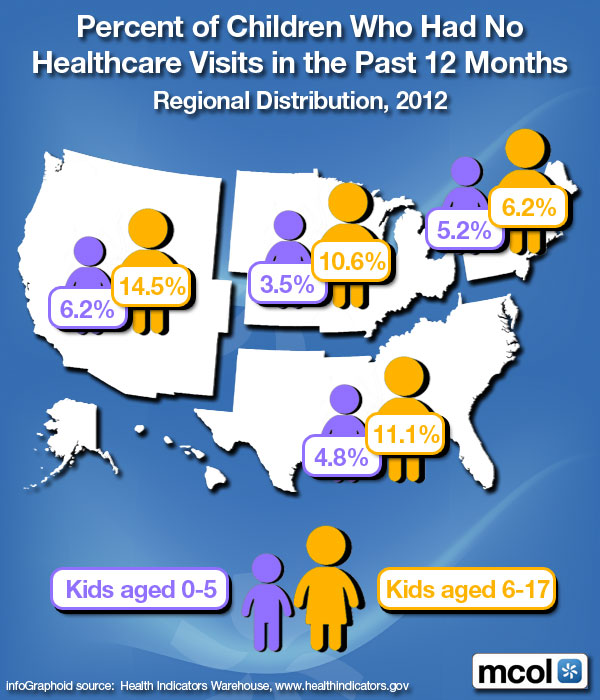
Children with NO Healthcare Visits within 12 Months

Join Our Mailing List

Regional Distribution 2012

By http://www.MCOL.com

ImageProxy

Speaker: If you need a moderator or speaker for an upcoming event, Dr. David E. Marcinko; MBA – Publisher-in-Chief of the Medical Executive-Post – is available for seminar or speaking engagements. Contact: MarcinkoAdvisors@msn.com

OUR OTHER PRINT BOOKS AND RELATED INFORMATION SOURCES:

Product DetailsProduct Details

Syphilis Is Surging!

Join Our Mailing List 

Public Health Officials Aren’t Sure Why?

[By Staff Reporters]

Nationwide, the CDC reports that primary and secondary syphilis rates increased by 10 percent between 2012 and 2013—an infection rate more than twice as high as figures from 2001.

Geography

The Atlanta, Baltimore, Detroit, Los Angles, Miami, Orlando, Portland, San Antonio, San Diego and San Francisco metro areas have some of the highest syphilis rates, according to the CDC.

In the San Francisco Bay area, reported cases rose from 438 in 2009 to 814 in 2013. In Washington, D.C., Dr. Raymond C. Martins, senior director of clinical education at Whitman-Walker Health,says that the clinic saw a 32 percent increase in syphilis cases among patients between 2011 and 2014.

And, in recent months, at least 15 cases of ocular syphilis, a serious complication of the disease that can cause blindness, have been reported in California and Washington state, according to an alert released earlier this month by the CDC.

***

PCN

***

Assessment

Most of these infections have occurred among HIV-positive men who have sex with men.

Link: http://www.msn.com/en-us/news/us/syphilis-is-surging-and-us-public-health-officials-arent-sure-why/ar-AAb3qBf?ocid=iehp

More:

Even More: Antibiotic Shortages on the Rise in US

Conclusion

Your thoughts and comments on this ME-P are appreciated. Feel free to review our top-left column, and top-right sidebar materials, links, URLs and related websites, too. Then, subscribe to the ME-P. It is fast, free and secure.

Speaker: If you need a moderator or speaker for an upcoming event, Dr. David E. Marcinko; MBA – Publisher-in-Chief of the Medical Executive-Post – is available for seminar or speaking engagements. Contact: MarcinkoAdvisors@msn.com

OUR OTHER PRINT BOOKS AND RELATED INFORMATION SOURCES:

Product DetailsProduct DetailsProduct Details

Enter the ROBO Financial & Medical Advisors

Join Our Mailing List 

Machines will Rule … Soonest?

[By Dr. David Edward Marcinko MBA CMP™]

DEM white  shirtMachines beat humans at chess. Machines can pilot airplanes to land at O’Hare; or on Mars. There is now a machine that beats the best of us at Jeopardy.

And, many predict that an Artificial Intelligent medical clinician is ten years away.

Just think tele-medicine and tele-health.

And, no one will use a biological doctor in twenty five years. Then, of course, enter the singularity*.

Innovation

I’m not sure who said it first, but this quote has been floating around Twitter lately:

“In 2015 Uber, the world’s largest taxi company owns no vehicles, Facebook the world’s most popular media owner creates no content, Alibaba, the most valuable retailer has no inventory, and Airbnb, the world’s largest accommodation provider owns no real estate.”

Assessment

Fundamental assumptions about what is needed to be a successful doctor, financial advisor, or other business has changed in just the last few years.

So – I ask MD and FA colleagues – will you keep up professionally, or fall behind? What are the ethical implications of these technology innovations; if any?

***

robot

[Vanguard’s “Robo Advisor” – Good for Clients but Bad for Advisors?] 

***

More:

Even More:

Note: From Wikipedia, the free encyclopedia.

The Singularity

The technological singularity is the hypothesis that accelerating progress in technologies will cause a runaway effect wherein artificial intelligence will exceed human intellectual capacity and control, thus radically changing civilization in an event called “the singularity”.[1] Because the capabilities of such an intelligence may be impossible for a human to comprehend, the technological singularity is an occurrence beyond which events may become unpredictable, unfavorable, or even unfathomable.[2]

The first use of the term “singularity” in this context was by mathematician John von Neumann. In 1958, regarding a summary of a conversation with von Neumann, Stanislaw Ulam described “ever accelerating progress of technology and changes in the mode of human life, which gives the appearance of approaching some essential singularity in the history of the race beyond which human affairs, as we know them, could not continue”.[3] The term was popularized by science fiction writer Vernor Vinge, who argues that artificial intelligence, human biological enhancement, or brain–computer interfaces could be possible causes of the singularity.[4] Futurist Ray Kurzweil cited von Neumann’s use of the term in a foreword to von Neumann’s classic The Computer and the Brain.

Proponents of the singularity typically postulate an “intelligence explosion”,[5][6] where superintelligences design successive generations of increasingly powerful minds, that might occur very quickly and might not stop until the agent’s cognitive abilities greatly surpass that of any human.

Kurzweil predicts the singularity to occur around 2045[7] whereas Vinge predicts some time before 2030.[8] At the 2012 Singularity Summit, Stuart Armstrong did a study of artificial general intelligence (AGI) predictions by experts and found a wide range of predicted dates, with a median value of 2040. Discussing the level of uncertainty in AGI estimates, Armstrong said in 2012, “It’s not fully formalized, but my current 80% estimate is something like five to 100 years.”[9]

***

eye

***

Conclusion

Your thoughts and comments on this ME-P are appreciated. Feel free to review our top-left column, and top-right sidebar materials, links, URLs and related websites, too. Then, subscribe to the ME-P. It is fast, free and secure.

Speaker: If you need a moderator or speaker for an upcoming event, Dr. David E. Marcinko; MBA – Publisher-in-Chief of the Medical Executive-Post – is available for seminar or speaking engagements. Contact: MarcinkoAdvisors@msn.com

OUR OTHER PRINT BOOKS AND RELATED INFORMATION SOURCES:

Comprehensive Financial Planning Strategies for Doctors and Advisors: Best Practices from Leading Consultants and Certified Medical Planners(TM) 

The Best National Public Health Weeks Ever!

Join Our Mailing List

Georges C. Benjamin MD
[APHA Executive Director]

Dear David,

Thank you! This was one of the best National Public Health Weeks ever! Millions of people around the country were involved and learned about Healthiest Nation 2030. More people celebrated the benefits of public health, read about public health, attended events, sent letters to Congress or interacted on social media than we’ve seen in years.

To cap it off, the U.S. Senate passed a resolution supporting our vision of creating the healthiest nation in one generation!

ImageProxy

Let’s build on the momentum!

We need everyone to understand the challenges we face in creating the healthiest nation and the role we all play in getting there. Please, let’s all take one more step to keep the conversation going.

View and share the webcast “Raising the Grade”
View a recording of APHA President Shiriki Kumanyika, Dr. Gail Christopher and our panel of experts as they discuss opportunities that exist and challenges we need to overcome to create the healthiest nation.

Share the healthiest nation infographic
Do your friends and family know that the U.S. is far from the best in most measures of health when compared to other high-income countries? We’ve created a simple infographic that shows our challenges and what we all need to do to improve it. Share it today!

Now’s the time to submit your NPHW news to The Nation’s Health!
We know that held great events during National Public Health Week 2015. So how about letting the rest of the nation know?

The Nation’s Health will feature coverage of events held around the nation in its July issue, and your news and photos could be part of it. See The Nation’s Health website for full submission details. The deadline has been extended to April 20. Don’t delay!

Inspire people to take action
Are you doing something to help create the healthiest nation? Enter our “We Can Do Better” contest. Show us what you are doing to create the healthiest nation with a photo, video, meme or just describing an activity. You can win $100, and we’ll share your entries on APHA’s website to inspire others.

Lead by example
Thousands of people have taken the first step on the path to the healthiest nation by pledging to “create a healthier me” and “create a healthier we.” Have you signed the healthiest nation pledge yet? Have you shared it family, friends and colleagues?

To be successful, we need to focus on the social determinants of health, form broader partnerships and build a movement for change. Together, we can become the healthiest nation!

Sincerely,
Georges C. Benjamin MD

Conclusion

Your thoughts and comments on this ME-P are appreciated. Feel free to review our top-left column, and top-right sidebar materials, links, URLs and related websites, too. Then, subscribe to the ME-P. It is fast, free and secure.

Speaker: If you need a moderator or speaker for an upcoming event, Dr. David E. Marcinko; MBA – Publisher-in-Chief of the Medical Executive-Post – is available for seminar or speaking engagements. Contact: MarcinkoAdvisors@msn.com

OUR OTHER PRINT BOOKS AND RELATED INFORMATION SOURCES:

Product DetailsProduct Details

The Medical Painting Gallery of HCC, LLC

Join Our Mailing List

A Digital Medical Painting Gallery GOOD FRIDAY Review

Courtesy Robert James Cimasi; MHA ASA FRICs MCBA AVA CM&AA CMP™

[Health Capital Consultants, LLC]

***

OK; I was never much of a liberal arts guy in my younger days; despite my Jesuit education at Loyola University. Always more of a modified STEM scientist.

Still, I remember the first time I learned of this famous painting in college, then medical school [a requirement of all anatomy students, worldwide]. So, imagine how blessed I felt when I viewed the original when I visited Amsterdam … chilling!

And, this painting and entire gallery seems an appropriate ME-P for Good Friday 2015.

David Edward Marcinko

***

The Anatomy Lesson of Dr. Nicolaes Tulp

Rembrandt (1606–1669)

[1632: commissioned by Chirurgijnsgilde, Amsterdam]

***

CLICK FOR MORE:

http://www.healthcapital.com/resources/medical-painting-gallery

Assessment

Paintings are part of the collection of the U.S. National Library of Medicine. 

Conclusion

Your thoughts and comments on this ME-P are appreciated. Feel free to review our top-left column, and top-right sidebar materials, links, URLs and related websites, too. Then, subscribe to the ME-P. It is fast, free and secure.

Speaker: If you need a moderator or speaker for an upcoming event, Dr. David E. Marcinko; MBA – Publisher-in-Chief of the Medical Executive-Post – is available for seminar or speaking engagements. Contact: MarcinkoAdvisors@msn.com

OUR OTHER PRINT BOOKS AND RELATED INFORMATION SOURCES:

Comprehensive Financial Planning Strategies for Doctors and Advisors: Best Practices from Leading Consultants and Certified Medical Planners(TM)

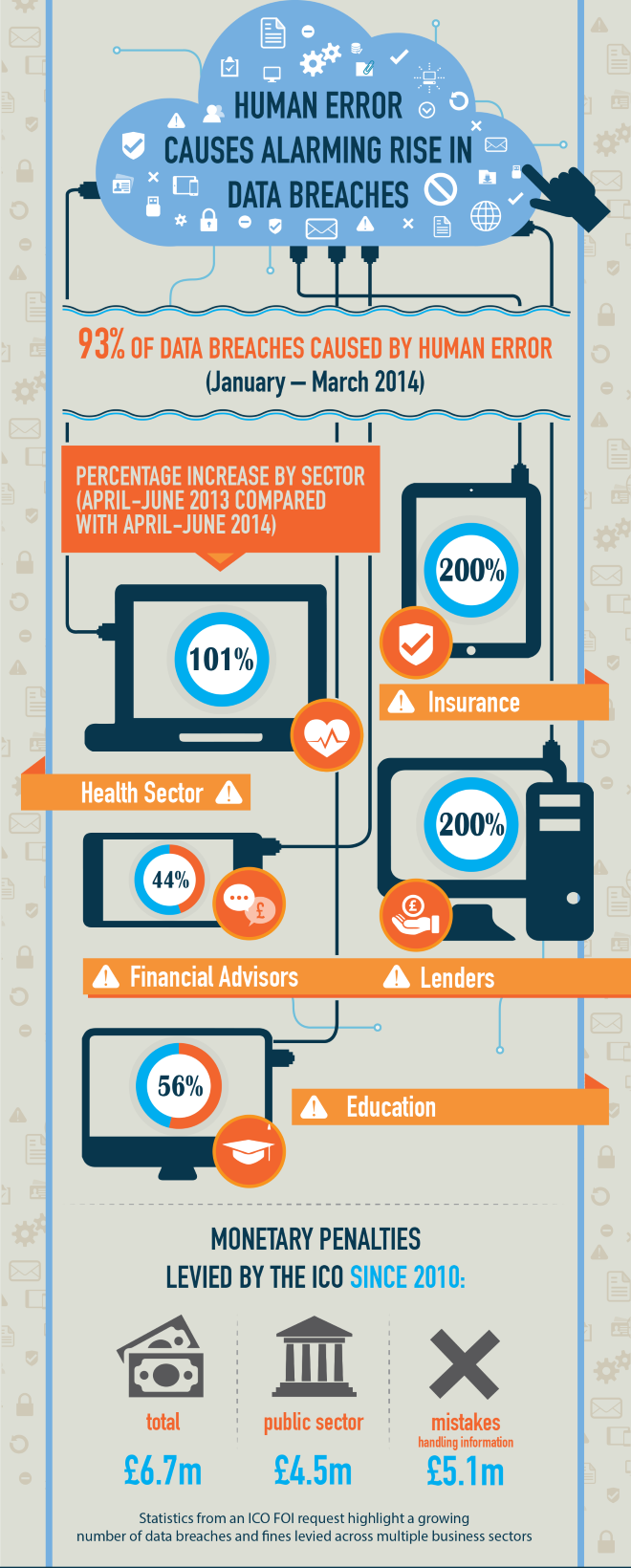
Human error causes alarming rise in data breaches

Join Our Mailing List 

For the Insurance, Healthcare, Education, and Financial Services Sectors

[By Egress Software Technologies]

http://www.egress.com

Human error causes alarming rise in the number of data breaches and resulting monetary penalties, according to ICO FOI request carried out by Egress Software Technologies.

***

humanerror_infog_noheader_page

***

PC bug

[Blame Human Error – Not Hardware Bugs]

***

More:

Conclusion

Your thoughts and comments on this ME-P are appreciated. Feel free to review our top-left column, and top-right sidebar materials, links, URLs and related websites, too. Then, subscribe to the ME-P. It is fast, free and secure.

Speaker: If you need a moderator or speaker for an upcoming event, Dr. David E. Marcinko; MBA – Publisher-in-Chief of the Medical Executive-Post – is available for seminar or speaking engagements. Contact: MarcinkoAdvisors@msn.com

OUR OTHER PRINT BOOKS AND RELATED INFORMATION SOURCES:

Product DetailsProduct DetailsProduct Details

Seeking Authors by “Crowd-Sourcing” our Proposed Medical Marketing TextBook

Join Our Mailing List

Seeking Authors by “Crowd-Sourcing” our Proposed Medical Marketing TextBook

SOAR

MEDICAL PRACTICE MARKETING MANAGEMENT, ADVERTISING, SALES, COMMUNICATION AND SOCIAL MEDIA SKILLS

[New-Wave Success Strategies for Savvy Doctors]

Comprehensive Financial Planning Strategies for Doctors and Advisors: Best Practices from Leading Consultants and Certified Medical Planners(TM)

Product Details

Go back

Your message has been sent

Warning
Warning
Warning
Warning

Warning.

Certified Medical Planner™ Program “In-the-News”

Join Our Mailing List

Post-CFP® Subject Matter Expertise

By Ann Miller RN MHA [iMBA Inc., Executive Director]

Mike Kitces MSFS, MTAX, CFP®, CLU, ChFC, RHU, REBC an uber-financial services blogger over at www.Kitces.com had this to say about us in a recent essay: Finding Your Niche Or Specialization With Post-CFP Designations

The News Essay

CMP (Certified Medical Planner) – The CMP™ designation was created by Dr. David Edward Marcinko MBA CMP™ [reformed CFP®] and the team at the Institute of Medical Business Advisors, Inc., (who also produced the “Financial Planning Handbook for Physicians and Advisors“). It is intended for advisors who aim specifically to serve physicians and the medical community. Content focuses not only on the insurance and investment issues relevant to physicians, but also provides an understanding of the business of medical practices themselves so advisors can help work with their physician clients to have more successful businesses as well.

CMP™ Practitioner Testimonials

I am happy to give my unbiased, unpaid opinion on the CMP™ program to anyone considering the course.

David K. Luke MS-PFP, MIM, CMP™ [Net Worth Advisory Group]

9980 South 300 West, Suite 110 Sandy, Utah 84070

david.luke@networthadvice.com

###

cmp-program1

###

CMP™ Practitioner Testimonials

I am in favor and support the CMP™ program and curriculum … but just like any other academic curriculum, it is an “accretive academic” program rather than an instant “change of life” program.  I use the material that I learned on a regular basis, but I cannot say that I use it every day.  You will be more able to “talk-the- talk” of the physicians if you have completed the CMP™ curriculum. I would do it again!

Savant recently hired a physician, Dr. Brian Knabe MD as an advisor. He is leaving the medical field, transitioning out, and entering the field of financial services. He has enrolled in this curriculum. Let me know if you wish to discuss.

Thomas A. Muldowney MSFS CFP® ChFC CLU CRC CMP® AIF®

[Savant Capital Management, Inc®]

190 Buckley Drive – Rockford, IL 61107 Tel 815-227-0300 – Fax 815-226-2195

Tmuldowney@savantcapital.com

caution

Assessment:

Link: What Comes After CFP Certification? Finding Your Niche Or Specialization With Post-CFP Designations

Visit: www.CertifiedMedicalPlanner.org

Visit: Enter the CMPs

Conclusion

Your thoughts and comments on this ME-P are appreciated. Feel free to review our top-left column, and top-right sidebar materials, links, URLs and related websites, too. Then, subscribe to the ME-P. It is fast, free and secure.

Link: http://feeds.feedburner.com/HealthcareFinancialsthePostForcxos

Speaker: If you need a moderator or speaker for an upcoming event, Dr. David E. Marcinko; MBA – Publisher-in-Chief of the Medical Executive-Post – is available for seminar or speaking engagements. Contact: MarcinkoAdvisors@msn.com

OUR OTHER PRINT BOOKS AND RELATED INFORMATION SOURCES:

Product DetailsProduct DetailsProduct Details

Product Details  Product Details

Product DetailsProduct Details

Product Details

Our Healthcare Referral System is Broken

Join Our Mailing List

About the Management Process

[By Staff Reporters]

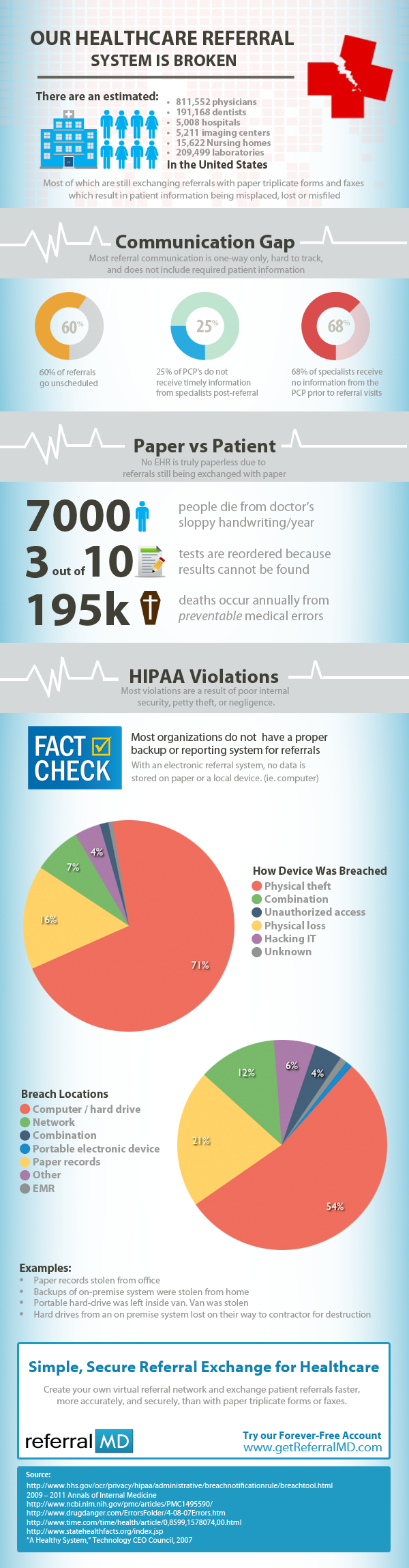
Our healthcare referral system is broken, according to Referral MD. The firm reviews some of the key factors that contribute to this system.

The Paper Trail

The following infographic highlights a key pain point in the healthcare referral system management process that despite healthcare providers adopting an EMR system, they are still utilizing paper.

A large percentage of processes in healthcare involve documents and forms that must be scanned and stored outside their existing EMR system such as records from referring physicians, patient consent forms, patient instructions, insurance authorization, etc.

Assessment

With so much paper still floating around, opportunities for HIPAA violations increase with as high as 86% of mistakes made in the healthcare industry stem from administrative activities.

Conclusion

Your thoughts and comments on this ME-P are appreciated. Feel free to review our top-left column, and top-right sidebar materials, links, URLs and related websites, too. Then, subscribe to the ME-P. It is fast, free and secure.

Speaker: If you need a moderator or speaker for an upcoming event, Dr. David E. Marcinko; MBA – Publisher-in-Chief of the Medical Executive-Post – is available for seminar or speaking engagements. Contact: MarcinkoAdvisors@msn.com

OUR OTHER PRINT BOOKS AND RELATED INFORMATION SOURCES:

Product Details

How Much Will a Ticket Raise Your Car Insurance Rates?

Join Our Mailing List

GMAC Survey Results

Be careful out there! A GMAC survey revealed that 1 in 5 drivers would not pass the written driver’s test if they took it today.

And, getting a ticket will raise your car insurance rate, but by how much?

Reckless Driving

We found that reckless driving triggers the highest hike — an average increase of 22 percent — yet many drivers aren’t even sure what constitutes reckless driving? Depending on state laws, reckless driving can be defined as: driving over 80 mph, driving too fast for weather conditions, knowingly driving in a way that endangers others.

Assessment

Above, we present 14 common traffic violations, along with the average percent increase to car insurance premiums.

Brought to you by: www.insurance.com

Conclusion

Your thoughts and comments on this ME-P are appreciated. Feel free to review our top-left column, and top-right sidebar materials, links, URLs and related websites, too. Then, subscribe to the ME-P. It is fast, free and secure.

Speaker: If you need a moderator or speaker for an upcoming event, Dr. David E. Marcinko; MBA – Publisher-in-Chief of the Medical Executive-Post – is available for seminar or speaking engagements. Contact: MarcinkoAdvisors@msn.com

OUR OTHER PRINT BOOKS AND RELATED INFORMATION SOURCES:

Comprehensive Financial Planning Strategies for Doctors and Advisors: Best Practices from Leading Consultants and Certified Medical Planners(TM) 

How Health Reform Could Expand Medicaid

Join Our Mailing List

PP-ACA Results State-by-State

By Lena Groeger
ProPublica

Experts estimate that nearly 16 million Americans could be added to the Medicaid rolls by 2019 under an expansion in the Affordable Care Act. But, the Supreme Court ruled last Thursday that states can opt out without risk of losing federal support for Medicaid, raising the stakes that some may do so.

The Big Picture

Here is a look at forecast growth in state Medicaid rolls under the expansion. Twenty-six challenged the act in court.

IMAGE LINK: http://www.propublica.org/special/state-by-state-how-health-reform-could-expand-medicaid

Related: Mystery After the Health Care Ruling: Which States Will Refuse Medicaid Expansion?

Conclusion

Your thoughts and comments on this ME-P are appreciated. Feel free to review our top-left column, and top-right sidebar materials, links, URLs and related websites, too. Then, subscribe to the ME-P. It is fast, free and secure.

Speaker: If you need a moderator or speaker for an upcoming event, Dr. David E. Marcinko; MBA – Publisher-in-Chief of the Medical Executive-Post – is available for seminar or speaking engagements. Contact: MarcinkoAdvisors@msn.com

OUR OTHER PRINT BOOKS AND RELATED INFORMATION SOURCES:

Product Details

Taxes and the SCOTUS ACA Decision

Join Our Mailing List

My Synopsis for Physician Investors

By Dr. David Edward Marcinko FACFAS MBA CMP™

www.CertifiedMedicalPlanner.org

[Publisher-in-Chief]

I was at Emory University this past weekend for an unrelated colloquium. But all the chatter, of course, was about SCOTUS, taxes and the just announced ACA decision.

Most doctors I know – just don’t like paying needless taxes. So, what’s the buzz for physicians and other medical professional investors, and their financial advisors [FAs]?

The Synopsis

The taxes to pay for the Affordable Care Act include a new tax on medical devices that will increase costs to individuals and healthcare providers.

There also is a new 3.8% Medicare tax. It applies in 2013 to income and capital gains.

If the expected post-election tax bill extends the current 15% capital gain rate, then the capital gains tax rate will be 18.8% in 2013. However, if the 15% federal capital gains tax rate is increased to 20%, then the new rate in January of 2013 will be 23.8%.

In addition to dividend seeking investors, the increase in capital gains rate may also influence charitable gifts of appreciated property in 2013.

Assessment

Please weigh-in all you FAs and healthcare focused CPAs. What is a physician investor supposed to do, now?

Conclusion

Your thoughts and comments on this ME-P are appreciated. Feel free to review our top-left column, and top-right sidebar materials, links, URLs and related websites, too. Then, subscribe to the ME-P. It is fast, free and secure.

Speaker: If you need a moderator or speaker for an upcoming event, Dr. David E. Marcinko; MBA – Publisher-in-Chief of the Medical Executive-Post – is available for seminar or speaking engagements. Contact: MarcinkoAdvisors@msn.com

OUR OTHER PRINT BOOKS AND RELATED INFORMATION SOURCES:

Product Details

How the ME-P Helps Doctors Avoid Malpractice Lawsuits and Related Litigation

ADVERTISEMENT

Join Our Mailing List 

Insurance and Risk Management Strategies for Physicians and Advisors

  Risk Management, Liability Insurance, and Asset Protection Strategies for Doctors and Advisors: Best Practices from Leading Consultants and Certified Medical Planners™

Conclusion

And so, your thoughts and comments on this ME-P are appreciated. Please review our top-left column, and top-right sidebar materials, links, URLs and related websites, too. Then, subscribe to the ME-P. It is fast, free and secure.

Link: http://feeds.feedburner.com/HealthcareFinancialsthePostForcxos

Speaker: If you need a moderator or speaker for an upcoming event, Dr. David E. Marcinko; MBA – Publisher-in-Chief of the Medical Executive-Post – is available for seminar or speaking engagements. Contact: MarcinkoAdvisors@msn.com

***

TESTIMONIAL

 Physicians are all too familiar with the risks and liabilities inherent in the clinical practice of medicine. An exploding scientific literature, increasing sub-specialization, and a public awareness of “quality healthcare” have challenged conventional practice. Some of our colleagues have a very personal understanding of issues like illness, divorce and disability that accompany these professional challenges. Physician executives perceive even greater threats arising not only from the innumerable personal and professional issues of a singular practice, but also the complexities associated with operating a healthcare organization including personnel agreements, conflict mediation, and asset protection.

Understanding the risks associated with these very divergent areas and providing useful information to protect the physician from liability are the primary aims of Dr. David Marcinko’s latest book, Insurance and Risk Management Strategies For Physicians and Advisors.

This book is an excellent primer for physicians of all levels and interests providing important personal and professional advice. It is “must reading” for all medical students who need a fundamental understanding of the current healthcare environment and is equally important to the established physician executive looking for a reference on topics like capitation or the Health Insurance Portability and Accountability Act (HIPAA).

The book begins with a discussion of personal issues for the physician including life, homeowner’s and disability insurance as well as the financial and professional risks associated with divorce. Next the physician’s practice is considered with clear and concise coverage of issues ranging from documentation to business operations. Of importance, the book extends beyond the first layer of practice management to address important topics like sexual harassment and workplace violence.

Dr. David E. Marcinko and his twenty authors from http://www.MedicalBusinessAdvisors.com are all knowledgeable contributors. They have prepared a product that is excellent in its content and organization. The book is organized in a way that is highly useful for a busy practitioner. Topics are introduced without the overuse of jargon and more than adequately explained. There are numerous subheadings and bulleted lists to assist the reader with moving through the text or highlighting a particular topic. Robust examples throughout the book provide the reader with an applied knowledge that complements the didactic sections. The book is well referenced for more in-depth reading on a particular topic with materials from both the written and electronic media.

Of its few limitations, Insurance and Risk Management Strategies For Physicians and Advisors ambitiously attempts to briefly cover a large number of topics. For the most part, this is accomplished well. However, some of the topics were unexpected by the book’s title. While the physician executive will still require a financial or insurance advisor after reading this book, this well written text assists in providing the necessary background on what type of assistance is needed. As a result, physician executives will be in a better position to address insurance, risk management, and financial decisions for themselves, their families, their practices or the organizations they lead.

David C. Stockwell, MD

Anthony D. Slonim, MD, MPH

ORDER HERE 

Buy from Amazon

Is Malta a Hedge Fund Haven?

Join Our Mailing List 

Island in the Mediterranean Sea – South of Sicily (Italy)

By Dr. David Edward Marcinko MBA CMP

[Editor-in-Chief]

OK; I’ve written about hedge funds before, on this ME-P and in our www.MedicalBusinessAdvisors.com print publications for various textbooks, handbooks, white papers and journal. And, we discuss the concept in our online educational www.CertifiedMedicalPlanner.org program, as well. Some medical professionals love them, and some financial advisors use them in their work; others do not.

Of course, I’ve written frequently about my colleague – the now retired and newly anointed philanthropist  and uber-hedge fund manager Mike Burry MD; ad nauseam.

Link: https://medicalexecutivepost.com/2010/03/24/video-on-hedge-fund-manager-michael-burry-md/

But, now there is a new wrinkle on the island that I first visited about ten years ago, while on a working vacation

Rising Visibility

Malta–yes, Malta–has quietly leveraged the rising transparency imperative to attract hedge funds. There was a time when the quaint island sought to play on the traditional terrain, offering anonymity and a “laissez-faire regulatory regime,” not to mention very low taxes, as in no capital gains taxes and no taxes on dividends; all while English speaking and USD currency denominated.

Maybe back then, no more today, if this essay is to be believed.

Link: http://www.bloomberg.com/news/2012-01-05/malta-lures-connecticut-hedge-funds-with-300-days-of-sun-aided-by-eu-rules.html

Image 1

Why Malta?

Link: http://www.firstgozo.com/maltafacts.htm

Malta

Assessment

While many leading domiciles for offshore hedge funds remain in the Caribbean–notably the Cayman Islands, the British Virgin Islands, Bermuda, and the Bahamas–the island of Mata is drawing attention, especially from European funds.

Conclusion

Your thoughts and comments on this ME-P are appreciated. Feel free to review our top-left column, and top-right sidebar materials, links, URLs and related websites, too. Then, subscribe to the ME-P. It is fast, free and secure.

Link: http://feeds.feedburner.com/HealthcareFinancialsthePostForcxos

Speaker: If you need a moderator or speaker for an upcoming event, Dr. David E. Marcinko; MBA – Publisher-in-Chief of the Medical Executive-Post – is available for seminar or speaking engagements. Contact: MarcinkoAdvisors@msn.com

OUR OTHER PRINT BOOKS AND RELATED INFORMATION SOURCES:

DICTIONARIES: http://www.springerpub.com/Search/marcinko
PHYSICIANS: www.MedicalBusinessAdvisors.com
PRACTICES: www.BusinessofMedicalPractice.com
HOSPITALS: http://www.crcpress.com/product/isbn/9781466558731
CLINICS: http://www.crcpress.com/product/isbn/9781439879900
BLOG: www.MedicalExecutivePost.com
FINANCE: Financial Planning for Physicians and Advisors
INSURANCE: Risk Management and Insurance Strategies for Physicians and Advisors

Product Details  Product Details

Comprehensive Financial Planning Strategies for Doctors and Advisors: Best Practices from Leading Consultants and Certified Medical Planners™

On Employer Based Health Insurance Premium Costs

Join Our Mailing List

One Client’s Comparative Expense Analysis Experience

By Dr. David Edward Marcinko; MBA

[Publisher-in-Chief]

Hospital Costs

A colleague posted an interesting essay recently on his blog The Incidental Economist. Austin Frakt PhD is a health economist with an educational background in physics and engineering. After receiving a PhD in statistical and applied mathematics, he spent four years at a research and consulting firm conducting policy evaluations for various federal health agencies. Here is the post.

Link: http://theincidentaleconomist.com/index.php?s=Kaiser%2FHRET+

The Survey

In his essay, Austin reported these figures from a cited survey:

“The 2009 Kaiser/HRET employer health benefits survey found that employees pay 17% of the $4,824 annual premium for single coverage and 27% of the $13,375 annual premium for family coverage (all average figures)”.

Case Report Model

So, if the survey is correct, it got me thinking about how much a long-time client paid as a doctor-employer, when she last practiced in a certain medical group back in 2000. And, especially about how much she would be paying today if still in business with the same group. This brief case-report with comparative expense analysis [CEA} is the up-shot.

My Client’s Story

Her health insurance premium costs including doctor-partners, was about $13,500 annually, per employee. This was a sunk cost, but an above the AGI line deductible business expense to the practice and entirely employer paid as a fringe benefit [all valid corporate expenses are deductible as there is no AGI line on a business tax return]. She and her three partners were both very magnanimous to their employees, and naïve. They became virtually insolvent a few years later and were bought out by a larger medical group for a pittance. Today, they are grunt employee doctors in a 25 plus physician group practice.

My Numbers

Now, if I crunched the numbers correctly as an citizen economist, on my HP12-C calculator, using health insurance inflation rates of 3%, 5% and 7% respectively for a decade [low], she would be now be paying somewhere between $18,143 and $21,990 and $26,556 in 2010 [dangerously assuming linear economics]. Each of her 15-18 employees at the time was a female, head of household, with 1-4 dependents of their own; no singles. Her own family unit included a professional husband and young daughter in private elementary school. They were the most health conscious of the bunch.

Her Situation

So, she left the group in 2000, and we transitioned her to solo private practice with a HD-HCP indemnity-styled [better] plan that pays 100% after her $5,000, and later $10,000, deductible. She has 100% prescription drug coverage, no OB coverage and no networks, second opinions or pre-certification requirements. Today, she has more than $50-K in the savings portion [cash account earning 3.5%, tax deferred].

Her Reaction

As she just turned age 55, there as was significant jump in her family coverage premiums from about $1,350/quarter to $1,650/quarter! Of course, her carrier offered a ten percent discount to $1,485 quarter, when she pitched a fit, and completed a health and wellness survey which “they” verified.

My Intervention

So, I used my “insider” knowledge as a doctor, financial advisor and insurance agent and went back to the open market place for coverage. Her new direct halth insurance coverage [she used a non-fiduciary insurance agent intermediary previously] is better, and her premium is only $1,248/quarter or about $5,000 annually to age 58. Bye, bye insurance agent. Link:  www.CertifiedMedicalPlanner.com

Now, if we use the non-inflated [a conservative unlikely scenario] 27% employee premium contribution for the present value projections of $18,143 and $21,990 and $26,556 today – each employee would be responsible for about $4,898, $5,937 and $7,170 respectively [please again recall both our conservative nature and the repeat danger of linear economic assumptions].

Where Did the Money Go?

So, under the 3-5% health insurance inflation scenario, my client would have been contributing about $5,417 for her heath insurance. This is very close to what she is annually paying now! So, where did the much larger employer’s contribution portion of the money go? Probably to overhead costs, marketing, advertising, sales and commissions, HR, high-risk pool premiums, ie … down the drain?

What did my client do with the monetary difference? Well, she paid all family doctor and drug bills that were under the high-deductible threshold; some went to her annual family health club membership dues, covered extras and various “wants and nice-to-haves”, and the remainder of course, went into her savings account portion. In other words … not down the drain.

There is an additional $1.000 “catch up” savings provision for those over age 55. She paid it – to herself.

The Road Ahead – More Expensive

I informed my colleague-client that there likely will be another big premium jump when she turns 58, 60 and age 62 respectively. We will report back to ME-P readers on market competition and related health insurance pricing at that time, ceteris paribus.

Assessment

Does the competitive open marketplace find a way to reduce HI costs– sooner or later? High Deductible HealthCare Plans were launched as a temporary pilot project in 1997 and initially sold poorly. In the past few years however, there has been a boom in HD-HCPs and the pilot project was made permanent. What other HI innovations may be in the future?

Of course, President Obama was against them in his original healthcare reform plan. But, now in his weakened political position, they seem acceptable to him. So, go figure. Utility depends on political winds, not economic efficacy, I suppose. 

Conclusion

Your thoughts and comments on this ME-P are appreciated. Feel free to review our top-left column, and top-right sidebar materials, links, URLs and related websites, too. Then, subscribe to the ME-P. It is fast, free and secure.

Speaker: If you need a moderator or speaker for an upcoming event, Dr. David E. Marcinko; MBA – Publisher-in-Chief of the Medical Executive-Post – is available for seminar or speaking engagements. Contact: MarcinkoAdvisors@msn.com

OUR OTHER PRINT BOOKS AND RELATED INFORMATION SOURCES:

Product DetailsProduct Details

On Healthcare Intranets and Extranets

Join Our Mailing List

A Primer for Physicians and Medical Executives

Dr. Mata

By Richard J. Mata; MD, MS, CMP™ [Hon]

According to the “Dictionary of Heath Information and Technology”,

“An intranet is a private network that uses Internet Protocols, network connectivity, and possibly the public telecommunication system to securely share part of an organization’s information or operations with its employees”.

Sometimes the term refers only to the most visible service, the internal website.  The same concepts and technologies of the Internet, such as clients and servers running on the Internet protocol suite, are used to build an intranet.

Uses in Healthcare

An intranet is commonly used to provide communication and application services.  The advantages of using an intranet in the healthcare setting include the following:

  • Medical Workforce productivity: Intranets can help employees quickly find and view information and applications relevant to their roles and responsibilities.  Via a simple-to-use web browser interface, users can access data held in any database the organization wants to make available, anytime and  subject to security provisions — from anywhere, increasing employees’ ability to perform their jobs faster, more accurately, and with confidence that they have the right information.
  • Time: With intranets, healthcare organizations can make more information available to employees on a “pull” basis (i.e., employees can link to relevant information at a time that suits them) rather than being deluged indiscriminately by e-mails.
  • Communication: Intranets can serve as powerful tools for communication within a healthcare organization; vertically and horizontally.

Vulnerability and Security Protection

Intranets, like other IT systems, need to be protected by security systems. Any intranet is vulnerable to attack by people intent on destruction or on stealing corporate data. The open nature of the Internet and TCP/IP protocols expose a corporation to attack.  Intranets require a variety of security measures, including hardware and software combinations that provide control of traffic; encryption and passwords to validate users; and software tools to prevent and cure viruses, block objectionable sites, and monitor traffic.

Multiple Lines of Defense

The first line of defense is a firewall and these are commonly set up using proxy servers, which allow system administrators to track all traffic coming in and out of an intranet. Another layer of sophistication is added by using a bastion server firewall, configured to withstand and prevent unauthorized access or services. It is typically segmented from the rest of the intranet in its own subnet or perimeter network. In this way, if the server is broken into, the rest of the intranet won’t be compromised.

Authentication Systems

Authentication systems are an important part of any intranet security scheme. They are used to ensure that anyone trying to log into the intranet or any of its resources is the person they claim to be. Authentication systems typically use user names, passwords, fingerprints and iris scans, and various encryption systems.

Protection and Monitoring

Server-based software is used to protect an intranet and its data. Virus-checking software can check every file coming into the intranet to make sure that it is virus-free, and site-blocking software can bar people on the intranet from getting objectionable material. Monitoring software tracks where people have gone and what services they have used, such as HTTP for Web access.

Filtering Systems and Routers

One way of ensuring that the wrong people or erroneous data can’t get into the intranet is to use a filtering router. This is a special kind of router that examines the IP address and header information in every packet coming into the network, and allows in only those packets that have addresses or other data, like e-mail, that the system administrator has decided should be allowed into the intranet. Increasingly, intranets are being used to deliver tools and applications, e.g., collaboration (to facilitate working in groups and for teleconferences) or sophisticated corporate directories, sales and customer relationship management (CRM) tools, project management, etc, to advance productivity. Intranets are also being used as Health 2.0 culture change platforms

Metrics

Intranet traffic, like public-facing website traffic, is better understood by using web metrics software to track overall activity, as well as through surveys of users. Intranet User experience, editorial, and technology teams work together to produce in-house sites. Most commonly, intranets are owned by the communications, HR or IT areas of large healthcare organizations, or some combination of the three.

Assessment

When part of an intranet is made accessible to customers, partners, suppliers, patients, or others outside the healthcare organization – that part becomes part of an extranet.

Conclusion

Your thoughts and comments on this ME-P are appreciated. Feel free to review our top-left column, and top-right sidebar materials, links, URLs and related websites, too. Then, subscribe to the ME-P. It is fast, free and secure.

Link: http://feeds.feedburner.com/HealthcareFinancialsthePostForcxos

Speaker: If you need a moderator or speaker for an upcoming event, Dr. David E. Marcinko; MBA – Publisher-in-Chief of the Medical Executive-Post – is available for seminar or speaking engagements. Contact: MarcinkoAdvisors@msn.com

OUR OTHER PRINT BOOKS AND RELATED INFORMATION SOURCES:

Product DetailsProduct DetailsProduct Details

Product DetailsProduct Details

***

Health Information Technology Security and Encryption

Join Our Mailing List

Understanding the Risks of eMRs and Internet Connectivity

[By Carol S. Miller; RN, MBA]Sun Micro

E-mails, PDA data, and Internet connectivity, unless encrypted, can be read by anyone.  Therefore, if these items are not encrypted, physicians should be careful of what they say and how they say it, especially when discussing any patient information with other providers, vendors, or managed care organizations. In addition, just because you deleted e-mail from the system does not mean that you have deleted it from the server or from the computers that maintain copies of your server’s data.  HIPAA regulations set forth the criteria in electronically transferring patient related data via the Internet.

Secure and Encrypt Messages and Health Information

If you want secure messages, an encryption program should be used. If the message is intercepted the text will be scrambled to anyone other than your intended recipient.  Most physicians feel encryption is too time consuming; however, programs such as Pretty Good Privacy at www.pgp.com provides an easy and nearly seamless integration into e-mail and operating systems, encrypting the sensitive files but still allowing ease of communication.  PCP software developed by MIT and endorsed by HIPAA, uses privacy and strong authentication.  Only the intended recipient can read the data.  If files were intercepted, they would be completely unreadable.  Other software programs are available in the marketplace that will work using a private key – similar to a password.  Tell the program the name of the file you want to encrypt and the private key, and the program uses a mathematical algorithm to encrypt the file.  For reference material on various encryption and security software programs, search the web under “encryption” or go to one of the following sites:  www.zixit.com, www.cisco.com, www.aspencrypt.com, or www.verisgn.com.  

Assessment

In addition to encryption, the office needs a good anti-virus program that is designed to detect and prevent viruses, such as Norton Anti Virus at www.symantec.com and McAfee VirusScan at www.mcafee.com 

Conclusion

Your thoughts and comments on this ME-P are appreciated. Feel free to review our top-left column, and top-right sidebar materials, links, URLs and related websites, too. Then, subscribe to the ME-P. It is fast, free and secure.

Speaker: If you need a moderator or speaker for an upcoming event, Dr. David E. Marcinko; MBA – Publisher-in-Chief of the Medical Executive-Post – is available for seminar or speaking engagements. Contact: MarcinkoAdvisors@msn.com

OUR OTHER PRINT BOOKS AND RELATED INFORMATION SOURCES:

The Business of Medical Practice: Transformational Health 2.0 Skills for Doctors, Third Edition

Social Media in Health 2.0

Join Our Mailing List

Emerging Collaborative Trends

[By Staff Reporters]

stk166326rkeAll readers of the ME-P are aware that social media is going to play a significant role in health 2.0 initiatives going forward.

Social Media Use Growing

According to Dan Bowman of FierceHealthIT, on April 3, 2009, whether we want it to happen or not, social media – much like mobile technology – is going to play a big role in the future of healthcare. From professional networks, to collaborative consumer media and doctor rating websites, healthcare professionals across the nation are jumping on the bandwagon. And, with the federal government pushing physicians’ offices to utilize electronic medical records, it is only a matter of time before healthcare make a concerted push into social media, as well.

Publishers and Editors

“As a medical, practice management and health economics writer for almost four decades, I appreciated how electronic connectivity and social media facilitates communication in a quick and effective manner, and allows broadcast to large groups of people”

Dr. David Edward Marcinko; MBA

[ME-P Publisher-in-Chief]

The Research

A Manhattan Research survey found that 60 million US healthcare consumers use social media to find healthcare information online. A similar survey found that 60 percent of physicians are interested in, or are already using physician social networks. That same study concluded that “physicians who are currently participating in online physician communities and social networks write a mean of 24 more prescriptions a week than” their more old-fashioned counterparts.

Assessment

Of course, more Rxs – or more medical care for that matter – is not a quality indicator at all. Nevertheless, social media is not to be taken lightly.

Link: http://www.fiercehealthit.com/tags/ozmosis?utm_medium=nl&utm_source=internal&cmp-id=EMC-NL-FHI&dest=FHI

Conclusion

Your thoughts and comments on this ME-P are appreciated. Feel free to review our top-left column, and top-right sidebar materials, links, URLs and related websites, too. Then, subscribe to the ME-P. It is fast, free and secure.

Speaker: If you need a moderator or speaker for an upcoming event, Dr. David E. Marcinko; MBA – Publisher-in-Chief of the Medical Executive-Post – is available for seminar or speaking engagements. Contact: MarcinkoAdvisors@msn.com

OUR OTHER PRINT BOOKS AND RELATED INFORMATION SOURCES:

Product Details

*** 

At-Home or Nursing-Home for Long Term Care [Part I]

Cost and Duration of Long-Term Care at Home

By Dr. David Edward Marcinko; FACFAS, M.B.A., CPHQ™, CMP™

By Thomas A. Muldowney; M.S.F.S., CLU, ChFC, CFP® CMP™

By Hope Rachel Hetico; R.N., M.H.A., CPHQ™, CMPdr-david-marcinko

This is the first post in an exclusive four part series for the ME-P titled: At-Home or Nursing Home Care for Long-Term Care.”

Remaining at Home

It is not surprisingly, eighty-five percent of married elders prefer to remain at home instead of moving to a nursing home or some other senior care facility. Staying at home is easier, more comfortable, and less traumatic. Home care statistics are limited, but three years is the estimated average number of years that elders will require custodial care services. This estimate also may combine home care followed by nursing home care. And, the anecdotal healthcare experience of two authors [DEM and HRH] confirms this period length.

Incremental LT Cost Approach

Quantifying the annual incremental costs of LTC home custodial services is difficult. Today, a high percentage of home care services are provided by unpaid family members, friends, or volunteer organizations. In the future, however, there will be fewer available unpaid caregivers, and more elders will have to pay for home custodial care.

Because of this potential shortage of caregivers, new business opportunities are springing up and, as usual, let the buyer beware. Many of these new businesses, for a fee, contract with a family that needs home LTC for a family member.  Upon contract, the new LTC business owner begins a search for a candidate caregiver who will live in your house and care for your parent or spouse. Often the in-home caregivers have difficulty speaking the language or may not be familiar with local customs.

Furthermore, many of them wish to be paid in cash rather than by check. As you might imagine, background checks, tax compliance and other legal considerations are of utmost importance.  Career education and career experience are also very important. Be sure that if you look for such a caregiver, you must exercise thorough due diligence so that your loved one will be cared for properly.

LTC Costs Vary Widely

LTC home care cost estimates vary widely by location and type of service. At present, the average annual cost for a live-in, full-time aide in the United States (especially if part-time help to relieve a full-time aide is added) is estimated at $40,000, the same as the estimated cost of staying at a nursing home for a year. If living expenses are added to costs for custodial aides, LTC home care costs can be more expensive than nursing home costs.

For three shifts of paid LTC custodial services, home care costs may exceed $100,000 annually; more than triple the current estimated cost for nursing home care. These numbers should not be surprising.  In a nursing home environment, one caregiver may be able to provide care for multiple patient/residents. This reduces the cost per patient. In your private home, your personal caregiver can give only care to a single patient.

Custodial Aide Costs

Costs for custodial aides in the fragmented, rapidly expanding, competitive home care industry may increase at a faster rate than the Consumer Price Index [CPI]. Employed aides will replace family caregivers. The Bureau of Labor Statistics [BLS] indicates that jobs for home health aides, human service workers, and personal and home care aides are expected to grow faster than any other industry in terms of total jobs.

In the next decade, there will be more than 2 million home care jobs, and they will become a larger component of total gross domestic product expenditures. Using an estimated three-year home care requirement and current estimated costs, and allowing for 15 years of inflation at 5 percent, $225,000 per person is a reasonable estimate to use for financial planning purposes.

Assessment

However, in some metropolitan or suburban areas, such as New York City, the cost should be increased by at least 100 percent. Of course, three years of required care is an estimate. About one-third of the people who require nursing home care will need it for more than three years. Presumably, nursing home care will be preceded by home care. Moreover, only one full-time aide was assumed. Some elders also will require additional part-time help.

And so, your thoughts and comments on this Medical Executive-Post, which represents the first in a series of four parts on: At Home or Nursing Home Care for Long Term Care, are appreciated. Comments from physicians and LTC insurance agents are especially valued.

Conclusion

Feel free to review our top-left column, and top-right sidebar materials, links, URLs and related websites, too. Then, subscribe to the ME-P. It is fast, free and secure.

Speaker: If you need a moderator or speaker for an upcoming event, Dr. David E. Marcinko; MBA – Publisher-in-Chief of the Medical Executive-Post – is available for seminar or speaking engagements. Contact: MarcinkoAdvisors@msn.com

OUR OTHER PRINT BOOKS AND RELATED INFORMATION SOURCES:

Join Our Mailing List

Ahmad Hashem; MD, PhD

FOREWORD

[PRIVATE MEDICAL PRACTICE BUSINESS MANAGEMENT TEXTBOOK

– 3rd.  Edition]

Product Details

  [Foreword Dr. Hashem MD PhD] *** [Foreword Dr. Silva MD MBA]

It’s never been easy to be a physician, and in many ways the pressures on practitioners are only getting worse. This is why I’ve been a longtime admirer of what David Edward Marcinko does with his writing and knowledge of medicine and medical practice.

Dr. Marcinko’s books provide guidance for physicians – helping them to survive organizationally, administratively, and financially so that they can continue to serve their patients. 

Helping fellow physicians in one way or another often figures into the motivations of those who have left the joys of a medical practice to pursue healthcare from a different vector. Some are called into research, giving up the rewards of helping individuals with the hope that they might contribute insights that can lead to the helping of many. 

After medical school, my own path took me to the University of Pittsburgh and a doctorate in medical informatics, with visions of helping physicians help their patients through better management of data. 

Fortunately, I see that vision coming true, especially as I work with my colleagues at Microsoft to create a secure informational infrastructure that gives physicians the information they need at any time, and at any place – including over a wireless device as they attend to a patient at bed side. We call this initiative to provide seamless, yet secure, access to data on an anytime, anywhere, basis Healthcare Without Boundaries.  

Though we are proud of our proud of our work, the great wonders come from what we see after we release our products, as physicians do things with our software that we never envisioned.

Physicians, by nature – or through selection and training – have a scientific mind and a driving curiosity. Over and again my colleagues and I are dazzled by what physicians are creating by using our technology in unexpected ways.

And often the work is done by private practitioners looking for ways to create their own solution because they either couldn’t afford a pre-packaged one, or couldn’t find a solution that answered their creative visions.  

Physicians, especially those in private or small group practice, are under great stress today. But they are buoyed by a passion for their work and dedication to their patients, and they are extremely resourceful with the brilliance and ingenuity that comes from the curiosity of the scientific mind. 

Medical Economics magazine recently ran a story about Robert Novich, a New Rochelle, New York internist who needed an electronic medical records system for his solo practice. Suffering from sticker shock and the inflexibility of the commercial EMRs he looked at, he decided to create his own – using Microsoftâ Word and a fax machine. Lab reports and other documents received by fax are directly imported into the computer for digital storage.  

Working with his son Jeff, who was a college student at the time, Dr. Novich created a system that uses Word templates to simplify creation of medical records; and Explorer to provide instant file access; slashing time from pulling information out of file cabinets. The system also creates and manages electronic prescriptions.  The results? Dr. Novich said, “I feel like a brand new doctor.” 

This book [The Advanced Business of Medical Practice, 2nd edition] is filled with a wealth of information on how to survive the financial, administrative, and regulatory pressures that could otherwise draw down on the time you want to spend with your patients.  Dr. Marcinko and his contributors cover the spectrum from developing a medical office business plan for the new practitioner, to placing a value on a practice for the retiring physician preparing to sell.  

A sampling of topics includes: human resource management and physician recruitment, marketing, insurance coding and health-law compliance, process improvement and medical care outcomes tracking, cash flow analysis, office expense modeling, cost accounting, practice benchmarking, financial and ratio analysis, ROI calculations, CRM, six sigma initiatives, concierge medicine and medical ethics.  Throughout this book a common denominator is the need for acquiring and managing information.

Fortunately we live in a time when information technology is providing ever more benefits with an ever lower threshold – both financially and technically. 

For less than $500 you can buy a computer today that has a more powerful central processing unit and more memory than the multi-million dollar mainframes and super computers that were enshrined in regional banks and university research centers in the 1980s.

And, the advent of point-and-click interfaces and drag-and-drop development environments mean that everyday doctors can do extraordinary things. 

Microsoft recently sponsored a contest looking for innovative ways in which our Office suite of applications had been used by healthcare workers. The response was overwhelming — not because of the technology, but because of the innovative ways it was being deployed to solve real-world problems.  For example:

  • Cecil Lynch, an M.D. and medical informaticist who teaches at the University of California at Davis is using Microsoft Access to help the U.S. Center for Disease Control (CDC) enhance the efficiency of its disease surveillance system. 
  • Dr. Duke Cameron of the Division of Cardiac Surgery, Johns Hopkins Hospital, came up with the idea of using the Outlook Calendar to schedule operating rooms, to help assure the OR is properly setup with specific implant devices and other special equipment or supplies before the surgical team arrives.  
  • Nick Hoda, a psychologist-in-training at Mississippi State University, uses Microsoft Excel charts and graphs to show his elementary school clients coping with learning and behavioral problems – that their behavior really is getting better. He uses the same charts with teachers and administrators to win his young clients another chance at the classroom. 

My favorite story came from Dr. Thomas Schwieterman, a fourth-generation physician working in the same medical office his great grandfather established in 1896 in the town of Mariastein, Ohio. From those same historic environs, Schwieterman has used Microsoft Access to create his own physician assistant application.  The Schwieterman Family Physicians practice kept him so busy that he was wondering how he could keep up with his patient caseload. Schwieterman wanted a faster way to handle prescriptions, provide medical information, and record data for his patient records.  

He walked into a MacDonald’s restaurant one day and had an idea. “I ordered a cheeseburger and fries and watched the person at the counter touch the screen of the cash register a few times, and realized the order was getting transferred back to the food preparation area, and that by the time I paid, my order was ready,” he said. “I thought to myself: ‘That’s what I need!’” 

He searched for commercially available solutions, but when he couldn’t find an exact match for his needs, and when he found prices steep for a small private practice, he decided to create his own – using Access. He also called upon a friend with a Master’s Degree in electrical engineering to help on the coding. His creation boosted his income by 20 percent – “Which was important because we pay more than $60,000 a year for malpractice insurance even though our clinic has never been sued since it was founded 107 years ago.” 

What my friends at Microsoft especially like about this story is that when Dr. Schwieterman’s colleagues tried his program, liked it, and suggested he try to sell it, he put together a PowerPoint presentation – and landed a partnership agreement with a major healthcare supply and services corporation to market his ChartScribe solution. 

So, the pressures facing physicians are great, but so are their resources. Information technology is one resource, this book is another, but the greatest of all is the innate curiosity and drive to discover and create that seems to be so much a part of those who are drawn to this noble profession. 

-From the Foreword

http://www.springerpub.com/prod.aspx?prod_id=23759 

Ahmad Hashem; MD, PhD:

[Former] Global Healthcare Productivity Manager

Microsoft Healthcare Industry Solutions Group

Microsoft Corporation

Speaker: If you need a moderator or a speaker for an upcoming event, Dr. David Edward Marcinko; MBA – Editor and Publisher-in-Chief – is available for speaking engagements. Contact him at: MarcinkoAdvisors@msn.com

Product Details

[Third edition – circa 2012]

MARCINKO’s New Risk Management and Asset Protection Textbook for MDs and Financial Advisors

Join Our Mailing List

Risk Management, Liability Insurance, and Asset Protection Strategies for Doctors and Advisors [Best Practices from Leading Consultants and Certified Medical Planners]

***

 Our New Text – “Take a Peek Inside 

Available – ORDER NOW!

***

Risk Management, Liability Insurance, and Asset Protection Strategies for Doctors and Advisors: Best Practices from Leading Consultants and Certified Medical Planners™8Risk Management, Liability Insurance, and Asset Protection Strategies for Doctors and Advisors: Best Practices from Leading Consultants and Certified Medical Planners™

***

Foreword by J. WESLEY BOYD MD PhD MA

logos

“BY DOCTORS – FOR DOCTORS – PEER REVIEWED – FIDUCIARY FOCUSED”

***

Book Reviews

“Physicians who don’t understand modern risk management, insurance, business and asset protection principles are sitting ducks waiting to be taken advantage of by unscrupulous insurance agents and financial advisors; and even their own prospective employers or partners. This comprehensive volume from Dr. David Marcinko, and his co-authors, will go a long way toward educating physicians on these critical subjects that were never taught in medical school or residency training.”
—Dr. James M. Dahle, MD, FACEP, Editor of The White Coat Investor, Salt Lake City, Utah, USA

“With time at a premium, and so much vital information packed into one well organized resource, this comprehensive textbook should be on the desk of everyone serving in the healthcare ecosystem. The time you spend reading this frank and compelling book will be richly rewarded.”
—Dr. J. Wesley Boyd, MD, PhD, MA, Harvard Medical School, Boston, Massachusetts, USA

“Physicians have more complex liability challenges to overcome in their lifetime, and less time to do it, than other professionals. Combined with a focus on practicing their discipline, many sadly fail to plan for their own future. They need trustworthy advice on how to effectively protect themselves, families and practice, from the many overt and covert risks that could potentially disrupt years of hard work.
Fortunately, this advice is contained within ‘Risk Management, Liability Insurance, And Asset Protection Strategies For Doctors And Advisors: Best Practices From Leading Consultants And Certified Medical Planners™’. Written by Dr. David Edward Marcinko, Nurse Hope Rachel Hetico and their team of risk managers, accountants, insurance agents, attorneys and physicians, it is uniquely positioned as an integration of applied, academic and peer-reviewed strategies and research, with case studies, from top consultants and Certified Medical Planners™. It contains the latest principles of risk management and asset protection strategies for the specific challenges of modern physicians. My belief is that any doctor who reads and applies even just a portion of this collective wisdom will be fiscally rewarded. The Institute of Medical Business Advisors has produced another outstanding reference for physicians that provide peace of mind in this unique marketplace! In my opinion, it is a mandatory read for all medical professionals.”
—David K. Luke, MS-PFP, MIM, CMP™, Net Worth Advisory Group, Inc., Sandy, Utah, USA

“This book is a well-constructed, comprehensive and experiential view of risk management throughout the entire medical practice life-cycle. It is organized in an accessible, high-yield style that is familiar to doctors. Each chapter has case models, examples and insider tips and useful pearls. I was pleased to see multi-degreed physicians sharing their professional experiences in a textbook on something other than clinical medicine. I can’t decide if this book is right on – over the top – or just plain prescient. Now, after a re-read, I conclude it is all of the above; and much more.”
—Dr. Peter P. Sidoriak, Pottsville, Pennsylvania, USA

“When a practicing physician thinks about their risk exposure resulting from providing patient care, medical malpractice risk immediately comes to mind. But; malpractice and liability risk is barely the tip of the iceberg, and likely not even the biggest risk in the daily practice of medicine. There are risks from having medical records to keep private, risks related to proper billing and collections, risks from patients tripping on your office steps, risks from medical board actions, risk arising from divorce, and the list goes on and on. These liabilities put a doctor’s hard earned assets and career in a very vulnerable position. This new book from Dr. David Marcinko and Prof. Hope Hetico shows doctors the multiple types of risk they face and provides examples of steps to take to minimize them. It is written clearly and to the point, and is a valuable reference for any well-managed practice. Every doctor who wants to take preventive action against the risks coming at them from all sides needs to read this book.”
—Richard Berning, MD, FACC, New Haven, Connecticut, USA

“This is an excellent companion book to Dr. Marcinko’s Comprehensive Financial Planning Strategies For Doctors And Advisors: Best Practices from Leading Consultants and Certified Medical Planners™. It is all inclusive yet easy to read with current citations, references and much frightening information. I highly recommend this text. It is a fine educational and risk management tool for all doctors and medical professionals.”
—Dr. David B. Lumsden, MD, MS, MA, Orthopedic Surgeon, Baltimore, Maryland, USA

“This comprehensive text book provides an in-depth presentation of the cyber security and real risk management, asset protection and insurance issues facing all medical profession today. It is far beyond the mere medical malpractice concerns I faced when originally entering practice decades ago.”
—Dr. Barbara s. Schlefman, DPM, MS, Family Foot Care, PA, Tucker, Georgia, USA

“Am I over-insured and thus wasting money? Am I under-insured and thus at risk for a liability or other disaster? I never really had the means of answering these questions; until now.”
—Dr. Lloyd M. Krieger, MD, MBA, Rodeo Drive Plastic Surgery, Beverly Hills, California, USA

“I read and use this book, and several others, from Dr. David Edward Marcinko and his team of advisors.”
—Dr. John Kelley, DO, Orthopedic Surgeon, Tucker, Georgia, USA

“An important step in the risk management, insurance planning and asset protection process is the assessment of needs. One can create a strong foundation for success only after all needs have been analyzed so that a plan can be constructed and then implemented. This book does an excellent job of recognizing those needs and addressing strategies to reduce them.
—Shikha Mittra, MBA, CFP®, CRPS®, CMFC®, AIF®, President – Retire Smart Consulting LLC, Princeton, New Jersey, USA

“The Certified Medical Planner™ professional designation and education program was created by the Institute of Medical Business Advisors Inc., and Dr. David Edward Marcinko and his team (who wrote this book). It is intended for financial advisors who aim specifically to serve physicians and the medical community. Content focuses not only on the insurance and professional liability issues relevant to physicians, but also provides an understanding of the risky business of medical practice so advisors can help work more successfully with their doctor-clients.”
—Michael E. Kitces, MSFS, MTAX, CFP®, CLU, ChFC, RHU, REBC, CASL, http://www.Kitecs.com, Reston, Virginia, USA

“I have read this text and used consulting services from the Institute of Medical Business of Advisors, Inc. on several occasions.”
—Dr. Marsha Lee, DO, Radiologists, Norcross, Georgia, USA

“The medical education system is grueling and designed to produce excellence in medical knowledge and patient care. What it doesn’t prepare us for is the slings and arrows that come our way once we actually start practicing medicine. Successfully avoiding these land mines can make all the difference in the world when it comes to having a fulfilling practice. Given the importance of risk management and mitigation, you would think these subjects would be front and center in both medical school and residency – ‘they aren’t.’ Thankfully, the brain trust over at iMBA Inc., has compiled this comprehensive guide designed to help you navigate these mine fields so that you can focus on what really matters – patient care.”
—Dennis Bethel, MD, Emergency Medicine Physician

MORE: FRONT MATTER Risk Management

***

business-valuation1

***

Invite Dr. Marcinko

***