“Vesalius on the Verge”

Join Our Mailing List

The Book and the Body

[By Dr. David Edward Marcinko MBA]

DEM blue

“Vesalius on the Verge: The Book and the Body” explores the groundbreaking work of 16th century professor and physician Andreas Vesalius, who changed the way that human anatomy was taught forever with “De humani corporis fabrica (On the fabric of the human body)”.

The book did two things not seen before: it corrected errors in the conception of the human body that existed for over a millennia, and it combined text with artistic illustration, which enabled interactive learning.

Where else can you see a first edition of the 1543 published text, a desiccated body juxtaposed with a full skeleton, and a contemporary recreation of Vesalius’ dissection table?

Plan your visit today! #muttermuseum #vesalius #anatomy #medicine #rarebooks” By muttermuseum on Instagram

***

ImageProxy

***

anatomy

Source: tumblr_inline_nhs0feL7wW1qzgziy

***

Assessment:

I went to medical school in Philadelphia PA, and visited the Mutter Museum many times. If you’ve never been there – I urge you to check it out!

Channel Surfing the ME-P

Have you visited our other topic channels? Established to facilitate idea exchange and link our community together, the value of these topics is dependent upon your input. Please take a minute to visit. And, to prevent that annoying spam, we ask that you register. It is fast, free and secure.

Conclusion

Your thoughts and comments on this ME-P are appreciated. Feel free to review our top-left column, and top-right sidebar materials, links, URLs and related websites, too. Then, subscribe to the ME-P. It is fast, free and secure.

Speaker: If you need a moderator or speaker for an upcoming event, Dr. David E. Marcinko; MBA – Publisher-in-Chief of the Medical Executive-Post – is available for seminar or speaking engagements. Contact: MarcinkoAdvisors@msn.com

OUR OTHER PRINT BOOKS AND RELATED INFORMATION SOURCES:

Comprehensive Financial Planning Strategies for Doctors and Advisors: Best Practices from Leading Consultants and Certified Medical Planners(TM)


Publishing Impact of the ME-P Website

Join Our Mailing List

Who needs it … What for?

[By Ann Miller RN MHA]

microBlog

What’s the point of publishing your essays, thoughts, comments and articles on this ME-P?

Today, many physicians, FAs and health economic experts still don’t have the potential to express themselves to a large audience. By adding articles to their own blogs, with poor attendance, they deprive a wide audience of the opportunity to familiarize themselves with their works.

That’s why material from our ME-P website is available to all English-speaking inhabitants of the world. Some website owners even visit our web portal to pick up or re-post the best articles to place on their own websites.

Why publish with the ME-P?

All this is interesting, but what is the use of the website to an author? So, here is what you get by publishing with us:

• A unique method of promoting your website, self, financial advisory or medical practice; or ideas. If your essay is really interesting – many others will want to read our related books, white-papers and texts; so you will become well-known among our readers.

• The content of our website is automatically placed on other main web sources via RSS feeds. By this you can attract a wide range of readers – and with little effort. The readers will get acquainted with your thoughts, articles and the personal data you share in your included profile.

• Our website is a great launching pad for new doctors, starting academics, medical practitioners, FAs, CPAs, health economists and fledgling writers. By publishing your articles here, you will be able to raise your prestige among colleagues and ME-P readers.

• You may use any free articles from our website to fulfill your own web project (you must add a link to our original material) via RSS feeds. The probability that someone will be interested in you is increased many times.

• Everyday our website is visited by many people, and their numbers are growing constantly. By adding articles the number of your readers will grow in geometric sequence.

• Once placed on the ME-P, your essay will stay on our website [almost] forever. All published materials [probably] will not be deleted with the lapse of time. This means that many years later – your articles will be still available to everyone.

Assessment

The number of ME-P subscribers and regular visitors is growing rapidly. And, the traffic to our authors’ web sources are growing too. Join us – we welcome all authors who are willing to cooperate with our vision and mission!

Channel Surfing the ME-P

Have you visited our other topic channels? Established to facilitate idea exchange and link our community together, the value of these topics is dependent upon your input. Please take a minute to visit. And, to prevent that annoying spam, we ask that you register. It is fast, free and secure.

Conclusion

Your thoughts and comments on this ME-P are appreciated. Feel free to review our top-left column, and top-right sidebar materials, links, URLs and related websites, too. Then, subscribe to the ME-P. It is fast, free and secure.

Speaker: If you need a moderator or speaker for an upcoming event, Dr. David E. Marcinko; MBA – Publisher-in-Chief of the Medical Executive-Post – is available for seminar or speaking engagements. Contact: MarcinkoAdvisors@msn.com

OUR OTHER PRINT BOOKS AND RELATED INFORMATION SOURCES:

Product DetailsProduct Details

Product DetailsProduct DetailsProduct Details

Comprehensive Financial Planning Strategies for Doctors and Advisors: Best Practices from Leading Consultants and Certified Medical Planners(TM)* 8

Product Details

Overview of Hospital Information Systems Architecture

Join Our Mailing List 

On Configurations and Varieties

[By Brent Metfessel MD MIS]

Dr. Metfessel

Hospitals can use a variety of configurations for HIS implementation depending on business needs and budgetary constraints.

Staffing needed for these systems can range from a few full-time equivalents (FTEs) per 100 beds for very basic off-site processing systems to 15 or more FTEs per 100 beds for sophisticated systems that attempt to combine several architectures into one system (e.g., combination of client-server systems with mainframe processing). Resource use and customizability tend to vary in tandem; the greater the flexibility of the system to meet unique user needs, the greater the cost outlay for capital and/or additional FTEs.

***

Relationship of Resource Use and Customizability Based on System Architecture Selected

Values range from one (low) to four (high) stars
Architecture Hospital resource use Customizability
Off-site processing * *
Turnkey systems ** **
Mainframe systems *** ***
Client-server *** ****

***

The Possibilities

The basic system architecture possibilities are as follows:

Off-site (remote) processing: In this case the hospital contracts with a vendor external to the hospital. The hospital sends data over to the vendor site where the actual processing takes place. When processing is complete, the vendor sends the data back to the hospital, usually in electronic form.

Turnkey systems: A vendor provides the hospital with systems that are “pre-packaged” so that hospital-based system development is minimal. Limited customization of the system is possible using systems analysts or programmers.

Mainframe systems: Most applicable to large hospitals, this configuration is highly centralized. A large and powerful computer performs basically all the information processing for the institution and connects to multiple terminals that communicate with the mainframe to display the information at the user sites. Hospital IT departments usually use in-house programmers to modify the core operating systems or applications programs such as billing and scheduling programs.

eHR diagram

Client-server systems: In this configuration one or more “repository” computers exist, known as “servers,” that store large amounts of data and perform limited processing. Communicating with the server(s) are client workstations that perform much of the data processing and often have graphical user interfaces (GUIs) for ease of use. Both customizability and resource use is high, depending on the desired sophistication.

Many clinical information systems that process data directly related to patient care use this configuration.  For instance, the Veterans Health Administration, which has implemented what is likely the largest integrated healthcare information system in the United States, uses client-server architecture.  Known as the Veterans Health Information Systems and Technology Architecture (VistA), this system provides technology infrastructure to about 1,300 care facilities, including hospitals and medical centers, outpatient facilities, and long-term care centers.  VistA utilizes a client-server architecture that links together workstations and personal computers using software that is accessed via a graphical user interface.

Overall, for hospitals that have the financial and manpower resources for a significant investment in IT, client-server architectures are the fastest-growing and typically the most preferred of the system architectures, due in large part to their local adaptability and flexibility to meet changing hospital and medical center needs.

Broad Categories

The above architectures are broad categories.  Modifications and combinations of the above also exist, such as the use of client-server technology with mainframe systems and the addition of wireless technology, smart phones, laptop PCs and tablets,  and various personal digital assistants (PDAs) to supplement the core computing functionality.

In considering the optimal architecture for a hospital, management needs to take into account factors such as size of the institution, desired sophistication of the application, IT budget, and anticipated level of user community involvement.

Assessment

EHR

Another important aspect of HIS is the need for integration.  Often, different hospital departments have their own stand-alone systems — such as a Laboratory Information System (LIS) and pharmacy systems — that do not communicate with each other.  Duplicate data may be kept in separate systems, creating additional work to enter the data multiple times.

In an integrated system, each departmental system communicates with the other systems through either a centralized or decentralized. A computerized physician order entry (CPOE) system, for example, would be much less effective if it did not communicate electronically with the pharmacy system that would process the medication orders.

Channel Surfing the ME-P

Have you visited our other topic channels? Established to facilitate idea exchange and link our community together, the value of these topics is dependent upon your input. Please take a minute to visit. And, to prevent that annoying spam, we ask that you register. It is fast, free and secure.

Conclusion

Your thoughts and comments on this ME-P are appreciated. Feel free to review our top-left column, and top-right sidebar materials, links, URLs and related websites, too. Then, subscribe to the ME-P. It is fast, free and secure.

Speaker: If you need a moderator or speaker for an upcoming event, Dr. David E. Marcinko; MBA – Publisher-in-Chief of the Medical Executive-Post – is available for seminar or speaking engagements. Contact: MarcinkoAdvisors@msn.com

OUR OTHER PRINT BOOKS AND RELATED INFORMATION SOURCES:

NOTES: Resource use refers to the need for FTEs and hospital capital expenditure. Customizability refers to the ability for users to alter the system structure or function to meet the unique needs of the institution.

Product Details

Product DetailsProduct Details

Product Details

An Educational Niche Resource Supporting Doctors and their Consulting Advisors

Join Our Mailing List

By Eugene Schmuckler PhD MBA MEd CTS [Academic Provost]

About the Medical Executive-Post

We are an emerging online and onground community that connects medical professionals with financial advisors and management consultants.

We participate in a variety of insightful educational seminars, teaching conferences and national workshops. We produce journals, textbooks and handbooks, white-papers, CDs and award-winning dictionaries. And, our didactic heritage includes innovative R&D, litigation support, opinions for engaged private clients and media sourcing in the sectors we passionately serve.

Through the balanced collaboration of this rich-media sharing and ranking forum, we have become a leading network at the intersection of healthcare administration, practice management, medical economics, business strategy and financial planning for doctors and their consulting advisors. Even if not seeking our products or services, we hope this knowledge silo is useful to you.

In the Health 2.0 era of political reform, our goal is to: “bridge the gap between practice mission and financial solidarity for all medical professionals.”

More: Letterhead.iMBA_Inc.

***

niche

 ***

Enter the Certified Medical Planners™

There is no certification program, course of study or professional designation for FAs who wish to enter the lucrative financial planning space serving physicians and healthcare professionals.

That’s why the R&D efforts of our governing board of physician-directors, accountants, financial advisors, academics and health economists identified the need for integrated personal financial planning and medical practice management as an effective first step in the survival and wealth building life-cycle for physicians, nurses, healthcare executives, administrators and all medical professionals.

Now – more than ever – desperate doctors of all ages are turning to knowledge able financial advisors and medical management consultants for help. Symbiotically too, generalist advisors are finding that the mutual need for extreme niche synergy is obvious.

But, there was no established curriculum or educational program; no corpus of knowledge or codifying terms-of-art; no academic gravitas or fiduciary accountability; and certainly no identifying professional designation that demonstrated integrated subject matter expertise for the increasingly unique healthcare focused financial advisory niche … Until Now!

Enter the Certified Medical Planner™ charter professional designation. And, CMPs™ are FIDUCIARIES, 24/7.

FAs

Video: http://vimeo.com/84247360

An Interview with Bennett Aikin AIF®

Physician-Investors and the “F” Word

More:

Channel Surfing the ME-P

Have you visited our other topic channels? Established to facilitate idea exchange and link our community together, the value of these topics is dependent upon your input. Please take a minute to visit. And, to prevent that annoying spam, we ask that you register. It is fast, free and secure.

Conclusion

Your thoughts and comments on this ME-P are appreciated. Feel free to review our top-left column, and top-right sidebar materials, links, URLs and related websites, too. Then, subscribe to the ME-P. It is fast, free and secure.

Speaker: If you need a moderator or speaker for an upcoming event, Dr. David E. Marcinko; MBA – Publisher-in-Chief of the Medical Executive-Post – is available for seminar or speaking engagements. Contact: MarcinkoAdvisors@msn.com

OUR OTHER PRINT BOOKS AND RELATED INFORMATION SOURCES:

Comprehensive Financial Planning Strategies for Doctors and Advisors: Best Practices from Leading Consultants and Certified Medical Planners(TM)

How may we assist you?

← Back

Thank you for your response. ✨

Warning
Warning
Warning
Warning

Warning.

On Hospital Endowment Fund Management

Join Our Mailing List

A Case Model Example

[By Dr. David Edward Marcinko MBA]

http://www.CertifiedMedicalPlanner.org

DEM at Wharton

Just as the field of medicine continuously changes, so too does the field of endowment management.

Endowment managers continue to increase their knowledge of the science and expand their skill in the art.

However, successful endowment managers will continue to focus on the areas that they can control in order to minimize the risk of the areas they cannot.

***

So, here is a case model to show you how it is done.

[Case Model]

Endowment Fund

***

hospital

Invite Dr. Marcinko

***

Channel Surfing the ME-P

Have you visited our other topic channels? Established to facilitate idea exchange and link our community together, the value of these topics is dependent upon your input. Please take a minute to visit. And, to prevent that annoying spam, we ask that you register. It is fast, free and secure.

More:

Conclusion

Your thoughts and comments on this ME-P are appreciated. Feel free to review our top-left column, and top-right sidebar materials, links, URLs and related websites, too. Then, subscribe to the ME-P. It is fast, free and secure.

Speaker: If you need a moderator or speaker for an upcoming event, Dr. David E. Marcinko; MBA – Publisher-in-Chief of the Medical Executive-Post – is available for seminar or speaking engagements. Contact: MarcinkoAdvisors@msn.com

OUR OTHER PRINT BOOKS AND RELATED INFORMATION SOURCES:

Product DetailsProduct Details

***

About Crowd-Med [Case Review Service]

***
CMP logo
***
DR. DAVID EDWARD MARCINKO MBA
[By ME-P Staff Reporters]

CrowdMed Company Background

CrowdMed purports to harnesses the wisdom of crowds to collaboratively solve even the world’s most difficult medical cases quickly and accurately online.

The company offers individuals, insurance providers, and self-insured corporate customers the ability to more quickly diagnose medical conditions and reduce healthcare costs without compromising care.

***

152_1

***

The results speak for themselves?

Since launching publicly in April 2013, CrowdMed has helped solve hundreds of medical cases for patients around the world, and this number is quickly growing as word spreads of the new service. On average, these patients had been sick for 8 years, seen 8 doctors, and incurred more than $50,000 in medical expenses. Despite the difficulty of their cases, more than half of these patients tell us that the crowd successfully brought them closer to a correct diagnosis or cure.

Anyone can submit a case on the CrowdMed website for free (with a $50 refundable deposit), or along with a cash compensation offer to draw more attention to their case. They use incentives to increase participation, and the overall quality and confidence levels of suggested diagnoses. Thousands of people with diverse backgrounds in medicine, health care, education and research have already joined the crowd, and they are continually recruiting new medical and disease experts to help solve cases.

During early testing of the CrowdMed platform, the founder [Jared] submitted his own sister’s [Carly] anonymous case information to the crowd to test the system. More than 300 people participated, evaluating the same symptoms that had been provided to Carly’s original doctors. In just three days, the crowd gave Jared their answer: Fragile X-associated primary ovarian insufficiency

Founded by veteran technology entrepreneur Jared Heyman and based in San Francisco, CA, CrowdMed has received more than $2.4 million in funding from some of Silicon Valley’s top venture capital firms including NEA, Andreessen Horowitz, Greylock Partners, SV Angel, Khosla Ventures and Y Combinator. The company’s advisors have founded and run some the world’s most successful online healthcare companies including WebMD. CrowdMed graduated from Y Combinator’s Winter 2013 class, and was officially launched during the TEDMED 2013 conference in Washington DC.

You can read more about CrowdMed’s leadership team click here.

More:

  1. Will Future Doctors Need a Medical License?
  2. Is Medical Licensing Really Necessary?
  3. On Replacing Doctors with Computers and Smart Phones 

Assessment

Check em’ out today: http://blog.crowdmed.com

Channel Surfing the ME-P

Have you visited our other topic channels? Established to facilitate idea exchange and link our community together, the value of these topics is dependent upon your input. Please take a minute to visit. And, to prevent that annoying spam, we ask that you register. It is fast, free and secure.

Conclusion

Your thoughts and comments on this ME-P are appreciated. Feel free to review our top-left column, and top-right sidebar materials, links, URLs and related websites, too. Then, subscribe to the ME-P. It is fast, free and secure.

Speaker: If you need a moderator or speaker for an upcoming event, Dr. David E. Marcinko; MBA – Publisher-in-Chief of the Medical Executive-Post – is available for seminar or speaking engagements. Contact: MarcinkoAdvisors@msn.com

OUR OTHER PRINT BOOKS AND RELATED INFORMATION SOURCES:

Product DetailsProduct DetailsProduct Details

Product DetailsProduct Details

Why You’re Probably Using the Wrong [Medical] Dictionary [er…ah…Tchotchkes?]

About the iMBA Inc, Health Glossary and Administration Dictionary Series … with Book Reviews

[By Staff Reporters]

HDS

***

The Health Dictionary Series of Administrative Terms and Definitions

According to James Somers, the way we use an ordinary [medical] dictionary is to look up words, acronyms or initialisms we’ve never heard of; or whose sense we’re unsure of, or need more clarification or spelling direction. Makes sense!

http://jsomers.net/blog/dictionary

But, you would never look up health administration industry specific words or terms in an ordinary medical dictionary — words like HL7, “meaningful-use”, “skinny networks”, managed care organization, hospital cloud computing, patient portal, stop-loss ratio, economic externality, PHO, MPT, SAR-BOX, Fama-French, US Patriot Act, the Treynor index, Asset Pricing Theory, PP-ACA, or ACOs — because all you’ll learn is nothing about what they mean.

Extreme Utility – Not just tchotchkes! 

You would need an industry specific dictionary of health administration terms and definitions, right? And, preferably designated as a Doody’s Core Title for credibility, and written by leading experts.

So; try these 3 dictionaries for 10,000 health 2.0 administration terms and definitions, EACH.

  1. Dictionary of Health Insurance and Managed Care
  2. Dictionary of Health Economics and Finance
  3. Dictionary of Health Information Technology and Security

Product DetailsProduct DetailsProduct Details

Dictionary Forewords

More:

Forget the Paper Weights

According to Wikipedia, a tchotchke (/ˈɒkə/ CHOCH-ka) is a small bauble or miscellaneous item. The word has long been used by Jewish-Americans and in the regional speech of New York City and elsewhere. Tchotchkes are often given at Chanukkah as part of a game.

The word may also refer to free promotional items dispensed at financial services trade shows, medical conventions, and similar large events. They can also be sold as cheap souvenirs which are sometimes called “tchotchke shops”.

***

paperweights

***

Not a Throw-Away

But, if you want to give your hospital, medical clinic or physician clients an advertising item that’s both useful and handy at the same time, try using these dictionaries. Make an IMPACT, and forget those paper-weights.

As a Financial Advisor [FA], or drug rep, you can represent your eagerness to be there for clients and prospects anytime they need your service by having the dictionaries engraved or placing your business card, inside. Plus, they serve as a great addition to a wonderfully decorated medical office or home library. It is an item they will refer to again and again; not just throw-away.

Give one … or all three … they are so reasonably priced.

Conclusion

Your thoughts and comments on this ME-P are appreciated. Feel free to review our top-left column, and top-right sidebar materials, links, URLs and related websites, too. Then, subscribe to the ME-P. It is fast, free and secure.

Speaker: If you need a moderator or speaker for an upcoming event, Dr. David E. Marcinko; MBA – Publisher-in-Chief of the Medical Executive-Post – is available for seminar or speaking engagements. Contact: MarcinkoAdvisors@msn.com

OUR OTHER PRINT BOOKS AND RELATED INFORMATION SOURCES:

Comprehensive Financial Planning Strategies for Doctors and Advisors: Best Practices from Leading Consultants and Certified Medical Planners(TM)

About the INSTITUTE OF MEDICAL BUSINESS ADVISORS, Inc.

Join Our Mailing List

About

INSTITUTE OF MEDICAL BUSINESS ADVISORS, Inc.

  ***

The Institute of Medical Business Advisors, Inc provides a team of experienced, senior level consultants led by iMBA Chief Executive Officer Dr. David Edward Marcinko MBA CMPMBBS [Hon] and President Hope Rachel Hetico RN MHA CMP™ to provide going contact with our clients throughout all phases of each project, with most of the communications between iMBA and the key client participants flowing through this Senior Team.

Product Details

iMBA Inc., and its skilled staff of certified professionals have many years of significant experience, enjoy a national reputation in the healthcare consulting field, and are supported by an unsurpassed research and support staff of CPAs, MBAs, MPHs, PhDs, CMPs™, CFPs® and JDs to maintain a thorough and extensive knowledge of the healthcare environment.

Product Details

The iMBA team approach emphasizes providing superior service in a timely, cost-effective manner to our clients by working together to focus on identifying and presenting solutions for our clients’ unique, individual needs.

Product Details

The iMBA Inc project team’s exclusive focus on the healthcare industry provides a unique advantage for our clients.  Over the years, our industry specialization has allowed iMBA to maintain instantaneous access to a comprehensive collection of healthcare industry-focused data comprised of both historically-significant resources as well as the most recent information available.  iMBA Inc’s specific, in-depth knowledge and understanding of the “value drivers” in various healthcare markets, in addition to the transaction marketplace for healthcare entities, will provide you with a level of confidence unsurpassed in the public health, health economics, management, administration, and financial planning and consulting fields.

 Product DetailsProduct DetailsProduct Details

iMBA Inc’s information resources and network of healthcare industry textbook resources enhanced by our professional consultants and research staff, ensure that the iMBA project team will maintain the highest level of knowledge regarding the current and future trends of the specific specialty market related to the project, as well as the healthcare industry overall, which serves as the “foundation” for each of our client engagements.

Product Details  Product Details

Ann Miller RN MHA

www.MedicalBusinessAdvisors.com

Financial Advisor Education Letterhead CMP

Solicitation Letterhead.iMBA, Inc

Sample iMBA Engagements

iMBA Seminar Topics

***

Financial Planning MDs 2015

Comprehensive Financial Planning Strategies for Doctors and Advisors: Best Practices from Leading Consultants and Certified Medical Planners™

***

The Economic Impact of Alzheimer’s Disease

Join Our Mailing List

Economic Projections 

By http://www.MCOL.com

economics Az

Channel Surfing the ME-P

Have you visited our other topic channels? Established to facilitate idea exchange and link our community together, the value of these topics is dependent upon your input. Please take a minute to visit. And, to prevent that annoying spam, we ask that you register. It is fast, free and secure.

Conclusion

Your thoughts and comments on this ME-P are appreciated. Feel free to review our top-left column, and top-right sidebar materials, links, URLs and related websites, too. Then, subscribe to the ME-P. It is fast, free and secure.

Speaker: If you need a moderator or speaker for an upcoming event, Dr. David E. Marcinko; MBA – Publisher-in-Chief of the Medical Executive-Post – is available for seminar or speaking engagements. Contact: MarcinkoAdvisors@msn.com

OUR OTHER PRINT BOOKS AND RELATED INFORMATION SOURCES:

 Product DetailsProduct DetailsProduct Details


2014 Midterm Elections [Information Project VOTE Today]

Join Our Mailing List

Election Day: November 4, 2014

[By iMBA, Inc and the ME-P]

dave-and-hope9We at iMBA Inc., the ME-P and WordPress.com have teamed up with the The Pew Charitable Trusts, who, along with Google, and election officials nationwide, have developed the The Voting Information Project (VIP).

Together, we’re offering cutting-edge tools that give you access to the customized information you need to cast a ballot on or before Election Day and then tell the world you voted by embedding the custom WordPress.com I Voted badge.

Click on the link below to find out more about this important iniaitive so that you and WordPress.com users across America can ensure that your voices are heard on Election Day.

Since 2004, iMBA, Inc., and WordPress have set out with an ambitious goal in mind — to democratize publishing and put state-of-the-art tools in front of publishers both large and small across the planet. We believe strongly in this vision because when more people have access to powerful tools on the web, that in-turn empowers them to do great things and publish amazing content. We feel the same way when it comes to democratizing, well, democracy — and in just a few weeks, citizens across the United States will have a unique opportunity to flex their political muscle and vote in the 2014 Midterm Elections.

For our part, we want to provide our US-based users a set of resources to help them make a smart, informed decision when it comes to who they will vote for. We also want to provide a toolkit so that they can get more information on where to vote, which issues are at stake and of course, after voting occurs, a way to show their pride and encourage others to go get out the vote.

We’ve teamed up with the good folks from The Pew Charitable Trusts, who, along with Google, and election officials nationwide, have developed the The Voting Information Project (VIP). Together, we’re offering cutting-edge tools that give voters access to the customized information they need to cast a ballot on or before Election Day. The Voting Information Project is offering free apps and tools that provide polling place locations and ballot information for the 2014 election across a range of technology platforms. The project provides official election information to voters in all 50 states and the District of Columbia and voters can find answers to common questions such as “Where is my polling location?” and “What’s on my ballot?” through the convenience of their phone or by searching the web.

The only way a set of resources will be effective is if they make it into the right hands, so if you’re eligible to vote in the US Midterm Elections, take advantage of these tools and share them with your readers.

i-voted-sticker

After you vote, either by mail, or in early voting, OR on Election Day, please embed the I Voted badge into your WordPress.com site or other blog and share it with your audience, along with friends throughout your social network. Here’s how to install the I Voted badge:

  1. Go to your blog’s dashboard.
  2. Look under the Appearance menu for the “Widgets” option.
  3. Locate the “I Voted” widget and drag it to the sidebar of your choosing.
  4. Give the widget a title (optional) and hit the save button. Your badge will now be displayed for all your readers to see.

Voting is our most fundamental responsibility as citizens — without it, our American democracy wouldn’t exist. WordPress.com is an ME-P and iMBA Inc.,  platform that gives everyday people the ability to share their voice and we’re asking you to take advantage of this voice — by exercising your right to vote. We’re asking you for your help to spread the word, encourage participation and get out the vote on November 4th, 2014.

If you have any questions, please let them in the comments and we’ll be sure you help wherever we can. Thanks!


Conclusion

Your thoughts and comments on this ME-P are appreciated. Feel free to review our top-left column, and top-right sidebar materials, links, URLs and related websites, too. Then, subscribe to the ME-P. It is fast, free and secure.

Speaker: If you need a moderator or speaker for an upcoming event, Dr. David E. Marcinko; MBA – Publisher-in-Chief of the Medical Executive-Post – is available for seminar or speaking engagements. Contact: MarcinkoAdvisors@msn.com

OUR OTHER PRINT BOOKS AND RELATED INFORMATION SOURCES:

Product DetailsProduct DetailsProduct Details

Product Details  Product DetailsProduct Details


Product DetailsProduct Details

Why Medical Professionals Need a Financial Plan?

Join Our Mailing List

We don’t plan to fail – We fail to plan

[By Dr. David Edward Marcinko MBA CMP™]

http://www.CertifiedMedicalPlanner.org

Dr. DEM

Our newest textbook COMPREHENSIVE FINANCIAL PLANNING STRATEGIES FOR DOCTORS AND ADVISORS [Best Practices from Leading Consultants and Certified Medical Planners™] will shape the physician-focused financial planning landscape for the next-generation of Health 2.0 medical professionals and their financial advisors.

Why Now?

We created this innovative textbook because the healthcare industry is rapidly changing and the financial planning ecosystem has not kept pace. Traditional insurance-commission and sales-driven generic advice is yielding to a new breed of deeply informed fiduciary advisor, and educated consultant, or Certified Medical Planner (CMP™). Internet and social media of the last decade demonstrates that medical providers are becoming accustomed to the need for knowledgeable advice. And so, financial planning is set to be transformed by “market disruptors” that will soon make an impact on the $2.8 trillion healthcare marketplace for those financial advisers serving this sector.

We are at the leading edge of this positive disruption — also known as niche based Financial Planning 2.0 — that over time will see today’s command-controlled financial services industry becomes a wide open academic marketplace. And, a growing cadre of specialty entrants is poised to shake up the industry drawing billions of dollars in revenue from traditional broker-dealer organizations while building lucrative new markets.

For example, an iMBA Inc survey points to the growing need for financial advisors to serve current and future medical professionals thanks to their eagerness to seek premium financial planning solutions from non-traditional sources and providers; like the online Certified Medical Planner™ charter designation program. The industry is ripe for a shakeup and physician focused financial planning will soon have its own new brands. We aim to be among the first-movers and top tier names in the industry.

Doctors and Computers

How We Are Different?

COMPREHENSIVE FINANCIAL PLANNING STRATEGIES FOR DOCTORS AND ADVISORS [Best Practices from Leading Consultants and Certified Medical Planners™] will change this niche industry sector by following eight important principles.

1. First, we have assembled a world-class editorial advisory board and independent team of contributors and reviewers and asked them to draw on their experiences in contemporaneous healthcare focused financial planning. Like many of their physician and nurse clients, each struggles mightily with the decreasing revenues, increasing costs, automation, SEC scrutiny and higher physician-client expectations in today’s competitive financial advisory and technological landscape. Yet, their practical experience and physician focused education, knowledge and vision is a source of objective information, informed opinion and crucial information to all consultants working with doctors and medical professionals in the financial services field.

2. Second, our writing style allows us to condense a great deal of information into one volume. We integrate bullet points and tables; pithy language, prose and specialty perspectives with real world examples and case models. The result is an oeuvre of integrated financial planning principles vital to all modern physicians and allied healthcare professionals.

3. Third, to the best of our knowledge, this is the first peer-reviewed book of its type, as we seek to follow traditional medical research and journal publishing guidelines for best practices. We present differing viewpoints, divergent and opposing stake-holder perspectives, and informed personal and professional opinions. Each chapter has been reviewed by one to three outside independent reviewers and critical thinkers. We include references and citations, and although we cannot rule out all biases, we do strive to make them transparent to the extent possible.

4. Fourth, our perspective is decidedly from the physician-client side of the equation. More specifically, as consultants to medical professionals, we champion the physician-investor over the financial advisor. And, to the extent that both sides ethically succeed; we hope all concerned “do well – by doing good”. This is unique in the fee and commission driven financial services industry. Much like the emerging patient-centered care initiative in medicine, we call it client-centered advice.

5. Fifth, it is important to note that deep specificity and niche knowledge is needed when advising physicians and healthcare providers. And so, we present information directly from that space, and not by indirect example from other industries, as is the unfortunate norm. Medical case models, healthcare industry examples, and anecdotal insights from the Over Heard in the Doctor’s Lounge, and Over Heard in the Advisor’s Lounge features, are also included. Finally, personalized financial planning for all medical professionals is our core, and only focus.

6. Sixth, this textbook represents an academic template for about 25 percent [125/500 credit hours] of the Certified Medical Planner™ chartered professional online certification program curriculum. It is useful for those studying, auditing, or considering matriculation for this prestigious designation mark.

7. Seventh, we include a glossary-of-terms specific to the text, a list of comprehensive advice sources, and three illustrative physician-specific financial plan examples additionally available by separate order.

8. Finally, as editor, we prefer engaged readers who demand compelling content.  According to conventional wisdom, printed texts like this one should be a relic of the past; from an era before instant messaging and high-speed connectivity.  Our experience shows just the opposite. Applied physician focused personal financial planning literature, from informed fiduciary sources, is woefully sparse; just as a plethora of generalized internet information makes that material less valuable to doctor clients.

***

plan

***

A Seminal Work

And so, rest assured that COMPREHENSIVE FINANCIAL PLANNING STRATEGIES FOR DOCTORS AND ADVISORS [Best Practices from Leading Consultants and Certified Medical Planners™] will become a seminal book for the advancement of personal financial planning and related personal micro-economic principles in this niche ecosystem.

In the years ahead, we trust these principles will enhance utility and add value to your book. Most importantly, we hope to increase your return on investment by some small increment.

If you have any comments or would like to contribute material or suggest topics for future editions please contact me.

More:

Conclusion

Your thoughts and comments on this ME-P are appreciated. Feel free to review our top-left column, and top-right sidebar materials, links, URLs and related websites, too. Then, subscribe to the ME-P. It is fast, free and secure.

Speaker: If you need a moderator or speaker for an upcoming event, Dr. David E. Marcinko; MBA – Publisher-in-Chief of the Medical Executive-Post – is available for seminar or speaking engagements. Contact: MarcinkoAdvisors@msn.com

OUR OTHER PRINT BOOKS AND RELATED INFORMATION SOURCES:

Financial Planning MDs 2015

Comprehensive Financial Planning Strategies for Doctors and Advisors: Best Practices from Leading Consultants

Can Doctors Trust the Stock Market [Video]?

Join Our Mailing List

More on MoneyScripts

By Rick Kahler MS CFP http://www.KahlerFinancial.com

Rick Kahler CFPIf you keep your life savings in certificates of deposit or a savings account at your local bank, that decision may be based on a common money script: “You can’t trust the stock market.”

This belief about money can keep you from making the most of your retirement savings.

Money Scripts

I was recently interviewed by Clark Palmer for a Bankrate article about money scripts. Palmer did quite a good job of explaining money scripts, the largely unconscious beliefs about money that we all hold and that affect our behavior around money. Many of these scripts are developed in childhood. Typically they are only partially true, but sometimes we follow them rigidly even in circumstances where they are not accurate. This usually doesn’t serve us well.

Clark Palmer Speaks

In describing the problems with adhering to rigid money scripts, Palmer made this statement: “For instance, distrusting the stock market would have made a lot of sense after the economy collapsed. Since the stock market has rebounded in the past few years, it no longer makes as much sense to distrust the stock market.”

This example actually replaces one money script: “You can’t trust the stock market,” with another: “You can’t trust the stock market in poor economic times, but you can trust it when the economy is doing well.”

This second script sounds like a recipe for exactly what many investors did during the recent recession. When the market crashed in 2008, they sold stocks, taking huge losses in order to move their nest eggs out of the frightening world of the stock market and into CD’s or money market funds that seemed more trustworthy.

Missed Opportunities

Yet, by getting out of the market, they missed the opportunity to have their holdings regain value as the market recovered. Their savings earned safe but meager returns and didn’t decline further in value, but they did lose purchasing power by never regaining their losses. Now, with the market back up and appearing more stable, it seems worthy of trust again, so some of these same investors are buying stocks. The trouble is, they are now paying a premium to get back into that “trustworthy” high market.

Does this mean the first money script, “You can’t trust the stock market,” is true after all?

Not at all.

What you can’t do is trust that the market will always go up. You can’t trust that it will always go down, either. You can’t trust stocks that provided high returns over the past ten years to do the same in the upcoming decade. You can’t trust investors to make decisions about buying and selling in logical ways based on economic principles—partly because many of those decisions are based on money scripts.

Gurus of the Moment

Nor can you trust yourself or anyone else to successfully time the market, buying at just the right low point or selling at the perfect high. This is true even though there is usually a “guru of the moment” who manages to do exactly that through sheer luck.

What you can trust is that the stock market will do what it has always done. It goes up and down in response to a complex set of economic, emotional, and political factors. The way to trust the stock market is to accept the reality of what it is.

***

78

***

Assessment

Here, then, is my suggestion for a more accurate money script about the market: “You can trust the stock market to do what it does, which is fluctuate.”

This is why the wisest strategy for most investors is to trust the market over the long term with a well-diversified portfolio.

VIDEO LINK: https://www.youtube.com/watch?v=KcjUbzRwKj8&x-yt-ts=1422411861&x-yt-cl=84924572

More:

Conclusion

Your thoughts and comments on this ME-P are appreciated. Feel free to review our top-left column, and top-right sidebar materials, links, URLs and related websites, too. Then, subscribe to the ME-P. It is fast, free and secure.

Speaker: If you need a moderator or speaker for an upcoming event, Dr. David E. Marcinko; MBA – Publisher-in-Chief of the Medical Executive-Post – is available for seminar or speaking engagements. Contact: MarcinkoAdvisors@msn.com

OUR OTHER PRINT BOOKS AND RELATED INFORMATION SOURCES:

Financial Planning MDs 2015

Comprehensive Financial Planning Strategies for Doctors and Advisors: Best Practices from Leading Consultants and Certified Medical Planners™

Ascel Bio on Forecasting Infectious Disease Outbreaks

Join Our Mailing List 

My Invitation to Join the Ascel Bio BOD?

Dr. DEMDear Dr. Marcinko,

I found your name in a search for new board directors and advisors to my company. I am president of a disease forecasting and outbreak warning company named Ascel Bio.

The Firm 

My company has had tremendous technical success in developing software that can forecast infectious disease outbreaks.

We’ve invented technology that turns hospitals (specifically their electronic health records) into RADAR Stations for Infectious Disease.  We’ve also invented outbreak detection and measurement technology that we use to deliver something akin to an AccuWeather style service.  We have good validation with federal customers and in use in a hospital setting in Colorado.  And, we’ve had some good success as well in trial use with a major EHR provider, and interest from others.

Status 

But, we’re still small and are really stuck in gaining the next 10 hospital users.  I’m writing because I am curious whether you might be able to offer suggestions that would help us solve the puzzle.

About Ascel Bio LLC

Ascel Bio is a private disease forecasting company founded in 2010. It is an industry pioneer with a corporate mission to halve the morbidity and mortality of infectious diseases over the next 25 years. The company uses advanced predictive systems combined with the judgment of astute clinicians in building its forecasts.

***

Nigeria

***

Assessment

I wanted to explain our business, seek your thoughts, and see if there might be cause for engagement. If you have a moment to speak with me, I’d be grateful for your time.

Research Reports:

Kind regards,

Ascel Bio

James Tunkey

More

Why I’m Joining the Physician Nexus Medical Advisory Board

Conclusion

I will f/u privately on this invitation. But, your thoughts and comments on the ME-P are appreciated. Feel free to review our top-left column, and top-right sidebar materials, links, URLs and related websites, too. Then, subscribe to the ME-P. It is fast, free and secure.

Speaker: If you need a moderator or speaker for an upcoming event, Dr. David E. Marcinko; MBA – Publisher-in-Chief of the Medical Executive-Post – is available for seminar or speaking engagements. Contact: MarcinkoAdvisors@msn.com

OUR OTHER PRINT BOOKS AND RELATED INFORMATION SOURCES:

 Product DetailsProduct Details

Is it Fire Drill Time for Physician Investors?

Join Our Mailing List 

Catastrophes and “Black Swans” Happen

An ME-P Special Report

By Lon Jeffereis MBA CFP® CMP®

Lon JeffriesHistory tells us that over a long enough time span catastrophes are likely to occur. Fires, flooding, earthquakes – none can be prevented and all can be potentially devastating. While these events can’t always be avoided, we can prepare for these “black swans.”

Running practice fire drills enables us to act appropriately during misfortune while maintaining emergency food storage ensures we won’t starve when tragedy strikes.

Just as physical calamity can turn lives upside down, financial upheaval can lead to an unrecoverable loss. Fortunately, we have the ability to prepare for financial uncertainty in the same way we prepare for other exposures. As the current bull market is now both the fourth longest in history (64 months) and the fourth largest (+192% gain), now would be a perfect time to ensure you are prepared for the next market pullback.

Run a Portfolio Fire Drill

You can run a fire drill for your portfolio by understanding the loss potential of your holdings. It is critical to recognize that the amount of volatility your portfolio will experience in declining market environments is dependent on your asset allocation – how much of your account is invested in stocks vs. bonds. The larger the percentage of stocks in a portfolio, the more the portfolio’s value will increase during bull markets but decrease when the market declines. Let’s look at the historical performance and risk levels of a range of diversified stock-to-bond ratios:

Asset Allocation – Risk & Return (1970-2013)

***

Portfolio Allocation Average Annual Return Large Loss 08′
100% Stocks 10.85% -39%
80% Stocks20% Bonds 10.33% -30%
60% Stocks40% Bonds 9.99% -20%
50% Stocks50% Bonds 9.76% -15%
40% Stocks60% Bonds 9.49% -11%
20% Stocks80% Bonds 8.85% -4%

 ***

After determining the asset allocation of your portfolio, ask yourself how you would respond to another market correction like we experienced in 2008. For this exercise, considering loss in dollar terms is particularly productive. For instance, if 80% of your portfolio is invested in stocks, you might be able to convince yourself that you could sustain a 30% loss. However, supposing you have $500k invested, a 30% loss would mean your portfolio is suddenly depleted to $350k — $150k of hard earned money just evaporated. To many, the thought of losing $150k is more uncomfortable than the thought of a 30% loss.

Next, picture every media outlet sending warnings day after day about how the market is only going to get worse. Imagine yourself checking what the markets are doing multiple times a day and constantly being disappointed that it is another day of losses.

Lastly, visualize your occasional friend, neighbor or family member bragging about how he got out of the market before the collapse and telling you how you are a fool for not doing so.

***

Accidents Happen

[Accidents Happen]

How would you respond in such an environment? Would you have a hard time sleeping or digesting your food? It’s critical to be honest with yourself. If you would stray from your long-term investment strategy by selling after a market drop and waiting for the market to recover, your current portfolio may be too aggressive. If so, scale back the assertiveness of your portfolio by reducing your stock exposure now because selling stocks during a market decline is the last thing you want to do.

Sound financial planning suggests individuals should scale back the assertiveness of their portfolio as they approach retirement. While a young worker with 30 years until retirement can afford to be aggressive and has time to recover if a large loss in suffered, a person who is closer to retirement can’t afford to endure a significant loss right before the invested funds are needed to cover life expenses.

Maintain an Emergency Financial Storage

As stocks and bonds are the long-term portion of your investment portfolio, cash equivalents are your tool for dealing with short-term spending needs. Before even investing, everyone should have an emergency reserve holding enough cash to cover three to six months of expenses. These funds should only be tapped in the event of a job loss or a medical emergency.

Be Prepared

Additionally, investors who are taking withdrawals from their portfolio in order to meet cash flow needs should also have the equivalent of two years of necessary withdrawals in cash at all times. These funds should be used to cover living expenses during the next market correction. Having this emergency financial storage will prevent you from having to take withdrawals in a down market and allow your portfolio time to recover.

Assessment

No one knows when the next bear market will come. However, just like winter follows every fall, market corrections will ultimately come after every bull market.  Preparing for such a financial downturn will ensure you act appropriately when the time comes and prevent financial catastrophe.

BOOK: Comprehensive Financial Planning Strategies for Doctors and Advisors: Best Practices from Leading Consultants and Certified Medical Planners™

Conclusion

Your thoughts and comments on this ME-P are appreciated. Feel free to review our top-left column, and top-right sidebar materials, links, URLs and related websites, too. Then, subscribe to the ME-P. It is fast, free and secure.

Speaker: If you need a moderator or speaker for an upcoming event, Dr. David E. Marcinko; MBA – Publisher-in-Chief of the Medical Executive-Post – is available for seminar or speaking engagements. Contact: MarcinkoAdvisors@msn.com

OUR OTHER PRINT BOOKS AND RELATED INFORMATION SOURCES:

Product DetailsProduct DetailsProduct Details

Product Details  Product Details

 Financial Planning MDs 2015

BOOK:

Comprehensive Financial Planning Strategies for Doctors and Advisors: Best Practices from Leading Consultants and Certified Medical Planners™

Update on Hospital Cafeteria Plans 2014

Join Our Mailing List 

Will that be Cash or Taxable Benefits?

[By Dr. David Edward Marcinko MBA]

Dr. DEMUnder hospital cafeteria plans, each eligible employee may choose to receive cash or taxable benefits, or, or an equivalent of qualified, non-taxable, fringe benefits. The amounts contributed by the employer are not taxable to the employee. In effect, the employee pays for the benefits with before-tax dollars.  They remain non-taxable even though the employee could have elected to receive those amounts in cash.

An additional benefit for both employee and employer is that nontaxable cafeteria plan benefits are not subject to FICA taxes, thus saving 7.65% on amounts that would otherwise be under the Social Security wage base.

However, if the employee does not use all of the monies that are diverted into the cafeteria plan, the unused amounts are forfeited.

The Essence 

The essence of a hospital cafeteria plan is that it permits each participating employee to choose among two or more benefits. In particular, the employee may “purchase” non-taxable benefits by forgoing taxable cash compensation.

This ability of participating employees, on an individual basis, to select benefits fitting their own needs, and to convert taxable compensation to non-taxable benefits, makes the cafeteria plan an attractive means of offering benefits to employees. Other qualified employee benefits, described above, are excluded from cafeteria plans.

Non-taxable benefits

Cafeteria plans may include the following non-taxable benefits:

  • 401 (k) retirement plan
  • health and accident insurance
  • adoption assistance
  • dependent care assistance
  • group term life insurance including premiums for coverage over $50,000.

Cafeteria plans and healthcare

It is always to the tax advantage of an employee to receive employer-provided health and accident benefits in a tax-free form, rather than paying them with after tax money. Note there is the potential drawback of employees thinking of health care benefits as an implicit condition of employment instead of true non-cash compensation.

Because of increases in healthcare costs, employers are not always willing or able to provide coverage for all of an employee’s medical expenses. This means many employees must often pay for a portion of their medical costs under a co-pay provision. If an employee is fortunate, the employer may establish a cafeteria plan to allow the employee to fund the co-pay healthcare costs with before-tax dollars.

Example:

For example, if an employee must spend $3,000 annually to provide healthcare coverage for his or her dependents, then the income-tax savings to the employee could be as much as $1129.50 annually, if the employee is in the 30% tax bracket ($900 in income taxes and $229.50 of FICA taxes). The employer saves $229.50, the 7.65% of gross pay “matching” FICA taxes.

***

Hospital cafeteria plans

***

Cafeteria plans and other nontaxable benefits

A cafeteria plan may be expanded to cover more than just medical benefits. It may offer participants a choice between one or more nontaxable benefits, and cash resulting from the employer’s contributions to the plan or the employee’s voluntary salary reduction. Participants in cafeteria plans are sometimes given a choice of using vacation days, selling them to the employer and then getting cash for them, or, buying additional vacation days. Some cafeteria plans also include one or more reimbursement accounts, often referred to as “flexible spending accounts” or “benefit banks.”

Under these plans, cash that is forgone by an employee, by means of a salary reduction agreement or other agreement, is credited to an account and drawn upon to reimburse the employee for uninsured medical or dental expenses, or for dependent-care expenses. Many cafeteria plans include both insurance coverage options and reimbursement accounts.

BOOK: Comprehensive Financial Planning Strategies for Doctors and Advisors: Best Practices from Leading Consultants and Certified Medical Planners™

Conclusion

Your thoughts and comments on this ME-P are appreciated. Feel free to review our top-left column, and top-right sidebar materials, links, URLs and related websites, too. Then, subscribe to the ME-P. It is fast, free and secure.

Speaker: If you need a moderator or speaker for an upcoming event, Dr. David E. Marcinko; MBA – Publisher-in-Chief of the Medical Executive-Post – is available for seminar or speaking engagements. Contact: MarcinkoAdvisors@msn.com

OUR OTHER PRINT BOOKS AND RELATED INFORMATION SOURCES:

Product DetailsProduct Details

Financial Planning MDs 2015

Happy Independence Weekend

Happy Independence Weekend Greetings to our Readers and Subscribers for 2014

From the Medical Executive-Post

***

Product DetailsProduct Details

Product DetailsProduct DetailsProduct Details

Product Details  Product Details

Product Details

Enter the CERTIFIED MEDCIAL PLANNERs™

Join Our Mailing List

By Eugene Schmuckler PhD MBA MEd CTS

[Academic Provost iMBA Inc., and the CMP™ Online Charter Certification Program]

***

CERTIFIED MEDICAL PLANNER CHARTERED PROFESSIONAL DESIGNATION AND CERTIFICATION PROGRAM DESCRIPTOR AND CURRICULUM

 A Working-White Paper

[Enter the Informed Voice of a New Generation of Fiduciary Advisors for Healthcare]

As the financial planning industry grows, and quality information is available on the internet, medical professionals have more access to information than ever before. At the same time, the growing number of consulting generalists – leads to a troubling counter trend – more financial advisors means less differentiation to being a financial advisor. Perhaps this is the reason for the embarrassing number of, valid and specious, financial industry certifications in existence today?

Enter the Institute of Medical Business Advisors, Inc and its’ life-long learning Certified Medical Planner™ initiative.

FOCUS ON LIFE-LONG LEARNERS

The INSTITUTE OF MEDICAL BUSINESS ADVISORS [iMBA] INC., provides a team of experienced, senior level educators and consultants, led by Chief Executive and Medical Officer Dr. David Edward Marcinko FACFAS MBA CMP™ and Chief Academic Officer and Dean – Eugene Schmuckler PhD MBA M.Ed CTS, to construct individually focused curricula for Life-Long Learners [LLLs]. This curriculum is used throughout all phases of Certified Medical Planner™ program matriculation. iMBA Inc., and its staff of teaching professionals, have decades of experience and didactic repute, supported by an unsurpassed in-bound research library, to augment knowledge of the integrated healthcare and financial services environment.

Thus, the iMBA Inc., team provides superior online education in an asynchronous, cost-effective manner, by focusing on academic solutions for the unique needs of each adult-learner. This vast niche network of cognitive and human resources ensures that the Certified Medical Planner™ instructional team maintains the highest level of current and future competence regarding industry trends to serve as the foundation for each adult-learner e-engagement.

Link: Down Load Free White Paper Enter the CMPs

CMP logo

More: Mike Kitces; MSFS, MTAX, CFP®, CLU, ChFC, RHU, REBC, CASL

What Comes After CFP Certification? Finding Your Niche Or Specialization With Post-CFP Designations

Conclusion:

Your thoughts and comments on this ME-P are appreciated. Feel free to review our top-left column, and top-right sidebar materials, links, URLs and related websites, too. Then, subscribe to the ME-P. It is fast, free and secure. Link: http://feeds.feedburner.com/HealthcareFinancialsthePostForcxos

Speaker: If you need a moderator or speaker for an upcoming event, Dr. David E. Marcinko; MBA – Publisher-in-Chief of the Medical Executive-Post – is available for seminar or speaking engagements. Contact: MarcinkoAdvisors@msn.com

OUR OTHER PRINT BOOKS AND RELATED INFORMATION SOURCES:

Product DetailsProduct DetailsProduct Details

Product DetailsProduct Details

8Risk Management, Liability Insurance, and Asset Protection Strategies for Doctors and Advisors: Best Practices from Leading Consultants and Certified Medical Planners™8Comprehensive Financial Planning Strategies for Doctors and Advisors: Best Practices from Leading Consultants and Certified Medical Planners™

Product Details

***

Does Health Care Contribute to Health?

Join Our Mailing List

And … How much does it cost?

By staff reporters

As Ezra Klein noted, The Bipartisan Policy Center included this infographic in their report on obesity and its economic consequences (PDF).

health-infographic

Assessment

Is this graphic even accurate?

Conclusion

Your thoughts and comments on this ME-P are appreciated. Feel free to review our top-left column, and top-right sidebar materials, links, URLs and related websites, too. Then, subscribe to the ME-P. It is fast, free and secure.

Link: http://feeds.feedburner.com/HealthcareFinancialsthePostForcxos

Speaker: If you need a moderator or speaker for an upcoming event, Dr. David E. Marcinko; MBA – Publisher-in-Chief of the Medical Executive-Post – is available for seminar or speaking engagements. Contact: MarcinkoAdvisors@msn.com

OUR OTHER PRINT BOOKS AND RELATED INFORMATION SOURCES:

Product DetailsProduct Details

Product Details


New “Physician-Focused” Financial Planning Book Reviewers Needed

Join Our Mailing List 

Discerning the “Best Emerging Practices” in Financial Planning for Doctors and Health Professionals

http://www.CertifiedMedicalPlanner.org

By Ann Miller RN MHA AdviceforDoctors@Outlook.com

[ME-P Executive Director]

The Medical Executive-Post occasionally fact-checks and codifies the posts and comments of our readers, subscribers and other experts in order to present them in book form. This is a form of academic, or cognitive, crowd-sourcing. It might also be called a form of private Wikipedia styled information gathering. We may use it to create new books, up-date prior books, or fill in the gaps of books-in-progress.

Book Reviewers  

And so, we are requesting informed [MD-DO-DDSs] doctors and [FA, CFP, CPA, CMP, PhD, CFA or MBA] related folks, or other knowledgeable readers and subscribers to review the Table of Contents of our current project, now under review. We wish to ensure no important topics of interest are omitted for modernity. Editorial writing and assistance will be provided.

www.CertifiedMedicalPlanner.org

Our ME-P Book Review Format:

An easy to follow, and typical book review format, usually starts with the preliminaries such as stating the title of the book, its author, place of publication, publisher, date of publication, and the number of pages. This is completed by us.

What follows next is the making of an introduction to at least give the readers a preview of the review. It is sometimes followed by background information of the book in order to set out criteria in judging a book.

This includes the author’s basic information such as the era in which he wrote the book, or how it relates to his life experience.

Then it is followed by writing a short summary of the content or text of a novel, history book, or any other type of book.

Testimonials, Too!

Crafting a brief, 2-3 sentence, informal testimonial is also needed.

Books

Assessment

This is highly confidential peer-reviewed styled publishing; do not disclose material. MarcinkoAdvisors@msn.com

Conclusion

Your thoughts and comments on this ME-P are appreciated. Feel free to review our top-left column, and top-right sidebar materials, links, URLs and related websites, too. Then, subscribe to the ME-P. It is fast, free and secure.

Link: http://feeds.feedburner.com/HealthcareFinancialsthePostForcxos

Speaker: If you need a moderator or speaker for an upcoming event, Dr. David E. Marcinko; MBA – Publisher-in-Chief of the Medical Executive-Post – is available for seminar or speaking engagements. Contact: MarcinkoAdvisors@msn.com

OUR OTHER PRINT BOOKS AND RELATED INFORMATION SOURCES:

DICTIONARIES: http://www.springerpub.com/Search/marcinko
PHYSICIANS: www.MedicalBusinessAdvisors.com
PRACTICES: www.BusinessofMedicalPractice.com
HOSPITALS: http://www.crcpress.com/product/isbn/9781466558731
CLINICS: http://www.crcpress.com/product/isbn/9781439879900
BLOG: www.MedicalExecutivePost.com
FINANCE: Financial Planning for Physicians and Advisors
INSURANCE: Risk Management and Insurance Strategies for Physicians and Advisors

Product DetailsProduct DetailsProduct Details

Product Details  Product Details

Product DetailsProduct Details

Product Details

Join the ME-P [Membership Drive]

A Call to Increase Membership Rolls and Activity Levels

By Ann Miller RN MHA

[Executive-Director]

Join Our Mailing List

Dear Readers and Members,

We have some important updates for you!

Subscriber Map

We are making it easier to connect with physicians, management consultants and FAs from all 50 states, and beyond, in real-time fashion.

Channels

We currently have over 50 topic channels for your interest. You may post de-novo or comment on an existing post.

Dynamic Content

We are working on ensuring there is dynamic content on the site. This includes but is not limited to:

  • Latest activity constantly being updated
  • New blog posts added by members and non-members
  • New people of all stripes online at any given time
  • New member spotlight interviews
  • New videos added to breaking news
  • New polls and events added daily
  • New discussions by group moderators

Video News

We want to save our members time. We are going to the major websites to find the latest medical, management, financial planning, investing and HIT news.

We also seek to find related analog videos and upload them to the site.

ME-P Membership Drive

We are looking to add to our ME-P subscriber rolls in this membership drive. We need physician, medical management and FA subscribers and contributors to take us to new heights.

If you are interested, or know of someone who might be interested, please refer them to us, ask them to subscribe and/or reply to this post – or me – directly at: MarcinkoAdvisors@msn.com

Conclusion

Your thoughts and comments on this ME-P are appreciated. Feel free to review our top-left column, and top-right sidebar materials, links, URLs and related websites, too. Then, subscribe to the ME-P. It is fast, free and secure.

Link: http://feeds.feedburner.com/HealthcareFinancialsthePostForcxos

Speaker: If you need a moderator or speaker for an upcoming event, Dr. David E. Marcinko; MBA – Publisher-in-Chief of the Medical Executive-Post – is available for seminar or speaking engagements. Contact: MarcinkoAdvisors@msn.com

OUR OTHER PRINT BOOKS AND RELATED INFORMATION SOURCES:

DICTIONARIES: http://www.springerpub.com/Search/marcinko
PHYSICIANS: www.MedicalBusinessAdvisors.com
PRACTICES: www.BusinessofMedicalPractice.com
HOSPITALS: http://www.crcpress.com/product/isbn/9781466558731
CLINICS: http://www.crcpress.com/product/isbn/9781439879900
BLOG: www.MedicalExecutivePost.com
FINANCE: Financial Planning for Physicians and Advisors
INSURANCE: Risk Management and Insurance Strategies for Physicians and Advisors

Product DetailsProduct DetailsProduct Details

Product Details  Product Details

   Product Details

Healthcare Business Trends of Greatest Impact for 2014

Join Our Mailing List

According to Healthcare Professionals

By www.MCOL.com

ImageProxy

Conclusion

Your thoughts and comments on this ME-P are appreciated. Feel free to review our top-left column, and top-right sidebar materials, links, URLs and related websites, too. Then, subscribe to the ME-P. It is fast, free and secure.

Link: http://feeds.feedburner.com/HealthcareFinancialsthePostForcxos

Speaker: If you need a moderator or speaker for an upcoming event, Dr. David E. Marcinko; MBA – Publisher-in-Chief of the Medical Executive-Post – is available for seminar or speaking engagements. Contact: MarcinkoAdvisors@msn.com

OUR OTHER PRINT BOOKS AND RELATED INFORMATION SOURCES:

DICTIONARIES: http://www.springerpub.com/Search/marcinko
PHYSICIANS: www.MedicalBusinessAdvisors.com
PRACTICES: www.BusinessofMedicalPractice.com
HOSPITALS: http://www.crcpress.com/product/isbn/9781466558731
CLINICS: http://www.crcpress.com/product/isbn/9781439879900
BLOG: www.MedicalExecutivePost.com
FINANCE: Financial Planning for Physicians and Advisors
INSURANCE: Risk Management and Insurance Strategies for Physicians and Advisors

Product DetailsProduct Details

Product Details

Percentage of Families with Medical Care Financial Burdens

Join Our Mailing List

The CDC Definition

By www.MCOL.com

CDC

Conclusion

Your thoughts and comments on this ME-P are appreciated. Feel free to review our top-left column, and top-right sidebar materials, links, URLs and related websites, too. Then, subscribe to the ME-P. It is fast, free and secure.

Link: http://feeds.feedburner.com/HealthcareFinancialsthePostForcxos

Speaker: If you need a moderator or speaker for an upcoming event, Dr. David E. Marcinko; MBA – Publisher-in-Chief of the Medical Executive-Post – is available for seminar or speaking engagements. Contact: MarcinkoAdvisors@msn.com

OUR OTHER PRINT BOOKS AND RELATED INFORMATION SOURCES:

DICTIONARIES: http://www.springerpub.com/Search/marcinko
PHYSICIANS: www.MedicalBusinessAdvisors.com
PRACTICES: www.BusinessofMedicalPractice.com
HOSPITALS: http://www.crcpress.com/product/isbn/9781466558731
CLINICS: http://www.crcpress.com/product/isbn/9781439879900
BLOG: www.MedicalExecutivePost.com
FINANCE: Financial Planning for Physicians and Advisors
INSURANCE: Risk Management and Insurance Strategies for Physicians and Advisors

Product DetailsProduct DetailsProduct Details

Product Details  Product Details


Before You Jump to a Full-Fledged EMR Check Out Other Options [Part 2]

Join Our Mailing List

HIT: PART TWO

By Shahid Shah MS

Shahid N. ShahWowsa!

What a year [2013] in the HIT business?

Because of all the talk about EMRs and medical records software you’ll have many reasons to start immediately looking for an EMR vendor.

Try to resist that urge and look at broader non-EMR solutions that can help remove some of the non-clinical burdens from your staff in 2014:

  • Fax Server – a fax server allows you to centrally manage all incoming and outgoing faxes. Since most medical practices live on fax, this is one of the fastest investments you can recoup.
  • Shared drives – start using shared drives either using your existing software or you can purchase inexpensive “network disks” for a few hundred dollars to share business forms, online directories, reports, scanned charts, and many other files.
  • Online backups and Internet PACS storage – there are online tools like JungleDisk.com that allow you to store gigabytes of encrypted data into the Internet “cloud” for just a few dollars a month.
  • E-mail (beware of HIPAA, though) – internal office messaging and email is a great place to start. If you haven’t started your office automation journey here you should. If you’re going to use it for patient communications you’ll need to make sure you have patient approvals and appropriate encryption. If you’re on Gmail today and you want to have customers immediately be able to communicate with you on Gmail, that’s generally HIPAA compliant because communications between two Gmail accounts stays within the Google data center and is not sent unencrypted over the Internet.
  • E-Prescribing – e-prescribing is a great place to start your automation journey because it’s a fast way to realize how much slower the digital process is in capturing clinical data. If e-prescribing alone makes you slower in your job, EMRs will likely affect you even more. If you’re productive with e-prescribing then EMRs in general will make you more productive too.
  • Office Online and Google Apps (scheduling, document sharing) – Google and Microsoft® have some very nice online tools for managing contacts (your patients are contacts), scheduling (appointments), dirt simple document management, and getting everyone in the office “on the same page”. Before you jump into full-fledged EMRs see if these basic free tools can do the job for you.
  • Modular clinical groupware – this is a new category of software that allows you to collaborate with colleagues on your most time-consuming or most-needy patients and leave the remainder of them as-is. By automating what’s taking the most of your time you don’t worry about the majority of patients who aren’t.
  • Patient registry and CCR bulletin boards – if you’re just looking for basic patient population management and not detailed office automation then patient registries and CCR databases are a great start. These don’t help with workflow but they do manage patient summaries.
  • Document imaging – scanning and storing your paper documents is something that affects everyone; all scanners come with some basic imaging software that you can use for free. Once you’re good at scanning and paper digitization you can move to “medical grade” document managements that can improve productivity even more.
  • Clinical content repository (CMS) – open source systems like DrupalModules.com and Joomla.org do a great job of content management and they can be adapted to do clinical content management.
  • Electronic lab reporting – if labs are taking up most of your time, you can automate that pretty easily with web-based lab reporting systems.
  • Electronic transcription – if clinical note taking is taking most of your time, you can automate that by using electronic transcribing.
  • Speech recognition – another “point solution” to helping with capturing clinical notes; you can get a system up and running for under $250.
  • Instant Messaging (IM) – IM gives you the ability to connect directly with multiple rooms within your office using free software; if you want, you can also connect with patients and other physicians during work hours.

working with computer

Assessment

Can you think of any others?

Part One: Before you Jump to a Full-Fledged EMR Check out Other Options [Part 1]

Conclusion

Your thoughts and comments on this ME-P are appreciated. Feel free to review our top-left column, and top-right sidebar materials, links, URLs and related websites, too. Then, subscribe to the ME-P. It is fast, free and secure.

Link: http://feeds.feedburner.com/HealthcareFinancialsthePostForcxos

Speaker: If you need a moderator or speaker for an upcoming event, Dr. David E. Marcinko; MBA – Publisher-in-Chief of the Medical Executive-Post – is available for seminar or speaking engagements. Contact: MarcinkoAdvisors@msn.com

OUR OTHER PRINT BOOKS AND RELATED INFORMATION SOURCES:

DICTIONARIES: http://www.springerpub.com/Search/marcinko
PHYSICIANS: www.MedicalBusinessAdvisors.com
PRACTICES: www.BusinessofMedicalPractice.com
HOSPITALS: http://www.crcpress.com/product/isbn/9781466558731
CLINICS: http://www.crcpress.com/product/isbn/9781439879900
BLOG: www.MedicalExecutivePost.com
FINANCE: Financial Planning for Physicians and Advisors
INSURANCE: Risk Management and Insurance Strategies for Physicians and Advisors

Product DetailsProduct Details

Understanding Economics of the Medical Practice Profit Motive

  Join Our Mailing List 

Wither the Patient-Assembly Line Product Mentality

By Dr. David Edward Marcinko MBA CMP™

[Editor-in-Chief]

Dr. MarcinkoA cost-volume-profit relationship exists in any healthcare entity and emphasizes the point that the goal of an efficient emerging healthcare organization (EHO) should be profit optimization, rather than revenue or volume maximization.

The profit of any healthcare facility is what’s left after all financial outflows are removed from all financial inflows. This optimization is reached at the point where patient volume, fee per patient, and costs per patient produce highest profit, not the highest revenue.

This is the point of maximum efficiency and is where you want to be. It can be described in the equation below.

The Profit Equation

Medical profit traditionally can be defined by the equation:

Profit = (Price x Volume) – Costs

or P = (P x V) – C

whereas:

Revenue = Price x Volume

or R = PV

Making more Money

To make more money and increase profits, the [physician-executive] doctor must increase price (if possible), increase volume (if possible), or decrease costs (if possible); and ideally the doctor should perform all three maneuvers simultaneously.

Assumptions

If we assume that only costs are under the doctor’s control (a not altogether valid strategy), any strategic financial planning process that ignores them will not be beneficial.

A more efficient doctor addresses cost and volume together; but at some point, more volume does not equal more profit. This point is known as the average cost per patient and should be determined and known for each doctor, service segment, clinic, or hospital.

If visually graphed, the curve would be “U” shaped with both arms extending upward and the hump pointed downward at its most efficient point on the long-range average cost (LRAC) curve.

This tangent is the point of maximum efficiency and this is where the healthcare entity should be, as seen diagrammatically below.

Figs 1 and 2

Working harder by taking on more patients, performing additional procedures, or working additional hours in this scenario will not get the clinic, hospital, or medical practice ahead, only further behind and less economically efficient.

Thus, the main goal for all EHOs is profit improvement, not just revenue improvement …. DO-H!

Doctor-Business

The Cost Volume Relationship

Once the fixed and variable costs of a medical practice or hospital clinic are known, the effects of changes in volume on its cost structure can easily be determined.

This is known as the cost-volume relationship, as seen diagrammatically below.

Figs 1 and 2

Cost-Volume-Profit Analysis

Once a basic understanding of medical cost behavior has been achieved, the techniques of cost-volume-profit analysis (CVPA) can be used to further refine the managerial cost and profit aspects of the office business unit. They can also help illustrate the important differences between the traditional office net income statement and the more contemporary contribution margin income statement.

***

***

Assessment

CVPA is thus concerned with the relationship among prices of medical services, unit volume, per unit variable costs, total fixed costs, and the mix of services provided.

MORE: Negotiating CVPA

Conclusion

Your thoughts and comments on this ME-P are appreciated. Feel free to review our top-left column, and top-right sidebar materials, links, URLs and related websites, too. Then, subscribe to the ME-P. It is fast, free and secure.

Link: http://feeds.feedburner.com/HealthcareFinancialsthePostForcxos

Speaker: If you need a moderator or speaker for an upcoming event, Dr. David E. Marcinko; MBA – Publisher-in-Chief of the Medical Executive-Post – is available for seminar or speaking engagements. Contact: MarcinkoAdvisors@msn.com

OUR OTHER PRINT BOOKS AND RELATED INFORMATION SOURCES:

LEXICONS: http://www.springerpub.com/Search/marcinko
PHYSICIANS: www.MedicalBusinessAdvisors.com
PRACTICES: www.BusinessofMedicalPractice.com
HOSPITALS: http://www.crcpress.com/product/isbn/9781466558731
CLINICS: http://www.crcpress.com/product/isbn/9781439879900
ADVISORS: www.CertifiedMedicalPlanner.org
PODIATRISTS: www.PodiatryPrep.com
BLOG: www.MedicalExecutivePost.com

On the Growing Population [Mental] Health Cohorts

Join Our Mailing List

[By Carol Miller RN MBA]

Carol S. MillerIncreased and Diversified Patient Populations

It is well know that patient populations at community mental health centers are on the rise and this rise is associated with different groups or classifications of individuals. Some centers may or may not have experienced increases in these specific classifications previously; however, they are increasing in many centers today and will continue in the future.

For example:

Older Adults

There is an unprecedented number of older adults who are experiencing substance abuse issues, depression, anxiety, or dementia-related behavioral and psychiatric symptoms along with a multitude of medical issues as well as complicated medication regimens that frequent these centers across the United States. The current clinic healthcare workforce is not prepared to address this influx of patients and their associated special needs at these centers.

Youngsters

Another category, children and teenagers, is also on the rise. This can be attributed to more schools referring students, more families seeking care for their children, more emphasis being placed upon mental health treatments and medications, or a combination of things.

Minorities

Minorities, such as Hispanics, Latinos, African American, and others are somewhat reluctant to seek behavioral health treatment because of the associated cultural stigma surrounding mental health. However, when these same individuals have a combined physical and mental healthcare related need, they are seeking care at community centers.

PTSD

Finally, others seeking care have had terrorism scares, are Veterans with Post Traumatic Stress Disorder (PTSD) and other affiliated behavioral symptoms, or have been afflicted with a long term mental or emotional issue from the impact of natural disasters that caused a lost loved one, home, pet, or job.

Brain view

Assessment

Many of these individuals not only have mental health issues but also have one or many medical health issues creating a complex case.

Conclusion

Your thoughts and comments on this ME-P are appreciated. Feel free to review our top-left column, and top-right sidebar materials, links, URLs and related websites, too. Then, subscribe to the ME-P. It is fast, free and secure.

Link: http://feeds.feedburner.com/HealthcareFinancialsthePostForcxos

Speaker: If you need a moderator or speaker for an upcoming event, Dr. David E. Marcinko; MBA – Publisher-in-Chief of the Medical Executive-Post – is available for seminar or speaking engagements. Contact: MarcinkoAdvisors@msn.com

OUR OTHER PRINT BOOKS AND RELATED INFORMATION SOURCES:

DICTIONARIES: http://www.springerpub.com/Search/marcinko
PHYSICIANS: www.MedicalBusinessAdvisors.com
PRACTICES: www.BusinessofMedicalPractice.com
HOSPITALS: http://www.crcpress.com/product/isbn/9781466558731
CLINICS: http://www.crcpress.com/product/isbn/9781439879900
BLOG: www.MedicalExecutivePost.com
FINANCE: Financial Planning for Physicians and Advisors
INSURANCE: Risk Management and Insurance Strategies for Physicians and Advisors

Product Details

The Business of Christmas 2013

X-Mass Illustrated

Join Our Mailing List 

XMass

With Christmas today, we thought it would be fun to post an infographic on the business of Christmas.

From the explosive growth of online shopping to the top selling Christmas gifts of different decades, we’ve got it covered.

Conclusion

Your thoughts and comments on this ME-P are appreciated. Feel free to review our top-left column, and top-right sidebar materials, links, URLs and related websites, too. Then, subscribe to the ME-P. It is fast, free and secure.

Link: http://feeds.feedburner.com/HealthcareFinancialsthePostForcxos

Speaker: If you need a moderator or speaker for an upcoming event, Dr. David E. Marcinko; MBA – Publisher-in-Chief of the Medical Executive-Post – is available for seminar or speaking engagements. Contact: MarcinkoAdvisors@msn.com

OUR OTHER PRINT BOOKS AND RELATED INFORMATION SOURCES:

DICTIONARIES: http://www.springerpub.com/Search/marcinko
PHYSICIANS: www.MedicalBusinessAdvisors.com
PRACTICES: www.BusinessofMedicalPractice.com
HOSPITALS: http://www.crcpress.com/product/isbn/9781466558731
CLINICS: http://www.crcpress.com/product/isbn/9781439879900
BLOG: www.MedicalExecutivePost.com
FINANCE: Financial Planning for Physicians and Advisors
INSURANCE: Risk Management and Insurance Strategies for Physicians and Advisors

Product DetailsProduct DetailsProduct Details

Product Details  Product Details

   Product Details

Seeking Securities Analysts, Stock-Brokers and Investment Bankers for New “Financial Planning Textbook for Doctors”

  Join Our Mailing List 

Planning our newest major textbook

By Ann Miller RN MHA [ph-770-448-0769]

[Executive-Director]

Dear Stock Brokers, IBs and Securities Analysts,

Greetings from the Institute of Medical Business Advisors, in Atlanta, Georgia.

Historical Review

As you may know, we released: Financial Planning Handbook for Physicians and Advisors, some time ago. It has enjoyed much success and acclaim in the medical and financial service sectors.

Recently, we have been asked to produce the next edition of this book for our target market of physicians, nurses, medical professionals, healthcare administrators – and those in the financial services sector who target this large and fertile, but rapidly changing niche market.

Why Now?

Urgency for the update has been prompted by ARRA, HI-TECH, the flash-crash of 2008 and the day-crash of 2011; by social, macro-economic and demographic changes; by political fiat and especially the PP-ACA.

Our medical colleagues are frustrated, afraid and fearful for their financial futures. They WANT informed advice.

Thus, true integrated financial planning information that targets this market – very expertly and specifically – is greatly needed.

The Invitation 

And so, we ask if you are interested in contributing an updated vision of an existing book chapter.

  • INVESTMENT BANKING-SECURITIES-MARKETS-MARGIN
  • HOSPITAL EMPLOYEE BENEFITS AND STOCK OPTIONS
  • INVESTMENT POLICY STATEMENT CONSTRUCTION

Not to worry – The original MS-WORD® chapter files are archived and available for use. We will forward it to you, upon assignment acceptance.

And, we are again fortunate that our Editor-in-Chief will be Dr. David Edward Marcinko FACFAS MBA CMP™ along with Professor Hope Rachel Hetico RN MHA CMP™ serving as Managing Editor.

They opined at a recent interview for the ME-P.

David and Hope” … We have entered into an emerging era in the financial planning ecosystem. It is a new era where one size does not fit all; and off-the-shelf financial products and mass sales customization is no long adequate for physicians and medical professionals; or their related generic financial planners or wire-house advisors.

It is a period of rapid change, shifting reimbursement paradigms and salary reductions that focus the healthcare industrial complex on pay-for-performance [P4], compensation for value and quality care; rather than procedures performed and quantity of care.

All must learn to do more with less professionally; and plan their personal financial lives more efficiently than ever before. Mistakes will be more difficult to overcome and the wiggle room that high income earning physicians, nurses and medical professionals used to enjoy is being narrowed by demographic, economic, social, technological and political fiat.

This emerging financial planning analog follows the health industry’s fiscal metamorphosis …”

Style Instructions 

The look and feel, format and style, and font and size of the book will remain the same. We use endnotes, not foot notes; and include mini-case reports or illustrative case models. It will be a major text; not a handbook.

Timeline for submission is about 3 months. Additional time is available, if needed, for a comprehensive update. But, we are trying to avoid running too far along into 2014 in order to avoid income tax season and the related time constraints on all concerned.

Writers Search

A Pleasure – Not Burden 

This should be a pleasurable project for you; and not anxiety provoking.

So, if you are a medically focused and experienced financial advisor with an: MBA, CFP®, PhD, MD, DDS, MSA/MS, CPA, RN, CMP®, DO, JD and/or CFA degree or designation, etc; please let me know if you are interested in updating and revising our chapters. OR, authoring a new to the world chapter.

Your Payback 

In return for your conscientious industry, you will receive a complimentary edition of the entire textbook; be listed on this ME-P as thought-leader with related book advertising content attributed to you; and given e-exposure to our almost 600,000 readers and ME-P subscribers …. Such the deal!

And, you will be added to our roster of experts for potential referrals, interviews, pod-casts and other marketing efforts

Assessment

Regardless of your decision, we remain apostles promoting your core vision of physician focused financial planning whenever possible.

Or, you may suggest another possible author- writer-expert contributor; if you wish.

Just let me know; ASAP [MarcinkoAdvisors@msn.com]

Thank you.
ANN
ANN MILLER RN MHA
[Executive-Director]
INSTITUTE OF MEDICAL BUSINESS ADVISORS, INC.
Suite #5901 Wilbanks Drive
Norcross, Georgia, 30092-1141 USA
[Ph] 770.448.0769

DICTIONARIES: http://www.springerpub.com/Search/marcinko
PRACTICES: www.BusinessofMedicalPractice.com
HOSPITALS: http://www.crcpress.com/product/isbn/9781466558731
CLINICS: http://www.crcpress.com/product/isbn/9781439879900
ADVISORS: www.CertifiedMedicalPlanner.org
BLOG: www.MedicalExecutivePost.com 

Product Details  Product Details

NOTICE: This invitation is not for all readers of the ME-P. It is a privilege invitation intended for those who possess the needed credentials, as decided by us, with an inclination to serve.  We reserve the right to accept or reject contributors, and content, at our own non-disclosed discretion.

##

The AHRMM Stance on Comparative Effectiveness Research [CER]

Join Our Mailing List 

Association for Healthcare Resource & Materials Management

By Adam Higman

By Brian Mullahey

By Kristin Spenik

By Jerzy Kaczor

http://www.SoyringConsulting.com

In today’s hospital setting, data and healthcare information is the most accessible it has ever been making it necessary for healthcare professionals to assess and evaluate its accuracy.  Additionally, the healthcare supply chain is filled with “me-too” products with often dubious improvements in clinical efficacy over competitive and legacy products.

The AHRMM Issues & Legislative Committee

AHRMM’s Issues & Legislative Committee has advocated the usage of Comparative Effectiveness Research (CER) to offer substantial, evidence-based data to aid healthcare organizations in their purchasing decisions.  CER data includes unbiased conclusions regarding healthcare products and supplies, after having compared the advantages, usefulness, and possible harm of numerous pharmaceuticals, medical devices, equipment, surgical procedures, and tests for specific disease states and treatments of care.

Adult-Resources

Goals

By utilizing the CER-provided data, materials management professionals can :

  • Warrant top-performing Value Analysis Committees
  • Verify the cost-effectiveness and ability of salvaging “single use items”
  • Regulate Medical/Surgical products
  • Capitalize information technology efforts to decrease expenditures and inaccuracies
  • Change supplies, services, and technologies to lower budget-friendly, clinically-acceptable options that endure needed specifications
  • Convert to supplies, services, and technologies that produce better patient outcomes at a lower total cost that meets needed specifications
  • Prioritize capital expenditures
  • Use third-party benchmarking tools to get the most out of resources 2

More:

Conclusion

Your thoughts and comments on this ME-P are appreciated. Feel free to review our top-left column, and top-right sidebar materials, links, URLs and related websites, too. Then, subscribe to the ME-P. It is fast, free and secure.

Link: http://feeds.feedburner.com/HealthcareFinancialsthePostForcxos

Speaker: If you need a moderator or speaker for an upcoming event, Dr. David E. Marcinko; MBA – Publisher-in-Chief of the Medical Executive-Post – is available for seminar or speaking engagements. Contact: MarcinkoAdvisors@msn.com

OUR OTHER PRINT BOOKS AND RELATED INFORMATION SOURCES:

DICTIONARIES: http://www.springerpub.com/Search/marcinko
PHYSICIANS: www.MedicalBusinessAdvisors.com
PRACTICES: www.BusinessofMedicalPractice.com
HOSPITALS: http://www.crcpress.com/product/isbn/9781466558731
CLINICS: http://www.crcpress.com/product/isbn/9781439879900
BLOG: www.MedicalExecutivePost.com
FINANCE: Financial Planning for Physicians and Advisors
INSURANCE: Risk Management and Insurance Strategies for Physicians and Advisors

Product DetailsProduct Details

Product Details

ME-P Picks [Public Viewpoints on Health Reform and Policy]

Join Our Mailing List 

By Staff Reporters and related sources

By http://www.MCOL.com

 Delolitte Employer Poll Gives Grades From 500 employers Regearding Healthcare Reform

  1. 33%  would give a grade of an A or B
  2. 38% say a C is an appropriate letter grade
  3. 29% believe a D or F would be more appropriate
  4. 22% of employers say the ACA will reduce costs by the year 2019
  5. 19% said it will improve quality of care by the year 2019
  6. 50% of respondents said it will widen access to health insurance.

Source: Deloitte

Some more new Lists:

Health Insurance

Assessment

Visit: www.CertifiedMedicalPlanner.org

Conclusion

Your thoughts and comments on this ME-P are appreciated. Feel free to review our top-left column, and top-right sidebar materials, links, URLs and related websites, too. Then, subscribe to the ME-P. It is fast, free and secure.

Link: http://feeds.feedburner.com/HealthcareFinancialsthePostForcxos

Speaker: If you need a moderator or speaker for an upcoming event, Dr. David E. Marcinko; MBA – Publisher-in-Chief of the Medical Executive-Post – is available for seminar or speaking engagements. Contact: MarcinkoAdvisors@msn.com

OUR OTHER PRINT BOOKS AND RELATED INFORMATION SOURCES:

DICTIONARIES: http://www.springerpub.com/Search/marcinko
PHYSICIANS: www.MedicalBusinessAdvisors.com
PRACTICES: www.BusinessofMedicalPractice.com
HOSPITALS: http://www.crcpress.com/product/isbn/9781466558731
CLINICS: http://www.crcpress.com/product/isbn/9781439879900
BLOG: www.MedicalExecutivePost.com
FINANCE: Financial Planning for Physicians and Advisors
INSURANCE: Risk Management and Insurance Strategies for Physicians and Advisors

Product DetailsProduct DetailsProduct Details

Product Details  Product Details

Product DetailsProduct Details

Product Details

An Open Call for ME-P Support

Join Our Mailing List 

A Letter with Advanced Appreciation

By Ann Miller RN MHA [Executive-Director]

MarcinkoAdvisors@msn.com

Dear ME-P Readers,

As the holidays approach and the year winds down, we’re reminded of how much each of you brings to the ME-P and our work.

We couldn’t do what we do so effectively without the subscribers to our daily news and book purchasers, the comments on our stories, the participants in our groups – the people who not only read our ME-P posts, but think about them, talk about it with friends and colleagues, support and push for change based on what they read.

Donate

We hope you agree that we’ve worked hard this year to deliver on our mission. It’s been a year in which we didn’t hesitate to take on the biggest subjects from the NSA ObamaCare encryption mess to Medicare Part D, from the HIEs to the latest abuses by the CFP-BOD on fiduciary terms, advisor payment definitions and conflicts of CEU interest.

If you value this work, I hope we can count on you to show your support at this season by becoming a ME-P subscriber, reader and donor.

gift

Assessment

With many thanks and best wishes for the holidays.

Conclusion

Your thoughts and comments on this ME-P are appreciated. Feel free to review our top-left column, and top-right sidebar materials, links, URLs and related websites, too. Then, subscribe to the ME-P. It is fast, free and secure.

Link: http://feeds.feedburner.com/HealthcareFinancialsthePostForcxos

Speaker: If you need a moderator or speaker for an upcoming event, Dr. David E. Marcinko; MBA – Publisher-in-Chief of the Medical Executive-Post – is available for seminar or speaking engagements. Contact: MarcinkoAdvisors@msn.com

OUR OTHER PRINT BOOKS AND RELATED INFORMATION SOURCES:

DICTIONARIES: http://www.springerpub.com/Search/marcinko
PRACTICES: www.BusinessofMedicalPractice.com
HOSPITALS: http://www.crcpress.com/product/isbn/9781466558731
CLINICS: http://www.crcpress.com/product/isbn/9781439879900
ADVISORS: www.CertifiedMedicalPlanner.org
BLOG: www.MedicalExecutivePost.com
FINANCE: Financial Planning for Physicians and Advisors
INSURANCE: Risk Management and Insurance Strategies for Physicians and Advisors

Product DetailsProduct DetailsProduct Details

Product Details  Product Details

Product DetailsProduct Details

Product Details

Symptoms prior to Out-of-Hospital cardiac arrests

Join Our Mailing List

Of those with symptoms

By www.MCOL.com

Cardiac arrests

Conclusion

Your thoughts and comments on this ME-P are appreciated. Feel free to review our top-left column, and top-right sidebar materials, links, URLs and related websites, too. Then, subscribe to the ME-P. It is fast, free and secure.

Link: http://feeds.feedburner.com/HealthcareFinancialsthePostForcxos

Speaker: If you need a moderator or speaker for an upcoming event, Dr. David E. Marcinko; MBA – Publisher-in-Chief of the Medical Executive-Post – is available for seminar or speaking engagements. Contact: MarcinkoAdvisors@msn.com

OUR OTHER PRINT BOOKS AND RELATED INFORMATION SOURCES:

DICTIONARIES: http://www.springerpub.com/Search/marcinko
PHYSICIANS: www.MedicalBusinessAdvisors.com
PRACTICES: www.BusinessofMedicalPractice.com
HOSPITALS: http://www.crcpress.com/product/isbn/9781466558731
CLINICS: http://www.crcpress.com/product/isbn/9781439879900
ADVISORS: www.CertifiedMedicalPlanner.org
PODIATRISTS: www.PodiatryPrep.com
BLOG: www.MedicalExecutivePost.com
FINANCE: Financial Planning for Physicians and Advisors
INSURANCE: Risk Management and Insurance Strategies for Physicians and Advisors

Product DetailsProduct Details

Product Details

Why Physician-Investors Must Understand TAMPs

Join Our Mailing List 

Third Party Outsourcing of Your Investments

By Dr. David Edward Marcinko MBA CMP™

Dr David E Marcinko MBATurnkey Asset Management Programs (TAMPs) allow independent financial advisors [FAs], Registered Investment Advisors [RIAs] – typically fiduciaries – to outsource the management of some or all of their clients’ assets.

More recently, Certified Public Accountants, law firms and banks also are using them to enter the financial advice marketplace

Managed Account Services

With a TAMP, financial advisors gain access to managed account services that allow them to offload time-consuming functions, such as research, portfolio construction, rebalancing, reconciliation, performance reporting, and tax optimization and reporting, which allows them to focus on clients’ personal financial needs, marketing, advertising and sales concerns

Fee-Based Accounts

TAMPs are a form of fee-account, which charge fees based on a percentage of the total assets managed in the program. TAMPs appeal to independent financial advisors who are building a fee-only business, because they can avoid the cost of building their own fee-accounts platform and can implement a TAMP in about 90 days, instead of the year or longer required to develop the same capabilities in-house.

TAMPs also help independent advisors avoid employee hiring and payroll costs related to internal administration and research, which for a modest program requiring a staff of 8-10 employees can typically cost $1 million per year in ongoing overhead. Because TAMPs serve financial advisors, individual retail investors are not able to directly invest their assets in a TAMP.

###

TAMPs

###

“Meet and Greet” Meetings

So, the next time your FA has a quarterly meeting with you to discuss the status of your investment account or retirement portfolio, just realize that s/he is usually only the middleman. S/he is not buying, selling or trading stocks for you. An “anonymous omniscient other” behemoth firm is actually doing the work and merely placing your name on a glossy automated printed report. Your FA passes the report along as his/her alone, complete with his/her name and firm embossed, therein.  Usually with a supplication like this.

The courtesy of your referral is our only reward.

And, the day of your quarterly meeting, in his/her fancy office, is probably the first and only day the report is even reviewed by the FA. This is why most of the FAs time is spent prospecting, or in marketing, advertising and/or other sales activities.  All the heavy-lifting is done elsewhere.

In the industry, this type of Financial Advisor is known as an asset aggregator. And, in the retail sector, most FAs are asset aggregators or gatherers.

http://en.wikipedia.org/wiki/Turnkey_Asset_Management_Program

Number Crunching

Now, let’s say you have one millions dollars to invest and the FA charges you one percent of your AUMs; annually. This is common in the industry with ranges up to 3%, or so. Yep; that’s ten grand out of your pocket.

The Financial Advisor thus receives about $5,000/per year and the TAMP gets the same; year after year. This is reduced to $2,500 or so, to the FA, after office overhead costs. It does not matter if the market, or your account, is up or down. Such the deal!

Nevertheless, the money is automatically flowing away from you much like an annuity; or cash cow. Since you do not actually write a check out to the FA or firm, you may forget about the fees. Get the idea!

Therefore, a firm with $100 million dollars in AUMs earns about: $1-M X 50% = $500,000/year. With scale-ability, it is easy to see how Wall Street has all those skyscrapers in Manhattan, Chicago, London or Tokyo. AUM fees go up drastically, with little increase in overhead. Remember the economic concepts of marginal revenues and marginal costs!

In the industry, we call this Recurring Income. RI is preferred over a one time stock-broker commission [one-time sale] because it’s producing revenue for the TAMP and FA 24/7/365.

To be sure, it is difficult for FAs to obtain such clients; but once in the fold, clients are loathe to leave.

Assessment

Is it a wonder why big firms and wire-houses [brokerages] place their employee FAs under non-compete clauses? In other words, you the client, are owned by the company. You are not a client of the individual FA. So, when an FA leaves or retires, your account stays with the firm unless you transfer it. Expect to receive a very hard sell to stay, when you threaten to leave.

More:

Conclusion

Now, you know why sales skills are needed – over financial acumen – in this business. A great personality trumps education and brain power, most every time.

Your thoughts and comments on this ME-P are appreciated. Feel free to review our top-left column, and top-right sidebar materials, links, URLs and related websites, too. Then, subscribe to the ME-P. It is fast, free and secure.

Link: http://feeds.feedburner.com/HealthcareFinancialsthePostForcxos

Speaker: If you need a moderator or speaker for an upcoming event, Dr. David E. Marcinko; MBA – Publisher-in-Chief of the Medical Executive-Post – is available for seminar or speaking engagements. Contact: MarcinkoAdvisors@msn.com

OUR OTHER PRINT BOOKS AND RELATED INFORMATION SOURCES:

LEXICONS: http://www.springerpub.com/Search/marcinko
PHYSICIANS: www.MedicalBusinessAdvisors.com
PRACTICES: www.BusinessofMedicalPractice.com
HOSPITALS: http://www.crcpress.com/product/isbn/9781466558731
CLINICS: http://www.crcpress.com/product/isbn/9781439879900
ADVISORS: www.CertifiedMedicalPlanner.org
BLOG: www.MedicalExecutivePost.com

Product DetailsProduct DetailsProduct Details

  Risk Management, Liability Insurance, and Asset Protection Strategies for Doctors and Advisors: Best Practices from Leading Consultants and Certified Medical Planners™8Comprehensive Financial Planning Strategies for Doctors and Advisors: Best Practices from Leading Consultants and Certified Medical Planners™

***
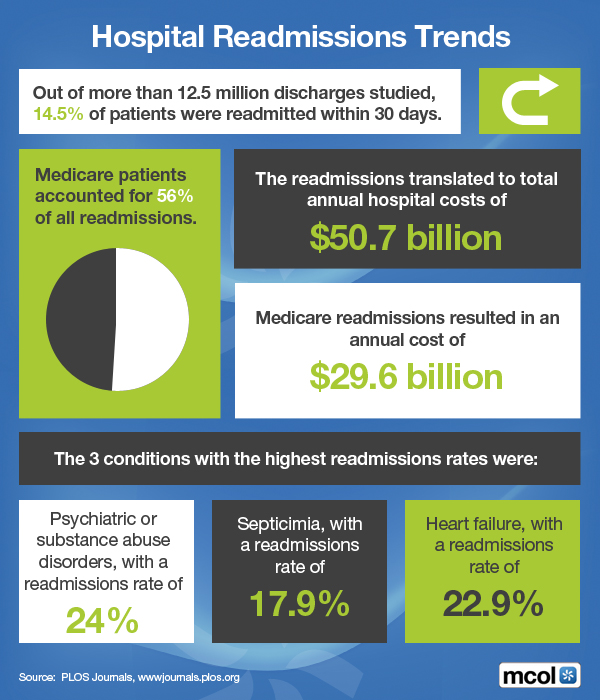
Invite Dr. Marcinko

***

Stakeholder Changes for Involvement in Medical Homes [2012-13]

Join Our Mailing List

Update on the Patient Centered Medical Home Movement

By: www.MCOL.com

The medical home, also known as the patient-centered medical home (PCMH), is a team based health care delivery model led by a physician, PA, NP or ANP that provides comprehensive and continuous medical care to patients with the goal of obtaining maximized health outcomes. It is “an approach to providing comprehensive primary care for children, youth and adults”.

The provision of medical homes may allow better access to health care, increase satisfaction with care, and improve health. Joint principles that define a PCMH have been established through the cohesive efforts of the American Academy of Pediatrics (AAP), American Academy of Family Physicians (AAFP), American College of Physicians (ACP), and American Osteopathic Association (AOA).

MHs

Assessment

With a medical home, care coordination is an essential component of the PCMH. Care coordination requires additional resources such as health information technology, and appropriately trained staff to provide coordinated care through team-based models.

Additionally, payment models that compensate PCMHs for their effort devoted to care coordination activities and patient-centered care management that fall outside the face-face patient encounter may help encourage coordination.

More:

Conclusion

Your thoughts and comments on this ME-P are appreciated. Feel free to review our top-left column, and top-right sidebar materials, links, URLs and related websites, too. Then, subscribe to the ME-P. It is fast, free and secure.

Link: http://feeds.feedburner.com/HealthcareFinancialsthePostForcxos

Speaker: If you need a moderator or speaker for an upcoming event, Dr. David E. Marcinko; MBA – Publisher-in-Chief of the Medical Executive-Post – is available for seminar or speaking engagements. Contact: MarcinkoAdvisors@msn.com

OUR OTHER PRINT BOOKS AND RELATED INFORMATION SOURCES:

LEXICONS: http://www.springerpub.com/Search/marcinko
PHYSICIANS: www.MedicalBusinessAdvisors.com
PRACTICES: www.BusinessofMedicalPractice.com
HOSPITALS: http://www.crcpress.com/product/isbn/9781466558731
CLINICS: http://www.crcpress.com/product/isbn/9781439879900
ADVISORS: www.CertifiedMedicalPlanner.org
BLOG: www.MedicalExecutivePost.com

Product DetailsProduct DetailsProduct Details

Product DetailsProduct Details

Product Details

Should We With-Hold Payment to Doctors, Financial Advisors and Others Who Make Mistakes?

Join Our Mailing List 

A Modified Reprint … and Different Perspective on “Never-Events”

By Dr. David Edward Marcinko FACFAS, MBA, CMP™

Dr. MarcinkoOK; I admit it. I played HS baseball as a youth. Today, I am a doctor and financial advisor. I owned and operated a surgical center and did musculoskeletal surgery for two decades.

Later, as a health economist and financial planner, I acted as an SEC registered investment advisor to medical colleagues for almost 15 years.  I’ve been a reporter, writer and journalist for three decades and Editor-in-Chief of this ME-P for eight years. Along my career path several physician-partners were dual degreed lawyers.

I still am deeply involved in all these activities as a hobbyist, consultant, part-time practitioner, editor and educator. Occasionally, I do make mistakes. There … I admit it. I am not perfect!

For example; I remember the time when I ordered the wrong patient medication dose [noted and corrected by an astute RN] – Dropped an infield fly ball and lost the game – Used the wrong corporate EBIDTA, for an estimated financial calculation, which cost me and the client a few bucks – Referenced the wrong citation and made an author angry – Forgot to check a reference source which made my publisher mad at me – AND – Confused two different medical malpractice cases I was reviewing to the chagrin of my defendant doctor and his attorney; etc, etc.  You get the picture.

Mea culpa – mea maxima culpa!

The Encore Post

And so, it is with delight that the ME-P re-posts the following essay – on mistakes – by colleague Dr. Michael Kirsch who is a gastroenterologist that blogs at MD Whistleblower.

Medical Errors Earn Hospitals Money – Who Knew?

In brief, it goes something like this.

Never-Events

The argument to withhold payment for medical care that resulted from medical error is potent.  This is known as a never-event because it is not supposed to happen – ever! Giving a patient the wrong blood type during a transfusion is a good example of a never-event.

Unfortunately – Keep in mind that defining a medical error is not as easy as it sounds.  One can easily imagine how easy it would be too confuse a medical complication, which is a blameless event, from an error or a negligent act.

Consider This

If the patient develops a complication, should I, the hospital and those I consult not be paid for the additional care required?

Now, by extension, let us consider some other professions in the same way; especially those for which I am associated.

IOW: Would every profession consent to returning fees for mistaken advice or service?  So, do you agree with the following?

  • Financial advisors should return fees if investment performance is below a designated threshold or differs from their peers.
  • Attorneys that offered ineffective legal arguments at trial should surrender fees after appeal.
  • A professional baseball player who drops a fly ball should lose a day’s pay.
  • A newspaper publisher should offer a rebate to all readers if a news story is found to be inaccurate owing to a lack of proper editorial oversight; etc.

I think you get the picture! And, see how I personalized these examples.

More

We realize that mistakes of all types cost money, as do some of the hypothetical examples above.  We also accept that financial incentives can change behavior and can be an effective tool.

Medical-errors

Assessment

But, every human endeavor has a finite error rate and we should be cautious before using an economic drone attack against only the medical profession; or even the others mentioned above … and more.

Let’s use a scalpel here and not a sledge hammer.  And, those of you outside of medicine; please feel free to explain why your occupation should be spared from this health reform strategy?

The Reprint: Would every profession consent to returning fees for mistakes?

Conclusion

Your thoughts and comments on this ME-P are appreciated. Feel free to review our top-left column, and top-right sidebar materials, links, URLs and related websites, too. Then, subscribe to the ME-P. It is fast, free and secure.

Link: http://feeds.feedburner.com/HealthcareFinancialsthePostForcxos

  • Speaker: If you need a moderator or speaker for an upcoming event, Dr. David E. Marcinko; MBA – Publisher-in-Chief of the Medical Executive-Post – is available for seminar or speaking engagements. Contact: MarcinkoAdvisors@msn.com


Product DetailsProduct Details

Risk Management, Liability Insurance, and Asset Protection Strategies for Doctors and Advisors: Best Practices from Leading Consultants and Certified Medical Planners™8Comprehensive Financial Planning Strategies for Doctors and Advisors: Best Practices from Leading Consultants and Certified Medical Planners™

***

Invite Dr. Marcinko

***

How the Medical Executive-Post Survived to our 8th Anniversary?

Join Our Mailing List

And … Why the American Medical News was Shuttered after 50 Years!

[Some Musing on our Eighth Anniversary]

Ann Miller RN MHA

[Executive-Director]

Happy BirthdayAccording to well known healthcare industry journalist Kevin B. O’Reilly, a dramatic drop in medical-publishing revenues caused the recent closure of the American Medical News, effective with a final edition of the newspaper published just last month.

Published for more than five decades, AMNews was hit hard by industrywide trends. The newspaper’s revenue fell by two-thirds during the last decade, as reported by Thomas J. Easley, senior vice-president and publisher of periodic publications for the American Medical Association [AMA].

Unsustainable financial losses forced the move despite the newspaper’s editorial quality, the AMA’s senior management reportedly said. But, the Association’s other news operations will be enhanced.

###

amn

###

What the Death of American Medical News Says About the Future of American Medicine

###

How we survive!

We’ve been online for eight years now. We have a skeleton staff, a scalable business model, an almost free distribution model, no print analog, and a tiny electronic advertising revenue stream.

Oh, let’s not forget some brilliant essayists, contrarian contributors, insightful commentators and controversial opinions that are often the elephant in the virtual room. 

Our gratitude to you all is without limits.

So, how else do we do it?

Interestingly – Our print books are good, better and best sellers. We’ve been releasing one major, semi-peer reviewed text each year …. and sales are brisk. And, we are now negotiating to begin our next and ninth volume for 2014-15. We maintain our own copy-rights, perform in-house editing, seek out the best contributing authors, and reduce the cost of numerous channels of distribution. How do we do it, year after year? In a word, professional crowdsourcing.

Our consulting business is increasingly robust, too. Cudos to healthcare reform, managed care, and the PP-ACA!

And … another thing

I ask again. How do we do it? How do we stay in business?

Here are some more ways to help-us, do just that:

  1. Subscribe to the ME-P site
  2. Tell a friend or colleague about us
  3. Visit our Blogroll list
  4. Use our classified ads or advertise with us
  5. Purchase a printed handbook, dictionary, software product or textbook
  6. Use our career and educational resources
  7. “Ask a Consultant” for free advice
  8. Request a strategic competitive consultation
  9. Hire us for a medical practice valuation or revenue enhancement review
  10. Request a medical business planning RFP
  11. Purchase a practice management checklist
  12. Seek out our financial planning advice
  13. Ask for second opinion; hire our thought-leaders
  14. Request a healthcare econometrics review
  15. Seek out our practice management or business advice
  16. Become a Certified Medical Planner™ www.CertifiedMedicalPlanner.org
  17. Request a speaker for a pharmaceutical seminar or health convention
  18. Attend a seminar, sponsor or take a learning-teaching cruise with us
  19. Donate to us …  and repeat
  20. Buy a link … and repeat again
  21. Send a thank you note to our Publisher-in-Chief and Managing Editor
  22. Visit us often to review, read, rant and rave.

Bottom Line Eight Years Out

The ME-P is an austere … Labor of Love.

Please support us: Support the “Medical Executive-Post”

Printable Donation Form: Printable Donation Form

Electronic Donations: www.e-junkie.com/ecom/gb.php?c=cart&i=641232&cl=109140&ejc=2

Multi-Year Pledge Form: Multi-Year Pledge

###

QuestionEverythingWallpaper

###

Assessment

So, does the demise of the American Medical News really say anything at all about the ME-P; in addition to the future of domestic medicine? How do we avoid the same fate? Please tell us. Question Everything … Trust No One … Paddle your Own Canoe … Keep the Faith!

Conclusion

Your thoughts and comments on this ME-P are appreciated. Did the AMNews forget the aphorism; No margin – No Mission?

Feel free to review our top-left column, and top-right sidebar materials, links, URLs and related websites, too. Then, subscribe to the ME-P. It is fast, free and secure.

Link: http://feeds.feedburner.com/HealthcareFinancialsthePostForcxos

Speaker: If you need a moderator or speaker for an upcoming event, Dr. David E. Marcinko; MBA – Publisher-in-Chief of the Medical Executive-Post – is available for seminar or speaking engagements. Contact: MarcinkoAdvisors@msn.com

OUR OTHER PRINT BOOKS AND RELATED INFORMATION SOURCES:

LEXICONS: http://www.springerpub.com/Search/marcinko
PHYSICIANS: www.MedicalBusinessAdvisors.com
PRACTICES: www.BusinessofMedicalPractice.com
HOSPITALS: http://www.crcpress.com/product/isbn/9781466558731
CLINICS: http://www.crcpress.com/product/isbn/9781439879900
ADVISORS: www.CertifiedMedicalPlanner.org
BLOG: www.MedicalExecutivePost.com

Product DetailsProduct DetailsProduct Details

Product Details  Product Details

Product DetailsProduct Details

Product Details

It’s Here: Financial Management Strategies for Hospitals and Healthcare Organizations

Join Our Mailing List

Finally … Our Newest ME-P Textbook Release

By Ann Miller RN MHA

[Executive-Director]

In this book, a world-class editorial advisory board and an independent team of contributors draw on their experience in operations, leadership, and Lean managerial decision making to share helpful insights on the valuation of hospitals in today’s changing reimbursement and regulatory environments.

Using language that is easy to understand, Financial Management Strategies for Hospitals and Healthcare Organizations [Tools, Techniques, Checklists and Case Studies]  integrates prose, managerial applications, and regulatory policies with real-world case studies, models, checklists, reports, charts, tables, and diagrams. It has a natural flow, starting with costs and revenues, progressing to clinic and technology, and finishing with institutional and professional benchmarking. The book is organized into three sections:

  1. Costs and Revenues: Fundamental Principles
  2. Clinic and Technology: Contemporary Issues
  3. Institutional and Professional Benchmarking: Advanced Applications

The text uses healthcare financial management case studies to illustrate Lean management and operation strategies that are essential for healthcare facility administrators, comptrollers, physician-executives, and consulting business advisors. Discussing the advancement of financial management and health economic principles in healthcare, the book includes coverage of the financial features of electronic medical records, financial and clinical features of hospital information systems, entity cost reduction models, the financial future of mental health programs, and hospital revenue enhancements.

CASE MODEL: Managerial Costs

###

book

Description

Table of Contents

Editor Bio(s)

Reviews

Foreword.Baum

Foreword.Nash

###

The Companion Text

Product Details

BOOK FOREWORD / TESTIMONIAL

Conclusion

Your thoughts and comments on this ME-P are appreciated. Feel free to review our top-left column, and top-right sidebar materials, links, URLs and related websites, too. Then, subscribe to the ME-P. It is fast, free and secure.

Link: http://feeds.feedburner.com/HealthcareFinancialsthePostForcxos

And, send us a book review; the good, bad and ugly!

Speaker: If you need a moderator or speaker for an upcoming event, Dr. David E. Marcinko; MBA – Publisher-in-Chief of the Medical Executive-Post – is available for seminar or speaking engagements. Contact: MarcinkoAdvisors@msn.com

Product Details  Product Details

Some Prudent Thoughts on Hospital Stewardship

Join Our Mailing List 

And … Capital Formation

By Calvin Weise MBA CPA CMA

By Dr. David Edward Marcinko MBA CMP™

Some of the most important strategic decisions hospital executives make are related to capital expenditures. Almost every hospital has capital investment opportunities that are far in excess of their capital capacity. Capital investments are bets on the future. How these capital bets are placed has long-lasting implications. It is of utmost importance that hospitals bet right.

Hospitals as Businesses

Hospitals are capital intensive businesses. Hospital buildings are unique structures that require large amounts of capital to construct and maintain. Inside these buildings are pieces of expensive equipment that have fairly short lives. Technological innovations continually drive demand for new and more expensive equipment and facilities. The ability to continually generate capital is the lifeblood of hospitals.

But – Profits Needed

In order to compete and succeed, it’s imperative for hospitals to continually invest in large amounts of capital equipment and expensive facilities.

Capital investment is fueled by profit. In order to continually make the necessary capital investments, hospitals must be profitable. Hospitals unable to generate sufficient profit will fail to make important capital investments, weakening their ability to compete and survive.

Hospital managers bear important responsibility in choosing which capital investments to make. There are always more capital opportunities than capital capacity. In many cases, capital opportunities not taken by hospitals create openings for others with capital capacity to fill the vacuum. By not taking such opportunities, hospitals are weakened, and their operating risk increases.

Stewardship

Stewardship is a term that aptly describes the responsibility borne by hospital managers in making capital investments. The New Testament parable of the talents describes this kind of stewardship. In this story, a merchant entrusted three managers with money to invest. One manager was given five units, another two, and a third one. At the end of the investment period, the two managers given five units and two units reported a 100% return. The manager given one unit reported zero return — he was fired and his unit was given to the first manager.

CXOs are Stewards

This is stewardship — and hospital managers are stewards of their organizations’ assets. Too often, not-for-profit hospital managers hold an erroneous view of the returns expected of them. Like the third manager in the parable, they think zero return on equity is acceptable. They understand capital investment funded by debt needs to cover the interest on the debt, but they view capital investments funded by equity as having no cost associated with the equity.

From an accounting perspective, they are right. From a stewardship perspective they are dead wrong — just like the third manager in the parable.

###

Hospital

####

Here’s Why

As stewards, they are responsible for managing the entrusted assets. They can either put these assets at risk themselves, or they can put those assets in the market and let other managers put them at risk. If they choose to put them at risk themselves, then they have the mandate of creating as much value from putting them at risk as they would realize if they put them in the market for other managers to put at risk.

CXOs have the duty to realize returns that are equivalent to the returns they could realize in the market; otherwise, they should just put them in the market. They can either invest in hospital assets or work the assets themselves, or they can invest in financial market assets so others can work the assets. When they choose to invest in hospital assets, the required return is not zero. That’s the return they get fired for. The required return is equivalent to market returns.

Assessment

Thus, when evaluating performance of hospital management teams, the minimum acceptable performance level is return on equity that is equivalent to the return that could be realized by investing the hospital assets in the market. And when evaluating a capital investment opportunity, it is important to apply a capital charge equivalent to the hospital’s weighted cost of capital — a measure that imputes an appropriate cost to the equity portion of the capital along with the stated interest rate for the debt portion of the capital structure.

Conclusion

Your thoughts and comments on this ME-P are appreciated. Feel free to review our top-left column, and top-right sidebar materials, links, URLs and related websites, too. Then, subscribe to the ME-P. It is fast, free and secure.

Link: http://feeds.feedburner.com/HealthcareFinancialsthePostForcxos

Speaker: If you need a moderator or speaker for an upcoming event, Dr. David E. Marcinko; MBA – Publisher-in-Chief of the Medical Executive-Post – is available for seminar or speaking engagements. Contact: MarcinkoAdvisors@msn.com

OUR OTHER PRINT BOOKS AND RELATED INFORMATION SOURCES:

Health Dictionary Series: http://www.springerpub.com/Search/marcinko

Practice Management: http://www.springerpub.com/product/9780826105752

Physician Financial Planning: http://www.jbpub.com/catalog/0763745790

Medical Risk Management: http://www.jbpub.com/catalog/9780763733421

Hospitals: http://www.crcpress.com/product/isbn/9781439879900

Physician Advisors: www.CertifiedMedicalPlanner.org

Product DetailsProduct Details

More ME-P Industry Leading “WORKING WHITE-PAPERS”

Join Our Mailing List

OUR INDUSTRY “WORKING WHITE-PAPER” KNOWLEDGE SERIES … for only $99 each!

By Ann Miller RN MHA

[ME-P Executive Director]

At the ME-P working white-paper and iMBA Knowledge Center, we bring to life health administration best practices for BDs, RIAs, consulting firms, private equity and mutual fund companies, institutional wealth managers, physician-executives, administratrors, CXOs, hospitals and clinics, and large financial planning and business management firms.

Books

Certified Medical Planner

###

Therefore, as part of the combined ME-P and iMBA Research Library®, we highly recommend these Working White-Papers [WW-Ps] on various business management principles of the healthcare industry.

Topics: https://medicalexecutivepost.com/wp-content/uploads/2009/02/imba-inc-firm-services.pdf

Sample: http://certifiedmedicalplannerdotorg1.files.wordpress.com/2012/03/summary-white-paper-topics2.pdf

Checklists: https://medicalexecutivepost.com/office-checklists-on-cd-rom/

PayPal: Only $99 each.

ORDER HERE: MarcinkoAdvisors@msn.com

More Info

https://medicalexecutivepost.com/white-papers/

Business%20Optimization

R.I.P. Muriel “Mickie” Siebert

Join Our Mailing List

On Muriel Siebert

“Mickie” Siebert, founder of the brokerage firm that bears her name, Muriel Siebert & Co. Inc., bought a seat on the New York Stock Exchange in 1967.

She was one of the pioneers in the discount brokerage field, as she transformed Muriel Siebert & Company (now a subsidiary of Siebert Financial) into a discount brokerage in 1975, on the first day that Big Board members were allowed to negotiate commissions; the so-called “May Day” decision.

BORN: Sept. 12, 1932, in Cleveland.

DIED: Aug. 24, 2013, in New York.

EDUCATION: Attended Western Reserve University (now Case Western Reserve University) 1949-1952.

FAMILY: Never married and did not have any children.

Link: http://news.msn.com/obits/muriel-siebert-first-woman-member-of-the-nyse-dies?ocid=ansnews11

##

NYSE

###

Assessment

She was the first woman to become a member of the New York Stock Exchange [NYSE].

Visit: www.SiebertNet.com

Conclusion

Your thoughts and comments on this ME-P are appreciated. Feel free to review our top-left column, and top-right sidebar materials, links, URLs and related websites, too. Then, subscribe to the ME-P. It is fast, free and secure.

Link: http://feeds.feedburner.com/HealthcareFinancialsthePostForcxos

Speaker: If you need a moderator or speaker for an upcoming event, Dr. David E. Marcinko; MBA – Publisher-in-Chief of the Medical Executive-Post – is available for seminar or speaking engagements. Contact: MarcinkoAdvisors@msn.com

OUR OTHER PRINT BOOKS AND RELATED INFORMATION SOURCES:

Health Dictionary Series: http://www.springerpub.com/Search/marcinko

Practice Management: http://www.springerpub.com/product/9780826105752

Physician Financial Planning: http://www.jbpub.com/catalog/0763745790

Medical Risk Management: http://www.jbpub.com/catalog/9780763733421

Hospitals: http://www.crcpress.com/product/isbn/9781439879900

Physician Advisors: www.CertifiedMedicalPlanner.org

Product Details  Product Details

Medical Director Needed for NovaSys Health

Join Our Mailing List

Physician Career Opportunity

By Paul Esselman

[Executive Vice President, and Managing Principal]

Cejka Executive Search

Dear Dr. Marcinko,

Centene Corporation is seeking a Medical Director for NovaSys Health, a full-service managed care company and health plan administrator based in Little Rock. This newly created position will be responsible for assisting in the development of a medical management infrastructure for the health plan as NovaSys expands their member base through the participation in the Arkansas Healthcare Exchange.

A Fortune 500 company, Centene is a national leader in low-cost solutions for high quality healthcare services for uninsured and underinsured patients. Centene’s subsidiary health plans bring better health outcomes to their 1.5 million members. Centene’s core philosophy is that quality healthcare is best delivered locally. This local approach enables them to provide accessible, high quality and culturally sensitive healthcare services to their members in their own communities.

The Medical Director will perform utilization review, quality assurance and medical review of services; oversee the activities of physician advisors; assist in provider network development and expansion; and participate in strategic program developments for improving quality of care while lowering costs. The Medical Director will also work closely with the Plan President and Vice President, Medical Management (RN) in establishing and carrying out the strategic vision of the organization working closely with external constituents as appropriate.

Successful candidates will be physician leaders with knowledge of quality improvement practices and familiarity with medical information systems, medical claims payment processing and coding. Knowledge of managed care, Medicaid and case management programs are preferred. Board certification in a recognized medical specialty, preferably in internal medicine, family practice, pediatrics or emergency medicine, and an active medical license are required.

###

inheritance

Assessment

Qualified candidates should submit their resumes for consideration to me:

Thank you. 

Paul Esselman Executive Vice President, Managing Principal Cejka Executive Search 4 CityPlace Dr., Ste. 300 St. Louis, MO 63141 314.236.4588 Office pesselman@cejkasearch.com http://www.cejkaexecutivesearch.com

Conclusion

Your thoughts and comments on this ME-P are appreciated. Feel free to review our top-left column, and top-right sidebar materials, links, URLs and related websites, too. Then, subscribe to the ME-P. It is fast, free and secure.

Speaker: If you need a moderator or speaker for an upcoming event, Dr. David E. Marcinko; MBA – Publisher-in-Chief of the Medical Executive-Post – is available for seminar or speaking engagements. Contact: MarcinkoAdvisors@msn.com

OUR OTHER PRINT BOOKS AND RELATED INFORMATION SOURCES:

Product DetailsProduct DetailsProduct Details

Product Details  Product Details

Product DetailsProduct Details

Why Hospitals Should Use Financial Management Checklists

Join Our Mailing List

Financial Management Strategies for Hospital and Healthcare Organizations [Tools, Techniques, Checklists and Case Studies]

By Neil H. Baum MD

Dr. BaumIt is fitting that ME-P Editor Dr. David Edward Marcinko MBA CMP™ and his fellow experts, have laid out a plan of action in Financial Management Strategies for Hospital and Healthcare Organizations: Tools, Techniques, Checklists and Case Studies that physicians, nurse-executives, administrators and institutional Chief Executive Officers, Chief Financial Officers, MBAs, lawyers and healthcare accountants can follow to help move healthcare financial fitness forward during these unchartered waters.

In medicine – It all began with Dr. Atul Gawande, a surgeon at Massachusetts General Hospital, who reviewed the airline industry and their use of checklists prior to take off of an airplane.

The history of aviation checklists began in 1934 when Boeing was in the final process of testing a U.S. Army fighter plane with a potential contract of nearly 200 planes riding on the final test of the plane. The test aircraft made a normal taxi and takeoff. It began a smooth climb, but then suddenly stalled. The aircraft turned on one wing and fell, bursting into flames upon impact killing two of the test pilots. The investigation found pilot error as the cause. One of the pilots who was unfamiliar with the aircraft had neglected to release the elevator lock prior to take off. The contract with Boeing was in jeopardy.

Thus, the pilots sat down and put their heads together. What was needed was some way of making sure that everything to prevent crashes was being done; that nothing was overlooked. What resulted was a pilot’s checklist developed before takeoff, during flight, before landing, and after landing. These checklists for the pilot and co-pilot made sure that nothing was forgotten and safety of the planes was insured.

Medical Care and Hospitals

So, what does airline safety have to with medical care and hospitals?

There are so many activities that take place in medicine such as the operating room, that are far too complicated to be left to memory of doctors, nurses, anesthesiologists, and others involved in the surgical care of patients.  Dr. Gawande identified the key components of a surgical procedure which include the name of the patient, the procedure to be performed, the estimated length of the procedure, whether the right or left side is the surgical target, how much blood loss is anticipated, whether antibiotics have been given prior to making the incision, and the anesthetic risk of the patient.  This use of a checklist which takes approximately 30 seconds has not only prevented wrong side surgery but also instills a discipline of higher performance.

###

Financial Management Strategies for Hospitals and Healthcare Organizations

Financial Management Strategies for Hospitals and Healthcare Organizations: Tools, Techniques, Checklists and Case Studies

###

From the Clinic to the Boardroom

And so, should [can] we port the clinical checklist example of Atul Gawande for use with non-clinical topics like hospital financial management and administration?

Assessment

Yes – We have a challenge and the Financial Management Strategies for Hospital and Healthcare Organizations: Tools, Techniques, Checklists and Case Studies is a step in the direction to make all of the stakeholders in the healthcare arena become sensitive to reducing and controlling costs and at the same time preserve quality of care.

This can be done.  I suggest you start by reading, using and referring to this excellent book.

And so, what is my final advice? Read the Book!

Some of you who will read this book are CXOs COOs, Chief Medical Officers and maybe even COS. (Chiefs of Staff). But, all of you should become CLOs (Chief Life Officers)!  Read this book and the initials CLO will appear after your name!

Note:

Neil H. Baum MD is a Clinical Associate Professor of Urology at the Tulane Medical School, New Orleans, LA. He is also a thought-leader for this ME-P. 

Conclusion

Your thoughts and comments on this ME-P are appreciated. Feel free to review our top-left column, and top-right sidebar materials, links, URLs and related websites, too. Then, subscribe to the ME-P. It is fast, free and secure.

Speaker: If you need a moderator or speaker for an upcoming event, Dr. David E. Marcinko; MBA – Publisher-in-Chief of the Medical Executive-Post – is available for seminar or speaking engagements. Contact: MarcinkoAdvisors@msn.com

OUR OTHER PRINT BOOKS AND RELATED INFORMATION SOURCES:

Product DetailsProduct DetailsProduct Details

Product DetailsProduct Details

Events Planner: June 2013

Join Our Mailing List

ADVERTISEMENT

Events-Planner: JUNE 2013

By Staff Writers
Calendar Calculator“Keeping track of important health economics and financial industry meetings, conferences and summits”

Welcome to this issue of the Medical Executive-Post and our Events-Planner. It contains the latest information on conferences, news, and relevant resources in healthcare finance, economics, research and development, business management, pharmaceutical pricing, and physician/entity reimbursement!  Watch for a new Events-Planner each month.

First, a little about us! The Medical Executive-Post is still a relative newcomer. But today, we have almost 175,000 visitors and readers each month from all over the country, in addition to our growing subscriber base. We have been a successful collaborative effort, thanks to your contributions.  As a result, we are adding new resources daily. And, we hope the website continues to provide the best place to go for journals, books, conferences, educational resources, tools, and other things you need to establish the value your healthcare consulting and financial advisory intervention.

So, enjoy the Medical Executive-Post and this monthly Events-Planner with our compliments.

A Look Ahead this Month – And now, the important dates:

  • June 16-19: HFMA Institute Meeting. Orlando, FLA
  • June 25-27: AHA Health Forum Summit. San Diego, CA.

MarcinkoAdvisors@msn.com

Speaker: If you need a moderator or speaker for an upcoming event, Dr. David E. Marcinko; MBA – Publisher-in-Chief of the Executive-Post – is available for seminar or speaking engagements. Contact: MarcinkoAdvisors@msn.com

Subscribe Now: Did you like this Medical Executive-Post, or find it helpful, interesting and informative? Want to get the latest E-Ps delivered to your email box each morning? Just subscribe using the link below. It’s free. You can unsubscribe at any time. Security is assured.

Link: http://feeds.feedburner.com/HealthcareFinancialsthePostForcxos


Product DetailsProduct Details

Contribute to the Medical Executive-Post and Tell Us What You Think

Join Our Mailing List

Call for Guest Medical Executive-Posts!

By Ann Miller RN MHA

[Executive-Director]

MarcinkoAdvisors@msn.com

ME-P

Now that we’ve wrapped up our newest textbook, we thought it would be fun to keep everybody writing to share your best posts and comments with our ever-growing online community.

###

We’re open to all kinds of related subjects on the business of medical practice, healthcare economics and finance, HIT and personal financial planning and investing for doctors and all medical professionals.

###

So, if you’d like to comment or be a featured guest on our blog, or know of a great post we should feature or re-print, just let us know by emailing me! BROADCAST yourself.

Product Details

www.CertifiedMedicalPlanner.org

###

What Physician-Investors Need to Know about the Shiller PE Ratio

Join Our Mailing List 

What it is – How it works

By Michael Zhuang MS www.MZCap.com

This Shiller PE index is a stock market metric invented by Yale University Professor Robert Shiller, PhD.

Basically, it is the average PE ratio of all S&P 500 stocks for the last ten years. The Shiller PE is also called PE10. Professor Shiller found it to be a reasonably good measure of valuation of the whole market.

IOW: The higher the Shiller PE, the more expensive the market. So, with Shiller PE at 24, we can call this market relatively expensive.

Assessment

Here is what I know currently.

  1. The  higher the Shiller PE – the lower the one-year and three-year return propensity.
  2. Return variability is so high as to render the Shiller PE’s predictive power very weak.
  3. Only when Shiller PE is over 35 are the three-year forward returns overwhelmingly negative.

So, the market may or may not be headed for a fall immediately, but we do need to temper our expectation of future returns.

About the Author

Michael Zhuang is founder and principal of MZ Capital, a fee-only registered investment advisor firm located in the Greater Washington D.C. metropolitan area.

Conclusion

Your thoughts and comments on this ME-P are appreciated. Feel free to review our top-left column, and top-right sidebar materials, links, URLs and related websites, too. Then, subscribe to the ME-P. It is fast, free and secure.

Link: http://feeds.feedburner.com/HealthcareFinancialsthePostForcxos

Speaker: If you need a moderator or speaker for an upcoming event, Dr. David E. Marcinko; MBA – Publisher-in-Chief of the Medical Executive-Post – is available for seminar or speaking engagements. Contact: MarcinkoAdvisors@msn.com

OUR OTHER PRINT BOOKS AND RELATED INFORMATION SOURCES:

Physician Advisors: www.CertifiedMedicalPlanner.org

Product Details  Product Details

Need a Manager of Surgical Nurses and Operating Rooms

Join Our Mailing List 

Seeking A Direct Hire in Kansas

By Kathy Williams kathyw@thorgroup.com
Resource Manager
Thor Group, Inc.

Dear Dr. David E Marcinko,

Hello!  We are looking for a Manager of Surgical Nurses and Operating Rooms.

Our client has a wonderful opportunity to have a work balance life style.  If one of your ME-P readers would like the peace and quiet of a small town plus a great opportunity for your career, this opportunity is for them!

This position will manage and supervise functions related to patient care in the operating rooms; ensure effective delivery of patient care and compliance with administrative and facility policies and procedures.  This position will pay $60-75K depending in experience.  Direct Hire in Kansas.

Responsibilities:

• Guides and directs nursing staff regarding safe, effective patient care, problem-solving and decision making according to patient needs, staff capabilities and facility resources.
• Maintains up-to-date knowledge of new procedures, products and equipment used in the OR.
• Interviews, orients, assigns work schedules, conducts and reviews evaluations and disciplines personnel to manage performance.  Oversees OR staff in conducting annual performance evaluations and competency documentation.
• Ensure proper daily staffing levels in all operating rooms.
• Assist in investigating and initiating follow-up and corrective action when necessary in response to complaints and/or concerns from patients, families, physicians or employees.  Develops, implements and monitors, methods and strategies to achieve high patient satisfaction results.
• Is familiar with, and maintains compliance within the OR Department, on all regulatory agency requirements.
• Maintains compliance with accreditation/licensure requirements.
• Identify operational needs; manage appropriate level of equipment and supplies and monitors equipment maintenance.  Assess the environment and make recommendations to ensure optimal patient comfort, safety and compliance with various regulatory bodies.

Qualifications:

• Diploma from accredited nursing program.
• Current Licensure as Registered Nurse and able to obtain a Kansas license.
• Minimum of 3 years management experience in hospital setting preferred.
• Certification in area of specialization.
• Demonstrated excellent communication skills.

###

Healthcare Jobs

Assessment

THOR, Inc. is a cutting-edge business solutions firm that has been working with some of the top companies throughout the United States for nearly 40 years.

If you are interested in the Manager of Surgical Nurses and Operating Rooms position, please send your updated resume along with salary history to kathyw@thorgroup.com. If you are not interested in this opportunity, perhaps you know someone who might be, please have them forward their resume to me!

Conclusion

Your thoughts and comments on this ME-P are appreciated. Feel free to review our top-left column, and top-right sidebar materials, links, URLs and related websites, too. Then, subscribe to the ME-P. It is fast, free and secure.

Link: http://feeds.feedburner.com/HealthcareFinancialsthePostForcxos

Speaker: If you need a moderator or speaker for an upcoming event, Dr. David E. Marcinko; MBA – Publisher-in-Chief of the Medical Executive-Post – is available for seminar or speaking engagements. Contact: MarcinkoAdvisors@msn.com

OUR OTHER PRINT BOOKS AND RELATED INFORMATION SOURCES:

Health Dictionary Series: http://www.springerpub.com/Search/marcinko

Practice Management: http://www.springerpub.com/product/9780826105752

Physician Financial Planning: http://www.jbpub.com/catalog/0763745790

Medical Risk Management: http://www.jbpub.com/catalog/9780763733421

Hospitals: http://www.crcpress.com/product/isbn/9781439879900

Physician Advisors: www.CertifiedMedicalPlanner.org

Product DetailsProduct DetailsProduct Details

Product DetailsProduct Details


More on Medical Practice Patient Scheduling Issues

Join Our Mailing List 

And … Waiting Room Wait-Times

By Dr. David Edward Marcinko MBA

Dr. MarcinkoRecently, I read the following post on: 8 surprising thoughts about patient wait times.

And so, I decided to offer a follow-up commentary based on my experiences, and as outlined in our newest book: www.BusinessofMedicalPractice.com

Obviating the Problem

The point here is not to “react” but to avoid the dreaded “waiting time” problem in the first place.

Now, realize that most mature doctors follow a linear (series-singular) time allocation strategy for scheduling patients (i.e., every 15 or 20 minutes). This can create bottlenecks because of emergencies, late patients, traffic jams, absent office personal, paperwork delays, etc. Therefore, as suggested by colleague Neil Baum MD, one of these three newer scheduling approaches might prove more useful.

1. Customized Scheduling

The bottleneck problem may be reduced by trying to customize, estimate or project the time needed for the patient’s next office visit. For example: CPT #99211 (5 minutes), #99212 (10 minutes), #99213 (15 minutes), #99214 (25 minutes), or #99215 (40 minutes). Occasionally, extra time is need, and can be accommodated, if the allocated times are not too tightly scheduled.

2. Wave Scheduling

Some patient populations do not mind a brief 20-30 minute wait prior to seeing the doctor. Wave scheduling assumes that no patient will wait longer than this time period, and that for every three patients; two will be on time and one will be late. This model begins by scheduling the three patients on the hour; and works like this. The first patient is seen on schedule, while the second and third wait for a few minutes. The later two patients are booked at 20 minutes past the hour and one or both may wait a brief time. One patient is scheduled for 40 minutes past the hour. The doctor then has 20 minutes to finish with the last three patients and may then get back on schedule before the end of the hour.

3. Bundle Scheduling

Bundling involves scheduling like-patient activities in blocks of time to increase efficiency.

For example, schedule minor surgical checkups on Monday morning, immunizations on Tuesday afternoon, and routine physical examinations on Wednesday evening, or make Thursday kid’s day and Friday senior citizens day. Do not be too rigid, but by scheduling similar activities together, assembly-line efficiency is achieved without assembly line mentality, and allows you to develop the most economically profitable operational flow process possible for the office.

###

Product Details

###

4. Patient Self Scheduling (Internet Based Access Management)

The traditional linear patient scheduling system is slowly being abandoned by modern medical practitioners; an all venues (medical practices, clinics, hospitals and various other healthcare entireties). New software programs, and internet cloud applications, allow patients to schedule their own appointments over the internet. The software allows solo or individual group physicians with a practice to set their own parameters of time, availability and even insurance plans. Through a series of interrogatories, the program confirms each appointment. When the patient arrives, a software tracker communicates with office staff and follows the patients from check-in, to procedures, to checkout.

Assessment 

Today, many hospitals have even abandoned the check-in or admissions, department. It has been replaced by access management systems.

Conclusion

Your thoughts and comments on this ME-P are appreciated. Feel free to review our top-left column, and top-right sidebar materials, links, URLs and related websites, too. Then, subscribe to the ME-P. It is fast, free and secure.

Link: http://feeds.feedburner.com/HealthcareFinancialsthePostForcxos

Speaker: If you need a moderator or speaker for an upcoming event, Dr. David E. Marcinko; MBA – Publisher-in-Chief of the Medical Executive-Post – is available for seminar or speaking engagements. Contact: MarcinkoAdvisors@msn.com

OUR OTHER PRINT BOOKS AND RELATED INFORMATION SOURCES:

DICTIONARIES: http://www.springerpub.com/Search/marcinko
PHYSICIANS: www.MedicalBusinessAdvisors.com
PRACTICES: www.BusinessofMedicalPractice.com
HOSPITALS: http://www.crcpress.com/product/isbn/9781466558731
CLINICS: http://www.crcpress.com/product/isbn/9781439879900
BLOG: www.MedicalExecutivePost.com
FINANCE: Financial Planning for Physicians and Advisors
INSURANCE: Risk Management and Insurance Strategies for Physicians and Advisors

Product Details


Searching for Chief Medical Director [CMD]

Join Our Mailing List

Centene Corporation Seeking CMD

By Jennifer Sonneland jsonneland@cejkasearch.com

Cejka Executive Search www.cejkaexecutivesearch.com

Dear Dr. Marcinko,

I am assisting Centene Corporation in their recruitment for a Chief Medical Director for IlliniCare Health Plan, a wholly owned subsidiary and HMO for the state of Illinois.  The regional headquarters for IlliniCare is in Chicago. 

The Chief Medical Director (CMD) will be responsible for directing and coordinating the medical management, quality improvement and credentialing functions for IlliniCare. S/he will serve as a clinical advisor and educator of the medical management staff, ensuring the clinical quality and efficacy of patient care.

jobs

The CMD will also help identify trends in patient treatment data and proactively develop programs to improve patient health and wellness needs.  As an integral part of IlliniCare’s senior leadership team, the CMD will have an active role in supporting the strategic plans and vision of the organization.  

Ideal candidates will have a minimum of five years of progressive experience in healthcare enterprises and demonstrated success in establishing population health management programs and driving quality outcomes and financial performance for the underserved population. Board certification, preferably in geriatrics, and an unrestricted medical license are required. 

A post-graduate business degree (MBA/MMM) is preferred.

Assessment

More details about this opportunity upon request.

Product DetailsProduct DetailsProduct Details

Product Details  Product Details

Product DetailsProduct Details

Introducing Neil H. Baum MD

Join Our Mailing List

Our Newest ME-P “Thought-Leader”

By Ann Miller RN MHA

[Executive-Director]

Dr. BaumDr. Neil Baum is Associate Clinical Professor of Urology at Tulane Medical School and Louisiana State University Medical School, both in New Orleans, LA.

He is also on the medical staff at Touro Infirmary in New Orleans, and East Jefferson General Hospital in Metairie, LA.

Medical Background

Dr. Baum received his medical degree from Ohio State University Medical School in Columbus. He completed an internship at the University of California at Los Angeles, a residency in surgery at Harbor General Hospital, Torrance, California, followed by a second residency in surgery and a residency in urology, both at Baylor College of Medicine in Texas. Dr. Baum is certified by the American Board of Urology.

ME-P Relevance

Dr. Baum often shares his extensive experience from his urologic office and regularly speaks to medical practices, hospitals, and pharmaceutical and manufacturing companies on improving communications between physicians and patients, practice management, guerilla marketing, practice promotion and motivation.

He has also several books on efficient medical marketing. In fact, he is the author of Marketing Your Clinical Practice-Ethically, Effectively, and Economically, 4th Edition (Jones-Bartlett, 2010).

###

Product Details

###

Product Details

###

And so, we are pleased he accepted our invitation as ME-P “thought-leader.” All our readers and subscribers look forward to his essays, comments and insightful contributions.

Essential ME-P Reader Concerns

I recently caught up with Dr. Baum with these two readership questions.

Q: Why Market and Promote Your Practice in the Era of Managed Care?

A: “Often physicians will discuss the current health care situation in their community and believe that their days of practice promotion are over when they have joined all of the managed care plans in the vicinity. The reality is that noting could be farther from the truth. Now marketing and practice promotion is even more important than in the “good ol’ days” of fee-for-service”.

Q: What is the Most Common Medical Practice Disaster?

A: “Natural disasters are not the most common cause of practice failure; man-made disasters such as computer crashes, power outages, and loss of electronic data are more likely to impact a medical practice”.

Assessment

Conclusion

Your thoughts and comments on this ME-P are appreciated. Feel free to review our top-left column, and top-right sidebar materials, links, URLs and related websites, too. Then, subscribe to the ME-P. It is fast, free and secure.

Speaker: If you need a moderator or speaker for an upcoming event, Dr. David E. Marcinko; MBA – Publisher-in-Chief of the Medical Executive-Post – is available for seminar or speaking engagements. Contact: MarcinkoAdvisors@msn.com

OUR OTHER PRINT BOOKS AND RELATED INFORMATION SOURCES:

Product Details

Foreword.Baum

[Available Now]

Understanding Vacation Time Shares

Join Our Mailing List 

Including Participatory Vacation Exchanges

By Rick Kahler MS CFP® ChFC CCIM http://www.KahlerFinancial.com

Rick Kahler CFPFor residents of places like the Black Hills, where the first day of spring usually brings a snowstorm, timeshares for resorts in Florida or Mexico can have a lot of appeal. They seem like a fun idea for a vacation in the sunshine as well as a good deal financially.

My Research

Over the past 30 years I’ve researched hundreds of timeshare offers. I’ve never bought one. When you take a close look at the numbers and the restrictions, they simply don’t add up to a good value.

One of the biggest problems with timeshares in general is that they can lock you into a specific vacation. Spending a week at that resort in Mexico in February, exploring the local area and relaxing by the pool, might be wonderful for a year or even several years. But eventually you may get tired of going to the same location, doing the same things, and seeing the same people. After a while, even a rut person like me might want to do something different.

PVEs

Some timeshares mitigate this problem by participating in vacation exchanges [PVEs] like RCI, Interval International, and others. These services will add on a fee.

Not Liquid

You might think that, if you get tired of a timeshare, you can just sublease or sell it. These aren’t necessarily easy to do. There may be restrictions on subleasing, which is another good reason to read the fine print before you sign any timeshare contract. Selling is often difficult, and you certainly aren’t likely to get back your original purchase price. Meanwhile, you’re  paying annual fees whether you use the timeshare or not.

Total Costs

In figuring the cost of a timeshare, those annual fees are what really get you. You’re told up front what the fees are at the time you buy a timeshare. Yet you have no control over what the fees may be in five or ten years. The only thing you can count on is that they will increase.

Examples:

To illustrate these points, I recently investigated a resale site that listed a timeshare in a property in Boston, MA. It originally sold for $20,000 and was priced at $1,000. I passed on the opportunity because of the high fees.

In another example, I once took a serious look at a timeshare in a luxury apartment complex in London. It seemed like a possibility for fulfilling one of my dreams, living part of the year in Europe.

It wasn’t. As the salesperson told me, comparing the cost to buy a timeshare versus the cost to stay as a non-member, it would take around 30 years to recoup the purchase price. Then I—or more likely, my heirs—would have ten more years to stay for “free.” Free, that is, except for the annual fees.

Dr. Marcinko at Johns Hopkins University

[ME-P Editor-in-Chief in a Spring Fever Garden] 

Investment in Lifestyle

The sales rep was quite clear that a membership at this complex wasn’t intended as a good financial investment. She described it as an “investment in lifestyle.”

So, when it comes to timeshares; that’s the bottom line. If the lifestyle being sold truly fits for you, and you believe it will continue to fit for the long term, then it’s possible that a timeshare may make sense.

Assessment

For most doctors and folks like us however, my conclusion is that most timeshares are too expensive even if someone gives you one. The annual fees alone will keep it from being a good value. I’ve never found one that was cheaper than getting a nice hotel or resort for a couple of weeks. Paying for a hotel stay will cost less in the long run, and you can enjoy relaxing vacations with no long-term commitment.

Conclusion

Your thoughts and comments on this ME-P are appreciated. Feel free to review our top-left column, and top-right sidebar materials, links, URLs and related websites, too. Then, subscribe to the ME-P. It is fast, free and secure.

Link: http://feeds.feedburner.com/HealthcareFinancialsthePostForcxos

Speaker: If you need a moderator or speaker for an upcoming event, Dr. David E. Marcinko; MBA – Publisher-in-Chief of the Medical Executive-Post – is available for seminar or speaking engagements. Contact: MarcinkoAdvisors@msn.com

Our Other Print Books and Related Information Sources:

Health Dictionary Series: http://www.springerpub.com/Search/marcinko

Practice Management: http://www.springerpub.com/product/9780826105752

Physician Financial Planning: http://www.jbpub.com/catalog/0763745790

Medical Risk Management: http://www.jbpub.com/catalog/9780763733421

Hospitals: http://www.crcpress.com/product/isbn/9781439879900

Physician Advisors: www.CertifiedMedicalPlanner.org

Product Details  Product Details