Interesting Facts About Sex

Join Our Mailing List

Infographics

Courtesy Medical Billing and Coding

Sex: it is everywhere, from the news to TV shows and Internet ads.  Here are some interesting facts about sex

Conclusion

Your thoughts and comments on this ME-P are appreciated. Feel free to review our top-left column, and top-right sidebar materials, links, URLs and related websites, too. Then, subscribe to the ME-P. It is fast, free and secure.

Link: http://feeds.feedburner.com/HealthcareFinancialsthePostForcxos

Speaker: If you need a moderator or speaker for an upcoming event, Dr. David E. Marcinko; MBA – Publisher-in-Chief of the Medical Executive-Post – is available for seminar or speaking engagements. Contact: MarcinkoAdvisors@msn.com

OUR OTHER PRINT BOOKS AND RELATED INFORMATION SOURCES:

Product DetailsProduct DetailsProduct Details

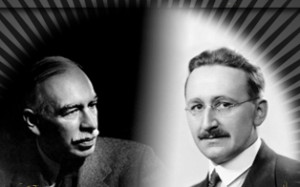
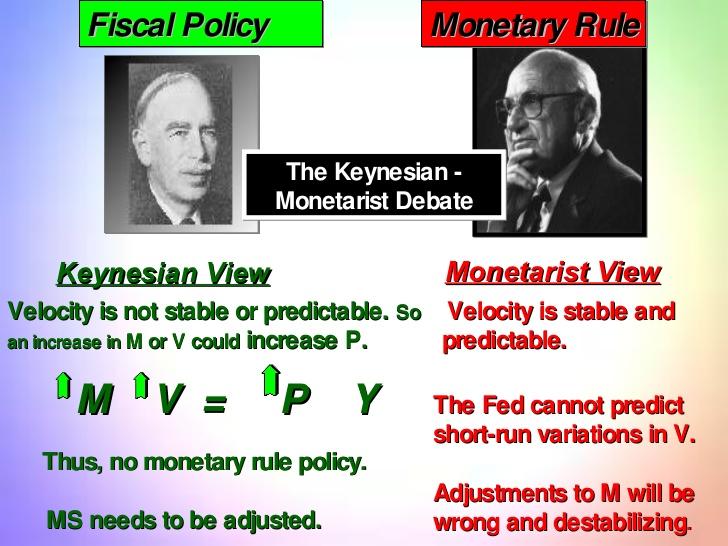
John Maynard Keynes v.s. FA Hayek

A Rapping Video

By Staff Reporters

Join Our Mailing List

Is the Great Recession over?

***

***

How is prosperity best created? By government spending or free, unencumbered markets!

***

ext

***

John Maynard Keynes and FA Hayek rap it out on this YouTube video, released last week by collaborators John Papola and Russ Roberts.


Video Links:

  • Check out the very hilarious and brilliant video here.
  • Round 1 here.
  • And here’s a podcast about Papola and Hayek’s collaboration.

MORE:

Conclusion

In any case, early planning is the key to supporting both your kids’ futures and your retirement. Making logical college funding decisions, rather than emotional ones, creates a win/win for everyone.

Your thoughts and comments on this ME-P are appreciated. Feel free to review our top-left column, and top-right sidebar materials, links, URLs and related websites, too. Then, subscribe to the ME-P. It is fast, free and secure.

Link: http://feeds.feedburner.com/HealthcareFinancialsthePostForcxos

Speaker: If you need a moderator or speaker for an upcoming event, Dr. David E. Marcinko; MBA – Publisher-in-Chief of the Medical Executive-Post – is available for seminar or speaking engagements. Contact: MarcinkoAdvisors@msn.com

OUR OTHER PRINT BOOKS AND RELATED INFORMATION SOURCES:

DICTIONARIES: http://www.springerpub.com/Search/marcinko
PHYSICIANS: www.MedicalBusinessAdvisors.com
PRACTICES: www.BusinessofMedicalPractice.com
HOSPITALS: http://www.crcpress.com/product/isbn/9781466558731
CLINICS: http://www.crcpress.com/product/isbn/9781439879900
BLOG: www.MedicalExecutivePost.com
FINANCE: Financial Planning for Physicians and Advisors
INSURANCE: Risk Management and Insurance Strategies for Physicians and Advisors

Product DetailsProduct DetailsProduct Details

Product Details  Product Details

Should Health Insurance Pay for Patient Exercise Programs?

Or – Enough with the “Benefits” Already!

By Dr. David Edward Marcinko MBA, CMP™

[Former Licensed Insurance Agent]

[ME-P Editor-in-Chief]

An editorial just published in the Journal of the American Medical Association says research supports consideration of a wider policy of reimbursing for structured exercise programs, particularly in high-risk groups, such as diabetics.

Link: http://jama.ama-assn.org/content/305/17/1808.full

Present Status

Currently, health-insurance plans don’t treat exercise as medicine; only some plans offer a fitness benefit, usually a partial reimbursement for gym membership.

Link: http://blogs.wsj.com/health/2011/05/04/reader-consult-should-insurance-reimburse-for-exercise-programs/

Yet, the push for this benefit does seem to be growing.

My Opinion

And yes, as a doctor and surgeon who treated diabetic bone and soft tissue infections, ulcers and related necrotic gangrene for two decades, there’s something to this philosophy in-theory. But, this “theory” is not grounded in risk-management principles or economic sense; and it does seem counter-intuitive to most insurance models that I know.

Note: Most adult diabetics are Type II, maturity onset and controllable.

Examples

For example, auto insurance does not pay for routine car maintenance, nor does home owner’s insurance or most other standard insurance policy types.

Question: Why should health insurance be any different?

Answer: Because it is a public good.

Oh, come on now!  Obeying moral codes and legal boundaries is also a public good for civility; but we don’t mitigate the risk of breaking them with insurance policies; do we?

Why? They would be too expensive. Believe me, if insurance companies thought they could make a buck this way, they surely would!

Assessment

Aren’t these types of benefits already in place in some Flexible Spending Accounts, High Deductible Medical [Health] Savings Accounts , and employee cafeteria plans, etc.

Moreover, don’t we all know that we aren’t supposed to smoke, use street drugs, drink excessively, pig-out, or have promiscuous sex? Yet – we still do – like the diabetic who excessively indulges.

If you want to get-or-stay healthy[ier]; exercise more and eat less. A simple – understandable – and free healthcare Rx; but no best selling book, “breaking news” or JAMA report, here.

Conclusion

And so, your thoughts and comments on this ME-P are appreciated. Should health insurance pay for exercise programs? Feel free to review our top-left column, and top-right sidebar materials, links, URLs and related websites, too. Then, subscribe to the ME-P. It is fast, free and secure.

Link: http://feeds.feedburner.com/HealthcareFinancialsthePostForcxos

Speaker: If you need a moderator or speaker for an upcoming event, Dr. David E. Marcinko; MBA – Publisher-in-Chief of the Medical Executive-Post – is available for seminar or speaking engagements. Contact: MarcinkoAdvisors@msn.com

Our Other Print Books and Related Information Sources:

Health Dictionary Series: http://www.springerpub.com/Search/marcinko

Practice Management: http://www.springerpub.com/product/9780826105752

Physician Financial Planning: http://www.jbpub.com/catalog/0763745790

Medical Risk Management: http://www.jbpub.com/catalog/9780763733421

Healthcare Organizations: www.HealthcareFinancials.com

Physician Advisors: www.CertifiedMedicalPlanner.com

Subscribe Now: Did you like this Medical Executive-Post, or find it helpful, interesting and informative? Want to get the latest ME-Ps delivered to your email box each morning? Just subscribe using the link below. You can unsubscribe at any time. Security is assured.

Link: http://feeds.feedburner.com/HealthcareFinancialsthePostForcxos

Sponsors Welcomed: And, credible sponsors and like-minded advertisers are always welcomed.

Link: https://healthcarefinancials.wordpress.com/2007/11/11/advertise

Product DetailsProduct DetailsProduct Details       

Product Details  Product Details

   Product Details 

Thoughts On Financial Advisors and Planners [Videos]

Candid YouTube Videos

By Staff Reporters

Join Our Mailing List

A Conversation with My Financial Planner:

http://www.youtube.com/watch?v=dFf6ibuAl5w&feature=related

The Wrong Financial Advisor:

http://www.youtube.com/watch?v=Vv4HQG2Hz0I&feature=related

Become an Investment Advisor:

http://www.youtube.com/watch?v=N1xpd4Z2p-g&feature=related

Assessment

“Many a true word is spoken in jest” and “Some truths, too painful or too likely to provoke, can be spoken only when the listener has been disarmed by laughter.”

-Geoffrey Chaucer

Conclusion

And so, your thoughts and comments on this ME-P are appreciated. How true are these videos? Are they more tongue-in-cheek or thoughtful and sobering?

Feel free to review our top-left column, and top-right sidebar materials, links, URLs and related websites, too. Then, subscribe to the ME-P. It is fast, free and secure.

Link: http://feeds.feedburner.com/HealthcareFinancialsthePostForcxos

Speaker: If you need a moderator or speaker for an upcoming event, Dr. David E. Marcinko; MBA – Publisher-in-Chief of the Medical Executive-Post – is available for seminar or speaking engagements. Contact: MarcinkoAdvisors@msn.com

Our Other Print Books and Related Information Sources:

Health Dictionary Series: http://www.springerpub.com/Search/marcinko

Practice Management: http://www.springerpub.com/product/9780826105752

Physician Financial Planning: http://www.jbpub.com/catalog/0763745790

Medical Risk Management: http://www.jbpub.com/catalog/9780763733421

Healthcare Organizations: www.HealthcareFinancials.com

Physician Advisors: www.CertifiedMedicalPlanner.com

Subscribe Now: Did you like this Medical Executive-Post, or find it helpful, interesting and informative? Want to get the latest ME-Ps delivered to your email box each morning? Just subscribe using the link below. You can unsubscribe at any time. Security is assured.

Link: http://feeds.feedburner.com/HealthcareFinancialsthePostForcxos

Sponsors Welcomed: And, credible sponsors and like-minded advertisers are always welcomed.

Link: https://healthcarefinancials.wordpress.com/2007/11/11/advertise

Product DetailsProduct DetailsProduct Details       

Product Details  Product Details

   Product Details 

What is the Impact of Osama bin Laden’s Death on Investing? [An Opinion Poll]

A Bullish or Bearish Outlook?

By Staff Reporters

Join Our Mailing List

After enduring Europe’s credit crisis and Japan’s nuclear disaster, investors are unlikely to view the death of Osama bin Laden as anything but bullish; or are they?

Link: http://www.fa-mag.com/fa-news/7325-bin-laden-death-boosts-bull-clout-after-europe-asia-crises.html

VOTE HERE:

Conclusion

And so, your thoughts and comments on this ME-P are appreciated. Feel free to review our top-left column, and top-right sidebar materials, links, URLs and related websites, too. Then, subscribe to the ME-P. It is fast, free and secure.

Link: http://feeds.feedburner.com/HealthcareFinancialsthePostForcxos

Speaker: If you need a moderator or speaker for an upcoming event, Dr. David E. Marcinko; MBA – Publisher-in-Chief of the Medical Executive-Post – is available for seminar or speaking engagements. Contact: MarcinkoAdvisors@msn.com

Our Other Print Books and Related Information Sources:

Health Dictionary Series: http://www.springerpub.com/Search/marcinko

Practice Management: http://www.springerpub.com/product/9780826105752

Physician Financial Planning: http://www.jbpub.com/catalog/0763745790

Medical Risk Management: http://www.jbpub.com/catalog/9780763733421

Healthcare Organizations: www.HealthcareFinancials.com

Physician Advisors: www.CertifiedMedicalPlanner.com

Subscribe Now: Did you like this Medical Executive-Post, or find it helpful, interesting and informative? Want to get the latest ME-Ps delivered to your email box each morning? Just subscribe using the link below. You can unsubscribe at any time. Security is assured.

Link: http://feeds.feedburner.com/HealthcareFinancialsthePostForcxos

Sponsors Welcomed: And, credible sponsors and like-minded advertisers are always welcomed.

Link: https://healthcarefinancials.wordpress.com/2007/11/11/advertise

Product DetailsProduct DetailsProduct Details       

A Look at Suicide Statistics

The Eleventh Leading Cause of Domestic Death

Courtesy Medical Billing and Coding [Infographics]

Join Our Mailing List

One million people commit suicide every year. Suicide is the 11th leading cause of death in the US.

Japan

Japan also has one of the highest suicide rates in the industrialized world and these suicides are mostly attributed to unemployment and depression. It is the leading cause of death for Japanese people under 30; many choose to jump in front of trains as a suicide method. When suicide hotlines were set up in Japan, 1300 calls a week were received.

Assessment

This is a staggering number in Japan, and it signifies the importance of obtaining a job for people, since unemployment and depression are popular reasons for suicide.

Link: http://www.medicalbillingandcoding.org/a-look-at-suicide-statistics/

Conclusion

Your thoughts and comments on this ME-P are appreciated. Feel free to review our top-left column, and top-right sidebar materials, links, URLs and related websites, too. Then, subscribe to the ME-P. It is fast, free and secure.

Link: http://feeds.feedburner.com/HealthcareFinancialsthePostForcxos

Speaker: If you need a moderator or speaker for an upcoming event, Dr. David E. Marcinko; MBA – Publisher-in-Chief of the Medical Executive-Post – is available for seminar or speaking engagements. Contact: MarcinkoAdvisors@msn.com

OUR OTHER PRINT BOOKS AND RELATED INFORMATION SOURCES:

DICTIONARIES: http://www.springerpub.com/Search/marcinko
PHYSICIANS: www.MedicalBusinessAdvisors.com
PRACTICES: www.BusinessofMedicalPractice.com
HOSPITALS: http://www.crcpress.com/product/isbn/9781466558731
CLINICS: http://www.crcpress.com/product/isbn/9781439879900
BLOG: www.MedicalExecutivePost.com
FINANCE: Financial Planning for Physicians and Advisors
INSURANCE: Risk Management and Insurance Strategies for Physicians and Advisors

Product DetailsProduct DetailsProduct Details

Product Details  Product Details

   Product Details 

DNR versus [P]MOLST

Of Differences and Distinctions

By Dr. David Edward Marcinko MBA

By Hope Rachel Hetico RN MHA

DNR Definition

A Do Not Resuscitate Order (DNR) is a refusal of cardiopulmonary resuscitation in the event of cardiac or pulmonary arrest.  A DNR, which is signed by a physician upon your consent, applies only if you are in a hospital or nursing home. If you are in your residence, a hospice, a clinic, or anywhere else and do not wish to be resuscitated, you must have a “Non-Hospital” DNR signed by your physician.

Sample form: http://www.ochealthinfo.com/docs/forms/ems_dnr_form.pdf

P-MOLST Definition

A P-MOLST (Physician – Medical Orders for Life-Sustaining Treatment) can be used to document your wishes concerning various forms of life-sustaining medical treatment, including DNR, endotracheal intubation and mechanical ventilation, artificial nutrition and hydration, future hospitalization, antibiotics, and other instructions. It is designed to improve the quality of end of life care for those with serious health conditions or those who wish to define their care wishes when facing the end of life. The form must be completed by both you and your physician. It is intended to apply immediately, and not upon a trigger of future incapacity. The form may be completed in stages as a medical condition deteriorates.

Sample form: http://www.compassionandsupport.org/pdfs/professionals/molst/DOH-5003_06.10_.FINAL__.pdf

Assessment 

Subsequent to the publication of the Institute of Medicine Report “Approaching Death: Improving Care at the End-of-Life”, the Rochester Individual Practice Association and BlueCross BlueShield Rochester Region End-of-Life/Palliative Care Professional Advisory Committee was formed to address these and related issues.

Link: http://www.compassionandsupport.org/index.php/about_us

Conclusion

Your thoughts and comments on this ME-P are appreciated. Feel free to review our top-left column, and top-right sidebar materials, links, URLs and related websites, too. Then, subscribe to the ME-P. It is fast, free and secure.

Link: http://feeds.feedburner.com/HealthcareFinancialsthePostForcxos

Speaker: If you need a moderator or speaker for an upcoming event, Dr. David E. Marcinko; MBA – Publisher-in-Chief of the Medical Executive-Post – is available for seminar or speaking engagements. Contact: MarcinkoAdvisors@msn.com

OUR OTHER PRINT BOOKS AND RELATED INFORMATION SOURCES:

Product DetailsProduct DetailsProduct Details

Vows of Change at Moody’s

But, the Flaws Remain the Same

By Jesse Eisinger ProPublica | @eisingerj 

Join Our Mailing List

In the aftermath of the financial crisis, nobody has gone to prison and there haven’t been any serious structural changes in the financial system. But at least everyone involved feels bad about it and has vowed to change, right? For Moody’s Investors Service, those pledges are empty, Bill Harrington says.

In this column, co-published with New York Times’ DealBook, I monitor the financial markets to hold companies, executives and government officials accountable for their actions.

A Window to the Debacle

Mr. Harrington was an analyst in the structured finance group at Moody’s for more than a decade, much of it spent rating collateralized debt obligations. He worked at Moody’s until the middle of last year, although he left the C.D.O. group in 2006. In his job, he had a window on the biggest debacle in the history of credit ratings. Companies like his allowed banks to pass off hundreds of billions worth of paper onto investors by waving their magic wands and deeming the securities investment-worthy.

Since then, the government has tried to change the ratings agencies. The Dodd-Frank financial reform law has some bold measures, like making the ratings firms liable for their judgments. Unfortunately, the rules are in danger of not being enforced because of budget constraints and resistance from the agencies.

But the biggest problems at Moody’s may have been cultural. The dominant ethos during the boom, instilled by Brian M. Clarkson, the former president and chief operating officer [1], was that customer service was Job 1. And the customers were the bankers.

Banker Customers

The ability for bankers to run the show has long been an obvious flaw in the ratings system for structured products. Investment banks create the securities and benefit when they receive generous ratings. Banks pay the agencies that supply the ratings. Yet the agencies are somehow supposed to hold the line with the people who are responsible for their paychecks.

To Moody’s credit, Mr. Clarkson is now gone. To Moody’s discredit, however, his philosophy is largely still in place, at least according to Mr. Harrington.

To the last day Mr. Harrington was there, he says, bankers remained hard-charging and aggressive advocates for their deals, sometimes to the point of abusing the analysts.

Wall Street ain’t beanbag, so that’s not surprising. The troubling aspect is that the Moody’s bosses acted like disinterested brokers between two sides in disputes with analysts, instead of standing up for the analysts and defending their independence. “That was the standard operating procedure that got worse and worse. We didn’t get the benefit of the doubt,” Mr. Harrington said.

When I asked Moody’s about Mr. Harrington’s experiences, a spokesman wrote in an e-mail: “We take strong exception to your characterization of Moody’s culture. We have always had an unwavering culture of integrity, analytical independence and objectivity and that culture has only grown stronger since the financial crisis.” He pointed to numerous efforts at Moody’s to improve the ratings process and to bolster Moody’s procedures.

In the spring of 2009, Mr. Harrington was working on a deal and a banker was persistently calling him. He returned the first call, but had other work that day and didn’t return the next two calls right away. “I thought caller ID served a purpose,” he said wryly.

Soon after, his boss alerted him to a call he’d received from Michael Kanef, the head of compliance. Mr. Kanef wanted to know why Mr. Harrington hadn’t returned the banker’s call. Mr. Harrington was shocked. Why was the head of compliance getting involved? But he got the apparent message: Analysts are to lean over backward for the bankers. That had been Mr. Clarkson’s philosophy, and now it was his successors’.

“The culture persists — and it’s being enforced by compliance department,” Mr. Harrington said.

So who is Mr. Kanef? Before he was the head of regulatory affairs and compliance, he was in charge of ratings on residential mortgage-backed securities [2]. Did such an executive deserve a promotion?

And then there is Raymond W. McDaniel, the chief executive throughout the housing boom, the bust and the entire financial crisis. He remains at the helm. And he had to swallow the bitter pill of more than $9 million in compensation last year. Indeed, most of Moody’s top management has been in place through the crisis.

Moody’s didn’t make Mr. Kanef or Mr. McDaniel available for comment.

The Blame Game

So if Moody’s doesn’t think the executives who ran the company were responsible for its collapse in reputation and contribution to the multitrillion-dollar financial crisis, who do they think is to blame? The analysts, Mr. Harrington says. The hard-working, low-level minions with little decision-making power.

Mr. McDaniel has conceded that sometimes “we drink the Kool-Aid.”

But that hardly makes the analysts to blame.

“If some analysts drank the Kool-Aid, it was only because management mixed and stirred it up and threatened that analysts wouldn’t get to heaven on the spaceship unless he or she drank it,” Mr. Harrington said.

Moody’s has recognized it has a disaster on its hands — a public relations disaster. Clients — the investors who use ratings — have been losing faith in the agencies. Mr. Harrington said that Moody’s executives marched analysts into meetings to explain how they were going to tell their clients about how much Moody’s had grown and learned from its mistakes. It was as if they were in “Communist re-education camp,” he said.

At one of these meetings, an analyst asked if they could be given training in how to deal with banker abuse, Mr. Harrington recalls. The suggestion was immediately shot down by the executive running the meeting.

Moody’s says that its retraining efforts are part of its continuing efforts to reach out to investors to improve its ratings.

Assessment

When Moody’s executives make public presentations, as when Mr. McDaniel testified [3] in front of the Financial Crisis Inquiry Commission, the overarching theme is that the agency’s problem was limited to the housing-related structured finance. Few people saw how fast and deep the housing market would crash. How could the ratings agencies?

A few weeks ago, Alan Greenspan penned an instantly notorious line: “With notably rare exceptions,” [4] he wrote, unfettered financial markets have worked well. Moody’s persists in believing that with notably rare exceptions, so too have credit ratings.

Full Article: http://www.propublica.org/thetrade/item/vows-of-change-at-moodys-but-the-flaws-remain-the-same/

Conclusion

And so, your thoughts and comments on this ME-P are appreciated. Feel free to review our top-left column, and top-right sidebar materials, links, URLs and related websites, too. Then, subscribe to the ME-P. It is fast, free and secure.

Link: http://feeds.feedburner.com/HealthcareFinancialsthePostForcxos

Speaker: If you need a moderator or speaker for an upcoming event, Dr. David E. Marcinko; MBA – Publisher-in-Chief of the Medical Executive-Post – is available for seminar or speaking engagements. Contact: MarcinkoAdvisors@msn.com

Our Other Print Books and Related Information Sources:

Health Dictionary Series: http://www.springerpub.com/Search/marcinko

Practice Management: http://www.springerpub.com/product/9780826105752

Physician Financial Planning: http://www.jbpub.com/catalog/0763745790

Medical Risk Management: http://www.jbpub.com/catalog/9780763733421

Healthcare Organizations: www.HealthcareFinancials.com

Physician Advisors: www.CertifiedMedicalPlanner.com

Subscribe Now: Did you like this Medical Executive-Post, or find it helpful, interesting and informative? Want to get the latest ME-Ps delivered to your email box each morning? Just subscribe using the link below. You can unsubscribe at any time. Security is assured.

Link: http://feeds.feedburner.com/HealthcareFinancialsthePostForcxos

Sponsors Welcomed: And, credible sponsors and like-minded advertisers are always welcomed.

Link: https://healthcarefinancials.wordpress.com/2007/11/11/advertise

Product DetailsProduct DetailsProduct Details       

Product Details  Product Details

About Consent Care.Net

The Case for Fully Informed Consent

By Dr. Martin Young

MBChB, FCS(SA)Otol.

martin@carespace.net

The issue of ‘informed consent’ is an ever present bugbear in all healthcare systems around the world, raising its head time after time in journals, weblogs, healthcare administration policies and, above all, medical malpractice lawsuits. Every mention emphasizes the need for improving this difficult issue, but in spite thereof little seems to change.  ConsentCare is a new initiative aiming at addressing the challenges of facilitating and enhancing informed consent.

Why the big deal?

Medical ethicists have long known that, if trust is indeed the cornerstone of the successful doctor-patient relationship, that subjecting a person to medical or surgical treatment without discussing all aspects thereof wherever possible, i.e. fully informed consent, constitutes a betrayal of that trust.

Common opinion asserts that good informed consent creates better mental preparation for surgery, decreased anxiety, shorter hospital stays, earlier recognition of complications by patients before they become serious, and a generally higher success rate and satisfaction rate for the surgery.

70% of the detail of discussion about surgical detail and risk held in doctors’ rooms is forgotten by patients by the time the consultation is over. Patients are ordinarily asked to consent to surgical procedures ‘on the spot’ without access to the detailed documentation of the risks of those procedures that they can consider in their own time and own comfortable environment.

A person knowing all the information about his or her procedure acts as another measure of control to avoid outright human error, such as the wrong operation, or operating on the wrong side.

Almost every case of litigation following surgery will address the adequacy of the consent process.

The right to full knowledge about medical or surgical interventions is entrenched as a human right, even legally enforceable by inclusion in the constitutions of some countries.

No longer is a successful surgical outcome adequate protection against litigation, particularly where the consent is deemed to have contained inadequate information.

In an environment where litigation is on the increase, and expectations, demands and knowledge by the public have heightened, adequate and fully informed consent is one of the few protections doctors can apply both to their own benefit and to that of their patients.

The challenges

Good informed consent is not just presentation of a form that demands the patient’s signature on the bottom.  The process is dependent on all aspects of a good doctor-patient interaction, i.e. positive and empathetic communication, good bedside manner, open and frank discussion of alternatives and costs, opportunity to ask questions, to seek independent advice, and to make decisions based on full disclosure of relevant facts.  The result can however be a valuable clinical record of benefit to all role-players in the process of having a surgical procedure.

The demands of taking fully informed consent are considerable.  No patient is the same, and a standard ‘one size fits all’ approach cannot take this into consideration. The same can be said for the doctor taking the consent.  All have individual approaches and styles that should facilitated by the consent process.  Again, ‘one size fits all’ is as inappropriate for doctors as it is for patients.  The challenge for doctors is in documenting the process for both their patients’ and their own benefit.  Without technological assistance this is impossible to do, for example, to the satisfaction of a medical malpractice lawyer hell-bent on proving medical negligence.

Solutions

ConsentCare was designed taking all these considerations into account, but preserving the traditional and familiar signed document as a final result .  A web-based platform was used, making the system accessible to both doctors and patients through a doctor portal and a patient portal, and opening the possibilities of direct doctor-patient communication around the specified procedure.  Call it if you like a ‘mini-Facebook’ around the consent process.

On logging in a doctor adds a new patient, and proceeds through progressive steps, selecting procedure name, adding or editing graphics, and having editorial control over the content at all stages.  An “editor’s” function allows preset information to be saved, speeding up the process for subsequent consents.

For all procedures a detailed consent document specific to the doctor, patient and procedure is produced in pdf form within a few minutes. This can be emailed to a patient beforehand, edited digitally using tablet PC’s, or printed out and discussed on the spot, leaving all options open as per the doctor’s preferences.

The potential

No other process leaves better evidence of a doctor’s ethical approach, transparency, patient care and responsibility than the informed consent process.  This is a document that should be in the patient’s possession as well as in the medical record, an ethical yardstick of due diligence.  It gives very little clinical detail away other than a patient’s name, the procedure, and likelihood of expected risks.  As such, this can assist the detailed case management of patients, warn nursing staff of anticipated complications, and allocate patients to different levels of post operative care.  It becomes a valuable nursing tool, not just a medicolegal hassle.

The record of a doctor’s approach to his patients in terms of attention to informed consent can be an ethical yardstick that raises that doctor’s profile above the rest.  In an era of doctor and hospital ratings, rising healthcare costs, rising litigation, and increasingly limited resources, all payers, i.e. patients, funders and insurers, could benefit from recognizing where their money is best spent.

The doctor’s excuse “I don’t have the time” should no longer be relevant. Technology takes care of that issue.  The consent process is so important, and with such cost-saving potential in the long term, that time considerations should be far secondary to ethical considerations.  In an era where low markups on doctors’ services promote the push to do high numbers of procedures, the consent process could be the one determinant to start reversing that process.

So, doctors, please make the time, cut the volumes, but, funders and insurers, make sure the doctor does not pay a financial penalty, and is remunerated properly for work done properly.  And malpractice insurers, please take note, and lower premiums for users.

Herein lies the true potential of facilitated informed consent, a ‘win-win’ for everyone involved.

Our position 

ConsentCare is a working proof-of-concept,  available for ‘reskinning’ to the designs of any users /institutions, with the same design elements applied to the final document, and can be hosted on private servers.

Interested users are invited to sign in on the website at www.consentcare.net for more information and a look around with basic functionality, and to contact me for more information.

Conclusion

And so, your thoughts and comments on this ME-P are appreciated. Feel free to review our top-left column, and top-right sidebar materials, links, URLs and related websites, too. Then, subscribe to the ME-P. It is fast, free and secure.

Channel Surfing the ME-P

Have you visited our other topic channels? Established to facilitate idea exchange and link our community together, the value of these topics is dependent upon your input. Please take a minute to visit. And, to prevent that annoying spam, we ask that you register. It is fast, free and secure.

Conclusion

Your thoughts and comments on this ME-P are appreciated. Feel free to review our top-left column, and top-right sidebar materials, links, URLs and related websites, too. Then, subscribe to the ME-P. It is fast, free and secure.

Speaker: If you need a moderator or speaker for an upcoming event, Dr. David E. Marcinko; MBA – Publisher-in-Chief of the Medical Executive-Post – is available for seminar or speaking engagements. Contact: MarcinkoAdvisors@msn.com

OUR OTHER PRINT BOOKS AND RELATED INFORMATION SOURCES:

Product Details    

A Survey to Understand the Modern Doctor-Patient Milieu

Doctors – Take Our Professional Contentment [“Happiness”] Survey

By Ann Miller RN MHA

[Executive-Director]

Join Our Mailing List 

www.BusinessofMedicalPractice.com

Today, when patients communicate through instant messaging, Twitter, Facebook, and other Web 2.0 electronic mediums, they might feel that health providers are already more like the virtual “Doctor” than the all-too-human “Bones.”

The Contemporary Practice Milieu

Before long, according to one technology expert, 20% – 50% of all doctor-patient communication will be virtual. But we suggest you pause before rocketing ahead into this brave new future that advocates call Health 2.0—the application of social media tools to the health care environment.

Electronic technology in all of its forms has obviously had a profound impact on medicine. We focus here on just one of its most notable effects: the changing doctor-patient relationship. We believe Health 2.0 has the potential to deepen this relationship—or not. It depends on how you use it.

Our Guidance

There are an almost overwhelming number of social media tools for managing the doctor-patient relationship. How do you choose the right ones? We offer some guidance in this essay by focusing on three issues:

  • What matters most in the doctor-patient relationship?
  • What counts as a good relationship?
  • How should you use social media tools to build a relationship?

We have found that there is no one best way to use Health 2.0 technology. But, there is just one rule. As the novelist E.M. Forster said, “Only connect.”

The Survey

And so, we ask you to opine:

  • Has your doctor-patient relationship changed in recent years with the rise of the Internet search engines like “Dr. Google and Dr. Oogle” [for dentists] and the push to empower patients to take a greater role in their own care via HD-HCPs, private or direct payment models, etc?
  • Are patients more demanding of your time and attention than in the past? Do they understand the economic pressures that affect your practice? Do they care, or should they even care?
  • How do you handle noncompliant or uncooperative patients? What strategies work best or least? Is this issue underappreciated by the people pushing to base a greater portion of reimbursement on quality measures and outcomes?
  • How much time each week do you spend on paperwork, phone calls to payers, insurance companies, and other administrative tasks? How much has this increased in the last few years? Have you reached your breaking point, yet?

Assessment

Please give us your thoughts and opinions in the text box below.

Conclusion

Your thoughts and comments on this ME-P are appreciated. Feel free to review our top-left column, and top-right sidebar materials, links, URLs and related websites, too. Then, subscribe to the ME-P. It is fast, free and secure.

Speaker: If you need a moderator or speaker for an upcoming event, Dr. David E. Marcinko; MBA – Publisher-in-Chief of the Medical Executive-Post – is available for seminar or speaking engagements. Contact: MarcinkoAdvisors@msn.com and http://www.springerpub.com/Search/marcinko

Our Other Print Books and Related Information Sources:

Health Dictionary Series: http://www.springerpub.com/Search/marcinko 

Practice Management: http://www.springerpub.com/product/9780826105752

Physician Financial Planning: http://www.jbpub.com/catalog/0763745790

Medical Risk Management: http://www.jbpub.com/catalog/9780763733421

Healthcare Organizations: www.HealthcareFinancials.com

Physician Advisors: www.CertifiedMedicalPlanner.com

Subscribe Now: Did you like this Medical Executive-Post, or find it helpful, interesting and informative? Want to get the latest ME-Ps delivered to your email box each morning? Just subscribe using the link below. You can unsubscribe at any time. Security is assured.

Link: http://feeds.feedburner.com/HealthcareFinancialsthePostForcxos

Sponsors Welcomed: And, credible sponsors and like-minded advertisers are always welcomed.

Link: https://healthcarefinancials.wordpress.com/2007/11/11/advertise

Product DetailsProduct DetailsProduct Details       

Product Details  Product Details

   Product Details 


Silverman, Jennifer. “Impact of Virtual Visits on Doctor-Patient Relationship Unclear: an end to ‘true medicine’?” Ob.Gyn. News 38.21 (2003): 29.

The Uniform Prudent Investor Act versus Fiduciary Accountability

Join Our Mailing List

A Primer and Review for Financial Advisors

By Dr. David Edward Marcinko MBA, CMP™

www.CertifiedMedicalPlanner.org

More than a decade ago Charles L. Stanley, CFP™ gave an overview of the legislation and highlights areas of change for financial advisors and planners and to the financial services industry. To date, the Uniform Prudent Investor Act (UPIA) has been enacted in most states. Essentially, the act changed the legal criteria for “prudent investing” for trusts. All assets owned by a trust are considered “investments” for purposes of the Uniform Prudent Investor Act. Consequently, if a trust owns a life insurance policy or an annuity, it is considered an “investment” for purposes of the UPIA. Trustees and their advisors are subject to the act.

Background Review

The UPIA (California Probate Code Article 2.5) was adopted by the Uniform Conference of Commissioners on Uniform State Laws in 1994. When determining whether or not certain investing is “prudent,” the standard is applied to the whole portfolio rather than to individual investments.

The UPIA radically changes the analysis of risk. The UPIA considers that risk is unavoidable. For example, fixed income instruments carry the risk of loss of purchasing power, even though the principal may not be reduced in terms of real numbers. Risk is often desirable so long as it is sufficiently compensated. The UPIA seeks to compel the trustees to analyze the trade-offs between risks and returns, taking into consideration the needs and objectives of the trust.

Restrictions Reduced

The restrictions on what type of investments can be held in trust have been eliminated. The trustee can invest in anything that plays an appropriate role in achieving the risk/return objectives of the trust and that meets the other requirements of prudent investment. The trustee’s duty to diversify trust assets is codified in the UPIA. It is now recognized that proper effective diversification may enhance returns and/or reduce risk at the same time.

The UPIA rejected the traditional trust rule that generally prohibited “delegation of duty” by trustees, especially the duty of investment of trust assets. Delegation is now permitted, subject to safeguards. Agents are now made liable if they do not follow the new law.

What Must a Trustee Do to Comply with the Act?

According to Stanley, to comply with the UPIA, trustees must review trust assets and make and implement decisions to either keep or discard assets in order to bring the trust portfolio into compliance with the purposes, terms, distribution requirements, and other circumstances of the trust:

  • The trustee must diversify the assets of the trust unless it is prudent not to do so (16048). For example, it would not be acceptable for the trust to hold all municipal bonds.
  • The trustee must either comply with the Act in full or have the trust amended to restrict the requirements to diversify trust assets.
  • The trustee must delegate if he or she believes that he or she doesn’t the expertise to perform certain functions, this is particularly anticipated in the area of investment management. The trustee is expected to document all of the above to be available for review either by beneficiaries and/or courts should they become involved. This includes a written Investment Policy Statement. The act doesn’t specifically require this, but how would one prove they had been acting as a prudent trustee without documentation?
  • The trustee must periodically review the circumstances, assets and any professional delegates whom he or she has retained to assist him or her. The portfolio must be periodically rebalanced to maintain the established risk/reward characteristics identified in the Investment Policy Statement. This is not specifically stated, but is implied in ¤16047(b) and is a part of proper portfolio management under Modern Portfolio Theory. The act requires the costs of management to be “reasonable.”
  • The trustee must deal impartially with beneficiaries when there are two or more beneficiaries and must invest impartially, taking into account the differing interests of the beneficiaries.

Note: In most states, trust language can draft the trustee out of any and all requirements of the Uniform Prudent Investor Act. Many attorneys are doing this. So check trust language carefully.

Assessment

This essay is not a “final answer” in regard to compliance with the Uniform Prudent Investor Act. Financial advisors should consult with a competent attorney if you have any questions about a specific application with a specific physician investor or other client.

http://www.amazon.com/Financial-Planning-Handbook-Physicians-Advisors/dp/0763745790/ref=sr_1_1?ie=UTF8&s=books&qid=1276795609&sr=1-1

Conclusion

And so, your thoughts and comments on this ME-P are appreciated. How has the fiduciary standard altered the above Act; or the current Dodd-Frank Act [Wall Street Reform and Consumer Protection Act]? Feel free to review our top-left column, and top-right sidebar materials, links, URLs and related websites, too. Then, subscribe to the ME-P. It is fast, free and secure.

Speaker: If you need a moderator or speaker for an upcoming event, Dr. David E. Marcinko; MBA – Publisher-in-Chief of the Medical Executive-Post – is available for seminar or speaking engagements. Contact: MarcinkoAdvisors@msn.com

OUR OTHER PRINT BOOKS AND RELATED INFORMATION SOURCES:

Product Details  Product Details

About ME-P Plagiarism and Cryptomnesia

Join Our Mailing List

What is DOC Cop?

Ann Miller RN MHA

[Executive Director]

According to my mother, and George Lundberg MD [former editor of the Journal of the American Medical Association], plagiarism is bad and a form of scientific misconduct, even fraud, and such findings can be hazardous to your career.

About DOC Cop

DOC Cop is a plagiarism, cryptomnesia and collusion detection SaaS tool that creates reports displaying the correlation and matches between documents or a document and the Web. DOC Cop does not take copyright or ownership of your material. It does not retain your material beyond the time it takes to generate your report. DOC Cop gathers the evidence, and provides the information required for you to judge whether plagiarism, cryptomnesia or collusion has occurred

Assessment

Don’t plagiarize on the ME-P; or anywhere! If you do, you will be caught by me, or DOC Cop.

Link: http://www.doccop.com

ME-P electronic typewriter

Conclusion

Your thoughts and comments on this ME-P are appreciated. Feel free to review our top-left column, and top-right sidebar materials, links, URLs and related websites, too. Then, subscribe to the ME-P. It is fast, free and secure.

Speaker: If you need a moderator or speaker for an upcoming event, Dr. David E. Marcinko; MBA – Publisher-in-Chief of the Medical Executive-Post – is available for seminar or speaking engagements. Contact: MarcinkoAdvisors@msn.com

OUR OTHER PRINT BOOKS AND RELATED INFORMATION SOURCES:

Product DetailsProduct DetailsProduct Details

About the CDT Health Privacy Project

Survey of Concerns about Health 2.0 and HIPAA

By Staff Reporters 

The Center for Democracy and Technology is a non-profit public interest organization working to keep the Internet open, innovative, and free.

A Civil Liberties Group

As a civil liberties group with expertise in law, technology, and policy, CDT works to enhance free expression and privacy in communications technologies by finding practical and innovative solutions to public policy challenges while protecting civil liberties.

Assessment

The CDT is dedicated to building consensus among all parties interested in the future of the Internet and other new communications media. 

http://cdt.org/about

Health 2.0 / HIPAA Survey

Submit your questions on Health 2.0 / HIPAA here:

Link: http://cdt.org/blogs/cdt/submit-questions-health-20hipaa

Deven McGraw is Director of the Health Privacy Project for the CDT.

Conclusion

And so, your thoughts and comments on this ME-P are appreciated. Feel free to review our top-left column, and top-right sidebar materials, links, URLs and related websites, too. Then, subscribe to the ME-P. It is fast, free and secure.

Our Other Print Books and Related Information Sources:

Health Dictionary Series: http://www.springerpub.com/Search/marcinko

Practice Management: http://www.springerpub.com/product/9780826105752

Physician Financial Planning: http://www.jbpub.com/catalog/0763745790

Medical Risk Management: http://www.jbpub.com/catalog/9780763733421

Healthcare Organizations: www.HealthcareFinancials.com

Physician Advisors: www.CertifiedMedicalPlanner.com

Subscribe Now: Did you like this Medical Executive-Post, or find it helpful, interesting and informative? Want to get the latest ME-Ps delivered to your email box each morning? Just subscribe using the link below. You can unsubscribe at any time. Security is assured.

Link: http://feeds.feedburner.com/HealthcareFinancialsthePostForcxos

Sponsors Welcomed: And, credible sponsors and like-minded advertisers are always welcomed.

Link: https://healthcarefinancials.wordpress.com/2007/11/11/advertise

Product DetailsProduct DetailsProduct Details       

The Emerging Discipline of “Slow Medicine” and Professional Liability

Join Our Mailing List

Examining the Heuristic Relationship between Face-Time and Medical Negligence Lawsuits 

By Dr. David Edward Marcinko MBA CMP™

www.BusinessofMedicalPractice.com

[Editor-in-Chief]

Our colleague and blogger Kent Bottles MD has been thinking and posting about the emerging philosophy of “slow medicine”. Of course, health economists realize how complex and difficult it is to transform American health care so that we will enjoy lower per-capita costs along with increased medical care quality in our lives. Unfortunately, grass root practitioners have done just the opposite these last two decades or so. In other words, practicing “faster medicine” with assembly line efficiency relegating office visits to 15, 10 or even 7 minute increments etc, in order to compensate for diminishing MCO/HMO reimbursement. And, this may have been a financially acute perspective for modernity until now!

Defining the Obvious

Slow medicine is practiced by a small, but growing subculture whose pioneer and spokesperson is Dr. Dennis McCullough, author of the book My Mother, Your Mother [Embracing “Slow Medicine,” The Compassionate Approach to Caring for Your Aging Loved Ones].

In other words, slow medicine is a philosophy and set of practices that believes in a conservative medical approach to both acute and chronic care. However, I believe there may be more to it than first perceived.

Link: http://www.thehealthcareblog.com/the_health_care_blog/2010/12/slow-medicine.html#comments

My Experiences

After serving as a medical expert witness in hundreds of malpractice cases [consulting, chart review, discovery depositions, trial appearances and sworn testimony] – both directly and indirectly and for both plaintiff and defendant doctors [predominately] – thru almost twenty year of private practice, my gut tells me the following:

“Patients do not sue doctors they personally like – they do sue doctors they do not like.”

In my opinion and experience, great clinical doctors are often sued while their lesser adept souls are not. Moreover, I believe this pleasing reduced liability relationships is enhanced by more patient face-time; not less. This is not a function of competency, but one of human relationships and “connectedness” with one’s caregiver. It will not be changed by eMRs, or more diagnostic tests [malpractice phobia] or procedures. It will be improved by intense physical examination, touching, eye contact, sympathy, empathy and time [aka: a TRUSTING relationship and pleasing bedside manner forged by TIME]. Period!

And so, for our business managers, CEOs and medical executive readers, let us compromise on terminology and call it “slower medicine.”

Assessment

Link: http://www.amazon.com/Insurance-Management-Strategies-Physicians-Advisors/dp/0763733423/ref=sr_1_3?ie=UTF8&s=books&qid=1275315795&sr=1-3

Conclusion

Your thoughts and comments on this ME-P are appreciated. Feel free to review our top-left column, and top-right sidebar materials, links, URLs and related websites, too. Then, subscribe to the ME-P. It is fast, free and secure.

Speaker: If you need a moderator or speaker for an upcoming event, Dr. David E. Marcinko; MBA – Publisher-in-Chief of the Medical Executive-Post – is available for seminar or speaking engagements. Contact: MarcinkoAdvisors@msn.com

OUR OTHER PRINT BOOKS AND RELATED INFORMATION SOURCES:

Product DetailsProduct DetailsProduct Details

Product Details  Product Details

   Product Details 

Is Primary Care Medicine Toxic?

Join Our Mailing List

Requesting Real-Life Examples of Professional Despair

By Dr. David Edward Marcinko MBA CMP™

www.BusinessofMedicalPractice.com

[Editor-in-Chief]

As you’ve probably heard – and experienced or know from our books, journal and this ME-P – there’s a primary care medical shortage out-there!  Maybe you’ve even read or heard about the Physician’s Foundation study describing the overwhelming number of PCPs who want out of this toxic environment. On one hand, we have patients desperately searching for a PCP, while on the other hand we have good caring doctors being forced out of the profession. Of course, NPs, ANPs, DNPs and other ancillaries are part of the solution; but not entirely.

Link: http://www.physiciansfoundation.org/

Human Anguish

And humanely, as stated by our medical colleague L. Gordon Moore MD, these statistics miss the very real pain and anguish of people who entered primary care to help patients when they find the environment for primary care toxic to the ethical practice of medicine. Even to the point of suicide!

Assessment

These voices need to be heard. And so, we are asking doctors and providers of all stripes to post in the comments section below personal examples of medical practitioners leaving primary, solo or small group practice because they just can’t stand the toxic environment any longer.

Conclusion

Your thoughts and comments on this ME-P are appreciated. Feel free to review our top-left column, and top-right sidebar materials, links, URLs and related websites, too. Then, subscribe to the ME-P. It is fast, free and secure.

Speaker: If you need a moderator or speaker for an upcoming event, Dr. David E. Marcinko; MBA – Publisher-in-Chief of the Medical Executive-Post – is available for seminar or speaking engagements. Contact: MarcinkoAdvisors@msn.com

OUR OTHER PRINT BOOKS AND RELATED INFORMATION SOURCES:


Product Details 

Life and Death Choices as South Africans Ration Dialysis Care

Dialysis Unit at Tygerberg Academic Hospital – Near Cape

By Sheri Fink, Special to ProPublica Dec. 15, 2010, 3:18 pm

Join Our Mailing List 

Late last August, 41-year-old Amos Phillips arrived by ambulance at Tygerberg Academic Hospital near Cape Town, South Africa. His kidneys had failed. He was confused, struggling to breathe, and desperate enough to ask doctors to end his life.

The same month, a 43-year-old widow with three children was also treated at Tygerberg for kidney failure. The patient, Karen MacPherson, desperately wanted to live. She said she had been plagued by high blood pressure, a risk factor for kidney disease, since her children’s birth. “It’s because of the high blood [pressure] the kidneys don’t want to work anymore,” she said.

Kidney failure can come on suddenly and affect anyone. Some forms are partial or reversible. Others are permanent and fatal without treatment.

To live, both Amos Phillips and Karen MacPherson would need ongoing dialysis treatment to filter toxins from their blood, sustaining them until they received a kidney transplant. But needing treatment didn’t mean they would get it.

Public hospitals in South Africa strictly limit the number of expensive dialysis treatment slots for chronic kidney failure to save money for other pressing health priorities. It falls to the medical staff to do the rationing.

The situation in South Africa is strikingly similar to that of the United Sates in the 1960s, when dialysis first became available. Demand for the procedure was far greater than the supply, and hospital-based committees quietly rationed dialysis—much as they do in South Africa today.

In the United States, committees granted or denied dialysis in large part by judging how much a particular patient’s life was worth. A 1962 article in LIFE magazine exposed the selection process at one Seattle clinic, triggering public outcry. Lawmakers created a program that now entitles almost anyone diagnosed with kidney failure to dialysis treatment under Medicare.

A few kidney doctors have argued publicly that access in the United States has become too broad, including patients who are unlikely to benefit from the expensive therapy. They have called for limits on which types of patients should receive dialysis.

But where to draw the line? The scenes that unfold each week in Cape Town, South Africa, where committees meet to choose dialysis patients, are a reminder of how difficult any selection process can be.

I was granted access to closed dialysis selection committee meetings at the two hospitals that provide public dialysis services to adult kidney patients in the Cape Town Area. It is the first time a reporter has been allowed to attend a committee meeting at Tygerberg and report on the process.

An investigation by ProPublica [1] recently highlighted the high cost of the massive, rapidly expanding kidney disease program in the United States and the poor outcomes experienced by many dialysis patients.

The challenge for the United States is to address systemic flaws and achieve the superior results that patients in other wealthy countries, such as Italy, enjoy. In less-affluent countries like South Africa, the central question is a different one: How can these nations expand access to dialysis—and in the interim bring some modicum of consistency and transparency to the heartbreaking task of rationing lifesaving care.

Global inequities

When it comes to expensive, chronic therapies like dialysis, there is still a stark divide between wealthy nations and much of the rest of the world. In the United States, Western Europe and Japan, there is widespread access to dialysis care, most of it paid for publicly. But in many countries, the vast majority of patients with kidney disease don’t have access to dialysis [2].

In South Africa, only the roughly one out of five patients who have a form of health insurance or the small proportion of patients who can afford pay are able to get dialysis at private clinics or hospitals based on medical need alone. The cost of paying out of pocket—about $20,000 per year— is nearly double the gross domestic product per capita.

The remaining patients rely on an overburdened public health system in which an increasing number of chronic kidney disease patients are denied dialysis.

“Probably in the middle of the last decade we were turning away 50 percent of the patients,” said Dr. Rafique Moosa, a kidney specialist at Tygerberg Hospital and head of the Department of Medicine at the University of Stellenbosch. According to him, as of August they were turning away 80 percent, and in November, only two out of 20 patients were accepted. “We just don’t have the resources to deal with the patients,” Moosa said. But deciding to reject patients for the program can feel like issuing a “death sentence,” he said.

“In a court of law, you have courts of appeal and you have a higher court and all those kinds of processes before the death sentence is eventually applied,” Moosa said. “Here, essentially if we say no, the process is essentially terminated.”

So, the doctors have adopted a firing-squad-like approach to share the responsibility and the burden. “It’s a tough process having to decide who lives and who doesn’t,” Moosa said. “One of the ways of dispersing the guilt and the blame and all the badgering that goes with this is to do it as a group rather than an individual.”

The question of how groups of medical professionals choose who lives is particularly important given South Africa’s history. Tygerberg was built during the apartheid era, when the government mandated racial segregation. The vast hospital has hallways that stretch out east and west, in wings that are mirror images. One side used to treat white patients. The other treated nonwhites.

For decades, a committee at the hospital has decided who gets dialysis treatment. In a recent study of historical data from Tygerberg’s program, Moosa found that patient selection often fell along racial lines. “What we clearly discovered in that initial paper was that black patients were disadvantaged,” he said.

The apartheid era ended with the first multiracial, democratic elections of 1994. However, between 1988 and 2003, Moosa’s study found, white patients were nearly four times more likely to be accepted for dialysis treatment than nonwhites at Tygerberg. (In recent years, the vast majority of white kidney disease patients have shifted to the growing private dialysis sector for care, and their cases are no longer subject to review by Tygerberg’s dialysis selection committee.) During that period, there was little in the way of detailed guidance governing the selection process. That left patients and the public with limited insight into the basis for the committee’s decisions.

Several years ago, the government announced cutbacks that would further squeeze the dialysis program. At the same time, the number of new kidney patients was skyrocketing thanks to a growing rate of diabetes and other risk factors.

Moosa protested the budget cuts and sought to have government officials in charge of his hospital take more public responsibility for rationing.

“We were making these clinical decisions that would have economic benefit to the hospital, and the hospital managers played absolutely no role in this,” he said. “We felt that was blatantly unfair.”

Provincial officials agreed to work with the medical professionals to establish official guidelines [3] for patient selection—essentially a more standardized and explicit rationing system. Ethicists and several patients with kidney disease also provided input.

Participants differed somewhat over the criteria for allotting dialysis treatment—there are no universally accepted methods to ration health care. However, they worked to ensure that the selection guidelines were developed in a just way and that the selection process would be more accountable.

“The main thrust of this was to be fair and equitable and transparent,” Moosa said. The provincial government adopted the new system earlier this year. It calls for the dialysis selection committees at public hospitals to place patients into three prioritization categories based on a variety of medical and social factors.

This was the system that was in place when Amos Phillips and Karen MacPherson, two of the recent patients at Tygerberg, were considered.

The Committee

On a recent Tuesday morning, about a dozen medical professionals, stethoscopes dangling from their necks, gathered in a small conference room at the hospital. The committee meets weekly to decide who will be accepted into the dialysis treatment and transplant program.

The hospital’s longtime social worker for kidney patients, Marietjie Swart, presided. She projected a photo of Amos Phillips onto a large screen.

The image showed a man with closely cropped brown hair lying in his hospital bed.

Phillips’ doctor outlined his medical condition, and then Swart reviewed other aspects of his life that might have a bearing on the committee’s decision. She began with his age and where he lives. “He can read and write,” she added. “He speaks Afrikaans and Xhosa, as well.”

Phillips “never smoked, never used any drugs,” Swart continued. “He only drank over weekends with his wife, but they would only buy about four bottles, 750 ml, between the two of them.” Phillips was, Swart said, “not a party animal.”

That was a point in his favor. Under the guidelines, active substance abuse automatically excludes a patient from receiving dialysis.

Swart also discussed Phillips’ living conditions. “It’s a one-bedroom house, with a lounge, kitchen and a bathroom,” she said. The bathroom had a tub, sink and a toilet.

The guidelines call these “good home circumstances,” and they, too, improved Phillips’ chances of being chosen for dialysis. Running water, sanitation and electricity are important for performing a form of dialysis safely at home. However, these criteria can disadvantage the poorest South Africans, who often lack such utilities.

Swart offered more personal details. “He is employed on a farm,” she said. “His income is more or less 1,200-1,500 rand ($175-$220) a month.” He had “no criminal record” and was married to a 33-year-old woman. “They’ve got three children of 13, 9, and 4 years old, all three living with them.”

These factors—criminal and employment history, whether the patient is a parent—have little to do with the chances of benefiting medically from dialysis. They are, instead, measures of social worth.

Dr. Moosa said the committee used to weigh these factors heavily when considering patients for dialysis. “I suppose we used a utilitarian approach,” he said. “The question that we used to ask ourselves—you know, if we put this patient onto our program, of what benefit can he be to the society?”

According to the new guidelines, those factors are no longer considered. The ethicists who helped draw up the guidelines argued that medical practitioners should not judge which patients are the worthiest contributors to society.

Judgments are often wrong. For example, former prisoners might have been falsely convicted, especially during the apartheid years. Patients who lack their own children might be helping to raise others.

Most important, the ethicists said, are medical criteria. Is the patient healthy enough to undergo a kidney transplant? If so, he or she might someday no longer need dialysis, and that would free up a slot for a new patient.

The problem is, few actually are able to get transplants. There are far more good medical candidates than there are dialysis slots. Therefore, the committee falls back on subjective criteria—does the patient seem motivated? Does he or she have a good social support network?

The committee still discusses some social factors that are no longer included in the government-approved priority setting guidelines Moosa helped to develop for the province. For example, the checklist still used by the committee penalizes those who’ve been convicted of serious crimes and requires gainful employment for a patient to be accepted into “Category One,” the only category of patients guaranteed access to the dialysis program. Both of these “social worth” factors are missing from the new guidelines.

Moosa said in an interview that he had not had time to update the checklist tool to conform with the new guidelines, but that those factors are mentioned at committee meetings “more out of habit” and are “not something we pay a lot of attention to anymore.”

The assessment committee weighed the factors in Amos Phillips’ case, deciding whether he should be ranked “Category One” and guaranteed dialysis.

“I think he would almost be a Category One patient if it wasn’t for his late presentation,” Moosa said to his colleagues at the committee meeting.

By “late presentation,” Moosa meant that Phillips had arrived at the hospital after his kidneys had already failed. He needed to be put on life support, with a breathing tube and emergency dialysis, until he was stabilized. That bumped him to Category Two—not guaranteed a spot in the chronic dialysis program.

The Case for Karen MacPherson

The same day, the committee members also talked about Karen MacPherson, the widowed mother of three.

Her picture was projected on the screen. Her wide eyes peered at the camera through large plastic glasses. Dr. Yazid Chothia described her medical and social situation.

“She’s the only breadwinner,” he said, and she had been raising several children. Now other family members were caring for her. “Yesterday they brought her in here because she was nauseous, vomiting,” Chothia said. “It sounds like the family is struggling in terms of taking care of her.”

MacPherson’s case had come to the committee before. She had many characteristics that counted in her favor.

She was well below age 60, the cutoff for initiating dialysis under the government-approved guidelines used at the hospital. She didn’t have any other serious medical or psychiatric disorder, which could disqualify her. She had a home near the hospital with running water and electricity.

Before the new guidelines were adopted, the selection committee might have given great consideration to the fact that she was a mother with a steady job and no criminal history. But the committee had recently turned her down.

“We didn’t accept her for the program?” Moosa asked his colleagues. He had been on vacation when the case had come up before.

“It was mainly based on her BMI, prof,” Chothia said. “Her BMI was 39.”

BMI is body mass index. MacPherson’s was high. She was obese.

Although obese patients do better than average on dialysis, they have a poorer prognosis when it comes to a kidney transplant. That, according to the new rationing guidelines, takes precedence.

Moosa accepted the committee’s previous decision. MacPherson had been assigned to Category Three—automatically excluded from dialysis treatment. She was already very sick.

“It probably won’t be for very much longer,” Moosa said. “Shame.”

The committee members took some steps to help her. They agreed to provide a letter that could be used to relieve a debt. They also referred her to Eagle’s Rest, an inpatient hospice located on the grounds of an evangelical church.

Grasping for Hope

The next day, MacPherson lay in bed at the hospice beneath a pink blanket. She trembled when she sat up. She was too nauseated to keep down her food.

Her father came to visit, and she asked him about her prognosis. “Did the doctor tell you how much longer I’ve got to live?”

“You’re going to live long enough,” her father, Richard MacPherson, answered. “Don’t you worry about that. You just get well. That’s all.” He smiled at her. “There’s no limitation. The doctor can’t say that.”

With her family’s support and the nurses’ prayers, Karen MacPherson tried to stay hopeful.

“I want to get better, I want to get out of here, get my life back on track—get back to my kids,” she said. “My daughter needs me.”

As she spoke, she seemed unaware that she had been turned down for dialysis, or even that dialysis could help her. Her doctor later confirmed that he didn’t tell Karen MacPherson about the program, although he said he informed her father.

According to the prioritization guidelines, patients or their family membersare supposed to be fully informed of the committee’s decision and the reasons for denial and given the opportunity to appeal.

“It’s an ethical obligation to actually communicate openly, truthfully, and sincerely with one’s patients,” said Dr. Keymanthrie Moodley, a bioethics professor at Tygerberg and Stellenbosch University. Moodley said this can prevent the misconception that a patient was rejected for reasons of race or socioeconomic status. “To create a healthier society from both a physical and a mental and psychological perspective, an open line of communication is absolutely critical.”

Dr. Moosa said the guidelines require informing patients or their family members however challenging that may be.

“The reality is that it’s very difficult to go to a patient and inform them, well look, there is this particular form of therapy which is available to you which will help you live another reasonably healthy life for another five to 10 years, and then in the same breath say, well, unfortunately I can’t offer it to you,” he said. “I think it’s actually cruel to dangle that almost as a carrot in front of the patient.”

Pushing the Boundaries

South African physicians are looking to expand public dialysis programs by partnering with private clinics, campaigning for more funding and trying to cut costs. Still, any such plans will come too late for today’s kidney patients. Tygerberg Hospital has no free slots for dialysis.

Sometimes, however, room is made for exceptions.

Several months ago, one of the patients who had received a kidney transplant at Tygerberg in the mid-1990s experienced rejection of her organ and developed kidney failure again. She was brought before the committee to be reconsidered for dialysis. She was now 59 years old and experiencing heart failure­—no longer a candidate for kidney transplant under the guidelines, and therefore no longer a candidate for dialysis at the public hospital.

“If you look at the criteria, she should not be [accepted to] our program,” Swart said. But the woman had provided many years of service to the hospital’s patient-support group overseen by Swart. By this point, the woman had secured private health coverage, known as “medical aid,” but she wanted to continue being treated at Tygerberg, which no longer accepts such patients.

“I just said, ‘Guys, there’s no way that you’re going to turn down this lady,’ ” Swart recalled. “ ‘She’s my left and my right hand.’ ” The committee approved her, and she currently performs dialysis at home that is overseen by the clinic at Tygerberg. “She’s just a very, very special case,” Swart said.

She is not the only one for whom extraordinary efforts have been made.

The day after the recent committee meeting, Dr. André Nortje went to the bedside of kidney patient Amos Phillips. “Mr. Phillips, we discussed you yesterday in our meeting,” Nortje informed him.

The committee had classified Phillips as a Category Two patient— eligible for dialysis only “provided resources allow.”

The program was full, but Phillips was borderline. The committee members thought he had a good chance of benefitting from dialysis, and they hate turning anyone away. They had accepted him for dialysis.

“We decided at our meeting yesterday morning that we will support you in terms of that,” Nortje said. “What I mean by that is that we will offer you, in future, a kidney transplant.”

Phillips looked up at the doctor from his hospital bed. “Yes. I understand.”

“You understand?” Nortje asked.

“I understand and am very happy.”

Phillips began receiving regular dialysis and soon returned home to his family.

Karen MacPherson was buried two weeks after the committee meeting—on what would have been her 44th birthday.

Conclusion

Your thoughts and comments on this ME-P are appreciated. Feel free to review our top-left column, and top-right sidebar materials, links, URLs and related websites, too. Then, subscribe to the ME-P. It is fast, free and secure.

Speaker: If you need a moderator or speaker for an upcoming event, Dr. David E. Marcinko; MBA – Publisher-in-Chief of the Medical Executive-Post – is available for seminar or speaking engagements. Contact: MarcinkoAdvisors@msn.com

OUR OTHER PRINT BOOKS AND RELATED INFORMATION SOURCES:

Product DetailsProduct DetailsProduct Details

Product Details  Product Details

   Product Details 

Weak Laws and Lenient Enforcement Plague Missouri’s Oversight of Dangerous Doctors

Understanding the Faulty Oversight of Dangerous Doctors?

By Karen Weise
ProPublica, Dec. 13th, 2010, 11:36 am

Join Our Mailing List 

Patients in Missouri face a double whammy of the state’s faulty oversight of dangerous doctors — Missouri law limits the state medical board’s authority to disciple them, and the board doesn’t fully exercise the rights it does have.

St. Louis Post-Dispatch’s Series

These are latest [1] findings in the St. Louis Post-Dispatch’s series looking at the lack of information available to patients [2] about the doctors and hospitals that treat them. “Leniency and secrecy are the rule when it comes to policing Missouri’s 22,000 doctors,” the paper wrote.

The state’s Board of Registration for the Healing Arts makes public little information on doctors [3]. The board doesn’t release information on its own warning letters, on malpractice cases, on restrictions by hospitals or even where a doctor went to medical school. It seldom researches cases that challenge the quality of care, and it never uses its power to immediately suspend doctors, the paper found.

State laws also hamper the board’s oversight. It’s hard to discipline a doctor for one negligent incident, and unlike in most states, Missouri law does not give the board absolute authority over discipline. Instead, it must reach a settlement with a doctor or bring the case before commission in a litigious process that can drag on for years. Meanwhile, doctors continue to practice. Because the process is so long, the board often settles, the paper said.

A Longstanding Problem

This isn’t a new problem for Missouri. The paper wrote: A Post-Dispatch investigation 30 years ago found Missouri was lax in its policing of doctors. Soon after, the legislature changed the board’s makeup to include one non-physician — a “public” member — to represent patients’ interests. For a time, the board became more stringent, but the trend seems to have reversed, and the board is among the least active in the nation.

Assessment

No board members would comment to the Post-Dispatch, though board staff told the paper that it hands were generally tied by the state’s laws. The problematic oversight of doctors echoes much of what ProPublica found in our series looking at the lack of discipline of nurses [4] around the country.

Link: http://www.propublica.org/blog/item/weak-laws-and-lenient-enforcement-plague-missouris-oversight-of-dangerous-d

Conclusion

And so, your thoughts and comments on this ME-P are appreciated. Feel free to review our top-left column, and top-right sidebar materials, links, URLs and related websites, too. Then, subscribe to the ME-P. It is fast, free and secure.

Speaker: If you need a moderator or speaker for an upcoming event, Dr. David E. Marcinko; MBA – Publisher-in-Chief of the Medical Executive-Post – is available for seminar or speaking engagements. Contact: MarcinkoAdvisors@msn.com and http://www.springerpub.com/Search/marcinko

Get our Widget: Get this widget!

Our Other Print Books and Related Information Sources:

Health Dictionary Series: http://www.springerpub.com/Search/marcinko

Practice Management: http://www.springerpub.com/product/9780826105752

Physician Financial Planning: http://www.jbpub.com/catalog/0763745790

Medical Risk Management: http://www.jbpub.com/catalog/9780763733421

Healthcare Organizations: www.HealthcareFinancials.com

Physician Advisors: www.CertifiedMedicalPlanner.com

Subscribe Now: Did you like this Medical Executive-Post, or find it helpful, interesting and informative? Want to get the latest ME-Ps delivered to your email box each morning? Just subscribe using the link below. You can unsubscribe at any time. Security is assured.

Link: http://feeds.feedburner.com/HealthcareFinancialsthePostForcxos

Sponsors Welcomed: And, credible sponsors and like-minded advertisers are always welcomed.

Link: https://healthcarefinancials.wordpress.com/2007/11/11/advertise

Product DetailsProduct DetailsProduct Details       

Product Details  Product Details

   Product Details 

Where Are the Financial Crisis Prosecutions?

The White Collar Slump?

By Jesse Eisinger
ProPublica: jesse@propublica.org

Join Our Mailing List 

You may have noticed that prosecutors in this country are in something of a white-collar slump lately.

The stock options backdating prosecutions have largely been a bust [1], not because it wasn’t a true scandal. The Securities and Exchange Commission and the Justice Department investigated more than 100 companies. Over a hundred took accounting restatements. Yet only a handful of executives went to prison, with some high-profile cases fizzling out. Prosecutors also stumbled in other high priority corporate fraud prosecutions, like the KPMG [2] tax shelter and the stock-exchange specialists [3] cases.

Bear Sterns

The most spectacular prosecutorial flameout [4] was the case against the Bear Stearns hedge fund managers. The consequences of that disaster are still reverberating. The United States attorney’s office in Brooklyn rushed to haul low-level executives in front of a jury based on a few seemingly incriminating emails. The defense was easily able to convince jurors that these represented only out-of-context glimpses of fear as markets swooned, not a conspiracy to mislead. But, now we have a supposedly new push: the insider trading scandal.

Insider Trading

The United States attorney in Manhattan, Preet Bharara, and the United States Attorney, General Eric H. Holder Jr., are hyping their efforts. “Illegal insider trading is rampant and may even be on the rise,” Mr. Bharara dubiously pronounced in a speech [5] in October. The Feds are raiding [6] hedge funds and publicly celebrating their criminal investigations related to insider trading.

The storyline is that Wall Street now lives in fear. Hedge fund managers’ phones might be tapped, any stray remark is suspect, and old trades are being exhumed so that the entrails can be examined.

In fact, plenty of folks on Wall Street are happy about the investigation. A scant few — the ones with clean consciences — like the idea that the world of special access to favorable tips is being cleaned up.

But others are pleased for a different reason: They realize the investigation is a sideshow.

All the hype carries an air of defensiveness. Everyone is wondering: Where are the investigations related to the financial crisis?

Enron, Lehman, Merrill, Citigroup and Others

John Hueston, a former lead Enron prosecutor, wonders: “Have they committed the resources in the right place? Do these scandals warrant apparent national priority status?”

Nobody from Lehman, Merrill Lynch or Citigroup has been charged criminally with anything. No top executives at Bear Stearns have been indicted. All former American International Group executives are running free. No big mortgage company executive has had to face the law.

How about someone other than the Fabulous Fab [7] at Goldman Sachs? How could the Securities and Exchange Commission merely settle with Countrywide’s Angelo Mozilo [8] — and for a fraction of what he made as CEO?

The world was almost brought low by the American banking system and we are supposed to think that no one did anything wrong?

The most common explanation from lawyers for this bizarre state of affairs is that it’s hard work. It’s complicated to make criminal cases in corporate fraud. Getting a case that shows the wrong-doer acted with intent — and proving it to a jury — is difficult.

But, of course, Enron was complicated too, and prosecutors got the big boys. Ken Lay was found guilty (he died before he served his time). Jeff Skilling is in prison now, though the end result was bittersweet for prosecutors when much of his conviction was overturned by the Supreme Court. WorldCom’s Bernie Ebbers and Tyco’s Dennis Kozlowski are wearing stripes.

Complicated Cases

Sure, it takes time to investigate complicated cases. Many people think that the SEC, at the least, will bring some charges against top executives at Lehman Brothers. The huge, ground-breaking special examiner’s report [9] on Lehman Brothers laid bare problems with Lehman’s accounting. But that report came out back in March — on a bank that blew up more than two years ago. That seems awfully slow.

The most popular reason offered for the dearth of financial crisis prosecutions is the 100-year flood excuse: The banking system was hit by a systemic and unforeseeable disaster, which means that, as unpleasant as it may be to laymen, it’s unlikely that anyone committed any crimes.

Stupidity is No Crime

Or, barring that wildly implausible explanation (since, indeed, many people saw the crash coming and warned about it), the argument is that acting stupidly and recklessly is no crime.

As I ride the subway every morning, I often fantasize about criminalizing stupidity and fecklessness. But alas, it’s not to be.

Nevertheless, it’s hardly reassuring that bankers, out of necessity, have universally adopted the dumb-rather-than-venal justification. That doesn’t mean, however, that the rest of us need to buy it. It’s shocking how pervasive and triumphant this narrative of the financial crisis has been.

Link: http://www.propublica.org/thetrade/item/where-are-the-financial-crisis-prosecutions/

Assessment

Just as it’s clear that not all bankers were guilty of crimes in the lead-up to the crisis, it strains credulity to contend no one was. Corporate crime is usually the act of desperate people who have initially made relatively innocent mistakes and then seek to cover them up. Some banks went down innocently. Surely some housed bad actors who broke laws.

As a society, we have the bankers we deserve. Sadly, it’s looking like we have the regulators and prosecutors we deserve, too.

Conclusion

Your thoughts and comments on this ME-P are appreciated. Feel free to review our top-left column, and top-right sidebar materials, links, URLs and related websites, too. Then, subscribe to the ME-P. It is fast, free and secure.

Speaker: If you need a moderator or speaker for an upcoming event, Dr. David E. Marcinko; MBA – Publisher-in-Chief of the Medical Executive-Post – is available for seminar or speaking engagements. Contact: MarcinkoAdvisors@msn.com

OUR OTHER PRINT BOOKS AND RELATED INFORMATION SOURCES:

Product DetailsProduct DetailsProduct Details

Product Details  Product Details

Of WikiLeaks, Politics and eMRs [A Voting Opinion Poll]

Is Reporting for “Accidental” Political Downloads a HIT Security Game-Changer?

By Dr. David Edward Marcinko MBA CMP™

[Publisher-in-Chief]

Recently, I read in The New York Times that Federal workers are being told to avoid the website WikiLeaks and stay away from those classified cables leaked from the US State Department! Classified information, whether or not already posted on public websites or disclosed to the media, remains classified, and must be treated as such by federal employees and contractors”,  the Office of Management and Budget [OMB] said in a notice sent out last Friday.

Link: http://www.msnbc.msn.com/id/40512200/ns/us_news-wikileaks_in_security

Of Advice … Not Threats?

According the release, The New York Times was told by a White House official that it does not advise agencies to block WikiLeaks or other websites on government computer systems. Nor does it bar federal employees from reading news stories about the leaks! But – and this is a big one – if they “accidentally download” any leaked cables, they are being told to notify their “information security offices.”

Too Many Conflicting Questions 

  • Is document leaker PFC Bradley Manning a hero and a real patriot – not the mislabeling of an ACT as THE PATRIOT ACT – or traitor goat? What about Julian Assange – is he a full-disclosure hero or guilty of treason – should he be treated as an enemy combatant of the US Government?
  • How could a mere PFC download a quarter million classified documents without raising a red flag? Is the government incompetent? Has it just issued a not so thinly veiled threat to its own citizens with this admonishment? Are we becoming more like China in our use and restrictions of the Internet? Was the big brother prescience of George Orwell’s 1984, correct?
  • Is the admonishment of security officer notification following “accidental download” akin to the “don’t ask – don’t tell” policy on gays in the armed forces? So much for the transparency we were told our current administration wanted.
  • Should we forget about, or modify, the eMR privacy debate and/or should HIPAA be modernized?
  • Should Hillary Clinton resign?

Health Care Security Questions

  • Who exactly is a government employee anyway? And, does this include workers in the VA system, prison health system, Indian Health Service, postal workers, Medicare and Medicaid recipients, school kids with government meal subsidies and/or independent contractors and recipients of budgetary pork projects, US tax credits or federal unemployment benefits, etc?
  • Have these employed folks signed a HIPAA-like “business associate agreement” with Uncle Sam? Should government workers close their eyes and ears, too! And, with the expansion of federal government, does this mean that even more folks will have access to classified information [and more accidental downloads] than ever before? Who is left and allowed to read WikiLeaks and who is actually immune, or not?
  • If government can not protect its own data, records, confidential information or websites with certainty, how does it expect a solo medical professional [DPM, DO, DDS, DC, etc] to do the same with eMRs, and at what cost! HIPAA rules and regulations spell ou very specific health policy mandates and onerous legal punishments and fines for protected health information [PHI] data breach don’t they; not just the notification of a Chief Medical Information Security Officer [CMISO]. Is this a federal double standard?

Historical Re-Do

Federal employees were told to not read the Pentagon Papers. The leaker, economist Daniel Ellsberg PhD, precipitated a national controversy in 1971 when he released them. The right of the press to publish the papers was upheld in New York Times Co. v. United States. As a response, the Nixon administration began a campaign against further leaks – and  a smear campaign against Ellsberg personally – by creating the White House “plumbers”, which in turn led to the Watergate burglary of the LA office of Dr. Lewis Fielding MD [Ellsberg’s psychiatrist] in an effort to discredit him. According to Ellsberg;

“The public is lied to every day by the President, by his spokespeople, by his officers. If you can’t handle the thought that the President lies to the public for all kinds of reasons, you couldn’t stay in the government at that level, or you’re made aware of it, a week … The fact is Presidents rarely say the whole truth—essentially, never say the whole truth—of what they expect and what they’re doing and what they believe and why they’re doing it and rarely refrain from lying, actually, about these matters.”

Note: “Presidential Decisions and Public Dissent”, Conversations with History, July 29, 1998].

Now … Four Decades Later

Has anything changed since the above scandal? Almost forty years later, those with security clearance across the board were given this same directive about WikiLeaks. Will they comply; nope! Did little Johnny refrain when his mother told him not to read Playboy magazine; of course not! The surest way to perusal, or unwanted behavior, is prohibition. Just tell someone NOT to do something, and watch that activity increase.  Human nature is human nature. Recall, the 18th. amendment [1919-1933] was repealed by the 21st. amendment whose 77th. anniversary is celebrated just this week.  

Assessment

Look, like most traditional news organizations and journalists, we at the ME-P fiercely advocate for our First Amendment Rights. Anyone looking at classified information without clearance, while not necessarily illegal when posted by a media organization, is considered to be making an “ethics” violation of the rules of secrecy as established by the intelligence community. And, we always strive to be ethical as part of our Judeo-Christian heritage.

But, citizens and members of the fourth estate are not in the intelligence community. What does this mean for average citizens and private doctors … nothing at all. What a HIPAA breach means to a medical professional however, is another serious matter! Fear the government’s admonition: Do as I say – Not as I do. Use paper medical records; eschew eMRs?

Voting Poll and Survey

Conclusion

Is reporting for “accidental” downloads, or security breaches, an HIT security game-changer? Your thoughts and comments on this ME-P are appreciated. Is WikiLeaks like eMR security; more potentially legal and economically damaging to the leaker than the outed? What about Julian Assange and the need to revise the HIPAA statutes? Is there an analogy here; or not?Feel free to review our top-left column, and top-right sidebar materials, links, URLs and related websites, too. Then, subscribe to the ME-P. It is fast, free and secure.

Speaker: If you need a moderator or speaker for an upcoming event, Dr. David E. Marcinko; MBA – Publisher-in-Chief of the Medical Executive-Post – is available for seminar or speaking engagements. Contact: MarcinkoAdvisors@msn.com and http://www.springerpub.com/Search/marcinko

Get our Widget: Get this widget!

Our Other Print Books and Related Information Sources:

Health Dictionary Series: http://www.springerpub.com/Search/marcinko

Practice Management: http://www.springerpub.com/product/9780826105752

Physician Financial Planning: http://www.jbpub.com/catalog/0763745790

Medical Risk Management: http://www.jbpub.com/catalog/9780763733421

Healthcare Organizations: www.HealthcareFinancials.com

Physician Advisors: www.CertifiedMedicalPlanner.com

Subscribe Now: Did you like this Medical Executive-Post, or find it helpful, interesting and informative? Want to get the latest ME-Ps delivered to your email box each morning? Just subscribe using the link below. You can unsubscribe at any time. Security is assured.

Link: http://feeds.feedburner.com/HealthcareFinancialsthePostForcxos

Sponsors Welcomed: And, credible sponsors and like-minded advertisers are always welcomed.

Link: https://healthcarefinancials.wordpress.com/2007/11/11/advertise

Product DetailsProduct DetailsProduct Details       

Product Details  Product Details

   Product Details 


Understanding Patient [Client] Satisfaction

The Fine Art of Exceeding Expectations

By Dr. David E. Marcinko MBA, CMP™

By Dr. Gary L. Bode CPA

www.BusinessofMedicalPractice.com

Join Our Mailing List 

Patient [client] satisfaction occurs when patient perceptions exceed their expectations. They get an intangible “something extra” from the visit, above what they paid for.  We’ll concentrate on managing patient perceptions of their physicians in this ME-P.  It is applicable to financial advisors [FAs], as well.

Note that when patient expectations match their perceptions, mutual obligations are fulfilled, making both practitioner and patient “even”.

Clinical Results

The clinical result, within a relevant range, is only part of the patient’s perceptions.  Numerous unconscious impressions comprise the remainder.  We’ve all had patients love us despite a less than optimal result.  We’ve all had patients angrily leave the practice over some non-clinical matter like a trivial billing dispute. A patient’s perception of any health care service is colored by a vast array of prior experiences that set up current expectations.  The patient is pleased to the extent that his current perceptions exceed his pre existing expectations.  This encompasses far more than the clinical result (within a relevant range), and includes such non-treatment issues as the demeanor of the staff, condition of the physical premises, psychological comfort during the visit, etc.

Patients Talk

Remember, all patients talk about you anyway. In the past, a happy patient told four others about what a nice doctor you are. Today, patients post website comments or blogs immediately after their visits. They are more likely to complete treatment and follow instructions, thus obtaining a better medical outcome, and, generating additional fees for the practice. They pay quicker, cause less bad-debt and help create a pleasant environment for us to work in.

Un-Happy Patients [Clients]

An unhappy patient vehemently tells nine others, onground or online, what a nasty greedy rip-off artist you are. Sad, but true!  They are not as likely to complete treatment, thus incurring a less than optimal result, and generate fewer fees.  They pay slower, if at all, create a stressed environment and detrimentally affect the attitude of other patients in the office.

Try to eliminate problems that might cause negative perceptions (i.e., a filthy restroom) and implement controls that help assure positive perceptions.

A Soft Science

Patient satisfaction is a soft managerial science.  It is a numbers game.  Most patients don’t pre- define what would be “acceptable” from this encounter, but have vaguely defined ranges of prior expectations anyway, gleaned from a lifetime of health care related experience.  Any variance between these this “acceptable” range of expectations and each trivial encounter invokes some degree positive or negative feeling in the patient.

Total Perceptions

The total perception of the office experience is an aggregate of multiple trivial, often subliminal, observations. Patient satisfaction is an intangible and amorphous process complicated by:

  • Inter patient variables:  Significant differences between patients in their “expectations”. 
  • Intra patient variables: A single patient can perceive the same thing or situation differently at different times, depending on uncontrollable variables like mood, or, context of occurrence which may (sometimes and/or partially) be controllable by the practice.
  • Luck of the draw” in physical variables: Does Sally or Mary escort the patient to the exam room?  Was it the blue or green exam room?  Did the last patient to use the rest room, five minutes ago, leave a disgusting mess?
  • Heterogeneous staff variables: Even with appropriate training, people are not machines and have their own quirks.

A Multi-Faceted Amorphous Subject

By proactively anticipating the entire visit, from the patient’s perspective, the practitioner can structure and arrange things such that most patients have, mostly positive perceptions, most of the time.  This can be done despite all the potential heterogenicity of the above factors. Patient satisfaction can be improved in any office, and can be done by anyone.

Because patient satisfaction is a multi-faceted amorphous subject, there are multiple correct approaches to the subject and no “cook book” recipe on how to proceed.  Try and get the big picture.  Identify the worst areas and fix them.  Identify the best areas and reinforce them.  Proceed slowly.  It can be done one facet at a time.  Adapt things to your own managerial style and personality.  Be completely open to suggestion and change.  Be aware that patient relationship and satisfaction implementation strategies frequently overlap.

Assessment

The tone of this post is equally applicable to financial advisors and medical management consultants.

Conclusion

And so, your thoughts and comments on this ME-P are appreciated. How do you define patient [medical professionals] or client [FAs] satisfaction? Feel free to review our top-left column, and top-right sidebar materials, links, URLs and related websites, too. Then, subscribe to the ME-P. It is fast, free and secure.

Speaker: If you need a moderator or speaker for an upcoming event, Dr. David E. Marcinko; MBA – Publisher-in-Chief of the Medical Executive-Post – is available for seminar or speaking engagements. Contact: MarcinkoAdvisors@msn.com and http://www.springerpub.com/Search/marcinko

Get our Widget: Get this widget!

Our Other Print Books and Related Information Sources:

Health Dictionary Series: http://www.springerpub.com/Search/marcinko

Practice Management: http://www.springerpub.com/product/9780826105752

Physician Financial Planning: http://www.jbpub.com/catalog/0763745790

Medical Risk Management: http://www.jbpub.com/catalog/9780763733421

Healthcare Organizations: www.HealthcareFinancials.com

Physician Advisors: www.CertifiedMedicalPlanner.com

Subscribe Now: Did you like this Medical Executive-Post, or find it helpful, interesting and informative? Want to get the latest ME-Ps delivered to your email box each morning? Just subscribe using the link below. You can unsubscribe at any time. Security is assured.

Link: http://feeds.feedburner.com/HealthcareFinancialsthePostForcxos

Sponsors Welcomed: And, credible sponsors and like-minded advertisers are always welcomed.

Link: https://healthcarefinancials.wordpress.com/2007/11/11/advertise

Product DetailsProduct DetailsProduct Details       

Product Details  Product Details

   Product Details 

The ME-P Recommends: Financial Planning and Risk Management Handbooks

Product Details  Product Details

ADVERTISEMENT

Understanding Healthcare Conflicts of Interest

A Modern Ethical Dilemma

By Render Davis

www.BusinessofMedicalPractice.com

Conflicts of interest are not a new phenomenon in medicine. In the fee-for-service system, physicians controlled access to medical facilities and technology, and they benefited financially from nearly every order or prescription they wrote.  Consequently, there was an inherent temptation to over-treat patients.  Even marginal diagnostic or therapeutic procedures were justified on the grounds of both clinical necessity and legal protection against threats of negligence. 

Traditional Medical Care

While it can be construed that this represented a direct conflict of interest, it could also be argued that most patients were well served in this system because the emphasis was on thorough, comprehensive treatment – where cost was rarely a consideration.  It was a well known adage that physicians “could do well, by doing good.” 

Managed Medical Care

In managed care, the potential conflicts between patients and physicians took on a completely different dimension.  By design, in health plans where medical care was financed through prepayment arrangements, the physician’s income was enhanced not by doing more for his or her patients, but by doing less.  Patients, confronted with the realization that their doctor would be rewarded for the use of fewer resources, could no longer rely with certainty on the motives underlying a physician’s treatment plans.  One inevitable outcome was the continuing decline in patients’ trust in their physicians.  This has been exacerbated to some degree by revelations of significant financial remuneration to physicians by pharmaceutical and medical products firms for their services as researchers or active participants on corporate-funded advisory panels, calling into question the physician’s objectivity in promoting the use of company products to their peers or patients.

Higher Concerns

Conflicts of interest may also create concerns at a much higher level, as evidenced by the issues raised in 2008 litigation against Ingenix, a company that for more than a decade, provided information to the insurance industry on payments to out-of-network physicians for their “usual and customary rates (UCR).” As noted in court documents, Ingenix was a wholly-owned subsidiary of United Healthcare and the UCR information sold by the company to insurers may have been fundamentally biased in favor of the insurers, causing patients to pay larger out-of-pocket fees.  As a result, New York attorney general Andrew Cuomo filed suit against Ingenix.  This action was followed by suits brought against major insurers by the American Medical Association and several state medical groups for systematic underpayment to members, based on the biased data. 

Assessment

To date, there have been monetary settlements, but the issue continues to raise growing concerns regarding conflicts of interest among the key payers for health care.

Conclusion

And so, your thoughts and comments on this ME-P are appreciated. Feel free to review our top-left column, and top-right sidebar materials, links, URLs and related websites, too. Then, subscribe to the ME-P. It is fast, free and secure.

Speaker: If you need a moderator or speaker for an upcoming event, Dr. David E. Marcinko; MBA – Publisher-in-Chief of the Medical Executive-Post – is available for seminar or speaking engagements. Contact: MarcinkoAdvisors@msn.com

Get our Widget: Get this widget!

Our Other Print Books and Related Information Sources:

Practice Management: http://www.springerpub.com/prod.aspx?prod_id=23759

Physician Financial Planning: http://www.jbpub.com/catalog/0763745790

Medical Risk Management: http://www.jbpub.com/catalog/9780763733421

Healthcare Organizations: www.HealthcareFinancials.com

Physician Advisors: www.CertifiedMedicalPlanner.com

Subscribe Now: Did you like this Medical Executive-Post, or find it helpful, interesting and informative? Want to get the latest ME-Ps delivered to your email box each morning? Just subscribe using the link below. You can unsubscribe at any time. Security is assured.

Link: http://feeds.feedburner.com/HealthcareFinancialsthePostForcxos

Sponsors Welcomed: And, credible sponsors and like-minded advertisers are always welcomed.

Link: https://healthcarefinancials.wordpress.com/2007/11/11/advertise

Product DetailsProduct DetailsProduct Details       

Docs on Pharma Payroll Have Blemished Records

Limited Credentials

By Charles Ornstein , Tracy Weber and Dan Nguyen
ProPublica, Oct. 18, 2010, 11:52 p.m.

Join Our Mailing List 

The Ohio medical board concluded [1] that pain physician William D. Leak had performed “unnecessary” nerve tests on 20 patients and subjected some to “an excessive number of invasive procedures,” including injections of agents that destroy nerve tissue.

Yet the finding, posted on the board’s public website, didn’t prevent Eli Lilly and Co. from using him as a promotional speaker and adviser. The company has paid him $85,450 since 2009.

In 2001, the U.S. Food and Drug Administration ordered [2] Pennsylvania doctor James I. McMillen to stop “false or misleading” promotions of the painkiller Celebrex, saying he minimized risks and touted it for unapproved uses.

Still, three other leading drug makers paid the rheumatologist $224,163 over 18 months to deliver talks to other physicians about their drugs.

In Georgia

And in Georgia, a state appeals court in 2004 upheld [3] a hospital’s decision to kick Dr. Donald Ray Taylor off its staff. The anesthesiologist had admitted giving young female patients rectal and vaginal exams without documenting why. He’d also been accused of exposing women’s breasts during medical procedures. When confronted by a hospital official, Taylor said, “Maybe I am a pervert, I honestly don’t know,” according to the appellate court ruling.

Last year, Taylor was Cephalon’s third-highest-paid speaker out of more than 900. He received $142,050 in 2009 and another $52,400 through June.

Leak, McMillen and Taylor are part of the pharmaceutical industry’s white-coat sales force, doctors paid to promote brand-name drugs to their peers — and if they’re convincing enough, get more physicians to prescribe them.

Drug companies say they hire the most-respected doctors in their fields for the critical task of teaching about the benefits and risks of their drugs.

ProPublica Investigates

But an investigation by ProPublica uncovered hundreds of doctors on company payrolls who had been accused of professional misconduct, were disciplined by state boards or lacked credentials as researchers or specialists.

This story is the first of several planned by ProPublica examining the high-stakes pursuit of the nation’s physicians and their prescription pads. The implications are great for patients, who in the past have been exposed to such heavily marketed drugs as the painkiller Bextra and the diabetes drug Avandia — billion-dollar blockbusters until dangerous side effects emerged.

“Without question the public should care,” said Dr. Joseph Ross, an assistant professor of medicine at Yale School of Medicine who has written about the industry’s influence on physicians. “You would never want your kid learning from a bad teacher. Why would you want your doctor learning from a bad doctor, someone who hasn’t displayed good judgment in the past?”

To vet the industry’s handpicked speakers, ProPublica created a comprehensive database [4] that represents the most accessible accounting yet of payments to doctors. Compiled from disclosures by seven companies, the database covers $257.8 million in payouts since 2009 for speaking, consulting and other duties. In addition to Lilly and Cephalon, the companies include AstraZeneca, GlaxoSmithKline, Johnson & Johnson, Merck & Co. and Pfizer.

Although these companies have posted payments on their websites — some as a result of legal settlements — they make it difficult to spot trends or even learn who has earned the most. ProPublica combined the data and identified the highest-paid doctors, then checked their credentials and disciplinary records.

Not all Companies Comply

That is something not all companies do.

A review of physician licensing records in the 15 most-populous states and three others found sanctions against more than 250 speakers, including some of the highest paid. Their misconduct included inappropriately prescribing drugs, providing poor care or having sex with patients. Some of the doctors had even lost their licenses.

More than 40 have received FDA warnings for research misconduct, lost hospital privileges or been convicted of crimes. And at least 20 more have had two or more malpractice judgments or settlements. This accounting is by no means complete; many state regulators don’t post these actions on their web sites.

In interviews and written statements, five of the seven companies acknowledged that they don’t routinely check state board websites for discipline against doctors. Instead, they rely on self-reporting and checks of federal databases. Only Johnson & Johnson and Cephalon said they review the state sites.

ProPublica found 88 Lilly speakers who have been sanctioned and four more who had received FDA warnings. Reporters asked Lilly about several of those, including Leak and McMillen. A spokesman said the company was unaware of the cases and is now investigating them.

“They are representatives of the company,” said Dr. Jack Harris, vice president of Lilly’s U.S. medical division. “It would be very concerning that one of our speakers was someone who had these other things going on.”

Leak, the pain doctor, and his attorney did not respond to multiple messages. The Ohio medical board voted to revoke Leak’s license in 2008. It remains active as he appeals in court, arguing that the evidence against him was old, the witnesses unreliable and the sentence too harsh.

In an interview, McMillen denied nearly all of the allegations in the FDA letter and blamed his troubles on a rival firm whose drug he had criticized in his presentations.

“I’m more cautious now than I ever was,” said McMillen, who said he also does research. “That’s why I think a lot of the companies use me. I’m not taking any risks.”

Taylor said that the allegations against him were “old news” from the 1990s and that regulators had not sanctioned him. “It had nothing to do with my skills as a physician,” said Taylor, noting that he speaks every other week around the country and sometimes abroad. “Even my biggest detractors in that situation lauded my skills as a physician. That’s what’s most important.”

Disclosures are just the start

Payments to doctors for promotional work are not illegal and can be beneficial. Strong relationships between pharmaceutical companies and physicians are critical to developing new and better treatments.

There is much debate, however, about whether paying doctors to market drugs can inappropriately influence what they prescribe. Studies have shown that even small gifts and payments affect physician attitudes. Such issues have become flashpoints in recent years both in courtrooms and in Congress.

All told, 384 of the approximately 17,700 individuals in ProPublica’s database earned more than $100,000 for their promotional and consulting work on behalf of one or more of the seven companies in 2009 and 2010. Nearly all were physicians, but a handful of pharmacists, nurse practitioners and dietitians also made the list. Forty-three physicians made more than $200,000 — including two who topped $300,000.

Physicians also received money from some of the 70-plus drug companies that have not disclosed their payments. Some of those interviewed could not recall all the companies that paid them, and certainly not how much they made. By 2013, the health care reform law requires [5] all drug companies to report this information to the federal government, which will post it on the Web.

The busiest — and best compensated — doctors gave dozens of speeches a year, according to the data and interviews. The work can mean a significant salary boost — enough for the kids’ college tuition, a nicer home, a better vacation.

Top Paid Speakers

Among the top-paid speakers, some had impressive resumes, clearly demonstrating their expertise as researchers or specialists. But others did not –contrary to the standards the companies say they follow.

Forty five who earned in excess of $100,000 did not have board certification in any specialty, suggesting they had not completed advanced training and passed a comprehensive exam. Some of those doctors and others also lacked published research, academic appointments or leadership roles in professional societies.

Experts say the fact that some companies are disclosing their payments is merely a start. The disclosures do not fully explain what the doctors do for the money — and what the companies get in return.

In a raft of federal whistleblower lawsuits [6], former employees and the government contend that the firms have used fees as rewards for high-prescribing physicians. The companies have each paid hundreds of millions or more to settle the suits.

The disclosures also leave unanswered what impact these payments have on patients or the health care system as a whole. Are dinner talks prompting doctors to prescribe risky drugs when there are safer alternatives? Or are effective generics overlooked in favor of pricey brand-name drugs?

“The pressure is enormous. The investment in these drugs is massive,” said Dr. David A. Kessler, who formerly served as both FDA commissioner and dean of the University of California, San Francisco School of Medicine. “Are any of us surprised they’re trying to maximize their markets in almost any way they can?”

From Drug Reps to Doc Reps

For years, drug companies bombarded doctors with pens, rulers, sticky notes, even stuffed animals emblazoned with the names of the latest remedies for acid reflux, hypertension or erectile dysfunction. They wooed physicians with fancy dinners, resort vacations and personalized stethoscopes.

Concerns that this pharma-funded bounty amounted to bribery led the industry to ban most gifts voluntarily [7]. Some hospitals and physicians also banned the gift-givers: the legions of drug sales reps who once freely roamed their halls.

So the industry has relied more heavily on the people trusted most by doctors — their peers. Today, tens of thousands of U.S. physicians are paid to spread the word about pharma’s favored pills and to advise the companies about research and marketing.

Recruited and trained by the drug companies, the physicians — accompanied by drug reps — give talks to doctors over small dinners, lecture during hospital teaching sessions and chat over the Internet. They typically must adhere to company slides and talking points.

These presentations fill an educational gap, especially for geographically isolated primary care doctors charged with treating everything from lung conditions to migraines. For these doctors, poring over a stack of journal articles on the latest treatments may be unrealistic. A pharma-sponsored dinner may be their only exposure to new drugs that are safer and more effective.

Oklahoma pulmonologist James Seebass, for example, earned $218,800 from Glaxo in 2009 and 2010 for lecturing about respiratory diseases “in the boonies,” he said. On a recent trip, he said, he drove to “a little bar 40 miles from Odessa,” Texas, where physicians and nurse practitioners had come 50 to 60 miles to hear him.

Seebass, the former chair of internal medicine at Oklahoma State University College of Osteopathic Medicine, said such talks are “a calling,” and he is booking them for 2011.

The fees paid to speakers are fair compensation for their time away from their practices, and for travel and preparation as well as lecturing, the companies say.

Dr. Samuel Dagogo-Jack has a resume that would burnish any company’s sales force: He is chief of the division of endocrinology, diabetes and metabolism at the University of Tennessee Health Science Center. Dagogo-Jack conducts research funded by the National Institutes of Health, has edited medical journals and continues to see patients.

While most people are going home to dinner with their families, he said, he is leaving to hop on a plane to bring news of fresh diabetes treatments to non-specialist physicians “in the trenches” who see the vast majority of cases.

Since 2009, Dagogo-Jack has been paid at least $257,000 by Glaxo, Lilly and Merck.

“If you actually prorate that by the hours put in, it is barely more than minimum wage,” he said. (A person earning the federal minimum wage of $7.25 would have to work 24 hours a day, seven days a week for more than four years to earn Dagogo-Jack’s fees).

Product Details 

Big Pharma Benefits

For the big pharmaceutical companies, one effective speaker may not only teach dozens of physicians how to better recognize a condition, but sell them on a drug to treat it. The success of one drug can mean hundreds of millions in profits, or more. Last year, prescription drugs sales in the United States topped $300 billion, according to IMS Health, a healthcare information and consulting company.

Glaxo’s drug to treat enlarged prostates, Avodart — locked in a battle with a more popular competitor — is the topic of more lectures than any of the firm’s other drugs, a company spokeswoman said. Glaxo’s promotional push has helped quadruple Avodart’s revenue to $559 million in five years and double its market share, according to IMS.

Favored speakers like St. Louis pain doctor Anthony Guarino earn $1,500 to $2,000 for a local dinner talk to a group of physicians.

Guarino, who made $243,457 from Cephalon, Lilly and Johnson & Johnson since 2009, considers himself a valued communicator. A big part of his job, he said, is educating the generalists, family practitioners and internists about diseases like fibromyalgia, which causes chronic, widespread pain — and to let them know that Lilly has a drug to treat it.

“Somebody like myself may be able to give a better understanding of how to recognize it,” Guarino said. Then, he offers them a solution: “And by the way, there is a product that has an on-label indication for treating it.’’

Guarino said he is worth the fees pharma pays him on top of his salary as director of a pain clinic affiliated with Washington University. Guarino likened his standing in the pharma industry to that of St. Louis Cardinals first baseman Albert Pujols, named baseball player of the decade last year by Sports Illustrated. Both earn what the market will bear, he said: “I know I get paid really well.”

Is Anyone Checking Out There?

Simple searches of government websites turned up disciplinary actions against many pharma speakers in ProPublica’s database.

The Medical Board of California filed a public accusation against psychiatrist Karin Hastik in 2008 and placed her [8] on five years’ probation in May for gross negligence in her care of a patient. A monitor must observe her practice.

Kentucky’s medical board placed Dr. Van Breeding on probation [9] from 2005 to 2008. In a stipulation filed with the board, Breeding admits unethical and unprofessional conduct. Reviewing 23 patient records, a consultant found Breeding often that gave addictive pain killers without clear justification. He also voluntarily relinquished his Florida license.

New York’s medical board put Dr. Tulio Ortega on two years’ probation [10] in 2008 after he pleaded no contest to falsifying records to show he had treated four patients when he had not. Louisiana’s medical board, acting on the New York discipline, also put him on probation [11] this year.

Yet during 2009 and 2010, Hastik made $168,658 from Lilly, Glaxo and AstraZeneca. Ortega was paid $110,928 from Lilly and AstraZeneca. Breeding took in $37,497 from four of the firms. Hastik declined to comment, and Breeding and Ortega did not respond to messages.

Their disciplinary records raise questions about the companies’ vigilance.

“Did they not do background checks on these people? Why did they pick them?” said Lisa Bero, a pharmacy professor at University of California, San Francisco who has extensively studied conflicts of interest in medicine and research.

Disciplinary actions, Bero said, reflect on a physician’s credibility and willingness to cross ethical boundaries.

“If they did things in their background that are questionable, what about the information they’re giving me now?” she said.

Sanctions Found

ProPublica found sanctions ranging from relatively minor misdeeds such as failing to complete medical education courses to the negligent treatment of multiple patients. Some happened long ago; some are ongoing. The sanctioned doctors were paid anywhere from $100 to more than $140,000.

Several doctors were disciplined for misconduct involving drugs made by the companies that paid them to speak. In 2009, Michigan regulators accused one rheumatologist of forging a colleague’s name to get prescriptions for Viagra and Cialis. Last year, the doctor was paid $17,721 as a speaker for Pfizer, Viagra’s maker.

A California doctor who was paid $950 this year to speak for AstraZeneca was placed on five years’ probation by regulators in 2009 after having a breakdown, threatening suicide and spending time in a psychiatric hospital after police used a Taser on him. He said he’d been self-treating with samples of AstraZeneca’s anti-psychotic drug Seroquel, medical board records show.

Other paid speakers had been disciplined by their employers or warned by the federal government. At least 15 doctors lost staff privileges at various hospitals, including one New Jersey doctor who had been suspended twice for patient care lapses and inappropriate behavior. Other doctors received FDA warning letters for research misconduct such as failing to get informed consent from patients.

Pharma companies say they rely primarily on a federal database listing those whose behavior in some way disqualifies them from participating in Medicare. This database, however, is notoriously incomplete.

The industry’s primary trade group says its voluntary code of conduct is silent about what, if any, behavior should disqualify physician speakers.

“We look at it from the affirmative — things that would qualify physicians,” said Diane Bieri, general counsel and executive vice president of the Pharmaceutical Research and Manufacturers of America.

Some physicians with disciplinary records say their past misdeeds do not reflect on their ability to educate their peers.

Family medicine physician Jeffrey Unger was put on probation [12] by California’s medical board in 1999 after he misdiagnosed a woman’s breast cancer for 2½ years. She received treatment too late to save her life. In 2000, the Nevada medical board revoked Unger’s license for not disclosing California’s action.

As a result, Unger said, he decided to slow down and start listening to his patients. Since then, he said, he has written more than 130 peer-reviewed articles and book chapters on diabetes, mental illness and pain management.

“I think I’ve more than accomplished what I’ve needed to make this all right,” he said. During 2009 and the first quarter of 2010, Lilly paid Unger $87,830. He said he also is a paid speaker for Novo Nordisk and Roche, two companies that have not disclosed payments.

The drug firms, Unger said “apparently looked beyond the record.”

Companies Make their Own Experts

Last summer, as drug giant Glaxo battled efforts to yank its blockbuster diabetes drug Avandia from the market, Nashville cardiologist Hal Roseman worked the front lines.

At an FDA hearing, he borrowed David Letterman’s shtick [13] to deliver a “Top Five” list of reasons to keep the drug on the market despite evidence it caused heart problems. He faced off [14] against a renowned Yale cardiologist and Avandia critic on the PBS NewsHour, arguing that the drug’s risks had been overblown.

“I still feel very convinced in the drug,” Roseman said with relaxed confidence. The FDA severely restricted access to the drug last month citing its risks.

Roseman is not a researcher with published peer-reviewed studies to his name. Nor is he on the staff of a top academic medical center or in a leadership role among his colleagues.

Roseman’s public profile comes from his work as one of Glaxo’s highest-paid speakers. In 2009 and 2010, he earned $223,250 from the firm — in addition to payouts from other companies.

Pharma companies often say their physician salesmen are chosen for their expertise. Glaxo, for example, said it selects “highly qualified experts in their field, well-respected by their peers and, in the case of speakers, good presenters.”

ProPublica found that some top speakers are experts mainly because the companies have deemed them such. Several acknowledge that they are regularly called upon because they are willing to speak when, where and how the companies need them to.

“It’s sort of like American Idol,” said sociologist Susan Chimonas, who studies doctor-pharma relationships at the Institute on Medicine as a Profession in New York City.

“Nobody will have necessarily heard of you before — but after you’ve been around the country speaking 100 times a year, people will begin to know your name and think, ‘This guy is important.’ It creates an opinion leader who wasn’t necessarily an expert before.”

To check the qualifications of top-paid doctors, reporters searched for medical research, academic appointments and professional society involvement. They also interviewed national leaders in the physicians’ specialties.

In numerous cases, little information turned up.

Las Vegas endocrinologist Firhaad Ismail, for example, is the top earner in the database, making $303,558, yet only his schooling and mostly 20-year-old research articles could be found. An online brochure [15] for a presentation he gave earlier this month listed him as chief of endocrinology at a local hospital, but an official there said he hasn’t held that title since 2008.

And several leading pain experts said they’d never heard of Santa Monica pain doctor Gerald Sacks, who was paid $249,822 since 2009.

Neither physician returned multiple calls and letters.

A recently unsealed whistleblower lawsuit against Novartis [16], the nation’s sixth-largest drug maker by sales, alleges that many speakers were chosen “on their prescription potential rather than their true credentials.”

Speakers were used and paid as long as they kept their prescription levels up, even though “several speakers had difficulty with English,” according to the amended complaint filed this year in federal court in Philadelphia.

Speaking to Each Other

Some physicians were paid for speaking to one another, the lawsuit alleged. Several family practice doctors in Peoria, Ill., “had two programs every week at the same restaurant with the same group of physicians as the audience attendees.”

In September, Novartis agreed to pay [17] the government $422.5 million to resolve civil and criminal allegations in this case and others. The company has said it fixed its practices and now complies with government rules.

Roseman, who has been a pharma speaker for about a decade, acknowledged that his expertise comes by way of the training provided by the companies that pay him. But he says that makes him the best prepared to speak about their products, which he prescribes for his own patients. Asked about Roseman’s credentials, a Glaxo spokeswoman said he is an “appropriate” speaker

Assessment

Getting paid to speak “doesn’t mean that your views have necessarily been tainted,” he said.

Plus pharma needs talent, Roseman said. Top-tier universities such as Harvard [18] have begun banning their staffs from accepting pharma money for speaking, he said. “It irritates me that the debate over bias comes down to a litmus test of money,” Roseman said. “The amount of knowledge that I have is in some regards to be valued.”

Related News:

Editor’s Note: ProPublica Director of Research Lisa Schwartz and researcher Nicholas Kusnetz contributed to this report

Conclusion

Your thoughts and comments on this ME-P are appreciated. Feel free to review our top-left column, and top-right sidebar materials, links, URLs and related websites, too. Then, subscribe to the ME-P. It is fast, free and secure.

Speaker: If you need a moderator or speaker for an upcoming event, Dr. David E. Marcinko; MBA – Publisher-in-Chief of the Medical Executive-Post – is available for seminar or speaking engagements. Contact: MarcinkoAdvisors@msn.com

OUR OTHER PRINT BOOKS AND RELATED INFORMATION SOURCES:


Product Details  Product Details

On Evidence-Based Clinical Medical Guidelines

About the Institute for Clinical Systems Integration [ICSI] 

By Brent A. Metfessel MD, CMP™


The Institute for Clinical Systems Integration (ICSI) is a strong proponent of the value of evidence-based clinical guidelines, and cites the following objections that make their implementation and acceptance more difficult.


The Issues

These issues generally apply to technology assessments as well:

  • Guidelines are a legal hazard:  There is a fear that following a guideline that turns out to be wrong increases the risk of litigation.  Good guidelines, however, are evidence-based and not opinion-based drivers of care.  Furthermore, once a review of the literature takes place and is synthesized into a preliminary guideline, multi-specialty physician focus groups review the guidelines prior to finalization.  The strength of evidence supporting each conclusion is usually stated, highlighting areas of remaining scientific uncertainty.  “Evidence hierarchies” are often used as aids to grading recommendations, with meta-analysis, systematic reviews, and randomized controlled trials being at or near the top of the hierarchy in strength, with narrative reviews, case reports, and medical opinion pieces being considered the weakest forms of evidence.  This provides additional checks and balances to guideline development.
  • Guidelines are cookbook medicine:  Guidelines are just that – guidelines.  Each patient should be provided treatment according to his/her individual needs.  Evidence-based clinical guidelines are based on extensive reviews of the literature and are applicable to the vast majority of cases for a particular clinical condition but not necessarily all cases.  In the case of practice pattern evaluation or profiling, comparisons of such patterns to medical guidelines can help identify overall systematic variations from the norm rather than variations due to particular patients with special needs.
  • Guidelines do not work:  When used as the sole basis for practice improvement, this statement contains some truth. However, when incorporated into a systematic continuous quality improvement approach, they have been shown to improve practice patterns and reduce variation.
  • Physicians will not use guidelines:  Once physicians know that the guidelines are based on a sound review of the medical literature, practitioner buy-in greatly increases.  In addition, clinicians need to realize that clinical guidelines are only one part of the total treatment picture since a team approach to patient care is becoming the norm.
  • Guidelines need validation through actual outcomes data:  This is correct when based on a continuous quality improvement approach, but is incorrect if outcomes are based on individual events.  Local implementation of guidelines can be compared to outcomes data one or two years after implementation.  Depending on the actual level of practice pattern improvement, minor alterations can be made to the guidelines to reflect local needs.

Guideline Adaptation

National guidelines in some cases may need adaptation to local patient needs and concerns.  For example, a practice in a major metropolitan area where specialty care is readily available differs in major ways from a rural practice which is based more on primary care.  Practices where many patients are poor or on public assistance also differs from practices in affluent areas.  When used as basic guides to appropriate practice, however, clinical guidelines can significantly decrease practice variation.

Evidence Based Medicine

With the recent emphasis on evidence-based medicine and on decreasing the time lag between evidence publication and its effect on actual patient care, a number of agencies have added clinical guideline and technology assessment development to their task lists.  Such agencies include specialty societies such as the American College of Cardiology (ACC), private companies and non-profit organizations, governmental bodies such as the Agency for Health Care Research and Quality (AHRQ), and MCOs that review the scientific evidence for the purpose of determining coverage policy.

Assessment

MCOs may post medical coverage policies on the Web for physicians to access, and these generally contain narrative justifications (often with evidence grading) in terms of why a particular procedure or diagnostic test may or may not be covered based on level of efficacy shown in scientific studies.  It is important to note that for many high-tech or new procedures, different MCOs may have somewhat different coverage policies based on variation in terms of interpreting the evidence, especially in areas where the science is less certain.

Conclusion

Your thoughts and comments on this ME-P are appreciated. Feel free to review our top-left column, and top-right sidebar materials, links, URLs and related websites, too. Then, subscribe to the ME-P. It is fast, free and secure.

Speaker: If you need a moderator or speaker for an upcoming event, Dr. David E. Marcinko; MBA – Publisher-in-Chief of the Medical Executive-Post – is available for seminar or speaking engagements. Contact: MarcinkoAdvisors@msn.com

Product DetailsProduct DetailsProduct Details

  Product Details

***

Invite Dr. Marcinko

***

On e-Confidentiality Conflicts in Medicine

Understanding the Potential Role of eMR Compromise

By Render Davis MHA CHE

www.BusinessofMedicalPractice.com

Whether it is an employer interested in the results of an employee’s health screening; an insurer attempting to learn more about an enrollee’s prior health history; the media in search of a story; or health planners examining the potential value of national health databases, the confidential nature of the traditional doctor-patient relationship may be compromised through demands for clinical information by parties other than the patient and treating caregivers. 

Impact of eMRs

In addition, without clear safeguards the growth in use of electronic medical records may put personal health information at risk of tampering or unauthorized access.  Clearly, employers and insurers are interested in the status of an individual’s health and ability to work; but does this desire to know, combined with their role as payers for health care, constitute a right to know?  The patient’s right to privacy remains a volatile and unresolved issue.

Assessment

Counter to this concern is the recognition that electronic records may dramatically improve communications by offering greater accessibility of information to clinicians in the hospital or office potentially reducing medical errors through elimination of handwritten notes, increased use of built in prompts and clinically-derived triggers for orders and treatments, and development of pathways for optimal treatments based on clinically valid and tested best practices.

Conclusion

And so, your thoughts and comments on this ME-P are appreciated. What do you think about this confidentiality conflict and the role of eMRs? Feel free to review our top-left column, and top-right sidebar materials, links, URLs and related websites, too. Then, subscribe to the ME-P. It is fast, free and secure.

Speaker: If you need a moderator or speaker for an upcoming event, Dr. David E. Marcinko; MBA – Publisher-in-Chief of the Medical Executive-Post – is available for seminar or speaking engagements. Contact: MarcinkoAdvisors@msn.com

Get our Widget: Get this widget!

Our Other Print Books and Related Information Sources:

Practice Management: http://www.springerpub.com/prod.aspx?prod_id=23759

Physician Financial Planning: http://www.jbpub.com/catalog/0763745790

Medical Risk Management: http://www.jbpub.com/catalog/9780763733421

Healthcare Organizations: www.HealthcareFinancials.com

Physician Advisors: www.CertifiedMedicalPlanner.com

Subscribe Now: Did you like this Medical Executive-Post, or find it helpful, interesting and informative? Want to get the latest ME-Ps delivered to your email box each morning? Just subscribe using the link below. You can unsubscribe at any time. Security is assured.

Link: http://feeds.feedburner.com/HealthcareFinancialsthePostForcxos

Sponsors Welcomed: And, credible sponsors and like-minded advertisers are always welcomed.

Link: https://healthcarefinancials.wordpress.com/2007/11/11/advertise

Essay on Healthcare Leadership

Join Our Mailing List

Versus Healthcare Management

[By Eugene Schmuckler PhD, MBA and Dr. David Edward Marcinko MBA]

Many times, individuals or physicians will use the terms management and leadership synonymously. In actuality the terms have significantly different meanings.

For example, Warren Bennis describes the difference between managers and leaders as “Managers do thing right, Leaders the right thing.”

***

leadership

***

The Managers

Managers are those individuals who have as their primary function managing a team of people and their activities. In effect, managers are those who have been given their authority by the nature of their role and ensure that the work gets done by focusing on day to day tasks and their activities.

On other hand, a leader’s approach is generally innate in its approach. Good leadership skills are difficult to learn because they are far more behavioral in nature than those skills needed for management. Leaders are also very focused on change recognizing that continual improvement can be achieved in their people and their activities can be a great step towards continued success.

Leadership Development

Perhaps some of the best training grounds for the development of leaders are the military. The Marine Corps slogan is “A Few Good Men” and the military academies at Annapolis (Navy), New London, Connecticut (Coast Guard), Colorado Springs (Air Force), and West Point (Army) all have as their main mission, the development of leaders. This is done by a number of different techniques. At graduation, the new officers, regardless of the branch of service, have been taught, and more importantly, have internalized the following: communicate the missions, sensitivity matters, real respect is earned, trust and challenge your soldiers. It is due to these lessons that many graduates of the military academies go on to positions of leadership in the private sector as well as in government.  Communicating the mission refers to conveying to those who work with us what are practice is hoping to accomplish and the role of each employee in achieving that goal. Given an understanding and awareness of the mission, when confronted with a barrier, employees are able to face hard problems when there is no well-defined approach by which to deal with them.

Sensitivity does matter – A leader treats each employee with respect and dignity, regardless of race, gender, cultural background or particular role they actually perform in the practice. Consider how many legal suits are filed against any type of organization, whether it is a medical practice or a large manufacturing facility due to perceived disparate treatment towards the employee based on race, religion, gender sexual preference or other non-work related issues.

Real respect is earned – Having initials after one’s name and the wearing of a lab coat does not automatically entitle an individual to respect. Formal authority has been found to be one of the least effective forms of influence. Only by earning the respect of your staff as well as your patients can you be sure that your intent will be carried out when you are not present. Setting the example in performance and conduct, rather than ‘do as I say, not as I do,” level of activity enables one to exert influence far greater than titles.

Trust and challenge your employees – How many times have practices sought to hire the best and brightest only to second guess the employee. Eric Schmidt, the CEO of Google, describes his management philosophy as having “… an employee base in which everybody is doing exactly what they want every day.” Obviously there are certain policies and procedures, but at the same time, the leader enables decision making to the lowest possible level. This also enables employees to question why certain policies and procedures are still being followed when more effective and efficient methods are available.  (How the Army Prepared Me to Work at Google, Doug Raymond, Harvard Business)

Internal Faults

The phrase “Physician, heal thyself” (Luke 4:23, King James Version) means that we have to attend to our own faults, in preference to pointing out the faults of others. The phrase alludes to the readiness of physicians to heal sickness in others while sometimes not being able or will to heal themselves.  By the same token, it now is necessary for us to learn how to manage ourselves. It suggests that physicians, while often being able to help the sick, cannot always do so, and when sick themselves are no better placed than anyone else (Gary Martin, phrases.org.uk/meanings/281850.html, 2010).

Self Development

“We will have to learn how to develop ourselves. We will have to place ourselves outside the boundaries where we can make the greatest contribution. And we will have to stay mentally alert and engaged during a 50-year working life, which means knowing how and when to change the work we do” (Managing Oneself, Harvard Business Review – Jan. 2005 – pp 100-109, by Peter Drucker).  Although one’s IQ and certain personality characteristics are more or less innate and appear to remain stable over time there are individual capabilities that enable leadership and can be developed. Enhancement of these capabilities can lead to the individual being able to carry out the leadership tasks of setting direction, gaining commitment, and creating alignment. These capabilities include self-management capabilities, social capabilities and work facilitation capabilities.

***

Product Details

***

Assessment

Without question, while it is possible to cram for at test and graduate at the top of one’s class, that does not assure   leadership ability. We all know at least one person who scores at the highest levels on cognitive measures but would be incapable of pouring liquid out of a boot if the instructions were written on the heel.

Conclusion

Your thoughts and comments on this ME-P are appreciated. Feel free to review our top-left column, and top-right sidebar materials, links, URLs and related websites, too. Then, subscribe to the ME-P. It is fast, free and secure.

Speaker: If you need a moderator or speaker for an upcoming event, Dr. David E. Marcinko; MBA – Publisher-in-Chief of the Medical Executive-Post – is available for seminar or speaking engagements. Contact: MarcinkoAdvisors@msn.com

OUR OTHER PRINT BOOKS AND RELATED INFORMATION SOURCES:

Product DetailsProduct DetailsProduct Details

Product DetailsProduct Details

On Ethical Patient Advocacy

Medical Ethics in the Modern Era

By Render S. Davis MHA, CHE

www.BusinessofMedicalPractice.com

Few areas of life are as personal as an individual’s health and people have long relied on a caring and competent physician to be their champion in securing the medical resources needed to retain or restore health and function.

Nevertheless, this philosophy is currently in flux.

Foundation of Medicine

For many physicians, the care of patients was the foundation of their professional calling. However, in the contemporary delivery organization, there may be little opportunity for generalist physician “gatekeepers” or “specialty hospitalists or intensivists” to form a lasting relationship with patients.  These institution-based physicians may be called upon to deliver treatments determined by programmatic protocols or algorithm-based practice guidelines that leave little discretion for their professional judgment.

Personal Values

In addition, the physician’s personal values may be impeded by seemingly perverse financial incentives that may directly conflict with their advocacy role, especially if a patient may be in need of expensive services that may not be covered in their insurance plan, or are beyond the resources of a patient’s HSA or savings account.

Assessment

Marcia Angell, MD., noted during a PBS interview that the “financial incentives directly affecting doctors…put them at odds with the best interests of their patients … and it puts ethical doctors in a terrific quandary.”

Conclusion

And so, your thoughts and comments on this ME-P are appreciated. Feel free to review our top-left column, and top-right sidebar materials, links, URLs and related websites, too. Then, subscribe to the ME-P. It is fast, free and secure.

Our Other Print Books and Related Information Sources:

Practice Management: http://www.springerpub.com/prod.aspx?prod_id=23759

Physician Financial Planning: http://www.jbpub.com/catalog/0763745790

Medical Risk Management: http://www.jbpub.com/catalog/9780763733421

Physician Advisors: www.CertifiedMedicalPlanner.orf

Subscribe Now: Did you like this Medical Executive-Post, or find it helpful, interesting and informative? Want to get the latest ME-Ps delivered to your email box each morning? Just subscribe using the link below. You can unsubscribe at any time. Security is assured.

Link: http://feeds.feedburner.com/HealthcareFinancialsthePostForcxos

Sponsors Welcomed: And, credible sponsors and like-minded advertisers are always welcomed.

Link: https://healthcarefinancials.wordpress.com/2007/11/11/advertise

Product Details

On Delta Dental and the National Association of Dental Plans

Join Our Mailing List

ADA News Tries Sarcasm

[By D. Kellus Pruitt DDS]

For fear of retaliation, ADA officials are reluctant to admit that Delta Dental and other members of the National Association of Dental Plans (NADP) have traditionally used the FTC as a tool to intimidate our professional organization. This means that for decades, the federal government has prevented the ADA from adequately representing the interests of dentist members. Something interesting happened in the ADA just days ago that is related to this tyranny. I assume frustration in the ADA’s unfair struggle against both Delta Dental and the FTC caused the editor of the ADA News to recently permit sarcasm for the first time in history – perhaps to attract attention to Delta’s policies?

A Humorous Article 

On August 9, ADA reporter Kelly Soderlund was given the green light to post an uncharacteristic, tongue-in-cheek introduction to her article, “Decision supports Massachusetts Dental Society insurance challenge.” http://www.ada.org/news/4558.aspx She sold it: “For nearly 40 years, Massachusetts dentists have had to abide by a regulatory order that allowed Delta Dental Plan of Massachusetts to receive an additional 5 percent discount off reimbursement fees in addition to other plan discounts.” Soderlund continues, “More than a decade ago, the Massachusetts Dental Society tried to get the order lifted but was unsuccessful. But now, after a reinstated five-year battle, the New England dentists can claim victory.”

OK. I lied.

In spite of her unintentionally humorous description of the Massachusetts Dental Society’s ineffectiveness, Soderlund was actually not sarcastic. That’s right. The ADA indeed hails this (very qualified) success as a long-fought glorious victory for dentists in Massachusetts where 95% of them are Delta preferred providers. That can’t be good for the health of Massachusetts dental patients. Managed care dentistry is dentistry by the lowest bidders with no quality control, and patients notice. Some stop going to the dentist, causing Delta Dental to reap even more profit. That is why it is not in Delta’s interest to satisfy their clients, and the employers who purchase Delta’s plans are clueless. This makes Delta Dental unaccountable to anyone.

The Delta Business Model 

Delta’s business model helps make the company one of the most unfair discount dentistry brokers in the nation, in my opinion. If you want proof, go to doctoroogle.com and visit any major city.

http://www.doctoroogle.com/dentist_ratings.cfm/pageID/2 Then compare dental patients’ ratings of Delta’s preferred providers to fee-for-service dentists’. In the numerous studies I’ve performed, Delta’s dentists’ average satisfaction level as determined by their patients is consistently inferior to fee-for-service dentists. (See Managed Care Report Card from November 10, 2008).

http://community.pennwelldentalgroup.com/forum/topics/transparency-and-managed-care?commentId=2013420%3AComment%3A19577

Delta Accountability? 

As you can see, since the FTC inhibits the ADA from honestly telling our story, dental care principals desperately need the ADA to open our Facebook so Delta can be held accountable to dentists and patients. Otherwise, Delta will never assume responsibility for the dental homes its preferred provider lists break apart – more often than not, sending their clients to less satisfying offices. What’s more, even Delta officials admit that “changing dentists causes fillings.” (See “Managed Care or Dental Homes – You can’t have both,” September 30, 2008)

http://community.pennwelldentalgroup.com/forum/topics/2013420:Topic:14014

FTC Fear 

If dentists and patients are not permitted to tell our story ourselves through the nationally recognized American Dental Association, we will always be 40 years behind Delta Dental and 5% short of what they owe us. Even though ADA leaders will forever be handicapped by fear of the FTC, individual Americans have nothing to fear. The failure of the Massachusetts Dental Association shows us that an ineffective ADA is worse than no ADA at all because a victory after 40 years is defeat.

MDA Victory 

One can read from Soderlund’s words that the Massachusetts Dental Association’s “victory” didn’t even slow Delta down. She writes “Delta Dental of Massachusetts has informed the ADA that the new reimbursement methodology will include the development of regional fee schedules. Information on exactly how those regional fee schedules will be developed and how that will affect dentists’ reimbursement has not yet been made available.” Whatever methodology Delta’s actuaries come up with, you can be sure it will be biased against their clients’ interests and will more than make up for the 5% of principals’ money that they conceded after 40 years. We simply must face the fact that the ADA isn’t helping. Soderlund continues: “The company also announced a new voluntary program to compensate dentists for successfully managing the care of higher risk patients. Delta Dental has not yet explained how that compensation would take effect.”

Assessment

Do you trust a Delta Dental consultant – who works on commission – to decide what is best for your patient? Or are you ready to demand that the ADA open our Facebook so we can all tell Delta Dental what we think of their unfair practices on an individual basis guaranteed by the First Amendment? Our patients depend on us to protect them from harm caused by greedy stakeholders. As Soderlund describes it, we’re losing, but not without humor.

Conclusion

Your thoughts and comments on this ME-P are appreciated. Feel free to review our top-left column, and top-right sidebar materials, links, URLs and related websites, too. Then, subscribe to the ME-P. It is fast, free and secure.

Speaker: If you need a moderator or speaker for an upcoming event, Dr. David E. Marcinko; MBA – Publisher-in-Chief of the Medical Executive-Post – is available for seminar or speaking engagements. Contact: MarcinkoAdvisors@msn.com

OUR OTHER PRINT BOOKS AND RELATED INFORMATION SOURCES:

Product DetailsProduct DetailsProduct Details

An Open Letter to the TDA Council on Ethics

And … Judicial Affairs

By Darrell K. Pruitt DDS

Dear Dr. Roy N. Burk – Chairman

In your email to me on Thursday, you informed me that you would call my office this week at your convenience to discuss the as yet to be defined complaints about my “unprofessional conduct” from unnamed origins – some of which are rumored to be as old as three years. Also in your reply that was days late, you confirmed my suspicion that you rarely check your email (even though you provided your address). That is why I asked the manager of the TDA Twitter account to send you the message not to call my office. I’ve given her another message today to tell you to check you email. You said you prefer to have a phone conversation with me. However, I naturally decline because of obvious reasons such as inconvenience, misinterpretations and limited exchange of information.

Foundation of our Nation

The foundation of our nation was defined in carefully chosen words written by Thomas Jefferson, Thomas Paine and others. You have to admit that writing is a much more meaningful and efficient way to resolve the TDA’s mistake than with a 5 minute phone conversation. In addition, by working out our misunderstanding in meaningful sentences that can be viewed by all, both of us are much less likely to say something we might regret if our conversation gets heated… which it will. After all, you threatened my reputation in my community, Dr. Roy Burk. And for that reason, I intend to hold you personally accountable in your community if Judicial Case No. 12-2010-3 is not dismissed. Fair is fair.

Let’s Talk 

Things said in anger help nobody, and can be completely avoided with the written word. In short, there is no reason for either our phone conversation or the meeting you have planned for me on September 18. We can all do something else on that Saturday rather than waste the morning in an Omni Fort Worth hotel room. That is, if you are more interested in resolution than punishment. So let’s negotiate this mistake quickly and quietly, but in a transparent manner, Dr. Burk. As Dr. David May said (but did not mean) when he took over as TDA President in 2007, “Let’s talk.”

TDA Censorship? 

The issue at hand is clearly TDA censorship for political reasons rather than “unprofessionalism.” Trust me when I tell you that nobody who is following us is fooled by the kangaroo court you propose. Considering the recent NLRB decision against the TDA for mistreating employees, the TDA is no longer considered an ethically run organization by many. That means your credibility is shot from the beginning. This week, Jan Jarvis, whom I’m sharing this email with, published “Fort Worth medical clinic spends $15,000 notifying patients of theft” in the Fort Worth Star-Telegram.”

http://www.star-telegram.com/2010/08/06/2389717/fort-worth-medical-clinic-spends.html#ixzz0wIaU5AQa

My Community 

This is my community. Some of my patients are (or rather were) also patients of the local allergy clinic where computers containing 25,000 patients’ PHI were stolen in a burglary. In the end, the data breach will cost the clinic hundreds of thousands of dollars in lost customers because of the bad publicity, in addition to possible HIPAA fines and perhaps a lawsuit from Texas Attorney General Gregg Abbott. Yet, the TDA has still failed to warn members of the liability of their computers. There is simply no excuse for the TDA’s neglect, and punishing me for revealing the truth will not help anyone, and it aggravates me. That said, please allow me to show you exactly how the TDA’s censorship is hurting dentists as well as endangering their patients in Texas – even as we speak: One year ago today, I posted the following article concerning the liabilities of data breaches on the TDA’s Facebook. It is one of many cautionary articles I contributed about data breaches, electronic dental records and HIPAA. However, the TDA as well as the ADA has ignored the exploding identity theft problem because of undisclosed allegiances to entities other than dentists and patients. The behavior of my professional organization is counter to the Hippocratic Oath and indefensible.

In October, an unnamed person in the TDA determined that TDA members should be prevented from reading the following information.

TDA Facebook, August 11, 2009

HITECH/HIPAA Breach notification

On August 18, American dentists will hear from HHS that HITECH-empowered HIPAA now requires that patients be notified if a breach includes their identifiers. Most will be surprised to learn that the notification requirement is nothing new. The law has been there for years. Besides the law, everyone has to admit that notifying those whose welfare is at risk is the only ethical thing to do, even if it bankrupts a practice. And that is the problem. Breach notification will bankrupt a dental practice. The law has been around for years. It simply never was enforced by either HHS or CMS because it would be so devastating to small medical and dental practices. I assume that the shoddy enforcement is why the ADA did not see a need to distribute discouraging information about the HIPAA requirement. For some reason, the ADA supported the adoption of HIPAA. Some day we’ll know why.  This is not the first time I’ve brought up the breach notification topic on a TDA publication. At the first of 2007, the TDA ventured into the blogosphere with “Ask a Colleague” Forum as part of the TDA’s Website. I began to take over the forum with a contribution posted on January 13, 2008 which I copied below. It is a snail-mail letter I received from President-elect Dr. John S. Findley, describing for the only time in ADA history, the ADA’s Data Breach protocol.

ADA Resources? 

As you can see from the hard work put into the letter, it took a considerable amount of ADA dues to produce this response for only one ADA member. Nevertheless, my question was not taken lightly because they probably assumed it would show up again. And, they were correct. Even though the leaders failed to share it with other ADA members, before it was forgotten, it was cc’d to

  • Dr. S. Jerry Long, trustee, Fifteenth District

  • Dr. James Bramson, executive director
  • Ms. Mary Logan, chief operative officer
  • Ms. Tamra Kempf, chief legal counsel
  • Ms. Mary Kay Linn, executive director, Texas Dental Association

Two and a half years later, Findley’s letter is current enough to be posted with only minor changes. For example, Dr. James Bramson and Ms. Mary Logan no longer work for the ADA.

One more note about Dr. Findley’s response to my question, I did not misrepresent myself in my email to him that I had a computer stolen. He knew from six months earlier when I first emailed him my question that it was a hypothetical question about an obscure topic that ADA leaders did not want to talk about.

Posted: 13 Jan 2008 10:05 AM on the TDA.org Forum

Data breach protocol announced

On January 8th, Dr. John S. Findley, President-elect of the American Dental Association, signed the letter below which defines a data breach, describes a dentist’s obligation under the law in Texas to notify patients involved and the penalty for failing to do so. This is the first time this information has been made available to dentists anywhere in the nation in the 12 years of the HIPAA rule. Dr. Findley and his team are to be congratulated for working through an arduous and unpopular task. It demanded courage.

Darrell

ADA

American Dental Association

http://www.ada.org

John S. Findley, D. D. S. President-Elect

January 8, 2008

Dr. Darrell Pruitt

6737 Brentwood Stair Rd., Ste. 220

Fort Worth, Texas 76112-3337

Dear Doctor Pruitt:

I received your email of December 26th and regret to learn of the loss of your computer. I did inquire as to appropriate procedures upon the occurrence of such an event and am copying below an excerpt from the response of out legal department. “It appears that under these circumstances the dentist may wish to notify affected patients that their information may have been compromised so that they can take necessary steps to protect themselves (i.e. cancel credit cards, notify social security about potentially stolen social security numbers…). (This communication is informational and personal consultation between the dentist and his or her attorney is recommended.) They should also check their state breach notification laws to determine if there is anything else that is required. In this case, the Texas Identity Theft Enforcement and Protection Act (Texas Code Sec. 48 et seq) (the “Act”) covers data breach notification. The Act protects both “Personal Identifying Information,” which is defined as any information that alone, or in conjunction with other information, can be used to identify an individual and an individual’s:

A) name, social security number, date of birth, or government-issued identification number;

B) mother’s maiden name;

C) unique biometric data, including the individual’s fingerprint, voice print, and retina or iris image;

D) unique electronic identification number, address, or routing code; and

E) telecommunication access device.

The Act also protects “Sensitive Personal Information,” which is defined as an individual’s first name or first initial and last name in combination with any one or more of the following items, if the name and the items are not encrypted:

i) social security number;

ii) driver’s license number or government-issued identification number; or

iii) account number or credit or debit card number in combination with any required security code, access code, or password that would permit access to an individual’s financial account.

Sec. 48.102 of the Act creates a duty for businesses to protect and safeguard information through creating and implementing procedures for such purpose. If there is a breach in the security of information, the Act requires a business that maintains ‘Sensitive Personal Information” to notify the owners of such information as soon as possible that a breach has occurred. The Act specifies one of the following modes of notice to be provided:

1) written notice;

2) electronic notice, if the notice is provided in accordance with 15 U.S.C. Section 7001 (which basically requires that a consumer must consent to receiving such notice in electronic form); or

3) notice as provided by Subsection (f) (see below).

(f) If the person or business demonstrates that the cost of providing notice would exceed $250,000, the number of affected persons exceeds 500,000, or the person does not have sufficient contact information, the notice may be given by:

1) electronic mail, if the person has an electronic mail address for the affected persons;

2) conspicuous posting of the notice on the person’s website; or

3) notice published in or broadcast on major statewide media.

Violations

“A person who violates the Act is liable to the state for a civil penalty of at least $2,000 but not more than $50,000 for each violation.” The information pertaining to your question was found in the Identity Theft Enforcement and Protection Act, Chapter 48 of the Business and Commerce Act of Texas.

We hope this information helps.

Sincerely,

John S. Findley, D.D.S.

President-elect

JSF:cac

cc: Dr. S. Jerry Long, trustee, Fifteenth District

  • Dr. James Bramson, executive director
  • Ms. Mary Logan, chief operative officer
  • Ms. Tamra Kempf, chief legal counsel
  • Ms. Mary Kay Linn, executive director, Texas Dental Association

Assessment

Dr. Findley’s letter to me was also deleted from the now closed TDA.org Forum.  The TDA’s actions are a lot like burning books, Dr. Roy Burk.

Conclusion

Your thoughts and comments on this ME-P are appreciated. Feel free to review our top-left column, and top-right sidebar materials, links, URLs and related websites, too. Then, subscribe to the ME-P. It is fast, free and secure.

Link: http://feeds.feedburner.com/HealthcareFinancialsthePostForcxos

Speaker: If you need a moderator or speaker for an upcoming event, Dr. David E. Marcinko; MBA – Publisher-in-Chief of the Medical Executive-Post – is available for seminar or speaking engagements. Contact: MarcinkoAdvisors@msn.com

OUR OTHER PRINT BOOKS AND RELATED INFORMATION SOURCES:

Product DetailsProduct DetailsProduct Details

Do OTC DNA Tests Give Bogus Results?

Government Finds Little or No Useful Predictive Risk Information

[By Staff Reporters]

46CB1C3AA5898E7B3C85B59E571D

WASHINGTON — U.S. government investigators say personalized DNA tests that claim to predict a person’s likelihood of developing diseases are misleading and offer little or no useful information.

Link: http://www.msnbc.msn.com/id/38363300/ns/health

Assessment

The Energy and Commerce Committee recently heard testimony from the FDA and three genomic testing companies: 23andMe, Navigenics and Pathway Genomics Corp.

Government Report: Genetic tests

Conclusion

Feel free to comment on this ME-P and review our top-left column, and top-right sidebar materials, links, URLs and related websites, too. Then, be sure to subscribe to the ME-P. It is fast, free and secure.

Speaker: If you need a moderator or speaker for an upcoming event, Dr. David E. Marcinko; MBA – Publisher-in-Chief of the Medical Executive-Post – is available for seminar or speaking engagements. Contact: MarcinkoAdvisors@msn.com

Get our Widget: Get this widget!

Our Other Print Books and Related Information Sources:

Practice Management: http://www.springerpub.com/prod.aspx?prod_id=23759

Physician Financial Planning: http://www.jbpub.com/catalog/0763745790

Medical Risk Management: http://www.jbpub.com/catalog/9780763733421

Healthcare Organizations: www.HealthcareFinancials.com

Health Administration Terms: www.HealthDictionarySeries.com

Physician Advisors: www.CertifiedMedicalPlanner.com

Subscribe Now: Did you like this Medical Executive-Post, or find it helpful, interesting and informative? Want to get the latest ME-Ps delivered to your email box each morning? Just subscribe using the link below. You can unsubscribe at any time. Security is assured.

Link: http://feeds.feedburner.com/HealthcareFinancialsthePostForcxos

Sponsors Welcomed: And, credible sponsors and like-minded advertisers are always welcomed.

Link: https://healthcarefinancials.wordpress.com/2007/11/11/advertise

Product DetailsProduct DetailsProduct Details

Physician Self-Referral “under arrangement” Scrutiny

And IDTF Prohibitions

[By Staff Reporters]

According to Robert James Cimasi MHA, ASA, AVA, CBA, CMP™ certain physician/hospital relationships referred to as “under arrangements” and “per click” leasing ventures have come under increasing regulatory scrutiny.

Definition

An under arrangement transaction occurs when the hospital contracts with a third party (typically a joint venture owned, at least in part, by physicians who may refer) to provide a hospital service, and the hospital then bills and is reimbursed by Medicare for those services and pays the supplier, or joint venture.  As the “entity” to which the physicians refer patients is the hospital, not the joint venture (i.e., the “entity” is deemed to be the entity that submits the reimbursement claim to Medicare) this type of “arrangement” is permitted under Stark.

Stark Revisions

However, buried in the July 2, 2007, 2008 Medicare Physician Fee Schedule proposed rule, CMS has proposed revisions to the Stark regulations that broaden the definition of “entity” to include the person or entity that performs the designated health services and would prohibit space and equipment lease arrangements where per-click payments are made to a physician lessor who refers patients to the lessee.  Although the proposed self-referral prohibitions (as well as arrangements where the physician is the lessee and rents space from a hospital) did not appear in the Final Rule, similar provisions are expected in 2008.

CMS has also passed restrictions related to independent diagnostic testing facility [IDTF] arrangements.

gag

Assessment

For example, since January 1, 2008, IDTFs are no longer allowed to share practice locations, operations, and diagnostic testing equipment with other Medicare-enrolled providers, including leasing and subleasing agreements.

Conclusion

Your thoughts and comments on this ME-P are appreciated. Feel free to review our top-left column, and top-right sidebar materials, links, URLs and related websites, too. Then, subscribe to the ME-P. It is fast, free and secure.

Speaker: If you need a moderator or speaker for an upcoming event, Dr. David E. Marcinko; MBA – Publisher-in-Chief of the Medical Executive-Post – is available for seminar or speaking engagements. Contact: MarcinkoAdvisors@msn.com

OUR OTHER PRINT BOOKS AND RELATED INFORMATION SOURCES:

Product DetailsProduct DetailsProduct Details      

Product DetailsProduct Details

Drowning Out the Noise [A Career and Life Allegory]

A Man Lived by the Side of the Road
By Dr. David Edward Marcinko MBA, CMP™

The “Quiet” 

An old man lived by the side of the road and sold hot dogs. He was hard of hearing, so he had no radio. He had trouble with his eyes, so he had no newspaper.

But, he sold really – really good hot dogs. He put up a sign on the highway telling how good they were. He stood by the side of the road and cried, “Buy a hot dog, mister.” And people bought. He increased his meat and bun orders and he bought a bigger stove to take care of his trade.

The “Noise”

Soon, his son came home from college to help him. But, then something happened. His son said, “Father, haven’t you been listening to the radio? There’s a big depression on. The international situation is terrible and the domestic situation is even worse.”

Whereupon the father thought, “Well, my son has been to college. He listens to the radio and reads the papers, so he ought to know.” So, the father cut down his bun order, took down his advertising signs, and no longer bothered to stand on the highway to sell hot dogs. His hot dog sales fell almost overnight. “You were right, son,” the father said to the boy. “We are certainly in the middle of a great depression.”

-Author Unknown

Assessment

As a physician, professor or entrepreneur, how do you feel about this story? Does the managed care situation, PP-ACA and new healthcare reform focus, depress you? Do you feel alienated from your patients, profession or self?

What about you, financial advisors? Do layoffs in the industry affect your earning capacity? Or, does the market situation just hurt your self esteem? Which is worse; a real or psychologically negative impact?  What about failed mortgage derivative products, collapsed banks, and related ethical scandals? Demoralizing!

And so, are you an optimist or pessimist about life and career? Is it really “different this time?”

Conclusion

Your thoughts and comments on this ME-P are appreciated. Feel free to review our top-left column, and top-right sidebar materials, links, URLs and related websites, too. Then, subscribe to the ME-P. It is fast, free and secure.

Link: http://feeds.feedburner.com/HealthcareFinancialsthePostForcxos

Speaker: If you need a moderator or speaker for an upcoming event, Dr. David E. Marcinko; MBA – Publisher-in-Chief of the Medical Executive-Post – is available for seminar or speaking engagements. Contact: MarcinkoAdvisors@msn.com

OUR OTHER PRINT BOOKS AND RELATED INFORMATION SOURCES:

***

Product Details

Risk Management, Liability Insurance, and Asset Protection Strategies for Doctors and Advisors: Best Practices from Leading Consultants and Certified Medical Planners™

Comprehensive Financial Planning Strategies for Doctors and Advisors: Best Practices from Leading Consultants and Certified Medical Planners™

***

Invite Dr. Marcinko

***


In-House Cultural Change and the Medical Quality Paradigm Shift

Leadership Concepts for Physicians and Healthcare CXOs

By Dr. David Edward Marcinko MBA

[Editor-in-Chief]

The toughest part of implementing any medical quality improvement program is changing the healthcare organization’s culture. The physician-executive or chief executive officer must be committed to change, not just give lip service to it. The core to TQM or, for that matter, any of the several new popular quality programs, like six-sigma, is the buy-in of senior management to change the culture of the practice organization to support the individual’s pursuit of quality.

Re-Frame the Situation

The cultural change requires a complete reorientation of job descriptions and duties. It requires a collaborative rather than an adversarial work force. The phrase, “it’s not my job,” cannot work in a quality healthcare environment. Medical quality programs cannot work where employees refuse to be “their brothers’ keepers.” This collaborative working system is difficult to implement, but not impossible to achieve. It involves certain basic changes to the traditional American work ethic of “rugged individualism.” It suggests that the individual employee must become a partner in the healthcare enterprise and be just as concerned about quality as the CEO. Quality really does become everybody’s business.

Assessment

Quality requires new thinking about the relationships that have traditionally existed between labor [nurses, therapists, assistants, and aides, etc] and management [physician-owner, CEO, clinic administrator, managers, etc]. It requires a new direction; a new partnership must be forged between management and the clinical floor, between management and administrative staff, and between line and staff management.

Conclusion

Your thoughts and comments on this ME-P are appreciated. Feel free to review our top-left column, and top-right sidebar materials, links, URLs and related websites, too. Then, subscribe to the ME-P. It is fast, free and secure.

Link: http://feeds.feedburner.com/HealthcareFinancialsthePostForcxos

Speaker: If you need a moderator or speaker for an upcoming event, Dr. David E. Marcinko; MBA – Publisher-in-Chief of the Medical Executive-Post – is available for seminar or speaking engagements. Contact: MarcinkoAdvisors@msn.com

OUR OTHER PRINT BOOKS AND RELATED INFORMATION SOURCES:

DICTIONARIES: http://www.springerpub.com/Search/marcinko
PHYSICIANS: www.MedicalBusinessAdvisors.com
PRACTICES: www.BusinessofMedicalPractice.com
HOSPITALS: http://www.crcpress.com/product/isbn/9781466558731
CLINICS: http://www.crcpress.com/product/isbn/9781439879900
BLOG: www.MedicalExecutivePost.com
FINANCE: Financial Planning for Physicians and Advisors
INSURANCE: Risk Management and Insurance Strategies for Physicians and Advisors

Product DetailsProduct Details

Product Details

Doctors Helping Seniors Avoid Financial Fraud?

The Elder Investment Fraud and Financial Exploitation Project

By Staff Reporters

A new program created in Houston and tested in Texas will teach medical professionals nationwide to identify and report signs of elder financial abuse.

The EIFFE

The Elder Investment Fraud and Financial Exploitation project includes a new survey and prevention campaign to help people 65 year, and older, avoid being fleeced. The program is designed to help geriatric health professionals and financial regulators work more closely to identify, and report and investigate elder financial abuse.

Assessment

And still, FINRA, the SEC and others are procrastinating on fiduciary responsibility for financial advisors.

http://blogs.chron.com/medblog/archives/2010/06/houston_program.html

Conclusion

And so, your thoughts and comments on this ME-P are appreciated. FAs, and CSAs, are you embarrassed by this program? Are you a fiduciary – much like a physician or lawyer? Doctors, how do you feel – burdened, resentful, empowered, etc?

Feel free to review our top-left column, and top-right sidebar materials, links, URLs and related websites, too. Then, be sure to subscribe to the ME-P. It is fast, free and secure.

Get our Widget: Get this widget!

Our Other Print Books and Related Information Sources:

Practice Management: http://www.springerpub.com/prod.aspx?prod_id=23759

Physician Financial Planning: http://www.jbpub.com/catalog/0763745790

Medical Risk Management: http://www.jbpub.com/catalog/9780763733421

Healthcare Organizations: www.HealthcareFinancials.com

Health Administration Terms: www.HealthDictionarySeries.com

Physician Advisors: www.CertifiedMedicalPlanner.com

Subscribe Now: Did you like this Medical Executive-Post, or find it helpful, interesting and informative? Want to get the latest ME-Ps delivered to your email box each morning? Just subscribe using the link below. You can unsubscribe at any time. Security is assured.

Link: http://feeds.feedburner.com/HealthcareFinancialsthePostForcxos

Sponsors Welcomed: And, credible sponsors and like-minded advertisers are always welcomed.

Link: https://healthcarefinancials.wordpress.com/2007/11/11/advertise


Product Details  Product Details

Personalizing the Doctor or Client’s Living Will

Helping Financial Advisors Plan Future Medical Decisions

By Ann Miller RN, MHA

[Executive Director]

From time to time, our readers send in e-books, files or e-chapters, pamphlets or other material they have created for client, educational or marketing use. Some of it may be worthwhile; some not so.

Nevertheless, these publications are often a good place to start the conversation, or thought-process on related topics. They will be occasionally offered as a complimentary membership feature of the Medical Executive-Post. We trust they are beneficial to you.

Your Life – Your Choices [authors]

  • Robert Perlman MD
  • Helen Starks MPH
  • Kevin Cain PhD
  • William Cole PhD
  • David Rosengren PhD
  • Donald Patrick PhD

Link: Your life – your choices

Disclaimer

No advice is offered. We make no authorship nor copyright claim to these works. Veracity and information should be considered time sensitive. Consult a professional for your situation.

Assessment

Feel free to send in your own material for the benefit of all Medical Executive-Post readers and subscribers. All works will be considered; but not necessarily published.

Conclusion

And so, your thoughts and comments on this ME-P feature appreciated. Feel free to review our top-left column, and top-right sidebar materials, links, URLs and related websites, too. Then, be sure to subscribe. It is fast, free and secure.

Get our Widget: Get this widget!

Our Other Print Books and Related Information Sources:

Practice Management: http://www.springerpub.com/prod.aspx?prod_id=23759

Physician Financial Planning: http://www.jbpub.com/catalog/0763745790

Medical Risk Management: http://www.jbpub.com/catalog/9780763733421

Healthcare Organizations: www.HealthcareFinancials.com

Health Administration Terms: www.HealthDictionarySeries.com

Physician Advisors: www.CertifiedMedicalPlanner.com

Subscribe Now: Did you like this Medical Executive-Post, or find it helpful, interesting and informative? Want to get the latest ME-Ps delivered to your email box each morning? Just subscribe using the link below. You can unsubscribe at any time. Security is assured.

Link: http://feeds.feedburner.com/HealthcareFinancialsthePostForcxos

Sponsors Welcomed

And, credible sponsors and like-minded advertisers are always welcomed.

Link: https://healthcarefinancials.wordpress.com/2007/11/11/advertise

Product DetailsProduct DetailsProduct Details

Product Details  Product Details

Product Details

The Madoff Circle

Who Knew What?

By Jake Bernstein, ProPublica – June 2, 2010 2:40 pm EDT

Join Our Mailing List

When Bernard Madoff pleaded guilty to running the biggest Ponzi scheme in history, he insisted he was the lone perpetrator, asserting that no one – not his family, not his colleagues, not his friends – knew of the fraud.

Alternative Narrative

But an alternate narrative is emerging from the pile of Madoff-related civil suits and court motions that have been filed in the last two years – one in which a small circle of men played knowing, integral roles in the scheme, in some cases benefiting more from it than even Madoff himself.

The evidence for this remains largely circumstantial. These relationships were forged in the days before e-mail, and none of the cases has yet produced anything for public consumption that delivers insights into what these men were thinking. In the one instance in which a judge has ruled on allegations against some of the men, he dismissed the charges for lack of evidence.

But the men’s actions, as described in the court cases, appear to have furthered the scheme. The Securities and Exchange Commission and the trustee charged with recovering money for Madoff’s victims have alleged that some of the men had expectations and influence far beyond what is typical for the usual investor. Most tellingly, the documents say that in at least one instance, and possibly more, these men helped keep the Madoff scam afloat, providing hundreds of millions of dollars of cash when it was on the verge of collapsing.

If this was a conspiracy – and the available information is by no means complete – it does not seem to have been one in which the perpetrators plotted together around a tavern table. Irving Picard, the trustee, has sued several of Madoff’s biggest beneficiaries, alleging they “knew or willfully ignored” that they were participating in a fraud.  The suits are silent on the question of whether those involved coordinated or knew of one another’s activities, but they don’t need to demonstrate that to be successful.

A Commonality

What these men undeniably shared were similar backgrounds and interests. Based largely in New York and South Florida, they moved through parallel milieus of affluent Jewish country clubs and synagogues. They were active in similar philanthropies and served on the boards of foundations, universities and yeshivas.

The cast of characters, spelled out mostly in complaints filed by the trustee and the SEC, includes: Carl Shapiro, [1] 97, a Boston-based philanthropist who made one fortune in ladies dresses and a larger one with Madoff; Robert Jaffe [2], 66, Shapiro’s son-in-law; Maurice “Sonny” Cohn, 79, a one-time Madoff neighbor turned business partner; Robert Jaffe [3], 83, a close friend of Madoff’s for more than 50 years and one of his earliest investors; and Jeffry Picower [4], a lawyer and accountant, who recently died of a heart attack at 67.

None of these men has been charged criminally. Thus far, federal authorities have indicated in court filings that just one of them – Chais – is the subject of a criminal inquiry. A year ago, The Wall Street Journal, citing anonymous sources, reported that the U.S. Attorney’s Office in Manhattan was investigating at least eight investors, including Picower, Chais and Shapiro [5].

All have denied being anything but victims of Madoff’s [6].

Chais, Cohn and Jaffe have drawn considerable ire from investors for running so-called feeder funds that channeled huge sums into Madoff’s investment business. Jaffe alone funneled more than $1 billion of investor money to Madoff, according to the SEC. He worked with Cohn in a business called Cohmad – a contraction of Cohn and Madoff – that operated out of Madoff’s offices. Contrary to what some investors in the funds believed, it appears the men did little to manage the money beyond simply collecting it for delivery to Madoff.

Inner Circle Fared Well

Members of this circle not only did far better than other investors, who averaged 10 percent to 12 percent returns annually, they also had a highly unusual level of input into the nature of their returns.

According to the trustee’s complaint, there were several instances in which Picower or his associates contacted Madoff’s office, asking for specific monthly returns [7]. Over a five-year period in the late ’90s, two of Picower’s accounts [8] had annual returns ranging between 120 percent and 550 percent. A third had yearly returns as high as 950 percent.

Chais and his family consistently received yearly returns higher than 100 percent, far exceeding the gains realized by investors in his funds. Moreover, according to an SEC complaint [9], when Madoff told Chais he was switching to a new strategy that might show occasional short-term trading losses without interfering with net gains, Chais made a special demand to maintain the appearance of loss-free investments.

“Chais told Madoff that he did not want there to be any losses in any of [his] Fund’s trades,” the SEC complaint alleges [9]. “Madoff complied with Chais’ request. Between 1999 and 2008, despite purportedly executing thousands of trades on behalf of the Funds, Madoff did not report a loss on a single equities trade.”

Chais disputes the allegations [9], and his lawyer characterized the SEC’s complaint in a statement as “a distorted and false picture of Stanley Chais.”

“Like so many others, Mr. Chais was blindsided and victimized by Bernard Madoff’s unprecedented and pervasive fraud,” the statement said. “Mr. Chais and his family have lost virtually everything – an impossible result were he involved in the underlying fraud.”

Many of those in the circle took money from the scheme as fees rather than investment gains.

Cohmad officials reaped a total of $98.4 million in payments between 1996 and 2008, most of it labeled income from “account supervision,” according to the SEC [10].

Chais charged fees equal to 25 percent of each Chais fund’s net profit for calendar years in which profits exceeded 10 percent, according to the trustee. As profits exceeded 10 percent every year, Chais took in almost $270 million in fees from 1995 to 2008.

Though Madoff receives the lion’s share of the blame and/or credit for his scheme, it appears that several of his close associates profited more handsomely than he did. Shortly after he confessed, Madoff declared in court documents that his household net worth was about $825 million.

Picower, the biggest beneficiary of the scheme by far, took in $7.2 billion in profit, according to the trustee. Picower’s widow and the trustee are currently haggling over the exact amount of a multibillion-dollar settlement. Carl Shapiro and his family received more than $1 billion, the trustee charged in a court document filed last November in U. S. Bankruptcy Court.

Chais and his family members withdrew approximately $200 million more than they invested with Madoff, according to the SEC. This came on top of the hundreds of millions in fees Chais charged investors.

Chais’ lawyer denied that his client had any knowledge of the Ponzi scheme or that he had raked in the vast riches alleged. “Despite the astronomical numbers mentioned by the Trustee in his complaint, the bulk of the funds alleged to have been distributed to Mr. Chais were in fact distributed to his investors,” his statement said.

Keeping the Scheme Going

At key moments, Madoff’s investors came to the rescue to keep the scheme going. The first instance came in 1992, when the SEC shut down a feeder fund run by the accountants Frank Avellino and Michael Bienes, then Madoff’s largest, accusing the pair of operating a Ponzi scheme. Avellino and Bienes admitted they had acted as unregistered investment managers, but insisted the money had been invested with Madoff, who promptly returned more than $300 million.

Ironically, the SEC mistook Madoff’s ability to raise that amount so quickly as proof that his business was legitimate and “the money was where we [the agency] would expect it to be,” a staff attorney told the SEC’s inspector general last year. Almost two decades later, investigators suspect Madoff may have tapped his circle to collect the cash while scrambling, with the help of his right-hand man, Frank DiPascali, to fabricate trading records, a scene detailed in the agency’s case against DiPascali.

Identifying precisely who helped Madoff repay Avellino and Bienes’ investors is currently an area of inquiry for law enforcement, according to a person familiar with the investigation.

Despite his ever-growing network of feeder funds, Madoff had another liquidity crisis in November 2005. According to a federal complaint [11] filed against his employee Daniel Bonventre, Madoff’s investor account had an end-of-day balance of about $13 million to cover about $105 million in wires scheduled to go out over the next three days.

Two days later, one of Madoff’s investors, identified in the complaint [11] as “Client A,” sent about $100 million in bonds to Madoff, which he used as collateral to secure a $95 million bank loan to continue the Ponzi scheme. The following January, Client A gave Madoff $54 million more in bonds, which were used as collateral for a $50 million loan.

Investigators have not revealed the identity of Client A, but a person close to the investigation said he was among Madoff’s group of longtime close associates.

The final bailout came toward the end of 2008, when Madoff was hit with a tidal wave of redemption requests from investors caught up in the larger financial crisis. Toward the end of 2008, he looked to Shapiro, who pitched in $250 million.

Shapiro and his family have said repeatedly through spokesmen that they were unaware of the true nature of Madoff’s business. The spokesman declined to comment on the $250 million.

No civil or criminal complaints have been filed against Shapiro, but a court filing by the trustee raised questions about the nonagenarian’s “contentions that he is a victim of Madoff’s scheme,” alleging “inconsistencies between Mr. Shapiro’s counsel’s account of the family history with Madoff and the records available to the Trustee.” The trustee is negotiating with the family to recover profits made over the years.

The emergency cash infusion failed. Just 10 days later, Madoff says he confessed to his sons that “it’s all just one big lie,” finally ending the scheme.

The Case-To-Date

So far, efforts to hold Madoff associates accountable have met with mixed results.

Civil claims by the SEC [10] against Jaffe, Cohmad and Cohn were largely rejected by Federal District Judge Louis Stanton, who ruled in February that the agency had failed to prove they “knew of, or recklessly disregarded, Madoff’s fraud.” The judge left the door open for the SEC to refile its complaint by June 18, if it can strengthen its case.

Lawyers for Maurice Cohn and Cohmad released the following statement in response to the ruling: “As we have maintained all along and Judge Stanton agrees, the SEC’s complaint supports nothing other than “the reasonable inference that Madoff fooled the defendants as he did individual investors, financial institutions and regulators.”

Assessment

If there were others involved in the Ponzi scheme, building federal or state criminal cases against Madoff’s circle may prove difficult. Though their relationships go back decades, most of their dealings were done verbally, and there isn’t a lot of correspondence, according to a person with knowledge of the investigations. Federal investigators are working with DiPascali to get a clearer picture of the degree of complicity of others in the scheme.

Illness and age also may become factors. Though a grand jury could consider charges against Chais by mid-June, he suffers from a rare blood disorder and is in and out of the hospital. Shapiro, too, is said to be in ill health.

The trustee is expected to file more lawsuits in coming months as the date approaches when the statute of limitations runs out.

Criminal cases brought against several former Madoff employees have already eroded the notion, lodged so powerfully in the public imagination, that Madoff worked alone, said Daniel Richman, a professor at Columbia Law School and a former prosecutor. With each additional case, he said, it may well crumble further.

“I imagine the paradigmatic Ponzi scheme with the evil genius who keeps all the secrets to himself and engineers this massive crime, like most stick figures, will probably not hold true,” he said.

Link: http://www.propublica.org/feature/the-madoff-circle-who-knew-what

Conclusion

Industry Indignation Index: 99

Conclusion

Your thoughts and comments on this ME-P are appreciated. Feel free to review our top-left column, and top-right sidebar materials, links, URLs and related websites, too. Then, subscribe to the ME-P. It is fast, free and secure.

Link: http://feeds.feedburner.com/HealthcareFinancialsthePostForcxos

Speaker: If you need a moderator or speaker for an upcoming event, Dr. David E. Marcinko; MBA – Publisher-in-Chief of the Medical Executive-Post – is available for seminar or speaking engagements. Contact: MarcinkoAdvisors@msn.com

OUR OTHER PRINT BOOKS AND RELATED INFORMATION SOURCES:

DICTIONARIES: http://www.springerpub.com/Search/marcinko
PHYSICIANS: www.MedicalBusinessAdvisors.com
PRACTICES: www.BusinessofMedicalPractice.com
HOSPITALS: http://www.crcpress.com/product/isbn/9781466558731
CLINICS: http://www.crcpress.com/product/isbn/9781439879900
BLOG: www.MedicalExecutivePost.com
FINANCE: Financial Planning for Physicians and Advisors
INSURANCE: Risk Management and Insurance Strategies for Physicians and Advisors

Product DetailsProduct DetailsProduct Details

Product Details  Product Details

   Product Details

The DDS / Doctor [Salesman] will See [Up-Sell] you Now

Blurring the Line between Medical Professionalism … and Mercantilism

By Dr. David Edward Marcinko; MBA, CMP™

[Publisher-in-Chief]

Concerns and complaints about pushy dentists are apparently becoming more numerous among consumers, as elective cosmetic treatments and marginally effective tests and modalities are increasingly available from the same providers that patients formerly turned to for unbiased dental advice and oral healthcare. All for a price!

http://www.msnbc.msn.com/id/37198272/ns/health-oral_health

So, enter the cosmetic [rank-and-file] dentists and the elective renaissance of the profession – at least economically. An entire industry has even sprung up teaching dentists how to sell various products, and up-sell related services and procedures.

[picapp align=”none” wrap=”false” link=”term=dentists&iid=166771″ src=”0163/1731b859-b744-4a0e-b055-a9e985ad8673.jpg?adImageId=12959860&imageId=166771″ width=”372″ height=”459″ /]

Root-Cause [pun intended]  

Why is this happening? Economics of course! Dental profession success in eradicating cavities, caries and other common mouth disorders – which used to comprise 80% of dental procedures and income – is now a two-edge sword working against their financial self interests … damn!

In fact, I recall about three decades ago when the situation first became acute, as more than a few of our nation’s dental schools closed for lack of interest in matriculation. Right here in Atlanta, the prestigious Emory University School of Dentistry closed its doors while I myself was a patient there; and employed as a surgical resident at a nearby acute care hospital. Contemporaneous cocktail party talk and medical gossip centered on the “death of dentistry” as I exhaled a sigh of relief at my career choice.

Going forward, years later, far too many managed care contracts reimbursed so poorly that they became a loss-leader [access portal to a patient population] for dental practitioners. In other worlds, lose money or break-even on the covered services contract, but profit handsomely by offering [pushing] non-covered services to cohort contract members … and their sphere of influence.

One Word from Mrs. Robinson – Plastics

Plastic surgeons, of course, are still the doctors most commonly associated with non-covered and purely cosmetic and elective treatments such as Botox injections, facelifts and tummy tucks. But, similar elective procedures — which generally aren’t covered by insurance — are being offered by a wide variety of medical specialists.

For example, many dermatologists, who treat patients for skin cancer and other diseases, also promote treatments to smooth wrinkles, lighten age spots and remove hair. Otolarnygologists, who care for patients with conditions of the ear, nose and throat, commonly perform nose jobs, brow lifts and eyelid surgery. And, podiatrists, who are often experts at foot reconstructive, diabetic and ankle surgery, sell shoes, shoe-inserts, laser beam treatments for fungus toenails and various cosmetic and prosthetic devices for deformed toenails and crooked digits.

Medicare Limits – Privates Don’t

At least Medicare requires an ABN [advanced beneficiary notice] for non-covered medical services, and limits non-participating doctors to 115% of the Medicare fee schedule for all providers. Increasingly, some private health plans are doing and proposing, same.  

Practice Management Guru

Now, I have no issue with efficient medical practice management operations, for any specialty. In this era of managed care and health 2.0, governmental intervention is onerous, competition is fierce and patient empowerment is reversing the aging command-control medical establishment. Nor, do I have a problem with offering the entire range of therapeutic and/or elective options to any patient. This is a “good – better – best” elective marketing concept.

In fact, the third edition of our best-selling book, the Business of Medical Practice [Transformational Health 2.0 Skills for Doctors] will soon be released this autumn www.BusinessofMedicalPractice.com. In it, we seek to educate doctors about modern business, management and economics practices; as well as the emerging participatory health 2.0 philosophy and information technology skills. Our goal is enhancing the survival potential of the independent practicing medical professional.

But, the ever expanding menu of treatment options – promoted by a trusted medical professional – should include procedural risks and complications, period of recovery and alternatives, including benign neglect [watchful waiting], marginal benefit and marginal utility, as well as price transparency.

Call this new-wave litany, a type of “informed patient business consent”.

[picapp align=”none” wrap=”false” link=”term=doctor+money&iid=182012″ src=”0178/66353b45-9776-48b9-9bdd-2993a48f32bf.jpg?adImageId=12959922&imageId=182012″ width=”372″ height=”459″ /]

Aphorisms of the Past

Over the years, we have heard phrases like the following from all sorts of independent specialists. I know I have, and so have you. Many are the butt of “insider” jokes:

MD: I’m sure that appendix is hot – I have a car payment to make

DPM: Even the normal foot can be surgically improved

DO: Now, I can bill like a real MD

DDS: We can straighten out – the straightest teeth

DC: I’ll crack your back in only forty sessions … and I finance

But, these are aphorisms of the last-generation. Today we are responsible adults. Let’s grow up and become medical professionals and “DOCTORS” again … not healthcare merchants, sales sharks or equipment shills that offer strategic competitive advantages; but not real patient benefits.  

Join Our Mailing List

Assessment

The old practice management business adage of yesteryear – to work longer hours, see more patients quicker, up-sell marginally effective procedures, or do more treatments in order to realize more income – will not necessarily hold true in the modern era.

http://www.washingtonpost.com/wp-dyn/content/article/2010/05/17/AR2010051703034.html

According to colleague, financial advisor and ME-P thought leader Brian J. Knabe MD – a primary care physician and current www.CertifiedMedicalPlanner.com matriculant – and textbook chapter 27 co-author on physician compensation and salary:

In the environment of Healthcare 2.0, those doctors who embrace efficiency, innovation and appropriate business models will be better positioned to optimize their incomes. 

http://businessofmedicalpractice.com/chapter-27-salary-compensation-2/

Conclusion

Comments from our dental – and other – physician readers are requested. And, so are your general or specific thoughts on this ME-P. Feel free to review our top-left column, and top-right sidebar materials, links, URLs and related websites, too. Then, be sure to subscribe. It is fast, free and secure.

Speaker: If you need a moderator or speaker for an upcoming event, Dr. David E. Marcinko; MBA – Publisher-in-Chief of the Medical Executive-Post – is available for seminar or speaking engagements. Contact: MarcinkoAdvisors@msn.com

Get our Widget: Get this widget!

Our Other Print Books and Related Information Sources:

Practice Management: http://www.springerpub.com/prod.aspx?prod_id=23759

Physician Financial Planning: http://www.jbpub.com/catalog/0763745790

Medical Risk Management: http://www.jbpub.com/catalog/9780763733421

Healthcare Organizations: www.HealthcareFinancials.com

Health Administration Terms: www.HealthDictionarySeries.com

Physician Advisors: www.CertifiedMedicalPlanner.com

Subscribe Now: Did you like this Medical Executive-Post, or find it helpful, interesting and informative? Want to get the latest ME-Ps delivered to your email box each morning? Just subscribe using the link below. You can unsubscribe at any time. Security is assured.

Link: http://feeds.feedburner.com/HealthcareFinancialsthePostForcxos

Sponsors Welcomed

And, credible sponsors and like-minded advertisers are always welcomed.

Link: https://healthcarefinancials.wordpress.com/2007/11/11/advertise

Be a Financial Services Whistle-Blower!

Have You Ever Worked in the Financial Services Industry?

By Ann Miller; RN, MHA

[Executive-Director]

Join Our Mailing List

Do you have experience in the financial services sector? Have you ever worked for a broker-dealer, or on Wall Street, or for a wire-house, financial advisory or planning firm, or even an insurance company, retail, commercial or investment bank?

If so – the Medical Executive Post is interested in your gossip, insider information, knowledge, personal opinion, insight or related hearsay – both positive and negative. Remain anonymous or be named outright.

Please contact us today: MarcinkoAdvisors@msn.com

Our Other Print Books and Related Information Sources:

Practice Management: http://www.springerpub.com/prod.aspx?prod_id=23759

Physician Financial Planning: http://www.jbpub.com/catalog/0763745790

Medical Risk Management: http://www.jbpub.com/catalog/9780763733421

Physician Advisors: www.CertifiedMedicalPlanner.org

Subscribe Now: Did you like this Medical Executive-Post, or find it helpful, interesting and informative? Want to get the latest ME-Ps delivered to your email box each morning? Just subscribe using the link below. You can unsubscribe at any time. Security is assured.

Link: http://feeds.feedburner.com/HealthcareFinancialsthePostForcxos

Sponsors Welcomed

And, credible sponsors and like-minded advertisers are always welcomed.

Link: https://healthcarefinancials.wordpress.com/2007/11/11/advertise

Product Details  Product Details

Financial Reform Amendment Would Address Loan Modification Problems

Proposed New ‘Office of the Homeowner Advocate’

By Paul Kiel, ProPublica – May 7, 2010 11:37 am EDT

An amendment to the financial reform bill filed recently by Sen. Al Franken, D-Minn., and Sen. Olympia Snowe, R-Maine, would create a special office to assist homeowners who are facing problems with the administration’s mortgage modification program. The measure has White House support [1], but is opposed by the financial services industry.

Mortgage Servicers

As we’ve reported, homeowners and housing counselors frequently complain that mortgage servicers frequently lose financial documents [2] and make mistakes [3]—mistakes that can result in foreclosure [4]. Homeowners regularly wait several months [5] for an answer on their application.

About $75 billion has been earmarked for the program from the TARP [6], but very little of that has so far been spent owing to the small number of permanent modifications so far: about 228,000 as of March [7].

The amendment proposes a new “Office of the Homeowner Advocate” that would be devoted to solving homeowner problems with the program. Right now, homeowners with complaints are told to call the HOPE Hotline, which has a staff of counselors to handle escalations—a process that’s been criticized as ineffective [8].

[picapp align=”none” wrap=”false” link=”term=mortgage+reform&iid=1896936″ src=”a/3/e/7/Jesse_Jackson_Rallies_e4dd.jpg?adImageId=12804308&imageId=1896936″ width=”380″ height=”246″ /]

Office of Homeowner Advocate

Under the amendment, all homeowner complaints about servicers would go to this new “Office of the Homeowner Advocate” within the Treasury Department. That would effectively create an appeals process for homeowners who think they’ve been wrongly denied a modification—something that housing counselors and other consumer advocates have long said is desperately needed [9].

“A mandated homeowner’s advocate, built into the process and reportable to Congress, would counteract the servicer unresponsiveness we’ve heard so much about and be able to serve as a recourse for homeowners,” said Richard H. Neiman, superintendent of banks for New York State and a member of the Congressional Oversight Panel for the TARP. Neiman has been pushing for the creation of the office.

The office would have the power to penalize servicers for noncompliance with the program‘s guidelines, but would need the sign-off from Herb Allison, the Treasury official in charge of the TARP, to do so. The Treasury currently has the power to penalize services, but so far has not done so [10].

Financial Services Industry Opposition

The idea has already garnered opposition from the financial services industry. Scott Talbott, a lobbyist with the Financial Services Roundtable, which counts the largest mortgage servicers among its many members [11], said the group opposed the amendment because it would just create “another layer of bureaucracy that could actually slow” the program’s process. He also said there is already adequate oversight of the program.

One of the watchdogs that over-sees the TARP, the Government Accountability Office, reported in March (PDF) that servicers have widely varying ways of dealing with homeowner complaints and some were not systematically tracking them. Several tracked only written ones, the GAO said. Another servicer had closely tracked only those complaints that were addressed to a company executive.

“The unnecessary problems with HAMP are found mostly with servicers who have provided inadequate, inconsistent service to homeowners and delayed or denied homeowner assistance on a mass basis,” said Alys Cohen of the National Consumer Law Center.

Join Our Mailing List

Assessment

The amendment has support from Americans for Financial Reform [12] and a host of consumer advocate groups, including the Center for Responsible Lending, the Service Employees International Union and the United Auto Workers.

The amendment also specifies that any candidate for the homeowner advocate position would have to come from an advocacy background and cannot have worked for a servicer or the Treasury in the previous four years. The advocate’s office would be funded out of the TARP and close down after the federal program ends. The idea is modeled after the Internal Revenue Service’s “taxpayer advocate.” [13] It’s not clear when the amendment might come up for a vote.

Link: http://www.propublica.org/ion/loan-mods/item/financial-reform-amendment-would-address-loan-mod-problems-with-homeowner-a

Conclusion

And so, your thoughts and comments on this ME-P are appreciated. Do you agree with this new proposal? How might medical professionals and/or financial advisors be affected?

Feel free to review our top-left column, and top-right sidebar materials, links, URLs and related websites, too. Then, be sure to subscribe. It is fast, free and secure.

Link: http://feeds.feedburner.com/HealthcareFinancialsthePostForcxos

Speaker: If you need a moderator or speaker for an upcoming event, Dr. David E. Marcinko; MBA – Publisher-in-Chief of the Medical Executive-Post – is available for seminar or speaking engagements. Contact: MarcinkoAdvisors@msn.com

Get our Widget: Get this widget!

Our Other Print Books and Related Information Sources:

Practice Management: http://www.springerpub.com/prod.aspx?prod_id=23759

Physician Financial Planning: http://www.jbpub.com/catalog/0763745790

Medical Risk Management: http://www.jbpub.com/catalog/9780763733421

Healthcare Organizations: www.HealthcareFinancials.com

Health Administration Terms: www.HealthDictionarySeries.com

Physician Advisors: www.CertifiedMedicalPlanner.com

Subscribe Now: Did you like this Medical Executive-Post, or find it helpful, interesting and informative? Want to get the latest ME-Ps delivered to your email box each morning? Just subscribe using the link below. You can unsubscribe at any time. Security is assured.

Link: http://feeds.feedburner.com/HealthcareFinancialsthePostForcxos

Sponsors Welcomed

And, credible sponsors and like-minded advertisers are always welcomed.

Link: https://healthcarefinancials.wordpress.com/2007/11/11/advertise

Product Details  Product Details

“The Vanishing Oath”

A Documentary Film

By Ryan Flesher, MD

Join Our Mailing List

Reaching for a patient chart in the ER one night, a young physician is suddenly overwhelmed by a strange mixture of panic, anger and fear. But, such emotions are unacceptable for a doctor.

A Self-Loathing Doctor -OR- Modern Realist? 

Tearing down a hallway, he slips into a room and as the door clicks shut, he slumps to the floor. The truth is wrenching: he hates being a doctor. In the burial ground of his emotions he unearths the regret, guilt, confusion that he feels. Like a sudden rainstorm, years of anguish and disillusionment come pelting downward. Emotions are a dangerous mix of chemicals when buried. Forcing himself to a standing position he returns to his patients, his priority. There is no going back from a defining moment; one cannot un-ring a bell.

“Is there something wrong with me?” he wonders. It is a burning, compelling question that takes him across the globe and back to answer. 

[picapp align=”none” wrap=”false” link=”term=emergency+room&iid=6302230″ src=”4/9/7/b/Paramedics_taking_patient_e10b.jpg?adImageId=12808257&imageId=6302230″ width=”380″ height=”251″ /]

An Insider’s View

This first-ever glimpse takes us into the raw emotions that doctors hold beneath the white coats. Ultimately, he realizes that the untrained hands of corporate executives are health care’s decision makers and a doctor’s suffering is considered intangible. With no heart or vision, the mission is to profit off the backs of doctors and patients.

Physicians are quietly leaving clinical medicine and the momentum is growing. If the attack upon those who heal us does not end … the foundation will collapse. But, from which floor does one fall?

Assessment

This unique film, from an inside view rarely seen, examines the reality of modern medical practice and the obstacles to care that complicate the path to great care.

http://drwes.blogspot.com/2010/05/vanishing-oath-review.html

Conclusion

And so, your thoughts and comments on this ME-P are appreciated. If you view the video, please tell us what you think?

Link: http://www.amazon.com/Vanishing-Oath-Feature-Film-DVD/dp/B003KVMULI/ref=sr_1_1?ie=UTF8&s=dvd&qid=1273494090&sr=8-1

Feel free to review our top-left column, and top-right sidebar materials, links, URLs and related websites, too. Then, be sure to subscribe. It is fast, free and secure.

Link: https://healthcarefinancials.wordpress.com/2007/11/11/advertise

Speaker: If you need a moderator or speaker for an upcoming event, Dr. David E. Marcinko; MBA – Publisher-in-Chief of the Medical Executive-Post – is available for seminar or speaking engagements. Contact: MarcinkoAdvisors@msn.com

Get our Widget: Get this widget!

Our Other Print Books and Related Information Sources:

Practice Management: http://www.springerpub.com/prod.aspx?prod_id=23759

Physician Financial Planning: http://www.jbpub.com/catalog/0763745790

Medical Risk Management: http://www.jbpub.com/catalog/9780763733421

Healthcare Organizations: www.HealthcareFinancials.com

Health Administration Terms: www.HealthDictionarySeries.com

Physician Advisors: www.CertifiedMedicalPlanner.com

Subscribe Now: Did you like this Medical Executive-Post, or find it helpful, interesting and informative? Want to get the latest ME-Ps delivered to your email box each morning? Just subscribe using the link below. You can unsubscribe at any time. Security is assured.

Link: http://feeds.feedburner.com/HealthcareFinancialsthePostForcxos

Sponsors Welcomed

And, credible sponsors and like-minded advertisers are always welcomed.

Link: https://healthcarefinancials.wordpress.com/2007/11/11/advertise

Are Primary Care Doctors Becoming More Like Financial Advisors?

Hospitals [BDs] “versus” Family Practitioners [FAs]

By Dr. David Edward Marcinko; MBA, CMP™

[Editor-in-Chief]

The Big Mistake

Those who believe that hospitals need medical specialists like radiologists, pathologists and oncologists, more than primary care doctors, are mistaken. And, those doctors who believe that the majority of “financial advisors” work for their clients are also mistaken. Here’s why in analogy format.

Why Hospitals Need PCPs

Hospitals generally need primary care physicians, more than specialists, because insurance contracts can be negotiated from a position of strength. A solid [large] primary care panel is a must-have for most insurance contracts. Just recall more than a decade ago – when PCPs were told of an emerging new renaissance where they would reign in place of the medical specialists? It never happened then, but it may happen now following healthcare reform.

Also, recall that the growth of fiduciary Registered Investment Advisors [RIAs] was slow until the stock market collapse of 2008. The pace is accelerating today with the political dawn of financial reform.

Patient’s Love their PCPs – Not their Hospitals

Moreover, please realize that few patients shop around for specialists, or hospitals, as they do for PCPs. OK, the OB-GYNs are unique in that they can play a dual role – as specialist and primary care doctor – just ask my wife who would rather eat nails than change her [female] female doctor.

Hospitals also need PCPs as referring physicians to generate business through their ERs, admissions department, outpatient centers, and/or by ordering invasive and non-invasive radiology tests, images, scans or laboratory tests, and/or sending patients to specialists who will do expensive procedures or surgery in their ORs, hospital and/or related facilities.

Doesn’t this sound like a stock broker working for his wire-house or broker-dealer?  

www.HealthcareFinancials.com

The PCP Loss Leader

Primary care is a loss-leader to hospitals as they make little money directly off medical practices, but can generate a great deal from the referrals and procedures the grass-roots docs generate; especially if they “play the game” like commissioned stockbrokers. And, consider brilliant medical diagnosticians, like TV’s Gregory House MD, and all those tests and procedures they can do – just to be sure!

No wonder that physician-executives and hospital administrators like Dr. Lisa Cuddy of the Princeton-Plainsboro Teaching Hospital, in New Jersey, love them.

Ditto for wire-house office managers and stock-brokerage OSJs [Office of Supervisory Jurisdiction] who love their “top producers”, brokers and FAs.

[picapp align=”none” wrap=”false” link=”term=operating+room&iid=288202″ src=”0284/9dbd59b4-ffc4-49c4-8b2e-3b568f74dc9d.jpg?adImageId=12660700&imageId=288202″ width=”380″ height=”253″ /]

Conflicted Missions

Unfortunately, this shifts the mission of PCPs from keeping patients out of the hospital – as physical and fiscal advocate – to sending them to the hospital as a “heavy admitter-referrer” with resulting perks and swagger.

Thus, “success” of the PCP from a hospital perspective is not to avoid referrals or costly procedures, but to gather them.  However, success is a matter of perspective that may be very unfortunate for the patient, state or federal payer, private employer and/or insurance company.

Financial Advisor Analog

Does this PCP conundrum sound like the conflicted situation found with many “independent” financial advisors today? Are PCPs becoming mere patient gatherers, or profit generating shills, for their hospitals, employers or healthcare systems? Where does one’s duty rest? Are we doctor’s or medical product/procedure merchants?

www.CertifiedMedicalPlanner.com

Conclusion

And so, your thoughts and comments on this ME-P are appreciated. Is this analogy correct, or not. Is it too harsh or too gentle – and for whom?

Feel free to review our top-left column, and top-right sidebar materials, links, URLs and related websites, too. Then, be sure to subscribe. It is fast, free and secure.

Link: http://feeds.feedburner.com/HealthcareFinancialsthePostForcxos

Speaker: If you need a moderator or speaker for an upcoming event, Dr. David E. Marcinko; MBA – Publisher-in-Chief of the Medical Executive-Post – is available for seminar or speaking engagements. Contact: MarcinkoAdvisors@msn.com

Get our Widget: Get this widget!

Our Other Print Books and Related Information Sources:

Practice Management: http://www.springerpub.com/prod.aspx?prod_id=23759

Physician Financial Planning: http://www.jbpub.com/catalog/0763745790

Medical Risk Management: http://www.jbpub.com/catalog/9780763733421

Healthcare Organizations: www.HealthcareFinancials.com

Health Administration Terms: www.HealthDictionarySeries.com

Physician Advisors: www.CertifiedMedicalPlanner.com

Subscribe Now: Did you like this Medical Executive-Post, or find it helpful, interesting and informative? Want to get the latest ME-Ps delivered to your email box each morning? Just subscribe using the link below. You can unsubscribe at any time. Security is assured.

Link: http://feeds.feedburner.com/HealthcareFinancialsthePostForcxos

Sponsors Welcomed

And, credible sponsors and like-minded advertisers are always welcomed.

Link: https://healthcarefinancials.wordpress.com/2007/11/11/advertise

Why Practicing Medicine is More than just a Paycheck

Your Healthcare Career Evaluation

By Eugene Schmuckler PhD, MBA

By Dr. David E. Marcinko MBA

www.MedicalBusinessAdvisors.com

Studs Turkel, in his outstanding book Working, makes the comment that work is the mechanism by which many of us get our daily bread and our daily purpose. If this is to be the case then the workplace needs to offer us something more than a paycheck. The Wilson Learning Corporation surveyed 1500 people asking “If you had enough money to live comfortably for the rest of your life, would you continue to work? Seventy percent said that they would continue to work, but 60 percent of those said they would change jobs and seek “more satisfying” work.

Auto Career Advisor

Each of us has in fact been put in charge of our own careers. Our personal career management is a lifelong process. Our task is to be able to discover our place in the world where we will be able to enjoy a high level of wellness. This requires us to now assess our career, not from the eyes of the sixteen year old who initially chose the career. The career you are now pursuing needs to be compatible with your own unique skills, knowledge, personality and interests. It is important to keep in mind that no one is married to his or her job. When it comes to the workplace most of us are in dating relationships.

A Medical Career Worth Examined

As part of your examining your current medical career, answer the following questions: Why do you work? What does work mean to you? What do you want from work?

Research shows that most people work for three major reasons. The first of these is money. Not only is this necessary for our most basic needs it also serves as a means of determining our self-image. A second reason is to be with other people. Being at work enables us to belong, to be part of something beyond ourselves. We become part of a team. Some offices consider co-workers to be part of an extended family. The work setting affords us the opportunity for receiving feedback, recognition and support. The third most often given reason is that work validates us as people if we consider what we do as having meaning. “I chose the medical profession so as to make a difference.” Individuals with career success have a sense of purpose, a feeling that their work has meaning and contributes to a worthwhile cause. This is not a trick question. How well does what you do in your office every day meet your needs for money, affiliation and meaning?

sf

Job Purpose

Without a sense of purpose on the job the chances are that your performance while adequate will not place you in the excellent category. Therefore, it is necessary for each and every one of us to be able to succinctly answer the question, “What is the purpose of your job?” That is a tough question to answer.

As a medical professional you may have seen what you considered to be the purpose of your job radically changed due to changes in the way services are now delivered. While we cannot bring back the past we can work around the present. Think about this for a moment, “If you want something to happen make a space for it.”4 What this means that whether you remain in your current profession or move elsewhere there is a need for you to establish long-range, medium-range, short-range, mini, and micro goals.

Long Term

Long-range goals are those concerned with the overall style of life that you wish to live. Regardless of your current age these goals are necessary. Long-range goals don’t need to be too detailed, because like the federal budget surplus, changes will come along. Just as the government is making projections into the future you too need to be making projections including but not limited to retirement.

Medium Term

Medium-range goals are goals covering the next five years or so. These are the goals that include the next step in your career. These are goals over which we have control and we are able to monitor them and see whether we are on track to accomplishing them and modify our efforts accordingly.

Short Term

Short-range goals generally cover a period of time about one month to one year from now. These are goals that can be set quite realistically and we are able to see fairly quickly whether or not we are on track to reaching them. We don’t want to set these goals at impossible levels but we do want to stretch ourselves. After all, that is the reason you are probably reading this chapter.

Mini-Goals

Mini-goals are those goals covering from about one day to one month. Obviously we have much greater control over these goals than you do over those of a longer-term. By thinking in small blocks of time there is much more control over each individual unit.

Micro-Goals

Micro-goals are goals covering the next 15 minutes to an hour. These are the only goals over which you have direct control. Because of this direct control, micro-goals, even though modest in impact, are extraordinarily important, for it is only through these micro-goals that you can attain your larger goals. If you don’t take steps toward your long-range goals in the next 15 minutes, when will you? The following 15 minutes? The 15 minutes after that? Sooner or later, you have to pick 15 minutes and get going. At some point procrastination has to be put aside.5

Personal Assets Evaluation

In thinking of your goals it now becomes necessary to evaluate your personal assets. Conducting this personal inventory requires you to identify your assets as well as your shortcomings. First, look at a time in your life when you were performing at your best. What were your thoughts and feelings? How did you behave? What were you doing? Now look at the reverse when you were doing poorly. What were your thoughts and feelings at that time? How did you behave? What were you doing?

If you are like others when you were at your best you described yourself as being confident, enthusiastic, organized, relaxed, focused, in control, friendly and decisive. The flip side, when at your worst you were fearful, apathetic, messy, anxious, lacking direction, out of control, argumentative and frustrated.

As you can see the emotions when we are at our best are all positive. This leads to the conclusion that it is to our advantage to be at our best as much as possible. Being at our best derives from working in those areas where we contribute our talents to something we believe in.  As we continue our own personal inventory we need to look at our special abilities. That is, what are you good at and find easy to do. Think of the following questions. It’s not necessary to write down you answers just think about them.

  1. How would you like to be remembered?
  2. What have you always dreamed of contributing to the world?
  3. Looking back on your life, what are some of your major contributions?
  4. When people think of you, what might they say are your most outstanding characteristics?
  5. What do you really want from your life and your work?
  6. In what way may you still feel limited by the past? If so, by what?
  7. What will it take to let go of what has happened, no matter how good or bad? Are you willing to let go?
  8. How might the rut of conformity or comfort be limiting you? Why?
  9. How different do you really want life to be? Why.
  10. Have you ever stated what it is you truly desire? If no, why not?
  11. How good could stand life to be?

doctors

Career Changers

Thinking about remaining in your present career or moving into another one is not easy. You are at the edge of a cliff and need to decide if you are going to turn back or to trust in yourself to successfully make it down to the bottom. People who are afraid of the dark lose their fear with just the slightest of a light in the room. As you have been going through this chapter you have been shining a light, however dim it may appear to you. You can see all of the items around you. The obstacles are there but with your advance knowledge you can anticipate ways to avoid them.

Personal Analysis

Having looked at and possibly re-evaluated your plans you can now do a thorough analysis of your assets. The assets requiring the most scrutiny are the following:

  1. Your talents and skills
  2. Your intelligence
  3. Your motivation
  4. Your friends
  5. Your education
  6. Your family

Your talents and skills are more than likely what has gotten you to the point you are at in your present career. For purposes of definition talents are innate, skills are acquired. Some have talent in interpersonal relations and some in artistic pursuits. Skills may be selected to complement the already present talents. It is skills that are necessary for expanding your options. As you seek out new skill areas ask yourself these questions. Do the skills provide occupational relevance? Might you be able to get others to pay you to teach them the skill? Will the skill be useful throughout life? Will the skill help you conquer new environments and gain new experiences? And, of course, Is it something you like to do?

Intelligence

Intelligence is considered to be the ability of the individual to cope with the world. Originally, intelligence focused primarily in the area of cognitive skills. Recently attention has been directed to what is called emotional intelligence, a concept that directs attention to social skills. Whether you were able to breeze through your courses in college or you truly had to work hard, earning your degrees demonstrates a better than average amount of cognitive intellectual ability. In order to maximize your brainpower, challenge yourself regularly.

Motivation

Motivation looks at how hard you are willing to work, your level of persistence, and the degree to which you want to do well. Different things motivate each of us and our personal motivators can vary from day to day. How many times have you had people say that they could not do your job? What are the activities that are attractive to you? More than likely an important motivator for you is to do something worthwhile. It has also been found that we tend to perform at about the same level as those people who are close to us. What this means is that those people with whom you work are going to have s substantial impact on your motivation.

Friends

Friends of course are invaluable assets. We use our friends as models for our own behavior. Those persons we consider friends share many of our attitudes, actions and opinions. With time we will change to be like our friends and they will change to become like us. Associating with those like us tends to temper our behavior. We try not to associate with the “wrong crowd” lest we become like them.

Education

Education needs to be ongoing. Recently, it was reported “all careers and businesses will be transformed by new technologies in often unpredictable ways. The era of the entrepreneur will make ‘boutique’ businesses more competitive with the behemoths, as mid-sized institutions get squeezed out. And medical break-throughs and the ongoing health movement will enhance-and extend-people’s lives.”[1] The implication of these changes is that new technologies often require a higher level of education and training to use them effectively and new biotechnology jobs will open up. The authors state that all the technological knowledge we work with today will represent only 1 percent of the knowledge that will be available in 2050. The half-life of an engineer’s knowledge today is only five years; in ten years, 90 percent of what an engineer knows will be available on the computer. In electronics, fully half of what a student learns as a freshman is obsolete by his or her senior year. The implication here is that all of us must get used to the idea of lifelong learning.

Join Our Mailing List

Assessment

Finally, family influences who and what we are and do. They can be a support group or they can be a deterrent to your goals. It is incumbent on every individual reading this chapter to consult with immediate family members at all stages of your career planning process.

Conclusion

And so, your thoughts and comments on this ME-P are appreciated. What career stage are you in currently; and are you satisfied-why or why not? Is practicing medicine more than a paycheck?

Feel free to review our top-left column, and top-right sidebar materials, links, URLs and related websites, too. Then, be sure to subscribe. It is fast, free and secure.

Link: http://feeds.feedburner.com/HealthcareFinancialsthePostForcxos

Note Dr. Gene Schmuckler is director of behavior economics for www.CertifiedMedicalPlanner.com, as well as www.MedicalBusinessAdvisors.com. He is an expert on physician career re-engineering, and a retired Professor of Organizational Behavior who taught Dr. Marcinko [our Publisher-in-Chief] in business school, almost two decades ago. He contributed the chapter on physician leadership and personal branding in the third edition of the upcoming book: www.BusinessofMedicalPractice.com to be released in the autumn of 2010.

Speaker: If you need a moderator or speaker for an upcoming event, Dr. David E. Marcinko and Dr. Schmuckler, are available for seminar or speaking engagements.

Contact: MarcinkoAdvisors@msn.com

Subscribe Now: Did you like this Medical Executive-Post, or find it helpful, interesting and informative? Want to get the latest ME-Ps delivered to your email box each morning? Just subscribe using the link below. You can unsubscribe at any time. Security is assured.

Link: http://feeds.feedburner.com/HealthcareFinancialsthePostForcxos

Sponsors Welcomed

And, credible sponsors and like-minded advertisers are always welcomed.

Link: https://healthcarefinancials.wordpress.com/2007/11/11/advertise


4 Campbell, D. If You Don’t Know Where You are Going You’ll Probably End Up Somewhere Else, Niles, IL: Argus Communications, 1974.

5 Campbell, D. op. cit.

[1] The Futurist, March–April 2001.

Product DetailsProduct Details

The International Health Care Rationing Conference

ADVERTISEMENT

Join Our Mailing List

Appreciating Parallels for the Emerging US Healthcare System?

By Mahsa Ghari

Aim of the Conference

In the late 1990s, the Dutch government started to experiment with ‘regulated competition’ in social health insurance. A milestone was the new Health Insurance Act in 2006 introducing a compulsory health insurance scheme for the entire population, carried out by (for-profit) health insurers, contracting individual and institutional health professionals. Safeguarding equal access, the new health insurance scheme introduced several preconditions like compulsory insurance, a basic benefit package, the prohibition of risk selection, a risk-equalization fund, etc. The idea of competitive health insurance was combined with deregulating hospital planning and liberalizing health care tariffs. 

Merit Considerations

In the new scheme medical need is still decisive in health care access decision-making, but merit-considerations are becoming important too. Shortening waiting times, priority arrangements were considered and/or introduced, based on non-medical criteria. Simultaneously, in terms of financing, health status has become important due to own payments-arrangements, limited insurance package options, etc. At the same time, health status disparities due to socioeconomic inequalities seem to be increasing.

Under these circumstances, confronted with increased health spending, we can expect the “R” word becoming more eminent in the Dutch health care debate.

Relevant Rationing Questions

Emerging relevant questions are:

  • Who is responsible for rationing (markets, governments, bureaucrats, MDs or others)?
  • How does it function (explicit or implicit)?
  • What are relevant selection criteria (QUALYs, DALYs, health status, sex, age, etc)?
  • To what extent is current rationing just?
  • What can be done to make it more just?
  • How will health care rationing affect equal access to health care?
  • What is the relationship between rationing and differences in health status etc?

There is a wealth of literature in political theory, as well as in health care policy, economics, social medicine and law addressing these issues. What is needed is a consideration of the values involved, and the impact of, policy decisions on the expression of these values.

The Erasmus Observatory

Therefore, the Erasmus Observatory organized an international conference to discuss health care rationing from a wide range of perspectives.

Speakers

The following speakers have confirmed their contribution:

  • Dr. Bert Boer, Executive member of the Health Care Insurance Board (ethics)
  • Prof. Werner Brouwer (Erasmus University Rotterdam) (economics)
  • Prof. Norman Daniels (Harvard University) (philosophy, medical ethics)
  • Prof. Leonard Fleck (Michigan State University) (philosophy)
  • Prof. Colleen Flood (Toronto University) (law)
  • Dr. Anand Grover (Special Rapporteur United Nations) (law)
  • Prof. John Harris (University of Manchester) (bioethics)
  • Prof. Frances Kamm (Harvard University) (philosophy)
  • Prof. Johan Mackenbach (Erasmus University Rotterdam) (public health)
  • Prof. Alan Maynard (University of York) (economics)
  • Prof. Chris Newdick (University of Reading) (law)
  • Prof. Erik Nord (University of Oslo) (economics)
  • Prof. Bettina Schöne-Seifert (Münster University) (medical ethics)
  • Dr. Keith Syrett (University of Bristol) (law)

Assessment

The conference language will be in English, in Rotterdam on 9 – 10 December 2010, The Netherlands: info@erasmusobservatoryonhealthlaw.nl

Registration: CONFERENCE REGISTRATION FORM[1]

Conclusion

And so, your thoughts and comments on this ME-P are appreciated. Feel free to review our top-left column, and top-right sidebar materials, links, URLs and related websites, too. Then, be sure to subscribe. It is fast, free and secure.

Link: http://feeds.feedburner.com/HealthcareFinancialsthePostForcxos

Get our Widget: Get this widget!

Our Other Print Books and Related Information Sources:

Practice Management: http://www.springerpub.com/prod.aspx?prod_id=23759

Physician Financial Planning: http://www.jbpub.com/catalog/0763745790

Medical Risk Management: http://www.jbpub.com/catalog/9780763733421

Healthcare Organizations: www.HealthcareFinancials.com

Health Administration Terms: www.HealthDictionarySeries.com

Physician Advisors: www.CertifiedMedicalPlanner.com

Subscribe Now: Did you like this Medical Executive-Post, or find it helpful, interesting and informative? Want to get the latest ME-Ps delivered to your email box each morning? Just subscribe using the link below. You can unsubscribe at any time. Security is assured.

Link: http://feeds.feedburner.com/HealthcareFinancialsthePostForcxos

Sponsors Welcomed

And, credible sponsors and like-minded advertisers are always welcomed.

Link: https://healthcarefinancials.wordpress.com/2007/11/11/advertise

Product Details

What About DNA Day?

Join Our Mailing List

Real Celebration or Promotional Stunt

[By Staff Reporters]

Did you know that last week, in celebration of DNA day, the personal genomics company 23andme offered a sizable discount for its complete edition kit?

The Kit

The information provided to consumers is extensive. With the kit, the company promised access to the following kinds of data and information:

  • Ancestry information – relative finder, maternal lines
  • Healthcare – Disease risk, carrier status, drug response, traits
  • Raw genetic data

Assessment

Read more by Phil Baumann RN, right here:

http://philbaumann.com/2010/04/29/is-your-genome-a-controlled-substance/?utm_source=feedburner&utm_medium=email&utm_campaign=Feed%3A+PhilBaumann+%28Phil+Baumann%29

Conclusion

Your thoughts and comments on this ME-P are appreciated. Feel free to review our top-left column, and top-right sidebar materials, links, URLs and related websites, too. Then, subscribe to the ME-P. It is fast, free and secure.

Speaker: If you need a moderator or speaker for an upcoming event, Dr. David E. Marcinko; MBA – Publisher-in-Chief of the Medical Executive-Post – is available for seminar or speaking engagements. Contact: MarcinkoAdvisors@msn.com

OUR OTHER PRINT BOOKS AND RELATED INFORMATION SOURCES:

Dictionary of Health Insurance and Managed Care

Product DetailsProduct DetailsProduct Details

***

Geithner Talks Tough about Banks’ Loan Modification Efforts

But – More Bark Than Bite

By Paul Kiel, ProPublica – April 30, 2010 11:30 am EDT

For nearly a year now, we at ProPublica have been reporting on the problems [1] homeowners have encountered when seeking a mortgage modification [2] under the administration’s program [3].

Yesterday, Treasury Secretary Tim Geithner for the first time acknowledged the depths of the problems, but didn’t offer any new solutions. He committed to release more detailed data on how banks and other servicers are faring—a promise Treasury first made six months ago.

Geithner Speaks

“We are concerned by the wide variation in performance we see across servicers and by the countless frustrated phone calls we receive from borrowers,” Geithner testified yesterday before Congress. He added that the Treasury was “troubled” by “reports that servicers have foreclosed on potentially eligible homeowners” and frequent complaints from homeowners that servicers lose their documents. He said servicers are “not doing enough to help homeowners” and that it was not “acceptable.”

From the Treasury Department

This isn’t the first time Treasury Department officials have directed some tough talk [4] at servicers, including vague threats [5] of penalties [6]. But it remains to be seen whether, as Geithner says, the Treasury will follow through and punish servicers that break the program’s rules. Under the program, which involves paying incentives to servicers, investors and homeowners to encourage modifications, the Treasury has the power to punish servicers by withholding those payments. But Treasury has never issued any such penalties. Nor has the government outlined how much such penalties might be.

Geithner did promise to publish within a month or two more detailed information about each servicer’s performance, data that could give a much clearer picture of how servicers are treating homeowners. Treasury officials have actually been promising to release this sort of data since last year [7]. In December, Herb Allison, the official in charge of the TARP, said [8] it would be released in January. Like everything else with the government’s loan mod program, it’s taken several months longer than it was supposed to.

More Granular Data

The new, more detailed data will show how long it takes each servicer to answer calls from homeowners, how long they take to process applications, and the number of customer complaints each receives. A Treasury spokeswoman also said the reports will provide some sort of breakdown of how many people have been denied mods for which reasons, but it’s not clear yet if that data will be made available by servicer.

Up until now, the Treasury has only been releasing basic information for each of the largest servicers. And each month, we’ve transformed that data into an easy-to-digest breakdown [9].

Assessment

One major problem, the data show, has been the large volume of homeowners in limbo (376,000 as of March). A trial period under the program is supposed to last three months, but for those homeowners, it’s stretched longer, sometimes as long as ten months [6]. In total, 1.2 million homeowners have started trials since the program launched a year ago, but only 231,000 have made it to a permanent modification.

Link: http://www.propublica.org/ion/bailout/item/geithner-talks-tough-about-banks-loan-mod-efforts-but-more-bark-than-bite

Conclusion

And so, your thoughts and comments on this ME-P are appreciated. Feel free to review our top-left column, and top-right sidebar materials, links, URLs and related websites, too. Then, be sure to subscribe. It is fast, free and secure.

Link: http://feeds.feedburner.com/HealthcareFinancialsthePostForcxos

Get our Widget: Get this widget!

Our Other Print Books and Related Information Sources:

Practice Management: http://www.springerpub.com/prod.aspx?prod_id=23759

Physician Financial Planning: http://www.jbpub.com/catalog/0763745790

Medical Risk Management: http://www.jbpub.com/catalog/9780763733421

Healthcare Organizations: www.HealthcareFinancials.com

Health Administration Terms: www.HealthDictionarySeries.com

Physician Advisors: www.CertifiedMedicalPlanner.com

Subscribe Now: Did you like this Medical Executive-Post, or find it helpful, interesting and informative? Want to get the latest ME-Ps delivered to your email box each morning? Just subscribe using the link below. You can unsubscribe at any time. Security is assured.

Link: http://feeds.feedburner.com/HealthcareFinancialsthePostForcxos

Sponsors Welcomed

And, credible sponsors and like-minded advertisers are always welcomed.

Link: https://healthcarefinancials.wordpress.com/2007/11/11/advertise 

Understanding the Medical Career Choice!

Regrets and Recriminations – or Joy and Bliss?

By Eugene Schmuckler PhD, MBA

http://www.CertifiedMedicalPlanner.org

By Dr. David E. Marcinko MBA

www.MedicalBusinessAdvisors.com

Join Our Mailing List 

Jimmy’s mother called out to him at seven in the morning, “Jimmy, get up. It’s time for school.” There was no answer. She called again, this time more loudly, “Jimmy, get up! It’s time for school!” Once more there was no more answer. Exasperated, she went to his room and shook him saying, “Jimmy, it’s time to get ready for school.”

He answered, “Mother, I’m not going to school. There are fifteen hundred kids at that school and every one of them hates me. I’m not going to school.”

“Get to school!” she replied sharply.

“But, Mother, all the teachers hate me, too. I saw three of them talking the other day and one of them was pointing his finger at me. I know they all hate me so I’m not going to school,” Jimmy answered.

“Get to school!” his mother demanded again.

“But mother, I don’t understand it. Why would you want to put me through all of that torture and suffering?” he protested.

“Jimmy, for two good reasons,” she fired back. “First, you’re forty-two years old. Secondly, you’re the principal.”

Similar Physician Sentiments

Many of us have had conversations with medical colleagues at which time sentiments of those expressed by Jimmy have been voiced. The career choice that was made many years ago is now, for some reason, no longer as exciting, interesting and enjoyable, as it was when we first began in the field. The career that was undertaken with great anticipation is now something to dread.

The reason for this is occurrence is not that difficult to understand. Two of the most important decisions individuals are asked to make are ones for which the least amount of training is offered: choice of spouse and choice of career. How many college students receive a degree in the field they identified when they first enrolled at the college or university? In fact, how many entering freshmen list their choice of major as undecided? It is only during the sophomore year when a major must be declared is the choice actually made. So, career choices made at the age of 19 might be due to having taken a course that was interesting or easy, appeared to have many entry level jobs, did not require additional educational or professional training requirements, or was a form of the “family business.” Now as an adult, the individual is functioning in a career field that was selected for him or her by an eighteen-year-old.

Judging Career Success

How do we judge career success? A career represents more than just the job or sequence of jobs we hold in a lifetime. The typical standard for a successful career is by judging how high the individual goes in the organization, how much money is earned, or one’s standing attained in the medical profession.

Yet, career success actually needs to be judged on several dimensions. Career adaptability refers to the willingness and capacity to change occupations and/or the work setting to maintain a standard of career progress.  Many of you did not anticipate the managed care, Health 2.0, or political changes in your chosen medical profession, or specialty, when you began your training.

A second factor is career attitudes. These are your own attitudes about the work itself, our place of work, your level of achievement, and the relationship between work and other parts of your life.

Medical Career Identity

Career identity is that part of your life related to occupational and organizational activities. This is the unique way in which we believe that we fit into the world. Our career is only one part of our being. We play many roles in life each of which combine to make up or totality. At any point in time one role may be more important than another [life saving physicians versus retail sales clerk]. The importance of the roles will generally change over time. Thus at some point you may choose to identify more with your career, and at other times, with your family.

inheritance

Career Performance

A final factor is career performance, a function of both the level of objective career success and the level of psychological success.  How much you earn and your reputation factor into, and reflect, objective career success. To be recognized as a “leader” in a medical field and asked to submit chapters for inclusion in text-books, medical journals or new-wave blogs such as this may be a more important indicator of career success than money.

Psychological success is the second measure of career performance. It is achieved when your self-esteem, the value you place on yourself, increases. As you can see, there is a direct relationship between psychological success and objective success. It may increase as you advance in pay and status at work or decrease with job disappointment and failure. Self-esteem may also increase as one begins to sense personal worth in other ways such as family involvement or developing confidence and competence in a particular field, such as consistently shooting par on the golf course. At that point, objective career success may be secondary in your life. This is why many people choose to become active in their church or in politics. Even though one may have slowed down on the job, or in their professional career they can be extremely content with their life.

Case Model Scenario

Consider the following situation.

You are traveling on business. Although you are on a direct flight, you have a one-hour layover before the second leg of the flight and your final destination. Leaving the plane, after having placed the “occupied” card on your seat you walk down the concourse. On the way, you encounter a friend that you knew in high school. The two of you sit to have a cup of coffee and then you realize that your departure time is rapidly approaching. In fact, you will be cutting it quite close. Running down the concourse you return to the gate only to find that the door has been closed, the jetway is being retracted and the plane is being backed away from the gate. You stare out the window watching the plane go to the end of the runway and then begin its takeoff. Something goes horrible wrong and the plane crashes on takeoff, bursting into flames. It is apparent that there will be no survivors.

Join Our Mailing List

Assessment

To the world you are on that plane (remember the occupied card). Traveling on business your generous insurance policy will be activated. In anticipation of being in a location where they may not have ATM machines you have a good deal of cash, sufficient for at least a month.

Conclusion

Your thoughts and comments on this ME-P are appreciated. Feel free to review our top-left column, and top-right sidebar materials, links, URLs and related websites, too. Then, subscribe to the ME-P. It is fast, free and secure.

Link: http://feeds.feedburner.com/HealthcareFinancialsthePostForcxos

Speaker: If you need a moderator or speaker for an upcoming event, Dr. David E. Marcinko; MBA – Publisher-in-Chief of the Medical Executive-Post – is available for seminar or speaking engagements. Contact: MarcinkoAdvisors@msn.com

OUR OTHER PRINT BOOKS AND RELATED INFORMATION SOURCES:

DICTIONARIES: http://www.springerpub.com/Search/marcinko
PHYSICIANS: www.MedicalBusinessAdvisors.com
PRACTICES: www.BusinessofMedicalPractice.com
HOSPITALS: http://www.crcpress.com/product/isbn/9781466558731
CLINICS: http://www.crcpress.com/product/isbn/9781439879900
BLOG: www.MedicalExecutivePost.com
FINANCE: Financial Planning for Physicians and Advisors
INSURANCE: Risk Management and Insurance Strategies for Physicians and Advisors


McNally, D. Even Eagles Need A Push, New York, NY: Delacorte Press, 1991.

Product DetailsProduct DetailsProduct Details

Product Details  Product Details

   Product Details

Invite Dr. Marcinko

***

Bank Deals Similar to Goldman Sach’s Gone Awry

Other Major Banks Participated, Too?

By Marian Wang, ProPublica – April 16, 2010 1:36 pm EDT

As you may have heard, or read on this ME-P, Goldman Sachs is being sued for fraud [1] by the Securities and Exchange Commission [2] for allegedly misleading investors about a deal that Goldman helped structure and sell. In the civil suit, the SEC specifically faulted Goldman for failing to disclose that a hedge fund was helping create the investment while betting big the deal would fail.

According to the SEC, Goldman Sachs knew about the hedge fund’s bets, knew it played a significant role in choosing the assets in the portfolio, and yet did not tell investors about it. (Goldman Sachs has called the SEC’s accusations “completely unfounded in law and fact.” And in another more detailed statement [3], it said it “did not structure a portfolio that was designed to lose money.”) 

[picapp align=”none” wrap=”false” link=”term=Goldman+Sachs&iid=8541566″ src=”0/4/f/8/The_Goldman_Sachs_7d6f.jpg?adImageId=12513388&imageId=8541566″ width=”380″ height=”568″ /]

In ProPublica

As we reported at ProPublica last week, many other major investment banks were doing a similar thing [4].

Investment banks including JPMorgan Chase [5], Merrill Lynch [6] (now part of Bank of America), Citigroup, Deutsche Bank and UBS also created CDOs that a hedge fund named Magnetar was both helping create and betting would fail. Those investment banks marketed and sold the CDOs to investors without disclosing Magnetar’s role or the hedge fund’s interests.

Here is a list of the banks that were involved [7] in Magnetar deals, along with links to many of the prospectuses on the deals, which skip over Magnetar’s role. In all, investment banks created at least 30 CDOs with Magnetar, worth roughly $40 billion overall. Goldman’s 25 Abacus CDOs — one of which is the basis of the SEC’s lawsuit — amounted to $10.9 billion [8].

One reporter Jake Bernstein explained the investment banks’ disclosure failures on Chicago Public Radio’s This American Life [9]:

On the Magnetar Hedge Fund

The role of Magnetar, both as equity investor and in their bets against the very CDOs they helped create were not disclosed in any way to investors in the written documents about the deals. Not the marketing materials, not the prospectuses, not in the hundreds of pages that an investor could get to see information about the deal was it disclosed that it was in fact Magnetar who’d helped create the deal, and who’d bet against.

That is, of course, along the lines of what the SEC is suing Goldman Sachs for now. The SEC’s suit also says CDOs like the ones Goldman built “contributed to the recent financial crisis by magnifying losses associated with the downturn in the United States housing market.”

Notably, the SEC did not sue the hedge fund [10] involved in Goldman’s Abacus deals — Paulson & Co. — or its manager, John Paulson. Instead, it’s going after Goldman. And as we pointed out in our reporting, there’s no evidence that what Magentar did was illegal [11].

Assessment

We’ve called the major banks involved in Magnetar CDO deals to see if they were concerned about similar lawsuits. Thus far, Bank of America, Citigroup, Deutsche, Wells Fargo (which bought Wachovia) and UBS have responded and have all declined our requests for comment. Here is Magnetar’s response [12] to our original reporting.

Conclusion

And so, your thoughts and comments on this ME-P are appreciated. Who else can send us some insider-knowledge on this sordid topic? Feel free to review our top-left column, and top-right sidebar materials, links, URLs and related websites, too. Then, be sure to subscribe. It is fast, free and secure.

Link: http://feeds.feedburner.com/HealthcareFinancialsthePostForcxos

Get our Widget: Get this widget!

Our Other Print Books and Related Information Sources:

Practice Management: http://www.springerpub.com/prod.aspx?prod_id=23759

Physician Financial Planning: http://www.jbpub.com/catalog/0763745790

Medical Risk Management: http://www.jbpub.com/catalog/9780763733421

Healthcare Organizations: www.HealthcareFinancials.com

Health Administration Terms: www.HealthDictionarySeries.com

Physician Advisors: www.CertifiedMedicalPlanner.com

Subscribe Now: Did you like this Medical Executive-Post, or find it helpful, interesting and informative? Want to get the latest ME-Ps delivered to your email box each morning? Just subscribe using the link below. You can unsubscribe at any time. Security is assured.

Link: http://feeds.feedburner.com/HealthcareFinancialsthePostForcxos

How One Hedge Fund Helped Keep the Bubble Going

Join Our Mailing List

On the Magnetar Trade

By Jesse Eisinger and Jake Bernstein, ProPublica – April 9, 2010 1:00 pm EDT

In late 2005, the booming U.S. housing market seemed to be slowing. The Federal Reserve had begun raising interest rates. Subprime mortgage company shares were falling. Investors began to balk at buying complex mortgage securities. The housing bubble, which had propelled a historic growth in home prices, seemed poised to deflate. And if it had, the great financial crisis of 2008, which produced the Great Recession of 2008-09, might have come sooner and been less severe.

Precise Timing

At just that moment, a few savvy financial engineers at a suburban Chicago hedge fund [1] helped revive the Wall Street money machine, spawning billions of dollars of securities ultimately backed by home mortgages.

Get ProPublica’s Top Stories and Major Investigations Delivered to Your Inbox

When the crash came, nearly all of these securities became worthless, a loss of an estimated $40 billion paid by investors, the investment banks who helped bring them into the world, and, eventually, American taxpayers.

Yet the hedge fund, named Magnetar for the super-magnetic field created by the last moments of a dying star, earned outsized returns in the year the financial crisis began.

The Magnetar Trade

How Magnetar pulled this off is one of the untold stories of the meltdown. Only a small group of Wall Street insiders was privy to what became known as the Magnetar Trade [2]. Nearly all of those approached by ProPublica declined to talk on the record, fearing their careers would be hurt if they spoke publicly. But interviews with participants, e-mails [3], thousands of pages of documents and details about the securities that until now have not been publicly disclosed shed light on an arcane, secretive corner of Wall Street.

According to bankers and others involved, the Magnetar Trade worked this way: The hedge fund bought the riskiest portion of a kind of securities known as collateralized debt obligations — CDOs. If housing prices kept rising, this would provide a solid return for many years. But that’s not what hedge funds are after. They want outsized gains, the sooner the better, and Magnetar set itself up for a huge win: It placed bets that portions of its own deals would fail.

Chance Enhancement

Along the way, it did something to enhance the chances of that happening, according to several people with direct knowledge of the deals. They say Magnetar pressed to include riskier assets in their CDOs that would make the investments more vulnerable to failure. The hedge fund acknowledges it bet against its own deals but says the majority of its short positions, as they are known on Wall Street, involved similar CDOs that it did not own. Magnetar says it never selected the assets that went into its CDOs.

Magnetar says it was “market neutral,” meaning it would make money whether housing rose or fell. (Read their full statement. [4]) Dozens of Wall Street professionals, including many who had direct dealings with Magnetar, are skeptical of that assertion. They understood the Magnetar Trade as a bet against the subprime mortgage securities market. Why else, they ask, would a hedge fund sponsor tens of billions of dollars of new CDOs at a time of rising uncertainty about housing?

Key details of the Magnetar Trade remain shrouded in secrecy and the fund declined to respond to most of our questions. Magnetar invested in 30 CDOs from the spring of 2006 to the summer of 2007, though it declined to name them. ProPublica has identified 26 [5].

Independent Analysis

An independent analysis [6] commissioned by ProPublica shows that these deals defaulted faster and at a higher rate compared to other similar CDOs. According to the analysis, 96 percent of the Magnetar deals were in default by the end of 2008, compared with 68 percent for comparable CDOs. The study [6] was conducted by PF2 Securities Evaluations, a CDO valuation firm. (Magnetar says defaults don’t necessarily indicate the quality of the underlying CDO assets.)

From what we’ve learned, there was nothing illegal in what Magnetar did; it was playing by the rules in place at the time. And the hedge fund didn’t cause the housing bubble or the financial crisis. But the Magnetar Trade does illustrate the perverse incentives and reckless behavior that characterized the last days of the boom.

Major Players

Magnetar worked with major banks, including Merrill Lynch, Citigroup, and UBS. At least nine banks helped Magnetar hatch deals. Merrill Lynch, Citigroup and UBS all did multiple deals with Magnetar. JPMorgan Chase, often lauded for having avoided the worst of the CDO craze, actually ended up doing one of the riskiest deals with Magnetar, in May 2007, nearly a year after housing prices started to decline. According to marketing material and prospectuses [5], the banks didn’t disclose to CDO investors the role Magnetar played.

Many of the bankers who worked on these deals personally benefited, earning millions in annual bonuses. The banks booked profits at the outset. But those gains were fleeting. As it turned out, the banks that assembled and marketed the Magnetar CDOs had trouble selling them. And when the crash came, they were among the biggest losers.

Assessment

Of course, some bankers involved in the Magnetar Trade now regret what they did. We showed one of the many people fired as a result of the CDO collapse a list of unusually risky mortgage bonds included in a Magnetar deal he had worked on. The deal was a disaster. He shook his head at being reminded of the details and said: “After looking at this, I deserved to lose my job.”

Magnetar wasn’t the only market player to come up with clever ways to bet against housing. Many articles and books, including a bestseller by Michael Lewis [7], have recounted how a few investors saw trouble coming and bet big. Such short bets can be helpful; they can serve as a counterweight to manias and keep bubbles from expanding.

Magnetar’s approach had the opposite effect — by helping create investments it also bet against, the hedge fund was actually fueling the market. Magnetar wasn’t alone in that: A few other hedge funds also created CDOs they bet against. And, as the New York Times has reported, Goldman Sachs did too. But Magnetar industrialized the process, creating more and bigger CDOs.

Conclusion

Several journalists have alluded to the Magnetar Trade in recent years, but until now none has assembled a full narrative. Yves Smith, a prominent financial blogger who has reported on aspects of the Magnetar Trade, writes in her new book, “Econned,” [8] that “Magnetar went into the business of creating subprime CDOs on an unheard of scale. If the world had been spared their cunning, the insanity of 2006-2007 would have been less extreme and the unwinding milder.”

And so, your thoughts and comments on this ME-P are appreciated. Dr. Mike Burry, please opine. All feel free to review our top-left column, and top-right sidebar materials, links, URLs and related websites, too. Then, be sure to subscribe. It is fast, free and secure.

Link: http://feeds.feedburner.com/HealthcareFinancialsthePostForcxos

Speaker: If you need a moderator or speaker for an upcoming event, Dr. David E. Marcinko; MBA – Publisher-in-Chief of the Medical Executive-Post – is available for seminar or speaking engagements. Contact: MarcinkoAdvisors@msn.com

OUR OTHER PRINT BOOKS AND RELATED INFORMATION SOURCES:

DICTIONARIES: http://www.springerpub.com/Search/marcinko
PHYSICIANS: www.MedicalBusinessAdvisors.com
PRACTICES: www.BusinessofMedicalPractice.com
HOSPITALS: http://www.crcpress.com/product/isbn/9781466558731
CLINICS: http://www.crcpress.com/product/isbn/9781439879900
BLOG: www.MedicalExecutivePost.com
FINANCE: Financial Planning for Physicians and Advisors
INSURANCE: Risk Management and Insurance Strategies for Physicians and Advisors


Product Details  Product Details

“Go Elsewhere for Health Care”

What One Doctor Tells Obama Supporters

By Staff Reporters

[picapp align=”none” wrap=”false” link=”term=tea+party&iid=8445957″ src=”5/e/f/6/Tea_Party_Express_6ebb.jpg?adImageId=12359612&imageId=8445957″ width=”380″ height=”253″ /]

According to Stephen Hudak, of the Orlando Sentinel, a Mount Dora doctor [Jack Cassell MD] posted a sign telling Obama health care supporters to go elsewhere for medical care.

http://startthinkingright.wordpress.com/2010/04/02/doctor-cassell-if-you-voted-for-obama-seek-urologic-care-elsewhere/

Timeline for Healthcare Implementation

Timeline of Major Provisions in the Democrats’ Health Care Package

Conclusion

And so, your thoughts and comments are appreciated; especially from our physician readers. Feel free to review our top-left column, and top-right sidebar materials, links, URLs and related websites, too. Then, be sure to subscribe. It is fast, free and secure.

Speaker: If you need a moderator or speaker for an upcoming event, Dr. David E. Marcinko; MBA – Publisher-in-Chief of the Medical Executive-Post – is available for seminar or speaking engagements. Contact: MarcinkoAdvisors@msn.com

Get our Widget: Get this widget!

Our Other Print Books and Related Information Sources:

Practice Management: http://www.springerpub.com/prod.aspx?prod_id=23759

Physician Financial Planning: http://www.jbpub.com/catalog/0763745790

Medical Risk Management: http://www.jbpub.com/catalog/9780763733421

Healthcare Organizations: www.HealthcareFinancials.com

Health Administration Terms: www.HealthDictionarySeries.com

Physician Advisors: www.CertifiedMedicalPlanner.com

Subscribe Now: Did you like this Medical Executive-Post, or find it helpful, interesting and informative? Want to get the latest ME-Ps delivered to your email box each morning? Just subscribe using the link below. You can unsubscribe at any time. Security is assured.