PODCAST: “Un-Accountable” Healthcare Quality

BOOK REVIEW

By Dr. Eric Bricker MD

***

***

YOUR COMMENTS ARE APPRECIATED.

MEDICAL ETHICS: https://medicalexecutivepost.com/2021/05/28/medical-ethics-managing-risk-is-a-component-of-caring/

Thank You

***

***

PODCAST: How Health Insurance Became America’s Biggest Hustle

BY ENTREPRENUER MD AND ROBERT PEARL MD

In this episode the Entrepreneur MD is joined by Dr Robert Pearl, MD, to talk about his latest book Uncaring and the need to stand up against the current healthcare model.

CITE: https://www.r2library.com/Resource/Title/0826102549

******

Robert Pearl, MD: How Health Insurance Became America’s Biggest Hustle

****

YOUR COMMENTS ARE APPRECIATED

Thank You

***

***

***

PODCAST: About Professor Uwe Reinhardt

HEALTHCARE ECONOMIST

By Eric Bricker MD

Uwe Reinhardt PhD was a Princeton Healthcare Economist Who Passed Away in 2017. He Was Possibly the Most Well Known Healthcare Economist in America and Even the World.

CITE: https://www.r2library.com/Resource/Title/0826102549

****

***
YOUR COMMENTS ARE APPRECIATED.

Thank You

RIP: https://medicalexecutivepost.com/2017/11/16/r-i-p-uwe-reinhardt-phd/

Obituary: https://theincidentaleconomist.com/WORDPRESS/UWE-REINHARDT-GIANT-MENSCH-KNIFE-TWISTER/

***

*****

***

PODCAST: General Electric Healthcare!

WHY NO GROWTH?

BY ERIC BRICKER MD

YOUR COMMENTS ARE APPRECIATED

MORE: https://medicalexecutivepost.com/2021/05/11/a-general-electric-physician-investor-update/

Thank You https://www.amazon.com/Hospitals-Healthcare-Organizations-Management-Operational/dp/1439879907/ref=sr_1_4?s=books&ie=UTF8&qid=1334193619&sr=1-4

***

The “BUSINESS” of Transformational Medical Practice Skills

[3rd] THIRD EDITION

INVITE DR. MARCINKO: https://medicalexecutivepost.com/dr-david-marcinkos-bookings/

THANK YOU

***

The BUSINESS of Medical Practice

BY DR. David Edward Marcinko MBA

***

RELATED TEXTS: https://medicalexecutivepost.com/2021/04/29/why-are-certified-medical-planner-textbooks-so-darn-popular/

INVITE DR. MARCINKO: https://medicalexecutivepost.com/dr-david-marcinkos-

Second Opinions: https://medicalexecutivepost.com/schedule-a-consultation/

THANK YOU!

***

HOSPITAL OPERATIONS: Organizations, Strategies, Techniques, Tools, Templates and Case Models

YOUR COMMENTS ARE APPRECIATED.

RELATED TEXTS: https://medicalexecutivepost.com/2021/04/29/why-are-certified-medical-planner-textbooks-so-darn-popular/

INVITE DR. MARCINKO: https://medicalexecutivepost.com/dr-david-marcinkos-

THANK YOU!

***

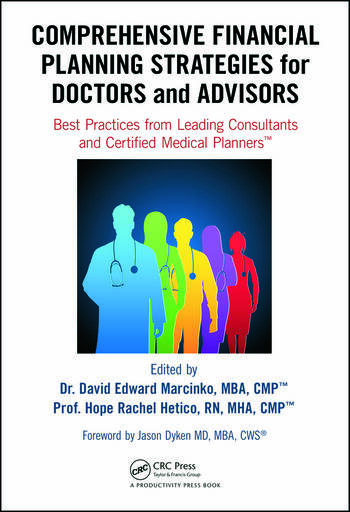
FINANCIAL PLANNING: Strategies for Doctors and Advisors

SPONSOR: http://www.CertifiedMedicalPlanner.org

***

***

RELATED TEXTS: https://medicalexecutivepost.com/2021/04/29/why-are-certified-medical-planner-textbooks-so-darn-popular/

INVITE DR. MARCINKO: https://medicalexecutivepost.com/dr-david-marcinkos-

THANK YOU!

***

Management Strategies, Operational Techniques, Tools, Templates and Case Studies

FOR HOSPITALS AND HEALTHCARE ORGANIZATIONS

***

BY DR. DAVID E. MARCINKO MBA

INVITE DR. MARCINKO: https://medicalexecutivepost.com/dr-david-marcinkos-bookings/

THANK YOU

***

DICTIONARY: Health Information Technology and Security

Review

This is a handy, word-packed reference book with health information technology terminology of the past, present, and future. The paperback book is small and compact in size but amazingly full of words, abbreviations, and even names of leaders in the health information technology industry. While any book like this will require updating on a periodic basis, many of the terms will remain relevant for a good period of time. I found the dictionary very useful and recommend it as a good addition to the reference shelf in the office or library.

Doody’s Book Review

From the Back Cover

Over 10,000 Detailed Entries!

“”There is a myth that all stakeholders in the healthcare space understand the meaning of basic information technology jargon. In truth, the vernacular of contemporary medical information systems is unique, and often misused or misunderstood? Moreover, an emerging national Heath Information Technology (HIT) architecture; in the guise of terms, definitions, acronyms, abbreviations and standards; often puts the non-expert medical, nursing, public policy administrator or paraprofessional in a position of maximum uncertainty and minimum productivity ?The Dictionary of Health Information Technology and Security will therefore help define, clarify and explain…You will refer to it daily.””


– Richard J. Mata, MD, MS, MS-CIS, Certified Medical Planner? (Hon), Chief Medical Information Officer [CMIO], Ricktelmed Information Systems, Assistant Professor Texas State University, San Marcos

***

The “Business of Medical Practice”

TRANSFORMATIONAL HEALTH 2.0 SKILLS FOR DOCTORS

Third Edition

***

***

RELATED TEXTS: https://medicalexecutivepost.com/2021/04/29/why-are-certified-medical-planner-textbooks-so-darn-popular/

INVITE DR. MARCINKO: https://medicalexecutivepost.com/dr-david-marcinkos-

THANK YOU!

*****

Hospitals and Healthcare Organizations

INVITE DR. MARCINKO: https://medicalexecutivepost.com/dr-david-marcinkos-bookings/

Thank You

***

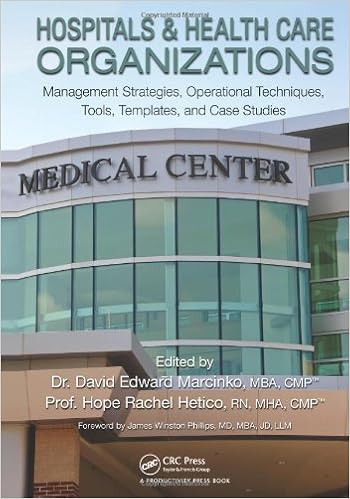
HOSPITALS: Management Strategies, Operational Techniques, Tools, Templates and Case Studies

***

TEXTBOOK REVIEW

Drawing on the expertise of decision-making professionals, leaders, and managers in health care organizations, Hospitals & Health Care Organizations: Management Strategies, Operational Techniques, Tools, Templates, and Case Studies addresses decreasing revenues, increasing costs, and growing consumer expectations in today’s increasingly competitive health care market.

Offering practical experience and applied operating vision, the authors integrate Lean managerial applications, and regulatory perspectives with real-world case studies, models, reports, charts, tables, diagrams, and sample contracts. The result is an integration of post PP-ACA market competition insight with Lean management and operational strategies vital to all health care administrators, comptrollers, and physician executives. The text is divided into three sections:

  1. Managerial Fundamentals
  2. Policy and Procedures
  3. Strategies and Execution

Using an engaging style, the book is filled with authoritative guidance, practical health care–centered discussions, templates, checklists, and clinical examples to provide you with the tools to build a clinically efficient system. Its wide-ranging coverage includes hard-to-find topics such as hospital inventory management, capital formation, and revenue cycle enhancement. Health care leadership, governance, and compliance practices like OSHA, HIPAA, Sarbanes–Oxley, and emerging ACO model policies are included. Health 2.0 information technologies, EMRs, CPOEs, and social media collaboration are also covered, as are 5S, Six Sigma, and other logistical enhancing flow-through principles. The result is a must-have, “how-to” book for all industry participants.

***

NVITE DR. MARCINKO: https://medicalexecutivepost.com/dr-david-marcinkos-bookings/

Thank You

***

YOUR THOUGHTS are appreciated.

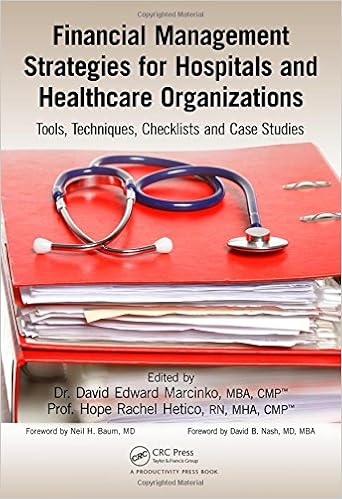
FINANCIAL MANAGEMENT STRATEGIES

Hospitals and Health Care Organizations

YOUR COMMENTS ARE APPRECIATED.

SECOND OPINIONS: https://medicalexecutivepost.com/schedule-a-consultation/

INVITE DR. MARCINKO: https://medicalexecutivepost.com/dr-david-marcinkos-bookings/

THANK YOU

***

Reviews

Navigating a course where sound organizational management is intertwined with financial acumen requires a strategy designed by subject-matter experts. Fortunately, Financial Management Strategies for Hospital and Healthcare Organizations: Tools, Techniques, Checklists and Case Studiesprovides that blueprint.
―David B. Nash, MD, MBA,Jefferson Medical College, Thomas Jefferson University

It is fitting that Dr. David Edward Marcinko, MBA, CMP™ and his fellow experts have laid out a plan of action in Financial Management Strategies for Hospital and Healthcare Organizationsthat physicians, nurse-executives, administrators, institutional CEOs, CFOs, MBAs, lawyers, and healthcare accountants can follow to help move healthcare financial fitness forward in these uncharted waters.
―Neil H. Baum, MD, Tulane Medical School

***]

SECOND OPINIONS: https://medicalexecutivepost.com/schedule-a-consultation/

INVITE DR. MARCINKO: https://medicalexecutivepost.com/dr-david-marcinkos-bookings/

***

Financial Management Strategies for Hospitals and Healthcare Organizations

TEXTBOOK RELEASE AND REVIEW

Reviews

Navigating a course where sound organizational management is intertwined with financial acumen requires a strategy designed by subject-matter experts. Fortunately, Financial Management Strategies for Hospital and Healthcare Organizations: Tools, Techniques, Checklists and Case Studiesprovides that blueprint.
―David B. Nash, MD, MBA,Jefferson Medical College, Thomas Jefferson University

It is fitting that Dr. David Edward Marcinko, MBA, CMP™ and his fellow experts have laid out a plan of action in Financial Management Strategies for Hospital and Healthcare Organizationsthat physicians, nurse-executives, administrators, institutional CEOs, CFOs, MBAs, lawyers, and healthcare accountants can follow to help move healthcare financial fitness forward in these uncharted waters.
―Neil H. Baum, MD, Tulane Medical School

***

SECOND OPINIONS: https://medicalexecutivepost.com/schedule-a-consultation/

INVITE DR. MARCINKO: https://medicalexecutivepost.com/dr-david-marcinkos-bookings/

THANK YOU

***

FINANCIAL PLANNING AND INVESTING FOR PHYSICIANS: Purchase Textbook Today & Relax Tomorrow

“MANIC MONDAY” 2021

INVITE DR. MARCINKO: https://medicalexecutivepost.com/dr-david-marcinkos-bookings/

YOUR THOUGHTS ARE APPRECIATED

SPONSOR: http://www.CertifiedMedicalPlanner.org

CMP logo

THANK YOU

***

FINANCIAL PLANNING: Strategies for Physicians and their Advisors

A Textbook Review

SECOND OPINIONS: https://medicalexecutivepost.com/schedule-a-consultation/

INVITE DR. MARCINKO: https://medicalexecutivepost.com/dr-david-marcinkos-bookings/

SPONSOR: http://www.CertifiedMedicalPlanner.org

CMP logo

THANK YOU

***

DICTIONARY Health Insurance and Managed Care

COMPREHENSIVE REVIEW

[ A 3 in 1 Reference ]

INVITATIONS: https://medicalexecutivepost.com/dr-david-marcinkos-bookings/

CONTACT: Ann Miller RN MHA

MarcinkoAdvisors@msn.com

Ph: 770-448-0769

Second Opinions: https://medicalexecutivepost.com/schedule-a-consultation/

***

Hospitals and Health Care Organizations

MANAGEMENT STRATEGIES, OPERATIONAL TECHNIQUES, TOOLS, TEMPLATES AND CASE STUDIES

TEXTBOOK REVIEWS:

Hospitals and Health Care Organizations is a must-read for any physician and other health care provider to understand the multiple, and increasingly complex, interlocking components of the U.S. health care delivery system, whether they are employed by a hospital system, or manage their own private practices.

The operational principles, methods, and examples in this book provide a framework applicable on both the large organizational and smaller private practice levels and will result in better patient care. Physicians today know they need to better understand business principles and this book by Dr. David E. Marcinko and Professor Hope Rachel Hetico provides an excellent framework and foundation to learn important principles all doctors need to know.
―Richard Berning, MD, Pediatric Cardiology

… Dr. David Edward Marcinko and Professor Hope Rachel Hetico bring their vast health care experience along with additional national experts to provide a health care model-based framework to allow health care professionals to utilize the checklists and templates to evaluate their own systems, recognize where the weak links in the system are, and, by applying the well-illustrated principles, improve the efficiency of the system without sacrificing quality patient care. … The health care delivery system is not an assembly line, but with persistence and time following the guidelines offered in this book, quality patient care can be delivered efficiently and affordably while maintaining the financial viability of institutions and practices.
―James Winston Phillips, MD, MBA, JD, LLM

Risk Management, Liability Insurance, and Asset Protection Strategies for Doctors and Advisors : Best Practices from Leading Consultants and Certified Medical Planners™ book cover

ORDER HERE: https://www.amazon.com/Hospitals-Health-Care-Organizations-Operational-ebook/dp/B0091ICH30/ref=sr_1_8?dchild=1&keywords=david+marcinko&qid=1626110965&sr=8-8

ASSESSMENT: Your comments and thoughts are appreciated.

INVITATIONS: https://medicalexecutivepost.com/dr-david-marcinkos-bookings/

CONTACT: Ann Miller RN MHA

MarcinkoAdvisors@msn.com

Ph: 770-448-0769

Second Opinions: https://medicalexecutivepost.com/schedule-a-consultation/

THANK YOU

***

DICTIONARY: Health Information Technology and Security

COMPREHENSIVE REVIEW

[3 in 1 Reference]

ASSESSMENT: Your comments and thoughts are appreciated.

INVITATIONS: https://medicalexecutivepost.com/dr-david-marcinkos-bookings/

CONTACT: Ann Miller RN MHA

MarcinkoAdvisors@msn.com

Ph: 770-448-0769

Second Opinions: https://medicalexecutivepost.com/schedule-a-consultation/

THANK YOU

***

DICTIONARY: Health Insurance and Managed Care

INVITE DR. MARCINKO: https://medicalexecutivepost.com/dr-david-marcinkos-

CONTACT: Ann Miller RN MH

[Executive Director]

PODCAST: ‘Hacking of the American Mind’

BOOK REVIEW

See the source image

BY ERIC BRICKER MD

Our Brains Have a Reward Chemical Called Dopamine That Causes a Brief Pleasurable Feeling Followed by a Worsening of our Mood.

However, Our Brains Also Have a Contentment Chemical Called Serotonin That Causes Peace and a Calming of our Mood.

Substances and Behaviors That Stimulate Dopamine Include: Sugar, Caffeine, Alcohol, Nicotine, Illicit Drugs, Prescription Narcotics, Social Media Apps, Gambling and Sex.

Substances and Behaviors That Stimulate Serotonin Include: The Amino Acid Tryptophane, Positive Relationships with Others, Service to Others, Prayer and Meditation.

Corporations Tailor Their Products with Dopamine Stimulating Strategies to Increase Sales.

Facebook’s Chamath Palihapitiya Even Admitted on CNBC that Facebook Intentionally Designed its Social Media Platform to Stimulate Dopamine in the User’s Brain To Make Them Use the App More.

Unfortunately, the Constant Stimulation of Dopamine in Our Brains Has Increased Obesity, Metabolic Syndrome, Cancer, Cardiovascular Disease, Diabetes and Depression.

Lustig Estimates That 75% of the $4 Trillion Spent on US Healthcare is for These Diseases That Can Be Traced to Our ‘Hacked Minds.’

Dr. Robert Lustig is a Pediatric Neuroendocrinologist at the University of California at San Francisco. His Book ‘Hacking of the American Mind’ Posits that Corporate Predators Exploit Our Brain Chemistry to Increase Their Profits at the Expense of our Health.

ASSESSMENT: Your thoughts and comments are appreciated.

THANK YOU

***

“Financial Management Strategies for Hospitals and Healthcare Organizations”

TOOLS, TECHNIQUES, CHECKLISTS AND CASE STUDIES

INVITE DR. MARCINKO: https://medicalexecutivepost.com/dr-david-marcinkos-

CONTACT: Ann Miller RN MH

[Executive Director]

PODCAST: Drs. Vivian Lee, Marty Makary, Atul Gawande and Robert Pearl Blame Physician Culture for the Poor State of US Healthcare

At Least in Part ACCORDING TO THESE BOOKS

Texas CEO Magazine Eric Bricker 1 - SO 14 - Texas CEO Magazine

BY ERIC BRICKER MD

Understandably, Many Doctors Take Issue with This Accusation and Say They Treat Their Patients with Integrity and Accountability. Both Statements May Be TRUE … How is That Possible?

Because of Bad Apples.’

While the Majority of Physicians May Put Their Patients First, There Are a Minority of Physicians that Put Money, Power, Prestige and Promotions Ahead of Patients. It’s These Bad Apples That Ruin Physician Culture.

Problem: Fee-for-Service Rewards Bad Apple Physicians, While Paying the High-Integrity Doctors as Well.

Assessment: If Doctors Want to Keep Fee-for-Service, Then the Bad Apples Must Be Reduced Through 1) Increased Transparency, 2) Greater Doctor Self-Regulation, 3) More Federal Oversight and 4) Increased Employer Investigation.

Many of the Books by Drs. Vivian Lee, Marty Makary, Atul Gawande and Robert Pearl Blame Physician Culture in Part for the Poor State of US Healthcare

Your thoughts are appreciated.

THANK YOU

***

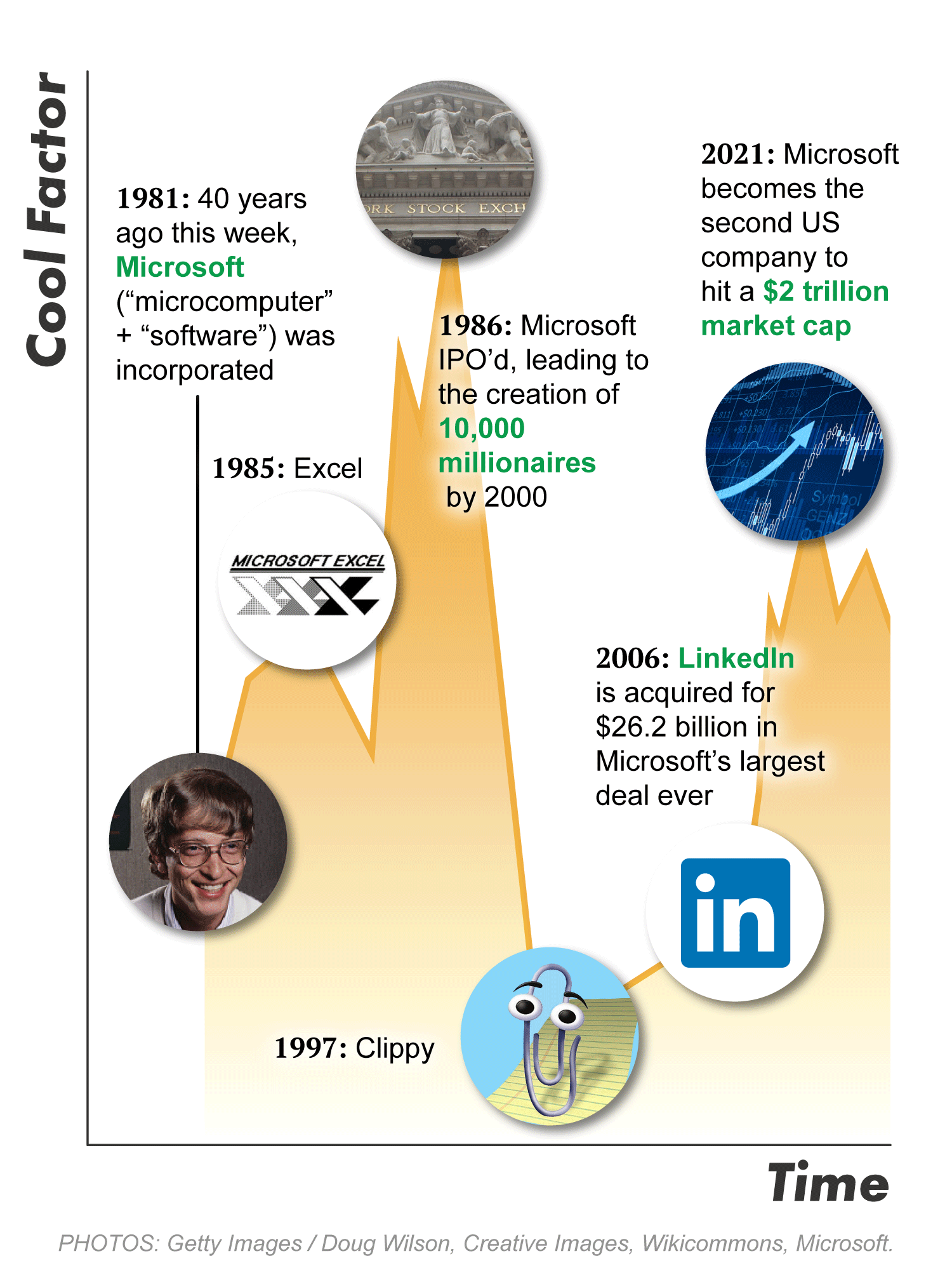
40 Years – MICROSOFT Corp.

Microsoft's biggest moments throughout the years in a chart

https://images.routledge.com/common/jackets/amazon/978148224/9781482240283.jpg

ASSESSMENT: Your thoughts are appreciated.

ORDER TEXTBOOK: https://www.routledge.com/Comprehensive-Financial-Planning-Strategies-for-Doctors-and-Advisors-Best/Marcinko-Hetico/p/book/9781482240283

THANK YOU

***

On Finding PHYSICIAN FOCUSED Financial Advice?

OVER HEARD IN THE DOCTOR’S LOUNGE

Michigan Association of Osteopathic Family Physicians ...

The financial planner is a like juggler, trying to keep a variety of balls simultaneously in the air.  Each aspect of practice becomes critical, just as action is needed. 

Some of the activities of operating a successful financial planning practice generally attract more attention than others, such as marketing and advertising, closing engagements, and office administration.  Because product review, selection and implementation are often related to advisor compensation, they attract a great deal of the financial juggler’s concentration. 

But, the heart of financial planning, niche advice, often receives little attention.  Not because it is unimportant, it just doesn’t seem immediately and predictably urgent.  Here, that ball does not seem to be dropping so rapidly. 

However, retaining clients and receiving referrals from other professionals is very dependent on the quality of the advice delivered.  And, the first line of protection from practitioner liability exposure is to not deliver incorrect or incomplete advice. 

But, where does the financial advisor turn for ideas and organized research in the healthcare sector? 

Edwin P. Morrow; CFPTM, CLU, ChFC, RFC

edwin

[Middletown, Ohio, USA]

ORDER Textbook: https://www.amazon.com/Comprehensive-Financial-Planning-Strategies-Advisors/dp/1482240289/ref=sr_1_1?ie=UTF8&qid=1418580820&sr=8-1&keywords=david+marcinko

THANK YOU

***

HOSPITALS and Health Care Organizations

Management Strategies, Operational Techniques, Tools, Templates and Case Studies

Tex Book Review

Drawing on the expertise of decision-making professionals, leaders, and managers in health care organizations, Hospitals & Health Care Organizations: Management Strategies, Operational Techniques, Tools, Templates, and Case Studies addresses decreasing revenues, increasing costs, and growing consumer expectations in today’s increasingly competitive health care market.

Offering practical experience and applied operating vision, the authors integrate Lean managerial applications, and regulatory perspectives with real-world case studies, models, reports, charts, tables, diagrams, and sample contracts. The result is an integration of post PP-ACA market competition insight with Lean management and operational strategies vital to all health care administrators, comptrollers, and physician executives. The text is divided into three sections:

  1. Managerial Fundamentals
  2. Policy and Procedures
  3. Strategies and Execution

Using an engaging style, the book is filled with authoritative guidance, practical health care–centered discussions, templates, checklists, and clinical examples to provide you with the tools to build a clinically efficient system. Its wide-ranging coverage includes hard-to-find topics such as hospital inventory management, capital formation, and revenue cycle enhancement. Health care leadership, governance, and compliance practices like OSHA, HIPAA, Sarbanes–Oxley, and emerging ACO model policies are included. Health 2.0 information technologies, EMRs, CPOEs, and social media collaboration are also covered, as are 5S, Six Sigma, and other logistical enhancing flow-through principles. The result is a must-have, “how-to” book for all industry participants.

SECOND OPINIONS: https://medicalexecutivepost.com/schedule-a-consultation/

INVITE DR. MARCINKO: https://medicalexecutivepost.com/dr-david-marcinkos-

THANK YOU

***

PODCAST: How New Technologies Are Predictably Spread and How it Applies to Healthcare

BY ERIC BRICKER MD

[Book Review]

***

The Technology Adoption Lifecycle Was Explained in Geoffrey Moore’s Famous Book ‘Crossing the Chasm.

If You Are a Healthcare Entrepreneur or Innovator Your MUST Understand and Apply the Technology Adoption Lifecycle.

It States that Disruptive Innovation (i.e. Innovations that Require Behavior Change) Is Not Evenly Adopted Across a Population.

Rather, People Segment Themselves into Sub-Groups That Adopt the New Innovation Differently. To Whit:

**************

Early Adopters Love Tinker and Like New Innovations Just Because They Are New. Early Adopters Tend to Not Be Price-Sensitive.

Pragmatists Have a Specific Problem that the New Innovation Will Solve and If They See Other People Using It, They Will Use It Too. Pragmatists Are Somewhat Price-Sensitive.

Conservatives Would Rather Not Adopt the New Innovation, but if it is Already Built-in to Something They Already Buy, Then They Will Be More Likely to Use It. Conservatives are Very Price Sensitive.

Skeptics Will Never Adopt the New Innovation.

**************

To Spread a New Innovation, One Must Cross the Chasm Between the Early Adopters and Pragmatists With a ‘Niche‘ and ‘Bowling Pin‘ Strategy.

ASSESSMENT: Your thoughts are appreciated.

THANK YOU

***

A FRUSTRATED PHYSICIAN ASKS: How Much Insurance is Enough?

OVER HEARD IN THE DOCTOR’S LOUNGE

Image result for Doctor Lounge Signs

I currently have no fewer than 10 separate insurance policies associated with my plastic surgery practice. I understand very little about the policies other than that somebody at some point told me I needed each and every one of them, and each made sense when I bought it. But, I often wonder:  

  • Am I over-insured and thus wasting money? 
  • Am I under-insured and thus at risk for a liability disaster? 

I never really had the means of answering these questions …. Until Now!

Lloyd M. Krieger; MD MBA

[Beverly Hills, CA]

***

Risk Management, Liability Insurance, and Asset Protection Strategies for Doctors and Advisors : Best Practices from Leading Consultants and Certified Medical Planners™ book cover

ORDER TEXTBOOK: https://www.routledge.com/Risk-Management-Liability-Insurance-and-Asset-Protection-Strategies-for/Marcinko-Hetico/p/book/9781498725989

SECOND OPINIONS: https://medicalexecutivepost.com/schedule-a-consultation/

INVITE DR. MARCINKO: https://medicalexecutivepost.com/dr-david-marcinkos-bookings/

***

PHYSICIAN BRANDING: Post Corona Virus Pandemic

SELF-BRANDING IN THE MODERN ERA

By Dr. David Edward Marcinko MBA CMP©

SPONSOR: http://www.CertifiedMedicalPlanner.org

CMP logo

In 1987 the magazine Fast Company published an article authored by Tom Peters entitled “The Brand Called You.” Although some individuals may shy away from the concept of self-branding in actuality, many of the online social network sites such as Facebook become media by which we in fact brand ourselves.

In his article, Peter’s stated. “Regardless of position, regardless of the business we happen to be in, all of us need to understand the importance of branding. We are CEOs of their own companies: Me Inc. to be in business today, our most important job is to be head marketer for the brand called you.”

As a medical practitioner how do you differentiate yourself from others in your specialty and why should a new patient choose your practice above those of the others in the field?

Branding is about finding your big idea and building your identity and game plan around it. The bottom line: if you can’t explain who you are, and the value you bring to your practice in a short sentence or two, you have work to do.

According to Catherine Kaputa, a personal coach she suggests that there are the objective things: your credentials, the schools you went to, your years of experience, and your skill set, which represent what she refers to as hard power. Then there’s soft power: your image and reputation, your visibility in the community, your network of contacts, supporters and mentors. In today’s competitive marketplace, soft power plays a vital role in attracting people to you and your practice.

Standing Out

Peters suggests that everyone has a chance to stand out. Everyone has a chance to learn, improve, and build up their skills. Everyone has a chance to be a brand worthy of remark. Corporations spend millions of dollars creating and maintaining their distinct brand.

The Olympic Rings are representative of a brand which the International Olympic Committee guards zealously. Professional services firms such as McKinsey, foster self-branding among their employees. Major corporations have as employees those individuals who are smart, motivated and talented. Self-branding allows the employees to differentiate themselves from their peers. For one to engage in self-branding is first necessary to ask the question,

What is it that my practice does that makes it different?”

You can begin by identifying the qualities or characteristics that make you distinctive from your competitors-or your colleagues.

What have you done lately-this week-to make yourself stand out? What would your colleagues say is your greatest and clearest strength?

What would they say is your most noteworthy personal trait? As a practitioner does your customer get dependable, reliable service that meets his or her strategic needs?

In addition, ask yourself: “what do I do that adds remarkable, measurable, distinguished distinctive value.”

Branding For A Medical Practice & It's Importance ...

Business Cards

While we are on the topic of mass media look at your business card and check to see if it has a distinctive logo on it. Keep in mind that packaging counts.

Getting and using power, intelligently, responsibly, and powerfully are essential skills for growing your brand. One of the things that attract us to certain brands is the power they project. Power, is largely a matter of perception. If you want people to see you as a powerful brand, act like a credible leader.

Another technique advocated by Peters is developing loyalty among your patients. In addition, you yourself need to be loyal to your colleagues, your staff, patients and to yourself.

Another way in which you can begin to promote yourself is, with a personal visibility campaign; getting yourself on a panel discussion with signing up to make a presentation at a workshop. If you are a medical writer, try writing about the corona pandemic, or contributing a column on a regular basis to your local newspaper. Community newspapers and professional newsletters are always seeking articles to fill the space. Not only does it give you the opportunity to express yourself it also is an excellent means to expose your practice and your capabilities to a mass audience.

ASSESSMENT: Your thoughts are comments are appreciated.

Product Details

ORDER TEXTBOOK: https://www.amazon.com/Business-Medical-Practice-Transformational-Doctors/dp/0826105750/ref=sr_1_9?ie=UTF8&qid=1448163039&sr=8-9&keywords=david+marcinko

SECOND OPINIONS: https://medicalexecutivepost.com/schedule-a-consultation/

INVITE DR. MARCINKO: https://medicalexecutivepost.com/dr-david-marcinkos-bookings/

THANK YOU

PODCAST: Is Doctor Culture Uncaring?

Dr. Robert Pearl’s Book from Moral Injury to Fee-for-Service … and More

Bricker - This Week Health

By Eric Bricker MD

Dr. Robert Pearl Was the CEO of the Permanente Medical Group from 1999 to 2017. Permanente is the Physician Group for all of Kaiser Permanente. It is the Largest Physician Group in America with 10,000 Doctors, 38,000 Staff and 5 Million Members.

EDITOR’S NOTE: Normally, book reviews are boring but this presentation from colleague Eric Bricker MD is well worth a watch.

PODCAST LINK: https://www.youtube.com/watch?v=omPqBq6_f-E

ASSESSMENT: Your thoughts are appreciated.

THANK YOU

***

The Business of Medical Practice [3rd. edition]

SPONSOR: http://www.CertifiedMedicalPlanner.org

CMP logo

ORDER TEXTBOOK: https://www.amazon.com/Business-Medical-Practice-Transformational-Doctors/dp/0826105750/ref=sr_1_9?ie=UTF8&qid=1448163039&sr=8-9&keywords=david+marcinko

SECOND OPINIONS: https://medicalexecutivepost.com/schedule-a-consultation/

INVITE DR. MARCINKO: https://medicalexecutivepost.com/dr-david-marcinkos-bookings/

THANK YOU

***

Hospitals and Healthcare Organizations

SPONSOR: http://www.CertifiedMedicalPlanner.org

CMP logo

ORDER TEXTBOOK: https://www.amazon.com/Hospitals-Healthcare-Organizations-Management-Operational/dp/1439879907/ref=sr_1_4?s=books&ie=UTF8&qid=1334193619&sr=1-4

SECOND OPINIONS: https://medicalexecutivepost.com/schedule-a-consultation/

INVITE DR. MARCINKO: https://medicalexecutivepost.com/dr-david-marcinkos-bookings/

THANK YOU

***

Dictionary Health Insurance and Managed Care

FOREWORD: https://medicalexecutivepost.com/wp-content/uploads/2007/10/mike-stahl-phd-mba.pdf

The Integrated Patient-Centered Medical Home Model

Join Our Mailing List

Tools for Transforming Our Healthcare

By Matias A. Klein

[VP, General Manager, Clinical Quality and Collaboration, Portico Systems]

The patient-centered medical home (PCMH) continues to attract increasing attention from many industry stakeholders. The PCMH model has the potential to enhance the US healthcare system by rejuvenating primary care in a way that improves clinical outcomes, lowers costs, promotes wellness, and increases patient and physician satisfaction.

PCMH Pilot Programs

PCMH pilots are currently being tested in almost all states, including a 3-year Medicare medical home demonstration project overseen by the Centers for Medicare & Medicaid Services. However, few organizations have scaled the PCMH across their entire healthcare network, and the existing implementations appear to remain focused on care management at the expense of patient wellness. The value of focusing equally on promoting wellness (although an underappreciated nuance in the implementation of a PCMH) is a critical factor in effectively leveraging the PCMH model to improve clinical outcomes and the US healthcare system.

Centered on the Patient

The PCMH model, as its name suggests, is centered on the patient. The underlying thought is that if a comprehensive, longitudinal view of a patient is taken throughout a patient’s lifespan, the patient’s health could be better “managed” and better aligned with best medical practices. It is well documented that physicians do not consistently or frequently apply evidence based, recommended care to patients. Therefore, a major goal of the PCMH model is to improve the consistent application of evidence-based guidelines and best practices, by making longitudinal information about the patient available to providers and to patients – including any risks and recommended “intervention opportunities.” And although adherence to best practices in disease management is crucial, the PCMH model also focuses on preventing costly episodes by promoting and incentivizing wellness.

PCPs = Medical Homes

To effectively manage a patient’s health and promote wellness, primary care physicians – designated as medical homes – need to act as health “quarterbacks” or “coaches.” In such a role, these physicians will assist in aggregating a patient’s health information, making best practices transparent, offering health education and counseling, as well as coordinating the provisioning of any healthcare services the patient may need. With physicians spending significant time coaching and making critical clinical decisions, these services will be delivered with the support of care management nurses, who will handle the majority of the information processing and operational activity.

An Innovation in Care

The PCMH model is an important innovation in care delivery and has the potential to reduce medical and administrative costs, while improving the quality of care. However, how to implement the PCMH model within a care-delivery system remains unclear. Providers need the requisite infrastructure and capabilities at their locations to meaningfully participate in a PCMH. Patients must be engaged over long periods of time in proactively managing and improving their health. Outcomes and quality must be objectively measured to optimize the delivery of best possible patient care.

Potential Value

To realize the potential value of the PCMH, three distinct stakeholders – patients, providers, and health plans – must work in a collaborative way. Getting these stakeholders synchronized (i.e., aligned in their goals, using interoperable tools, and collaborating on an operational level) is no small feat but can be accomplished with the smart application of technology. Bringing these three stakeholder groups together on a common, collaborative technology platform results in what some are beginning to call the integrated PCMH. The integrated approach to the PCMH can best ensure that implementing a PCMH model does not create additional administrative burdens to health plans or provider organizations.

An integrated PCMH provides a framework for stakeholders to collaborate in a transparent fashion, and where quality, best practices, and outcomes are incentivized. The integrated PCMH also provides a pathway being awarded a medical home designation.

Vertical Integration Deployment

The key to deploying an integrated PCMH is an end-to-end vertical integration of the care-delivery process – that is, a process in which the provider network management, automation, information exchange, and analytics solutions are tightly integrated with patient and provider information. With so much complexity and so many “moving parts” in the delivery of the PCMH model, this end-to-end vertical integration is a practical solution that enables effective coordination of care and accurate measurement of quality: with such system integration, the provider network (e.g., the health plan) can bring economies of scale to even the smallest provider offices to optimize the quality of care delivery.

The 5 Keys

The five key components for such an integrated PCMH are:

  1. A source-of-truth for mapping medical home – designated providers, patients, as well as  the associated relationships with health plans and other medical professionals; a central medical home fact checking is critical for effectively identifying, managing, and communicating with medical home and their networks.
  2. A set of collaborative workflows that align stakeholders with best practices, incentives, and quality measures reporting; these collaborative workflows help each stakeholder understand where a given patient is in the care-delivery process, potential intervention opportunities, why certain interventions are being emphasized, and what incentives are available for executing specific interventions.
  3. An infrastructure for clinical integration and distribution of intervention opportunities, clinical reference content, education, alerts, and reminders. This infrastructure allows all stakeholders to have access to up-to-date, accurate patient information; it aligns stakeholders and helps reduce or eliminate duplication of procedures and tests.
  4. Interoperable clinical applications and collaboration tools to enable patients and physicians to engage in medical home processes; these tools – which include electronic medical records, e-prescribing, e-labs, secure e-mail, personal health records, and document management and exchange technology – can help manage health information, assist with decision-making, and improve communication between patients, providers, and health plans.
  5. Incentive management and analytics tools for modeling, setting, measuring, and rewarding incentives based on quality measures and outcomes; these tools must span the entire PCMH delivery process and are required for objectively evaluating and optimizing the performance of a medical home.

When considering the multiplicity of stakeholders, information, software systems, and knowledge that has to be coordinated in the context of a PCMH model, implementing a medical home pilot and scaling it to a full-blown network may seem a daunting task. The integrated PCMH offers a real-world solution for deploying a scalable and flexible infrastructure for the management of this emerging care-delivery model.

Assessment

Early evaluations of the PCMH model show promising, albeit inconclusive, outcomes. The integrated PCMH model offers a practical road map for deploying a management system that will enable objective measurement of PCMH performance and outcomes.

Conclusion

Although the jury is still out on the ultimate value of the PCMH, deploying an integrated PCMH system can help position PCMH pilots in a way that enhances their flexibility and scalability to support full-scale network transformation.

Your thoughts and comments on this ME-P are appreciated. Feel free to review our top-left column, and top-right sidebar materials, links, URLs and related websites, too. Then, subscribe to the ME-P. It is fast, free and secure.

Speaker: If you need a moderator or speaker for an upcoming event, Dr. David E. Marcinko; MBA – Publisher-in-Chief of the Medical Executive-Post – is available for seminar or speaking engagements. Contact: MarcinkoAdvisors@msn.com

OUR OTHER PRINT BOOKS AND RELATED INFORMATION SOURCES:

Product Details

Product Details 

Seeking Comments on MARCINKO’S New Financial Planning Textbook for Doctors and their Advisors

Join Our Mailing List

[WHERE LEARNING IS A plus+]

Career Development, Products and Services

“The informed voice of a new generation of fiduciary advisors for healthcare”

CMP logo

http://www.CertifiedMedicalPlanner.org 

 Our New Text – “Take a Peek Inside – Now Available

Comprehensive Financial Planning Strategies for Doctors and Advisors: Best Practices from Leading Consultants and Certified Medical Planners(TM)

Front Matter with Foreword by Jason Dyken MD MBA

http://www.BusinessofMedicalPractice.com

***

On Finding Physician-Focused Financial Advice

OVER HEARD IN THE DOCTOR’S LOUNGE

Courtesy: www.CertifiedMedicalPlanner.org

CMP logo

[On Finding Physician-Focused Financial Advice]

The financial planner is a like juggler, trying to keep a variety of balls simultaneously in the air.  Each aspect of practice becomes critical, just as action is needed. 

Some of the activities of operating a successful financial planning practice generally attract more attention than others, such as marketing and advertising, closing engagements, and office administration.  Because product review, selection and implementation are often related to advisor compensation, they attract a great deal of the financial juggler’s concentration. 

But, the heart of financial planning, niche advice, often receives little attention.  Not because it is unimportant, it just doesn’t seem immediately and predictably urgent.  Here, that ball does not seem to be dropping so rapidly. 

However, retaining clients and receiving referrals from other professionals is very dependent on the quality of the advice delivered.  And, the first line of protection from practitioner liability exposure is to not deliver incorrect or incomplete advice. 

But, where does the financial advisor turn for ideas and organized research in the healthcare sector?” 

Edwin P. Morrow; CFPTM, CLU, ChFC, RFC

[Middletown, Ohio, USA]

Your thoughts are appreciated.

BUSINESS, FINANCE, INVESTING AND INSURANCE TEXTS FOR DOCTORS:

1https://lnkd.in/ezkQMfR

2 – https://lnkd.in/ebWtzGg

3 – https://lnkd.in/ewJPTJs

THANK YOU

Risk Management, Liability Insurance, and Asset Protection Strategies for Doctors and Advisors: Best Practices from Leading Consultants and Certified Medical Planners™8Comprehensive Financial Planning Strategies for Doctors and Advisors: Best Practices from Leading Consultants and Certified Medical Planners™

***

The “Lucifer Effect”

Understanding How Good People Turn Evil

[By staff reporters]

This is a 2007 book which includes Professor Philip Zimbardo’s first detailed, written account of the events surrounding the 1971 Stanford Prison Experiment — a prison simulation study which had to be discontinued after only six days due to several distressing outcomes and mental breaks of the participants.

The book includes over 30 years of subsequent research into the psychological and social factors which result in immoral acts being committed by otherwise moral people.

It also examines the prisoner abuse at Abu Ghraib in 2003, which has similarities to the Stanford experiment. The title takes its name from the biblical story of the favored angel of God, Lucifer, his fall from grace, and his assumption of the role of Satan, the embodiment of evil. The book was briefly on The New York Times Non-Fiction Best Seller and won the American Psychological Association’s 2008 William James Book Award.

Conclusion

Your thoughts and comments on this ME-P are appreciated. Feel free to review our top-left column, and top-right sidebar materials, links, URLs and related websites, too. Then, subscribe to the ME-P. It is fast, free and secure.

Link: http://feeds.feedburner.com/HealthcareFinancialsthePostForcxos

Speaker: If you need a moderator or speaker for an upcoming event, Dr. David E. Marcinko; MBA – Publisher-in-Chief of the Medical Executive-Post – is available for seminar or speaking engagements. Contact: MarcinkoAdvisors@msn.com

Risk Management, Liability Insurance, and Asset Protection Strategies for Doctors and Advisors: Best Practices from Leading Consultants and Certified Medical Planners™8Comprehensive Financial Planning Strategies for Doctors and Advisors: Best Practices from Leading Consultants and Certified Medical Planners™

***

What are Immortal HeLa Cells?

On Henrietta Lacks

[By Dr. David Edward Marcinko MBA]

I am from Baltimore, Maryland and grew up playing stick ball in the parking lot of Johns Hopkins Hospital. I met more than a few medical luminaries and so I also know this legendary story. It is now passed on for your amazement!

What they are – How they work?

‘Immortal’ Cells

Journalist Rebecca Skloot’s new book investigates how a poor black tobacco farmer had a groundbreaking impact on modern medicine

https://www.smithsonianmag.com/science-nature/henrietta-lacks-immortal-cells-6421299/#izWCg1l54JutILcy.99

https://en.wikipedia.org/wiki/HeLa

More: http://www.msn.com/en-us/news/us/henrietta-lacks-portrait-acquired-by-smithsonian-museums/ar-AAx5hQF

Conclusion

Your thoughts and comments on this ME-P are appreciated. Feel free to review our top-left column, and top-right sidebar materials, links, URLs and related websites, too. Then, subscribe to the ME-P. It is fast, free and secure.

Speaker: If you need a moderator or speaker for an upcoming event, Dr. David E. Marcinko; MBA – Publisher-in-Chief of the Medical Executive-Post – is available for seminar or speaking engagements.

Book Marcinko: https://medicalexecutivepost.com/dr-david-marcinkos-bookings/

Subscribe: MEDICAL EXECUTIVE POST for curated news, essays, opinions and analysis from the public health, economics, finance, marketing, IT, business and policy management ecosystem.

***

Dr. Marcinko Interviewed on the Physician Credit Crunch

Financial Experts Share Tips on Obtaining Loans to Start or Expand a Medical Practice

By Michael Gibbons

Editor: ADVANCE Newsmagazines

Maybe you’re a young dermatologist or plastic surgeon who dreams of starting your own practice. Or maybe you’re an established professional but want to expand your palette of anti-aging services. Either way, you’ve probably made an unpleasant discovery: Banks are leery about lending today. Global recessions with seemingly no end in sight tend to give loan officers sticky fingers.HO-JFMS-CD-ROM

Dermatologists and Plastic Surgeons

We have it on good authority that dermatologists and plastic surgeons as a group are less affected by this problem than physicians in some other branches of medicine. Still, there’s no better time than now to absorb some sound advice on how to approach banks for loans—whether you’re a fresh-faced newcomer to the fresh-face business or a wrinkled veteran at eliminating wrinkles.

Start Small

There’s no soft-soaping it: Starting a healthy aging practice is much harder than expanding an existing practice, even in the flushest of times.

“For young dermatologists starting out, I recommend you start small,” advises Jerome Potozkin, MD, who offers facial rejuvenation, liposuction, body contouring and dermatological care through his practice in Walnut Creek, CA. “You can always expand. Keep your overhead low. Know what your credit score is and do everything you can to improve it. Pay your bills on time.”

Lasers aren’t cheap. Besides the initial acquisition costs, a service contract can cost $7,000 to $12,000 a year, according to Dr. Potozkin. “Don’t feel you have to buy every new laser under the sun,” he says. “In fact, renting rather than purchasing is an option many companies offer. When your volume is low you can rent and schedule laser days—although the pitfall there is you don’t have lasers available whenever patients come in.”

Also, young dermatologists “will probably have an easier time getting a loan if they go to a relatively underserved area, as opposed to an area that has a large number of dermatologists per capita,” says Dr. Potozkin, who began practicing 10 years ago. “There are two schools of thought on this: Go where you want to live to start a practice or go to where there’s a need and be instantly successful. I chose the former. It took me longer to get started but I’m very happy where I am.”

Patience, Prudence and Passiondem2

Be patient, prudent, passionate—and start with a spare office and as little debt as possible, advises Dr. David E. Marcinko MBA, a financial advisor and Certified Medical Planner™. Marcinko, a health economist,  is CEO of the Institute of Medical Business Advisors Inc., a national physician and medical practice consulting firm based in Norcross, GA www.MedicalBusinessAdvisors.com

“Patients are looking for passion from you, not lavish trappings,” Dr. Marcinko says. “When a banker or a loan officer sees $175,000 or more of debt they are loath to give a loan—and it’s hard to blame them. Purchase a home after you become a private practitioner. You need to be as close to debt-free as you can be.

Exit Strategy

“Another thing bankers want to know is, ‘If we give you a loan and you start a practice and it fails, how will we be paid back?’ They want an exit strategy.”

The good news is dermatology “remains a very lucrative specialty, and in most parts of the country they are in a shortage position, particularly with the aging population,” says Sandra McGraw, JD, MBA, principal and CEO of the Health Care Group, a financial and legal consulting firm based in Plymouth Meeting, PA., that advises the American Academy of Dermatology, among other groups.

“I would start with a realistic business plan for why you think this practice can succeed, in the specific location,” McGraw says. “How many patients do you expect to see? How will they know you are there and available? Remember that banks lend to all kinds of people, so keep your numbers realistic. Overestimating expenses is as bad as underestimating them. Then determine how you want the money—usually a fixed loan for a period of time and then a line of credit as you get your practice going and sometimes need the cash flow.”biz-book

Expanding a Practice

Established dermatologists should have an easier time getting loans to expand their practices. They have, one hopes, a track record of success and assets to put up as collateral.

Mid-career physicians “have cash flow, physician assets and equity to some degree in a house and personal assets,” Dr. Marcinko observes. “Banks can attach loans to personal assets and savings accounts. Ninety-nine percent of times you must sign a personal asset guarantee. Mid-lifers have assets young ones don’t, so mid-lifers aren’t quite the risk. They have businesses that have value and cash flow. Banks like cash flow.”

However, even veterans must do some homework before approaching a bank. “You still want to establish why you want the money and how the expansion will increase your income,” McGraw says.

Another tip: If the bank has loans out with reputable vendors, you might ask the loan officer to recommend them to you as potential contractors. “Sometimes keeping it local and supporting others with loans at the bank can be helpful,” she says.

Assessment

Dr. Marcinko adds, “Bankers today want you to come in with a well-reasoned, well-thought-out and well-written business plan. Give bankers a 30-second elevator speech on why you are different. It’s really important to ask yourself, ‘What can I offer the community as a doctor in my specialty that nobody else can?’ If you bill yourself as the first dermatologist to do laser surgery, that’s a perceived advantage. You purchased the equipment and learned to use it. But anyone can do that. If you can come up with something that nobody else has or can do, that’s how you’re successful in anything.”

Link: Dr. Marcinko Interview

Link: https://medicalexecutivepost.com/wp-content/uploads/2009/08/dr-marcinko-interview.pdf

Conclusion

And so, your thoughts and comments on this Medical Executive-Post are appreciated. Tell us what you think. Feel free to review our top-left column, and top-right sidebar materials, links, URLs and related websites, too. Then, be sure to subscribe to the ME-P. It is fast, free and secure.

Link: http://feeds.feedburner.com/HealthcareFinancialsthePostForcxos

Speaker: If you need a moderator or speaker for an upcoming event, Dr. David E. Marcinko; MBA – Publisher-in-Chief of the Executive-Post – is available for seminar or speaking engagements. Contact: MarcinkoAdvisors@msn.com

Sponsors Welcomed

And, credible sponsors and like-minded advertisers are always welcomed.

Link: https://healthcarefinancials.wordpress.com/2007/11/11/advertise

A New FINANCIAL PLANNING TEXTBOOK for DRs and Physician Focused Financial Advisors

Join Our Mailing List

 THRIVE IN 2019

Our New Text – “Take a Peek Inside 

Now Available –

***

Comprehensive Financial Planning Strategies for Doctors and Advisors: Best Practices from Leading Consultants and Certified Medical Planners(TM)

Front Matter with Foreword by Jason Dyken MD MBA

logos

“BY DOCTORS – FOR DOCTORS – PEER REVIEWED – FIDUCIARY FOCUSED”

***

Book Reviews

Written by doctors and healthcare professionals, this textbook should be mandatory reading for all medical school students—highly recommended for both young and veteran physicians—and an eliminating factor for any financial advisor who has not read it. The book uses jargon like ‘innovative,’ ‘transformational,’ and ‘disruptive’—all rightly so! It is the type of definitive financial lifestyle planning book we often seek, but seldom find.
LeRoy Howard MA CMPTM, Candidate and Financial Advisor, Fayetteville, North Carolina

I taught diagnostic radiology for over a decade. The physician-focused niche information, balanced perspectives, and insider industry transparency in this book may help save your financial life.
Dr. William P. Scherer MS, Barry University, Ft. Lauderdale, Florida

This book was crafted in response to the frustration felt by doctors who dealt with top financial, brokerage, and accounting firms. These non-fiduciary behemoths often prescribed costly wholesale solutions that were applicable to all, but customized for few, despite ever-changing needs. It is a must-read to learn why brokerage sales pitches or Internet resources will never replace the knowledge and deep advice of a physician-focused financial advisor, medical consultant, or collegial Certified Medical Planner™ financial professional.
—Parin Khotari MBA, Whitman School of Management, Syracuse University, New York

In today’s healthcare environment, in order for providers to survive, they need to understand their current and future market trends, finances, operations, and impact of federal and state regulations. As a healthcare consulting professional for over 30 years supporting both the private and public sector, I recommend that providers understand and utilize the wealth of knowledge that is being conveyed in these chapters. Without this guidance providers will have a hard time navigating the supporting system which may impact their future revenue stream. I strongly endorse the contents of this book.
—Carol S. Miller BSN MBA PMP, President, Miller Consulting Group, ACT IAC Executive Committee Vice-Chair at-Large, HIMSS NCA Board Member

This is an excellent book on financial planning for physicians and health professionals. It is all inclusive yet very easy to read with much valuable information. And, I have been expanding my business knowledge with all of Dr. Marcinko’s prior books. I highly recommend this one, too. It is a fine educational tool for all doctors.
—Dr. David B. Lumsden MD MS MA, Orthopedic Surgeon, Baltimore, Maryland

There is no other comprehensive book like it to help doctors, nurses, and other medical providers accumulate and preserve the wealth that their years of education and hard work have earned them.
—Dr. Jason Dyken MD MBA, Dyken Wealth Strategies, Gulf Shores, Alabama

I plan to give a copy of this book written
by doctors and for doctors’ to all my prospects, physician, and nurse clients. It may be the definitive text on this important topic.
—Alexander Naruska CPA, Orlando, Florida

Health professionals are small business owners who need to apply their self-discipline tactics in establishing and operating successful practices. Talented trainees are leaving the medical profession because they fail to balance the cost of attendance against a realistic business and financial plan. Principles like budgeting, saving, and living below one’s means, in order to make future investments for future growth, asset protection, and retirement possible are often lacking. This textbook guides the medical professional in his/her financial planning life journey from start to finish. It ranks a place in all medical school libraries and on each of our bookshelves.
—Dr. Thomas M. DeLauro DPM, Professor and Chairman – Division of Medical Sciences, New York College of Podiatric Medicine

Physicians are notoriously excellent at diagnosing and treating medical conditions. However, they are also notoriously deficient in managing the business aspects of their medical practices. Most will earn $20-30 million in their medical lifetime, but few know how to create wealth for themselves and their families. This book will help fill the void in physicians’ financial education. I have two recommendations: 1) every physician, young and old, should read this book; and 2) read it a second time!
—Dr. Neil Baum MD, Clinical Associate Professor of Urology, Tulane Medical School, New Orleans, Louisiana

I worked with a Certified Medical Planner™ on several occasions in the past, and will do so again in the future. This book codified the vast body of knowledge that helped in all facets of my financial life and professional medical practice.
Dr. James E. Williams DABPS, Foot and Ankle Surgeon, Conyers, Georgia

This is a constantly changing field for rules, regulations, taxes, insurance, compliance, and investments. This book assists readers, and their financial advisors, in keeping up with what’s going on in the healthcare field that all doctors need to know.
Patricia Raskob CFP® EA ATA, Raskob Kambourian Financial Advisors, Tucson, Arizona

I particularly enjoyed reading the specific examples in this book which pointed out the perils of risk … something with which I am too familiar and have learned (the hard way) to avoid like the Black Death. It is a pleasure to come across this kind of wisdom, in print, that other colleagues may learn before it’s too late— many, many years down the road.
Dr. Robert S. Park MD, Robert Park and Associates Insurance, Seattle, Washington

Although this book targets physicians, I was pleased to see that it also addressed the financial planning and employment benefit needs of nurses; physical, respiratory, and occupational therapists; CRNAs, hospitalists, and other members of the health care team….highly readable, practical, and understandable.
Nurse Cecelia T. Perez RN, Hospital Operating Room Manager, Ellicott City, Maryland

Personal financial success in the PP-ACA era will be more difficult to achieve than ever before. It requires the next generation of doctors to rethink frugality, delay gratification, and redefine the very definition of success and work–life balance. And, they will surely need the subject matter medical specificity and new-wave professional guidance offered in this book. This book is a ‘must-read’ for all health care professionals, and their financial advisors, who wish to take an active role in creating a new subset of informed and pioneering professionals known as Certified Medical Planners™.
—Dr. Mark D. Dollard FACFAS, Private Practice, Tyson Corner, Virginia

As healthcare professionals, it is our Hippocratic duty to avoid preventable harm by paying attention. On the other hand, some of us are guilty of being reckless with our own financial health—delaying serious consideration of investments, taxation, retirement income, estate planning, and inheritances until the worry keeps one awake at night. So, if you have avoided planning for the future for far too long, perhaps it is time to take that first step toward preparedness. This in-depth textbook is an excellent starting point—not only because of its readability, but because of his team’s expertise and thoroughness in addressing the intricacies of modern investments—and from the point of view of not only gifted financial experts, but as healthcare providers, as well … a rare combination.
Dr. Darrell K. Pruitt DDS, Private Practice Dentist, Fort Worth, Texas

This text should be on the bookshelf of all contemporary physicians. The book is physician-focused with unique topics applicable to all medical professionals. But, it also offers helpful insights into the new tax and estate laws, fiduciary accountability for advisors and insurance agents, with investing, asset protection and risk management, and retirement planning strategies with updates for the brave new world of global payments of the Patient Protection and Affordable Care Act. Starting out by encouraging readers to examine their personal ‘money blueprint’ beliefs and habits, the book is divided into four sections offering holistic life cycle financial information and economic education directed to new, mid-career, and mature physicians.

This structure permits one to dip into the book based on personal need to find relief, rather than to overwhelm. Given the complexity of modern domestic healthcare, and the daunting challenges faced by physicians who try to stay abreast of clinical medicine and the ever-evolving laws of personal finance, this textbook could not have come at a better time.
—Dr. Philippa Kennealy MD MPH, The Entrepreneurial MD, Los Angeles, California

Physicians have economic concerns unmatched by any other profession, arriving ten years late to the start of their earning years. This textbook goes to the core of how to level the playing field quickly, and efficaciously, by a new breed of dedicated Certified Medical Planners™. With physician-focused financial advice, each chapter is a building block to your financial fortress.
Thomas McKeon, MBA, Pharmaceutical Representative, Philadelphia, Pennsylvania

An excellent resource … this textbook is written in a manner that provides physician practice owners with a comprehensive guide to financial planning and related topics for their professional practice in a way that is easily comprehended. The style in which it breaks down the intricacies of the current physician practice landscape makes it a ‘must-read’ for those physicians (and their advisors) practicing in the volatile era of healthcare reform.
—Robert James Cimasi, MHA ASA FRICS MCBA CVA CM&AA CMP™, CEO-Health Capital Consultants, LLC, St. Louis, Missouri

Rarely can one find a full compendium of information within a single source or text, but this book communicates the new financial realities we are forced to confront; it is full of opportunities for minimizing tax liability and maximizing income potential. We’re recommending it to all our medical practice management clients across the entire healthcare spectrum.
Alan Guinn, The Guinn Consultancy Group, Inc., Cookeville, Tennessee

Dr. David Edward Marcinko MBA CMP™ and his team take a seemingly endless stream of disparate concepts and integrate them into a simple, straightforward, and understandable path to success. And, he codifies them all into a step-by-step algorithm to more efficient investing, risk management, taxation, and enhanced retirement planning for doctors and nurses. His text is a vital read—and must execute—book for all healthcare professionals and physician-focused financial advisors.
Dr. O. Kent Mercado, JD, Private Practitioner and Attorney, Naperville, Illinois

Kudos. The editors and contributing authors have compiled the most comprehensive reference book for the medical community that has ever been attempted. As you review the chapters of interest and hone in on the most important concerns you may have, realize that the best minds have been harvested for you to plan well… Live well.
Martha J. Schilling; AAMS® CRPC® ETSC CSA, Shilling Group Advisors, LLC, Philadelphia, Pennsylvania

I recommend this book to any physician or medical professional that desires an honest no-sales approach to understanding the financial planning and investing world. It is worthwhile to any financial advisor interested in this space, as well.
David K. Luke, MIM MS-PFP CMP™, Net Worth Advisory Group, Sandy, Utah

Although not a substitute for a formal business education, this book will help physicians navigate effectively through the hurdles of day-to-day financial decisions with the help of an accountant, financial and legal advisor. I highly recommend it and commend Dr. Marcinko and the Institute of Medical Business Advisors, Inc. on a job well done.
Ken Yeung MBA CMP™, Tseung Kwan O Hospital, Hong Kong

I’ve seen many ghost-written handbooks, paperbacks, and vanity-published manuals on this topic throughout my career in mental healthcare. Most were poorly written, opinionated, and cheaply produced self-aggrandizing marketing drivel for those agents selling commission-based financial products and expensive advisory services. So, I was pleasantly surprised with this comprehensive peer-reviewed academic textbook, complete with citations, case examples, and real-life integrated strategies by and for medical professionals. Although a bit late for my career, I recommend it highly to all my younger colleagues … It’s credibility and specificity stand alone.
Dr. Clarice Montgomery PhD MA, Retired Clinical Psychologist

In an industry known for one-size-fits-all templates and massively customized books, products, advice, and services, the extreme healthcare specificity of this text is both refreshing and comprehensive.
Dr. James Joseph Bartley, Columbus, Georgia

My brother was my office administrator and accountant. We both feel this is the most comprehensive textbook available on financial planning for healthcare providers.
Dr. Anthony Robert Naruska DC, Winter Park, Florida

***

business-valuation

***

Royal College of General Practitioners Recommends: “Comprehensive Financial Planning Strategies for Doctors and Advisors”

 Join Our Mailing List

Comprehensive Financial Planning Strategies for Doctors and Advisors

RECOMMENDATION

***

rcgp-logo

Drawing on the expertise of multi-degreed doctors, and multi-certified financial advisors, Comprehensive Financial Planning Strategies for Doctors and Advisors [Best Practices from Leading Consultants and Certified Medical Planners™] will shape the industry landscape for the next generation as the current ecosystem strives to keep pace.

Traditional generic products and sales-driven advice will yield to a new breed of deeply informed financial advisor or Certified Medical Planner™.

The profession is set to be transformed by “cognitive-disruptors” that will significantly impact the $2.8 trillion healthcare marketplace for those financial consultants serving this challenging sector. There will be winners and losers.

The text, which contains 24 chapters and champions healthcare providers while informing financial advisors, is divided into four sections compete with glossary of terms, Certified Medical Planner™ curriculum content, and related information sources.

cmp

http://www.CertifiedMedicalPlanner.org

1. For ALL medical providers and financial industry practitioners
2. For NEW medical providers and financial industry practitioners
3. For MID-CAREER medical providers and financial industry practitioners
4. For MATURE medical providers and financial industry practitioners

Using an engaging style, the book is filled with authoritative guidance and healthcare-centered discussions, providing the tools and techniques to create a personalized financial plan using professional advice.

Comprehensive coverage includes topics likes behavioral finance, modern portfolio theory, the capital asset pricing model, and arbitrage pricing theory; as well as insider insights on commercial real estate; high frequency trading platforms and robo-advisors; the Patriot and Sarbanes–Oxley Acts; hospital endowment fund management, ethical wills, giving, and legacy planning; and divorce and other special situations.

The result is a codified “must-have” book, for all health industry participants, and those seeking advice from the growing cadre of financial consultants and Certified Medical Planners™ who seek to “do well by doing good,” dispensing granular physician-centric financial advice:

Omnia pro medicus-clientis

  Risk Management, Liability Insurance, and Asset Protection Strategies for Doctors and Advisors: Best Practices from Leading Consultants and Certified Medical Planners™8Comprehensive Financial Planning Strategies for Doctors and Advisors: Best Practices from Leading Consultants and Certified Medical Planners™

DR. DAVID EDWARD MARCINKO MBA CMP™

ISBN Number: 9781482240283

Number of pages: 744

Publisher: CRC Press

reward

AWARDS

***

How to Invest the Dale Carnegie Way

How to Invest the Dale Carnegie Way

By Vitaliy Katsenelson, CFA
The first time I read Dale Carnegie’s How to Win Friends and Influence People was in 1990. I was living in Russia; the Cold War had just ended.

Capitalist American books suddenly became very popular. Carnegie’s was one of the first to be translated into Russian and was “the book to read.” Everyone wanted to be a capitalist, and this book was supposed to make me a better one.

I decided, however, that it was stuffed with disingenuous fluff — that it taught the reader how to not be authentic; it turned you into a fake.


Conclusion

Your thoughts and comments on this ME-P are appreciated. Feel free to review our top-left column, and top-right sidebar materials, links, urls and related websites, too. Then, subscribe to the ME-P. It is fast, free and secure.

Speaker: If you need a moderator or speaker for an upcoming event, Dr. David E. Marcinko; MBA – Publisher-in-Chief of the Medical Executive-Post – is available for seminar or speaking engagements. Contact: marcinkoadvisors@msn.com

OUR OTHER PRINT BOOKS AND RELATED INFORMATION SOURCES:

Comprehensive Financial Planning Strategies for Doctors and Advisors: Best Practices from Leading Consultants and Certified Medical Planners™

***

What I Didn’t Know Then?

About Money

[By Rick Kahler MS CFP®]

Fifty years ago I scraped together $100 that I earned moving lawns and invested in my first stocks. I had heard a person could make a lot of money owning stocks. The ones I bought were all very small regional companies that I selected with the help of a stock broker who said they had great promise. They all eventually went out of business.

The next time I had some money to invest, at age 19, I bought a house. My $1,000 down payment grew into $4,000 in a couple of years. I took that money and invested it into the futures market. Within days it was gone.

It probably isn’t a surprise that, after these painful lessons, I put my investable dollars into buying real estate. It took me 10 years to even consider investing money into the stock market.

While I did okay investing in real estate, my foray into more liquid investments could have been much less painful had I known then what I know now.

Here’s what I finally learned: buying individual stocks and trying to beat the market is a game very, very, very few people do well at.

Had I taken that first $100 and purchased an index fund that invested in the 500 largest companies in the US (the S&P 500), 50 years later my $100 would have grown to $12,600, which is 10.2% a year. But I didn’t know that then.

My kids, however, are a little smarter. Six years ago they invested around $100 each into the Vanguard Dividend Appreciation Fund that owns just over 100 large company stocks. Their $100 is now worth around $300, which is a little over 20% a year. If that return would continue, at the 50-year anniversary of their original $100 investment they would each have just over $920,000. While I will guarantee you the 20% returns will not continue, they are well on their way to doing far better with their initial $100 investments than I did with mine.

Which leads me to wonder if the growth of their stock investments is likely to equal the growth of the past 50 years. According to Jonathon Clements of HumbleDollar.com, in a July 1, 2017 blog post , repeating the returns of the past is probably unlikely.

First he contends that because of “the aging of America and the accompanying slow growth in the workforce, the current century’s real economic growth has been sluggish, averaging 1.9% a year over the past 17 calendar years. That’s likely to continue.”

If you take real economic growth of 2%, add inflation of 2%, and add the average 2% dividend yield of stocks, you are looking at a 6% long-term return. Based on Clements’s math, that means $100 will grow to $1,840 in 50 years. That’s a fraction of the $12,600 accumulation of the past 50 years.

***

***

Clements notes the focus here is on just US stocks, suggesting the outlook for international stocks is much brighter. Other asset classes that could also do well are real estate and commodities.

Assessment

he bottom line is often the same: placing your bets on one stock, one asset class, or one country carries with it a high amount of risk. Most long-term investors need to seriously consider diversifying their nest egg globally in several asset classes. While such investors will never hit a home run, they will also never have to forfeit the game.

After my early attempts at investing, it took me a long time to learn what I didn’t know then. My hope is that writing about my mistakes can help others learn sooner what I do know now. 

Conclusion

Your thoughts and comments on this ME-P are appreciated. Feel free to review our top-left column, and top-right sidebar materials, links, urls and related websites, too. Then, subscribe to the ME-P. It is fast, free and secure.

Speaker: If you need a moderator or speaker for an upcoming event, Dr. David E. Marcinko; MBA – Publisher-in-Chief of the Medical Executive-Post – is available for seminar or speaking engagements. Contact: marcinkoadvisors@msn.com

OUR OTHER PRINT BOOKS AND RELATED INFORMATION SOURCES:

Comprehensive Financial Planning Strategies for Doctors and Advisors: Best Practices from Leading Consultants and Certified Medical Planners™

***

The Blockchain Book for Healthcare

Author Q & A

By staff reporters 

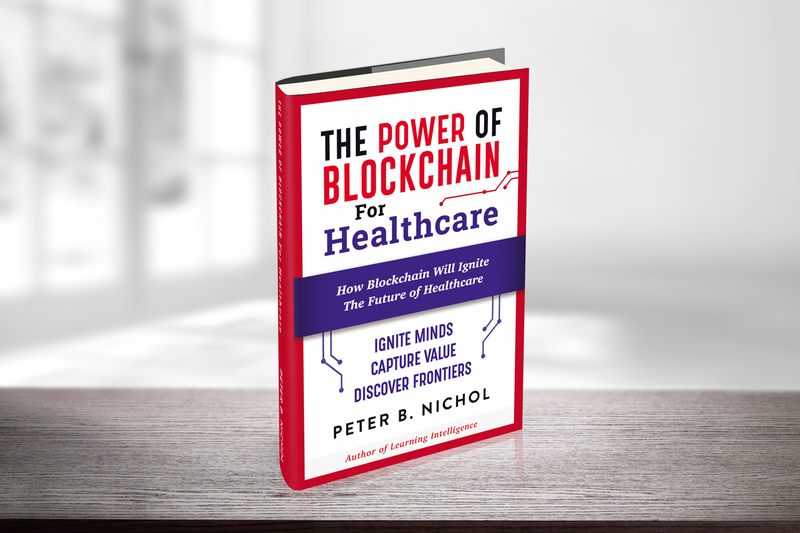
Peter B. Nichol, managing director of OROCA Innovations, is one of the world’s foremost experts in healthcare and blockchain technology.

He is also the author of the recently released book “The Power of Blockchain for Healthcare.”

In light of his expertise and the publication of this new book, here is a brief interview with Nichol on the current landscape for blockchain technology in healthcare as well as the trends he expects to see emerging in this budding space.

*** 

***

Conclusion

Your thoughts and comments on this ME-P are appreciated. Feel free to review our top-left column, and top-right sidebar materials, links, URLs and related websites, too. Then, subscribe to the ME-P. It is fast, free and secure.

Speaker: If you need a moderator or speaker for an upcoming event, Dr. David E. Marcinko; MBA – Publisher-in-Chief of the Medical Executive-Post – is available for seminar or speaking engagements. Contact: MarcinkoAdvisors@msn.com

OUR OTHER PRINT BOOKS AND RELATED INFORMATION SOURCES:

Risk Management, Liability Insurance, and Asset Protection Strategies for Doctors and Advisors: Best Practices from Leading Consultants and Certified Medical Planners™    Risk Management, Liability Insurance, and Asset Protection Strategies for Doctors and Advisors: Best Practices from Leading Consultants and Certified Medical Planners™

***

First Global “Holacracy” Forum

What is Holacracy?

By Rick Kahler MS CFP®

“Holacracy is not something to go beyond, it is beyond.” This statement from David Allen, author of the iconic book, Getting Things Done, illustrates the challenge of describing the Holacratic approach to operating an organization.

Allen was a speaker at the first Global Holacracy Forum, held in Amsterdam, which I recently attended. It was a chance for Holacracy thought leaders from around the world to network and learn more from each other.

What is Holacracy? One of its founders, Tom Thompson of Encode.org, calls it “a complete wholesale replacement for management hierarchy” and says,

“It’s exploring work in pursuit of purpose.”

Many of those attending the forum referred to Holacracy as a new operating system for organizations. Decision-making is taken from the “top” and distributed among clearly defined roles. The Holacratic structure is a highly disciplined way of working that invites everyone to become an entrepreneur in carrying out their role to achieve the purpose of the organization. Holacracy is not egalitarian or a democracy. Its goal is to serve the purpose of the organization by inviting people into conscious relationships with themselves and each other.

***

***

Behavior Change

As good as that may sound, not every company or every person is a good fit for Holacracy, as forum participants pointed out. “There is a lot of deep individual behavioral change that needs to happen to successfully transition to a Holacracy,” said co-founder Brian Robertson. Frank Klinkhammer, of NetCentric in Zurich, added,

“The personal development of every partner (employee) is now important to the whole group.  Do not over-estimate a person’s ability to change, or even your own.”

Robertson said a significant number of companies claimed to have adopted Holacracy but soon dropped the system. “Most of those thought they were doing Holacracy but instead still maintained their management hierarchy and just ran the Holacratic meeting structure.” He noted that, in his experience, companies that make the leap and fully adopt Holacracy say they will never go back.

*** 

***

Case Model

One of those is David Allen, who discovered Holacracy six years ago when he was about to fold his company of 45 people. He found it the perfect organizational overlay to his system of Getting Things Done. “Holacracy is about optimizing an organization, Getting Things Done is about maximizing the productivity of an individual.” Allen also emphasized the importance of individual behavioral change, saying,

“People must know how to manage themselves first to exist in Holacracy.”

What is it worth to people to work in a Holacratic company? According to market research done by Michael DeAngelo, who works for the state of Washington, employees in the Seattle area must be offered 30% to 40% more a year to leave a Holacratic organization to work at a traditional company. He says a company using Holacracy “offers everything the workforce values: flexibility, a sense of purpose, autonomy, and personal and professional growth.”

When is a good time to adopt Holacracy?

“There is never a good time to start,” said Allen. I would agree. When I adopted it four years ago, we had just lost a key employee who did a little bit of everything. I wanted a system that required less management, had clear job descriptions, and would give my staff more personal responsibility and freedom. I found all that and more in Holacracy. I also under estimated people’s ability to change their behavior and flourish rather than flounder with the increased freedom and responsibility.

Assessment

Despite the challenges of implementing it, I do believe Holacracy is, as Robertson described it in his closing remarks, “a radical new way to organize power.” He believes Holacratic principles can fundamentally change the power structures of society. 

Conclusion

Your thoughts and comments on this ME-P are appreciated. Feel free to review our top-left column, and top-right sidebar materials, links, URLs and related websites, too. Then, subscribe to the ME-P. It is fast, free and secure.

Speaker: If you need a moderator or speaker for an upcoming event, Dr. David E. Marcinko; MBA – Publisher-in-Chief of the Medical Executive-Post – is available for seminar or speaking engagements. Contact: MarcinkoAdvisors@msn.com

OUR OTHER PRINT BOOKS AND RELATED INFORMATION SOURCES:

Product DetailsProduct Details

***

Some Book Reviews on Value Investing

Articles and Papers, too:

By Michael at: https://valuestockgeek.com

If you like want to learn more about value investing, below are some great resources.

***

***

 Resources

Conclusion

Your thoughts and comments on this ME-P are appreciated. Feel free to review our top-left column, and top-right sidebar materials, links, URLs and related websites, too. Then, subscribe to the ME-P. It is fast, free and secure.

Speaker: If you need a moderator or speaker for an upcoming event, Dr. David E. Marcinko; MBA – Publisher-in-Chief of the Medical Executive-Post – is available for seminar or speaking engagements. Contact: MarcinkoAdvisors@msn.com

OUR OTHER PRINT BOOKS AND RELATED INFORMATION SOURCES:

8Comprehensive Financial Planning Strategies for Doctors and Advisors: Best Practices from Leading Consultants and Certified Medical Planners™

***

The American Dream is Slipping Away?

Is the American Dream slipping away?

By Rick Kahler CFP®

Is the American Dream slipping away? Yes, according to an article by David Leonhardt, The American Dream, Quantified at Last, published in the New York Times in December 2016.

Leonhardt cites research done for The Equality of Opportunity Project and reported as Trends in Absolute Income Mobility Since 1940. It concludes that the ability to attain the American Dream has fallen from 92% in 1940 to 50% today.

For me, this report raised a few questions

First, how do we define the American Dream?

Merriam-Webster calls it a “happy way of living that is thought of by many Americans as something that can be achieved by anyone in the U.S. especially by working hard and becoming successful.”

Wikipedia says it is “the set of ideals (democracy, rights, liberty, opportunity, and equality) in which freedom includes the opportunity for prosperity and success, and an upward social mobility for the family and children, achieved through hard work in a society with few barriers.”

James Truslow Adams, in his 1931 book The American Dream, defines it as life being “better and richer and fuller for everyone, with opportunity for each according to ability or achievement.”

These definitions suggest the American Dream is every person having the opportunity through ingenuity and hard work to achieve financial and emotional well-being.

Interestingly, the study Leonhardt cites chose a definition from Lawrence Samuel’s 2012 book, The American Dream: A Cultural History: “the ideal that children have a higher standard of living than their parents.”

The study found that those born in 1940 had a 92% chance of earning more than their parents at age 30. Those born in 1950 had a 79% chance, in 1960 a 62% chance, in 1970 a 61% chance, and in 1980 a 50% chance.

Leonhardt calls this data “deeply alarming.” He says, “It’s a portrait of an economy that disappoints a huge number of people that have heard that they live in a country where life gets better, only to experience something quite different.” I am guessing the disappointment to which he refers is what most people experience as life getting worse.

Yet defining the American Dream as an economy where children perpetually make more money (adjusted for inflation and taxes) than their parents misses the mark. As an economy improves and matures, that’s not sustainable.

***

***

Indeed, our country is experiencing exponential decreases—decreases in those living in extreme poverty. We are actually experiencing substantial increases in those earning more. Research in 2016 by Stephen J. Rose found that from 1979 through 2014 the number of households becoming affluent (incomes were adjusted for inflation) increased eighteen times, from 0.1% of the population in 1979 to 1.8% in 2014. The upper middle class increased from 12.9% to 29.4%. This, of course, left significantly fewer people in the categories of middle class, lower middle class, and poor.

As more people increase their standard of living, it’s only logical that the relative income growth of future generations will decrease. At some point in time, enough is enough.

Instead of seeing the American Dream solely as out-earning our parents, it may be more useful to go back to the second part of James Truslow Adams’ definition: “It is not a dream of motor cars and high wages merely, but a dream of social order in which each man and each woman shall be able to attain to the fullest stature of which they are innately capable, and be recognized by others for what they are, regardless of the fortuitous circumstances of birth or position.”

Assessment

Once someone achieves financial, physical, and emotional well-being, earning more than one’s parents becomes immaterial.

Conclusion

Your thoughts and comments on this ME-P are appreciated. Feel free to review our top-left column, and top-right sidebar materials, links, URLs and related websites, too. Then, subscribe to the ME-P. It is fast, free and secure.

Speaker: If you need a moderator or speaker for an upcoming event, Dr. David E. Marcinko; MBA – Publisher-in-Chief of the Medical Executive-Post – is available for seminar or speaking engagements. Contact: MarcinkoAdvisors@msn.com

OUR OTHER PRINT BOOKS AND RELATED INFORMATION SOURCES:

Comprehensive Financial Planning Strategies for Doctors and Advisors: Best Practices from Leading Consultants and Certified Medical Planners™

***

Royal College of General Practitioners Recommend: “Risk Management, Liability Insurance and Asset Protection Strategies for Doctors and Advisors”

Join Our Mailing List

rcgp-logo

RECOMMENDATION

***

Risk Management Liability Insurance and Asset Protection Strategies for Doctors and Advisors

It is not uncommon for practicing physicians to have more than a dozen separate insurance policies to protect their medical practice and personal assets. Yet, most doctors understand very little about their policies.

The book RISK MANAGEMENT, LIABILITY INSURANCE AND ASSET PROTECTION STRATEGIES for DOCTORS and ADVISORS [Best Practices from Leading Consultants and Certified Medical Planners™] explains to physicians and insurance professionals the background, theory, and practicalities of medical risk management, asset protection methods, and insurance planning.

The text presents information in a manner that is convenient and highly useful for busy medical practitioners. It discusses the medical records revolution and addresses concerns regarding cloud computing, data security, and technological threats.

The book covers modern health law and policy, including fraud and abuse, workplace-violence, Medicare compliance, HIPAA regulations, AR protection strategies with internal controls, P4P and value based care, insurance and reputation management, and how the ARA legislation is impacting physician practices.

It also includes case models and examples that provide you with a real-world understanding of how to recognize and reduce personal and medical practice risks.

With time at a premium for all, and so much information packed into one well-organized resource, this book is a must-read for every physician and financial advisor that serves the health care sector. The book will help physicians make better decisions about the risks they face and will help financial advisors improve the value they provide to their clients who are doctors.

http://www.CertifiedMedicalPlanner.org

DR. DAVID EDWARD MARCINKO MBS CMP®

ISBN Number: 9781498725989

Number of pages: 748

Publisher: CRC Press

Published: 2018

Dr. Boyd MD PhD MA for Dr. Marcinko

 Risk Management, Liability Insurance, and Asset Protection Strategies for Doctors and Advisors: Best Practices from Leading Consultants and Certified Medical Planners™8Comprehensive Financial Planning Strategies for Doctors and Advisors: Best Practices from Leading Consultants and Certified Medical Planners™

Risk Management Liability Insurance and Asset Protection Strategies for Doctors and Advisors

reward

AWARDS

Invite Dr. Marcinko

***

Policy and Regulatory Decision Making in the Medical Profession

Join Our Mailing List

A Framework to Identify the influence of Special Interest Groups and “Bent” Science

A SPECIAL ME-P REPORT

By Michael Lawrence Langan MD

***

Policy and Regulatory Decision Making in the Medical Profession: A Framework to Identify the influence of Special Interest Groups and “Bent” Science.

Channel Surfing the ME-P

Have you visited our other topic channels? Established to facilitate idea exchange and link our community together, the value of these topics is dependent upon your input. Please take a minute to visit. And, to prevent that annoying spam, we ask that you register. It is fast, free and secure.

More:

In  Bending Science: How Special Interests Corrupt Public Health Research 1  Thomas McGarity and Wendy Wagner describe how special interest groups scheme to advance their own economic or ideological goals by using distorted or “bent” science to influence legal, regulatory and public health policy.

Conclusion

Your thoughts and comments on this ME-P are appreciated. Feel free to review our top-left column, and top-right sidebar materials, links, URLs and related websites, too. Then, subscribe to the ME-P. It is fast, free and secure.

Speaker: If you need a moderator or speaker for an upcoming event, Dr. David E. Marcinko; MBA – Publisher-in-Chief of the Medical Executive-Post – is available for seminar or speaking engagements. Contact: MarcinkoAdvisors@msn.com

OUR OTHER PRINT BOOKS AND RELATED INFORMATION SOURCES:

 Comprehensive Financial Planning Strategies for Doctors and Advisors: Best Practices from Leading Consultants and Certified Medical Planners(TM)* 8