Is Working with a Financial Advisor Worth It?

Join Our Mailing List

The Future of Retirement, the Power of Planning

By Lon Jefferies CFP® MBA

Lon JeffriesHSBC recently published an article titled “The Future of Retirement, the Power of Planning” which compares the circumstances of investors who work with a financial planner to those who invest on their own. The goal of the study was to determine if there is a benefit to working with an investment professional.

The Survey

The survey categorized survey respondents as non-planners, advice-seeking non-planners, self-guided planners, and advice seeking planners.

The Psychological Profile

  1. Non-planners have done nothing by way of financial planning or obtaining financial advice. This group represented 38% of all respondents.
  2. Advice-seeking non-planners are individuals who do not have a financial plan, though they do seek professional financial advice from time to time. They are likely to seek advice about one particular need rather than taking holistic, comprehensive advice. This group made up 12% of all respondents.
  3. Self-guided planners have a financial plan in place but do not seek professional expertise to help them make sense of their finances. Members of this group are likely to be younger, internet savvy, and mid-to-high income earners. This group accounted for 22% of respondents.
  4. Advice-seeking planners have a financial plan and utilize a financial professional to help manage their finances. Members of this grouping are more likely to be approaching retirement or retired, and are typically more wealthy. They made up 28% of survey respondents.

Errors

The most glaring findings of the study is the importance of a financial plan. Those with advisor directed financial plans have nest-eggs that are over four times as large as those without plans. Further, consistently working with a financial planner seems to add significant value; Advice-seeking planners had nest-eggs that were 57% larger than self-guided planners.

Why?

The Financial Engines & AON Hewitt report that investors who manage their investments with the aid of a financial advisor are more diversified, take less risk, and obtain better returns than self-directed investors. In fact, advisor directed investors were found to increase their returns by 2.92% per year after expenses!

Lastly, if you are curious how the size of your nest-egg compares to that of the average American worker, you might be shocked.

Homestead

Excluding the value of a primary residence and defined benefit plans (pensions), 60% of American workers have less than $50k in savings and investments, according to the Employee Benefit Research Institute. Moreover, 79% have less than $100k saved. Only 10% of workers have accumulated a nest-egg of over $250k.

Now, how does this compare with doctors and medical professionals; of today and yesterday. How about you? What about a fiduciary focused Certified Medical Planner www.CertifiedMedicalPlanner.org?

Assessment

Conclusion

Your thoughts and comments on this ME-P are appreciated. Feel free to review our top-left column, and top-right sidebar materials, links, URLs and related websites, too. Then, subscribe to the ME-P. It is fast, free and secure.

Link: http://feeds.feedburner.com/HealthcareFinancialsthePostForcxos

Speaker: If you need a moderator or speaker for an upcoming event, Dr. David E. Marcinko; MBA – Publisher-in-Chief of the Medical Executive-Post – is available for seminar or speaking engagements. Contact: MarcinkoAdvisors@msn.com

OUR OTHER PRINT BOOKS AND RELATED INFORMATION SOURCES:

DICTIONARIES: http://www.springerpub.com/Search/marcinko
PHYSICIANS: www.MedicalBusinessAdvisors.com
PRACTICES: www.BusinessofMedicalPractice.com
HOSPITALS: http://www.crcpress.com/product/isbn/9781466558731
CLINICS: http://www.crcpress.com/product/isbn/9781439879900
BLOG: www.MedicalExecutivePost.com
FINANCE: Financial Planning for Physicians and Advisors
INSURANCE: Risk Management and Insurance Strategies for Physicians and Advisors

Product Details  Product Details

Morgan Stanley Peddled Security Its Own Employee Called ‘Nuclear Holocaust’

Join Our Mailing List
An Explosive Charge
By Jesse Eisinger Pro Publica
###
A new lawsuit suggests employees at Morgan Stanley understood the housing market was in trouble and exploited that knowledge to bet against securities and unload garbage investments on the unsuspecting.

The bank denies wrongdoing.

Bank

Link: Explosive Charge: Morgan Stanley Peddled Security Its Own Employee Called ‘Nuclear Holocaust’

Conclusion

Your thoughts and comments on this ME-P are appreciated. Feel free to review our top-left column, and top-right sidebar materials, links, URLs and related websites, too. Then, subscribe to the ME-P. It is fast, free and secure.

Speaker: If you need a moderator or speaker for an upcoming event, Dr. David E. Marcinko; MBA – Publisher-in-Chief of the Medical Executive-Post – is available for seminar or speaking engagements. Contact: MarcinkoAdvisors@msn.com

OUR OTHER PRINT BOOKS AND RELATED INFORMATION SOURCES:

Product Details  Product Details

***

Crafting a Business Plan and Starting a Medical Practice “Live” Audio Conference

Medical Office Business PlanCrafting A Business Plan And Starting A Medical Practice
Speaker: Dr. David Edward Marcinko MBA CMP
Live Audio Conference
Date:Wednesday, January 30, 2013 Time: 1 pm Eastern | 12 pm Central | 11 am Mountain | 10 am Pacific Length: 60 Minutes
 Order
Do you need money to start or Grow your medical practice?
The “Business Plan” is a key tool for raising start-up capital for a new medical practice, or financing a medical / surgical service line extension for a mature one. It is also used for acquiring loans to finance growth of an existing practice. Although long recognized as a quintessential business tool, its’ formal structure and mental rigor are only now being recognized in the medical community as competition increases in the healthcare industrial complex. There are many reasons to write a medical practice business plan. The process of gathering, compiling and analyzing information is an invaluable experience to the beginning practitioner, or experienced veteran physician. Our expert Dr. David, will discuss all these, step by step in this 1-hour enlightening event. See the steps below:

  • Determine the feasibility of a new practice start-up.
  • Raise money from investment bankers for a new practice.
  • Obtain financing to expand an existing office or turn-around a declining satellite.
  • Develop an operational strategic plan and conduct due diligence.
  • Create a budget, time frame or business direction for a practice.
  • Unmask potential problems, risks or benefits of a medical practice.
  • Focus on market opportunities by determining revenue centers or cost drivers.
  • Persuade third party payers, networks and insurance carriers that your practice has a future and represents a viable synergistic partner for their organization.
  • And more
As a attendee you will get:

  • Power Point slide presentation.
  • Time-line checklist to new medical office launch.
  • Topical comprehensive white paper.
  • Electronic blog forum for further information.
  • And more
Dr. David in this 60-minute conference will present to you:

  • Executive Summary: Where you concisely state the purpose of the loan, the exact amount of money required, an explanation of what the loan will be used for and why it’s needed.
  • Pro-forma Cash Budgets and Financial Statements:You’ll learn to how effectively use your data and underlying assumptions to prepare information that your banker can easily read and buy into.
  • Doctor’s Personal Financial Statements: Learn how to use copies of the last 3 years of personal tax returns for the bank as well as identify the collateral being pledged as security for the loan.
  • Representation: Here is where this presentation is invaluable.
  • And more
Order
Call 1-866-458-2965 and mention code STCIGH02
Ask a question at the Q&A session following the live event and get advice unique to your situation
About Our Speaker
Dr. David Edward Marcinko MBA CMP is founding CEO of the Institute of Medical Business Advisors, Inc www.MedicalBusinessAdvisors.com and Publisher of the Medical Executive-Post www.MedicalExecutivePost.com iMBA Inc is a leading national scope provider of real time medical practice management reports, books, dictionaries, journals, financial planning and advisory opinions, Fair Market Value appraisals and educational seminars www.CertifiedMedicalPlanner.org  The firm serves physicians, nurses and medical societies; financial advisors, wealth managers and CPAs; emerging healthcare entities, hospitals, clinics, IPAs and their CXOs; the press, media and all related organizations. Read more
Get $20 Off On Registering NOW!(Use Codé “David20” at Checkóut )

Order

Certified Medical Planner

Celebrating Spouse’s Day 2013

Join Our Mailing List

Love Your Mate Today … and Every Day

By Ann Miller RN MHA

If you are a ME-P advocate who happens to be married, today may just be your significant other’s lucky day!

Why? Today is Spouse’s Day for 2013: Spouse’s Day

###Spouses-Day

Assessment

This annual holiday, which celebrates your better half, is observed each year on January 26th. So, love on your mate, and remind him/her that you’re committed to the relationship. Assure him/her that if you had to do it all over again, you’d still say, “I do.”

Finally, live today, tomorrow, and the days that follow like you mean your words.  Remember, say what you mean … and mean what you say. That’s the ME-P way!

Conclusion

Your thoughts and comments on this ME-P are appreciated. Feel free to review our top-left column, and top-right sidebar materials, links, URLs and related websites, too. Then, subscribe to the ME-P. It is fast, free and secure.

Link: http://feeds.feedburner.com/HealthcareFinancialsthePostForcxos

Speaker: If you need a moderator or speaker for an upcoming event, Dr. David E. Marcinko; MBA – Publisher-in-Chief of the Medical Executive-Post – is available for seminar or speaking engagements. Contact: MarcinkoAdvisors@msn.com

OUR OTHER PRINT BOOKS AND RELATED INFORMATION SOURCES:

Product Details

Are Doctors Unique -OR- New Members of the Working Class hoi-polloi?

Join Our Mailing List

United We Stand – Divided We Fall?

By Dr. David Edward Marcinko MBA

BC Dr. MarcinkoPhysician blogger Kent Bottles MD recently asked if doctors are really different; a special class of folks?

And, some colleagues are shocked when an authority like Uwe Reinhardt PhD, of Princeton University, points out that collectively many MDs act just like any other worker in the domestic economy.

LinkAre physicians really that special?

In fact, the classic 1986 letters between the Princeton professor, and former New England Journal of Medicine editor Arnold Relman MD, highlight the tension between how we think of ourselves and how we act.

Medical Labor Unions

Now, also recall that healthcare journalist William F. Shea, opined more than a decade ago, that there were numerous psychological barriers against the formation of physician unions [personal communication].

Barriers

These included (1) the public perception of doctor’s as a “cut above” ordinary workers; (2) doctor’s attempts to wrap collective bargaining in a mantle of patient’s rights that lacked credibility; and (3) the highly educated physician’s ability to re-engineer and seek alternate employment opportunities rather than accept the salary scale or lack of autonomy present in restrictive managed care entities.

Professional Wake Up Call

Tincture of Time

Time has proven Shea both correct and incorrect, as MD resignation through individual re-deployment and/or innovation has been more effective than any “union strike” if called by one practitioner at a time.

On the other hand, more than 40% of all physicians are now collective employees … So, what gives?

Link: Legal Strategies for Doctors Sheltering Employment Income

Assessment

And so, are doctors really different than the man-in-the-street; or more like union workers and the OWStreeters? Did we stand united, or have we fallen individually since the comments of Shea, Reinhardt and Relman?

Conclusion

Your thoughts and comments on this ME-P are appreciated. Feel free to review our top-left column, and top-right sidebar materials, links, URLs and related websites, too. Then, subscribe to the ME-P. It is fast, free and secure.

Speaker: If you need a moderator or speaker for an upcoming event, Dr. David E. Marcinko; MBA – Publisher-in-Chief of the Medical Executive-Post – is available for seminar or speaking engagements. Contact: MarcinkoAdvisors@msn.com

OUR OTHER PRINT BOOKS AND RELATED INFORMATION SOURCES:


Product DetailsProduct DetailsProduct Details

Product Details  Product Details

Product DetailsProduct Details

How I Lost my Battle Against the NPI

Join Our Mailing List

Refusing a National Provider Identifier Number

By Darrell K. Pruitt DDS

pruittI can no longer refuse to apply for a National Provider Identifier (NPI). I lost that long battle. Anyone rejoicing?

I’m spent. My leverage has vanished. Telling insurers “I have no NPI” held much more inherent power than “I have an NPI but I won’t share it with you on principle.” Far too many words. My profession has become dominated by unresponsive, unaccountable 3rd parties that dental leaders in the ADA welcome as policy. Working together, they promote and commandeer the technology dentists purchase and clueless patients pay for in increased fees. I have painfully learned that principles are only for dentists who can still afford them, and it’s a bad economy for luxuries.

Non-HIPAA Entity

Since I am not a HIPAA-covered entity and therefore not required by law to adopt an NPI, my capitulation to extortion disappoints me as an American citizen. I still find it hard to believe that an anti-consumer HIPAA rule enthusiastically enforced by the dental benefits industry could force me to “volunteer” for a PERMANENT identifier. As I and 96% of dentists become jerked around by our NPIs, I hope dental historians note that I am the ONLY dentist who publicly asked “Why?” instead of “Why not?” After 6 years, I’m still awaiting an answer to that question from leaders who continue to promote the NPI to dentists while ignoring their questions.

Dental Benefits Providers

I was able to hold out up until Aetna, Delta Dental and other dental benefits providers deprived my office of access to details of patients’ dental benefits unless I have an NPI. I’m waiting for someone – anyone – to tell me how the identifier can possibly improve the dental care of those who pay Aetna and Delta Dental premiums, especially if their benefits are intentionally kept secret from their dentists. I am certain that if the nation’s employers who purchase dental benefits were aware of the transparent nonsense, they would never purchase such products. Where’s the US Chamber of Commerce? Where’s the FTC? How about the US Constitution?

This is exactly why there needs to be more openness in our profession, Doc. The cockroaches who were invited to quietly overrun dentistry cannot withstand transparency, yet I don’t know how much longer I can fight for it without further risking the health of my practice.

As anyone can understand – and as anticipated by corporate executives in the insurance industry as well as by those with vested interests in the ADA Department of Dental Informatics – to have to explain to new patients why I cannot estimate how much they will owe for treatment would destroy my practice. Outside the US, other societies deem it unethical to deny patients informed consent to treatment for any reason. The NPI is such an egregious blunder that I never expect those who promoted to accept ownership.

###

NPI

Assessment

If I lost the battle, who won? Do EDR enthusiasts in the ADA call this a glorious victory and a likely source of ADA pride for decades to come? Or is it much more shameful? Since I lost freedom, I want to know who won?

Conclusion

Your thoughts and comments on this ME-P are appreciated. Feel free to review our top-left column, and top-right sidebar materials, links, URLs and related websites, too. Then, subscribe to the ME-P. It is fast, free and secure.

Link: http://feeds.feedburner.com/HealthcareFinancialsthePostForcxos

Speaker: If you need a moderator or speaker for an upcoming event, Dr. David E. Marcinko; MBA – Publisher-in-Chief of the Medical Executive-Post – is available for seminar or speaking engagements. Contact: MarcinkoAdvisors@msn.com

Our Other Print Books and Related Information Sources:

Health Dictionary Series: http://www.springerpub.com/Search/marcinko

Practice Management: http://www.springerpub.com/product/9780826105752

Physician Financial Planning: http://www.jbpub.com/catalog/0763745790

Medical Risk Management: http://www.jbpub.com/catalog/9780763733421

Hospitals: http://www.crcpress.com/product/isbn/9781439879900

Physician Advisors: www.CertifiedMedicalPlanner.org

Product DetailsProduct Details

The Evolution of Automobile Safety

Join Our Mailing List

Technology Rolls On

By Dr. David Edward Marcinko MBA

By Matthew Pelletier [safety consultant]

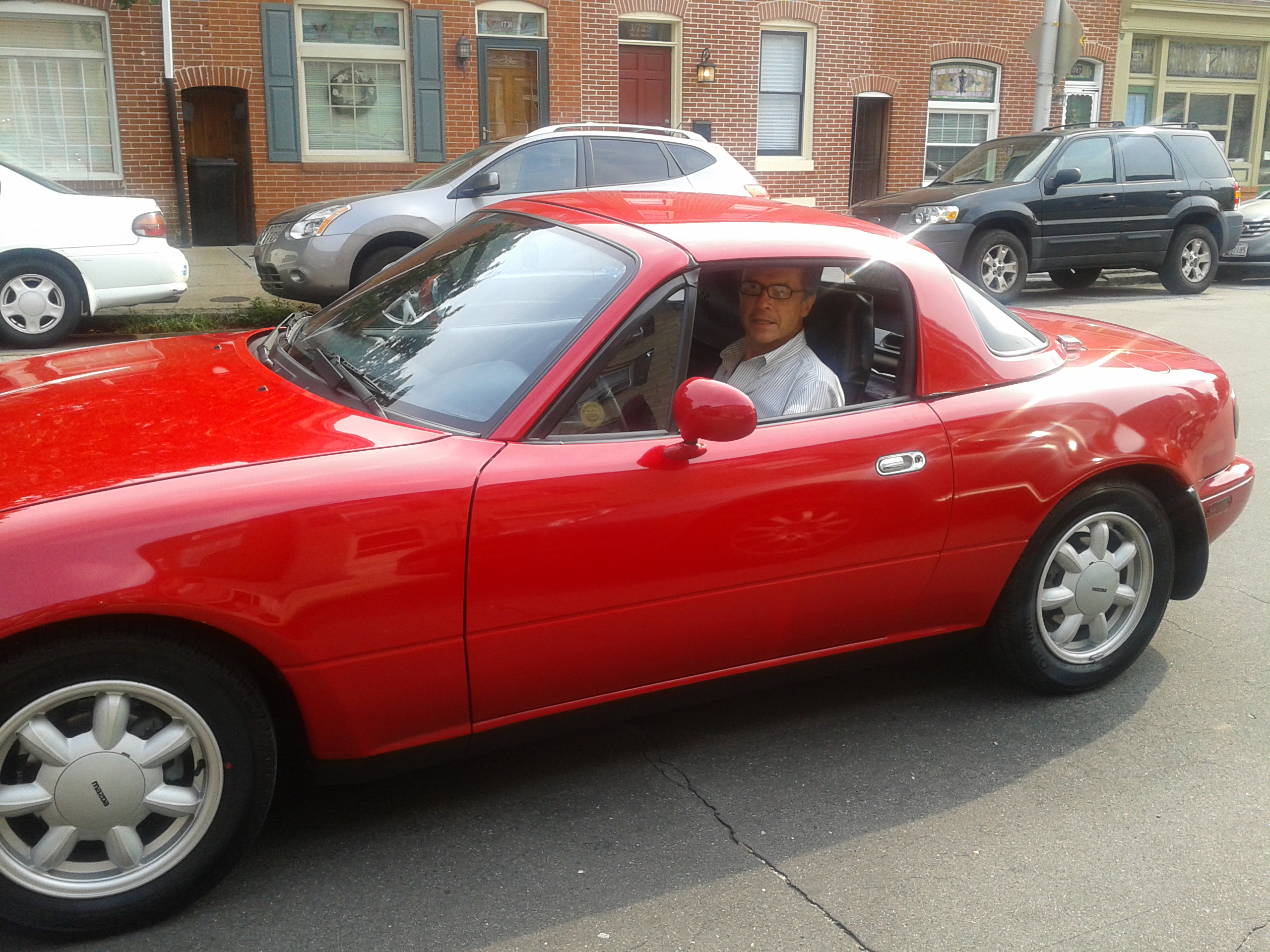
DEM in his 1990 MiataMost ME-P readers are aware that I am a vintage Jaguar and automobile [sober] fanatic. And, after years of covering the local Emergency Room, I am glad to be retired from that job … Much better suited for the next-gen ED physician.

Perhaps, that’s why we occasionally post such leisure and lifestyle info-graphics for our audience and members.

History

Fortunately, much progress has been substantial since the automobile first made its mark on the transportation of people. The technology in auto safety has accelerated, especially over the last ten years, and with better engineering and consumer demand for safer vehicles there has been a reduction in the number of deaths and injuries from automobiles.

The Olden Days – Not so Golden

It seems absurd to hear people say cars aren’t made the way they used to be. Enhanced safety features show how inferior vehicles from the past are. Seat belts, overall structure, airbags and crash tests have saved lives and made car transportation safer for all drivers. Many find driving safety videos also help make everyone safer.

###

Evolution-Of-Auto-Safety

Review

The above infographic provides information on the changes in safety to automobiles throughout history.

• Government legislation and automakers have continually worked on improving automobile safety features over the last 100 years.
• States like Michigan implement drivers education programs before licenses are issued helping to educate in safe driving practices.
• New technology and engineering meet consumer demand and show automakers are listening to their customers by designing safer cars with the newest and best safety systems available.

Continuing Development of Safety Features

The continuing development of safety features and engineering are driving car makers to give consumers the safety features and peace of mind they want for themselves and their families when they travel on the road. Automakers and engineers understand crashes and vehicle motion which then applies to a better and more advanced understanding during the design and constructing of new vehicle models.

Assessment

Be safe GOMER … and Get Out of My Emergency Room … with these helpful links:

Conclusion

Your thoughts and comments on this ME-P are appreciated. Feel free to review our top-left column, and top-right sidebar materials, links, URLs and related websites, too. Then, subscribe to the ME-P. It is fast, free and secure.

Speaker: If you need a moderator or speaker for an upcoming event, Dr. David E. Marcinko; MBA – Publisher-in-Chief of the Medical Executive-Post – is available for seminar or speaking engagements. Contact: MarcinkoAdvisors@msn.com

OUR OTHER PRINT BOOKS AND RELATED INFORMATION SOURCES:

Product Details  Product Details

Understanding the New “Inflation Tax”

Join Our Mailing List

More on the CPI

By Rick Kahler MS CFP® ChFC CCIM www.KahlerFinancial.com

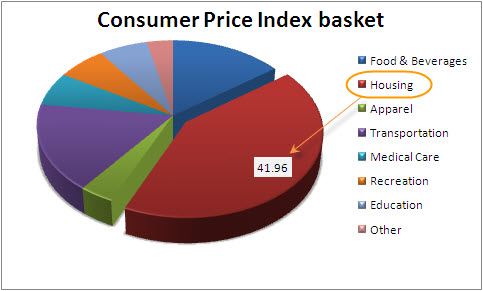
Rick Kahler CFPWith all the talk recently, about tax rates and the fiscal cliff, hardly anyone has mentioned what is probably the most effective and least understood tax in the federal arsenal: inflation.

Wait a minute. Isn’t it confusing to call inflation a tax? It is. That confusion is exactly why inflation is the ultimate stealth tax.

The CPI Formula

One of the few deficit-reducing measures that had the support of both parties and President Obama is a change in the way the government measures inflation. Our lawmakers have agreed on another in a series of adjustments to the way they calculate the consumer price index (CPI). The proposed changes will understate the future CPI even more than the current formula already does.

This maneuver is a brilliant way for deficit-reducing lawmakers to both cut spending and increase taxes, without calling their action either a spending cut or a tax increase.

The “Chained” CPI

How is this possible? First, here’s a brief explanation of the proposed change, which is called the chained Consumer Price Index. According to an AP article published in the Rapid City Journal on December 5th, 2012, “the chained CPI assumes that as prices rise, consumers turn to lower-cost alternatives, reducing the amount of inflation they experience.”

The assumption is that, if the price of pork rises while chicken doesn’t, people will buy more chicken. Yet they’re still buying protein. Therefore, presto—no inflation has happened. This argument is like saying if the price of gasoline goes up and the cost of walking doesn’t, people will just walk more, so there’s no problem.

A Spending Cut

The chained CPI is a spending cut because many entitlement programs are indexed to the CPI. These include Social Security, government pensions, veterans benefits, and the interest on some of the national debt. The lower the increase in the CPI; the less benefits will rise.

The AP estimates that once the new CPI is fully phased in, a 65-year old on Social Security will receive $136 a year less. At age 75 the reduction will be $560 annually, and at 85 it will be $984 less.

In addition, as wages increase at the real inflation rate, entitlement programs won’t keep pace. Gradually, fewer people will be eligible for programs like food stamps, Medicaid, heating allowances, and Head Start.

###

cpi

A Tax Increase

The chained CPI is a tax increase for much the same reason. Many income tax brackets and deductions are indexed to inflation. Smaller annual adjustments to the brackets because of the lower CPI will push more people into higher tax brackets.

Tweaking the CPI is nothing new. Politicians from both parties have done so for years to give the illusion of a lower CPI than that calculated by previous methods.

ShadowStats.com, run by John Williams, calculates the current unemployment and inflation rates using the formulas from the 1980s. According to that methodology, the unemployment rate (U-6) is 15% and the CPI is 9%. Yet the government has tweaked the CPI so much that today the official CPI is 2.5%. Under this newest proposal, inflation would be 2.2%.

The Results

You may think understating the current CPI by 0.3% isn’t any big deal, but it is. The decrease represents a 12% drop in the inflation rate, which understates the increase in our cost of living. If your employer reduced your wages by 12%, you’d probably see it as a big deal.

Assessment

Proponents figure the newest CPI adjustment will save $200 billion in spending increases and raise $65 billion in new taxes over ten years. It doesn’t matter whether you call it inflation, chained CPI, or plain old gimmickry. A tax increase by any other name is still a tax increase.

Macro-Economics and What the ‘Chained CPI’ Could Mean for Social Security?

Conclusion

Your thoughts and comments on this ME-P are appreciated. Feel free to review our top-left column, and top-right sidebar materials, links, URLs and related websites, too. Then, subscribe to the ME-P. It is fast, free and secure.

Link: http://feeds.feedburner.com/HealthcareFinancialsthePostForcxos

Speaker: If you need a moderator or speaker for an upcoming event, Dr. David E. Marcinko; MBA – Publisher-in-Chief of the Medical Executive-Post – is available for seminar or speaking engagements. Contact: MarcinkoAdvisors@msn.com

Our Other Print Books and Related Information Sources:

Health Dictionary Series: http://www.springerpub.com/Search/marcinko

Practice Management: http://www.springerpub.com/product/9780826105752

Physician Financial Planning: http://www.jbpub.com/catalog/0763745790

Medical Risk Management: http://www.jbpub.com/catalog/9780763733421

Hospitals: http://www.crcpress.com/product/isbn/9781439879900

Physician Advisors: www.CertifiedMedicalPlanner.org

Product Details  Product Details

How to Start a Private Medical Practice

Our Next e-VENT

###

[Writing a Medical Practice Business Plan for Capital]

Speaker: Dr. David Edward Marcinko MBA CMP

 A Live Audio Conference with QA Session

Date: Wednesday, January 30, 2013 Time: 1 pm Eastern | 12 pm Central | 11 am Mountain | 10 am Pacific Length: 60 Minutes

 Dr. David E. Marcinko MBA


Live Audio Conference

Date: Wednesday, January 30, 2013 Time: 1 pm Eastern | 12 pm Central | 11 am Mountain | 10 am Pacific Length: 60 Minutes

Product Details

A New Book for Physician Entrepreneurs and Innovators

Join Our Mailing List

Innovation and Entrepreneurship in the Healthcare Sector: From Idea to Funding to Launch

###

Innovation and Entrepreneurship in the Healthcare Sector: From Idea to Funding to Launch
###
Assessment
Innovation and Entrepreneurship in the Healthcare Sector [From Idea to Funding to Launch].  MORE: http://www.entrepreneurialmd.com/index/2013/1/8/innovation-entrepreneurship-book-in-brief-for-physician-entr.html
###
Conclusion

Your thoughts and comments on this ME-P are appreciated. Feel free to review our top-left column, and top-right sidebar materials, links, URLs and related websites, too. Then, subscribe to the ME-P. It is fast, free and secure.

Link: http://feeds.feedburner.com/HealthcareFinancialsthePostForcxos

Speaker: If you need a moderator or speaker for an upcoming event, Dr. David E. Marcinko; MBA – Publisher-in-Chief of the Medical Executive-Post – is available for seminar or speaking engagements. Contact: MarcinkoAdvisors@msn.com

OUR OTHER PRINT BOOKS AND RELATED INFORMATION SOURCES:

DICTIONARIES: http://www.springerpub.com/Search/marcinko
PHYSICIANS: www.MedicalBusinessAdvisors.com
PRACTICES: www.BusinessofMedicalPractice.com
HOSPITALS: http://www.crcpress.com/product/isbn/9781466558731
CLINICS: http://www.crcpress.com/product/isbn/9781439879900
BLOG: www.MedicalExecutivePost.com
FINANCE: Financial Planning for Physicians and Advisors
INSURANCE: Risk Management and Insurance Strategies for Physicians and Advisors

Product DetailsProduct Details

Phelps Medical Associates Seeks Vice President, Medical Director‏

Join Our Mailing List

Employment Opportunity

By Deedra Hartung
Senior EVP, Managing Director
dhartung@cejkasearch.com
http://www.cejkaexecutivesearch.com

Dr. Marcinko,

Phelps Memorial Hospital Center has retained Cejka Executive Search to recruit a Vice President, Medical Director. Phelps Memorial Hospital Center is a 238-bed general medical and surgical hospital in Sleepy Hollow, NY, 27 miles north of New York City; Phelps Medical Associates is their physician practice.

Seeking VP and MD

The Vice President, Medical Director will champion the physician integration initiatives of Phelps Medical Center with their medical staff. The Vice President, Medical Director will work to strengthen relationships, improve clinical quality, instill evidence based medical practices and encourage the use of the electronic medical record. Continued growth of Phelps Medical Associates will be a priority of this position as well as attaining physician growth targets in strategic clinical areas. The Vice President, Medical Director will oversee the operations and management of Phelps Medical Associates and its policies, including physician compensation, and lead the group towards becoming a model of quality, value and physician satisfaction. The Vice President, Medical Director will be a member of the Hospital Center’s senior administrative team and will report to the CEO and a subcommittee of the Board of Trustees of Phelps Memorial Hospital Center.

###

jobs

Requirements

This position requires an M.D. or D.O. and the ability to obtain a license to practice in the State of New York with current Board certification in the associated area of practice. Postgraduate education in business or administration is preferred. A minimum of 3 years prior physician leadership experience including management experience in a physician group practice setting is required. Excellent problem solving and verbal and written communication skills are required along with the ability to adapt and respond in a rapidly changing and demanding healthcare environment.

Link: View this email as a web page

Assessment

Nominations and interested candidates should contact and submit their CV to me directly.

Kindest Regards,

Deedra Hartung

Deedra Cejka Executive Search
4 CityPlace Dr., Ste. 300
St. Louis, MO 63141
800-209-8143 Office Hartung

Your thoughts and comments on this ME-P are appreciated. Feel free to review our top-left column, and top-right sidebar materials, links, URLs and related websites, too. Then, subscribe to the ME-P. It is fast, free and secure.

Link: http://feeds.feedburner.com/HealthcareFinancialsthePostForcxos

Speaker: If you need a moderator or speaker for an upcoming event, Dr. David E. Marcinko; MBA – Publisher-in-Chief of the Medical Executive-Post – is available for seminar or speaking engagements. Contact: MarcinkoAdvisors@msn.com

OUR OTHER PRINT BOOKS AND RELATED INFORMATION SOURCES:

DICTIONARIES: http://www.springerpub.com/Search/marcinko
PHYSICIANS: www.MedicalBusinessAdvisors.com
PRACTICES: www.BusinessofMedicalPractice.com
HOSPITALS: http://www.crcpress.com/product/isbn/9781466558731
CLINICS: http://www.crcpress.com/product/isbn/9781439879900
BLOG: www.MedicalExecutivePost.com
FINANCE: Financial Planning for Physicians and Advisors
INSURANCE: Risk Management and Insurance Strategies for Physicians and Advisors

Product DetailsProduct DetailsProduct Details

Product Details  Product Details

Product DetailsProduct Details

A Hospitalist Asks a CPA – “what happened to my paycheck?”

Join Our Mailing List

Law changes will result in smaller paychecks in 2013

DT&PA number of law changes go into effect in 2013 that will result in employees [like hospitalists, nurses, allied healthcare providers and some pHO members, etc] seeing smaller paychecks, including the expiration of the payroll tax cut, the increase in the Social Security taxable wage base, and the new 0.9% Medicare tax imposed on high wage earners.

The following law changes go into effect in 2013

  • The payroll tax cut, which temporarily lowered the Social Security withholding tax rate on wages earned by employees in 2011 and 2012 from 6.2% to 4.2%, has expired. Accordingly, employees will see a 2-percentage-point bump in the amount of Social Security tax withheld from their paychecks from 2012 to 2013.
  • The Social Security taxable wage base has increased by $3,600, from $110,100 to $113,700.
  • An additional 0.9% Medicare surtax is withheld from wages paid to an employee in excess of $200,000 in a calendar year.

Effect of these changes on paychecks

The following illustrations show the effect of these law changes on employees’ paychecks:

… Employees earning $50,000 in 2013 FICA wages will have $1,000 more in FICA taxes withheld ($50,000 × [6.2% – 4.2%]) than they would have in 2012, due to the 2-percentage-point increase in the Social Security tax rate.

… Employees earning $100,000 in 2013 FICA wages will have $2,000 more in FICA taxes withheld ($100,000 × [6.2% – 4.2%]) than they would have in 2012, due to the 2-percentage-point increase in the Social Security tax rate.

… Employees earning $300,000 in 2013 FICA wages will have $3,325.20 more in FICA taxes withheld than they would have in 2012. This includes $2,202 in additional Social Security taxes due to the increase in the Social Security tax rate ($110,100 × [6.2% – 4.2%]), $223.20 in additional Social Security taxes due to the increase in the Social Security taxable wage base ([$113,700 – $110,100] × 6.2%), and $900 in additional Medicare tax ([$300,000 – $200,000] × 0.9%).

… Employees earning $500,000 in 2013 FICA wages will have $5,125.20 more in FICA taxes withheld than they would have in 2012. This includes $2,202 in additional Social Security taxes due to the increase in the Social Security tax rate ($110,100 × [6.2% – 4.2%]), $223.20 in additional Social Security taxes due to the increase in the Social Security taxable wage base ([$113,700 – $110,100] × 6.2%), and $2,700 in additional Medicare tax ([$500,000 – $200,000] × 0.9%).

… Employees earning $1,000,000 in 2013 FICA wages will have $9,625.20 more in FICA taxes withheld than they would have in 2012. This includes $2,202 in additional Social Security taxes due to the increase in the Social Security tax rate ($110,100 × [6.2% – 4.2%]), $223.20 in additional Social Security taxes due to the increase in the Social Security taxable wage base ([$113,700 – $110,100] × 6.2%), and $7,200 in additional Medicare Tax ([$1,000,000 – $200,000] × 0.9%).

###

jobs

Assessment

There is also a new 39.6% income tax withholding rate on high wage earners (previously, the highest withholding tax rate was 35%). This withholding rate is used for single taxpayers with annual wages greater than $402,200 and for married taxpayers with annual wages greater than $458,300.

Channel Surfing the ME-P

Have you visited our other topic channels? Established to facilitate idea exchange and link our community together, the value of these topics is dependent upon your input. Please take a minute to visit. And, to prevent that annoying spam, we ask that you register. It is fast, free and secure.

Conclusion

Your thoughts and comments on this ME-P are appreciated. Feel free to review our top-left column, and top-right sidebar materials, links, URLs and related websites, too. Then, subscribe to the ME-P. It is fast, free and secure.

Speaker: If you need a moderator or speaker for an upcoming event, Dr. David E. Marcinko; MBA – Publisher-in-Chief of the Medical Executive-Post – is available for seminar or speaking engagements. Contact: MarcinkoAdvisors@msn.com

OUR OTHER PRINT BOOKS AND RELATED INFORMATION SOURCES:

Product Details  Product Details

Product DetailsProduct Details

Women Leaving Medicine

Join Our Mailing List

Career Development

[By Ann Miller RN MHA]

There is a new, two year old, website called Women Leaving Medicine. It was founded by Dr. Philippa Kennealy, a work-from-home physician business person, mom and fierce physician advocate. She is also a colleague from http://www.entrepreneurialmd.com

According to her WLM website, she is deeply troubled by the disillusionment and disengagement many physicians experience, and the impact on the future of healthcare. She is equally distressed by the difficulties women physicians face when balancing the demands of families and professional responsibilities.

Link: www.WomenLeavingMedicine.com

WLM Beliefs

WLM  believes that:

  • Slowing the Physician Brain Drain is vital to the well-being of our society
  • Women physicians have the right to nurture their families to the extent they desire
  • Women leaving medicine represent a great wealth of training and experience that must be tapped, to continue to benefit society.

The Challenge

Dr. Kennealy challenges all Women Leaving Medicine to consider the following:

  • You are too valuable to society to “go to waste”
  • Success does not demand the sacrifice of your loved ones
  • You can nurture your family and continue to change the world
  • It’s up to you to craft your personal and professional journeys, as you would a Work of Art
  • Crafting your Well-Lived Life takes imagination, boldness and creativity, along with all of those amazing physician “smarts” of yours

Survey: http://www.entrepreneurialmd.com/index/2013/1/15/women-physicians-thinking-of-leaving-medicine-how-can-i-help.html

Assessment

Dr. Kennealy knows that stay-at-home women physicians want to still contribute meaningfully to others, and lack the right opportunities. She is inspired to be part of the solution to our healthcare crisis.

More:

Conclusion

Your thoughts and comments on this ME-P are appreciated. Feel free to review our top-left column, and top-right sidebar materials, links, URLs and related websites, too. Then, subscribe to the ME-P. It is fast, free and secure.

Speaker: If you need a moderator or speaker for an upcoming event, Dr. David E. Marcinko; MBA – Publisher-in-Chief of the Medical Executive-Post – is available for seminar or speaking engagements. Contact: MarcinkoAdvisors@msn.com

OUR OTHER PRINT BOOKS AND RELATED INFORMATION SOURCES:

Product Details  Product Details

Product DetailsProduct Details

Automobile Windshield Maintenance Tips for Physicians

 Join Our Mailing ListCan you see clearly – now?

By Dr. David E. Marcinko MBA CMPvia Nalley Lexus Roswell, GA

Dr David E Marcinko MBA

Doctor – How often do you think about your windshield?

If you’re in the vast majority of doctors and drivers of all sort, chances are you only notice it when a large bug happens to meet an untimely end and creates a goopy mess on your glass.

But, as an insurance agent and Certified Medical Planner, I know there’s a long list of reasons why you should note the condition of your windshield, not the least of which is for clear vision. In fact, a quick visual check with each gas fill-up, and a more thorough inspection each month, is suggested

Think about it: Windshield. It’s a shield against the wind. But, it’s also a shield against many of the dangers that are commonplace out on the highways, such as those pesky bugs, wayward stones, or other roadway hazards. That’s not to mention how unpleasant a drive in the rain or cold would be without a barrier between you and the elements.

DEM's Jaguar

Importance

That’s why it’s incredibly important to take note of your windshield’s condition. Clear vision is of the utmost importance for safety and convenience, but there’s much more to it than that. If you were to be in an accident, your windshield can play a huge role in keeping you safe from the debris that might be flying due to the impact.

Shattered

Needless to say, if your windshield is shattered, there is no option: your windshield needs to be replaced as soon as possible. It’s tough to see out of, not that great for protection from the elements, and if something were to hit the glass, it’ll soon be sitting in the cabin with you. Not only that, but your local authorities might be paying you a visit, as vehicles with shattered windshields are often considered unroadworthy by law.

Cracked

If your windshield is cracked or has unrepaired rock chips, you’re not in much better of a situation. Though a small crack or chip may look harmless, the environment can cause big problems for you and your windshield. Small chips and cracks that go unrepaired can quickly consume the entire glass surface due to a shocking event, such as cold water on a hot day, or even hitting a pothole. Then you’re left with a much more expensive repair.

Road Rash

Road rash, in medicine, is a colloquial term for skin and bone injury caused by abrasion with road surfaces, usually as a consequence of cycling, automobile and motorcycling accidents. In this case, the pepper shotgun-like marks on a windshield.

Assessment

There is good news, however. If your windshield is foggy, discolored, cracked, shattered, chipped – you name it – many car dealers and local independent shops can help. Repairing your chipped windshield doesn’t cost much money and it can prevent an entire glass replacement further down the road. This service usually only takes a few minutes, but you must act fast, as repair isn’t always possible if the damage has spread. And, in many cases, insurance will help foot some, or all of the bill.

Conclusion

Your thoughts and comments on this ME-P are appreciated. Feel free to review our top-left column, and top-right sidebar materials, links, URLs and related websites, too. Then, subscribe to the ME-P. It is fast, free and secure.

Speaker: If you need a moderator or speaker for an upcoming event, Dr. David E. Marcinko; MBA – Publisher-in-Chief of the Medical Executive-Post – is available for seminar or speaking engagements. Contact: MarcinkoAdvisors@msn.com

OUR OTHER PRINT BOOKS AND RELATED INFORMATION SOURCES:

  Product Details  Product Details

How the Affordable Care Act Affects Taxpayers Now? [Audio-Link]

Join Our Mailing List

Sound Medicine –  How does the Affordable Care Act affect taxpayers now?

By Ann Miller RN MHA

Sound Medicine is a radio show produced by the Indiana University School of Medicine and WFYI Public Radio.

In the last few years Aaron Carroll MS MD associate professor of pediatrics at the Indiana University School of Medicine, has been their go-to guy on health policy.

Audio Link

So, for those of you who would find your day brightened by the sound of his voice, enjoy the following from www.theIncidentalEconomist.com

Assessment

Dr. Carroll discusses how the Affordable Care Act will affect taxpayers in the coming months. The Affordable Care Act officially takes effect in January 2014, but several provisions are being implemented this year. These provisions specifically affect Medicare and Medicaid recipients, caregivers and all taxpayers.

Conclusion

Your thoughts and comments on this ME-P are appreciated. Feel free to review our top-left column, and top-right sidebar materials, links, URLs and related websites, too. Then, subscribe to the ME-P. It is fast, free and secure.

Link: http://feeds.feedburner.com/HealthcareFinancialsthePostForcxos

Speaker: If you need a moderator or speaker for an upcoming event, Dr. David E. Marcinko; MBA – Publisher-in-Chief of the Medical Executive-Post – is available for seminar or speaking engagements. Contact: MarcinkoAdvisors@msn.com

Our Other Print Books and Related Information Sources:

Health Dictionary Series: http://www.springerpub.com/Search/marcinko

Practice Management: http://www.springerpub.com/product/9780826105752

Physician Financial Planning: http://www.jbpub.com/catalog/0763745790

Medical Risk Management: http://www.jbpub.com/catalog/9780763733421

Hospitals: http://www.crcpress.com/product/isbn/9781439879900

Physician Advisors: www.CertifiedMedicalPlanner.org

Product DetailsProduct Details

The Impact Of The U.S. Recession On Hospitals

Join Our Mailing List

Drivers of Decline

Commercially insured scheduled admissions are the largest contributor to inpatient margins for the average US hospital. During the US recession (2009-2011), volumes in this segment declined. There were two primary drivers of this decline.

####

Recession Impact

Dual Causes

First, commercial insurance coverage decreased, stemming from unemployment and underemployment. This is expected to reverse and rebound as the economy recovers and as healthcare reform is implemented.

Second, even among those who retained coverage, utilization of inpatient services decreased as patients delayed or forewent elective and preventative care. This was influenced by a range of economic factors, including reduced household incomes, higher co-pays, and a reduced ability to leave work for medical care, as well as factor unrelated to the recession, such as a shift to outpatient management of disease.

More: Are Cost Estimates Leading To The Wrong Decisions in US Hospitals?

Assessment

It is unclear whether this second driver will diminish fully as the economy recovers. A slow recovery – or one that fails to see volumes to return to pre-recession levels – suggests that hospitals may need to refocus their strategies on service lines and segments that have historically been less attractive.

Channel Surfing the ME-P

Have you visited our other topic channels? Established to facilitate idea exchange and link our community together, the value of these topics is dependent upon your input. Please take a minute to visit. And, to prevent that annoying spam, we ask that you register. It is fast, free and secure.

Conclusion

Your thoughts and comments on this ME-P are appreciated. Feel free to review our top-left column, and top-right sidebar materials, links, URLs and related websites, too. Then, subscribe to the ME-P. It is fast, free and secure.

Speaker: If you need a moderator or speaker for an upcoming event, Dr. David E. Marcinko; MBA – Publisher-in-Chief of the Medical Executive-Post – is available for seminar or speaking engagements. Contact: MarcinkoAdvisors@msn.com

OUR OTHER PRINT BOOKS AND RELATED INFORMATION SOURCES:

Product Details

A Value Investing Metaphor for Doctors

Join Our Mailing List

Via a Cats and Dogs Allegory

By Rick MS CFP® ChFC CCIM www.KahlerFinancial.com

Rick Kahler CFP“I’d really like a Maine Coon cat, but they cost around $800. I’m not going to pay that much for a cat.”

The man who said this paid $500 for his purebred Lab. Obviously, he’s willing to spend money on things he enjoys, like hunting dogs. Yet when it comes to paying cold hard cash for a cat, he draws the line.

So, apparently, do a lot of other people. I have quite a few clients who are happy to spend hundreds of dollars for a particular breed of dog. I don’t know of a single client who has ever spent that much for a particular breed of cat.

Utility

Except my wife. Marcia has just begun breeding and selling Balinese cats, worth $1,000 each. She asked me why people are so much more willing to write checks for purebred dogs than they are for cats.

She didn’t buy my argument that dogs are inherently more intelligent, friendly, and worthwhile than cats.

If that isn’t the explanation, what is? Maybe it’s because the basic reason people buy purebred dogs or cats is to get specific looks and personality traits. Most dog breeds are quite distinct; anyone can tell a Great Dane from a Bichon Frise. Yet the only cat many people even recognize as a separate breed is probably the Siamese.

Maybe dogs are seen as more useful. I don’t know of any hunting cats, Seeing Eye cats, or watch cats. Still, that doesn’t explain all those Chihuahuas and tiny terriers that sell for hundreds of bucks a pound.

Value?

The point here is that whether a given commodity is seen as valuable depends on a variety of factors. Utility is one. In early Deadwood, Dakota Territory, an enterprising freighter brought in a load of cats and sold them at a premium to pioneers desperate for mouse and rat control. In that case, cats were more valuable than dogs.

Supply and Demand Economics

Supply and demand is another factor. A house that’s worth $150,000 in Box Elder, South Dakota, might be worth $600,000 in San Francisco, where unarguably more people would like to live. When there’s an over-abundance of cheap goods in the form of unwanted kittens flooding the market, people may be less likely to pay real cash for even purebred cats.

Commodity

Another reason people value one commodity over another is that they have been persuaded to see it as worth more. In Biblical times, frankincense and myrrh were highly prized and worth their weight in gold. Today, one pound of frankincense and myrrh goes for $13.95 on Amazon, while one pound of gold sells for around $24,000.

###

gold bars

Gold

Fifteen times more gold is mined each year than platinum, the rarest of all precious metals, yet gold sells for more per ounce. Why? Gold has a long history of being perceived as the world’s most precious metal.

Designer Clothes

For much the same reason, people will pay a hundred bucks or more for a pair of designer blue jeans when they could get essentially the same thing for $19.99 at a discount store. The brand name jeans are seen as more valuable.

Marketing and Perceived Value

The simple reason for this is marketing.

When it comes to perceived value, dogs have benefitted from better marketing than cats. Just think of heroic military dogs, hard-working Seeing Eye dogs, and screen stars like Lassie rescuing people from burning buildings. Even the Taco Bell Chihuahua gets to advertise fast food. Cats get to advertise kitty litter and cat food.

Assessment

Cats just need to find a better advertising agency. They have some work to do if they want to come up with a slogan to top “Man’s Best Friend.”

Conclusion

Your thoughts and comments on this ME-P are appreciated. Feel free to review our top-left column, and top-right sidebar materials, links, URLs and related websites, too. Then, subscribe to the ME-P. It is fast, free and secure.

Speaker: If you need a moderator or speaker for an upcoming event, Dr. David E. Marcinko; MBA – Publisher-in-Chief of the Medical Executive-Post – is available for seminar or speaking engagements. Contact: MarcinkoAdvisors@msn.com

OUR OTHER PRINT BOOKS AND RELATED INFORMATION SOURCES:

Product Details  Product Details

Hear Dr. Marcinko on Audio-Educator [Do you Need Money to Start or Grow Your Medical Practice?]

Join Our Mailing List

Crafting a Business Plan and Starting a Medical Practice [A “Live” Audio-Conference]

Conference Registration: http://www.audioeducator.com/hospitals-and-health-systems/business-plan-for-medical-practice-013012.html

Wednesday, Jan 30th, 2013 at 1 PM, EST for 60 minutes

Order

By Staf Reporters www.CertifiedMedicalPlanner.org

Dr David E Marcinko MBAThe “Business Plan” is a key tool for raising start-up capital for a new medical practice, or financing a medical / surgical service line extension for a mature one. It is also used for acquiring loans to finance growth of an existing practice.
Although long recognized as a quintessential business tool, its’ formal structure and mental rigor are only now being recognized in the medical community as competition increases in the healthcare industrial complex.

Reasons for the Plan

There are many reasons to write a medical practice business plan. The process of gathering, compiling and analyzing information is an invaluable experience to the beginning practitioner, or experienced veteran physician. Our expert Dr. David E. Marcinko MBA CMPwill discuss all these, step by step in this 1-hour enlightening event.

See the steps below:

  • Determine the feasibility of a new practice start-up.
  • Raise money from investment bankers for a new practice.
  • Obtain financing to expand an existing office or turn-around a declining satellite.
  • Develop an operational strategic plan and conduct due diligence.
  • Create a budget, time frame or business direction for a practice.
  • Unmask potential problems, risks or benefits of a medical practice.
  • Focus on market opportunities by determining revenue centers or cost drivers.
  • Persuade third party payers, networks and insurance carriers that your practice has a future and represents a viable synergistic partner for their organization.

Medical Office Business Plan

As an attendee you will get:

  • Power Point slide presentation.
  • Time-line checklist to new medical office launch.
  • Topical comprehensive white paper.
  • Electronic blog forum for further information.

Dr. Marcinko in this 60-minute conference will present to you:

  • Executive Summary: Where you concisely state the purpose of the loan, the exact amount of money required, an explanation of what the loan will be used for and why it’s needed.
  • Pro-forma Cash Budgets and Financial Statements: You’ll learn to how effectively use your data and underlying assumptions to prepare information that your banker can easily read and buy into.
  • Doctor’s Personal Financial Statements: Learn how to use copies of the last 3 years of personal tax returns for the bank as well as identify the collateral being pledged as security for the loan.
  • Representation: Here is where this presentation is invaluable.

Ask a question at the Q&A session following the live event and get advice unique to your situation, directly from our expert speaker.

Who should attend? Medical students, interns, residents and fellows, New, mid-career and mature medical practitioners, Office managers, clinic administrators, healthcare CXOs and physician / nurse executives, All doctors who wish to be employers; not employees.

http://businessofmedicalpractice.com/chapter-3-2/

Why use AudioEducator?

  • Save money on travel. Our conferences are available from the comfort and convenience of your own office or meeting room.
  • Meet your specific training needs. Whether you attend a live event, load up one of our encore broadcasts, or purchase a CD or PDF transcript — you’ll get the information you need on your schedule.
  • Keep learning after the event. Every conference purchase includes the speaker’s materials so you can keep learning long after the conference is over.
  • Save time training your whole staff. Gather around a speaker phone or computer and enlighten your entire team for one low price.
  • Do you work with a virtual team or multiple locations? Ask our customer specialists about discounts for your whole staff.

REGISTER HERE

http://www.audioeducator.com/speakers/index/speaker/600

###

 Product Details

www.BusinessofMedicalPractice.com

Order


Selected NBER Papers of Note for MDs and FAs

Join Our Mailing List

National Bureau of Economic Research

www.NBER.org

The 2012 No. 3 Bulletin includes the articles below:

1)  The Value of Planning Prompts
by Katherine Milkman, John Beshears, James Choi, David Laibson, and Brigitte Madrian
http://www.nber.org/aginghealth/2012no3/w17994.html

2)  The Effect of the Earned Income Tax Credit on Infant Health
by Hilary Hoynes, Douglas Miller, and David Simon
http://www.nber.org/aginghealth/2012no3/w18206.html

3)  Can Health Explain Differences in Employment of Older Men Across Countries?
by Kevin Milligan and David Wise
http://www.nber.org/aginghealth/2012no3/w18229.html

Assessment

Abstracts of Selected Recent NBER Working Papers:
http://www.nber.org/aginghealth/2012no3/WorkingPaperSummaries.html

###

Product DetailsProduct DetailsProduct Details

Product Details  Product Details

Product DetailsProduct Details

An Economic Picture of Domestic Healthcare Spending

Join Our Mailing List

By the Numbers

The healthcare component of the U.S. economy continues to expand, with per-capita spending projected to reach $13,000 by 2020. But, at the same, the industry continues to create jobs: 10 of the fastest-growing occupations are in healthcare-related fields.

Driver of the Economy

As one of the largest segments of the US economy, health care accounts for trillions of dollars in spending, both by governments and private individuals. And so, Top Masters in Healthcare decided to take a closer look at where the money goes in this infographic

###

health

[The Calculus]

Billing Department

So who does the spending?

  • 21% of healthcare spending is done by private businesses
  • 28% of healthcare spending is done by individual households
  • 16% of healthcare spending is done by state and local governments
  • 29% of healthcare spending is done by the Federal government

Where did the spending go?

  • 37% of healthcare spending went towards hospital care
  • 23.6% of healthcare spending went towards physician and clinical services
  • 5.9% of healthcare spending went towards other residential / health / personal care services
  • 4.9% was spent on dental services
  • 3.3% was spent on home health care
  • 3.2% was spent on “other” professional services

Per capita spending

Between 1960 and 2011, per capita health care spending rose by about 5,400 percent from $147 in 1960 to $8,311 in 2011. If other prices rose like that, here’s what it might look like today:

  • Family Dinner: $176.58
  • Tube of Toothpaste: $13.50
  • Volkswagen Beetle: $95,526
  • Gallon of gas: $13.50
  • Average income: $287,010
  • Electric can opener: $479.52

Emergency Department

The top 5 causes of death are heart disease (24.5%) cancer (23.3%) chronic lower respiratory diseases (5.6%) stroke (5.3%) accidents (4.8%) Alzheimer’s disease (3.2%).

Cardiology

  • 470,000 is the number of people who have a second or subsequent heart attack
  • 785,000 is the annual estimate of the number of people who have their first heart attack
  • $444 billion is the cost of heart disease, from health care services to medications to lost job productivity

Oncology

  • One in two men will get cancer during their lifetimes
  • One in three women will get cancer in their lifetimes
  • $226 billion is the annual cost of cancer, including treatment and lost income

Ongoing Care

  • Nearly 1 billion annual physician visits per year. If you had a doctor visit every minute of every day, it would take 1,902 years to have that many trips.
  • One out of 2 adults has a chronic illness
  • Seven out of every ten deaths are a result of a chronic illness

Obesity

  • The heaviest states by obesity rate are Mississippi (34.4%) West Virginia (32.2%) Alabama (32.3%) Tennessee (31.9%) and Louisiana (31.6%)
  • The lightest states by obesity rate are Hawaii (23.1%) Massachusetts (22.3%) Connecticut (21.8%) District of Columbia (21.7%) and Colorado (19.8%)

Diabetes

  • Diabetes can lead to a slew of other serious health problems including neverous system diseases, blindness and eye problems, heart disease and stroke, kidney disease and hypertension.
  • 25.8 million people are current affected by diabetes, 8.3% of the population.
  • 35% of people older than 20 have pre-diabetes
  • $174 billion is the total cost of treating and ealing with diabetes each year

Personnel Department

  • Healthcare provided 14.3 million jobs in 2008. And that number is only going to grow. In fact, health care is expected to be the single fastest-growing sector of the US economy through 2018.
  • Ten of the twenty fastest growing occupations are in healthcare related fields.
  • 4.01 million new jobs are expected to be created in the health care industry by 2018. Compare that to 2.67 million in science/engineering, 1.68 million in education, 1.43 million in administration support and waste management and 1.3 million in construction.
  • Healthcare professionals earned a combined $886 billion in total salaries in 2010

IT Department

  • As our world becomes more connected by technology, doctors and patients are increasingly using the Internet and data storage.
  • 57% of doctor’s offices use electronic medical records.
  • 6 out of 10 adults have looked up health information online.

Pharmacy Department

  • Almost half of Americans take at least one prescription drug.
  • $35.22 is the average price of a brand name drug which is almost 4x as much as the generic price.
  • Spending on prescription drugs has gone from $40.3 billion in 1990 to $259 billion in 2010 and is expected to grow to $457.8 billion by 2019.
  • The cost to bring a new drug to market is between $55 million and $1 billion
  • The cost of patented drugs in the United States is 35-55% higher than other industrialized nations
  • 80% of FDA approved drugs have a generic counterpart
  • Only 23% of doctor visits don’t include a prescription.

Assessment

The impact of the healthcare industry on everyday Americans continues to grow, whether they see it in their insurance bill or whether they earn their salaries from the health care industry. The issue also continues to dominate the political conversation… there’s no escaping it.

Conclusion

Your thoughts and comments on this ME-P are appreciated. Feel free to review our top-left column, and top-right sidebar materials, links, URLs and related websites, too. Then, subscribe to the ME-P. It is fast, free and secure.

Link: http://feeds.feedburner.com/HealthcareFinancialsthePostForcxos

Speaker: If you need a moderator or speaker for an upcoming event, Dr. David E. Marcinko; MBA – Publisher-in-Chief of the Medical Executive-Post – is available for seminar or speaking engagements. Contact: MarcinkoAdvisors@msn.com

OUR OTHER PRINT BOOKS AND RELATED INFORMATION SOURCES:

DICTIONARIES: http://www.springerpub.com/Search/marcinko
PHYSICIANS: www.MedicalBusinessAdvisors.com
PRACTICES: www.BusinessofMedicalPractice.com
HOSPITALS: http://www.crcpress.com/product/isbn/9781466558731
CLINICS: http://www.crcpress.com/product/isbn/9781439879900
BLOG: www.MedicalExecutivePost.com
FINANCE: Financial Planning for Physicians and Advisors
INSURANCE: Risk Management and Insurance Strategies for Physicians and Advisors

Product DetailsProduct DetailsProduct Details

Product Details  Product Details

Product DetailsProduct Details

Medical Records [Time Benefits versus Financial Benefits]

Join Our Mailing List

Paper versus eMRs [Organization – InterOperability – Accessibility]

www.BusinessofMedicalPractice.com

MRs

Assessment

Chapter 13: IT, eMRs & GroupWare

Conclusion

Your thoughts and comments on this ME-P are appreciated. Feel free to review our top-left column, and top-right sidebar materials, links, URLs and related websites, too. Then, subscribe to the ME-P. It is fast, free and secure.

Link: http://feeds.feedburner.com/HealthcareFinancialsthePostForcxos

Speaker: If you need a moderator or speaker for an upcoming event, Dr. David E. Marcinko; MBA – Publisher-in-Chief of the Medical Executive-Post – is available for seminar or speaking engagements. Contact: MarcinkoAdvisors@msn.com

OUR OTHER PRINT BOOKS AND RELATED INFORMATION SOURCES:

DICTIONARIES: http://www.springerpub.com/Search/marcinko
PHYSICIANS: www.MedicalBusinessAdvisors.com
PRACTICES: www.BusinessofMedicalPractice.com
HOSPITALS: http://www.crcpress.com/product/isbn/9781466558731
CLINICS: http://www.crcpress.com/product/isbn/9781439879900
BLOG: www.MedicalExecutivePost.com
FINANCE: Financial Planning for Physicians and Advisors
INSURANCE: Risk Management and Insurance Strategies for Physicians and Advisors

Product Details

US Health Spending by Service and Age

Join Our Mailing List

By: Deloitte and h/t Bruce Bartlett

National Health Expenditure Projections, 2012–22: Slow Growth Until Coverage Expands And Economy Improves

Abstract

Health spending growth through 2013 is expected to remain slow because of the sluggish economic recovery, continued increases in cost-sharing requirements for the privately insured, and slow growth for public programs. These factors lead to projected growth rates of near 4 percent through 2013.

However, improving economic conditions, combined with the coverage expansions in the Affordable Care Act and the aging of the population, drive faster projected growth in health spending in 2014 and beyond. Expected growth for 2014 is 6.1 percent, with an average projected growth of 6.2 percent per year thereafter.

Over the 2012–22 period, national health spending is projected to grow at an average annual rate of 5.8 percent. By 2022 health spending financed by federal, state, and local governments is projected to account for 49 percent of national health spending and to reach a total of $2.4 trillion.

Link: http://content.healthaffairs.org/content/early/2013/09/13/hlthaff.2013.0721#aff-

Assessment

Channel Surfing the ME-P

Have you visited our other topic channels? Established to facilitate idea exchange and link our community together, the value of these topics is dependent upon your input. Please take a minute to visit. And, to prevent that annoying spam, we ask that you register. It is fast, free and secure.

Conclusion

Your thoughts and comments on this ME-P are appreciated. Feel free to review our top-left column, and top-right sidebar materials, links, URLs and related websites, too. Then, subscribe to the ME-P. It is fast, free and secure.

Speaker: If you need a moderator or speaker for an upcoming event, Dr. David E. Marcinko; MBA – Publisher-in-Chief of the Medical Executive-Post – is available for seminar or speaking engagements. Contact: MarcinkoAdvisors@msn.com

OUR OTHER PRINT BOOKS AND RELATED INFORMATION SOURCES:

Product DetailsProduct DetailsProduct Details

Product Details  Product Details

Product DetailsProduct Details

Fixing the Mental Health Infrastructure of the US

Join Our Mailing List

The Political Topic Du Jour

By David K. Luke MIM CMP™ www.NetWorthAdvice.com

David K. LukeThe sad events of the recent tragedy which occurred in at Sandy Hook Elementary School in Connecticut where 20 children and 6 adults were killed painfully reminds us of two problems that are not going away in the United States: continued gun violence and untreated mental illness.

As a Father I could not bear to watch the news coverage. Resolving the problem of high gun violence in this country typically leads to an emotional debate over gun control and gun rights, a debate that in the past has ended with both sides drawing the line and little being accomplished. Politicians that would like to be reelected avoid this emotionally charged hot potato like a leper colony with the hope that the Topic Du Jour will change quickly back to how they can reduce taxes, increase entitlements, or frankly any other issue that will ensure their livelihood for the current elected term. In the meantime, this stalemate is unnecessarily costing the lives of our innocent children and productive citizens that happen to be in the wrong place at the wrong time.

Commonalities

The common thread to almost all of the tragic public gun violence episodes in the past few decades is that the shooter is suffering a serious mental illness. An estimated 26.2 percent of Americans suffer from a diagnosable mental disorder in a given year according to the National Institute of Mental Health (http://www.nimh.nih.gov/health/publications/the-numbers-count-mental-disorders-in-america/index.shtml).

Unique among the developed countries is the position of the United States that those with mental illness, like those with any other disease, can receive treatment as long as they pay for it. Those that can’t or choose not to pay for it often end up in dire straits in one of our emergency rooms (the de facto health care solution in the United States for the uninsured) forcing our overworked and understaffed emergency room health professionals to deal with the problem and our hospital systems with spiraling unpaid ER bills. As a country that was founded on the principles of self-reliance and freedom of choice, we recognize the fact that some individuals may prefer not to pay for their health care by electing to not have private health insurance. Lest we become too judgmental of our fellow citizens that do not have health insurance, we should be reminded that our for-profit health insurance industry in the United States that provides the largest portion of payment for healthcare services also precludes individuals that are unhealthy from purchasing coverage. This is done by hiking premiums to unaffordable levels or simply by flat issuing a denial of coverage. So individuals with mental illness, even those diagnosed with mild depression, are often branded by the system that considers mental health issues as preexisting conditions.

Which brings about the question:  How does an individual with a mental health illness in the US normally get medical treatment?

Link: Chapter 07: Workplace Violence

Standard Protocol

Normally, the individual sees their primary care physician, talks about the problem, is diagnosed by the physician and receives treatment, which often includes prescription medications. The individual’s private health insurance plan (or Medicare or Medicaid, depending on the age or financial qualification of the individual), covers all this with typically a small or no copay at the doctor’s office. If a medication is prescribed, the drug (often a generic) is covered typically by a small copay at the pharmacy. Further checkups and treatment are all typically covered by insurance with little money out-of-pocket.

Here are the complications to the “normal” answer regarding an individual with a mental illness in the United States seeking help:

Reasons Mental Illness Goes Untreated That Involve Lack of Access to Medical Care

  1. The individual does not have insurance.  The cost to treat the problem may be considered unaffordable.
  2. The individual has insurance but the mental illness has been ruled a preexisting condition and is not covered under the policy. The cost to treat the problem may be considered unaffordable.
  3. The individual does not see a health service provider on a regular basis and may not realize that they are sick with a mental illness or consider that it is just stress or a temporary mood change.

Reasons Mental Illness Goes Untreated In Spite of Access to Medical Care

  1. The individual considers seeing a physician for such an issue to be a hassle or too time consuming. Some primary care practices in some parts of the country require a long wait to be scheduled and then a long wait in the waiting room to be seen.
  2. The individual would like to receive treatment for their mental illness, but knows that such treatment will be recorded on their medical records and likewise have repercussions that could include such events as losing their job, tarnishing their reputation in their community, family, church, or other organization, or denying them access to a gun license, pilot’s license, medical licenses, etc. Military service people and police officers, for example can be rightfully disqualified from their positions if certain mental illnesses were revealed on a medical record. Also having a mental illness on their medical record could increase their cost to get life insurance or their ability to get new health insurance should they leave their current employer. Likewise many of these individuals may seek help “off the record” or may avoid seeking help all together and simply “man up” as expected.
  3. The individual, for reasons mentioned above and regardless of medical care access, avoids professional medical care and self-diagnoses their mental illness. Likewise, an individual suffering from severe depression may decide that they have only mild depression and based on “Dr. Google” may start a regimen of Vitamin B, a chromium supplement, and some St. John’s Wort. Self-treatment of mental illness issues with easy access to information and prescription drugs through the internet lulls some individuals into a false sense that they are on the road to recovery when their condition can actually worsen.
  4. The individual may know they need help, may have access to qualified medical help, but may be discouraged from seeking help due to a trusted family member or friend that assures them professional medical help is not necessary. I have even witnessed a loving father tell his diagnosed schizophrenic son who had just experienced a manic episode to “shake it off and be happy”. Can you imagine telling your child who suffers from a serious chronic disease such as heart disease, cancer, or diabetes to just “shake it off and be happy”?
  5. The individual perceives that continued medical treatment of their mental illness could threaten their personal freedoms, by resulting in a court ordered commitment to a psychiatric facility for example. Fearing such restrictions, the individual cuts off all medical treatment. In fact recent news is now coming forth that Adam Lanza, the 20-year-old Sandy Hook shooter, had been taken to a psychiatrist by his mother and was in fear of being committed to a facility, which may have been part of the motive for the mass shooting spree, which included the killing of his mother.

[Re-Thinking our Gun Control Dialog]

Gun control dialog

Will the PP-ACA Fix Our Maligned Mental Health Care System?

Mental health services are a part of the services provided under the Affordable Care Act. The Mental Health Parity and Addiction Equity Act, which was signed into law in 2008, also helped increase coverage that includes mental health services by requiring employers with more than 50 workers to cover them at the same level as other medical conditions offered by the insurance plan.

In other words, the plan could not provide fewer inpatient hospital days or require higher out-of-pocket costs for mental health conditions. It is still possible however for larger employers to not offer mental health coverage in their insurance plans even after 2014. The ACA will require small group and individual plans however to offer the coverage in 2014 through health exchanges created under the law. An individual that earns less than 138 percent of the federal poverty level may be eligible for Medicaid coverage in 2014, which offers mental health benefits.

It is estimated that as many as 30 million people will gain insurance coverage and likewise mental health care beginning in 2014. Some estimates are lower, with the expectation that many will forgo the mandated insurance coverage and pay the “tax” instead. Even with more Americans having access to mental health care, many will opt to forgo such care as outlined above in “Reasons Mental Illness Goes Untreated In Spite Of Access To Medical Care”.

For those folks we can fault the independent American spirit, good old fashioned stubbornness, the desire to avoid any stigma attached to mental illness, or simply the desire to be unencumbered by a system that threatens to “lock you up and put you away” for your disease. As with the case of Adam Lanza, access to mental health care does not mean the disease is cured or that the patient is an obedient, willing participant.

Assessment

Sadly, preventing another Sandy Hook from occurring is impossible. Whether or not the gun debate this time around will produce any results remains to be seen. Where is the limit of personal freedoms? However, with increased mental health access beginning in 2014 and with increased mental health awareness and acceptance we can hope that such events in the future will be less common.

About the Author:

David K. K. Luke focuses on helping physicians and successful retirees with financial planning, investment and risk management. In the past 24 years of industry experience, David has held licenses including general securities registered representative, registered investment advisor, Branch management supervision, and Life, Accident, and Health Producers.  David, a fee-only advisor, is able to help his clients to achieve peace of mind and greater assurance with their financial goals by giving advice and providing investment management that is in their best interest, untainted by commissions or sales objectives. Likewise, in a true fiduciary capacity, he is able to help investors determine the reliability and suitability of products and services that they have been sold by other advisors. David began his career managing money in 1986 in the General Motors of Canada Banking and Investments department where he was engaged in cash management, foreign currency hedging, and the debt issuance of a $100 million Eurobond and a $300 million Note Issuance facility. In 1988 as Supervisor of Borrowings for GMAC Canada David was responsible for the daily average issuance of $125 million in short-term Commercial Paper. David worked as a stock broker and portfolio manager for 2 major national brokerage firms (A.G. Edwards and Wachovia Securities) from 1989 to 2008. Additionally, at Wachovia Securities David was among an elite group of financial advisors approved as a PIM (Private Investment Management) Portfolio Manager. Prior to joining Net Worth Advisory Group in 2010, David managed his own independent firm, Luke Wealth Strategies, working as a registered representative and investment advisor.

He is also a Certified Medical Planner™ charterholder: www.CertifiedMedicalPlanner.org

Conclusion

Your thoughts and comments on this ME-P are appreciated. Feel free to review our top-left column, and top-right sidebar materials, links, URLs and related websites, too. Then, subscribe to the ME-P. It is fast, free and secure.

Link: http://feeds.feedburner.com/HealthcareFinancialsthePostForcxos

Speaker: If you need a moderator or speaker for an upcoming event, Dr. David E. Marcinko; MBA – Publisher-in-Chief of the Medical Executive-Post – is available for seminar or speaking engagements. Contact: MarcinkoAdvisors@msn.com

OUR OTHER PRINT BOOKS AND RELATED INFORMATION SOURCES:

LEXICONS: http://www.springerpub.com/Search/marcinko
PHYSICIANS: www.MedicalBusinessAdvisors.com
PRACTICES: www.BusinessofMedicalPractice.com
HOSPITALS: http://www.crcpress.com/product/isbn/9781466558731
CLINICS: http://www.crcpress.com/product/isbn/9781439879900
ADVISORS: www.CertifiedMedicalPlanner.org
BLOG: www.MedicalExecutivePost.com

Buy from Amazon

Learn How to Profit and Thrive in the PP-ACA Era

BOOK FOREWORD / TESTIMONIAL

The Monetary Value of Human Life

Join Our Mailing List
How Much are We Worth?
By Matthew Pelletier
[Director of Public Relations]
Compliance and Safety LLC

###

Monetary-Value-of-a-Human-Life
 Assessment

• Japan places the highest value on a human life, spending $11,728,000 to save a single life through improvements in public safety.
• South Korea spent the least, at a measly $878,000.00 per life saved.
• Health insurance companies value life at $50,000 per year of quality life, a depressingly low number compared to what government entities will pay. Keep your workforce healthy with proper Health & Wellness training.
• The families of suicide bombers receive just $25,000 per suicide.
• While the families that lossed a loved one on 9/11 received an average of $2.1 million per death, families of fallen soldiers receive a maximum of just $400,000. Rush Limbaugh did an interesting piece about this huge disparity back in 2002.

Conclusion

Your thoughts and comments on this ME-P are appreciated. Feel free to review our top-left column, and top-right sidebar materials, links, URLs and related websites, too. Then, subscribe to the ME-P. It is fast, free and secure.

Link: http://feeds.feedburner.com/HealthcareFinancialsthePostForcxos

Speaker: If you need a moderator or speaker for an upcoming event, Dr. David E. Marcinko; MBA – Publisher-in-Chief of the Medical Executive-Post – is available for seminar or speaking engagements. Contact: MarcinkoAdvisors@msn.com

OUR OTHER PRINT BOOKS AND RELATED INFORMATION SOURCES:

DICTIONARIES: http://www.springerpub.com/Search/marcinko
PHYSICIANS: www.MedicalBusinessAdvisors.com
PRACTICES: www.BusinessofMedicalPractice.com
HOSPITALS: http://www.crcpress.com/product/isbn/9781466558731
CLINICS: http://www.crcpress.com/product/isbn/9781439879900
BLOG: www.MedicalExecutivePost.com
FINANCE: Financial Planning for Physicians and Advisors
INSURANCE: Risk Management and Insurance Strategies for Physicians and Advisors

  Risk Management, Liability Insurance, and Asset Protection Strategies for Doctors and Advisors: Best Practices from Leading Consultants and Certified Medical Planners™ Risk Management, Liability Insurance, and Asset Protection Strategies for Doctors and Advisors: Best Practices from Leading Consultants and Certified Medical Planners™

Invite Dr. Marcinko

A Mobile Health Enterprise [Audio] Conversation with Shahid N. Shah

Join Our Mailing List

“Just because we have apps for smartphones doesn’t mean we have real mobility in healthcare

By Ann Miller RN MHA

Product Details

www.BusinessofMedicalPractice.com

App47 CEO and co-founder Chris Schroeder hosts a great podcast series called “What’s Happening!” in which he covers topics around enterprise-grade Mobile Application Management for securely deploying, managing, and analyzing business-critical mobile apps.

The Expert

Recently, Chris interviewed Shahid N. Shah MS, a ME-P “thought-leader” and The Healthcare IT Guy, for an episode in which they spoke at length about the management of enterprise healthcare apps, what mobility means in healthcare, and why technically-savvy clinicians are the only real salvation for the healthcare IT industry.

The Conversation

The audio version of the podcast is available on theApp47 site

More from the Expert

http://businessofmedicalpractice.com/chapter-13-2/

Conclusion

Your thoughts and comments on this ME-P are appreciated. Feel free to review our top-left column, and top-right sidebar materials, links, URLs and related websites, too. Then, subscribe to the ME-P. It is fast, free and secure.

Link: http://feeds.feedburner.com/HealthcareFinancialsthePostForcxos

Speaker: If you need a moderator or speaker for an upcoming event, Dr. David E. Marcinko; MBA – Publisher-in-Chief of the Medical Executive-Post – is available for seminar or speaking engagements. Contact: MarcinkoAdvisors@msn.com

OUR OTHER PRINT BOOKS AND RELATED INFORMATION SOURCES:

LEXICONS: http://www.springerpub.com/Search/marcinko
PHYSICIANS: www.MedicalBusinessAdvisors.com
PRACTICES: www.BusinessofMedicalPractice.com
HOSPITALS: http://www.crcpress.com/product/isbn/9781466558731
CLINICS: http://www.crcpress.com/product/isbn/9781439879900
ADVISORS: www.CertifiedMedicalPlanner.org
BLOG: www.MedicalExecutivePost.com

creativity

Doctors and Speeding Tickets [Myth versus Reality]

Join Our Mailing List
Maximum Speed by State

By Matthew Pelletier [safety consultant]

By Dr. David Edward Marcinko MBA

Dr. Marcinko 1972 VetteThe need for speed across the United States means 100,000 drivers will have a police officer write them a ticket for speeding every day. That works out to 36,500,000 speeding tickets to Americans yearly.

Now, with the average cost per ticket at $150.00, it’s easy to understand the revenue that can come from catching those who disobey the maximum speed limits on the road. 95% of drivers never even contest their speeding tickets, they just pay it and continue on down the road.

Many drivers ignore the fact that speeding tickets raise car insurance rates and drop fuel economy.

The Big Ticket Pay-Off

Because there are so many drivers who break the speed laws, states are required to employee officers who are paid higher salaries than school teachers because each officer writes an average of $200,000 dollars worth of tickets annually. It is safe to say the tickets pay for their salaries.

The Graphic

The infographic below backs up the above information and shows us how the maximum speed limits in states across America differ.

###

 max-speed-limit-by-us-state

Review

  • 1 state, Utah, has a maximum speed limit of 80 mph.
  • 1 state, Texas, has a limit of 85mph which is 25mph faster speed allowed than Hawaii.
  • 19 states have a limit of 70mph, this is the highest majority for a speed limit.
  • 14 states have a 75mph speed limit.

Safety Training

Many states have dot safety training and by requiring driving safety training the importance of obeying speed limit laws and hopefully reducing the number of speeding tickets written can begin to take place. Gradually over time Americans have seen speed limits increase, this is due also to safer cars being manufactured.

Assessment

Doctors and medical colleagues; How do you feel about being the number one target of the traffic cops?

Conclusion

Your thoughts and comments on this ME-P are appreciated. Feel free to review our top-left column, and top-right sidebar materials, links, URLs and related websites, too. Then, subscribe to the ME-P. It is fast, free and secure.

Link: http://feeds.feedburner.com/HealthcareFinancialsthePostForcxos

Speaker: If you need a moderator or speaker for an upcoming event, Dr. David E. Marcinko; MBA – Publisher-in-Chief of the Medical Executive-Post – is available for seminar or speaking engagements. Contact: MarcinkoAdvisors@msn.com

Our Other Print Books and Related Information Sources:

Health Dictionary Series: http://www.springerpub.com/Search/marcinko

Practice Management: http://www.springerpub.com/product/9780826105752

Physician Financial Planning: http://www.jbpub.com/catalog/0763745790

Medical Risk Management: http://www.jbpub.com/catalog/9780763733421

Hospitals: http://www.crcpress.com/product/isbn/9781439879900

Physician Advisors: www.CertifiedMedicalPlanner.org

Product Details  Product Details

On Googling Myself [Oh My]

Join Our Mailing List

A Solitary Pursuit?

By Dr. David Edward Marcinko MBA CMP™ www.CertifiedMedicalPlanner.org

Dr. MarcinkoI am a doctor, financial advisor, editor, publisher, health economist, teacher, runner and a few other things, as well. A real diletant!
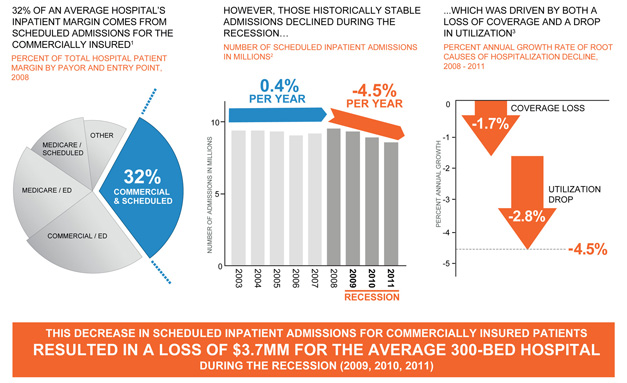
But, there is something else I must admit to you. It is sinister. Something I often do at night, in the dark, when no one else is around. Not even my wife.

What is It? …. Why Googling my self, of course! Also known as “ego surfing.”

Ego Surfing

Have you ever Googled yourself or your financial advisory, management or medical practice? Did you know that you have an ever growing online reputation? Whether you know it or not, Financial Advisors and Doctors have an online presence. When you type your name in a search engine you may be surprised by what you find.

Digital Footprints

Everything you do professionally, or socially, creates a digital footprint. If you are involved in social media then you are contributing to your online reputation. If not, your online reputation is being written for you. There is a conversation taking place about you online, but unfortunately you may not be included in it.

google-chrome-logo

So Much Information

A simple Google search of your name will likely show your practice website. Your name will also appear in numerous third party review sites. Take the time to read a few. You may be surprised. You will find your name and your practice appearing on people’s Facebook and Twitter pages too.

And, you may see comments from clients and patients [both satisfied, and not so much], too. So, keep abreast of your digital bona fides. Google yourself regularily …. Just, dont go blind.

Assessment

While at first this may be disturbing, I view it as an opportunity to get the [positive] word out. How about you? Sinister, or no?

Conclusion

Your thoughts and comments on this ME-P are appreciated. Feel free to review our top-left column, and top-right sidebar materials, links, URLs and related websites, too. Then, subscribe to the ME-P. It is fast, free and secure.

Link: http://feeds.feedburner.com/HealthcareFinancialsthePostForcxos

Speaker: If you need a moderator or speaker for an upcoming event, Dr. David E. Marcinko; MBA – Publisher-in-Chief of the Medical Executive-Post – is available for seminar or speaking engagements. Contact: MarcinkoAdvisors@msn.com

Our Other Print Books and Related Information Sources:

Health Dictionary Series: http://www.springerpub.com/Search/marcinko

Practice Management: http://www.springerpub.com/product/9780826105752

Physician Financial Planning: http://www.jbpub.com/catalog/0763745790

Medical Risk Management: http://www.jbpub.com/catalog/9780763733421

Hospitals: http://www.crcpress.com/product/isbn/9781439879900

Physician Advisors: www.CertifiedMedicalPlanner.org

Product DetailsProduct DetailsProduct Details

Product Details  Product Details

Product DetailsProduct Details

Protecting Patient Privacy

Join Our Mailing List

How Important Is It – Really?

By Dr. David Edward Marcinko MBA

DEM blue

By Matthew Pelletier [safety consultant]

The U.S. Health Insurance Portability and Accountability Act (HIPAA) is the federal law protecting the privacy and security of patients’ health information and was enacted in 1996.

HIPAA laws also protect electronically communicated information. Understanding the significance and importance of HIPAA laws is vital to all medical and health organizations. Companies are required to follow HIPAA laws and protect patient privacy.

Share and Share Alike – NOT!

The privacy rule is an important aspect of HIPAA and makes it illegal for patient’s private health information to be shared by health professionals unless the patient consents. This encompasses patient information which is written, verbal or electronically communicated. Many health care and medical organizations use healthcare training videos in order to educate their workforce on the importance of patient privacy laws.

###

privacy

Review

As the infographic above illustrates, patient privacy is very important and the cost in breach of privacy can be costly:

• With 60% of hospitals having a minimum of 2 breaches in privacy the cost per hospital is estimated at $2 billion dollars.
• The average number of records which are lost or stolen in each violation of privacy is 1,769.
• The main causes of electronic patient information breaches is due to employees, portable electronic devices and third-party errors.
• 7 out of 10 hospitals don’t view patient privacy as a priority though it costs them money if breached.

With 38% of hospitals choosing not to inform anyone of patient privacy breaches while over 40% of breaches are only reported by the patients themselves, HIPAA violations can result in being very costly to medical and healthcare organizations, not just hospitals. HIPAA training videos are a solution to help the workforce understand the importance of patient privacy laws.

Assessment

Conclusion

Your thoughts and comments on this ME-P are appreciated. And, are these issues a moral equivalency? Does privacy even exist anymore in an era of social media, the Internet, Google Earth and Google Maps, etc.

Feel free to review our top-left column, and top-right sidebar materials, links, URLs and related websites, too. Then, subscribe to the ME-P. It is fast, free and secure.

Link: http://feeds.feedburner.com/HealthcareFinancialsthePostForcxos

Speaker: If you need a moderator or speaker for an upcoming event, Dr. David E. Marcinko; MBA – Publisher-in-Chief of the Medical Executive-Post – is available for seminar or speaking engagements. Contact: MarcinkoAdvisors@msn.com

OUR OTHER PRINT BOOKS AND RELATED INFORMATION SOURCES:

Product Details  Product Details

About Average Hospital Stay Costs

Join Our Mailing List

About $33,079 … plus gratuity?

The cost of the average American hospital stay nearly doubled from 2000 to 2010 while average stay length declined. The decade was a period of low inflation, but some sectors of the economy didn’t get the memo. Charges for a hospitalization soared from an average $17,390 in 2000 to $33,079 in 2010.

Link: http://www.BusinessofMedicalPractice.com

The USA

In the U.S. we spend almost three times as much on a hospital stay as other industrialized countries, even though their average stay tends to be longer.

###

Hospital costs

Source: www.FaceThe factsUSA.org

Conclusion

Your thoughts and comments on this ME-P are appreciated. Feel free to review our top-left column, and top-right sidebar materials, links, URLs and related websites, too. Then, subscribe to the ME-P. It is fast, free and secure.

Link: http://feeds.feedburner.com/HealthcareFinancialsthePostForcxos

Speaker: If you need a moderator or speaker for an upcoming event, Dr. David E. Marcinko; MBA – Publisher-in-Chief of the Medical Executive-Post – is available for seminar or speaking engagements. Contact: MarcinkoAdvisors@msn.com

OUR OTHER PRINT BOOKS AND RELATED INFORMATION SOURCES:

DICTIONARIES: http://www.springerpub.com/Search/marcinko
PHYSICIANS: www.MedicalBusinessAdvisors.com
PRACTICES: www.BusinessofMedicalPractice.com
HOSPITALS: http://www.crcpress.com/product/isbn/9781466558731
CLINICS: http://www.crcpress.com/product/isbn/9781439879900
BLOG: www.MedicalExecutivePost.com
FINANCE: Financial Planning for Physicians and Advisors
INSURANCE: Risk Management and Insurance Strategies for Physicians and Advisors

Our Newest Textbook Release

Buy from Amazon

Learn How to Profit and Thrive in the PP-ACA Era

BOOK FOREWORD / TESTIMONIAL

Explaining the New Taxpayer Relief Act

Join Our Mailing List

aka … The Fiscal Cliff Deal Wake-Up Call

By Lon Jefferies MBA CFP®

www.NetWorthAdvice.com

Lon JeffriesBelow is a brief summary of the major implications of the Taxpayer Relief Act that was passed by congress. The changes under the act are permanent and do not expire like the previous round of Bush tax cuts. Note, however, that laws can always be changed.

The Tax Increase That Will Impact Us All

As of December 31, 2012, the Payroll Tax Cut expired. The cut reduced the FICA tax rate by 2% in 2011 and 2012. Consequently, this Social Security tax rate will return to 6.2% for employees (as opposed to the 4.2% rate during the last two years). This tax will apply to any income below the Social Security Wage Base of $113,700.

Essentially, this change will cause an average taxpayer earning $50k per year to pay $1,000 more in federal taxes.

Income Tax Brackets

The top tax bracket will increase from 35% to 39.6% and will apply to individuals with taxable income in excess of $400k and married couples with incomes over $450k. No other changes were made to the federal income tax.

Income Tax Brackets

Taxpayers in the 10% or 15% or income tax bracket will continue paying 0% tax on long-term capital gains and dividends. A 15% capital gains and dividend tax will continue to apply to all other taxpayers not in the highest tax bracket (again, individuals with incomes above $400k and married couples with incomes above $450k). For taxpayers in the top tax bracket, the capital gains and dividend tax effectually rises to 23.8% – consisting of 20% for capital gains or dividends plus an additional 3.8% Medicare tax to boot.

Phaseout of Deductions and Exemptions

Total itemized deductions are reduced by 3% of any excess income over an established limit. That limit is adjusted gross income (AGI) of $250k for individuals and $300k for married couples. Personal exemptions are also phased out once AGI is above the same limits. The exemptions are reduced by 2% for each $2,500 of excess income over these limits.

Professional Wake Up Call

Estate Taxes

While the top estate tax rate has been increased from 35% to 40%, individuals will continue to pay no taxes on estates less than $5,120,000. This figure will continue to rise with inflation. Note: couples essentially get two of these exemptions, allowing them to pass $10,240,000 to heirs without paying estate taxes.

Alternative Minimum Tax

The new AMT exemption amount will be $50,600 for individuals and $78,750 for married couples. These figures will be adjusted annually for inflation. Speak to an account to determine how this impacts your tax return.

Bonus – Potential 401k to Roth 401k Conversions

If your employer offers Roth 401k accounts, you can now convert your traditional 401k investments to the Roth plan while still employed. This process will be similar to converting a traditional IRA to a Roth IRA and taxes will be due upon conversion. However, your employer isn’t required to offer a Roth 401k, so speak to your employer’s HR department to determine if this is an option. Further, speak with your financial planner for information on whether this is a strategy you should explore.

Conclusion

Your thoughts and comments on this ME-P are appreciated. Feel free to review our top-left column, and top-right sidebar materials, links, URLs and related websites, too. Then, subscribe to the ME-P. It is fast, free and secure.

Link: http://feeds.feedburner.com/HealthcareFinancialsthePostForcxos

Speaker: If you need a moderator or speaker for an upcoming event, Dr. David E. Marcinko; MBA – Publisher-in-Chief of the Medical Executive-Post – is available for seminar or speaking engagements. Contact: MarcinkoAdvisors@msn.com

Our Other Print Books and Related Information Sources:

Health Dictionary Series: http://www.springerpub.com/Search/marcinko

Practice Management: http://www.springerpub.com/product/9780826105752

Physician Financial Planning: http://www.jbpub.com/catalog/0763745790

Medical Risk Management: http://www.jbpub.com/catalog/9780763733421

Hospitals: http://www.crcpress.com/product/isbn/9781439879900

Physician Advisors: www.CertifiedMedicalPlanner.org

Product Details  Product Details

Product Details

The Doctors and Guns Controversy

Join Our Mailing List

Let the Editorialists Opine

Dr. David Edward Marcinko FACFAS MBA CMP

[Publisher and Editor]: http://www.jbpub.com/catalog/9780763733421

Dr David E Marcinko MBAIn late December, three of the nation’s most respected medical journals  published accounts of the gun lobby’s efforts to squelch federally  funded research on gun-related injuries, and to silence physicians who  would talk to their patients about gun ownership or use.

Writing in the  Journal of the American Medical Assn., the Archives of Internal Medicine and the Archives of Pediatric and Adolescent Medicine,  editorialists suggested it is time for researchers and physicians to  link arms and in the interest of the nation and their patients, let  knowledge about guns lead the way.

Assessment

Conclusion

Your thoughts and comments on this ME-P are appreciated. Here are my own: Letter from the Editor on Sandy Hook Elementary School Feel free to review our top-left column, and top-right sidebar materials, links, URLs and related websites, too. Then, subscribe to the ME-P. It is fast, free and secure.

Link: http://feeds.feedburner.com/HealthcareFinancialsthePostForcxos

Speaker: If you need a moderator or speaker for an upcoming event, Dr. David E. Marcinko; MBA – Publisher-in-Chief of the Medical Executive-Post – is available for seminar or speaking engagements. Contact: MarcinkoAdvisors@msn.com

Our Other Print Books and Related Information Sources:

Health Dictionary Series: http://www.springerpub.com/Search/marcinko

Practice Management: http://www.springerpub.com/product/9780826105752

Physician Financial Planning: http://www.jbpub.com/catalog/0763745790

Medical Risk Management: http://www.jbpub.com/catalog/9780763733421

Hospitals: http://www.crcpress.com/product/isbn/9781439879900

Physician Advisors: www.CertifiedMedicalPlanner.org

Product Details

Product Details 

How Physicians Use Digital Media for Interaction

Join Our Mailing List

A Break-Down by Medical Specialty

www.BusinessofMedicalPractice.com

Taking-the-Pulse-US-2012

Assessment

Chapter 13: IT, eMRs & GroupWare

Conclusion

Your thoughts and comments on this ME-P are appreciated. Feel free to review our top-left column, and top-right sidebar materials, links, URLs and related websites, too. Then, subscribe to the ME-P. It is fast, free and secure.

Link: http://feeds.feedburner.com/HealthcareFinancialsthePostForcxos

Speaker: If you need a moderator or speaker for an upcoming event, Dr. David E. Marcinko; MBA – Publisher-in-Chief of the Medical Executive-Post – is available for seminar or speaking engagements. Contact: MarcinkoAdvisors@msn.com

Our Other Print Books and Related Information Sources:

Health Dictionary Series: http://www.springerpub.com/Search/marcinko

Practice Management: http://www.springerpub.com/product/9780826105752

Physician Financial Planning: http://www.jbpub.com/catalog/0763745790

Medical Risk Management: http://www.jbpub.com/catalog/9780763733421

Hospitals: http://www.crcpress.com/product/isbn/9781439879900

Physician Advisors: www.CertifiedMedicalPlanner.org

Product Details

What’s Next for Healthcare Information Technology Innovation?

Join Our Mailing List

A Video Panel Discussion

By Shahid N. Shah MS

Dr. David Edward Marcinko MBA

http://www.healthcareguy.com/

Shahid N. Shah MSIn Nashville a few weeks ago, at the Vanderbilt Healthcare Conference, I gave a short talk on a panel focused on the question “What’s next for healthcare information technology innovation?”

The Key Questions

The talk focused on answering a couple of key questions:

  • What does innovation in healthcare mean?
  • Where are the major areas in healthcare where innovation is required?

The Take-Aways

And it had a few key takeaways:

  • Understand health tech buyer fallacies
  • Understand PBU: Payer vs. Benefiter vs. User
  • Understand why healthcare businesses buy stuff so you can build the right thing

Assessment

My speaker deck is found below (if you’re reading this through a feed reader you should click into the blog so that it is visible). You can download the PDF here. After you’ve flipped through it, let me know what you think by dropping some comments below.

Editor’s Note: Mr. Shah is a ME-P thought-leader and an internationally recognized enterprise software analyst that specializes in healthcare IT with an emphasis on e-health, EHR/EMR, Meaningful Use, data integration, medical device connectivity, health informatics, and legacy modernization. He contributed CH 13 to: www.BusinessofMedicalPractice.com and Chapter 13: IT, eMRs & GroupWare

Conclusion

Your thoughts and comments on this ME-P are appreciated. Feel free to review our top-left column, and top-right sidebar materials, links, URLs and related websites, too. Then, subscribe to the ME-P. It is fast, free and secure.

Link: http://feeds.feedburner.com/HealthcareFinancialsthePostForcxos

Speaker: If you need a moderator or speaker for an upcoming event, Dr. David E. Marcinko; MBA – Publisher-in-Chief of the Medical Executive-Post – is available for seminar or speaking engagements. Contact: MarcinkoAdvisors@msn.com

OUR OTHER PRINT BOOKS AND RELATED INFORMATION SOURCES:

DICTIONARIES: http://www.springerpub.com/Search/marcinko
PHYSICIANS: www.MedicalBusinessAdvisors.com
PRACTICES: www.BusinessofMedicalPractice.com
HOSPITALS: http://www.crcpress.com/product/isbn/9781466558731
CLINICS: http://www.crcpress.com/product/isbn/9781439879900
BLOG: www.MedicalExecutivePost.com
FINANCE: Financial Planning for Physicians and Advisors
INSURANCE: Risk Management and Insurance Strategies for Physicians and Advisors

Product Details

Doctors Uniquely Giving Locally in 2013

Join Our Mailing List

On Innovative Charitable Giving

By Rick Kahler MS CFP® ChFC CCIM www.KahlerFinancial.com

Rick Kahler CFP“Shop locally.” “Eat locally.” Do a quick Internet search for either of these terms and you get a host of results. Plenty of people are interested in saving energy and supporting locally-owned businesses by doing their buying close to home.

So, many doctors – like other folks – are committed to eating locally grown food that there’s even a name for them: locavores. Being a locavore in South Dakota in the wintertime, by the way, can be a challenge.

If buying locally matters to you, here’s another aspect of it to think about: giving locally as we begin the new year 2013.

The Holiday Season

This time of year especially, we are flooded with requests from worthwhile causes. Many of these are well-known national or international organizations with sophisticated fund-raising efforts. Amid their appeals, requests from local charities may be easy to overlook. Yet many small organizations do a great deal of good in their home towns.

Issues to Consider

Before you decide whether giving locally or nationally is a better option for your gift budget, here are a few things to consider:

1. No matter whether an organization is local or international, always check to see how much of the money it raises goes to administrative costs and how much actually reaches the people the charity serves. Most charities have websites where this information is readily available.

2. What kind of giving matters most to you? If you want to support the arts, chances are that a local organization like your community theatre or concert association will make good use of your funds. If you’d rather support agencies that help with natural disasters, an international organization is probably the most effective place for your money.

3. Do you want to give actual items rather than money? If so, local charities would usually be better choices. Many places, for example, use “Angel Trees” to ask for gifts for children or the elderly. If you’d prefer to help the hungry with canned goods rather than cash, you’ll want to give to your local food bank or homeless shelter.

4. Find out whether you can specify that your gift is used locally. Many national organizations like the Red Cross, Salvation Army, or food banks are happy to receive gifts that are designated for your local chapter.

5. Just as local government is closer to the people it serves, local charities may be more in touch with specific community needs. If you give locally, you can talk to people in charge and find out exactly where your money goes.

6. Giving locally allows you to combine financial giving with hands-on service that may be more satisfying than just giving money. You could help serve meals at a shelter, pack gift boxes, volunteer at a food bank, or distribute gifts.

7. Just because a charity is local, however, don’t automatically assume it uses its money wisely or efficiently. Always check. Sometimes a small organization may be trying to duplicate what an older or larger organization can do more efficiently. Sometimes local organizations are run by people who are well-meaning but don’t necessarily have the skills or contacts to make the best use of the donations they receive.

8. Remember that giving is an individual decision. Choose the level and type of giving that fits best for you, instead of trying to match what others do or give what someone else thinks you should.

charity

Assessment

Finally, keep a balanced perspective. There are many worthwhile organizations, and you can’t possibly give to them all. Don’t waste energy feeling guilty about the ones you skip. Instead, appreciate the giving you do in your own way and let it add joy and satisfaction to your holiday season.

Conclusion

Your thoughts and comments on this ME-P are appreciated. Feel free to review our top-left column, and top-right sidebar materials, links, URLs and related websites, too. Then, subscribe to the ME-P. It is fast, free and secure.

Link: http://feeds.feedburner.com/HealthcareFinancialsthePostForcxos

Speaker: If you need a moderator or speaker for an upcoming event, Dr. David E. Marcinko; MBA – Publisher-in-Chief of the Medical Executive-Post – is available for seminar or speaking engagements. Contact: MarcinkoAdvisors@msn.com

Our Other Print Books and Related Information Sources:

Health Dictionary Series: http://www.springerpub.com/Search/marcinko

Practice Management: http://www.springerpub.com/product/9780826105752

Physician Financial Planning: http://www.jbpub.com/catalog/0763745790

Medical Risk Management: http://www.jbpub.com/catalog/9780763733421

Hospitals: http://www.crcpress.com/product/isbn/9781439879900

Physician Advisors: www.CertifiedMedicalPlanner.org

Product Details  Product Details