BOARD CERTIFICATION EXAM STUDY GUIDES Lower Extremity Trauma
[Click on Image to Enlarge]
ME-P Free Advertising Consultation
The “Medical Executive-Post” is about connecting doctors, health care executives and modern consulting advisors. It’s about free-enterprise, business, practice, policy, personal financial planning and wealth building capitalism. We have an attitude that’s independent, outspoken, intelligent and so Next-Gen; often edgy, usually controversial. And, our consultants “got fly”, just like U. Read it! Write it! Post it! “Medical Executive-Post”. Call or email us for your FREE advertising and sales consultation TODAY [678.779.8597] Email: MarcinkoAdvisors@outlook.com
Medical & Surgical e-Consent Forms
ePodiatryConsentForms.com
iMBA Inc., OFFICES
Suite #5901 Wilbanks Drive, Norcross, Georgia, 30092 USA [1.678.779.8597]. Our location is real and we are now virtually enabled to assist new long distance clients and out-of-town colleagues.
ME-P Publishing
SEEKING INDUSTRY INFO PARTNERS?
If you want the opportunity to work with leading health care industry insiders, innovators and watchers, the “ME-P” may be right for you? We are unbiased and operate at the nexus of theoretical and applied R&D. Collaborate with us and you’ll put your brand in front of a smart & tightly focused demographic; one at the forefront of our emerging healthcare free marketplace of informed and professional “movers and shakers.” Our Ad Rate Card is available upon request [678-779-8597].
Posted on March 16, 2025 by Dr. David Edward Marcinko MBA MEd CMP™
By Vitaliy Katsenelson CFA
***
***
Today, I’m going to share stories about my best and worst investment decisions. But don’t worry, this isn’t just a brag-and-cringe session about making or losing money. These stories are about the valuable lessons learned, and how these adventures in investing helped shape my current approach.
The Best Investment Decision
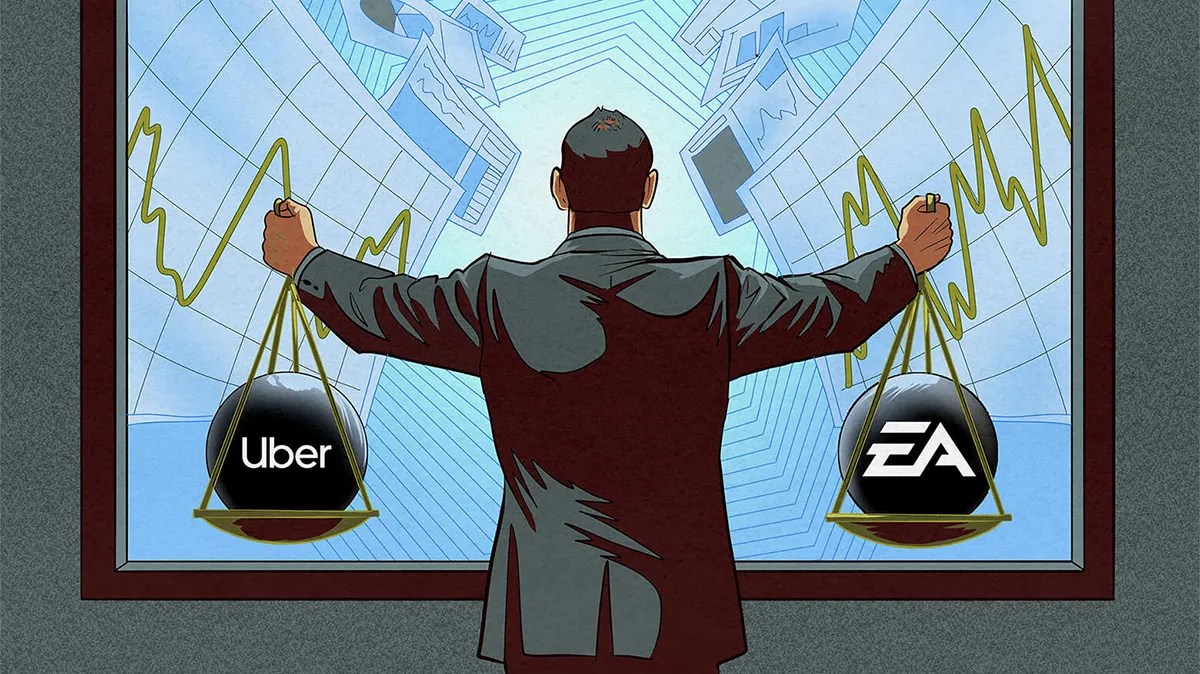
In investing, you don’t get extra points for creativity or difficulty. A million dollars earned while you are smiling buys as many potatoes as a million dollars that cost you your marriage and hair.
However, from a personal, creative satisfaction perspective, our investment in Uber was one of our best. That’s not to say that it has been the most successful decision from a financial perspective, at least not yet.
Uber doesn’t fit into the traditional value stock category. Until 2023, the third year of our ownership, it never made money. It was a stock everyone hated. After we bought it, I had clients reach out to me asking if I had been kidnapped and someone else was making these purchases of Uber.
We bought more shares very opportunistically during and after the pandemic. I wrote a long research report on it, which you can read here.
On one hand, Uber’s switchboard is a digital business, but the company also has a physical presence in thousands of cities, which incurs costs (the analog side of the business). Additionally, the availability of cheap money caused the ride-share market to go crazy and act rationally irrational, as competitors jostled in a land grab.
My thesis consisted of several insights:
Unlike traditional-tech, digital-only companies, Uber is a hybrid, both digital and analog. Thus, its cost structure is much higher than that of other companies. This, in part, explains the higher losses.
It has a strong brand; its name has become a verb.
The rideshare market is inevitable and will only continue to grow. Uber is not just in competition with taxis, second cars, or seldomly used cars; it is also in competition with the favors we ask of friends and relatives, such as dropping us off at the mechanic or picking us up from the doctor’s office.
Uber has global scale, which its competitors lack, allowing it to spread R&D across more markets.
As its revenue grows, each incremental dollar comes with a very high margin, which directly drops to the bottom line. Therefore, at some point, its earnings will explode to the upside as fixed costs stop growing, allowing it to scale.
The Uber story is not over; we still own the stock. I don’t want to do a celebratory dance. But this idea came with a lot of creative satisfaction. There is another point of pride here. Despite our very tumultuous ownership of this stock, we remained rational (I have written about that here). We bought more when it became extremely undervalued, and I would be lying if I said that was psychologically easy – it was not, but we followed our research and process.
The Worst Investment Decision
My worst investments that resulted in losses had several things in common: They were low-quality companies; their financials were complex and not transparent (for instance, one-time items were labeled as “one-time” every quarter); and they had questionable management.
However, they were all considered “cheap”… until they were not. Now, I hope you see why I am dogmatic about quality.
However.
When you are wrong on an investment and you lose money, the most you can lose is 100%. I have learned a lot from those. But they were not my worst investments. Those were the ones where I left 300–400% on the table when I sold too soon. Let me detail two examples.
EA – Electronic Arts
We bought EA in the early 2010s. I wrote about it – you can read my investment case for it here. To sum up, games were moving from being sold in stores to being digital downloads, which would lead to higher margins (don’t have to pay for packaging and Best Buy to sell them). The market for games was exploding, as every adult and teenager had a gaming device in their hands – a smartphone. The market for video games was going to be much larger. EA was the largest player in that space, with great franchises.
The following two years of ownership were very painful. EA had a few big game flops, and the market did not care about improving fundamentals. The stock kept declining. We continued to buy more. Every time we bought more shares, the stock fell further. Fast-forward a year or two. The stock doubled from our original purchase, but I was mentally exhausted. I did a celebratory dance and sold the stock. The stock then went up another 4x within a few years after we sold it. It went up for the right reasons – its earnings exploded to the upside, in line with my original thesis.
The sale was a mistake, not because the price went up but because I let frustration over the stock-price decline (volatility) get to me. Investing is a mental game. I learned from this adventure that it is important to zoom out and not obsess over individual stocks in the portfolio. This is why we have a portfolio. It was a very costly but educational mistake. Our ownership of Uber was not a walk in the park, either – just look at the stock price over the last few years. But I had learned my lesson from EA and was able to do the analysis, update our model, and zoom out.
In investing, there is a big difference between intellectual and tactile knowledge. I am going to go PG-13 on you for a second and quote the irascible Charlie Munger: “Learning about investing through a model portfolio is like learning about sex through romantic novels.” A big part of investing is observing yourself as an investor – your thoughts and emotions as you ride the actual rollercoaster of owning a stock.
I also made an important modification to our process.
We always value every company in the portfolio on earnings (free cash flows) at least four years out. Why four years? Three seems too short. There is no magic in this number, other than it being longer than most analyst estimates. We do this for all stocks in the portfolio, and then the total return for each is calculated and annualized. If a company has strong growth potential, it may appear to be expensive based on current earnings; but in reality, it may actually be cheap based on earnings projected four years from now.
On the other side of the spectrum, a company that has no growth or dividends may seem “cheap” based on its current earnings multiple, but this cheapness may quickly dissipate once a total return is calculated using future earnings. Time is on the side of growing businesses and the enemy of the ones that stand still. Therefore, a non-growing or slow-growing business needs a much greater discount (margin of safety) to secure a spot in our portfolio.
I want to stress another point. We sometimes sell a stock and then it goes higher. If we sold it for the right fundamental reasons, this doesn’t bother me. There is very little to learn.
Twilio
I’ll give you another crazy example. We bought Twilio at $25 in 2017 or so. Our thesis was that they had built the largest digital telecommunications network, which gave them a brief competitive advantage. They were also spending 5x more on R&D than competitors to build applications around this network, which would give them long-term advantages.
The stock price went up to $60 in a few months without anything significantly changing, so we sold a third of our position. Then it went up to $90, and we sold some more. To our disbelief, we sold the rest at around $120, a bit before the pandemic.
During the pandemic, Twilio’s price hit $400. I had zero regret about not holding on to the shares. Absolutely none. Twilio’s profitability did not match the stock market’s opinion of its price. Twilio’s stock price was as crazy to me at $250 as it was at $300 or $400. After reviewing our models, we concluded that even $120 was at the extreme end of our optimistic assumptions. Fast-forward to today, where the stock is at $60 or so. We are currently sharpening our pencils, but we have not bought the stock – yet.
Selling EA was a mistake; selling Twilio was not.
***
Key takeaways
My “best investment decision” with Uber wasn’t just about financial gains, but the creative satisfaction it brought. It taught me the value of sticking to our research and process, even when it’s psychologically challenging.
The worst investments often share common traits: low-quality companies, complex financials, questionable management, and the illusion of being “cheap.” This reinforces my dogmatic stance on prioritizing quality.
Sometimes, the costliest mistakes aren’t the ones where you lose money, but those where you leave significant gains on the table by selling too soon. My experience with EA taught me this lesson the hard way.
There’s a crucial difference between intellectual and tactile knowledge in investing. Actually owning stocks and experiencing the emotional roller coaster is invaluable for developing as an investor.
Selling a stock that later increases in value isn’t always a mistake if the decision was based on sound fundamental reasons. My experience with Twilio illustrates this point – sometimes it’s right to sell even if the price continues to climb.
NOTE:Please read the following important disclosure here.
Posted on March 15, 2025 by Dr. David Edward Marcinko MBA MEd CMP™
DEFINITION
By Staff Reporters and FTC
***
***
Surveillance pricing is a broad term to describe the practice of linking pricing to individualized consumer data.
Companies employing it might use algorithms, personal information, and AI to set a price for their goods based on everything from where you live to your age to your browsing or credit history. The practice, sometimes called dynamic pricing or personalized pricing, is growing increasingly common, but isn’t completely new.
In 2012, the travel website Orbitz began directing people on Macs to higher hotels after realizing they often had more purchasing power. It stopped the practice after the Wall Street Journalreported on it.
Is surveillance pricing the same thing as surge pricing?Yes and no.
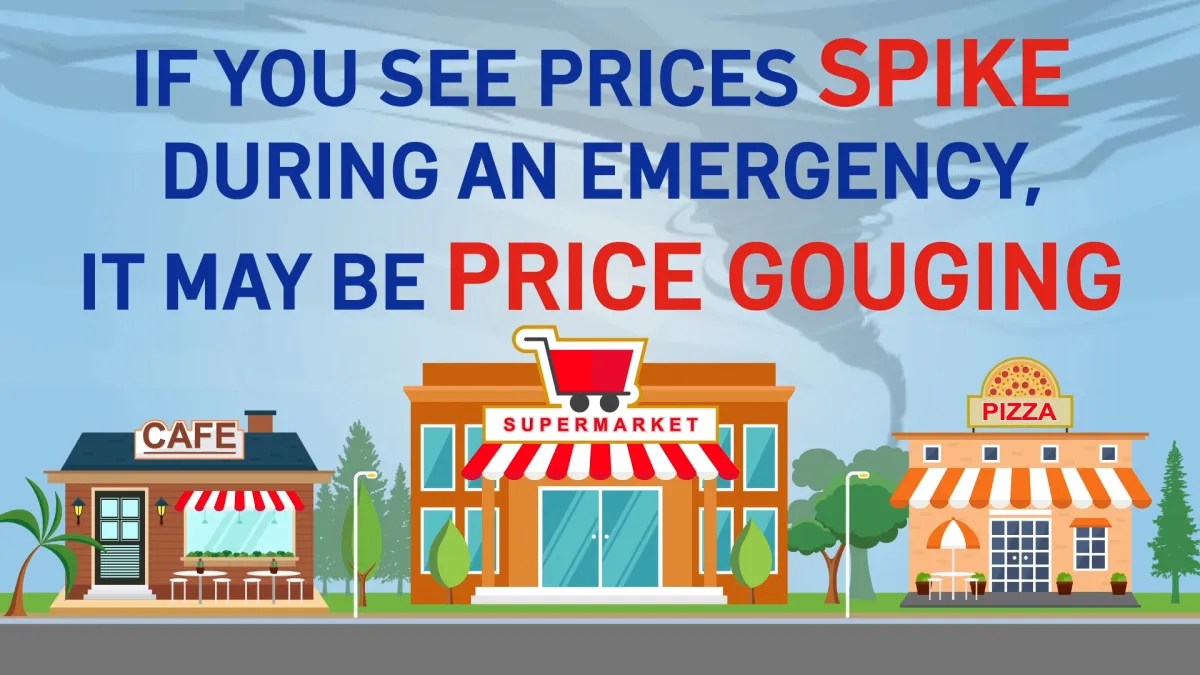
You might know about surge pricing from the last time you tried to call an Uber during a rainstorm. As demand skyrockets for a ride share, so does the price. This is one kind of surveillance pricing, but what the FTC is targeting appears more specific. The FTC said its probe concerns “when the pricing is based on surveillance of an individual’s personal characteristics and behavior.”
Is surveillance pricing bad?
The FTC opened its probe into companies using surveillance pricing because it’s worried about the risks it might pose to consumers
“Firms that harvest Americans’ personal data can put people’s privacy at risk. Now firms could be exploiting this vast trove of personal information to charge people higher prices,” FTC Chair Lina M. Khan said in a statement. “Americans deserve to know whether businesses are using detailed consumer data to deploy surveillance pricing, and the FTC’s inquiry will shed light on this shadowy ecosystem of pricing middlemen.”
The FTC is looking into four major areas of the practice: types of products being offered, data collection, customer and sales information, and impacts on consumers and prices.
Many Americans, it fears, don’t know when their data is being harvested and how it is affecting what they pay. “Consumers may now be subjected to surveillance pricing when they shop for anything, big or small, online or in person: a house, a car, even their weekly groceries,” the FTC said.
The FTC sent the orders for more information to Accenture, Bloomreach, Chase, Mastercard, McKinsey & Co., Pros, Revionics, and Task.
“Advancements in machine learning make it cheaper for these systems to collect and process large volumes of personal data, which can open the door for price changes based on information like your precise location, your shopping habits, or your web browsing history,” the FTC wrote.
Posted on October 13, 2024 by Dr. David Edward Marcinko MBA MEd CMP™
MEDICAL EXECUTIVE-POST–TODAY’SNEWSLETTERBRIEFING
***
Essays, Opinions and Curated News in Health Economics, Investing, Business, Management and Financial Planning for Physician Entrepreneurs and their Savvy Advisors and Consultants
“Serving Almost One Million Doctors, Financial Advisors and Medical Management Consultants Daily“
A Partner of the Institute of Medical Business Advisors , Inc.
Yom Kippur. Wishing a meaningful and easy fast to our readers who observe.
Boeing plans to lay off 10% of its workforce, or ~17,000 people, to cut costs as its factory workers’ strike continues.
The Nobel Peace Prize was awarded to Nihon Hidankyo, a Japanese organization of survivors of the atomic bombings of Hiroshima and Nagasaki, that advocates against nuclear weapons.
Markets: After big banks—which are often viewed as a proxy for the economy’s health—kicked off earnings season strong, the S&P 500 and the Dow hit new records, capping off stocks’ fifth winning week in a row.
Stock spotlight: Elon Musk’s presentation of Tesla’s long-awaited Robocab didn’t go as badly as that time the Cybertruck’s “unbreakable” window got smashed on stage, but investors were unimpressed by its lack of key details.
Hailing the news were Uber and Lyft, which rose after Tesla failed to present a looming threat.
JPMorgan says the soft landing is here. Reporting its first quarterly earnings since the Fed’s big interest rate cut, America’s biggest bank earned more than expected from loans and boosted what it forecasts it’ll earn for the year.
In other banking news, Wells Fargo also beat earnings expectations.
Posted on September 16, 2024 by Dr. David Edward Marcinko MBA MEd CMP™
MEDICAL EXECUTIVE-POST–TODAY’SNEWSLETTERBRIEFING
***
Essays, Opinions and Curated News in Health Economics, Investing, Business, Management and Financial Planning for Physician Entrepreneurs and their Savvy Advisors and Consultants
“Serving Almost One Million Doctors, Financial Advisors and Medical Management Consultants Daily“
A Partner of the Institute of Medical Business Advisors , Inc.
Nearly a year after filing for Chapter 11, Rite Aid announced on September 3 that the company has exited the bankruptcy process and will move forward as a private company. The retail pharmacy chain filed for bankruptcy in October 2023 as it struggled to keep up with competitors CVS and Walgreens, in addition to mounting debt, falling revenue, and multimillion-dollar opioid settlements.
Stocks wrapped up a comeback last week, with all three major indexes ending the trading session on a high note. Both the S&P 500 and the NASDAQ enjoyed five straight winning days, and both indexes had their best week of the year. Gold continued to break records today, as the double whammy of forthcoming rate cuts and a declining dollar sent the precious metal soaring. Oil rose a bit today after Hurricane Francine passed over the Gulf of Mexico and output began to normalize. Bitcoin staged a late afternoon rally to end the week over 9% higher than where it started, as investors embraced risk and optimism swept through markets.
Posted on August 7, 2024 by Dr. David Edward Marcinko MBA MEd CMP™
By Staff Reporters
***
***
Stock Marketsseesawed up yesterday, making back some of the ground lost to Monday’s sell-off. Analysts say the market could remain volatile until September, when the Fed is widely expected to cut interest rates—barring an emergency cut before then. One of the day’s big winners was Uber, which revved up after smashing Q2 revenue expectations thanks to unexpectedly strong consumer demand.
***
One day after the S&P 500’s worst session since 2022, stocks partially rebounded, putting fears of a recession on hold. Tuesday started well, with Japan’s Nikkei—which had cratered on Monday—logging its best day since 2008, giving US investors some positive energy From there, US stocks, including Magnificent Seven stalwarts like Microsoft and Nvidia, and both major cryptocurrencies, moved up. “Get used to the volatility,” one Bank of America analyst told Bloomberg. The S&P 500 is still up over 10% this year despite this week’s turbulence.
Finally, DuckDuckGo might soon get its time to shine. A federal judge just ruled that Google has a monopoly over the search engine business, creating the potential for curbs to its power that could change how you look up people you just met online. Google said it will appeal the ruling, but that’s just on one front. It faces another lawsuit questioning whether it abused its monopoly on online advertising technology.
Posted on June 15, 2024 by Dr. David Edward Marcinko MBA MEd CMP™
Emerging Transportation Models
By Rick Kahler CFP
For elderly people facing the reality of diminishing capabilities, a service that can help maintain their independence is ridesharing.
Ride – Sharing
Ridesharing is hardly news for most Americans, particularly those in urban areas. After all, it has been around for a decade. In more rural areas of the US, however, ridesharing is just becoming an option. In my home town of Rapid City, South Dakota, for example, Lyft started operations only recently, and Uber began last September.
Many of us in rural parts of the US, myself included, use ridesharing primarily when we travel. It has changed the way I travel in large cities, and I appreciate it for its convenience, flexibility, and economical cost.
For many others outside of big cities, however, especially senior citizens, ridesharing has the potential to be a game changer for those willing to take advantage of it.
There are a lot of emotional benefits and pitfalls to ridesharing for seniors. The greatest benefit is that, instead of relying on the gratuity and schedules of friends, family, and limited public transportation, they can literally reclaim most of the freedom they once had when they could drive. This alone can be uplifting and empowering. It allows seniors who may be isolated socially to reenter their communities and gives them a renewed sense of independence and autonomy.
However, I find many seniors emotionally resistant and reluctant to embrace the benefits of ridesharing. Many fear the unknown and unfamiliarity of ridesharing. Using the app inherently means owning a smart phone, which many seniors resist. Even those who have smartphones may feel overwhelmed about downloading and learning the app. This is where reaching out to younger family and friends to show you the ropes can be critical.
Another factor that often contributes to reluctance to use the freedom and convenience of ridesharing is a money script of frugality. The assumption may be “I can’t afford it.” While this can be absolutely true for some, many who could easily afford ridesharing also buy into that belief.
Economically, using ridesharing can cost the same as or less than owning a car. This is especially the case if you don’t have a demanding schedule and your need for transportation is moderate for activities like grocery shopping, medical appointments, and occasional social events.
Example:
Let’s assume you average one 10-mile round trip per day, or seven per week. If you owned a car the gas would cost $50 a month. Insurance could run about $100. Oil, changing tires, servicing, and periodic repairs could average another $50 a month. That’s a total of $200 a month in out-of-pocket costs. The biggest cost is the depreciation on your car. Let’s assume your car is worth $20,000. You could expect it to depreciate 1% per month or around $200. That puts the total cost of owning the car at $400 per month.
Ridesharing costs about $7.00 each way when you are traveling up to 5 miles. That puts the daily average cost at $14.00 per trip, or $420 a month, about the same cost as owning a car—and a cost that could be covered for months through selling your vehicle.
***
***
Assessment
Ridesharing can open up a whole new world of convenience, autonomy, and choices. Its benefits can even be a matter of life and death when seniors reach that difficult time when they can still legally drive but in reality they should not. With physical impairments like deteriorating vision and slower reaction time, driving means putting themselves and others at risk. Having the option of ridesharing can make that tough decision to give up driving just a little easier.
Posted on May 10, 2024 by Dr. David Edward Marcinko MBA MEd CMP™
MEDICAL EXECUTIVE-POST–TODAY’SNEWSLETTERBRIEFING
***
Essays, Opinions and Curated News in Health Economics, Investing, Business, Management and Financial Planning for Physician Entrepreneurs and their Savvy Advisors and Consultants
“Serving Almost One Million Doctors, Financial Advisors and Medical Management Consultants Daily“
A Partner of the Institute of Medical Business Advisors , Inc.
The S&P 500 index gained 26.41 points (0.5%) to 5,214.08; the Dow Jones Industrial Average rose 331.37 points (0.9%) to 39,387.76; the NASDAQ Composite® ($COMP) advanced 43.51 points (0.3%) to 16,346.26.
The 10-year Treasury note yield (TNX) lost more than 2 basis points to 4.459%.
The CBOE Volatility Index® (VIX) fell 0.31 to 12.69.
Interest-rate-sensitive sectors, such as real estate and utilities, were among the strongest performers Thursday. Energy shares were also strong after WTI Crude Oil (/CL) futures rose for a second straight day after sinking to a two-month low earlier this week. Semiconductor shares were under pressure after disappointing revenue guidance from chip designer Arm Holdings (ARM) sent its shares down 2.3%.
The Dowjumped for the seventh straight day while the S&P 500 closed above 5,200 for the first time in a month as stocks climbed across the board, possibly a reaction to data showing that the cooling labor market could translate into a Federal Reserve interest rate cut in a few months. But, Roblox,tanked 22% yesterday after the company cut its annual bookings forecast. The rough patch suggests that the game’s pandemic-induced popularity has likely peaked.
Last year, Uber boasted its first full-year profit since going public. But yesterday, the company reported a surprise loss for the first quarter of 2024, dashing investors’ hopes for steady profits and sending its stock way down.
Meanwhile, Uber’s smaller rival Lyft appears to have its foot on the gas pedal. It posted better-than-expected quarterly results on Tuesday and saw a stock bump yesterday.
Microsoft plans to put the cash toward creating an AI data center. President Biden was on hand in Wisconsin to help announce the news—and not just to tout a big investment that’s expected to create jobs.
Posted on April 29, 2024 by Dr. David Edward Marcinko MBA MEd CMP™
A SPECIAL REPORT
By Vitaliy N. Katsenelson CFA
***
Uber’s business is doing extremely well. It has reached escape velocity – the company’s expenses have grown at a slow rate while its revenues are growing at 22% a year. This caused profit margins to expand and earnings and free cash flows to skyrocket. Our investment in Uber was based on the assumption that its services would become a utility – just like water and electricity. The company’s name is synonymous with ride sharing.
I must confess that the biggest risk to our investment in Uber is me. Yes, you read that right. Uber has an incredible growth runway. It is not just going after ride sharing and food delivery, where it still has plenty of room to grow, it is also making serious inroads into the grocery market. It has terrific management that is putting a lot of daylight between Uber and its competitors.
Posted on April 24, 2024 by Dr. David Edward Marcinko MBA MEd CMP™
By Staff Reporters
***
***
Tesla’s pivotal earnings call yesterday had the vibes of an undergrad at office hours begging for extra credit after failing every assignment all semester. The automaker whiffed on revenue targets, even after tempering expectations.
And, forthe first time since 2020, the EV-maker’s quarterly revenue dropped, falling to $21.3 billion, compared with $23.3 billion from the same period a year ago (analysts were expecting about $22b). Tesla’s profits sunk to a six-year low. The company said earlier this month that it only delivered 386,810 cars in the first quarter, down 8.5% from the same time in 2023.
On the bright side according to Morning Brew, despite the earnings miss, Tesla’s stock went up in after-hours trading, likely because the company vowed to accelerate the launch of more affordable models. It announced it was working on integrating ride-hailing technology into its app in a bid to take on Uber, and that the growth of its energy storage business is set to outpace that of its auto business this year.
That signal came amid broader concern that Tesla would move away from its traditional car making roots in favor of a business model focused on autonomous driving, robotics and AI-related technologies. It triggered an after-hours jump in Tesla stock that was cemented by a shareholder-friendly conference call from Chief Executive Elon Musk.
“I think we’ll have higher sales this year than last year,” Musk told investors, even as the group reiterated its forecast for “notably lower” vehicle deliveries for the current year.
Posted on February 15, 2024 by Dr. David Edward Marcinko MBA MEd CMP™
By Staff Reporters
***
***
Stocks rose yesterday after they plunged following Tuesday’s unexpectedly hot inflation report. And, investors hit the gas pedal on Uber when the company revealed it would buy back $7 billion worth of shares in its first-ever repurchase plan.
Here’s where the major benchmarks ended:
The S&P 500 index rose 47.45 points (1.0%) to 5,000.62; the Dow Jones Industrial Average® (DJI) gained 151.52 points (0.4%) to 38,424.27; the NASDAQ Composite® (COMP) added 203.55 points (1.3%) to 15,859.15.
The 10-year Treasury note yield (TNX) fell almost 5 basis points to 4.269%.
The CBOE Volatility Index® (VIX) fell 1.47 to 14.38.
Small-cap shares were among the upside leaders Wednesday as the Russell 2000® Index (RUT) surged 2.4% to erase over half of its 4% nosedive on Tuesday. Banks and semiconductors were also among the strongest sectors. Energy companies were under pressure after WTI crude oil (/CL) futures dropped 1.6% in the wake of a larger-than-expected increase in U.S. inventories.
Posted on February 9, 2024 by Dr. David Edward Marcinko MBA MEd CMP™
By Staff Reporters
***
***
Stat: $1.43 billion. That’s Uber’s first full-year profit since 2018. And, it’s the first time the rides hare giant has shown a profit from its operations. The company has had $30 billion in operating losses since 2016. (the Wall Street Journal)
Stocks ticked up, putting the S&P 500over the 5,000-point milestone for the first time, as more strong company earnings poured in. And, Arm soared 48% after it surprised investors with record computer chip sales.
Here’s where the major benchmarks ended:
The S&P 500 index added 2.85 points (0.1%) to 4,997.91, after briefly rising to 5,000.40, breaching the 5,000 level for the first time; the Dow Jones Industrial Average gained 48.97 points (0.1%) to 38,726.33; the NASDAQ Composite climbed 37.07 points (0.2%) to 15,793.71.
The 10-year Treasury note yield (TNX) rose more than 5 basis points to 4.154%.
The CBOE Volatility Index® (VIX) fell 0.04 to 12.79.
Semiconductor shares were among the strongest performers Thursday behind Arm Holdings (ARM), which soared 48% after the chip maker reported a better-than-expected quarter profit. The Philadelphia Semiconductor Index (SOX) gained 1.6%. Energy shares were also firm as WTI crude oil (/CL) futures surged 3.6% to a high for the month above $76 per barrel, reflecting growing concern the Middle East conflict may disrupt supplies.
Posted on January 30, 2024 by Dr. David Edward Marcinko MBA MEd CMP™
By Staff Reporters
***
***
Markets: Stocks had a strong start to the week, with the S&P 500 and the Dow once again hitting new records. That’s mostly thanks to a boom in Big Tech as investors anticipate a slew of high-profile earnings (not to mention a Fed meeting) this week. Microsoft, Meta, and Uber all reached all-time highs.
***
Here’s where the major benchmarks ended today:
The S&P 500 index rose 36.96 points (0.8%) to 4,927.93; the Dow Jones Industrial Average gained 224.02 points (0.6%) to 38,333.45; the NASDAQ Composite® (COMP) added 172.68 points (1.1%) to 15,628.04.
The 10-year Treasury note yield (TNX) dropped about 8 basis points to 4.08%.
The CBOE Volatility Index® (VIX) rose 0.37 to 13.63.
Consumer discretionary and banks were among the market’s strongest sectors Monday, and small caps were also strong. The Russell 2000® Index (RUT), a small-cap benchmark, outpaced its large-cap counterparts with a gain of 1.7%, ending near a four-week high. Energy shares took pressure after WTICrude Oil futures (/CL) reversed an initial rally to a two-month high and ended with a loss of more than 1%.
Posted on January 17, 2024 by Dr. David Edward Marcinko MBA MEd CMP™
By Staff Reporters
***
***
Many analysts are talking about a rebound in healthcare stocks in 2024. If that’s the case, investors should load up on shares of UnitedHealth Group (NYSE:UNH) and buy the dip after the company’s Q4 results. The largest healthcare insurer in the U.S. reported Q4 financial results that beat Wall Street forecasts on the top and bottom lines. But, UNH stock dropped 3% due to higher-than-expected utilization rate for medical services.
***
Uber is shutting down alcohol delivery app Drizly, the company confirmed, three years after acquiring the platform for $1.1 billion. Drizly will officially shut down at the end of March, Uber told The Associated Press. That means orders are open until then, Drizly said in details posted on X, the platform formerly known as Twitter.
***
And, after a rocky couple of years for the Chinese economy, the country’s stock market appears to be in free fall now, with authorities asking institutional investors not to sell stocks in an attempt to stabilize share prices as foreigners are pulling out. On Monday, Chinese equities dipped after the country’s central bank decided to keep its medium-term policy rate unchanged at 2.5 percent, failing to cut interest as was widely expected by investors. The country’s CSI 300 was at its lowest level since 2019, a record only previously beaten in October 2023.
Here’s where the major benchmarks ended:
The S&P 500® index (SPX) fell 17.85 points (0.4%) to 4,765.98; the Dow Jones Industrial Average lost 231.86 points (0.6%) to 37,361.12; the NASDAQ Composite® (COMP) declined 28.41 points (0.2%) to 14,944.35.
The 10-year Treasury note yield rose about 11 basis points to 4.06%.
The CBOE® Volatility Index (VIX) rose 0.59 to 13.84.
Banks and energy shares were among the weakest performers Tuesday, the latter sector pressured by a 1.1% drop in crude oil futures. Climbing yields appeared to drag down financial shares, with the KBW Regional Banking Index (KRX) sinking 1.7% to its lowest level in over a month. Semiconductors were among the few sectors to post gains.
Markets: The Magnificent Seven technology mega-cap stocks—Microsoft, Apple, Alphabet, Nvidia, Tesla, Meta, and Amazon—have surged 75% this year, while the other 493 companies in the S&P 500 have gained 12%. The Magnificent Seven now account for nearly 30% of the entire index’s value, per the WSJ.
Stock spotlight: Speaking of the S&P 500, it’s getting a prominent new member—Uber will join the index today. With a market cap of $127 billion, Uber is the most valuable company that hadn’t yet been included in the S&P 500, and it celebrated by notching a 52-week high last week.
Posted on September 28, 2023 by Dr. David Edward Marcinko MBA MEd CMP™
By Staff Reporters
“Uber Health is foraying deeper into healthcare with a new feature that allows providers to order prescriptions to be dropped off at patients homes same-day. The same-day prescription delivery is meant to help patients adhere to a medication schedule.”
Uber Health is foraying deeper into healthcare with a new feature that allows providers to order prescriptions to be dropped off at patients homes same-day.
The same-day prescription delivery is meant to help patients adhere to a medication schedule. The service is made possible through an integration of Uber Health’s dashboard with ScriptDrop, a tech platform connecting patients and pharmacies with couriers nationwide.
The company also said it expects to soon launch delivery of healthy food and over-the-counter medicine for patients, including Medicare Advantage and Medicaid beneficiaries.
Posted on February 12, 2023 by Dr. David Edward Marcinko MBA MEd CMP™
By Staff Reporters
***
***
Nelson Peltz, the activist investor and head of Trian Fund Management, called a cease-fire after a month long proxy fight with Disney. Peltz said he was happy with the restructuring plan CEO Bob Iger announced and will no longer try to grab a seat on the board of directors. Along with his restructuring plan, Disney said that Toy Story, Frozen, and Zootopia will all get more sequels in an effort to boost the company’s streaming numbers.
***
Microsoft Corp., implementing the layoff of 10,000 workers announced cut jobs in units including Surface devices, HoloLens mixed reality hardware and Xbox, according to Bloomberg and people familiar with the matter.
***
Shares of ride-hailing firm Lyft plunged following a downbeat profit forecast. In fact, Lyft had its worst day ever after it shared a dismal outlook during its earnings call this week. Wedbush analyst Dan Ives called it “a Top 3 worst call” out of the thousands he’s listened in 22 years. The company’s shares fell about 36% after forecasting it’ll make between $5 million and $15 million this quarter—rather than the $85 million that analysts expected. Meanwhile, Uber is coming off its “strongest quarter ever,” according to CEO Dara Khosrowshahi.
Yields on the benchmark 10-year Treasury note rose to their highest in more than a month following an auction on Thursday of 30-year bonds that saw weak demand. [US].
Finally the S&P 500 gained 8.99 points, or 0.22%, to end at 4,090.49 points, while the NASDAQ Composite lost 71.12 points, or 0.60%, to 11,718.46. The Dow Jones Industrial Average rose 169.88 points, or 0.50%, to 33,869.76. The NASDAQ posted its first weekly fall this year, while the S&P 500 ended the week lower in a week dominated by hawkish commentary from U.S. Federal Reserve officials and earnings reports from more than half of the S&P 500 constituents.
Posted on February 9, 2023 by Dr. David Edward Marcinko MBA MEd CMP™
By Staff Reporters
***
***
According to Bloomberg, SoftBank Group Corp.’s first earnings report without founder Masayoshi Son went a lot like those he presided over the past few years: The Japanese conglomerate lost billions of dollars on failed startup bets.
***
ZOOM-The videoconferencing company that became a household name during Covid is cutting 15% of its workforce, or about 1,300 people. CEO Eric Yuan said the “uncertainty of the global economy” was partly to blame, but he also admitted the company “made mistakes.” To own up to those mistakes, Yuan said he’s reducing his upcoming fiscal year salary by 98% and ditching his 2023 corporate bonus. Zoom shares are down about 85% from their 2020 highs’ according to Bloomberg.
U.S. equities finished near their lows of the day as the markets continued to digest mixed earnings data and last night’s State of the Union Address from President Joe Biden. Meanwhile, yesterday’s commentary from Fed Chairman Jerome Powell remained in focus after he acknowledged that inflation pressures are coming down but more needs to be done to finish to job.
Earnings season continued in earnest, as Chipotle Mexican Grill missed estimates, but Uber Technologies topped quarterly expectations and issued a positive outlook, and Yum! Brands also bested the Street’s projections. Outside earnings, Activision Blizzard fell as U.K. regulators are challenging Dow member Microsoft Corporation’s near $69 billion takeover agreement of the gaming company.
The economic calendar was relatively light, but mortgage applications rebounded last week, and wholesale inventories were unrevised at its previously reported modest increase.
Treasury yields were lower, and the U.S. dollar was little changed, while crude oil prices were higher to add to a weekly advance, and gold saw a modest gain.
Asia finished mixed and Europe was mostly higher with the markets continuing to grapple with monetary policy uncertainty across the globe.
Posted on October 13, 2022 by Dr. David Edward Marcinko MBA MEd CMP™
By Vitaliy N. Katsenelson CFA
***
***
Uber is the second most controversial stock we’ve ever owned (first place goes to Softbank). Most people have used Uber’s service, and thus everyone has an opinion and the media loves writing articles about Uber. The company has a history of not making any money. I’ve written a long research piece on why Uber, despite (or maybe because of) being a controversial company, has the makings of being a terrific long-term investment.
The pandemic had a mixed impact on Uber. Its core ride sharing business, which was supposed to turn profitable right before the pandemic, was significantly affected by the virus. The impact was immediate – people stopped traveling and started socially distancing.
But even after the economy reopened and people were willing to take Ubers again, the company did not just snap to profitability; it had to rebuild its driver network. Uber had to pay extra bonuses to drivers, whose pockets had just been stuffed with government stimulus checks, to get them to put their Netflix remote controls down, get off the couch, and start driving again. This was very expensive but necessary – one of Uber’s competitive advantages lies in the depth of its driver network. Without drivers, Uber ride share has no product. Consumers expect to push the button on their Uber app and get a car in 15 minutes or less. I remember worrying in spring 2021 that Uber would take a conservative stance in bringing their drivers back, in order to preserve cash. Uber did anything but – it showered its drivers with cash, burning billions of dollars in the process. It was the right thing to do. Lyft has been slower to respond and today is still struggling with a driver shortage, where Uber doesn’t have this problem. We are glad that we bet on the right company and the right management.
At this point in time, Uber’s international ride share business has recovered to the pre-pandemic level, but the US business is lagging behind at 70% of its pre-pandemic highs.
The pandemic was a tremendous help to Uber Eats, which at the time was still a nascent food delivery business. Today Eats generates similar revenues to the rideshare business. During the pandemic Uber Eats was fighting with US competitor Doordash for market share and losing a lot of money in the process, but its profitability turned positive in the latest quarter.
Today, Uber Eats is barely profitable, but management believes this business has the potential to be very profitable, and it is profitable outside of the US. We’ll believe it when we see it. But we think Uber can build a very profitable advertising business on top of this. The Uber Eats app is a giant marketplace for restaurants, where they are competing for consumers’ dollars throughout the day. Just as Amazon is making billions on advertising on its platform, so can Uber. These advertising dollars come with an 80-90% margin, and it takes little effort (cost) to generate them. The bulk of these revenues will fall straight to Uber’s bottom line.
Recent Progress
Uber reported a terrific quarter in May. Its revenues and bookings were up 39%. It was the third positive EBITDA quarter in a row. The market yawned at these results and sent the stock down with the rest of the NASDAQ.
A week later, in a memo to Uber employees, CEO Dara Khosrowshahi admitted that the environment has changed – the market doesn’t want EBITDA profitability, it wants cash flows. EBITDA is an acronym; it stands for “earnings before a lot of important stuff,” like interest expense, taxes, depreciation, and amortization.
Dara pointed out in his memo that the company needs to pay attention to costs, to slow down driver incentives, to be more cautious in hiring (he wrote, “working at Uber is a privilege”); and the company needs to learn how to do more with less. In other words, EBITDA and the unlimited funding party are over; investors want the company to show them the money – free cash flows.
(Uber’s EBITDA is about $1 billion greater than the company’s free cash flows. Uber is guiding to be free cash flow positive by the end of 2022. It looks like an achievable goal.)
I feel somewhat conflicted about this memo. I really don’t like it when a company takes cues from the market on what to do. On one side, the company is owned by shareholders, so the management is hired by shareholders, so it should listen to them.
But!
Uber has roughly 2 billion shares outstanding. 35 million Uber shares change hands daily. A simple calculation would show that the Uber shareholder base turns over every 57 trading days. The reality is that maybe 20-40% of shares are owned by long-term shareholders (like us) and the rest of the volume comes from short-term renters who have never opened the company’s annual report and treat the stock as a four-letter trading vehicle.
Uber’s management works for this silent minority that does not vote every day on the stock market with their buys and sells. Those who trade Uber’s shares three times a day, the ones who sent Uber’s stock down, don’t know how to spell EBITDA or care about Uber’s free cash flows.
In Dara’s defense, I think he was reacting not just to the lower stock price but also to the meeting with shareholders he’d had the previous week (with the silent minority). Also, he was right with his message, which applies not only to Uber but to a lot of tech companies. The environment has changed.
Companies are complex organizations that are run not by computer-like superhumans but by regular people who are given as many hours in the day as everyone else. People who, in addition to managing thousands of employees, have families, drive kids to school, fight with their spouses, worry about their careers and retirement, etc. Yes, they may project the confidence of Greek gods; they may be more eloquent speakers, live in bigger houses, drive more luxurious cars than you and I and their poodles may get fancier haircuts; but their world is actually not all that different from ours. They are humans.
These people can only focus on so many things at a time. In a high-growth phase, when capital is abundant for everyone, their focus shifts to growth at any cost. There is a lot of competition for limited talent, and their hiring practices get loose. A lot of exciting ideas land on their desks, which results in too many balls in the air, too many projects with questionable profitability being funded. But more revenue rolls in every day. Capital markets are throwing money at you and everyone is fighting for market share, ignoring the cost.
I run a much smaller company, but I observed this in my own behavior a few years ago. As our growth accelerated, I found that I started paying less attention to our cost structure; I started working ungodly hours; I made questionable hiring decisions (which I have since resolved). I can only do so many things well. I have learned since to put many projects in the future pile, realizing that my team and I can only have so many balls in the air before we start dropping them.
Similar dynamics happen to executives of larger companies, just on a grander scale with more external pressure and more constituents to deal with.
Low interest rates are very stimulative to investors’ imagination. Low interest rates love the promised land, far far away. Nothing brings this imagination back to mother earth like rising interest rates. Uber and the rest of Silicon Valley have entered into “show me the (free cash flow) money” land. I would not be surprised if we started seeing minor layoffs coming from Uber as it rationalizes some of its pie in the sky projects and focuses on doing more with less.
This is great news for shareholders, not so good news for tech workers who got used to the idea of making three hundred thousand dollars a few years after college, and not so good for the Silicon Valley housing market.
Let me explain why we are not swayed by the recent decline in Uber’s stock price but actually welcomed it and bought more shares.
Uber is a dominant global business with a significant growth runway and an insurmountable competitive advantage. The rideshare and eats businesses still have a tiny share of the potential market and will be growing at a high rate for a long, long time (especially the rideshare business).
Uber’s competitive advantage comes from several sources:
Network Effect
Today a consumer pulls up an Uber app, taps a button, and a car shows up in 15 minutes or less. This two-sided network of consumers and drivers is incredibly difficult to build and disrupt.
Scale
Uber has the largest global platform. It is in 10,000 cities in 71 countries; thus it can spread its R&D across a large revenue base. Being in different markets allows the company to tinker with different business models and adapt what it learns in one market to others. For instance, in Japan Uber doesn’t have its own drivers but the service is used to hail taxis. In 2022 Uber announced that by 2025 it will do the unthinkable; it will bring taxis onto its app in all of its markets. Taxi drivers love this, because how much they make per ride will not change, but they’ll spend a lot less time driving without passengers. The user experience will not change, except that when you order a car, instead of a Toyota Corolla you’ll get picked by a taxi. Uber’s profit per ride will remain the same, but it will double the supply side of drivers in its network in 3 years.
On the last earnings call, Uber also announced that it will start pricing rides based not on miles traveled but on the attractiveness of the trip for the driver. For instance, when a driver drops off passenger at the airport, he can get pick up another passenger in a matter of minutes. Thus, he won’t be driving back empty. This ride is more attractive and will be priced on a lower per-mile basis. However, if the passenger is going to the outskirts of a city, where the driver would have to drive back for half an hour without a passenger, this ride will be more expensive on a per-mile basis, compensating the driver for lower utilization. This is a very difficult math and data problem that requires a tremendous amount of R&D effort. Uber can solve it for the US market and apply the algorithm to the rest of the world. Its competitors may not have the ability to do this.
Being in different markets also diversifies Uber’s regulatory and competitive risks. If a competitor in one market starts a price war, Uber can successfully wage this fight with other markets subsidizing the at-war market.
Name Recognition
Uber is synonymous with rides hare. Uber is not the company that invented the ride share business model – that was created by a company called Sidecar, which borrowed the concept from a nonprofit company called Homobile, which provided ride share services for that LGBTQ community in San Francisco. Both Homobile and Sidecar are lost as footnotes in the history books. Uber is the app most people think of when they… actually, Uber is trying to expand what people think about when they think of Uber. Today in some markets you can order a ride, food, alcohol, and groceries; send a package across town; rent a car from other private owners and rent-a-car companies; and even buy bus tickets.
Providing all these services helps to increase drivers’ earnings, as they drive people in the morning and evening and deliver food, packages, and groceries in between. Uber is achieving this by developing a super app – one app for everything. Super apps are very popular in China.
This brings us to another important advantage: UberOne, Uber’s version of Amazon Prime – you pay $9.99 a month or $99 a year and you get discounts across all of Uber’s offerings. Per Uber management, UberOne’s users spend 2.7 times more than an average user of Uber. Amazon trained us to default to its website when we need to buy something. We stopped comparison shopping (especially for low-ticket items) and now we just hop on Amazon and buy. Uber’s goal is to create a similar muscle memory with Uber customers, and UberOne may lead us there.
Uber competitors are coming out with their versions of loyalty products. This is good for the industry overall, as it will cement market shares and stop price wars.
Uber’s Valuation
To value a company, it needs to have earnings (free cash flow). This means that the company will stop relying on the kindness of strangers – capital markets. Very good news. But this doesn’t mean that the company is worth much above zero. Uber will be free cash flow breakeven by the end of 2022. Uber’s significant earnings (free cash flow) power doesn’t lie that far in the future.
Unlike a traditional digital business, Uber lives in both the analog (real) world and the digital one. The analog business (recruiting and supporting drivers) brings a higher fixed-cost structure, and this is why, till this day, Uber has been losing money.
Our analytical model is very simple: Today Uber is at scale, and so 40-60 cents of every incremental revenue dollar fall directly to Uber’s bottom line. Thus, Uber’s profitability will grow not at a linear but at an exponential rate. Wall Street estimates that Uber will generate $7 billion of free cash flows in 2026 (or about $3.50 per share). Our own estimates are not much different, though Dara’s focus on “showing the money” may lead to achieving this number sooner.
Uber owns a chunk of China’s Didi and other rideshare businesses, which a few months were worth as much as $7 per share.
We find ourselves in the somewhat uncomfortable place of not knowing how much Uber stock is worth. But, we know it is worth a lot more than the current price. Uber has a lot of optionality that lies in the future. For instance, grocery and alcohol delivery are in a nascent state which may turn into real businesses. Uber Freight has the potential to become a larger business than rideshare and food delivery combined. Freight shipping (think of all those semi-trucks you see out on the interstate) is a very fragmented market that is mostly operated with technological efficiencies from the 1970s. Uber has a good shot at transforming and dominating this market. This business broke even last quarter and has about $600 million of revenues.
A client asked about the risk of investing in autonomous driving. I spent a lot of time thinking about autonomous when I researched Tesla (we’d be delighted to mail you my Tesla book). It will be a long time before it becomes ubiquitous. The technology is not ready for prime time unless the weather is perfect (God forbid it rains or snows) and the car operates in a very discrete environment (within a few city blocks).
We still need to develop a legal framework to answer a simple question: Who is responsible for an accident caused by an autonomous vehicle? But let’s say autonomous cars hit the market tomorrow. There are 150 million cars on the road in the US today. You’ll need to have millions of auto-cars on the road to be a threat to Uber. Remember, the key to a successful rideshare business is the car showing up in less than 15 minutes after you request it. It would take a long time to build an autonomous fleet. The most likely scenario is that autonomous cars will join Uber’s platform as another, likely cheaper, service for brave souls.
We look at a portfolio as a portfolio. I know, this is the tritest sentence ever written. But it is important to remember that value comes in different shapes and sizes. Our goal is to build a diversified portfolio of high-quality, undervalued businesses. For a lot of stocks we own, value stares you in the face in the form of the earnings that are right in front of you. In fact, that is the case with almost all the stocks we own. Uber requires us to look a bit further, as its earnings power will be unveiled by revenue growth and time. In the context of the portfolio, Uber makes a lot of sense; and over the years, as the company shows us the money, it will look like a perfect fit in our portfolio; but at that point the stock price will, hopefully, be a lot higher.
Posted on July 13, 2022 by Dr. David Edward Marcinko MBA MEd CMP™
By MCOL.com
Dr. Seleem R. Choudhury
***
***
“Uberization” is a catchphrase that has quickly become part of common parlance in discussions about the pandemic-induced economy. Uberization is the movement by organizations to “replace fixed wage contracts with ‘dynamic pricing’ for labor” (Davis, & Sinha, 2021). It is transforming many elements of the economy and replacing employees employed by the organization with a type of self-employed or contract employee. In essence, it allows businesses to “recruit labour at a large scale in new ways” (Davis, & Sinha, 2021).
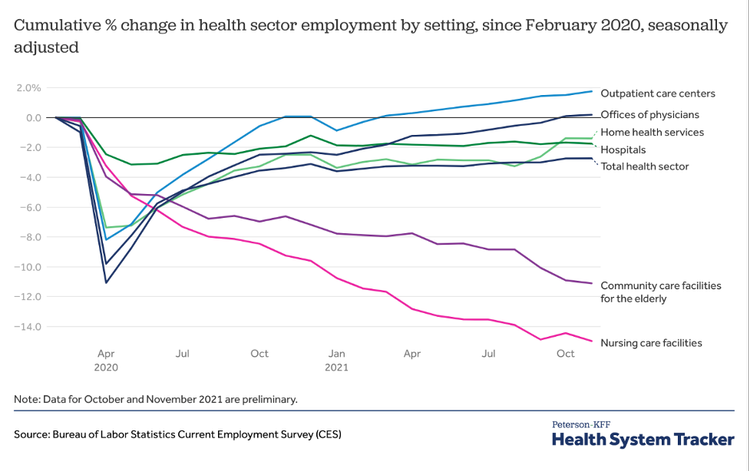
The global business community has had a range of responses to the trend of uberization (Babali, 2019), as has the healthcare industry in particular. Yet as health systems emerge from the pandemic, Bloomberg reports that “the ongoing elevated costs of [healthcare] workers are causing profit warnings” (KHN, 2022; Court, & Coleman-Lochner, 2022). Regardless of one’s resistance or acceptance of uberization, healthcare employment is in crisis. Change must occur to keep health systems from financial disaster.
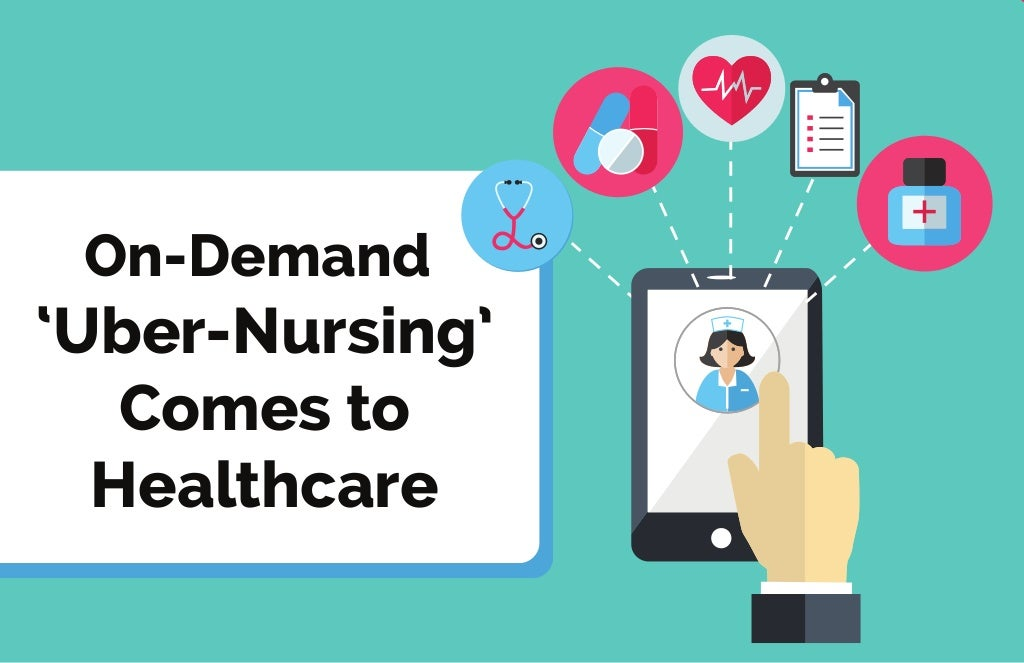
It seems that the tide of uberization in the healthcare industry is already rising. An increasing number of employees are contracting with hospitals and health systems via a staffing agency. This trend is likely to evolve, with a portion of staff employed directly by the hospital, and the remaining employees self-contracting with hospitals or health systems with short-term or even daily contracts. In fact, hospitals are reporting that rather than temporary “travel nurses” coming from other states to work on a contract basis, nurses are taking short-term contract work at hospitals a short drive from their own homes rather than pursue permanent employment with these organizations. We are witnessing the uberization of nursing, which will eventually extend to other healthcare occupations.
Why uberization?
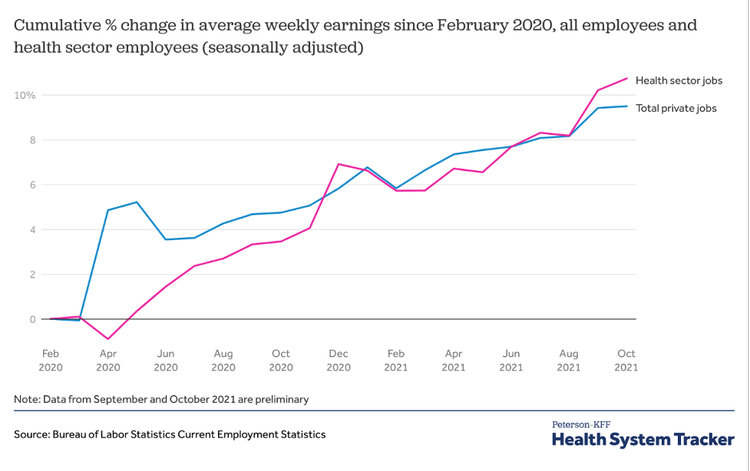
The healthcare workforce shouldered the heavy burden of fighting the COVID-19 pandemic. Yet a collaborative study from Indiana University, the nonprofit Rand Corp., and the University of Michigan that analyzed the changes in the U.S. healthcare workforce during the COVID-19 pandemic found that “the average wages for U.S. healthcare workers rose less than wages in other industries during 2020 and the first six months of 2021” (Toler, 2022; Cantor, Whaley, Kosali, & Nguyen, 2022). According to a February 2022 report by the U.S. Bureau of Labor Statistics, only about 35 percent of healthcare and social assistance organizations “increased wages and salaries, paid wage premiums, or provided bonuses because of the COVID-19 pandemic” (U.S. Bureau of Labor Statistics, 2022).
Due to the media attention the “Great Resignation” has received, it is common knowledge that workers across industries have been leaving their jobs at higher rates than before the pandemic (Parker, & Horowitz, 2022). Yet by October 2021, when the “quit rates” were at their highest recorded levels, healthcare and social assistance job resignations had increased to 35% higher than they had been before the pandemic, slightly higher than the increase of resignations among all workers in the same period (29%) (Wager, Amin, Cox, & Hughes-Cromwick, 2021).
Over the last ten years, “the salary of registered nurses increased by 1.67 percent in the United States” (Michas, 2021). Whereas healthcare executives make on average eight times more than their hourly employees (Saini, Garber, & Brownlee, 2022). The pandemic has rebalanced the scales in favor of those underpaid for many years. The salary landscape has changed, and in response many hospital systems blindly grasp to the pre-pandemic state of agency staffing. This, combined with near flat salary increases, contribute to the uberization of healthcare.
For many healthcare professionals, the combination of work-related stress and incommensurate compensation was the final straw. However, in addition to fair salary, flexibility has become a top demand of employees—even in healthcare. “Gone are the days when job security or pay was everything. Workers now are giving more thought to how their jobs fit into their lives. Ambition for ambition’s sake is being reassessed” (Buckingham, & Richardson, 2022).
A recent survey articulated “higher pay and dissatisfaction with management were also key drivers of nurses changing work settings in 2020 or 2021,” with 28% of respondents saying they’ve changed work settings (Lagasse, 2022). The percentage of nurses considering changing employers increased by 6% from 2020 to 2021, with 17% saying they are contemplating making an employment change. The percentage of nurses who are “passive job seekers – not actively looking for a new job but open to new opportunities – also increased, from 38% in 2020 to 47% in the current survey” (Lagasse, 2022).
The moment: contractor or non-contractor
As the trend of uberization continues to spread beyond the transportation industry, the global business community should be watchful of challenges that the trendsetter Uber is facing to understand future implications of this movement in their own industry. For example, recent legal battles regarding the employment status of Uber drivers will likely impact the cost-benefit analysis of those considering traditional employment or independent contracting. While an independent contractor is free to offer services to anyone and doesn’t have the limits on their freedom that comes with being an employee of a single organization, the U.S. National Labor Relations Board decision that Uber drivers are independent contractors means that drivers have no federal right to unionize (HyreCar, 2021; Fishman, 2020). In Europe, however, Uber drivers are considered employees and not independent, which could mean that unionization could occur en masse.
The future
The future of healthcare employment could be via an app on smart phones. Imagine: daily staffing supplemented by workers employed and credentialed through the app. The healthcare worker could choose their rate and shifts, and the hospital could determine the desired experience, quality, and patient experience reviews for the open position. It could shift the future of employment healthcare significantly.
The rate of change in today’s workplace is accelerating whether it is through the uberization of healthcare workers or advancements in workers’ rights. A recent New York Times article entitled “The Revolt of the College-Educated Working Class” states: “The support for labor unions among college graduates has increased from 55 percent in the late 1990s to around 70 percent in the last few years, and is even higher among younger college graduates” (Scheiber, 2022).
This may have a ripple effect on the healthcare workforce. Years of stagnating salaries and organizations’ undefined workforce vision has primed the industry for action with record job-quits within healthcare. This has proven especially true in rural markets where recruitment of permanent and agency staff has posed numerous challenges. Our current climate potentially opens the door for workers to leverage themselves via the advocacy of a union.
Summary
The labor supply and demand are out of balance. The long-term effects on the health sector labor market from the pandemic are unknown, but changes in healthcare delivery (such as the growth of telehealth) may lead to lasting shifts in the healthcare industry. Fierce competition for healthcare workers means that employers must go beyond good pay and benefits to attract the best candidates. Healthcare recruitment is a zero-sum game. There isn’t a pool of healthcare workers lying idle, and so recruitment is often at the cost of a competitor. The employee knows that this demand exists, and this could further drive the uberization of healthcare workers. However, there is potential for this new movement to benefit both parties. As limited number of employees equates to skill scarcity which drives salaries, hospitals could utilize their skilled workforce based on need and demand.
Posted on May 13, 2022 by Dr. David Edward Marcinko MBA MEd CMP™
By Staff Reporters
It’s Friday the 13th
***
***
The IRS destroyed data for an estimated 30 million filers in March 2021, according to the Treasury Inspector General for Tax Administration. The decision, prompted by a backlog of paper filings, has sparked anger in the tax community. “It just further damages the IRS’ reputation in the business community and in the public,” said Larry Harris, director of tax services at Parsec Financial.
More than $200 billion has been wiped off the cryptocurrency market today alone, as investors are sent into a panic. Ethereum, the world’s second largest digital currency plummeted by 20% in the space of 24 hours. Bitcoin, the original cryptocurrency started in 2009, dropped by 9%, but overall it is down 50% since its all time high in November. Chaos on the market has seen other currencies such as Shiba Inu and Dogecoin losing 30% and 25%, respectively. Meanwhile Terra Luna, which was among the top 10 most valuable cryptocurrencies had 98% of its value wiped out overnight, falling to below one dollar per coin.
Immediately after becoming the interim CEO of Starbucks (NASDAQ: SBUX), Howard Schultz suspended the company’s share-repurchase program. “This decision will allow us to invest more into our people and our stores — the only way to create long-term value for all stakeholders,” he said in a press release.
Snowflake, Meta, Microsoft and Uber — are all down from 20% to as much as 60% year to date. The technology stock sector, especially unprofitable firms and richly valued software names, have been hit the hardest as of late. The NASDAQ Composite slid more than 13% in April, dropping almost 30% from its all-time high.
President Biden, anticipating the milestone of one million American lives lost to Covid-19, said in a formal statement on Thursday that the United States must stay committed to fighting a virus that has “forever changed” the country.
Finally, Microsoft founder Bill Gatessaid on Tuesday that he tested positive for COVID-19 and is experiencing mild symptoms. In a series of tweets, the billionaire shared that he was “lucky to be vaccinated” and will be isolating until he’s healthy again.
Posted on December 15, 2021 by Dr. David Edward Marcinko MBA MEd CMP™
UPDATES
By Staff Reporters
***
Markets: Stocks stumbled yesterday as investors anxiously await an update from the Federal Reserve this afternoon.Uber shares bucked the trend after CEO Dara Khosrowshahi said the company had its “best week ever” for overall gross bookings, which encompasses its ride-sharing and delivery units.
Economy: The Fed will make a big announcement today about its inflation-fighting strategy. Fresh data released yesterday—showing that producer prices rose at their fastest pace on record—will put even more pressure on the central bank to wind down its stimulus measures quickly and chart out a plan to hike interest rates.
Your thoughts and comments on this ME-P are appreciated. Feel free to review our top-left column, and top-right sidebar materials, links, URLs and related websites, too. Then, subscribe to the ME-P. It is fast, free and secure.
Speaker: If you need a moderator or speaker for an upcoming event, Dr. David E. Marcinko; MBA – Publisher-in-Chief of the Medical Executive-Post – is available for seminar or speaking engagements.
Subscribe: MEDICAL EXECUTIVE POST for curated news, essays, opinions and analysis from the public health, economics, finance, marketing, IT, business and policy management ecosystem.







 Support our online development, and advance our onground research initiatives in free market economics, as we seek to showcase the brightest Next-Gen minds.
THE ME-P DISCLAIMER: Posts, comments and opinions do not necessarily represent iMBA, Inc., but become our property after submission. Copyright © 2006 to-date. iMBA, Inc allows colleges, universities, medical and financial professionals and related clinics, hospitals and non-profit healthcare organizations to distribute our proprietary essays, photos, videos, audios and other documents; etc. However, please review copyright and usage information for each individual asset before submission to us, and/or placement on your publication or web site. Attestation references, citations and/or back-links are required. All other assets are property of the individual copyright holder.
Support our online development, and advance our onground research initiatives in free market economics, as we seek to showcase the brightest Next-Gen minds.
THE ME-P DISCLAIMER: Posts, comments and opinions do not necessarily represent iMBA, Inc., but become our property after submission. Copyright © 2006 to-date. iMBA, Inc allows colleges, universities, medical and financial professionals and related clinics, hospitals and non-profit healthcare organizations to distribute our proprietary essays, photos, videos, audios and other documents; etc. However, please review copyright and usage information for each individual asset before submission to us, and/or placement on your publication or web site. Attestation references, citations and/or back-links are required. All other assets are property of the individual copyright holder.


























 Due to the media attention the “Great Resignation” has received, it is common knowledge that workers across industries have been leaving their jobs at higher rates than before the pandemic (Parker, & Horowitz, 2022). Yet by October 2021, when the “quit rates” were at their highest recorded levels, healthcare and social assistance job resignations had increased to 35% higher than they had been before the pandemic, slightly higher than the increase of resignations among all workers in the same period (29%) (Wager, Amin, Cox, & Hughes-Cromwick, 2021).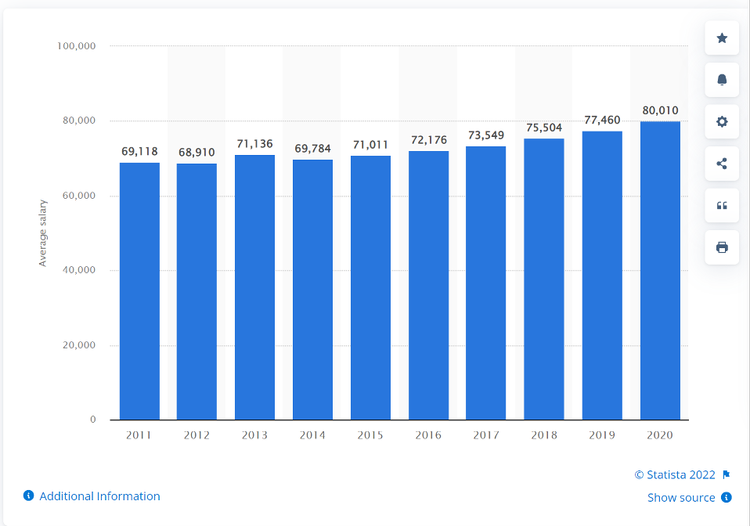






 ***
***

 The Leading Business Education Network for Doctors, Financial Advisors and Health Industry Consultants