PUBLIC RELATIONS: In Medicine

By Dr. David Edward Marcinko MBA MEd and Copilot A.I.

***

***

Public relations (PR) in medicine is a specialized field that focuses on managing communication between healthcare organizations, medical professionals, and the public. Unlike traditional marketing, which emphasizes selling services, PR in medicine emphasizes trust, credibility, and education. In a sector where lives and well-being are at stake, effective communication is not optional—it is essential.

1. Building Trust and Reputation

Healthcare institutions rely heavily on public trust. Patients must feel confident in the competence and integrity of hospitals, clinics, and medical professionals. PR strategies such as press releases, community outreach, and media engagement help establish credibility. For example, when hospitals share success stories of medical breakthroughs or highlight patient-centered initiatives, they reinforce their reputation as reliable and compassionate providers.

2. Health Education and Awareness

One of the most important functions of PR in medicine is educating the public. Medical jargon can be complex, and PR professionals translate it into accessible language. Campaigns about preventive care, vaccination, or chronic disease management empower communities to make informed health decisions. By bridging the knowledge gap, PR ensures that medical information is not confined to professionals but reaches the wider population in a clear and actionable way.

3. Crisis Communication

Healthcare organizations often face crises—ranging from disease outbreaks to medical errors. In such moments, PR becomes the frontline defense. Transparent communication, timely updates, and empathy are crucial in maintaining public confidence. For instance, during the COVID-19 pandemic, hospitals and health agencies relied on PR to disseminate accurate information, counter misinformation, and reassure anxious populations. Effective crisis communication can prevent panic and sustain trust even in challenging times.

4. Advocacy and Community Engagement

PR in medicine also involves advocacy for public health policies and community engagement. Hospitals and medical associations often use PR campaigns to support initiatives such as mental health awareness, anti-smoking drives, or nutrition education. By engaging with communities through events, seminars, and social media, healthcare organizations position themselves as partners in public well-being rather than distant institutions.

5. Digital Transformation in Medical PR

The rise of digital media has transformed healthcare PR. Social media platforms, blogs, and online forums allow medical institutions to communicate directly with patients. This immediacy enhances transparency but also requires careful management to avoid misinformation. Digital PR strategies now include online reputation management, patient testimonials, and interactive health campaigns. In this way, PR adapts to modern communication channels while maintaining its core mission of trust and education.

6. Ethical Responsibility

Unlike other industries, PR in medicine carries a profound ethical responsibility. Misleading information can have life-threatening consequences. Therefore, PR professionals in healthcare must prioritize accuracy, sensitivity, and compassion. Their role is not only to protect the image of institutions but also to safeguard public health.

Conclusion

Public relations in medicine is more than a communication tool—it is a bridge between science and society. By fostering trust, educating communities, managing crises, and advocating for health, PR ensures that medical institutions remain credible and compassionate. In an era of rapid medical advancements and global health challenges, the importance of PR in medicine continues to grow, making it an indispensable part of modern healthcare.

COMMENTS APPRECIATED

EDUCATION: Books

SPEAKING: Dr. Marcinko will be speaking and lecturing, signing and opining, teaching and preaching, storming and performing at many locations throughout the USA this year! His tour of witty and serious pontifications may be scheduled on a planned or ad-hoc basis; for public or private meetings and gatherings; formally, informally, or over lunch or dinner. All medical societies, financial advisory firms or Broker-Dealers are encouraged to submit an RFP for speaking engagements: CONTACT: Ann Miller RN MHA at MarcinkoAdvisors@outlook.com 

Like, Refer and Subscribe

***

***

Understanding the Edgeworth Paradox in Economics

By Staff Reporters

***

***

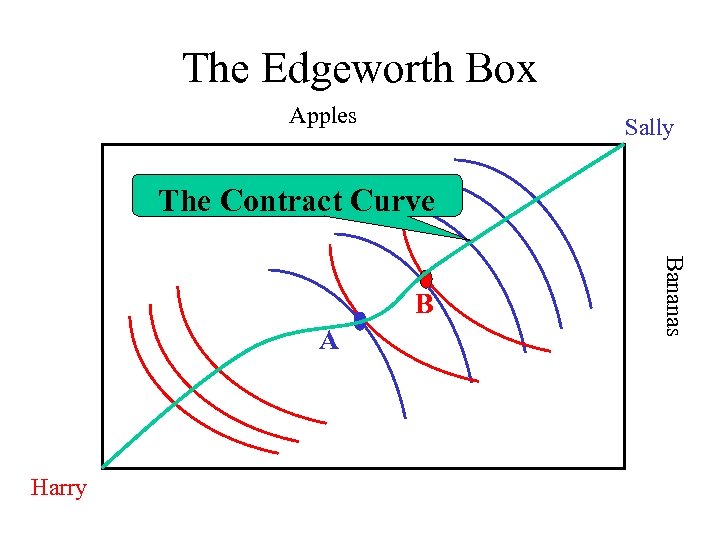
Irish economist Frances Edgeworth put forward the Edgeworth Paradox in his paper “The Pure Theory of Monopoly”, published in 1897.

It describes a situation in which two players cannot reach a state of equilibrium with pure strategies, i.e. each charging a stable price. A fact of the Edgeworth Paradox is that in some cases, even if the direct price impact is negative and exceeds the conditions, an increase in cost proportional to the quantity of an item provided may cause a decrease in all optimal prices. Due to the limited production capacity of enterprises in reality, if only one enterprise’s total production capacity can be supplied cannot meet social demand, another enterprise can charge a price that exceeds the marginal cost for the residual social need.

And so, according to colleague Dan Ariely PhD, the Edgeworth Paradox suggests that with capacity constraints, there may not be an equilibrium.

COMMENTS APPRECIATED

Like and Subscribe

***

***

Understanding the Boomerang Effect in Psychology and Medicine

DEFINITION

By Staff Reporters

***

***

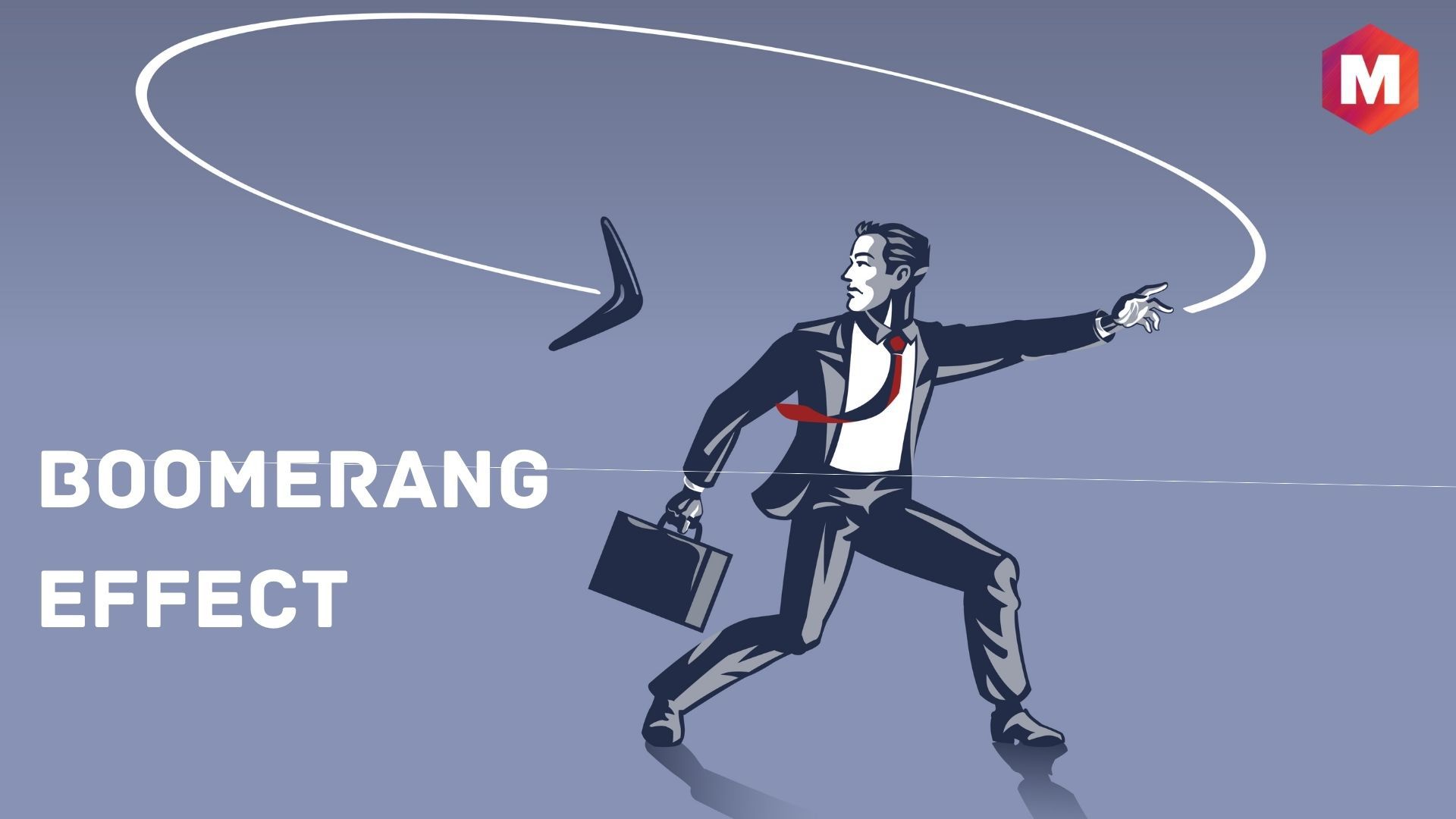
Classic Definition: The Boomerang[ing] paradox is a feedback loop or cycle where events come back positively or negatively. It is an interconnection between people that looks like an ecosystem.

Modern Circumstance: When our thoughts and words energetically go out into the world, it has the same effect as the boomerang. It will go all the way out and come back around. That part of the creation model is our thinking and speaking. We’re unconscious and co-creating our reality. The Boomerang effect is everywhere: politics, business, relationships, economics, environment, marketing, psychology and healthcare, etc.

PSYCHOLOGY

Paradox Example: Research has found that teaching people and patients about psychological biases can help counteract biased behavior. On the other hand, due to the innate need for preservation of a positive self-image, it is likely that teaching people about biases they hold, may cause a boomerang paradoxical effect in cases where being associated with a specific bias implies negative social connotations

MEDICINE

Paradox Example: Recent examples of a boomerang paradoxical drug effects is with osteoporosis medications such as Actonel, Boniva and Fosamax. These all belong to a class of drugs called bisphosphonates. They are supposed to strengthen bones, but some doctors report that long-term use of these drugs may actually pose a risk of certain unusual fractures.

ECONOMICS

Paradox Example: A characteristic of advanced economies like Australia is continual growth in household income and plunging costs of electric appliances, resulting in rapid growth in peak demand. The power grid in turn requires substantial incremental generating and network capacity, which is utilized momentarily at best. The result is the Boomerang Paradox, in which the nation’s rising wealth has created the pre-conditions for fuel poverty.

***

The Medical Executive-Post is a  news and information aggregator and social media professional network for medical and financial service professionals. Feel free to submit education content to the site as well as links, text posts, images, opinions and videos which are then voted up or down by other members. Comments and dialog are especially welcomed. Daily posts are organized by subject. ME-P administrators moderate the activity. Moderation may also conducted by community-specific moderators who are unpaid volunteers.

COMMENTS APPRECIATED

***

***

Like and Refer

PHILOSOPHY: Five Major Branches

By A.I.

***

***

Philosophy (‘love of wisdom’) is a systematic study of general and fundamental questions concerning topics like existence, reason, knowledge, value, mind and language. It is a rational and critical inquiry that reflects on its methods and assumptions.

Philosophy is broadly divided into several main branches that explore fundamental questions about reality, knowledge, ethics, logic, and values, each addressing different aspects of human thought and existence.

STOIC: https://medicalexecutivepost.com/2022/11/20/stoic-the-philosophy-of-knowing-and-doing/

Major Branches of Philosophy

  1. Metaphysics
    This branch explores the nature of reality and existence. It addresses questions about what things exist, the nature of objects and their properties, time and space, causality, and the mind-body relationship.
  2. Epistemology
    Epistemology studies knowledge and belief. It concerns how we know what we know, the nature and limits of knowledge, justification, and skepticism.
  3. Ethics (Moral Philosophy)
    Ethics examines what is right and wrong, good and bad. It investigates moral values, principles, and theories about how people ought to act and what constitutes a good life.
  4. Logic
    Logic deals with the rules of correct reasoning. It studies principles of valid inference, argument structure, deduction, and induction, enabling critical thinking and sound judgment.
  5. Aesthetics
    This branch explores questions related to beauty, art, and taste. It considers what constitutes aesthetic value and how art influences human experience.

COMMENTS APPRECIATED

Like and Subscribe

***

***

MARYS ROOM: A Thought Experiment

By Staff Reporters

***

***

A thought experiment is an imaginary scenario that is meant to elucidate or test an argument or theory. It is often an experiment that would be hard, impossible, or unethical to actually perform. It can also be an abstract hypothetical that is meant to test our intuitions about morality or other fundamental philosophical questions. The German term Gedankenexperiment was utilized by physicist Ernst Mach

***

Mary is a brilliant scientist who is, for whatever reason, forced to investigate the world from a black and white room via a black and white television monitor. She specializes in the neuro-physiology of vision and acquires, let us suppose, all the physical information there is to obtain about what goes on when we see ripe tomatoes, or the sky, and use terms like ‘red’, ‘blue’, and so on.

MORE: http://www.philosophical-investigations.org/2020/09/marys-room-thought-experiment.html

Question: What will happen when Mary is released from her black and white room or is given a color television monitor? Will she learn anything or not?

***

The Medical Executive-Post is a  news and information aggregator and social media professional network for medical and financial service professionals. Feel free to submit education content to the site as well as links, text posts, images, opinions and videos which are then voted up or down by other members. Comments and dialog are especially welcomed. Daily posts are organized by subject. ME-P administrators moderate the activity. Moderation may also conducted by community-specific moderators who are unpaid volunteers.

COMMENTS APPRECIATED

Like and Refer

***

***

THEORY: Linguistics and Cognitive Sciences

By Staff Reporters

Sponsor: http://www.MarcinkoAssociates.com

***
***

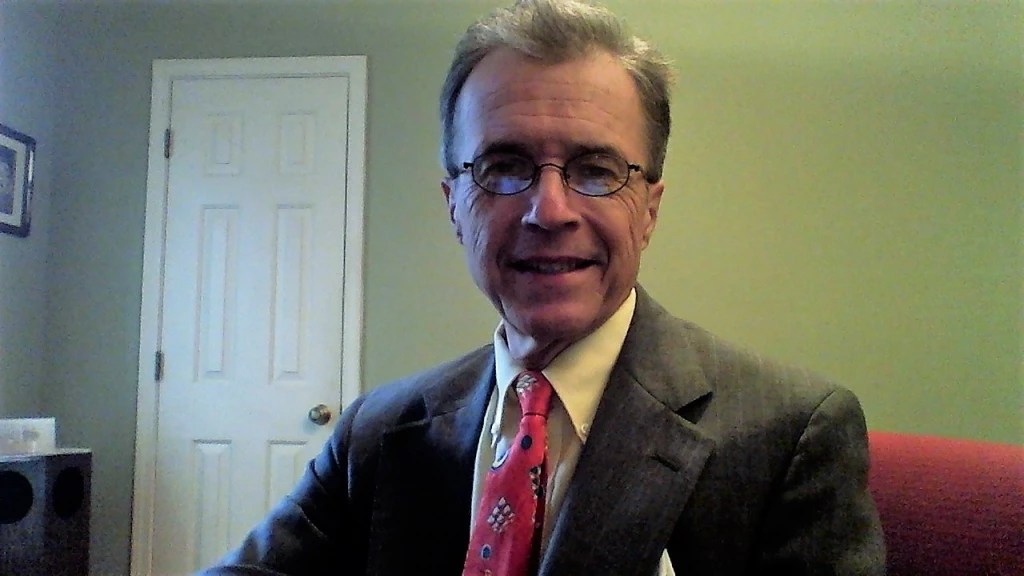
Avram Noam Chomsky is an American professor known for his traditional work in linguistics and political activism. Sometimes called “the father of modern linguistics”, Chomsky is also one of the founders of the field of cognitive science. He is a laureate professor of linguistics at the University of Arizona and an professor emeritus at MIT.

And so, modern linguists today approach their work with scientific rigor and perspective [STEM], although they use methods that were once thought to be solely an academic discipline of the humanities.

Contrary to this humanitarian belief, according to Professor Mackenzie Hope Marcinko PhD of the University of Delaware, linguistics is now multidisciplinary. It overlaps each of the human sciences including psychology, neurology, anthropology, and sociology. Linguists conduct formal studies of sound structure, grammar and meaning, but also investigate the history of language families, and research language acquisition.

COMMENTS APPRECIATED

Subscribe and Refer

***

***

The Missing Piece in America’s Health Care Debate

By Rick Kahler CFP™

http://www.KahlerFinancial.com

***

The recent horrifying murder of UnitedHealthcare Group CEO Brian Thompson has called attention to the anger many Americans feel about our health care system. This tragedy has thrust the very real issue of health care costs back into the headlines.

One article on the topic, from Ken Alltucker for USA Today, offered seven reasons why Americans pay so much for health care with such poor results. When I saw the headline, I thought, “Finally, someone’s going to bring up the elephant in the room: taxes.”

The seven reasons included bloated administrative costs, lack of price transparency, overpaid specialists, higher prescription drug prices, and more. But I didn’t see a word about how, compared to other developed nations with “cheaper” health care, Americans pay far lower taxes. That omission feels like leaving a critical piece of the puzzle off the table.

***

***

In reality, countries with universal health care are not pulling off some magic trick of efficiency. They are simply collecting the money differently—through significantly higher taxes. Americans, on the other hand, pay for health care more directly, through out-of-pocket costs and insurance premiums.

In a column last year, I did the math. Americans spend about 17.8% of GDP on health care, plus 27.7% of GDP in taxes. That’s a total of 45.5%. Now compare that to twelve European countries with universal health care. They spend a median of 11.5% of GDP on health care and collect 41.9% of GDP in taxes. Total? 53.4%. In other words, Americans are spending 7.9% less overall on healthcare and taxes combined.

The saving isn’t what it appears, though. A fair comparison of healthcare costs and taxes needs to account for the fact that universal healthcare systems cover 100% of their populations, while the U.S. system currently leaves about 8% uninsured. If you factor in the cost of covering our uninsured residents, the U.S. likely spends a comparable percentage of income on healthcare as European countries with universal systems.

***

***

Our system is far from perfect. As the USA Today article points out, administrative costs are bloated. Harvard’s David Cutler estimates up to 25% of our health spending goes toward paperwork, phone calls, and processing. Price transparency is practically nonexistent. The cost of a diagnostic test might vary from $300 to $3,000 depending on where you go. We pay much more for prescription drugs and many procedures than those same treatments cost in other developed nations. Another issue is the fee-for-service model that rewards doctors for ordering more tests and procedures, whether or not patients get better.

We can do better. Innovations like value-based care, where providers are paid for outcomes rather than procedures, could help shift the system toward real results. Greater price transparency would empower patients to make informed choices and force providers to compete. And addressing administrative inefficiencies could save billions.

Yet fixing the system requires being honest about trade-offs. If we want universal health care at European price rates, we need to accept European tax rates. That’s the part of the conversation that often gets left out. It’s easy to be angry at hospitals, insurance companies, and drug manufacturers—and yes, they all have plenty to answer for. But we also need to face the reality that we’ve chosen a system that prioritizes lower taxes over centralized health care.

Anger may have put the flaws in our health care system in the spotlight. Finding genuine solutions will require moving beyond expressions of anger and frustration. It will demand thoughtful discussions about what kind of health care system, as individuals and as a nation, that we want and how we are willing to fund it.

EDUCATION: Books

COMMENTS APPRECIATED

Refer and Subscribe

***

***

BERTRANDS: Paradox in Probability Theory with Video

WHAT IS RANDOM?

By Staff Reporters

***

***

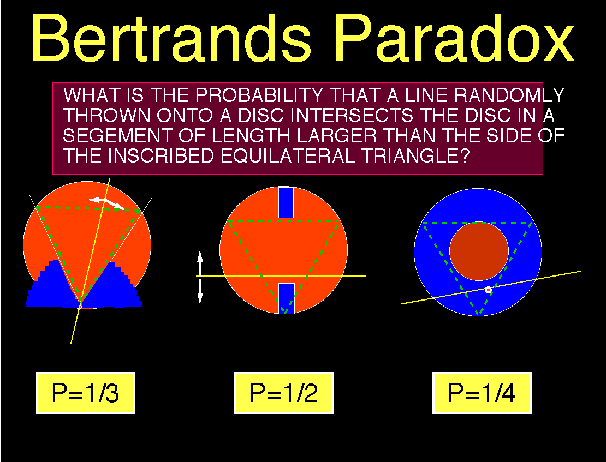
Bertrand’s Paradox is a problem within probability theory first suggested by the French Mathematician Joseph Bertrand (1822–1900) in his 1889 work ‘Calcul des Probabilites’. It sets a physical problem that seems very simple but leads to differing probabilities unless its procedure is more clearly defined.

Based on constructing a random chord in a circle, Bertrand’s paradox involves a single mathematical problem with three reasonable but different solutions. It’s less a paradox and more a cautionary tale. It’s really asking the question: What exactly do you mean by random?

IOW: According to Dan Ariely PhD, two players reaching a state of Nash equilibrium both find themselves with no profits gained via exploitation.

Consequently, over the years the Bertrand paradox has inspired debate, with papers arguing what the true solution is: www.bertrands-paradox.com.

Update: The people from Numberphile and 3Blue1Brown produced a video on YouTube describing and explaining the Bertrand paradox.

COMMENTS APPRECIATED

Subscribe and Like
***

***

ROBERT LUCAS PARADOX: Law of Diminishing Returns

By Staff Reporters

***

***

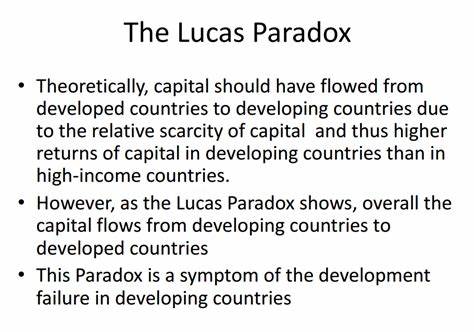
Capital is not flowing from developed countries to developing countries despite the fact that developing countries have lower levels of capital per worker, and therefore higher returns to capital.

Classical economic theory predicts that capital should flow from rich countries to poor countries, due to the effect of diminishing returns of capital. Poor countries have lower levels of capital per worker – which explains, in part, why they are poor. In poor countries, the scarcity of capital relative to labor should mean that the returns related to the infusion of capital are higher than in developed countries.

In response, savers in rich countries should look at poor countries as profitable places in which to invest. In reality, things do not seem to work that way. Surprisingly little capital flows from rich countries to poor countries.

This puzzle, famously discussed in a paper by Robert Lucas in 1990, is often referred to as the “Lucas Paradox”.

COMMENTS APPRECIATED

Thank You

***

***

EMBRACING Stock Market Stoicism

By Vitaliy Katsenelson CFA

***

***

Embracing Stock Market Stoicism 

2024 brought me back to a core Stoic principle that I hold close to my heart: the dichotomy of control. Here’s the gist: Some things are within our power—our values, our character, our decisions—and some aren’t—like your brother-in-law’s random (and possibly dumb) comment, your spouse’s mood, or the fact that every traffic light turns red right as you pull up.

In investing, it’s the same. We can control:

  • The quality of our research—being logical and thorough in our research
  • Our decisions and discipline—systematically following our research
  • Our reactions—how we react to the news and external environmental pressure (I will discuss this at the end of the letter)

The market can price our stocks however it pleases on a month-to-month—or even year-to-year—basis. That’s the part we can’t control. We have to remember that these market prices are merely opinions, not final verdicts. The Stoics teach us to focus our energy on what we can influence (our process) and accept what we can’t (the market’s whims).

This probably sounds straightforward, but there’s a twist that makes it harder for you, the client, to see how this all plays out in real time. You can easily check the portfolio’s value—my decisions, not so much. In theory, I could make subpar investments and hide behind fancy Stoic talk.

That’s exactly the why of these very detailed letters: to show you our thinking, walk you through our individual decisions. I write, you read—that’s our agreement. You’re the judge of whether my process makes sense. But I can’t do that part for you.

CONTINUE READING: https://investor.fm/embracing-stock-market-stoicism/?mc_cid=25f3bd9eb4&mc_eid=7a63a03234

COMMENTS APPRECIATED

Like, Refer and Subscribe

***

***

COMPETITION Paradox

By Staff Reporters

***

***

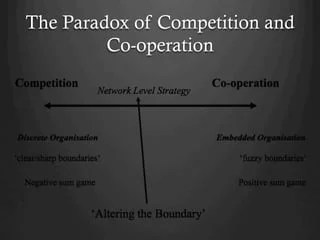
Definition of the Paradox of Competition

The Paradox of Competition refers to the complex and often counterintuitive effects competitive behaviors can have within markets and industries. Generally, competition is seen as a positive force that drives innovation, lowers prices, and improves quality and choice for consumers. However, the paradox lies in the fact that intense competition can sometimes lead to negative outcomes, such as diminished profitability for companies, reduced incentives to innovate, and the potential for a race to the bottom in terms of quality and sustainability.

According to colleague Dan Ariely PhD, understanding the nuances of the Paradox of Competition reveals the complexity of market dynamics and the importance of strategic, informed approaches to competition, both from businesses and regulators.

This paradox challenges the conventional wisdom that competition is universally beneficial, highlighting the need for a more nuanced view of how competitive forces shape markets and societies.

COMMENTS APPRECIATED

Refer, Like and Subscribe

***

***

MAURICE ALLAIS: Behavioral Finance Paradox

By Reporters

***

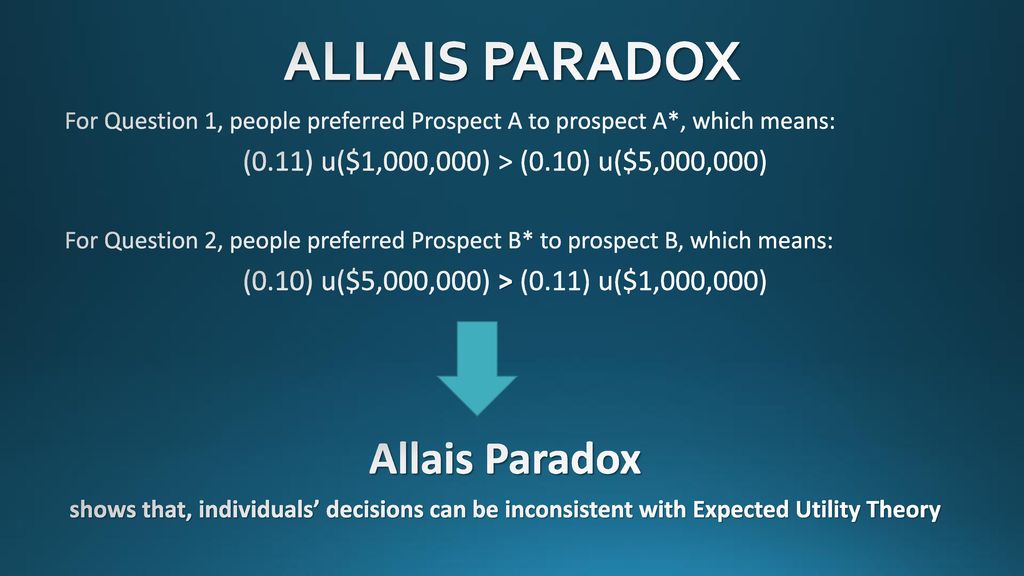
For Question 1, people preferred Prospect A to prospect A , which means: (0.11) u( 1,000,000) > (0.10) u( 5,000,000) For Question 2, people preferred Prospect B to prospect B, which means: (0.10) u( 5,000,000) > (0.11) u( 1,000,000) Allais Paradox. shows that, individuals’ decisions can be inconsistent with Expected Utility Theory.

***

Allais Paradox is a change in a possible outcome that is shared by different alternatives affects people’s choices among those alternatives, in contradiction with expected utility theory.

The Allais paradox is a choice problem designed by Maurice Allais 1953 to show an inconsistency of actual observed choices with the predictions of expected utility theory theory.

According to colleague Dan Ariely PhD, the Allais paradox demonstrates that individuals rarely make rational decisions consistently when required to do so immediately. The independence axiom of expected utility theory, which requires that the preferences of an individual should not change when altering two lotteries by equal proportions, was proven to be violated by the paradox.

COMMENTS APPRECIATED

Like and Subscribe

***

***

LINGUISTICAL SCIENCE: History and Modern Theory

By Staff Reporters

***

***

Theory of Linguistic Sciences

Avram Noam Chomsky is an American professor known for his work in linguistics and political activism. Sometimes called “the father of modern linguistics”, Chomsky is also one of the founders of the field of cognitive science. He is a laureate professor of linguistics at the University of Arizona and an professor emeritus at MIT.

And so, modern linguists today approach their work with scientific rigor and perspective [STEM], although they use methods that were once thought to be solely an academic discipline of the humanities.

Contrary to this belief, linguistics is multidisciplinary. It overlaps each of the human sciences including psychology, neurology, anthropology, and sociology. Linguists conduct formal studies of sound structure, grammar and meaning, but also investigates the history of language families, and research language acquisition.

And, as with other scientists according to linguistical engineer and Professor Mackenzie Hope Marcinko PhD from the University of Delaware [UD], they formulate hypotheses, catalog observations, and work to support explanatory theories, etc.

COMMENTS APPRECIATED

Subscribe and Refer!

***

Health Information Technology Dictionary

https://www.amazon.com/Dictionary-Health-Information-Technology-Security/dp/0826149952/ref=sr_1_5?ie=UTF8&s=books&qid=1254413315&sr=1-5

RICHARD EASTERLIN: Happiness Paradox

By Staff Reporters

***

***

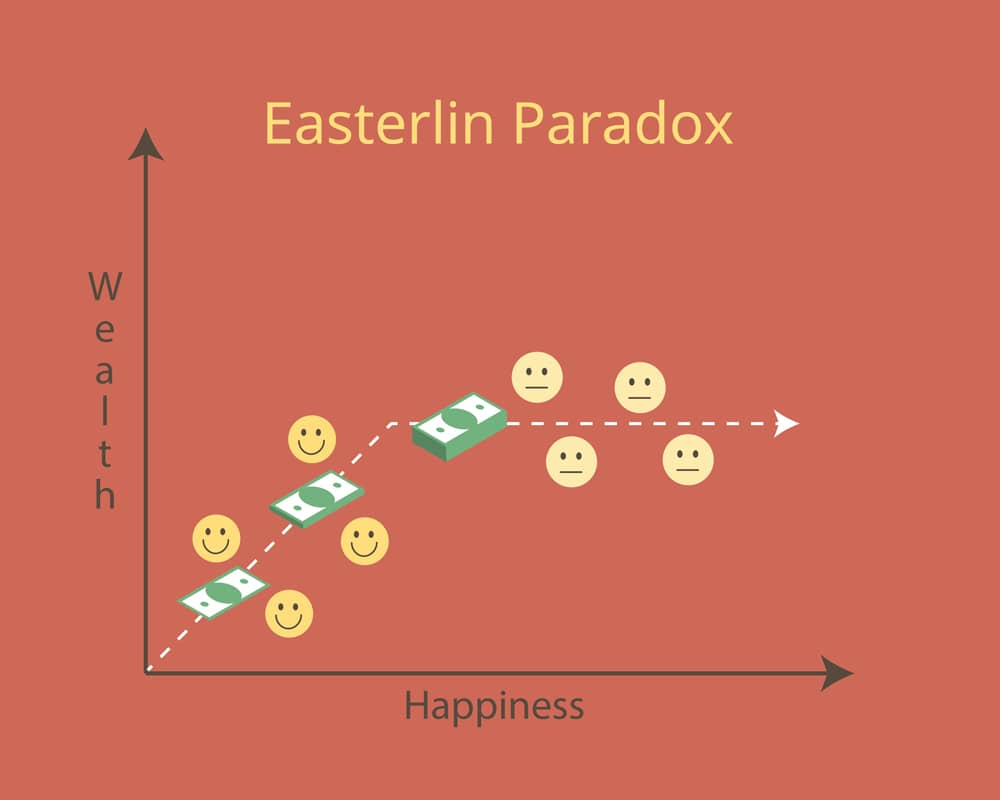
Richard Easterlin PhD, Paradox: For countries with income sufficient to meet basic needs, the reported level of happiness does not correlate with national income per person.

According to colleague Dan Ariely PhD, one explanation is that my happiness depends on a comparison between my income and my perceptions of the average standard of living. If everyone’s income increases, my increased income gives a short boost to my happiness, since I do not realize that the average standard of living has gone up. Some time later, I realize that the average standard of living has also gone up, so the happiness boost produced by my increased income disappears. It is the contradiction between the point-of-time and time series findings that is the root of the paradox: while there is a correlation at a fixed point, there is no trend over multiple points.

That is, in the short run, everyone perceives increases in income to be correlated with happiness and tries to increase their incomes. However, in the long run, this proves to be an illusion, since everyone’s efforts to raise standards of living lead to increasing averages, leaving everyone in the same place in terms of relative income.

Various theories have been advanced to explain the paradox, but the paradox itself is solely an empirical generalization. The existence of the paradox has been strongly disputed by other researchers.

COMMENTS APPRECIATED

Subscribe and Like Today!

***

***

ECONOMIC PARADOXES: Prosperity, Thrift, Toil, Value and Productivity

AUSTRIAN SCHOOL OF ECONOMICS

By Staff Reporters

***

***

A Paradox is a logical self-contradictory statement or a statement that runs contrary to one’s expectation. It is a statement that, despite apparently valid reasoning from true or apparently true premises, leads to a seemingly self-contradictory or a logically unacceptable conclusion. A paradox usually involves contradictory-yet-interrelated elements that exist simultaneously and persist over time. They result in “persistent contradiction between interdependent elements” leading to a lasting “unity of opposites”.

Here are five economic paradoxes from the Austrian School of Economics.

***

Prosperity: Why do generations that significantly improve the economic climate seem to generally rear a successor generation that consumes rather than produces?

Thrift: If everyone saves more money during times of recession, then aggregate demand will fall and will in turn lower total savings in the population.

Toil: If everyone tries to work during times of recession, lower wages will reduce prices, leading to more deflationary expectations, leading to further thrift, reducing demand and thereby reducing employment.

Value: [also known as Diamond-Water Paradox]: Water is more useful than diamonds, yet is a lot cheaper.

Productivity: [also known as Solow Computer Paradox]: Worker productivity may go down, despite technological improvements.

Note: The Austrian School of Economics promotes an economic and social thinking that is not trapped in unrealistic, mostly mathematical models. It does not see the economy as an object of state political regulation and central, almost engineering-like control. Rather, its analysis focuses on autonomous entrepreneurial action and the free interaction of individuals in the marketplace, which eludes both the logic of differential equations, and centrally planned political control.

COMMENTS APPRECIATED

Subscribe Today!

***

***

PARADOX: Medical Progress

By Dr. David Edward Marcinko MBA MEd CMP

SPONSOR: http://www.MarcinkoAssociates.com

***

***

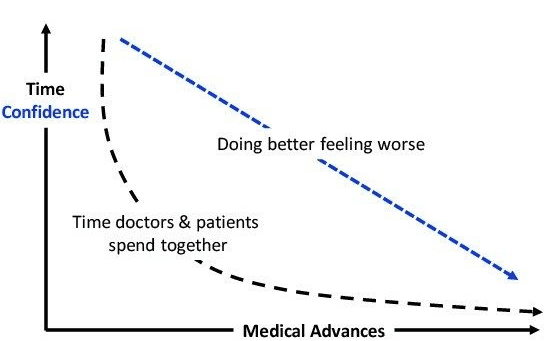
“Paradox of Medical Progress” is a language of medicine is loaded with misnomers, inaccuracies, and ambiguities, and is in need of reform.

Paradoxes on the other hand, deserve a different kind of attention. These seeming self-contradictions are set apart from other inconsistencies because of the truths they tell. The veracity of a paradox is at once appealing and vexing. Anyone who has tried to suppress a thought knows that trying not to think of white polar bears is a sure way to think of white polar bears!

The comic impact of a paradox was even famously explored in Joseph Heller’s Catch 22 and in Groucho Marx’s reluctance to be a member of any club that would accept him. However, the provocative nature of a paradox is its capacity to express familiar wisdom and this is particularly evident in medical science.

The more we learn, the more we learn how much we still have to learn; whereas, “what gets us into trouble is not what we don’t know, it’s what we know for sure that just ain’t so.

On the significance of the knowledge paradox in biology, Lewis Thomas regarded ignorance as the only scientific truth of which he was confident, and discovering “the depth and scope of ignorance” as the greatest contribution of modern science.

COMMENTS APPRECIATED

Please Subscribe Today!

***

***

ILLUSORY: Correlation

CORRELATION IS NOT CAUSATION

By Staff Reporters

***

***

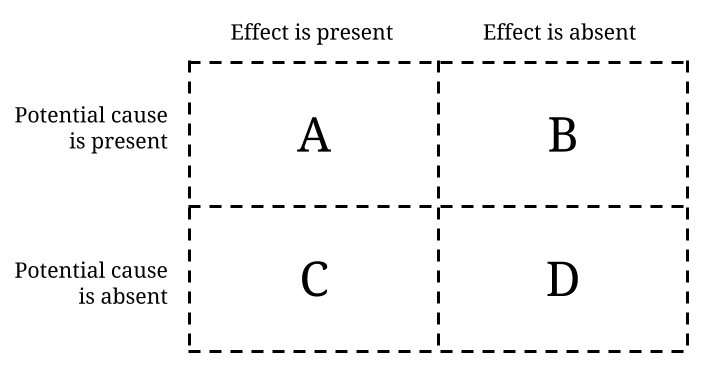
According to colleague Dan Ariely PhD, Illusory Correlation is the perception of a relationship between variables when none exists. It’s like thinking that carrying an umbrella causes it to rain. Our brains are pattern-seeking machines, often connecting dots that aren’t actually connected. This bias can lead to superstitions and incorrect beliefs.

The illusory correlation occurs when someone believes that there is a relationship between two people, events, or behaviors, even though there is no logical way to connect them. The illusory correlation fools us into believing stereotypes, superstitions, old wives’ tales, and other silly ideas. Sometimes, the perceived connection between two events is harmless. It’s silly to think that a certain number always brings you luck. But forming these connections is completely normal. To avoid illusory correlations, rely on data and evidence rather than anecdotal observations.

So always remember: correlation does not imply causation, no matter how convincing it seems.

More: https://medicalexecutivepost.com/2024/06/05/correlation-is-not-causation/

COMMENTS APPRECIATED

Thank You

***

***

ABSURDISM versus NIHILISM

By Staff Reporters

***

***

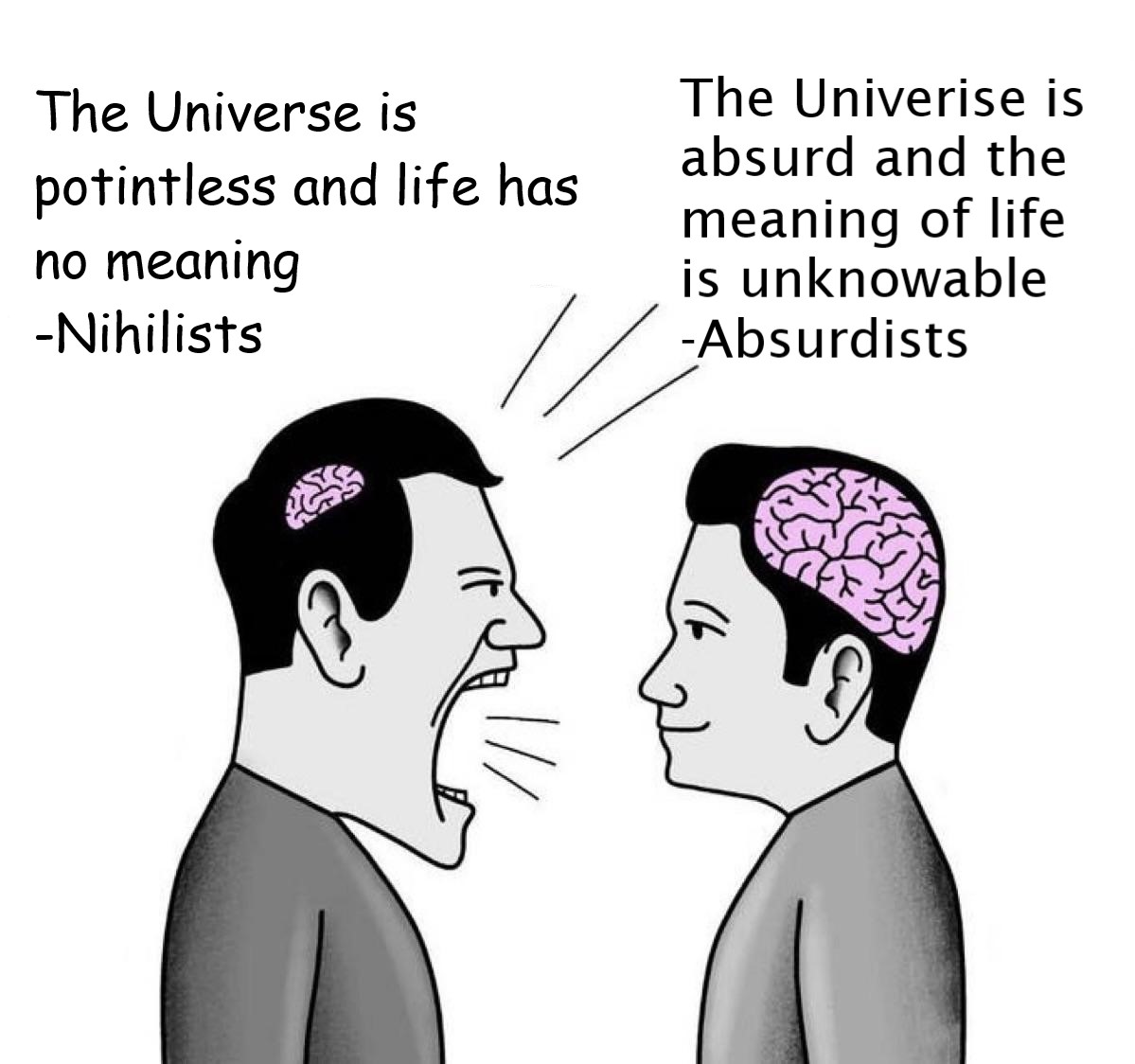
Absurdism is the philosophical idea that life is inherently meaningless, but we should embrace the absurdity and create our own meaning. Think of it as existentialism’s quirky cousin. It’s like laughing at the cosmic joke instead of crying over spilled milk. Absurdism encourages us to find joy in the randomness and chaos of life.

So, according to colleague Dan Arily PhD, the next time you’re feeling overwhelmed by the lack of purpose, channel your inner absurdist and find humor in the absurdity of it all.

Nihilism, on the other hand, is the belief that all values are baseless and that nothing can be known or communicated. It is often associated with extreme pessimism and a radical skepticism that condemns existence. A true nihilist would believe in nothing, have no loyalties, and no purpose other than, perhaps, an impulse to destroy. While few philosophers would claim to be nihilists, nihilism is most often associated with Friedrich Nietzsche who argued that its corrosive effects would eventually destroy all moral, religious, and metaphysical convictions and precipitate the greatest crisis in human history.

In the 20th century, nihilistic themes–epistemological failure, value destruction, and cosmic purposelessness–have preoccupied artists, social critics and philosophers, alike. Mid-century, for example, the existentialists helped popularize tenets of nihilism in their attempts to blunt its destructive potential. By the end of the century, existential despair as a response to nihilism gave way to an attitude of indifference, often associated with anti-foundationalism.

COMMENTS APPRECIATED

Subscribe Today!

***

***

The Philosophy of ME-P Editor Marcinko

Thinking of Socrates

By Dr. David Edward Marcinko MBA MEd CMP

Dr David E Marcinko MBAI am one of those who are very willing to be refuted if we say anything which is not true [on the ME-P], and very willing to refute anyone else who says what is not true, and quite as ready to be refuted as to refute-for I hold that this is the greater gain of the two, just as the gain is greater of being cured of a very great evil than of curing another.

For I imagine that there is no evil which a man can endure so great as an erroneous opinion about the matters of which we are speaking and if you claim to be one of my sort, let us have the discussion out, but if you would rather have done, no matter-let us make an end of it.

-Socrates (h/t Plato)

Conclusion
Your thoughts and comments on this ME-P are appreciated. Feel free to review our top-left column, and top-right sidebar materials, links, URLs and related websites, too. Then, subscribe to the ME-P. It is fast, free and secure.

Speaker: If you need a moderator or speaker for an upcoming event, Dr. David E. Marcinko; MBA – Publisher-in-Chief of the Medical Executive-Post – is available for seminar or speaking engagements. Contact: MarcinkoAdvisors@msn.com

OUR OTHER PRINT BOOKS AND RELATED INFORMATION SOURCES:

Hospitals: http://www.crcpress.com/product/isbn/9781439879900

Physician Advisors: www.CertifiedMedicalPlanner.org

Product DetailsProduct Details

PODCAST: What is Epimenides Paradox?

THE PARADOX OF self-reference

DEFINITION: The Epimenides paradox reveals a problem with self-reference in logic. It is named after the Cretan philosopher Epimenides of Knossos who is credited with the original statement.

A paradox of self-reference arises when one considers whether it is possible for Epimenides to have spoken the truth.

ASSESSMENT: Your thoughts are appreciated.

SECOND OPINIONS: https://medicalexecutivepost.com/schedule-a-consultation/

INVITE DR. MARCINKO: https://medicalexecutivepost.com/dr-david-marcinkos-bookings/

THANK YOU

***

STOIC: The Philosophy of “Knowing and Doing”

***

By Vitaliy Katsenelson CFA

***

***

Introduction to Stoic Philosophy: Knowing and Doing

COMMENTS APPRECIATED

Thank You

***