MEDICAL SCHOOLS: What They Do Not Teach About Money!

By Dr. David Edward Marcinko MBA MEd

SPONSOR: http://www.MarcinkoAssociates.com

***

WARNING! WARNING! All DOCTORS

What Medical School Didn’t Teach Doctors About Money

Medical school is designed to mold students into competent, compassionate physicians. It teaches anatomy, pathology, pharmacology, and clinical skills with precision and rigor. Yet, despite the depth of medical knowledge imparted, one critical area is often overlooked: financial literacy. For many doctors, the transition from student to professional comes with a steep learning curve—not in medicine, but in money. From managing debt to understanding taxes, investing, and retirement planning, medical school leaves a financial education gap that can have long-term consequences.

The Debt Dilemma

One of the most glaring omissions in medical education is how to manage student loan debt. The average medical student graduates with over $200,000 in debt, yet few are taught how to navigate repayment options, interest accrual, or loan forgiveness programs. Many doctors enter residency with little understanding of income-driven repayment plans or Public Service Loan Forgiveness (PSLF), missing opportunities to reduce their financial burden. Without guidance, some make costly mistakes—such as refinancing federal loans prematurely or choosing repayment plans that don’t align with their career trajectory.

Income ≠ Wealth

Medical students often assume that a high salary will automatically lead to financial security. While physicians do earn more than most professionals, income alone doesn’t guarantee wealth. Medical school rarely addresses the importance of budgeting, saving, and investing. As a result, many doctors fall into the “HENRY” trap—High Earner, Not Rich Yet. They spend lavishly, assuming their income will always cover expenses, only to find themselves living paycheck to paycheck. Without a solid financial foundation, even high earners can struggle to build net worth.

***

***

Taxes and Business Skills

Doctors are also unprepared for the complexities of taxes. Whether employed by a hospital or running a private practice, physicians face unique tax challenges. Medical school doesn’t teach how to track deductible expenses, optimize retirement contributions, or navigate self-employment taxes. For those who open their own clinics, the lack of business education is even more pronounced. Understanding profit margins, payroll, insurance billing, and compliance regulations is essential—but rarely covered in medical training.

Investing and Retirement Planning

Another blind spot is investing. Medical students are rarely taught the basics of compound interest, asset allocation, or retirement accounts. Many don’t know the difference between a Roth IRA and a traditional 401(k), or how to evaluate mutual funds and index funds. This lack of knowledge delays retirement planning and can lead to missed opportunities for long-term growth. Some doctors rely on financial advisors without understanding the fees or conflicts of interest involved, putting their wealth at risk.

Insurance and Risk Management

Medical school also fails to educate students on insurance—life, disability, malpractice, and health. Doctors need robust coverage to protect their income and assets, but many don’t know how to evaluate policies or understand terms like “own occupation” or “elimination period.” Inadequate coverage can leave physicians vulnerable to financial disaster in the event of illness, injury, or litigation.

Emotional and Behavioral Finance

Beyond technical knowledge, medical school overlooks the emotional side of money. Physicians often face pressure to maintain a certain lifestyle, especially after years of sacrifice. The desire to “catch up” can lead to impulsive spending, luxury purchases, and financial stress. Without tools to manage money mindset and behavioral habits, doctors may struggle with guilt, anxiety, or burnout related to finances.

The Case for Financial Education

Fortunately, awareness of this gap is growing. Organizations like Medics’ Money and podcasts such as “Docs Outside the Box” are working to fill the void by offering financial education tailored to physicians.

These resources cover everything from budgeting and debt management to investing and entrepreneurship. Some medical schools are beginning to incorporate financial literacy into their curricula, but progress is slow and inconsistent.

Conclusion

Medical school equips doctors to save lives, but it doesn’t prepare them to secure their own financial future. The lack of financial education leaves many physicians vulnerable to debt, poor investment decisions, and lifestyle inflation. To thrive both professionally and personally, doctors must seek out financial knowledge beyond the classroom. Whether through self-study, mentorship, or professional guidance, understanding money is as essential as understanding medicine. After all, financial health is a cornerstone of overall well-being—and every doctor deserves to master both.

COMMENTS APPRECIATED

EDUCATION: Books

SPEAKING: Dr. Marcinko will be speaking and lecturing, signing and opining, teaching and preaching, storming and performing at many locations throughout the USA this year! His tour of witty and serious pontifications may be scheduled on a planned or ad-hoc basis; for public or private meetings and gatherings; formally, informally, or over lunch or dinner. All medical societies, financial advisory firms or Broker-Dealers are encouraged to submit an RFP for speaking engagements: CONTACT: Ann Miller RN MHA at MarcinkoAdvisors@outlook.com -OR- http://www.MarcinkoAssociates.com

Like, Refer and Subscribe

***

***

Why Many Doctors Struggle Financially: 5 Key Reasons

By A.I. and Staff Reporters

SPONSOR: http://www.CertifiedMedicalPlanner.org

***

***

Despite their high salaries, not all doctors are wealthy, and some live paycheck to paycheck. Here are 5 reasons why many doctors today are broke, according to https://medschoolinsiders.com

1 | Believing They Are Universally Smart

The first reason so many doctors are broke is that many doctors believe they are universally smart. While most doctors have deep specialized knowledge, there’s a big difference between being smart in your profession and being smart with money. A physician’s schooling is quite thorough when it comes to the human body, but med school doesn’t include a prerequisite class on how to handle finances.

MORE: https://medicalexecutivepost.com/2022/11/18/what-is-the-dunning-kruger-effect/

Graduating medical school is a major feat and certainly demonstrates superior work ethic and cognitive abilities. But many new doctors believe these accomplishments transcend all aspects of life. If you’re smart enough to earn an MD, you’re certainly smart enough to handle your finances, but only once you properly and intentionally educate yourself.

The truth is doctors, especially traditional graduates, haven’t had an opportunity to manage large sums of money until they become fully trained attending physicians and start pulling in low to mid six figures in income. Prior to that, there was very little of it to manage.

Far too many aspiring doctors, and students in general, don’t take the time to learn financial basics, in part because it’s uncomfortable and seems like something they can figure out “later”, whenever that may be. Their poor spending habits and lack of investment knowledge carry over into their careers, causing many to make irresponsible decisions.

MORE: https://medicalexecutivepost.com/2025/07/17/doctors-and-lawyers-often-arent-millionaires/

2 | Overspending Too Soon

The second factor is overspending too soon, and this comes up at two points in training.

First, it’s natural to want to start spending more as soon as you get into residency and start making a little more money. After all, you’ve been a broke student for 8 or more years, and now you’re finally making a reasonable and reliable wage. But that’s where young doctors get into trouble. Residency pays, but not nearly as much as you will be making once you become an attending physician. The average resident makes about $60K a year, and if you begin spending all of that money right away, thinking you’ll handle your loans once you become an attending, you delay paying off your medical school debt, which means the compounding effect through your student loan interest rate works against you.

Now that $250,000 in student loans has ballooned to over $350,000 by the time you finish residency. The compounding effect, which can be one of your greatest allies in your financial life, becomes an equally powerful enemy when working against you through debt. But of course, pinching pennies is easier said than done, especially when you’re in residency and are surrounded by peers in different professions. They’ve been earning good money much longer than you have, and they can afford more luxurious lifestyles.

They may not be worried about indulging in fine dining or how much a hotel costs when traveling. Students in college and medical school are often confident they will resist the temptations, but the desire to keep up with your friends and family can be difficult to ignore, which causes many to overspend before they technically have the money to do so.

The same is true of attending physicians. As soon as those six-figure salaries come rolling in, many physicians go overboard with spending, trying to make up for lost time and to treat yourself.

Now, we are not suggesting you shouldn’t reward yourself for completing residency, but that reward shouldn’t be a Lamborghini. It’s best to continue living like a resident in your first few years after becoming an attending to pay off loans, put a down payment on a home, and get your financial foundation built before loosening the purse strings.

3 | Decreasing Salaries

Third, doctors continue to make less money than they did before. And this includes nearly all 44 medical specialties. For example, while physician compensation technically rose from $343k to $391k between 2017 and 2022, this rise does not keep up with inflation. The real average compensation in 2022 was less than $325k—a $20k decrease in purchasing power in only six years.

For doctors who are already spending to the limits of their salaries with huge mortgages, car payments, business costs, and other luxuries, a decreased salary can have a huge impact. You might be able to cut back by going on fewer vacations or eating out less frequently, but many accrued costs are locked in, such as a mortgage payment, car loan, or leased rental space for your practice.

4 | Increasing Costs of Private Practice

In the past, running a private practice was much simpler, but recent stricter guidelines and regulations have made it difficult for solo practices to keep up. While regulations like the Health Insurance Privacy and Portability Act, or HIPAA, and mandatory Electronic Medical Records, or EMRs, are necessary to protect patients, they make costs higher for physicians who run their own private practice. These physicians need to spend their own money to set up and maintain EMRs as well as invest in security to ensure patient data is protected.

With the steep rise of inflation we’ve seen over the past couple of years, everything is more expensive, which means costs, such as business space, equipment, and even office supplies, have gone up for private practice physicians while salaries have not. 2013 to 2020 saw an annual inflation rate of anywhere from 0.7% to 2.3%. This skyrocketed to an annual inflation rate of 7.0% in 2021 and another 6.5% in 2022. In fact, the cost of running a private practice has increased by almost 40% between 2001 and 2021.

These increased costs are exacerbated by another problem plaguing private practices; decreased reimbursement. While costs increased by almost 40%, Medicare reimbursement only increased by 11%. When doctors see patients who are insured, the insurance companies pay the physicians for their time. For Medicare, the new proposed rules for 2023 would cut reimbursement by around 5%. When adjusting for inflation, Medicare reimbursement decreased by 20% in the last 20 years.

These costs add up, making it extremely difficult for physicians to thrive financially while running a private practice.

5 | Tuition Debt

Lastly, we can’t talk about a doctor’s finances without mentioning the exorbitant debt so many graduating physicians are left with. It won’t shock you to hear that med school is expensive. Extremely expensive. The average cost of tuition for a single year is nearly $60k, with significant variance from school to school, and that’s before accounting for living expenses.

In-state applicants pay less than out-of-state applicants, and students at private schools typically pay more than students at public medical schools. The astronomical costs mean the vast majority of students can’t pay for medical school out of their own pockets. And unless your family is part of the 1%, even with your parents footing the bill, it’s difficult to cover tuition, let alone rent, groceries, transportation, tech, social activities, exam fees, and application costs.

The average total student debt after college and med school is over $250k. But keep in mind that’s the average, which includes 27% of students who graduate with no debt at all. This means the vast majority of students leave medical school owing much more than $250k.

For some perspective, in 1978, the average debt for graduating MDs was $13,500, which, when adjusted for inflation, is a little over $60,000. There are multiple ways to eventually repay these loans, but time and discipline are essential to ensure this money is paid off as quickly as possible.

MORE: https://medicalexecutivepost.com/2024/12/03/12-investing-mistakes-of-physicians/

THE FINANCIAL FIX

According to financial advisor Dr. David Edward Marcinko MEd MBA CMP; consider the following:

  • Place a portion of your salary (15-20% or more) into a savings account, and another portion (10-20% or more) into wise investments [stocks, bonds, mutual funds, and/or ETFs].
  • Pay off your bills each month, and then use leftover spending money to purchase fun things like vacations and fancy dinners, within your means. Shop sales, buy used clothes, and use credit card points for travel.
  • Hire an excellent tax professional and meet with an investment advisor once or twice a year about your investment status and strategy. http://www.MarcinkoAssociates.com

COMMENTS APPRECIATED

EDUCATION: Books

SPEAKING: Dr. Marcinko will be speaking and lecturing, signing and opining, teaching and preaching, storming and performing at many locations throughout the USA this year! His tour of witty and serious pontifications may be scheduled on a planned or ad-hoc basis; for public or private meetings and gatherings; formally, informally, or over lunch or dinner. All medical societies, financial advisory firms or Broker-Dealers are encouraged to submit an RFP for speaking engagements: CONTACT: Ann Miller RN MHA at MarcinkoAdvisors@outlook.com -OR- http://www.MarcinkoAssociates.com

Like and Subscribe

***

***

PHYSICIAN: Financial Education Lacking in Medical School

FRANKLY SPEAKING MY MIND!

By Dr. David Edward Marcinko MBA MEd CMP

SPONSOR: http://www.CertifiedMedicalPlanner.org

***

SPONSOR: http://www.MarcinkoAssociates.com

***

The vast majority of physicians and medical professionals major in one of the hard science while in college; biology, engineering, chemistry, mathematics, computer science or physics; etc. Few take undergraduate courses in finance, business management, securities analysis, accounting or economics; although this paradigm is changing with modernity. These course are not particularly difficult for the pre-medical baccalaureate major, they are just not on the radar screen for time compressed and highly competitive students; nor are they needed for medical or nursing school admission, or the many related allied health professional schools.

In fact, William C. Roberts MD, originally from Emory University in Atlanta, and former editor for the Baylor University Medical Center Proceedings and The American Journal of Cardiology, opined just a decade ago:

“Of the 125 medical schools in the USA, only one of them to my knowledge offers a class related to saving or investing money.”

And so, it is important to review some basic principles of economics, finance and accounting as they relate to financial planning in thees two textbooks; and this ME-P.

COMMENTS APPRECIATED

Refer and Subscribe

***

***

***

MBBS versus MD Degree

POPULAR MEDICAL DEFINITIONS

By Staff Reporters

SPONSOR: http://www.MarcinkoAssociates.com

***

***

MBBS Degree [Bachelor of Medicine, Bachelor of Surgery]

The MBBS is usually a five-year undergraduate degree that medical students complete when they want to become doctors. However, some programs take six years to complete because the institution expects you to earn a Bachelor of Science (BSc) in your training. 

By the time a student applies to a medical program, they have likely taken several foundational science courses as part of their high school (or secondary) education. For example, medical applicants in the United Kingdom are often expected to show high scores on their General Certificate of Secondary Education (GCSE) and A-levels. 

Earning an MBBS means that students are certified to care for patients as junior physicians without specialized training. Graduates are expected to complete two years of additional training, which rotates them through different specialties. Once they identify a specialty they like, they can apply for additional training, which can take anywhere between three and eight years.  

MD Degree [Doctor of Medicine]

The acronym “MD” stands for the Latin termMedicinae Doctor,” which translates to “Doctor of Medicine” in English.

It refers to the title that students from the United States of America obtain after finishing medical school. Some countries consider the “MD” title a postgraduate doctoral degree that MBBS graduates can obtain with additional years of training. 

MORE: https://medicalschoolexpert.co.uk/medical-degrees-explained/

COMMENTS APPRECIATED

Refer and Subscribe

***

***

Medical School Ethics VERSUS Business School Ethics

Is Business Finally Embracing Medical Values?

[By Render S. Davis MHA CHE]

[By David Edward Marcinko MBA MEd]

dr-david-marcinko

In the evolutionary shifts in models for medical care, physicians have been asked to embrace business values of efficiency and cost effectiveness, sometimes at the expense of their professional judgment and personal values.

While some of these changes have been inevitable as our society sought to rein in out-of-control costs, it is not unreasonable for physicians to call on payers, regulators and other business parties to the health care delivery system to raise their ethical bar.

Tit-for-Tat

Harvard University physician-ethicist Linda Emmanuel noted that “health professionals are now accountable to business values (such as efficiency and cost effectiveness), so business persons should be accountable to professional values including kindness and compassion.”

***

face-off

[Medicine versus Business]

***

Assessment

Within the framework of ethical principles, John La Puma, M.D., wrote in Managed Care Ethics, that “business’s ethical obligations are integrity and honesty.

Medicine’s are those plus altruism, beneficence, non-maleficence, respect, and fairness.”

About the Author

Render Davis was a Certified Healthcare Executive, now retired from Crawford Long Hospital at Emory University, in Atlanta, GA He served as Assistant Administrator for General Services, Policy Development, and Regulatory Affairs from 1977-95.  He is a founding board member of the Health Care Ethics Consortium of Georgia and served on the consortium’s Executive Committee, Advisory Board, Futility Task Force, Strategic Planning Committee, and chaired the Annual Conference Planning Committee, for many years.

More:

Conclusion

Your thoughts and comments on this ME-P are appreciated. Feel free to review our top-left column, and top-right sidebar materials, links, URLs and related websites, too. Then, subscribe to the ME-P. It is fast, free and secure.

Speaker: If you need a moderator or speaker for an upcoming event, Dr. David E. Marcinko; MBA – Publisher-in-Chief of the Medical Executive-Post – is available for seminar or speaking engagements. Contact: MarcinkoAdvisors@msn.com

OUR OTHER PRINT BOOKS AND RELATED INFORMATION SOURCES:

Product Details

Product DetailsProduct Details

Invite Dr. Marcinko

Virtual Care Training Should be a Core Competency Taught in Medical School

By Staff Reporters

***

***

  • 76% of clinicians believed virtual care training should be a core competency taught in medical school and for advanced nursing degrees.
  • 46% felt they weren’t adequately trained in virtual care by their practice or employer.
  • 40% of clinicians said advancements in remote patient monitoring will be critical.

Source: Wheel, “The Great ReExamination: Examining the Pandemic’s Challenging Working Conditions for Doctors and Nurses,” March 2022

***

COMMENTS APPRECIATED

Thank You

Subscribe to the Medical Executive-Post

***

***

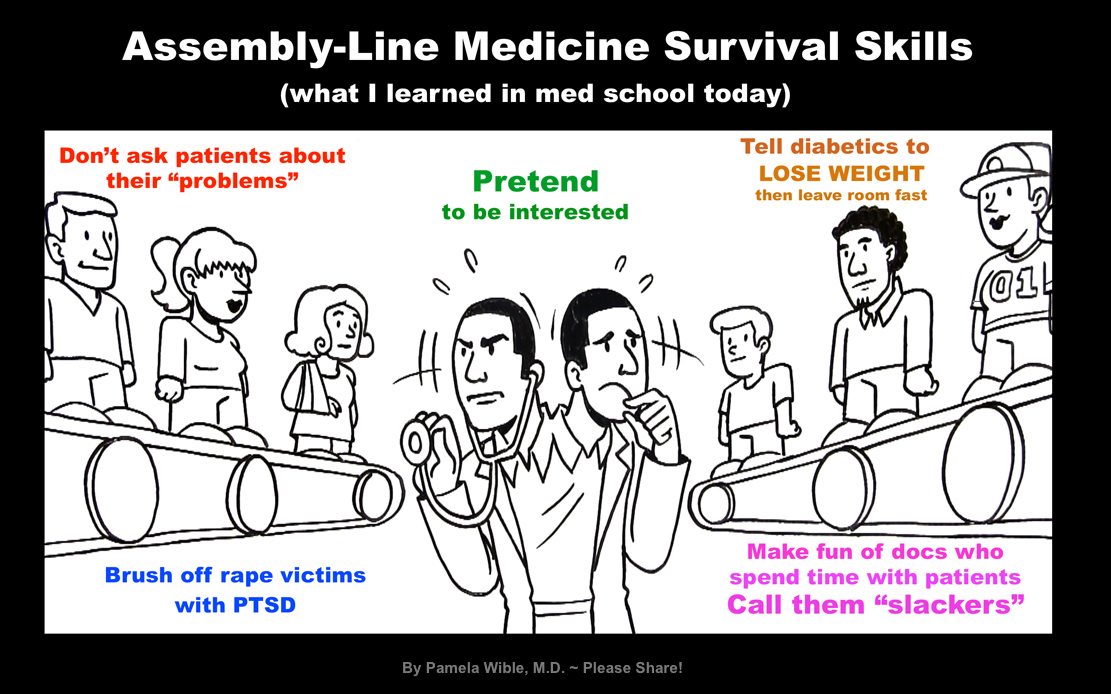
Assembly Line Medicine Survival Skills

WHAT I LEARNED IN MEDICAL SCHOOL TODAY

By Pamela Wible MD

***

***

COMMENTS APPRECIATED

Thank You

Subscribe to the Medical Executive-Post

***

***

***

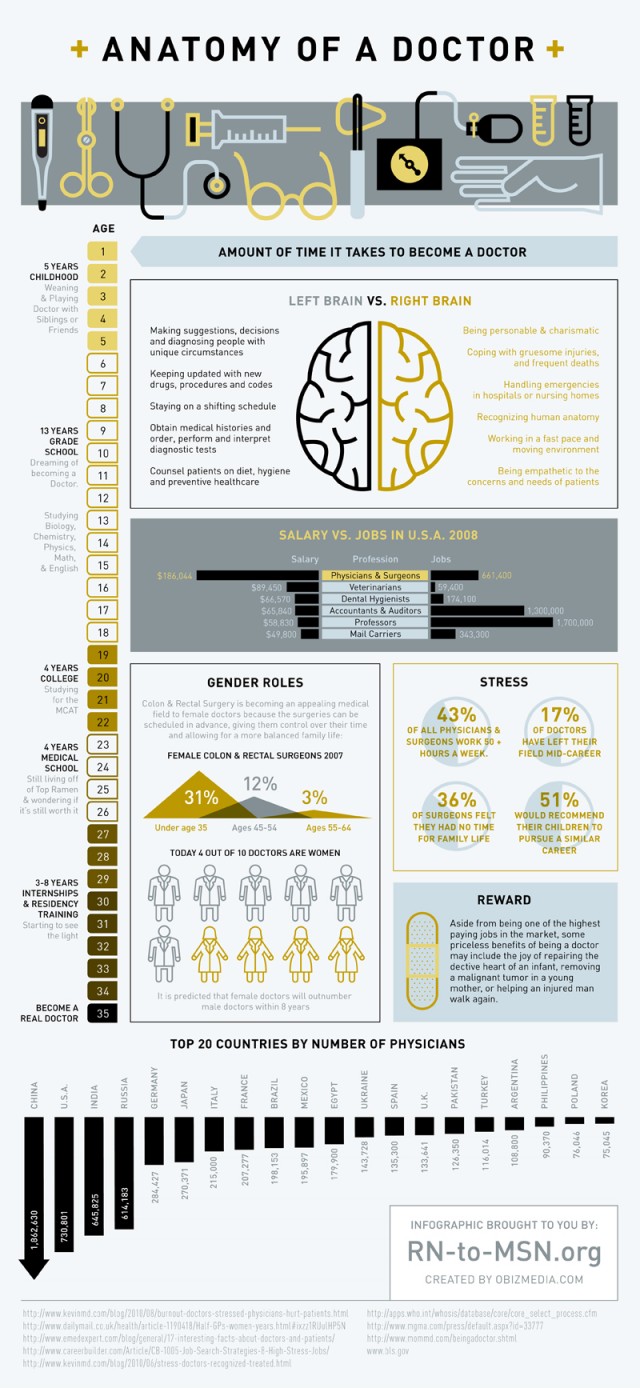
Anatomy of a Doctor

Risks versus Rewards [A Changing Calculus]

Join Our Mailing List

Some laymen enjoy helping others, but don’t seriously consider medical school. Hard work does pay off, but only if you’re good at biology in this case. One problem has always been the crazy amount of names to learn.

The thought of SAT exams, medical school and MCAT tests already raise stress levels. It’s no surprise that a large percent of doctors feel stressed. Today, only half of them recommend their career to others. It seemed like a fun career once all the classes and training was done. And, many doctors seemed to be happy by the way they carried themselves.

Not so today! The higher than average salaries probably helped to boost their attitude before the ACA. But, perhaps not so much, today!

So; not everyone is cut out to be a doctor. Although it sounds really cool and we can dream about it as a child, becoming a doctor is not always practical. It is a high-intensity job but with decreasing stature and pay, likely going forward.

Assessment

But, the joys of helping others and saving lives are always worth it; aren’t they?

Conclusion 

And so, your thoughts and comments on this ME-P are appreciated. Please review our top-left column, and top-right sidebar materials, links, URLs and related websites, too. Then, subscribe to the ME-P. It is fast, free and secure.

Link: http://feeds.feedburner.com/HealthcareFinancialsthePostForcxos

Speaker: If you need a moderator or speaker for an upcoming event, Dr. David E. Marcinko; MBA – Publisher-in-Chief of the Medical Executive-Post – is available for seminar or speaking engagements. Contact: MarcinkoAdvisors@msn.com

Subscribe Now: Did you like this Medical Executive-Post, or find it helpful, interesting and informative? Want to get the latest ME-Ps delivered to your email box each morning? Just subscribe using the link below. You can unsubscribe at any time. Security is assured.

Link: http://feeds.feedburner.com/HealthcareFinancialsthePostForcxos

Sponsors Welcomed: And, credible sponsors and like-minded advertisers are always welcomed.

Link: https://healthcarefinancials.wordpress.com/2007/11/11/advertise

Product DetailsProduct DetailsProduct Details

Product Details

Risk Management, Liability Insurance, and Asset Protection Strategies for Doctors and Advisors: Best Practices from Leading Consultants and Certified Medical Planners™8Comprehensive Financial Planning Strategies for Doctors and Advisors: Best Practices from Leading Consultants and Certified Medical Planners™

***

Invite Dr. Marcinko

***

Understanding the Modern Challenges of Student Doctors

An Evolving Educational Model

Join Our Mailing List

By Cyndi Laurenti

laurenticy@gmail.com

Medical education could be driving potential doctors away and damaging those who do go on to practice with long hours, high debt, inconsistent training, and lack of emotional support. Research indicates the current structure of residency programs produces resident physicians who are stressed, sleep-deprived, and prone to medical errors.

Medical Residents

Medical school graduates who’ve begun their on-the-job training are called residents varying in length from three to seven years, depending on the specializations doctors pursue. Most programs utilize experienced physicians called preceptors to teach the new doctors how to practice their particular branches of medicine. Another common practice is to pair second- or third-year residents with one or more first-year residents, so the senior students take on some of the teaching and supervision roles.

Duties

Residents admit patients to the hospital, obtain medical histories, perform examinations, and administer treatments or do procedures under the guidance of the senior resident or preceptor.

The hours in a residency program are long. Despite recommendations from the Institutes of Medicine intended to decrease long shifts and work hours, 80-hour weeks are common in residency programs and 30-hour shifts with five-hour sleep periods are the norm. Moreover, those 80-hour work weeks represent the average over a four-week period, so a resident might actually work considerably longer in a single week.

Work Shifts

Rotating shifts, in which residents work at different times of the day or night, are also common. Sleep deprivation is the norm: a 2004 survey of over 3,000 residents reported 66 percent slept less than six hours a night, and 20 percent slept less than five. Of even more concern, those who slept less than five hours a night reported they had used alcohol, resorted to stimulants to stay awake, had serious accidents or injuries, had conflicts with other professional staff, or made serious medical errors.

Financial Stress

Many residents also face financial or family stressors as well. Debt is common in medical school: the New England Journal of Medicine reports one fourth of graduating residents have debt exceeding $200,000. Some residents use their limited free time to moonlight for additional income as the average medical resident salary is about $45,000 per year.

Age

Medical residents are often in their late twenties or early thirties, a time when many people look to starting families. The lack of income may drive them to work extra hours in an already crowded schedule, which prevents them from spending time with children or a spouse, if indeed they manage to have either. Research from as far back as 1986 indicated over 40 percent of medical residents experience problems with their spouses during residency. Respondents often feel the working conditions of residency contribute to family problems, which in turn affect their hospital work as a result. On a positive note, researchers have found stress can be moderated by family relationships and social contact, and recommended social support systems be fostered in residency programs.

Stress

Emotional stress related to patient care is another aspect of the issues with residency. Over 70 percent of residents in one study reported hospital activities such as cardiopulmonary resuscitation were extremely stressful and the lack of a debriefing session afterward increased the impact of that stress, particularly when the resident felt the resuscitation was inappropriate.

Recipe for Disaster?

The combination of stress and sleep deprivation is a recipe for disaster. A study at HarvardUniversityfound residents who worked extended shifts or long hours were involved in 300 percent more fatal errors than when they did not work excessive hours. These same physicians reported they were likely to fall asleep during surgery, patient examinations, hospital rounds or lectures, and that their medical errors induced guilt, anger, humiliation, and decreased compassion for the patients they treated.

To add to these stresses, as recently as October 2011 almost half of graduate physicians in one survey reported they had been harassed, intimidated or discriminated against while residents. These behaviors took the form of verbal abuse and being assigned extra work as punishment. The sources of inappropriate behavior were primarily specialty physicians, but specialty residents, hospital nurses, and patients also participated in the harassment.

The Changing Paradigm

Some residency programs have made changes to improve the quality of life for residents. These include strategies such as decreasing patient load, senior residents supervising a single resident instead of two or more, and decreasing hand-offs, the transfer of patients from one group of residents to another. Other recommendations include debriefing sessions for stressful situations such as cardiopulmonary resuscitation, ethics committees to which residents can take complicated problems, and increased emotional support.

I.O.M

Other possible strategies include a decreased shift length, or simply adherence to the Institutes of Medicine’s guidelines for residency training programs. Social networks for residents’ spouses and families would provide a forum to air concerns and obtain emotional support from those in similar circumstances.

Additional efforts to relieve medical student debt would also make a considerable positive impact. A program currently exists in theUnited Statesfor physicians to obtain loan forgiveness: the National Health Service Corps pays off medical student debt if the physician practices full-time at a NHSC-approved site, usually a federally-qualified health center, rural or Indian Health service clinics, or prison. If a physician serves full-time for six or more years, the entire debt may be repaid by the NHSC.

Assessment

Most residency programs in other parts of the world are similar to those in theUnited States, although there may be different laws that affect work hours or salaries. There is clear evidence that overstressed and sleep-deprived residents are more likely to make serious or even fatal medical errors and lose their sense of compassion for patients. The current residency system is expensive, emotionally stressful, and puts the lives of patients at risk. America (and likely other nations as well) would benefit from making even more changes in residency programs to provide adequate time for sleep, family or social interaction, and emotional support for fledgling doctors.

About the Author

While she figures out her next career move, Cyndi Laurenti works as an online writer and editor. Her primary interests are education, technology, and how to combine them. She enjoys the trees and beaches of thePacific Northwest, and looking things up on other people’s iPhones.

Conclusion

Your thoughts and comments on this ME-P are appreciated. Feel free to review our top-left column, and top-right sidebar materials, links, URLs and related websites, too. Then, subscribe to the ME-P. It is fast, free and secure.

Speaker: If you need a moderator or speaker for an upcoming event, Dr. David E. Marcinko; MBA – Publisher-in-Chief of the Medical Executive-Post – is available for seminar or speaking engagements. Contact: MarcinkoAdvisors@msn.com

OUR OTHER PRINT BOOKS AND RELATED INFORMATION SOURCES:

Product DetailsProduct DetailsProduct Details

Product Details  Product Details

   Product Details

HALLOWEEN: Nathaniel Potter MD & Touring with Dr. Marcinko [Part VI]

About Nathaniel Potter, MD

By Dr. David Edward Marcinko; MBA, CMP™
[Publisher-in-Chief]
Dateline: Baltimore MarylandNathaniel Potter MD

While in Washington DC on the second portion of our recent ME-P book “signing and opining” tour, I had the good fortune to visit the gravesite of the noted physician Nathaniel Potter, MD. Dr. Potter was born in Carolina county Maryland in 1770 and died in Baltimore on 2 January, 1843. He graduated from the University of Pennsylvania in 1796, and settled in Baltimore, where he practiced medicine until his death. In 1807, he associated with Dr. John B. Davidge in founding the University of Maryland, School of Medicine where he ultimately served as professor and dean. He died penniless.

THINK Potter’s field!

About Green Mount Cemetery

Green Mount Cemetery is located in Baltimore, MD. Established in 1839, it is noted for the large number of historical figures that have been interred in its grounds as well as a large number of prominent Baltimore-area families. It retained the name Green Mount when the land was purchased from the heirs of Baltimore merchant Robert Oliver. Green Mount is also a treasury of precious works of art, including striking works by major sculptors like William Rinehart and Hans Schuler. The cemetery was listed in the National Register of Historic Places in 1980.

Assessment

In as much as Dr. Potter was a well know figure to me, I was most pleased at the impromptu visit to his grave. You see, although I attended Temple University because of my future specialty, my first medical school choice would have been at University of Maryland if post-graduate education opportunities had been different at the time. And, I passed the medical school, and the imposing Greek themed Davidge Hall Dome, daily for four years as I rode the number 8 public transportation bus to my undergraduate studies at nearby Loyola University, in Townson Maryland. Of course, the fact that Potter was educated at the University of Pennsylvania School of Medicine, the first in the nation, did not elude me when I worked in its ER as a young medical student in Philadelphia, back in-the-day. University of Maryland was the fifth such medical school in the country.

About Off Road with Dr. Marcinko

These sporadic off-road segments will continue through-out my summer promotional tour. Attendance at several formal and informal engagements increased since the early summer. The previously noted sales spike for our texts, handbooks and dictionaries; as well as interest in our online www.CertifiedMedicalPlanner.org  program.

Part V: https://healthcarefinancials.wordpress.com/2009/08/21/off-road-touring-with-dr-marcinko-part-v/

Conclusion

Your thoughts and comments on this ME-P are appreciated. Feel free to review our top-left column, and top-right sidebar materials, links, URLs and related websites, too. Then, subscribe to the ME-P. It is fast, free and secure.

Speaker: If you need a moderator or speaker for an upcoming event, Dr. David E. Marcinko; MBA – Publisher-in-Chief of the Medical Executive-Post – is available for seminar or speaking engagements. Contact: MarcinkoAdvisors@msn.com

OUR OTHER PRINT BOOKS AND RELATED INFORMATION SOURCES:

Product DetailsProduct Details

Product Details

***

Consultants and Hospital Employment Statistics

Economic Conditions Better than Other Major Industries

By Staff Reporters

horizontal-nurses1According to Richard Pizzi, on March 9th, Healthcare Finance Newsweek reported that employment at US hospitals climbed 0.14 percent in February to a seasonally adjusted 4,719,300 people.

Bureau of Labor Statistics

Responding to just issued BLS data, the number employed was 6,800 more than in January and 131,800 more than in February 2008. Without seasonal adjustments, which remove the effects of fluctuations due to seasonal events, hospitals employed 4,703,700 people in February 2009, 2,200 more than in January and 130,100 more than a year ago.

Impact on Healthcare Consultants

This was good news for financial advisors, insurance agents and accountants; medical management consultants and health economists; HIT suppliers and related DME vendors, etc.

Assessment

The news was not so good in other areas of the American economy, however, as the national unemployment rate rose from 7.6 percent to 8.1 percent. The US economy shed an additional 651,000 jobs in February 2009. But, according to Rachel Pentin-Maki; RN, MHA of www.MedicalBusinessAdvisors.com

“Employment continues to be strong in almost all aspects of the healthcare industrial complex. This includes professionals, technicians, nurses and para-professionals, as well. However, in the long-term, we believe that medicine will not attract the best and brightest young minds in the future. The economic, political and competitive demographics are just not favorable.” 

Conclusion

And so, your thoughts and comments on this Medical Executive-Post are appreciated. Is healthcare really a recession proof industry? What about those bright young minds; where will they go for professional careers, instead?

Speaker: If you need a moderator or speaker for an upcoming event, Dr. David E. Marcinko; MBA – Publisher-in-Chief of the Executive-Post – is available for seminar or speaking engagements. Contact: MarcinkoAdvisors@msn.com  or Bio: www.stpub.com/pubs/authors/MARCINKO.htm

Get our Widget: Get this widget!

Our Other Print Books and Related Information Sources:

Practice Management: http://www.springerpub.com/prod.aspx?prod_id=23759

Physician Financial Planning: http://www.jbpub.com/catalog/0763745790

Medical Risk Management: http://www.jbpub.com/catalog/9780763733421

Healthcare Organizations: www.HealthcareFinancials.com

Health Administration Terms: www.HealthDictionarySeries.com

Physician Advisors: www.CertifiedMedicalPlanner.com

Subscribe Now: Did you like this Medical Executive-Post, or find it helpful, interesting and informative? Want to get the latest E-Ps delivered to your email box each morning? Just subscribe using the link below. You can unsubscribe at any time. Security is assured.

Link: http://feeds.feedburner.com/HealthcareFinancialsthePostForcxos