BOARD CERTIFICATION EXAM STUDY GUIDES Lower Extremity Trauma
[Click on Image to Enlarge]
ME-P Free Advertising Consultation
The “Medical Executive-Post” is about connecting doctors, health care executives and modern consulting advisors. It’s about free-enterprise, business, practice, policy, personal financial planning and wealth building capitalism. We have an attitude that’s independent, outspoken, intelligent and so Next-Gen; often edgy, usually controversial. And, our consultants “got fly”, just like U. Read it! Write it! Post it! “Medical Executive-Post”. Call or email us for your FREE advertising and sales consultation TODAY [678.779.8597] Email: MarcinkoAdvisors@outlook.com
Medical & Surgical e-Consent Forms
ePodiatryConsentForms.com
iMBA Inc., OFFICES
Suite #5901 Wilbanks Drive, Norcross, Georgia, 30092 USA [1.678.779.8597]. Our location is real and we are now virtually enabled to assist new long distance clients and out-of-town colleagues.
ME-P Publishing
SEEKING INDUSTRY INFO PARTNERS?
If you want the opportunity to work with leading health care industry insiders, innovators and watchers, the “ME-P” may be right for you? We are unbiased and operate at the nexus of theoretical and applied R&D. Collaborate with us and you’ll put your brand in front of a smart & tightly focused demographic; one at the forefront of our emerging healthcare free marketplace of informed and professional “movers and shakers.” Our Ad Rate Card is available upon request [678-779-8597].
Doctorate, or doctoral, is an umbrella term for many degrees — PhD among them — at the height of the academic ladder. Doctorate degrees fall under two categories, and here is where the confusion often lies.
The first category, Research (also referred to as Academic) includes, among others:
Doctor of Philosophy (PhD)
Doctor of Business Administration (DBA)
Doctor of Education (EdD)
Doctor of Theology (ThD)
The second category, Applied (also referred to as Professional) includes, among others:
Doctor of Medicine (MD)
Doctor of Podiatric Medicine (DPM)
Doctor Of Osteopathic Medicine (DO)
Doctor of Dental Surgery (DDS)
Doctor of Optometry (OD)
Doctor of Psychology (PsyD)
Juris Doctor (JD)
As you can see, applied doctorates are generally paired with very specific careers – medical doctors, podiatrists, dentists, optometrists, psychologists, and law professionals.
When it comes to outlining the differences between a PhD and doctorate, the real question should be, “What is the difference between a PhD and an applied doctorate?” The answer, again, can be found in the program outcomes. The online Doctor of Psychology at UAGC, for example, lists outcomes that are heavily focused on the ability to put theory into practice in a professional setting. For example:
Apply best practices in the field regarding professional values, ethics, attitudes, and behaviors
Exhibit culturally diverse standards in working professionally with individuals, groups, and communities who represent various cultural and personal backgrounds
Utilize a comprehensive psychology knowledge base grounded in theoretical models, evidence-based methods, and research in the discipline
Integrate leadership skills appropriate in the field of psychology
Critically evaluate applied psychology research methods, trends, and concepts
Bottom line: As the PhD is more academic, research-focused, and heavy on theory, an applied doctorate degree is intended to master a subject in both theory and practice.
Can a PhD Be Called a Doctor?
The debate over whether a PhD graduate should be called a doctor has existed for decades, and if you’re a member of this exclusive club, you’ll no doubt hear both sides of the argument during your lifetime. After all, if a PhD is a doctor, can a person with a doctoral degree in music – the Doctor of Musical Arts (DMA) – be called a doctor as well?
Those in favor argue that having “Dr.” attached to your name indicates that you are an expert and should be held in higher regard. For some, the debate is at the heart of modern gender disparity. For example, on social media and in some academic circles, there is an argument that female PhD holders should use the “Dr.” title in order to reject the notion that women are less worthy of adding the title to their name once they have earned a doctoral degree.
Hobson’s choice is a free choice in which only one thing is actually offered. The term is often used to describe an illusion that choices are available. The best known example is “I’ll give you a choice: Take it or leave it”, wherein “leaving it” is strongly undesirable.
The phrase is said to have originated with Thomas Hobson (1544–1631), a livery stable owner in Cambridge, England, who offered customers the choice of either taking the horse in the stall nearest to the door or taking none at all.
A CASE MODEL
Half of Physicians Plan to Change Career Paths
The Physicians Foundation recently conducted a survey on physician practice patterns and perspectives. Here are some key findings from the report:
• 31% of physicians identify as independent practice owners or partners. • Almost half (47%) of physicians plan to change career paths. • 78% of physicians sometimes, often or always experience feelings of burnout. • Nearly a quarter of physician time is spent on non-clinical paperwork.
This result is not a good Hobson’s Choice in Medicine.
SPEAKING: Dr. Marcinko will be speaking and lecturing, signing and opining, teaching and preaching, storming and performing at many locations throughout the USA this year! His tour of witty and serious pontifications may be scheduled on a planned or ad-hoc basis; for public or private meetings and gatherings; formally, informally, or over lunch or dinner. All medical societies, financial advisory firms or Broker-Dealers are encouraged to submit an RFP for speaking engagements: CONTACT: Ann Miller RN MHA at MarcinkoAdvisors@outlook.com -OR-http://www.MarcinkoAssociates.com
Despite their high salaries, not all doctors are wealthy, and some live paycheck to paycheck. Here are 5 reasons why many doctors today are broke, according to https://medschoolinsiders.com
1 | Believing They Are Universally Smart
The first reason so many doctors are broke is that many doctors believe they are universally smart. While most doctors have deep specialized knowledge, there’s a big difference between being smart in your profession and being smart with money. A physician’s schooling is quite thorough when it comes to the human body, but med school doesn’t include a prerequisite class on how to handle finances.
Graduating medical school is a major feat and certainly demonstrates superior work ethic and cognitive abilities. But many new doctors believe these accomplishments transcend all aspects of life. If you’re smart enough to earn an MD, you’re certainly smart enough to handle your finances, but only once you properly and intentionally educate yourself.
The truth is doctors, especially traditional graduates, haven’t had an opportunity to manage large sums of money until they become fully trained attending physicians and start pulling in low to mid six figures in income. Prior to that, there was very little of it to manage.
Far too many aspiring doctors, and students in general, don’t take the time to learn financial basics, in part because it’s uncomfortable and seems like something they can figure out “later”, whenever that may be. Their poor spending habits and lack of investment knowledge carry over into their careers, causing many to make irresponsible decisions.
The second factor is overspending too soon, and this comes up at two points in training.
First, it’s natural to want to start spending more as soon as you get into residency and start making a little more money. After all, you’ve been a broke student for 8 or more years, and now you’re finally making a reasonable and reliable wage. But that’s where young doctors get into trouble. Residency pays, but not nearly as much as you will be making once you become an attending physician. The average resident makes about $60K a year, and if you begin spending all of that money right away, thinking you’ll handle your loans once you become an attending, you delay paying off your medical school debt, which means the compounding effect through your student loan interest rate works against you.
Now that $250,000 in student loans has ballooned to over $350,000 by the time you finish residency. The compounding effect, which can be one of your greatest allies in your financial life, becomes an equally powerful enemy when working against you through debt. But of course, pinching pennies is easier said than done, especially when you’re in residency and are surrounded by peers in different professions. They’ve been earning good money much longer than you have, and they can afford more luxurious lifestyles.
They may not be worried about indulging in fine dining or how much a hotel costs when traveling. Students in college and medical school are often confident they will resist the temptations, but the desire to keep up with your friends and family can be difficult to ignore, which causes many to overspend before they technically have the money to do so.
The same is true of attending physicians. As soon as those six-figure salaries come rolling in, many physicians go overboard with spending, trying to make up for lost time and to treat yourself.
Now, we are not suggesting you shouldn’t reward yourself for completing residency, but that reward shouldn’t be a Lamborghini. It’s best to continue living like a resident in your first few years after becoming an attending to pay off loans, put a down payment on a home, and get your financial foundation built before loosening the purse strings.
3 | Decreasing Salaries
Third, doctors continue to make less money than they did before. And this includes nearly all 44 medical specialties. For example, while physician compensation technically rose from $343k to $391k between 2017 and 2022, this rise does not keep up with inflation. The real average compensation in 2022 was less than $325k—a $20k decrease in purchasing power in only six years.
For doctors who are already spending to the limits of their salaries with huge mortgages, car payments, business costs, and other luxuries, a decreased salary can have a huge impact. You might be able to cut back by going on fewer vacations or eating out less frequently, but many accrued costs are locked in, such as a mortgage payment, car loan, or leased rental space for your practice.
4 | Increasing Costs of Private Practice
In the past, running a private practice was much simpler, but recent stricter guidelines and regulations have made it difficult for solo practices to keep up. While regulations like the Health Insurance Privacy and Portability Act, or HIPAA, and mandatory Electronic Medical Records, or EMRs, are necessary to protect patients, they make costs higher for physicians who run their own private practice. These physicians need to spend their own money to set up and maintain EMRs as well as invest in security to ensure patient data is protected.
With the steep rise of inflation we’ve seen over the past couple of years, everything is more expensive, which means costs, such as business space, equipment, and even office supplies, have gone up for private practice physicians while salaries have not. 2013 to 2020 saw an annual inflation rate of anywhere from 0.7% to 2.3%. This skyrocketed to an annual inflation rate of 7.0% in 2021 and another 6.5% in 2022. In fact, the cost of running a private practice has increased by almost 40% between 2001 and 2021.
These increased costs are exacerbated by another problem plaguing private practices; decreased reimbursement. While costs increased by almost 40%, Medicare reimbursement only increased by 11%. When doctors see patients who are insured, the insurance companies pay the physicians for their time. For Medicare, the new proposed rules for 2023 would cut reimbursement by around 5%. When adjusting for inflation, Medicare reimbursement decreased by 20% in the last 20 years.
These costs add up, making it extremely difficult for physicians to thrive financially while running a private practice.
5 | Tuition Debt
Lastly, we can’t talk about a doctor’s finances without mentioning the exorbitant debt so many graduating physicians are left with. It won’t shock you to hear that med school is expensive. Extremely expensive. The average cost of tuition for a single year is nearly $60k, with significant variance from school to school, and that’s before accounting for living expenses.
In-state applicants pay less than out-of-state applicants, and students at private schools typically pay more than students at public medical schools. The astronomical costs mean the vast majority of students can’t pay for medical school out of their own pockets. And unless your family is part of the 1%, even with your parents footing the bill, it’s difficult to cover tuition, let alone rent, groceries, transportation, tech, social activities, exam fees, and application costs.
The average total student debt after college and med school is over $250k. But keep in mind that’s the average, which includes 27% of students who graduate with no debt at all. This means the vast majority of students leave medical school owing much more than $250k.
For some perspective, in 1978, the average debt for graduating MDs was $13,500, which, when adjusted for inflation, is a little over $60,000. There are multiple ways to eventually repay these loans, but time and discipline are essential to ensure this money is paid off as quickly as possible.
According to financial advisor Dr. David Edward Marcinko MEd MBA CMP™; consider the following:
Place a portion of your salary (15-20% or more) into a savings account, and another portion (10-20% or more) into wise investments [stocks, bonds, mutual funds, and/or ETFs].
Pay off your bills each month, and then use leftover spending money to purchase fun things like vacations and fancy dinners, within your means. Shop sales, buy used clothes, and use credit card points for travel.
Hire an excellent tax professional and meet with an investment advisor once or twice a year about your investment status and strategy. http://www.MarcinkoAssociates.com
SPEAKING: Dr. Marcinko will be speaking and lecturing, signing and opining, teaching and preaching, storming and performing at many locations throughout the USA this year! His tour of witty and serious pontifications may be scheduled on a planned or ad-hoc basis; for public or private meetings and gatherings; formally, informally, or over lunch or dinner. All medical societies, financial advisory firms or Broker-Dealers are encouraged to submit an RFP for speaking engagements: CONTACT: Ann Miller RN MHA at MarcinkoAdvisors@outlook.com -OR-http://www.MarcinkoAssociates.com
Posted on June 27, 2025 by Dr. David Edward Marcinko MBA MEd CMP™
By Staff Reporters
NEWS UPDATE!
***
***
On June 10th, Bobby Mukkamala was inaugurated as the 180th president of the American Medical Association (AMA).
An otolaryngologist from Flint, Michigan, Mukkamal chairs the organization’s substance use and pain care task force, won the AMA Foundation’s Excellence in Medicine Leadership Award last June, and served on the AMA board of trustees in 2017 and 2021.
A forensic pathologist is a medical doctor who studies diseases and performs autopsies, while a coroner investigates and determines the cause of sudden or unexplained deaths, often without a medical degree.
An autopsy (also referred to as post-mortem examination, obduction, necropsy, or autopsia cadaverum) is a surgical procedure that consists of a thorough examination of a corpse by dissection to determine the cause, mode, and manner of death or the exam may be performed to evaluate any disease or injury that may be present for research or educational purposes. The term necropsy is generally used for non-human animals.
Autopsies are usually performed by a specialized medical doctor called a pathologist. Only a small portion of deaths require an autopsy to be performed, under certain circumstances. In most cases, a medical examiner or coroner can determine the cause of death.
A coroner is elected or appointed to a local government office, while a forensic pathologist is a medical doctor trained to perform autopsies and other procedures to determine the cause of death.
A forensic pathologist is able to perform medical operations while coroners may specialize in the legal paperwork and law enforcement side of a death.
The title of “medical examiner” is usually the job title of a forensic pathologist who works for a government.
In many jurisdictions, a coroner does not need to possess a medical degree.
The Medical Executive-Post is a news and information aggregator and social media professional network for medical and financial service professionals. Feel free to submit education content to the site as well as links, text posts, images, opinions and videos which are then voted up or down by other members. Comments and dialog are especially welcomed. Daily posts are organized by subject. ME-P administrators moderate the activity. Moderation may also conducted by community-specific moderators who are unpaid volunteers.
Posted on April 11, 2025 by Dr. David Edward Marcinko MBA MEd CMP™
Why would a doctor consider a Roth IRA conversion?
By Staff Reporters
***
***
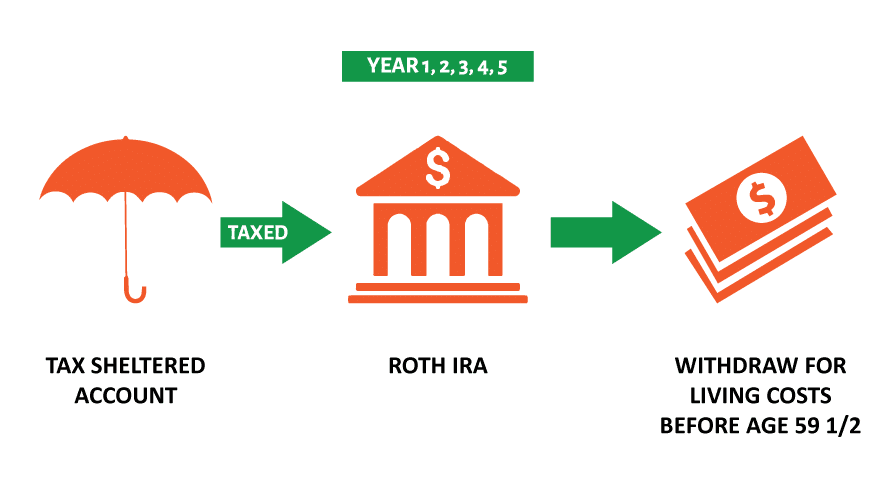
A Roth conversion involves transferring funds from a traditional retirement account—such as a 401(k), 403(b), or individual retirement account (IRA) funded with pre-tax dollars—into a Roth IRA.
The biggest benefit lies in the tax treatment of the converted funds. Once the funds are in the Roth IRA, future growth of those assets is tax-free. Withdrawals in retirement are also tax-free, assuming they meet certain criteria. As with any strategy, there are important considerations to keep in mind.
When you convert funds to a Roth IRA, the amount converted is taxable income in that tax year. For example, if you convert $100,000 from a traditional IRA to a Roth IRA, that $100,000 will be added to your taxable income in the conversion year.
Converting large amounts can result in a significant tax bill and may push you into a higher tax bracket. Even so, using retirement funds to pay taxes may make sense for those looking to convert large IRAs to reduce their future required minimum distributions (RMDs).
The timing of your Roth conversion matters too. Generally, it’s a good idea to convert when your income is lower—for example, after you’ve retired and before you begin drawing Social Security. You may also choose to convert over the course of several years to spread out the tax impacts. But if you can get comfortable with these considerations, a Roth conversion can provide you with benefits beyond tax-free growth and withdrawals.
Some of these benefits are:
Tax diversification. Having both traditional and Roth accounts allows you to manage your tax liability in retirement. For example, if your income in a given year is higher than expected, you can withdraw from the Roth IRA without increasing your taxable income.
No RMDs. Traditional IRAs and 401(k)s require you to begin taking RMDs at age 73. Roth IRAs have no RMD requirement during your lifetime. With a Roth account, you have more control over your retirement withdrawals and can leave the funds to grow for your heirs.
Benefits for heirs. Roth IRAs can be passed on to beneficiaries, who can inherit the account income tax-free. This means your heirs can enjoy the tax-free growth and withdrawals if the Roth IRA has been held for five years or more—a significant advantage, especially if your beneficiaries are in a higher tax bracket.
Both median and average family net worth surged between 2019 and 2022, according to the U.S. Federal Reserve. Average net worth increased by 23% to $1,063,700, the Fed reported in October 2023, the most recent year it published the data. Median net worth, on the other hand, rose 37% over that same period to $192,900.
You might wonder why the average and median net worth figures are so different. That’s because when you take the average of something, you add together every value in a data set and then divide that figure by the number of individual values.
When calculating a median, you simply look at the middle figure within a data set. That said, an average figure can be significantly higher or lower than a median figure if there are extreme outliers – meaning a group of people with significantly more net worth than the rest of the group can bring the average higher.
Average Net Worth by Age
The average net worth of someone younger than 35 years old is $183,500, as of 2022. From there, average net worth steadily rises within each age bracket. Between 35 to 44, the average net worth is $549,600, while between 45 and 54, that number increases to $975,800. Average net worth surges above the $1 million mark between 55 to 64, reaching $1,566,900.
Average net worth again rises for those ages 65 to 74, to $1,794,600, before falling to $1,624,100 for the 75 and older group. The median net worth within every single age bracket, however, is much lower than the average net worth.
***
***
Physicians [MD/DO]Net Worth by Specialty
A 2023 Medscape report shows the top 10 specialties with the most survey respondents saying they are worth more than $5 million.
SPEAKING: Dr. Marcinko will be speaking and lecturing, signing and opining, teaching and preaching, storming and performing at many locations throughout the USA this year! His tour of witty and serious pontifications may be scheduled on a planned or ad-hoc basis; for public or private meetings and gatherings; formally, informally, or over lunch or dinner. All medical societies, financial advisory firms or Broker-Dealers are encouraged to submit a RFP for speaking engagements: CONTACT: MarcinkoAdvisors@outlook.com
Posted on May 23, 2024 by Dr. David Edward Marcinko MBA MEd CMP™
By WebMD
In what some are calling the next iteration of the internet, the metaverse is an unfamiliar digital world where you could be an avatar navigating computer-generated places and interacting with others in real time. In this space, the constraints of our physical, bricks and mortar world and travel habits fade. And new opportunities and challenges emerge.
Posted on September 20, 2023 by Dr. David Edward Marcinko MBA MEd CMP™
By Staff Reporters
Three nurse practitioners who earned doctorates of nursing practice are suing the state of California, saying that they have earned the right to tout themselves using the term “doctor.” The nurse practitioners claim a California statute that only allows California-licensed allopathic, podiatric and osteopathic physicians to use the terms “doctor” and “Dr.” is unconstitutional. The restriction has been on the books since at least 1937 to avoid patient confusion over the level of education their health professionals have achieved.
The S&P 500 Index was down 9.58 points (0.2%) at 4,443.95; the Dow Jones Industrial Average (DJIA) was down 106.57 points (0.3%) at 34,517.73; the NASDAQ Composite (COMP) was down 32.05 points (0.2%) at 13,678.19.
The 10-year Treasury note yield (TNX) was up about 5 basis points at 4.369%.
CBOE’s Volatility Index (VIX) was up 0.11 at 14.11.
Transportation and small-cap companies were among the market’s weakest areas Tuesday. Both the Dow Jones Transportation Average (DJT) and Russell 2000 Index (RUT) ended at their lowest levels since late June. Technology companies were also lower, with the Philadelphia Semiconductor Index (SOX) down more than 1%.
Posted on July 20, 2009 by Dr. David Edward Marcinko MBA MEd CMP™
“Using-Up” Health Insurance
By Dr. David Edward Marcinko; MBA, CMP™
[Publisher-in-Chief]
Dateline: June 18-19th, 2009
I flew into Marquette Michigan last night on a puddle jumper from Chicago, Illinois. Marquette will be the home base on my current book promotion and public/private speaking tour. This second leg of our trip, from Atlanta, was delayed for mechanical reasons. So, rather than follow directions from American Airlines regarding new arrangements, and rushing to wait in a long line of humanity for a new boarding pass on a much later flight, I simply called the travel assistance number on my cell phone. We were re-routed by computer from American, to a Delta Airlines flight, that caused no additional time lag as we later learned the other passengers boarded their American flight three hours late. Many of the elderly and slower moving folks even missed connecting flights which necessitated overnight hotel stays, in some cases.
THINK: outside the box independently, and don’t follow directions mindlessly.
About Marquette, Michigan
The City of Marquette is located in the central region of Michigan’s Upper Peninsula. With a population of 20,714, it is the UP’s largest community. In addition to being a population center, it serves as the regional center for education, health care, recreation, and retail. This regional draw is particularly evident due to Northern Michigan University and Marquette General Hospital, both of which are located in the City of Marquette. Of course, I visited both.
Quality Healthcare for the Upper Peninsula
So, the next morning I called some friends who suggested we head over to the Marquette Upper Peninsula Healthcare Network System, on Washington Street, for an unplanned and unofficial stop on our current “signing and opining” tour. It seemed very busy for a Friday morning; so we gathered some colleagues and ambled over to Viering’s Restaurant where we discussed the local economy, current state of the healthcare industry and the Obama Administration’s ideas for healthcare reform. When I expressed my surprise at the number of patients in the clinic waiting room areas, I was informed that an unexpected corporate layoff resulted in patients “wanting to use their health insurance, before being RIFed [Reduced-in-Force].” Now, as a doctor, and insurance agent, I find this attitude both very strange; yet not uncommon.
“Using-Up” Health Insurance
I can honestly say that after more than three-decades in the business, I have never heard a single soon-to-be unemployed client say,” I need to use up my life insurance”, or “auto insurance”, or “homeowner’s insurance”, etc. So, what gives with health insurance?
Health Insurance IS Different
Insurance of all types is sold to economically protect against catastrophic events like pre-mature death, auto accidents, or home destruction. But life insurance doesn’t pay for non-lethal issues; auto insurance doesn’t pay for new tires, tune-ups or oil changes; and home owner’s insurance doesn’t pay for regular upkeep and maintenance, etc. So, why do some patients believe that health insurance necessarily needs to be used-up? Were they not healthy before the lay-off announcement; or did they suddenly become ill, thereafter? What do you think? Is this just a local phenomenon, or would it be [is it] pandemic in any community given the same or similar circumstances?
Assessment
For me, this scenario clearly demonstrates two things. First, that Health Insurance is thought of as a personal right and/or corporate fringe-benefit; rather than true financial indemnification. Second, it demonstrates the ability of patients to think ahead; unlike the airline customers on my initial trip here. So, if patients can be forward thinking about their health insurance needs, why don’t they think ahead about their personal health care needs? Why don’t more of us exercise regularly, watch our blood pressure and weight, and/or avoid drugs, alcohol and promiscuous sex, etc. If we can monitor and pay for routine auto and home maintenance ourselves; why not our routine health needs? Isn’t good health our most important personal asset? Aren’t we worth it? Do we really want to abrogate our very lives to others? Do we want to concede our responsibilities to a third party, ie, a national [single-payer] governmental controlled healthcare? Those patients wanting to “use their health insurance”, before unemployment, certainly seem to think so.
About Off Road with Dr. Marcinko
These sporadic off-road segments will continue through-out my 2009 summer promotional tour. On the one hand, formal attendance at several engagements was initially a bit sparse because of the death of several recent celebrities and entertainer types. On the other hand, local book stores and sponsors noted a spike in our CD and book sales, as well as interest in our online www.CertifiedMedicalPlanner.com program and premier quarterly guide: Healthcare Organizations [Journal of Financial Management Strategies] www.HealthcareFinancials.com
Conclusion
And so, your thoughts and comments on this Medical Executive-Post are appreciated. Tell us what you think. Feel free to review our top-left column, and top-right sidebar materials, links, URLs and related websites, too. Then, be sure to subscribe to the ME-P. It is fast, free and secure.
Speaker: If you need a moderator or speaker for an upcoming event, Dr. David E. Marcinko; MBA – Publisher-in-Chief of the Executive-Post – is available for seminar or speaking engagements. Contact: MarcinkoAdvisors@msn.com
Subscribe Now: Did you like this Medical Executive-Post, or find it helpful, interesting and informative? Want to get the latest ME-Ps delivered to your email box each morning? Just subscribe using the link below. You can unsubscribe at any time. Security is assured.
Posted on March 24, 2009 by Dr. David Edward Marcinko MBA MEd CMP™
Doctors Facing a Bleak Future Business and Financial Planning Model
By Dr. David Edward Marcinko; MBA, CMP™
[Publisher-in-Chief]
According to Physicians News, on March 19, 2009, the demand for family physicians is growing. Proposals for health system reform focus on increasing the number of primary care physicians in America. Yet, despite these trends, the number of future physicians who chose family medicine dipped this year, according to the 2009 National Resident Matching Program. What gives?
NRMP
The National Resident Matching Program [NRMP] recently announced that a total of 2,329 graduating medical students matched to family medicine training programs. This is a decrease in total student matches from 2008, when 2,404 family medicine residency positions were filled.
Primary Care Demand Explodes
Meanwhile, demand for primary care physicians continues to skyrocket. For example, in its most recent recruitment survey, Merritt Hawkins, a national physician recruiting company, reported primary care physician search assignments had more than doubled from 341 in 2003 to 848 last year.
The Decline of Solo Medical Practitioners
Regular readers and subscribers to this Medical Executive- Post are aware of the declining number of solo medical practitioners; we have been sounding the alarm here, in our books, journal, speaking engagements and elsewhere for years now.
In fact, the statistic that we often cite is that more than 40% of the nation’s physicians are employed doctors; not employers as in the past. This business model shift has occurred over the past decade or so, and has accelerated of late. The decline in solo and independent doctors has occurred elsewhere as well, but much more slowly [i.e., dentistry, podiatry and osteopathy] as these specialties have been somewhat isolated from the traditional allopathic mainstream.
Going forward, this solitary model seems to be a good thing, and a fortunate result of the un-intended consequence of previously keeping these folks out of the healthcare mainstream.
The Decline of Independent Medical Practitioners
Now, in the March 2009 issue of Healthcare Finance News, we learn that the number of hospital owned physician practices has been climbing over the last four years, according to the Medical Group Management Association [MGMA]. Think: PHOs back-in-the-day.
And, while this trend only marginally affects patients and patient care, it is quite disruptive to physicians, their families, personal wealth accumulation, retirement and estate planning endeavors.
“The professional good-will valuation component of a medical practice is being decimated. Today, some practices are being bought and sold for tangible asset value, only.
Assessment
Therefore, allow me to identify this emerging trend which suggests independent medical practice as reflective of solo primary medical care. In other words, as independence goes the way of the “dodo-bird”, so goes primary care practitioners precisely at a time when the later is needed more than the former.
Why? Employed doctors stay that way by making money for their employer and hospital-bosses. Specialists make more money than primary care doctors. So, if you want to stay an employed doctor; which specialty would you pursue?
Answer: The NRMP class this year spoke out loud and clear. Any specialty but primary care!
Channel Surfing the ME-P
Have you visited our other topic channels? Established to facilitate idea exchange and link our community together, the value of these topics is dependent upon your input. Please take a minute to visit. And, to prevent that annoying spam, we ask that you register. It is fast, free and secure.
Conclusion
Your thoughts and comments on this ME-P are appreciated. Feel free to review our top-left column, and top-right sidebar materials, links, URLs and related websites, too. Then, subscribe to the ME-P. It is fast, free and secure.
Speaker: If you need a moderator or speaker for an upcoming event, Dr. David E. Marcinko; MBA – Publisher-in-Chief of the Medical Executive-Post – is available for seminar or speaking engagements. Contact: MarcinkoAdvisors@msn.com
OUR OTHER PRINT BOOKS AND RELATED INFORMATION SOURCES: