How a Broke 50-Year-Old Doctor Can Still Retire at 65?

By Dr. David Edward Marcinko MBA MEd

SPONSOR: http://www.MarcinkoAssociates.com

***

***

Turning 50 with little to no savings can be daunting, especially for a doctor who has spent decades in a demanding profession. Yet, all is not lost. With strategic planning, discipline, and a willingness to adapt, a broke 50-year-old physician can still build a solid retirement foundation by age 65.

First, it’s essential to confront the financial reality. This means calculating current income, expenses, debts, and any assets, however small. A clear picture allows for realistic goal-setting. The target should be to save aggressively—ideally 30–50% of income—over the next 15 years. While this may seem steep, doctors often have above-average earning potential, even in their later years, which can be leveraged.

Next, lifestyle adjustments are crucial. Downsizing housing, eliminating unnecessary expenses, and avoiding new debt can free up significant cash flow. If possible, relocating to a lower-cost area or refinancing existing loans can also help. Every dollar saved should be redirected into retirement accounts such as a 401(k), IRA, or a solo 401(k) if self-employed. Catch-up contributions for those over 50 allow for higher annual deposits, which can accelerate growth.

Investing wisely is non-negotiable. A diversified portfolio with a mix of stocks, bonds, and alternative assets can provide both growth and stability. Working with a fiduciary financial advisor ensures that investments align with retirement goals and risk tolerance. Time is limited, so the focus should be on maximizing returns without taking reckless risks.

Increasing income is another powerful lever. Many doctors can boost earnings through side gigs like telemedicine, consulting, teaching, or locum tenens work. These flexible options can add tens of thousands annually without requiring a full career shift. Additionally, monetizing expertise—writing, speaking, or creating online courses—can generate passive income streams.

Debt reduction must be prioritized. High-interest loans, especially credit card debt, can erode savings potential. Paying off these balances aggressively while avoiding new liabilities is key. For student loans, exploring forgiveness programs or refinancing options may offer relief.

Finally, mindset matters. Retirement at 65 doesn’t have to mean complete cessation of work. It can mean transitioning to part-time roles, passion projects, or advisory positions that provide income and fulfillment. The goal is financial independence, not necessarily total inactivity.

In conclusion, while starting late is challenging, a broke 50-year-old doctor can still retire comfortably at 65. It requires a blend of financial discipline, income optimization, smart investing, and lifestyle changes. With focus and determination, the next 15 years can be transformative—turning a precarious situation into a secure and dignified retirement.

COMMENTS APPRECIATED

EDUCATION: Books

SPEAKING: Dr. Marcinko will be speaking and lecturing, signing and opining, teaching and preaching, storming and performing at many locations throughout the USA this year! His tour of witty and serious pontifications may be scheduled on a planned or ad-hoc basis; for public or private meetings and gatherings; formally, informally, or over lunch or dinner. All medical societies, financial advisory firms or Broker-Dealers are encouraged to submit an RFP for speaking engagements: CONTACT: Ann Miller RN MHA at MarcinkoAdvisors@outlook.com 

Like, Refer and Subscribe

***

***

Financial Self-Discovery for Medical Professionals

By Dr. David Edward Marcinko; MBA MEd CMP

PHYSICIAN COACHING: https://marcinkoassociates.com/process-what-we-do/

***

***

SPONSOR: http://www.CertifiedMedicalPlanner.org

A Financial Self Discovery Questionnaire for Medical Professionals

For understanding your relationship with money, it is important to be aware of yourself in the contexts of culture, family, value systems and experience.  These questions will help you.  This is a process of self-discovery.  To fully benefit from this exploration, please address them in writing.  You will simply not get the full value from it if you just breeze through and give mental answers.  While it is recommended that you first answer these questions by yourself, many people relate that they have enjoyed the experience of sharing them with others who are important to them. 

As you answer these questions, be conscious of your feelings, actually describing them in writing as part of your process. 

Childhood

  • What is your first memory of money?
  • What is your happiest moment with Money? Your most unhappy?
  • Name the miscellaneous money messages you received as a child.
  • How were you confronted with the knowledge of differing economic circumstances among people, that there were people “richer” than you and people “poorer” than you?

Cultural heritage

  • What is your cultural heritage and how has it interfaced with money?
  • To the best of your knowledge, how has it been impacted by the money forces?  Be specific.  
  • To the best of your knowledge, does this circumstance have any motive related to Money?
  • Speculate about the manners in which your forebears’ money decisions continue to affect you today? 

Family

  • How is/was the subject of money addressed by your church or the religious traditions of your forebears?
  • What happened to your parents or grandparents during the Depression?
  • How did your family communicate about money?
  • How?  Be as specific as you can be, but remember that we are more concerned about impacts upon you than historical veracity.
  • When did your family migrate to America (or its current location)?
  • What else do you know about your family’s economic circumstances historically?

Your parents

  • How did your mother and father address money?
  • How did they differ in their money attitudes?
  • How did they address money in their relationship?
  • Did they argue or maintain strict silence?
  • How do you feel about that today?

Please do your best to answer the same questions regarding your life or business partner(s) and their parents.

Childhood: Revisited

  • How did you relate to money as a child?  Did you feel “poor” or “rich”? 
    Relatively?  Or, absolutely?  Why?
  • Were you anxious about money?
    Did you receive an allowance?  If so, describe amounts and responsibilities.
  • Did you have household responsibilities?
  • Did you get paid regardless of performance?
  • Did you work for money?

If not, please describe your thoughts and feelings about that.

***

***

Same questions, as a teenager, young adult, older adult.

Credit

  • When did you first acquire something on credit?
  • When did you first acquire a credit card?
  • What did it represent to you when you first held it in your hands?
  • Describe your feelings about credit.
  • Do you have trouble living within your means?
  • Do you have debt?

Adulthood

  • Have your attitudes shifted during your adult life?  Describe.

Why did you choose your personal path? 
a)      Would you do it again?
b)      Describe your feelings about credit.

Adult attitudes

  • Are you money motivated? 
    If so, please explain why?  If not, why not? 
    How do you feel about your present financial situation? 
    Are you financially fearful or resentful?  How do you feel about that?
  • Will you inherit money?  How does that make you feel?
  • If you are well off today, how do you feel about the money situations of others? 
    If you feel poor, same question. 
  • How do you feel about begging?  Welfare?
    If you are well off today, why are you working?
  • Do you worry about your financial future?
  • Are you generous or stingy?  Do you treat?  Do you tip?
  • Do you give more than you receive or the reverse?  Would others agree?
  • Could you ask a close relative for a business loan?  For rent/grocery money?
  • Could you subsidize a non-related friend?  How would you feel if that friend bought something you deemed frivolous? 
  • Do you judge others by how you perceive they deal with their Money?
    Do you feel guilty about your prosperity?
    Are your siblings prosperous?
  • What part does money play in your spiritual life?
  • Do you “live” your Money values?

Conclusion

There may be other questions that would be useful to you.  Others may occur to you as you progress in your life’s journey. The point is to know your personal money issues and their ramifications for your life, work, and personal mission. 

This will be a “work-in-process” with answers both complex and incomplete.  Don’t worry. 

Just incorporate fine-tuning into your life’s process.

COMMENTS APPRECIATED

Read, Like, Refer and Subscribe

***

***

CREDIT CARDS: Mistakes All Doctors Must Avoid

By Staff Reporters

***

***

Credit Card Mistakes to Avoid

No number has as far-reaching an impact on your money as your credit scores. Here are some credit card obstacles all physicians, nurses and medical professionals should dodge on the road to financial security

***

***

  • Don’t pay for a credit card repair service.
  • Don’t miss a payment.
  • Don’t max out your card.
  • Don’t take a cash-advance.
  • Don’t skip using your cards.
  • Don’t chase interest rates.
  • Don’t apply for several credit cards all at once.
  • Don’t co-sign a loan.
  • Don’t spread our car or mortgage payments.


COMMENTS APPRECIATED

Refer and Subscribe

***

***

K SHAPED: Economy and Recovery

By Staff Reporters

***

***

Understanding the K-shaped Economy

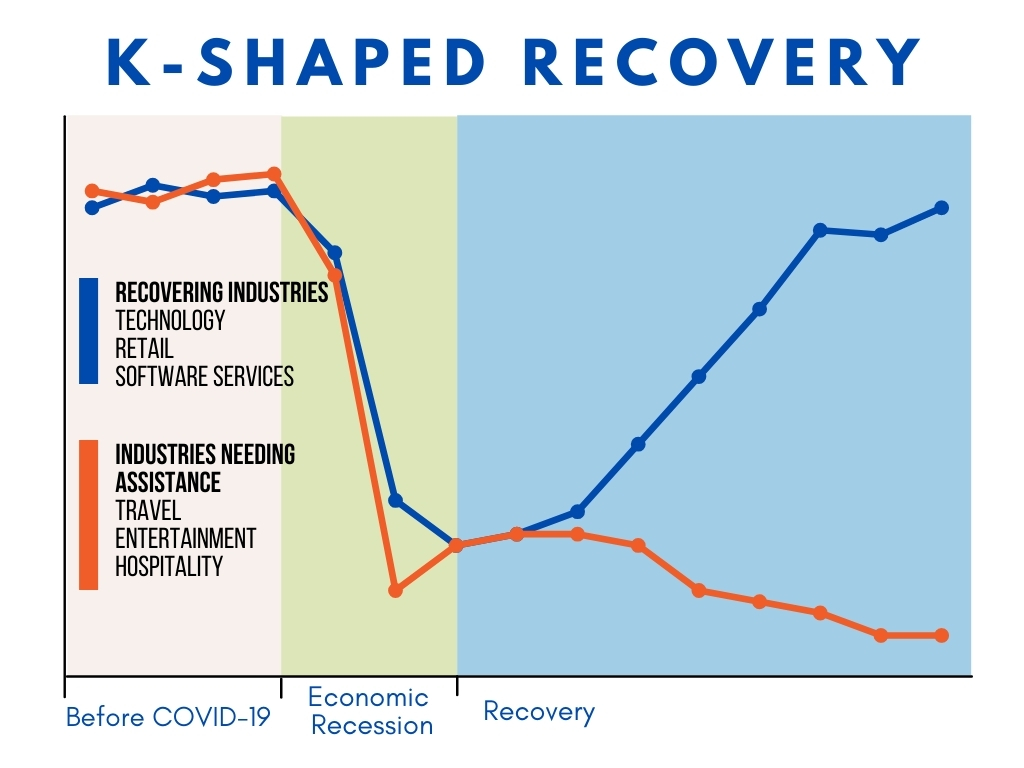
According to Olivia Voltaggio, in a V-shaped economy, things go down but then bounce back for everyone. In a K-shaped economy, the overall economy might go down. Only some parts of it recover, while others keep struggling.

In a K-shaped economy, people’s financial situations vary widely. Not everyone faces the same struggles. Lenders and financial institutions need to be flexible with strategy. They need to understand the different challenges their customers are dealing with.

Navigate with caution: The gaps in economic recovery highlight the importance of taking a careful, strategic approach.

How did we end up with a K-shaped recovery in 2024?

Inflation-driven price increases seem to be getting more stable. But, they may not reach the goal set by the government until 2026. This has made things more expensive for regular families.

For example, people with student loan debt had to start paying it back in October 2023. This was after a pandemic-induced grace period. Student loan repayment made budgeting harder. Borrowers might need to spend more on average than expected. For young adults (Gen Z), it could be even more.

Finally, more people are using credit cards because things are getting more expensive. Some are struggling to pay their credit card bills on time.

COMMENTS APPRECIATED

Like and Subscribe

***

***

PHYSICIAN CREDIT: Ratings, Scoring, Errors and Repair Services

ALMOST ALL ABOUT CREDIT

By Staff Reporters

***

***

Credit Rating and Scoring

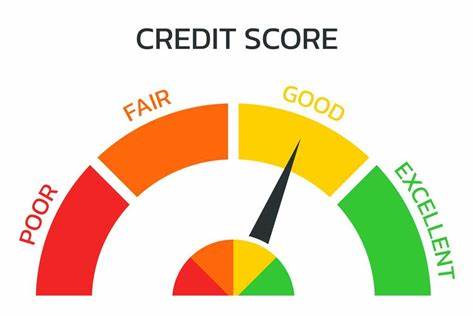
The category in which a credit agency classifies you is based upon payment history.  Recently, credit reporting agencies have shifted away from ratings to a system known as credit scoring. Your score is determined by proprietary formulas that are based on your credit history, the higher the better. The practical benefits of this scoring system are numerous.

First, medical professionals do not need to be experts at deciphering credit reports since the same scoring system is used by many different companies.

Correcting Credit Report Errors

A credit bureau is not the place to get an item to be fixed on your credit report. Rather, you must take it up directly with the credit issuer. In any case, a late payment noted on a credit report by a durable medical equipment vendor, for example, has to be addressed directly with that merchant. The DME merchant then has 30 days to acknowledge your complaint and respond to you. In the meantime, you do not have to pay for the disputed items.  Most credit errors cannot be reported or kept on your credit report for more than seven years.

For legitimate late payments you should contact the credit grantor and negotiate to take one of the following steps. Be tenacious, and either remove the late payment or write a letter explaining that the problem has been resolved and you now are a good credit risk again. This letter is a powerful tool and should be saved with other permanent financial records. The industry term for it is a letter of correction.

Credit Repair Services

Credit repair services are oversold and their claims tend to be exaggerated. They do not have an inside track to the consumer reporting agencies.  Good credit repair services are experienced in communicating with creditors and can help with legitimate repairs.  They cannot restore your credit rating or your good name. 

However, realize that with some time and effort you can accomplish the same results yourself.

CITE: https://www.r2library.com/Resource/Title/0826102549

COMMENTS APPRECIATED

Please Like, Refer and Subscribe!

***

***

DAILY UPDATE: Bitcoin, MicroStrategy and Credit Card Competition as the DJIA Hits a Record

MEDICAL EXECUTIVE-POST TODAY’S NEWSLETTER BRIEFING

***

Essays, Opinions and Curated News in Health Economics, Investing, Business, Management and Financial Planning for Physician Entrepreneurs and their Savvy Advisors and Consultants

Serving Almost One Million Doctors, Financial Advisors and Medical Management Consultants Daily

A Partner of the Institute of Medical Business Advisors , Inc.

http://www.MedicalBusinessAdvisors.com

SPONSORED BY: Marcinko & Associates, Inc.

***

http://www.MarcinkoAssociates.com

Daily Update Provided By Staff Reporters Since 2007.
How May We Serve You?
© Copyright Institute of Medical Business Advisors, Inc. All rights reserved. 2024

REFER A COLLEAGUE: MarcinkoAdvisors@msn.com

SPONSORSHIPS AVAILABLE: https://medicalexecutivepost.com/sponsors/

ADVERTISE ON THE ME-P: https://tinyurl.com/ytb5955z

Your Referral Count -0-

Bitcoin jumped about 130% this year, but MicroStrategy has skyrocketed almost 500%.

CITE: https://www.r2library.com/Resource

The proposed Credit Card Competition Act (CCCA) could devastate credit card rewards at the national level if passed. Now, states are getting involved too Read on.

CITE: https://tinyurl.com/2h47urt5

STOCKS UP

Ross Stores rose 2.19% after beating earnings estimates but missing sales forecasts last quarter, with shoppers spending less thanks to inflation.

  • MicroStrategy tumbled big time yesterday after a short seller report highlighted the risk inherent in betting it all on bitcoin, but the stock recovered 6.19% today.
  • Super Micro Computer continues to recover from the brink of defeat, rising another 11.62% as investors beg the tech company’s forgiveness for ever doubting it.
  • Data analytics company Elastic sprang 14.77% higher today on a strong earnings report highlighted by rising demand from customers building AI applications.

STOCKS DOWN

Tax-filing company Intuit sank 5.68% after reporting strong earnings last quarter but forecasting weaker results this quarter.

  • Reddit dropped 7.18% after a one-two punch from shareholders: Tencent Holdings sold a chunk of its stake in the social media company, while Advance Magazine Publishers is selling its stake but, through some financial trickery, is keeping control of the shares.
  • Palo Alto Networks may have beaten earnings expectations yesterday afternoon, but the cybersecurity stock fell 3.61% after shareholders weren’t impressed by its full-year guidance.

CITE: https://tinyurl.com/tj8smmes

Here’s where the major benchmarks ended:

  •  The S&P 500® index (SPX) rose 20.63 points (0.35%) to 5,969.34 to end the week up 1.68%; the $DJI gained 426.16 points (0.97%) to 44,296.51 to end the week up 1.96%; and the NASDAQ Composite® ($COMP) added 31.23 points (0.16%) to 19,003.65 to end the week up 1.73%.
  • The 10-year Treasury note yield fell two basis points to 4.41% and is down two basis points for the week, while the 2-year note yield rose seven basis points this week as rate cut odds fell.
  • The CBOE Volatility Index® (VIX)fell sharply to 15.31 and finished slightly lower for the week.

COMMENTS APPRECIATED

PLEASE SUBSCRIBE: MarcinkoAdvisors@msn.com

Thank You

***

***

***

***

EDUCATIONAL TEXTBOOKS: https://tinyurl.com/4zdxuuwf

***

CREDIT: All About Contractual Agreements

By Staff Reporters

SPONSOR: http://www.MarcinkoAssociates.com

DEFINITIONS

What Is CREDIT? Credit is a contractual agreement in which a borrower receives a sum of money or something else of value and commits to repaying the lender later, typically with interest. Credit is also the creditworthiness or credit history of an individual or a company. Good credit tells lenders you have a history of reliably repaying what you owe on loans. Establishing good credit is essential to getting a loan.

***

Credit Analysis is a form of financial analysis used primarily to determine the financial strength of the issuer of a security, and the ability of that issuer to provide timely payment of interest and principal to investors in the issuer’s debt securities. Credit analysis is typically an important component of security analysis and selection in credit-sensitive bond sectors such as the corporate bond market and the municipal bond market.

Credit Default Swap Index (CDX) is a credit derivative, based on a basket of CDS, which can be used to hedge credit risk or speculate on changes in credit quality.

Credit Default Swaps (CDS) are credit derivative contracts between two counter parties that can be used to hedge credit risk or speculate on changes in the credit quality of a corporation or government entity.

Credit Quality reflects the financial strength of the issuer of a security, and the ability of that issuer to provide timely payment of interest and principal to investors in the issuer’s securities. Common measurements of credit quality include the credit ratings provided by credit rating agencies such as Standard & Poor’s and Moody’s. Credit quality and credit quality perceptions are a key component of the daily market pricing of fixed-income securities, along with maturity, inflation expectations and interest rate levels.

Credit Rating Agency (CRA) is a company that assigns credit ratings for issuers of certain types of debt obligations as well as the debt instruments themselves. In the United States, the Securities and Exchange Commission (SEC) permits investment banks and broker-dealers to use credit ratings from “Nationally Recognized Statistical Rating Organizations” (NRSRO) for similar purposes. As of January 2012, nine organizations were designated as NRSROs, including the “Big Three” which are Standard and Poor’s, Moody’s Investor Services and Fitch Ratings.

A Credit Rating Downgrade by a credit rating agency (such as Standard & Poor’s, Moody’s or Fitch), of reducing its credit rating for a debt issuer and/or security. This is based on the agency’s evaluation, indicating, to the agency, a decline in the issuer’s financial stability, increasing the possibility of default (defined below). A downgrade should not to be confused with a default; a debt security can be downgraded without defaulting. (And, conversely, a debt issuer can suddenly default without being downgraded first–credit ratings and credit rating agencies are not infallible.)

Credit Ratings are measurements of credit quality provided by credit rating agencies). Those provided by Standard & Poor’s typically are the most widely quoted and distributed, and range from AAA (highest quality; perceived as least likely to default) down to D (in default). Securities and issuers rated AAA to BBB are considered/perceived to be “investment-grade”; those below BBB are considered/perceived to be non-investment-grade or more speculative.

Credit Risk is the risk that the inability or perceived inability of the issuers of debt securities to make interest and principal payments will cause the value of those securities to decrease. Changes in the credit ratings of debt securities could have a similar effect.

Credit Risk Transfer Securities (CRTS) are the unsecured obligations of the GSEs (Government Sponsored Enterprises). Although cash flows are linked to prepays and defaults of the reference mortgage loans, the securities are unsecured loans, backed by general credit rather than by specified assets.

CITE: https://www.r2library.com/Resource/Title/0826102549

COMMENTS APPRECIATED

Please Subscribe!

***

***

On DISPOSABLE and Other “Next-Gen” Credit Cards

Touring with Marcinko | The Leading Business Education ...

BY DR. DAVID EDWARD MARCINKO MBA CMP®

CMP logo

SPONSOR: http://www.CertifiedMedicalPlanner.org

‘Chip & Pin’ Technology

Disposable credit cards are the newest innovation to help reduce fraud and assumed identity scams on e-commerce based websites. As with traditional credit cards, these cards are numbered, but used only once. Then, electronically they are erased so that there is nothing left in the merchant’s database for hackers to steal.

But, in 2014, Congress began looking at new ways to keep personal credit card information safe after several high-profile security breaches at some of America’s top retailers.

WHY? Current credit cards use easy to hack magnetic strip technology from the 1960s. Many consumers want more secure “pin & chip” cards which have been in use in Europe for years. Even though micro-chip technology costs billions to implement, merchants are moving in that direction as they issue new cards to consumers. Most modern polls show nearly half of all people surveyed are extremely concerned about the safety of their personal credit card information.

Burner Cards: Similar to a burner phone or “throwaway” social media account, burner credit cards are temporary, virtual credit cards that are not your “main” credit card. The bank or burner card app will give you a temporary number that links back to your main credit card which you can use for online purchases.

An ANonymous Credit Card provides an extreme degree of privacy and prevents the tracking of your expenses by a spouse, people with bad intentions or government monitoring agencies. It is important to realize that there are plenty of legitimate reasons for wanting to buy something discreetly through an Anonymous Credit Card.

Credit Card Mistakes to Avoid

No number has as far-reaching an impact on your money as your credit scores.

Here are some obstacles, physicians and all of us, should dodge on the road to financial security:

  • Don’t pay for a credit card repair service.
  • Don’t miss a payment.
  • Don’t max out your card.
  • Don’t take a cash-advance.
  • Don’t skip using your cards.
  • Don’t chase interest rates.
  • Don’t apply for several credit cards all at once.
  • Don’t co-sign a loan.
  • Don’t spread our car or mortgage payments.

Citation: https://www.r2library.com/Resource/Title/0826102549

Denied Credit

If you are denied a credit card, you have the right to obtain a credit report free from the agency which denied you. Your request must be made in writing and within thirty-sixty days. Consumer credit is governed by the Fair Credit Reporting Act (FCRA).  The regulations are issued by and enforced by the Federal Trade Commission. Certain states offer consumers additional rights.  Credit reporting agencies are referred to as a “consumer reporting agency”.

ASSESSMENT: Your thoughts are appreciated.

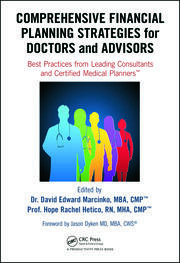
Comprehensive Financial Planning Strategies for Doctors and Advisors: Best Practices from Leading Consultants and Certified Medical Planners™

ORDER TEXTBOOK: https://www.routledge.com/Comprehensive-Financial-Planning-Strategies-for-Doctors-and-Advisors-Best/Marcinko-Hetico/p/book/9781482240283

INVITE DR. MARCINKO: https://medicalexecutivepost.com/dr-david-marcinkos-

THANK YOU

***

CREDIT CARD SWIPE FEES: Capped

Visa and Mastercard agree to $30 billion deal to cap credit card swipe fees

By Staff Reporters

***

***

After a nearly 20-year legal battle, the credit card behemoths said they’ll slightly reduce the 2% fees that they charge retailers every time a consumer uses one of their cards.

Retailers will also be able to adjust prices at checkout depending on the type of card used. The banks that issue cards—like JPMorgan Chase, Citigroup, and Bank of America—will likely bear the brunt of the changes, as they typically receive most of the revenue from swipe fees.

CITE: https://www.r2library.com/Resource/Title/082610254

COMMENTS APPRECIATED

Thank You

***

***

CREDIT CARDS: Medical Debt?

By Staff Reporters

***

***

What is a medical credit card?

Medical credit cards are typically offered through healthcare providers such as physicians, veterinarians, dentists, and even hospitals. Unlike major credit cards, you can’t use them for cash advances or to purchase items like groceries, gasoline, or airline tickets.

CITE: https://www.r2library.com/Resource

The cards are only accepted by participating medical providers for certain medical services or procedures. 

READ: https://www.experian.com/blogs/ask-experian/should-you-use-medical-credit-card/

COMMENTS APPRECIATED

Thank You

***

***

US Credit Card Balances & Microsoft Stock Both Jump

By Staff Reporters

***

***

US credit card balances have jumped to a record $1.08 trillion, according to the New York Federal Reserve.

Nevertheless, Stocks rose for the seventh straight day on Tuesday, giving the NASDAQ and S&P 500 their longest winning streaks since 2021. The surge was fueled by a rally in Big Tech and a growing consensus that the Federal Reserve Bank is done raising interest rates. Chief among the tech revelers was Microsoft, which finished the day at an all-time high amid strong demand for its cloud computing services.

CITE: https://www.r2library.com/Resource

COMMENTS APPRECIATED

Thank You

***

***

Who Owns Your Credit Card Reward Points?

Do your credit card reward points belong to you?

By Rick Kahler CFP®

For frequent travelers, who often choose credit cards based on reward programs, accumulated points can be worth thousands of dollars. Whether points are an asset that can be transferred to an heir is another matter.

I recently received this question: “Our friend whose husband recently passed away lost over a million points with Capital One because her husband was the primary on the account and she was just an authorized user, not a joint owner. Capital One closed the credit card since he passed and all the points were forfeited. Do you have any ideas on how to get the points back?”

Unfortunately, not much can be done after the fact. Most credit cards offering points that can be redeemed for travel expense say that points have no cash value and are not actually the property of the account owner but rather belong to the reward’s program. Most card programs’ terms and conditions say that points outstanding upon the card holder’s death are permanently forfeited.

An appeal to the issuing bank would be worth trying. Surprisingly, some will show compassion and allow the points to transfer to another account or credit their value against any outstanding balances on the card, usually at one cent per point.

Considering this issue ahead of time, however, might allow surviving spouses to avoid losing all of a loved one’s hard-earned points.

First, try to find a rewards card that will allow you to own the account jointly with your spouse rather than being an authorized user. If one spouse passes away, the points will remain in the account and the other joint owner will have full access to them. An authorized user has no risk or obligation to pay any debt, and therefore has no claim on any points that remain in the account after the death of the primary cardholder.

The downside of a joint account is that each cardholder is equally liable for any amounts the other charges to the account. If your marriage is transparent and without any financial infidelity going on, this shouldn’t be a problem. If the card is a business card, joint ownership could be more problematic.

Banks that I found that will allow joint accounts are US Bank and PNC Bank. Specific rewards cards that allow joint ownership are Bank of America Cash Rewards, Wells Fargo Cash Wise Visa, and Discover it Cash Back. Obviously, with only three rewards cards allowing joint ownership, that option isn’t widely available.

The next best choice is to be sure both partners have the login information for the account. This would allow a survivor to log on and redeem or transfer points. Many cards will allow transferring points to an airline or hotel rewards programs for 1.5 to 2.3 cents per point. Of course, both partners need to have access to those accounts as well, which generally isn’t a problem with most programs.


This is also the recommended method of accessing points with a specific airline. According to a September 19, 2019, article by Richard Kerr at thepointsguy.com, giving your next of kin access to all your airline and hotel awards accounts gives them “all the information needed to continue using the points and miles without alerting the airline.”

Including airline reward points in a will may be worthwhile. It might not make a difference with every airline or bank, but some programs will transfer such designated points without a fee.

Assessment:

Travel reward points may be a relatively minor asset. Still, a little planning can make them readily available without adding stress for a surviving spouse during a difficult time.

Conclusion

Your thoughts and comments on this ME-P are appreciated. Feel free to review our top-left column, and top-right sidebar materials, links, URLs and related websites, too. Then, subscribe to the ME-P. It is fast, free and secure.

Link: http://feeds.feedburner.com/HealthcareFinancialsthePostForcxos

Speaker: If you need a moderator or speaker for an upcoming event, Dr. David E. Marcinko; MBA – Publisher-in-Chief of the Medical Executive-Post – is available for seminar or speaking engagements. Contact: MarcinkoAdvisors@msn.com

***

Risk Management, Liability Insurance, and Asset Protection Strategies for Doctors and Advisors: Best Practices from Leading Consultants and Certified Medical Planners™8Comprehensive Financial Planning Strategies for Doctors and Advisors: Best Practices from Leading Consultants and Certified Medical Planners™

On Lost or Stolen Credit, ATM and Debit Cards

 Why I Dislike Debit Cards –  And You Should Too!

[By Dr. David Edward Marcinko MBA]

If your credit, ATM, or debit card is lost or stolen, federal law limits your liability for unauthorized charges. Your protection against unauthorized charges depends on the type of card — and when you report the loss.

***

https://www.consumer.ftc.gov/articles/0213-lost-or-stolen-credit-atm-and-debit-cards

***

MORE: Pros and Cons

Debit vs. credit | Pros, cons and protections for your money

Assessment

Your thoughts are appreciated.

MORE FOR DOCTORS:

“Insurance & Risk Management Strategies for Doctors” https://tinyurl.com/ydx9kd93

“Fiduciary Financial Planning for Physicians” https://tinyurl.com/y7f5pnox

“Business of Medical Practice 2.0” https://tinyurl.com/yb3x6wr8

Risk Management, Liability Insurance, and Asset Protection Strategies for Doctors and Advisors: Best Practices from Leading Consultants and Certified Medical Planners™8Comprehensive Financial Planning Strategies for Doctors and Advisors: Best Practices from Leading Consultants and Certified Medical Planners™

THANK YOU

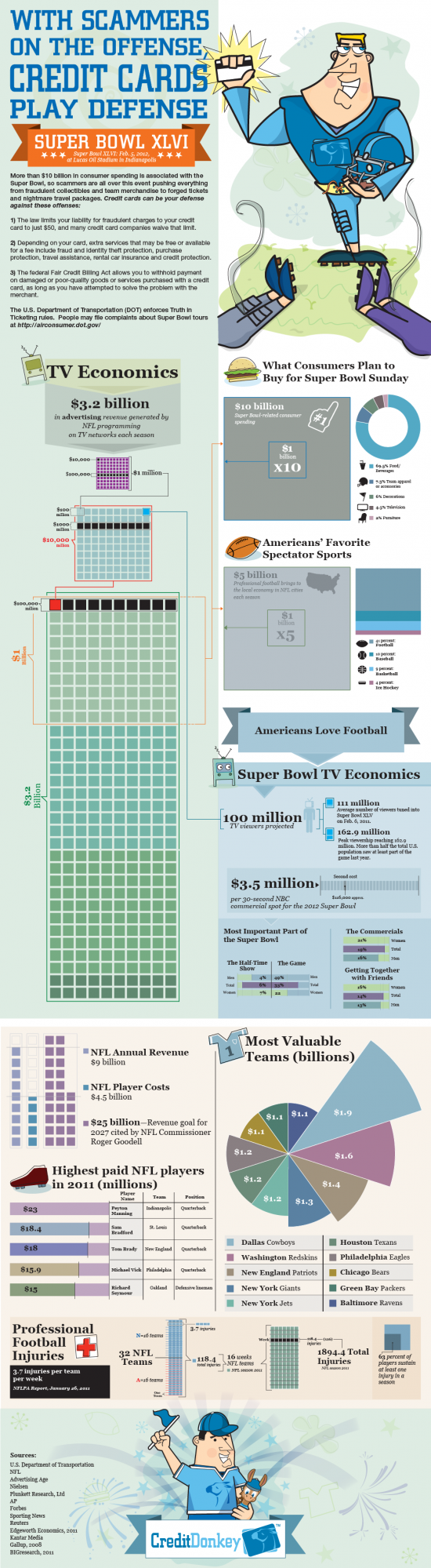
Beware Super Bowl XLVI Scams

Join Our Mailing List 

Credit Cards Can Protect ME-P Football Fans

Beware of ticket, travel and counterfeit merchandise scams and use your good judgment and plastic to protect yourself from fraud.

Source: www.CreditDonkey.com

Conclusion

And so, your thoughts and comments on this ME-P are appreciated. Please review our top-left column, and top-right sidebar materials, links, URLs and related websites, too. Then, subscribe to the ME-P. It is fast, free and secure.

Link: http://feeds.feedburner.com/HealthcareFinancialsthePostForcxos

Speaker: If you need a moderator or speaker for an upcoming event, Dr. David E. Marcinko; MBA – Publisher-in-Chief of the Medical Executive-Post – is available for seminar or speaking engagements. Contact: MarcinkoAdvisors@msn.com

Our Other Print Books and Related Information Sources:

Health Dictionary Series: http://www.springerpub.com/Search/marcinko

Practice Management: http://www.springerpub.com/product/9780826105752

Physician Financial Planning: http://www.jbpub.com/catalog/0763745790

Medical Risk Management: http://www.jbpub.com/catalog/9780763733421

Healthcare Organizations: www.HealthcareFinancials.com

Physician Advisors: www.CertifiedMedicalPlanner.com

Subscribe Now: Did you like this Medical Executive-Post, or find it helpful, interesting and informative? Want to get the latest ME-Ps delivered to your email box each morning? Just subscribe using the link below. You can unsubscribe at any time. Security is assured.

Link: http://feeds.feedburner.com/HealthcareFinancialsthePostForcxos

Sponsors Welcomed: And, credible sponsors and like-minded advertisers are always welcomed.

Link: https://healthcarefinancials.wordpress.com/2007/11/11/advertise

Product Details  Product Details

Credit Card Acceptance in Medical Practice

One-third of Physician Practices Not Accepting CCs

By Staff ReportersGold Coins

The Physician Office Credit-Card Acceptance Survey, by SK&A Information Services, an Irvine, Califironia based provider of healthcare information solutions and research, suggests physician practices are limiting credit card [cc] payments because patients are being adversely affected by high interest rates, maxed out credit limits and a more challenging ability to qualify for unsecured credit.

Assessment

Read this report in HealthcareFinance News, on May 29 2009, by Richard Pizzi,

http://www.healthcarefinancenews.com/news/one-third-physician-practices-do-not-accept-credit-card-payments

Conclusion

And so, your thoughts and comments on this Medical Executive-Post are appreciated. Do our physician ME-P readers accept CCs? Feel free to review our top-left column, and top-right sidebar materials, links, URLs and related websites, too. Then, be sure to subscribe to the ME-P. It is fast, free and secure.

Link: http://feeds.feedburner.com/HealthcareFinancialsthePostForcxos

Speaker: If you need a moderator or speaker for an upcoming event, Dr. David E. Marcinko; MBA – Publisher-in-Chief of the Executive-Post – is available for seminar or speaking engagements. Contact: MarcinkoAdvisors@msn.com  or Bio: www.stpub.com/pubs/authors/MARCINKO.htm

Get our Widget: Get this widget!

Subscribe Now: Did you like this Medical Executive-Post, or find it helpful, interesting and informative? Want to get the latest ME-Ps delivered to your email box each morning? Just subscribe using the link below. You can unsubscribe at any time. Security is assured.

Link: http://feeds.feedburner.com/HealthcareFinancialsthePostForcxos

Sponsors Welcomed

And, credible sponsors and like-minded advertisers are always welcomed.

Link: https://healthcarefinancials.wordpress.com/2007/11/11/advertise