Selecting Financial Advisors the Risky Way

Physician Due Diligence is Important

[By Daniel B. Moisand; CFP®, and the ME-P Staff]Tall Shadows

While the merits of hiring the right financial advisor [FA] may be clear, hiring the wrong one can be devastating. Medical professionals still tend to have higher incomes and are an attractive target for most financial institutions and scam artists. This fear is a poor excuse for not getting the assistance necessary. Advice about who to engage for financial assistance comes from a hodge-podge of disjointed sources. This leads to good intentions and bad results. Take caution when using the following as sources of advice.

Relying on Family and Friends

By far more people seek financial advice from trusted family members and friends than any other source.  This is only natural. It is essential to trust that you are getting advice from a source that means well. It is also important that you get along well with your advisors. Hesitating to communicate with your advisor, even a great advisor, can cause problems even more problematic that getting bad advice from someone you like. While these sources have a good handle on the essential elements of trust and rapport, it is the competence of the advice that is most often the issue. The life and money experiences of those who are close to you certainly have value, but they are not necessarily relevant to your unique goals and circumstances. THINK: Bernie Madoff.

Media

A few years ago, the dominant media force in consumer oriented financial matters was the print media.  Magazines and newsletters proliferated with the bull market. More recently however, television has supplanted print even in the bear market. For example, a study now estimates that 80 percent of what the average American knows about current events comes from TV. Why wait three weeks for the next issue when you can get a commentary instantly on the television? There is nothing wrong with watching shows that cover the markets or subscribing to a consumer finance magazine. It is certainly a good idea to be informed. However, be wary of the quality and applicability of information put out by the media.

The Internet

It is easy to run across an ad for prescriptions drugs on television. Images prance across the screen followed by a litany of potential side effects and the obligatory, “Ask your doctor about”. With the expansion of the information superhighway, more and more companies are going direct to the consumer in some manner or another.

Financially speaking this information can be of great benefit but should also generate more concern. It is very easy to project a particular image via the web. The webmaster controls the interaction from what you see to what you hear. One of the results of this is that the Internet has already garnered a reputation as a breeding ground for new scams. More prevalent, however, is the presentation of information meant to be useful that is simply wrong, misinterpreted, or misapplied. The most terrifying source of misinformation on the net is the chat rooms. Here the entire interaction is clouded by anonymity. Some people enter chat rooms because there is a comfort in anonymity when asking a question. There is also a danger in an anonymous answer. When it comes to something as important as your finances or your health, the prudent course should be to take all the advice with a grain of salt. A great deal of consideration to the quality of the source is in order. It is also essential that one understand the level of accountability a source may possess.   fp-book2

Assessment

Much has been written on financial advisor selection, here on the ME-P and elsewhere; but little on how not to select an advisor. We trust this information will be of assistance to the medical professional in some small increment. Send in your FA stories; both good and bad.

Channel Surfing the ME-P

Have you visited our other topic channels? Established to facilitate idea exchange and link our community together, the value of these topics is dependent upon your input. Please take a minute to visit. And, to prevent that annoying spam, we ask that you register. It is fast, free and secure.

Conclusion

Your thoughts and comments on this ME-P are appreciated. Feel free to review our top-left column, and top-right sidebar materials, links, URLs and related websites, too. Then, subscribe to the ME-P. It is fast, free and secure.

Speaker: If you need a moderator or speaker for an upcoming event, Dr. David E. Marcinko; MBA – Publisher-in-Chief of the Medical Executive-Post – is available for seminar or speaking engagements. Contact: MarcinkoAdvisors@msn.com

OUR OTHER PRINT BOOKS AND RELATED INFORMATION SOURCES:

Product Details  Product Details

Comprehensive Financial Planning Strategies for Doctors and Advisors: Best Practices from Leading Consultants and Certified Medical Planners™

***

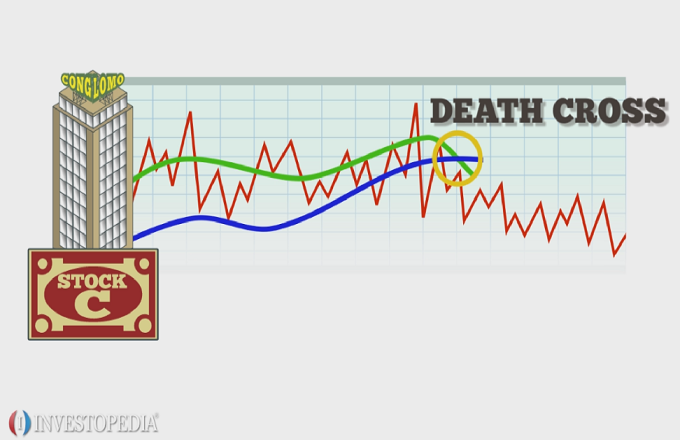
What is the Stock Market DEATH CROSS?

Is A Market Downside Ahead?

By Staff Reporters

***

Charles Schwab: The stock is about to form a death cross pattern as the 200-day and 50-day moving averages are about to cross each other. If this pattern forms, there are signs that the stock will continue falling as sellers target the key support at $60.8, its lowest point this month. A break above that level will see it drop to the psychological support at $55.

***

What Is a Death Cross?

The death cross is a technical chart pattern indicating the potential for a major sell-off. The death cross appears on a chart when a stock’s short-term moving average crosses below its long-term moving average. Typically, the most common moving averages used in this pattern are the 50-day and 200-day moving averages.

***

LINK: https://medicalexecutivepost.com/2022/02/09/what-is-a-bear-market-relief-rally/

CITE: https://www.r2library.com/Resource/Title/082610254

***

***

Summary:

  • The death cross is a bearish signal that’s issued when the short term moving average penetrates the falling long term moving average from above.
  • The most common settings for the averages are 50 and 200.
  • The death cross is a lagging indicator, which should be taken into consideration before relying on it for your own investments.

COMMENTS APPRECIATED

Thank You

Subscribe to the Medical Executive-Post

***

***

FINANCE: https://www.amazon.com/Comprehensive-Financial-Planning-Strategies-Advisors/dp/1482240289/ref=sr_1_1?ie=UTF8&qid=1418580820&sr=8-1&keywords=david+marcinko

***

“BEAR” it …. So Says Leon Cooperman?

By Staff Reporters

***

***

DEFINITION

A bear market is when a market experiences prolonged price declines. It typically describes a condition in which securities prices fall 20% or more from recent highs amid widespread pessimism and negative investor sentiment.

Bear markets are often associated with declines in an overall market or index like the S&P 500, but individual securities or commodities can also be considered to be in a bear market if they experience a decline of 20% or more over a sustained period of time—typically two months or more. Bear markets also may accompany general economic downturns such as a recession. Bear markets may be contrasted with upward-trending bull markets.

CITE: https://www.r2library.com/Resource/Title/082610254

***

So, If you are feeling optimistic the new year will usher in a change in stock market dynamics and shift sentiment from bear to bull-forget about it!? Leon Cooperman has some bad news for you.

The billionaire investor has been a fully-fledged bear for a while now and 2023 has done little to change his stance. “Anybody looking for a new bull market any time soon is looking the wrong way,” Cooperman said.

In fact, Cooperman thinks there’s only a 5% chance the S&P 500 sees out 2023 above the 4,400 mark (up 13% from current levels), believing the stock market is far likelier to head back down from here.

Cooperman evidently knows a thing or two about investing in bear markets, and if we’re to heed his advice, it’s best to look for ‘safe havens’ to shield from further incoming volatility. OR- Maybe not!

***

ORDER: https://www.routledge.com/Comprehensive-Financial-Planning-Strategies-for-Doctors-and-Advisors-Best/Marcinko-Hetico/p/book/9781482240283

***

COMMENTS APPRECIATED

Thank You

***

What is the Stock Market DEATH CROSS?

Is A Market Downside Ahead?

By Staff Reporters

***

What Is a Death Cross?

The death cross is a technical chart pattern indicating the potential for a major sell-off. The death cross appears on a chart when a stock’s short-term moving average crosses below its long-term moving average. Typically, the most common moving averages used in this pattern are the 50-day and 200-day moving averages.

***

https://medicalexecutivepost.com/2022/02/09/what-is-a-bear-market-relief-rally/

CITE: https://www.r2library.com/Resource/Title/082610254

***

***

Summary:

***

COMMENTS APPRECIATED

Thank You

Subscribe to the Medical Executive-Post

***

***

FINANCE: https://www.amazon.com/Comprehensive-Financial-Planning-Strategies-Advisors/dp/1482240289/ref=sr_1_1?ie=UTF8&qid=1418580820&sr=8-1&keywords=david+marcinko

***

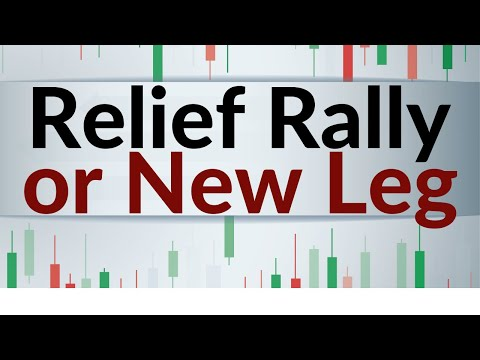
What is a BEAR MARKET Relief Rally?

Are We Experiencing a Bear Market Relief Rally?

***

Maybe yesterday – Not today!

By Staff Reporters

***

A bear market relief rally describes a period inside of a bear market in which prices of stocks temporarily increase during, sometimes quite sharply, before returning to new lows. This rise in prices is typically a short-lived increase, sometimes lasting anywhere from days to months, amidst an overall long-term downward trend in the market.

CITE: https://www.r2library.com/Resource/Title/082610254

Key Takeaways

  • A bear market rally is when prices rise during a bear market.
  • This type of rally is difficult to identify until after it has happened and can occur more than once in a prolonged bear market.
  • Day traders can make money shorting stocks, but individual investors should just stay the course with their investing strategy.

COMMENTS APPRECIATED

Thank You

Subscribe to the Medical Executive-Post

***

***

VALUATION: Approaches for Common Stocks

A BRIEF REVIEW FOR PHYSICIAN INVESTORS

By Dr. David Edward Marcinko MBA CMP™

CMP logo

SPONSOR: http://www.CertifiedMedicalPlanner.org

QUESTION: We are in near bear market correction territory – especially for tech stocks – so what are the 2 major types of valuation approaches for common stock?

UPDATE: https://www.msn.com/en-us/money/markets/stock-market-news-live-updates-sandp-500-dow-fall-amid-mixed-bank-earnings-retail-sales-miss/ar-AASL74g?li=BBnb7Kz

TECH: https://www.msn.com/en-us/money/markets/nasdaq-near-a-10percent-correction-isnt-the-sell-signal-you-probably-think-it-is/ar-AASL22m?li=BBnbfcL

ANSWER: There are basically two different approaches for common stock valuation; top-down and bottom-up.  Under either of the two fundamental approaches, a physician investor will have to work with individual company data.  In reality, each of these approaches is used by investors and security analysts when doing fundamental analysis.  

CITE: https://www.r2library.com/Resource/Title/082610254

With the bottom-up approach, investors focus directly on a company’s prospects. Analysis of such information as the company’s products, its competitive position, and its financial status leads to an estimate of the company’s earnings potential, and, ultimately, its value in the market.  Considerable time and effort are required to produce the type of detailed financial analysis needed to understand a firm’s standing. The emphasis in this approach is on finding companies with good long-term growth prospects, and making accurate earnings estimates. 

The top-down approach is the opposite of the bottom-up approach. Investors begin with the economy and the overall market, considering such important factors as interest rates and inflation. They next consider likely industry prospects, or sectors of the economy that are likely to do particularly well (or particularly poorly). Finally, having decided that factors are favorable for investing, and having determined which parts of the overall economy are likely to perform well, individual companies are analyzed.

***

COMMENTS APPRECIATED.

Thank You

Subscribe to the Medical Executive-Post

***

RISK MANAGEMENT: https://www.amazon.com/Comprehensive-Financial-Planning-Strategies-Advisors/dp/1482240289/ref=sr_1_1?ie=UTF8&qid=1418580820&sr=8-1&keywords=david+marcinko

***

Risk Management, Liability Insurance, and Asset Protection Strategies for Doctors and Advisors : Best Practices from Leading Consultants and Certified Medical Planners™ book cover

ORDER: https://www.routledge.com/Risk-Management-Liability-Insurance-and-Asset-Protection-Strategies-for/Marcinko-Hetico/p/book/9781498725989

***

UPDATE: The Markets, Gasoline, Recession and the Bear

By Staff Reporters

***

***

For the domestic markets, the S&P 500 closed down 151 points, or 3.88%. It’s down nearly 22% since January. The Dow was down 876 points (2.79%) and the NASDAQ dropped 530 points (4.68%). And, investors were disappointed to learn that inflation is moving in the wrong direction. U.S. consumer prices surged 8.6% year-over-year in May, to a fresh 40-year high, led by higher prices for energy, food and housing.

For the first time in history, a gallon of regular gasoline now costs $5 on average nationwide, according to AAA, and experts predict gas prices could average $6 a gallon by August.

Moreover, nearly 70% of leading economists expect the US to tumble into a recession as the country grapples with inflation. In a Financial Times poll, the bulk of economists said they expect a recession to be declared in the first half of 2023. The poll comes after US inflation soared to 8.6% in May, outstripping economists’ expectations and piling the pressure on the Fed.

Finally, S&P Global says a 20% decline in the S&P 500 on a closing basis from its previous peak is all it takes to define a bear market. Which means that this bear market is already more than five months old, since the S&P 500 all-time high came on January 3rd, 2022.

***

***

COMMENTS APPRECIATED

Thank You

***

***

The BUSINESS [Economic] CYCLE: What is it Really?

Of Bull and Bear Markets, too!

See the source image

By Dr. David Edward Marcinko MBA CMP®

CMP logo

SPONSOR: http://www.CertifiedMedicalPlanner.org

The business cycle is also known as the economic cycle and reflects the expansion or contraction in economic activity. Understanding the business cycle and the indicators used to determine its phases may influence investment or economic business decisions and financial or medical planning expectations. Although often depicted as the regular rising and falling of an episodic curve, the business cycle is very irregular in terms of amplitude and duration.

Moreover, many elements move together during the cycle and individual elements seldom carry enough momentum to cause the cycle to move. However, elements may have a domino effect on one another, and this is ultimately drives the cycle.  We can also have a large positive cycle, coincident with a smaller but still negative cycle, as seen in the current healthcare climate of today.

CITE: https://www.r2library.com/Resource/Title/082610254

  1. First Phase: Trough to Recovery (production driven)

Scenario: A depressed GNP leads to declining industrial production and capacity utilization. Decreased workloads result in improved labor productivity and reduced labor (unit) costs until actual producer (wholesale) prices decline.

  1. Second Phase: Recovery to Expansion (consumer driven)

Scenario: CPI declines (due to reduced wholesale prices) and consumer real income rises, improving consumer sentiment and actual demand for consumer goods.

  1. Third Phase: Expansion to Peak (production driven)

Scenario: GNP rises leading to increased industrial production and capacity utilization. But, labor productivity declines and unit labor costs and producer (wholesale) prices rise.

  1. Fourth Phase: Peak to Contraction (consumer driven)

Scenario: CPI rises making consumer real income and sentiment erode until consumer demand, and ultimately purchases, shrink dramatically.  Recessions may occur and economists have an alphabet used to describe them.

For example, with a V, the drop and recovery is quick. For U, the economy moves up more sluggishly from the bottom. A W is what you would expect: repeated recoveries and declines. An L shaper recession describes a prolonged dry economic spell or even depression.


NOTE: Historically, contractions have had a shorter duration than expansions.

Bull and Bear Markets for Medical Professionals

A bull market is generally one of rising stock prices, while a bear market is the opposite. There are usually two bulls for every one bear market over the long term.

More specifically, a bear market is defined as a drop of twenty percent or more in a market index from its high, and can vary in duration and severity.  While a bull market has no such threshold requirement to exist, other than they exist between these two periods of sharp decline.

Whither the Bear?

As a doctor, your action plan in a bear market depends on many variables, with perhaps your age being the most important:

In your 30s:

  • Pay off debts, school or practice loans.
  • Invest in safe money market mutual funds, cash or CDs.
  • Start retirement plan or 401-K account.

In your 40s:

  • Increase your pension plan or 401-K contributions.
  • Stay weighted more toward equity investments.
  • Review your goals, risk tolerance and portfolio.

In your 50s:

  • Position assets for ready cash instruments.
  • Diversify into stock, bonds and cash.

Retirement:

  • Maintain 3 years of ready cash living expenses.
  • Reduce, but still maintain your exposure to equities.

ASSESSMENT: So, where are we right now in the economic business cycle? Your thoughts are appreciated.

ORDER TEXTBOOK: https://www.amazon.com/Comprehensive-Financial-Planning-Strategies-Advisors/dp/1482240289/ref=sr_1_1?ie=UTF8&qid=1418580820&sr=8-1&keywords=david+marcinko

SECOND OPINIONS: https://medicalexecutivepost.com/schedule-a-consultation/

INVITE DR. MARCINKO: https://medicalexecutivepost.com/dr-david-marcinkos-bookings/

THANK YOU

***

Economic Market Update

END OF “WHAT A WEEK”

By Staff Reporters

***

Wall Street closed lower on Thursday as investors banked some profits after three straight days of gains and turned their focus toward upcoming inflation data and how it might influence the Federal Reserve’s meeting next week.

So, what about today-prognostications?

YOUR COMMENTS ARE APPRECIATED.

Thank You

***

***

Recent Weekend Stock Market Volatility

By Staff Reporters

***

WHAT A WEEK!

  • Markets: Stocks ended a topsy-turvy week with another stinker yesterday, dragged netherward (big word alert) by the tech sector. Meta shares nearly entered a bear market, falling almost 20% from a closing record in September. Still, the S&P was down less than 1% for the week.
  • CITE: https://www.r2library.com/Resource/Title/0826102549
  • Covid: The first bits of solid Omicron data are starting to trickle out. One study from South Africa showed that the new variant may cause a higher rate of reinfection in people who already got Covid. Critical information on the effectiveness of current vaccines against Omicron could come in a few days, a WHO scientist said.

COMMENTS APPRECIATED.

Thank You

***

***

The Bear MARKETS and Cyber ECONOMY

By Staff Reporters

  • Markets: Stocks dropped sharply in the post-Thanksgiving trading session on Friday due to concerns over the new Covid variant, Omicron. The Dow fell 2.5% for its worst day of the year, and the S&P also tumbled 2.3%. Oil prices and travel stocks also got rocked given fresh worries over travel demand, while “stay-at-home” names like Peloton and Zoom got a boost.
See the source image
  • Economy: It’s still way too early to know the impact of Omicron on economic growth. As we laid out last week, the Fed is under pressure to accelerate the winding down of its stimulus measures in order to battle inflation, but the new variant could change the calculus. Investors dialed back their expectations of a sooner-than-expected rate increase on Friday.

YOUR COMMENTS ARE APPRECIATED.

Thank You

***

***

STOCKS: A Very Skewed Market “Boom”

PRICES CHANGES FOR THE LAST SEVEN YEARS

***

***

Your thoughts are appreciated.

SECOND OPINIONS: https://medicalexecutivepost.com/schedule-a-consultation/

INVITE DR. MARCINKO: https://medicalexecutivepost.com/dr-david-marcinkos-bookings/

SPONSOR: http://www.CertifiedMedicalPlanner.org

***