NBER Bulletin on Aging and Health

Join Our Mailing List

Year 2012 – Number One [Selected ME-P Reading Suggestions]

View a printable PDF copy of the 2012 No. 1 NBER Bulletin on Aging and Health at http://www.nber.org/aginghealth/2012no1/2012no1.pdf

The 2012 No. 1 Bulletin includes the articles below:

1)  Why Are Recessions Good for Your Health? by Ann Huff Stevens, Douglas Miller, Marianne Page, and Mateusz Filipski http://www.nber.org/aginghealth/2012no1/w17657.html

2)  How Did the Great Recession Affect Near Retirement-Age Households? by Alan Gustman, Thomas Steinmeier, and Nahid Tabatabai http://www.nber.org/aginghealth/2012no1/w17547.html

3)  The Draw-Down of Retirement Savings by James Poterba, Steven Venti, and David Wise http://www.nber.org/aginghealth/2012no1/w17536.html

4)  Abstracts of Selected Recent NBER Working Papers: http://www.nber.org/aginghealth/2012no1/WorkingPaperSummaries.html

Assessment

NBER Profile: David Neumark http://www.nber.org/aginghealth/2012no1/Neumark.html
Conclusion

Your thoughts and comments on this ME-P are appreciated. Feel free to review our top-left column, and top-right sidebar materials, links, URLs and related websites, too. Then, subscribe to the ME-P. It is fast, free and secure.

Link: http://feeds.feedburner.com/HealthcareFinancialsthePostForcxos

Speaker: If you need a moderator or speaker for an upcoming event, Dr. David E. Marcinko; MBA – Publisher-in-Chief of the Medical Executive-Post – is available for seminar or speaking engagements. Contact: MarcinkoAdvisors@msn.com

Our Other Print Books and Related Information Sources:

Health Dictionary Series: http://www.springerpub.com/Search/marcinko

Practice Management: http://www.springerpub.com/product/9780826105752

Physician Financial Planning: http://www.jbpub.com/catalog/0763745790

Medical Risk Management: http://www.jbpub.com/catalog/9780763733421

Hospitals: http://www.crcpress.com/product/isbn/9781439879900

Physician Advisors: www.CertifiedMedicalPlanner.org

Product DetailsProduct DetailsProduct Details

Product Details  Product Details

Product Details


About “Hospitals and Health Care Organizations”

ADVERTISEMENT

Hospitals & Healthcare Organizations: Management Strategies, Operational Techniques, Tools, Templates and Case Studies

Hospitals & Healthcare Organizations: Management Strategies, Operational Techniques, Tools, Templates and Case Studies

Buy from Amazon

Some Common Surgeries You Can’t Afford‏

Join Our Mailing List

The Cost of Common Surgeries

By Muhammad Saleem

With a broad range of healthcare options, it is often difficult to understand just what your pocketbook can afford.

So, we took a look at the costs of the most common surgeries performed every year.

Source: Medical Billing and Coding

Conclusion

Your thoughts and comments on this ME-P are appreciated. Feel free to review our top-left column, and top-right sidebar materials, links, URLs and related websites, too. Then, subscribe to the ME-P. It is fast, free and secure.

Link: http://feeds.feedburner.com/HealthcareFinancialsthePostForcxos

Speaker: If you need a moderator or speaker for an upcoming event, Dr. David E. Marcinko; MBA – Publisher-in-Chief of the Medical Executive-Post – is available for seminar or speaking engagements. Contact: MarcinkoAdvisors@msn.com

Our Other Print Books and Related Information Sources:

Health Dictionary Series: http://www.springerpub.com/Search/marcinko

Practice Management: http://www.springerpub.com/product/9780826105752

Physician Financial Planning: http://www.jbpub.com/catalog/0763745790

Medical Risk Management: http://www.jbpub.com/catalog/9780763733421

Healthcare Organizations: www.HealthcareFinancials.com

Physician Advisors: www.CertifiedMedicalPlanner.com

Subscribe Now: Did you like this Medical Executive-Post, or find it helpful, interesting and informative? Want to get the latest ME-Ps delivered to your email box each morning? Just subscribe using the link below. You can unsubscribe at any time. Security is assured.

Link: http://feeds.feedburner.com/HealthcareFinancialsthePostForcxos

Sponsors Welcomed: And, credible sponsors and like-minded advertisers are always welcomed.

Link: https://healthcarefinancials.wordpress.com/2007/11/11/advertise

Product Details

The ACA and Rising Healthcare Costs?

Join Our Mailing List
Effects of Affordable Care Act on Private Health Care Costs Remain to be Seen
[By Staff Reporters]
###
The latest data on economic growth shows the American economy spent the last quarter growing at a rate equal to 2.5 percent a year. That’s neither recession-level bad nor full employment recovery-level good, but it’s worth diving into the numbers to see exactly what’s driving this slow expansion.
###
A significant part of the growth came from personal spending on health care as insurance premiums continue to rise, meaning a lot of that growth wasn’t very productive. That health care costs are rising—and rising faster than most other expenses—is a problem that businesses and policymakers have struggled with for years: It’s the major cause of federal budget deficits and the reason behind the health care law passed in 2010. While the effects of the Affordable Care Act on private health care costs remain to be seen—many of its provisions will not go into affect for another two years—health care economists like Harvard’s David Cutler say it draws on nearly every idea that exists to lower costs.
###
But, Cutler adds that while we wait for pilot programs to succeed and scale or fail, more changes to the system—including a public insurance option and further incentives for health providers to reform delivery—should be on the table.While policymakers in Washington and state capitals wait on politics and legal challenges to the 2010 law, consumers can take action themselves to lower costs. Innovative health care companies are coming up with new ways to make cost savings easier to find.

infographic, healthcare, politics, business, cost, transparency, GOOD

Source: Simplee

Conclusion

Your thoughts and comments on this ME-P are appreciated. Feel free to review our top-left column, and top-right sidebar materials, links, URLs and related websites, too. Then, subscribe to the ME-P. It is fast, free and secure.

Link: http://feeds.feedburner.com/HealthcareFinancialsthePostForcxos

Speaker: If you need a moderator or speaker for an upcoming event, Dr. David E. Marcinko; MBA – Publisher-in-Chief of the Medical Executive-Post – is available for seminar or speaking engagements. Contact: MarcinkoAdvisors@msn.com

OUR OTHER PRINT BOOKS AND RELATED INFORMATION SOURCES:

DICTIONARIES: http://www.springerpub.com/Search/marcinko
PHYSICIANS: www.MedicalBusinessAdvisors.com
PRACTICES: www.BusinessofMedicalPractice.com
HOSPITALS: http://www.crcpress.com/product/isbn/9781466558731
CLINICS: http://www.crcpress.com/product/isbn/9781439879900
ADVISORS: www.CertifiedMedicalPlanner.org
PODIATRISTS: www.PodiatryPrep.com
BLOG: www.MedicalExecutivePost.com
FINANCE: Financial Planning for Physicians and Advisors
INSURANCE: Risk Management and Insurance Strategies for Physicians and Advisors

Product DetailsProduct Details

Public versus Private Healthcare

Around the World

Conclusion

And so, your thoughts and comments on this ME-P are appreciated. Please review our top-left column, and top-right sidebar materials, links, URLs and related websites, too. Then, subscribe to the ME-P. It is fast, free and secure.

Link: http://feeds.feedburner.com/HealthcareFinancialsthePostForcxos

Speaker: If you need a moderator or speaker for an upcoming event, Dr. David E. Marcinko; MBA – Publisher-in-Chief of the Medical Executive-Post – is available for seminar or speaking engagements. Contact: MarcinkoAdvisors@msn.com

Our Other Print Books and Related Information Sources:

Health Dictionary Series: http://www.springerpub.com/Search/marcinko

Practice Management: http://www.springerpub.com/product/9780826105752

Physician Financial Planning: http://www.jbpub.com/catalog/0763745790

Medical Risk Management: http://www.jbpub.com/catalog/9780763733421

Healthcare Organizations: www.HealthcareFinancials.com

Physician Advisors: www.CertifiedMedicalPlanner.com

Subscribe Now: Did you like this Medical Executive-Post, or find it helpful, interesting and informative? Want to get the latest ME-Ps delivered to your email box each morning? Just subscribe using the link below. You can unsubscribe at any time. Security is assured.

Link: http://feeds.feedburner.com/HealthcareFinancialsthePostForcxos

Sponsors Welcomed: And, credible sponsors and like-minded advertisers are always welcomed.

Link: https://healthcarefinancials.wordpress.com/2007/11/11/advertise

Product DetailsProduct DetailsProduct Details

Understanding Healthcare AR and PO Financing

Join Our Mailing List

A Normal or Strategic Business Imperative for Doctors?

If you, or your medical practice, can’t qualify for a traditional business loan, or if you don’t have time to wait for those funds, there are other alternative financing options that might be the answer — especially when those funds will equal a big return.

AR and PO financing (accounts receivable and purchase order financing) are two choices for business owners, and medical practices, when they need immediate capital, or have lower credit scores.

Assessment: This graphic should help decide if AR or PO financing is right for you.

Source: Dan Bischoff

 Conclusion

And so, your thoughts and comments on this ME-P are appreciated. Please review our top-left column, and top-right sidebar materials, links, URLs
and related websites, too. Then, subscribe to the ME-P. It is fast, free and secure.

Link: http://feeds.feedburner.com/HealthcareFinancialsthePostForcxos

Speaker: If you need a moderator or speaker for an upcoming event, Dr. David E. Marcinko; MBA – Publisher-in-Chief of the Medical Executive-Post – is available for seminar or speaking engagements. Contact: MarcinkoAdvisors@msn.com

Our Other Print Books and Related Information Sources:

Health Dictionary Series: http://www.springerpub.com/Search/marcinko

Practice Management: http://www.springerpub.com/product/9780826105752

Physician Financial Planning: http://www.jbpub.com/catalog/0763745790

Medical Risk Management: http://www.jbpub.com/catalog/9780763733421

Healthcare Organizations: www.HealthcareFinancials.com

Physician Advisors: www.CertifiedMedicalPlanner.com

Subscribe Now: Did you like this Medical Executive-Post, or find it helpful, interesting and informative? Want to get the latest ME-Ps delivered to your email box each morning? Just subscribe using the link below. You can unsubscribe at any time. Security is assured.

Link: http://feeds.feedburner.com/HealthcareFinancialsthePostForcxos

Sponsors Welcomed: And, credible sponsors and like-minded advertisers are always welcomed.

Link: https://healthcarefinancials.wordpress.com/2007/11/11/advertise

Product Details

Controlling Health Care Spending [An NIHCM Foundation Webinar]

The Imperative to Act and Diverse Views of the Road Forward

Join Our Mailing List 

The U.S.now spends $2.5 trillion annually on health care, accounting for well over 17 percent of GDP and growing rapidly with challenging fiscal consequences. Despite the imperative to control spending, we face much uncertainty about how to move to a more sustainable path.

Political opposition threatens implementation of the Affordable Care Act, and many of its cost-control measures are still unproven. A long-term fix for Medicare physician payment remains elusive. The trigger mechanism activated by the failure of the Super Committee is poised to affect myriad health programs, but decisions on the specific cuts await sure-to-be intense congressional negotiations.

And, the many ideas for entitlement reform that were advanced during deficit reduction talks continue to generate much debate but little consensus.

Topics

To shed light on these complex issues, this webinar will feature leading health policy experts discussing topics including:

  • health spending growth and the implications for government budgets, employers and individuals
  • the societal trade-offs we face as health spending grows and as we think about ways to control spending
  • alternative viewpoints on the viability of cost control approaches now being tried and the most promising options for the future.

Assessment

Visit NIHCM Foundation’s website to view an agenda and additional resources on health care spending. And, please register by noon (EST) on February 1st.

Conclusion        

And so, your thoughts and comments on this ME-P are appreciated. Please review our top-left column, and top-right sidebar materials, links, URLs and related websites, too. Then, subscribe to the ME-P. It is fast, free and secure.

Link: http://feeds.feedburner.com/HealthcareFinancialsthePostForcxos

Speaker: If you need a moderator or speaker for an upcoming event, Dr. David E. Marcinko; MBA – Publisher-in-Chief of the Medical Executive-Post – is available for seminar or speaking engagements. Contact: MarcinkoAdvisors@msn.com

Our Other Print Books and Related Information Sources:

Health Dictionary Series: http://www.springerpub.com/Search/marcinko

Practice Management: http://www.springerpub.com/product/9780826105752

Physician Financial Planning: http://www.jbpub.com/catalog/0763745790

Medical Risk Management: http://www.jbpub.com/catalog/9780763733421

Healthcare Organizations: www.HealthcareFinancials.com

Physician Advisors: www.CertifiedMedicalPlanner.com

Subscribe Now: Did you like this Medical Executive-Post, or find it helpful, interesting and informative? Want to get the latest ME-Ps delivered to your email box each morning? Just subscribe using the link below. You can unsubscribe at any time. Security is assured.

Link: http://feeds.feedburner.com/HealthcareFinancialsthePostForcxos

Sponsors Welcomed: And, credible sponsors and like-minded advertisers are always welcomed.

Link: https://healthcarefinancials.wordpress.com/2007/11/11/advertise

Product Details

Apply AcademyHealth / NCHS Health Policy Fellowships

How to Apply – January 9th Deadline Looming!

Join Our Mailing List 

Vision

AcademyHealth seeks to improve health and health care by generating new knowledge and moving knowledge into action.

Mission

As the pre-eminent professional society for health services researchers and health policy analysts, AcademyHealth collaborates with the health services research community and other key stakeholders to support the development of health services research by:

  • Expanding and improving the scientific basis of the field;
  • Increasing the capabilities and skills of researchers;  
  • Promoting the development of the necessary financial, human, infrastructure, and data resources;
  • Facilitate the use of the best available research and information;
  • Translating research findings and the lessons of experience into useful information for clinical, management, and policy decisions;  
  • Enhancing communication and interaction between health services researchers and health policymakers;
  • Assist health policy and practice leaders in addressing major health challenges;
  • Providing high quality policy and technical assistance;
  • Offering educational programs that advance the use of policy analysis and research; and
  • Identifying areas where additional research and information are needed.

Assessment

Link: http://www.academyhealth.org/Training/content.cfm?ItemNumber=1435&navItemNumber=2332

Conclusion      

And so, your thoughts and comments on this ME-P are appreciated. Please review our top-left column, and top-right sidebar materials, links, URLs and related websites, too. Then, subscribe to the ME-P. It is fast, free and secure.

Link: http://feeds.feedburner.com/HealthcareFinancialsthePostForcxos

Speaker: If you need a moderator or speaker for an upcoming event, Dr. David E. Marcinko; MBA – Publisher-in-Chief of the Medical Executive-Post – is available for seminar or speaking engagements. Contact: MarcinkoAdvisors@msn.com

Our Other Print Books and Related Information Sources:

Health Dictionary Series: http://www.springerpub.com/Search/marcinko

Practice Management: http://www.springerpub.com/product/9780826105752

Physician Financial Planning: http://www.jbpub.com/catalog/0763745790

Medical Risk Management: http://www.jbpub.com/catalog/9780763733421

Healthcare Organizations: www.HealthcareFinancials.com

Physician Advisors: www.CertifiedMedicalPlanner.com

Subscribe Now: Did you like this Medical Executive-Post, or find it helpful, interesting and informative? Want to get the latest ME-Ps delivered to your email box each morning? Just subscribe using the link below. You can unsubscribe at any time. Security is assured.

Link: http://feeds.feedburner.com/HealthcareFinancialsthePostForcxos

Sponsors Welcomed: And, credible sponsors and like-minded advertisers are always welcomed.

Link: https://healthcarefinancials.wordpress.com/2007/11/11/advertise

Product DetailsProduct DetailsProduct Details       


On Performance Based Health Networks and Medical Cost Savings‏

Achieving Proper Healthcare Alignment

[Number 3 in a Series of 6]

By Sam Muppalla – Vice President, McKesson Health Solutions, Network Performance Management (NPM)

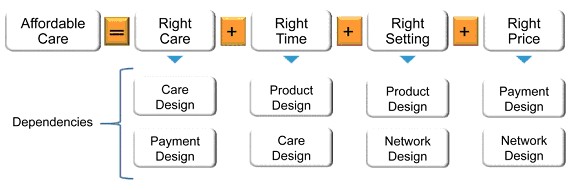
Last week, on this ME-P, I wrote about Health Plans and the Three Levers of Innovation for Affordable Care. We looked at a number of innovations taking place in the areas of products, care models, reimbursement, and network designs. It’s vitally important to be able to innovate in each of these areas, but even more important to be able to align these network elements properly. The key to affordable care is enabling every member to get the right care, at the right time, from the right provider, and for the right price. But, when you look at what it takes to deliver such care, the interdependencies of design of care models, payment, products and networks become apparent, as you can see in Figure 1 below:

 Figure 1: Affordable care requires alignment of product, network, care model, and payment design.

Steering the member to the right provider at the right setting is influenced by the member incentives built into the product design and the provider choice component of the network design. The right care is dependent on the care model design and the provider reimbursement design. Overall affordability of care is obviously tied to payment design. Not so obvious are the dependencies between product design and payment design. The member behavior targeted by product incentives should be reinforced by the provider engagement influenced by reimbursement design. All these interdependencies necessitate alignment between product, care model, reimbursement and network design. Alignment is fundamental to scaling innovation.

Network Design Drives Alignment

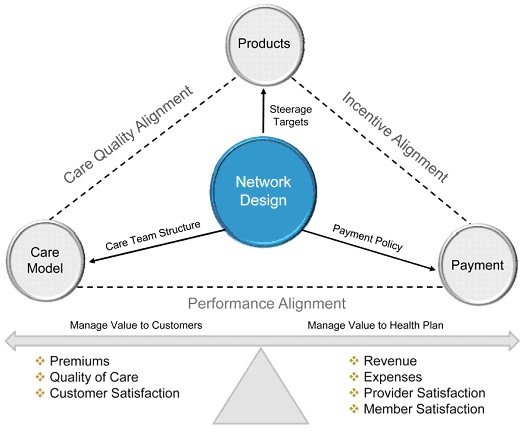
As shown in Figure 2, network design drives alignment between product, care model, and payment approaches. As an illustration, it facilitates the alignment of products and care models by enabling steerage of members to the appropriate care teams or sub-segments of the network. This steerage can only occur if member benefits and incentives (which are embodied in the product design) and the structure of care teams (which are described in the network design) are systematically matched. This systematic matching has to be governed by network-level guidelines for provider performance management.

Figure 2: Network design drives the alignment that delivers affordable, high-quality care.

Focusing on the alignment between products and payment, network design enables this by ensuring that the goals of member incentives are supported by the provider behavior driven by payment design. This enablement is achieved through network-level reimbursement guidelines being automatically enforced during provider contracting.

Finally, network design incorporates network-level reimbursement guidelines to drive alignment between care model and payment design by ensuring that provider behavior envisioned in the care model design is incented by payment design.

As health plans productize new care models and payment innovations, the complexity and the frequency of the abovementioned alignment efforts will mushroom. Customer segmentation and the need for tailored products to serve these customer segments will further amplify the alignment challenge.

The approach of using network design automation to efficiently operationalize alignment is a critical core competency for health plans. By innovating with this approach, it will be possible for health plans to strike the optimal balance between the value to their customers (competitive premiums, high-quality care) and the value to themselves (revenue enablement, reduced medical and administrative cost).

Assessment 

Are there barriers to operationalizing alignment? Of course! But stay tuned: Next week, I’ll be writing about the barriers to alignment — and after that, I’ll go into more detail about why it takes an integrated approach to remove these barriers. As before, if you don’t want to wait to read more, you can read the entire Unlocking Affordable Care by Aligning Products white paper now; it’s available on our website.

Conclusion

Your thoughts and comments on this ME-P are appreciated. Feel free to review our top-left column, and top-right sidebar materials, links, URLs and related websites, too. Then, subscribe to the ME-P. It is fast, free and secure.

Link: http://feeds.feedburner.com/HealthcareFinancialsthePostForcxos

Speaker: If you need a moderator or speaker for an upcoming event, Dr. David E. Marcinko; MBA – Publisher-in-Chief of the Medical Executive-Post – is available for seminar or speaking engagements. Contact: MarcinkoAdvisors@msn.com

OUR OTHER PRINT BOOKS AND RELATED INFORMATION SOURCES:

DICTIONARIES: http://www.springerpub.com/Search/marcinko
PHYSICIANS: www.MedicalBusinessAdvisors.com
PRACTICES: www.BusinessofMedicalPractice.com
HOSPITALS: http://www.crcpress.com/product/isbn/9781466558731
CLINICS: http://www.crcpress.com/product/isbn/9781439879900
BLOG: www.MedicalExecutivePost.com
FINANCE: Financial Planning for Physicians and Advisors
INSURANCE: Risk Management and Insurance Strategies for Physicians and Advisors

Product DetailsProduct DetailsProduct Details

Product Details  Product Details

   Product Details

Health Plans and the Three Levers of Innovation for Affordable Care

Unlocking Affordable Care

Number 2 in a Series of 6

By Sam Muppalla – Vice President, McKesson Health Solutions, Network Performance Management (NPM)

Last week, for the ME-P, I wrote about the increasing Pressure to Deliver Affordable, High-Quality Care.

In the face of those pressures, many health plans have begun to explore innovative approaches to product, care model, and reimbursement designs. What are they doing?

In this second installment of our series about unlocking affordable care, I’d like to take look at how some of the pilots in these areas show promise.

Product Innovation

One path health plans are using to achieve affordable care is through the deployment of value-based insurance designs (VBID). At the heart of this approach is the utilization of member incentives to reduce barriers to high value Rx and services. Conversely, it also incorporates disincentives for low value services or Rx. Typical member incentives include premium reduction, co-pay/coinsurance waiver/reduction, and health reimbursement accounts (HRA). Co-pay increase or cost sharing are typical disincentives. Member steerage to high value providers is another typical goal of VBID. The design of the supporting networks is critical to the success of VBID products. The network design has to ensure that the composition, the quality and the value of the participating providers can fulfill the benefit design and match steerage goals of the member incentives. Furthermore, the network level provider reimbursement guidelines should be complimentary to the member incentives.

For example, member incentive for a preventive exam during a Primary Care Physician (PCP) office visit could be matched by a Pay for Performance (P4P) provider incentive (on top of regular capitation) to perform the examination. Without the incentive, the Per Member Per Month (PMPM) capitation might be a disincentive for the PCP to perform the preventative exam.

describe the image

Figure 1: Network steerage is a critical component of product innovation.

Care Model Innovation

Innovative care models provide another approach to the delivery of affordable, high-quality health services. Population management-based care model designs, such as Patient Centered Medical Home (PCMH) and Accountable Care Organization (ACO) designs, are an important advancement towards affordable care. These designs deploy a care team-based approach rather than a traditional siloed services approach to ensure a continuity of care.

The PCMH care model results in continuity of care via a physician who leads the medical team that coordinates all aspects of preventive, acute and chronic needs of patients using the best available evidence and appropriate technology. The emphasis for PCMH is about collaboration to manage a population’s health.

Another example of a care model with a team-based approach is the ACO care model. In this care model, the emphasis is on accountability for providing the required healthcare services for a defined population. Health plans are rolling out ACO pilots across the nation.

For example, the Pension System (of the California Public Employees’ Retirement System) formed a partnership with the Blue Shield of California Health Maintenance Organization, Catholic Healthcare West, and Hill Physicians Medical Group with the goal of improving quality of care while reducing costs. Some of the early findings are showing positive results:

  • 17 percent reduction in patient re-admissions since the pilot began
  • Length of stay reduced by one half day
  • Almost a 14 percent drop in the total days patients spend in a facility
  • 50 percent reduction in the number of patients who stay in a hospital 20 or more days

These results show that it is possible to utilize care models to improve the quality of outcomes while reducing the cost of healthcare.

It is worth noting that health plans are not limited to adopting one care design innovation over another. Greater benefits can accrue to both consumer and provider by combining approaches—leveraging both collaborative and accountable care designs.

Adoption of population management is forcing a change from paying for individual providers’ services to paying for health management of a population across a team of providers. Supporting this requires the reimbursement systems to understand the structure of the care team, role of the various providers within the care team and the relationships between the providers in the care team.

In other words, it will need to understand the provider network structure to calculate the reimbursement. Another complexity is that providers participating in PCMH or ACO care models may also be directly contracted with the health plan. Selecting which payment arrangement to use in these scenarios will require an understanding of providers’ relationships with the plan.

Reimbursement Innovation

Along with innovations in product and care model designs, health plans are also innovating in the area of provider reimbursement. These innovation efforts primarily focus on enabling incentives for quality and performance, while controlling the rate of medical cost growth. These objectives reflect the need to move away from a healthcare system that bases provider reimbursement on volume to one that bases provider reimbursement on the value of the outcome. Within this approach, a variety of different models are evolving (see Figure 2). 

describe the image

Figure 2: Mixing and matching payment models.

Evolving in parallel with individual models is an understanding that the ability to mix and match different reimbursement designs will deliver greater value than the utilization of just one design. Health plans are mixing and matching different reimbursement methodologies to optimize provider performance. This implies that a provider is likely to have multiple valid payment arrangements at any given time. Picking the appropriate payment arrangement will require the reimbursement engine to understand the role of the provider in the network and the full context of all of the provider’s relationships.

Assessment

Next week, I’ll be discussing why the alignment between products, care models, provider reimbursement, and network design is so important when it comes to scaling these innovative approaches.

If you can’t wait that long for that discussion, you can read the entire Unlocking Affordable Care by Aligning Products white paper now; it’s available on our website.

Conclusion

And so, your thoughts and comments on this ME-P are appreciated. Feel free to review our top-left column, and top-right sidebar materials, links, URLs and related websites, too. Then, subscribe to the ME-P. It is fast, free and secure.

Link: http://feeds.feedburner.com/HealthcareFinancialsthePostForcxos

Speaker: If you need a moderator or speaker for an upcoming event, Dr. David E. Marcinko; MBA – Publisher-in-Chief of the Medical Executive-Post – is available for seminar or speaking engagements. Contact: MarcinkoAdvisors@msn.com

Our Other Print Books and Related Information Sources:

Health Dictionary Series: http://www.springerpub.com/Search/marcinko

Practice Management: http://www.springerpub.com/product/9780826105752

Physician Financial Planning: http://www.jbpub.com/catalog/0763745790

Medical Risk Management: http://www.jbpub.com/catalog/9780763733421

Healthcare Organizations: www.HealthcareFinancials.com

Physician Advisors: www.CertifiedMedicalPlanner.com

Subscribe Now: Did you like this Medical Executive-Post, or find it helpful, interesting and informative? Want to get the latest ME-Ps delivered to your email box each morning? Just subscribe using the link below. You can unsubscribe at any time. Security is assured.

Link: http://feeds.feedburner.com/HealthcareFinancialsthePostForcxos

Sponsors Welcomed: And, credible sponsors and like-minded advertisers are always welcomed. Link: https://healthcarefinancials.wordpress.com/2007/11/11/advertise

   Product Details

Health Plans Under Pressure to Deliver Affordable and High Quality Care

Join Our Mailing List

US Healthcare Expenditures Reaching Unsustainable Levels

[By Sam Muppalla]

Vice President: McKesson Health Solutions, Network Performance Management (NPM)

Expenditures on healthcare in the United States continue to increase and are rapidly reaching unsustainable levels. Pressures by businesses, households and the government to address these escalating costs and ensure high-quality healthcare are multiplying.

This is the first in a series of six essays that examine the challenges facing health plans and the ways that network design can unlock affordable care by aligning products, care models, and reimbursement.

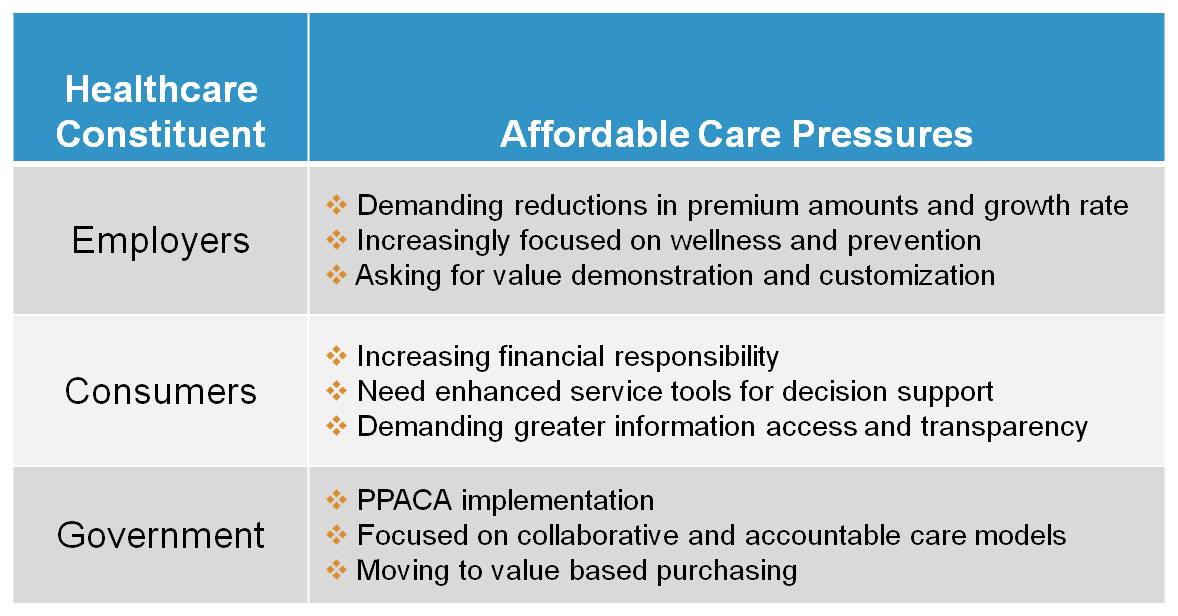
Health insurance companies are faced with addressing a rapidly changing healthcare environment on multiple fronts. These changes are being driven by the goal of achieving a more affordable, higher quality healthcare system. Shifting market needs, increased regulatory initiatives, and a demand for administrative efficiency are requiring innovative approaches to unlocking affordable care. These pressures are originating from key healthcare stakeholders—employers, members and the government (Figure 1).

Employer Pressure

As the competition for the group insurance market increases, health plans need to respond to employer demands for products that deliver greater value. Delivering high value requires products which are tailored to the health of the employer’s specific population and emphasize wellness and prevention. An employer that can offer benefits and programs tailored to meet their employee needs can both improve their workforce productivity and optimize their healthcare spend. The employer’s insistence for reduction in premiums and decrease in the rate of premium growth is challenging health plans to develop more innovative strategies.

Consumer/Member Pressure

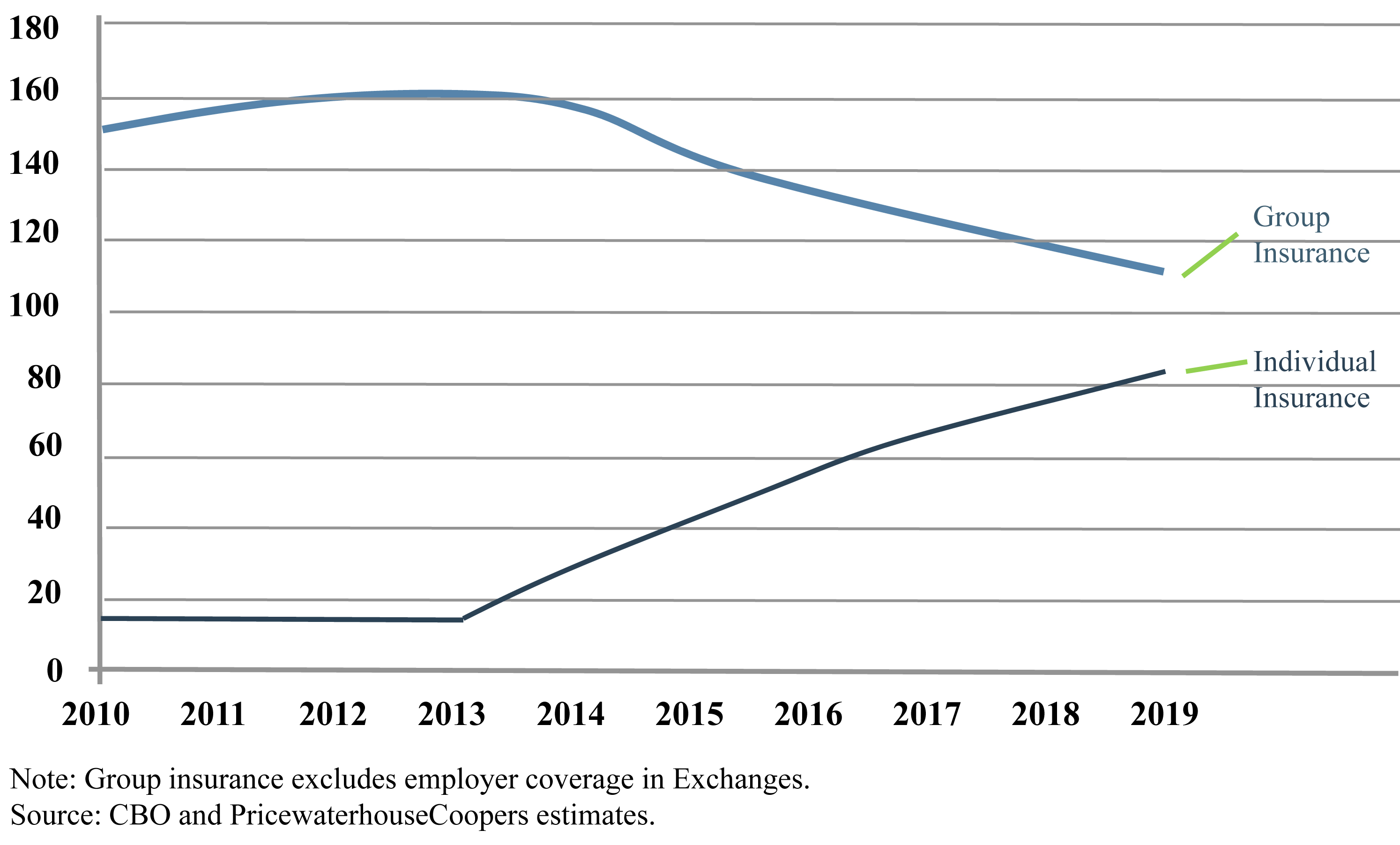
With the passage of the Patient Protection and Affordable Care Act of 2010 (PPACA), the Congressional Budget Office (CBO) estimates (Figure 2) that approximately 32 million more individuals will require access to healthcare services. This represents a significant increase in the number of new healthcare consumers at a time when health insurance companies are required to guarantee issue and re-newability of coverage. Steering this influx of new members to the right care teams will be a very critical core competency for health plans to develop. It is one of the few risk management tools left in the plan’s arsenal in a guaranteed access world. The growth of the individual market is also being accompanied by an increase in member financial responsibility. Members are increasingly demanding greater transparency into their provider quality, performance and cost information.

Government/Regulatory Pressure

Evolving healthcare regulation puts still more pressure on health plans. New regulations within the PPACA Section 9016, stipulate an 80% MLR cap for small groups (fewer than 100 lives) and an 85% Medical Loss Ratio (MLR) cap for large groups (more than 100 lives). These regulations also cap the percentage of revenues that can be earmarked for operational and administrative expenses at 15-20%. This poses a unique challenge for health plans; it requires plans to innovate in the areas of products, care models, and reimbursement designs without increasing the administrative and operational overhead.

There are roughly eighteen additional PPACA provisions that put further pressure on health plans by promoting increased collaboration (sections: 6301, 4201, 3027, 3011, 3021, 10333, 3022, 3024) and accountability (sections: 2705, 3006 & 10301, 3001, 3025, 2706, 2704, 3023, 3004, 3008 and 3002). The Bureau of National Affairs best summarized these provisions by stating,

“The comprehensive provisions in the act regarding payment and delivery reform reflect both the payment system continuum—from fee-for-service to bonus incentives for quality to bundled payments to partial and full global payments as well as the delivery system continuum—from independent clinicians and hospitals to small group practices to multi-provider networks to partially or virtually integrated organizations to fully integrated systems with common ownership and employment.”

These demands mean that health plans need to offer new high-value products that incorporate outcome-based reimbursement to drive quality outcomes and not pay for potentially avoidable costs.

According to studies by the Robert Wood Johnson Foundation and Prometheus Payment (2009), “Up to 40 cents of every dollar spent on chronic conditions and 15 to 20 cents of every dollar spent on acute hospitalization and procedures are attributable to potentially avoidable complications (PACs).”

With evidence like this health plans are taking a new, hard look at when and how care is delivered.

Assessment

Next time, we’ll be looking at how health plans are responding to these challenges with innovations in products, care models, and reimbursement structures. Visit the blog next week for “The Three Levers of Innovation for Care Affordability.”

If you can’t wait, you can read the entire Unlocking Affordable Care by Aligning Products white paper now; it’s available on our website.

A Webinar 

On December 8th, we’ll be hosting a webinar on Lean Provider Lessons for Post Reform Success. Plan to attend this free webinar for more insights into designing for affordable high-quality care.

Channel Surfing the ME-P

Have you visited our other topic channels? Established to facilitate idea exchange and link our community together, the value of these topics is dependent upon your input. Please take a minute to visit. And, to prevent that annoying spam, we ask that you register. It is fast, free and secure.

Conclusion

Your thoughts and comments on this ME-P are appreciated. Feel free to review our top-left column, and top-right sidebar materials, links, URLs and related websites, too. Then, subscribe to the ME-P. It is fast, free and secure.

Speaker: If you need a moderator or speaker for an upcoming event, Dr. David E. Marcinko; MBA – Publisher-in-Chief of the Medical Executive-Post – is available for seminar or speaking engagements. Contact: MarcinkoAdvisors@msn.com

OUR OTHER PRINT BOOKS AND RELATED INFORMATION SOURCES:

Product DetailsProduct DetailsProduct Details

Product Details  Product Details

   Product Details

About Healthcare Financials.com

WELCOME ALL HEALTH 2.0 COLLEAGUES

[An Open Invitation]

Product Details 

All hospitals and healthcare organizations, both emerging and mature, face a daunting financial scenario in today’s volatile healthcare reimbursement environment.  Decreasing revenues, increasing costs, and high consumer expectations present a complex challenge for CEOs, CFOs, physicians and nurse executives, administrators, financial advisors and department managers who must not only lead in today’s climate, but also position their organizations for tomorrow’s financial tumult and potential political changes of the Obama Administration.

Produced by a team of leading doctors, physician executives, nurses, medical professionals, economists, administrators, lawyers, and accountants, skilled business leaders and IT consultants, among many others; Healthcare Organizations [Journal of Financial Management Strategies] on CD-ROM, or SaaS, looks at ways to manage assets, costs, human resources and healthcare claims.  Everything – from inventory management to hybrid and activity based cost analysis in order to accelerate the cash conversion cycle – is scrutinized.  And, modern health economic themes like competitive strategy, workplace violence and financial benchmarks, for both public and private entities, are included.

We also examine contemporaneous topics such as the lessons learned from the corporate healthcare market competition and the PPMC imbroglio of the early 2000’s, and the domestic financial meltdown of 2009. This includes current methods for achieving hospital objectives, negotiating and analyzing cost-volume-profit contracts, and understanding the financial impact of regulatory requirements under HIPAA, STARK I-III, OSHA, the US Patriot Acts, the Deficit Reduction Act [DRA], the often contentious Sarbanes-Oxley Act, ARRA and HITECH Acts, and the Fair and Accurate Credit Transactions [FACT] Act.

In addition, information technology issues like electronic medical records (eMRs), RFID controls, RSS feeds and blogs, Health 2.0 initiatives and computerized physician order entry (CPOE) systems are examined in detail. Virtually no  operational, strategic business, health economics, or financial management topic is omitted.

“This wide-ranging examination of the fiscal

management scene for hospitals, healthcare

organizations, clinics and outpatient centers 

includes case models, extensive appendices, 

and detailed checklists and templates that

step the reader through a review of main

issues for each chapter.”

Health Care Organizations [Journal of Financial Management Strategies] on CD-ROM, or SaaS, is dedicated to meeting the administrative needs of our nation’s healthcare organizations in order to help them maintain a competitive edge in the markets they serve; and to take advantage of emerging business opportunities. We therefore invite you to be the first health economics cynosure in your hospital, facility, or healthcare system to join us for the journey.

Let Health Care Organizations [Journal of Financial Management Strategies] be your guide. 

Subscribe today … Succeed tomorrow!

Dr. David Edward Marcinko MBA, CMP

[Founder, CEO and Editor-in-Chief]

iMBA Inc – Suite #5901 Wilbanks Drive

Norcross, GA 30092-1141

Product Details 

About Costs of Care.Org

What it is – AND – How it Works?

Join Our Mailing List

Costs of Care, a nonprofit 501(c)(3), is a social venture that helps doctors understand how the decisions they make impact what patients pay for care.

By harnessing social media, mobile applications, and other information technologies, they give doctors and patients the information needed to deflate medical bills.

Health Economics Factoid

“The cost of health care now causes a bankruptcy in America every thirty seconds.”

(President Obama to the 2009 Joint Session of Congress)

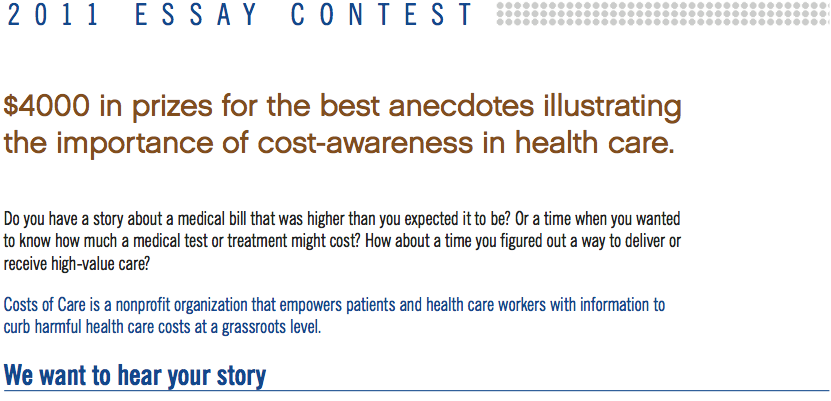
Essay Contest

Costs of Care will be launching an essay contest for 2011 after Labor Day, with $4,000 in prizes for the best anecdotes illustrating the importance of cost awareness in health care! www.costsofcare.org/essay


Assessment

And so, give em’ a click and tell us what you think http://www.costsofcare.org/  Better yet! Enter the essay contest and/or give a donation. It’s tax deductible.

Conclusion

Your thoughts and comments on this ME-P are appreciated. Feel free to review our top-left column, and top-right sidebar materials, links, URLs and related websites, too. Then, subscribe to the ME-P. It is fast, free and secure.

Speaker: If you need a moderator or speaker for an upcoming event, Dr. David E. Marcinko; MBA – Publisher-in-Chief of the Medical Executive-Post – is available for seminar or speaking engagements. Contact: MarcinkoAdvisors@msn.com

OUR OTHER PRINT BOOKS AND RELATED INFORMATION SOURCES:

Product Details

Product DetailsProduct Details

Medicare and the Budget Control Act’s Joint Select Committee

Creating Spending Reductions for the Next Decade?

By Children’s Home Society of Florida Foundation

Join Our Mailing List 

Under the compromise between President Obama and leaders of the House and Senate, the Budget Control Act of 2011 created spending reductions of over $900 billion during the next decade. The bill also requires leaders of the House and Senate to appoint members to a Joint Select Committee. The committee has three Republican, three Democratic Senators, three Republican and three Democratic Representatives.

House and Senate leaders have now appointed the committee members. The 12 committee members are tasked with creating a $1.5 trillion budget solution by Thanksgiving. Their bill will be voted on without amendments by December 23, 2011.

If the committee is not able to develop and pass a bill by Dec. 23, there will be $1.2 trillion in budget cuts. Half of the cuts will come from the Department of Defense and one-half will be reductions in payments to Medicare providers.

Majority Leader Harry Reid (D-NV) appointed three Senators. The Co-Chair of the Joint Select Committee will be Sen. Patty Murray (D-WA). His other two appointees are Sen. John Kerry (D-MA) and Sen. Max Baucus (D-MT). Sen. Kerry is Chair of the Senate Foreign Relations Committee and Sen. Baucus is Chair of the Senate Finance Committee.

Republican Leader Mitch McConnell (R-KY) appointed Sen. John Kyl (R-AZ), Sen. Pat Toomey (R-PA) and Sen. Rob Portman (R-OH). Sen. Kyl is the Republican Whip and a senior member of the Finance Committee. Sen. Toomey is a member of the Budget Committee. Sen. Portman was previously Director of the Office of Management and Budget.

Speaker John Boehner (R-OH) appointed Rep. Jeb Hensarling (R-TX) as Co-Chair of the committee. His other appointments are Rep. Dave Camp (R-MI) and Rep. Fred Upton (R-MI). Rep. Camp is Chairman of the Ways and Means Committee and Rep. Upton chairs the Energy and Commerce Committee.

Democratic Leader Nancy Pelosi (D-CA) appointed Rep. James Clyburn (D-SC), House Ways and Means Member Xavier Becerra (D-CA) and Budget Committee Member Chris Van Hollen (D-MD).

The Joint Select Committee is expected to initiate meetings in September after Congress returns from the August recess.

Editor’s Note: There will undoubtedly be a spirited debate. All of the twelve committee members will want to avoid drastic budget cuts for the Department of Defense or Medicare providers. The group will need to discuss potential cuts in discretionary expenditures, defense and entitlements. With the appointments of key taxwriters Baucus and Camp, it is clear that taxes will also be a part of the discussion. Whether or not there are tax increases as part of the budget solution remains to be seen.

Conclusion

And so, your thoughts and comments on this ME-P are appreciated. Feel free to review our top-left column, and top-right sidebar materials, links, URLs and related websites, too. Then, subscribe to the ME-P. It is fast, free and secure.

Link: http://feeds.feedburner.com/HealthcareFinancialsthePostForcxos

Speaker: If you need a moderator or speaker for an upcoming event, Dr. David E. Marcinko; MBA – Publisher-in-Chief of the Medical Executive-Post – is available for seminar or speaking engagements. Contact: MarcinkoAdvisors@msn.com

Our Other Print Books and Related Information Sources:

Health Dictionary Series: http://www.springerpub.com/Search/marcinko

Practice Management: http://www.springerpub.com/product/9780826105752

Physician Financial Planning: http://www.jbpub.com/catalog/0763745790

Medical Risk Management: http://www.jbpub.com/catalog/9780763733421

Healthcare Organizations: www.HealthcareFinancials.com

Physician Advisors: www.CertifiedMedicalPlanner.com

Subscribe Now: Did you like this Medical Executive-Post, or find it helpful, interesting and informative? Want to get the latest ME-Ps delivered to your email box each morning? Just subscribe using the link below. You can unsubscribe at any time. Security is assured.

Link: http://feeds.feedburner.com/HealthcareFinancialsthePostForcxos

Sponsors Welcomed: And, credible sponsors and like-minded advertisers are always welcomed.

Link: https://healthcarefinancials.wordpress.com/2007/11/11/advertise

Product Details  Product Details

   Product Details 


Benchmarks of Health Plan Administrative Costs

2011 Edition‏

[By John Park]

Join Our Mailing List 

Recently, we began the release of our fourteenth annual edition of administrative performance benchmarks for health plans. It is the culmination of 515 health plan years of experience with all major sectors of the health plan industry. The attached brochure briefly describes our 2011 benchmarks.

First Universe Release

The first universe to be released was comprised of data of Blue Cross Blue Shield plans. Nearly 70% of all Blue Cross Blue Shield licensees participated this year.  A summary of the results for this universe is here:

http://www.sherlockco.com/docs/navigator/Navigator%20July%2011.pdf.

Results

In short, per member administrative expenses increased by only 1.0% in 2010 and only 1.8% when you adjust to back out changes in product mix.

This growth rate is very low by any standard.

Sherlock Company’s Benchmarks

Between the MLR provisions of the Accountable Care Act, which are intended to “create incentives for” health plans” to become more efficient,” and a weak overall economy, health plans face greater pressure to optimize their administrative costs. Sherlock Company’s benchmarks of administrative expenses enable your plan to quickly determine whether it is operating at best practice and to identify which functional areas provide the highest return on management’s efforts to improve performance.

Accordingly health plans serving more than one-half of all insured Americans are users of our benchmarks.

Assessment

Additional information can be found at http://www.sherlockco.com/seer.shtml

Sherlock Company

Douglas B. Sherlock, CFA

Senior Health Care Analyst

sherlock@sherlockco.com

Ph:  215-628-2289

Fax: 215-542-0690

Conclusion

Your thoughts and comments on this ME-P are appreciated. Feel free to review our top-left column, and top-right sidebar materials, links, URLs and related websites, too. Then, subscribe to the ME-P. It is fast, free and secure.

Link: http://feeds.feedburner.com/HealthcareFinancialsthePostForcxos

Speaker: If you need a moderator or speaker for an upcoming event, Dr. David E. Marcinko; MBA – Publisher-in-Chief of the Medical Executive-Post – is available for seminar or speaking engagements. Contact: MarcinkoAdvisors@msn.com

OUR OTHER PRINT BOOKS AND RELATED INFORMATION SOURCES:

DICTIONARIES: http://www.springerpub.com/Search/marcinko
PHYSICIANS: www.MedicalBusinessAdvisors.com
PRACTICES: www.BusinessofMedicalPractice.com
HOSPITALS: http://www.crcpress.com/product/isbn/9781466558731
CLINICS: http://www.crcpress.com/product/isbn/9781439879900
BLOG: www.MedicalExecutivePost.com
FINANCE: Financial Planning for Physicians and Advisors
INSURANCE: Risk Management and Insurance Strategies for Physicians and Advisors

Product DetailsProduct DetailsProduct Details

Product Details  Product Details

   Product Details 

Understanding US Health Care Spending

Dear ME-P Colleagues,

Nancy Chockley, President and CEO

The NIHCM Foundation is pleased to announce the release of a new data brief, Understanding U.S. Health Care Spending.

In it, we examine why we spend more than $8,000 per person on health care and the factors driving spending growth. Our analysis documents the extreme concentration of expenditures, with just 5 percent of the population responsible for almost half of all spending, and demonstrate the importance of rising spending for hospital and physician services as the primary drivers of expenditure growth.

Findings are based on NIHCM analysis of the most recent data from the National Health Expenditure Accounts and the Medical Expenditure Panel Survey.

We hope that you find this publication helpful for your own work.

Sincerely,
Julie Schoenman [Director of Research and Development]

Product DetailsProduct DetailsProduct Details       

Product Details  Product Details

   Product Details 

[Health] Plan Management Navigator

For July 2011

Join Our Mailing List 

By Douglas B. Sherlock, CFA

Please find attached below the July 2011 Edition of Plan Management Navigator. In this month’s edition, we summarize the administrative cost trends of Blue Cross Blue Shield Plans participating in our recently completed benchmarking study. The 27 plans, nearly 70% of total Blue plans, collectively serve 38.3 million members with comprehensive products.

Results 

The median administrative expense ratio for this peer group in 2010 was 9.2%, down from 9.7% in 2009, 9.9% in 2008 and 10.4% in 2007.

While per member Sales and Marketing cost trends increased, Corporate Services costs decreased. Provider and Medical Management and Account and Membership Administration cost growth, per member, sharply declined.

Managed Expenses 

Health plans are heavily committed to the management of administrative expenses. To adapt to the weak economic environment, they are taking steps to assure that the effects of premium rate pressures and enrollment weakness do not amplify reductions operating profits. They do this by not treating their administrative expenses as substantially fixed. In addition, the Patient Protection and Affordable Care Act’s increased scrutiny of premium rates, and enforcement of medical cost minimums (relative to premiums), elevates administrative expense control as the central aspect of managerial discretion.

Assessment

Link: Navigator July 11

Conclusion

And so, your thoughts and comments on this ME-P are appreciated. Feel free to review our top-left column, and top-right sidebar materials, links, URLs and related websites, too. Then, subscribe to the ME-P. It is fast, free and secure.

Link: http://feeds.feedburner.com/HealthcareFinancialsthePostForcxos

Speaker: If you need a moderator or speaker for an upcoming event, Dr. David E. Marcinko; MBA – Publisher-in-Chief of the Medical Executive-Post – is available for seminar or speaking engagements. Contact: MarcinkoAdvisors@msn.com

Our Other Print Books and Related Information Sources:

Health Dictionary Series: http://www.springerpub.com/Search/marcinko

Practice Management: http://www.springerpub.com/product/9780826105752

Physician Financial Planning: http://www.jbpub.com/catalog/0763745790

Medical Risk Management: http://www.jbpub.com/catalog/9780763733421

Healthcare Organizations: www.HealthcareFinancials.com

Physician Advisors: www.CertifiedMedicalPlanner.com

Subscribe Now: Did you like this Medical Executive-Post, or find it helpful, interesting and informative? Want to get the latest ME-Ps delivered to your email box each morning? Just subscribe using the link below. You can unsubscribe at any time. Security is assured.

Link: http://feeds.feedburner.com/HealthcareFinancialsthePostForcxos

Sponsors Welcomed                               

And, credible sponsors and like-minded advertisers are always welcomed.

Link: https://healthcarefinancials.wordpress.com/2007/11/11/advertise

Product DetailsProduct DetailsProduct Details       

Product Details  Product Details

   Product Details 

How Many Children Could Loose Healthcare?

Perhaps 15-18 Million of Them

By Voices for America’s Children

Join Our Mailing List 

No matter how you slice it, the House budget plan leaves millions of children uninsured.

Assessment

Here’s what the Medicaid cuts would mean for children by 2021.

Conclusion

And so, your thoughts and comments on this ME-P are appreciated. Feel free to review our top-left column, and top-right sidebar materials, links, URLs and related websites, too. Then, subscribe to the ME-P. It is fast, free and secure.

Link: http://feeds.feedburner.com/HealthcareFinancialsthePostForcxos

Speaker: If you need a moderator or speaker for an upcoming event, Dr. David E. Marcinko; MBA – Publisher-in-Chief of the Medical Executive-Post – is available for seminar or speaking engagements. Contact: MarcinkoAdvisors@msn.com

Our Other Print Books and Related Information Sources:

Health Dictionary Series: http://www.springerpub.com/Search/marcinko

Practice Management: http://www.springerpub.com/product/9780826105752

Physician Financial Planning: http://www.jbpub.com/catalog/0763745790

Medical Risk Management: http://www.jbpub.com/catalog/9780763733421

Healthcare Organizations: www.HealthcareFinancials.com

Physician Advisors: www.CertifiedMedicalPlanner.com

Subscribe Now: Did you like this Medical Executive-Post, or find it helpful, interesting and informative? Want to get the latest ME-Ps delivered to your email box each morning? Just subscribe using the link below. You can unsubscribe at any time. Security is assured.

Link: http://feeds.feedburner.com/HealthcareFinancialsthePostForcxos

Sponsors Welcomed: And, credible sponsors and like-minded advertisers are always welcomed.

Link: https://healthcarefinancials.wordpress.com/2007/11/11/advertise

Product DetailsProduct DetailsProduct Details       

Product Details  Product Details

   Product Details 

Who Can’t Afford Health Care?

Expensive Even with Insurance

By Thomas Porostock

Health Care, even with insurance can be expensive, but what if you actually can’t afford medical care?


Conclusion

And so, your thoughts and comments on this ME-P are appreciated. Feel free to review our top-left column, and top-right sidebar materials, links, URLs and related websites, too. Then, subscribe to the ME-P. It is fast, free and secure.

Link: http://feeds.feedburner.com/HealthcareFinancialsthePostForcxos

Speaker: If you need a moderator or speaker for an upcoming event, Dr. David E. Marcinko; MBA – Publisher-in-Chief of the Medical Executive-Post – is available for seminar or speaking engagements. Contact: MarcinkoAdvisors@msn.com

Our Other Print Books and Related Information Sources:

Health Dictionary Series: http://www.springerpub.com/Search/marcinko

Practice Management: http://www.springerpub.com/product/9780826105752

Physician Financial Planning: http://www.jbpub.com/catalog/0763745790

Medical Risk Management: http://www.jbpub.com/catalog/9780763733421

Healthcare Organizations: www.HealthcareFinancials.com

Physician Advisors: www.CertifiedMedicalPlanner.com

Subscribe Now: Did you like this Medical Executive-Post, or find it helpful, interesting and informative? Want to get the latest ME-Ps delivered to your email box each morning? Just subscribe using the link below. You can unsubscribe at any time. Security is assured.

Link: http://feeds.feedburner.com/HealthcareFinancialsthePostForcxos

Sponsors Welcomed: And, credible sponsors and like-minded advertisers are always welcomed.

Link: https://healthcarefinancials.wordpress.com/2007/11/11/advertise

Product DetailsProduct DetailsProduct Details

Product Details  Product Details

   Product Details 

Why Your Stitches Cost $1,500 [Part II]

InfoGraphics – Part 2

Courtesy Medical Billing and Coding

Join Our Mailing List

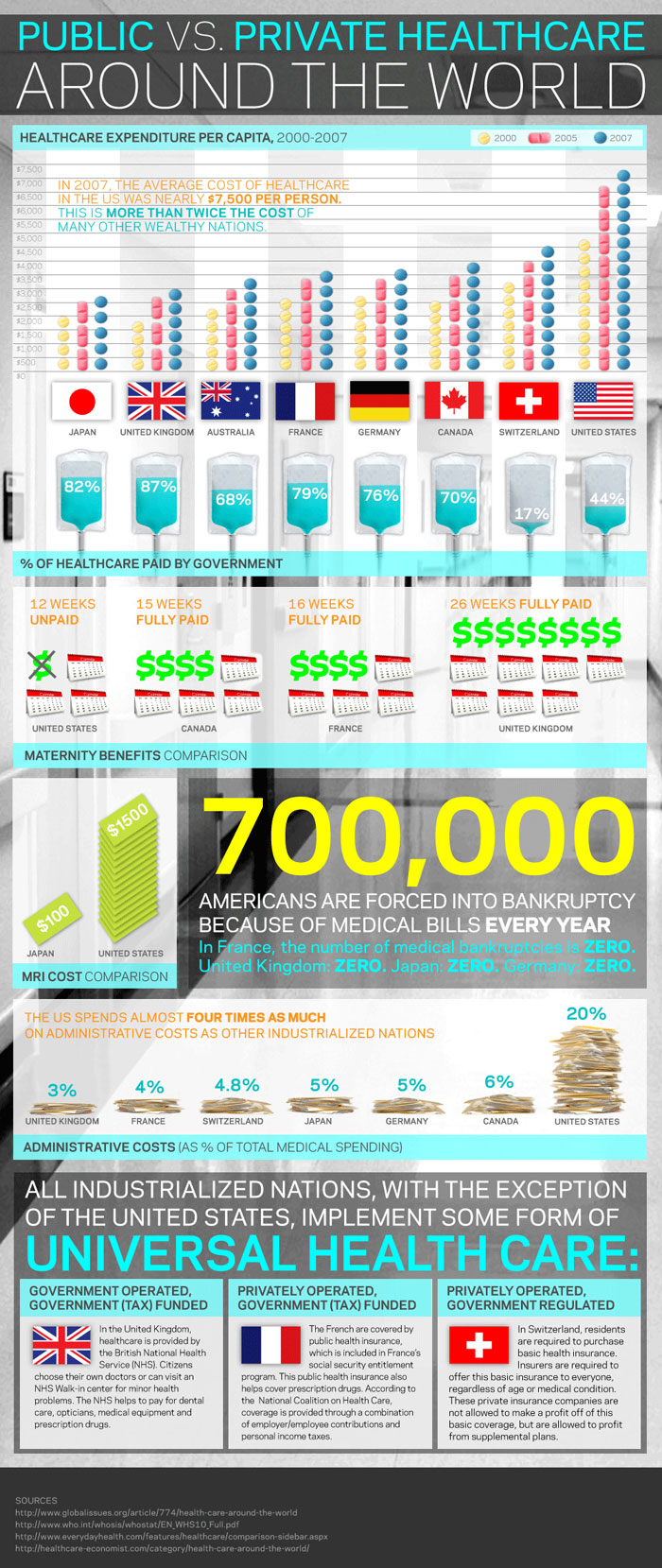
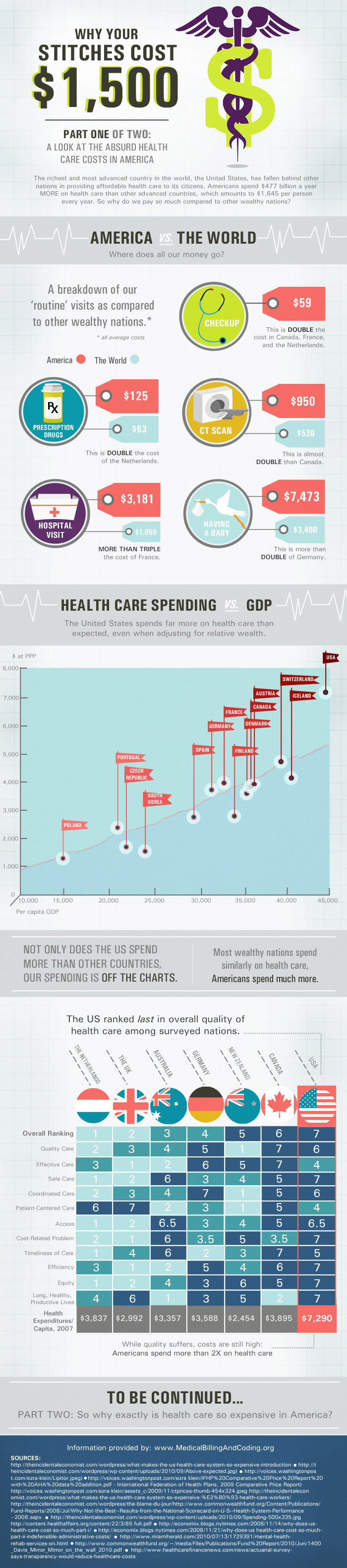
The United States has fallen behind other nations, failing to provide affordable health care to its citizens. Americans spend $477 billion a year MORE on health care than other advanced countries.

So why do we pay so much compared to other wealthy nations?

Part 2 of 2 in a Series

This Infographic is part two in a two part series which dissects the state of our health care system and presents some alarming numbers.

Assessment

Link: http://www.medicalbillingandcoding.org/medicals-costs-2/

Part 1: https://medicalexecutivepost.com/2011/04/25/why-your-stitches-cost-1500/

Conclusion

And so, your thoughts and comments on this ME-P are appreciated. Feel free to review our top-left column, and top-right sidebar materials, links, URLs and related websites, too. Then, subscribe to the ME-P. It is fast, free and secure.

Link: http://feeds.feedburner.com/HealthcareFinancialsthePostForcxos

Speaker: If you need a moderator or speaker for an upcoming event, Dr. David E. Marcinko; MBA – Publisher-in-Chief of the Medical Executive-Post – is available for seminar or speaking engagements. Contact: MarcinkoAdvisors@msn.com

Our Other Print Books and Related Information Sources:

Health Dictionary Series: http://www.springerpub.com/Search/marcinko

Practice Management: http://www.springerpub.com/product/9780826105752

Physician Financial Planning: http://www.jbpub.com/catalog/0763745790

Medical Risk Management: http://www.jbpub.com/catalog/9780763733421

Healthcare Organizations: www.HealthcareFinancials.com

Physician Advisors: www.CertifiedMedicalPlanner.com

Subscribe Now: Did you like this Medical Executive-Post, or find it helpful, interesting and informative? Want to get the latest ME-Ps delivered to your email box each morning? Just subscribe using the link below. You can unsubscribe at any time. Security is assured.

Link: http://feeds.feedburner.com/HealthcareFinancialsthePostForcxos

Sponsors Welcomed: And, credible sponsors and like-minded advertisers are always welcomed.

Link: https://healthcarefinancials.wordpress.com/2007/11/11/advertise

Product DetailsProduct DetailsProduct Details       

Product Details  Product Details

   Product Details

The Great Health Care Challenges [A Slide show]

The US Health Care Crisis and the Complexities of Reform

By Austin Frakt PhD

Dr. Austin Frakt blogs over at The Incidental Economist which contemplates health care with a focus on research, and an eye on reform. It is about economics, health policy, health services, health care and – yes – politics. And, Austin is a health policy wonk that we admire here at the ME-P

 www.TheIncidentalEconomist.com 

Last fall he created a slide show on the challenges presented by our health care system. He has updated it circa March 11 2011 and has now allowed us, and others, to post freely. We appreciate him for this educational gesture.

Thank you.

Ann Miller RN MHA

[Executive-Director]

Link: Frakt Great Healthcare Challenges

About Austin Frakt PhD

Austin is the creator, manager, host, and primary author of The Incidental Economist. He is a health economist with an educational background in physics and engineering. After receiving his PhD in statistical and applied mathematics he spent four years at a research and consulting firm conducting policy evaluations for federal health agencies. Austin now has a joint appointment with the Department of Health Policy and Management at Boston University’s (BU’s) School of Public Health and Health Care Financing & Economics (HCFE) at the Boston VA Healthcare System, U.S. Department of Veterans Affairs. He studies economic issues pertaining U.S. health care policy with a recent but not exclusive focus on Medicare and the uninsured. He has authored numerous peer-reviewed, scholarly publications, many relevant to health care financing, economics, and policy. His papers have appeared in Health Care Financing Review, Health Affairs, Health Economics, International Journal of Health Care Finance and Economics, Journal of Health Politics, Policy and Law, among other journals. For over a year, he has been a regular columnist for Kaiser Health News and he has contributed commentary for the New York Times’ Room for Debate forum.

Austin’s interests include economics and health care, of course, but also politics, personal finance, and the amusements of family life. Outside of his principal work duties, he manages his household’s finances, is CFO of a small business, and looks after his two children.

You are welcome to “friend” Austin on Facebook, follow the blog via his Google Buzz feed, and subscribe to his Google Reader bundles. Austin does not have a personal Twitter account. When he has something to communicate he does it on this blog. If you wish, contact Austin with anything on your mind via the contact form. (The views expressed in Austin’s posts are his own and do not necessarily reflect the positions of the Department of Veterans Affairs or Boston University.)

Conclusion

And so, your thoughts and comments on this ME-P are appreciated. Feel free to review our top-left column, and top-right sidebar materials, links, URLs and related websites, too. Then, subscribe to the ME-P. It is fast, free and secure.

Speaker: If you need a moderator or speaker for an upcoming event, Dr. David E. Marcinko; MBA – Publisher-in-Chief of the Medical Executive-Post – is available for seminar or speaking engagements. Contact: MarcinkoAdvisors@msn.com and http://www.springerpub.com/Search/marcinko

Our Other Print Books and Related Information Sources:

Health Dictionary Series: http://www.springerpub.com/Search/marcinko

Practice Management: http://www.springerpub.com/product/9780826105752

Physician Financial Planning: http://www.jbpub.com/catalog/0763745790

Medical Risk Management: http://www.jbpub.com/catalog/9780763733421

Healthcare Organizations: www.HealthcareFinancials.com

Physician Advisors: www.CertifiedMedicalPlanner.com

Subscribe Now: Did you like this Medical Executive-Post, or find it helpful, interesting and informative? Want to get the latest ME-Ps delivered to your email box each morning? Just subscribe using the link below. You can unsubscribe at any time. Security is assured.

Link: http://feeds.feedburner.com/HealthcareFinancialsthePostForcxos

Sponsors Welcomed: And, credible sponsors and like-minded advertisers are always welcomed.

Link: https://healthcarefinancials.wordpress.com/2007/11/11/advertise

Product DetailsProduct DetailsProduct Details       

Product Details  Product Details

   Product Details 

Why Your Stitches Cost $1,500 [Part I]

InfoGraphics – Part 1

Courtesy Medical Billing and Coding

Join Our Mailing List

The United State has fallen behind other nations, failing to provide affordable health care to its citizens. Americans spend $477 billion a year MORE on health care than other advanced countries.

So why do we pay so much compared to other wealthy nations?

Part 1 of 2 in a Series

This Infographic is part one in a two part series which dissects the state of our health care system and presents some alarming numbers.

Link: http://www.medicalbillingandcoding.org/medical-costs-1/

Part 2: https://medicalexecutivepost.com/?p=30972&preview=true

Conclusion

And so, your thoughts and comments on this ME-P are appreciated. Feel free to review our top-left column, and top-right sidebar materials, links, URLs and related websites, too. Then, subscribe to the ME-P. It is fast, free and secure.

Link: http://feeds.feedburner.com/HealthcareFinancialsthePostForcxos

Speaker: If you need a moderator or speaker for an upcoming event, Dr. David E. Marcinko; MBA – Publisher-in-Chief of the Medical Executive-Post – is available for seminar or speaking engagements. Contact: MarcinkoAdvisors@msn.com

Health Dictionary Series: http://www.springerpub.com/Search/marcinko

Practice Management: http://www.springerpub.com/product/9780826105752

Physician Financial Planning: http://www.jbpub.com/catalog/0763745790

Medical Risk Management: http://www.jbpub.com/catalog/9780763733421

Healthcare Organizations: www.HealthcareFinancials.com

Physician Advisors: www.CertifiedMedicalPlanner.com

Subscribe Now: Did you like this Medical Executive-Post, or find it helpful, interesting and informative? Want to get the latest ME-Ps delivered to your email box each morning? Just subscribe using the link below. You can unsubscribe at any time. Security is assured.

Link: http://feeds.feedburner.com/HealthcareFinancialsthePostForcxos

Sponsors WelcomedAnd, credible sponsors and like-minded advertisers are always welcomed.

Link: https://healthcarefinancials.wordpress.com/2007/11/11/advertise

Product DetailsProduct DetailsProduct Details       

Product Details  Product Details

   Product Details 

Launching Partnership for Patients

Better Care, Lower Costs

By Staff Reporters

Join Our Mailing List

Doctors, nurses and other health care providers in America work incredibly hard to deliver the best care possible to their patients.  Unfortunately, an alarming number of patients are harmed by medical mistakes in the health care system and far too many die prematurely as a result.

Just Launched

The Obama Administration has just launched the Partnership for Patients: Better Care, Lower Costs, a new public-private partnership that will help improve the quality, safety, and affordability of health care for all Americans.  The Partnership for Patients brings together leaders of major hospitals, employers, physicians, nurses, and patient advocates along with state and federal governments in a shared effort to make hospital care safer, more reliable, and less costly.

Partnership Goals  

The two goals of this new partnership are to:

  • Keep patients from getting injured or sicker. By the end of 2013, preventable hospital-acquired conditions would decrease by 40% compared to 2010.  Achieving this goal would mean approximately 1.8 million fewer injuries to patients with more than 60,000 lives saved over three years.
  • Help patients heal without complication. By the end of 2013, preventable complications during a transition from one care setting to another would be decreased so that all hospital readmissions would be reduced by 20% compared to 2010.  Achieving this goal would mean more than 1.6 million patients would recover from illness without suffering a preventable complication requiring re-hospitalization within 30 days of discharge.   

Toward a More Sustainable Health Care System

Achieving these goals will save lives and prevent injuries to millions of Americans, and has the potential to save up to $35 billion dollars across the health care system, including up to $10 billion in Medicare savings, over the next three years.  Over the next ten years, it could reduce costs to Medicare by about $50 billion and result in billions more in Medicaid savings.  This will help put our nation on the path toward a more sustainable health care system.

Institute of Medicine

In 1999, the landmark Institute of Medicine study, “To Err is Human,” estimated that as many as 98,000 Americans die every year from preventable medical errors. Despite many successful efforts, this statistic has not improved much in the following decade.  And many more patients get injured or sicker from preventable adverse events after being admitted to a hospital.  After more than a decade of work to understand and address these problems, promising examples of better practices exist, but patients too often are still injured in the course of receiving care.  At any given time, about one in every 20 patients have an infection related to their hospital care.

  • On average, one in seven Medicare beneficiaries is harmed in the course of their care, costing the government an estimated $4.4 billion every year.
  • Nearly one in five Medicare patients discharged from the hospital is readmitted within 30 days – that’s approximately 2.6 million seniors at a cost of over $26 billion every year.

Assessment

There is much more work to be done to prevent unnecessary harm to patients.

Link:  http://www.healthcare.gov/center/programs/partnership/about/index.html

Conclusion

And so, your thoughts and comments on this ME-P are appreciated. Will this initiative be a success or another governmental boondoggle? Feel free to review our top-left column, and top-right sidebar materials, links, URLs and related websites, too. Then, subscribe to the ME-P. It is fast, free and secure.

Link: http://feeds.feedburner.com/HealthcareFinancialsthePostForcxos

Speaker: If you need a moderator or speaker for an upcoming event, Dr. David E. Marcinko; MBA – Publisher-in-Chief of the Medical Executive-Post – is available for seminar or speaking engagements. Contact: MarcinkoAdvisors@msn.com

Our Other Print Books and Related Information Sources:

Health Dictionary Series: http://www.springerpub.com/Search/marcinko

Practice Management: http://www.springerpub.com/product/9780826105752

Physician Financial Planning: http://www.jbpub.com/catalog/0763745790

Medical Risk Management: http://www.jbpub.com/catalog/9780763733421

Healthcare Organizations: www.HealthcareFinancials.com

Physician Advisors: www.CertifiedMedicalPlanner.com

Subscribe Now: Did you like this Medical Executive-Post, or find it helpful, interesting and informative? Want to get the latest ME-Ps delivered to your email box each morning? Just subscribe using the link below. You can unsubscribe at any time. Security is assured.

Link: http://feeds.feedburner.com/HealthcareFinancialsthePostForcxos

Sponsors Welcomed: And, credible sponsors and like-minded advertisers are always welcomed.

Link: https://healthcarefinancials.wordpress.com/2007/11/11/advertise

Product Details 

Understanding MCO Fixed-Rate Contract Negotiations [Case Model]

The Hope Outreach Medical Clinic

By Staff Reporters

The Hope Outreach Medical Clinic (HOMC) is a private, for-profit, single specialty medical clinic in a south-eastern state.  It submitted its bi-annual Request for Proposal (RFP) to continue its current managed care fixed-rate contract.  Upon review of the RFP, however, Sunshine Indemnity Insurance Company, the managed care organization (MCO), denied the contract request for the upcoming year.

CEO Shock

In shock, the clinic’s CEO asked the clinic’s administrator to work with its legal team to develop a defensible estimate of economic damages that would occur as a result of the lost contract.  The clinic intended to bring suit against the MCO for breach-of-contract.  However, the administrator is not an attorney and is loathe to-enter the fray.  After consideration however, he decided to assist in filing the Statement of Claim (SOC) because he realized that changes in patient services (unit) volume would be a valid economic surrogate.  He then requested the following information from his controller, in order to develop a change in economic profit [damages] estimate:

  • Change in patient visits (unit) volume
  • Fees (price) per patient (unit)
  • Marginal (incremental) cost per patient (unit)
  • Change in current fees (prices)
  • Patient volume (units) affected

Key Issues:

1) Fee (price) per patient (units) may be obtained from the fee schedule used by the MCO to pay HOMC.

2) Marginal (incremental) costs per patient (unit) are approximated using variable costs.

3) Higher cost payers exist because lower patient volumes raise the average cost per patient (unit) due to existing fixed costs. The administrator’s financial work-product to estimate monetary damages and assist the legal team is explained as follows.

Assessment

Change in profit estimate by: www.MedicalBusinessAdvisors.com

Change-in-Profit = Change in patient (unit) volume X [Fee (price per patient unit) – Incremental (marginal) cost per patient (unit)] – [Change in current price (fees) X Patient (unit) volume affected].

Conclusion

And so, your thoughts and comments on this ME-P are appreciated. Feel free to review our top-left column, and top-right sidebar materials, links, URLs and related websites, too. Then, subscribe to the ME-P. It is fast, free and secure.

Speaker: If you need a moderator or speaker for an upcoming event, Dr. David E. Marcinko; MBA – Publisher-in-Chief of the Medical Executive-Post – is available for seminar or speaking engagements. Contact: MarcinkoAdvisors@msn.com and http://www.springerpub.com/Search/marcinko

Our Other Print Books and Related Information Sources:

Subscribe Now: Did you like this Medical Executive-Post, or find it helpful, interesting and informative? Want to get the latest ME-Ps delivered to your email box each morning? Just subscribe using the link below. You can unsubscribe at any time. Security is assured.

Link: http://feeds.feedburner.com/HealthcareFinancialsthePostForcxos

Sponsors Welcomed: And, credible sponsors and like-minded advertisers are always welcomed.

Product DetailsProduct DetailsProduct Details

Product Details  Product Details

   Product Details 

Seeking Healthcare Administration Experts and Contributing Print Authors

Healthcare Organizations [second edition]

By Ann Miller RN MHA

[Executive-Director]

Join Our Mailing List 

Greetings ME-P Readers, Experts and Subscribers,

As you may know, we are now preparing the next edition of our book: Healthcare Organizations [Management Strategies, Operational Techniques and Case Studies]. And so, we solicit your interest in crafting new material or simply updating original chapters for subscriber, ACPE, Barnes & Noble, MGMA, ACHE and related distribution channels.

Tentative Table of Contents [400 pages]

  1. On the Origins and Development of Quality Initiatives in Healthcare
  2. Competitive Analysis of the Contemporary Healthcare Ecosystem
  3. Capital Formation Strategies for Healthcare Entities
  4. Inventory Management and Economic Order Quantity Analysis
  5. Improving Operations and Management to Achieve Objectives
  6. Financial and Clinical Features of Hospital Information Systems
  7. Managing Health Information Technology Security Risks
  8. Monitoring, Managing and Enhancing Hospital Revenue Cycles  
  9. Patient [Customer] Relations Management in Healthcare
  10. Healthcare Organization Compliance Processes and Tactics
  11. Reviewing OSHA Standards and Health Policy Practices
  12. Operational Impact of HIPAA, Sarbanes-Oxley and the USA PATRIOT ACT
  13. Understanding Continuous Healthcare Process Improvement
  14. Using Medical Informatics to Track Health Care
  15. Appreciating Six-Sigma Healthcare Quality Improvement
  16. Hospital-Flow Through Efficiency and Logistics.

Editorial support is available, and you would enjoy increasing subject-matter notoriety, exposure and public relations in an erudite and credible fashion. ME-P expert reader synergy seems ideal and our time line for submission is ample in a prose writing style that is “wide, and deep.”  Scheduled release is 2012.

Assessment [first edition]

Foreword: http://healthcarefinancials.com/aboutus.aspx

Style and format: http://healthcarefinancials.com/Documents/Clinical%20and%20Financial%20Features%20of%20Hospital%20IT%20Systems.pdf

Prior authors: http://healthcarefinancials.com/contributors.aspx

TOC: http://healthcarefinancials.com/Documents/TABLE%20OF%20CONTENTS.pdf

We look forward to working with you and appreciate your continued “crowd-sourced” interest in this important body of work. So, please advise me of your interest: MarcinkoAdvisors@msn.com

Conclusion

And so, your thoughts and comments on this ME-P are appreciated. Feel free to review our top-left column, and top-right sidebar materials, links, URLs and related websites, too. Then, subscribe to the ME-P. It is fast, free and secure.

Speaker: If you need a moderator or speaker for an upcoming event, Dr. David E. Marcinko; MBA – Publisher-in-Chief of the Medical Executive-Post – is available for seminar or speaking engagements. Contact: MarcinkoAdvisors@msn.com and http://www.springerpub.com/Search/marcinko

Our Other Print Books and Related Information Sources:

Health Dictionary Series: http://www.springerpub.com/Search/marcinko

Practice Management: http://www.springerpub.com/product/9780826105752

Physician Financial Planning: http://www.jbpub.com/catalog/0763745790

Medical Risk Management: http://www.jbpub.com/catalog/9780763733421

Healthcare Organizations: www.HealthcareFinancials.com

Physician Advisors: www.CertifiedMedicalPlanner.com

Subscribe Now: Did you like this Medical Executive-Post, or find it helpful, interesting and informative? Want to get the latest ME-Ps delivered to your email box each morning? Just subscribe using the link below. You can unsubscribe at any time. Security is assured.

Link: http://feeds.feedburner.com/HealthcareFinancialsthePostForcxos

Sponsors Welcomed: And, credible sponsors and like-minded advertisers are always welcomed.

Link: https://healthcarefinancials.wordpress.com/2007/11/11/advertise

Product DetailsProduct DetailsProduct Details       

Product Details  Product Details

   Product Details 

“Journal of Financial Management Strategies” for Healthcare Organizations

ADVERTISEMENT

Hospitals and Healthcare Organizations

[A Textbook of Financial Management Strategies]

Buy from Amazon


To PAR or Not to PAR?

The Essential Question for Most Medical Providers

By Staff Reporters

Join Our Mailing List 

Ever since 1992, doctors are paid per resource-based relative value unit (RBRVU) and according to the lesser of the actual billed charges or the fee schedule amount. But, there are two types of providers. 

  • Those who accept Medicare assignment only bill the patient for the co-payment, which is usually 20%. 
  • Those who do not accept Medicare assignment are offered a lower fee schedule of 95% of the approved schedule, which is a 115% maximum fee limit of the approved schedule.

So, how does this work in real life?

Example:

A participating physician’s approved fee schedule charge of $100 would yield $80 from Medicare and $20 from the patient.

A non-participating (Non-Par) doctor with charges of $200, and with an approved fee schedule of $100, would yield: $109.25 = (.95 X $100) X 1.15 entirely from the patient. If the Non-Par doctor selects payment type on a case-by-case basis, Medicare will pay its portion of the bill directly to the physician, but the doctor must accept the Non-Par fee schedule.

Assessment

Continuing our example yields: (.8 X $95) plus the patient’s co-payment of (.2 X $95), OR $76 plus $19 = $95.00.

Conclusion

And so, your thoughts and comments on this ME-P are appreciated. Feel free to review our top-left column, and top-right sidebar materials, links, URLs and related websites, too. Then, subscribe to the ME-P. It is fast, free and secure.

Speaker: If you need a moderator or speaker for an upcoming event, Dr. David E. Marcinko; MBA – Publisher-in-Chief of the Medical Executive-Post – is available for seminar or speaking engagements. Contact: MarcinkoAdvisors@msn.com and http://www.springerpub.com/Search/marcinko

Our Other Print Books and Related Information Sources:

Health Dictionary Series: http://www.springerpub.com/Search/marcinko

Practice Management: http://www.springerpub.com/product/9780826105752

Physician Financial Planning: http://www.jbpub.com/catalog/0763745790

Medical Risk Management: http://www.jbpub.com/catalog/9780763733421

Healthcare Organizations: www.HealthcareFinancials.com

Physician Advisors: www.CertifiedMedicalPlanner.com

Subscribe Now: Did you like this Medical Executive-Post, or find it helpful, interesting and informative? Want to get the latest ME-Ps delivered to your email box each morning? Just subscribe using the link below. You can unsubscribe at any time. Security is assured.

Link: http://feeds.feedburner.com/HealthcareFinancialsthePostForcxos

Sponsors Welcomed: And, credible sponsors and like-minded advertisers are always welcomed.

Link: https://healthcarefinancials.wordpress.com/2007/11/11/advertise

Product DetailsProduct DetailsProduct Details       

Product Details  Product Details

   Product Details 

Update on How Physicians Get Paid in 2010-11 [A slide show]

Part 2: [A Visual .ppt Presentation]

By Dr. David Edward Marcinko; MBA

[Editor-in-Chief]

From prior posts and comments on this ME-P, we know that most patients don’t have a clue about how doctors get paid in the real world of health insurance reimbursement.

A Popular Topic

We know this because prior posts on the topic have consistently been among the most popular on this platform. For example:

Part 1: https://healthcarefinancials.wordpress.com/2008/09/12/how-doctors-get-paid

Assessment

And so, we have taken the liberty of drilling down the topic, to a more granular level, in this attached .ppt presentation.

Link: How Doctors Get Paid in 2010 

Conclusion

And so, your thoughts and comments on this ME-P special presentation are appreciated. Tell us what you think?

Feel free to review our top-left column, and top-right sidebar materials, links, URLs and related websites, too. Then, be sure to subscribe to the ME-P. It is fast, free and secure.

Link: http://feeds.feedburner.com/HealthcareFinancialsthePostForcxos

Speaker: If you need a moderator or speaker for an upcoming event, Dr. David E. Marcinko; MBA – Publisher-in-Chief of the Medical Executive-Post – is available for seminar or speaking engagements. Contact: MarcinkoAdvisors@msn.com 

Our Other Print Books and Related Information Sources:

Practice Management: http://www.springerpub.com/prod.aspx?prod_id=23759

Physician Financial Planning: http://www.jbpub.com/catalog/0763745790

Medical Risk Management: http://www.jbpub.com/catalog/9780763733421

Healthcare Organizations: www.HealthcareFinancials.com

Physician Advisors: www.CertifiedMedicalPlanner.com

Subscribe Now: Did you like this Medical Executive-Post, or find it helpful, interesting and informative? Want to get the latest ME-Ps delivered to your email box each morning? Just subscribe using the link below. You can unsubscribe at any time. Security is assured.

Link: http://feeds.feedburner.com/HealthcareFinancialsthePostForcxos

Sponsors Welcomed: And, credible sponsors and like-minded advertisers are always welcomed.

Link: https://healthcarefinancials.wordpress.com/2007/11/11/advertise

Product DetailsProduct DetailsProduct Details      

David B. Nash MD MBA FACP

ADVERTISEMENT
Product Details

Hospitals & Healthcare Organizations

FOREWORD 

David Nash MD MBA

It should come as no surprise to our readers that the nation faces a financial crisis in healthcare. 

Currently, the United States spends nearly 16% of the world’s largest economy on providing healthcare services to its citizens.  Another way of looking at this same information is to realize that we spend nearly $6,500 per man, woman, and child per year to deliver health services.  And, what do we get for the money we spend?  

This is an important policy question and the answer is disquieting.  Although the man and woman on the street may believe we have the best health system in the world, on an international basis, using well-accepted epidemiologic outcome measures, our investment does not yield much!  

According to information from the World Health Organization and other international bodies, the United States of America ranks somewhere towards the bottom of the top fifteen developed nations in the world, regarding the outcome in terms of improved health for the monies we spend on healthcare. 

From a financial and economic perspective then, it appears as though the 16% of the GDP going to healthcare may not represent a solid investment with a good return. 

It is then timely that our colleagues at the Institute of Medical Business Advisors, Inc. have brought us their greatest work: Healthcare Organizations: [Financial Management Strategies]; a two-volume set of nearly 1,200 pages.  

Certainly, this comprehensive manual, and its quarterly updates, is not for everyone. It is intended only for those executives and administrators who understand that clinics, hospitals and healthcare organizations are complex businesses, with advances in science, technology, management principles and patient/consumer awareness often eclipsed by regulations, rights, and economic restrictions.  Navigating a course where sound organizational management is intertwined with financial acumen requires a strategy designed by subject matter experts. Fortunately, Healthcare Organizations: [Financial Management Strategies] provides that blueprint.

Allow me to outline its strengths and put it into context relative to other policy works around the nation. 

For nearly two years, the research team at iMBA, Inc., has sought out the best minds in the healthcare industrial complex to organize the seemingly impossible-to-understand strategic financial backbone of the domestic healthcare system.   

The periodical print-guide is organized into two volumes in order to appropriately cover many of the key topics at hand.  It has a natural flow, starting with Competitive Strategy and moving through Asset Management, Cost Management, and Claims Management.  

Volume 1, most especially the Competitive Strategy section, has broad appeal and would be of interest to most people in the health insurance industry, including managed care, hospitals, third party benefit managers and the pharmaceutical industry. 

Volume 2 continues in a well-organized theme, progressing from Risk Management and Compliance to Health Policy, Information Technology, and most importantly, Financial Benchmarking. 

Volume 2 would be of greater interest to those in the policy sphere, both in Washington, DC, in state legislatures, consulting companies, medical colleges, and graduate schools of health administration, public health and related fields. Every day colleagues ask me to help explain the seemingly incomprehensible financial design of our healthcare system.  These two volumes would go a long way toward answering their queries. 

I also believe both volumes would be appropriate as text books and reference tools in graduate level courses taught in schools of business, public health, health administration, and medicine. 

In my travels about the nation, many faculty members would also benefit from the support of these two volumes as it is nearly impossible, even for experts in the field, to grasp all of the rapidly evolving details. 

On a personal level, I was particularly taken with the Competitive Strategy section and it brought back enjoyable memories of my work nearly twenty-five years ago at the Wharton School, on the campus of the University of Pennsylvania.  There, I was exposed to some of the best economic minds in the healthcare business and it was a watershed event for me forming some of my earliest opinions about the healthcare system. 

I also very much enjoyed the section on Health Policy, most especially, the section on the Sarbanes-Oxley Act for hospitals and healthcare organizations.  I believe we have not fully embraced the comprehensive nature of Sarbanes-Oxley on the hospital side, and envision a day when hospital boards will be held accountable for quality, in the same way that proprietary corporations are held accountable for the strength and comprehensiveness of their audit reports. Simply put, Sarbanes-Oxley for quality is around the corner and this volume goes a long way toward preparing our basic understanding of the Act and its potential future implications. Congratulations to all authors, but this one in particular deserves specific mention. As a board member for a major national integrated delivery system, I am happy that there appears to be a greater interest in the intricacies of Sarbanes-Oxley on the healthcare side of the ledger. 

In summary, Healthcare Organizations: [Financial Management Strategies] represents a unique marriage between the Institute of Medical Business Advisors, Inc., and its many contributors from across the nation.  As its mission statement suggests, I believe this massive interpretive text carries out its vision to connect healthcare financial advisors, hospital administrators, business consultants, and medical colleagues everywhere. It will help them learn more about organizational behavior, strategic planning, medical management trends and the fluctuating healthcare environment; and consistently engage everyone in a relationship of trust and a mutually beneficial symbiotic learning environment.  

Editor-in-Chief and healthcare economist Dr. David Edward Marcinko and his colleagues at the Institute of Medical Advisors, Inc should be complimented for conceiving and completing this vitally important project. There is no question that Healthcare Organizations: [Journal of Financial Management Strategies] will indeed enable us to leverage our cognitive assets and prepare a future generation of leaders capable of tackling the many challenges present in our healthcare economy.  

My suggestion therefore, is to “read it, refer to it, recommend it, and reap.”  

David B. Nash MD, MBA
The Dr. Raymond C and Doris N. Professor and
Chair of the Department of Health Policy
Jefferson Medical College
Thomas Jefferson University
Philadelphia, Pa, USA
 

Conclusion

Your thoughts and comments on this ME-P are appreciated. Feel free to review our top-left column, and top-right sidebar materials, links, URLs and related websites, too. Then, subscribe to the ME-P. It is fast, free and secure.

Link: http://feeds.feedburner.com/HealthcareFinancialsthePostForcxos

Speaker: If you need a moderator or speaker for an upcoming event, Dr. David E. Marcinko; MBA – Publisher-in-Chief of the Medical Executive-Post – is available for seminar or speaking engagements. Contact: MarcinkoAdvisors@msn.com

OUR OTHER PRINT BOOKS AND RELATED INFORMATION SOURCES:

LEXICONS: http://www.springerpub.com/Search/marcinko
PHYSICIANS: www.MedicalBusinessAdvisors.com
PRACTICES: www.BusinessofMedicalPractice.com
HOSPITALS: http://www.crcpress.com/product/isbn/9781466558731
CLINICS: http://www.crcpress.com/product/isbn/9781439879900
ADVISORS: www.CertifiedMedicalPlanner.org
BLOG: www.MedicalExecutivePost.com

Product Details

[Health] Plan Management Navigator

January 2011

By Douglas B. Sherlock, CFA
Senior Health Care Analyst

Dear ME-P Readers and Subscribers,

 Join Our Mailing List 

At the risk of appearing overwhelmed with New Year’s enthusiasm, we think this edition of Plan Management Navigator is especially interesting:

1. We report on the cost decisions made by low cost Blue Cross Blue Shield plans. Low cost plans make decisions that differ from their higher cost peers. Hallmarks of these decisions include levels and distributions of expenses between functions, the levels and distribution of staff between functions, the levels of compensation and its distribution between functions and the distribution between functions, and levels of, non-labor expenses. Overall, low cost Blue Cross Blue Shield Plans have “tactical” administrative expenses that are $5.75 PMPM, or 30%, lower than their higher cost counterparts. These tactical expenses are all administrative expenses excluding medical management and sales and marketing.

Last month we published a similar study of the choices of low cost Independent / Provider-Sponsored Plans. Low cost health plans had tactical costs that were 36% lower than their peers, or by $6.39.

A more detailed version of either of these analyses is available to licensed users of each of our benchmarks. Please call us for further information if you have an interest.

2. We introduce a new service on our website that will enable you to determine how a health plan is doing relative to the 2010 benchmarks. You can select your universe and then determine whether you are high or low and, if so, by how much.

3. We invite you to participate in the 2011 benchmarking study. We are now forming universes. We think that, under pending MLR rules, participation is very timely.

Link: Navigator January 2011

Thank you for your continued interest in our research.

Assessment

sherlock@sherlockco.com
Ph:  215-628-2289
Fax: 215-542-0690

Conclusion

And so, your thoughts and comments on this ME-P are appreciated. Feel free to review our top-left column, and top-right sidebar materials, links, URLs and related websites, too. Then, subscribe to the ME-P. It is fast, free and secure.

Speaker: If you need a moderator or speaker for an upcoming event, Dr. David E. Marcinko; MBA – Publisher-in-Chief of the Medical Executive-Post – is available for seminar or speaking engagements. Contact: MarcinkoAdvisors@msn.com and http://www.springerpub.com/Search/marcinko

Get our Widget: Get this widget!

Our Other Print Books and Related Information Sources:

Health Dictionary Series: http://www.springerpub.com/Search/marcinko

Practice Management: http://www.springerpub.com/product/9780826105752

Physician Financial Planning: http://www.jbpub.com/catalog/0763745790

Medical Risk Management: http://www.jbpub.com/catalog/9780763733421

Healthcare Organizations: www.HealthcareFinancials.com

Physician Advisors: www.CertifiedMedicalPlanner.com

Subscribe Now: Did you like this Medical Executive-Post, or find it helpful, interesting and informative? Want to get the latest ME-Ps delivered to your email box each morning? Just subscribe using the link below. You can unsubscribe at any time. Security is assured.

Link: http://feeds.feedburner.com/HealthcareFinancialsthePostForcxos

Sponsors Welcomed: And, credible sponsors and like-minded advertisers are always welcomed.

Link: https://healthcarefinancials.wordpress.com/2007/11/11/advertise

Product DetailsProduct DetailsProduct Details      

Social-Norms versus Market-Norms in Healthcare Reimbursement

Rogue Thoughts on Toppling the Current Payment System

By Dr. David Edward Marcinko MBA, CMP™

[ME-P Editor-in-Chief]

Recently, I reviewed a copy of “Predictably Irrational” by fellow blogger Dan Ariely, PhD. Dan is the James B. Duke Professor of Behavioral Economics at Duke University and a founding member of the Center for Advanced Hindsight.

In the book, he examines some of the positive effects that irrationality has in our lives and offers a new look on how irrational decisions might influence our personal lives and our workplace experiences. I found the chapter on social-norms v. market-norms particularly interesting and wondered about its’ applicability to healthcare economics and reimbursement.

Example:

Dan sites the example of various fund raising charitable goods that had been set at market prices [the norm in this country – little retail negotiating takes place in the USA], but that he recently chose to experiment and make them donation-based instead. 

The Difference

What a difference it made! He cites the case of one woman who bought a cupcake and reached for a dollar bill when asked about the price.  When told there was no set price, but donations-only were accepted, she put the one bill back in her wallet and pulled out a ten-spot. 

References and Research

Assessment

So, please allow me to use this trivial example and suggest a limited switch experiment to social-norms – instead of market-norms in some cases of healthcare reimbursement – perhaps starting with non-surgical, non-specialty, primary care providers [GPs, internists, FPs, DNPs, podiatrists, etc], or any “willing provider” for that matter. What do you think would happen?

Conclusion

And so, your thoughts and comments on this ME-P are appreciated. Is this idea too far out – or thought provoking enough for further consideration? Feel free to review our top-left column, and top-right sidebar materials, links, URLs and related websites, too. Then, subscribe to the ME-P. It is fast, free and secure.

Speaker: If you need a moderator or speaker for an upcoming event, Dr. David E. Marcinko; MBA – Publisher-in-Chief of the Medical Executive-Post – is available for seminar or speaking engagements. Contact: MarcinkoAdvisors@msn.com and http://www.springerpub.com/Search/marcinko


Get our Widget: Get this widget!

Our Other Print Books and Related Information Sources:

Health Dictionary Series: http://www.springerpub.com/Search/marcinko

Practice Management: http://www.springerpub.com/product/9780826105752

Physician Financial Planning: http://www.jbpub.com/catalog/0763745790

Medical Risk Management: http://www.jbpub.com/catalog/9780763733421

Healthcare Organizations: www.HealthcareFinancials.com

Physician Advisors: www.CertifiedMedicalPlanner.com

Subscribe Now: Did you like this Medical Executive-Post, or find it helpful, interesting and informative? Want to get the latest ME-Ps delivered to your email box each morning? Just subscribe using the link below. You can unsubscribe at any time. Security is assured.

Link: http://feeds.feedburner.com/HealthcareFinancialsthePostForcxos

Sponsors Welcomed: And, credible sponsors and like-minded advertisers are always welcomed.

Link: https://healthcarefinancials.wordpress.com/2007/11/11/advertise

Product DetailsProduct DetailsProduct Details       

Product Details  Product Details

   Product Details 

Hospitals and Healthcare Organizations [2 New Print Books]

Join Our Mailing List

ADVERTISEMENT

Healthcare Organization and Hospital Financial Management Strategies

All hospitals and healthcare organizations, both emerging and mature, face a daunting financial scenario in today’s volatile healthcare re-imbursement environment.

Decreasing revenues, increasing costs, and high consumer expectations present a complex challenge for CEOs, CFOs, physicians and nurse executives, administrators, financial advisors and department managers who must not only lead in today’s climate, but also position their organizations for tomorrow’s financial tumult and potential political changes of the Obama Administration and ACA, etc.

A National Team of Contributors

Produced by  economists, administrators – accountants, business leaders, MDs and IT consultants, among others; Hospitals and Healthcare Organizations [Financial Management Strategies] looks at ways to manage assets, costs, human resources and healthcare claims.  Everything – from inventory management to hybrid and activity based cost analysis in order to accelerate the cash conversion cycle – is scrutinized.  And, modern health economic themes like competitive strategy, workplace violence and financial benchmarks, for both public and private entities, are included.

Contemporaneous Health 2.0 Topics

We also examine contemporaneous topics such as the lessons learned from the corporate healthcare market competition and the PPMC imbroglio of the early 2000’s, and the domestic financial meltdown of 2009. This includes current methods for achieving hospital objectives, negotiating and analyzing cost-volume-profit contracts, and understanding the financial impact of regulatory requirements under HIPAA, STARK I-III, OSHA, the US Patriot Acts, the Deficit Reduction Act [DRA], the often contentious Sarbanes-Oxley Act, ARRA and HITECH Acts, and the Fair and Accurate Credit Transactions [FACT] Act. In addition, information technology issues like electronic medical records (eMRs), RFID controls, RSS feeds and blogs, Health 2.0 initiatives and computerized physician order entry (CPOE) systems are examined in detail. Virtually no operational, strategic business, health economics, or financial management topic is omitted.

Assessment

Product DetailsProduct Details

Hospitals and Health Care Organizations [Financial Management Strategies] is dedicated to meeting the administrative needs of our nation’s healthcare organizations in order to help them maintain a competitive edge in the markets they serve; and to take advantage of emerging business opportunities. We therefore invite you to be the first health economics cynosure in your hospital, facility, or healthcare system to join us for the journey.

Channel Surfing the ME-P

Have you visited our other topic channels? Established to facilitate idea exchange and link our community together, the value of these topics is dependent upon your input. Please take a minute to visit. And, to prevent that annoying spam, we ask that you register. It is fast, free and secure.

Conclusion

Your thoughts and comments on this ME-P are appreciated. Feel free to review our top-left column, and top-right sidebar materials, links, URLs and related websites, too. Then, subscribe to the ME-P. It is fast, free and secure.

Speaker: If you need a moderator or speaker for an upcoming event, Dr. David E. Marcinko; MBA – Publisher-in-Chief of the Medical Executive-Post – is available for seminar or speaking engagements. Contact: MarcinkoAdvisors@msn.com

OUR OTHER PRINT BOOKS AND RELATED INFORMATION SOURCES:

Product DetailsProduct DetailsProduct Details

   Product DetailsProduct Details

ME-P Recommends the “Health Dictionary Series”

Product DetailsProduct DetailsProduct Details       

   ADVERTISEMENT 

On Physicians’ Responses to Payment Changes‏

Expect the Unexpected?

By Nancy Chockley, PhD
President & CEO
National Institute for Health Care Management

Join Our Mailing List 

Across the Blogosphere – Expert Voices

Reducing unit prices is one possible weapon in the battle to stem rising health care spending, but this approach can have unintended consequences if utilization increases by more than prices have fallen.

Current Essay on Medicare Drug Payment Reductions

In his essay, Dr. Jacobson and Dr. Newhouse present findings from their recent research on how physicians have responded to reductions in Medicare payments for chemotherapy drugs. Their work documents an increase in chemotherapy use rates and a switch from the drugs whose reimbursement declined to a drug that offered a higher profit for physicians. These findings serve as a reminder to policymakers that unanticipated behavioral responses can undermine their ability to achieve savings simply through fee reductions.

Assessment

I hope you enjoy reading the essay and others on the NIHCM website.

http://www.nihcm.org/pdf/EV-JacobsonNewhouseFINAL.pdf

Contact Information:

phone:202-296-4426
email: nihcm@nihcm.org
website: www.nihcm.org

Conclusion

And so, your thoughts and comments on this ME-P are appreciated. Feel free to review our top-left column, and top-right sidebar materials, links, URLs and related websites, too. Then, subscribe to the ME-P. It is fast, free and secure.

Speaker: If you need a moderator or speaker for an upcoming event, Dr. David E. Marcinko; MBA – Publisher-in-Chief of the Medical Executive-Post – is available for seminar or speaking engagements. Contact: MarcinkoAdvisors@msn.com and http://www.springerpub.com/Search/marcinko

Get our Widget: Get this widget!

Our Other Print Books and Related Information Sources:

Health Dictionary Series: http://www.springerpub.com/Search/marcinko

Practice Management: http://www.springerpub.com/product/9780826105752

Physician Financial Planning: http://www.jbpub.com/catalog/0763745790

Medical Risk Management: http://www.jbpub.com/catalog/9780763733421

Healthcare Organizations: www.HealthcareFinancials.com

Physician Advisors: www.CertifiedMedicalPlanner.com

Subscribe Now: Did you like this Medical Executive-Post, or find it helpful, interesting and informative? Want to get the latest ME-Ps delivered to your email box each morning? Just subscribe using the link below. You can unsubscribe at any time. Security is assured.

Link: http://feeds.feedburner.com/HealthcareFinancialsthePostForcxos

Sponsors Welcomed:  And, credible sponsors and like-minded advertisers are always welcomed.

Link: https://healthcarefinancials.wordpress.com/2007/11/11/advertise

Product DetailsProduct DetailsProduct Details       

Product Details  Product Details

   Product Details 

A Brief History of the ME-P

Enhancing Health 2.0 Connectivity for Physicians and their Financial Advisors

By Staff Reporters

Join Our Mailing List 

The Medical Executive-Post [ME-P] was launched in 2006, and was a resounding success. We first went online in October 2006 with an overwhelmingly positive response. Readers and subscribers alike reported finding it a credible source of information with more than half saying the information was far new to them. Our parent company remains: www.MedicalBusinessAdvisors.com

Our Research

In additional, our internal research revealed:

  • 85% of those surveyed considered practice-related, non-clinical information very important to them.
  • 82% heavily favored solutions and essays to specific needs versus general editorial content.
  • 77% found practice management information integrated with financial planning content very unique.
  • 68% felt a journal or newspaper presentation as increasingly irrelevant.

Physician and Financial Advisory Books Launched Since Inception

Product DetailsProduct DetailsProduct Details       

Product Details  Product Details

   Product Details 

Healthcare Organizations Financial Journal: www.HealthcareFinancials.com

Medical Practice Management CD-ROMs

Personal Financial and Medical Management Consulting Services

Link: https://medicalexecutivepost.com/schedule-a-consultation/

Certification Education for Financial Advisors and Management Consultants

Link: www.CertifiedMedicalPlanner.com

More about Us

Link: https://medicalexecutivepost.com/2007/10/08/hello-world/

Advertise with Us

Link: https://medicalexecutivepost.com/2007/11/11/advertise/

Sponsor Us                                             

Link: https://healthcarefinancials.wordpress.com/2007/11/11/advertise

Speaker: If you need a moderator or speaker for an upcoming event, Dr. David E. Marcinko; MBA – Publisher-in-Chief of the Medical Executive-Post – is available for seminar or speaking engagements. Contact: MarcinkoAdvisors@msn.com and http://www.springerpub.com/Search/marcinko

Get our Widget: Get this widget!

Our Other Print Books and Related Information Sources:

Health Dictionary Series: http://www.springerpub.com/Search/marcinko

Practice Management: http://www.springerpub.com/product/9780826105752

Physician Financial Planning: http://www.jbpub.com/catalog/0763745790

Medical Risk Management: http://www.jbpub.com/catalog/9780763733421

Healthcare Organizations: www.HealthcareFinancials.com

Physician Advisors: www.CertifiedMedicalPlanner.com

Subscribe Now: Did you like this Medical Executive-Post, or find it helpful, interesting and informative? Want to get the latest ME-Ps delivered to your email box each morning? Just subscribe using the link below. You can unsubscribe at any time. Security is assured.

Link: http://feeds.feedburner.com/HealthcareFinancialsthePostForcxos

A Funny [Poignant] Video about Health Insurance

What Exactly Do Patients Know and Understand?

By Staff Reporters

Join Our Mailing List 

This video illustrates the current state-of-the-art regarding patient understanding of health insurance reimbursement and physician income. But, should it be played in all doctors offices’ and waiting rooms?

Title

It is titled: “What the public does not know about doctors and insurance.”

Link: http://www.youtube.com/watch?v=Y00kxCn7m0s

Assessment

The movie was made and uploaded with Xtranormal’s State. To make your own movie just visit: http://xtranormal.com

Source: Dr. Jon Purdy

Conclusion

And so, your thoughts and comments on this ME-P are appreciated. Feel free to review our top-left column, and top-right sidebar materials, links, URLs and related websites, too. Then, subscribe to the ME-P. It is fast, free and secure.

Speaker: If you need a moderator or speaker for an upcoming event, Dr. David E. Marcinko; MBA – Publisher-in-Chief of the Medical Executive-Post – is available for seminar or speaking engagements. Contact: MarcinkoAdvisors@msn.com and http://www.springerpub.com/Search/marcinko

Get our Widget: Get this widget!

Our Other Print Books and Related Information Sources:

Health Dictionary Series: http://www.springerpub.com/Search/marcinko

Practice Management: http://www.springerpub.com/product/9780826105752

Physician Financial Planning: http://www.jbpub.com/catalog/0763745790

Medical Risk Management: http://www.jbpub.com/catalog/9780763733421

Healthcare Organizations: www.HealthcareFinancials.com

Physician Advisors: www.CertifiedMedicalPlanner.com

Subscribe Now: Did you like this Medical Executive-Post, or find it helpful, interesting and informative? Want to get the latest ME-Ps delivered to your email box each morning? Just subscribe using the link below. You can unsubscribe at any time. Security is assured.

Link: http://feeds.feedburner.com/HealthcareFinancialsthePostForcxos

Sponsors WelcomedAnd, credible sponsors and like-minded advertisers are always welcomed.

Link: https://healthcarefinancials.wordpress.com/2007/11/11/advertise

Product DetailsProduct DetailsProduct Details       

Product Details  Product Details

   Product Details 

An Emerging Values-Based Healthcare Payment Model

Join Our Mailing List

Understanding Non-Traditional Physician Reimbursement Paradigms

[By Staff Reporters]

www.BusinessofMedicalPractice.com

According to Brian Knabe MD, Mark Fendrick, MD and Michael E. Chernew, PhD, instead of the one size fits all approach of traditional health insurance reimbursement, a “clinically-sensitive” cost-sharing system that supports co-payments related to evidence-based value for targeted patients seems plausible.

The New Model

In this model, out-of-pocket costs are based on price and a cost/quality tradeoff in clinical circumstances: low co-payments for interventions of highest value, and higher co-payments for interventions with little proven health benefit. Smarter benefit packages are designed to combine disease management with cost sharing to address spending growth.

Assessment

Today, whether independent or employed, physicians can pursue creative compensation models not like the one briefly described above and unknown just a decade ago.

Conclusion

Your thoughts and comments on this ME-P are appreciated. Feel free to review our top-left column, and top-right sidebar materials, links, URLs and related websites, too. Then, subscribe to the ME-P. It is fast, free and secure.

Speaker: If you need a moderator or speaker for an upcoming event, Dr. David E. Marcinko; MBA – Publisher-in-Chief of the Medical Executive-Post – is available for seminar or speaking engagements. Contact: MarcinkoAdvisors@msn.com

OUR OTHER PRINT BOOKS AND RELATED INFORMATION SOURCES:

Product DetailsProduct DetailsProduct Details

Understanding Hospital Denial Management

An Essay on Rejected Medical Claims and Invoices

By Ross Fidler

Join Our Mailing List 

Typically, denied and rejected hospital claims quickly surface as a source of multi-millions  of dollars in revenue leakage and unnecessary expense.

Struggling Payers

Payers have been struggling for decades with increased hospital costs; and the Affordable Care Act of 2010 [ACA] will only increase the stress. Hospitals now thoroughly inspect claims for errors and have become adept at using their rules to deny and delay claims.

For example, Zimmerman reported the denied percentage of gross charges climbed from 4% in 1990 to 11% in 2001; even more by unaudited 2010. In contrast, providers typically lack the tools to aggressively manage current denied claims and prevent future ones.

Denial Tracking

Without denial tracking, an organization may not recognize the heavy financial impact of denied claims. One report www.HARA.com indicates that bad debt and gross days are declining. However, a majority of medical providers write off denials as contractual allowance, distorting the numbers but not the resulting lower margins and reduced cash. H*Works reports that the typical 350-bed hospital loses between $4 million and $9 million each year in earned revenue from denials and underpayments (assume $103 million annual gross revenue and 40% contractual allowance), thru 2009. Recouping lost revenue from denials and underpayments will, according to H*Works, increase an organization’s operating margin by 2.6% www.advisoryboardcompany.com

Industry Benchmarks

Industry estimates report that at least 50% of denials are recoverable and 90% are preventable with the appropriate workflow processes, management commitment, strong change leadership, and the correct technology. H*Works estimates that for a revenue capture of $3 million from denials and underpayments, the recovery infrastructure costs are only about 3%.

Assessment

With all this in mind, better management of rejections and denials, as well as the information necessary to resolve and prevent them, surfaces as probably the best strategy to improving hospital financials. By streamlining the revenue cycle, managing rejections and denials proves to be less expensive and to provide faster returns than initiating new services.

Conclusion

And so, your thoughts and comments on this ME-P are appreciated. How does this ME-P relate to the private medical practitioner or smaller clinic? Feel free to review our top-left column, and top-right sidebar materials, links, URLs and related websites, too. Then, subscribe to the ME-P. It is fast, free and secure.

Speaker: If you need a moderator or speaker for an upcoming event, Dr. David E. Marcinko; MBA – Publisher-in-Chief of the Medical Executive-Post – is available for seminar or speaking engagements. Contact: MarcinkoAdvisors@msn.com and http://www.springerpub.com/Search/marcinko

Get our Widget: Get this widget!

Our Other Print Books and Related Information Sources:

Health Dictionary Series: http://www.springerpub.com/Search/marcinko

Practice Management: http://www.springerpub.com/product/9780826105752

Physician Financial Planning: http://www.jbpub.com/catalog/0763745790

Medical Risk Management: http://www.jbpub.com/catalog/9780763733421

Healthcare Organizations: www.HealthcareFinancials.com

Physician Advisors: www.CertifiedMedicalPlanner.com

Subscribe Now: Did you like this Medical Executive-Post, or find it helpful, interesting and informative? Want to get the latest ME-Ps delivered to your email box each morning? Just subscribe using the link below. You can unsubscribe at any time. Security is assured.

Link: http://feeds.feedburner.com/HealthcareFinancialsthePostForcxos

Sponsors Welcomed:And, credible sponsors and like-minded advertisers are always welcomed.

Link: https://healthcarefinancials.wordpress.com/2007/11/11/advertise

Product DetailsProduct DetailsProduct Details

About the Healthcare Blue Book Consumer Website

Establishing Price Transparency for Medical Goods and Services

By Staff Reporters

Join Our Mailing List 

The website Healthcare Blue Book http://www.healthcarebluebook.com is provided free to consumers. The site presents a reported fair price to pay for a healthcare service or medical product when the patient is paying cash at the time of treatment; adjusted for geography and zip codes. It reports to represent a payment amount that many high-quality providers accept from insurance companies as payment in full, and it is usually less than the stated “billed charges” amount.

Comparison Shopping

Unfortunately, it is difficult for consumers to determine fair pricing for healthcare. Prices are not generally published and the list prices (or billed charges) are higher than providers typically charge most of their patients with insurance. The Healthcare Blue Book is a free resource that shows a fair price for healthcare products and services to consumers.

The Consumer Need to Know

Consumers with traditional health insurance frequently need to know how much healthcare services will cost. Average deductibles are increasing and can be $1,000 or higher. Coinsurance rates, which are the percentage of the bill that the consumer must pay, range from 20 to 40%. Many consumers would prefer to use the doctor of their choice, instead of the one selected as “in-network” by their insurance company, as long as they knew they wouldn’t have to pay higher prices.

Assessment

There are also “non-covered services” that may not be covered by insurance. As health insurance companies shift more of the cost to consumers, consumers need to be able to choose healthcare services at fair prices.

Conclusion

And so, your thoughts and comments on this ME-P are appreciated. Give em’ a click http://www.healthcarebluebook.com and tell us what you think? As a physician or medical provider are you intimidated by this site and resulting price transparency? Feel free to review our top-left column, and top-right sidebar materials, links, URLs and related websites, too. Then, subscribe to the ME-P. It is fast, free and secure.

Speaker: If you need a moderator or speaker for an upcoming event, Dr. David E. Marcinko; MBA – Publisher-in-Chief of the Medical Executive-Post – is available for seminar or speaking engagements. Contact: MarcinkoAdvisors@msn.com and http://www.springerpub.com/Search/marcinko

Get our Widget: Get this widget!

Our Other Print Books and Related Information Sources:

Health Dictionary Series: http://www.springerpub.com/Search/marcinko

Practice Management: http://www.springerpub.com/product/9780826105752

Physician Financial Planning: http://www.jbpub.com/catalog/0763745790

Medical Risk Management: http://www.jbpub.com/catalog/9780763733421

Healthcare Organizations: www.HealthcareFinancials.com

Physician Advisors: www.CertifiedMedicalPlanner.com

Subscribe Now: Did you like this Medical Executive-Post, or find it helpful, interesting and informative? Want to get the latest ME-Ps delivered to your email box each morning? Just subscribe using the link below. You can unsubscribe at any time. Security is assured.

Link: http://feeds.feedburner.com/HealthcareFinancialsthePostForcxos

Sponsors Welcomed: And, credible sponsors and like-minded advertisers are always welcomed.

Link: https://healthcarefinancials.wordpress.com/2007/11/11/advertise

Product DetailsProduct DetailsProduct Details       

Product Details  Product Details

   Product Details 

Useful Managed Care Patterns and Procedural Utilization Trends

Join Our Mailing List

Part One of Two

By Dr. David Edward Marcinko MBA

[Publisher-in-Chief]

If you read this ME-P regularly or have read my earlier blogs, you know that I am writing a book on practice management for the private medical practitioner.

The Business of Medical Practice [Transformational Health 2.0 Skills for Doctors]; third edition: www.BusinessofMedicalPractice.com

Link: Front Matter BoMP – 3

And, a recent story in the Chicago Tribune on the difficult business life of private practitioners today reminds me that I need to keep my nose to the grindstone.

For example, knowing your medical contract negotiation objectives, gathering information on the choices of contracts and discount payment systems, and understanding the pitfalls to watch for when evaluating a contract are the keys to any successful negotiation process.

Reimbursement Contract Negotiations

According to the sanofi-aventis Pharmaceutical Company Managed Care Digest Series, for 2008-10, the following pattern and trend comparative information has been empirically determined and may provide a basic starting point for practitioners to share business management, facilities, personnel, and other records for enhanced contract negotiation success.

www.managedcaredigest.com

hos

Procedural Utilization Trends

  • Among all physicians in a single-specialty group practice, invasive cardiologists averaged the most encounters with total hospital inpatient admissions down from the prior year. However, encounters rose for cardiologists in multispeciality group practices.
  • Echocardiography was the most commonly performed procedure on HMO seniors, followed by coronary artery bypass graft surgery. Group practices performed cardiovascular stress tests for circulatory problems most often.
  • CT studies of the brain and chest were the most common studies for HMO seniors, while MRI head studies were the most common diagnostic test on commercial HMO members.
  • Colonoscopy was the most common digestive system procedure on senior HMO members, while barium enemas were more common on commercial members.
  • Hospital admission volume decreased for allergists, family practitioners, internists, OB/GYNs, pediatricians, and general surgeons.
  • Internists ordered more in-hospital laboratory procedures than any other physicians in single-specialty groups.
  • Non-hospital MD/DOs used in-hospital radiology services most frequently, continuing a three-year upward trend.
  • Pediatricians averaged the most ambulatory encounters, down from the prior year.
  • Non-hospitalist internists ordered a higher number of in-hospital laboratory procedures than any other single medical specialty group, but allergists and immunologists increased their laboratory usage.
  • The number of ambulatory encounters increased for general surgeons, while group surgeons had the most cases. Capitated surgeons, of all types, had a lower mean number of surgical cases than surgeons in groups without capitation. Surgeons in internal medical groups also had more cases than those in multi-specialty groups.
  • The average number of total office visits per commercial and senior HMO visits fell, along with the number of institutional visits for both commercial and senior HMO members.
  • The average length of hospital stay for all commercial HMO members increased to 3.6 days but decreased to 6 days for all HMO members.
  • The total number of births increased for commercial HMO members served by medical group practices, and decreased for solo practitioners.
  • More than one-third of all medical groups use treatment protocols, rising from the year before. Multi-specialty groups were more likely to use them than single-specialty groups, who often develop their own protocols. The use of industry benchmarks to judge the quality of healthcare delivery also increased.
  • Outcome studies are most common at larger medical groups, and multi-specialty groups pursue quality assurance activities more often than single-specialty groups.
  • Provider interaction during office visits is increasingly coming under scrutiny. Patients approve of cardiologists more frequently than allergists and ophthalmologists.

Assessment

Obviously, the above information is only a gauge since regional differences, and certain medical sub-specialty practices and carve-outs, do exist.

Part Two: Useful Managed Care Provider, Staffing, Activity and Financial Trends

Conclusion

Your thoughts and comments on this ME-P are appreciated. Feel free to review our top-left column, and top-right sidebar materials, links, URLs and related websites, too. Then, subscribe to the ME-P. It is fast, free and secure.

Speaker: If you need a moderator or speaker for an upcoming event, Dr. David E. Marcinko; MBA – Publisher-in-Chief of the Medical Executive-Post – is available for seminar or speaking engagements. Contact: MarcinkoAdvisors@msn.com

OUR OTHER PRINT BOOKS AND RELATED INFORMATION SOURCES:

Product DetailsProduct DetailsProduct Details

Product Details  Product Details

   Product Details 

About HealthCareTownHall.com

Informed Healthcare Reform Dialogue

By Staff Reporters

Join Our Mailing List 

Milliman is the host of this blog to encourage an informed dialogue about healthcare reform.

Complications

Healthcare is complicated, and there is no single, silver-bullet answer to the question of “How do we best improve the current system?”  

Assessment

But, thoughtful discussions will help move reform in the right direction and mend the fractured system; especially in terms of entitlements, costs and spending, etc.

  Conclusion

And so, your thoughts and comments on this ME-P are appreciated. Visit www.HealthCareTownHall.com and tell us what you think? Feel free to review our top-left column, and top-right sidebar materials, links, URLs and related websites, too. Then, subscribe to the ME-P. It is fast, free and secure.

Speaker: If you need a moderator or speaker for an upcoming event, Dr. David E. Marcinko; MBA – Publisher-in-Chief of the Medical Executive-Post – is available for seminar or speaking engagements. Contact: MarcinkoAdvisors@msn.com and http://www.springerpub.com/Search/marcinko

Get our Widget: Get this widget!

Subscribe Now: Did you like this Medical Executive-Post, or find it helpful, interesting and informative? Want to get the latest ME-Ps delivered to your email box each morning? Just subscribe using the link below. You can unsubscribe at any time. Security is assured.

Link: http://feeds.feedburner.com/HealthcareFinancialsthePostForcxos

Sponsors Welcomed: And, credible sponsors and like-minded advertisers are always welcomed.

Link: https://healthcarefinancials.wordpress.com/2007/11/11/advertise

Health Plan Management Navigator

Mid-September 2010 Edition

By Douglas B. Sherlock, CFA

Join Our Mailing List 

In this edition of Plan Management Navigator, we summarize on the results of selected TPAs. Administrative expenses for core services of selected TPAs were 84% of fees in 2009. This was $11.56 per employee per month (PEPM) or $6.06 per member per month (PMPM). Core Medical product costs were $25.28 PEPM and $11.56 PMPM.

Elite Performers

While the universe of participants was small, at 5 TPAs, the surveyed TPAs may be elite performers. Function-by-function, these TPAs had lower costs than are typically found in competitive products of Blue Cross Blue Shield and Independent/ Provider-Sponsored plans.  They are also typically among the largest 20% of TPAs. Finally, they have accounting systems sufficiently robust to report with the granularity of the Sherlock survey. This may be an indicator of strong management if “you manage what you measure.”

Sherlock Expense Evaluation Report

The summary in Navigator is excerpted from the 2010 TPA edition of the Sherlock Expense Evaluation Report, which is now available to licensees and participants.

Web Conference 

We will host a web conference on Wednesday, September 22 from 2:00 PM to 3:00 PM East Coast Time to discuss the summary results. Doug Sherlock will offer a brief presentation, followed by questions and answers. To participate in the web conference, please register at https://www2.gotomeeting.com/register/ 933935259. Once registered, dial-in information and a link to connect to the web will be provided in a confirmation email. Please note that if more than one person from your firm would like to participant in the conference call and everyone will be in one room, only ONE person needs to register for the conference. 

Assessment

Thank you for your continued interest in our research.

Link: Mid-September 2010 Navigator 09-20

Sherlock Company
sherlock@sherlockco.com
Ph:  215-628-2289
Fax: 215-542-0690

Conclusion

And so, your thoughts and comments on this ME-P are appreciated. Feel free to review our top-left column, and top-right sidebar materials, links, URLs and related websites, too. Then, subscribe to the ME-P. It is fast, free and secure.

Get our Widget: Get this widget!

Our Other Print Books and Related Information Sources:

Practice Management: http://www.springerpub.com/prod.aspx?prod_id=23759

Physician Financial Planning: http://www.jbpub.com/catalog/0763745790

Medical Risk Management: http://www.jbpub.com/catalog/9780763733421

Healthcare Organizations: www.HealthcareFinancials.com

Physician Advisors: www.CertifiedMedicalPlanner.com

Subscribe Now: Did you like this Medical Executive-Post, or find it helpful, interesting and informative? Want to get the latest ME-Ps delivered to your email box each morning? Just subscribe using the link below. You can unsubscribe at any time. Security is assured.

Link: http://feeds.feedburner.com/HealthcareFinancialsthePostForcxos

Sponsors Welcomed: And, credible sponsors and like-minded advertisers are always welcomed.

Link: https://healthcarefinancials.wordpress.com/2007/11/11/advertise

On Hospital Bond Insurers and Credit Enhancement

Understanding the Capital Formation Process

By Calvin W. Wiese CPA MBA

www.HealthcareFinancials.com

Join Our Mailing List 

Credit enhancement is commonly used when issuing tax-exempt bonds. Credit providers guarantee the payments promised by the bonds, essentially co-signing. As a party with recognized credibility in the market, the bond provider agrees to make payments on behalf of the obligor in the event the obligor fails to make payments. The effect of this is that the credit rating on the credit enhanced instruments is higher than the underlying credit rating of the hospital obligor.

Credit Enhancement

Credit enhancement is primarily provided by bond insurers and commercial banks. Bond insurers issue insurance policies that cover the payments of principal and interest over the life of the bonds, usually up to 30 years. For this policy, the bond insurer is paid an upfront premium; typically in the range of 40 to 300 basis points (hundredths of one percent) applied to the total principal and interest payments. Effectively, the credit rating of the insured bonds becomes the credit rating of the bond insurer, typically ‘AAA’ or ‘AA,’ instead of the underlying rating of the hospital obligor. The credit enhanced bonds then are priced on the basis of the bond insurer’s credit rating resulting in lower interest rates. The difference between the interest rate based on the hospital obligor’s underlying credit rating and the bond insurer’s credit rating is the savings in interest payments derived by the insurance. The premium paid to the bond insurer is usually about two-thirds of the present value of this interest savings.

[picapp align=”none” wrap=”false” link=”term=financial+bonds&iid=167808″ src=”http://view.picapp.com/pictures.photo/image/167808/stocks-and-bonds/stocks-and-bonds.jpg?size=500&imageId=167808″ width=”337″ height=”506″ /]

Commercial Banks

Commercial banks issue letters of credit to enhance hospital obligations. Letters of credit basically provide that the issuing bank will make any principal or interest payments that the hospital obligor fails to make. Usually, letters of credit are issued for three to five years with “evergreen” provisions. Evergreen provisions provide the mechanism whereby the letter of credit can be extended for an additional year at each anniversary upon the agreement of the parties (not automatically). An important difference between bond insurance and letters of credit is the term: bond insurance covers the entire term of the bonds, while letters of credit cover less than the entire term (casting uncertainty on the credit enhancement provided by a letter of credit). Another important difference is the fee structure: letters of credit fees are paid on a quarterly basis, while bond insurance premiums are paid upfront.

Letters of Credit

Due to its short term, the letter of credit has to provide a “take out” mechanism that is exercised in the event the letter of credit is not renewed. This “take out” mechanism converts the underlying instrument into a bank loan with a short amortization — usually five to seven years — and a “prime plus” rate of interest.

Assessment

Letters of credit are most commonly used to support variable-rate tax-exempt instruments. These instruments are usually auctioned once a week and a new interest set for the next week. The interest rates are extremely low and make very favorable forms of financing. They do introduce interest rate uncertainty. Although the rates are low, there is no certainty that they will remain low, although they have never traded above about 6% in the 20 or so years they have been in the market. Because of this uncertainty, they are typically limited to something less than half the debt of a hospital.

Conclusion

And so, your thoughts and comments on this ME-P are appreciated. Has the flash-crash of 2008-09 affected your opinion of the rating agencies? Feel free to review our top-left column, and top-right sidebar materials, links, URLs and related websites, too. Then, subscribe to the ME-P. It is fast, free and secure.

Speaker: If you need a moderator or speaker for an upcoming event, Dr. David E. Marcinko; MBA – Publisher-in-Chief of the Medical Executive-Post – is available for seminar or speaking engagements. Contact: MarcinkoAdvisors@msn.com 

Get our Widget: Get this widget!

Our Other Print Books and Related Information Sources:

Practice Management: http://www.springerpub.com/prod.aspx?prod_id=23759

Physician Financial Planning: http://www.jbpub.com/catalog/0763745790

Medical Risk Management: http://www.jbpub.com/catalog/9780763733421

Healthcare Organizations: www.HealthcareFinancials.com

Health Administration Terms: www.HealthDictionarySeries.com

Physician Advisors: www.CertifiedMedicalPlanner.com

Subscribe Now: Did you like this Medical Executive-Post, or find it helpful, interesting and informative? Want to get the latest ME-Ps delivered to your email box each morning? Just subscribe using the link below. You can unsubscribe at any time. Security is assured.

Link: http://feeds.feedburner.com/HealthcareFinancialsthePostForcxos

Sponsors Welcomed: And, credible sponsors and like-minded advertisers are always welcomed.

Product DetailsProduct DetailsProduct Details       

Product Details  Product Details

Regarding Hospital Security and Financial Covenants

Join Our Mailing List

Understanding the Capital Formation Process

[By Calvin W. Wiese CPA MBA]

Almost every bond issue has security provisions. Usually the security for bond holders is described in the bond indenture. Security for credit enhancers typically is greater than that provided bond holders and is spelled out in the agreements between the credit enhancers and the hospital obligor. Covenants are promises made between the parties and are used to describe the security provisions.

Mortgages

Mortgages on properties are not common security provisions. Mortgages, reserved for poorer credits, are considered somewhat arcane. More in favor are covenants not to encumber. The idea is to ensure that no property has a superior security interest to the interests of the bond holders. This form is less restrictive and provides more flexibility to the hospital obligor. Almost all bond issues will provide either a covenant not to encumber or a mortgage on almost all property as security for the promise to make payments.

Hospital

Debt Service Covenant

Covenants based on debt service coverage are fairly common. Debt service coverage is a metric that expresses how much cash is being generated relative to the debt service of the hospital. It is, as a rule, calculated as net income available for debt services divided by annual debt service. Net income available for debt service is net income plus depreciation expense plus interest expense. Debt service is the principal and interest payments for all long-term debt. Sometimes, maximum annual debt service is used; debt service is scheduled out for each year into the future and the year with the highest amount is used. Debt service coverage is used as a trigger for various covenants. If debt service coverage falls below specified level, then provisions of covenants kick in.

The Rate Covenant

The most common covenant is the rate covenant: hospital covenants to set rates sufficiently high to ensure that debt service coverage is at least X (typically 1.10). If the specified coverage is not maintained, then the hospital promises to hire a consultant to do a study and determine what changes need to be made to achieve the specified debt service coverage.

Long Term Borrowing Covenant

Perhaps the most confusing covenants deal with additional long-term borrowing. Usually, additional long-term debt can only be borrowed when the pro-forma debt service coverage (debt service coverage including the additional long-term debt) is higher than a specified level. This limits the amount of long-term debt hospitals can borrow.

Assessment

Covenants made to bond holders are very rigid. Since there can be many bond holders, and many of them may be fairly unsophisticated, there is almost no way to get relief from them. If they are too tight, about the only means to gain relief from them is to refund the bonds. Thus, great care must be used in making covenants to bond holders. Covenants with credit enhancers can be more flexible since credit enhancers can waive covenants — if relief is needed, hospitals have the option of requesting waivers from the credit enhancers who are usually quite sophisticated and may very well find it in their interest to waive.

Conclusion

Your thoughts and comments on this ME-P are appreciated. Feel free to review our top-left column, and top-right sidebar materials, links, URLs and related websites, too. Then, subscribe to the ME-P. It is fast, free and secure.

Speaker: If you need a moderator or speaker for an upcoming event, Dr. David E. Marcinko; MBA – Publisher-in-Chief of the Medical Executive-Post – is available for seminar or speaking engagements. Contact: MarcinkoAdvisors@msn.com

OUR OTHER PRINT BOOKS AND RELATED INFORMATION SOURCES:

Product DetailsProduct Details