BOARD CERTIFICATION EXAM STUDY GUIDES Lower Extremity Trauma
[Click on Image to Enlarge]
ME-P Free Advertising Consultation
The “Medical Executive-Post” is about connecting doctors, health care executives and modern consulting advisors. It’s about free-enterprise, business, practice, policy, personal financial planning and wealth building capitalism. We have an attitude that’s independent, outspoken, intelligent and so Next-Gen; often edgy, usually controversial. And, our consultants “got fly”, just like U. Read it! Write it! Post it! “Medical Executive-Post”. Call or email us for your FREE advertising and sales consultation TODAY [678.779.8597] Email: MarcinkoAdvisors@outlook.com
Medical & Surgical e-Consent Forms
ePodiatryConsentForms.com
iMBA Inc., OFFICES
Suite #5901 Wilbanks Drive, Norcross, Georgia, 30092 USA [1.678.779.8597]. Our location is real and we are now virtually enabled to assist new long distance clients and out-of-town colleagues.
ME-P Publishing
SEEKING INDUSTRY INFO PARTNERS?
If you want the opportunity to work with leading health care industry insiders, innovators and watchers, the “ME-P” may be right for you? We are unbiased and operate at the nexus of theoretical and applied R&D. Collaborate with us and you’ll put your brand in front of a smart & tightly focused demographic; one at the forefront of our emerging healthcare free marketplace of informed and professional “movers and shakers.” Our Ad Rate Card is available upon request [678-779-8597].
Posted on October 12, 2021 by Dr. David Edward Marcinko MBA MEd CMP™
By Bernie Portal
The Consolidated Omnibus Budget Reconciliation Act of 1985 is a law passed by the U.S. Congress on a reconciliation basis and signed by President Ronald Reagan that, among other things, mandates an insurance program which gives some employees the ability to continue health insurance coverage after leaving employment.
COBRA compliance can be difficult, especially if you’re handling it yourself. Now, it’s even more complicated thanks to recent stimulus bill changes that implemented a 100% free COBRA subsidy for eligible employees and employers.
In this episode, host Ryan McCostlin talks through the ins and outs of this important component of healthcare law that’s designed to help out employees during the pandemic.
In Response to a Question Regarding the Ending of Haven Healthcare–the Joint Venture Among Berkshire Hathaway, JP Morgan Chase and Amazon to Improve Healthcare for their Employee Health Plan Members–Warren Buffett Made the Following Statement:
“Healthcare is the Tapeworm of the US Economy and the TAPEWORM WON.”
Additionally, Warren Buffett Goes on to Say that ‘Prestigious‘ People in the Community Run Hospital Boards and These People Are ‘Fairly Happy‘ with the Healthcare System the Way It Currently Is.
It is Likely that Warren Buffett Formed Some of This Opinion in Speaking About Healthcare with the Vice Chairman of Berkshire Hathaway, Charlie Munger, and Berkshire Board Member and Famous CEO, Tom Murphy.
Charlie Munger Has Served on the Board of a Los Angeles Hospital for 31 Years and Tom Murphy Currently Serves on the NYU Langone Hospital System Board of Directors.
The Support of the Status Quo by ‘Prestigious,’ ‘Fairly Happy’ Hospital Board Members Cannot Be Understated… It Blocks Change and Warren Buffett Appears to Think Similarly.
The first World Financial Planning Day was held on October 4, 2017. The Financial Planning Standards Board (FPSB) hosts the day. Every year, the FPSB partners with the International Organization of Securities Commissions (IOSCO).
***
Today, it is always held during the first Wednesday of October during IOSCO’s World Investor Week.
***
QUERY: But, what about the entire ecosystem of personal and professional financial planning, investing, risk, business and medical practice management for physicians and healthcare professionals? A vital, unique and complicated niche!
ANSWER: According to the Institute of Medical Business Advisors, Inc., WFP Day is every day for CERTIFIED MEDICAL PLANNER® professional certification holders.
So – If you are in this WFPD industry – Become a fiduciary focused board CERTIFIED MEDICAL PLANNER with extreme healthcare industry ecosystem specificity.
Posted on October 4, 2021 by Dr. David Edward Marcinko MBA MEd CMP™
POST PANDEMIC HEALTH ECONOMICS
BY LAURA GLENN
***
As a leader in a community health system, Laura talks about how the COVID 19 pandemic has affected the economics of healthcare. Laura Glenn joined Munson Healthcare as the Vice President of the Physician Network in December, 2017.
In July, 2019 her role expanded and she was appointed the President of Ambulatory Services and Value Based Care. In this role, she remains responsible for integration of the employed and aligned physician practices across the system. In addition, she is responsible for advancing population health strategies including the Munson Clinical Integration Network and other value based payment models as well as providing leadership to the home health division, MHC’s clinical service lines and clinical business intelligence.
It has been well documented that the COVID-19 pandemic resulted in unprecedented increases in telemedicine utilization across the U.S. However, rural providers and patients, as evidenced by their lower rates of telemedicine usage during this time, have not been able to take advantage of the opportunities provided by telemedicine to the same extent as urban providers.
On August 18, 2021, the Health Resources and Services Administration (HRSA) of the Department of Health and Human Services (HHS) announced the latest attempt to ameliorate this issue – the distribution of nearly $20 million to 36 recipients for the purpose of strengthening telehealth services in rural and underserved communities and expanding innovation and quality. (Read more…)
Posted on September 19, 2021 by Dr. David Edward Marcinko MBA MEd CMP™
Learn WHY Hospital Prices Are Kept SECRET
***
BY ERIC BRICKER MD
The New York Times Posted an Article Explaining Hospital Prices for Patients on Private Insurance Plans Such as Blue Cross, United Healthcare, Cigna and Aetna.
Posted on September 15, 2021 by Dr. David Edward Marcinko MBA MEd CMP™
CULTURE IN HEALTHCARE
Culture is a factor to consider with healthcare. Depending on the culture they may seek alternative treatment such as homeopathic and treatment they have been raised with in their country Some cultures will get medications from their country because they believe in their medical system more then what is offered.
BY IHME
***
Dr. Joseph L. Dieleman, Associate Professor in the Department of Health Metric Sciences at the University of Washington, is the lead author of the study “US Health Care Spending by Race and Ethnicity, 2002-2016,” published August 17, 2021 in the Journal of the American Medical Association
Posted on September 13, 2021 by Dr. David Edward Marcinko MBA MEd CMP™
ABOUT NOSE SWAB KITS
***
BY. DR. DAVID EDWARD MARCINKO MBA
What is an at-home Covid test?
There are two types of tests for COVID-19. Viral tests tell you if you have a current infection, and antibody tests tell you if you’ve been previously infected.
If you’re experiencing symptoms or think you’ve been exposed to COVID-19, contact your health care provider or your state or local public health department to find out where you can get tested. Tests are available at many health centers and some pharmacies. Call in advance to see if an appointment is required. The testing process and timeline for results vary by location.
But – Rather than having a doctor or health professional get all up in your nostrils, you can swab yourself and get the results in less than an hour. At-home rapid tests (known as “antigen” tests) are less reliable than the lab-based PCR [polymerase chain reaction] test, but experts say they can be an extremely useful tool for allowing life to proceed semi-normally.
NOTE: PCR means polymerase chain reaction. It’s a test to detect genetic material from a specific organism, such as a virus. The test detects the presence of a virus if you have the virus at the time of the test. The test could also detect fragments of the virus even after you are no longer infected.
Problem is, in the US over-the-counter rapid tests are expensive and scarce.
Abbott Laboratories sells a two-pack for $24, and Quidel’s QuickVue sells a test for $15. But even if you are willing to shell out for one, good luck finding a rapid test on pharmacy store shelves or on e-commerce websites, where they’re often sold out.
In response, lawmakers are considering a broad range of policy options, including one that would allow the federal government to negotiate prescription drug prices on behalf of Medicare beneficiaries and people enrolled in private plans, a proposal that has strong bipartisan public support.
This brief describes the current status of drug price negotiation proposals, looks back at the history of proposals to give the federal government the authority to negotiate drug prices in Medicare, describes the negotiation provisions in key legislation (H.R. 3), and discusses the potential spending effects for the federal government and individuals.
Posted on September 5, 2021 by Dr. David Edward Marcinko MBA MEd CMP™
MEDICAL CLAIMS ADJUDICATION
By Eric Bricker MD
Claims Adjudication Occurs between a Healthcare Provider Submitting a Claim to a Health Insurance Company and the Insurance Company Making a Payment Back to the Provider.
Posted on September 1, 2021 by Dr. David Edward Marcinko MBA MEd CMP™
DR. JOHN TRAVIS MD MPH
John W. “Jack” Travis, MD, MPH, completed his medical degree at Tufts University and a residency in preventive medicine at Johns Hopkins, where he received a Masters in Public Health and created one of the first computerized Health Risk Assessments (HRAs).
Dr. Jack joins colleague Pete R. Peter R. Quinones to describe what he refers to as the “weaponization of vaccines” and specifically concentrates on the CV19 “vaccines”.
A recent study from Physicians Advocacy Institute (PAI), prepared by Avalere Health, associated the growing number of both physician practice acquisitions and employed physicians between 2019 and 2021 with the COVID-19 pandemic.
To study COVID-19’s impact on physician employment trends, the June 2021 study evaluated the IQVIA OneKey database that contains physician practice and health system ownership information.
To assess these trends at a national and regional level, Avalere researchers studied the two-year period from January 1, 2019 to January 1, 2021. (Read more…)
Posted on August 28, 2021 by Dr. David Edward Marcinko MBA MEd CMP™
ANTI-KICKBACK STATUTEOverview and Impact
Do you want to learn more about the Stark Law and Anti-Kickback Statute Final Rules and how they impact your practice? Join us for a one-hour webinar, presented with Hancock Daniel.
Historically, Medicare has offered value-based payment models to healthcare organizations on both a voluntary and a mandatory participation basis. Because voluntary participants could self-select into programs to reduce spending, it was assumed that they achieved greater savings than mandated participants, but until recently, no data had tested this.
However, a June 2021 study in the Journal of the American Medical Association (JAMA) found no difference in risk-adjusted episodic spending between voluntary and mandatory payment model participants. (Read more…)
Posted on August 17, 2021 by Dr. David Edward Marcinko MBA MEd CMP™
BY NIHCM
****
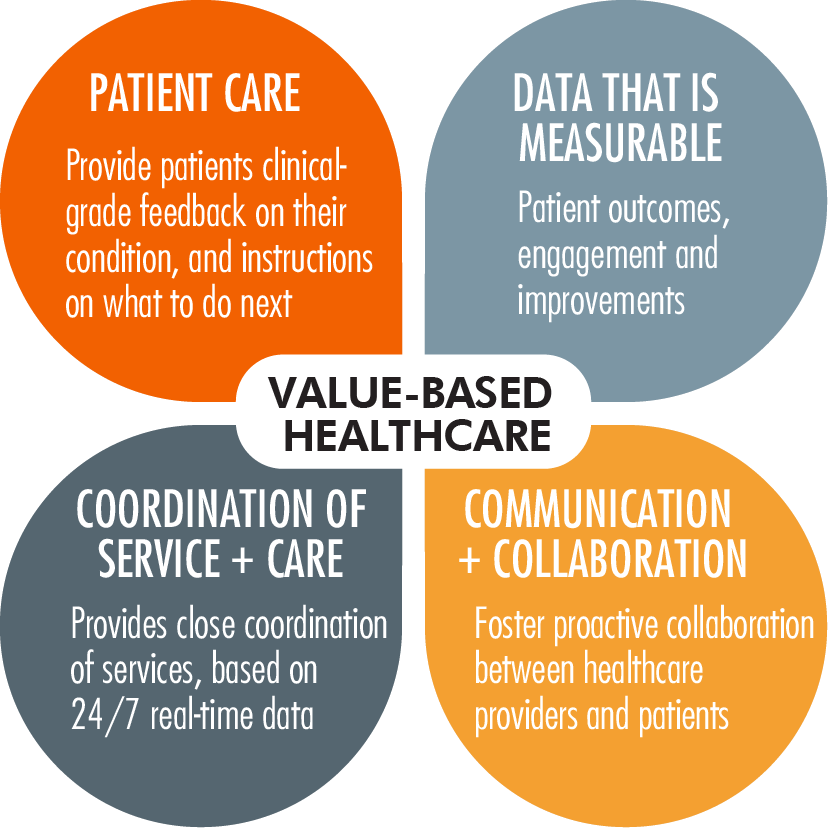
Value-based care has the potential to transform health care, improving quality and access for millions of people, while addressing COVID-19 related disparities. As a result of the pandemic, many rural communities and communities of color face significant reductions in access to health care.
More than 8% of practicing physicians nationwide closed during COVID-19 despite 82 million Americans living in “health professional shortage areas.” The financial strain and burnout experienced by providers has fueled interest in accelerating the adoption of value-based care. As of 2017, only 34% of health care dollars were the result of value-based care payments. This low rate of adoption exists despite evidence tying payments to patient health outcomes and rewarding higher quality care leads to reduced costs.
This webinar brought together experts who are driving innovative initiatives, achieving excellence in health outcomes, and uncovering more effective ways to implement value-based care.
On July 13, 2021, the Centers for Medicare & Medicaid Services (CMS) released its proposed Medicare Physician Fee Schedule (MPFS) for calendar year (CY) 2022.
In addition to numerous payment updates in the MPFS, such as significant updates to the Merit-based Incentive Payment System (MIPS), new policies may preserve expanded telemedicine services through 2023 and clinicians may incur more difficulty earning bonuses under the Quality Payment Program (QPP) eligibility threshold. CMS also includes in the proposed rule a request for information to address COVID-19 vaccine reimbursement proposals. (Read more...)
Posted on August 4, 2021 by Dr. David Edward Marcinko MBA MEd CMP™
***
TEXTBOOKREVIEW
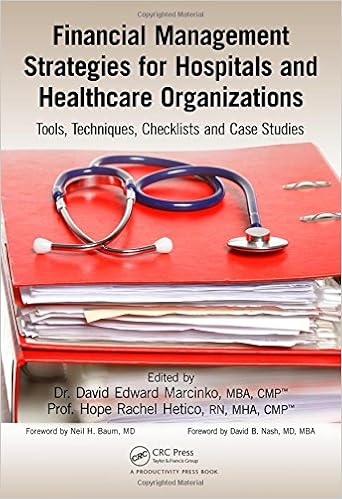
Drawing on the expertise of decision-making professionals, leaders, and managers in health care organizations, Hospitals & Health Care Organizations: Management Strategies, Operational Techniques, Tools, Templates, and Case Studies addresses decreasing revenues, increasing costs, and growing consumer expectations in today’s increasingly competitive health care market.
Offering practical experience and applied operating vision, the authors integrate Lean managerial applications, and regulatory perspectives with real-world case studies, models, reports, charts, tables, diagrams, and sample contracts. The result is an integration of post PP-ACA market competition insight with Lean management and operational strategies vital to all health care administrators, comptrollers, and physician executives. The text is divided into three sections:
Managerial Fundamentals
Policy and Procedures
Strategies and Execution
Using an engaging style, the book is filled with authoritative guidance, practical health care–centered discussions, templates, checklists, and clinical examples to provide you with the tools to build a clinically efficient system. Its wide-ranging coverage includes hard-to-find topics such as hospital inventory management, capital formation, and revenue cycle enhancement. Health care leadership, governance, and compliance practices like OSHA, HIPAA, Sarbanes–Oxley, and emerging ACO model policies are included. Health 2.0 information technologies, EMRs, CPOEs, and social media collaboration are also covered, as are 5S, Six Sigma, and other logistical enhancing flow-through principles. The result is a must-have, “how-to” book for all industry participants.







 Support our online development, and advance our onground research initiatives in free market economics, as we seek to showcase the brightest Next-Gen minds.
THE ME-P DISCLAIMER: Posts, comments and opinions do not necessarily represent iMBA, Inc., but become our property after submission. Copyright © 2006 to-date. iMBA, Inc allows colleges, universities, medical and financial professionals and related clinics, hospitals and non-profit healthcare organizations to distribute our proprietary essays, photos, videos, audios and other documents; etc. However, please review copyright and usage information for each individual asset before submission to us, and/or placement on your publication or web site. Attestation references, citations and/or back-links are required. All other assets are property of the individual copyright holder.
Support our online development, and advance our onground research initiatives in free market economics, as we seek to showcase the brightest Next-Gen minds.
THE ME-P DISCLAIMER: Posts, comments and opinions do not necessarily represent iMBA, Inc., but become our property after submission. Copyright © 2006 to-date. iMBA, Inc allows colleges, universities, medical and financial professionals and related clinics, hospitals and non-profit healthcare organizations to distribute our proprietary essays, photos, videos, audios and other documents; etc. However, please review copyright and usage information for each individual asset before submission to us, and/or placement on your publication or web site. Attestation references, citations and/or back-links are required. All other assets are property of the individual copyright holder.



























 The Leading Business Education Network for Doctors, Financial Advisors and Health Industry Consultants